Que pensez vous de l'avenir de Nepal ? Ma plus grosse crainte est la fermeture de ce pays dans l'avenir, suite à un coup d'etat par les Maoistes !
Le Nepal est dans le "Top less" des pays les plus pauvres du monde, si on retitre les tourites, qui representaient 25 % des rentrées d'argent, ce sera la "cata" !!!!!!
Que pensez vous de l'avenir de Nepal ? Ma plus grosse crainte est la fermeture de ce pays dans l'avenir, suite à un coup d'etat par les Maoistes !
Le Nepal est dans le "Top less" des pays les plus pauvres du monde, si on retitre les tourites, qui representaient 25 % des rentrées d'argent, ce sera la "cata" !!!!!!
A +🙂🙂
si le pays devient communiste, ce sera comme pour les autres pays communistes à leurs débuts je pense avec fermeture des frontières, des informations, de la liberté de circuler etc etc
effectivement ce serait la cata pour les touristes, parce que le peuple, ben ma foi, comme dans tous les autres pays où il n'y a pas de démocratie, le peuple va courber l'échne de gré ou de force, puis l'argent essaiera de reprendre son pouvoir auprés des dirigeants, aprés il y aura une corruption généralisé, puis au bout d'un moment un coup d'état etc etc; ce sera toujours la cata pour les touristes
et à la fin d'un cycle d'environ 70 ans on verra revenir doucement la démocratie par l'argent(et ce ne sera plus la cata pour les touristes) et peut être ensuite la démocratie tout court,
On parlait de la cata pour le peuple?????
ben ça, c'est avant qu'il faut lutter, pour éviter les extremismes, sans essayer d'imposer un point de vue, en se mettant à la place des gens, en vivant avec eux ( sans se croire missionnaire civilisateur, ils en veulent plus des valeurs d'ailleurs) mais ça c'est plus facile à faire qu'à dire......🤪
autre possibilté, que l'inde intervienne, pour éviter d'être entièrement entouré de dictatures mais maintenant qu'ils sont copains comme cochons avec la chine ( aprés avoir même reconnu la souveraineté de la chine sur le tibet 😐)......entre maoïstes ils vont pas se battre non plus 🤪
drôle d'idée ! vu dans les médias US ou sur le blog de W BUSH ? - la situation politique actuelle au Népal n'est pas aussi simpliste ... pas mal de composantes politiques ... et les mao (mao, mais surement pas "pur sucre" même pour le voisin chinois qui, il y a peu, leur préférait le Roi ...) - donc situation simplement "à suivre", le risque majeur me paraissant être, dans l'immédiat, un échec dans les discussions entre les partis dit "démocratiques" et les mao ... avec un retour à une coalition politique "chèvre-chou" dominée par des "chevaux de retour" plus ou moins corrompus ... et un retour des mao à la guérilla ... J'espère, comme beaucoup, un retour à une situation stable, démocratique, égalitaire qui apporte un peu de bien être à un pays qui n'a que trop souffert ...
site interessant pour avoir des info de l'interireur: bloggersnepal.com
Pensez vous que les Népalais vont laisser faire les mao après ce qu'ils viennent de prouver! Ils veulent une révolution pacifique même s'ils viennent de payer un lourd tribut...
je suis arrive au nepal le jour ou "tout a recommencer" soit le 25 avril. la situation politique semble extremement complexe. les journaux en anglais (kTM post) parlent de discussions entre partis politiques et entre maos (de KTM) et le premier ministre.
je reviens de la region de l'everest et je me suis fais arreter par les maos, ils m'ont demandes 5000 Rs (un mois de salaire nepalais) soit environ 65 euros. pour que je puisse continuer (entre Jiri et Lukla). j'ai paye pour etre tranquille. ce groupe de 35 maos, pilote par 4/5 adultes (25/30 ans) n'etait constitue que d"adolescents... l'argent des "donations" ne sert qu'a payer des gadjets (radios, lampes LED, baskets, pantalons...) aux plus jeunes... no coments !
les maos peuvent avoir une importance dans la reconstruction du nepal que s"ils font du menage chez eux et s'ils ne manifestent pas de mecontentement lorsque les routes, l'electricite et l'ecole debarquent dans les campagnes.
le groupe que j'ai rencontre ne vas plus a Khari Kola car la modernite arrive au village ! les personnes rencontrees a Kinja et Sete, sont elles coincees car elles doivent le gite et le couvert aux maos.
je pense que si ce mouvement integre une vie democratique dans le pays, ceci peut-etre une bonne idee pour ce dernier. le nepal ne pourra survivre que si les coins les plus recules du pays beneficient de l'argent du tourisme... et donc, d'une certaine facon, que les richesses soient plus facilement reparties. aujourd'hui, les differences sont trop marquees.
Le Népal me semble engagé sur la voie d'un changement majeur. La participation massive de la population à la grève générale appelée par l'Alliance des sept partis d'opposition a changé la donne. Le roi Gyanendra est à genoux et sa couronne ne tient plus que par un fil. Il n'est pas certain que la monarchie résistera à la future Assemblée constituante.
Durant la grève générale, les partis d'opposition sont vite apparus à la remorque de la rue. C'est la pression de la rue qui a poussé l'Alliance de l'opposition à tenir tête au roi en exigeant la restauration du Parlement afin de restituer le pouvoir aux représentants élus du peuple et non à un autre gouvernement sous la tutelle de Sa Majesté. Les manifestants ont aussi clairement manifesté leur raz-le-bol concernant le roi despote. Les partis politiques ont sans doute compris qu'il n'avaient d'autres choix que de se démarquer du palais et qu'ils avaient intérêt à le faire rapidement. À mon avis, non seulement le roi mais les partis politiques ont compris la leçon. Le peuple s'est exprimé et a pris conscience de sa force.
Aussi, le nouveau Gouvernement népalais, par une proclamation peu usuelle, vient de rogner les ailes du roi en réduisant ses pouvoirs de manière drastique sans même tenir compte de la constitution. Le Gouvernement de Sa majesté est devenu le Gouvernement du Népal. Le roi a perdu son titre de Commandant suprême de l'Armée royale du Népal, laquelle passe sous l'autorité d'un Conseil national de sécurité dirigé par le Premier ministre. L'exonération d'impôt du roi a été aboli. Le roi pourra devoir répondre de tout acte illégal ou inconstitutionnel devant le parlement et pourra être poursuivi en justice. Le parlement s'est octroyé le pouvoir de désigner lui-même le successeur du roi. En somme, la monarchie népalaise devient une monarchie à l'anglaise sans pouvoir réel. Pas si mal si l'on tient compte que la proclamation du roi rétablissant le Parlement date d'à peine un mois.
Quant aux maoïstes, ils ont aussi compris que le peuple, à l'appel des partis d'opposition, a réussi en 3 semaines ce qu'ils ne sont jamais parvenus à faire en 10 ans avec un régime de terreur qui a fait 13 000 morts !
Il y a quelques jours, des représentants de la rébellion maoïste se sont assis à la même table que des représentants du nouveau Gouvernement pour s'entendre sur un code de conduite qui régira les futures négociations de paix. Ces négociations visent à permettre, dans un climat de paix sociale, la tenue d'élections pour la formation d'une Assemblée constituante qui sera chargée de rédiger une nouvelle constitution. Les parties se sont même entendues pour que le cessez-le-feu soit surveillé par une instance internationale.
Certes plusieurs questions épineuses font toujours l'objet de désaccord. Le chemin vers une véritable démocratie sera long. Même si le dérapage est toujours possible, les nouvelles en provenance du Népal sont les meilleures depuis fort longtemps. Il faudra malheureusement attendre que le pays soit pacifié et stable politiquement pour que puissent être prises en compte les questions économiques et surtout la problème de la pauvreté endémique au Népal. C'est du moins mon avis. Le Gouvernement en a déjà plein les mains. Les partis politiques ont démontré au cours des derniers mois une certaine capacité à s'entendre sur l'issue de la crise politique. Il n'est pas certain toutefois qu'ils arriveront facilement à faire consensus sur les questions socio-économiques. Les valeurs qu'ils prônent vont de la social démocratie au marxisme léninisme feutré à la sauce mao. Quel est l'avenir du Népal ? Nul ne le sait. Mais le printemps de Katmandou a déjà commencé à fleurir.
j'ai peur que le printemps attendu ne se transforme en hiver🤪
les partis d'opposition lorsqu'il s'agit de battre un ennemi commun, en l'occurence ici, la royauté absolue mais ailleurs autre chose, arrivent toujours à s'entendre.
mais lorsque des marxistes léninistes et/ou des maoistes sont dans la partie (comme cela peut être aussi avec des généraux d'armée ou des partis d'extrême droite) je ne donne pas cher de la démocratie.
ne soyez pas simplistes, ni dans le schéma "les mao et les cocos vont tout bouffer" ( l'image du communiste avec un couteau entre les dents date un peu ....) ni dans le schéma "la démocratie a gagnée !!! -
on est seulement (et peut-être) à la fin d'une guerre civile (ou à la simple tentative d'en finir ...) - c'est déjà beaucoup ...
Pour l'avenir politique (encore que celà ne soit succeptible d'intéresser que les népalais ne luttant pas désespérément contre la faim ...), c'est complexe et la grosse inconnue c'est le compromis entre le retour à une démocratie excluant le pouvoir absolu d'un roitelet contesté (et très contestable !!) et la résistance d'une ethnie qui a été favorisée par ce régime et qui utilisera les croyances hindouistes (le roitelet en question vu comme réincarnation divine ...) pour garder son pouvoir ...
A suivre, les réactions des populations hindouistes ...
Rien n'est simple, sauf les certitudes imposées par des gens de mauvaise foi .... Bonne route aux népalais ...
d'accord pour l'analyse et bravo pour le site! c'et un vrai régal.
Quand aux propos de Montorsier et Lethieu, je n'ai pas les capacités de faire une analyse politique, mais en lisant les journaux, les bloggers et en ayant des contacts sur place, je pense que les Népalais n'accepteront pas les atrocites des mao. Et je suis étonnée de l'accord en 25 points (code de conduite) élaboré aussi vite par le gouvernement et les mao.
Ce qui me semble plus simpliste encore et de mauvaise foi, c'est d'analyser la situation actuelle à partir d'un schéma qui ne tient pas compte de la réalité dans son évolution quotidienne et ne s'appuie pas sur des faits avérés. Ne vaudrait-il pas mieux se donner la peine d'analyser un peu plus ce qu'indiquent les faits nouveaux et mettre de côté les vieux clichés ?
La proclamation du nouveau Gouvernement faisant du Népal un pays laïque n'a pas fait beaucoup de vague à ce jour au Népal mise à part une petite manifestation dans l'ouest du pays. Certes, la situation pourrait changer quand viendra l'heure de régler le sort de la monarchie. Et peut-être bien pour d'autres raisons que la réincarnation de Vishnu dans la personne du roi népalais. Dans un pays qui a connu 16 gouvernements en 15 ans, la monarchie pourrait être vue comme un facteur de stabilité politique. Mais Gyanendra est tellement détesté, et le prince héritier Paras tellement plus, que le contrepoids ne pèsera peut-être pas lourd dans la balance. Pour le moment, rien n'indique qu'une forte majorité de Népalais prend ombrage de la sécularisation de l'État. Cela pourrait changer, j'en convients mais ce n'est rien d'autre qu'une hypothèse pour le moment parmi bien dautres et là-dessus on pourrait jaser bien longtemps juste pour jaser.
Quoiqu'il advienne de la monarchie, les hindouistes, réprésentant plus de 85% de la population, continueront d'exercer le véritable pouvoir sur les affaires de la nation. Le clivage important présentement ne me semble pas être un clivage ethnique mais plutôt un clivage qui distingue entre les partisans du palais et ceux qui prônent la loktantra, une démocratie véritable émanant du peuple et non pas consentie par la monarchie. Les fidèles du palais sont plutôt silencieux ces temps-ci. Ils ont bien failli y passer. Les partisans de la vieille monarchie hindouiste sont également bien isolés. La communauté internationale les a abandonnés à leur sort. Notamment l'Inde qui veut conserver le Népal dans sa zone d'influence et qui ne veut pas de trouble au Népal. À preuve, l'émissaire indien ayant pour mission de transmettre une lettre personnelle du Premier ministre indien à Gyanendra au plus fort de la crise et dont le contenu n'a jamais été dévoilé. On peut raisonnablement présumer que le ton était sufisamment menaçant pour que Gyanendra baisse les bras dès le lendemain.
La paix sociale au Népal passe par la république ou, à la limite, par une monarchie à l'anglaise dépouillée de tout pouvoir réel, et dans ce dernier cas, dans la mesure où les maoïstes se laisseraient tenter par ce compromis. Ce qui n'est pas à exclure car les maoïstes savent désormais qu'ils n'ont pas un appui suffisant de la population et que leur idéologie n'a pas pris racine dans les masses après 10 ans de lutte. Au moins deux choses semblent faire consensus présentement chez les népalais : la réduction des pouvoirs du roi, sinon l'abolition de la monarchie et la fin de la rébellion maoïste. Les partis d'opposition semblent l'avoir compris. Sauront-ils garder le souffle pour mener les réformes à bien ?
Quoiqu'il advienne, la vieille monarchie hindouiste est morte. C'est, à mon avis du moins, ce que nous indiquent pour le moment les nouvelles en provenance du Népal. Dans sa malchance, le Népal a eu la chance d'avoir un monarque dur, sans envergure et sans vision. Lui, qui qualifiait son frère, l'ex roi Birhendra de mou, a bien mal porté la couronne. Il a réagit trop tard, faute d'avoir la capacité d'analyser et de comprendre ce qui se passait vraiment. ll n'a même pas eu l'intelligence de bien s'entourer et a placé son règne sous la protection de l'armée. Un corps avec des bras bien armés mais sans tête. Aucune ethnie, hindouiste fut-elle, n'a besoin de ce roi cruel, despote et sans vision pour se maintenir au pouvoir. Elle y restera de toute façon.
Je reviens tout juste du Népal et je suis entièrement d'accord avec AZIMAN qui analyse très bien la situation. Le Népal change et bouge et je pense que c'est dans le bon sens.
Le Népal est un pays à visiter ...
Les négotiations ont commencé entre le premier ministre et Prachenda.
Impossible de trouver ton site!
Bonjour Aziman
Au News, (Arte ) j'ai entendu la journaliste dire: le roi a engagé des négociations!!!! Vive l'info!
(On leur dit ou pas ce qui s'est passé? AH!ah! OH!!!)
Drôle de news sur Arte ! La dernière vraie nouvelle c'est que le Gouvernement et les maoïstes sont parvenus hier à un accord qui laisse entrevoir enfin une paix durable au Népal : dissolution du Parlement, dissolution du Gouvernement populaire maoïste, rédaction d'un constitution provisoire, formation d'un gouvernement intérimaire auquel participeront les maoïstes, intervention des Nations Unies pour surveiller l'usage des armes par les parties et assister le futur gouvernement lors des élections d'une Assemblée constituante qui sera chargée de rédiger une nouvelle constitution. Le Népal semble donc bien engagé sur la voie d'un changement majeur dont il faut se réjouir. Le Népal est pourtant parti de loin. Quand le peuple s'en mêle, même sans arme, tout est possible. Une belle leçon pour nombre de peuples opprimés.
Excuse moi, Explortrek je viens de cliquer directement sur le lien et j'ai trouvé ! j'y vais..
Quelle émotion, bien sur je savais mais n'avais pas fait le lien. je t'envoie un message privé après avoir lu le site. Amitiés.
Hi there,
Our trip to India, starting at the end of October, is taking shape.
I’d like to book a hotel in Delhi for our first three nights and another in Amritsar, where we’ll be staying during Diwali.
I’ve realized it’s really hard to trust the reviews on Booking. Have any of you stayed at and can recommend mid-range hotels in these two cities?
Your feedback could help us decide!
Thanks in advance.
Hi there, we're planning to go to Haridwar and Rishikesh in February, either from Delhi or from Amritsar where we'll be beforehand. What's the best way to get there? Driver, private car, train? Your tips would be much appreciated... thanks
Hi, I'm thinking of attending the Nagaur Fair in Rajasthan, which takes place from February 12 to 15, 2027.
Has anyone been to this fair? Is it just a livestock market or a real festival with music and dancing? Since it’s quite a detour for me, I wanted to know if it’s worth it. Thanks!
I'm also considering a trip to Sri Lanka.
I'm surprised to find so few references to Jaffna in the comments.
Does that mean this destination isn't worth it?
Thanks for your thoughts!
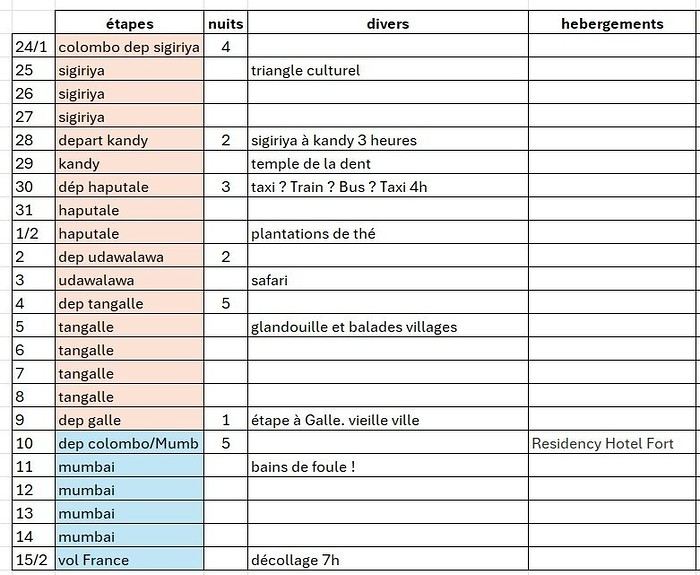
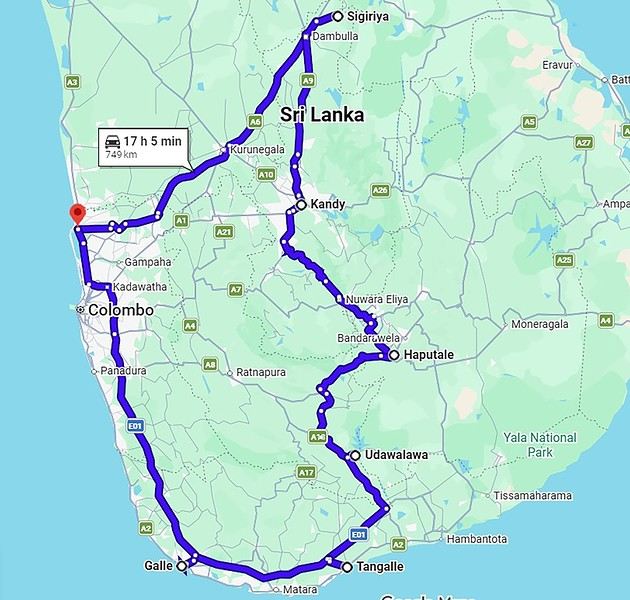
We’re heading to Sri Lanka for 23 days in January 2027—there are four of us—and we’ll wrap up the trip with 5 days in Mumbai. Our itinerary is coming together, but what do you think? (We can’t change the dates since our flights are already booked.)
We still have one night to slot in, and I’ve tentatively planned it in Tangalle, though it was a bit random. Would it make more sense to place it at a different stop? Or is there an intermediate stop I might be missing?
I’ve got accommodations sorted everywhere except Mumbai—it’s a nightmare (either way too expensive or really dodgy). By default, we’ve spotted the Residency Hotel Fort, but 70 € a night (with a discount) for a hotel that doesn’t offer anything special in India?!
I’m planning a short visit to Pokhara around mid-February 2027 (it’ll be my 4th time in Nepal 😊, over 40 years!). I’d like to book a room in advance rather than looking when I arrive. I’ve checked a bit on Bxxking.com and see lots of options. I’m used to scoping out the surroundings of places listed, just to avoid ending up in areas that are either unappealing or far from everything.
So, I see quite a few offers around the lake (Lakeside?), but every time I check what it looks like, the streets seem really uninviting. It’s kind of like a construction site with buildings everywhere… Nothing like Bhaktapur (for example) or even Thamel, where the streets seem way more pleasant.
Could anyone give me some advice?
Also, I don’t really get the impression that Pokhara is worth a visit of several days. The lake, sure, but once you’ve seen it—what else is there?
I’m interested in the 10-day/8-night "Discover Nepal" tour offered by Capitales Tours, among others.
For Day 4, it lists Kathmandu-Mugling-Pokhara as 200 km and 8/9 hours of travel.
Is this duration due to the road conditions? I assume the stop in Mugling for lunch is included in the travel time.
For Pokhara-Chitwan, only the distance is mentioned: 160 km. Should I expect a long bus ride there as well?
The proposed flights would be with AIR-INDIA via DELHI. We had issues with AIR-INDIA before—they denied us boarding for Paris even though we arrived at the airport more than 3 hours early. There was no specific counter for PARIS; the counters were for all destinations, and we waited in line for over 2.5 hours only to be told "too late"...
Thanks for your advice: Mum49
Is it still like this?
Yeah, VF, which used to be so responsive, still doesn’t even have a thread about this devastating mudslide that’s ravaged a region of Nepal where hundreds have died and hundreds more are missing (provisional toll). But from the images, we know the number of victims is going to be terrifying.
Thoughts to everyone affected, including, according to early reports, many travelers..
Hello,
We’ve already traveled to India twice before, but only for two-week stretches (2013, a loop from Mumbai including Hampi, and in 2019, Tamil Nadu). This time, we’re leaving at the end of October for nearly three months of travel—something completely new for us! We’ll arrive in Delhi and depart from Bangalore. Our goal is to explore Northern India and then head down to Kerala, taking a maximum of one flight and prioritizing trains.
Traveling for this long should let us plan longer stops to slow down the pace and fully enjoy our trip...
What are the places you’ve loved with this in mind?
I’ve already thought of Gokarna... Do you have any other suggestions, especially in Northern India?
Thanks in advance for your tips!
Hi there,
I’m planning a trip to Bangladesh for tourism during All Saints' Day 25. The government website is pretty discouraging! I’d love to hear from people living there or who’ve been recently before I buy my tickets.
How’s the security level and feasibility of a circuit (boat, train, bus around the country)? We’re used to basic conditions :)
Thanks in advance for your tips!
Cécile
I’ll be landing in Srinagar on October 23rd. I’ve decided to visit this region of India that I haven’t explored yet to discover new landscapes and, especially, their crafts.
I don’t have anything planned so far. I’ll be staying for about two weeks before heading back to Pushkar.
I’d love any tips you can share—small towns or villages to visit, ideas for affordable and authentic accommodations, workshops to check out, and so on. I’m open to all your suggestions!
I might head toward Jammu, where a host has offered to put me up for a few days.
Thanks in advance, and take care!
Hello,
We are two couples of friends aged between 65 and 70. Do you have a local agency or a local French-speaking driver-guide to recommend for a trip around Sri Lanka between February 14 and March 14, 2027? We’re open to any tips for our trip. The reviews and advice for agencies found on the forum are several years old. Thanks for your help.
Hi,
I’m looking for an organized tour in Northern India that goes through Agra (of course!) over about twenty days, prioritizing 2-day stops given the long distances or flights.
So far, my search has led me to these tours:
Intimate Rajasthan + Ganges Valley
Intimate Rajasthan and Goa
Confidential Rajasthan + Goa circuit
The number of kilometers is still pretty overwhelming and a bit scary.
Thanks for your feedback!
bcricri14
Practical tips from my 105 days of erratic wandering in India
Day 1 (10/10/2006): arrived in Mumbai around noon. Bus No. 338 5 Rs + 5 Rs (bag) 20' to Andheri station. Train 6 Rs to Dadar. Train 41 Rs to Lonavla 2h30 Hotel Chandralok 500 Rs **
Day 2: bike rental 7 Rs/h (too expensive, normal price 2-3 Rs/h) visit to the caves of Bhaja and Karla.
Day 3: train 28 Rs to Pune 1h20 Hotel National 416 Rs *
Day 4: train 141 Rs (with reservation) to Satara 2h45 Hotel Sagar 364 Rs **
Day 5: bus 110 Rs to Pandharpur 4h Hotel Aishwarya 450 Rs ***
Day 6: bike rental 2 Rs/h
Day 7: bus 125 Rs to Ahmadnagar 4h20 Hotel Parijat 250 Rs *
Day 8: train 151 Rs (!ticket for a mini 600 km trip!) to Jalgaon 5h30 Hotel Plaza 200 Rs **
Day 9: round-trip bus 38 Rs to Ajanta 1h30 + shuttle 6 Rs 5' Site entrance 250 Rs
Day 10: train 47 Rs to Khandwa 3h + bus 40 Rs to Omkareshwar 2h Ganesh G.H. 150 Rs *
Day 11 to 13: Omkareshwar
Day 14: bus 35 Rs to Maheshwar 2h45 Akashdeep Rest House 200 Rs **
Day 15: bus 8 Rs to Dhamnod 20' bus 20 Rs to crossroads 14 km from Mandu 1h40 bus 9 Rs to Mandu 20' Ram Mandir Dharamshala 100 Rs + 5 Rs for hot water *
Day 16: bike rental 3 Rs/h
Day 17: bus 50 Rs to Indore 4h Hotel Neelam 209 Rs
Day 18 to 20: Indore + round-trip bus 30 Rs to Ujjain 1h45
Day 21: train 82 Rs to Bhopal 5h30 Hotel Ranjeet 358 Rs *
Day 22: train 10 Rs to Sanchi 1h20 Jaiswal Lodge 200 Rs + 15 Rs for hot water! *
Day 23 and 24: visit to Sanchi + bike rental to visit the caves of Udayagiri
Day 25: train 69 Rs to Jhansi 5h + tempo 5 Rs to bus station + tempo 10 Rs + 5 Rs (bag) to Orccha 25' Sri Mahant G.H. 200 Rs **
Day 26 and 27: bike rental + train 20 Rs to Datia 30' + bemo 6 Rs to city center. Return bus 15 Rs 1h15
Day 28: bus 100 Rs to Khajuraho 4h Yogi Lodge 150 Rs **
Day 29: bike rental 30 Rs/day to visit the temples
Day 30: bus 70 Rs to Satna 4h + train 56 Rs to Jabalpur 3h Hotel Banjara 350 Rs **
Day 31: bike rental 2 Rs/h and visit to the Marble Rocks (50 km round trip)
Day 32: bus 50 Rs to Mandla 3h Hotel Satyam 250 Rs ** Round-trip bus 15 Rs to Ramnagar 1h15
Day 33: bus 60 Rs to Dindori 4h + bus 45 Rs to Amarkantak 3h (hellish road) Sarvodya Lodge 250 Rs °
Day 34: Amarkantak
Day 35: bus 25 Rs to Pendra Road 1h30 + train 120 Rs + 109 Rs (reservation) to Nagpur 8h Hotel Grand 257 Rs **
Day 36 and 37: bike rental + round-trip 25 Rs to Ramtek 1h40
Day 38: train 141 Rs + 125 Rs to Hyderabad 10h Hotel 3 Castles 200 Rs ° + Hotel Suhail 200 Rs °
Day 39 to 41: stay in Hyderabad
Day 42: train 48 Rs to Warangal 3h30 Hotel Surya 410 Rs **
Day 43: 60 Rs to Vijayawada 4h15 Hotel Sindhuri 275 Rs **
Day 44: round-trip bus 21 Rs to Amaravati 2h
Day 45: train 98 Rs to Visakhapatnam 7h30! (normally 6h) Hotel Sri Sampath Residency 250 Rs **
Day 46: train 111 Rs + 95 Rs to Puri 11h30 Travellers Inn 100 Rs ° + Hotel Z 300 Rs ***
Day 47 to 52: Puri + round-trip to Konarak
Day 53: train 38 Rs to Bhubaneshwar 1h15 Hotel Upasana 275 Rs *
Day 54: train 70 Rs to Balasore 4h bus 26 Rs to Baripada 1h40 Hotel Ambika 225 Rs °
Day 55: bus 25 Rs to Balasore 1h40 train 66 Rs + 68 Rs to Calcutta 6h30 Hotel Paragon 270 Rs * Hotel Crystal 350 Rs **
Day 56 to 62: Calcutta
Day 63: 60 Rs to Bishnupur 5h Hotel Monalisa 200 Rs *
Day 64: stay in Bishnupur no bike rental!
Day 65: bus 20 Rs to Bankura 1h30 bus 20 Rs to Durgapur 1h15 bus 28 Rs to Bolpur 2h15 Hotel Nisa 150 Rs *
Day 66 and 67: visit to Bolpur/Shantiniketan. Refused bike rental at ... 100 Rs/day!!! (Communist state of Bengal!!!)
Day 68: bus 20 Rs to Sainthia bus 35 Rs to Baharampur 4h30 bus 7 Rs to Murshidabad 40' Hotel Manjusha 350 Rs **
Day 69: bike lent by the friendly hotel owner and visit to Murshidabad
Day 70: bus 8 Rs to Baharampur 35' bus 60 Rs to Malda 6h (hellish road) Hotel Pratapaditya 231 Rs **
Day 71: train 66 Rs + 70 Rs to New Jalpaiguri 4h Hotel Holydon 250 Rs °
Day 72: train 52 Rs to Darjeeling 9h30! (normally 7h) Hotel Pineridge 500 Rs **
Day 73 to 75: Darjeeling
Day 76: train to New Jalpaiguri 9h30 + overnight train 271 Rs
Day 77: Patna Hotel President 482 Rs **
Day 78: stay in Patna
Day 79: train 18 Rs to Gaya 3h10 tempo 10 Rs to Bodhgaya 30' Deep G.H. 400 Rs!! °°
Day 80: return to Patna
Day 81: round-trip train 36 Rs to Rajgir 4h! (normally 3h)
Day 82: train 75 Rs to Varanasi 5h! (normally 4h) Yogi Lodge 150 Rs *
Day 83 to 87: Varanasi
Day 88: overnight train 310 Rs to Jaipur Evergreen G.H. 250 Rs **
Day 89: bike rental 30 Rs/day round-trip to Amber
Day 90: bus 59 Rs to Sikar 2h30 bus 23 Rs to Fatehpur 1h30 Rajshri Rest House 300 Rs *
Day 91: round-trip bus 12 Rs to Mandawa 30'
Day 92: round-trip bus 17 Rs to Churu 1h30
Day 93: bus 80 Rs to Jaipur 3h30 Evergreen G.H.
Day 94: bus 105 Rs to Bundi 5h30 Shivam G.H. 200 Rs **
Day 95: bike rental 3 Rs/h
Day 96: auto-rickshaw to station 45 Rs 25' train 44 Rs + 50 Rs to Chittorgarh train 21 Rs to Udaipur (total trip 8h) Badi Haveli 330 Rs **
Day 97 to 99: Udaipur + round-trip bus 45 Rs to Ranakpur 3h30
Day 100: bus 143 Rs to Ahmedabad 5h30 Hotel Manila 300 Rs **
Day 101: Ahmedabad
Day 102: bus 99 Rs to Bhavnagar 4h30 Hotel Vrindavan 200 Rs *
Day 103: round-trip bus 22 Rs to Palitana 1h10
Day 104: bus 85 Rs! to Ahmedabad 5h30 + overnight train ? Rs (feels like the end of the trip!)
Day 105 (January 22, 2007): train 6 Rs from Dadar to Andheri 20' + bus 5 Rs + 5 Rs (bag) to International Airport 20'
More figures
British Airways flight price Brussels-London-Mumbai-London-Brussels 576 €
Exchange rate from 55 Rs to 58.6 Rs per euro
Average room price 272 Rs/night
Daily budget 11 €
Chai from 1 Rs (Calcutta-Bengal) to 6/7 Rs (Rajasthan)
Bottle of water from 6 Rs (Udaipur), 8 Rs (Varanasi) to 12/13 Rs
Internet from 8 Rs (Warangal), 10 Rs (Calcutta, Indore, Hyderabad), 20 Rs (often) to 40/60 Rs!! (Rajasthan)
Beer in a restaurant from 85/100 Rs (often) to 150/165 Rs (Varanasi/Udaipur)
More details on request
Hello everyone,
we got back from our trip to Kashmir and Ladakh three weeks ago.
We spent 4 weeks there, including one in Kashmir.
We’re really happy with our stay in Srinagar and Sonamarg. The Kashmiris gave us a very warm welcome and seemed pleased to see tourists who weren’t Indian. In fact, over the 4 days we spent in Srinagar, we only saw 4 people who looked European... Srinagar is stunning with its lakes and the lively Mughal gardens. No trouble getting around, whether by shikara, rickshaw, taxi, or on foot. The houseboats are gorgeous, unfortunately controlled by consortiums. We took a taxi to Sonamarg (20 €).
Sonamarg (two nights) and its glacier are easy to explore, either on horseback or on foot, but it’s becoming a leisure spot for Indians.
To get to Ladakh afterward, we opted for a private taxi (quite expensive at 100 €, but the road is long). Since we’re a couple, it allowed us to stop whenever we wanted... and the route is beautiful all the way to Lamayuru, with our first snow-covered pass under snow when we crossed around May 21st. Then we stopped in Mulbek and Kargil before arriving in Lamayuru (three nights). We took another taxi to Alchi (26 €), spent one night there, and took the local bus at around 8 AM to Leh (3 €, a comfortable one-hour ride). We arrived in Leh around 9:30 AM, and Gyatsel from Tsarap Guesthouse came to pick us up with our backpacks. His guesthouse is located 500 meters from the market square in Leh, in a quiet little alley with no traffic. We highly recommend it because Gyatsel is invaluable for arranging taxis and organizing off-agency circuits...
His accommodation is super comfortable, and he cooks with vegetables from his garden. His wife also helps out... It’s Gyatsel’s mother who tends the garden. Through him, we arranged permits for the Nubra Valley up to Turtuk, then the Pangong and Tso Moriri lakes (we didn’t do the latter due to snow overnight!). We also crossed the Changtang (magnificent) to reach Thiksey, Stakna, Hemis, and returned to Leh. Six days in a private taxi (400 €). Since the roads were clear, we headed to Zanskar for 5 days in a shared taxi (28 € round trip for both of us). The route from Leh to Zangla follows the Zanskar gorges (impressive!).
We discovered Padum, Pibiting, Karsha, and Puktal, which you can reach via a small 7 km road and a 45-minute walk to finish, plus the sacred summit on the way to Manali.
Back in Leh, we extended our permit to visit the Aryan Valley by taxi (round trip, two days, 90 €).
We spent our last two days resting in Leh—the altitude is really tiring...
I’m sharing these taxi prices as a guide for a couple.
Accommodation ranged from 12 € in Leh to 30 € at Pangong Lake (the most expensive), but averaged around 15-17 € per night.
We’re not trekkers, but we love walks, discovery, and meeting people along the way. It was an amazing trip, and we even discovered a very old monastery a few kilometers before Lamayuru, where a monk took us—timeless...
I’m sharing these details because it’s hard to find precise information about Kashmir.
I’m heading to Sri Lanka for 3 weeks in July with my two 11-year-old kids, and I’m wondering about how to organize the trip. We’re used to traveling on the go, staying 1 to 2 or 3 nights per place depending on how we feel.
Do you recommend planning the itinerary and booking accommodations in advance to save time once we’re there?
Or is it pretty easy to organize everything as we go without any issues?
Same question for activities: Should we book safaris and tours ahead of time, or can we arrange them easily on the spot? Is there a risk of not getting a spot, for example, to visit a park since we’ll be there in July?
We’ll be using local transport (train, VTC via PickMe, tuk-tuk) to get from one place to another.
In short: Are there any must-book things we should reserve now?
So far, I only have the flight tickets!
Hi there, I think you're on the right track—you plan the itinerary and book the rooms in advance, and that’s it.
Not only do you save time, but you also know where you’ll be staying each night. Choosing well on Booking (or elsewhere) is actually a pleasure!
For safaris, given the number of jeeps with drivers available, it’s unlikely you’ll be turned away... the real issue is more about the concentration of jeeps around the animals.
I travel like you do—train, bus, tuk-tuk, and sometimes taxi. Ride-hailing apps like PickMe and other VTCs are mostly in big cities.
For the mountain train, due to severe flooding, service was interrupted on the line between Kandy and Ella. Check ahead, because reservations for this train are very complicated, if not impossible.
For the Colombo/Kandy train, you reserve your seats by buying the ticket before boarding. In the south, no need to book in advance for trains.
In Sri Lanka, there’s always a solution for getting around—just ask your hosts. They have trusted contacts at their fingertips. But still, compare prices—😏 smart move!
I stick to booking my nights and keep pre-planned activities to a minimum.
For reservations you can’t skip, it’s the beach stays you’ll want to secure.
I’m trying to find out if it’s still possible to travel from Mumbai to Goa by ferry or any other sea route. My search results aren’t very clear, and if it *is* possible, I can’t figure out where to book...
If anyone has any info, I’d really appreciate it—thanks in advance!
It seems there’s a ferry from Nagapattinam to Jaffna in India. Has anyone here taken this ferry before? My main question is how to get to Nagapattinam—by train, bus? And from which town further south, of course.
Thanks, friends!
Hi there.
We’re spending a month in Sri Lanka in March, and we’ll have one week left after leaving Polonnaruwa.
We’re torn between spending it in the Jaffna region or on the east coast between Batticaloa and Trincomalee.
We’re divers, so the east coast appeals to us for snorkeling, beaches, and lagoons—but it seems like late March might not be the best time for that coast. What do you think?
As for Jaffna, the culture of the region, its more authentic feel since it’s less touristy, and the offshore islands all appeal to us too—but it seems far from the rest of the country and harder to access.
We have to choose because we won’t be able to visit both sides, and I’d love to hear your thoughts.
Thanks, Marie
Hi there,
We just got back from a 2-week trip to Sri Lanka as a couple, and while planning the trip, we found plenty of info on the itinerary, places to see, and transportation, but much fewer clear reports on the actual budget to expect once there. Yet, that was an important point for us because we like to plan ahead a little before traveling.
So, we took the time to break down our complete budget after the trip. In our case, we spent around **930 € per person** for 2 weeks, being careful without depriving ourselves, mixing guesthouses, more comfortable hotels, quite a few activities, and even a private driver for part of the stay.
What we found interesting when crunching the numbers is that in Sri Lanka, it’s not necessarily meals or short trips that blow the budget, but rather flights, certain accommodations, cultural activities, and all those little expenses we sometimes forget, like tips.
If this can help other travelers get a better idea, we’ve put everything together on our blog with our experience, a detailed breakdown of expenses, and practical info on money while there, withdrawals, and tipping:
https://aventures-sans-mesaventure.com/budget-sri-lanka-pour-un-voyage-de-2-semaines/
We’re a group of 5 heading to the Everest Base Camp trek in early April. We won’t have a porter or guide—we’re used to hiking independently and have already done the Langtang trek and the Annapurna Circuit (back in 2003!).
I’d love to know if it’s necessary to book lodges in advance or if we’ll easily find availability during this busy season. Also, will we find lodges all along the route between the main stopover villages, or only in those villages? I remember there were plenty everywhere on the Annapurna Circuit. We want to stay as flexible as possible.
We’re heading to India in March 2026 and had planned to visit the parts of the Meenakshi Temple that are open to non-Hindus. However, the temple is currently undergoing major renovations—with all the towers covered in scaffolding—which might really take away from the experience and our stop in Madurai.
After some frustrating and vague online searches, and before we reshuffle our itinerary, I’d love to know—if possible—the most accurate expected completion date for the renovation work.
We’re planning a trip to Nepal and would love to do a helicopter tour to Everest with Namche Heli Service.
Has anyone here used this agency? I can’t seem to find any reviews online.
Thanks in advance!
I’m spending two weeks studying Hindi in the mornings in Delhi, in the Hauz Khas neighborhood.
What spots should I check out in this area? Any cafés to chill at?
How do I get to other parts of Delhi? By rickshaw? Is it easy to negotiate the price upfront?
Hi,
I’m leaving this Saturday for Northern India from 15/02 to 27/02. I’m planning to visit New Delhi, Agra, Chand Baori, Jaipur, Ranthambore, Bundi, Udaipur, and Jodhpur.
What’s the best way to get around?
I was thinking of doing everything by train.
Maybe taking the bus for some stretches?
As for renting a car with a driver, it seems expensive, so I’ve pretty much ruled that out. Unless someone’s got space for the same dates?
We’re heading out in March for this trek. We’re used to hiking and long-distance treks, but this’ll be our first time in Nepal.
QUESTION: People from Nepal are telling us it’s MANDATORY to have guides! Is this true, or is it just agencies trying to get work for their staff?
The Lonely Planet says: "In April 2023, the government announced that every trekker would need to hire the services of a porter or a licensed guide to obtain the TIMS permit. The law isn’t enforced, and by 2025, there were no longer any obligations for teahouse treks."
What do you think? What’s your experience? Thanks for your feedback.
Hi,
I’d like to arrive in India at New Delhi Airport with some cash. I was wondering if the exchange rates at the airport are any good or if it’s best to avoid them (and exchange in the city instead?).