Hi there,
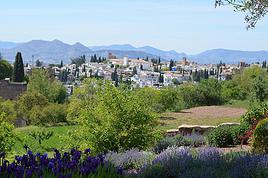
I’m planning a trip to the White Villages and noticed that many are in the Province of Cádiz—like Setenil de las Bodegas, Olvera, Ubrique, Grazalema, Zahara de la Sierra, Medina-Sidonia, and Vejer de la Frontera. Are all of these worth visiting, or are there others you’d recommend? I’ve already been to Arcos de la Frontera and Ronda in the area and wouldn’t mind returning, of course. I’m also considering the Caminito del Rey, so maybe a few interesting villages in the province of Málaga too. Do you think an itinerary starting from Málaga (arriving at the airport) with 2 or 3 stops (like Ronda, Arcos, and a third in one of these villages) would work?
Thanks for your tips!
22 similar discussions in English
Hey everyone,
I booked a flight with RyanAir for next month, with the priority+ option and two cabin bags. So I can take a 10 kg bag with dimensions 55x40x20 in the cabin (plus another smaller one). The problem is that the smallest suitcase I have (which is supposed to be designed specifically for cabin size standards, according to the manual) has the following dimensions: 55x37x21, so it's just 1 cm over (wheels included) on one of the measurements.
I wasn’t too worried at first, but I’ve read dozens of stories about people’s misadventures and the hassles they’ve had with RyanAir.
Since I don’t want my suitcase to end up in the hold (that would waste time picking it up when I’m already arriving late and need to get to the city center), nor do I want to pay an extra fee (apparently 50 €) for the outbound and return flights for just 1 centimeter—especially since I paid for the "priority+" option and I’m not exactly rolling in money—I’d love some advice.
Have any of you been in the same situation? I’ve read that with this airline, they check bags in templates (testing them in different positions) and are completely uncompromising. I tried contacting customer service, who, as luck would have it, "don’t handle this kind of request," and a rep I spoke to wasn’t much help.
I know it’s a low-cost airline, and I don’t expect luxury or even kindness, but come on—just 1 cm on a short flight with the + option... I’m a bit overwhelmed by everything I’ve read...
Just to clarify, since I’m going for 8 days, I can’t just take one bag for my stuff. I’ve done that for shorter trips before, and it was a hassle—I even had to buy an extra bag for the return trip... Luckily, the inspector was nice about it!
Thanks so much! I’m a newbie when it comes to air travel :) Hope I posted this in the right section!
Hi,
we’re heading to Barcelona soon, and the Airbnb host is asking us to fill out a PDF form with our names, ID card details, address, and even our signatures.
According to him, it’s one of the new rules for rentals in Barcelona.
I’m really worried our personal info might end up who-knows-where?
Has anyone else been in the same situation?
Thanks.
Have a great day.
Hello fellow travelers!
My husband and I would like to spend a few weeks in Jan-Feb-Mar 2025 in Spain.☺️
Our main criteria: shopping, hiking, long walks along the sea, climate 15-24°C, easy transport, languages (French, English, or Spanish), 🥂🏌️♀️🚴🎾☀️🎼🏝️
We’ve already been to Marbella and Alicante.
However, we don’t know these places apart from suggestions from friends who’ve visited them. 🤔
We’re thinking of renting an apartment or condo near the sea and maybe a car from time to time!
We’ve visited Spain a lot and really enjoy it given the distance and climate for these months away from the cold! 😊
Looking forward to your suggestions and tips! Thanks so much! 🤗
Oh, and we’re seniors but in great shape! 💃🕺😉
Beyond the traditional tourist circuits, Spain reveals its true essence through its lesser-known regions and preserved traditions. For a unique and authentic experience, we invite you to explore the hidden facets of this fascinating country. You can check out FairMoove’s offers, an eco-responsible and authentic travel agency.
The Hidden Gems of Rural Andalusia
Far from the well-trodden paths of Seville and Granada, the white villages of Andalusia transport you to a timeless Spain. In Ronda, perched on its vertiginous cliffs, the cobbled streets tell centuries of history. In the intimacy of Mijas, artisans keep age-old traditions alive in their workshops, open to curious visitors.
Master potters introduce you to their ancestral craft, sharing techniques passed down through generations. In family-run taverns, tapas are enjoyed to the rhythm of conversations with locals, revealing jealously guarded recipes. Come evening, local flamenco schools open their doors, letting you discover the deep soul of Andalusia through its traditional dances. A Sensory Journey: The Wine Route
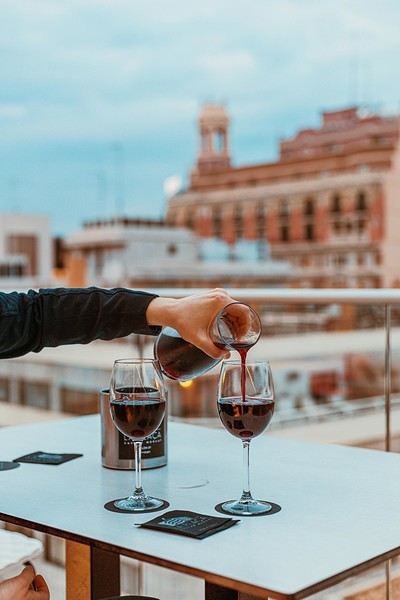
The wine regions of Rioja and Ribera del Duero invite you to a truly "non-touristy" authentic experience. In these family-run estates, often centuries old, winemakers share their passion with characteristic generosity. Tours of historic cellars reveal the secrets of traditional winemaking, while guided tastings awaken your senses to the subtleties of local grape varieties.
During harvest season, you can join in the grape picking alongside local families, continuing age-old traditions. Meals shared in the vineyards become moments of conviviality where the wine tells the story of the terroir. Some estates even offer blending workshops where you create your own cuvée under the expert guidance of enologists. From Lively Markets to Traditional Farms: Authentic Gastronomy
In Catalonia, local markets are true theaters of daily life. Beyond Barcelona’s La Boqueria, the markets in Catalan villages offer a more intimate experience. Producers share the stories behind their products—organic vegetables, artisanal cheeses, and traditional cured meats.
In the Balearic Islands, *fincas* turned into agritourism spots keep centuries-old agricultural traditions alive. In Mallorca, join the olive harvest and oil production using ancestral methods. In Menorca, cheesemakers introduce you to the crafting of the famous Mahón-Menorca PDO cheese, a skill passed down through generations.
The Vibrant Soul of Spain’s Autonomous Regions
Each of Spain’s autonomous regions proudly cultivates its unique identity. In Galicia, Celtic traditions blend harmoniously with age-old pilgrimages. Traditional fishing ports welcome you to discover the secrets of sustainable fishing, while local festivities celebrate ancestral legends.
The Basque Country surprises with its ancient language and world-renowned gastronomy. In *txokos*—traditional gastronomic societies—you’ll explore Basque cuisine alongside locals. Local festivals, like Valencia’s Fallas or Seville’s Feria de Abril, immerse you in the excitement of Spanish popular traditions. Community-Based Tourism: A Rewarding Human Experience
Extremadura, a pioneer in community-based tourism, offers homestays that redefine travel. These initiatives not only support the local economy directly but also create authentic connections with communities. You’ll take part in seasonal agricultural work, learn traditional farming and livestock techniques, and share daily life with the families hosting you.
Community-based tourism projects also extend to preserving cultural heritage. Join efforts to restore historic monuments, rehabilitate traditional hiking trails, or pass on endangered artisanal skills.
Responsible Travel to Preserve Authenticity
This immersive approach to travel in Spain helps preserve local traditions and promote sustainable development in communities. By choosing these authentic experiences, you actively contribute to keeping Spain’s cultural heritage alive while enjoying unique moments far from mass tourism. The income generated directly supports local preservation initiatives and the passing down of traditional knowledge. Positive Impact on Local Communities
Authentic tourism allows communities to keep their traditions alive while adapting to modern challenges. Younger generations find new opportunities to carry on ancestral skills, while visitors leave enriched by unforgettable experiences and encounters.
Spain’s regions invite you to discover their differences and similarities, creating a fascinating cultural mosaic where every stone tells a unique story. Each trip becomes an opportunity to learn, share, and support local initiatives that keep authentic Spain alive while preserving its heritage for future generations.
The Hidden Gems of Rural Andalusia
Far from the well-trodden paths of Seville and Granada, the white villages of Andalusia transport you to a timeless Spain. In Ronda, perched on its vertiginous cliffs, the cobbled streets tell centuries of history. In the intimacy of Mijas, artisans keep age-old traditions alive in their workshops, open to curious visitors.
Master potters introduce you to their ancestral craft, sharing techniques passed down through generations. In family-run taverns, tapas are enjoyed to the rhythm of conversations with locals, revealing jealously guarded recipes. Come evening, local flamenco schools open their doors, letting you discover the deep soul of Andalusia through its traditional dances. A Sensory Journey: The Wine Route
The wine regions of Rioja and Ribera del Duero invite you to a truly "non-touristy" authentic experience. In these family-run estates, often centuries old, winemakers share their passion with characteristic generosity. Tours of historic cellars reveal the secrets of traditional winemaking, while guided tastings awaken your senses to the subtleties of local grape varieties.
During harvest season, you can join in the grape picking alongside local families, continuing age-old traditions. Meals shared in the vineyards become moments of conviviality where the wine tells the story of the terroir. Some estates even offer blending workshops where you create your own cuvée under the expert guidance of enologists. From Lively Markets to Traditional Farms: Authentic Gastronomy
In Catalonia, local markets are true theaters of daily life. Beyond Barcelona’s La Boqueria, the markets in Catalan villages offer a more intimate experience. Producers share the stories behind their products—organic vegetables, artisanal cheeses, and traditional cured meats.
In the Balearic Islands, *fincas* turned into agritourism spots keep centuries-old agricultural traditions alive. In Mallorca, join the olive harvest and oil production using ancestral methods. In Menorca, cheesemakers introduce you to the crafting of the famous Mahón-Menorca PDO cheese, a skill passed down through generations.
The Vibrant Soul of Spain’s Autonomous Regions
Each of Spain’s autonomous regions proudly cultivates its unique identity. In Galicia, Celtic traditions blend harmoniously with age-old pilgrimages. Traditional fishing ports welcome you to discover the secrets of sustainable fishing, while local festivities celebrate ancestral legends.
The Basque Country surprises with its ancient language and world-renowned gastronomy. In *txokos*—traditional gastronomic societies—you’ll explore Basque cuisine alongside locals. Local festivals, like Valencia’s Fallas or Seville’s Feria de Abril, immerse you in the excitement of Spanish popular traditions. Community-Based Tourism: A Rewarding Human Experience
Extremadura, a pioneer in community-based tourism, offers homestays that redefine travel. These initiatives not only support the local economy directly but also create authentic connections with communities. You’ll take part in seasonal agricultural work, learn traditional farming and livestock techniques, and share daily life with the families hosting you.
Community-based tourism projects also extend to preserving cultural heritage. Join efforts to restore historic monuments, rehabilitate traditional hiking trails, or pass on endangered artisanal skills.
Responsible Travel to Preserve Authenticity
This immersive approach to travel in Spain helps preserve local traditions and promote sustainable development in communities. By choosing these authentic experiences, you actively contribute to keeping Spain’s cultural heritage alive while enjoying unique moments far from mass tourism. The income generated directly supports local preservation initiatives and the passing down of traditional knowledge. Positive Impact on Local Communities
Authentic tourism allows communities to keep their traditions alive while adapting to modern challenges. Younger generations find new opportunities to carry on ancestral skills, while visitors leave enriched by unforgettable experiences and encounters.
Spain’s regions invite you to discover their differences and similarities, creating a fascinating cultural mosaic where every stone tells a unique story. Each trip becomes an opportunity to learn, share, and support local initiatives that keep authentic Spain alive while preserving its heritage for future generations.
Hi everyone,
Just back from two weeks in Andalusia, and I wanted to share this experience with you—maybe it’ll help with planning a trip. I’ll start with a quick recap in this post and try to add photos and day-by-day details later (still sorting through them). Hope I don’t bore you too much! 😎
Trip details:
April 20 to May 4, 2019:
7 days on the Costa de la Luz (El Puerto de Santa María) in an Airbnb,
4 days at the junction of the Costa del Sol and Costa Tropical (Salobreña) in an Airbnb,
3 days at Cabo de Gata for some rest at a campsite in Los Escullos.
Two families of four, each with our own car: three 9-year-old boys and a 6-year-old girl. One family was more into city exploration (not us, but we’re working on it), and the other preferred relaxation and nature (that’s us). We speak a little Spanish.
Over 5,000 km, including 2,500 km for the round trip from Carcassonne.
The weather: Variable, but we expected better for this region in late April. The first week on the Costa de la Luz was sometimes chilly (< 20°C), and the second week was warmer but not excessive (< 25°C). At least we didn’t get much rain!
Our budget: Around 2600 € per family:
700 € for accommodations, about 50 € per night,
1000 € for meals and restaurants. We usually spent around 50 € per family at restaurants—we ate out for lunch (except for 2–3 picnics) and cooked at home in the evenings, trying to be back by 6 PM.
600 € for activities: Río Tinto, a flamenco show, visits to the Alhambra, Giralda, and Alcázar, Oasis Park with meals, and a kayaking trip.
300 € for gas and tolls.
Preparation: A few months ahead with bookings for accommodations and tickets for the Alhambra, Giralda, and Alcázar. We used a few travel guides—I like the *Évasion* guide for initial planning. *Géoguide* was okay, but our friends’ *Routard* was the most useful. We also spent three months brushing up on Spanish with Mosalingua (a great spaced-repetition method, max 10 minutes a day). Downloaded Maps.me and the Andalusia map in advance—essential. And we used Tricount to track shared expenses with friends—super handy.
What we did/saw:
3 city visits (Seville, Granada, and Cádiz) + Málaga for our friends (we vetoed Córdoba—too many cities for us).
4 white villages (Vejer de la Frontera, Arcos de la Frontera, Grazalema, Ronda) + Tarifa for our friends.
Beaches (Tarifa and Bolonia, Matalascañas, Nerja, Cabo de Gata).
Nature and fun moments: Doñana National Park, a kayaking trip along the rocky coast near Nerja, and the Wild West/animal park in the Tabernas Desert.
A little culture: Río Tinto mines, the archaeological site of Itálica, Columbus’s caravels, Nerja Cave for us, and the Picasso Museum in Málaga for our friends. Plus, seeing the ham-drying process in the Alpujarras (for our friends).
Our highlights
Nerja and the surrounding villages: The rocky coast was amazing, and we loved the kayaking trip, even if the water was freezing for snorkeling. The beaches are sheltered from the wind, the town is charming, and the cave is incredible.
El Rocío and Doñana National Park. El Rocío has a timeless, almost Wild West vibe—we could’ve stayed a day or two. The quiet and pine scents reminded us of the Landes region.
What we didn’t love as much:
Río Tinto mines: Not super exciting, and the guides’ nonstop chatter kind of ruined the "nature" experience.
Our little regrets (for next time):
Forgetting our passports and missing a day trip to Tangier from Tarifa.
Not having an extra day around Nerja to go snowboarding in the Sierra Nevada—just 1.5 hours away (the kayak guide suggested it).
Not spending at least one night in El Rocío to explore Doñana National Park at dawn.
Antequera with the Guadalhorce reservoir and the Caminito del Rey (but it would’ve meant 2 more hours of driving, and we didn’t have the energy).
My general impressions of Andalusia and Spain
Landscapes: A feeling of extreme concentration of a single activity in some areas—endless olive groves, wind farms on the Costa de la Luz (which I thought were well-integrated), rows of buildings along the Costa del Sol (yikes, glad we didn’t stop there), greenhouses around Almería (a shame to have frozen the coast for so many kilometers), and the massive industrial port of Huelva.
What surprised us compared to France was the lack of small hamlets—villages are clearly defined, and people cluster there, leaving vast landscapes without human presence. In France, you find houses scattered everywhere.
Roads: Relatively few tolls. Sure, rest areas aren’t as nice as in France, but the roads are in good condition, and our wallet was happy. The roads are pretty straight with countless bridges and tunnels—the upside (besides fast travel) is that there aren’t many secondary roads disrupting the scenery.
Tourism and activities: A huge variety and richness. Feels like everyone can find something they like, and 15 days barely scratched the surface. It’s amazing how quickly you go from the coast to snow-capped peaks (Sierra Nevada) or from farmland to desert (Tabernas). And the mix of European and Arabic architecture in the same city is really special.
One small regret: Not interacting more with locals. We didn’t luck out with our Airbnbs. But shopkeepers were great—very patient with my broken Spanish! :-)
Overall, I think our choice to stay on the Costa de la Luz and then near Nerja worked well. We could explore pretty easily (even if we logged a lot of kilometers), and the settings were fantastic. The 3 days of total relaxation at Cabo de Gata were perfect.
If you prefer shorter stops, you could try staying in El Rocío (easy access to Seville and great for an early visit to Doñana National Park) or maybe Grazalema for a hike in the mountains (weather-dependent). And of course, Tarifa for a day trip to Tangier or Gibraltar.
More details and photos to come soon!
Laurent
Hi there,
I’m leaving from Tours (Indre-et-Loire 37) on 12/22 for Seville in Andalusia, with a stop in Valladolid to arrive in Seville on 12/23.
I’ve planned some trips to Huelva, Cadiz, Malaga, and maybe Faro in Portugal, as well as Seville—visited it last February but I can show it to a travel companion this time.
I’ll be heading back from Seville on 01/02/25 with a stop in San Sebastian to get back to Tours on 01/03.
I’ve already booked an Airbnb near the Cathedral (a cute little apartment with 2 bedrooms).
Looking forward to sharing this trip!
Hi,
I’m planning a 7-day family road trip in Andalusia (2 adults and 3 kids) at the end of October. Arrival and departure: Malaga airport.
Which direction should we take for our trip?
Malaga -> Ronda + white villages -> Cadiz -> Jerez -> Seville -> Cordoba -> Granada -> Malaga
Or the other way around?
Thanks
Thanks
Hi there,
If you're dreaming of Andalusia, feel free to take a look at my blog-site for a little taste of the life you’ll find there.
I’d love to have virtual visitors, but if you ever pass through my area, don’t hesitate to reach out. I’d be happy to chat in French... and share some great moments with you.
www.casagibo.com
I’d love to have virtual visitors, but if you ever pass through my area, don’t hesitate to reach out. I’d be happy to chat in French... and share some great moments with you.
www.casagibo.com
We're looking for an apartment or house rental in ANDALUSIA, preferably in a small port or by the seaside near restaurants and shops, with 3 bedrooms from December 27th to January 3rd.
Does anyone know an easy place to park in Granada and Córdoba?
Thanks
I’d love a nice spot by the sea in Andalusia in December
Hi everyone,
I’m sharing my draft itinerary with you because I just booked our flight tickets, and I feel like it’s quite late in the season. So, I’d like to be sure about my stops before reserving the hotels. I’ll be traveling alone with my two adult children. We want to prioritize outdoor walks, avoid too many indoor visits (both for budget and preference), and not spend too much time on the road.
D1: Arrival at 9 AM in Malaga, day in Malaga and overnight stay D2: Head straight to Nerja (1-hour drive) and spend the night there D3: Head straight to Granada (1.5-hour drive), spend the day and night there D4: Granada. Visit the Alhambra (Nasrid Palaces tour at 5 PM) and spend the night D5: Head to Ronda (2.5-hour drive) and spend the night D6: White Villages and overnight in Ronda D7: Head straight to the Costa del Sol (e.g., Estepona), spend the day and night there D8: Return to Malaga to catch our flight
There you go! This itinerary takes into account that we’d like to do a circuit starting from Seville in a few years. That said, it’d be a shame to miss something doable from Malaga.
Questions: Since the Alhambra visit is only at 5 PM, and we’d already have the day to explore Granada, would arriving the day before be a mistake? Or should we skip this day and dedicate it elsewhere (Costa del Sol? Head toward Tabernas?)? The old town appeals to me, but maybe the Sacromonte neighborhood isn’t essential... Same question for Ronda: should we dedicate a full day to it, or combine Ronda and the White Villages in one day? Note that we love wandering around villages outside, so that might answer my question! :)
Final question: Is it better to rent the car at Malaga Airport or in the city? If we rent at the airport, we’d need a hotel with parking, which doesn’t seem easy. Or stay outside the city and park for free near the center if possible? I’ve read comments about taking a taxi to Malaga and then picking up the rental car at the airport the next morning. The taxi would really need to be affordable...
Thanks so much for your feedback and suggestions for visits during this little circuit. Have a great day, everyone! Christine
Hello everyone,
Foreword: I have the moral elegance to keep disparaging comments to private messages. I expect the same in return! I won’t engage with "camel" or "motorcycle" avatars.
Andalusia in all its glory—that’s what I’m offering to a companion who’d love to share every morning of the days to come with me... From Cartagena to Lagos (Portugal), roughly speaking, if I had to sum up my desires. More precisely, 5 to 7 days in each of these towns: Cartagena – Carchuna – Córdoba – Seville – Huelva – Lagos. Having been there twice and visited part of the region, I already have a good idea of what’s interesting or spectacular.
Knowing about the Moors’ historical presence isn’t essential, but it helps understand certain architectural features.
When? Departure between February 20th and 25th, 2026. Why this time? We’ll escape the gloom, rain, and chill that will have settled over France (I’m speaking for my region). Plus, no matter where you go, there’ll be very few tourists at this time, so queues are much shorter, and accommodation rates are at their "low season" prices! (We also gain about an hour of daylight at this latitude.) I’ve already done some research (tedious but necessary...) on 5 towns (Cartagena – Carchuna – Córdoba – Seville – Huelva) plus Lagos (Portugal) regarding accommodation—open to discussion to agree on which to choose.
Of course, I know what to see and do in each area. Up for debate...
Budget? I’d rather discuss that in person. For my part, I’m financially comfortable.
Temperatures: around 16°C during the day in Cartagena, about 18°C in Seville, and around 18°C in Huelva (maybe 1 or 2°C warmer), with very little rain!
Vehicle? A reliable, well-maintained Citroën van. It can carry 2 bikes so we can explore some stunning regional natural parks. Plus, we’ll visit some massive cities—I’m especially thinking of Seville! The driver? Very cautious.
My advantage? I speak the language well. It’s pretty much a must, otherwise, you’re guaranteed to feel down after 2 days (laugh).
Lunch: picnics more for the joy of being outdoors than to save money. Dinner at local restaurants or fondas.
Preference for a companion living within a 2-hour drive of Castres (81), to make meet-ups easier as we "get to know each other" and finalize plans. Exception: if you live within 25 km of La Roche-sur-Yon—I’m considering moving there.
Hi there!
We’re heading to Andalusia for a week in early April. We’ll spend 3 days in Seville and 1 day in Córdoba. After that, we’d like to rent a car for the remaining 3 days to explore the Costa de la Luz.
We’d love to do some great hikes along the beaches between Tarifa and Cadiz and visit Cadiz itself. Is 3 full days enough to do this? Is it better to stay in Cadiz and explore the area from there, or should we move around to different villages? Do you have any hiking suggestions? We’ve spotted some hikes in Barbate, Trafalgar Beach, and Bolonia.
Thanks for your tips and hiking ideas! :-)
It's been 39 years since we last came back to Andalusia...
For this last week of March, we waited until the end of the "votes" in France to go soak up some sun in southern Spain. And spring is the ideal season.
Our itinerary was a very (very) classic loop: Seville / Granada / Ronda and the white villages / Seville (with the start of Holy Week as a bonus gift!).
We flew from Lyon with Transavia (no issues) and landed in Seville on Monday. We rented a car (Goldcar), drove for 3 hours, and there we were in Granada, charmed by its ZTL (limited traffic zone) that Waze made us discover in detail (a nightmare!). Our hotel: Hotel Monjas del Carmen (perfectly located and with parking).
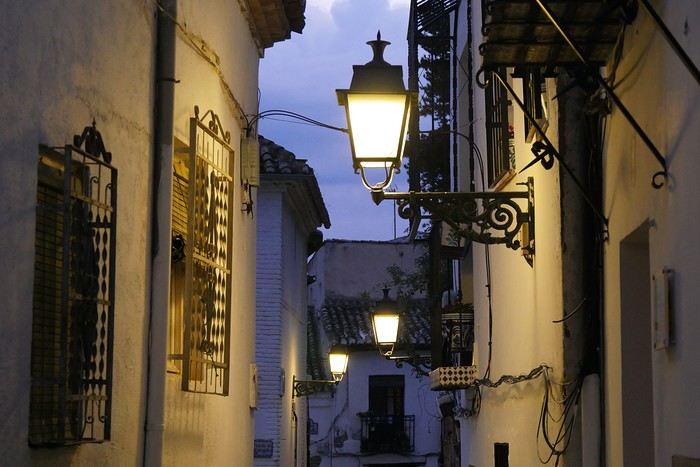
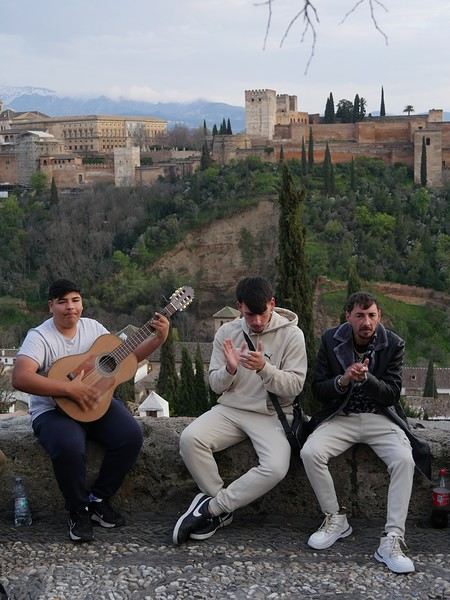
The weather was overcast, but a little stroll through the Albaicín district was a must. In the evening, we had dinner at "Restaurant Arabe Ambar" to get into the Nasrid atmosphere—we recommend it!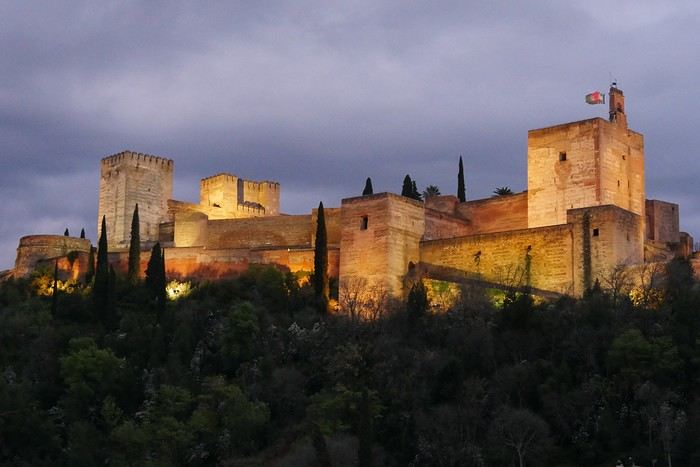
For this last week of March, we waited until the end of the "votes" in France to go soak up some sun in southern Spain. And spring is the ideal season.
Our itinerary was a very (very) classic loop: Seville / Granada / Ronda and the white villages / Seville (with the start of Holy Week as a bonus gift!).
We flew from Lyon with Transavia (no issues) and landed in Seville on Monday. We rented a car (Goldcar), drove for 3 hours, and there we were in Granada, charmed by its ZTL (limited traffic zone) that Waze made us discover in detail (a nightmare!). Our hotel: Hotel Monjas del Carmen (perfectly located and with parking).
The weather was overcast, but a little stroll through the Albaicín district was a must. In the evening, we had dinner at "Restaurant Arabe Ambar" to get into the Nasrid atmosphere—we recommend it!
Hi there,
We’re spending a week in Andalusia in April, starting with 2 days in Seville, then Córdoba, Granada, and Ronda.
We’re thinking of renting a car the morning we leave Seville and returning it at the airport on the last day.
Do you know which downtown rental spot is the easiest for quickly getting out of the city? Or maybe it’s simpler to rent at the airport and leave the car in a parking lot for the first 2 days? Thanks in advance for your help!
Amandine
Do you know which downtown rental spot is the easiest for quickly getting out of the city? Or maybe it’s simpler to rent at the airport and leave the car in a parking lot for the first 2 days? Thanks in advance for your help!
Amandine
Hi there,
In Italy, Cinque Terre or Puglia—I don’t have anything specific in mind yet since I’m not familiar with these regions at all. Otherwise, Spain in Andalusia,
around 2 weeks starting early October. I’m not available before then.
If you’ve got similar plans in the works, feel free to let me know. Thanks in advance and see you soon
Hello,
I'm considering doing the "Ruta de la Plata" next September.
The plan would be to fly into Madrid, head up to León via Segovia and Valladolid, then down to Huelva before returning to Madrid for the flight back.
We're in our seventies and limit ourselves to easy, short walks. For accommodations, well-maintained hotels or guesthouses would suit us, and we'd also like to try 2 or 3 paradores.
How many days do you think we should allow for this trip?
A round-trip flight to Madrid seems the most practical. We've already explored Andalusia but might consider stopping in Seville or Córdoba again.
Thanks to anyone who can advise us on the timing, itinerary, or must-see spots...
 Hi there! We’d love to spend a few weeks in the sun this winter, but not too far away—southern Spain or Portugal sound perfect! Any regions or spots you’d recommend for an active retired couple who also love golfing? Best regards,
Hi, I’m planning a wine trip in the Alentejo by car. Starting from Marbella, I can either follow the coast and stop over near Huelva, or head north and stop over near Aracena. I’m wondering which route is more enjoyable and which village is the most interesting for an overnight stop.
Thanks
Hi everyone!
I’d like to move to Spain, specifically to Málaga. To do that, I’d like to know if I’ll need any official documents from France to work there, or anything like that... I’d also love to hear from people who’ve moved to Spain for work—do Spaniards like the French? Is it hard to fit in? What are the salary ranges for a ready-to-wear salesperson? And is it easy to find housing?
Thanks! 🙂