Hello,
We’re a group of four seventy-something retirees and we’re planning a 4-week trip to South Africa. We’re seasoned "adventurers" used to multi-week stays (we’ve been to India seven times, Mexico, Thailand, Laos, Myanmar, Australia, etc.).
For South Africa, we’re thinking of covering most of the trip in a private vehicle and taking flights for inter-state transfers.
We’re interested in meeting people, learning about the country’s evolution, exploring major cities, visiting traditional villages, and seeing wildlife.
Here’s the itinerary we’re considering:
Johannesburg – 2 days (we’ll pass through again later)
Pretoria – 2 days
Blyde River Canyon and Graskop – 1 day
Acornhoek – 1 day
Letaba – 2 days
Lobamba – 2 days
Johannesburg – 1 day
Flight to Cape Town
Cape Town – 3 days
Cape of Good Hope – 1 day
Stellenbosch – 1 day
Hermanus – 1 day
Mossel Bay – 2 days
Oudtshoorn
Wilderness – 2 days
Knysna
Port Elizabeth – 2 days
Addo Elephant Park
Flight back to Johannesburg
Johannesburg – 1 day
Return to Paris
Could you share your thoughts on this itinerary? We’ll be renting a vehicle to explore both regions.
We can easily add 4–5 more days to the trip if needed.
We’re looking at traveling either between April and May 2026 or in October/November 2026.
I’ll follow up later to discuss the best safari options and get a rough budget estimate.
Thanks to everyone who takes the time to read this and share their thoughts!
2,761 similar discussions in English
Hi everyone,
I’d like to share my family trip to Colombia with kids aged 8. After spending hours browsing the forum and only having two weeks there, we decided to focus on two regions: the Coffee Zone for one week and the Caribbean coast for another. We traveled from August 8 to 23.
Day 1 – First stop: Bogotá
We arrived in Bogotá in the evening on an Air France flight—nothing to complain about, decent service, comfortable, and on time. However, the first night was a miss. We’d booked a hotel near the airport (Abitel Prime) for convenience, but the soundproofing was almost nonexistent; we heard planes as if we were on the runway. Luckily, exhaustion helped us sleep well anyway.
Day 2 – Off to the Coffee Zone and Salento
The next morning, we headed to the airport for a domestic flight to Pereira with LATAM. No issues: punctual and efficient, and in 30 minutes, we landed in Pereira. The landing already set a different mood: lush valleys, endless plantations, and humid air. We picked up our rental car from Localiza. Unfortunately, the experience wasn’t smooth—the paperwork took forever, and the wait tested our patience. Finally free, we hit the road to Salento, one of Quindío’s gems. We arrived in the late afternoon and discovered a colorful village bustling with artisan shops and cafés. Our first stroll helped us soak in the atmosphere before dinner at Bambú restaurant—a great surprise with careful cooking and local flavors. We spent the night at Casa Serafín, a charming little hotel, nicely decorated and well-located… but unfortunately very noisy.
Day 3 – The magic of Cocora Valley
This was one of the trip’s highlights. We set off early for Cocora Valley, famous for its giant wax palms, Colombia’s emblem. We chose the 12 km loop recommended by the *Routard*. The landscapes were spectacular: towering palms, rivers, suspension bridges. It felt like walking through a postcard. The weather was perfect. That evening, we dined at Barnabé restaurant—pleasant setting, decent food, but the bill was a bit steep for what it was. Back to Casa Serafín.
Day 4 – Coffee and panoramic views
The plan was a visit to Finca El Ocaso. For 1.5 hours, we followed a passionate guide who explained the entire coffee process, from harvest to cup. Very educational, accessible for both kids and adults, all in a stunning setting. The tour was in English for us, and we translated for our kids, who aren’t bilingual yet. In the afternoon, we climbed to Salento’s viewpoint. The valley view was superb. That evening, we ate at Veggie Garden, a simple and pleasant spot that was a nice change from the heavier meals of previous days.
Day 5 – Horseback ride to Santa Rita Waterfall
We booked a horseback ride with Cocora Magic. It was a real success: calm horses, a beautiful trail, mountain and meadow landscapes, and finally the refreshing and wild Santa Rita Waterfall. Without a doubt, one of the best moments of our time in the region. We even got a bonus ride up a 300-meter hill. We then headed to Filandia, less known than Salento but just as charming. We spent the late afternoon enjoying the pool at MuchoSur Filandia. The hotel is beautiful, in an idyllic setting. However, we also had soundproofing issues and could hear our neighbors.
Day 6 – Rainy detour through Filandia and Manizales
Rain caught up with us in the early morning: torrents of water made it impossible to go out. We stayed at the hotel, reading quietly. By noon, the rain let up: a quick walk in Filandia, a quick lunch, then off to Manizales. We chose to stay at El Otoño hot springs. Great choice: as soon as we arrived, we plunged into the hot pools, perfect after hours on the road.
Day 7 – Hiking and hot springs
In the morning, we hiked the Camino de Super Coco (found somewhat randomly on Google). A pleasant trail with mountain views and a peaceful atmosphere. The afternoon was spent in the hotel’s thermal pools, with a short marked hike down to the river. Dinner on-site at the hot springs’ restaurant. A simple but very relaxing day.
Day 8 – Rain, jacuzzi, and games
We continued to Finca Los Alpes. The rain greeted us again, but this time it turned into an asset: nothing like a steaming jacuzzi with a view of the misty mountains. The kids enjoyed the facilities too: mini-golf, ping-pong, billiards. Dinner and night at the hotel, cozy vibes.
Day 9 – Off to the Caribbean coast
Back to the airport to return the car (still a bit long). Flight to Cartagena with Avianca: punctual and comfortable. Upon arrival, we picked up another car and headed straight to the Hyatt Regency, a modern hotel with a pool. That evening, we dined at the hotel—practical after a travel day.
Day 10 – Colonial Cartagena
We set off to explore Cartagena’s old town. It was enchanting: colorful facades, flowered balconies, colonial charm—just magical. However, the heat was stifling and very humid. Afternoon relaxation by the pool. Dinner at Gestlani, a good restaurant in town.
Day 11 – Road to Barú
A hearty breakfast, then one last swim in the pool before heading to Barú. We checked into Las Islas Hotel. The setting was enchanting: wooden cabins nestled in the vegetation, a private beach, turquoise sea, impeccable service. Dinner at the hotel’s restaurant.
Day 12 – Beach and relaxation
A full beach day in Barú. Warm water, white sand, coconut trees, peace and quiet. A real postcard scene with iguanas and birds.
Day 13 – On to Santa Marta
Another morning at the beach before hitting the road to Santa Marta. The drive was a bit long (6 hours), especially with traffic jams in Barranquilla. It was the longest car ride of the trip. We spent the night at Villa María Tayrona, a beautiful place near the park.
Day 14 – Tayrona Park
We left early for Tayrona Park. We entered through **El Zaino**, parked the car, and set off on a hike to La Piscina (about 2 hours). We stopped along the way at Playa Arenilla, a stunning little beach, to rest. Lunch on-site, a swim, then back by 4 PM. The hike was a bit tiring, but the nature was spectacular: dense jungle, the sound of waves, and even a monkey encounter along the way. Evening and dinner at the hotel.
Day 15 – Last swim and return flight to Bogotá
Our last morning was split between the pool and the beach (the hotel has direct access via a 7-minute trail through vegetation and flowers)—hard to leave this paradise. We drove to Santa Marta’s airport to return the car, then flew back to Bogotá. We spent the night at Casa Dann Carlton, a comfortable hotel. We simply ordered room service, arriving too late to go out.
Day 16 – Bogotá and the end of the trip
Our last day in Colombia. After a good breakfast, we explored La Candelaria. Its cobbled streets and colorful houses were worth the visit. We visited the Botero Museum (free) and the Gold Museum, both fascinating. Back to the airport for our 11:55 PM Air France flight.
That’s a wrap on a varied trip—lush mountains, colorful villages, dream beaches, and tropical jungle. The pace was pretty relaxed, well-suited for our kids. They absolutely loved the trip to Colombia. Driving in Colombia was very easy, and we didn’t regret renting a car at all—it gave us more freedom to get around.
If I were to do it again, here’s what I’d change: - I’d spend less time in the Coffee Zone to stay a bit longer on the Caribbean coast, which was more relaxing for the kids. Or I’d head to Medellín, but I didn’t think the city was very kid-friendly. - Bogotá is a city that deserves a day’s visit, but it’s not a must-see. Maybe I’d have taken the KLM flight from Cartagena to Amsterdam instead.
If you have any questions, don’t hesitate!
Antoine
Hi everyone,
I’m planning a trip to Northern Italy for 2 weeks in August 2025. Here’s my itinerary: MILAN – 2 days LAKE MAGGIORE – 2 days LAKE COMO – 3 days BERGAMO – 1 day LAKE GARDA – 2 days VERONA – 1 day DOLOMITES – 2 days BOLOGNA – 1 day CINQUE TERRE – 2 days TURIN – 1 day Return to France
Let me know your thoughts, and any kid-friendly attractions would be great!
Hi there,
We’re heading to Panama from January 29 to February 13 as a couple, and I’m unsure about the order and duration of the stops. Here’s what I have in mind:
2 days in San Blas
2 days in Santa Fe (it’s either that or Boquete, but I think I’d prefer Santa Fe)
4 days in the Bocas del Toro archipelago
3 days in Panama City and surroundings
2 days in Valle de Antón? Not sure if it’s really worth it
1 "flexible" day
What do you think?
We’re also debating whether to take a direct flight to Bocas first, then rent a car to gradually make our way back to Panama City and do San Blas at the end—or do the opposite: start with San Blas, rent a car, and finish with the domestic flight from Bocas back to Panama City.
Any specific tips?
Thanks so much for your help! 😊
Hello,
After a lot of searching, exchanging ideas, and thinking it over, I’ve decided to go back to my original plan of spending two weeks in Bangkok. From January 19th to February 2nd. I’ll also take a quick trip for one night/two days to Ayutthaya (and return to Bangkok, where I’ll have kept the apartment I booked), and possibly the same for Kanchanaburi, depending on how I feel once I’m there—whether I find something more interesting in Bangkok or nearby.
The key word is: taking my time to take photos, observe, taste, savor (in every sense of the word), and most importantly, not rushing.
Beyond the must-see tourist spots, I’d love to wander around the city and maybe within a 40 to 50 km radius for a day trip to discover unusual and lesser-known streets, houses, temples, markets, gardens, and more.
I’ll also be spending two weeks in Chiang Mai and two weeks in Nan.
I’m open to any suggestions. Thank you so much!
Hi everyone,
I’m planning an 8-night trip to Norway in early March 2019, specifically around Tromsø and the surrounding area. I’d love to experience the Nordic winter, its vast landscapes, the northern lights, discover the local wildlife, and most of all, take some amazing photos in these magical settings.
But I’ve got a few questions, especially about how to split my nights and plan the route.
I’m planning to land in Tromsø and stay there for 2 or maybe 3 nights—so far, so good—but after that, I’m torn between the Lofoten Islands or Senja Island for the remaining nights.
The Lofoten Islands seem magical for a photography enthusiast like me, with their little harbors and steep mountains, but the downside is the distance from Tromsø, especially in winter. What do you think? Is it doable to make a round trip from Tromsø to Lofoten in a week, especially in winter (are the roads passable? Is the weather unpredictable? Is the drive worth it?)? Because ideally, I’d like to return the rental car to the same agency in Tromsø to avoid extra costs.
After doing some more research, I came across Senja Island, which some blogs call a "mini Norway." The big advantage is that it’s only a 2-hour drive from Tromsø, but is it as charming as the Lofoten Islands?
And if you’ve got any tips for this route, I’m all ears! 😛
I’d love to hear about your experiences or knowledge, and thanks in advance for your replies! 😉
Arnaud
Hi everyone,
I’ve read the forum a lot and found a wealth of information. I’ve tried to compile all of it into our itinerary and would love your feedback to finalize the bookings (we’re planning this *very* last-minute).
Here’s what we’re thinking of doing: 22 July: arrival in Johannesburg Night of 22–23: Johannesburg Nights of 23–26: Marloth Park (with Kruger visits on the 24th, 25th, and a crossing visit on the 26th) Nights of 26–28: Graskop (visiting the canyon and Panorama Road on the 27th and 28th) Nights of 28–30: Hoedspruit (visiting the central area of Kruger on the 29th?) Nights of 30 July–1 August: Balule Park (private reserve with safari) Nights of 1–5 August: flight from Hoedspruit to Cape Town, then 2 days in Cape Town, 1 day on the peninsula, and 2 days for wine (just the route) or something else based on your advice (we don’t know where to stay—whether to stay all 5 nights in Cape Town and where in the city, or do 2 nights in Cape Town and 3 nights nearby—but where?) Night of 5–6 August: Kelders for penguins and whales Nights of 6–8 August: Tsitsikamma (what is there to do/see?) Nights of 8–10 August: Addo Park on the 9th 10 August: flight from Port Elizabeth to Johannesburg and back home
What do you think? Is there a lot of driving time?
We’d really appreciate your comments and suggestions. Thanks!
Nadia
Here are some tips from our 6-week trip (summer 2026) to China, Vietnam, and Cambodia. We traveled as a family of four with two kids aged 15 and 12.
I hope these notes help other travelers!
CHINA General You’ll need to download and set up a few apps: - Alipay and WeChat for payments (I didn’t withdraw a single bill the entire trip) - Didi for taxis - Amap = Chinese Maps (works great, especially for subways) - A translation app (we used Papago, but it sometimes gave weird results) - Google Lens for translating menus or signs—super handy. - HelloRide for bikes - Gemini and ChatGPT for everything: understanding daily life, enhancing visits, checking the weather, finding things. - HomeExchange if you want to lower travel costs (few listings in Asia except in big cities, often expats) - Trip.com is very useful, even essential, for trains, domestic flights, and hotels. Like Booking.com, the more you book with them, the more perks you get. So I’d even suggest checking flight tickets on this site, even if it’s a bit pricier. However, buying train tickets is complicated because (1) they only open 15 days in advance, and (2) they sell out fast. Trip.com just promises to buy them as soon as they’re available but doesn’t always succeed. It’s stressful and might force you to change your plans, especially if you’re aiming for a sleeper car and there are no seats left. Watch out for station names—many cities have multiple stations, including a high-speed rail one outside the city. For internet, we got the Asia plan from Holafly. It worked but seemed much slower than Chinese internet. I regretted not buying a Chinese SIM card because without internet in China, everything is VERY complicated (money, transport, etc.).
For the firewall, we used ExpressVPN, but it wasn’t always reliable. A bit disappointing. Ask ChatGPT for tips with screenshots to improve the settings.
Since we only had one SIM card with internet, we couldn’t rent shared bikes. If I were to do it again, I’d get a SIM for each person, even the kids, because distances in cities are huge. We walked *a lot*. Same goes for buses—it’s tricky with just one internet connection. Better to have a phone per person with internet. Book your visits as far in advance as possible—they often sell out. Watch out for power banks: if they don’t explicitly say "3C," they’ll confiscate it. Even if there’s a little airplane logo.
Shanghai In the evening, the streets leading to the Bund from the metro were so crowded that police were out in force blocking roads. Arrive early. We went around the north side.
Suzhou Be careful—there are two stations (common in China), and the high-speed rail one is 45–50 minutes from the old town. The Humble Administrator’s Garden was *packed*—we don’t recommend it. It turned into a marathon day from Shanghai (almost 4 hours from our hotel to the garden).
Beijing Forbidden City: Don’t go—I know it’s a shame, but it’s too crowded. I couldn’t buy tickets on the official site because of the kids’ passports. We ended up with a guided tour, the only way to get in (tickets sell out fast). The visit was disappointing—bad guide *and* massive crowds. You’ll queue a lot to enter and see certain areas. You’ll be checked often, so pack your bags carefully. Great Wall at Mutianyu: Crowded. Two hours by bus, and even though we arrived early, people were already leaving! I really think the best option is to leave your big bags in Beijing and stay overnight near the Wall. That way, you’ll have it to yourself a bit more. For transport: get off at Tiananmen Square metro and look for buses with official guides in bright yellow-green vests. No need to buy tickets online—they made me cancel mine to rebook on the spot. Buses leave when full. Note: the cable car and chairlift are separate—if you want to go up one side and down the other, you’ll need different tickets. The endless queue for the toboggan ride put us off. Quick tip: Incredible swimming spot in Beijing—on the north shore of Houhai Lake, you can swim by crossing the barrier. We did it twice with about ten other people. Bring a swimsuit!
Shapotou Desert Amazing, but it gets *very* hot in the afternoon. We had a tent (not an air-conditioned bungalow), which was unbearable during the day. We hung out in the restaurant. The paid activities are fun, except the camels—they look sad. The real highlight is the evening and sunset. The only downside: you can’t explore the desert alone or far—they don’t rent 4x4s, for example. We stayed at "The Desert Camping Hotel of the Proprietress of Shapotou." They were lovely.
Zhongwei Gaomiao Temple and its underground: Fun and short—you’ll see quirky Buddhist hell paintings.
Xi’an Terracotta Army: We took a Didi because for four people, a car was almost the same price as four shuttle tickets. It was packed—chaotic to see properly. We visited the halls in order: 3, 2, then 1—a good choice. Hua Shan Mountains: Left before sunrise to arrive when the ticket office opened (7 AM, I think). We were shocked to see so many people already coming down. 45 minutes by bus to the west cable car, then 15 minutes up. We did the west, south, east, central, then north peaks (in that order) before taking the other cable car down (you can buy the ticket at the top). A beautiful day. In the city, check out...
Chengdu Panda Research Center: Like Hua Shan, plan to arrive when the ticket office opens. Already *tons* of people, and it moves fast to see the big pandas before their nap. Have them drop you at the west entrance (not south), or you’ll have to walk uphill. Leshan Giant Buddha: Interesting. The trip is a bit long (metro, then train, then city bus, then shuttle on-site). We didn’t take the boat option but walked. In the end, you only spend a few minutes at the Buddha’s feet, but it’s a nice day out. Hotel tip: Panda Enjoy Home Hotel Apartments (Chengdu East Railway Station Dongda Road Branch). The view is insane, and the neighborhood is super convenient and nice. 646 CNY for 2 nights. Swimming: The municipal pool is an interesting experience, but don’t expect to swim—no one does. Everyone just splashes around where they can stand. The hours are a bit odd, with a break in the late afternoon.
Kunming The bike path along Dian Lake is pretty and often well-protected from cars. But like everywhere in China, it’s *packed*. Not much to say about visits—the flower market is a wholesale market, not very interesting. The ethnic minorities museum closed right in front of us. All the big malls are good for shopping.
Dali We thought we could bike around the lake in two days. Wrong on two counts: First, the lake’s edge is blocked to traffic and reserved for bikes (or tourist mini-buses). So you’re stuck on the main road, which never gives you a view of the lake, with all the trucks and cars. Doing 120 km like that wouldn’t make sense, in our opinion. The rice fields around are nice but not as impressive as elsewhere, so Dali isn’t worth it for that. The old town, all restored, is pretty but *packed*—thousands of people, especially in the evening.
Hekou (Vietnam border) Comfortable train from Kunming. In the parking lot, a bus (not well-marked, but Didi is an option) takes you to the border in 15–20 minutes. Short wait at both border posts. Fun to see the two lampposts near the border line: the Chinese one is new, modern, with a surveillance camera (of course), while the Vietnamese one is old and a bit rusty.
VIETNAM General: - You’ll need the Grab app for taxis - Very disappointed with 12Go—it doesn’t show all buses, never connects you with the company, and refuses refunds. Try booking directly with companies like FUTA Bus instead. - Credit cards are often accepted (supermarkets and modern stores), otherwise, you’ll need cash
Lao Cai 2 km between the border and the train station. The sleeper bus to Hanoi with Sao Viet is well-organized—it works.
Hanoi Ho Chi Minh Mausoleum closes early (10:30 AM, I think). Women’s Museum: Very good, not too long Temple of Literature: Beautiful, fairly quick This is where you should buy souvenirs, clothes, and knockoffs—the prices are reasonable, and the sellers are nicer than elsewhere. We recommend Cho Dong Xuan.
Tu Long Bay We did 2 days, 1 night (so really 24 hours on the boat) with Parfum d’Automne (French-speaking agency), which put us on a Cycad Cruise boat. Cost: 300 € per person—expensive, but it was amazing, super luxurious, and the buffet meals were delicious. We don’t regret the splurge. The only downside: no swimming in the bay (but there’s a pool on the boat). To swim, you’d need a 3-day, 2-night trip to an area not protected by the maritime park.
Phong Nha If you didn’t do the northern mountains due to time or weather (like us), Phong Nha is a great stop for a motorbike ride. It’s beautiful, especially the mountains west of the city toward the caves. There are two (small) swimming spots at the Botanic Garden—a pleasant 45-minute walk without stops. Hotel tip: Sunbeam Village (very friendly, pool, breakfast by the river, motorbike rentals)
Da Nang Hotel tip: Meridians by Hsuite—you’ll have the beach almost to yourself. You’ll still need to walk 15–20 minutes to the hyper-touristy area if you want to rent surfboards (150–200k VND per hour). The beach is beautiful, and the water is 30°C—great for a break on a long trip, especially since all transport goes through Da Nang.
Hoi An 45 minutes from Da Nang, so it’s easy to visit in a day, especially since the city isn’t that big and it’s *very* hot. Cooking class: MS Hanh cooking class—great (the market tour is a bit useless). We don’t recommend the "basket boat" tour—it’s a bit sad on a big brown pond with elderly guides.
Ho Chi Minh City Ben Thanh Market is a nightmare: starting prices are exorbitant, and the vendors are aggressive. Don’t go. The War Remnants Museum can be really tough for kids.
Can Tho Avoid this city. We made the mistake of going to see the floating market—don’t.
Chau Doc No Grab in the city, but regular taxis. One day is enough if you go early to the forest and the mountain in the late afternoon. 250k VND per person for the forest and its canals (45 minutes by motorbike) The sunset at Victoria Nui Sam can be magnificent if the clouds cooperate. Cheap and good restaurant: Quan Nem Nuong Sau Hiep Hotel tip: Homestay Khoa (2,250,000 VND for 3 nights)—adorable hostess, full of tips, clean rooms.
The speedboat to Cambodia is more comfortable than a bus. Book with Hangchau a few days in advance—payment in cash on the day (1,640,000 đ).
CAMBODIA General: - Issues with the "Bakong Tourists" app—we had to go to a big bank to load money onto it. We barely used it afterward.
Phnom Penh For us, a day and a half is enough if you want to spend more time elsewhere. Markets close early (around 6 PM) and are less interesting than in Hanoi, for example. The Royal Palace has a break from 11 AM to 2 PM, but there aren’t many people in the afternoon.
Siem Reap Trip with Capitol company—the bus is basic but cheap. Departs at 10:15 AM, 7-hour ride. Angkor entrance fee: 62 USD per person for a 3-day pass. Tickets are picked up at Angkor Enterprise. Renting two 125cc motorbikes: 10 USD each, plus 7 USD for gas. By bike, it took me 25 minutes to reach Angkor Wat’s pools. A basic city bike rental was 1 USD per hour. Short circuit by motorbike (in reverse): 7 hours with stops everywhere. Grand tour by tuk-tuk: Only 5 temples, 4.5 hours. If you want to see lots of monkeys, they’re grouped west of Bayon. For the temples, we asked Gemini (AI) at each stop to point out details that might interest kids (who can get bored with the repetition). It gave fun facts and things to look for—great for the little ones. Hotel tip: The Five Senses, run by a Frenchman, Bruno, who knows Cambodia inside out and organizes tours. Restaurant tip: Wild (only spring rolls, but *so* many varieties—delicious and cheap) Watch out: 1 hour to the airport, 50 km from the city. Show tip: The Phare Circus
We spent two weeks in the Seychelles at the end of March and beginning of April 2026.
We split our stay as follows: 4 nights on La Digue, nights on Praslin (assuming you meant a specific number here—let me know if you'd like to correct it!), and 6 nights on Mahé.
It’s a classic itinerary.
Inter-island transfers are done with the Cat Coco company. You can book the transfers online on their website, which also offers an airport-to-port shuttle when you arrive in Mahé. It takes about 50 minutes to go from Mahé to Praslin and 10 minutes between Praslin and La Digue.
La Digue is an island with very few cars (only taxis and a few official or business vehicles) and lots of bikes. You can rent them everywhere on the island—we rented ours from our landlady. Things to see and do on the island: a bike tour around the island, the Veuve Reserve (it’s a bird), Union Estate with a giant tortoise park, and especially Anse Source d’Argent (our favorite beach across all three islands) and all the other coves, including Grande Anse, Petite Anse, and Anse Sévère.
For food, there are several takeaways on the island and plenty of small shops for groceries—same goes for the other two islands.
On Praslin, we rented a car, but you can also use the bus network. There aren’t many destinations, the main one being the Vallée de Mai, a must-visit as the sanctuary of the coco de mer (the "butt nut"). It’s best to visit with a guide—they wait for a small group, and the ticket price can be split four ways. You *can* visit alone, but you’ll miss out on a lot of information. Another destination is Anse Georgette, in the north of the island near the airport and the golf course of a big resort. Have your accommodation notify the hotel when you’re heading there, and if you’re driving, park as soon as you see the first signs for the parking lot. Anse Lazio is famous, but much more touristy than Anse Georgette. We stayed in Anse Volbert Village at Côte d’Or, a stunning 3 km beach with shops, takeaways, and restaurants.
Mahé is the largest island. Like on Praslin, you can rent a car or use the buses—we rented one. The roads are good but sometimes narrow. Don’t forget the mountainous terrain in this part of the Seychelles, which makes some climbs very steep (same as on Praslin). Opt for small cars—they’re often automatic, and remember you drive on the left here!
Things to see on Mahé: the Jardin du Roi, a collection of everything that grows in the Seychelles—very interesting, with a great restaurant. Visit Anse Intendance, Anse Bazarca, and Police Bay in the south—three gorgeous beaches. Also check out Anse Royale. For souvenirs, head to the Craft Village, where you can find some unique items. If you’re a fan, visit the Takamaka distillery.
In conclusion, we should’ve added one or two more nights on La Digue—it’s really beautiful—and only stayed three nights on Praslin. We rented apartments through Booking and Airbnb. Don’t forget to get your tourist visa online. The Seychelles is a clean, safe, relaxed, and stress-free country
Hi everyone,
I’d love to get your thoughts on the following itinerary (late May). I like to take my time in ruins and museums, and beaches don’t interest me. I’ll be staying in hostels and using public transport. Do you see any major omissions or things that aren’t worth it? Thanks!
Day 1: Arrival in CATANIA Day 2: Catania – visit (fish market, cathedral, Biscarri Palace, etc.) Day 3: Mount Etna (day trip)
Day 4: Morning trip to TAORMINA, visit the town Day 5: Alcantara Gorge (day trip) + more time in Taormina
Day 6: Trip to SYRACUSE, visit Ortigia Day 7: Ortigia Day 8: NOTO (day trip) (or another Baroque town?) Day 9: Syracuse Archaeological Park + more time in Ortigia (or leave for Enna?)
Day 10: Transport via Enna? TO BE RESOLVED (long, 2 or 3 changes, limited accommodation in Enna...)
Day 11: AGRIGENTO: town and Scala dei Turchi (optional) Day 12: Valley of the Temples + archaeological museum
Day 13: Departure for TRAPANI (4h), afternoon: town (+ salt flats?) Day 14: Segesta (day trip) + town/Erice Day 15: Monte Cofano Nature Reserve (hike + summit) (day trip) Day 16: Zingaro Nature Park (coastal route out, ridge route back) (day trip)
Day 17: Departure for the AEGADIAN ISLANDS: Levanzo and Favignana (bike), overnight if possible Day 18: Egadi Islands
Day 19: Departure for PALERMO + first visits Day 20: The city Day 21: The city (Monreale?) Day 22: Options: - Capo Gallo hike (3.5h round trip) (via Mondello) - Cefalù (45 min by train) Day 23: Return flight
Hello,
we’re a couple planning a 2-week road trip this August, with a must-stop (about 3 days on Skye). Any route suggestions? Hotel recommendations? Photo spots?
Hi everyone,
We’re planning to visit a small part of Indonesia in October 2026 with our kids (8 years old).
Ideally, do you think it’s possible to visit Kinabatangan (3 days), Yogyakarta or Borobudur, and finish with some beginner snorkeling on the Gili Islands in 2 weeks?
Thanks for your valuable feedback! 😊
Hi there,
We’re planning to tour Scandinavia by camper van—Denmark, Sweden, Finland, and Norway (in that order)—for 5 weeks from late May to late June 2026.
I’ve done it before, but that was way back in 1980 😎 and by hitchhiking!
We’d love to hear from anyone who’s done this trip about the best routes, great tips, must-know advice, and what to do or avoid (ferries, campsites, etc.).
Thanks in advance!
Hello,
After having to cancel our trip to Uganda in December 2020, we finally decided to go in December/January. We leave on December 28th and return on January 18th, which gives us 20 days and 20 nights there 🙂
The main goal of this trip is to meet primates, big and small. We won’t skip the birds and other mammals or the local culture and people, but we want to maximize our chances of meeting our monkey friends.
It’ll be a self-drive road trip with lodge stays. The 4x4 is booked, as are the chimpanzee and gorilla permits, and most of the accommodations.
I’m reaching out because I have a big question mark about my itinerary. Here’s what was originally planned (with the parts I’m unsure about in bold):
1 night in Entebbe on arrival day 1 night at Ziwa Rhino & Wildlife Ranch (rhino trek and shoebill trek) 2 nights at Murchison Falls NP (Murchison River Lodge) 2 nights at Lake Albert (Kabwoya Wildlife Reserve) 2 nights in Kibale (for the chimpanzee habituation day) 2 nights in Queen Elizabeth NP (chimpanzee trek in Kyambura Gorge) 2 nights in Bwindi, Ruhija sector (gorilla trek) 2 nights at Lake Mutanda (gorilla trek in Mgahinga) 1 night in Kisoro (golden monkey trek in Mgahinga) 1 night at Lake Bunyonyi 2 nights in Lake Mburo NP 2 nights near Mabamba Swamps (for the shoebill and to relax before flying back)
My "issue": The lodge at Lake Albert only has availability for the first of the 2 nights. So I’m hesitating between a few options (if you have other ideas, I’m all ears!):
1- Add an extra night at MFNP and make a stop somewhere between MFNP and Kibale. But where? 2- Keep 1 night at Lake Albert and do 3 nights in Kibale (but is 3 days in Kibale too much?) 3- Do 3 nights at MFNP and 3 nights in Kibale, with a long drive between the two 4- 2 nights at Lake Albert but at another lodge not in Kabwoya Wildlife Reserve (is there enough to fill 2 days? Any lodge recommendations?)
A huge thank you for your help and advice 🙂 Have a wonderful sunny weekend, Pascale
Time to hit the road again!
Summer seems to be the best time weather-wise for Bali. And since summer’s when we can take a long trip, let’s go for Bali... even though we know it’ll be *packed* with people! So we’ll steer clear of the island’s south...
Our current plan (19 days on the ground, 7 stops): - 4 Nights (3 days) in Ubud 2 days for rice terraces / activities (Tegallalang, Campuhan Ridge, Monkey Forest, Bird Park, coffee plantation, market (?), dance "pestacle," cooking class and/or spa) 1 day with a driver for the Temples (Pura Gunung Kawi, Tirta Empul Spring, Pura Mengening, Goa Gajah...) - 2 nights in Sidemen (1 day for Pura Kehen + Batur Caldera + Pura Besakih and 1 day to relax in the rice terraces) - 3 nights on Gili Meno (Rest and beaches) from Padangbai - 2 nights in Amed (1 day from Padangbai with the Abang rice terrace and Tirta Gangga baths, and the next day a boat tour in Amed) - 4 nights in Pemuteran (1 day for transfer and rest, 1 day to visit Kawah Ijen, and 2 days of snorkeling at Menjangan Island) - 2 nights in Munduk (1 day with the Dayang rice terrace and the 3-waterfall hike, 1 day at Pura Ulun Danu Bratan) - 2 nights in Jatiluwih (1 day in the rice terraces, and on the last day, we’ll stop by Pura Taman Ayun in Mengwi and Pura Tanah Lot before catching our red-eye flight).
Accommodations in homestays or hotels. Transportation to be arranged on-site with the lodgings (?) Boat to Gili Meno to book in advance (?) Kawah Ijen excursion to plan ahead (?)—check with the homestay (?)
Thanks for your thoughts/comments to help us explore this destination...
Hey there, VoyageForum!!!
I’ve combed through this site up, down, and sideways to plan our two-month road trip across the American Southwest during the summer of 2022, so it only feels right to give back and revive the USA travel journal section—helping others prep, travel, or relive their own memories! 😏
A quick intro to the stars of this trip is coming soon... in an upcoming post!
Table of Contents:
Road trip introduction Day 1 & 2: the days we double-checked all our papers... Day 3 & 3 bis: The day we discovered Denver... Day 4: The day of the race, the carriage, and the little one’s cough... Day 5: the day the road trip truly began... Day 6 & 6 bis: the day of Nature’s first wonders... Day 7: the day the sky fell on our heads... Day 8 & 8 bis: the day we saw ghosts... Day 9: the day we climbed the mountain... Day 10: the day the theme song from "The Last Picture Show" played on loop in my head... Day 11: the day we lived like Native Americans... Day 12: the day we left civilization behind... Day 13 & 13 bis: the day we explored another planet... Day 14 & 14 bis: the day Caro reunited with HER rocks... Day 15 & 15 bis: the day of the fantastic ride... Day 16: the day we cooled off in Lake Powell... Day 17: the day the Colorado River’s meanders were all ours... Day 18: the day we dipped our feet in the Colorado... Day 19: the day the guys discovered true vastness... Day 20 & 20 bis: the day we covered a few acres of Route 66 before sunset... Day 21: the day the credit card said stop... right before the STRIP... Day 22: the day we finally discovered Cirque du Soleil... Day 23: the day we returned to calm... well, almost... Day 24: the day we reached our home base for 6 nights: Saint George Day 25: the day we should’ve explored Yant Flat... Day 26: the day it was 13°C at Cedar Breaks... Day 27: the day we explored The Narrows in Zion NP... Day 28: the day we discovered Snow Canyon... Day 29: the day we hiked to the "SUBWAY"... Day 30: the day we encountered the abyss—from the north this time... Day 31: the day we arrived in a place where dreams begin... Kanab... Day 32: the day we discovered the first treasures along House Rock Valley... 2nd part: the second part of the journey... Day 33: the day we discovered a magical place... Edmaier's Secret... Day 34: the day Cottonwood Road didn’t open up to us... Day 35: the day of the classic Queen’s Garden + Navajo Loop—and another event that became a classic... Day 36: the second day in Bryce... pure bliss!!! Day 37: the day we swam at the foot of Calf Creek Falls... Day 38: the day we took the Burr Trail, even with storms lurking... Day 39: The day of the goblins... Day 40: the day we enjoyed the peaceful Capitol Reef NP... Day 41: the day of the Rim Overlook and another letdown... Day 42: the day we arrived in... Moab... Day 43: the first day in Arches National Park... Day 44: the day of the Fisher Towers... Day 45: the day of Bow Tie & Corona Arches... Day 46: The day of Shafer Trail + Potash Road... Day 47: The second day in Arches NP... Day 48: the day we discovered Colorado NM in a flash... Day 49: the day of Black Canyon... Day 50: the day we passed through Durango before falling for Silverton... Day 51: the day we went through Ouray and ended up in Gunnison... Day 52: the day of Kebler Pass and arriving at the hot springs... Day 53: the day of hot springs II, then the road back to Denver... Day 54: the last day... Day 55: back home and the RECAP...
Hello everyone,
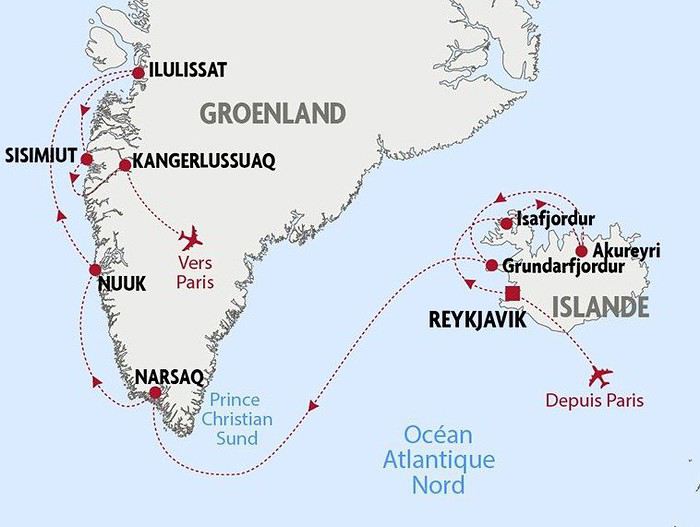
The itinerary was tempting, and we decided to take this cruise with friends. It also gave us a chance to discover this company, which offers many river cruises in a French-speaking atmosphere. The boat is only rated 3 stars, so we knew we wouldn’t have the same comfort or services as usual, but we accepted that. After all, the price is half that of a cruise with Ponant in the same area.
From the booking stage, this company was unlike any other. We later learned that Rivages du Monde isn’t a shipowner but just a service provider.
It operates in a somewhat outdated, old-fashioned, or even backward way, depending on how you see it. Information about the cruise, excursions, and the boat comes in the form of a very brief PDF. Documents, quotes, and invoices are sent by mail.
There’s no personal account on the company’s website, no passenger form to fill out, and no online check-in.
Fifteen days before the balance was due, I received the invoice with its share of surprises. I had to send my credit card details by mail (well, why not?), or pay by check.
The bad surprise was a fuel surcharge. The good one was that we were upgraded from category 3 to category 7, moving from deck 6 to deck 4. Since the information was so lacking, I had no idea what the benefits of this upgrade would be. I almost complained and asked to keep the cabin I had chosen, but I read in some comments that cabins on deck 6 were to be avoided due to loud creaking. So I said nothing.
Booking excursions, which had to be paid at the same time as the balance, was strongly recommended before departure. They were reserved by filling out an A4 sheet after reading a 3- or 4-line description in the PDF. The duration of the excursion and the departure time weren’t indicated. No information about disembarkation—would it be at the dock or by tender?
The boat. The MS Astoria is the oldest passenger ship in the world. Built in 1948, it started its career as a transatlantic liner until 1960. Often restored, it has retained an old-fashioned, vintage charm... or so the ads say. In the end, it didn’t look that old, as it had been modified and refurbished so much. Only its original bell remains in a display case. Its vintage look is more visible on the outside than inside. The outdoor decks are spacious, great for sightseeing. There weren’t too many passengers for the size of the ship. Inside, it’s not very modern or beautiful, but it was decent. A pleasant surprise—it handled the sea better than we expected.
The cabin was outdated and small, as we expected—no desk, no sofa, and two portholes that made it very bright. Well-equipped with new storage furniture, it even had a fridge. The bathroom would have been spacious if it didn’t have a bidet. The bed had a board instead of a proper base, but the mattress was good, and we slept well the whole cruise. Don’t look too closely at the finishing details, but overall, it was better than I expected. On deck 4, the cabin creaked a little at night, but it didn’t bother us. The cabins are different sizes on the plan, but in reality, they all have the same surface area.
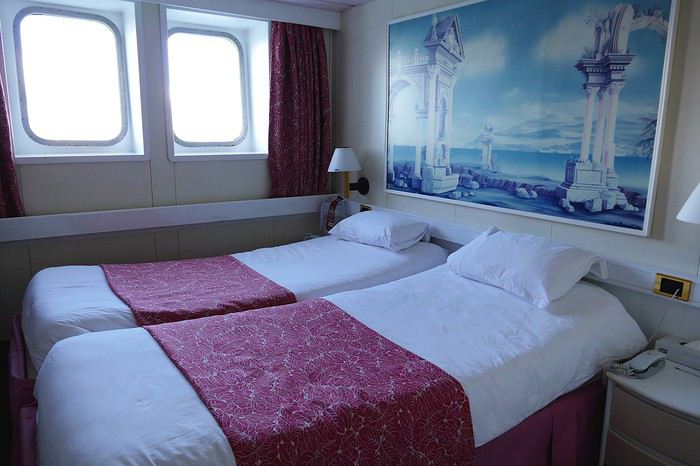
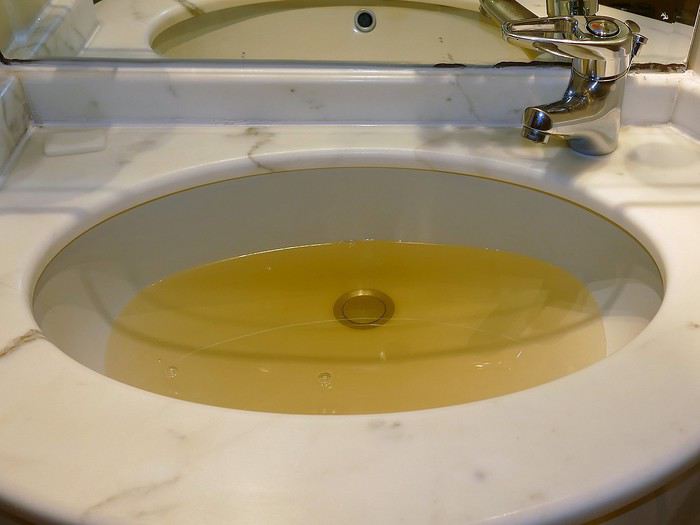
Note the strange color of the hot water.
The buffet was tiny, with few choices and very basic, ordinary dishes. A few mixed industrial salads, some fresh salad and cold cuts. For the main course, chicken, pork, some kind of minced meat, or fish. Then potatoes, rice, pasta, or steamed vegetables (always the same ones). For dessert, flavorless pastries in various colors or fresh melon and watermelon salad. That was the sad, single menu for the entire cruise at the buffet. Note that the buffet was only open for 2 hours at lunchtime and 1 hour in the afternoon for a snack.
Tea, coffee, and water were available all day.
The restaurant. The table was nicely set and pretty, but the meals weren’t much better than at the buffet. The “beef fillet in pastry” was like boiled beef stew—it fell apart easily (even though we asked for it rare or at least medium-rare). The “asparagus velouté” was actually leek soup with “hay” that crunched under your teeth. The poire belle Hélène or profiteroles were sad, distant relatives of the well-known desserts—very skimpy. And those were just a few examples.
Drinks were included with meals: still or sparkling bottled water, white, red, or rosé wine, coffee, tea, or herbal tea.
The bar. The servers were nice but far from having the class and know-how you find on other cruise lines. We wanted to try the cocktails, but only once. The margarita was warm, with bottled chemical lemon, no ice, and no salt. The caipirinha was brown! And later, we noticed that in the Singapore Sling, they replaced the Champagne with soda!!! What a skill set!!!
The lectures were very popular. Almost all passengers eagerly attended the talks by the two naturalists.
The musical entertainment was French variety—good-natured and friendly most of the time. A little classical music, chamber music so sad it made you sleepy. Nothing like the pianos and violins you find elsewhere... (Princess or HAL).
The shows. With very limited resources, the dancers did their best. The outfits were very revealing in certain strategic areas, and that was the rule for all themes.
The “red vests.” The atmosphere on board was more like a company outing than a cruise. There was a lot of staff to run the excursions desk, assist and supervise passengers during stops, or act as guides during excursions. These “red vests” behaved like they were on a summer camp—they had a great time and gathered as often as possible to laugh and have fun. They didn’t hesitate to roll their eyes behind passengers’ backs. But the “group leaders” became very authoritarian and directive when addressing passengers.
One evening, our friend asked a “red vest” about the excursion time the next day. That was top-secret information, impossible to get (I’ll come back to that). The “red vest” replied that they wouldn’t tell him because, by the next day, he would have forgotten anyway. That shows the level of respect this staff had for the passengers.
Also worth noting: among the passengers was a man in a wheelchair. For the entire cruise, he couldn’t go ashore. No one ever offered to help his wife get him off the ship.
My perception of this cruise is inevitably shaped by my past experiences. Some passengers shared my opinion, but others were completely satisfied with everything and found the food good. They also swallowed all the bad excuses, cooked up with a security sauce, without question—reassured and delighted that “everything” was done for “their safety,” which is the most important thing, isn’t it?
To be continued—the stops and the organization, even more pitiful than the hospitality...
Hello,
Here’s our account of our two weeks in Brazil’s Northeast from March 25 to April 9, 2017. We’re two couples in our fifties. Our itinerary: São Paulo, São Luís, Lençóis Maranhenses Park, the Parnaíba Delta, Jericoacoara, Icaraí de Amontada, Pipa, Olinda, and back to São Paulo.
Our budget came to 1400 € per person, excluding international flights.
For food, in a restaurant, a fish or meat dish for two people served with rice, black beans in sauce, and cassava flour costs an average of 80 BRL. You can eat more cheaply on the street, in self-service spots, or in ‘per kilo’ restaurants. At all the pousadas, breakfast was included: it was always very good, hearty, and doubled as our midday meal. Bottled water (1.5 liters): between 2 and 4 BRL Caipirinha: between 5 and 10 BRL
For organization, we used a local guide, Danielisson, to arrange the "Route of Emotions" from São Luís to Jericoacoara (Days 3 to 7). He’s reliable, speaks French very well, and is passionate about his country. The organization was flawless. We highly recommend him. For the rest of the trip, we used cars with drivers or taxis instead of public transport. With four of us, it wasn’t too expensive and was much simpler. We don’t regret not renting a car at all—many roads are unpaved or in very poor condition. Danielisson Pereira: danielissonpereira@yahoo.co.uk Skype: danielissonpereira (Facebook) Phone: 55 (98) 991634424 / 981721946
Weather-wise, March-April is the rainy season, so it’s the low season. Downsides: occasional heavy storms, not everything is open (hotels, restaurants, shops…), but upsides: hardly any tourists and lower prices. Temperature-wise: between 25-30°C year-round, 24/7. Health-wise: a few mosquitoes, nothing serious, but bring protection. Day 1: International flight from Lyon to Paris to São Paulo. We went through São Paulo because my husband was there for work. Hotel: Monreale Hotel: 20 minutes from the airport (free shuttle). For those extending a business trip with a vacation, you can leave your luggage at the hotel for free with no time constraints. Day 2: São Luís Flight from São Paulo to São Luís (3.5 hours). We arrived in São Luís in the rain. It felt very strange—the city was deserted. It was Sunday, so everything was closed (don’t count on a currency exchange office or travel agency being open). We struggled to find a restaurant for the evening. Half a day is more than enough to explore the city, but we really liked all the colorful colonial houses. Flight São Paulo/São Luís: 118 € Taxi from airport to pousada: 50 BRL for 4 Pousada Portas da Amazônia: 33 € per room
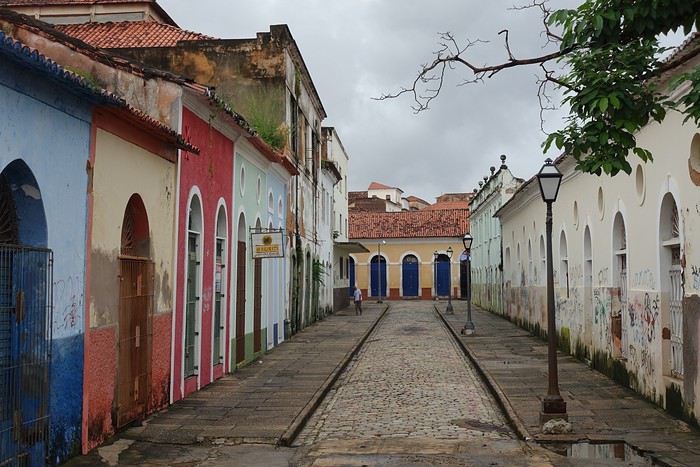
Day 3: Journey to Atins Shared minibus to Barreirinhas (about 4 hours—paved road) where we left our big bags, then a private boat down the Preguiças River to Atins. Stop at Vassouras, where we discovered our first lagoons and enjoyed excellent fish prepared by locals, then at Mandacaru to climb the lighthouse for a 360-degree view. Atins is a small fishing village lost in the sand. During our visit in the low season, almost everything was closed, so it was very quiet.
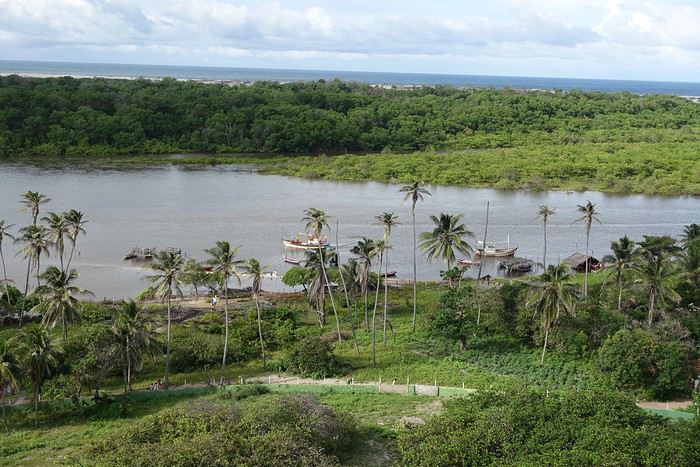
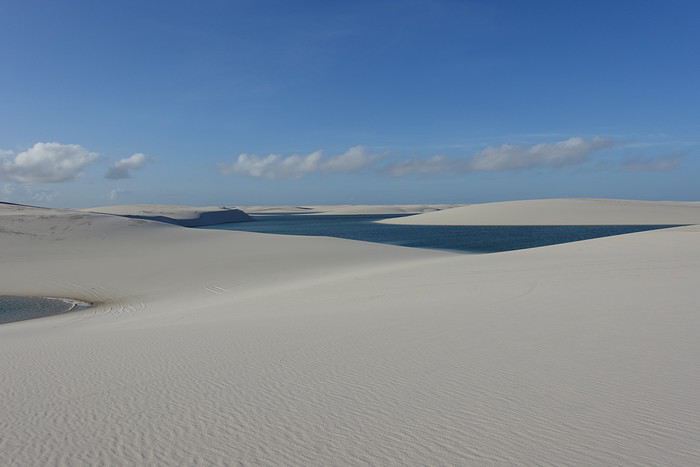
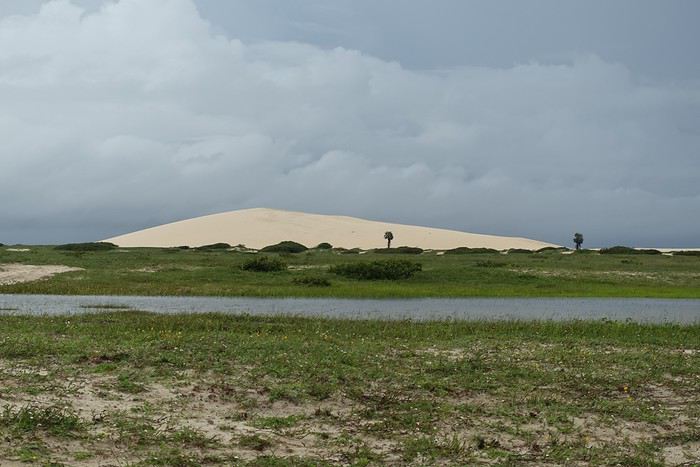
Day 4: Trek in Lençóis Maranhenses Park At 4 AM, we set off for a two-day trek in the Lençóis Park. One hour by 4x4 to reach the starting point. The sun was just rising. At first, there was some vegetation, but then it was just white sand and lagoons, which, contrary to what we thought, were already quite full for the season. As we went on, the landscapes got more and more beautiful. We never got tired of it. The weather was a bit cloudy but no rain, which was ideal to avoid the heat. We took occasional dips in the clear freshwater. Around noon, we arrived at Baixa Grande oasis. Rest and overnight in hammocks with a local family.
Day 5: Trek in Lençóis Maranhenses Park We left the oasis at 5 AM. Compared to the day before, we walked higher up, along the dune ridges, and it was even more stunning. Plus, the sun was shining. It was simply magical. Around noon, we climbed the last dune—on the other side, there was no more sand, just vegetation. A 4x4 was waiting to take us back to Barreirinhas (17 km). A few notes on the trek: - The 6-7 hours of walking are easy. The sand is hard, nothing like walking on a beach. We wore sandals or sneakers. We often got our feet wet crossing lagoons: at first, we took off our shoes, but later, we crossed fully dressed. Everything dries in 5 minutes! - Even with clouds, we got sunburned, so it’s best to wear long sleeves and pants (in addition to a cap, sunscreen, lip balm, water…). - It’s impossible to navigate the desert alone. With the wind, the dunes change shape and position regularly. A guide is essential.
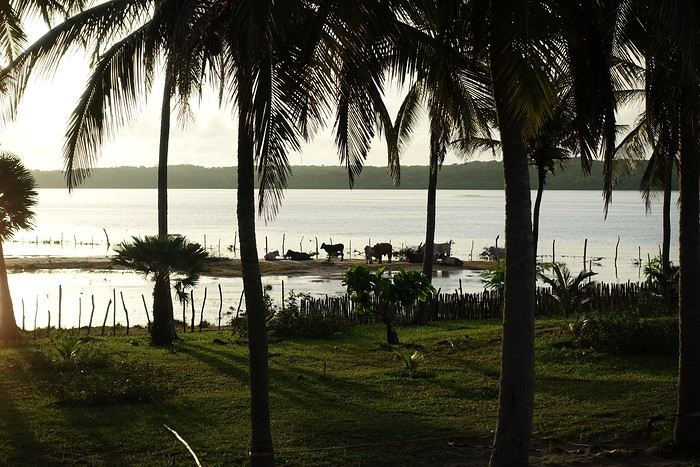
Day 6: Parnaíba Delta A Jeep took us to Tutoia, where we boarded a boat for the Parnaíba Delta. Nothing exceptional. Normally, you can see red ibises at sunset, but we weren’t lucky—they were in their breeding season, so we couldn’t get close. We slept on Canary Island, next to a pretty fishing village.
Day 7: Journey to Jericoacoara Boat to Tatus port, then a car to Jericoacoara (via Parnaíba and Camocim). From Camocim onward, it’s a sandy track. We arrived in Jericoacoara in the late afternoon—it was a brutal return to civilization 😅: tourists, shops, restaurants, pousadas, and that’s during the low season! Pousada Capim Verde: 120 BRL (basic rooms but well-located and cheap)
Day 8: Buggy tour Classic buggy tour (offered by all Jeri agencies) to Lagoa do Paraíso. Unfortunately, it rained a lot, and we cut our ride short. That was the only day slightly "ruined" by the weather. Buggy: 270 BRL
Day 9: Icaraí de Amontada To find some "peace," we headed to Icaraí de Amontada. On the way, alternating wind farms and coconut plantations. Icaraizinho is a village with a stunning beach (as long as you look toward the coconut trees, not the wind turbines). Little wind at this time of year, so no tourists. Pousada Pais Tropical (run by French owners): very nice, right on the beach. Taxi Jericoacoara–Icaraí de Amontada: 340 BRL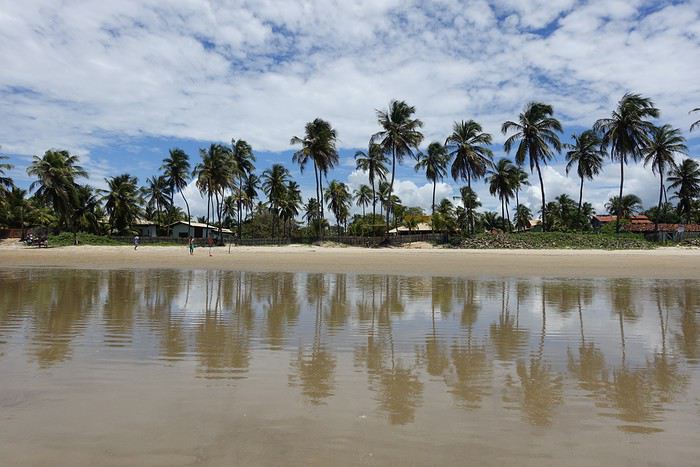 Day 10: Transfer day to Pipa
Taxi Icaraí–Fortaleza: 350 BRL
Flight Fortaleza–Natal: 37 € per person
Taxi Natal–Pipa: 180 BRL
Pousada in Pipa: Aconchego, run by French owners. Great welcome, quiet, perfectly located in the city center.
Day 11: Pipa – Dolphin Beach Skeptical, we set off in the morning before high tide (afterward, it’s hard to pass) to try and see dolphins. And we saw them! Mothers with their calves swimming in the waves, appearing where and when you least expect them. They’re not afraid of humans and pop up just a few meters away. It’s unforgettable. No need to take a boat tour—they come to the same spot and stay for 5-10 minutes. For those who don’t want to swim (there were waves and surf when we were there), the dolphins are visible from the beach.
Day 12: Pipa – Tibau do Sul via the beaches A lovely hike where you go from one beach to another until Tibau do Sul: 2 hours of brisk walking! We stayed a while by the lagoon before taking a shuttle back to Pipa. Shuttle: 2.5 BRL per person
Day 13: Pipa – Dolphin Beach We wanted more—it was too good, and we saw them all day long.
Day 14: Recife A taxi took us to Olinda, where we’d booked a pousada. In the afternoon, we took the bus to Recife: some pretty facades, but nothing unforgettable. Taxi Pipa–Olinda: 400 BRL Bus Olinda–Recife: about 4 BRL per person per trip (45 min) Pousada Villa Olinda (in Olinda): 99 BRL—very well located
Day 15: Olinda All day walking around Olinda, a small town with colorful houses and many churches. In the late evening, we flew to São Paulo. Uber Olinda–Recife airport: 32 BRL Flight Recife–São Paulo: 123 €
Day 16: São Paulo The hotel in Guarulhos is about an hour by public transport from downtown São Paulo. Short on time, we didn’t see much of the city. We went to Avenida Paulista: it was a Sunday, with lots of cultural and sports events, and the avenue was closed to cars. It was nice. Then we walked down to Ibirapuera Park, but it was marathon day, and we couldn’t get in. Bus Guarulhos–first metro station: 4.70 BRL Metro ticket: 3.8 BRL
Conclusion: With this second trip to Brazil, we discovered another side of the country—a poorer region with fewer infrastructures than the Rio area. The trek in Lençóis Maranhenses Park was the highlight of the trip—landscapes you won’t see anywhere else in the world, worth the trip on their own. We also won’t forget swimming with the dolphins in Pipa.
For food, in a restaurant, a fish or meat dish for two people served with rice, black beans in sauce, and cassava flour costs an average of 80 BRL. You can eat more cheaply on the street, in self-service spots, or in ‘per kilo’ restaurants. At all the pousadas, breakfast was included: it was always very good, hearty, and doubled as our midday meal. Bottled water (1.5 liters): between 2 and 4 BRL Caipirinha: between 5 and 10 BRL
For organization, we used a local guide, Danielisson, to arrange the "Route of Emotions" from São Luís to Jericoacoara (Days 3 to 7). He’s reliable, speaks French very well, and is passionate about his country. The organization was flawless. We highly recommend him. For the rest of the trip, we used cars with drivers or taxis instead of public transport. With four of us, it wasn’t too expensive and was much simpler. We don’t regret not renting a car at all—many roads are unpaved or in very poor condition. Danielisson Pereira: danielissonpereira@yahoo.co.uk Skype: danielissonpereira (Facebook) Phone: 55 (98) 991634424 / 981721946
Weather-wise, March-April is the rainy season, so it’s the low season. Downsides: occasional heavy storms, not everything is open (hotels, restaurants, shops…), but upsides: hardly any tourists and lower prices. Temperature-wise: between 25-30°C year-round, 24/7. Health-wise: a few mosquitoes, nothing serious, but bring protection. Day 1: International flight from Lyon to Paris to São Paulo. We went through São Paulo because my husband was there for work. Hotel: Monreale Hotel: 20 minutes from the airport (free shuttle). For those extending a business trip with a vacation, you can leave your luggage at the hotel for free with no time constraints. Day 2: São Luís Flight from São Paulo to São Luís (3.5 hours). We arrived in São Luís in the rain. It felt very strange—the city was deserted. It was Sunday, so everything was closed (don’t count on a currency exchange office or travel agency being open). We struggled to find a restaurant for the evening. Half a day is more than enough to explore the city, but we really liked all the colorful colonial houses. Flight São Paulo/São Luís: 118 € Taxi from airport to pousada: 50 BRL for 4 Pousada Portas da Amazônia: 33 € per room
Day 3: Journey to Atins Shared minibus to Barreirinhas (about 4 hours—paved road) where we left our big bags, then a private boat down the Preguiças River to Atins. Stop at Vassouras, where we discovered our first lagoons and enjoyed excellent fish prepared by locals, then at Mandacaru to climb the lighthouse for a 360-degree view. Atins is a small fishing village lost in the sand. During our visit in the low season, almost everything was closed, so it was very quiet.
Day 4: Trek in Lençóis Maranhenses Park At 4 AM, we set off for a two-day trek in the Lençóis Park. One hour by 4x4 to reach the starting point. The sun was just rising. At first, there was some vegetation, but then it was just white sand and lagoons, which, contrary to what we thought, were already quite full for the season. As we went on, the landscapes got more and more beautiful. We never got tired of it. The weather was a bit cloudy but no rain, which was ideal to avoid the heat. We took occasional dips in the clear freshwater. Around noon, we arrived at Baixa Grande oasis. Rest and overnight in hammocks with a local family.
Day 5: Trek in Lençóis Maranhenses Park We left the oasis at 5 AM. Compared to the day before, we walked higher up, along the dune ridges, and it was even more stunning. Plus, the sun was shining. It was simply magical. Around noon, we climbed the last dune—on the other side, there was no more sand, just vegetation. A 4x4 was waiting to take us back to Barreirinhas (17 km). A few notes on the trek: - The 6-7 hours of walking are easy. The sand is hard, nothing like walking on a beach. We wore sandals or sneakers. We often got our feet wet crossing lagoons: at first, we took off our shoes, but later, we crossed fully dressed. Everything dries in 5 minutes! - Even with clouds, we got sunburned, so it’s best to wear long sleeves and pants (in addition to a cap, sunscreen, lip balm, water…). - It’s impossible to navigate the desert alone. With the wind, the dunes change shape and position regularly. A guide is essential.
Day 6: Parnaíba Delta A Jeep took us to Tutoia, where we boarded a boat for the Parnaíba Delta. Nothing exceptional. Normally, you can see red ibises at sunset, but we weren’t lucky—they were in their breeding season, so we couldn’t get close. We slept on Canary Island, next to a pretty fishing village.
Day 7: Journey to Jericoacoara Boat to Tatus port, then a car to Jericoacoara (via Parnaíba and Camocim). From Camocim onward, it’s a sandy track. We arrived in Jericoacoara in the late afternoon—it was a brutal return to civilization 😅: tourists, shops, restaurants, pousadas, and that’s during the low season! Pousada Capim Verde: 120 BRL (basic rooms but well-located and cheap)
Day 8: Buggy tour Classic buggy tour (offered by all Jeri agencies) to Lagoa do Paraíso. Unfortunately, it rained a lot, and we cut our ride short. That was the only day slightly "ruined" by the weather. Buggy: 270 BRL
Day 9: Icaraí de Amontada To find some "peace," we headed to Icaraí de Amontada. On the way, alternating wind farms and coconut plantations. Icaraizinho is a village with a stunning beach (as long as you look toward the coconut trees, not the wind turbines). Little wind at this time of year, so no tourists. Pousada Pais Tropical (run by French owners): very nice, right on the beach. Taxi Jericoacoara–Icaraí de Amontada: 340 BRL
Day 10: Transfer day to Pipa
Taxi Icaraí–Fortaleza: 350 BRL
Flight Fortaleza–Natal: 37 € per person
Taxi Natal–Pipa: 180 BRL
Pousada in Pipa: Aconchego, run by French owners. Great welcome, quiet, perfectly located in the city center.Day 11: Pipa – Dolphin Beach Skeptical, we set off in the morning before high tide (afterward, it’s hard to pass) to try and see dolphins. And we saw them! Mothers with their calves swimming in the waves, appearing where and when you least expect them. They’re not afraid of humans and pop up just a few meters away. It’s unforgettable. No need to take a boat tour—they come to the same spot and stay for 5-10 minutes. For those who don’t want to swim (there were waves and surf when we were there), the dolphins are visible from the beach.
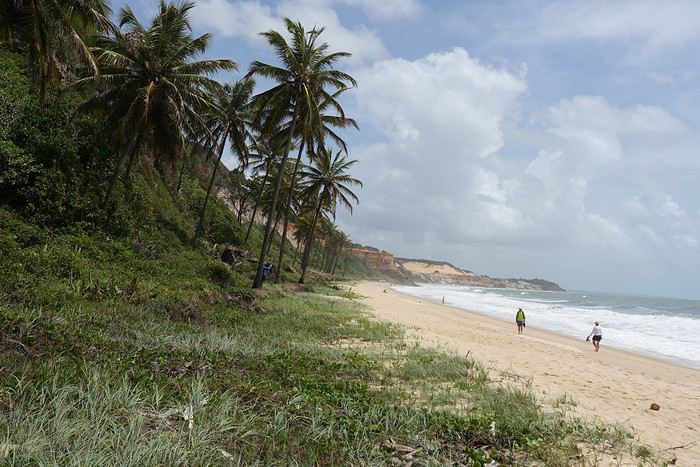
Day 12: Pipa – Tibau do Sul via the beaches A lovely hike where you go from one beach to another until Tibau do Sul: 2 hours of brisk walking! We stayed a while by the lagoon before taking a shuttle back to Pipa. Shuttle: 2.5 BRL per person
Day 13: Pipa – Dolphin Beach We wanted more—it was too good, and we saw them all day long.
Day 14: Recife A taxi took us to Olinda, where we’d booked a pousada. In the afternoon, we took the bus to Recife: some pretty facades, but nothing unforgettable. Taxi Pipa–Olinda: 400 BRL Bus Olinda–Recife: about 4 BRL per person per trip (45 min) Pousada Villa Olinda (in Olinda): 99 BRL—very well located
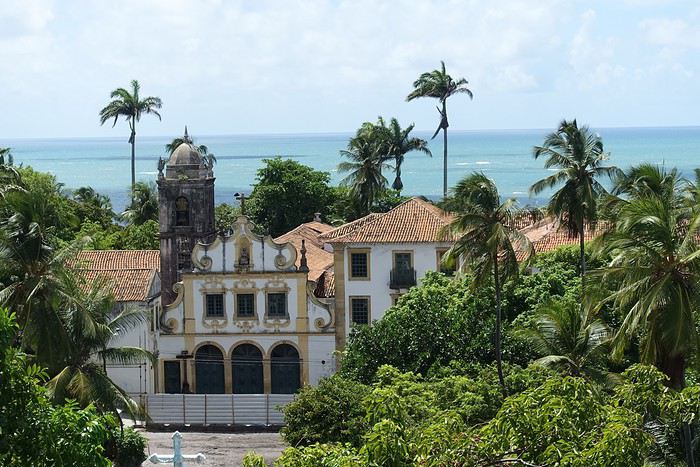
Day 15: Olinda All day walking around Olinda, a small town with colorful houses and many churches. In the late evening, we flew to São Paulo. Uber Olinda–Recife airport: 32 BRL Flight Recife–São Paulo: 123 €
Day 16: São Paulo The hotel in Guarulhos is about an hour by public transport from downtown São Paulo. Short on time, we didn’t see much of the city. We went to Avenida Paulista: it was a Sunday, with lots of cultural and sports events, and the avenue was closed to cars. It was nice. Then we walked down to Ibirapuera Park, but it was marathon day, and we couldn’t get in. Bus Guarulhos–first metro station: 4.70 BRL Metro ticket: 3.8 BRL
Conclusion: With this second trip to Brazil, we discovered another side of the country—a poorer region with fewer infrastructures than the Rio area. The trek in Lençóis Maranhenses Park was the highlight of the trip—landscapes you won’t see anywhere else in the world, worth the trip on their own. We also won’t forget swimming with the dolphins in Pipa.
Hello,
After asking questions on the site, here’s a little feedback on our trip in March and April.
Marseille/Antananarivo flight with Ethiopian Airlines was great both ways. I’d recommend it.
Domestic flights with Madagascar Airlines were just as smooth.
We had to change our plans because I was the victim of a snatch-theft attempt at Ivato... patellar fracture... so I ended up with a brace and more rest than hikes.
This let us spend more time in the same areas and make some connections.
We loved Tulear. Stayed with Alain—excellent value for money.
Mangily, where we stayed for 15 days. Hotel Bella Dona due to my little handicap. The pool replaced sea swims.
Mangily gets a bad rap for being very touristy. True, you get approached a lot on the beach—you have to play along and buy some trinkets, but after that, you get royal peace and lots of exchanges with locals. The village and its lively street are nice too. Don’t hesitate to eat with fishermen or at local bars.
Anakao, a big favorite. Just the journey there is worth it. Watching dozens of pirogues set off between 5 and 6 AM is a magical moment.
Stayed at Peter Pan’s place. Lots of chats with Dario since we were the only guests.
Planned a 4-day Antananarivo–Soniara–Ivango road trip with a driver.
Cut to 2 days because the boat to Sainte Marie was moved up due to weather. I don’t remember the company’s name, but it wasn’t great for safety—plus, we brought back fleas.
Visited Andasibe Park along the way. Quick tip: go in the morning.
A little over 2 weeks on Sainte Marie at Hôtel Mantis Soanambo—total luxury negotiated at a price that defied all competition because it was low season.
Meals were at little local eateries nearby.
We chose not to sleep on Île aux Nattes but went there several times during the day (crossing: 4000 ariary for 2).
You have to take a pirogue tour—it’s like stepping into a postcard.
Sainte Marie is a special place. A tropical island that feels like the Caribbean ones we’ve lived on. No security issues at all. We rented a scooter because we found tuk-tuk prices a bit steep. You can leave the scooter with helmet and keys and come back 4 hours later.
More amazing encounters here too.
Last part of our trip in Ampefy, a beautiful volcanic region with a very welcoming population.
Stayed with a friend of our driver.
Hotels in Ivato are plentiful and vary a lot in quality.
Les 12 Collines is a bit out of the way but only 21 € per night.
La Chato... very expensive for what you get.
I tried to keep it short.
Madagascar is a wonderful island with so many facets. Always so many emotions when I think back on this trip.
The extreme poverty... don’t hesitate to buy food for the kids on the beach, for example. It doesn’t cost much, but it means a lot to them.
The kindness of the people and, above all, those SMILES.
We’re hooked—we’re going back in November for 6 months... because yes, you can buy a 3-month visa at the airport (a question I’d asked), and you can extend it for another 3 months... if you apply in time at a police station.
We didn’t take Malarone either. We’d brought some, but there were few mosquitoes, and "Insect Écran" worked really well.
We’ve only been to Crete in Greece before, so this trip is new to us—but planning the itinerary isn’t easy because we have to make choices. We’d love to hear from those in the know about the following plan:
Day 1: flight to Athens, then flight to Milos
3 days in Milos,
4 days in Sifnos,
3 days in Paros,
Final 3 days in Athens.
Should we book ferry tickets between the islands in March in advance, or can we wait until the last minute?
Same question for accommodations on these different islands.
Finally, on the 3 islands we’ve chosen, is renting a car essential, or are the buses enough?
Thanks for your help!
We arrive in the evening in Marrakesh, and a taxi arranged by our friendly Riad is waiting for us. The driver takes us to the door, where we’re briefly greeted by our hosts. The room is heated—phew—because it’s really cold on this January 17th for our arrival. Riad Alisma, where we’re staying for 2 nights. The next morning, it’s pouring rain when we wake up, but after a good breakfast, the rain has calmed down. Off we go to the medersa, which allows for a relatively sheltered visit. We’d visited this palace 15 years ago—it’s been renovated since then.
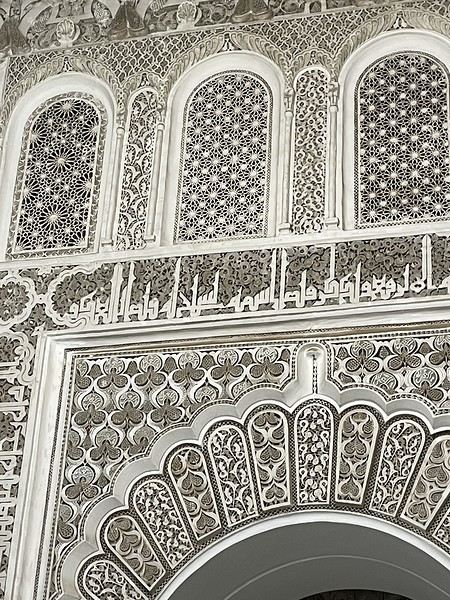
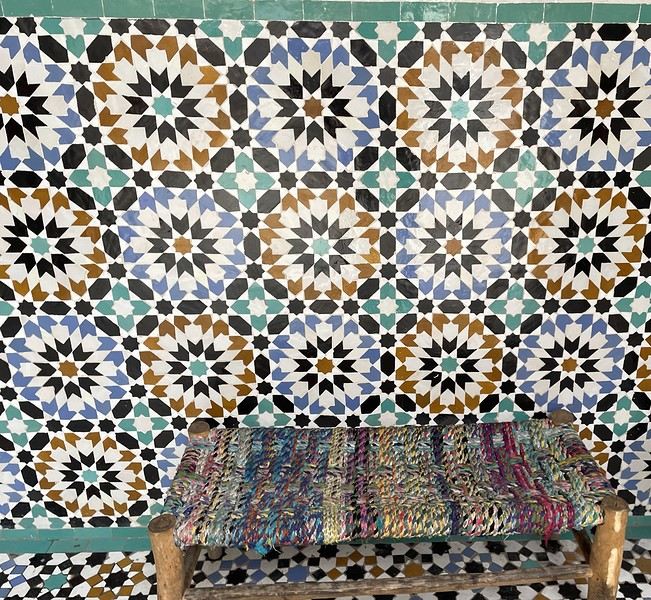
From there, without the rain, we wander aimlessly and eventually end up near the tanneries, but it’s Sunday, and there’s very little activity. Of course, we get hassled by a tout.
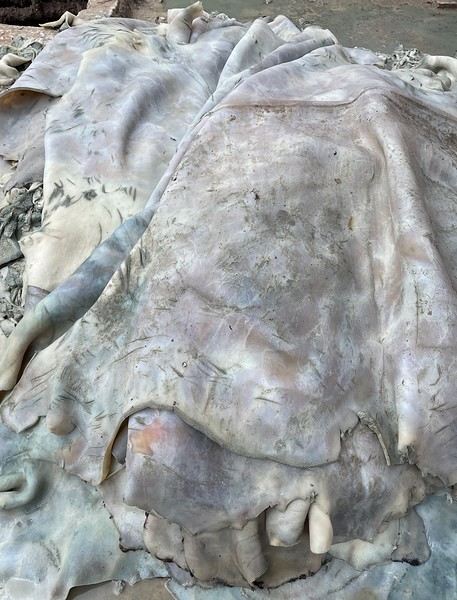
Here, the hides after being treated with lime—I love the colors.
We part ways a bit annoyed. He gets a little revenge by giving us bad directions, and we end up outside the city walls. We decide to take a taxi to the new modern art museum—60 dirhams for the 5 km, which is nothing when you think about it. That tout, who we didn’t ask for anything and made it clear we weren’t buying anything, dragged us into a shop supposedly only open that day and demanded 50 dirhams for his "services"! Let’s forget that bad moment and enjoy the exhibition at the MACAL.
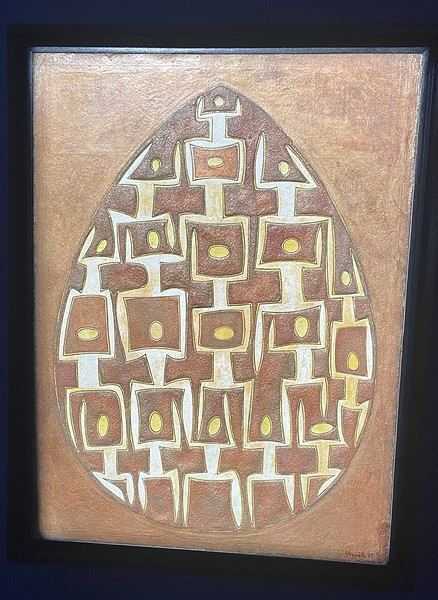
The taxi on the way back drops us off at Place des Ferblantiers, not far from our Riad. We’re a little peckish—it’s worth mentioning that at lunchtime, we only ate a plate of beans from a street vendor. So, we buy a bunch of little sweets, each more delicious than the last, at Ajar. We snack while sipping mint tea and watching life go by around us. A final visit to the Museum of Moroccan Cuisine on our way back helps us dodge a few more showers. Then it’s back to the Riad. The atmosphere in the city is heating up—it’s the AFCON final tonight. The temperatures, though? Not so much. We ordered a meal at the Riad, and it was a good call—not only was it really tasty, but the rain also picked up again. Our day in Marrakesh ends under the covers with a good book and some photo sorting. Still, we managed 10,750 steps. View of our Riad
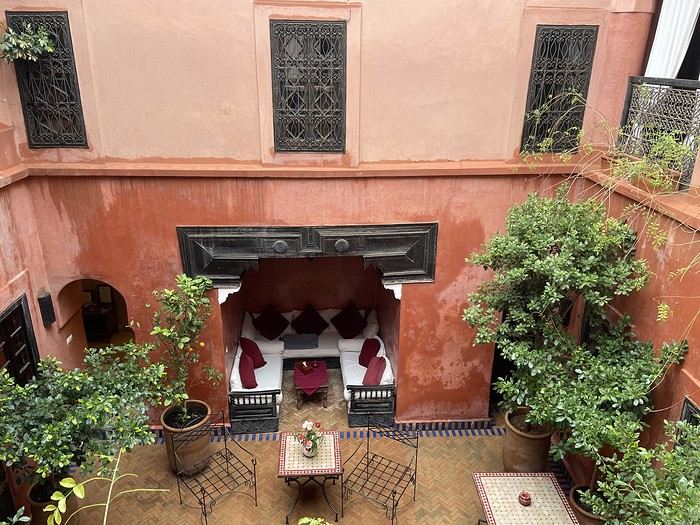
Tomorrow, we’ll pick up our rental car from Medloc and head to Essaouira.
From there, without the rain, we wander aimlessly and eventually end up near the tanneries, but it’s Sunday, and there’s very little activity. Of course, we get hassled by a tout.
Here, the hides after being treated with lime—I love the colors.
We part ways a bit annoyed. He gets a little revenge by giving us bad directions, and we end up outside the city walls. We decide to take a taxi to the new modern art museum—60 dirhams for the 5 km, which is nothing when you think about it. That tout, who we didn’t ask for anything and made it clear we weren’t buying anything, dragged us into a shop supposedly only open that day and demanded 50 dirhams for his "services"! Let’s forget that bad moment and enjoy the exhibition at the MACAL.
The taxi on the way back drops us off at Place des Ferblantiers, not far from our Riad. We’re a little peckish—it’s worth mentioning that at lunchtime, we only ate a plate of beans from a street vendor. So, we buy a bunch of little sweets, each more delicious than the last, at Ajar. We snack while sipping mint tea and watching life go by around us. A final visit to the Museum of Moroccan Cuisine on our way back helps us dodge a few more showers. Then it’s back to the Riad. The atmosphere in the city is heating up—it’s the AFCON final tonight. The temperatures, though? Not so much. We ordered a meal at the Riad, and it was a good call—not only was it really tasty, but the rain also picked up again. Our day in Marrakesh ends under the covers with a good book and some photo sorting. Still, we managed 10,750 steps. View of our Riad
Tomorrow, we’ll pick up our rental car from Medloc and head to Essaouira.
Hi there,
So many things to see that I’m not sure what route to take for my two-week trip at the end of February. I initially thought about spending a few days in Chiang Mai and then heading down to Koh Samui and Koh Tao, but the travel time is long, and the flight from Chiang Mai to Koh Samui is really expensive. So, I’m looking for an alternative after Bangkok while keeping Koh Samui and Koh Tao. Maybe this itinerary, but I’d love your thoughts:
Day 1-3: Bangkok (3 days)
Day 4-5: Kanchanaburi (2 days)
Day 6: Transit Bangkok → Koh Samui
Day 7-9: Koh Samui (3 days)
Day 10-12: Koh Tao (3 days)
Day 13: Return to Bangkok
Hi everyone,
We’re heading to Florida at the end of October with our 2- and 4-year-olds. I’d love to get your thoughts on the itinerary we’re considering.
Since we’re traveling with little ones, we’re keeping the number of stops limited to make things easier for them and avoid packing and unpacking every day.
Here’s the plan so far: Day 1: Land in Orlando at 6 PM Day 2: Orlando (rest day) Day 3: Disney World (Mickey’s Not-So-Scary Halloween Party starting at 4 PM, so we’ll pick one Disney park for the day) Day 4: Orlando > Anna Maria Island (stopping in St. Petersburg) Day 5: Anna Maria Island Day 6: Anna Maria Island > Fort Myers or Naples Day 7: Fort Myers or Naples Day 8: Visit Sanibel and stay overnight in Fort Myers or Naples Day 9: Fort Myers or Naples > Miami (via Shark Valley) Day 10: Miami Day 11: Miami > Keys (stopping in the Everglades?) Day 12: Day trip to Key West Day 13: Keys Day 14: Keys and return to the airport in the evening for our flight
For the Keys, I was thinking Marathon or Islamorada might be a good base with kids—less driving on the last day, too. What do you think?
For the 3 nights in Fort Myers or Naples, where do you think is better to stay? We’d like to spend one day on Sanibel and the rest relaxing. We’ve only planned 2 nights in Miami. Is that a mistake? Should we cut one night from Naples/Fort Myers to add an extra night in Miami? If so, maybe skip Sanibel. Also, does ending in the Keys instead of Miami seem like a bad idea? We’d be staying in Marathon or Islamorada, which keeps prices more reasonable since it’s a weekday. Plus, it lets us break up the drive from Naples to the Keys without adding an extra stop near the Everglades, which would mean another hotel change for the kids.
Thanks so much for your help!
Caroline
Hello hello,
After several trips to the American West, we’ve booked our next tickets to Texas!!! We’ll be leaving in mid-October and arriving in Dallas.
After reading several forums/blogs about Texas, I sketched out what our road trip might look like. But here’s the thing—big snag on Day 13!!!
Could you please help me with this plan? Let me know if my draft seems doable or if, on the contrary, the timing is too tight, if I’ve missed any important spots, etc.
We’re traveling as a family with our little ones (3 and 9 years old). We’re not big fans of big cities—we prefer hitting the road, doing hikes, driving on backroads, and we’d love to spend Halloween in a small, friendly town to really experience it.
Here’s my itinerary:
Dallas (overnight since we arrive at 8:30 PM)
Dallas/Fort Worth (overnight in FW or nearby)
FW/Amarillo (overnight in Amarillo)
Amarillo (another night in Amarillo)
Amarillo/Palo Duro Canyon SP/Roswell (overnight nearby or in Roswell)
Roswell (another night?)
Roswell/White Sands (overnight nearby)
White Sands/Carlsbad (overnight nearby)
Carlsbad/Guadalupe Mountains (overnight nearby)
Guadalupe Mountains/Marfa/Alpine (overnight in Alpine)
Alpine/Terlingua (3 nights)
Big Bend NP
Big Bend NP
Big Bend NP/???
And that’s where things get tricky…
What should we do next?
I was thinking of Lost Maple State Park—probably gorgeous with fall colors.
Then head back up to San Antonio, explore the Hill Country, stop in Waco, and make our way back to Dallas?
My husband, though, would love to take a detour to Lafayette, stopping in Houston to visit the Space Center.
Thanks so much for your help! :)
Have a great weekend,
Marie
Hi there,
I’m planning a trip to Panama in the summer of 2026 (2 adults and 2 kids, ages 9 and 6).
Here’s my first draft for the itinerary. Could you give me some advice, please?
Day 1: Panama City + night 1 Day 2: Departure for the San Blas Islands (I don’t have a transfer company yet and I’m hesitant to drive there myself in an SUV) + 1 or 2 nights depending on the price Day 3 (or 4): Return to Panama City + departure for Isla Grande (maybe too much in one day, so maybe an extra night in Panama City and leave the next day for Isla Grande) For Isla Grande, should I go through Portobelo? Day 3 or 4: Isla Grande + night Day 4 or 5: From Isla Grande to Lake Gatun for an Embera immersion (I haven’t checked the travel time yet) + night Day 5 or 6: Departure from Lake Gatun to El Valle de Antón + 2 or 3 nights Day 7 or max Day 9: Head to the Gulf of Chiriquí and Boca Chica + 2 or 3 nights? Day 9 or max Day 12: Boquete + 2 nights Day 11 or 14: Bocas del Toro (one of the surrounding islands) + 2 nights Day 13 or 16: Return to Panama City by plane the day before the international flight. I don’t have all 21 nights planned yet, but there are still some details to work out with your help ;)
Also, is it possible to rent a car in Panama City and drop it off at the Bocas del Toro airport? (I think so...) Finally, what are the steps for driving back from Bocas del Toro to Panama City (to avoid the domestic flight)?
Thanks in advance!
Hi there,
Could you let me know if this itinerary is doable:
14/09: Arrival in BA at 9:45 PM
15/09 to 16/09: BA
17/09: Flight to Iguazu early in the morning + visit the falls on the Brazilian side
18/09: Visit the falls on the Argentine side
19/09: Flight to Salta + visit Salta
20/09 to 25/09: Northern + Southern Loop in 6 full days (rental car)
26/09 to 28/09: Tolar Grande 3 days (with an agency)
29/09: Flight to Puerto Madryn (arrival in the evening)
30/09: Valdes Peninsula
01/10: Valdes Peninsula + Punta Tombo + overnight bus to Bariloche
02/10 to 07/10: 6 days to see Bariloche and the surrounding area by car (what are the must-sees?)
08/10: Flight to BA
09/10: Flight to Paris at 2:40 PM
Hi everyone,
Taking advantage of the quiet days that Covid-19 has brought us, I thought it was time to share my experience in Costa Rica. Once again, I found a lot of helpful information on this forum, so if I can help in return, I’d be happy to!
Here’s some general info: - 2-week trip in a 4x4 during the dry season, from 01/27 to 02/10 - Two 27-year-old travelers, no kids And here’s our itinerary: Day 1: Arrival in San José Day 2: San José - Tortuguero Day 3: Tortuguero Day 4: Tortuguero - Arenal Day 5: Arenal Day 6: Arenal - Tenorio Day 7: Tenorio - Monteverde Day 8: Monteverde - Quepos Day 9: Quepos Day 10: Quepos - Uvita Day 11: Uvita - Sierpe - Bahía Drake Day 12 & 13: Bahía Drake Day 14: Bahía Drake - San José Day 15: Flight back to Switzerland...
Of course, we had to make choices—it’s impossible to see everything in two weeks—but honestly, we’re *really* happy with our route. We even saw more than we expected!
So, ready 😉? Here we go!
DAY 1 – Arrival in San José
After a smooth Zürich-Frankfurt-San José flight, we finally made it to San José 😎!! After months of planning and excitement, we’re here! Since we’d booked a 4x4 with the ToutCostaRica agency for the next day, we stayed at one of their hotels, the Melrost. One of their agents was there to pick us up at the airport and take us to the hotel, which is really close. It was early evening, and it was already dark, so no exploring the city tonight. We treated ourselves to a first local beer on the terrace, listening to the birds, and then headed straight to bed.
Hotel Melrost: A simple little building, but super convenient for just one night in San José (well, Alajuela) before moving on. The room was great, and breakfast was excellent!
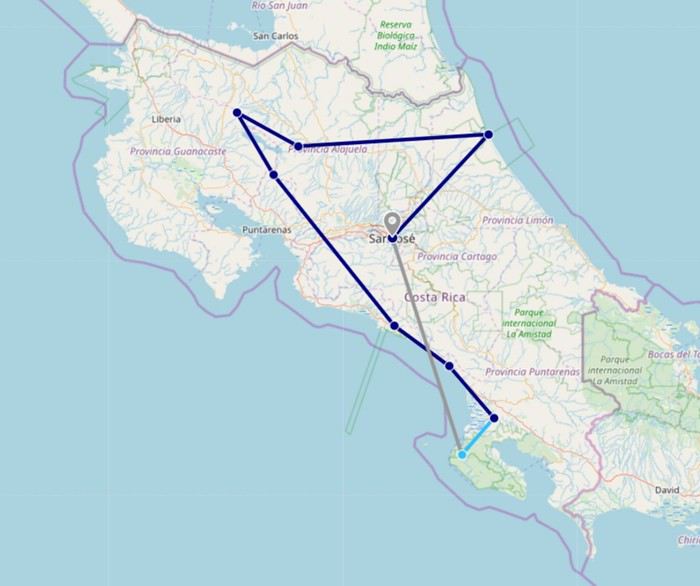
DAY 2 – Off to Tortuguero
This morning, we had a meet-up at the hotel with ToutCostaRica, where we’d rented our 4x4. They held a briefing in small groups for all the car renters to discuss our routes, tips, the country, and other advice. We found it interesting, but *way* too long! They could’ve kept it shorter—reminding us to wear sunscreen in the sun and not to leave valuables in the car seems pretty obvious... Anyway, after a while, we thanked them for all the advice and set off in our brand-new Toyota Rav4! The rental went perfectly with TCR—everything was great. After leaving the traffic jams of San José behind, we hit some pretty little roads (some in better shape than others) until we reached La Pavona. There, we left our car in a guarded parking lot and took a boat (departure at 3:00 PM) to Tortuguero on the Caribbean coast. Just the boat ride was amazing—we were lucky enough to spot a basilisk, iguanas, and tons of birds. After 40 minutes, we docked right at the pier of our hotel, Casa Marbella. After dropping off our stuff in the room, we headed out to explore the village via its one main street. Lively, colorful, and hot! Since we didn’t have anything else planned for the day, we went back to the hotel terrace to enjoy a juice by the canals. Then, a quick dinner and off to bed to be fresh for tomorrow morning!
Casa Marbella: Really nice, with a convenient pier/terrace for arriving and leaving by boat. Breakfast was absolutely delicious! The room was good, though the AC wasn’t working.
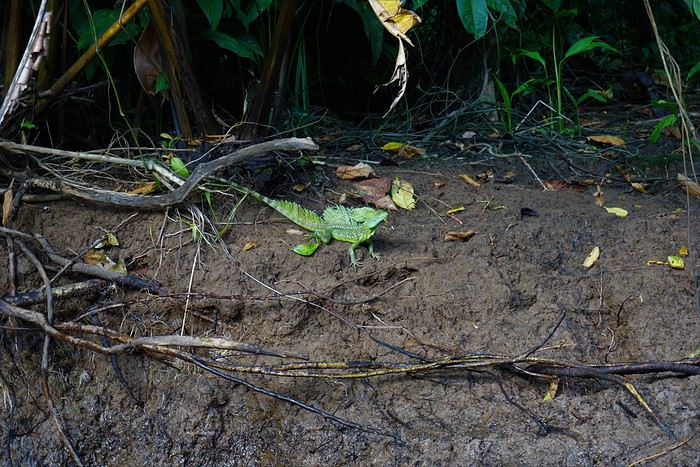
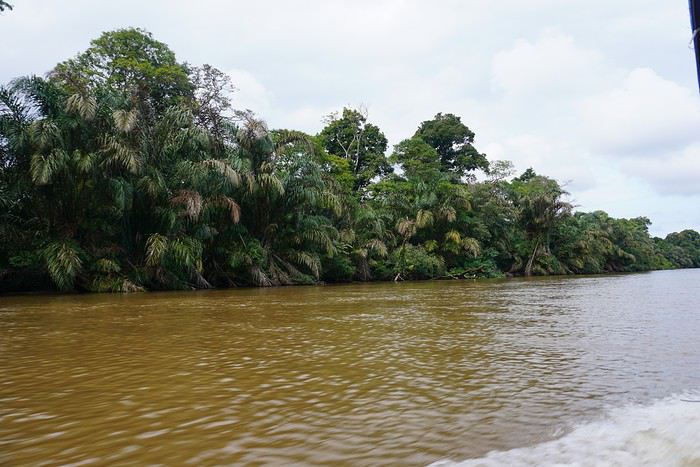
More to come soon!
Taking advantage of the quiet days that Covid-19 has brought us, I thought it was time to share my experience in Costa Rica. Once again, I found a lot of helpful information on this forum, so if I can help in return, I’d be happy to!
Here’s some general info: - 2-week trip in a 4x4 during the dry season, from 01/27 to 02/10 - Two 27-year-old travelers, no kids And here’s our itinerary: Day 1: Arrival in San José Day 2: San José - Tortuguero Day 3: Tortuguero Day 4: Tortuguero - Arenal Day 5: Arenal Day 6: Arenal - Tenorio Day 7: Tenorio - Monteverde Day 8: Monteverde - Quepos Day 9: Quepos Day 10: Quepos - Uvita Day 11: Uvita - Sierpe - Bahía Drake Day 12 & 13: Bahía Drake Day 14: Bahía Drake - San José Day 15: Flight back to Switzerland...
Of course, we had to make choices—it’s impossible to see everything in two weeks—but honestly, we’re *really* happy with our route. We even saw more than we expected!
So, ready 😉? Here we go!
DAY 1 – Arrival in San José
After a smooth Zürich-Frankfurt-San José flight, we finally made it to San José 😎!! After months of planning and excitement, we’re here! Since we’d booked a 4x4 with the ToutCostaRica agency for the next day, we stayed at one of their hotels, the Melrost. One of their agents was there to pick us up at the airport and take us to the hotel, which is really close. It was early evening, and it was already dark, so no exploring the city tonight. We treated ourselves to a first local beer on the terrace, listening to the birds, and then headed straight to bed.
Hotel Melrost: A simple little building, but super convenient for just one night in San José (well, Alajuela) before moving on. The room was great, and breakfast was excellent!
DAY 2 – Off to Tortuguero
This morning, we had a meet-up at the hotel with ToutCostaRica, where we’d rented our 4x4. They held a briefing in small groups for all the car renters to discuss our routes, tips, the country, and other advice. We found it interesting, but *way* too long! They could’ve kept it shorter—reminding us to wear sunscreen in the sun and not to leave valuables in the car seems pretty obvious... Anyway, after a while, we thanked them for all the advice and set off in our brand-new Toyota Rav4! The rental went perfectly with TCR—everything was great. After leaving the traffic jams of San José behind, we hit some pretty little roads (some in better shape than others) until we reached La Pavona. There, we left our car in a guarded parking lot and took a boat (departure at 3:00 PM) to Tortuguero on the Caribbean coast. Just the boat ride was amazing—we were lucky enough to spot a basilisk, iguanas, and tons of birds. After 40 minutes, we docked right at the pier of our hotel, Casa Marbella. After dropping off our stuff in the room, we headed out to explore the village via its one main street. Lively, colorful, and hot! Since we didn’t have anything else planned for the day, we went back to the hotel terrace to enjoy a juice by the canals. Then, a quick dinner and off to bed to be fresh for tomorrow morning!
Casa Marbella: Really nice, with a convenient pier/terrace for arriving and leaving by boat. Breakfast was absolutely delicious! The room was good, though the AC wasn’t working.
More to come soon!
Japan, five weeks between unknown lands and familiar paths

Hello everyone,
I invite you to follow me on this fifth exploration trip to Japan.
Five weeks or so!
For the itinerary, my usual mix: New discoveries, well-known places, and others less so.
At the heart of the trip, a two-week road trip by car. I wavered for a long time between the San'in region, from Tottori to Yamaguchi, and southern Kyushu. By a narrow margin, southern Kyushu won out.
Waterfalls that seem even more impressive. A more exotic atmosphere. Tea-growing lands to savor... Kagoshima will be the starting point. Then a loop from west to east.
And, of course, the must-see stops... Those little Japanese touches. Gourmet cuisine. Japanese, but not only!
And then, the soul of the trip, I hope: Human connections. Big or small.
Otherwise? Several local festivals. Osaka, unexpected. Miyakojima, between beauty and small disappointments. Tokyo... it's Tokyo!
So, travel with me. The suitcase is waiting, with stories that are sometimes generous, but always driven by the love of travel experienced firsthand.
Yōkoso, Nihon! Welcome to Japan!
After a pretty disastrous weather-wise trip to Gran Canaria, we’re hoping this time the sun will shine in Puglia.
It’s not a sure thing, though—the weather’s been awful all over Europe in early May.
For those who’d like to (re)read the story without the digressions, it’s here.
Saturday, May 16: This time we’re flying out of Charleroi (Brussels South): the ticket prices, flight times, and proximity all worked for us. The airport (Ryanair) was recently renovated... but it’s still not very well organized. There are hardly any seats in the boarding areas, and... the restrooms cost money!!! The flight goes smoothly, though, and we land in Bari a little late.
We quickly pick up our rental car, a very local-looking Pandina (even more so than the Fiat 500 in this region), and hit the Italian roads... and their unique driving quirks (like the fact that the countless road signs along the streets and in towns are purely decorative 😏, and that Italian cars don’t have turn signals 😮... except for rental cars).
About an hour later, we arrive at our first accommodation, right in the middle of the countryside near Monopoli. The owner isn’t there, but they’ve left us a ton of info via messages and even turned on the space heater, which is a nice touch. We explore the property:

And the next morning before breakfast, its immediate surroundings:


Sunday, May 17: After our "seaside" experience in Gran Canaria last weekend (packed with people and locals), we decide to start inland. After a hearty breakfast,

we head toward Alberobello, a super touristy village famous for its trulli—those stone houses with conical roofs. We easily find a free parking spot on a street near the Aia Piccola district, where some trulli are still lived in year-round.


We almost immediately come across the Trullo Sovrano (the only two-story one), which you can visit (but we skip it—it’s opening time, and there’s already a line).

From there, we head down toward the Basilica of Cosma e Damiano... but we don’t go in because there’s a mass.

Now we’re on the main Piazza del Popolo, which connects the two districts of Alberobello: Rione Aia Piccola and Rione Monti, the more touristy one.
For those who’d like to (re)read the story without the digressions, it’s here.
Saturday, May 16: This time we’re flying out of Charleroi (Brussels South): the ticket prices, flight times, and proximity all worked for us. The airport (Ryanair) was recently renovated... but it’s still not very well organized. There are hardly any seats in the boarding areas, and... the restrooms cost money!!! The flight goes smoothly, though, and we land in Bari a little late.
We quickly pick up our rental car, a very local-looking Pandina (even more so than the Fiat 500 in this region), and hit the Italian roads... and their unique driving quirks (like the fact that the countless road signs along the streets and in towns are purely decorative 😏, and that Italian cars don’t have turn signals 😮... except for rental cars).
About an hour later, we arrive at our first accommodation, right in the middle of the countryside near Monopoli. The owner isn’t there, but they’ve left us a ton of info via messages and even turned on the space heater, which is a nice touch. We explore the property:
And the next morning before breakfast, its immediate surroundings:
Sunday, May 17: After our "seaside" experience in Gran Canaria last weekend (packed with people and locals), we decide to start inland. After a hearty breakfast,
we head toward Alberobello, a super touristy village famous for its trulli—those stone houses with conical roofs. We easily find a free parking spot on a street near the Aia Piccola district, where some trulli are still lived in year-round.
We almost immediately come across the Trullo Sovrano (the only two-story one), which you can visit (but we skip it—it’s opening time, and there’s already a line).
From there, we head down toward the Basilica of Cosma e Damiano... but we don’t go in because there’s a mass.
Now we’re on the main Piazza del Popolo, which connects the two districts of Alberobello: Rione Aia Piccola and Rione Monti, the more touristy one.
Hi everyone!
After years of hoping, waiting, planning, then changing, saving, and searching for the best possible route... we're FINALLY off this summer for a 5-week road trip in the West.
I had planned a trip to Colorado in 2021 but canceled due to COVID, so with time passing and my eldest’s high school graduation approaching fast, I figured it was now or never!
Anyway, the itinerary has been modified and extended to please everyone (I’m no longer the only one making decisions!!)
Here’s our final route: Day 1 - 7/12/2026 - Brussels / Los Angeles Day 2 - 7/13/2026 - Los Angeles Day 3 - 7/14/2026 - Los Angeles Day 4 - 7/15/2026 - Los Angeles Day 5 - 7/16/2026 - Los Angeles Day 6 - 7/17/2026 - Los Angeles / Kingman Day 7 - 7/18/2026 - Kingman / Grand Canyon Day 8 - 7/19/2026 - Grand Canyon / Page Day 9 - 7/20/2026 - Page Day 10 - 7/21/2026 - Page / Monument Valley Day 11 - 7/22/2026 - Monument Valley / Durango Day 12 - 7/23/2026 - Durango Day 13 - 7/24/2026 - Durango Day 14 - 7/25/2026 - Durango Day 15 - 7/26/2026 - Durango / Glenwood Springs Day 16 - 7/27/2026 - Glenwood Springs Day 17 - 7/28/2026 - Glenwood Springs / Moab Day 18 - 7/29/2026 - Moab Day 19 - 7/30/2026 - Moab Day 20 - 7/31/2026 - Moab Day 21 - 8/1/2026 - Moab Day 22 - 8/2/2026 - Moab / Vernal Day 23 - 8/3/2026 - Vernal / Grand Teton Day 24 - 8/4/2026 - Grand Teton Day 25 - 8/5/2026 - Grand Teton / Cody Day 26 - 8/6/2026 - Cody / Yellowstone Day 27 - 8/7/2026 - Yellowstone Day 28 - 8/8/2026 - Yellowstone Day 29 - 8/9/2026 - Yellowstone Day 30 - 8/10/2026 - Yellowstone / Salt Lake City Day 31 - 8/11/2026 - Salt Lake City / Bryce Canyon Day 32 - 8/12/2026 - Bryce Canyon / Zion Day 33 - 8/13/2026 - Zion Day 34 - 8/14/2026 - Zion Day 35 - 8/15/2026 - Zion / Las Vegas Day 36 - 8/16/2026 - Las Vegas Day 37 - 8/17/2026 - Las Vegas / Los Angeles Day 38 - 8/18/2026 - Los Angeles Day 39 - 8/19/2026 - Los Angeles / Brussels Day 40 - 8/20/2026 - Brussels / Home
We’ll be alternating between house swaps, motels, and campgrounds. I’ve booked all the accommodations (except the campground at Bryce since sunset bookings open only 14 days in advance) and the first activities, as well as the most touristy ones.
I’m currently putting together my day-by-day roadbook and having some trouble planning certain days, like in LA or Las Vegas. Choosing hikes isn’t easy either—it’s tough to decide!
We’re really excited but could definitely use your help with choices and optimizations!!