Hi there,
I’ve finally decided to make my childhood dream come true—and at the same time, fulfill my two boys’ dreams (ages 9 and 13).
Just to give you some context, we’re used to "backpacker" vacations—the little one even crossed Malaysia on my back. But now I’ve got a teenager, so if I pack too much, he complains, and I’m getting older, so I’m more tired 😉.
I’ve put together this itinerary trying not to rush, based on a felucca trip with a small local agency that has a solid reputation.
Day 1: Late arrival in Cairo
Day 2: Cairo - Flight to Aswan (11:20 PM)?
Day 3: Aswan? Cairo?
Day 4: Aswan
Day 5: Sail Day 1
Day 6: Sail Day 2 (camel market + Kom Ombo)
Day 7: Sail Day 3 (Jabal El Silsila)
Day 8: Sail Day 4 Edfu - transfer to Luxor - arriving at 2 PM
Day 9: Luxor (Valley of the Kings)
Day 10: Luxor (Karnak)
Day 11: Luxor / Cairo?
Day 12: Cairo: Giza
Day 13: Cairo Giza again - Flight home at 11 PM
My main question is about how much time to allocate in Aswan, Luxor, and Cairo to avoid missing out but without feeling rushed.
We definitely have:
- 3 full days in Cairo
- 2.5 days in Luxor
- 1 day in Aswan
I can adjust a bit:
- By adding 1 day in Aswan or Cairo
- By adding a half-day in Cairo or Luxor.
What would you recommend and why?
Thanks in advance!
Catherine, back on VoyageForum—what a joy.
2,761 similar discussions in English
Hello!
After a long travel hiatus, we’re (finally) back on the road for some getaways! Now with two kids in tow, we’re heading to Thailand for two weeks next February (a destination that’s stood us up twice before but seems perfect for our first big family trip).
We’d have loved to stay longer, but two weeks is already a great start and will be plenty enjoyable.
Key points: - Experience Thailand, not just live our usual routine in Thailand - Avoid crowds as much as possible, even though February will be busy - Not big city fans, so Bangkok (BKK) will be kept to a minimum - Focus on nature, the sea, forests, waterfalls, hiking, kayaking...
At this stage, here’s the rough itinerary I’m considering: - Arrival at 7 AM + a day in BKK
- DEPART for SURAT THANI (BUS) - Transfer + Khao Sok (overnight on the lake / in the trees)
- RETURN to Ko Samui - Transfer to Koh Pha Ngan or Koh Tao (snorkeling)
- RETURN to Khao Lak. While there: * Visit Ao Phang Nga Park by kayak * Excursion to caves / Ko Khao Phing Kan (the "007 beach" lol) * ALTERNATIVE = SIMILAN ISLANDS
- RETURN to KRABI or Koh Phi Phi * Visit Koh Hong or Koh Yao Yai
* Flight from SURAT THANI to BKK - If time left in BKK: - Explore BKK: Wat Pho / floating market / Maeklong Railway Market / Chinatown... - Or a day trip to Ayutthaya - Or a day at Erawan Waterfall (Haew Suwat) - Day +1 = Return to France
Questions I’m pondering: - Is this too ambitious? I think it might be... but since we’d rather see as much as possible than just lounge on a beach... - How to get around on this route? Bus or rental vehicle (which I’d prefer to avoid) - Are there any inconsistencies in the plan I’ve outlined? - Should I adjust any connections or prioritize differently? - Krabi vs. Koh Phi Phi? - Koh Hong vs. Koh Yao Yai?
We’ve booked the first night (using some leftover backpacking perks), but nothing else—so open to all ideas!
If you know a local agency that can offer advice (for a fee), that could work too, since the options feel endless...
Thanks so much for reading this far, and even more if you’ve got tips or suggestions to share!! Best wishes ;)
Hi everyone!
Blue skies (lots of them), whitewashed villages with steep alleyways, hundreds of churches, and... thousands of stairs? Welcome to the Cyclades! 🙂
We’d been dreaming about this for a while, but in July-August—with the crowds—no way! Now that I can travel outside school holidays, the Cyclades are back on the agenda. And so begins a loooong period of planning and second-guessing, with countless itinerary changes: the Cyclades, yes, but which ones? I was fixated on Folegandros (we won’t be going after all) and really wanted to visit Delos. So, for this first trip, it’ll be: Mykonos (and Delos)-Naxos-Amorgos-Santorini.
Saturday 24/05: Departure from Orly on a Transavia flight, arriving in Mykonos in the late afternoon. We found a hotel that offers free transfers (pretty rare and not insignificant—it’s 25 € each way for just a few kilometers 😠) and at a reasonable price (83 € per night for B&B). Time for dinner already: Greek salad and souvlaki (we’re in Greece, right?)
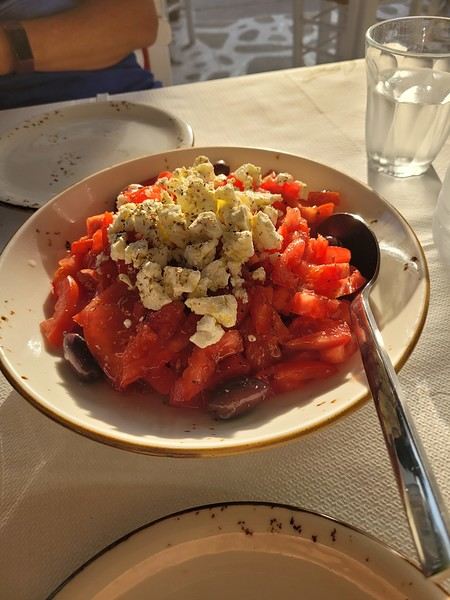 (Okay, this is actually a dakos with Naxos cheese, but I don’t have a photo of a Greek salad 😏).
Blue skies (lots of them), whitewashed villages with steep alleyways, hundreds of churches, and... thousands of stairs? Welcome to the Cyclades! 🙂
We’d been dreaming about this for a while, but in July-August—with the crowds—no way! Now that I can travel outside school holidays, the Cyclades are back on the agenda. And so begins a loooong period of planning and second-guessing, with countless itinerary changes: the Cyclades, yes, but which ones? I was fixated on Folegandros (we won’t be going after all) and really wanted to visit Delos. So, for this first trip, it’ll be: Mykonos (and Delos)-Naxos-Amorgos-Santorini.
Saturday 24/05: Departure from Orly on a Transavia flight, arriving in Mykonos in the late afternoon. We found a hotel that offers free transfers (pretty rare and not insignificant—it’s 25 € each way for just a few kilometers 😠) and at a reasonable price (83 € per night for B&B). Time for dinner already: Greek salad and souvlaki (we’re in Greece, right?)
(Okay, this is actually a dakos with Naxos cheese, but I don’t have a photo of a Greek salad 😏).Hi everyone. I’ve got a round-trip ticket to Perth for 4 weeks. Is it better to stay on the west coast the whole time?
Or should I grab a round-trip to the east coast?
Or even head over to NZ as well?
Thanks for your tips.
Why Colombia?
It's quite simple. For the past few years, my daughter has been living with a Colombian from Bogotá. The idea was to discover his country, meet his family, and do part of the trip all four of us together.
We’re heading out first as scouts, then they’ll join us to continue the journey.
The itinerary was shared in another post—now it’s time for the impressions.
No photos, as for me, it’s video and nothing more!
Day 1: The big departure What was planned: A flight from Lyon Saint-Exupéry late morning heading to Frankfurt. Two hours of waiting in Frankfurt (just enough time to eat a pretzel!!) and then off to Bogotá for an arrival around 7 PM local time. I hadn’t done the Check-Mig (to be done 72 hours before the flight). I did it on my phone, giving a fake arrival date in Colombia, and the attendant told me there wouldn’t be any issues in Bogotá. Actually, two hours of delay at departure in Lyon because a sick passenger was on the plane—they had to evacuate him, and the ambulance that was supposed to be there didn’t have permission to come near the plane. Ah, French administrative formalities!!!!! Flight to Frankfurt with Lufthansa went smoothly. A sprint through the airport—very well organized. Connection secured, so we boarded the plane, and two hours later than scheduled, we took off for an 11-hour flight! Arrival in Bogotá, and the immigration process took over an hour and a half because of the crowds. However, no issues with the Check-Mig—they barely glanced at it. Our daughter’s father-in-law ended up waiting over 3 hours at the airport because of this!!! Surprise: No luggage. Luckily, we had packed essentials in our carry-ons! Quick administrative paperwork, and Lufthansa informed me our bags would be on the next flight, so no big deal. Off to our hotel in La Candelaria and a good night’s rest.
The plus: We’re in Bogotá! The minus: Flight delays are becoming more and more common.
Hi everyone! I’ve put together an itinerary for Madagascar and would love to get your feedback if you can help—thanks!
December 6–9: Antananarivo 3 nights, sightseeing Andasibe-Mantadia National Park Rova of Antananarivo (Ambohimanga Fort) Lemurs’ Park
December 9–11: Fianarantsoa, 2 nights Ranomafana National Park
Ambalavao, December 11–13, 2 nights Andringitra National Park
December 13–15: Ranohira or Ilakaka, 2 nights Monkey Canyon visit Isalo National Park
December 15–18: Tulear, 3 nights Reniala Reserve visit Beach time, possible diving Antsokay Arboretum Ifaty Forest
December 18–19: Full day—take a flight to the capital and stay overnight Then on December 19, take the bus to Morondava
December 19–23: Morondava, 4 nights Kirindy Mitea National Park Avenue of the Baobabs Tsingy de Bemaraha National Park
12:30-hour bus ride from Morondava to the capital
Antananarivo, December 23–24 11:30-hour trip from the capital to Mahajanga
Mahajanga/Majunga, December 24–27, 3 nights Ankarafantsika National Park visit
Ambanja District, 3 nights December 27–30 Tsaratanana Nature Reserve visit Maromokotro trek
Nosy Be Island, December 30–January 7, 2026, 8 nights diving, beach time, relaxation, walks, hiking, snorkeling
Antsiranana, January 7–11, 4 nights Ambavanibe Bay visit Montagne d’Ambre National Park
Return to the capital for a flight home or a 28-hour bus ride
1 or 2 nights in Antananarivo depending on the return trip
January 13: Departure for France Arrival in Paris, France the next day
Hello,
As always when you're impulsive, you do things first and ask questions later 😇
I booked a round-trip to NYC (Newark) from 10/17 to 11/01, 2025 at a good price. Now I need to figure out what to do 😎
The initial idea was to go to Nashville. Why? I don’t really know. For info, we’ve already been to NYC and Washington D.C.
That said, I opened an Excel sheet and put this together:
D1: Arrival at Newark around 9 PM. Pick up car and overnight near the airport D2/3: Philadelphia D4: Lancaster (Amish Village) then drive to Shenandoah NP. Overnight in the northern part of the park (Front Royal?) D5: Scenic road - Overnight in Charlottesville D6: Blue Ridge Parkway - Overnight in Troutville D7: Blue Ridge Parkway - Overnight in Boone D8: Blue Ridge Parkway - Overnight in Asheville D9: Blue Ridge Parkway - Overnight in Gatlinburg D10: Smoky Mountains - Overnight in Gatlinburg
That’s where things get tricky.
If I add 2 nights in Nashville, it really tightens up the end of the trip in terms of mileage.
I thought about doing:
D11/12: Nashville D13: Mammoth Cave > Lexington D14: Fayetteville D15: X D16: Drive back to Newark.
But honestly, I’m not happy with the end.
So I thought about adding Gettysburg by adjusting things and shortening D4, which I felt was too packed: D1: Arrival at Newark around 9 PM. Pick up car and overnight near the airport D2/3: Philadelphia D4: Lancaster (Amish Village) - Overnight in York D5: Gettysburg - Overnight in Front Royal D6: Shenandoah NP Scenic Road - Overnight in Charlottesville D7: Blue Ridge Parkway - Overnight in Troutville D8: Blue Ridge Parkway - Overnight in Boone D9: Blue Ridge Parkway - Overnight in Asheville D10: Blue Ridge Parkway - Overnight in Gatlinburg D11: Smoky Mountains - Overnight in Gatlinburg
This leaves me with 5 days to get back to NYC. Maybe via the coast?
What do you think?
Hi everyone,
As part of a four-month world trip with our kids (ages 6, 12, and 13), we’ll be spending four weeks in Indonesia. Choosing destinations is so tough because everything is just so appealing! We’ll be spending some time on Java and will likely make a "quick trip" to Borneo for the orangutan reserve. We also want to experience Bali’s culture and the small islands of the Lesser Sundas, with their incredible marine life... but which ones should we prioritize? For a few days of diving and relaxation, do you think we should go for Nusa Penida, the Gili Islands, or Moyo Island? Is Sumbawa complicated to explore? Is it worth taking the time to visit? Can it be crossed by car to then reach Komodo National Park? Anyway, any advice would be greatly appreciated. Our goal is to avoid overly touristy spots (but not places that feel too unsafe with the kids), to discover local culture and villages, and to be amazed both underwater and above. Thanks so much for your help!
As part of a four-month world trip with our kids (ages 6, 12, and 13), we’ll be spending four weeks in Indonesia. Choosing destinations is so tough because everything is just so appealing! We’ll be spending some time on Java and will likely make a "quick trip" to Borneo for the orangutan reserve. We also want to experience Bali’s culture and the small islands of the Lesser Sundas, with their incredible marine life... but which ones should we prioritize? For a few days of diving and relaxation, do you think we should go for Nusa Penida, the Gili Islands, or Moyo Island? Is Sumbawa complicated to explore? Is it worth taking the time to visit? Can it be crossed by car to then reach Komodo National Park? Anyway, any advice would be greatly appreciated. Our goal is to avoid overly touristy spots (but not places that feel too unsafe with the kids), to discover local culture and villages, and to be amazed both underwater and above. Thanks so much for your help!
Hi everyone,
Actually, we ended up going to Japan almost by chance. I’d caught glimpses of the country during business trips, and it had been on my “wish list” for a while, but I thought we’d go “when the kids were grown up.”
But this summer (2016), the kids couldn’t agree on a destination—their wishes were completely opposite. Then, realizing that flight tickets weren’t outrageously priced—and having read that Japan wasn’t as expensive as people think—we, the parents, suggested Japan… while warning that it would be scorching hot and humid and that no one should complain. Our eldest (18) was immediately thrilled: “Oh! Mom! I’ve always dreamed of going to Japan!” She convinced her brother (16) that it was the perfect destination. Deal sealed: we’re going to Japan, but no one complains about the heat.
After some forum discussions and family brainstorming, I settled on the following itinerary. One non-negotiable shaped part of our choices: being in Hiroshima on August 6th to attend the lantern floating ceremony. To avoid overloading the trip with extra transport, we skipped Nara, Nikko, and Kamakura.
Day 1 - Arrival at 8:30 AM in Osaka – Kyoto - around the station Day 2 - Kyoto - East - night: Kyoto Day 3 - Kyoto - North and center - night: Kyoto Day 4 - Osaka (stroll with Osaka Safari) - Fushimi Inari -night : Kyoto Day 5 - Train - Naoshima - night: Uno Day 6 - Teshima -night: Uno Day 7 - Naoshima – Hiroshima - night: Hiroshima Day 8 - Hiroshima – Commemorations - night: Hiroshima Day 10 - Miyajima- night: Miyajima Day 10 - Miyajima - Himeji Castle - night: Osaka Day 11 - Osaka - night: Osaka Day 12 - Kyoto - West -night: Osaka Day 13 - Kanazawa to Ainokura - night: Ainokura Day 14 - Shirakawa-go - Takayama - night: Takayama Day 15 - Kamikochi night: Takayama Day 16 - Takayama - return to Kanazawa night: Kanazawa Day 17 - Kanazawa -night: Kanazawa Day 18 - Travel to Tokyo (Shibuya) -night: Tokyo Day 19 - Tokyo (visit with Tokyo Free Guide – Yoyogi Park - Meiji Shrine - Harajuku - Takeshita-dori - Omote Sando - Odaiba) - night: Tokyo Day 20 - Tokyo (with Tokyo Safari) - night: Tokyo Day 21 - Tokyo (Tsukiji, Hama-Rikyu Onshi Teien, Asakusa and Senso-ji, Kappabashi, Ameyoko, and Ueno) - night: Tokyo Day 22 - Tokyo (Shibuya-Yoyogi Park again - Ikebukuro - Shinjuku (Tokyo Metropolitan Government Building, Omoide-yokocho, Golden Gai) - night: Tokyo Day 23 - Tokyo (Yanaka – Ueno – Edo-Tokyo Museum - Takashita-Dori again - back to Shibuya) - departure at 10:50 PM for Paris
(You can access the published days directly by clicking on them).
The itinerary perfectly matched our expectations: a good pace, a wide variety of visits, the must-sees, but also a first taste of rural Japan. If we were to do it again, I’d do exactly the same (except for the back-and-forth between Kyoto and Osaka on Days 4 and 12, which were due to my desire to explore Osaka with Osaka Safari). Of course, we had to skip some sights, especially in Kyoto where we missed a few “highlights,” but that was a deliberate choice—I’d limited our time in the city, which is known for being stifling in summer.
For accommodations, we mixed Airbnb apartments and quadruple rooms in guesthouses and ryokan. It worked out perfectly. The apartments gave us more space and the chance to dine in some evenings, while the guesthouses and ryokan helped us experience Japanese customs.
First, a quick recap: all four of us were enchanted by our trip. Japan is a constant source of wonder, just like the preface of *Tokyo Sanpo* by Florent Chavouet describes—I’ll take this opportunity to plug the book, which I read with great pleasure after our vacation. That’s exactly it: everything is a reason for amazement. Everything is so different from home. I wanted to photograph everything around me constantly. I promise, I won’t say “photograph like a Japanese” anymore—during this trip, *I* was the Japanese. And I better understand the culture shock Japanese travelers experience in Europe.
As a friend of mine put it: “It’s simple—they have ten fingers, so they count in base 10. Otherwise, they do everything differently from us.” Well summarized.
Another thing: everything is easy. Everything seems to have its place and be exactly where it should be. The smallest detail seems to have been thought out to make life easier. Things that come to mind: the incredibly well-designed signage in train stations and the subway, the ubiquitous public toilets, designated smoking areas, those hyper-detailed maps with all the useful information available at every place we visited… These maps are so well done that we got into the habit of picking them up systematically. It’s that simple: I came back to Paris with a complete collection. And when we arrived in Takayama by car, our first stop was at the train station to get THE map. But this order goes beyond all these practical elements. There’s a certain *je ne sais quoi* that makes you feel like everything is exactly where it should be. Even during rush hour, in the crowds, people manage to avoid each other in a smooth, collision-free flow—the opposite of the Paris metro. Anyone who’s experienced certain transfers in Paris at certain times will understand.
The exquisite politeness of the Japanese and their desire to be helpful are another highlight of the trip. Every person we met tried to help us and make our lives easier. It was really great.
Oh! I almost forgot: Japan’s hyper-safe side. I’ve rarely felt as safe as I did in Japan. No need to keep an eye on your belongings—they’re not going anywhere. One example among many: in Tokyo, Japanese women leave their bags open with their smartphones casually placed on top. Even I could’ve taken them without them noticing, let alone a pickpocket… No wonder France is seen as dangerous.
That said, I’m not claiming Japanese society is flawless. The role of women and gender relations are downright shocking and archaic from our European perspective. I also don’t think I could live in such a codified society, where the individual is so dissolved into the collective. But for a vacation, it’s simply delightful. On that note, I recommend *Nââânde?!* by Eriko Nakamura, which I discovered after our trip on the recommendation of our eldest’s friend. It’s the story of a Japanese woman married to a Frenchman living in Paris, recounting her astonishment at French habits and customs. Even though I tried to be careful, I’m sure I made quite a few blunders.
As for the climate, it didn’t stop us from enjoying our trip. Sure, we were hot—*really* hot—but by protecting ourselves from the sun (hat for me, caps for the others, plus umbrellas—Japanese-style parasols) and drinking liters and liters of water, it was manageable and didn’t bother us too much, even if we probably had a slower pace than we would’ve with milder weather. That said, with small children, we would’ve struggled more.
Last point before diving into the trip details: the cost. Despite what I’d read, traveling in Japan is still expensive. I’m not talking about our specific trip, where—using our daughter’s 18th birthday and our 20th wedding anniversary as an excuse—I splurged on a few extras that drove up the cost. I was particularly surprised by the price of quadruple rooms, which is roughly the same as two double rooms. So for a family, that’s a significant extra cost. The various paid sites in Kyoto also add up. As for food, it’s generally cheap, but it would be a shame not to budget for a few extras to try some less affordable specialties—like Hida beef in our case.
Hello,
A must-read for anyone planning to travel to Kenya or Tanzania in the coming months.
https://www.corsematin.com/article/francemonde/70999544524516/lonu-prevoit-un-el-nino-de-tres-forte-intensite-ces-cinq-prochains-mois
In Nov./Dec. 2022, I went on a safari in the region and we suffered from the extreme temperatures caused by the "El Niño" phenomenon in the Indian Ocean at that time. On top of the extreme heat, there can be torrential rains, flooding, etc., which have led to disasters with casualties.
Worth keeping in mind (just in case).
Best regards, ...
Hi everyone,
It's official—I've got our flight tickets for next October! Two weeks with my 16-year-old son, aiming to see plenty of big animals and birds.
Thanks to all of you for the wealth of information on this site.
After going through a good chunk of the forum and travel journals about South Africa, I think my itinerary is ready...
I’ve planned 2 days with long drives to minimize time spent outside the parks. These are Sunday the 18th: Johannesburg Airport to Hluhluwe-Umfolozi Reserve, and Friday the 23rd: St. Lucia to Nelspruit (staying in South Africa) or as close as possible to visit the Canyon the next day.
I’d love to hear your thoughts on the itinerary, especially these 2 days—are they doable or not? Should I book in advance, or will there be places to sleep along the way if we don’t make it to our planned destination? What’s the crowd level in South Africa in October?
As for Kruger, I’ve chosen campsites with camping facilities, prioritizing the "satellite" camps, at least in the northern part!! I’ve planned to change camps almost every day to combine travel and wildlife spotting, but is this the right choice?
The itinerary:
Sunday 18th Arrival at 8:50 AM in Johannesburg Drive to Hluhluwe-Umfolozi Reserve 530 km, 7h20 1 night (18th–19th) at the northern gate
Monday 19th Hluhluwe-Umfolozi Reserve 1h30, 50 km 2nd night (19th–20th) southeast of the reserve
Tuesday 20th Hluhluwe-Umfolozi Reserve 3rd night (20th–21st) southeast of the reserve or Mpila
Wednesday 21st Reserve and drive to St. Lucia Drive to St. Lucia: 1h, 50 km Crocodile and hippo boat tour at 3 PM 4th night (21st–22nd) in St. Lucia Sugarloaf Campsites
Thursday 22nd Whale-watching tour 7–9 AM (or the next day) Cap Vidal, day trip: 70 km round trip 5th night (22nd–23rd) in St. Lucia Sugarloaf Campsites
Friday 23rd Drive to Nelspruit 541 km, 7h Night in Nelspruit 6th night (23rd–24th) in Graskop
Saturday 24th Blyde River Canyon 150 km, 2h + stops 7th night (24th–25th) at Blyde Canyon Forever Resort
Sunday 25th (Kruger Day 1) Leopard Trail hike: 3h Drive to Kruger, Phalaborwa Gate 136 km, 2h to the park entrance 75 km, 3h to Mopani - Tzende 8th night (25th–26th) Kruger 1: Tsendze
Monday 26th (Kruger Day 2) Drive to Balule: 84 km, 3h20 9th night (26th–27th) Kruger 2: Balule
Tuesday 27th (Kruger Day 3) Drive to Satara: 160 km, 6h25 10th night (27th–28th) Kruger 3: Satara
Wednesday 28th (Kruger Day 4) Kruger 11th night (28th–29th) Kruger 4: Satara
Thursday 29th (Kruger Day 5) Kruger 12th night (29th–30th) Kruger 5: Skukuza
Friday 30th (Kruger Day 6) Kruger 13th night (30th–31st) Kruger 6: Lower Sabi
Saturday 31st (Kruger Day 7) Kruger 14th night (31st–1st) Kruger 7: Berg-en-Dal
Sunday 31st Departure: flight at 9:15 PM (must be at the airport by 6 PM max) Morning in Kruger, then drive 400 km, 5h30—departure by 11 AM max
Thanks in advance for your feedback! Claude
Hello everyone,
If you'd like, I invite you to join me for a week-long cruise to northern Greece, visiting ports that are often less crowded with cruise ships.
Itinerary: Athens, Skiathos, Volos, Thessaloniki, Kavala, Limnos, Hydra, Athens
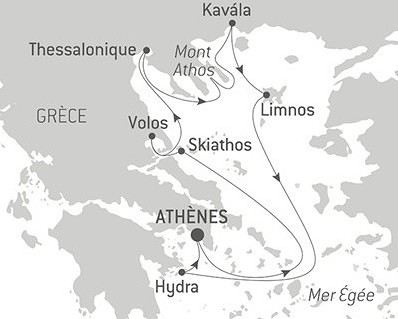
If you'd like, I invite you to join me for a week-long cruise to northern Greece, visiting ports that are often less crowded with cruise ships.
Itinerary: Athens, Skiathos, Volos, Thessaloniki, Kavala, Limnos, Hydra, Athens
Hi there, I’ve been traveling for 18 years now, at least 6 months a year, and as the years go by, I actually enjoy coming back to France more and more—a feeling I struggled with at first. I mean, we always think the grass is greener elsewhere.
But in the end, I find meaning in that saying about how there’s no place like home. I still love traveling just as much, but now my trips are shorter, and I enjoy spending more time in our beautiful country, even though I don’t hesitate to criticize it.
How about you? How do you handle coming back from your travels?
Hi there,
We have the opportunity to get away for a little two-week trip at the very beginning of January, just the two of us, without our kids. Because of the kids, we haven’t traveled much in Asia, so we’d love to take advantage of their absence to explore Thailand. Even though I’m used to planning our trips, I’m feeling a bit overwhelmed this time.
We’d like to visit Bangkok and head south by renting a car (we have an international driver’s license, and my husband has driven on the left before). I’ve managed to sketch out a rough itinerary that might work for us, and I’d love to hear your thoughts.
To set the scene: we haven’t booked anything yet, we don’t like spending hours on the beach (though a little time at the end of the day is fine), we love walking and sightseeing, and what we enjoy most is being independent (so if we can avoid group tours, that’s ideal).
After that intro, here’s the rough outline of our itinerary: Day 0: Paris-Bangkok flight Days 1, 2, and 3: Bangkok (Wat Pho, Grand Palace, Wat Arun, markets, boat ride through the khlongs, Jim Thompson House) Day 4: Ayutthaya Day 5: Pick up a rental car and head to Sam Roi Yot Day 6: Sam Roi Yot and Prachuap Khiri Khan Day 7: Drive south – overnight near Surat Thani Day 8: Uthayan Tham Khao Na Nai, then drive to Ao Nang (staying near Tubkaek) Days 9 and 10: Boat trips (Railay, Ko Hong, etc.) Day 11: Drive to Phang Nga with a few stops along the way Day 12: Boat tour (mangroves and Ko Tapu) Day 13: Drive to Phuket Airport and return flight
A few questions and doubts: - I’d considered Cheow Lan Lake but read some not-so-great reviews (crowds, just 3 viewpoints, and the rest was meh). What do you think? - Can we start from Ao Thalane Pier for trips to Ko Hong and Ko Tapu? - I’m not thrilled about driving through Bangkok, but I’m not sure where to rent a car west of the city (since we won’t return it to the same place, I assume it’s best to target rental companies at airports).
Thanks in advance for any tips or feedback you can share to help me (or not 😛) refine this plan before I start booking!
Hi everyone,
After using this forum a lot to plan several trips, I’m finally writing my own travel journal about South Africa, a trip that took place from May 14 to 31, 2025. I hope to inspire but mostly to share info and details for those like me who need to plan their trip as precisely as possible to make the most of it once there.
This is our first trip to Africa outside the Maghreb for my wife and me. What follows is, of course, just my opinion and very subjective. You’ll easily understand that my goal isn’t to debate my choice of destinations or activities since everyone has their own travel style and beliefs. I just want to share. Thanks in advance.
We booked our tickets with Emirates for the routes: Lyon-Dubai, Dubai-Johannesburg on the way out. For the return, it was Cape Town-Dubai, Dubai-Lyon. The tickets cost us 1400 € for two, booked in December. I monitored prices for several weeks, and they didn’t tend to drop. I think I got the flight tickets at the right time because alerts I set on different sites showed prices only going up.
Here’s our itinerary:
Day 1: Arrival at Johannesburg airport, pick up the rental car, and head to Hartbeespoort (northwest of Pretoria): overnight in Hartbeespoort. Day 2: Visit the Elephant Sanctuary + Monkey Sanctuary + cableway: overnight in Hartbeespoort. Day 3: Head to Ukutula, visit the site. Day 4: Head to Kruger Park, transition day: overnight in Dullstroom. Day 5: Head to Blyde River Canyon, visit the viewpoints (more details in the journal later): overnight in Graskop. Day 6: Hike the Leopard Trail (Blyde River Canyon) then return to Kruger Park: overnight at Pretoriuskop rest camp. Days 7 & 8: Visit Kruger Park: overnights at Lower Sabie rest camp. Days 9 & 10: Visit Kruger Park: overnights at Berg-En-Dal rest camp. Day 11: Visit Kruger Park: overnight in Malelane. Day 12: Domestic flight to Cape Town: overnight in Cape Town (Mouille Point neighborhood). Days 13 to 17: Visit Cape Town and its surroundings (more details in the journal later): overnight in Cape Town (Mouille Point neighborhood).
Before describing our trip in more detail, here’s some practical info about the stay:
For internet, I got Bouygues Telecom’s travel pass for 35 € on top of my regular plan with them. It worked well except in Kruger. Otherwise, I hardly had any network coverage issues. For all accommodations and car rentals, I used Booking.com. No bad surprises.
Hello everyone,
I’ve wanted to take this Norway cruise for a very long time. The first time I booked it was in July 2020 with Azamara. Unfortunately, it was canceled, as everyone remembers. When I tried to book it again, the prices (already a bit high with Azamara) had simply doubled. So, since then, I’ve been keeping an eye out every year for any opportunities...
The last time we sailed with Princess was eleven years ago, and things didn’t go very well. I came back pretty unhappy with their service and quite disappointed. Despite the $600 they gave me as credit for a future cruise, I’d never set foot on one of their ships again.
But this time, the opportunity arose—a fantastic itinerary with lots of stops, a reasonable price for 16 nights (I’ll share the details in the conclusion), and a ship that’s not too big, so to speak, with only 3,000 passengers. I’m not expecting much from the cruise line this time and am boarding the ship with low expectations beyond the itinerary.
Princess has introduced an app to download before the cruise. It’s essential because online check-in is no longer available, and the agency doesn’t send a travel journal. Everything is done through the app. After completing the check-in on the app, we only know that we’ll need to pick up our key, the Medallion, at embarkation by following the blue line in the terminal and presenting our passport.

Up until our departure, the weather forecast for the coming week in Norway is disastrous—rain, rain, and more rain. It was pretty much the same two years ago before our Iceland cruise, and in the end, the weather turned out fine.
If you’re ready to embark on the Emerald Princess to discover this beautiful cruise and the stunning landscapes of Norway, let’s go!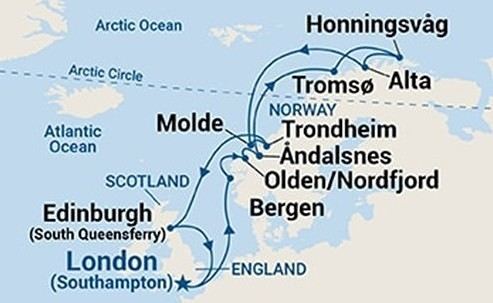
Southampton - Sea day - Bergen - Olden - Åndalsnes - Sea day - Tromsø - Honningsvåg (North Cape) - Alta - Sea day - Molde - Trondheim - Two sea days - Edinburgh - Sea day - Southampton
I’ve wanted to take this Norway cruise for a very long time. The first time I booked it was in July 2020 with Azamara. Unfortunately, it was canceled, as everyone remembers. When I tried to book it again, the prices (already a bit high with Azamara) had simply doubled. So, since then, I’ve been keeping an eye out every year for any opportunities...
The last time we sailed with Princess was eleven years ago, and things didn’t go very well. I came back pretty unhappy with their service and quite disappointed. Despite the $600 they gave me as credit for a future cruise, I’d never set foot on one of their ships again.
But this time, the opportunity arose—a fantastic itinerary with lots of stops, a reasonable price for 16 nights (I’ll share the details in the conclusion), and a ship that’s not too big, so to speak, with only 3,000 passengers. I’m not expecting much from the cruise line this time and am boarding the ship with low expectations beyond the itinerary.
Princess has introduced an app to download before the cruise. It’s essential because online check-in is no longer available, and the agency doesn’t send a travel journal. Everything is done through the app. After completing the check-in on the app, we only know that we’ll need to pick up our key, the Medallion, at embarkation by following the blue line in the terminal and presenting our passport.
Up until our departure, the weather forecast for the coming week in Norway is disastrous—rain, rain, and more rain. It was pretty much the same two years ago before our Iceland cruise, and in the end, the weather turned out fine.
If you’re ready to embark on the Emerald Princess to discover this beautiful cruise and the stunning landscapes of Norway, let’s go!
Southampton - Sea day - Bergen - Olden - Åndalsnes - Sea day - Tromsø - Honningsvåg (North Cape) - Alta - Sea day - Molde - Trondheim - Two sea days - Edinburgh - Sea day - Southampton
Hello everyone,
I’m looking into planning a trip to Egypt (first time!)
Important context: My wife has difficulty walking. Maybe what I’m looking for will turn out to be complicated. We’re traveling as a couple for 10 to 14 days.
The initial plan is: - Land in Cairo: visit Cairo and the surrounding area (still figuring out how long to stay) - Head up to Luxor: preferably by boat, otherwise by train, or as a last resort, by plane See what sights there are along the way - Hot-air balloon excursion in Luxor: Need to look into this - Then go either to Hurghada or Sharm El Sheikh (via ferry) for some beach time and diving (2/3 days)
The goal for this first trip isn’t to see everything at each destination, but rather to be on the move and experience the journey.
My question is about whether it’s possible to travel up the Nile one-way without doing a round-trip cruise from the starting point. Is this doable? If so, how does it work? Through a local agency?
Should we do this trip in this direction, or would it make more sense to go the other way, starting from Sharm El Sheikh or Hurghada?
Thanks in advance for your tips! 🙂 Laurent
Hello, we’re a couple over 70 and will be spending about six weeks in Réunion next January/February, staying first in Saint-Leu and then in Saint-Pierre, each time in independent accommodations. We’ll have a car and enjoy hiking, though nothing too strenuous. Otherwise, we live quietly—cooking our own meals and exploring at a relaxed pace. Our goal is simply to escape the harshest part of the European winter in good conditions. Can anyone share some great tips, easy hikes, must-see spots, or surprising activities? In return, we’d be happy to share insights about Valais in Switzerland—a sunny but chilly winter destination! Best, Bernard.
I love islands...
I love islands. So it’s no surprise that the Azores have been catching my eye for a few years now. The first time I suggested them to my dear partner back in 2021, he preferred the Lofoten Islands—an excellent choice, as it turned out, since we got to visit with hardly any crowds. But for various reasons, the opportunity didn’t come up again in the following years. Until last year, that is. But by then, we’d left it too late—too late for the Azores, I mean—and the accommodation options on Flores and São Jorge were extremely limited. We decided to skip it without even looking at car rentals. So this year, we booked our flights, lodging, and cars *way* in advance (between December of last year and early this year).
The Azores consist of nine islands, so you have to make choices. I quickly ruled out São Miguel, which deserves a week all to itself: from what I’d read on various blogs, some travelers seemed disappointed after visiting the other islands, even feeling it lacked the Azores’ unique charm. True or not, that was reason enough to skip it.
In the end, we wanted to go to Flores for its lush nature (and because it’s reputed to be the most breathtaking), São Jorge for its rural/nature vibe, and Terceira for its cultural side and *impérios* (more on that later). With the time we had, we could add another island without rushing. We like to take our time and wander a bit—whether it’s a viewpoint or a hike, we always spend longer than *everyone* else. Pico won out over Faial thanks to its wine culture. And of course, there’s Corvo, which is usually visited as a day trip from Flores. I thought it’d be nice to spend the night there to experience the atmosphere once most tourists had left. I hesitated between one or two nights but ultimately went with two (so we wouldn’t be rushed by the boat schedule). It was an excellent decision.
Here’s how it all panned out:
August 25: departure for Terceira via Lisbon at 7:40 AM; August 25–29: Terceira; August 29: flight to Corvo. It was supposed to take half a day, and we were meant to arrive in the early afternoon, but between schedule changes and delays, it ended up taking almost the whole day; August 29–31: Corvo; August 31: boat to Flores around 8:30 AM; August 31–September 5: Flores; September 5: flight to Faial in the early afternoon (originally scheduled for the morning, but the times changed)—visit to Horta; September 6: boat to São Jorge around 9:00 AM; September 6–11: São Jorge; September 11: boat to Pico at 11:15 AM; September 11–16: Pico; September 16: flight to Paris via Lisbon from Pico around 10:30 AM.
We had to juggle a bit to optimize the prices of our flight tickets from Paris and the inter-island travel.
Hello everyone!
In early July, we’re heading to Indonesia for a solid three weeks as a family (my partner and I are in our fifties, and we have two daughters aged 17 and 20). We’ll be arriving and departing from Denpasar. Our itinerary is still entirely up in the air, and we’d like to explore islands other than Bali (we’ve already been there a few years ago).
I’d love to gather your tips and great recommendations to help us plan our route. For now, we’re thinking of visiting Lombok, Flores, and the Komodo archipelago. Here are some of our questions: - I visited Lombok myself back in 1999. I loved it, but I’ve been reading very mixed reviews in recent travel journals. Some are as enthusiastic as I was back then, while others are much more lukewarm (due to the overly strict and visible influence of the island’s governor on the population and because of massive hotel projects—I’m not sure if they’re on hold, underway, or completed). What’s the current situation? Is Lombok still a must-visit? And do you have any tips (hotels, places to visit, health, etc.)? - Still on Lombok, I did the Rinjani trek back then. I remember the hike wasn’t easy, but it wasn’t as tough as what I’ve read in quite a few recent travel journals... My partner and I are in decent shape, but that’s about it, and especially, my partner and our two daughters really don’t like the cold. What’s your experience with this trek? And do you have a trekking agency to recommend? (If we do it, I think we’d want to make sure we have good support, including quality gear, tents, jackets, etc.) - Flores and Komodo would be a completely new experience for all of us. Any tips and recommendations are welcome (sightseeing, accommodations, transport, etc.)! In particular, we’d like to explore the Komodo archipelago with a trusted agency that will take the time to show us the archipelago’s treasures in good conditions (safety and "decent" comfort). Do you know of any such agencies? - Are there other nearby islands you’d recommend? Any advice on places to visit and where to stay?
We’ll have three weeks on the ground... and we like to mix sightseeing with downtime where we just enjoy the moment. So we’re not looking for an overly packed itinerary, but still something rich (no point traveling so far just to lie on a sunbed all day ;-))
Thanks so much in advance for your advice!
Albin
TRAVEL JOURNAL MADAGASCAR OCTOBER 2019
First of all, a big thank you to all the VoyageForum contributors who helped us plan our itinerary.
Introduction: There are three of us—a couple and a friend—all retired, aged 70. We spent four weeks in Madagascar, our first trip there, accompanied by a guide and a 4x4 driver-mechanic. We decided on the trip in June, and the process of requesting quotes, planning the itinerary, buying flight tickets, and applying for visas was quick. We finalized everything by the end of June.
Vehicle: The car was a Nissan Patrol, not new but well-maintained, and it served us perfectly. We had a few minor repairs—wheel bearings to change, a broken bull bar, and two flat tires throughout the trip. There was no air conditioning, so we drove with the windows open, which meant a bit of dust. In full sun, temperatures could reach 37/38°C.
Itinerary: The route started in Antananarivo upon arrival from the Air France flight from Roissy to Ivato and ended four weeks later at the same airport, passing through Antsirabe, Miandrivazo, the Tsiribihina River descent, Belo sur Tsiribihina, the Tsingy de Bemahara, the Avenue of the Baobabs, Morondava, Belo sur Mer, Morombe, Salary, Ifaty–Tulear, Ranohira, Fianarantsoa, the FCE train, Manakara, the Pangalanes Canal, Ranomafana, the Anja Reserve, and Ambositra.
Our local agency: The trip was organized with the help and logistical support of a local agency based in Antsirabe—a small, efficient, and enthusiastic team run by Élodie and her guide Manantsoa. If you'd like their contact details, feel free to message me directly. We have nothing but praise for them!
The roads: Travel was by 4x4 on rough, uneven tracks. We didn’t plan long stages to spare our backs, averaging a maximum of 5 to 6 hours per day. As for the RN7, the island’s most touristy road, there were no major issues. The Fianarantsoa Côte Est (FCE) train: This is the only train connecting Fianarantsoa to Manakara on the east coast. Taking it is an epic adventure—it takes an average of 17/18 hours to cover the 165 km between the two cities, passing through 17 stations, countless tunnels, and bridges. We left at 7 AM and arrived around 1:30 AM, but it was a direct way to connect with the local population at every stop. Even though we were comfortably seated in first class, we got a small glimpse of the harsh living conditions of the locals. One striking detail: on the last 80 km before Manakara, there wasn’t a single light—it was pitch black!
The Tsiribihina River descent: You can choose between a motorized barge or a rowed pirogue, depending on your comfort level. We opted for the motorized barge with a crew that included our guide, the captain, two sailors, and a cook. There was an upper deck for sunbathing and relaxing, and we slept in tents set up by the crew. The toilets were dry, and we showered with cold water from a waterfall—no complaints! The pirogue is more basic. It’s a slow, timeless journey along the river, with stunning landscapes, friendly locals, and diverse wildlife—lemurs, herons, birds of prey, kingfishers, and more.
Safety: The main safety concern on the roads is classic prevention—no flashy jewelry or visible valuables. In high-risk areas, vehicles travel in convoys escorted by the army, police, or gendarmerie. Elsewhere, our guide and driver handled "difficulties" like local "tolls," river crossings, and ferries with resourcefulness and calm. We never felt in danger during the four weeks, though we avoided driving or walking at night.
Accommodation: We chose mid-range hotels, always with private bathrooms and showers in the room. Sometimes there was no hot water, and water pressure was inconsistent, but that was city-wide, so we understood. In more touristy areas, the hotels were slightly better, though there’s still a long way to go to meet our standards! For the Tsiribihina descent, the crew set up a protected area for toilets and cold showers. We could even shower under the waterfall in the morning—cold and invigorating, but amazing!
Food: We ate well, whether it was European or Malagasy cuisine. The food was tasty and plentiful. The staple is rice—when imported from China or Myanmar, the quality isn’t always consistent. It’s served with everything. Zebu (beef) is good, and pork is less common but decent. Poultry isn’t raised in battery farms like at home; it’s free-range, tasty, but a bit tough. There’s a variety of vegetables, though we missed fresh fruit—it wasn’t the right season. Bananas and pineapples were abundant, with a few mangoes and oranges. On the coast, seafood was a treat—fish, shellfish, crabs, lobsters, sea cicadas, oysters, and more. Near Antananarivo, there’s a town called Behenjy specializing in foie gras, though in the heat, it’s not ideal for tasting. For local "hotely" restaurants (serving Malagasy food), it’s best to ask your guide to pick the best ones. As for tap water and raw vegetables, forget about them during your stay! We preferred to dine at the hotel to avoid nighttime outings, except in rare cases where a quality restaurant was nearby.
The people: It’s an understatement to say that Madagascar suffers from endemic poverty. In the cities, homeless people—men, women, children, even newborns—sleep on the streets or in makeshift shelters. The villages we passed through weren’t much better, and the remote ones we didn’t see are likely even worse. People lack everything—running water, electricity, schools, infrastructure—especially in the southern villages. Yet the land and rice fields seem to yield abundant harvests, and in desert areas, zebu farming is a way of life. The sea provides its riches—fish, lobsters, octopus, crabs, and more. Given the lack of education and income, begging is everywhere, a bit persistent but never aggressive. Bring as many things to give away as you can, and leave with empty hands—or rather, suitcases full of souvenirs! Let’s pay tribute to NGOs and religious institutions doing incredible work. On a personal level, we can only reflect, feel a bit of outrage, and act against this injustice. The Malagasy people don’t deserve this level of poverty. They’re also very religious—Catholic, Protestant, Adventist, Seventh-day Adventist, Jehovah’s Witness churches, and more, flourish across the island. In short, the people are welcoming, resigned, but so endearing and friendly!
Landscapes: The Tsingy, baobabs of all shapes and sizes—big, small, round, slender—the pristine beaches and Polynesian-like lagoons with deep blue waters between Tulear and Morombe, the rocks of the Isalo Massif reminiscent of the Wild West, the primary forests of Ranomafana, the red laterite landscapes of the Highlands dotted with villages, terraced rice fields, sunrises and sunsets on the east and west coasts, the views from the FCE train, the tranquility of the Pangalanes Canal (a bit like Kerala), the Vezo villages (nomads of the sea), the lagoon dotted with colorful square sails of Vezo fishermen—it’s all fantastic and varied!
Local transport: Overloaded bush taxis or trucks, zebu carts, rickshaws, tuk-tuks, and even carts pulled by people—it’s even more shocking!
Wildlife: The stars: - Lemurs—diurnal and nocturnal—there are so many to see, and you can spend hours watching them! - Chameleons—all shapes, sizes, and colors!
Climate: During our four weeks in September and October 2019 (we’d only been back for three days), we had just one day of rain. It was warm and pleasant everywhere during the trip. A light sweater for the evenings and waterproof clothing for rainy days are a good idea. Don’t forget sunglasses, swimsuits, sunscreen, mosquito repellent, malaria prophylaxis, flip-flops, hiking shoes for the parks, and all the usual essentials—nothing out of the ordinary!
Expenses: For half-board (breakfast and dinner), including transport (fuel), guide and driver, park entry fees, and local park guides, the cost was 2300 € per person for the four weeks. On top of that, you’ll need to add flight tickets, drinks, and lunch (around 5–10 € depending on your choices), as well as tips and personal expenses.
In short, we came back CHARMED.
Our thanks to ÉLODIE and MANANTSOA, as well as the drivers PAPOOSE and ROBERT.
Hi there.
I know this topic has been covered countless times, but I can't seem to find clear answers to my questions.
I'm currently looking into doing the Three Passes Trek, including some adjacent routes like EBC, Kala Patthar, Gokyo Ri, and maybe Chukung Ri. I'm planning to do this trek between April and May.
But I have a few questions.
In terms of difficulty, I think I'm physically up for it—I'm athletic and used to mountain hiking in France—but is there any specific training I should do? Just to note, I did the Annapurna Base Camp last year without any issues.
Is it doable without a guide? I’d prefer to skip a guide and porter so I can really move freely. Is that crazy, or is it common? I’m mostly concerned about the Cho La and Renjo La passes (more about the route and risk of getting lost than safety).
Finally, I’m wondering about the duration. I’m a fast hiker, but I plan to take my time to acclimatize properly and enjoy the scenery (and maybe relax a bit in those landscapes🙂(By the way, does living at 2,000m altitude for 90% of the year help with AMS?) How much time should I budget for the trek to be safe, even if it means spending 2-3 extra days around Lukla-Namche? I was thinking of setting aside 20 days—does that sound reasonable?
Thanks for reading, and sorry in advance for any spelling mistakes. If I think of more questions, I’ll post them in this thread.
Cheers
I just had to bring back another unforgettable souvenir besides my simple hotel hassle for Thanksgiving in Page, Arizona!
So, I decided to head back last Wednesday on "the" flight that was going to have a problem leaving Phoenix! 😉
Just to remind you, last year I had a flight delay issue due to a Lufthansa strike.
This year, I decided to go even bigger! ... So, we board British Airways flight BA0288 out of Phoenix. Everything goes well until takeoff. The plane takes off, we're in the air for about 30 minutes, and then they announce that the plane is turning back to land in Phoenix due to an issue with one of the engines...
I’d later find out from videos that the engine in question was simply spewing flames... Terrifying! 🤪
So, back to Phoenix airport—I’ll spare you the details—flight canceled. At 3 AM, British Airways staff finally manage to find me a new flight (the same one the next day, by the way). So, after 5 endless hours of waiting, I know I’m leaving 24 hours later, on December 7th at 8:40 PM.
I ask them to book me a hotel room, since that was the condition for agreeing to leave 24 hours after my original flight.
The British Airways staff tell me all the hotels are fully booked and that basically, I’m on my own.
So, just to clarify... *All* the hotels in Phoenix. I did a quick search—about 62,000 rooms fully booked in Phoenix! Wow! 😛
Thanks, British! So, stuck on foot in an airport at 3 AM, with zero desire to drop $100 on a taxi to find a hotel, and the same the next day to get back—especially since I can’t trust them to book a room, and I doubt they’d reimburse me easily afterward... I end up more or less forced to sleep in the airport...
I’ll spare you even more details—no meal the next day, not even a drink... Just a bottle of water and a sandwich the first night (I should’ve taken more if I’d known...).
The next day, British Airways staff finally show up around 4:30 PM, fresh, well-rested, and showered... Meanwhile, I’d been struggling like a homeless person in that damn airport, sleeping on the floor, filthy...
I ask to see the manager, explain my misadventure after an emergency landing, and remind them that the least they could do was help me get a hotel room.
The manager—super cold and borderline rude... All she can say is:
"We’ve done everything we can for you. Have a good flight, sir!"
So, I wanted to give British Airways a little shout-out.
Of course, since then, British Airways hasn’t responded to messages or even tags on social media...
Now, I just have to deal with the compensation claims, which are well-deserved this time...
To be continued...
Hi,
My son is finishing up a year of working holiday in Canada soon. His plan is to take a bus from Montreal to Florida on 10/26, stay there for a few days, then fly to Cancun, Mexico. From there, he doesn’t have a precise plan yet, except to head down to Panama if the security situation in the countries he’ll cross allows it. Then, in March 2026, he’ll take a flight to Martinique, where he’d like to either find a sailboat (as crew) for the return transatlantic crossing (option 1) or do a sailing internship that includes the crossing (option 2).
So my questions are: - Will he be able to re-enter Mexico without an exit date or proof of a flight back to Belgium? Would being able to prove his return by sailboat with a specific date (option 2, the sailing internship) make things easier? - Are there any countries to avoid between Mexico and Panama? He’s traveling backpacker-style on a small budget.
Thanks for your answers.
Claire
And we still haven’t seen everything!
Before setting off for new horizons at the end of this year, it’s time for me to share my trip to Cape Verde this summer 2025.
I particularly love these spontaneous trips, and our stay in Cape Verde is one of those because it was only at the beginning of April that we decided on this getaway, which had been catching our eye for a while, given our love for the mountains.
As always—well, when it’s open—I turned to VF, and I want to immediately thank Marie, aka ptitortue, who helped me a lot in planning this trip through her travel journals and our exchanges!
Because Cape Verde is both small and vast! We decided not to rush from one airport to another, to enjoy the places and the people, but also to relax, since the work backlog from being stuck in May (see my previous travel journal 😅) had to be caught up on in June.
So, 4 islands will be our winners from 06/28 to 07/19:
Santiago first for logistical reasons, as round-trip flights from the capital Praia were the cheapest (650 €/person from Lyon via Lisbon with TAP, still!)
São Vicente, because it’s the gateway to the next one but ultimately more than that...
Santo Antão, pretty much the main goal of the trip since Marie (and the photos) had really sold it to me.
And finally, Sal Island, for some rest—a non-negotiable condition for my other half—and we’ll see that I should’ve listened to Marie...
That said, what a chatterbox I am—buckle up, flight attendants at the doors, off we go on new beautiful escapes! (Thanks to Sophie for the easy loan)
Last note for my eager fan club 😏: yes, there will be alcohol—how could there not be in the land of grogue!
It starts here:
https://voyageforum.com/v.f?post=10790234;a=10790234
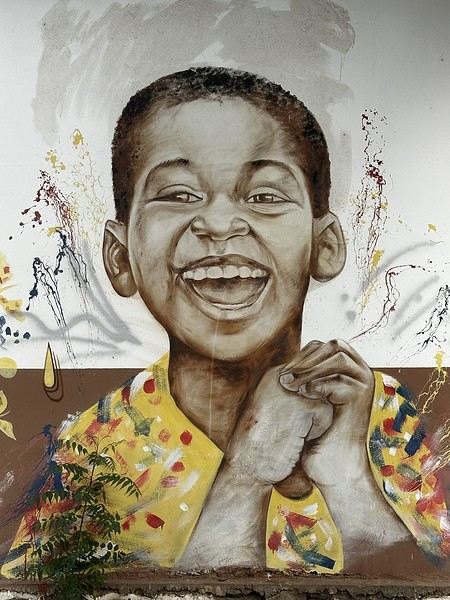
I particularly love these spontaneous trips, and our stay in Cape Verde is one of those because it was only at the beginning of April that we decided on this getaway, which had been catching our eye for a while, given our love for the mountains.
As always—well, when it’s open—I turned to VF, and I want to immediately thank Marie, aka ptitortue, who helped me a lot in planning this trip through her travel journals and our exchanges!
Because Cape Verde is both small and vast! We decided not to rush from one airport to another, to enjoy the places and the people, but also to relax, since the work backlog from being stuck in May (see my previous travel journal 😅) had to be caught up on in June.
So, 4 islands will be our winners from 06/28 to 07/19:
Santiago first for logistical reasons, as round-trip flights from the capital Praia were the cheapest (650 €/person from Lyon via Lisbon with TAP, still!)
São Vicente, because it’s the gateway to the next one but ultimately more than that...
Santo Antão, pretty much the main goal of the trip since Marie (and the photos) had really sold it to me.
And finally, Sal Island, for some rest—a non-negotiable condition for my other half—and we’ll see that I should’ve listened to Marie...
That said, what a chatterbox I am—buckle up, flight attendants at the doors, off we go on new beautiful escapes! (Thanks to Sophie for the easy loan)
Last note for my eager fan club 😏: yes, there will be alcohol—how could there not be in the land of grogue!
It starts here:
https://voyageforum.com/v.f?post=10790234;a=10790234
Second trip to Morocco, with our kids and our grandson.
A trip for five that delighted us all.
First stop: Marrakech, where we landed in late morning under a blazing sun. We had lunch on Avenue Mohamed V and took a little rest before heading to Djema El F'Na Square in the late afternoon, when the temperature dropped slightly. A quick stroll through the medina and the souks, still as lively as ever. Mountains of goods, craftsmanship that amazes us, a palette of colors, and all sorts of scents...
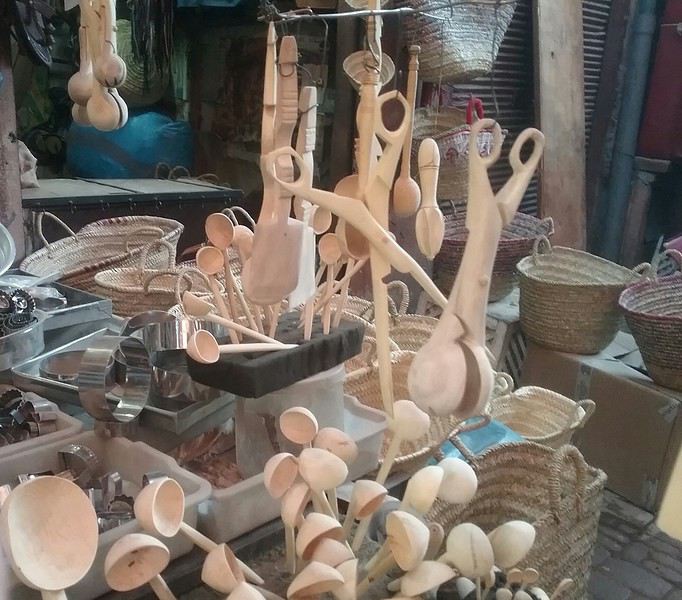
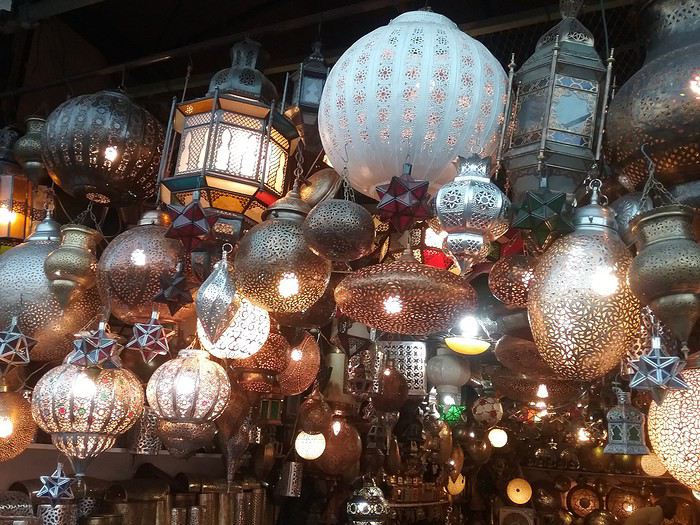
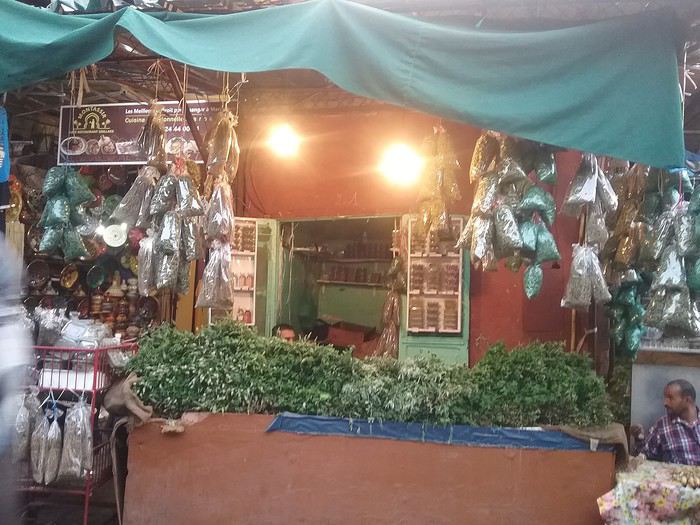
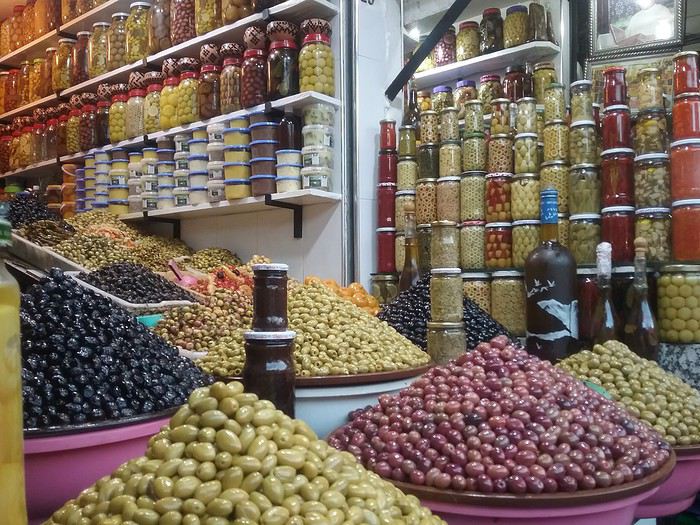
Then, when night fell, we wandered around the square among the little stalls serving all kinds of dishes: salads, grilled meats, soups, snails... It's incredible. Everyone is super friendly. I suspect they tell the same jokes every night to the tourists passing by. But it's really fun. And surprise, surprise—here, it's already Christmas. Colorful garlands at every stall.
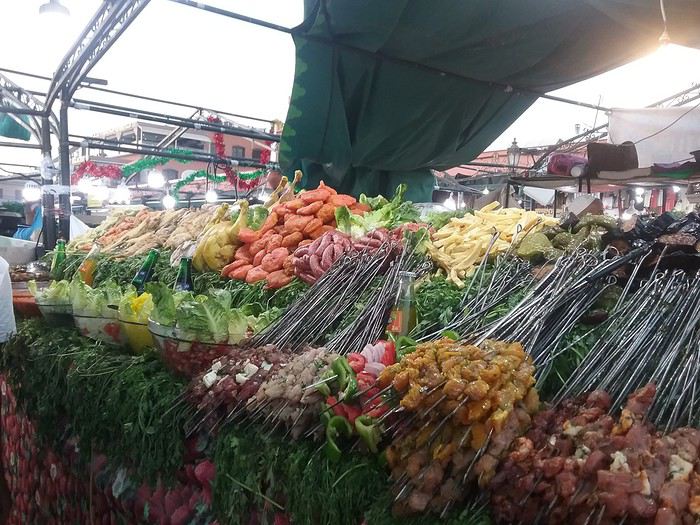
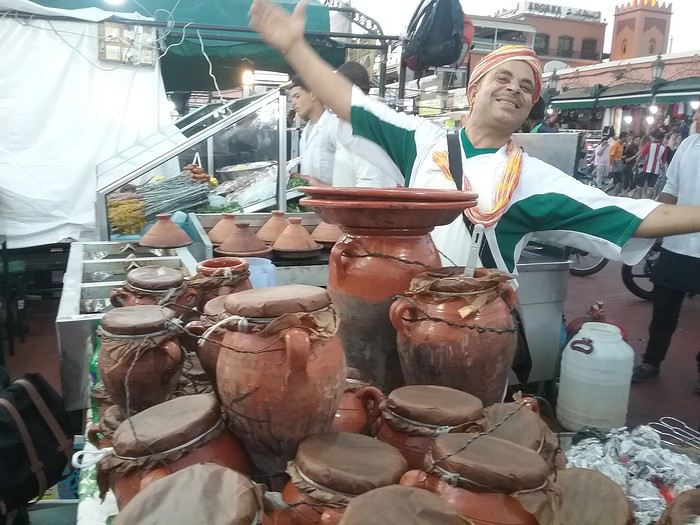
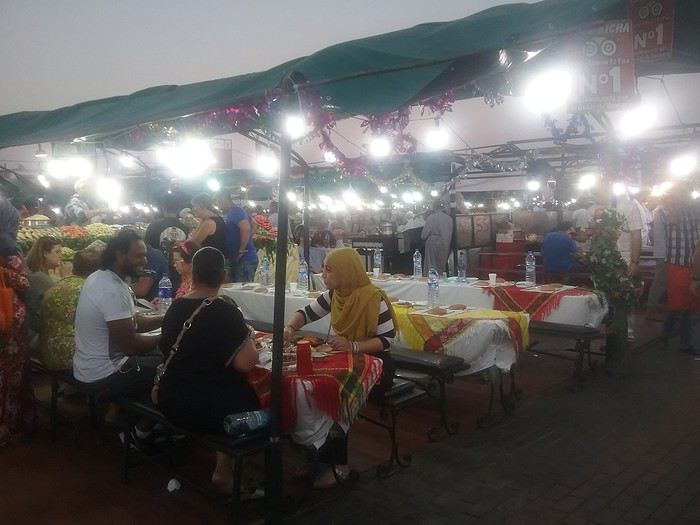
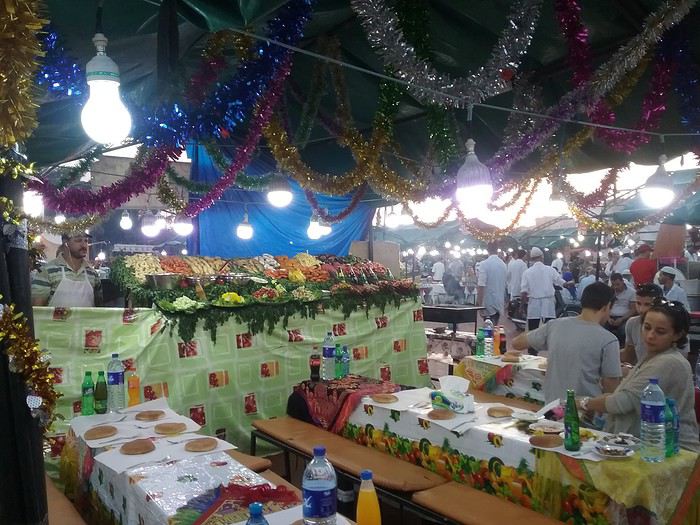
But, rightly or wrongly, even though we're charmed, we prefer not to dine on the square... We're afraid of ruining the rest of the vacation... But what an extraordinary atmosphere on that square. It's overwhelming!
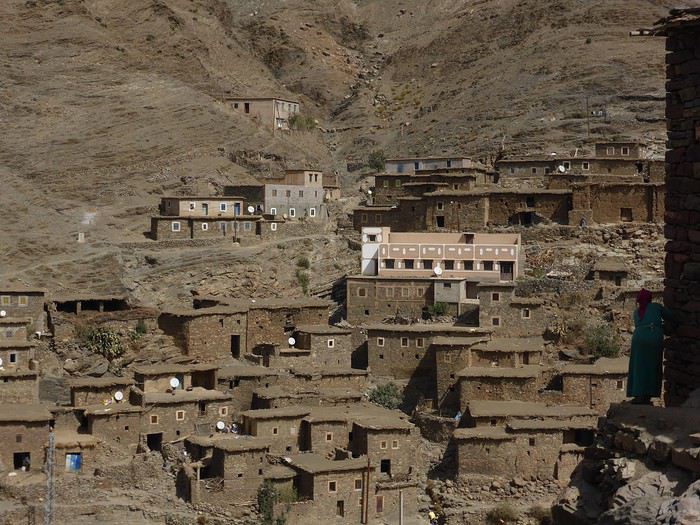
The next morning, we left Marrakech, hoping to find milder temperatures outside the city. On the way to Tichka. The change of scenery is huge. Our grandson can't get over seeing all the vendors selling real or fake minerals, real or fake fossils, merchants who approach as soon as we stop to admire a site or take a photo. There are also apple sellers—real apples for a picnic, which is perfect.
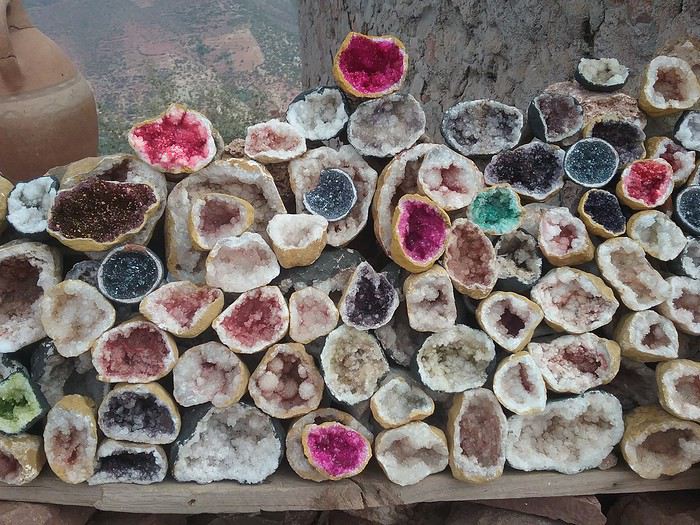
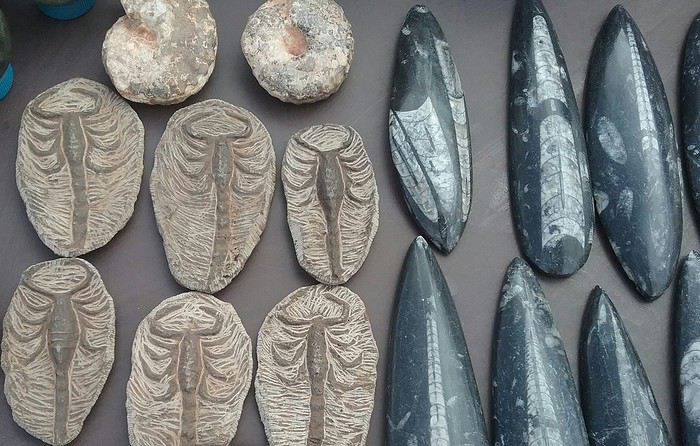
Photo stops are frequent. At every turn, a new discovery, a new viewpoint. The villages blend into the mountains. It's stunning.
First stop: Marrakech, where we landed in late morning under a blazing sun. We had lunch on Avenue Mohamed V and took a little rest before heading to Djema El F'Na Square in the late afternoon, when the temperature dropped slightly. A quick stroll through the medina and the souks, still as lively as ever. Mountains of goods, craftsmanship that amazes us, a palette of colors, and all sorts of scents...
Then, when night fell, we wandered around the square among the little stalls serving all kinds of dishes: salads, grilled meats, soups, snails... It's incredible. Everyone is super friendly. I suspect they tell the same jokes every night to the tourists passing by. But it's really fun. And surprise, surprise—here, it's already Christmas. Colorful garlands at every stall.
But, rightly or wrongly, even though we're charmed, we prefer not to dine on the square... We're afraid of ruining the rest of the vacation... But what an extraordinary atmosphere on that square. It's overwhelming!
The next morning, we left Marrakech, hoping to find milder temperatures outside the city. On the way to Tichka. The change of scenery is huge. Our grandson can't get over seeing all the vendors selling real or fake minerals, real or fake fossils, merchants who approach as soon as we stop to admire a site or take a photo. There are also apple sellers—real apples for a picnic, which is perfect.
Photo stops are frequent. At every turn, a new discovery, a new viewpoint. The villages blend into the mountains. It's stunning.
After a first trip to South Africa in 2009 that enchanted us, we decided to return to this part of the world this year.
Given how much I enjoy reading others' travel journals, I'm mustering up the courage to try my hand at this kind of exercise (which I'm not used to at all 😕). Thanks, of course, to everyone who answered my questions and helped finalize this trip...
So, it's decided—it'll be Southern Africa... but where, with only two weeks of vacation? Victoria Falls, which we had to cancel in 2009 due to turbulent Zimbabwean elections, was automatically back on the itinerary (yes, I know some say "the falls, meh," but I wanted to see them 😛!). We added South Luangwa and ultimately swapped Chobe and Hwange for Lesotho. We have no experience driving a 4x4, which limited our routes in both countries, especially since it's not yet the dry season... but that didn’t stop us from bringing back amazing memories.
Sunday, April 14: After a smooth flight (and even quite comfortable in BA’s brand-new 747), we land early in the morning in Johannesburg. We pick up the car (a little Micra) and off we go toward Clarens, our first stop. We get back into the swing of driving (moving over to the right—sorry, to the left—to let others pass, flashing lights, hazard signals, "thank you," "you’re welcome"...).
I was expecting a small town, but Clarens looks more like a village: a large grassy square,
a few cars,

and dirt roads as soon as you leave the main street.

Still, we found the same quality of South African B&Bs here. We stayed at Patcham Place (the little white speck in the photo above is our Micra!).

We end the afternoon with a walk around Clarens and its surroundings. No doubt about it—it’s autumn...
Monday, April 15: We set off for Lesotho on nearly deserted roads, heading toward Malealea.

We quickly cross the border at Caledon Poort, and the atmosphere changes: more people on the roadside, animals, scattered huts... and lots of traffic police! We still managed to get stopped four times! Mostly, after checking our driver’s license, it was just to chat for ten minutes or so (police aren’t like that back home!). Well, one officer wanted to fine us for not waiting for him to wave us through after I stopped at a stop sign. After some tough negotiations, he let us go 😇.
We leave the main road and find ourselves in wilder landscapes.

The road narrows until it becomes a dirt track. A short climb to the gates of paradise:
... and then it’s just a matter of descending toward Malealea.
Malealea is like a village within a village. You’ll find different types of accommodations, a canteen-style restaurant (no menu choices, but the food is great, and it’s a fun way to chat with others around big tables), and lots of activities offered in partnership with the locals. We’re shown different rondavels to choose from... we pick this one:

Simple but clean and functional, with a private bathroom. On the bed, "real" Basotho blankets.
We decided to stay two nights to have a full day there.
Tuesday, April 16: We opted for a four-hour pony trek to the waterfall—nothing difficult, everything is done at a walking pace, with just a few "slightly" steep climbs and descents where you have to trust the Basotho ponies (no worries, they’re sure-footed 😏). The landscapes are truly stunning:


We walk down to the waterfall (which isn’t anything special—it’s the trek itself that’s worth it) and take the return path...

... crossing through Malealea village again.

We spend the rest of the day exploring the area, reading in the sun, and sipping marula coffee on the bar terrace. We really loved the family atmosphere in Malealea and how the locals were involved in the activities.
Wednesday, April 17: We hit the road again toward Katse. The owner of Malealea advised us against taking our car through Theba Tseka (I know Chris did it last year around the same time, but since we’re not very adventurous, we’ll go back through Maseru and Leribe—oh well, we’ll just take the same route back from Katse).
Quick aside unrelated to the story: putting together a travel journal is taking even longer than I thought 🤪... so, the rest will come a little later...
Given how much I enjoy reading others' travel journals, I'm mustering up the courage to try my hand at this kind of exercise (which I'm not used to at all 😕). Thanks, of course, to everyone who answered my questions and helped finalize this trip...
So, it's decided—it'll be Southern Africa... but where, with only two weeks of vacation? Victoria Falls, which we had to cancel in 2009 due to turbulent Zimbabwean elections, was automatically back on the itinerary (yes, I know some say "the falls, meh," but I wanted to see them 😛!). We added South Luangwa and ultimately swapped Chobe and Hwange for Lesotho. We have no experience driving a 4x4, which limited our routes in both countries, especially since it's not yet the dry season... but that didn’t stop us from bringing back amazing memories.
Sunday, April 14: After a smooth flight (and even quite comfortable in BA’s brand-new 747), we land early in the morning in Johannesburg. We pick up the car (a little Micra) and off we go toward Clarens, our first stop. We get back into the swing of driving (moving over to the right—sorry, to the left—to let others pass, flashing lights, hazard signals, "thank you," "you’re welcome"...).
I was expecting a small town, but Clarens looks more like a village: a large grassy square,
a few cars,
and dirt roads as soon as you leave the main street.
Still, we found the same quality of South African B&Bs here. We stayed at Patcham Place (the little white speck in the photo above is our Micra!).
We end the afternoon with a walk around Clarens and its surroundings. No doubt about it—it’s autumn...
Monday, April 15: We set off for Lesotho on nearly deserted roads, heading toward Malealea.
We quickly cross the border at Caledon Poort, and the atmosphere changes: more people on the roadside, animals, scattered huts... and lots of traffic police! We still managed to get stopped four times! Mostly, after checking our driver’s license, it was just to chat for ten minutes or so (police aren’t like that back home!). Well, one officer wanted to fine us for not waiting for him to wave us through after I stopped at a stop sign. After some tough negotiations, he let us go 😇.
We leave the main road and find ourselves in wilder landscapes.
The road narrows until it becomes a dirt track. A short climb to the gates of paradise:
... and then it’s just a matter of descending toward Malealea.
Malealea is like a village within a village. You’ll find different types of accommodations, a canteen-style restaurant (no menu choices, but the food is great, and it’s a fun way to chat with others around big tables), and lots of activities offered in partnership with the locals. We’re shown different rondavels to choose from... we pick this one:
Simple but clean and functional, with a private bathroom. On the bed, "real" Basotho blankets.
We decided to stay two nights to have a full day there.
Tuesday, April 16: We opted for a four-hour pony trek to the waterfall—nothing difficult, everything is done at a walking pace, with just a few "slightly" steep climbs and descents where you have to trust the Basotho ponies (no worries, they’re sure-footed 😏). The landscapes are truly stunning:
We walk down to the waterfall (which isn’t anything special—it’s the trek itself that’s worth it) and take the return path...
... crossing through Malealea village again.
We spend the rest of the day exploring the area, reading in the sun, and sipping marula coffee on the bar terrace. We really loved the family atmosphere in Malealea and how the locals were involved in the activities.
Wednesday, April 17: We hit the road again toward Katse. The owner of Malealea advised us against taking our car through Theba Tseka (I know Chris did it last year around the same time, but since we’re not very adventurous, we’ll go back through Maseru and Leribe—oh well, we’ll just take the same route back from Katse).
Quick aside unrelated to the story: putting together a travel journal is taking even longer than I thought 🤪... so, the rest will come a little later...
Hello,
I’m looking for advice from seasoned travelers about a roughly one-month trip to Japan. From late October to late November 2026.
We often travel in Southeast Asia but have never been to Japan. Based on what I’ve read, I’d love to hear your thoughts on:
- Is traveling day-to-day, without booking hotels or trains in advance, possible in Japan? (I’ve read many travel journals and blogs that say everything was booked way in advance… but that’s not how we usually travel.)
- Will the Japan Rail Pass be worth it for us? (According to an old simulator, I’m looking at around 400 € for trains compared to 570 € for the JRP.)
Here’s our rough itinerary (which may change):
- Arrival Osaka: 3 nights with Nara - Hiroshima and Miyajima Island: 3 nights - Kurashiki or Naoshima: 2 nights - Himeji: 1 night - Kyoto: 4 nights - Kanazawa: 2 nights - Takayama and Shirakawa-go: 3 nights - Around Mount Fuji: 3 nights - Tokyo with Nikko: 6 nights (no theme parks) Departure from Tokyo
Thanks for sharing your thoughts! :)
After a first trip in 2009 (already!) where, roughly, we did a circuit passing through Hazyview, a private reserve in Sabi Sands, Santa Lucia and Isimangaliso, Hluhluwe and the South African part of Kgalagadi Transfrontier Park, then a quick stop in 2013 to go to Lesotho, we wanted to come back to this country.
Why not the Cape region this time, but there was no way we were coming back to this part of the world without going on a safari. Mountain Zebra or the Karoo seem more about landscapes than animals, and Addo doesn’t excite me much either... So it’ll be Kruger.
Flight prices, schedules, and durations led us to a Paris-Cape Town, return Johannesburg-Paris with British Airways, via Heathrow.
Now we just had to figure out how to fit in quite a few things without driving too many kilometers or changing accommodation every day, at least in the Cape region. Here’s what we ended up with:
Arrival in Cape Town on Saturday, October 10 at 11 AM
2 nights in Hermanus
1 night in Franschhoek
2 nights at Mountceder in the Cederberg
3 nights in Hout Bay
Sunday: transition day—flight to Johannesburg, drive toward Kruger, night in Lydenburg.
Kruger: 1 night in Letaba, 2 in Satara, 1 in Lower Sabie.
Last night in Mbombela (formerly Nelspruit) before heading back to the airport for an early evening return flight.
For those who want to read the full story without interruptions, it’s here.
Friday, 10/9
A pretty stressful departure.
First, I woke up in the middle of the night, convinced I’d swapped my first and last names during check-in 🤪... Couldn’t get back to sleep, even though I knew British Airways wouldn’t answer before 9 AM.
Well, for them, everything was fine... but then they started talking about ETA... an ETA for England 😮? ?? Yes, it’s recent. Apparently, you don’t need one for an air-to-air transit... but you never know, it’s better to have it just in case. No one could give me a clear answer that it wasn’t necessary. In the end, we didn’t get it... and we didn’t need it.
But here’s the thing: our flight ended up leaving Paris 45 minutes late (10 minutes due to a schedule change and 35 minutes of actual delay), so our 2-hour layover shrank to 1 hour and 15 minutes. That should be doable, right? The board showed our flight at Gate B: great, it’s right next door! But at Gate B, three employees were just there to tell everyone who showed up that security had to be done at Gate A... and off we went, sprinting through the corridors, endless escalators going up and down, a little shuttle ride, security at Gate A ("You’re going to be cutting it close!" Oh really? 😠), then pretty much the same route back, only to end up just a few dozen meters from where we started! 😠
Boarding was already well underway, and after all that running, we were hot and thirsty, but phew! We made it onto the plane!
Saturday, 10/10 On the other hand, nothing to complain about on this London-Cape Town flight—it arrived early!
I booked a (small) Suzuki S-Presso because it seemed to have a higher ground clearance than its competitors. Unfortunately, we ended up with a Tata Tiago (yes, it exists), which is lower (and also smaller, with an even more sluggish engine... yes, we were able to compare because in Johannesburg, we *did* get an S-Presso). Somehow, we managed to fit everything in the trunk ("Whatever you do, don’t leave anything visible!") and off we went to our first accommodation in Hermanus, under a glorious sun.
Nikki welcomed us warmly, explained what there was to see in the area, and advised us to book a restaurant for that evening.
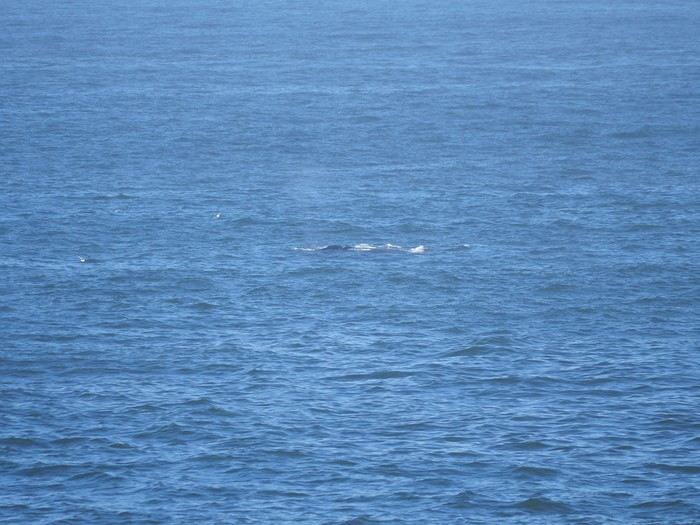
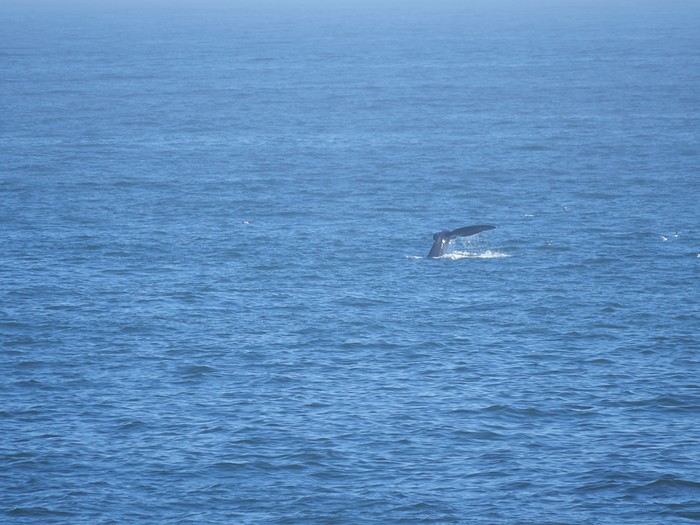
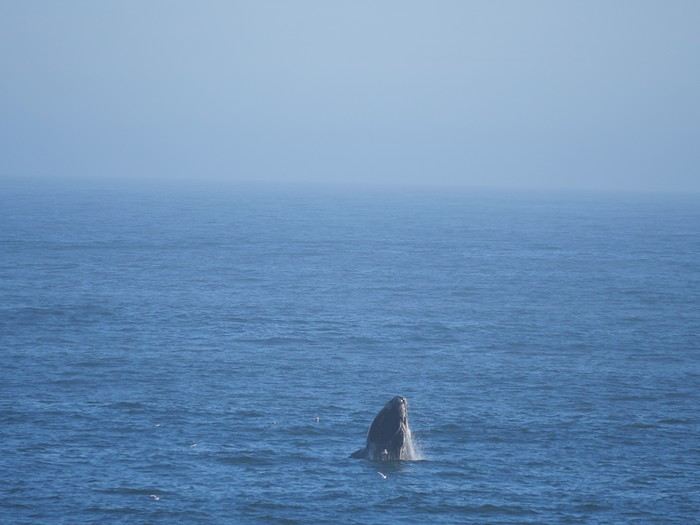
After dropping off our bags, we headed to the "cliff path," just 3 minutes from our place. This part of the coast is famous for its southern right whales from June to November. Let’s cut to the chase: there *were* whales, but they were very far away and very sleepy 😕. At best, we saw (photos taken at 600mm): A few ripples or a faint spray,
a bit of tail...
...or a bit of head.
Too bad—the owner of our next accommodation told us she’d seen around thirty of them up close here in early September.
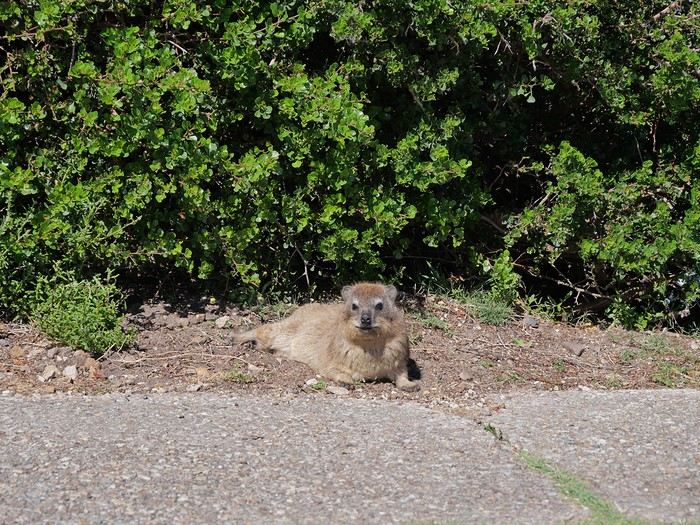
With no whales in sight, the dassies (or rock hyraxes) were everywhere... and fun to watch.
The other local star (when there are no whales 😏)
Why not the Cape region this time, but there was no way we were coming back to this part of the world without going on a safari. Mountain Zebra or the Karoo seem more about landscapes than animals, and Addo doesn’t excite me much either... So it’ll be Kruger.
Flight prices, schedules, and durations led us to a Paris-Cape Town, return Johannesburg-Paris with British Airways, via Heathrow.
Now we just had to figure out how to fit in quite a few things without driving too many kilometers or changing accommodation every day, at least in the Cape region. Here’s what we ended up with:
Arrival in Cape Town on Saturday, October 10 at 11 AM
2 nights in Hermanus
1 night in Franschhoek
2 nights at Mountceder in the Cederberg
3 nights in Hout Bay
Sunday: transition day—flight to Johannesburg, drive toward Kruger, night in Lydenburg.
Kruger: 1 night in Letaba, 2 in Satara, 1 in Lower Sabie.
Last night in Mbombela (formerly Nelspruit) before heading back to the airport for an early evening return flight.
For those who want to read the full story without interruptions, it’s here.
Friday, 10/9
A pretty stressful departure.
First, I woke up in the middle of the night, convinced I’d swapped my first and last names during check-in 🤪... Couldn’t get back to sleep, even though I knew British Airways wouldn’t answer before 9 AM.
Well, for them, everything was fine... but then they started talking about ETA... an ETA for England 😮? ?? Yes, it’s recent. Apparently, you don’t need one for an air-to-air transit... but you never know, it’s better to have it just in case. No one could give me a clear answer that it wasn’t necessary. In the end, we didn’t get it... and we didn’t need it.
But here’s the thing: our flight ended up leaving Paris 45 minutes late (10 minutes due to a schedule change and 35 minutes of actual delay), so our 2-hour layover shrank to 1 hour and 15 minutes. That should be doable, right? The board showed our flight at Gate B: great, it’s right next door! But at Gate B, three employees were just there to tell everyone who showed up that security had to be done at Gate A... and off we went, sprinting through the corridors, endless escalators going up and down, a little shuttle ride, security at Gate A ("You’re going to be cutting it close!" Oh really? 😠), then pretty much the same route back, only to end up just a few dozen meters from where we started! 😠
Boarding was already well underway, and after all that running, we were hot and thirsty, but phew! We made it onto the plane!
Saturday, 10/10 On the other hand, nothing to complain about on this London-Cape Town flight—it arrived early!
I booked a (small) Suzuki S-Presso because it seemed to have a higher ground clearance than its competitors. Unfortunately, we ended up with a Tata Tiago (yes, it exists), which is lower (and also smaller, with an even more sluggish engine... yes, we were able to compare because in Johannesburg, we *did* get an S-Presso). Somehow, we managed to fit everything in the trunk ("Whatever you do, don’t leave anything visible!") and off we went to our first accommodation in Hermanus, under a glorious sun.
Nikki welcomed us warmly, explained what there was to see in the area, and advised us to book a restaurant for that evening.
After dropping off our bags, we headed to the "cliff path," just 3 minutes from our place. This part of the coast is famous for its southern right whales from June to November. Let’s cut to the chase: there *were* whales, but they were very far away and very sleepy 😕. At best, we saw (photos taken at 600mm): A few ripples or a faint spray,
a bit of tail...
...or a bit of head.
Too bad—the owner of our next accommodation told us she’d seen around thirty of them up close here in early September.
With no whales in sight, the dassies (or rock hyraxes) were everywhere... and fun to watch.
The other local star (when there are no whales 😏)
Hi there,
I’m planning a 6-day trip from Orléans to Tours.
There are very few detailed maps to figure out the main stages and what you’ll find along the way. Even though I’ve downloaded the Miam Miam Dodo app, it’s pretty tedious (everything is split into small map sections).
I’ve settled on the first leg: Orléans to Meung-sur-Loire, about 18 km. For the next one, I’m hesitating because I’d like to do around 20–25 km, but I see Beaugency is only about 10 km away, and Mer is almost 30 km. So, I’m stuck.
On top of that, I’m torn between taking the GR 3 route or the GR 655 (south).
If any of you know the area or have already done this hike/pilgrimage, I’d love to hear your tips for this section that goes through Blois and ends in Tours.
For the last legs, I’ve planned Blois -> ? Chaumont (no accommodations) -> Amboise -> Tours, knowing the final stage is about 30 km.
Thanks in advance for your help! 😉
Thanks in advance for your help! 😉