Bonjour,
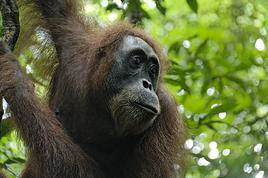
Je souhaite partir à Bornéo pour un trip "jungle". J'adore l'Amazonie et je rêve de ressentir aujourd'hui les mêmes sensations mêlées à l'exotisme asiatique. Dites-moi si je dois plutôt choisir le côté malaisien ou indonésien? Merci merci
Dey
Bonjour
bon ben voila mon mari vient de m annoncer que l on pouvait partir la maintenant donc comme rien n était prévu je dois trouver une destination mais j ai beau regarder sur le net je commence a ne plus ou donner de la tete ! nous pouvons partir 14 jours nous ne sommes que 2 et avons une preference en cette periode pour le soleil ! nous avons etabli un budget de 2500.00 a 3000.00 euros a nous deux c est ce qu il demande ds les tours operateurs en général nous sommes prets a partir soit en vol sec et trouver guest house a droite et a gauche en visitant le plus possible une partie du pays mais nous ne savons pas encore quel pays ! j aime cette idee de se debrouiller arrives la bas mais moi perso je n ai jamais fait et je reste sur mes gardes en fonction de certains endroits (location de voiture .....) mon mari est parti avec son beau frere l annee derniere au Cambodge en moto 15 jours et ce fut une experience inoubliable a tout point de vue pour lui mais moi jusqu a maintenant c était plutôt hotel plage piscine et visites guidees !!! pourriez vous me dire ce que vous pensez du sri lanka , ou inde , ou indonésie ?? merci beaucoup bonne journee
bon ben voila mon mari vient de m annoncer que l on pouvait partir la maintenant donc comme rien n était prévu je dois trouver une destination mais j ai beau regarder sur le net je commence a ne plus ou donner de la tete ! nous pouvons partir 14 jours nous ne sommes que 2 et avons une preference en cette periode pour le soleil ! nous avons etabli un budget de 2500.00 a 3000.00 euros a nous deux c est ce qu il demande ds les tours operateurs en général nous sommes prets a partir soit en vol sec et trouver guest house a droite et a gauche en visitant le plus possible une partie du pays mais nous ne savons pas encore quel pays ! j aime cette idee de se debrouiller arrives la bas mais moi perso je n ai jamais fait et je reste sur mes gardes en fonction de certains endroits (location de voiture .....) mon mari est parti avec son beau frere l annee derniere au Cambodge en moto 15 jours et ce fut une experience inoubliable a tout point de vue pour lui mais moi jusqu a maintenant c était plutôt hotel plage piscine et visites guidees !!! pourriez vous me dire ce que vous pensez du sri lanka , ou inde , ou indonésie ?? merci beaucoup bonne journee
Lombok, Indonesia: A Forgotten Paradise?
We’ve just returned from 3 weeks (yes, only that!) in Lombok, an island next to Bali, just a few miles away. Since I found very little information before leaving—except about the Gili Islands and organized Rinjani treks—I’ve tried to gather some details that might be useful for a Voyage Forum member looking to explore the area. Nothing exhaustive, but maybe a few great tips.
For those considering a Lonely Planet *Bali & Lombok* guide, be aware that the prices are wrong (expect a 30% increase, especially due to rising fuel costs), much of the info is outdated (the latest edition must be at least 2 or 3 years old), and the real good deals aren’t included. In short, don’t bother weighing down your bag (we already had 17kg of luggage for two—we’re getting soft!). A good map will be far more useful.
Climate: We went in late August to mid-September, so the weather was ideal in this region (best from June to September). It was pleasant, not too hot, with a light breeze keeping the Bintang cold in the evening—pure bliss!
Getting There: The cheapest way is to fly to Kuala Lumpur (Malaysia Airlines), then switch airports (getting to the LCC terminal costs 1.5 ringgit by bus) and take an AirAsia flight to Bali (booked in advance online). Once in Bali, to reach Lombok: either another flight—around 30 €—on a small propeller plane (probably a Dutch legacy); or by boat, but since you have to get to Padangbai in eastern Bali to catch the ferry, you “lose” (a very relative term when traveling) a lot of time (at least 6 hours total) to save a few euros. Since we were already mid-afternoon and didn’t want to spend a night in Bali, we opted for the “tuk-tuk with propellers” 😉. It was the first time I was weighed with my bag before boarding a plane! I know I’ve put on weight lately, but still…
After arriving in the late afternoon in Mataram, Lombok, we decided to find a bed nearby. Headed to Senggigi, Lombok’s main beach resort. We ended up at the first guesthouse, “Lina Cottages,” for 75,000 IDR a night. Exhausted, we headed straight to dreamland. I woke up around midnight, thinking I heard Massimo!??!! I hadn’t even had too much Bintang—was the jet lag giving me hallucinations ? No, I really did hear Massimo belting out a song! After a few seconds of “lost in translation,” I realized the Marina, Senggigi’s trendy bar, had—like every night—a live band playing, and these guys were covering that French classic (sic) you’ve probably heard at least once. Coming all this way just to hear “Massiiiimooooo, Massiiimmoooo, Massiiimmooomooooo…” blasting in your ears like you’re at a campsite in Juan-les-Pins—enough to depress anyone! Anyway, we left ASAP. Just enough time to check out Senggigi: its 4 or 5 bars, 10 restaurants, 3 or 4 luxury hotels—still far from Kuta Bali, but not really our scene anyway. We quickly realized there’s very little organized transport (except for a few Perama bus routes, almost all passing through Senggigi) in Lombok. To avoid spending our 3 weeks in bemos, we quickly opted to rent a car (too old for a two-person motorbike, though we’d done it in Bali… Turns out we made the right call—the roads in Lombok are way too rough for bikes). Senggigi is one of the few places on the island where you can rent a car and withdraw cash. After some tough negotiation, I got a Suzuki Katana for 120,000 IDR/day (instead of the usual 200,000 IDR). I was a bit frustrated—thought it was expensive. A local on vacation in Lombok (he’s lived in Australia for years) later told me he couldn’t even get that rate, saying prices had jumped with the fuel hike (from 2,500 IDR/liter two years ago to 5,000 IDR now).
Anyway, we left Massimo to his interplanetary success and headed south. I was curious to see if we could stay on a small island off Lombok’s southwest peninsula. After 60km and 1.5 hours, we arrived in Taun, where we found a “captain” willing to take us to Gili Nanggu. There seemed to be a guesthouse on the island. After some *very* tough negotiation, we got a round-trip price of 150,000 IDR for two days later (a guide taking tourists to the island for the day later told me he pays 185,000 IDR for the same trip). The island is barely a few hundred meters across, and the only guesthouse, “Gili Nanggu Cottages” (165,000 IDR/night), offered us a charming bungalow in traditional Lombok style. No negotiating possible—we were stuck on the island anyway! By mid-afternoon, the day-trippers (often from Senggigi) left. There were about ten of us staying overnight. The sand was white, the water crystal-clear with fish, and the sunsets stunning… but the coral was pretty damaged.
Next, we headed south to Kuta Lombok. The most direct route via Sepi was marked as “small” on the map… mmm… The Lonely Planet—this was the *only* time it was “useful” (sic)—had a special warning saying many readers had been robbed in the area. Wanting to clear this up for my Voyage Forum friends, we took the plunge! The road was *completely* wrecked—potholes everywhere, and if you ignore the rain-carved ravines, it was like a pothole per square meter! I was searching for tarmac to park my wheels! After 80km and 3 hours of bone-rattling driving, with stunning views of Lombok’s arid southern countryside and deserted turquoise bays, we arrived in Kuta Lombok. On the way, instead of robbers and thieves, we only met schoolchildren with big smiles shouting cheerful “hellloooo’s.” We didn’t see a single other car the whole trip.
Kuta is nothing like its Balinese namesake. It stretches just a few hundred meters along a beautiful round-sand bay (yes, round—it rolls under your feet). About ten deserted restaurants and just as many guesthouses (5% occupancy, I was told—we only saw about ten Westerners in 3 days). No guesthouses face the beach; they’re all on the other side of the road in an inner garden. A bit of a shame. Still, the bay is gorgeous, and a few fishing families live in very basic huts on the beach. We decided to check out the Novotel to get a feel for the area. The lush vegetation contrasted with the surrounding aridity, two pools… all that fresh water being used, plus the Accor flag, made me want to head back to the fishermen’s huts. Finally, we found a guesthouse on the beach at the eastern end of Kuta Bay, just before the Novotel: “Lombok Baru.” It’s the only one on the beach. The bungalow was spotless, right by the sea, for 105,000 IDR/night. The Chinese-Indonesian family running the place told me they’d only been open for 3 years and were growing slowly as they saved up. A new bungalow was under construction, and the “garden” was still a work in progress.
The Tanjung Aan bay, a few kilometers east of Kuta, is stunning—huge, white sand, and almost no one except a few persistent sarong sellers. The bay is definitely worth a visit (if not a sunburn). A toothless old man even tried to sell us a coconut, improvising a song (after my girlfriend started singing to ignore them 😉). With his three words of broken English, he sang: “Coconut mist’errrr… mister coconuttttee… If no coconut, no monyyyy… Coconut mister…” for at least 10 minutes! A rare moment, a beautiful encounter. The song stuck with us for the rest of the trip—even now, I hum it to avoid getting too depressed about being back home. One evening, a Balinese waiter who’d been living in Lombok for 7 years gave us lots of info about the area, the culture, and the people. He talked about the security issues in Kuta—yes, there are frequent thefts (money, cars, etc.). For him, it’s due to the lack of education among many locals, who don’t see beyond their immediate needs and risk scaring tourists away (which is why Kuta is so deserted). After a few days there, you do get the sense that you shouldn’t tempt fate by flashing money or jewelry amid such poverty in southern Lombok. But calling it a “dangerous area” is a stretch! That won’t stop me from going back, though!
Next, we headed east—northeast, actually. I was curious about the small islands on my map, and I hadn’t found *anyone* who’d been there to give me tips. So we drove to Labu Pandan (115km, 3 hours—I may have pushed the Katana a bit…). What looked like a small village was actually just a guesthouse and a few fishing boats on the beach. The “Pondok Gili Lampu” guesthouse also sold basic supplies to locals and had a simple restaurant with 5 or 6 basic bungalows (60,000 IDR/night) and a beautiful deserted black-sand beach. They offered snorkeling trips to Gili Lampu and camping there (organized by the guesthouse), but there were no facilities or water on the island. The strong wind made us decide to stay on the beach—poor visibility for snorkeling and sand in the sleeping bags didn’t sound appealing… The owner, Yanto, didn’t speak a word of English but was absolutely lovely. Another heartwarming encounter that did us so much good. Life was sweet, and we let ourselves drift to the rhythm of faraway relaxation.
Then we headed to Sembalun Lawang, the least crowded starting point for the Rinjani trek (most people start from Senaru). The southern route was fine—we crossed a 1,700m pass. The only person we met was an ice cream vendor on a motorbike overtaking us on the climb—he must’ve been in a hurry, which is ironic for an ice cream seller! After 65km and 1h15 of winding roads, we arrived in Sembalun Lawang and parked our trusty Katana at “Sembalun Nauli,” which had 4 standalone bungalows (90,000 IDR/night) in the middle of nowhere. There was nothing around—just the Rinjani looming ahead, our goal for the next 3 days. The guesthouse arranged our gear (sleeping bags, tent), hired two porters, and bought food. I got a price of 1,400,000 IDR for 2 people for 3 days. I think you could get it down to 1,000,000 or 1,200,000 if you did it yourself, but we hadn’t seen a single person in SL (not a restaurant in sight—even the Rinjani Trekking Center was closed, the guy was supposedly napping…). I didn’t feel like stressing over it. It was a far cry from the 170 USD/person quoted in Senggigi!
The 3-Day Rinjani Trek was a unique experience—not just for the scenery but also for the (relative) “sharing” with the porters: Mister Adi (who spoke a little English) and Mister An (who only spoke Sasak and Indonesian). On the first day, we went from Sembalun to base camp: 1,700m elevation gain under the sun, 6 solid hours of hiking (not counting breaks). My shared backpack, weighing around 10kg, felt heavy on the climb. We took breaks to drink, while our porters smoked!! I don’t know how they did it! The next day, we left at 2:30 AM to reach the summit (1,500m elevation gain) by 6 AM for sunrise. The last 300 meters were brutal—a 35/40° slope, straight up in sand and small stones. Those who say you move a meter forward and slide 50cm back haven’t seen the slope! It’s more like 20cm forward and sometimes 20cm back… tough stuff. But we made it to the summit (3,726m)—not everyone does. A word to the wise: you’d better be in good shape and, above all, have the right mindset! More beautiful than the sunrise was the moonrise—almost full and reddish—around 4 AM. It was stunning! As for vertigo, sure, you’re walking along a ridge, but even for someone like me who’s not a fan of heights, it was fine. Back at base camp, Mister An had made delicious banana pancakes—a local ritual, apparently, and a treat for us! Then we descended to Segara Anak Lake in the crater. It was steep, and with our legs like telephone poles, it wasn’t easy: “Adeng adeng, Mister An!!!” We enjoyed the hot springs (40°C!) and I even swam in the lake itself—the water must’ve been around 20°C, incredibly pure. I was alone facing Gunung Baru, the active volcanic cone: unforgettable! On the third day, we climbed back out of the crater, then descended 2,000m to Senaru, where ojek (motorcycle taxis) were waiting to take us back to Sembalun to retrieve our car, still parked at Sembalun Nauli. Then we drove to Senggigi (2 hours, flat out), where this time we stayed at Dharmarie (150,000 IDR instead of 300,000 IDR)—spotless room, nice bathroom, much quieter than Lina! We returned our Suzuki Katana 3 days late (I thought they’d have a heart attack—they’d been looking for us everywhere, even going to Kuta!). Anyway, I paid for 2 extra days out of the 3, and we headed to catch the Perama boat directly to Gili Air from Senggigi (70,000 IDR/person).
We chose Gili Air based on the posts I’d read on Voyage Forum (thanks 😉). Somehow, we ended up with a French friend at Hotel Gili Air (yes, I know—after our Rinjani adventure, we treated ourselves…) on the north side of the island, where we negotiated the room down to 225,000 IDR/night from the listed 38 USD. The included breakfast was huge, and the seawater pool was a nice touch (if not the hotel staff…). The island was pretty nice—white sand, pretty fish, turtles—but the coral was damaged in many places. Hammock, snorkeling, grilled fish, and Bintang—a simple pleasure
After 3 days, the travel bug bit us again. We wanted to reach Komodo by boat. Two agencies offered 4-day one-way trips to Flores: Perama (1,400,000 IDR/person for deck sleeping) and another (name forgotten) for 850,000 IDR. Couldn’t negotiate with Perama—the next departure was in 5 days (every 6 days, I think). We went with the other one. Everything seemed fine (the boat actually left from Labuhan Lombok, east of Lombok, which we reached by bus from Gili Air) until the agency told us there were only 2 flights a week from Labuan Bajo in Flores back to Bali, which would leave us stuck for 3 days in Flores and make us miss our return flight to Kuala Lumpur. To top it off, the agency lady said we were only 6 people signed up, and the boat wouldn’t leave with fewer than 8… so it fell through. We decided to end our trip with a few days in Bali to see how the island had changed since our last visit in 2003.
I won’t go on about Bali—it’s much better known than Lombok—but here are 3 great spots: - Ubud: So much construction since 2003! You’d think you were in a French city center with all the shops! “Nick’s Pension,” near the top of Monkey Forest—take a small alley to the left as you go up, all the way to the end. A green paradise in the middle of rice fields, quiet, just 50m from Monkey Forest. Nice pool. 300,000 IDR/night, negotiated down to 150,000 IDR. - Amed: “Wa Wa We We II” (120,000 IDR/night)—gorgeous infinity pool, charming bungalows, “relax” vibe. - Jimbaran: “Villa Puri Royan” (from 120,000 IDR)—like a hacienda on 3 levels with a pool in the middle. Right next to the beach warungs. *The* good deal in Jimbaran.
When you go from Lombok to Bali, you notice a clear difference. First, in terms of development. In Lombok, cars are rare outside Mataram/Senggigi. Development is far behind Bali—probably what Bali was like 20 years ago! I heard that construction on an international airport in Praya, central Lombok, started on August 1, 2006… Even if it takes 5 or 10 years to build, maybe it’s time to go. Then there’s the “people” factor—culture or religion plays a role. It’s true that it’s less easy than in Bali (which is so unique…), and relationships can be tougher, even tense at times. Maybe it’s just less accessible for “whirlwind travelers” like us. The car also saved us from many hassles (negotiating bemos, ferry arrivals, etc.). Still, we had some amazing encounters and never felt unsafe. I imagine other experiences could be different, especially if you’re easily intimidated.
I hope you’ll find some useful info in this post. When you visit this part of the world, try to get off the beaten path of the Gili Islands or Senggigi. Lombok and its people are well worth a detour.
Selamat Jalan
We’ve just returned from 3 weeks (yes, only that!) in Lombok, an island next to Bali, just a few miles away. Since I found very little information before leaving—except about the Gili Islands and organized Rinjani treks—I’ve tried to gather some details that might be useful for a Voyage Forum member looking to explore the area. Nothing exhaustive, but maybe a few great tips.
For those considering a Lonely Planet *Bali & Lombok* guide, be aware that the prices are wrong (expect a 30% increase, especially due to rising fuel costs), much of the info is outdated (the latest edition must be at least 2 or 3 years old), and the real good deals aren’t included. In short, don’t bother weighing down your bag (we already had 17kg of luggage for two—we’re getting soft!). A good map will be far more useful.
Climate: We went in late August to mid-September, so the weather was ideal in this region (best from June to September). It was pleasant, not too hot, with a light breeze keeping the Bintang cold in the evening—pure bliss!
Getting There: The cheapest way is to fly to Kuala Lumpur (Malaysia Airlines), then switch airports (getting to the LCC terminal costs 1.5 ringgit by bus) and take an AirAsia flight to Bali (booked in advance online). Once in Bali, to reach Lombok: either another flight—around 30 €—on a small propeller plane (probably a Dutch legacy); or by boat, but since you have to get to Padangbai in eastern Bali to catch the ferry, you “lose” (a very relative term when traveling) a lot of time (at least 6 hours total) to save a few euros. Since we were already mid-afternoon and didn’t want to spend a night in Bali, we opted for the “tuk-tuk with propellers” 😉. It was the first time I was weighed with my bag before boarding a plane! I know I’ve put on weight lately, but still…
After arriving in the late afternoon in Mataram, Lombok, we decided to find a bed nearby. Headed to Senggigi, Lombok’s main beach resort. We ended up at the first guesthouse, “Lina Cottages,” for 75,000 IDR a night. Exhausted, we headed straight to dreamland. I woke up around midnight, thinking I heard Massimo!??!! I hadn’t even had too much Bintang—was the jet lag giving me hallucinations ? No, I really did hear Massimo belting out a song! After a few seconds of “lost in translation,” I realized the Marina, Senggigi’s trendy bar, had—like every night—a live band playing, and these guys were covering that French classic (sic) you’ve probably heard at least once. Coming all this way just to hear “Massiiiimooooo, Massiiimmoooo, Massiiimmooomooooo…” blasting in your ears like you’re at a campsite in Juan-les-Pins—enough to depress anyone! Anyway, we left ASAP. Just enough time to check out Senggigi: its 4 or 5 bars, 10 restaurants, 3 or 4 luxury hotels—still far from Kuta Bali, but not really our scene anyway. We quickly realized there’s very little organized transport (except for a few Perama bus routes, almost all passing through Senggigi) in Lombok. To avoid spending our 3 weeks in bemos, we quickly opted to rent a car (too old for a two-person motorbike, though we’d done it in Bali… Turns out we made the right call—the roads in Lombok are way too rough for bikes). Senggigi is one of the few places on the island where you can rent a car and withdraw cash. After some tough negotiation, I got a Suzuki Katana for 120,000 IDR/day (instead of the usual 200,000 IDR). I was a bit frustrated—thought it was expensive. A local on vacation in Lombok (he’s lived in Australia for years) later told me he couldn’t even get that rate, saying prices had jumped with the fuel hike (from 2,500 IDR/liter two years ago to 5,000 IDR now).
Anyway, we left Massimo to his interplanetary success and headed south. I was curious to see if we could stay on a small island off Lombok’s southwest peninsula. After 60km and 1.5 hours, we arrived in Taun, where we found a “captain” willing to take us to Gili Nanggu. There seemed to be a guesthouse on the island. After some *very* tough negotiation, we got a round-trip price of 150,000 IDR for two days later (a guide taking tourists to the island for the day later told me he pays 185,000 IDR for the same trip). The island is barely a few hundred meters across, and the only guesthouse, “Gili Nanggu Cottages” (165,000 IDR/night), offered us a charming bungalow in traditional Lombok style. No negotiating possible—we were stuck on the island anyway! By mid-afternoon, the day-trippers (often from Senggigi) left. There were about ten of us staying overnight. The sand was white, the water crystal-clear with fish, and the sunsets stunning… but the coral was pretty damaged.
Next, we headed south to Kuta Lombok. The most direct route via Sepi was marked as “small” on the map… mmm… The Lonely Planet—this was the *only* time it was “useful” (sic)—had a special warning saying many readers had been robbed in the area. Wanting to clear this up for my Voyage Forum friends, we took the plunge! The road was *completely* wrecked—potholes everywhere, and if you ignore the rain-carved ravines, it was like a pothole per square meter! I was searching for tarmac to park my wheels! After 80km and 3 hours of bone-rattling driving, with stunning views of Lombok’s arid southern countryside and deserted turquoise bays, we arrived in Kuta Lombok. On the way, instead of robbers and thieves, we only met schoolchildren with big smiles shouting cheerful “hellloooo’s.” We didn’t see a single other car the whole trip.
Kuta is nothing like its Balinese namesake. It stretches just a few hundred meters along a beautiful round-sand bay (yes, round—it rolls under your feet). About ten deserted restaurants and just as many guesthouses (5% occupancy, I was told—we only saw about ten Westerners in 3 days). No guesthouses face the beach; they’re all on the other side of the road in an inner garden. A bit of a shame. Still, the bay is gorgeous, and a few fishing families live in very basic huts on the beach. We decided to check out the Novotel to get a feel for the area. The lush vegetation contrasted with the surrounding aridity, two pools… all that fresh water being used, plus the Accor flag, made me want to head back to the fishermen’s huts. Finally, we found a guesthouse on the beach at the eastern end of Kuta Bay, just before the Novotel: “Lombok Baru.” It’s the only one on the beach. The bungalow was spotless, right by the sea, for 105,000 IDR/night. The Chinese-Indonesian family running the place told me they’d only been open for 3 years and were growing slowly as they saved up. A new bungalow was under construction, and the “garden” was still a work in progress.
The Tanjung Aan bay, a few kilometers east of Kuta, is stunning—huge, white sand, and almost no one except a few persistent sarong sellers. The bay is definitely worth a visit (if not a sunburn). A toothless old man even tried to sell us a coconut, improvising a song (after my girlfriend started singing to ignore them 😉). With his three words of broken English, he sang: “Coconut mist’errrr… mister coconuttttee… If no coconut, no monyyyy… Coconut mister…” for at least 10 minutes! A rare moment, a beautiful encounter. The song stuck with us for the rest of the trip—even now, I hum it to avoid getting too depressed about being back home. One evening, a Balinese waiter who’d been living in Lombok for 7 years gave us lots of info about the area, the culture, and the people. He talked about the security issues in Kuta—yes, there are frequent thefts (money, cars, etc.). For him, it’s due to the lack of education among many locals, who don’t see beyond their immediate needs and risk scaring tourists away (which is why Kuta is so deserted). After a few days there, you do get the sense that you shouldn’t tempt fate by flashing money or jewelry amid such poverty in southern Lombok. But calling it a “dangerous area” is a stretch! That won’t stop me from going back, though!
Next, we headed east—northeast, actually. I was curious about the small islands on my map, and I hadn’t found *anyone* who’d been there to give me tips. So we drove to Labu Pandan (115km, 3 hours—I may have pushed the Katana a bit…). What looked like a small village was actually just a guesthouse and a few fishing boats on the beach. The “Pondok Gili Lampu” guesthouse also sold basic supplies to locals and had a simple restaurant with 5 or 6 basic bungalows (60,000 IDR/night) and a beautiful deserted black-sand beach. They offered snorkeling trips to Gili Lampu and camping there (organized by the guesthouse), but there were no facilities or water on the island. The strong wind made us decide to stay on the beach—poor visibility for snorkeling and sand in the sleeping bags didn’t sound appealing… The owner, Yanto, didn’t speak a word of English but was absolutely lovely. Another heartwarming encounter that did us so much good. Life was sweet, and we let ourselves drift to the rhythm of faraway relaxation.
Then we headed to Sembalun Lawang, the least crowded starting point for the Rinjani trek (most people start from Senaru). The southern route was fine—we crossed a 1,700m pass. The only person we met was an ice cream vendor on a motorbike overtaking us on the climb—he must’ve been in a hurry, which is ironic for an ice cream seller! After 65km and 1h15 of winding roads, we arrived in Sembalun Lawang and parked our trusty Katana at “Sembalun Nauli,” which had 4 standalone bungalows (90,000 IDR/night) in the middle of nowhere. There was nothing around—just the Rinjani looming ahead, our goal for the next 3 days. The guesthouse arranged our gear (sleeping bags, tent), hired two porters, and bought food. I got a price of 1,400,000 IDR for 2 people for 3 days. I think you could get it down to 1,000,000 or 1,200,000 if you did it yourself, but we hadn’t seen a single person in SL (not a restaurant in sight—even the Rinjani Trekking Center was closed, the guy was supposedly napping…). I didn’t feel like stressing over it. It was a far cry from the 170 USD/person quoted in Senggigi!
The 3-Day Rinjani Trek was a unique experience—not just for the scenery but also for the (relative) “sharing” with the porters: Mister Adi (who spoke a little English) and Mister An (who only spoke Sasak and Indonesian). On the first day, we went from Sembalun to base camp: 1,700m elevation gain under the sun, 6 solid hours of hiking (not counting breaks). My shared backpack, weighing around 10kg, felt heavy on the climb. We took breaks to drink, while our porters smoked!! I don’t know how they did it! The next day, we left at 2:30 AM to reach the summit (1,500m elevation gain) by 6 AM for sunrise. The last 300 meters were brutal—a 35/40° slope, straight up in sand and small stones. Those who say you move a meter forward and slide 50cm back haven’t seen the slope! It’s more like 20cm forward and sometimes 20cm back… tough stuff. But we made it to the summit (3,726m)—not everyone does. A word to the wise: you’d better be in good shape and, above all, have the right mindset! More beautiful than the sunrise was the moonrise—almost full and reddish—around 4 AM. It was stunning! As for vertigo, sure, you’re walking along a ridge, but even for someone like me who’s not a fan of heights, it was fine. Back at base camp, Mister An had made delicious banana pancakes—a local ritual, apparently, and a treat for us! Then we descended to Segara Anak Lake in the crater. It was steep, and with our legs like telephone poles, it wasn’t easy: “Adeng adeng, Mister An!!!” We enjoyed the hot springs (40°C!) and I even swam in the lake itself—the water must’ve been around 20°C, incredibly pure. I was alone facing Gunung Baru, the active volcanic cone: unforgettable! On the third day, we climbed back out of the crater, then descended 2,000m to Senaru, where ojek (motorcycle taxis) were waiting to take us back to Sembalun to retrieve our car, still parked at Sembalun Nauli. Then we drove to Senggigi (2 hours, flat out), where this time we stayed at Dharmarie (150,000 IDR instead of 300,000 IDR)—spotless room, nice bathroom, much quieter than Lina! We returned our Suzuki Katana 3 days late (I thought they’d have a heart attack—they’d been looking for us everywhere, even going to Kuta!). Anyway, I paid for 2 extra days out of the 3, and we headed to catch the Perama boat directly to Gili Air from Senggigi (70,000 IDR/person).
We chose Gili Air based on the posts I’d read on Voyage Forum (thanks 😉). Somehow, we ended up with a French friend at Hotel Gili Air (yes, I know—after our Rinjani adventure, we treated ourselves…) on the north side of the island, where we negotiated the room down to 225,000 IDR/night from the listed 38 USD. The included breakfast was huge, and the seawater pool was a nice touch (if not the hotel staff…). The island was pretty nice—white sand, pretty fish, turtles—but the coral was damaged in many places. Hammock, snorkeling, grilled fish, and Bintang—a simple pleasure
After 3 days, the travel bug bit us again. We wanted to reach Komodo by boat. Two agencies offered 4-day one-way trips to Flores: Perama (1,400,000 IDR/person for deck sleeping) and another (name forgotten) for 850,000 IDR. Couldn’t negotiate with Perama—the next departure was in 5 days (every 6 days, I think). We went with the other one. Everything seemed fine (the boat actually left from Labuhan Lombok, east of Lombok, which we reached by bus from Gili Air) until the agency told us there were only 2 flights a week from Labuan Bajo in Flores back to Bali, which would leave us stuck for 3 days in Flores and make us miss our return flight to Kuala Lumpur. To top it off, the agency lady said we were only 6 people signed up, and the boat wouldn’t leave with fewer than 8… so it fell through. We decided to end our trip with a few days in Bali to see how the island had changed since our last visit in 2003.
I won’t go on about Bali—it’s much better known than Lombok—but here are 3 great spots: - Ubud: So much construction since 2003! You’d think you were in a French city center with all the shops! “Nick’s Pension,” near the top of Monkey Forest—take a small alley to the left as you go up, all the way to the end. A green paradise in the middle of rice fields, quiet, just 50m from Monkey Forest. Nice pool. 300,000 IDR/night, negotiated down to 150,000 IDR. - Amed: “Wa Wa We We II” (120,000 IDR/night)—gorgeous infinity pool, charming bungalows, “relax” vibe. - Jimbaran: “Villa Puri Royan” (from 120,000 IDR)—like a hacienda on 3 levels with a pool in the middle. Right next to the beach warungs. *The* good deal in Jimbaran.
When you go from Lombok to Bali, you notice a clear difference. First, in terms of development. In Lombok, cars are rare outside Mataram/Senggigi. Development is far behind Bali—probably what Bali was like 20 years ago! I heard that construction on an international airport in Praya, central Lombok, started on August 1, 2006… Even if it takes 5 or 10 years to build, maybe it’s time to go. Then there’s the “people” factor—culture or religion plays a role. It’s true that it’s less easy than in Bali (which is so unique…), and relationships can be tougher, even tense at times. Maybe it’s just less accessible for “whirlwind travelers” like us. The car also saved us from many hassles (negotiating bemos, ferry arrivals, etc.). Still, we had some amazing encounters and never felt unsafe. I imagine other experiences could be different, especially if you’re easily intimidated.
I hope you’ll find some useful info in this post. When you visit this part of the world, try to get off the beaten path of the Gili Islands or Senggigi. Lombok and its people are well worth a detour.
Selamat Jalan
Bonjour,
Voici l'idée d'itinéraire (sur environ 2 à 3 semaines) à laquelle je pensais courant mi septembre-octobre : A Java : Jakarta-Cianjur (qqs jours chez l'habitant)-Jogjakarta (temples borubudur et Prambanan)- Bromo - Kawah Ijen A Bali : Ubud-Amed A Lombock : gili air Pouvez-vous me conseiller sur la durée à consacrer à chaque étape et aux liaisons entre elles ?
Merci bcp à vous !🙂
Voici l'idée d'itinéraire (sur environ 2 à 3 semaines) à laquelle je pensais courant mi septembre-octobre : A Java : Jakarta-Cianjur (qqs jours chez l'habitant)-Jogjakarta (temples borubudur et Prambanan)- Bromo - Kawah Ijen A Bali : Ubud-Amed A Lombock : gili air Pouvez-vous me conseiller sur la durée à consacrer à chaque étape et aux liaisons entre elles ?
Merci bcp à vous !🙂
Time to hit the road again!
Summer seems to be the best time weather-wise for Bali. And since summer’s when we can take a long trip, let’s go for Bali... even though we know it’ll be *packed* with people! So we’ll steer clear of the island’s south...
Our current plan (19 days on the ground, 7 stops): - 4 Nights (3 days) in Ubud 2 days for rice terraces / activities (Tegallalang, Campuhan Ridge, Monkey Forest, Bird Park, coffee plantation, market (?), dance "pestacle," cooking class and/or spa) 1 day with a driver for the Temples (Pura Gunung Kawi, Tirta Empul Spring, Pura Mengening, Goa Gajah...) - 2 nights in Sidemen (1 day for Pura Kehen + Batur Caldera + Pura Besakih and 1 day to relax in the rice terraces) - 3 nights on Gili Meno (Rest and beaches) from Padangbai - 2 nights in Amed (1 day from Padangbai with the Abang rice terrace and Tirta Gangga baths, and the next day a boat tour in Amed) - 4 nights in Pemuteran (1 day for transfer and rest, 1 day to visit Kawah Ijen, and 2 days of snorkeling at Menjangan Island) - 2 nights in Munduk (1 day with the Dayang rice terrace and the 3-waterfall hike, 1 day at Pura Ulun Danu Bratan) - 2 nights in Jatiluwih (1 day in the rice terraces, and on the last day, we’ll stop by Pura Taman Ayun in Mengwi and Pura Tanah Lot before catching our red-eye flight).
Accommodations in homestays or hotels. Transportation to be arranged on-site with the lodgings (?) Boat to Gili Meno to book in advance (?) Kawah Ijen excursion to plan ahead (?)—check with the homestay (?)
Thanks for your thoughts/comments to help us explore this destination...
Summer seems to be the best time weather-wise for Bali. And since summer’s when we can take a long trip, let’s go for Bali... even though we know it’ll be *packed* with people! So we’ll steer clear of the island’s south...
Our current plan (19 days on the ground, 7 stops): - 4 Nights (3 days) in Ubud 2 days for rice terraces / activities (Tegallalang, Campuhan Ridge, Monkey Forest, Bird Park, coffee plantation, market (?), dance "pestacle," cooking class and/or spa) 1 day with a driver for the Temples (Pura Gunung Kawi, Tirta Empul Spring, Pura Mengening, Goa Gajah...) - 2 nights in Sidemen (1 day for Pura Kehen + Batur Caldera + Pura Besakih and 1 day to relax in the rice terraces) - 3 nights on Gili Meno (Rest and beaches) from Padangbai - 2 nights in Amed (1 day from Padangbai with the Abang rice terrace and Tirta Gangga baths, and the next day a boat tour in Amed) - 4 nights in Pemuteran (1 day for transfer and rest, 1 day to visit Kawah Ijen, and 2 days of snorkeling at Menjangan Island) - 2 nights in Munduk (1 day with the Dayang rice terrace and the 3-waterfall hike, 1 day at Pura Ulun Danu Bratan) - 2 nights in Jatiluwih (1 day in the rice terraces, and on the last day, we’ll stop by Pura Taman Ayun in Mengwi and Pura Tanah Lot before catching our red-eye flight).
Accommodations in homestays or hotels. Transportation to be arranged on-site with the lodgings (?) Boat to Gili Meno to book in advance (?) Kawah Ijen excursion to plan ahead (?)—check with the homestay (?)
Thanks for your thoughts/comments to help us explore this destination...
bonjour
il me faudrait quelques infos sur ce secteur qui sera la première partie (environ 12 jours )d'un voyage d'un mois( en couple, en septembre 2015.)vous m'avez déjà bien aidé pour la seconde partie de ce voyage (secteur padang...)..alors espoir....
-où loger à bukit lawang (des infos sur "thomas retreat" et"back to nature "seraient appréciées...(tarif de la sortie jungle sur 1 journée? choisit-on son guide? peut on partir à 2 ou faut il se joindre à un groupe?le "back to nature" étant à 40 minutes à pied dans la jungle doit on revenir vers le village(40 min. donc..)pour débuter ce trek d'une journée ou bien cela peut démarrer depuis cet hébergement directement?
-qu'y a t il à voir sur le trajet bukit lawang - berastagi? et à berastagi à part le volcan sibayak, on peut voir quoi aux alentours? quelqu'un a t il testé le "nachelle homestay"...ses conclusions?
-j'ai vu des photos de touristes devant une platée d'écrevisses (mais je ne sais plus si c'est à maninjau ou toba???)si c'est au lac toba, où trouver ça (nous logerons au "Mas cottage")....
cdt
jean-louis
bonjour
nous hesitons pour notre voyage en juillet -aout 2011
entre les yisayas aux philippines et sulawesi et iles togians
nous aimons faire du snorkeling, la nature, les endroits assez calmes pas trop les villes avec beaucoup de monde nous sommes une famille avec 3 enfants dont 2 petits 1 an et demi pour la dernière nous avons un budget pour 5 semaines de 2500 euros merci d'avance de vos conseils
ps priorité pour le snorkeling
entre les yisayas aux philippines et sulawesi et iles togians
nous aimons faire du snorkeling, la nature, les endroits assez calmes pas trop les villes avec beaucoup de monde nous sommes une famille avec 3 enfants dont 2 petits 1 an et demi pour la dernière nous avons un budget pour 5 semaines de 2500 euros merci d'avance de vos conseils
ps priorité pour le snorkeling
Bonjour,
Les dates devraient être 21 juillet-18 août 2012 (en plein pendant le ramadan).
En lisant le Petit Futé et le Guide Vert Michelin, j'ai fait cette ébauche d'itinéraire:
28 jours (4 semaines)
JAVA:
Vol depuis Paris (2 jours) Arrivée Jakarta (1 jour) Bogor (AR en train), jardin botanique et fabrique de gongs de Pak Sukarna (1 jour), train de Jakarta à Bandung (3h10) Bandung (4 jours), train pour Yogyakarta (7h20 train de nuit? ou matin arrivée après 14h) * visite Bandung, excursions vallée Ciwidey, Sumedang rizières et musée, volcan Kawah Putih, + Lembang et volcan Tangkuban Prahu? spectacles à voir? Yogyakarta (5 jours - 4,5 jours si train le matin) * visite Yogyakarta * excursion Borobudur (1/2 journée, l'un des plus importants monuments bouddhiques au monde) * excursion Prambanan (17km, 1 journée ou 1/2 journée avec Borobudur): la plaine de Prambanan rassemble le plus grand nombre de temples indous de Java. Excursion en minibus (trajet 50mn). Ramayana ballet tous les soirs vers 19h (compris dans l'excursion en minibus). * autres excursions? Solo (train 1h, retour lendemain) (excursion minibus avec spectacle?) (spectacle soir), retour Yogyakarta (2 jours ou après-midi + nuit?) Vol pour Denpasar (Cie Garuda?) et bus pour Amlapura (3h) (1 jour à peine)
(= 16 jours)
BALI:
Amlapura (4 jours) * Amlapura (pas de vélo, pentes raides), promenades dans les rizières, marché (y a-t-il des villages aux alentours accessibles à pied?) * Ujung (5km): village de pêcheurs, palais * Tirtagangga, village perché à 6km d'Amlapura dans les rizières - palais aquatique (bémo ou chauffeur?) - randonnée de 3h (6km) entre village de Tenganan et Tittagangga (comment aller au village de Tenganan?) * Amed, village de pêcheurs (bémo ou chauffeur?). Est-ce que le village est intéressant à voir quand on se sait pas nager et qu'on n'y va pas pour la plage? Bémo pour Ubud (1 jour), visiter palais de Klungkung (ou Semarapura) en route et, à 1km, les peintres du village de Kamasan. Le bémo fait-il des arrêts à cet endroit? Ubud et environs à pied et à vélo (5 jours) * Ubud: musées, ville, temples, palais, spectacles, forêt des singes, balades autour de la rivière * Villages aux alentours (à pied et en vélo): Mas, Teges, Peliatan (spectacles gamelans danses lelong dimanches, vendredis et mardis) * Excursion Mont Batur * Excursion 1 journée au lac Bratan? Denpasar, vol pour Paris (1 jour)
(= 11 jours)
= 27 jours (reste 1 jour peut-être selon horaire vol de retour)
Qu'en pensez-vous? Y a-t-il trop ou pas assez de temps dans chaque lieu? Y a-t-il d'autres lieux à voir facilement (et rapidement) accessibles par les transports?
Les dates devraient être 21 juillet-18 août 2012 (en plein pendant le ramadan).
En lisant le Petit Futé et le Guide Vert Michelin, j'ai fait cette ébauche d'itinéraire:
28 jours (4 semaines)
JAVA:
Vol depuis Paris (2 jours) Arrivée Jakarta (1 jour) Bogor (AR en train), jardin botanique et fabrique de gongs de Pak Sukarna (1 jour), train de Jakarta à Bandung (3h10) Bandung (4 jours), train pour Yogyakarta (7h20 train de nuit? ou matin arrivée après 14h) * visite Bandung, excursions vallée Ciwidey, Sumedang rizières et musée, volcan Kawah Putih, + Lembang et volcan Tangkuban Prahu? spectacles à voir? Yogyakarta (5 jours - 4,5 jours si train le matin) * visite Yogyakarta * excursion Borobudur (1/2 journée, l'un des plus importants monuments bouddhiques au monde) * excursion Prambanan (17km, 1 journée ou 1/2 journée avec Borobudur): la plaine de Prambanan rassemble le plus grand nombre de temples indous de Java. Excursion en minibus (trajet 50mn). Ramayana ballet tous les soirs vers 19h (compris dans l'excursion en minibus). * autres excursions? Solo (train 1h, retour lendemain) (excursion minibus avec spectacle?) (spectacle soir), retour Yogyakarta (2 jours ou après-midi + nuit?) Vol pour Denpasar (Cie Garuda?) et bus pour Amlapura (3h) (1 jour à peine)
(= 16 jours)
BALI:
Amlapura (4 jours) * Amlapura (pas de vélo, pentes raides), promenades dans les rizières, marché (y a-t-il des villages aux alentours accessibles à pied?) * Ujung (5km): village de pêcheurs, palais * Tirtagangga, village perché à 6km d'Amlapura dans les rizières - palais aquatique (bémo ou chauffeur?) - randonnée de 3h (6km) entre village de Tenganan et Tittagangga (comment aller au village de Tenganan?) * Amed, village de pêcheurs (bémo ou chauffeur?). Est-ce que le village est intéressant à voir quand on se sait pas nager et qu'on n'y va pas pour la plage? Bémo pour Ubud (1 jour), visiter palais de Klungkung (ou Semarapura) en route et, à 1km, les peintres du village de Kamasan. Le bémo fait-il des arrêts à cet endroit? Ubud et environs à pied et à vélo (5 jours) * Ubud: musées, ville, temples, palais, spectacles, forêt des singes, balades autour de la rivière * Villages aux alentours (à pied et en vélo): Mas, Teges, Peliatan (spectacles gamelans danses lelong dimanches, vendredis et mardis) * Excursion Mont Batur * Excursion 1 journée au lac Bratan? Denpasar, vol pour Paris (1 jour)
(= 11 jours)
= 27 jours (reste 1 jour peut-être selon horaire vol de retour)
Qu'en pensez-vous? Y a-t-il trop ou pas assez de temps dans chaque lieu? Y a-t-il d'autres lieux à voir facilement (et rapidement) accessibles par les transports?
Bonjour a tous,
Nous serons de Juin a fin Juillet en Indonesie. Nous avons trouve un low cost depuis KL pour rejoindre Mankassar. Nous ne connaissons pas beaucoup le pays mais cherchons des coins paradisiaque et si possible en dehors des grandes voies touristiques.
J'ai fouille sur le net mais j'ai juste pu voir que Alor etait conecte depuis Denpassar, Surabaya et Kupang.
J'aurai aime trouve un ferry allant Mankassar jusque Flores et de flores rejoindre l'archipel d'Alor.
Avez vous deja ete la bas? Comment avez vous fait? Quel sont les plus beau spot de plongee dans cette partie de l'Indonesie pour vous?
J'attend vos reponses avec impatience,
Cordialement,
David.
Nous serons de Juin a fin Juillet en Indonesie. Nous avons trouve un low cost depuis KL pour rejoindre Mankassar. Nous ne connaissons pas beaucoup le pays mais cherchons des coins paradisiaque et si possible en dehors des grandes voies touristiques.
J'ai fouille sur le net mais j'ai juste pu voir que Alor etait conecte depuis Denpassar, Surabaya et Kupang.
J'aurai aime trouve un ferry allant Mankassar jusque Flores et de flores rejoindre l'archipel d'Alor.
Avez vous deja ete la bas? Comment avez vous fait? Quel sont les plus beau spot de plongee dans cette partie de l'Indonesie pour vous?
J'attend vos reponses avec impatience,
Cordialement,
David.
Téléchargement:
http://bit.ly/PELNI_ver_1
Fonctionnement 23 ferries font leur rotation sur 2 semaines (A et B) et 4 ferries tournent sur 1 mois (semaines A, B, C et D) un autre calendrier donne la correspondance des jours des semaines concernées.
Exemple Le bateau n° 3 KM Tidar a ses rotations sur 2 semaines Il est à Surabaya les dimanche et lundi de semaine A, soit d'après le tableau, les dimanche 4 et lundi 5 janvier, 14 et 15 janvier, 1 et 2 février, 15 et 16 février, etc... et le mardi il fait escale à Pare-Pare entre 20h et 23h Il revient à Surabaya les dimanche de semaine B, pour se rendre à Makassar les lundi de semaine B, ce qui donne dimanche 11 et lundi 12 janvier, 21 et 22 janvier, 8 et 9 février, etc....
Même principe sur les rotations de 4 semaines.
Aujourd'hui 27 mai, nous sommes un mercredi de semaine A, le Ciremai est à Surabaya, le Lambelu relie les Moluques à Sulawesi, le Pangrogro rentre des Iles Tanimbar...
Bien sûr, c'est tout théorique, ça reste soumis à la météo, aux avaries techniques, et retards de tous genres, néanmoins PELNI est réputée très fiable.
NE PAS CONFONDRE LES PELNI AVEC LES AUTRES FERRIES QUI RELIENT 2 ILES VOISINES (comme par exemple Java-Bali, ou Bali-Lombok ou Sumbawa-Florès, qui eux sont quotidiens et transportent des véhicules).
Voici la carte des trajets, elle est de 2006 mais n'a pas trop bougé depuis (on a toujours le même nombre de bateaux en service)

Fonctionnement 23 ferries font leur rotation sur 2 semaines (A et B) et 4 ferries tournent sur 1 mois (semaines A, B, C et D) un autre calendrier donne la correspondance des jours des semaines concernées.
Exemple Le bateau n° 3 KM Tidar a ses rotations sur 2 semaines Il est à Surabaya les dimanche et lundi de semaine A, soit d'après le tableau, les dimanche 4 et lundi 5 janvier, 14 et 15 janvier, 1 et 2 février, 15 et 16 février, etc... et le mardi il fait escale à Pare-Pare entre 20h et 23h Il revient à Surabaya les dimanche de semaine B, pour se rendre à Makassar les lundi de semaine B, ce qui donne dimanche 11 et lundi 12 janvier, 21 et 22 janvier, 8 et 9 février, etc....
Même principe sur les rotations de 4 semaines.
Aujourd'hui 27 mai, nous sommes un mercredi de semaine A, le Ciremai est à Surabaya, le Lambelu relie les Moluques à Sulawesi, le Pangrogro rentre des Iles Tanimbar...
Bien sûr, c'est tout théorique, ça reste soumis à la météo, aux avaries techniques, et retards de tous genres, néanmoins PELNI est réputée très fiable.
NE PAS CONFONDRE LES PELNI AVEC LES AUTRES FERRIES QUI RELIENT 2 ILES VOISINES (comme par exemple Java-Bali, ou Bali-Lombok ou Sumbawa-Florès, qui eux sont quotidiens et transportent des véhicules).
Voici la carte des trajets, elle est de 2006 mais n'a pas trop bougé depuis (on a toujours le même nombre de bateaux en service)