Bonjour à tous, dans 1 semaine nous devrions partir d'Orly pour la Réunion et embarquer sur le "Costa Méditérranéa" pour 30 jours; déjà Israël qui empêche les touristes même Français de descendre du bateau ou une " petite quarantaine" sur leur sol (12 jours) . Donc quel nouveau itinéraire ?
Mon agence et Costa ne peuvent à ce jour nous en dire plus ! !
Dans ce contexte de morosité et les risques de confinement, le moral est bas loin du plaisir de partir en vacances !
Si d'autres croisiéristes sont dans le même cas, je les remercie par avance de se manifester pour partager nos inquiétudes
Le 10 Avril, nous devrions arriver à Venise, pour reprendre l'avion pour rentrer en France ; mais à ce jour il y a le corinavirus !
😉😉😉Bonjour,
Nous rentrons d'une croisière inoubliable de par son itinéraire. Les escales furent les suivantes: Port Louis à l'île Maurice - Le Port à l'île de la Réunion - Tamatave, Diégo Suarez et Nosy Bé sur l'île de Madagascar - Mombasa au Kénya - Salaalah au Sultanat d'Oman - Aden au Yémen - Safaga, Sharm El Sheik en Egypte - Le Canal de Suez - Alexandrie en Egypte - Naples et Savone en Italie. soit 28 jours à bord du Costa Europa. Nous avions craint au départ que les évènements en cours à Madagascar nous imputent des trois escales de cette île. Il n'en fut rien, le nouveau Commandant (Pietro Sinisi) décida de ne rien changer au programme. Pour tous les forumeurs intéressés par mon récit, je leur demande d'être patient car je détaillerai chaque escale par des photos et ce que nous avons visité soit par nos propres moyens ou par le biais de Costa en expliquant nos choix; d'ou un récit en plusieurs jours!
Pour commencer, le bateau: Le Costa Europa est un ancien bateau de la flotte Costa mais est à mon avis un bateau plein de charme et dans la lignée des anciens liners... Sa décoration est sobre et très agréable avec en exposition beaucoup d'œuvres d'art, c'est ce qui le différencie des nouvelles structures très "clinquantes". Pour cette raison, je l'ai, comme beaucoup d'autres apprécié autant que le Costa Mediterranea par exemple. C'est un bateau très bien entretenu et très propre. Le personnel fût avenant, toujours souriant et courtois; l'etat major compris (Ce qui n'est pas toujours le cas sur toutes les unités). Le Commandant fut très communiquant, ce qui explique sûrement la bonne ambiance générale. Le bateau avait embarqué 1350 passagers (1773 passager max.) avec environ 400 Francophones.
Notre hôtesse Francophone Charlotte Hamel était très professionnelle et restait toujours disponible lorsqu'on la sollicitait; de plus elle donnait toujours de bons conseils pour les excursions. Ses interventions et explications qu'elle donnait au théâtre furent très appréciés.
Les buffets furent assez variés et leurs diversités nous permettaient de ne pas nous lasser par une trop grande répétition! Les dîners furent en général corrects, ce ne fut pas de la haute gastronomie mais digne d'un bon restaurant. Nous avions pris dès le départ les différents forfaits d'eau, de vins et les cocktails "Boys and Girls" excellents et café.
Notre cabine a toujours été bien tenue par notre cabinier qui s'appelait Gleen, jeune Philippin serviable et toujours disponible et à l'écoute de nos désirs.Notre serveur au restaurant Luis était aussi "super", il est Péruvien. Le pourboire pour ces deux fut à la hauteur de leur dévouement et de leur gentillesse! (en plus du pourboire prélevé automatiquement).
Photo n° 1: Solarium et piscine Andromeda au pont 9
n° 2: cabine n° 9005 de 22 m² pont 9 Andromeda
n° 3: Vu vers l'entrée avec une porte de séparation entre le couloir de rangement, l'entrée de la salle de bain et la cabine
n° 4: La salle de bain
n° 5 Solarium et piscine Sirens au pont 11
n° 6: Costa Europa à quai à Alexandrie
n° 7: Le theatre Atlante au pont 8 (sur 2 niveaux)
n° 8 Le Medusa Ballroom
n° 9: Ocean Bar piste de danse
n° 10: Ocean Bar A la prochaine: escale de Port Louis à l'île Maurice
n° 10: Ocean Bar A la prochaine: escale de Port Louis à l'île Maurice
Bonsoir ,
Je pars du 17 /02/16 au 03/03/16 sur le neoromantica avec costa pour les perles de l'océan indien
C'est ma première croisière et je suis inquiète point de vue supplément
J'ai déjà réglé les forfaits pour les pourboires et j'ai pris 3 excursions pour Madagascar
Pour Maurice je pense prendre un taxi pour visiter l'ile
Pour les Seychelles je ne sais pas trop , Pralin ? pourriez vous m'en dire un peu plus
Et retour à la Réunion , j'aimerai voir les volcans mais comment ?
Merci de me répondre pour essayer de m'aiguiller
Bonjour aux Membres VF
nous envisageons une croisière sur le Costa Romantica dans l'Océan Indien en janvier prochain au départ de La Réunion. Nous sommes preneurs pour tous renseignements concernant cette croisière, avis bateau, escales etc ....
Merci d'avance !
nous envisageons une croisière sur le Costa Romantica dans l'Océan Indien en janvier prochain au départ de La Réunion. Nous sommes preneurs pour tous renseignements concernant cette croisière, avis bateau, escales etc ....
Merci d'avance !
Bonjour,
Nous embarquons sur le Costa Neo-Romantica pour une croisière dans L'océan indien de 2 semaines du 18 février 2016 au 03 mars 2016.
Nous arrivons à La Réunion (aéroport Saint-Denis)
Nos escales seront: 2 jours à Port-Louis (Maurice)
3 jours à Victoria (Seychelles)
1 jour à Nosy-Be (Madagascar)
1 jour à Diego Suarez (Madagascar)
1 jour à Tamatave (Madagascar)
Nous sommes belges et voudrions savoir s'il faut demander des visas en belgique avant de partir.
Si vous avez déjà fait cette croisière récemment, nous aimerions savoir quelles excursions sont à faire absolument sur ces iles, quels tuyaux sûrs connaissez-vous pour visiter les sites par nous-même (moyens de transport, agences locales, prix etc), quelles excursions à faire par Costa...
Y a t'il des précautions particulières à prendre ou des arnaques à se méfier?
Quel est le climat à cette époque?
Merci d'avance pour tous les renseignements et conseils que vous pouvez nous donner 🙂
Maryt
Over ten years ago, we took a cruise on the Costa ROMANTICA. Since then, we’ve never had the pleasure of finding another company for a cruise in the Indian Ocean with stops in Réunion, Mauritius, the Seychelles, and Madagascar. I recently discovered on this site that the German company AIDA offers the exact same cruise in December! But we don’t speak German and don’t know this company at all.
Thanks if you can give us any insights about the ship *Stella* and the quality of their services
Qui fait la croisière dans l’océan Indien sur le mediterranea réunion Maurice Seychelles Madagascar novembre 2019 ?
Avez-vous prévu de faire des excursions hors Costa ?
Merci pour vos réponses
Bien à vous
Bonjour,
Nous partons au mois de novembre avec notre bébé de 22 mois au moment du voyage nous marier à l'ile maurice.
Nous sejournerons à la pointe aux canonniers.
Nous restons 11jours sur place en sachant que le mariage + photos nous prendras 2jours et demi (nous ferons également mont choisy-cap malheureux pour les photos).
Que me conseillez vous comme visite avec un bébé?
Connaissez vous des "bons" taxi guide ? avec un siège auto?
Bonne journée,
Gaelle
Bonne journée,
Gaelle
nous offrons à nos parents une croisière Océan Indien ( costa ) pour leur 65 ans de mariage.
afin de prévoir leur budget " sorties " pouvez-vous me dire le prix des excursions.
ils feront les excursions organisées par le croisiériste, car trop âgés pour se débrouiller tout seul.
merci cdlt
afin de prévoir leur budget " sorties " pouvez-vous me dire le prix des excursions.
ils feront les excursions organisées par le croisiériste, car trop âgés pour se débrouiller tout seul.
merci cdlt
Après l'annulation de l'escale de Mayotte (pour des raisons déjà évoquées lors d'une précédente discussion), me voilà à demi surprise de constater que celle de Tamatave a aussi été annulé (du moins pour cette session, à cause de l'actualité malheureuse du pays depuis dimanche). Si je regarde bien la carte du site de Costa, le bateau se dirigerait plutôt vers Maurice?
Quelqu'un aurait il suivi le trajet du bateau s'est il arrêté à DiégoSuarez?, sur la carte je vois que celle de NosyBe avait été maintenue... Selon mes informations, il n'y aurait (jusqu'à présent) pas d'émeute à DiégoSuarez .
Quelqu'un aurait il suivi le trajet du bateau s'est il arrêté à DiégoSuarez?, sur la carte je vois que celle de NosyBe avait été maintenue... Selon mes informations, il n'y aurait (jusqu'à présent) pas d'émeute à DiégoSuarez .
Hello,
Who among us hasn’t dreamed of having a ticket to Tahiti, Bora Bora, or the Marquesas in their pocket—preferably a one-way ticket to “paradise”?
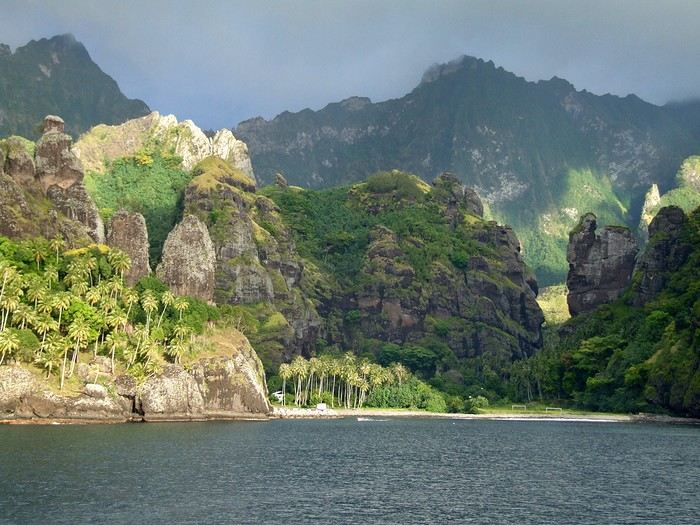 Idyllic landscape of a dream island, but difficult to access: the Bay of Virgins in Fatu Hiva, Marquesas Islands
Among the values conveyed by literature, tourism, and advertising is the quest for “elsewhere,” for a change of scenery, in the truest sense of the word—that is, the need to leave one’s country. This need for otherness, for difference, is projected onto dreamlike, idealized, even mythicized places. In our imaginary world, the island is often that place.
Yet we forget that islands have also been ideal prisons. The examples are numerous: Elba and Saint Helena, Alcatraz and Poulo Condor, If and Yeu, the Devil’s Islands and Leros. The latter, located in Greece in the Dodecanese, hosted a sinister forced labor camp during the colonels’ dictatorship as well as a psychiatric hospital. Despite the beauty of its bay, tourism has remained marginal there due to its bad reputation, unlike the neighboring island of Patmos.
I’d like to share a selection of about a dozen islands from across the world’s seas and oceans. For dreaming...
°°°°°°°°°°°°°°°
SANTORINI
July 27, 1967
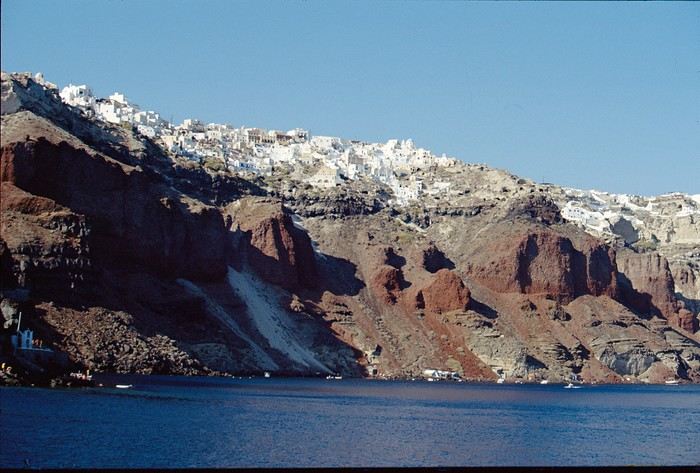
At dawn, the ferry from Agios Nikolaos (Crete) enters the immense caldera of Santorini. From the ship’s deck, Rainer, my travel companion, and I are left in awe by the sight of these towering, multicolored cliffs looming over us. We disembark and begin the steep climb on foot via the winding mule path up to the village of Fira, the capital perched above the cliff. Though it’s still very early, we head to the youth hostel. There wasn’t a soul in the alleys that morning—or rather, there were only cats! I have a fond memory of that encounter with Santorini: a sensory shock, a breathtaking volcanic site, a harmony of blue, ochre-red, and white. A welcoming island, as it was traditional to welcome the xénou, an island that hadn’t yet fully recovered from the terrible 1956 earthquake, a Cycladic architectural marvel where local life was still preserved.
It’s easy to see why, in antiquity, the island was named Kallisté (καλλίστη), “the most beautiful,” as it’s nearly impossible to resist gazing at this landscape shaped by tectonic forces. Indeed, a massive volcanic cataclysm—the Minoan eruption—shaped this scenery in the 17th century BCE, creating a caldera that was quickly filled by the sea. The enormous tsunamis that followed reached Crete, leading to the disappearance of the Minoan civilization.
A cliffside path along the caldera leads us to the peaceful village of Oia, at the northern tip of the island. Blue-domed churches and flower-filled villages with whitewashed houses line the way. This walk is a continuous marvel, offering splendid views of the caldera and the neighboring islands formed by the breakup of the ancient volcano (Thirissa, Nea Kameni). Oia is a large, picturesque village, like Fira perched on the cliff’s edge, which was severely damaged by the 1956 earthquake, and its scars are still visible. Its cave-like houses with vaulted roofs haven’t yet been turned into luxury hotels or shops. Absolute tranquility reigns here.
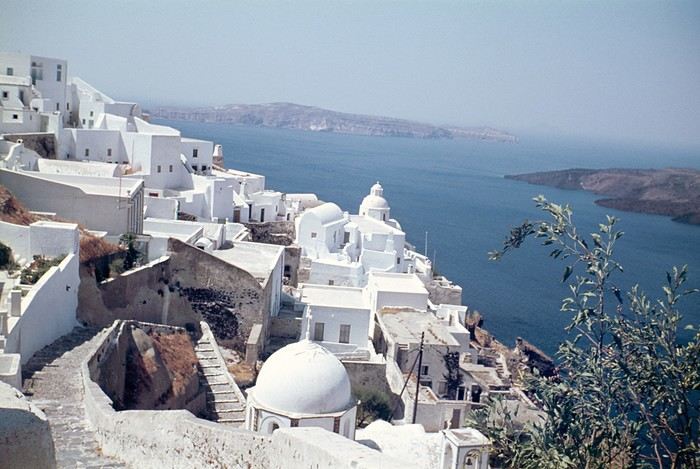 Oia in 1967—a peaceful village overlooking the caldera. But where are the pools and trendy bars?
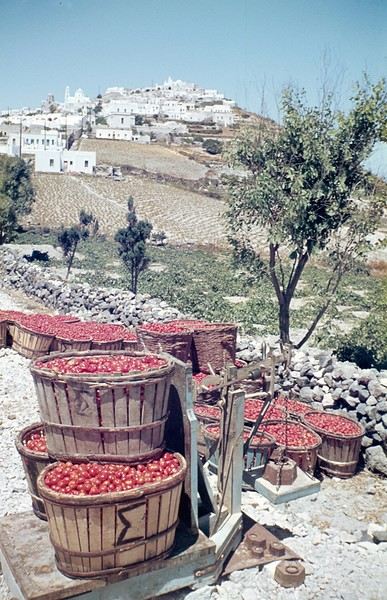
A lush countryside covered in olive trees and vineyards welcomes us for a pleasant hike, interrupted by the kindness of a friendly islander who gives us a lift in his truck for a few kilometers. He’s off to harvest his tomatoes, which he grows at the foot of Pyrgos Hill. The delicious little cherry tomato of Santorini earned an EU Protected Designation of Origin (PDO) in 2013. We climb up to the village of Pyrgos, perched on a hill and dominated by the elegant bell tower of its church. Finally, we reach the black sand beach of Kamari on the island’s eastern coast to enjoy a swim.
{...} To be continued

°°°°°°°°°°°°°°°°°
RAIVAVAE (French Polynesia)
November 15, 2007
Éléonore from Pension Tama welcomes us with traditional flower leis, as if she’d been waiting for old friends she hadn’t seen in ages. The small airport terminal is lively, the atmosphere warm—people hugging, rejoicing in reunions, all under kilos of flowers. Then, just as quickly, the place empties until the next flight... in a few days.
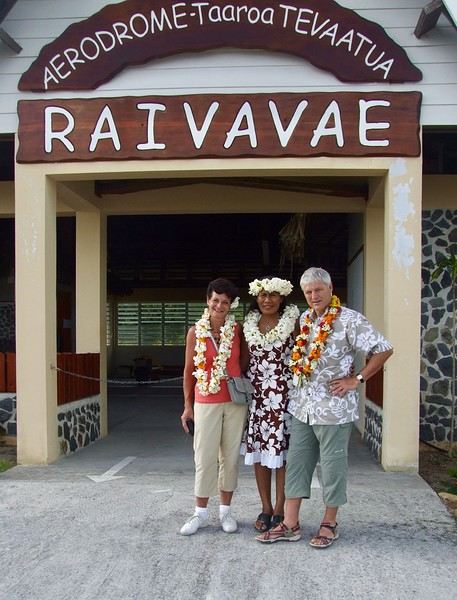
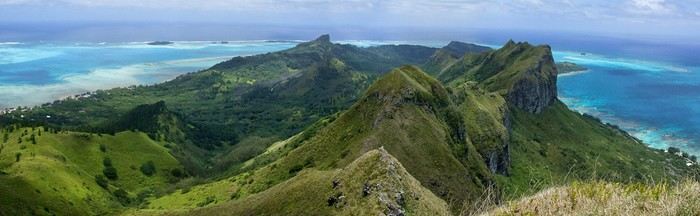
In the Austral Islands, a ninety-minute flight from Tahiti, Raivavae is a world away from the frenetic pace of Papeete or the tourist crowds of the Leeward Islands. The true paradise of the South Seas can still be savored here—it’s a bit like Bora Bora half a century ago. Our first feeling upon arriving on this island is wonder, with smiles that could melt even the gloomiest among us, landscapes so stunning they take your breath away, and above all, a sense of disorientation and fulfillment. Picture a mountainous island, about ten kilometers by three and a half, encircled by a coral reef and wild motu, cradling a lagoon with shades of blue that would make Bora Bora green with envy.
The roughly one thousand inhabitants of Raivavae are spread across four villages around the island. Children are everywhere, as is typical in Polynesia, and they greet you with open, genuine smiles. Here, ancestral values have survived progress. The predominantly Protestant population is very devout, as evidenced by the several temples built across the island. Religious fervor sets the rhythm of daily life. Sundays are reserved for worship and Sunday school (catechism). Work is forbidden on that day, and tourist activities are suspended. These rules are strict and respected.
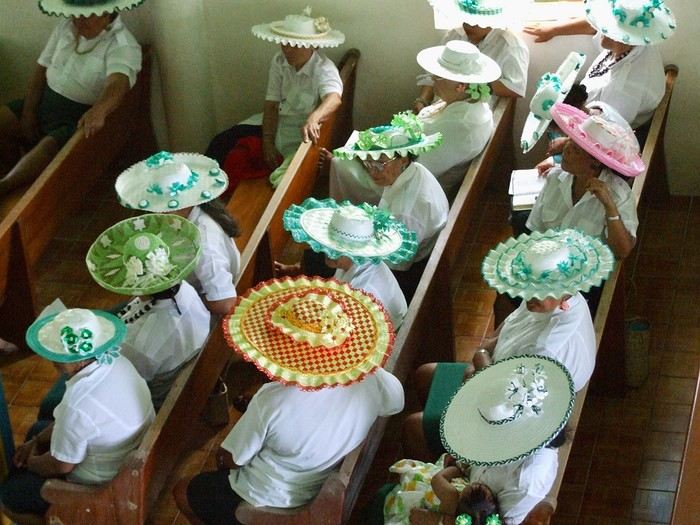 Hat contest for the worship celebration
Yet a sense of resignation is ever-present. The people of Raivavae know they are—and will remain—isolated. Despite the construction of an airstrip in 2004 and a few weekly flights to Tahiti and its nearest neighbor, Tubuai (200 km away), the island remains on the fringes of the world. One painful aspect is the separation of children from their parents when they leave for middle school in Tubuai starting in fifth grade. Television brings daily images of a world the islanders will likely never know, but one they often aspire to.
We are privileged. We have the pristine white-sand beaches of the motu and some of the most beautiful bays in Polynesia all to ourselves. The jewel in the crown, the island’s emblematic spot, is the “motu-pool,” about twenty minutes by boat. A natural, exquisite basin with crystal-clear water, gradients of blue, and white sand. And best of all, there’s almost no one there. In fact, lounging on the beach is frowned upon, especially for young women. Religion looks very unfavorably on sunbathing and lazing around. And yet, everything here leans toward that philosophy of life.
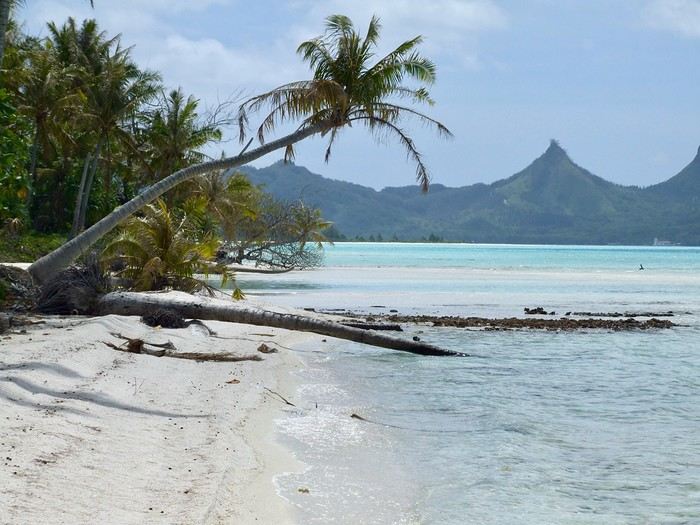
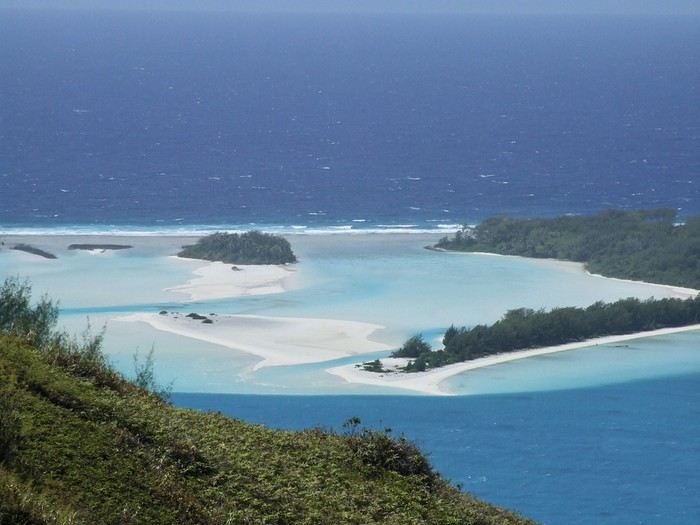 The "motu-pool"
{...} To be continued
Who among us hasn’t dreamed of having a ticket to Tahiti, Bora Bora, or the Marquesas in their pocket—preferably a one-way ticket to “paradise”?
Idyllic landscape of a dream island, but difficult to access: the Bay of Virgins in Fatu Hiva, Marquesas IslandsAmong the values conveyed by literature, tourism, and advertising is the quest for “elsewhere,” for a change of scenery, in the truest sense of the word—that is, the need to leave one’s country. This need for otherness, for difference, is projected onto dreamlike, idealized, even mythicized places. In our imaginary world, the island is often that place.
Yet we forget that islands have also been ideal prisons. The examples are numerous: Elba and Saint Helena, Alcatraz and Poulo Condor, If and Yeu, the Devil’s Islands and Leros. The latter, located in Greece in the Dodecanese, hosted a sinister forced labor camp during the colonels’ dictatorship as well as a psychiatric hospital. Despite the beauty of its bay, tourism has remained marginal there due to its bad reputation, unlike the neighboring island of Patmos.
I’d like to share a selection of about a dozen islands from across the world’s seas and oceans. For dreaming...
°°°°°°°°°°°°°°°
SANTORINI
July 27, 1967
At dawn, the ferry from Agios Nikolaos (Crete) enters the immense caldera of Santorini. From the ship’s deck, Rainer, my travel companion, and I are left in awe by the sight of these towering, multicolored cliffs looming over us. We disembark and begin the steep climb on foot via the winding mule path up to the village of Fira, the capital perched above the cliff. Though it’s still very early, we head to the youth hostel. There wasn’t a soul in the alleys that morning—or rather, there were only cats! I have a fond memory of that encounter with Santorini: a sensory shock, a breathtaking volcanic site, a harmony of blue, ochre-red, and white. A welcoming island, as it was traditional to welcome the xénou, an island that hadn’t yet fully recovered from the terrible 1956 earthquake, a Cycladic architectural marvel where local life was still preserved.
It’s easy to see why, in antiquity, the island was named Kallisté (καλλίστη), “the most beautiful,” as it’s nearly impossible to resist gazing at this landscape shaped by tectonic forces. Indeed, a massive volcanic cataclysm—the Minoan eruption—shaped this scenery in the 17th century BCE, creating a caldera that was quickly filled by the sea. The enormous tsunamis that followed reached Crete, leading to the disappearance of the Minoan civilization.
A cliffside path along the caldera leads us to the peaceful village of Oia, at the northern tip of the island. Blue-domed churches and flower-filled villages with whitewashed houses line the way. This walk is a continuous marvel, offering splendid views of the caldera and the neighboring islands formed by the breakup of the ancient volcano (Thirissa, Nea Kameni). Oia is a large, picturesque village, like Fira perched on the cliff’s edge, which was severely damaged by the 1956 earthquake, and its scars are still visible. Its cave-like houses with vaulted roofs haven’t yet been turned into luxury hotels or shops. Absolute tranquility reigns here.
Oia in 1967—a peaceful village overlooking the caldera. But where are the pools and trendy bars?A lush countryside covered in olive trees and vineyards welcomes us for a pleasant hike, interrupted by the kindness of a friendly islander who gives us a lift in his truck for a few kilometers. He’s off to harvest his tomatoes, which he grows at the foot of Pyrgos Hill. The delicious little cherry tomato of Santorini earned an EU Protected Designation of Origin (PDO) in 2013. We climb up to the village of Pyrgos, perched on a hill and dominated by the elegant bell tower of its church. Finally, we reach the black sand beach of Kamari on the island’s eastern coast to enjoy a swim.
{...} To be continued
°°°°°°°°°°°°°°°°°
RAIVAVAE (French Polynesia)
November 15, 2007
Éléonore from Pension Tama welcomes us with traditional flower leis, as if she’d been waiting for old friends she hadn’t seen in ages. The small airport terminal is lively, the atmosphere warm—people hugging, rejoicing in reunions, all under kilos of flowers. Then, just as quickly, the place empties until the next flight... in a few days.
In the Austral Islands, a ninety-minute flight from Tahiti, Raivavae is a world away from the frenetic pace of Papeete or the tourist crowds of the Leeward Islands. The true paradise of the South Seas can still be savored here—it’s a bit like Bora Bora half a century ago. Our first feeling upon arriving on this island is wonder, with smiles that could melt even the gloomiest among us, landscapes so stunning they take your breath away, and above all, a sense of disorientation and fulfillment. Picture a mountainous island, about ten kilometers by three and a half, encircled by a coral reef and wild motu, cradling a lagoon with shades of blue that would make Bora Bora green with envy.
The roughly one thousand inhabitants of Raivavae are spread across four villages around the island. Children are everywhere, as is typical in Polynesia, and they greet you with open, genuine smiles. Here, ancestral values have survived progress. The predominantly Protestant population is very devout, as evidenced by the several temples built across the island. Religious fervor sets the rhythm of daily life. Sundays are reserved for worship and Sunday school (catechism). Work is forbidden on that day, and tourist activities are suspended. These rules are strict and respected.
Hat contest for the worship celebrationYet a sense of resignation is ever-present. The people of Raivavae know they are—and will remain—isolated. Despite the construction of an airstrip in 2004 and a few weekly flights to Tahiti and its nearest neighbor, Tubuai (200 km away), the island remains on the fringes of the world. One painful aspect is the separation of children from their parents when they leave for middle school in Tubuai starting in fifth grade. Television brings daily images of a world the islanders will likely never know, but one they often aspire to.
We are privileged. We have the pristine white-sand beaches of the motu and some of the most beautiful bays in Polynesia all to ourselves. The jewel in the crown, the island’s emblematic spot, is the “motu-pool,” about twenty minutes by boat. A natural, exquisite basin with crystal-clear water, gradients of blue, and white sand. And best of all, there’s almost no one there. In fact, lounging on the beach is frowned upon, especially for young women. Religion looks very unfavorably on sunbathing and lazing around. And yet, everything here leans toward that philosophy of life.
The "motu-pool"{...} To be continued