Hi there,
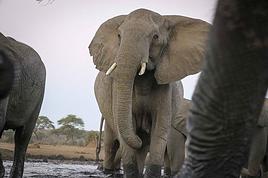
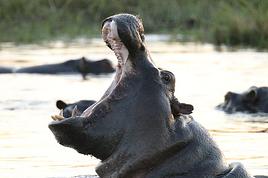
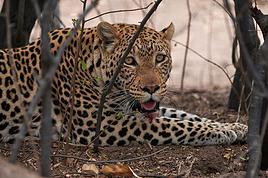
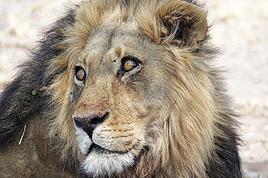
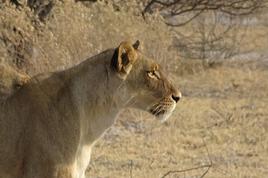
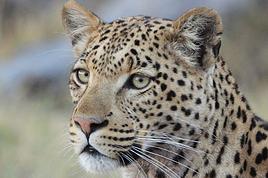
I’m looking for organizations that specialize in walking safaris, but not at the price points I’m seeing online.
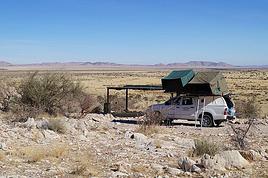
I’m after a truly immersive experience in the wild, with the option to sleep in very basic tents and help prepare meals...
Ideal duration: 7 to 10 days.
I’d rather avoid the super touristy destinations (Kenya, Tanzania, etc.).
Thanks for any tips you can share! !
Hi there,
This August, I hiked the Vosges section (Vosges massif) of the GR5 (Lauterbourg-Wissembourg-gr53-gr5-Belfort) using the TopoGuide "Traversée du Massif des Vosges" (ref 502, April 2024 edition). My experience was partly ruined by a few things I feel I should share here to help others avoid the same pitfalls—or at least disappointments.
Having used "TopoGuide" books before, I’d always trusted them for organizing treks lasting several weeks, or even months.
Beyond the satisfactory mapping (reproductions of IGN 1:25,000 maps), these guides include route descriptions that are usually enough to find your way. On that point, I have no serious criticism of the Vosges crossing guide.
In addition to the route details, the guide provides "average" time estimates for traveling from point A to point B—useful info for gauging effort and planning likely stages. However, I eventually realized I couldn’t rely on these time estimates. I’d assumed they were calculated by the FFRP, considering that 100m of positive elevation gain roughly equals 1km on flat terrain, with an average walking speed of 4km/h. So, I’d recommend anyone using this guide to recalculate all the time estimates to avoid nasty surprises on tight stages. 🤪
Another key feature of the guide, in my opinion, is its info on accommodation options—especially budget-friendly ones suited for long-distance hikers on a tight budget. A section called "préparation des étapes" includes a table with a column meant to highlight "refuges" and "gîtes d'étapes." That column had me feeling optimistic: these budget accommodations were listed as plentiful along the route. After all, we were in the territory of the famous Club Vosgien—it made sense there’d be plenty of hiker-friendly lodging options. The reality on the ground was quite different. The TopoGuide wasn’t really to blame here, except that a serious warning wouldn’t have hurt. First, regarding the "refuges," most were run by associations. With rare exceptions, the volunteers only opened them on weekends. You can’t really blame people for not volunteering on weekdays, but it makes things tricky when the info about weekend-only openings often turns out to be wrong. As for the "gîtes d'étape," I was mostly disappointed when I was told that a place was booked for weeks: the vast majority of what was listed as a "gîte d'étape" turned out to be "gîtes ruraux." The advice here? If you don’t want to—or can’t—camp, double-check all the accommodation details before you set off. It’s time-consuming and tedious, but if you can, camping is still the best option. 😐 On a brighter note, during the first part of my trip, I came across several cabins that offered alternatives to camping. 🙂
P.S.: Even the youth hostel in Saverne was closed in the middle of August... 😕
Having used "TopoGuide" books before, I’d always trusted them for organizing treks lasting several weeks, or even months.
Beyond the satisfactory mapping (reproductions of IGN 1:25,000 maps), these guides include route descriptions that are usually enough to find your way. On that point, I have no serious criticism of the Vosges crossing guide.
In addition to the route details, the guide provides "average" time estimates for traveling from point A to point B—useful info for gauging effort and planning likely stages. However, I eventually realized I couldn’t rely on these time estimates. I’d assumed they were calculated by the FFRP, considering that 100m of positive elevation gain roughly equals 1km on flat terrain, with an average walking speed of 4km/h. So, I’d recommend anyone using this guide to recalculate all the time estimates to avoid nasty surprises on tight stages. 🤪
Another key feature of the guide, in my opinion, is its info on accommodation options—especially budget-friendly ones suited for long-distance hikers on a tight budget. A section called "préparation des étapes" includes a table with a column meant to highlight "refuges" and "gîtes d'étapes." That column had me feeling optimistic: these budget accommodations were listed as plentiful along the route. After all, we were in the territory of the famous Club Vosgien—it made sense there’d be plenty of hiker-friendly lodging options. The reality on the ground was quite different. The TopoGuide wasn’t really to blame here, except that a serious warning wouldn’t have hurt. First, regarding the "refuges," most were run by associations. With rare exceptions, the volunteers only opened them on weekends. You can’t really blame people for not volunteering on weekdays, but it makes things tricky when the info about weekend-only openings often turns out to be wrong. As for the "gîtes d'étape," I was mostly disappointed when I was told that a place was booked for weeks: the vast majority of what was listed as a "gîte d'étape" turned out to be "gîtes ruraux." The advice here? If you don’t want to—or can’t—camp, double-check all the accommodation details before you set off. It’s time-consuming and tedious, but if you can, camping is still the best option. 😐 On a brighter note, during the first part of my trip, I came across several cabins that offered alternatives to camping. 🙂
P.S.: Even the youth hostel in Saverne was closed in the middle of August... 😕
Hi everyone!
New to this forum, I’m planning a pretty big project for 2028. I’m heading to Nepal to do a trek from Kathmandu all the way to Everest Base Camp (a cool 5,300 m 😄). This trek is a bit special because even though I’ll be part of a group, I’m going solo (so far, no problem—I’m used to it). But it’s my first real trek, and it’s also a humanitarian one: once I reach base camp, I’ll stay an extra week to help clean up the waste left by tens of thousands of climbers! Since I’m originally from South America, from two countries that share the Andes, I have a deep respect for mountains—they fascinate me. So Everest… it’s kind of the trip of a lifetime!
So, a little question for those who’ve done treks to Everest before… any tips for good mental preparation (I’m already working on the physical side)?
Thanks in advance for your advice! 🙂
New to this forum, I’m planning a pretty big project for 2028. I’m heading to Nepal to do a trek from Kathmandu all the way to Everest Base Camp (a cool 5,300 m 😄). This trek is a bit special because even though I’ll be part of a group, I’m going solo (so far, no problem—I’m used to it). But it’s my first real trek, and it’s also a humanitarian one: once I reach base camp, I’ll stay an extra week to help clean up the waste left by tens of thousands of climbers! Since I’m originally from South America, from two countries that share the Andes, I have a deep respect for mountains—they fascinate me. So Everest… it’s kind of the trip of a lifetime!
So, a little question for those who’ve done treks to Everest before… any tips for good mental preparation (I’m already working on the physical side)?
Thanks in advance for your advice! 🙂
We spent a few days in Tajikistan with a Tajik guide, Remy Fayziddin, who speaks French and welcomed us into his home in his village of Voru. This village is very remote, located in the heart of the Fan Mountains, and reaching it in an old 4x4 is already a real expedition.
We stayed with this guide in the purest Tajik tradition: it was a very enriching experience because the Tajiks are extremely welcoming.
We were able to go on a trek on the Kulikalon Lakes plateau with the guide—it was truly stunning.
Then we took another walk around this village of Voru, which is nestled in a valley at over 2,000 meters in altitude.
This immersion in the village was very interesting and also very moving because we were able to discover a world so far removed from our own, yet where people truly live together and can all count on one another. Our guide is very involved in the development of his village and in welcoming travelers into his home, as well as sharing his knowledge of the region through organized treks—it’s a way to develop his village. We came back enchanted by this stay (even if the sanitary conditions weren’t always easy…).
- But that’s just a detail compared to everything we discovered: breathtaking landscapes and incredibly endearing people! !
hi,
we’d like to do a trek in Nepal, and we’re thinking of the Annapurna Circuit—it’s cheaper than the Everest trek.
Our plan is to do it without a guide or porter. We’re used to the mountains, not so much to high altitude, but if we acclimate well, there’s no reason it should go wrong ;)
No guide = handling permits, transport, and accommodation on our own...
So my question is: is it possible to book lodges in advance before departure? Or, even better, day by day?
I’ve read some older posts, so I’m asking again to get up-to-date info on what’s happening now. We’re planning to go mid-November 2026 or March 2027.
Thanks for your tips! :)
No guide = handling permits, transport, and accommodation on our own...
So my question is: is it possible to book lodges in advance before departure? Or, even better, day by day?
I’ve read some older posts, so I’m asking again to get up-to-date info on what’s happening now. We’re planning to go mid-November 2026 or March 2027.
Thanks for your tips! :)
Hello,
We’re planning a 3-week trip to Laos, focusing solely on the north. Our main goal is to do two 4-day treks in two different areas of Northern Laos.
We land in Bangkok on December 12th and will head straight to Chiang Mai before crossing into northern Laos at Huay Xai. Our journey will start there, ending in Vientiane, with a stop in Luang Prabang and the surrounding area. We’ll then take a night train from Udon Thani on December 30th to catch our flight back in Bangkok.
Right now, we’re mainly looking for reliable contacts to organize our two treks. From what we’ve read so far, trekking options exist around Luang Namtha, Phongsali (if it’s not too cold during that period, since we’ll have our 3-year-old daughter with us), or near Muang Ngoi and Nong Khiaw, as we’ve seen there are possibilities in that area too.
If we can organize both treks with the same contact, that would be perfect.
We’d prefer to avoid big agencies with a high-street presence and instead work directly with a local who knows their stuff and can give us good advice. We want to combine stunning landscapes (we love hiking) with cultural encounters in local villages.
We’d love to hear your tips and experiences—maybe some areas are better than others, less crowded, or more challenging (though we’re keeping in mind our 3-year-old, who’s used to hiking but we don’t want to put her in any danger).
That’s the gist of our plans for now! Looking forward to hearing from you, fellow travelers
We’re planning a 3-week trip to Laos, focusing solely on the north. Our main goal is to do two 4-day treks in two different areas of Northern Laos.
We land in Bangkok on December 12th and will head straight to Chiang Mai before crossing into northern Laos at Huay Xai. Our journey will start there, ending in Vientiane, with a stop in Luang Prabang and the surrounding area. We’ll then take a night train from Udon Thani on December 30th to catch our flight back in Bangkok.
Right now, we’re mainly looking for reliable contacts to organize our two treks. From what we’ve read so far, trekking options exist around Luang Namtha, Phongsali (if it’s not too cold during that period, since we’ll have our 3-year-old daughter with us), or near Muang Ngoi and Nong Khiaw, as we’ve seen there are possibilities in that area too.
If we can organize both treks with the same contact, that would be perfect.
We’d prefer to avoid big agencies with a high-street presence and instead work directly with a local who knows their stuff and can give us good advice. We want to combine stunning landscapes (we love hiking) with cultural encounters in local villages.
We’d love to hear your tips and experiences—maybe some areas are better than others, less crowded, or more challenging (though we’re keeping in mind our 3-year-old, who’s used to hiking but we don’t want to put her in any danger).
That’s the gist of our plans for now! Looking forward to hearing from you, fellow travelers
Hi everyone,
I’m just at the very beginning of my research, so I’m coming straight to you for some info. I’d like to visit Morocco to discover a bit of the country. I’ve just found out about the Toubkal circuit, which I’d love to do in January/February. I’m open to going independently with a tent, food, etc., and also open to whatever other possibilities this circuit offers that I don’t know about yet... Could you share any random tips or info? I’d also love to hear your opinions? What I like about this circuit is that it’s fairly accessible and seems interesting for many reasons. I’ll leave it to you to share your thoughts—thanks in advance for your help! 🙂 Wishing you all lots of exciting plans for the new year ahead!
Nicolas
I’m just at the very beginning of my research, so I’m coming straight to you for some info. I’d like to visit Morocco to discover a bit of the country. I’ve just found out about the Toubkal circuit, which I’d love to do in January/February. I’m open to going independently with a tent, food, etc., and also open to whatever other possibilities this circuit offers that I don’t know about yet... Could you share any random tips or info? I’d also love to hear your opinions? What I like about this circuit is that it’s fairly accessible and seems interesting for many reasons. I’ll leave it to you to share your thoughts—thanks in advance for your help! 🙂 Wishing you all lots of exciting plans for the new year ahead!
Nicolas
Hi there,
We’re planning a two-week hiking trip to Santo Antão. We’ve been before three years ago through an agency, but this time we want to organize the trip ourselves. Regarding homestays, especially places like ex Casa Luciano or Cha de Feijão at Dona Antona’s—is it possible to book ahead? I can’t find any contact details. If not, what happens if there’s no availability? Do we pay in euros or escudos? Also, is it possible to get meals and a packed lunch for the next day? We’re heading to Cha de Morte first, then want to visit the volcano, and continue toward the northeast of the island (we prefer the green areas!). Thanks for your tips! 😊
Hi there,
I’m ready to set off on the Peaks of the Balkans trek from June 18 to July 3.
I’m used to long distances, elevation gain, and self-sufficiency.
The last thing holding me back is overcrowding.
Have any of you done it recently? Could you give me some insight on that and any other tips that might be useful?
I’ll be arriving in Tirana, and any advice on getting to Theth would be a huge help too.
Thanks for your replies.
Alain
Hi,
I’d like some advice on doing the Camino de Santiago—or part of it—from the Basque Country.
Best,
Hey everyone!
I’d like to explore the northeast of Madagascar, using bush taxis, boats, and my own two feet.
I already have an ideal itinerary in mind, but I’d love to know if it’s doable at a relaxed pace in one month. The goal, of course, is to avoid being constantly focused on time and days and to travel spontaneously.
I’m aware that the roads are rough and there are a lot of unexpected delays, which isn’t a problem in itself. I just struggle to estimate the *time* it takes to get between stops.
Potential itinerary:
Tana – Sainte Marie Island (4 days) – Maroantsetra (3 days) – Masoala Park (8-day trek?) – Antalaha – Marojejy Park (3 days) – Ambilobe – Nosy Be (5 days) – Tana
The days listed are just rough averages. Cities don’t interest me, and I don’t plan to visit Tana.
I’d really appreciate any info or tips from you all! 😊
Thanks in advance,
Romain
I’d like to explore the northeast of Madagascar, using bush taxis, boats, and my own two feet.
I already have an ideal itinerary in mind, but I’d love to know if it’s doable at a relaxed pace in one month. The goal, of course, is to avoid being constantly focused on time and days and to travel spontaneously.
I’m aware that the roads are rough and there are a lot of unexpected delays, which isn’t a problem in itself. I just struggle to estimate the *time* it takes to get between stops.
Potential itinerary:
Tana – Sainte Marie Island (4 days) – Maroantsetra (3 days) – Masoala Park (8-day trek?) – Antalaha – Marojejy Park (3 days) – Ambilobe – Nosy Be (5 days) – Tana
The days listed are just rough averages. Cities don’t interest me, and I don’t plan to visit Tana.
I’d really appreciate any info or tips from you all! 😊
Thanks in advance,
Romain
Hi everyone. I’ve been dreaming of this trek since my first trip to Nepal: either joining an existing group (I’m 70, so the pace will be adjusted accordingly...), or organizing it myself with the same guide who accompanied me on the Annapurna Circuit and in Mustang (putting together a group of 2 or 3 people). Who’s interested??? Jules. Agnes
hi
we’re planning a trip to Yellowstone and hoping to do a three-day backcountry hike if we get a permit. if any of you have done this before, could you let me know if it’s possible to find water along the way? And if we can transport it, are we allowed to use a stove?
thanks for any tips!
sandra
we’re planning a trip to Yellowstone and hoping to do a three-day backcountry hike if we get a permit. if any of you have done this before, could you let me know if it’s possible to find water along the way? And if we can transport it, are we allowed to use a stove?
thanks for any tips!
sandra
Hi there,
We’re heading to South Africa in August 2025 and planning a classic loop that I’d love to finish with the Drakensberg (I’m a big hiking fan) before returning to Johannesburg to catch our flight.
I’ve got 3 nights for this part of our trip. But I’m wondering if it’s actually a good idea to hike in the Drakensberg in August, since it’s the Southern Hemisphere winter (I’m from Réunion and we hike year-round there, but I don’t know what the climate’s like in South Africa, especially the Drakensberg).
I’m particularly worried about getting stuck because of snow and missing our flight... ;)
I’ve read so many different things that I’m totally confused!
If it’s okay to hike at this time of year, what would you recommend? I’m torn between Champagne Valley and Royal Natal National Park.
Thanks in advance for your firsthand tips!
Malijp
Hi everyone,
I’m finalizing my trip plans for Sumatra in June. I’m trying to lock in a trek (around 5 days), but I’m not really finding what I’m looking for.
The idea is to really go "off the beaten path" (I’m not a fan of the phrase since it’s lost all meaning, but anyway...). However, I’m struggling to find destinations or programs that are even slightly original.
We’re leaning toward a jungle trek starting from Ketambe—it seems nice in itself, but it feels a bit repetitive. All the guides offer the same packages: stops at fixed camps, you settle in, walk around the camp, eat, sleep, then move on the next day for 2-3 hours with the same routine. After all my research, I feel like I’ve already seen it all because every guide and tourist posts the same photos (hollow tree, hot springs, etc.).
Anyway, do you know of a guide or agency that offers a *real* trek (meaning you walk all day until you find a spot for the night, from a starting point A to an endpoint B) in an area that’s a little different from where everyone else goes? (Gunung Leuser or similar, though for transport and time reasons, I’d ideally like to stay in northern Sumatra.)
Thanks, and if you have any good tips about anything related to Sumatra, I’m all ears.
Have a great day,
I’m finalizing my trip plans for Sumatra in June. I’m trying to lock in a trek (around 5 days), but I’m not really finding what I’m looking for.
The idea is to really go "off the beaten path" (I’m not a fan of the phrase since it’s lost all meaning, but anyway...). However, I’m struggling to find destinations or programs that are even slightly original.
We’re leaning toward a jungle trek starting from Ketambe—it seems nice in itself, but it feels a bit repetitive. All the guides offer the same packages: stops at fixed camps, you settle in, walk around the camp, eat, sleep, then move on the next day for 2-3 hours with the same routine. After all my research, I feel like I’ve already seen it all because every guide and tourist posts the same photos (hollow tree, hot springs, etc.).
Anyway, do you know of a guide or agency that offers a *real* trek (meaning you walk all day until you find a spot for the night, from a starting point A to an endpoint B) in an area that’s a little different from where everyone else goes? (Gunung Leuser or similar, though for transport and time reasons, I’d ideally like to stay in northern Sumatra.)
Thanks, and if you have any good tips about anything related to Sumatra, I’m all ears.
Have a great day,
Hello,
I'm planning to travel from Matsumoto to Tsumago to hike to Magome. Is it reasonable to leave early in the morning from Matsumoto by train, stop in Narai for a stroll (knowing we'll have our big backpacks, I hope there's a luggage locker at the station), and then continue to Tsumago to do the hike to Magome?
Or is it better to stop and sleep halfway in Kiso-Fukushima? (I looked for accommodations in Narai but couldn't find any.)
Thanks in advance for your advice.
I'm planning to travel from Matsumoto to Tsumago to hike to Magome. Is it reasonable to leave early in the morning from Matsumoto by train, stop in Narai for a stroll (knowing we'll have our big backpacks, I hope there's a luggage locker at the station), and then continue to Tsumago to do the hike to Magome?
Or is it better to stop and sleep halfway in Kiso-Fukushima? (I looked for accommodations in Narai but couldn't find any.)
Thanks in advance for your advice.
I wanted to share a really beautiful trip we took at the end of October (just the three of us, with my 14-year-old daughter) in southern Tunisia. In particular, we spent four days trekking in the desert starting from Douz, moving from place to place (camels, tents). An unforgettable adventure! The magic of the desert, the sand, the dunes, the changing colors, the sunrises and sunsets. So exotic and relaxing, and it’s less than 3 hours from Paris. Our guide is a camel driver friend who had already taken us twice about twenty years ago. I’d be happy to chat with anyone tempted by this adventure! And if you’d like, I can share our guide’s contact details
Hi, this might not be the right section, but I’d like to know if it’s possible to start mountaineering with another person without necessarily hiring a guide. We’ve done quite a bit of hiking but not mountaineering—we’ll just do a half-day glacier course. After that, we were thinking of starting with La Grande Motte and the Pointe de la Traversière, which were recommended to us. Honestly, for things like roping up and knots, I’ll learn at home with lots of videos and a book.
Hi there, I’m planning the Annapurna Circuit for March 2027 and I’m looking for a local agency with a local guide—preferably French-speaking—to arrange this trek for us. Any suggestions? Thanks
Hello,
We’re planning a family trip (4 strong hikers, all adults) to Kashmir-Ladakh in August 2026!
We’d like to explore and do some treks—challenging but without technical difficulty (we’re not mountaineers).
To start, do you have any tips or recommendations for 4- to 6-day treks in Himalayan landscapes? Which town or village should we start from? We’ll figure out how to get there later. Should we hire a local guide?
We’re just starting to organize, so we’re open to all your advice. Is it possible to spend a few days in a monastery?
Thanks so much for your replies! See you soon,
Laurent
To start, do you have any tips or recommendations for 4- to 6-day treks in Himalayan landscapes? Which town or village should we start from? We’ll figure out how to get there later. Should we hire a local guide?
We’re just starting to organize, so we’re open to all your advice. Is it possible to spend a few days in a monastery?
Thanks so much for your replies! See you soon,
Laurent
Hi there,
I’ll be in Nepal in October. I’m planning to do the Annapurna trek and climb Mera Peak. From what I’ve heard, it’s one of the most accessible 6,000m peaks and doesn’t require a mandatory guide? The info I’ve found is pretty scattered—mostly just travel agency blogs. :-) Has anyone here already done this climb? I’ve heard you can find guides in Khare for just the final part of the ascent (which is way cheaper).
Thanks for your feedback!
Can’t wait to be there! :-)
I’ll be in Nepal in October. I’m planning to do the Annapurna trek and climb Mera Peak. From what I’ve heard, it’s one of the most accessible 6,000m peaks and doesn’t require a mandatory guide? The info I’ve found is pretty scattered—mostly just travel agency blogs. :-) Has anyone here already done this climb? I’ve heard you can find guides in Khare for just the final part of the ascent (which is way cheaper).
Thanks for your feedback!
Can’t wait to be there! :-)
Hey everyone,
My plan for next November is to head back (yet again) to the Annapurnas to complete a route I’d always promised myself I’d do one day. Here’s the breakdown:
1. Start from Sikles and join the Annapurna Circuit by first going through Kori, then the Namun La (or Namun Bhanjyang). It’s a bit of a forgotten route, and I haven’t found much info on it—no .gpx files or firsthand accounts. Still, I’ve roughly mapped it out using different sources.
2. After that, I plan to head up to Phu to do the direct Phu Pass/Naar Pass traverse to Naar. It’s doable in 2 days, but why not in 1 if the weather’s good and I set off early enough?
3. Finally, I’ll head toward the Mesokanto North Pass (after a short camp at Tilicho North BC) to descend the entire Gandaki Valley down to Nayapul.
I’m obviously looking for any tips or feedback (if you’ve got any), and maybe a travel buddy who’s up for a little off-the-beaten-path adventure. 😄
My plan for next November is to head back (yet again) to the Annapurnas to complete a route I’d always promised myself I’d do one day. Here’s the breakdown:
1. Start from Sikles and join the Annapurna Circuit by first going through Kori, then the Namun La (or Namun Bhanjyang). It’s a bit of a forgotten route, and I haven’t found much info on it—no .gpx files or firsthand accounts. Still, I’ve roughly mapped it out using different sources.
2. After that, I plan to head up to Phu to do the direct Phu Pass/Naar Pass traverse to Naar. It’s doable in 2 days, but why not in 1 if the weather’s good and I set off early enough?
3. Finally, I’ll head toward the Mesokanto North Pass (after a short camp at Tilicho North BC) to descend the entire Gandaki Valley down to Nayapul.
I’m obviously looking for any tips or feedback (if you’ve got any), and maybe a travel buddy who’s up for a little off-the-beaten-path adventure. 😄
Hi,
We’re planning to spend 3 nights (4 days) in the Banaue area. We’ve booked 1 night in Banaue, 1 in Batad, and the 3rd back in Banaue. We’d like to get from one village to the other on our own (tricycle + hiking). Does that sound doable? Where can we find a hiking route so we don’t get lost (is Maps.me enough?)? The 2-day trek offered by guides is a bit tough and, above all, too expensive for us (83 €/person). Thanks for your feedback and experiences!
Hey everyone,
I’m planning a hiking trip to India in 2025 with my wife and another couple.
We’ll most likely be leaving at the end of April (TBC).
This isn’t my first time hiking abroad, and I’ve often run into parasites that take advantage of the night to bother you (you know what I’m talking about, haha).
I’ve dealt with flies, mosquitoes, and all kinds of critters during my sleep before, but for this trip to India—which could already be pretty hectic—I really want to be prepared and avoid this issue.
If you know where I can find effective mosquito nets that won’t give me any trouble with mosquitoes, I’m all ears!
If you’re selling some yourself, feel free to reply to this post—we can chat about it!
In the meantime, I’ll keep looking for mosquito nets on my end.
Thanks! !
I’m planning a hiking trip to India in 2025 with my wife and another couple.
We’ll most likely be leaving at the end of April (TBC).
This isn’t my first time hiking abroad, and I’ve often run into parasites that take advantage of the night to bother you (you know what I’m talking about, haha).
I’ve dealt with flies, mosquitoes, and all kinds of critters during my sleep before, but for this trip to India—which could already be pretty hectic—I really want to be prepared and avoid this issue.
If you know where I can find effective mosquito nets that won’t give me any trouble with mosquitoes, I’m all ears!
If you’re selling some yourself, feel free to reply to this post—we can chat about it!
In the meantime, I’ll keep looking for mosquito nets on my end.
Thanks! !
Hi everyone.
I’m planning a trip to Thailand for November.
We loved the treks we did in Laos, Vietnam, and Myanmar so much that we’d like to repeat the experience in Northern Thailand.
Most travelers who go trekking do it around Chiang Mai. But wouldn’t it be better to do it somewhere else (Chiang Rai?) to get a bit more authenticity?
Any tips would be welcome (agency, guide, route, etc.).
Thanks for your feedback!
Hi,
I'd love to know where we can observe wildlife, birds, and nature in Colombia... Like going on a hike without a guide, immersing ourselves in the forest, far from tourist spots. I want to avoid places that are specially set up, since you usually don’t see much there.
Thanks in advance!
Bernard
Hello,
A few years ago, I visited Nepal. I have wonderful memories of it. My friend (77) and I (73) would like to go back. We’re still in good shape! But let’s not exaggerate either. So, we’re looking for a relaxed trek in the mid-mountains, in touch with the local people, passing near monasteries, and with beautiful views of the peaks. And no agencies!
Can you give us some tips?
Thanks a million
Hi there,
I’m planning to do the Mercantour crossing following the Randoxygène route in mid-July. I’m used to hiking in the mountains, but I sometimes get vertigo, for example on ridges with drops on both sides. I wanted to check if there are any T4 or T3-T4 sections and find out if there are any very exposed passages—and if so, where—so I can plan an alternative route. Can anyone give me some info on this? Thanks!
I’m planning to do the Mercantour crossing following the Randoxygène route in mid-July. I’m used to hiking in the mountains, but I sometimes get vertigo, for example on ridges with drops on both sides. I wanted to check if there are any T4 or T3-T4 sections and find out if there are any very exposed passages—and if so, where—so I can plan an alternative route. Can anyone give me some info on this? Thanks!
Hi there,
We’re flying from Montreal to Lyon this August to go hiking in the French Alps. We’ve rented a car and will be staying at campgrounds. We’re planning to do day hikes and want to stay a few days in one spot, do a few hikes, then move on to our next camping spot. Could you share your favorite spots or any recommendations for places to spend a few days with great hikes?
A few details: We arrive in early August and leave in early September. We’re looking for day hikes (or shorter), moderate difficulty, with a cumulative elevation gain of no more than 1000m, and of course, beautiful scenery! We’d prefer not to drive too much—maybe it’s best not to head too far south and deal with unnecessary heat? Along the same lines, if you know of any great campgrounds where we can start our hike directly without needing the car, we’d love to hear your suggestions!
Thanks! :-)
A few details: We arrive in early August and leave in early September. We’re looking for day hikes (or shorter), moderate difficulty, with a cumulative elevation gain of no more than 1000m, and of course, beautiful scenery! We’d prefer not to drive too much—maybe it’s best not to head too far south and deal with unnecessary heat? Along the same lines, if you know of any great campgrounds where we can start our hike directly without needing the car, we’d love to hear your suggestions!
Thanks! :-)
Hi,
Could recent travelers let me know the price for the 2D/1N trek in the rice terraces when booking directly on-site upon arrival? Is it possible to join a group? Thanks for your replies, best regards