After a pretty disastrous weather-wise trip to Gran Canaria, we’re hoping this time the sun will shine in Puglia.
It’s not a sure thing, though—the weather’s been awful all over Europe in early May.
For those who’d like to (re)read the story without the digressions, it’s here.
Saturday, May 16:
This time we’re flying out of Charleroi (Brussels South): the ticket prices, flight times, and proximity all worked for us.
The airport (Ryanair) was recently renovated... but it’s still not very well organized. There are hardly any seats in the boarding areas, and... the restrooms cost money!!!
The flight goes smoothly, though, and we land in Bari a little late.
We quickly pick up our rental car, a very local-looking Pandina (even more so than the Fiat 500 in this region), and hit the Italian roads... and their unique driving quirks (like the fact that the countless road signs along the streets and in towns are purely decorative 😏, and that Italian cars don’t have turn signals 😮... except for rental cars).
About an hour later, we arrive at our first accommodation, right in the middle of the countryside near Monopoli.
The owner isn’t there, but they’ve left us a ton of info via messages and even turned on the space heater, which is a nice touch.
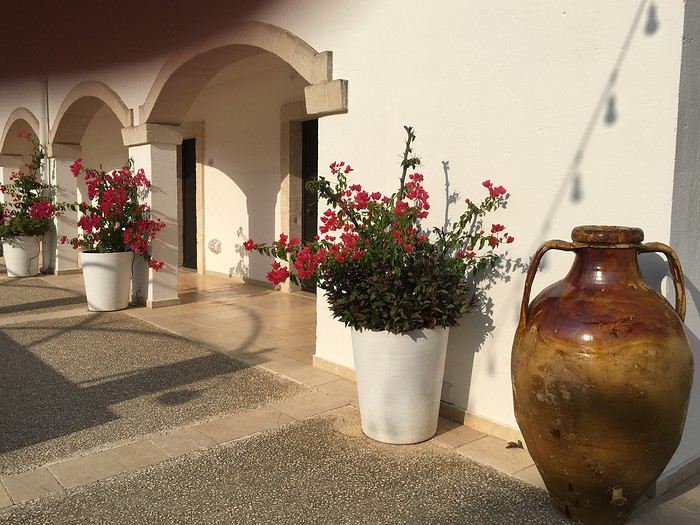
We explore the property:
And the next morning before breakfast, its immediate surroundings:
Sunday, May 17:
After our "seaside" experience in Gran Canaria last weekend (packed with people and locals), we decide to start inland.
After a hearty breakfast,
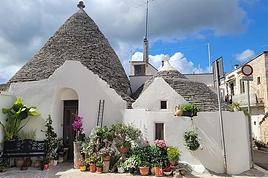
we head toward Alberobello, a super touristy village famous for its trulli—those stone houses with conical roofs.
We easily find a free parking spot on a street near the Aia Piccola district, where some trulli are still lived in year-round.
We almost immediately come across the Trullo Sovrano (the only two-story one), which you can visit (but we skip it—it’s opening time, and there’s already a line).
From there, we head down toward the Basilica of Cosma e Damiano... but we don’t go in because there’s a mass.
Now we’re on the main Piazza del Popolo, which connects the two districts of Alberobello: Rione Aia Piccola and Rione Monti, the more touristy one.
I'm starting a new travel journal in Italy.
It's about a month-long trip (from September 3, 2025, to October 4, 2025), or rather a part of it. This section matches the title: an opera festival in Verona (one evening) and the Dolomites in the Veneto region.
I'm posting the part of the trip I think will interest French-speaking readers the most (since this is where I saw the most French travelers).
Here’s a quick summary:
- Trip in September 2025
- Solo travel with camping (caravan)
- Small geographic area: besides Verona, the surroundings of the Marmolada massif and Cortina d'Ampezzo.
- Main but not exclusive activity: hiking.
Since I have limited internet access where I am now, I’ll be writing slowly.
Here we go!
Day 1: Thursday, September 4, 2025
I arrived in Veneto under the sun and with warm weather. I drove to Verona and tried to find a spot at the campsite (Verona Village) located south of the city. Unfortunately, it was full. Booking on the website was mandatory, but when I tried to reserve a few days ago, the site never moved from the "reservation" step to the "payment" step (I don’t know why—it’s always like that in these cases).
I found another solution over the phone; the drive from southern Verona to the northeast was a bit long, but I finally settled at the "Oro Verde" campsite. It’s an "agricampeggio" (farm camping or rural campsite) on the outskirts of the city, and its name (green gold) suggests they produce olives there.
Since it wasn’t late, I biked to the Adige River, following the recommended route into the city.
Hi there, I live in Quebec and I’m planning a trip to Italy. We’re thinking of visiting Rome, Florence, Venice, and Tuscany. Here are a few questions I haven’t been able to find clear answers to online. If anyone can help, I’d really appreciate it—thanks in advance!
- There are different City Passes for Rome. I’ve found the differences between them, but whenever I try to simulate a purchase, I’m always redirected to another site like Tiquet. Is there an official Tourism Office website for these?
- Is it easy to get around Tuscany by public transport, especially in the Chianti region?
- For guided tours (or not), which company do you prefer? Get Your Guide? Viator?
Looking forward to your recommendations—thanks again!
So happy the forum reopened last October!!!
I’ve started reading again (posts, travel journals) and chiming in on a few discussions. Now I’m stepping it up by writing a new travel journal—I’ve already posted a few between 2018 and 2020.
My latest trip was to Italy from August 27 to September 26, 2024.
As the title says, it was a wander through Tuscany in parts of the region that aren’t the most visited.
No Firenze-Siena-Pisa trilogy, no San Gimignano; there’ll be a quick detour into Siena, but I’ll skip the best-known sights. That choice, plus traveling in September, should help dodge overtourism. It worked out—crowds were light, sometimes very light, the whole way.
Here’s the practical rundown:
- a long trip outside peak season (ah, retirees!)
- solo camping (caravan)
- a mix of activities (hiking, mountain biking, sightseeing) in places that aren’t always packed with tourists. Still, I don’t feel like I ended up in some hidden-away spots.
Not sure if this will draw any readers.
DAY 1: Tuesday, August 27, 2024
The heat was intense on the drive in across the plain; two big storms—more rain and hail than lightning and thunder—threw the weather off, the first near Imola, the second on the four-lane road up the Savio valley. I left the Cesena-Roma four-lane at the Verghereto exit and climbed up to Balze (1,100 meters). The campsite is even higher (1,200 meters), in the forest near the source of the Tevere (Tiber).
Staying up here will cut down on driving for the first part of the trip: a route through the Appennino (Apennines) on the border between Toscana and Emilia-Romagna.
The temperature was surprisingly mild for the altitude, the air thick with moisture by late afternoon.
I drove back down from the campsite to Balze (2 km on the road) to grab groceries (it’s doable) and scout tomorrow’s hike.
.
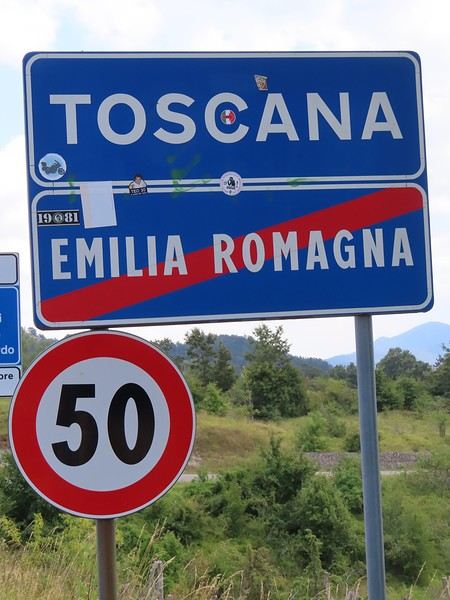
The endpoint of the planned hike is just a few meters from this sign (the trail crosses this road about 3 km from Balze). I realized Balze and the source of the Tevere (Tiber) are actually in Emilia-Romagna, not Toscana. I always thought the Tevere (Tiber), which flows toward Roma (Tyrrhenian side), started in Toscana!
I’ll come back to this quirk in Day 3’s write-up.
What a joy to be back here and pick up where we left off after all these months of hiatus.
I hope you’ll enjoy the story of this little trip around the Eastern Mediterranean. This cruise was the perfect way to satisfy our longing to return to Greece and Istanbul. The end of the season, until late November, is the best time to visit the Mediterranean in my opinion—when climate disruptions don’t get in the way.
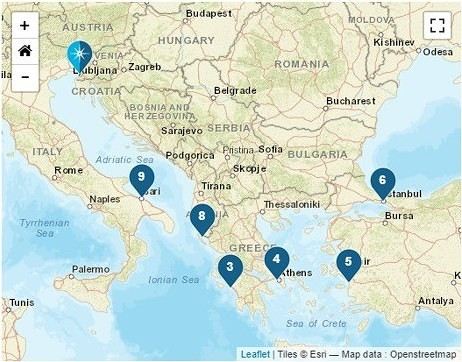
Departing from Trieste, our stops were Katakolon, Piraeus, Kusadasi, Istanbul, Corfu, and Bari, before returning to Trieste and then Venice, where we planned a very short 24-hour stay.
We left home at 6:15 AM—our first cruise departure since moving to Normandy. What I miss most about living in the Gard is how close we were to Marseille Airport. No more hopping over to Marignane in an hour; now we have to plan for a three-hour trip to CDG, even under the best conditions on an early Sunday morning.
It was impossible to book a hotel night before our flight because, starting in April, the Ibis was priced at 450 € per night, and the Mercure was flirting with 800 €—breakfast not included, of course. 😏
I had a feeling there must’ve been a conference or something going on… Turns out, it was just the auto show. They simply adjusted the room prices to match the cost of the cars. 😛
Our flight took us to Venice, where we caught a FlixBus to Trieste. We arrived at Trieste’s train station in the afternoon and walked to our hotel in the city center.
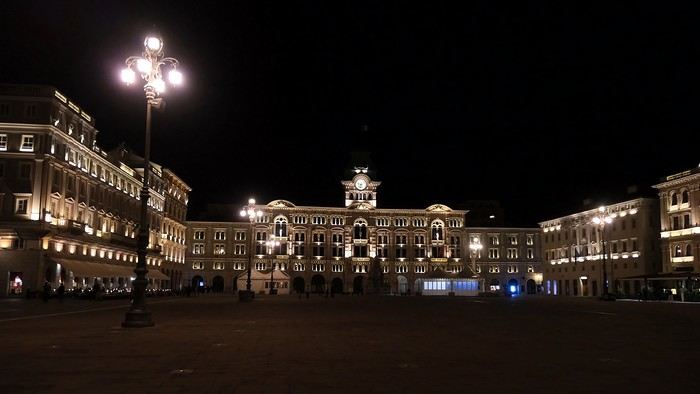
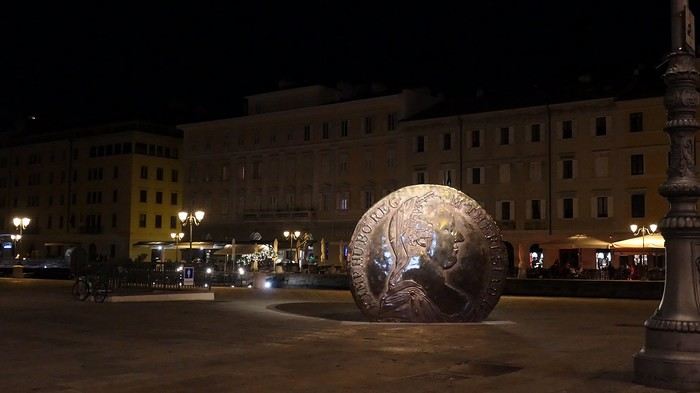
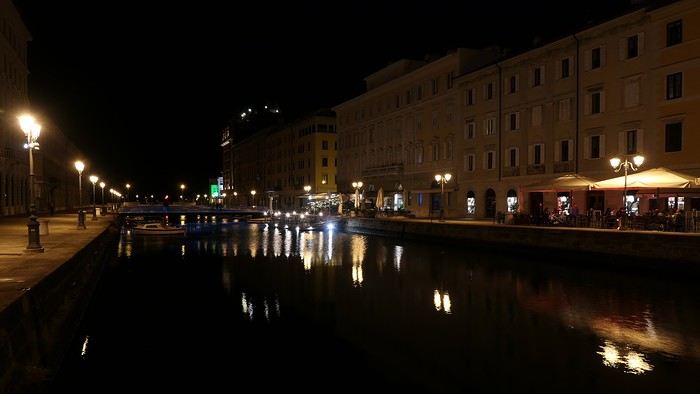
After treating ourselves to an amazing pizza at a restaurant (Di Napoli Maestri Pizzaioli, Via Armando Diaz 10) for a very reasonable price, we enjoyed the mild evening temperature while exploring the stunning buildings of this charming city by night. These magnificent structures are a testament to the city’s past. Trieste became Austrian in 1382 due to its complicated relationship with Venice, and it wasn’t until 1918, at the end of World War I, that it became Italian again. The city’s lighting beautifully highlights the architecture of the buildings.
The terraces were lively, and the atmosphere was so warm and inviting that we wanted to stay out even longer.
But we’d been up since 4 AM, so we were happy to retreat to the quiet of our hotel, located in the pedestrian center just a few steps from the port (Urban Hotel Design—highly recommended).
Hello everyone,
So happy to be back on this Forum!
We’re heading off on another cruise—our 7th—after a 5-year break...
We’ll be leaving from Venice on April 26th with stops in Kotor, Mykonos, Santorini, and Ancona.
Could you help me plan the stops by sharing tips, tricks, and advice?
For those who already know me, you know we prefer not to take the cruise line’s excursions but instead organize everything ourselves.
Thanks in advance to everyone, and looking forward to chatting with you all!
We’re heading to Puglia from July 30 to August 31, 2020.
I’ve booked a rental with a pool in Locorontondo.
But the more I read guides and forums, the more I regret booking the flight to Bari.
I can still cancel the other reservations, but I’d face penalties for the flight.
It’s packed, avoid August at all costs—traffic jams, stifling heat, price hikes… I’m really having second thoughts.
Our goal isn’t necessarily to hit the beach.
I’m thinking we’ll get up early to go where we want and head back during the hottest part of the day.
Is it *that* bad?
Thanks for sharing your experiences.
I’m finally getting around to writing about this 20-day trip to southern Italy: we didn’t travel this summer, and luckily, we found beautiful light and dreamy weather there at the end of September.
First, here’s the context of the trip: we’re both "confirmed seniors" but still curious and alert enough to enjoy the itinerary we’d imagined! We wanted a mix of discoveries—culture, cities, and nature—with guaranteed sunshine and the occasional short hike...
We’re flying to Naples, round-trip, because the flight times work better for us. We rented a car online, picked it up at the airport (details to come... and it won’t be the highlight of the trip!), and booked our hotels in advance.
A quick overview of the itinerary: leaving Naples on September 15th, early in the morning, we’ll drive straight across the boot of Italy to Bari.
After 11 days in Puglia, we’ll head back toward our starting point, taking our time: Matera in Basilicata, Maratea by the sea, and finally Paestum with its incredible temples.
Day 1: Brussels-Naples flight (Brussels Airlines) went smoothly; it landed an hour early, and we were thrilled, thinking we could use that time for a quick visit or two...
Everything went well until we left the airport. We took the shuttle to the car rental offices, and at first glance, we realized this wouldn’t be smooth sailing!!!
In front of every office (they’re side by side), there were already lines and kids sitting on suitcases—everyone looked exhausted...
We resigned ourselves to waiting: nothing moved until tempers flared at the counters, and two people nearly came to blows. Things sped up a little, and after 2 (two...) hours of waiting, we finally got our chariot: a black Fiat Tipo, dirty, with a few dents and scratches that we made sure to note in the contract... but it ran!
Off to Bari, then: no time for sightseeing along the way!
From there, we headed straight to our hotel in the countryside near Polignano a Mare.
A recurring detail: this happened constantly during our travels.
We’d installed our own GPS, fully updated...
In recent years, many dirt roads have become drivable, and lots of hotels and hostels have opened in the outskirts of towns. It was extremely rare for our ‘guide’ to recognize the street—let alone the number—we entered.
Often, we got by calling the hotel reception: it might seem like a small thing, but it happened so often it became frustrating.
In hindsight, it seems like without Google Maps, we’d have been lost!
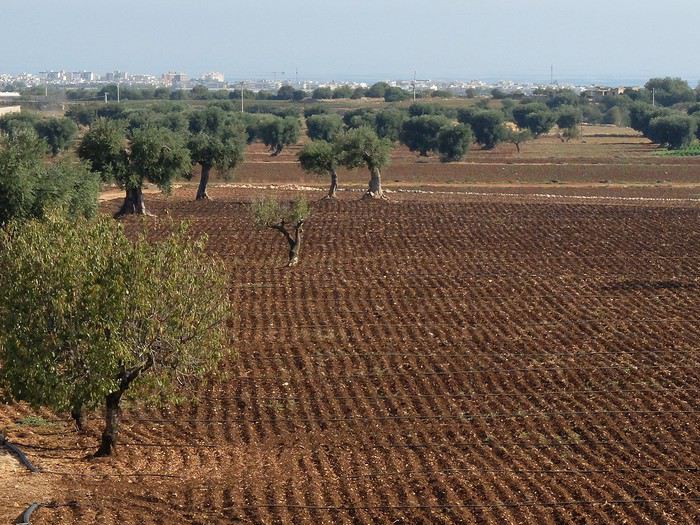
Anyway, we were beautifully settled, with a terrace overlooking olive groves and the sea in the distance: all was well.
A year ago, I posted looking for a cycling route for a trip in Sicily with my partner and our two kids (3 and 4 years old) in a trailer—something calm, with nature and a bit of culture. I didn’t get many replies, so I’m sharing our itinerary, which we really enjoyed. We cycled from the southeast (Syracuse) to the northwest (Palermo).
**Note:** We had no issues on the road—drivers were very courteous, the welcome was exceptional (lots of invitations to eat and/or stay overnight), and there were very few people on the roads, even the big ones, since we were there from September 23 to October 7.
**Weather:** Apparently, the summer of 2014 had been awful (only 25°C...). We, on the other hand, had 3 days at 44°C—it was *brutal*, including one day at 35°C at 1,000m altitude in the center of the island on October 1st...
**Accommodation:** 15 days of wild camping, with just one really nice apartment after 7 days in Piazza Armerina. Wild camping was tough—rocky, dusty, hard to pitch tent stakes. Our tent got pierced by thorns (even the groundsheet) from one side to the other. We washed up at village fountains, and—let’s be honest—less often than we’d have liked. The kids’ clothes, which spent a lot of time on the ground, were pretty grimy since laundry was rare. Only one official campsite (otherwise, they’re all on the beaches): Da Vinci Camping, in the middle of lemon groves near the southeast (Rosolini). It’s well-known on social media for being very "roots."
**Water:** A real challenge—*very* tough. Off-season, many homes are abandoned, and on some days, we passed through few villages. Result: we always carried our max water (9L) and sometimes had to add extra bottles to last 2 days, covering the day’s ride, wild camping, and the next morning—that’s 15L on the bikes. So be careful with this!
**Itinerary**
We arrived by train in Messina from southern Italy (yes, the train goes onto the ferry—worth seeing!), then took the train to Syracuse. We decided the northeast coast was too dangerous to cycle, so we visited Syracuse and then picked the SP roads (the smallest ones, more or less following the coast) toward Noto. We were supposed to head southeast to Pachino, but since our ferry from Palermo was booked 15 days later, we cut the route short and headed toward Rosolini instead. Nothing exceptional until Modica, crossing the Ispica fault. Modica is a really pretty town to see.
Then Ragusa’s old town via the SS 115—a quiet but very scenic road. The town is stunning, but getting through the modern part (Ragusa Alta) means 300–400m of elevation gain...
Caltagirone: a lovely town (famous for ceramics), but the center is uphill. We took a bigger road, but there was hardly anyone around.
Left via Mirabella, then visited Piazza Armerina and the Villa Romana.
Took the SP 15 to Barrafranca, Pietraperzia, then Caltanissetta via the SP96 (choose carefully—there’s a bigger road nearby).
Then Serradifalco, Mussomeli (castle), San Giovanni Gemini—a series of hilltop villages with valleys in between. We climbed and descended 500m+ repeatedly. Santo Stefano Quisquina, Prizzi (passing at 1,000m altitude—really nice, no one around). Corleone (great road, some climbing, but it’s awesome); Ficuzza, Santa Cristina Gela, Altofonte, and Palermo (no traffic issues).
**Reminder:** This was off-season—no one on the roads. We found the route through Caltanissetta, Mussomeli, etc., *spectacular* and sometimes breathtaking. Sicily is a rugged place for rugged people (especially wild camping).
We’d heard the center of Sicily was overrated (not at all...). After 4 months of traveling without always listening to others’ opinions, we confirm: central Sicily is amazing—rugged, dramatic, and perfect for what we were looking for (though we didn’t swim).
**Elevation:** People kept saying Sicily was a nightmare for climbing. We’ve done much tougher routes in the Black Forest or Slovenia. The tricky part in central Sicily is the constant ups and downs—you climb 300–600m in one go, then descend right after. We used "Ride with GPS" to test different routes and avoid unnecessary descents (or minimize them). With a few extra kilometers, we saved about 2,000m of elevation gain overall, especially around Caltanissetta, the Modica-Ragusa link, arriving in Modica, and leaving Ragusa.
June 2024.
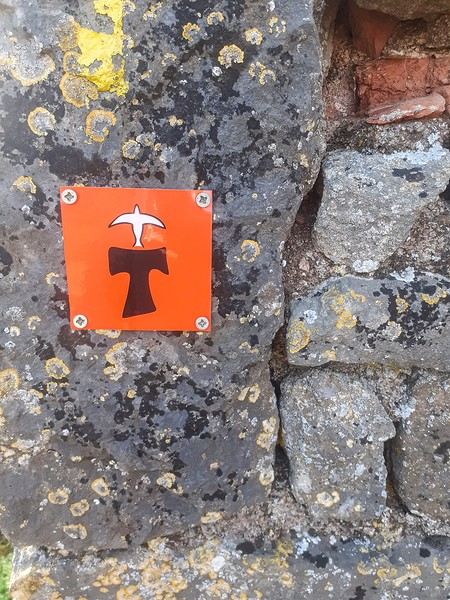
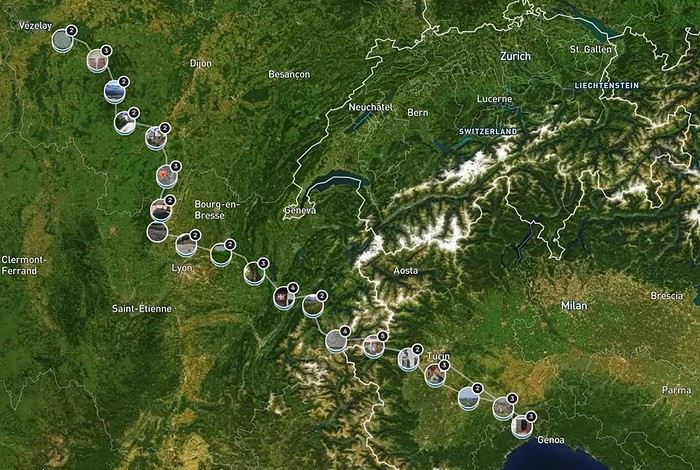
While hiking with my brother on the GR 36 Tour du Morvan, I catch sight now and then of strange rectangular markers fixed to tree trunks. Against a bright orange background, a deep black Greek tau topped with a white dove. My first encounter with the Assisi Way.
The Way of St. Francis: a pilgrimage route linking Vézelay in Burgundy to Assisi in Italy, covering nearly 1,800 km.
It felt like an obvious next step—I immediately knew I’d take it on, attempt the adventure solo.
In the months that followed, I talked about my project to everyone—family, friends, my partner. An avalanche of comments, more or less the same but varying depending on each person’s character and life experiences. But deep down, it all boiled down to one legitimate question: why?
And the answers?
Hesitant, awkward, partial, even confused. I quickly realized they weren’t so easy to find. It was as if my project seemed more like a whim, a kind of intimate caprice, rather than a well-thought-out plan.
Of course, I knew the reasons that pushed me to leave—you always have to give some. Loved ones need to understand to feel reassured, and that’s understandable.
But I fear that when I list them, they’ll sound like the same old checklist anyone embarking on this kind of journey might give.
Of all the reasons I could mention, I’ll highlight just one here: the call of the road, the solo adventure that brings a powerful sense of freedom.
A bit like Monsieur Seguin’s goat, who from her comfortable pen gazes longingly at the unconstrained horizon of the mountain.
But if I’m being honest, I think I didn’t really know what I was looking for—or, more importantly, what I’d find. Deep down, when I reflect on it, one word keeps coming up that explains nothing and everything at once: desire.
Now well past sixty, I know that when I ask myself who I am or where I’m going, two things bring me fully back to myself: hiking and writing.
And my intention was also to anchor this adventure through words, day by day. Writing down my feelings, emotions, discoveries, and reflections each evening. The famous travel journal that grounds the daily experience in reality.
When I discovered the app "Polarstep," which was initially just meant to keep my loved ones updated and reassured, inform them of my progress, and maintain a connection, I found an opportunity to do it a little differently than usual.
No retrospective notes polished up after returning, but spontaneous writing—recounting everything that crossed my mind during the day and publishing it immediately. A journey lived in real time.
This text is the exact transcription of my daily writings. Rereading them, I didn’t change a thing—just corrected a few mistakes and tweaked some awkward phrasing here and there. Short texts, fitting the format imposed by this kind of app. Writing as if addressing others.
Now, all that was left was to walk.
April 18, 2026 – Vézelay.
Hi everyone,
I’m going on a Mediterranean cruise in November and I’m looking for some "tips" to visit the cities of Naples, Messina, and Valletta in Malta without booking the ship’s excursions, which are really expensive.
Thanks so much for your advice and suggestions. We’re a group of 6 people.
Looking forward to hearing from you...
Best,
M
PS: We’re also stopping in Genoa and Barcelona—even though we know these two cities, we’d still love any tips for visiting them!
Thanks
As planned every year for quite some time now, here we are in Italy on the Ligurian Coast to spend a few days and celebrate New Year's 2024/2025.
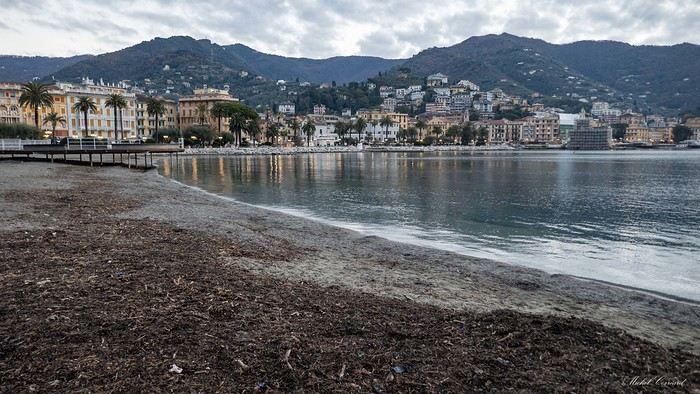
Our base is in the charming town of Rapallo, between Genoa and La Spezia. We're right on the coast, with our hotel offering a sea view and access to the beach.
Not far from Rapallo, you can find, besides the Cinque Terre, Portofino, Santa Margherita Ligure, Chiavari, and others like Carrara and even Pisa. In short, there's plenty to do.
Five days there with so-so weather, and crowds but nothing overwhelming.
For the trip between home and our base, we're using an electric vehicle. It's manageable without any issues. The hotel has outlets, and otherwise, there are charging points all over Italy. And just to note, Tesla chargers are the best in terms of cost and charging speed.
There you have it.
Once we arrived on Sunday, December 29th, it was time to go for a walk, book a restaurant for Monday evening, and finalize the itinerary.
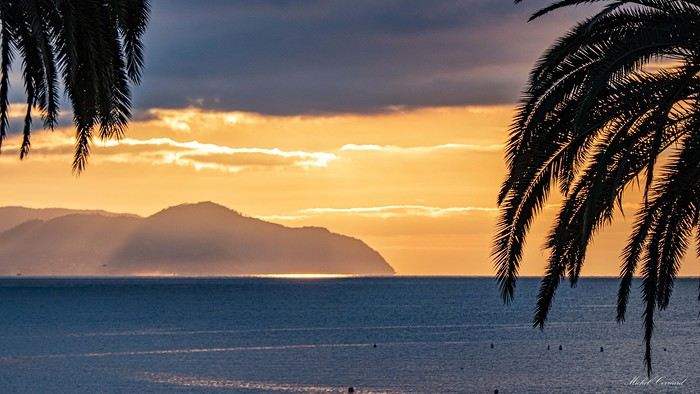
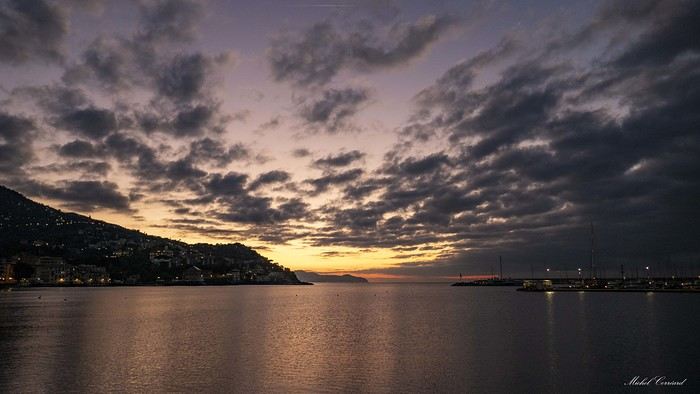
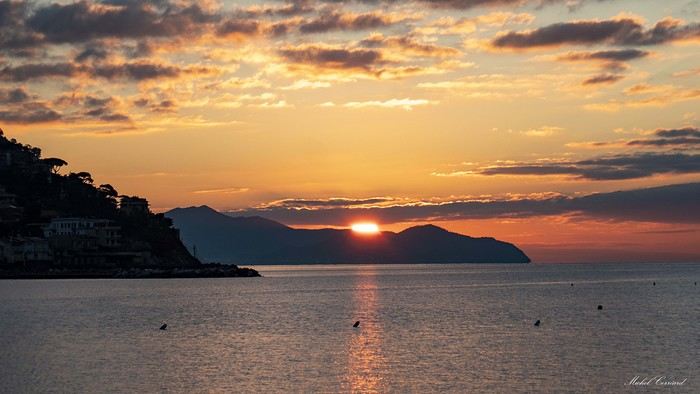
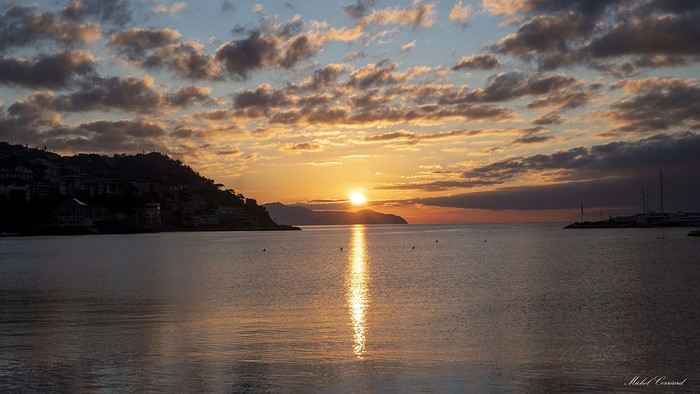
On Monday the 30th, we were lucky enough to see a beautiful sunrise from our window.
I’m planning to spend about ten days in Sicily (in September if possible), and instead of renting a car, I’d like to get around by train and bus. Is this a practical option or not? Thanks for your tips and advice! 😉
Hi everyone!
We’re so excited to be heading to Italy for the first time this April with our two kids for a week. We’ve booked our round-trip flight, and we’ll be arriving and departing from Pisa.
Our rough plan so far includes visiting Pisa, taking the train to Florence, and exploring the Cinque Terre. Last night, a friend also suggested adding Siena to the list.
Our kids are 12 and 9 and are used to walking, but we’re not looking to rush around too much. We’d love any advice, especially about accommodation. Should we stay in Pisa and take day trips by train, or split our nights between a couple of different places?
We’re just starting our research, so any tips would be amazing! 😉
Thanks in advance!
Short version: I booked through Croisières.fr, and everything went smoothly until my order was confirmed. When I requested a date change—due to administrative reasons—the sales rep initially assured me the fee would be 50 € per person, but then demanded 600 € (negotiated down to 338 €), even though the price remained unchanged. On top of that, Paul, the sales rep, was dishonest, claiming that drinks (excluding alcohol) were included and that there were "all-inclusive" packages for alcoholic beverages, which is completely false. All drinks—even water—are charged onboard. I had also requested a cabin with two separate beds to travel with my mother, a request that wasn’t honored, forcing me to sleep on a small couch. To make matters worse, all my emails and calls to customer service were ignored or handled carelessly. While the cruise itself was satisfactory—thanks to Costa for the onboard organization—I recommend booking directly with Costa to avoid these bad surprises with Croisières.fr.
Long version: I booked a cruise for two through Croisières.fr, and the process went perfectly until the final confirmation of my order, which initially reinforced my trust. However, as soon as I requested a change in departure dates—due to a delay in obtaining my mother’s ID card—the situation quickly deteriorated. During this process, Paul, the Croisières.fr sales rep, initially told me that the date-change fee would be only 50 € per person. To my surprise, I was then hit with an exorbitant processing fee of 600 €, which was eventually negotiated down to 338 €. This turnaround was all the more baffling because the new cruise offered was priced exactly the same as the original booking on the website.
The situation worsened when the cruise line later changed the dates for internal reasons at Costa. The new dates didn’t work for us at all, especially because of my mother’s non-reschedulable medical appointment. Despite my flexibility and numerous phone calls and emails, we were forced to accept these new dates against our will. It took a lot of effort to secure another slot, even though we had been accommodating on almost all other dates.
I also noticed other serious shortcomings in Croisières.fr’s sales service. Paul, the sales rep, turned out to be dishonest: he claimed that drinks (excluding alcohol) were included in the ticket price and that there were "all-inclusive" packages for alcoholic beverages. That’s absolutely not true! Without a package, all drinks—even water—are charged onboard. Additionally, I had specifically requested a cabin with two separate beds to travel with my mother. This request wasn’t honored, and I had to make do with a small couch because there was no way to set up two separate beds.
I’m willing to accept rules and constraints if they’re communicated upfront, but these crucial details were never shared with me. What disappoints me the most is how my requests were handled by customer service. None of the emails I sent received a response, and my numerous phone calls were dealt with carelessly and without any consideration. Everything was fine until the order was confirmed, and then suddenly, there was a complete lack of attention and follow-up, leaving a bitter taste.
That said, despite these issues, I was very satisfied with the cruise itself, and I’d like to sincerely thank Costa for their excellent onboard organization. Based on this experience, I strongly advise travelers to book directly with Costa to avoid the bad surprises and lack of follow-up that seem characteristic of Croisières.fr.
Hello,
We’ve just returned from our cruise on the Smeralda. There were four of us in balcony cabin 17001—a nice cabin with a large balcony and a very practical bathroom, though storage was a bit tight for four (small wardrobe and small shelf).
Our assigned restaurant, El Meneghino, served good and hearty meals.
The buffet was fine—since it’s a large ship, we always found free tables at different times, whether for breakfast or lunch. The food was good but not very varied.
Be sure to check the daily program for meal times, as they change every day with different options: either buffet, fixed-menu restaurant, or both.
The pools and jacuzzis were very small and crowded, and despite the nice weather that week, we never saw the aquapark open.
There are plenty of bars where you can easily find a spot to enjoy a drink in peace or with music.
The theater was very small and had unusual hours. Over the week, we only managed to see two shows live—the rest were on TV in the cabin.
We did two Costa excursions: one in Rome with the express train, which was very pleasant, and the other in Pisa, which was well-organized for independent exploration.
Overall, we were quite satisfied with our trip, but we still prefer MSC. Have a nice Sunday.
Hello everyone,
This is my first time traveling to Italy
For a short cultural trip
From October 8th to 17th
Solo as a senior woman
I booked my one-way ticket with FlixBus
From Lille Europe
On October 8th at 11:55 PM
I arrive at Porte de Maillot (Paris Pershing)
At 3:05 AM
And I’d like to get to Palermo, Italy
Starting October 9th
I’ve checked tickets—prices are sky-high everywhere, and there are even scams
Can you advise me on how to get to this city
Affordably
By train, plane, or bus
I need to arrive by October 9th
For my hostel room
Which is located at
Address provided
5.4K followers • 426 following
Travel, meet, be surprised, and fall in love with Palermo
Book at: www.acasadiamici.com
Via Dante 57, Palermo | +39 091 7654650
Palermo
acasadiamicihostel
+39 328 317 2205
A Casa di Amici, a place to live!
And from Palermo, how do I get to the hostel where I’ve booked?
I’m counting on your support and understanding
To make things easier before I arrive
And to recommend the best ways to get there
Safely
Can I count on you?
Thanks for your trust.
Looking forward to your advice, best regards.