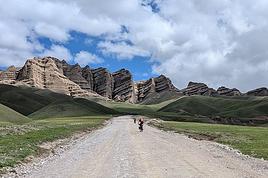
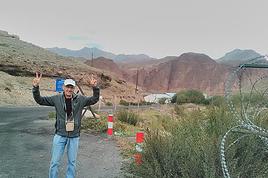
I’m looking for a trekking companion for an incredible adventure to the Texte K2 Base Camp in the Karakoram Range in Pakistan. I’ve found a reputable local trekking agency offering a great rate for groups of two or more, making it a fantastic budget-friendly opportunity.
I’m fluent in French and English, and I’d love to share this adventure with fellow trekking enthusiasts. If you’re interested in this unique experience at an affordable price, let’s team up! Feel free to reach out for more details. I can’t wait to experience this unforgettable adventure together. Thanks !
1,279 similar discussions in English
Hi there,
I’m looking for route ideas for a 5-day bike trip in the Spanish Basque Country, max 40 km per day and 500 m of elevation gain max per day, preferably on greenways or small roads for August 2025.
I’d also love to hear your thoughts on the weather: does it rain a lot at that time of year?
We cycled along the Finistère coast last summer but managed to dodge the rain 😄.
Thanks in advance for your tips!
Hi,
I’m planning to travel to China very soon, and I read in this article that getting a visa is really complicated. Can anyone confirm? Thanks so much. Nicolas
I’m planning to travel to China very soon, and I read in this article that getting a visa is really complicated. Can anyone confirm? Thanks so much. Nicolas
Hi, I’d like to know if gas stations with LPG are well distributed in Argentina, Brazil, and Chile? Thanks.
Exploring India by road is all about having a good driver. I highly recommend the one I’ve traveled with for 5 "safe" trips—Rajasthan 3 times over 16 years, Gujarat, Himachal Pradesh, and Punjab. He’s been driving tourists for 25 years now and is more than just a driver. He knows how to talk about his country, the cities you visit, and suggests alternative routes.
He’s well-connected with real local guides who don’t just ramble (as he puts it himself) or drag you into shops claiming to be run by their "so-called family." Depending on your preferences, he can suggest well-tested itineraries and recommend typical hotels like Havelis.
For dining, he oversees meal prep based on your spice-level preferences. He’s Sikh and deeply respectful of his passengers.
He speaks English better than French, but one of his daughters is studying French at university.
DM me if you’d like his contact details.
Happy travels!
Just back from a 3-week trip in northern India, we spent 2 days in Varanasi. Since this city is so unique, to get a deeper look inside and better understand the spirituality that emanates from it, we hired a young French-speaking guide, Rakesh, who was recommended by our driver. Rakesh knows his city really well—he showed us places we never would’ve found on our own, all in perfect French. Thanks to him, we learned so much; he’s truly fascinating and very attentive. A huge thank you for this amazing experience. Don’t hesitate to reach out for his services.
Contact details in PM
Hi, I’m traveling to Mauritius with my kids from Réunion. My kids only have national ID cards that still show our old address in mainland France. What do we need to show at the airport as proof of residence in Réunion to travel with just an ID card?
Thanks—this is pretty urgent since we leave next week!
Thanks—this is pretty urgent since we leave next week!
Hi,
I booked a car with Sixt from Temuco to Puerto Montt from 01/27/25 to 02/17/25.
On Saturday, I got an email canceling the reservation.
But the reservation is still showing up on the website (as of this morning at 9:30 AM).
Can’t reach Sixt Chile.
Sixt France is also in the dark (they can’t contact Chile either).
Has anyone heard anything about this?
I would’ve preferred to post this in the "Travel News" section, but it’s not open to new discussions. Still, this is definitely sensitive news directly related to travel.
"With growth twice as fast as the global economy, tourism has a heavy impact on climate balance. In this regard, aviation poses a specific challenge." (From Le Parisien with AFP)
You can read the rest HERE.
"With growth twice as fast as the global economy, tourism has a heavy impact on climate balance. In this regard, aviation poses a specific challenge." (From Le Parisien with AFP)
You can read the rest HERE.
Hi everyone! I’m planning to retire in Agadir in 2026, preferably in a furnished rental not too far from the souk and the sea. I’ll be bringing my two African grey parrots and two cats. I’d like to know what formalities I need to take care of, and if I transfer my pension to Agadir, which bank would you recommend? What about health insurance? Is the healthcare system good there? I’ll have around 2000 € in retirement income. Do you know of any rental agencies that work with French expats? Any advice would be greatly appreciated—I’m planning to visit for a week next year to check things out. Thanks in advance for your tips!
Best regards, Lorraine
Best regards, Lorraine
Hello!
So glad to see the forum back up and running!
We just got back from a trip to Sumba in early November—spent a little over a week exploring this lesser-known island from east to west.
It’s the perfect destination for anyone looking to escape overtourism.
Feel free to ask any questions—everything’s still fresh in my mind, so I’d be happy to help if I can.
My itinerary: - Arrival in Tambolaka - The lagoon, beaches, villages, and stunning waterfalls…
Happy to share more! Check out my photos on my Flickr
My itinerary: - Arrival in Tambolaka - The lagoon, beaches, villages, and stunning waterfalls…
Happy to share more! Check out my photos on my Flickr
Idea for a 15-day itinerary in Cambodia...
- 3 nights in Phnom Penh, arriving at 6:30 PM.
(2 days to explore the city).
- 2 nights in Battambang
- 4 or 5 nights in Siem Reap
(2 days for Angkor, 1 day for Kulen, 1 day for Tonlé Sap Lake)
- 2 nights in Kampot
- 2 nights on Koh Rong.
What do you think?
Thanks...
Alain.
Hi there,
We’re supposed to fly in four days—my partner, our two kids, and me—for a one-month trip to Cambodia. While applying for an e-visa, we just realized that both our passports won’t be valid for 6 months after our stay ends, which is a key requirement for getting a Cambodian visa. I don’t know how, but we totally missed this info!! Our tickets aren’t refundable, and we’ve booked several non-refundable hotels there too...
Has anyone been in this situation or have any ideas or solutions?
Thanks so much in advance!!!!
PAKSE AND THE BOLAVENS PLATEAU
Bolavens (or "Bolovens" – "the region of the Lavens," an old tribe).
PAKSE
A sleepy town, but packed with backpackers in transit between Laos and Cambodia. The streets are numbered, but since there are no signs, you just have to figure it out (rumor has it the signs have been planned for years; luckily, the center isn’t big). Tons of small hotels, including the well-known Sabaidy 2 on Street 20, a big bazaar catering to all budgets, from dark dorms with shared bathrooms to real rooms with terraces or balconies. Since it’s so popular, booking ahead is recommended. My favorite: the Sala Champa, pricier but with two large terraces, one with a bar, and especially a terrace restaurant I consider the best in Pakse (try the divine steamed fish with lemongrass + Lao Gold beer, a rare delight; ask for room 100, with a big terrace). More upscale, the lovely Résidence Sisouk, run by the very classy and French-speaking Mme Sisouk, from the wealthy Lao Sisouk family, the country’s top coffee producer and one of those francophone families you encounter here and there around the world, where class and culture reign – and perfect French. Delicious pastries and, of course, extraordinary coffee tastings. Similar prices at the Pakse Hotel, run by French owners and famous for its rooftop bar-restaurant (great view!).
Tons of restaurants besides those at Sala Champa and Pakse Hotel: from Dao Lin and Sabaidee at the corner of Street 20 and 13, to a decent Indian place (Hassan) and a nice, cheap spot, the Lao Restaurant & Bar, where you can enjoy Lao cuisine for just a few kips, both also on Street 20. You can feast on grilled fish at the countless riverside stalls along the Mekong.
Pakse is home to the famous Yves, a Belgian married to a Lao woman, Noy, who opened the travel agency Miss Noy. He’ll go out of his way to help tourists; he’s incredible, the real tourism office for the region, with maps, endless advice, and every weekday at 6 PM, a full-blown lecture on the Bolavens and the 4000 Islands. A bunch of young travelers listen intently to his explanations about the whole area (he hands out a well-made photocopied map). He also rents bikes and has an internet café with computers that, miraculously, work perfectly. He’s so popular that in high season, you need to book a motorbike 2-3 days in advance (but if he’s out – and he has 40 – he’ll find one for you).
THE BOLAVENS PLATEAU
Plateaus just aren’t my thing – flat-lands! There are some relatively high peaks in the middle, but they’re only accessible by trekking. You can do a small loop from Pakse-Tad Lo-Thateng-Pakson-Pakse, or a big one from Tad Lo to Sekong, then head south to join the Paksong-Pakse road. Starting in the north, the Phu Xam waterfalls are okay (interesting local minority village-museum to the right of the parking lot, and a terrace restaurant above the small falls). Well, they’re on the way, so you might as well see them! After that, a boring road leads to the Tad Lo waterfalls, with tons of small hotels. I chose the big blue house by the river at the right corner of the bridge, the Sipaseth GH, with cute little bungalows in the garden, 4 rooms with balconies overlooking the river, and great food on the terrace facing the falls. **Avoid at all costs**: the Saisee GH, once nice with its little stilt houses by the falls, but now a monument to filth, indifference, and rudeness (confirmed by several people, unanimous on the issue). Luckily, the lovely Tad Lo Lodge, with its bungalows by the falls and gourmet restaurant right above them – not cheap at all – finally built small houses in the woods on the other side for $25.
The next morning, I’d had enough of plateaus, so I took a small loop heading south from Tad Lo to Thateng, and there, a wonder 5 km south of town: the Sinouk Resort. It’s like stepping into *Gone with the Wind* or the Chevalier de Leyritz’s Martinique. In the middle of the Sisouk family’s 34-hectare coffee plantation, a huge garden with three large colonial-style houses: one by the river and pond with a suite + 3 luxury rooms + a small, cozy one for $40 (that’s where I stayed), one with 4 superior rooms for $60, and a very large one overlooking everything with 6 luxury rooms ($60) + 2 huge suites for $90. Of course, it’s all decorated with antique furniture, local knick-knacks, and antiques; there’s a pool, a beautiful restaurant with two terraces, one overlooking a large pond and one by its edge. The food and service are impeccable, and the coffee: from espresso with whipped cream to green tea or wild honey cappuccino… too bad it keeps you up, or you’d sip it all evening (and morning, and afternoon, and in between). In short, a dream!
Back to Pakse via Paksong (what a dump!) and the Tad Fane waterfalls, those are spectacular – twin sisters plunging 200 meters. You can hike down to swim at the bottom (1-hour jungle trek round trip). Across the way, the nice Tad Fane Resort (small houses and a big terrace-restaurant facing the falls).
I think I missed the Katamkok waterfalls, but I don’t believe it – all these falls can’t compare to Ban Gioc Falls in northern Vietnam!!!
CHAMPASAK AND THE 4000 ISLANDS
CHAMPASAK
Even sleepier than Pakse! To avoid the ferry, cross the new Mekong bridge in Pakse, and after about 10 km, turn left at the big "Phaphinoy" sign (the first village in town). When you arrive, turn at the "River Resort" sign. A sumptuous resort on the Mekong, developed with American capital – pure luxury (they even have their own rice field and vegetable garden for the restaurant). Continuing on, you’ll come across the very pleasant Anouxa GH, where I had dinner and stayed. Small bungalows facing the river, garden rooms, and two large wooden houses with huge family rooms + a big terrace on the Mekong, and the food is great! They rent bikes and motorbikes. Further to the right, the pricey Inthira Hotel, which I found uninteresting since it’s on the road instead of by the Mekong. There’s also a Folie Lodge on Don Daeng Island, which I didn’t visit (the word "Folie" is justified: crazy prices, up to $200 and more).
A few nice wats and, of course, Wat Phou, Laos’ most important archaeological site, 10 km south of Champassak in the plains and on the mountainside (the stairs are a killer!). Watch out for the scorching heat, and it closes at 4:30 PM. It’s not Angkor Wat, but it’s still worth the detour. Plan for 2 hours. Entry is 50,000 kips + 5,000 to park your motorbike.
KHIET NGON
To continue south to the 4000 Islands, you have to take the "ferry" (actually fun little things – two canoes joined by a platform; better not mess up when loading your motorbike!). Once on the other side, turn left, and you’ll hit National Road 13 (Pakse-Siphandone, the 4000 Islands), the most boring road I’ve ever been on, like Phnom Penh-Siem Reap – flat and nothing to see. BUT there’s a real gem worth checking out: Kiet Ngon. At Km 48, take the laterite road toward Attapeu (big sign: "Attapeu 155 km") and eat red dust for 8 km (toll: 20,000 kips), then turn right (signposted) onto a good track. You enter the beautiful Xe Pian National Park, where you can still find wild elephants, leopards, and tigers. You arrive at the entrance of the small village of Ban Khiet Ngon. On your right, a small concrete building with 4 decent, cheap rooms (60,000 kips), facing an old wooden house that serves as the tourism office and its "elephant parking" garden. This village is where you can go on an elephant ride (20,000 kips) to the top of Phou Asa, one of the most unusual places I’ve ever seen. You climb through the jungle and emerge onto a flat slate summit, completely bare – it really feels like the Moon! In the distance, an astonishing site built to commemorate a victory by Lao nationalists over Siamese invaders in the 19th century (so the site isn’t 1,000 years old, as the locals claim). A vast archaeological site with an enclosure 180 m by 50 m, marked by 2-meter-high walls and columns made of slate stacked without mortar. At the back, a ruined temple and a tower. Beautiful views of the whole region. Popular with tourists arriving by minibus from Pakse. The elephant rides in a line aren’t my thing, so they tell you it’s forbidden to ride a motorbike, but I did it anyway without any issues – except for the unhappy looks from the mahouts (turn right at the village entrance, sign for "Phou Asa").
If you’ve got the funds, follow the signs for "Kingfisher Lodge" and arrive at Laos’ first ecolodge, developed by a Lao-Italian family. Lovely stilt houses (750,000 kips with breakfast) and 2 bungalows with just fans (250,000 kips). A small two-story wooden building with a restaurant and a terrace by a pond – the bonus: in the evening, wild elephants and buffalo come to drink with you. Booking ahead is recommended since it’s popular with groups from Pakse.
Paper guides also mention the more remote village of Ban Papho, deep in the jungle. There used to be elephant rides, but they’ve stopped. However, there are great treks in the national park (check with the Green Discovery agency in Pakse, which specializes in treks all over Laos).
THE 4000 ISLANDS
You continue on the mind-numbing Road 13 from Pakse and arrive at a brand-new bridge leading to Don Khong Island, where there’s nothing to see except two wats, so if you skip it, you’re not missing much. Next, the Nakasang sign, a small port with mini-ferries crossing the Mekong to Don Det Island. A celebrity, that one – one of those trashy spots for young people who think you can only have fun if you’re wasted on alcohol and drugs. A small street along the river, lined with guesthouses, restaurants, and bars – total chaos! Plus, there’s nothing to see on the island. So, take a tuk-tuk from the jetty, cross the dump, and arrive in a little paradise: Don Khone Island. I planned to stay 2 days but had to be dragged away after 6. A small main village with a dirt road, tons of guesthouses and great restaurants, and lots of beautiful things to see.
For lodging on Don Khone, it’s usually wooden bungalows with river-view terraces. Options range from the elegant and pricey Sala Done Hotel to Somphamit, Pan’s, Pakha GH, and many others. I found my haven away from everything: the little Phonvilay, 3 small bamboo buildings with 2 simple rooms each, terraces above a branch of the Mekong, and a big plus – a small path just to the right that goes down the riverbank, so 3-4 nice swims a day. All for 60,000 kips. To get there, turn right at the end of the bridge until you reach the wat, then take the small path to the river on the right of the wat’s wall.
For food, you’re spoiled for choice. I had all my dinners at the Cordon Bleu of the Fleur du Mékong. I don’t know how she does it, but even the simplest dishes have something extra. She’s famous for her curry (more like a mild stew) of duck or chicken with potatoes and sweet potatoes – a hearty treat. Go for the chicken; Asian ducks are all skin and bones. Her grilled fish is divine!
The island has quite a history: the Mekong upstream is over a kilometer wide (it’s said to reach 14 km during high water) and "falls" onto a rocky barrier. It splits into countless small branches, flowing wherever there’s a crack – hence the 4000 Islands and the impressive rapids. The French discovered this while trying to navigate the Mekong from Saigon to Luang Prabang and China – and bam, impassable! So they built a narrow-gauge railway starting from the south of the island, bypassing the rapids, and ending at the north of Don Det Island. You can see two rusted locomotives, discovered in the jungle in 1990 by a French explorer: one in the southern extension of the bridge and the other in Ban Hang Khone village at the southern tip of the island, both with large English signs and fascinating old photos explaining the whole history of the railway, abandoned when Road 13 was built along the 4000 Islands (the rails were removed, and the railway track is now an excellent trail).
Somphamit Rapids (Li Phi)
Locals call them Li Phi, meaning "the abyss of evil spirits" (the "phi" that Lao people still believe in), because they think the falls and rapids trap spirits, to the point that no one would ever swim there. It’s very dramatic. Entry fee: 35,000 kips. Small beach and a big restaurant with a terrace and thatched-roof tables.
Khon Pa Sai Rapids
A completely different kind, just as spectacular, and less crowded. Turn left at the bridge exit and go to the northern end of the island (Ban Khon Nua village), then continue south until you see a big yellow sign "Khon Pa Sai Waterfalls" pointing to a small path on the left. You arrive at a small suspension bridge with a corner restaurant and terrace where the food is great (I had most of my lunches there). Cross the bridge and follow the path to a spectacular site of falls and rapids. In the middle, you’ll see unique structures – gigantic fish traps over 10 meters long. During high water, each trap can catch up to 500 kg of fish (yes, five hundred) per day.
Ban Hang Khone
This is the "French port" at the southern tip of the island, where the Mekong, after its rapids, spreads out for kilometers – a real inland sea. This is where you can see the famous Irrawaddy dolphins in the morning or late afternoon (boat excursions). To get there, take the trail that was the old railway track, or continue south on the path past the Khon Pa Sai falls (but not by motorbike – the bridge is out). A huge concrete terrace, part of the old port facilities, with a magnificent panoramic view of the Mekong stretching into the distance. Just before, a small path leads to a big beach (with restaurants).
If you go back to Road 13 (or take a pirogue from Don Khone), further south are the Pha Peng Falls, Asia’s highest river falls (15 m). I didn’t go, but they’re said to be spectacular.
Hi everyone, I’m thinking of visiting Sri Lanka at the end of February 2025, but I’m worried about the economic situation (shortages of food, electricity, internet, fuel, etc.) as well as the political and social climate (strikes, protests, etc.). Has anyone here been there recently and can describe what it’s like?
Is the current situation stable enough to travel in this beautiful country without any issues? Thanks for your replies.
Is the current situation stable enough to travel in this beautiful country without any issues? Thanks for your replies.
Hi everyone,
I noticed the forum could use more recommendations for visiting Madagascar, so I thought I’d share my experience.
I arrived on the Big Island last March. I moved there as part of a contract with a friend who started a tech business. A quick note about Madagascar: this country is full of talent. The young people are incredibly ambitious, dynamic, and creative.
After visiting some of the more well-known tourist spots like Mahajanga (Majunga) and Toamasina (Tamatave), the place that really stood out to me was Morondava, in the southwest of the island.
To get there, we left Tananarive (Antananarivo) in the evening, heading to Antsirabe, where we spent the night. By the way, Antsirabe is worth lingering in—it’s a charming town with lots of pleasant spots, and you’ll often run into French travelers there.
The next day, we left at 4:00 AM for Morondava. Our goal was to arrive around 3:00 PM, driving at a relaxed pace to enjoy the scenery. We stopped in Miandrivazo for lunch—there, the tilapia and grilled prawns are a must.
Before Miandrivazo, the road isn’t great (like many roads in Madagascar, unfortunately), but the stunning landscapes more than make up for it. The vegetation, typical of African savannas, is fascinating. However, bushfires—unfortunately common on the island—leave visible scars on the scenery.
About 50 kilometers from Morondava, near Mahabo, the magic begins: majestic baobabs line the road, and the sunset turns this scene into a real postcard. It’s a moment I’ll never forget.
Once there, we stayed near Nosy Kely. It was very hot, but the warmth of the locals, the Sakalava, and their incredible culinary skills quickly made us forget the heat. The seafood and fish are prepared with impressive mastery… so good!
I’d love to recommend some great spots, but I’d rather not accidentally promote anything here. What I *can* say is that Morondava is absolutely worth the detour, if only for its unique atmosphere and breathtaking landscapes.
The next day, we set off to explore the famous Avenue of the Baobabs. This place is simply mind-blowing, one of a kind. As the name suggests, it’s an avenue lined with giant baobabs, with a dusty red-dirt road running through the middle. The whole scene has an almost mystical vibe.
We were planning to visit the Tsingy de Bemaraha on the fly, but it turned out to be too ambitious. According to our guide, we would’ve had to cross two rivers, at Belo and Bekopaka, which would’ve taken a lot more time. That’ll definitely be my next big adventure in Madagascar.
If you get the chance, I’d recommend going even farther than the Avenue of the Baobabs—about two hours by road. There, you can catch a glimpse of a real baobab forest in the distance. Some friends in another car were lucky enough to go, and their stories made me dream. They experienced a magical moment, one of those things you have to see to believe.
I’m no travel journal expert, but I hope this little glimpse inspires you to discover this little slice of paradise in Madagascar.
Hi there,
We're planning to spend 2 to 3 weeks in South India (Kerala) in January or February 2025.
We'd like to use a travel agency to help us make this trip happen.
Can you recommend a reliable agency that can tailor a trip to our needs?
Thanks! 😊
We’ve booked the transatlantic crossing on the Queen Mary. I understand that for the gala evenings, we need to wear a tuxedo and an evening gown.
Do we need a very expensive chic evening gown, or can a more modest one still be tasteful? And where can I buy one? I have the same question about the tuxedo. Thanks!
I’ll be in Vienna from June 6th to 9th, 2024, and I’m looking for a classical music concert at a reasonable price (under 50 €). My searches haven’t turned up anything… If you’ve got any ideas…
Hi there,
I’m going on a cruise in March, sailing the Mediterranean on the Tosca Toscana.
I’d love to hear your great tips for life on board and for the different stops: Barcelona, Rome, Palermo, and Civitavecchia.
Thanks in advance!
Hello,
Happy to see VoyageForum "back in action" again, and even though I know my post is a bit off-topic, I’ll give it a shot anyway:
We’re a group of four looking to take an organized trip to Canada at the end of September/beginning of October 2025, starting from Quebec. These kinds of tours exist, but our main issue is that local agencies don’t handle pre-routing from France, which is a deal-breaker for us.
Of course, we’re not at all opposed to traveling in a (small) group.
Thanks for your replies and any leads you might have.
Hi there,
I bought a flight ticket with Turkish Airlines to Vietnam. On the form, it said: first name then second name, which I did. However, my passport has 3 first names. I called a number in Paris, and they played it safe by repeating: the names must match exactly what’s on your passport. I’ve seen on forums that some say even one first name is enough… Do you know about this situation? Thanks everyone.
Aaah, I'm so glad Voyage Forum is back up and running. For reading... and for writing...
My last travel journal was from 2019, when I went hiking and backpacking with my son, who was 15 at the time. We visited some places that were still pretty unknown back then! I was supposed to go in April 2020, still solo, with arches as the main focus. I’d spent nearly two months getting physically prepared, and had managed to snag a bunch of permits for CBS, The Needles, and so on... Of course, it all got postponed—first to October 2020, then April 2021, then October 2021, and finally it happened in April 2022. Maybe I’ll write about that in another journal. The thing is, every time, I spend at least 6 to 8 weeks getting physically ready, even though I work out all year. Huge disappointment during that trip—so much had changed because of Covid, kind of like in the mountains back home. Overcrowding, not just in the national parks (we knew about that), but also in a lot of remote, lesser-known spots. Like the French, Americans realized they had a lot of beautiful places in their own country during those travel bans. And they kept exploring... Prices for pretty much everything had already gone up a lot. Gas, restaurants, cars, but especially lodging! Then, after dealing with so much wind in April, I got a little "fed up" with that time of year. It felt like I had strong winds and sandstorms for 3 out of the 3.5 weeks I was there...
So, the next trip was October 2023, to catch the partial eclipse in New Mexico, and of course, a bunch of arches ;). So many arches. Maybe I’ll write about that one too... Then came (among others) April 2024 for the total eclipse, in Texas, but starting from L.A., with my partner Valérie. Since I’d never visited some places I wanted to see further south of my usual loops, it was the perfect opportunity... And here we are at the end of September 2024. Another trip focused on arches—I never get tired of them. Every time I check one off my list, another gets added. Often it’s a photo I’ve seen online or in the NABS (Natural Arches and Bridges Society) magazine, which I’m a member of. I also scour the WAD (World Arches Database) and make a list of arches I want to visit. Fewer and fewer "viewpoints"—I’ve done all the most famous ones, and unless the sky is amazing, the photos all look the same. Since my goal is always photography *and* hiking, I’m always on the lookout. So this time, a packed itinerary—27 days, very busy. In past trips, if I didn’t plan enough and hiked fast, I’d end up with too many "gaps" in my days. This time, I’d rather have too much than too little (like in 2023, actually).
A few stats: - 6,589 km, including +/-1,400 km of off-road trails - 323 km of hiking, 8,829 m of elevation gain - 142 new arches for my collection, including some stunning ones, some less so, and some downright ugly—but all in the WAD. - Two outings with a Navajo guide - Almost no injuries - 8 bivouacs, including 2 backpacking trips - 4 days of backpacking - 22 freeze-dried meals and 15 Subways eaten - 6 thorns in my shoes (long live the tweezers in my backpack) - 3 kg lost (plus the 5 kg lost during prep)
Almost every day, I posted a little update on Facebook for family and friends. So I’ll be copy-pasting those texts here, written "my way" as usual. Some will like it, some won’t—that’s just how it is... 😏
For months, I planned this trip—looking for info, creating GPS tracks on Google Earth, exchanging tips with NABS members and other passionate friends. I snagged permits for The Needles again (4-5 days), for Fiery Furnace, timed entries for Arches National Park (2), and booked just one campsite, a "triple tour" in Monument Valley, and the first night in a motel. This is the first time I haven’t booked 80% of the motels—I was tired of having constraints because of the weather. This time, I want to be able to adjust my plans based on the weather and what I feel like doing more or less of. Camp when the weather’s nice, hotel/motel when it’s crappy.
Here we go...
Day 1
As usual, early morning flights: BRU-AMS, then AMS-SLC. Those who follow me know I’ve been renting a Rubicon from Rugged for years, which "forces" me to land in SLC. Up at 3:30 AM, but I’d been awake since 2:00 AM—the day’s going to be long. Shuttle to the airport. In Brussels, only two check-in counters open. I get there—no cabin baggage weigh-in, while the agent next to me is weighing everyone’s, even kids’ backpacks! A bit of luck, because as usual, if they weighed my backpack *and* my cabin bag, I’d already be over 20 kg. I check two hold bags, since I’ve got a lot of camping/backpacking gear, lots of freeze-dried meals, the backpacking bag, the Bear Canister needed for The Needles, etc. First flight is 30 minutes late, so the second one is already boarding. I’ve got the SSSS mark on my ticket (extra security check), so I head straight to the front when I arrive at the same time as Zone 3, even though I’m Zone 6. I pretend the check will take a while, and it "works"—they didn’t notice! No way I want to board last and risk them making me check my cabin bag. It’s packed with photo gear, laptop, drone, etc.—unthinkable to have to put it in the hold. Always a worry... SLC: baggage claim, customs, and out in 32 minutes. The MPC app makes something that was already quick even faster at this airport. And all the bags are there. That’s always a relief too. Since I drive at least 3 hours straight after landing, losing a hold bag would really mess up the trip and force me to spend the first night closer to SLC. On the way to Rugged. A young French couple from Reims is in the shuttle with me—they discovered Rugged thanks to my post in a Facebook group! Well, the team has changed again, and they lost half the stuff I’d left last October (plastic boxes, pillow, sugar, gas cartridges, folding chair, Crocs, etc.), but at least there are gas cartridges, so I don’t have to go to REI. REI would’ve been at least an hour out of my way. But as far as I know, there are no gas cartridges in Green River. I still get my tent stake hammer back, and a folding chair—different from mine but identical.
20,000 km Rubicon 4Xe, white. I check the tires—they’re in great shape, as requested. I’ll come back to the hybrid later. I didn’t want a hybrid, but that’s all they had this year. Why? Higher fuel consumption, smaller tank, higher cargo floor.
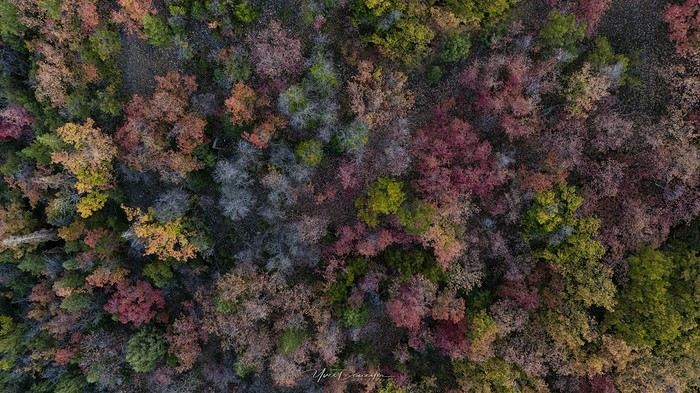
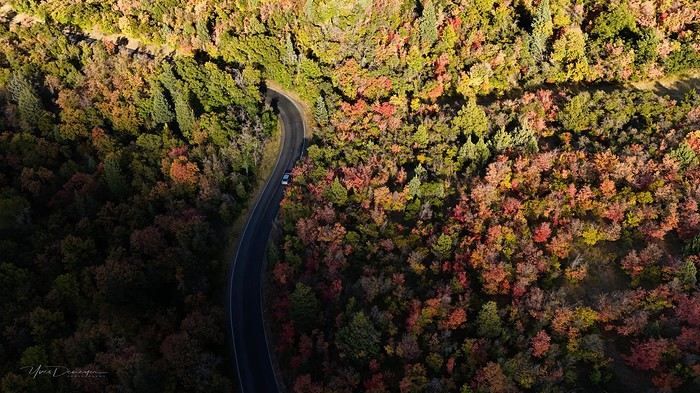
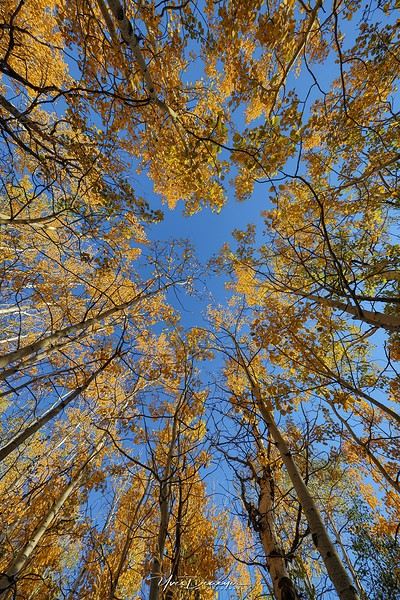
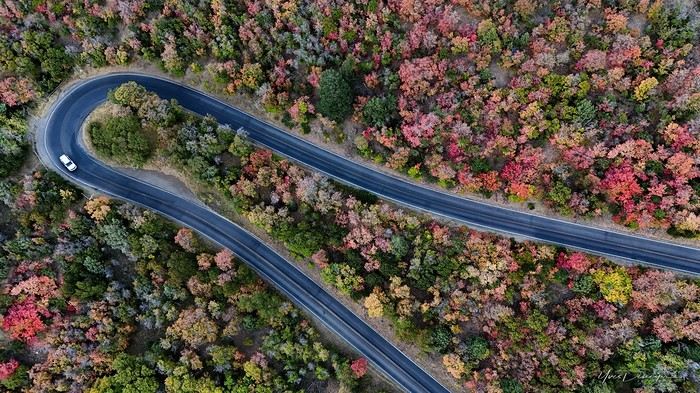
Stop at the Walmart near Provo, whose layout I know like the back of my hand (Walmarts are often similar). Start-of-trip shopping: water, Coke, Gatorade, UHT milk for cereal (not very common in the US), Special K "Almond and Vanilla", cold meds that work well (and don’t exist back home—you never know), two plastic bins, a pillow for the tent, Trail Mix, that’s about it. On the road to Nebo Loop for the fall colors. I’d driven this route last year, in the opposite direction on my way back to SLC, but it was a bit too late. This time, I’m a little early. At the start of the road, the maples are in the sun, so I go up to 2,200 m for the bright yellow aspens, then head back down. Mostly drone shots—no time to go for a walk. After a day like this, 4.5-5 hours of driving is already a lot... Arrived in Green River at 9:00 PM. Organize all the stuff from the bags properly, then sleep.
A few photos from these first few hours.
My last travel journal was from 2019, when I went hiking and backpacking with my son, who was 15 at the time. We visited some places that were still pretty unknown back then! I was supposed to go in April 2020, still solo, with arches as the main focus. I’d spent nearly two months getting physically prepared, and had managed to snag a bunch of permits for CBS, The Needles, and so on... Of course, it all got postponed—first to October 2020, then April 2021, then October 2021, and finally it happened in April 2022. Maybe I’ll write about that in another journal. The thing is, every time, I spend at least 6 to 8 weeks getting physically ready, even though I work out all year. Huge disappointment during that trip—so much had changed because of Covid, kind of like in the mountains back home. Overcrowding, not just in the national parks (we knew about that), but also in a lot of remote, lesser-known spots. Like the French, Americans realized they had a lot of beautiful places in their own country during those travel bans. And they kept exploring... Prices for pretty much everything had already gone up a lot. Gas, restaurants, cars, but especially lodging! Then, after dealing with so much wind in April, I got a little "fed up" with that time of year. It felt like I had strong winds and sandstorms for 3 out of the 3.5 weeks I was there...
So, the next trip was October 2023, to catch the partial eclipse in New Mexico, and of course, a bunch of arches ;). So many arches. Maybe I’ll write about that one too... Then came (among others) April 2024 for the total eclipse, in Texas, but starting from L.A., with my partner Valérie. Since I’d never visited some places I wanted to see further south of my usual loops, it was the perfect opportunity... And here we are at the end of September 2024. Another trip focused on arches—I never get tired of them. Every time I check one off my list, another gets added. Often it’s a photo I’ve seen online or in the NABS (Natural Arches and Bridges Society) magazine, which I’m a member of. I also scour the WAD (World Arches Database) and make a list of arches I want to visit. Fewer and fewer "viewpoints"—I’ve done all the most famous ones, and unless the sky is amazing, the photos all look the same. Since my goal is always photography *and* hiking, I’m always on the lookout. So this time, a packed itinerary—27 days, very busy. In past trips, if I didn’t plan enough and hiked fast, I’d end up with too many "gaps" in my days. This time, I’d rather have too much than too little (like in 2023, actually).
A few stats: - 6,589 km, including +/-1,400 km of off-road trails - 323 km of hiking, 8,829 m of elevation gain - 142 new arches for my collection, including some stunning ones, some less so, and some downright ugly—but all in the WAD. - Two outings with a Navajo guide - Almost no injuries - 8 bivouacs, including 2 backpacking trips - 4 days of backpacking - 22 freeze-dried meals and 15 Subways eaten - 6 thorns in my shoes (long live the tweezers in my backpack) - 3 kg lost (plus the 5 kg lost during prep)
Almost every day, I posted a little update on Facebook for family and friends. So I’ll be copy-pasting those texts here, written "my way" as usual. Some will like it, some won’t—that’s just how it is... 😏
For months, I planned this trip—looking for info, creating GPS tracks on Google Earth, exchanging tips with NABS members and other passionate friends. I snagged permits for The Needles again (4-5 days), for Fiery Furnace, timed entries for Arches National Park (2), and booked just one campsite, a "triple tour" in Monument Valley, and the first night in a motel. This is the first time I haven’t booked 80% of the motels—I was tired of having constraints because of the weather. This time, I want to be able to adjust my plans based on the weather and what I feel like doing more or less of. Camp when the weather’s nice, hotel/motel when it’s crappy.
Here we go...
Day 1
As usual, early morning flights: BRU-AMS, then AMS-SLC. Those who follow me know I’ve been renting a Rubicon from Rugged for years, which "forces" me to land in SLC. Up at 3:30 AM, but I’d been awake since 2:00 AM—the day’s going to be long. Shuttle to the airport. In Brussels, only two check-in counters open. I get there—no cabin baggage weigh-in, while the agent next to me is weighing everyone’s, even kids’ backpacks! A bit of luck, because as usual, if they weighed my backpack *and* my cabin bag, I’d already be over 20 kg. I check two hold bags, since I’ve got a lot of camping/backpacking gear, lots of freeze-dried meals, the backpacking bag, the Bear Canister needed for The Needles, etc. First flight is 30 minutes late, so the second one is already boarding. I’ve got the SSSS mark on my ticket (extra security check), so I head straight to the front when I arrive at the same time as Zone 3, even though I’m Zone 6. I pretend the check will take a while, and it "works"—they didn’t notice! No way I want to board last and risk them making me check my cabin bag. It’s packed with photo gear, laptop, drone, etc.—unthinkable to have to put it in the hold. Always a worry... SLC: baggage claim, customs, and out in 32 minutes. The MPC app makes something that was already quick even faster at this airport. And all the bags are there. That’s always a relief too. Since I drive at least 3 hours straight after landing, losing a hold bag would really mess up the trip and force me to spend the first night closer to SLC. On the way to Rugged. A young French couple from Reims is in the shuttle with me—they discovered Rugged thanks to my post in a Facebook group! Well, the team has changed again, and they lost half the stuff I’d left last October (plastic boxes, pillow, sugar, gas cartridges, folding chair, Crocs, etc.), but at least there are gas cartridges, so I don’t have to go to REI. REI would’ve been at least an hour out of my way. But as far as I know, there are no gas cartridges in Green River. I still get my tent stake hammer back, and a folding chair—different from mine but identical.
20,000 km Rubicon 4Xe, white. I check the tires—they’re in great shape, as requested. I’ll come back to the hybrid later. I didn’t want a hybrid, but that’s all they had this year. Why? Higher fuel consumption, smaller tank, higher cargo floor.
Stop at the Walmart near Provo, whose layout I know like the back of my hand (Walmarts are often similar). Start-of-trip shopping: water, Coke, Gatorade, UHT milk for cereal (not very common in the US), Special K "Almond and Vanilla", cold meds that work well (and don’t exist back home—you never know), two plastic bins, a pillow for the tent, Trail Mix, that’s about it. On the road to Nebo Loop for the fall colors. I’d driven this route last year, in the opposite direction on my way back to SLC, but it was a bit too late. This time, I’m a little early. At the start of the road, the maples are in the sun, so I go up to 2,200 m for the bright yellow aspens, then head back down. Mostly drone shots—no time to go for a walk. After a day like this, 4.5-5 hours of driving is already a lot... Arrived in Green River at 9:00 PM. Organize all the stuff from the bags properly, then sleep.
A few photos from these first few hours.
Hi there,
I’m traveling to Quebec with my husband and our 20-year-old son for 15 days in August.
To finalize our itinerary, I’d love to know the differences between La Mauricie Park and Jacques Cartier Park. We have two days to dedicate to one of the two parks.
Thanks so much for your feedback!
Hi there, just back from a three-week round trip to Quebec and a side trip to New Brunswick.
Departed from Montpellier, via CDG, then arrived in Montreal from July 31 to August 20, 2024.
AF flights went smoothly.
The RT itinerary (without the visit details):
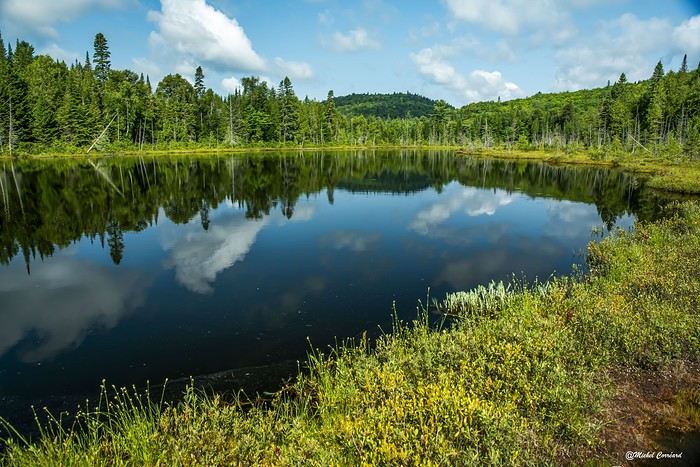
Arrival in Montreal; Trois-Rivières; Tadoussac; Matane; Gaspé; Campbellton; Trois-Pistoles; Quebec City; Montreal and return to France, AF to CDG then Hop! to Montpellier.
Observations:
Getting out of Montreal airport is a nightmare! Two hours at Avis Auto to pick up the car (nice ride, though—a WW SUV Atlas V6 for two). From what I’ve heard, Montreal Airport is a pain because it was initially under-dimensioned for its infrastructure, and it seems impossible to reorganize everything.
Quebecers: Wonderful people in terms of hospitality and behavior toward tourists—especially French ones. You can ask them for advice at the supermarket, for directions here and there, and those distant cousins are great! That said, I’d exclude Montreal, which, due to its size and perhaps its cosmopolitanism, can’t be considered as welcoming as the countryside and small towns we passed through. A bit like Paris, you could say.
Quebecers prefer Quebec City over Montreal, and I get it. On a positive note for the city, I left some money in the hotel at the end of my stay. Once back in France, I contacted the hotel (day before yesterday), and they confirmed the oversight and are taking steps to send the money back. A nice gesture. It’s the Nouvel Hôtel, 1740 Avenue René Lévesque. Well-located, too.
Tourists: Same as always!
Americans: Still lacking in culture and education, but we already knew that. Loud, intrusive, annoying, you could say. And I’ll skip the “Oh my God! Oh my God!” all day long. And always with a coffee cup in hand on the streets. Not just American tourists, actually. Coffee is either enjoyed at the counter of a café or at home in front of the day’s news. It must also be said that our cousins’ coffee is more like dishwater.
Tourists from the Middle Kingdom: No change there! Flagrant lack of European culture and respect. They can be quite annoying at times. Thankfully, they don’t like the countryside or small towns.
Tourists from the Land of the Rising Sun: As usual, impeccable behavior. Both in terms of dress and discretion.
The British: They feel at home. Well, they kind of are, actually. Distant, inaccessible—typical English folks.
South Americans: A lot of them in Montreal during my stay. Quite noisy, especially at breakfast. But deep down, they’re great and very polite. I really like them. Must be my 36.1% Iberian DNA from my ancestry test that makes me say that.
And the French? Always the same! Complainers, grumblers, never happy with the meal, always finding prices too high, cutting in line, sometimes with a Quechua backpack but not always. In short, we don’t change. That said, there were some really nice people and great encounters that will leave wonderful memories. Some folks from Marseille in Quebec City, Toulouse in Montreal, Perpignan... But not many Parisians. Or maybe they just don’t talk to outsiders. When I think that my wife is from the 14th arrondissement...
And lots of lovely young French people there on a Working Holiday Visa for two years.
Others? Italians? Didn’t run into many. Eastern Europeans? Didn’t see any, or they were super discreet.
The trip started on July 31. 2,000 photos to sort through. More to come later.
The RT itinerary (without the visit details):
Arrival in Montreal; Trois-Rivières; Tadoussac; Matane; Gaspé; Campbellton; Trois-Pistoles; Quebec City; Montreal and return to France, AF to CDG then Hop! to Montpellier.
Observations:
Getting out of Montreal airport is a nightmare! Two hours at Avis Auto to pick up the car (nice ride, though—a WW SUV Atlas V6 for two). From what I’ve heard, Montreal Airport is a pain because it was initially under-dimensioned for its infrastructure, and it seems impossible to reorganize everything.
Quebecers: Wonderful people in terms of hospitality and behavior toward tourists—especially French ones. You can ask them for advice at the supermarket, for directions here and there, and those distant cousins are great! That said, I’d exclude Montreal, which, due to its size and perhaps its cosmopolitanism, can’t be considered as welcoming as the countryside and small towns we passed through. A bit like Paris, you could say.
Quebecers prefer Quebec City over Montreal, and I get it. On a positive note for the city, I left some money in the hotel at the end of my stay. Once back in France, I contacted the hotel (day before yesterday), and they confirmed the oversight and are taking steps to send the money back. A nice gesture. It’s the Nouvel Hôtel, 1740 Avenue René Lévesque. Well-located, too.
Tourists: Same as always!
Americans: Still lacking in culture and education, but we already knew that. Loud, intrusive, annoying, you could say. And I’ll skip the “Oh my God! Oh my God!” all day long. And always with a coffee cup in hand on the streets. Not just American tourists, actually. Coffee is either enjoyed at the counter of a café or at home in front of the day’s news. It must also be said that our cousins’ coffee is more like dishwater.
Tourists from the Middle Kingdom: No change there! Flagrant lack of European culture and respect. They can be quite annoying at times. Thankfully, they don’t like the countryside or small towns.
Tourists from the Land of the Rising Sun: As usual, impeccable behavior. Both in terms of dress and discretion.
The British: They feel at home. Well, they kind of are, actually. Distant, inaccessible—typical English folks.
South Americans: A lot of them in Montreal during my stay. Quite noisy, especially at breakfast. But deep down, they’re great and very polite. I really like them. Must be my 36.1% Iberian DNA from my ancestry test that makes me say that.
And the French? Always the same! Complainers, grumblers, never happy with the meal, always finding prices too high, cutting in line, sometimes with a Quechua backpack but not always. In short, we don’t change. That said, there were some really nice people and great encounters that will leave wonderful memories. Some folks from Marseille in Quebec City, Toulouse in Montreal, Perpignan... But not many Parisians. Or maybe they just don’t talk to outsiders. When I think that my wife is from the 14th arrondissement...
And lots of lovely young French people there on a Working Holiday Visa for two years.
Others? Italians? Didn’t run into many. Eastern Europeans? Didn’t see any, or they were super discreet.
The trip started on July 31. 2,000 photos to sort through. More to come later.
Hi there,
We’re rediscovering the island in early April, 20 years later, with our three teenage kids.
We’re looking for a nice place to stay that’s budget-friendly—ideally with a pool, very close to the beach, and three bedrooms since our oldest will be studying for her baccalaureate exams and might stay at the residence from time to time.
Oh, and just to mention... unfortunately, a hotel for five is way out of our budget.
Thanks for your recommendations, and see you Sunday! Family0306
Thanks for your recommendations, and see you Sunday! Family0306
Hi, is anyone joining the transatlantic cruise on the Costa Fortuna from November 22 to December 12, from Marseille to Fort-de-France?
I’m traveling solo, so if you’re in the same boat, feel free to reach out!
Hi there,
A sudden family event means I’ll be spending a few days in France alone with my kids in the coming days.
Just to set the scene—I live in Japan, I have two young children (4 and 2 years old), and this is my first time returning to France in 12 years. I’m feeling a little overwhelmed.
My questions: 1/ My kids don’t share my last name. Do I need to have a document proving our parent-child relationship (+ a French translation?) with me?
2/ They have Japanese nationality. Will they be able to go through the same line as me at the airport? (I think I remember there’s an EU nationals line and another for non-EU, but given their age...)
Thanks in advance for your help.
Hi there,
Hopefully I can find some answers here!
Our best friend, who is Moroccan/French, wants to marry an Algerian woman. They’ve already met, and the first steps have been taken. It seems like getting married under these circumstances is really complicated—has anyone been in a similar situation and could share some advice on the administrative side or the steps to take?
Thanks!
Hey everyone!
Nothing in this section since 2020? Well, I’ll jump in. With Italy—completely random, of course .
Have you heard of Alessandro Mannarino? He’s something else compared to Toto Cotugno or Eros Ramazzotti...
A young-ish guy (45 years old), handsome like a bad boy , who started his musical journey on the streets of Rome, sleeping in squats with people from all walks of life, before being discovered by a journalist and recording 5 albums.
His music is super *orrechiabile* (how do you say that in French?... easy to listen to...?) with diverse influences. And his lyrics—simple but powerful.
A few examples from his different albums:
Svegliatevi italiani
Translation, not bad.
Maddalena
Translation, very rough, but it gives you an idea. PS for Masterpo if you’re reading this: an answer to *Noli me tangere*! Mado had other things to do. Something human, wonderfully human.
Arca di Noè
No translation available for this song, which sings of a lost Noah’s Ark world adrift. So, uh, the chorus? Let’s go, let’s go. But where are we going? Who knows? Who knows? I’m not afraid. This life is all I have, and the shorter it is, the louder I’ll sing: Eu quero viver como um beija-flor
Agua
No translation for this one either. Just two lines: At night, you can search in an embrace for something that doesn’t taste like rage.
Hope this inspires some of you to listen more, in the winter light.