Discussions similar to: Disparition messages
FR

345 similar discussions in English

16 days in Peru in August 2023
Hi everyone, The years go by and Machu Picchu has been on our "to-do list" for a few decades now... But Peru is, fortunately, so much more than this legendary site...

We went as a couple for a 15-day trip. For the first time, we delegated the logistics to a local agency (Paprika in Arequipa). This agency offers "classic" small-group tours and the option to do it privately, which we chose.

No complaints—they were perfect for organizing transportation, hotels, and French-speaking guides.

The "classic" southern Peru loop is: Lima, Paracas, Nazca, Arequipa, Colca, Titicaca, Cusco, Sacred Valley, Cusco. Nothing very original... but why get creative when there’s already so much beauty to discover?

We opted for a shorter loop, skipping Paracas/Nazca because the small planes in Nazca weren’t a unanimous hit, and it saved us dozens of hours on the bus. But we added a stop at Palccoyo (the rainbow mountains) between Titicaca and Cusco.

It might seem like a shame, but we don’t regret it at all.
Open
Budget for Tanzania with a safari
Hi there, We’re planning a trip for 2 adults and 2 kids to Tanzania and Zanzibar. I’ve had a quick look, and the prices are starting to get pretty wild. We’ve got a budget of 8,000 €, and I was thinking of doing three or four days of safari and three or four days in Zanzibar, but even that seems like it might be over budget. Have you got any thoughts? I was also considering heading straight to Zanzibar and doing a one- or two-day excursion by plane instead—maybe that’d be cheaper than staying in a lodge. Anyway, thanks for sharing your experiences and any price tips, departing from Nice!
Open
Which itinerary to choose for 15 days in the American West
Hi everyone! First time for me in the States from March 24 to April 7, 2025—only 15 days, so choices have to be made. I want to explore part of the West, but obviously planning the route is the trickiest part, so here’s what I’ve come up with and where I have doubts: -Leaving Paris for LA 1 or 2 nights to visit -Heading to Vegas, where one couple would go by motorcycle (they’re fans and want the thrill of Route 66) and another by plane (I won’t linger here either—1 or 2 days max!) Then, Lake Powell, Monument Valley, Grand Canyon, all by rental car for everyone, so the motorcycle gets returned in Vegas.

Now here’s where it gets tricky: either I continue the road trip through the big parks to finish in San Francisco (but it doesn’t seem like the best time—might be too cold), or I head down to San Diego for the return flight. But which itinerary? Kingman, Joshua Tree, Palm Springs, and San Diego—does that make sense? Is it better to go back to Vegas to take a plane or drive the whole way?

So many questions—your help and advice would be super welcome! Thanks in advance, Anne from Périgord Noir

Open
French company CFC
Hi Has anyone sailed with the French company CFC? What do you think? Haven’t seen many reviews about this company.
Open
Come discover the North Shore
INTRODUCTION

Travel journal updated in MAY 2025

Since our travel plans outside Canada were canceled due to Covid-19, we decided to take our vacation in Quebec this summer and cover over 5,270 kilometers to explore the various tourist attractions of the North Shore and Gaspésie.

This summary will cover our experiences on the North Shore, while Gaspésie will be the subject of a future summary.

The North Shore, known for its stunning nature, is the perfect spot for outdoor enthusiasts since you can enjoy activities like hiking, wildlife observation, sea kayaking, fishing, and hunting (to name just a few).

It’s also one of the best places in the world to see whales.

Our journey along the North Shore took place between the villages of Tadoussac and Kegaska, as Route 138 ends at the beautiful, long beach in Kegaska.
Open
Budget to plan for the Three Passes Trek in Nepal
Hi there,

I’m heading to Nepal very soon to do the Three Passes Trek, among other things. Could anyone tell me what the average daily budget is for this trek? From what I’ve heard, this area seems more expensive than others.

Thanks in advance for your replies! :)
Open
Moped rental for Togo - Benin trip
Hi, A friend and I want to do a Togo-Benin loop by moped in early October for about 15 to 20 days. We're looking for info and tips on: 1 / Moped rental places 2 / The most scenic route 3 / Accommodations—simple but clean, possibly homestays And anything else you think might be useful. Thanks in advance! Best, Didier
Open
Self-drive Tanzania in July - August 2018
Hi everyone,

Here’s a recap of our self-drive trip in Tanzania.

Tanzania is a stunning country, but it’s changing fast, which means that any self-drive info you gather in advance might be outdated by the time you travel.

Still, here’s some info for future self-drivers.

The vehicle: After lots of research, thinking, and calculations, we had our 4x4 with roof tents shipped from South Africa through our rental company of two years, Safari4x4Hire. The price for 31 days came to $247.00 per day. That’s cheaper than some Tanzanian rental companies (Shawsafaris: $380.00 per day, total with 18% tax) and just a little more expensive than others (Tanzanian Pionners), but with the guarantee of having a well-maintained and reliable vehicle. You can check out the discussion I started: here

Traffic: The speed limit is 80 km/h on roads and 50 km/h in villages. Watch out—there are lots of police checks at village entrances (speed radar). In villages and towns, also be careful with minibuses, which are everywhere and stop and start without signaling. As for paved roads, most are in good condition, and many tracks are brand new or being renovated (the Chinese are in the area!).

Campsites: It’s very easy to find a spot in Tanzanian campsites (few self-drivers), so no need to book in advance (we were often alone in campsites outside the parks). Inside the parks, it’s easy to book public campsites at the gates. With roof tents, the downside is that sites are usually designed for travelers with ground tents, but we always found space for our vehicle. Another downside is making a fire—it’s nearly impossible to find wood (Tanzanians don’t usually make fires for cooking or ambiance). Campsite prices outside the parks range from $5.00 to $15.00 (price with 18% tax). I’ll list the prices for campsites inside the parks below.

Food: There are very few supermarkets in Tanzania, and prices can be steep if you’re not careful (European brands). For fruits and vegetables, you can easily find roadside vendors. For other groceries, you can shop at supermarkets (Dar es Salaam, Arusha). In Arusha, there’s a brand-new Shoppers Supermarket—clean and well-stocked—and for meat, don’t hesitate to visit the Meat King butcher. It’s also often possible to eat well at campsites with restaurants for around $10.00 (price with 18% tax).

Some other info: 1. At gas stations, you almost always pay in cash, usually in Tanzanian shillings.

2. Park entries, campsites, and Ngorongoro are paid with a card (Visa, etc.) directly at the gates. Exception: Selous, where you need a permit in advance (we didn’t have one when we arrived at the north gate, but we were still able to enter thanks to the kindness of the gate attendant).

3. Watch out—some regions outside the parks have a tax: the Wildlife Management Fee. Payment is a bit unclear: - For Lake Chala, we paid at the gate in cash. - For Lake Natron, you can’t pay at the gate—we had to arrange it with the campsite. - For the area between Tarangire Gate and Lake Burungi (to reach a campsite), you can’t pass the gate without paying in Arusha first.

4. For divers, you can do amazing dives in Pangani with Kasa Divers.

Park entry and campsite prices in July/August 2018:

Saadani National Park:

Park entry per person: $30 + 18% (for 24 hours)

Park entry for vehicle (under 2000 kg): $40 + 18% (for 24 hours)

Night at Public Campsite per person: $30 + 18%

Arusha National Park:

Park entry per person: $45 + 18% (for 24 hours)

Park entry for vehicle (under 2000 kg): $40 + 18% (for 24 hours)

We slept outside the park.

Serengeti National Park:

Park entry per person: $60 + 18% (for 24 hours)

Park entry for vehicle (under 2000 kg): $40 + 18% (for 24 hours)

Night at Public Campsite per person: $30 + 18%

We couldn’t get a night in a Special Campsite.

Ngorongoro Conservation Area:

Park entry per person: $60 + 18% (for 24 hours)

Park entry for vehicle (under 2000 kg): $40 + 18% (for 24 hours)

Night at Public Campsite per person: $30 + 18%

Night at Special Campsite per person: $60 + 18%

Descent into the crater for vehicle: $250 + 18% (you don’t need a guide to go into the crater).

Tarangire National Park:

Park entry per person: $45 + 18% (for 24 hours)

Park entry for vehicle (under 2000 kg): $40 + 18% (for 24 hours)

Night at Public Campsite per person: $30 + 18%

Ruaha National Park:

Park entry per person: $30 + 18% (for 24 hours)

Park entry for vehicle (under 2000 kg): $40 + 18% (for 24 hours)

Night at Public Campsite per person: $30 + 18%

Selous Game Reserve:

Park entry per person: $75 + 18% (for 24 hours)

Park entry for vehicle (under 2000 kg): $50 + 18% (for 24 hours)

Night at public campsite per person: $30 + 18% (You don’t need a guide to visit Selous, but a GPS with the Tracks4Africa map is essential—there are lots of tracks).

Conclusion: We loved the northern parks, but they’re really crowded, especially with safari vehicles (though that does make it easier to spot wildlife—just follow the cars). Still, we preferred the southern parks—they’re wilder, less crowded, and almost no safari vehicles. In the campsites, you can often find yourself alone (just how we like it 😏!). But both north and south have amazing wildlife and friendly people!

If you’re interested in more info about Tanzania, I’d be happy to help.
Open
Review of our Caribbean cruise on the Costa Magica
Hello everyone,

Here’s the belated review of our 15-day Caribbean cruise on the COSTA MAGICA from March 1st to 15th.

It’ll be illustrated with photos for each port of call. You’ll need to click on them to enlarge.

We bought this cruise from AZUR CROISIÈRES, in an outside cabin, with the TOTAL COMFORT CLASSIC package, which includes: - The "Pranzo & cena - Lunch & Dinner" drinks package with unlimited drinks during meals: water, wine, sodas, and draft beer. - A discount on excursions: the more you book, the bigger the discount.

The "Pranzo & cena - Lunch & Dinner" package was offered onboard for 19.90 € per day per person for those who didn’t already have it.

The itinerary was as follows: Fort-de-France (Martinique) / Pointe-à-Pitre (Guadeloupe) / At sea / Scarborough (Tobago) / St. George’s (Grenada) / Bridgetown (Barbados) / Castries (St. Lucia) / Fort-de-France (Martinique) / Pointe-à-Pitre (Guadeloupe) / At sea / Willemstad (Curaçao) / Oranjestad (Aruba) / Kralendijk (Bonaire) / St. George’s (Grenada) / Fort-de-France (Martinique)

After many cruises with MSC, this was our first COSTA cruise. We couldn’t help but compare the two companies and made the following observations: - The elevators are faster on COSTA than MSC. You wait less often. - Fewer storage spaces in the cabin closets on COSTA than MSC. - Impossible to check your onboard account balance on the TV with COSTA. - The cost of excursions booked in advance online is deducted at the end of the cruise with COSTA, but immediately upon booking with MSC. - The decor is more contemporary and elegant on MSC than COSTA. - COSTA’s restaurant meals are just as good as MSC’s but more generous. - COSTA: On the first evening when you arrive at the restaurant for dinner, no staff member shows you to your table, unlike MSC! - The buffet desserts are better on COSTA. - COSTA: No "napkin folding" during the Italian evening, no pizzas at the buffet, no complimentary drinks in the lounges during the gala evening, and no Baked Alaska either! - The shows are slightly less impressive on COSTA but a bit longer. - COSTA offers the option to skip the evening turndown service (preparing the beds for the night with the sheets folded back).

Of course, this list may also depend on the ship you’re traveling on. Some of these observations might be specific to the COSTA MAGICA.

Before the cruise, we spent 2 days in Fort-de-France at the "La Batelière" hotel.

www.la-bateliere.com/

Some rooms need renovating, but the sea view is stunning. We had to carry our two large suitcases up two flights of stairs ourselves because there was no elevator in the part of the building where our room was. The restaurant is good, but service can be slow if it’s busy. Breakfast is excellent. The beds are comfortable. The area around the hotel isn’t interesting—it’s best not to venture out. At the foot of the hotel, there’s a tiny beach (not private) and a nice restaurant/bar with a good reputation: "Lili’s Beach." I recommend booking a superior category room rather than a standard one, or you might be disappointed.
Open
Solo female travel to Iran, departure March 2015
Hi everyone, I’m really keen to visit Iran for three weeks in mid-March 2015. What worries me a bit isn’t so much traveling alone—I’m used to it and know the Middle East well—but rather the current events (Islamic State) that could potentially become dangerous. Flights are pretty cheap at the moment, and I’d like to book before prices go up.

Any advice from people who know the ground situation and Iranian current affairs better than I do would be much appreciated! :)
Open
Cost of building a house in Thailand?
hi everyone 🙂, I’d like to know if any of you have recently—or within the last 2 years—built a house in Thailand and could give me an idea of the all-in price. I’m not looking for luxury, just a comfortable home with 3 bedrooms. I already have the land, which is in the Khorat region for those who know it. I’d really appreciate any info you can share—thanks in advance! Best regards.
Open
A Slightly Less Touristy Japan
Hi everyone, I’m Patrick, 67 years old, a seasoned traveler (already 22 trips outside Europe). In autumn 2025, I took my first 3-week trip to Japan, with stops in Tokyo, Kamakura, Matsumoto, Kamikochi, Takayama, Kanazawa, Kyoto, Nara, Osaka, Koyasan, Tokyo again, and Nikko. I wanted to go back in May 2026 and explore some lesser-known places to complement my first trip. Last year, there were four of us traveling together to discover Japan (a fairly classic itinerary). This time, I’ll be traveling solo for part of the trip and with a couple of French friends for the rest. The weather was gorgeous in May, averaging around 25°C, with two very hot days in Kyoto and only two rainy days. As usual, I organized everything myself, gathering plenty of information from various sites, including this one.

Transportation: An ICOCA card is essential. I got a 5-day Kansai-Hiroshima pass because I took the shinkansen between Hiroshima and Osaka three times, and it paid for itself quickly.

Accommodations: Mostly through Booking. No issues at all. Average cost was 46 € per night.

Meals: For breakfast, I alternated between buying food at a konbini to eat in my room or on the train and grabbing something at local cafés. For lunch and dinner, I tried to vary my meals as much as possible—lots of sashimi, sushi, and ramen. Okonomiyaki in Osaka and Hiroshima. Oysters in every form (raw, grilled, fried) in Onomichi and Hiroshima. A variety of seafood (shrimp, shellfish) in Hiroshima and Matsumoto. Fish whose names often escaped me, but notably mackerel and eel (unagi). Tempura and gyoza. Chicken skewers (yakitori) and one teppanyaki meal. One omakase meal (9 different dishes). In the end, not much meat aside from a few yakitori skewers. No splurges on super expensive wagyu or Kobe beef. Average dinner cost: 4,800 yen, drinks included.

The Itinerary: Day 1: Departure from Brussels Day 2: Arrival in Osaka Day 3: To Himeji, then Kurashiki Day 4: To Fukuyama, then Tomo no Ura, then Onomichi Day 5: Cycling the Shimanami Kaido Day 6: To Takahara, then Hiroshima Day 7: To Kyoto to attend the Aoi Matsuri parade Day 8: To Miyajima Day 9: Hiroshima, then Kyoto Day 10: Southern Kyoto Day 11: Northern Kyoto Day 12: Final day in Kyoto, then to Nagatsugawa Day 13: Start of the Nakasendo Trail (Magome to Tsumago) Day 14: Second day of the trail (Kiso Fukushima) Day 15: Third day of the trail (Narai), then Matsumoto Day 16: To Mt. Fuji (Kawaguchiko) Day 17: To Tokyo Day 18: Excursion to Enoshima and Kamakura Day 19: Flight home, with a 10-hour layover in Hong Kong Day 20: Arrival in Brussels
Open
16 days with family in La Gomera (Canary Islands)
Preamble: Why La Gomera?

When we started looking for a summer destination a few months ago, our first criterion was to avoid extreme heat and heatwaves. We had already been to Norway two years ago and are considering going back in the future for other occasions. So, we had some fun asking ChatGPT which destinations enjoyed a mild climate during the summer without going too far. Among the list provided by the AI were the Canary Islands... The idea of a place we wouldn’t have thought of first, both not too far away and exotic enough, appealed to us: “Hmm, why not?”

This destination had never really attracted me, though Magali was a bit more interested. Five years earlier, COVID had caused a short break in my professional activity, and I had planned a trip because the flight price was attractive, and I was looking for a destination different from what usually appeals to me, more than out of deep interest. From a distance and with a social judgment I acknowledge (it’s not great, but it’s not completely wrong), I had the image of a destination for party-goers enjoying the sun without the slightest interest in local culture, with concrete coastlines and denatured landscapes—everything I detest the most. Still, I had done some quick research on the different islands and spotted Lanzarote for its beautiful volcanic landscapes, hiking trails, beaches, and the impression of a good balance between activity and fewer crowds than Tenerife or Gran Canaria. Then I dropped the idea of going, without ever reconsidering traveling to the Canaries...

Until now! Because we started researching the different islands of the archipelago to see which ones might appeal to us the most. It was La Gomera, the third smallest island of the archipelago, more praised for its hiking trails and preserved nature than for its beaches, away from mass tourism (fifty times fewer tourists than Tenerife) but still a bit more developed than its wild neighbor El Hierro, that caught our attention. Contrary to what might be suggested later, I’m not at all addicted to AI, but I use it from time to time to synthesize quick research or simply for experimentation. Since ChatGPT had started anticipating my tastes lately as if it had become my buddy (often successfully, sometimes off the mark), I asked which Canary Island would suit me best for a trip with my family. The tool answered first with... La Gomera. So, I tested it and teased it a bit to see if this suggestion was well-founded, as the method sometimes makes it contradict itself. But no luck: “You’d appreciate the wild nature of El Hierro, but with family, you’ll find little activity for the kids. You won’t like the touristy vibe of the big islands like Tenerife, Gran Canaria, Lanzarote, and Fuerteventura. You could consider La Palma, but it’s really La Gomera that will suit you best, based on your interests and the criteria given.” So, we dug deeper into our research and were convinced without a shadow of a doubt that this island was the one waiting for us.

Without knowing it, we had Canarians in our circle who revealed their origins when they heard about our travel plans. One from Tenerife insisted we’d be better off choosing Tenerife (obviously...) because it also has preserved spots and that La Gomera, “you can explore it in two or three days, you’ll get bored quickly...” The other, a colleague from Gran Canaria who had never visited La Gomera, still recommended it without hesitation because it turned out her parents had just gone there on vacation: they loved it and had encountered few tourists. She also tended to think this destination was usually the subject of short stays, but according to what her parents told her, taking your time there was also a great idea. However, in our research, the idea that La Gomera is an island you can explore in three or four days max kept coming up. So, we considered combining its visit with La Palma or El Hierro, the other two that caught our eye. But hopping between islands by ferry represents a significant budget for non-Canarians, even more so for a family of four. Then, scrutinizing Google Maps, it seemed obvious that two weeks were too short to discover two islands as they deserve, and that there seemed to be plenty to see in La Gomera, given its very unique culture. After all, we read that some people spend several months a year there, others never even leave... Finally, these landscapes and this atmosphere, which seemed to us a mix of Europe, North Africa, and Latin America, tempted us. So, it would be two weeks in La Gomera, deal!

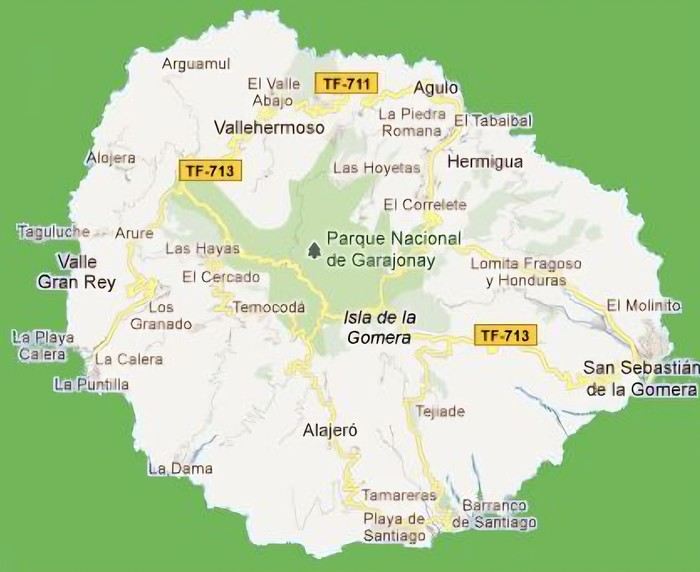
La Gomera is therefore the second... well, the third smallest island of the Canaries since La Graciosa was recently recognized as a fully inhabited island. It has the shape of a rough circle about 20 to 25 kilometers in diameter and has just over 20,000 inhabitants, half of them in its capital, San Sebastián de la Gomera, the only real town. Like its Canarian sisters, La Gomera is a volcanic formation that rose about 10 million years ago. The island is very mountainous and rugged, covered with red and black rocky landscapes. Geological activity has shaped, between the sprawling massifs that end in steep cliffs in the ocean, six coastal valleys with tropical vegetation that have favored human settlement. They divide the island like slices of a cake; from the north clockwise: the agricultural Vallehermoso, the rustic Agulo, the green, humid, and fertile Hermigua, the sunny capital San Sebastián de la Gomera, the southern and isolated Alajeró-Santiago, and the seaside Valle Gran Rey. They constitute the six municipalities (more like cantons to our French understanding) of the territory. The large solidified magma massifs that shape the heart of the island have created a large depression more protected from the sun at its center, allowing the growth of a vast laurel forest, today grouped within the Garajonay National Park, La Gomera’s green lung, which has earned it the status of a World Biosphere Reserve. Its completely European appearance contrasts sharply with the rocky and tropical landscapes of the rest of the island. Thus, the climate varies greatly from one point to another on the island: in summer, you can quickly go from a dry and sunny valley at 35°C to a humid forest area at altitude at 18°C.
La Gomera was populated late. As with the rest of the Canaries, human presence is thought to have begun about 2,000 years ago. Groups of animist Berbers, probably fleeing persecution, gradually populated the archipelago, especially the western islands and La Gomera, becoming its small aboriginal population: the Guanches (or later Gomeros). The animist and pastoral civilization of the Guanches thrived until the Spanish takeover in the 15th century, which, after a short period of harmony and mixing with the indigenous people, suddenly ended in bloodshed... La Gomera later became the “Columbus Island” after Christopher Columbus’s stopover, increasing the blending of populations. In the 20th century, many Gomeros emigrated to Cuba and other Latin American countries in search of a better life, bringing back a mix of cultures and traits quite palpable in today’s Gomeran culture. It is, however, in La Gomera that the vestiges of Guanche culture seem to have left the most traces, in the language, gastronomy, social practices... Moreover, most Gomeros, especially in remote villages, have a particular identifiable type and proudly claim their ancestral roots, even making La Gomera a bit exotic in the eyes of other Canarians.

Perhaps that’s why it has never really wanted to develop its tourist infrastructure too much. If we set aside the tourists who visit for the day by bus or boat from Tenerife on a marked itinerary (and whom we ultimately rarely encounter), La Gomera has remained a hidden gem, a destination focused on nature discovery that attracts hikers, nature-loving divers, and scientists for its fauna and flora, and to a lesser extent, beachgoers who don’t seek overly developed coastlines. Tourist activity is therefore limited. Roughly speaking, you’ll find a majority of Spaniards, including a substantial number of residents from other Canary Islands, many Germans who have a particular fondness for La Gomera and spend long stays there or own second homes, to the point that the German cultural footprint is clearly noticeable in some places (it’s said to be Angela Merkel’s favorite holiday spot), and still quite a few French. The presence of other nationalities seemed negligible to us. Most travelers come mainly for hiking, but it’s also a prime spot for whale watching. Additionally, the seaside resorts of La Gomera—San Sebastián, Santiago, and especially Valle Gran Rey—are well-known destinations for hippies, especially German ones, ranging from chic boho hippies to old-school hippies who’ve been there for decades, quite similar to those you’d meet in India in Goa, Rishikesh, or Paharganj. Thus, practices like naturism, vegetarianism, and local organic production are quite well established in some areas.

Some practical info: - The round-trip flight from Paris to Tenerife cost us 365 € per person (outbound with Transavia, return with EasyJet), including checked luggage and three seats reserved side by side. - We chose two bases to explore the island: one week in Valle Gran Rey, reputed to be the most pleasant of the three seaside resorts, and one week in Hermigua, more mountainous and close to the natural park. We booked two houses with balconies and views: the first at 120 € per night, the second at 99 €. - The round-trip ferry between Tenerife and La Gomera cost us 270 € with the company Baleària Canarias, including discounts for children aged 4 and 12, but I don’t have the exact details. It was a bit cheaper than with the other company, Fred Olsen. - Finally, we rented a car through the agency Cicar for 360 € for 16 days, which comes to 22.50 € per day. - Apart from that, we didn’t plan anything and decided the day before or even the morning of what we wanted to do. We didn’t invest in any paper guide on the Canaries, as information on La Gomera was scarce, but we used the very comprehensive site La Gomera Travel, a travel guide published by the Canary Islands Tourism Council, a real goldmine of almost exhaustive information on the island.

Alright, off we go for 16 days of adventure discovering La Gomera!
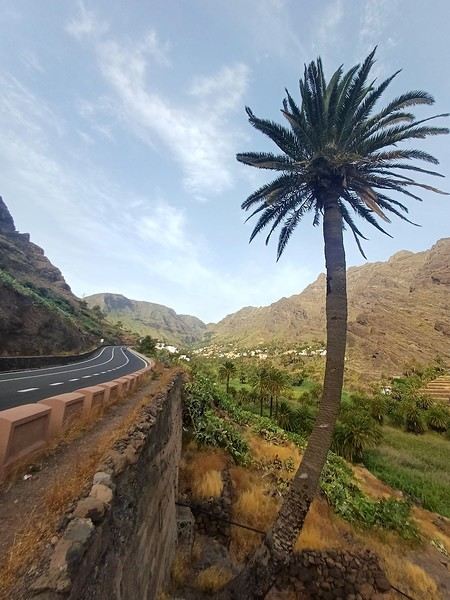


And we start the trip with music!

We start the trip with music!
Open
TR 60-Day Single-Entry Tourist E-Visa: Step-by-Step Guide
I’m sharing my successful e-Visa application experience because I’ll admit—I really struggled with the website and gathering all the required documents. https://www.thaiembassy.fr/fr/visa-rdv/les-types-de-visa-et-les-documents-necessaires/visa-touristique/ I recommend preparing everything in advance according to the instructions below and trying to complete the 60-day TR tourist e-Visa application in one go. You can save and return to it later, but I didn’t find the site very intuitive (it took a lot of time to figure out how it works, etc.). For the 60-day TR tourist e-Visa, it took me about 2 to 3 hours to prepare all the required documents and fill out the online form completely. (Next time, though, it’ll take me much less time since I’ll know how it works better, etc.). I received my e-Visa 15 days later, but according to the embassy, the processing time can be much longer (the embassy recommends in section 4.3: “We advise you to submit your visa application between 2 and 3 months before your planned departure.”) https://www.thaiembassy.fr/fr/visa-rdv/infos-generales/ ⚠️ RECOMMENDATION: 4 months before applying (so 6 months before your trip if you apply 2 months ahead), make sure your bank statements show a minimum balance of 700 € for each of the 3 months prior to your application.

DOCUMENTS REQUIRED FOR THE 60-DAY TR SINGLE-ENTRY E-VISA IN THAILAND

A digital copy of your passport: Color copy of the double-page spread with your photo. It must show the entire machine-readable zone (the two lines of characters at the bottom) and all four corners of the page. Your passport must be valid for at least 6 months after your departure date. (Format: JPEG or PDF) A color ID photo: Official ID photo on a plain white background, max 3 MB in size, and taken within the last 6 months. If you use the same photo as the one printed in your passport (if it was issued 2 years ago, for example), the system will detect the inconsistency and reject your application. The background must be strictly white, with no shadows, no glasses, and your face must be fully visible. Proof of financial means: Official bank statements (checking and/or savings) for the last 3 months. They must clearly display your name and show a minimum balance of 700 € for each month (1,000 € is preferable), per person (even for couples). Bank statement format and date: Screenshots from mobile banking apps (without your name or the bank’s logo) are systematically rejected. You must provide the full official statement in PDF format, downloaded from your online banking. Additionally, the most recent statement must be less than 30 days old at the time of submission. Don’t forget to merge the 3 statements into a single PDF, as only one document can be uploaded per category. Entry and exit tickets: A reservation or confirmation of flight tickets showing your entry into and exit from Thailand. The document must include the PNR (Passenger Name Record: a 6-character booking code used as a reference by the airline) and/or the e-ticket number.

90-day rule: Your exit flight date must not exceed 90 days after your arrival in Thailand. If you have separate tickets: If you have two different tickets for entry and exit, merge them into a single document showing only the entry and exit from Thailand within 90 days (exclude other flights). For example, if you have a round-trip Paris-Bangkok ticket spaced 6 months apart but plan to stay in Indonesia after 60 or 90 days, only submit the inbound flight to Thailand from your first ticket (exclude the return flight that’s 6 months later) and the outbound flight from Thailand to Indonesia (without the flight out of Indonesia, which is likely separate). Merge the two PDFs into one.

Proof of residence in France (less than 3 months old): Mobile phone, landline, internet, or electricity bill in your name. This document must prove that you currently reside in the country from which you’re applying. (Format: PDF or JPEG)

Hotel reservation in your name: Covering the first few nights with your name on it, or an official invitation letter signed by your host along with a copy of their ID. (Format: PDF or JPEG)

⚠️ FOR COUPLES: The official confirmation of your first accommodation in Thailand (hotel, Airbnb) must clearly display the names of BOTH members of the couple, as it will need to be attached to each individual e-Visa application. The second name is essential because each visa applicant must provide proof of accommodation in their name. If your partner’s name doesn’t appear anywhere on the hotel document, their visa application may be blocked or rejected, even if you include a marriage certificate. Prepare the addresses of the first two hotels for the online form; Write down (on paper) the exact address of the first hotel and the next one, as the form also asks for the address of the second hotel (without requiring proof of reservation). Look up the name of the sub-district, district, and province of these establishments online. When applying for the e-Visa, you’ll need to enter the exact address and select the province, district... from dropdown menus. How to add your partner’s name to the hotel reservation?

Log in to your account (Agoda, Booking, etc.), go to your reservations, and look for the option to modify traveler details. You can often add the second person’s name or, in the main traveler name field, enter both names separated by a slash or comma. If you can’t modify it online, ask the hotel for an official reservation confirmation letter (“Confirmation Letter”) explicitly stating: “Room booked for and ”. Thai hotels are used to this process for visas and will send it to you quickly by email in PDF format.

How to merge PDF files? To combine your multiple bank statements or flight tickets in the correct order into a single PDF, you can use a free and intuitive online tool like iLovePDF or Smallpdf. No software to download—everything is done online.

PS: I’ve shared the steps I followed to get my e-Visa. I put them together by comparing recommendations from several AIs and the official e-Visa website. ID photo: I had 6 ID photos taken in an automatic photo booth (found in shopping malls). I cut one out and scanned it in color with a regular scanner. Bank statements: I downloaded the last 3 official monthly bank statements in PDF format and merged them into one. However, 3 years ago, a friend told me he didn’t submit his statements but instead provided a document from his bank (requested from his banker, with stamps, the bank’s logo, and the banker’s signature) clearly stating he had the required funds. I don’t know if this option is still available, but I’m mentioning it. File names: For all files (PDF, JPEG) attached to my e-Visa application, I used my name followed by a description of the document (e.g., “Name photo”).
Open

You might also like