Hello,
I’m planning to cycle from Paris to Prague in three weeks.
It’s the worst time of year temperature-wise, especially since I’m pretty sensitive to the cold. But I don’t have a choice about either the timing or the destination (it’s a break between two jobs that just happens to fall during this period, and I’m heading to Prague to meet friends for a specific event in mid-February).
So it’s going to be *very* cold. And while I’ve done a few relaxed one- to two-week bike trips before, I’ve never cycled in winter.
That’s why I’d love your advice on two things! :)
1- Accommodation along the route
On my previous trips, the weather was more forgiving, so I always brought my tent and didn’t have to worry about accommodation logistics.
But this time, it’s a whole different story—I won’t be able to sleep outside (too cold + it gets dark too early). So I need to plan all my lodging in advance.
I’ve looked at a few existing threads about cycling from Paris to Prague, but they all focus on campsites/tents since the timing allowed for outdoor sleeping.
Does anyone know:
1- If those campsites, which seem to be fairly evenly spaced along the route, have winter facilities (I assume most close in winter, but you never know)? This is especially important for the German and Czech sections (I’ll be fine in France).
2- How easy it is to find affordable youth hostels everywhere, and if so, whether I should book them in advance?
2- Winter cycling gear
Since I’ve never cycled in winter before, I don’t have the right gear. I’m particularly concerned about gloves and shoes, since my extremities will take a beating.
What shoes would you recommend for temperatures around 0°C?
I don’t plan to cycle in winter again after this, and all my other trips have been in regular running shoes, which worked just fine for me. So I’d prefer not to spend a fortune on super technical gear that I’ll only use once.
But I also don’t want to skimp on cold protection—being freezing could ruin the whole trip. So if the only solution is "super technical" shoes, I’ll go for it.
> What shoes do you wear or recommend for simple bike trips that keep your feet warm and dry?
> Does the overshoe option (over a pair of regular sneakers, for example) seem like a good solution? (I just discovered overshoes—I have no idea how effective they are.) If so, are Decathlon’s overshoes good enough, or should I go to a specialty bike shop?
Thanks so much!
(Oops, sorry for the novel...)
hi there
After covering thousands of kilometers over the years with front and rear panniers, I’m now facing a problem: broken spokes on the rear wheel.
Once, twice—imagine the hassle of fixing it when you're in the middle of nowhere in the Cévennes!
So, drastic times call for drastic measures! I switched to a reinforced wheel and, following my bike mechanic’s advice, fitted a tire that’s a "tad" wider than the front one.
We set off on our summer adventure feeling confident, and guess what—"BAM"—a broken spoke after just 200 km. Seriously?! Not even that heavily loaded—just around 30 kg, plus my 80 kg. Even with the sturdier wheel, I still ended up with a broken spoke after 300 km! Back to the bike mechanic, and the only explanation: "It’s your pedaling style..." Not convinced at all! So here’s the idea: a Bob trailer! I’m done with this sword of Damocles hanging over my head—it’s a real buzzkill. Has anyone here tried a Bob trailer? Could you share your experiences—pros, cons, etc.? Thanks!!!
We set off on our summer adventure feeling confident, and guess what—"BAM"—a broken spoke after just 200 km. Seriously?! Not even that heavily loaded—just around 30 kg, plus my 80 kg. Even with the sturdier wheel, I still ended up with a broken spoke after 300 km! Back to the bike mechanic, and the only explanation: "It’s your pedaling style..." Not convinced at all! So here’s the idea: a Bob trailer! I’m done with this sword of Damocles hanging over my head—it’s a real buzzkill. Has anyone here tried a Bob trailer? Could you share your experiences—pros, cons, etc.? Thanks!!!
Hi there,
I’m currently looking for a bike to do my first bike trip across France, with the ultimate goal of cycling through Latin America. I’ve got a lot of questions and I’d love to hear if you have any answers or advice to share. First off, I’ve been through this before with hiking. I want to get top-quality gear right away. When I started hiking, I ended up buying everything three times—first beginner gear, then intermediate, then expert, etc. For biking, I’d prefer to skip that process and invest right now in a bike that could ideally handle Latin America. I’ve set a total max budget of around 5000 € (roughly 4000–4500 € for the bike and the rest for accessories: panniers, helmet, cycling shorts, etc.).
So, I’ve got quite a few questions:
* I’ve read in several places that some people recommend buying the bike directly in Latin America. Since I need a first bike to train in Europe, would it be better to buy an entry-level bike in France (and sell it before the big departure)? Or is it preferable to start right away with my final bike to get used to it? Is buying it there just to save a bit of money?
* For a long-term trip (around six months) in Latin America, is it better to go for a gravel bike or a mountain bike?
* Should I buy a new bike or a refurbished one? Even more so given that I’m planning a long trip—could a refurbished bike end up causing more breakdowns?
If you have any advice on models, technical features to prioritize, or recommended sellers or resellers, I’d love to hear it. I’m a total beginner—I’ve only just started watching videos and reading up on the subject, and all the technical specs are new to me!
Thanks in advance for your help!
I’m currently looking for a bike to do my first bike trip across France, with the ultimate goal of cycling through Latin America. I’ve got a lot of questions and I’d love to hear if you have any answers or advice to share. First off, I’ve been through this before with hiking. I want to get top-quality gear right away. When I started hiking, I ended up buying everything three times—first beginner gear, then intermediate, then expert, etc. For biking, I’d prefer to skip that process and invest right now in a bike that could ideally handle Latin America. I’ve set a total max budget of around 5000 € (roughly 4000–4500 € for the bike and the rest for accessories: panniers, helmet, cycling shorts, etc.).
So, I’ve got quite a few questions:
* I’ve read in several places that some people recommend buying the bike directly in Latin America. Since I need a first bike to train in Europe, would it be better to buy an entry-level bike in France (and sell it before the big departure)? Or is it preferable to start right away with my final bike to get used to it? Is buying it there just to save a bit of money?
* For a long-term trip (around six months) in Latin America, is it better to go for a gravel bike or a mountain bike?
* Should I buy a new bike or a refurbished one? Even more so given that I’m planning a long trip—could a refurbished bike end up causing more breakdowns?
If you have any advice on models, technical features to prioritize, or recommended sellers or resellers, I’d love to hear it. I’m a total beginner—I’ve only just started watching videos and reading up on the subject, and all the technical specs are new to me!
Thanks in advance for your help!
Hi everyone! Thanks for welcoming me to the forum :)
I’m preparing for a long trip heading to Nepal, with stops along the way depending on my mood, work needs, and the season. I cycle a lot, but this will be my first big touring adventure. I’d like to camp regularly to keep costs down, so I’ll be riding on all kinds of surfaces: smooth and rough roads, main highways and rocky paths to find my camping spots, flat terrain and the occasional steep slopes.
For my bike model, I’m prioritizing durability, versatility, and repairability. From that perspective, I prefer a steel frame and fork with rim brakes since I’m used to them. I’ve narrowed my choices down to four models:
- The VSF Fahrradmanufaktur T-700 LTD (1400 €): steel frame, aluminum fork, hydraulic rim brakes, 28" wheels, 40mm tires, 36 spokes (2 mm), lightweight rear rack (max 20 kg), no front rack included, smallest gear ratio of 0.72, weight of 13.9 kg.
- The VSF Fahrradmanufaktur TX-400 (2200 €): steel frame and fork, hydraulic rim brakes, 26" wheels, 50mm tires, 36 spokes (2.34 mm), front and rear racks included (40+18 kg), smallest gear ratio of 0.71, weight of 15.9 kg.
- The Genesis Tour de Fer 30 (2150 €): steel frame and fork, mechanical disc brakes, 28" wheels, 36 spokes, 40mm tires, front and rear racks included (27+10 kg), smallest gear ratio of 0.77, weight of 15.9 kg.
- The Rockrider ADTV 900 from Decathlon (1700 €): aluminum frame and fork, mechanical disc brakes, USB port, 28" wheels, 47mm tires, 28 spokes, front and rear racks included (40+20 kg), smallest gear ratio of 0.71, weight of 17.1 kg. This is the successor to the Riverside Touring 900, which was a hit.
I’ve got a few questions:
1/ Should I go for 26" or 28" wheels for my trip? 26" wheels seem better for rough terrain, but 28" wheels feel more comfortable on roads. I’ve also read that 26" tires/tubes are easier to find.
2/ Do you recommend a steel frame and fork over aluminum? I’m guessing a high-quality aluminum frame and fork would be better than a low-quality steel one, right?
3/ Regarding the smallest gear ratio, is 0.71 a good number for a loaded bike in the mountains?
4/ Finally, what do you think of these four models for my project? My heart leans toward the TX-400—it seems to combine the versatility and robustness I’m looking for. But the price difference with the T-700 LTD is making me think twice!
Thanks so much for reading and sharing your thoughts!
I’m preparing for a long trip heading to Nepal, with stops along the way depending on my mood, work needs, and the season. I cycle a lot, but this will be my first big touring adventure. I’d like to camp regularly to keep costs down, so I’ll be riding on all kinds of surfaces: smooth and rough roads, main highways and rocky paths to find my camping spots, flat terrain and the occasional steep slopes.
For my bike model, I’m prioritizing durability, versatility, and repairability. From that perspective, I prefer a steel frame and fork with rim brakes since I’m used to them. I’ve narrowed my choices down to four models:
- The VSF Fahrradmanufaktur T-700 LTD (1400 €): steel frame, aluminum fork, hydraulic rim brakes, 28" wheels, 40mm tires, 36 spokes (2 mm), lightweight rear rack (max 20 kg), no front rack included, smallest gear ratio of 0.72, weight of 13.9 kg.
- The VSF Fahrradmanufaktur TX-400 (2200 €): steel frame and fork, hydraulic rim brakes, 26" wheels, 50mm tires, 36 spokes (2.34 mm), front and rear racks included (40+18 kg), smallest gear ratio of 0.71, weight of 15.9 kg.
- The Genesis Tour de Fer 30 (2150 €): steel frame and fork, mechanical disc brakes, 28" wheels, 36 spokes, 40mm tires, front and rear racks included (27+10 kg), smallest gear ratio of 0.77, weight of 15.9 kg.
- The Rockrider ADTV 900 from Decathlon (1700 €): aluminum frame and fork, mechanical disc brakes, USB port, 28" wheels, 47mm tires, 28 spokes, front and rear racks included (40+20 kg), smallest gear ratio of 0.71, weight of 17.1 kg. This is the successor to the Riverside Touring 900, which was a hit.
I’ve got a few questions:
1/ Should I go for 26" or 28" wheels for my trip? 26" wheels seem better for rough terrain, but 28" wheels feel more comfortable on roads. I’ve also read that 26" tires/tubes are easier to find.
2/ Do you recommend a steel frame and fork over aluminum? I’m guessing a high-quality aluminum frame and fork would be better than a low-quality steel one, right?
3/ Regarding the smallest gear ratio, is 0.71 a good number for a loaded bike in the mountains?
4/ Finally, what do you think of these four models for my project? My heart leans toward the TX-400—it seems to combine the versatility and robustness I’m looking for. But the price difference with the T-700 LTD is making me think twice!
Thanks so much for reading and sharing your thoughts!
Hi there,
In 2022, I went to Japan where I planned to buy a bike (you need to know a trusted Japanese resident or similar, otherwise it's impossible, but you get a registration in return).
There are many websites selling second-hand bikes, accessories, and parts at all price points that you can find online.
I bought a suitable bike, the right size, for around 600 €, which allowed me to cover the 850 km I had planned.
For transport, you absolutely need a soft bike bag, because you must dismantle it to board any train or bus! And even to move it around the station!
For express trains in certain regions, you need to make a reservation for oversized luggage (check at the station), and in return, there will be a reserved space.
Keep in mind that Japanese people travel with little luggage since they rarely go away for more than a week. So, if you don’t end up with a crowd of tourists... (watch out on tourist routes in Tokyo and Hiroshima).
Avoid tourist areas during GOLDEN WEEK in April-May—trains and hotels are fully booked. Take the opportunity to escape to the countryside...
For hotel bookings, Booking and Agoda are safe options—you can confidently choose the cheapest ones.
In small towns, street life shuts down at sunset, so plan ahead for restaurants. Otherwise, there’s always the konbini!
For ferries, there’s no problem, but you may have to pay in some cases.
Otherwise, it’s all very pleasant: drivers are very respectful.
Bear in mind that driving is on the left side of the road.
I took a few trips around Tokyo and its suburbs without any issues, except for orientation. A GPS is essential because many people don’t speak much English or know exactly where they are in relation to your destination.
But luckily, there’s the KOBAN—a neighborhood police box where an officer has a big book of maps, and their mission is to help you find your way if you know the address, the neighborhood name, the subway station, or even the name of a bar (!)
Otherwise, I cycled on very small roads away from main routes, through small villages, and that’s where you really discover "deep" Japan.
Japan is a mix of landscapes, often wilder than what we’re used to in Europe, but also signs of an aging population, with rural exodus and many abandoned houses in the mountainous countryside of SHIKOKU or NOTO.
I explored or took rides from town to town, sometimes ahead of or behind my partner, who traveled by train or bus on her own.
I met few Japanese cyclists (with very basic bikes) or non-Japanese ones, except for cyclists on the SHIMANAMI route with amazing bikes.
No need for a heavy lock—you can find them there.
There are also shops for second-hand parts.
For safety, ideally, you should get a local SIM card. It’s good to know that in an emergency, your phone will work to call for help—dead zones are rare.
I brought the bike back to Europe as checked luggage in a properly sized box with no special formalities, for a transport cost of around 150 €. I got the box from an international bike shop in Tokyo after some searching and resizing it (with a knife and packing tape).
Hi everyone,
After a break of a few years, I’m heading back to Madagascar this October. I’d like to travel from Diego to Maroantsetra via Cap Masoala as much as possible by bike—it’s my favorite way to travel. My questions: for the return trip to Diego once I’m in Maroantsetra, is there a possibility to take a flight, since the road option only starts much further south than Tamatave? Or where can I rent or buy a decent bike between Diego and Cap Masoala? For this bike trip, I’m open to any info—I love traveling rough. Someone might even want to join me on this adventure.
After that, I’d also like info on the northeast part (Mozambique Channel side) of Diego, which I’d like to explore by bike as well.
Thanks, and feel free to share any tips—just skip the paternalistic safety advice. Laurent
After that, I’d also like info on the northeast part (Mozambique Channel side) of Diego, which I’d like to explore by bike as well.
Thanks, and feel free to share any tips—just skip the paternalistic safety advice. Laurent
Hi everyone, I’m new to the forum!
I’d like to buy some panniers for bike travel made of Cordura. I initially went for the Ortlieb Back Roller Plus, but while browsing the cylo-randonnée website, I came across the Extrawheel Wayfarer Premium panniers. They’re also made of Cordura, manufactured in Poland with German materials, and each has a 25-liter capacity—10 liters more than the Ortliebs.
Has anyone here tried them or knows this brand? I know Ortlieb is super reputable, but I figured there might be other brands that are just as good.
🙂 Gabriele
Has anyone done the Atlantic cycling route crossing Norway (EuroVelo 1)?
Which direction is the hardest?
From NORTH to SOUTH or the other way around?
I have 5 months left to prepare for the most ambitious project of my life...
In 5 months, I’ll hit the road, heading to Nepal. Not by plane. Not by train. But by bike.
13,000 km, 18 countries crossed. Powered only by my legs, my will, and a dream.
This journey isn’t just a physical challenge. It’s:
🌍 A human and cultural adventure, meeting locals, landscapes, and traditions. 🌱 A meaningful project: discussing climate change and, above all, listening to those who experience it daily. 🔥 An inner quest, to push my limits and inspire others to step out of their comfort zones. A message of hope for self-discovery.
I have 20 weeks left to: ✅ Finalize my route ✅ Gather the budget and equipment ✅ Sort out the logistics ✅ And most importantly… find committed sponsors to bring this adventure to life.
Any help is welcome!
In 5 months, I’ll hit the road, heading to Nepal. Not by plane. Not by train. But by bike.
13,000 km, 18 countries crossed. Powered only by my legs, my will, and a dream.
This journey isn’t just a physical challenge. It’s:
🌍 A human and cultural adventure, meeting locals, landscapes, and traditions. 🌱 A meaningful project: discussing climate change and, above all, listening to those who experience it daily. 🔥 An inner quest, to push my limits and inspire others to step out of their comfort zones. A message of hope for self-discovery.
I have 20 weeks left to: ✅ Finalize my route ✅ Gather the budget and equipment ✅ Sort out the logistics ✅ And most importantly… find committed sponsors to bring this adventure to life.
Any help is welcome!
Hi,
what are the easiest ways to get back from Nordkapp without pedaling—
train, boat, or plane?
Has anyone already done this?
Thanks for sharing your tips!
Hi there!
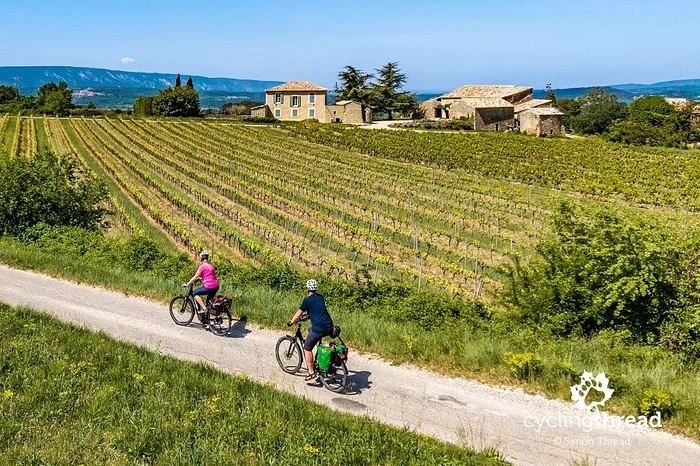
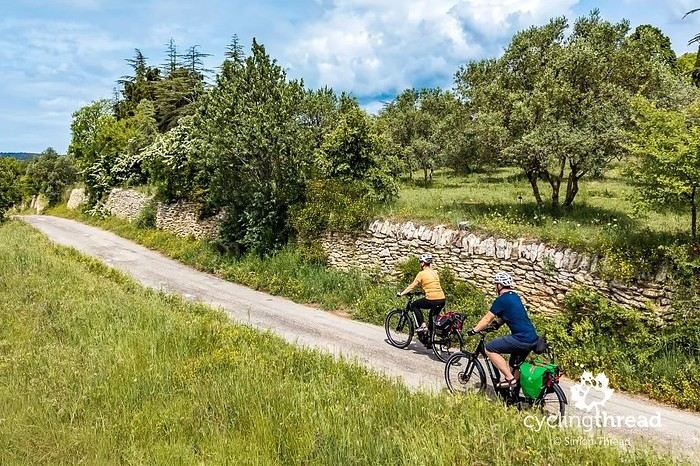
I’m making an exception and creating a separate post this time, since it’s all about France. In May, we spent a week in Provence, specifically in the Luberon, exploring the cycling routes *Autour du Luberon à Vélo*, the *Véloroute du Calavon* (part of EuroVelo 8), and the shorter *Les Ocres à Vélo* route. Together, they gave us an amazing journey through rolling hills, vineyards, lavender fields still green in spring, and some of the most stunning landscapes in southern France.
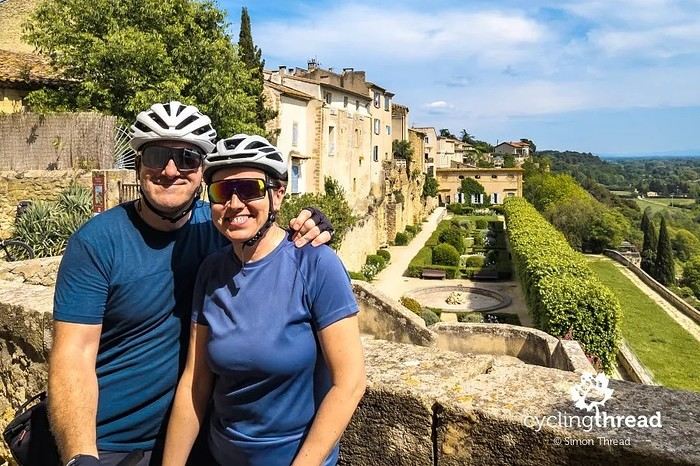
It was, of course, the perched villages that impressed us the most. We visited Gordes, Roussillon, Bonnieux, Lacoste, Lourmarin, Ménerbes, Oppède-le-Vieux, Cucuron, and Lauris. Many of them are among the most beautiful villages in Provence, and it’s hard not to agree with that reputation.
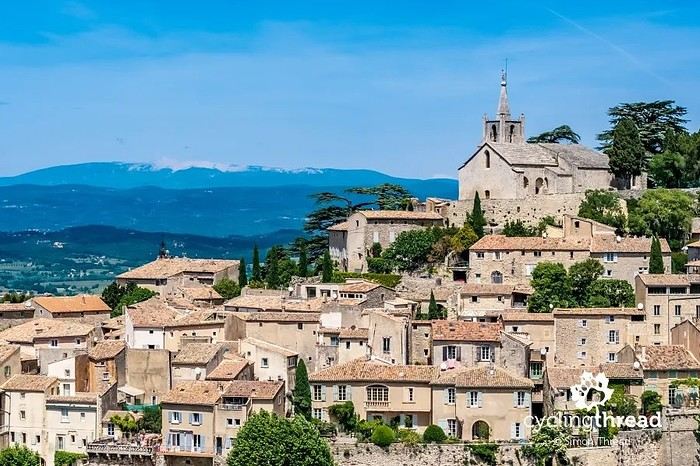
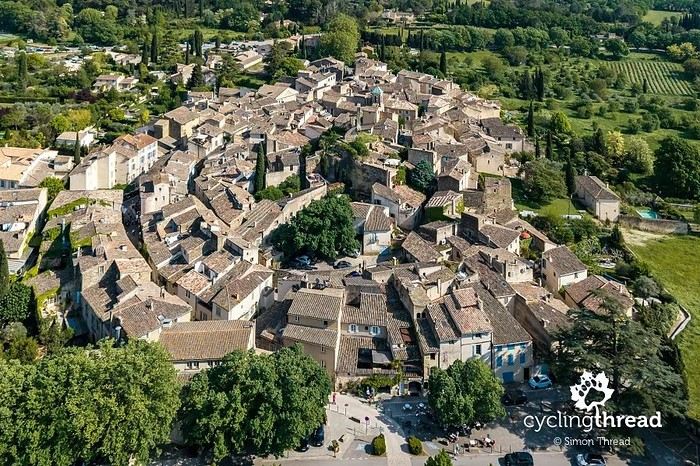
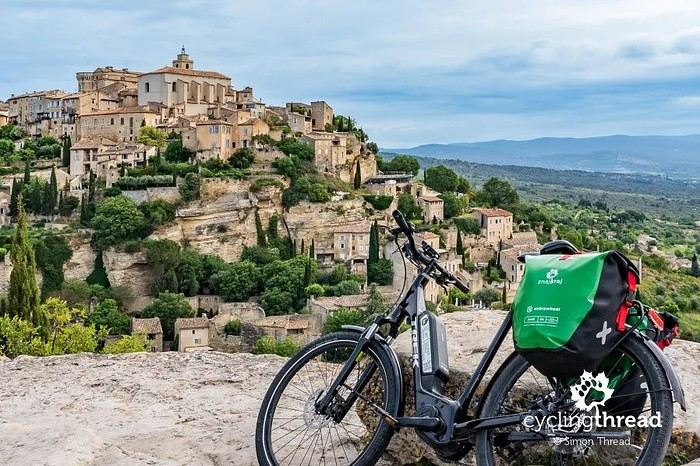
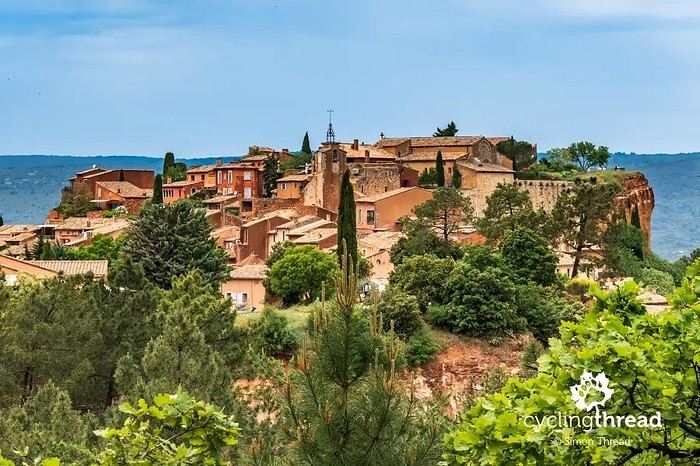
One interesting point is the route of EuroVelo 8 in this part of the region. The official path mainly follows the old railway line of the *Véloroute du Calavon*, which is very comfortable and safe. But in our opinion, cyclists traveling EuroVelo 8 around the Mediterranean would discover even more treasures if the route passed through villages like Bonnieux, Lacoste, or Oppède-le-Vieux.
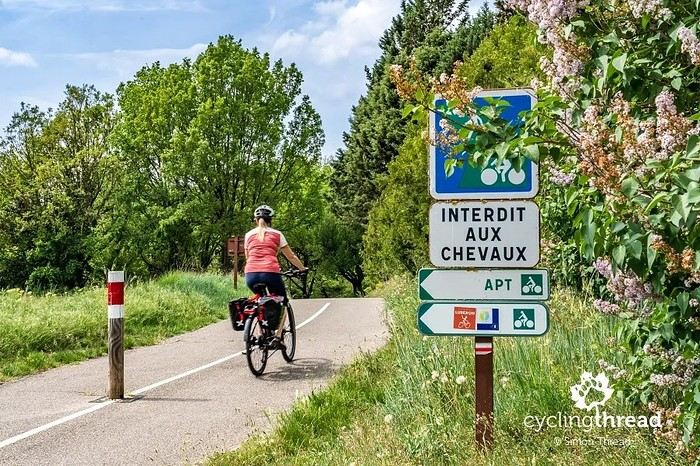
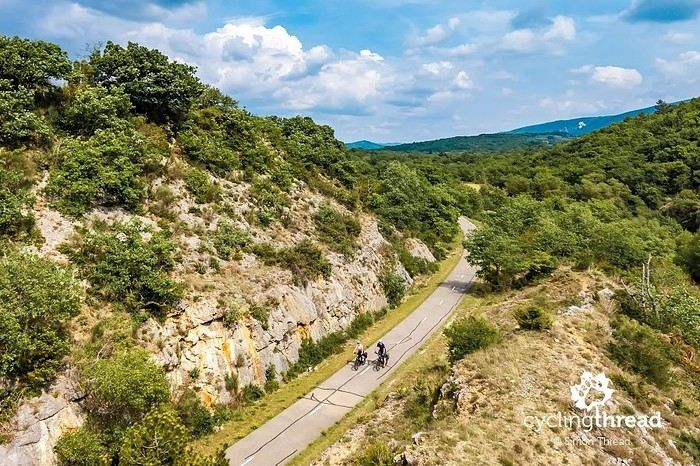
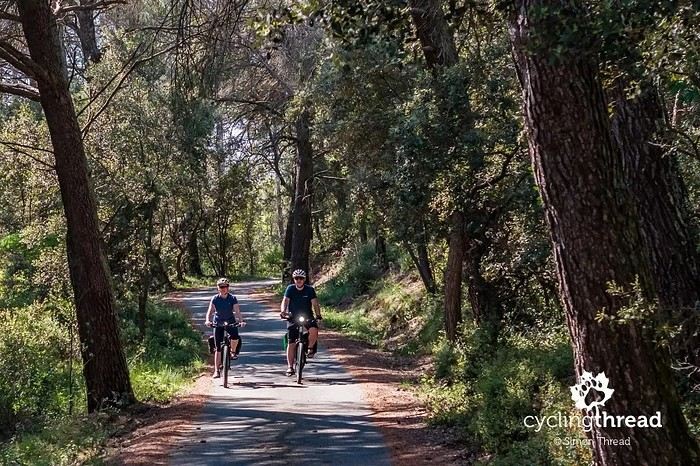
We were also pleasantly surprised by how safe cycling felt. Most of the route takes small local roads, but traffic is light, drivers are respectful, and road design really takes cyclists into account. It’s one of those places where you can ride peacefully even without separated bike lanes.
Our full story:
Around Luberon by bicycle - the most beautiful villages of Provence
You can also find all our cycling travel stories on the forum:
Cycling Thread - Europe’s most beautiful bike routes
S.
I’m making an exception and creating a separate post this time, since it’s all about France. In May, we spent a week in Provence, specifically in the Luberon, exploring the cycling routes *Autour du Luberon à Vélo*, the *Véloroute du Calavon* (part of EuroVelo 8), and the shorter *Les Ocres à Vélo* route. Together, they gave us an amazing journey through rolling hills, vineyards, lavender fields still green in spring, and some of the most stunning landscapes in southern France.
It was, of course, the perched villages that impressed us the most. We visited Gordes, Roussillon, Bonnieux, Lacoste, Lourmarin, Ménerbes, Oppède-le-Vieux, Cucuron, and Lauris. Many of them are among the most beautiful villages in Provence, and it’s hard not to agree with that reputation.
One interesting point is the route of EuroVelo 8 in this part of the region. The official path mainly follows the old railway line of the *Véloroute du Calavon*, which is very comfortable and safe. But in our opinion, cyclists traveling EuroVelo 8 around the Mediterranean would discover even more treasures if the route passed through villages like Bonnieux, Lacoste, or Oppède-le-Vieux.
We were also pleasantly surprised by how safe cycling felt. Most of the route takes small local roads, but traffic is light, drivers are respectful, and road design really takes cyclists into account. It’s one of those places where you can ride peacefully even without separated bike lanes.
Our full story:
Around Luberon by bicycle - the most beautiful villages of Provence
You can also find all our cycling travel stories on the forum:
Cycling Thread - Europe’s most beautiful bike routes
S.
Hi, I'm looking for a Pino tandem bike for sale in Quebec and I can't find any. Does anyone have any info, please? Thanks a bunch!
Calling all travelers.
We’ll be landing at Lyon Airport and want to bike to La Verpillière train station (with panniers and camping gear, etc.) to catch a TER to Voreppe.
What’s the safest route for this bike trip?
Thanks in advance
The RandoCamping site is free for users and hosts.
Its goal is to help trekkers find accommodations (usually by the night) all across France and to promote hosts who welcome trekkers satisfactorily.
Check it out here: https://randocamping.touteslatitudes.fr
The site is collaborative and supported by associations like Cyclo-Camping International or AF3V.
It lets you plan a trip or trek (on foot or by bike) by searching for accommodations along a route. The accommodations come from the DataTourisme platform (which aggregates information from Tourist Offices) and from users (trekkers & hosts).
Train lines and passenger stations are also listed. Clicking on a station can show you (if the data is available) how accessible the platforms are with a non-dismantled bike. Bike and hiking routes come from Waymarked Trails (which is based on OpenStreetMap).
You can find more details about the site’s features on this page (version 1.0): https://randovelo.touteslatitudes.fr/randocamping-v1/
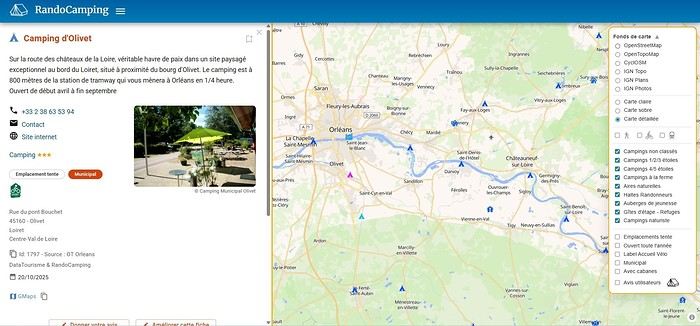
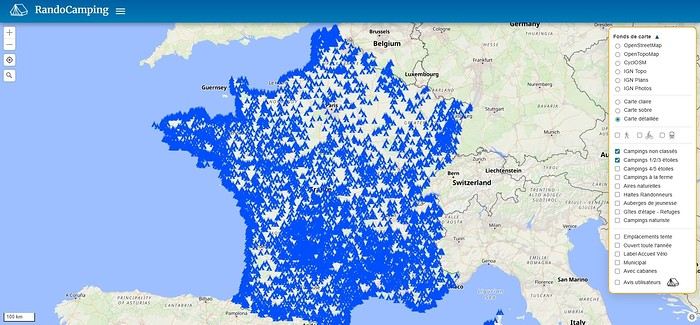
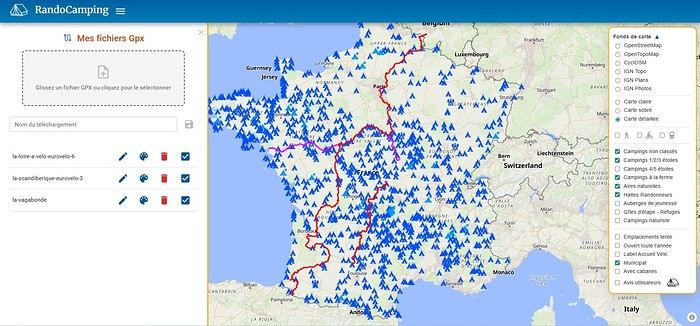
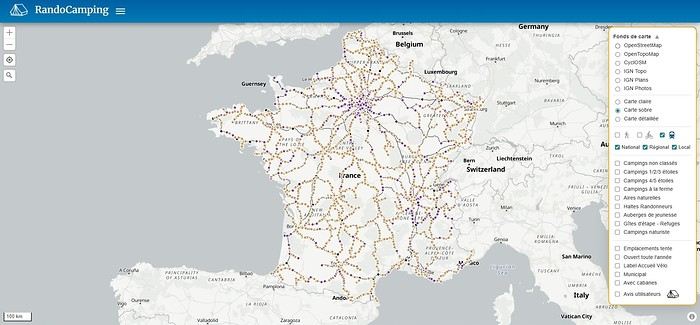
Its goal is to help trekkers find accommodations (usually by the night) all across France and to promote hosts who welcome trekkers satisfactorily.
Check it out here: https://randocamping.touteslatitudes.fr
The site is collaborative and supported by associations like Cyclo-Camping International or AF3V.
It lets you plan a trip or trek (on foot or by bike) by searching for accommodations along a route. The accommodations come from the DataTourisme platform (which aggregates information from Tourist Offices) and from users (trekkers & hosts).
Train lines and passenger stations are also listed. Clicking on a station can show you (if the data is available) how accessible the platforms are with a non-dismantled bike. Bike and hiking routes come from Waymarked Trails (which is based on OpenStreetMap).
You can find more details about the site’s features on this page (version 1.0): https://randovelo.touteslatitudes.fr/randocamping-v1/
hi,
I'm planning a recumbent bike trip from the Pyrenees to Greece. On the EuroVelo 8 route, it doesn't specify the path through the Alps.
Are there any experienced cyclists here who can tell me where they go to avoid climbing too high?
Also, is there another traveler/bike forum better suited for broadening the responses?
thanks
Good evening,
I’m planning a solo bike road trip along the EuroVelo 6, starting from Orléans all the way to Budapest, beginning May 1st, 2026!
Question: Have any of you used the Warmshowers site, and if so, I’d love to hear your thoughts on using this app—whether responses to hosting requests are generally satisfying, especially for the different countries I’ll be crossing!
Thanks in advance for your tips!
Philippe
Hi everyone here who loves cycling,
I’m planning a 5-week trip next January in Uganda: a little tour of 1,200 to 1,500 km crossing the most beautiful spots and reserves in the country. Route to be defined together.
I’m looking for someone to join me.
Interested? Nicolas (72 years old)
Travel site: nicolas.saulnier.free.fr
Interested? Nicolas (72 years old)
Travel site: nicolas.saulnier.free.fr
Hi there,
I’m planning to cycle the EuroVelo 8 route from Nice to Izmir in Turkey (about 2,500 km), but I’m not finding much info or tips for this itinerary.
I’d like to leave at the end of September and complete the route in a max of 2 months, as self-sufficiently as possible (I have a tent, sleeping bag, and camping cookware).
Is this a good idea (will it be too cold starting in October)?
Are there any precautions I should take? Any areas to avoid? Since multiple countries are involved.
And are there any places worth visiting that aren’t on the main route?
I’m used to cycle touring in France but not abroad, so I’d appreciate any tips!
Thanks in advance.
I’d like to leave at the end of September and complete the route in a max of 2 months, as self-sufficiently as possible (I have a tent, sleeping bag, and camping cookware).
Is this a good idea (will it be too cold starting in October)?
Are there any precautions I should take? Any areas to avoid? Since multiple countries are involved.
And are there any places worth visiting that aren’t on the main route?
I’m used to cycle touring in France but not abroad, so I’d appreciate any tips!
Thanks in advance.
Hi everyone,
I don’t bike much, but I live on the VéloRoute 6, and I dream of adventure. I’m 51 and my old hybrid bike from 20 years ago no longer suits me.
I’d like to get a new bike at a reasonable price, but I don’t know where to look besides Decathlon and Intersport. I’m not after a racing bike—I want something a bit comfortable in terms of riding position (not recumbent) and with a luggage rack. 🙂
All your tips are welcome, with a budget of... let’s say 800 € max.
Looking forward to reading your suggestions!
Richard
I don’t bike much, but I live on the VéloRoute 6, and I dream of adventure. I’m 51 and my old hybrid bike from 20 years ago no longer suits me.
I’d like to get a new bike at a reasonable price, but I don’t know where to look besides Decathlon and Intersport. I’m not after a racing bike—I want something a bit comfortable in terms of riding position (not recumbent) and with a luggage rack. 🙂
All your tips are welcome, with a budget of... let’s say 800 € max.
Looking forward to reading your suggestions!
Richard
I’ve gotten used to crossing Europe by bus to return by bike.
It was really convenient to take the bike without having to disassemble it.
But FlixBus no longer accepts bikes...
What alternatives do you know about?
Thanks.
Hi everyone,
We’re organizing a week-long bike trip for a group of scouts.
I’ve already mapped out a route using Géovélo (travel option).
The teens will take the train to Nemours (or a bit beyond) and then follow the Loire à Vélo route for a good stretch (until Nevers, which they’ll bypass to the west).
After Nevers, things get a bit trickier.
I also wanted to avoid Moulins, so I planned for them to follow the Allier’s west bank and cross near Châtel-de-Neuvre.
I’m having some doubts about the route and really want to steer clear of busy main roads as much as possible.
I’d love to hear your thoughts on the route I’ve chosen, plus any tips you might have.
I saw there’s the V70 veloroute, but I decided against it after hearing it has some *very* road-heavy sections.
Hi everyone,
With summer just around the corner, I’m looking for ideas for organized bike trips in France or Italy. I’m pretty used to traveling independently, but this time I’d like to try something more structured—either in a small group or with minimal logistics (accommodations booked, luggage transport, etc.).
I’m open to different difficulty levels, as long as the setting is pleasant (countryside, seaside, well-known routes, or even a bit more off-the-beaten-path). If you’ve already tried this kind of trip or have good recommendations for agencies or providers, I’d love to hear them!
Thanks in advance for your tips! 🚴♂️☀️
With summer just around the corner, I’m looking for ideas for organized bike trips in France or Italy. I’m pretty used to traveling independently, but this time I’d like to try something more structured—either in a small group or with minimal logistics (accommodations booked, luggage transport, etc.).
I’m open to different difficulty levels, as long as the setting is pleasant (countryside, seaside, well-known routes, or even a bit more off-the-beaten-path). If you’ve already tried this kind of trip or have good recommendations for agencies or providers, I’d love to hear them!
Thanks in advance for your tips! 🚴♂️☀️
Hi,
Like every summer, I’m looking for a (not too distant) destination to cycle with my family for about 3 weeks. I’m drawn to the EuroVelo 1 route in Portugal. Do any of you have information to share? Are there sections that are more or less difficult? Routes that are more or less safe? I’ve heard that Portuguese drivers aren’t very cautious on the road, especially around cyclists.
Thanks for your feedback and experiences!
Hello, I have a TX400. We're heading to the Andes this spring, and I wanted to see about changing my cassette to switch from an 11-35 to an 11-42 so I can tackle the big climbs more easily. So far, I've only found discussions from cyclists who switched from a 48-36-26 chainring to a 44-32-22. Has anyone kept the original chainring and just changed to a larger sprocket?
Hi there!
I’m really keen to cycle from Bruges to Amsterdam. Has anyone here done it before? We’re a group of three—is it easy to find accommodation on the go, or should we book ahead? If we do a round trip and take our bikes, would it be simpler to plan two different routes?!
Thanks so much!
Laurence from Bayonne
Hi there.
I'd like to change the chainring on my Riverside 5 with trigger shifters.
I’m attaching a photo for advice. I’m lacking power and want a larger chainring for road use because I’m spinning out on the highest gear even though I still have power to give on flat terrain.
At Decathlon, they were supposed to get back to me after checking it out in the workshop but never did. It was outside their standards, and the salesperson clearly forgot about me...
What are your recommendations and suitable products for purchase, please?
Thanks.
Best regards,
17 days, 1,400 km, and 17,500 m of elevation gain cycling in northern Vietnam! 🇻🇳 🚴🇻🇳
From the misty Fansipan to the breathtaking landscapes of the Ha Giang Loop, from remote villages to vibrant markets...
I cycled through the north of the country, getting up close with its people—through mud, heat, endless mountain passes, and unforgettable encounters.
Most importantly, I discovered a Vietnam far different from the usual tourist circuits.
Join me on this adventure through a video that captures these 17 days of travel. :)
If Vietnam calls to you, come ride a stretch with me!
Tôi fan Việt Nam!! https://www.youtube.com/watch?v=P2vX18zebe0
Period: March–April 2025
If Vietnam calls to you, come ride a stretch with me!
Tôi fan Việt Nam!! https://www.youtube.com/watch?v=P2vX18zebe0
Period: March–April 2025
Hi,
I need to arrive in Thessaloniki by bike at the end of September and I plan to head to Istanbul along the coast.
Could anyone help me pick the best route? Safety, difficulty.
Thanks in advance.
Marc
Coming soon:
https://www.Biclou.com/parcours/durance/
Starting from Faverges: 900 km over 9 days
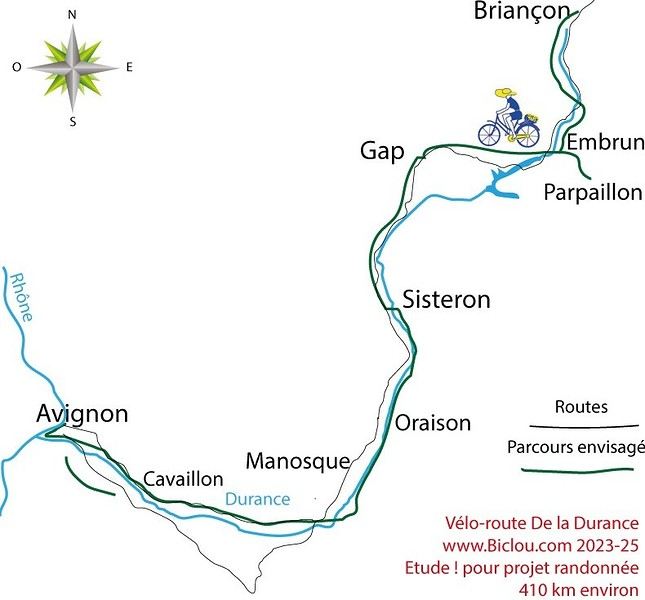
Here’s the detailed Durance route starting from Briançon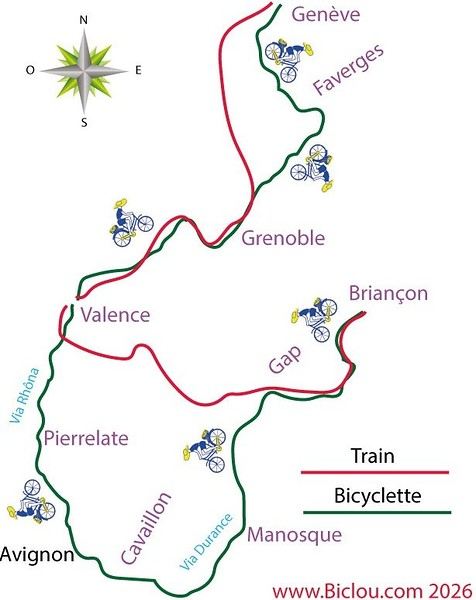
Here’s the detailed Durance route starting from Briançon
Hi there,
I’m planning to build a new touring bike. I want to prioritize lightness. That said, I’m tempted by a suspension fork that could offer some comfort on rougher roads. The recent appearance of gravel suspension forks on the market might meet my needs—at least on paper. I’m particularly considering the RockShox Rudy Ultimate XPLR fork. Unlike MTB forks, its travel is short: either 30 mm or 40 mm. It weighs 1400 g, which is 400/500 g more than a steel fork.
Any thoughts or real-world feedback on this?
I’m also wondering about the durability of magnesium (lower leg) for long-distance bike touring. And what’s the impact of skipping the manufacturer-recommended maintenance every 50 and 200 hours? That’s bound to happen on a long trip unless you carry extra gear. More generally, how reliable are these kinds of forks?
Thanks in advance
I’m planning to build a new touring bike. I want to prioritize lightness. That said, I’m tempted by a suspension fork that could offer some comfort on rougher roads. The recent appearance of gravel suspension forks on the market might meet my needs—at least on paper. I’m particularly considering the RockShox Rudy Ultimate XPLR fork. Unlike MTB forks, its travel is short: either 30 mm or 40 mm. It weighs 1400 g, which is 400/500 g more than a steel fork.
Any thoughts or real-world feedback on this?
I’m also wondering about the durability of magnesium (lower leg) for long-distance bike touring. And what’s the impact of skipping the manufacturer-recommended maintenance every 50 and 200 hours? That’s bound to happen on a long trip unless you carry extra gear. More generally, how reliable are these kinds of forks?
Thanks in advance