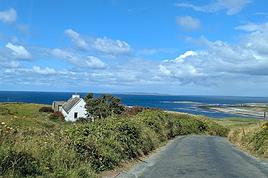
Imagination or reality, fiction or true story.
Everything blends together, and if the characters really existed, if their story is partly true, I freely transcribed what Surya told me in her English as precarious as mine.
Have I already posted this on vf? I can't find it. Maybe on the small forum Wapiti created to continue our wild stories that went on for pages and pages and no longer pleased anyone on vf.
No matter.
I heard from Bavani—life is crazy, isn’t it?
That’s why I’m bringing her story back.
I’m settling into the -miscellaneous- section; I like being away from the noise.
When the house is overrun with running feet, laughter, arguments, and music, I go to the barn turned into a honey house. It’s cool, it smells of wax and honey, and among the disorder of hive frames, supers, and stacked jars, I refocus.
Here, in -miscellaneous-, no one rants. I can let my fingers glide over the keyboard in peace.
Alright, enough digressions.
At the end of the notebook, I’ll tell you what became of this little girl.
Bavani
“Bavani, stop daydreaming, work.”
I’m not daydreaming, I’m thinking.
My teacher is Surya, and she asked us to write a story.
She doesn’t like us—I heard her talking to the teacher in the little kids’ class.
She said: I stay here because the white people pay better than in government schools, but it’s a shame to teach gypsies. Filthy street urchins.
I’m not a gypsy, I’m a Narikuravar.
Grandmother told me: you’re going to this school, you’ll learn English well, and when you come back, you’ll be richer than the others because you’ll beg better from the tourists.
Grandmother makes necklaces and sells them, but often she sells nothing at all.
There are lots of tourists in my town, Tiruvannamalai.
Before, I lived behind the temple with dad and mom. We had our spot and were happy, especially when mom cooked rice on the brazier. Then we’d lie down, and I’d press my back against mom’s huge belly, and it would move inside. One day, mom told me: stay here, I’ll be back very soon. I waited a long time, and neither dad nor mom came back. After a long time, dad came, and we went to Salem to my grandmother, who’s dad’s mom.
I asked: where’s mom?
“Shut up, two was too many.”
“Two what? He didn’t say.”
So I went to Salem to grandmother’s hut, and there was no rice, and Muriga came to get me with his minibus.
Now I live here. We eat several times a day—yellow rice, then white rice to digest, and eggs and bananas.
And we have to study.
Papom *
.../...
Papom: in common language, it’s the equivalent of -see ya-
3,710 similar discussions in English
Hi there,
For the Dakhla - Nouadhibou route, everyone only talks about taxis costing 350 - 400 MAD. But the bus only costs 260 MAD (Supratours). I’ve been searching in vain for info or testimonials from people who’ve taken the bus to Nouadhibou.
So, how’s the bus? And why does no one seem to take it?? Am I about to make a mistake or what?
Thanks!
Hi,
so I’m heading off solo through China and I’d like to stay for a good while (about a year—do you think that’d be enough to pick up a bit of the language???).
I’d love to know if there’s a website, or if someone can help me live, that teaches the basics:
to understand the alphabet and characters.
to understand how a sentence is formed.
just the super simple basics, really.
Thanks for your help! ^o^
PS: My goal is to speak a tiny bit—not to write or anything—but still be able to read a little too...
PS: My goal is to speak a tiny bit—not to write or anything—but still be able to read a little too...
You’ve probably noticed it: the real travel gems no longer show up in search results. In today’s all-digital age, those local operators, small authentic accommodations, passionate guides, and committed local initiatives remain invisible. No flashy website, no ads, often not even an online presence.
Yet they exist—people who take care of their land, their culture, their community. Hidden in valleys, villages, forests. These are the ones who truly give meaning to travel, the kind you only discover through word of mouth... or among savvy travelers.
A collaborative project is starting to patiently catalog them, one by one. It’s called DirecTravel. Not very well-known yet—it’s just getting started—but already shared among independent travel enthusiasts. Here, no standardization or flashy interface: every address has been discovered on the ground, the old-fashioned way. Some have even been recognized by the Sustainable Travel Awards.
Their approach? Taking the time to listen, build connections, and support local initiatives that will never appear on Google’s first page.
If you’re looking for something beyond the usual recommendations, and if the idea of sharing genuine tips speaks to you, then this project might interest you. And maybe you, too, have a gem to share with them.
My train to Mathura is at 2 PM, and we’ll arrive an hour late—all good. I booked a hotel on booking, but unfortunately, it’s really far from the ghats. Walking there is out of the question—what a shame.
The hotel itself is fine, and there are several restaurants right across the street, which will be handy for dinner. This won’t be an exception, though—starting at 10 PM, they must wake up because I can hear them talking loudly, and music is playing along. My room faces the entrance, so it’s going to be tough. At midnight, I ask them to lower the volume, but they don’t listen. By 1 AM, I lose my temper, and this time, everything stops. Finally, I can get some sleep—until 4 AM, when they start up again for a little while before quiet returns until 6 AM. But when do they sleep? The noise never seems to bother them—it’s unbelievable, and I’m finding it harder and harder to tolerate. It makes a huge difference.
The next morning, as I leave, they tell me they’ll give me another room for the following night. Oh, two nights like that wouldn’t be possible—I’m exhausted.
I head out to explore the ghats and take a rickshaw, which I share with a family, to Vrindavan, a city of temples dedicated to Krishna. I visit several while wandering through the lively streets, surrounded by a crowd of devotees. By 1 PM, I’m near the Bankey Bihari Temple, but I can’t go in—it just closed. Nearby, there are restaurants, so I take the opportunity to grab my usual aloo paratha with a lassi.

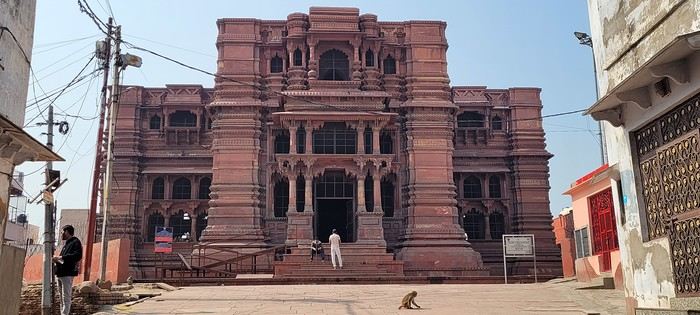
The work women do here is incredibly hard, and their pay must be miserable.

I want to leave Vrindavan for Govardhan. Two young guys on a motorcycle in front of the temple approach me, and the driver offers to take me part of the way. I’m pretty skeptical, but he insists, and I eventually agree. I didn’t fully understand what was happening. Once on the bike, his friend hops on too, and suddenly I’m sandwiched between them for a multi-kilometer ride—*travel Indian-style*. We quickly drop off the friend, and I breathe easier for the rest of the trip. At an intersection, he stops—Govardhan is straight ahead, but to get to his village, he needs to turn right. We wait for the bus for a few minutes, and he flags it down so I can hop on and continue my journey. What an adventure.
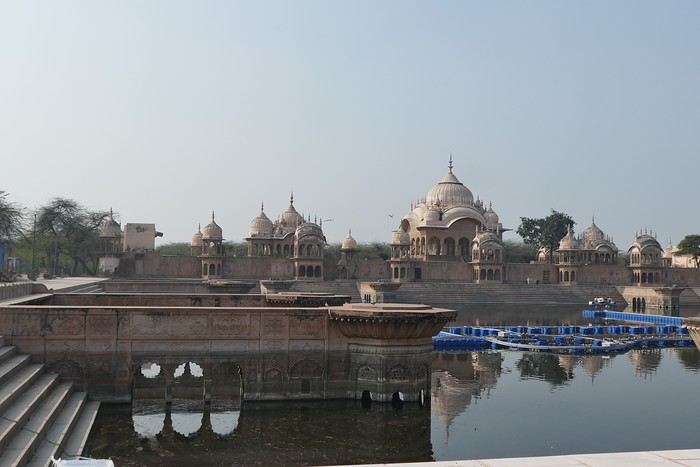
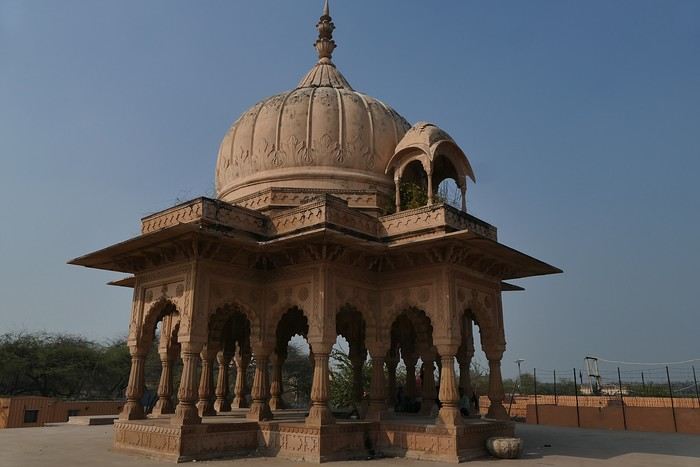
the neighbor with its beautiful dome.
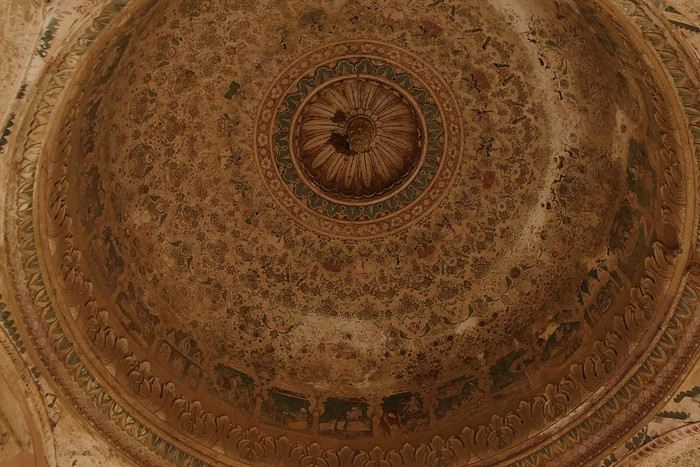
The work women do here is incredibly hard, and their pay must be miserable.
I want to leave Vrindavan for Govardhan. Two young guys on a motorcycle in front of the temple approach me, and the driver offers to take me part of the way. I’m pretty skeptical, but he insists, and I eventually agree. I didn’t fully understand what was happening. Once on the bike, his friend hops on too, and suddenly I’m sandwiched between them for a multi-kilometer ride—*travel Indian-style*. We quickly drop off the friend, and I breathe easier for the rest of the trip. At an intersection, he stops—Govardhan is straight ahead, but to get to his village, he needs to turn right. We wait for the bus for a few minutes, and he flags it down so I can hop on and continue my journey. What an adventure.
the neighbor with its beautiful dome.
I'm planning a short stay in Ladakh from August 12th to 23rd, 2026.
Delhi to Leh to start.
I don’t have all the details yet, but I’m planning to visit Thiksey Monastery and other monasteries.
Accommodation: guesthouse at Thiksey Monastery
Accommodation: Nyerma Nunnery
ETC....
Everything needs to be planned and organized. I’d love to hear your suggestions and experiences.
Thanks, Dewa
Everything needs to be planned and organized. I’d love to hear your suggestions and experiences.
Thanks, Dewa
Hi everyone, the Groupe Militaire de Haute Montagne recently carried out a rescue operation for two extremely skilled mountaineers in the Himalayas. You might think it sounds like a Christmas tale, but no—just listen:
https://www.defense.gouv.fr/actualites/defcast-sauvetage-lhimalaya
https://www.defense.gouv.fr/actualites/defcast-sauvetage-lhimalaya
Hello fellow travelers,
I've made the France-Benin trip several times via the Mali "Route de l'Espoir," and the last journey was pretty tense—2013, 🥵🔥 military convoys and all the chaos in Mali from the border to Bamako. 😅
So, I’m planning to take the route again but this time via Senegal and Côte d'Ivoire, with a good old J9 (the mayor’s vehicles I used to travel in… 😎. Though the Mercedes 308 wasn’t bad either).
Has anyone done this recently?
A friend of mine did it 4 years ago, but things can change pretty quickly.
If you’d like to share your latest experiences, I’m all ears! 😊 Have a great weekend! 👋
I love barns. The ones with bright, cheerful colors, the ones whose wood is so old it’s turned completely gray, the ones that are restored, the ones that are run-down… You come across a thousand and one no matter which road you take, and every single one of them has one thing in common: they lean! Is it the weight of the years, the weight of the snow, or the wind that makes them so wobbly? Whatever the reason, it gives them a charm that utterly enchants me.
I love lighthouses. They’re small, often all curves and colors. Do they really serve as landmarks for sailors? I think they’re more useful to seals or whales—and even more so to birds, which make them their favorite meet-up spots. Either way, they have a wonderfully easygoing look that I love.
I love houses. Not just any houses: the ones decked out like Christmas trees all year round. Usually, they’re spruced up, looking just as cheerful under snow as they do covered in flowers and little figurines on the lawn, always decorated with those strings of lights wrapped around them. Is it true they help lost travelers find their way during a snowstorm? And in summer? Is it just for looks? Either way, they have a totally kitschy vibe that delights me.
I love roads. The ones that hide in endless forests, the ones that play hide-and-seek with rivers, the ones so straight you can see forever, the ones that go up and down like a rollercoaster, the ones that burst with autumn colors, that sparkle under the snow, that vanish into the fog, the ones that cross villages, that cross meadows, that run along the shores of the St. Lawrence. I love lonely roads, peaceful roads, the ones where you drive while listening to Janis Joplin and Tom Waits… What if we just kept going? Always farther, never stopping…
But I also love the people! The people with big smiles and laughing eyes. The people who come up to us as soon as they hear our accent. And who talk—sometimes so fast and with words we don’t know that it takes a while to understand. And then there’s that kindness in a café or a shop: “Hello there, sweetheart, what can I get you?” “Welcome, if you need help, just call me,” and so on… I love it, yes, I love it. I struggle *so* much with the Québécois accent (laugh), but I figured out a trick: you have to open your mouth wide and twist your lips a little, and it works pretty well! Laugh again… I love you, my Québécois friends…
Hi there,
We traveled with Qatar Airways from Roissy to the Seychelles in business class. The flight was on time, and the only hiccup was changing planes in Doha for an Airbus A350 in the same class.
The cabin crew was very attentive, and the in-flight meals were way above average. The seats were super comfortable—especially the lie-flat position—so the flight was really restful. I’d highly recommend this airline. From what I’ve seen, they mainly serve the Middle East and Asia.
Speaking of which, we’re about to book a trip to Thailand and Cambodia, again with the same airline.
Hello everyone,
Lozère seems like a department that’s been forgotten on this forum—just like in real life, actually.
So if you love strolling through peaceful, exotic places, landscapes that remind you of Mongolia in some spots and of ruiniform shapes in others, and watching the flight of large griffon vultures in the Gorges de la Jonte and the Tarn, I’d like to share a few photos of these places I love. I’ve been exploring here for about thirty years, and I recently took a walk in mid-April with a few detours to the Larzac plateau, which straddles Aveyron and Lozère.
.
We head straight to the start of the Gorges de la Jonte. Our accommodation is right in the middle of these gorges, between Le Rozier and Meyrueis.
Le Rozier, a small village where the Jonte meets the Gorges du Tarn:

The village has three campsites side by side, with a beautiful view:

The Gorges de la Jonte at a spot called Les Douzes:


Lozère seems like a department that’s been forgotten on this forum—just like in real life, actually.
So if you love strolling through peaceful, exotic places, landscapes that remind you of Mongolia in some spots and of ruiniform shapes in others, and watching the flight of large griffon vultures in the Gorges de la Jonte and the Tarn, I’d like to share a few photos of these places I love. I’ve been exploring here for about thirty years, and I recently took a walk in mid-April with a few detours to the Larzac plateau, which straddles Aveyron and Lozère.
.
We head straight to the start of the Gorges de la Jonte. Our accommodation is right in the middle of these gorges, between Le Rozier and Meyrueis.
Le Rozier, a small village where the Jonte meets the Gorges du Tarn:
The village has three campsites side by side, with a beautiful view:
The Gorges de la Jonte at a spot called Les Douzes:
Jambo! I organized my trip through this kind of group, so I thought I’d share my experience here. We traveled as a group of four, including two kids aged 9 and 11. After requesting around twenty quotes, I decided to book the safari portion with MAKING MEMORIES IN AFRICA. Ally responded quickly and listened to all my requests—unlike other agencies—such as having a French-speaking guide, the order of park visits (Tarangire, Manyara, Serengeti, then Ngorongoro), and a mix of budget hotels and camping to keep costs down. There were still four agencies in the running, and price was the deciding factor. Even though they were the cheapest, I felt better taken care of than with others. For example, all meals were prepared by a Maasai chef, Louis, who accompanied us throughout the trip, while some others ate meals out of cardboard boxes. Samuel, our guide, explained so many things and answered all our questions. José drove us safely the whole way. Everything was done with great cheer!
At the end of the stay, Ally came to meet us and gave us t-shirts with the agency’s logo—we loved that they took the time to hear our feedback in person. In short, I highly recommend them +++, especially since it’s a local agency that also supports a charity for women and children.
For Zanzibar, I organized everything myself. I hesitated for a long time but eventually booked all four nights at the same place. We don’t like crowds, so I initially considered Jambiani but ended up choosing EVERGREEN BUNGALOWS in Bwejuu. We took their first airport-to-hotel transfer since we arrived at night, and it felt safer. Great value for money, in our opinion. Just be aware that it’s quite isolated—perfect for relaxing and going on excursions. There were very few beach vendors, unlike what I’d read about Zanzibar. We lived with our feet in the sand from morning to night, with a small basin of water outside our room to rinse off. Such a lovely spot!
I had asked for some excursion prices before leaving but ended up booking on-site. Not at our hotel, but at a nearby restaurant that was cheaper. After some thought, since we were based in Bwejuu, I wanted to do Blue Lagoon and Pungume (both departing from the south of Zanzibar).
Blue Lagoon: About 3 hours total, with snorkeling on a small reef full of fish (coral wasn’t great) and a stop at a spot with tons of starfish, plus local snacks, fruit, and drinks.
Pungume: An amazing day with a 50% chance of seeing dolphins (we missed them), a visit to the mangroves, then snorkeling at a spot with some nice coral and, of course, fish. We ended with a fantastic grill (tuna, shrimp, squid, lobster, and fries) on a sandbank in the shade.
Finally, before heading to Stone Town, we visited Paje Cave, which is much less known than Maalum. It’s smaller, but we saw bats, went for a swim, and fed the chickens and rabbits (great for the kids). To finish, we explored Stone Town on our own and had dinner at Forodhani Market.
For flights, we flew with Turkish Airlines from Barcelona to Kilimanjaro and back from Zanzibar—no issues there. However, I don’t recommend the Kilimanjaro-Zanzibar leg with Precision Air. Our luggage didn’t arrive, and according to the hotel, this happens often. We only got it back a day and a half later.
October 9 - Day 1
There’s an old Chinese proverb I particularly like: "Dú wán juán shù, búrú xing wán li lú." In slightly more familiar terms, it means you always learn more by traveling ten thousand miles than by reading ten thousand books. And I’m the perfect guy for this because, first, I don’t have time to read ten thousand books about our new destination... And second, the proverb is literally made in our new adventure playground: China!
China... or should I say, "Paradox-land"! A country we see everywhere—on the news or on the "Made in China" labels of half the objects around us—but one we actually know very little about. A country hurtling toward the future while still casually chatting with its rich past. A country that, through our Western lens, seems uniform and just filled with Chinese people who all look alike, yet reveals an incredible cultural, natural, demographic, and culinary diversity as soon as you dig a little deeper. A country with a reputation for being logistically tricky for solo travelers, yet where you can book public toilets on your smartphone. In short, a delightful mess of disorienting contradictions—and, of course, a destination that was bound to charm our wandering soles for a while.
That "while" will be two weeks... And the "we," since I wanted the best in the world to join me, will be Flo and me in this backpacking duo stamped with wanderlust! Just the two of us for two weeks to explore a tiny part of this continent-sized country, trying to understand how old wooden stilt houses coexist in the middle of futuristic skyscrapers glowing with lights, tasting all the weird and wonderful things that come our way, and—incidentally—covering the famous ten thousand kilometers from our proverb.
Well... we’ll probably cover a little less than that, but enough to let us write our own travel journal instead of reading others’... Because you know us—between living our lives watching others live theirs by reading ten thousand books, or writing our own by truly roaming the world, we’ve long since chosen our side! And you, who’s reading this—team book or team live?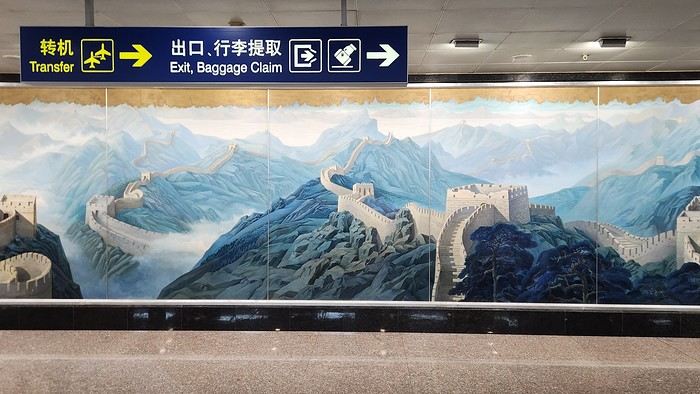
There’s an old Chinese proverb I particularly like: "Dú wán juán shù, búrú xing wán li lú." In slightly more familiar terms, it means you always learn more by traveling ten thousand miles than by reading ten thousand books. And I’m the perfect guy for this because, first, I don’t have time to read ten thousand books about our new destination... And second, the proverb is literally made in our new adventure playground: China!
China... or should I say, "Paradox-land"! A country we see everywhere—on the news or on the "Made in China" labels of half the objects around us—but one we actually know very little about. A country hurtling toward the future while still casually chatting with its rich past. A country that, through our Western lens, seems uniform and just filled with Chinese people who all look alike, yet reveals an incredible cultural, natural, demographic, and culinary diversity as soon as you dig a little deeper. A country with a reputation for being logistically tricky for solo travelers, yet where you can book public toilets on your smartphone. In short, a delightful mess of disorienting contradictions—and, of course, a destination that was bound to charm our wandering soles for a while.
That "while" will be two weeks... And the "we," since I wanted the best in the world to join me, will be Flo and me in this backpacking duo stamped with wanderlust! Just the two of us for two weeks to explore a tiny part of this continent-sized country, trying to understand how old wooden stilt houses coexist in the middle of futuristic skyscrapers glowing with lights, tasting all the weird and wonderful things that come our way, and—incidentally—covering the famous ten thousand kilometers from our proverb.
Well... we’ll probably cover a little less than that, but enough to let us write our own travel journal instead of reading others’... Because you know us—between living our lives watching others live theirs by reading ten thousand books, or writing our own by truly roaming the world, we’ve long since chosen our side! And you, who’s reading this—team book or team live?
Hi everyone,
It’s been ages since I last dropped by here... maybe simply because, apart from Nepal, I haven’t really had the chance to hit the road lately. 😉
This year, I’d love to spend a few days in Lisbon, probably in late May or early June. But with my budget being what it is, I’m looking for great tips to avoid wasting time once I’m there and risk missing out on hidden gems or unusual culinary specialties and/or quirky activities! I’m hoping to find a room in a local’s home where I can stay in a quiet neighborhood near the center, so I can get around without relying too much on public transport—my walking shoes are my best travel buddies. I’d love all your recommendations, especially for parks, small neighborhood markets, casual eateries for a quick bite, your favorite viewpoints to soak in the scenery (I’m bringing my travel journal to sketch my getaway in watercolors), events around traditional art and crafts, and so on. All your advice will definitely help me travel peacefully and come back with my head full of vibrant memories! Thanks in advance, everyone! Isabelle
Hi everyone,
We’re heading out in April 2027 with our 4x4 to explore part of Southern Africa. Right now we’re researching all these beautiful countries and deciding where to ship our vehicle. We’re from Le Havre—has anyone here already shipped from that port to South Africa or East Africa? As for all these countries, is wild camping allowed, tolerated, easy, or difficult? We’ve already visited a few, but you can read just about anything online, so getting tips from real independent travelers is way better :) We’re all ears for any hacks, experiences, or spots you’d recommend. See you on the road with Doddy
We’re heading out in April 2027 with our 4x4 to explore part of Southern Africa. Right now we’re researching all these beautiful countries and deciding where to ship our vehicle. We’re from Le Havre—has anyone here already shipped from that port to South Africa or East Africa? As for all these countries, is wild camping allowed, tolerated, easy, or difficult? We’ve already visited a few, but you can read just about anything online, so getting tips from real independent travelers is way better :) We’re all ears for any hacks, experiences, or spots you’d recommend. See you on the road with Doddy
On this forum, we talk a lot about trekking in the Himalayas, but I’d love to share another side of Nepal: its spiritual, cultural, and religious atmosphere, especially in Kathmandu.
Nepal, much like Tibet and Bhutan, is deeply connected to the Himalayas—the ultimate sacred mountain range. This small country exudes a calming vibe, shaped by a strong spiritual dimension. What I loved most was the unique sensory experience you get there. Walking around temples and tantric monasteries, a distinct scent fills the air—aromatic plants used for ritual fumigation. Locals mainly burn Himalayan juniper, cedar, sandalwood, and other local essences. This fragrant smoke is a way to purify the space and reach the deities, and you’re constantly enveloped in these aromas.
Another striking aspect is the sound. As soon as you step outside, you hear bells ringing in front of temples. People ring them three times before praying to announce their presence to the deities. Nepal is also the birthplace of singing bowls and sound meditation practices. In Kathmandu, you can easily find meditation sessions or "sound baths."
The spiritual dimension is everywhere: a Hindu sadhu practicing asceticism, a lama in deep red robes with his mala, turning a prayer wheel while murmuring "Om mani padme hum." Newar Buddhism, Tantrism, and Hinduism coexist harmoniously in daily life.
For those who love exploring a destination through its culture and spirituality, Nepal is an unforgettable place. What was your spiritual experience in Nepal like?
we just got back from 3 weeks in Cambodia with a custom trip organized by the Siem Reap agency; from the start, the agency understood our way of traveling and created an itinerary perfectly tailored to our needs. Of course, we visited tourist spots, but we also stayed with locals, met artisans, and explored markets where not a single tourist goes. We were pampered from beginning to end—the agency responded quickly to our questions throughout the trip. The French-speaking guides were fantastic: attentive, highly knowledgeable, and always accompanied by punctual drivers with little thoughtful touches. The hotels they chose matched our preferences, and the pace we wanted was respected, with some more relaxed days. If you'd like to check out my blog, here's the link: https://www.myatlas.com/blogueusedesbaous/le-cambodge-une-immersion-en-indochine.
And don’t hesitate to reach out if you need anything!
Hello,
I’d like to go to Morocco with my 10-year-old daughter for three weeks in February.
Do you think, as women traveling alone, we’ll feel comfortable? Sorry if my question seems odd, but when I mentioned my plans, I got some hesitant reactions.
I’ve never been to North Africa. I’ve traveled several times to the Sultanate of Oman, where I felt very at ease as long as we respected the basic cultural norms. For those who know Morocco, do you think it’s different? Would it be appropriate for me to cover my head?
I was thinking of arriving in Agadir and spending a few days in Taghazout and the surrounding area. After that, if you have any tips, I’m all ears. We’re looking to discover Moroccan cultures, see artisans at work, or even try our hand at a local craft—we’d love that. Simply meeting families, seeing landscapes, animals, and soaking in the culture gently, opening ourselves to something new—that’s what motivates us. And if there are opportunities to listen to local music, even better.
We’ll be traveling by public transport. Thanks in advance for your ideas. Happy travels to everyone.
Hi there,
I often travel solo, and like many women, I get asked the same questions over and over:
“Aren’t you scared?”
“Do you feel safe?”
“Do you really dare to go that far alone?”
Recently, during a trip along the Kenyan coast, I had an experience that made me think differently about solo female travel.
At Wasini Kenya, on paper, everything seemed simple: a boat ride, then some snorkeling.
But on the boat, the sea was rough. It was rocking hard. And then that familiar little inner voice came back—the one that doubts, that overthinks, that wants to stay in control.
Traveling solo is often like that too:
being responsible for yourself, your decisions, and your limits.
Then, once underwater, everything changed.
The noise disappeared. There was nothing left to prove, nothing to control.
Just breathing, trusting your body, and letting yourself be carried.
That moment reminded me that solo female travel isn’t just about destinations or external safety.
It’s also an inner journey: learning to listen to yourself, to recognize your fears, and sometimes to overcome them without forcing it.
I took the time to share this experience in more detail here, for anyone it might help or reassure:
👉 https://noirenvoyage.com/wasini-kenya-apprendre-a-faire-confiance-sous-leau/
And I’d love to hear your thoughts:
👉 For those of you who travel solo, has travel ever taught you something about yourself?
👉 And for those who are still hesitant: what’s holding you back the most right now?
Looking forward to chatting! 🌊
I really loved Thailand, but it was too touristy for my taste. So I'm hesitating about going back and wondering if Cambodia or Vietnam would be less crowded with tourists...
Hi everyone.
Because that’s also what sparks the desire in every traveler (well, at least for me) to set foot on Australian soil: discovering a new continent.
Right now, I’ve got some time on my hands—those who follow me know that. A nasty muscle tear (which really doesn’t want to heal) is keeping me grounded for another week, so I’ve decided to open a new travel journal, recounting my recent trip from December 14, 2024, to January 12, 2025, in Australia.
The origins of this trip started last May in Crete, an island I chose for a 10-day break. It’s really lovely, by the way, but that’s not the point… It’s around this time every year that we decide on our next winter destination, and Argentina was at the top of the list—Sydney wasn’t even on the radar… I’d been looking at flights to Buenos Aires for a while, and the prices were shocking… But by the pool one lazy afternoon, scrolling on my iPhone, a promo from Geneva to Sydney caught my eye. The deal ticked two boxes on my traveler’s bucket list: a flight to Australia and a flight with Singapore Airlines, often ranked as the world’s best airline. A quick chat with the missus (well, of course!) and the decision was made: off to the land of kangaroos! Now, once you add luggage and Economy Plus, it still comes to 1600 € per person, but that’s a reasonable price. Either way, we already know what we’re in for—Australia is a budget commitment!

Thanks to 123rf for the image loan 😛
Right now, I’ve got some time on my hands—those who follow me know that. A nasty muscle tear (which really doesn’t want to heal) is keeping me grounded for another week, so I’ve decided to open a new travel journal, recounting my recent trip from December 14, 2024, to January 12, 2025, in Australia.
The origins of this trip started last May in Crete, an island I chose for a 10-day break. It’s really lovely, by the way, but that’s not the point… It’s around this time every year that we decide on our next winter destination, and Argentina was at the top of the list—Sydney wasn’t even on the radar… I’d been looking at flights to Buenos Aires for a while, and the prices were shocking… But by the pool one lazy afternoon, scrolling on my iPhone, a promo from Geneva to Sydney caught my eye. The deal ticked two boxes on my traveler’s bucket list: a flight to Australia and a flight with Singapore Airlines, often ranked as the world’s best airline. A quick chat with the missus (well, of course!) and the decision was made: off to the land of kangaroos! Now, once you add luggage and Economy Plus, it still comes to 1600 € per person, but that’s a reasonable price. Either way, we already know what we’re in for—Australia is a budget commitment!
Thanks to 123rf for the image loan 😛
Another trip planned during Covid. Actually, for 2020, I had three trips booked, with tickets purchased and everything.
This one to Uzbekistan was planned for April 2020. We postponed it to April 2021, but it was canceled again, and we couldn’t reschedule for April 2022 because our friends who were coming with us were busy. So, we chose summer, knowing the temperatures would likely be very high.
We left as a group of five: a couple we usually travel with and one of their friends, whom I knew. She was traveling alone and had dreamed of this trip but didn’t want to go by herself.
For organization, we went through an agency to handle the train tickets and our trip to the Aral Sea. It’s not my usual style, but back in 2020, we were already in touch with them, and they were very understanding during the two cancellations. It wasn’t easy, given the economic crisis Covid caused, especially in Uzbekistan.
Again, I’m writing this travel journal from memory since I didn’t take any notes. (It’s good to give your brain a workout now and then!)
Day 1: Off to Tashkent
We flew in the afternoon to Istanbul, had a 2-hour-15-minute layover in Turkey, and then took an overnight flight to arrive early in the morning in Tashkent. Problem (again): just before taking off from Saint-Exupéry, the plane had an issue with the landing gear. We waited two hours, and after a few hammer and wrench adjustments, we finally took off. Of course, by the time we arrived in Istanbul, it was a mad dash through the airport to catch our connecting flight. We landed at 7:30 AM in Tashkent, and of the five suitcases in our little group, two were missing (one of ours and the solo traveler’s). Big problem because we were leaving at 2:30 PM by train for the Aral Sea, and we wouldn’t be near an airport again for three days. Plus, at the small airport in the Uzbek capital, no one spoke English (or French, or the Ardèche dialect). Fortunately, we had booked a guide for a quick morning tour of the capital. We had seven hours to kill, and it seemed smart to do it this way (and yes, sometimes we do think ahead). With him speaking English and, more importantly, Uzbek, the delivery of our suitcases was arranged.
So, we set off to explore the capital. It’s very Soviet in design—wide avenues and ugly buildings.
We visited the Khasti Imam historical complex (first name to pronounce at your own risk—there will be plenty more during the trip). Lots of "oohs" and "aahs" about how beautiful it was, but in the end, compared to what we saw later, it was really just small potatoes.
We checked out Chorsu Bazaar, the city’s large covered market. The guide was friendly and gave us plenty of tips for the rest of the trip. He suggested a restaurant, which we accepted, so we could get familiar with local customs. The good thing was, it didn’t seem like a tourist trap.
Next, we headed to the train station because our train was at 2:30 PM. The guide left us, and then another problem arose. While going through security, one of the staff made it clear that our train was canceled and our ticket needed to be changed to the train leaving around 8:20 PM. Heatwave moment (it was 38°C). Our issue was that we were supposed to arrive in Nukus (our destination) at 6:00 AM and take a minibus for a round trip to Moynaq and the Aral Sea (four hours each way). The plan was to spend 2-3 hours there and return, so a 10-11-hour timeline. Leaving at 6:00 AM made it doable, but with the train now leaving at 8:20 PM, we’d arrive in Nukus at noon, which messed up the rest of the plan.
I was fuming at the agency (I really don’t like using agencies), so I called the local contact, who quickly sent our guide back (because trying to communicate, change tickets, and get information was tough).
I asked the manager to find us flight tickets to make up for the delay, but nothing—zilch—was possible. We were stuck! My buddy and I were determined to get to Moynaq, but the women in the group were less motivated.
No choice but to board the train for an overnight journey. We had a cabin for two (and our friend had one to herself). Big scare at first—no AC, and it felt like 150°. They told us it would work once the train started moving, which it did. A frugal meal in the dining car (spaghetti with meat—the only dish on offer) and we had a good night’s sleep.
The +: Finally, we’re here! The -: A lot of hassles to start the trip
Hi everyone,
We’re heading to Vienna in 3 weeks for a 5-day trip! After reading a few travel journals and discussions about this destination, I still can’t quite figure out what the must-sees are. Your itineraries are so varied that it’s hard to narrow it down!
Ideally, we’d like to explore Vienna without feeling like we’re stuck in museums. If you have recommendations for little green oases, short urban walking routes, or addresses for charming cafés, we’d love to hear them!
Thanks in advance for your help! !
My passion for travel
Travel is an endless source of wonder and discovery for me. It lets me escape the everyday and immerse myself in different cultures, varied landscapes, and unique ways of life. Every destination is an invitation to learn and grow, while fueling an insatiable curiosity.
The types of trips I love I’m especially drawn to trips that combine adventure and cultural immersion. I love discovering places off the beaten path, where authenticity takes precedence over mass tourism. Whether it’s trekking through isolated mountains, exploring historic cities, or staying in remote villages, every trip is a chance to step out of my comfort zone and embrace the world’s diversity.
I also prioritize trips that let me deepen my knowledge in a particular area, like gastronomy, history, or art. Exchanges with locals—whether sharing a meal or taking part in traditional events—are essential to making the experience rich and meaningful.
Trips I’ve taken Among the memorable trips I’ve done, some have been turning points in how I see the world. My journey through the Austrian Alps, for example, didn’t just offer spectacular landscapes—it also let me discover Austrian culture in all its diversity, from festivals to music to cuisine.
I’ve also had the chance to visit more exotic destinations, like Southeast Asia, where I immersed myself in fascinating cultures, learned ancient practices, and met people whose life philosophies really inspired me.
Future travels Looking ahead, I dream of going to Latin America to explore its vibrant cultures and breathtaking landscapes. A road trip through Peru, Bolivia, and Chile is one of my long-term travel goals. I’d also love to discover the Pacific Islands and maybe even take part in volunteer projects with local communities.
I hope my future travels will keep pushing my limits while letting me meet people who share this passion for travel and connection.
Hi there, do you know any affordable places to do yoga in this area? I found some, but they cost between $12 and $20 USD! For a Canadian who wants to practice every day, that adds up quickly... Thanks!
Just back from a 3-week trip in northern India, we spent 2 days in Varanasi. Since this city is so unique, to get a deeper look inside and better understand the spirituality that emanates from it, we hired a young French-speaking guide, Rakesh, who was recommended by our driver. Rakesh knows his city really well—he showed us places we never would’ve found on our own, all in perfect French. Thanks to him, we learned so much; he’s truly fascinating and very attentive. A huge thank you for this amazing experience. Don’t hesitate to reach out for his services.
Contact details in PM
Hello,
My family and I (2 adults and a 6-year-old girl) are going on a cruise in January to the islands of Aruba, Bonaire, and Curaçao. We’re departing from Guadeloupe, where we live. This is a first for me because personally, I’m not a fan of this kind of trip (I prefer traveling on foot with a backpack, but I want to make my family happy 😉). I’m used to planning my trips from A to Z, so it’s unthinkable for me to take the excursions offered by the cruise line (too crowded and too expensive). I’ve already sent a few requests to car rental companies on these islands, but if you have any contacts or great tips, I’d love to hear them! 🙂 I’m also wondering what itineraries to do during these short days ashore? Which places or activities shouldn’t be missed? (Preferably nature, culture, no shopping—unless it’s local crafts worth the detour!)
Anyway, I’m open to all your advice
Thanks so much!
Hello,
After a lot of searching, exchanging ideas, and thinking it over, I’ve decided to go back to my original plan of spending two weeks in Bangkok. From January 19th to February 2nd. I’ll also take a quick trip for one night/two days to Ayutthaya (and return to Bangkok, where I’ll have kept the apartment I booked), and possibly the same for Kanchanaburi, depending on how I feel once I’m there—whether I find something more interesting in Bangkok or nearby.
The key word is: taking my time to take photos, observe, taste, savor (in every sense of the word), and most importantly, not rushing.
Beyond the must-see tourist spots, I’d love to wander around the city and maybe within a 40 to 50 km radius for a day trip to discover unusual and lesser-known streets, houses, temples, markets, gardens, and more.
I’ll also be spending two weeks in Chiang Mai and two weeks in Nan.
I’m open to any suggestions. Thank you so much!
Hi everyone, I’d love to know if anyone has tips for learning English easily. Thanks in advance to anyone who shares theirs!
English: Hello everyone, I’d like to know if anyone has tips for learning English easily. Thanks to all who share them with me.
English: Hello everyone, I’d like to know if anyone has tips for learning English easily. Thanks to all who share them with me.
Sunday, October 20, 2019
Glancing at the Bosphorus through the bay window of my room, I absentmindedly scatter my things while quietly settling in. Then I turn around, looking for my passport, my cash, my camera battery, eager to join the buzz of the street below. But for the past few minutes, I’ve felt a presence—something moved on the balcony. Suddenly, I spot a black-and-white furball half-hidden behind a pot, nearby. I approach to introduce myself: "Here, kitty, kitty..." I don’t know how to say "kitty" in Turkish, but the rather rude furball hisses in my face, and its ridiculous little tail doubles in size. Okay. Not friendly. I grab what’s within reach—a cream capsule—and offer it as a peace offering. It lunges at me, swipes the object away with a quick paw, and scratches me in the process.
I’m in Istanbul *
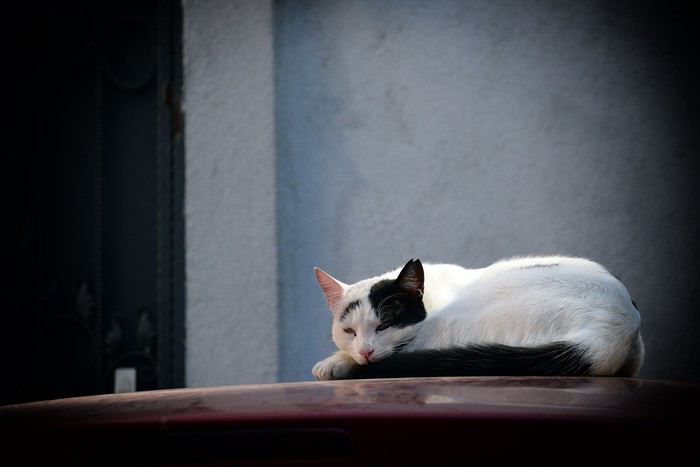
* For the title of my travel journal, I was inspired by the lovely film: "Kedi, Cats and Men" by Ceyda Torum
Glancing at the Bosphorus through the bay window of my room, I absentmindedly scatter my things while quietly settling in. Then I turn around, looking for my passport, my cash, my camera battery, eager to join the buzz of the street below. But for the past few minutes, I’ve felt a presence—something moved on the balcony. Suddenly, I spot a black-and-white furball half-hidden behind a pot, nearby. I approach to introduce myself: "Here, kitty, kitty..." I don’t know how to say "kitty" in Turkish, but the rather rude furball hisses in my face, and its ridiculous little tail doubles in size. Okay. Not friendly. I grab what’s within reach—a cream capsule—and offer it as a peace offering. It lunges at me, swipes the object away with a quick paw, and scratches me in the process.
I’m in Istanbul *
* For the title of my travel journal, I was inspired by the lovely film: "Kedi, Cats and Men" by Ceyda Torum