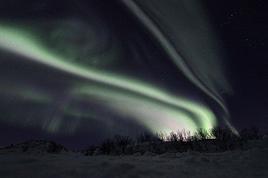
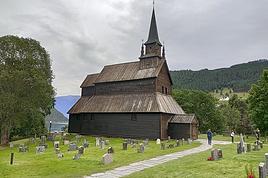
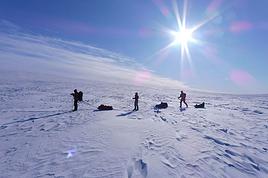
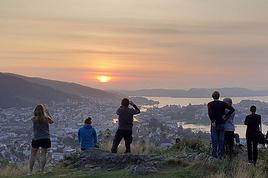
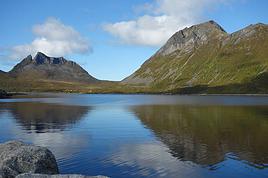
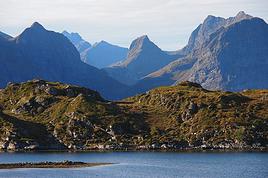
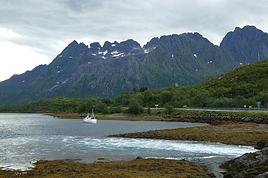
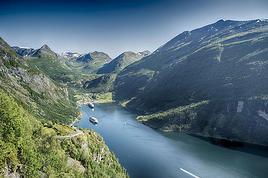
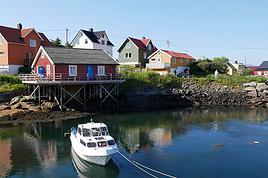
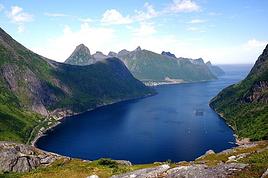
Our trip to Norway was two years ago already, but I thought it might still be of interest—and it’ll let me relive it a bit by proxy.
Before booking our flight tickets, we debated the route: should we prioritize the north with the Lofoten and Senja islands, or the south with its countless fjords? I was tempted to stay in the south—the country is so vast, and the drive north is long... but my husband really didn’t want to miss the Lofoten. In the end, we figured that since Norway is known for being expensive, we might only visit once (funny how we said the same thing before our first trip to the American West, and look how that turned out 😎), so we didn’t want to skip anything. That meant a 2–3 day drive up north. With 22 days on the ground, it was doable. Especially since, as usual, we skip big cities and gave Oslo a pass.
Practical details:
- Flight tickets: 1195 € for 4 with Air France (Paris–Oslo outbound, Tromsø–Bergen–Paris return)
- Car rental: 2020 € for 21 days (including the outrageous drop-off fee between Oslo and Tromsø—about 1000 €)
- Tolls and ferries: 250 € for the portion billed directly by the rental company. Some ferries required advance booking and payment at the time of reservation—I’ll note their prices as I go through the story.
- Hotels: 4135 €, averaging 188 € per night. We blew past our usual budgets from trips to the U.S., but oh well...
- Food: 1570 €, averaging 71 € per day for 4 in a country where everything’s expensive... How’d we manage? We rarely ate out, mostly grocery shopped, and even packed half a suitcase with non-perishables: pasta, rice, a few cans, and even some cured sausage! We also stayed 3 nights at Clarion Collection hotels, where an evening buffet was included in the room rate.
Hi there,
I'm starting a new travel journal with my itinerary and memories in mind, and maybe a few photos if I can find some.
The context:
April 2020, I was supposed to go to Uzbekistan, and October 2020 to Texas: both canceled due to COVID. Summer vacations in 2020 weren’t gonna be fun. Optimistic, I’d rescheduled both trips for roughly the same dates in 2021: the first was canceled again because of COVID, the second due to U.S. entry conditions (still COVID-related!). Summer vacations in 2021 *had* to be more fun, or I was gonna lose it!!! Plus, our parents are dealing with health issues, which is weighing us down—we really need to get away!
So I looked into where we could go, somewhere we could live almost normally. I saw that Madeira had implemented strict COVID measures but that life on the island was pretty chill afterward. For me, Madeira = sun + hiking + landscapes. BINGO.
Day 1: The flight and arrival on the island
Flight with TAP via Lisbon, departing around noon. We wore our masks properly on the plane. (My last flight was to Portugal, and I told myself I’d break the jinx and leave COVID behind us.) Layover in Lisbon, then an afternoon flight to Madeira. The landing went smoothly, no wind. Cristiano Ronaldo Airport in Funchal is known for being one of the trickiest in the world due to crosswinds. The checks were standard, except COVID added an extra step. Before the trip, I had to fill out a questionnaire (Madeira Safe). Once there, a group of young people—probably students—greeted us, each with a tablet. The health questionnaire and vaccine check were super quick. Then we saw a doctor, and just like that, we were wished a great stay. Honestly, it was so well organized that it only took 10 minutes. We wouldn’t put our masks back on until we returned!
A taxi took us to our hotel in the hills above Funchal—a pretty upscale place, which isn’t our usual style, but we needed it this time! Dinner on the hotel terrace with the city at our feet. Amazing!
HOTEL: Quinta da Bela Vista
The +: We’re traveling!!! The -: Nothing.
The context:
April 2020, I was supposed to go to Uzbekistan, and October 2020 to Texas: both canceled due to COVID. Summer vacations in 2020 weren’t gonna be fun. Optimistic, I’d rescheduled both trips for roughly the same dates in 2021: the first was canceled again because of COVID, the second due to U.S. entry conditions (still COVID-related!). Summer vacations in 2021 *had* to be more fun, or I was gonna lose it!!! Plus, our parents are dealing with health issues, which is weighing us down—we really need to get away!
So I looked into where we could go, somewhere we could live almost normally. I saw that Madeira had implemented strict COVID measures but that life on the island was pretty chill afterward. For me, Madeira = sun + hiking + landscapes. BINGO.
Day 1: The flight and arrival on the island
Flight with TAP via Lisbon, departing around noon. We wore our masks properly on the plane. (My last flight was to Portugal, and I told myself I’d break the jinx and leave COVID behind us.) Layover in Lisbon, then an afternoon flight to Madeira. The landing went smoothly, no wind. Cristiano Ronaldo Airport in Funchal is known for being one of the trickiest in the world due to crosswinds. The checks were standard, except COVID added an extra step. Before the trip, I had to fill out a questionnaire (Madeira Safe). Once there, a group of young people—probably students—greeted us, each with a tablet. The health questionnaire and vaccine check were super quick. Then we saw a doctor, and just like that, we were wished a great stay. Honestly, it was so well organized that it only took 10 minutes. We wouldn’t put our masks back on until we returned!
A taxi took us to our hotel in the hills above Funchal—a pretty upscale place, which isn’t our usual style, but we needed it this time! Dinner on the hotel terrace with the city at our feet. Amazing!
HOTEL: Quinta da Bela Vista
The +: We’re traveling!!! The -: Nothing.
Since no travel journal has been posted about this destination since 2020, I’m giving it a go—maybe it’ll jog some memories for a few of you or give others a few ideas... even if, in the end, there isn’t much to tell 😎!
Even though the itinerary was as classic as can be, it still led to a few brain knots: in what order? How many nights on each island? Rent a car or not?
In short, plenty of existential questions to land on 4 nights per island, finishing with Mahé to avoid any nasty surprises before the return flight.
Saturday 03/22: Flight to Mahé with Qatar Airways (no—or rather, no more—direct flights from Paris 😕) A nice surprise at CDG with the discovery of a new lounge in Terminal 1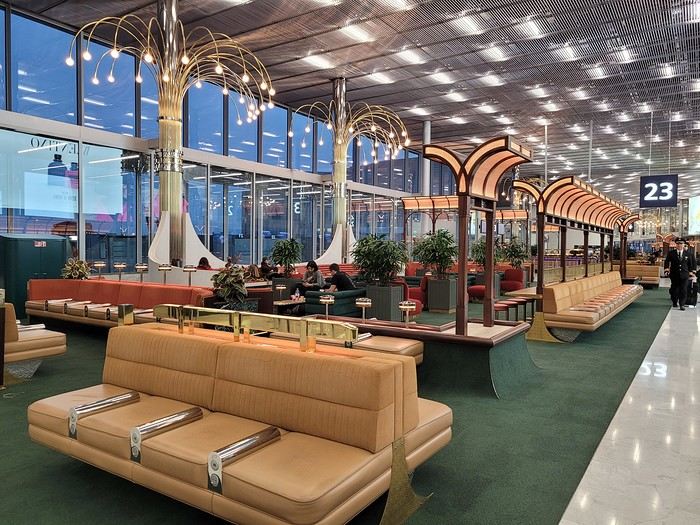
Then, an in-depth exploration of Doha Airport thanks to (or because of) a loooong layover:
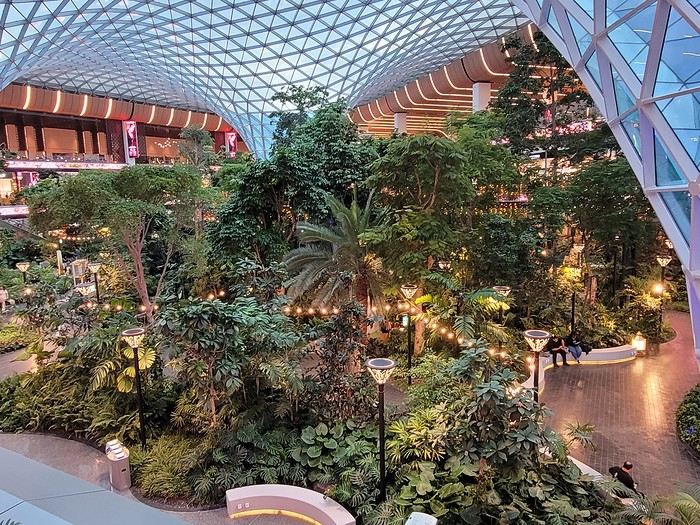
And finally, arrival at the tiny Mahé airport where we step onto the tarmac feeling like we’ve walked into a steam room
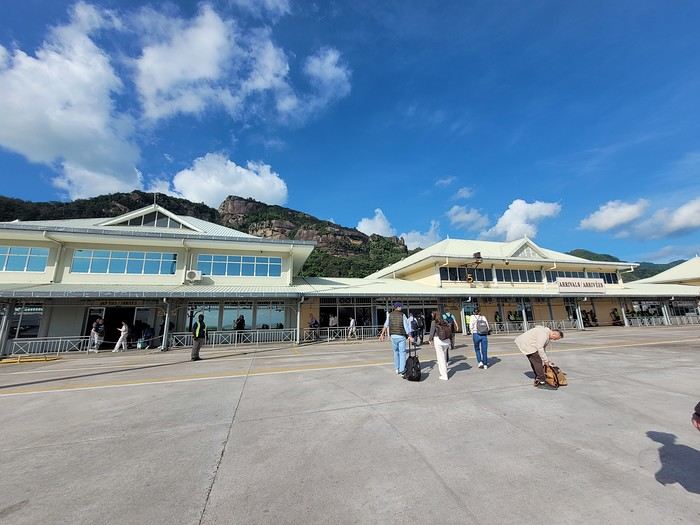 Baggage claim is quick, the shuttle to the port is on time, the ferry is punctual (we, on the other hand, are *very* early for it ), and there’s Praslin in sight:
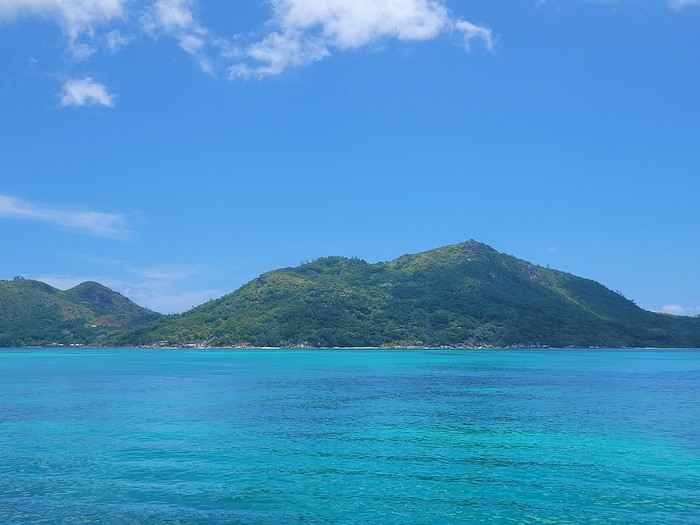
... with a sneak peek of the sea’s colors 🙂 Quick note on the photos: most were taken with a smartphone, and the colors are a bit more saturated than in real life (I did bring my hybrid camera, but in the end, I barely used it since it wasn’t very practical to lug around on the water or for snorkeling).
We pick up the car (a Grand i10 instead of a Picanto) from a muddy parking lot (it just rained) and off we go—of course, with a windshield wiper instead of the turn signal 😎, left-hand driving obliges. In just a few minutes, we arrive at our accommodation for these 4 nights on Praslin (Oh, and now the "lien" tab isn’t working! ) We’re blown away by the view from the terrace:
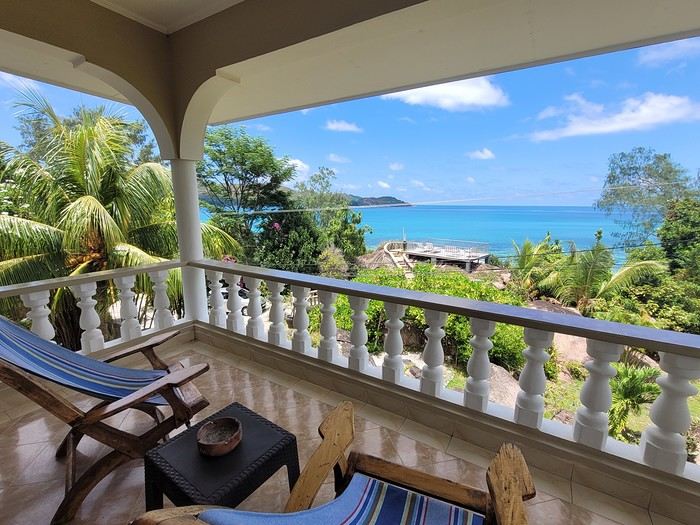
Then by the view from the little shared terrace on a promontory:
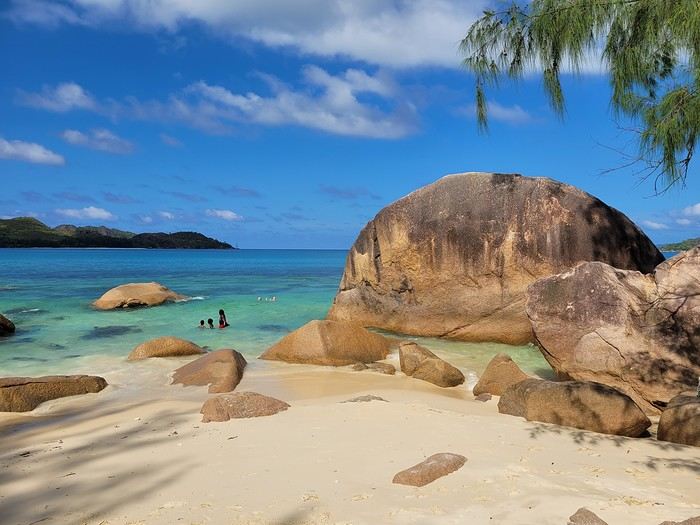
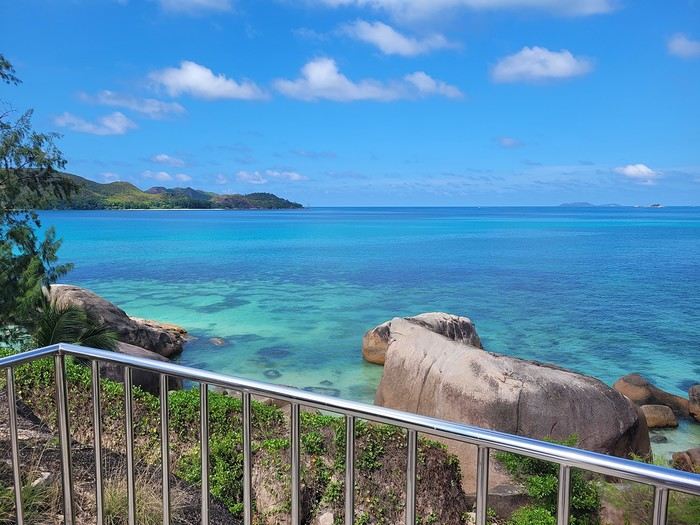 Before heading to test the water temperature on the other side of the road, at Anse Boudin, and spotting our first fish.
Saturday 03/22: Flight to Mahé with Qatar Airways (no—or rather, no more—direct flights from Paris 😕) A nice surprise at CDG with the discovery of a new lounge in Terminal 1
Then, an in-depth exploration of Doha Airport thanks to (or because of) a loooong layover:
And finally, arrival at the tiny Mahé airport where we step onto the tarmac feeling like we’ve walked into a steam room
Baggage claim is quick, the shuttle to the port is on time, the ferry is punctual (we, on the other hand, are *very* early for it ), and there’s Praslin in sight:... with a sneak peek of the sea’s colors 🙂 Quick note on the photos: most were taken with a smartphone, and the colors are a bit more saturated than in real life (I did bring my hybrid camera, but in the end, I barely used it since it wasn’t very practical to lug around on the water or for snorkeling).
We pick up the car (a Grand i10 instead of a Picanto) from a muddy parking lot (it just rained) and off we go—of course, with a windshield wiper instead of the turn signal 😎, left-hand driving obliges. In just a few minutes, we arrive at our accommodation for these 4 nights on Praslin (Oh, and now the "lien" tab isn’t working! ) We’re blown away by the view from the terrace:
Then by the view from the little shared terrace on a promontory:
Before heading to test the water temperature on the other side of the road, at Anse Boudin, and spotting our first fish.
Hi everyone,
I’m taking advantage of the forum’s long-awaited reopening to dive back into my memories and start my first travel journal, destination Uganda!
Why Uganda?
Choosing this destination was almost by chance. I’d already traveled to East Africa two years earlier, to Kenya, and loved the experience. Of course, I wanted to return to the region and see that abundant wildlife I’d enjoyed so much. But Uganda wasn’t really on my radar... While looking for a destination for a two-week trip in May 2023, I came across cheap flights (~400 €) with Kenya Airways to Entebbe. Why not, I thought? I started looking into the country.
How did the trip go?
Most travelers whose posts I read had organized their trip with an agency and/or rented a vehicle, with or without a driver. That’s not at all how I like to explore a country... and besides, I don’t have a license ! Digging a little deeper, I saw that it seemed possible to reach the main sights using local transport, as long as I was ready to put up with the discomfort of the journeys. Challenge accepted! On the other hand, the budget accommodations near the parks that I’d managed to find in Kenya seemed much less common here. The trip was shaping up to be expensive, especially since the highlight—gorilla trekking—requires a permit costing several hundred dollars. Yikes, sticking to a reasonable budget was going to be tricky... In the end, I found a solution. Almost all lodges offer the option to pitch a tent on their grounds for a modest price (between $10 and $20 per night). That would let me enjoy the safaris while keeping this trip "relatively" affordable.
My itinerary
After studying the Lonely Planet East Africa guide, various travel journals and blogs, and the excellent site Safari Bookings, I finally settled on an itinerary (not counting the travel days):
Entebbe – 1 day Ziwa Rhino Sanctuary – 1 day Murchison Falls National Park – 2 days Crater Lakes – 1 day Queen Elizabeth National Park – 2 days Bwindi – 3 days Lake Bunyonyi – 1 day Kampala – 1 day
See you soon for the first stop in Entebbe!
Why Uganda?
Choosing this destination was almost by chance. I’d already traveled to East Africa two years earlier, to Kenya, and loved the experience. Of course, I wanted to return to the region and see that abundant wildlife I’d enjoyed so much. But Uganda wasn’t really on my radar... While looking for a destination for a two-week trip in May 2023, I came across cheap flights (~400 €) with Kenya Airways to Entebbe. Why not, I thought? I started looking into the country.
How did the trip go?
Most travelers whose posts I read had organized their trip with an agency and/or rented a vehicle, with or without a driver. That’s not at all how I like to explore a country... and besides, I don’t have a license ! Digging a little deeper, I saw that it seemed possible to reach the main sights using local transport, as long as I was ready to put up with the discomfort of the journeys. Challenge accepted! On the other hand, the budget accommodations near the parks that I’d managed to find in Kenya seemed much less common here. The trip was shaping up to be expensive, especially since the highlight—gorilla trekking—requires a permit costing several hundred dollars. Yikes, sticking to a reasonable budget was going to be tricky... In the end, I found a solution. Almost all lodges offer the option to pitch a tent on their grounds for a modest price (between $10 and $20 per night). That would let me enjoy the safaris while keeping this trip "relatively" affordable.
My itinerary
After studying the Lonely Planet East Africa guide, various travel journals and blogs, and the excellent site Safari Bookings, I finally settled on an itinerary (not counting the travel days):
Entebbe – 1 day Ziwa Rhino Sanctuary – 1 day Murchison Falls National Park – 2 days Crater Lakes – 1 day Queen Elizabeth National Park – 2 days Bwindi – 3 days Lake Bunyonyi – 1 day Kampala – 1 day
See you soon for the first stop in Entebbe!
Ah! This trip to Texas, postponed so many times because of Covid. I wanted to discover this state, but not in the summer due to the temperatures.
I’ll try to dig into my memories since I didn’t take any notes.
Day 1: Departure
Early morning flight from Lyon to Frankfurt (I often fly with Lufthansa). We only have a 50-minute layover, but I trust German organization—it’s not just talk, since it took us only 30 minutes to get to the boarding gate. Arriving in Houston, we’re excited because it’s been 3 years since we last visited the USA, and we’ve missed it.
Everything goes smoothly with the formalities and the car rental, so 1.5 hours after landing, I park near Sam Houston Park to start our discovery. The park is pretty, clean, and has the unique feature of housing some well-preserved Victorian houses. The sun is shining, and it’s always fun to see old wooden houses surrounded by gleaming skyscrapers. A quick drive to the Rothko Chapel, which is dedicated to all faiths. There are also modern artworks in an annex building and outside. Then we head to Pasadena to reach our hotel and go to bed since we’ve been awake for a while!
Hotel: A classic Days Inn. It’s standard, but the beds are comfortable, and it’s a quiet place. The + of the day: We're back in the USA The -: Nothing
Day 2: NASA and then Galveston
Of course, we wake up super early. A quick trip to the nearby Walmart for the usual small purchases. Surprise—I can’t buy a bottle of California white wine because in Texas, there are set hours for buying alcohol. Talk about a bummer for my apéro! Next, we head to Kemah, a small, hyper-touristy port where everything is kitschy but clean and nice. It’s a bit overdone, but since NASA doesn’t open until 10 AM and it’s still early, we might as well enjoy the good weather in a pleasant spot.
We arrive at the NASA Houston center without any issues. It’s smaller than the one in Florida and organized a bit differently. There are trains that take passengers to the different sites, but you need to get tickets (included in the price), and once you’ve finished visiting one site, you have to return to the center to get a ticket for another. Not very practical.
We choose to visit the training center and the rockets, skipping the control room, which, based on the photos, looks like the one at Cape Canaveral. The training center is a cool place because it’s still in use. Engineers are working on machines and computers. We don’t see any astronauts training, but we see the space chair, the shuttle’s robotic arm, and lots of gadgets—this hangar is like Gyro Gearloose’s or Doc’s domain!
Next, we head to the rocket hangar, featuring the Saturn V, the same one as at Cape Canaveral. Finally, we wrap up our tour by returning to the center, where a Boeing 747 with a shuttle attached to its back dominates the outside. We can visit the shuttle, and we don’t miss the chance.
A few exhibits inside complete the experience and satisfy our thirst for knowledge. I love the space exploration era, and gotta say, the Americans do it right. Then we drive to Galveston, about 100 km away. Why Galveston? It’s by the sea, so swimming in late October isn’t unpleasant, and there’s a neighborhood called East End Historic District filled with stunning Victorian houses, each more beautiful than the last. Plus, it’s Halloween season, so the decorations are over the top! They really go all out!
Madame takes a swim, but I find the water too cold for my taste. Apéro (they didn’t trick me twice—I had time to go back to another Walmart!) Dinner + bedtime
Hotel: A classic Quality Inn. No issues. The +: NASA, even if it’s smaller than Cape Canaveral The -: I would’ve preferred the water in the Gulf of Mexico to be a bit warmer
Day 1: Departure
Early morning flight from Lyon to Frankfurt (I often fly with Lufthansa). We only have a 50-minute layover, but I trust German organization—it’s not just talk, since it took us only 30 minutes to get to the boarding gate. Arriving in Houston, we’re excited because it’s been 3 years since we last visited the USA, and we’ve missed it.
Everything goes smoothly with the formalities and the car rental, so 1.5 hours after landing, I park near Sam Houston Park to start our discovery. The park is pretty, clean, and has the unique feature of housing some well-preserved Victorian houses. The sun is shining, and it’s always fun to see old wooden houses surrounded by gleaming skyscrapers. A quick drive to the Rothko Chapel, which is dedicated to all faiths. There are also modern artworks in an annex building and outside. Then we head to Pasadena to reach our hotel and go to bed since we’ve been awake for a while!
Hotel: A classic Days Inn. It’s standard, but the beds are comfortable, and it’s a quiet place. The + of the day: We're back in the USA The -: Nothing
Day 2: NASA and then Galveston
Of course, we wake up super early. A quick trip to the nearby Walmart for the usual small purchases. Surprise—I can’t buy a bottle of California white wine because in Texas, there are set hours for buying alcohol. Talk about a bummer for my apéro! Next, we head to Kemah, a small, hyper-touristy port where everything is kitschy but clean and nice. It’s a bit overdone, but since NASA doesn’t open until 10 AM and it’s still early, we might as well enjoy the good weather in a pleasant spot.
We arrive at the NASA Houston center without any issues. It’s smaller than the one in Florida and organized a bit differently. There are trains that take passengers to the different sites, but you need to get tickets (included in the price), and once you’ve finished visiting one site, you have to return to the center to get a ticket for another. Not very practical.
We choose to visit the training center and the rockets, skipping the control room, which, based on the photos, looks like the one at Cape Canaveral. The training center is a cool place because it’s still in use. Engineers are working on machines and computers. We don’t see any astronauts training, but we see the space chair, the shuttle’s robotic arm, and lots of gadgets—this hangar is like Gyro Gearloose’s or Doc’s domain!
Next, we head to the rocket hangar, featuring the Saturn V, the same one as at Cape Canaveral. Finally, we wrap up our tour by returning to the center, where a Boeing 747 with a shuttle attached to its back dominates the outside. We can visit the shuttle, and we don’t miss the chance.
A few exhibits inside complete the experience and satisfy our thirst for knowledge. I love the space exploration era, and gotta say, the Americans do it right. Then we drive to Galveston, about 100 km away. Why Galveston? It’s by the sea, so swimming in late October isn’t unpleasant, and there’s a neighborhood called East End Historic District filled with stunning Victorian houses, each more beautiful than the last. Plus, it’s Halloween season, so the decorations are over the top! They really go all out!
Madame takes a swim, but I find the water too cold for my taste. Apéro (they didn’t trick me twice—I had time to go back to another Walmart!) Dinner + bedtime
Hotel: A classic Quality Inn. No issues. The +: NASA, even if it’s smaller than Cape Canaveral The -: I would’ve preferred the water in the Gulf of Mexico to be a bit warmer
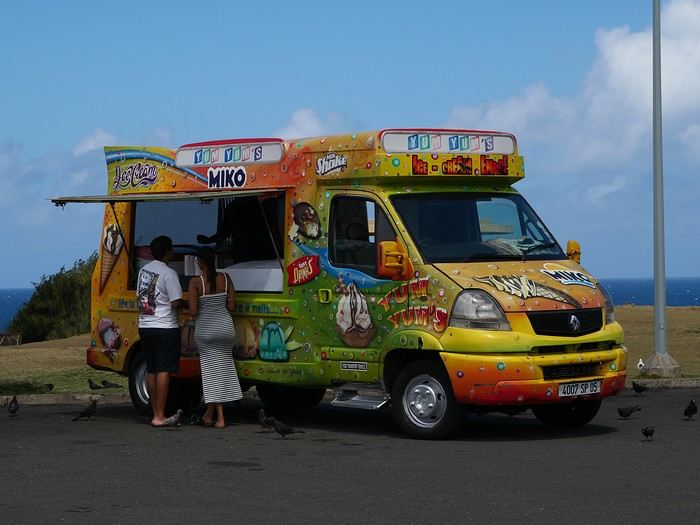
The recipe for the cocktail: endless beaches, a dazzling palette of colors, some breathtaking hikes, and excellent cuisine...
For the tasting, follow along in the pages of this travel journal! 😉
Don’t forget your hiking shoes, a swimsuit, sunscreen, but also a sweater, your driver’s license, and your credit card...
Just over 11 hours of flight, and we’ll be setting foot on Mauritian soil!
For the tasting, follow along in the pages of this travel journal! 😉
Don’t forget your hiking shoes, a swimsuit, sunscreen, but also a sweater, your driver’s license, and your credit card...
Just over 11 hours of flight, and we’ll be setting foot on Mauritian soil!
Hi there,
It’s not always easy to pick where to stay in national parks... like Kruger, for example.
Below is an attempt to decode the different types and options...
Remember, to book in a national park, you do it through the Sanparks website, except in KwaZulu-Natal (KZN Wildlife).
Choosing the type of camp that suits you: · Main Rest Camps, Satellite Camps, Bushveld Camps, Overnight Hides, Bush Lodges, Camp Site, Luxury Lodges Main Rest Camps These camps are usually quite large, even very large, like Skukuza. They have a fence! You can move around freely inside these camps at night with a torch. Staff are available, and there are security guards. Shops are more or less well-stocked but have the basics. You’ll find souvenir shops, restaurants, bars, and most often a pool. Depending on your choice, there are camping spots, chalets, huts, etc., with varying levels of comfort. Shared kitchens, shared bathrooms, or private facilities in each accommodation (see below). This isn’t the "wild" version but rather the more luxurious and secure option. Bushveld Camps Smaller and more intimate, with some amenities, but no restaurants or shops. Check if there’s a fence. Satellite Camps Always close to the main camps (more or less). As a rule, you check in at the main camp. Comfort level is lower than the options above. Check if there’s a fence. Camp Site + Overnight Hide The wildest level. That says it all. Bush Lodges + Luxury Lodges Bush lodges: exclusive environment. Since I haven’t tried them, I can’t give any tips. Luxury lodges: well, the name says it all. This is Kruger’s version of a private game reserve lodge. Game drives with a ranger in an open vehicle. Accommodation ranges from luxurious to very luxurious. Meals and lodging are of the same standard. But even so, the game drive rules are the same. Sure, you get exclusive access to a small area, but you can’t leave the marked trails, and normally, the return time to camp is exactly the same. The rule actually says that exceptionally, if there’s a great opportunity within x meters, they *might* go off-trail. First case in the far south: a very flexible ranger and an amazing game drive. Second case: a mediocre ranger and a boring game drive. Note that some may only offer lodging. Personally, I think the added value can be excessively expensive. Choosing your accommodation within a camp. This depends on the camp. Below is an attempt to decode. Camp site: just a spot, that’s it. Access to facilities like toilets, shared kitchen, etc. Huts: basic amenities, usually just a fan. Safari tent: the name says it all. It’s already set up. Bungalow: well, it’s a bungalow, and a guest house is a bungalow for a group. Decoding: AC = air conditioning. Fan = fan. Private or shared toilets. Private or shared bathroom. Equipped kitchen or shared. Terrace. Perimeter or not. View or not. First 2–5 letters — the type of accommodation.
CK = Campsite EH/EA/EB = Hut (AC, so air-conditioned) ES = Hut (fan only) CTT/ST= Safari Tent LBVST = Safari Tent with bush view LRVST = Safari Tent with river view BD/BA = Bungalow with private (and equipped) kitchen BG/BE = Bungalow with shared kitchen F, G or CO = Guesthouse or Cottages (more than one bedroom)
Number after the letters — number of beds 2, 3, 4, or 6 beds. The base price is for 2 people. There’s an extra charge for each additional person. The last letter, if present, indicates a particular feature.
U = Perimeter — close to the camp’s edge V = Perimeter + view (e.g., river) Z = For disabled access L = Large spot (camping) D = DSTV (television) E = Enclosed veranda
Example: BD3U = 3 people, private kitchen (and bathroom/toilet), perimeter with view.
Choosing the type of camp that suits you: · Main Rest Camps, Satellite Camps, Bushveld Camps, Overnight Hides, Bush Lodges, Camp Site, Luxury Lodges Main Rest Camps These camps are usually quite large, even very large, like Skukuza. They have a fence! You can move around freely inside these camps at night with a torch. Staff are available, and there are security guards. Shops are more or less well-stocked but have the basics. You’ll find souvenir shops, restaurants, bars, and most often a pool. Depending on your choice, there are camping spots, chalets, huts, etc., with varying levels of comfort. Shared kitchens, shared bathrooms, or private facilities in each accommodation (see below). This isn’t the "wild" version but rather the more luxurious and secure option. Bushveld Camps Smaller and more intimate, with some amenities, but no restaurants or shops. Check if there’s a fence. Satellite Camps Always close to the main camps (more or less). As a rule, you check in at the main camp. Comfort level is lower than the options above. Check if there’s a fence. Camp Site + Overnight Hide The wildest level. That says it all. Bush Lodges + Luxury Lodges Bush lodges: exclusive environment. Since I haven’t tried them, I can’t give any tips. Luxury lodges: well, the name says it all. This is Kruger’s version of a private game reserve lodge. Game drives with a ranger in an open vehicle. Accommodation ranges from luxurious to very luxurious. Meals and lodging are of the same standard. But even so, the game drive rules are the same. Sure, you get exclusive access to a small area, but you can’t leave the marked trails, and normally, the return time to camp is exactly the same. The rule actually says that exceptionally, if there’s a great opportunity within x meters, they *might* go off-trail. First case in the far south: a very flexible ranger and an amazing game drive. Second case: a mediocre ranger and a boring game drive. Note that some may only offer lodging. Personally, I think the added value can be excessively expensive. Choosing your accommodation within a camp. This depends on the camp. Below is an attempt to decode. Camp site: just a spot, that’s it. Access to facilities like toilets, shared kitchen, etc. Huts: basic amenities, usually just a fan. Safari tent: the name says it all. It’s already set up. Bungalow: well, it’s a bungalow, and a guest house is a bungalow for a group. Decoding: AC = air conditioning. Fan = fan. Private or shared toilets. Private or shared bathroom. Equipped kitchen or shared. Terrace. Perimeter or not. View or not. First 2–5 letters — the type of accommodation.
CK = Campsite EH/EA/EB = Hut (AC, so air-conditioned) ES = Hut (fan only) CTT/ST= Safari Tent LBVST = Safari Tent with bush view LRVST = Safari Tent with river view BD/BA = Bungalow with private (and equipped) kitchen BG/BE = Bungalow with shared kitchen F, G or CO = Guesthouse or Cottages (more than one bedroom)
Number after the letters — number of beds 2, 3, 4, or 6 beds. The base price is for 2 people. There’s an extra charge for each additional person. The last letter, if present, indicates a particular feature.
U = Perimeter — close to the camp’s edge V = Perimeter + view (e.g., river) Z = For disabled access L = Large spot (camping) D = DSTV (television) E = Enclosed veranda
Example: BD3U = 3 people, private kitchen (and bathroom/toilet), perimeter with view.
Why not Malta? We thought it was an original, off-the-beaten-path destination...
The advantage is there’s a direct flight from Toulouse, our departure city. That’s what convinced us to take a week-long couple’s trip to Malta.
I had booked the accommodations (breakfast included) + an airport/hotel transfer on Booking.
First stop: VILLA DEL PORTO, a very pleasant guest house in a great location. We were welcomed by the owner, who gave us all the info we needed to get around. How to get to Valletta? By ferry shuttle. Valletta Ferry Service - Cospicua.
And for everything else, a brilliant app for the buses that crisscross the island: TALLINJA. I highly recommend this app. We traveled by bus all week without any issues.
The next day, we spent the day in Valletta, the capital. That’s when we realized this destination is actually very popular—streets packed with thousands of tourists! Luckily, we managed to navigate through parallel alleys and find small hostels or bars to eat or grab a drink. The city is stunning and steeped in history.
On the third day, we took the bus to the south of the island: MARSAXLOKK. A charming, authentic fishing port with plenty of waterfront restaurants and souvenir shops. We ate at CAFÉ DE PARIS—a delicious fresh fish, perfectly prepared.
On the way back, we wandered through the beautiful town of Senglea. Then we ordered takeout from D VIRI'S TAKE AWAY near the guest house via email. It was delicious!
On the fourth day, we left Villa del Porto and headed to Valletta by ferry to catch the GOZO FAST FERRY—a 45-minute catamaran ride to the island of Gozo.
After a good lunch by the port, we took the bus to our destination: XLENDI.
A village at the end of a gorgeous bay. We stayed at the San Andrea Hotel—a small room with a balcony and sea view.
Fifth day: Bus to Victoria. A magnificent citadel, a meal at a small bar in Piazza San Frangisk, then we continued by bus to the north, stopping in Marsalforn for coffee by the sea and a short walk to the natural salt pans carved into the rock. Back to the hotel by bus.
Sixth day: A short walk to Xlendi Tower, a watchtower at the entrance of the bay, beautifully restored. Then we set off on a sea excursion in a small boat for six passengers. Honestly, I recommend it! Two hours cruising along the breathtaking coastline and turquoise sea—20 € per person. www.gozoboathire.com
Delicious lunch on the terrace at "The Boathouse Restaurant."
Seventh day: We packed our bags again and returned to Malta by ferry to Cirkewwa. The terminal isn’t very welcoming—you have to take a bus to find a town.
We had lunch in Mellieha, then continued our journey, still using local buses, to RABAT, next to the ancient fortified city of MDINA. Another stunning city we explored at our own pace once the tourists had left.
Eighth day: Bus to the airport.
In conclusion, we’re thrilled with our trip. Of course, we didn’t see all the sites recommended by guidebooks, but we wandered at our own rhythm and came back with a head full of memories, images, and great moments spent in Malta and Gozo.
Villa Del Porto Address: Marina Street 1, KKR 1521 Kalkara, Malta Phone: +356 2166 8420 GPS Coordinates: N 035° 53.399, E 14° 31.557
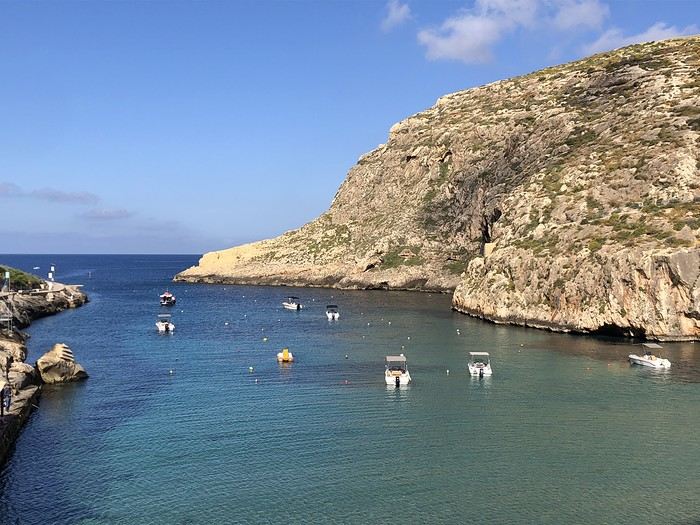 Xlendi Bay
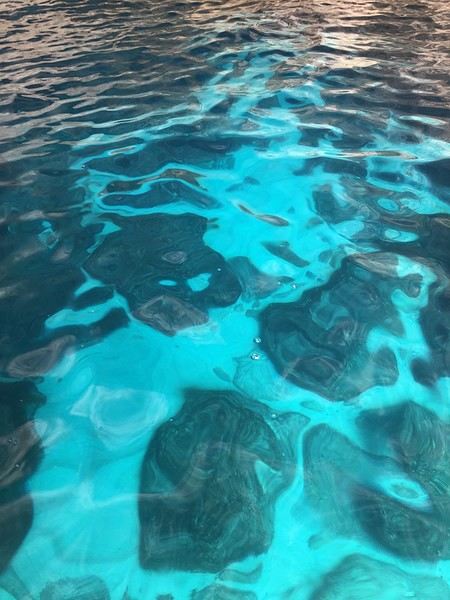 the seabeds in the coves
Villa Del Porto Address: Marina Street 1, KKR 1521 Kalkara, Malta Phone: +356 2166 8420 GPS Coordinates: N 035° 53.399, E 14° 31.557
Xlendi Bay
the seabeds in the coves
A little recap of my 28-day solo trip from mid-November to mid-December 2024.
CDG to Santiago with Air France, first night near the airport at City Express by Marriott Airport. No shuttle as planned, but I expected it, so on the advice of a kind Chilean, I took Trans Vip at the airport counter. It was great—I’ll download the app—easy, cheap, and on time. The hotel arranged the return trip to the airport the next morning for my flight to Easter Island. I booked my flight with Latam via Booking, as well as my accommodation: Hare o Koro (formerly Vai Kapua, French spoken). Warm welcome with a flower lei and a quick city tour with Marieta and her husband. The place was clean, well-located, and included breakfast. All the tours were done with the family for a very reasonable price (personalized service with fun anecdotes!!). They even gave me souvenirs for the trip back—a great place to recommend! 🙂.
Back to Santiago for a night at Quinta by Wyndham. Again, no shuttle, the room was very comfortable, but no hot water or breakfast due to an early departure. The airport shuttle was fine, but I won’t stay here again. Off to Ushuaia with Aerolíneas Argentinas—I booked the flight directly on their site with a longer layover due to a plane change (tip from a fellow traveler). Took a taxi to Isla Bella, which included lunch. The place was clean, heated, and a nice surprise—Monica speaks French! It’s 15 minutes from the center, but the way back is a steep climb. I booked 3 excursions with the agency Brasileiros em—great experience! Next door, there’s a clothing store where I rented waterproof shoes for the Laguna Esmeralda trek, and I’m glad I did!! After 4 nights, back to Santiago for 1 night at Happy Hostel (breakfast included).
For the experience, I took the Bus Ciktur to Calama—a 22h30 semi-cama ride with a toilet, movies, and TV in the evening, then a 1h30 bus to San Pedro de Atacama. Stayed at Hotel Sonchek, well-located, no breakfast but a shared kitchen with coffee and tea available. Moïssa speaks French and recommended the agency Gato Andino for my excursions—great choice! I ended with the Geysers del Tatio without taking altitude meds, just coca leaf tea! Spent 4 nights there, then back to Santiago with Sky Airlines. Returned to Happy Hostel since it’s well-located in the historic center.
Took the Turistik bus for 2 days (48 €), including the teleferico for Cerro San Cristóbal (the funicular wasn’t working). Valparaíso and Viña del Mar with the same agency—Valparaíso is stunning, but the guide wasn’t great. SKY COSTANERA had an impressive view (18 €). Near the hotel in the Brazil neighborhood, you can eat local and cheap at Foxtim Burger.
All in all, great encounters—the Chileans are friendly and helpful!!!!
Back to Santiago for a night at Quinta by Wyndham. Again, no shuttle, the room was very comfortable, but no hot water or breakfast due to an early departure. The airport shuttle was fine, but I won’t stay here again. Off to Ushuaia with Aerolíneas Argentinas—I booked the flight directly on their site with a longer layover due to a plane change (tip from a fellow traveler). Took a taxi to Isla Bella, which included lunch. The place was clean, heated, and a nice surprise—Monica speaks French! It’s 15 minutes from the center, but the way back is a steep climb. I booked 3 excursions with the agency Brasileiros em—great experience! Next door, there’s a clothing store where I rented waterproof shoes for the Laguna Esmeralda trek, and I’m glad I did!! After 4 nights, back to Santiago for 1 night at Happy Hostel (breakfast included).
For the experience, I took the Bus Ciktur to Calama—a 22h30 semi-cama ride with a toilet, movies, and TV in the evening, then a 1h30 bus to San Pedro de Atacama. Stayed at Hotel Sonchek, well-located, no breakfast but a shared kitchen with coffee and tea available. Moïssa speaks French and recommended the agency Gato Andino for my excursions—great choice! I ended with the Geysers del Tatio without taking altitude meds, just coca leaf tea! Spent 4 nights there, then back to Santiago with Sky Airlines. Returned to Happy Hostel since it’s well-located in the historic center.
Took the Turistik bus for 2 days (48 €), including the teleferico for Cerro San Cristóbal (the funicular wasn’t working). Valparaíso and Viña del Mar with the same agency—Valparaíso is stunning, but the guide wasn’t great. SKY COSTANERA had an impressive view (18 €). Near the hotel in the Brazil neighborhood, you can eat local and cheap at Foxtim Burger.
All in all, great encounters—the Chileans are friendly and helpful!!!!
14-Day Trip Report to Milos and Kimolos in September-October 2021
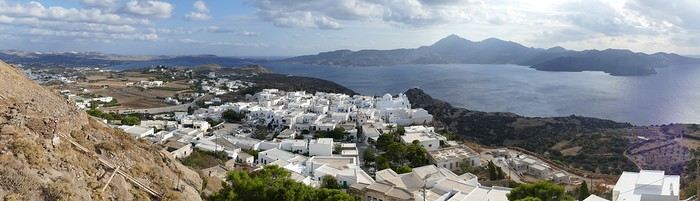
The village of Plaka in Milos
It was with great pleasure that we finally reconnected with our old habits as inveterate travelers! Greece, and more specifically the Greek islands, was the natural choice for us. After having already visited many Greek islands during around 18 trips, we decided to revisit islands we had seen over 40 years ago, like Milos, where our memories were extremely hazy. Our route was well-planned and familiar: a low-cost flight from Basel-Mulhouse to Athens, then a traditional ferry from Piraeus to Milos. Taking a speedboat, which is faster, would have forced us to spend a night in Piraeus. Plus, we felt that the traditional ferry was part of the journey, and with good weather, spending eight hours on deck wasn’t unpleasant at all. Watching the docking maneuvers with the comings and goings of trucks and cars, observing the passengers, reading a book, or admiring the scenery—all of that is part of the travel experience. Milos Island: Accommodation in Adamas We arrived quite late, around 11 PM, in Adamas, the port of Milos. No worries—the friendly couple managing the apartment was waiting for us, and it was just a 10-minute walk from the port. The first two days were spent unwinding, with swimming at the nearby beach, strolling through Adamas, and relaxing.
Discovering Plaka On the third day, we took the path along the small beach west of town toward a French military cemetery! A historical reminder of our presence here during the Crimean War, among others. The path climbs toward a beacon perched on top of a hill before disappearing into the scrubland. We returned to Adamas for lunch on our terrace.
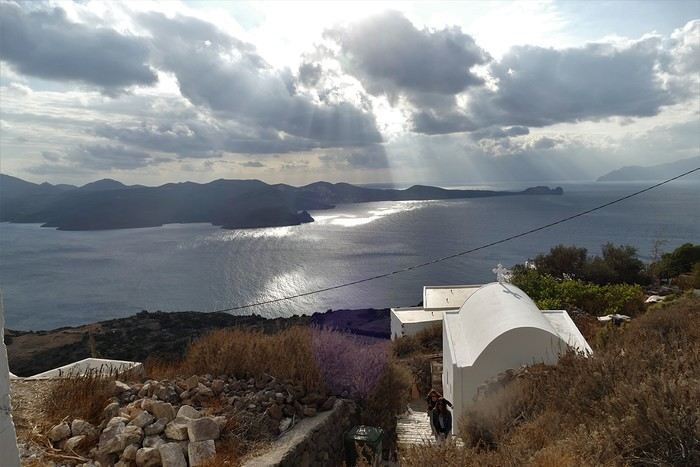
In the afternoon, we visited the hilltop village of Plaka by bus from Adamas. Plaka is the original old town, dominated by a church and, even higher up, the ruins of the Kastro. The view is magnificent. We stopped at a pastry shop in the village to enjoy excellent orange cakes and baklavas. Back in Adamas, we checked out car rental agencies to be more mobile, though the bus network seemed quite extensive. It costs around 40 € per day, plus 8 € if you want to significantly reduce the deductible. Port of Klima.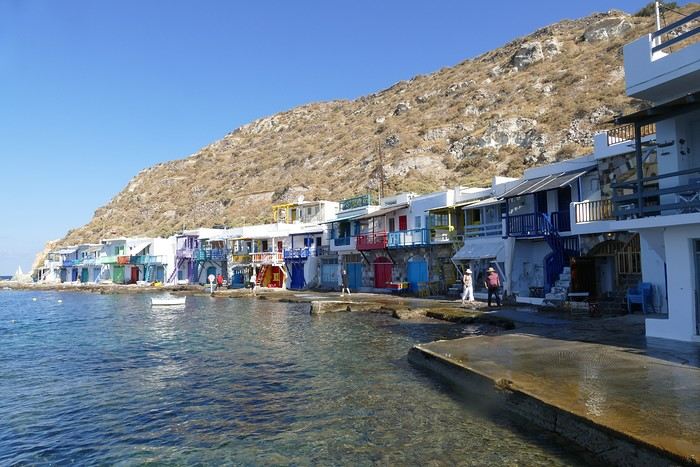
Yesterday’s weather was quite mixed with lots of clouds, but today the sun is shining again. We drove to the small port of Klima, famous for its boat garages called "sirmatas." It’s true that in the morning sun, these boat garages carved into the volcanic tuff are beautifully lit, turning the village into a colorful mosaic. Above the village, a path climbs directly to the magnificent Roman theater overlooking the surroundings and the sea.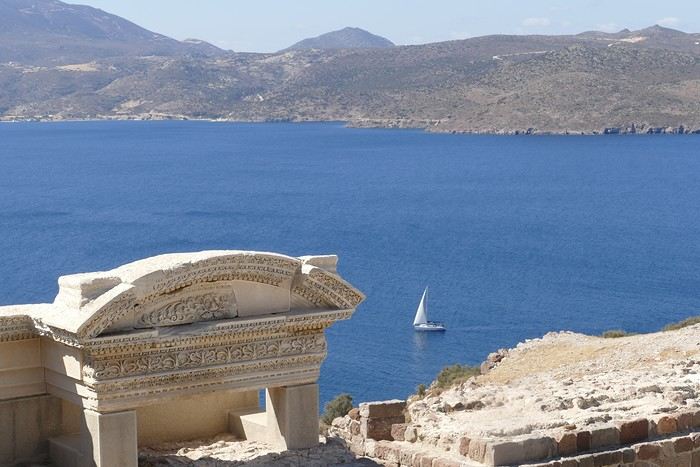 Following the well-marked path, we reached the road leading 200 meters down to the catacombs. It’s an impressive complex of 3rd and 4th-century catacombs, though only a small part is open to visitors—it’s still very moving. In the mid-afternoon, we got back in the car to visit the tiny ports of Firopotamos and Mandraki, which also have their colorful sirmatas. We took the opportunity to swim at the small beach in Mandraki, where the water was warm and calm.
Mandraki Port. We had a decent dinner at a seaside restaurant in Adamas, though you have to be selective—we had a bad experience at Kynigos on the second night!
Moving to Polonia in Eastern Milos, Sarakiniko Site
Following the well-marked path, we reached the road leading 200 meters down to the catacombs. It’s an impressive complex of 3rd and 4th-century catacombs, though only a small part is open to visitors—it’s still very moving. In the mid-afternoon, we got back in the car to visit the tiny ports of Firopotamos and Mandraki, which also have their colorful sirmatas. We took the opportunity to swim at the small beach in Mandraki, where the water was warm and calm.
Mandraki Port. We had a decent dinner at a seaside restaurant in Adamas, though you have to be selective—we had a bad experience at Kynigos on the second night!
Moving to Polonia in Eastern Milos, Sarakiniko Site
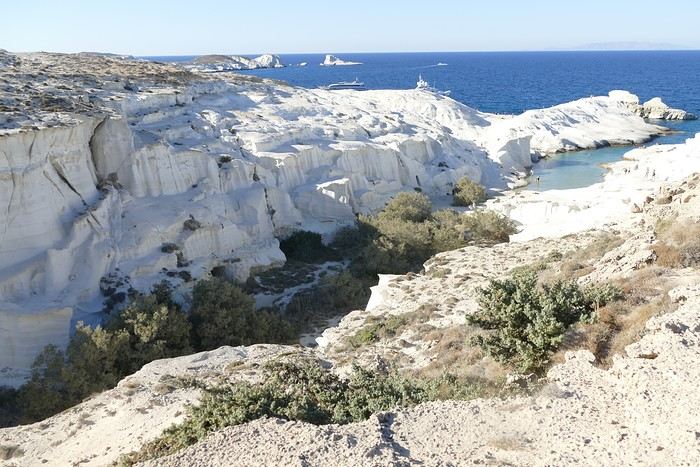
The Sarakiniko site We left Adamas for a second stay on Milos, this time in Polonia. The rental Panda was packed with the four of us and our luggage! Our apartment was in a beautiful house surrounded by a grove, so our lovely terrace was well-shaded. Luckily, there was a small beach nearby, and we went for a swim right away. Apart from us, there were only three other swimmers—definitely the end of the season!
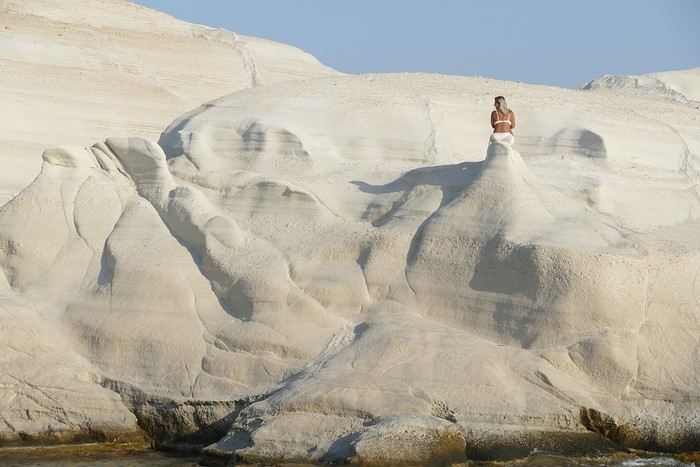
"Fairy chimney"! In the afternoon, we visited the famous Sarakiniko site, Milos’ emblematic spot. Judging by the number of cars in the parking lot, we wouldn’t be alone. As we approached, we heard an indefinable rock/punk/metal music: some young people had brought a sound system and a foghorn and were having fun diving off a fairly high cliff to impress the crowd. It definitely spoiled the visit. Most spots were taken by couples busy taking selfies, so getting photos of the site without tourists was impossible. Still, the site is magnificent, with its white cliffs looking like they’re covered in whipped cream! The sun was still very bright, reflecting strongly off the cliffs, making photography difficult due to the excessive brightness. We had a fish dinner in Polonia at the Enalion restaurant: while the octopus and squid were good, the fish soup tasted more like vegetable soup with a few fish crumbs—too bad.
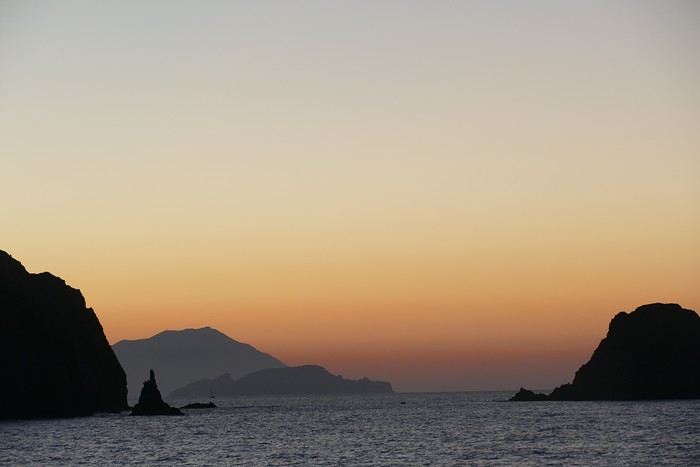
Sunset in Polonia
Ports of Papafranga and Mytikos We continued our exploration of Milos with the Papafranga gorge, a narrow and deep gorge that opens to the sea, where the water is a stunning color. Access via an unstable and dangerous path is prohibited, but that didn’t stop a couple of tourists in flip-flops from venturing in!!! We then swam in the tiny, calm, and sheltered cove of the small port of Mytikos. We returned to Polonia for lunch at Alkis: excellent moussaka. In the late afternoon, Pat and I went out to take some photos just before sunset near the Agios Nikolaos chapel, the beacon, and the new Petakoudia neighborhood next to Polonia to the north.
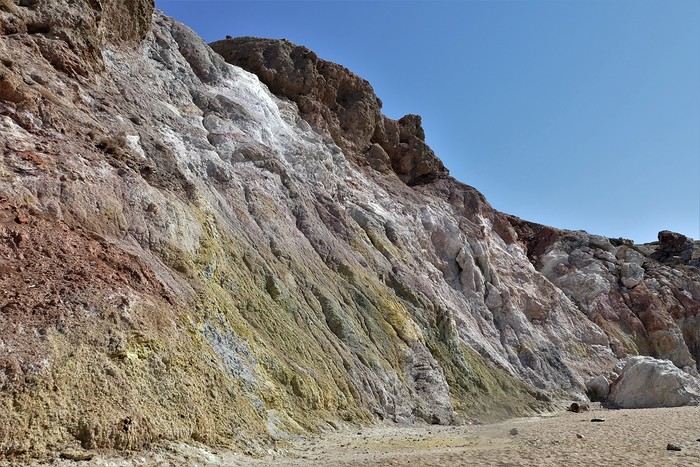
Paleochori Beach
Toward the Multicolored Beach of Paleochori Another sunny day: we still had to discover Paleochori Beach in the south of the island. It was 10:30 AM, and the beach was almost deserted! The water was pleasant, though a bit chilly when we first entered. The beach is bordered by a cliff that, in some places, displays a beautiful multicolored palette. We returned to Polonia in the late afternoon, and Pat and I headed toward Vouddhia Beach south of Polonia—bad choice. The beach is surrounded by a huge mining site served by a dusty road where lines of trucks loaded with ore cross paths. It’s the other side of the coin, and Greece still has progress to make in this area. Dinner at Alki’s was just as good as always. Return to the Sarakiniko Site Early this morning, Pat and I went back to the Sarakiniko site, hoping to take photos in better conditions. While there were fewer people, the parking lot was still full because sunrise is a must in Milos. Still, the conditions were good, and the sunrise spectators left quickly once the sun had risen above the horizon. During the day, an increasingly strong wind cooled the atmosphere, making swimming less enjoyable. Departure for Kimolos Island We changed islands and left Milos for Kimolos, a nearby island—just a 30-minute trip from Polonia’s port. Our apartment was at the entrance of the hilltop village. It’s a village with typical Cycladic architecture, featuring the remains of an old kastro, a few old churches, and windmill towers perched on the hill. We dined in a tiny tavern where the small outdoor tables were squeezed against the walls to let passersby through! As soon as the sun disappeared, it got cold, especially because of the wind. Ports of Kara and Goupa This morning, we explored the small hamlets of Kara and Goupa by Rema Beach, east of the main port. There, we found the sirmatas again—those boat garages partly carved into the volcanic tuff. The path winds between several sirmatas before climbing back up to the Praça road to return to the apartment.
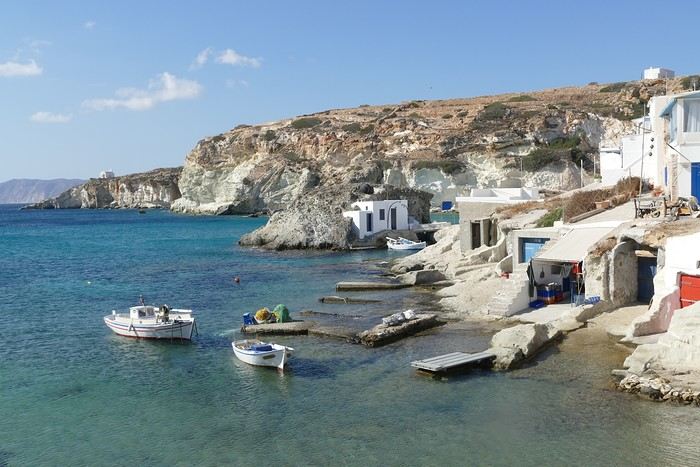
Ports of Kara and Goupa
In the afternoon, we strolled through town, and Pat and I climbed the hill overlooking the village to get a closer look at the few more or less ruined windmills dotting the ridge. Only one mill still had its complete mechanism in place under the roof; the others were empty. The view over the village, port, and sea was beautiful. That evening, we tried another restaurant in the village center, Kali Kardia Bohoris, which was well-frequented by locals, and we didn’t regret it: delicious food, efficient and friendly service, and reasonable prices.
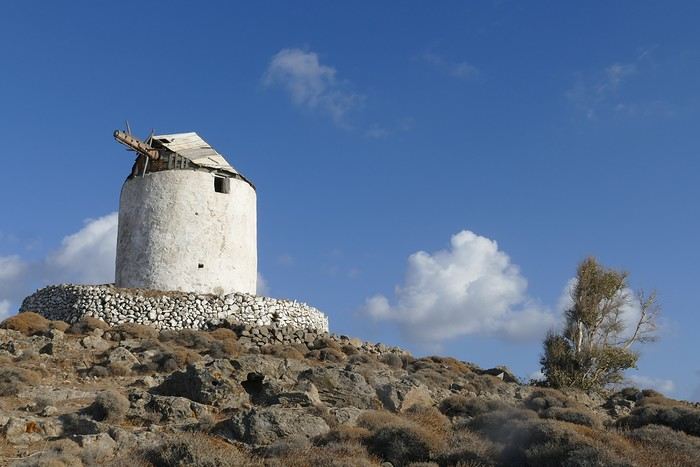
The Kastro Mill
Toward Aliki Beach We walked to Aliki Beach, west of the main village. It’s a large sandy beach shaded by tamarisk trees, but the strong wind prevented us from enjoying it. In the afternoon, I set off on a hike toward the fairy chimney at Skiadi (1.5 hours one way). The paths were very well-marked with signs indicating the trail number and the time to reach the destination. The countryside was beautiful but very dry at this time of year, and as always in Greece, many white chapels dotted the landscape. The numerous dry stone walls testify to the immense labor done by the island’s inhabitants over the centuries! For our last day in Kimolos, we decided to visit the beautiful Praça Beach, one of the most beautiful according to the guides! To get there, we took a path through the interior before joining the paved road near a large dump overflowing with various waste. It’s the flip side of the scenery, and Greece still has progress to make in this area. In the end, Praça Beach left us underwhelmed. The environment, marred by mining operations, detracts from the charm of the beautiful sandy beach. End of the Trip, Return to Piraeus and France And that’s it—we took the Zanteferries ferry back to Piraeus, arriving after a calm and sunny 10-hour journey. We had dinner at Souvlaki Street on the port and spent a good night at the Faros I Hotel in Piraeus—a great spot, close to the port, very clean, and reasonably priced. We flew from Athens to Basel-Mulhouse EuroAirport without any issues. N.B. Budget: around 1850 € all included for 14 days per couple The photo album is available by clicking this link: https://photos.app.goo.gl/wRpxRipg4erpzGj99
The village of Plaka in Milos
It was with great pleasure that we finally reconnected with our old habits as inveterate travelers! Greece, and more specifically the Greek islands, was the natural choice for us. After having already visited many Greek islands during around 18 trips, we decided to revisit islands we had seen over 40 years ago, like Milos, where our memories were extremely hazy. Our route was well-planned and familiar: a low-cost flight from Basel-Mulhouse to Athens, then a traditional ferry from Piraeus to Milos. Taking a speedboat, which is faster, would have forced us to spend a night in Piraeus. Plus, we felt that the traditional ferry was part of the journey, and with good weather, spending eight hours on deck wasn’t unpleasant at all. Watching the docking maneuvers with the comings and goings of trucks and cars, observing the passengers, reading a book, or admiring the scenery—all of that is part of the travel experience. Milos Island: Accommodation in Adamas We arrived quite late, around 11 PM, in Adamas, the port of Milos. No worries—the friendly couple managing the apartment was waiting for us, and it was just a 10-minute walk from the port. The first two days were spent unwinding, with swimming at the nearby beach, strolling through Adamas, and relaxing.
Discovering Plaka On the third day, we took the path along the small beach west of town toward a French military cemetery! A historical reminder of our presence here during the Crimean War, among others. The path climbs toward a beacon perched on top of a hill before disappearing into the scrubland. We returned to Adamas for lunch on our terrace.
In the afternoon, we visited the hilltop village of Plaka by bus from Adamas. Plaka is the original old town, dominated by a church and, even higher up, the ruins of the Kastro. The view is magnificent. We stopped at a pastry shop in the village to enjoy excellent orange cakes and baklavas. Back in Adamas, we checked out car rental agencies to be more mobile, though the bus network seemed quite extensive. It costs around 40 € per day, plus 8 € if you want to significantly reduce the deductible. Port of Klima.
Yesterday’s weather was quite mixed with lots of clouds, but today the sun is shining again. We drove to the small port of Klima, famous for its boat garages called "sirmatas." It’s true that in the morning sun, these boat garages carved into the volcanic tuff are beautifully lit, turning the village into a colorful mosaic. Above the village, a path climbs directly to the magnificent Roman theater overlooking the surroundings and the sea.
Following the well-marked path, we reached the road leading 200 meters down to the catacombs. It’s an impressive complex of 3rd and 4th-century catacombs, though only a small part is open to visitors—it’s still very moving. In the mid-afternoon, we got back in the car to visit the tiny ports of Firopotamos and Mandraki, which also have their colorful sirmatas. We took the opportunity to swim at the small beach in Mandraki, where the water was warm and calm.
Mandraki Port. We had a decent dinner at a seaside restaurant in Adamas, though you have to be selective—we had a bad experience at Kynigos on the second night!
Moving to Polonia in Eastern Milos, Sarakiniko SiteThe Sarakiniko site We left Adamas for a second stay on Milos, this time in Polonia. The rental Panda was packed with the four of us and our luggage! Our apartment was in a beautiful house surrounded by a grove, so our lovely terrace was well-shaded. Luckily, there was a small beach nearby, and we went for a swim right away. Apart from us, there were only three other swimmers—definitely the end of the season!
"Fairy chimney"! In the afternoon, we visited the famous Sarakiniko site, Milos’ emblematic spot. Judging by the number of cars in the parking lot, we wouldn’t be alone. As we approached, we heard an indefinable rock/punk/metal music: some young people had brought a sound system and a foghorn and were having fun diving off a fairly high cliff to impress the crowd. It definitely spoiled the visit. Most spots were taken by couples busy taking selfies, so getting photos of the site without tourists was impossible. Still, the site is magnificent, with its white cliffs looking like they’re covered in whipped cream! The sun was still very bright, reflecting strongly off the cliffs, making photography difficult due to the excessive brightness. We had a fish dinner in Polonia at the Enalion restaurant: while the octopus and squid were good, the fish soup tasted more like vegetable soup with a few fish crumbs—too bad.
Sunset in Polonia
Ports of Papafranga and Mytikos We continued our exploration of Milos with the Papafranga gorge, a narrow and deep gorge that opens to the sea, where the water is a stunning color. Access via an unstable and dangerous path is prohibited, but that didn’t stop a couple of tourists in flip-flops from venturing in!!! We then swam in the tiny, calm, and sheltered cove of the small port of Mytikos. We returned to Polonia for lunch at Alkis: excellent moussaka. In the late afternoon, Pat and I went out to take some photos just before sunset near the Agios Nikolaos chapel, the beacon, and the new Petakoudia neighborhood next to Polonia to the north.
Paleochori Beach
Toward the Multicolored Beach of Paleochori Another sunny day: we still had to discover Paleochori Beach in the south of the island. It was 10:30 AM, and the beach was almost deserted! The water was pleasant, though a bit chilly when we first entered. The beach is bordered by a cliff that, in some places, displays a beautiful multicolored palette. We returned to Polonia in the late afternoon, and Pat and I headed toward Vouddhia Beach south of Polonia—bad choice. The beach is surrounded by a huge mining site served by a dusty road where lines of trucks loaded with ore cross paths. It’s the other side of the coin, and Greece still has progress to make in this area. Dinner at Alki’s was just as good as always. Return to the Sarakiniko Site Early this morning, Pat and I went back to the Sarakiniko site, hoping to take photos in better conditions. While there were fewer people, the parking lot was still full because sunrise is a must in Milos. Still, the conditions were good, and the sunrise spectators left quickly once the sun had risen above the horizon. During the day, an increasingly strong wind cooled the atmosphere, making swimming less enjoyable. Departure for Kimolos Island We changed islands and left Milos for Kimolos, a nearby island—just a 30-minute trip from Polonia’s port. Our apartment was at the entrance of the hilltop village. It’s a village with typical Cycladic architecture, featuring the remains of an old kastro, a few old churches, and windmill towers perched on the hill. We dined in a tiny tavern where the small outdoor tables were squeezed against the walls to let passersby through! As soon as the sun disappeared, it got cold, especially because of the wind. Ports of Kara and Goupa This morning, we explored the small hamlets of Kara and Goupa by Rema Beach, east of the main port. There, we found the sirmatas again—those boat garages partly carved into the volcanic tuff. The path winds between several sirmatas before climbing back up to the Praça road to return to the apartment.
Ports of Kara and Goupa
In the afternoon, we strolled through town, and Pat and I climbed the hill overlooking the village to get a closer look at the few more or less ruined windmills dotting the ridge. Only one mill still had its complete mechanism in place under the roof; the others were empty. The view over the village, port, and sea was beautiful. That evening, we tried another restaurant in the village center, Kali Kardia Bohoris, which was well-frequented by locals, and we didn’t regret it: delicious food, efficient and friendly service, and reasonable prices.
The Kastro Mill
Toward Aliki Beach We walked to Aliki Beach, west of the main village. It’s a large sandy beach shaded by tamarisk trees, but the strong wind prevented us from enjoying it. In the afternoon, I set off on a hike toward the fairy chimney at Skiadi (1.5 hours one way). The paths were very well-marked with signs indicating the trail number and the time to reach the destination. The countryside was beautiful but very dry at this time of year, and as always in Greece, many white chapels dotted the landscape. The numerous dry stone walls testify to the immense labor done by the island’s inhabitants over the centuries! For our last day in Kimolos, we decided to visit the beautiful Praça Beach, one of the most beautiful according to the guides! To get there, we took a path through the interior before joining the paved road near a large dump overflowing with various waste. It’s the flip side of the scenery, and Greece still has progress to make in this area. In the end, Praça Beach left us underwhelmed. The environment, marred by mining operations, detracts from the charm of the beautiful sandy beach. End of the Trip, Return to Piraeus and France And that’s it—we took the Zanteferries ferry back to Piraeus, arriving after a calm and sunny 10-hour journey. We had dinner at Souvlaki Street on the port and spent a good night at the Faros I Hotel in Piraeus—a great spot, close to the port, very clean, and reasonably priced. We flew from Athens to Basel-Mulhouse EuroAirport without any issues. N.B. Budget: around 1850 € all included for 14 days per couple The photo album is available by clicking this link: https://photos.app.goo.gl/wRpxRipg4erpzGj99
Hey there, VoyageForum!!!
I’ve combed through this site up, down, and sideways to plan our two-month road trip across the American Southwest during the summer of 2022, so it only feels right to give back and revive the USA travel journal section—helping others prep, travel, or relive their own memories! 😏
A quick intro to the stars of this trip is coming soon... in an upcoming post!
Table of Contents:
Road trip introduction Day 1 & 2: the days we double-checked all our papers... Day 3 & 3 bis: The day we discovered Denver... Day 4: The day of the race, the carriage, and the little one’s cough... Day 5: the day the road trip truly began... Day 6 & 6 bis: the day of Nature’s first wonders... Day 7: the day the sky fell on our heads... Day 8 & 8 bis: the day we saw ghosts... Day 9: the day we climbed the mountain... Day 10: the day the theme song from "The Last Picture Show" played on loop in my head... Day 11: the day we lived like Native Americans... Day 12: the day we left civilization behind... Day 13 & 13 bis: the day we explored another planet... Day 14 & 14 bis: the day Caro reunited with HER rocks... Day 15 & 15 bis: the day of the fantastic ride... Day 16: the day we cooled off in Lake Powell... Day 17: the day the Colorado River’s meanders were all ours... Day 18: the day we dipped our feet in the Colorado... Day 19: the day the guys discovered true vastness... Day 20 & 20 bis: the day we covered a few acres of Route 66 before sunset... Day 21: the day the credit card said stop... right before the STRIP... Day 22: the day we finally discovered Cirque du Soleil... Day 23: the day we returned to calm... well, almost... Day 24: the day we reached our home base for 6 nights: Saint George Day 25: the day we should’ve explored Yant Flat... Day 26: the day it was 13°C at Cedar Breaks... Day 27: the day we explored The Narrows in Zion NP... Day 28: the day we discovered Snow Canyon... Day 29: the day we hiked to the "SUBWAY"... Day 30: the day we encountered the abyss—from the north this time... Day 31: the day we arrived in a place where dreams begin... Kanab... Day 32: the day we discovered the first treasures along House Rock Valley... 2nd part: the second part of the journey... Day 33: the day we discovered a magical place... Edmaier's Secret... Day 34: the day Cottonwood Road didn’t open up to us... Day 35: the day of the classic Queen’s Garden + Navajo Loop—and another event that became a classic... Day 36: the second day in Bryce... pure bliss!!! Day 37: the day we swam at the foot of Calf Creek Falls... Day 38: the day we took the Burr Trail, even with storms lurking... Day 39: The day of the goblins... Day 40: the day we enjoyed the peaceful Capitol Reef NP... Day 41: the day of the Rim Overlook and another letdown... Day 42: the day we arrived in... Moab... Day 43: the first day in Arches National Park... Day 44: the day of the Fisher Towers... Day 45: the day of Bow Tie & Corona Arches... Day 46: The day of Shafer Trail + Potash Road... Day 47: The second day in Arches NP... Day 48: the day we discovered Colorado NM in a flash... Day 49: the day of Black Canyon... Day 50: the day we passed through Durango before falling for Silverton... Day 51: the day we went through Ouray and ended up in Gunnison... Day 52: the day of Kebler Pass and arriving at the hot springs... Day 53: the day of hot springs II, then the road back to Denver... Day 54: the last day... Day 55: back home and the RECAP...
I’ve combed through this site up, down, and sideways to plan our two-month road trip across the American Southwest during the summer of 2022, so it only feels right to give back and revive the USA travel journal section—helping others prep, travel, or relive their own memories! 😏
A quick intro to the stars of this trip is coming soon... in an upcoming post!
Table of Contents:
Road trip introduction Day 1 & 2: the days we double-checked all our papers... Day 3 & 3 bis: The day we discovered Denver... Day 4: The day of the race, the carriage, and the little one’s cough... Day 5: the day the road trip truly began... Day 6 & 6 bis: the day of Nature’s first wonders... Day 7: the day the sky fell on our heads... Day 8 & 8 bis: the day we saw ghosts... Day 9: the day we climbed the mountain... Day 10: the day the theme song from "The Last Picture Show" played on loop in my head... Day 11: the day we lived like Native Americans... Day 12: the day we left civilization behind... Day 13 & 13 bis: the day we explored another planet... Day 14 & 14 bis: the day Caro reunited with HER rocks... Day 15 & 15 bis: the day of the fantastic ride... Day 16: the day we cooled off in Lake Powell... Day 17: the day the Colorado River’s meanders were all ours... Day 18: the day we dipped our feet in the Colorado... Day 19: the day the guys discovered true vastness... Day 20 & 20 bis: the day we covered a few acres of Route 66 before sunset... Day 21: the day the credit card said stop... right before the STRIP... Day 22: the day we finally discovered Cirque du Soleil... Day 23: the day we returned to calm... well, almost... Day 24: the day we reached our home base for 6 nights: Saint George Day 25: the day we should’ve explored Yant Flat... Day 26: the day it was 13°C at Cedar Breaks... Day 27: the day we explored The Narrows in Zion NP... Day 28: the day we discovered Snow Canyon... Day 29: the day we hiked to the "SUBWAY"... Day 30: the day we encountered the abyss—from the north this time... Day 31: the day we arrived in a place where dreams begin... Kanab... Day 32: the day we discovered the first treasures along House Rock Valley... 2nd part: the second part of the journey... Day 33: the day we discovered a magical place... Edmaier's Secret... Day 34: the day Cottonwood Road didn’t open up to us... Day 35: the day of the classic Queen’s Garden + Navajo Loop—and another event that became a classic... Day 36: the second day in Bryce... pure bliss!!! Day 37: the day we swam at the foot of Calf Creek Falls... Day 38: the day we took the Burr Trail, even with storms lurking... Day 39: The day of the goblins... Day 40: the day we enjoyed the peaceful Capitol Reef NP... Day 41: the day of the Rim Overlook and another letdown... Day 42: the day we arrived in... Moab... Day 43: the first day in Arches National Park... Day 44: the day of the Fisher Towers... Day 45: the day of Bow Tie & Corona Arches... Day 46: The day of Shafer Trail + Potash Road... Day 47: The second day in Arches NP... Day 48: the day we discovered Colorado NM in a flash... Day 49: the day of Black Canyon... Day 50: the day we passed through Durango before falling for Silverton... Day 51: the day we went through Ouray and ended up in Gunnison... Day 52: the day of Kebler Pass and arriving at the hot springs... Day 53: the day of hot springs II, then the road back to Denver... Day 54: the last day... Day 55: back home and the RECAP...
Preamble:
Africa was calling to me, so a year ago, with our usual travel companions, we decided to return to the continent we love so much.
Where to go?
Uganda quickly caught our attention—wildlife we’re used to seeing, plus gorillas and the shoebill we missed in Zambia.
We got in touch with Paul, who’s been mentioned several times on the forum back in September, booked our flight tickets, secured the gorilla permits, and by early October, the most important things were done.
We still had plenty of time to hold our "prep meetings" for the final itinerary.
Three days before departure, I sprained my ankle (my weak spot, as you’ll recall from our Colombia trip). I wasn’t in great spirits, but after a year of waiting, nothing was going to stop me. We’d see how it goes! Off we went for our new adventures
Three days before departure, I sprained my ankle (my weak spot, as you’ll recall from our Colombia trip). I wasn’t in great spirits, but after a year of waiting, nothing was going to stop me. We’d see how it goes! Off we went for our new adventures
We spent two weeks in the Seychelles at the end of March and beginning of April 2026.
We split our stay as follows: 4 nights on La Digue, nights on Praslin (assuming you meant a specific number here—let me know if you'd like to correct it!), and 6 nights on Mahé.
It’s a classic itinerary.
Inter-island transfers are done with the Cat Coco company. You can book the transfers online on their website, which also offers an airport-to-port shuttle when you arrive in Mahé. It takes about 50 minutes to go from Mahé to Praslin and 10 minutes between Praslin and La Digue.
La Digue is an island with very few cars (only taxis and a few official or business vehicles) and lots of bikes. You can rent them everywhere on the island—we rented ours from our landlady. Things to see and do on the island: a bike tour around the island, the Veuve Reserve (it’s a bird), Union Estate with a giant tortoise park, and especially Anse Source d’Argent (our favorite beach across all three islands) and all the other coves, including Grande Anse, Petite Anse, and Anse Sévère.
For food, there are several takeaways on the island and plenty of small shops for groceries—same goes for the other two islands.
On Praslin, we rented a car, but you can also use the bus network. There aren’t many destinations, the main one being the Vallée de Mai, a must-visit as the sanctuary of the coco de mer (the "butt nut"). It’s best to visit with a guide—they wait for a small group, and the ticket price can be split four ways. You *can* visit alone, but you’ll miss out on a lot of information. Another destination is Anse Georgette, in the north of the island near the airport and the golf course of a big resort. Have your accommodation notify the hotel when you’re heading there, and if you’re driving, park as soon as you see the first signs for the parking lot. Anse Lazio is famous, but much more touristy than Anse Georgette. We stayed in Anse Volbert Village at Côte d’Or, a stunning 3 km beach with shops, takeaways, and restaurants.
Mahé is the largest island. Like on Praslin, you can rent a car or use the buses—we rented one. The roads are good but sometimes narrow. Don’t forget the mountainous terrain in this part of the Seychelles, which makes some climbs very steep (same as on Praslin). Opt for small cars—they’re often automatic, and remember you drive on the left here!
Things to see on Mahé: the Jardin du Roi, a collection of everything that grows in the Seychelles—very interesting, with a great restaurant. Visit Anse Intendance, Anse Bazarca, and Police Bay in the south—three gorgeous beaches. Also check out Anse Royale. For souvenirs, head to the Craft Village, where you can find some unique items. If you’re a fan, visit the Takamaka distillery.
In conclusion, we should’ve added one or two more nights on La Digue—it’s really beautiful—and only stayed three nights on Praslin. We rented apartments through Booking and Airbnb. Don’t forget to get your tourist visa online. The Seychelles is a clean, safe, relaxed, and stress-free country
Inter-island transfers are done with the Cat Coco company. You can book the transfers online on their website, which also offers an airport-to-port shuttle when you arrive in Mahé. It takes about 50 minutes to go from Mahé to Praslin and 10 minutes between Praslin and La Digue.
La Digue is an island with very few cars (only taxis and a few official or business vehicles) and lots of bikes. You can rent them everywhere on the island—we rented ours from our landlady. Things to see and do on the island: a bike tour around the island, the Veuve Reserve (it’s a bird), Union Estate with a giant tortoise park, and especially Anse Source d’Argent (our favorite beach across all three islands) and all the other coves, including Grande Anse, Petite Anse, and Anse Sévère.
For food, there are several takeaways on the island and plenty of small shops for groceries—same goes for the other two islands.
On Praslin, we rented a car, but you can also use the bus network. There aren’t many destinations, the main one being the Vallée de Mai, a must-visit as the sanctuary of the coco de mer (the "butt nut"). It’s best to visit with a guide—they wait for a small group, and the ticket price can be split four ways. You *can* visit alone, but you’ll miss out on a lot of information. Another destination is Anse Georgette, in the north of the island near the airport and the golf course of a big resort. Have your accommodation notify the hotel when you’re heading there, and if you’re driving, park as soon as you see the first signs for the parking lot. Anse Lazio is famous, but much more touristy than Anse Georgette. We stayed in Anse Volbert Village at Côte d’Or, a stunning 3 km beach with shops, takeaways, and restaurants.
Mahé is the largest island. Like on Praslin, you can rent a car or use the buses—we rented one. The roads are good but sometimes narrow. Don’t forget the mountainous terrain in this part of the Seychelles, which makes some climbs very steep (same as on Praslin). Opt for small cars—they’re often automatic, and remember you drive on the left here!
Things to see on Mahé: the Jardin du Roi, a collection of everything that grows in the Seychelles—very interesting, with a great restaurant. Visit Anse Intendance, Anse Bazarca, and Police Bay in the south—three gorgeous beaches. Also check out Anse Royale. For souvenirs, head to the Craft Village, where you can find some unique items. If you’re a fan, visit the Takamaka distillery.
In conclusion, we should’ve added one or two more nights on La Digue—it’s really beautiful—and only stayed three nights on Praslin. We rented apartments through Booking and Airbnb. Don’t forget to get your tourist visa online. The Seychelles is a clean, safe, relaxed, and stress-free country
Arrival at Chetumal Airport - Car rental
- 3 days in BACALAR: Magnificent lagoon. The edges of the lagoon are private (so paid access!). From the road, you can't see the lagoon. You have to take one of the many unpaved trails and walk about 2 km. You get a beautiful view of the lagoon from the Bacalar fort, a charming little lively town.
Los Rapidos: A really beautiful spot (paid entry, of course!). It's definitely worth spending a few hours there. You just let yourself drift gently with the current in turquoise, warm water. Hard to find—it's very poorly signposted.
Cenote Azul: Very close to Los Rapidos. It's a round lake with deep blue water. Nothing extraordinary. We have the same in Auvergne! A little restaurant by the edge is nice.
Cocalitos: Beautiful viewpoint over the lagoon and the submerged cenote. Developed shoreline (large field to lay your towel, hammocks, bar).
Mayan ruins ICHTIKAL, recently discovered. Recent developments, and one of the few places still free (parking is paid). A lovely walk in the woods, but as everywhere in this region, there are very few animals!
1 night in Pisté to visit Chichen Itza at the first light. Hire a French-speaking guide and go at opening time to enjoy the site before the tourist buses arrive. It's an exceptional place! At the end of the visit, check out the Sacred Cenote. It's inside the site at the end of a small path lined with souvenir vendors. Just to see—no swimming.
Cenote TSUKAN: A recently discovered cenote, so still not very crowded (12 km from Pisté). Very peaceful environment. Swimming (water max. 22°C). Life jacket mandatory. Good restaurant.
2 days in Coba - Visit to the Coba ruins. Very busy site. Paid parking + tax for the Mayans + site entry.
Punta Laguna: A 3-hour walk in the woods with a guide. We saw just one pair of howler monkeys high up in a tree, 25 m away! As I mentioned earlier, we saw few animals and birds in this region (except for iguanas, which are everywhere). I imagined trekking through the jungle surrounded by monkeys and toucans—nope, no jungle, just undergrowth, and no toucans (they come in July during the rainy season, apparently!).
4 days on the island of COZUMEL: Car ferry taken from Calica (Punta Venado). Bookings on the Ultramar or Transcaribe websites.
Sargassum invasion on the beaches (same, if not worse, in Tulum and Playa del Carmen, according to tourists we met). All beaches are private. Access to Beach Clubs is expensive. You have to book entry to Playa Palancar if you want to be sure to get a spot (it was full for us!). The El Cielo beach to see the starfish is only accessible by boat! Near El Cielo, many stingrays swim in the shallow waters of El Cielito. That's where all the boats stop, and we enjoyed ceviche with water up to our knees and rays looking for food! Poor rays!!!
Hello everyone, I’m happy to welcome you to this new travel journal.
We’re heading to Costa Rica together—a Central American destination that dreams are made of for many French travelers and attracts crowds from France.
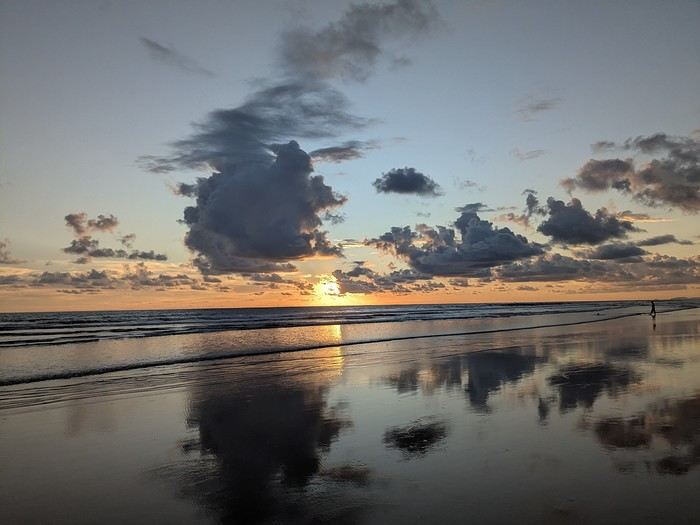
It was the country’s wild nature and safety that convinced us to go, since we’re traveling with our 7-year-old little one. We didn’t have much vacation time in February 2026 (only 12 days), so we optimized as much as possible.
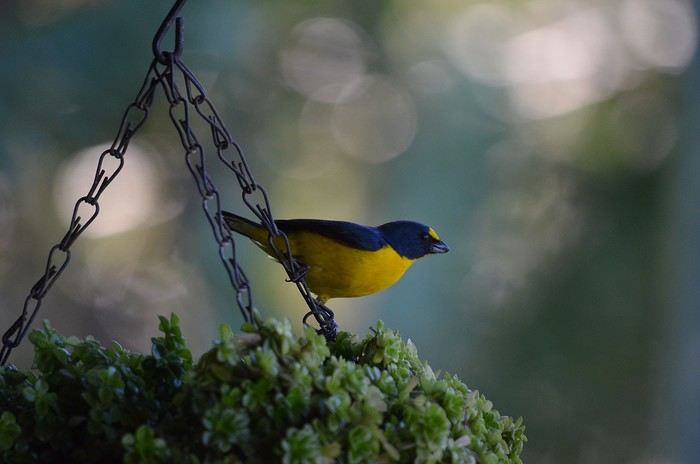
Here’s the itinerary: Wednesday, February 11: Flight from Marseille to San Jose via Paris and Atlanta Thursday, February 12: Pick up the car, drive to Poas Volcano, visit La Paz Waterfall Gardens Friday, February 13: Poas Volcano and drive to Manuel Antonio Saturday, February 14: Manuel Antonio National Park Sunday, February 15: Nauyaca Waterfall and Playa Linda Monday, February 16: Drive to Monte Verde and Santa Elena Reserve Tuesday, February 17: El Tigre Waterfall Reserve and Treetopia Park Wednesday, February 18: Monte Verde Reserve with a guide and drive to La Fortuna Thursday, February 19: Sloth guided tour, Observatory Lodge Park Friday, February 20: Arenal Volcano National Park, Termalistas del Arenal hot springs, and night tour Saturday, February 21: Return to San Jose, flight to Paris via Atlanta Sunday, February 22: Arrival in Paris and flight to Marseille. That gives us a solid 9 days in the country.
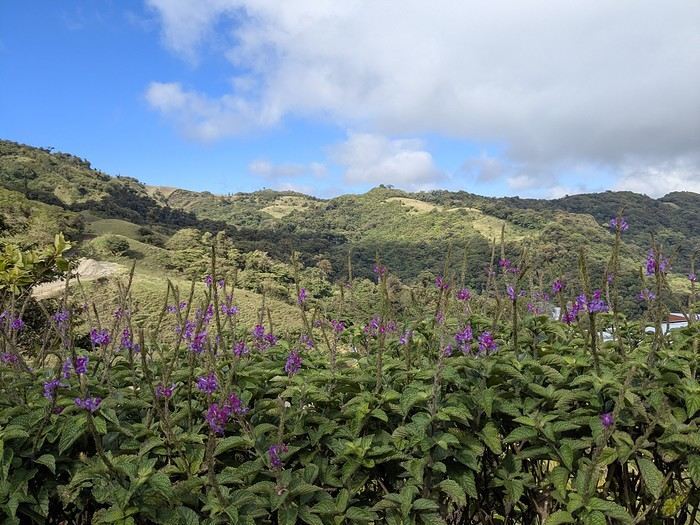
Budget breakdown: Costa Rica is an expensive country, but no more so than France. However, almost all hikes and waterfalls are paid entry, which can really add up. For meals, sodas (6–10 €) are cheaper than restaurants (10–20 € per dish).
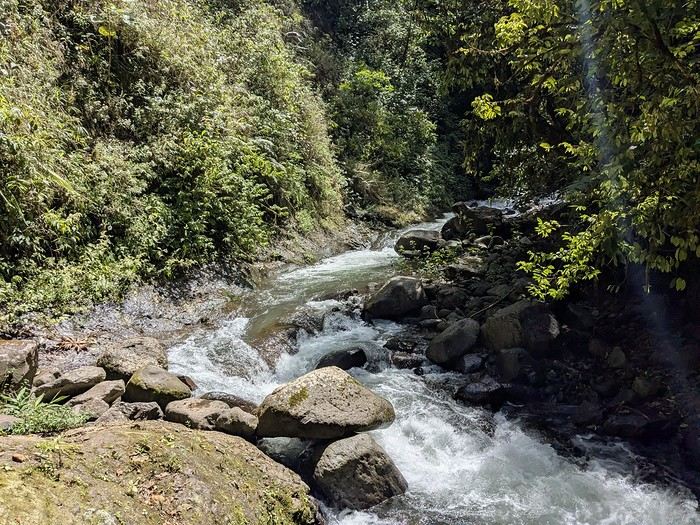
Flights: We chose Delta Airlines for the price: Marseille to San Jose was 740 € per person (modifiable, with checked baggage and seat selection included). Other direct flights from Europe were priced between 1200 € and 1600 € with more restrictive conditions. That’s 2220 € for the family.
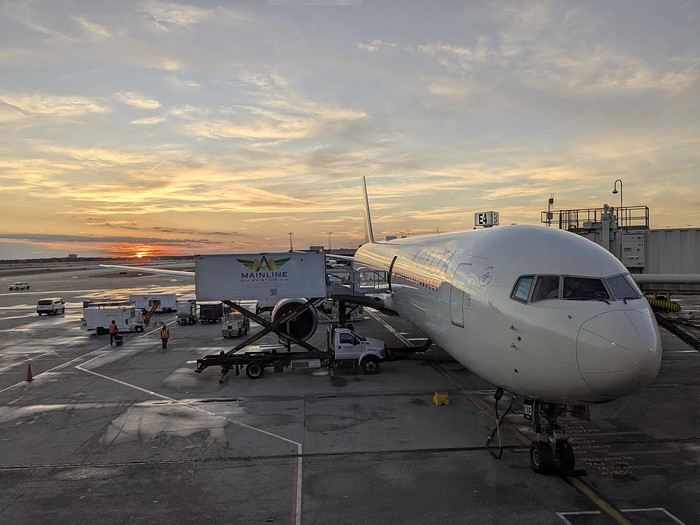
Accommodations: Alajuela, first night: 139 € (1 night) at Rodeo Estancia Boutique Hotel, with personalized airport pickup, transfer to the hotel, and a briefing from Vert Costa Rica agency the next day. Poas: 66 € (1 night) at Cabañas Tierra Fértil (entire apartment). Manuel Antonio: 394 € (3 nights) at La Palapa Ecolodge (hotel in the jungle). Monte Verde: Chalet Aloha Monteverde Cloud Forest (2 bedrooms): 125 € (2 nights). La Fortuna: Arenal Dream Garden (1 bedroom): 217 € (3 nights). Total: 941 €.
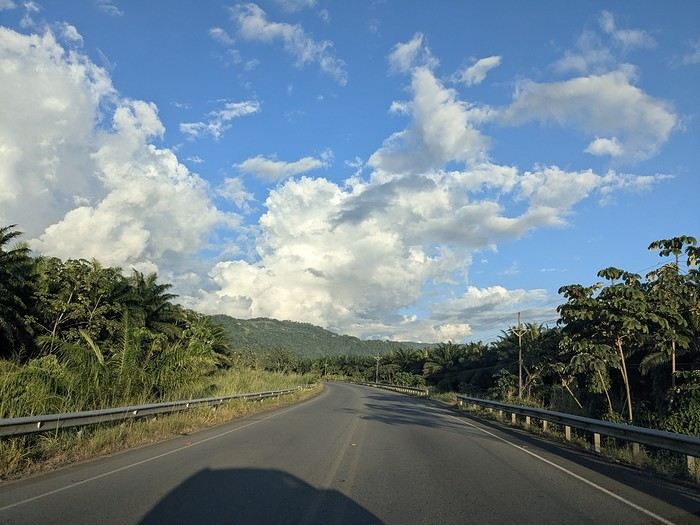
Car rental: I went through Vert Costa Rica agency (Vincent is a French expat who set up the agency in Costa Rica and makes great YouTube videos with useful tips). I rented a 4x4 that was delivered to the hotel the day after arrival and returned at the airport before the flight. The total was 772 €, including full insurance (zero deductible), a child seat, and a phone with a Costa Rican SIM and WhatsApp. The rental company was Poas Rent a Car. The vehicle was well-maintained—no complaints. Gas: 100 € for the whole trip (3 fill-ups).
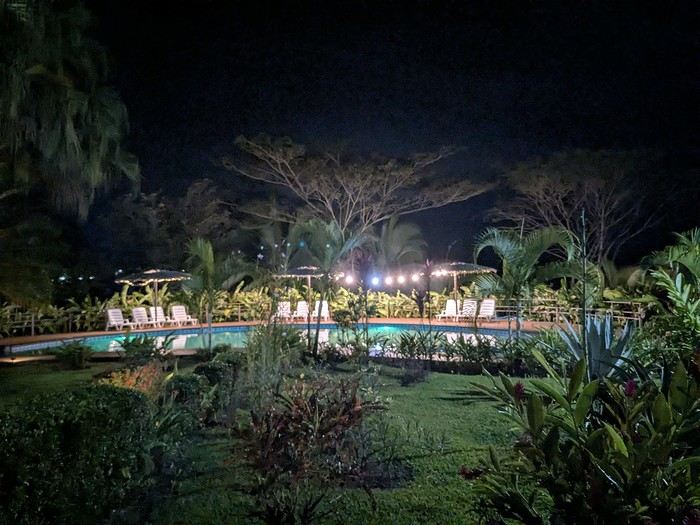
Activities: To get discounts, I bought the pass offered by Vincent, which paid for itself after just one activity. It cost me 30 € (promo since I rented the car through him). Prices are for 3 people. I’ve added stars to rate them: La Paz Waterfall Gardens ****: 112 € Poas Volcano National Park *: 33 € Manuel Antonio National Park ****: 35 € Nauyaca Waterfall ***: 25 € Santa Elena Reserve **: 45 € El Tigre Waterfall Reserve ****: 141 € (with meal) Treetopia (ziplining, suspension bridges) **: 250 € Guided tour of Monte Verde Reserve ***: 113 € Sloth guided tour (with breakfast) ***: 115 € Arenal Observatory Lodge (with meal) ****: 102 € Arenal Volcano National Park *: 34 € Termalistas del Arenal ****: 20 € Night tour ***: 116 € Total: 1171 €.
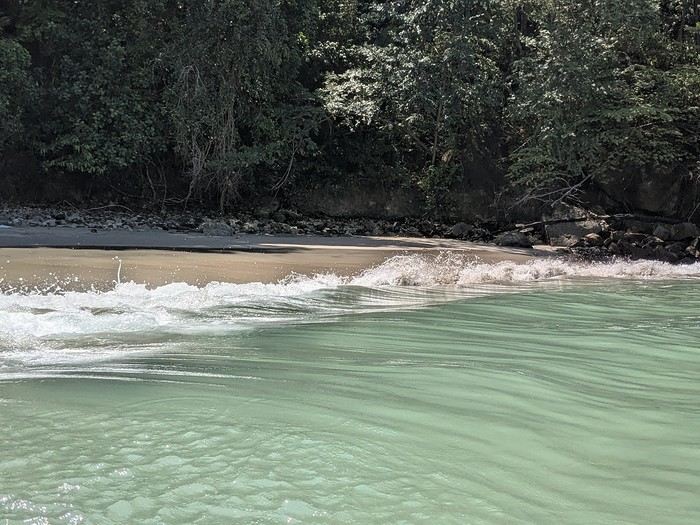
Meals: 600 € My favorite restaurants: Poas: Food court Mercaditas in Fraijanes Manuel Antonio (near La Palapa): La Langosta and also El Patio Near Nauyaca Waterfall: Ricar2 el Avión Between Manuel Antonio and Monte Verde: Soda D’Calle Santa Elena: HG’s Food Guadalupe (between Monte Verde and La Fortuna): Soda Río Piedras Arenal Observatory Lodge restaurant Arenal Oasis Ecolodge restaurant
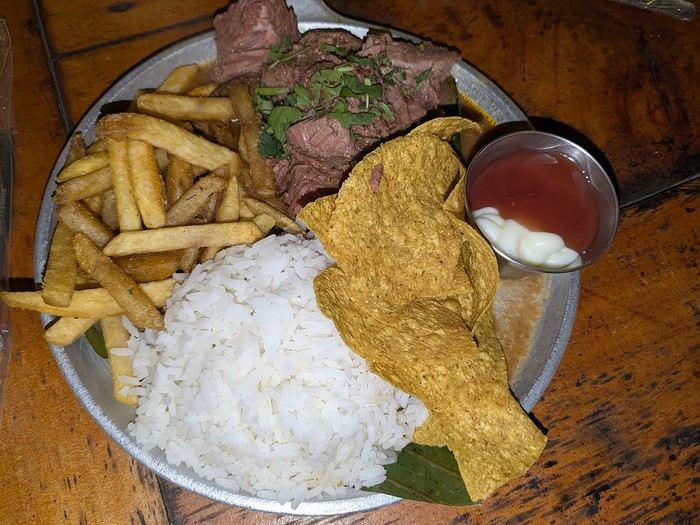
Other expenses: 300 € (groceries for breakfast, drinks, ice cream, souvenirs, etc.) Total overall: 6065 € (about 2020 € per person).
Now, here’s the day-by-day account of this beautiful trip.
https://voyageforum.com/images/posts/small/1772295011-z8mILBEUXHU8Ajz.jpg
It was the country’s wild nature and safety that convinced us to go, since we’re traveling with our 7-year-old little one. We didn’t have much vacation time in February 2026 (only 12 days), so we optimized as much as possible.
Here’s the itinerary: Wednesday, February 11: Flight from Marseille to San Jose via Paris and Atlanta Thursday, February 12: Pick up the car, drive to Poas Volcano, visit La Paz Waterfall Gardens Friday, February 13: Poas Volcano and drive to Manuel Antonio Saturday, February 14: Manuel Antonio National Park Sunday, February 15: Nauyaca Waterfall and Playa Linda Monday, February 16: Drive to Monte Verde and Santa Elena Reserve Tuesday, February 17: El Tigre Waterfall Reserve and Treetopia Park Wednesday, February 18: Monte Verde Reserve with a guide and drive to La Fortuna Thursday, February 19: Sloth guided tour, Observatory Lodge Park Friday, February 20: Arenal Volcano National Park, Termalistas del Arenal hot springs, and night tour Saturday, February 21: Return to San Jose, flight to Paris via Atlanta Sunday, February 22: Arrival in Paris and flight to Marseille. That gives us a solid 9 days in the country.
Budget breakdown: Costa Rica is an expensive country, but no more so than France. However, almost all hikes and waterfalls are paid entry, which can really add up. For meals, sodas (6–10 €) are cheaper than restaurants (10–20 € per dish).
Flights: We chose Delta Airlines for the price: Marseille to San Jose was 740 € per person (modifiable, with checked baggage and seat selection included). Other direct flights from Europe were priced between 1200 € and 1600 € with more restrictive conditions. That’s 2220 € for the family.
Accommodations: Alajuela, first night: 139 € (1 night) at Rodeo Estancia Boutique Hotel, with personalized airport pickup, transfer to the hotel, and a briefing from Vert Costa Rica agency the next day. Poas: 66 € (1 night) at Cabañas Tierra Fértil (entire apartment). Manuel Antonio: 394 € (3 nights) at La Palapa Ecolodge (hotel in the jungle). Monte Verde: Chalet Aloha Monteverde Cloud Forest (2 bedrooms): 125 € (2 nights). La Fortuna: Arenal Dream Garden (1 bedroom): 217 € (3 nights). Total: 941 €.
Car rental: I went through Vert Costa Rica agency (Vincent is a French expat who set up the agency in Costa Rica and makes great YouTube videos with useful tips). I rented a 4x4 that was delivered to the hotel the day after arrival and returned at the airport before the flight. The total was 772 €, including full insurance (zero deductible), a child seat, and a phone with a Costa Rican SIM and WhatsApp. The rental company was Poas Rent a Car. The vehicle was well-maintained—no complaints. Gas: 100 € for the whole trip (3 fill-ups).
Activities: To get discounts, I bought the pass offered by Vincent, which paid for itself after just one activity. It cost me 30 € (promo since I rented the car through him). Prices are for 3 people. I’ve added stars to rate them: La Paz Waterfall Gardens ****: 112 € Poas Volcano National Park *: 33 € Manuel Antonio National Park ****: 35 € Nauyaca Waterfall ***: 25 € Santa Elena Reserve **: 45 € El Tigre Waterfall Reserve ****: 141 € (with meal) Treetopia (ziplining, suspension bridges) **: 250 € Guided tour of Monte Verde Reserve ***: 113 € Sloth guided tour (with breakfast) ***: 115 € Arenal Observatory Lodge (with meal) ****: 102 € Arenal Volcano National Park *: 34 € Termalistas del Arenal ****: 20 € Night tour ***: 116 € Total: 1171 €.
Meals: 600 € My favorite restaurants: Poas: Food court Mercaditas in Fraijanes Manuel Antonio (near La Palapa): La Langosta and also El Patio Near Nauyaca Waterfall: Ricar2 el Avión Between Manuel Antonio and Monte Verde: Soda D’Calle Santa Elena: HG’s Food Guadalupe (between Monte Verde and La Fortuna): Soda Río Piedras Arenal Observatory Lodge restaurant Arenal Oasis Ecolodge restaurant
Other expenses: 300 € (groceries for breakfast, drinks, ice cream, souvenirs, etc.) Total overall: 6065 € (about 2020 € per person).
Now, here’s the day-by-day account of this beautiful trip.
https://voyageforum.com/images/posts/small/1772295011-z8mILBEUXHU8Ajz.jpg
A horseback ride by the sea on the Caribbean island of Saint Martin
or ... on the beach, but at a walk and trot!
It was probably these visions that gave me the irresistible urge to do this horseback trek—to walk on the sand, but as a rider, and also enjoy a swim that was anything but ordinary.
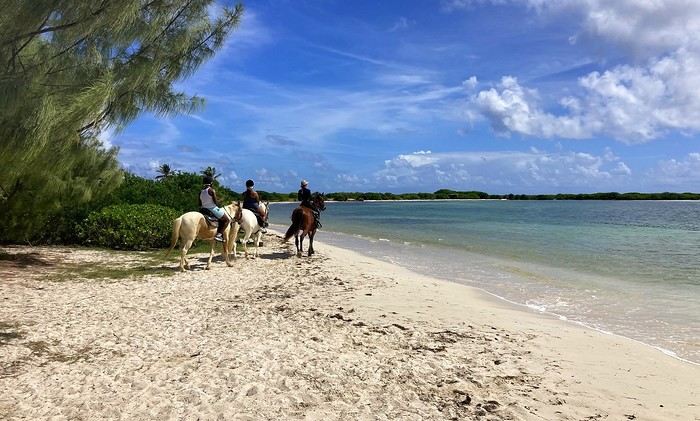
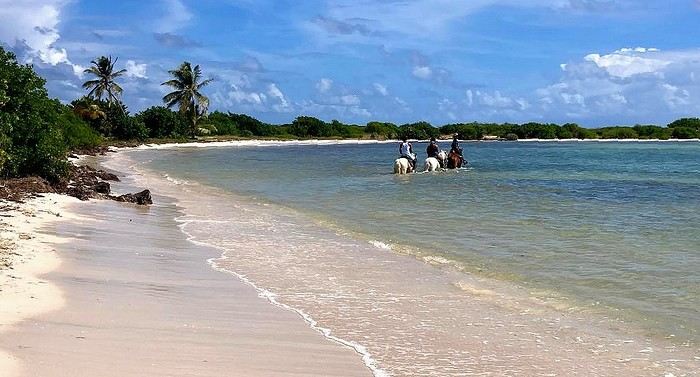
From wish to reality ... all it took was heading to Ranch du Galion. Here we are, on the heights of the east coast of the charming island of Saint Martin, in the heart of the Caribbean.
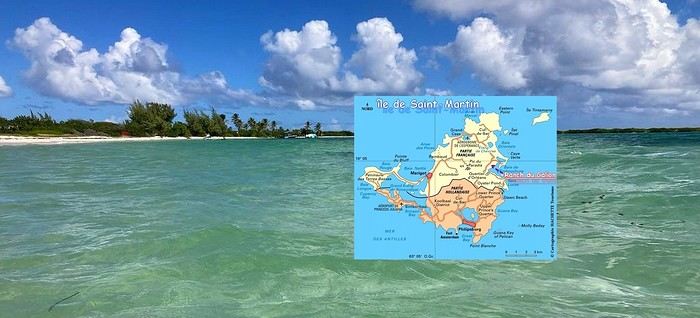
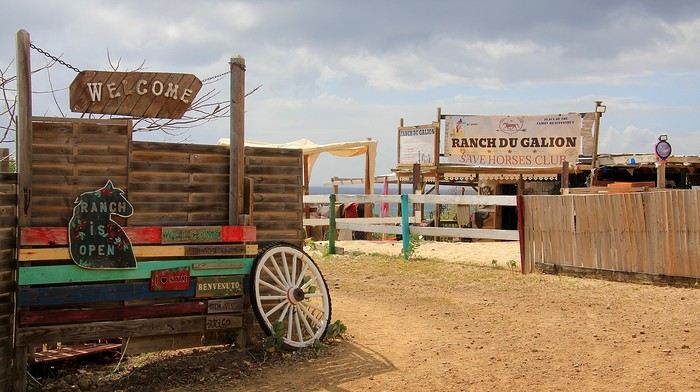
After a first horseback ride that we really enjoyed, with a simple trip to the beach, it didn’t take much to make us want to repeat the pleasant experience. My daughter Emma had been dreaming of it too—so why not share this change of scenery, but this time opting for a slightly longer trek? It’s the big day. And Jess is there to greet us this morning with a big smile. Jess—or Jessica—is the one who runs this tropical ranch with passion; she looks after a whole little family of horses. This morning, she’ll be our guide and companion for this seaside horseback ride.
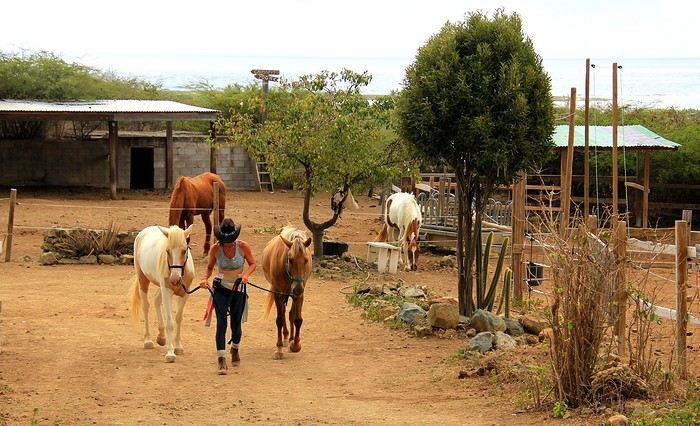
So, we set off along the wild shores of the stunning Anse du Galion.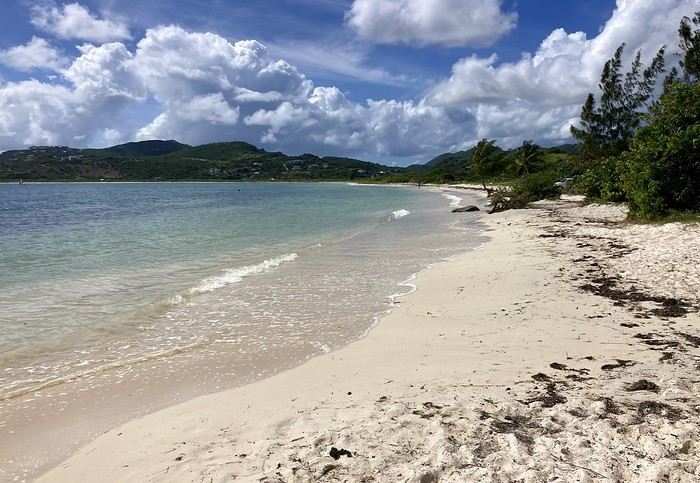
In the enclosures, behind the fences and ropes, some stallions already seem impatient to stretch their legs! They know the place, the routines, and the trails ... and the soothing reward halfway through—a dip in the sea. Maybe that’s what’s causing a little excitement among these mounts!
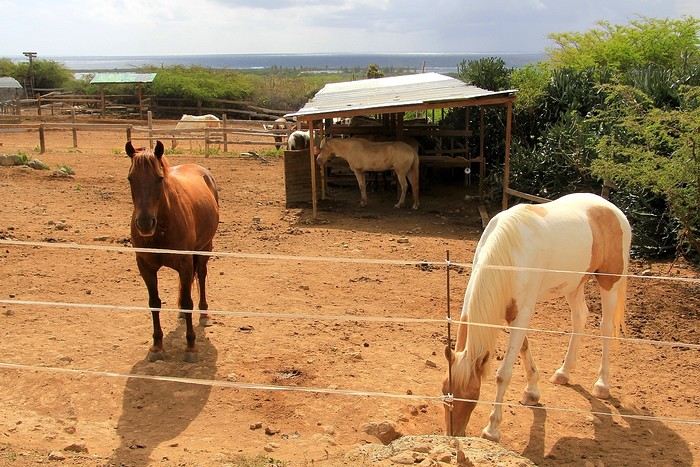
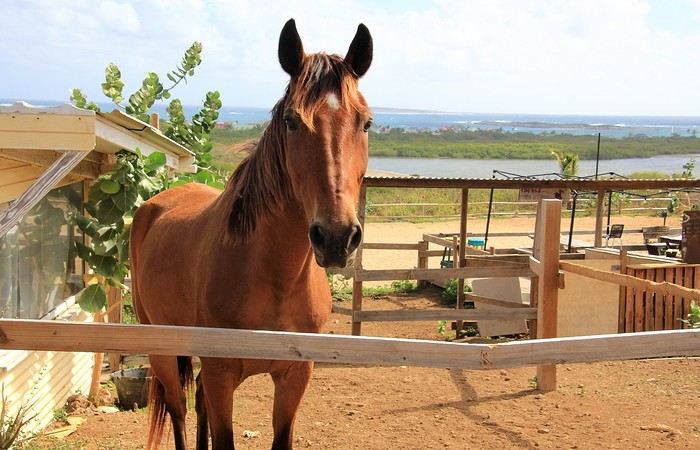
Horses and ... an iguana slipping into the bushes. Given its appearance—its crest, its parched skin, and the dewlap hanging under its head—you’d think it wasn’t exactly young.
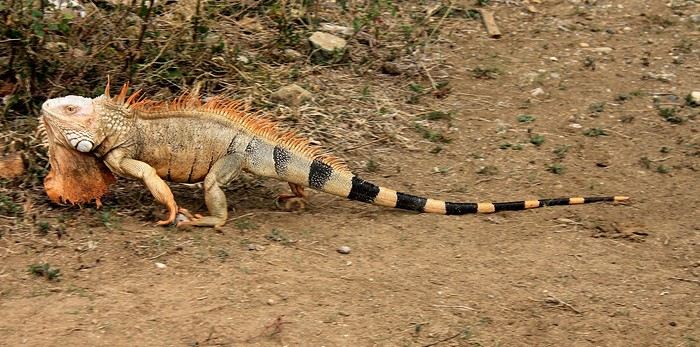
Anyway, back to the horses. Among the mares and stallions, I try to spot "Avenir" and his elegant gait—he was "my" horse during my last trek here, on the trails and sands of Galion. Well, spotting him isn’t going to be easy! My memories are a bit fuzzy, and several of these horses look like him ... -- Before setting off on the trek, it’s time for Jess to choose our mounts. For riders with little experience ... it’ll be calm horses, well-used to trekking—definitely easier and more enjoyable. Titia, a beautiful white mare for my daughter, and Prince, a gentle stallion for me. A little anecdote along the way: we’re really staying in the family for this horseback ride—these two horses are actually related: "my" Prince is the son of the lovely Titia!
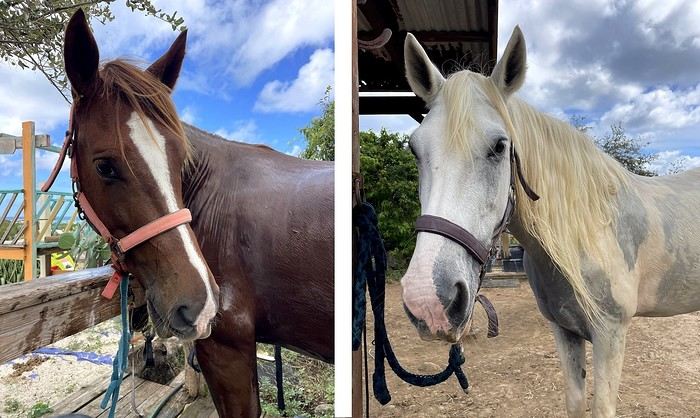
to be continued -->
From wish to reality ... all it took was heading to Ranch du Galion. Here we are, on the heights of the east coast of the charming island of Saint Martin, in the heart of the Caribbean.
After a first horseback ride that we really enjoyed, with a simple trip to the beach, it didn’t take much to make us want to repeat the pleasant experience. My daughter Emma had been dreaming of it too—so why not share this change of scenery, but this time opting for a slightly longer trek? It’s the big day. And Jess is there to greet us this morning with a big smile. Jess—or Jessica—is the one who runs this tropical ranch with passion; she looks after a whole little family of horses. This morning, she’ll be our guide and companion for this seaside horseback ride.
So, we set off along the wild shores of the stunning Anse du Galion.
In the enclosures, behind the fences and ropes, some stallions already seem impatient to stretch their legs! They know the place, the routines, and the trails ... and the soothing reward halfway through—a dip in the sea. Maybe that’s what’s causing a little excitement among these mounts!
Horses and ... an iguana slipping into the bushes. Given its appearance—its crest, its parched skin, and the dewlap hanging under its head—you’d think it wasn’t exactly young.
Anyway, back to the horses. Among the mares and stallions, I try to spot "Avenir" and his elegant gait—he was "my" horse during my last trek here, on the trails and sands of Galion. Well, spotting him isn’t going to be easy! My memories are a bit fuzzy, and several of these horses look like him ... -- Before setting off on the trek, it’s time for Jess to choose our mounts. For riders with little experience ... it’ll be calm horses, well-used to trekking—definitely easier and more enjoyable. Titia, a beautiful white mare for my daughter, and Prince, a gentle stallion for me. A little anecdote along the way: we’re really staying in the family for this horseback ride—these two horses are actually related: "my" Prince is the son of the lovely Titia!
to be continued -->
We arrive in the evening in Marrakesh, and a taxi arranged by our friendly Riad is waiting for us. The driver takes us to the door, where we’re briefly greeted by our hosts. The room is heated—phew—because it’s really cold on this January 17th for our arrival. Riad Alisma, where we’re staying for 2 nights. The next morning, it’s pouring rain when we wake up, but after a good breakfast, the rain has calmed down. Off we go to the medersa, which allows for a relatively sheltered visit. We’d visited this palace 15 years ago—it’s been renovated since then.
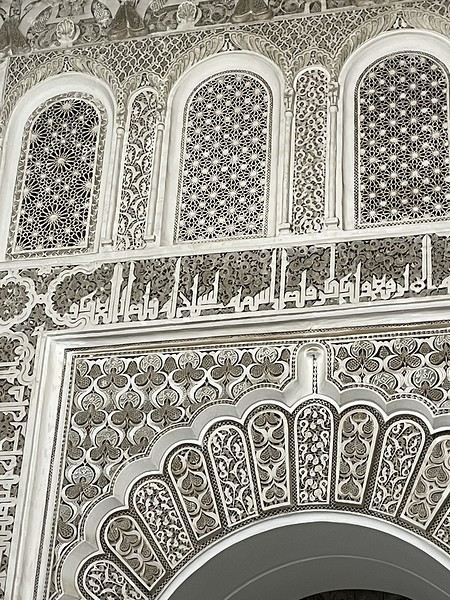
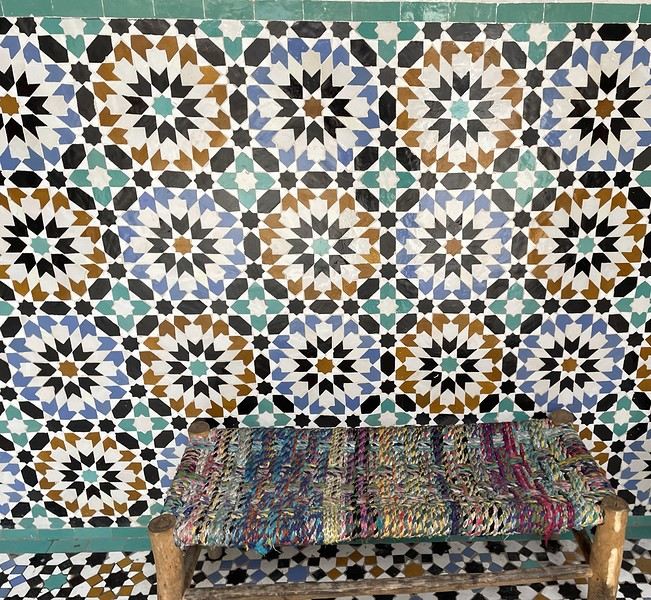
From there, without the rain, we wander aimlessly and eventually end up near the tanneries, but it’s Sunday, and there’s very little activity. Of course, we get hassled by a tout.
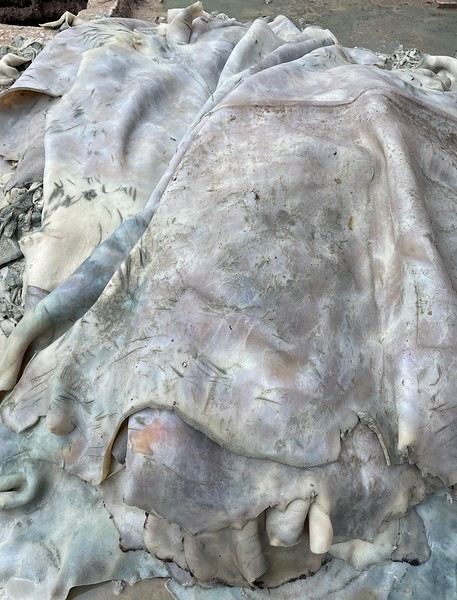
Here, the hides after being treated with lime—I love the colors.
We part ways a bit annoyed. He gets a little revenge by giving us bad directions, and we end up outside the city walls. We decide to take a taxi to the new modern art museum—60 dirhams for the 5 km, which is nothing when you think about it. That tout, who we didn’t ask for anything and made it clear we weren’t buying anything, dragged us into a shop supposedly only open that day and demanded 50 dirhams for his "services"! Let’s forget that bad moment and enjoy the exhibition at the MACAL.
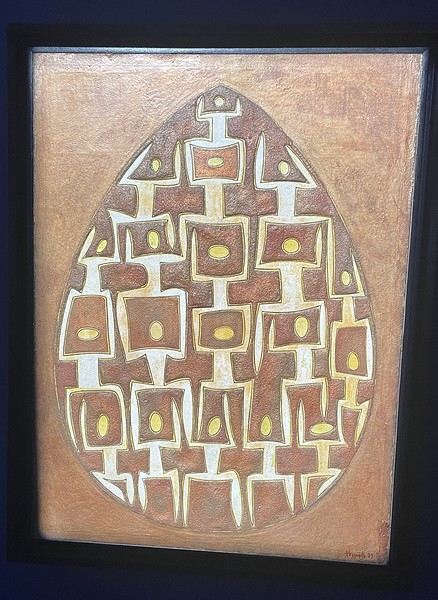
The taxi on the way back drops us off at Place des Ferblantiers, not far from our Riad. We’re a little peckish—it’s worth mentioning that at lunchtime, we only ate a plate of beans from a street vendor. So, we buy a bunch of little sweets, each more delicious than the last, at Ajar. We snack while sipping mint tea and watching life go by around us. A final visit to the Museum of Moroccan Cuisine on our way back helps us dodge a few more showers. Then it’s back to the Riad. The atmosphere in the city is heating up—it’s the AFCON final tonight. The temperatures, though? Not so much. We ordered a meal at the Riad, and it was a good call—not only was it really tasty, but the rain also picked up again. Our day in Marrakesh ends under the covers with a good book and some photo sorting. Still, we managed 10,750 steps. View of our Riad
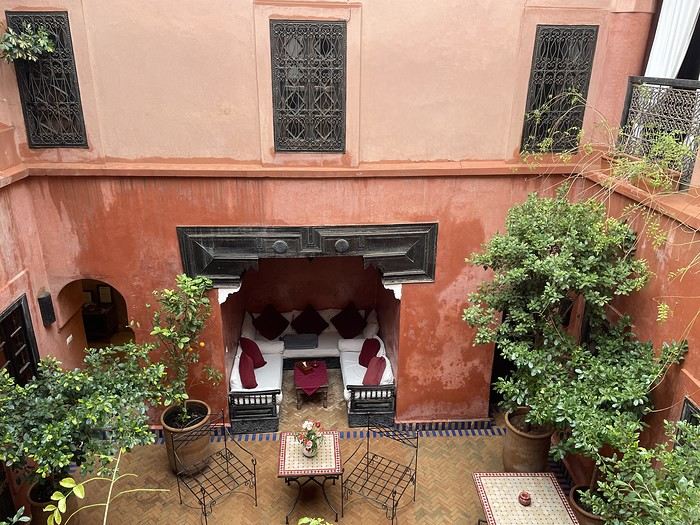
Tomorrow, we’ll pick up our rental car from Medloc and head to Essaouira.
From there, without the rain, we wander aimlessly and eventually end up near the tanneries, but it’s Sunday, and there’s very little activity. Of course, we get hassled by a tout.
Here, the hides after being treated with lime—I love the colors.
We part ways a bit annoyed. He gets a little revenge by giving us bad directions, and we end up outside the city walls. We decide to take a taxi to the new modern art museum—60 dirhams for the 5 km, which is nothing when you think about it. That tout, who we didn’t ask for anything and made it clear we weren’t buying anything, dragged us into a shop supposedly only open that day and demanded 50 dirhams for his "services"! Let’s forget that bad moment and enjoy the exhibition at the MACAL.
The taxi on the way back drops us off at Place des Ferblantiers, not far from our Riad. We’re a little peckish—it’s worth mentioning that at lunchtime, we only ate a plate of beans from a street vendor. So, we buy a bunch of little sweets, each more delicious than the last, at Ajar. We snack while sipping mint tea and watching life go by around us. A final visit to the Museum of Moroccan Cuisine on our way back helps us dodge a few more showers. Then it’s back to the Riad. The atmosphere in the city is heating up—it’s the AFCON final tonight. The temperatures, though? Not so much. We ordered a meal at the Riad, and it was a good call—not only was it really tasty, but the rain also picked up again. Our day in Marrakesh ends under the covers with a good book and some photo sorting. Still, we managed 10,750 steps. View of our Riad
Tomorrow, we’ll pick up our rental car from Medloc and head to Essaouira.
Good evening everyone! 🙂
We’re back from our September 2025 road trip, this time to explore Arizona and New Mexico, and it’s time for me to start my travel journal—especially since everything’s already booked for another trip in September 2026 (to California), and I need to get started on the planning.
I was a little worried this new visit to Uncle Sam’s country might not be as "wow" as the others, but we still discovered some incredible places.
For those who don’t know us, we’re a couple in our seventies who speak very little English, but that didn’t stop us from fully enjoying our stay.
For this 6th road trip in the U.S., we spent 21 nights there, drove 4,160 km by car, and walked nearly 160 km in a loop starting from Phoenix.
We’d been to Arizona before (but not this side) and never to New Mexico. This whole road trip was a huge discovery for us.
In the prices mentioned (some in euros, others in dollars), bank fees and exchange charges are included. The flights, car rental, and parking were all paid for in December 2024 when we booked.
We’d downloaded the MPC (Mobile Passport Control) app, but there wasn’t a dedicated line at Phoenix Airport. Still, we got through quickly with friendly, smiling agents.
I don’t drive at all (I hate it), so the stops were chosen based on activities but also, for some, to limit daily mileage for the sole driver. The kilometers listed in the itinerary are the daily distances.
We traveled from September 9th to 22nd, unfortunately once again without our dear friends Mimi and Maumau.
The itinerary
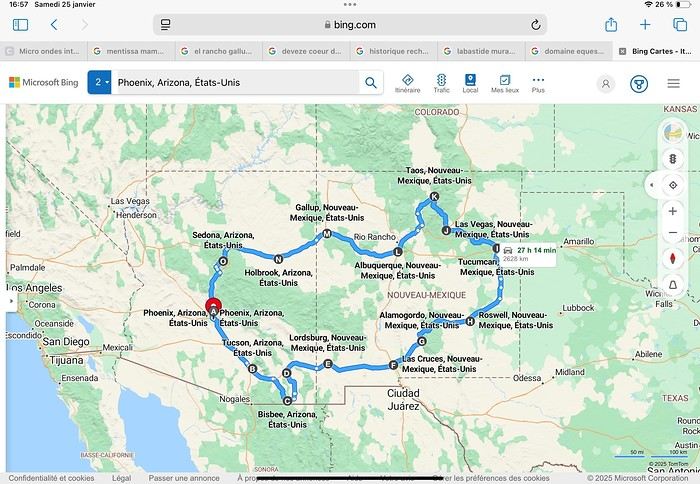
Day 1: Flight Marseille-Paris-Phoenix, then Gold Canyon (133 km) Day 2: Tucson (271 km) Lost Dutchman State Park Day 3: Tucson (155 km) Day 4: Tucson (34 km) Day 5: Bisbee (182 km) Day 6: Lordsburg (345 km) Day 7: Las Cruces (253 km) Day 8: Alamogordo (162 km) Day 9: Roswell (264 km) Day 10: Tucumcari (369 km) Day 11: Las Vegas (281 km) – the one in New Mexico Day 12: Taos (213 km) Day 13: Santa Fe (224 km) Day 14: Albuquerque (123 km) Day 15: Gallup (246 km) Day 16: Holbrook (224 km) Day 17: Flagstaff (179 km) Day 18: Sedona (118 km) Day 19: Sedona (48 km) Day 20: Sedona (41 km) Day 21: Phoenix (256 km) Day 22: Phoenix Airport (35 km)
📊 **Budget**: A little over 7,500 € for both of us, all included. The exchange rate was in our favor (1.17 dollars to 1 €). 📊 **Flights**: Marseille-Paris Charles de Gaulle-Phoenix: 1,787 € for two, with one checked bag each (Air France) 📊 **ESTA**: $42 📊 **America the Beautiful Pass**: $80 📊 **Parking**: 134 € (super eco at Marseille) 📊 **Car rental (Hertz)**: 865 €. Since there were no SUVs left in the reserved category (Nissan Rogue), we got an upgrade (4x4 Ford Explorer). We booked through Air France (15% discount). We’d originally reserved it in December for 1,140 €, but since prices dropped in March, we canceled and rebooked for 865 €. Hertz offers a free Hertz Gold Plus Rewards program, which gives you priority counter service when picking up the car. 📊 **Accommodation**: 2,400 € We stayed in hotels and motels of varying standards (from 60 to 203 € per night, depending on the city), all booked through Booking.com or Hotels.com. Out of 21 nights, only two didn’t include breakfast in the price. Booking.com sometimes offers slightly cheaper rates if you book by phone using the mobile app, and our Genius 3 status on the site also got us some preferential rates. 📊 **Supplementary insurance**: AVA 200 € for medical care if needed 📊 **Cash**: $2,078. We left with 1,000 € exchanged before departure and made two withdrawals of $500. This cash covered: - Evening restaurants and tips - Midday picnics - Gas: $298 for 4,160 km - Museum and private park entries (per person): - Lost Dutchman: $10 - Arizona-Sonora Desert Museum: $28 - Bird Cage Theater: $16 - Tombstone Shootout: $8 - New Mexico Farm & Ranch Museum: $12 - Roswell International UFO Museum: $5 - Billy the Kid Museum: $7 - Rancho de Taos: $22 - West Fork Oak Creek Trail entry: $15 We got a few discounts thanks to our senior age (+65). - Souvenirs and little treats
Like on our previous road trips, we didn’t rent a GPS. We got around using offline GPS apps Here WeGo and Organic Maps, with maps of the states we visited downloaded before we left (on our phones).
❤️❤️❤️ **Highlights** (there are so many!) 📍 Goldfield Ghost Town (even if it’s a reconstruction) 📍 The standing army of Saguaro cacti at Saguaro National Park West 📍 Diving into the cowboy universe of Tombstone 📍 The welcome from Rick and Henry at our guesthouse in Bisbee (Garden at Mile High Ranch) 📍 The tangled rocks of Chiricahua National Monument 📍 The flavored pistachios from Dwayne’s Fresh Jerky and Mac Ginnis Pistachioland 📍 Restaurants: La Posta (Las Cruces), Diner 66 (Albuquerque), and the Haunted Hamburger (Jerome) 📍 The old plazas of New Mexico 📍 The solitude and beauty of the white dunes at White Sands National Park 📍 Stepping back in time at the Billy the Kid Museum (Fort Stanton) 📍 Sections of historic Route 66 and the old motels of Tucumcari, especially at night when all the neon lights are on 📍 Taos Pueblo and diving into Native American culture 📍 After the Rio Grande Bridge, the descent via NM 567 to the very bottom of the Rio Grande Gorge, then the road along the riverbanks to Taos 📍 The tranquility of the Chimayo Sanctuary 📍 Discovering the ingenious native dwellings at Bandelier National Monument and Walnut Canyon National Park 📍 The small towns along the Turquoise Trail 📍 The red rocks of Red Rock Park and the Painted Desert 📍 The extraordinary colors of the petrified trees at Petrified Forest National Park 📍 Sedona, its red rocks, and the reward of the viewpoints at the end of hikes (Devil’s Bridge, The Subway, and West Fork Oak Creek) 📍 The immersion in Mexico when visiting Tlaquepaque 📍 The almost-ghost town of Jerome and its terraced streets 📍 The incredible kindness of Americans, always ready to help and up for a chat ❤️
☹️☹️☹️ **Flops** (there are very few) 📍 Several museums and churches being closed, so we couldn’t visit them 📍 Some museums and visitor centers opening late (10 AM) and closing early (4 PM) 📍 A 64 € phone roaming charge because we got near the Mexican border and picked up their cell tower 📍 The outrageous price ($5.99) for a gallon of gas at the Shell near Phoenix Airport
I hope this helps! Anyway, thanks for reading my long post. Don’t hesitate to reach out, even via PM, if you see I haven’t replied and you’d like more details. Have a great evening, everyone! 🙂
We’re back from our September 2025 road trip, this time to explore Arizona and New Mexico, and it’s time for me to start my travel journal—especially since everything’s already booked for another trip in September 2026 (to California), and I need to get started on the planning.
I was a little worried this new visit to Uncle Sam’s country might not be as "wow" as the others, but we still discovered some incredible places.
For those who don’t know us, we’re a couple in our seventies who speak very little English, but that didn’t stop us from fully enjoying our stay.
For this 6th road trip in the U.S., we spent 21 nights there, drove 4,160 km by car, and walked nearly 160 km in a loop starting from Phoenix.
We’d been to Arizona before (but not this side) and never to New Mexico. This whole road trip was a huge discovery for us.
In the prices mentioned (some in euros, others in dollars), bank fees and exchange charges are included. The flights, car rental, and parking were all paid for in December 2024 when we booked.
We’d downloaded the MPC (Mobile Passport Control) app, but there wasn’t a dedicated line at Phoenix Airport. Still, we got through quickly with friendly, smiling agents.
I don’t drive at all (I hate it), so the stops were chosen based on activities but also, for some, to limit daily mileage for the sole driver. The kilometers listed in the itinerary are the daily distances.
We traveled from September 9th to 22nd, unfortunately once again without our dear friends Mimi and Maumau.
The itinerary
Day 1: Flight Marseille-Paris-Phoenix, then Gold Canyon (133 km) Day 2: Tucson (271 km) Lost Dutchman State Park Day 3: Tucson (155 km) Day 4: Tucson (34 km) Day 5: Bisbee (182 km) Day 6: Lordsburg (345 km) Day 7: Las Cruces (253 km) Day 8: Alamogordo (162 km) Day 9: Roswell (264 km) Day 10: Tucumcari (369 km) Day 11: Las Vegas (281 km) – the one in New Mexico Day 12: Taos (213 km) Day 13: Santa Fe (224 km) Day 14: Albuquerque (123 km) Day 15: Gallup (246 km) Day 16: Holbrook (224 km) Day 17: Flagstaff (179 km) Day 18: Sedona (118 km) Day 19: Sedona (48 km) Day 20: Sedona (41 km) Day 21: Phoenix (256 km) Day 22: Phoenix Airport (35 km)
📊 **Budget**: A little over 7,500 € for both of us, all included. The exchange rate was in our favor (1.17 dollars to 1 €). 📊 **Flights**: Marseille-Paris Charles de Gaulle-Phoenix: 1,787 € for two, with one checked bag each (Air France) 📊 **ESTA**: $42 📊 **America the Beautiful Pass**: $80 📊 **Parking**: 134 € (super eco at Marseille) 📊 **Car rental (Hertz)**: 865 €. Since there were no SUVs left in the reserved category (Nissan Rogue), we got an upgrade (4x4 Ford Explorer). We booked through Air France (15% discount). We’d originally reserved it in December for 1,140 €, but since prices dropped in March, we canceled and rebooked for 865 €. Hertz offers a free Hertz Gold Plus Rewards program, which gives you priority counter service when picking up the car. 📊 **Accommodation**: 2,400 € We stayed in hotels and motels of varying standards (from 60 to 203 € per night, depending on the city), all booked through Booking.com or Hotels.com. Out of 21 nights, only two didn’t include breakfast in the price. Booking.com sometimes offers slightly cheaper rates if you book by phone using the mobile app, and our Genius 3 status on the site also got us some preferential rates. 📊 **Supplementary insurance**: AVA 200 € for medical care if needed 📊 **Cash**: $2,078. We left with 1,000 € exchanged before departure and made two withdrawals of $500. This cash covered: - Evening restaurants and tips - Midday picnics - Gas: $298 for 4,160 km - Museum and private park entries (per person): - Lost Dutchman: $10 - Arizona-Sonora Desert Museum: $28 - Bird Cage Theater: $16 - Tombstone Shootout: $8 - New Mexico Farm & Ranch Museum: $12 - Roswell International UFO Museum: $5 - Billy the Kid Museum: $7 - Rancho de Taos: $22 - West Fork Oak Creek Trail entry: $15 We got a few discounts thanks to our senior age (+65). - Souvenirs and little treats
Like on our previous road trips, we didn’t rent a GPS. We got around using offline GPS apps Here WeGo and Organic Maps, with maps of the states we visited downloaded before we left (on our phones).
❤️❤️❤️ **Highlights** (there are so many!) 📍 Goldfield Ghost Town (even if it’s a reconstruction) 📍 The standing army of Saguaro cacti at Saguaro National Park West 📍 Diving into the cowboy universe of Tombstone 📍 The welcome from Rick and Henry at our guesthouse in Bisbee (Garden at Mile High Ranch) 📍 The tangled rocks of Chiricahua National Monument 📍 The flavored pistachios from Dwayne’s Fresh Jerky and Mac Ginnis Pistachioland 📍 Restaurants: La Posta (Las Cruces), Diner 66 (Albuquerque), and the Haunted Hamburger (Jerome) 📍 The old plazas of New Mexico 📍 The solitude and beauty of the white dunes at White Sands National Park 📍 Stepping back in time at the Billy the Kid Museum (Fort Stanton) 📍 Sections of historic Route 66 and the old motels of Tucumcari, especially at night when all the neon lights are on 📍 Taos Pueblo and diving into Native American culture 📍 After the Rio Grande Bridge, the descent via NM 567 to the very bottom of the Rio Grande Gorge, then the road along the riverbanks to Taos 📍 The tranquility of the Chimayo Sanctuary 📍 Discovering the ingenious native dwellings at Bandelier National Monument and Walnut Canyon National Park 📍 The small towns along the Turquoise Trail 📍 The red rocks of Red Rock Park and the Painted Desert 📍 The extraordinary colors of the petrified trees at Petrified Forest National Park 📍 Sedona, its red rocks, and the reward of the viewpoints at the end of hikes (Devil’s Bridge, The Subway, and West Fork Oak Creek) 📍 The immersion in Mexico when visiting Tlaquepaque 📍 The almost-ghost town of Jerome and its terraced streets 📍 The incredible kindness of Americans, always ready to help and up for a chat ❤️
☹️☹️☹️ **Flops** (there are very few) 📍 Several museums and churches being closed, so we couldn’t visit them 📍 Some museums and visitor centers opening late (10 AM) and closing early (4 PM) 📍 A 64 € phone roaming charge because we got near the Mexican border and picked up their cell tower 📍 The outrageous price ($5.99) for a gallon of gas at the Shell near Phoenix Airport
I hope this helps! Anyway, thanks for reading my long post. Don’t hesitate to reach out, even via PM, if you see I haven’t replied and you’d like more details. Have a great evening, everyone! 🙂
Continuing the journey!
Waterberg to Mapungubwe.
The roads in this area aren’t great. I should’ve taken the N1 and gone via Musina... A massive storm on the road... 60 km away, hazard lights on...
Mapungubwe isn’t new to me, but I’d decided to try the western part, at Limpopo Tented Camp.
Upon arrival... “Sorry, a tree fell on one of the chalets...” “We’ll put you up for the first night at Leokwe, in the eastern part.” From what they said, it happened yesterday... but on-site, we saw it had actually been several months!
Sanparks’ management is still very much “outside usual standards.” There’s constantly work being done “haphazardly,” shoddily, poorly... And the welcome from staff really depends on the person and the day.
Oh well, no big deal—we’ll spend a night at Leokwe!
The eastern part “normally” doesn’t have lions... there are several spots where you can get out of the car... We saw general game, buffaloes, elephants... leopards (yes, see another travel journal), and now possibly cheetahs in the far eastern section. Our friend Montagnard had asked me (following another discussion) if I knew any truly ethical associations... I’d pointed him to a cheetah conservation group. I can confirm—they’re the ones who released several cheetahs into this part of Mapungubwe. Leokwe is stunning, unfenced... with a pretty high chance of seeing elephants in the camp, drinking from the pool or brushing past the chalet terraces. This area is still a fantastic spot for spectacular wildlife sightings and insane landscapes!
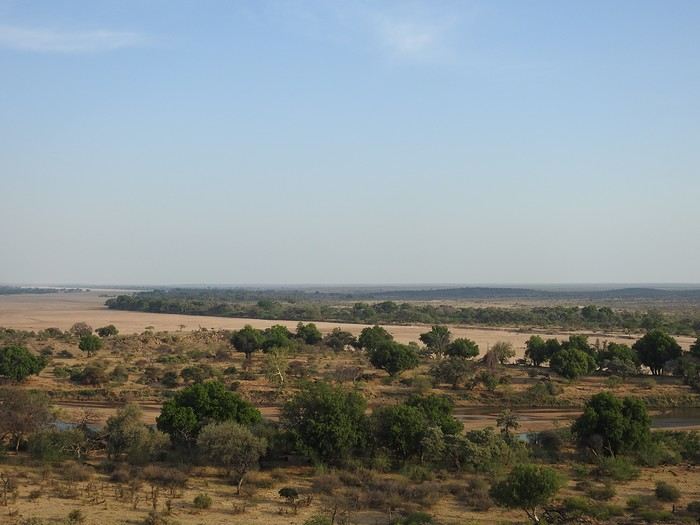
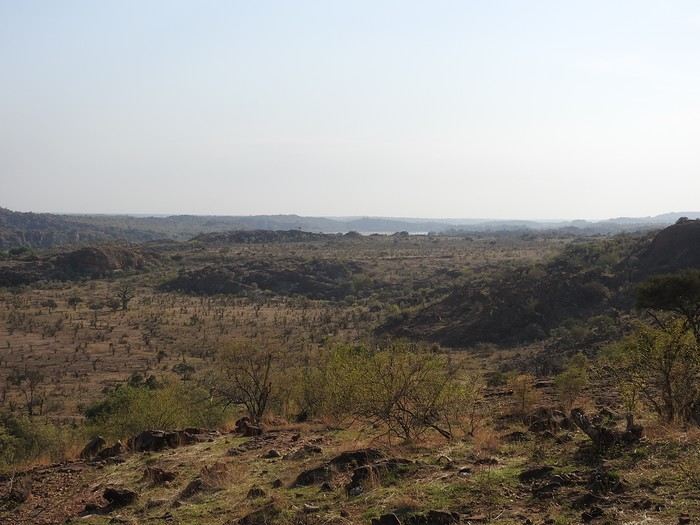
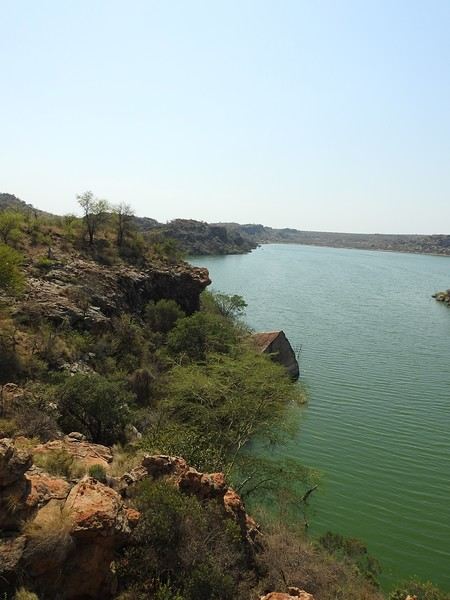
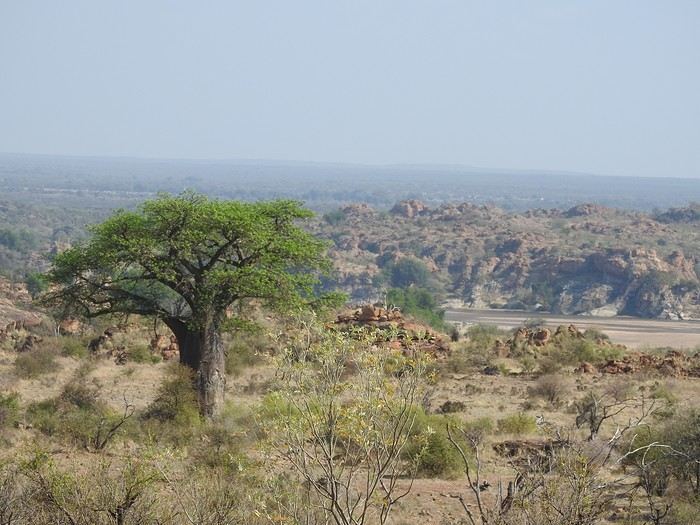
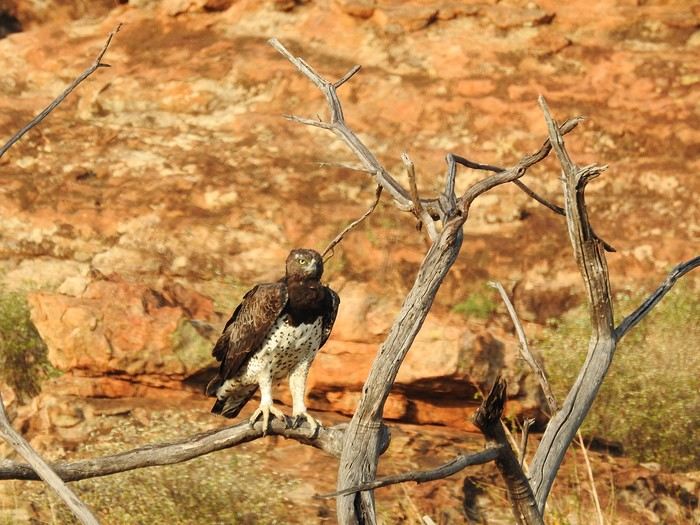
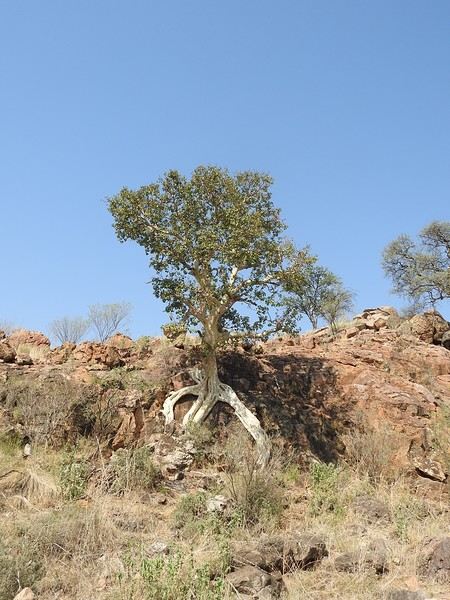
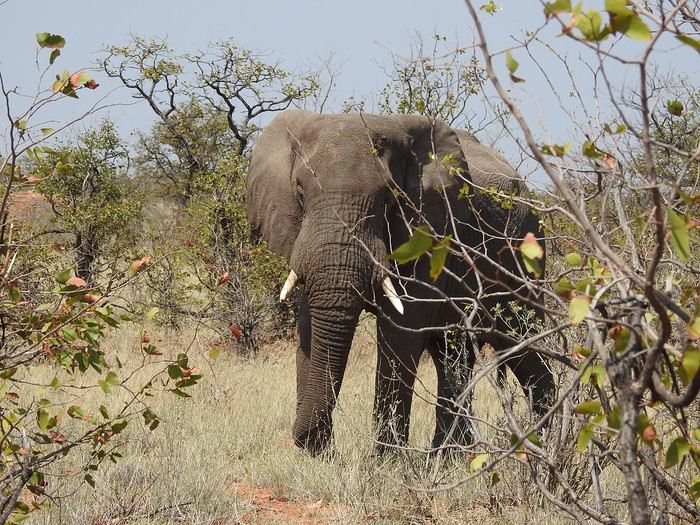
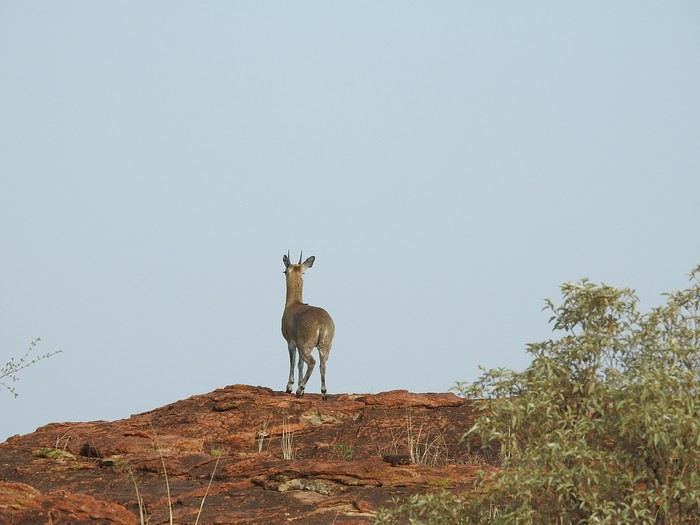
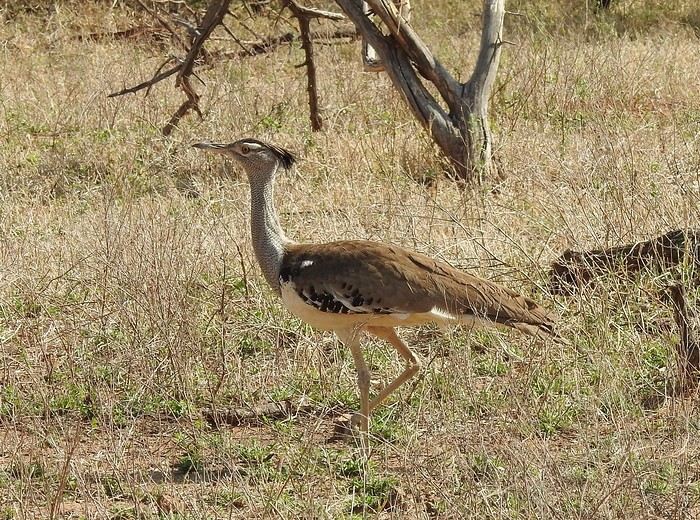
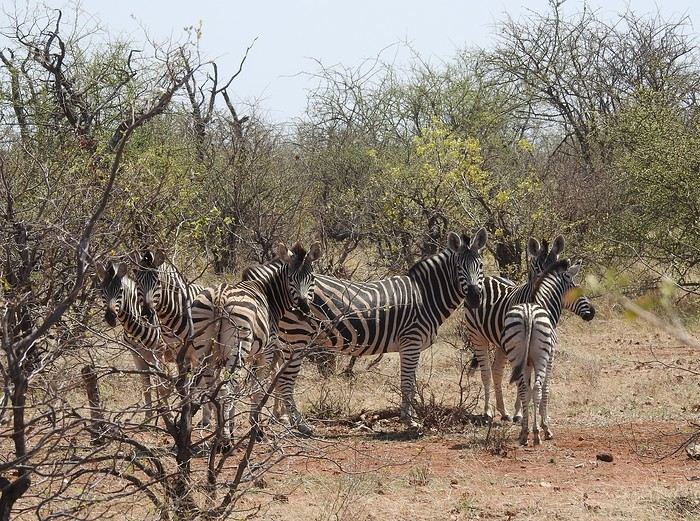
Waterberg to Mapungubwe.
The roads in this area aren’t great. I should’ve taken the N1 and gone via Musina... A massive storm on the road... 60 km away, hazard lights on...
Mapungubwe isn’t new to me, but I’d decided to try the western part, at Limpopo Tented Camp.
Upon arrival... “Sorry, a tree fell on one of the chalets...” “We’ll put you up for the first night at Leokwe, in the eastern part.” From what they said, it happened yesterday... but on-site, we saw it had actually been several months!
Sanparks’ management is still very much “outside usual standards.” There’s constantly work being done “haphazardly,” shoddily, poorly... And the welcome from staff really depends on the person and the day.
Oh well, no big deal—we’ll spend a night at Leokwe!
The eastern part “normally” doesn’t have lions... there are several spots where you can get out of the car... We saw general game, buffaloes, elephants... leopards (yes, see another travel journal), and now possibly cheetahs in the far eastern section. Our friend Montagnard had asked me (following another discussion) if I knew any truly ethical associations... I’d pointed him to a cheetah conservation group. I can confirm—they’re the ones who released several cheetahs into this part of Mapungubwe. Leokwe is stunning, unfenced... with a pretty high chance of seeing elephants in the camp, drinking from the pool or brushing past the chalet terraces. This area is still a fantastic spot for spectacular wildlife sightings and insane landscapes!
Hi there,
My month in South Africa went really well. The itinerary revisits some places I’ve already seen—even a few times over...
Joburg – Marakele – Waterberg – Mapungubwe – Northern Kruger – Panorama Route – Southern Kruger – Eswatini (Hlane) – Maputaland (Sodwana Bay) – St Lucia – Joburg via Richards Bay.
I’ll skip some spots and focus on others.
Today’s topic: Marakele.
Back in 2009, I spent a day there, and since then... I’ve tried several times to go back.
The park isn’t very big—nowhere near as lush as Kruger—but it has a lot going for it. Even back then, there was a split between the western section, where you wouldn’t find any “dangerous” animals like elephants or buffalo (though rhinos were around), and the eastern section, the Big Five zone. Nowadays, the western part is open to mountain biking, and the campsite is completely unfenced, which pretty much confirms that the big animals aren’t there—no rhinos either (I didn’t see a single dung pile). The western section didn’t seem all that interesting to me... with vervet monkeys everywhere in the campsite. In the eastern part, there’s the Topli tented camp, right by a dam. It’s small but charming, with a great view and a loosely fenced perimeter (there are now lions and wild dogs in this area). No facilities—no restaurant, no pool (except at the campsite), no shop, no fuel, nothing...
View from the “chalet” terrace... nice and relaxed...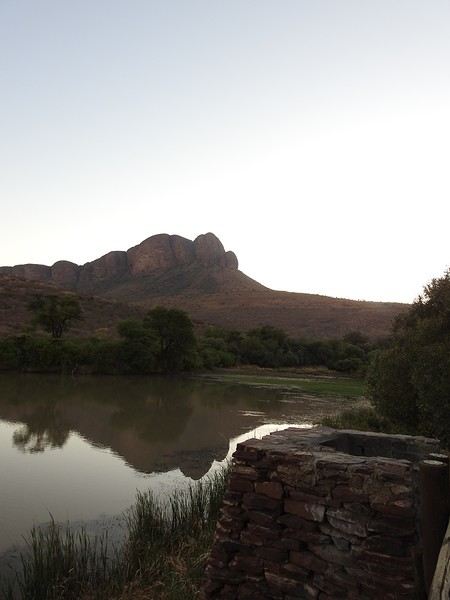

So, a terrace with a view for the lucky ones...
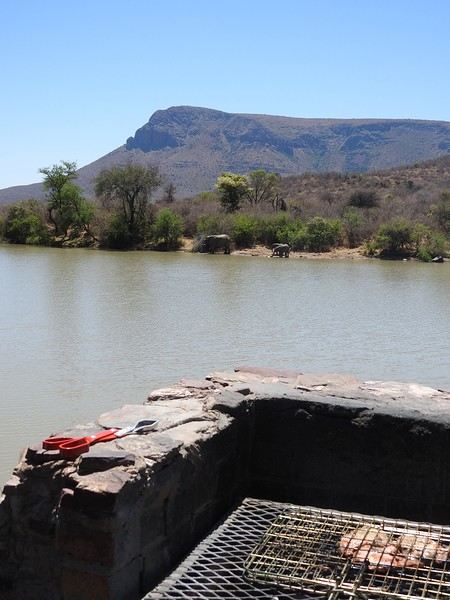
Bedroom and bathroom, separate and equipped kitchen. It can get windy. It must be cold in winter... but it’s hot this October.
Some lovely little roads... though some sections are 4x4-friendly.


A viewpoint at the top—you’re supposed to see the vulture colony from there... still haven’t seen it, as far as I’m concerned.

The animals?
My month in South Africa went really well. The itinerary revisits some places I’ve already seen—even a few times over...
Joburg – Marakele – Waterberg – Mapungubwe – Northern Kruger – Panorama Route – Southern Kruger – Eswatini (Hlane) – Maputaland (Sodwana Bay) – St Lucia – Joburg via Richards Bay.
I’ll skip some spots and focus on others.
Today’s topic: Marakele.
Back in 2009, I spent a day there, and since then... I’ve tried several times to go back.
The park isn’t very big—nowhere near as lush as Kruger—but it has a lot going for it. Even back then, there was a split between the western section, where you wouldn’t find any “dangerous” animals like elephants or buffalo (though rhinos were around), and the eastern section, the Big Five zone. Nowadays, the western part is open to mountain biking, and the campsite is completely unfenced, which pretty much confirms that the big animals aren’t there—no rhinos either (I didn’t see a single dung pile). The western section didn’t seem all that interesting to me... with vervet monkeys everywhere in the campsite. In the eastern part, there’s the Topli tented camp, right by a dam. It’s small but charming, with a great view and a loosely fenced perimeter (there are now lions and wild dogs in this area). No facilities—no restaurant, no pool (except at the campsite), no shop, no fuel, nothing...
View from the “chalet” terrace... nice and relaxed...
So, a terrace with a view for the lucky ones...
Bedroom and bathroom, separate and equipped kitchen. It can get windy. It must be cold in winter... but it’s hot this October.
Some lovely little roads... though some sections are 4x4-friendly.
A viewpoint at the top—you’re supposed to see the vulture colony from there... still haven’t seen it, as far as I’m concerned.
The animals?
We’re a couple in our sixties and spent four weeks in Indonesia during October 2025.
First, we got all the necessary documents—Indonesian visa, Bali-specific visa, and customs forms—from specialized Indonesian websites. You *can* get them on arrival, but it takes a lot of time.
Unfortunately, we chose to spend the first six days of our trip in Ubud and Amed, on Bali, which we bitterly regretted. You can arrive in Indonesia without going through Bali—this island is overcrowded with tourists, cars, and scooters, and it’s home to 4,400,000 people despite being smaller than Corsica. The locals are very kind, helpful, and friendly, and the food is good, but everything is geared toward tourists—nothing feels truly authentic. At least in the parts of Bali we visited: Sanur in the south (where we spent three days before flying back to France), Ubud, and Amed. The north of the island might be more interesting, but we didn’t go there.
After Bali, we headed to Yogyakarta, on Java, to explore the city and, most importantly, visit the temples of Borobudur and Prambanan.
It’s like going from a hyper-touristy universe to a world with almost no tourists. When you walk around the city, you barely see any tourists—the people are very approachable and happy to chat. As for Borobudur and Prambanan, they’re an absolute must on this trip. You *can* visit both temples in one day, including seeing Borobudur at sunrise. We split the visits over two days. We booked Borobudur the day before on the official site, which offers specific visiting times. For Prambanan, we bought the ticket and hired a guide on-site.
We spent four days on Java before flying to Sulawesi, also called Celebes. Makassar, the island’s capital, was just a stopover between flights, but we had time to admire the beautiful new mosque at sunset. Then, we spent four days in Toraja country, another highlight of the trip, visiting cemeteries and attending a funeral ceremony with around 600 people near Rantepao. We experienced truly unique and extraordinary moments. Above Toraja country, a few hours’ drive away, lies the Bada Valley and its megaliths—the tallest is 4.8 meters high, and there are about fifteen scattered across the rice fields. We saw five of them. There were a few tourists in Toraja, but in Bada, we were alone. Unforgettable memories, stunning landscapes, and always-smiling, kind, approachable people.
To wrap up the trip, we spent five nights in the Togian Islands, north of the Bada Valley, alone in a resort with three bungalows. The view was a white-sand beach and the nearby coral reef, complete with colorful fish, turtles, dolphins, and sharks.
After eleven nights in Sulawesi, we returned to Bali. Our last nights were in Sanur, a beach town with all-inclusive hotels (we stayed in an Airbnb), restaurants serving beef bourguignon, and tourists who don’t really go to Indonesia—they just go to Bali.
Practical tip: download Grab, the local Uber—it’s super handy. This year, we opted for an eSIM, which is also very convenient. You can buy it in France and activate it when you arrive at the airport.
I’m happy to answer any questions!
PS: Despite my mixed feelings about Bali, it *can* still be a travel destination—but Indonesia has so much more to offer! Marc
First, we got all the necessary documents—Indonesian visa, Bali-specific visa, and customs forms—from specialized Indonesian websites. You *can* get them on arrival, but it takes a lot of time.
Unfortunately, we chose to spend the first six days of our trip in Ubud and Amed, on Bali, which we bitterly regretted. You can arrive in Indonesia without going through Bali—this island is overcrowded with tourists, cars, and scooters, and it’s home to 4,400,000 people despite being smaller than Corsica. The locals are very kind, helpful, and friendly, and the food is good, but everything is geared toward tourists—nothing feels truly authentic. At least in the parts of Bali we visited: Sanur in the south (where we spent three days before flying back to France), Ubud, and Amed. The north of the island might be more interesting, but we didn’t go there.
After Bali, we headed to Yogyakarta, on Java, to explore the city and, most importantly, visit the temples of Borobudur and Prambanan.
It’s like going from a hyper-touristy universe to a world with almost no tourists. When you walk around the city, you barely see any tourists—the people are very approachable and happy to chat. As for Borobudur and Prambanan, they’re an absolute must on this trip. You *can* visit both temples in one day, including seeing Borobudur at sunrise. We split the visits over two days. We booked Borobudur the day before on the official site, which offers specific visiting times. For Prambanan, we bought the ticket and hired a guide on-site.
We spent four days on Java before flying to Sulawesi, also called Celebes. Makassar, the island’s capital, was just a stopover between flights, but we had time to admire the beautiful new mosque at sunset. Then, we spent four days in Toraja country, another highlight of the trip, visiting cemeteries and attending a funeral ceremony with around 600 people near Rantepao. We experienced truly unique and extraordinary moments. Above Toraja country, a few hours’ drive away, lies the Bada Valley and its megaliths—the tallest is 4.8 meters high, and there are about fifteen scattered across the rice fields. We saw five of them. There were a few tourists in Toraja, but in Bada, we were alone. Unforgettable memories, stunning landscapes, and always-smiling, kind, approachable people.
To wrap up the trip, we spent five nights in the Togian Islands, north of the Bada Valley, alone in a resort with three bungalows. The view was a white-sand beach and the nearby coral reef, complete with colorful fish, turtles, dolphins, and sharks.
After eleven nights in Sulawesi, we returned to Bali. Our last nights were in Sanur, a beach town with all-inclusive hotels (we stayed in an Airbnb), restaurants serving beef bourguignon, and tourists who don’t really go to Indonesia—they just go to Bali.
Practical tip: download Grab, the local Uber—it’s super handy. This year, we opted for an eSIM, which is also very convenient. You can buy it in France and activate it when you arrive at the airport.
I’m happy to answer any questions!
PS: Despite my mixed feelings about Bali, it *can* still be a travel destination—but Indonesia has so much more to offer! Marc
Four days of beach relaxation in this truly curious place let me unwind 15 years ago after trekking through Asia or Africa: swimming in clear, clean water and easing jet lag was my goal; seeing that mirage in the middle of the desert also piqued my curiosity... And then Dubai developed, and now I go there once a year for 15 days without ever getting bored!! My backpacker budget doesn’t stop me from enjoying what I love about travel: discovering cultures, architecture, and beaches with turquoise waters.
I’m sharing my favorite spots here for those who love simplicity and the thrill of being amazed! Dubai stretches over 50 km long. I stay in the historic Bur Dubai neighborhood, which is very "Indian" and separated from Deira (the more "Arab/African" district) by a creek.
You cross from one side to the other on abras, small traditional wooden boats that run all day. My hotel is 4 minutes from the Al Ghubaiba bus station, 5 minutes from the Al Ghubaiba metro, and 6 minutes from the Al Ghubaiba boat station!!! It’s easy to get around from here, and at night, it’s lively—safe to go out, with few tourists but mostly the local middle class who built (and are still building) Dubai. It’s simple and very international.
- **Transport:** ...**Getting there:** I fly with Emirates from Paris. Taking the 9:30 PM flight, I sleep on the plane, land at 6:35 AM, exchange 200 euros once I’ve picked up my luggage, change in the restroom, grab a taxi to the hotel, drop off my suitcase, and head straight to the beach! ...**On the ground:** I buy a silver NOL card, which works for buses, metro, and boats. I top it up as needed—it’s valid for 2 years. ...**Taxis:** They have reliable meters. Pink ones are driven by women. Airport-to-hotel fare: 12 €. You’ll find them everywhere, and they don’t complain about short trips. Between 3 PM and 4 PM, it’s trickier because of shift changes.
- **Best times to visit:** For me, it’s April-May and October-November: not too hot for walking but warm enough to swim! Watch out for air conditioning—your worst enemy. It’s everywhere, even at bus stops. Bring a big scarf or sarong to cover your throat and head—going from 32°C to 16°C when you enter a mall, bus, or taxi is pretty harsh!
- **Hotel:** I stay at the Grand Astoria (Fahidi Street) because the value for price and location is great. It’s very clean, and I skip breakfast because near the bus station, there’s a big Carrefour hypermarket where I buy breakfast supplies, water, camel milk, and picnic snacks. There are two nightclubs downstairs—bring earplugs if you want to sleep before 2 AM. Wi-Fi is spotty; you have to change the password every two days. The staff is lovely. Rooms have a TV (4 Indian channels + BBC), a kettle with tea/coffee sachets, and a mini-fridge you fill yourself.
- **Bur Dubai: "My neighborhood"** In the morning, you can see kids in uniforms waiting for the school bus with their parents—second-generation migrants who’ve settled here. They speak English, Arabic, and their mother tongue, have great education, and are in high demand (I see job ads in the local newspapers in the hotel lobby). From the U.S. to the Middle East, Singapore to South Africa, they have bright futures. In the evenings, families stroll along the creek, and it’s common for bench neighbors to ask where you’re from. The whole world crosses paths here. Even with basic English, it’s friendly and warm—the "take care" as people go their separate ways is a nice touch.
Bur Dubai has plenty to explore if you don’t feel like going far: along the creek, there’s a cluster of reconstructed houses forming the Al Shindagha Museum. One ticket lets you visit all the houses, each with a theme tied to the history of the seven emirates (Dubai is one). It takes a full day, but if you stop for lunch, there are tons of restaurants for all budgets, some right by the water.
Walking in the opposite direction, you reach Al Seef, a reconstruction of old Dubai as a small pearl-fishing port. The architecture is lovely, with souvenir shops. My favorite is the Iranian grocery store, where you’ll find camel milk chocolate, black lemon, and sweets with rose, pistachio, and candied apricot. It’s peaceful to walk around here, even as a solo woman. There are free restrooms everywhere, wooden or stone benches, and a nice breeze in the evening. Plenty of waterfront restaurants or places to grab a drink, plus a few towers across the way—nothing spectacular, but they’re prettily lit. There’s a souk with souvenir shops for those who like that!
- **Restaurants:** Bur Dubai has restaurants representing regions of India and the Indian subcontinent. My favorites: Across from the hotel, Paklyari—a Pakistani spot with excellent mutton biryani for 5 €. At Al Seef, Nablus has a great setting by the water. Across in Deira, the Italian restaurant on the 18th floor of the Rotana—go half an hour before sunset for an amazing view of the creek and skyline. The truffle pizza is 24 €. You can take a taxi from Bur, and after dinner, get dropped off at Al Seef to walk back along the creek. For a great thali, Kathhiyawadi is a 10-minute walk from Burjuman metro. My latest discovery: Bordomavi (near the Rashid Al Hadees Masjid 1 bus stop). One of the servers is Algerian and speaks French. You can swim at the small beach with showers/toilets, then have lunch at the restaurant (57 € for two, with starter, main, dessert, and drinks). The setting is peaceful, in a little fishing port with a cool photo op—traditional boats with the modern skyline in the background!
- **Sunset drinks:** The terrace at Concorde Creek View (Bur Dubai) has a creek view, and Canopy by Hilton (Al Seef) overlooks the creek and skyline. You can get a day pass for the pool, including meals and drinks.
- **Lassi:** Near the hotel, SreeRaj Lassi Bar has great ice cream and lassi. *Tip: Everything is takeout-friendly, including leftovers—great for a picnic the next day.
- **Market:** Don’t miss the Waterfront Market—a huge hall where locals buy fish, meat, fruits, and vegetables from all over the world. I love buying fish, shrimp, and cuttlefish, then having it prepared at Yahya’s waterfront restaurant (grilled, in sauce, fried, etc.) with salad, hummus, tabbouleh, and rice. It’s on the way between "my" beach and the hotel, so I stop by easily. I stock up on fruit, and at the Lulu supermarket upstairs, I grab yogurt, water, etc. No need to carry everything—a taxi (available at the main exit) will drop me right at the hotel!
- **Beach:** My favorite: Al Mamzar Park (15-minute taxi ride, 9 €). It has four lifeguarded beaches with showers and restrooms. Opens at 8 AM, but note: Mondays and Wednesdays are for women and young children only! Entry is 1.50 €. On Beach #2, you can rent sun loungers and umbrellas. Beach #3 (the prettiest) has stone tables with benches under big umbrellas—free! I arrive at 8 AM, set up, and walk for an hour along the water, spotting starfish, colorful fish, birds, and occasionally small jellyfish. From bikinis to burkinis, everyone swims as they like! Dubai is judgment-free—no side-eye, just smiles and greetings. I love seeing joyful, full-figured women on women-only days, playing darbuka and singing. Indian women do yoga (even headstands!), Chinese women practice tai chi... I read a lot and swim far out to the buoy limits. Lifeguards keep watch. It’s safe on land too. Once, a 4x4 driver gave me a dirty look for "serving whisky" to my mom from a plastic bottle—until I made him smell it. It was mint tea! Embarrassed, he immediately called his brother, a gym teacher in Poitiers, to apologize in French! People in Dubai are smiley, polite, and very respectful of elders. On weekends, the park is packed with groups and families barbecuing—joyful chaos in every language!
By 1:30 PM, depending on my mood, I’ll get dropped off at the Waterfront Market for fish or a thali restaurant. Sometimes I take the bus—it stops near the abras on the Deira side. Just cross by boat, then it’s a 3-minute walk to the hotel. Takes 45 minutes (vs. 15 by taxi).
For a treat, try Kite Beach (Abu Manara Masjid bus stop). The SoleMio section offers comfy sun loungers, fluffy towels, and umbrellas for 80 € for two in the front row. Go early—you’ll feel like you have the place to yourself, with the Burj Al Arab in the background. It gets busy on weekends.
From there, you can take a taxi to Dubai Mall (not far) to check out the dancing fountains at sunset, for example.
You can also buy day passes at some hotels with sun loungers, towels, pool access, and lunch credit. I tried the Ritz-Carlton—decent (170 € for two, including meals). Lunch was fine, and the view of the lit-up towers at sunset, with the giant wheel, was stunning. I took the metro back in the evening.
There are plenty of free beaches too, like La Mer—worth seeing more for the decor than the beach itself.
- **Even though my main "sightseeing" involves walking around with my head up, admiring the towers in DIFC (amazing), visiting the stunning Mohammed bin Rashid Library (near Creek metro), wandering the souks (including Little India in Bur and the Iranian mosque), or the spice souks in Deira (go early when it’s quiet),** A day trip to Abu Dhabi is worth it. Take the Bur Dubai-Abu Dhabi bus (pay with your NOL card). If you leave early, you’ll see the sunrise over the desert. At the station, buy a bus ticket to the Louvre, cross the footbridge over the highway, and wait for the bus. After the museum, take a taxi to the Grand Mosque, then another taxi back to the bus station. A full but doable day—no need to stay overnight!
In the evening, I love taking the metro (mostly above ground) and passing between the towering, lit-up skyscrapers—it feels like a sci-fi movie. Just missing flying taxis (they’re in the works!)
Sharjah, the closest emirate, has a fantastic Orientalist museum. From Bur Dubai’s maritime station, boats go to Sharjah in 30 minutes, near the aquarium and maritime museum.
- **Shopping:** I buy Indian chai tea spices, incense, camel milk chocolate, Iranian sweets, and fabric from Indian shops selling saris and fabric by the meter. I have a tailor make shirts, tunics, etc. Some shops sell buttons and trimmings to jazz things up.
- **Malls:** To attract customers, mall owners come up with wild ideas: a ski slope at Dubai Mall (worth seeing once), pretty wooden souks at Madinat, and a giant aquarium at Dubai Mall. At sunset, you can watch the dancing fountains to popular global tunes at the foot of the world’s tallest tower. At its base, there’s an excellent Iraqi restaurant, Samad Al Iraki, where the tea server is Tunisian and speaks French! The Ibn Battuta Mall is unique—you can go there straight from Abu Dhabi by bus, for example. Malls have plenty of dining options and are a place to (finally) see locals... though they’re not that interesting. Malls are served by the metro, while buses run along the coast. In Burjuman Mall, there’s a cybercafé on the ground floor where you can print.
A few helpful sites: Visit Dubai - Official Tourism Site RTA (Roads and Transport Authority) - RTA Services
"But what do *you* do in Dubai?" my friends ask, surprised... Yes, I love traveling to countries where I ride on bumpy roads in buses that break down, sleep in places with mosquitoes and cockroaches, and swelter in heat and humidity. But even far from that kind of travel, Dubai has an exotic charm. There’s something for every taste and budget—once you get past the flight ticket (around 680 €, probably cheaper with a layover). Dubai is about relaxing, swimming, being amazed, chatting, and tasting... A safe, clean vacation with no rudeness, and as a woman, it’s a relief to let your guard down. You come back refreshed and at peace!
Hope my experience helps... Next trip: March 2026, with plans to visit the Guggenheim in Abu Dhabi and whatever other curiosities pop up like magic...
Feel free to add to my experience with your own! Happy travels, Laurence
I’m sharing my favorite spots here for those who love simplicity and the thrill of being amazed! Dubai stretches over 50 km long. I stay in the historic Bur Dubai neighborhood, which is very "Indian" and separated from Deira (the more "Arab/African" district) by a creek.
You cross from one side to the other on abras, small traditional wooden boats that run all day. My hotel is 4 minutes from the Al Ghubaiba bus station, 5 minutes from the Al Ghubaiba metro, and 6 minutes from the Al Ghubaiba boat station!!! It’s easy to get around from here, and at night, it’s lively—safe to go out, with few tourists but mostly the local middle class who built (and are still building) Dubai. It’s simple and very international.
- **Transport:** ...**Getting there:** I fly with Emirates from Paris. Taking the 9:30 PM flight, I sleep on the plane, land at 6:35 AM, exchange 200 euros once I’ve picked up my luggage, change in the restroom, grab a taxi to the hotel, drop off my suitcase, and head straight to the beach! ...**On the ground:** I buy a silver NOL card, which works for buses, metro, and boats. I top it up as needed—it’s valid for 2 years. ...**Taxis:** They have reliable meters. Pink ones are driven by women. Airport-to-hotel fare: 12 €. You’ll find them everywhere, and they don’t complain about short trips. Between 3 PM and 4 PM, it’s trickier because of shift changes.
- **Best times to visit:** For me, it’s April-May and October-November: not too hot for walking but warm enough to swim! Watch out for air conditioning—your worst enemy. It’s everywhere, even at bus stops. Bring a big scarf or sarong to cover your throat and head—going from 32°C to 16°C when you enter a mall, bus, or taxi is pretty harsh!
- **Hotel:** I stay at the Grand Astoria (Fahidi Street) because the value for price and location is great. It’s very clean, and I skip breakfast because near the bus station, there’s a big Carrefour hypermarket where I buy breakfast supplies, water, camel milk, and picnic snacks. There are two nightclubs downstairs—bring earplugs if you want to sleep before 2 AM. Wi-Fi is spotty; you have to change the password every two days. The staff is lovely. Rooms have a TV (4 Indian channels + BBC), a kettle with tea/coffee sachets, and a mini-fridge you fill yourself.
- **Bur Dubai: "My neighborhood"** In the morning, you can see kids in uniforms waiting for the school bus with their parents—second-generation migrants who’ve settled here. They speak English, Arabic, and their mother tongue, have great education, and are in high demand (I see job ads in the local newspapers in the hotel lobby). From the U.S. to the Middle East, Singapore to South Africa, they have bright futures. In the evenings, families stroll along the creek, and it’s common for bench neighbors to ask where you’re from. The whole world crosses paths here. Even with basic English, it’s friendly and warm—the "take care" as people go their separate ways is a nice touch.
Bur Dubai has plenty to explore if you don’t feel like going far: along the creek, there’s a cluster of reconstructed houses forming the Al Shindagha Museum. One ticket lets you visit all the houses, each with a theme tied to the history of the seven emirates (Dubai is one). It takes a full day, but if you stop for lunch, there are tons of restaurants for all budgets, some right by the water.
Walking in the opposite direction, you reach Al Seef, a reconstruction of old Dubai as a small pearl-fishing port. The architecture is lovely, with souvenir shops. My favorite is the Iranian grocery store, where you’ll find camel milk chocolate, black lemon, and sweets with rose, pistachio, and candied apricot. It’s peaceful to walk around here, even as a solo woman. There are free restrooms everywhere, wooden or stone benches, and a nice breeze in the evening. Plenty of waterfront restaurants or places to grab a drink, plus a few towers across the way—nothing spectacular, but they’re prettily lit. There’s a souk with souvenir shops for those who like that!
- **Restaurants:** Bur Dubai has restaurants representing regions of India and the Indian subcontinent. My favorites: Across from the hotel, Paklyari—a Pakistani spot with excellent mutton biryani for 5 €. At Al Seef, Nablus has a great setting by the water. Across in Deira, the Italian restaurant on the 18th floor of the Rotana—go half an hour before sunset for an amazing view of the creek and skyline. The truffle pizza is 24 €. You can take a taxi from Bur, and after dinner, get dropped off at Al Seef to walk back along the creek. For a great thali, Kathhiyawadi is a 10-minute walk from Burjuman metro. My latest discovery: Bordomavi (near the Rashid Al Hadees Masjid 1 bus stop). One of the servers is Algerian and speaks French. You can swim at the small beach with showers/toilets, then have lunch at the restaurant (57 € for two, with starter, main, dessert, and drinks). The setting is peaceful, in a little fishing port with a cool photo op—traditional boats with the modern skyline in the background!
- **Sunset drinks:** The terrace at Concorde Creek View (Bur Dubai) has a creek view, and Canopy by Hilton (Al Seef) overlooks the creek and skyline. You can get a day pass for the pool, including meals and drinks.
- **Lassi:** Near the hotel, SreeRaj Lassi Bar has great ice cream and lassi. *Tip: Everything is takeout-friendly, including leftovers—great for a picnic the next day.
- **Market:** Don’t miss the Waterfront Market—a huge hall where locals buy fish, meat, fruits, and vegetables from all over the world. I love buying fish, shrimp, and cuttlefish, then having it prepared at Yahya’s waterfront restaurant (grilled, in sauce, fried, etc.) with salad, hummus, tabbouleh, and rice. It’s on the way between "my" beach and the hotel, so I stop by easily. I stock up on fruit, and at the Lulu supermarket upstairs, I grab yogurt, water, etc. No need to carry everything—a taxi (available at the main exit) will drop me right at the hotel!
- **Beach:** My favorite: Al Mamzar Park (15-minute taxi ride, 9 €). It has four lifeguarded beaches with showers and restrooms. Opens at 8 AM, but note: Mondays and Wednesdays are for women and young children only! Entry is 1.50 €. On Beach #2, you can rent sun loungers and umbrellas. Beach #3 (the prettiest) has stone tables with benches under big umbrellas—free! I arrive at 8 AM, set up, and walk for an hour along the water, spotting starfish, colorful fish, birds, and occasionally small jellyfish. From bikinis to burkinis, everyone swims as they like! Dubai is judgment-free—no side-eye, just smiles and greetings. I love seeing joyful, full-figured women on women-only days, playing darbuka and singing. Indian women do yoga (even headstands!), Chinese women practice tai chi... I read a lot and swim far out to the buoy limits. Lifeguards keep watch. It’s safe on land too. Once, a 4x4 driver gave me a dirty look for "serving whisky" to my mom from a plastic bottle—until I made him smell it. It was mint tea! Embarrassed, he immediately called his brother, a gym teacher in Poitiers, to apologize in French! People in Dubai are smiley, polite, and very respectful of elders. On weekends, the park is packed with groups and families barbecuing—joyful chaos in every language!
By 1:30 PM, depending on my mood, I’ll get dropped off at the Waterfront Market for fish or a thali restaurant. Sometimes I take the bus—it stops near the abras on the Deira side. Just cross by boat, then it’s a 3-minute walk to the hotel. Takes 45 minutes (vs. 15 by taxi).
For a treat, try Kite Beach (Abu Manara Masjid bus stop). The SoleMio section offers comfy sun loungers, fluffy towels, and umbrellas for 80 € for two in the front row. Go early—you’ll feel like you have the place to yourself, with the Burj Al Arab in the background. It gets busy on weekends.
From there, you can take a taxi to Dubai Mall (not far) to check out the dancing fountains at sunset, for example.
You can also buy day passes at some hotels with sun loungers, towels, pool access, and lunch credit. I tried the Ritz-Carlton—decent (170 € for two, including meals). Lunch was fine, and the view of the lit-up towers at sunset, with the giant wheel, was stunning. I took the metro back in the evening.
There are plenty of free beaches too, like La Mer—worth seeing more for the decor than the beach itself.
- **Even though my main "sightseeing" involves walking around with my head up, admiring the towers in DIFC (amazing), visiting the stunning Mohammed bin Rashid Library (near Creek metro), wandering the souks (including Little India in Bur and the Iranian mosque), or the spice souks in Deira (go early when it’s quiet),** A day trip to Abu Dhabi is worth it. Take the Bur Dubai-Abu Dhabi bus (pay with your NOL card). If you leave early, you’ll see the sunrise over the desert. At the station, buy a bus ticket to the Louvre, cross the footbridge over the highway, and wait for the bus. After the museum, take a taxi to the Grand Mosque, then another taxi back to the bus station. A full but doable day—no need to stay overnight!
In the evening, I love taking the metro (mostly above ground) and passing between the towering, lit-up skyscrapers—it feels like a sci-fi movie. Just missing flying taxis (they’re in the works!)
Sharjah, the closest emirate, has a fantastic Orientalist museum. From Bur Dubai’s maritime station, boats go to Sharjah in 30 minutes, near the aquarium and maritime museum.
- **Shopping:** I buy Indian chai tea spices, incense, camel milk chocolate, Iranian sweets, and fabric from Indian shops selling saris and fabric by the meter. I have a tailor make shirts, tunics, etc. Some shops sell buttons and trimmings to jazz things up.
- **Malls:** To attract customers, mall owners come up with wild ideas: a ski slope at Dubai Mall (worth seeing once), pretty wooden souks at Madinat, and a giant aquarium at Dubai Mall. At sunset, you can watch the dancing fountains to popular global tunes at the foot of the world’s tallest tower. At its base, there’s an excellent Iraqi restaurant, Samad Al Iraki, where the tea server is Tunisian and speaks French! The Ibn Battuta Mall is unique—you can go there straight from Abu Dhabi by bus, for example. Malls have plenty of dining options and are a place to (finally) see locals... though they’re not that interesting. Malls are served by the metro, while buses run along the coast. In Burjuman Mall, there’s a cybercafé on the ground floor where you can print.
A few helpful sites: Visit Dubai - Official Tourism Site RTA (Roads and Transport Authority) - RTA Services
"But what do *you* do in Dubai?" my friends ask, surprised... Yes, I love traveling to countries where I ride on bumpy roads in buses that break down, sleep in places with mosquitoes and cockroaches, and swelter in heat and humidity. But even far from that kind of travel, Dubai has an exotic charm. There’s something for every taste and budget—once you get past the flight ticket (around 680 €, probably cheaper with a layover). Dubai is about relaxing, swimming, being amazed, chatting, and tasting... A safe, clean vacation with no rudeness, and as a woman, it’s a relief to let your guard down. You come back refreshed and at peace!
Hope my experience helps... Next trip: March 2026, with plans to visit the Guggenheim in Abu Dhabi and whatever other curiosities pop up like magic...
Feel free to add to my experience with your own! Happy travels, Laurence
Prologue
This journal recounts a trip to Rajasthan that’s already over a year old and that I’ve only now found the chance to write about. The summer of 2024 marked my return to India—my tenth trip—after six long years away since my last solo wanderings in Tamil Nadu in 2018 (the journal of which is published on this site). That absence was partly (but not only) due to the long COVID and post-COVID period, which saw a complete halt and then a major slowdown in global tourism. To top it off, Voyage Forum announced its closure in an end-of-the-world atmosphere. A sad time for our favorite social activity…
A few weeks after returning from Rajasthan, I tried to motivate myself to start writing a journal to publish on a forum claiming to be VF’s successor, which I’d eventually signed up for out of desperation. But I kept hesitating and putting the project off because, for one, I no longer have the time I used to. For another, the vibe wasn’t really taking off on that forum—it was overrun with ads and not very active, contrary to what its host’s name suggested. Despite its good intentions and commendable role as a stopgap, it also turned out to be very impractical to use, especially when you don’t have much time like me. I’ll admit I’d occasionally check back on VF to see if anything was happening. But all the discussions remained frozen in time, stuck in that fateful year, 2020. Then, rumors swirled online about shady reasons behind its closure, leaving little room for hope.
And then, one fine morning, I got a message at work from Marien informing me that VF had reopened. What a huge surprise! Even though the forum’s “end” had played out in a somewhat apocalyptic atmosphere, the memories of passionate and heated discussions, the frank debates, and the useful exchanges that made this site a traveler’s goldmine and a unique hub of conviviality all came rushing back to me like a breath of fresh air. I finally saw a sign and tried to motivate myself to find the time to publish the journal of this tenth trip to India and fifth to Rajasthan. But in the end, I got bogged down in professional and family obligations and never managed to find the time to get started. That’s now fixed, though, because I had two reasons for wanting to do it: I find that looking back on a trip to tell others about it is a highly beneficial introspective exercise. Also, I thought this journal could be useful to other travelers on a few points.
Because, “do we really need yet another journal about Rajasthan?” you might rightly ask! Especially in a time when so many journals about the “Land of Kings” have been published since VF’s return, not to mention the countless stories you can already find online about this region, one of India’s most touristy. And I’d add, why go back to Rajasthan for a fifth time, where I’ve already dragged my feet more than enough—through its forts, deserts, temples, cities, villages, bumpy roads, train stations, tasty street food stalls, cheap guesthouses, and more? Where some might see just another overhyped tourist destination full of the same old *Arabian Nights* clichés, worn to a thread, that I mentioned earlier, when there’s so much else to see in India? Well, first because it’s a magnificent country I never tire of, where I started an academic study and made so many connections. It’s also packed with places where you won’t find a single tourist (right, Marie-Jo?), even in the heart of well-trodden paths and classic itineraries. And most importantly, as I said earlier, things have changed in recent years. First, after six years without traveling far, the urge to go back to India was getting stronger. But this time, no more solo trips (often) or duo adventures (sometimes)—now it’s a team of four that has to come along! And even if you can argue with that, what better place than Rajasthan to introduce India to people who’ve never seen it? To kids you want to amaze? Plus, traveling with your new little family to your favorite country isn’t the same as going solo in often spartan conditions that only affect you. It’s a different challenge, but ultimately probably much harder. So, is it really reasonable to take two kids to India, including a two-year-old baby? That’s one of the main goals of this journal (but not the only one)—to try to answer that question.
As you can tell, it’s not so much the destination but the slightly unusual setup of this trip that, in my opinion, will make this journal interesting. Despite my experience and expertise (yes, I dare say it) in India, there were plenty of questions before we finalized the plan and said, “Alright, let’s go!” The questions were flying for us parents. Is it wise to travel to India with a two-year-old? What would we do (it happened) if the kids got very sick? Would they be able to handle a road trip on Rajasthan’s bumpy, dusty roads using public transport? Could they handle the shock of such a different world—the dirt, poverty, pollution, noise (…and the smell, as they say), the spicy food, monkeys, mosquitoes, snakes, tigers, leopards, and so on? In short, all the clichés that I usually joke about suddenly became potential realities. Another concern: as a mixed Franco-African family (not me, but my partner and her oldest), wouldn’t we risk not always being well received, given what you sometimes hear about that in India? How would Indians react to seeing a mixed-race family, the ultimate taboo in a country of purity and social segregation, which would undoubtedly raise many questions for them? Of course, not everything went as expected… Because, as you know, with India—and what makes it charming for some—there are always complications: sometimes where you don’t expect them… and sometimes where you do. I’ll go into detail about that in the journal to come (not right away) and in the final review (even later). These experiences could be useful to travelers who find themselves in similar situations and have the same questions we did before embarking on such a journey. And maybe it’ll spark the curiosity of those who aren’t concerned and will read yet another Rajasthan journal, but with its own unique twists.
Despite my unchanged constraints, which mean I have little time to write this, I don’t want to rush the story, so I’ll take my time. There will probably be lulls. I hope that won’t stop people from coming to react, debate, share their impressions, or ask for information.
This journal recounts a trip to Rajasthan that’s already over a year old and that I’ve only now found the chance to write about. The summer of 2024 marked my return to India—my tenth trip—after six long years away since my last solo wanderings in Tamil Nadu in 2018 (the journal of which is published on this site). That absence was partly (but not only) due to the long COVID and post-COVID period, which saw a complete halt and then a major slowdown in global tourism. To top it off, Voyage Forum announced its closure in an end-of-the-world atmosphere. A sad time for our favorite social activity…
A few weeks after returning from Rajasthan, I tried to motivate myself to start writing a journal to publish on a forum claiming to be VF’s successor, which I’d eventually signed up for out of desperation. But I kept hesitating and putting the project off because, for one, I no longer have the time I used to. For another, the vibe wasn’t really taking off on that forum—it was overrun with ads and not very active, contrary to what its host’s name suggested. Despite its good intentions and commendable role as a stopgap, it also turned out to be very impractical to use, especially when you don’t have much time like me. I’ll admit I’d occasionally check back on VF to see if anything was happening. But all the discussions remained frozen in time, stuck in that fateful year, 2020. Then, rumors swirled online about shady reasons behind its closure, leaving little room for hope.
And then, one fine morning, I got a message at work from Marien informing me that VF had reopened. What a huge surprise! Even though the forum’s “end” had played out in a somewhat apocalyptic atmosphere, the memories of passionate and heated discussions, the frank debates, and the useful exchanges that made this site a traveler’s goldmine and a unique hub of conviviality all came rushing back to me like a breath of fresh air. I finally saw a sign and tried to motivate myself to find the time to publish the journal of this tenth trip to India and fifth to Rajasthan. But in the end, I got bogged down in professional and family obligations and never managed to find the time to get started. That’s now fixed, though, because I had two reasons for wanting to do it: I find that looking back on a trip to tell others about it is a highly beneficial introspective exercise. Also, I thought this journal could be useful to other travelers on a few points.
Because, “do we really need yet another journal about Rajasthan?” you might rightly ask! Especially in a time when so many journals about the “Land of Kings” have been published since VF’s return, not to mention the countless stories you can already find online about this region, one of India’s most touristy. And I’d add, why go back to Rajasthan for a fifth time, where I’ve already dragged my feet more than enough—through its forts, deserts, temples, cities, villages, bumpy roads, train stations, tasty street food stalls, cheap guesthouses, and more? Where some might see just another overhyped tourist destination full of the same old *Arabian Nights* clichés, worn to a thread, that I mentioned earlier, when there’s so much else to see in India? Well, first because it’s a magnificent country I never tire of, where I started an academic study and made so many connections. It’s also packed with places where you won’t find a single tourist (right, Marie-Jo?), even in the heart of well-trodden paths and classic itineraries. And most importantly, as I said earlier, things have changed in recent years. First, after six years without traveling far, the urge to go back to India was getting stronger. But this time, no more solo trips (often) or duo adventures (sometimes)—now it’s a team of four that has to come along! And even if you can argue with that, what better place than Rajasthan to introduce India to people who’ve never seen it? To kids you want to amaze? Plus, traveling with your new little family to your favorite country isn’t the same as going solo in often spartan conditions that only affect you. It’s a different challenge, but ultimately probably much harder. So, is it really reasonable to take two kids to India, including a two-year-old baby? That’s one of the main goals of this journal (but not the only one)—to try to answer that question.
As you can tell, it’s not so much the destination but the slightly unusual setup of this trip that, in my opinion, will make this journal interesting. Despite my experience and expertise (yes, I dare say it) in India, there were plenty of questions before we finalized the plan and said, “Alright, let’s go!” The questions were flying for us parents. Is it wise to travel to India with a two-year-old? What would we do (it happened) if the kids got very sick? Would they be able to handle a road trip on Rajasthan’s bumpy, dusty roads using public transport? Could they handle the shock of such a different world—the dirt, poverty, pollution, noise (…and the smell, as they say), the spicy food, monkeys, mosquitoes, snakes, tigers, leopards, and so on? In short, all the clichés that I usually joke about suddenly became potential realities. Another concern: as a mixed Franco-African family (not me, but my partner and her oldest), wouldn’t we risk not always being well received, given what you sometimes hear about that in India? How would Indians react to seeing a mixed-race family, the ultimate taboo in a country of purity and social segregation, which would undoubtedly raise many questions for them? Of course, not everything went as expected… Because, as you know, with India—and what makes it charming for some—there are always complications: sometimes where you don’t expect them… and sometimes where you do. I’ll go into detail about that in the journal to come (not right away) and in the final review (even later). These experiences could be useful to travelers who find themselves in similar situations and have the same questions we did before embarking on such a journey. And maybe it’ll spark the curiosity of those who aren’t concerned and will read yet another Rajasthan journal, but with its own unique twists.
Despite my unchanged constraints, which mean I have little time to write this, I don’t want to rush the story, so I’ll take my time. There will probably be lulls. I hope that won’t stop people from coming to react, debate, share their impressions, or ask for information.
...
After Southern Tanzania, I’m sharing a travel story about the Cantal region with you...
...
For us, at the start of 2025, Le CANTAL was a true “Terra Incognita”!!
After seeing some tempting TV reports, we decided to fill this gap—especially in terms of landscapes. On the same trip, we’ll also head to the Arcachon Basin, the International Seaplane Gathering in Biscarrosse, and my native Landes region...
So, on May 20th, we left Marseille in the rain and thunder, heading toward Nîmes, Saint-Hippolyte, Mont Aigoual, Florac, and stopping in Marvejols to give my arthritic back a break for the night.
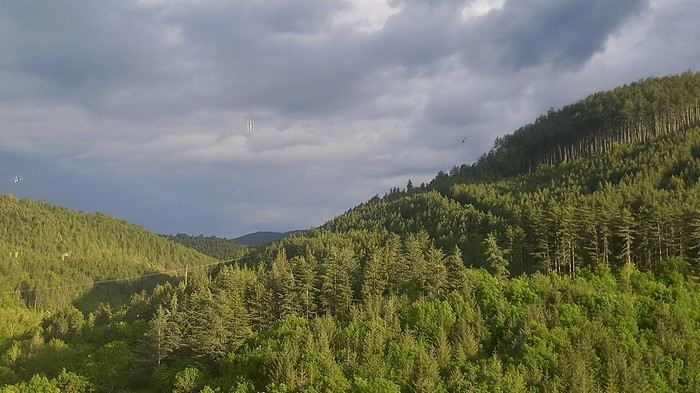
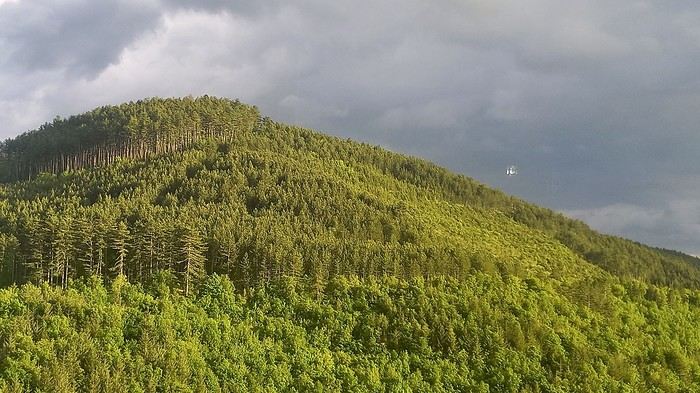
The next morning, we decided to revisit the Parc aux Loups du Gévaudan (Europe’s largest wolf park). As someone used to photo safaris in the wilds of East Africa, I’m not a fan of zoos at all—but I *do* have a deep admiration for wolves!!
Since it’s pretty unlikely I’ll ever see one in the wild, I’ll settle for this Parc aux Loups in Marvejols. This will be our third visit to this incredible gathering of these fascinating canines.
Some are still finishing their chilly night...
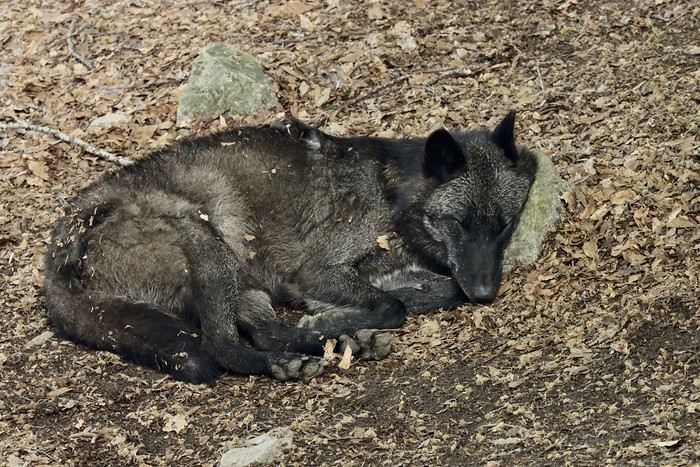
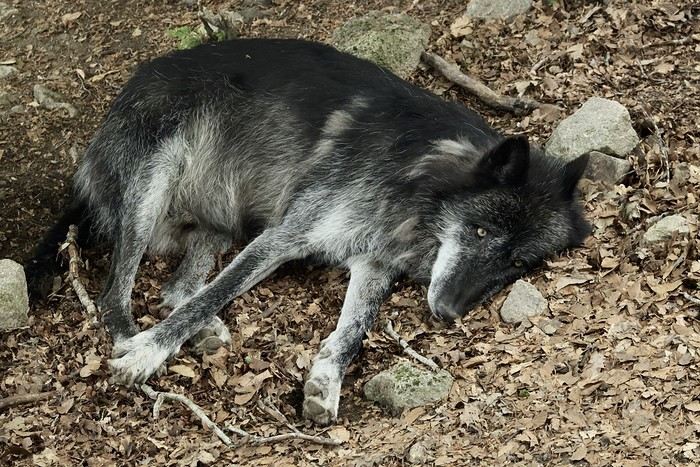
...
After Southern Tanzania, I’m sharing a travel story about the Cantal region with you...
...
For us, at the start of 2025, Le CANTAL was a true “Terra Incognita”!!
After seeing some tempting TV reports, we decided to fill this gap—especially in terms of landscapes. On the same trip, we’ll also head to the Arcachon Basin, the International Seaplane Gathering in Biscarrosse, and my native Landes region...
So, on May 20th, we left Marseille in the rain and thunder, heading toward Nîmes, Saint-Hippolyte, Mont Aigoual, Florac, and stopping in Marvejols to give my arthritic back a break for the night.
The next morning, we decided to revisit the Parc aux Loups du Gévaudan (Europe’s largest wolf park). As someone used to photo safaris in the wilds of East Africa, I’m not a fan of zoos at all—but I *do* have a deep admiration for wolves!!
Since it’s pretty unlikely I’ll ever see one in the wild, I’ll settle for this Parc aux Loups in Marvejols. This will be our third visit to this incredible gathering of these fascinating canines.
Some are still finishing their chilly night...
...
Hello everyone,
I’d like to invite you on a new adventure in Kenya.
Back in 2010, my husband Ben and I fell in love with Kenya, and we’ve been traveling there regularly ever since. This 2025 safari marked the first weeks of an important milestone in my life: retirement.
Of course, Felix—our guide and friend for all these years, whom some of you may even know from this forum—joined us again.
We chose an itinerary that takes us through the parks and reserves we particularly love in Kenya: Tsavo East (3 nights), Tsavo West (2 nights), a transition day in Embu, Samburu (5 nights), Meru NP (4 nights), Nanuyki to visit the Mount Kenya Animal Orphanage (https://mountkenyawildlifeconservancy.org/) (1 night), and Aberdare NP (2 nights).
This safari wasn’t our most prolific in terms of wildlife sightings and photos (all taken by Ben), but I still think it’s worth sharing our experiences and impressions of the places we visited. Maybe other travelers will find useful information here to help them fulfill their dream of a Kenyan safari one day...
Living in Brittany, we left from Nantes on Wednesday, January 8, 2025, on the 6 AM Air France flight to CDG, then took the direct flight to Nairobi at 10:50 AM. No issues this time on either flight (unlike in October 2023...).
We arrived in Nairobi at 9:20 PM local time (there’s a two-hour time difference with France at this time of year). Going through passport control and collecting our luggage went smoothly. The hotel shuttle (https://67airporthotel.co.ke/) was waiting for us. We shared it with a friendly Swiss couple who were there to climb Mount Kenya. We arrived at the hotel around midnight. The 67 Airport Hotel is 10-15 minutes from Jomo Kenyatta Airport and offers great value for money. Plus, it’s close to the Mombasa road, which is handy when heading that way the next morning.
On Thursday, January 9, we had breakfast at the hotel restaurant at 6:30 AM, and as planned, Felix arrived around 7 AM. We got to check out his brand-new 4x4 Nissan—we’d be the first to test it! 🙂
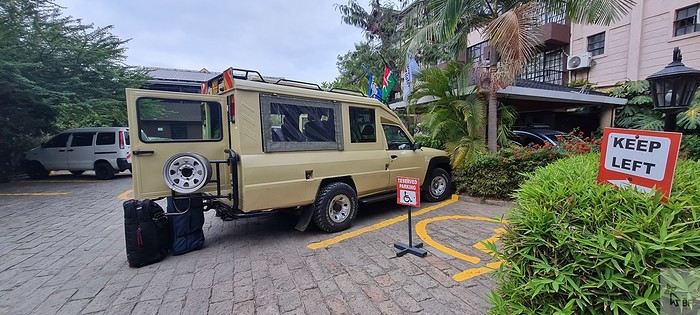
We set off for Voi, making our usual stop in Mtito Andei. Traffic was heavy on the Mombasa road, with lots of trucks.
We arrived at the entrance of Tsavo East around 1 PM and made it to Sentrim Camp (https://www.sentrim-hotels.com/sentrim-tsavo.html) just in time for lunch.
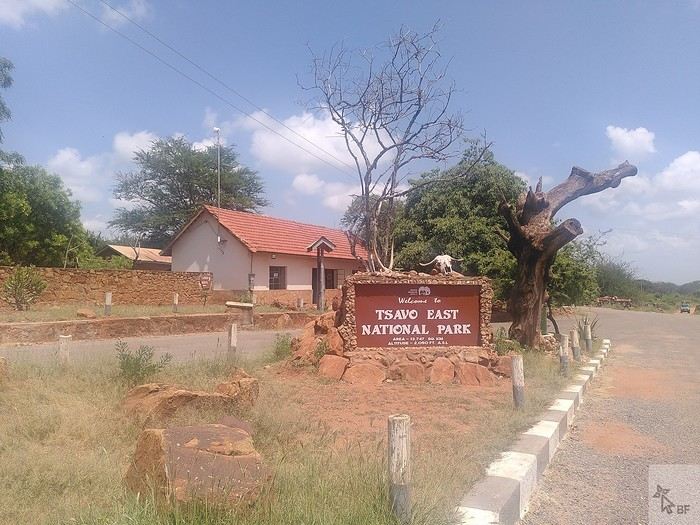
We found Tsavo East unusually green—there had been heavy rains in December, which isn’t typical. As a result, the animals were scattered and harder to spot. The watering hole visible from the camp’s dining area was completely deserted, whereas it’s usually bustling with herds of elephants and other mammals.
Our tent, No. 9, for 3 nights.
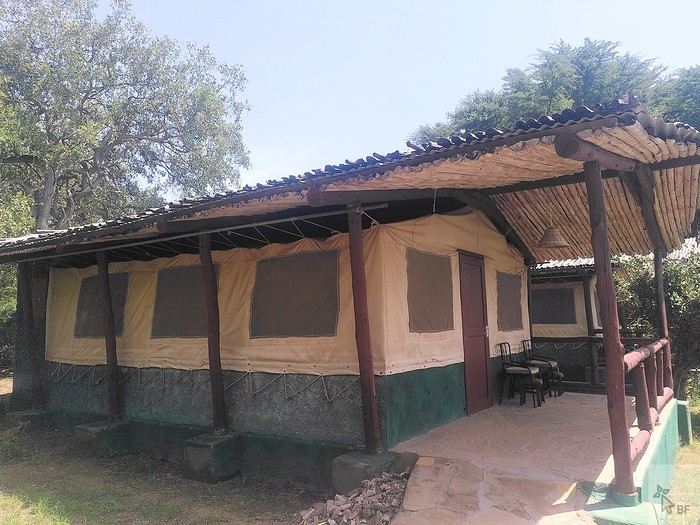
This camp is well-located inside the park. It’s simple but comfortable enough for our tastes, the staff is super friendly (as is often the case in Kenya), and the buffet-style meals are varied and good. Tsavo is the main destination for tourists staying on the coast who come for a night or two on safari. In January, some days at the camp are very quiet, while some evenings, the restaurant is packed with groups (lots of Italians, in particular).
Tsavo is, of course, famous for its elephants. This time, we didn’t see many large herds, but we did have some great encounters with solitary males.
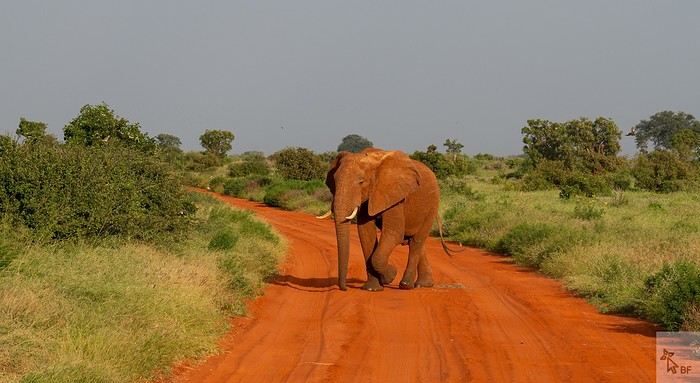
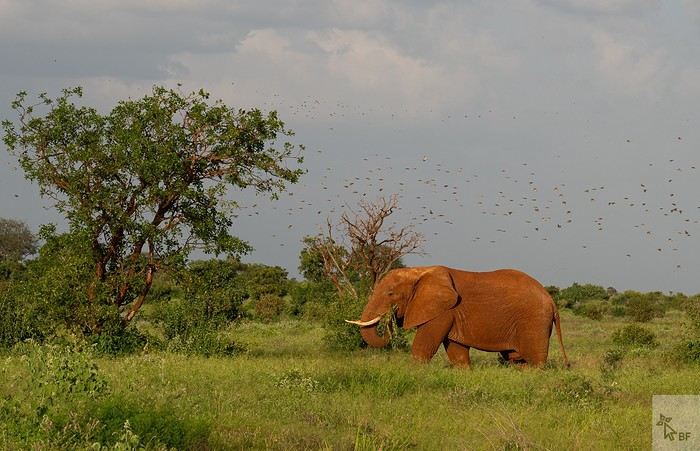
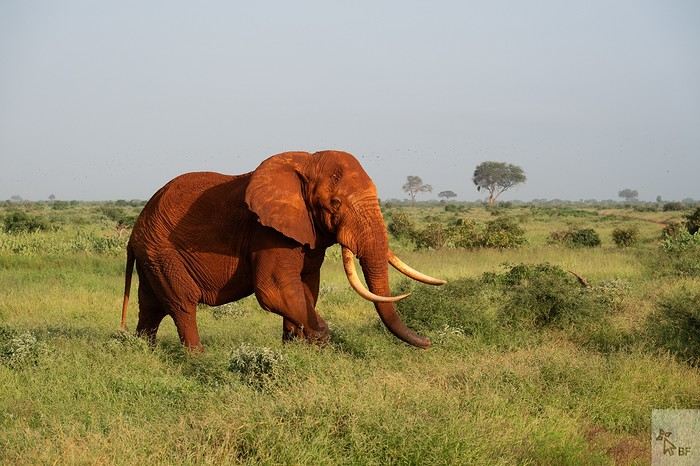
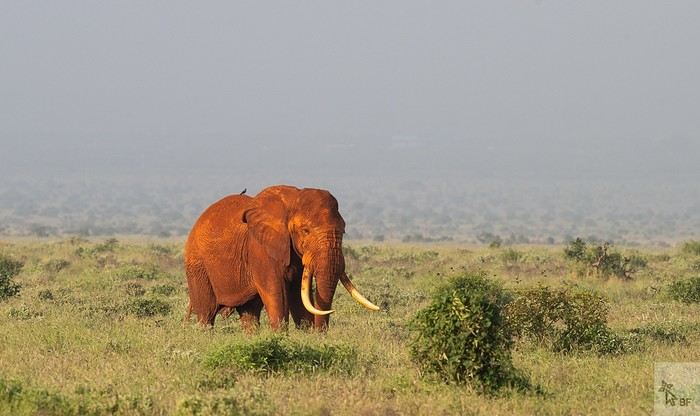
Around this small watering hole, we saw a gathering of African open-billed storks—we’d never seen so many before!
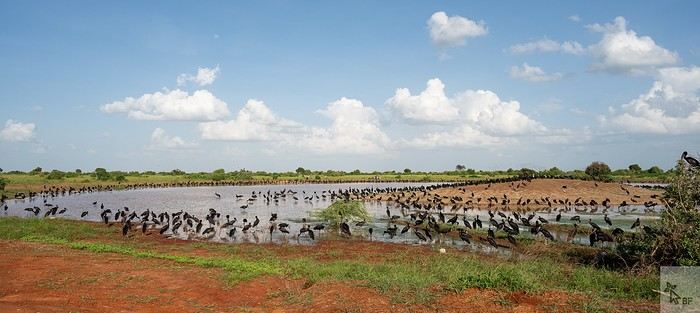
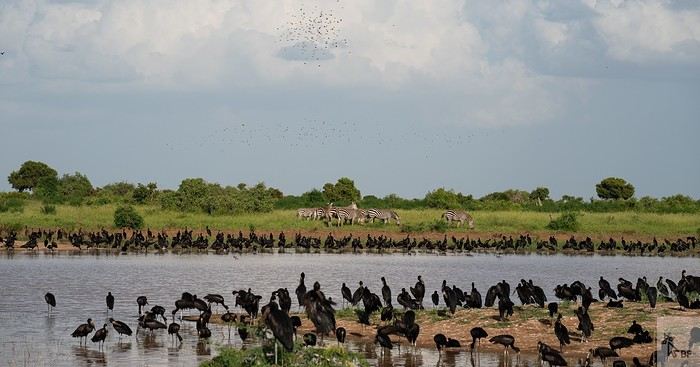
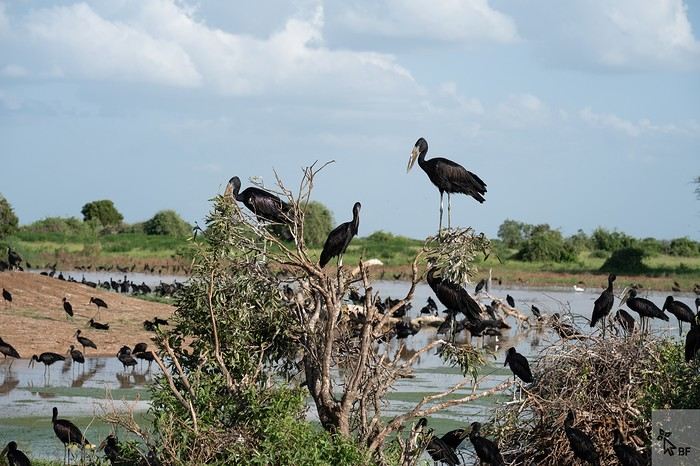
I’d like to invite you on a new adventure in Kenya.
Back in 2010, my husband Ben and I fell in love with Kenya, and we’ve been traveling there regularly ever since. This 2025 safari marked the first weeks of an important milestone in my life: retirement.
Of course, Felix—our guide and friend for all these years, whom some of you may even know from this forum—joined us again.
We chose an itinerary that takes us through the parks and reserves we particularly love in Kenya: Tsavo East (3 nights), Tsavo West (2 nights), a transition day in Embu, Samburu (5 nights), Meru NP (4 nights), Nanuyki to visit the Mount Kenya Animal Orphanage (https://mountkenyawildlifeconservancy.org/) (1 night), and Aberdare NP (2 nights).
This safari wasn’t our most prolific in terms of wildlife sightings and photos (all taken by Ben), but I still think it’s worth sharing our experiences and impressions of the places we visited. Maybe other travelers will find useful information here to help them fulfill their dream of a Kenyan safari one day...
Living in Brittany, we left from Nantes on Wednesday, January 8, 2025, on the 6 AM Air France flight to CDG, then took the direct flight to Nairobi at 10:50 AM. No issues this time on either flight (unlike in October 2023...).
We arrived in Nairobi at 9:20 PM local time (there’s a two-hour time difference with France at this time of year). Going through passport control and collecting our luggage went smoothly. The hotel shuttle (https://67airporthotel.co.ke/) was waiting for us. We shared it with a friendly Swiss couple who were there to climb Mount Kenya. We arrived at the hotel around midnight. The 67 Airport Hotel is 10-15 minutes from Jomo Kenyatta Airport and offers great value for money. Plus, it’s close to the Mombasa road, which is handy when heading that way the next morning.
On Thursday, January 9, we had breakfast at the hotel restaurant at 6:30 AM, and as planned, Felix arrived around 7 AM. We got to check out his brand-new 4x4 Nissan—we’d be the first to test it! 🙂
We set off for Voi, making our usual stop in Mtito Andei. Traffic was heavy on the Mombasa road, with lots of trucks.
We arrived at the entrance of Tsavo East around 1 PM and made it to Sentrim Camp (https://www.sentrim-hotels.com/sentrim-tsavo.html) just in time for lunch.
We found Tsavo East unusually green—there had been heavy rains in December, which isn’t typical. As a result, the animals were scattered and harder to spot. The watering hole visible from the camp’s dining area was completely deserted, whereas it’s usually bustling with herds of elephants and other mammals.
Our tent, No. 9, for 3 nights.
This camp is well-located inside the park. It’s simple but comfortable enough for our tastes, the staff is super friendly (as is often the case in Kenya), and the buffet-style meals are varied and good. Tsavo is the main destination for tourists staying on the coast who come for a night or two on safari. In January, some days at the camp are very quiet, while some evenings, the restaurant is packed with groups (lots of Italians, in particular).
Tsavo is, of course, famous for its elephants. This time, we didn’t see many large herds, but we did have some great encounters with solitary males.
Around this small watering hole, we saw a gathering of African open-billed storks—we’d never seen so many before!
Before I begin, I’d like to thank Michèle Buisson and her "Misha’s travel journals," which really helped me plan this trip. It’s tough to find information about this part of India, which is quite different from the "more traditional India." I’m so grateful to her for introducing me to a family who hosted me for 4 nights and 3 days. I can’t wait to return the favor and welcome you all to my place in early July!
Thursday, March 20th. The alarm goes off super early, but I’m already awake—I was too worried I’d sleep through it. I leave the house at 4:00 AM. The rain has stopped, and at this hour, there aren’t many trucks on the road. I arrive at Barcelona Airport easily by 6:20 AM, let the valet know I’m there, and he quickly picks up my car. This time, I’m flying with Etihad Airways again. I booked the ticket during my trip to Cambodia: Barcelona/Kolkata, Delhi/Barcelona for 567 €. At that price, I didn’t hesitate for long—I knew I had to take it. And I’m glad I did because, by the time I returned, the price had gone up to 700 €. I can already hear the reactions: "Wow, how’d you get a ticket for that price? What site did you use? You’re amazing, MarieJo!" One thing’s for sure—I’m really happy with this deal. The flights from Barcelona to Abu Dhabi and Abu Dhabi to Kolkata go smoothly, and we arrive on time at 2:55 AM. There aren’t many people at immigration, so I get through quickly. My luggage isn’t on the carousel yet. After collecting my bag, I check in for my next flight with IndiGo, a 5:40 AM flight to Guwahati, arriving at 7:00 AM. I’m starting to feel pretty tired, so I take a taxi from the airport to Gruham Sojourn Homestay. The house is upstairs, and the neighborhood seems quiet, with restaurants lining the street. The room won’t be ready until 10:00 AM, so I rest on the bench in the meantime. Once in the room, I take a shower—it really helps me feel refreshed. I need to exchange some euros, so I look up a nearby exchange bureau on Google and head out to find it. I locate it easily, and the staff are super friendly. I get a great rate (1 € = 90 INR). I wander around the neighborhood. The train station isn’t far, and small markets line the streets. I head back to my area, walking along the main avenue. About 500 meters from my street, I discover a museum. The visit is fascinating—I see the famous Majuli masks, among other things.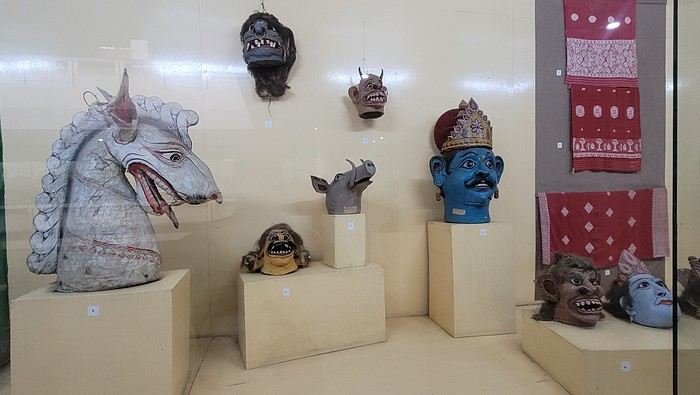

I’m not far from the Brahmaputra River, and the temptation to visit is too strong to resist. I’d hoped to find a promenade along the river, but that doesn’t exist here. I walk back calmly and notice several restaurants in my street. On the doorstep of my accommodation, I spot a pastry shop with cakes that look more like the ones we have in France than the typical ones here in India. A visit is a must, and I’m not disappointed!
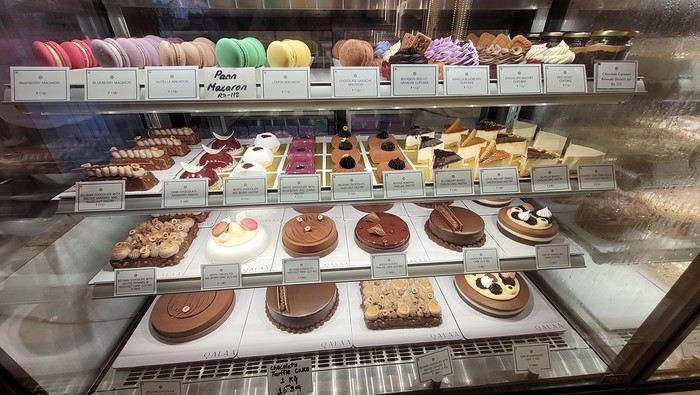
Tonight, I’m dining at a restaurant in the street. The menu is a bit disappointing—burgers, pizzas, pasta—nothing very Indian. So, I’ll go with tomato pasta.
Thursday, March 20th. The alarm goes off super early, but I’m already awake—I was too worried I’d sleep through it. I leave the house at 4:00 AM. The rain has stopped, and at this hour, there aren’t many trucks on the road. I arrive at Barcelona Airport easily by 6:20 AM, let the valet know I’m there, and he quickly picks up my car. This time, I’m flying with Etihad Airways again. I booked the ticket during my trip to Cambodia: Barcelona/Kolkata, Delhi/Barcelona for 567 €. At that price, I didn’t hesitate for long—I knew I had to take it. And I’m glad I did because, by the time I returned, the price had gone up to 700 €. I can already hear the reactions: "Wow, how’d you get a ticket for that price? What site did you use? You’re amazing, MarieJo!" One thing’s for sure—I’m really happy with this deal. The flights from Barcelona to Abu Dhabi and Abu Dhabi to Kolkata go smoothly, and we arrive on time at 2:55 AM. There aren’t many people at immigration, so I get through quickly. My luggage isn’t on the carousel yet. After collecting my bag, I check in for my next flight with IndiGo, a 5:40 AM flight to Guwahati, arriving at 7:00 AM. I’m starting to feel pretty tired, so I take a taxi from the airport to Gruham Sojourn Homestay. The house is upstairs, and the neighborhood seems quiet, with restaurants lining the street. The room won’t be ready until 10:00 AM, so I rest on the bench in the meantime. Once in the room, I take a shower—it really helps me feel refreshed. I need to exchange some euros, so I look up a nearby exchange bureau on Google and head out to find it. I locate it easily, and the staff are super friendly. I get a great rate (1 € = 90 INR). I wander around the neighborhood. The train station isn’t far, and small markets line the streets. I head back to my area, walking along the main avenue. About 500 meters from my street, I discover a museum. The visit is fascinating—I see the famous Majuli masks, among other things.
I’m not far from the Brahmaputra River, and the temptation to visit is too strong to resist. I’d hoped to find a promenade along the river, but that doesn’t exist here. I walk back calmly and notice several restaurants in my street. On the doorstep of my accommodation, I spot a pastry shop with cakes that look more like the ones we have in France than the typical ones here in India. A visit is a must, and I’m not disappointed!
Tonight, I’m dining at a restaurant in the street. The menu is a bit disappointing—burgers, pizzas, pasta—nothing very Indian. So, I’ll go with tomato pasta.
Since I didn’t have time to write a proper travel journal, I thought I’d share a few photos of Bologna—a really lovely city I discovered in 2017 while stopping on my way to Tuscany.
Around Piazza Maggiore, which was packed with a stage and chairs for a show, stands the Basilica of San Petronio, massive and Gothic in style, with an unfinished façade (a common sight in Italy).

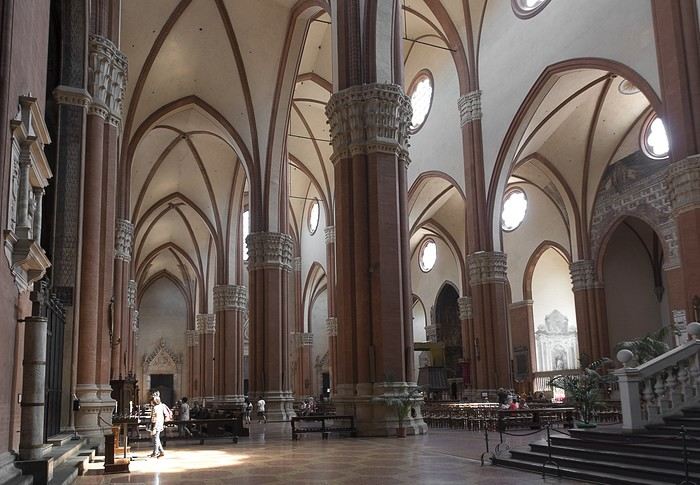
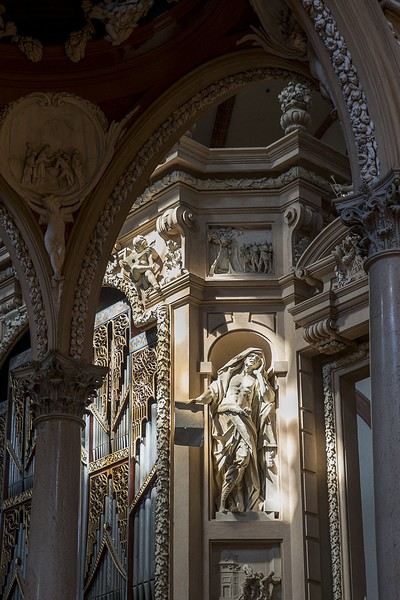
Another building near the square:
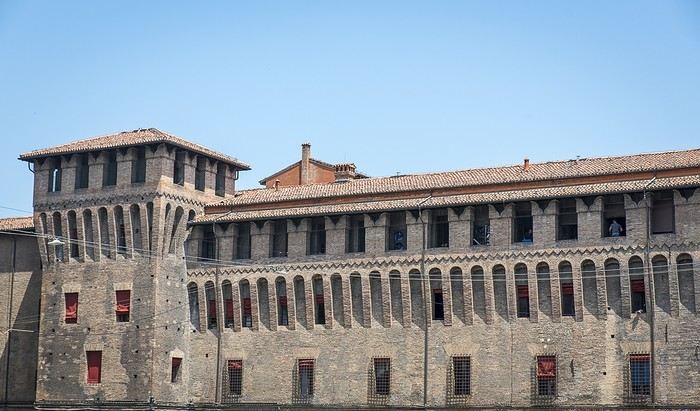 But Bologna’s real charm lies in its porticoes, which were added to the UNESCO World Heritage list in 2021: 62 km of arcades running along buildings, letting you walk sheltered from the sun or rain. Back in 1288, the city required houses to include private arcades for public use. In the city center, you can stroll under 32 km of porticoes in all sorts of styles—some plain, some ornate—with a strong presence of red tones.
Another building near the square:
But Bologna’s real charm lies in its porticoes, which were added to the UNESCO World Heritage list in 2021: 62 km of arcades running along buildings, letting you walk sheltered from the sun or rain. Back in 1288, the city required houses to include private arcades for public use. In the city center, you can stroll under 32 km of porticoes in all sorts of styles—some plain, some ornate—with a strong presence of red tones.Hi everyone,
I’m a newbie to this forum, passionate about wildlife, the landscapes of East Africa, and Tanzania in particular. This June 2024 trip/safari is our 7th visit to Tanzania and our 5th in the south, which has drawn us more than the north ever since we discovered it in 2015.
In 2024, the entrance fees for the reserves and services have gone up again since our last visit. I chose to return first to Mikumi Reserve, which was the very first one we visited in the south. Then, we’ll head to Selous (J. Nyerere N. P.) as usual. Initially, we wanted to spend 2/3 days on Mafia Island at the end of the trip, but it made the total cost too high, so we gave up... We usually go to Ruaha and Selous, but I wanted to mix it up a bit—also to save some money...
As for the timing, June is a new experience for us. I thought it might be interesting to come just after the lodges reopen... hoping for some great wildlife encounters??
The trip starts in Marseille with our first flight on Ethiopian Airlines to Addis Ababa, then continues to Dar es Salaam, where we’ll finally set foot on Tanzanian soil again.
In Addis... "our" A-350.
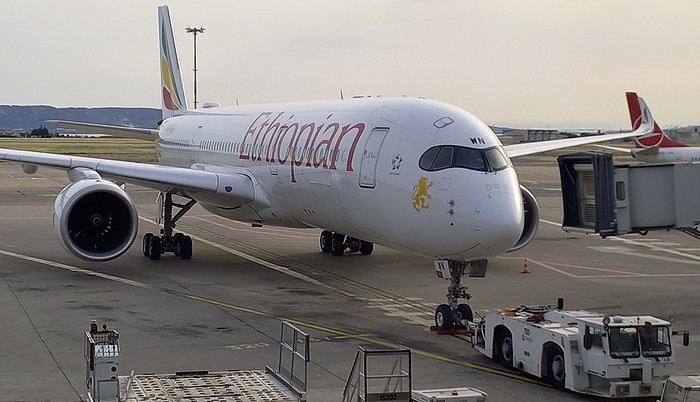
.....
After arriving in Dar, we spent one night at a hotel near the airport. The next morning, we headed to the domestic flights terminal, which hasn’t changed in years.
By mid-morning, we boarded a Cessna 208B Caravan with Safari Air Link, heading to the Kikoboga bush airstrip in Mikumi, which we reached 45 minutes later. Fun fact: the pilot was the same one as on our return flight two years ago.
Welcome on board:
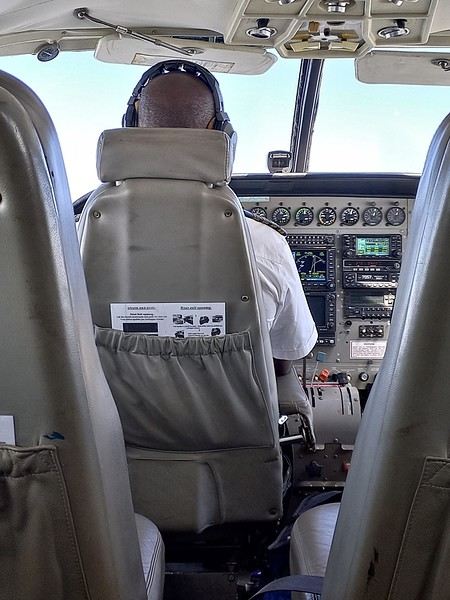
Of course, a driver/guide team from our chosen lodge was waiting for us upon arrival:
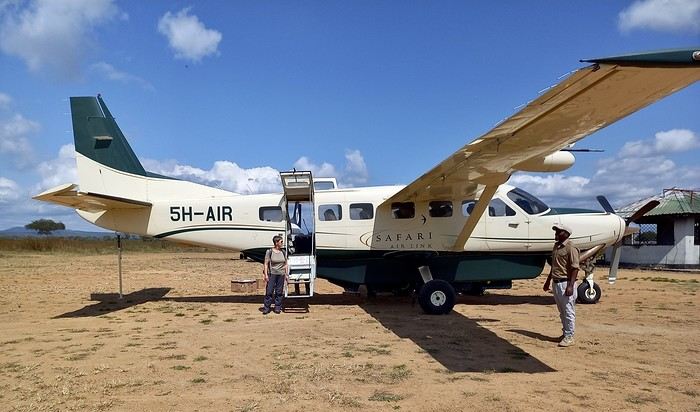
I was surprised to see so many aircraft parked there... even twin-engine Embraer Brasilias?? As a fan of vintage planes, I loved it...
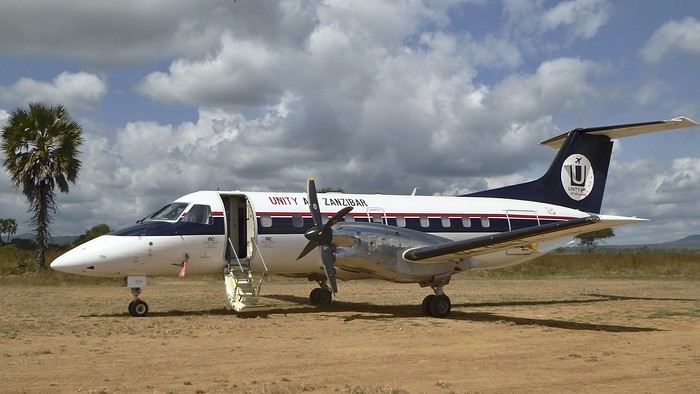
On the other hand, the light was incredibly harsh.....!! Our guides only speak English. We knew that in advance. In the south, it’s very rare to find someone who speaks French. This’ll force us to dig into our high school English memories... from 60 years ago... at least.
It’s noon, and we head toward the lodge. Near the airstrip, next to the Mikumi rangers’ base, there are quite a few herbivores. They find a bit more peace here—the big cats don’t venture this way...
Our first encounter was a group of Masai giraffes.
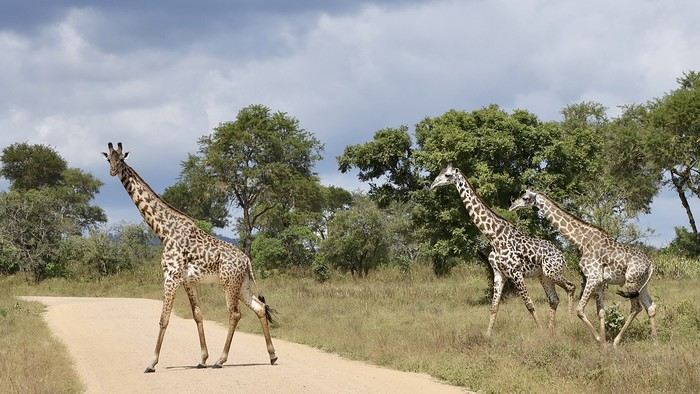
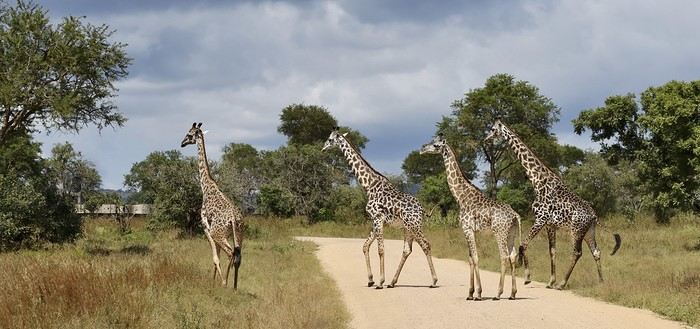
Rarer (for us), a savanna monitor lizard basking in the sun right in the middle of the track...??
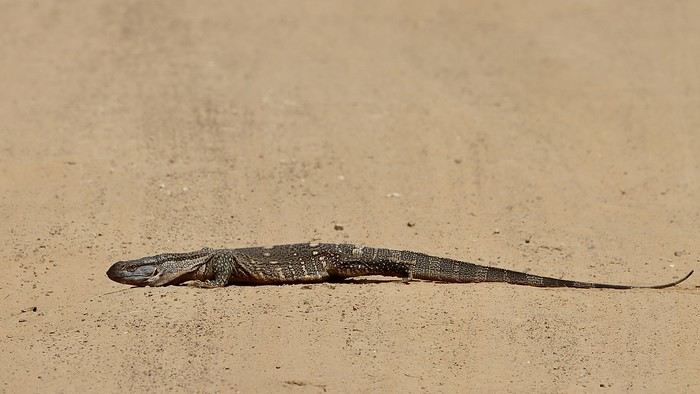
A large gathering of impalas (mostly males) along with a few blue wildebeest:
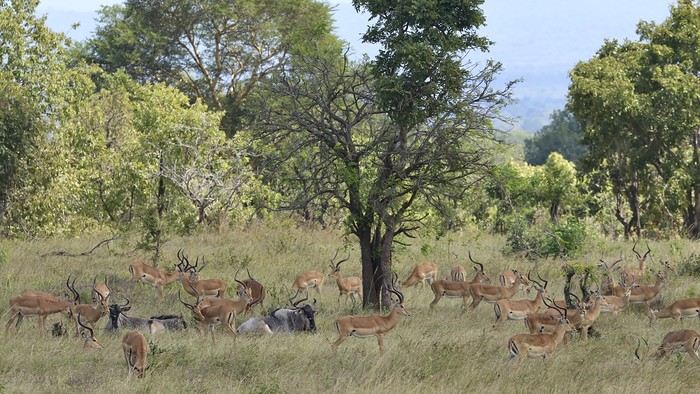

Also unusual: a African crowned hornbill taking a dust bath in the middle of the track...!!
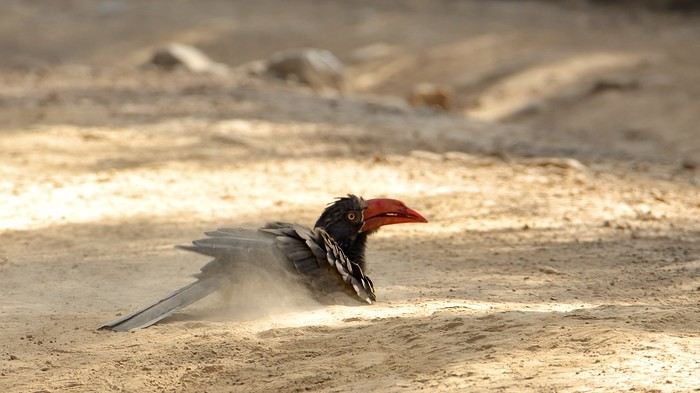
When it comes to identifying mammals or birds, I don’t know everything... so I might make mistakes. Please forgive me. I’m counting on my friend Blesl’s active participation... 😉
...
I’m a newbie to this forum, passionate about wildlife, the landscapes of East Africa, and Tanzania in particular. This June 2024 trip/safari is our 7th visit to Tanzania and our 5th in the south, which has drawn us more than the north ever since we discovered it in 2015.
In 2024, the entrance fees for the reserves and services have gone up again since our last visit. I chose to return first to Mikumi Reserve, which was the very first one we visited in the south. Then, we’ll head to Selous (J. Nyerere N. P.) as usual. Initially, we wanted to spend 2/3 days on Mafia Island at the end of the trip, but it made the total cost too high, so we gave up... We usually go to Ruaha and Selous, but I wanted to mix it up a bit—also to save some money...
As for the timing, June is a new experience for us. I thought it might be interesting to come just after the lodges reopen... hoping for some great wildlife encounters??
The trip starts in Marseille with our first flight on Ethiopian Airlines to Addis Ababa, then continues to Dar es Salaam, where we’ll finally set foot on Tanzanian soil again.
In Addis... "our" A-350.
.....
After arriving in Dar, we spent one night at a hotel near the airport. The next morning, we headed to the domestic flights terminal, which hasn’t changed in years.
By mid-morning, we boarded a Cessna 208B Caravan with Safari Air Link, heading to the Kikoboga bush airstrip in Mikumi, which we reached 45 minutes later. Fun fact: the pilot was the same one as on our return flight two years ago.
Welcome on board:
Of course, a driver/guide team from our chosen lodge was waiting for us upon arrival:
I was surprised to see so many aircraft parked there... even twin-engine Embraer Brasilias?? As a fan of vintage planes, I loved it...
On the other hand, the light was incredibly harsh.....!! Our guides only speak English. We knew that in advance. In the south, it’s very rare to find someone who speaks French. This’ll force us to dig into our high school English memories... from 60 years ago... at least.
It’s noon, and we head toward the lodge. Near the airstrip, next to the Mikumi rangers’ base, there are quite a few herbivores. They find a bit more peace here—the big cats don’t venture this way...
Our first encounter was a group of Masai giraffes.
Rarer (for us), a savanna monitor lizard basking in the sun right in the middle of the track...??
A large gathering of impalas (mostly males) along with a few blue wildebeest:
Also unusual: a African crowned hornbill taking a dust bath in the middle of the track...!!
When it comes to identifying mammals or birds, I don’t know everything... so I might make mistakes. Please forgive me. I’m counting on my friend Blesl’s active participation... 😉
...
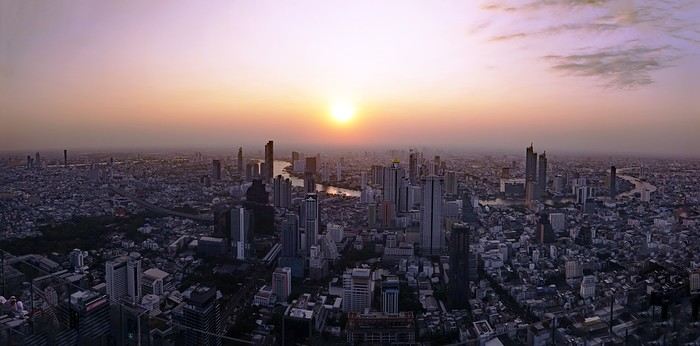
A somewhat lengthy title... I could have simply written: from Bangkok to Chiang Rai, via Chiang Mai, since that was my route. But when poets embellish our travel journals with their verbal flourishes, you’ve got to try not to be too ordinary.
Skyscrapers of excess? You’ll have gathered that from the photo illustrating this journal—though it might change as the trip goes on.
The excess of markets—not so much in their size, though... Chatuchak... But in their sheer number. Day markets, night markets, floating markets, fresh produce markets, fish markets, meat markets, spice markets, fabric markets... and even... amulet markets... For luck, good fortune, protection. Not to mention, sadly, the market for girls—and boys, incidentally. I’ve even heard they’re displayed in windows. I’ve heard about that one, like you have, but I didn’t set foot in it, so I can’t say anything about it. Some even claim there’s a black-market trade in children. Disgusting! It reminded me of the book *The Parcel* by Anosh Irani, which I recommended in another journal. The story is set in India, but I’ve been told it exists in Thailand too. So, the "famous Thai markets" we’re bombarded with in paper and online guides—sure, they amazed me in the first few days, and I don’t regret visiting them. But no matter how big they were, I quickly got my fill since you saw the same things at every stall...
I had a market overdose.
Excess of tourism? I should say *tourists*, since I saw them literally swarming in the streets and those famous markets. I’d forgotten about them. I’d lost the habit, living in an Indian city for so long...
Waterfalls are a bit like markets. At this time of year, they’re not particularly spectacular, but they’re everywhere. There are the ones everyone goes to see. For example, Erawan, which I decided to skip even though it was in my original itinerary—I guessed it’d be a nightmare with the selfie circus. On the other hand, you come across them all over the place, hidden in the mountains and forests, not listed in any guide. Not to mention the ones you can find in temples or even private homes... Yes, really! Thais love waterfalls, so they install them in their gardens—and I even saw one in the middle of the city, right on the street! Sometimes they’re tiny, but very photogenic.
But what do ice cubes have to do with this? Why the excess of ice cubes? Not only are they everywhere by the ton, but they put them in *everything* you drink. You’d think they’d even put them in soup! And it’s not just one or two ice cubes—no! They fill the container to the brim, whatever it is, then pour the liquid on top to fill the gaps. They’ll make you an excellent coffee right in front of you, piping hot, then—bam! An avalanche of ice cubes in the glass. Okay, I’m exaggerating a little. They *do* sometimes ask if you prefer your coffee—or tea—hot. Everything edible, and especially everything drinkable, is refrigerated: vegetables, fruit, hot drinks (I mean, drinks that are *usually* hot), but meat and fish are left out in the open. They just wave a little whisk to shoo away the flies when they get too eager. Mind you, I never put fruit, cheese, eggs, or water in the fridge in France, but I do in India. And I refrigerate meat and fish too... Though sometimes one of those little flies sneaks into the fridge...
You won’t find practical or technical details in this journal, like addresses or prices. Others do that better than me. You also won’t find the names of obscure or unknown places I discovered, or directions to get there.
I don’t really feel like recounting what I saw day by day, following my schedule and route. There might be flashbacks, projections into the future. It’ll depend on my memories, what I felt, what I hated, what comes back to me—and maybe your questions and our exchanges. And for those who’ve never read me before, you’ll have to get used to my parentheses and digressions, maybe on a completely different subject, as my thoughts wander. Stories within stories. There’ll also be long, endless sentences—but still punctuated, so you can follow along. Though I used to curse Proust and his sentences that started on one page and ended on the next, sometimes even further. I’d have to reread them twenty times to follow and understand what he was saying. I hated Proust. But hey, I was 20. Maybe I’d like him now?
See? The digressions are starting already. Forgive me.
You’ll find few photos here. First, the number is limited, and second, photos aren’t the main purpose of either VF or a travel journal. They’re too often used to mask the poverty of the text. And, sorry to say it, but so many of them are just plain ugly! If you really want to see photos, I’ll share some links where you can browse them at your leisure
The Afrosiyob races through a premature twilight, lashed by a blizzard of thick snow. In the endless gray, a monumental industrial complex occasionally emerges, ghostly. Here and there, in the middle of nowhere, a human silhouette appears (a soldier?), standing motionless by the tracks. On the screen mounted in the middle of the ceiling, a dashing Bollywood cat in vibrant colors writhes in all directions, throwing smoldering glances at a dancer on the verge of fainting. A server moves down the central aisle, offering crepes for sale—ones I suspect are stuffed with ground beef. I’m in Central Asia, in Uzbekistan, somewhere between Bukhara and Samarkand.
I chose the title "notes"—scattered thoughts, rough drafts. I’m not sure what I’ll write, but one thing’s certain: this won’t be a linear travel journal.
And a photo... there must be a photo, so here:
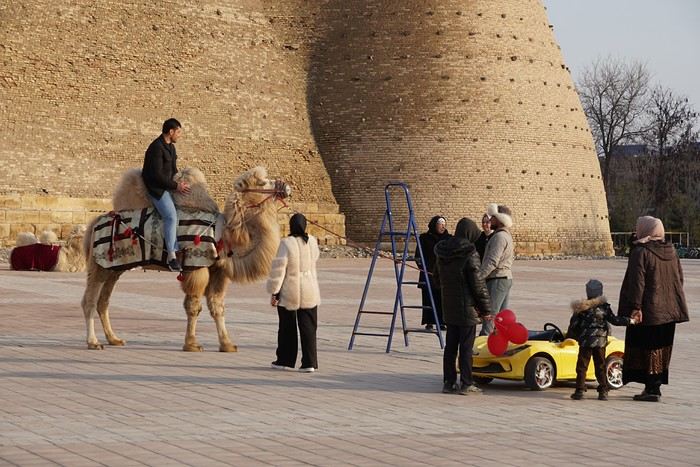
Local tourists between a Bactrian camel and an electric car, in front of ancient walls—it’ll do.
I chose the title "notes"—scattered thoughts, rough drafts. I’m not sure what I’ll write, but one thing’s certain: this won’t be a linear travel journal.
And a photo... there must be a photo, so here:
Local tourists between a Bactrian camel and an electric car, in front of ancient walls—it’ll do.