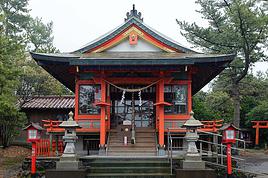
Fellow travelers,
Don’t they say "never two without three"? It seems so. Here I am again on the forum to share—and let’s be honest, indulge a bit of selfish pleasure—by recounting the story of this third installment in the Land of the Rising Sun.
Where? It’s all in the title. On the island of Kyushu in southern Japan, more precisely in the northwest between Fukuoka and Nagasaki. I hope to take you along with me for 19 nights and 18 full days this autumn of 2024. On the itinerary: gastronomy, crafts, festivals, waterfalls, encounters, and leisurely strolls in all simplicity.
A last-minute flight booked just 7 days before departure, and the route evolved regularly based on whims and accommodation availability, eventually settling on this:
- 5 nights in Fukuoka: Fukuoka city, Ukiha, Itoshima, Dazaifu, Yanagawa
- 4 nights in Hasami, Nagasaki Prefecture: Okawachiyama, Arita, Takeo, Kashima, Yobuko, Karatsu, Kabeshima
- 6 nights in Nagasaki: Ureshino, Higashi-Sonogi, Nagasaki city, Unzen, Sotome
- 4 nights in Fukuoka: Karatsu, Fukuoka city
Most of the trip was done by car for practical reasons—easier access to certain places and freedom of movement—but also for the sheer joy of it. Despite slow traffic at times, driving in rural Japan is a delight.
If the program interests you, see you soon for the start of the journey.
From Southern Shikoku, between land and sea, to the blue waters of Miyakojima and finally Tokyo’s megacity
Hi everyone,
I have to admit, I really hesitated before deciding to write this travel journal... Writing one takes a lot of time and energy, and since this is my 4th trip, I wondered if it would actually interest anyone other than myself (both for the discovery and the writing). But after a few "Are you going to write a journal?" requests and especially the renewed pleasure from reading other travelers’ travel journals about Japan or elsewhere on this forum or elsewhere, I’ve decided to share this 4th installment in the Land of the Rising Sun here.
The itinerary: 27 full days, from late May to late June 2025, right in the middle of the rainy season, including:
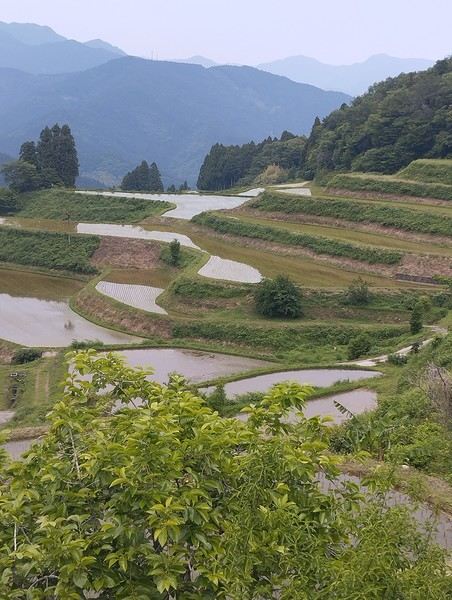
-->13 days in Shikoku, from Kochi (Kochi Prefecture) to Matsuyama (Ehime Prefecture)
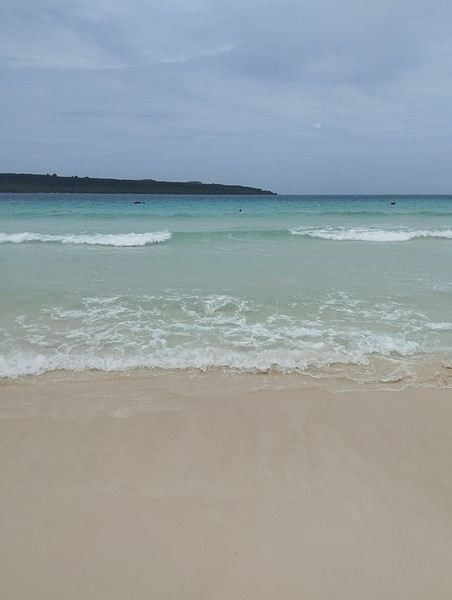
-->7 days in Miyakojima (Okinawa Prefecture)
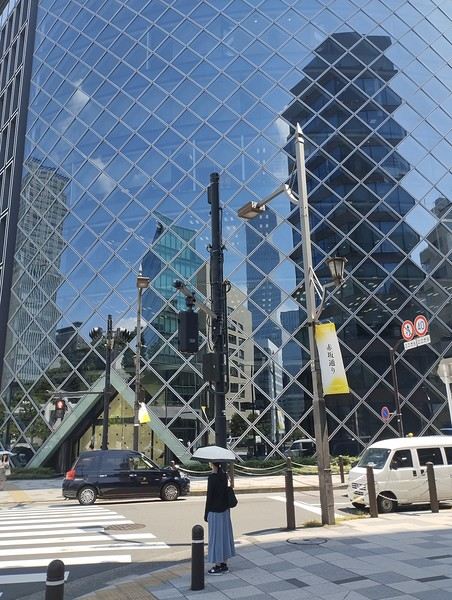
-->7 days in Tokyo
The trip was decided on fairly last-minute this year, as usual.
I regularly check flight prices to track fluctuations for this destination, even without concrete plans. Finding a slightly cheaper direct flight (900 €) than what I’d seen in previous months (around 1,200–1,400 € on average) for a Paris-Tokyo route with Japanese airline ANA was too tempting to resist the urge to return to this enchanting country. After long hesitations between exploring the San’in region (Matsue, Tottori, Yamaguchi) and southern Shikoku, the decision was made—I took the plunge! The tickets are booked: Paris to Kochi with a layover in Tokyo, all with ANA, the airline I’d been dreaming of... for 1,120 € per person. Okay, it’s not cheap, but it’s still better than in 2023.
We leave in 2 weeks!! Now it’s just a matter of getting everything ready!
Intense work ahead in these 2 weeks to:
finalize a more precise itinerary and reach an agreement—yep, because even though we both love Japan, our preferences differ slightly, and we have to choose between exploring new places or taking time to revisit beloved spots... decide how much time to spend in each selected area without rushing while still exploring research places that might interest us and watch videos about Japan book accommodations: yes, it’s possible to do this on the spot as we go, but last year, we noticed that last-minute options were pretty expensive, so we’re booking ahead—even if it means keeping a few options open while we decide or see if better deals pop up later reserve rental cars order yen check the weather regularly and wonder if choosing the *tsuyu* (rainy season) was really a good idea—and whether we’ll be stuck in non-stop rain???
What a tough job, right? Traveling to Japan for a month—such a hard life! Despite this being my 4th trip, the excitement is just as intense as the first time.
The only small downside is that when we booked the flight tickets, there were only a few seats left, so we’re only sitting together on the international return flight. Plus, on the outbound flight, we’ve got the middle seats. Another lingering question: what French-language films will be available? According to the internet, the selection seems limited. Oh well, these are just minor details—it’s almost time to fly!
PS: I’ll be posting slowly and irregularly... so for those interested, be patient or maybe set an alert...
Hi everyone,
I have to admit, I really hesitated before deciding to write this travel journal... Writing one takes a lot of time and energy, and since this is my 4th trip, I wondered if it would actually interest anyone other than myself (both for the discovery and the writing). But after a few "Are you going to write a journal?" requests and especially the renewed pleasure from reading other travelers’ travel journals about Japan or elsewhere on this forum or elsewhere, I’ve decided to share this 4th installment in the Land of the Rising Sun here.
The itinerary: 27 full days, from late May to late June 2025, right in the middle of the rainy season, including:
-->13 days in Shikoku, from Kochi (Kochi Prefecture) to Matsuyama (Ehime Prefecture)
-->7 days in Miyakojima (Okinawa Prefecture)
-->7 days in Tokyo
The trip was decided on fairly last-minute this year, as usual.
I regularly check flight prices to track fluctuations for this destination, even without concrete plans. Finding a slightly cheaper direct flight (900 €) than what I’d seen in previous months (around 1,200–1,400 € on average) for a Paris-Tokyo route with Japanese airline ANA was too tempting to resist the urge to return to this enchanting country. After long hesitations between exploring the San’in region (Matsue, Tottori, Yamaguchi) and southern Shikoku, the decision was made—I took the plunge! The tickets are booked: Paris to Kochi with a layover in Tokyo, all with ANA, the airline I’d been dreaming of... for 1,120 € per person. Okay, it’s not cheap, but it’s still better than in 2023.
We leave in 2 weeks!! Now it’s just a matter of getting everything ready!
Intense work ahead in these 2 weeks to:
finalize a more precise itinerary and reach an agreement—yep, because even though we both love Japan, our preferences differ slightly, and we have to choose between exploring new places or taking time to revisit beloved spots... decide how much time to spend in each selected area without rushing while still exploring research places that might interest us and watch videos about Japan book accommodations: yes, it’s possible to do this on the spot as we go, but last year, we noticed that last-minute options were pretty expensive, so we’re booking ahead—even if it means keeping a few options open while we decide or see if better deals pop up later reserve rental cars order yen check the weather regularly and wonder if choosing the *tsuyu* (rainy season) was really a good idea—and whether we’ll be stuck in non-stop rain???
What a tough job, right? Traveling to Japan for a month—such a hard life! Despite this being my 4th trip, the excitement is just as intense as the first time.
The only small downside is that when we booked the flight tickets, there were only a few seats left, so we’re only sitting together on the international return flight. Plus, on the outbound flight, we’ve got the middle seats. Another lingering question: what French-language films will be available? According to the internet, the selection seems limited. Oh well, these are just minor details—it’s almost time to fly!
PS: I’ll be posting slowly and irregularly... so for those interested, be patient or maybe set an alert...
I’m sharing our three-week trip to Japan from late October to mid-November 2025. There were four of us—my partner and a couple of friends.
I’ve traveled often with my friend Christian (Bolivia, Argentina, Costa Rica, Namibia, Laos), but this time our partners joined us.
The rough itinerary:
Arrival in Tokyo. Visiting Shinjuku/Shibuya districts + day trip to Kamakura
5 days in the Japanese Alps, from Matsumoto to Kanazawa (via Kamikochi, Hirayu Onsen, and Takayama)
5 days in Kyoto
Nara, Osaka, Koyasan
Return to Tokyo (Asakusa district), with a day trip to Nikko
We booked our flights well in advance (9 months ahead): the flight cost 1086 € per person. Compared to over 2000 € if we’d booked for the same dates just 3 months prior.
For accommodations, we mostly used Booking.com. The onsen was booked via Japanican, and in Kyoto, we stayed in an Airbnb.
We also made 5 train reservations a month in advance on Klook or directly on the train’s website.
Day 1: Departure from Brussels (October 24, 2025) Early morning takeoff at 6 AM to Munich (1.5-hour layover) with Lufthansa, then a 12-hour flight with ANA, arriving the next morning at 7 AM at Tokyo Haneda.
Day 2: Arrival in Tokyo Airport formalities were quick. The eSIM we bought before leaving activated as soon as we landed (10 GB plan with Saily—more than enough for our mobile internet needs, mainly Google Maps and Google Translate). We’d received 4 ICOCA cards from our neighbors, which we loaded with 15000 ¥ each. We took the Keihin train, then the Yamanote Line. It’s easy to navigate since everything is in English, and each station is announced on scrolling displays in English too.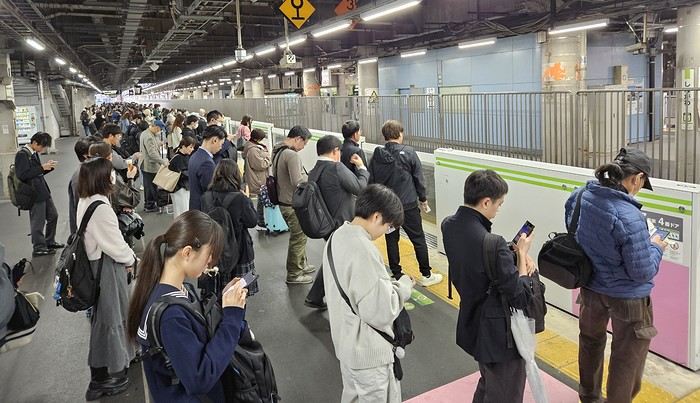
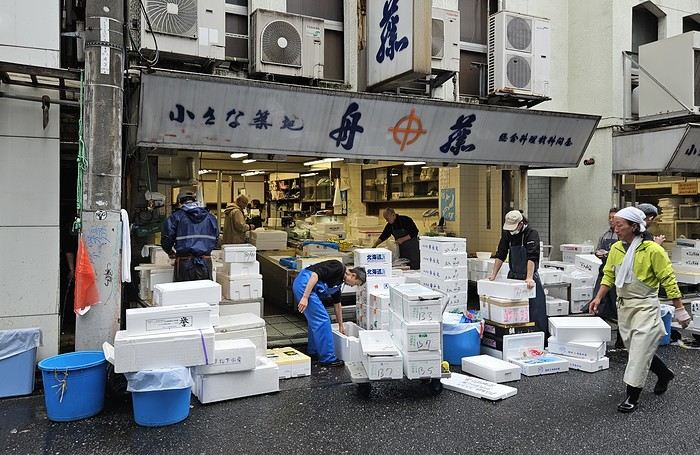
We got off the Yamanote Line at the station just after Shinjuku because it’s easier to exit that massive station with our luggage. So we ended up in Shin-Okubo, right in the Korean district. A 10-minute walk took us to Villa Fontaine Hotel. A great hotel, well-located north of the Kabukichō district. The room even seemed bigger than we’d expected.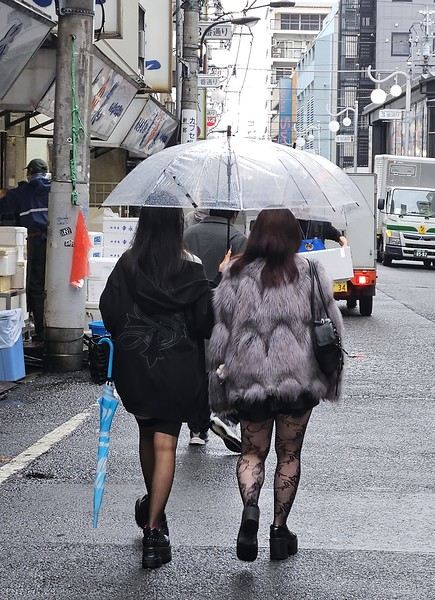
 It was 15°C, but it rained—and kept raining on and off all day. Belgian weather, basically.
We went for a walk in Shinjuku Gyoen Park. Not as pretty in the rain, but the big greenhouse was interesting.
It was 15°C, but it rained—and kept raining on and off all day. Belgian weather, basically.
We went for a walk in Shinjuku Gyoen Park. Not as pretty in the rain, but the big greenhouse was interesting.
Then our first ramen (hearty and for 1000 ¥—pretty much the price of all our ramen during the trip). We headed back to the hotel since check-in was after 3 PM. Shower and relax before going out for dinner. Dinner was barbecue at Shichirin Yakiniku Anan (1700 ¥ each—good and cheap). Ordering via tablet wasn’t easy, but luckily it was in English.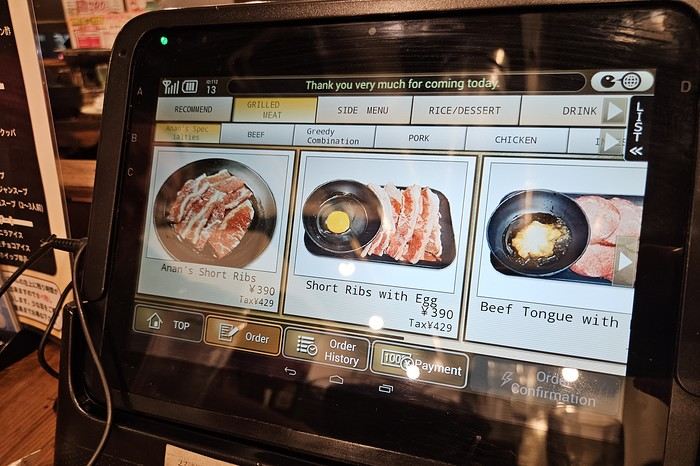
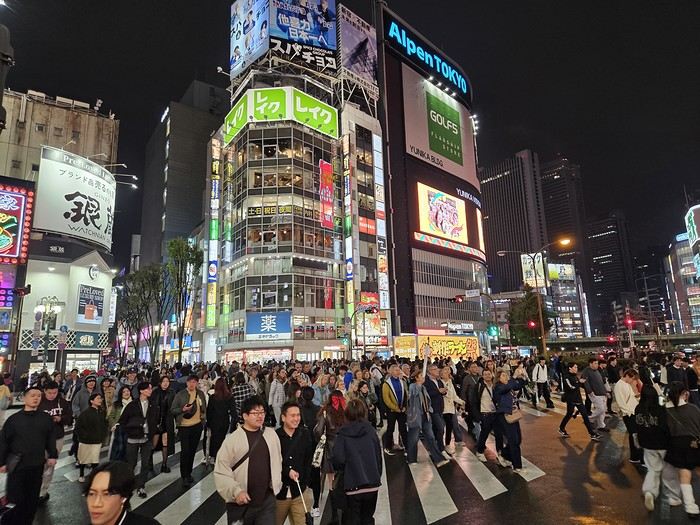
We ended the evening with a stroll through Kabukichō before a well-deserved sleep.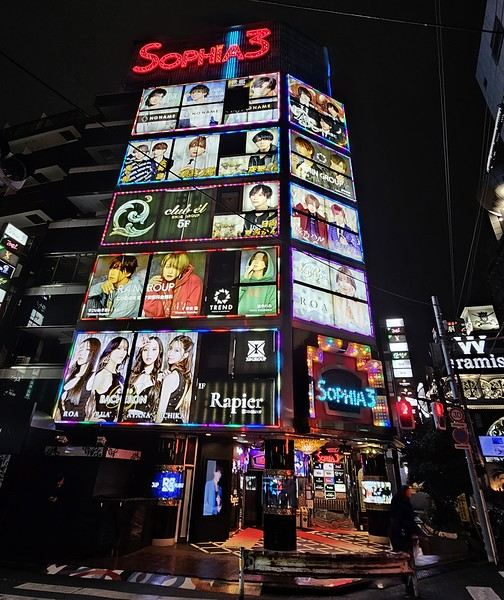
Day 1: Departure from Brussels (October 24, 2025) Early morning takeoff at 6 AM to Munich (1.5-hour layover) with Lufthansa, then a 12-hour flight with ANA, arriving the next morning at 7 AM at Tokyo Haneda.
Day 2: Arrival in Tokyo Airport formalities were quick. The eSIM we bought before leaving activated as soon as we landed (10 GB plan with Saily—more than enough for our mobile internet needs, mainly Google Maps and Google Translate). We’d received 4 ICOCA cards from our neighbors, which we loaded with 15000 ¥ each. We took the Keihin train, then the Yamanote Line. It’s easy to navigate since everything is in English, and each station is announced on scrolling displays in English too.
We got off the Yamanote Line at the station just after Shinjuku because it’s easier to exit that massive station with our luggage. So we ended up in Shin-Okubo, right in the Korean district. A 10-minute walk took us to Villa Fontaine Hotel. A great hotel, well-located north of the Kabukichō district. The room even seemed bigger than we’d expected.
It was 15°C, but it rained—and kept raining on and off all day. Belgian weather, basically.
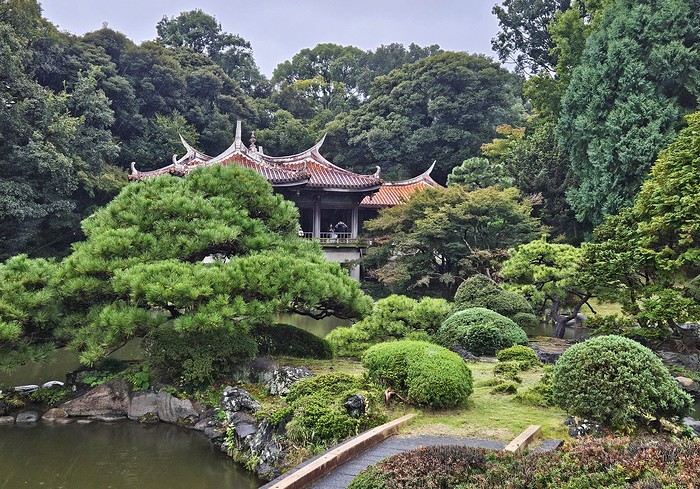
We went for a walk in Shinjuku Gyoen Park. Not as pretty in the rain, but the big greenhouse was interesting.
Then our first ramen (hearty and for 1000 ¥—pretty much the price of all our ramen during the trip). We headed back to the hotel since check-in was after 3 PM. Shower and relax before going out for dinner. Dinner was barbecue at Shichirin Yakiniku Anan (1700 ¥ each—good and cheap). Ordering via tablet wasn’t easy, but luckily it was in English.
We ended the evening with a stroll through Kabukichō before a well-deserved sleep.
Hi everyone,
The idea of visiting Japan goes back a year now. I remember because I was looking for cheap flights to Europe from Paris. Surprisingly, the round-trip to Japan with Air China was just as affordable—if not cheaper—than many European destinations.
So, the tickets were booked. Three seats (including one for a 12-year-old), ten days over Easter 2018, AirBnB accommodation. Of course, in ten days, you visit without *really* visiting—you only scratch the surface. Just the classics: Kyoto, temples, moonlit rivers; the Shinkansen; and Tokyo, gardens, wandering, high-tech, and... maids.
I have to admit, we don’t know much about the country, and the thought of how we’d manage is a constant source of worry. What if this trip reveals my inability to open up to other cultures?
We board the first Air China flight with that question on our minds.
The idea of visiting Japan goes back a year now. I remember because I was looking for cheap flights to Europe from Paris. Surprisingly, the round-trip to Japan with Air China was just as affordable—if not cheaper—than many European destinations.
So, the tickets were booked. Three seats (including one for a 12-year-old), ten days over Easter 2018, AirBnB accommodation. Of course, in ten days, you visit without *really* visiting—you only scratch the surface. Just the classics: Kyoto, temples, moonlit rivers; the Shinkansen; and Tokyo, gardens, wandering, high-tech, and... maids.
I have to admit, we don’t know much about the country, and the thought of how we’d manage is a constant source of worry. What if this trip reveals my inability to open up to other cultures?
We board the first Air China flight with that question on our minds.
Here’s a little story about my first trip to Japan with my partner.
We went for our first visit from October 29 to November 13, 2024.
I had planned this entire trip back in November 2020, but given the health situation at the time, I had to cancel...
Here’s the classic route we took: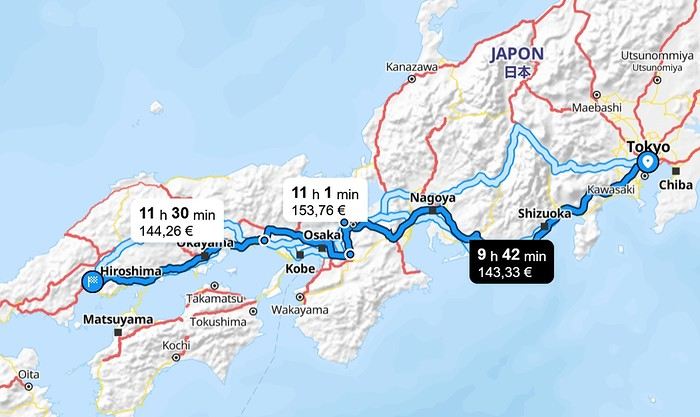
We booked everything ourselves and got a regional pass for the area from Kyoto to Hiroshima. The hotels were reserved 3 months in advance on Book... and Agod... (1030 € for 2 people for 13 nights = 80 €/night). For the flight, we chose a Qatar Airways flight with a layover to break up the long journey (950 € per person). We also got a pass on the same site (Japan-Experience) to take the train connecting Narita Airport to Shibuya Station (the N'EX Narita Express). Since the airport is 75 km from central Tokyo, we opted for this mode of transport, even though there are cheaper alternatives. After reading various posts on VoyageForum, I understood how important it was to have a Welcome Suica card to pay for public transport (subway, tram, bus, boat throughout the country), and we were able to buy one at Narita Airport. It turned out to be super useful! After a long but smooth journey, we found ourselves at Narita Airport in the evening. Even though we had a pass for the Narita Express, we had to go to a counter to make a reservation for the train (mandatory). Then, once we arrived at Shibuya Station, we took the subway for 2 stops and finally reached our hotel, exhausted (Hotel Asia Center of Japan – 270 € for 3 nights with breakfast included).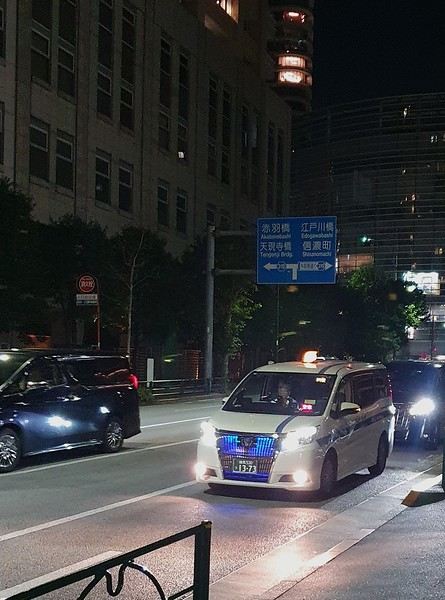
I had planned this entire trip back in November 2020, but given the health situation at the time, I had to cancel...
Here’s the classic route we took:
We booked everything ourselves and got a regional pass for the area from Kyoto to Hiroshima. The hotels were reserved 3 months in advance on Book... and Agod... (1030 € for 2 people for 13 nights = 80 €/night). For the flight, we chose a Qatar Airways flight with a layover to break up the long journey (950 € per person). We also got a pass on the same site (Japan-Experience) to take the train connecting Narita Airport to Shibuya Station (the N'EX Narita Express). Since the airport is 75 km from central Tokyo, we opted for this mode of transport, even though there are cheaper alternatives. After reading various posts on VoyageForum, I understood how important it was to have a Welcome Suica card to pay for public transport (subway, tram, bus, boat throughout the country), and we were able to buy one at Narita Airport. It turned out to be super useful! After a long but smooth journey, we found ourselves at Narita Airport in the evening. Even though we had a pass for the Narita Express, we had to go to a counter to make a reservation for the train (mandatory). Then, once we arrived at Shibuya Station, we took the subway for 2 stops and finally reached our hotel, exhausted (Hotel Asia Center of Japan – 270 € for 3 nights with breakfast included).
Hi there,
I’m looking for tips, opinions, or travel companions for a family trip.
Is it still possible to find competitive rates (flights, accommodation, guides, etc.)?
Best regards🙂
Autumn 2025 marks my 11th trip to Japan. I’ve neglected the south for too long, so like last year, it’s my main destination again.
We’ll revisit some familiar spots, but of course, we’ll also try plenty of new things. This trip feels a bit strange—no more of that initial magic, but on the other hand, we’ve really explored some off-the-beaten-path and private locations. The variety of regions, landscapes, and vehicles I’ve photographed is pretty remarkable. In search of vintage trains and threatened lines, I think my future trips will follow the same vibe.
After the 2017 and 2024 travel journals, it’s time to dive into Japan’s lesser-known side—all by public transport, of course. Day 1, arrival in Tokyo
The timing won’t be like other years since we arrive at Narita in the mid-afternoon after a layover in Hong Kong.
The only real mission for this afternoon is picking up tickets for the next day. And already, the first travel stress: I’ll have to rewrite the entire day because the Revaty Kinu 109 to Kinugawaonsen is fully booked, just like all the morning trains. So instead of a relaxed start exploring Ueno, I’m back to scrutinizing schedules. I manage to snag something last-minute after struggling for hours. Then, I wait for a message from Seiichi to meet up for dinner. Meeting friends on the first day and staying up late with jet lag—like I said, this trip isn’t like the others.
A great evening at a place I love.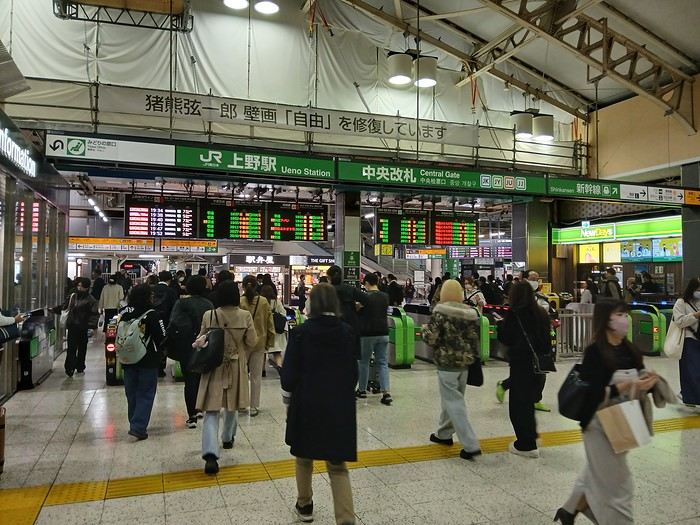
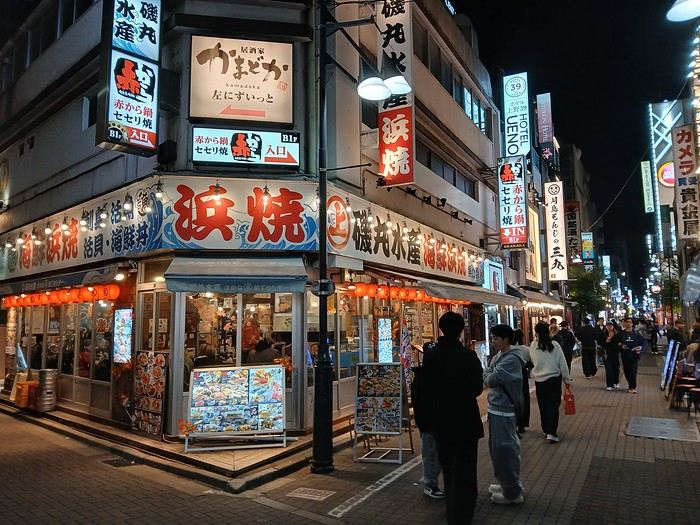
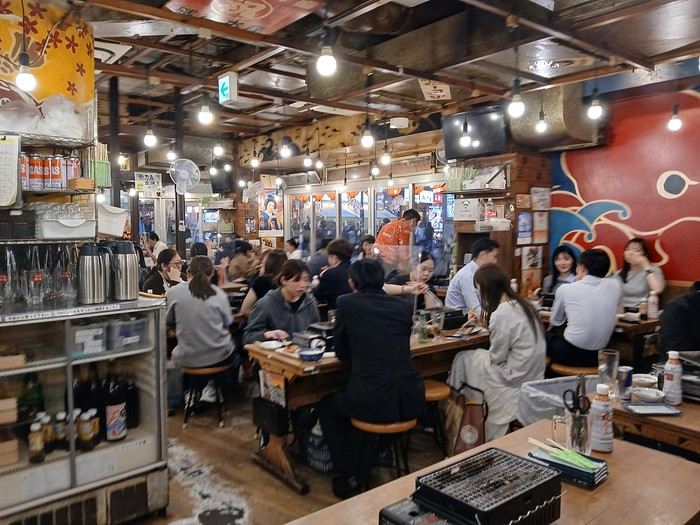
We’ll revisit some familiar spots, but of course, we’ll also try plenty of new things. This trip feels a bit strange—no more of that initial magic, but on the other hand, we’ve really explored some off-the-beaten-path and private locations. The variety of regions, landscapes, and vehicles I’ve photographed is pretty remarkable. In search of vintage trains and threatened lines, I think my future trips will follow the same vibe.
After the 2017 and 2024 travel journals, it’s time to dive into Japan’s lesser-known side—all by public transport, of course. Day 1, arrival in Tokyo
The timing won’t be like other years since we arrive at Narita in the mid-afternoon after a layover in Hong Kong.
The only real mission for this afternoon is picking up tickets for the next day. And already, the first travel stress: I’ll have to rewrite the entire day because the Revaty Kinu 109 to Kinugawaonsen is fully booked, just like all the morning trains. So instead of a relaxed start exploring Ueno, I’m back to scrutinizing schedules. I manage to snag something last-minute after struggling for hours. Then, I wait for a message from Seiichi to meet up for dinner. Meeting friends on the first day and staying up late with jet lag—like I said, this trip isn’t like the others.
A great evening at a place I love.
This autumn 2025, I’m off on my 11th trip to Japan. I’ve neglected the south for too long, so like last year, it’s my main destination.
After the 2017 and 2024 travel journals, I’m heading to the Japan most tourists don’t see—all by public transport, of course.
Hi everyone, I’m Patrick, 67 years old, a seasoned traveler (already 22 trips outside Europe).
In autumn 2025, I took my first 3-week trip to Japan, with stops in Tokyo, Kamakura, Matsumoto, Kamikochi, Takayama, Kanazawa, Kyoto, Nara, Osaka, Koyasan, Tokyo again, and Nikko.
I wanted to go back in May 2026 and explore some lesser-known places to complement my first trip.
Last year, there were four of us traveling together to discover Japan (a fairly classic itinerary). This time, I’ll be traveling solo for part of the trip and with a couple of French friends for the rest.
The weather was gorgeous in May, averaging around 25°C, with two very hot days in Kyoto and only two rainy days.
As usual, I organized everything myself, gathering plenty of information from various sites, including this one.
Transportation: An ICOCA card is essential. I got a 5-day Kansai-Hiroshima pass because I took the shinkansen between Hiroshima and Osaka three times, and it paid for itself quickly.
Accommodations: Mostly through Booking. No issues at all. Average cost was 46 € per night.
Meals: For breakfast, I alternated between buying food at a konbini to eat in my room or on the train and grabbing something at local cafés. For lunch and dinner, I tried to vary my meals as much as possible—lots of sashimi, sushi, and ramen. Okonomiyaki in Osaka and Hiroshima. Oysters in every form (raw, grilled, fried) in Onomichi and Hiroshima. A variety of seafood (shrimp, shellfish) in Hiroshima and Matsumoto. Fish whose names often escaped me, but notably mackerel and eel (unagi). Tempura and gyoza. Chicken skewers (yakitori) and one teppanyaki meal. One omakase meal (9 different dishes). In the end, not much meat aside from a few yakitori skewers. No splurges on super expensive wagyu or Kobe beef. Average dinner cost: 4,800 yen, drinks included.
The Itinerary: Day 1: Departure from Brussels Day 2: Arrival in Osaka Day 3: To Himeji, then Kurashiki Day 4: To Fukuyama, then Tomo no Ura, then Onomichi Day 5: Cycling the Shimanami Kaido Day 6: To Takahara, then Hiroshima Day 7: To Kyoto to attend the Aoi Matsuri parade Day 8: To Miyajima Day 9: Hiroshima, then Kyoto Day 10: Southern Kyoto Day 11: Northern Kyoto Day 12: Final day in Kyoto, then to Nagatsugawa Day 13: Start of the Nakasendo Trail (Magome to Tsumago) Day 14: Second day of the trail (Kiso Fukushima) Day 15: Third day of the trail (Narai), then Matsumoto Day 16: To Mt. Fuji (Kawaguchiko) Day 17: To Tokyo Day 18: Excursion to Enoshima and Kamakura Day 19: Flight home, with a 10-hour layover in Hong Kong Day 20: Arrival in Brussels
Transportation: An ICOCA card is essential. I got a 5-day Kansai-Hiroshima pass because I took the shinkansen between Hiroshima and Osaka three times, and it paid for itself quickly.
Accommodations: Mostly through Booking. No issues at all. Average cost was 46 € per night.
Meals: For breakfast, I alternated between buying food at a konbini to eat in my room or on the train and grabbing something at local cafés. For lunch and dinner, I tried to vary my meals as much as possible—lots of sashimi, sushi, and ramen. Okonomiyaki in Osaka and Hiroshima. Oysters in every form (raw, grilled, fried) in Onomichi and Hiroshima. A variety of seafood (shrimp, shellfish) in Hiroshima and Matsumoto. Fish whose names often escaped me, but notably mackerel and eel (unagi). Tempura and gyoza. Chicken skewers (yakitori) and one teppanyaki meal. One omakase meal (9 different dishes). In the end, not much meat aside from a few yakitori skewers. No splurges on super expensive wagyu or Kobe beef. Average dinner cost: 4,800 yen, drinks included.
The Itinerary: Day 1: Departure from Brussels Day 2: Arrival in Osaka Day 3: To Himeji, then Kurashiki Day 4: To Fukuyama, then Tomo no Ura, then Onomichi Day 5: Cycling the Shimanami Kaido Day 6: To Takahara, then Hiroshima Day 7: To Kyoto to attend the Aoi Matsuri parade Day 8: To Miyajima Day 9: Hiroshima, then Kyoto Day 10: Southern Kyoto Day 11: Northern Kyoto Day 12: Final day in Kyoto, then to Nagatsugawa Day 13: Start of the Nakasendo Trail (Magome to Tsumago) Day 14: Second day of the trail (Kiso Fukushima) Day 15: Third day of the trail (Narai), then Matsumoto Day 16: To Mt. Fuji (Kawaguchiko) Day 17: To Tokyo Day 18: Excursion to Enoshima and Kamakura Day 19: Flight home, with a 10-hour layover in Hong Kong Day 20: Arrival in Brussels
Hi there,
Barely back from my trip (autumn 2025) and I already want to go again!
I’ve already done a 3-week stay (Tokyo-Kamakura-Nikko-Japanese Alps-Kyoto-Osaka-Koyasan-Nara).
So this time, a different trip: Day 1: departure Day 2: arrive in Osaka (stroll around the center in the afternoon) Day 3: day trip to Minoh Falls + Katsuo-ji Temple Day 4: Universal Studios. 1h20 train in the evening to Okayama Day 5: visit Okayama (Korakuen Gardens and the castle), then a 25-minute train to Kurashiki (evening stroll) Day 6: 45-minute bus to Fukuyama (day trip to Tomo no Ura). 20-minute train in the evening to Onomichi Day 7: electric bike excursion on the Shimanami Kaido (70 km round trip), return to Onomichi in the evening Day 8: stroll around the heights of Onomichi. In the afternoon, 1h20 train to Takehara Day 9: stroll in Takehara. In the afternoon, train to Hiroshima Day 10: day trip to Miyajima Day 11: explore Hiroshima, then train to Kyoto Day 12: Kyoto (Kinkaku-ji and Ryoan-ji area in the morning). Bus to Takao/Togano in the afternoon Day 13: Kyoto (northeast area—Shugakuin Imperial Villa and nearby temples in the morning), relaxed return to Gion in the afternoon via less crowded neighborhoods/temples Day 14: day trip to Uji Day 15: Kyoto (northern Arashiyama area in the morning). Train to Nakatsugawa in the afternoon Day 16: Day 1 of the Nakasendo Trail to Nagiso Day 17: Day 2 to Kiso Fukushima Day 18: Day 3 to Matsumoto (with train from Narai-juku) Day 19: train to Tokyo Day 20: Tokyo (still figuring this out). I’ve seen Shinjuku, Shibuya, and Asakusa. Day 21: return flight Day 22: arrival
Yes, there are a lot of short transports, but that doesn’t bother me.
Any thoughts? Thanks, Patrick
So this time, a different trip: Day 1: departure Day 2: arrive in Osaka (stroll around the center in the afternoon) Day 3: day trip to Minoh Falls + Katsuo-ji Temple Day 4: Universal Studios. 1h20 train in the evening to Okayama Day 5: visit Okayama (Korakuen Gardens and the castle), then a 25-minute train to Kurashiki (evening stroll) Day 6: 45-minute bus to Fukuyama (day trip to Tomo no Ura). 20-minute train in the evening to Onomichi Day 7: electric bike excursion on the Shimanami Kaido (70 km round trip), return to Onomichi in the evening Day 8: stroll around the heights of Onomichi. In the afternoon, 1h20 train to Takehara Day 9: stroll in Takehara. In the afternoon, train to Hiroshima Day 10: day trip to Miyajima Day 11: explore Hiroshima, then train to Kyoto Day 12: Kyoto (Kinkaku-ji and Ryoan-ji area in the morning). Bus to Takao/Togano in the afternoon Day 13: Kyoto (northeast area—Shugakuin Imperial Villa and nearby temples in the morning), relaxed return to Gion in the afternoon via less crowded neighborhoods/temples Day 14: day trip to Uji Day 15: Kyoto (northern Arashiyama area in the morning). Train to Nakatsugawa in the afternoon Day 16: Day 1 of the Nakasendo Trail to Nagiso Day 17: Day 2 to Kiso Fukushima Day 18: Day 3 to Matsumoto (with train from Narai-juku) Day 19: train to Tokyo Day 20: Tokyo (still figuring this out). I’ve seen Shinjuku, Shibuya, and Asakusa. Day 21: return flight Day 22: arrival
Yes, there are a lot of short transports, but that doesn’t bother me.
Any thoughts? Thanks, Patrick
Hi there,
A few friends and I are planning our trip to Japan for next autumn. This will be my first time traveling, which is why we’ve decided to go for a big trip of at least 2 months, maybe even 3.
So far, we’ve estimated the budget to be between 7,000 and 10,000 € per person for the stay. I’m not sure if that’s too high or too low, considering we’ll be moving around a lot.
Here’s a summary of the route we’d like to take:
First, we definitely want to visit the classics like Tokyo, Kyoto, etc. Then head toward Mount Fuji with Fujiyoshida and the surrounding area. We’d also like to visit some less touristy, more authentic spots like the Wakayama region. We’d like to check out some mountain or countryside villages like Shirakawa-go for a few hikes. We’re still debating whether to visit Miyajima and Hiroshima since we’re not sure we’ll have enough time. And we sadly had to cut Hokkaido from our list for the same reason.
I won’t go into every detail since we’ve mapped out over twenty places, but those are the main highlights.
As for our travel style:
We want to take our time. Not try to cram in as much as possible without any breaks or enjoyment. Most of the time, we’ll be staying in Airbnbs and youth hostels. For food, we’ll mix it up between restaurants, pre-made meals, and cooking our own. For transportation, we’re considering renting a car to reach villages in the countryside. (I’m a bit nervous about the road rules over there.) For activities, one or two a day seems reasonable. (Both free and paid ones.) But I have no idea how much souvenirs might cost. I’ve often read on forums that it’s between 200 and 600 €?
My questions:
So, that’s the plan. We’re not sure yet if we’ll go for two or three months. It’ll mostly come down to money. We want to be mindful of our budget but still treat ourselves—no regrets about missing out on an activity or restaurant we really wanted to try.
Do you have any advice or suggestions for us? What do you think of our itinerary? For flight tickets, I’m estimating between 650 and 900 € for a round trip. Does that sound about right? But I have no idea which airline to choose?
Thanks so much to anyone who replies—I’d really appreciate it!
A few friends and I are planning our trip to Japan for next autumn. This will be my first time traveling, which is why we’ve decided to go for a big trip of at least 2 months, maybe even 3.
So far, we’ve estimated the budget to be between 7,000 and 10,000 € per person for the stay. I’m not sure if that’s too high or too low, considering we’ll be moving around a lot.
Here’s a summary of the route we’d like to take:
First, we definitely want to visit the classics like Tokyo, Kyoto, etc. Then head toward Mount Fuji with Fujiyoshida and the surrounding area. We’d also like to visit some less touristy, more authentic spots like the Wakayama region. We’d like to check out some mountain or countryside villages like Shirakawa-go for a few hikes. We’re still debating whether to visit Miyajima and Hiroshima since we’re not sure we’ll have enough time. And we sadly had to cut Hokkaido from our list for the same reason.
I won’t go into every detail since we’ve mapped out over twenty places, but those are the main highlights.
As for our travel style:
We want to take our time. Not try to cram in as much as possible without any breaks or enjoyment. Most of the time, we’ll be staying in Airbnbs and youth hostels. For food, we’ll mix it up between restaurants, pre-made meals, and cooking our own. For transportation, we’re considering renting a car to reach villages in the countryside. (I’m a bit nervous about the road rules over there.) For activities, one or two a day seems reasonable. (Both free and paid ones.) But I have no idea how much souvenirs might cost. I’ve often read on forums that it’s between 200 and 600 €?
My questions:
So, that’s the plan. We’re not sure yet if we’ll go for two or three months. It’ll mostly come down to money. We want to be mindful of our budget but still treat ourselves—no regrets about missing out on an activity or restaurant we really wanted to try.
Do you have any advice or suggestions for us? What do you think of our itinerary? For flight tickets, I’m estimating between 650 and 900 € for a round trip. Does that sound about right? But I have no idea which airline to choose?
Thanks so much to anyone who replies—I’d really appreciate it!
It’s an understatement to say that Japan is a world apart. All around me, people exclaim: "How lucky you are to be able to go there! I’ve always dreamed of visiting, of finding myself in that culture blending tradition and technology!" Yes, they’re right. Until the moment their dreams become reality and things appear as they truly are, without the filter of fantasized preconceptions. Because in the collective unconscious, Japan indeed seems like a civilization—if not neutral—at least stripped of any social maturation. As if it had emerged all at once from its canonical ages, offering only the best of its traditions, and as if those traditions were undoubtedly the foundation of its extraordinary discipline. Yet, as always, the truth is far more complex. Modern Japan is likely shaped by its millennia-old traditions. But that Japan is also the result of its own uncertainties and contradictions. I’ve always been wary. I’ve never understood why the cleaning women on the platform bow when the train arrives. At some point, too much discipline, too much deference—it makes you smile, it raises questions.
Finally, thanks to F., a dream is coming true! Not the dream of going to Japan—a country I’ve visited more than any other, except for Réunion and the UK—but the dream of completing the fastest round-the-world trip of my career. Indeed, due to the restrictions imposed by the Russians*, the plane flies over the Caucasus and China on the way there; on the return, it gracefully heads toward the Arctic after skirting the Aleutian Islands, Alaska, and Greenland. So, in nearly 26 hours of flight, I complete my 6th round-the-world trip. A round-the-world trip with just one stopover. Or two, if you count our impromptu detour to Okinawa.
(* In response to Western sanctions, Russia closed its airspace to Western airlines on February 28, 2022, except for Air Serbia, Turkish Airlines, Pegasus, and Belavia. This decision adds 2 to 3 hours to flight times and, incidentally, increases operating costs.)
The empire of noise. The empire that dazzles. In Japan, the auditory and visual space is constantly fed. No respite. You have to be strong. Navigating public transport feels like playing the most advanced video game: moving between language barriers and a different organization, the hero tries to ignore the numerous visual and auditory distractions. Mostly auditory, though. Because in Japan, there’s a culture of noise that has undoubtedly inspired our national railways. Everything must be announced. So, here and there, all along the route, we find agents whose sole role is to endlessly repeat safety messages through megaphones more or less suited to the situation. The result is a constant murmur, a kind of tinnitus, a subtle but incessant buzz that fades only at bedtime and returns with a vengeance at first light, when we descend back into the supposedly sterile depths of Osaka’s subway. "To go right, please turn right, kudasaï. When descending the stairs, please mind the steps, kudasaï. To go straight, please take the left corridor, kudasaï." That *kudasaï* ("please" in Japanese), I assure you, has permanently lodged itself in my auditory cells.
Screens are no exception; the brain is constantly stimulated. But paradoxically, passengers massively retreat into their own worlds via their screens. Literally glued to their phones, earbuds firmly in place, people escape into the virtual aisles of a furniture store, a game, a movie... In the train cars, raised voices are rare. The field is clear for announcements and other jingles. Each stop is announced by a little tune unique to each station. Simply incredible.
If we usually judge a country by the welcome its inhabitants offer, in Japan, we’re left wanting. Indeed, the Lost in Translation* spirit doesn’t just apply to verbal exchanges—it applies to everything, especially non-verbal communication. In Japan, me, the slightly North African Corsican, I’m at a loss. I speak loudly, I gesture, in front of a hotel concierge just as lost. Each for our own reasons. Yes, he speaks some English, but we can’t seem to connect. It’s a losing battle trying to find a bit of compassion from a local who’s far from familiar with Western concerns. I try to buy tickets for the World Expo? I run into a systematization as rigid as it is abrupt, which the concierge can’t seem to navigate. While we might still have a shred of common sense, here in Japan, everything is digitized. Soon, no one will be surprised that a QR code becomes essential just to go to the bathroom.
(* Film by Sofia Coppola, released in 2003, which explores isolation, unease, Japanese culture, and language through the experiences of two protagonists.)
In the end, we get that ticket for the Expo. After providing personal information on yet another account created for the occasion, we buy electronic tickets—a QR code, then—to regulate the comings and goings, the souls and aspirations of all these wandering beings scattered across the globe. And it’s probably for the best... Because we’ll be tens of thousands of visitors—100,000 to 150,000 per day—walking the aisles of this enormous improvised amusement park, a kind of delirious superstructure surrounded by the Grand Ring, the largest wooden construction in the world. Inside the park, the pavilions, flagship vessels of their respective countries, compete in ingenuity, proportionate to their GDP, to attract visitors. But you have to wait up to two hours to visit the most popular ones! Fortunately, about a hundred countries can be explored without waiting in shared, more spacious areas. What will I remember from this adventure? The beauty of that wooden structure, despite any environmental or financial considerations—200M € for barely renewable elements; a certain poetry, even magic, in the expression of this event—conversing with Juliette Petit, the splendid representative of Vanuatu, had something indescribable; a close-up experience of Japanese discipline when it came time to return to the subway after that epic evening—thousands upon thousands of people converging at the same time toward a single place without any interruption in the flow.
But my real passion is the countryside. So, I’ll especially remember that brief escape, on the very first day, to the Mino-o waterfall, where the journey itself was already enchanting. Quickly leaving the underground lines, our train speeds through the city’s endless expanse and drops us at the foot of a hill, the abrupt edge of the urban sprawl. The slope was too steep to build anything? We leave behind an impressive hotel, a capitalist eyesore defying the laws of elevation to tackle the climb toward the waterfall. A bucolic walk where the stroller can choose between a paved path or more epic trails. Here and there, stalls, temples, everywhere, a certain serenity. The city’s pulse gives way to a magnificent spectacle magnified by giant sequoias. From the depths of a ravine, we try to glimpse the sky beyond the foliage. Everything is oversized. Here, you can breathe.
***
In reality, Japan has never undertaken any real work of memory. Aside from a few feeble gestures to appease Washington in its choice of Asian partners, one wonders if the Japanese have ever truly grasped the horror they were forced to participate in. While our Judeo-Christian society has more or less assimilated the notions of forgiveness and self-questioning, where does Japanese society stand, juggling a millennia-old Zen philosophy and the unabashed Machiavellianism of an emperor utterly possessed? Is it just me, or does there float in the atmosphere a kind of unease, a malaise, an awkward relationship with reality? For me, bowing to a train as it enters the station is just the result of a poorly directed moral dilemma...
Ah, how distant is the time of sakoku, that closure of the country—both concrete and ideological—that was in vogue for two centuries. Because if no one could enter, no one could leave either! A boon for neighboring countries. But from 1854, following the skirmishes of Commodore Matthew Perry, who demanded Japan’s participation in trade, the country suddenly became aware of the disparities separating it from the West. Bring Japan up to the level of other nations? Industrialization, competition, search for raw materials... Hirohito (1901–1989) emerges on the scene, a bit expansionist and willing to stop at nothing to achieve his goals. Above all, he knew how to use, in his own way, the incredible capacity for self-sacrifice of his people...
We protest, we condemn, we all rally behind an acceptable discourse when it comes to discussing the use of the atomic bomb. Yet, we forget one essential thing: Hiroshima wasn’t enough to make Hirohito yield. While we’re bombarded with anti-fascist elements, as if the sole purpose of school curricula were to prevent us from voting for the National Rally, we completely overlook those events of rare cruelty that took place on the other side of the globe at a time contemporary with Nazi atrocities. Why? Because it was farther away, on the other side of the world? Because we must both condemn the use of nuclear weapons and Nazism? What a dangerous game. Killing civilians is beyond comprehension, everyone agrees on that. But hasn’t Japan ever been guilty of such atrocities? Our empathy is legitimate; it won’t, however, remove from my mind the idea that there was no other solution. Nagasaki is the most telling proof of that.
At least in France, in school textbooks, Hitler will have completely overshadowed the existence of people crueler and more abject than him. Certainly, Adolf was a deeply disturbed man whom events propelled to power. But I’m justified in believing that his approach was probably more humane than that of Joseph Stalin at the height of his art*. And if Hirohito followed the same line as Hitler, in the sense that he represented the superior race, he would apply with conviction what was Stalin’s credo: contempt for his own people when sending them to slaughter, and an even fiercer contempt for the human race when it didn’t have the good fortune to be Japanese. Just look at how China was invaded and by what means millions of Chinese were annihilated, burned, deported, buried alive! Operation Scorched Earth or Three Alls Policy for kill all, burn all, loot all? No comment. Even today, the Japanese are convinced they waged a patriotic war, when clearly, that war served only vague ideological (and certainly economic) interests.
(* "In many ways, Hitler’s National Socialism was far more humane than Communism: it wasn’t unthinkable to speak to the SS or the Gestapo, and dissuading them from sending you to a prison camp wasn’t utopian. To some extent (compared to the Communists), you could still expect a semblance of justice. All those who lived under Hitler and under Communism will tell you: as the front lines shifted, they always managed to end up in Germany, where, though it was a strange place ruled by a madman, life went on. Under Communism, there was no life; totalitarianism was absolute. Probably, Hitler’s conservatism prevented him from fully imitating Bolshevism." Seraphim Rose in The Revolutions of the 19th and 20th Centuries (circa 1970))
In Naha, we visit two strategic sites: the Imperial Navy headquarters and Maeda Escarpment, in Urasoe, better known as Hacksaw Ridge. I love this confrontation with history. In the hand-dug tunnels of the headquarters, we meet Japanese people seeking information. They’re not responsible for this tragedy. Neither are we. I would have liked to tell them that, to hug them, to move on. To finally believe in those peace messages displayed here and there. Yes, it’s curious to read those calls for peace* when no real work of memory** has been undertaken. Two civilizations, two perspectives, a profound misunderstanding. When I analyze the waste of that war—and particularly the waste of those Pacific battles—like Peleliu in autumn 1944 and Okinawa in spring 1945—I can’t bring myself to share in the pathological patriotism that reigns within these walls. There, the room where the last message of Admiral Minoru Ōta was transmitted in Morse, praising the merits of the archipelago’s people. A tangled mix that, yes, is charged with positive emotions but, no, won’t remove from my mind the idea that this people was completely conditioned, completely disconnected from reality. Allying with the Axis powers? Invading the South Pacific? And finding that noble! Everyone sees things through their own lens.
(* Peace Declaration by Denny Tamaki, Governor of Okinawa, June 2020. ** "Recognizing the atrocities committed by one’s country requires a mix of democratic culture and self-confidence that is more the exception than the rule." Dominique Moïsi in Les Échos, April 30, 2015)
Okinawa. 200,000 dead. Stemming from bushido, the way of the warrior, this conditioning reached its peak with the kamikaze philosophy in particular and suicide in general. So, schematically, here’s how things went: as the island was encircled—Peleliu, Iwo Jima, Okinawa—and all hope was lost, the order was given to kill ten American soldiers before taking one’s own life. The deceit of this system, where surrender is synonymous with dishonor, involves creating tunnels and secret pockets where Japanese soldiers hide and from which they emerge. Long before the atomic bomb, the knell of their war had sounded. Hiroshima and Nagasaki are just the result of human pride, of which Hirohito’s reign is the finest example. Why was this henchman of Satan left in place until his death? I don’t understand. While the humiliation inflicted on Germany repeatedly was abject, especially for its people, the absence of any real and pressing accountability for Hirohito in this large-scale carnage he instigated leaves room for the wildest interpretations. As if to underscore my point, Emperor Naruhito visited Okinawa the same day we did, paying his respects to the inhabitants who fell in battle. I looked at the faces in the monorail serving the south of the island. There were elderly people who undoubtedly lost their parents eighty years ago. To what extent can they blame this tragedy on the delusional visions of their leaders?
On Maeda Escarpment, I salute the courage of Desmond Doss, that conscientious objector who fought to serve his country while refusing to ever carry a weapon. There, at the top of a steep ridge, you can see to the north the Allies’ advance, while to the south, the slope is gentler down to Shuri, in front of the headquarters. The underground is a Swiss cheese filled with enemies. Desmond works as a medic. He manages to save 75 wounded from certain death by evacuating them at night from the battlefield using makeshift ropes. Back in Osaka, far from the somewhat dilapidated tropical islands, I rediscover the splendor and grandeur of Japan’s second-largest city. To tell the truth, and this applies to Okinawa too, the density is so insane on this archipelago that you sometimes wonder if it’s not just one giant city spread across the vast territory. Because between Tokyo and Osaka, while there are some mountains and forests, it’s the city that dominates; during rush hour, a rapid train connects the two cities every five minutes. We get lost in rather quiet alleys parallel to the main streets, only to find ourselves in the covered and lively galleries of Dōtonbori. We’re looking for a place to eat—above all, we’re trying to navigate the unlimited options stretching endlessly along the sidewalks. It’s absolutely mind-blowing. And while I introduce F. to a part of history that our Western societies have quickly forgotten, he initiates me into Japanese gastronomy despite my well-known aversion to Asian food. But nothing beats having a master in the field! We feast on okonomiyaki, Japanese pancakes expertly prepared and served on a teppan embedded in our table.
Night falls on Japan, and I still haven’t found the answer. Like in Singapore, one can praise the calm and serenity of human relationships, the delicacy that may just be hypocrisy, the politeness, the discipline. But above all, we notice that in the absence of freedom, in the absence of madness, poetry struggles to take root, boredom looms, as does real madness. Bushido still exists, honor is there and must be preserved. But the youth drowns in electronics and in willingly sterile cults (otaku), unable to discern what’s essential, failing to believe in their dreams. You have to succeed? Young people commit suicide because of school bullying, the slightly older ones because of work-related difficulties or marital problems. Nothing exceptional, we might say—average*—but you’d expect better from a country so well-organized, a country that makes so many Westerners dream. Yes, night falls on Japan. Empire of noise, empire of the senses, a very strange land where you find clean toilets in subway corridors but where the very meaning of life seems stifled by the mirages of technology. Above all, a civilization deprived of a penance that would prove salutary. We’re caught between two waters. Those of a shallow modernity without depth or anchor; those of a past that was majestic but irreparably tainted by the demonic madness of an overly adored emperor.
How can one fully thrive when guilt has no outlet?
(* France and Japan share a common statistic of 17 suicides per 100,000 inhabitants, which, depending on density, means 30 per day in France and 70 in Japan...)
Finally, thanks to F., a dream is coming true! Not the dream of going to Japan—a country I’ve visited more than any other, except for Réunion and the UK—but the dream of completing the fastest round-the-world trip of my career. Indeed, due to the restrictions imposed by the Russians*, the plane flies over the Caucasus and China on the way there; on the return, it gracefully heads toward the Arctic after skirting the Aleutian Islands, Alaska, and Greenland. So, in nearly 26 hours of flight, I complete my 6th round-the-world trip. A round-the-world trip with just one stopover. Or two, if you count our impromptu detour to Okinawa.
(* In response to Western sanctions, Russia closed its airspace to Western airlines on February 28, 2022, except for Air Serbia, Turkish Airlines, Pegasus, and Belavia. This decision adds 2 to 3 hours to flight times and, incidentally, increases operating costs.)
The empire of noise. The empire that dazzles. In Japan, the auditory and visual space is constantly fed. No respite. You have to be strong. Navigating public transport feels like playing the most advanced video game: moving between language barriers and a different organization, the hero tries to ignore the numerous visual and auditory distractions. Mostly auditory, though. Because in Japan, there’s a culture of noise that has undoubtedly inspired our national railways. Everything must be announced. So, here and there, all along the route, we find agents whose sole role is to endlessly repeat safety messages through megaphones more or less suited to the situation. The result is a constant murmur, a kind of tinnitus, a subtle but incessant buzz that fades only at bedtime and returns with a vengeance at first light, when we descend back into the supposedly sterile depths of Osaka’s subway. "To go right, please turn right, kudasaï. When descending the stairs, please mind the steps, kudasaï. To go straight, please take the left corridor, kudasaï." That *kudasaï* ("please" in Japanese), I assure you, has permanently lodged itself in my auditory cells.
Screens are no exception; the brain is constantly stimulated. But paradoxically, passengers massively retreat into their own worlds via their screens. Literally glued to their phones, earbuds firmly in place, people escape into the virtual aisles of a furniture store, a game, a movie... In the train cars, raised voices are rare. The field is clear for announcements and other jingles. Each stop is announced by a little tune unique to each station. Simply incredible.
If we usually judge a country by the welcome its inhabitants offer, in Japan, we’re left wanting. Indeed, the Lost in Translation* spirit doesn’t just apply to verbal exchanges—it applies to everything, especially non-verbal communication. In Japan, me, the slightly North African Corsican, I’m at a loss. I speak loudly, I gesture, in front of a hotel concierge just as lost. Each for our own reasons. Yes, he speaks some English, but we can’t seem to connect. It’s a losing battle trying to find a bit of compassion from a local who’s far from familiar with Western concerns. I try to buy tickets for the World Expo? I run into a systematization as rigid as it is abrupt, which the concierge can’t seem to navigate. While we might still have a shred of common sense, here in Japan, everything is digitized. Soon, no one will be surprised that a QR code becomes essential just to go to the bathroom.
(* Film by Sofia Coppola, released in 2003, which explores isolation, unease, Japanese culture, and language through the experiences of two protagonists.)
In the end, we get that ticket for the Expo. After providing personal information on yet another account created for the occasion, we buy electronic tickets—a QR code, then—to regulate the comings and goings, the souls and aspirations of all these wandering beings scattered across the globe. And it’s probably for the best... Because we’ll be tens of thousands of visitors—100,000 to 150,000 per day—walking the aisles of this enormous improvised amusement park, a kind of delirious superstructure surrounded by the Grand Ring, the largest wooden construction in the world. Inside the park, the pavilions, flagship vessels of their respective countries, compete in ingenuity, proportionate to their GDP, to attract visitors. But you have to wait up to two hours to visit the most popular ones! Fortunately, about a hundred countries can be explored without waiting in shared, more spacious areas. What will I remember from this adventure? The beauty of that wooden structure, despite any environmental or financial considerations—200M € for barely renewable elements; a certain poetry, even magic, in the expression of this event—conversing with Juliette Petit, the splendid representative of Vanuatu, had something indescribable; a close-up experience of Japanese discipline when it came time to return to the subway after that epic evening—thousands upon thousands of people converging at the same time toward a single place without any interruption in the flow.
But my real passion is the countryside. So, I’ll especially remember that brief escape, on the very first day, to the Mino-o waterfall, where the journey itself was already enchanting. Quickly leaving the underground lines, our train speeds through the city’s endless expanse and drops us at the foot of a hill, the abrupt edge of the urban sprawl. The slope was too steep to build anything? We leave behind an impressive hotel, a capitalist eyesore defying the laws of elevation to tackle the climb toward the waterfall. A bucolic walk where the stroller can choose between a paved path or more epic trails. Here and there, stalls, temples, everywhere, a certain serenity. The city’s pulse gives way to a magnificent spectacle magnified by giant sequoias. From the depths of a ravine, we try to glimpse the sky beyond the foliage. Everything is oversized. Here, you can breathe.
***
In reality, Japan has never undertaken any real work of memory. Aside from a few feeble gestures to appease Washington in its choice of Asian partners, one wonders if the Japanese have ever truly grasped the horror they were forced to participate in. While our Judeo-Christian society has more or less assimilated the notions of forgiveness and self-questioning, where does Japanese society stand, juggling a millennia-old Zen philosophy and the unabashed Machiavellianism of an emperor utterly possessed? Is it just me, or does there float in the atmosphere a kind of unease, a malaise, an awkward relationship with reality? For me, bowing to a train as it enters the station is just the result of a poorly directed moral dilemma...
Ah, how distant is the time of sakoku, that closure of the country—both concrete and ideological—that was in vogue for two centuries. Because if no one could enter, no one could leave either! A boon for neighboring countries. But from 1854, following the skirmishes of Commodore Matthew Perry, who demanded Japan’s participation in trade, the country suddenly became aware of the disparities separating it from the West. Bring Japan up to the level of other nations? Industrialization, competition, search for raw materials... Hirohito (1901–1989) emerges on the scene, a bit expansionist and willing to stop at nothing to achieve his goals. Above all, he knew how to use, in his own way, the incredible capacity for self-sacrifice of his people...
We protest, we condemn, we all rally behind an acceptable discourse when it comes to discussing the use of the atomic bomb. Yet, we forget one essential thing: Hiroshima wasn’t enough to make Hirohito yield. While we’re bombarded with anti-fascist elements, as if the sole purpose of school curricula were to prevent us from voting for the National Rally, we completely overlook those events of rare cruelty that took place on the other side of the globe at a time contemporary with Nazi atrocities. Why? Because it was farther away, on the other side of the world? Because we must both condemn the use of nuclear weapons and Nazism? What a dangerous game. Killing civilians is beyond comprehension, everyone agrees on that. But hasn’t Japan ever been guilty of such atrocities? Our empathy is legitimate; it won’t, however, remove from my mind the idea that there was no other solution. Nagasaki is the most telling proof of that.
At least in France, in school textbooks, Hitler will have completely overshadowed the existence of people crueler and more abject than him. Certainly, Adolf was a deeply disturbed man whom events propelled to power. But I’m justified in believing that his approach was probably more humane than that of Joseph Stalin at the height of his art*. And if Hirohito followed the same line as Hitler, in the sense that he represented the superior race, he would apply with conviction what was Stalin’s credo: contempt for his own people when sending them to slaughter, and an even fiercer contempt for the human race when it didn’t have the good fortune to be Japanese. Just look at how China was invaded and by what means millions of Chinese were annihilated, burned, deported, buried alive! Operation Scorched Earth or Three Alls Policy for kill all, burn all, loot all? No comment. Even today, the Japanese are convinced they waged a patriotic war, when clearly, that war served only vague ideological (and certainly economic) interests.
(* "In many ways, Hitler’s National Socialism was far more humane than Communism: it wasn’t unthinkable to speak to the SS or the Gestapo, and dissuading them from sending you to a prison camp wasn’t utopian. To some extent (compared to the Communists), you could still expect a semblance of justice. All those who lived under Hitler and under Communism will tell you: as the front lines shifted, they always managed to end up in Germany, where, though it was a strange place ruled by a madman, life went on. Under Communism, there was no life; totalitarianism was absolute. Probably, Hitler’s conservatism prevented him from fully imitating Bolshevism." Seraphim Rose in The Revolutions of the 19th and 20th Centuries (circa 1970))
In Naha, we visit two strategic sites: the Imperial Navy headquarters and Maeda Escarpment, in Urasoe, better known as Hacksaw Ridge. I love this confrontation with history. In the hand-dug tunnels of the headquarters, we meet Japanese people seeking information. They’re not responsible for this tragedy. Neither are we. I would have liked to tell them that, to hug them, to move on. To finally believe in those peace messages displayed here and there. Yes, it’s curious to read those calls for peace* when no real work of memory** has been undertaken. Two civilizations, two perspectives, a profound misunderstanding. When I analyze the waste of that war—and particularly the waste of those Pacific battles—like Peleliu in autumn 1944 and Okinawa in spring 1945—I can’t bring myself to share in the pathological patriotism that reigns within these walls. There, the room where the last message of Admiral Minoru Ōta was transmitted in Morse, praising the merits of the archipelago’s people. A tangled mix that, yes, is charged with positive emotions but, no, won’t remove from my mind the idea that this people was completely conditioned, completely disconnected from reality. Allying with the Axis powers? Invading the South Pacific? And finding that noble! Everyone sees things through their own lens.
(* Peace Declaration by Denny Tamaki, Governor of Okinawa, June 2020. ** "Recognizing the atrocities committed by one’s country requires a mix of democratic culture and self-confidence that is more the exception than the rule." Dominique Moïsi in Les Échos, April 30, 2015)
Okinawa. 200,000 dead. Stemming from bushido, the way of the warrior, this conditioning reached its peak with the kamikaze philosophy in particular and suicide in general. So, schematically, here’s how things went: as the island was encircled—Peleliu, Iwo Jima, Okinawa—and all hope was lost, the order was given to kill ten American soldiers before taking one’s own life. The deceit of this system, where surrender is synonymous with dishonor, involves creating tunnels and secret pockets where Japanese soldiers hide and from which they emerge. Long before the atomic bomb, the knell of their war had sounded. Hiroshima and Nagasaki are just the result of human pride, of which Hirohito’s reign is the finest example. Why was this henchman of Satan left in place until his death? I don’t understand. While the humiliation inflicted on Germany repeatedly was abject, especially for its people, the absence of any real and pressing accountability for Hirohito in this large-scale carnage he instigated leaves room for the wildest interpretations. As if to underscore my point, Emperor Naruhito visited Okinawa the same day we did, paying his respects to the inhabitants who fell in battle. I looked at the faces in the monorail serving the south of the island. There were elderly people who undoubtedly lost their parents eighty years ago. To what extent can they blame this tragedy on the delusional visions of their leaders?
On Maeda Escarpment, I salute the courage of Desmond Doss, that conscientious objector who fought to serve his country while refusing to ever carry a weapon. There, at the top of a steep ridge, you can see to the north the Allies’ advance, while to the south, the slope is gentler down to Shuri, in front of the headquarters. The underground is a Swiss cheese filled with enemies. Desmond works as a medic. He manages to save 75 wounded from certain death by evacuating them at night from the battlefield using makeshift ropes. Back in Osaka, far from the somewhat dilapidated tropical islands, I rediscover the splendor and grandeur of Japan’s second-largest city. To tell the truth, and this applies to Okinawa too, the density is so insane on this archipelago that you sometimes wonder if it’s not just one giant city spread across the vast territory. Because between Tokyo and Osaka, while there are some mountains and forests, it’s the city that dominates; during rush hour, a rapid train connects the two cities every five minutes. We get lost in rather quiet alleys parallel to the main streets, only to find ourselves in the covered and lively galleries of Dōtonbori. We’re looking for a place to eat—above all, we’re trying to navigate the unlimited options stretching endlessly along the sidewalks. It’s absolutely mind-blowing. And while I introduce F. to a part of history that our Western societies have quickly forgotten, he initiates me into Japanese gastronomy despite my well-known aversion to Asian food. But nothing beats having a master in the field! We feast on okonomiyaki, Japanese pancakes expertly prepared and served on a teppan embedded in our table.
Night falls on Japan, and I still haven’t found the answer. Like in Singapore, one can praise the calm and serenity of human relationships, the delicacy that may just be hypocrisy, the politeness, the discipline. But above all, we notice that in the absence of freedom, in the absence of madness, poetry struggles to take root, boredom looms, as does real madness. Bushido still exists, honor is there and must be preserved. But the youth drowns in electronics and in willingly sterile cults (otaku), unable to discern what’s essential, failing to believe in their dreams. You have to succeed? Young people commit suicide because of school bullying, the slightly older ones because of work-related difficulties or marital problems. Nothing exceptional, we might say—average*—but you’d expect better from a country so well-organized, a country that makes so many Westerners dream. Yes, night falls on Japan. Empire of noise, empire of the senses, a very strange land where you find clean toilets in subway corridors but where the very meaning of life seems stifled by the mirages of technology. Above all, a civilization deprived of a penance that would prove salutary. We’re caught between two waters. Those of a shallow modernity without depth or anchor; those of a past that was majestic but irreparably tainted by the demonic madness of an overly adored emperor.
How can one fully thrive when guilt has no outlet?
(* France and Japan share a common statistic of 17 suicides per 100,000 inhabitants, which, depending on density, means 30 per day in France and 70 in Japan...)
Bonjour à toutes et tous!!!
Je m'appelle Benjamin, j'ai 39 ans. Gros enthousiaste du Japon, j'ai eu la chance de pouvoir y aller (Honshû plusieurs fois et Kyûshû l'été dernier).
Depuis quelques années, j'ai le projet de faire le pèlerinage de Shikoku, idéalement d'ici à 5 ans. Ces choses se préparent, ne serait ce que financièrement et je me disais que c'est toujours plus fun et plus enrichissant de préparer un voyage d'envergure avec d'autres personnes dans mon cas. D'où ce message. Si vous avez envie d'échanger parce que vous êtes aussi dans cette optique, je serais ravi que l'on fasse de ce fil un endroit de partage, de conseils, d'échange de bonnes idées ou de doutes aussi :)
Il y a énormément de choses à penser en même temps (Voyage, logement, équipement (rando+pélerinage)), je commence à peine un budget sur excel par catégories. J'avais aussi acheté le guide 88 shikoku (https://www.amazon.fr/Shikoku-Japan-Route-Guide-4th/dp/4829710586) qui a l'air plus qu'indispensable.
Je suis hyper motivé à entreprendre un projet aussi riche, car tout reste à faire. Pour information, je pense a priori faire ce pèlerinage à pied mais sans camper.
N'hésitez pas à laisser un petit mot, et au plaisir de partager ce projet qui me tient beaucoup à coeur.
Benjamin
Je m'appelle Benjamin, j'ai 39 ans. Gros enthousiaste du Japon, j'ai eu la chance de pouvoir y aller (Honshû plusieurs fois et Kyûshû l'été dernier).
Depuis quelques années, j'ai le projet de faire le pèlerinage de Shikoku, idéalement d'ici à 5 ans. Ces choses se préparent, ne serait ce que financièrement et je me disais que c'est toujours plus fun et plus enrichissant de préparer un voyage d'envergure avec d'autres personnes dans mon cas. D'où ce message. Si vous avez envie d'échanger parce que vous êtes aussi dans cette optique, je serais ravi que l'on fasse de ce fil un endroit de partage, de conseils, d'échange de bonnes idées ou de doutes aussi :)
Il y a énormément de choses à penser en même temps (Voyage, logement, équipement (rando+pélerinage)), je commence à peine un budget sur excel par catégories. J'avais aussi acheté le guide 88 shikoku (https://www.amazon.fr/Shikoku-Japan-Route-Guide-4th/dp/4829710586) qui a l'air plus qu'indispensable.
Je suis hyper motivé à entreprendre un projet aussi riche, car tout reste à faire. Pour information, je pense a priori faire ce pèlerinage à pied mais sans camper.
N'hésitez pas à laisser un petit mot, et au plaisir de partager ce projet qui me tient beaucoup à coeur.
Benjamin
Bonjour à tous !
Cela fait un bon moment à présent que mon mari et moi-même souhaitons nous rendre au Japon. L'idée serait un voyage de trois à quatre semaines, soit mi-mars soit mi-septembre... je ne sais pas encore quel mois ! (?) Cela semble être les périodes qui offrent un climat agréable sans être trop touristiques..
Pour un premier voyage je souhaite consacrer un maximum de temps à Tokyo et Kyoto, et faire quelques excursions à partir de ces deux villes dans l'idéal (?) La formule "open jaw" qui permet des villes d'arrivée et de départ différentes est-elle disponible sur une autre compagnie aérienne que JAL ? Il faut attendre combien de mois avant le départ pour réserver les billets ?
Si vous voulez bien me faire part de votre expérience j'en serais ravie !!
Etant donné que l'on souhaite y rester au moins trois semaines il va nous falloir faire avec un budget très surveillé... niveau hébergement on pourrait "se contenter" d'une chambre petit budget mais bien située, avec possibilité de prendre une douche (même si sur pallier tant que c'est propre). On se fera sûrement une ou deux nuits un peu plus "confort"... On préfère se faire un peu plus plaisir sur la nourriture que sur l'hébergement (en faisant attention tout de même)... Je pensais aux auberges de jeunesse (avec chambre double), ou peut-être location de studio
Ce qu'on espère de ce voyage : beaucoup de bonnes surprises et d'émerveillements ! On souhaite pouvoir découvrir une partie de ce pays et de ses habitants, en prendre plein les yeux/oreilles/narines/papilles gustatives... en profiter un maximum !! Cet aspect futuriste et traditionnel à la fois nous attire. On s'intéresse à beaucoup de choses : ballades, photos, découvertes, visites, monuments, endroits insolites..............
Ce topic me servira de "journal pré-voyage", je viendrai au fil du temps y mettre mes idées d'itinéraire/visites... je vous reviendrai avec des questions plus précises sur ces aspects du voyage...
Merci d'avance et à bientôt ! 😉
Cela fait un bon moment à présent que mon mari et moi-même souhaitons nous rendre au Japon. L'idée serait un voyage de trois à quatre semaines, soit mi-mars soit mi-septembre... je ne sais pas encore quel mois ! (?) Cela semble être les périodes qui offrent un climat agréable sans être trop touristiques..
Pour un premier voyage je souhaite consacrer un maximum de temps à Tokyo et Kyoto, et faire quelques excursions à partir de ces deux villes dans l'idéal (?) La formule "open jaw" qui permet des villes d'arrivée et de départ différentes est-elle disponible sur une autre compagnie aérienne que JAL ? Il faut attendre combien de mois avant le départ pour réserver les billets ?
Si vous voulez bien me faire part de votre expérience j'en serais ravie !!
Etant donné que l'on souhaite y rester au moins trois semaines il va nous falloir faire avec un budget très surveillé... niveau hébergement on pourrait "se contenter" d'une chambre petit budget mais bien située, avec possibilité de prendre une douche (même si sur pallier tant que c'est propre). On se fera sûrement une ou deux nuits un peu plus "confort"... On préfère se faire un peu plus plaisir sur la nourriture que sur l'hébergement (en faisant attention tout de même)... Je pensais aux auberges de jeunesse (avec chambre double), ou peut-être location de studio
Ce qu'on espère de ce voyage : beaucoup de bonnes surprises et d'émerveillements ! On souhaite pouvoir découvrir une partie de ce pays et de ses habitants, en prendre plein les yeux/oreilles/narines/papilles gustatives... en profiter un maximum !! Cet aspect futuriste et traditionnel à la fois nous attire. On s'intéresse à beaucoup de choses : ballades, photos, découvertes, visites, monuments, endroits insolites..............
Ce topic me servira de "journal pré-voyage", je viendrai au fil du temps y mettre mes idées d'itinéraire/visites... je vous reviendrai avec des questions plus précises sur ces aspects du voyage...
Merci d'avance et à bientôt ! 😉
Salut tout le monde!
Nous partons 16 jours au Japon du 2 au 18 juillet. Voici notre itinéraire. Croyez-vous qu’il est réalisable? Pour les connaisseurs, y a-t-il des villes à éviter et d’autres lieux à ajouter? Nous attendons vos suggestions – commentaires avec impatience!
2 Québécois prêts à n’importe quoi!
2 juillet: Arrivée à Tokyo à 15h 3-4-5 juillet : Tokyo + Mont Fuji 5 juillet : Départ pour Nagoya en AM 6 juillet : Nagoya et nuit à Nagoya 7 juillet : Départ pour Osaka en AM- Journée à Osaka. Départ vers Hiroshima en soirée et nuit à Hiroshima 8 juillet : Hiroshima et nuit à Hiroshima 9 juillet : Départ pour Fukuoka en AM Journée à Fukuoka 10 juillet : Fukuoka 11 juillet : Départ pour Nara 11-12-13 juillet : Nara, départ pour Kyoto le 13 en PM 13-14-15-16 juillet : Kyoto: Festival en soirée GION 17 juillet : Départ vers Tokyo en AM- Journée 18 juillet : Journée à Tokyo, Départ en avion à 18h pour le Viet Nam!
Nous partons 16 jours au Japon du 2 au 18 juillet. Voici notre itinéraire. Croyez-vous qu’il est réalisable? Pour les connaisseurs, y a-t-il des villes à éviter et d’autres lieux à ajouter? Nous attendons vos suggestions – commentaires avec impatience!
2 Québécois prêts à n’importe quoi!
2 juillet: Arrivée à Tokyo à 15h 3-4-5 juillet : Tokyo + Mont Fuji 5 juillet : Départ pour Nagoya en AM 6 juillet : Nagoya et nuit à Nagoya 7 juillet : Départ pour Osaka en AM- Journée à Osaka. Départ vers Hiroshima en soirée et nuit à Hiroshima 8 juillet : Hiroshima et nuit à Hiroshima 9 juillet : Départ pour Fukuoka en AM Journée à Fukuoka 10 juillet : Fukuoka 11 juillet : Départ pour Nara 11-12-13 juillet : Nara, départ pour Kyoto le 13 en PM 13-14-15-16 juillet : Kyoto: Festival en soirée GION 17 juillet : Départ vers Tokyo en AM- Journée 18 juillet : Journée à Tokyo, Départ en avion à 18h pour le Viet Nam!
Bonjour ^^
Nous envisageons de partir au Japon à 4 en juillet 2011, en passant d'abord par la Corée. Nous pensons arriver à Seoul et y rester environs 3 jours, visiter un peu les alentours. nous n'avons pas encore d'itinéraire précis. Nous prendrions ensuite le ferry à Pusan en direction de Fukuoka (même si je suis bien tenté d'aller voir Jeju mais bon...) où nous resterions une nuit, puis nous hésitons entre plusieurs villes comme Beppu ou autres.
nous remonterions ensuite sur Kobe, Kyoto et Osaka, avant de faire l'ascension du Fuji san, et de continuer sur Tokyo. Peut etre qu'on remontera encore un peu dans le nord vers Akita, et qui sait jusqu'à Hokkaido...tout ça dépendra de notre budget.
D'ailleur, on a besoin de conseil pour ce fameux budget xD !
Pour l'instant nous avons prévu 800€ chacun pour le logement, sachant qu'on essayera de pas dépassé les 3000 yen par nuit environs. 600€ d'avion, 3000 yen de nourriture par jour...et on n'a pas encore calculer combien vont nous coûter les déplacements, sachant qu'on se demande si prendre un Jrail pass sera avantageux ?Etant donné que nous passerons quelques jours en Corée et quelques autres en fin de séjour à Tokyo, un JR pass de 3 semaines serait-il utile pour le reste de nos déplacements ?
y'a til des chiffres à revoir à la hausse ? ou pensez vous qu'on puissent s'en sortir avec ça ?
Merci d'avance pour vos réponses
Nous envisageons de partir au Japon à 4 en juillet 2011, en passant d'abord par la Corée. Nous pensons arriver à Seoul et y rester environs 3 jours, visiter un peu les alentours. nous n'avons pas encore d'itinéraire précis. Nous prendrions ensuite le ferry à Pusan en direction de Fukuoka (même si je suis bien tenté d'aller voir Jeju mais bon...) où nous resterions une nuit, puis nous hésitons entre plusieurs villes comme Beppu ou autres.
nous remonterions ensuite sur Kobe, Kyoto et Osaka, avant de faire l'ascension du Fuji san, et de continuer sur Tokyo. Peut etre qu'on remontera encore un peu dans le nord vers Akita, et qui sait jusqu'à Hokkaido...tout ça dépendra de notre budget.
D'ailleur, on a besoin de conseil pour ce fameux budget xD !
Pour l'instant nous avons prévu 800€ chacun pour le logement, sachant qu'on essayera de pas dépassé les 3000 yen par nuit environs. 600€ d'avion, 3000 yen de nourriture par jour...et on n'a pas encore calculer combien vont nous coûter les déplacements, sachant qu'on se demande si prendre un Jrail pass sera avantageux ?Etant donné que nous passerons quelques jours en Corée et quelques autres en fin de séjour à Tokyo, un JR pass de 3 semaines serait-il utile pour le reste de nos déplacements ?
y'a til des chiffres à revoir à la hausse ? ou pensez vous qu'on puissent s'en sortir avec ça ?
Merci d'avance pour vos réponses
Jusqu'à un passé assez récent, le Japon ne faisait absolument pas partie de nos projets. L'image d'un pays extrêmement urbanisé nous effrayait trop. Mais la curiosité a fini par l'emporter et, presque sur un coup de tête, nous décidons au printemps d'acheter un billet d'avion sans avoir encore d'itinéraire précis en vue.
Après avoir longuement parcouru le forum depuis plusieurs mois pour préparer méticuleusement notre voyage au Japon, vient le moment de tenter de rédiger un carnet de voyages relatant les 6 semaines de découvertes de ce pays qui nous a véritablement séduit. Et pourtant, jusqu'à un passé assez récent, cette destination ne faisait absolument pas partie de nos projets. L'image d'un pays extrêmement urbanisé nous effrayait trop. La curiosité a fini par l'emporter et, presque sur un coup de tête, nous décidons au printemps d'acheter un billet d'avion sans avoir encore d'itinéraire précis en vue. Grâce aux contributeurs, fins connaisseurs du Japon, de ce forum que nous remercions vivement, nous avons pu élaborer un itinéraire qui s'est avéré riche de découvertes. Il ne fut pas aisé de choisir car nous voulions évidemment découvrir quelques villes emblématiques mais aussi prendre le temps de nous perdre un peu dans des espaces de nature. Notre itinéraire nous aura donc conduit de Kyoto à Hiroshima avec une courte escapade à vélo sur la Shimanani Kaido. Le Shinkansen nous mènera ensuite vers Fukuoka pour une découverte du nord de Kyushu avant de rejoindre les Alpes japonaises et la péninsule de Noto. Enfin, il nous paraissait inimaginable de ne pas découvrir la région du mont Fuji avant de terminer notre séjour à Tokyo.
Alternant voyages en train et location de voitures nous avons eu le privilège de prendre notre temps. Contrairement à nos habitudes, fort de nos lectures préalables, nous avions, cette fois, planifié le trajet au jour le jour avant le départ.
Sur un plan pratique, la technologie nous a apporté une aide précieuse au quotidien grâce à quelques applications déjà abondamment citées sur le forum : pour l'orientation, Mapsme; pour la compréhension, Google traduction assez efficace en vocal mais peu fiable pour lire les panneaux; pour les tarifs et horaires de train, Navitime et, enfin, Metrotokyo. Les multiples spot wifi associés à une carte data Sim à 2000 yens nous ont permis de voyager sans réelle difficulté.
10/10 : Kyoto
Après un voyage sans histoire et 10 heures de vol nous atterrissons à Osaka avec un peu d'avance sur l'horaire prévu. Les formalités de police et douane sont très rapides. À 7h10 nous montons dans le bus limousine qui nous conduit directement vers Kyoto. Curieux et impatients de découvrir ce nouveau pays nous observons attentivement les abords de l'autoroute.
Le décor est planté : tout autour le paysage est très urbanisé et industrialisé avec, de ci de là, quelques grands espaces cultivés entourés de constructions.
Nous rejoignons la gare de Kyoto 2 heures plus tard. Nous gagnons notre hôtel à pied et y laissons les bagages car l'enregistrement débute à 16 heures seulement et l'aimable réceptionniste ne déroge évidemment pas à la règle. Nous cherchons ensuite de quoi restaurer nos estomacs affamés. Dans la galerie marchande de la gare un restaurant avec commande par automate nous simplifie la vie car nous sommes encore un peu sonnés et n'avons pas trop envie de tester nos minces connaissances en japonais.
Après avoir repris quelques forces avec un plat de udon nous partons à la découverte des environs. Tout autour, l'architecture mêle buildings modernes le long de larges avenues et petites maisons anciennes bordant des ruelles tranquilles. Nous sommes de suite plongés dans ces contrastes qui jalonnent les villes japonaises.
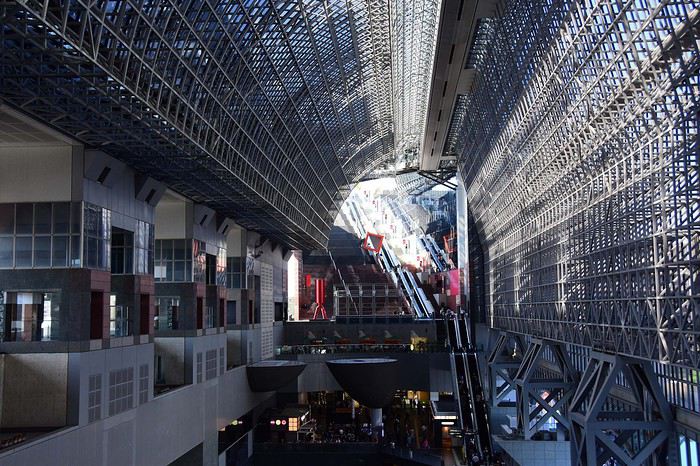
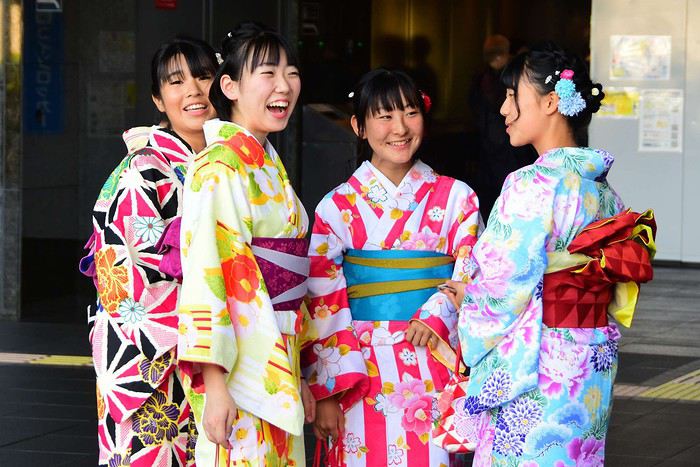
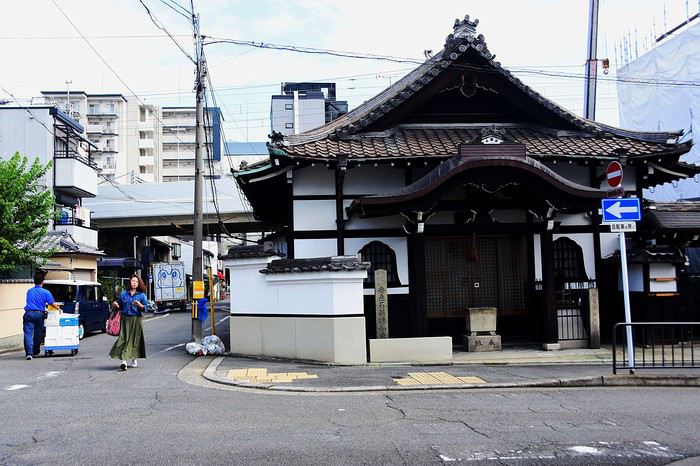
Nous entamons la « tournée » des temples par 2 ensembles bouddhistes : le temple Toji avec la pagode à 5 étages la plus haute du Japon, dit on, et le temple Higashi Hongan-ji.
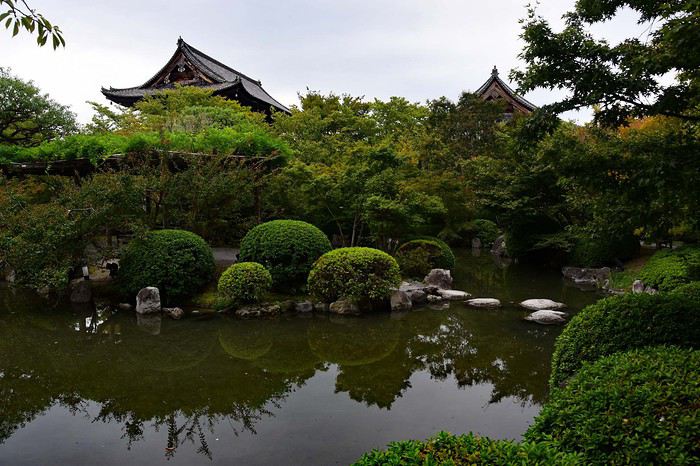
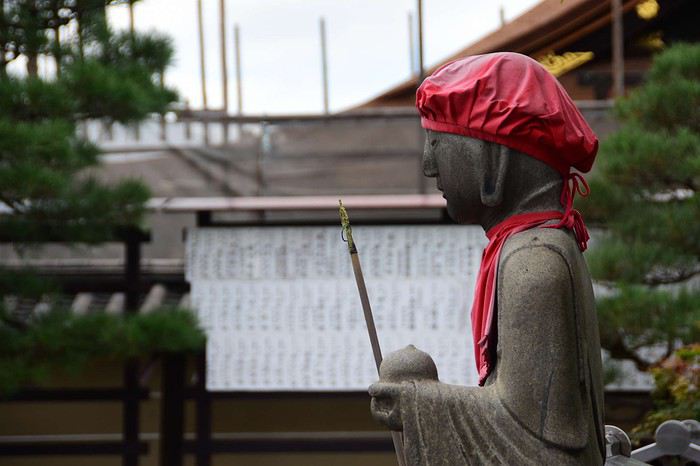
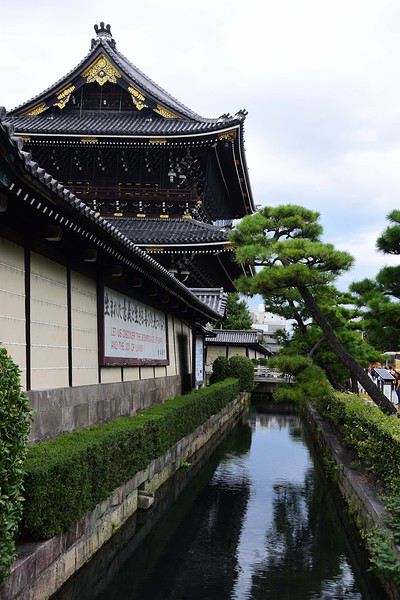
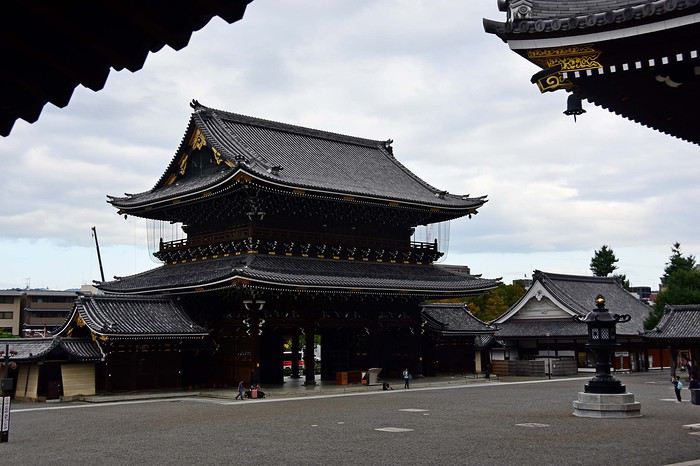
10/10 : Kyoto
Après un voyage sans histoire et 10 heures de vol nous atterrissons à Osaka avec un peu d'avance sur l'horaire prévu. Les formalités de police et douane sont très rapides. À 7h10 nous montons dans le bus limousine qui nous conduit directement vers Kyoto. Curieux et impatients de découvrir ce nouveau pays nous observons attentivement les abords de l'autoroute.
Le décor est planté : tout autour le paysage est très urbanisé et industrialisé avec, de ci de là, quelques grands espaces cultivés entourés de constructions.
Nous rejoignons la gare de Kyoto 2 heures plus tard. Nous gagnons notre hôtel à pied et y laissons les bagages car l'enregistrement débute à 16 heures seulement et l'aimable réceptionniste ne déroge évidemment pas à la règle. Nous cherchons ensuite de quoi restaurer nos estomacs affamés. Dans la galerie marchande de la gare un restaurant avec commande par automate nous simplifie la vie car nous sommes encore un peu sonnés et n'avons pas trop envie de tester nos minces connaissances en japonais.
Après avoir repris quelques forces avec un plat de udon nous partons à la découverte des environs. Tout autour, l'architecture mêle buildings modernes le long de larges avenues et petites maisons anciennes bordant des ruelles tranquilles. Nous sommes de suite plongés dans ces contrastes qui jalonnent les villes japonaises.
Nous entamons la « tournée » des temples par 2 ensembles bouddhistes : le temple Toji avec la pagode à 5 étages la plus haute du Japon, dit on, et le temple Higashi Hongan-ji.
Bonjour,
Bon je m'explique. Je cherchais sur internet un voyage d'une durée de 4 semaines environ en été de préférence pour le Japon. Mais la plupart du temps, je n'ai trouvé que des séjours linguistiques avec cours et logement en famille d'accueil. En fait ce que je souhaiterais, c'est faire un voyage entre jeunes (disons entre 16-18 ans) partageant la même passion pour le Japon ou juste voulant visiter ce pays avec un guide qui nous accompagnerait. Un peu à l'aventure mais organisé quand même ^^ Du genre voyage en classe :p Je sais pas si vous voyez bien ... Ca ne doit pas exister en fait. Parce que moi, je me vois pas prendre des cours et loger chez une famille d'accueil. Je me sens pas, je suis trop timide :s Et puis, pour apprendre la langue il faut rester bien plus que 4 semaines et je ne souhaite pas faire un séjour long. Je veux vraiment visiter le pays, aller à l'encontre de cette culture, mais pas seule. A moins que vous me fassiez changer d'avis. Enfin, je me suis surtout dit que le type de voyage que je cherchais devait coûter moins cher que ces séjours linguistiques. Merci d'avance pour toutes les infos que vous pouvez me fournir !
Bon je m'explique. Je cherchais sur internet un voyage d'une durée de 4 semaines environ en été de préférence pour le Japon. Mais la plupart du temps, je n'ai trouvé que des séjours linguistiques avec cours et logement en famille d'accueil. En fait ce que je souhaiterais, c'est faire un voyage entre jeunes (disons entre 16-18 ans) partageant la même passion pour le Japon ou juste voulant visiter ce pays avec un guide qui nous accompagnerait. Un peu à l'aventure mais organisé quand même ^^ Du genre voyage en classe :p Je sais pas si vous voyez bien ... Ca ne doit pas exister en fait. Parce que moi, je me vois pas prendre des cours et loger chez une famille d'accueil. Je me sens pas, je suis trop timide :s Et puis, pour apprendre la langue il faut rester bien plus que 4 semaines et je ne souhaite pas faire un séjour long. Je veux vraiment visiter le pays, aller à l'encontre de cette culture, mais pas seule. A moins que vous me fassiez changer d'avis. Enfin, je me suis surtout dit que le type de voyage que je cherchais devait coûter moins cher que ces séjours linguistiques. Merci d'avance pour toutes les infos que vous pouvez me fournir !
Bonsoir tout le monde,
Je prépare mon prochain voyage au Japon prévu pour le mois de novembre mais, pour une fois, j'hésite quant à la région à privilégier ...
Ce sera le 3e voyage au Japon pour mon compagnon, le 5e pour moi. Nous y resterons 1 mois et comptons revisiter Tokyo et Kyoto. Nous prevoyons au moins 15 jours pour ces 2 villes car même si nous y sommes deja allé plusieurs fois on a adoré ! Et puis on aura peut etre jamais assez d'une vie pour tout voir ! Mon "problème" se situe quant aux endroits à visiter entre ces deux villes : j'ai TOUT envie de voir ou revoir !!
Et donc j'aimerai votre avis : quelle est selon vous LA région à visiter en novembre, et donc offrant les plus beaux paysages d'automne ??? Je mets de coté Hokkaido (déjà fait, magnifique, mais j'y retournerai une prochaine fois je pense), et Kyushu (idem). Donc je ne sais pas si je nous prépare un petit périple plutot dans le Tohoku (peu visité encore) ou alors dans le Chubu (déjà visité quelques endroits des alpes japonaises mais c'était quand même super et les couleurs doivent être géniales en novembre non ??), ou sinon carrément vers Shikoku (jamais été là bas encore par contre) ...
Si je le pouvais j'irais partout vous l'avez compris ... et vous, ou iriez vous à cette période ??
Merci d'avance pour vos avis.
Je prépare mon prochain voyage au Japon prévu pour le mois de novembre mais, pour une fois, j'hésite quant à la région à privilégier ...
Ce sera le 3e voyage au Japon pour mon compagnon, le 5e pour moi. Nous y resterons 1 mois et comptons revisiter Tokyo et Kyoto. Nous prevoyons au moins 15 jours pour ces 2 villes car même si nous y sommes deja allé plusieurs fois on a adoré ! Et puis on aura peut etre jamais assez d'une vie pour tout voir ! Mon "problème" se situe quant aux endroits à visiter entre ces deux villes : j'ai TOUT envie de voir ou revoir !!
Et donc j'aimerai votre avis : quelle est selon vous LA région à visiter en novembre, et donc offrant les plus beaux paysages d'automne ??? Je mets de coté Hokkaido (déjà fait, magnifique, mais j'y retournerai une prochaine fois je pense), et Kyushu (idem). Donc je ne sais pas si je nous prépare un petit périple plutot dans le Tohoku (peu visité encore) ou alors dans le Chubu (déjà visité quelques endroits des alpes japonaises mais c'était quand même super et les couleurs doivent être géniales en novembre non ??), ou sinon carrément vers Shikoku (jamais été là bas encore par contre) ...
Si je le pouvais j'irais partout vous l'avez compris ... et vous, ou iriez vous à cette période ??
Merci d'avance pour vos avis.
Hi,
I was thinking of going to Japan in October, but the prices are currently insane—direct flights from Paris to Tokyo are around 1600-1800 €! Is it always like this, or is it just because I’m planning too far ahead? Thanks
Bonjour à tous
Je suis dans les préparatifs d'un voyage au japon , en couple, entre mi octobre et fin Novembre 2017 ( 20 jours environ à définir dans ce créneau, suivant les opportunités au niveau des tarifs ).
Nous nous sommes décidés sur une traversée avec grosso modo , et sans ordre précis pour l'instant : - 5 à 6 jours pour Tokyo et ses environs( élargis) - 5 à 6 jours pour les alpes japonaises ( Kyoto , Nara, Osaka, Kobe ..) - 5 à 6 jours pour Horoshima, Fukuoka ?????
J'ai déjà eu des conseils avisés pour établir cet éventuel parcours et je cherche maintenant à affiner et à choisir les destinations et pts de chutes sur ces 3 régions . Y a t'il des personnes qui pourraient me donner des infos utiles voir précieuses pour réussir ce projet ? Des commentaires, des suggestions, des bons plans etc... Je suis preneuse et attentive aux diverses expériences .
Merci d'avance
Je suis dans les préparatifs d'un voyage au japon , en couple, entre mi octobre et fin Novembre 2017 ( 20 jours environ à définir dans ce créneau, suivant les opportunités au niveau des tarifs ).
Nous nous sommes décidés sur une traversée avec grosso modo , et sans ordre précis pour l'instant : - 5 à 6 jours pour Tokyo et ses environs( élargis) - 5 à 6 jours pour les alpes japonaises ( Kyoto , Nara, Osaka, Kobe ..) - 5 à 6 jours pour Horoshima, Fukuoka ?????
J'ai déjà eu des conseils avisés pour établir cet éventuel parcours et je cherche maintenant à affiner et à choisir les destinations et pts de chutes sur ces 3 régions . Y a t'il des personnes qui pourraient me donner des infos utiles voir précieuses pour réussir ce projet ? Des commentaires, des suggestions, des bons plans etc... Je suis preneuse et attentive aux diverses expériences .
Merci d'avance
Bonjour à tous,
Je commence tout juste à préparer notre prochain voyage au Japon : - 2 semaines et demie - arrivée à Tokyo le jeudi 17 octobre 2019 - départ d'Osaka le lundi 4 novembre 2019 - 2 adultes, 2 enfants de 6 et 11 ans. Envies pour le voyage : - varier les plaisirs (comme je l'ai déjà lu sur ce forum, éviter la templéite aiguë !) - on aimerait vraiment passer du temps dans la campagne : pas grave de rater plein d'incontournables dans les villes - je tiens à Nikko malgré le "détour", car si le temps est avec nous, nous devrions voir les érables rouges à cette période, alors qu'ils ne seront pas encore rougeoyants ailleurs... - se concentrer sur le côté geek (au sens large) à Tokyo, notamment pour notre grande qui est fan de mangas (moi, je n'y connais rien ^^) - idéalement (mais je doute que le budget le permette), on aimerait passer une nuit dans un ryokan avec onsen privatif (j'ai un tatouage, je ne pourrai pas aller dans un onsen public...) : des suggestions ?
Je suis allée 3 fois à Tokyo, mon mari une fois, les enfants, jamais. Nous connaissons donc très mal le pays.
Ceci est un premier jet, si vous avez des remarques ou des suggestions, je suis évidemment preneuse.
Merci infiniment !
jour 1 : arrivée à Tokyo arrivée à Tokyo en milieu de journée
jours 2, 3 et 4 : Tokyo question : Il y aura à cette période le festival de Kawagoe, à 30 minutes de Tokyo. Je n'ai pas trouvé d'info à ce sujet ici... d'après-vous, cela vaut-il le déplacement, même si ça nous fait perdre une journée à Tokyo ? question : j'ai lu un peu tout et son contraire sur les studios Ghibli. Le musée est-il intéressant même si l'on n'est pas fan ou expert de Miyazaki ?
jour 5 : Nikko récupération voiture route vers Nikko : 2 heures visite de Nikko. nuit à Nikko. question : les temps de parcours Google Maps sont-ils fiables ? Je les trouve très optimistes compte tenu de ce que j'ai pu lire sur la vitesse sur les routes au Japon... Qu'en pensez-vous ? (bien sûr, les temps de parcours indiqués n'incluent pas les arrêts ! je parle vraiment du temps de "roulage")
jour 6 : Nikko National Park route vers Nikko National Park : 1 heure visite du parc un peu de route en direction de Takayama. Nuit à ?
jour 7 : route vers Takayama fin de la route pour Takayama : 6 heures ! Nuit vers Takayama
jour 8 : Hida Monzoku Mura et Shirakawa-go visite de Hida Monzoku Mura route vers Shirakawa-go : 1 heure visite de Shirakawa-go nuit vers Shirakawa-go
jour 9 : Péninsule de Noto, rizières en terrasses route vers la péninsule : 2h30 visite de la péninsule, et notamment des rizières en terrasses Shiroyone Semmaïda nuit vers Shiroyone Semmaïda
jour 10 : route vers Ine route vers Ine, village de pêcheurs : 6 heures ! nuit vers Ine
jour 11 : visite de Ine et repos nuit vers Ine
jour 12 : Kyoto route vers Kyoto : 2 heures retour voiture JR pass pour une semaine ? A calculer
jour 13 à 16 : Kyoto question : la visite de Nara, en dehors de l'attrait des daims, est-elle indispensable ? Si oui, vaut-il mieux faire un A/R depuis Kyoto, ou, comme la carte le suggère plus intuitivement, faire Kyoto > Nara > Osaka en fin de parcours ?
jour 17 : Osaka trajet Kyoto > Osaka, visite d'Osaka question : aquarium est-il conseillé, même en passant peu de temps dans la ville ? re question : ma sœur m'a conseillé de ne pas négliger Osaka, j'ai relu plusieurs témoignages allant dans le même sens. Est-ce toujours valable lorsque l'on a peu de jours à Kyoto ? Que privilégier ?
jour 18 : Osaka
jour 19 : retour vol en milieu de matinée pour Paris
J'ai un peu de mal à créer ce premier itinéraire (voué à évoluer bien sûr), car on trouve assez peu de retours pour la partie "campagne". Donc sur ce parcours, si vous avez des suggestions, je suis vraiment preneuse. Merci beaucoup ! :)
Je commence tout juste à préparer notre prochain voyage au Japon : - 2 semaines et demie - arrivée à Tokyo le jeudi 17 octobre 2019 - départ d'Osaka le lundi 4 novembre 2019 - 2 adultes, 2 enfants de 6 et 11 ans. Envies pour le voyage : - varier les plaisirs (comme je l'ai déjà lu sur ce forum, éviter la templéite aiguë !) - on aimerait vraiment passer du temps dans la campagne : pas grave de rater plein d'incontournables dans les villes - je tiens à Nikko malgré le "détour", car si le temps est avec nous, nous devrions voir les érables rouges à cette période, alors qu'ils ne seront pas encore rougeoyants ailleurs... - se concentrer sur le côté geek (au sens large) à Tokyo, notamment pour notre grande qui est fan de mangas (moi, je n'y connais rien ^^) - idéalement (mais je doute que le budget le permette), on aimerait passer une nuit dans un ryokan avec onsen privatif (j'ai un tatouage, je ne pourrai pas aller dans un onsen public...) : des suggestions ?
Je suis allée 3 fois à Tokyo, mon mari une fois, les enfants, jamais. Nous connaissons donc très mal le pays.
Ceci est un premier jet, si vous avez des remarques ou des suggestions, je suis évidemment preneuse.
Merci infiniment !
jour 1 : arrivée à Tokyo arrivée à Tokyo en milieu de journée
jours 2, 3 et 4 : Tokyo question : Il y aura à cette période le festival de Kawagoe, à 30 minutes de Tokyo. Je n'ai pas trouvé d'info à ce sujet ici... d'après-vous, cela vaut-il le déplacement, même si ça nous fait perdre une journée à Tokyo ? question : j'ai lu un peu tout et son contraire sur les studios Ghibli. Le musée est-il intéressant même si l'on n'est pas fan ou expert de Miyazaki ?
jour 5 : Nikko récupération voiture route vers Nikko : 2 heures visite de Nikko. nuit à Nikko. question : les temps de parcours Google Maps sont-ils fiables ? Je les trouve très optimistes compte tenu de ce que j'ai pu lire sur la vitesse sur les routes au Japon... Qu'en pensez-vous ? (bien sûr, les temps de parcours indiqués n'incluent pas les arrêts ! je parle vraiment du temps de "roulage")
jour 6 : Nikko National Park route vers Nikko National Park : 1 heure visite du parc un peu de route en direction de Takayama. Nuit à ?
jour 7 : route vers Takayama fin de la route pour Takayama : 6 heures ! Nuit vers Takayama
jour 8 : Hida Monzoku Mura et Shirakawa-go visite de Hida Monzoku Mura route vers Shirakawa-go : 1 heure visite de Shirakawa-go nuit vers Shirakawa-go
jour 9 : Péninsule de Noto, rizières en terrasses route vers la péninsule : 2h30 visite de la péninsule, et notamment des rizières en terrasses Shiroyone Semmaïda nuit vers Shiroyone Semmaïda
jour 10 : route vers Ine route vers Ine, village de pêcheurs : 6 heures ! nuit vers Ine
jour 11 : visite de Ine et repos nuit vers Ine
jour 12 : Kyoto route vers Kyoto : 2 heures retour voiture JR pass pour une semaine ? A calculer
jour 13 à 16 : Kyoto question : la visite de Nara, en dehors de l'attrait des daims, est-elle indispensable ? Si oui, vaut-il mieux faire un A/R depuis Kyoto, ou, comme la carte le suggère plus intuitivement, faire Kyoto > Nara > Osaka en fin de parcours ?
jour 17 : Osaka trajet Kyoto > Osaka, visite d'Osaka question : aquarium est-il conseillé, même en passant peu de temps dans la ville ? re question : ma sœur m'a conseillé de ne pas négliger Osaka, j'ai relu plusieurs témoignages allant dans le même sens. Est-ce toujours valable lorsque l'on a peu de jours à Kyoto ? Que privilégier ?
jour 18 : Osaka
jour 19 : retour vol en milieu de matinée pour Paris
J'ai un peu de mal à créer ce premier itinéraire (voué à évoluer bien sûr), car on trouve assez peu de retours pour la partie "campagne". Donc sur ce parcours, si vous avez des suggestions, je suis vraiment preneuse. Merci beaucoup ! :)
Hi there!
I’m planning a trip to Japan in November for about three weeks.
I’m flexible on dates and duration.
I’ve started drafting an itinerary that we can tweak based on everyone’s interests.
I’m into Japanese culture and food, temples, hot springs, and street food…
Who’s in?! ☺️
Bonsoir,
Je pars au Japon cet automne et après avoir passé 1 grosse semaine à Tokyo fin septembre j'ai 1 mois de libre et j'ai pensé à un itinéraire dans le Tohoku. C'est mon premier voyage au Japon mais malgré un choix draconien j'ai choisi de laisser de côté le Kansai pour cette fois ci (je ne sais pas pourquoi le nord du Japon m'attire 😄)
L'idée étant de ne pas me presser, randonner, explorer, faire des croquis etc....(par ex exemple aux USAS j'avais fait quelques treks dans l'ouest américain 13 jours et après la côté californienne 3 semaines dont 1 semaine posée dans une ferme entre l'océan et la montagne à me balader et travailler. J'ai pas eu le sentiment de courir et c'était magique donc en gros je recherche sensiblement le même feeling 😎)
J'ai commencé à élaguer mon petit road trip mais j'ai encore trop de choix 🤪!
Je cherche donc des conseils car certains lieux sont certainement surfaits, pareil au niveau des randos j'ai pas mal d'opportunités et je ne pourrai pas tout faire il va falloir zapper des trucs.
L'idéal pour moi serait à un moment de me poser (par exemple à Nikko, et explorer les environs), ah oui et si possible profiter des momiji même si ça risque d'être un peu tôt dans l'année.
Voici quelques unes de mes idées du nord au sud:
1-Shimoteka/Osorezan
3-Hakkoda San (rando)
4-Hiraizumi (visite)
5-Dewa Sanzan (rando)
6 Ginzan Onsen
7 Yamadera (visite)
8 Mont Zao (rando)
9 Urabandai (rando)
10 Nikko et environs
A mon avis certaines destinations sont redondantes et j'ai du laisser de côté des endroits + intéressants.
L'idée et de tout pouvoir caler en 3 grosses semaines (avec flexibilité jusqu'à 4 semaines mais je veux réserver une part d'aléatoire)
Sinon à la base mon tout premier itinéraire était + classique> Tokyo, Kiso Valley, Kyoto, le Wakayama en gros mais j'avoue j'étais curieuse de voir les couleurs d'automne au Japon et en octobre à part dans le nord c'est mort.
Voili voilou,
si vous avez des bons plans, des conseils je suis à l'écoute :)
Laurène
Je pars au Japon cet automne et après avoir passé 1 grosse semaine à Tokyo fin septembre j'ai 1 mois de libre et j'ai pensé à un itinéraire dans le Tohoku. C'est mon premier voyage au Japon mais malgré un choix draconien j'ai choisi de laisser de côté le Kansai pour cette fois ci (je ne sais pas pourquoi le nord du Japon m'attire 😄)
L'idée étant de ne pas me presser, randonner, explorer, faire des croquis etc....(par ex exemple aux USAS j'avais fait quelques treks dans l'ouest américain 13 jours et après la côté californienne 3 semaines dont 1 semaine posée dans une ferme entre l'océan et la montagne à me balader et travailler. J'ai pas eu le sentiment de courir et c'était magique donc en gros je recherche sensiblement le même feeling 😎)
J'ai commencé à élaguer mon petit road trip mais j'ai encore trop de choix 🤪!
Je cherche donc des conseils car certains lieux sont certainement surfaits, pareil au niveau des randos j'ai pas mal d'opportunités et je ne pourrai pas tout faire il va falloir zapper des trucs.
L'idéal pour moi serait à un moment de me poser (par exemple à Nikko, et explorer les environs), ah oui et si possible profiter des momiji même si ça risque d'être un peu tôt dans l'année.
Voici quelques unes de mes idées du nord au sud:
1-Shimoteka/Osorezan
3-Hakkoda San (rando)
4-Hiraizumi (visite)
5-Dewa Sanzan (rando)
6 Ginzan Onsen
7 Yamadera (visite)
8 Mont Zao (rando)
9 Urabandai (rando)
10 Nikko et environs
A mon avis certaines destinations sont redondantes et j'ai du laisser de côté des endroits + intéressants.
L'idée et de tout pouvoir caler en 3 grosses semaines (avec flexibilité jusqu'à 4 semaines mais je veux réserver une part d'aléatoire)
Sinon à la base mon tout premier itinéraire était + classique> Tokyo, Kiso Valley, Kyoto, le Wakayama en gros mais j'avoue j'étais curieuse de voir les couleurs d'automne au Japon et en octobre à part dans le nord c'est mort.
Voili voilou,
si vous avez des bons plans, des conseils je suis à l'écoute :)
Laurène
Bonjour à tous ! On envisage un voyage au Japon cet automne. Pays totalement inconnu pour nous à ce jour, je vous soumets un pré-projet : qu'en pensez-vous et tient-il la route ?
D'avance merci . 😉
J1 Vol CDG / Osaka J2 Arrivée et transfert Kyoto J3 à J6 : Découverte Kyoto J7 Kyoto - Takayama (train ou bus) J8 Takayama J9 Takayama - Shirakawa go - Kanazawa (bus) J10 et J11 Kanazawa J12 Kanazawa Hakone (train) J13 Hakone J14 Hakone Tokyo (train) J15 à J18 Tokyo J16 Vol Tokyo / CDG
J1 Vol CDG / Osaka J2 Arrivée et transfert Kyoto J3 à J6 : Découverte Kyoto J7 Kyoto - Takayama (train ou bus) J8 Takayama J9 Takayama - Shirakawa go - Kanazawa (bus) J10 et J11 Kanazawa J12 Kanazawa Hakone (train) J13 Hakone J14 Hakone Tokyo (train) J15 à J18 Tokyo J16 Vol Tokyo / CDG
Lors de mon prochain périple au Japon, cet automne, je vais faire un petit circuit sur l'île de Kyushu. Ma dernière étape est une journée à Kumamoto où je pensais initialement visiter son château. J'y ai déjà réservé une chambre d’hôtel.
Vu les dégâts causés par le tremblement de terre, je vais devoir revoir mon programme dans cette ville. Auriez des idées pour profiter cette dernière journée de voyage ?
Arigato gozaimassu !
Bonjour,
Je part au Japon trois semaines en automne prochain, et je compte tester pour la première fois AirBnB chez des Japonnais..peut être pour rencontrer les japonnais, ou pour des raisons de budgets.
Je cherche des endroits ou sortir pour rencontrer des Japonnais qui parlent un peu anglais, ou des endroits ou tout ce beau monde se mélange à Tokyo, Osaka ou ailleurs ? ( bar, restaux, boites )
Je part au Japon trois semaines en automne prochain, et je compte tester pour la première fois AirBnB chez des Japonnais..peut être pour rencontrer les japonnais, ou pour des raisons de budgets.
Je cherche des endroits ou sortir pour rencontrer des Japonnais qui parlent un peu anglais, ou des endroits ou tout ce beau monde se mélange à Tokyo, Osaka ou ailleurs ? ( bar, restaux, boites )
Bonjour,
Nous envisageons un voyage de 3 semaines au Japon cet automne. j'hesite entre le jrpass et les pass régionaux sachant que :
J1 - Arrivée OSAKA transfert KYOTO où nous resterons une semaine pour visiter la ville. pendant la seconde semaine, nous irons 3 jours à HAKONE ET 3jours à TAKAYAMA la 3 ème semaine retour KYOTO où nous resterons basés et nous irons à la journée visiter NARA HIMEJI le lac BIWA et autres excursions en partant le matin et rentrant le soir. mon programme n'est pas arrêté et je peux intervertir les semaines. en allant sur HYPERDIA il ne me semble pas que le pass une semaine soit amorti avec les trajets Takamaya et Hakone.Je précise que je n'ai pas l'intention d'aller à TOKYO. merci d'avance pour vos réponses.
Nous envisageons un voyage de 3 semaines au Japon cet automne. j'hesite entre le jrpass et les pass régionaux sachant que :
J1 - Arrivée OSAKA transfert KYOTO où nous resterons une semaine pour visiter la ville. pendant la seconde semaine, nous irons 3 jours à HAKONE ET 3jours à TAKAYAMA la 3 ème semaine retour KYOTO où nous resterons basés et nous irons à la journée visiter NARA HIMEJI le lac BIWA et autres excursions en partant le matin et rentrant le soir. mon programme n'est pas arrêté et je peux intervertir les semaines. en allant sur HYPERDIA il ne me semble pas que le pass une semaine soit amorti avec les trajets Takamaya et Hakone.Je précise que je n'ai pas l'intention d'aller à TOKYO. merci d'avance pour vos réponses.