Discussions Taamaden took part in
About 547 results.
More options
Search results
Duane Allman: Master Guitarist and His Journey
Exceptional session musician and virtuoso slide guitarist
On the late afternoon of October 29, 1971, one of the world’s greatest guitarists, Duane Allman, was riding his motorcycle when he swerved to avoid hitting a flatbed truck that had suddenly stopped at an intersection. He ended up crashing into the back of the truck with such force that he was thrown under his bike, which skidded and dragged him for 50 feet (15 meters). The impact caused fatal injuries. Suffering from a collapsed chest, a ruptured coronary artery, and liver damage, Allman was pronounced dead three hours later. He was 24 years old. (adapted from The Guardian, 2026)
Duane Allman is widely regarded as one of the greatest guitarists of all time. He regularly appears in the top 10 rankings of the best guitarists on the planet, sometimes taking second place, just behind Jimi Hendrix.
Allman was an innovator who pushed electric guitar solos to new heights, especially when using a slide made from a Coricidin cough syrup bottle. He played a key role in creating the "Southern Rock" genre with The Allman Brothers Band and was at the heart of what many consider the best live album ever recorded (see below).
Additionally, Allman contributed to countless legendary recordings alongside artists like Wilson Pickett, Aretha Franklin, King Curtis, Boz Scaggs, and many others. He notably appeared on Derek and the Dominos’ cult double album, Layla and Other Assorted Love Songs, widely regarded as Eric Clapton’s masterpiece and one of the greatest rock and blues albums of all time.
These immense achievements would normally be the impressive legacy of a long and eventful career, but astonishingly, Allman accomplished all this in just a few short years—until his untimely death.
The Early Years
Howard Duane Allman was born on November 20, 1946, in Nashville, Tennessee. His brother, Gregory Lenoir (Gregg), was born a little over a year later, on December 8, 1947. In 1959, Gregg took a few guitar lessons, then bought his own guitar in 1960.
That same year, the two brothers attended a B.B. King concert, and Gregg began teaching his older brother the basics of guitar. Duane’s obvious talent allowed him to quickly surpass his younger sibling. Interestingly, both brothers were left-handed but played right-handed.
In July 1961, Duane bought a 1959 red Gibson Les Paul Junior. The two boys continued to practice diligently. During the first half of the 1960s, Duane and Gregg played in several bands, including The Kings, The Uniques, the Y Teens, The Misfits, The Shufflers, the Lindsay Morris Band, The House Rockers, Sweet William & The Stereos, and The Escorts.
In the summer of 1965, The Escorts changed their name to The Allman Joys, and Gregg began singing and playing the organ. Some of their recordings weren’t released until much later, in 1973, on an album titled Early Allman.
At the beginning of 1967, the Allman Joys changed their name to the Almanac, or Allman-Act, and moved to St. Louis, Missouri, where they met the Nitty Gritty Dirt Band and their manager. At his suggestion, the Allman-Act changed their name to the Hour Glass and relocated to Los Angeles. The group disbanded at the end of August 1968. Duane Allman went to Muscle Shoals in September and asked the owner of FAME Studios to hire him as a session musician. Allman eventually played on sessions for Clarence Carter and Wilson Pickett. Later that September, Gregg and Duane Allman reunited in Daytona Beach, Florida.
The Melody Master
It was during the second half of 1968 that Duane Allman discovered slide guitar—using a Coricidin cough syrup bottle as a slide. He studied recordings by blues and jazz greats like Robert Johnson, Elmore James, Muddy Waters, Kenny Burrell, Chuck Berry, and B.B. King, and later those of Jeff Beck and Eric Clapton.
While developing his slide style, Allman listened extensively to blues harmonica, particularly Sonny Boy Williamson’s, and replicated blues harmonica phrases on his slide guitar. He also studied jazz brass sections closely. He looped Miles Davis’ Kind of Blue endlessly.
All these varied influences gave birth to a unique guitar style, both fluid and raw, distinguished by impeccable timing and articulation. This is how Allman became a master of melody. He constructed his melodies and solos like a story, with a beginning, a middle, and an end.
Allman could play fast, but he also often used long phrases, modulating and varying the pitch of notes with exceptional fluidity and subtlety. Using feedback between his pickups and speakers to extend sustain was a key part of his sound. Allman was also an excellent rhythm and acoustic guitarist.
The Birth of the Allman Brothers Band
Allman played on numerous studio sessions, often uncredited since he was just lending a hand, but some of the most notable sessions were with Clarence Carter, Arthur Conley, Ronnie Hawkins, Boz Scaggs, and King Curtis. On November 27, 1968, he convinced Wilson Pickett to record a cover of The Beatles’ Hey Jude. Allman’s solo at the end of the track became legendary.
At the end of March 1968, Allman, seeking greater musical freedom, went to Jacksonville, where he began organizing jam sessions with friends. With Gregg Allman’s later arrival in Jacksonville, the first lineup of the Allman Brothers Band was complete. In addition to the two brothers, it included Dickey Betts on lead guitar, Berry Oakley on bass, and Butch Trucks and Jai Johanny "Jaimoe" Johanson on drums.
This grand lineup, featuring two drummers and two lead guitarists, would define the band’s sound. It resulted from Duane Allman hearing James Brown, the first bandleader to use two drummers, as well as his own studio overdubbing experiences, which created two melodic lines, sometimes doubled.
Southern Rock
The Allman Brothers Band began touring nonstop and built an excellent reputation as a live act. Gregg, too, flourished in his role as lead singer and songwriter. In August, the band went to Atlantic Studios in New York to record their self-titled debut album, released on November 4, 1969.
Despite mixed reviews, the album marked a significant artistic breakthrough and embodied the band’s "Southern Rock" style, blending rock, blues, jazz, and country. The band continued touring and recorded their second album, Idlewild South, over several months in 1970. It was released in September 1970.
Despite the band’s struggles to gain a wide audience, Duane Allman’s reputation as an exceptional guitarist spread worldwide. The Allman Brothers performed in Miami on August 26, while Eric Clapton and Derek and the Dominos were recording an album there. When Clapton learned that the guitarist from Hey Jude was playing in town, he attended the concert. The two guitar legends met after the show, hit it off immediately, and Duane Allman ended up playing on eleven of the fourteen tracks on Layla and Assorted Love Songs, including the title track.
The Most Influential
For the rest of 1970 and much of 1971, the Allman Brothers Band continued their relentless touring schedule. Given the band’s impressive reputation as a live act, releasing a live album was the logical next step: two concerts were recorded on March 12 and 13, 1971, at the Fillmore East in New York, and the barely edited result was released as the double album At Fillmore East. Upon its release on July 6, the album stormed the charts and became the Allman Brothers Band’s most successful record.
Over time, the significance of At Fillmore East grew so much that it is now considered one of the most influential live albums of all time. In 2004, the Library of Congress added it to the National Recording Registry, and it regularly appears in rankings of the greatest albums of all time. In 2020, the British newspaper *The Independent* called it "the greatest live album of them all."
In the fall of 1971, the Allman Brothers Band and Duane Allman were at the peak of their art in every way—until the tragedy of October 29.
A Grace
Everyone expected the Allman Brothers Band to call it quits, but they managed to record a double album in tribute to their fallen member. Eat a Peach was released in February 1972. The album went platinum. This success encouraged the band to continue, and they remained active—with a few brief breaks—until 2014. Gregg Allman wasn’t just a key member of the band; he also had a brilliant solo career until his death in 2017 at the age of 69.
What his younger brother Duane accomplished in his short life remains astonishing, and his guitar playing continues to inspire new generations of guitarists. More than fifty years after his death, his music still transcends time, generations, and cultures. This perfectly illustrates the power of music, and in these troubled times, it might be best to conclude with Allman’s own vision of it:
"There are a lot of different forms of communication, but music is absolutely the purest. You can’t hurt anybody with music. You can maybe offend somebody with songs and words, but you cannot offend anyone with music—it’s just all good. There’s nothing at all that could ever be bad about music. It’s a wonderful thing, a grace."
(https://producelikeapro.com/blog/duane-allman/)
Discography:
1969: The Allman Brothers Band 1970: Idlewild South 1971: Live at Fillmore East (2 LPs) 1972: Eat a Peach (2 LPs) 1973: Brothers and Sisters ........
https://www.youtube.com/watch?v=0y8Q2PATVyI&list=RD0y8Q2PATVyI&start_radio=1 Wilson Pickett & Duane Allman: Hey Jude
https://www.youtube.com/watch?v=Dy0S2-MCfpA&list=OLAK5uy_koM0c6t-qGf4d7KVzIPnEffnoWKaLUaUQ&index=2 Duane Allman: Goin' Down Slow
https://www.youtube.com/watch?v=gSDf2Usd8n4&list=RDEMKoJ1OUR8x83z7RAVG4kw3w&index=7 Duane Allman: Blue Sky
https://www.youtube.com/watch?v=P8oZAeL084Q&list=RDEMKoJ1OUR8x83z7RAVG4kw3w&index=8 The Allman Brothers Band: Mountain Jam (Duane Allman part)
https://www.youtube.com/watch?v=FUvxRjYqjEQ&list=RDFUvxRjYqjEQ&start_radio=1 The Allman Brothers Band: Whipping Post
November 2026 Contest Thread: "Urban Tiny House"
This is where we chat (and definitely don’t argue) about the theme "Urban Tiny House," the topic for November 2026’s contest.
Here are a few examples of tiny houses photographed in Tokyo back in March 2016, now part of the album:
https://goo.gl/photos/DrrahSXGTn2MFs4HA





Here are a few examples of tiny houses photographed in Tokyo back in March 2016, now part of the album:
https://goo.gl/photos/DrrahSXGTn2MFs4HA
Glacial, dystopian, minimalist: Alan Vega and Martin Rev
"He was one of the most striking figures of the early American punk scene and a pioneer of electronic music with his band Suicide," Henry Rollins, another flag-bearer of punk in the United States
Alan Vega, pop visionary within the duo Suicide
Suicide formed in 1970, with Alan Vega on vocals and Martin Rev on machines, and first made a name for themselves live. Their concerts were known for being radical and often ending in violence, foreshadowing the punk movement a few years later. Their self-titled debut album, released in 1977, was recorded in four days and blended what would later be called proto-punk with electronic music played on synthesizers and drum machines, influenced by rockabilly. While Suicide didn’t achieve massive popular success, they nonetheless influenced the entire international music scene. Without Alan Vega, there probably wouldn’t have been New Order, Human League, Pulp, Soft Cell (Dave Ball and Marc Almond), Primal Scream, Jesus & Mary Chain, or Depeche Mode in the 1980s—or Radiohead and Aphex Twin, bands from the '90s who all cite Suicide as an influence. Bruce Springsteen covered their Dream Baby Dream on his album High Hopes, while Suicide covered Springsteen’s Born in the USA, and LCD Soundsystem reinterpreted Bye Bye Bayou from Alan Vega’s solo album Jukebox Babe / Collision Drive.
The tireless artist, musician, and visual artist—born Boruch Alan Bermowitz in Brooklyn in June 1938—never stopped creating. With Suicide, he released five studio albums, the last being American Supreme in 2002. As a solo artist, he also had an intense career, releasing 15 albums over his lifetime. Always searching for new ways to express himself, he became a wanderer of pop music: without ever resting, he traversed the modern sound landscape, blending his teenage love for Elvis Presley with minimal techno, No Wave to New Wave, industrial patterns with acoustic sounds. The key was to take himself where he’d never been before. Even after a heart attack and stroke in 2012, he continued performing with his old partner Martin Rev. He claimed to have been inspired by a 1969 Iggy Pop & the Stooges concert in New York.
Suicide, a journey spanning over 30 years for a band always at the cutting edge, shaping the sound of New York. With minimal and raw means, Suicide stripped rock ‘n’ roll down to its essence: a mic, leather, a primitive synth. Nearly a decade ahead of their time, Suicide invented an electro-pop that so many British bands would later polish and sanitize. Among that generation built on Suicide’s stiff and chaotic principles, only Soft Cell retained that dark and threatening aesthetic.
Suicide’s debut album (1977) remains one of the most exciting musical propositions of the '70s—a brutal, sexy, and frenzied testimony of a New York accelerating through history. A masterpiece. A true cult classic. You’ve got to listen to Ghost Rider (one of my favorites), Rocket USA, Cheree, Johnny, Girl, Frankie Teardrop, Che...
Unforgettable...
hgb
Audios:
1) Ice drummer https://www.youtube.com/watch?v=2nxCodtSows&list=RD2nxCodtSows&start_radio=1
2) Ghost rider
https://www.youtube.com/watch?v=5rISbnsi0Ns&list=RD5rISbnsi0Ns&start_radio=1
3) Dream baby Dream
https://www.youtube.com/watch?v=XyvhTIOJeJ4&list=RDXyvhTIOJeJ4&start_radio=1
4) Outlaws, live in Cologne (Köln), Germany
https://www.youtube.com/watch?v=UR92qcOG8co&list=RDUR92qcOG8co&start_radio=1
5) Jukebox Babe
https://www.youtube.com/watch?v=3Dk96sfLjfU&list=RD3Dk96sfLjfU&start_radio=1
October 2026 Photo Contest Thread: "Stay Covered"!
Here you can post off-topic photos, chat, have fun, ask questions, talk tech...
Hope you'll like this theme! 🙂
The contest is here
The contest is here
October 2026 Photo Contest: "Stay Covered"!
Hello everyone!
The September contest “Making a Living on the Street” was won by Philippebrg, followed by Xrctn in second place, and I, the happy bronze medal winner, get to organize October’s challenge.
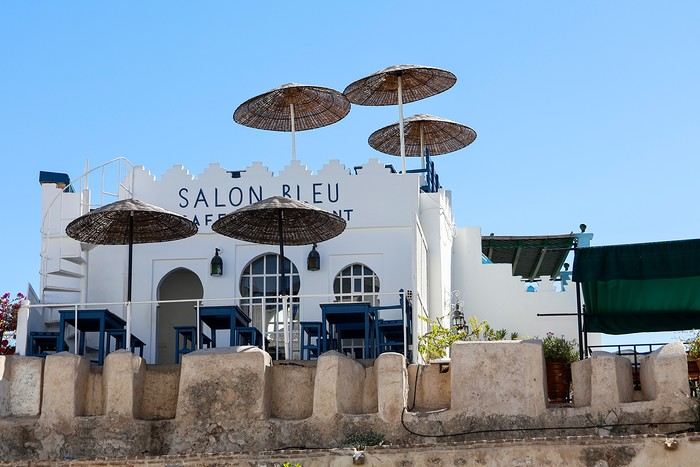
It’s hot—really hot—caliente! Protect yourselves!
Parasols, umbrellas, sun hats, caps, shemaghs, tents, awnings, curtains, pergolas, sunglasses, sunscreen, trees, bits of cardboard... anything goes to shield yourself from Helios’ rays. Your photo must be taken in a context related to heat (a simple hat out of context won’t cut it).
The rules:
- Photo submissions until Sunday, October 25 at 11:59 PM (Paris time). You can post up to 3 photos, numbered and shared in separate messages, ideally with a short description of the location and the story behind it.
- Voting from Monday, October 26 at 12:01 AM to Saturday, October 31 at 11:59 PM. After the deadline, it’s too late! Please indicate the photo number, the username, and the points awarded: Photo #1 = 3 pts Photo #2 = 2 pts Photo #3 = 1 pt
- All VF members can vote (even those who didn’t submit photos).
- In case of a tie for first place, the winning photo will be the one with the most first-place votes, then second-place votes!
- The lucky winner will earn the admiration of all photo contest participants and the privilege of choosing the theme and organizing November 2026’s photo contest.
For discussions about the theme, check here.
Happy shooting!







The September contest “Making a Living on the Street” was won by Philippebrg, followed by Xrctn in second place, and I, the happy bronze medal winner, get to organize October’s challenge.
It’s hot—really hot—caliente! Protect yourselves!
Parasols, umbrellas, sun hats, caps, shemaghs, tents, awnings, curtains, pergolas, sunglasses, sunscreen, trees, bits of cardboard... anything goes to shield yourself from Helios’ rays. Your photo must be taken in a context related to heat (a simple hat out of context won’t cut it).
The rules:
- Photo submissions until Sunday, October 25 at 11:59 PM (Paris time). You can post up to 3 photos, numbered and shared in separate messages, ideally with a short description of the location and the story behind it.
- Voting from Monday, October 26 at 12:01 AM to Saturday, October 31 at 11:59 PM. After the deadline, it’s too late! Please indicate the photo number, the username, and the points awarded: Photo #1 = 3 pts Photo #2 = 2 pts Photo #3 = 1 pt
- All VF members can vote (even those who didn’t submit photos).
- In case of a tie for first place, the winning photo will be the one with the most first-place votes, then second-place votes!
- The lucky winner will earn the admiration of all photo contest participants and the privilege of choosing the theme and organizing November 2026’s photo contest.
For discussions about the theme, check here.
Happy shooting!
Pray for Nepal
Yeah, VF, which used to be so responsive, still doesn’t even have a thread about this devastating mudslide that’s ravaged a region of Nepal where hundreds have died and hundreds more are missing (provisional toll). But from the images, we know the number of victims is going to be terrifying.
Thoughts to everyone affected, including, according to early reports, many travelers..
Rooted in tradition yet forward-looking
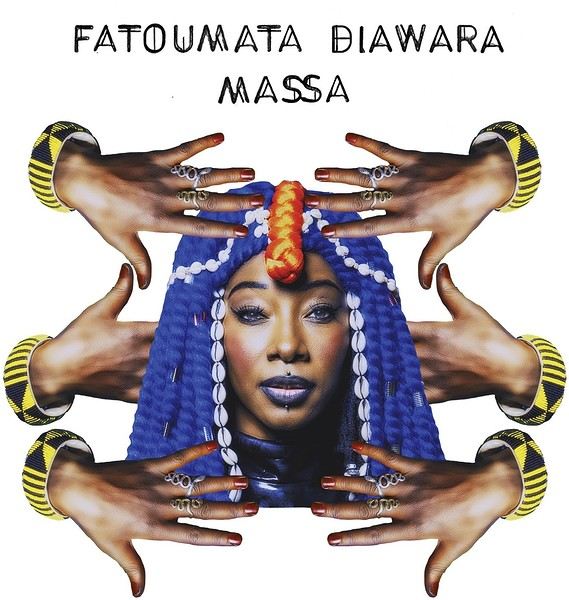
"Massa", Fatoumata Diawara's new album
Fifteen years after her debut album "Fatou" (World Circuit), Fatoumata Diawara has become a key figure on the international music scene. Born in Abidjan and raised in Bamako, this singer and guitarist began her career as an actress before turning to music in 2011. She has performed at prestigious festivals, including Glastonbury (UK) and Montreux (Switzerland), and shared the stage with international stars like Roberto Fonseca, Damon Albarn, and Paul McCartney. This artist effortlessly moves between continents and genres, all while singing in her native language, Bambara. Her new album "Massa", released in May on the Parisian label Nø Førmat!, was produced in collaboration with French musician -M- (Matthieu Chedid) and is her most personal work to date. Diawara explores both political resistance and her life as a daughter, mother, and artist. Musically, "Massa" draws from her homeland, Mali, blending West African traditions with pop, reggae, funk, electro, folk, and rhythmic structures from Afrobeat and jazz.
These stylistic blends never feel artificial or calculated. Traditional rhythms and melodic turns merge naturally with contemporary sounds, creating music that feels both familiar and fresh. But the album’s real strength lies in its songs—narrative pieces whose beauty comes from their sincerity, not spectacle. Her voice carries a unique power: it can be soft yet determined, vulnerable yet confident.
"Massa" is her most personal and introspective work yet. This globally acclaimed singer, songwriter, and guitarist also sees herself as a socially engaged artist—one who doesn’t just get people moving but aims to touch hearts and minds. She tackles social themes like the breakdown of human relationships, disappointment, betrayal, jealousy, and the complex dynamics of polygamous family structures. She also addresses female genital mutilation without preaching, instead sharing stories from her own experience that resonate universally.
Some artists preserve tradition. Others bring it to life. Fatoumata Diawara undoubtedly belongs to the latter. With "Massa", she creates an album deeply rooted in Mali’s musical heritage while speaking the language of the present.
hgb
https://fatoumatadiawaranoformat.bandcamp.com/album/massa
Fifteen years after her debut album "Fatou" (World Circuit), Fatoumata Diawara has become a key figure on the international music scene. Born in Abidjan and raised in Bamako, this singer and guitarist began her career as an actress before turning to music in 2011. She has performed at prestigious festivals, including Glastonbury (UK) and Montreux (Switzerland), and shared the stage with international stars like Roberto Fonseca, Damon Albarn, and Paul McCartney. This artist effortlessly moves between continents and genres, all while singing in her native language, Bambara. Her new album "Massa", released in May on the Parisian label Nø Førmat!, was produced in collaboration with French musician -M- (Matthieu Chedid) and is her most personal work to date. Diawara explores both political resistance and her life as a daughter, mother, and artist. Musically, "Massa" draws from her homeland, Mali, blending West African traditions with pop, reggae, funk, electro, folk, and rhythmic structures from Afrobeat and jazz.
These stylistic blends never feel artificial or calculated. Traditional rhythms and melodic turns merge naturally with contemporary sounds, creating music that feels both familiar and fresh. But the album’s real strength lies in its songs—narrative pieces whose beauty comes from their sincerity, not spectacle. Her voice carries a unique power: it can be soft yet determined, vulnerable yet confident.
"Massa" is her most personal and introspective work yet. This globally acclaimed singer, songwriter, and guitarist also sees herself as a socially engaged artist—one who doesn’t just get people moving but aims to touch hearts and minds. She tackles social themes like the breakdown of human relationships, disappointment, betrayal, jealousy, and the complex dynamics of polygamous family structures. She also addresses female genital mutilation without preaching, instead sharing stories from her own experience that resonate universally.
Some artists preserve tradition. Others bring it to life. Fatoumata Diawara undoubtedly belongs to the latter. With "Massa", she creates an album deeply rooted in Mali’s musical heritage while speaking the language of the present.
hgb
https://fatoumatadiawaranoformat.bandcamp.com/album/massa
Improvisations on the Gayageum (Zither on a Curved Table)
New album from Korean artist DoYeon Kim, featuring an exceptional lineup
The "gayageum" is the name given to the zither on a curved table, a chordophone played across Central Asia (Vietnam, China, Korea, and Japan), existing in versions with 12 and 25 strings. It’s practically unknown in contemporary improvisational music, though Chinese musician Xu Fengxia has long demonstrated how brilliantly this instrument can be used in improvisations. Now, DoYeon Kim is following in her footsteps.
The Korean artist learned the gayageum traditionally. When DoYeon Kim moved to the United States a few years ago to study music, she began incorporating this plucked string instrument into contemporary music and experimenting with unconventional playing techniques.
Now based in Brooklyn, New York, DoYeon Kim recorded her new album Wellspring with an exceptional trio: Mat Maneri (viola), Tyshawn Sorey (drums), and Henry Fraser (bass). Four compositions are written and performed with precision and attention to detail, following the score, while the gayageum player also reveals herself as a dynamic vocalist. Three other tracks (Whispers Among Dawn, Diffraction, Linear System) are collective improvisations, each opening into a distinct sound world. One piece unfolds almost monochromatically from the sounds of bowed strings, while another features crackling gayageum notes, highlighted by glissandos and pronounced vibrato. In this track, the other instruments step back to let the earthy, woody tones of the strings fully blossom.
Wellspring, released in May 2026 on TAO Forms, marks her debut as a bandleader on record—and immediately establishes itself as a bold statement of intent. DoYeon Kim and her three fellow musicians craft an acoustic universe that draws from Korean traditions, the provocative energy of New York’s No Wave scene, and the open interactions of free jazz...

https://www.nytimes.com/video/arts/music/100000010874960/doyeon-kim-wellspring-gayageum.html
Audio:
https://www.youtube.com/playlist?list=OLAK5uy_kcUlgyo60w6WoKisn-30TLMyo7NA2ep_Q
https://www.wrti.org/podcast/late-set/2026-08-04/wellspring-with-doyeon-kim
The "gayageum" is the name given to the zither on a curved table, a chordophone played across Central Asia (Vietnam, China, Korea, and Japan), existing in versions with 12 and 25 strings. It’s practically unknown in contemporary improvisational music, though Chinese musician Xu Fengxia has long demonstrated how brilliantly this instrument can be used in improvisations. Now, DoYeon Kim is following in her footsteps.
The Korean artist learned the gayageum traditionally. When DoYeon Kim moved to the United States a few years ago to study music, she began incorporating this plucked string instrument into contemporary music and experimenting with unconventional playing techniques.
Now based in Brooklyn, New York, DoYeon Kim recorded her new album Wellspring with an exceptional trio: Mat Maneri (viola), Tyshawn Sorey (drums), and Henry Fraser (bass). Four compositions are written and performed with precision and attention to detail, following the score, while the gayageum player also reveals herself as a dynamic vocalist. Three other tracks (Whispers Among Dawn, Diffraction, Linear System) are collective improvisations, each opening into a distinct sound world. One piece unfolds almost monochromatically from the sounds of bowed strings, while another features crackling gayageum notes, highlighted by glissandos and pronounced vibrato. In this track, the other instruments step back to let the earthy, woody tones of the strings fully blossom.
Wellspring, released in May 2026 on TAO Forms, marks her debut as a bandleader on record—and immediately establishes itself as a bold statement of intent. DoYeon Kim and her three fellow musicians craft an acoustic universe that draws from Korean traditions, the provocative energy of New York’s No Wave scene, and the open interactions of free jazz...
https://www.nytimes.com/video/arts/music/100000010874960/doyeon-kim-wellspring-gayageum.html
Audio:
https://www.youtube.com/playlist?list=OLAK5uy_kcUlgyo60w6WoKisn-30TLMyo7NA2ep_Q
https://www.wrti.org/podcast/late-set/2026-08-04/wellspring-with-doyeon-kim
August 2026 Photo Contest Theme: Religious Buildings
Since I don’t have time to come up with an original theme, I’m suggesting a broad, international topic: religious buildings around the world. Given how vast the subject is, I’d like us to focus on photos of exteriors—wide shots or details. Interiors, which are just as varied, could be the subject of another contest.
A few of my own photos, just to give you an idea: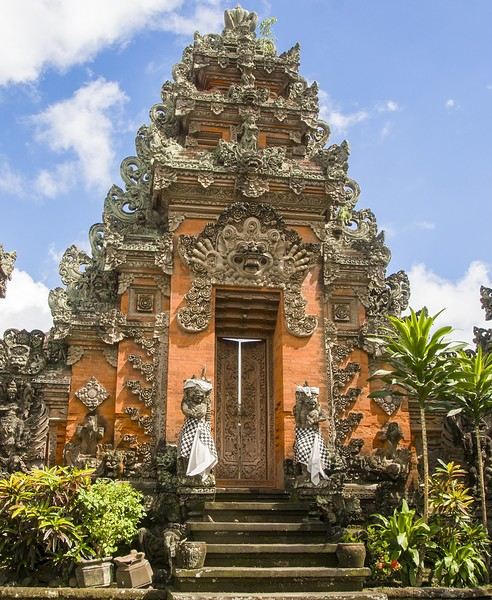
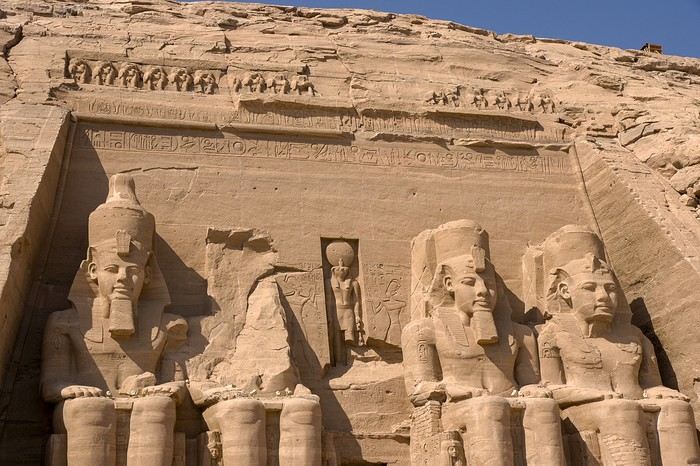

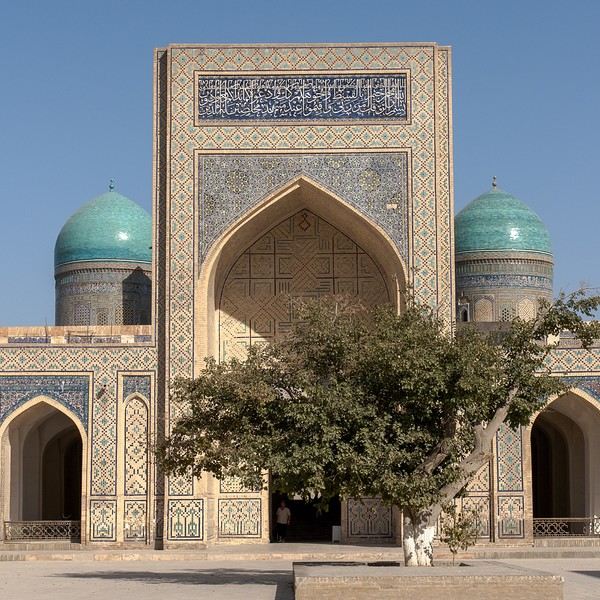
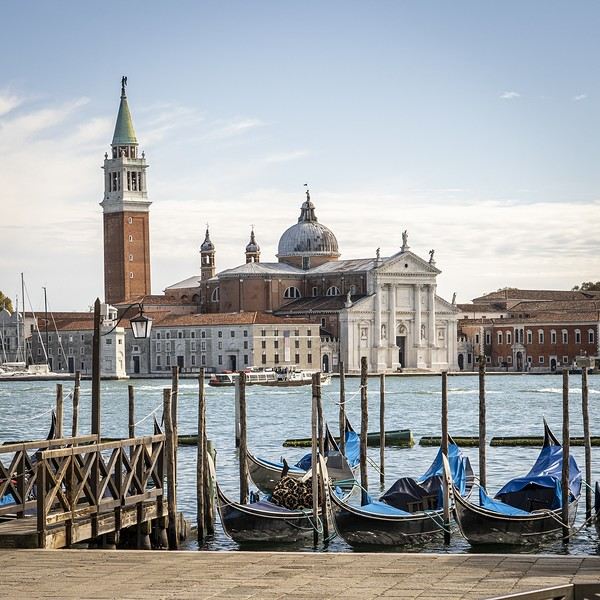

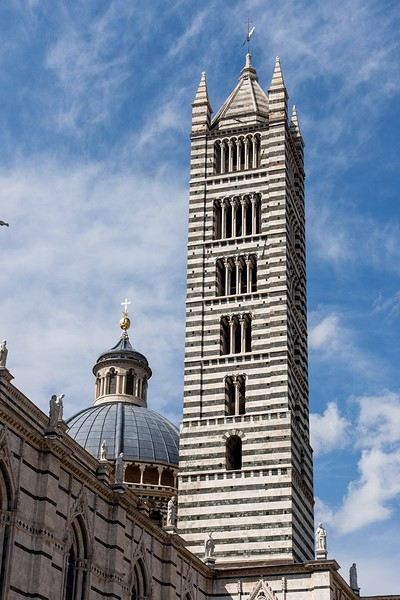
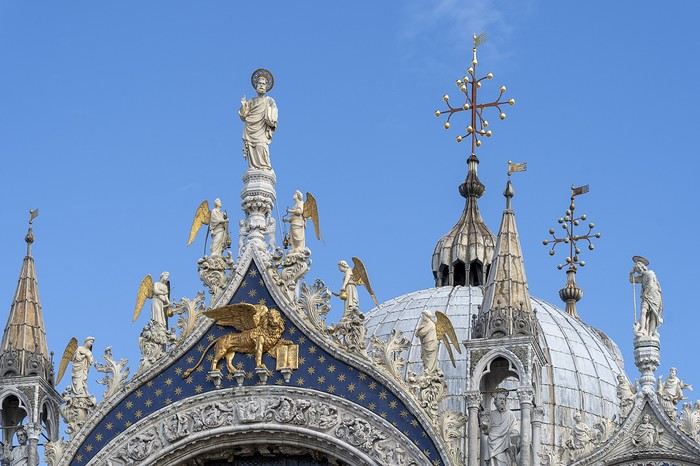
A few of my own photos, just to give you an idea:
June 2026 Theme Thread: Such a Beautiful Landscape
This is where we chat.
June 2026 Photo Contest Theme: Such a Beautiful Landscape
Hello,
It might not be very original, but I see it hasn’t been suggested—or at least not for a very long time. I’d like to invite you to discover the beauty of the great outdoors through landscape photos. Whether they’re desert, sea, countryside, or mountain scenes—with or without other elements (people, buildings, animals, etc.)—they should make us want to dive right in without hesitation.
To participate: Photo submissions until Wednesday, June 24 at 11:59 PM You can post up to 3 photos, numbered and shared in separate messages, along with a short description of the place and the story behind it.
To vote: from Thursday, June 25 at 12:01 AM to Monday, June 29 at 11:59 PM After the deadline, it’s too late!
Please include the photo number, username, and the points awarded: Photo #1 = 3 pts Photo #2 = 2 pts Photo #3 = 1 pt
All VF members can vote (even those who didn’t submit photos). In case of a tie for first place, the winning photo will be the one with the most first-place votes, then second-place votes! The lucky winner will get to organize July 2026’s photo contest.
For discussions about the theme, it’s here: Discussion thread for June 2026’s theme: Such a Beautiful Landscape
Good luck to everyone!
Philippe
Chumphon, Thailand: Doi Tapang
It might not be very original, but I see it hasn’t been suggested—or at least not for a very long time. I’d like to invite you to discover the beauty of the great outdoors through landscape photos. Whether they’re desert, sea, countryside, or mountain scenes—with or without other elements (people, buildings, animals, etc.)—they should make us want to dive right in without hesitation.
To participate: Photo submissions until Wednesday, June 24 at 11:59 PM You can post up to 3 photos, numbered and shared in separate messages, along with a short description of the place and the story behind it.
To vote: from Thursday, June 25 at 12:01 AM to Monday, June 29 at 11:59 PM After the deadline, it’s too late!
Please include the photo number, username, and the points awarded: Photo #1 = 3 pts Photo #2 = 2 pts Photo #3 = 1 pt
All VF members can vote (even those who didn’t submit photos). In case of a tie for first place, the winning photo will be the one with the most first-place votes, then second-place votes! The lucky winner will get to organize July 2026’s photo contest.
For discussions about the theme, it’s here: Discussion thread for June 2026’s theme: Such a Beautiful Landscape
Good luck to everyone!
Philippe
Chumphon, Thailand: Doi Tapang
"Glory": an Animal Farm for Zimbabwe—and the world
"400 pages of verbal pyrotechnics and animal magic" — The Times
"Bulawayo leans into exaggeration and irony to tell hard truths. *Glory* is jam-packed with comedy and farce, poking fun at an autocratic regime while illustrating the absurdity and surreal nature of a police state." — The Guardian
The cruelty and savagery of Zimbabwe’s (and Africa’s in general) "powerful animals"
Zimbabwean author NoViolet Bulawayo has written a novel that illustrates better than any documentary the complexity of colonial legacy. In doing so, she revisits George Orwell’s Animal Farm. Her novel *Glory* is a political satire about Zimbabwe—and it’s brimming with humor.
For thirty years, Zimbabwe has been stagnating under Robert Mugabe’s presidency. Human rights violations, corruption, and international sanctions have kept the population mired in poverty and oppression, while the regime exploits the meager earnings of the economy. As the 2017 elections approach, a power struggle erupts over the succession of the very elderly Father of the Nation (Mugabe). On the streets, people hope for long-awaited reforms; the people feel their moment has come.
And indeed, the army ousts Mugabe and his wife—"with her Gucci heels" (p.32)—who was positioning herself for the presidency. Hopes are dashed, however. The generals install former vice-president Emmerson Mnangagwa in power; the regime merely changes faces, but the problems remain the same.
In the novel, the country is called "Jidada, with a -da and another -da" (p.1); there’s no mistaking that this fictional state is Zimbabwe.
For *Glory*, her second novel, NoViolet Bulawayo invents a whole series of codes whose strength lies precisely in how easy they are to decipher. Like George Orwell’s Animal Farm, the characters populating Bulawayo’s universe aren’t humans but horses, goats, or crocodiles with all-too-human traits. Mugabe and Mnangagwa are horses, the spiritual leader is a pig, the soldiers are all bloodthirsty dogs, while the populace consists of goats, chickens, donkeys, and cats. The shift to the animal world serves only to better grasp the laws of despotism—and to ridicule real-life models. On one hand, the animals are humanized: they tweet, torture, travel in private jets. On the other, their greed, stupidity, and brutality stem from their animal nature.
It’s the old trick of fable: dressing men in animal disguises to make them easier to recognize. That’s how Orwell, in Animal Farm, traced how the promise of liberation from the Russian Revolution turned into Stalinist terror. In his 1945 fable, George Orwell describes how the animals of a farm drive out their farmer to organize the exploitation themselves, collectively. For a time, they truly taste freedom, but a clique of pigs ends up taking control. The central figures of the Soviet story—Stalin, Trotsky, Molotov—were easily recognizable.
Yet Bulawayo departs sharply from Orwell. She’s less concerned with precision and the force of argument than with satirical exaggeration. The deposed president is a senile old man who believes he can control even the sun’s course. The new stallion in power is a greedy debaucher. His soldiers sniff respectfully at his tail and backside.
In Bulawayo’s *Glory*, things are more complicated, but her novel also tells of a failed, incomplete liberation. In the author’s Animal Farm, Jidada, the colonial exploiters are followed by new forms of oppression. Because the former liberators become tyrants themselves. And because global power dynamics persist in neocolonial structures.
Wouldn’t that be enough to fuel a deeply depressing narrative? No—Bulawayo turns it into a blazing satire, full of wit and uncompromising criticism of power, a thread running through contemporary (not just) Zimbabwean history. The old warhorses in NoViolet Bulawayo’s Jidada, who continue to act as pack leaders, are easily recognizable as caricatures of the longtime dictator Robert Mugabe and his successor, current president Emmerson Mnangagwa.
The plot kicks off in high gear with independence day festivities. From the crack of dawn, everyone waits on Jidada Square for the Old Horse, the Father of the Nation and former liberator, whose reign "was nearing all of—not one, not two, not three, but four solid decades" (p.1). Everywhere, the colors of the Jidada Party shine; everywhere, true supporters cheer. Even the scorching sun plays its part: "At this point the sun, upon seeing arrive the leader who was decreed by God himself to rule and rule and keep ruling, a leader who'd in turn decreed the very sun to head his cheerleading squad, took a deep, deep breath and thoroughly blazed to impress" (p.2).
Finally, the Old Horse’s luxury carriage approaches "with the slowness of a hearse" (p.2), and "hoping to catch a glimpse of the legendary Father of the Nation," which causes "the animals fell over themselves like intoxicated frogs" (p.2). The sovereign’s speech is delayed a moment longer: "what I really want is a nap," groans the Old Horse as he takes his seat with such care "like his backside was made of expensive porcelain" (p.6).
Meanwhile, Bulawayo parades his entourage: the president’s wife (who earns her doctorate at Jidada University faster than "you could say diss, for dissertation. Tholukuthi it was as easy as ordering from a KFC drive-through, or perhaps even easier being that it was cheaper than KFC; it in fact cost her nothing and the degree actually came with a zero-calorie Diet Coke and a purple straw" (p.41), and she’s now known as Dr Sweet Mother. The cabinet includes "the Minister of the Revolution, the Minister of Corruption, the Minister of Order, the Minister of Things, the Minister of Nothing, the Minister of Propaganda, the Minister of Homophobic Affairs, the Minister of Disinformation and the Minister of Looting" (p.9). And of course the vice-president, who will soon become interim president when the Old Horse finally kicks the bucket—and then settle in as the new long-term president, who in the novel is called Tuvius Delight Shasha, or "Tuvy" for short (p.253), none other than Emmerson Mnangagwa. It’s him Bulawayo reserves her most merciless character description for.
"New Dispensation" (p.109) is Tuvy’s slogan for Jidada, and he loves repeating it so much he even named his parrot after it ("So inspired was Tuvy by the realisation that he rechristened his new pet parrot with the name New Dispensation—tholukuthi the bird having been acquired explicitly for the purposes of tweeting eulogies and accordingly glorifying the Saviour throughout the airs and skies of the nation. Tuvy then went on to hire a lecturer in English from the University of Jidada to teach New Dispensation to say the phrase 'New Dispensation'" p.110). But Tuvy’s Zimbabwe remains a nation without free, fair, and credible elections ("#freefairncredibleelection" p.161), and the promised equal treatment applies only insofar as Zimbabweans now queue up without discrimination in endless lines—and everyone is as poor as the next in the "queuenation" (p.283). Except for the powerful. They can "yes, tholukuthi, her immeasurable riches theirs to take. And take they did—
just take—take—take—take—take—take—take—take—take—take—take—take—take—take—take—take—take—take—take—take—take—take—take—take—take—take—take" (p.249-250).
In short: Bulawayo brilliantly depicts how former independence fighters become exploiters themselves. And how the country threatens to suffocate under the weight of corruption and repression. But she also literally stages the polyphony with which the people oppose imposed obedience to the official line.
Controversial online discussions keep interrupting the narrative—dialogues and social threads (see photo below) that Bulawayo masterfully integrates. From a literary standpoint, it’s a brilliant idea. And it shows, above all, that the author’s sympathy—so likeable—goes to all those who refuse to let their dream of true freedom be stolen, not even by the corrupt elites of their own country.
In the book’s acknowledgments, the first tribute goes to "The Jidadas of the world, clamouring for freedom on many fronts—A luta continua." (p.401) This reflects the realization that, not only in Jidada-Zimbabwe but in many other corners of the world, the end of colonial domination is still far from meaning the freedom hoped for by the vast majority of people. But it also means, more broadly, that this freedom must be won "on many fronts" (see above), both domestically and geopolitically.
That’s precisely what *Glory* so vividly highlights: how complex the project behind the term "postcolonialism" really is. With *Glory*, Bulawayo also delivers a scathing critique of the persistence of colonial mindsets in the West.
In the novel, the murder of George Floyd, racist police violence, and white-supremacist ideology in Trump’s United States perfectly illustrate the persistence of racism. It’s especially in the final chapters that Bulawayo lets Jidada’s inhabitants explicitly and unflinchingly criticize a neocolonial world order:
"It was not lost on us how the West, which loved to 'save' Africa and announce every action to the whole world, did so with one limb while manipulating, looting and fleecing us with the rest of its limbs so that more money in fact poured out of the continent than trickled in." (p.376)
"It was no mistake that multinational corporations yearly reaped and shipped colossal profits from Africa back to their countries as had been the case during colonial times. Even the sticks and stones would tell you that the African earth at any given time howled and shook and heaved from the extraction of its precious minerals that rarely benefited its own miserable children." (p.376)
"(...) we vowed to wage yet another war for Africa's second Liberation from neocolonial oppression. From exploitation. From plunder. From Western dominion. From indignity. From Abuse. We wanted real freedom. We wanted greedy, thieving paws off our wealth. We wanted Justice. We wanted a new world; we wanted a brand-new world so much we didn't sleep a wink that night." (p.377)
The Jidadas of this world must fight two enemies: Western neocolonialism and the autocratic instrumentalization of that argument; the persistence of Western racism and the populist appropriation of that humiliation by tyrants from their own ranks. Neither of these obstacles to freedom diminishes the historical and current guilt of the other. But the path to postcolonial liberation must overcome all these forms of oppression. After all, the colonizers didn’t bequeath democracies to formerly dominated nations, but instability and the principles of oppression and exploitation—which the so-called liberators have also internalized. Yet the fact that a satirical novel can capture the complexity of historical relationships while remaining, despite all the darkness of the subject, hilarious—well, that’s truly astonishing.
Finally, *Glory* ties into a major trauma in Zimbabwe’s post-independence history: the so-called Gukurahundi massacres. Between 1983 and 1987, tens of thousands of civilians were murdered by Mugabe’s bloody henchmen, most of them Ndebele. The State Security Minister and head of secret services at the time? You guessed it—Emmerson Mnangagwa.
When *Glory* turns to the massacres, the novel’s tone shifts completely. The story is now told through the narrative of the goat called Destiny, who, like NoViolet Bulawayo herself, left her home country at 18 for the United States and only returned after 13 years. In the book, the city of Bulawayo becomes a village where Destiny retraces her family’s history—and learns that part of it was also brutally murdered during the massacres.
The abuse of power and life under a dictatorship, dispossession, and a fiercely proud awareness of the psychological wounds and emotional vulnerability of a uprooted and disenfranchised people who had to forge a new language—a new set of names—to express their lived experiences are at the heart of this wonderful Zimbabwean author’s literary work, NoViolet Bulawayo. Shortly after her studies, she was already writing short stories about postcolonial power dynamics in Africa. But her playful, masterful, and often unconventional approach to language also plays a key role in her work. With virtuosity, she shifts from cynical images of power-obsessed elites to compassionate descriptions of the people’s suffering, ending with a hopeful sermon on courage—the courage to break free from fear and thus gain the strength for change ("And every one of them understood that whatever they heard within those hearts was the new national anthem, tholukuthi an anthem that spoke of the kind of glory that burns eternal and glows with living light." p.400). This novel is a genuine pleasure to read. And it’s exceptional. Good, African...
Book info (original English and German translation):
NoViolet Bulawayo. Glory. Chatto & Windus, 2022. NoViolet Bulawayo. Glory. Suhrkamp, 2023.
Hery
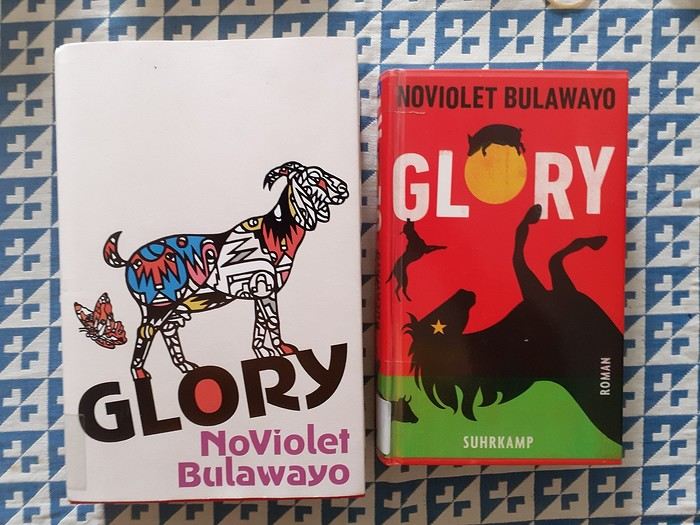 The books (in English, in German)
 Author NoViolet Bulawayo, Zimbabwe
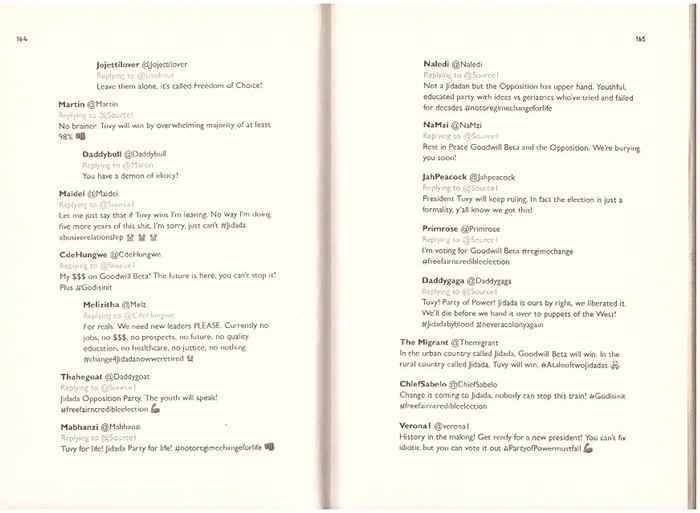 Threads (p.164-165)
"Bulawayo leans into exaggeration and irony to tell hard truths. *Glory* is jam-packed with comedy and farce, poking fun at an autocratic regime while illustrating the absurdity and surreal nature of a police state." — The Guardian
The cruelty and savagery of Zimbabwe’s (and Africa’s in general) "powerful animals"
Zimbabwean author NoViolet Bulawayo has written a novel that illustrates better than any documentary the complexity of colonial legacy. In doing so, she revisits George Orwell’s Animal Farm. Her novel *Glory* is a political satire about Zimbabwe—and it’s brimming with humor.
For thirty years, Zimbabwe has been stagnating under Robert Mugabe’s presidency. Human rights violations, corruption, and international sanctions have kept the population mired in poverty and oppression, while the regime exploits the meager earnings of the economy. As the 2017 elections approach, a power struggle erupts over the succession of the very elderly Father of the Nation (Mugabe). On the streets, people hope for long-awaited reforms; the people feel their moment has come.
And indeed, the army ousts Mugabe and his wife—"with her Gucci heels" (p.32)—who was positioning herself for the presidency. Hopes are dashed, however. The generals install former vice-president Emmerson Mnangagwa in power; the regime merely changes faces, but the problems remain the same.
In the novel, the country is called "Jidada, with a -da and another -da" (p.1); there’s no mistaking that this fictional state is Zimbabwe.
For *Glory*, her second novel, NoViolet Bulawayo invents a whole series of codes whose strength lies precisely in how easy they are to decipher. Like George Orwell’s Animal Farm, the characters populating Bulawayo’s universe aren’t humans but horses, goats, or crocodiles with all-too-human traits. Mugabe and Mnangagwa are horses, the spiritual leader is a pig, the soldiers are all bloodthirsty dogs, while the populace consists of goats, chickens, donkeys, and cats. The shift to the animal world serves only to better grasp the laws of despotism—and to ridicule real-life models. On one hand, the animals are humanized: they tweet, torture, travel in private jets. On the other, their greed, stupidity, and brutality stem from their animal nature.
It’s the old trick of fable: dressing men in animal disguises to make them easier to recognize. That’s how Orwell, in Animal Farm, traced how the promise of liberation from the Russian Revolution turned into Stalinist terror. In his 1945 fable, George Orwell describes how the animals of a farm drive out their farmer to organize the exploitation themselves, collectively. For a time, they truly taste freedom, but a clique of pigs ends up taking control. The central figures of the Soviet story—Stalin, Trotsky, Molotov—were easily recognizable.
Yet Bulawayo departs sharply from Orwell. She’s less concerned with precision and the force of argument than with satirical exaggeration. The deposed president is a senile old man who believes he can control even the sun’s course. The new stallion in power is a greedy debaucher. His soldiers sniff respectfully at his tail and backside.
In Bulawayo’s *Glory*, things are more complicated, but her novel also tells of a failed, incomplete liberation. In the author’s Animal Farm, Jidada, the colonial exploiters are followed by new forms of oppression. Because the former liberators become tyrants themselves. And because global power dynamics persist in neocolonial structures.
Wouldn’t that be enough to fuel a deeply depressing narrative? No—Bulawayo turns it into a blazing satire, full of wit and uncompromising criticism of power, a thread running through contemporary (not just) Zimbabwean history. The old warhorses in NoViolet Bulawayo’s Jidada, who continue to act as pack leaders, are easily recognizable as caricatures of the longtime dictator Robert Mugabe and his successor, current president Emmerson Mnangagwa.
The plot kicks off in high gear with independence day festivities. From the crack of dawn, everyone waits on Jidada Square for the Old Horse, the Father of the Nation and former liberator, whose reign "was nearing all of—not one, not two, not three, but four solid decades" (p.1). Everywhere, the colors of the Jidada Party shine; everywhere, true supporters cheer. Even the scorching sun plays its part: "At this point the sun, upon seeing arrive the leader who was decreed by God himself to rule and rule and keep ruling, a leader who'd in turn decreed the very sun to head his cheerleading squad, took a deep, deep breath and thoroughly blazed to impress" (p.2).
Finally, the Old Horse’s luxury carriage approaches "with the slowness of a hearse" (p.2), and "hoping to catch a glimpse of the legendary Father of the Nation," which causes "the animals fell over themselves like intoxicated frogs" (p.2). The sovereign’s speech is delayed a moment longer: "what I really want is a nap," groans the Old Horse as he takes his seat with such care "like his backside was made of expensive porcelain" (p.6).
Meanwhile, Bulawayo parades his entourage: the president’s wife (who earns her doctorate at Jidada University faster than "you could say diss, for dissertation. Tholukuthi it was as easy as ordering from a KFC drive-through, or perhaps even easier being that it was cheaper than KFC; it in fact cost her nothing and the degree actually came with a zero-calorie Diet Coke and a purple straw" (p.41), and she’s now known as Dr Sweet Mother. The cabinet includes "the Minister of the Revolution, the Minister of Corruption, the Minister of Order, the Minister of Things, the Minister of Nothing, the Minister of Propaganda, the Minister of Homophobic Affairs, the Minister of Disinformation and the Minister of Looting" (p.9). And of course the vice-president, who will soon become interim president when the Old Horse finally kicks the bucket—and then settle in as the new long-term president, who in the novel is called Tuvius Delight Shasha, or "Tuvy" for short (p.253), none other than Emmerson Mnangagwa. It’s him Bulawayo reserves her most merciless character description for.
"New Dispensation" (p.109) is Tuvy’s slogan for Jidada, and he loves repeating it so much he even named his parrot after it ("So inspired was Tuvy by the realisation that he rechristened his new pet parrot with the name New Dispensation—tholukuthi the bird having been acquired explicitly for the purposes of tweeting eulogies and accordingly glorifying the Saviour throughout the airs and skies of the nation. Tuvy then went on to hire a lecturer in English from the University of Jidada to teach New Dispensation to say the phrase 'New Dispensation'" p.110). But Tuvy’s Zimbabwe remains a nation without free, fair, and credible elections ("#freefairncredibleelection" p.161), and the promised equal treatment applies only insofar as Zimbabweans now queue up without discrimination in endless lines—and everyone is as poor as the next in the "queuenation" (p.283). Except for the powerful. They can "yes, tholukuthi, her immeasurable riches theirs to take. And take they did—
just take—take—take—take—take—take—take—take—take—take—take—take—take—take—take—take—take—take—take—take—take—take—take—take—take—take—take" (p.249-250).
In short: Bulawayo brilliantly depicts how former independence fighters become exploiters themselves. And how the country threatens to suffocate under the weight of corruption and repression. But she also literally stages the polyphony with which the people oppose imposed obedience to the official line.
Controversial online discussions keep interrupting the narrative—dialogues and social threads (see photo below) that Bulawayo masterfully integrates. From a literary standpoint, it’s a brilliant idea. And it shows, above all, that the author’s sympathy—so likeable—goes to all those who refuse to let their dream of true freedom be stolen, not even by the corrupt elites of their own country.
In the book’s acknowledgments, the first tribute goes to "The Jidadas of the world, clamouring for freedom on many fronts—A luta continua." (p.401) This reflects the realization that, not only in Jidada-Zimbabwe but in many other corners of the world, the end of colonial domination is still far from meaning the freedom hoped for by the vast majority of people. But it also means, more broadly, that this freedom must be won "on many fronts" (see above), both domestically and geopolitically.
That’s precisely what *Glory* so vividly highlights: how complex the project behind the term "postcolonialism" really is. With *Glory*, Bulawayo also delivers a scathing critique of the persistence of colonial mindsets in the West.
In the novel, the murder of George Floyd, racist police violence, and white-supremacist ideology in Trump’s United States perfectly illustrate the persistence of racism. It’s especially in the final chapters that Bulawayo lets Jidada’s inhabitants explicitly and unflinchingly criticize a neocolonial world order:
"It was not lost on us how the West, which loved to 'save' Africa and announce every action to the whole world, did so with one limb while manipulating, looting and fleecing us with the rest of its limbs so that more money in fact poured out of the continent than trickled in." (p.376)
"It was no mistake that multinational corporations yearly reaped and shipped colossal profits from Africa back to their countries as had been the case during colonial times. Even the sticks and stones would tell you that the African earth at any given time howled and shook and heaved from the extraction of its precious minerals that rarely benefited its own miserable children." (p.376)
"(...) we vowed to wage yet another war for Africa's second Liberation from neocolonial oppression. From exploitation. From plunder. From Western dominion. From indignity. From Abuse. We wanted real freedom. We wanted greedy, thieving paws off our wealth. We wanted Justice. We wanted a new world; we wanted a brand-new world so much we didn't sleep a wink that night." (p.377)
The Jidadas of this world must fight two enemies: Western neocolonialism and the autocratic instrumentalization of that argument; the persistence of Western racism and the populist appropriation of that humiliation by tyrants from their own ranks. Neither of these obstacles to freedom diminishes the historical and current guilt of the other. But the path to postcolonial liberation must overcome all these forms of oppression. After all, the colonizers didn’t bequeath democracies to formerly dominated nations, but instability and the principles of oppression and exploitation—which the so-called liberators have also internalized. Yet the fact that a satirical novel can capture the complexity of historical relationships while remaining, despite all the darkness of the subject, hilarious—well, that’s truly astonishing.
Finally, *Glory* ties into a major trauma in Zimbabwe’s post-independence history: the so-called Gukurahundi massacres. Between 1983 and 1987, tens of thousands of civilians were murdered by Mugabe’s bloody henchmen, most of them Ndebele. The State Security Minister and head of secret services at the time? You guessed it—Emmerson Mnangagwa.
When *Glory* turns to the massacres, the novel’s tone shifts completely. The story is now told through the narrative of the goat called Destiny, who, like NoViolet Bulawayo herself, left her home country at 18 for the United States and only returned after 13 years. In the book, the city of Bulawayo becomes a village where Destiny retraces her family’s history—and learns that part of it was also brutally murdered during the massacres.
The abuse of power and life under a dictatorship, dispossession, and a fiercely proud awareness of the psychological wounds and emotional vulnerability of a uprooted and disenfranchised people who had to forge a new language—a new set of names—to express their lived experiences are at the heart of this wonderful Zimbabwean author’s literary work, NoViolet Bulawayo. Shortly after her studies, she was already writing short stories about postcolonial power dynamics in Africa. But her playful, masterful, and often unconventional approach to language also plays a key role in her work. With virtuosity, she shifts from cynical images of power-obsessed elites to compassionate descriptions of the people’s suffering, ending with a hopeful sermon on courage—the courage to break free from fear and thus gain the strength for change ("And every one of them understood that whatever they heard within those hearts was the new national anthem, tholukuthi an anthem that spoke of the kind of glory that burns eternal and glows with living light." p.400). This novel is a genuine pleasure to read. And it’s exceptional. Good, African...
Book info (original English and German translation):
NoViolet Bulawayo. Glory. Chatto & Windus, 2022. NoViolet Bulawayo. Glory. Suhrkamp, 2023.
Hery
The books (in English, in German)
Author NoViolet Bulawayo, Zimbabwe
Threads (p.164-165)In Memory of Jamie Muir (1942–2025)
Musician, monk, painter: The metamorphoses of Jamie Muir
James David "Jamie" Muir, a talented drummer and percussionist and brief member of King Crimson, who left the world of pop music and show business to retreat to a Buddhist monastery in Scotland before dedicating himself almost entirely to painting, passed away last year at the age of 81. His artwork was recently featured in two exhibitions in Cornwall and London...
Born in Edinburgh, Scotland, in 1942, Jamie Muir attended the College of Art there in the 1960s. Early on, he was drawn to jazz.
Later settling in London, Jamie Muir played jazz trombone before turning to percussion. Influenced by American drummers like Tony Williams, Kenny Clarke, and Milford Graves, as well as musicians such as Pharoah Sanders and Albert Ayler, he gravitated toward free music, meaning improvisation. It was during this time that he began assembling an arsenal of household objects he later used alongside his standard drum kit: rattles, whistles, horns, chimes, bells, gongs, sheets of metal, shakers, drums, and plastic bottles.
After a brief stint in a multimedia group, Jamie Muir worked with choreographer Lindsay Kemp (as did David Bowie), played music in the short-lived jazz-rock group Sunship (with guitarist Allan Holdsworth, formerly of Soft Machine), and became involved in the ensemble known as The Music Improvisation Society, with Derek Bailey, Hugh Davies, and Evan Parker between 1968 and 1971. The Music Improvisation Society recorded an album for the ECM label in 1971 (never reissued on CD except in Japan) and a posthumous album (1968–71). Both records gained a cult following among fans of experimental and improvised music. After this experience, Muir played in Pete Brown’s Battered Ornaments and then in the band Boris with Jamie Peters, Don Weller, and former Colosseum member Jim Roache. He also briefly joined Assagai, an Afro-rock group featuring South African and Nigerian musicians from the legendary South African band Blue Notes (including drummer Louis Moholo, saxophonist Dudu Pukwana, and trumpeter/flutist Mongezi Feza).
In the summer of 1972, Robert Fripp, leader and guitarist of King Crimson, whom a journalist from *Melody Maker* had suggested meet this percussionist from the English experimental scene, invited Jamie Muir to join the new King Crimson lineup he was assembling: Robert Fripp (guitar, mellotron), David Cross (violin), John Wetton (bass), Bill Bruford (drums), and Jamie Muir (percussion). "King Crimson was the ideal for me because it was a rock band that had more than three brain cells. I was very much more an instrumental style of musician rather than being song-based, and there weren’t many other bands that I would have been any good in. I was extremely pleased and felt completely at home with Crimson." Once formed, the new group honed their sound on stage from early October to mid-December 1972 (see the 1972 live albums in the discography below), before recording the album Larks’ Tongues in Aspic in early 1973. A grand album, one of the band’s best, and one of the best of the 1970s.
However, after a concert at the Marquee Club in London, Jamie Muir left not only the band but also the music world entirely, with immediate effect. During the six months Muir spent with King Crimson, his presence completely upended the group’s philosophy, loosening the notoriously strict rules imposed by Fripp and pushing the boundaries of improvisation. Jamie Muir’s contribution—clearly heard on Larks’ Tongues in Aspic—was to introduce a touch of anarchy into Robert Fripp’s music, which was usually so tight, rational, and meticulously structured.
Muir returned to Scotland, to the Samye Ling Monastery near Eskdalemuir in Dumfries and Galloway (in the south), where he spent several years as a Buddhist monk, the pleasures of his former life giving way to retreat and meditation.
Muir came back to London and music in the 1980s, playing and recording with Derek Bailey and Evan Parker from the Music Improvisation Company, as well as with former King Crimson member Michael Giles on the soundtrack for the independent British film Ghost Dance (1983).
In 1990, Muir left music behind once more and increasingly devoted himself to painting, a discipline he maintained until his death. In his later years, he began exploring digital art as another form of expression.
In recent years, he lived in Penzance, Cornwall, where he passed away in February 2025.
Hery
Discography:
A. Jamie Muir with King Crimson: • Larks’ Tongues In Aspic (1973) • Larks’ Tongues In Aspic (The Complete Recordings) (2023, 4 CDs) • Cosmic Muir (1998, Japan, unofficial release) • The Beat Club Bremen 1972 (1999) • Live at the Zoom Club Frankfurt, Germany (October 13, 1972) (2002, 2 CDs) • Live in Guildford (November 13, 1972) (2003) • Live in Newcastle (December 8, 1972) (2019, mono) B. Jamie Muir and other projects: • The Music Improvisation Company: The Music Improvisation Company (1970) • The Music Improvisation Company: 1968–1971 (1976) • Derek Bailey / Jamie Muir: Dart Drug (1981) • Michael Giles / Jamie Muir / David Cunningham: Ghost Dance (1996) • Evan Parker / Jamie Muir / Paul Rodgers: The Ayes Have It (2001)
Links:
https://www.jamiemuirart.com/
https://www.youtube.com/watch?v=eDyf0ofV5n4 (King Crimson: "Larks' Tongues in Aspic") https://www.youtube.com/watch?v=ZgoKT8hEBFQ&list=RDJ2FjbpvX8dA&index=2 (Michael Giles, Jamie Muir, David Cunningham)
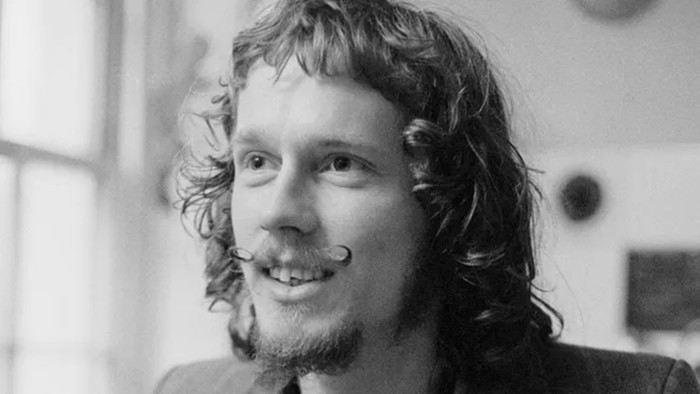 The musician
 The painter
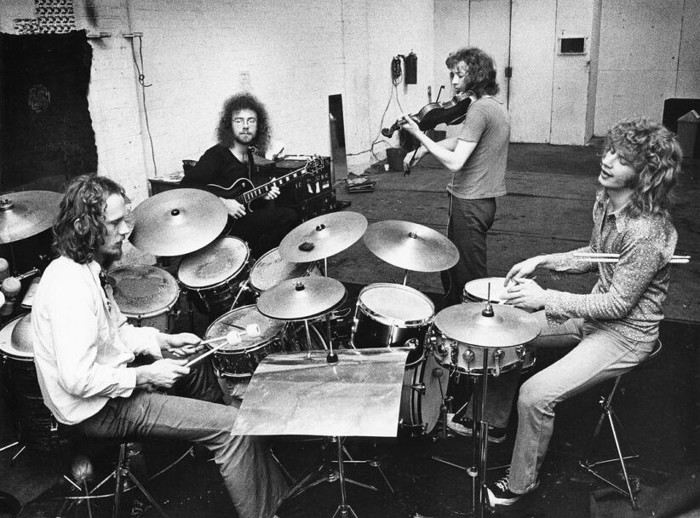 The band (l. to r.: Muir, Fripp, Cross, Bruford)
James David "Jamie" Muir, a talented drummer and percussionist and brief member of King Crimson, who left the world of pop music and show business to retreat to a Buddhist monastery in Scotland before dedicating himself almost entirely to painting, passed away last year at the age of 81. His artwork was recently featured in two exhibitions in Cornwall and London...
Born in Edinburgh, Scotland, in 1942, Jamie Muir attended the College of Art there in the 1960s. Early on, he was drawn to jazz.
Later settling in London, Jamie Muir played jazz trombone before turning to percussion. Influenced by American drummers like Tony Williams, Kenny Clarke, and Milford Graves, as well as musicians such as Pharoah Sanders and Albert Ayler, he gravitated toward free music, meaning improvisation. It was during this time that he began assembling an arsenal of household objects he later used alongside his standard drum kit: rattles, whistles, horns, chimes, bells, gongs, sheets of metal, shakers, drums, and plastic bottles.
After a brief stint in a multimedia group, Jamie Muir worked with choreographer Lindsay Kemp (as did David Bowie), played music in the short-lived jazz-rock group Sunship (with guitarist Allan Holdsworth, formerly of Soft Machine), and became involved in the ensemble known as The Music Improvisation Society, with Derek Bailey, Hugh Davies, and Evan Parker between 1968 and 1971. The Music Improvisation Society recorded an album for the ECM label in 1971 (never reissued on CD except in Japan) and a posthumous album (1968–71). Both records gained a cult following among fans of experimental and improvised music. After this experience, Muir played in Pete Brown’s Battered Ornaments and then in the band Boris with Jamie Peters, Don Weller, and former Colosseum member Jim Roache. He also briefly joined Assagai, an Afro-rock group featuring South African and Nigerian musicians from the legendary South African band Blue Notes (including drummer Louis Moholo, saxophonist Dudu Pukwana, and trumpeter/flutist Mongezi Feza).
In the summer of 1972, Robert Fripp, leader and guitarist of King Crimson, whom a journalist from *Melody Maker* had suggested meet this percussionist from the English experimental scene, invited Jamie Muir to join the new King Crimson lineup he was assembling: Robert Fripp (guitar, mellotron), David Cross (violin), John Wetton (bass), Bill Bruford (drums), and Jamie Muir (percussion). "King Crimson was the ideal for me because it was a rock band that had more than three brain cells. I was very much more an instrumental style of musician rather than being song-based, and there weren’t many other bands that I would have been any good in. I was extremely pleased and felt completely at home with Crimson." Once formed, the new group honed their sound on stage from early October to mid-December 1972 (see the 1972 live albums in the discography below), before recording the album Larks’ Tongues in Aspic in early 1973. A grand album, one of the band’s best, and one of the best of the 1970s.
However, after a concert at the Marquee Club in London, Jamie Muir left not only the band but also the music world entirely, with immediate effect. During the six months Muir spent with King Crimson, his presence completely upended the group’s philosophy, loosening the notoriously strict rules imposed by Fripp and pushing the boundaries of improvisation. Jamie Muir’s contribution—clearly heard on Larks’ Tongues in Aspic—was to introduce a touch of anarchy into Robert Fripp’s music, which was usually so tight, rational, and meticulously structured.
Muir returned to Scotland, to the Samye Ling Monastery near Eskdalemuir in Dumfries and Galloway (in the south), where he spent several years as a Buddhist monk, the pleasures of his former life giving way to retreat and meditation.
Muir came back to London and music in the 1980s, playing and recording with Derek Bailey and Evan Parker from the Music Improvisation Company, as well as with former King Crimson member Michael Giles on the soundtrack for the independent British film Ghost Dance (1983).
In 1990, Muir left music behind once more and increasingly devoted himself to painting, a discipline he maintained until his death. In his later years, he began exploring digital art as another form of expression.
In recent years, he lived in Penzance, Cornwall, where he passed away in February 2025.
Hery
Discography:
A. Jamie Muir with King Crimson: • Larks’ Tongues In Aspic (1973) • Larks’ Tongues In Aspic (The Complete Recordings) (2023, 4 CDs) • Cosmic Muir (1998, Japan, unofficial release) • The Beat Club Bremen 1972 (1999) • Live at the Zoom Club Frankfurt, Germany (October 13, 1972) (2002, 2 CDs) • Live in Guildford (November 13, 1972) (2003) • Live in Newcastle (December 8, 1972) (2019, mono) B. Jamie Muir and other projects: • The Music Improvisation Company: The Music Improvisation Company (1970) • The Music Improvisation Company: 1968–1971 (1976) • Derek Bailey / Jamie Muir: Dart Drug (1981) • Michael Giles / Jamie Muir / David Cunningham: Ghost Dance (1996) • Evan Parker / Jamie Muir / Paul Rodgers: The Ayes Have It (2001)
Links:
https://www.jamiemuirart.com/
https://www.youtube.com/watch?v=eDyf0ofV5n4 (King Crimson: "Larks' Tongues in Aspic") https://www.youtube.com/watch?v=ZgoKT8hEBFQ&list=RDJ2FjbpvX8dA&index=2 (Michael Giles, Jamie Muir, David Cunningham)
The musician
The painter
The band (l. to r.: Muir, Fripp, Cross, Bruford)Africa: A Heartfelt Love for a Continent
“When the Whites came to Africa, we had the land and they had the Bible. They taught us to pray with our eyes closed: when we opened them, the Whites had the land and we had the Bible.” Jomo Kenyatta (p.7)
The Maggi cube, an unchallenged hegemony, and so much more
“The hopeless continent,” headlined The Economist, a British magazine, in July 2000 about Africa. Eleven years later, the same magazine headlined “Africa rising” instead. Images of Africa in the prosperous North constantly oscillate between apocalyptic scenarios and enthusiastic projections. A key issue with such images lies in the generalization they entail. If you look at the continent, considerable contrasts emerge depending on space and time. It’s no surprise that a region of the world encompassing such diverse ecological zones, maintaining such varied ties with other continents, comprising nearly fifty nation-states in sub-Saharan Africa alone, and characterized by a great diversity of languages, belief systems, and historical paths, doesn’t share a single destiny.
And yet, for many people outside Africa, as well as for many Africans, the continent constitutes a single entity, defined by criteria such as skin color, a colonial past, poverty, and the art of survival. Until now, these perspectives were generally accompanied by the idea that Africa had to—or should have—followed a single path together, sometimes called development, sometimes modernization, sometimes liberation, then a market economy. None of these paths delivered on their promises.
The two writers Alain Mabanckou and Abdourahman Waberi—one from Congo, the other raised in Djibouti, both long settled in France and now professors at renowned North American universities (Los Angeles, Washington)—have had enough of pessimistic scenarios: “We are aware that Africa is in the world and the world is in Africa. The same goes for all other continents, as our destinies are inextricably linked for better or worse. We refuse to see Africa as a reservoir of misfortunes or a continent cursed by atavistic misfortune and characterized by ethnic conflicts. [...] It’s this passionate flame we wanted to capture in a book [...] a kind of stroll through African cultures, without any demands, each letter of the alphabet leading us to a notion, a practice, a concept, a moment in history, literature, painting, politics, economics, cuisine, etc.” (p.10-11). Africa, they write, is on the verge of “imposing a signature, a style, a way of being in the world and in relation to the rest of the world.” (p.11) To put words to the continent’s diversity and dynamism, the two authors created a “rambling ABC,” a kind of portrait—or more precisely, a mythography—that lets you see and feel the pulse of a vast continent whose cultural power is unfolding before our eyes. Once marginalized or even mocked, the voice and importance of the Continent in global affairs are now undeniable” (p.11), containing over a hundred entries, mostly concise, written in a relaxed and casual style. The optimistic, even exuberant tone is set from the brief introduction. The duo of authors wants to “sing a love song to the cultures of our continent, to its inhabitants past and present, to its exceptional resources and its spectacular globalization despite a certain pollution that still clouds our skies due to the unmatched duration of dictatorships in some of our regions.” (p.12) In doing so, they don’t want to be too distracted by today’s Afewerki-Biya-Bongo-Déby & Co. ...
Of course, you’ll find tributes to great precursors like Frantz Fanon (“[...] it was a love story and admiration that wasn’t dimmed by the four decades separating his birth from ours. Let’s add that we were born while the native of Fort-de-France had left the world’s stage four years earlier, in the prime of life” p.141), Mongo Beti (“You must read and reread Mongo Beti, a genius who used his fame to support often just causes in Africa, like defending oppressed groups. His place is already in History. His oppressors, like the dictators Ahmadou Ahidjo and Paul Biya, can’t compete in the same category” p.64), the Malian Amadou Hampâté Bâ
(“Posterity remembers him mainly as an tireless defender of African cultures. His plea for the collection and preservation of traditional African knowledge remains a major event for all men and women of good will. One day in 1960, at the UNESCO podium, the native of Bandiagara sounded the alarm: ‘[...] Since we’ve admitted that the humanity of each people is the heritage of all humanity, if African traditions aren’t collected in time and written down, they’ll one day be missing from the universal archives of humanity.’” p.51),
Kwame Nkrumah, “one of the founders of Pan-Africanism, father of Ghana’s independence” (p.239), as well as the historian Cheikh Anta Diop, the writer, poet, and politician Aimé Césaire, and the economist and thinker Samir Amin, but also very warm tributes to certain contemporary African intellectuals like Souleymane Bachir Diagne and Achille Mbembe
(“A few years ago, in dominant economic circles, a rumor often resurfaced, usually disguised as a cold and scientifically proven analysis: Africa is useless. It’s a burden for the rest of the human community. With its 2% share in world trade, it would disappear from stock market radars without anyone noticing. So? Maybe it’ll be pulled up by other continents. Wanting to surpass itself is a crazy bet for Africans, they concluded. Arrogant or clueless, President Nicolas Sarkozy declared before an audience of students and teachers at Cheikh Anta Diop University in Dakar: ‘The African man hasn’t entered history enough [...] He only knows the eternal repetition of time marked by the endless repetition of the same gestures and words.’ That was in 2007. For decades, armed only with reason, an intellectual often steps up to debunk prejudices, lazy readings, and dishonest frameworks used as false fronts by those who, like Nicolas Sarkozy or former journalist Stephen Smith, out of ignorance, contempt, or condescension, distort African reality. This intellectual is none other than the historian and political scientist Achille Mbembe. This heir of Frantz Fanon, Amílcar Cabral, Jean-Marc Ela, and Fabien Eboussi-Boulaga was born in 1957 in Cameroon, in the Bassa region. Marked early by the upheavals of a fratricidal war, Achille Mbembe became the guardian of the memory of martyrs. After brilliant studies in Paris, he went on to teach at the best American universities, but the call of the Continent was stronger than anything else. In Dakar, he once directed CODESRIA (Council for the Development of Social Science Research in Africa) before joining the University of the Witwatersrand in Johannesburg, South Africa. Even though the author of *Critique of Black Reason* (Éditions La Découverte, 2015) spends a few months at Duke University in North Carolina, his observation post remains South Africa. From Johannesburg, Achille Mbembe scrutinizes Africa and the whole world. A lucid observer with an elegant and generous pen, Achille Mbembe knows how to blend big and small history: ‘I was born one day in July, as the month was drawing to a close. It was 1957, in that part of Africa recently named ‘Cameroon,’ a memory of the wonder that seized Portuguese sailors in the 15th century when, sailing up the river near Douala, they couldn’t help but note the presence of a multitude of crustaceans, and named it *Rio dos Camarões*, meaning ‘River of Shrimp.’ I grew up in the shadow of this nameless land, since, in a way, the name it bears is only the product of someone else’s astonishment: a lexical mistake, if you will.’ From this mistake or wound, he made leaven, a springboard to compose a rich work, recognized worldwide. To denounce barriers and barbarians too. But that’s not enough. Among his peers in circles of thought and action, Achille Mbembe passionately and consistently defends human dignity and the beauty of the world. In doing so, he fulfills the mission Frantz Fanon entrusted to him.” (p.227-229),
as well as entries dedicated to lesser-known artists and intellectuals, like the French journalist and activist Rokhaya Diallo, daughter of Senegalese and Gambian parents, or the Ethiopian filmmaker Haile Gerima, who has long lived in the United States. Other names from politics, sports, music, art, and literature: Kofi Annan, p.36; Barack Obama, p.243; Thomas Sankara, p.277; Ousmane Sow, p.285; Yambo Ouologuem, p.250; Léopold Sédar Senghor, p.282; Muhammad Ali, p.30; Nuruddin Farah, p.146; Salif Keita, p.203; Ahmadou Kourouma, p.206; Ngũgĩ wa Thiong’o, p.236; Winnie Mandela, p.224; Kylian Mbappé, p.226 ...
The authors, who resolutely commit to a “mythography” (p.11) of Africa, also pay special attention to local social movements, cultural events, and aspects of daily life. *Y’en a marre*, “which also meant ‘we’re fed up with sitting on our hands’” (p.320-321), emerged about a decade ago in Senegal as a citizen movement of peaceful resistance and symbolizes, the authors emphasize, the fact that African youth are increasingly fed up “with the political circus deployed in Africa since independence, as our parents would say, ‘since the White man left’...” (p.321). A full entry is dedicated to the Maggi bouillon cube, which has flooded African markets for about forty years and enjoys immense popularity (“It’s everywhere in Africa, from Dakar to Djibouti, and from Tangier to Cape Town. It’s in every pot, every stew. Little hands put it in every sauce, every local or adapted dish. An unchallenged hegemony! You’ll find it in diasporas too. The culinary strolls in Paris, in the [...] neighborhood” p.90). Critics blame it not only for impoverishing the aromatic diversity of local dishes but also for being harmful to health. And yet, “he poorest Africans, those who eat only once a day, a few spoonfuls of white beans and a ball of *foufou*, for example, are the most fervent users of the magic cube.” (p.92-93)
For *fonio*, “the new trendy cereal. [...] From the millet family, fonio is probably the oldest cereal cultivated in West Africa, and mainly in its sub-Saharan part, for millennia. [...] Easy to grow, water-efficient, fonio grows everywhere except on clay soils. Long neglected because it was considered the poor man’s crop, fonio is now a source of pride for the farmers who cultivate it and cherish it like the apple of their eye” (p.156-157), the authors immediately offer a detailed recipe, letting the reader know that “e can’t resist sharing this fonio with chicken recipe from Mali with you:
Ingredients: 1 chicken 3 large ripe red tomatoes 4 tbsp tomato paste 4 large onions 1 garlic clove 1/2 cup oil 2 Maggi cubes or salt 2 large carrots 1 turnip 1 large cabbage 2 large potatoes 1 celery stalk 1 packet pre-cooked fonio 4 okra (or okra powder) salt, pepper
Preparation: 1. Prepare the sauce: wash and cut the chicken. Peel the onions, garlic, and vegetables. 2. In a pot, fry the chicken pieces. 3. Dice the onions, tomatoes, carrots, and turnip very small and add them to the pot. 4. Add the tomato paste, salt, and pepper. 5. Simmer for 15 min, then add 2 L of water and the cooked chicken pieces. 6. Simmer for 30 min, then add the crushed garlic and celery, plus the cabbage cut into 4 and the potatoes cut in half. 7. Prepare the fonio: cover it with warm water, let it rest for 15 min, and cook it over low heat. 8. In a small pot, boil the okra and crush them. 9. Mix the crushed okra with the cooked fonio, then salt. Serve hot.” (p.158-159)
The comedy *Black Mic Mac*, released in French theaters in 1986 and addressing France’s increasingly restrictive immigration policy at the time, also gets an entry, as do *Tintin in the Congo*, the popular comic, and *Jip’s Café* (“[...] a little Africa in the heart of Paris, with passersby stopping to admire the ‘ambianceurs’ on the dance floor or attend the cultural events offered by the place” (p.194), an African establishment in Paris that Alain Mabanckou already immortalized in one of his novels.
The duo of authors also tackles thorny subjects like jihadism (p.119), the Rwandan genocide (p.272), the CFA franc (p.82), and dictatorship (p.110). While the two strike the right tone here, many entries leave a slightly bitter taste. Two examples: why doesn’t the text on Barack Obama mention the great disappointment of many people in Africa, who expected more from the African policy of the first U.S. president with African roots than just occasional warm words? Why do the comments on Winnie Mandela gloss over the fact that she was a highly controversial icon of the anti-apartheid movement due to her involvement in kidnappings, acts of torture, and murders of alleged apartheid collaborators? Instead, there’s a compassion that brings tears to the eyes: “She was often reduced to a secondary role, the wife of a great man” or “When victory came, she didn’t taste its fruits. Divorced, isolated. She would never be a ‘first lady’ in an evening gown, posing before a bed of chrysanthemums. They’d keep her far from the circles of power” (p.224-225). At this point, I would’ve liked the authors to take a slightly more critical stance...
That said, these “weaknesses” (if you can call them that) shouldn’t overshadow the book as a whole. It remains an informative, sometimes very entertaining, and often even original work in its own way.
Book information (the original French and the German translation):
Alain Mabanckou/Abdourahman Waberi. Dictionnaire enjoué des cultures africaines. Fayard, 2019. Alain Mabanckou/Abdourahman Waberi. Der Puls Afrikas. Eine Liebeserklärung von A bis Z. Reclam, 2022.
Hery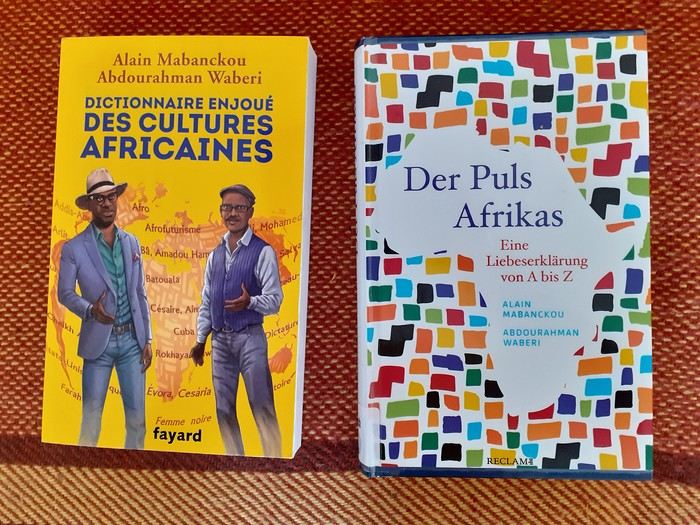
The Maggi cube, an unchallenged hegemony, and so much more
“The hopeless continent,” headlined The Economist, a British magazine, in July 2000 about Africa. Eleven years later, the same magazine headlined “Africa rising” instead. Images of Africa in the prosperous North constantly oscillate between apocalyptic scenarios and enthusiastic projections. A key issue with such images lies in the generalization they entail. If you look at the continent, considerable contrasts emerge depending on space and time. It’s no surprise that a region of the world encompassing such diverse ecological zones, maintaining such varied ties with other continents, comprising nearly fifty nation-states in sub-Saharan Africa alone, and characterized by a great diversity of languages, belief systems, and historical paths, doesn’t share a single destiny.
And yet, for many people outside Africa, as well as for many Africans, the continent constitutes a single entity, defined by criteria such as skin color, a colonial past, poverty, and the art of survival. Until now, these perspectives were generally accompanied by the idea that Africa had to—or should have—followed a single path together, sometimes called development, sometimes modernization, sometimes liberation, then a market economy. None of these paths delivered on their promises.
The two writers Alain Mabanckou and Abdourahman Waberi—one from Congo, the other raised in Djibouti, both long settled in France and now professors at renowned North American universities (Los Angeles, Washington)—have had enough of pessimistic scenarios: “We are aware that Africa is in the world and the world is in Africa. The same goes for all other continents, as our destinies are inextricably linked for better or worse. We refuse to see Africa as a reservoir of misfortunes or a continent cursed by atavistic misfortune and characterized by ethnic conflicts. [...] It’s this passionate flame we wanted to capture in a book [...] a kind of stroll through African cultures, without any demands, each letter of the alphabet leading us to a notion, a practice, a concept, a moment in history, literature, painting, politics, economics, cuisine, etc.” (p.10-11). Africa, they write, is on the verge of “imposing a signature, a style, a way of being in the world and in relation to the rest of the world.” (p.11) To put words to the continent’s diversity and dynamism, the two authors created a “rambling ABC,” a kind of portrait—or more precisely, a mythography—that lets you see and feel the pulse of a vast continent whose cultural power is unfolding before our eyes. Once marginalized or even mocked, the voice and importance of the Continent in global affairs are now undeniable” (p.11), containing over a hundred entries, mostly concise, written in a relaxed and casual style. The optimistic, even exuberant tone is set from the brief introduction. The duo of authors wants to “sing a love song to the cultures of our continent, to its inhabitants past and present, to its exceptional resources and its spectacular globalization despite a certain pollution that still clouds our skies due to the unmatched duration of dictatorships in some of our regions.” (p.12) In doing so, they don’t want to be too distracted by today’s Afewerki-Biya-Bongo-Déby & Co. ...
Of course, you’ll find tributes to great precursors like Frantz Fanon (“[...] it was a love story and admiration that wasn’t dimmed by the four decades separating his birth from ours. Let’s add that we were born while the native of Fort-de-France had left the world’s stage four years earlier, in the prime of life” p.141), Mongo Beti (“You must read and reread Mongo Beti, a genius who used his fame to support often just causes in Africa, like defending oppressed groups. His place is already in History. His oppressors, like the dictators Ahmadou Ahidjo and Paul Biya, can’t compete in the same category” p.64), the Malian Amadou Hampâté Bâ
(“Posterity remembers him mainly as an tireless defender of African cultures. His plea for the collection and preservation of traditional African knowledge remains a major event for all men and women of good will. One day in 1960, at the UNESCO podium, the native of Bandiagara sounded the alarm: ‘[...] Since we’ve admitted that the humanity of each people is the heritage of all humanity, if African traditions aren’t collected in time and written down, they’ll one day be missing from the universal archives of humanity.’” p.51),
Kwame Nkrumah, “one of the founders of Pan-Africanism, father of Ghana’s independence” (p.239), as well as the historian Cheikh Anta Diop, the writer, poet, and politician Aimé Césaire, and the economist and thinker Samir Amin, but also very warm tributes to certain contemporary African intellectuals like Souleymane Bachir Diagne and Achille Mbembe
(“A few years ago, in dominant economic circles, a rumor often resurfaced, usually disguised as a cold and scientifically proven analysis: Africa is useless. It’s a burden for the rest of the human community. With its 2% share in world trade, it would disappear from stock market radars without anyone noticing. So? Maybe it’ll be pulled up by other continents. Wanting to surpass itself is a crazy bet for Africans, they concluded. Arrogant or clueless, President Nicolas Sarkozy declared before an audience of students and teachers at Cheikh Anta Diop University in Dakar: ‘The African man hasn’t entered history enough [...] He only knows the eternal repetition of time marked by the endless repetition of the same gestures and words.’ That was in 2007. For decades, armed only with reason, an intellectual often steps up to debunk prejudices, lazy readings, and dishonest frameworks used as false fronts by those who, like Nicolas Sarkozy or former journalist Stephen Smith, out of ignorance, contempt, or condescension, distort African reality. This intellectual is none other than the historian and political scientist Achille Mbembe. This heir of Frantz Fanon, Amílcar Cabral, Jean-Marc Ela, and Fabien Eboussi-Boulaga was born in 1957 in Cameroon, in the Bassa region. Marked early by the upheavals of a fratricidal war, Achille Mbembe became the guardian of the memory of martyrs. After brilliant studies in Paris, he went on to teach at the best American universities, but the call of the Continent was stronger than anything else. In Dakar, he once directed CODESRIA (Council for the Development of Social Science Research in Africa) before joining the University of the Witwatersrand in Johannesburg, South Africa. Even though the author of *Critique of Black Reason* (Éditions La Découverte, 2015) spends a few months at Duke University in North Carolina, his observation post remains South Africa. From Johannesburg, Achille Mbembe scrutinizes Africa and the whole world. A lucid observer with an elegant and generous pen, Achille Mbembe knows how to blend big and small history: ‘I was born one day in July, as the month was drawing to a close. It was 1957, in that part of Africa recently named ‘Cameroon,’ a memory of the wonder that seized Portuguese sailors in the 15th century when, sailing up the river near Douala, they couldn’t help but note the presence of a multitude of crustaceans, and named it *Rio dos Camarões*, meaning ‘River of Shrimp.’ I grew up in the shadow of this nameless land, since, in a way, the name it bears is only the product of someone else’s astonishment: a lexical mistake, if you will.’ From this mistake or wound, he made leaven, a springboard to compose a rich work, recognized worldwide. To denounce barriers and barbarians too. But that’s not enough. Among his peers in circles of thought and action, Achille Mbembe passionately and consistently defends human dignity and the beauty of the world. In doing so, he fulfills the mission Frantz Fanon entrusted to him.” (p.227-229),
as well as entries dedicated to lesser-known artists and intellectuals, like the French journalist and activist Rokhaya Diallo, daughter of Senegalese and Gambian parents, or the Ethiopian filmmaker Haile Gerima, who has long lived in the United States. Other names from politics, sports, music, art, and literature: Kofi Annan, p.36; Barack Obama, p.243; Thomas Sankara, p.277; Ousmane Sow, p.285; Yambo Ouologuem, p.250; Léopold Sédar Senghor, p.282; Muhammad Ali, p.30; Nuruddin Farah, p.146; Salif Keita, p.203; Ahmadou Kourouma, p.206; Ngũgĩ wa Thiong’o, p.236; Winnie Mandela, p.224; Kylian Mbappé, p.226 ...
The authors, who resolutely commit to a “mythography” (p.11) of Africa, also pay special attention to local social movements, cultural events, and aspects of daily life. *Y’en a marre*, “which also meant ‘we’re fed up with sitting on our hands’” (p.320-321), emerged about a decade ago in Senegal as a citizen movement of peaceful resistance and symbolizes, the authors emphasize, the fact that African youth are increasingly fed up “with the political circus deployed in Africa since independence, as our parents would say, ‘since the White man left’...” (p.321). A full entry is dedicated to the Maggi bouillon cube, which has flooded African markets for about forty years and enjoys immense popularity (“It’s everywhere in Africa, from Dakar to Djibouti, and from Tangier to Cape Town. It’s in every pot, every stew. Little hands put it in every sauce, every local or adapted dish. An unchallenged hegemony! You’ll find it in diasporas too. The culinary strolls in Paris, in the [...] neighborhood” p.90). Critics blame it not only for impoverishing the aromatic diversity of local dishes but also for being harmful to health. And yet, “he poorest Africans, those who eat only once a day, a few spoonfuls of white beans and a ball of *foufou*, for example, are the most fervent users of the magic cube.” (p.92-93)
For *fonio*, “the new trendy cereal. [...] From the millet family, fonio is probably the oldest cereal cultivated in West Africa, and mainly in its sub-Saharan part, for millennia. [...] Easy to grow, water-efficient, fonio grows everywhere except on clay soils. Long neglected because it was considered the poor man’s crop, fonio is now a source of pride for the farmers who cultivate it and cherish it like the apple of their eye” (p.156-157), the authors immediately offer a detailed recipe, letting the reader know that “e can’t resist sharing this fonio with chicken recipe from Mali with you:
Ingredients: 1 chicken 3 large ripe red tomatoes 4 tbsp tomato paste 4 large onions 1 garlic clove 1/2 cup oil 2 Maggi cubes or salt 2 large carrots 1 turnip 1 large cabbage 2 large potatoes 1 celery stalk 1 packet pre-cooked fonio 4 okra (or okra powder) salt, pepper
Preparation: 1. Prepare the sauce: wash and cut the chicken. Peel the onions, garlic, and vegetables. 2. In a pot, fry the chicken pieces. 3. Dice the onions, tomatoes, carrots, and turnip very small and add them to the pot. 4. Add the tomato paste, salt, and pepper. 5. Simmer for 15 min, then add 2 L of water and the cooked chicken pieces. 6. Simmer for 30 min, then add the crushed garlic and celery, plus the cabbage cut into 4 and the potatoes cut in half. 7. Prepare the fonio: cover it with warm water, let it rest for 15 min, and cook it over low heat. 8. In a small pot, boil the okra and crush them. 9. Mix the crushed okra with the cooked fonio, then salt. Serve hot.” (p.158-159)
The comedy *Black Mic Mac*, released in French theaters in 1986 and addressing France’s increasingly restrictive immigration policy at the time, also gets an entry, as do *Tintin in the Congo*, the popular comic, and *Jip’s Café* (“[...] a little Africa in the heart of Paris, with passersby stopping to admire the ‘ambianceurs’ on the dance floor or attend the cultural events offered by the place” (p.194), an African establishment in Paris that Alain Mabanckou already immortalized in one of his novels.
The duo of authors also tackles thorny subjects like jihadism (p.119), the Rwandan genocide (p.272), the CFA franc (p.82), and dictatorship (p.110). While the two strike the right tone here, many entries leave a slightly bitter taste. Two examples: why doesn’t the text on Barack Obama mention the great disappointment of many people in Africa, who expected more from the African policy of the first U.S. president with African roots than just occasional warm words? Why do the comments on Winnie Mandela gloss over the fact that she was a highly controversial icon of the anti-apartheid movement due to her involvement in kidnappings, acts of torture, and murders of alleged apartheid collaborators? Instead, there’s a compassion that brings tears to the eyes: “She was often reduced to a secondary role, the wife of a great man” or “When victory came, she didn’t taste its fruits. Divorced, isolated. She would never be a ‘first lady’ in an evening gown, posing before a bed of chrysanthemums. They’d keep her far from the circles of power” (p.224-225). At this point, I would’ve liked the authors to take a slightly more critical stance...
That said, these “weaknesses” (if you can call them that) shouldn’t overshadow the book as a whole. It remains an informative, sometimes very entertaining, and often even original work in its own way.
Book information (the original French and the German translation):
Alain Mabanckou/Abdourahman Waberi. Dictionnaire enjoué des cultures africaines. Fayard, 2019. Alain Mabanckou/Abdourahman Waberi. Der Puls Afrikas. Eine Liebeserklärung von A bis Z. Reclam, 2022.
Hery
David Thomas, Leader of Pere Ubu (1953–2025)
«Mr. Thomas's voice is that of a man muttering in a crowd. You think he's talking to himself until you realize he's actually talking to you.» (Greil Marcus)
La voix de M. Thomas est celle d'un homme marmonnant dans une foule. Vous pensez qu'il se parle à lui-même jusqu'à ce que vous réalisiez qu'en réalité il est en train de vous parler.
A year ago, a singular monument passed away
Tall and imposing, he embodied the character of Père Ubu and captivated with his physical presence as much as his voice. His distinctive tone, audacity, and aura made him a respected and truly unique figure over the past five decades: David Thomas.
Born in Miami but primarily raised in Cleveland, Ohio, David Thomas was a central figure in Cleveland’s underground experimental rock scene—a regional movement that would later give rise to Devo and Nine Inch Nails. He first gained recognition as part of the group Rocket From the Tombs, which, though it never recorded an album, became an influential local act during its brief existence. Known for his high-pitched, near-falsetto voice and his unconventional taste for professor-style stage costumes, Thomas stood out as much in person as his music did on record.
In 1975, several members of Rocket From the Tombs split off to form Pere Ubu—a band named after a play by French writer Alfred Jarry. The group (labeled with many tags or none at all: garage, industrial, experimental, rock, art-rock, avant-garde, punk, new wave) was extremely ahead of its time (and remains incredibly stimulating today), embarking on an unprecedented journey blending punk, post-rock, and an insane art-rock sophistication. Their albums, filled with literary allusions and wounded poetry, were sung-spoken in Thomas’s singular style. The band’s boldness was evident everywhere, mixing brass (especially clarinet), electric instruments, and a constant effort to connect with American musical traditions.
During its initial run from 1975 to 1982, Pere Ubu was an unclassifiable group, fusing the loose energy of garage rock (a term used by D.T. to describe Pere Ubu’s music) with 1960s rock, funk bass, heavy saxophones, and Thomas’s dominant presence. Though they predated the rise of post-punk, Pere Ubu embodied that sound in all its sharp, repressed, and unpredictable nature—largely thanks to Thomas’s wild spirit. The band’s clever absurdity and adventurous approach inspired other groups, including Joy Division, Sonic Youth, Pixies, and R.E.M.
In 1978, Pere Ubu released The Modern Dance, their debut album, followed by Dub Housing (1978), New Picnic Time (1979), and The Art of Walking (1980). Though it never achieved commercial success, the album found its audience among eccentric punks and art-rock fans, intriguing many with its singular blend of rock, punk, new wave, and experimental prog. After a few lineup changes and a brief breakup, Pere Ubu released four more albums in a frenzy of creativity. Song of the Bailing Man briefly served as the group’s final album upon their split in 1982. For their 1987 return, Pere Ubu recorded The Tenement Year the following year. The band reunited intermittently over the following decades under Thomas’s leadership, who remained the sole founding member throughout the group’s existence, releasing 14 albums—not counting live records. Pere Ubu’s last full album with Thomas was Trouble on Big Beat Street, released in 2023.
Last year, on April 24, 2025, David Thomas, the founder and leader of the influential and avant-garde rock group Pere Ubu, passed away at his home in Brighton, England, at the age of 71.
hgb

https://www.youtube.com/watch?v=qHfZovOsXlI&list=RDqHfZovOsXlI&start_radio=1
La voix de M. Thomas est celle d'un homme marmonnant dans une foule. Vous pensez qu'il se parle à lui-même jusqu'à ce que vous réalisiez qu'en réalité il est en train de vous parler.
A year ago, a singular monument passed away
Tall and imposing, he embodied the character of Père Ubu and captivated with his physical presence as much as his voice. His distinctive tone, audacity, and aura made him a respected and truly unique figure over the past five decades: David Thomas.
Born in Miami but primarily raised in Cleveland, Ohio, David Thomas was a central figure in Cleveland’s underground experimental rock scene—a regional movement that would later give rise to Devo and Nine Inch Nails. He first gained recognition as part of the group Rocket From the Tombs, which, though it never recorded an album, became an influential local act during its brief existence. Known for his high-pitched, near-falsetto voice and his unconventional taste for professor-style stage costumes, Thomas stood out as much in person as his music did on record.
In 1975, several members of Rocket From the Tombs split off to form Pere Ubu—a band named after a play by French writer Alfred Jarry. The group (labeled with many tags or none at all: garage, industrial, experimental, rock, art-rock, avant-garde, punk, new wave) was extremely ahead of its time (and remains incredibly stimulating today), embarking on an unprecedented journey blending punk, post-rock, and an insane art-rock sophistication. Their albums, filled with literary allusions and wounded poetry, were sung-spoken in Thomas’s singular style. The band’s boldness was evident everywhere, mixing brass (especially clarinet), electric instruments, and a constant effort to connect with American musical traditions.
During its initial run from 1975 to 1982, Pere Ubu was an unclassifiable group, fusing the loose energy of garage rock (a term used by D.T. to describe Pere Ubu’s music) with 1960s rock, funk bass, heavy saxophones, and Thomas’s dominant presence. Though they predated the rise of post-punk, Pere Ubu embodied that sound in all its sharp, repressed, and unpredictable nature—largely thanks to Thomas’s wild spirit. The band’s clever absurdity and adventurous approach inspired other groups, including Joy Division, Sonic Youth, Pixies, and R.E.M.
In 1978, Pere Ubu released The Modern Dance, their debut album, followed by Dub Housing (1978), New Picnic Time (1979), and The Art of Walking (1980). Though it never achieved commercial success, the album found its audience among eccentric punks and art-rock fans, intriguing many with its singular blend of rock, punk, new wave, and experimental prog. After a few lineup changes and a brief breakup, Pere Ubu released four more albums in a frenzy of creativity. Song of the Bailing Man briefly served as the group’s final album upon their split in 1982. For their 1987 return, Pere Ubu recorded The Tenement Year the following year. The band reunited intermittently over the following decades under Thomas’s leadership, who remained the sole founding member throughout the group’s existence, releasing 14 albums—not counting live records. Pere Ubu’s last full album with Thomas was Trouble on Big Beat Street, released in 2023.
Last year, on April 24, 2025, David Thomas, the founder and leader of the influential and avant-garde rock group Pere Ubu, passed away at his home in Brighton, England, at the age of 71.
hgb
https://www.youtube.com/watch?v=qHfZovOsXlI&list=RDqHfZovOsXlI&start_radio=1
Staircases. Photo contest theme for May 2026.
Hello
This month’s photo contest theme for May 2026 is "Staircases"
Plural or singular? Does it really matter as long as you’re told you’ve gone up or down them well?
Anyway, it’s not that complicated, even though I’m sure some will manage to overcomplicate it—after all, why keep things simple when making them complicated is so much more fun (as an Indian proverb goes).
To participate: Submit your photos until Monday, May 25 at 11:59 PM You can post up to 3 photos, numbered and shared in separate messages, along with a short description of the location and the story behind it.
To vote: From Tuesday, May 26 at 12:01 AM until Saturday, May 30 at 11:59 PM After the deadline, it’s too late.
Please include the photo number, username, and the points awarded: Photo #1 = 3 pts Photo #2 = 2 pts Photo #3 = 1 pt
All VF members can vote (even those who didn’t submit photos). In case of a tie for first place, the winning photo will be the one with the most first-place votes, then second-place votes! The lucky winner will get to organize June 2026’s photo contest.
For discussions about the theme, click here: Discussion thread for May 2026’s theme: Staircases
Discussion thread on the May 2026 theme: Staircases
If you’ve already posted your three photos in the contest thread Staircases: May 2026 Photo Contest Theme and a fourth one comes to mind, you can ease your staircase obsession here.
A few examples of staircases:

Some of the 6,600 steps on the staircase leading to the summit of Jade Emperor Peak at 1,545 meters.

Emergency staircase at the Orléans library (France).
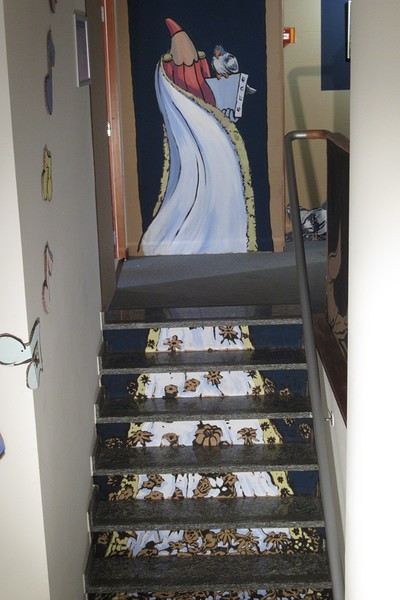
Brussels street artist Créons incorporates the staircase into the dress design of his character.
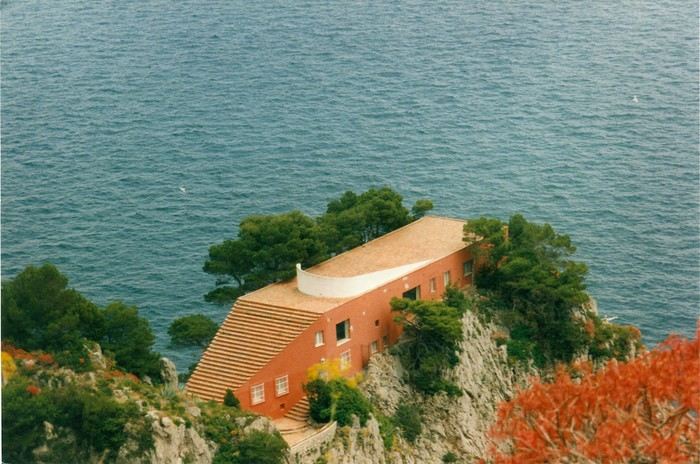
The staircase is part of the roof of Villa Malaparte (Adalberto Libera) on the island of Capri (Italy).
A few examples of staircases:
Some of the 6,600 steps on the staircase leading to the summit of Jade Emperor Peak at 1,545 meters.
Emergency staircase at the Orléans library (France).
Brussels street artist Créons incorporates the staircase into the dress design of his character.
The staircase is part of the roof of Villa Malaparte (Adalberto Libera) on the island of Capri (Italy).
"Bambara in 30 Days"
A real gem for those who want to connect with their roots or discover an African language. The explanations are simple, and I really appreciated the cultural examples included in the book. Highly recommended. (Fatoumata T)
Manual: "Bambara in 30 Days"
Bambara in 30 Days is a manual and conversation guide specifically designed to help learners communicate in many everyday situations. This educational tool is aimed at anyone wanting to learn Bambara (bamanankan), regardless of their level: from beginners to advanced speakers looking to improve.
Several themes are covered: greetings, how to introduce yourself and apologize, family, numbers from 1 to 100, meals, emotions, transportation, currency, shopping, parts of the human body, days of the week, how to ask a question, how to ask for the price or age, how to count money, other types of questions, colors, traveling, blessing formulas for Muslim holidays: e.g., Tabaski (seliba) or Korité (selifiitinin or selidennin), and family events: e.g., birth (bangeli), marriage (furu), death (saya or fatuli)... ultimately, tools needed to communicate in many everyday situations.
The lessons (kalansen) are organized by theme, ranging from the alphabet to common expressions. All lessons include corrections (jaabi) to reinforce learning and correct mistakes. They cover various topics like greetings, numbers, family, etc. (see above) and are designed to be progressive, allowing for skill development. Each lesson is accompanied by practical exercises to apply the knowledge. After every set of 5 lessons, there’s a review (seginkanni) to consolidate what’s been learned.
In summary, the manual consists of...
30 lessons with 6 reviews
Over 50 audio files available online
Over 100 exercises (baarakɛ) with answer keys
A small vocabulary section in each lesson
Blank "notes" page at the end of every lesson
The audio files help facilitate learning. They are accessible via a specific link that should only be used by the manual’s purchaser.
African languages, like Bambara, play a crucial role in the culture and identity of African peoples. Learning them helps preserve traditions and local knowledge. Bambara is the most widely spoken language in Mali and a key lingua franca for communication in West Africa. It’s rich in idiomatic expressions and proverbs, reflecting the wisdom and culture of the Manding peoples. Moreover, it’s taught in schools and used in local media (to learn more, see here). In general, linguistic diversity in Africa is immense, with thousands of languages spoken across the continent.
Malle, Tahirou / Oumou Coulibaly / Issoufou Keïta (authors) Bambara in 30 Days. Conversation Guide 184 pages ISBN 978-2-49304713-7 21.90 €
L'Univers des Langues Africaines 38 rue de Bonneuil 77100 MEAUX/France https://universdeslanguesafricaines.com
hgb
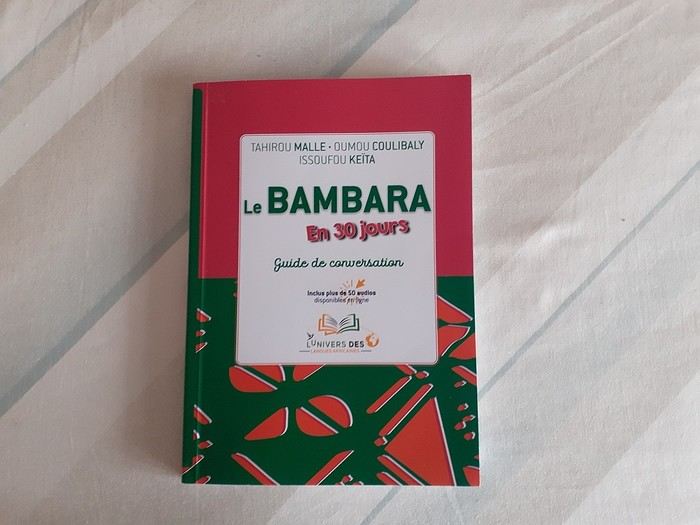
Manual: "Bambara in 30 Days"
Bambara in 30 Days is a manual and conversation guide specifically designed to help learners communicate in many everyday situations. This educational tool is aimed at anyone wanting to learn Bambara (bamanankan), regardless of their level: from beginners to advanced speakers looking to improve.
Several themes are covered: greetings, how to introduce yourself and apologize, family, numbers from 1 to 100, meals, emotions, transportation, currency, shopping, parts of the human body, days of the week, how to ask a question, how to ask for the price or age, how to count money, other types of questions, colors, traveling, blessing formulas for Muslim holidays: e.g., Tabaski (seliba) or Korité (selifiitinin or selidennin), and family events: e.g., birth (bangeli), marriage (furu), death (saya or fatuli)... ultimately, tools needed to communicate in many everyday situations.
The lessons (kalansen) are organized by theme, ranging from the alphabet to common expressions. All lessons include corrections (jaabi) to reinforce learning and correct mistakes. They cover various topics like greetings, numbers, family, etc. (see above) and are designed to be progressive, allowing for skill development. Each lesson is accompanied by practical exercises to apply the knowledge. After every set of 5 lessons, there’s a review (seginkanni) to consolidate what’s been learned.
In summary, the manual consists of...
30 lessons with 6 reviews
Over 50 audio files available online
Over 100 exercises (baarakɛ) with answer keys
A small vocabulary section in each lesson
Blank "notes" page at the end of every lesson
The audio files help facilitate learning. They are accessible via a specific link that should only be used by the manual’s purchaser.
African languages, like Bambara, play a crucial role in the culture and identity of African peoples. Learning them helps preserve traditions and local knowledge. Bambara is the most widely spoken language in Mali and a key lingua franca for communication in West Africa. It’s rich in idiomatic expressions and proverbs, reflecting the wisdom and culture of the Manding peoples. Moreover, it’s taught in schools and used in local media (to learn more, see here). In general, linguistic diversity in Africa is immense, with thousands of languages spoken across the continent.
Malle, Tahirou / Oumou Coulibaly / Issoufou Keïta (authors) Bambara in 30 Days. Conversation Guide 184 pages ISBN 978-2-49304713-7 21.90 €
L'Univers des Langues Africaines 38 rue de Bonneuil 77100 MEAUX/France https://universdeslanguesafricaines.com
hgb
Learning African Languages
"I created the African Languages Universe for a proud, playful, and accessible reclaiming of our languages in homes and imaginations, from ages 7 to 77" (Diaddou Cissé, founder of Univers des Langues Africaines)
A bridge between generations, continents, and languages
Since its beginnings, Univers des Langues Africaines, an independent publishing house, has had a simple yet powerful dream: to bring African languages to life in homes, schools, games, and everyday conversations. This dream grows with every word passed on, every language rediscovered, every child who speaks their first words in Soninke, Lingala, Bambara, Wolof, Pulaar...
Today, Univers des Langues Africaines has become:
an educational, accessible, and multilingual publishing house,
a brand committed to intergenerational transmission,
a lively, playful, and reality-connected learning space.
Children of the African diaspora, regardless of their level in Soninke, Wolof, Bambara, Lingala..., all face the same issue: the lack of books in their heritage languages tailored to them. Univers des Langues Africaines was born to fill this gap by offering simple and fun books and supporting them in learning African languages. Whether you're a minor, an adult beginner, a parent wanting to pass on their language to their child, or an African language enthusiast, Univers des Langues Africaines has a program suited to your needs!
At Univers des Langues Africaines, we offer:
conversation manuals or guides (Bambara, Lingala, Soninke, Wolof, Pulaar...); the books consist of lessons accessible to everyone, with exercises, reviews, and audio to easily speak the language.
games for children; tools adapted for kids to gently discover African languages.
online language courses, tailored for adults and children, interactive and immersive; they allow you to master an African language while discovering its cultural richness.
In short: manuals, games, and online courses—everything you need to learn (or relearn) an African language, at any age and at your own pace.
LAfrican languages deserve more than just a memory: they deserve to be lived, spoken, and loved.
April 2026 Theme Discussion: Feeling Peachy?
Hey there!
This is the spot where we can chill and chat about fishing at sea worldwide 😊
Here are two charming fishermen taking a well-deserved break near Zanzibar!
This is the spot where we can chill and chat about fishing at sea worldwide 😊
Here are two charming fishermen taking a well-deserved break near Zanzibar!











