Posts by TomPeru
About 337 results.
More options
Search results
Quality and comfort of overnight buses in Peru
Most major companies offer a good level of service as long as you use the *cama* buses and first-class seats (most companies have different service levels and more or less new buses depending on the route). Travelers swear by Cruz del Sur, but Oltursa, Excluciva, or Movil often have a much better quality-to-price ratio.
That said, don’t expect to be in great shape after a 12–20-hour bus ride to start sightseeing as soon as you arrive. Plus, flight options are starting to expand again after being reduced to the bare minimum during the Covid period. It’s a bit more expensive, but it saves a lot of time (1h30 of flight for most destinations in the country vs. 15–20 hours by bus).
Thomas
Looking for a car with driver in Bolivia
Use a local French-speaking agency ;)
Best,
Thomas
Best,
Thomas
Machu Picchu without an agency
Yes, it's doable, but you’ll need to book your Machu Picchu tickets way in advance, otherwise you might end up with a boring itinerary or no tickets at all.
Cheers,
Thomas
Cheers,
Thomas
Review of Ventura Travel Agency for Uyuni
When a tour in the Lipez is cheaper than the competition, it means there are fewer services included—there’s no secret about it!
Also, if it’s an agency in San Pedro, you’ll be resold to a Bolivian operator, and I don’t see how they can be cheaper than the Bolivian agencies themselves...
Cheers,
Thomas
Also, if it’s an agency in San Pedro, you’ll be resold to a Bolivian operator, and I don’t see how they can be cheaper than the Bolivian agencies themselves...
Cheers,
Thomas
Local trek agencies in Peru and Bolivia
Hi there,
In almost every city where there are trekking circuits (Huaraz, Cusco, Arequipa, La Paz, etc.), you'll find local agencies offering private departures or group departures for the most commercial circuits.
Honestly, these agencies sell very commercial and crowded circuits, and most are more opportunistic than passionate about trekking or mountains!
For more qualitative itineraries, I recommend planning ahead and going through a specialized French-speaking agency, like Panacca or Yunka in Peru, or Thaki in Bolivia.
Cheers,
Thomas
Northern Peru itinerary plan
The Pacaya Samiria reserve isn't doable in 3 days from Tarapoto—travel is slow in the Amazon.
From Leymebamba, buses leave pretty early in the morning, so unless you hire a private vehicle, you won’t have time to visit the museum.
In Cajamarca, I’d recommend staying at least 2 days since the surrounding sites are far away.
At the end of your trip, you can fly back to Lima from Trujillo or Chiclayo to save time.
Cheers,
Thomas
Boats for visiting the islands of Lake Titicaca
The combis leave in the morning for Llachon; they depart when they're full. The colectivos don’t have set schedules—they run based on demand (so aim to leave before 10 AM). To find them, ask a taxi to take you. The trip usually takes about 1h40 - 2h. You should also figure out where you’re staying in Llachon—the Capachica peninsula is large, and houses are scattered.
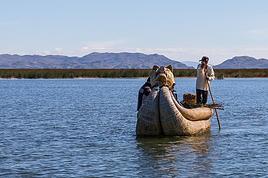
To get to Amantani, the easiest way is to take a private boat. As far as I know, there’s no daily public boat to the island. You’ll have to spend the night there—the crossings are long!
Once you’ve visited Amantani and Llachon, Taquile doesn’t seem worth it (unless you stay overnight) because it’s a tourist trap. Public boats leave from Amantani in the morning.
In two days, you’ll struggle to do more than Llachon or Amantani. To see both, you’ll need to spend a night at each stop.
Thomas
What are the different possible ways to get to Machu Picchu?
Yeah, sometimes it works out just fine even during the rainy season, and it’s even possible to travel for 15 days in southern Peru with great weather—you just have to be flexible. It’s easier if you’re traveling for a long period and can adapt to unexpected changes.
Obviously, in high season (July–August), it’s not as easy to improvise because there are a lot more tourists.
Thomas
Obviously, in high season (July–August), it’s not as easy to improvise because there are a lot more tourists.
Thomas
Salar de Uyuni with local guides
All the guides who work as drivers in the region are locals, whether you go through agencies—local or international—or directly with a driver...
If you climb one of the volcanoes in the southern Lipez area, local guides are often mandatory (for example, at Licancabur).
The salt flats can be visited on the Salar, but these aren’t mines.
Thomas
If you climb one of the volcanoes in the southern Lipez area, local guides are often mandatory (for example, at Licancabur).
The salt flats can be visited on the Salar, but these aren’t mines.
Thomas
What are the different ways to get to Machu Picchu?
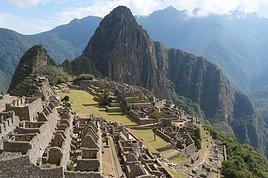
Nothing has changed except for the ticketing system, which now sells half of the entries in person in Aguas Calientes, creating chaos for tourists who didn’t plan ahead and buy their tickets in advance.
Taking alternative routes to Machu Picchu in February isn’t a great idea—if it rains, you could get stuck or take unnecessary risks. It *can* be done by deciding last-minute based on weather conditions, but that’s tough to reconcile with a trip that’s 100% pre-organized.
It’s possible to walk to Aguas Calientes along the railway tracks from Hydroelectrica. During the rainy season, though, the tracks might be cut off by floods or landslides, just like the road to Santa Teresa. This access is sometimes "closed" due to weather conditions, and while most tourists will tell you it’s doable, it often involves significant risks (rockfalls, river crossings with reckless drivers, flash floods, mudslides).
Walking from Ollantaytambo to Aguas Calientes is a bit of a masochistic backpacker plan. Even though there are a few trails, the distance is long, walking alongside the railway on rocky terrain is pretty rough, and trains pass regularly—plus, you *have* to go around the tunnels.
Buying Machu Picchu tickets last-minute means getting them on-site, which translates to wasting a day standing in line at the country’s worst tourist trap.
In my humble opinion, buying tickets on the spot just feeds shady businesses involved in the mafias responsible for this absurd and chaotic system of selling half the tickets in person in Aguas Calientes.
Thomas
Transport and accommodations on the northern shore of Lake Titicaca
Hi there,
The idea is good, but if no one does it, there are several good reasons.
First, there’s no border crossing for Peru, which would mean complicated logistics: some people have already done it, meaning going to *migraciones* in Puno to explain your situation (they’ll likely do everything to discourage you), having your exit backdated to get the stamp with the correct date when leaving the country. Honestly, this workaround seems hardly compatible with official rules, and there’s little chance it’ll work without a bribe 😉
Then, the road north of the lake is known for being a smugglers’ route with reckless drivers.
I think it’s still possible to explore this part of the lake on a round trip, but don’t count on crossing into Bolivia from this side. That said, don’t expect tourist services there either. Minibuses to the provinces in the Puno region leave from Juliaca.
Otherwise, there’s plenty to see on the other side of the lake (enough to keep you busy for a week without seeing too many tourists): - The peninsulas of Capachica and Chucuito and their many small hamlets. - The islands of Amantani, Anapia, Soto, and Taquile (very busy). - The *chullpas* (funerary towers hidden all over the region—only those in Sillustani are visited, and on other sites, you’ll often be alone). - Lake Umayo and its surroundings.
There are no car rental agencies in Peru’s provinces (only a few small local agencies in Arequipa and Cusco). Generally, the concept of rental agencies isn’t used by Peruvians, who rely on informal networks instead. However, it’s fairly easy to find drivers with cars in Puno for day trips.
Don’t hesitate to reach out for more info.
Cheers,
Thomas
What transport options are there for Cotahuasi Canyon from Arequipa?
Reyna and Cromotex operate the route between Arequipa and Cotahuasi.
The road has improved a lot in recent years—it's now almost 100% paved.
I think a rental vehicle is worth it if you're planning a big road trip over several days and want to reach the different villages in the valley. If you're going hiking, you can use local buses or private transfers from Cotahuasi.
Either way, you’ll need a bit of time—this is deep Peru!
Thomas
Do you know Avianca for a Cusco-La Paz flight?
I don’t think my post will have a huge impact on Avianca’s sales—I wouldn’t hesitate to ask them for some PR if their revenue goes up in 2026 ;)
My personal take is that in Peru, just like anywhere else, airlines are subject to strict controls and regulations, especially if they operate internationally.
On top of that, I lived there for over 10 years, and Avianca is one of the more reliable and punctual airlines in Peru (and I think that was the point of the original question :P).
Thomas
Cuzco Airport to the city center by bus
The taxi costs 8 to 10 soles, it's not exactly a fortune either. You just need to leave the airport to grab one on the street to pay the real price ;-)
Thomas
Thomas
Do you know Avianca for a Cusco-La Paz flight?
How relevant is it to talk about accidents that happened in the 80s? South American airlines have evolved massively in 40 years!
Avianca is one of the biggest airlines in the region and offers flights worldwide: 3,100 flights and 560,000 seats available in October 2025. We're not talking about some Amazonian company operating 3 or 4 old planes:
https://www.avianca.com/es/sobre-nosotros/noticias-avianca/2025/octubre-02/
Anyway, any airline is 100 times safer than buses in Peru.
Thomas
Travel and luggage between Palccoyo and Puno
You’ll need a private driver to visit one of the rainbow mountains on the route between Cusco and Puno. It’s pretty expensive if there are only two of you, but if you’re in a group, the cost splits nicely.
There are also tons of interesting sites to visit along this route if you have a private vehicle!
Thomas
Thomas
Route questions in Peru and a side trip to Chile
Just a heads-up—this isn’t really the best season to venture into the Andes with a rental car. You’ll definitely need to stay flexible if it rains a lot.
On the other hand, the climate along Peru’s coast will be hot and sunny! !
Questions about accommodations and trekking poles for doing the Cañon del Colca trek solo
Trekking poles are only banned at Machu Picchu, no problem anywhere else.
Where to stay in Colca Canyon and find a bus to Arequipa?
To hike at the bottom of the canyon, you usually start from Cabanaconde.
The easiest option is to take a bus that takes you directly there. Otherwise, in Chivay, there are buses and taxis that go all over the valley.
Thomas
The easiest option is to take a bus that takes you directly there. Otherwise, in Chivay, there are buses and taxis that go all over the valley.
Thomas
Bus from Colca Canyon to Arequipa? Peru
Of course there are buses—these are small companies. You can find the schedules online on travel blogs. I think Andalucia and Reyna operate that route.
Thomas
Thomas