Discussions started by Jpm04
3 results on this page.
More options
Many results are in French, the community’s main language. English translations are added over time.
Search results
Préparation d'un circuit de 25 jours entre Namibie et Botswana
Bonjour,
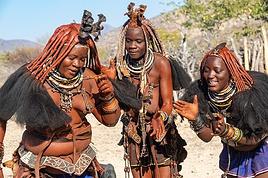
Nous sommes en pleine finalisation d'un itinéraire sur 25 j environ avec location d'un 4X4 équipé d'une tente et logement uniquement en camping (sauf Windhoeck). La période sera entre le 15/8 et 15/9. On est en contact avec 2 TO francophones bien connus mais j'avoue que la perspective de réserver les hébergements 8 mois à l'avance ne me plait qu'à moitié. Mais y a-t-il vraiment le choix en période touristique? Il semble que non. Mais on est preneur d’expériences autres.... L'itinéraire envisagé est le suivant: 1 Winsdoeck > Sesriem campsite NRW 2 Sesriem > Sesriem 3 Sesriem > Namib park Blutkuppe 4 Namib park > Spitzkoppe tented camp 5 Spitzkoppe > Brandberg white Lady camp 6 Brandberg > Palmwag lodge 7 Palmwag > Aussicht camp 8 Aussicht > Epupa campsite 9 Epupa > Epupa 10 Epupa > Opuwo (epupa falls campsite) 11 Opuwo > Okaukuejo campsite (Etosha W) 12 Okaukuejo > Halali camp (Etosha centre) 13 Halali > Namutori camp (Etosha E) 14 Namutori > Rundu (Nkwazi camp) 15 Rundu > Bagani - Bwabwata (Ngepi camp) 16 Bagani > Kongola (camp Kwando) 17 Kongola > Chobe elephant camp au Botswana peu après Ngoma bridge 18 Chobe > Savuti camp 19 Savuti > Moremi (North Gate) 20 Moremi > Noremi (3rd bridge rest camp) 21 Moremi > Maun 22 Maun > Tsumkwe en Namibie 23 Tsumkwe 24 Tsumkwe > Windhoeck (grosse journée de route) Comme vous pouvez le constater on a fait l'impasse sur la côte. On souhaite garder du temps pour des rencontres en pays Himba (d'où 7 à 11) et avoir une journée + cool en 9. Mais on est aussi tenté de faire une boucle via Purros et Orupembe. Pour la journée 14 peut-être passer par pistes D3610, D3600, D3446. Je suis preneur d'expérience sur ces pistes. La partie autour du delta de l'Okavango (15 à 22) reste encore floue même si (ou à cause) de blogs relativement abondant sur le sujet... On préfère les visites non guidées mais je pense que l'ion fera aussi des sorties organisées notamment au début (15-16). Pour ce qui est des pistes je ne pense pas qu'il y ait trop de difficultés à cause des gués à cette saison mais certaines photos me font penser à l'Islande. Qu'en est il? TsumKwe pour la rencontre avec les busmen mais il y a peut-être d'autres alternatives, notamment au Botswana?
Merci de vos réponses éclairées.
J-Pierre & Roselyne
5 weeks in Bolivia and southern Peru this summer
This quick summary of our trip follows a project I posted on VF back in March 2016. I can answer more specific questions, but here I’m highlighting the points that seem most important. Generally, we started our days early (~7 AM or even earlier), had lunch on the go—often in the street—and dinner at somewhat rustic restaurants (< 100 Bs for two). The hotels (unbooked except for our arrival day in La Paz) had so-called "matrimonial" rooms with private bathrooms, usually costing 150–200 Bs or less.
We had a few cold sweats right off the bat: our debit cards only worked at the last ATM (out of 12!) at the airport… and the next day, our flight to Rurrenabaque was grounded, leaving us stranded for a day. We found decent lodging at Hotel Avenida. The following morning, our plane was finally fixed and crossed the Cordillera without issue. Our stay (5 days / 4 nights in the jungle & pampa) with Mashaquipe was great (our guide Domingo played a big part in that). Very interesting and a reliable agency. We saw quite a few animals, though spotting them in the jungle is tricky. In the savanna, though, it’s easier, and Mashaquipe seems to be one of the few agencies with a site in the pampa (near Santa Rosa).
We flew back to La Paz that evening and got lucky—within an hour, we caught a flight to Santa Cruz. The next morning, our first encounter with bus stations: Santa Cruz’s is huge, and we got a little lost. But we found a bus to San José. We visited the church in the late morning, then headed to the bus station, where schedules seemed random and buses only left in the late afternoon at best. We decided to walk to the outskirts of town toward San Rafael and try hitchhiking. It worked—every (rare) vehicle stopped, and we hopped into the first one heading to San Rafael. When we arrived, we gave the driver half the bus fare (~60 Bs). The next morning, we visited the church early and positioned ourselves at the village exit. A pickup truck quickly picked us up and took us to San Miguel (for free). Then, the same thing happened on the way to San Ignacio, but this time it was a *collectivo* that stopped. We arrived in San Ignacio in the early afternoon, but it was Saturday, and the church was closed. It was supposed to open… but never did. Since the *flota* bus left for Concepción around 7 PM, we took it without getting to visit. The next day, we toured the church and attended mass (++) with a choir and musicians. Then, we took a bus to San Javier, visited the church, and caught a *flota* back to Santa Cruz that evening. It might seem a little rushed, but we were lucky. Verdict: the churches are hidden gems in this somewhat off-the-beaten-path province (almost no tourists). We loved the last two the most, but the others were great too.
The next morning, we flew to Sucre, a beautiful city (though I didn’t connect with it), especially compared to the others, at a moderate altitude for the country… except for the central market, the Museum of Indigenous Art, and the San Felipe Neri convent. By chance, we ended up at *Le Petit Parisien*, a café two steps from the main square (65 c. estudiante). Christian, the owner, is originally from Paris and serves French food. His wife, Anna, is Bolivian and organizes visits to the Jal’qa community west of Sucre. You have to enjoy walking (~35 km in 2 days) and be okay with a *camione* (truck) ride and rustic lodging. We said yes for the next morning (cost: 600 Bs for two). A great memory, especially our night with a Quechua family who had just harvested corn… and the otherworldly landscapes.
Then, an overnight bus to Tupiza, where we checked out agencies for a 4-day loop through Sud Lípez and the salt flats, returning to Uyuni. We were really impressed by *Granero del Oro* (though there were only two of us), but we ultimately went with *Tupiza Tours*, the biggest agency, which had other clients so we could leave as a group of four (it was late June, and there weren’t many tourists yet; cost: 2,600 Bs for two). No regrets—this agency seemed solid, with a well-maintained vehicle and a serious driver (Freddy) who stopped whenever we asked. With our +5°C sleeping bags, we weren’t cold since the hotels (which the Bolivians call *basico*) provided blankets. The landscapes were mind-blowing in color, variety, and scale… even though the weather was pretty variable. We saw quite a few vicuñas.
In Uyuni, we took an overnight bus to La Paz, then another to Puno less than two hours later, arriving in the afternoon. That gave us time to head to the port to find lodging on Amantani. We avoided the street vendors and found an office run by locals from the island. We left the next day with an Italian couple and stayed two nights in Occopampa with a host family. Instead of returning via Taquile, we took a boat to Chifrón, then a bus to Juliaca, and from there to Cusco. The island was nice, and we did a lot of walking. At one point, we ran into a horde of tourists (and the second night, there was a dance with quite a few tourists… but also some locals, though I didn’t connect much). I got the impression the northern part of the island is less touristy… but you don’t get to choose your lodging.
In Cusco, we stayed at Suecia 2 (almost quiet, since it’s on the edge of the happy-hour bars and nightclubs) and across from the excellent restaurant *Victor Victoria*. On Sunday, we took a *collectivo* to the Chinchero market. It was touristy but still fun. There were great textile deals, but we were broke and couldn’t find an ATM. Some regrets… We met two young Spanish women and shared a taxi to Moray (we didn’t visit because you need the *boleto turistico*) and Salinas. The taxi dropped us off for an hour—it was nice, especially in the late afternoon. The next day, though, we were really disappointed by Pisac, which felt 100% touristy and New Age… we’d recommend avoiding it. On the way back from Pisac, we asked the bus to stop at Sacsayhuamán, which we explored a bit without a ticket before walking back down to Cusco. The city itself was nice but nothing extraordinary. We only got the *boleto religioso* (cathedral + Iglesia San Blas + San Cristóbal). The Inca Museum and Qorikancha were highlights.
We’d booked the Lares Trek + Machu Picchu (MP) over 4 days with *Sam Travel Perú*. There were five couples and two guides (Eddy & Julian). Great organization, great guides, and the food… no complaints. The landscapes were stunning… and no altitude issues (we’d acclimatized well with Lípez and Lake Titicaca) or breathing problems since we were in shape. That wasn’t the case for the other participants, but it wasn’t a problem since we had two guides, and on the last day, we split into two groups. We stopped in Aguas Calientes before Lares, then took a car and train to Aguas Calientes. On the guide’s advice, we decided to line up at 4:30 AM (there were already hundreds of people) for the bus to MP. At the top, Eddy guided us until 9 AM, then we explored on our own. At first, it was peaceful with clouds clinging to the peaks, but then it got crowded and hot. We escaped with two other couples to climb Wayna Picchu (it’s steep, but with dry weather, no problem). Still, I’d recommend being in shape for the trek and the climb to WP to really enjoy it. We returned to Cusco in the late afternoon, and the next morning, we flew (booked in advance) to La Paz, where we explored a bit (cable car, San Francisco, Calle Jaén…).
Itinéraire envisagé pour un mois en Bolivie et Pérou
Bonjour,
Nous sommes un couple de 58 ans ayant une certaine habitude de voyager et nous serons en Bolivie et au Pérou du 17/6 au 18/7. Nous avons déjà pas mal cherché sur les forums et guides. C'est un parcours assez chargé, mais qui me semble réalisable (J6-J14 un peu limite mais un peu de marge sur le Titicaca voire La Paz). On aimerait aussi loger chez l’habitant à La Paz et Cuzco voire aussi dans le circuit des missions… mais notre espagnol sera limité…
Toutes vos remarques concernant l’itinéraire, les agences à privilégier etc... seront les bienvenues. Pour l’instant seul le trek de Lares et l’avion de retour à La Paz en J31 sont réservés.
Jour 1 : Arrivée à La Paz 15H40 (Marseille-Madrid). Visite rapide de la ville si pas trop cassé par le voyage.
Jours 2 à 6 : Avion (Amazonas) pour Rurrenbaque et séjour « Combo tour jungle & pampa » de 5 jours / 4 nuits via agence « Mashaquipe » Le but est d’avoir à la fois un aperçu de la forêt amazonienne et de la pampa pas trop sportif mais pas farniente. Ce sera aussi l’occasion de récupérer du voyage. Retour vers 18H40 à La Paz… et vol pour Santa Cruz départ 20H05 (est- ce réaliste ?).
Jours 7 à 11 : Visite rapide de Santa Cruz et organisation du circuit des missions jésuites. Outre les missions le but est d’aller dans une région un peu plus à l’écart des circuits classiques et de voyager par nos propres moyens (train pour San José de Chiquitos puis bus San Raphaël, San Ignacio, Conception….). On est très demandeur d’infos sur cette partie du voyage. Si au final on doit enlever quelque chose ce sera cette partie…mais à contrecœur…
Jours 12 à 14 : Avion bonne heure pour Sucre (Amazonas), visite de la ville et le lendemain bus dans le milieu de journée pour Potosi. Le surlendemain bus pour Tupiza où nous arriverons fin de journée. Agence à trouver sur place pour J15 à 18.
Jours 15 à 18 : Départ de Tupiza, visite dans le sud Lipiez et le salar d’Uyuni et arrivée en J18 à Uyuni.
Jour 19 : départ d’Uyuni en train pour Oruro puis bus pour La Paz (fin de journée). Le lendemain visite de La Paz et bus pour Copacabana.
Jours 21 à 24 : Visite rapide de Isla del Sol coucher à Puno Les 2 jours suivants seraient consacrés à la péninsule de Capachica et le dernier au trajet en bus pour Cuzco.
Jours 25-26 : Visite de Cuzco et des environs (Salinas, Moray, Pisac, Chinchero…) par taxi privatisé peut-être.
Jours 27 à 30 :Trek de Lares qui passe par Cancha Cancha. avec visite du Machu Pichu en 4 jours par agence « Sam Travel Peru ».
Jours 31-32 : Départ de Cuzco 7H 40 (Péruvian Airline) pour La Paz d’où nous partirons le lendemain midi pour la France.