Results for "Soudan"
About 5,811 results.
More options
Many results are in French, the community’s main language. English translations are added over time.
Search results
Fous de l'Inde
avez vous lu ce bouquin de Régis Airault à propos des délires d'occidentaux en inde?
"L'INDE rendrait elle fou? un psychiatre, Régis Airault, a constaté que, de BOMBAY a GOA, de DELHI à PONDICHERY, un véritable syndrome indien touche les occidentaux- pour la plupart des adolescents et des jeunes adultes- qui se rendent dans ce pays.là plus qu'ailleurs, et de manière plus spectaculaire, il semble que notre identité vacille. des personnes jusque là indemnes de tout trouble psychiatrique éprouvent soudain, sans prise de drogue, un sentiment d'étrangeté et perdent contact avec la réalité.plus curieux:ces troubles sont presque tous sans lendemain.revenu chez lui, le voyageur en garde même un bon souvenir et, quelque temps plus tard, il n'a souvent plus qu'une idée en tête:retourner en inde.... qu'est ce donc qui nous attire en inde? pourquoi sommes nous si fragiles là-bas? que nous apprend sur nous mêmes cette expérience qui transforme notre vision du monde?"
ceux qui ont lu ce livre, j'aimerai avoir vos avis sur ce bouquin et comment vous avez ressentis les témoignages de ces délires......
merci
"L'INDE rendrait elle fou? un psychiatre, Régis Airault, a constaté que, de BOMBAY a GOA, de DELHI à PONDICHERY, un véritable syndrome indien touche les occidentaux- pour la plupart des adolescents et des jeunes adultes- qui se rendent dans ce pays.là plus qu'ailleurs, et de manière plus spectaculaire, il semble que notre identité vacille. des personnes jusque là indemnes de tout trouble psychiatrique éprouvent soudain, sans prise de drogue, un sentiment d'étrangeté et perdent contact avec la réalité.plus curieux:ces troubles sont presque tous sans lendemain.revenu chez lui, le voyageur en garde même un bon souvenir et, quelque temps plus tard, il n'a souvent plus qu'une idée en tête:retourner en inde.... qu'est ce donc qui nous attire en inde? pourquoi sommes nous si fragiles là-bas? que nous apprend sur nous mêmes cette expérience qui transforme notre vision du monde?"
ceux qui ont lu ce livre, j'aimerai avoir vos avis sur ce bouquin et comment vous avez ressentis les témoignages de ces délires......
merci
Que visiter en 3 jours en Irlande?
Nous comptons partir 3jours en Irlande fin juin en louant une voiture au départ de l'aèroport de Shannon.
Je ne connais ni le pays, ni la région, ou loger ? que visiter ?
Merci pour votre aide.
Je ne connais ni le pays, ni la région, ou loger ? que visiter ?
Merci pour votre aide.
Horaire du bus El Calafate-El Chalten en Argentine?
Qui peut me renseigner sur les horaires de bus partant de El Calafate à destination de El Chalten ?
Je veux savoir s'il existe un bus en fin de soirée ?
J'ai envoyé un message au site d'infos de El Calafate. Je n'ai reçu qu'un message standard me stipulant que j'aurai une réponse personnalisée ultérieurement, et cela il y a une semaine. Comme je pars le 1é février, je deviens soudain pressé.
Merci
Je veux savoir s'il existe un bus en fin de soirée ?
J'ai envoyé un message au site d'infos de El Calafate. Je n'ai reçu qu'un message standard me stipulant que j'aurai une réponse personnalisée ultérieurement, et cela il y a une semaine. Comme je pars le 1é février, je deviens soudain pressé.
Merci
Annulation de la part de notre hôtel!
Bonjour, Il nous arrive un énorme malheur....J'ai eu un appel ce matin de mon agence de voyage qui m'annonce l'horrible nouvelle que nous avons été BUMPER et qu'il n'y a plus de place à l'hotel que nous avions choisi.....Nous avions réservé à l'hotel COPACABANA à la Riviera Maya il y a de ca 3 mois et demi...Pour un départ le 19 Décembre jusqu'au 3 janvier...Le pire c'est que nous sommes 9 personnes...Ca nous a couter plus que 32 000.00$ avec les assurances voyages...Et Soudain ce matin, je ne sais pas qui est le responsable, decide qu'il n'y a plus de place de disponible a l'hotel COPACABANA.....CAUCHEMARD....On nous a proposé un autre hotel, qui ne fait vraiment pas notre affaire, le principe tulum je crois.....et un dédomagemment de 150$ par personnes....Quand on paye plus que 32 000.00$ pour des vacances ( nos seules de l'année)on se fou pas mal du 150$ de dédommagement!!!!!On attend la réponse de notre agence, en espérant qu'elle trouve un autre hôtel pour nous.....Je ne sais pas qui a quelque part fait mal son travail mais nous vivons tout un cauchemard.....Je suis tres décue du grossiste et croyez moi c'est la derniere fois quils verront nos nom sur leur billets!!!!
JE VOUS REDONNE DES NOUVELLES QUAND J'EN AURAIS.....POUR CEUX QUI PARTENT EN VACANCES BIENTÔT, JE VOUS CONSEILLE DE VÉRIFIER AVEC VOTRE AGENCE SI IL N'Y AURAIT PAS DE CHANGEMENT DE DERNIERE MINUTE.....ON NE PEUX PAS VRAIMENT ÊTRE CERTAIN TANT QU'ON EST PAS RENDU A DESTINATION.....
À PLUS TARD........
JE VOUS REDONNE DES NOUVELLES QUAND J'EN AURAIS.....POUR CEUX QUI PARTENT EN VACANCES BIENTÔT, JE VOUS CONSEILLE DE VÉRIFIER AVEC VOTRE AGENCE SI IL N'Y AURAIT PAS DE CHANGEMENT DE DERNIERE MINUTE.....ON NE PEUX PAS VRAIMENT ÊTRE CERTAIN TANT QU'ON EST PAS RENDU A DESTINATION.....
À PLUS TARD........
Quelle est la météo en automne en Europe?
Ola!
Je planifie aller faire un petit tour en Europe (3 mois environ) en septembre, avec mon pacsac, et je voulais savoir ce qu'il en était de la température à cette époque de l'année. Je sais que c'est pluvieux et un peu moche, mais est-ce que ca l'est assez pour que mon voyage soit désagréable? J'aurais aimé faire un peu de rando, c'est sûr... Est-ce que ça vaudrait vraiment la peine que je remette mon voyage à plus tard, ce printemps par exemple?
Merci d'avance, parce que je suis bien embêtée... (j'ai tellement envie de partir!)
Je planifie aller faire un petit tour en Europe (3 mois environ) en septembre, avec mon pacsac, et je voulais savoir ce qu'il en était de la température à cette époque de l'année. Je sais que c'est pluvieux et un peu moche, mais est-ce que ca l'est assez pour que mon voyage soit désagréable? J'aurais aimé faire un peu de rando, c'est sûr... Est-ce que ça vaudrait vraiment la peine que je remette mon voyage à plus tard, ce printemps par exemple?
Merci d'avance, parce que je suis bien embêtée... (j'ai tellement envie de partir!)
Societal Evolution
Hello everyone,
It’s something we often notice in this forum—and many others—this behavioral shift.
A long-time member, or even a new one, asks a question. They get one or more answers, some brief, some detailed, and then... nothing???
Not even a simple thank you!!!
From what I’ve gathered, if the answers don’t align with what they wanted to hear, it seems natural for the asker to just disappear!! 😕 Unless—(and I fear this is the case)—basic politeness is no longer part of our society????
Please forgive my little rant.
Wishing everyone all the best. Cheers,
Puma2A

...
It’s something we often notice in this forum—and many others—this behavioral shift.
A long-time member, or even a new one, asks a question. They get one or more answers, some brief, some detailed, and then... nothing???
Not even a simple thank you!!!
From what I’ve gathered, if the answers don’t align with what they wanted to hear, it seems natural for the asker to just disappear!! 😕 Unless—(and I fear this is the case)—basic politeness is no longer part of our society????
Please forgive my little rant.
Wishing everyone all the best. Cheers,
Puma2A
...
Three weeks in Albania with two older teens
We went to Albania in August 2025.
Our itinerary included adventure (sporty activities, site visits), naps on the beach interspersed with swims, incredible natural sites, and a bit of culture.
I booked all our accommodations on Booking.com. Note: almost all places ask to be paid in cash!! You can obviously withdraw from banks, but the fees are pretty high. Luckily, we had plenty of cash, and the country is very safe. You can pay in euros most of the time, which avoids exchange fees. We started in Tirana. I’d read a really interesting post about Albania’s bunkers (link in my profile). We chose to visit Bunk’Art with a guide from the agency that wrote the post. It was fascinating—not only to better understand the country’s history but also because her grandfather was repressed by the regime, and she shared her family’s experience with us.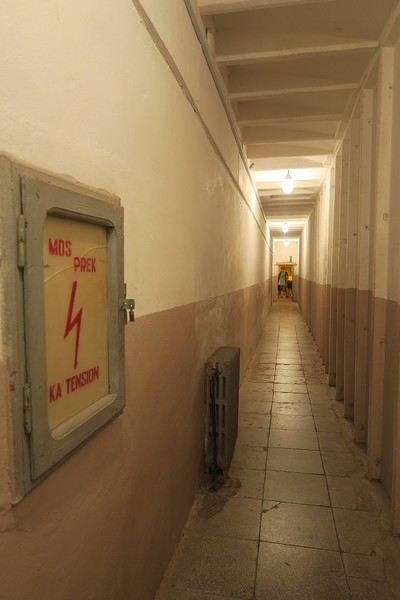
Bunkers are everywhere! In Tirana, Bunk’Art is the most interesting and largest. You’ll see the dictator Enver Hoxha’s office, where he would’ve taken refuge in case of an attack on the country. Bring a sweater—it’s really cold in the underground tunnels and their huge corridors. You can visit other bunkers around the country, in Tirana and elsewhere. Almost all are just abandoned. The cable car up Mount Dajti is right next to Bunk’Art. The view is stunning—you realize Tirana is so close to the mountains and the sea... But otherwise, it’s not that exciting for older teens (17 and 19) and their parents. We picked up a rental car in Tirana—it’d be ours for the next three weeks. We used Goalbania’s agency to avoid any hassles. First, there aren’t many cars available in Albania in summer. Second, French credit cards can be a nightmare abroad. So we preferred to sort that out in advance. After Tirana, we headed to Permet. Just a heads-up: the roads are in great condition except in the mountains. And Albanian drivers aren’t stressful to deal with. Though you might suddenly encounter a herd of goats crossing the road—haha—but if you’re not going too fast, it’s fine. In Permet, I’d been dreaming of rafting on the Vjosa, one of Europe’s last wild rivers. And we did it with a local agency! It’s beautiful, accessible to everyone, not too physical but still a bit lively—just how we like it. You can even jump into the river in some spots. In Permet, we also hiked through a canyon and visited a lovely little church.
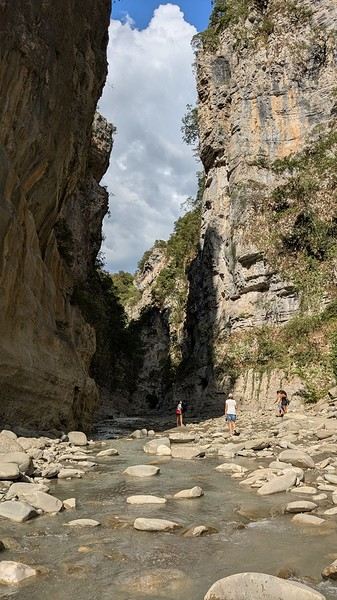
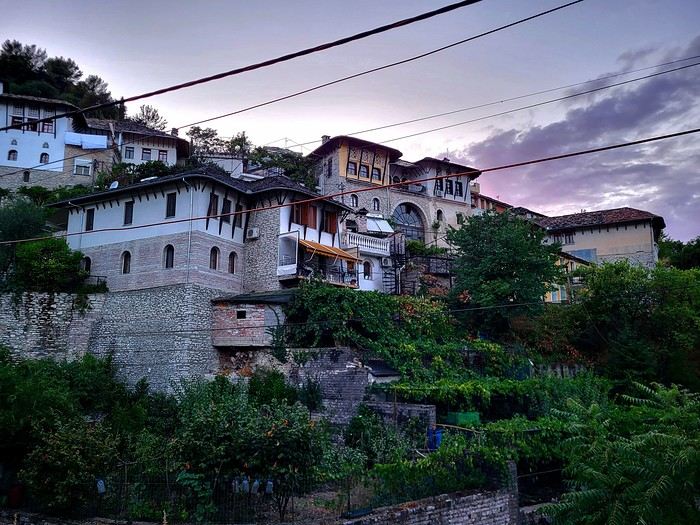
And we took a workshop to make their local culinary pride: gliko. It’s a jam with whole fruits inside. We’d seen it on Goalbania’s site, and it was really fun. We were with a family where the secret to making gliko has been passed down for generations... Next, we headed to Gjirokastër. A city we loved: its old traditional houses (Skendulli and Zekate), its grand castle, the Ali Pasha Bridge. Along the way, we stopped for artisanal ice cream at a little shop run by a grandmother who’s been making it herself for ages.
One afternoon, my husband *had* to go to the coast in the south, to Ksamil (he’d read it was better than Sarandë). Verdict: we didn’t like it. Parking is a nightmare, the beaches are super noisy and crowded. The sea is packed with jet skis, boats, pedalos, and ropes. Avoid it.
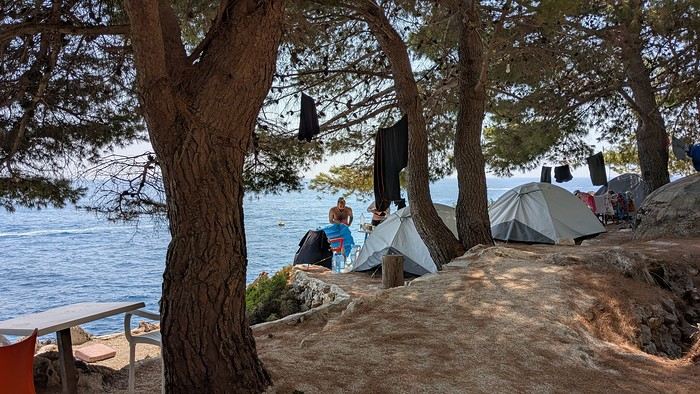
On the other hand, we really liked Himarë, where we went next. We stayed at a campsite where we rented tents with mattresses and sheets inside. Right by the sea, on a low cliff (about 2 meters high). You can hear the waves at night... Magical!! To swim, you either jump straight into the sea (almost from the tent) or climb down a ladder, which you’ll need to climb back up to get out.
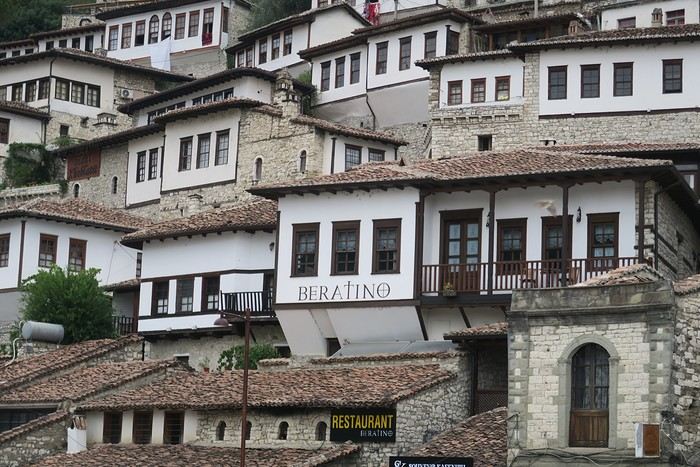
I was a little worried the campsite wouldn’t be very comfortable, so afterward, I’d booked a small place in Gjilek. Turns out, the place was really tiny (one room for four, no kitchen) and pretty expensive (over 100 € a night). We’d drive to the beach or restaurants—it’s on a steep slope, so not very accessible. Parking near the sea is tricky. But the (private) beaches were nice—we’d rent an umbrella not too close to the music and spend the day there. We also went to a wilder beach, harder to reach, via a long path. Behind the beach, there’s an amazing canyon where we’d sometimes climb using ropes (already in place, no need to bring your own) over big boulders rolled around by the stream, which must swell a lot in spring. So, the sea in Albania: it’s nice if you like swimming and relaxing, but it’s not the most interesting part of the country. There are so many other amazing things to see and discover—so many stunning sites! Maybe an agency could’ve helped us find more practical accommodations and avoid Ksamil and its surroundings. We left the coast to head to the beautiful city of Berat and its "thousand windows." We explored the city, its fortress, and its icon museum.
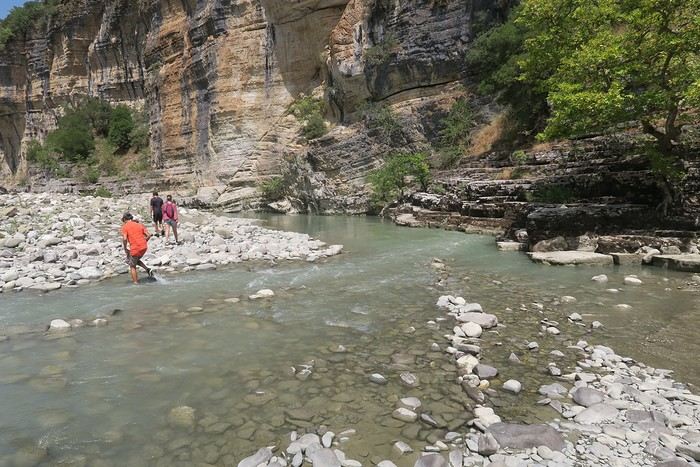
Then we discovered the Osum Canyon—it’s incredible. The view from the top is breathtaking. And at the bottom, it’s magical. There’s little water in summer, so rafting isn’t an option. We weren’t tempted by the big-tube descent offered by an agency—it looked fun, but the group had 40 people. We preferred hiking on our own as a family of four. We scouted the area on Google Maps... and found where to descend. We walked in the water, then it rose to our waists, then our shoulders... We weren’t moving fast. And how to get back up?? Eventually, we followed a group with a guide—the path was hard to find.
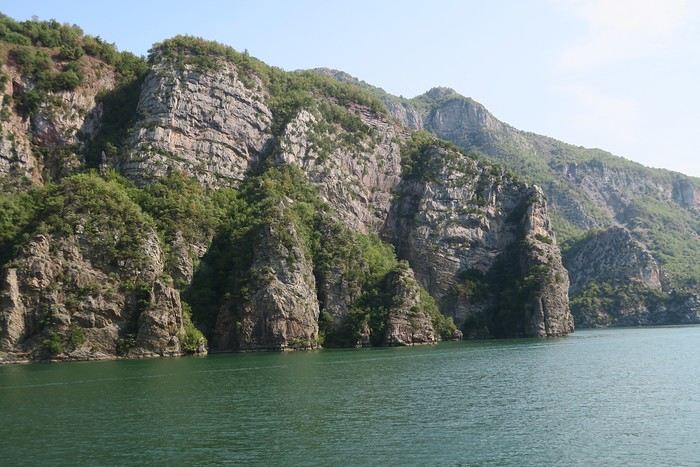
After that unforgettable hike, we visited the Bogovë Waterfalls. It’s pretty, and we swam, but the water was *really* cold. We passed through Tirana again and then headed to Shkodër. We explored a bit—its charming little streets, the Rozafa Fortress. There’s a tiny museum where you can see *huge* Ottoman stone cannonballs. And they tell you the (charming) story of the young woman who was walled alive in the castle’s foundations to ensure its strength... Shkodër is mostly a stopover to head into the mountains and discover Theth. Our goal: hiking in the Valbona Valley, from Valbona to Theth. We organized the trip ourselves, without an agency, but it took some time to figure everything out. So I’ll save you the trouble—haha. Book your tickets on the Komanilakeferry website. The ticket includes: 🙂 minibus transfer from downtown Shkodër to Koman 🙂 ferry ticket from Koman to Fierze. This ferry ride is *gorgeous*—between mountain slopes covered in pine trees, and sometimes a little house with a few fields...
🙂 minibus ticket from Fierze to Valbona. Now you’re in the mountains! The minibus drops you off near your accommodation—pick one as close as possible to the start of the hike (if that’s your goal!). The ones at the far end of the village add up to 1.5 hours of walking. Our choice: Guesthouse Dioni. The host is really lovely, it’s in the woods, and it’s basic but great. After a day of hiking, we arrived in Theth. What beautiful mountains! Then we explored Theth and the surrounding area. It’s pretty busy, but you can still enjoy the Blue Eye of Theth and its swim. It’s *so* cold! But so beautiful!
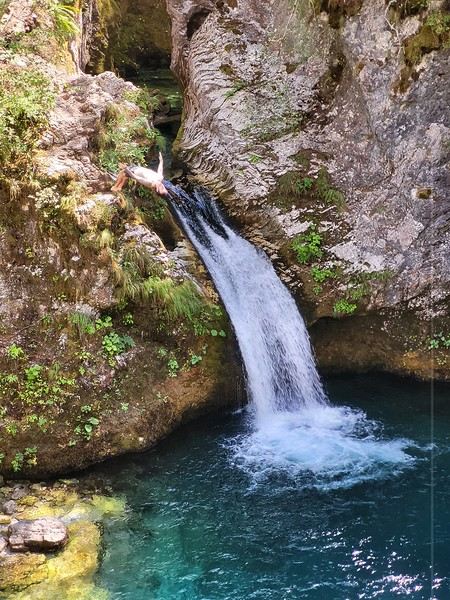
🙂 minibus ticket from Theth back to Shkodër. After a night in Shkodër, we drove to Kepi i Rodonit. A guidebook (I forget which one) raved about its beauty. And it *is* beautiful!
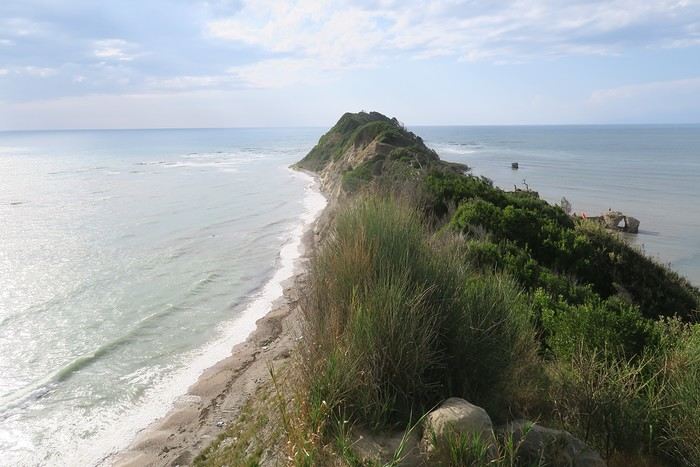
But the view is ruined by plastic bottles and other trash in the bushes, along the paths, and of course on the beaches. The only peaceful spot: the private beach at Kepi i Rodonit, which is cleaned. You can rent an umbrella and have lunch there. That’s where we spent our last few days—very relaxing. In short... Albania turned out to be perfect for us and our teens!
I booked all our accommodations on Booking.com. Note: almost all places ask to be paid in cash!! You can obviously withdraw from banks, but the fees are pretty high. Luckily, we had plenty of cash, and the country is very safe. You can pay in euros most of the time, which avoids exchange fees. We started in Tirana. I’d read a really interesting post about Albania’s bunkers (link in my profile). We chose to visit Bunk’Art with a guide from the agency that wrote the post. It was fascinating—not only to better understand the country’s history but also because her grandfather was repressed by the regime, and she shared her family’s experience with us.
Bunkers are everywhere! In Tirana, Bunk’Art is the most interesting and largest. You’ll see the dictator Enver Hoxha’s office, where he would’ve taken refuge in case of an attack on the country. Bring a sweater—it’s really cold in the underground tunnels and their huge corridors. You can visit other bunkers around the country, in Tirana and elsewhere. Almost all are just abandoned. The cable car up Mount Dajti is right next to Bunk’Art. The view is stunning—you realize Tirana is so close to the mountains and the sea... But otherwise, it’s not that exciting for older teens (17 and 19) and their parents. We picked up a rental car in Tirana—it’d be ours for the next three weeks. We used Goalbania’s agency to avoid any hassles. First, there aren’t many cars available in Albania in summer. Second, French credit cards can be a nightmare abroad. So we preferred to sort that out in advance. After Tirana, we headed to Permet. Just a heads-up: the roads are in great condition except in the mountains. And Albanian drivers aren’t stressful to deal with. Though you might suddenly encounter a herd of goats crossing the road—haha—but if you’re not going too fast, it’s fine. In Permet, I’d been dreaming of rafting on the Vjosa, one of Europe’s last wild rivers. And we did it with a local agency! It’s beautiful, accessible to everyone, not too physical but still a bit lively—just how we like it. You can even jump into the river in some spots. In Permet, we also hiked through a canyon and visited a lovely little church.
And we took a workshop to make their local culinary pride: gliko. It’s a jam with whole fruits inside. We’d seen it on Goalbania’s site, and it was really fun. We were with a family where the secret to making gliko has been passed down for generations... Next, we headed to Gjirokastër. A city we loved: its old traditional houses (Skendulli and Zekate), its grand castle, the Ali Pasha Bridge. Along the way, we stopped for artisanal ice cream at a little shop run by a grandmother who’s been making it herself for ages.
One afternoon, my husband *had* to go to the coast in the south, to Ksamil (he’d read it was better than Sarandë). Verdict: we didn’t like it. Parking is a nightmare, the beaches are super noisy and crowded. The sea is packed with jet skis, boats, pedalos, and ropes. Avoid it.
On the other hand, we really liked Himarë, where we went next. We stayed at a campsite where we rented tents with mattresses and sheets inside. Right by the sea, on a low cliff (about 2 meters high). You can hear the waves at night... Magical!! To swim, you either jump straight into the sea (almost from the tent) or climb down a ladder, which you’ll need to climb back up to get out.
I was a little worried the campsite wouldn’t be very comfortable, so afterward, I’d booked a small place in Gjilek. Turns out, the place was really tiny (one room for four, no kitchen) and pretty expensive (over 100 € a night). We’d drive to the beach or restaurants—it’s on a steep slope, so not very accessible. Parking near the sea is tricky. But the (private) beaches were nice—we’d rent an umbrella not too close to the music and spend the day there. We also went to a wilder beach, harder to reach, via a long path. Behind the beach, there’s an amazing canyon where we’d sometimes climb using ropes (already in place, no need to bring your own) over big boulders rolled around by the stream, which must swell a lot in spring. So, the sea in Albania: it’s nice if you like swimming and relaxing, but it’s not the most interesting part of the country. There are so many other amazing things to see and discover—so many stunning sites! Maybe an agency could’ve helped us find more practical accommodations and avoid Ksamil and its surroundings. We left the coast to head to the beautiful city of Berat and its "thousand windows." We explored the city, its fortress, and its icon museum.
Then we discovered the Osum Canyon—it’s incredible. The view from the top is breathtaking. And at the bottom, it’s magical. There’s little water in summer, so rafting isn’t an option. We weren’t tempted by the big-tube descent offered by an agency—it looked fun, but the group had 40 people. We preferred hiking on our own as a family of four. We scouted the area on Google Maps... and found where to descend. We walked in the water, then it rose to our waists, then our shoulders... We weren’t moving fast. And how to get back up?? Eventually, we followed a group with a guide—the path was hard to find.
After that unforgettable hike, we visited the Bogovë Waterfalls. It’s pretty, and we swam, but the water was *really* cold. We passed through Tirana again and then headed to Shkodër. We explored a bit—its charming little streets, the Rozafa Fortress. There’s a tiny museum where you can see *huge* Ottoman stone cannonballs. And they tell you the (charming) story of the young woman who was walled alive in the castle’s foundations to ensure its strength... Shkodër is mostly a stopover to head into the mountains and discover Theth. Our goal: hiking in the Valbona Valley, from Valbona to Theth. We organized the trip ourselves, without an agency, but it took some time to figure everything out. So I’ll save you the trouble—haha. Book your tickets on the Komanilakeferry website. The ticket includes: 🙂 minibus transfer from downtown Shkodër to Koman 🙂 ferry ticket from Koman to Fierze. This ferry ride is *gorgeous*—between mountain slopes covered in pine trees, and sometimes a little house with a few fields...
🙂 minibus ticket from Fierze to Valbona. Now you’re in the mountains! The minibus drops you off near your accommodation—pick one as close as possible to the start of the hike (if that’s your goal!). The ones at the far end of the village add up to 1.5 hours of walking. Our choice: Guesthouse Dioni. The host is really lovely, it’s in the woods, and it’s basic but great. After a day of hiking, we arrived in Theth. What beautiful mountains! Then we explored Theth and the surrounding area. It’s pretty busy, but you can still enjoy the Blue Eye of Theth and its swim. It’s *so* cold! But so beautiful!
🙂 minibus ticket from Theth back to Shkodër. After a night in Shkodër, we drove to Kepi i Rodonit. A guidebook (I forget which one) raved about its beauty. And it *is* beautiful!
But the view is ruined by plastic bottles and other trash in the bushes, along the paths, and of course on the beaches. The only peaceful spot: the private beach at Kepi i Rodonit, which is cleaned. You can rent an umbrella and have lunch there. That’s where we spent our last few days—very relaxing. In short... Albania turned out to be perfect for us and our teens!
Missing maiden name on Turkish Airlines flight ticket
Hi,
I booked flight tickets with Turkish Airlines 15 days ago for a round-trip for 4 people to Thailand in August 2026. On my reservation, I only included my married name, but on my passport, my maiden name appears along with my married name. I only noted one first name—I didn’t include my second or third first name. For my husband and children, I only included their first first name. I called Turkish Airlines a few days ago as a precaution, and they were very helpful, guiding me through the process of adding a comment to request the modification with scanned passports. They confirmed it would be free of charge. Today, I received a response from TK saying I need to buy new tickets with the required changes and then provide them with the new reservation details to be reimbursed for the initially purchased tickets. I called Turkish Airlines again, and they advised me to file a complaint using the initial comment I made. I did that tonight, explaining that I made these requests as a precaution—I fly every year and have never included my maiden name or other first names on my reservations, and it’s never been an issue. Plus, I can’t afford to pay for new tickets since prices have skyrocketed (+1000 € for 4 people).
I’m really worried and anxious about this situation. We’ve been saving for a while to afford this trip, and I hope it gets resolved favorably.
Have any of you experienced similar issues or situations like this? If so, how did it go at the airport?
Thanks in advance for your help
Spitsbergen – A Night with the Walruses on Lågøya
Spitsbergen, 80° North latitude. A lost archipelago on the edge of the world, northeast of Greenland, the last lands before the pole. I’m aboard the *Grigoriy Mikheev*, a Russian ship from the Murmansk Polar Research Institute. Russian flag, Russian crew. Chartered by OceanWide Expeditions.
Last night, we were stuck in drifting pack ice in the long Hinlopen Strait. This incident led to an unforgettable barbecue and party on the ship’s foredeck, but we had to abandon our plan to head south and circle Spitsbergen. This summer, there’s too much ice in the strait, and it’s too thick. At dawn, the tide turned, allowing us to break free and head north again. The ship is now moving slowly through sea ice density that satellite maps estimate at around five-tenths. Our progress is punctuated by dull thuds: the ship’s bow constantly shoves and fractures enormous ice floes.
At breakfast, Tarik, our expedition leader, informs us that our program will be significantly altered. Since we can’t cross the strait, we’ll turn back and head north. To kick off our Plan B, Tarik plans a landing tonight on the small island of Låg (Lågøya), at 80°10' North. Last summer, he saw a large walrus colony there and hopes we’ll find them again. The weather is perfect—glorious sunshine—and walruses are truly addicted to sunbathing on the beaches.
We’ve now exited the strait and are sailing far from the coast. In case the walrus colony is there, we don’t want the ship’s approach to scare them into the water before we even see them. So, we scan the shore methodically with binoculars. We pass several bays, round a cape, and examine several shorelines littered with driftwood, but no walruses in sight. Several times, clusters of large rounded rocks trigger false alarms… but no, they’re just rocks…
Suddenly, Tarik spots them through his binoculars! On an isolated peninsula, our expedition leader’s highly trained eye has picked out, among those brown masses, the shape and white color of the enormous tusks of what he calls "the heavyweights of the Arctic!" Now, fifteen or twenty pairs of binoculars are pointed in the indicated direction… Sure enough, I see them now! They’re there, huge, sprawled in the sun on the beach. Without Tarik’s sharp eye, we might have missed them. They’re so tightly packed together that they really look like a mass of brown rocks. Only the white, saber-shaped tusks and the occasional furtive movements hint that they’re animals.
It’s 11 PM, and on the deck of the *Grigoriy Mikheev*, as you can imagine, excitement has ramped up several notches. Several of us have already rushed to our cabins to gear up, pulling on boots and life jackets in anticipation of a landing that promises to be absolutely amazing. Tarik reins in our enthusiasm a bit: Okay, so we were lucky to find them, but now we need to think about how to approach them. Not that they’re dangerous—at least not on land… Their enormous bulk and their pseudo-feet (flippers) only allow for very limited mobility. But when they feel threatened, their first instinct is to head for the water, where their perfect ease keeps them safe. So, the challenge will be not to scare them off, to avoid them bolting into the water in the first few seconds! That’s exactly what would happen if we arrived by Zodiac right in front of them.
So, Tarik decides we’ll make a wide detour to land on the other side of the peninsula where they are. From there, we’ll leave the Zodiacs on the beach and cross the peninsula on foot, about a kilometer and a half. That way, we’ll approach the herd from behind. This approach will also keep us downwind of them. There you go—with a few precautions, they shouldn’t hear us coming or catch our scent.
Everyone is geared up now and practically bursting with impatience… While the Zodiacs are being lowered into the water, Tarik and Delphine recap the approach rules: absolute silence, communication only by signs, no dragging feet on the rocks, watch your step, and strict coordination with slow movements.
Here we go… we’re off now! Spray flying from the Zodiac’s bow, icy air whipping our faces, gloves gripping the side ropes, freezing splashes, pure emotion… Ahh, I love this! We describe a wide curve offshore to round the peninsula. Ahead of us, the magnificent landscape of this intensely blue sea unfolds, with the hills of Lågøya and, in the distance, the ice-covered mountains of Nordaustlandet under the sun. It’s midnight now. In July, at 80 degrees North, the sun is just like midday.
This navigation takes us far from the walruses, on the other side of the cape. Easy landing on a shoreline of large pebbles covered in giant seaweed brought in by the currents. They look like long strips of plastic—sometimes translucent, sometimes white, beige, or orange. In places, there are huge tangled layers of it. Our boots sink into this material, which gives off a strong iodine smell. Unfortunately, there’s also some plastic waste—fishing floats and net debris. Seeing this here is crazy… A little farther on, in a cove, tides and storms have piled up numerous tree trunks from Siberia.
We begin crossing the peninsula on foot, staying close together. We’re walking on a nearly deserted polar tundra. We’re only ten degrees of latitude from the North Pole here. The violent winds and extreme temperatures that dominate this island for nine months of the year allow only a few rare plants to grow, close to the ground, between the rocks. In places, rocks are covered with large patches of black lichen.
Gérard, rifle slung over his shoulder, constantly scans the terrain. Tarik and Delphine are also very vigilant. We know no one ever lands here, and although this environment isn’t ideal for bears, you never know—better to be cautious. The terrain is mostly flat, but whenever a small rise blocks our view, Gérard moves ahead and only signals us to proceed when he’s sure there’s no "big man in fur" (tradition dictates we don’t name the polar bear).
After a few hundred meters, we find an enormous whale vertebra. Judging by the state of the bone, it’s likely a relic from the whaling era that ravaged this area in the 17th century and all over northern Spitsbergen. A little farther on, the remains of a grave catch our attention. The only human trace on this remote island, this burial is surely very old, also likely dating from the whalers’ time. But this whaler’s final resting place didn’t shelter him for long—there’s not much left, just a piece of skull and a few broken bones. Due to the permafrost, the body could only be buried a few dozen centimeters deep, between some planks held in place by large stones. This makeshift grave was probably ravaged by a bear shortly after the burial. Several stone blocks are overturned, the planks are broken open. We only linger for a minute to pay our respects to this whaler, whose poor remains now merge with the mineral landscape.
A slight rise bulges in the center of the peninsula, and here we are at the highest point. If our orientation is correct, we’re heading straight for the walrus colony. A moment of emotion… my heart’s pounding. Yes, they’re there, about three hundred meters ahead of us! They haven’t moved since we spotted them from the *Grigoriy Mikheev*’s deck. They’re sprawled in a heap, packed tightly together in the sun, on the shingle beach. The light breeze blowing in our faces confirms we’re on the right track—not to be sniffed out from afar by the big beasts.
By signs, Tarik tells us we’ll approach slowly, in stages, moving about thirty meters at a time, making as little noise as possible with our boots, then freezing completely for a minute or two, crouching down to let them forget us. This strategy proves excellent. We’re now less than a hundred meters away, and it doesn’t seem like our presence is perceived as a threat by the "heavyweights of the Arctic." At this distance, let’s not kid ourselves: we’re certainly spotted, but our way of approaching must seem reassuring—or at least manageable—since they’re only a few meters from the water and know they could dash into it in seconds if they felt the need.
We now advance in shorter stages—twenty meters at a time, then just ten, crouching, then freezing like statues, our breathing nearly held from emotion and concentration. We’re now thirty meters from the mastodons. Our presence must be starting to stress them because they’re moving more. While still sprawled against each other, some suddenly rear up on their flipper-feet, grunting and snorting like monstrous pigs. Their head shakes make their two enormous ivory sabers sway. They jab them into the fat of their neighbors, who in turn stir and emit irritated snorts.
At Tarik’s signal, we move a few more meters, "on velvet paws"… We’re right there now. I hold my breath, throat tight… Intense emotion, a fantastic spectacle—these enormous Arctic animals sprawled in the sun, with the magnificent backdrop of snow-covered mountains across the sound. I think to myself: *I’m here… this can’t be real!* It’s nearly 2 AM now, the air is crystal clear, and the Arctic sun bathes this scene in what might be the most beautiful light I’ve ever seen. We’re about fifteen meters away now. Tarik signals that we won’t go any closer. The walruses are still lying down, but occasionally, our close presence and the clicking of cameras trigger bouts of agitation that ripple through the herd, causing some jostling. They’re so tightly packed and tangled that it’s a bit hard to count them. In the end, we tally sixteen, plus one "little one," half-crushed in the general mass.
Seen from here, they’re truly impressive! The "sumo wrestlers of the Arctic!" According to Tarik, they must weigh about a ton—slightly more for the males than the females—and the "little one" must already be around 200 kg. When the weather’s nice like today, they love sprawling on the beaches to soak up the sun.
Walruses are marvels of Arctic adaptation. They can modify their blood circulation depending on thermal conditions. They withstand extreme cold by directing most of their circulation to vital organs (heart, lungs) and minimizing peripheral blood flow (skin and limbs) to prevent heat loss. Conversely, when they sunbathe, they direct most of their blood flow to the skin, turning themselves into true solar collectors.
At this latitude, there’s practically no difference in sunlight between day and night. Noon or midnight, the sun’s angle barely changes. Walruses make the most of these fair-weather phases by sprawling in the sun 23 hours out of 24… Enough to make siesta lovers dream, right? Twenty-three hours of lounging… and the twenty-fourth for eating!
And when we say "eating," what a feast! The proverb *"Who sleeps dines"* is fully justified here: when a walrus decides to feed, it gulps down between 50 and 60 kg of shellfish in an hour! Its food consists of large bivalve mollusks, which it tears from the seabed with its tusks and sucks up nonstop! A 50 kg meal certainly justifies a 23-hour nap for digestion, right? And speaking of digestion—it’s what the "big guys" in front of us are doing right now! You might wonder how we know this… Well, I’ll tell you: if you were here, downwind (or should I say *down the winds!*) of these marine giants, you’d have no doubt! Pfft… what flatulence! I can confirm that today’s scent is called *"Morsanus, from the North"* (*"Because I’m worth it!"*). Mmm, yeah… Tarik, you had a great idea putting us upwind… at least *they* can’t smell us, but we sure can!
But… heepp! Delphine discreetly signals to get our attention—she’s just spotted something: in the smooth water of the bay, a small V-shaped ripple runs along the beach, then turns toward the shore… So the colony wasn’t complete on the beach… Here’s an 800 kg bather stepping ashore now, right before our astonished eyes! She lifts her head and stays like that for a long moment, her enormous tusks half out of the water. She looks exhausted, resting a bit before coming out. Or more likely, she’s hesitating to climb onto the beach because she’s seen us… The shapeless head stays still for a moment, then violently snorts like a clogged drain! A misshapen head where you can’t make out anything that usually makes a head! No eyes, no ears, no mouth… A sort of monstrous cabbage! But the temptation to join the warmth of the "sunbathers" is too strong! Here’s our pachyderm bather climbing the few meters of the shore and sprawling right in the middle of her companions, who greet her with jostling, grunts, and tusk jabs! Then everything settles back into order—800 kg of fat and flesh added to the fifteen or so tons of local biomass. Welcome to the club!
It seems the walruses have gotten a bit used to us now. They’re moving and grunting much less. I realize it wasn’t obvious to approach them like this without scaring them into the water… It’s thanks to Tarik and Delphine’s advice that we managed it. It’s also, let’s be honest, because we’re all passionate here, and there’s been total discipline and cohesion from the start of this approach.
It’s past 2 AM now—time to head back… We’ll leave them to their wild world, to their life at the beginning of the world. We’re happy to have disturbed them as little as possible and not to have disrupted their nap too much. We leave stealthily, first backing up a few meters, then turning around and crossing the peninsula again, walking slowly, avoiding making noise with our boots as long as we’re still close.
We find the Zodiacs on the shoreline with the giant kelp. The sea is like a lake—easy boarding. We make another wide loop to round the cape, passing offshore. The sharp cold stings my cheeks and ears again—I put my hat back on. The cold—I hadn’t thought about it at all during our encounter with the walruses. In the Zodiac, with the engine noise, no one speaks. The faces and smiles are those of men and women who’ve just crossed an inner frontier—the one that separates dream from reality. But tonight, that frontier was porous, and the dream entered reality.
We return to the *Grigoriy Mikheev*, waiting at anchor. It’s past 3 AM, but I don’t feel any fatigue. A few minutes later, I’m in my bunk, rocked by a gentle swell and the hum of the engines. In the soft warmth of the blanket, a strange sleep overtakes me… A sleep filled with luminous, icy landscapes, with large beasts bearing saber-like tusks. Large beasts that sleep, snore, snort, grunt, and jostle in their sleep… in *my* sleep. An unforgettable memory. It was July 2004, in Spitsbergen.
Chris51.
Last night, we were stuck in drifting pack ice in the long Hinlopen Strait. This incident led to an unforgettable barbecue and party on the ship’s foredeck, but we had to abandon our plan to head south and circle Spitsbergen. This summer, there’s too much ice in the strait, and it’s too thick. At dawn, the tide turned, allowing us to break free and head north again. The ship is now moving slowly through sea ice density that satellite maps estimate at around five-tenths. Our progress is punctuated by dull thuds: the ship’s bow constantly shoves and fractures enormous ice floes.
At breakfast, Tarik, our expedition leader, informs us that our program will be significantly altered. Since we can’t cross the strait, we’ll turn back and head north. To kick off our Plan B, Tarik plans a landing tonight on the small island of Låg (Lågøya), at 80°10' North. Last summer, he saw a large walrus colony there and hopes we’ll find them again. The weather is perfect—glorious sunshine—and walruses are truly addicted to sunbathing on the beaches.
We’ve now exited the strait and are sailing far from the coast. In case the walrus colony is there, we don’t want the ship’s approach to scare them into the water before we even see them. So, we scan the shore methodically with binoculars. We pass several bays, round a cape, and examine several shorelines littered with driftwood, but no walruses in sight. Several times, clusters of large rounded rocks trigger false alarms… but no, they’re just rocks…
Suddenly, Tarik spots them through his binoculars! On an isolated peninsula, our expedition leader’s highly trained eye has picked out, among those brown masses, the shape and white color of the enormous tusks of what he calls "the heavyweights of the Arctic!" Now, fifteen or twenty pairs of binoculars are pointed in the indicated direction… Sure enough, I see them now! They’re there, huge, sprawled in the sun on the beach. Without Tarik’s sharp eye, we might have missed them. They’re so tightly packed together that they really look like a mass of brown rocks. Only the white, saber-shaped tusks and the occasional furtive movements hint that they’re animals.
It’s 11 PM, and on the deck of the *Grigoriy Mikheev*, as you can imagine, excitement has ramped up several notches. Several of us have already rushed to our cabins to gear up, pulling on boots and life jackets in anticipation of a landing that promises to be absolutely amazing. Tarik reins in our enthusiasm a bit: Okay, so we were lucky to find them, but now we need to think about how to approach them. Not that they’re dangerous—at least not on land… Their enormous bulk and their pseudo-feet (flippers) only allow for very limited mobility. But when they feel threatened, their first instinct is to head for the water, where their perfect ease keeps them safe. So, the challenge will be not to scare them off, to avoid them bolting into the water in the first few seconds! That’s exactly what would happen if we arrived by Zodiac right in front of them.
So, Tarik decides we’ll make a wide detour to land on the other side of the peninsula where they are. From there, we’ll leave the Zodiacs on the beach and cross the peninsula on foot, about a kilometer and a half. That way, we’ll approach the herd from behind. This approach will also keep us downwind of them. There you go—with a few precautions, they shouldn’t hear us coming or catch our scent.
Everyone is geared up now and practically bursting with impatience… While the Zodiacs are being lowered into the water, Tarik and Delphine recap the approach rules: absolute silence, communication only by signs, no dragging feet on the rocks, watch your step, and strict coordination with slow movements.
Here we go… we’re off now! Spray flying from the Zodiac’s bow, icy air whipping our faces, gloves gripping the side ropes, freezing splashes, pure emotion… Ahh, I love this! We describe a wide curve offshore to round the peninsula. Ahead of us, the magnificent landscape of this intensely blue sea unfolds, with the hills of Lågøya and, in the distance, the ice-covered mountains of Nordaustlandet under the sun. It’s midnight now. In July, at 80 degrees North, the sun is just like midday.
This navigation takes us far from the walruses, on the other side of the cape. Easy landing on a shoreline of large pebbles covered in giant seaweed brought in by the currents. They look like long strips of plastic—sometimes translucent, sometimes white, beige, or orange. In places, there are huge tangled layers of it. Our boots sink into this material, which gives off a strong iodine smell. Unfortunately, there’s also some plastic waste—fishing floats and net debris. Seeing this here is crazy… A little farther on, in a cove, tides and storms have piled up numerous tree trunks from Siberia.
We begin crossing the peninsula on foot, staying close together. We’re walking on a nearly deserted polar tundra. We’re only ten degrees of latitude from the North Pole here. The violent winds and extreme temperatures that dominate this island for nine months of the year allow only a few rare plants to grow, close to the ground, between the rocks. In places, rocks are covered with large patches of black lichen.
Gérard, rifle slung over his shoulder, constantly scans the terrain. Tarik and Delphine are also very vigilant. We know no one ever lands here, and although this environment isn’t ideal for bears, you never know—better to be cautious. The terrain is mostly flat, but whenever a small rise blocks our view, Gérard moves ahead and only signals us to proceed when he’s sure there’s no "big man in fur" (tradition dictates we don’t name the polar bear).
After a few hundred meters, we find an enormous whale vertebra. Judging by the state of the bone, it’s likely a relic from the whaling era that ravaged this area in the 17th century and all over northern Spitsbergen. A little farther on, the remains of a grave catch our attention. The only human trace on this remote island, this burial is surely very old, also likely dating from the whalers’ time. But this whaler’s final resting place didn’t shelter him for long—there’s not much left, just a piece of skull and a few broken bones. Due to the permafrost, the body could only be buried a few dozen centimeters deep, between some planks held in place by large stones. This makeshift grave was probably ravaged by a bear shortly after the burial. Several stone blocks are overturned, the planks are broken open. We only linger for a minute to pay our respects to this whaler, whose poor remains now merge with the mineral landscape.
A slight rise bulges in the center of the peninsula, and here we are at the highest point. If our orientation is correct, we’re heading straight for the walrus colony. A moment of emotion… my heart’s pounding. Yes, they’re there, about three hundred meters ahead of us! They haven’t moved since we spotted them from the *Grigoriy Mikheev*’s deck. They’re sprawled in a heap, packed tightly together in the sun, on the shingle beach. The light breeze blowing in our faces confirms we’re on the right track—not to be sniffed out from afar by the big beasts.
By signs, Tarik tells us we’ll approach slowly, in stages, moving about thirty meters at a time, making as little noise as possible with our boots, then freezing completely for a minute or two, crouching down to let them forget us. This strategy proves excellent. We’re now less than a hundred meters away, and it doesn’t seem like our presence is perceived as a threat by the "heavyweights of the Arctic." At this distance, let’s not kid ourselves: we’re certainly spotted, but our way of approaching must seem reassuring—or at least manageable—since they’re only a few meters from the water and know they could dash into it in seconds if they felt the need.
We now advance in shorter stages—twenty meters at a time, then just ten, crouching, then freezing like statues, our breathing nearly held from emotion and concentration. We’re now thirty meters from the mastodons. Our presence must be starting to stress them because they’re moving more. While still sprawled against each other, some suddenly rear up on their flipper-feet, grunting and snorting like monstrous pigs. Their head shakes make their two enormous ivory sabers sway. They jab them into the fat of their neighbors, who in turn stir and emit irritated snorts.
At Tarik’s signal, we move a few more meters, "on velvet paws"… We’re right there now. I hold my breath, throat tight… Intense emotion, a fantastic spectacle—these enormous Arctic animals sprawled in the sun, with the magnificent backdrop of snow-covered mountains across the sound. I think to myself: *I’m here… this can’t be real!* It’s nearly 2 AM now, the air is crystal clear, and the Arctic sun bathes this scene in what might be the most beautiful light I’ve ever seen. We’re about fifteen meters away now. Tarik signals that we won’t go any closer. The walruses are still lying down, but occasionally, our close presence and the clicking of cameras trigger bouts of agitation that ripple through the herd, causing some jostling. They’re so tightly packed and tangled that it’s a bit hard to count them. In the end, we tally sixteen, plus one "little one," half-crushed in the general mass.
Seen from here, they’re truly impressive! The "sumo wrestlers of the Arctic!" According to Tarik, they must weigh about a ton—slightly more for the males than the females—and the "little one" must already be around 200 kg. When the weather’s nice like today, they love sprawling on the beaches to soak up the sun.
Walruses are marvels of Arctic adaptation. They can modify their blood circulation depending on thermal conditions. They withstand extreme cold by directing most of their circulation to vital organs (heart, lungs) and minimizing peripheral blood flow (skin and limbs) to prevent heat loss. Conversely, when they sunbathe, they direct most of their blood flow to the skin, turning themselves into true solar collectors.
At this latitude, there’s practically no difference in sunlight between day and night. Noon or midnight, the sun’s angle barely changes. Walruses make the most of these fair-weather phases by sprawling in the sun 23 hours out of 24… Enough to make siesta lovers dream, right? Twenty-three hours of lounging… and the twenty-fourth for eating!
And when we say "eating," what a feast! The proverb *"Who sleeps dines"* is fully justified here: when a walrus decides to feed, it gulps down between 50 and 60 kg of shellfish in an hour! Its food consists of large bivalve mollusks, which it tears from the seabed with its tusks and sucks up nonstop! A 50 kg meal certainly justifies a 23-hour nap for digestion, right? And speaking of digestion—it’s what the "big guys" in front of us are doing right now! You might wonder how we know this… Well, I’ll tell you: if you were here, downwind (or should I say *down the winds!*) of these marine giants, you’d have no doubt! Pfft… what flatulence! I can confirm that today’s scent is called *"Morsanus, from the North"* (*"Because I’m worth it!"*). Mmm, yeah… Tarik, you had a great idea putting us upwind… at least *they* can’t smell us, but we sure can!
But… heepp! Delphine discreetly signals to get our attention—she’s just spotted something: in the smooth water of the bay, a small V-shaped ripple runs along the beach, then turns toward the shore… So the colony wasn’t complete on the beach… Here’s an 800 kg bather stepping ashore now, right before our astonished eyes! She lifts her head and stays like that for a long moment, her enormous tusks half out of the water. She looks exhausted, resting a bit before coming out. Or more likely, she’s hesitating to climb onto the beach because she’s seen us… The shapeless head stays still for a moment, then violently snorts like a clogged drain! A misshapen head where you can’t make out anything that usually makes a head! No eyes, no ears, no mouth… A sort of monstrous cabbage! But the temptation to join the warmth of the "sunbathers" is too strong! Here’s our pachyderm bather climbing the few meters of the shore and sprawling right in the middle of her companions, who greet her with jostling, grunts, and tusk jabs! Then everything settles back into order—800 kg of fat and flesh added to the fifteen or so tons of local biomass. Welcome to the club!
It seems the walruses have gotten a bit used to us now. They’re moving and grunting much less. I realize it wasn’t obvious to approach them like this without scaring them into the water… It’s thanks to Tarik and Delphine’s advice that we managed it. It’s also, let’s be honest, because we’re all passionate here, and there’s been total discipline and cohesion from the start of this approach.
It’s past 2 AM now—time to head back… We’ll leave them to their wild world, to their life at the beginning of the world. We’re happy to have disturbed them as little as possible and not to have disrupted their nap too much. We leave stealthily, first backing up a few meters, then turning around and crossing the peninsula again, walking slowly, avoiding making noise with our boots as long as we’re still close.
We find the Zodiacs on the shoreline with the giant kelp. The sea is like a lake—easy boarding. We make another wide loop to round the cape, passing offshore. The sharp cold stings my cheeks and ears again—I put my hat back on. The cold—I hadn’t thought about it at all during our encounter with the walruses. In the Zodiac, with the engine noise, no one speaks. The faces and smiles are those of men and women who’ve just crossed an inner frontier—the one that separates dream from reality. But tonight, that frontier was porous, and the dream entered reality.
We return to the *Grigoriy Mikheev*, waiting at anchor. It’s past 3 AM, but I don’t feel any fatigue. A few minutes later, I’m in my bunk, rocked by a gentle swell and the hum of the engines. In the soft warmth of the blanket, a strange sleep overtakes me… A sleep filled with luminous, icy landscapes, with large beasts bearing saber-like tusks. Large beasts that sleep, snore, snort, grunt, and jostle in their sleep… in *my* sleep. An unforgettable memory. It was July 2004, in Spitsbergen.
Chris51.
Preferred name instead of family name on Oman Air ticket
Hi, I know this topic has already been discussed, but in a rush, I booked a flight ticket with my married name (on my passport it’s noted as "married name X").
I’m flying with Oman Air, but since I booked through Expedia, they refuse to change it to my maiden name. Can I still travel? I’m really panicking!
François Boucher
Dear members of VoyageForum,
It is with deep sadness that we share the news of the passing of François Boucher, the founder of VoyageForum.
We will remember his passion for travel, but most of all, the pride he took in this forum, which has become indispensable among travelers. While there may have been heated debates, we ask that you show respect for him.
François was still very active on the forum, especially in the technical development section. VoyageForum was his life’s work. He worked passionately to update the site and make up for the 4 years of closure due to the pandemic.
Today, VoyageForum has also lost its developer.
That’s why we’re reaching out to this community to continue François’s legacy. If there are any former or current developers among you who know PERL and would be willing to help, your support would be greatly appreciated.
Thank you for your loyalty.
Let’s keep this forum alive in his memory.
It is with deep sadness that we share the news of the passing of François Boucher, the founder of VoyageForum.
We will remember his passion for travel, but most of all, the pride he took in this forum, which has become indispensable among travelers. While there may have been heated debates, we ask that you show respect for him.
François was still very active on the forum, especially in the technical development section. VoyageForum was his life’s work. He worked passionately to update the site and make up for the 4 years of closure due to the pandemic.
Today, VoyageForum has also lost its developer.
That’s why we’re reaching out to this community to continue François’s legacy. If there are any former or current developers among you who know PERL and would be willing to help, your support would be greatly appreciated.
Thank you for your loyalty.
Let’s keep this forum alive in his memory.
E-cigarettes in Thailand: Is it risky to bring one through customs?
Hey everyone!
Apparently, e-cigarettes are banned in Thailand.
But... can you still get through customs with one in your suitcase, just to vape indoors at your hotel or accommodation?
Thanks
AI, the Holy Grail of Travel and Travel Journals?
Three of our grandchildren came to spend the last weekend of the holidays at our house.
With her driver’s license just in hand, the oldest took her sister and a cousin along.
I was talking about VoyageForum, and the conversation turned to AI, which finds writing travel journals a breeze—churning out amazing ads for this or that country and even nudging tourists to visit one place over another.
Jules: "It’s crazy, you can plan and organize everything, then just add your photos and the AI’s text, and boom—you’ve got something great." Héloïse: "What a cheat for yourself and for others." (She’s so wise!) Gaïané: "Ugh, no more surprises. It even picks the restaurants—so lame."
I had this idea to stay on the theme of travel journals:
I found an excerpt from a book (I’ll let you guess the title and author—of course, the kids figured it out in two seconds with their phones), then I wrote my own version, and finally, the AI generated its own using a few keywords.
Here they are:
"We walked at dusk through the thick, dark forest. Sometimes, a clearing would reveal a dreamlike landscape. A magical world, far from humans. A world of frozen waterfalls, stiff fir trees, and sharp peaks slicing through the blinding whiteness of the air.
We gazed, dazzled, at the spectacle, imagining we’d left the human world behind and joined that of the spirits."
"For days, we walked through the half-darkness of dense, untouched forests, then suddenly, a clearing would unveil landscapes you only see in dreams. Sharp peaks piercing the sky, icy torrents, giant waterfalls—an entire fantastical world, blindingly white, rising above the dark line traced by the giant fir trees. We stared at this extraordinary sight, speechless, awestruck, ready to believe we’d reached the limits of the human world and stood at the threshold of the spirits’ realm."
"We walked through the mountain, wild and unyielding, its sharp peaks tearing the sky like honed blades. Giant waterfalls roared and foamed, as if the earth’s hidden forces were pouring out. Higher still, the blinding whiteness belonged to the world of spirits—capricious beings whispering to lost travelers. Faced with this silent vastness, we felt tiny, uninvited guests meditating on the invisible that dwells in these forbidden peaks."
And, amazingly, they unanimously agreed that the author’s excerpt was a thousand times more poetic. Héloïse, my history buff, said: "Nothing replaces the real travel experience." Jules said: "Yeah, but it does the job. Even if the excerpt is cool." And our oldest added: "It makes you want to go there—not at all like the other two versions. Sorry, Mamido."
And then, miracle—Jules asks: "Do you have the book? Can I borrow it?"
I’m so relieved—young people aren’t completely devoured by technology yet. And the forum will keep its charm and usefulness for a long time. Phew!
You agree, right?
Jules: "It’s crazy, you can plan and organize everything, then just add your photos and the AI’s text, and boom—you’ve got something great." Héloïse: "What a cheat for yourself and for others." (She’s so wise!) Gaïané: "Ugh, no more surprises. It even picks the restaurants—so lame."
I had this idea to stay on the theme of travel journals:
I found an excerpt from a book (I’ll let you guess the title and author—of course, the kids figured it out in two seconds with their phones), then I wrote my own version, and finally, the AI generated its own using a few keywords.
Here they are:
"We walked at dusk through the thick, dark forest. Sometimes, a clearing would reveal a dreamlike landscape. A magical world, far from humans. A world of frozen waterfalls, stiff fir trees, and sharp peaks slicing through the blinding whiteness of the air.
We gazed, dazzled, at the spectacle, imagining we’d left the human world behind and joined that of the spirits."
"For days, we walked through the half-darkness of dense, untouched forests, then suddenly, a clearing would unveil landscapes you only see in dreams. Sharp peaks piercing the sky, icy torrents, giant waterfalls—an entire fantastical world, blindingly white, rising above the dark line traced by the giant fir trees. We stared at this extraordinary sight, speechless, awestruck, ready to believe we’d reached the limits of the human world and stood at the threshold of the spirits’ realm."
"We walked through the mountain, wild and unyielding, its sharp peaks tearing the sky like honed blades. Giant waterfalls roared and foamed, as if the earth’s hidden forces were pouring out. Higher still, the blinding whiteness belonged to the world of spirits—capricious beings whispering to lost travelers. Faced with this silent vastness, we felt tiny, uninvited guests meditating on the invisible that dwells in these forbidden peaks."
And, amazingly, they unanimously agreed that the author’s excerpt was a thousand times more poetic. Héloïse, my history buff, said: "Nothing replaces the real travel experience." Jules said: "Yeah, but it does the job. Even if the excerpt is cool." And our oldest added: "It makes you want to go there—not at all like the other two versions. Sorry, Mamido."
And then, miracle—Jules asks: "Do you have the book? Can I borrow it?"
I’m so relieved—young people aren’t completely devoured by technology yet. And the forum will keep its charm and usefulness for a long time. Phew!
You agree, right?
Negative experience feedback with Croisières.fr
Short version: I booked through Croisières.fr, and everything went smoothly until my order was confirmed. When I requested a date change—due to administrative reasons—the sales rep initially assured me the fee would be 50 € per person, but then demanded 600 € (negotiated down to 338 €), even though the price remained unchanged. On top of that, Paul, the sales rep, was dishonest, claiming that drinks (excluding alcohol) were included and that there were "all-inclusive" packages for alcoholic beverages, which is completely false. All drinks—even water—are charged onboard. I had also requested a cabin with two separate beds to travel with my mother, a request that wasn’t honored, forcing me to sleep on a small couch. To make matters worse, all my emails and calls to customer service were ignored or handled carelessly. While the cruise itself was satisfactory—thanks to Costa for the onboard organization—I recommend booking directly with Costa to avoid these bad surprises with Croisières.fr.
Long version: I booked a cruise for two through Croisières.fr, and the process went perfectly until the final confirmation of my order, which initially reinforced my trust. However, as soon as I requested a change in departure dates—due to a delay in obtaining my mother’s ID card—the situation quickly deteriorated. During this process, Paul, the Croisières.fr sales rep, initially told me that the date-change fee would be only 50 € per person. To my surprise, I was then hit with an exorbitant processing fee of 600 €, which was eventually negotiated down to 338 €. This turnaround was all the more baffling because the new cruise offered was priced exactly the same as the original booking on the website.
The situation worsened when the cruise line later changed the dates for internal reasons at Costa. The new dates didn’t work for us at all, especially because of my mother’s non-reschedulable medical appointment. Despite my flexibility and numerous phone calls and emails, we were forced to accept these new dates against our will. It took a lot of effort to secure another slot, even though we had been accommodating on almost all other dates.
I also noticed other serious shortcomings in Croisières.fr’s sales service. Paul, the sales rep, turned out to be dishonest: he claimed that drinks (excluding alcohol) were included in the ticket price and that there were "all-inclusive" packages for alcoholic beverages. That’s absolutely not true! Without a package, all drinks—even water—are charged onboard. Additionally, I had specifically requested a cabin with two separate beds to travel with my mother. This request wasn’t honored, and I had to make do with a small couch because there was no way to set up two separate beds.
I’m willing to accept rules and constraints if they’re communicated upfront, but these crucial details were never shared with me. What disappoints me the most is how my requests were handled by customer service. None of the emails I sent received a response, and my numerous phone calls were dealt with carelessly and without any consideration. Everything was fine until the order was confirmed, and then suddenly, there was a complete lack of attention and follow-up, leaving a bitter taste.
That said, despite these issues, I was very satisfied with the cruise itself, and I’d like to sincerely thank Costa for their excellent onboard organization. Based on this experience, I strongly advise travelers to book directly with Costa to avoid the bad surprises and lack of follow-up that seem characteristic of Croisières.fr.
Long version: I booked a cruise for two through Croisières.fr, and the process went perfectly until the final confirmation of my order, which initially reinforced my trust. However, as soon as I requested a change in departure dates—due to a delay in obtaining my mother’s ID card—the situation quickly deteriorated. During this process, Paul, the Croisières.fr sales rep, initially told me that the date-change fee would be only 50 € per person. To my surprise, I was then hit with an exorbitant processing fee of 600 €, which was eventually negotiated down to 338 €. This turnaround was all the more baffling because the new cruise offered was priced exactly the same as the original booking on the website.
The situation worsened when the cruise line later changed the dates for internal reasons at Costa. The new dates didn’t work for us at all, especially because of my mother’s non-reschedulable medical appointment. Despite my flexibility and numerous phone calls and emails, we were forced to accept these new dates against our will. It took a lot of effort to secure another slot, even though we had been accommodating on almost all other dates.
I also noticed other serious shortcomings in Croisières.fr’s sales service. Paul, the sales rep, turned out to be dishonest: he claimed that drinks (excluding alcohol) were included in the ticket price and that there were "all-inclusive" packages for alcoholic beverages. That’s absolutely not true! Without a package, all drinks—even water—are charged onboard. Additionally, I had specifically requested a cabin with two separate beds to travel with my mother. This request wasn’t honored, and I had to make do with a small couch because there was no way to set up two separate beds.
I’m willing to accept rules and constraints if they’re communicated upfront, but these crucial details were never shared with me. What disappoints me the most is how my requests were handled by customer service. None of the emails I sent received a response, and my numerous phone calls were dealt with carelessly and without any consideration. Everything was fine until the order was confirmed, and then suddenly, there was a complete lack of attention and follow-up, leaving a bitter taste.
That said, despite these issues, I was very satisfied with the cruise itself, and I’d like to sincerely thank Costa for their excellent onboard organization. Based on this experience, I strongly advise travelers to book directly with Costa to avoid the bad surprises and lack of follow-up that seem characteristic of Croisières.fr.
What are the criteria that make you choose one destination over another?
Hi there,
The title might be a bit long, but I hope it’s completely understandable!
When it comes to choosing your next trip, what tips the scales in favor of Eritrea over Ibiza?
Why pick Canada over French Polynesia?
The price? A magazine or TV report, a travel journal, an Instagram ad? Ease of travel? Minimal time difference? The country that has the most in common with all the trip participants? Activities? Relaxation? The desire to push your limits?
A photo?
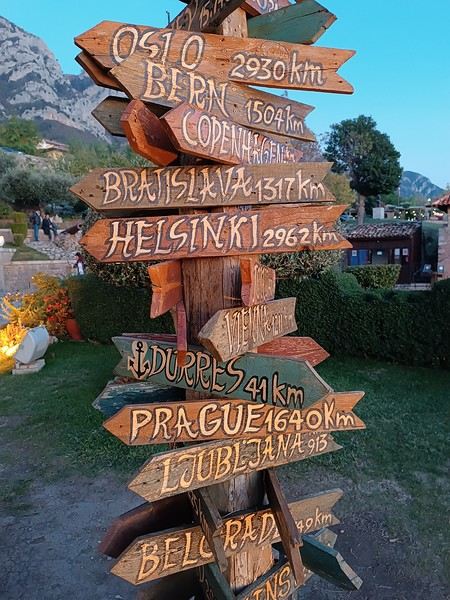
What else, I wonder...
Personally, I often prioritize simple destinations (no administrative hassles), where I’m not at risk (nothing extraordinary like getting kidnapped by Daesh or ending up in a jail cell because the current geopolitics aren’t favorable to my passport, etc.), and where I can drive.
Wide-open natural spaces are more my thing than urban anthills.
Finally, I try not to spend three days on a plane to reach my destination, and I aim for a maximum budget of 3500 € (for 3 weeks) in comfortable conditions—that means charming hotels, good meals, etc.
What about you?🙂
The title might be a bit long, but I hope it’s completely understandable!
When it comes to choosing your next trip, what tips the scales in favor of Eritrea over Ibiza?
Why pick Canada over French Polynesia?
The price? A magazine or TV report, a travel journal, an Instagram ad? Ease of travel? Minimal time difference? The country that has the most in common with all the trip participants? Activities? Relaxation? The desire to push your limits?
A photo?
What else, I wonder...
Personally, I often prioritize simple destinations (no administrative hassles), where I’m not at risk (nothing extraordinary like getting kidnapped by Daesh or ending up in a jail cell because the current geopolitics aren’t favorable to my passport, etc.), and where I can drive.
Wide-open natural spaces are more my thing than urban anthills.
Finally, I try not to spend three days on a plane to reach my destination, and I aim for a maximum budget of 3500 € (for 3 weeks) in comfortable conditions—that means charming hotels, good meals, etc.
What about you?🙂
The Verb That Guides
It’s nighttime and 3 degrees in Tashkent.
Hi there,
Reflection: an act of thought that revisits an object to examine it. The object here is travel (or tourist movement, it doesn’t really matter) and the desire to examine it from the particular angle of the verb that drives it came from reading a sentence by Xrctn in the introduction to his travel journal about Turkmenistan.
Part of that strange category of travelers who like ticking boxes...
Ticking I have no idea how strange that is—I actually get the impression it might be pretty common when I see the diverse mix of trips some people here take. But maybe it’s a different approach that drives these compulsive travelers.
Still, it wouldn’t even occur to me. What does it add?
Connecting Or chaining, assembling, linking. These are my verbs. If I can’t do it—either because finances are tight (I live in one of Europe’s pigsties—a PIIGS country, where the virtuous northern barbarians sent the G&S troika to "nurse us back to health" through austerity, making it all the more pleasant to spend every summer among civilized folks on the terrace of my little white house in Kalymnos overlooking the Aegean), or because I’ve chosen a tricky, unstable direction (Lebanon had to be canceled in summer 2006, Syria too, and Iran right now)—I don’t really feel like traveling. I might just tag along to be nice, but it doesn’t mean anything to me.
If I think about the need behind my verbs—this continuous, meticulous, patient way of traveling—it’s about stripping away sudden, artificial exoticism, weaving small, successive changes, and feeling the presence of the knots too. About understanding, integrating something a little different from the image on a screen.
And you? What’s your guiding verb?
Catherine
Hi there,
Reflection: an act of thought that revisits an object to examine it. The object here is travel (or tourist movement, it doesn’t really matter) and the desire to examine it from the particular angle of the verb that drives it came from reading a sentence by Xrctn in the introduction to his travel journal about Turkmenistan.
Part of that strange category of travelers who like ticking boxes...
Ticking I have no idea how strange that is—I actually get the impression it might be pretty common when I see the diverse mix of trips some people here take. But maybe it’s a different approach that drives these compulsive travelers.
Still, it wouldn’t even occur to me. What does it add?
Connecting Or chaining, assembling, linking. These are my verbs. If I can’t do it—either because finances are tight (I live in one of Europe’s pigsties—a PIIGS country, where the virtuous northern barbarians sent the G&S troika to "nurse us back to health" through austerity, making it all the more pleasant to spend every summer among civilized folks on the terrace of my little white house in Kalymnos overlooking the Aegean), or because I’ve chosen a tricky, unstable direction (Lebanon had to be canceled in summer 2006, Syria too, and Iran right now)—I don’t really feel like traveling. I might just tag along to be nice, but it doesn’t mean anything to me.
If I think about the need behind my verbs—this continuous, meticulous, patient way of traveling—it’s about stripping away sudden, artificial exoticism, weaving small, successive changes, and feeling the presence of the knots too. About understanding, integrating something a little different from the image on a screen.
And you? What’s your guiding verb?
Catherine
A Turquoise Dream Come True in Uzbekistan - 2022
We took this trip from September 12 to October 7, 2022. I didn’t post this travel journal earlier in Voyage Forum because the site wasn’t back up yet (and also because I was short on time).
Then, at the end of 2024, I made a promise to a friend: to publish my travel journal on VF. So here it is!
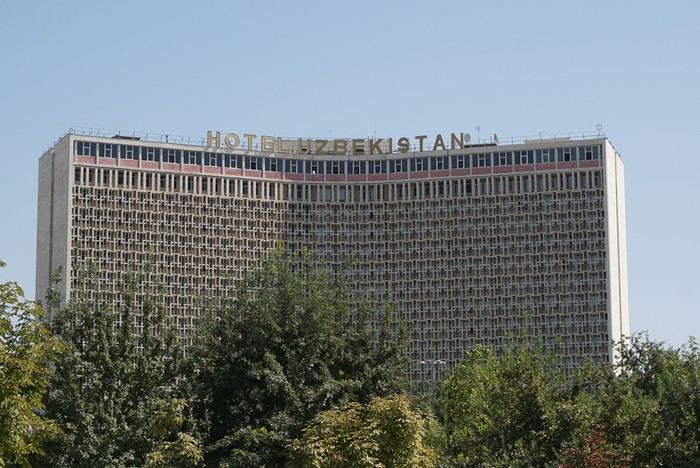 We took off from Paris in the late afternoon on September 12 and arrived in Tashkent around 7:15 AM on the 13th.
This trip was the result of long contemplation and preparation (it was originally planned for the year of the lockdown (2020) and was prepared with the help and advice of Nasrullo Jumanov from Turquoise Travel.
Stages and Itinerary
Stage 1: Tashkent - September 13 and 14
Stage 2: Ferghana Valley – September 15 to 17
Stage 3: Nukus and Moynaq - September 18 and 19
Stage 4: Mysterious Khiva - September 20 to 22
Stage 5: Holy Bukhara - September 23 to 26
Stage 6: Asraf - September 27 and 28
Stage 7: Mythical Samarkand - September 29 to October 2
Stage 8: Tersak (via Shakhrisabz and Urgut) – October 3 and 4
Stage 9: Samarkand – October 5 and 6
Stage 10: Tashkent/Istanbul/Paris – October 6 and 7
Stage 1: Tashkent
September 13
At the airport exit, we were greeted by the owner of our B&B (B&B Gulnara).
Today was all about recovery and our first steps in the capital. Our first currency exchange made us feel like sudden millionaires.
Our first stroll down the avenue leading to Chorsu Market introduced us to the fact that 80 to 90% of the cars here are white Chevrolets.
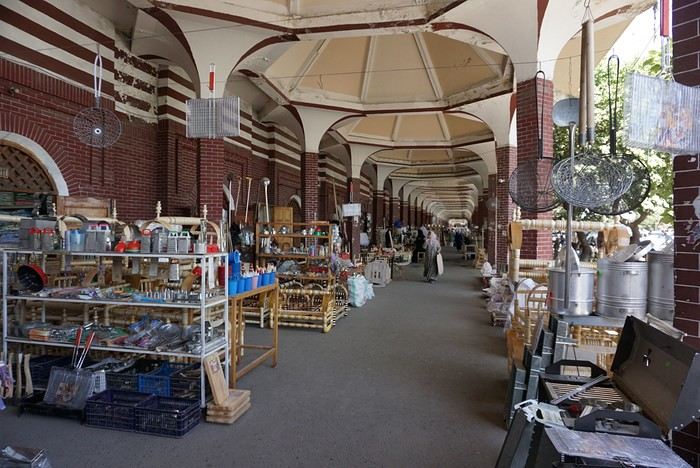
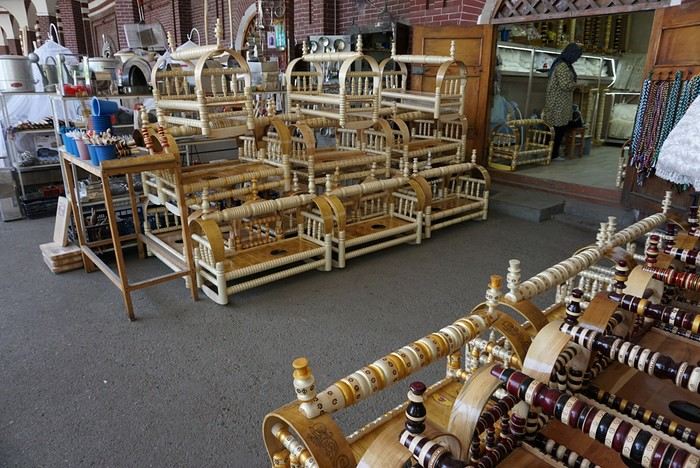
A walk under the arcades facing Chorsu: hardware stores, cabinetmakers, lute makers (one of them gave me a little concert/demo of a few string instruments).
We took off from Paris in the late afternoon on September 12 and arrived in Tashkent around 7:15 AM on the 13th.
This trip was the result of long contemplation and preparation (it was originally planned for the year of the lockdown (2020) and was prepared with the help and advice of Nasrullo Jumanov from Turquoise Travel.
Stages and Itinerary
Stage 1: Tashkent - September 13 and 14
Stage 2: Ferghana Valley – September 15 to 17
Stage 3: Nukus and Moynaq - September 18 and 19
Stage 4: Mysterious Khiva - September 20 to 22
Stage 5: Holy Bukhara - September 23 to 26
Stage 6: Asraf - September 27 and 28
Stage 7: Mythical Samarkand - September 29 to October 2
Stage 8: Tersak (via Shakhrisabz and Urgut) – October 3 and 4
Stage 9: Samarkand – October 5 and 6
Stage 10: Tashkent/Istanbul/Paris – October 6 and 7
Stage 1: Tashkent
September 13
At the airport exit, we were greeted by the owner of our B&B (B&B Gulnara).
Today was all about recovery and our first steps in the capital. Our first currency exchange made us feel like sudden millionaires.
Our first stroll down the avenue leading to Chorsu Market introduced us to the fact that 80 to 90% of the cars here are white Chevrolets.
A walk under the arcades facing Chorsu: hardware stores, cabinetmakers, lute makers (one of them gave me a little concert/demo of a few string instruments).
As we entered the market, many vendors called out to us, including this florist who asked where we were from: ‘France? Ah! Macron! PSG!’ He then recited a list of players from the Parisian team as well as past (Platini, Zidane, etc.) and current (Giroud, Griezmann, Mbappé, etc.) French national team players. Since we’re more into rugby (we live near Toulouse), he knew more players than I did!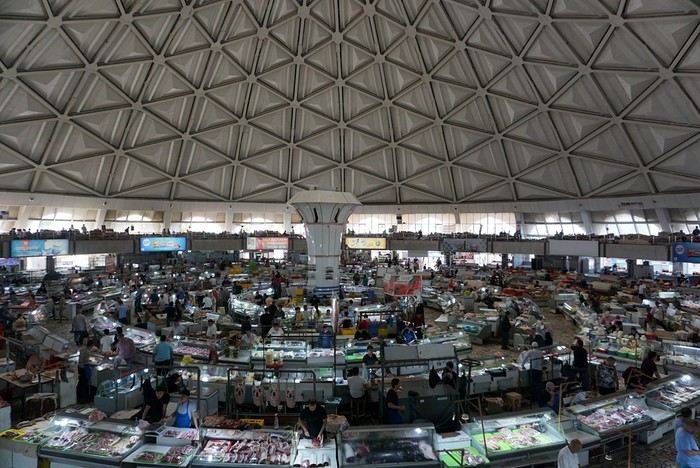
The market sprawls outside around the large circular, multi-story hall. We bought some grapes and bottles of freshly squeezed pomegranate juice for just a few sums. This evening, we had a meet-up with Nasrullo. The reunion was very warm: we’d been exchanging messages for over two years, and I’d been ‘torturing’ him with changes to our itinerary and trip duration. We were finally eager to meet, and honestly, I wasn’t disappointed—in fact, it was the opposite. Nasrullo was very attentive throughout our trip and always made sure, even from a distance (and most often from a distance!), that everything went smoothly. His goal was for us to leave delighted with our trip and, why not, indirectly become ambassadors for this destination. September 14 Breakfast with Nasrullo, then we set off with him by taxi to explore some of the capital’s sites.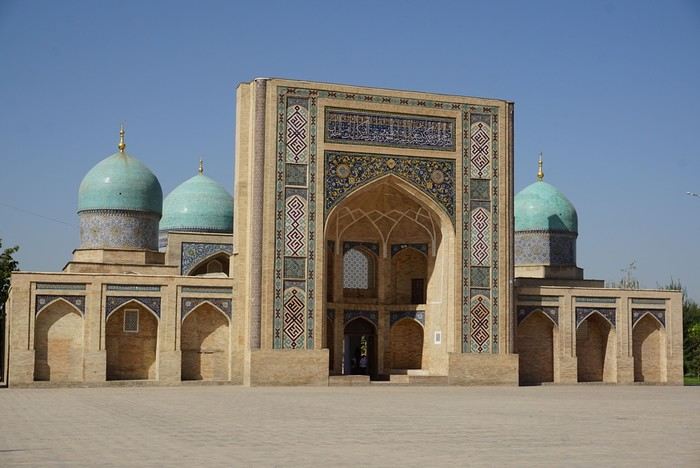
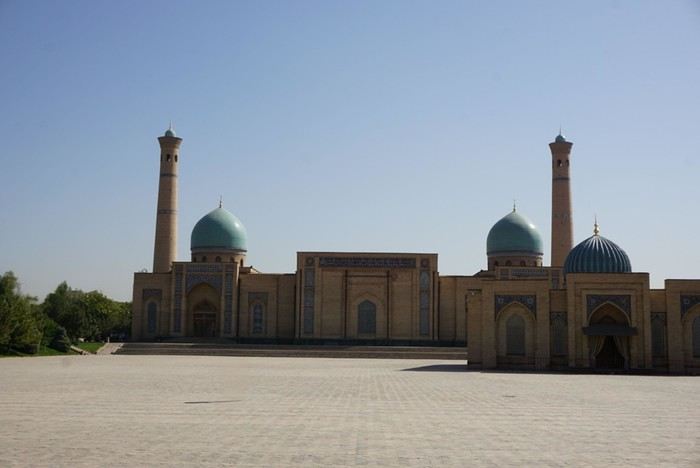
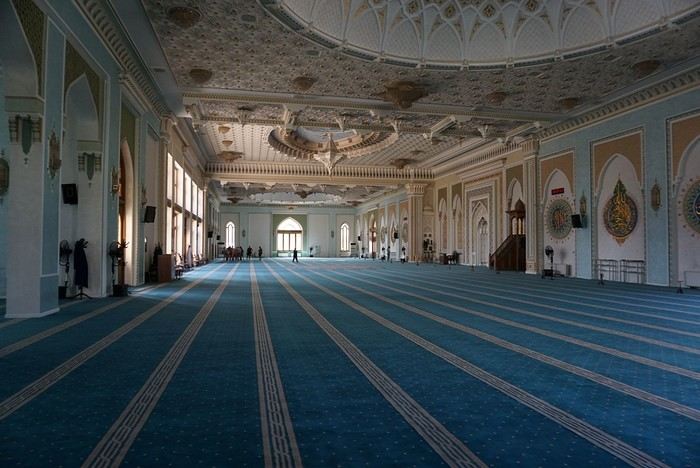
We started by visiting the Khazrati Imam complex, which includes the mausoleum of Kaffal Shashi, the Barak Khan and Muyi Muborak madrasas, and the great Khazrati Imam Mosque with its immense prayer hall.
In the Muyi Muborak madrasa, now a museum, you can see the oldest Quran in the world. It was written by three religious scholars, including the secretary of the Prophet Muhammad, on large ‘pages’ made of antelope skin. Next, we explored Soviet-era Tashkent, discovering its parks, canals, and squares: Independence Square with its storks and phoenixes, Amir Temur Square with its large statue and, in the background, the massive Soviet-era hotel that has become one of Tashkent’s iconic buildings. Nasrullo took us through Broadway Boulevard and along what he calls ‘Tashkent’s Montmartre’… Well, it’s far, very far from Montmartre (in every sense of the word!). Then we took the metro to Chorsu station. Rush hour is pretty much the same everywhere in the metro… When we arrived at Chorsu, it was time to say goodbye. Nasrullo had to head back to Samarkand. Before leaving, he recommended some chaikhanas at the end of the galleries facing the market. We ate there for just a few euros (2 or 3 € for two people). After eating, we headed back to our room to cool off (our B&B is about a 10-minute walk away).
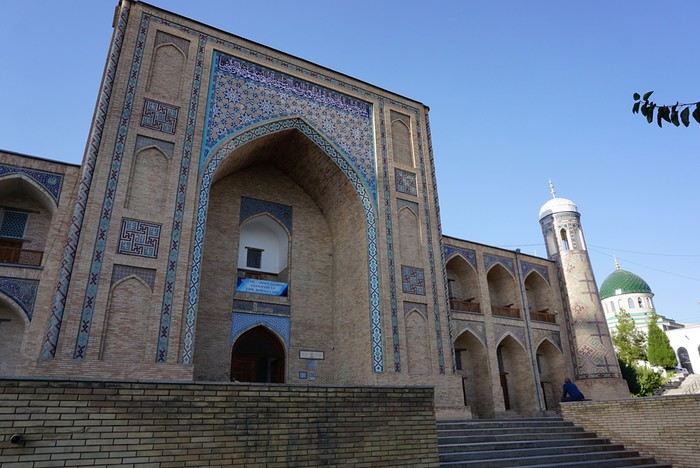
Around 4 PM, we set off to visit the Kokeldash Madrasa, which is still active. On the way, we stopped to watch some bread vendors and take a few photos. We were hesitating about buying some for our evening picnic when a young woman approached us. In perfect English, she asked: ‘Are you looking for something? Do you want to buy bread? Which one? How much?’ She then spoke to one of the vendors and negotiated the price. ‘Do you want one?’ And she took two. She paid directly. I took out my wallet to reimburse her, but she refused. It’s on the house! Then the vendor asked where we were from. And off we went again: Macron, PSG, football players… We’ll have to get used to it. The young woman smiled at the questions and comments, barely gave us time to thank her, and left as quickly as she had approached us.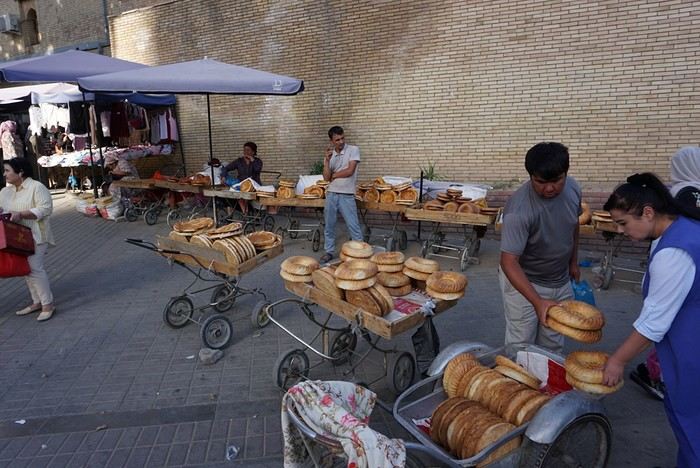
We continued our walk. Visited the madrasa. Then we crossed the boulevard to see the Tashkent Circus. I would’ve loved to go in and visit, but the ticket seller wouldn’t hear of it. We carried on around what should’ve been a park with old-fashioned rides and attractions. All we found was a construction site. Oh well! Back at our hotel, a message from Nasrullo was waiting for us. He had managed to change our train ticket for the next day. Instead of taking the 6:00 AM train, we’d take the 8:00 AM one. And instead of second class, we’d be in first class! Great! This evening, we had a picnic at one of the breakfast tables in the B&B courtyard. Under a shelter, the owner and his family were celebrating a birthday. The owner started by offering us some tea. Then they brought us some fruit (watermelon and melon). Finally, after the song, candles, and cake cutting, they brought us two generous slices of that beautiful birthday cake. Delicious!
We took off from Paris in the late afternoon on September 12 and arrived in Tashkent around 7:15 AM on the 13th.
This trip was the result of long contemplation and preparation (it was originally planned for the year of the lockdown (2020) and was prepared with the help and advice of Nasrullo Jumanov from Turquoise Travel.
Stages and Itinerary
Stage 1: Tashkent - September 13 and 14
Stage 2: Ferghana Valley – September 15 to 17
Stage 3: Nukus and Moynaq - September 18 and 19
Stage 4: Mysterious Khiva - September 20 to 22
Stage 5: Holy Bukhara - September 23 to 26
Stage 6: Asraf - September 27 and 28
Stage 7: Mythical Samarkand - September 29 to October 2
Stage 8: Tersak (via Shakhrisabz and Urgut) – October 3 and 4
Stage 9: Samarkand – October 5 and 6
Stage 10: Tashkent/Istanbul/Paris – October 6 and 7
Stage 1: Tashkent
September 13
At the airport exit, we were greeted by the owner of our B&B (B&B Gulnara).
Today was all about recovery and our first steps in the capital. Our first currency exchange made us feel like sudden millionaires.
Our first stroll down the avenue leading to Chorsu Market introduced us to the fact that 80 to 90% of the cars here are white Chevrolets.
A walk under the arcades facing Chorsu: hardware stores, cabinetmakers, lute makers (one of them gave me a little concert/demo of a few string instruments).As we entered the market, many vendors called out to us, including this florist who asked where we were from: ‘France? Ah! Macron! PSG!’ He then recited a list of players from the Parisian team as well as past (Platini, Zidane, etc.) and current (Giroud, Griezmann, Mbappé, etc.) French national team players. Since we’re more into rugby (we live near Toulouse), he knew more players than I did!
The market sprawls outside around the large circular, multi-story hall. We bought some grapes and bottles of freshly squeezed pomegranate juice for just a few sums. This evening, we had a meet-up with Nasrullo. The reunion was very warm: we’d been exchanging messages for over two years, and I’d been ‘torturing’ him with changes to our itinerary and trip duration. We were finally eager to meet, and honestly, I wasn’t disappointed—in fact, it was the opposite. Nasrullo was very attentive throughout our trip and always made sure, even from a distance (and most often from a distance!), that everything went smoothly. His goal was for us to leave delighted with our trip and, why not, indirectly become ambassadors for this destination. September 14 Breakfast with Nasrullo, then we set off with him by taxi to explore some of the capital’s sites.
We started by visiting the Khazrati Imam complex, which includes the mausoleum of Kaffal Shashi, the Barak Khan and Muyi Muborak madrasas, and the great Khazrati Imam Mosque with its immense prayer hall.
In the Muyi Muborak madrasa, now a museum, you can see the oldest Quran in the world. It was written by three religious scholars, including the secretary of the Prophet Muhammad, on large ‘pages’ made of antelope skin. Next, we explored Soviet-era Tashkent, discovering its parks, canals, and squares: Independence Square with its storks and phoenixes, Amir Temur Square with its large statue and, in the background, the massive Soviet-era hotel that has become one of Tashkent’s iconic buildings. Nasrullo took us through Broadway Boulevard and along what he calls ‘Tashkent’s Montmartre’… Well, it’s far, very far from Montmartre (in every sense of the word!). Then we took the metro to Chorsu station. Rush hour is pretty much the same everywhere in the metro… When we arrived at Chorsu, it was time to say goodbye. Nasrullo had to head back to Samarkand. Before leaving, he recommended some chaikhanas at the end of the galleries facing the market. We ate there for just a few euros (2 or 3 € for two people). After eating, we headed back to our room to cool off (our B&B is about a 10-minute walk away).
Around 4 PM, we set off to visit the Kokeldash Madrasa, which is still active. On the way, we stopped to watch some bread vendors and take a few photos. We were hesitating about buying some for our evening picnic when a young woman approached us. In perfect English, she asked: ‘Are you looking for something? Do you want to buy bread? Which one? How much?’ She then spoke to one of the vendors and negotiated the price. ‘Do you want one?’ And she took two. She paid directly. I took out my wallet to reimburse her, but she refused. It’s on the house! Then the vendor asked where we were from. And off we went again: Macron, PSG, football players… We’ll have to get used to it. The young woman smiled at the questions and comments, barely gave us time to thank her, and left as quickly as she had approached us.
We continued our walk. Visited the madrasa. Then we crossed the boulevard to see the Tashkent Circus. I would’ve loved to go in and visit, but the ticket seller wouldn’t hear of it. We carried on around what should’ve been a park with old-fashioned rides and attractions. All we found was a construction site. Oh well! Back at our hotel, a message from Nasrullo was waiting for us. He had managed to change our train ticket for the next day. Instead of taking the 6:00 AM train, we’d take the 8:00 AM one. And instead of second class, we’d be in first class! Great! This evening, we had a picnic at one of the breakfast tables in the B&B courtyard. Under a shelter, the owner and his family were celebrating a birthday. The owner started by offering us some tea. Then they brought us some fruit (watermelon and melon). Finally, after the song, candles, and cake cutting, they brought us two generous slices of that beautiful birthday cake. Delicious!
Nothing’s stopping you from going to Ampefy (Madagascar)
During these three big weeks in Madagascar, one week in Sainte Marie, a few days for a little loop in the west/south, and the rest in Tana.
This loop I’m talking about covers an area I’d never taken the time to visit before. A recent road in good condition, the chance to pass through beautiful highland landscapes, and a few free days made it the perfect opportunity. Destination: Ampefy, west of Tana via the RN1, then a turn south onto the recently rehabilitated RN43 to reach Antsirabe before heading back to Tana. Four days planned—perfect, since an extra day wouldn’t have been a problem given all the activities in Ampefy.
First day: a relaxed and fairly late departure for Ampefy. We weren’t in a rush and took our time. Traffic leaving Tana to get back on the RN1 cost us the head start we had on our original schedule. An hour and a half bumper-to-bumper with the *buxis*, inching painfully toward the roundabout and then the bridge that acts as a bottleneck—we dove in like all our fellow sufferers. It’s not our everyday reality, and we were early, so no big deal, but man, it’s long and slow. Once past that obstacle, traffic flowed smoothly, and the road was good (all the way to Ampefy). We moved through highland landscapes, bustling villages full of activity, and countless agricultural supply shops—clear proof, if any were needed, that we were crossing a prime farming region. Around Arivonimamo, we passed through a forest with a Mediterranean vibe: a single-species forest of stout little trees with glossy, elongated light-green leaves—these are *tapia*. An endemic tree in Madagascar, and a pretty unique forest as a result (you can see them elsewhere, like between Antsirabe and Ambositra). There are efforts to protect it from illegal logging because the wood is fire-resistant, which helps shield the forest from wildfires. Beyond its biodiversity value, the *tapia* hosts silkworms, giving it economic and cultural importance.
As we kept going, we started spotting a lake and mountains with the rounded shapes typical of extinct volcanoes worn down by time and the elements. We were approaching Lake Itasy and, by extension, Ampefy. We stopped at a *hotely* for a plate of *tongon’kisoa*—pig’s trotters caramelized by cooking, with thick, flavorful skin—along with the obligatory portion of rice, which we took the time to drizzle with cooking juices to make it a bit more appetizing. Full, we turned left to reach Ampefy and our hotel. The landscape was dotted with collapsed, dormant volcanic cones, and suddenly, the view opened up onto the lake. Shallow and expansive, we followed it, losing sight of it now and then before finding it again in Ampefy itself, which we entered after crossing the Lily, a beautiful river that drains the lake. Lots of hotels and restaurants, with plenty of options at all price points. We chose the *Farihy*, about 5 km past Ampefy. A gorgeous spot by the lake, with a pool and lovely bungalows—some with picture windows overlooking the lake. Really nice. In the evening, a drink and some *sak sak* for aperitif on the terrace. It wasn’t warm, there was a lot of wind, and a storm was brewing. Off to bed quickly to start the next day’s visits.
After buying some lychees—we hadn’t seen many this year, and these were fresh from the field, picked in Ampefy—we headed to the Lily Falls. Well signposted, with a paved road in great condition, we stopped at the kiosk for the entrance fee and parking (1 euro for one *vahiny* and 10 cents for one Malagasy). We set off down the path and quickly reached the first waterfall, then continued for maybe 1 km on a well-marked trail to the second. A guide led us to the third, which is harder to spot and isn’t actually on the Lily itself. Beautiful countryside scenery: fishermen straight out of *Tom Sawyer*, straw hats on their heads, lying down with one foot hooked to a fragile bamboo rod, their line dipping into the calm river. Men preparing rice paddies with their *angady*, women transplanting rice, bent over the water. At some points, we walked along the dikes between paddies almost ready for harvest. It’s peaceful and beautiful when you’re strolling or fishing, but working the paddies is grueling, especially under that beating sun. A really nice walk—2 hours and a bit, going at a leisurely pace. A guide isn’t mandatory; only the entrance fee is. We took one because it provides a bit of work and puts money in the hands of locals, giving them more incentive to protect the site. But you can easily skip it, like most people do. Lots of visitors since it was the weekend—Tananarivians with family or groups of young people, scout groups organized under their chaperones’ direction. Very few foreign tourists, though—that’s a general observation. It’s great to see this growth in domestic tourism, giving Malagasy people the chance to discover their own country and allowing those in the sector to rely less on foreign visitors, who’ve been scarce for years.
Next, we headed to the "geysers" (which aren’t actually geysers, but whatever). We had to go back to the RN1, head toward Tsiroanomandidy, and a few kilometers later, a well-marked sign and a newly paved track led us to a pretty site. Again, lots of people, another kiosk, more fees to pay, and guides available. This time, we skipped the guide. A downpour caught us in front of the "geysers," so we took shelter under a little shop, grabbing an ice cream and some drinks. We didn’t stay long—we weren’t interested in a massage or a dip in the thermal water. The countryside and barren mountain landscapes were stunning on the way back to the hotel. We noticed you could go paragliding right in front of the bungalow, so we booked a session for the next morning. After eating at the *Auberge* in the town center (it was good), we headed back to the hotel to turn in early. Once again, a storm rolled in during the afternoon, and the temperature dropped significantly.
The next morning, around 8 a.m., we walked to the takeoff zone near the hotel. Towed by a small boat, we took off for a flight over the lake and the volcanic domes before landing back at the same spot. Two companies handle this. I’m no expert, but it seemed safe and well-organized.
To be continued...
First day: a relaxed and fairly late departure for Ampefy. We weren’t in a rush and took our time. Traffic leaving Tana to get back on the RN1 cost us the head start we had on our original schedule. An hour and a half bumper-to-bumper with the *buxis*, inching painfully toward the roundabout and then the bridge that acts as a bottleneck—we dove in like all our fellow sufferers. It’s not our everyday reality, and we were early, so no big deal, but man, it’s long and slow. Once past that obstacle, traffic flowed smoothly, and the road was good (all the way to Ampefy). We moved through highland landscapes, bustling villages full of activity, and countless agricultural supply shops—clear proof, if any were needed, that we were crossing a prime farming region. Around Arivonimamo, we passed through a forest with a Mediterranean vibe: a single-species forest of stout little trees with glossy, elongated light-green leaves—these are *tapia*. An endemic tree in Madagascar, and a pretty unique forest as a result (you can see them elsewhere, like between Antsirabe and Ambositra). There are efforts to protect it from illegal logging because the wood is fire-resistant, which helps shield the forest from wildfires. Beyond its biodiversity value, the *tapia* hosts silkworms, giving it economic and cultural importance.
As we kept going, we started spotting a lake and mountains with the rounded shapes typical of extinct volcanoes worn down by time and the elements. We were approaching Lake Itasy and, by extension, Ampefy. We stopped at a *hotely* for a plate of *tongon’kisoa*—pig’s trotters caramelized by cooking, with thick, flavorful skin—along with the obligatory portion of rice, which we took the time to drizzle with cooking juices to make it a bit more appetizing. Full, we turned left to reach Ampefy and our hotel. The landscape was dotted with collapsed, dormant volcanic cones, and suddenly, the view opened up onto the lake. Shallow and expansive, we followed it, losing sight of it now and then before finding it again in Ampefy itself, which we entered after crossing the Lily, a beautiful river that drains the lake. Lots of hotels and restaurants, with plenty of options at all price points. We chose the *Farihy*, about 5 km past Ampefy. A gorgeous spot by the lake, with a pool and lovely bungalows—some with picture windows overlooking the lake. Really nice. In the evening, a drink and some *sak sak* for aperitif on the terrace. It wasn’t warm, there was a lot of wind, and a storm was brewing. Off to bed quickly to start the next day’s visits.
After buying some lychees—we hadn’t seen many this year, and these were fresh from the field, picked in Ampefy—we headed to the Lily Falls. Well signposted, with a paved road in great condition, we stopped at the kiosk for the entrance fee and parking (1 euro for one *vahiny* and 10 cents for one Malagasy). We set off down the path and quickly reached the first waterfall, then continued for maybe 1 km on a well-marked trail to the second. A guide led us to the third, which is harder to spot and isn’t actually on the Lily itself. Beautiful countryside scenery: fishermen straight out of *Tom Sawyer*, straw hats on their heads, lying down with one foot hooked to a fragile bamboo rod, their line dipping into the calm river. Men preparing rice paddies with their *angady*, women transplanting rice, bent over the water. At some points, we walked along the dikes between paddies almost ready for harvest. It’s peaceful and beautiful when you’re strolling or fishing, but working the paddies is grueling, especially under that beating sun. A really nice walk—2 hours and a bit, going at a leisurely pace. A guide isn’t mandatory; only the entrance fee is. We took one because it provides a bit of work and puts money in the hands of locals, giving them more incentive to protect the site. But you can easily skip it, like most people do. Lots of visitors since it was the weekend—Tananarivians with family or groups of young people, scout groups organized under their chaperones’ direction. Very few foreign tourists, though—that’s a general observation. It’s great to see this growth in domestic tourism, giving Malagasy people the chance to discover their own country and allowing those in the sector to rely less on foreign visitors, who’ve been scarce for years.
Next, we headed to the "geysers" (which aren’t actually geysers, but whatever). We had to go back to the RN1, head toward Tsiroanomandidy, and a few kilometers later, a well-marked sign and a newly paved track led us to a pretty site. Again, lots of people, another kiosk, more fees to pay, and guides available. This time, we skipped the guide. A downpour caught us in front of the "geysers," so we took shelter under a little shop, grabbing an ice cream and some drinks. We didn’t stay long—we weren’t interested in a massage or a dip in the thermal water. The countryside and barren mountain landscapes were stunning on the way back to the hotel. We noticed you could go paragliding right in front of the bungalow, so we booked a session for the next morning. After eating at the *Auberge* in the town center (it was good), we headed back to the hotel to turn in early. Once again, a storm rolled in during the afternoon, and the temperature dropped significantly.
The next morning, around 8 a.m., we walked to the takeoff zone near the hotel. Towed by a small boat, we took off for a flight over the lake and the volcanic domes before landing back at the same spot. Two companies handle this. I’m no expert, but it seemed safe and well-organized.
To be continued...
Jerusalem, the Earthly
5 AM, I’m shivering.
The icy February 2022 fog wraps around the deserted Terminal 2, closed for renovations, on the outskirts of which my hotel stands. I wait alone at the stop in the pitch-black night for the first shuttle of the day, which is supposed to take me to T1. I have no idea where I’m going. All I know is the name: Jerusalem. I’m entirely goy, just as entirely atheist, but I’ve been visiting that imaginary city for decades. It haunts, fantastical, the medieval images that once occupied me for so long. It regularly creeps into my ears through the misfortune of news reports from radios around the world. It crystallizes so many of humanity’s delusions, of which I’m a part. I know nothing about it, haven’t read a single guidebook. But I want to see it, walk its streets, live it for a few days. Make it real, tangible.
The flight is on time. This is the era of mandatory FFP2 masks on all flights landing in Italy (Europe?). The crew valiantly fights against passengers’ ingenious attempts to remove them: sipping their drinks milliliter by milliliter, nibbling their snacks cubic millimeter by cubic millimeter, feigning breathing difficulties, yanking off the elastic bands... A rabbi passes through the rows collecting donations. Men put on their tefillin, drape their prayer shawls, and rock to the rhythm of their prayers. Already, the sense of elsewhere.
Ben Gurion Airport is a stunning airport—monumental, bright, functional, adorned with archaeological remnants and enormous photographs showcasing the country’s great leader in its works. I collect my visa from a kiosk, quickly endure the routine interrogation from a military officer slumped in his seat, withdraw some shekels from an ATM, get my nostrils swabbed at one of the many molecular testing stations in exchange for a yellow all-inclusive resort-style wristband that grants me passage through the outer doors. I spend ages (I think I’m just not good at this) in the crowd trying to find a sherut heading to Jerusalem, then lose myself in the landscape. Mediterranean-style—red earth, stunted vegetation, overrun with sprawling construction. I do glute exercises in this traffic, where a Neapolitan driver would embody road indolence. Endless traffic jams signal the city’s approach. The sherut drops me a few steps from my hotel, the Saint George’s Cathedral Pilgrim Guest House, right on the edge of the dotted lines on maps marking the divide between Jewish and Arab Jerusalem. It’s a pleasant complex with an inner garden and beautiful rooms featuring exposed stone vaults—and thank goodness, because I’m not allowed to leave until I get my test results. The reception staff, incredibly helpful, guide me through the myriad of meal delivery options. A roof over my head, a full stomach—all that’s left is to wait. Read Caillois, check the increasingly precise, increasingly ominous rumors of war brewing, yet again, in Europe, and navigate the city’s virtual map to get a sense of where to head once freed.
The next day, it’s done, and my first destination is, quite naturally, the Old City. The first gate I come across is Jaffa Gate, so Jaffa Gate it is—leading from the chaos of vehicles of all kinds into the labyrinth of alleys packed with goods of all kinds.
The flight is on time. This is the era of mandatory FFP2 masks on all flights landing in Italy (Europe?). The crew valiantly fights against passengers’ ingenious attempts to remove them: sipping their drinks milliliter by milliliter, nibbling their snacks cubic millimeter by cubic millimeter, feigning breathing difficulties, yanking off the elastic bands... A rabbi passes through the rows collecting donations. Men put on their tefillin, drape their prayer shawls, and rock to the rhythm of their prayers. Already, the sense of elsewhere.
Ben Gurion Airport is a stunning airport—monumental, bright, functional, adorned with archaeological remnants and enormous photographs showcasing the country’s great leader in its works. I collect my visa from a kiosk, quickly endure the routine interrogation from a military officer slumped in his seat, withdraw some shekels from an ATM, get my nostrils swabbed at one of the many molecular testing stations in exchange for a yellow all-inclusive resort-style wristband that grants me passage through the outer doors. I spend ages (I think I’m just not good at this) in the crowd trying to find a sherut heading to Jerusalem, then lose myself in the landscape. Mediterranean-style—red earth, stunted vegetation, overrun with sprawling construction. I do glute exercises in this traffic, where a Neapolitan driver would embody road indolence. Endless traffic jams signal the city’s approach. The sherut drops me a few steps from my hotel, the Saint George’s Cathedral Pilgrim Guest House, right on the edge of the dotted lines on maps marking the divide between Jewish and Arab Jerusalem. It’s a pleasant complex with an inner garden and beautiful rooms featuring exposed stone vaults—and thank goodness, because I’m not allowed to leave until I get my test results. The reception staff, incredibly helpful, guide me through the myriad of meal delivery options. A roof over my head, a full stomach—all that’s left is to wait. Read Caillois, check the increasingly precise, increasingly ominous rumors of war brewing, yet again, in Europe, and navigate the city’s virtual map to get a sense of where to head once freed.
The next day, it’s done, and my first destination is, quite naturally, the Old City. The first gate I come across is Jaffa Gate, so Jaffa Gate it is—leading from the chaos of vehicles of all kinds into the labyrinth of alleys packed with goods of all kinds.
Pertes et déchirements (Italie)
« Era da tanto che volevo scrivere un romanzo con una protagonista. Volevo dire “io” e essere una donna. Adesso posso dire che questa è stata una delle esperienze più importanti che ho provato scrivendo. Tutto è diventato ancestrale, viscerale, materno. Fragilità e coraggio, due sentimenti che non ho mai considerato in contrapposizione, si sono amplificati in maniera assolutamente inedita. Trina (Caterina) – così si chiama la protagonista – ha il nome […] dell’ultima donna che ha lasciato il borgo dopo che la Montecatini […] e ha riempito l’invaso sommergendo per sempre ogni cosa » (Marco Balzano, dans le blog LetteratitudineNews, 2019)
Les drames subis d’un village tyrolien
Ce clocher, il se situe justement à Curon (en all. Graun), un petit village italien situé dans le Tyrol du Sud. C’est en visitant l’endroit et parce qu’il a été lui aussi frappé par cette vision presque surréaliste que Marco Balzano a décidé de lui consacrer un roman. Pour être tout à fait exacte, Je reste ici n’est pas à proprement parler l’histoire de ce lieu. Curon est plutôt le décor du récit qui prend la forme d’un témoignage, la confession d’une mère et femme, Trina, à Marica, sa fille disparue. Cette absence, vive blessure jamais guérie chez Trina, est le moteur de son récit. Elle ne cache rien des fractures apparaissant dans la famille ou dans le village, des trahisons, des violences, mais aussi des joies, traitées avec finesse et pudeur.
Au début, dans les années 1920 Trina est une toute jeune fille. Elle vit à Curon, ancien territoire autrichien annexé par l’Italie à la suite de la Première Guerre mondiale, dans une vallée qui voit soudainement arriver des italophones, des nationalistes qui ne tardent pas à être franchement fascistes, qui lui ferment la porte de l’école pour attribuer les places d’institutrices à des Italiens envoyés là, de toute l’Italie : les adeptes de Mussolini veulent italianiser ces nouveaux territoires nationaux au pas de charge. La langue allemande y est interdite et Trina, devenue institutrice, enseigne clandestinement dans sa langue natale, malgré la chasse que les nationalistes font à ces écoles interdites. Au risque de représailles. Au risque d’un exil à l’autre bout du pays, très loin à l’autre bout de la botte.
Malgré tout, la vie suit son cours. Trina épouse Erich, un paysan, avec qui elle a deux enfants, Marica et Michael. En 1939, la population locale subit un nouveau déchirement. Un accord entre les régimes nazi et fasciste leur demande de choisir : rester chez eux et garder la nationalité italienne ou émigrer vers le Troisième Reich pour devenir Allemands et retrouver leur langue natale : un choix entre la peste et le choléra. Trina et son époux restent, mais ce choix n’est pas sans conséquences : un jour de 1936, Anita, la sœur d’Erich, venue d’Innsbruck, s’installe à Curon avec son mari Lorenz pour échapper au tourbillon urbain et aux voyages incessants de Lorenz, dit-elle. Jusqu’à cette nuit où Anita et Lorenz sont partis comme des voleurs en emmenant avec eux la petite Marica, laissant Trina, Erich et Michael sans nouvelle, désemparés et perdus. Puis la Seconde Guerre mondiale, la mobilisation des hommes qui vont combattre auprès des fascistes et la fuite dans les montagnes alentours. Mais un malheur n’arrivant jamais seul, le gouvernement italien décide de construire dans la région un immense barrage qui aura pour conséquence d’inonder, d’anéantir même, plusieurs villages, dont Curon. Donc, il faut que Trina passe par deux tragédies, qu’elle endure deux déchirements : la séparation d’avec sa fille, d’un côté, et, de l’autre, la perte de son village natal, de ses origines, de son identité. Car les deux sont intimement liés.
Des années plus tard, Trina prend la plume. Elle écrit à cette fille qui est partie de la maison, qui n’a jamais donné d’autre nouvelle, qui n’est jamais reparue alors que, eux, malgré les ennuis, malgré la guerre, malgré le barrage, sont restés ici. Dans le pays qui les a vu naître. Dans leur pays. Sur leur terre pourtant tellement malmenée.
Elle raconte le quotidien d'un monde rural simple et paisible, rattrapé par la folie des hommes. Elle raconte comment le village qui se situe sur la frontière italo-germanique. est annexé par l'Italie en dédommagement de guerre et comment commence pour les habitants une italianisation à marche forcée. Elle raconte comment certains partent s'installer dans le Tyrol autrichien, et d'autres restent au village et tentent de résister car c'est la terre de leur père. Elle raconte leur fol espoir lorsqu'Hitler arrive au pouvoir et signe une alliance avec le Duce. Elle raconte… Enfin, elle raconte la dernière trahison des hommes lorsqu'ils décident de mettre en œuvre le projet de barrage qui inondera et engloutira le village.
Fascisme, nationalisme, dictats industriels, passivité et dirigisme étatique, tout cela constitue le fil rouge de ces vies que Trina raconte dans une langue crue, forte, pleine de la violence de ceux qui n’ont qu’elle pour rempart, pleine de l’impuissance de l’être fruste, toujours dans une tentative de renaissance après une défaite, toujours dans l’espérance, même quand l’espoir a disparu.
Et ce clocher, noyé, qui orne la première de couverture mérite d’illustrer une autre histoire que celle qui est aujourd’hui racontée aux touristes qu’il attire : celle que nous livre Marco Balzano dans ce livre beau, très fort, magnifique. Un roman sympa, mêlant avec talent la grande et la petite histoires, qui fait résonner longtemps la voix de Trina qui, malgré les violences de la guerre, reste fidèle à ses passions de jeunesse, courageuse, indépendante et digne : le récit d'une femme forte, amoureuse, fidèle à elle-même, qui admire la liberté de sa propre mère et qui restera debout face à cette histoire qui ne lui laisse presque rien.
L’auteur milanais évite des effets stylistiques et littéraires. Il écrit l’histoire de Curon sur le ton calme d’une chronique et dans un langage simple. C’est précisément cet understatement qui rend ce drame historique d’autant plus évident.
(le titre original est Resto qui, le titre allemand est Ich bleibe hier, le titre français est Je reste ici)
Hery
https://www.youtube.com/watch?v=ryNAOJg31PY
Les drames subis d’un village tyrolien
Ce clocher, il se situe justement à Curon (en all. Graun), un petit village italien situé dans le Tyrol du Sud. C’est en visitant l’endroit et parce qu’il a été lui aussi frappé par cette vision presque surréaliste que Marco Balzano a décidé de lui consacrer un roman. Pour être tout à fait exacte, Je reste ici n’est pas à proprement parler l’histoire de ce lieu. Curon est plutôt le décor du récit qui prend la forme d’un témoignage, la confession d’une mère et femme, Trina, à Marica, sa fille disparue. Cette absence, vive blessure jamais guérie chez Trina, est le moteur de son récit. Elle ne cache rien des fractures apparaissant dans la famille ou dans le village, des trahisons, des violences, mais aussi des joies, traitées avec finesse et pudeur.
Au début, dans les années 1920 Trina est une toute jeune fille. Elle vit à Curon, ancien territoire autrichien annexé par l’Italie à la suite de la Première Guerre mondiale, dans une vallée qui voit soudainement arriver des italophones, des nationalistes qui ne tardent pas à être franchement fascistes, qui lui ferment la porte de l’école pour attribuer les places d’institutrices à des Italiens envoyés là, de toute l’Italie : les adeptes de Mussolini veulent italianiser ces nouveaux territoires nationaux au pas de charge. La langue allemande y est interdite et Trina, devenue institutrice, enseigne clandestinement dans sa langue natale, malgré la chasse que les nationalistes font à ces écoles interdites. Au risque de représailles. Au risque d’un exil à l’autre bout du pays, très loin à l’autre bout de la botte.
Malgré tout, la vie suit son cours. Trina épouse Erich, un paysan, avec qui elle a deux enfants, Marica et Michael. En 1939, la population locale subit un nouveau déchirement. Un accord entre les régimes nazi et fasciste leur demande de choisir : rester chez eux et garder la nationalité italienne ou émigrer vers le Troisième Reich pour devenir Allemands et retrouver leur langue natale : un choix entre la peste et le choléra. Trina et son époux restent, mais ce choix n’est pas sans conséquences : un jour de 1936, Anita, la sœur d’Erich, venue d’Innsbruck, s’installe à Curon avec son mari Lorenz pour échapper au tourbillon urbain et aux voyages incessants de Lorenz, dit-elle. Jusqu’à cette nuit où Anita et Lorenz sont partis comme des voleurs en emmenant avec eux la petite Marica, laissant Trina, Erich et Michael sans nouvelle, désemparés et perdus. Puis la Seconde Guerre mondiale, la mobilisation des hommes qui vont combattre auprès des fascistes et la fuite dans les montagnes alentours. Mais un malheur n’arrivant jamais seul, le gouvernement italien décide de construire dans la région un immense barrage qui aura pour conséquence d’inonder, d’anéantir même, plusieurs villages, dont Curon. Donc, il faut que Trina passe par deux tragédies, qu’elle endure deux déchirements : la séparation d’avec sa fille, d’un côté, et, de l’autre, la perte de son village natal, de ses origines, de son identité. Car les deux sont intimement liés.
Des années plus tard, Trina prend la plume. Elle écrit à cette fille qui est partie de la maison, qui n’a jamais donné d’autre nouvelle, qui n’est jamais reparue alors que, eux, malgré les ennuis, malgré la guerre, malgré le barrage, sont restés ici. Dans le pays qui les a vu naître. Dans leur pays. Sur leur terre pourtant tellement malmenée.
Elle raconte le quotidien d'un monde rural simple et paisible, rattrapé par la folie des hommes. Elle raconte comment le village qui se situe sur la frontière italo-germanique. est annexé par l'Italie en dédommagement de guerre et comment commence pour les habitants une italianisation à marche forcée. Elle raconte comment certains partent s'installer dans le Tyrol autrichien, et d'autres restent au village et tentent de résister car c'est la terre de leur père. Elle raconte leur fol espoir lorsqu'Hitler arrive au pouvoir et signe une alliance avec le Duce. Elle raconte… Enfin, elle raconte la dernière trahison des hommes lorsqu'ils décident de mettre en œuvre le projet de barrage qui inondera et engloutira le village.
Fascisme, nationalisme, dictats industriels, passivité et dirigisme étatique, tout cela constitue le fil rouge de ces vies que Trina raconte dans une langue crue, forte, pleine de la violence de ceux qui n’ont qu’elle pour rempart, pleine de l’impuissance de l’être fruste, toujours dans une tentative de renaissance après une défaite, toujours dans l’espérance, même quand l’espoir a disparu.
Et ce clocher, noyé, qui orne la première de couverture mérite d’illustrer une autre histoire que celle qui est aujourd’hui racontée aux touristes qu’il attire : celle que nous livre Marco Balzano dans ce livre beau, très fort, magnifique. Un roman sympa, mêlant avec talent la grande et la petite histoires, qui fait résonner longtemps la voix de Trina qui, malgré les violences de la guerre, reste fidèle à ses passions de jeunesse, courageuse, indépendante et digne : le récit d'une femme forte, amoureuse, fidèle à elle-même, qui admire la liberté de sa propre mère et qui restera debout face à cette histoire qui ne lui laisse presque rien.
L’auteur milanais évite des effets stylistiques et littéraires. Il écrit l’histoire de Curon sur le ton calme d’une chronique et dans un langage simple. C’est précisément cet understatement qui rend ce drame historique d’autant plus évident.
(le titre original est Resto qui, le titre allemand est Ich bleibe hier, le titre français est Je reste ici)
Hery
https://www.youtube.com/watch?v=ryNAOJg31PY