Results for "Cap+Vert+sécurité"
About 19,325 results.
More options
Many results are in French, the community’s main language. English translations are added over time.
Search results
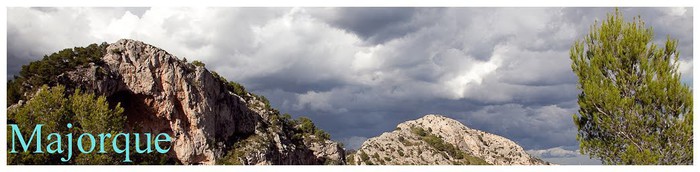
Balades automnales à Majorque
Bonjour à tous,
Le récit de notre escapade automnale est en ligne.
Pour le récit illustré, cliquez ici : sibellelaterre
Bonne lecture!
Marie
Majorque Toussaint 2010
Découvrez en images les quelques randonnées effectuées lors d'un court séjour à Majorque (Baléares) fin octobre 2010.
Péninsule d'Alcudia (Lundi 25/10) Après un vol sans histoire sur Ryanair depuis Francfort Hahn, nous sommes arrivés hier à la nuit tombante à la Finca Can Salas Petit, réservée par internet. Nuit très douce dans cette vieille maison rénovée avec goût. Au réveil, nous découvrons le paysage qui nous entoure : on est ravi! Après un fugace arc-en-ciel, il pleut des cordes, temps idéal pour aller faire un ravitaillement au bourg voisin. Les quelques km qui nous séparent du supermarché nous laissent le temps d'observer que le ciel est plus dégagé sur les 2 péninsules du nord de Majorque : Formentor et Acudia. Va pour Alcudia cette fois! La jolie route qui longe la côte nord de la péninsule nous mène jusqu'au phare de Penya Roja : terminus! Au-delà c'est une zone réservée aux militaires... Au nord, on distingue la péninsule de Formentor avec ses massifs inclinés caractéristiques. Le ciel est magnifique avec de bons gros cumulus comme on les aime. La lumière est trop belle, on n'y tient plus et on jette notre dévolu sur la balade la plus proche qui part du parking de l'Ermita de la Victoria (au SE du Cap Gros sur la carte) Nous sommes immédiatement repérés par un matou qui traverse d'une traite le grand parking (il y a un restaurant) et arrive au petit trot pour se faire câliner. Les vacances commencent bien! Le sentier grimpe tranquillement dans la pinède, nous sommes étonnés de trouver une île aussi verte, surtout en cette fin d'été. Le temps se gâte tous azimuts : c'est un festival de nuages qu'on apprécie d'autant mieux que nous sommes encore au soleil! En une heure environ nous parvenons à la Talaia d'Alcudia où se trouve une cabane de surveillance contre les incendies : de ce petit sommet la vue sur la ville d'Alcudia et la Sierra Tramuntana est imprenable! Le tonnerre gronde sur ce massif qui constitue toute la partie ouest de Majorque et où j'ai repéré plusieurs balades. Le soleil se fait de plus en plus rare, illuminant une dernière fois les fonds de la baie de Pollença. Nous sommes entourés d'orages, il est temps de faire demi-tour. En arrivant à la finca, c'est la débandade! Une portée de 4 petits chatons affamés niche dans un tas d'herbe à côté de la maison : cette finca est vraiment parfaite! Soirée crêpe occupée à essayer d'apprivoiser la bande de petits voraces.
Formentor (mardi 26/10) 1er regard en nous levant vers la fenêtre de la cuisine : trop mignons! Les 4 chatons ont dormi là serrés les uns contre les autres. Je sens qu'il ne va pas être facile de décoller ce matin. Ce n'est pas grave car le ciel est encore chargé ce matin et le soleil a bien du mal à se faufiler sous la couche nuageuse. Les petits chats s'enhardissent, c'est l'invasion! Les nuages restent bloqués sur la Sierra Tramuntana, aussi décidons-nous d'aller vers la péninsule de Formentor. Ici aussi la route est très jolie avec d'innombrables vues sur le mer et la montagne et... très très peu d'endroits pour s'arrêter afin d'en profiter un peu. Il y a plein de cyclistes courageux car ça monte et ça descend sans arrêt! De plus, il souffle un vent terrible, complètement saoulant. La mer est magnifique, ça déménage! Nous arrivons enfin au bout de la route au phare de Formentor : il y a pas mal de monde. Je n'ose pas imaginer ce que ça peut donner en été sur cette route tortueuse en cul de sac! Nous n'avons pas trouvé de possibilité de balade dans le coin, dommage. Nous décidons alors d'aller marcher vers Cala Boquer au départ de Port de Pollença : le sentier passe d'abord devant la Finca Boquer puis court dans une jolie vallée (réputée pour ses nombreuses espèces d'oiseaux mais en pleine journée et à cette époque on n'a pas vu grand-chose) ponctuée de roches calcaires et se termine au bord de la mer. Pas mal de monde sur cette rando (plein d'Allemands qui se sentent vraiment chez eux et qui répondent Halo à nos Hola!), à faire plutôt le matin je pense.
La soirée se passe à fabriquer une maison pour les chats avec du carton et du polystyrène trouvés dans une poubelle!
Tour du Puig des Tossals Verds (Mercredi 27/10) Nous sommes ravis, les chatons ont adopté leur nouvelle maison, bien camouflée sous de l'herbe sèche, à l'abri des intempéries. Grand beau temps aujourd'hui, la tramontane a disparu, temps idéal pour aller faire une grande balade autour du Puig des tossals Verds. La route à l'ouest de Pollença est superbe et il nous faut une petite heure pour arriver vers 11h au départ de la rando : le parking du lac de Cuber est déjà complet (on se trouve une petite place avec difficulté. En été...etc...) Nous longeons la rive est du lac, bien bas en cette fin d'été, et jetons un peil au plus haut sommet de l'île, le Puig...Major (1447m, accès ici aussi réservé aux militaires...) Nous longeons une conduite d'adduction d'eau qui se faufile dans plusieurs tunnels (lampe de poche nécessaire), descendons dans une gorge encaissée, avant de tomber sur un petit troupeau d'ânes assez câlins (je pense qu'ils servent à l'entretien du paysage) Nous remontons ensuite vers le refugi Tossals Verds où nous refaisons le plein d'eau (dans ce massif calcaire, il n'y a quasiment pas d'eau) et comme ils ne vendent pas de glaces nous décidons d'aller pique-niquer plus haut afin d'avoir une jolie vue. Il fait très bon, un temps vraiment idéal pour la randonnée. Le sentier muletier grimpe encore, puis nous apercevons un vieil aqueduc, cheminons brièvement le long d'un petit ruisseau (rarissime ici) avant de retrouver une nouvelle conduite qui surplombe le lac de Gorg Blau, 2ème et dernier lac de l'île, artificiel lui aussi) et qui nous accompagnera jusqu'à la fin de la balade. Au retour à la Finca, pêche au chat!
Torrent de Paréis (jeudi 28/10) Ce torrent peut être descendu (en 3 ou 4h) depuis le haut, à partir de Escorca mais 2 raisons me font renoncer à cette idée : - le problème de la navette pour récupérer la voiture, même si un bus part de Sa Calobra vers Escorca théoriquement à 15h. - il a pas mal plus il y a quelques jours et je crains d'être confrontée à des piscines d'eau glacée difficile à franchir sans combinaison néoprène. Bref, nous arrivons à la jolie crique de Sa Calobra après avoir doublé plein de vélos dans la montée vers le col de Cals reis et après nous être fait doubler par quelques vélos kamikazes dans la descente infernale (lacets+++) vers Sa Calobra. Il est 10h30 et il n'y a encore pas grand-monde, chouette! Le torrent se termine pas un petit étang dont le niveau, bien bas, me laisse penser que nous aurions sans doute pu tenter la descente intégrale du torrent. Les surplombs de la falaise calcaire sont ornés de nids d'hirondelles et de stalactites. Par moments le canyon de rétrécit beaucoup, ce doit être un havre de fraîcheur en été. Nous ôtons bien vite nos polaires, réchauffés par quelques passages d'escalade facile. Un figuier opportuniste profite d'une source improbable. A plusieurs reprises, il faut chercher le passage, c'est très ludique. Après environ 1h nous avons franchi (je pense) les passages un peu techniques et la suite semble plus monotone aussi décidons-nous de redescendre. Je regrette un peu de ne pas avoir fait la descente intégrale depuis Escorca : ce jour-là c'était faisable sans mettre le moindre orteil dans l'eau et les difficultés techniques ne sont pas bien terribles. En arrivant à Sa Calobra nous voyons partir le bateau qui dessert le hameau (principalement composé de restaurants) à partir de Soller. Après avoir pris un petit verre au bord de l'eau et nous être acquittés des 13 euro (!) de parking, nous décidons d'aller voir un peu à quoi ressemble la partie non montagneuse de l'île : en route donc vers les salines de Llevant , au sud de l'île. Bof, bof, bof, les paysages sont assez quelconques, ponctués de moulins anciens et de petites éoliennes contemporaines. Les salines sont quelconques, entièrement clôturées si bien qu'il nous est impossible d'approcher les quelques flamants (pas roses) aperçus à quelques centaines de mètres. La plage des Trenc (4 euro le parking) ponctuée de blockaus est tout à fait quelconque avec la vue sur les moches immeubles de Colonia de San Jordi. Demi-tour donc vers la montagne! Il y a certainement de jolis endroits à Majorque en dehors de la montagne mais avec seulement 5 jours pleins sur place, on n'a pas le temps de les chercher!
De Mortitx vers la ferme abandonnée Es Rafal de Ariant (Vendredi 29/10) Comme tous les matins nous quittons notre jolie vallée et filons (façon de parler car ça tournicote) vers Mortitx à l'ouest de Pollença. De ce village part le canyon de Mortitx, réputé difficile que nous allons donc éviter en restant sur les hauteurs pour descendre peu à peu vers la mer et la ferme abandonnée Es Rafal de Ariant. Le départ de la randonnée est un vrai jeu de piste : heureusement le guide est précis (à part pour les cerisiers transformés en vigne) et nous arrivons facilement sur ce vieux chemin muletier qui serpente entre les oliviers. Nous le quittons bien vite pour un sentier souvent envahi par la végétation heureusement ponctué de nombreux cairns. Nous nous faufilons dans un dédale de roches calcaires aux formes étranges et après une longue descente bien raide arrivons enfin à la vieille ferme. Nous sommes un peu claqués car la roche mouillée par la rosée protégée par la végétation était très glissante et nous n'avions pas de bâtons donc concentration à 200% car ce calcaire est très anguleux et pas très confortable quand on s'y frotte de trop près. Du coup le courage nous manque (et l'eau aussi d'ailleurs, nous n'avons pas trouvé la source indiquée dans le guide et sur la carte près de la ferme) pour poursuivre comme le suggère le guide jusqu'aux grottes des sorcières. Je serais bien descendue jusqu'à cet ancien verger mais nous appréhendons un peu la grimpette sous le soleil. Nous faisons une confortable sieste digestive lovés dans ces grosses touffes d'herbe, bien plus cosy que le sol dur foulé par les chèvres. Ce bouc a repéré la feuille de figuier que j'utilise en guise de pare-soleil! Au retour nous croisons quelques allemands... ils sont partout, même dans les coins les plus perdus! En rentrant, nous faisons la connaissance du (supposé) grand-frère des petits chatons, super collant! La météo annonce un temps couvert pour demain, jour de notre départ.
Valldemossa, Port d'Andratx (samedi 30/10) Ayant fait nos adieux aux petits chats, nous prenons la route vers Valldemossa, joli village de la Sierra Tramuntana. Nous y faisons un peu les boutiques, y déjeunons vers midi alors que les Espagnols petit-déjeunent encore puis reprenons la route vers Port D'andratx. Nous croisons peu après la sortie de Valldemossa un incroyable verger planté d'oliviers centenaires, énormes et tarabiscotés. On a vu parci-parlà quelques « vénérables »mais il y en a ici une concentration incroyable! La route côtière est toujours aussi belle. A Port d'Andratx, nous assistons avec quelques canards a des exercices de sauvetages où des hommes revêtus de seyantes combinaisons de survie apprennent à utiliser un radeau de sauvetage. Il y a quelques bateaux de pêche qui ne sortiront sans doute pas aujourd'hui car il y a à nouveau pas mal de vent. Après avoir rendu la voiture en 2 secondes, nous décollons à 19h pour Francfort et arrivons à minuit à Nancy.
Carnet pratique, budget. Vols Ryanair Francfort Hahn/Palma de Majorque 60 euro A/R+ bagages+frais : 377 euro pour 4 Voiture 6 jours (un Berlingo chez Goldcar) 120 euro Location villa 690 euro Total : 1187 euro soit 300 euro/personne pour 6 jours.
Bibliographie: Carte Rough Guide Map Mallorca 1/80000è Guide de randonnées Edition Rother Majorque de Rolf Goetz (en Français) Walk Mallorca (North and Mountains) Discovery Walking Guides.(en Anglais) Le 1er de ces 2 guides suffit. Pleins d'infos et de liens utiles dans le (super!) site de Pierre : trekking en dehors des sentiers battus
Conclusion: Destination facile et pas chère, agréable (hors saison hein!) mais pas inoubliable. Ce court séjour nous a donné envie de retourner en Grèce, où on peut aussi profiter de paysages méditérannéens et où l'espace n'est pas compté comme sur Majorque. En effet, sur cette île, la plupart des chemins sont privés si bien qu'il nous a semblé difficile de trouver des coins « perdus ».
Le récit de notre escapade automnale est en ligne.
Pour le récit illustré, cliquez ici : sibellelaterre
Bonne lecture!
Marie
Majorque Toussaint 2010
Découvrez en images les quelques randonnées effectuées lors d'un court séjour à Majorque (Baléares) fin octobre 2010.
Péninsule d'Alcudia (Lundi 25/10) Après un vol sans histoire sur Ryanair depuis Francfort Hahn, nous sommes arrivés hier à la nuit tombante à la Finca Can Salas Petit, réservée par internet. Nuit très douce dans cette vieille maison rénovée avec goût. Au réveil, nous découvrons le paysage qui nous entoure : on est ravi! Après un fugace arc-en-ciel, il pleut des cordes, temps idéal pour aller faire un ravitaillement au bourg voisin. Les quelques km qui nous séparent du supermarché nous laissent le temps d'observer que le ciel est plus dégagé sur les 2 péninsules du nord de Majorque : Formentor et Acudia. Va pour Alcudia cette fois! La jolie route qui longe la côte nord de la péninsule nous mène jusqu'au phare de Penya Roja : terminus! Au-delà c'est une zone réservée aux militaires... Au nord, on distingue la péninsule de Formentor avec ses massifs inclinés caractéristiques. Le ciel est magnifique avec de bons gros cumulus comme on les aime. La lumière est trop belle, on n'y tient plus et on jette notre dévolu sur la balade la plus proche qui part du parking de l'Ermita de la Victoria (au SE du Cap Gros sur la carte) Nous sommes immédiatement repérés par un matou qui traverse d'une traite le grand parking (il y a un restaurant) et arrive au petit trot pour se faire câliner. Les vacances commencent bien! Le sentier grimpe tranquillement dans la pinède, nous sommes étonnés de trouver une île aussi verte, surtout en cette fin d'été. Le temps se gâte tous azimuts : c'est un festival de nuages qu'on apprécie d'autant mieux que nous sommes encore au soleil! En une heure environ nous parvenons à la Talaia d'Alcudia où se trouve une cabane de surveillance contre les incendies : de ce petit sommet la vue sur la ville d'Alcudia et la Sierra Tramuntana est imprenable! Le tonnerre gronde sur ce massif qui constitue toute la partie ouest de Majorque et où j'ai repéré plusieurs balades. Le soleil se fait de plus en plus rare, illuminant une dernière fois les fonds de la baie de Pollença. Nous sommes entourés d'orages, il est temps de faire demi-tour. En arrivant à la finca, c'est la débandade! Une portée de 4 petits chatons affamés niche dans un tas d'herbe à côté de la maison : cette finca est vraiment parfaite! Soirée crêpe occupée à essayer d'apprivoiser la bande de petits voraces.
Formentor (mardi 26/10) 1er regard en nous levant vers la fenêtre de la cuisine : trop mignons! Les 4 chatons ont dormi là serrés les uns contre les autres. Je sens qu'il ne va pas être facile de décoller ce matin. Ce n'est pas grave car le ciel est encore chargé ce matin et le soleil a bien du mal à se faufiler sous la couche nuageuse. Les petits chats s'enhardissent, c'est l'invasion! Les nuages restent bloqués sur la Sierra Tramuntana, aussi décidons-nous d'aller vers la péninsule de Formentor. Ici aussi la route est très jolie avec d'innombrables vues sur le mer et la montagne et... très très peu d'endroits pour s'arrêter afin d'en profiter un peu. Il y a plein de cyclistes courageux car ça monte et ça descend sans arrêt! De plus, il souffle un vent terrible, complètement saoulant. La mer est magnifique, ça déménage! Nous arrivons enfin au bout de la route au phare de Formentor : il y a pas mal de monde. Je n'ose pas imaginer ce que ça peut donner en été sur cette route tortueuse en cul de sac! Nous n'avons pas trouvé de possibilité de balade dans le coin, dommage. Nous décidons alors d'aller marcher vers Cala Boquer au départ de Port de Pollença : le sentier passe d'abord devant la Finca Boquer puis court dans une jolie vallée (réputée pour ses nombreuses espèces d'oiseaux mais en pleine journée et à cette époque on n'a pas vu grand-chose) ponctuée de roches calcaires et se termine au bord de la mer. Pas mal de monde sur cette rando (plein d'Allemands qui se sentent vraiment chez eux et qui répondent Halo à nos Hola!), à faire plutôt le matin je pense.
La soirée se passe à fabriquer une maison pour les chats avec du carton et du polystyrène trouvés dans une poubelle!
Tour du Puig des Tossals Verds (Mercredi 27/10) Nous sommes ravis, les chatons ont adopté leur nouvelle maison, bien camouflée sous de l'herbe sèche, à l'abri des intempéries. Grand beau temps aujourd'hui, la tramontane a disparu, temps idéal pour aller faire une grande balade autour du Puig des tossals Verds. La route à l'ouest de Pollença est superbe et il nous faut une petite heure pour arriver vers 11h au départ de la rando : le parking du lac de Cuber est déjà complet (on se trouve une petite place avec difficulté. En été...etc...) Nous longeons la rive est du lac, bien bas en cette fin d'été, et jetons un peil au plus haut sommet de l'île, le Puig...Major (1447m, accès ici aussi réservé aux militaires...) Nous longeons une conduite d'adduction d'eau qui se faufile dans plusieurs tunnels (lampe de poche nécessaire), descendons dans une gorge encaissée, avant de tomber sur un petit troupeau d'ânes assez câlins (je pense qu'ils servent à l'entretien du paysage) Nous remontons ensuite vers le refugi Tossals Verds où nous refaisons le plein d'eau (dans ce massif calcaire, il n'y a quasiment pas d'eau) et comme ils ne vendent pas de glaces nous décidons d'aller pique-niquer plus haut afin d'avoir une jolie vue. Il fait très bon, un temps vraiment idéal pour la randonnée. Le sentier muletier grimpe encore, puis nous apercevons un vieil aqueduc, cheminons brièvement le long d'un petit ruisseau (rarissime ici) avant de retrouver une nouvelle conduite qui surplombe le lac de Gorg Blau, 2ème et dernier lac de l'île, artificiel lui aussi) et qui nous accompagnera jusqu'à la fin de la balade. Au retour à la Finca, pêche au chat!
Torrent de Paréis (jeudi 28/10) Ce torrent peut être descendu (en 3 ou 4h) depuis le haut, à partir de Escorca mais 2 raisons me font renoncer à cette idée : - le problème de la navette pour récupérer la voiture, même si un bus part de Sa Calobra vers Escorca théoriquement à 15h. - il a pas mal plus il y a quelques jours et je crains d'être confrontée à des piscines d'eau glacée difficile à franchir sans combinaison néoprène. Bref, nous arrivons à la jolie crique de Sa Calobra après avoir doublé plein de vélos dans la montée vers le col de Cals reis et après nous être fait doubler par quelques vélos kamikazes dans la descente infernale (lacets+++) vers Sa Calobra. Il est 10h30 et il n'y a encore pas grand-monde, chouette! Le torrent se termine pas un petit étang dont le niveau, bien bas, me laisse penser que nous aurions sans doute pu tenter la descente intégrale du torrent. Les surplombs de la falaise calcaire sont ornés de nids d'hirondelles et de stalactites. Par moments le canyon de rétrécit beaucoup, ce doit être un havre de fraîcheur en été. Nous ôtons bien vite nos polaires, réchauffés par quelques passages d'escalade facile. Un figuier opportuniste profite d'une source improbable. A plusieurs reprises, il faut chercher le passage, c'est très ludique. Après environ 1h nous avons franchi (je pense) les passages un peu techniques et la suite semble plus monotone aussi décidons-nous de redescendre. Je regrette un peu de ne pas avoir fait la descente intégrale depuis Escorca : ce jour-là c'était faisable sans mettre le moindre orteil dans l'eau et les difficultés techniques ne sont pas bien terribles. En arrivant à Sa Calobra nous voyons partir le bateau qui dessert le hameau (principalement composé de restaurants) à partir de Soller. Après avoir pris un petit verre au bord de l'eau et nous être acquittés des 13 euro (!) de parking, nous décidons d'aller voir un peu à quoi ressemble la partie non montagneuse de l'île : en route donc vers les salines de Llevant , au sud de l'île. Bof, bof, bof, les paysages sont assez quelconques, ponctués de moulins anciens et de petites éoliennes contemporaines. Les salines sont quelconques, entièrement clôturées si bien qu'il nous est impossible d'approcher les quelques flamants (pas roses) aperçus à quelques centaines de mètres. La plage des Trenc (4 euro le parking) ponctuée de blockaus est tout à fait quelconque avec la vue sur les moches immeubles de Colonia de San Jordi. Demi-tour donc vers la montagne! Il y a certainement de jolis endroits à Majorque en dehors de la montagne mais avec seulement 5 jours pleins sur place, on n'a pas le temps de les chercher!
De Mortitx vers la ferme abandonnée Es Rafal de Ariant (Vendredi 29/10) Comme tous les matins nous quittons notre jolie vallée et filons (façon de parler car ça tournicote) vers Mortitx à l'ouest de Pollença. De ce village part le canyon de Mortitx, réputé difficile que nous allons donc éviter en restant sur les hauteurs pour descendre peu à peu vers la mer et la ferme abandonnée Es Rafal de Ariant. Le départ de la randonnée est un vrai jeu de piste : heureusement le guide est précis (à part pour les cerisiers transformés en vigne) et nous arrivons facilement sur ce vieux chemin muletier qui serpente entre les oliviers. Nous le quittons bien vite pour un sentier souvent envahi par la végétation heureusement ponctué de nombreux cairns. Nous nous faufilons dans un dédale de roches calcaires aux formes étranges et après une longue descente bien raide arrivons enfin à la vieille ferme. Nous sommes un peu claqués car la roche mouillée par la rosée protégée par la végétation était très glissante et nous n'avions pas de bâtons donc concentration à 200% car ce calcaire est très anguleux et pas très confortable quand on s'y frotte de trop près. Du coup le courage nous manque (et l'eau aussi d'ailleurs, nous n'avons pas trouvé la source indiquée dans le guide et sur la carte près de la ferme) pour poursuivre comme le suggère le guide jusqu'aux grottes des sorcières. Je serais bien descendue jusqu'à cet ancien verger mais nous appréhendons un peu la grimpette sous le soleil. Nous faisons une confortable sieste digestive lovés dans ces grosses touffes d'herbe, bien plus cosy que le sol dur foulé par les chèvres. Ce bouc a repéré la feuille de figuier que j'utilise en guise de pare-soleil! Au retour nous croisons quelques allemands... ils sont partout, même dans les coins les plus perdus! En rentrant, nous faisons la connaissance du (supposé) grand-frère des petits chatons, super collant! La météo annonce un temps couvert pour demain, jour de notre départ.
Valldemossa, Port d'Andratx (samedi 30/10) Ayant fait nos adieux aux petits chats, nous prenons la route vers Valldemossa, joli village de la Sierra Tramuntana. Nous y faisons un peu les boutiques, y déjeunons vers midi alors que les Espagnols petit-déjeunent encore puis reprenons la route vers Port D'andratx. Nous croisons peu après la sortie de Valldemossa un incroyable verger planté d'oliviers centenaires, énormes et tarabiscotés. On a vu parci-parlà quelques « vénérables »mais il y en a ici une concentration incroyable! La route côtière est toujours aussi belle. A Port d'Andratx, nous assistons avec quelques canards a des exercices de sauvetages où des hommes revêtus de seyantes combinaisons de survie apprennent à utiliser un radeau de sauvetage. Il y a quelques bateaux de pêche qui ne sortiront sans doute pas aujourd'hui car il y a à nouveau pas mal de vent. Après avoir rendu la voiture en 2 secondes, nous décollons à 19h pour Francfort et arrivons à minuit à Nancy.
Carnet pratique, budget. Vols Ryanair Francfort Hahn/Palma de Majorque 60 euro A/R+ bagages+frais : 377 euro pour 4 Voiture 6 jours (un Berlingo chez Goldcar) 120 euro Location villa 690 euro Total : 1187 euro soit 300 euro/personne pour 6 jours.
Bibliographie: Carte Rough Guide Map Mallorca 1/80000è Guide de randonnées Edition Rother Majorque de Rolf Goetz (en Français) Walk Mallorca (North and Mountains) Discovery Walking Guides.(en Anglais) Le 1er de ces 2 guides suffit. Pleins d'infos et de liens utiles dans le (super!) site de Pierre : trekking en dehors des sentiers battus
Conclusion: Destination facile et pas chère, agréable (hors saison hein!) mais pas inoubliable. Ce court séjour nous a donné envie de retourner en Grèce, où on peut aussi profiter de paysages méditérannéens et où l'espace n'est pas compté comme sur Majorque. En effet, sur cette île, la plupart des chemins sont privés si bien qu'il nous a semblé difficile de trouver des coins « perdus ».
Aller à la Réunion en bateau-stop?
Salut à tous,
Je projette de partir bientôt à la Réunion mais ne désire pas prendre l'avion pour de nombreuses raisons : coût élevé, trop polluant, sans compter le fait que l'on passe au dessus d'une multitude de choses à découvrir.
J'ai une bonne expérience du stop en Europe, j'aime l'aventure et surtout j'ai le temps !
Ce qui m'intéresse surtout, ça serait des vécus de bateau-stoppeurs. Car si je projette de partir ainsi, il se pose de questions essentielles : _Opter pour le passage à l'ouest de l'Afrique ou par la Mer Rouge ? _Dans quel port partir ? En France, en Italie, en Espagne ...
Je préférerais en fait passer par l'Egypte que je traverserai en stop pour rejoindre une station balnéaire sur la Mer Rouge et ensuite trouver qqn qui m'emmènerait loin au sud en évitant toute la Corne africaine...
Quelqu'un peut-il m'éclairer ?
merci d'avance, sébastien
Ce qui m'intéresse surtout, ça serait des vécus de bateau-stoppeurs. Car si je projette de partir ainsi, il se pose de questions essentielles : _Opter pour le passage à l'ouest de l'Afrique ou par la Mer Rouge ? _Dans quel port partir ? En France, en Italie, en Espagne ...
Je préférerais en fait passer par l'Egypte que je traverserai en stop pour rejoindre une station balnéaire sur la Mer Rouge et ensuite trouver qqn qui m'emmènerait loin au sud en évitant toute la Corne africaine...
Quelqu'un peut-il m'éclairer ?
merci d'avance, sébastien
Qu'attendez-vous des croisières?
Bonjour,
je suis une passionnée des croisières, j'aime l'ambiance qui rêgne sur les bateaux, la fait de se réveiller chaque jour dans un port différent....
Je suis encore étudiante et en train d'élaborer ma thèse sur ce mode de voyages.
J'aimerais savoir ce que vous pensez des croisières, qu'est ce que vous attendez de ce type de voyage, quels services vous aimeriez voir en plus tel que des concerts, des services pour enfants...?
N'hésitez pas à me donner toutes les idées qui vous passe par la tête!!!!
Merci d'avance pour votre aide😉!
Merci d'avance pour votre aide😉!
Vos croisières?
Ce sujet pour que chacun fasse part des croisieres qu'il a dejà effectué ou bien réservé pour un proche avenir.
Le but etant de pouvoir echanger ses diverses impressions.
Pour nous:
Juillet 2001 (Mistral): Venise, mer, Athenes, Santorin e Mykonos, Rhodes, Corfou, Dubrovnik, Venise
Juillet 2003 (European star):Marseille, Genes, Naples, Messine, Tunis, Palma, Barcelone, Marseille
Fevrier 2005 (Costa europa):Savone, Barcelone, mer, Casablanca, Agadir, Arrecife, Tenerife, Funchal, mer, Malaga, mer, Savone
Juin 2006 (Costa magica):Copenhague, mer, Tallin, St-petersbourg, Helsinki, Stockholm, mer, Copenhague
Mars 2007(Costa concordia):Savone, mer, Katakolon, Athenes, Izmir, Rhodes, Limassol, Alexandrie, mer, mer, Civitavecchia, Savone
Juin 2008(Costa magica):Marseille, Savone, Naples, Palerme, Tunis, Palma, Barcelone, Marseille
Juin 2009(Costa luminosa):Amsterdam, mer, Flam, Andalsnes, mer, Honningsvag, Tromso, Gravdal, Trondheim, hellesylt geiranger, Bergen, mer, Amsterdam
Le but etant de pouvoir echanger ses diverses impressions.
Pour nous:
Juillet 2001 (Mistral): Venise, mer, Athenes, Santorin e Mykonos, Rhodes, Corfou, Dubrovnik, Venise
Juillet 2003 (European star):Marseille, Genes, Naples, Messine, Tunis, Palma, Barcelone, Marseille
Fevrier 2005 (Costa europa):Savone, Barcelone, mer, Casablanca, Agadir, Arrecife, Tenerife, Funchal, mer, Malaga, mer, Savone
Juin 2006 (Costa magica):Copenhague, mer, Tallin, St-petersbourg, Helsinki, Stockholm, mer, Copenhague
Mars 2007(Costa concordia):Savone, mer, Katakolon, Athenes, Izmir, Rhodes, Limassol, Alexandrie, mer, mer, Civitavecchia, Savone
Juin 2008(Costa magica):Marseille, Savone, Naples, Palerme, Tunis, Palma, Barcelone, Marseille
Juin 2009(Costa luminosa):Amsterdam, mer, Flam, Andalsnes, mer, Honningsvag, Tromso, Gravdal, Trondheim, hellesylt geiranger, Bergen, mer, Amsterdam
Où partir dans les îles avec des bébés?
bonjour,
Je suis soulagée de voir qu'on peut envisager de voyager sans crainte avec des enfants, et sans se faire traiter de parents complètement tarés 😮!!!! nous nous marions en juin et nous avons décidé de partir avec nos jumelles au soleil, ce sera peut-être l'hiver prochain selon la destination choisie. Elles auront 12 mois le 14 aout, pour info, alors elles auront dans les 15 mois quand nous partirons, peut-être un peu moins, peut-être un peu plus......
J'aimerais savoir quelles sont les destinations les + recommandables au niveau des iles, point de vue confort, sanitaire etc....?
Mon homme espère une destination où il y aura aussi des choses à voir, visiter, des petites excursions, (même si nous, on peut pas l'acocmpagner)
merci 😉
Je suis soulagée de voir qu'on peut envisager de voyager sans crainte avec des enfants, et sans se faire traiter de parents complètement tarés 😮!!!! nous nous marions en juin et nous avons décidé de partir avec nos jumelles au soleil, ce sera peut-être l'hiver prochain selon la destination choisie. Elles auront 12 mois le 14 aout, pour info, alors elles auront dans les 15 mois quand nous partirons, peut-être un peu moins, peut-être un peu plus......
J'aimerais savoir quelles sont les destinations les + recommandables au niveau des iles, point de vue confort, sanitaire etc....?
Mon homme espère une destination où il y aura aussi des choses à voir, visiter, des petites excursions, (même si nous, on peut pas l'acocmpagner)
merci 😉
Megacom SIM card, how does it work?
Hi there,
I’ve never bought a SIM card abroad or even used prepaid cards in France...
So I’m wondering how it all works?
You buy a SIM card and pop it into your phone. Okay, so far so good... 😏
But after that?
I can’t find the price of prepaid cards or how they work with MegaCom.
If someone could give me a step-by-step guide... 😊
Thanks! 🙂
I’ve never bought a SIM card abroad or even used prepaid cards in France...
So I’m wondering how it all works?
You buy a SIM card and pop it into your phone. Okay, so far so good... 😏
But after that?
I can’t find the price of prepaid cards or how they work with MegaCom.
If someone could give me a step-by-step guide... 😊
Thanks! 🙂
June 2026 Theme Thread: Such a Beautiful Landscape
This is where we chat.
Africa: A Heartfelt Love for a Continent
“When the Whites came to Africa, we had the land and they had the Bible. They taught us to pray with our eyes closed: when we opened them, the Whites had the land and we had the Bible.” Jomo Kenyatta (p.7)
The Maggi cube, an unchallenged hegemony, and so much more
“The hopeless continent,” headlined The Economist, a British magazine, in July 2000 about Africa. Eleven years later, the same magazine headlined “Africa rising” instead. Images of Africa in the prosperous North constantly oscillate between apocalyptic scenarios and enthusiastic projections. A key issue with such images lies in the generalization they entail. If you look at the continent, considerable contrasts emerge depending on space and time. It’s no surprise that a region of the world encompassing such diverse ecological zones, maintaining such varied ties with other continents, comprising nearly fifty nation-states in sub-Saharan Africa alone, and characterized by a great diversity of languages, belief systems, and historical paths, doesn’t share a single destiny.
And yet, for many people outside Africa, as well as for many Africans, the continent constitutes a single entity, defined by criteria such as skin color, a colonial past, poverty, and the art of survival. Until now, these perspectives were generally accompanied by the idea that Africa had to—or should have—followed a single path together, sometimes called development, sometimes modernization, sometimes liberation, then a market economy. None of these paths delivered on their promises.
The two writers Alain Mabanckou and Abdourahman Waberi—one from Congo, the other raised in Djibouti, both long settled in France and now professors at renowned North American universities (Los Angeles, Washington)—have had enough of pessimistic scenarios: “We are aware that Africa is in the world and the world is in Africa. The same goes for all other continents, as our destinies are inextricably linked for better or worse. We refuse to see Africa as a reservoir of misfortunes or a continent cursed by atavistic misfortune and characterized by ethnic conflicts. [...] It’s this passionate flame we wanted to capture in a book [...] a kind of stroll through African cultures, without any demands, each letter of the alphabet leading us to a notion, a practice, a concept, a moment in history, literature, painting, politics, economics, cuisine, etc.” (p.10-11). Africa, they write, is on the verge of “imposing a signature, a style, a way of being in the world and in relation to the rest of the world.” (p.11) To put words to the continent’s diversity and dynamism, the two authors created a “rambling ABC,” a kind of portrait—or more precisely, a mythography—that lets you see and feel the pulse of a vast continent whose cultural power is unfolding before our eyes. Once marginalized or even mocked, the voice and importance of the Continent in global affairs are now undeniable” (p.11), containing over a hundred entries, mostly concise, written in a relaxed and casual style. The optimistic, even exuberant tone is set from the brief introduction. The duo of authors wants to “sing a love song to the cultures of our continent, to its inhabitants past and present, to its exceptional resources and its spectacular globalization despite a certain pollution that still clouds our skies due to the unmatched duration of dictatorships in some of our regions.” (p.12) In doing so, they don’t want to be too distracted by today’s Afewerki-Biya-Bongo-Déby & Co. ...
Of course, you’ll find tributes to great precursors like Frantz Fanon (“[...] it was a love story and admiration that wasn’t dimmed by the four decades separating his birth from ours. Let’s add that we were born while the native of Fort-de-France had left the world’s stage four years earlier, in the prime of life” p.141), Mongo Beti (“You must read and reread Mongo Beti, a genius who used his fame to support often just causes in Africa, like defending oppressed groups. His place is already in History. His oppressors, like the dictators Ahmadou Ahidjo and Paul Biya, can’t compete in the same category” p.64), the Malian Amadou Hampâté Bâ
(“Posterity remembers him mainly as an tireless defender of African cultures. His plea for the collection and preservation of traditional African knowledge remains a major event for all men and women of good will. One day in 1960, at the UNESCO podium, the native of Bandiagara sounded the alarm: ‘[...] Since we’ve admitted that the humanity of each people is the heritage of all humanity, if African traditions aren’t collected in time and written down, they’ll one day be missing from the universal archives of humanity.’” p.51),
Kwame Nkrumah, “one of the founders of Pan-Africanism, father of Ghana’s independence” (p.239), as well as the historian Cheikh Anta Diop, the writer, poet, and politician Aimé Césaire, and the economist and thinker Samir Amin, but also very warm tributes to certain contemporary African intellectuals like Souleymane Bachir Diagne and Achille Mbembe
(“A few years ago, in dominant economic circles, a rumor often resurfaced, usually disguised as a cold and scientifically proven analysis: Africa is useless. It’s a burden for the rest of the human community. With its 2% share in world trade, it would disappear from stock market radars without anyone noticing. So? Maybe it’ll be pulled up by other continents. Wanting to surpass itself is a crazy bet for Africans, they concluded. Arrogant or clueless, President Nicolas Sarkozy declared before an audience of students and teachers at Cheikh Anta Diop University in Dakar: ‘The African man hasn’t entered history enough [...] He only knows the eternal repetition of time marked by the endless repetition of the same gestures and words.’ That was in 2007. For decades, armed only with reason, an intellectual often steps up to debunk prejudices, lazy readings, and dishonest frameworks used as false fronts by those who, like Nicolas Sarkozy or former journalist Stephen Smith, out of ignorance, contempt, or condescension, distort African reality. This intellectual is none other than the historian and political scientist Achille Mbembe. This heir of Frantz Fanon, Amílcar Cabral, Jean-Marc Ela, and Fabien Eboussi-Boulaga was born in 1957 in Cameroon, in the Bassa region. Marked early by the upheavals of a fratricidal war, Achille Mbembe became the guardian of the memory of martyrs. After brilliant studies in Paris, he went on to teach at the best American universities, but the call of the Continent was stronger than anything else. In Dakar, he once directed CODESRIA (Council for the Development of Social Science Research in Africa) before joining the University of the Witwatersrand in Johannesburg, South Africa. Even though the author of *Critique of Black Reason* (Éditions La Découverte, 2015) spends a few months at Duke University in North Carolina, his observation post remains South Africa. From Johannesburg, Achille Mbembe scrutinizes Africa and the whole world. A lucid observer with an elegant and generous pen, Achille Mbembe knows how to blend big and small history: ‘I was born one day in July, as the month was drawing to a close. It was 1957, in that part of Africa recently named ‘Cameroon,’ a memory of the wonder that seized Portuguese sailors in the 15th century when, sailing up the river near Douala, they couldn’t help but note the presence of a multitude of crustaceans, and named it *Rio dos Camarões*, meaning ‘River of Shrimp.’ I grew up in the shadow of this nameless land, since, in a way, the name it bears is only the product of someone else’s astonishment: a lexical mistake, if you will.’ From this mistake or wound, he made leaven, a springboard to compose a rich work, recognized worldwide. To denounce barriers and barbarians too. But that’s not enough. Among his peers in circles of thought and action, Achille Mbembe passionately and consistently defends human dignity and the beauty of the world. In doing so, he fulfills the mission Frantz Fanon entrusted to him.” (p.227-229),
as well as entries dedicated to lesser-known artists and intellectuals, like the French journalist and activist Rokhaya Diallo, daughter of Senegalese and Gambian parents, or the Ethiopian filmmaker Haile Gerima, who has long lived in the United States. Other names from politics, sports, music, art, and literature: Kofi Annan, p.36; Barack Obama, p.243; Thomas Sankara, p.277; Ousmane Sow, p.285; Yambo Ouologuem, p.250; Léopold Sédar Senghor, p.282; Muhammad Ali, p.30; Nuruddin Farah, p.146; Salif Keita, p.203; Ahmadou Kourouma, p.206; Ngũgĩ wa Thiong’o, p.236; Winnie Mandela, p.224; Kylian Mbappé, p.226 ...
The authors, who resolutely commit to a “mythography” (p.11) of Africa, also pay special attention to local social movements, cultural events, and aspects of daily life. *Y’en a marre*, “which also meant ‘we’re fed up with sitting on our hands’” (p.320-321), emerged about a decade ago in Senegal as a citizen movement of peaceful resistance and symbolizes, the authors emphasize, the fact that African youth are increasingly fed up “with the political circus deployed in Africa since independence, as our parents would say, ‘since the White man left’...” (p.321). A full entry is dedicated to the Maggi bouillon cube, which has flooded African markets for about forty years and enjoys immense popularity (“It’s everywhere in Africa, from Dakar to Djibouti, and from Tangier to Cape Town. It’s in every pot, every stew. Little hands put it in every sauce, every local or adapted dish. An unchallenged hegemony! You’ll find it in diasporas too. The culinary strolls in Paris, in the [...] neighborhood” p.90). Critics blame it not only for impoverishing the aromatic diversity of local dishes but also for being harmful to health. And yet, “he poorest Africans, those who eat only once a day, a few spoonfuls of white beans and a ball of *foufou*, for example, are the most fervent users of the magic cube.” (p.92-93)
For *fonio*, “the new trendy cereal. [...] From the millet family, fonio is probably the oldest cereal cultivated in West Africa, and mainly in its sub-Saharan part, for millennia. [...] Easy to grow, water-efficient, fonio grows everywhere except on clay soils. Long neglected because it was considered the poor man’s crop, fonio is now a source of pride for the farmers who cultivate it and cherish it like the apple of their eye” (p.156-157), the authors immediately offer a detailed recipe, letting the reader know that “e can’t resist sharing this fonio with chicken recipe from Mali with you:
Ingredients: 1 chicken 3 large ripe red tomatoes 4 tbsp tomato paste 4 large onions 1 garlic clove 1/2 cup oil 2 Maggi cubes or salt 2 large carrots 1 turnip 1 large cabbage 2 large potatoes 1 celery stalk 1 packet pre-cooked fonio 4 okra (or okra powder) salt, pepper
Preparation: 1. Prepare the sauce: wash and cut the chicken. Peel the onions, garlic, and vegetables. 2. In a pot, fry the chicken pieces. 3. Dice the onions, tomatoes, carrots, and turnip very small and add them to the pot. 4. Add the tomato paste, salt, and pepper. 5. Simmer for 15 min, then add 2 L of water and the cooked chicken pieces. 6. Simmer for 30 min, then add the crushed garlic and celery, plus the cabbage cut into 4 and the potatoes cut in half. 7. Prepare the fonio: cover it with warm water, let it rest for 15 min, and cook it over low heat. 8. In a small pot, boil the okra and crush them. 9. Mix the crushed okra with the cooked fonio, then salt. Serve hot.” (p.158-159)
The comedy *Black Mic Mac*, released in French theaters in 1986 and addressing France’s increasingly restrictive immigration policy at the time, also gets an entry, as do *Tintin in the Congo*, the popular comic, and *Jip’s Café* (“[...] a little Africa in the heart of Paris, with passersby stopping to admire the ‘ambianceurs’ on the dance floor or attend the cultural events offered by the place” (p.194), an African establishment in Paris that Alain Mabanckou already immortalized in one of his novels.
The duo of authors also tackles thorny subjects like jihadism (p.119), the Rwandan genocide (p.272), the CFA franc (p.82), and dictatorship (p.110). While the two strike the right tone here, many entries leave a slightly bitter taste. Two examples: why doesn’t the text on Barack Obama mention the great disappointment of many people in Africa, who expected more from the African policy of the first U.S. president with African roots than just occasional warm words? Why do the comments on Winnie Mandela gloss over the fact that she was a highly controversial icon of the anti-apartheid movement due to her involvement in kidnappings, acts of torture, and murders of alleged apartheid collaborators? Instead, there’s a compassion that brings tears to the eyes: “She was often reduced to a secondary role, the wife of a great man” or “When victory came, she didn’t taste its fruits. Divorced, isolated. She would never be a ‘first lady’ in an evening gown, posing before a bed of chrysanthemums. They’d keep her far from the circles of power” (p.224-225). At this point, I would’ve liked the authors to take a slightly more critical stance...
That said, these “weaknesses” (if you can call them that) shouldn’t overshadow the book as a whole. It remains an informative, sometimes very entertaining, and often even original work in its own way.
Book information (the original French and the German translation):
Alain Mabanckou/Abdourahman Waberi. Dictionnaire enjoué des cultures africaines. Fayard, 2019. Alain Mabanckou/Abdourahman Waberi. Der Puls Afrikas. Eine Liebeserklärung von A bis Z. Reclam, 2022.
Hery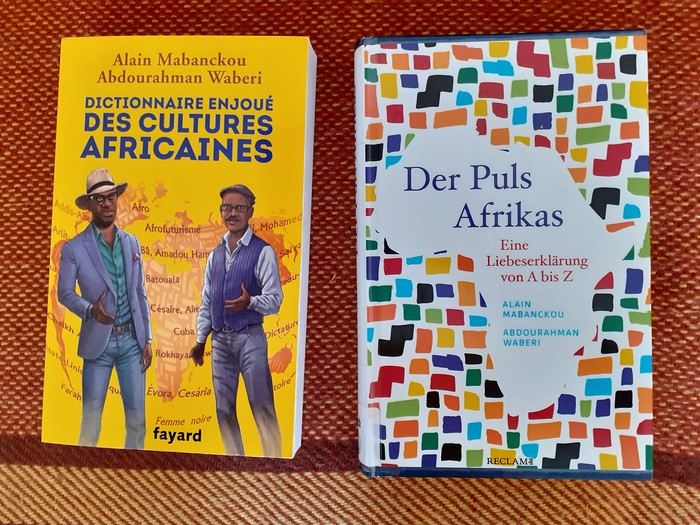
The Maggi cube, an unchallenged hegemony, and so much more
“The hopeless continent,” headlined The Economist, a British magazine, in July 2000 about Africa. Eleven years later, the same magazine headlined “Africa rising” instead. Images of Africa in the prosperous North constantly oscillate between apocalyptic scenarios and enthusiastic projections. A key issue with such images lies in the generalization they entail. If you look at the continent, considerable contrasts emerge depending on space and time. It’s no surprise that a region of the world encompassing such diverse ecological zones, maintaining such varied ties with other continents, comprising nearly fifty nation-states in sub-Saharan Africa alone, and characterized by a great diversity of languages, belief systems, and historical paths, doesn’t share a single destiny.
And yet, for many people outside Africa, as well as for many Africans, the continent constitutes a single entity, defined by criteria such as skin color, a colonial past, poverty, and the art of survival. Until now, these perspectives were generally accompanied by the idea that Africa had to—or should have—followed a single path together, sometimes called development, sometimes modernization, sometimes liberation, then a market economy. None of these paths delivered on their promises.
The two writers Alain Mabanckou and Abdourahman Waberi—one from Congo, the other raised in Djibouti, both long settled in France and now professors at renowned North American universities (Los Angeles, Washington)—have had enough of pessimistic scenarios: “We are aware that Africa is in the world and the world is in Africa. The same goes for all other continents, as our destinies are inextricably linked for better or worse. We refuse to see Africa as a reservoir of misfortunes or a continent cursed by atavistic misfortune and characterized by ethnic conflicts. [...] It’s this passionate flame we wanted to capture in a book [...] a kind of stroll through African cultures, without any demands, each letter of the alphabet leading us to a notion, a practice, a concept, a moment in history, literature, painting, politics, economics, cuisine, etc.” (p.10-11). Africa, they write, is on the verge of “imposing a signature, a style, a way of being in the world and in relation to the rest of the world.” (p.11) To put words to the continent’s diversity and dynamism, the two authors created a “rambling ABC,” a kind of portrait—or more precisely, a mythography—that lets you see and feel the pulse of a vast continent whose cultural power is unfolding before our eyes. Once marginalized or even mocked, the voice and importance of the Continent in global affairs are now undeniable” (p.11), containing over a hundred entries, mostly concise, written in a relaxed and casual style. The optimistic, even exuberant tone is set from the brief introduction. The duo of authors wants to “sing a love song to the cultures of our continent, to its inhabitants past and present, to its exceptional resources and its spectacular globalization despite a certain pollution that still clouds our skies due to the unmatched duration of dictatorships in some of our regions.” (p.12) In doing so, they don’t want to be too distracted by today’s Afewerki-Biya-Bongo-Déby & Co. ...
Of course, you’ll find tributes to great precursors like Frantz Fanon (“[...] it was a love story and admiration that wasn’t dimmed by the four decades separating his birth from ours. Let’s add that we were born while the native of Fort-de-France had left the world’s stage four years earlier, in the prime of life” p.141), Mongo Beti (“You must read and reread Mongo Beti, a genius who used his fame to support often just causes in Africa, like defending oppressed groups. His place is already in History. His oppressors, like the dictators Ahmadou Ahidjo and Paul Biya, can’t compete in the same category” p.64), the Malian Amadou Hampâté Bâ
(“Posterity remembers him mainly as an tireless defender of African cultures. His plea for the collection and preservation of traditional African knowledge remains a major event for all men and women of good will. One day in 1960, at the UNESCO podium, the native of Bandiagara sounded the alarm: ‘[...] Since we’ve admitted that the humanity of each people is the heritage of all humanity, if African traditions aren’t collected in time and written down, they’ll one day be missing from the universal archives of humanity.’” p.51),
Kwame Nkrumah, “one of the founders of Pan-Africanism, father of Ghana’s independence” (p.239), as well as the historian Cheikh Anta Diop, the writer, poet, and politician Aimé Césaire, and the economist and thinker Samir Amin, but also very warm tributes to certain contemporary African intellectuals like Souleymane Bachir Diagne and Achille Mbembe
(“A few years ago, in dominant economic circles, a rumor often resurfaced, usually disguised as a cold and scientifically proven analysis: Africa is useless. It’s a burden for the rest of the human community. With its 2% share in world trade, it would disappear from stock market radars without anyone noticing. So? Maybe it’ll be pulled up by other continents. Wanting to surpass itself is a crazy bet for Africans, they concluded. Arrogant or clueless, President Nicolas Sarkozy declared before an audience of students and teachers at Cheikh Anta Diop University in Dakar: ‘The African man hasn’t entered history enough [...] He only knows the eternal repetition of time marked by the endless repetition of the same gestures and words.’ That was in 2007. For decades, armed only with reason, an intellectual often steps up to debunk prejudices, lazy readings, and dishonest frameworks used as false fronts by those who, like Nicolas Sarkozy or former journalist Stephen Smith, out of ignorance, contempt, or condescension, distort African reality. This intellectual is none other than the historian and political scientist Achille Mbembe. This heir of Frantz Fanon, Amílcar Cabral, Jean-Marc Ela, and Fabien Eboussi-Boulaga was born in 1957 in Cameroon, in the Bassa region. Marked early by the upheavals of a fratricidal war, Achille Mbembe became the guardian of the memory of martyrs. After brilliant studies in Paris, he went on to teach at the best American universities, but the call of the Continent was stronger than anything else. In Dakar, he once directed CODESRIA (Council for the Development of Social Science Research in Africa) before joining the University of the Witwatersrand in Johannesburg, South Africa. Even though the author of *Critique of Black Reason* (Éditions La Découverte, 2015) spends a few months at Duke University in North Carolina, his observation post remains South Africa. From Johannesburg, Achille Mbembe scrutinizes Africa and the whole world. A lucid observer with an elegant and generous pen, Achille Mbembe knows how to blend big and small history: ‘I was born one day in July, as the month was drawing to a close. It was 1957, in that part of Africa recently named ‘Cameroon,’ a memory of the wonder that seized Portuguese sailors in the 15th century when, sailing up the river near Douala, they couldn’t help but note the presence of a multitude of crustaceans, and named it *Rio dos Camarões*, meaning ‘River of Shrimp.’ I grew up in the shadow of this nameless land, since, in a way, the name it bears is only the product of someone else’s astonishment: a lexical mistake, if you will.’ From this mistake or wound, he made leaven, a springboard to compose a rich work, recognized worldwide. To denounce barriers and barbarians too. But that’s not enough. Among his peers in circles of thought and action, Achille Mbembe passionately and consistently defends human dignity and the beauty of the world. In doing so, he fulfills the mission Frantz Fanon entrusted to him.” (p.227-229),
as well as entries dedicated to lesser-known artists and intellectuals, like the French journalist and activist Rokhaya Diallo, daughter of Senegalese and Gambian parents, or the Ethiopian filmmaker Haile Gerima, who has long lived in the United States. Other names from politics, sports, music, art, and literature: Kofi Annan, p.36; Barack Obama, p.243; Thomas Sankara, p.277; Ousmane Sow, p.285; Yambo Ouologuem, p.250; Léopold Sédar Senghor, p.282; Muhammad Ali, p.30; Nuruddin Farah, p.146; Salif Keita, p.203; Ahmadou Kourouma, p.206; Ngũgĩ wa Thiong’o, p.236; Winnie Mandela, p.224; Kylian Mbappé, p.226 ...
The authors, who resolutely commit to a “mythography” (p.11) of Africa, also pay special attention to local social movements, cultural events, and aspects of daily life. *Y’en a marre*, “which also meant ‘we’re fed up with sitting on our hands’” (p.320-321), emerged about a decade ago in Senegal as a citizen movement of peaceful resistance and symbolizes, the authors emphasize, the fact that African youth are increasingly fed up “with the political circus deployed in Africa since independence, as our parents would say, ‘since the White man left’...” (p.321). A full entry is dedicated to the Maggi bouillon cube, which has flooded African markets for about forty years and enjoys immense popularity (“It’s everywhere in Africa, from Dakar to Djibouti, and from Tangier to Cape Town. It’s in every pot, every stew. Little hands put it in every sauce, every local or adapted dish. An unchallenged hegemony! You’ll find it in diasporas too. The culinary strolls in Paris, in the [...] neighborhood” p.90). Critics blame it not only for impoverishing the aromatic diversity of local dishes but also for being harmful to health. And yet, “he poorest Africans, those who eat only once a day, a few spoonfuls of white beans and a ball of *foufou*, for example, are the most fervent users of the magic cube.” (p.92-93)
For *fonio*, “the new trendy cereal. [...] From the millet family, fonio is probably the oldest cereal cultivated in West Africa, and mainly in its sub-Saharan part, for millennia. [...] Easy to grow, water-efficient, fonio grows everywhere except on clay soils. Long neglected because it was considered the poor man’s crop, fonio is now a source of pride for the farmers who cultivate it and cherish it like the apple of their eye” (p.156-157), the authors immediately offer a detailed recipe, letting the reader know that “e can’t resist sharing this fonio with chicken recipe from Mali with you:
Ingredients: 1 chicken 3 large ripe red tomatoes 4 tbsp tomato paste 4 large onions 1 garlic clove 1/2 cup oil 2 Maggi cubes or salt 2 large carrots 1 turnip 1 large cabbage 2 large potatoes 1 celery stalk 1 packet pre-cooked fonio 4 okra (or okra powder) salt, pepper
Preparation: 1. Prepare the sauce: wash and cut the chicken. Peel the onions, garlic, and vegetables. 2. In a pot, fry the chicken pieces. 3. Dice the onions, tomatoes, carrots, and turnip very small and add them to the pot. 4. Add the tomato paste, salt, and pepper. 5. Simmer for 15 min, then add 2 L of water and the cooked chicken pieces. 6. Simmer for 30 min, then add the crushed garlic and celery, plus the cabbage cut into 4 and the potatoes cut in half. 7. Prepare the fonio: cover it with warm water, let it rest for 15 min, and cook it over low heat. 8. In a small pot, boil the okra and crush them. 9. Mix the crushed okra with the cooked fonio, then salt. Serve hot.” (p.158-159)
The comedy *Black Mic Mac*, released in French theaters in 1986 and addressing France’s increasingly restrictive immigration policy at the time, also gets an entry, as do *Tintin in the Congo*, the popular comic, and *Jip’s Café* (“[...] a little Africa in the heart of Paris, with passersby stopping to admire the ‘ambianceurs’ on the dance floor or attend the cultural events offered by the place” (p.194), an African establishment in Paris that Alain Mabanckou already immortalized in one of his novels.
The duo of authors also tackles thorny subjects like jihadism (p.119), the Rwandan genocide (p.272), the CFA franc (p.82), and dictatorship (p.110). While the two strike the right tone here, many entries leave a slightly bitter taste. Two examples: why doesn’t the text on Barack Obama mention the great disappointment of many people in Africa, who expected more from the African policy of the first U.S. president with African roots than just occasional warm words? Why do the comments on Winnie Mandela gloss over the fact that she was a highly controversial icon of the anti-apartheid movement due to her involvement in kidnappings, acts of torture, and murders of alleged apartheid collaborators? Instead, there’s a compassion that brings tears to the eyes: “She was often reduced to a secondary role, the wife of a great man” or “When victory came, she didn’t taste its fruits. Divorced, isolated. She would never be a ‘first lady’ in an evening gown, posing before a bed of chrysanthemums. They’d keep her far from the circles of power” (p.224-225). At this point, I would’ve liked the authors to take a slightly more critical stance...
That said, these “weaknesses” (if you can call them that) shouldn’t overshadow the book as a whole. It remains an informative, sometimes very entertaining, and often even original work in its own way.
Book information (the original French and the German translation):
Alain Mabanckou/Abdourahman Waberi. Dictionnaire enjoué des cultures africaines. Fayard, 2019. Alain Mabanckou/Abdourahman Waberi. Der Puls Afrikas. Eine Liebeserklärung von A bis Z. Reclam, 2022.
Hery
Staircases. Photo contest theme for May 2026.
Hello
This month’s photo contest theme for May 2026 is "Staircases"
Plural or singular? Does it really matter as long as you’re told you’ve gone up or down them well?
Anyway, it’s not that complicated, even though I’m sure some will manage to overcomplicate it—after all, why keep things simple when making them complicated is so much more fun (as an Indian proverb goes).
To participate: Submit your photos until Monday, May 25 at 11:59 PM You can post up to 3 photos, numbered and shared in separate messages, along with a short description of the location and the story behind it.
To vote: From Tuesday, May 26 at 12:01 AM until Saturday, May 30 at 11:59 PM After the deadline, it’s too late.
Please include the photo number, username, and the points awarded: Photo #1 = 3 pts Photo #2 = 2 pts Photo #3 = 1 pt
All VF members can vote (even those who didn’t submit photos). In case of a tie for first place, the winning photo will be the one with the most first-place votes, then second-place votes! The lucky winner will get to organize June 2026’s photo contest.
For discussions about the theme, click here: Discussion thread for May 2026’s theme: Staircases
This month’s photo contest theme for May 2026 is "Staircases"
Plural or singular? Does it really matter as long as you’re told you’ve gone up or down them well?
Anyway, it’s not that complicated, even though I’m sure some will manage to overcomplicate it—after all, why keep things simple when making them complicated is so much more fun (as an Indian proverb goes).
To participate: Submit your photos until Monday, May 25 at 11:59 PM You can post up to 3 photos, numbered and shared in separate messages, along with a short description of the location and the story behind it.
To vote: From Tuesday, May 26 at 12:01 AM until Saturday, May 30 at 11:59 PM After the deadline, it’s too late.
Please include the photo number, username, and the points awarded: Photo #1 = 3 pts Photo #2 = 2 pts Photo #3 = 1 pt
All VF members can vote (even those who didn’t submit photos). In case of a tie for first place, the winning photo will be the one with the most first-place votes, then second-place votes! The lucky winner will get to organize June 2026’s photo contest.
For discussions about the theme, click here: Discussion thread for May 2026’s theme: Staircases
Discussion thread on the May 2026 theme: Staircases
If you’ve already posted your three photos in the contest thread Staircases: May 2026 Photo Contest Theme and a fourth one comes to mind, you can ease your staircase obsession here.
A few examples of staircases:
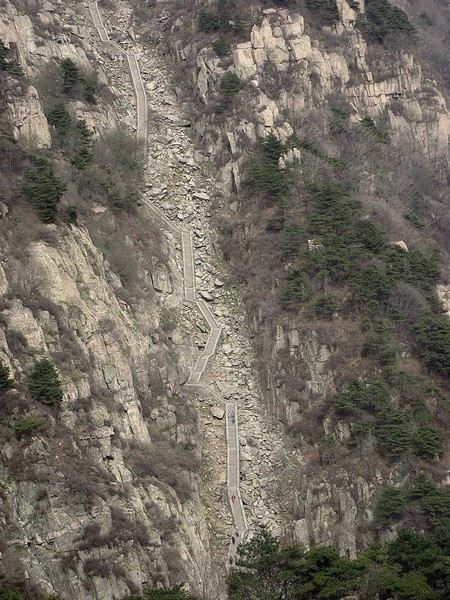
Some of the 6,600 steps on the staircase leading to the summit of Jade Emperor Peak at 1,545 meters.
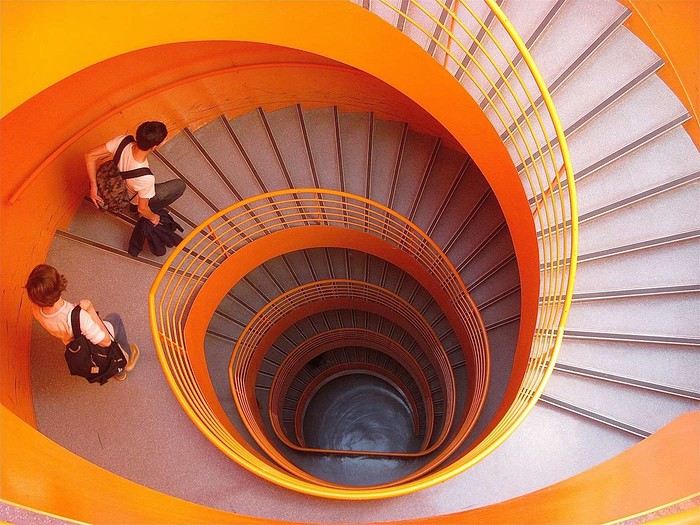
Emergency staircase at the Orléans library (France).
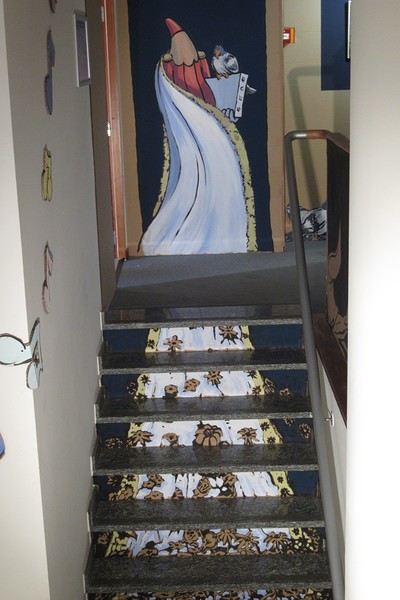
Brussels street artist Créons incorporates the staircase into the dress design of his character.
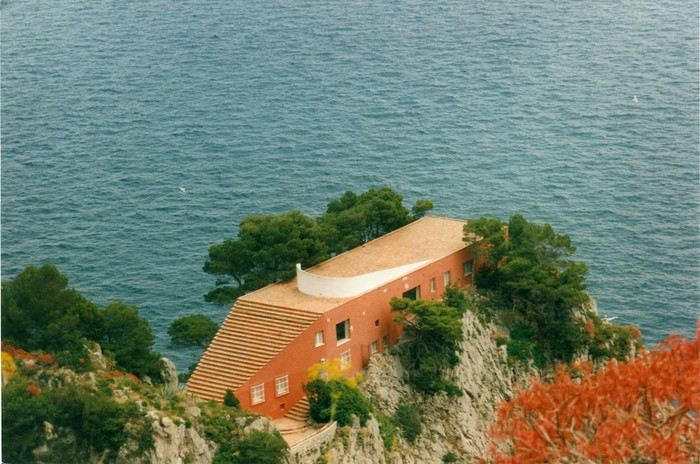
The staircase is part of the roof of Villa Malaparte (Adalberto Libera) on the island of Capri (Italy).
A few examples of staircases:
Some of the 6,600 steps on the staircase leading to the summit of Jade Emperor Peak at 1,545 meters.
Emergency staircase at the Orléans library (France).
Brussels street artist Créons incorporates the staircase into the dress design of his character.
The staircase is part of the roof of Villa Malaparte (Adalberto Libera) on the island of Capri (Italy).
Gran Canaria... a trip that wasn't exactly thrilling
Okay, it wasn’t a total disaster either. Actually, I hesitated before starting this travel journal: is it even worth writing about a holiday that won’t leave an unforgettable memory?
In the end, I went for it (there aren’t many recent travel journals about this destination).
So, read on... or don’t .
Every time we’ve been to the Canary Islands, it’s been by default (basically: where can we go in winter or early spring when we only have a week—so not too far, not too much jet lag, but with decent weather?).
This time, we had two weeks, but the winter plan kept changing: first Thailand (dropped for personal reasons), then Martinique (dropped because of work leave dates that weren’t up to me), and finally, the Canary Islands.
We’ve already been to Tenerife (which we really liked) and Lanzarote (which we liked a little less). This year, two options: Gran Canaria or one of the smaller islands west of Tenerife (La Palma, or even La Gomera or El Hierro). We chose Gran Canaria... not sure it was the right call! Whose fault is it? Storm Thérèse’s! Yes, Storm Thérèse followed us on arrival, and its effects lasted quite a while. We had to adapt, cancel visits, change activities...
But even without Thérèse...
Saturday 21/03 Departure from Orly at 6:10 AM with Transavia. The plane took off on time and landed a little early, tossed around by strong winds before touching down. It had just rained, but it was (almost) no longer raining.
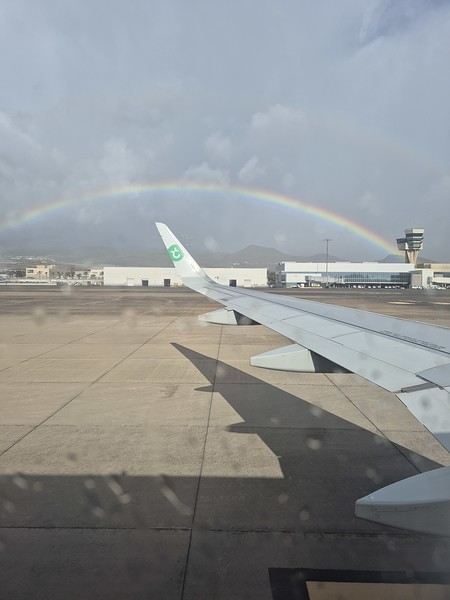
We quickly picked up our luggage and then the car at the Cicar counter. We got a Seat Arona instead of the Corsa we’d booked. Well, while the driving position didn’t feel great at first (I got used to it), the engine’s smoothness and power were much appreciated on the island’s winding and sometimes steep roads.
It was only 10 AM, and we couldn’t theoretically check into our accommodation until 3 PM (the owner promised to message me if it was ready earlier). So, we headed to the (big) *Jardín Botánico Viera y Clavijo*, where we planned to spend a few hours. We found a huge parking lot... empty. The passenger in the car in front of us (yes, we weren’t the only ones at the closed gate—there was a car in front and one behind) went to ask for info: it was closed due to the storm 😕. So, we calmly headed toward Puerto de las Nieves, on the northwest coast of the island.
The plan: go to a restaurant, visit the village, and do some shopping while waiting for early afternoon. As soon as we got out of the car, it started raining... we took shelter under the awning of a shop, waiting for it to pass. But the rain turned into a downpour, and within minutes, awning or not, Gore-Tex or not, we were soaked!
Since we were already wet, we might as well go to the restaurant—they weren’t far! But here’s the thing: contrary to what Google Maps said, they all opened at 1 PM, not noon! Back to the car, wading through 5 cm of water because all the village streets were flooded . The rain let up, we did some shopping, went to eat, and I got a message from the owner saying the accommodation was ready 🙂.
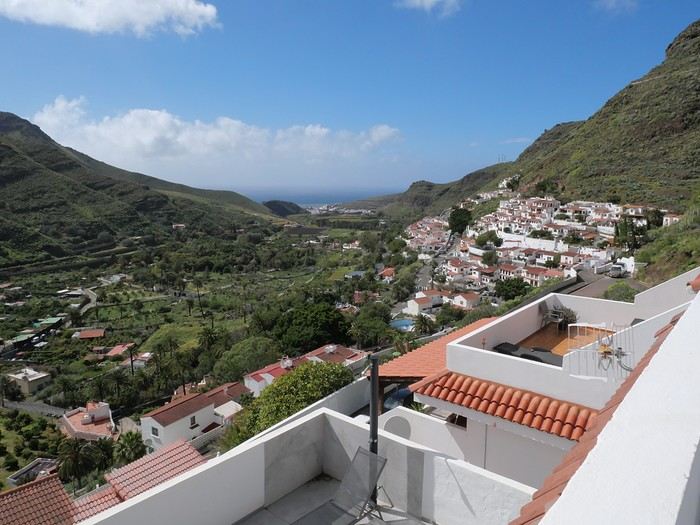
So, off we went to La Suerte, a few kilometers north of Agaete. The downside of the place, especially with luggage, is that you have to climb several flights of stairs via an outdoor staircase (after parking more or less far away on a steep street) to get there 😛). Of course, on the way from the car to the apartment, it started pouring again—the bags got soaked! Enough rain for today! We settled in quietly, and by late afternoon, we could (finally!) go admire the view from the terrace.
Every time we’ve been to the Canary Islands, it’s been by default (basically: where can we go in winter or early spring when we only have a week—so not too far, not too much jet lag, but with decent weather?).
This time, we had two weeks, but the winter plan kept changing: first Thailand (dropped for personal reasons), then Martinique (dropped because of work leave dates that weren’t up to me), and finally, the Canary Islands.
We’ve already been to Tenerife (which we really liked) and Lanzarote (which we liked a little less). This year, two options: Gran Canaria or one of the smaller islands west of Tenerife (La Palma, or even La Gomera or El Hierro). We chose Gran Canaria... not sure it was the right call! Whose fault is it? Storm Thérèse’s! Yes, Storm Thérèse followed us on arrival, and its effects lasted quite a while. We had to adapt, cancel visits, change activities...
But even without Thérèse...
Saturday 21/03 Departure from Orly at 6:10 AM with Transavia. The plane took off on time and landed a little early, tossed around by strong winds before touching down. It had just rained, but it was (almost) no longer raining.
We quickly picked up our luggage and then the car at the Cicar counter. We got a Seat Arona instead of the Corsa we’d booked. Well, while the driving position didn’t feel great at first (I got used to it), the engine’s smoothness and power were much appreciated on the island’s winding and sometimes steep roads.
It was only 10 AM, and we couldn’t theoretically check into our accommodation until 3 PM (the owner promised to message me if it was ready earlier). So, we headed to the (big) *Jardín Botánico Viera y Clavijo*, where we planned to spend a few hours. We found a huge parking lot... empty. The passenger in the car in front of us (yes, we weren’t the only ones at the closed gate—there was a car in front and one behind) went to ask for info: it was closed due to the storm 😕. So, we calmly headed toward Puerto de las Nieves, on the northwest coast of the island.
The plan: go to a restaurant, visit the village, and do some shopping while waiting for early afternoon. As soon as we got out of the car, it started raining... we took shelter under the awning of a shop, waiting for it to pass. But the rain turned into a downpour, and within minutes, awning or not, Gore-Tex or not, we were soaked!
Since we were already wet, we might as well go to the restaurant—they weren’t far! But here’s the thing: contrary to what Google Maps said, they all opened at 1 PM, not noon! Back to the car, wading through 5 cm of water because all the village streets were flooded . The rain let up, we did some shopping, went to eat, and I got a message from the owner saying the accommodation was ready 🙂.
So, off we went to La Suerte, a few kilometers north of Agaete. The downside of the place, especially with luggage, is that you have to climb several flights of stairs via an outdoor staircase (after parking more or less far away on a steep street) to get there 😛). Of course, on the way from the car to the apartment, it started pouring again—the bags got soaked! Enough rain for today! We settled in quietly, and by late afternoon, we could (finally!) go admire the view from the terrace.
April 2026 Theme Discussion: Feeling Peachy?
Hey there!
This is the spot where we can chill and chat about fishing at sea worldwide 😊
Here are two charming fishermen taking a well-deserved break near Zanzibar!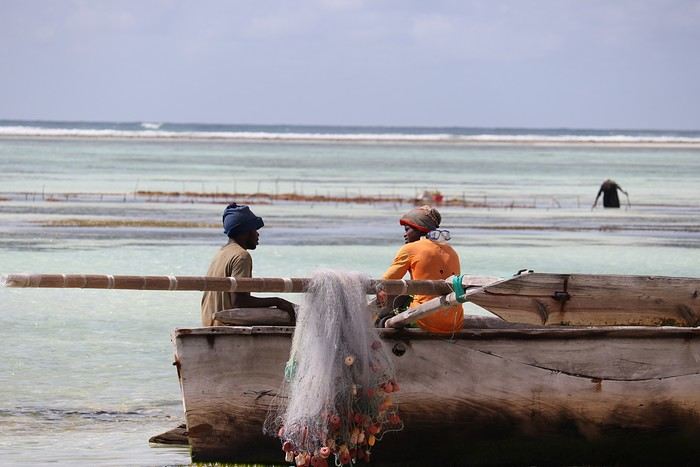
This is the spot where we can chill and chat about fishing at sea worldwide 😊
Here are two charming fishermen taking a well-deserved break near Zanzibar!
Upcoming Jet Fuel Shortage in Vietnam and Sri Lanka
Hi!
Sri Lanka has announced it could run out of fuel in the coming weeks if the Strait of Hormuz remains blocked. The government has implemented a mandatory four-day workweek to save oil, and there are long lines at gas stations due to fears of an early shortage.
In Vietnam, the government has warned all airlines that flights will need to be reduced due to a lack of kerosene. The country imports two-thirds of its jet fuel from China and Thailand, but both countries have now banned exports out of fear of domestic shortages.
The state is asking airlines to plan ahead and park aircraft to drastically reduce operations, starting with domestic flights and then international ones. International carriers will also need to cut back on their rotations.
This will begin in the coming days. 🙁
World gardens and parks, chatter goes here.
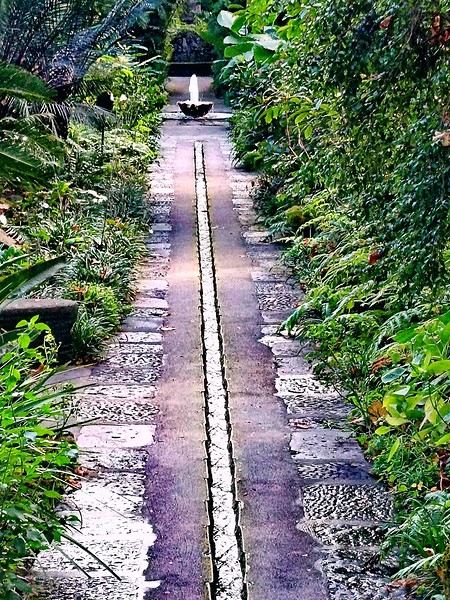
Good evening everyone,
This is where we chat and post non-competition photos. Happy wandering (jogging is also welcome).
See you soon.
Cat
Discussion for October's Theme (Doors)
Hello again!
If you'd like to post non-contest photos or chat about this month's theme, this is the place! 🙂
If you'd like to post non-contest photos or chat about this month's theme, this is the place! 🙂
October Photo Contest Theme: Doors
Hi everyone!
This theme has probably been done before... but not recently, at least 😉 Doors—open, closed, of houses, castles... even if only the threshold remains. Since I’m not home, I don’t have access to my photos right now, and regarding the rules, I’ll let you refer to one of the previous contests.
Photos can be posted until Thursday the 23rd at 11:59 PM (Paris time). Voting will take place from the 24th to the 30th of October, and the results will be announced on the 31st during the day.
See you soon! 🙂
This theme has probably been done before... but not recently, at least 😉 Doors—open, closed, of houses, castles... even if only the threshold remains. Since I’m not home, I don’t have access to my photos right now, and regarding the rules, I’ll let you refer to one of the previous contests.
Photos can be posted until Thursday the 23rd at 11:59 PM (Paris time). Voting will take place from the 24th to the 30th of October, and the results will be announced on the 31st during the day.
See you soon! 🙂
Preparing for a trip to Sri Lanka
Hi everyone.
The tickets for SRI LANKA are booked—arriving in COLOMBO on 12/21 and returning from the same place on 01/17. I’ve read here and there that it’ll be high season, but we don’t have a choice, so we’ll make do...
My first question is obviously about the itinerary: Most of the ones I’ve seen go clockwise, and I’m wondering if I should do it the other way: - To avoid the cultural triangle between Christmas and New Year’s - To start with a bit of rest (we’re really wiped out) Does that make sense?
My second question is about the time allocated to each stop, which you’ll find below. Is it balanced? Too much here and not enough there?
My third question will be about Jaffna: yes or no? How long is the trip from Anuradhapura? Where can I fit in the 3 days needed?
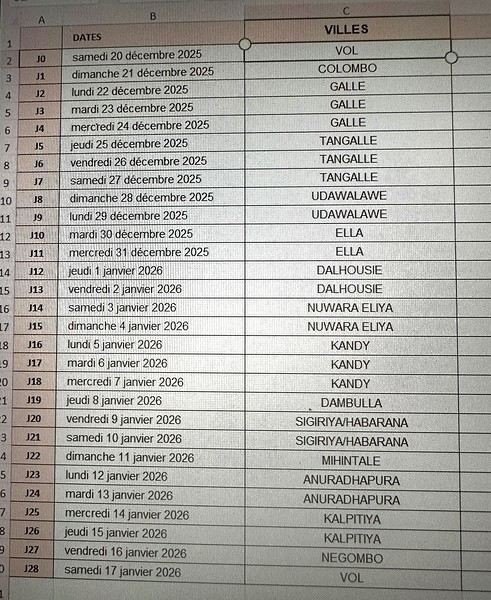
Thanks for your replies. A few details: ultra-independent travelers, using public transport, hikers, minimum 2 nights per accommodation. First time in Sri Lanka! !
The tickets for SRI LANKA are booked—arriving in COLOMBO on 12/21 and returning from the same place on 01/17. I’ve read here and there that it’ll be high season, but we don’t have a choice, so we’ll make do...
My first question is obviously about the itinerary: Most of the ones I’ve seen go clockwise, and I’m wondering if I should do it the other way: - To avoid the cultural triangle between Christmas and New Year’s - To start with a bit of rest (we’re really wiped out) Does that make sense?
My second question is about the time allocated to each stop, which you’ll find below. Is it balanced? Too much here and not enough there?
My third question will be about Jaffna: yes or no? How long is the trip from Anuradhapura? Where can I fit in the 3 days needed?
Thanks for your replies. A few details: ultra-independent travelers, using public transport, hikers, minimum 2 nights per accommodation. First time in Sri Lanka! !
Spring getaway in search of Moroccan sunshine
Hey fellow travelers!
This isn’t meant to be a full-on travel journal—just a little springtime dip into the Moroccan coast (and maybe a bit more if we click).
For our third trip to this country, we set off for 8 days in early June 2025, *sure* we’d be greeted by non-stop sunshine...
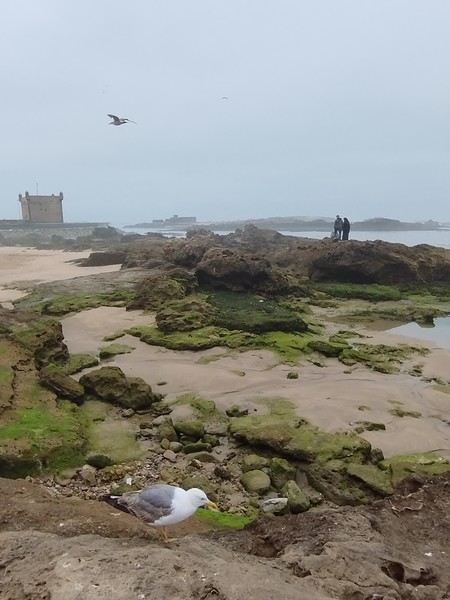
...and well, that didn’t happen! The gray stuck around for a day, then two, then three (while back home in the Landes, we had gorgeous sunshine 🤦♂️😂).
Now, unlike us, the Morocco experts here probably already know this, but apparently, it’s pretty common—especially in spring—when the warm air from inland meets the cool ocean breeze. Locals even have to warm up with hot water bottles, can you believe it? 😄!
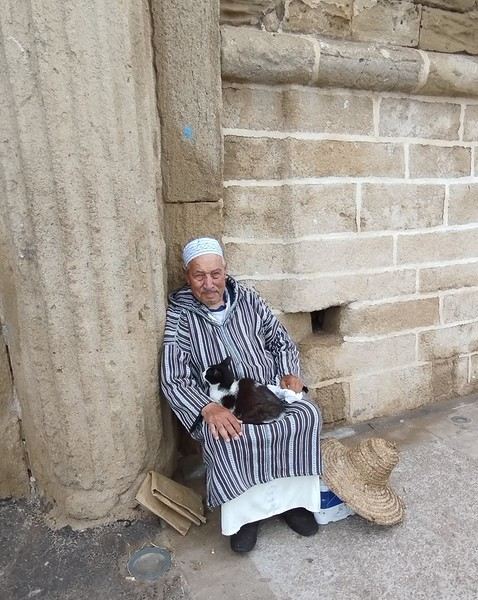
And of course, it had to happen now, since our plan is to follow the coast from Essaouira to Mirleft!!
Oh well, we’ll see how it goes—but luckily, this first stunning sunset made up for the weather 🌅.
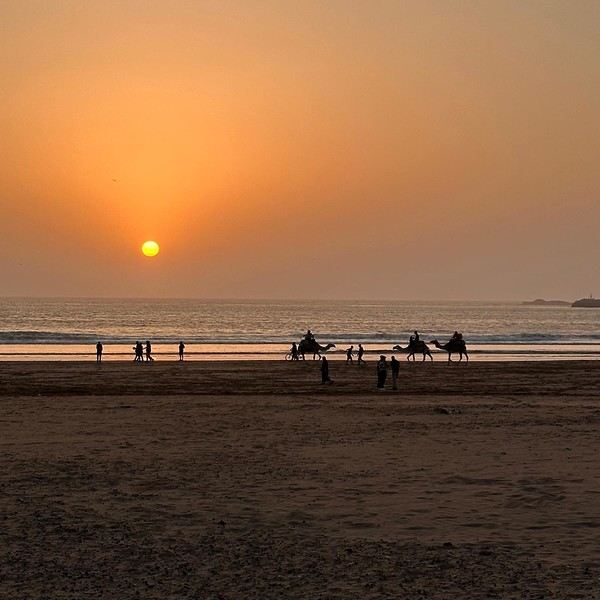
See you soon to anyone who’s up for it! 😊
This isn’t meant to be a full-on travel journal—just a little springtime dip into the Moroccan coast (and maybe a bit more if we click).
For our third trip to this country, we set off for 8 days in early June 2025, *sure* we’d be greeted by non-stop sunshine...
...and well, that didn’t happen! The gray stuck around for a day, then two, then three (while back home in the Landes, we had gorgeous sunshine 🤦♂️😂).
Now, unlike us, the Morocco experts here probably already know this, but apparently, it’s pretty common—especially in spring—when the warm air from inland meets the cool ocean breeze. Locals even have to warm up with hot water bottles, can you believe it? 😄!
And of course, it had to happen now, since our plan is to follow the coast from Essaouira to Mirleft!!
Oh well, we’ll see how it goes—but luckily, this first stunning sunset made up for the weather 🌅.
See you soon to anyone who’s up for it! 😊
Vacation
It’s vacation time
Vacation and silence
Silence and absence
Absence and latency
Latency and silence
Silence and vacation
Vacation and absence
It’s vacation time
I wrote these few words on July 12, 2010, and I can post them again today—nothing’s changed...🙂
I wrote these few words on July 12, 2010, and I can post them again today—nothing’s changed...🙂
Discussion on the April 2025 photo contest theme "Fish"
To chat about the side topics of the theme "Fish," this is the place!
Back to the contest theme: Fish: April 2025 Photo Contest Theme
Back to the contest theme: Fish: April 2025 Photo Contest Theme