Results for "Anguilla"
About 843 results.
More options
Many results are in French, the community’s main language. English translations are added over time.
Search results
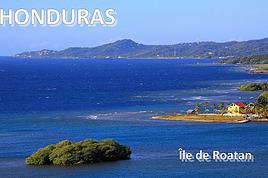
All-Inclusive Stay on Roatan Island
HENRY MORGAN HOTEL AND BEACH RESORT
Transfer (half an hour) from the airport to the hotel by minibus. We drop off our suitcases at the airport exit. They are loaded onto another vehicle and transported directly to the hotel, where we pick them up upon arrival.
We’re given our wristbands, two key cards for our room, a remote for the TV, a remote for the air conditioning (ours was already in the room), and a document with a detailed site map and information on restaurant, bar, and other service hours. Reception is open 24 hours.
We got room F3, located on the ground floor of a two-story building. It’s very well situated since it’s in the central part of the resort.
The room has two large beds with super comfortable mattresses, two nightstands, a coffee table with two chairs, two wardrobes, and plenty of storage space.
There’s also a large flat-screen TV. Netflix is included free of charge by the hotel—no subscription required. The safe is also provided at no extra cost.
There’s a mini-fridge, and the housekeeper provides bottles of water. However, it’s suggested to refill the bottles at the water stations by the bar, which we did several times.
The bathroom has a shower, toilet, sink with storage space, a large mirror, a towel rack, a hairdryer, soap, shampoo, and several rolls of toilet paper.
The hot water temperature in the shower varied during our stay. The air conditioning works perfectly.
We have a terrace with a chair and two hammocks.
The room uses 110 volts, and there are a few power outlets in the room.
The buffet restaurant is air-conditioned and open from 7 AM to 10 AM for breakfast, 12 PM to 3 PM for lunch, and 6 PM to 8:30 PM for dinner.
The buffet selection is very varied, and the food is delicious. The wine, both white and red, tastes great. The service is exceptional.
There’s also an à la carte restaurant ($), the Gastro Bar & Winery, open from 11 AM to 10 PM. We didn’t go there.
There’s a snack bar open from 11 AM to 1 PM and 3 PM to 5 PM, but I can’t comment on it since we didn’t visit.
We only went to the lobby bar near the showroom, which is open from 9:30 AM to 11 PM. The staff is very friendly, and the service is excellent.
Beer is served in cans but poured into a glass, and a wide variety of cocktails is available.
Beach towels are placed in our room upon arrival. There’s a kiosk near the main pool where you can exchange them.
There are two pools on-site. Many lounge chairs are arranged around both pools. If you prefer tranquility, I suggest heading to the pool between blocks A and B.
This hotel is located on the stunning public West Bay Beach, which is long and very pretty. It’s great for walking, and the sea color is remarkable.
There are plenty of lounge chairs on the beach, but there’s very little space between them.
There’s a long coral reef near the beach where you can observe beautiful corals and several species of tropical fish, lobsters, squid, leopard rays, turtles, etc. You’ll get a glimpse of these in an upcoming video.
Activities are offered throughout the day, but we didn’t really participate. I can’t comment on them, but the entertainment team seems very dynamic.
During our stay, there was only one evening dance show. Other days featured activities like bingo, karaoke, and games.
We didn’t go to the nightclub.
Wi-Fi is available for free throughout the resort. There are two networks you can connect to, and the passwords are listed in the brochure given to you upon arrival.
There’s also a gym, a spa ($), a boutique ($), and a winery ($).
Check-out is at 11 AM. If you lose or damage equipment or misplace key cards, you’ll be charged fees.
https://youtu.be/_KOCUQbZvsc
Transfer (half an hour) from the airport to the hotel by minibus. We drop off our suitcases at the airport exit. They are loaded onto another vehicle and transported directly to the hotel, where we pick them up upon arrival.
We’re given our wristbands, two key cards for our room, a remote for the TV, a remote for the air conditioning (ours was already in the room), and a document with a detailed site map and information on restaurant, bar, and other service hours. Reception is open 24 hours.
We got room F3, located on the ground floor of a two-story building. It’s very well situated since it’s in the central part of the resort.
The room has two large beds with super comfortable mattresses, two nightstands, a coffee table with two chairs, two wardrobes, and plenty of storage space.
There’s also a large flat-screen TV. Netflix is included free of charge by the hotel—no subscription required. The safe is also provided at no extra cost.
There’s a mini-fridge, and the housekeeper provides bottles of water. However, it’s suggested to refill the bottles at the water stations by the bar, which we did several times.
The bathroom has a shower, toilet, sink with storage space, a large mirror, a towel rack, a hairdryer, soap, shampoo, and several rolls of toilet paper.
The hot water temperature in the shower varied during our stay. The air conditioning works perfectly.
We have a terrace with a chair and two hammocks.
The room uses 110 volts, and there are a few power outlets in the room.
The buffet restaurant is air-conditioned and open from 7 AM to 10 AM for breakfast, 12 PM to 3 PM for lunch, and 6 PM to 8:30 PM for dinner.
The buffet selection is very varied, and the food is delicious. The wine, both white and red, tastes great. The service is exceptional.
There’s also an à la carte restaurant ($), the Gastro Bar & Winery, open from 11 AM to 10 PM. We didn’t go there.
There’s a snack bar open from 11 AM to 1 PM and 3 PM to 5 PM, but I can’t comment on it since we didn’t visit.
We only went to the lobby bar near the showroom, which is open from 9:30 AM to 11 PM. The staff is very friendly, and the service is excellent.
Beer is served in cans but poured into a glass, and a wide variety of cocktails is available.
Beach towels are placed in our room upon arrival. There’s a kiosk near the main pool where you can exchange them.
There are two pools on-site. Many lounge chairs are arranged around both pools. If you prefer tranquility, I suggest heading to the pool between blocks A and B.
This hotel is located on the stunning public West Bay Beach, which is long and very pretty. It’s great for walking, and the sea color is remarkable.
There are plenty of lounge chairs on the beach, but there’s very little space between them.
There’s a long coral reef near the beach where you can observe beautiful corals and several species of tropical fish, lobsters, squid, leopard rays, turtles, etc. You’ll get a glimpse of these in an upcoming video.
Activities are offered throughout the day, but we didn’t really participate. I can’t comment on them, but the entertainment team seems very dynamic.
During our stay, there was only one evening dance show. Other days featured activities like bingo, karaoke, and games.
We didn’t go to the nightclub.
Wi-Fi is available for free throughout the resort. There are two networks you can connect to, and the passwords are listed in the brochure given to you upon arrival.
There’s also a gym, a spa ($), a boutique ($), and a winery ($).
Check-out is at 11 AM. If you lose or damage equipment or misplace key cards, you’ll be charged fees.
https://youtu.be/_KOCUQbZvsc
Daily driver rates in Thailand
Hi everyone,
I’m about to head to Thailand with my kids and I’ve been put in touch with a French-speaking driver who’ll be with us for 3–4 days (for a little "tour" around the provinces near Bangkok).
I’d love to know what the "going rates" are for this kind of service so I can make sure I’m not overpaying.
So if any of you have used this kind of service recently and could let me know what you paid, I’d really appreciate it!
Thanks in advance and have a great week! 😉
Amy
I’m about to head to Thailand with my kids and I’ve been put in touch with a French-speaking driver who’ll be with us for 3–4 days (for a little "tour" around the provinces near Bangkok).
I’d love to know what the "going rates" are for this kind of service so I can make sure I’m not overpaying.
So if any of you have used this kind of service recently and could let me know what you paid, I’d really appreciate it!
Thanks in advance and have a great week! 😉
Amy
Mauritian Ti' Punch
The recipe for the cocktail: endless beaches, a dazzling palette of colors, some breathtaking hikes, and excellent cuisine...
For the tasting, follow along in the pages of this travel journal! 😉
Don’t forget your hiking shoes, a swimsuit, sunscreen, but also a sweater, your driver’s license, and your credit card...
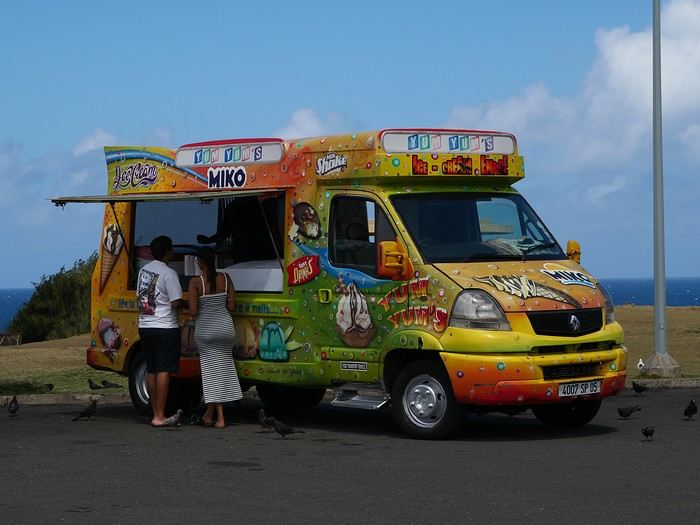
Just over 11 hours of flight, and we’ll be setting foot on Mauritian soil!
For the tasting, follow along in the pages of this travel journal! 😉
Don’t forget your hiking shoes, a swimsuit, sunscreen, but also a sweater, your driver’s license, and your credit card...
Just over 11 hours of flight, and we’ll be setting foot on Mauritian soil!
Travel Journal - 28 Days in China in August 2025
Hi everyone! I’m sharing a modest travel journal from my trip to China in August 2025.
There wasn’t much room for improvisation on this trip—everything was planned in advance. Since August is peak season, I decided to book train tickets early, and once that was set, I reserved all the accommodations too. I got everything on Trip.com.
I bought the flight tickets back in March from Hainan Airlines. They were super expensive, but with these travel dates, I couldn’t exactly dream of a bargain!
I picked up e-SIMs valid for a month from Free just before departure: 10 € for the e-SIM + 19.90 € for a one-month plan with 35 GB of data abroad.
No need for a VPN with these e-SIMs, but D. still got one—a multi-device plan for 5 € with a discount from Let’s VPN, valid for a month. It was for evenings at the hotel on Wi-Fi to avoid burning through the 35 GB with video.
I downloaded Alipay, WeChat, Amap (Baidu Maps), and Trip.com. We also have Google Translate and Maps.me—absolute must-haves.
We’re ready to go!
I’ve been waiting for this day for nearly 15 years!! I travel a lot, but this one—this is MY TRIP 🙂 It’s been postponed so many times: because I wanted to do it with the right person, because I have a Turkish stamp in my passport and heard they don’t issue visas with that, because of COVID... and then China introduced a 30-day visa exemption, and that was the green light! Ugh, they forced us to take our vacation in August this year—far from ideal—but no more delays. Saturday, August 2, 2025: it’s finally the big day!
Days 1 and 2: We got dropped off at Charles de Gaulle at 9:30 AM. I supposedly checked in online, but only for the first flight and without getting the boarding pass... Might as well scrap online check-in in that case. So, we spent over an hour in line at the counter to get them. We didn’t have any checked luggage—just our backpacks as carry-ons—so this was a step we’d never had to deal with before, but whatever, it’s done. No wait at passport control, 5 minutes through security, a quick walk around the terminal, 10 minutes in the boarding area, and it was already time to board. Departure around 12:45 PM, arrival in Chongqing at 4:50 AM. We had a few hours of layover before our next flight. Went through immigration, connecting flight control, and security. Pro tip: check your next flight’s boarding gate right after immigration. We never saw it displayed again anywhere in the terminal.
The Free e-SIMs work—phew!
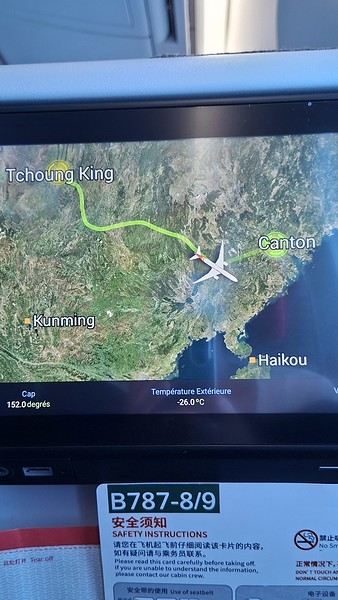
Took off at 9:30 AM, arrived in Guangzhou (Canton) at 11:20 AM in the rain. I love how Chongqing is translated as "Tchoung King" on the screens in the plane—very French!
During my first two trips to China, we paid for everything in cash, but this time, we’re going all-in on Alipay and WeChat. I still brought the leftover change from previous trips—it might come in handy. At the metro station, they showed us a QR code to buy tickets via WeChat. There were probably machines and even a ticket counter, but we didn’t see them, and buying via WeChat was pretty simple. 8 yuan to Changshu Lu, which is 22 stops. So far, so good. Then, we had to find the hotel, which wasn’t on Google Maps, Maps.me, or Amap... Easy 😎! We found it without too much hassle, though. Dropped off our stuff and went out to eat. 55 yuan for two claypots with fish/eel, rice, cabbage, and purple eggplant. When we left, it was pouring. We grabbed our umbrellas and set off to explore the neighborhood: Enning Road (we’ll come back later to check out a specific spot), Shangxiajiu (the pedestrian shopping street), Baohua Road... The area is pretty diverse—one street to the next, it’s like stepping into a different world.

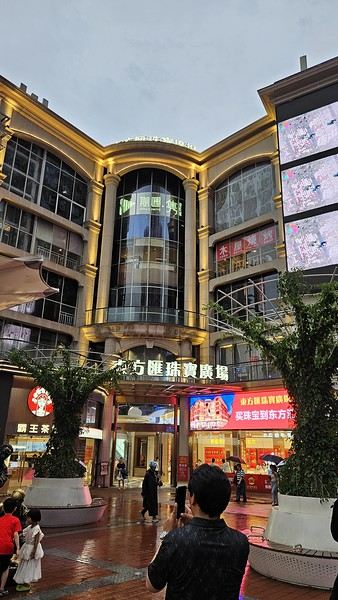
There weren’t many people around, probably because of the rain. We grabbed a quick street food dinner and went to bed—we were exhausted. We struggled to stay awake until 11 PM to adjust to the time change as quickly as possible. There’s a 6-hour time difference.
There wasn’t much room for improvisation on this trip—everything was planned in advance. Since August is peak season, I decided to book train tickets early, and once that was set, I reserved all the accommodations too. I got everything on Trip.com.
I bought the flight tickets back in March from Hainan Airlines. They were super expensive, but with these travel dates, I couldn’t exactly dream of a bargain!
I picked up e-SIMs valid for a month from Free just before departure: 10 € for the e-SIM + 19.90 € for a one-month plan with 35 GB of data abroad.
No need for a VPN with these e-SIMs, but D. still got one—a multi-device plan for 5 € with a discount from Let’s VPN, valid for a month. It was for evenings at the hotel on Wi-Fi to avoid burning through the 35 GB with video.
I downloaded Alipay, WeChat, Amap (Baidu Maps), and Trip.com. We also have Google Translate and Maps.me—absolute must-haves.
We’re ready to go!
I’ve been waiting for this day for nearly 15 years!! I travel a lot, but this one—this is MY TRIP 🙂 It’s been postponed so many times: because I wanted to do it with the right person, because I have a Turkish stamp in my passport and heard they don’t issue visas with that, because of COVID... and then China introduced a 30-day visa exemption, and that was the green light! Ugh, they forced us to take our vacation in August this year—far from ideal—but no more delays. Saturday, August 2, 2025: it’s finally the big day!
Days 1 and 2: We got dropped off at Charles de Gaulle at 9:30 AM. I supposedly checked in online, but only for the first flight and without getting the boarding pass... Might as well scrap online check-in in that case. So, we spent over an hour in line at the counter to get them. We didn’t have any checked luggage—just our backpacks as carry-ons—so this was a step we’d never had to deal with before, but whatever, it’s done. No wait at passport control, 5 minutes through security, a quick walk around the terminal, 10 minutes in the boarding area, and it was already time to board. Departure around 12:45 PM, arrival in Chongqing at 4:50 AM. We had a few hours of layover before our next flight. Went through immigration, connecting flight control, and security. Pro tip: check your next flight’s boarding gate right after immigration. We never saw it displayed again anywhere in the terminal.
The Free e-SIMs work—phew!
Took off at 9:30 AM, arrived in Guangzhou (Canton) at 11:20 AM in the rain. I love how Chongqing is translated as "Tchoung King" on the screens in the plane—very French!
During my first two trips to China, we paid for everything in cash, but this time, we’re going all-in on Alipay and WeChat. I still brought the leftover change from previous trips—it might come in handy. At the metro station, they showed us a QR code to buy tickets via WeChat. There were probably machines and even a ticket counter, but we didn’t see them, and buying via WeChat was pretty simple. 8 yuan to Changshu Lu, which is 22 stops. So far, so good. Then, we had to find the hotel, which wasn’t on Google Maps, Maps.me, or Amap... Easy 😎! We found it without too much hassle, though. Dropped off our stuff and went out to eat. 55 yuan for two claypots with fish/eel, rice, cabbage, and purple eggplant. When we left, it was pouring. We grabbed our umbrellas and set off to explore the neighborhood: Enning Road (we’ll come back later to check out a specific spot), Shangxiajiu (the pedestrian shopping street), Baohua Road... The area is pretty diverse—one street to the next, it’s like stepping into a different world.
There weren’t many people around, probably because of the rain. We grabbed a quick street food dinner and went to bed—we were exhausted. We struggled to stay awake until 11 PM to adjust to the time change as quickly as possible. There’s a 6-hour time difference.
Thaïlande: un cas de contamination locale détecté
voilà l'article
https://www.thailande-fr.com/actu/106807-la-thailande-enregistre-un-nouveau-cas-de-transmission-locale-de-covid-19?utm_medium=onesignal#axzz6X3bNPcBq
ou alors il y a des étrangers "illégaux" qui ont réussi à rentrer dans le pays du côté de pataya bref mystère...par la mer n'importe qui peux arriver sur le sol thai..et reste planqué sans être découvert... (nous avons la connaissance de cas comme ça) le pays est grand ils ne peuvent pas tout surveiller par terre / mer... faut arrêter de nous prendre pour des andouilles
bon et bien croisons les doigts du coup ils vont bien voir que ce n'est pas que des étrangers qui contaminent les pays et donc faudrait espérer qu'ils ouvrent les portent du pays en exigeant une bonne assurance pour le covid, le port des masques dans les lieus publics en visitant et que la vie continue au lieu de couler des milliers d'agences et d'hôtels!!!
https://www.thailande-fr.com/actu/106807-la-thailande-enregistre-un-nouveau-cas-de-transmission-locale-de-covid-19?utm_medium=onesignal#axzz6X3bNPcBq
ou alors il y a des étrangers "illégaux" qui ont réussi à rentrer dans le pays du côté de pataya bref mystère...par la mer n'importe qui peux arriver sur le sol thai..et reste planqué sans être découvert... (nous avons la connaissance de cas comme ça) le pays est grand ils ne peuvent pas tout surveiller par terre / mer... faut arrêter de nous prendre pour des andouilles
bon et bien croisons les doigts du coup ils vont bien voir que ce n'est pas que des étrangers qui contaminent les pays et donc faudrait espérer qu'ils ouvrent les portent du pays en exigeant une bonne assurance pour le covid, le port des masques dans les lieus publics en visitant et que la vie continue au lieu de couler des milliers d'agences et d'hôtels!!!
Quelles destinations sans maltraitance animale?
Bonjour,
Nouvellement retraitée, j’aimerais pouvoir profiter de mon temps libre à voyager en France ou à l’étranger.
Je souhaite à tout prix éviter les endroit où l’animal est maltraité ( ex: marchés d’animaux vivants, exploitation touristique d’animaux, maltraitance diverse et coutumière, traditions impliquant tortures ect.... )
J’ai déjà été confrontée à des visions horrifiantes lors de quelques rares voyages que j’ai effectués par le passé : chiens martyrisés (entre autres) dans les îles, chevaux et ânes sur exploités et n’étant plus que l’ombre d’eux même tellement usés et maltraités, volailles pendues et agonisantes en plein soleil, bœufs assoiffés et blessés, chameaux avec pattes pliées et attachées jusqu’au sang , singes enchaînés .....et j’en passe et j’en passe.
Je ne comprends pas que les touristes peuvent continuer à s’amuser et à jouir de leur voyage tout en étant confrontés à ce genre de spectacle. Les coulisses de certaines cartes postales idylliques sont un enfer, pour les animaux comme pour les hommes.
Ma question est la suivante: Quelle destination vaut le détour sans être confronté à cela car pour ma part je ne peux faire abstraction de la misère qui m’entoure lorsque je voyage.Ce n’est pas compatible.
Merci
Découvrir les marais en Camargue (Provence)
Bonjour,
je suis à préparer mon retour en Provence à la mi juin. Lors de ma dernière visite, j'ai manqué de temps pour voir les marais de la Camargue, alors, pour ce retour, c'est au top de ma liste :-) J'ai lu plusieurs articles sur la Camargue, mais j'aurais besoin de conseils.
Quel est le meilleur moyen de découvrir les beautés et la diversité de la camargue - voiture, rando vélo, rando cheval, rando à pieds... probablement un mixte de tout ça. Je souhaiterais bien en faire une partie à dos de cheval
Je j'aurais qu'une journée pour visiter - d'où le besoin de conseils. Je souhaite voir les beaux paysages pour la photographie, les animaux (flamands, c'est dépaysant pour un québécois), taureau, chevaux et profiter pour y découvrir des petits plats typiques.
Merci d'avance
Sylvain Québec, Canada
je suis à préparer mon retour en Provence à la mi juin. Lors de ma dernière visite, j'ai manqué de temps pour voir les marais de la Camargue, alors, pour ce retour, c'est au top de ma liste :-) J'ai lu plusieurs articles sur la Camargue, mais j'aurais besoin de conseils.
Quel est le meilleur moyen de découvrir les beautés et la diversité de la camargue - voiture, rando vélo, rando cheval, rando à pieds... probablement un mixte de tout ça. Je souhaiterais bien en faire une partie à dos de cheval
Je j'aurais qu'une journée pour visiter - d'où le besoin de conseils. Je souhaite voir les beaux paysages pour la photographie, les animaux (flamands, c'est dépaysant pour un québécois), taureau, chevaux et profiter pour y découvrir des petits plats typiques.
Merci d'avance
Sylvain Québec, Canada
Road trip entre Nice et Venise
Bonjour
J'aimerais faire un road trip de 12 -14 jours a partir de Nice,
1-2 nuit a Nice/Monaco et faire la côte et me rendre a Florence et passer 2 jours, par la suite me rendre Bologne 1 nuit et aller au Lac de Garde passé au moins 2 jours minimum, 1 nuit a Verone et me rendre a Venise pour 2 nuit.
Je part de Montréal, vol direct en septembre, soit arrivée a Nice et débuter le séjour ou débuter de Venise , vice versa
vos commentaires et suggestions.
merci
1-2 nuit a Nice/Monaco et faire la côte et me rendre a Florence et passer 2 jours, par la suite me rendre Bologne 1 nuit et aller au Lac de Garde passé au moins 2 jours minimum, 1 nuit a Verone et me rendre a Venise pour 2 nuit.
Je part de Montréal, vol direct en septembre, soit arrivée a Nice et débuter le séjour ou débuter de Venise , vice versa
vos commentaires et suggestions.
merci
Quelques jours dans le Nord: Rabat, Chefchaouen, Tétouan....
Bonjour,
J'ai effectué un petit périple de 4 jours dans le Nord du Maroc fin juin-début juillet , pour le plaisir de redécouvrir cette région qui est assez rarement mise en avant sur le forum . J'étais accompagné d'une de mes filles de 16 ans . Comme à mon habitude, j'ai pris beaucoup de photos, alors pourquoi ne pas en faire profiter les forumeurs ?
Une des portes du Nord du Maroc , par l'ouest, est la capitale Rabat . Sans faire un sujet sur cette belle cité, je vous propose de m'accompagner pour une ballade à Chellah , un magnifique endroit . Chellah est à la fois une cité romaine ( Sala Colonia ) et une nécropole mérinide . On y voit aussi une mosquée, une madrassa ( école coranique ), des anciens hammams mérinides, etc....
Tous les monuments de Rabat font l'objet de travaux de rénovation et de mise en valeur et Chellah en bénéficie bien sûr . Dès l'arrivée, la vue est superbe : on a du mal a imaginer que nous sommes au cœur de la ville . A gauche, les murailles d'enceinte de la ville et à droite la muraille de Chellah .
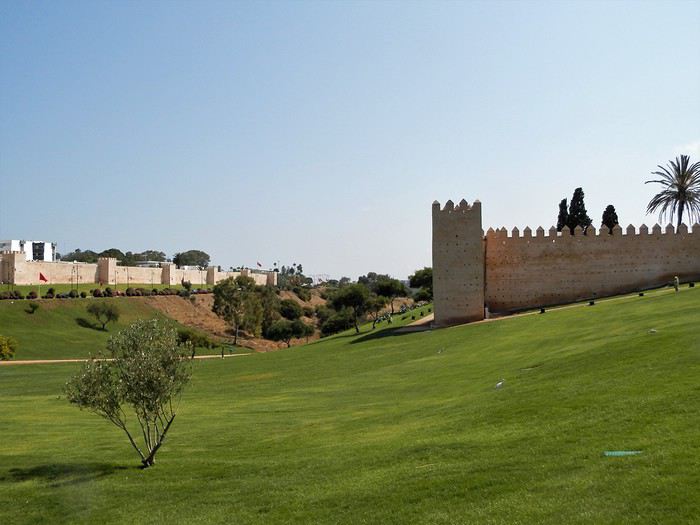
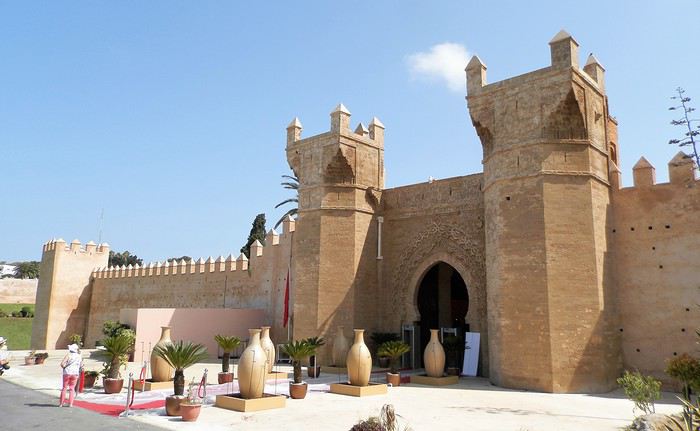
On accède au site par une porte monumentale, une des plus belle du pays .
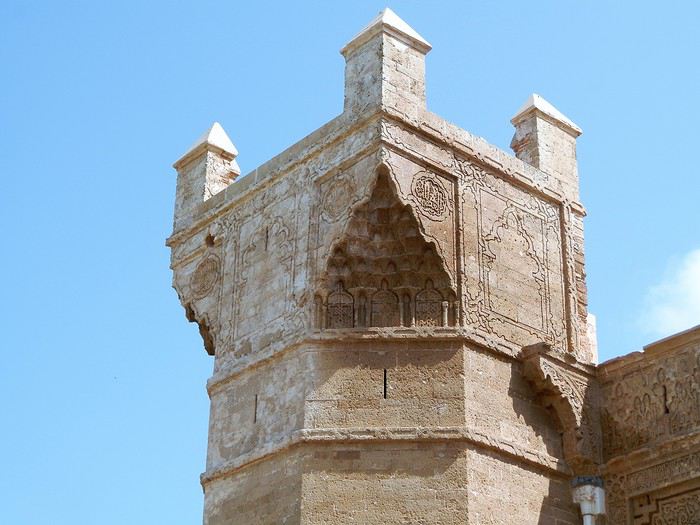
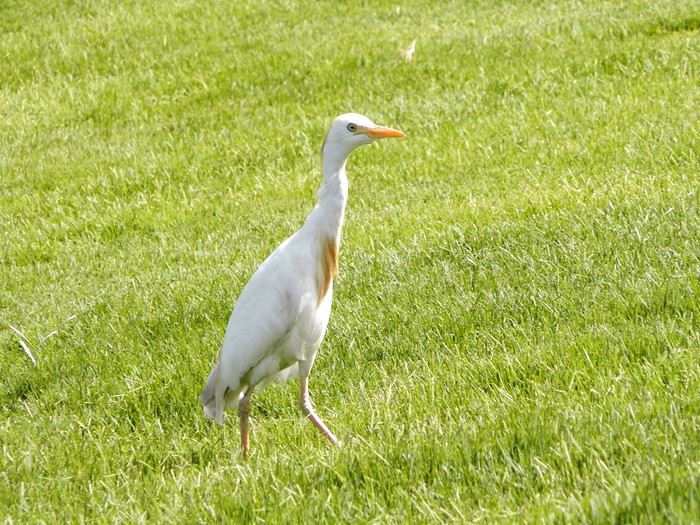
Le site, bien qu'urbain , accueille des colonies imposantes d'aigrettes et de cigognes .
L'entrée au site est désormais de 70 dirhams pour les étrangers . La vue, lorsqu'on descend est très jolie. C'est dit-t-on, le lieu le plus romantique du Maroc .
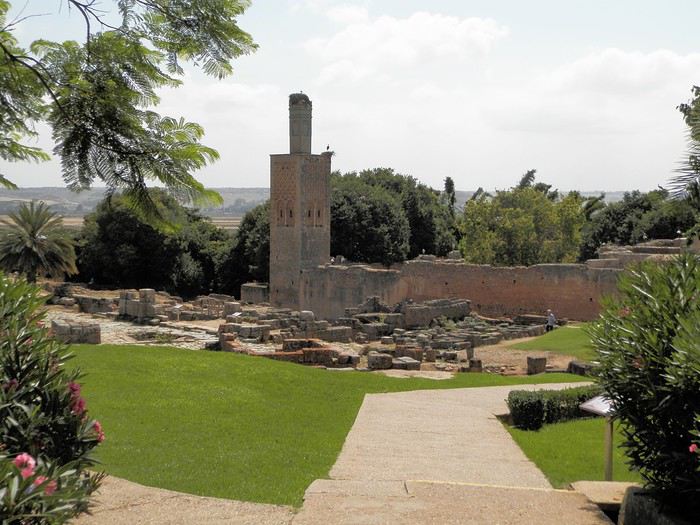
La cité romaine : seule une petite portion de la ville a fait l'objet de fouilles , comme dans la plupart des sites romains du Maroc . Sala était un port, mais la mer n'y vient plus, l'oued Bou Regreg s'étant envasé .
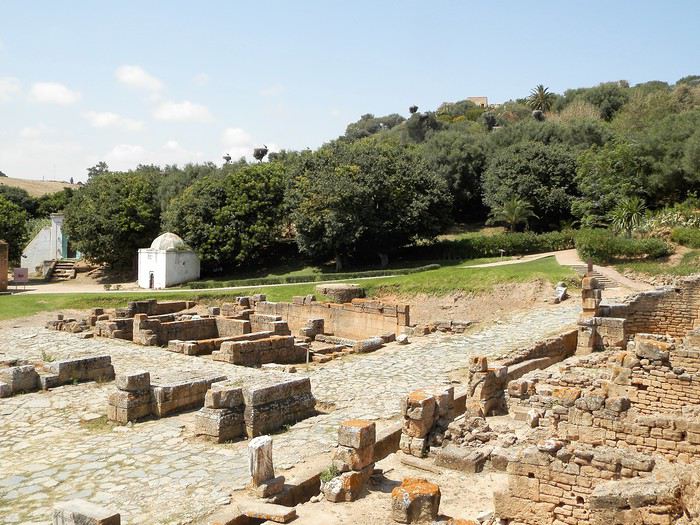
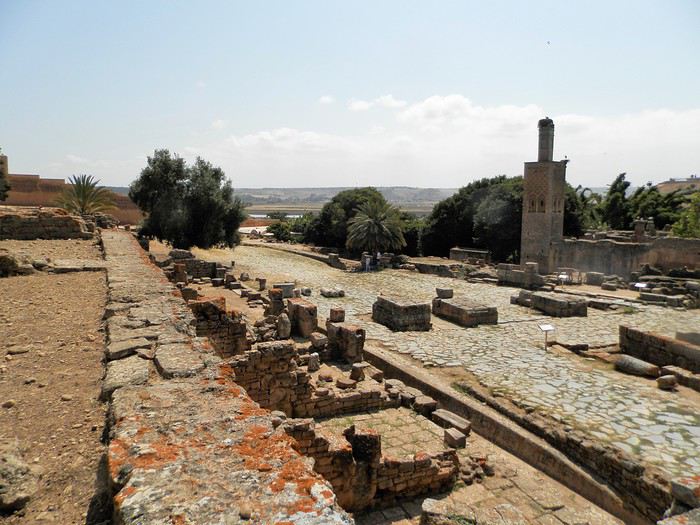
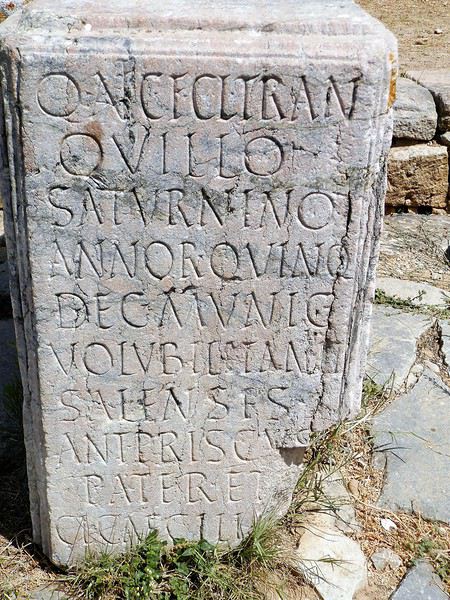
Pour les latinistes....
Le site est remarquablement préservé car jamais, où que l'on regarde, on ne voit le moindre bâtiment de la ville qui pourtant l'encercle totalement ..
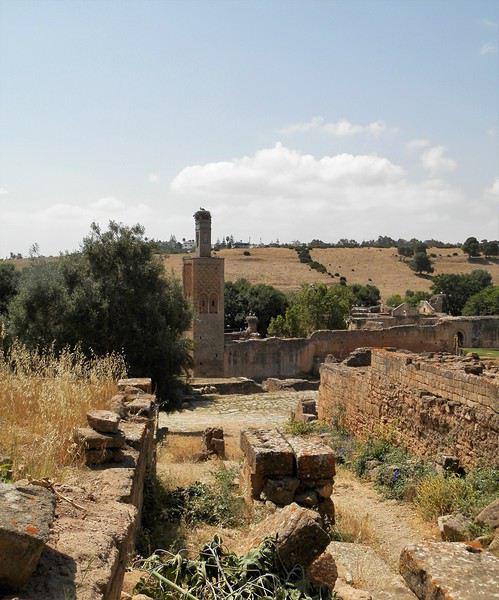
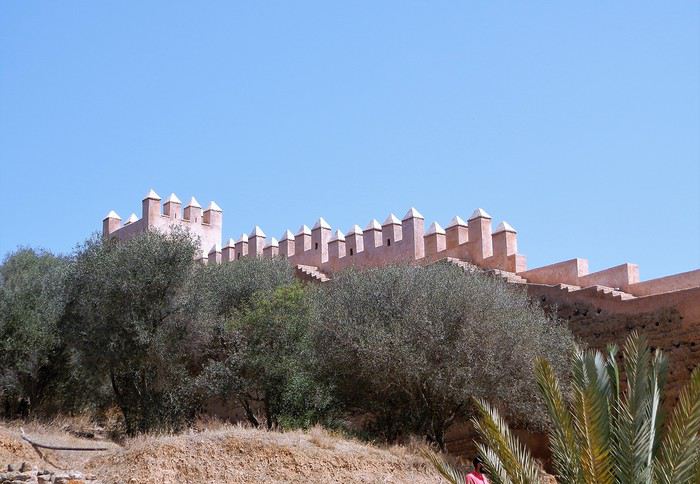
La muraille de la nécropole encercle intégralement le site .
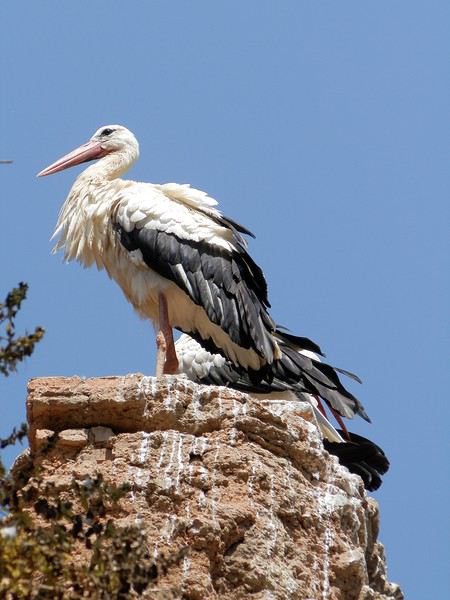
Et un peu partout, des cigognes impassibles ...
Le tombeau d'un sultan
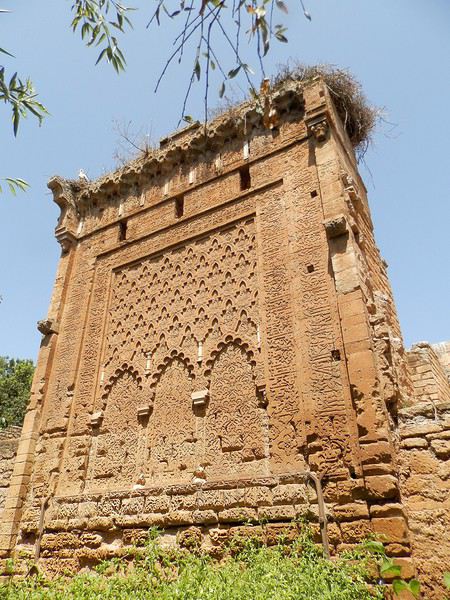
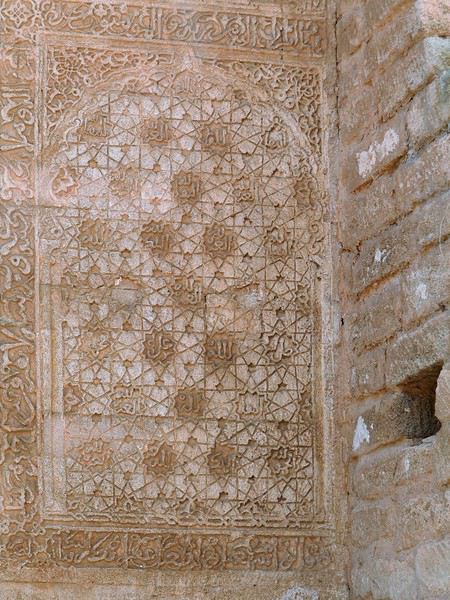
Dans chaque cartouche est écrit, en calligraphie, un des noms de Dieu .
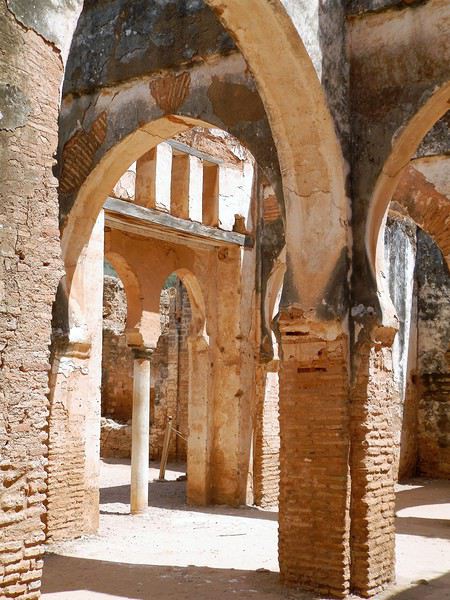
La mosquée est en ruine . On y voit une colonne de marbre romain, en réemploi dans une porte . Accolée à la mosquée se trouve la madrassa ( médersa ) .
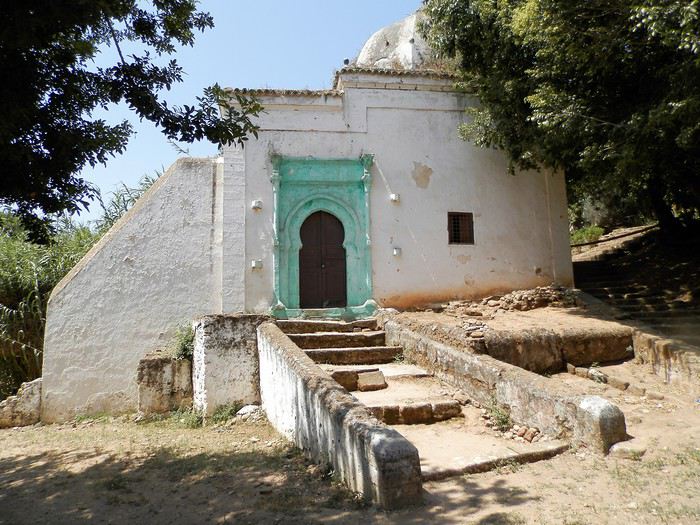
Les tombeaux se cachent dans les bois du site, mais tous ne sont pas accessibles .
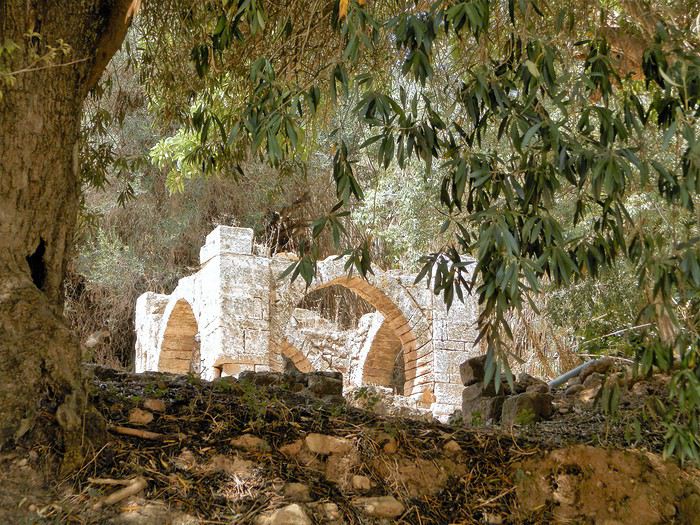
La fontaine aux anguilles : j'ai longtemps pensé que cette fontaine ne contenait rien mais une fois, et une seule en 20 ans, j'ai vu les anguilles sortir de je ne sais où . Ce sont des monstres , leur corps étant plus gros qu'un bras . C'est vraiment impressionnant et quand çà arrive, on s'arrête même de respirer . Il s'agit d'un ancien hammam mérinide noyé par l'effondrement d'un aqueduc souterrain .
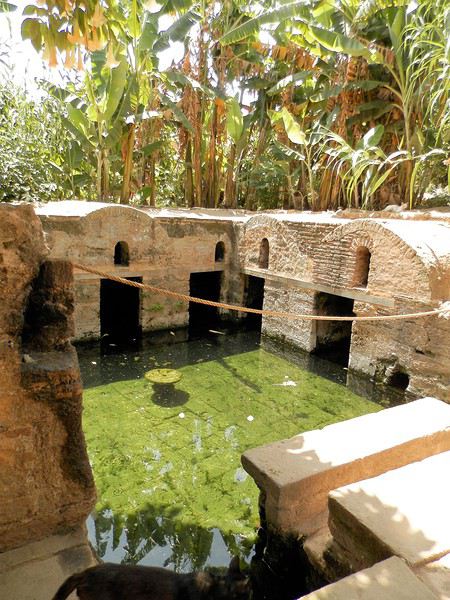
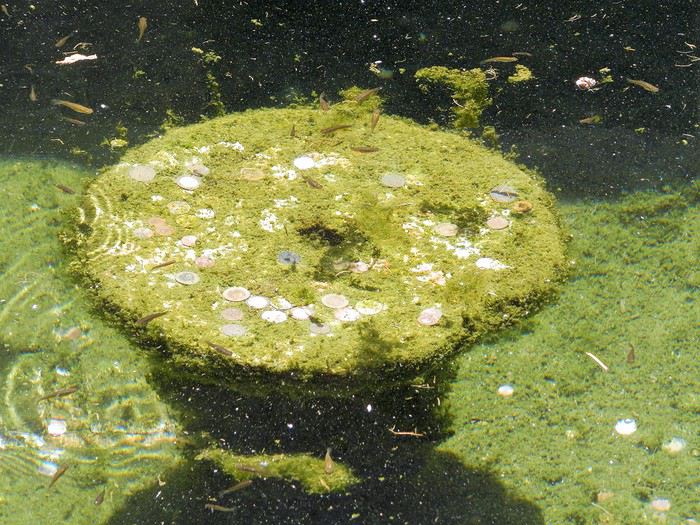
J'affectionne cet endroit car on y trouve le même rituel que chez moi, en Bretagne, où il convient aussi de laisser une offrande dans certaines fontaines . Ici, faite un vœux et jetez la pièce : si elle tombe sur la pierre, votre vœux sera exaucé .
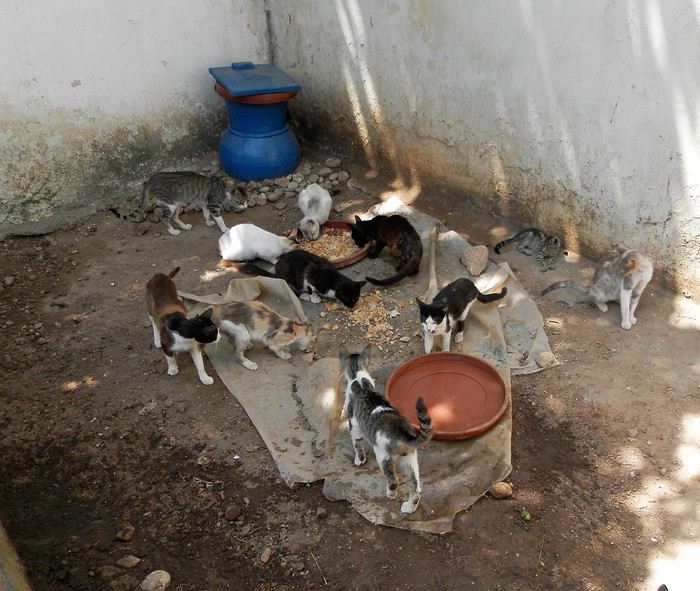
Près du bassin, le tombeau de Sidi Amor El Mesnaoui , qui semble bien être le protecteur des chats . J'y ai toujours vu des dizaines de chats, un peu faméliques . En ce vendredi, à l'heure de la prière, j'ai eu la surprise de voir qu'on leur amenait de grands plats de nourriture , exactement comme on le fait pour les démunis, à la même heure, dans la médina de Rabat .
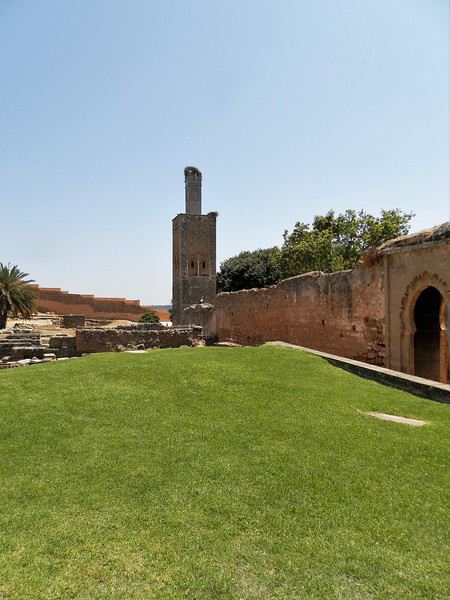
Un dernier regard .....
J'ai effectué un petit périple de 4 jours dans le Nord du Maroc fin juin-début juillet , pour le plaisir de redécouvrir cette région qui est assez rarement mise en avant sur le forum . J'étais accompagné d'une de mes filles de 16 ans . Comme à mon habitude, j'ai pris beaucoup de photos, alors pourquoi ne pas en faire profiter les forumeurs ?
Une des portes du Nord du Maroc , par l'ouest, est la capitale Rabat . Sans faire un sujet sur cette belle cité, je vous propose de m'accompagner pour une ballade à Chellah , un magnifique endroit . Chellah est à la fois une cité romaine ( Sala Colonia ) et une nécropole mérinide . On y voit aussi une mosquée, une madrassa ( école coranique ), des anciens hammams mérinides, etc....
Tous les monuments de Rabat font l'objet de travaux de rénovation et de mise en valeur et Chellah en bénéficie bien sûr . Dès l'arrivée, la vue est superbe : on a du mal a imaginer que nous sommes au cœur de la ville . A gauche, les murailles d'enceinte de la ville et à droite la muraille de Chellah .
On accède au site par une porte monumentale, une des plus belle du pays .
Le site, bien qu'urbain , accueille des colonies imposantes d'aigrettes et de cigognes .
L'entrée au site est désormais de 70 dirhams pour les étrangers . La vue, lorsqu'on descend est très jolie. C'est dit-t-on, le lieu le plus romantique du Maroc .
La cité romaine : seule une petite portion de la ville a fait l'objet de fouilles , comme dans la plupart des sites romains du Maroc . Sala était un port, mais la mer n'y vient plus, l'oued Bou Regreg s'étant envasé .
Pour les latinistes....
Le site est remarquablement préservé car jamais, où que l'on regarde, on ne voit le moindre bâtiment de la ville qui pourtant l'encercle totalement ..
La muraille de la nécropole encercle intégralement le site .
Et un peu partout, des cigognes impassibles ...
Le tombeau d'un sultan
Dans chaque cartouche est écrit, en calligraphie, un des noms de Dieu .
La mosquée est en ruine . On y voit une colonne de marbre romain, en réemploi dans une porte . Accolée à la mosquée se trouve la madrassa ( médersa ) .
Les tombeaux se cachent dans les bois du site, mais tous ne sont pas accessibles .
La fontaine aux anguilles : j'ai longtemps pensé que cette fontaine ne contenait rien mais une fois, et une seule en 20 ans, j'ai vu les anguilles sortir de je ne sais où . Ce sont des monstres , leur corps étant plus gros qu'un bras . C'est vraiment impressionnant et quand çà arrive, on s'arrête même de respirer . Il s'agit d'un ancien hammam mérinide noyé par l'effondrement d'un aqueduc souterrain .
J'affectionne cet endroit car on y trouve le même rituel que chez moi, en Bretagne, où il convient aussi de laisser une offrande dans certaines fontaines . Ici, faite un vœux et jetez la pièce : si elle tombe sur la pierre, votre vœux sera exaucé .
Près du bassin, le tombeau de Sidi Amor El Mesnaoui , qui semble bien être le protecteur des chats . J'y ai toujours vu des dizaines de chats, un peu faméliques . En ce vendredi, à l'heure de la prière, j'ai eu la surprise de voir qu'on leur amenait de grands plats de nourriture , exactement comme on le fait pour les démunis, à la même heure, dans la médina de Rabat .
Un dernier regard .....
Hornbill Festival au Nagaland, Inde
Qu'est-ce que le Hornbill Festival?
Le Hornbill Festival, baptisé «Festival des festivals», tire son nom du Calao, car les différentes communautés le chassaient pour sa viande et ses plumes. Il a été créé par le Département du tourisme en 2000 pour préserver et promouvoir la (les) culture(s) Naga: Angamis, Aos, Konyaks, Sangtams, Zeliangs, Sangtams, Lothas, Chakhesangs... Chaque communauté a sa propre langue, sa propre culture, vêtements et couvre-chef. Ils invitent également d'autres communautés d'États voisins. Même si l’événement n’a pas de sens sacré, c’est l’occasion unique de voir toutes les communautés naga en costume traditionnel au même endroit et au même moment. C'est un régal pour les photographes. Entre l’arène de sable où les tribus présenteront leurs danses, leurs chants et leurs sports traditionnels et les morungs joliment sculptés et décorés où chaque tribu se rassemblera pour festoyer et se divertir. Symboliquement, Hornbill Festival unit les différents Nagas qui se battaient autrefois. Chaque jour du festival, il y a un événement unique comme le tir de menhir, le tir à la corde, la lutte, la course sur échasses en bambou... Il est difficile de savoir quel événement aura lieu à l'avance, car le programme final n'est publié que quelques jours avant l'événement.
Quand se déroule le Hornbill Festival? Le Hornbill Festival est organisé chaque année du 1er au 10 décembre.
Où se passe le Hornbill Festival? Le Hornbill Festival se déroule au village traditionnel de Kisama, situé sur une colline à 10 km de Kohima, sur le chemin d'Imphal. Les morungs (dortoirs de garçons) de chacune des principales tribus ont été recréés pour mettre en valeur le savoir-faire exceptionnel de chaque communauté. Attention, le retour à Kohima dans la soirée peut prendre 1 heure à cause des embouteillages. Il est recommandé de trouver un logement à Kigwema, le village adjacent.
Que faire pendant le Hornbill Festival? Sur le Heritage Village lui-même: - Chiner des souvenirs à la foire artisanale Pour les amateurs d'art et d'artisanat, le « Bamboo Pavilion » présente une variété d'objets d'artisanat, des châles Naga, des objets en bois sculpté, des produits de décoration, des colliers de perles faits main, des livres d'écrivains Naga, des vins de fruits locaux ...
- Participez (à vos risques et périls) au concours de mangeur du piment Le Naga King Chilli est le 3ème piment le plus fort au monde et mesure 1 001 304 sur l’échelle de Scoville (SHU), ce qui signifie qu'il contient l'une des quantités naturelles les plus élevées de capsaïcine (la molécule piquante des piments) dans le monde. Les SHU sont basées sur le nombre de fois qu'un extrait de piment doit être dilué dans de l'eau sucrée pour perdre son piquant. De ce fait, l'extrait de bhoot jalokia a dû être dilué plus d'un million de fois avant que les testeurs ne puissent le déclarer exempt de chaleur.
- Essayez la cuisine Naga Il suffit de s'asseoir dans l'une des nombreuses cabanes pour se restaurer ou d'être invité à l’arrière d’un morung pour essayer l'un des nombreux plats locaux. Notre suggestion: le riz rouge accompagné de porc fumé épicé avec de la bière de riz pour éteindre le feu.
- Visitez le musée de la seconde guerre mondiale Ce musée bien entretenu expose des souvenirs de guerre des batailles peu connues de la Seconde Guerre mondiale menées à Kohima et dans ses environs. C'est lors de la bataille de Kohima que les Japonais ont perdu face aux Britanniques pour la première fois dans le théâtre de guerre asiatique. Les expositions comprennent une gamme variée d'armes, de modèles de table de champs de bataille, d'uniformes de soldats et de photographies historiques.
- assister à un concert de rock Chaque nuit a lieu le Hornbill International Music Festival. Malheureusement, il se déroule à Dimapur (à 75 km de Kohima), ce qui a rendu plus difficile leur participation.
- Randonnée d'une journée dans la vallée de Dzukou. Située à 2 450 m d'altitude, la vallée de Dzukou se trouve aux confins du Manipur et du Nagaland. La vallée est un paradis pour les photographes et constitue un lieu de pique-nique idyllique avec sa riche couverture de fleurs de saison et d’autres espèces de faune et de flore. Vous pouvez obtenir une collation à la rest house une fois que vous atteignez la vallée.
- Explorez le supermarché légendaire de Kohima ou le Keeda Bazaar (marché aux insectes), âmes sensibles s’abstenir. Les anguilles grouillent dans les bacs, les grenouilles dans les sacs en plastique, les petites guêpes éclosent les essaims, les vers à bois frétillants tandis que des dames Naga mâchant nonchalamment des feuilles de bétel. Malheureusement, il n'y a pas de restaurants qui vendent des mets préparés comme des insectes, car les habitants les achètent frais et les préparent à la maison.
- Visitez Khonoma Une balade à pied est le meilleur moyen de découvrir le village de Khonoma, vieux de 700 ans. Passez devant les akharu (portes en bois ornementales) jusqu’aux maisons de chasseurs bordées de cornes de mithuns et de crânes d’animaux, de gigantesques cuves de bière de riz, de fusils hors normes et et de louches gigantesques semblant tout à fait sorties des voyages de Gulliver.
Comment se rendre au Hornbill Festival? Le moyen le plus simple est d'atterrir à Dimapur et de prendre un taxi pour atteindre Kohima. Attention, en période de festival, le prix des taxis monte en flèche! Eastern Routes, agence locale, peut s'occuper du transport, de la réservation d’hôtels et propose les services de guides locaux.
Où loger au Hornbill Festival? Kohima Camp (luxe): Situé au milieu d'une forêt verdoyante aux sons d'un ruisseau. Ici, les tentes de luxe vous offrent une expérience de glamping comme jamais auparavant. Chaque tente dispose d'une terrasse avec vue panoramique sur la montagne. Les tentes sont équipées d'un lit à baldaquin moelleux et de meubles de campement au goût du jour inspirés des tentes de safari. Le lieu du Hornbill Festival est à quelques du camp. Le camp de Kohima offre aux voyageurs un refuge après une journée chargée au Hornbill Festival.
Un permis est-il nécessaire pour assister au Hornbill Festival? Afin d'encourager le tourisme, les étrangers n'ont besoin d'aucun permis spécial pour entrer au Nagaland. Les citoyens indiens ont besoin d'un Inner Line Permit disponible à Dimapur à leur arrivée.
Quand se déroule le Hornbill Festival? Le Hornbill Festival est organisé chaque année du 1er au 10 décembre.
Où se passe le Hornbill Festival? Le Hornbill Festival se déroule au village traditionnel de Kisama, situé sur une colline à 10 km de Kohima, sur le chemin d'Imphal. Les morungs (dortoirs de garçons) de chacune des principales tribus ont été recréés pour mettre en valeur le savoir-faire exceptionnel de chaque communauté. Attention, le retour à Kohima dans la soirée peut prendre 1 heure à cause des embouteillages. Il est recommandé de trouver un logement à Kigwema, le village adjacent.
Que faire pendant le Hornbill Festival? Sur le Heritage Village lui-même: - Chiner des souvenirs à la foire artisanale Pour les amateurs d'art et d'artisanat, le « Bamboo Pavilion » présente une variété d'objets d'artisanat, des châles Naga, des objets en bois sculpté, des produits de décoration, des colliers de perles faits main, des livres d'écrivains Naga, des vins de fruits locaux ...
- Participez (à vos risques et périls) au concours de mangeur du piment Le Naga King Chilli est le 3ème piment le plus fort au monde et mesure 1 001 304 sur l’échelle de Scoville (SHU), ce qui signifie qu'il contient l'une des quantités naturelles les plus élevées de capsaïcine (la molécule piquante des piments) dans le monde. Les SHU sont basées sur le nombre de fois qu'un extrait de piment doit être dilué dans de l'eau sucrée pour perdre son piquant. De ce fait, l'extrait de bhoot jalokia a dû être dilué plus d'un million de fois avant que les testeurs ne puissent le déclarer exempt de chaleur.
- Essayez la cuisine Naga Il suffit de s'asseoir dans l'une des nombreuses cabanes pour se restaurer ou d'être invité à l’arrière d’un morung pour essayer l'un des nombreux plats locaux. Notre suggestion: le riz rouge accompagné de porc fumé épicé avec de la bière de riz pour éteindre le feu.
- Visitez le musée de la seconde guerre mondiale Ce musée bien entretenu expose des souvenirs de guerre des batailles peu connues de la Seconde Guerre mondiale menées à Kohima et dans ses environs. C'est lors de la bataille de Kohima que les Japonais ont perdu face aux Britanniques pour la première fois dans le théâtre de guerre asiatique. Les expositions comprennent une gamme variée d'armes, de modèles de table de champs de bataille, d'uniformes de soldats et de photographies historiques.
- assister à un concert de rock Chaque nuit a lieu le Hornbill International Music Festival. Malheureusement, il se déroule à Dimapur (à 75 km de Kohima), ce qui a rendu plus difficile leur participation.
- Randonnée d'une journée dans la vallée de Dzukou. Située à 2 450 m d'altitude, la vallée de Dzukou se trouve aux confins du Manipur et du Nagaland. La vallée est un paradis pour les photographes et constitue un lieu de pique-nique idyllique avec sa riche couverture de fleurs de saison et d’autres espèces de faune et de flore. Vous pouvez obtenir une collation à la rest house une fois que vous atteignez la vallée.
- Explorez le supermarché légendaire de Kohima ou le Keeda Bazaar (marché aux insectes), âmes sensibles s’abstenir. Les anguilles grouillent dans les bacs, les grenouilles dans les sacs en plastique, les petites guêpes éclosent les essaims, les vers à bois frétillants tandis que des dames Naga mâchant nonchalamment des feuilles de bétel. Malheureusement, il n'y a pas de restaurants qui vendent des mets préparés comme des insectes, car les habitants les achètent frais et les préparent à la maison.
- Visitez Khonoma Une balade à pied est le meilleur moyen de découvrir le village de Khonoma, vieux de 700 ans. Passez devant les akharu (portes en bois ornementales) jusqu’aux maisons de chasseurs bordées de cornes de mithuns et de crânes d’animaux, de gigantesques cuves de bière de riz, de fusils hors normes et et de louches gigantesques semblant tout à fait sorties des voyages de Gulliver.
Comment se rendre au Hornbill Festival? Le moyen le plus simple est d'atterrir à Dimapur et de prendre un taxi pour atteindre Kohima. Attention, en période de festival, le prix des taxis monte en flèche! Eastern Routes, agence locale, peut s'occuper du transport, de la réservation d’hôtels et propose les services de guides locaux.
Où loger au Hornbill Festival? Kohima Camp (luxe): Situé au milieu d'une forêt verdoyante aux sons d'un ruisseau. Ici, les tentes de luxe vous offrent une expérience de glamping comme jamais auparavant. Chaque tente dispose d'une terrasse avec vue panoramique sur la montagne. Les tentes sont équipées d'un lit à baldaquin moelleux et de meubles de campement au goût du jour inspirés des tentes de safari. Le lieu du Hornbill Festival est à quelques du camp. Le camp de Kohima offre aux voyageurs un refuge après une journée chargée au Hornbill Festival.
Un permis est-il nécessaire pour assister au Hornbill Festival? Afin d'encourager le tourisme, les étrangers n'ont besoin d'aucun permis spécial pour entrer au Nagaland. Les citoyens indiens ont besoin d'un Inner Line Permit disponible à Dimapur à leur arrivée.
Obtention d'un permis d’étude pour le Canada
Bonjour, je suis une étudiante au Maroc, je détiens une licence (j’ai de très bonnes notes) et j’ai été acceptée pour un MBA en lien avec mon domaine d’étude. J’ai obtenu mon CAQ et mon père (mon garant) dispose de plus de 100000$CAD sur son compte. En bref, j’ai respecté tout ce qui était requis pour faire le demande de permis d’étude mais on me l’a refusé (et j’attends toujours qu’on m’envoie le motif).
Devrais je faire une nouvelle demande après avoir reçu le motif du refus?
Je suis perdue, je ne sais pas quoi faire.
Merci d’avance.
Retour d'un séjour en Slovénie
Bonjour,
Du 13 au 31/05/2019, j'ai séjourné dans ce beau pays; accueil chaleureux des Slovènes, serviables: - 13/05 au 16/05: Ljubljana - H2Ostel ( au bord de la rivière Ljubljana) - quartier très agréable - calme, beaucoup de verdure. Coin cuisine dans chambre 4 lits. On peut acheter le petit déjeûner ( 5€) à prendre au café Forum ( j'ai essayé, mais pas utile à mon avis). Visite du musée Ethnographique ( intéressant); montée au château en funiculaire, redescente à pied ( belle ballade)-visite du musée Zelezniski ( chemin de fer- vieilles locomotives)- déjêuner au Albi Falafel ( style oriental, très agréable) indiqué par Slovenie-secrète ( journaliste français vivant en Slovénie). 16/05 au 20/05: Bus pour les Alpes Juliennes - lac Bohinj- auberge Pod Voglom - très bien - PD copieux inclus - possibilité de prendre le dîner (9,50, € ( lorsqu'il y a des groupes) et il y a eu des groupes d'enfants pendant 3 jours, mais pas vraiment de dérangement. Je me dirige à pied vers Ukanc ( 5kms) pour me rendre à la station de ski Vogel ( 1535m). Un bus s'arrête pour me prendre gratuitement ( toujours la gentillesse slovène). Télécabine jusqu'à la station - cîmes enneigées. Le retour peut se faire à pied, mais descente raide et enneigée, donc je reprends la télécabine. Beaucoup de sentiers, mais pas toujours bien balisés. le lvre "Easy Trek"Ai acheté Autre trek de 5kms aux chutes de Mostnica Gorge (à 802m d'altitude) , le long de la rivière Mostnica ( ça monte sec - 300m de dénivelé).). Trail pour aller au Pec ( 200m de dénivelé, montée rude) avec superbe vue sur le lac Bohnij. Egalement, marche de 5kms jusqu'à Bohj Bistrica puis bus jusqu'au lac de Bled. Beaucoup de chalets en bois, très colorés 20/05 départ en bus le matin pour Ljubljana et correspondance pour Postojna . L' auberge Proteus est située dans un parc, à 7' de la station de bus - grande, propre et tout est en bois ( ça sent bon le pin comme dans les autres auberges).PD n'ont inclus, mais on peut acheter un coupon (3€). Je me suis fait piquée par ce type d'insectes minuscules, se faufilant sous les manches et pantalons, malgré l' écran anti-insecte ( grosses cloques et démangeaisons à n'en plus finir ( crème achetée à la pharmacie; ça va durer 5 jours). Bus jusqu'au lac intermittent "Cernica". En mai, il est encore rempli d' eau, claire , mais en été, il est complètement asséché, d'où le nom d'intermittent. Belle région où viennent séjourner des oiseaux (des grues), mais aujourd'hui, pas un seul. Beaucoup de fleurs dans les prairies, normalement, mais cette année, le printemps est "pourri" pour reprendre l'expression des Slovènes et les abeilles fuient ailleurs. Visite des gorges, situées à 1Km500 de la ville: magnifiques, des sculptures de couleurs, allant du beige, ocre au marron, des stalactiques, des stalagmites, aux mile formes façonnées par l'érosion: on ne peut que rester ébahis devant l'oeuvre de la nature. Par contre, ne pas se laisser avoir en achetant le forfait grottes-château, sauf si on est en voiture. Le château est situé à 9kms des grottes, pas de bus, seulement le taxi ( le gérant est la même personne pour les deux sites), donc pas de château; j'ai visité l'expo, musée sur la découverte des grottes, les explorations, la faune aquatique...notamment, le fameux "protée" qui peut vivre cent ans et ne pas se nourrir pendant dix ans ( une sorte d'anguille aveugle). Du 23 au 26 Mai: séjour à la ferme Kmetija Na Meji ( chez Marco), à 2 kms de Pivka où j ' irai faire quelques courses.. Marco vient me chercher à Postojna en voiture. Une grande chambre, tout est en bois, salle de bains moderne, petit balcon. C'est une petite vallée très verdoyante, entourée de montagnes ( 1000 à 1500m d'altitude). Campagne très reposante. Le 24 mai: le matin, je me rends au Petelinjsko Jezero lac intermittent situé à 4kms. Encore rempli d'eau, les berges sont recouvertes d'herbes grasses, humides sous les pieds. C'est la saison des foins. Départ à 17 heures pour aller observer les ours.Nous traversons des forêts aux grands pins ( ou sapins) et nous nous arrêtons à un point de vue sur le lac visité le matin. Il m'explique que sous nos pieds, la colline, coule l'eau de la rivière à l'origine des grottes. Beaucoup de grottes dans le plateau du Kartz. Le printemps est froid et la flore a du retard.Marko me fait un topo sur la vie des ours. Il arrive que de jeunes oursons, sevrés, et vivant seuls, poursuivent les cyclistes ( il y a une piste cyclable " of the land of bears". Ils courent vite, ce qui peut être dangereux. Après avoir téléphoné aux responsables de la forêt, nous empruntons un sentier jusqu'à une hutte d'observation. Il y a un ours, un autre arrive, puis un autre. Les ours voient mal, mais leur ouie et odorat sont très développés. De temps en temps, levant la tête, ils reniflent et regardent dans notre direction.Tout à coup, celui qui semble être une femelle fuit en courant. Probablement qu'elle a senti un mêle venir. En effet, un gros ours arrive. Nous serons restés environ deux heures à les observer. Nous avons eu de la chance, il a fait beau. 25 mai: je décide d'aller au deuxième lac intermittent. Plusieurs sentiers feraient le tour de ce lac. En ai suivi plusieurs, en forêt notamment, pas trouvé. Tant pis. Le ciel s'obscurcit, il commence à pleuvoir. Je reviens sur mes pas, fais marcher mes neurones pour retrouver le premier sentier; enfin des repères: un énorme trou creusé par une bombe lors de la deuxième guerre mondiale ( beaucoup de cimetières militaires en Slovénie), la prairie avec du matériel agricole et celle avec les chevaux où j'avais interrogé le fermier, puis l'église de Turnj. Seulement des panneaux indiquant le début et la fin d'un village. Donc, important de se souvenir de repaires. Contente d'être rentrée, car il tonne, il continue de pleuvoir. J'ai beaucoup apprécié mon séjour à la ferme Kmetija Na Meji, l'assistance de Marko, l'hébergement, le confort, le PD très copieux, l'observation des ours; cela peut paraître un peu cher, mais cela vaut la peine si on peut se l'offrir. Si vous pouvez constituer un groupe ( maximum 4 personnes), cela revient moins cher. Du 26/05 au 30/05 : Koper ( au bord de l'Adriatique). J'espérais trouver le soleil, mais pas du tout: ciels sombres, pluie, de temps en temps, éclaircies... Plage: des galets. J'ai apprécié cette petite ville, surtout les ruelles de la vieille ville, déjeûner en bordure de mer ( poissons et fruits de mer). L'auberge est située à l'entrée de la vieille vile (Istria hostel). propre, elle aurait besoin d'un peu de rénovation ( pas de PD). 27/05: je prends le bus à 10h03 -arrivée Divaca à 12h00. Une heure et demie d'attente pour aller aux grottes de Scockjan. Ces grottes sont très différentes de celles de Postojna. Très hautes de plafond, parfois plus de 100m de large. Très sombres, impressionnantes par le gigantisme; des tas de marches à descendre, à monter, un peu de plat; nous marchons le long et au-dessus de la rivière qui charit son débit d'eau tumultueux, eaux turquoises, écumeuses, dans un bruit assourdissant. Ces grottes ne pourraient être visitées par une personne qui aurait des problèmes de mobilité, contrairement à celles de Postojna. 28/05: visite de Piran - Cette partie de la côte est la côte d'azur slovène. Palmiers, superbes villas, grands jardins fleuris; côté terre, des vignobles à perte de vue à flanc de collines ( 300 à 500m d'altitude)- pas de plages, gros rochers. Je découvre la Kantina Klit ( self service) pittoresque avec tables à l'extérieur, sous la tonnelle. La vieille ville de Piran est agréable à visiter.Retour à Koper. Le soir, dîner à la pizzéria Atrji ( tuyau de Slovenie-secrète), située dans une petite ruelle, bien cachée, mais très agréable. 20/05: dernier jour à Koper où j'aime me promener: vieilles maisons de pierres, des palacios construits aux 15ème-17ème siècles par des familles italiennes riches ( beaucoup d'entre eux servent de bâtiments administratifs), portes en bois, moussus, beaucoup d'églises, mais en général, fermées. Déjeûner au Istrska Klet Slavcek où j'ai apprécié un goulash au poisson ( sea- food typique slovène+ un verre de vin blanc. Le soir, dernier dîner à Koper au Capra - tout est dans la finesse, le raffinement des plats, musique d'ambiance ( le jazz est apprécié en Slovénie) et ai dégusté une entrée: gambas, asparagus, crème épinard, délicieux, et un dessert au chocolat choisi sur une tablette. 30/05: retour en bus à Ljubljana à l'hôtel Celica ( dans le quartier de la gare et de la station principale de bus). J'avais réservé dans le dortoir 12 lits sous les combes ( quelques garçons et filles) mais pas gênant. Il y a aussi des chambres à deux lits très confortables. PD copieux. Derrière l'hôtel, un espace avec verdure, beaucoup de peintures, sculptures, serein... 31/05: Départ pour l'aéroport en shuttle ( 9€) à réserver la veille; le bus vous prend à l'hôtel. Je l'avais pris également à mon arrivée à Lubljana ( dépose à l'hôtel). Dernier regard sur les montagnes enneigées, sentir l'air frais.
Dans l'ensemble, j'ai été très contente de mon séjour en Slovénie, malgré 13 jours de vent, pluie fine, mais froide, de temps en temps des éclaircies, sur un durée de 18 jours. Des paysages variés, beaux, un accueil chaleureux, des hébergements agréables, confortables ( à cette période de l'année, j'ai été pratiquement seule dans les chambres). La vie est moitié moins chère qu'en France. Si vous vouliez d'autres informations, n'hésitez pas à me contacter. Chabcha
Du 13 au 31/05/2019, j'ai séjourné dans ce beau pays; accueil chaleureux des Slovènes, serviables: - 13/05 au 16/05: Ljubljana - H2Ostel ( au bord de la rivière Ljubljana) - quartier très agréable - calme, beaucoup de verdure. Coin cuisine dans chambre 4 lits. On peut acheter le petit déjeûner ( 5€) à prendre au café Forum ( j'ai essayé, mais pas utile à mon avis). Visite du musée Ethnographique ( intéressant); montée au château en funiculaire, redescente à pied ( belle ballade)-visite du musée Zelezniski ( chemin de fer- vieilles locomotives)- déjêuner au Albi Falafel ( style oriental, très agréable) indiqué par Slovenie-secrète ( journaliste français vivant en Slovénie). 16/05 au 20/05: Bus pour les Alpes Juliennes - lac Bohinj- auberge Pod Voglom - très bien - PD copieux inclus - possibilité de prendre le dîner (9,50, € ( lorsqu'il y a des groupes) et il y a eu des groupes d'enfants pendant 3 jours, mais pas vraiment de dérangement. Je me dirige à pied vers Ukanc ( 5kms) pour me rendre à la station de ski Vogel ( 1535m). Un bus s'arrête pour me prendre gratuitement ( toujours la gentillesse slovène). Télécabine jusqu'à la station - cîmes enneigées. Le retour peut se faire à pied, mais descente raide et enneigée, donc je reprends la télécabine. Beaucoup de sentiers, mais pas toujours bien balisés. le lvre "Easy Trek"Ai acheté Autre trek de 5kms aux chutes de Mostnica Gorge (à 802m d'altitude) , le long de la rivière Mostnica ( ça monte sec - 300m de dénivelé).). Trail pour aller au Pec ( 200m de dénivelé, montée rude) avec superbe vue sur le lac Bohnij. Egalement, marche de 5kms jusqu'à Bohj Bistrica puis bus jusqu'au lac de Bled. Beaucoup de chalets en bois, très colorés 20/05 départ en bus le matin pour Ljubljana et correspondance pour Postojna . L' auberge Proteus est située dans un parc, à 7' de la station de bus - grande, propre et tout est en bois ( ça sent bon le pin comme dans les autres auberges).PD n'ont inclus, mais on peut acheter un coupon (3€). Je me suis fait piquée par ce type d'insectes minuscules, se faufilant sous les manches et pantalons, malgré l' écran anti-insecte ( grosses cloques et démangeaisons à n'en plus finir ( crème achetée à la pharmacie; ça va durer 5 jours). Bus jusqu'au lac intermittent "Cernica". En mai, il est encore rempli d' eau, claire , mais en été, il est complètement asséché, d'où le nom d'intermittent. Belle région où viennent séjourner des oiseaux (des grues), mais aujourd'hui, pas un seul. Beaucoup de fleurs dans les prairies, normalement, mais cette année, le printemps est "pourri" pour reprendre l'expression des Slovènes et les abeilles fuient ailleurs. Visite des gorges, situées à 1Km500 de la ville: magnifiques, des sculptures de couleurs, allant du beige, ocre au marron, des stalactiques, des stalagmites, aux mile formes façonnées par l'érosion: on ne peut que rester ébahis devant l'oeuvre de la nature. Par contre, ne pas se laisser avoir en achetant le forfait grottes-château, sauf si on est en voiture. Le château est situé à 9kms des grottes, pas de bus, seulement le taxi ( le gérant est la même personne pour les deux sites), donc pas de château; j'ai visité l'expo, musée sur la découverte des grottes, les explorations, la faune aquatique...notamment, le fameux "protée" qui peut vivre cent ans et ne pas se nourrir pendant dix ans ( une sorte d'anguille aveugle). Du 23 au 26 Mai: séjour à la ferme Kmetija Na Meji ( chez Marco), à 2 kms de Pivka où j ' irai faire quelques courses.. Marco vient me chercher à Postojna en voiture. Une grande chambre, tout est en bois, salle de bains moderne, petit balcon. C'est une petite vallée très verdoyante, entourée de montagnes ( 1000 à 1500m d'altitude). Campagne très reposante. Le 24 mai: le matin, je me rends au Petelinjsko Jezero lac intermittent situé à 4kms. Encore rempli d'eau, les berges sont recouvertes d'herbes grasses, humides sous les pieds. C'est la saison des foins. Départ à 17 heures pour aller observer les ours.Nous traversons des forêts aux grands pins ( ou sapins) et nous nous arrêtons à un point de vue sur le lac visité le matin. Il m'explique que sous nos pieds, la colline, coule l'eau de la rivière à l'origine des grottes. Beaucoup de grottes dans le plateau du Kartz. Le printemps est froid et la flore a du retard.Marko me fait un topo sur la vie des ours. Il arrive que de jeunes oursons, sevrés, et vivant seuls, poursuivent les cyclistes ( il y a une piste cyclable " of the land of bears". Ils courent vite, ce qui peut être dangereux. Après avoir téléphoné aux responsables de la forêt, nous empruntons un sentier jusqu'à une hutte d'observation. Il y a un ours, un autre arrive, puis un autre. Les ours voient mal, mais leur ouie et odorat sont très développés. De temps en temps, levant la tête, ils reniflent et regardent dans notre direction.Tout à coup, celui qui semble être une femelle fuit en courant. Probablement qu'elle a senti un mêle venir. En effet, un gros ours arrive. Nous serons restés environ deux heures à les observer. Nous avons eu de la chance, il a fait beau. 25 mai: je décide d'aller au deuxième lac intermittent. Plusieurs sentiers feraient le tour de ce lac. En ai suivi plusieurs, en forêt notamment, pas trouvé. Tant pis. Le ciel s'obscurcit, il commence à pleuvoir. Je reviens sur mes pas, fais marcher mes neurones pour retrouver le premier sentier; enfin des repères: un énorme trou creusé par une bombe lors de la deuxième guerre mondiale ( beaucoup de cimetières militaires en Slovénie), la prairie avec du matériel agricole et celle avec les chevaux où j'avais interrogé le fermier, puis l'église de Turnj. Seulement des panneaux indiquant le début et la fin d'un village. Donc, important de se souvenir de repaires. Contente d'être rentrée, car il tonne, il continue de pleuvoir. J'ai beaucoup apprécié mon séjour à la ferme Kmetija Na Meji, l'assistance de Marko, l'hébergement, le confort, le PD très copieux, l'observation des ours; cela peut paraître un peu cher, mais cela vaut la peine si on peut se l'offrir. Si vous pouvez constituer un groupe ( maximum 4 personnes), cela revient moins cher. Du 26/05 au 30/05 : Koper ( au bord de l'Adriatique). J'espérais trouver le soleil, mais pas du tout: ciels sombres, pluie, de temps en temps, éclaircies... Plage: des galets. J'ai apprécié cette petite ville, surtout les ruelles de la vieille ville, déjeûner en bordure de mer ( poissons et fruits de mer). L'auberge est située à l'entrée de la vieille vile (Istria hostel). propre, elle aurait besoin d'un peu de rénovation ( pas de PD). 27/05: je prends le bus à 10h03 -arrivée Divaca à 12h00. Une heure et demie d'attente pour aller aux grottes de Scockjan. Ces grottes sont très différentes de celles de Postojna. Très hautes de plafond, parfois plus de 100m de large. Très sombres, impressionnantes par le gigantisme; des tas de marches à descendre, à monter, un peu de plat; nous marchons le long et au-dessus de la rivière qui charit son débit d'eau tumultueux, eaux turquoises, écumeuses, dans un bruit assourdissant. Ces grottes ne pourraient être visitées par une personne qui aurait des problèmes de mobilité, contrairement à celles de Postojna. 28/05: visite de Piran - Cette partie de la côte est la côte d'azur slovène. Palmiers, superbes villas, grands jardins fleuris; côté terre, des vignobles à perte de vue à flanc de collines ( 300 à 500m d'altitude)- pas de plages, gros rochers. Je découvre la Kantina Klit ( self service) pittoresque avec tables à l'extérieur, sous la tonnelle. La vieille ville de Piran est agréable à visiter.Retour à Koper. Le soir, dîner à la pizzéria Atrji ( tuyau de Slovenie-secrète), située dans une petite ruelle, bien cachée, mais très agréable. 20/05: dernier jour à Koper où j'aime me promener: vieilles maisons de pierres, des palacios construits aux 15ème-17ème siècles par des familles italiennes riches ( beaucoup d'entre eux servent de bâtiments administratifs), portes en bois, moussus, beaucoup d'églises, mais en général, fermées. Déjeûner au Istrska Klet Slavcek où j'ai apprécié un goulash au poisson ( sea- food typique slovène+ un verre de vin blanc. Le soir, dernier dîner à Koper au Capra - tout est dans la finesse, le raffinement des plats, musique d'ambiance ( le jazz est apprécié en Slovénie) et ai dégusté une entrée: gambas, asparagus, crème épinard, délicieux, et un dessert au chocolat choisi sur une tablette. 30/05: retour en bus à Ljubljana à l'hôtel Celica ( dans le quartier de la gare et de la station principale de bus). J'avais réservé dans le dortoir 12 lits sous les combes ( quelques garçons et filles) mais pas gênant. Il y a aussi des chambres à deux lits très confortables. PD copieux. Derrière l'hôtel, un espace avec verdure, beaucoup de peintures, sculptures, serein... 31/05: Départ pour l'aéroport en shuttle ( 9€) à réserver la veille; le bus vous prend à l'hôtel. Je l'avais pris également à mon arrivée à Lubljana ( dépose à l'hôtel). Dernier regard sur les montagnes enneigées, sentir l'air frais.
Dans l'ensemble, j'ai été très contente de mon séjour en Slovénie, malgré 13 jours de vent, pluie fine, mais froide, de temps en temps des éclaircies, sur un durée de 18 jours. Des paysages variés, beaux, un accueil chaleureux, des hébergements agréables, confortables ( à cette période de l'année, j'ai été pratiquement seule dans les chambres). La vie est moitié moins chère qu'en France. Si vous vouliez d'autres informations, n'hésitez pas à me contacter. Chabcha
Croisière Los Angeles - Vancouver fin avril - mai et température
Bonjour,
Il y aurait une croisière au départ de Los Angeles vers Vancouver le 24 avril prochain qui nous intéresserait.
J’aimerais savoir si en cette période il fait très froid en mer en direction de Vancouver.
Si quelqu’un aurait déjà fait cet itinéraire (ou similaire) et pourrait éclairer mes antennes…
Merci de vos réponses.🙂
Il y aurait une croisière au départ de Los Angeles vers Vancouver le 24 avril prochain qui nous intéresserait.
J’aimerais savoir si en cette période il fait très froid en mer en direction de Vancouver.
Si quelqu’un aurait déjà fait cet itinéraire (ou similaire) et pourrait éclairer mes antennes…
Merci de vos réponses.🙂
Découvrir le Sénégal en famille
Bonjour à tous,
je souhaiterais emmener mes enfants de 18.14 et 9 ans découvrir le Sénégal.
Pourriez-vous me conseiller des lieux incontournables à visiter mais aussi pour loger ( avec un minimum de confort), pour manger ?
Nous pensons partir au moins 10 jours en février.
J'aimerai faire un safari, sur les blogs on voit divers adresses mais on souhaiterait qq chose d'authentique qui ne fasse pas zoo...
Merci pour vos réponses
Itinéraire 3 semaines au Cambodge en février
Bonjour,
nous partons pour nos 20 ans de mariage, pour la 1ère fois au Cambodge.
Ce sera également pour nous la 1ère fois en Asie.
Je me permets ici de vous joindre notre projet d'itinéraire, avec nos réflexions, modifié plusieurs fois en raison essentiellement des temps de trajets ! Et bien sûr les interrogations qui vont avec ... ;)
V01/02 : arrivée à PP à 13H. Direction l'hébergement et pas grand chose de prévu après 24h de voyage...
S02/02 : PP (Palais Royal, Marché central..; et petite balade sur le Mékong au couchant).
D03/02 : PP (marché russe, Camp S21 puis quelques pagodes pour se changer les idées..)
L04/02 :Bus pour K.Thom et visite du Sambor Prei Kuk. Nuit K.T
M05/02 : Bus pour SR, puis visite l'am du National Angkor Museum pour se mettre dans le bain !
Me 06/02 : grosse journée avec location voiture+chauffeur pour le site de Koh Ker puis Beng Mealea en rentrant sur SR
J07/02 : achat du forfait 7 jours pour Angkor et visite de Bantey Srey et peut être le groupe de Roluos (mais cela risque d'être court...). Bus vers Battambag. Nous abandonnons l'idée du trajet en bateau après plusieurs lectures ça et là à ce sujet (sécurité, durée et le niveau de l'eau incertain...) même si cela semble magnifique.
V08/02 : balade dans la campagne autour de Bttg (à définir) et petit tour aux "Batcaves" en fin de journée.
S09/02 : petit tour en ville (Bamboo train ? ou autre ?) et bus en début d'am pour SR pour assister au spectacle "Phare" à 20H
D10/02 : SR. Marché du Phsar Leu (apparement plus authentique) puis balade sur le Tonlé Sap vers Kpg Khleang
L11, M12 et Me13/02 : Angkor of course !!!
M13/02 : bus de nuit (Giant ibis) vers Sihanoukville. Au départ, nous avions envisagé l'avion. Mais les horaires et le coût nous ont fait changé d'avis...
J14/02 : départ au plus tôt (pas du tout envie de "faire" Sihanouk !) vers Koh Rong Samloem. Le jour de la St Valentin pour fêter nos 20 ans de mariage <3
V15, S16/02 : plongée et farniente sur KRS
D17, L18, M19/02 : départ ver Sihanouk, puis Kampot et Kep. Pas encore très précis dans notre programme : plantation de poivre, se gaver de bons petits plats...
Me 20/02 : retour pour PP. A faire sur le trajet : Phom Chisor si c'est à conseiller...
J21/02 : au gré des envies le matin et vol retour à 18H
Nos remarques et/ou questions :
Nous avons très vite abandonné l'idée d'aller vers Kratie puis le Mondolkiri à cause des temps de trajet. Mais cela nous tentait bien.
Nous avions envisagé en début de séjour, après PP, une étape à KCham, pour le Mékong. Mais nous avons peur que cela soit une "demi mesure" sans aller jusqu'à Kratie. Cela vaut-il le coup ?
Nous avons fait en sorte de "finir en beauté" et de visiter les sites secondaires en premier, mais aussi pour éviter la semaine du nouvel an chinois (05/02) à Angkor !! J'espère que cela sera plus calme la semaine suivante... Qu'en pensez vous ?
Concernant le spectacle "Phare" à SR : il y en a un aussi à Battambang. Faut il en privilégier un plus que l'autre ?
Le Khal Spean au nord du Bantey Srey est-il incourtournable ?
Le bamboo train à Battambang : piège à touristes ?
La fin de notre séjour semble plus "souple". Doit-on décaler d'une journée pour faire autre chose dans les 2 1ères semaines ? Quid du Phom Chisor proche de PP ? Combien de temps devons consacrer à la région de Kampot/Kep ?
Un grand merci pour votre temps et vos retours bienvenus.
Cordialement Fabrice
Je me permets ici de vous joindre notre projet d'itinéraire, avec nos réflexions, modifié plusieurs fois en raison essentiellement des temps de trajets ! Et bien sûr les interrogations qui vont avec ... ;)
V01/02 : arrivée à PP à 13H. Direction l'hébergement et pas grand chose de prévu après 24h de voyage...
S02/02 : PP (Palais Royal, Marché central..; et petite balade sur le Mékong au couchant).
D03/02 : PP (marché russe, Camp S21 puis quelques pagodes pour se changer les idées..)
L04/02 :Bus pour K.Thom et visite du Sambor Prei Kuk. Nuit K.T
M05/02 : Bus pour SR, puis visite l'am du National Angkor Museum pour se mettre dans le bain !
Me 06/02 : grosse journée avec location voiture+chauffeur pour le site de Koh Ker puis Beng Mealea en rentrant sur SR
J07/02 : achat du forfait 7 jours pour Angkor et visite de Bantey Srey et peut être le groupe de Roluos (mais cela risque d'être court...). Bus vers Battambag. Nous abandonnons l'idée du trajet en bateau après plusieurs lectures ça et là à ce sujet (sécurité, durée et le niveau de l'eau incertain...) même si cela semble magnifique.
V08/02 : balade dans la campagne autour de Bttg (à définir) et petit tour aux "Batcaves" en fin de journée.
S09/02 : petit tour en ville (Bamboo train ? ou autre ?) et bus en début d'am pour SR pour assister au spectacle "Phare" à 20H
D10/02 : SR. Marché du Phsar Leu (apparement plus authentique) puis balade sur le Tonlé Sap vers Kpg Khleang
L11, M12 et Me13/02 : Angkor of course !!!
M13/02 : bus de nuit (Giant ibis) vers Sihanoukville. Au départ, nous avions envisagé l'avion. Mais les horaires et le coût nous ont fait changé d'avis...
J14/02 : départ au plus tôt (pas du tout envie de "faire" Sihanouk !) vers Koh Rong Samloem. Le jour de la St Valentin pour fêter nos 20 ans de mariage <3
V15, S16/02 : plongée et farniente sur KRS
D17, L18, M19/02 : départ ver Sihanouk, puis Kampot et Kep. Pas encore très précis dans notre programme : plantation de poivre, se gaver de bons petits plats...
Me 20/02 : retour pour PP. A faire sur le trajet : Phom Chisor si c'est à conseiller...
J21/02 : au gré des envies le matin et vol retour à 18H
Nos remarques et/ou questions :
Nous avons très vite abandonné l'idée d'aller vers Kratie puis le Mondolkiri à cause des temps de trajet. Mais cela nous tentait bien.
Nous avions envisagé en début de séjour, après PP, une étape à KCham, pour le Mékong. Mais nous avons peur que cela soit une "demi mesure" sans aller jusqu'à Kratie. Cela vaut-il le coup ?
Nous avons fait en sorte de "finir en beauté" et de visiter les sites secondaires en premier, mais aussi pour éviter la semaine du nouvel an chinois (05/02) à Angkor !! J'espère que cela sera plus calme la semaine suivante... Qu'en pensez vous ?
Concernant le spectacle "Phare" à SR : il y en a un aussi à Battambang. Faut il en privilégier un plus que l'autre ?
Le Khal Spean au nord du Bantey Srey est-il incourtournable ?
Le bamboo train à Battambang : piège à touristes ?
La fin de notre séjour semble plus "souple". Doit-on décaler d'une journée pour faire autre chose dans les 2 1ères semaines ? Quid du Phom Chisor proche de PP ? Combien de temps devons consacrer à la région de Kampot/Kep ?
Un grand merci pour votre temps et vos retours bienvenus.
Cordialement Fabrice
Arsouille30 au Soleil Levant d'octobre 2018
K🙂nichinwa/Bonjour!
Voilà, comme ça: notre voyage-à-nous, de 3 semaines en individuels, en Octobre (avant le Kôyô/ couleurs de l'automne, météo très agréable, douce/25° et sèche) au Japon, cantonné à Son île principale, Honshu, avec pour étapes: Tokyo (5 nuits), Kamakura-Enoshima (2 nuits), Mont Nokogiri/Préfecture de Chiba, Kyoto (8 nuits) et en bord de Mer du Japon: Ine-Cho (2 nuits) & Wakasa Takahama (2 nuits).Je dois préciser que nous avons pas mal sillonné l'ASE depuis 30 ans, nous ne nous sommes laissés convaincre que tout récemment par la Destination qui ne nous attirait pas spécialement, sans doute retenus par son image (chère, "trop" occidentalisée, polluée, urbanisée etc...).Aussi me risquerai-je, en fin de CR, à un parallèle avec l'ASE.
Mais encore....
*Transports:
International: Montpellier-Paris CDG-Tokyo Narita Aller, Osaka KIX-Paris CDG-Montpellier Retour sur AirFrance (770 euros/p en Economy, booké sur...klm.com), qui, je valide : bonnes prestations on board, espace pour les jambes, restauration servie ou en self, cordialité des cabin crew (mention spéciale pour le clip safety, so sexy et plein d'humour). La french touch!
Domestik: Tokyo Haneda-Osaka Itami (60 euros/p) sur ANA .Le vol nous a offert le cône de Fujiyama émergeant des nuages: clic clac, yesss! 😎
Déplacements inter-cités en train (réglés comme des horloges), except Kurihama-Kanaya/Nokogiriyama en ferry-boat (40mn) et Amanohashidate-Oshima en bus (1h). En villes&campagnes, la marche privilégiée.
*Budget:
All included, pour 2: 5500 balles (quand mêêême!).Avons ramené 15 kilos de norens, amulettes (ema, daruma, bracelets...), fringues (kimono matelassé, pantalon jodhpur, jikatabi/chaussures "ninja", hachimaki/bandeau de tête...), cloche, food & nihonshu ( est un faux ami, qui désigne génériquement une boisson alcoolisée), washi, version nippone (pas d'âne/roba dans le folklore local ?), bento box...clopes: le Mevius 8 coûte 480 Y en ville, only 24 euros la cartouche à l'aréoport.(au passage, le coup des zones fumeurs et des feux piétons m'ont vite saoulé, en ai fait à ma guise, na! suis po lobotomisé d'la tetê !).
*Accomodations:
-Taito Ryokan à Nishi Asakusa/Tokyo: 54 euros/nuit, sanitaires communs, via Expédia.Etablissement tradi (couchage futon), bien géré par proprio anglophone poli&pro. -Chez les adorables Matsumi & Subhartha (anglophones) à Kamakura-shi: 42 euros /nuit, via Airbnb.Chambre individuelle, sanitaires communs, couchage futon. -Best Western Yokohama (proche d'Haneda Airport): 53 euros/nuit, via Booking.Comfort moderne, sdb attachée. -Japaning Hotel à Nakagyo-ku/Kyoto (prés de Nojo-ji): 43 euros/nuit via Airbnb.Studio neuf, ultra équipé (tv dans la sdb stp!) -Minsyuku Izutsuya à Oshima/Miyazu-shi/Kyoto: 67 euros/nuit,1 dîner pour 2 inclus, viaAirbnb.Jeunes hôtes très sympas, English basic, chambre les pieds dans l'eau dans un funaya (maison de pêcheurs tradi), literie futon, sanitaires communs, loc de vélo 300 Y/j, what else, quoi! -Minsyuku Saruhashi (family run since 50a stp!) à Wakasa Takaham (<50m de la beach): négocié en direct sur place à 46 euros/nuit, dodo futon, sanitaires sharés, accueil bonnard. -Jiyuke Inn à Izumisano (proche de KIX Airport): 46 euros/nuit via Booking.Chambre individuelle, sanitaires communs, couchage futon, cuisine partagée super équipée.Nickel.
* Prépa d'trip:
Avions comme guides-papier (prêtés) le L.P. < Japon > et le Routard ..Nous nous sommes plus largement inspirés des forums & blogs de voyage (Aligatô! à leurs contributeurs & auteurs, spéciale dédicace @ Marie 😉). Je plussoie la lecture, vantée par Monique 😉, du (Editions petit mercure), petit recueil d'extraits de textes sur plein de facettes de la Capitale (urbanisme, pollution, histoire...), très facile à lire et enrichissant.Existent Kyoto, Japon et même la collection tître d'autres Contrées & thèmes éclectik.
*Visites & Activités:
- TOKYO (sur 4 jours 1/2):
Temples & Sanctuaires , munis d'un goshuincho, carnet à tampons : Senso-Ji, Meiji Jingu, Hongan-Ji, Fukagawa Fudo-do (spectaculaire rite du feu).😇
Architecture moderne: Ginza (maisons Chanel, Hermès, Dior, Tour Sapporo..), O.T. d'Asakusa, Odaiba (Siège de Fuji TV, Tokyo Bight Sight -se renseigner sur les dates du Design Festa, marché d'art-, l'Unicorn Gundam, giant robot /CC Diver City - Gundam Store au 5ème-, Musée des sciences maritimes, Statue de la Liberté...), Skytree (ne pas rater, à côté des ascenceurs, les superbes sculptures expliquant la symbolique de la Tour)...
Musées: National (riche d'estampes, kimonos, armures, peintures...expo temporaire d'ikibana ), d'Art Moderne (photos, peintures, sculptures...), de l'Artisanat populaire/Mingei-Kan (franchement, pas impérissable).
Balades: (moué, moyenne!) promenade en bâteau sur la Sumida River et ses canaux , au départ du Pont de Nihombashi jusqu'à la tour Asahi (choppe de bière de P. Starck & "crotte dorée"), traversée pédestre du Rainbow Bridge pour Odaiba (chouette perspective sur la Baie de Tokyo et Sa skyline), the carrefour de Shibuya (au goal de caresser la statue d' Hachiko, aka Chuken = iench fidèle), shopping à la vénérable papèterie Ozu-washi. Surtout, me semble-t-il, ne pas rester sur les grandes artères, couper par les petits pâtés de maisons, à l'étonnante quiétude et aux habitations basses, menant leur "petite life"...
Un acte (1h) au Théatre Kabuki-Za (transportant, 1200 Y/p).
Pour dîner, avons bien kiffé les ptites cantines prés du CC Don Quijote, les anguilles de l'Una Toto
- KAMAKURA & Presqu'île d' ENOSHIMA (sur 2 nuits):
Temples & Sanctuaires : Engaku-ji, Kencho-ji, Tsurugaoka Hachimangu, le Daibutsu. 😇
Marche côtière de la plage de Kamakura à la Presqu'île d'Enoshima (<2h), avec relaxation de 2 heures à l'Inamuragasaki Onsen, dont les bains bienfaisants offrent une superbe vue panoramique sur la baie. Soirée sympathique à Enoshima, aux joyeuses ruelles commerçantes et restos de fruits de mer courus. Testé et approuvé le 1er soir, le Totoyamichi Kamakura Yuigahama (sushis&makis préparés en live et self-servis sur tapis roulant, à prix modérés).
- MONT NOKOGIRI (excursion à la journée, compter 3 heures sur Site): Accessible soit par téléphérique payant (7mn), soit à pied (ça grimpe à l'aller, dévale au retour: pour les bons marcheurs) Sérénité, voire mysticisme (accentué par temps brumeux) des Lieux sont enchanteurs.En bas du Site: Daibutsu est Grand. 😇 Avant de prendre le ferry-boat du retour: shopping alimentaire sympa à The Fish (market), mitoyen de la gare maritime.
- KYOTO (sur 6 jours pleins):
Temples & Sanctuaires: Heian-jingu, Nishi Hongan-ji, Toji, Ginkaku-ji, Nanzen-ji, Chion-in, Shoren-in, Shanjusangen-do, Kiyomizu-dera, Ryôan-ji, Kinkaku-ji (Pavillon d'Or), Fushimi-Inari, Tofoku-ji, Cathédrale Catholique de Kyoto, Daitoku-ji (Obai-in , Higashi Hongan-ji et Daisen-in ) pour les plus connus. 😇
Visites du Nijo-jo (palais du Shogun), de galeries d'art de la Teramachi Street ( Hill Gate Gallery...), charmant Chemin de la philosophie ), la Kolossale Kyoto Station (passage aiguillant à l'O.T., achat d'ekiben..), Avons par choix snobé de le Jidai Matsuri, au profit d'Ine-Cho.
Théatre: représentations de Nô au Kanze Kaikan (hypnotique), de Butoh au Kyoto Butoh kan (théatre de poche, résa "obligée"), staring l'énoooorme Ima Tenko.
Musée des Beaux Arts de Kyoto/Insho domoto (joli bâtiment) exposant temporairement Maître Shensen.
Expèrience culinaire: un très bon dîner kaiseki au restaurant Tagoto Honten, à prix raisonnable (<100 euros pour 2)
Excursion en train à la journée à NARA: Pélerinage des temples Todai-ji, Jurin-in, Kofuku-ji, Gango-ji, Sanctuaire de Gory , traversée du Parc & ses daims, visite de la maison en lacis Naramachi Koshi-no-ie dans l'agréable quartier Naramachi.
Grande désillusion et tristesse pour la fermeture au public (jusqu'à?) , pour cause de gros dégâts du typhon Jebi (sept) , du Site du Mont Kumara, Berceau du Reiki (Maître Fondateur Mikao Usui 😇), une des motivations primordiales de notre voyage.
- INE-cho:
Très joli petit port de pêche à 3 heures de transports publics de Kyoto, sur la Mer du Japon, célèbre pour son habitat typique: le funaya.A l'écart du tourisme Occidental. En transit, arrêt de quelques heures dans la scénique Amanoashidate et sa famous langue de terre.
- WAKASA TAKAHAMA:
Station balnéaire de taille moyenne, très très calme (fin oct?) .Blue flag, mais....plage dégueu (!!??).Excursion en train à Obama (Très intéressant Musée de la culture de la nourriture -Japonaise) et Onsen. Etape globalement peu mémorable...
COUPS DE COEUR NIPPONS: Les Japonais (leur civilité, accueil, style -surtout à Tokyo-), l'architecture des temples & sanctuaires, la nourriture/régime alimentaire (manquait tout de même un peu de verdure), l'Art traditionnel, la "respirabilité" des villes, la Philosophie Zen, les Jardins ( secs, woaw), les jolies forêts d'érables, cèdres&bambous., Kyoto à l'un des patrimoines les plus beaux du Globe.
BEMOLS JAPONAIS: Temples & Sanctuaires semblant désertés par les moines, comme livrés aux visiteurs (contrairement à l'ASE).Pas de marché, notamment alimentaire, vente au détail accaparée principalement par les chaînes de superettes ou supermarkets... La loc de kimono lol
Des Coins du Japon que nous avons visités;retenons perso surtout la richesse et le raffinement de sa Culture; Lui manquent peut-être la spontanéité, la coolitude, la patine voire la "crasse" des Pays d'Asie du Sud Est (Viet Nâm, Cambodge, Thaïland, Myanmar...), enfin selon nos propres goûts.
ALIGATÖ! de votre lecture.😎
Photo1: de Kikuchi, Takashi (Musée National de Tokyo) Photo2: d'Oscar Oiwa (Musée National de Tokyo) Photo3: Focus sur un kumade, porte-chance placé au dessus d'une entrée Photo4: chouffe Fujiyama Photo5; Ine-cho vu du sanctuaire Photo6: Sur le Chemin de la philosophie à Kyoto: .
Voilà, comme ça: notre voyage-à-nous, de 3 semaines en individuels, en Octobre (avant le Kôyô/ couleurs de l'automne, météo très agréable, douce/25° et sèche) au Japon, cantonné à Son île principale, Honshu, avec pour étapes: Tokyo (5 nuits), Kamakura-Enoshima (2 nuits), Mont Nokogiri/Préfecture de Chiba, Kyoto (8 nuits) et en bord de Mer du Japon: Ine-Cho (2 nuits) & Wakasa Takahama (2 nuits).Je dois préciser que nous avons pas mal sillonné l'ASE depuis 30 ans, nous ne nous sommes laissés convaincre que tout récemment par la Destination qui ne nous attirait pas spécialement, sans doute retenus par son image (chère, "trop" occidentalisée, polluée, urbanisée etc...).Aussi me risquerai-je, en fin de CR, à un parallèle avec l'ASE.
Mais encore....
*Transports:
International: Montpellier-Paris CDG-Tokyo Narita Aller, Osaka KIX-Paris CDG-Montpellier Retour sur AirFrance (770 euros/p en Economy, booké sur...klm.com), qui, je valide : bonnes prestations on board, espace pour les jambes, restauration servie ou en self, cordialité des cabin crew (mention spéciale pour le clip safety, so sexy et plein d'humour). La french touch!
Domestik: Tokyo Haneda-Osaka Itami (60 euros/p) sur ANA .Le vol nous a offert le cône de Fujiyama émergeant des nuages: clic clac, yesss! 😎
Déplacements inter-cités en train (réglés comme des horloges), except Kurihama-Kanaya/Nokogiriyama en ferry-boat (40mn) et Amanohashidate-Oshima en bus (1h). En villes&campagnes, la marche privilégiée.
*Budget:
All included, pour 2: 5500 balles (quand mêêême!).Avons ramené 15 kilos de norens, amulettes (ema, daruma, bracelets...), fringues (kimono matelassé, pantalon jodhpur, jikatabi/chaussures "ninja", hachimaki/bandeau de tête...), cloche, food & nihonshu ( est un faux ami, qui désigne génériquement une boisson alcoolisée), washi, version nippone (pas d'âne/roba dans le folklore local ?), bento box...clopes: le Mevius 8 coûte 480 Y en ville, only 24 euros la cartouche à l'aréoport.(au passage, le coup des zones fumeurs et des feux piétons m'ont vite saoulé, en ai fait à ma guise, na! suis po lobotomisé d'la tetê !).
*Accomodations:
-Taito Ryokan à Nishi Asakusa/Tokyo: 54 euros/nuit, sanitaires communs, via Expédia.Etablissement tradi (couchage futon), bien géré par proprio anglophone poli&pro. -Chez les adorables Matsumi & Subhartha (anglophones) à Kamakura-shi: 42 euros /nuit, via Airbnb.Chambre individuelle, sanitaires communs, couchage futon. -Best Western Yokohama (proche d'Haneda Airport): 53 euros/nuit, via Booking.Comfort moderne, sdb attachée. -Japaning Hotel à Nakagyo-ku/Kyoto (prés de Nojo-ji): 43 euros/nuit via Airbnb.Studio neuf, ultra équipé (tv dans la sdb stp!) -Minsyuku Izutsuya à Oshima/Miyazu-shi/Kyoto: 67 euros/nuit,1 dîner pour 2 inclus, viaAirbnb.Jeunes hôtes très sympas, English basic, chambre les pieds dans l'eau dans un funaya (maison de pêcheurs tradi), literie futon, sanitaires communs, loc de vélo 300 Y/j, what else, quoi! -Minsyuku Saruhashi (family run since 50a stp!) à Wakasa Takaham (<50m de la beach): négocié en direct sur place à 46 euros/nuit, dodo futon, sanitaires sharés, accueil bonnard. -Jiyuke Inn à Izumisano (proche de KIX Airport): 46 euros/nuit via Booking.Chambre individuelle, sanitaires communs, couchage futon, cuisine partagée super équipée.Nickel.
* Prépa d'trip:
Avions comme guides-papier (prêtés) le L.P. < Japon > et le Routard ..Nous nous sommes plus largement inspirés des forums & blogs de voyage (Aligatô! à leurs contributeurs & auteurs, spéciale dédicace @ Marie 😉). Je plussoie la lecture, vantée par Monique 😉, du (Editions petit mercure), petit recueil d'extraits de textes sur plein de facettes de la Capitale (urbanisme, pollution, histoire...), très facile à lire et enrichissant.Existent Kyoto, Japon et même la collection tître d'autres Contrées & thèmes éclectik.
*Visites & Activités:
- TOKYO (sur 4 jours 1/2):
Temples & Sanctuaires , munis d'un goshuincho, carnet à tampons : Senso-Ji, Meiji Jingu, Hongan-Ji, Fukagawa Fudo-do (spectaculaire rite du feu).😇
Architecture moderne: Ginza (maisons Chanel, Hermès, Dior, Tour Sapporo..), O.T. d'Asakusa, Odaiba (Siège de Fuji TV, Tokyo Bight Sight -se renseigner sur les dates du Design Festa, marché d'art-, l'Unicorn Gundam, giant robot /CC Diver City - Gundam Store au 5ème-, Musée des sciences maritimes, Statue de la Liberté...), Skytree (ne pas rater, à côté des ascenceurs, les superbes sculptures expliquant la symbolique de la Tour)...
Musées: National (riche d'estampes, kimonos, armures, peintures...expo temporaire d'ikibana ), d'Art Moderne (photos, peintures, sculptures...), de l'Artisanat populaire/Mingei-Kan (franchement, pas impérissable).
Balades: (moué, moyenne!) promenade en bâteau sur la Sumida River et ses canaux , au départ du Pont de Nihombashi jusqu'à la tour Asahi (choppe de bière de P. Starck & "crotte dorée"), traversée pédestre du Rainbow Bridge pour Odaiba (chouette perspective sur la Baie de Tokyo et Sa skyline), the carrefour de Shibuya (au goal de caresser la statue d' Hachiko, aka Chuken = iench fidèle), shopping à la vénérable papèterie Ozu-washi. Surtout, me semble-t-il, ne pas rester sur les grandes artères, couper par les petits pâtés de maisons, à l'étonnante quiétude et aux habitations basses, menant leur "petite life"...
Un acte (1h) au Théatre Kabuki-Za (transportant, 1200 Y/p).
Pour dîner, avons bien kiffé les ptites cantines prés du CC Don Quijote, les anguilles de l'Una Toto
- KAMAKURA & Presqu'île d' ENOSHIMA (sur 2 nuits):
Temples & Sanctuaires : Engaku-ji, Kencho-ji, Tsurugaoka Hachimangu, le Daibutsu. 😇
Marche côtière de la plage de Kamakura à la Presqu'île d'Enoshima (<2h), avec relaxation de 2 heures à l'Inamuragasaki Onsen, dont les bains bienfaisants offrent une superbe vue panoramique sur la baie. Soirée sympathique à Enoshima, aux joyeuses ruelles commerçantes et restos de fruits de mer courus. Testé et approuvé le 1er soir, le Totoyamichi Kamakura Yuigahama (sushis&makis préparés en live et self-servis sur tapis roulant, à prix modérés).
- MONT NOKOGIRI (excursion à la journée, compter 3 heures sur Site): Accessible soit par téléphérique payant (7mn), soit à pied (ça grimpe à l'aller, dévale au retour: pour les bons marcheurs) Sérénité, voire mysticisme (accentué par temps brumeux) des Lieux sont enchanteurs.En bas du Site: Daibutsu est Grand. 😇 Avant de prendre le ferry-boat du retour: shopping alimentaire sympa à The Fish (market), mitoyen de la gare maritime.
- KYOTO (sur 6 jours pleins):
Temples & Sanctuaires: Heian-jingu, Nishi Hongan-ji, Toji, Ginkaku-ji, Nanzen-ji, Chion-in, Shoren-in, Shanjusangen-do, Kiyomizu-dera, Ryôan-ji, Kinkaku-ji (Pavillon d'Or), Fushimi-Inari, Tofoku-ji, Cathédrale Catholique de Kyoto, Daitoku-ji (Obai-in , Higashi Hongan-ji et Daisen-in ) pour les plus connus. 😇
Visites du Nijo-jo (palais du Shogun), de galeries d'art de la Teramachi Street ( Hill Gate Gallery...), charmant Chemin de la philosophie ), la Kolossale Kyoto Station (passage aiguillant à l'O.T., achat d'ekiben..), Avons par choix snobé de le Jidai Matsuri, au profit d'Ine-Cho.
Théatre: représentations de Nô au Kanze Kaikan (hypnotique), de Butoh au Kyoto Butoh kan (théatre de poche, résa "obligée"), staring l'énoooorme Ima Tenko.
Musée des Beaux Arts de Kyoto/Insho domoto (joli bâtiment) exposant temporairement Maître Shensen.
Expèrience culinaire: un très bon dîner kaiseki au restaurant Tagoto Honten, à prix raisonnable (<100 euros pour 2)
Excursion en train à la journée à NARA: Pélerinage des temples Todai-ji, Jurin-in, Kofuku-ji, Gango-ji, Sanctuaire de Gory , traversée du Parc & ses daims, visite de la maison en lacis Naramachi Koshi-no-ie dans l'agréable quartier Naramachi.
Grande désillusion et tristesse pour la fermeture au public (jusqu'à?) , pour cause de gros dégâts du typhon Jebi (sept) , du Site du Mont Kumara, Berceau du Reiki (Maître Fondateur Mikao Usui 😇), une des motivations primordiales de notre voyage.
- INE-cho:
Très joli petit port de pêche à 3 heures de transports publics de Kyoto, sur la Mer du Japon, célèbre pour son habitat typique: le funaya.A l'écart du tourisme Occidental. En transit, arrêt de quelques heures dans la scénique Amanoashidate et sa famous langue de terre.
- WAKASA TAKAHAMA:
Station balnéaire de taille moyenne, très très calme (fin oct?) .Blue flag, mais....plage dégueu (!!??).Excursion en train à Obama (Très intéressant Musée de la culture de la nourriture -Japonaise) et Onsen. Etape globalement peu mémorable...
COUPS DE COEUR NIPPONS: Les Japonais (leur civilité, accueil, style -surtout à Tokyo-), l'architecture des temples & sanctuaires, la nourriture/régime alimentaire (manquait tout de même un peu de verdure), l'Art traditionnel, la "respirabilité" des villes, la Philosophie Zen, les Jardins ( secs, woaw), les jolies forêts d'érables, cèdres&bambous., Kyoto à l'un des patrimoines les plus beaux du Globe.
BEMOLS JAPONAIS: Temples & Sanctuaires semblant désertés par les moines, comme livrés aux visiteurs (contrairement à l'ASE).Pas de marché, notamment alimentaire, vente au détail accaparée principalement par les chaînes de superettes ou supermarkets... La loc de kimono lol
Des Coins du Japon que nous avons visités;retenons perso surtout la richesse et le raffinement de sa Culture; Lui manquent peut-être la spontanéité, la coolitude, la patine voire la "crasse" des Pays d'Asie du Sud Est (Viet Nâm, Cambodge, Thaïland, Myanmar...), enfin selon nos propres goûts.
ALIGATÖ! de votre lecture.😎
Photo1: de Kikuchi, Takashi (Musée National de Tokyo) Photo2: d'Oscar Oiwa (Musée National de Tokyo) Photo3: Focus sur un kumade, porte-chance placé au dessus d'une entrée Photo4: chouffe Fujiyama Photo5; Ine-cho vu du sanctuaire Photo6: Sur le Chemin de la philosophie à Kyoto: .
À cinq pendant un mois au Cambodge en février (avec enfants)
Hello on est preneur de conseils pour notre depart a 5 au cambodge😜. On part en fevrier mars et on regardait le prix des billets. Si vous avez un ordre de prox et des compagnies a recommander on prend !! Et petits conseils, trucs a faire, a ne pas faire... Merci
Scandinavian Road Trip, July 2018
EDITOR’S NOTE: As with every travel journal I publish, I won’t force anyone to agree with my comments—they’re my own, I share my feelings, and that’s it. Your comments are, of course, welcome, but I’ll refrain from responding to any hint of controversy, as has happened in the past.
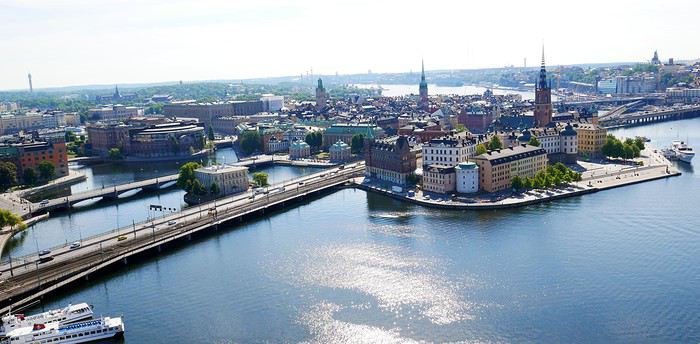
For the summer holidays of 2018, we decided to take a break from long-haul, transcontinental trips. They’re expensive and exhausting, and this year, we also had to consider our young student’s limited vacation days. So, it was a short 14-day circuit in Scandinavia. Very quickly, I had to abandon the unrealistic idea of driving door-to-door with our personal car (unlike last year—see my "Balkan Stroll" story). Too many kilometers and stops. Still, crossing Poland, Lithuania, Estonia, and Latvia before taking a ferry from Tallinn to Helsinki and Finland was tempting—what a shame.
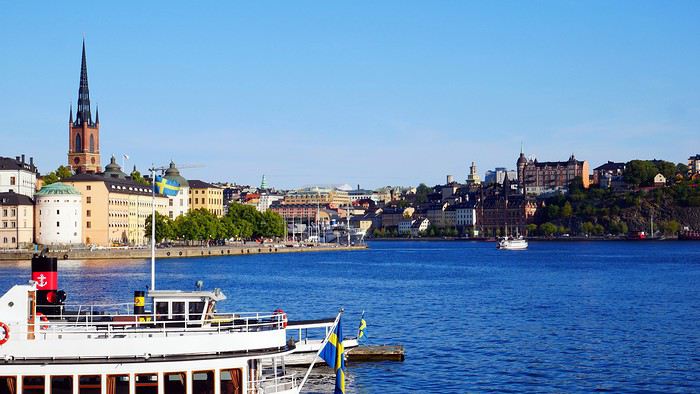
As usual, I planned ahead and started booking in early February for a mid-July departure, typically the best time weather-wise for this destination. Browsing tour operator catalogs didn’t offer much insight—just the usual circuits. Most aim for the North Cape, but we didn’t have time for that. First, via Expedia, we booked our flight tickets: Paris to Stockholm, Helsinki to Paris for the return (880 euros for three), plus a domestic flight from Oulu to Helsinki in Finland (220 euros). The unanimous advice was that there’s not much to see between the two cities, so this saved us a night’s accommodation and a day of car rental. However, the "drop-off" fees (not returning the car to the country of origin) were unavoidable. Out of 1,100 euros for 12 days of rental, this fee was significant—I say this from memory because I never received a detailed document or even the contract itself after picking up the car, despite my complaints. That said, Holiday Autos offered the best rates at the time with Hertz. Plus, I think we were unknowingly upgraded to a Volvo XC 40 T5 automatic, packed with electronics and an incredibly efficient GPS (so I lugged around my updated TomTom for nothing). I wasn’t used to it, and I’ll come back to that. For 50 euros, I also booked one of the many mandatory ferry crossings in Norway—unless you want to drive kilometers around the countless fjords. Specifically, the Bognes-Lødingen route to reach the Lofoten Islands, a must-see in Norway (though not necessarily the best choice I made—I’ll come back to that). Then, gradually via Booking.com, I reserved hotel accommodations, which wasn’t easy at reasonable prices. For three people, it’s nearly impossible to find a room with three real beds—often a sofa bed or even two separate rooms!!!! Norway isn’t a budget-friendly destination for us, yet French tourists are everywhere—groups or families traveling independently. Okay, you’re probably wondering when I’ll get started—I’m getting there... First up, Stockholm, a two-hour flight from Paris. A first for us: we’d gotten used to online check-in within 30 hours of the flight and sometimes printing our boarding passes. But, as progress never stops, at Roissy, we now also print our baggage tags at a kiosk, then place them on the conveyor belt ourselves, scan the barcode with the handheld scanner, and watch the luggage disappear—hoping it doesn’t get misrouted. With all this reduced staff, I hope ticket prices will drop. What? Huh? I’m naive... Okay, fine! Plus, during the flight, don’t expect any snacks—everything’s paid for now, except for water and coffee. I didn’t think I was on a low-cost flight!!! Picking up the car at Arlanda Airport went smoothly, except the contract signed on a tablet (progress, right?) was never emailed to me as promised—too bad... The Volvo SUV packed with electronics: as usual, aside from adjusting the mirrors and seat, I didn’t bother learning all the features and accessories for better handling. So, from the start, I felt jerky movements in the steering, independent of my control. The white-line detection was activated and corrected my direction whenever I got too close... And that’s not all—there’s also driving assistance. Besides the speed limiter, the car accelerates or brakes on its own based on the distance from the vehicle ahead. You still have to keep your hands on the wheel, though—too bad, we could’ve played cards and let it drive itself. When you slow down, if you signal to overtake and turn the wheel, it accelerates to pass. Soon, we won’t even need a driver’s license... Not to mention the little light in the side mirror to signal vehicles in the "blind spot"—very useful. But given the excessively strict speed limits in these parts, it’s still handy. I’ll unfortunately come back to this later!!!!!! In the end, we covered 4,700 km in 8 days of actual travel—no small feat!!!!!! Stockholm: still loyal to the hop-on-hop-off sightseeing buses (or the reverse), I booked our tickets online with a discount. It remains (for us) one of the best ways to visit and get around big cities. The tourist attractions aren’t that numerous. Forty kilometers from the airport, we reached our hotel, Clarion Amaranten. At reception, we were told our reservation was for four days, not two. I insisted, and they told me to call Booking.com to fix it—they couldn’t do anything themselves. Luckily, a nice blonde understood the situation and asked where we were from to lighten the mood. For me, it worked... After a few minutes of back-and-forth, we realized a namesake had booked at the same time. I think the intern got mixed up—oh well. We finally dropped off our bags and headed out under the sun for the included boat tour. It’s beautiful and relaxing under 26°C. We glided past massive cruise ships, very common in these Nordic countries, especially for fjord tours.
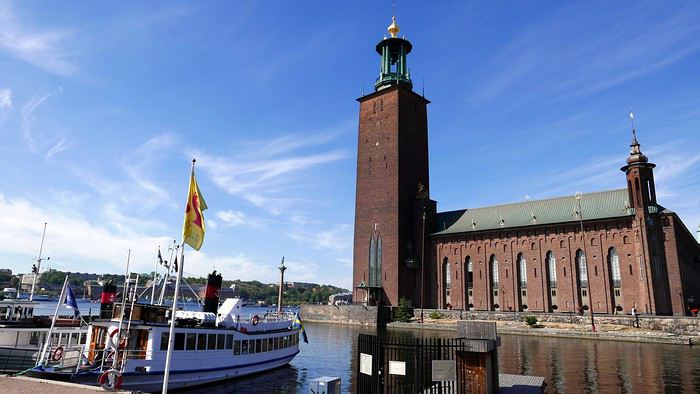
We passed Djurgården, one of the city’s 14 islands, home to the Tivoli amusement park and several museums, including the ABBA Museum and the Vasa Museum. I’m not talking about the crispy sandwiches sold since 1919 but the infamous warship that sank in the harbor on its maiden voyage in 1628 after sailing just a few hundred meters. Its intact hull was salvaged in 1961, and since then, it’s one of Sweden’s most visited museums. The country is a quarter smaller than France and has 10 million inhabitants, mostly in the three big cities (Stockholm, Gothenburg, Malmö). The rest is empty, filled with lakes and forests. The currency is the krona, with 1 euro worth about 10 SEK. Dinner in the Old Town consisted of a so-called Viking burger (more like a kebab) and meatballs—the famous Swedish meatballs with potatoes, just like at IKEA... I have to say, here, it seems the Vikings have long been just blond heads—I get it... It still cost us 550 SEK. A beer alone costs at least 9 euros!!!!
DAY 2. Sunny skies. After a hearty buffet breakfast with salmon, herring in all forms, eggs, cold cuts, bread, and pastries (don’t worry, the classics are there), we started the day by visiting the City Hall tower, famous for hosting the Nobel Prizes (except the Peace Prize, awarded in Oslo). At 106 meters tall, with 365 steps and 9 clocks, it weighs twice as much as the Eiffel Tower. Access is at fixed times in small groups for safety. You can climb up to 73 meters for a 360° view of the city. Next, we visited the Royal Palace, still the official residence of the King of Sweden, and its Treasury (entry: 160 SEK). We skipped the 12:15 PM changing of the guard—three-quarters of an hour before, dozens of onlookers were already crowding the front rows in the sun.
So, we took our favorite bus to rest a bit and tour the city. We also took the subway to see several "decorated" stations—love it or hate it, but it’s original. In the late afternoon, we returned to the Old Town and its Gamla Stan to find some souvenirs, even if it feels more like Bollywood than Viking country, complete with music in the shops—a nice sign of integration... One of the first things that surprised us was the very light car traffic—no traffic jams in this capital. But there are tons of electric and regular bikes, skateboards, and scooters. Also, lots of roadwork and housing construction—apparently a big need. For dinner (our only meal of the day), we treated ourselves to something local at Borgmästaren (Stora Nygatan 35). DECIDEDLY, I’M TELLING YOU EVERYTHING...
DAYS 3 & 4. Contrary to what I was told upon arrival, the hotel parking (700 SEK for 2 nights) didn’t open at 7:00 AM but at 9:00 AM on Saturday. After having to call myself (the French-speaking African receptionist couldn’t do it for me, especially after I told him I thought Croatia would win against France in the World Cup final), the kind parking attendant (partnered with the hotel—there’s the catch) arrived early and let us leave at 8:30 AM to start our east-to-west route to Norway and Oslo, 530 km away, finally beginning our summer adventure. At the border, absolutely no checks, and on the road, aside from lakes and forests, not much to see. However, tolls are very common—don’t overlook this in your budget. In Sweden, everything’s covered by the rental company, but not in other countries. In Norway, there are many automatic toll sections—cameras film your license plate and send you the bill later. So, you must register online at www.epcplc.com/rental, with or without your credit card details, and wait for the final bill. As of now, I haven’t received it, but after noting almost all of them, it should easily reach 200 euros. Roads, tunnels, and bridges are often toll-based to fund maintenance or new constructions. We reached the Norwegian capital at 3:00 PM and checked into our room. Small hiccup: the hotel parking, not reservable, was full on Saturday. Parking meters only take coins for a max of 2 hours. Luckily, tomorrow’s Sunday—free parking from 8:00 PM until Monday morning. After circling the neighborhood, I finally found a spot for my little car—even if it’s not mine, I still care about it...
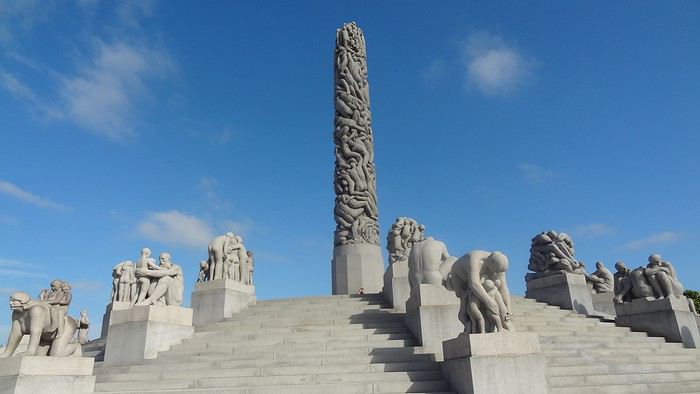
The Thon Slottsparken Hotel is slightly off-center, but a little walking won’t hurt. The nearby Hertz agency was closed—too bad, I would’ve liked to complain about still not receiving my rental contract by email... With the nice weather, we started with a walking tour of the main sights: the palace, Karl Johans gate (the main street), and some souvenir shopping to fill the display cases back home—if there’s space. We also visited the deserted Akershus Fortress, where two poor young soldiers stood guard in the scorching sun. Below it, the World Cup final fan zone was being set up. Dinner was at Rorbua for 90 euros—ouch. Hard to find, tucked away from the harbor pier. We skipped the paid ascent of the city’s only "tower" with a panoramic view—tickets had to be paid by credit card, and given the fees my bank charges, I’d had enough. Note that card payments are widely accepted here, even for small amounts. When I tried to get change in cash for a 50-euro equivalent bill, some café owners were embarrassed.
DAY 4. After discussion, we planned the day: first up, one of Oslo’s must-sees, the Vigeland Sculpture Park, featuring bronze, granite, and cast-iron works by Gustav Vigeland (1869–1943). Given the distance, we took the tram—some cars still had their old-school charm!!!! Despite the early hour, hordes of Asian tourists were already there, making photo-taking a nightmare—same everywhere they go. The park is a matter of taste... The 17-meter monolith with 121 intertwined bodies is remarkable, and rightly so. Lazy, we took the tram again to save time—same name, tight schedule. I stopped by the Hertz agency, where the overwhelmed employee promised to try to help. Given his enthusiasm, I doubted it. From the start, I’ve really felt the welcome here, at least for French visitors, isn’t great. Remember my previous reports—it’s becoming a habit. Tourist brochures aren’t available in French here either—strange... Anyway, we took a relaxing fjord cruise. Besides the quirky opera house, the beautiful summer homes on the islands were really tempting. Next, with another paid boat, we headed to the Bygdøy peninsula and its museums. We skipped the Viking Ship Museum in favor of the Norwegian Folk Museum. It features different buildings from across the country, by era and region. Unfortunately, few actors in period costumes—common in this type of tourist attraction. Its real highlight is the stave church, very beautiful. On this late Sunday afternoon, bars and restaurants competed to become World Cup 2018 fan zones—crowds everywhere. So, we decided to head back to rest and catch a glimpse of the African French team against Croatia. It’ll go down in history: a 4-2 victory, with a beautiful goal by Lloris... Go "Les Bleus"—I get it...
DAY 5. Oslo to Bergen: 450 km, but with detours, it was nearly 550. The real journey begins. Departure at 7:00 AM after sleeping in and a mediocre breakfast. Arrival at 5:00 PM—yes, driving’s slow... More tolls, but under 26°C, the real beauty starts around Geilo. First real fjord—it’s stunning. Then those houses with vegetated roofs blending perfectly into the landscape, sometimes nearly invisible... (Not bad, right? And it’s all me!!!)
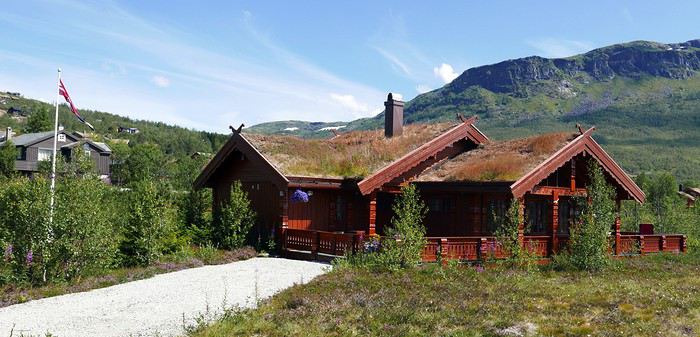
We also discovered tunnels with "indoor roundabouts" and underground roads crossing—never seen that before!! We followed the shores of Lake Tyrifjord and the Hallingdal valleys. After Geilo, views of the Hardangerjøkulen glacier (achoo!) and the Vøringfossen waterfall (Norway’s highest at 163 meters) and Steinsdalsfossen in the Hardangerfjord (the country’s second-longest). Bergen, Norway’s second city, is built between seven mountains. Aside from the colorful old docks along the wharf, there’s not much to see. At the market, stalls of fresh fish, jars of various fish eggs (all called "caviar" here), and cold cuts made from reindeer, moose, and whale.
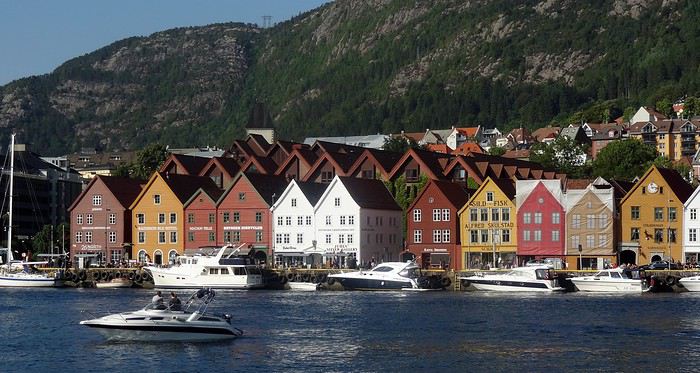
For 10 euros per person, we queued for the steep funicular for a great view of the city. Dinner was at "Fish Me," very busy. The salmon looked appetizing, and my first whale steak for 27 euros was... interesting. Our hotel, Augustin, is near the center. They charged me 150 NOK to park in the nearby public lot...
DAY 6. Bøverdalen, our evening stop, was less than 300 km away, but along the way, we had our first two scenic routes and first ferry crossing. When I got back in the car, I noticed the seagulls—rightful tenants of the harbor—had turned it into a Picasso painting overnight... First stop in Voss to peek inside its Vangskyrkja church (for a fee). The mural icons all have a marked squint, making the angels on the ceiling smile—quite the original touch. In 1277, it shocked people.
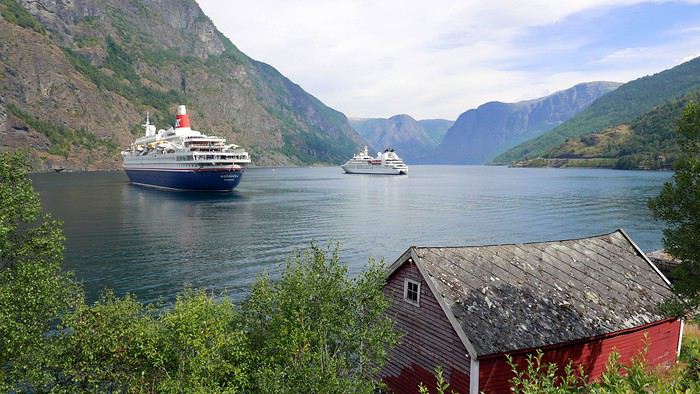
Gudvangen at the end of the Nærøyfjord offers beautiful views and a waterfall. An 11 km tunnel took us to Aurland and the Sognefjord, the king of fjords at 180 km long. Then we took Route 243 to Lærdal instead of a second long tunnel. A 47 km very narrow road with no passing except in designated spots. Buses, RVs, and trailers were in the mix—between backing up and moving forward, how do you expect me to... pass? At some spots, I had to "burn some oil" (non-edible). The beautiful viewpoints along Jotunheimen Park and its high peaks were hard-earned.
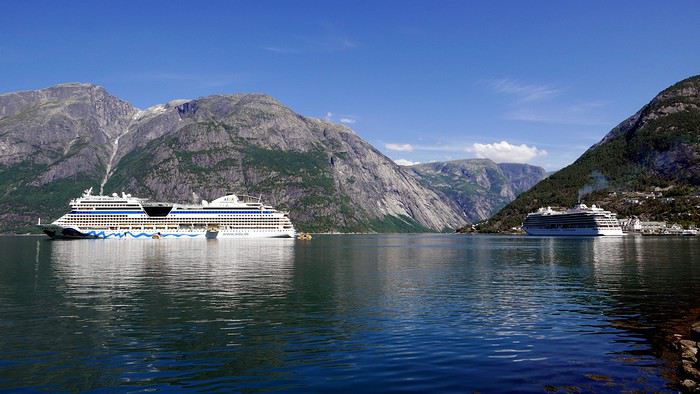
By midday, the 26°C of previous days gave way to 11°C with downpours and gusts. To reach Kaupanger, its stave church, and Route 55 (108 km), we took the Fodnes-Mannheller ferry for 119 kr (about 13 euros) for a 20-minute crossing. For these short trips, rotations are frequent, and wait times are short. The Sognefjellet route took us along lakes and snow-capped peaks—too bad the weather wasn’t cooperating. In Bøverdalen, in the middle of nowhere, we reached the Elveseter Hotel, the only one in the area, and it was packed. Luckily, it’s big. Recent reviews had us a bit worried, but personally, all the well-maintained wooden buildings gave the place charm. Our two small, simple rooms had character, and the common areas’ decor was interesting—a pile of antiques... Unless you dine on-site (reservations required for one of two sittings), the only option is to drive 20 km to Lom to see its beautiful stave church—but we didn’t go in (7 euros per person, and that’s enough). Dinner was three pizzas for 70 euros—yes, it’s expensive here.
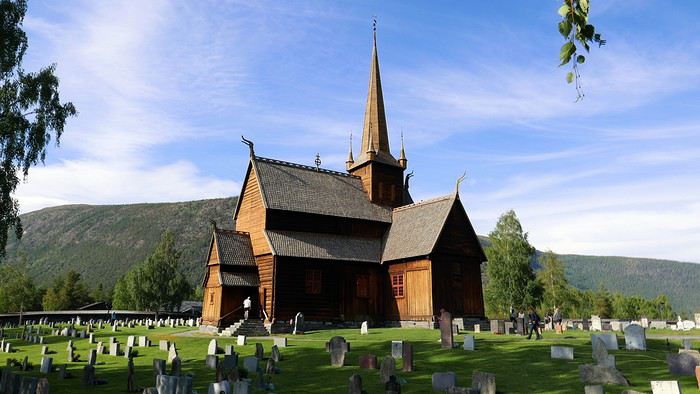
Note that in most establishments, bars, or restaurants, you have to order and pay at the counter yourself. A *stavkirke* or *stavkyrkje* (in Norwegian Bokmål and Nynorsk) is a medieval wooden church typical of Norway, though excavations suggest similar churches may have existed elsewhere in Northern Europe. About 1,300 medieval churches were recorded, with 28 preserved in Norway. In French, they’re called "églises en bois debout" (standing wood churches) because masts or posts support the roof and nave elevation, as well as the walls. The stave church is one of the most elaborate and technically advanced types of wooden construction in Northwestern Europe during the Middle Ages. This technique is represented by the Urnes Stave Church (a UNESCO World Heritage Site), Borgund (the best-preserved in its medieval form), and 25 others—from the largest, Heddal, to the smallest, Undredal, in the stunning Sognefjord, plus a few others in Northwestern Europe.
DAY 7. Heading to Trondheim—supposedly 320 km, but with detours, it was nearly 550. Unpredictable weather until about 1:00 PM, but it’s better because it’s the day of the "triples": 3 scenic routes, 3 ferries, and 3 "underwater" tunnels. No rush—here, there’s no need to "hurry to arrive before night" because as you head north, the sun lingers and sets less and less, eventually not setting at all. First, in Grotli, we took the 27 km of Route 258, *Gamle Strynefjellsvegen* (achoo), also very narrow and unpaved in the first section. Luckily, campers and RVs aren’t early risers—otherwise, I’d have had to make not just oil but olives this time. We only passed four other users. However, despite the early hour, local road workers were already on the job, and we had to ask the excavators to move several times to let us pass. At Langvatnet, we joined Route 63, called the Eagle Road here—mediocre, except for Geiranger at the end of the narrowest fjord in the country. A cruise ship had just unloaded its passengers, who rushed into the few shops. After the Eidsdal-Linge ferry (10 minutes) and Gudbrandsjuvet with its waterfalls, we tackled the famous Trollstigen (Troll’s Path), winding and very touristy. Coming from the south, we descended it. Mandatory photo stop at the tourist center and its impressive walkway. The descent into the valley was tough—the bus driver ahead of us must’ve been disabled, blind, and quadriplegic, taking two tries at every hairpin turn, causing a traffic jam behind and for those "going up" waiting at passing spots!!!
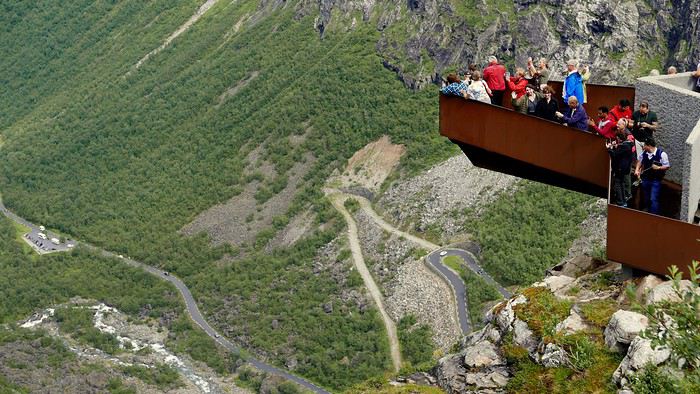
On Route 64, we took the Åfarnes-Solnes ferry instead of the initially planned 660 because my young passenger insisted on part of the "Atlantic Road." From what we’d read on blogs, only the last 11 km are spectacular, with arched bridges connecting islets. So, in Molde, we headed to Eide, then Vevang—beautiful but nothing more. The rain spoiled the scenery. Quick photo stop in Kristiansund, then a long underwater tunnel and the Kanestraum-Halsa ferry (7 km, 20 minutes) to reach the E39 toward Trondheim.
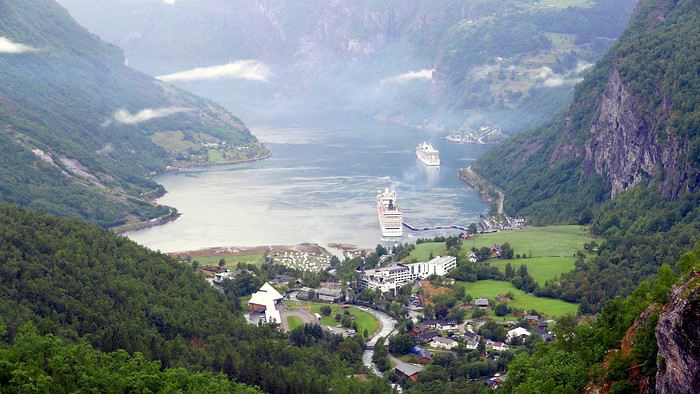
We all agreed that all these wooden houses and churches reminded us of the U.S. in their architecture—especially since, like there, a flagpole with the national flag often stands in front of homes. Trondheim, Norway’s third city, doesn’t have much to see. A university town in the country’s center, aside from its Nidaros Cathedral (closed when we arrived late), its wooden bridge, and colorful old docks on pilings—nothing else. Even finding food was complicated. As for accommodation, Booking.com had forgotten to mention that the Nidaros Pilgrimsgard is a "pilgrim hostel" on the Camino de Santiago. Monastic atmosphere and spartan rooms for reflection—same for the frugal breakfast in silence... Anyway... Luckily, the night before, in a kitschy place run by hip youngsters, I’d stocked up on a hearty assortment of marinated herring with aquavit that burned the rest of my esophagus. (BAKLANDET SKYDSSTATION) I’m really doing all the work for you...
DAY 8. Heading to Mo i Rana—633 km actually covered instead of the planned 480 through Nord-Trøndelag!!! After Steinkjer and its fjord, we decided to take Route 763, parallel to the E6, for less traffic and to see pretty mountain villages. We also stopped in Bola to see a petroglyph (Stone Age rock carving) of a reindeer. After Medja, we skipped Kjerringfoss and Europe’s largest salmon ladder (paid access). Instead, via the Holm-Vennesund ferry, we took a bit of the scenic Route 17 before reaching Mosjøen and Mo i Rana (too many ferries if you do the whole route). Along the way, we saw reindeer and moose relaxing on the road several times. Mo i Rana is small. The Ole Tobias Hotel was packed, and parking was complicated. For dinner, we crossed the street to "No. 3," the only option. Two spicy bacalao and a whale steak cost us 90 euros... At this rate, I had to find an ATM to finish the Norwegian stay properly. The 2,000 euros exchanged before leaving (at 9.28) were already partially gone. Cigarettes cost 13 euros a pack here—twice as much as in Sweden—while unleaded gas is 1.85 euros per liter.
DAY 9. Heading to the main event of the trip: the Lofoten Islands. First programming mistake: not studying the subject well, I preferred a shorter ferry crossing from further north on the mainland. But that also meant arriving further north on the islands.
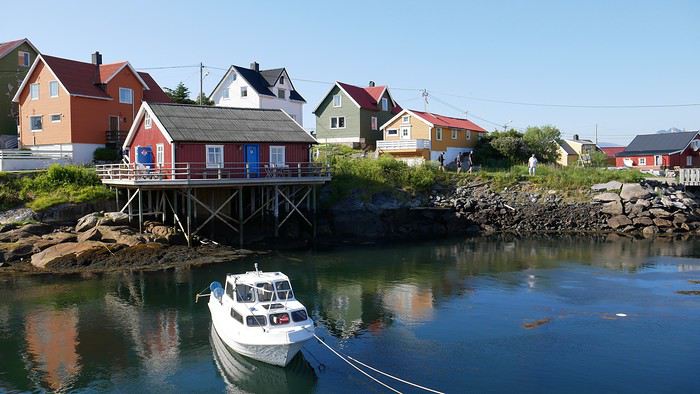
I booked for 50 euros (vehicle, driver, and two passengers included on the official Torghatten Nord site) for Bognes-Lødingen—a one-hour crossing. I should’ve left from Bodø to Leknes or better yet Moskenes and the town of Å for three hours—it would’ve saved time by avoiding the drive north and crossing to the south before heading back up the islands. Luckily, we still managed two different routes. Fortunately, the great weather returned, and I have to say, IT’S REALLY, REALLY, REALLY... BEAUTIFUL... Memory cards are melting—not just from the heat.
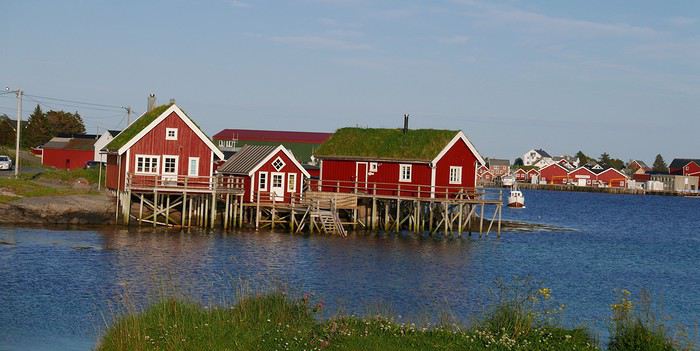
Two things worked in our favor, if I may say so, and countered my little blunder: first, I’d booked the 2:30 PM ferry, but arriving at the departure at noon, we easily took the earlier one—two hours saved. With the longer crossings, rotations with only two boats are much less frequent (8 to 12 per day depending on the season, vs. 6 to 8 for the southern route). Second, after Mo i Rana, we crossed the Arctic Circle, and today, the sun only "sets" from 12:20 AM to 1:50 AM. What luck! With a 7:40 AM departure (after sleeping in), I could drive until 11:00 PM easy!!!!!! And cover only 740 km!!!!!! Here, winters don’t drop below zero, but from early November to late January, it’s night almost all the time, with a supposed daylight clarity from 10:00 AM to 2:00 PM like a rainy day back home. But apparently, the northern lights and reflections on the snow also provide light!! I’d love to see that, but I’ll have to come back... We crisscrossed everything humanly possible, sometimes stopping abruptly in the middle of the road for photos—much to the locals’ dismay, but they’re used to the madness of temporary invaders enchanted by the place... These steep mountains "falling" into the water with all those colorful "rorbu" villages are magnificent. Rorbu are traditional fishermen’s cabins on stilts by the water, which over time have become the must-stay accommodation here—many have never housed any fishermen!!! The villages follow one after another, each more beautiful than the last. In Nusfjord, in season, pedestrians are even charged an access fee between 10:00 AM and 6:00 PM. At 7:00 PM, the booth was closed—lucky us, no crowd. The ochre wooden facades are beautiful, but don’t get too close—the seagulls nest there and see any approach as aggression. The result? Bomb-like droppings that can leave unpleasant memories. Go peek inside the grocery store—it’s kept its old-world charm. With the season, the many cod drying racks are empty. The hour turned, and our southward journey stopped in Reine—too bad for Å, not far, but fatigue got the better of me. We had to "go back up" to Kabelvåg for our rorbu at Nyvågar. We’d stocked up on groceries to eat quietly in this cozy little place (very small single beds upstairs).
DAY 10. We headed back north on the islands to reach Tromsø (grandiosely nicknamed the "Paris of the North"), with a late 7:50 AM departure despite 450 km to cover—things are getting lax at the end of the trip!!! However, this stop didn’t reveal much of interest—it’s the lake region, but meh. Tour operators include it as the last stop toward the far north. Aside from the Målselvfossen waterfall and its (paid) salmon ladder, nothing to report. We arrived at 3:00 PM, and the second room in our Quality Saga Hotel wasn’t ready yet. Plus, the parking we’d requested wasn’t accessible—the eight spots were taken. Even in this small town, free and easy parking is rare. Two souvenir shops and a main street (Storgata)—that’s it. Not to mention a nice storm that cooled things down. The only curiosity is the church, but it’s closed and under renovation—the exterior scaffolding ruins the only photo opportunity here. Otherwise, the Arctic Cathedral is visible from afar—that’s enough for us. The sun only sets for 20 minutes, from 12:40 AM to 1:00 AM!!!!! Last note before leaving this country: every morning at the breakfast buffet with all those eggs, I asked for a Norwegian omelet. Believe it or not, they don’t know the recipe for a Norwegian omelet!!!! 😏😛😉
DAY 11. Heading to Finland (with an extra hour time difference) and Rovaniemi, self-proclaimed official Santa Claus Village—it’s not nice to play on kids’ heartstrings for money!!!! On the 400 km of road (that or avoiding the Lofoten), nothing to see except two sad "Sami" shops. But there’s also AND ESPECIALLY: The run-in with a police radar mounted on the dashboard to welcome me to this country: alone, on a straight, flat road in the middle of the forest, I had this privilege—especially at a spot limited to 80 km/h instead of 100 as I thought. Of course, most well-meaning readers will think: serves him right... Only here’s the thing: in Finland, for years, speeding fines depend on the "Päiväsakko," meaning based on your income and number of children, a subtle calculation of average daily money is made and multiplied proportionally to the estimated severity of the offense... Ignorant of this, I naively but honestly answered the questions. The result? The fine was enormous—I won’t say the amount out of shame, but especially out of hatred for this country that ruined my vacation. Others like me, potential murderers, have been fined up to 170,000 euros (I wrote ONE HUNDRED SEVENTY THOUSAND EUROS) for a 40 km/h speeding offense!!!! I hope the clowns running France quickly adopt this particularly SOCIAL measure. Let the lazy and parasites of the country freely enjoy the road in their BMWs and MERCs!!! Let me tell you, I’ll spend my savings elsewhere in the future. So, a tip: be as dishonest as these conscientious police—say you’re unemployed with five kids, and maybe they’ll give you money!!!!! I’m really disgusted. No wonder in this nothing-to-see town, drivers sheepishly drive in a "little train" at 40 behind an RV without anyone daring to overtake. I think sometimes human stupidity should have limits, and the word freedom should regain its meaning!!! To those who understand, cheers. And as written at the start: trolls, abstain. I stand by what I said and sign it. After this brutal introduction to Finnish discriminatory laws, you can imagine Rovaniemi and its two-bit Santa Claus—I couldn’t care less. Even under the storm, at 6:00 PM on Sunday, even in summer, the scammer shops and profiteers of the Santa Claus Village (conveniently located on the Arctic Circle...) were already closed. Good riddance!!! The Arctic City Hotel is fine. I struggled to swallow my Tex-Mex at Pancho Villa (local chain).
DAY 12. Toward Oulu via Tornio, 200 km, and again, nothing to see in this land of lakes and forests. Detour and only photo stop in Tervola for a wooden church—my vacation is officially ruined... The Cumulus City Hotel is fine in this pleasant but empty and dull city, though it’s a university and tech hub. To cheer myself up, we splurged on a supposedly Viking meal at Harald—don’t know if the recipes are authentic, but my "Viking" knowledge stops at Vik, the animated boobs... Anyway, it’s good, unusual, and hearty.
DAY 13. After struggling to fill the tank (no station open with cash payment, only cards), we returned the chariot at the airport. The offices weren’t open yet at this early hour (8:35 AM flight), so I left the key in a mailbox without any inspection—I didn’t like that at all. I thought we’d get a propeller plane, but it was a well-filled Airbus. One-hour flight to Helsinki, the capital. Impossible to get clear information on buses to the city center, 40 km away. So, for 37 euros, we took a taxi with a trunk big enough for our three suitcases and three "cabin" bags. I’m not counting the cost anymore. At 10:00 AM, we could finally check into our large triple room at the Cumulus City Hotel on Hakaniemi Square—again, despite the size, with a fold-out armchair bed. Off to visit our last city, with the obvious purchase—you guessed it—a 24-hour bus ticket with a 1.5-hour mini-cruise for 43 euros per person...
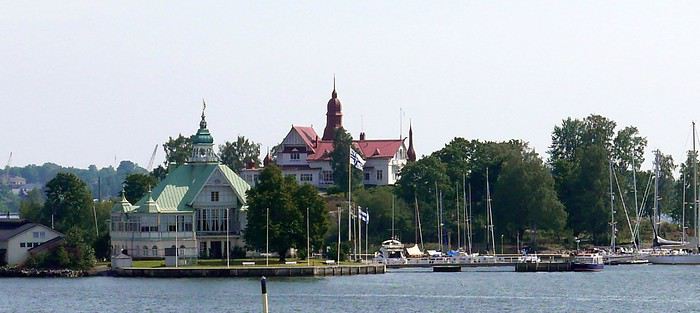
The boat tour showed that the standard of living seems high here too—summer homes (or not) on the islands are very beautiful. A small canal was even dug to save these lucky owners time on maritime transport. Apartments sell for a fortune. Back at Market Square, we grabbed a snack at the market—a reindeer kebab with dried reindeer, cheese, and a mini cracker—simple but delicious. No time to waste—ours is limited. Even if there’s not much to see tourist-wise. Four churches compete: the very busy and beautiful Helsinki Cathedral (better outside than in), its direct rival the Orthodox Uspenski Cathedral (same), the Rock Church (Temppeliaukio) and the Wooden Church (Kampin)—both as beautiful inside as out!!! Here too, very little car traffic, but tons of people—tourists or not—and joggers. In the evening, a bit tired, we headed to the off-center hotel to try the Scandinavian Hesburger chain. For connoisseurs and 29 euros, decent fries and burgers resembling Burger King’s—while the other American giant is left behind. Personal taste, I guess. The next day, we took the bus tour again, passing the Parliament and the controversial Sibelius Monument—a 24-ton pile of clanging iron pipes. Then, to kill time, we headed to Linnanmäki amusement park, on a hill overlooking the city. Rides are packed together, and a new one appears every year. Mostly family-oriented, but two or three thrill rides were packed. Despite my advancing age, I gave it a try—obviously regretted it afterward... Europe’s oldest wooden roller coaster (1950) shows the genius of its creators, with a brakeman at the back—worth the detour and passes the time. We ate (if you can call it that) on-site for 19 euros. Back "in town," classic shopping centers are numerous, but souvenir shops can be counted on one hand. No matter—we had to pack because tomorrow’s the return. We ate burgers again near the hotel and Hes... but served at the table for 67 euros. The next morning, to kill time before the 4:00 PM flight, we went to the port and its tourist market, where I splurged 15 euros on a cap to add to (or clutter) my already well-stocked collection. We finally learned that bus 615 goes to the airport, with a stop in front of our hotel where the luggage was left in storage after checking out. Still, count 40 minutes with this indirect route. Via an Air France flight operated by Finnair, after 3 hours, we returned to Roissy CDG—our vacation is truly over!!!!!!
CONCLUSION (if I may) Among the three capitals we visited, our unanimous ranking is: Oslo, Helsinki, and Stockholm—period. Despite a few imperfections in my itinerary, I’d say the Lofoten Islands are really worth it—two days on-site is a minimum. Finland, and not just because of the radars, is way below—nothing to see tourist-wise. I didn’t say nothing to do for those with time—nuance... Norwegian fjords, even if once you’ve seen one, you’ve seen them all, are really beautiful, though this destination is quite expensive for us. Norway, thanks to its oil and gas, is very wealthy, near full employment, with an annual GDP per capita of 70,000 euros!!! A pack of cigarettes at 13 euros and beer at 10 euros doesn’t make this a dream destination for an addict like me. We were very lucky with the weather—only two and a half days of rain over 14, unlike many bloggers whose stories I read before leaving. The welcome wasn’t always what we expected. Despite the massive French presence, we’re not always as welcome as Asian conquerors, to whom the West, racing to its doom, continues to roll out the red carpet—literally! I don’t regret our choice—it’s worth seeing once, but only once. At least now we know what we’re talking about!!!!! Finally, as always, here’s the link to my public slideshow on YouTube. For the private one, some spicy scenes (especially with Santa and a troll) could cause me more problems—I’ve had enough!!! www.youtube.com/...zbIgZC6Pk&t=165s See you soon, maybe for new adventures and getaways. DJ93.
For the summer holidays of 2018, we decided to take a break from long-haul, transcontinental trips. They’re expensive and exhausting, and this year, we also had to consider our young student’s limited vacation days. So, it was a short 14-day circuit in Scandinavia. Very quickly, I had to abandon the unrealistic idea of driving door-to-door with our personal car (unlike last year—see my "Balkan Stroll" story). Too many kilometers and stops. Still, crossing Poland, Lithuania, Estonia, and Latvia before taking a ferry from Tallinn to Helsinki and Finland was tempting—what a shame.
As usual, I planned ahead and started booking in early February for a mid-July departure, typically the best time weather-wise for this destination. Browsing tour operator catalogs didn’t offer much insight—just the usual circuits. Most aim for the North Cape, but we didn’t have time for that. First, via Expedia, we booked our flight tickets: Paris to Stockholm, Helsinki to Paris for the return (880 euros for three), plus a domestic flight from Oulu to Helsinki in Finland (220 euros). The unanimous advice was that there’s not much to see between the two cities, so this saved us a night’s accommodation and a day of car rental. However, the "drop-off" fees (not returning the car to the country of origin) were unavoidable. Out of 1,100 euros for 12 days of rental, this fee was significant—I say this from memory because I never received a detailed document or even the contract itself after picking up the car, despite my complaints. That said, Holiday Autos offered the best rates at the time with Hertz. Plus, I think we were unknowingly upgraded to a Volvo XC 40 T5 automatic, packed with electronics and an incredibly efficient GPS (so I lugged around my updated TomTom for nothing). I wasn’t used to it, and I’ll come back to that. For 50 euros, I also booked one of the many mandatory ferry crossings in Norway—unless you want to drive kilometers around the countless fjords. Specifically, the Bognes-Lødingen route to reach the Lofoten Islands, a must-see in Norway (though not necessarily the best choice I made—I’ll come back to that). Then, gradually via Booking.com, I reserved hotel accommodations, which wasn’t easy at reasonable prices. For three people, it’s nearly impossible to find a room with three real beds—often a sofa bed or even two separate rooms!!!! Norway isn’t a budget-friendly destination for us, yet French tourists are everywhere—groups or families traveling independently. Okay, you’re probably wondering when I’ll get started—I’m getting there... First up, Stockholm, a two-hour flight from Paris. A first for us: we’d gotten used to online check-in within 30 hours of the flight and sometimes printing our boarding passes. But, as progress never stops, at Roissy, we now also print our baggage tags at a kiosk, then place them on the conveyor belt ourselves, scan the barcode with the handheld scanner, and watch the luggage disappear—hoping it doesn’t get misrouted. With all this reduced staff, I hope ticket prices will drop. What? Huh? I’m naive... Okay, fine! Plus, during the flight, don’t expect any snacks—everything’s paid for now, except for water and coffee. I didn’t think I was on a low-cost flight!!! Picking up the car at Arlanda Airport went smoothly, except the contract signed on a tablet (progress, right?) was never emailed to me as promised—too bad... The Volvo SUV packed with electronics: as usual, aside from adjusting the mirrors and seat, I didn’t bother learning all the features and accessories for better handling. So, from the start, I felt jerky movements in the steering, independent of my control. The white-line detection was activated and corrected my direction whenever I got too close... And that’s not all—there’s also driving assistance. Besides the speed limiter, the car accelerates or brakes on its own based on the distance from the vehicle ahead. You still have to keep your hands on the wheel, though—too bad, we could’ve played cards and let it drive itself. When you slow down, if you signal to overtake and turn the wheel, it accelerates to pass. Soon, we won’t even need a driver’s license... Not to mention the little light in the side mirror to signal vehicles in the "blind spot"—very useful. But given the excessively strict speed limits in these parts, it’s still handy. I’ll unfortunately come back to this later!!!!!! In the end, we covered 4,700 km in 8 days of actual travel—no small feat!!!!!! Stockholm: still loyal to the hop-on-hop-off sightseeing buses (or the reverse), I booked our tickets online with a discount. It remains (for us) one of the best ways to visit and get around big cities. The tourist attractions aren’t that numerous. Forty kilometers from the airport, we reached our hotel, Clarion Amaranten. At reception, we were told our reservation was for four days, not two. I insisted, and they told me to call Booking.com to fix it—they couldn’t do anything themselves. Luckily, a nice blonde understood the situation and asked where we were from to lighten the mood. For me, it worked... After a few minutes of back-and-forth, we realized a namesake had booked at the same time. I think the intern got mixed up—oh well. We finally dropped off our bags and headed out under the sun for the included boat tour. It’s beautiful and relaxing under 26°C. We glided past massive cruise ships, very common in these Nordic countries, especially for fjord tours.
We passed Djurgården, one of the city’s 14 islands, home to the Tivoli amusement park and several museums, including the ABBA Museum and the Vasa Museum. I’m not talking about the crispy sandwiches sold since 1919 but the infamous warship that sank in the harbor on its maiden voyage in 1628 after sailing just a few hundred meters. Its intact hull was salvaged in 1961, and since then, it’s one of Sweden’s most visited museums. The country is a quarter smaller than France and has 10 million inhabitants, mostly in the three big cities (Stockholm, Gothenburg, Malmö). The rest is empty, filled with lakes and forests. The currency is the krona, with 1 euro worth about 10 SEK. Dinner in the Old Town consisted of a so-called Viking burger (more like a kebab) and meatballs—the famous Swedish meatballs with potatoes, just like at IKEA... I have to say, here, it seems the Vikings have long been just blond heads—I get it... It still cost us 550 SEK. A beer alone costs at least 9 euros!!!!
DAY 2. Sunny skies. After a hearty buffet breakfast with salmon, herring in all forms, eggs, cold cuts, bread, and pastries (don’t worry, the classics are there), we started the day by visiting the City Hall tower, famous for hosting the Nobel Prizes (except the Peace Prize, awarded in Oslo). At 106 meters tall, with 365 steps and 9 clocks, it weighs twice as much as the Eiffel Tower. Access is at fixed times in small groups for safety. You can climb up to 73 meters for a 360° view of the city. Next, we visited the Royal Palace, still the official residence of the King of Sweden, and its Treasury (entry: 160 SEK). We skipped the 12:15 PM changing of the guard—three-quarters of an hour before, dozens of onlookers were already crowding the front rows in the sun.
So, we took our favorite bus to rest a bit and tour the city. We also took the subway to see several "decorated" stations—love it or hate it, but it’s original. In the late afternoon, we returned to the Old Town and its Gamla Stan to find some souvenirs, even if it feels more like Bollywood than Viking country, complete with music in the shops—a nice sign of integration... One of the first things that surprised us was the very light car traffic—no traffic jams in this capital. But there are tons of electric and regular bikes, skateboards, and scooters. Also, lots of roadwork and housing construction—apparently a big need. For dinner (our only meal of the day), we treated ourselves to something local at Borgmästaren (Stora Nygatan 35). DECIDEDLY, I’M TELLING YOU EVERYTHING...
DAYS 3 & 4. Contrary to what I was told upon arrival, the hotel parking (700 SEK for 2 nights) didn’t open at 7:00 AM but at 9:00 AM on Saturday. After having to call myself (the French-speaking African receptionist couldn’t do it for me, especially after I told him I thought Croatia would win against France in the World Cup final), the kind parking attendant (partnered with the hotel—there’s the catch) arrived early and let us leave at 8:30 AM to start our east-to-west route to Norway and Oslo, 530 km away, finally beginning our summer adventure. At the border, absolutely no checks, and on the road, aside from lakes and forests, not much to see. However, tolls are very common—don’t overlook this in your budget. In Sweden, everything’s covered by the rental company, but not in other countries. In Norway, there are many automatic toll sections—cameras film your license plate and send you the bill later. So, you must register online at www.epcplc.com/rental, with or without your credit card details, and wait for the final bill. As of now, I haven’t received it, but after noting almost all of them, it should easily reach 200 euros. Roads, tunnels, and bridges are often toll-based to fund maintenance or new constructions. We reached the Norwegian capital at 3:00 PM and checked into our room. Small hiccup: the hotel parking, not reservable, was full on Saturday. Parking meters only take coins for a max of 2 hours. Luckily, tomorrow’s Sunday—free parking from 8:00 PM until Monday morning. After circling the neighborhood, I finally found a spot for my little car—even if it’s not mine, I still care about it...
The Thon Slottsparken Hotel is slightly off-center, but a little walking won’t hurt. The nearby Hertz agency was closed—too bad, I would’ve liked to complain about still not receiving my rental contract by email... With the nice weather, we started with a walking tour of the main sights: the palace, Karl Johans gate (the main street), and some souvenir shopping to fill the display cases back home—if there’s space. We also visited the deserted Akershus Fortress, where two poor young soldiers stood guard in the scorching sun. Below it, the World Cup final fan zone was being set up. Dinner was at Rorbua for 90 euros—ouch. Hard to find, tucked away from the harbor pier. We skipped the paid ascent of the city’s only "tower" with a panoramic view—tickets had to be paid by credit card, and given the fees my bank charges, I’d had enough. Note that card payments are widely accepted here, even for small amounts. When I tried to get change in cash for a 50-euro equivalent bill, some café owners were embarrassed.
DAY 4. After discussion, we planned the day: first up, one of Oslo’s must-sees, the Vigeland Sculpture Park, featuring bronze, granite, and cast-iron works by Gustav Vigeland (1869–1943). Given the distance, we took the tram—some cars still had their old-school charm!!!! Despite the early hour, hordes of Asian tourists were already there, making photo-taking a nightmare—same everywhere they go. The park is a matter of taste... The 17-meter monolith with 121 intertwined bodies is remarkable, and rightly so. Lazy, we took the tram again to save time—same name, tight schedule. I stopped by the Hertz agency, where the overwhelmed employee promised to try to help. Given his enthusiasm, I doubted it. From the start, I’ve really felt the welcome here, at least for French visitors, isn’t great. Remember my previous reports—it’s becoming a habit. Tourist brochures aren’t available in French here either—strange... Anyway, we took a relaxing fjord cruise. Besides the quirky opera house, the beautiful summer homes on the islands were really tempting. Next, with another paid boat, we headed to the Bygdøy peninsula and its museums. We skipped the Viking Ship Museum in favor of the Norwegian Folk Museum. It features different buildings from across the country, by era and region. Unfortunately, few actors in period costumes—common in this type of tourist attraction. Its real highlight is the stave church, very beautiful. On this late Sunday afternoon, bars and restaurants competed to become World Cup 2018 fan zones—crowds everywhere. So, we decided to head back to rest and catch a glimpse of the African French team against Croatia. It’ll go down in history: a 4-2 victory, with a beautiful goal by Lloris... Go "Les Bleus"—I get it...
DAY 5. Oslo to Bergen: 450 km, but with detours, it was nearly 550. The real journey begins. Departure at 7:00 AM after sleeping in and a mediocre breakfast. Arrival at 5:00 PM—yes, driving’s slow... More tolls, but under 26°C, the real beauty starts around Geilo. First real fjord—it’s stunning. Then those houses with vegetated roofs blending perfectly into the landscape, sometimes nearly invisible... (Not bad, right? And it’s all me!!!)
We also discovered tunnels with "indoor roundabouts" and underground roads crossing—never seen that before!! We followed the shores of Lake Tyrifjord and the Hallingdal valleys. After Geilo, views of the Hardangerjøkulen glacier (achoo!) and the Vøringfossen waterfall (Norway’s highest at 163 meters) and Steinsdalsfossen in the Hardangerfjord (the country’s second-longest). Bergen, Norway’s second city, is built between seven mountains. Aside from the colorful old docks along the wharf, there’s not much to see. At the market, stalls of fresh fish, jars of various fish eggs (all called "caviar" here), and cold cuts made from reindeer, moose, and whale.
For 10 euros per person, we queued for the steep funicular for a great view of the city. Dinner was at "Fish Me," very busy. The salmon looked appetizing, and my first whale steak for 27 euros was... interesting. Our hotel, Augustin, is near the center. They charged me 150 NOK to park in the nearby public lot...
DAY 6. Bøverdalen, our evening stop, was less than 300 km away, but along the way, we had our first two scenic routes and first ferry crossing. When I got back in the car, I noticed the seagulls—rightful tenants of the harbor—had turned it into a Picasso painting overnight... First stop in Voss to peek inside its Vangskyrkja church (for a fee). The mural icons all have a marked squint, making the angels on the ceiling smile—quite the original touch. In 1277, it shocked people.
Gudvangen at the end of the Nærøyfjord offers beautiful views and a waterfall. An 11 km tunnel took us to Aurland and the Sognefjord, the king of fjords at 180 km long. Then we took Route 243 to Lærdal instead of a second long tunnel. A 47 km very narrow road with no passing except in designated spots. Buses, RVs, and trailers were in the mix—between backing up and moving forward, how do you expect me to... pass? At some spots, I had to "burn some oil" (non-edible). The beautiful viewpoints along Jotunheimen Park and its high peaks were hard-earned.
By midday, the 26°C of previous days gave way to 11°C with downpours and gusts. To reach Kaupanger, its stave church, and Route 55 (108 km), we took the Fodnes-Mannheller ferry for 119 kr (about 13 euros) for a 20-minute crossing. For these short trips, rotations are frequent, and wait times are short. The Sognefjellet route took us along lakes and snow-capped peaks—too bad the weather wasn’t cooperating. In Bøverdalen, in the middle of nowhere, we reached the Elveseter Hotel, the only one in the area, and it was packed. Luckily, it’s big. Recent reviews had us a bit worried, but personally, all the well-maintained wooden buildings gave the place charm. Our two small, simple rooms had character, and the common areas’ decor was interesting—a pile of antiques... Unless you dine on-site (reservations required for one of two sittings), the only option is to drive 20 km to Lom to see its beautiful stave church—but we didn’t go in (7 euros per person, and that’s enough). Dinner was three pizzas for 70 euros—yes, it’s expensive here.
Note that in most establishments, bars, or restaurants, you have to order and pay at the counter yourself. A *stavkirke* or *stavkyrkje* (in Norwegian Bokmål and Nynorsk) is a medieval wooden church typical of Norway, though excavations suggest similar churches may have existed elsewhere in Northern Europe. About 1,300 medieval churches were recorded, with 28 preserved in Norway. In French, they’re called "églises en bois debout" (standing wood churches) because masts or posts support the roof and nave elevation, as well as the walls. The stave church is one of the most elaborate and technically advanced types of wooden construction in Northwestern Europe during the Middle Ages. This technique is represented by the Urnes Stave Church (a UNESCO World Heritage Site), Borgund (the best-preserved in its medieval form), and 25 others—from the largest, Heddal, to the smallest, Undredal, in the stunning Sognefjord, plus a few others in Northwestern Europe.
DAY 7. Heading to Trondheim—supposedly 320 km, but with detours, it was nearly 550. Unpredictable weather until about 1:00 PM, but it’s better because it’s the day of the "triples": 3 scenic routes, 3 ferries, and 3 "underwater" tunnels. No rush—here, there’s no need to "hurry to arrive before night" because as you head north, the sun lingers and sets less and less, eventually not setting at all. First, in Grotli, we took the 27 km of Route 258, *Gamle Strynefjellsvegen* (achoo), also very narrow and unpaved in the first section. Luckily, campers and RVs aren’t early risers—otherwise, I’d have had to make not just oil but olives this time. We only passed four other users. However, despite the early hour, local road workers were already on the job, and we had to ask the excavators to move several times to let us pass. At Langvatnet, we joined Route 63, called the Eagle Road here—mediocre, except for Geiranger at the end of the narrowest fjord in the country. A cruise ship had just unloaded its passengers, who rushed into the few shops. After the Eidsdal-Linge ferry (10 minutes) and Gudbrandsjuvet with its waterfalls, we tackled the famous Trollstigen (Troll’s Path), winding and very touristy. Coming from the south, we descended it. Mandatory photo stop at the tourist center and its impressive walkway. The descent into the valley was tough—the bus driver ahead of us must’ve been disabled, blind, and quadriplegic, taking two tries at every hairpin turn, causing a traffic jam behind and for those "going up" waiting at passing spots!!!
On Route 64, we took the Åfarnes-Solnes ferry instead of the initially planned 660 because my young passenger insisted on part of the "Atlantic Road." From what we’d read on blogs, only the last 11 km are spectacular, with arched bridges connecting islets. So, in Molde, we headed to Eide, then Vevang—beautiful but nothing more. The rain spoiled the scenery. Quick photo stop in Kristiansund, then a long underwater tunnel and the Kanestraum-Halsa ferry (7 km, 20 minutes) to reach the E39 toward Trondheim.
We all agreed that all these wooden houses and churches reminded us of the U.S. in their architecture—especially since, like there, a flagpole with the national flag often stands in front of homes. Trondheim, Norway’s third city, doesn’t have much to see. A university town in the country’s center, aside from its Nidaros Cathedral (closed when we arrived late), its wooden bridge, and colorful old docks on pilings—nothing else. Even finding food was complicated. As for accommodation, Booking.com had forgotten to mention that the Nidaros Pilgrimsgard is a "pilgrim hostel" on the Camino de Santiago. Monastic atmosphere and spartan rooms for reflection—same for the frugal breakfast in silence... Anyway... Luckily, the night before, in a kitschy place run by hip youngsters, I’d stocked up on a hearty assortment of marinated herring with aquavit that burned the rest of my esophagus. (BAKLANDET SKYDSSTATION) I’m really doing all the work for you...
DAY 8. Heading to Mo i Rana—633 km actually covered instead of the planned 480 through Nord-Trøndelag!!! After Steinkjer and its fjord, we decided to take Route 763, parallel to the E6, for less traffic and to see pretty mountain villages. We also stopped in Bola to see a petroglyph (Stone Age rock carving) of a reindeer. After Medja, we skipped Kjerringfoss and Europe’s largest salmon ladder (paid access). Instead, via the Holm-Vennesund ferry, we took a bit of the scenic Route 17 before reaching Mosjøen and Mo i Rana (too many ferries if you do the whole route). Along the way, we saw reindeer and moose relaxing on the road several times. Mo i Rana is small. The Ole Tobias Hotel was packed, and parking was complicated. For dinner, we crossed the street to "No. 3," the only option. Two spicy bacalao and a whale steak cost us 90 euros... At this rate, I had to find an ATM to finish the Norwegian stay properly. The 2,000 euros exchanged before leaving (at 9.28) were already partially gone. Cigarettes cost 13 euros a pack here—twice as much as in Sweden—while unleaded gas is 1.85 euros per liter.
DAY 9. Heading to the main event of the trip: the Lofoten Islands. First programming mistake: not studying the subject well, I preferred a shorter ferry crossing from further north on the mainland. But that also meant arriving further north on the islands.
I booked for 50 euros (vehicle, driver, and two passengers included on the official Torghatten Nord site) for Bognes-Lødingen—a one-hour crossing. I should’ve left from Bodø to Leknes or better yet Moskenes and the town of Å for three hours—it would’ve saved time by avoiding the drive north and crossing to the south before heading back up the islands. Luckily, we still managed two different routes. Fortunately, the great weather returned, and I have to say, IT’S REALLY, REALLY, REALLY... BEAUTIFUL... Memory cards are melting—not just from the heat.
Two things worked in our favor, if I may say so, and countered my little blunder: first, I’d booked the 2:30 PM ferry, but arriving at the departure at noon, we easily took the earlier one—two hours saved. With the longer crossings, rotations with only two boats are much less frequent (8 to 12 per day depending on the season, vs. 6 to 8 for the southern route). Second, after Mo i Rana, we crossed the Arctic Circle, and today, the sun only "sets" from 12:20 AM to 1:50 AM. What luck! With a 7:40 AM departure (after sleeping in), I could drive until 11:00 PM easy!!!!!! And cover only 740 km!!!!!! Here, winters don’t drop below zero, but from early November to late January, it’s night almost all the time, with a supposed daylight clarity from 10:00 AM to 2:00 PM like a rainy day back home. But apparently, the northern lights and reflections on the snow also provide light!! I’d love to see that, but I’ll have to come back... We crisscrossed everything humanly possible, sometimes stopping abruptly in the middle of the road for photos—much to the locals’ dismay, but they’re used to the madness of temporary invaders enchanted by the place... These steep mountains "falling" into the water with all those colorful "rorbu" villages are magnificent. Rorbu are traditional fishermen’s cabins on stilts by the water, which over time have become the must-stay accommodation here—many have never housed any fishermen!!! The villages follow one after another, each more beautiful than the last. In Nusfjord, in season, pedestrians are even charged an access fee between 10:00 AM and 6:00 PM. At 7:00 PM, the booth was closed—lucky us, no crowd. The ochre wooden facades are beautiful, but don’t get too close—the seagulls nest there and see any approach as aggression. The result? Bomb-like droppings that can leave unpleasant memories. Go peek inside the grocery store—it’s kept its old-world charm. With the season, the many cod drying racks are empty. The hour turned, and our southward journey stopped in Reine—too bad for Å, not far, but fatigue got the better of me. We had to "go back up" to Kabelvåg for our rorbu at Nyvågar. We’d stocked up on groceries to eat quietly in this cozy little place (very small single beds upstairs).
DAY 10. We headed back north on the islands to reach Tromsø (grandiosely nicknamed the "Paris of the North"), with a late 7:50 AM departure despite 450 km to cover—things are getting lax at the end of the trip!!! However, this stop didn’t reveal much of interest—it’s the lake region, but meh. Tour operators include it as the last stop toward the far north. Aside from the Målselvfossen waterfall and its (paid) salmon ladder, nothing to report. We arrived at 3:00 PM, and the second room in our Quality Saga Hotel wasn’t ready yet. Plus, the parking we’d requested wasn’t accessible—the eight spots were taken. Even in this small town, free and easy parking is rare. Two souvenir shops and a main street (Storgata)—that’s it. Not to mention a nice storm that cooled things down. The only curiosity is the church, but it’s closed and under renovation—the exterior scaffolding ruins the only photo opportunity here. Otherwise, the Arctic Cathedral is visible from afar—that’s enough for us. The sun only sets for 20 minutes, from 12:40 AM to 1:00 AM!!!!! Last note before leaving this country: every morning at the breakfast buffet with all those eggs, I asked for a Norwegian omelet. Believe it or not, they don’t know the recipe for a Norwegian omelet!!!! 😏😛😉
DAY 11. Heading to Finland (with an extra hour time difference) and Rovaniemi, self-proclaimed official Santa Claus Village—it’s not nice to play on kids’ heartstrings for money!!!! On the 400 km of road (that or avoiding the Lofoten), nothing to see except two sad "Sami" shops. But there’s also AND ESPECIALLY: The run-in with a police radar mounted on the dashboard to welcome me to this country: alone, on a straight, flat road in the middle of the forest, I had this privilege—especially at a spot limited to 80 km/h instead of 100 as I thought. Of course, most well-meaning readers will think: serves him right... Only here’s the thing: in Finland, for years, speeding fines depend on the "Päiväsakko," meaning based on your income and number of children, a subtle calculation of average daily money is made and multiplied proportionally to the estimated severity of the offense... Ignorant of this, I naively but honestly answered the questions. The result? The fine was enormous—I won’t say the amount out of shame, but especially out of hatred for this country that ruined my vacation. Others like me, potential murderers, have been fined up to 170,000 euros (I wrote ONE HUNDRED SEVENTY THOUSAND EUROS) for a 40 km/h speeding offense!!!! I hope the clowns running France quickly adopt this particularly SOCIAL measure. Let the lazy and parasites of the country freely enjoy the road in their BMWs and MERCs!!! Let me tell you, I’ll spend my savings elsewhere in the future. So, a tip: be as dishonest as these conscientious police—say you’re unemployed with five kids, and maybe they’ll give you money!!!!! I’m really disgusted. No wonder in this nothing-to-see town, drivers sheepishly drive in a "little train" at 40 behind an RV without anyone daring to overtake. I think sometimes human stupidity should have limits, and the word freedom should regain its meaning!!! To those who understand, cheers. And as written at the start: trolls, abstain. I stand by what I said and sign it. After this brutal introduction to Finnish discriminatory laws, you can imagine Rovaniemi and its two-bit Santa Claus—I couldn’t care less. Even under the storm, at 6:00 PM on Sunday, even in summer, the scammer shops and profiteers of the Santa Claus Village (conveniently located on the Arctic Circle...) were already closed. Good riddance!!! The Arctic City Hotel is fine. I struggled to swallow my Tex-Mex at Pancho Villa (local chain).
DAY 12. Toward Oulu via Tornio, 200 km, and again, nothing to see in this land of lakes and forests. Detour and only photo stop in Tervola for a wooden church—my vacation is officially ruined... The Cumulus City Hotel is fine in this pleasant but empty and dull city, though it’s a university and tech hub. To cheer myself up, we splurged on a supposedly Viking meal at Harald—don’t know if the recipes are authentic, but my "Viking" knowledge stops at Vik, the animated boobs... Anyway, it’s good, unusual, and hearty.
DAY 13. After struggling to fill the tank (no station open with cash payment, only cards), we returned the chariot at the airport. The offices weren’t open yet at this early hour (8:35 AM flight), so I left the key in a mailbox without any inspection—I didn’t like that at all. I thought we’d get a propeller plane, but it was a well-filled Airbus. One-hour flight to Helsinki, the capital. Impossible to get clear information on buses to the city center, 40 km away. So, for 37 euros, we took a taxi with a trunk big enough for our three suitcases and three "cabin" bags. I’m not counting the cost anymore. At 10:00 AM, we could finally check into our large triple room at the Cumulus City Hotel on Hakaniemi Square—again, despite the size, with a fold-out armchair bed. Off to visit our last city, with the obvious purchase—you guessed it—a 24-hour bus ticket with a 1.5-hour mini-cruise for 43 euros per person...
The boat tour showed that the standard of living seems high here too—summer homes (or not) on the islands are very beautiful. A small canal was even dug to save these lucky owners time on maritime transport. Apartments sell for a fortune. Back at Market Square, we grabbed a snack at the market—a reindeer kebab with dried reindeer, cheese, and a mini cracker—simple but delicious. No time to waste—ours is limited. Even if there’s not much to see tourist-wise. Four churches compete: the very busy and beautiful Helsinki Cathedral (better outside than in), its direct rival the Orthodox Uspenski Cathedral (same), the Rock Church (Temppeliaukio) and the Wooden Church (Kampin)—both as beautiful inside as out!!! Here too, very little car traffic, but tons of people—tourists or not—and joggers. In the evening, a bit tired, we headed to the off-center hotel to try the Scandinavian Hesburger chain. For connoisseurs and 29 euros, decent fries and burgers resembling Burger King’s—while the other American giant is left behind. Personal taste, I guess. The next day, we took the bus tour again, passing the Parliament and the controversial Sibelius Monument—a 24-ton pile of clanging iron pipes. Then, to kill time, we headed to Linnanmäki amusement park, on a hill overlooking the city. Rides are packed together, and a new one appears every year. Mostly family-oriented, but two or three thrill rides were packed. Despite my advancing age, I gave it a try—obviously regretted it afterward... Europe’s oldest wooden roller coaster (1950) shows the genius of its creators, with a brakeman at the back—worth the detour and passes the time. We ate (if you can call it that) on-site for 19 euros. Back "in town," classic shopping centers are numerous, but souvenir shops can be counted on one hand. No matter—we had to pack because tomorrow’s the return. We ate burgers again near the hotel and Hes... but served at the table for 67 euros. The next morning, to kill time before the 4:00 PM flight, we went to the port and its tourist market, where I splurged 15 euros on a cap to add to (or clutter) my already well-stocked collection. We finally learned that bus 615 goes to the airport, with a stop in front of our hotel where the luggage was left in storage after checking out. Still, count 40 minutes with this indirect route. Via an Air France flight operated by Finnair, after 3 hours, we returned to Roissy CDG—our vacation is truly over!!!!!!
CONCLUSION (if I may) Among the three capitals we visited, our unanimous ranking is: Oslo, Helsinki, and Stockholm—period. Despite a few imperfections in my itinerary, I’d say the Lofoten Islands are really worth it—two days on-site is a minimum. Finland, and not just because of the radars, is way below—nothing to see tourist-wise. I didn’t say nothing to do for those with time—nuance... Norwegian fjords, even if once you’ve seen one, you’ve seen them all, are really beautiful, though this destination is quite expensive for us. Norway, thanks to its oil and gas, is very wealthy, near full employment, with an annual GDP per capita of 70,000 euros!!! A pack of cigarettes at 13 euros and beer at 10 euros doesn’t make this a dream destination for an addict like me. We were very lucky with the weather—only two and a half days of rain over 14, unlike many bloggers whose stories I read before leaving. The welcome wasn’t always what we expected. Despite the massive French presence, we’re not always as welcome as Asian conquerors, to whom the West, racing to its doom, continues to roll out the red carpet—literally! I don’t regret our choice—it’s worth seeing once, but only once. At least now we know what we’re talking about!!!!! Finally, as always, here’s the link to my public slideshow on YouTube. For the private one, some spicy scenes (especially with Santa and a troll) could cause me more problems—I’ve had enough!!! www.youtube.com/...zbIgZC6Pk&t=165s See you soon, maybe for new adventures and getaways. DJ93.
Premiers pas d'un Normand en Afrique Centrale
Soif d'aventure, envie de découvrir d'autres modes de vies, rêve d'être plus prés de la nature, d'une vie plus simple et moins encombrée… C'est décidé, je pars pour la première fois en Afrique en septembre 2018, pour trois semaines ! Je vais au Congo RDC avec un ami du cru !
Comme beaucoup d'enfants gâtés, je pars avec beaucoup de naïveté, d'idées préconçues et de fausses peurs. Mais je pars aussi avec l'envie de découvrir, de rencontrer, de m'émerveiller.
S'il y a des "vieux broussards" parmi vous, je suis preneur de conseils.
Au plaisir de vous lire.
Laurent
Itinéraire de 17 nuits au Cambodge
Bonjour 😉,
Mon compagnon et moi souhaitons partir au Cambodge en Septembre. Après différentes recherches sur le net, j'ai réussi à établir un itinéraire voici à quoi il ressemble
- 3 nuits à Phnom Penh - 3 nuits à Kampot - 4 nuits à Koh Rong Saloem -1 nuit à Sihankville - Avion pour Siem Reap -2 nuits à Battanbang -4 nuits à Siem Reap
Que pensez-vous de mon itinéraire ? Est ce qu'il vaut mieux privilégiez les terres et l'intérieur du Cambodge comme la province de Mondolkiri ou Kratie ? Est-il possible de prendre le train pour Kampot de Phnom Penh ?
Merci pour vos avis
Lucie
Mon compagnon et moi souhaitons partir au Cambodge en Septembre. Après différentes recherches sur le net, j'ai réussi à établir un itinéraire voici à quoi il ressemble
- 3 nuits à Phnom Penh - 3 nuits à Kampot - 4 nuits à Koh Rong Saloem -1 nuit à Sihankville - Avion pour Siem Reap -2 nuits à Battanbang -4 nuits à Siem Reap
Que pensez-vous de mon itinéraire ? Est ce qu'il vaut mieux privilégiez les terres et l'intérieur du Cambodge comme la province de Mondolkiri ou Kratie ? Est-il possible de prendre le train pour Kampot de Phnom Penh ?
Merci pour vos avis
Lucie