Results for "Belgique+souvenir+artisanat"
About 16,994 results.
More options
Many results are in French, the community’s main language. English translations are added over time.
Search results
Volontariat en Equateur
Bonjour à tous,
Je viens de Suisse et je suis maintenant depuis 4 mois en Equateur où je travaille comme volontaire. Je viens raconter un peu mon experience sur le forum parce que c'est par l'intermediaire de forum comme celui-ci que j'ai trouve l'organisation qui m'accueille actuellement. Et j'espere que je pourrai aider certains d'entre vous!
Donc je vis a Quito, dans une maison de volontaires. Cette agence est en lien avec plein de centres, d'ecoles, d'institutions, ... a Quito et dans d'autres regions d'Equateur aussi. A mon arrivee, on m'a demande les domaines qui m'interessaient, j'ai pu visiter plusieurs centres et j'ai choisi ce qui me plaisait le plus.
J'ai par exemple travaille 3 mois dans une ecole pour enfants sourds. J'ai travaille aussi dans une garderie d'un quartier pauvre de Quito. Pour changer un peu d'air, je suis allee durant une semaine sur la côte construire des maisons pour des gens extremement defavorises. J'ai aussi differents projets pour le reste de mon annee ici, en Equateur. Je pense aller faire un mois de volontariat aux Galapagos en mars puis je vais peut-etre aller donner un peu de moi dans une communaute dans la foret amazonienne.
Voila, n'hesitez pas a me repondre ou a me contacter directement sur mon mail pour plus d'infos!
Bali ou Tunisie?
Bonjour, J'hésite etre la Tunisie ou Bali. Je penche présentement pour Bali malgré ses 20 heures de vol du canada. Merci pour vos informations et surtout votre préférence entre les deux! sarge
Foire de Canton en Chine
BJR, je pars pour un voyage d'affaire, import export et je suis a la recherche d'info concernant la foire de canton (chine)en avril, tout renseignement et le bienvenue, que ce soit, le voyage, hotel, et si il y aurais une personne qui a importe de chine des produits en tant que professionnel, aimerez avoir toutes sortes d'infos, sur le fret, le cout, les demarches admnistratives, dedouanement, .
et aussi! sur ce qu'il ne faut surtout pas faire, pour eviter de faire des erreurs.merci pour toutes les reponses
nass😎😎😎
nass😎😎😎
Inde du Nord-Ouest Ete 2004
Les differentes sections de ce fil...
sur le sejour a Jaisalmer et le depart pour Bikaner Attention la vache, attention le bouc ! Encore un petit effort ! Bonjour, un petit massage, ca vous dirait ? Depart Jaisalmer pour Bikaner sur la partie Bikaner Delhi Jaisalmer-Bikaner : pratiques douteuses De Aurangabad a Bikaner : ce qui fut bon sur les 16 jours a Ujjain Sejour a Ujjain : visites... Sejour a Ujjain : le train-train quotidien Sejour a Ujjain : revue de presse
Attention ! J'ajoute regulierement, au contenu de ces trois derniers messages, et non par un nouveau post, les dernieres visites, les dernieres journees vecues et les nouveaux articles du Times of India qui m'ont sembles interessants.
Ce sejour est decoupe en deux parties, la premiere du 26 juin au 17 juillet en couple, la seconde du 18 juillet au 24 septembre seul. Si la tolerance (je parlerais d'amour) de votre conjoint vous accorde de passer plus de deux mois seul a l’etranger, ne choisissez pas cette formule. En effet, apres neuf mois passes en commun a la maison, nous avons vecu pleinement cette decouverte a deux pendant vingt-deux jours, pour connaitre ensuite la totale separation pendant un tres long moment.
A l’avenir, nous reprendrons comme a l’habitude : ma femme me rejoindra a la fin, voire au milieu de mon sejour.
Plus je mets d'etoiles plus j'ai apprecie l'endroit
26 juin – 17 juillet
Mumbai (3 nuits puis train pour Aurangabad)
Aurangabad (5 nuits puis depart en bus pour Indore et taxi pour Mandu) Bibi ka Maqbara *** (1677), petit Taj Mahal dedie a Rabia-Ud-Daurani, 1ere femme de Aurangzeb http://membres.lycos.fr/indes/aur/aur_bbk.htm Le Pan Chakki *, un Moulin a eau situe dans un endroit tres paisible.Le muse Shiva-Ji ***. Superbe collection de pieces de monnaie (couvrant +-1300 ans). Les caves d’Ellora (en rickshaw) ****. Informations dans tous les guides et sur Internet. Au retour d’Ellora, le fort de Daulatabad ** et la tombe d’Aurangzeb a Khuldabad *. En bus, les caves d’Ajanta ****. Informations dans tous les guides et sur Internet. Mandu ***** (3 nuits puis taxi pour Indore et train pour Chittaurgarh)
Chittaurgarh ** (3 nuits puis train pour Ajmer et bus pour Pushkar)
Puskar (3 nuits de repos puis train pour Jodhpur)
Jodhpur *** (3 nuits)
18 juillet – 24 septembre. Sejour est place sous le signe de Krishna. C’est le surnom que m’a donne depuis longtemps notre chaleureux bhangiri Manu de la Kila Bhawan de Jaisalmer. Ensuite j’ai inaugure le Krishna hotel de Bikaner. Puis j’ai achete le magazine Outlook ou j’ai trouve l’article sur la naissance de Krishna. J’ai achete un superbe stylo (20 roupies) et un joli cahier de 184 pages (10 roupies) que je n’ai pas choisi et sur la couverture duquel est inscrit le nom de… Krishna. Mon sympathique chauffeur de taxi qui m’a enmene a Omkareshwar puis a Maheshwar a pour nom… Krishna.
Jaisalmer ***** (41 jours puis bus pour Bikaner) rencontres de Frenchgirl, puis de Phil64, party a Ram Kunda. retrouvailles avec la famille. Bikaner **** 27 Aout – 1er septembre (puis train pour Delhi) le jour des freres et des soeurs. Content de revoir Kussum*****Delhi *** 2 septembre – 5 septembre (puis train pour Ujjain) rencontre avec mon sympathique professeur de l’Inalco, Harit Joshi Visite commentee par Harit du Lodi garden Achats avec Harit de 6 dictionnaires aux editions Oxford Ujjain 6 septembre – 21 septembre (puis train pour Mumbai) Ujjain et ses temples *** Le Birla Mandir de Nagda ** et... rencontre *** du leader du syndicat HMS / Birla company. Les derniers joyaux de mon sejour : Omkareshwar ***** et Maheshwar ****. Le debut de ce fil s’institulait “Attention la vache, attention le bouc”. Le carnet debutait a Jaisalmer… Je reprends le fil la ou il avait debute... de facon un peu desordonnee.
=====================
Je suis tres serieux. Surveillez bien la vache que vous croisez. Meme si cela arrive rarement ce peut etre un animal dangereux (je ne voulais pas effrayer Phil : 15 jours avant mon arrivee une dame rajasthani est morte d'un coup de corne). Ne les quittez pas des yeux !
Les chevres, quand je vais donner a manger aux pigeons, sont aussi affectueuses que les vaches pour quemander quelque chose a grignoter. Oblige de me laver les pieds en rentrant, les museaux ne sont pas toujours propres.
Le bouc que je croise au matin a un petit truc dans l'oreille pour dire a tout le monde qu'il a le droit de vivre sa vie jusqu'au bout : sacre, don't cut !
Il a des cornes tres longues et surperbement vrillees. J'en ai encore le dessin sur mon abdomen. Les cours de jujitsu ont servi, une superbe esquive suivi d'une prise de cornes tetue. J'ai cru que j'y allais passer la journee. Aucun de nous deux voulait ceder et pas question de lacher un bouc en colere. Les amis locaux ont admire le spectacle sans realiser que j'etais un peu ennuye (quand est-ce que je vais le prendre mon pancake, moi ?). Heureusement, Yassine est venu a la rescousse (la prise de cornes ca s'appelle, une sorte de releve de la garde en plus spectaculaire).
Je l'ai croise a nouveau, il n'a pas l'air rancunier. Moi, si. Bon, j'ai decide quand meme de changer d'heure pour aller donner a manger aux pigeons.
A plus
sur le sejour a Jaisalmer et le depart pour Bikaner Attention la vache, attention le bouc ! Encore un petit effort ! Bonjour, un petit massage, ca vous dirait ? Depart Jaisalmer pour Bikaner sur la partie Bikaner Delhi Jaisalmer-Bikaner : pratiques douteuses De Aurangabad a Bikaner : ce qui fut bon sur les 16 jours a Ujjain Sejour a Ujjain : visites... Sejour a Ujjain : le train-train quotidien Sejour a Ujjain : revue de presse
Attention ! J'ajoute regulierement, au contenu de ces trois derniers messages, et non par un nouveau post, les dernieres visites, les dernieres journees vecues et les nouveaux articles du Times of India qui m'ont sembles interessants.
Ce sejour est decoupe en deux parties, la premiere du 26 juin au 17 juillet en couple, la seconde du 18 juillet au 24 septembre seul. Si la tolerance (je parlerais d'amour) de votre conjoint vous accorde de passer plus de deux mois seul a l’etranger, ne choisissez pas cette formule. En effet, apres neuf mois passes en commun a la maison, nous avons vecu pleinement cette decouverte a deux pendant vingt-deux jours, pour connaitre ensuite la totale separation pendant un tres long moment.
A l’avenir, nous reprendrons comme a l’habitude : ma femme me rejoindra a la fin, voire au milieu de mon sejour.
Plus je mets d'etoiles plus j'ai apprecie l'endroit
26 juin – 17 juillet
Mumbai (3 nuits puis train pour Aurangabad)
Aurangabad (5 nuits puis depart en bus pour Indore et taxi pour Mandu) Bibi ka Maqbara *** (1677), petit Taj Mahal dedie a Rabia-Ud-Daurani, 1ere femme de Aurangzeb http://membres.lycos.fr/indes/aur/aur_bbk.htm Le Pan Chakki *, un Moulin a eau situe dans un endroit tres paisible.Le muse Shiva-Ji ***. Superbe collection de pieces de monnaie (couvrant +-1300 ans). Les caves d’Ellora (en rickshaw) ****. Informations dans tous les guides et sur Internet. Au retour d’Ellora, le fort de Daulatabad ** et la tombe d’Aurangzeb a Khuldabad *. En bus, les caves d’Ajanta ****. Informations dans tous les guides et sur Internet. Mandu ***** (3 nuits puis taxi pour Indore et train pour Chittaurgarh)
Chittaurgarh ** (3 nuits puis train pour Ajmer et bus pour Pushkar)
Puskar (3 nuits de repos puis train pour Jodhpur)
Jodhpur *** (3 nuits)
18 juillet – 24 septembre. Sejour est place sous le signe de Krishna. C’est le surnom que m’a donne depuis longtemps notre chaleureux bhangiri Manu de la Kila Bhawan de Jaisalmer. Ensuite j’ai inaugure le Krishna hotel de Bikaner. Puis j’ai achete le magazine Outlook ou j’ai trouve l’article sur la naissance de Krishna. J’ai achete un superbe stylo (20 roupies) et un joli cahier de 184 pages (10 roupies) que je n’ai pas choisi et sur la couverture duquel est inscrit le nom de… Krishna. Mon sympathique chauffeur de taxi qui m’a enmene a Omkareshwar puis a Maheshwar a pour nom… Krishna.
Jaisalmer ***** (41 jours puis bus pour Bikaner) rencontres de Frenchgirl, puis de Phil64, party a Ram Kunda. retrouvailles avec la famille. Bikaner **** 27 Aout – 1er septembre (puis train pour Delhi) le jour des freres et des soeurs. Content de revoir Kussum*****Delhi *** 2 septembre – 5 septembre (puis train pour Ujjain) rencontre avec mon sympathique professeur de l’Inalco, Harit Joshi Visite commentee par Harit du Lodi garden Achats avec Harit de 6 dictionnaires aux editions Oxford Ujjain 6 septembre – 21 septembre (puis train pour Mumbai) Ujjain et ses temples *** Le Birla Mandir de Nagda ** et... rencontre *** du leader du syndicat HMS / Birla company. Les derniers joyaux de mon sejour : Omkareshwar ***** et Maheshwar ****. Le debut de ce fil s’institulait “Attention la vache, attention le bouc”. Le carnet debutait a Jaisalmer… Je reprends le fil la ou il avait debute... de facon un peu desordonnee.
=====================
Je suis tres serieux. Surveillez bien la vache que vous croisez. Meme si cela arrive rarement ce peut etre un animal dangereux (je ne voulais pas effrayer Phil : 15 jours avant mon arrivee une dame rajasthani est morte d'un coup de corne). Ne les quittez pas des yeux !
Les chevres, quand je vais donner a manger aux pigeons, sont aussi affectueuses que les vaches pour quemander quelque chose a grignoter. Oblige de me laver les pieds en rentrant, les museaux ne sont pas toujours propres.
Le bouc que je croise au matin a un petit truc dans l'oreille pour dire a tout le monde qu'il a le droit de vivre sa vie jusqu'au bout : sacre, don't cut !
Il a des cornes tres longues et surperbement vrillees. J'en ai encore le dessin sur mon abdomen. Les cours de jujitsu ont servi, une superbe esquive suivi d'une prise de cornes tetue. J'ai cru que j'y allais passer la journee. Aucun de nous deux voulait ceder et pas question de lacher un bouc en colere. Les amis locaux ont admire le spectacle sans realiser que j'etais un peu ennuye (quand est-ce que je vais le prendre mon pancake, moi ?). Heureusement, Yassine est venu a la rescousse (la prise de cornes ca s'appelle, une sorte de releve de la garde en plus spectaculaire).
Je l'ai croise a nouveau, il n'a pas l'air rancunier. Moi, si. Bon, j'ai decide quand meme de changer d'heure pour aller donner a manger aux pigeons.
A plus
Du lever du soleil au lever de lune - South Africa 04
Voilà 13 ans d’abstinence …à feuilleter mes vieux bouquins sur le Rwanda, le Kenya …à rêvasser en regardant les photos de la faune africaine qui tapissent mon salon, à m’attarder sur le collier massai, coloré et auquel il manque quelques perles, à écouter (dans le noir le plus absolu) ces cris d’animaux sauvages qui proviennent du bush, à scruter le ciel pour voir si les étoiles scintillent comme là bas … 13 longues années (13 comme je l’aime ce chiffre pourtant !) …avant de me dire que je tournais les talons à mes nombreux voyages européens pour retrouver la terre ocre qui a bercé mon enfance. Trop longtemps j’ai attendu …trop de choses à découvrir sur place et cette sensation d’avoir eu trop peu de temps encore (pourtant 24 jours) …Mais une certitude, celle d’y retourner sans jamais plus laisser le temps s’écouler si longuement.
12.07.03 : date de mon 1er post sur ce forum pour savoir si ces retrouvailles se profilaient davantage vers l’Afrique de l’est (connue) ou vers l’Afrique australe (inconnue).
Et puis le « coup de grâce » 🤪…cette nuit d’octobre 03, à feuilleter les photos de l’album d’un VFiste, sur l’Afrique australe … A se « contaminer » mutuellement par cette passion. Et là plus de doute … Cette savane me manquait trop…La certitude devenait une évidence.
Décembre 03 : Ca y est ! Dans un Paris glacial …je « booke » pour l’Afrique du Sud ! Mélange de sensations : entre l’excitation tangible et progressive d'y être 🙂 et la peur de retrouver ce continent, de lire toutes ses nuances avec d’autres yeux, que ceux d’une enfant et d’une adolescente. 😕
22.06.04 … 6h10 du matin : Tous les 4 ont y est et enfin j’y suis … 1er pied posé sur le sol Sud africain … Le tarmac de Johannesburg … Mes souvenirs se voilent (comme ce qui se dégage des réacteurs de ces gros zincs qui sont sur la piste) …Dans une forme de silence, je savoure ce tout premier moment, en « tête à cœur » avec moi-même. 😊😊
PRETORIA
Cette ville découpée de façon géométrique, comprend une multitude de longues avenues. Si on n’y fais pas gaffe et qu’on rêvasse un peu comme moi 😉…on revient sans arrêt sur la même route ou peut-être, est-ce celle juste d’à côté qui lui ressemble tant ! Les herbes sont rases et jaunies mais déjà ça sent bon la nature qui pousse sur ce sol rouge ! Des 10zaines de camionnettes (blanches) klaxonnent à la première vue d’un piéton, histoire de voir s’il souhaite pas embarquer dans le taxi et venir grossir le nombre de passagers qui se trouvent déjà à l’intérieur, juste le temps d’un lift quelques km plus loin et de quelques rands. Mais Pretoria c’est aussi cette image contrastée de proximité avec cette population qui déambule dans les rues, ces téléphones publics (vraiment publics, la conversation profite à tte la rue !😏) …juste posés sur une simple tablette en bord de route (on se demande parfois comment ils sont raccordés) et cette image d’éloignement et de protection à outrance avec toutes ces habitations calfeutrées derrière des barrières électrifiées, des barbelés, image saisissante, interpelante …😮
Une première immersion au cœur d’une fête populaire, à l’occasion des 10 ans de liberté (1994 la nouvelle Afrique du Sud naît : premières élections multiraciales, un nouveau drapeau est adopté, l’hymne national (Nkosi Sikelele, jadis chant de lutte de l’ANC) est accepté et Nelson Mandela est élu président) . On ne pouvait mieux tomber, pour un premier contact : ça chante, ça danse, ça se mélange et déjà je m’étourdis au son des tam-tams …me sentant en communion avec cette liberté, la leur, la mienne.
Avant de m’effondrer sur le lit de ce cabanon de jardin tout coloré d’un backpackers … C’est que la nuit tombe raide comme un couperet ici : A 17h30 Dame nature signale l’extinction radicale des feux 😎 et puis 12 heures d’avion et quelques lampées d’Amarula ça aide !!!
TIMBAVATI NATURE RESERVE
5 heures de route depuis Pretoria …en passant par Hoedspruit dans cette camionnette rouge …au volant Ben et Nathalie. Un couple de hollandais vachement sympa, qui ont tt claqués il y a deux ans pour rejoindre l’Afrique et parcourir les réserves.
Ah ! Le bush ….Plus on s’en approche et plus il est là perceptible, par ces hautes herbes sèches et folles qui frétillent, ces arbres mopanes, ces épineux, cette odeur que seule la savane est à même de dégager, d’enivrer 😊… Les mirettes bien ouvertes 😮, je n’en perds pas une miette.
Dès l'arrivée au lodge, c’est ce petit vervet habitué des lieux qui fut mon premier contact direct avec ce rdv que j’attendais tant. Parcourant mes bras avec une agilité qui n'a pas son pareil, sautillant sur ma tête, s’adonnant à cœur joie avec ma longue tignasse blonde …Gaffe, cependant, aux impulsivités de la mâchoire ! Petit l'animal mais « maous costaude" quand même la dentition!😉
5 jours au cœur de ce paradis terrestre … à se lever tôt le matin (5h00) et à s’endormir tôt la nuit (20h30), après une séance de « bush TV » (= feux de camp)…C’est accompagnés du pisteur et des rangers (Louis ou André) que nous ferons les découvertes matinales et les Night drive.
Du lever du soleil au lever de lune …le ciel se tapisse d’une couleur que seuls les cieux africains offrent : Bleu azur avec peu de nuages, boule de feu ronde, jaune éclatante …qui finit par apporter des nuances orangées, rouges vives, dès qu'il se couche pour laisser la place à une autre boule ronde (la lune) qui se glisse parmi toutes ses étoiles.
Girafes (majestueuses et gracieuses, surtout quand elles s’abaissent pour se désaltérer à un point d’eau) – Impalas – Duikers – waterbucks – Phacos (les petits clowns de la savane, à la queuleuleu …du plus grand au plus petit, la queue élevée …comme pour mieux émettre un signal d’alarme !)– éléphants (on s’incline devant ce maître imposant des lieux !) – buffles – serpent – araignées (si !si ! de toutes tailles et de tout coloris!🤪🤪) – oiseaux multicolores – rapaces - zèbres – hippos – Chacals – Hyène - mais aussi léopard et les célèbres lions blancs.
Le plus beau spectacle animalier nocturne (bien imprimé sous la casquette (t'inquiète pas Vilcanota !)) me fût offert par ces fauves aux billes rondes. …Nuit noire, le moteur du véhicule coupé …à regarder et écouter les hurlements conjoints de 6 lions : 2 allongés sur la piste (3m), repus d’avoir bien bouffé la veille …2 autres, à droite du véhicule sous les acacias, un 5ème qui ère, je ne sais trop où et qui s’époumone et enfin le 6ème (1, 5 m) calfeutré derrière un bosquet sur ma gauche ! Quasiment jamais éclairé celui là …C’est le moment de développer ces yeux de lynx (n’est pas merlin !😉) histoire de s’assurer qu’il reste bien à sa « plaplace »😏😏😏 …Mes fesses posées sur le siège de ce 4 x4 complètement ouvert, j’ai du mal à retenir mon souffle …absorbant sans retenue le spectacle qui se déroule sous mes yeux, affinant mon acuité auditive et cherchant à détecter tout mouvement possible d’une seule de ces crinières. Autant dire que même, si j’avais déjà vécu ce spectacle dans le parc Akagera …l’instant ne peut faire que frissonner, le souffle s’accélère et ça fou aussi de la buée sur l’objectif photo 😄😄("Shoote shoote" on me dit à voix basse …j’veux bien moi mais j’y vois plus rien !😕)
Mais TIMBAVATI, c’est aussi la rencontre avec des hommes et des femmes, dont Olivia …petit bout de femme à la peau ébène, au regard triste et au visage qui exprime qu’il a déjà vécu bien des affres. Elle bosse dans cette réserve depuis une dizaine d’années maintenant …coupée de sa famille qui vit à Pretoria et qu’elle n’a pas revu depuis si longtemps.😐 Touchés par son histoire, on passe les temps libres que nous avons à discuter avec elle, nous inclinant devant tant d’humilité. Au moment du départ …discrètement on vide nos poches des rands que nous avions ...Si cela peut lui permettre de rentrer chez elle, ne fut ce qu’une fois.
Ah ! l’Afrique palpitante, colorée mais aussi tellement contrastée !
KAPAMA CHEETAH BREEDING FARM
Centre dont l’objectif est de permettre la sauvegarde et la reproduction des guépards mais aussi des Lycaons. Le Guépard est un animal, qui s’est vu amputer pas mal de son territoire par l’extension des fermes en tt genre. Ne sachant pas exister dans des paysages montagneux ou de forêts, il a besoin d’étendues et de plaines pour pouvoir courir et chasser. Les objectifs de ce centre sont louables : préservation de l’espèce, plan d’action pour limiter la chasse à l’égard de cet animal, recensement et localisation de sa population dans les réserves, réintroduction dans des milieux appropriés. Seul petit bémol, la taille de ce centre en fait un lieux beaucoup trop fréquenté et l’on se demande si au bout du compte, notre visite ne va pas encore une fois de plus ajouter un cran supplémentaire au dérangement de l’animal 🤪…qu’il soit simple ou royal.
MOHOLOHOLO REHABILITATION CENTRE
De nombreux animaux sont ici apportés, recueillis, soignés dans l’espoir de les rendre à la vie sauvage un jour. Mais réalistement, certains d’entre eux termineront leur vie dans ce centre n’ayant plus aucune chance de survie individuelle dans le bush 🙁. Des rapaces, dont certains se sont cassés les ailes et ne pourront plus jamais voler …des charognards empoisonnés pour avoir ingurgité les restes d’une carcasse, contaminée (certains chasseurs empoisonnant sciemment les ongulés avec pour objectif de capturer le fauve qui en fera sa proie) …Et voilà comment la connerie humaine sabote purement et simplement la chaîne alimentaire et la vie sauvage !😠😠 Des lions aussi s’y trouvent, rapatriés de zoo européens qui ne savent plus quoi en faire une fois qu’ils ont fini de les utiliser au service d’un spectacle outrancier !!!
Une visite qui fou quelques paires de claques radicales à celui qui se sent sensibilisé par la protection animalière et l’espace d’un instant on se dit « Dur d’être un être humain !!! Pas vraiment fiers non plus ! »😕
BLYDE RIVER CANYON - LES POTHOLES – THREE RONDAVWELS – GOD’S WINDOW
Voilà aussi un morceau de puzzle de l’Afrique qui fait que je me sens au bout du monde … La diversité et l’étendue des paysages! A perte de vue, sans jamais s’en lasser …Quand le relief bleuté des montagnes semble toucher l’horizon du ciel, quand les plaines semblent disparaître comme le flou d’un mirage.😊
Blyde River Canyon est la 3ème plus grande gorge au monde, taillée dans le massif du Drakensberg, elle offre des panoramas extraordinaires et une grande variété de formations géologiques (qui datent de millions d’années !) …Des trois Rondavels (paysage ayant pris la forme de huttes traditionnelles zouloues) …Aux marmites du géant (les Potholes), les falaises passent par une diversité de couleurs et tombent à pics dans l’eau turquoise …God’s Window où le panorama offre une vue à 180 °, sur la forêt tropicale, les plantes grasses qui s’agrippent aux falaises.
Le lieux aussi où « l’African Market » jalonne les rues …des marchands qui négocient leur production artisanale …en prenant le visiteur par le bras tout sourire aux lèvres, le congratulant « d’un my friend, my friend » comme pour mieux l’accaparer …Donnant un petit coup de cirage rapide sur les « big five en bois » exposés …histoire de mieux convaincre l’acheteur potentiel 😏😏. Un lieu magique où les autres ont bien eu du mal à me récupérer 🤪 tant je m’y sentais comme chez moi …m’étourdissant de ces objets africains qui me font littéralement fondre et rigolant, discutant avec mes hôtes.
NELSPRUIT
Juste un stop Over …pour une nuit chez Dave (dans un bacpackers), le genre de mec baba cool qui s’acharne à nous placer les 4 uniques mots en français qu’il connaît dans la moindre de ses phrases, lorsqu’il s’adresse à nous : « madame – monsieur – Paris et je t’aime ! »
Nelspruit, c’est là aussi que nous quittons Ben et Nathalie…promettant de nous écrire et de s’échanger les photos de la fabuleuse scène nocturne des lions ! Photos pour nous et enregistrement sonore pour eux !
C’est là aussi que nous prendrons le véhicule de location pour redescendre jusque Durban. Premiers essais de la conduite à gauche, calage, contrôle de réflexes mais surtout parties de fous rire garanti tant l’apprentissage ne fut pas sans peine pour une certaine !!! 😏🙂😉
SWAZILAND ET MLILWANE WILDLIFE SANCTUARY
Petit pays de collines, le Royaume des Swazis est enclavé entre l’Afrique du Sud et le Mozambique, avec une monarchie absolue du Roi Mswati III. Les démarches pour y pénétrer, se limitent à quelques coups de tampons successifs sur le passeport, à remplir quelques formulaires …en réglant son rythme sur l’horloge africaine du « polé » polé » …Lors du transit dans la zone d’immigration surpeuplée ! Bref faut pas être pressés!😉
Réserve de Mlilwane … paysage de savane herbeuse, de collines et de plans d’eaux …Où l’on n’a aucune difficulté d’approcher les hippos, crocodiles, gnous, zèbres, Nyalas et autres antilopes … à pied, en vélo ou à cheval, tellement leur population est concentrée et leur passage dans le Rest camp fréquent (qu’il est bon de s’endormir avec une impala juste devant sa fenêtre éclairée seulement avec les lueurs que dégagent le feu de camp 😊) !
Faire de l’équitation dans une réserve …En voilà une bonne idée surtout pour les non initiés ! 🏴☠️Entre paradis et cauchemar cette expérience. 9 h du mat on se lance …8 chevaux sont attelés …6 voyageurs et 2 guides pour la promenade en pleine brousse ! Chacun à son tour y grimpe et dans la seconde qui suit nous voilà parti, sans aucune consigne quant à la manière de guider les « étalons »!🤪 Lâchés, largués en pleine brousse …Le 1er 1/5 d’h se passe tranquillement …chacun ayant l’impression que finalement son statut de débutant est gérable … 1er ¼ h …qd soudain surgit d’un bosquet une impala, affolant le cheval du 1er guide qui résiste, faisant chavirer quelques cavaliers à 3 m du lac (où n'attendent que les crocos dont l'orbite ne perd rien du spectacle qui est en train de se jouer), dispersant les autres chevaux qui se lancent dans un galop effréné hors piste !!!
Au secours ! Comment fait-on pour ne pas connaître le même sort que les autres et chuter !!!!
A terre, certains dont les vêtements ont pris en une traite la couleur ocre de la piste …les cheveux en pétards et plein de poussière décrètent qu’ils poursuivent à pied et refusent de remonter sur l’animal😠 … Avant de se raisonner et de se dire que s’ils n’y remontent pas de suite …ils ne le feront probablement plus jamais. Chapeau bas à eux !
Heureusement cette chute n’aura coûté que quelques frayeurs et la mort instantanée de mon objectif 300 mm qui était au cou d’un des guides qui lui aussi s’est retrouvé face contre terre.
Dure épreuve pour moi que ces 45 minutes qui ont suivies 😐…la peur de valser à mon tour …et surtout dur de gérer émotionnellement un divorce affectif de 21 longues années. J’avais 13 ans au Rwanda quand j’ai perdu ma meilleure amie dans un accident de cheval …j’avais juré que le temps passerait longtemps avant que je ne puisse me réconcilier avec cet animal et que le jour où je le ferais cela ne pourrait être qu’en Afrique.
Entre ces gouttes de sueur qui dégoulinaient sur mon front, la peur qui me tenaillait au ventre et l’apaisement d’avoir enfin pu pardonner à la vie de m’avoir pris cette petite fille aux yeux ébènes … j’ai vécu en 45 min …l’histoire de tte ma vie : mon amie, l’Afrique et les animaux … je n’oublierais jamais tous ces regards que j’ai lancé vers le ciel, durant cette balade …En paix, je suis à présent.😊
Le Swaziland, c’est aussi le spectacle fabuleux des danses traditionnelles Swazis, autour d’un feu de camp. Drapés dans une pièce d’étoffe de couleur pourpre ou vêtus d’un tablier en peau de bêtes …Ces pieds nus, juste ornés de bracelets de fruits séchés, fracassent le sol poussiéreux après une levée surprenante de jambes.
C'est aussi ... ces regards et ces sourires de gosses qui nous sont donnés comme un des plus beau cadeau de la vie …parce que tt simplement on leur a offert quelques bonbons et bics (pour aller à l’école) …
ESTUAIRE DE SAINT LUCIA
Séparé de l’océan indien par un étroit cordon (l’estuaire), le lac de Saint Lucie est une vaste étendue d’eau saumâtre. Végétation de marais (où papyrus et roseaux poussent à foison), de mangrove à palétuviers, de dunes. La faune y est abondante, tortues, buffles, plusieurs espèces d’antilopes, une grande variété d’oiseaux mais surtout dans l’estuaire les crocodiles pullulent et les hippos ne sont pas en reste ! « beware Hippos » comme l’affichent clairement les panneaux !
HLUHLUWE – UMFOLOZI GAME RESERVE
Véritable coup de cœur que sont ces deux réserves 😊…On y passe aisément de l’une à l’autre et elles affichent un paysage bien différent. Hluhluwe (à prononcer « Chluchluwi ») arbore d’avantage de collines et une végétation dense à épineux - Umfolozi, plus sauvage envoûte par ces plaines jaunes voire rousses parsemées de quelques acacias.
Immersion totale dans la brousse sauvage et rencontre fabuleuse avec la grande population de rhinocéros (tant blancs que noirs) qui la compose. Koudou, Nyala, Python ..
Ici on arrêterait le temps, par moment …tellement cette flore et cette faune sont saisissante, ne se lassant jamais d’être dans ce lieu où peu d’humains y sont mais où crépitent tous ses bruits de la nature …On l’accélérerait à d’autres : comme cette charge de gnou (hé ! oui ! il devait avoir mal digéré ce qu’il avait brouté !😕) et pire d’éléphant ! Qd le réflexe devient sauveur … on n’enclenche jamais aussi vite une marche arrière, même sur une piste de terre !😮😕😏
DURBAN COAST
L’océan Indien qui vient fracasser ses hautes vagues sur les rochers, un endroit bien plus animé où indiens et Sud africains se mélangent …se confondent …Hormis cela, Durban ne sera à l’avenir qu’un stop Over …tant d’autres régions sont à mes yeux bien plus riches à découvrir. Petit break cependant bien mérité ou imposé pour moi (36 heures au lit, sous une chaleur bien plus étouffante que dans le reste du pays … expulsant la tourista qui m’a attrapée !🤪)
LE CAP OCCIDENTAL
vol interne entre Durban et Cape Town …C’est que 17 jours se sont déjà écoulés;
CAPE AGULHAS : Le pointe sud de l’Afrique …l’endroit où l’on se trouve entre deux océans (Indien et Atlantique) .. Endroit magique où l'on assiste à cette communion. Subjuguée, je fus par ce lieu qui offre bien plus qu’une simple plaque posée indiquant qu’on se trouve à la rencontre des 2 océans. La sensation d’être au bout du monde …infiniment petit face à la puissance de la nature (terre, ciel et océan) qui explosent tous nos sens !🙂🙂
LA PENINSULE DU CAP : de Muizenberg à Camps Bay, en passant par Fish Hoek, Simon’s Town, Boulders (et ses pingouins africains), Chapman’s Peak …Une route côtière enchanteresse avec ttes ces petites plages de sables blanc nichées dans des criques où les eaux varient du turquoise au mauve cuivré au moment du soleil couchant.
CAPE OF GOOD HOPE NATURE RESERVE : majestueuse réserve qui séduira le moindre amoureux de la nature, Cap de Bonne Espérance Et Cap point. Encore une fois, se trouver à la pointe de la péninsule du Cap …C’est s’ouvrir sur l’immensité des flots émeraudes de l’océan Atlantique. Les rochers y sont battus par le vent, les babouins nombreux et prêts à piquer le moindre soupçon de nourriture qui traîne, les autruches observent d’un air un peu stupide et stupéfiant le visiteur !😏
TABLE MOUNTAIN : Cette montagne plate, culmine au dessus de la ville du Cap, entre Signal Hill et Lion’s Head. Le sommet est accessible par le cableway (téléphérique) …la vue est impressionnante et les sensations garanties 🤪😛(surtout quand on y monte seule parce quel les autres se dégonflent !!! et que approchant le sommet la nacelle dont le sol pivote, est violement secouée par le vent) Mais bon, une petite frayeur (pour ceux qui ont le vertige) vaut largement le coup du spectacle ! Une fois en haut …On a quasi l’impression d’être un voisin proche des nuages et la vue s’étend à profusion sur la ville du Cap, sa péninsule et Robben Island (lieu symbolique où tristement Nelson Mandela et ses compagnons furent emprisonnés 18 longues années au temps de l’apartheid).
LE WATERFRONT : front de mer, étalage de boutiques luxueuses dans le Victoria Warf Shopping dénotant de manière outrancière avec les bidonvilles du Cap 😕. Je n’ai préféré qu’en retenir deux images : celle de cette ambiance « genre Louisiane » où de nombreux Sud africains, le visage ridé, les cheveux grisonnants vous gratifient d’un sourire quand vous faite tomber quelques rands dans le chapeau qui jonche le sol, pour les remercier d’apaiser le contraste de ce lieux par quelques morceaux de jazz joués. Et celle de la ballade avec Chris …dans un petit bateau, un peu scabreux 😏 qui attendait ses premiers clients à côté de nombreux voiliers qui dérangent tant ils supputent le luxe ! Un petit tour …la ville du cap vu de l’océan (effet miroir ou image renversée), un éclat de rire face à ses otaries qui se font dorer au soleil …et la promesse de ne rien dire si cela ne nous a pas plu!😉
LES TOWNSHIPS : La plus grosse claque jamais prise depuis longtemps ! 😕😐🙁 Des km et des km de bidonvilles entre l’autoroute N2 et False Bay. Des milliers d’habitats (si tel peut en être le nom) accolés les un aux autres …façonnés en tôles ondulées …avec un toit qui ne tient qu’avec des pierres ou de vieux pneus ramassés …Le tout bien concentré derrière des barrières ! Comme pour mieux isoler, distinguer, étiquetter! Un spectacle qui soulève le cœur au sens propre comme au figuré ! 🤪 Comment peut on se sentir face à cet étalage de conditions de vie précaire ? Une image, des gens (dont cette femme atteinte du virus HIV avec un bébé dans les bras) gravés à jamais dans ma mémoire …Comment le monde, peut-il être si beau et si laid à la fois …si doux et si cruel ?
STELLENBOSCH – FRANSCHHOEK : ou un petit détour au pays de la vigne ! Ne ratez pas Franschhoek, si vous êtes amateurs (trices) de bon vin … Mais mangez un petit quelque chose avant et après ou faites vous conduire ! 😛 C’est plus sûr ! Les routes sont assez vallonnées et la police locale assez sévère en matière de roulage (En Afrique du Sud, il y a une quantité de radars et quand ils sont signalés, c’est pas comme en Belgique, ils sont bien là ! A bon entendeur !😉)
HERMANUS : Ayant eu l’immense chance d’apercevoir 2 baleines du Côté de Simon’s Town …on a poussé une pointe jusqu’à Hermanus, le lieu dit pour l’observation de ces cétacés. Et quelle ne fut pas notre surprise de terminer ce séjour, par le spectacle offert par cette magnifique baleine (elles arrivent de l’antarctique) …A 15 m … Plus besoin de jumelles …seules les pupilles explosent et se régalent jusqu’à la tombée de la nuit …grappillant la moindre seconde de luminosité qui reste … Ce spectacle nous a fait louper la flamme olympique qui se trouvait à Cape Town ce jour là (12.06.04) mais qu’importe … c’est cette touche finale que je voulais garder !😊
Plus jamais …je ne resterais aussi longtemps sans refouler ce continent … C’est une promesse que je me fais à moi-même … je ne peux oublier cette magie diverse, palpitante, colorée et contrastée (trop contrastée).
Du lever du soleil au lever de lune …tant à y voir …ENCORE.
PS : Merci à « HugyVFiste les bons tuyaux » (il se reconnaîtra) 😉, sans qui ce voyage, en roue totalement libre, n’aurait pas été une réussite.
Quelques photos devraient prochainement accompagner ce carnet ...mais là je souffle un peu!😛
12.07.03 : date de mon 1er post sur ce forum pour savoir si ces retrouvailles se profilaient davantage vers l’Afrique de l’est (connue) ou vers l’Afrique australe (inconnue).
Et puis le « coup de grâce » 🤪…cette nuit d’octobre 03, à feuilleter les photos de l’album d’un VFiste, sur l’Afrique australe … A se « contaminer » mutuellement par cette passion. Et là plus de doute … Cette savane me manquait trop…La certitude devenait une évidence.
Décembre 03 : Ca y est ! Dans un Paris glacial …je « booke » pour l’Afrique du Sud ! Mélange de sensations : entre l’excitation tangible et progressive d'y être 🙂 et la peur de retrouver ce continent, de lire toutes ses nuances avec d’autres yeux, que ceux d’une enfant et d’une adolescente. 😕
22.06.04 … 6h10 du matin : Tous les 4 ont y est et enfin j’y suis … 1er pied posé sur le sol Sud africain … Le tarmac de Johannesburg … Mes souvenirs se voilent (comme ce qui se dégage des réacteurs de ces gros zincs qui sont sur la piste) …Dans une forme de silence, je savoure ce tout premier moment, en « tête à cœur » avec moi-même. 😊😊
PRETORIA
Cette ville découpée de façon géométrique, comprend une multitude de longues avenues. Si on n’y fais pas gaffe et qu’on rêvasse un peu comme moi 😉…on revient sans arrêt sur la même route ou peut-être, est-ce celle juste d’à côté qui lui ressemble tant ! Les herbes sont rases et jaunies mais déjà ça sent bon la nature qui pousse sur ce sol rouge ! Des 10zaines de camionnettes (blanches) klaxonnent à la première vue d’un piéton, histoire de voir s’il souhaite pas embarquer dans le taxi et venir grossir le nombre de passagers qui se trouvent déjà à l’intérieur, juste le temps d’un lift quelques km plus loin et de quelques rands. Mais Pretoria c’est aussi cette image contrastée de proximité avec cette population qui déambule dans les rues, ces téléphones publics (vraiment publics, la conversation profite à tte la rue !😏) …juste posés sur une simple tablette en bord de route (on se demande parfois comment ils sont raccordés) et cette image d’éloignement et de protection à outrance avec toutes ces habitations calfeutrées derrière des barrières électrifiées, des barbelés, image saisissante, interpelante …😮
Une première immersion au cœur d’une fête populaire, à l’occasion des 10 ans de liberté (1994 la nouvelle Afrique du Sud naît : premières élections multiraciales, un nouveau drapeau est adopté, l’hymne national (Nkosi Sikelele, jadis chant de lutte de l’ANC) est accepté et Nelson Mandela est élu président) . On ne pouvait mieux tomber, pour un premier contact : ça chante, ça danse, ça se mélange et déjà je m’étourdis au son des tam-tams …me sentant en communion avec cette liberté, la leur, la mienne.
Avant de m’effondrer sur le lit de ce cabanon de jardin tout coloré d’un backpackers … C’est que la nuit tombe raide comme un couperet ici : A 17h30 Dame nature signale l’extinction radicale des feux 😎 et puis 12 heures d’avion et quelques lampées d’Amarula ça aide !!!
TIMBAVATI NATURE RESERVE
5 heures de route depuis Pretoria …en passant par Hoedspruit dans cette camionnette rouge …au volant Ben et Nathalie. Un couple de hollandais vachement sympa, qui ont tt claqués il y a deux ans pour rejoindre l’Afrique et parcourir les réserves.
Ah ! Le bush ….Plus on s’en approche et plus il est là perceptible, par ces hautes herbes sèches et folles qui frétillent, ces arbres mopanes, ces épineux, cette odeur que seule la savane est à même de dégager, d’enivrer 😊… Les mirettes bien ouvertes 😮, je n’en perds pas une miette.
Dès l'arrivée au lodge, c’est ce petit vervet habitué des lieux qui fut mon premier contact direct avec ce rdv que j’attendais tant. Parcourant mes bras avec une agilité qui n'a pas son pareil, sautillant sur ma tête, s’adonnant à cœur joie avec ma longue tignasse blonde …Gaffe, cependant, aux impulsivités de la mâchoire ! Petit l'animal mais « maous costaude" quand même la dentition!😉
5 jours au cœur de ce paradis terrestre … à se lever tôt le matin (5h00) et à s’endormir tôt la nuit (20h30), après une séance de « bush TV » (= feux de camp)…C’est accompagnés du pisteur et des rangers (Louis ou André) que nous ferons les découvertes matinales et les Night drive.
Du lever du soleil au lever de lune …le ciel se tapisse d’une couleur que seuls les cieux africains offrent : Bleu azur avec peu de nuages, boule de feu ronde, jaune éclatante …qui finit par apporter des nuances orangées, rouges vives, dès qu'il se couche pour laisser la place à une autre boule ronde (la lune) qui se glisse parmi toutes ses étoiles.
Girafes (majestueuses et gracieuses, surtout quand elles s’abaissent pour se désaltérer à un point d’eau) – Impalas – Duikers – waterbucks – Phacos (les petits clowns de la savane, à la queuleuleu …du plus grand au plus petit, la queue élevée …comme pour mieux émettre un signal d’alarme !)– éléphants (on s’incline devant ce maître imposant des lieux !) – buffles – serpent – araignées (si !si ! de toutes tailles et de tout coloris!🤪🤪) – oiseaux multicolores – rapaces - zèbres – hippos – Chacals – Hyène - mais aussi léopard et les célèbres lions blancs.
Le plus beau spectacle animalier nocturne (bien imprimé sous la casquette (t'inquiète pas Vilcanota !)) me fût offert par ces fauves aux billes rondes. …Nuit noire, le moteur du véhicule coupé …à regarder et écouter les hurlements conjoints de 6 lions : 2 allongés sur la piste (3m), repus d’avoir bien bouffé la veille …2 autres, à droite du véhicule sous les acacias, un 5ème qui ère, je ne sais trop où et qui s’époumone et enfin le 6ème (1, 5 m) calfeutré derrière un bosquet sur ma gauche ! Quasiment jamais éclairé celui là …C’est le moment de développer ces yeux de lynx (n’est pas merlin !😉) histoire de s’assurer qu’il reste bien à sa « plaplace »😏😏😏 …Mes fesses posées sur le siège de ce 4 x4 complètement ouvert, j’ai du mal à retenir mon souffle …absorbant sans retenue le spectacle qui se déroule sous mes yeux, affinant mon acuité auditive et cherchant à détecter tout mouvement possible d’une seule de ces crinières. Autant dire que même, si j’avais déjà vécu ce spectacle dans le parc Akagera …l’instant ne peut faire que frissonner, le souffle s’accélère et ça fou aussi de la buée sur l’objectif photo 😄😄("Shoote shoote" on me dit à voix basse …j’veux bien moi mais j’y vois plus rien !😕)
Mais TIMBAVATI, c’est aussi la rencontre avec des hommes et des femmes, dont Olivia …petit bout de femme à la peau ébène, au regard triste et au visage qui exprime qu’il a déjà vécu bien des affres. Elle bosse dans cette réserve depuis une dizaine d’années maintenant …coupée de sa famille qui vit à Pretoria et qu’elle n’a pas revu depuis si longtemps.😐 Touchés par son histoire, on passe les temps libres que nous avons à discuter avec elle, nous inclinant devant tant d’humilité. Au moment du départ …discrètement on vide nos poches des rands que nous avions ...Si cela peut lui permettre de rentrer chez elle, ne fut ce qu’une fois.
Ah ! l’Afrique palpitante, colorée mais aussi tellement contrastée !
KAPAMA CHEETAH BREEDING FARM
Centre dont l’objectif est de permettre la sauvegarde et la reproduction des guépards mais aussi des Lycaons. Le Guépard est un animal, qui s’est vu amputer pas mal de son territoire par l’extension des fermes en tt genre. Ne sachant pas exister dans des paysages montagneux ou de forêts, il a besoin d’étendues et de plaines pour pouvoir courir et chasser. Les objectifs de ce centre sont louables : préservation de l’espèce, plan d’action pour limiter la chasse à l’égard de cet animal, recensement et localisation de sa population dans les réserves, réintroduction dans des milieux appropriés. Seul petit bémol, la taille de ce centre en fait un lieux beaucoup trop fréquenté et l’on se demande si au bout du compte, notre visite ne va pas encore une fois de plus ajouter un cran supplémentaire au dérangement de l’animal 🤪…qu’il soit simple ou royal.
MOHOLOHOLO REHABILITATION CENTRE
De nombreux animaux sont ici apportés, recueillis, soignés dans l’espoir de les rendre à la vie sauvage un jour. Mais réalistement, certains d’entre eux termineront leur vie dans ce centre n’ayant plus aucune chance de survie individuelle dans le bush 🙁. Des rapaces, dont certains se sont cassés les ailes et ne pourront plus jamais voler …des charognards empoisonnés pour avoir ingurgité les restes d’une carcasse, contaminée (certains chasseurs empoisonnant sciemment les ongulés avec pour objectif de capturer le fauve qui en fera sa proie) …Et voilà comment la connerie humaine sabote purement et simplement la chaîne alimentaire et la vie sauvage !😠😠 Des lions aussi s’y trouvent, rapatriés de zoo européens qui ne savent plus quoi en faire une fois qu’ils ont fini de les utiliser au service d’un spectacle outrancier !!!
Une visite qui fou quelques paires de claques radicales à celui qui se sent sensibilisé par la protection animalière et l’espace d’un instant on se dit « Dur d’être un être humain !!! Pas vraiment fiers non plus ! »😕
BLYDE RIVER CANYON - LES POTHOLES – THREE RONDAVWELS – GOD’S WINDOW
Voilà aussi un morceau de puzzle de l’Afrique qui fait que je me sens au bout du monde … La diversité et l’étendue des paysages! A perte de vue, sans jamais s’en lasser …Quand le relief bleuté des montagnes semble toucher l’horizon du ciel, quand les plaines semblent disparaître comme le flou d’un mirage.😊
Blyde River Canyon est la 3ème plus grande gorge au monde, taillée dans le massif du Drakensberg, elle offre des panoramas extraordinaires et une grande variété de formations géologiques (qui datent de millions d’années !) …Des trois Rondavels (paysage ayant pris la forme de huttes traditionnelles zouloues) …Aux marmites du géant (les Potholes), les falaises passent par une diversité de couleurs et tombent à pics dans l’eau turquoise …God’s Window où le panorama offre une vue à 180 °, sur la forêt tropicale, les plantes grasses qui s’agrippent aux falaises.
Le lieux aussi où « l’African Market » jalonne les rues …des marchands qui négocient leur production artisanale …en prenant le visiteur par le bras tout sourire aux lèvres, le congratulant « d’un my friend, my friend » comme pour mieux l’accaparer …Donnant un petit coup de cirage rapide sur les « big five en bois » exposés …histoire de mieux convaincre l’acheteur potentiel 😏😏. Un lieu magique où les autres ont bien eu du mal à me récupérer 🤪 tant je m’y sentais comme chez moi …m’étourdissant de ces objets africains qui me font littéralement fondre et rigolant, discutant avec mes hôtes.
NELSPRUIT
Juste un stop Over …pour une nuit chez Dave (dans un bacpackers), le genre de mec baba cool qui s’acharne à nous placer les 4 uniques mots en français qu’il connaît dans la moindre de ses phrases, lorsqu’il s’adresse à nous : « madame – monsieur – Paris et je t’aime ! »
Nelspruit, c’est là aussi que nous quittons Ben et Nathalie…promettant de nous écrire et de s’échanger les photos de la fabuleuse scène nocturne des lions ! Photos pour nous et enregistrement sonore pour eux !
C’est là aussi que nous prendrons le véhicule de location pour redescendre jusque Durban. Premiers essais de la conduite à gauche, calage, contrôle de réflexes mais surtout parties de fous rire garanti tant l’apprentissage ne fut pas sans peine pour une certaine !!! 😏🙂😉
SWAZILAND ET MLILWANE WILDLIFE SANCTUARY
Petit pays de collines, le Royaume des Swazis est enclavé entre l’Afrique du Sud et le Mozambique, avec une monarchie absolue du Roi Mswati III. Les démarches pour y pénétrer, se limitent à quelques coups de tampons successifs sur le passeport, à remplir quelques formulaires …en réglant son rythme sur l’horloge africaine du « polé » polé » …Lors du transit dans la zone d’immigration surpeuplée ! Bref faut pas être pressés!😉
Réserve de Mlilwane … paysage de savane herbeuse, de collines et de plans d’eaux …Où l’on n’a aucune difficulté d’approcher les hippos, crocodiles, gnous, zèbres, Nyalas et autres antilopes … à pied, en vélo ou à cheval, tellement leur population est concentrée et leur passage dans le Rest camp fréquent (qu’il est bon de s’endormir avec une impala juste devant sa fenêtre éclairée seulement avec les lueurs que dégagent le feu de camp 😊) !
Faire de l’équitation dans une réserve …En voilà une bonne idée surtout pour les non initiés ! 🏴☠️Entre paradis et cauchemar cette expérience. 9 h du mat on se lance …8 chevaux sont attelés …6 voyageurs et 2 guides pour la promenade en pleine brousse ! Chacun à son tour y grimpe et dans la seconde qui suit nous voilà parti, sans aucune consigne quant à la manière de guider les « étalons »!🤪 Lâchés, largués en pleine brousse …Le 1er 1/5 d’h se passe tranquillement …chacun ayant l’impression que finalement son statut de débutant est gérable … 1er ¼ h …qd soudain surgit d’un bosquet une impala, affolant le cheval du 1er guide qui résiste, faisant chavirer quelques cavaliers à 3 m du lac (où n'attendent que les crocos dont l'orbite ne perd rien du spectacle qui est en train de se jouer), dispersant les autres chevaux qui se lancent dans un galop effréné hors piste !!!
Au secours ! Comment fait-on pour ne pas connaître le même sort que les autres et chuter !!!!
A terre, certains dont les vêtements ont pris en une traite la couleur ocre de la piste …les cheveux en pétards et plein de poussière décrètent qu’ils poursuivent à pied et refusent de remonter sur l’animal😠 … Avant de se raisonner et de se dire que s’ils n’y remontent pas de suite …ils ne le feront probablement plus jamais. Chapeau bas à eux !
Heureusement cette chute n’aura coûté que quelques frayeurs et la mort instantanée de mon objectif 300 mm qui était au cou d’un des guides qui lui aussi s’est retrouvé face contre terre.
Dure épreuve pour moi que ces 45 minutes qui ont suivies 😐…la peur de valser à mon tour …et surtout dur de gérer émotionnellement un divorce affectif de 21 longues années. J’avais 13 ans au Rwanda quand j’ai perdu ma meilleure amie dans un accident de cheval …j’avais juré que le temps passerait longtemps avant que je ne puisse me réconcilier avec cet animal et que le jour où je le ferais cela ne pourrait être qu’en Afrique.
Entre ces gouttes de sueur qui dégoulinaient sur mon front, la peur qui me tenaillait au ventre et l’apaisement d’avoir enfin pu pardonner à la vie de m’avoir pris cette petite fille aux yeux ébènes … j’ai vécu en 45 min …l’histoire de tte ma vie : mon amie, l’Afrique et les animaux … je n’oublierais jamais tous ces regards que j’ai lancé vers le ciel, durant cette balade …En paix, je suis à présent.😊
Le Swaziland, c’est aussi le spectacle fabuleux des danses traditionnelles Swazis, autour d’un feu de camp. Drapés dans une pièce d’étoffe de couleur pourpre ou vêtus d’un tablier en peau de bêtes …Ces pieds nus, juste ornés de bracelets de fruits séchés, fracassent le sol poussiéreux après une levée surprenante de jambes.
C'est aussi ... ces regards et ces sourires de gosses qui nous sont donnés comme un des plus beau cadeau de la vie …parce que tt simplement on leur a offert quelques bonbons et bics (pour aller à l’école) …
ESTUAIRE DE SAINT LUCIA
Séparé de l’océan indien par un étroit cordon (l’estuaire), le lac de Saint Lucie est une vaste étendue d’eau saumâtre. Végétation de marais (où papyrus et roseaux poussent à foison), de mangrove à palétuviers, de dunes. La faune y est abondante, tortues, buffles, plusieurs espèces d’antilopes, une grande variété d’oiseaux mais surtout dans l’estuaire les crocodiles pullulent et les hippos ne sont pas en reste ! « beware Hippos » comme l’affichent clairement les panneaux !
HLUHLUWE – UMFOLOZI GAME RESERVE
Véritable coup de cœur que sont ces deux réserves 😊…On y passe aisément de l’une à l’autre et elles affichent un paysage bien différent. Hluhluwe (à prononcer « Chluchluwi ») arbore d’avantage de collines et une végétation dense à épineux - Umfolozi, plus sauvage envoûte par ces plaines jaunes voire rousses parsemées de quelques acacias.
Immersion totale dans la brousse sauvage et rencontre fabuleuse avec la grande population de rhinocéros (tant blancs que noirs) qui la compose. Koudou, Nyala, Python ..
Ici on arrêterait le temps, par moment …tellement cette flore et cette faune sont saisissante, ne se lassant jamais d’être dans ce lieu où peu d’humains y sont mais où crépitent tous ses bruits de la nature …On l’accélérerait à d’autres : comme cette charge de gnou (hé ! oui ! il devait avoir mal digéré ce qu’il avait brouté !😕) et pire d’éléphant ! Qd le réflexe devient sauveur … on n’enclenche jamais aussi vite une marche arrière, même sur une piste de terre !😮😕😏
DURBAN COAST
L’océan Indien qui vient fracasser ses hautes vagues sur les rochers, un endroit bien plus animé où indiens et Sud africains se mélangent …se confondent …Hormis cela, Durban ne sera à l’avenir qu’un stop Over …tant d’autres régions sont à mes yeux bien plus riches à découvrir. Petit break cependant bien mérité ou imposé pour moi (36 heures au lit, sous une chaleur bien plus étouffante que dans le reste du pays … expulsant la tourista qui m’a attrapée !🤪)
LE CAP OCCIDENTAL
vol interne entre Durban et Cape Town …C’est que 17 jours se sont déjà écoulés;
CAPE AGULHAS : Le pointe sud de l’Afrique …l’endroit où l’on se trouve entre deux océans (Indien et Atlantique) .. Endroit magique où l'on assiste à cette communion. Subjuguée, je fus par ce lieu qui offre bien plus qu’une simple plaque posée indiquant qu’on se trouve à la rencontre des 2 océans. La sensation d’être au bout du monde …infiniment petit face à la puissance de la nature (terre, ciel et océan) qui explosent tous nos sens !🙂🙂
LA PENINSULE DU CAP : de Muizenberg à Camps Bay, en passant par Fish Hoek, Simon’s Town, Boulders (et ses pingouins africains), Chapman’s Peak …Une route côtière enchanteresse avec ttes ces petites plages de sables blanc nichées dans des criques où les eaux varient du turquoise au mauve cuivré au moment du soleil couchant.
CAPE OF GOOD HOPE NATURE RESERVE : majestueuse réserve qui séduira le moindre amoureux de la nature, Cap de Bonne Espérance Et Cap point. Encore une fois, se trouver à la pointe de la péninsule du Cap …C’est s’ouvrir sur l’immensité des flots émeraudes de l’océan Atlantique. Les rochers y sont battus par le vent, les babouins nombreux et prêts à piquer le moindre soupçon de nourriture qui traîne, les autruches observent d’un air un peu stupide et stupéfiant le visiteur !😏
TABLE MOUNTAIN : Cette montagne plate, culmine au dessus de la ville du Cap, entre Signal Hill et Lion’s Head. Le sommet est accessible par le cableway (téléphérique) …la vue est impressionnante et les sensations garanties 🤪😛(surtout quand on y monte seule parce quel les autres se dégonflent !!! et que approchant le sommet la nacelle dont le sol pivote, est violement secouée par le vent) Mais bon, une petite frayeur (pour ceux qui ont le vertige) vaut largement le coup du spectacle ! Une fois en haut …On a quasi l’impression d’être un voisin proche des nuages et la vue s’étend à profusion sur la ville du Cap, sa péninsule et Robben Island (lieu symbolique où tristement Nelson Mandela et ses compagnons furent emprisonnés 18 longues années au temps de l’apartheid).
LE WATERFRONT : front de mer, étalage de boutiques luxueuses dans le Victoria Warf Shopping dénotant de manière outrancière avec les bidonvilles du Cap 😕. Je n’ai préféré qu’en retenir deux images : celle de cette ambiance « genre Louisiane » où de nombreux Sud africains, le visage ridé, les cheveux grisonnants vous gratifient d’un sourire quand vous faite tomber quelques rands dans le chapeau qui jonche le sol, pour les remercier d’apaiser le contraste de ce lieux par quelques morceaux de jazz joués. Et celle de la ballade avec Chris …dans un petit bateau, un peu scabreux 😏 qui attendait ses premiers clients à côté de nombreux voiliers qui dérangent tant ils supputent le luxe ! Un petit tour …la ville du cap vu de l’océan (effet miroir ou image renversée), un éclat de rire face à ses otaries qui se font dorer au soleil …et la promesse de ne rien dire si cela ne nous a pas plu!😉
LES TOWNSHIPS : La plus grosse claque jamais prise depuis longtemps ! 😕😐🙁 Des km et des km de bidonvilles entre l’autoroute N2 et False Bay. Des milliers d’habitats (si tel peut en être le nom) accolés les un aux autres …façonnés en tôles ondulées …avec un toit qui ne tient qu’avec des pierres ou de vieux pneus ramassés …Le tout bien concentré derrière des barrières ! Comme pour mieux isoler, distinguer, étiquetter! Un spectacle qui soulève le cœur au sens propre comme au figuré ! 🤪 Comment peut on se sentir face à cet étalage de conditions de vie précaire ? Une image, des gens (dont cette femme atteinte du virus HIV avec un bébé dans les bras) gravés à jamais dans ma mémoire …Comment le monde, peut-il être si beau et si laid à la fois …si doux et si cruel ?
STELLENBOSCH – FRANSCHHOEK : ou un petit détour au pays de la vigne ! Ne ratez pas Franschhoek, si vous êtes amateurs (trices) de bon vin … Mais mangez un petit quelque chose avant et après ou faites vous conduire ! 😛 C’est plus sûr ! Les routes sont assez vallonnées et la police locale assez sévère en matière de roulage (En Afrique du Sud, il y a une quantité de radars et quand ils sont signalés, c’est pas comme en Belgique, ils sont bien là ! A bon entendeur !😉)
HERMANUS : Ayant eu l’immense chance d’apercevoir 2 baleines du Côté de Simon’s Town …on a poussé une pointe jusqu’à Hermanus, le lieu dit pour l’observation de ces cétacés. Et quelle ne fut pas notre surprise de terminer ce séjour, par le spectacle offert par cette magnifique baleine (elles arrivent de l’antarctique) …A 15 m … Plus besoin de jumelles …seules les pupilles explosent et se régalent jusqu’à la tombée de la nuit …grappillant la moindre seconde de luminosité qui reste … Ce spectacle nous a fait louper la flamme olympique qui se trouvait à Cape Town ce jour là (12.06.04) mais qu’importe … c’est cette touche finale que je voulais garder !😊
Plus jamais …je ne resterais aussi longtemps sans refouler ce continent … C’est une promesse que je me fais à moi-même … je ne peux oublier cette magie diverse, palpitante, colorée et contrastée (trop contrastée).
Du lever du soleil au lever de lune …tant à y voir …ENCORE.
PS : Merci à « HugyVFiste les bons tuyaux » (il se reconnaîtra) 😉, sans qui ce voyage, en roue totalement libre, n’aurait pas été une réussite.
Quelques photos devraient prochainement accompagner ce carnet ...mais là je souffle un peu!😛
Une rencontre à Mons (Belgique): 26 février 2005
 Lieu : Dans la Case de Simba! (l'adresse vs sera fournie en Pv)
M'installer à Marrakech
Je suis enseignante en Belgique. Prof de français. J'envisage une expérience à Marrakech. J'ai actuellement une proposition d'emploi. J'aurais besoin de renseignements : prix d'un loyer (appart 2 chambres), prix d'une voiture d'occasion, le coût de la vie etc...
Donnez-moi un maximum d'infos.
Merci à tous !
S'installer à Auroville (près de Pondichéry): prix du logement?
En consultant le site d'Auroville, je n'ai pas perçu le côté financier de cette "entreprise".
Peut-on s'y installer en choisissant sa communauté comme semble dire LP?
Cela me semble trop simple!
Si vous avez une réponse à ce sujet...
Merci
Marcojazz
Si vous avez une réponse à ce sujet...
Merci
Marcojazz
Tour opérateur pour une croisière sur le Nil en avril 2011?
Bonjour
je souhaite effectuer une croisière sure le Nil en avril 2011 , nous seront 4 adultes dont deux qui ne sont pas spécialement de grands aventuriers 😎
Aprés avoir surfé un peu partout sur le net j'ai bien l'impression que je cours au devant d'une arnaque organisée par les T.O .
La donne des participants faisant que nous n'avons pas trop le choix j'aimerai si possible prendre une réservation auprès du moins pire des T.O 😉
Je m'en remets a vos expériences passées
Merci pour votre participation.
je souhaite effectuer une croisière sure le Nil en avril 2011 , nous seront 4 adultes dont deux qui ne sont pas spécialement de grands aventuriers 😎
Aprés avoir surfé un peu partout sur le net j'ai bien l'impression que je cours au devant d'une arnaque organisée par les T.O .
La donne des participants faisant que nous n'avons pas trop le choix j'aimerai si possible prendre une réservation auprès du moins pire des T.O 😉
Je m'en remets a vos expériences passées
Merci pour votre participation.
Une véritable tentative en Nouvelle-Calédonie!
Bonjour a tous ;
je m'apelle cedric j'ai 37 ans , marié, deux enfants (5et 8 ans )
Je suis artisan dans les milieux de l'eau (puissatier, pompage, arrosage, bassin...)
Mon affaire marche bien ...mais j'arrive a une periode de ma vie ou je recherche de l'authenticité....et toute cette vie folle et cette course au fric m'indispose de plus en plus....
Bref j'ai decidé de venir voir chez vous comment cela se passait ....
Pas pour repartir a travailler comme un fou a noumea ...non ...mais plutot d'essayer de couper ....d'apprendre des caldoches...leur mode de vie leur culture....etc...
Alors es-ce possible de se faire un minimum integré en faisant de gros effort ?
Je pars debut novembre pour minimum un mois .....seul sans mes enfants ni ma femme ....(sans ma famille ce seras le plus dur !!!!)
Je ne suis jamais sorti de france, je n'ai jamais pris l'avion...
Je pars contre l'avis de ma famille , mes amis qui me traite de fou....
J'ai peur aussi de l'eventuel solitude ...si quelq'un pars sur la meme periode pourquoi pas un rapprochement ....
Si quelqu'un veut m'acceuillir en toute simplicité pour une courte periode afin d'echanger...je suis preneur (je suis courageux, je partage les frais, bref pas profiteur reglo quoi...)
Alors vous qui etes la bas ....suis-je fou ....ou l'aventure vaut le coup d'etre tenté ????
Weekend in Istanbul
Hi there,
I’m posting this because my friend and I would love to spend a weekend discovering Istanbul, but I’d like some info about the city (must-see sights, etc.), and which tour operators offer weekend trips there! Basically, any tips on this destination!!!!!!!!!
Thanks everyone!
Have a great evening, Aurélie
I’m posting this because my friend and I would love to spend a weekend discovering Istanbul, but I’d like some info about the city (must-see sights, etc.), and which tour operators offer weekend trips there! Basically, any tips on this destination!!!!!!!!!
Thanks everyone!
Have a great evening, Aurélie
Hitchhiking in the 70s-80s
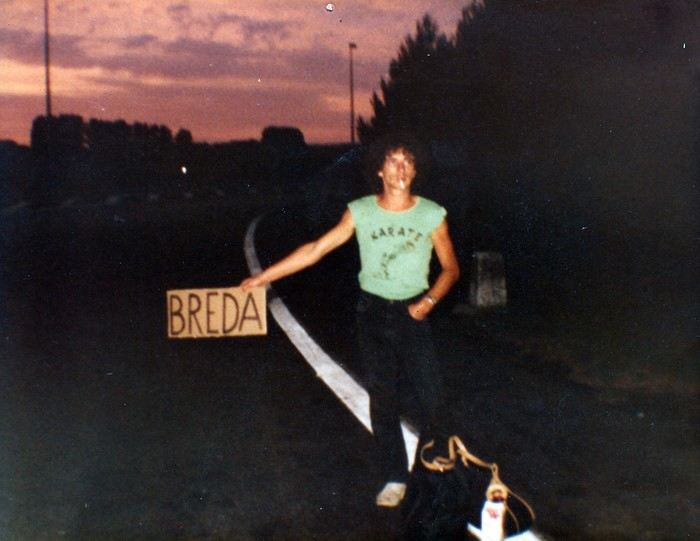
“Hey, your Marker... - My Marker? - The one you used to make hitchhiking signs.”
The marker in question is sitting proudly on the kitchen table. Marielle found it at the bottom of a moving box.
I’ve been meaning to tell the long story of my love affair with hitchhiking for years. Here we go.
To be honest, I’m not quite sure when it started. My earliest memory goes back to a fair with a bike race in my maternal grandparents’ village. I was with my cousin, my little sister, and three girl cousins. There were six of us, ages ranging from six or seven to thirteen or fourteen. Our parents stayed at the fair, and we’d had enough. So we decided to walk home. Only it was four kilometers away. So we hitchhiked. A guy driving an old car picked us all up and dropped us off at the farm. He probably found it amusing to see us thumbing a ride by the side of the road, but maybe it also worried him a bit. With everything you read in the papers...
Around fifteen or sixteen, I started hitchhiking regularly, alone or with a friend, to go to the nearby town. But it was especially when I started boarding school in Orléans that it became more regular. The first year, I’d leave Monday morning and come back Saturday noon by bus. It was an old, uncomfortable bus where we froze in winter. To make matters worse, I often got motion sickness if, as was too often the case, I ended up sitting in the back. In the spring, a high school friend suggested I hitchhike back. It meant a slight detour, but the advantage was taking only national roads.
So that’s how, from the end of tenth grade to twelfth grade, I’d thumb a ride every Saturday on the Pont de Bourgogne. Drivers were used to seeing young people hitchhiking, and it worked pretty well. Our biggest fear? Soldiers! At that time, military service was still mandatory, and on weekends, it wasn’t rare to see them competing with us. They’d keep their uniforms on to go home. That gave people confidence—with everything you read in the papers—and they’d rarely wait more than five minutes. We, with our long hair, were definitely less popular. From time to time, three big red-faced guys in a van coming back from a construction site would flip us off, yelling things like “go get a haircut, you bums!” Those were the good old days.
We still had a good laugh, though. Patrice, the friend I’d hitchhike back from school with on Saturdays, is a musician—I’d later discover he’s an excellent composer. A die-hard Beatles fan, he knows their repertoire by heart and spends his time singing at the top of his lungs while we thumb a ride. One Saturday late morning, we’d been waiting for a while at the exit of Châteauneuf-sur-Loire when a little lady came up to him and asked if he could please sing a little quieter: a baby was sleeping in the house. He put on the most sorry face: “Oh, sorry ma’am, we didn’t realize.” No sooner had the lady gone back inside than he started again. Luckily, a car stopped just then, sparing me the embarrassment of seeing the lady come back out.
Saturday was also the day when the cigarette pack was dangerously low. So before leaving, we’d go buy some “Parisiennes,” the “P4s” as we called them back then. They were slightly thinner cigarettes with a mix of tobacco scraps. Sometimes they tasted like light tobacco, sometimes like dark. Not great, but by the end of the week, our pocket money was gone. They were sold in small packs of four, hence the name P4. We’d only pay 20 centimes. On Saturdays, it was rare for the two of us to manage to scrape together 1.50 F to buy a whole pack of Gauloises...
The last twenty kilometers, I’d usually do alone, Patrice having reached his destination. From time to time, luck would smile on me: an acquaintance would just happen to pass by and stop. One January Saturday, at the exit of Gien, I ran into another guy from Argenton whom I knew a little. That day, the weather was nice, but the temperature was well below zero. It was around noon, and it was the off-peak hour. We were shivering, stamping our feet by the side of the road, when a Citroën “Tube” arrived: it was his father’s boss’s, a mason. They were both sitting in the front, but since they were obese, they had us climb onto the open back. Even though we huddled against the cab to shelter from the wind, the twenty kilometers felt very long, especially since we were only going sixty kilometers an hour. Our hands and cheeks were blue when we finally arrived.
The year I took my baccalaureate, a friend with a 2CV would take me Monday mornings with one or two others we’d pick up in nearby villages. We’d share the gas costs, but it was still cheaper than the bus. And in winter, the bus was my nightmare. You had to get up at five to catch it at six. Not enough sleep, and outside it was freezing or raining—or both. The 2CV was luxury. Plus, Philippe would pick me up at home. On the other hand, since I didn’t have class Saturday mornings—well, I did, but we only had PE the first two hours and nothing after—I’d skip class and slip out right after breakfast to thumb a ride at the Pont de Bourgogne.
Those three high school years were formative in this optional subject that was hitchhiking. Little by little, I learned the rules of the game. First, you shouldn’t walk along the road while thumbing. Cars go too fast and can’t stop easily. Accepting a ride that’s too short is also a no-go. The guy who offers to take you a little way but drops you off at some vague crossroads in the middle of nowhere? No thanks. You need to get dropped off in a town. If it’s a fairly big city, you often have to cross it from one end to the other, but it’s better. At the exit, you have to choose your spot well. Actually, you have to put yourself in the driver’s shoes: they need to see you early enough, not be going too fast, and be able to stop easily without risking an accident. So when leaving a city, it’s better not to go too far. It’s wiser to find a spot where cars go slowly and can stop easily. And preferably near a café. The café is for when you still have a few coins for a coffee and need to warm up. From time to time, you’d run into someone nice who’d make a detour to drop you off at a better spot to start again. Finally, if possible, avoid hitchhiking on Sundays. Cars are packed with whole families who, most of the time, aren’t going far. And then there’s the little worry of those people who rarely leave home: with everything you read in the papers...
During those high school years, it was only short trips, rarely exceeding a hundred kilometers. Later, I aimed bigger, and things were a bit different. In 1973-74, I crossed part of France for the first time on two or three occasions, coming back from the German border or returning to Bordeaux, where we lived briefly. Since there weren’t many highways back then, we took national roads. It was during these trips that I realized it was better to leave in the evening. As I said earlier, Sunday is to be avoided, but on weekdays, there’s another problem: if you leave in the morning, you only make short hops. First, it often takes longer to get going because drivers are people going to work nearby. Which brings us back to those who drop you off in a bad spot, far from everything. There, you have to know how to refuse. You thank the driver for stopping—oh, if only everyone could be like you—while explaining why you’d rather stay put. People don’t take offense, by the way. Those who pick up hitchhikers often hitchhiked themselves when they were in the military or before they had a car. In the late afternoon, you’d often run into salespeople or truckers, in other words, people who drive a lot. At that time, salespeople no longer had appointments and were more relaxed. They wanted to talk about something other than the merits of their products. On the radio, it was time for *Les Grosses Têtes*. You’d also quite often run into small business owners, professionals, or even hippies. The conversations were pleasant and often enriching. A little later in the evening, truckers would take over. They’d already driven a few hundred kilometers, and the depot or customs was still far away. So they’d gladly take a hitchhiker to stay awake at the wheel and chat. The radio with Max Ménier’s show *Les routiers sont sympas*, you’d eventually get tired of it. So a hitchhiker was a change. Others, who’d hit the road at midnight to be at their destination by morning, were nice and offered to let you lie down on the bunk while they drove. When you’d been hitchhiking since six in the evening, freezing in the wind between two vehicles, you weren’t unhappy to take a little nap.
Speaking of Max Ménier, he’d often make announcements for hitchhikers. One evening, I called him. It was getting late, and I still had quite a way to go. No luck: the show had ended for good the day before!
In short, it’s better not to rush, sleep in, and leave after lunch, or better yet, in the late afternoon. Obviously, I’m talking about when you have several hundred kilometers to cover. That’s when you have to play it pro.
First thing, especially at night, but it also applies in the middle of summer when the light is blinding: dress to be seen from far away. I’ll admit I have an advantage over most other hitchhikers: I’m small and don’t scare people. To balance that out, racist drivers often take me for an Arab and are less likely to pick me up, but overall, the balance tips in my favor. Back to the need to be seen: at night, I wear light-colored clothes. In headlights, you can see me from far away.
Second thing: travel light. Forget the big backpack with a frame. Drivers don’t always have room in the trunk or on the back seat, especially if it’s rained and the ground is wet. Plus, it forces them to get out of the car. If they’re nice enough to pick up a hitchhiker, you shouldn’t ask for too much either.
Third thing: bring a cardboard sign and a big marker—like the ones in the photo at the start of this post—to write the name of your destination. In the early 80s, I ran a tourist house in the Cher, but I lived in the Netherlands. In the off-season, it was only open on weekends. On Fridays, I’d leave Holland and return on Mondays. 1200 km round trip. On the way there, in Paris, I’d stand at Porte de la Chapelle. At that spot, the road is very wide, and drivers could stop easily. Obviously, on the sign, I didn’t write Eindhoven, which not everyone knows, and even less Amsterdam because of its seedy reputation. In that case, you’d expect to see a police car stop and two officers in kepis ask for your papers. So as a first destination, I’d write Compiègne. We were well out of Paris, and since it wasn’t too far, a trucker or salesperson was less reluctant to stop. Once past Compiègne, I’d take out my Lille sign. Once in Belgium, it wasn’t really necessary to use a sign anymore, since everyone was going in the same direction. Usually, the guy who picked me up at Porte de la Chapelle would say he wasn’t going far but could take me a little way. Before that, I’d still ask if there was a gas station on the highway where he could drop me off before exiting. While talking, the guy would realize he wasn’t dealing with a dangerous criminal. He’d pretend to check his watch, think for a moment, then say that actually, he was going to Belgium and could take me to the border or a little beyond. To leave Paris on the way back, I’d take the train to Melun, where it was easier to hitchhike than at Porte d’Italie.
Over all those years, I think I was pretty lucky. Or maybe philosophical enough not to imagine a car would stop after a few minutes. An hour’s wait was average. Sure, I sometimes waited three, four, or five hours. Most often at odd hours and in terrible weather. When it doesn’t work, it doesn’t work. But there’s always a moment when things pick up. Sure, when you’re soaked in freezing rain in the early morning after a sleepless night, you’re less philosophical than when I’m writing these lines comfortably at my computer, but it still holds true.
Earlier, I mentioned clothing and the importance of being well-rested before leaving. When you’ve eaten well and just gotten out of the shower, shaved, you’re in a better mood. And somehow, drivers sense it. Or at least, that’s the impression I’ve always had. It’s better to look in shape than disgusted at standing there, half-heartedly thumbing a ride. In short, when I’d start to get fed up with waiting, I’d go into the first café I saw for a coffee. Coming back out, I’d be refreshed, and most of the time, a car would stop within minutes. I’ve often said that when I stood by the side of the road thumbing a ride, I felt a bit like a gambler in front of a slot machine. It was a matter of giving luck a chance. And well, it worked out pretty well.
Then, there are countries where hitchhiking works really well and others where it’s harder. In the 70s-80s, it worked best in Germany and England. In the late afternoon, it wasn’t rare to be invited for tea. Well, that was in England. Tea meant being offered room and board. In Germany, they’d offer you coffee. Once there, they’d first show you the guest room and point out the bathroom before sitting you down in front of a big plate of cold cuts. In the evening, they’d go out in town, and the next morning, they’d usually drop you off at a good spot for hitchhiking. On the other hand, in Mediterranean and Scandinavian countries, you’d better be patient. In Spain or Italy, it’s better to take the train, which was dirt cheap back then. However, if you’re a couple traveling light, it’s already easier in most countries.
In 1982, I went on a trip around Turkey with my girlfriend. We only had two small bags, which was plenty. It was November-December, and we wore our warm, bulky clothes. Leaving Eindhoven at nine in the morning, we arrived in Graz, near the Yugoslav border, at eleven at night. 1300 km in a day! In just four or five vehicles. One to the German border, about fifty kilometers from Eindhoven, the second to Hagen in the Ruhr, the third to Salzburg, and the last to Graz at the Yugoslav border. Record broken. During the night crossing of Yugoslavia, we ran into a trucker close to retirement who lent us the truck’s bunk. So we arrived fresh and rested near Skopje the next morning. We continued to Thessaloniki in northern Greece before taking the train to Istanbul. In Turkey, we traveled a good part of the country by hitchhiking too. With truckers in old, overloaded, slow trucks that climbed hills at fifteen kilometers an hour, but also in cars where five or six people were already crammed in. And every time, we were invited for tea. Once, we were even picked up by a big shot in his Mercedes with a chauffeur. Until then, the average speed was around fifty kilometers an hour. There, we were going two hundred. On a national road, not a nice European highway.
I’ve also hitchhiked in Nepal, from Lumbini, Buddha’s birthplace, to a village on the way to Pokhara. It must have been midday. No bus until the next day. I gave it a try. A small truck overloaded with rice sacks, with two or three young people already perched on top, stopped. I rode on the roof of the cab. At fifty kilometers an hour when it was going well, with a breathtaking view. Coming back from India, I also crossed part of Iran by hitchhiking, from Tehran to the Turkish border. I did this trip with an Austrian I met at the hotel who, like me, had to watch his pennies. We gave it a shot. There was almost no traffic, but to our great surprise, the first car that passed in the area would always stop. They’d just ask for a modest contribution for gas, and it cost next to nothing.
Sometimes, you get scared too. After leaving Turkey in early December 82, we spent about two weeks in the southern Peloponnese harvesting olives. A few days before Christmas, we hitchhiked back to Holland. A girl picked us up in her little Fiat 500. We were driving on a mountain road, and that morning there was a bit of black ice. After crossing a pass, we saw the old Ford Taunus ahead of us at fifty meters start to skid. The driver let out a “heeee!” while grabbing my knees. I reflexively grabbed the wheel. Finally, the Taunus got back on track. And we didn’t swerve. But those few seconds felt very long.
In January 77, while I’d been living in Germany for a few months, I decided to spend a few days in Italy. By hitchhiking, of course. I left in the early afternoon, and by ten at night, I wasn’t far from Frankfurt. I saw a big Mercedes stop. The four or five young people crammed inside were listening to Schlager at full volume. Beer cans littered the floor. They didn’t have a precise destination, and as long as they were going south, that was fine with me. They’d finished their military service that very day and had clearly already celebrated their discharge. The driver was going 160, zigzagging dangerously from one side of the highway to the other. I should have realized he wasn’t entirely sober either. Luckily, there was almost no traffic. Finally, I managed to get dropped off at a gas station just before Frankfurt, relieved. I hope their trip didn’t end tragically.
Another time, coming back from Holland with my wife, we were picked up early in the morning near Senlis by two guys from Lille. They were going to work near Tours and could drop us off at Porte d’Italie. Apparently, they were coworkers but barely knew each other. The driver offered us a beer—at six in the morning, sure!—before opening another can for himself. He was clearly having trouble staying in the right lane. We politely declined, the passenger too. Everyone was tense. Luckily, it was rush hour on the ring road, and we were going slowly. When we got out of the car, the passenger said goodbye with the look of a guy being offered the condemned man’s rum and cigarette.
Finally, there are the annoying remarks from drivers who are either gay when you’re alone or turned on by the sight of your girlfriend when you’re a couple. In those cases, I’d get in the back so the guy wouldn’t feel too confident. And if the conversation got a little too suggestive, we’d deflect until we got dropped off.
And luckily, there are the times, not so rare after all, when you run into really nice people who invite you to eat and sleep at their place and drive you to a good spot the next morning. In Germany and England, that was common. And then there are the big strokes of luck, like during our trip to Turkey when we crossed most of Germany in one car, or that other time when some Germans drove me from the exit of Geneva all the way to the Costa Brava.
Going back to “with everything you read in the papers” and its variant “with everything you see on TV”—and now on the internet—it’s always left me perplexed. Personally, I’ve never heard of hitchhikers assaulting drivers, even if it may have happened. On the other hand, what was most common were hitchhikers being assaulted, especially girls. Anyway, even armed, it seems a bit stupid to assault the driver—wouldn’t that risk causing an accident?
Finally, since that time, I’ve occasionally wanted to hitchhike somewhere far away in France. Most often, too busy with work, it never happened, but the nostalgia hasn’t completely disappeared.
* * *
Other Hitchhikers
And then one day, I... settled down to become a driver myself. Ten years had passed, and you saw fewer and fewer hitchhikers. Or maybe I saw fewer because I had a regular job and wasn’t traveling the same way. And then I understood a few things.
Several times, I was tempted to pick up a hitchhiker, but they didn’t meet the required conditions. They were walking along the road instead of staying at the exit of the previous town. Hard to stop without risking an accident. Or the guy looked really scruffy. Or he was sulking, if not both. Then you think of that famous “with everything you read in the papers.” Not that I was scared, but unfortunately, the few hitchhikers I did pick up later were rarely interesting.
A few years ago, we picked up a young guy at the exit of a small town in Sologne. Not an easy spot for hitchhiking. Bad luck, he was a pretentious little jerk. He was barely 20 or 25 and talked like a bitter old man. He was a waiter in a restaurant. According to him, it was lucky he was there, otherwise the boss would have closed up shop long ago. You’d think he had thirty or forty years of professional experience behind him. As we approached Blois, he started ranting about Arabs, blaming them for all evils. And he laid it on thick. That morning, we were going to a teenager’s funeral who had just committed suicide, so he really got on our nerves, Mr. Know-It-All. Out of anger, I dropped him off next to a shopping center a few kilometers from downtown. Not nice, but it felt good.
Some time ago, we were driving around the Limousin on a Sunday to try out the used Twingo we’d just bought. We picked up a guy in his forties. A German who spoke French well. He started talking about the environment. He was a green Khmer. He got worked up all by himself with his pseudo-eco rant and, after a few kilometers, was almost yelling at us. As we were about to leave the main road for a small one, I dropped him off at a crossroads in the middle of nowhere. Normally, I would have made a little detour to take him to a better spot, but this time, I didn’t feel like doing the... eco-warrior a favor.
On the other hand, I’ve still done my good deed a few times. One June morning, coming back from Orléans, I saw a man in his sixties hitchhiking. The poor guy had had a rough time. He was from Montpellier and was coming back from Caen, where he’d been promised a job. Once there, they bluntly told him the position was already taken, and he had to go back. Except he didn’t have enough money left for the train. He’d spent the night hitchhiking without success. I could only take him as far as Lamotte-Beuvron, where I dropped him off near the fire station. Apparently, there was some vague shelter there or something, but it only opened a few hours later. In the meantime, he settled on the grass in a corner to sleep a little. While he was doing that, I quickly went to the train station to check the price of a ticket to Montpellier. It was within my means. Since he was sound asleep, I slipped the train ticket and 100 francs into his pocket. I couldn’t imagine him continuing to hitchhike all the way to Montpellier. And I bet he didn’t even have a piece of cardboard and a marker!
When we go to Brazil, we usually rent a small car. One day, we were coming back from Paracuru to Fortaleza when we saw a whole family hitchhiking. Two adults and two or three small children. Here near the equator, the sun sets very quickly, and it would soon be night. There was little traffic, and trucks wouldn’t stop because there was no room in the cab. As for the rich people driving big 4x4s, they wouldn’t stoop to picking up the lower classes. The only hope for this kind of family was usually a farmer or artisan who’d let them ride in the back of his pickup. Obviously, they were a bit surprised to see us. Everyone crammed in as best they could in the back of our little car. When we dropped them off, we got a whole string of “Deus lhes abençõe”—God bless you.
Still in Brazil, we were on the road from Barreirinhas to São Luís do Maranhão. About 150 km of deserted road with an isolated mud house here and there. A young woman flagged us down. She was very pregnant and had to get to the clinic twenty or thirty kilometers away to give birth. Someone was supposed to drive her, but the first signs of labor started earlier than expected, and the driver was unavailable. Even driving fast, we weren’t feeling great: it would be just our luck if she gave birth in the car!
Today, we’re in the age of smartphones and carpooling apps. Safety. With everything you see on TV... Three or four years ago, we signed up on a platform. Our first, and only, “client” was a little jerk who didn’t say a word the whole trip. No hello, no goodbye, and certainly no thank you. The next day, we found his Ray-Bans in the car. We didn’t run after him to give them back. Ha!
Madagascar - June 2025
Five years of an unintended break... The closure of VF, COVID... What a joy to rediscover the pleasure of sharing!
I’ve stayed true to my habits: the following account is a collection of practical tips rather than a travel journal...
Madagascar is as big as France and Belgium combined. In three weeks, choices have to be made! It was the Great Tsingy that inspired our trip. We decided to focus on the southwest and the RN7. We skipped the Deep South and the North. Oh well...
OUR ITINERARY IN 3 WEEKS:
Fri 6 June – Direct AF flight to Tana – Flight arrives at 10:30 PM – Tana Sat – Antsirabe Sun – Miandrivazo Mon – Drive to the Masiakampy pier – Descent of the Tsiribihina River by pirogue - Bivouac Tue – Descent of the Tsiribihina River by pirogue - Bivouac Wed – Descent of the Tsiribihina River by pirogue – Bekopaka Thu – Pirogue on the Manambolo River and Small Tsingy of Bemaraha – Bekopaka Fri – Great Tsingy of Bemaraha – Bekopaka Sat – Avenue of the Baobabs – Morondava Sun – Belo sur Mer Mon – Free day – Belo sur Mer Tue – Manja Wed – Andavadoaka Thu – Free day – Andavadoaka Fri – Salary Lagoon – Mangily Sat – Ranohira Sun – Isalo National Park - Ranohira Mon – Anja Reserve - Ambalavao - Fianarantsoa Tue – FCE train canceled – Visit to a Tanala village - Manakara Wed – Pirogue on the Pangalanes Canal – Ranomafana Thu – Ranomafana NP – Ranomafana Fri – Ambositra – Antsirabe Sat 28 June – AF flight to Paris – Flight departs at 11:55 PM
TRIP ORGANIZATION: I prepared my trip using the usual guides (LP and Rough Guide), the internet, and the Freytag & Berndt map (1:1,000,000). I’m old-school—I still love visualizing my route on a paper map, even though in Madagascar, it’s misleading because some National Roads are only national in name!...
The agency: Since we couldn’t deal directly with a driver-guide (we lacked reliable info to take the plunge), we went through an agency to organize the logistics of our trip. We didn’t feel like using bush taxis (not enough time) or driving a 4x4 ourselves (neither the skills nor the boldness). The French agency connected us with a local agency, to whom I sent my detailed itinerary by email. A few exchanges via email and WhatsApp calls allowed us to finalize everything quickly after some adjustments. As you’ve gathered... we multiplied the commissions, which inflated the budget. That said, in the end, we were thrilled with our decision and our choice. Our trip was booked by the end of 2024, and reservations were made immediately. No bad surprises: the bookings in the planned hotels were honored, often with one of the best rooms. On our last day in Tana, before departure, we were lucky enough to meet the director I’d been communicating with, who helped build and validate our circuit. A very warm debriefing.
The driver-guide: The agency assigned us Faly, 33, a driver-guide for over 10 years. He stayed with us from start to finish: he picked us up at the airport on arrival and dropped us off 23 days later. A very experienced driver (which is important here), an open and cultured guide, reliable, punctual, and a great companion. And a provider of good advice throughout the trip. We made the most of the long stretches on dirt roads or highways to listen to him talk about daily life, rituals, wildlife, and flora... No time wasted! With a great playlist in the background, we combined business with pleasure! Faly’s accommodation and meals were included (quite often, hotels offer free lodging and meals to driver-guides who bring clients), as was the fuel. That didn’t stop us from inviting Faly to share a beer or our evening meal sometimes. He didn’t always accept, wanting to let us "enjoy our romantic evenings," as he put it. Present without being intrusive! Faly is fully capable of organizing a tailor-made trip directly. I recommend him without any hesitation—we were delighted with his service. I’ll gladly share his contact details via PM to anyone who asks.
Local guides: It’s the national guide’s prerogative to choose the local guides (mandatory in the parks). Thanks to his experience, Faly always booked us amazing, competent, and interesting local guides.
Hotels: I told the agency I wanted charming, comfortable accommodations, without falling into flashy luxury. We loved all the hotels (except the Hôtel Kanto in Manja). The rooms, mostly bungalows, were always spacious and clean. Unfortunately, I can’t give the prices—I didn’t get the details. Breakfast is always included, usually fresh and hearty. Very often, a small bottle of water is provided in the room.
Tana Hôtel Les 3 Métis Power cuts are common (!) in Tana. Bring a headlamp.
Antsirabe Ecolodge – Les chambres du voyageur Maybe our favorite! A few bungalows, beautifully arranged in a splendid tropical garden. The dog Kodak welcomes us warmly.
Miandrivazo Hôtel Princesse Tsiribihina Magnificent view of the valley.
Bekopaka Hôtel Orchidée du Bemaraha 2 (yes, 2) beautiful pools, a large open common room.
Morondava Hôtel Baobab Café Brand new or at least, according to Faly, just renovated. Very comfortable but without much charm (international style).
Belo sur Mer Ecolodge du Menabe The bungalows, all made of wood, bamboo, and thatch, are set on the beach. Very spacious and fully equipped! Large open-air restaurant by the sea. No hot water from the tap—it’s available in plastic bottles heated by the sun in front of each bungalow. Actually, we never used it... Another very, very beautiful spot.
Manja Hôtel Kanto The only hotel on this leg of the journey, so no choice. The owner knows it and, as a result, doesn’t bother. It’s a real dive! Tiny, dark room, a sordid bathroom with only a trickle of water—we skipped the shower! Clean sheets, though. Obviously, no Wi-Fi. The only place where I didn’t leave a tip. We were well warned about the discomfort of this stop, both by the agency and Faly. We weren’t surprised, and it even became a running joke during the trip. On the other hand, we found a nice little market in town.
Andavadoaka Manga Lodge What bliss! Especially after the horrible Hôtel Kanto. A paradise-like spot, overlooking three beautiful deserted white-sand beaches. Meals are served on the terrace facing the sea. Stunning sunset. We loved spending a day lounging here! We were the only guests and were pampered.
Mangily (Ifaty) Mangily is the "suburb" of Ifaty. Hôtel Vovo Telo A large beachfront bungalow complex. More touristy but pleasant—we spent a lovely evening there with our feet in the sand.
Ranohira Le Relais de la Reine A splendid resort built by a Frenchman, at the foot of the rocks, very well integrated into the environment. Beautiful marked trail starting from the garden.
Fianarantsoa Villa Sylvestre Contrary to what its name suggests, it’s a hotel right in the city center. Quite decent, though.
Manakara Parthenay Club Pretty bungalows in a large garden by the sea, but swimming isn’t safe—the water is too dangerous and rough.
Ranomafana Hôtel Thermal Very spacious rooms.
Meals: Not all our meals were included. It’s really not expensive. 1 meat or fish dish: around 35,000 Ar 1 full menu (starter, main, dessert): around 70,000 Ar 1 large THB beer (65 cl): between 8,000 and 12,000 Ar 1 piña colada: 15,000 Ar 1 flavored rum: 6,000 Ar (sometimes free) 1 glass of baobab juice (!): 5,000 Ar
We always ate very well. Rice is everywhere, served in large quantities. Zebu meat is quite good if not overcooked. Personally, I prefer fish, and I feasted: grouper, captain, crab, small lobsters...
We happily discovered baobab juice (especially in Belo, on the west coast). And of course, flavored rums!
We bought 2 packs of 6 bottles of mineral water at Carrefour (!) (about 5,000 Ar per large bottle) at the start of our trip. That was enough, especially since we often got water in the bungalows.
We had a few picnics included in our trip. Instead of picking up the hotel’s lunchbox, Faly prepared delicious, fresh, and varied picnics for us: tuna pasta salad, fried rice with eggs, grilled vegetables, and avocado...
An exceptional address not to miss: Mad Zébu – Belo sur Tsiribihina A highly reputed restaurant, a favorite of LP and Rough Guide, and rightly so! Gourmet cuisine, refined and elegant. Barely more expensive than elsewhere, and it’s worth it. We stopped there on our way up to Bekopaka and the Tsingy NP. Fully booked! So Faly reserved for our return, three days later. We’re still thanking him! What a treat!
THE BUDGET: Ariary exchange rate: 5,000 Ar = 1 €
Pre-trip expenses: Direct Air France flights: 930 € per person round trip Cost of the circuit with the agency: 2,880 € per person
The visa: Issued on arrival, very quickly. 35 € per person for a stay under 30 days. Super simple. Super fast.
On-site expenses: As soon as we arrived at the airport (it was nearly midnight), Faly advised us to exchange our euros for all our needs. There are few opportunities on our route to find an ATM or an open bank with a good rate. To be more comfortable, he took us to a small office under military protection just outside the airport. I exchanged 1,200 € (I had asked the agency for advice on the amount to bring) at a rate of 4,750 Ar and became a millionaire. Faly recounted all the stacks. That covered all our expenses (meals, drinks, tips) without ever feeling deprived. Personal purchases were made at the end of the trip. Convenient—it served as an adjustment variable. We spent our last million (200 €) on marquetry and vanilla. Tip: We asked for 200,000 Ar in 5,000 Ar bills for tips. That wasn’t too much—I even ran short of small bills in the last two days.
Tips: Madagascar is a poor country where every service deserves a small reward. While not mandatory, it’s customary. But no one ever demanded or expected it openly. On the contrary, I sometimes had to remind a porter to give them my small bill. We never carried our luggage—porters were always present when the car arrived or waiting at our door to watch for our departure. I gave each of them 5,000 Ar. In restaurants, I rounded up to the nearest ten and left the change. Local guides also expect a tip: I gave around 20,000 Ar per day for the two of us. Finally, the national guide also expects a gratuity. I had read online to budget 5 € per day per person. I added more since we were so happy with his services. The tip was given at the end of the trip, in euros, outside the budget.
Total budget all included (excluding personal purchases): 8,690 € Clearly, Madagascar is a country where life isn’t expensive, but travel costs add up quickly due to the need to rent a 4x4 with a driver.
HIGHLIGHTS:
· The dirt roads Yes, I’m listing them among the highlights! We loved those long hours spent driving at 20 km/h on rocky, muddy, white, red, or gray sand tracks... surrounded by tropical vegetation, palm trees, pandanus, mango trees... The experiences were sometimes thrilling: crossing a river on a ferry (just planks of wood fixed on two motorized pirogues side by side) or crossing a river without a ferry, with just a kid running ahead of the 4x4 to show the way; soft sand where the 4x4 easily gets stuck... The tracks are quite narrow, and crossing paths with a bush taxi, a zebu cart, or a herd of goats is always epic. So many beautiful images, so many beautiful photos! Much more beautiful than on asphalt. So yes, we loved those long stretches on dirt roads. For us, it was clearly part of the journey. Faly was particularly careful, and the 4x4 was comfortable. No injuries, no fatigue, even after 7 or 8 hours on rough tracks. The national roads (including the famous RN7) are badly damaged by cyclones, huge trucks, and lack of maintenance. Potholes have turned into ostrich nests, and we didn’t drive much faster than on the dirt roads.
· The landscapes, villages, encounters... We crossed a variety of stunning landscapes: mountains with slopes covered in terraced crops, rice fields from apple green to emerald green, sugarcane fields, then tropical forests, baobab forests (they deserve a special paragraph below), traveler’s tree forests. And then coastlines with white sand dunes against a backdrop of blue hues!... Magical! We also passed through many villages with houses whose architecture varied by region. The Betsileo houses display beautiful decorative brick reliefs. On the west coast, the houses are more precarious, made of bamboo with palm-thatched roofs. In the Highlands region, we found solid houses with pastel plaster. Each region has its own landscape, crops, habitat, and clothing. Zebu carts are often the only means of transport in remote villages. We saw them very frequently. Again, the cart’s decoration depends on the region. And then, we met many villagers coming out of the bush and walking to the next market, carrying their crops on their heads or shoulders. More beautiful photos!
· The descent of the Tsiribihina River We boarded around 9 AM in a long pirogue with Gana, the local guide, and two pirogue men. So, five of us. The pirogue is long but narrow, about 65 cm wide. We sat one behind the other at the front on seats padded with what would become our mattresses during the bivouacs. We only took the bare essentials for two nights. A little goodbye to Faly, whom we’d see again in three days! Don’t forget us! The river is silty—meaning orange, opaque but clean. We glided along silently. Gana showed us the trees, birds, crocodiles (we saw five—apparently, we were lucky). The pirogue men rowed to get us as close as possible to these crocs sunbathing on the roots of big trees. Yeah, right!... as soon as we got too close, *splash*, they disappeared into the water. We marveled at the mini rice fields lining the river. Every tiny plot, no matter how small, is cultivated. Above them, banana fields. And on the water, a whole life of fishermen and villagers living with and from the river. Gana warned us we’d eat on the pirogue because the journey was long. So, I expected chips... But no—fried rice and zebu steak, cooked right in the pirogue!! Incredible! In the middle of the afternoon, we reached a small beach where we disembarked. Gana led us about a hundred meters to a sublime waterfall. We were alone there. We had time to swim. We’d brought our swimsuits and a towel (bought at the Carrefour in Antsirabe on Faly’s wise advice!). This swim in this paradise-like spot remains one of our best memories. We found our pirogue again and set off until our first bivouac. We’d sailed for 7 hours today. The tents were set up on a wide beach, without a single tree. A moment of solitude... Uh, where can we go to the bathroom?... Especially since it was a full moon, so we felt like we were in the spotlight. Anyway... we did as everyone else—walked away, dug a hole, and the others turned their backs. A hearty meal on the beach before a comfortable and silent night. The next day, same program, with slightly different landscapes. The gorges widened, the trees were different. But still many colorful birds. Again, we ate on the pirogue: grilled chicken and vegetables. 9 hours of sailing. A similar bivouac. This time, we got it. On the third day, we finished the descent with 5 hours of sailing. So, 7 hours, 9 hours, 5 hours... doing nothing. It might sound boring... but it wasn’t. Like the dirt roads, these were contemplative moments. It glides, it’s calm, relaxing, and there’s a lot of life on this river, animal and human. Contemplation. Suspended time. On arrival, we disembarked at a sort of joyful, bustling river port. Of course, Faly was already there to pick us up.
· The Tsingy de Bemaraha NP (Small and Great) I have vertigo. During my research, several agencies advised me against visiting the Great Tsingy. "Stick to the Small ones," they said. Grrr, no, not what I wanted—we’ve dreamed of this for years! The agency we chose also warned me but didn’t discourage me. So we started with the Small Tsingy, quite close to Bekopaka, guided by Alisha. This forest of sharp limestone rocks is impressive. No vertigo issues here. The day was completed with a short pirogue ride on the Manambolo River and a visit to two caves with pretty formations. The next day, Faly and Alisha drove us to the Great Tsingy (a good hour on a terrible track). Arriving at the park entrance, Alisha equipped us with harnesses, carabiners, and gave us some safety instructions. Faly was also equipped. Wait? He’s coming with us? I quickly understood he was there for me—if I got stuck, he could go back with me, and Philippe could continue with Alisha. A wise precaution that delighted and reassured me. In the end, it was unnecessary since the famous bridge crossing was fully secured by the harness and carabiners. 18 meters on planks, one by one, it didn’t sway too much—I walked looking straight ahead, not a glance down. I even managed to smile in the middle of the crossing—I have a photo to prove it! I was overjoyed! The circuit in the Great Tsingy is a loop, so we didn’t have to cross the bridge again. We climbed to viewpoints offering breathtaking panoramic views. It’s extraordinary, unique, incredible. All this to say that if you have vertigo, don’t hesitate! It’s doable! It’s completely safe and really worth pushing your limits a bit! For those who’ve done treetop adventure courses, it’s similar. Also, no need to be a great athlete—just a bit of agility to climb a few ladders and high steps. Don’t censor yourself! I even had a small regret—the loop was a bit short (about 2 hours). I would’ve liked to continue or even redo it, with less apprehension. Tip: Do the Small Tsingy before the Great ones, or not at all. And if you can only do one, do the Great ones without hesitation.
· Canoeing in the Belo mangrove The Belo sur Mer ecolodge lends small individual canoes for free to go to the mangrove. We left at high tide, paddled for about twenty minutes to reach a fairly sparse forest where we could easily venture in. Very shallow water, crystal clear—we could see the roots of all these trees, schools of tiny fish... It was quite surprising. Until then, I only knew impenetrable, tangled mangroves. Here, nothing like that—we walked through an aquatic forest. We loved this adventure so much we left a bit late. The tide had gone out, and we had to carry our canoes for the last few meters... Of course, the staff came to help (probably laughing silently!). The lodge owners gave all the necessary explanations and lent a waterproof bag for the phone (because yes, it’s worth taking photos!). A very useful precaution—the canoes are small, low in the water, and paddling quickly soaks you. Again, this isn’t just for Tony Estanguet! It didn’t cause us any problems, not even sore muscles the next day. A great experience. It’ll take about 2 hours.
· Isalo NP Big surprise when we saw this huge rocky massif appear on the RN7! A massif of colored sandstone, carved with crevasses giving it a ruined look. Le Relais de la Reine is a little gem cleverly nestled in the heart of these rocks. A small marked trail starts from the garden. We picked up the description at reception and set off. Without a guide, alone following the markers, it took us 2 hours to complete this magnificent little trail, giving us a first glimpse of the massif before the hike the next day. And we enjoyed being completely alone for this walk. It’s free, easy, and well-signposted. Don’t miss it. In the evening, Faly took us to the so-called Isalo Window site—a hole in a wall through which we could see the sunset. We met all the tourists in the area here. We weren’t blown away by the show... The next day, we left early to reach the start of the hike. We met Zozoly at the guides’ office in the small town of Ranohira. During this hike, we climbed through the rocks to a viewpoint offering stunning 360° views of the massif. Then we reached a site called the "natural pool," breathtakingly beautiful, especially since we were alone again. A sort of oasis, a cascading waterfall, palm trees and tree ferns, fine sand, all nestled at the bottom of a small canyon. Paradise-like. We resisted swimming, but it was really tempting. A long walk on the plateaus then led us to a well-equipped picnic site where a local team prepared grills. Concrete tables were tiered in a spacious, shady clearing where a whole family of ring-tailed lemurs frolicked. They knew the tourists’ habits and tried to snatch food. Playful and not very shy, they amused us with their antics! We had to resist not luring them with a piece of banana!! Thousands of photos!! After the meal, we set off again with Zozoly for another landscape. This time, we were by a small river at the bottom of a canyon with high walls covered in vegetation. The trail was narrow and slippery, on a ledge of the wall. We progressed carefully. No danger, though. We first reached the Blue Pool, which only turns blue in photos (surprise!), then the Black Pool fed by a shower of waterfalls. Two magnificent spots that showed us a completely different aspect of the massif.
· Anja Reserve This ficus forest is home to many groups of lemurs. Used to humans, whom they don’t fear, they move around us, ignoring us completely. It’s almost annoying... The best place on our trip to see lemurs.
· The FCE train To the great regret of Manakara’s inhabitants, the FCE train hasn’t reached here for over a year and a half. As a result, there are far fewer tourists—the train was part of the experience. We drove there and didn’t regret coming to this port on the east coast.
· Visit to a Tanala village This visit wasn’t part of our program—it was added by the agency to compensate for the train not running. Which was the case. Not big fans of this kind of visit, where we feel like we’re at a zoo, voyeuristic, lacking authenticity, we followed the local guide with some skepticism and exchanged dubious looks. And yet... the guide’s explanations about village life and the warm, smiling welcome from the villagers charmed us and dispelled all our concerns. We learned a lot, met smiling families, and were able to enter these beautiful bamboo houses. A very pleasant surprise, rich in lessons.
· The Pangalanes Canal Arriving in Manakara, we crossed a bridge overlooking the Pangalanes Canal. A cry of surprise: the water is turquoise! We took a short pirogue ride with a team of three pirogue men and Joël, a local guide who explained the drama caused by the train’s halt. We stopped in a fishing village where Joël bought fish for the barbecue. We ended up on a beach where the team prepared the meal while we went to watch the fishermen return on the nearby beach. We admired the fishermen’s dexterity in untangling their nets, sorting their fish, cleaning their gear. On our return, we found a small table set up on the beach, in the shade of palm trees and casuarinas. Lobsters, captain fish, grilled vegetables, sautéed potatoes. A real feast (included in the trip cost).
· Ranomafana NP A 4-5 hour hike (some climbing) in a dense secondary forest to look for lemurs. As usual, we were accompanied by a local guide who, while waiting to find our furry friends, gave us lots of info on the vegetation, birds, and Tanala ethnic rituals. In the forest, we met 4 or 5 trackers, armed with radios to alert guides of their findings. In the end, we saw several lemurs of different types. Quite far, quite high... A nice complement to our lemur encounters in Isalo. Here, it rains 200 days a year. We started the hike in thick fog, but the forest’s density protected us from the humidity. Be careful—it can be a bit frustrating to see the lemurs so far away, so high. Nothing like the Anja Reserve or Isalo NP. Here, what’s fun is the hunt.
· The baobabs We were captivated by these kings of the forest, noble, imposing, majestic. We spotted them from very far away, towering over the rest of the vegetation. Alone, in small groups, or in forests, our trip allowed us to see hundreds of them! Mainly on the west coast. All different—bald, hairy, shaggy, short and stout, tall and thin, like Laurel and Hardy. Philippe took to naming them. Respectfully!
OUR FAVORITES: · The variety of landscapes. · The Tsingy NP.
OUR DISAPPOINTMENTS: · The Avenue of the Baobabs, very overrated and the only place where we saw crowds. We saw many other "forests" of baobabs that were much more impressive. · It’s hard to approach the population calmly as swarms of children run up as soon as we arrive, asking for sweets. Without any aggression, their smiles and laughter quickly made us forget this small inconvenience. We never gave out candy, clothes, or money. We left pens at a school and clothes with Faly.
IF WE WERE TO DO IT AGAIN: · Same period, same duration, same pace, same itinerary, but if we were to do it again today, I’d go through Faly directly! · Maybe we should’ve stayed in Ambalavao instead of Fianarantsoa. · Plan a longer loop in the Great Tsingy—it felt a bit too short.
MISCELLANEOUS: The welcome: ‘Samala Vazaha,’ there are many, many kids, sometimes overwhelming, never aggressive. We were impressed by the villagers’ smiles and good humor, towards us or even among themselves—laughter was everywhere. Safety: No problems. Out of (excessive?) caution, we spread all our money across several bags that we padlocked whenever we left the hotel. Bribes: We were stopped several times on the road by police or gendarmes. They checked our papers, sometimes our passports. Faly was perfectly in order. No discussion, no bribes, a cordial greeting from the officers. However, several times we found ourselves at small "tolls" on the tracks for villagers who had leveled the road or filled a hole, or for the young guy who ran through the river to show the way... Faly complied without discussion: every service deserves a small bill. Language: French is still widely spoken. Credit card: Unused. Cash: You need it! The climate at this time: Ideal—blue skies, sunshine, and mild temperatures (20-25°C) throughout our trip. Temperatures started to drop by our departure—winter was setting in. Clothing: T-shirt or polo and a vest sometimes in the evening, sandals on our feet, hiking shoes for all the hikes. Tip: We left a bag in the car (completely safe) with things we didn’t need daily and dirty laundry. The two bags to take out at each stop were much lighter. Before leaving, we left several polos and T-shirts with Faly, which, once washed, will make a few people happy. Tourist crowds at this time: Low—we were sometimes the only guests at the hotel. Faly explained that at the Isalo picnic site, in high season, you have to queue for a table, whereas we had our pick. Photos: Lots! Too many! That’s the problem with digital—we take so many! Health issues: Nothing serious, just the usual mild traveler’s diarrhea. Mosquitoes: They’re voracious. We took anti-malaria treatment. I’m still not sure if it was the right thing to do... I’m always very skeptical about such precautions. Internet: Free Wi-Fi at the lodges’ reception (except at Hôtel Kanto!), sometimes (rarely) in the bungalows. Phone: We didn’t try to get a local SIM card—the evening Wi-Fi was enough for us to make calls and send messages via WhatsApp. Make sure to turn off mobile data and switch to airplane mode (I activated it a bit late—received calls, spam ones at that, were charged...). Electricity: French plugs. Personal purchases: Beautiful wooden objects (sculptures and marquetry) or zebu horn items in Ambositra. 1 kg of vanilla (400,000 Ar – 80 € per kg) in Tana.
IN CONCLUSION: A trip of contemplation. A pause for admiration, as our local guide in Isalo NP said. Nothing else to do but walk, look, and enjoy. Here, there are no old stones, no museums—it’s a trip where nature reigns supreme. And what nature!
I’ve stayed true to my habits: the following account is a collection of practical tips rather than a travel journal...
Madagascar is as big as France and Belgium combined. In three weeks, choices have to be made! It was the Great Tsingy that inspired our trip. We decided to focus on the southwest and the RN7. We skipped the Deep South and the North. Oh well...
OUR ITINERARY IN 3 WEEKS:
Fri 6 June – Direct AF flight to Tana – Flight arrives at 10:30 PM – Tana Sat – Antsirabe Sun – Miandrivazo Mon – Drive to the Masiakampy pier – Descent of the Tsiribihina River by pirogue - Bivouac Tue – Descent of the Tsiribihina River by pirogue - Bivouac Wed – Descent of the Tsiribihina River by pirogue – Bekopaka Thu – Pirogue on the Manambolo River and Small Tsingy of Bemaraha – Bekopaka Fri – Great Tsingy of Bemaraha – Bekopaka Sat – Avenue of the Baobabs – Morondava Sun – Belo sur Mer Mon – Free day – Belo sur Mer Tue – Manja Wed – Andavadoaka Thu – Free day – Andavadoaka Fri – Salary Lagoon – Mangily Sat – Ranohira Sun – Isalo National Park - Ranohira Mon – Anja Reserve - Ambalavao - Fianarantsoa Tue – FCE train canceled – Visit to a Tanala village - Manakara Wed – Pirogue on the Pangalanes Canal – Ranomafana Thu – Ranomafana NP – Ranomafana Fri – Ambositra – Antsirabe Sat 28 June – AF flight to Paris – Flight departs at 11:55 PM
TRIP ORGANIZATION: I prepared my trip using the usual guides (LP and Rough Guide), the internet, and the Freytag & Berndt map (1:1,000,000). I’m old-school—I still love visualizing my route on a paper map, even though in Madagascar, it’s misleading because some National Roads are only national in name!...
The agency: Since we couldn’t deal directly with a driver-guide (we lacked reliable info to take the plunge), we went through an agency to organize the logistics of our trip. We didn’t feel like using bush taxis (not enough time) or driving a 4x4 ourselves (neither the skills nor the boldness). The French agency connected us with a local agency, to whom I sent my detailed itinerary by email. A few exchanges via email and WhatsApp calls allowed us to finalize everything quickly after some adjustments. As you’ve gathered... we multiplied the commissions, which inflated the budget. That said, in the end, we were thrilled with our decision and our choice. Our trip was booked by the end of 2024, and reservations were made immediately. No bad surprises: the bookings in the planned hotels were honored, often with one of the best rooms. On our last day in Tana, before departure, we were lucky enough to meet the director I’d been communicating with, who helped build and validate our circuit. A very warm debriefing.
The driver-guide: The agency assigned us Faly, 33, a driver-guide for over 10 years. He stayed with us from start to finish: he picked us up at the airport on arrival and dropped us off 23 days later. A very experienced driver (which is important here), an open and cultured guide, reliable, punctual, and a great companion. And a provider of good advice throughout the trip. We made the most of the long stretches on dirt roads or highways to listen to him talk about daily life, rituals, wildlife, and flora... No time wasted! With a great playlist in the background, we combined business with pleasure! Faly’s accommodation and meals were included (quite often, hotels offer free lodging and meals to driver-guides who bring clients), as was the fuel. That didn’t stop us from inviting Faly to share a beer or our evening meal sometimes. He didn’t always accept, wanting to let us "enjoy our romantic evenings," as he put it. Present without being intrusive! Faly is fully capable of organizing a tailor-made trip directly. I recommend him without any hesitation—we were delighted with his service. I’ll gladly share his contact details via PM to anyone who asks.
Local guides: It’s the national guide’s prerogative to choose the local guides (mandatory in the parks). Thanks to his experience, Faly always booked us amazing, competent, and interesting local guides.
Hotels: I told the agency I wanted charming, comfortable accommodations, without falling into flashy luxury. We loved all the hotels (except the Hôtel Kanto in Manja). The rooms, mostly bungalows, were always spacious and clean. Unfortunately, I can’t give the prices—I didn’t get the details. Breakfast is always included, usually fresh and hearty. Very often, a small bottle of water is provided in the room.
Tana Hôtel Les 3 Métis Power cuts are common (!) in Tana. Bring a headlamp.
Antsirabe Ecolodge – Les chambres du voyageur Maybe our favorite! A few bungalows, beautifully arranged in a splendid tropical garden. The dog Kodak welcomes us warmly.
Miandrivazo Hôtel Princesse Tsiribihina Magnificent view of the valley.
Bekopaka Hôtel Orchidée du Bemaraha 2 (yes, 2) beautiful pools, a large open common room.
Morondava Hôtel Baobab Café Brand new or at least, according to Faly, just renovated. Very comfortable but without much charm (international style).
Belo sur Mer Ecolodge du Menabe The bungalows, all made of wood, bamboo, and thatch, are set on the beach. Very spacious and fully equipped! Large open-air restaurant by the sea. No hot water from the tap—it’s available in plastic bottles heated by the sun in front of each bungalow. Actually, we never used it... Another very, very beautiful spot.
Manja Hôtel Kanto The only hotel on this leg of the journey, so no choice. The owner knows it and, as a result, doesn’t bother. It’s a real dive! Tiny, dark room, a sordid bathroom with only a trickle of water—we skipped the shower! Clean sheets, though. Obviously, no Wi-Fi. The only place where I didn’t leave a tip. We were well warned about the discomfort of this stop, both by the agency and Faly. We weren’t surprised, and it even became a running joke during the trip. On the other hand, we found a nice little market in town.
Andavadoaka Manga Lodge What bliss! Especially after the horrible Hôtel Kanto. A paradise-like spot, overlooking three beautiful deserted white-sand beaches. Meals are served on the terrace facing the sea. Stunning sunset. We loved spending a day lounging here! We were the only guests and were pampered.
Mangily (Ifaty) Mangily is the "suburb" of Ifaty. Hôtel Vovo Telo A large beachfront bungalow complex. More touristy but pleasant—we spent a lovely evening there with our feet in the sand.
Ranohira Le Relais de la Reine A splendid resort built by a Frenchman, at the foot of the rocks, very well integrated into the environment. Beautiful marked trail starting from the garden.
Fianarantsoa Villa Sylvestre Contrary to what its name suggests, it’s a hotel right in the city center. Quite decent, though.
Manakara Parthenay Club Pretty bungalows in a large garden by the sea, but swimming isn’t safe—the water is too dangerous and rough.
Ranomafana Hôtel Thermal Very spacious rooms.
Meals: Not all our meals were included. It’s really not expensive. 1 meat or fish dish: around 35,000 Ar 1 full menu (starter, main, dessert): around 70,000 Ar 1 large THB beer (65 cl): between 8,000 and 12,000 Ar 1 piña colada: 15,000 Ar 1 flavored rum: 6,000 Ar (sometimes free) 1 glass of baobab juice (!): 5,000 Ar
We always ate very well. Rice is everywhere, served in large quantities. Zebu meat is quite good if not overcooked. Personally, I prefer fish, and I feasted: grouper, captain, crab, small lobsters...
We happily discovered baobab juice (especially in Belo, on the west coast). And of course, flavored rums!
We bought 2 packs of 6 bottles of mineral water at Carrefour (!) (about 5,000 Ar per large bottle) at the start of our trip. That was enough, especially since we often got water in the bungalows.
We had a few picnics included in our trip. Instead of picking up the hotel’s lunchbox, Faly prepared delicious, fresh, and varied picnics for us: tuna pasta salad, fried rice with eggs, grilled vegetables, and avocado...
An exceptional address not to miss: Mad Zébu – Belo sur Tsiribihina A highly reputed restaurant, a favorite of LP and Rough Guide, and rightly so! Gourmet cuisine, refined and elegant. Barely more expensive than elsewhere, and it’s worth it. We stopped there on our way up to Bekopaka and the Tsingy NP. Fully booked! So Faly reserved for our return, three days later. We’re still thanking him! What a treat!
THE BUDGET: Ariary exchange rate: 5,000 Ar = 1 €
Pre-trip expenses: Direct Air France flights: 930 € per person round trip Cost of the circuit with the agency: 2,880 € per person
The visa: Issued on arrival, very quickly. 35 € per person for a stay under 30 days. Super simple. Super fast.
On-site expenses: As soon as we arrived at the airport (it was nearly midnight), Faly advised us to exchange our euros for all our needs. There are few opportunities on our route to find an ATM or an open bank with a good rate. To be more comfortable, he took us to a small office under military protection just outside the airport. I exchanged 1,200 € (I had asked the agency for advice on the amount to bring) at a rate of 4,750 Ar and became a millionaire. Faly recounted all the stacks. That covered all our expenses (meals, drinks, tips) without ever feeling deprived. Personal purchases were made at the end of the trip. Convenient—it served as an adjustment variable. We spent our last million (200 €) on marquetry and vanilla. Tip: We asked for 200,000 Ar in 5,000 Ar bills for tips. That wasn’t too much—I even ran short of small bills in the last two days.
Tips: Madagascar is a poor country where every service deserves a small reward. While not mandatory, it’s customary. But no one ever demanded or expected it openly. On the contrary, I sometimes had to remind a porter to give them my small bill. We never carried our luggage—porters were always present when the car arrived or waiting at our door to watch for our departure. I gave each of them 5,000 Ar. In restaurants, I rounded up to the nearest ten and left the change. Local guides also expect a tip: I gave around 20,000 Ar per day for the two of us. Finally, the national guide also expects a gratuity. I had read online to budget 5 € per day per person. I added more since we were so happy with his services. The tip was given at the end of the trip, in euros, outside the budget.
Total budget all included (excluding personal purchases): 8,690 € Clearly, Madagascar is a country where life isn’t expensive, but travel costs add up quickly due to the need to rent a 4x4 with a driver.
HIGHLIGHTS:
· The dirt roads Yes, I’m listing them among the highlights! We loved those long hours spent driving at 20 km/h on rocky, muddy, white, red, or gray sand tracks... surrounded by tropical vegetation, palm trees, pandanus, mango trees... The experiences were sometimes thrilling: crossing a river on a ferry (just planks of wood fixed on two motorized pirogues side by side) or crossing a river without a ferry, with just a kid running ahead of the 4x4 to show the way; soft sand where the 4x4 easily gets stuck... The tracks are quite narrow, and crossing paths with a bush taxi, a zebu cart, or a herd of goats is always epic. So many beautiful images, so many beautiful photos! Much more beautiful than on asphalt. So yes, we loved those long stretches on dirt roads. For us, it was clearly part of the journey. Faly was particularly careful, and the 4x4 was comfortable. No injuries, no fatigue, even after 7 or 8 hours on rough tracks. The national roads (including the famous RN7) are badly damaged by cyclones, huge trucks, and lack of maintenance. Potholes have turned into ostrich nests, and we didn’t drive much faster than on the dirt roads.
· The landscapes, villages, encounters... We crossed a variety of stunning landscapes: mountains with slopes covered in terraced crops, rice fields from apple green to emerald green, sugarcane fields, then tropical forests, baobab forests (they deserve a special paragraph below), traveler’s tree forests. And then coastlines with white sand dunes against a backdrop of blue hues!... Magical! We also passed through many villages with houses whose architecture varied by region. The Betsileo houses display beautiful decorative brick reliefs. On the west coast, the houses are more precarious, made of bamboo with palm-thatched roofs. In the Highlands region, we found solid houses with pastel plaster. Each region has its own landscape, crops, habitat, and clothing. Zebu carts are often the only means of transport in remote villages. We saw them very frequently. Again, the cart’s decoration depends on the region. And then, we met many villagers coming out of the bush and walking to the next market, carrying their crops on their heads or shoulders. More beautiful photos!
· The descent of the Tsiribihina River We boarded around 9 AM in a long pirogue with Gana, the local guide, and two pirogue men. So, five of us. The pirogue is long but narrow, about 65 cm wide. We sat one behind the other at the front on seats padded with what would become our mattresses during the bivouacs. We only took the bare essentials for two nights. A little goodbye to Faly, whom we’d see again in three days! Don’t forget us! The river is silty—meaning orange, opaque but clean. We glided along silently. Gana showed us the trees, birds, crocodiles (we saw five—apparently, we were lucky). The pirogue men rowed to get us as close as possible to these crocs sunbathing on the roots of big trees. Yeah, right!... as soon as we got too close, *splash*, they disappeared into the water. We marveled at the mini rice fields lining the river. Every tiny plot, no matter how small, is cultivated. Above them, banana fields. And on the water, a whole life of fishermen and villagers living with and from the river. Gana warned us we’d eat on the pirogue because the journey was long. So, I expected chips... But no—fried rice and zebu steak, cooked right in the pirogue!! Incredible! In the middle of the afternoon, we reached a small beach where we disembarked. Gana led us about a hundred meters to a sublime waterfall. We were alone there. We had time to swim. We’d brought our swimsuits and a towel (bought at the Carrefour in Antsirabe on Faly’s wise advice!). This swim in this paradise-like spot remains one of our best memories. We found our pirogue again and set off until our first bivouac. We’d sailed for 7 hours today. The tents were set up on a wide beach, without a single tree. A moment of solitude... Uh, where can we go to the bathroom?... Especially since it was a full moon, so we felt like we were in the spotlight. Anyway... we did as everyone else—walked away, dug a hole, and the others turned their backs. A hearty meal on the beach before a comfortable and silent night. The next day, same program, with slightly different landscapes. The gorges widened, the trees were different. But still many colorful birds. Again, we ate on the pirogue: grilled chicken and vegetables. 9 hours of sailing. A similar bivouac. This time, we got it. On the third day, we finished the descent with 5 hours of sailing. So, 7 hours, 9 hours, 5 hours... doing nothing. It might sound boring... but it wasn’t. Like the dirt roads, these were contemplative moments. It glides, it’s calm, relaxing, and there’s a lot of life on this river, animal and human. Contemplation. Suspended time. On arrival, we disembarked at a sort of joyful, bustling river port. Of course, Faly was already there to pick us up.
· The Tsingy de Bemaraha NP (Small and Great) I have vertigo. During my research, several agencies advised me against visiting the Great Tsingy. "Stick to the Small ones," they said. Grrr, no, not what I wanted—we’ve dreamed of this for years! The agency we chose also warned me but didn’t discourage me. So we started with the Small Tsingy, quite close to Bekopaka, guided by Alisha. This forest of sharp limestone rocks is impressive. No vertigo issues here. The day was completed with a short pirogue ride on the Manambolo River and a visit to two caves with pretty formations. The next day, Faly and Alisha drove us to the Great Tsingy (a good hour on a terrible track). Arriving at the park entrance, Alisha equipped us with harnesses, carabiners, and gave us some safety instructions. Faly was also equipped. Wait? He’s coming with us? I quickly understood he was there for me—if I got stuck, he could go back with me, and Philippe could continue with Alisha. A wise precaution that delighted and reassured me. In the end, it was unnecessary since the famous bridge crossing was fully secured by the harness and carabiners. 18 meters on planks, one by one, it didn’t sway too much—I walked looking straight ahead, not a glance down. I even managed to smile in the middle of the crossing—I have a photo to prove it! I was overjoyed! The circuit in the Great Tsingy is a loop, so we didn’t have to cross the bridge again. We climbed to viewpoints offering breathtaking panoramic views. It’s extraordinary, unique, incredible. All this to say that if you have vertigo, don’t hesitate! It’s doable! It’s completely safe and really worth pushing your limits a bit! For those who’ve done treetop adventure courses, it’s similar. Also, no need to be a great athlete—just a bit of agility to climb a few ladders and high steps. Don’t censor yourself! I even had a small regret—the loop was a bit short (about 2 hours). I would’ve liked to continue or even redo it, with less apprehension. Tip: Do the Small Tsingy before the Great ones, or not at all. And if you can only do one, do the Great ones without hesitation.
· Canoeing in the Belo mangrove The Belo sur Mer ecolodge lends small individual canoes for free to go to the mangrove. We left at high tide, paddled for about twenty minutes to reach a fairly sparse forest where we could easily venture in. Very shallow water, crystal clear—we could see the roots of all these trees, schools of tiny fish... It was quite surprising. Until then, I only knew impenetrable, tangled mangroves. Here, nothing like that—we walked through an aquatic forest. We loved this adventure so much we left a bit late. The tide had gone out, and we had to carry our canoes for the last few meters... Of course, the staff came to help (probably laughing silently!). The lodge owners gave all the necessary explanations and lent a waterproof bag for the phone (because yes, it’s worth taking photos!). A very useful precaution—the canoes are small, low in the water, and paddling quickly soaks you. Again, this isn’t just for Tony Estanguet! It didn’t cause us any problems, not even sore muscles the next day. A great experience. It’ll take about 2 hours.
· Isalo NP Big surprise when we saw this huge rocky massif appear on the RN7! A massif of colored sandstone, carved with crevasses giving it a ruined look. Le Relais de la Reine is a little gem cleverly nestled in the heart of these rocks. A small marked trail starts from the garden. We picked up the description at reception and set off. Without a guide, alone following the markers, it took us 2 hours to complete this magnificent little trail, giving us a first glimpse of the massif before the hike the next day. And we enjoyed being completely alone for this walk. It’s free, easy, and well-signposted. Don’t miss it. In the evening, Faly took us to the so-called Isalo Window site—a hole in a wall through which we could see the sunset. We met all the tourists in the area here. We weren’t blown away by the show... The next day, we left early to reach the start of the hike. We met Zozoly at the guides’ office in the small town of Ranohira. During this hike, we climbed through the rocks to a viewpoint offering stunning 360° views of the massif. Then we reached a site called the "natural pool," breathtakingly beautiful, especially since we were alone again. A sort of oasis, a cascading waterfall, palm trees and tree ferns, fine sand, all nestled at the bottom of a small canyon. Paradise-like. We resisted swimming, but it was really tempting. A long walk on the plateaus then led us to a well-equipped picnic site where a local team prepared grills. Concrete tables were tiered in a spacious, shady clearing where a whole family of ring-tailed lemurs frolicked. They knew the tourists’ habits and tried to snatch food. Playful and not very shy, they amused us with their antics! We had to resist not luring them with a piece of banana!! Thousands of photos!! After the meal, we set off again with Zozoly for another landscape. This time, we were by a small river at the bottom of a canyon with high walls covered in vegetation. The trail was narrow and slippery, on a ledge of the wall. We progressed carefully. No danger, though. We first reached the Blue Pool, which only turns blue in photos (surprise!), then the Black Pool fed by a shower of waterfalls. Two magnificent spots that showed us a completely different aspect of the massif.
· Anja Reserve This ficus forest is home to many groups of lemurs. Used to humans, whom they don’t fear, they move around us, ignoring us completely. It’s almost annoying... The best place on our trip to see lemurs.
· The FCE train To the great regret of Manakara’s inhabitants, the FCE train hasn’t reached here for over a year and a half. As a result, there are far fewer tourists—the train was part of the experience. We drove there and didn’t regret coming to this port on the east coast.
· Visit to a Tanala village This visit wasn’t part of our program—it was added by the agency to compensate for the train not running. Which was the case. Not big fans of this kind of visit, where we feel like we’re at a zoo, voyeuristic, lacking authenticity, we followed the local guide with some skepticism and exchanged dubious looks. And yet... the guide’s explanations about village life and the warm, smiling welcome from the villagers charmed us and dispelled all our concerns. We learned a lot, met smiling families, and were able to enter these beautiful bamboo houses. A very pleasant surprise, rich in lessons.
· The Pangalanes Canal Arriving in Manakara, we crossed a bridge overlooking the Pangalanes Canal. A cry of surprise: the water is turquoise! We took a short pirogue ride with a team of three pirogue men and Joël, a local guide who explained the drama caused by the train’s halt. We stopped in a fishing village where Joël bought fish for the barbecue. We ended up on a beach where the team prepared the meal while we went to watch the fishermen return on the nearby beach. We admired the fishermen’s dexterity in untangling their nets, sorting their fish, cleaning their gear. On our return, we found a small table set up on the beach, in the shade of palm trees and casuarinas. Lobsters, captain fish, grilled vegetables, sautéed potatoes. A real feast (included in the trip cost).
· Ranomafana NP A 4-5 hour hike (some climbing) in a dense secondary forest to look for lemurs. As usual, we were accompanied by a local guide who, while waiting to find our furry friends, gave us lots of info on the vegetation, birds, and Tanala ethnic rituals. In the forest, we met 4 or 5 trackers, armed with radios to alert guides of their findings. In the end, we saw several lemurs of different types. Quite far, quite high... A nice complement to our lemur encounters in Isalo. Here, it rains 200 days a year. We started the hike in thick fog, but the forest’s density protected us from the humidity. Be careful—it can be a bit frustrating to see the lemurs so far away, so high. Nothing like the Anja Reserve or Isalo NP. Here, what’s fun is the hunt.
· The baobabs We were captivated by these kings of the forest, noble, imposing, majestic. We spotted them from very far away, towering over the rest of the vegetation. Alone, in small groups, or in forests, our trip allowed us to see hundreds of them! Mainly on the west coast. All different—bald, hairy, shaggy, short and stout, tall and thin, like Laurel and Hardy. Philippe took to naming them. Respectfully!
OUR FAVORITES: · The variety of landscapes. · The Tsingy NP.
OUR DISAPPOINTMENTS: · The Avenue of the Baobabs, very overrated and the only place where we saw crowds. We saw many other "forests" of baobabs that were much more impressive. · It’s hard to approach the population calmly as swarms of children run up as soon as we arrive, asking for sweets. Without any aggression, their smiles and laughter quickly made us forget this small inconvenience. We never gave out candy, clothes, or money. We left pens at a school and clothes with Faly.
IF WE WERE TO DO IT AGAIN: · Same period, same duration, same pace, same itinerary, but if we were to do it again today, I’d go through Faly directly! · Maybe we should’ve stayed in Ambalavao instead of Fianarantsoa. · Plan a longer loop in the Great Tsingy—it felt a bit too short.
MISCELLANEOUS: The welcome: ‘Samala Vazaha,’ there are many, many kids, sometimes overwhelming, never aggressive. We were impressed by the villagers’ smiles and good humor, towards us or even among themselves—laughter was everywhere. Safety: No problems. Out of (excessive?) caution, we spread all our money across several bags that we padlocked whenever we left the hotel. Bribes: We were stopped several times on the road by police or gendarmes. They checked our papers, sometimes our passports. Faly was perfectly in order. No discussion, no bribes, a cordial greeting from the officers. However, several times we found ourselves at small "tolls" on the tracks for villagers who had leveled the road or filled a hole, or for the young guy who ran through the river to show the way... Faly complied without discussion: every service deserves a small bill. Language: French is still widely spoken. Credit card: Unused. Cash: You need it! The climate at this time: Ideal—blue skies, sunshine, and mild temperatures (20-25°C) throughout our trip. Temperatures started to drop by our departure—winter was setting in. Clothing: T-shirt or polo and a vest sometimes in the evening, sandals on our feet, hiking shoes for all the hikes. Tip: We left a bag in the car (completely safe) with things we didn’t need daily and dirty laundry. The two bags to take out at each stop were much lighter. Before leaving, we left several polos and T-shirts with Faly, which, once washed, will make a few people happy. Tourist crowds at this time: Low—we were sometimes the only guests at the hotel. Faly explained that at the Isalo picnic site, in high season, you have to queue for a table, whereas we had our pick. Photos: Lots! Too many! That’s the problem with digital—we take so many! Health issues: Nothing serious, just the usual mild traveler’s diarrhea. Mosquitoes: They’re voracious. We took anti-malaria treatment. I’m still not sure if it was the right thing to do... I’m always very skeptical about such precautions. Internet: Free Wi-Fi at the lodges’ reception (except at Hôtel Kanto!), sometimes (rarely) in the bungalows. Phone: We didn’t try to get a local SIM card—the evening Wi-Fi was enough for us to make calls and send messages via WhatsApp. Make sure to turn off mobile data and switch to airplane mode (I activated it a bit late—received calls, spam ones at that, were charged...). Electricity: French plugs. Personal purchases: Beautiful wooden objects (sculptures and marquetry) or zebu horn items in Ambositra. 1 kg of vanilla (400,000 Ar – 80 € per kg) in Tana.
IN CONCLUSION: A trip of contemplation. A pause for admiration, as our local guide in Isalo NP said. Nothing else to do but walk, look, and enjoy. Here, there are no old stones, no museums—it’s a trip where nature reigns supreme. And what nature!
Monastir et Sousse: prix des restaurants, marchés, centre commerciaux...
 Bonjour tout le monde :-) Le 1er Juillet je pars en Tunisie pour dix jours, dans un hôtel à SKANES. J'aurais aimer avoir quelques petites informations pour les gens qui y sont déjà aller . 1) Quel est le tarif pour voyager en louage ( voiture blanche a bandes bleues ^^ ) de Skanes à Monastir et de Skanes à Sousse? J'ai lu dans des forums, des personnes disant que le tarif moyen varié entre 5 6 dinards, j'ai parler à des connaissances qui m'ont dis que celà été trop cher.
J'aurai voulu avoir votre avis; surtout à vous citoyen de Tunisie :-D . 2) Pour manger dans un bon resto à Monastir ( ou même Sousse ), quel est le prix à peu près par personne? Je sais que cela peut varier, mais pour me faire une idée ! 3) Quand à lieu le marché de Sousse ? et le marché de Monastir ? 4) J'ai entendu parler de centre commerciaux à Sousse, quel sont les noms ? Et quel arrêt demander en louage pour s'y rendre? 5) Je voudrai rapporter une chicha en belgique :-D ... Quel est le prix ?? et pour en fumer sur place quel est le prix moyen dans un café ? ( hé oui car en tant que touristes il paraitrait que l'on se fait vite avoir ! ^^ ) . Merci beaucoup d'avance à tout ceux qui y repondront !!! A bientot !
Bonjour tout le monde :-) Le 1er Juillet je pars en Tunisie pour dix jours, dans un hôtel à SKANES. J'aurais aimer avoir quelques petites informations pour les gens qui y sont déjà aller . 1) Quel est le tarif pour voyager en louage ( voiture blanche a bandes bleues ^^ ) de Skanes à Monastir et de Skanes à Sousse? J'ai lu dans des forums, des personnes disant que le tarif moyen varié entre 5 6 dinards, j'ai parler à des connaissances qui m'ont dis que celà été trop cher.
J'aurai voulu avoir votre avis; surtout à vous citoyen de Tunisie :-D . 2) Pour manger dans un bon resto à Monastir ( ou même Sousse ), quel est le prix à peu près par personne? Je sais que cela peut varier, mais pour me faire une idée ! 3) Quand à lieu le marché de Sousse ? et le marché de Monastir ? 4) J'ai entendu parler de centre commerciaux à Sousse, quel sont les noms ? Et quel arrêt demander en louage pour s'y rendre? 5) Je voudrai rapporter une chicha en belgique :-D ... Quel est le prix ?? et pour en fumer sur place quel est le prix moyen dans un café ? ( hé oui car en tant que touristes il paraitrait que l'on se fait vite avoir ! ^^ ) . Merci beaucoup d'avance à tout ceux qui y repondront !!! A bientot !Organiser soi-même son propre voyage nature au Québec: possible et avantageux?
Bonjour à tous et à toutes!
Ma femme et moi-même rêvons d'emmener notre petit garçon dans les deux ans à venir, au Québec afin de partir à la découverte des paysages, de la faune et de la flore (environ 15 à 20j). Je suis particulièrement passionné d'ornithologie.
En compulsant les différents sites qui proposent des voyages sur mesure, je suis "horrifié" par les prix proposés.... en passant mon temps à regarder les prix séparément (vols, excursions, nuitées en camping ou BandB ...) J'ai l'impression que ça me reviendrait beaucoup beaucoup moins cher de tout faire moi-même: itinéraires, réservations (vols et autres), locations de voiture, excursions, ... Mon impression est-elle juste?
Maintenant, à votre avis, est-ce possible pour moi de tout faire à l'avance depuis ma Belgique natale? :-)
Est-ce réellement plus intéressant et surtout, réalisable? Je pense notamment à la location de matériel de camping... ou la réservation d'un traversier qu'il faut absolument atteindre au bon moment (il n'y a pas bcp de traversées en journées... - guère de possibilités de le louper ... d'où bien avoir une connaissance des distances à l'avance) Je suis donc preneur de tous vos conseils, vos bonnes adresses pas trop chères et intéressantes dans les coins cités plus haut, sachant qu'on a vraiment envie de voir le plus d'animaux possibles ... :-)
Est-ce raisonnable si je vous dis qu'à la grosse louche, et sans compter la nourriture et les extras, 2500 dcan devraient nous suffire pour nous trois durant ces 15 j (location auto, carburant et camping (peut-être un gite ou deux max) ) et excursions diverses + un traversier (Matane)
Merci pour vos conseils éclairants!
La fascination des frontières
J'ai toujours été fasciné par les zones frontalières et à vrai dire je ne sais pas pourquoi. Ou plutot si, chez moi ça évoque l'idée de voyages à l'étranger ou dans une autre région se traduit par un passage obligatoire par ce trait qui sépare 2 pays. Ces zones où en quelques metres on passe d'une culture à une autre, où d'un coup on oublie tous ces soucis alors qu'on va se plonger dans une autre ambiance ou une autre atmosphère. Mais surtout j'envie les gens qui habitent ces frontières qui leur permet parfois de trouver moins cher à l'étranger (alors que c'est à quelques mètres de chez eux), de partager avec le pays voisin une autre langue ou une autre culture, d'autres paysages aussi. D'ailleurs j'invite les frontaliers du forum à me faire partager leur sentiment là-dessus. Finalement ne deviennent-ils pas sédentaires à force de voir "le pays étranger et leur cohorte de touristes" défiler sous leur nez, par lassitude ? N'est-ce pas un inconvénient au final ?
Pour info, je vous aurais bien conseillé un site internet sur ce sujet avec plein de photos étonnantes mais il serait infecté par un virus ("des frontières en Europe").
Voyage entre amies 4 mois en Amérique du Sud
Bonjour à tous ! 🙂
Une amie et moi même (photographe, je parle espagnol, toute les deux 22ans) voulons partir 4 mois en Amérique du Sud.Nous voulons prendre notre temps mais pas trop non plus car nous voudrions si possible traverser quelque pays. Nous avions d'abord l'idée de faire l'argentine la Bolivie et le Peru, mais au plus on se renseigne et on écoute les voyageurs, on se demande si on ne ferais pas plutôt Colombie - Ecuador (ile galapagos?) - Peru - Bolivie - (argentine?). Nous savons qu'il y a énormément à voir et que certaines personnes prennent déjà 6mois a voir seulement la Colombie. Malheureusement nous avons vraiment que 4 mois (peut être et demi) et n'avons pas "envie" de restreindre notre voyage à un ou deux pays. Courir n'étant pas le but non plus, on aurais besoin de vos conseils. Nous espérons évidemment que ce ne seras pas notre première et dernière fois en Amérique latine mais de peur que ce le soit on ne voudrais pas passer à coter de chose magnifique.
concrètement: Nous partirions fin janvier et reviendrions fin mai. Notre budget (sans tickets d'avions) on croit +- 4000 par personne.
Nos questions: Quels pays faire? on atterrir ou repartir (niveau billets aussi depuis la belgique)? combien de pays en 4mois? nous avons entendu qu'il y a moyen de prendre un ticket pour un an chez connection, est ce que certain d'entre vous aurais de l'expérience avec ce ticket avantages/désavantages? Y a t il des choses à savoir concernant la prises de photos en Amerique du Sud? niveau materiel par exemple ou autre conseil?
Notre décision est toute fraiche donc encore beaucoup de recherche à faire. Merci d'avance pour votre aide, tout conseils sont évidemment les bienvenus!
Merci beaucoup! 🙂
Une amie et moi même (photographe, je parle espagnol, toute les deux 22ans) voulons partir 4 mois en Amérique du Sud.Nous voulons prendre notre temps mais pas trop non plus car nous voudrions si possible traverser quelque pays. Nous avions d'abord l'idée de faire l'argentine la Bolivie et le Peru, mais au plus on se renseigne et on écoute les voyageurs, on se demande si on ne ferais pas plutôt Colombie - Ecuador (ile galapagos?) - Peru - Bolivie - (argentine?). Nous savons qu'il y a énormément à voir et que certaines personnes prennent déjà 6mois a voir seulement la Colombie. Malheureusement nous avons vraiment que 4 mois (peut être et demi) et n'avons pas "envie" de restreindre notre voyage à un ou deux pays. Courir n'étant pas le but non plus, on aurais besoin de vos conseils. Nous espérons évidemment que ce ne seras pas notre première et dernière fois en Amérique latine mais de peur que ce le soit on ne voudrais pas passer à coter de chose magnifique.
concrètement: Nous partirions fin janvier et reviendrions fin mai. Notre budget (sans tickets d'avions) on croit +- 4000 par personne.
Nos questions: Quels pays faire? on atterrir ou repartir (niveau billets aussi depuis la belgique)? combien de pays en 4mois? nous avons entendu qu'il y a moyen de prendre un ticket pour un an chez connection, est ce que certain d'entre vous aurais de l'expérience avec ce ticket avantages/désavantages? Y a t il des choses à savoir concernant la prises de photos en Amerique du Sud? niveau materiel par exemple ou autre conseil?
Notre décision est toute fraiche donc encore beaucoup de recherche à faire. Merci d'avance pour votre aide, tout conseils sont évidemment les bienvenus!
Merci beaucoup! 🙂
Les animaux du monde: l'Afrique Australe
Comment résumer 6 voyages en Afrique du Sud avec leurs échappées dans les pays voisins ?🤪
Commençons par le commencement ....
La prise en main du fidèle compagnon à 4 roues qui nous accompagnera des vignobles du Cap aux dunes de Namibie, des autoroutes du Gauteng aux nationales défoncées du Mozambique, des pistes du Kruger aux confins du Botswana...

La Chico, version de base, pour les amateurs des années 80... Le modèle le plus adapté aux parcs animaliers pour les petits budgets. Son atout : va plus vite qu'un éléphant à vos trousses et permet un peu de "hors piste" pour échapper au dit éléphant....😇😮

Le Tucson : faux 4x4 haut sur pattes et spacieux . Très bien pour le Kgalagadi et les routes en piteux état.

Le 4x4 de compétition en version plus ou moins ouverte, plus ou moins remplie, plus ou moins en bon état, plus ou moins promène-c.....s 😇

Le minibus : vous le croiserez en Afrique du Sud et au Mozambique mais il se fera beaucoup plus rare au Botswana comme en Namibie. Si vous êtes blanc, vous risquez d'être le seul à bord. Si vous emportez 4 valises lors de chaque déplacement, vous les aurez sur vos genoux.... La version présentée est le modèle luxe avec clim' artisanale....😛

Pour clore le sujet transport....😉
Commençons par le commencement ....
La prise en main du fidèle compagnon à 4 roues qui nous accompagnera des vignobles du Cap aux dunes de Namibie, des autoroutes du Gauteng aux nationales défoncées du Mozambique, des pistes du Kruger aux confins du Botswana...
La Chico, version de base, pour les amateurs des années 80... Le modèle le plus adapté aux parcs animaliers pour les petits budgets. Son atout : va plus vite qu'un éléphant à vos trousses et permet un peu de "hors piste" pour échapper au dit éléphant....😇😮
Le Tucson : faux 4x4 haut sur pattes et spacieux . Très bien pour le Kgalagadi et les routes en piteux état.
Le 4x4 de compétition en version plus ou moins ouverte, plus ou moins remplie, plus ou moins en bon état, plus ou moins promène-c.....s 😇
Le minibus : vous le croiserez en Afrique du Sud et au Mozambique mais il se fera beaucoup plus rare au Botswana comme en Namibie. Si vous êtes blanc, vous risquez d'être le seul à bord. Si vous emportez 4 valises lors de chaque déplacement, vous les aurez sur vos genoux.... La version présentée est le modèle luxe avec clim' artisanale....😛
Pour clore le sujet transport....😉
Invitation pour l'Oriental: Oujda (Maroc)
Seul intervenant, à ce que je remarque, de cette région du maroc, je veux donner envie à certain d’entre vous de venir découvrir cette région souvent oubliée par dieu et par les hommes !
La région d’Oujda est riche en possibilité d’évasion. Elle est, en effet, la seule région du pays où l’on peut, en une seule journée, passer de la montagne à la mer et au désert. Mais la ville en elle même ne représente pas d’équipements et d’infrastructures touristiques notables.
La Fondation de la ville d’Oujda, par Ziri Ben Attia, chef de tribu des Maghraoua, remonte au 10e siècle.
Au fil de l’histoire des dynasties qui se succédèrent , Oujda finit par assumer une fonction de base stratégique pour les Mérinides en conflit avec Tlemcen. Oujda fut l’objet de plusieurs invasions destructrices et connut beaucoup de difficultés en se ralliant tantôt à l’Est, tantôt à l’Ouest en raison de sa situation sur le champs d’affrontements entre les Saâdiens et les Turcs.
Au 19e siècle, Oujda fut également harcelée par la présence française en Algérie, ce qui aboutit, à la bataille d’Isly (1844) et à l’occupation de la ville en 1907, cinq ans avant la mise en place du protectorat.
La ville compte actuellement plus d’un million d’habitants, sur une superficie d’environ 48 km2. Sa situation géographique stratégique lui permet de s’octroyer le rôle de capitale du Maghreb Arabe et de capitale économique de l’Oriental.
Visite guidée dans la ville
Une courte visite dans l’ancienne médina est suffisante pour emporter des souvenirs inoubliables. On y trouve l’essentiel des éléments qui caractérisent la vie et l’organisation de nos médinas : architecture, ambiance, parfums des kissariats, sans oublier l’animation des ruelles ornées d’étalages de divers produits, notamment artisanaux, qui se surpassent en donnant à chaque ruelle sa lumière, sa couleur et son propre charme.
Bab Sidi Abdelwahab : sa dernière reconstruction remonte aux environs de 1895. Jadis elle permettait, et permet toujours, l’accès aux quartiers commerçants. C’était aussi la porte de Oujda du côté est. La place voisine, qui est de nos jours la place la plus animée de la ville, était la station de repos pour les caravaniers qui arrivaient de l’est. Peu à peu, elle s’est transformée pour devenir un véritable souk (montures, bétail, légumes, ...) avant de devenir ce qu’elle est aujourd’hui.
En quittant la médina par la porte Sidi Abdelwahab, on peut visiter à 400 mètres plus loin, le palais Dar Sebti, construit en 1938 par un riche marchand de la ville.
En face de ce palais se trouve le parc et le musée Lalla Meryem. Ce musée est un lieu très ombragé, il est souvent fréquenté par des Oujdis en quête de calme et de détente. Il renferme de nombreuses curiosités.
La Mosquée Al Kabir et ses trois Fontaines ont été construites en 1298 par Youssef bnou Yaâcoub Bnou Abdelhak Al Marini. A ma connaissance, c’est le plus ancien monument de la médina.
A droite de l’entrée principale de la mosquée, une ruelle ne dépassant pas un mètre à certains endroits, nous mène à l’un des joyeux de la médina : la Médersa mérinide. Elle fût édifiée en 1335. Elle est de cinq ans plus jeune que la célèbre médersa Bouâanania de la ville de Fès. Malgré ses dimensions réduites, elle est considérée comme un chef d’œuvre de l’art mérinide. Elle a été et continue, jusqu’à nos jours, d’être un milieu d’apprentissage.
A visiter dans les environs d’Oujda
Sidi Yahya Ben Younes
A 6 km d’Oujda. C’est autant un lieu de détente que de pèlerinage religieux. La grande source est à sec, mais l’endroit abrite le mausolée du saint patron de la ville. Il est visité par les Musulmans, les juifs et les Chrétiens.
Le djebel Mahssar.
A 25 km, au sud d’Oujda, sur la route de Touissite. Ce plateau tubulaire a dû abriter la forteresse berbère en ruine. L’ascension vaut la peine car le panorama sur les monts d’Algérie est exceptionnel.
Les monts des Beni-Snassen (24 km au Nord-Ouest) Ils forment un circuit de 170 km composé de plusieurs massifs d’altitude remarquable culminant à 1532 m au sommet de Jbel Ras Foughal. Un centre d’estivage est situé à Tafoghalt, il est agréable par sa verdure et sa fraîcheur, et en hiver par ses neiges. Ensuite, la vallée très boisée de Zegzel et ses gorges, au pied duquel se trouve les cavernes préhistoriques « Grotte des Pigeons ». Plus loin se trouve dans le massif montagneux la fameuse Grotte du Chameau dotée d’aménagements touristiques.
Berkane (50 km au Nord Ouest) : Au sortir des gorges, on débouche dans la plaine industrialisée de Berkane. C’est une petite ville qui est un important centre agricole. C’est surtout la capitale des oranges.
Sur la route d’Oujda en allant vers Mellilia. A Bekane, au Km 60, prendre la direction de Cap de l’eau. C’est un village de pêcheurs qui possède à la fois une longue plage de sable et des falaises.
Où dormir ? Hôtel Tlemcen, 26, rue Ramdane el Gadhi. A l’entrée de la médina. Chambres doubles à 130 Dh. Royal Hôtel, 13 Bd Zerktouni. Dans le centre ville. Chambres doubles à 150 Dh. Hôtel Lutetia. 44, Bd Hassa Loukili. Chambres doubles à 160 Dh. Hôtel La Concorde, 57, Bd Mohammed V. Chambres doubles à 220 Dh. Hôtel al Mnar, 50, Bd Zrektouni. Chambres doubles à 320 Dh. Hôtel Ibis Moussafir, place de la gare. Chambres doubles à 480 Dh.
Où manger ? Restaurant national, 17, Bd Allal Ben Abdallah. Tajines et grillades. Comme chez soi, rue Sijelmassa. Cuisine marocaine et européenne Le Dauphin. 38, rue de Berkane. Spécialité : poisson Circuit touristique dans la région On quitte Oujda par la N27 en direction de Nador. Au Km11, l’aéroport international des Angads, principale liaison de l’oriental avec plusieurs villes nationales et européennes. Au km 19, Béni Drar, ville d’agriculture, et d’élèveurs de moutons. C’est un important souk d’approvisionnement pour les habitants d’Oujda et de la région. Au Km 27, le col du Guerbouz culmine à 539 mètres d’altitude. C’est un passage long de 6 kilomètres, établie sur l’arête du massif des Béni Snassens. Par beau temps on peut y profiter de belles vues panoramiques de la ville d’Ahfir et de la mer méditerranéene. Au km37, Ahfir, petite ville frontalière sur l’oued Kiss, au croisement des routes N27 et N18, fondée en 1910. C’est un centre commercial et un poste frontalier important. D’année en année, le nombre de visiteurs nationaux et étrangers, qui transitent par ce poste augmente. De la on peut se rendre à la source thermale de Sidi Fezouane qui tire ses eaux des sources des monts de Béni Snassen. Elles seraient, selon la légende, bénéfiques dans plusieurs traitements.
Espérant que ce survol vous décidera à venir nous visiter ! ça vaut le coup !
Où dormir ? Hôtel Tlemcen, 26, rue Ramdane el Gadhi. A l’entrée de la médina. Chambres doubles à 130 Dh. Royal Hôtel, 13 Bd Zerktouni. Dans le centre ville. Chambres doubles à 150 Dh. Hôtel Lutetia. 44, Bd Hassa Loukili. Chambres doubles à 160 Dh. Hôtel La Concorde, 57, Bd Mohammed V. Chambres doubles à 220 Dh. Hôtel al Mnar, 50, Bd Zrektouni. Chambres doubles à 320 Dh. Hôtel Ibis Moussafir, place de la gare. Chambres doubles à 480 Dh.
Où manger ? Restaurant national, 17, Bd Allal Ben Abdallah. Tajines et grillades. Comme chez soi, rue Sijelmassa. Cuisine marocaine et européenne Le Dauphin. 38, rue de Berkane. Spécialité : poisson Circuit touristique dans la région On quitte Oujda par la N27 en direction de Nador. Au Km11, l’aéroport international des Angads, principale liaison de l’oriental avec plusieurs villes nationales et européennes. Au km 19, Béni Drar, ville d’agriculture, et d’élèveurs de moutons. C’est un important souk d’approvisionnement pour les habitants d’Oujda et de la région. Au Km 27, le col du Guerbouz culmine à 539 mètres d’altitude. C’est un passage long de 6 kilomètres, établie sur l’arête du massif des Béni Snassens. Par beau temps on peut y profiter de belles vues panoramiques de la ville d’Ahfir et de la mer méditerranéene. Au km37, Ahfir, petite ville frontalière sur l’oued Kiss, au croisement des routes N27 et N18, fondée en 1910. C’est un centre commercial et un poste frontalier important. D’année en année, le nombre de visiteurs nationaux et étrangers, qui transitent par ce poste augmente. De la on peut se rendre à la source thermale de Sidi Fezouane qui tire ses eaux des sources des monts de Béni Snassen. Elles seraient, selon la légende, bénéfiques dans plusieurs traitements.
Espérant que ce survol vous décidera à venir nous visiter ! ça vaut le coup !
Tarif des excursions au départ de Punta Cana?
Bonjour
Je cherche les tarif des excursions au depart de Punta Cana (hotel Riu) . J'ai sejourné dans cet hotel l'annee derniere et je prevois d'y repartir mais malheureusement je n'ai pas gardée la feuilles des excursions avec les tarifs. Ci quelqu'un a une copie merci beaucoup. A bientot
Je cherche les tarif des excursions au depart de Punta Cana (hotel Riu) . J'ai sejourné dans cet hotel l'annee derniere et je prevois d'y repartir mais malheureusement je n'ai pas gardée la feuilles des excursions avec les tarifs. Ci quelqu'un a une copie merci beaucoup. A bientot