Results for "Guyana"
About 4,315 results.
More options
Many results are in French, the community’s main language. English translations are added over time.
Search results
Vivre à Kourou en Guyane
bonjour, Nous sommes actuellement en france métropolitaine nous devrions aller nous installer en Guyane sur Kourou pour le travail de mon mari sur le barrage de petit saut (EDF)avec nos 2 enfants de 5 et 9 ans et notre chienne. Nous devrions être logé par la SIMKO sur Kourou. Nous avons peu d'info sur les logements, quelqu'un pourrait me donner des infos (je suis déjà allée voir le site de blada.com). Je voudrais savoir également si c'est un département où l'on peut s'intégrer facilement avec des enfants. Enfin tout témoignage sera le bienvenue (par exemple agent EDF installé en guyane ). Merci beaucoup par avance
Camping-car au festival d'Avignon
Salut à tous,
Nous souhaitons faire un petit tour à Avignon cet été (Nous avons un Frankia sur base HiLux). Problème : les campings sont déjà pleins... Existe-t-il une solution ? Le sauvage est-il autorisé en cette période (on ne sait jamais!) ? Au secours ! On revient de Guyane après quatre ans d'absence... On a envie d'en profiter, mince ! Merci d'avance,
Tonton JC
Nous souhaitons faire un petit tour à Avignon cet été (Nous avons un Frankia sur base HiLux). Problème : les campings sont déjà pleins... Existe-t-il une solution ? Le sauvage est-il autorisé en cette période (on ne sait jamais!) ? Au secours ! On revient de Guyane après quatre ans d'absence... On a envie d'en profiter, mince ! Merci d'avance,
Tonton JC
Stage en soins infirmiers en Guyane française
Salut tout le monde,
Je suis étudiante en soins infirmiers au Québec et je commence des démarches pour organiser un stage (de groupe) en Guyane française, endroit qu'on m'a suggéré. Je ne connais donc pas grand chose encore de cet endroit alors si quelqu'un peut m'en dire plus sur l'endroit, hôpital où faire le stage et autres info intéressantes, j'apprécierais!
On se rejase!
Julie 🙂
Je suis étudiante en soins infirmiers au Québec et je commence des démarches pour organiser un stage (de groupe) en Guyane française, endroit qu'on m'a suggéré. Je ne connais donc pas grand chose encore de cet endroit alors si quelqu'un peut m'en dire plus sur l'endroit, hôpital où faire le stage et autres info intéressantes, j'apprécierais!
On se rejase!
Julie 🙂
Guyane-Bolivie par le chemin des écoliers
Je vis en guyane et je voudrais partir avec mon fils passer quelques semaines de vacances chez mon frere en Bolivie.
Je n'ai pas beaucoup d'argent et j'avais envie d'y aller tranquilement par la route ou le fleuve. J'ai prévu de partir à peu pres 7 semaines, trajet compris.
J'avais dans l'idée (mais je ne sais pas si c'est une bonne idée), de remonter l'amazone et de passer par le Pérou.
si quelqu'un a deja fait ce voyage (par l'Amazone ou par ailleurs) merci de me refiler des tuyaux. De me donner une idée du temps que ça prends. et surtout de me dire si c'est jouable avec un petit dégourdis de 7ans.
Donne recettes de cuisine réunionnaise
si tu veux une recette de cuisine de La Réunion, contacte moi, j'adore cuisiner !
Films, reportage ou documentaire sur la Guyane
voila je cherche des films ou documentaire qui parle de la guyane francaise, que ca soit film tourné la bas(donc jungle) ou reportage!!
ou simplement reportage qui parle de la foret amazonienne ou livre a lire aussi!!
merci d'avance
ou simplement reportage qui parle de la foret amazonienne ou livre a lire aussi!!
merci d'avance
Expérience de la forêt en Guyane et visites dans la région de Cayenne
Bonjour à tous,
Entre le 18 et le 26 fevrier je serai en excursion autour de Saül avec mon fils de 17 ans, qui me réclame depuis plusieurs années un voyage en Guyane à cause de son attirance pour les petites bêtes. Je suppose que dans la forêt nous allons être servis. Quelqu'un a-t-il déjà fait cette expérience et a-t-il des conseils ou des avis à me donner ?
Entre le 15 et le 17 ( 3 nuits ), nous avons 3 journées à passer autour de Cayenne en attendant le vol Cayenne-Saül, je n'ai pas encore prévu de lieu d'hébergement et je me rends compte que les hôtels sont vraiment hors de prix ( c'est sûrement une évidence pour les connaisseurs mais pour moi c'est une surprise ). Avez vous des idées de visites sympas à faire dans cette région ( animaux, zoo, musées insectes, etc..) et surtout des plans pour le logement (ça m'inquiète un peu), je ne suis pas radin et je participe volontiers aux frais. Merci pour vos suggestions Didier
Entre le 18 et le 26 fevrier je serai en excursion autour de Saül avec mon fils de 17 ans, qui me réclame depuis plusieurs années un voyage en Guyane à cause de son attirance pour les petites bêtes. Je suppose que dans la forêt nous allons être servis. Quelqu'un a-t-il déjà fait cette expérience et a-t-il des conseils ou des avis à me donner ?
Entre le 15 et le 17 ( 3 nuits ), nous avons 3 journées à passer autour de Cayenne en attendant le vol Cayenne-Saül, je n'ai pas encore prévu de lieu d'hébergement et je me rends compte que les hôtels sont vraiment hors de prix ( c'est sûrement une évidence pour les connaisseurs mais pour moi c'est une surprise ). Avez vous des idées de visites sympas à faire dans cette région ( animaux, zoo, musées insectes, etc..) et surtout des plans pour le logement (ça m'inquiète un peu), je ne suis pas radin et je participe volontiers aux frais. Merci pour vos suggestions Didier
Informations sur la Guyane
Nous désirons mon épouse et moi (age 45ans)aller en guyane du 20 aout 2006 au 07 septembre 2006.Nous voudrions passer une semaine en forêt( marche environs 3H/J, pirogue, découverte de la nature, faune, flore..)en groupe 6/8 personnes maxi.
Nous pratiquons du sport (badmington, gym, plongée )
Nous nous sommes documenté sur la région il y a tellement de choses à faire que quelques renseignements serais les bien venus.Nous cherchons quelque chose de conviviale .Nous sommes aller déja en gouadeloupe en éguypte et au canaries par nos propres moyen nous fesons de même pour la guyane mais nous désirons rencontrer une personne pour nous faire vivre cette petite aventure.
J'ai vu que la commune de Saül à l'air trés sympa.
Recherche livre parlant de la Guyane française
je recherche des bouquins pouvant m'apprendre pas mal de chises sur la guyane!! merci d'avance
Vaccins en Guyane
Bonjour, je pars en guyane pour 6 mois faire un stage au centre spatial et je sais que le vaccin contre la fievre jaune est obligatoire. Est il conseille de faire d'autres vaccins ? Quels sont les elements indispensables de la trousse a pharmacie ?
Bébé en Guyane
😊😊bonjour..dans qq temps nous serons en guyane 😛mon mari est muté las bas
mon fils aura a peine 12m😕
est il facile de trouver des couches la bas?🤪 ou la solution d'acheter des couches lavable est mieux?p etre moin chere aussi, non???et en ce ki concerne les petits pots??? et en regle generale en ce ki concerne l'enfant comment ca se passe? il y a des magasins ou on doit prevoir et/ou faire venir de france??,
comment faites vous??? merci bcp alice, maman allaitante, maman a 100%, maman stressée
comment faites vous??? merci bcp alice, maman allaitante, maman a 100%, maman stressée
Bons plans Guyane du 26 octobre au 11 novembre
Salut, j'arrive en Guyane en compagnie de 3 potes, et ce pour une durée de trois semaines. Nous recherchons bon plans pour le séjour, sachant que de nombreux nous attendent.
Alors si vous en avez n'hésitez pas, on vous fera partager les notres, car nos amis qui vivent sur place nous auront déja prévu plein de choses.
On sera essentiellemnt sur St aurent, mais on bougera.
Au fait, on est cool et on a entre 26 et 29 ans, le bon age, Non!
a très bientôt.
Creuse
Les p'tits "je t'aime"...
Quand on aime voyager, renconter du monde... on aime plus particulièrement la paix, l'amour... 😇😇
Je rigole, bien sûr... 😉😉
Je voulais proposer un petit sujet : vous qui parlez des tas de langues, comment dit-on "je t'aime" à l'étranger??
On m'avait parlé de quelque chose comme "Maya Lou" pour le népalais... Je trouvais d'ailleurs que ça faisait un très joli prénom... 😊😊😊😊
Merci de vos réponses!!
Je rigole, bien sûr... 😉😉
Je voulais proposer un petit sujet : vous qui parlez des tas de langues, comment dit-on "je t'aime" à l'étranger??
On m'avait parlé de quelque chose comme "Maya Lou" pour le népalais... Je trouvais d'ailleurs que ça faisait un très joli prénom... 😊😊😊😊
Merci de vos réponses!!
Forêt amazonienne
nous allons passer autour de trois mois au Brésil entre septembre et decembre cette année, et je cherche des adresses /bons plans pour aller voir la forêt amazonienne comme on se l'imagine: les indiens qui chassent à la sarbacane : les grands arbres, les pirogues sur le fleuve, la faune et la flore dans sa splendeur, (les moustiques et les pirhanas avec, sans doute ??) . Il y aura deux enfants 7 et 9 ans avec nous . Merci de me raconter vos expériences, au Brésil ou dans un autre pays de l'Amazonie . Manaus est elle une bonne base de départ
ou bien ?
a +
Vivre en Guyane
Bonjour tout le monde!
J'ai un choix essentiel à faire dans ma carrière professionnel, étant un jeune homme de 24 ans, mon travail m'offre l'opportunité de partir vivre en Guyane (pour 2 ans environ).
Je ne connais pas le lieu de mon affectation, chose que je saurais au dernier moment, une fois avoir accepté ce poste.😕
J'aimerais vos témoignages, vos diverses expériences, des petites astuces à savoir sur la vie en Guyane, département éloigné de 7000 km de la métropole.
J'ai une folle envie de "partir à l'aventure", découvrir d'autres mentalités, m'enrichir culturellement...mais y'a toujours un petit quelque chose qui nous retiens.😮
Merci d'avance pour vos réponses!!!😉
J'ai un choix essentiel à faire dans ma carrière professionnel, étant un jeune homme de 24 ans, mon travail m'offre l'opportunité de partir vivre en Guyane (pour 2 ans environ).
Je ne connais pas le lieu de mon affectation, chose que je saurais au dernier moment, une fois avoir accepté ce poste.😕
J'aimerais vos témoignages, vos diverses expériences, des petites astuces à savoir sur la vie en Guyane, département éloigné de 7000 km de la métropole.
J'ai une folle envie de "partir à l'aventure", découvrir d'autres mentalités, m'enrichir culturellement...mais y'a toujours un petit quelque chose qui nous retiens.😮
Merci d'avance pour vos réponses!!!😉
Meilleure saison pour circuit de 10 jours en Guyane?
😉 Nous avons gagné deux billets d'avion pour aller en Guyane avant le 31 septembre 2004.
Nous aimerions savoir quelle est la meilleure période ?
Entre 8 et 10 jours, quel est le meilleur circuit à faire ?
Quelle tenues adoptées ?
Quelle précaution faut il prendre coté santé ?
Merci de vos éclairages,
A bientôt
HORUS
Merci de vos éclairages,
A bientôt
HORUS
Cours de français langue étrangère à la Réunion?
Salut a tous, oui oui je squatte le forum!!!!
Alors, pour savoir si par hasard il y a des centres qui offrent des cours de Francais Langue Etrangere a La Reunion, c'est-a-dire des cours de francais pour les non-francophones.
JE sais bien que notre chere education nationale considere qu'a La Reunion le francais est une langue maternelle (le colonialisme tient tjs en place, non?enfin moi ce que j'en dis, je suis pas une specialiste...je voudrais pas polemiquer), mais moi je suis prof de francais pour les etrangers, donc je voudrais savoir s'il y aurait des debouchés pour moi...que ce soit de riches touristes, ou... allez savoir!!!
Car sur le site officiel des institutions qui offrent ce type de cours, je n'ai rien vu sur l'ile...
Ou pensez-vous que, boum badaboum, je puisse monter un tel centre pour attirer les touristes ? ou les scolaires de je ne sais où ?
A bientot,
merci pour les reponses futures...
lili
Alors, pour savoir si par hasard il y a des centres qui offrent des cours de Francais Langue Etrangere a La Reunion, c'est-a-dire des cours de francais pour les non-francophones.
JE sais bien que notre chere education nationale considere qu'a La Reunion le francais est une langue maternelle (le colonialisme tient tjs en place, non?enfin moi ce que j'en dis, je suis pas une specialiste...je voudrais pas polemiquer), mais moi je suis prof de francais pour les etrangers, donc je voudrais savoir s'il y aurait des debouchés pour moi...que ce soit de riches touristes, ou... allez savoir!!!
Car sur le site officiel des institutions qui offrent ce type de cours, je n'ai rien vu sur l'ile...
Ou pensez-vous que, boum badaboum, je puisse monter un tel centre pour attirer les touristes ? ou les scolaires de je ne sais où ?
A bientot,
merci pour les reponses futures...
lili
Vivre aux Antilles
Bonjour, J'aimerais connaitre vos opinions sur divers endroits ou il fait bon vivre dans les antilles avec 2 enfants. Que se soit pour les écoles ou les gens ect... Pour le travail mon mari est en informatique mais ce n'est pas essentiel qu'il travaille dans son domaine. Vos expériences serait les bienvenus, Merci à l'avance!
From Mexico to the Wonderful Chiapas
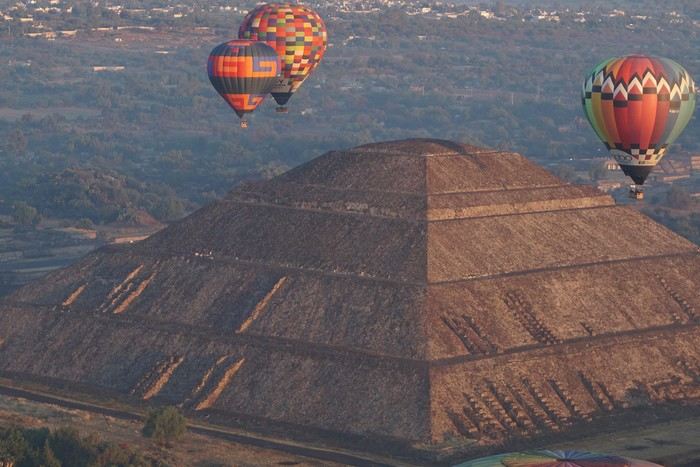
This one-month trip, from January 18 to February 17, 2026, allowed us to visit Mexico City and travel through the states of Puebla, Oaxaca, and Chiapas. We mainly used buses (ADO company) for medium and long distances and colectivos or taxis (or Uber) for shorter trips. Before leaving, I had contacted several people on the ground: Harry, a Vendéan settled in Oaxaca offering, among other things, discoveries of artisan villages or the Monte Albán site, and Oscar in Comitán de Domínguez. I’ll come back to our meeting with Oscar, who runs a local agency (CVL Travel Turismo Alternativo & Corre la voz) and owns a very pleasant hostel, a real highlight of our trip. Our journey took place in 8 stages on a loop starting from Mexico City. The connections between each were made by day or night buses depending on the trip duration. I had booked our seats in advance, either directly on the ADO company’s website or through booking platforms depending on the rates offered. Note that by planning ahead, I was able to benefit from very interesting "Early Booking" rates. There are several comfort classes. For all our trips, I had booked seats in Primera class buses, except for two in GL (Grand Luxe) class. The rates are very reasonable, and the buses turned out to be comfortable or even very comfortable (only the basic seat recline might surprise you).
Our itinerary and number of days per stage: Stage 1 – Mexico City: 4 days Stage 2 – Puebla: 2 days Stage 3 – Oaxaca: 4 days Stage 4 – San Agustinillo: 4 days Stage 5 – San Cristóbal de las Casas: 3 days Stage 6 – Comitán de Domínguez: 6 days Stage 7 – Palenque: 4 days Stage 8 – Mexico City: 2 days If I were to do it again, I’d remove one day from Palenque and add it either to Puebla or San Cristóbal to visit nearby sites or villages, or to San Agustinillo to enjoy one more day by the Pacific Ocean.
Stage 1: Mexico City (2,200 m / 9.2 million inhabitants) We arrived in the Mexican capital around 10:00 PM. The simplified customs process was very quick. After exchanging some money at the airport, we took a taxi to our youth hostel. We got around the capital on foot, of course, but also by metro. Signs are very rare, and we took the train in the wrong direction several times. After a few mistakes, we systematically asked on the platform if we were going the right way. The metro is very affordable. You need to get a rechargeable card (the Tarjeta de Movilidad Integrada) and top it up as needed. This card (less than 1 €) isn’t personal, so there’s no need to get one per person.
Mexico City: Day 1.
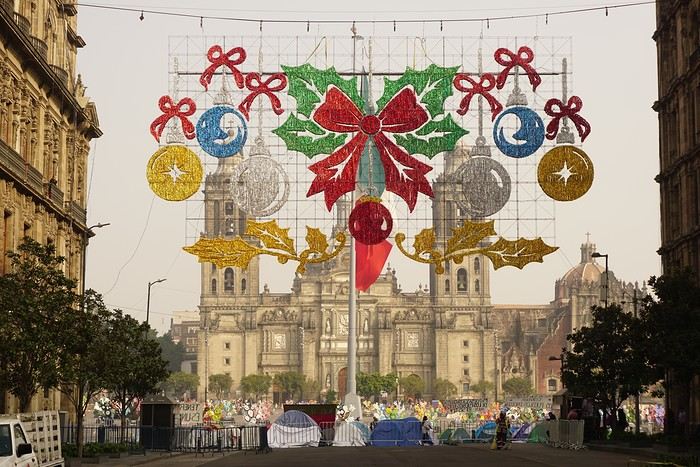
Visits and walks of the day (note: many museums are closed on Mondays): The Zócalo or Constitution Square: it’s one of the most beautiful, largest (195m x 240m), and oldest squares in the world. This is where Cortés decided to build the center of the new Spanish city on the site of the former Tenochtitlan market. Stones from the pyramids were used to pave the esplanade and build the surrounding colonial churches and buildings. During our visit, the huge square was covered with (resin) cacti, the theme of the temporary exhibition at the time. Indeed, temporary events or exhibitions take place here throughout the year. It’s also the endpoint for many protest marches.
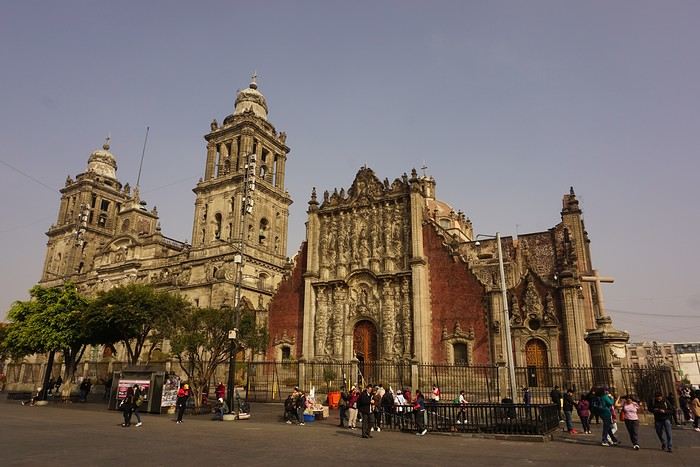
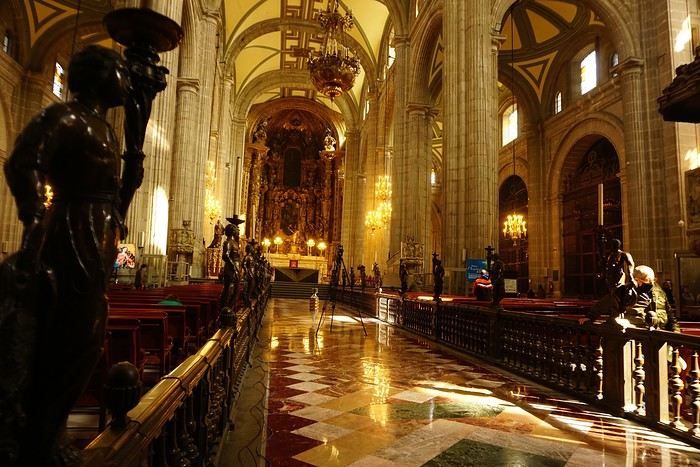


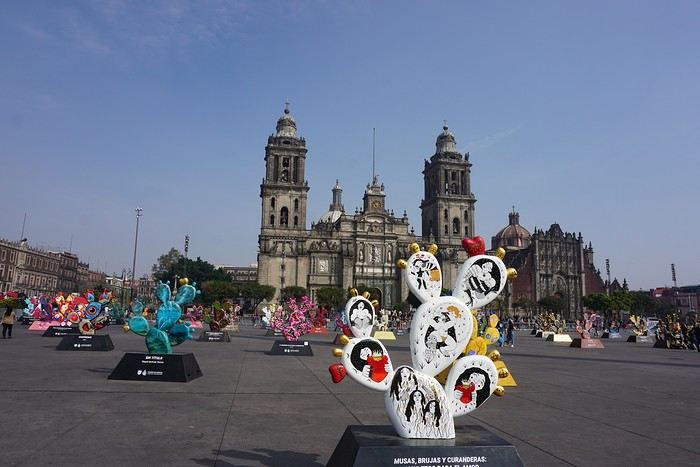
The cathedral: it’s sinking by one centimeter per year despite massive stabilization work (the collapse of many Mexican buildings—30 cm/year—is due to groundwater pumping). It was built starting in 1571 and completed in... 1813. The modest remains of the Templo Mayor (exterior view): they have high symbolic value, as this monument was the most important in the Mexica Empire.
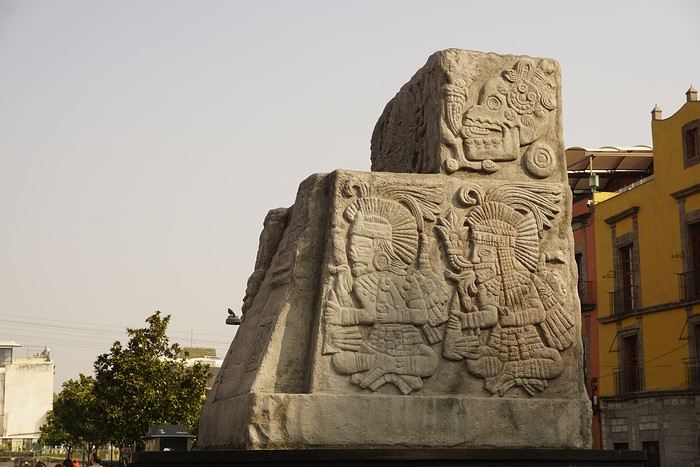 We then walked through the streets of the historic center to the Santísima Church, unfortunately closed for renovation work.
Next, we took the metro to visit one of Mexico’s most important pilgrimage sites: the Insigne y Nacional Basílicas de Santa María de Guadalupe, as well as the Capilla del Cerrito on the hill.
The first, dating from the colonial era, is really leaning a lot.
We then walked through the streets of the historic center to the Santísima Church, unfortunately closed for renovation work.
Next, we took the metro to visit one of Mexico’s most important pilgrimage sites: the Insigne y Nacional Basílicas de Santa María de Guadalupe, as well as the Capilla del Cerrito on the hill.
The first, dating from the colonial era, is really leaning a lot.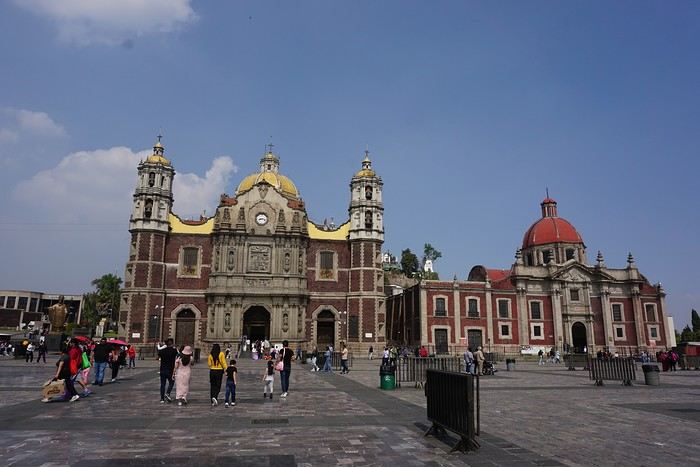
The second, shaped like a rotunda, is very impressive from the inside.
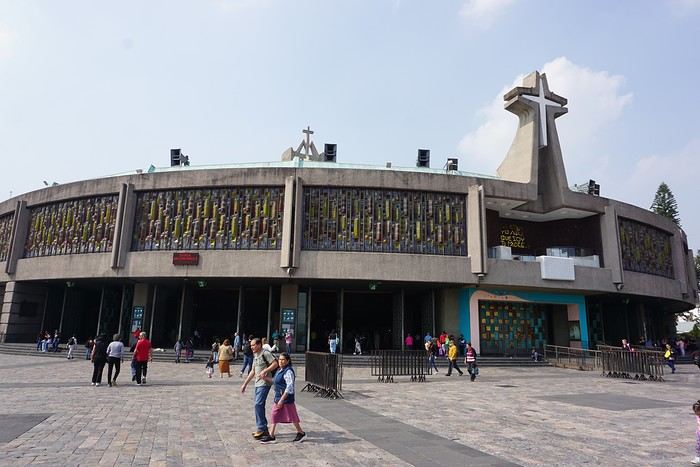
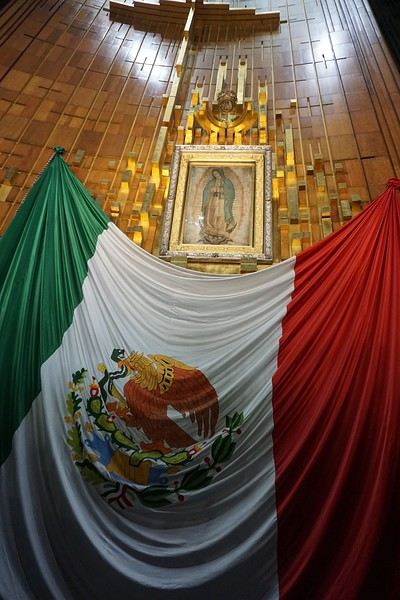
In the basement, there’s a sacred tunic where, in 1531, an image of the Virgin Mary is said to have appeared. A real mystery for scientists, the garment has never deteriorated since that date. Slow-moving conveyor belts allow pilgrims to admire it, preventing crowds from gathering in front of the image for hours. Well thought out!
 From the top of the Capilla del Cerrito, you get beautiful views of huge Mexico City.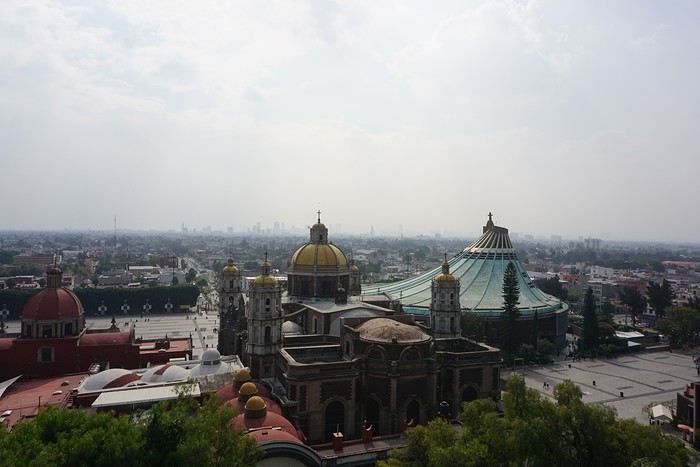
From Costa Rica to Suriname, a travel report
Hi everyone, I’m restarting my travel reports with my 2023 trip that took me from Costa Rica to Suriname over a month and a half.
First stop: Costa Rica. I arrived in late September in San José, a city I know well and never linger in. As soon as I got off the early-morning flight, I headed to the domestic airport—just a 5-minute walk away—to catch a 45-minute flight to Puerto Limón on the Caribbean coast. The 40-minute flight in a small Cessna was fun, especially since we landed on a tiny airstrip right by the sea—it felt like landing on the beach, which immediately set the mood. Plus, I wasn’t keen on enduring the 4–5-hour bus ride to Cahuita, especially since large sections of the road were under renovation. In Cahuita (where I’ve been going every year since 2015), I stayed at Kenaki Lodge on Playa Grande. It’s a great lodge, about a 45-minute walk from Cahuita’s center, but you’re just 50 meters from the beach and usually have it all to yourself. The lodge is run by Béa, a Frenchwoman, and depending on the season, you can help release baby turtles on the beach. The room was 55 €, very spacious, and you can use the outdoor kitchen. I’d recommend it for anyone looking for peace and quiet and a private beach.
After 5 days there, I flew to Cartagena but didn’t stay overnight. Instead, I headed straight to Rincón del Mar, a 3-hour bus ride from CTG. I’d mostly heard about it from a friend who lives there and runs El Ché, a beachfront restaurant. Rincón del Mar is a tiny seaside village, very peaceful, with a pretty nice beach. There are lots of small hotels and restaurants, and it’s a spot that’s likely to grow quickly in the coming years. Note: there’s no ATM there, so you’ll need to withdraw cash in San Onofre, about 30 minutes away by moto-taxi. The round trip costs around 25,000 COP. That’s also where you catch the bus to Cartagena. For accommodations, rooms were roughly 70,000–90,000 COP, with a so-so value for the price. As for things to do, I’d recommend the tour that takes you to watch the sunset in front of Bird Island, followed by a swim in a lagoon with bioluminescent plankton. The excursion (if I remember correctly) cost around 90,000 COP.
After a week in Rincón del Mar, I headed back to Cartagena and decided to fly to Yopal to visit the Río Meta. In Yopal, you’ll need to go to the bus terminal (10 minutes by taxi from the airport). From there, I took a bus to Orocué (50,000 COP) for about a 4-hour trip—it felt endless because the road was in terrible condition. Orocué is a tiny town on the banks of the Río Meta, but it has all the essentials (hotels, restaurants, ATMs). It’s lovely to stroll along the river at sunset. There are a few small bars, the area is very natural, the sunsets are stunning, and when there are distant storms, it’s just breathtaking. For lodging, I stayed at Hotel Brisas de San Miguel. It wasn’t bad—fan-cooled room for 70,000 COP. There were quite a few mosquitoes. I spent 3 days in Orocué. If you want to swim, head to the bridge (the only one), Cano San Miguel, and on the right, there’s a swimming spot. With the heat, it’s a great way to cool off.
From Orocué, I took a fast *lancha* (boat) up the Río Meta to Puerto Carreño, in the Vichada department at the far end of Colombia. This brings you to the majestic Orinoco River, right across from Venezuela. The boat ride is long—10 hours—and costs about 60 €. We left around 6 AM, with a few stops for bathroom breaks and meals along the way. But you *must* book your spot 1–2 days in advance. To do that, go to the small square above the dock—there’s a "navigation office" there. The trip was long but enjoyable. I never get tired of river journeys.
I was happy to finally arrive in Puerto Carreño, a small border town with Venezuela. No surprise that half the population was Venezuelan. In Puerto Carreño, I stayed at Hotel Delfines del Orinoco. The room was 80,000 COP, decent, with A/C, and the best part was the pool. I spent 2 nights there. One thing you *must* do—morning and evening—is hike to the top of Cerro de la Bandera (the *cerros* are huge rock formations typical of the Orinoco region, and there are many in the area). From the summit, you get amazing 360° views of the savanna and jungle. Sunrise is especially incredible. The trail is well-marked—from downtown Puerto Carreño, it takes about 20 minutes.
Next, I spent 3 nights at Rancho Barú. About an hour by boat from Puerto Carreño, you get off at Casuarito, and someone from the lodge picks you up by motorcycle for a 30-minute ride. The ranch is in the middle of the savanna, with a river/rapids beach just a 5-minute walk away. You can also fish—bites come quickly. For the lodge, one night (room or hammock) with shared bathrooms, three meals included, one excursion, plus the round-trip motorcycle ride costs 245,000 COP. An extra night without an excursion is around 100,000 COP, but you need to let the lodge know in advance so they can prepare enough food—there’s absolutely nothing for miles around.
After those 3 great days at the ranch, I took a canoe to cross into Venezuela, since Casuarito is right across from Puerto Ayacucho. The crossing costs 10,000 COP, but I got shaken down by Venezuelan immigration, who invented a violation and made me pay $40 USD. Puerto Ayacucho didn’t inspire me much. The city felt sketchy, with many hotels closed. Dealing with currency exchange was the hardest part—you *must* bring cash (USD or Colombian pesos), know the exchange rate, and find someone with enough money to exchange with you. It took me at least 2 hours. I stayed in a decent hotel downtown for $20 USD a night, but I’ll admit that going out at night—even in Puerto Ayacucho—felt pretty dodgy. All the buildings have bars on the windows, and there weren’t many people outside. I didn’t linger and found my plans to continue south too complicated. The next day, I took a bus across the country to the Brazilian border at Santa Elena de Uairén. The trip took a day and a night, with countless military checkpoints where they made everyone get off, unload all the luggage, etc. Not exactly a fun ride.
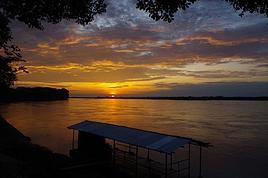
Photos: - 2 sunrises near the Orocué dock - Storm over the savanna at Rancho Barú - View of the savanna and Orinoco near Casuarito - Photo taken during the Río Meta boat trip
First stop: Costa Rica. I arrived in late September in San José, a city I know well and never linger in. As soon as I got off the early-morning flight, I headed to the domestic airport—just a 5-minute walk away—to catch a 45-minute flight to Puerto Limón on the Caribbean coast. The 40-minute flight in a small Cessna was fun, especially since we landed on a tiny airstrip right by the sea—it felt like landing on the beach, which immediately set the mood. Plus, I wasn’t keen on enduring the 4–5-hour bus ride to Cahuita, especially since large sections of the road were under renovation. In Cahuita (where I’ve been going every year since 2015), I stayed at Kenaki Lodge on Playa Grande. It’s a great lodge, about a 45-minute walk from Cahuita’s center, but you’re just 50 meters from the beach and usually have it all to yourself. The lodge is run by Béa, a Frenchwoman, and depending on the season, you can help release baby turtles on the beach. The room was 55 €, very spacious, and you can use the outdoor kitchen. I’d recommend it for anyone looking for peace and quiet and a private beach.
After 5 days there, I flew to Cartagena but didn’t stay overnight. Instead, I headed straight to Rincón del Mar, a 3-hour bus ride from CTG. I’d mostly heard about it from a friend who lives there and runs El Ché, a beachfront restaurant. Rincón del Mar is a tiny seaside village, very peaceful, with a pretty nice beach. There are lots of small hotels and restaurants, and it’s a spot that’s likely to grow quickly in the coming years. Note: there’s no ATM there, so you’ll need to withdraw cash in San Onofre, about 30 minutes away by moto-taxi. The round trip costs around 25,000 COP. That’s also where you catch the bus to Cartagena. For accommodations, rooms were roughly 70,000–90,000 COP, with a so-so value for the price. As for things to do, I’d recommend the tour that takes you to watch the sunset in front of Bird Island, followed by a swim in a lagoon with bioluminescent plankton. The excursion (if I remember correctly) cost around 90,000 COP.
After a week in Rincón del Mar, I headed back to Cartagena and decided to fly to Yopal to visit the Río Meta. In Yopal, you’ll need to go to the bus terminal (10 minutes by taxi from the airport). From there, I took a bus to Orocué (50,000 COP) for about a 4-hour trip—it felt endless because the road was in terrible condition. Orocué is a tiny town on the banks of the Río Meta, but it has all the essentials (hotels, restaurants, ATMs). It’s lovely to stroll along the river at sunset. There are a few small bars, the area is very natural, the sunsets are stunning, and when there are distant storms, it’s just breathtaking. For lodging, I stayed at Hotel Brisas de San Miguel. It wasn’t bad—fan-cooled room for 70,000 COP. There were quite a few mosquitoes. I spent 3 days in Orocué. If you want to swim, head to the bridge (the only one), Cano San Miguel, and on the right, there’s a swimming spot. With the heat, it’s a great way to cool off.
From Orocué, I took a fast *lancha* (boat) up the Río Meta to Puerto Carreño, in the Vichada department at the far end of Colombia. This brings you to the majestic Orinoco River, right across from Venezuela. The boat ride is long—10 hours—and costs about 60 €. We left around 6 AM, with a few stops for bathroom breaks and meals along the way. But you *must* book your spot 1–2 days in advance. To do that, go to the small square above the dock—there’s a "navigation office" there. The trip was long but enjoyable. I never get tired of river journeys.
I was happy to finally arrive in Puerto Carreño, a small border town with Venezuela. No surprise that half the population was Venezuelan. In Puerto Carreño, I stayed at Hotel Delfines del Orinoco. The room was 80,000 COP, decent, with A/C, and the best part was the pool. I spent 2 nights there. One thing you *must* do—morning and evening—is hike to the top of Cerro de la Bandera (the *cerros* are huge rock formations typical of the Orinoco region, and there are many in the area). From the summit, you get amazing 360° views of the savanna and jungle. Sunrise is especially incredible. The trail is well-marked—from downtown Puerto Carreño, it takes about 20 minutes.
Next, I spent 3 nights at Rancho Barú. About an hour by boat from Puerto Carreño, you get off at Casuarito, and someone from the lodge picks you up by motorcycle for a 30-minute ride. The ranch is in the middle of the savanna, with a river/rapids beach just a 5-minute walk away. You can also fish—bites come quickly. For the lodge, one night (room or hammock) with shared bathrooms, three meals included, one excursion, plus the round-trip motorcycle ride costs 245,000 COP. An extra night without an excursion is around 100,000 COP, but you need to let the lodge know in advance so they can prepare enough food—there’s absolutely nothing for miles around.
After those 3 great days at the ranch, I took a canoe to cross into Venezuela, since Casuarito is right across from Puerto Ayacucho. The crossing costs 10,000 COP, but I got shaken down by Venezuelan immigration, who invented a violation and made me pay $40 USD. Puerto Ayacucho didn’t inspire me much. The city felt sketchy, with many hotels closed. Dealing with currency exchange was the hardest part—you *must* bring cash (USD or Colombian pesos), know the exchange rate, and find someone with enough money to exchange with you. It took me at least 2 hours. I stayed in a decent hotel downtown for $20 USD a night, but I’ll admit that going out at night—even in Puerto Ayacucho—felt pretty dodgy. All the buildings have bars on the windows, and there weren’t many people outside. I didn’t linger and found my plans to continue south too complicated. The next day, I took a bus across the country to the Brazilian border at Santa Elena de Uairén. The trip took a day and a night, with countless military checkpoints where they made everyone get off, unload all the luggage, etc. Not exactly a fun ride.
Photos: - 2 sunrises near the Orocué dock - Storm over the savanna at Rancho Barú - View of the savanna and Orinoco near Casuarito - Photo taken during the Río Meta boat trip