Results for "Samoa"
About 1,209 results.
More options
Many results are in French, the community’s main language. English translations are added over time.
Search results
Marsa Alam en Egypte et Red Sea Diving Safari - peu adapté aux plongeurs autonomes
Bonjour,
De retour de MARSA ALAM, nous avons été assez déçu par le centre de plongée qui nous a pris en charge au KAHRAMANA, le RED SEA DIVING SAFARI . Ce centre de plongée n'est pas adapté aux plongeurs autonomes (N3 et plus). Vous serez mal encadrés pour toutes les plongées autres que celles qui partent du centre red sea safari. Les guides ont un comportement de chien de garde assez désagréable du style "trop devant", "trop loin", "trop en dessous" "combien avez vous d'air 15 x dans la plongée". Les plongées se font en troupeau de 7 à 10 plongeurs. Bref un centre de plongée pour plongeurs débutants avec une philosophie très axée PADI. A déconseiller aux autonomes.
De retour de MARSA ALAM, nous avons été assez déçu par le centre de plongée qui nous a pris en charge au KAHRAMANA, le RED SEA DIVING SAFARI . Ce centre de plongée n'est pas adapté aux plongeurs autonomes (N3 et plus). Vous serez mal encadrés pour toutes les plongées autres que celles qui partent du centre red sea safari. Les guides ont un comportement de chien de garde assez désagréable du style "trop devant", "trop loin", "trop en dessous" "combien avez vous d'air 15 x dans la plongée". Les plongées se font en troupeau de 7 à 10 plongeurs. Bref un centre de plongée pour plongeurs débutants avec une philosophie très axée PADI. A déconseiller aux autonomes.
Images frontières
J'aimerais lancer un sujet sur les images frontières. Ceux que j'ai vu sont souvent un modèle de monumentalisme kitscho-nationaliste. Mais cela reste le premier contact avec un pays inconnu.
Je commence par la frontière Turquie-Iran entre Gurbulak et Bazargan. Pour l'anecdote, il était 6h30 du matin, et j'ai du réveiller le policier iranien pour le prier de me tamponner mon visa!
Voilà, j'attends vos images!!!
Voilà, j'attends vos images!!!
Anecdotes sur les métiers effectués en voyage?!
A lire ça et là les métiers effectués - peu ou prou - par les uns et les autres en voyage afin de renflouer les finances, je me dis que plutôt que de les lister il doit y avoir matière à raconter quelques anecdotes savoureuses.......... ?
Nos impressions de retour de l'Ile Maurice
Nous revenons tout juste de l'île Maurice.😎 Un conseil : n'hésitez pas, bougez...Faites l'île du nord au sud, d'est en Ouest. Tout est à voir...Le sud, sauvage et beau, l'ouest avec ses plages magnifiques, ses villages de pêcheurs, le nord avec toujours ses belles plages, et l'est plus venté mais aussi beau que le reste. Près de Port St Louis, le domaine des pailles avec une virée en 4, 4, Les îles à ne pas manquer: l'île aux bénitiers (négocier avec Kissen le pêcheur du village LA GAULETTE, la sortie sur l'île avec grillade de poissons et de langoustes et Tamarin pour voir les dauphins) l'île plate au nord (demander les mêmes prestations) et l'île aux cerfs qu'on dit très touristique....( je connais le terme TOURISTIQUE, puisque j'habite la Côte d'Azur, mais à Maurice ça n'a pas le même sens...)n'est pas à manquer non plus, loin de là. A Trou d'eau Douce, une table d'hôte (possibilité de louer des chambres) des plus chaleureuse et succulente avec des prix très très raisonnables où Marie-Line et son mari José sont aux petits soins avec vous. Ils ont la gentillesse de venir vous chercher en voiture à votre hôtel ou pension et vous y ramène après dîner. Ce sont devenus des amis, ces mauriciens adorables. Je me souviendrais que le soir de notre départ pour la France, ils nous ont apporté des gâteaux à la noix de coco, du (vrai) sirop de sucre de canne fait par José lui-même, 2 énormesssssss avocats et deux petits manguiers à replanter chez nous en Europe....Je ne peux que faire des éloges à leur égard et j'encourage tous ceux qui visitent l'île à faire un p'tit tour chez eux. Pour visiter l'île, ne pas avoir peur de louer un véhicule. La conduite à gauche n'est pas traumatisante puisque le volant est à droite. Bien sûr les commandes sont à gauche (ne pas l'oublier !!) Mais on n'atteint jamais les vitesses que nous pratiquons, nous les européens sur nos routes. Il suffit de conduire à une allure raisonnable et traverser les villages permet de voir déambuler sur la route, les piétons, les écoliers en uniforme à la sortie des écoles, les vélos, les chiens (par dizaine), la vie quoi!!! Sortir de l'hôtel et prendre un taxi, c'est ça faire le touriste...🙁 Conduire, c'est super, c'est être libre et c'est un peu s'imprégner de la vie mauricienne. Alors let's go. De plus, le seul permis suffit. Et pour clore le tout, un p'tit coup d'aile et hop... à Rodrigues. Après avoir visité ce 2ème petit bijou (ne pas oublier surtout l'île Coco) repartir chez nous (France) dans le froid, l'indifférence de nos concitoyens mais en ayant dans nos coeurs, la chaleur et le sourire de nos amis des mascareignes. On en a bien besoin....
Itinéraire Bolivie 9 jours
Salut à tous!
J'ai lu vos très nombreux commentaires sur la Bolivie. J'avais donc quelques questions. Un grand merci d'avance pour vos réponses, même partielles cela va de soi!!
Je pars en Bolivie 10 jous fin avril.
Quel temps il fait à cette période? Le coup du -18° en mai à Uyuni c'était sérieux?!!
Mon idée de parcours, à l'origine, c'était de faire : arrivée La Paz. On m'a parlé d'une acclimatation forcée à l'altitude et qu'il faut rester 2 jours au moins avant d'aller ailleurs. Est-ce vrai? Ensuite, quand vous parlez de temps à La Paz pour éventuellement apprécier cette ville, que me conseilleriez-vous en priorité? En prenant justement un peu le temps... Salar et Sud Lipiez (4 jours??) : Existe-t-il un trajet simple, inconfortable, pas cher et relativement rapide? Parce que j'aimerais être INDEPENDANT, mais je ne sais pas si c'est possible. Parce qu'ensuite sur place, on peut marcher mais c'est un peu énorme j'imagine. Surtout si on veut poursuivre sur le Sud Lipiez. J'imagine que là, tu ne peux plus être tout seul et que tu dois prendre un moyen de locomotion non? Un bus me conviendrait, un 4X4 BEAUCOUP MOINS. Parce que j'ai lu parfois que le 4X4 serait indispensable...😕 Koklette, j'ai vu que tu as fait le circuit en 4 jours en bus. As-tu eu un peu de temps sur place ou était-ce vraiment à la japonaise? retour La Paz. Huayna Potosi. Combien de temps? Est-ce qu'il fait froid mi-avril? Faut-il partir avec un guide? (bon je pense que la réponse est oui...). Si oui, où le trouver, plus bas à La Paz ou sur une étape intermédiaire? J'ai lu qu'il y avait des soirées sympas à Potosi. Ce serait peut-être l'occasion de se faire une soirée bière/foot, c'est le moment😉. Potosi est-ce la même chose que Huayna Potosi? Volcan Sajama ou Nevado Sajama (???), on m'a parlé de bus sources chaudes à l'ouest, ça vous dit quelque chose?? Arica en bus en passant par le Parc National de Sajama. Mais il paraît que c'est une région assez reculée. Et qu'il y a le Parc National de Lauca qui est pas mal. Peut-être devrais-je choisir entre les 2 ou cela n'a-t-il rien à voir?? Et puis Arica c'est histoire d'aller au Chili, de passer par un coin sympa et d'aller voir la mer. Mais est-ce-qu'il fait beau à cette époque? Et sinon, avez-vous un meilleur endroit au Chili pour passer 1 ou 2 jours rapide depuis la Bolivie? Si cet itinéraire vous paraît possible, j'aimerais peut-être y ajouter la ville de Tarija qui a l'air très jolie avec pas mal de dénivelé avant d'y arriver. Encore une fois, bus ou train? Et enfin Lago Titicaca et La Isla del Sol depuis Copacabana. Ca je pense qu'en 2 jours c'est faisable. Dernière curiosité : j'ai vu des commentaires sur LAB Airlines. Alors là je suis ok mais ça doit être très cher non? Et si pas cher, est-ce que c'est intéressant et est-ce qu'on gagne du temps? J'imagine aussi que c'est un choix de voyages et tu vois moins de choses.
Désolé pour ce message un peu trop riche et peut-être confus. En tous cas, pour récapituler, les trucs sympas à essayer de faire en 10 jours sont : La Paz Copacabana, Titicaca, Isla del Sol ascension Huayna Potosi Salar & Sud Lipez Tarija
Ma question est donc : est-ce possible de faire ça, en prenant son temps mais pas trop, et surtout quel est l'itinéraire le plus efficace pour relier ces 5 endroits? Sachant que je préfère le bus, train ou taxi collectif.
Encore une fois, d'avance, un grand merci pour vos réponses, même partielles. Sur ce forum ou sur mon mail.
gliret@yahoo.fr
Ciao!!
J'ai lu vos très nombreux commentaires sur la Bolivie. J'avais donc quelques questions. Un grand merci d'avance pour vos réponses, même partielles cela va de soi!!
Je pars en Bolivie 10 jous fin avril.
Quel temps il fait à cette période? Le coup du -18° en mai à Uyuni c'était sérieux?!!
Mon idée de parcours, à l'origine, c'était de faire : arrivée La Paz. On m'a parlé d'une acclimatation forcée à l'altitude et qu'il faut rester 2 jours au moins avant d'aller ailleurs. Est-ce vrai? Ensuite, quand vous parlez de temps à La Paz pour éventuellement apprécier cette ville, que me conseilleriez-vous en priorité? En prenant justement un peu le temps... Salar et Sud Lipiez (4 jours??) : Existe-t-il un trajet simple, inconfortable, pas cher et relativement rapide? Parce que j'aimerais être INDEPENDANT, mais je ne sais pas si c'est possible. Parce qu'ensuite sur place, on peut marcher mais c'est un peu énorme j'imagine. Surtout si on veut poursuivre sur le Sud Lipiez. J'imagine que là, tu ne peux plus être tout seul et que tu dois prendre un moyen de locomotion non? Un bus me conviendrait, un 4X4 BEAUCOUP MOINS. Parce que j'ai lu parfois que le 4X4 serait indispensable...😕 Koklette, j'ai vu que tu as fait le circuit en 4 jours en bus. As-tu eu un peu de temps sur place ou était-ce vraiment à la japonaise? retour La Paz. Huayna Potosi. Combien de temps? Est-ce qu'il fait froid mi-avril? Faut-il partir avec un guide? (bon je pense que la réponse est oui...). Si oui, où le trouver, plus bas à La Paz ou sur une étape intermédiaire? J'ai lu qu'il y avait des soirées sympas à Potosi. Ce serait peut-être l'occasion de se faire une soirée bière/foot, c'est le moment😉. Potosi est-ce la même chose que Huayna Potosi? Volcan Sajama ou Nevado Sajama (???), on m'a parlé de bus sources chaudes à l'ouest, ça vous dit quelque chose?? Arica en bus en passant par le Parc National de Sajama. Mais il paraît que c'est une région assez reculée. Et qu'il y a le Parc National de Lauca qui est pas mal. Peut-être devrais-je choisir entre les 2 ou cela n'a-t-il rien à voir?? Et puis Arica c'est histoire d'aller au Chili, de passer par un coin sympa et d'aller voir la mer. Mais est-ce-qu'il fait beau à cette époque? Et sinon, avez-vous un meilleur endroit au Chili pour passer 1 ou 2 jours rapide depuis la Bolivie? Si cet itinéraire vous paraît possible, j'aimerais peut-être y ajouter la ville de Tarija qui a l'air très jolie avec pas mal de dénivelé avant d'y arriver. Encore une fois, bus ou train? Et enfin Lago Titicaca et La Isla del Sol depuis Copacabana. Ca je pense qu'en 2 jours c'est faisable. Dernière curiosité : j'ai vu des commentaires sur LAB Airlines. Alors là je suis ok mais ça doit être très cher non? Et si pas cher, est-ce que c'est intéressant et est-ce qu'on gagne du temps? J'imagine aussi que c'est un choix de voyages et tu vois moins de choses.
Désolé pour ce message un peu trop riche et peut-être confus. En tous cas, pour récapituler, les trucs sympas à essayer de faire en 10 jours sont : La Paz Copacabana, Titicaca, Isla del Sol ascension Huayna Potosi Salar & Sud Lipez Tarija
Ma question est donc : est-ce possible de faire ça, en prenant son temps mais pas trop, et surtout quel est l'itinéraire le plus efficace pour relier ces 5 endroits? Sachant que je préfère le bus, train ou taxi collectif.
Encore une fois, d'avance, un grand merci pour vos réponses, même partielles. Sur ce forum ou sur mon mail.
gliret@yahoo.fr
Ciao!!
A voir ou pas? Phnom Penh, Laos
bonjour à tous
Est ce que la visite de Phnom Penh est incontournable ? en effet, nous voudrions consacrer un max de temps pour les temples sur Siem Reap.
De même, que faut il privilégier au Laos, nous envisageons les principaux sites Khmers, est ce que les grottes Pak Ou sont à ajouter à nos idées ?
Merci de vos conseils
Est ce que la visite de Phnom Penh est incontournable ? en effet, nous voudrions consacrer un max de temps pour les temples sur Siem Reap.
De même, que faut il privilégier au Laos, nous envisageons les principaux sites Khmers, est ce que les grottes Pak Ou sont à ajouter à nos idées ?
Merci de vos conseils
Sol Rio Luna y Mar (Holguin)
bonjour, je suis de retour du sol luna y mares depuis le 21 janvier. Voici un résumé de notre voyage.
Vol: air transat, vol du vendredi soir, durée 4h10 afin d'éviter les turbulences, aucune ressentit! Tout est bien.
Arrivée: A l'aéroport, tout va bien, le bureau de change est ouvert et il n'y a pas de fils d'attente donc on en profite pour faire du change en convertible. Environ 1 heure pour passer les douanes, allée à la banque, récuperer les bagages, ca va bien. ensuite 1 h00 d'autobus (Cette année, il respecte les limites de vitesse, l'an passé, le trajet avait durée 35 minutes!!!)
A l'hotel, accueil un peu ordinaire, on s'emblait déranger la réceptionniste. En plus elle ne nous trouvait pas dans sa liste donc elle nous a donné les chambres(2) de 4 autres personnes (je ne sais pas se qui est arrivé à ses gens car il y avait over-booking!)
chambres:(6104-6105) Nous sommes du coté luna. ouff! Dans la revue air transat il disait chambre rénové...je n'ai pas trouvé les rénovations...notre salle de bains fait vraiment pitié mais tout est propre. C'est mon troisieme voyage et ses la pire que j'ai vu. Nous demandons pendant 2 jours pour etre changé mais puisque nous voulions etre 2 chambres près l'une de l'autre, ce ne fut pas possible. L'avantage de ce bloc, c'est qu'il est situé sur le bord de la piscine. désavantage: le bars de la piscine est ouvert 24h et des allemand sur le party...c'est bruillant.
Nourriture et bars: La meilleurs bouffe en 3 ans...cuisson, fraicheur, choix! (huitres, saumon fumée, etc.)Les 2 personnes qui travaille au bars azucar sont très plaisante et donne un service super.
site: puisque c'est un hotel un peu plus vieux, le site est mature et super. Sur le bord de la piscine du luna, on retrouve des palmiers à maturité!!!Tout est très propre. On y retrouve également un mini-put...boff besoin de réparation.
plage: La plus belle en 3 ans: peu de coraux (seulement dans la section du paradisius) que du sable. Les vagues sont impréssionnante pendant notre séjour, les pédalos ont sortie qu 3 jours et le drapeau rouge à été installé pendant 4 jours ce qui nous a pas empécher de nous baigner à tout les jours dans de 😮Magnifique😉 vague. Nous avons du mettre un gilet de sauvetage à notre fille pour ne pas la perdre🤪, ce sont des vagues dignent de film...sport extreme.
Le retour se passe bien, vol de 3h43...-25 degré à notre arrivé...
En passant, il n'y a aucun probleme d'eau, la meilleur pression et quantité d'eau chaude jusqu'a maintenant.
Vol: air transat, vol du vendredi soir, durée 4h10 afin d'éviter les turbulences, aucune ressentit! Tout est bien.
Arrivée: A l'aéroport, tout va bien, le bureau de change est ouvert et il n'y a pas de fils d'attente donc on en profite pour faire du change en convertible. Environ 1 heure pour passer les douanes, allée à la banque, récuperer les bagages, ca va bien. ensuite 1 h00 d'autobus (Cette année, il respecte les limites de vitesse, l'an passé, le trajet avait durée 35 minutes!!!)
A l'hotel, accueil un peu ordinaire, on s'emblait déranger la réceptionniste. En plus elle ne nous trouvait pas dans sa liste donc elle nous a donné les chambres(2) de 4 autres personnes (je ne sais pas se qui est arrivé à ses gens car il y avait over-booking!)
chambres:(6104-6105) Nous sommes du coté luna. ouff! Dans la revue air transat il disait chambre rénové...je n'ai pas trouvé les rénovations...notre salle de bains fait vraiment pitié mais tout est propre. C'est mon troisieme voyage et ses la pire que j'ai vu. Nous demandons pendant 2 jours pour etre changé mais puisque nous voulions etre 2 chambres près l'une de l'autre, ce ne fut pas possible. L'avantage de ce bloc, c'est qu'il est situé sur le bord de la piscine. désavantage: le bars de la piscine est ouvert 24h et des allemand sur le party...c'est bruillant.
Nourriture et bars: La meilleurs bouffe en 3 ans...cuisson, fraicheur, choix! (huitres, saumon fumée, etc.)Les 2 personnes qui travaille au bars azucar sont très plaisante et donne un service super.
site: puisque c'est un hotel un peu plus vieux, le site est mature et super. Sur le bord de la piscine du luna, on retrouve des palmiers à maturité!!!Tout est très propre. On y retrouve également un mini-put...boff besoin de réparation.
plage: La plus belle en 3 ans: peu de coraux (seulement dans la section du paradisius) que du sable. Les vagues sont impréssionnante pendant notre séjour, les pédalos ont sortie qu 3 jours et le drapeau rouge à été installé pendant 4 jours ce qui nous a pas empécher de nous baigner à tout les jours dans de 😮Magnifique😉 vague. Nous avons du mettre un gilet de sauvetage à notre fille pour ne pas la perdre🤪, ce sont des vagues dignent de film...sport extreme.
Le retour se passe bien, vol de 3h43...-25 degré à notre arrivé...
En passant, il n'y a aucun probleme d'eau, la meilleur pression et quantité d'eau chaude jusqu'a maintenant.
Problème d'eau résolu au Playa Turquesa?
Coucou
Je quitte sous peu et je voudrais savoir si les problèmes d'eau au Playa Turquesa sont vraiment résolu. Est ce que TOUT est revenu dans l'ordre ou encore si les problèmes de rationnement persiste ? Si vous revenez de cette région (Holguin) pourriez-vous nous en informer car je suis certaine que je ne suis pas la seule a se poser la même question . On ne sais jamais les problèmes auraient pu refaire surface. Merci a vous tous,
Peyto 😎
Je quitte sous peu et je voudrais savoir si les problèmes d'eau au Playa Turquesa sont vraiment résolu. Est ce que TOUT est revenu dans l'ordre ou encore si les problèmes de rationnement persiste ? Si vous revenez de cette région (Holguin) pourriez-vous nous en informer car je suis certaine que je ne suis pas la seule a se poser la même question . On ne sais jamais les problèmes auraient pu refaire surface. Merci a vous tous,
Peyto 😎
Risques sérieux à Mindanao (Philippines)?
salut a tous,
je comptes me rendre aux philippines en janvier fevrier et plus precisemment a palawan et mindanao.
est ce que ça craint tant que ça mindanao ? en effet je ne vois que des mises en garde sur les sites traitant de cette ile, (attentats, enlevement...)
pourtant, l'actualite est plutot chaude sur l'indonésie (bali, djakarta) qui a occasionné beaucoup plus de morts ces derniers temps qu'aux philippines, de toute façon je me dis que le risque terroriste est partout maintenant sauf peut etre au vietnam qui n'est pas une démocratie (sic !)
alors amis routards qui connaissez bien mindanao rassurez moi....
je suis ouvert a toutes suggestions de parcours sur mindanao, mon voyage durera ent tout 6 semaines.
Itinéraire et bons plans de l'Argentine à la Bolivie
🙂 Salut a tous ... chers amis globe-trotters !
Mon voyage, avec un pote, doit demarrer a partir de Buenos Aires ... direction la Bolivie : deux mois en tout, pas plus ! (pour cette fois) ...
L'essentiel doit en principe se derouler en Bolivie. Je compte bien remonter jusqu'au lac Titicaca en passant par le Salar d'Uyuni, Sucre, La Paz ... etc.
Le depart de Bolivie aura lieu au tout debut decembre, de santa Cruz (par avion, direction Rio de Janeiro ou un stop over est prevu).
Toutes les informations concernant les sites a decouvrir, les points d'hebergement, les moyens de transports (durees, tarifs, bus, train ...) a privilegier, les tarifs pratiques pour les excursions, sans oublier la meteo (Octobre - Novembre) ... seront les bienvenus ! ... Merci d'avance !!!
Certains comprendront que ce circuit remplace le projet "Perou + Bolivie / 15 Octobre - debut Decembre" faisant l'objet d'une precedente discussion dans ce meme Forum.
Merci encore et bonne chance au voyageurs passionnes !
Vagabond 543 😉
Mon voyage, avec un pote, doit demarrer a partir de Buenos Aires ... direction la Bolivie : deux mois en tout, pas plus ! (pour cette fois) ...
L'essentiel doit en principe se derouler en Bolivie. Je compte bien remonter jusqu'au lac Titicaca en passant par le Salar d'Uyuni, Sucre, La Paz ... etc.
Le depart de Bolivie aura lieu au tout debut decembre, de santa Cruz (par avion, direction Rio de Janeiro ou un stop over est prevu).
Toutes les informations concernant les sites a decouvrir, les points d'hebergement, les moyens de transports (durees, tarifs, bus, train ...) a privilegier, les tarifs pratiques pour les excursions, sans oublier la meteo (Octobre - Novembre) ... seront les bienvenus ! ... Merci d'avance !!!
Certains comprendront que ce circuit remplace le projet "Perou + Bolivie / 15 Octobre - debut Decembre" faisant l'objet d'une precedente discussion dans ce meme Forum.
Merci encore et bonne chance au voyageurs passionnes !
Vagabond 543 😉
Vos impressions du Maroc-Mauritanie-Mali
salut
je dois partir en auout ou septembre en voiture afin de vendre celle ci bref peu importe ce que j'ai a vendre mais nous partons a plusieurs et donc j'aimerais savoir si quequ'un la fait et si c'est jolie au niveau nature car je peux voir que du sable(je dis ca car jai un autre voyage a préparer en australie 3 mois aprés ) si je pars au mali c'est afin de rendre un service q quelq'un
merci d'avance de vos réponses
si c'est un pays qui craint pour les nanas?
je dois partir en auout ou septembre en voiture afin de vendre celle ci bref peu importe ce que j'ai a vendre mais nous partons a plusieurs et donc j'aimerais savoir si quequ'un la fait et si c'est jolie au niveau nature car je peux voir que du sable(je dis ca car jai un autre voyage a préparer en australie 3 mois aprés ) si je pars au mali c'est afin de rendre un service q quelq'un
merci d'avance de vos réponses
si c'est un pays qui craint pour les nanas?
Descendre en voiture de France à Nouakchott (Mauritanie) en juillet
Bonjour à tous les férus du voyage,
Nous commençons à préparer une descente fantastique avec une petite titine (205) pour rejoindre des amis qui travaillent à Nouakchott. Nous cherchons des renseignements sur la faisabilité de ce trajet, spécialeùment en ce qui concerne la descente du Maroc ( Etat des routes?) et sur la piste entre nouadhibou et Nouakchott ( Piste très sableuse, ; sable très fin? Possible en 205? Besoin de guide??).
ces questions doivent être relativement récurrentes mais nous aideraient beaucoup à préparer notre petit trip. Merci d'avance pour des infos.
Nous commençons à préparer une descente fantastique avec une petite titine (205) pour rejoindre des amis qui travaillent à Nouakchott. Nous cherchons des renseignements sur la faisabilité de ce trajet, spécialeùment en ce qui concerne la descente du Maroc ( Etat des routes?) et sur la piste entre nouadhibou et Nouakchott ( Piste très sableuse, ; sable très fin? Possible en 205? Besoin de guide??).
ces questions doivent être relativement récurrentes mais nous aideraient beaucoup à préparer notre petit trip. Merci d'avance pour des infos.
Que visiter à Santa Cruz, La Paz en Bolivie?
Bonjour,
Je pars 4 semaines en août en Bolivie. J'arrive et je repars de Santa Cruz. Le Lonely n'étant plus très à jour, j'aimerai savoir si l'un(e) d'entre vous a déjà visité ce pays et les conseils que vous pouvez me donner. De La Paz, il y a beaucoup de possiblités d'excursions, mais quid des autres villes ?
De Santa Cruz, à part les missions jésuites, qu'y a t-il d'autre à voir ou à faire : possibilité de faire des randos ? Pour gagner du temps dans les transports, est-il intéressant de prendre un bolleto ?
Enfin, tous les plans, toutes vos expériences seront bonnes à partager.
Merci d'avance.
Yveline
Je pars 4 semaines en août en Bolivie. J'arrive et je repars de Santa Cruz. Le Lonely n'étant plus très à jour, j'aimerai savoir si l'un(e) d'entre vous a déjà visité ce pays et les conseils que vous pouvez me donner. De La Paz, il y a beaucoup de possiblités d'excursions, mais quid des autres villes ?
De Santa Cruz, à part les missions jésuites, qu'y a t-il d'autre à voir ou à faire : possibilité de faire des randos ? Pour gagner du temps dans les transports, est-il intéressant de prendre un bolleto ?
Enfin, tous les plans, toutes vos expériences seront bonnes à partager.
Merci d'avance.
Yveline
Bénévolat en Amérique du Sud
bonsoir,
Je cherche à voyager utile. Quoi de mieux que faire du bénévolat pour une assos humanitaire. Si vous avez des infos concernant des possibilités de benevolat en Amerique du Sud, vous m'intéressez.
merci
Je cherche à voyager utile. Quoi de mieux que faire du bénévolat pour une assos humanitaire. Si vous avez des infos concernant des possibilités de benevolat en Amerique du Sud, vous m'intéressez.
merci
1 month in northern Laos (Oct 23 to Nov 24, 2025)
Northern Laos, Nov 25
Thursday, Oct 23. Left home at 8:25 AM, took the bus from St Cyp to Perpignan, then a BlaBlaBus to Barcelona airport. Last night, a huge storm crossed France, and the bus was an hour late. We finally left at 11 AM. At the Spanish border, we were checked—several Africans were traveling on the bus, and their document verification took quite a while. In the end, everything was in order, and we set off again a good half-hour later. We finally arrived at Barcelona airport after 2 PM, but no stress since my flight was scheduled for 4:30 PM with Saudia. At check-in, the hostess told me there’d be a 1-hour delay due to bad weather in France and Belgium. In the end, the flight didn’t just have a 1-hour delay but a 5-hour one because of a technical issue. The next flight wouldn’t wait for us. When we arrived in Jeddah, they gave us another ticket for the following day—the flight to Bangkok was scheduled for 11:55 AM. The airline assigned us a room, which was good news since I was exhausted. Friday morning, the flight was still scheduled for 11:55 AM, but the gate wasn’t displayed. It was announced with a 1-hour delay, but that stretched to 4 hours. They handed out drinks and a snack—again, the delay was due to technical problems. In Bangkok, I had a connecting flight to Chiang Rai, where I’d also booked a room—I lost everything. We finally arrived in Bangkok on Saturday at 4 AM. I had to buy another ticket for a 7 AM flight. The formalities were quick, and my flight went smoothly. A taxi took me to Bus Terminal 1, where I caught a bus leaving at 10 AM, and we arrived at the Thailand-Laos border. I shared a taxi with other travelers, which took us to Houay Xai. The guesthouse I’d booked was right across from the stop—that was great. I exchanged some money and bought a SIM card at the guesthouse. Despite the fatigue, I needed to stretch my legs, so I walked down the street to the temple.
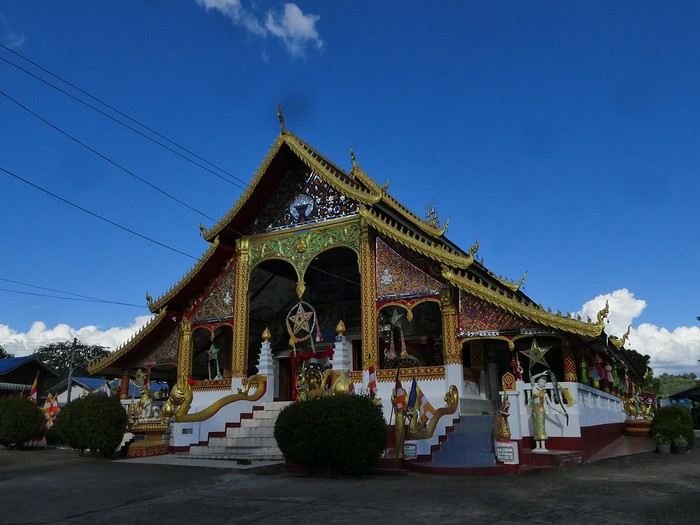
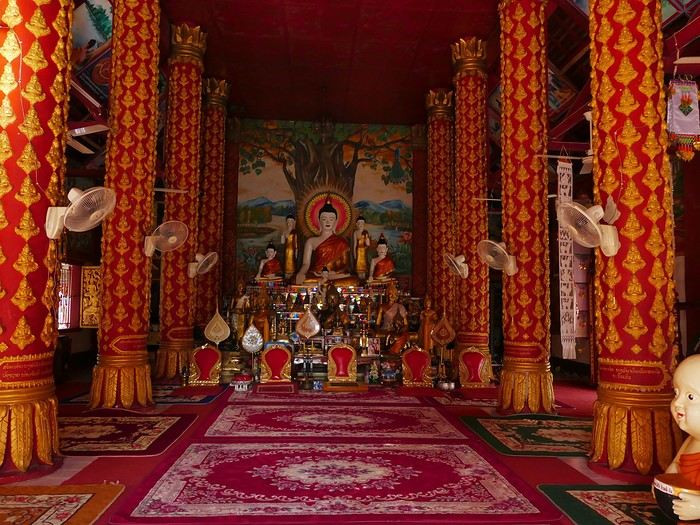
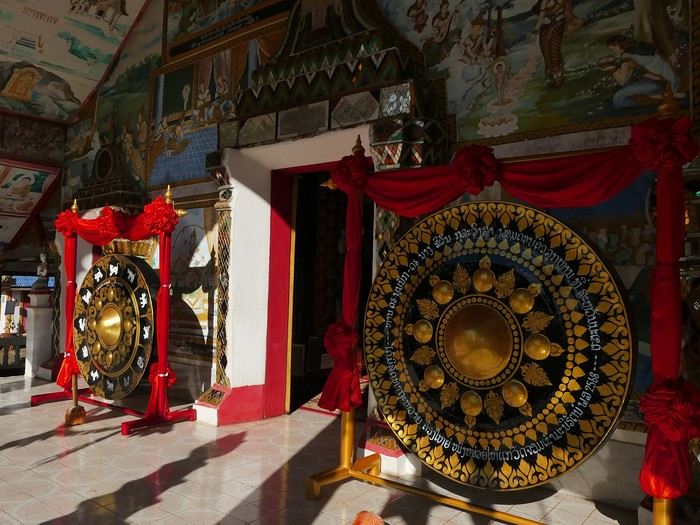
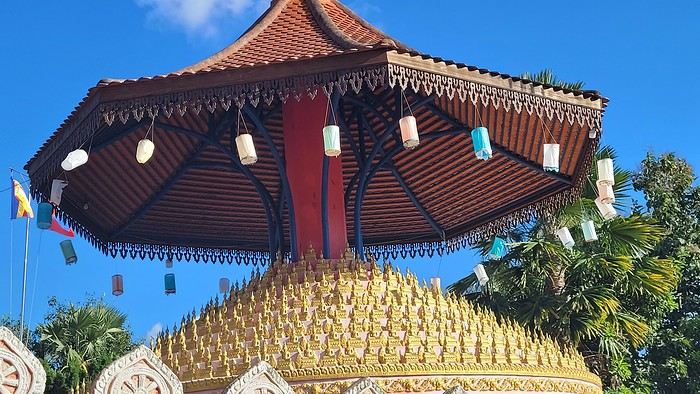
and continued to Fort Carnot, built by the French.
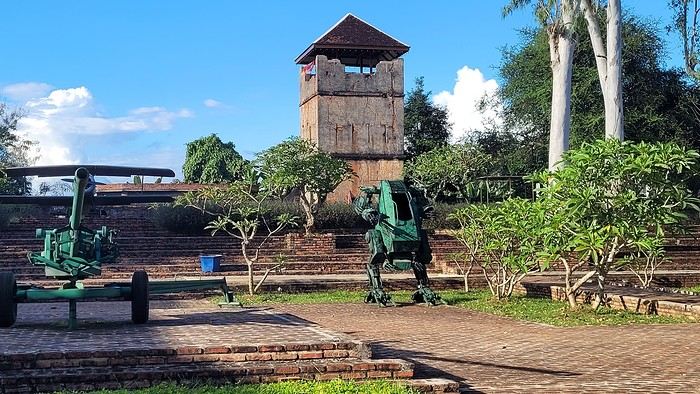
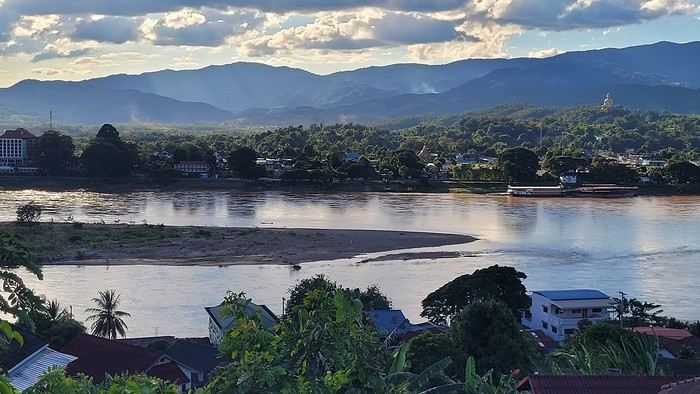
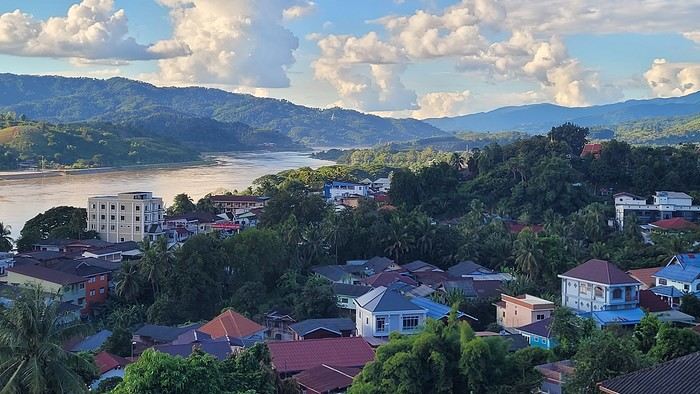
The views of the Mekong are beautiful for a first glimpse of the country.
yum-yum, bon appétit!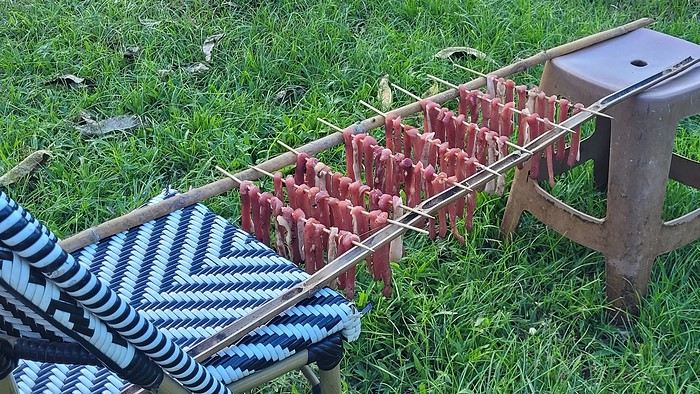
At 6:30 PM, I went to dinner at a restaurant across from the guesthouse—a chicken curry with vegetables.
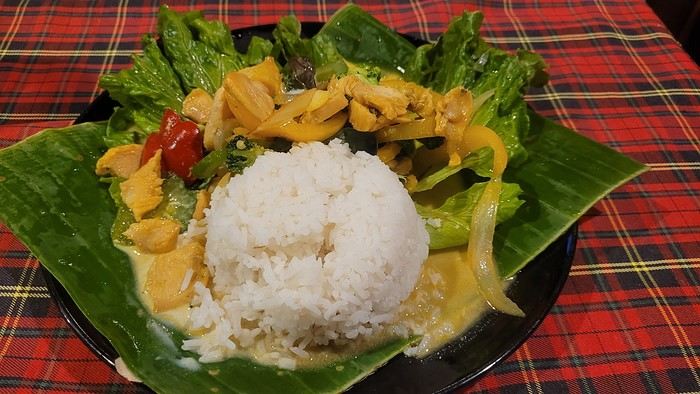
I didn’t linger and went back to bed. I slept well, even if I woke up often.
Thursday, Oct 23. Left home at 8:25 AM, took the bus from St Cyp to Perpignan, then a BlaBlaBus to Barcelona airport. Last night, a huge storm crossed France, and the bus was an hour late. We finally left at 11 AM. At the Spanish border, we were checked—several Africans were traveling on the bus, and their document verification took quite a while. In the end, everything was in order, and we set off again a good half-hour later. We finally arrived at Barcelona airport after 2 PM, but no stress since my flight was scheduled for 4:30 PM with Saudia. At check-in, the hostess told me there’d be a 1-hour delay due to bad weather in France and Belgium. In the end, the flight didn’t just have a 1-hour delay but a 5-hour one because of a technical issue. The next flight wouldn’t wait for us. When we arrived in Jeddah, they gave us another ticket for the following day—the flight to Bangkok was scheduled for 11:55 AM. The airline assigned us a room, which was good news since I was exhausted. Friday morning, the flight was still scheduled for 11:55 AM, but the gate wasn’t displayed. It was announced with a 1-hour delay, but that stretched to 4 hours. They handed out drinks and a snack—again, the delay was due to technical problems. In Bangkok, I had a connecting flight to Chiang Rai, where I’d also booked a room—I lost everything. We finally arrived in Bangkok on Saturday at 4 AM. I had to buy another ticket for a 7 AM flight. The formalities were quick, and my flight went smoothly. A taxi took me to Bus Terminal 1, where I caught a bus leaving at 10 AM, and we arrived at the Thailand-Laos border. I shared a taxi with other travelers, which took us to Houay Xai. The guesthouse I’d booked was right across from the stop—that was great. I exchanged some money and bought a SIM card at the guesthouse. Despite the fatigue, I needed to stretch my legs, so I walked down the street to the temple.
and continued to Fort Carnot, built by the French.
The views of the Mekong are beautiful for a first glimpse of the country.
yum-yum, bon appétit!
At 6:30 PM, I went to dinner at a restaurant across from the guesthouse—a chicken curry with vegetables.
I didn’t linger and went back to bed. I slept well, even if I woke up often.
Dubai on a budget
Four days of beach relaxation in this truly curious place let me unwind 15 years ago after trekking through Asia or Africa: swimming in clear, clean water and easing jet lag was my goal; seeing that mirage in the middle of the desert also piqued my curiosity... And then Dubai developed, and now I go there once a year for 15 days without ever getting bored!! My backpacker budget doesn’t stop me from enjoying what I love about travel: discovering cultures, architecture, and beaches with turquoise waters.
I’m sharing my favorite spots here for those who love simplicity and the thrill of being amazed! Dubai stretches over 50 km long. I stay in the historic Bur Dubai neighborhood, which is very "Indian" and separated from Deira (the more "Arab/African" district) by a creek.
You cross from one side to the other on abras, small traditional wooden boats that run all day. My hotel is 4 minutes from the Al Ghubaiba bus station, 5 minutes from the Al Ghubaiba metro, and 6 minutes from the Al Ghubaiba boat station!!! It’s easy to get around from here, and at night, it’s lively—safe to go out, with few tourists but mostly the local middle class who built (and are still building) Dubai. It’s simple and very international.
- **Transport:** ...**Getting there:** I fly with Emirates from Paris. Taking the 9:30 PM flight, I sleep on the plane, land at 6:35 AM, exchange 200 euros once I’ve picked up my luggage, change in the restroom, grab a taxi to the hotel, drop off my suitcase, and head straight to the beach! ...**On the ground:** I buy a silver NOL card, which works for buses, metro, and boats. I top it up as needed—it’s valid for 2 years. ...**Taxis:** They have reliable meters. Pink ones are driven by women. Airport-to-hotel fare: 12 €. You’ll find them everywhere, and they don’t complain about short trips. Between 3 PM and 4 PM, it’s trickier because of shift changes.
- **Best times to visit:** For me, it’s April-May and October-November: not too hot for walking but warm enough to swim! Watch out for air conditioning—your worst enemy. It’s everywhere, even at bus stops. Bring a big scarf or sarong to cover your throat and head—going from 32°C to 16°C when you enter a mall, bus, or taxi is pretty harsh!
- **Hotel:** I stay at the Grand Astoria (Fahidi Street) because the value for price and location is great. It’s very clean, and I skip breakfast because near the bus station, there’s a big Carrefour hypermarket where I buy breakfast supplies, water, camel milk, and picnic snacks. There are two nightclubs downstairs—bring earplugs if you want to sleep before 2 AM. Wi-Fi is spotty; you have to change the password every two days. The staff is lovely. Rooms have a TV (4 Indian channels + BBC), a kettle with tea/coffee sachets, and a mini-fridge you fill yourself.
- **Bur Dubai: "My neighborhood"** In the morning, you can see kids in uniforms waiting for the school bus with their parents—second-generation migrants who’ve settled here. They speak English, Arabic, and their mother tongue, have great education, and are in high demand (I see job ads in the local newspapers in the hotel lobby). From the U.S. to the Middle East, Singapore to South Africa, they have bright futures. In the evenings, families stroll along the creek, and it’s common for bench neighbors to ask where you’re from. The whole world crosses paths here. Even with basic English, it’s friendly and warm—the "take care" as people go their separate ways is a nice touch.
Bur Dubai has plenty to explore if you don’t feel like going far: along the creek, there’s a cluster of reconstructed houses forming the Al Shindagha Museum. One ticket lets you visit all the houses, each with a theme tied to the history of the seven emirates (Dubai is one). It takes a full day, but if you stop for lunch, there are tons of restaurants for all budgets, some right by the water.
Walking in the opposite direction, you reach Al Seef, a reconstruction of old Dubai as a small pearl-fishing port. The architecture is lovely, with souvenir shops. My favorite is the Iranian grocery store, where you’ll find camel milk chocolate, black lemon, and sweets with rose, pistachio, and candied apricot. It’s peaceful to walk around here, even as a solo woman. There are free restrooms everywhere, wooden or stone benches, and a nice breeze in the evening. Plenty of waterfront restaurants or places to grab a drink, plus a few towers across the way—nothing spectacular, but they’re prettily lit. There’s a souk with souvenir shops for those who like that!
- **Restaurants:** Bur Dubai has restaurants representing regions of India and the Indian subcontinent. My favorites: Across from the hotel, Paklyari—a Pakistani spot with excellent mutton biryani for 5 €. At Al Seef, Nablus has a great setting by the water. Across in Deira, the Italian restaurant on the 18th floor of the Rotana—go half an hour before sunset for an amazing view of the creek and skyline. The truffle pizza is 24 €. You can take a taxi from Bur, and after dinner, get dropped off at Al Seef to walk back along the creek. For a great thali, Kathhiyawadi is a 10-minute walk from Burjuman metro. My latest discovery: Bordomavi (near the Rashid Al Hadees Masjid 1 bus stop). One of the servers is Algerian and speaks French. You can swim at the small beach with showers/toilets, then have lunch at the restaurant (57 € for two, with starter, main, dessert, and drinks). The setting is peaceful, in a little fishing port with a cool photo op—traditional boats with the modern skyline in the background!
- **Sunset drinks:** The terrace at Concorde Creek View (Bur Dubai) has a creek view, and Canopy by Hilton (Al Seef) overlooks the creek and skyline. You can get a day pass for the pool, including meals and drinks.
- **Lassi:** Near the hotel, SreeRaj Lassi Bar has great ice cream and lassi. *Tip: Everything is takeout-friendly, including leftovers—great for a picnic the next day.
- **Market:** Don’t miss the Waterfront Market—a huge hall where locals buy fish, meat, fruits, and vegetables from all over the world. I love buying fish, shrimp, and cuttlefish, then having it prepared at Yahya’s waterfront restaurant (grilled, in sauce, fried, etc.) with salad, hummus, tabbouleh, and rice. It’s on the way between "my" beach and the hotel, so I stop by easily. I stock up on fruit, and at the Lulu supermarket upstairs, I grab yogurt, water, etc. No need to carry everything—a taxi (available at the main exit) will drop me right at the hotel!
- **Beach:** My favorite: Al Mamzar Park (15-minute taxi ride, 9 €). It has four lifeguarded beaches with showers and restrooms. Opens at 8 AM, but note: Mondays and Wednesdays are for women and young children only! Entry is 1.50 €. On Beach #2, you can rent sun loungers and umbrellas. Beach #3 (the prettiest) has stone tables with benches under big umbrellas—free! I arrive at 8 AM, set up, and walk for an hour along the water, spotting starfish, colorful fish, birds, and occasionally small jellyfish. From bikinis to burkinis, everyone swims as they like! Dubai is judgment-free—no side-eye, just smiles and greetings. I love seeing joyful, full-figured women on women-only days, playing darbuka and singing. Indian women do yoga (even headstands!), Chinese women practice tai chi... I read a lot and swim far out to the buoy limits. Lifeguards keep watch. It’s safe on land too. Once, a 4x4 driver gave me a dirty look for "serving whisky" to my mom from a plastic bottle—until I made him smell it. It was mint tea! Embarrassed, he immediately called his brother, a gym teacher in Poitiers, to apologize in French! People in Dubai are smiley, polite, and very respectful of elders. On weekends, the park is packed with groups and families barbecuing—joyful chaos in every language!
By 1:30 PM, depending on my mood, I’ll get dropped off at the Waterfront Market for fish or a thali restaurant. Sometimes I take the bus—it stops near the abras on the Deira side. Just cross by boat, then it’s a 3-minute walk to the hotel. Takes 45 minutes (vs. 15 by taxi).
For a treat, try Kite Beach (Abu Manara Masjid bus stop). The SoleMio section offers comfy sun loungers, fluffy towels, and umbrellas for 80 € for two in the front row. Go early—you’ll feel like you have the place to yourself, with the Burj Al Arab in the background. It gets busy on weekends.
From there, you can take a taxi to Dubai Mall (not far) to check out the dancing fountains at sunset, for example.
You can also buy day passes at some hotels with sun loungers, towels, pool access, and lunch credit. I tried the Ritz-Carlton—decent (170 € for two, including meals). Lunch was fine, and the view of the lit-up towers at sunset, with the giant wheel, was stunning. I took the metro back in the evening.
There are plenty of free beaches too, like La Mer—worth seeing more for the decor than the beach itself.
- **Even though my main "sightseeing" involves walking around with my head up, admiring the towers in DIFC (amazing), visiting the stunning Mohammed bin Rashid Library (near Creek metro), wandering the souks (including Little India in Bur and the Iranian mosque), or the spice souks in Deira (go early when it’s quiet),** A day trip to Abu Dhabi is worth it. Take the Bur Dubai-Abu Dhabi bus (pay with your NOL card). If you leave early, you’ll see the sunrise over the desert. At the station, buy a bus ticket to the Louvre, cross the footbridge over the highway, and wait for the bus. After the museum, take a taxi to the Grand Mosque, then another taxi back to the bus station. A full but doable day—no need to stay overnight!
In the evening, I love taking the metro (mostly above ground) and passing between the towering, lit-up skyscrapers—it feels like a sci-fi movie. Just missing flying taxis (they’re in the works!)
Sharjah, the closest emirate, has a fantastic Orientalist museum. From Bur Dubai’s maritime station, boats go to Sharjah in 30 minutes, near the aquarium and maritime museum.
- **Shopping:** I buy Indian chai tea spices, incense, camel milk chocolate, Iranian sweets, and fabric from Indian shops selling saris and fabric by the meter. I have a tailor make shirts, tunics, etc. Some shops sell buttons and trimmings to jazz things up.
- **Malls:** To attract customers, mall owners come up with wild ideas: a ski slope at Dubai Mall (worth seeing once), pretty wooden souks at Madinat, and a giant aquarium at Dubai Mall. At sunset, you can watch the dancing fountains to popular global tunes at the foot of the world’s tallest tower. At its base, there’s an excellent Iraqi restaurant, Samad Al Iraki, where the tea server is Tunisian and speaks French! The Ibn Battuta Mall is unique—you can go there straight from Abu Dhabi by bus, for example. Malls have plenty of dining options and are a place to (finally) see locals... though they’re not that interesting. Malls are served by the metro, while buses run along the coast. In Burjuman Mall, there’s a cybercafé on the ground floor where you can print.
A few helpful sites: Visit Dubai - Official Tourism Site RTA (Roads and Transport Authority) - RTA Services
"But what do *you* do in Dubai?" my friends ask, surprised... Yes, I love traveling to countries where I ride on bumpy roads in buses that break down, sleep in places with mosquitoes and cockroaches, and swelter in heat and humidity. But even far from that kind of travel, Dubai has an exotic charm. There’s something for every taste and budget—once you get past the flight ticket (around 680 €, probably cheaper with a layover). Dubai is about relaxing, swimming, being amazed, chatting, and tasting... A safe, clean vacation with no rudeness, and as a woman, it’s a relief to let your guard down. You come back refreshed and at peace!
Hope my experience helps... Next trip: March 2026, with plans to visit the Guggenheim in Abu Dhabi and whatever other curiosities pop up like magic...
Feel free to add to my experience with your own! Happy travels, Laurence
I’m sharing my favorite spots here for those who love simplicity and the thrill of being amazed! Dubai stretches over 50 km long. I stay in the historic Bur Dubai neighborhood, which is very "Indian" and separated from Deira (the more "Arab/African" district) by a creek.
You cross from one side to the other on abras, small traditional wooden boats that run all day. My hotel is 4 minutes from the Al Ghubaiba bus station, 5 minutes from the Al Ghubaiba metro, and 6 minutes from the Al Ghubaiba boat station!!! It’s easy to get around from here, and at night, it’s lively—safe to go out, with few tourists but mostly the local middle class who built (and are still building) Dubai. It’s simple and very international.
- **Transport:** ...**Getting there:** I fly with Emirates from Paris. Taking the 9:30 PM flight, I sleep on the plane, land at 6:35 AM, exchange 200 euros once I’ve picked up my luggage, change in the restroom, grab a taxi to the hotel, drop off my suitcase, and head straight to the beach! ...**On the ground:** I buy a silver NOL card, which works for buses, metro, and boats. I top it up as needed—it’s valid for 2 years. ...**Taxis:** They have reliable meters. Pink ones are driven by women. Airport-to-hotel fare: 12 €. You’ll find them everywhere, and they don’t complain about short trips. Between 3 PM and 4 PM, it’s trickier because of shift changes.
- **Best times to visit:** For me, it’s April-May and October-November: not too hot for walking but warm enough to swim! Watch out for air conditioning—your worst enemy. It’s everywhere, even at bus stops. Bring a big scarf or sarong to cover your throat and head—going from 32°C to 16°C when you enter a mall, bus, or taxi is pretty harsh!
- **Hotel:** I stay at the Grand Astoria (Fahidi Street) because the value for price and location is great. It’s very clean, and I skip breakfast because near the bus station, there’s a big Carrefour hypermarket where I buy breakfast supplies, water, camel milk, and picnic snacks. There are two nightclubs downstairs—bring earplugs if you want to sleep before 2 AM. Wi-Fi is spotty; you have to change the password every two days. The staff is lovely. Rooms have a TV (4 Indian channels + BBC), a kettle with tea/coffee sachets, and a mini-fridge you fill yourself.
- **Bur Dubai: "My neighborhood"** In the morning, you can see kids in uniforms waiting for the school bus with their parents—second-generation migrants who’ve settled here. They speak English, Arabic, and their mother tongue, have great education, and are in high demand (I see job ads in the local newspapers in the hotel lobby). From the U.S. to the Middle East, Singapore to South Africa, they have bright futures. In the evenings, families stroll along the creek, and it’s common for bench neighbors to ask where you’re from. The whole world crosses paths here. Even with basic English, it’s friendly and warm—the "take care" as people go their separate ways is a nice touch.
Bur Dubai has plenty to explore if you don’t feel like going far: along the creek, there’s a cluster of reconstructed houses forming the Al Shindagha Museum. One ticket lets you visit all the houses, each with a theme tied to the history of the seven emirates (Dubai is one). It takes a full day, but if you stop for lunch, there are tons of restaurants for all budgets, some right by the water.
Walking in the opposite direction, you reach Al Seef, a reconstruction of old Dubai as a small pearl-fishing port. The architecture is lovely, with souvenir shops. My favorite is the Iranian grocery store, where you’ll find camel milk chocolate, black lemon, and sweets with rose, pistachio, and candied apricot. It’s peaceful to walk around here, even as a solo woman. There are free restrooms everywhere, wooden or stone benches, and a nice breeze in the evening. Plenty of waterfront restaurants or places to grab a drink, plus a few towers across the way—nothing spectacular, but they’re prettily lit. There’s a souk with souvenir shops for those who like that!
- **Restaurants:** Bur Dubai has restaurants representing regions of India and the Indian subcontinent. My favorites: Across from the hotel, Paklyari—a Pakistani spot with excellent mutton biryani for 5 €. At Al Seef, Nablus has a great setting by the water. Across in Deira, the Italian restaurant on the 18th floor of the Rotana—go half an hour before sunset for an amazing view of the creek and skyline. The truffle pizza is 24 €. You can take a taxi from Bur, and after dinner, get dropped off at Al Seef to walk back along the creek. For a great thali, Kathhiyawadi is a 10-minute walk from Burjuman metro. My latest discovery: Bordomavi (near the Rashid Al Hadees Masjid 1 bus stop). One of the servers is Algerian and speaks French. You can swim at the small beach with showers/toilets, then have lunch at the restaurant (57 € for two, with starter, main, dessert, and drinks). The setting is peaceful, in a little fishing port with a cool photo op—traditional boats with the modern skyline in the background!
- **Sunset drinks:** The terrace at Concorde Creek View (Bur Dubai) has a creek view, and Canopy by Hilton (Al Seef) overlooks the creek and skyline. You can get a day pass for the pool, including meals and drinks.
- **Lassi:** Near the hotel, SreeRaj Lassi Bar has great ice cream and lassi. *Tip: Everything is takeout-friendly, including leftovers—great for a picnic the next day.
- **Market:** Don’t miss the Waterfront Market—a huge hall where locals buy fish, meat, fruits, and vegetables from all over the world. I love buying fish, shrimp, and cuttlefish, then having it prepared at Yahya’s waterfront restaurant (grilled, in sauce, fried, etc.) with salad, hummus, tabbouleh, and rice. It’s on the way between "my" beach and the hotel, so I stop by easily. I stock up on fruit, and at the Lulu supermarket upstairs, I grab yogurt, water, etc. No need to carry everything—a taxi (available at the main exit) will drop me right at the hotel!
- **Beach:** My favorite: Al Mamzar Park (15-minute taxi ride, 9 €). It has four lifeguarded beaches with showers and restrooms. Opens at 8 AM, but note: Mondays and Wednesdays are for women and young children only! Entry is 1.50 €. On Beach #2, you can rent sun loungers and umbrellas. Beach #3 (the prettiest) has stone tables with benches under big umbrellas—free! I arrive at 8 AM, set up, and walk for an hour along the water, spotting starfish, colorful fish, birds, and occasionally small jellyfish. From bikinis to burkinis, everyone swims as they like! Dubai is judgment-free—no side-eye, just smiles and greetings. I love seeing joyful, full-figured women on women-only days, playing darbuka and singing. Indian women do yoga (even headstands!), Chinese women practice tai chi... I read a lot and swim far out to the buoy limits. Lifeguards keep watch. It’s safe on land too. Once, a 4x4 driver gave me a dirty look for "serving whisky" to my mom from a plastic bottle—until I made him smell it. It was mint tea! Embarrassed, he immediately called his brother, a gym teacher in Poitiers, to apologize in French! People in Dubai are smiley, polite, and very respectful of elders. On weekends, the park is packed with groups and families barbecuing—joyful chaos in every language!
By 1:30 PM, depending on my mood, I’ll get dropped off at the Waterfront Market for fish or a thali restaurant. Sometimes I take the bus—it stops near the abras on the Deira side. Just cross by boat, then it’s a 3-minute walk to the hotel. Takes 45 minutes (vs. 15 by taxi).
For a treat, try Kite Beach (Abu Manara Masjid bus stop). The SoleMio section offers comfy sun loungers, fluffy towels, and umbrellas for 80 € for two in the front row. Go early—you’ll feel like you have the place to yourself, with the Burj Al Arab in the background. It gets busy on weekends.
From there, you can take a taxi to Dubai Mall (not far) to check out the dancing fountains at sunset, for example.
You can also buy day passes at some hotels with sun loungers, towels, pool access, and lunch credit. I tried the Ritz-Carlton—decent (170 € for two, including meals). Lunch was fine, and the view of the lit-up towers at sunset, with the giant wheel, was stunning. I took the metro back in the evening.
There are plenty of free beaches too, like La Mer—worth seeing more for the decor than the beach itself.
- **Even though my main "sightseeing" involves walking around with my head up, admiring the towers in DIFC (amazing), visiting the stunning Mohammed bin Rashid Library (near Creek metro), wandering the souks (including Little India in Bur and the Iranian mosque), or the spice souks in Deira (go early when it’s quiet),** A day trip to Abu Dhabi is worth it. Take the Bur Dubai-Abu Dhabi bus (pay with your NOL card). If you leave early, you’ll see the sunrise over the desert. At the station, buy a bus ticket to the Louvre, cross the footbridge over the highway, and wait for the bus. After the museum, take a taxi to the Grand Mosque, then another taxi back to the bus station. A full but doable day—no need to stay overnight!
In the evening, I love taking the metro (mostly above ground) and passing between the towering, lit-up skyscrapers—it feels like a sci-fi movie. Just missing flying taxis (they’re in the works!)
Sharjah, the closest emirate, has a fantastic Orientalist museum. From Bur Dubai’s maritime station, boats go to Sharjah in 30 minutes, near the aquarium and maritime museum.
- **Shopping:** I buy Indian chai tea spices, incense, camel milk chocolate, Iranian sweets, and fabric from Indian shops selling saris and fabric by the meter. I have a tailor make shirts, tunics, etc. Some shops sell buttons and trimmings to jazz things up.
- **Malls:** To attract customers, mall owners come up with wild ideas: a ski slope at Dubai Mall (worth seeing once), pretty wooden souks at Madinat, and a giant aquarium at Dubai Mall. At sunset, you can watch the dancing fountains to popular global tunes at the foot of the world’s tallest tower. At its base, there’s an excellent Iraqi restaurant, Samad Al Iraki, where the tea server is Tunisian and speaks French! The Ibn Battuta Mall is unique—you can go there straight from Abu Dhabi by bus, for example. Malls have plenty of dining options and are a place to (finally) see locals... though they’re not that interesting. Malls are served by the metro, while buses run along the coast. In Burjuman Mall, there’s a cybercafé on the ground floor where you can print.
A few helpful sites: Visit Dubai - Official Tourism Site RTA (Roads and Transport Authority) - RTA Services
"But what do *you* do in Dubai?" my friends ask, surprised... Yes, I love traveling to countries where I ride on bumpy roads in buses that break down, sleep in places with mosquitoes and cockroaches, and swelter in heat and humidity. But even far from that kind of travel, Dubai has an exotic charm. There’s something for every taste and budget—once you get past the flight ticket (around 680 €, probably cheaper with a layover). Dubai is about relaxing, swimming, being amazed, chatting, and tasting... A safe, clean vacation with no rudeness, and as a woman, it’s a relief to let your guard down. You come back refreshed and at peace!
Hope my experience helps... Next trip: March 2026, with plans to visit the Guggenheim in Abu Dhabi and whatever other curiosities pop up like magic...
Feel free to add to my experience with your own! Happy travels, Laurence
Madagascar - June 2025
Five years of an unintended break... The closure of VF, COVID... What a joy to rediscover the pleasure of sharing!
I’ve stayed true to my habits: the following account is a collection of practical tips rather than a travel journal...
Madagascar is as big as France and Belgium combined. In three weeks, choices have to be made! It was the Great Tsingy that inspired our trip. We decided to focus on the southwest and the RN7. We skipped the Deep South and the North. Oh well...
OUR ITINERARY IN 3 WEEKS:
Fri 6 June – Direct AF flight to Tana – Flight arrives at 10:30 PM – Tana Sat – Antsirabe Sun – Miandrivazo Mon – Drive to the Masiakampy pier – Descent of the Tsiribihina River by pirogue - Bivouac Tue – Descent of the Tsiribihina River by pirogue - Bivouac Wed – Descent of the Tsiribihina River by pirogue – Bekopaka Thu – Pirogue on the Manambolo River and Small Tsingy of Bemaraha – Bekopaka Fri – Great Tsingy of Bemaraha – Bekopaka Sat – Avenue of the Baobabs – Morondava Sun – Belo sur Mer Mon – Free day – Belo sur Mer Tue – Manja Wed – Andavadoaka Thu – Free day – Andavadoaka Fri – Salary Lagoon – Mangily Sat – Ranohira Sun – Isalo National Park - Ranohira Mon – Anja Reserve - Ambalavao - Fianarantsoa Tue – FCE train canceled – Visit to a Tanala village - Manakara Wed – Pirogue on the Pangalanes Canal – Ranomafana Thu – Ranomafana NP – Ranomafana Fri – Ambositra – Antsirabe Sat 28 June – AF flight to Paris – Flight departs at 11:55 PM
TRIP ORGANIZATION: I prepared my trip using the usual guides (LP and Rough Guide), the internet, and the Freytag & Berndt map (1:1,000,000). I’m old-school—I still love visualizing my route on a paper map, even though in Madagascar, it’s misleading because some National Roads are only national in name!...
The agency: Since we couldn’t deal directly with a driver-guide (we lacked reliable info to take the plunge), we went through an agency to organize the logistics of our trip. We didn’t feel like using bush taxis (not enough time) or driving a 4x4 ourselves (neither the skills nor the boldness). The French agency connected us with a local agency, to whom I sent my detailed itinerary by email. A few exchanges via email and WhatsApp calls allowed us to finalize everything quickly after some adjustments. As you’ve gathered... we multiplied the commissions, which inflated the budget. That said, in the end, we were thrilled with our decision and our choice. Our trip was booked by the end of 2024, and reservations were made immediately. No bad surprises: the bookings in the planned hotels were honored, often with one of the best rooms. On our last day in Tana, before departure, we were lucky enough to meet the director I’d been communicating with, who helped build and validate our circuit. A very warm debriefing.
The driver-guide: The agency assigned us Faly, 33, a driver-guide for over 10 years. He stayed with us from start to finish: he picked us up at the airport on arrival and dropped us off 23 days later. A very experienced driver (which is important here), an open and cultured guide, reliable, punctual, and a great companion. And a provider of good advice throughout the trip. We made the most of the long stretches on dirt roads or highways to listen to him talk about daily life, rituals, wildlife, and flora... No time wasted! With a great playlist in the background, we combined business with pleasure! Faly’s accommodation and meals were included (quite often, hotels offer free lodging and meals to driver-guides who bring clients), as was the fuel. That didn’t stop us from inviting Faly to share a beer or our evening meal sometimes. He didn’t always accept, wanting to let us "enjoy our romantic evenings," as he put it. Present without being intrusive! Faly is fully capable of organizing a tailor-made trip directly. I recommend him without any hesitation—we were delighted with his service. I’ll gladly share his contact details via PM to anyone who asks.
Local guides: It’s the national guide’s prerogative to choose the local guides (mandatory in the parks). Thanks to his experience, Faly always booked us amazing, competent, and interesting local guides.
Hotels: I told the agency I wanted charming, comfortable accommodations, without falling into flashy luxury. We loved all the hotels (except the Hôtel Kanto in Manja). The rooms, mostly bungalows, were always spacious and clean. Unfortunately, I can’t give the prices—I didn’t get the details. Breakfast is always included, usually fresh and hearty. Very often, a small bottle of water is provided in the room.
Tana Hôtel Les 3 Métis Power cuts are common (!) in Tana. Bring a headlamp.
Antsirabe Ecolodge – Les chambres du voyageur Maybe our favorite! A few bungalows, beautifully arranged in a splendid tropical garden. The dog Kodak welcomes us warmly.
Miandrivazo Hôtel Princesse Tsiribihina Magnificent view of the valley.
Bekopaka Hôtel Orchidée du Bemaraha 2 (yes, 2) beautiful pools, a large open common room.
Morondava Hôtel Baobab Café Brand new or at least, according to Faly, just renovated. Very comfortable but without much charm (international style).
Belo sur Mer Ecolodge du Menabe The bungalows, all made of wood, bamboo, and thatch, are set on the beach. Very spacious and fully equipped! Large open-air restaurant by the sea. No hot water from the tap—it’s available in plastic bottles heated by the sun in front of each bungalow. Actually, we never used it... Another very, very beautiful spot.
Manja Hôtel Kanto The only hotel on this leg of the journey, so no choice. The owner knows it and, as a result, doesn’t bother. It’s a real dive! Tiny, dark room, a sordid bathroom with only a trickle of water—we skipped the shower! Clean sheets, though. Obviously, no Wi-Fi. The only place where I didn’t leave a tip. We were well warned about the discomfort of this stop, both by the agency and Faly. We weren’t surprised, and it even became a running joke during the trip. On the other hand, we found a nice little market in town.
Andavadoaka Manga Lodge What bliss! Especially after the horrible Hôtel Kanto. A paradise-like spot, overlooking three beautiful deserted white-sand beaches. Meals are served on the terrace facing the sea. Stunning sunset. We loved spending a day lounging here! We were the only guests and were pampered.
Mangily (Ifaty) Mangily is the "suburb" of Ifaty. Hôtel Vovo Telo A large beachfront bungalow complex. More touristy but pleasant—we spent a lovely evening there with our feet in the sand.
Ranohira Le Relais de la Reine A splendid resort built by a Frenchman, at the foot of the rocks, very well integrated into the environment. Beautiful marked trail starting from the garden.
Fianarantsoa Villa Sylvestre Contrary to what its name suggests, it’s a hotel right in the city center. Quite decent, though.
Manakara Parthenay Club Pretty bungalows in a large garden by the sea, but swimming isn’t safe—the water is too dangerous and rough.
Ranomafana Hôtel Thermal Very spacious rooms.
Meals: Not all our meals were included. It’s really not expensive. 1 meat or fish dish: around 35,000 Ar 1 full menu (starter, main, dessert): around 70,000 Ar 1 large THB beer (65 cl): between 8,000 and 12,000 Ar 1 piña colada: 15,000 Ar 1 flavored rum: 6,000 Ar (sometimes free) 1 glass of baobab juice (!): 5,000 Ar
We always ate very well. Rice is everywhere, served in large quantities. Zebu meat is quite good if not overcooked. Personally, I prefer fish, and I feasted: grouper, captain, crab, small lobsters...
We happily discovered baobab juice (especially in Belo, on the west coast). And of course, flavored rums!
We bought 2 packs of 6 bottles of mineral water at Carrefour (!) (about 5,000 Ar per large bottle) at the start of our trip. That was enough, especially since we often got water in the bungalows.
We had a few picnics included in our trip. Instead of picking up the hotel’s lunchbox, Faly prepared delicious, fresh, and varied picnics for us: tuna pasta salad, fried rice with eggs, grilled vegetables, and avocado...
An exceptional address not to miss: Mad Zébu – Belo sur Tsiribihina A highly reputed restaurant, a favorite of LP and Rough Guide, and rightly so! Gourmet cuisine, refined and elegant. Barely more expensive than elsewhere, and it’s worth it. We stopped there on our way up to Bekopaka and the Tsingy NP. Fully booked! So Faly reserved for our return, three days later. We’re still thanking him! What a treat!
THE BUDGET: Ariary exchange rate: 5,000 Ar = 1 €
Pre-trip expenses: Direct Air France flights: 930 € per person round trip Cost of the circuit with the agency: 2,880 € per person
The visa: Issued on arrival, very quickly. 35 € per person for a stay under 30 days. Super simple. Super fast.
On-site expenses: As soon as we arrived at the airport (it was nearly midnight), Faly advised us to exchange our euros for all our needs. There are few opportunities on our route to find an ATM or an open bank with a good rate. To be more comfortable, he took us to a small office under military protection just outside the airport. I exchanged 1,200 € (I had asked the agency for advice on the amount to bring) at a rate of 4,750 Ar and became a millionaire. Faly recounted all the stacks. That covered all our expenses (meals, drinks, tips) without ever feeling deprived. Personal purchases were made at the end of the trip. Convenient—it served as an adjustment variable. We spent our last million (200 €) on marquetry and vanilla. Tip: We asked for 200,000 Ar in 5,000 Ar bills for tips. That wasn’t too much—I even ran short of small bills in the last two days.
Tips: Madagascar is a poor country where every service deserves a small reward. While not mandatory, it’s customary. But no one ever demanded or expected it openly. On the contrary, I sometimes had to remind a porter to give them my small bill. We never carried our luggage—porters were always present when the car arrived or waiting at our door to watch for our departure. I gave each of them 5,000 Ar. In restaurants, I rounded up to the nearest ten and left the change. Local guides also expect a tip: I gave around 20,000 Ar per day for the two of us. Finally, the national guide also expects a gratuity. I had read online to budget 5 € per day per person. I added more since we were so happy with his services. The tip was given at the end of the trip, in euros, outside the budget.
Total budget all included (excluding personal purchases): 8,690 € Clearly, Madagascar is a country where life isn’t expensive, but travel costs add up quickly due to the need to rent a 4x4 with a driver.
HIGHLIGHTS:
· The dirt roads Yes, I’m listing them among the highlights! We loved those long hours spent driving at 20 km/h on rocky, muddy, white, red, or gray sand tracks... surrounded by tropical vegetation, palm trees, pandanus, mango trees... The experiences were sometimes thrilling: crossing a river on a ferry (just planks of wood fixed on two motorized pirogues side by side) or crossing a river without a ferry, with just a kid running ahead of the 4x4 to show the way; soft sand where the 4x4 easily gets stuck... The tracks are quite narrow, and crossing paths with a bush taxi, a zebu cart, or a herd of goats is always epic. So many beautiful images, so many beautiful photos! Much more beautiful than on asphalt. So yes, we loved those long stretches on dirt roads. For us, it was clearly part of the journey. Faly was particularly careful, and the 4x4 was comfortable. No injuries, no fatigue, even after 7 or 8 hours on rough tracks. The national roads (including the famous RN7) are badly damaged by cyclones, huge trucks, and lack of maintenance. Potholes have turned into ostrich nests, and we didn’t drive much faster than on the dirt roads.
· The landscapes, villages, encounters... We crossed a variety of stunning landscapes: mountains with slopes covered in terraced crops, rice fields from apple green to emerald green, sugarcane fields, then tropical forests, baobab forests (they deserve a special paragraph below), traveler’s tree forests. And then coastlines with white sand dunes against a backdrop of blue hues!... Magical! We also passed through many villages with houses whose architecture varied by region. The Betsileo houses display beautiful decorative brick reliefs. On the west coast, the houses are more precarious, made of bamboo with palm-thatched roofs. In the Highlands region, we found solid houses with pastel plaster. Each region has its own landscape, crops, habitat, and clothing. Zebu carts are often the only means of transport in remote villages. We saw them very frequently. Again, the cart’s decoration depends on the region. And then, we met many villagers coming out of the bush and walking to the next market, carrying their crops on their heads or shoulders. More beautiful photos!
· The descent of the Tsiribihina River We boarded around 9 AM in a long pirogue with Gana, the local guide, and two pirogue men. So, five of us. The pirogue is long but narrow, about 65 cm wide. We sat one behind the other at the front on seats padded with what would become our mattresses during the bivouacs. We only took the bare essentials for two nights. A little goodbye to Faly, whom we’d see again in three days! Don’t forget us! The river is silty—meaning orange, opaque but clean. We glided along silently. Gana showed us the trees, birds, crocodiles (we saw five—apparently, we were lucky). The pirogue men rowed to get us as close as possible to these crocs sunbathing on the roots of big trees. Yeah, right!... as soon as we got too close, *splash*, they disappeared into the water. We marveled at the mini rice fields lining the river. Every tiny plot, no matter how small, is cultivated. Above them, banana fields. And on the water, a whole life of fishermen and villagers living with and from the river. Gana warned us we’d eat on the pirogue because the journey was long. So, I expected chips... But no—fried rice and zebu steak, cooked right in the pirogue!! Incredible! In the middle of the afternoon, we reached a small beach where we disembarked. Gana led us about a hundred meters to a sublime waterfall. We were alone there. We had time to swim. We’d brought our swimsuits and a towel (bought at the Carrefour in Antsirabe on Faly’s wise advice!). This swim in this paradise-like spot remains one of our best memories. We found our pirogue again and set off until our first bivouac. We’d sailed for 7 hours today. The tents were set up on a wide beach, without a single tree. A moment of solitude... Uh, where can we go to the bathroom?... Especially since it was a full moon, so we felt like we were in the spotlight. Anyway... we did as everyone else—walked away, dug a hole, and the others turned their backs. A hearty meal on the beach before a comfortable and silent night. The next day, same program, with slightly different landscapes. The gorges widened, the trees were different. But still many colorful birds. Again, we ate on the pirogue: grilled chicken and vegetables. 9 hours of sailing. A similar bivouac. This time, we got it. On the third day, we finished the descent with 5 hours of sailing. So, 7 hours, 9 hours, 5 hours... doing nothing. It might sound boring... but it wasn’t. Like the dirt roads, these were contemplative moments. It glides, it’s calm, relaxing, and there’s a lot of life on this river, animal and human. Contemplation. Suspended time. On arrival, we disembarked at a sort of joyful, bustling river port. Of course, Faly was already there to pick us up.
· The Tsingy de Bemaraha NP (Small and Great) I have vertigo. During my research, several agencies advised me against visiting the Great Tsingy. "Stick to the Small ones," they said. Grrr, no, not what I wanted—we’ve dreamed of this for years! The agency we chose also warned me but didn’t discourage me. So we started with the Small Tsingy, quite close to Bekopaka, guided by Alisha. This forest of sharp limestone rocks is impressive. No vertigo issues here. The day was completed with a short pirogue ride on the Manambolo River and a visit to two caves with pretty formations. The next day, Faly and Alisha drove us to the Great Tsingy (a good hour on a terrible track). Arriving at the park entrance, Alisha equipped us with harnesses, carabiners, and gave us some safety instructions. Faly was also equipped. Wait? He’s coming with us? I quickly understood he was there for me—if I got stuck, he could go back with me, and Philippe could continue with Alisha. A wise precaution that delighted and reassured me. In the end, it was unnecessary since the famous bridge crossing was fully secured by the harness and carabiners. 18 meters on planks, one by one, it didn’t sway too much—I walked looking straight ahead, not a glance down. I even managed to smile in the middle of the crossing—I have a photo to prove it! I was overjoyed! The circuit in the Great Tsingy is a loop, so we didn’t have to cross the bridge again. We climbed to viewpoints offering breathtaking panoramic views. It’s extraordinary, unique, incredible. All this to say that if you have vertigo, don’t hesitate! It’s doable! It’s completely safe and really worth pushing your limits a bit! For those who’ve done treetop adventure courses, it’s similar. Also, no need to be a great athlete—just a bit of agility to climb a few ladders and high steps. Don’t censor yourself! I even had a small regret—the loop was a bit short (about 2 hours). I would’ve liked to continue or even redo it, with less apprehension. Tip: Do the Small Tsingy before the Great ones, or not at all. And if you can only do one, do the Great ones without hesitation.
· Canoeing in the Belo mangrove The Belo sur Mer ecolodge lends small individual canoes for free to go to the mangrove. We left at high tide, paddled for about twenty minutes to reach a fairly sparse forest where we could easily venture in. Very shallow water, crystal clear—we could see the roots of all these trees, schools of tiny fish... It was quite surprising. Until then, I only knew impenetrable, tangled mangroves. Here, nothing like that—we walked through an aquatic forest. We loved this adventure so much we left a bit late. The tide had gone out, and we had to carry our canoes for the last few meters... Of course, the staff came to help (probably laughing silently!). The lodge owners gave all the necessary explanations and lent a waterproof bag for the phone (because yes, it’s worth taking photos!). A very useful precaution—the canoes are small, low in the water, and paddling quickly soaks you. Again, this isn’t just for Tony Estanguet! It didn’t cause us any problems, not even sore muscles the next day. A great experience. It’ll take about 2 hours.
· Isalo NP Big surprise when we saw this huge rocky massif appear on the RN7! A massif of colored sandstone, carved with crevasses giving it a ruined look. Le Relais de la Reine is a little gem cleverly nestled in the heart of these rocks. A small marked trail starts from the garden. We picked up the description at reception and set off. Without a guide, alone following the markers, it took us 2 hours to complete this magnificent little trail, giving us a first glimpse of the massif before the hike the next day. And we enjoyed being completely alone for this walk. It’s free, easy, and well-signposted. Don’t miss it. In the evening, Faly took us to the so-called Isalo Window site—a hole in a wall through which we could see the sunset. We met all the tourists in the area here. We weren’t blown away by the show... The next day, we left early to reach the start of the hike. We met Zozoly at the guides’ office in the small town of Ranohira. During this hike, we climbed through the rocks to a viewpoint offering stunning 360° views of the massif. Then we reached a site called the "natural pool," breathtakingly beautiful, especially since we were alone again. A sort of oasis, a cascading waterfall, palm trees and tree ferns, fine sand, all nestled at the bottom of a small canyon. Paradise-like. We resisted swimming, but it was really tempting. A long walk on the plateaus then led us to a well-equipped picnic site where a local team prepared grills. Concrete tables were tiered in a spacious, shady clearing where a whole family of ring-tailed lemurs frolicked. They knew the tourists’ habits and tried to snatch food. Playful and not very shy, they amused us with their antics! We had to resist not luring them with a piece of banana!! Thousands of photos!! After the meal, we set off again with Zozoly for another landscape. This time, we were by a small river at the bottom of a canyon with high walls covered in vegetation. The trail was narrow and slippery, on a ledge of the wall. We progressed carefully. No danger, though. We first reached the Blue Pool, which only turns blue in photos (surprise!), then the Black Pool fed by a shower of waterfalls. Two magnificent spots that showed us a completely different aspect of the massif.
· Anja Reserve This ficus forest is home to many groups of lemurs. Used to humans, whom they don’t fear, they move around us, ignoring us completely. It’s almost annoying... The best place on our trip to see lemurs.
· The FCE train To the great regret of Manakara’s inhabitants, the FCE train hasn’t reached here for over a year and a half. As a result, there are far fewer tourists—the train was part of the experience. We drove there and didn’t regret coming to this port on the east coast.
· Visit to a Tanala village This visit wasn’t part of our program—it was added by the agency to compensate for the train not running. Which was the case. Not big fans of this kind of visit, where we feel like we’re at a zoo, voyeuristic, lacking authenticity, we followed the local guide with some skepticism and exchanged dubious looks. And yet... the guide’s explanations about village life and the warm, smiling welcome from the villagers charmed us and dispelled all our concerns. We learned a lot, met smiling families, and were able to enter these beautiful bamboo houses. A very pleasant surprise, rich in lessons.
· The Pangalanes Canal Arriving in Manakara, we crossed a bridge overlooking the Pangalanes Canal. A cry of surprise: the water is turquoise! We took a short pirogue ride with a team of three pirogue men and Joël, a local guide who explained the drama caused by the train’s halt. We stopped in a fishing village where Joël bought fish for the barbecue. We ended up on a beach where the team prepared the meal while we went to watch the fishermen return on the nearby beach. We admired the fishermen’s dexterity in untangling their nets, sorting their fish, cleaning their gear. On our return, we found a small table set up on the beach, in the shade of palm trees and casuarinas. Lobsters, captain fish, grilled vegetables, sautéed potatoes. A real feast (included in the trip cost).
· Ranomafana NP A 4-5 hour hike (some climbing) in a dense secondary forest to look for lemurs. As usual, we were accompanied by a local guide who, while waiting to find our furry friends, gave us lots of info on the vegetation, birds, and Tanala ethnic rituals. In the forest, we met 4 or 5 trackers, armed with radios to alert guides of their findings. In the end, we saw several lemurs of different types. Quite far, quite high... A nice complement to our lemur encounters in Isalo. Here, it rains 200 days a year. We started the hike in thick fog, but the forest’s density protected us from the humidity. Be careful—it can be a bit frustrating to see the lemurs so far away, so high. Nothing like the Anja Reserve or Isalo NP. Here, what’s fun is the hunt.
· The baobabs We were captivated by these kings of the forest, noble, imposing, majestic. We spotted them from very far away, towering over the rest of the vegetation. Alone, in small groups, or in forests, our trip allowed us to see hundreds of them! Mainly on the west coast. All different—bald, hairy, shaggy, short and stout, tall and thin, like Laurel and Hardy. Philippe took to naming them. Respectfully!
OUR FAVORITES: · The variety of landscapes. · The Tsingy NP.
OUR DISAPPOINTMENTS: · The Avenue of the Baobabs, very overrated and the only place where we saw crowds. We saw many other "forests" of baobabs that were much more impressive. · It’s hard to approach the population calmly as swarms of children run up as soon as we arrive, asking for sweets. Without any aggression, their smiles and laughter quickly made us forget this small inconvenience. We never gave out candy, clothes, or money. We left pens at a school and clothes with Faly.
IF WE WERE TO DO IT AGAIN: · Same period, same duration, same pace, same itinerary, but if we were to do it again today, I’d go through Faly directly! · Maybe we should’ve stayed in Ambalavao instead of Fianarantsoa. · Plan a longer loop in the Great Tsingy—it felt a bit too short.
MISCELLANEOUS: The welcome: ‘Samala Vazaha,’ there are many, many kids, sometimes overwhelming, never aggressive. We were impressed by the villagers’ smiles and good humor, towards us or even among themselves—laughter was everywhere. Safety: No problems. Out of (excessive?) caution, we spread all our money across several bags that we padlocked whenever we left the hotel. Bribes: We were stopped several times on the road by police or gendarmes. They checked our papers, sometimes our passports. Faly was perfectly in order. No discussion, no bribes, a cordial greeting from the officers. However, several times we found ourselves at small "tolls" on the tracks for villagers who had leveled the road or filled a hole, or for the young guy who ran through the river to show the way... Faly complied without discussion: every service deserves a small bill. Language: French is still widely spoken. Credit card: Unused. Cash: You need it! The climate at this time: Ideal—blue skies, sunshine, and mild temperatures (20-25°C) throughout our trip. Temperatures started to drop by our departure—winter was setting in. Clothing: T-shirt or polo and a vest sometimes in the evening, sandals on our feet, hiking shoes for all the hikes. Tip: We left a bag in the car (completely safe) with things we didn’t need daily and dirty laundry. The two bags to take out at each stop were much lighter. Before leaving, we left several polos and T-shirts with Faly, which, once washed, will make a few people happy. Tourist crowds at this time: Low—we were sometimes the only guests at the hotel. Faly explained that at the Isalo picnic site, in high season, you have to queue for a table, whereas we had our pick. Photos: Lots! Too many! That’s the problem with digital—we take so many! Health issues: Nothing serious, just the usual mild traveler’s diarrhea. Mosquitoes: They’re voracious. We took anti-malaria treatment. I’m still not sure if it was the right thing to do... I’m always very skeptical about such precautions. Internet: Free Wi-Fi at the lodges’ reception (except at Hôtel Kanto!), sometimes (rarely) in the bungalows. Phone: We didn’t try to get a local SIM card—the evening Wi-Fi was enough for us to make calls and send messages via WhatsApp. Make sure to turn off mobile data and switch to airplane mode (I activated it a bit late—received calls, spam ones at that, were charged...). Electricity: French plugs. Personal purchases: Beautiful wooden objects (sculptures and marquetry) or zebu horn items in Ambositra. 1 kg of vanilla (400,000 Ar – 80 € per kg) in Tana.
IN CONCLUSION: A trip of contemplation. A pause for admiration, as our local guide in Isalo NP said. Nothing else to do but walk, look, and enjoy. Here, there are no old stones, no museums—it’s a trip where nature reigns supreme. And what nature!
I’ve stayed true to my habits: the following account is a collection of practical tips rather than a travel journal...
Madagascar is as big as France and Belgium combined. In three weeks, choices have to be made! It was the Great Tsingy that inspired our trip. We decided to focus on the southwest and the RN7. We skipped the Deep South and the North. Oh well...
OUR ITINERARY IN 3 WEEKS:
Fri 6 June – Direct AF flight to Tana – Flight arrives at 10:30 PM – Tana Sat – Antsirabe Sun – Miandrivazo Mon – Drive to the Masiakampy pier – Descent of the Tsiribihina River by pirogue - Bivouac Tue – Descent of the Tsiribihina River by pirogue - Bivouac Wed – Descent of the Tsiribihina River by pirogue – Bekopaka Thu – Pirogue on the Manambolo River and Small Tsingy of Bemaraha – Bekopaka Fri – Great Tsingy of Bemaraha – Bekopaka Sat – Avenue of the Baobabs – Morondava Sun – Belo sur Mer Mon – Free day – Belo sur Mer Tue – Manja Wed – Andavadoaka Thu – Free day – Andavadoaka Fri – Salary Lagoon – Mangily Sat – Ranohira Sun – Isalo National Park - Ranohira Mon – Anja Reserve - Ambalavao - Fianarantsoa Tue – FCE train canceled – Visit to a Tanala village - Manakara Wed – Pirogue on the Pangalanes Canal – Ranomafana Thu – Ranomafana NP – Ranomafana Fri – Ambositra – Antsirabe Sat 28 June – AF flight to Paris – Flight departs at 11:55 PM
TRIP ORGANIZATION: I prepared my trip using the usual guides (LP and Rough Guide), the internet, and the Freytag & Berndt map (1:1,000,000). I’m old-school—I still love visualizing my route on a paper map, even though in Madagascar, it’s misleading because some National Roads are only national in name!...
The agency: Since we couldn’t deal directly with a driver-guide (we lacked reliable info to take the plunge), we went through an agency to organize the logistics of our trip. We didn’t feel like using bush taxis (not enough time) or driving a 4x4 ourselves (neither the skills nor the boldness). The French agency connected us with a local agency, to whom I sent my detailed itinerary by email. A few exchanges via email and WhatsApp calls allowed us to finalize everything quickly after some adjustments. As you’ve gathered... we multiplied the commissions, which inflated the budget. That said, in the end, we were thrilled with our decision and our choice. Our trip was booked by the end of 2024, and reservations were made immediately. No bad surprises: the bookings in the planned hotels were honored, often with one of the best rooms. On our last day in Tana, before departure, we were lucky enough to meet the director I’d been communicating with, who helped build and validate our circuit. A very warm debriefing.
The driver-guide: The agency assigned us Faly, 33, a driver-guide for over 10 years. He stayed with us from start to finish: he picked us up at the airport on arrival and dropped us off 23 days later. A very experienced driver (which is important here), an open and cultured guide, reliable, punctual, and a great companion. And a provider of good advice throughout the trip. We made the most of the long stretches on dirt roads or highways to listen to him talk about daily life, rituals, wildlife, and flora... No time wasted! With a great playlist in the background, we combined business with pleasure! Faly’s accommodation and meals were included (quite often, hotels offer free lodging and meals to driver-guides who bring clients), as was the fuel. That didn’t stop us from inviting Faly to share a beer or our evening meal sometimes. He didn’t always accept, wanting to let us "enjoy our romantic evenings," as he put it. Present without being intrusive! Faly is fully capable of organizing a tailor-made trip directly. I recommend him without any hesitation—we were delighted with his service. I’ll gladly share his contact details via PM to anyone who asks.
Local guides: It’s the national guide’s prerogative to choose the local guides (mandatory in the parks). Thanks to his experience, Faly always booked us amazing, competent, and interesting local guides.
Hotels: I told the agency I wanted charming, comfortable accommodations, without falling into flashy luxury. We loved all the hotels (except the Hôtel Kanto in Manja). The rooms, mostly bungalows, were always spacious and clean. Unfortunately, I can’t give the prices—I didn’t get the details. Breakfast is always included, usually fresh and hearty. Very often, a small bottle of water is provided in the room.
Tana Hôtel Les 3 Métis Power cuts are common (!) in Tana. Bring a headlamp.
Antsirabe Ecolodge – Les chambres du voyageur Maybe our favorite! A few bungalows, beautifully arranged in a splendid tropical garden. The dog Kodak welcomes us warmly.
Miandrivazo Hôtel Princesse Tsiribihina Magnificent view of the valley.
Bekopaka Hôtel Orchidée du Bemaraha 2 (yes, 2) beautiful pools, a large open common room.
Morondava Hôtel Baobab Café Brand new or at least, according to Faly, just renovated. Very comfortable but without much charm (international style).
Belo sur Mer Ecolodge du Menabe The bungalows, all made of wood, bamboo, and thatch, are set on the beach. Very spacious and fully equipped! Large open-air restaurant by the sea. No hot water from the tap—it’s available in plastic bottles heated by the sun in front of each bungalow. Actually, we never used it... Another very, very beautiful spot.
Manja Hôtel Kanto The only hotel on this leg of the journey, so no choice. The owner knows it and, as a result, doesn’t bother. It’s a real dive! Tiny, dark room, a sordid bathroom with only a trickle of water—we skipped the shower! Clean sheets, though. Obviously, no Wi-Fi. The only place where I didn’t leave a tip. We were well warned about the discomfort of this stop, both by the agency and Faly. We weren’t surprised, and it even became a running joke during the trip. On the other hand, we found a nice little market in town.
Andavadoaka Manga Lodge What bliss! Especially after the horrible Hôtel Kanto. A paradise-like spot, overlooking three beautiful deserted white-sand beaches. Meals are served on the terrace facing the sea. Stunning sunset. We loved spending a day lounging here! We were the only guests and were pampered.
Mangily (Ifaty) Mangily is the "suburb" of Ifaty. Hôtel Vovo Telo A large beachfront bungalow complex. More touristy but pleasant—we spent a lovely evening there with our feet in the sand.
Ranohira Le Relais de la Reine A splendid resort built by a Frenchman, at the foot of the rocks, very well integrated into the environment. Beautiful marked trail starting from the garden.
Fianarantsoa Villa Sylvestre Contrary to what its name suggests, it’s a hotel right in the city center. Quite decent, though.
Manakara Parthenay Club Pretty bungalows in a large garden by the sea, but swimming isn’t safe—the water is too dangerous and rough.
Ranomafana Hôtel Thermal Very spacious rooms.
Meals: Not all our meals were included. It’s really not expensive. 1 meat or fish dish: around 35,000 Ar 1 full menu (starter, main, dessert): around 70,000 Ar 1 large THB beer (65 cl): between 8,000 and 12,000 Ar 1 piña colada: 15,000 Ar 1 flavored rum: 6,000 Ar (sometimes free) 1 glass of baobab juice (!): 5,000 Ar
We always ate very well. Rice is everywhere, served in large quantities. Zebu meat is quite good if not overcooked. Personally, I prefer fish, and I feasted: grouper, captain, crab, small lobsters...
We happily discovered baobab juice (especially in Belo, on the west coast). And of course, flavored rums!
We bought 2 packs of 6 bottles of mineral water at Carrefour (!) (about 5,000 Ar per large bottle) at the start of our trip. That was enough, especially since we often got water in the bungalows.
We had a few picnics included in our trip. Instead of picking up the hotel’s lunchbox, Faly prepared delicious, fresh, and varied picnics for us: tuna pasta salad, fried rice with eggs, grilled vegetables, and avocado...
An exceptional address not to miss: Mad Zébu – Belo sur Tsiribihina A highly reputed restaurant, a favorite of LP and Rough Guide, and rightly so! Gourmet cuisine, refined and elegant. Barely more expensive than elsewhere, and it’s worth it. We stopped there on our way up to Bekopaka and the Tsingy NP. Fully booked! So Faly reserved for our return, three days later. We’re still thanking him! What a treat!
THE BUDGET: Ariary exchange rate: 5,000 Ar = 1 €
Pre-trip expenses: Direct Air France flights: 930 € per person round trip Cost of the circuit with the agency: 2,880 € per person
The visa: Issued on arrival, very quickly. 35 € per person for a stay under 30 days. Super simple. Super fast.
On-site expenses: As soon as we arrived at the airport (it was nearly midnight), Faly advised us to exchange our euros for all our needs. There are few opportunities on our route to find an ATM or an open bank with a good rate. To be more comfortable, he took us to a small office under military protection just outside the airport. I exchanged 1,200 € (I had asked the agency for advice on the amount to bring) at a rate of 4,750 Ar and became a millionaire. Faly recounted all the stacks. That covered all our expenses (meals, drinks, tips) without ever feeling deprived. Personal purchases were made at the end of the trip. Convenient—it served as an adjustment variable. We spent our last million (200 €) on marquetry and vanilla. Tip: We asked for 200,000 Ar in 5,000 Ar bills for tips. That wasn’t too much—I even ran short of small bills in the last two days.
Tips: Madagascar is a poor country where every service deserves a small reward. While not mandatory, it’s customary. But no one ever demanded or expected it openly. On the contrary, I sometimes had to remind a porter to give them my small bill. We never carried our luggage—porters were always present when the car arrived or waiting at our door to watch for our departure. I gave each of them 5,000 Ar. In restaurants, I rounded up to the nearest ten and left the change. Local guides also expect a tip: I gave around 20,000 Ar per day for the two of us. Finally, the national guide also expects a gratuity. I had read online to budget 5 € per day per person. I added more since we were so happy with his services. The tip was given at the end of the trip, in euros, outside the budget.
Total budget all included (excluding personal purchases): 8,690 € Clearly, Madagascar is a country where life isn’t expensive, but travel costs add up quickly due to the need to rent a 4x4 with a driver.
HIGHLIGHTS:
· The dirt roads Yes, I’m listing them among the highlights! We loved those long hours spent driving at 20 km/h on rocky, muddy, white, red, or gray sand tracks... surrounded by tropical vegetation, palm trees, pandanus, mango trees... The experiences were sometimes thrilling: crossing a river on a ferry (just planks of wood fixed on two motorized pirogues side by side) or crossing a river without a ferry, with just a kid running ahead of the 4x4 to show the way; soft sand where the 4x4 easily gets stuck... The tracks are quite narrow, and crossing paths with a bush taxi, a zebu cart, or a herd of goats is always epic. So many beautiful images, so many beautiful photos! Much more beautiful than on asphalt. So yes, we loved those long stretches on dirt roads. For us, it was clearly part of the journey. Faly was particularly careful, and the 4x4 was comfortable. No injuries, no fatigue, even after 7 or 8 hours on rough tracks. The national roads (including the famous RN7) are badly damaged by cyclones, huge trucks, and lack of maintenance. Potholes have turned into ostrich nests, and we didn’t drive much faster than on the dirt roads.
· The landscapes, villages, encounters... We crossed a variety of stunning landscapes: mountains with slopes covered in terraced crops, rice fields from apple green to emerald green, sugarcane fields, then tropical forests, baobab forests (they deserve a special paragraph below), traveler’s tree forests. And then coastlines with white sand dunes against a backdrop of blue hues!... Magical! We also passed through many villages with houses whose architecture varied by region. The Betsileo houses display beautiful decorative brick reliefs. On the west coast, the houses are more precarious, made of bamboo with palm-thatched roofs. In the Highlands region, we found solid houses with pastel plaster. Each region has its own landscape, crops, habitat, and clothing. Zebu carts are often the only means of transport in remote villages. We saw them very frequently. Again, the cart’s decoration depends on the region. And then, we met many villagers coming out of the bush and walking to the next market, carrying their crops on their heads or shoulders. More beautiful photos!
· The descent of the Tsiribihina River We boarded around 9 AM in a long pirogue with Gana, the local guide, and two pirogue men. So, five of us. The pirogue is long but narrow, about 65 cm wide. We sat one behind the other at the front on seats padded with what would become our mattresses during the bivouacs. We only took the bare essentials for two nights. A little goodbye to Faly, whom we’d see again in three days! Don’t forget us! The river is silty—meaning orange, opaque but clean. We glided along silently. Gana showed us the trees, birds, crocodiles (we saw five—apparently, we were lucky). The pirogue men rowed to get us as close as possible to these crocs sunbathing on the roots of big trees. Yeah, right!... as soon as we got too close, *splash*, they disappeared into the water. We marveled at the mini rice fields lining the river. Every tiny plot, no matter how small, is cultivated. Above them, banana fields. And on the water, a whole life of fishermen and villagers living with and from the river. Gana warned us we’d eat on the pirogue because the journey was long. So, I expected chips... But no—fried rice and zebu steak, cooked right in the pirogue!! Incredible! In the middle of the afternoon, we reached a small beach where we disembarked. Gana led us about a hundred meters to a sublime waterfall. We were alone there. We had time to swim. We’d brought our swimsuits and a towel (bought at the Carrefour in Antsirabe on Faly’s wise advice!). This swim in this paradise-like spot remains one of our best memories. We found our pirogue again and set off until our first bivouac. We’d sailed for 7 hours today. The tents were set up on a wide beach, without a single tree. A moment of solitude... Uh, where can we go to the bathroom?... Especially since it was a full moon, so we felt like we were in the spotlight. Anyway... we did as everyone else—walked away, dug a hole, and the others turned their backs. A hearty meal on the beach before a comfortable and silent night. The next day, same program, with slightly different landscapes. The gorges widened, the trees were different. But still many colorful birds. Again, we ate on the pirogue: grilled chicken and vegetables. 9 hours of sailing. A similar bivouac. This time, we got it. On the third day, we finished the descent with 5 hours of sailing. So, 7 hours, 9 hours, 5 hours... doing nothing. It might sound boring... but it wasn’t. Like the dirt roads, these were contemplative moments. It glides, it’s calm, relaxing, and there’s a lot of life on this river, animal and human. Contemplation. Suspended time. On arrival, we disembarked at a sort of joyful, bustling river port. Of course, Faly was already there to pick us up.
· The Tsingy de Bemaraha NP (Small and Great) I have vertigo. During my research, several agencies advised me against visiting the Great Tsingy. "Stick to the Small ones," they said. Grrr, no, not what I wanted—we’ve dreamed of this for years! The agency we chose also warned me but didn’t discourage me. So we started with the Small Tsingy, quite close to Bekopaka, guided by Alisha. This forest of sharp limestone rocks is impressive. No vertigo issues here. The day was completed with a short pirogue ride on the Manambolo River and a visit to two caves with pretty formations. The next day, Faly and Alisha drove us to the Great Tsingy (a good hour on a terrible track). Arriving at the park entrance, Alisha equipped us with harnesses, carabiners, and gave us some safety instructions. Faly was also equipped. Wait? He’s coming with us? I quickly understood he was there for me—if I got stuck, he could go back with me, and Philippe could continue with Alisha. A wise precaution that delighted and reassured me. In the end, it was unnecessary since the famous bridge crossing was fully secured by the harness and carabiners. 18 meters on planks, one by one, it didn’t sway too much—I walked looking straight ahead, not a glance down. I even managed to smile in the middle of the crossing—I have a photo to prove it! I was overjoyed! The circuit in the Great Tsingy is a loop, so we didn’t have to cross the bridge again. We climbed to viewpoints offering breathtaking panoramic views. It’s extraordinary, unique, incredible. All this to say that if you have vertigo, don’t hesitate! It’s doable! It’s completely safe and really worth pushing your limits a bit! For those who’ve done treetop adventure courses, it’s similar. Also, no need to be a great athlete—just a bit of agility to climb a few ladders and high steps. Don’t censor yourself! I even had a small regret—the loop was a bit short (about 2 hours). I would’ve liked to continue or even redo it, with less apprehension. Tip: Do the Small Tsingy before the Great ones, or not at all. And if you can only do one, do the Great ones without hesitation.
· Canoeing in the Belo mangrove The Belo sur Mer ecolodge lends small individual canoes for free to go to the mangrove. We left at high tide, paddled for about twenty minutes to reach a fairly sparse forest where we could easily venture in. Very shallow water, crystal clear—we could see the roots of all these trees, schools of tiny fish... It was quite surprising. Until then, I only knew impenetrable, tangled mangroves. Here, nothing like that—we walked through an aquatic forest. We loved this adventure so much we left a bit late. The tide had gone out, and we had to carry our canoes for the last few meters... Of course, the staff came to help (probably laughing silently!). The lodge owners gave all the necessary explanations and lent a waterproof bag for the phone (because yes, it’s worth taking photos!). A very useful precaution—the canoes are small, low in the water, and paddling quickly soaks you. Again, this isn’t just for Tony Estanguet! It didn’t cause us any problems, not even sore muscles the next day. A great experience. It’ll take about 2 hours.
· Isalo NP Big surprise when we saw this huge rocky massif appear on the RN7! A massif of colored sandstone, carved with crevasses giving it a ruined look. Le Relais de la Reine is a little gem cleverly nestled in the heart of these rocks. A small marked trail starts from the garden. We picked up the description at reception and set off. Without a guide, alone following the markers, it took us 2 hours to complete this magnificent little trail, giving us a first glimpse of the massif before the hike the next day. And we enjoyed being completely alone for this walk. It’s free, easy, and well-signposted. Don’t miss it. In the evening, Faly took us to the so-called Isalo Window site—a hole in a wall through which we could see the sunset. We met all the tourists in the area here. We weren’t blown away by the show... The next day, we left early to reach the start of the hike. We met Zozoly at the guides’ office in the small town of Ranohira. During this hike, we climbed through the rocks to a viewpoint offering stunning 360° views of the massif. Then we reached a site called the "natural pool," breathtakingly beautiful, especially since we were alone again. A sort of oasis, a cascading waterfall, palm trees and tree ferns, fine sand, all nestled at the bottom of a small canyon. Paradise-like. We resisted swimming, but it was really tempting. A long walk on the plateaus then led us to a well-equipped picnic site where a local team prepared grills. Concrete tables were tiered in a spacious, shady clearing where a whole family of ring-tailed lemurs frolicked. They knew the tourists’ habits and tried to snatch food. Playful and not very shy, they amused us with their antics! We had to resist not luring them with a piece of banana!! Thousands of photos!! After the meal, we set off again with Zozoly for another landscape. This time, we were by a small river at the bottom of a canyon with high walls covered in vegetation. The trail was narrow and slippery, on a ledge of the wall. We progressed carefully. No danger, though. We first reached the Blue Pool, which only turns blue in photos (surprise!), then the Black Pool fed by a shower of waterfalls. Two magnificent spots that showed us a completely different aspect of the massif.
· Anja Reserve This ficus forest is home to many groups of lemurs. Used to humans, whom they don’t fear, they move around us, ignoring us completely. It’s almost annoying... The best place on our trip to see lemurs.
· The FCE train To the great regret of Manakara’s inhabitants, the FCE train hasn’t reached here for over a year and a half. As a result, there are far fewer tourists—the train was part of the experience. We drove there and didn’t regret coming to this port on the east coast.
· Visit to a Tanala village This visit wasn’t part of our program—it was added by the agency to compensate for the train not running. Which was the case. Not big fans of this kind of visit, where we feel like we’re at a zoo, voyeuristic, lacking authenticity, we followed the local guide with some skepticism and exchanged dubious looks. And yet... the guide’s explanations about village life and the warm, smiling welcome from the villagers charmed us and dispelled all our concerns. We learned a lot, met smiling families, and were able to enter these beautiful bamboo houses. A very pleasant surprise, rich in lessons.
· The Pangalanes Canal Arriving in Manakara, we crossed a bridge overlooking the Pangalanes Canal. A cry of surprise: the water is turquoise! We took a short pirogue ride with a team of three pirogue men and Joël, a local guide who explained the drama caused by the train’s halt. We stopped in a fishing village where Joël bought fish for the barbecue. We ended up on a beach where the team prepared the meal while we went to watch the fishermen return on the nearby beach. We admired the fishermen’s dexterity in untangling their nets, sorting their fish, cleaning their gear. On our return, we found a small table set up on the beach, in the shade of palm trees and casuarinas. Lobsters, captain fish, grilled vegetables, sautéed potatoes. A real feast (included in the trip cost).
· Ranomafana NP A 4-5 hour hike (some climbing) in a dense secondary forest to look for lemurs. As usual, we were accompanied by a local guide who, while waiting to find our furry friends, gave us lots of info on the vegetation, birds, and Tanala ethnic rituals. In the forest, we met 4 or 5 trackers, armed with radios to alert guides of their findings. In the end, we saw several lemurs of different types. Quite far, quite high... A nice complement to our lemur encounters in Isalo. Here, it rains 200 days a year. We started the hike in thick fog, but the forest’s density protected us from the humidity. Be careful—it can be a bit frustrating to see the lemurs so far away, so high. Nothing like the Anja Reserve or Isalo NP. Here, what’s fun is the hunt.
· The baobabs We were captivated by these kings of the forest, noble, imposing, majestic. We spotted them from very far away, towering over the rest of the vegetation. Alone, in small groups, or in forests, our trip allowed us to see hundreds of them! Mainly on the west coast. All different—bald, hairy, shaggy, short and stout, tall and thin, like Laurel and Hardy. Philippe took to naming them. Respectfully!
OUR FAVORITES: · The variety of landscapes. · The Tsingy NP.
OUR DISAPPOINTMENTS: · The Avenue of the Baobabs, very overrated and the only place where we saw crowds. We saw many other "forests" of baobabs that were much more impressive. · It’s hard to approach the population calmly as swarms of children run up as soon as we arrive, asking for sweets. Without any aggression, their smiles and laughter quickly made us forget this small inconvenience. We never gave out candy, clothes, or money. We left pens at a school and clothes with Faly.
IF WE WERE TO DO IT AGAIN: · Same period, same duration, same pace, same itinerary, but if we were to do it again today, I’d go through Faly directly! · Maybe we should’ve stayed in Ambalavao instead of Fianarantsoa. · Plan a longer loop in the Great Tsingy—it felt a bit too short.
MISCELLANEOUS: The welcome: ‘Samala Vazaha,’ there are many, many kids, sometimes overwhelming, never aggressive. We were impressed by the villagers’ smiles and good humor, towards us or even among themselves—laughter was everywhere. Safety: No problems. Out of (excessive?) caution, we spread all our money across several bags that we padlocked whenever we left the hotel. Bribes: We were stopped several times on the road by police or gendarmes. They checked our papers, sometimes our passports. Faly was perfectly in order. No discussion, no bribes, a cordial greeting from the officers. However, several times we found ourselves at small "tolls" on the tracks for villagers who had leveled the road or filled a hole, or for the young guy who ran through the river to show the way... Faly complied without discussion: every service deserves a small bill. Language: French is still widely spoken. Credit card: Unused. Cash: You need it! The climate at this time: Ideal—blue skies, sunshine, and mild temperatures (20-25°C) throughout our trip. Temperatures started to drop by our departure—winter was setting in. Clothing: T-shirt or polo and a vest sometimes in the evening, sandals on our feet, hiking shoes for all the hikes. Tip: We left a bag in the car (completely safe) with things we didn’t need daily and dirty laundry. The two bags to take out at each stop were much lighter. Before leaving, we left several polos and T-shirts with Faly, which, once washed, will make a few people happy. Tourist crowds at this time: Low—we were sometimes the only guests at the hotel. Faly explained that at the Isalo picnic site, in high season, you have to queue for a table, whereas we had our pick. Photos: Lots! Too many! That’s the problem with digital—we take so many! Health issues: Nothing serious, just the usual mild traveler’s diarrhea. Mosquitoes: They’re voracious. We took anti-malaria treatment. I’m still not sure if it was the right thing to do... I’m always very skeptical about such precautions. Internet: Free Wi-Fi at the lodges’ reception (except at Hôtel Kanto!), sometimes (rarely) in the bungalows. Phone: We didn’t try to get a local SIM card—the evening Wi-Fi was enough for us to make calls and send messages via WhatsApp. Make sure to turn off mobile data and switch to airplane mode (I activated it a bit late—received calls, spam ones at that, were charged...). Electricity: French plugs. Personal purchases: Beautiful wooden objects (sculptures and marquetry) or zebu horn items in Ambositra. 1 kg of vanilla (400,000 Ar – 80 € per kg) in Tana.
IN CONCLUSION: A trip of contemplation. A pause for admiration, as our local guide in Isalo NP said. Nothing else to do but walk, look, and enjoy. Here, there are no old stones, no museums—it’s a trip where nature reigns supreme. And what nature!
Zambia in Summer 2024 – Self-Drive Trip
Well, here we go,
despite the lack of info on Zambia, I managed to pull off this pretty special trip.
I’d posted asking for tips but got very few replies. So I leaned heavily on Giradhino’s travel journal to plan the route.
The context: After visiting Kenya, then Namibia, then Botswana, I wanted to see another Southern African country—hence Zambia. This time, we’re two couples: us (of course) and our friends we’ve traveled with to the last two countries mentioned. The idea was to do a self-drive trip, picking up a 4x4 at the airport and figuring it out as we went.
We rented our fully equipped vehicle from Hemingways, an agency in Livingstone. Great agency (really), I’ll talk more about them later. It came with rooftop tents and all the gear for cooking and everything... However, our goal was to sleep in lodges and only use the tents as a last resort. Mission accomplished—we never even unfolded the tents. Guess we’re getting old 🙂
The route (summary): Lusaka - Kasanka NP - Bangweulu NP - Mutinondo - Kapishya - North Luangwa - South Luangwa and back to Lusaka.
That said, let’s hit the road for this travel journal of a pretty lively trip. Reminder: I’m more of a filmmaker, so I’ve got tons of footage but very few photos. The ones I have were taken on my phone, so they’re not great quality. My wife’s the one who handles that side of things.
Day 1:
At 9 a.m. sharp (or close enough), we leave the Lyon area, heading to Paris CDG. Our flight’s at 9:30 p.m., but it’s a busy Saturday with holiday traffic, so we play it safe to avoid jams—especially since the Olympics (hosted in Paris, in case you didn’t know) are causing extra traffic issues.
We’re relaxed and happy to be on our way. The drive goes smoothly. We take the eastern route around Paris to reach a hotel with parking at a better price than the airport lots. We leave the car there, and a shuttle takes us to Terminal 2. Bad luck—we’re actually flying from Terminal 1! The transfer between terminals is quick, though, so no stress.
After the usual formalities (with Rwandair), we end up in the Duty Free.
A rare rant-free moment: Usually, I let off steam in my travel journals now and then, but this time it’s the opposite. I had a terrible memory of CDG and had been avoiding it for years. But this time—Olympics effect? A big change? What a pleasant surprise! The staff were plentiful and super friendly at every pre-flight step, making everything easier. Comfortable seats for waiting to board. Well done, CDG!
We buy Ricard, Jack Daniel’s, and Get 27 to handle any situation that might come up. We board on time, and that’s when our adventures with Rwandair really begin. Yep, the first hiccup!
We’d booked our tickets back in October and (since we don’t hold back!) had paid extra for preferred seats on all our flights. Since October, we’d received emails about schedule changes—just a few minutes here and there. Unfortunately, we never got an email saying that *on top of* the schedule change, the plane’s configuration had also changed. So when we boarded with our seats (all four of us together at row 25), we were furious to see that the preferred seats were now row 23. We’d been *completely* scammed. We’d paid extra to end up in seats we’d been trying to avoid! You could say Rwandair double-dipped on the same seats. What a rip-off! We tried to negotiate an upgrade, but the flight was full. So our flight to Kigali started with a real sense of anger.
The +: We’re on our way The -: Rwandair
The context: After visiting Kenya, then Namibia, then Botswana, I wanted to see another Southern African country—hence Zambia. This time, we’re two couples: us (of course) and our friends we’ve traveled with to the last two countries mentioned. The idea was to do a self-drive trip, picking up a 4x4 at the airport and figuring it out as we went.
We rented our fully equipped vehicle from Hemingways, an agency in Livingstone. Great agency (really), I’ll talk more about them later. It came with rooftop tents and all the gear for cooking and everything... However, our goal was to sleep in lodges and only use the tents as a last resort. Mission accomplished—we never even unfolded the tents. Guess we’re getting old 🙂
The route (summary): Lusaka - Kasanka NP - Bangweulu NP - Mutinondo - Kapishya - North Luangwa - South Luangwa and back to Lusaka.
That said, let’s hit the road for this travel journal of a pretty lively trip. Reminder: I’m more of a filmmaker, so I’ve got tons of footage but very few photos. The ones I have were taken on my phone, so they’re not great quality. My wife’s the one who handles that side of things.
Day 1:
At 9 a.m. sharp (or close enough), we leave the Lyon area, heading to Paris CDG. Our flight’s at 9:30 p.m., but it’s a busy Saturday with holiday traffic, so we play it safe to avoid jams—especially since the Olympics (hosted in Paris, in case you didn’t know) are causing extra traffic issues.
We’re relaxed and happy to be on our way. The drive goes smoothly. We take the eastern route around Paris to reach a hotel with parking at a better price than the airport lots. We leave the car there, and a shuttle takes us to Terminal 2. Bad luck—we’re actually flying from Terminal 1! The transfer between terminals is quick, though, so no stress.
After the usual formalities (with Rwandair), we end up in the Duty Free.
A rare rant-free moment: Usually, I let off steam in my travel journals now and then, but this time it’s the opposite. I had a terrible memory of CDG and had been avoiding it for years. But this time—Olympics effect? A big change? What a pleasant surprise! The staff were plentiful and super friendly at every pre-flight step, making everything easier. Comfortable seats for waiting to board. Well done, CDG!
We buy Ricard, Jack Daniel’s, and Get 27 to handle any situation that might come up. We board on time, and that’s when our adventures with Rwandair really begin. Yep, the first hiccup!
We’d booked our tickets back in October and (since we don’t hold back!) had paid extra for preferred seats on all our flights. Since October, we’d received emails about schedule changes—just a few minutes here and there. Unfortunately, we never got an email saying that *on top of* the schedule change, the plane’s configuration had also changed. So when we boarded with our seats (all four of us together at row 25), we were furious to see that the preferred seats were now row 23. We’d been *completely* scammed. We’d paid extra to end up in seats we’d been trying to avoid! You could say Rwandair double-dipped on the same seats. What a rip-off! We tried to negotiate an upgrade, but the flight was full. So our flight to Kigali started with a real sense of anger.
The +: We’re on our way The -: Rwandair
Warm January in Kerala (and a bit of Karnataka)
Hi everyone,
We're back in India for the 7th time (for the other trips, check here:
https://www.unendroitoualler.fr/asie/) ... But this time, no more exploring or trekking! With age, we're just spending a quiet month in southern India, a country we particularly love...
Our journey starts in Kovalam, then Monroe Island, Varkala, Kochi, Kannur, Udupi, and finally, as in recent years, Gokarna.
No problem getting around—there’s the train all along the coast...
Night in Trivandrum
Prepaid taxi to the « Safire Residency », where we stayed last year. This hotel is still just as nice and welcoming (980 INR). Then, dinner at the restaurant « Ariya Niwas » where we enjoyed those delicious dosas again! (We missed them!)
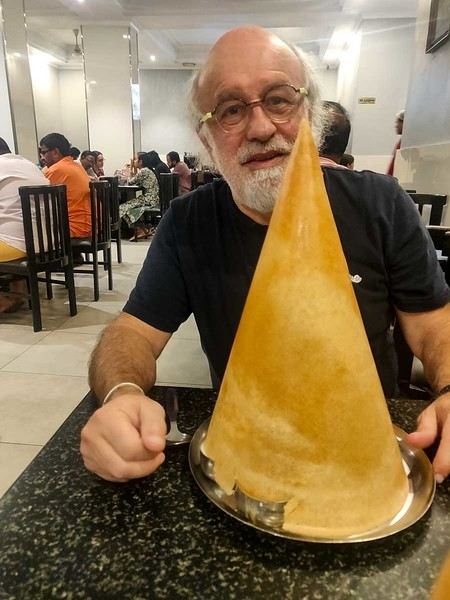
Night in Trivandrum
Prepaid taxi to the « Safire Residency », where we stayed last year. This hotel is still just as nice and welcoming (980 INR). Then, dinner at the restaurant « Ariya Niwas » where we enjoyed those delicious dosas again! (We missed them!)
Dubai en routard, quelques adresses
4 jours de balnéaire dans cet endroit vraiment curieux me permettaient de souffler il y a 15 ans après avoir crapahuté en Asie ou en Afrique : me baigner dans une eau clair et propre et amoindrir le jet lag était mon but ; voir aussi un peu ce mirage au milieu du désert attisait ma curiosité...Et puis Dubai s'est développé et depuis j'y vais une fois par an 15 jours sans m'ennuyer !! Mon budget routard ne m'empêche pas de profiter de ce qui me plait dans un voyage : découvrir des cultures, de l'architecture, des plages aux eaux turquoises.
Je partage ici mes adresses pour ceux qui aiment la simplicité et l'envie d'être étonné !
Dubai s'étale sur 50km de long. Je reste dans le quartier historique de Bur qui est très "indien" et qui est séparé par un bras de mer de Deira le quartier plus "arabe/africain". On passe d'une rive à l'autre avec des abras, petits bateaux en bois typique qui circule toute la journée. Mon hôtel se trouve à 4 minutes de la station de bus Al Ghubaiba, 5 mn du métro Al Ghubaiba et 6 mn de la station de bateau Al Ghubaiba !!! On se déplace facilement depuis ce point et le soir c'est animé on sort en toute sécurité, peu de touristes mais surtout la classe moyenne composée de ceux qui ont fait et font Dubai.
- transports : ...pour y aller : je pars avec Emirates car en prenant le vol de 21h30, dans l'avion je dors avec une musique douce dans le casque , j'atterris à 6h35, je change 200 euros quand j'ai récupéré ma valise, je vais me changer dans les toilettes, je prend un taxi direction l'hotel , j'y dépose ma valise et je file à la plage ! ...sur place : j'achète une NOL carte, l'argentée, qui sert à prendre bus, métro et bateau, selon mes besoins et ma consommation, je la recharge au fur et à mesure, valable 2 ans. ... taxis : équipés de compteur fiable, quand ils sont roses ce sont des femmes au volant, prix aéroport/hotel : 12 euros ...On en trouve partout, ils ne râlent pas quand on fait des trajets courts , entre 15h et 16h plus compliqué car c'est la relève.
- meilleures périodes : pour moi c'est avril-mai et octobre -novembre : pas trop chaud pour se promener mais assez pour se baigner ! Attention à la climatisation votre pire ennemi...elle est partout y compris les arrêts de bus...Un grand foulard ou un paréo pour se couvrir gorge et tête car passer de 32° à 16° quand on rentre dans un mall , un bus ou un taxi c'est assez violent !
- hôtel : je vais au Grand Astoria (Fahidi Street) car le rapport qualité/ prix /emplacement est bien. Très propre je prend sans petit déjeuner car près de la station de bus il y a un grand hypermarché Carrefour où j'achète de quoi petit déjeuner+eaux+lait de chamelle+pique nique... Il y a 2 discothèques en bas prévoir des boule quiés pour s'endormir avant 2 heures du matin..Wifi médiocre il faut changer le mot de passe tous les 2 jours...personnel adorable. Chambre avec télévision (4 chaines indiennes+BBC) un set bouilloire tasses avec sachet thé café et un mini bar.
- Bur Dubai : "mon quartier" Le matin on peut voir des enfants en uniforme qui attendent le bus pour l'école accompagnés par leur mère ou père issus de la 2e génération de migrants et bien installés ici... Ils parlent anglais, arabe et leur langue maternelle, ils ont une éducation poussée et sont trés recherchés d'après les annonces que je vois dans les journaux locaux mis à disposition dans le hall de l'hôtel. Des Etats Unis au Moyen Orient en passant par Singapour et l'Afrique du sud ils ont un bel avenir et sont le soir accompagnés pour une balade en famille par leurs parents et grands parents qui ont permis à Dubai de se développer. Le long du creek quand je prend un thé ou m'assoie il est fréquent que les voisins de banc vous demandent d'où vous êtes...Ici le monde entier se croise, on discute même avec un anglais basique, c'est sympa et convivial, le "take care" ponctue le bavardage quand l'un ou l'autre reprend son chemin... Bur est un quartier avec des visites possibles , super quand on n'a pas envie de bouger: le long du creek (le bras de mer) se trouve un ensemble de maisons reconstituées qui forme un musée "al shindagha museum". On achète un ticket qui permet de visiter l'ensemble des maisons qui ont chacune une thématique liée à l'histoire des 7 émirats dont Dubai est l'un d'eux. Cela prend une journée mais si à l'heure du déjeuner vous stoppez les visites il y a plein de restaurants pour toutes les bourses dans le quartier dont certain au bord de l'eau. En partant à l'opposé on arrive dans le quartier "al seef" qui est la reconstruction à l'ancienne de ce qu'était Dubai au départ : un petit port de pêcheur de perle. Jolie architecture avec des boutiques de souvenirs , ma préférée c'est l'épicerie iranienne où l'on trouve du chocolat au lait de chamelle, du citron noir et des friandises à la rose, pistache, abricot confits, etc... On se promène dans ce quartier tranquille même en temps que femme seule, des toilettes gratuites un peu partout, des bancs de bois ou de pierre ! Le soir un petit vent on peut y manger ou prendre un verre, quelques tours en face, pas les plus belles...
- restaurants : Dans Bur il y a tous ces restaurants qui représentent les régions de l'Inde mais aussi le sous continent indien...mes adresses : en face de l 'hôtel le Paklyari , un pakistanais : excellent mutton byriani à 5 euros , sur le creek (vers les musées)un restaurant népalais : tout y est bon, au bord de l eau à al seef le Nablus, super cadre... En face à Deira le restaurant italien du Rotana au 18e étage...y aller 1/2 avant le coucher du soleil vue super sur le creek et la skyline : la pizza à la truffe est à 24 euros ! On peut y aller en taxi depuis Bur et après diner se faire déposer en taxi à al seef et rentrer à pied le long du creek pour un trés bon thali le Kathhiyawadi à 10mn à pied du métro Burjuman et ma dernière découverte : le Bordomavi (arrêt de bus rashid al hadees masjid1)...un des serveurs est algérien francophone...on peut se baigner sur la petite plage avec douche/toilettes et partir déjeuner dans ce restaurant (57 euros à 2 avec entrée plat dessert boisson) cadre tranquille dans un petit port de pêche. Photo sympa avec port typique et loin derrière toutes les tours modernes !
- boire un verre au coucher du soleil : la terrasse du Concorde Creek View (Bur) (vue creek)et le Canopy by Hilton (al seef) (vue creek et skyline) où l'on peut avoir un forfait piscine à la journée incluant repas et boisson - lassi : à coté de l'hôtel bonnes glaces et lassi au SreeRaj Lassi bar * à noter : partout tout est emportable y compris les restes, pratique pour faire un pique nique le lendemain.
- marché : un endroit à ne pas manquer le waterfront market : c'est une halle immense où les locaux viennent acheter poissons, viandes, fruits légumes : ça vient du monde entier. J'adore y acheter du poisson , crevettes et seiches et dans le restaurant au bord de l 'eau Yahya on vous prépare le tout comme vous voulez (grillé, en sauce, frit etc...) avec salade, houmous, taboulé, riz etc... Je m'y arrête facilement car c'est sur le trajet entre "ma" plage et l'hôtel. Je fais mes provisions de fruits (miam les mangues !!)et dans le supermarché Lulu à l'étage du dessus j'achète yaourt, eau, etc...Je peux me charger puisque un taxi (que l on trouve à la sortie de la porte principale) me déposera devant l'hotel !
- plage : ma favorite : Al Mamzar Park (15mn de trajet/9euros) un ensemble de 4 plages surveillées avec douches, toilettes on paie 1.50 euros à l'entrée. Sur la plage n° 2 transats et parasols à louer et sur la plage n° 3 il y a des tables avec bancs en pierre surmontées de grands parasols et c'est gratuit. Lundi et mercredi réservés aux femmes ! J'arrive à 8h à l'ouverture, je m'installe et vais marcher 1h le long de l'eau où je vois étoile de mer, poissons colorés, oiseaux, plus rarement petite méduse...Du 2 pièces au burkini on se baigne comme on veut !! Il y a toutes les tailles toutes les formes toutes les langues...Comme partout à Dubai pas de regards de travers, pas de jugement, on se sourie, on se salue j'aime voir les femmes joyeuses et bien en chair les jours pour femme, elles jouent du darbouka et chantent, les indiennes font leur yoga et restent sur la tête, quelques chinoises font du tai chi...Moi je lis pas mal et nage assez loin jusqu'aux limites des bouées. Des maitres nageurs veillent ...C'est surveillé à terre aussi et quand un conducteur de 4x4 est venu me faire les gros yeux parce que je servais du whisky dans une bouteille en plastique à ma mère, je l'ai obligé à sentir : c'était du thé à la menthe... Confus il a aussitôt appelé en what s app son frère prof de sport à Poitiers pour que celui ci fasse des excuses en français ! Le week end le parc est plein de groupe qui viennent faire des barbecue dans le parc c'est joyeux ça piaille et chante dans toutes les langues ! Quand je rentre vers 13h30 selon mes envies je me fais déposer au waterfront market pour déjeuner du poisson ou au restaurant de thali. Pour se faire plaisir on peut aussi aller sur la plage de Kite beach (arrêt bus abu manara masjid) et la partie de plage SoleMio propose transat confortable, serviette moelleuse et parasol pour 80 euros à 2 en 1ere ligne...En y allant le matin tot vous avez l'impression d'être seul au monde avec en fond à gauche la fameuse tour de l hôtel burj el Arab...Le week end très fréquenté... On peut aussi prendre des forfaits journées dans certains hotels avec des chaises transats serviettes accès piscine et crédit pour un déjeuner. J'ai tenté le Ritz Carlton pas mal, (170 euros à 2 la journée). Déjeuner correct, on est au milieu des grandes tours qui s'éclairent, superbe vue sur la roue au coucher du soleil. Plein de plage gratuites bien sûr comme dans le quartier de La Mer qui est à voir plus pour sa déco que pour la plage .
- même si les visites principales consistent pour moi à marcher le nez en l'air à observer les tours à DIFC (super) rentrer dans la magnifique bibliothèque Mohamed bin Rashid (à la sortie du métro Creek), déambuler dans les souks en passant par le little India à Bur et la mosquée iranienne ou les souks aux épices ( côté Deira) tôt quand il y a peu de monde, une visite à Abu Dhabi vaut la peine...Prendre le bus Bur-Abu Dhabi (payable avec la nol card en le prenant tôt on voit le soleil se lever dans le désert), à l'arrivée acheter ticket de bus pour le Louvre, traverser en passant par la passerelle qui enjambe l'autoroute et attendre le bus... Après la visite du musée prendre un taxi pour la grande mosquée, visite puis de là reprendre un taxi pour la gare routière et retour. Journée entière bien remplie ! Le soir j'aime prendre le métro, qui est essentiellement aérien, et passer entre les tours immenses éclairées me donnent l'impression d'être dans un film de science fiction...manquent les taxis volants (c'est en projet !) Sharjah l'émirat le plus proche, a aussi un magnifique musée orientaliste et depuis la gare maritime de Bur plusieurs bateau vont en 1/2 heure à Sarjah à proximité de l'aquarium et du musée maritime.
- achat : J'achète des épices à thé indien (chaï), de l'encens, du chocolat au lait de chamelle, des friandises iraniennes et du tissus dans les boutiques indiennes qui vendent les saris et le tissu au mètre puis je demande à un tailleur de me faire des chemises, tunique, etc... Quelques boutiques vendent des boutons et autres passementeries pour agrémenter.
- mall : pour attirer les clients , les propriétaires de mall (grands centres commerciaux) imaginent des choses folles (piste de ski au Dubai Emirates à voir une fois) de jolis souks en bois (Madinat) des aquariums géants au Dubai mall, où l'on peut dès le coucher du soleil aller voir le balai des fontaines aux eaux dansantes sur des airs populaires du monde entier au pied de la plus haute tour du monde...En bas de celle ci un excellent restaurant irakien : Samad Al Iraki où le serveur de thé est tunisien francophone ! Le mall ibn battuta est original on peut y aller directement au retour d'abu dhabi en bus par exemple. Dans les mall on trouve de quoi se restaurer et s'y promener pour (enfin) voir des autochtones ....sans intérêt réel...Les mall sont desservis par le métro alors que les bus longent le bord de mer. Dans le mall Burjuman au rez de chaussée on trouve un cyber café avec possibilité d'imprimer.
Pour aider à la préparation quelques sites :Visit Dubai - Site Officiel de l'Office de Tourisme de Dubai Autorité des routes et des transports (RTA) - RTA Services
"mais qu'est ce que tu fais toi à Dubai ?" mon entourage s'étonne... oui j'aime les voyages dans des pays où je passe sur des routes défoncées dans des bus qui tombent en panne, je dors dans des lieux avec moustiques et cafards où on crève de chaud et d'humidité mais finalement même loin de cette manière de voyager il y a un parfum d'exotisme à Dubai. Il y en a pour tous les goûts et toutes les bourses si on passe la barrière de l'achat du billet qui est autour de 680 euros (surement moins cher avec escale). Dubai c'est se reposer, se baigner, s'étonner, bavarder, goûter... Des vacances en toute sécurité dans un lieu propre sans incivilité et en tant que femme ça fait du bien de relâcher son attention, du coup on revient en pleine forme et apaisé ! En espérant que mon retour d'expérience serve ... j'y retourne en avril 2025 si mon témoignage est lu je ferais un complément d'information car j'envisage de visiter le quartier des galeries, d'aller au marché aux puces...J'ai repéré une nouvelle plage...Ah....tant de choses à voir encore !! Bonne découverte, Laurence ps : n'hésitez pas à enrichir mon témoignage sur la même tonalité...je prend vos précieux conseils et suggestions !
Dubai s'étale sur 50km de long. Je reste dans le quartier historique de Bur qui est très "indien" et qui est séparé par un bras de mer de Deira le quartier plus "arabe/africain". On passe d'une rive à l'autre avec des abras, petits bateaux en bois typique qui circule toute la journée. Mon hôtel se trouve à 4 minutes de la station de bus Al Ghubaiba, 5 mn du métro Al Ghubaiba et 6 mn de la station de bateau Al Ghubaiba !!! On se déplace facilement depuis ce point et le soir c'est animé on sort en toute sécurité, peu de touristes mais surtout la classe moyenne composée de ceux qui ont fait et font Dubai.
- transports : ...pour y aller : je pars avec Emirates car en prenant le vol de 21h30, dans l'avion je dors avec une musique douce dans le casque , j'atterris à 6h35, je change 200 euros quand j'ai récupéré ma valise, je vais me changer dans les toilettes, je prend un taxi direction l'hotel , j'y dépose ma valise et je file à la plage ! ...sur place : j'achète une NOL carte, l'argentée, qui sert à prendre bus, métro et bateau, selon mes besoins et ma consommation, je la recharge au fur et à mesure, valable 2 ans. ... taxis : équipés de compteur fiable, quand ils sont roses ce sont des femmes au volant, prix aéroport/hotel : 12 euros ...On en trouve partout, ils ne râlent pas quand on fait des trajets courts , entre 15h et 16h plus compliqué car c'est la relève.
- meilleures périodes : pour moi c'est avril-mai et octobre -novembre : pas trop chaud pour se promener mais assez pour se baigner ! Attention à la climatisation votre pire ennemi...elle est partout y compris les arrêts de bus...Un grand foulard ou un paréo pour se couvrir gorge et tête car passer de 32° à 16° quand on rentre dans un mall , un bus ou un taxi c'est assez violent !
- hôtel : je vais au Grand Astoria (Fahidi Street) car le rapport qualité/ prix /emplacement est bien. Très propre je prend sans petit déjeuner car près de la station de bus il y a un grand hypermarché Carrefour où j'achète de quoi petit déjeuner+eaux+lait de chamelle+pique nique... Il y a 2 discothèques en bas prévoir des boule quiés pour s'endormir avant 2 heures du matin..Wifi médiocre il faut changer le mot de passe tous les 2 jours...personnel adorable. Chambre avec télévision (4 chaines indiennes+BBC) un set bouilloire tasses avec sachet thé café et un mini bar.
- Bur Dubai : "mon quartier" Le matin on peut voir des enfants en uniforme qui attendent le bus pour l'école accompagnés par leur mère ou père issus de la 2e génération de migrants et bien installés ici... Ils parlent anglais, arabe et leur langue maternelle, ils ont une éducation poussée et sont trés recherchés d'après les annonces que je vois dans les journaux locaux mis à disposition dans le hall de l'hôtel. Des Etats Unis au Moyen Orient en passant par Singapour et l'Afrique du sud ils ont un bel avenir et sont le soir accompagnés pour une balade en famille par leurs parents et grands parents qui ont permis à Dubai de se développer. Le long du creek quand je prend un thé ou m'assoie il est fréquent que les voisins de banc vous demandent d'où vous êtes...Ici le monde entier se croise, on discute même avec un anglais basique, c'est sympa et convivial, le "take care" ponctue le bavardage quand l'un ou l'autre reprend son chemin... Bur est un quartier avec des visites possibles , super quand on n'a pas envie de bouger: le long du creek (le bras de mer) se trouve un ensemble de maisons reconstituées qui forme un musée "al shindagha museum". On achète un ticket qui permet de visiter l'ensemble des maisons qui ont chacune une thématique liée à l'histoire des 7 émirats dont Dubai est l'un d'eux. Cela prend une journée mais si à l'heure du déjeuner vous stoppez les visites il y a plein de restaurants pour toutes les bourses dans le quartier dont certain au bord de l'eau. En partant à l'opposé on arrive dans le quartier "al seef" qui est la reconstruction à l'ancienne de ce qu'était Dubai au départ : un petit port de pêcheur de perle. Jolie architecture avec des boutiques de souvenirs , ma préférée c'est l'épicerie iranienne où l'on trouve du chocolat au lait de chamelle, du citron noir et des friandises à la rose, pistache, abricot confits, etc... On se promène dans ce quartier tranquille même en temps que femme seule, des toilettes gratuites un peu partout, des bancs de bois ou de pierre ! Le soir un petit vent on peut y manger ou prendre un verre, quelques tours en face, pas les plus belles...
- restaurants : Dans Bur il y a tous ces restaurants qui représentent les régions de l'Inde mais aussi le sous continent indien...mes adresses : en face de l 'hôtel le Paklyari , un pakistanais : excellent mutton byriani à 5 euros , sur le creek (vers les musées)un restaurant népalais : tout y est bon, au bord de l eau à al seef le Nablus, super cadre... En face à Deira le restaurant italien du Rotana au 18e étage...y aller 1/2 avant le coucher du soleil vue super sur le creek et la skyline : la pizza à la truffe est à 24 euros ! On peut y aller en taxi depuis Bur et après diner se faire déposer en taxi à al seef et rentrer à pied le long du creek pour un trés bon thali le Kathhiyawadi à 10mn à pied du métro Burjuman et ma dernière découverte : le Bordomavi (arrêt de bus rashid al hadees masjid1)...un des serveurs est algérien francophone...on peut se baigner sur la petite plage avec douche/toilettes et partir déjeuner dans ce restaurant (57 euros à 2 avec entrée plat dessert boisson) cadre tranquille dans un petit port de pêche. Photo sympa avec port typique et loin derrière toutes les tours modernes !
- boire un verre au coucher du soleil : la terrasse du Concorde Creek View (Bur) (vue creek)et le Canopy by Hilton (al seef) (vue creek et skyline) où l'on peut avoir un forfait piscine à la journée incluant repas et boisson - lassi : à coté de l'hôtel bonnes glaces et lassi au SreeRaj Lassi bar * à noter : partout tout est emportable y compris les restes, pratique pour faire un pique nique le lendemain.
- marché : un endroit à ne pas manquer le waterfront market : c'est une halle immense où les locaux viennent acheter poissons, viandes, fruits légumes : ça vient du monde entier. J'adore y acheter du poisson , crevettes et seiches et dans le restaurant au bord de l 'eau Yahya on vous prépare le tout comme vous voulez (grillé, en sauce, frit etc...) avec salade, houmous, taboulé, riz etc... Je m'y arrête facilement car c'est sur le trajet entre "ma" plage et l'hôtel. Je fais mes provisions de fruits (miam les mangues !!)et dans le supermarché Lulu à l'étage du dessus j'achète yaourt, eau, etc...Je peux me charger puisque un taxi (que l on trouve à la sortie de la porte principale) me déposera devant l'hotel !
- plage : ma favorite : Al Mamzar Park (15mn de trajet/9euros) un ensemble de 4 plages surveillées avec douches, toilettes on paie 1.50 euros à l'entrée. Sur la plage n° 2 transats et parasols à louer et sur la plage n° 3 il y a des tables avec bancs en pierre surmontées de grands parasols et c'est gratuit. Lundi et mercredi réservés aux femmes ! J'arrive à 8h à l'ouverture, je m'installe et vais marcher 1h le long de l'eau où je vois étoile de mer, poissons colorés, oiseaux, plus rarement petite méduse...Du 2 pièces au burkini on se baigne comme on veut !! Il y a toutes les tailles toutes les formes toutes les langues...Comme partout à Dubai pas de regards de travers, pas de jugement, on se sourie, on se salue j'aime voir les femmes joyeuses et bien en chair les jours pour femme, elles jouent du darbouka et chantent, les indiennes font leur yoga et restent sur la tête, quelques chinoises font du tai chi...Moi je lis pas mal et nage assez loin jusqu'aux limites des bouées. Des maitres nageurs veillent ...C'est surveillé à terre aussi et quand un conducteur de 4x4 est venu me faire les gros yeux parce que je servais du whisky dans une bouteille en plastique à ma mère, je l'ai obligé à sentir : c'était du thé à la menthe... Confus il a aussitôt appelé en what s app son frère prof de sport à Poitiers pour que celui ci fasse des excuses en français ! Le week end le parc est plein de groupe qui viennent faire des barbecue dans le parc c'est joyeux ça piaille et chante dans toutes les langues ! Quand je rentre vers 13h30 selon mes envies je me fais déposer au waterfront market pour déjeuner du poisson ou au restaurant de thali. Pour se faire plaisir on peut aussi aller sur la plage de Kite beach (arrêt bus abu manara masjid) et la partie de plage SoleMio propose transat confortable, serviette moelleuse et parasol pour 80 euros à 2 en 1ere ligne...En y allant le matin tot vous avez l'impression d'être seul au monde avec en fond à gauche la fameuse tour de l hôtel burj el Arab...Le week end très fréquenté... On peut aussi prendre des forfaits journées dans certains hotels avec des chaises transats serviettes accès piscine et crédit pour un déjeuner. J'ai tenté le Ritz Carlton pas mal, (170 euros à 2 la journée). Déjeuner correct, on est au milieu des grandes tours qui s'éclairent, superbe vue sur la roue au coucher du soleil. Plein de plage gratuites bien sûr comme dans le quartier de La Mer qui est à voir plus pour sa déco que pour la plage .
- même si les visites principales consistent pour moi à marcher le nez en l'air à observer les tours à DIFC (super) rentrer dans la magnifique bibliothèque Mohamed bin Rashid (à la sortie du métro Creek), déambuler dans les souks en passant par le little India à Bur et la mosquée iranienne ou les souks aux épices ( côté Deira) tôt quand il y a peu de monde, une visite à Abu Dhabi vaut la peine...Prendre le bus Bur-Abu Dhabi (payable avec la nol card en le prenant tôt on voit le soleil se lever dans le désert), à l'arrivée acheter ticket de bus pour le Louvre, traverser en passant par la passerelle qui enjambe l'autoroute et attendre le bus... Après la visite du musée prendre un taxi pour la grande mosquée, visite puis de là reprendre un taxi pour la gare routière et retour. Journée entière bien remplie ! Le soir j'aime prendre le métro, qui est essentiellement aérien, et passer entre les tours immenses éclairées me donnent l'impression d'être dans un film de science fiction...manquent les taxis volants (c'est en projet !) Sharjah l'émirat le plus proche, a aussi un magnifique musée orientaliste et depuis la gare maritime de Bur plusieurs bateau vont en 1/2 heure à Sarjah à proximité de l'aquarium et du musée maritime.
- achat : J'achète des épices à thé indien (chaï), de l'encens, du chocolat au lait de chamelle, des friandises iraniennes et du tissus dans les boutiques indiennes qui vendent les saris et le tissu au mètre puis je demande à un tailleur de me faire des chemises, tunique, etc... Quelques boutiques vendent des boutons et autres passementeries pour agrémenter.
- mall : pour attirer les clients , les propriétaires de mall (grands centres commerciaux) imaginent des choses folles (piste de ski au Dubai Emirates à voir une fois) de jolis souks en bois (Madinat) des aquariums géants au Dubai mall, où l'on peut dès le coucher du soleil aller voir le balai des fontaines aux eaux dansantes sur des airs populaires du monde entier au pied de la plus haute tour du monde...En bas de celle ci un excellent restaurant irakien : Samad Al Iraki où le serveur de thé est tunisien francophone ! Le mall ibn battuta est original on peut y aller directement au retour d'abu dhabi en bus par exemple. Dans les mall on trouve de quoi se restaurer et s'y promener pour (enfin) voir des autochtones ....sans intérêt réel...Les mall sont desservis par le métro alors que les bus longent le bord de mer. Dans le mall Burjuman au rez de chaussée on trouve un cyber café avec possibilité d'imprimer.
Pour aider à la préparation quelques sites :Visit Dubai - Site Officiel de l'Office de Tourisme de Dubai Autorité des routes et des transports (RTA) - RTA Services
"mais qu'est ce que tu fais toi à Dubai ?" mon entourage s'étonne... oui j'aime les voyages dans des pays où je passe sur des routes défoncées dans des bus qui tombent en panne, je dors dans des lieux avec moustiques et cafards où on crève de chaud et d'humidité mais finalement même loin de cette manière de voyager il y a un parfum d'exotisme à Dubai. Il y en a pour tous les goûts et toutes les bourses si on passe la barrière de l'achat du billet qui est autour de 680 euros (surement moins cher avec escale). Dubai c'est se reposer, se baigner, s'étonner, bavarder, goûter... Des vacances en toute sécurité dans un lieu propre sans incivilité et en tant que femme ça fait du bien de relâcher son attention, du coup on revient en pleine forme et apaisé ! En espérant que mon retour d'expérience serve ... j'y retourne en avril 2025 si mon témoignage est lu je ferais un complément d'information car j'envisage de visiter le quartier des galeries, d'aller au marché aux puces...J'ai repéré une nouvelle plage...Ah....tant de choses à voir encore !! Bonne découverte, Laurence ps : n'hésitez pas à enrichir mon témoignage sur la même tonalité...je prend vos précieux conseils et suggestions !