Results for "Brésil+souvenir+artisanat"
About 13,117 results.
More options
Many results are in French, the community’s main language. English translations are added over time.
Search results
Cafards, rats lézards et autres z'amis... vos rencontres
Pour faire suite à l’excellent post d’Alan(http://voyageforum.com/voyage/indonesie_terreur_sumatra_D73106/) nous narrant le terrible siège qu’il a dû subir, je vous propose de collecter ici toutes vos rencontres d’infortune avec la faune locale.
Y êtes-vous sensible ou etes-vous capable de dormi du sommeil du juste dans un wagon grouillant de blattes ? Devenez-vous absolument hystérique à la simple vue d’un lézard ou d’un insecte… Racontez nous vos anecdotes…
Pour ma part je ne m’explique toujours pas comment j’ai pu autant de fois me rendre en Asie avec une telle peur de la Blatte. Par bonheur, les rencontres malheureuse furent plutôt rares, mais épiques !
21 heures / Krabi / Thaïlande
Nous devons passer la nuit dans cette charmante guest house avant de prendre le bateau pour les îles. C’est rustique, mais agréable. Nos bungalows sont blottis au fonds d’une épaisse végétation.
De retour de dîner nous trouvons une adorable chienne rachitique allaitant son petit sur le perron de notre porte. J’ai toujours penser que nous pourrions nous préoccuper des animaux quant tous les enfants vivront dans des conditions décentes… Mais je n’ai jamais réussit à l’appliquer. Ma femme et moi-même cherchons dans notre sac ce qui pourrai remplir ce frêle estomac. L’animal est adorable et son petit nous fend le cœur… Il sont maintenant repus… Et commencent à somnoler… Nous allons faire de même.
Nous rentrons nous coucher le cœur allégé par ce spectacle.
le ventilo est resté allumé la veille et j’ai encore attrapé froid. La fièvre monte doucement… la toux aussi. Je me relève prendre une aspirine. J’allume la lumière à tâtons et porte la main à ma trousse de toilette.
Quelque chose à bougé… Là juste derrière le gel douche.
J’ai à peine eut le temps de le voir. C’est derrière le flacon j’en suis certain ! Je ne bouge plus… Ma femme s’est assoupie… Et je ne peux pas sortir de la salle de bain sans en avoir le cœur net. Je ne bouge toujours pas et scrute très attentivement tout autour de moi. Je sens des fourmillements me parcourir le dos… Je ne dois pas céder à la panique… La présence éventuelle de cet insecte m’interdit d’ouvrir la bouche. Je respire fortement par le nez.
Je prend ma brosse à dent pour manipuler la bouteille de savon liquide… L’instrument est court, mais je n’ai rien d’autre à ma portée. Il bouge ! s’en est un… Il est monstrueux… 4 cm… Peut être 5… Il agite doucement ses antennes et son corps marront noir strillé d'une carapace à l'aspect huileux, semble prêt à se glisser dans n'importe quel trou crasseux... Je suis tétanisé… Je sort doucement en ne quittant pas cette horreur du regard. Si je ferme la porte… J’aurai le sentiment d’être en sécurité. Mais un autre occupe le cadre de la porte de la salle de bain! L'idée que cette rencontre n'est pas fortuite, mais que le lieu est un repert grouillant m'angoisse! Je suis cerné.
Si je ferme la porte je l’écrase… Pour bien des gens c’est une occasion inespérée de se libérer de l’occupant… Pour moi c’est un traumatisme supplémentaire… La simple idée du bruit de cette carcasse explosant pour libérer une pulpe immonde, infestée de milliers d’œuf prêt à éclore… Impossible !
Je suis en sueur et je tousse, la fièvre monte d’un cran… Je n’ai plus le choix. Ma virilité va encore en prendre un coup, mais il faut que je réveille ma femme… Elle seule pourra me sortir de cette antichambre de la psychose qui me guette. A peine 2 mios que nous sommes marriés, et déja minable... Ca promet. Mon cœur… Hommmpff Y’a des cafards Où…. Rrrhh Dans la salle d’eau Bon bah dors, qu’est-ce que tu veux que je fasse ? ? ? Tu veux pas aller fermer la porte de la salle d’eau ? Ohhh tu m’emmerde avec tes bestioles elles vont pas te bouffer…Je retourne apeuré devant la porte de la salle de bain…L’occupant de la porte a disparu… Je souffle et ferme la porte…
Mais les éléments sont contre moi… C’est un mauvais film… La porte ne se ferme pas. Elle se rouvre paresseusement à chaque fois que je la renvoi dans ses gons. Je cherche une solution en la tenant. une ficelle… Mais je n’ai rien pour l’accrocher… Une chaise… Mais la porte s’ouvre sur l’intérieur de la salle de bain, il faudrait la bloquer de l’intérieur… C’est impossible. Voilà 5 min. que je tiens cette porte qui est mon unique rempart contre la crise de panique. Ma femme se lève sans rien dire… L’air furieuse… Je vais peut être passer un mauvais quart d’heure, mais le simple sentiment d’être moins seul me redonne du courage. Elle Prend un bout de ficelle. Rapproche une lourde chaise et accroche la poignée de la porte au dossier de la chaise.. Cela semble tenir…
Je suis fébrile et des frissons me parcours le corps… Je n’en pouvais plus… Je tente de m’endormir la bouche fermée… Je les imaginent rampant sur moi à la recherche de n’importe quelle cavité corporelle pour s’y loger et pondre… Au moins Alien vous offre une chance de mourir avant d’être parasité.
La nuit se passe et l’aube apporte son flot de lumière rassurante… Ces misérables insectes inoffensifs ne sont plus qu’une idée lointaine… Seule ma femme est là pour se souvenir… "Mais t’es vraiment pas bien ! Qu’est-ce qui t’a prit de faire un foin pareil pour un cafard…"…
Y êtes-vous sensible ou etes-vous capable de dormi du sommeil du juste dans un wagon grouillant de blattes ? Devenez-vous absolument hystérique à la simple vue d’un lézard ou d’un insecte… Racontez nous vos anecdotes…
Pour ma part je ne m’explique toujours pas comment j’ai pu autant de fois me rendre en Asie avec une telle peur de la Blatte. Par bonheur, les rencontres malheureuse furent plutôt rares, mais épiques !
21 heures / Krabi / Thaïlande
Nous devons passer la nuit dans cette charmante guest house avant de prendre le bateau pour les îles. C’est rustique, mais agréable. Nos bungalows sont blottis au fonds d’une épaisse végétation.
De retour de dîner nous trouvons une adorable chienne rachitique allaitant son petit sur le perron de notre porte. J’ai toujours penser que nous pourrions nous préoccuper des animaux quant tous les enfants vivront dans des conditions décentes… Mais je n’ai jamais réussit à l’appliquer. Ma femme et moi-même cherchons dans notre sac ce qui pourrai remplir ce frêle estomac. L’animal est adorable et son petit nous fend le cœur… Il sont maintenant repus… Et commencent à somnoler… Nous allons faire de même.
Nous rentrons nous coucher le cœur allégé par ce spectacle.
le ventilo est resté allumé la veille et j’ai encore attrapé froid. La fièvre monte doucement… la toux aussi. Je me relève prendre une aspirine. J’allume la lumière à tâtons et porte la main à ma trousse de toilette.
Quelque chose à bougé… Là juste derrière le gel douche.
J’ai à peine eut le temps de le voir. C’est derrière le flacon j’en suis certain ! Je ne bouge plus… Ma femme s’est assoupie… Et je ne peux pas sortir de la salle de bain sans en avoir le cœur net. Je ne bouge toujours pas et scrute très attentivement tout autour de moi. Je sens des fourmillements me parcourir le dos… Je ne dois pas céder à la panique… La présence éventuelle de cet insecte m’interdit d’ouvrir la bouche. Je respire fortement par le nez.
Je prend ma brosse à dent pour manipuler la bouteille de savon liquide… L’instrument est court, mais je n’ai rien d’autre à ma portée. Il bouge ! s’en est un… Il est monstrueux… 4 cm… Peut être 5… Il agite doucement ses antennes et son corps marront noir strillé d'une carapace à l'aspect huileux, semble prêt à se glisser dans n'importe quel trou crasseux... Je suis tétanisé… Je sort doucement en ne quittant pas cette horreur du regard. Si je ferme la porte… J’aurai le sentiment d’être en sécurité. Mais un autre occupe le cadre de la porte de la salle de bain! L'idée que cette rencontre n'est pas fortuite, mais que le lieu est un repert grouillant m'angoisse! Je suis cerné.
Si je ferme la porte je l’écrase… Pour bien des gens c’est une occasion inespérée de se libérer de l’occupant… Pour moi c’est un traumatisme supplémentaire… La simple idée du bruit de cette carcasse explosant pour libérer une pulpe immonde, infestée de milliers d’œuf prêt à éclore… Impossible !
Je suis en sueur et je tousse, la fièvre monte d’un cran… Je n’ai plus le choix. Ma virilité va encore en prendre un coup, mais il faut que je réveille ma femme… Elle seule pourra me sortir de cette antichambre de la psychose qui me guette. A peine 2 mios que nous sommes marriés, et déja minable... Ca promet. Mon cœur… Hommmpff Y’a des cafards Où…. Rrrhh Dans la salle d’eau Bon bah dors, qu’est-ce que tu veux que je fasse ? ? ? Tu veux pas aller fermer la porte de la salle d’eau ? Ohhh tu m’emmerde avec tes bestioles elles vont pas te bouffer…Je retourne apeuré devant la porte de la salle de bain…L’occupant de la porte a disparu… Je souffle et ferme la porte…
Mais les éléments sont contre moi… C’est un mauvais film… La porte ne se ferme pas. Elle se rouvre paresseusement à chaque fois que je la renvoi dans ses gons. Je cherche une solution en la tenant. une ficelle… Mais je n’ai rien pour l’accrocher… Une chaise… Mais la porte s’ouvre sur l’intérieur de la salle de bain, il faudrait la bloquer de l’intérieur… C’est impossible. Voilà 5 min. que je tiens cette porte qui est mon unique rempart contre la crise de panique. Ma femme se lève sans rien dire… L’air furieuse… Je vais peut être passer un mauvais quart d’heure, mais le simple sentiment d’être moins seul me redonne du courage. Elle Prend un bout de ficelle. Rapproche une lourde chaise et accroche la poignée de la porte au dossier de la chaise.. Cela semble tenir…
Je suis fébrile et des frissons me parcours le corps… Je n’en pouvais plus… Je tente de m’endormir la bouche fermée… Je les imaginent rampant sur moi à la recherche de n’importe quelle cavité corporelle pour s’y loger et pondre… Au moins Alien vous offre une chance de mourir avant d’être parasité.
La nuit se passe et l’aube apporte son flot de lumière rassurante… Ces misérables insectes inoffensifs ne sont plus qu’une idée lointaine… Seule ma femme est là pour se souvenir… "Mais t’es vraiment pas bien ! Qu’est-ce qui t’a prit de faire un foin pareil pour un cafard…"…
Air France
salut
avez-vous deja pris cette compagnie ? Moi, oui, mais le moins possible. Sur les vols pour La Réunion, le service est le même que corsair. Même pas d'écran individuel. Quand on a goûté à Singapor Airlines en classe éco, tres difficile de voyager sur notre compagnie: hotesses qui se prennent pour des déesses, bouffe médiocre ( poulet ou poisson ?), aucun service pendant la nuit: si tu as soif, va te servir au fonds de l'avion près des hotesses qui lisent maxi, ici paris ou biba...Sans parler des vieux 747 pour les antilles où l'on accroche les bébés entre les sièges et les lampes ( le couffin et accroché près des ventilateurs. Su un vol pour saint denis, mes voisins de devant avaient un bébé:la mère été obligée de grimper sur le siège pour voir bébé qui se trouvait au dessus de ma tête, donc attention en se levant...Merci de réagir.
Kiwidam
avez-vous deja pris cette compagnie ? Moi, oui, mais le moins possible. Sur les vols pour La Réunion, le service est le même que corsair. Même pas d'écran individuel. Quand on a goûté à Singapor Airlines en classe éco, tres difficile de voyager sur notre compagnie: hotesses qui se prennent pour des déesses, bouffe médiocre ( poulet ou poisson ?), aucun service pendant la nuit: si tu as soif, va te servir au fonds de l'avion près des hotesses qui lisent maxi, ici paris ou biba...Sans parler des vieux 747 pour les antilles où l'on accroche les bébés entre les sièges et les lampes ( le couffin et accroché près des ventilateurs. Su un vol pour saint denis, mes voisins de devant avaient un bébé:la mère été obligée de grimper sur le siège pour voir bébé qui se trouvait au dessus de ma tête, donc attention en se levant...Merci de réagir.
Kiwidam
Le tabac, d'un pays à l'autre.
En voyageant, on s'aperçoit que le tabac fait l'objet de traitements différenciés en fonction des pays. Avant d' en aborder quelques-uns, allons-y d'abord pour la chanson connue: le tabac nuit gravement à la santé. Il cause des maladies cardio-vasculaires et des cancers, attaque les poumons, fragilise le système immunitaire...Avec lui, le corps humain tout entier subit, se désagrège, se meurt. Le tabac abrège la vie; il tue. Chacun, en cherchant parmi ses proches, peut le confirmer: le tabac, c'est l'autoroute vers le cimetière.
L'attitude des pouvoirs publics à son égard, elle, varie d'un pays à l'autre. Elle est peut-être, en définitive, à l'image de l'avancement social de la nation.
Aux Etats-Unis, il est strictement interdit de fumer dans un espace public; dans les cafés, les restaurants, les cinémas, les gares, les aéroports (toutes les 3 minutes, les haut-parleurs vous indiquent qu'il s'agit d'une "non-smoking area"!), les ascenseurs, les magasins, les transports publics etc, le tabac est proscrit. De grosses amendes et des complications judiciaires menacent les contrevenants. Prenez le car (parmi les fameux Greyhound) entre, disons, Washington et New York. D'immenses panneaux (impossible de les rater!!!) vous rappellent que le tabac est impitoyable: sur l'un, des paquets de cigarettes sur pattes, avec des yeux rieurs, contemplent un cimetière copieusement garni. Sur un autre, le cow-boy devenu impotent regrette son inconscience. Sur un troisième, un patient est en train de se faire ablater un poumon...Le gouvernement là-bas (celui de Clinton en 2000) met les bouchées doubles et ne craint pas de choquer, car la cigarette grève le budget de la santé de la nation entière. Les firmes productrices, elles-mêmes, sont poursuivies en justice par les cancéreux et contraintes de verser de lourdes indemnités. ( sur le rôle des produits accoutumants utilisés dans les cigarettes, voir l'excellent film "Révélations" avec Russell Crowe et Al Pacino).
En France, on n'en est pas encore là. Les français, relativement aux autres européens, sont des fumeurs invétérés. Mais déjà, la publicité de la cigarette (celle voyante, ostentatoire, officielle) est défendue; des espaces non-fumeurs sont créés ici et là dans les espaces publics et le Ministère de la Santé lance régulièrement des campagnes de presse sur le sujet. Les prix qui flambent, c'est bon aussi pour faire flancher quelques consommateurs supplémentaires. C'est encore peu; on tatonne, mais on avance...
Au Brésil, on voue, chacun le sait, un véritable culte à la beauté du corps. Le sport et l'entretien physique font partie intégrante de la culture locale et on est fier, homme ou femme, d'exhiber un corps sain. Là-bas, la cigarette est assimilée à une souillure. Elle est à bannir sans ménagements.
Au Maroc, dont les superbes plages qui s'étalent de Tanger à Dakhla sont, à la fin de l'été, jonchées de mégots, et où les enfants font la course au "ssaka" (le buraliste) du coin pour leur papa, presque tout reste à faire. Prenons une ville moyenne au hasard: El Jadida. Quel est le point commun entre ses 3 cinémas? Eh bien, à la fin de la séance, inévitablement, vos vêtements sont embués d'une odeur forte de nicotine (exactement comme dans les boîtes de nuit en France); vous avez inhalé Dieu sait quelle quantité de goudron; vous en ressortez bien souvent les paupières rouges et à la limite de la suffocation. Même constat dans les cafés, les transports publics, et même dans la salle d'attente d'un hôpital!!! Les mentions "Interdit de fumer" commencent seulement à faire timidement leur apparition là-bas ces dernières années...
Dans de nombreux pays, la publicité de la cigarette est encore comparable à celle de n'importe quelle lessive. En Egypte, royaume du narguilé, en allumant distraitement sa radio, on peut surprendre le dialogue forcément chaleureux de deux "amis" qui dissertent avec des accents émerveillés dans la voix sur ce goût délicieux, unique, incomparable de la Winston.
Terminons la chanson: le tabac tue! Il fait la fortune de quelques-uns et vide les poches du plus grand nombre. Il n'est à associer à aucune forme de raffinement, de virilité ou de jeunesse. La vérité est là, et elle est pour les fumeurs comme le soleil: ils ne peuvent la regarder de face sans cligner des yeux et se détourner...
Khaldoun
L'attitude des pouvoirs publics à son égard, elle, varie d'un pays à l'autre. Elle est peut-être, en définitive, à l'image de l'avancement social de la nation.
Aux Etats-Unis, il est strictement interdit de fumer dans un espace public; dans les cafés, les restaurants, les cinémas, les gares, les aéroports (toutes les 3 minutes, les haut-parleurs vous indiquent qu'il s'agit d'une "non-smoking area"!), les ascenseurs, les magasins, les transports publics etc, le tabac est proscrit. De grosses amendes et des complications judiciaires menacent les contrevenants. Prenez le car (parmi les fameux Greyhound) entre, disons, Washington et New York. D'immenses panneaux (impossible de les rater!!!) vous rappellent que le tabac est impitoyable: sur l'un, des paquets de cigarettes sur pattes, avec des yeux rieurs, contemplent un cimetière copieusement garni. Sur un autre, le cow-boy devenu impotent regrette son inconscience. Sur un troisième, un patient est en train de se faire ablater un poumon...Le gouvernement là-bas (celui de Clinton en 2000) met les bouchées doubles et ne craint pas de choquer, car la cigarette grève le budget de la santé de la nation entière. Les firmes productrices, elles-mêmes, sont poursuivies en justice par les cancéreux et contraintes de verser de lourdes indemnités. ( sur le rôle des produits accoutumants utilisés dans les cigarettes, voir l'excellent film "Révélations" avec Russell Crowe et Al Pacino).
En France, on n'en est pas encore là. Les français, relativement aux autres européens, sont des fumeurs invétérés. Mais déjà, la publicité de la cigarette (celle voyante, ostentatoire, officielle) est défendue; des espaces non-fumeurs sont créés ici et là dans les espaces publics et le Ministère de la Santé lance régulièrement des campagnes de presse sur le sujet. Les prix qui flambent, c'est bon aussi pour faire flancher quelques consommateurs supplémentaires. C'est encore peu; on tatonne, mais on avance...
Au Brésil, on voue, chacun le sait, un véritable culte à la beauté du corps. Le sport et l'entretien physique font partie intégrante de la culture locale et on est fier, homme ou femme, d'exhiber un corps sain. Là-bas, la cigarette est assimilée à une souillure. Elle est à bannir sans ménagements.
Au Maroc, dont les superbes plages qui s'étalent de Tanger à Dakhla sont, à la fin de l'été, jonchées de mégots, et où les enfants font la course au "ssaka" (le buraliste) du coin pour leur papa, presque tout reste à faire. Prenons une ville moyenne au hasard: El Jadida. Quel est le point commun entre ses 3 cinémas? Eh bien, à la fin de la séance, inévitablement, vos vêtements sont embués d'une odeur forte de nicotine (exactement comme dans les boîtes de nuit en France); vous avez inhalé Dieu sait quelle quantité de goudron; vous en ressortez bien souvent les paupières rouges et à la limite de la suffocation. Même constat dans les cafés, les transports publics, et même dans la salle d'attente d'un hôpital!!! Les mentions "Interdit de fumer" commencent seulement à faire timidement leur apparition là-bas ces dernières années...
Dans de nombreux pays, la publicité de la cigarette est encore comparable à celle de n'importe quelle lessive. En Egypte, royaume du narguilé, en allumant distraitement sa radio, on peut surprendre le dialogue forcément chaleureux de deux "amis" qui dissertent avec des accents émerveillés dans la voix sur ce goût délicieux, unique, incomparable de la Winston.
Terminons la chanson: le tabac tue! Il fait la fortune de quelques-uns et vide les poches du plus grand nombre. Il n'est à associer à aucune forme de raffinement, de virilité ou de jeunesse. La vérité est là, et elle est pour les fumeurs comme le soleil: ils ne peuvent la regarder de face sans cligner des yeux et se détourner...
Khaldoun
Shanti India, welcome on board:)
Les portes de l'avion s'ouvrent, je respire, hume l'air, mais Goa n'est pas une grande ville aux milles odeurs pas toujours les meilleures.
Il est encore tôt, le temps est délicieux. Après quelques pas sur le bitume de la piste, brûlant de soleil déjà écrasant, me voilà dans la queue pour l'immigration. Bien quatre douaniers vérifient les passeports, le visa, la carte d'arrivée. Je demande à d'autres voyageurs pour partager un taxi vers des plages du sud ou j'ai rendez-vous avec un VFiste et un ami à lui. Sans succès. Le prepaid taxi revient à 357 roupies ( 7 euros) je l'obtiens à 200 rps :)
Me voilà dehors. Je regarde les gens, certains me sourient, je leur en envoie un à mon tour, et ... Waouh, en une fois, les bonnes vibrations, les bonnes énergies reçues de précédents voyages remontent à la surface, comme l'effet d'un massage et me revoilà dans une bulle de bien être, de bonheur total...
Une ambassador blanche arrive, le chauffeur me regarde, je le regarde, hop, direction Benaulim que je ne connais pas.
Je passe les descriptions de villages traversés pour plus tard, j'arrive à la plage, cherche le guest house ou ils se trouvent, et je m'installe à la terrasse.
Cherche après deux suisses, en trouve un! 😎
Commande un banana pineapple milk-shake et un lemon honey pancake, et me voilà à rêver et papoter devant l'Océan. Une heure à peine après être descendue de l'avion... 😎
Le temps de m'installer, retrouver un matelas bossu, une moustiquaire à seulement deux petits trous, une douche "à seau", enfiler mon maillot, et hop! Dans les vagues!!! YIIIIYOUUUUU!!!!!!!! Le bonheur... l'eau est absolument divine...
Je suis restée trois jours sur cette plage, j'étais bien impatiente de repartir sur les routes à l'intérieur du pays. Car la plage cocotier c'est bien beau, mais c'est pas vraiment l'Inde. Donc hop! Ed, un bel hollandais me dépose sur son Enfield toute blanche à la gare des bus de Margao, et me voilà inconfortable dans ce bus bondé. "Which country?" Me demande mon voisin "Belgium" "Atchaa" fait-il en dodelinant la tête. Me voilà en Inde. Le bus saute sur toutes les bosses qu'il voit comme pour s'amuser, et fonce à toute allure bien évidemment. Les banquettes sont dures comme du bois, les deux cm de mousses les recouvrant sont devenus deux mm... Mes fesses n'ont plus l'habitude... Heureusement que je voyage jusqu'a Mangalore en plusieurs étapes, le bus direct ne partant qu'a 16h, je n'avais pas envie de l'attendre, et après 3h dans ce vieux bus pourri, j'arrive à Kumta. Kumta est un petit village tout mignon, sans aucun touriste, tout le monde se concentrent à Gokarna à côté. J'ai trois ou quatre heures d'attente pour le bus de Mangalore, je les passe à déguster, avec plaisir retrouvé, un thali. Ce plat national fait de plusieurs petits pots de différents curry en sauce, riz et chapatis, petit yoghourt ensuite pour apaiser le feu des épices... Mmmh waouh. Je me lèche les doigts. Après un petit chai je passe à la caisse, 17 roupies… : Je me balade dans les chemins du village qui ne mènent nulle part, regarde une vieille femme cueillir des jack fruits dans l'arbre de son petit jardin. Respire le ciel bleu sans nuages, écoute les sons de la nature, oiseaux, criquets, et je ne sais quoi d’autre. A la gare des bus, une musulmane à qui on ne voit que ses yeux et moi nous nous regardons. "Not too hot ?" "No no" me répond elle, les yeux souriants.🙂 Et le bus arrive, je continue la jolie route jusque Mangalore, Hassan et enfin Belur, célèbre pour son joli temple. La route entre Mangalore et Hassan et extraordinaire...(voir j'tiens plus en place http://voyageforum.com/v.f?do=post_view_flat;post=44023;page=1;mh=-1;guest=2897325;sb=post_latest_reply;so=ASC posts du 6 avril)
A bientôt 😄
Je suis restée trois jours sur cette plage, j'étais bien impatiente de repartir sur les routes à l'intérieur du pays. Car la plage cocotier c'est bien beau, mais c'est pas vraiment l'Inde. Donc hop! Ed, un bel hollandais me dépose sur son Enfield toute blanche à la gare des bus de Margao, et me voilà inconfortable dans ce bus bondé. "Which country?" Me demande mon voisin "Belgium" "Atchaa" fait-il en dodelinant la tête. Me voilà en Inde. Le bus saute sur toutes les bosses qu'il voit comme pour s'amuser, et fonce à toute allure bien évidemment. Les banquettes sont dures comme du bois, les deux cm de mousses les recouvrant sont devenus deux mm... Mes fesses n'ont plus l'habitude... Heureusement que je voyage jusqu'a Mangalore en plusieurs étapes, le bus direct ne partant qu'a 16h, je n'avais pas envie de l'attendre, et après 3h dans ce vieux bus pourri, j'arrive à Kumta. Kumta est un petit village tout mignon, sans aucun touriste, tout le monde se concentrent à Gokarna à côté. J'ai trois ou quatre heures d'attente pour le bus de Mangalore, je les passe à déguster, avec plaisir retrouvé, un thali. Ce plat national fait de plusieurs petits pots de différents curry en sauce, riz et chapatis, petit yoghourt ensuite pour apaiser le feu des épices... Mmmh waouh. Je me lèche les doigts. Après un petit chai je passe à la caisse, 17 roupies… : Je me balade dans les chemins du village qui ne mènent nulle part, regarde une vieille femme cueillir des jack fruits dans l'arbre de son petit jardin. Respire le ciel bleu sans nuages, écoute les sons de la nature, oiseaux, criquets, et je ne sais quoi d’autre. A la gare des bus, une musulmane à qui on ne voit que ses yeux et moi nous nous regardons. "Not too hot ?" "No no" me répond elle, les yeux souriants.🙂 Et le bus arrive, je continue la jolie route jusque Mangalore, Hassan et enfin Belur, célèbre pour son joli temple. La route entre Mangalore et Hassan et extraordinaire...(voir j'tiens plus en place http://voyageforum.com/v.f?do=post_view_flat;post=44023;page=1;mh=-1;guest=2897325;sb=post_latest_reply;so=ASC posts du 6 avril)
A bientôt 😄
Amnésie gouvernementale....
Au fait, vous avez du le lire, mais Franck Moulet est rentré.......ben oui, ce jeune garçon qui a osé plaisanter dans un avion atterissant sur le sol américain et qui s'est retrouvé dix neuf jours en détention avec des détenus pour longue peines, avec toute la cohorte d'humiliations que celà peut laisser supposer.......
Ce n'est pas le gouvernement français qui s'est empressé de faire pression de tout son poids pour le faire sortir, mais le médiateur de la région PACA, Frédéric Rosmini, et on peut se demander ce qui a poussé nos gouvernants à avoir été aussi apathique sur le cas de ce jeune homme........
Non, je sais.....nous sommes en pleine période de réconcialiation, et franchement ce n'est pas un pauvre voyageur, jeune et cheveux longs de surcroit, qui va enrayer la belle mécanique de rapprochement des deux super puissances ( sic ).......
Dans la nuit de Mardi à Mercredi, je serais à Miami en transit pendant une heure et demi et franchement ça m'enmerde.......je sais, personne ne m'y oblige mais j'avais juste envie de dire que vraiment, poser le pied sur le sol américain m'enmerde terriblement......
Je peux le dire, c'est encore une chose que l'on peut dire......jusqu'à quand..?
Ce n'est pas le gouvernement français qui s'est empressé de faire pression de tout son poids pour le faire sortir, mais le médiateur de la région PACA, Frédéric Rosmini, et on peut se demander ce qui a poussé nos gouvernants à avoir été aussi apathique sur le cas de ce jeune homme........
Non, je sais.....nous sommes en pleine période de réconcialiation, et franchement ce n'est pas un pauvre voyageur, jeune et cheveux longs de surcroit, qui va enrayer la belle mécanique de rapprochement des deux super puissances ( sic ).......
Dans la nuit de Mardi à Mercredi, je serais à Miami en transit pendant une heure et demi et franchement ça m'enmerde.......je sais, personne ne m'y oblige mais j'avais juste envie de dire que vraiment, poser le pied sur le sol américain m'enmerde terriblement......
Je peux le dire, c'est encore une chose que l'on peut dire......jusqu'à quand..?
À ne pas manquer en Bolivie
Bonjour à tous!
Je compte aller en Bolivie, un mois cet été et je cherche des gens qui ont deja fait ce voyage pour me conseiller sur les sites à ne pas manquer
J'attends vos réponses!
Merci d'avance et à bientôt
Je compte aller en Bolivie, un mois cet été et je cherche des gens qui ont deja fait ce voyage pour me conseiller sur les sites à ne pas manquer
J'attends vos réponses!
Merci d'avance et à bientôt
Megacom SIM card, how does it work?
Hi there,
I’ve never bought a SIM card abroad or even used prepaid cards in France...
So I’m wondering how it all works?
You buy a SIM card and pop it into your phone. Okay, so far so good... 😏
But after that?
I can’t find the price of prepaid cards or how they work with MegaCom.
If someone could give me a step-by-step guide... 😊
Thanks! 🙂
I’ve never bought a SIM card abroad or even used prepaid cards in France...
So I’m wondering how it all works?
You buy a SIM card and pop it into your phone. Okay, so far so good... 😏
But after that?
I can’t find the price of prepaid cards or how they work with MegaCom.
If someone could give me a step-by-step guide... 😊
Thanks! 🙂
Africa: A Heartfelt Love for a Continent
“When the Whites came to Africa, we had the land and they had the Bible. They taught us to pray with our eyes closed: when we opened them, the Whites had the land and we had the Bible.” Jomo Kenyatta (p.7)
The Maggi cube, an unchallenged hegemony, and so much more
“The hopeless continent,” headlined The Economist, a British magazine, in July 2000 about Africa. Eleven years later, the same magazine headlined “Africa rising” instead. Images of Africa in the prosperous North constantly oscillate between apocalyptic scenarios and enthusiastic projections. A key issue with such images lies in the generalization they entail. If you look at the continent, considerable contrasts emerge depending on space and time. It’s no surprise that a region of the world encompassing such diverse ecological zones, maintaining such varied ties with other continents, comprising nearly fifty nation-states in sub-Saharan Africa alone, and characterized by a great diversity of languages, belief systems, and historical paths, doesn’t share a single destiny.
And yet, for many people outside Africa, as well as for many Africans, the continent constitutes a single entity, defined by criteria such as skin color, a colonial past, poverty, and the art of survival. Until now, these perspectives were generally accompanied by the idea that Africa had to—or should have—followed a single path together, sometimes called development, sometimes modernization, sometimes liberation, then a market economy. None of these paths delivered on their promises.
The two writers Alain Mabanckou and Abdourahman Waberi—one from Congo, the other raised in Djibouti, both long settled in France and now professors at renowned North American universities (Los Angeles, Washington)—have had enough of pessimistic scenarios: “We are aware that Africa is in the world and the world is in Africa. The same goes for all other continents, as our destinies are inextricably linked for better or worse. We refuse to see Africa as a reservoir of misfortunes or a continent cursed by atavistic misfortune and characterized by ethnic conflicts. [...] It’s this passionate flame we wanted to capture in a book [...] a kind of stroll through African cultures, without any demands, each letter of the alphabet leading us to a notion, a practice, a concept, a moment in history, literature, painting, politics, economics, cuisine, etc.” (p.10-11). Africa, they write, is on the verge of “imposing a signature, a style, a way of being in the world and in relation to the rest of the world.” (p.11) To put words to the continent’s diversity and dynamism, the two authors created a “rambling ABC,” a kind of portrait—or more precisely, a mythography—that lets you see and feel the pulse of a vast continent whose cultural power is unfolding before our eyes. Once marginalized or even mocked, the voice and importance of the Continent in global affairs are now undeniable” (p.11), containing over a hundred entries, mostly concise, written in a relaxed and casual style. The optimistic, even exuberant tone is set from the brief introduction. The duo of authors wants to “sing a love song to the cultures of our continent, to its inhabitants past and present, to its exceptional resources and its spectacular globalization despite a certain pollution that still clouds our skies due to the unmatched duration of dictatorships in some of our regions.” (p.12) In doing so, they don’t want to be too distracted by today’s Afewerki-Biya-Bongo-Déby & Co. ...
Of course, you’ll find tributes to great precursors like Frantz Fanon (“[...] it was a love story and admiration that wasn’t dimmed by the four decades separating his birth from ours. Let’s add that we were born while the native of Fort-de-France had left the world’s stage four years earlier, in the prime of life” p.141), Mongo Beti (“You must read and reread Mongo Beti, a genius who used his fame to support often just causes in Africa, like defending oppressed groups. His place is already in History. His oppressors, like the dictators Ahmadou Ahidjo and Paul Biya, can’t compete in the same category” p.64), the Malian Amadou Hampâté Bâ
(“Posterity remembers him mainly as an tireless defender of African cultures. His plea for the collection and preservation of traditional African knowledge remains a major event for all men and women of good will. One day in 1960, at the UNESCO podium, the native of Bandiagara sounded the alarm: ‘[...] Since we’ve admitted that the humanity of each people is the heritage of all humanity, if African traditions aren’t collected in time and written down, they’ll one day be missing from the universal archives of humanity.’” p.51),
Kwame Nkrumah, “one of the founders of Pan-Africanism, father of Ghana’s independence” (p.239), as well as the historian Cheikh Anta Diop, the writer, poet, and politician Aimé Césaire, and the economist and thinker Samir Amin, but also very warm tributes to certain contemporary African intellectuals like Souleymane Bachir Diagne and Achille Mbembe
(“A few years ago, in dominant economic circles, a rumor often resurfaced, usually disguised as a cold and scientifically proven analysis: Africa is useless. It’s a burden for the rest of the human community. With its 2% share in world trade, it would disappear from stock market radars without anyone noticing. So? Maybe it’ll be pulled up by other continents. Wanting to surpass itself is a crazy bet for Africans, they concluded. Arrogant or clueless, President Nicolas Sarkozy declared before an audience of students and teachers at Cheikh Anta Diop University in Dakar: ‘The African man hasn’t entered history enough [...] He only knows the eternal repetition of time marked by the endless repetition of the same gestures and words.’ That was in 2007. For decades, armed only with reason, an intellectual often steps up to debunk prejudices, lazy readings, and dishonest frameworks used as false fronts by those who, like Nicolas Sarkozy or former journalist Stephen Smith, out of ignorance, contempt, or condescension, distort African reality. This intellectual is none other than the historian and political scientist Achille Mbembe. This heir of Frantz Fanon, Amílcar Cabral, Jean-Marc Ela, and Fabien Eboussi-Boulaga was born in 1957 in Cameroon, in the Bassa region. Marked early by the upheavals of a fratricidal war, Achille Mbembe became the guardian of the memory of martyrs. After brilliant studies in Paris, he went on to teach at the best American universities, but the call of the Continent was stronger than anything else. In Dakar, he once directed CODESRIA (Council for the Development of Social Science Research in Africa) before joining the University of the Witwatersrand in Johannesburg, South Africa. Even though the author of *Critique of Black Reason* (Éditions La Découverte, 2015) spends a few months at Duke University in North Carolina, his observation post remains South Africa. From Johannesburg, Achille Mbembe scrutinizes Africa and the whole world. A lucid observer with an elegant and generous pen, Achille Mbembe knows how to blend big and small history: ‘I was born one day in July, as the month was drawing to a close. It was 1957, in that part of Africa recently named ‘Cameroon,’ a memory of the wonder that seized Portuguese sailors in the 15th century when, sailing up the river near Douala, they couldn’t help but note the presence of a multitude of crustaceans, and named it *Rio dos Camarões*, meaning ‘River of Shrimp.’ I grew up in the shadow of this nameless land, since, in a way, the name it bears is only the product of someone else’s astonishment: a lexical mistake, if you will.’ From this mistake or wound, he made leaven, a springboard to compose a rich work, recognized worldwide. To denounce barriers and barbarians too. But that’s not enough. Among his peers in circles of thought and action, Achille Mbembe passionately and consistently defends human dignity and the beauty of the world. In doing so, he fulfills the mission Frantz Fanon entrusted to him.” (p.227-229),
as well as entries dedicated to lesser-known artists and intellectuals, like the French journalist and activist Rokhaya Diallo, daughter of Senegalese and Gambian parents, or the Ethiopian filmmaker Haile Gerima, who has long lived in the United States. Other names from politics, sports, music, art, and literature: Kofi Annan, p.36; Barack Obama, p.243; Thomas Sankara, p.277; Ousmane Sow, p.285; Yambo Ouologuem, p.250; Léopold Sédar Senghor, p.282; Muhammad Ali, p.30; Nuruddin Farah, p.146; Salif Keita, p.203; Ahmadou Kourouma, p.206; Ngũgĩ wa Thiong’o, p.236; Winnie Mandela, p.224; Kylian Mbappé, p.226 ...
The authors, who resolutely commit to a “mythography” (p.11) of Africa, also pay special attention to local social movements, cultural events, and aspects of daily life. *Y’en a marre*, “which also meant ‘we’re fed up with sitting on our hands’” (p.320-321), emerged about a decade ago in Senegal as a citizen movement of peaceful resistance and symbolizes, the authors emphasize, the fact that African youth are increasingly fed up “with the political circus deployed in Africa since independence, as our parents would say, ‘since the White man left’...” (p.321). A full entry is dedicated to the Maggi bouillon cube, which has flooded African markets for about forty years and enjoys immense popularity (“It’s everywhere in Africa, from Dakar to Djibouti, and from Tangier to Cape Town. It’s in every pot, every stew. Little hands put it in every sauce, every local or adapted dish. An unchallenged hegemony! You’ll find it in diasporas too. The culinary strolls in Paris, in the [...] neighborhood” p.90). Critics blame it not only for impoverishing the aromatic diversity of local dishes but also for being harmful to health. And yet, “he poorest Africans, those who eat only once a day, a few spoonfuls of white beans and a ball of *foufou*, for example, are the most fervent users of the magic cube.” (p.92-93)
For *fonio*, “the new trendy cereal. [...] From the millet family, fonio is probably the oldest cereal cultivated in West Africa, and mainly in its sub-Saharan part, for millennia. [...] Easy to grow, water-efficient, fonio grows everywhere except on clay soils. Long neglected because it was considered the poor man’s crop, fonio is now a source of pride for the farmers who cultivate it and cherish it like the apple of their eye” (p.156-157), the authors immediately offer a detailed recipe, letting the reader know that “e can’t resist sharing this fonio with chicken recipe from Mali with you:
Ingredients: 1 chicken 3 large ripe red tomatoes 4 tbsp tomato paste 4 large onions 1 garlic clove 1/2 cup oil 2 Maggi cubes or salt 2 large carrots 1 turnip 1 large cabbage 2 large potatoes 1 celery stalk 1 packet pre-cooked fonio 4 okra (or okra powder) salt, pepper
Preparation: 1. Prepare the sauce: wash and cut the chicken. Peel the onions, garlic, and vegetables. 2. In a pot, fry the chicken pieces. 3. Dice the onions, tomatoes, carrots, and turnip very small and add them to the pot. 4. Add the tomato paste, salt, and pepper. 5. Simmer for 15 min, then add 2 L of water and the cooked chicken pieces. 6. Simmer for 30 min, then add the crushed garlic and celery, plus the cabbage cut into 4 and the potatoes cut in half. 7. Prepare the fonio: cover it with warm water, let it rest for 15 min, and cook it over low heat. 8. In a small pot, boil the okra and crush them. 9. Mix the crushed okra with the cooked fonio, then salt. Serve hot.” (p.158-159)
The comedy *Black Mic Mac*, released in French theaters in 1986 and addressing France’s increasingly restrictive immigration policy at the time, also gets an entry, as do *Tintin in the Congo*, the popular comic, and *Jip’s Café* (“[...] a little Africa in the heart of Paris, with passersby stopping to admire the ‘ambianceurs’ on the dance floor or attend the cultural events offered by the place” (p.194), an African establishment in Paris that Alain Mabanckou already immortalized in one of his novels.
The duo of authors also tackles thorny subjects like jihadism (p.119), the Rwandan genocide (p.272), the CFA franc (p.82), and dictatorship (p.110). While the two strike the right tone here, many entries leave a slightly bitter taste. Two examples: why doesn’t the text on Barack Obama mention the great disappointment of many people in Africa, who expected more from the African policy of the first U.S. president with African roots than just occasional warm words? Why do the comments on Winnie Mandela gloss over the fact that she was a highly controversial icon of the anti-apartheid movement due to her involvement in kidnappings, acts of torture, and murders of alleged apartheid collaborators? Instead, there’s a compassion that brings tears to the eyes: “She was often reduced to a secondary role, the wife of a great man” or “When victory came, she didn’t taste its fruits. Divorced, isolated. She would never be a ‘first lady’ in an evening gown, posing before a bed of chrysanthemums. They’d keep her far from the circles of power” (p.224-225). At this point, I would’ve liked the authors to take a slightly more critical stance...
That said, these “weaknesses” (if you can call them that) shouldn’t overshadow the book as a whole. It remains an informative, sometimes very entertaining, and often even original work in its own way.
Book information (the original French and the German translation):
Alain Mabanckou/Abdourahman Waberi. Dictionnaire enjoué des cultures africaines. Fayard, 2019. Alain Mabanckou/Abdourahman Waberi. Der Puls Afrikas. Eine Liebeserklärung von A bis Z. Reclam, 2022.
Hery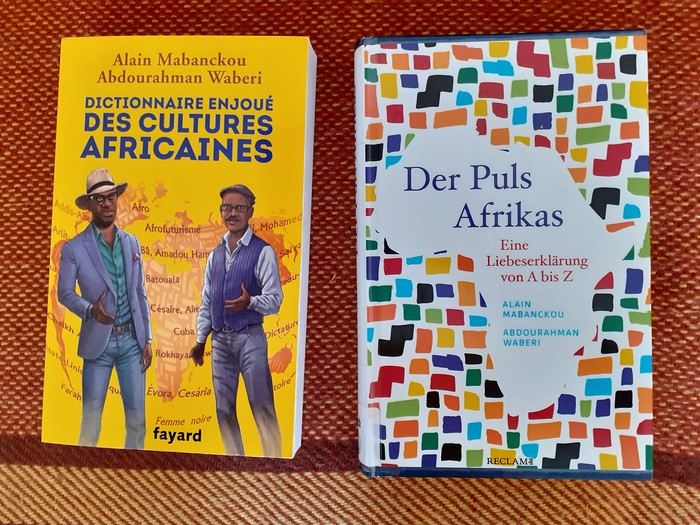
The Maggi cube, an unchallenged hegemony, and so much more
“The hopeless continent,” headlined The Economist, a British magazine, in July 2000 about Africa. Eleven years later, the same magazine headlined “Africa rising” instead. Images of Africa in the prosperous North constantly oscillate between apocalyptic scenarios and enthusiastic projections. A key issue with such images lies in the generalization they entail. If you look at the continent, considerable contrasts emerge depending on space and time. It’s no surprise that a region of the world encompassing such diverse ecological zones, maintaining such varied ties with other continents, comprising nearly fifty nation-states in sub-Saharan Africa alone, and characterized by a great diversity of languages, belief systems, and historical paths, doesn’t share a single destiny.
And yet, for many people outside Africa, as well as for many Africans, the continent constitutes a single entity, defined by criteria such as skin color, a colonial past, poverty, and the art of survival. Until now, these perspectives were generally accompanied by the idea that Africa had to—or should have—followed a single path together, sometimes called development, sometimes modernization, sometimes liberation, then a market economy. None of these paths delivered on their promises.
The two writers Alain Mabanckou and Abdourahman Waberi—one from Congo, the other raised in Djibouti, both long settled in France and now professors at renowned North American universities (Los Angeles, Washington)—have had enough of pessimistic scenarios: “We are aware that Africa is in the world and the world is in Africa. The same goes for all other continents, as our destinies are inextricably linked for better or worse. We refuse to see Africa as a reservoir of misfortunes or a continent cursed by atavistic misfortune and characterized by ethnic conflicts. [...] It’s this passionate flame we wanted to capture in a book [...] a kind of stroll through African cultures, without any demands, each letter of the alphabet leading us to a notion, a practice, a concept, a moment in history, literature, painting, politics, economics, cuisine, etc.” (p.10-11). Africa, they write, is on the verge of “imposing a signature, a style, a way of being in the world and in relation to the rest of the world.” (p.11) To put words to the continent’s diversity and dynamism, the two authors created a “rambling ABC,” a kind of portrait—or more precisely, a mythography—that lets you see and feel the pulse of a vast continent whose cultural power is unfolding before our eyes. Once marginalized or even mocked, the voice and importance of the Continent in global affairs are now undeniable” (p.11), containing over a hundred entries, mostly concise, written in a relaxed and casual style. The optimistic, even exuberant tone is set from the brief introduction. The duo of authors wants to “sing a love song to the cultures of our continent, to its inhabitants past and present, to its exceptional resources and its spectacular globalization despite a certain pollution that still clouds our skies due to the unmatched duration of dictatorships in some of our regions.” (p.12) In doing so, they don’t want to be too distracted by today’s Afewerki-Biya-Bongo-Déby & Co. ...
Of course, you’ll find tributes to great precursors like Frantz Fanon (“[...] it was a love story and admiration that wasn’t dimmed by the four decades separating his birth from ours. Let’s add that we were born while the native of Fort-de-France had left the world’s stage four years earlier, in the prime of life” p.141), Mongo Beti (“You must read and reread Mongo Beti, a genius who used his fame to support often just causes in Africa, like defending oppressed groups. His place is already in History. His oppressors, like the dictators Ahmadou Ahidjo and Paul Biya, can’t compete in the same category” p.64), the Malian Amadou Hampâté Bâ
(“Posterity remembers him mainly as an tireless defender of African cultures. His plea for the collection and preservation of traditional African knowledge remains a major event for all men and women of good will. One day in 1960, at the UNESCO podium, the native of Bandiagara sounded the alarm: ‘[...] Since we’ve admitted that the humanity of each people is the heritage of all humanity, if African traditions aren’t collected in time and written down, they’ll one day be missing from the universal archives of humanity.’” p.51),
Kwame Nkrumah, “one of the founders of Pan-Africanism, father of Ghana’s independence” (p.239), as well as the historian Cheikh Anta Diop, the writer, poet, and politician Aimé Césaire, and the economist and thinker Samir Amin, but also very warm tributes to certain contemporary African intellectuals like Souleymane Bachir Diagne and Achille Mbembe
(“A few years ago, in dominant economic circles, a rumor often resurfaced, usually disguised as a cold and scientifically proven analysis: Africa is useless. It’s a burden for the rest of the human community. With its 2% share in world trade, it would disappear from stock market radars without anyone noticing. So? Maybe it’ll be pulled up by other continents. Wanting to surpass itself is a crazy bet for Africans, they concluded. Arrogant or clueless, President Nicolas Sarkozy declared before an audience of students and teachers at Cheikh Anta Diop University in Dakar: ‘The African man hasn’t entered history enough [...] He only knows the eternal repetition of time marked by the endless repetition of the same gestures and words.’ That was in 2007. For decades, armed only with reason, an intellectual often steps up to debunk prejudices, lazy readings, and dishonest frameworks used as false fronts by those who, like Nicolas Sarkozy or former journalist Stephen Smith, out of ignorance, contempt, or condescension, distort African reality. This intellectual is none other than the historian and political scientist Achille Mbembe. This heir of Frantz Fanon, Amílcar Cabral, Jean-Marc Ela, and Fabien Eboussi-Boulaga was born in 1957 in Cameroon, in the Bassa region. Marked early by the upheavals of a fratricidal war, Achille Mbembe became the guardian of the memory of martyrs. After brilliant studies in Paris, he went on to teach at the best American universities, but the call of the Continent was stronger than anything else. In Dakar, he once directed CODESRIA (Council for the Development of Social Science Research in Africa) before joining the University of the Witwatersrand in Johannesburg, South Africa. Even though the author of *Critique of Black Reason* (Éditions La Découverte, 2015) spends a few months at Duke University in North Carolina, his observation post remains South Africa. From Johannesburg, Achille Mbembe scrutinizes Africa and the whole world. A lucid observer with an elegant and generous pen, Achille Mbembe knows how to blend big and small history: ‘I was born one day in July, as the month was drawing to a close. It was 1957, in that part of Africa recently named ‘Cameroon,’ a memory of the wonder that seized Portuguese sailors in the 15th century when, sailing up the river near Douala, they couldn’t help but note the presence of a multitude of crustaceans, and named it *Rio dos Camarões*, meaning ‘River of Shrimp.’ I grew up in the shadow of this nameless land, since, in a way, the name it bears is only the product of someone else’s astonishment: a lexical mistake, if you will.’ From this mistake or wound, he made leaven, a springboard to compose a rich work, recognized worldwide. To denounce barriers and barbarians too. But that’s not enough. Among his peers in circles of thought and action, Achille Mbembe passionately and consistently defends human dignity and the beauty of the world. In doing so, he fulfills the mission Frantz Fanon entrusted to him.” (p.227-229),
as well as entries dedicated to lesser-known artists and intellectuals, like the French journalist and activist Rokhaya Diallo, daughter of Senegalese and Gambian parents, or the Ethiopian filmmaker Haile Gerima, who has long lived in the United States. Other names from politics, sports, music, art, and literature: Kofi Annan, p.36; Barack Obama, p.243; Thomas Sankara, p.277; Ousmane Sow, p.285; Yambo Ouologuem, p.250; Léopold Sédar Senghor, p.282; Muhammad Ali, p.30; Nuruddin Farah, p.146; Salif Keita, p.203; Ahmadou Kourouma, p.206; Ngũgĩ wa Thiong’o, p.236; Winnie Mandela, p.224; Kylian Mbappé, p.226 ...
The authors, who resolutely commit to a “mythography” (p.11) of Africa, also pay special attention to local social movements, cultural events, and aspects of daily life. *Y’en a marre*, “which also meant ‘we’re fed up with sitting on our hands’” (p.320-321), emerged about a decade ago in Senegal as a citizen movement of peaceful resistance and symbolizes, the authors emphasize, the fact that African youth are increasingly fed up “with the political circus deployed in Africa since independence, as our parents would say, ‘since the White man left’...” (p.321). A full entry is dedicated to the Maggi bouillon cube, which has flooded African markets for about forty years and enjoys immense popularity (“It’s everywhere in Africa, from Dakar to Djibouti, and from Tangier to Cape Town. It’s in every pot, every stew. Little hands put it in every sauce, every local or adapted dish. An unchallenged hegemony! You’ll find it in diasporas too. The culinary strolls in Paris, in the [...] neighborhood” p.90). Critics blame it not only for impoverishing the aromatic diversity of local dishes but also for being harmful to health. And yet, “he poorest Africans, those who eat only once a day, a few spoonfuls of white beans and a ball of *foufou*, for example, are the most fervent users of the magic cube.” (p.92-93)
For *fonio*, “the new trendy cereal. [...] From the millet family, fonio is probably the oldest cereal cultivated in West Africa, and mainly in its sub-Saharan part, for millennia. [...] Easy to grow, water-efficient, fonio grows everywhere except on clay soils. Long neglected because it was considered the poor man’s crop, fonio is now a source of pride for the farmers who cultivate it and cherish it like the apple of their eye” (p.156-157), the authors immediately offer a detailed recipe, letting the reader know that “e can’t resist sharing this fonio with chicken recipe from Mali with you:
Ingredients: 1 chicken 3 large ripe red tomatoes 4 tbsp tomato paste 4 large onions 1 garlic clove 1/2 cup oil 2 Maggi cubes or salt 2 large carrots 1 turnip 1 large cabbage 2 large potatoes 1 celery stalk 1 packet pre-cooked fonio 4 okra (or okra powder) salt, pepper
Preparation: 1. Prepare the sauce: wash and cut the chicken. Peel the onions, garlic, and vegetables. 2. In a pot, fry the chicken pieces. 3. Dice the onions, tomatoes, carrots, and turnip very small and add them to the pot. 4. Add the tomato paste, salt, and pepper. 5. Simmer for 15 min, then add 2 L of water and the cooked chicken pieces. 6. Simmer for 30 min, then add the crushed garlic and celery, plus the cabbage cut into 4 and the potatoes cut in half. 7. Prepare the fonio: cover it with warm water, let it rest for 15 min, and cook it over low heat. 8. In a small pot, boil the okra and crush them. 9. Mix the crushed okra with the cooked fonio, then salt. Serve hot.” (p.158-159)
The comedy *Black Mic Mac*, released in French theaters in 1986 and addressing France’s increasingly restrictive immigration policy at the time, also gets an entry, as do *Tintin in the Congo*, the popular comic, and *Jip’s Café* (“[...] a little Africa in the heart of Paris, with passersby stopping to admire the ‘ambianceurs’ on the dance floor or attend the cultural events offered by the place” (p.194), an African establishment in Paris that Alain Mabanckou already immortalized in one of his novels.
The duo of authors also tackles thorny subjects like jihadism (p.119), the Rwandan genocide (p.272), the CFA franc (p.82), and dictatorship (p.110). While the two strike the right tone here, many entries leave a slightly bitter taste. Two examples: why doesn’t the text on Barack Obama mention the great disappointment of many people in Africa, who expected more from the African policy of the first U.S. president with African roots than just occasional warm words? Why do the comments on Winnie Mandela gloss over the fact that she was a highly controversial icon of the anti-apartheid movement due to her involvement in kidnappings, acts of torture, and murders of alleged apartheid collaborators? Instead, there’s a compassion that brings tears to the eyes: “She was often reduced to a secondary role, the wife of a great man” or “When victory came, she didn’t taste its fruits. Divorced, isolated. She would never be a ‘first lady’ in an evening gown, posing before a bed of chrysanthemums. They’d keep her far from the circles of power” (p.224-225). At this point, I would’ve liked the authors to take a slightly more critical stance...
That said, these “weaknesses” (if you can call them that) shouldn’t overshadow the book as a whole. It remains an informative, sometimes very entertaining, and often even original work in its own way.
Book information (the original French and the German translation):
Alain Mabanckou/Abdourahman Waberi. Dictionnaire enjoué des cultures africaines. Fayard, 2019. Alain Mabanckou/Abdourahman Waberi. Der Puls Afrikas. Eine Liebeserklärung von A bis Z. Reclam, 2022.
Hery
Staircases. Photo contest theme for May 2026.
Hello
This month’s photo contest theme for May 2026 is "Staircases"
Plural or singular? Does it really matter as long as you’re told you’ve gone up or down them well?
Anyway, it’s not that complicated, even though I’m sure some will manage to overcomplicate it—after all, why keep things simple when making them complicated is so much more fun (as an Indian proverb goes).
To participate: Submit your photos until Monday, May 25 at 11:59 PM You can post up to 3 photos, numbered and shared in separate messages, along with a short description of the location and the story behind it.
To vote: From Tuesday, May 26 at 12:01 AM until Saturday, May 30 at 11:59 PM After the deadline, it’s too late.
Please include the photo number, username, and the points awarded: Photo #1 = 3 pts Photo #2 = 2 pts Photo #3 = 1 pt
All VF members can vote (even those who didn’t submit photos). In case of a tie for first place, the winning photo will be the one with the most first-place votes, then second-place votes! The lucky winner will get to organize June 2026’s photo contest.
For discussions about the theme, click here: Discussion thread for May 2026’s theme: Staircases
This month’s photo contest theme for May 2026 is "Staircases"
Plural or singular? Does it really matter as long as you’re told you’ve gone up or down them well?
Anyway, it’s not that complicated, even though I’m sure some will manage to overcomplicate it—after all, why keep things simple when making them complicated is so much more fun (as an Indian proverb goes).
To participate: Submit your photos until Monday, May 25 at 11:59 PM You can post up to 3 photos, numbered and shared in separate messages, along with a short description of the location and the story behind it.
To vote: From Tuesday, May 26 at 12:01 AM until Saturday, May 30 at 11:59 PM After the deadline, it’s too late.
Please include the photo number, username, and the points awarded: Photo #1 = 3 pts Photo #2 = 2 pts Photo #3 = 1 pt
All VF members can vote (even those who didn’t submit photos). In case of a tie for first place, the winning photo will be the one with the most first-place votes, then second-place votes! The lucky winner will get to organize June 2026’s photo contest.
For discussions about the theme, click here: Discussion thread for May 2026’s theme: Staircases
Practical aspects spring 2026: border to Murmansk, to Pskov, SIM cards, internet.
I took a few days to get some fresh air outside the Schengen-NATO prison. Between March 18, 2026, and March 25, 2026, as shown by the passport stamps:
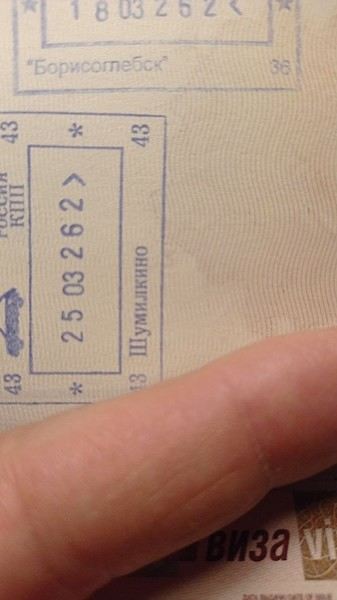
Borisoglebsk is the Russian border checkpoint after Kirkenes, on the road to Murmansk.
Kirkenes is a tiny town with a correspondingly small airport. Nothing has changed there: the minibuses to Murmansk wait on the right as you exit the airport. They’re synchronized with the two daily flights from Oslo—the SAS around 11:00 AM and Norwegian around 11:30 AM. They stop in Kirkenes at the corner of the Scandic for an hour, where other passengers can board, then head straight to the nearby border.
This is the least hassle Frontex/Schengen border. The Norwegian agent quickly scans your passport, and that’s it. No customs, since Norway is Schengen but not in the EU. On the Russian side, there’s a passport check and a quick customs inspection. All in all, crossing both the Norwegian and Russian checkpoints takes about 15 minutes.
A paper visa is required; e-visas aren’t accepted.
Two companies run the route: Avto Ekspress and Borodin: https://ae51.ru/routes/kirkenes-murmansk/ https://borodinbus.com/
The one-way fare is 5,500 ₽. You can either buy it online in rubles with a MIR card or make a formal reservation and pay in NOK cash to the driver. I took Borodin, and the price in NOK was much more expensive than in ₽.
=========================
On March 25, I left from Pskov via the Estonian border post at Luhaama. I spent three days in Murmansk, flew to St. Petersburg (SPB), stayed there for two days, then took an evening train to Pskov.
Since the end of February—and reportedly until the end of May—the Estonians have restricted the opening hours of the two border crossings near Pskov: Koidula (Pechory on the Russian side) and Luhaama (Izborsk on the Russian side). They’re closed at night between 7:00 PM and 7:00 AM. Right now, there’s a bus from Pskov at 7:00 AM to the border. It drops you off at the end of the road where truckers—many Kazakh and Serbian—are parked on the side. You finish the rest on foot to the barrier, where there’s a quick initial check for Ukrainian stamps in passports. Then you walk to the customs building, followed by passport control at the kiosk for motorists. After that, it’s a 500-meter walk to the Estonian checkpoint. At the moment, things seem calmer. Passport control is quick. The usual silly questions in English: "Where were you? Where are you going?" I just gave my most clueless smile: "Sorry, I don’t understand." Yeah, right—I don’t speak English, especially not at an Estonian border with a French passport. If they’re in a mood, though... A very quick bag inspection. Once you exit the Estonian post, walk to the bus stop sign by the road where another coach takes you to Riga.
The catch: in my case, last Wednesday, there were two passengers (Russians) with old Ukrainian stamps in their passports. The bus from the Estonian post to Riga was supposed to leave around 9:30 AM. We ended up leaving around noon after the two were grilled by the FSB. Since it was a weekday outside of holidays, the bus was half-empty. The fuller the bus and the more people with Ukrainian stamps, the worse the nightmare. Don’t book a same-day flight from Riga. I had a flight at 6:00 PM, so it worked out.
=============
The Kirkenes-Murmansk route is still clearly the easiest and fastest. But it’s not the most convenient since it’s way up north.
Next, I’d say the Gdansk-Kaliningrad route in the middle of the week. Avoid weekends and holiday departures/returns.
Avoid the Narva-Ivangorod route during Christmas, Easter, May 9, and *all* summer.
==============
About flights from Murmansk to St. Petersburg: prices are good. I bought my ticket the day before departure on Rossiya for 7,500 ₽, including 10 kg of luggage + a handbag.
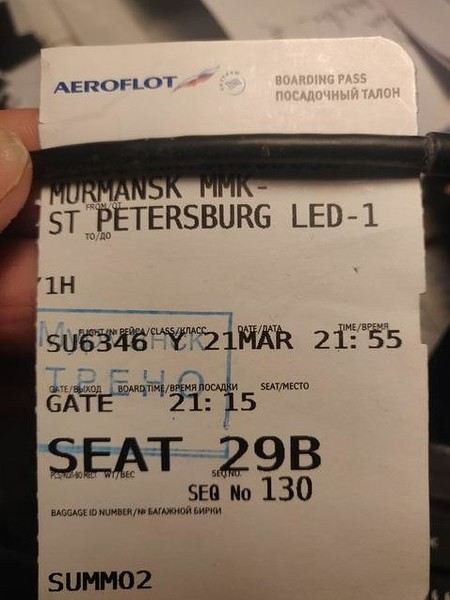
It’s the tail end of the northern lights season, and there were still crowds of Chinese tourists.
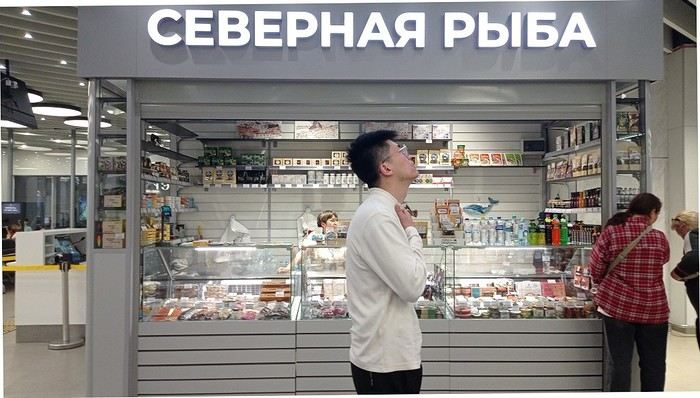
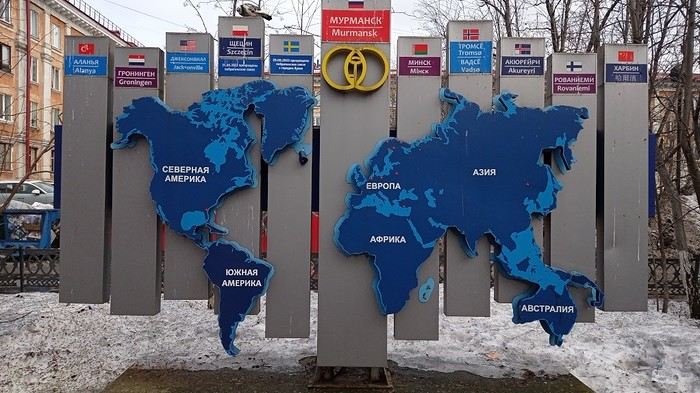
By the way, Murmansk is twinned with Harbin:
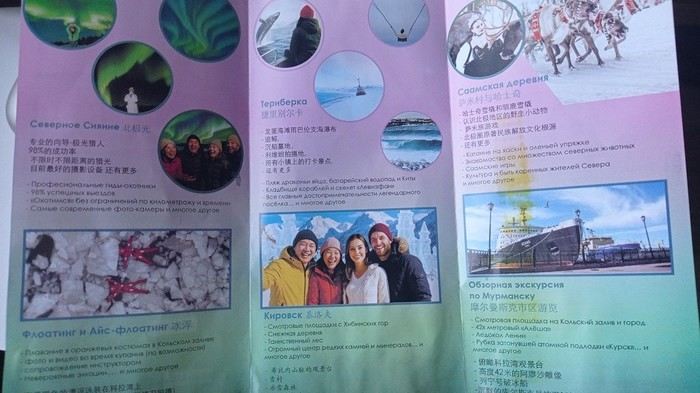
Chinese tourists are the largest foreign group, followed by Indians, then a mix of others from the Far East, Turks, Arabs, etc. Brochures are bilingual—Russian and Chinese:
============================
But let’s talk practical stuff. --
My domestic SIM card was restricted for SMS and internet for 24 hours. After that, if you want to keep using SMS, don’t turn off your phone—restarting triggers another 24-hour purgatory.
My Russian SIM cards (Megafon, MTS, Beeline) were activated as soon as I logged into their respective apps with my credentials.
Internet --
Telegram is heavily slowed down by authorities. To use it, you need to connect through proxy servers, which you load into the latest version of the app. Traffic is then rerouted internally within Telegram to servers outside Russia (Germany, Poland, Sweden, etc.). You can find these proxies on various channels. One is ChatVPN—check their website too.
For general internet use, like browsing the web, VPNs that work right now use the VLESS protocol. You can find several on Telegram by searching "VPN." A few free days, then payment in rubles or crypto.
Rozkomnadzor’s team are experts at this, so things can change. It’s a constant cat-and-mouse game.
Pskov is a special case. The city is near Estonia and has a large military base. Depending on NATO drone swarms launched from the Baltics, Wi-Fi can be completely suspended except for the most essential mobile apps. The drone swarms use the 4G network, and the powerful electronic jamming and drone suppression systems cause periods without Wi-Fi—including in hotels. Wired connections aren’t affected.
Borisoglebsk is the Russian border checkpoint after Kirkenes, on the road to Murmansk.
Kirkenes is a tiny town with a correspondingly small airport. Nothing has changed there: the minibuses to Murmansk wait on the right as you exit the airport. They’re synchronized with the two daily flights from Oslo—the SAS around 11:00 AM and Norwegian around 11:30 AM. They stop in Kirkenes at the corner of the Scandic for an hour, where other passengers can board, then head straight to the nearby border.
This is the least hassle Frontex/Schengen border. The Norwegian agent quickly scans your passport, and that’s it. No customs, since Norway is Schengen but not in the EU. On the Russian side, there’s a passport check and a quick customs inspection. All in all, crossing both the Norwegian and Russian checkpoints takes about 15 minutes.
A paper visa is required; e-visas aren’t accepted.
Two companies run the route: Avto Ekspress and Borodin: https://ae51.ru/routes/kirkenes-murmansk/ https://borodinbus.com/
The one-way fare is 5,500 ₽. You can either buy it online in rubles with a MIR card or make a formal reservation and pay in NOK cash to the driver. I took Borodin, and the price in NOK was much more expensive than in ₽.
=========================
On March 25, I left from Pskov via the Estonian border post at Luhaama. I spent three days in Murmansk, flew to St. Petersburg (SPB), stayed there for two days, then took an evening train to Pskov.
Since the end of February—and reportedly until the end of May—the Estonians have restricted the opening hours of the two border crossings near Pskov: Koidula (Pechory on the Russian side) and Luhaama (Izborsk on the Russian side). They’re closed at night between 7:00 PM and 7:00 AM. Right now, there’s a bus from Pskov at 7:00 AM to the border. It drops you off at the end of the road where truckers—many Kazakh and Serbian—are parked on the side. You finish the rest on foot to the barrier, where there’s a quick initial check for Ukrainian stamps in passports. Then you walk to the customs building, followed by passport control at the kiosk for motorists. After that, it’s a 500-meter walk to the Estonian checkpoint. At the moment, things seem calmer. Passport control is quick. The usual silly questions in English: "Where were you? Where are you going?" I just gave my most clueless smile: "Sorry, I don’t understand." Yeah, right—I don’t speak English, especially not at an Estonian border with a French passport. If they’re in a mood, though... A very quick bag inspection. Once you exit the Estonian post, walk to the bus stop sign by the road where another coach takes you to Riga.
The catch: in my case, last Wednesday, there were two passengers (Russians) with old Ukrainian stamps in their passports. The bus from the Estonian post to Riga was supposed to leave around 9:30 AM. We ended up leaving around noon after the two were grilled by the FSB. Since it was a weekday outside of holidays, the bus was half-empty. The fuller the bus and the more people with Ukrainian stamps, the worse the nightmare. Don’t book a same-day flight from Riga. I had a flight at 6:00 PM, so it worked out.
=============
The Kirkenes-Murmansk route is still clearly the easiest and fastest. But it’s not the most convenient since it’s way up north.
Next, I’d say the Gdansk-Kaliningrad route in the middle of the week. Avoid weekends and holiday departures/returns.
Avoid the Narva-Ivangorod route during Christmas, Easter, May 9, and *all* summer.
==============
About flights from Murmansk to St. Petersburg: prices are good. I bought my ticket the day before departure on Rossiya for 7,500 ₽, including 10 kg of luggage + a handbag.
It’s the tail end of the northern lights season, and there were still crowds of Chinese tourists.
By the way, Murmansk is twinned with Harbin:
Chinese tourists are the largest foreign group, followed by Indians, then a mix of others from the Far East, Turks, Arabs, etc. Brochures are bilingual—Russian and Chinese:
============================
But let’s talk practical stuff. --
My domestic SIM card was restricted for SMS and internet for 24 hours. After that, if you want to keep using SMS, don’t turn off your phone—restarting triggers another 24-hour purgatory.
My Russian SIM cards (Megafon, MTS, Beeline) were activated as soon as I logged into their respective apps with my credentials.
Internet --
Telegram is heavily slowed down by authorities. To use it, you need to connect through proxy servers, which you load into the latest version of the app. Traffic is then rerouted internally within Telegram to servers outside Russia (Germany, Poland, Sweden, etc.). You can find these proxies on various channels. One is ChatVPN—check their website too.
For general internet use, like browsing the web, VPNs that work right now use the VLESS protocol. You can find several on Telegram by searching "VPN." A few free days, then payment in rubles or crypto.
Rozkomnadzor’s team are experts at this, so things can change. It’s a constant cat-and-mouse game.
Pskov is a special case. The city is near Estonia and has a large military base. Depending on NATO drone swarms launched from the Baltics, Wi-Fi can be completely suspended except for the most essential mobile apps. The drone swarms use the 4G network, and the powerful electronic jamming and drone suppression systems cause periods without Wi-Fi—including in hotels. Wired connections aren’t affected.
Discussion around March 2026's Theme: Metal, Metallic
This is where we share stories (or post extra photos) around March’s theme Metal, Metallic.
Back to the March 2026 contest: HERE
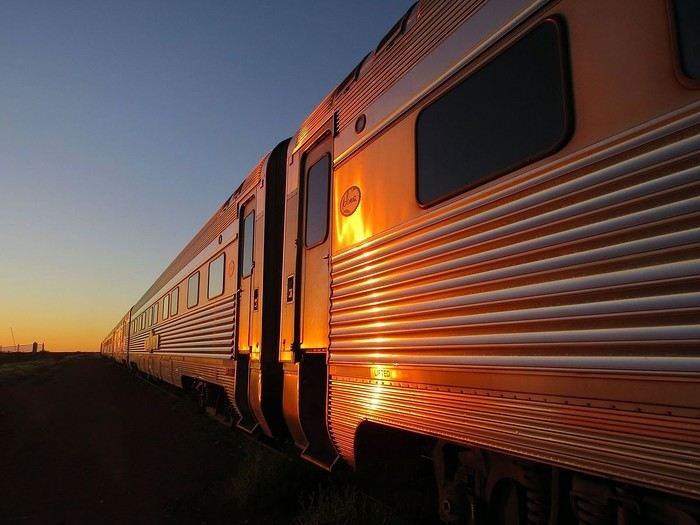
The Ghan (train connecting Adelaide to Darwin), at dawn.
Back to the March 2026 contest: HERE
The Ghan (train connecting Adelaide to Darwin), at dawn.
Societal Evolution
Hello everyone,
It’s something we often notice in this forum—and many others—this behavioral shift.
A long-time member, or even a new one, asks a question. They get one or more answers, some brief, some detailed, and then... nothing???
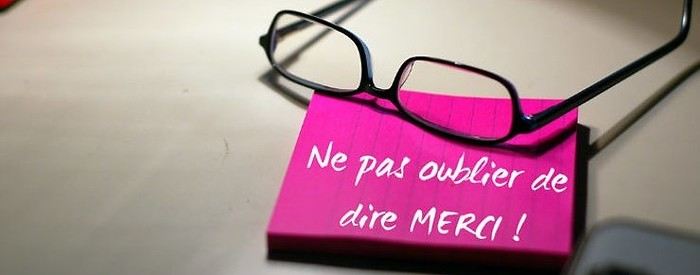
Not even a simple thank you!!!
From what I’ve gathered, if the answers don’t align with what they wanted to hear, it seems natural for the asker to just disappear!! 😕 Unless—(and I fear this is the case)—basic politeness is no longer part of our society????
Please forgive my little rant.
Wishing everyone all the best. Cheers,
Puma2A
...
It’s something we often notice in this forum—and many others—this behavioral shift.
A long-time member, or even a new one, asks a question. They get one or more answers, some brief, some detailed, and then... nothing???
Not even a simple thank you!!!
From what I’ve gathered, if the answers don’t align with what they wanted to hear, it seems natural for the asker to just disappear!! 😕 Unless—(and I fear this is the case)—basic politeness is no longer part of our society????
Please forgive my little rant.
Wishing everyone all the best. Cheers,
Puma2A
...
Impressions after two months in El Salvador
Hi there,
In 2024, I spent two months solo in El Salvador. While I’m still putting together my travel journal on Myatlas, here’s a quick recap. It’s a country where it’s really easy to travel without a guide or agency.
SAFETY:
For a long time, the country was considered one of the most dangerous in the world because of the "maras," ultra-violent gangs. But today, I think it’s the safest country in Latin America.
BUDGET:
For French tourists, the country is very affordable, especially in the less touristy regions.
TRANSPORT:
I got around everywhere by local bus.
Local buses go everywhere and run all the time. For me, it’s the best way to travel in El Salvador—you’re fully immersed, moving at the pace of the locals, and interacting with Salvadorans who are eager to connect with travelers.
I saw all sorts of things on those buses—I’ve got dozens of stories!
PEOPLE:
I’m used to traveling all over Latin America, and for me, Salvadorans are the warmest and most welcoming. Everywhere you go, people say, "Welcome to El Salvador!" The connections and long conversations with locals were my favorite part of the trip.
TOURIST CROWDS:
The country isn’t well-known among European tourists, but Americans and Quebecers visit. Overall, it’s still pretty low-key, especially compared to other Central American countries. That said, tourism has been growing since security improved significantly.
WHAT I LOVED ❤️
-Suchitoto, one of the most beautiful colonial towns in Central America.
-The volcanoes—there are so many! Santa Ana is the most touristy.
-The lakes—also plentiful. Coatepeque is the most famous, but there are lots of lagoons too.
-The mountainous regions, where the cooler weather is a nice break: La Palma, Perquín, Cerro El Pital, etc.
-The charming villages along the Ruta de las Flores, especially Nahuizalco with its nighttime atmosphere and food stalls. Juayúa and others are great too.
-The conversations with people who lived through the horrors of the civil war in Perquín and Cinquera. I met one of them by chance while waiting for a bus.
For surfers, El Salvador is a paradise, with world-famous beaches.
WHAT I LIKED LESS:
I loved almost everything, but I found the archaeological sites a bit underwhelming. Joyabaj de Cerén is billed as the "Pompeii of El Salvador," which is a stretch (though it *is* a UNESCO World Heritage Site for its historical value).
In 2024, I spent two months solo in El Salvador. While I’m still putting together my travel journal on Myatlas, here’s a quick recap. It’s a country where it’s really easy to travel without a guide or agency.
SAFETY:
For a long time, the country was considered one of the most dangerous in the world because of the "maras," ultra-violent gangs. But today, I think it’s the safest country in Latin America.
BUDGET:
For French tourists, the country is very affordable, especially in the less touristy regions.
TRANSPORT:
I got around everywhere by local bus.
Local buses go everywhere and run all the time. For me, it’s the best way to travel in El Salvador—you’re fully immersed, moving at the pace of the locals, and interacting with Salvadorans who are eager to connect with travelers.
I saw all sorts of things on those buses—I’ve got dozens of stories!
PEOPLE:
I’m used to traveling all over Latin America, and for me, Salvadorans are the warmest and most welcoming. Everywhere you go, people say, "Welcome to El Salvador!" The connections and long conversations with locals were my favorite part of the trip.
TOURIST CROWDS:
The country isn’t well-known among European tourists, but Americans and Quebecers visit. Overall, it’s still pretty low-key, especially compared to other Central American countries. That said, tourism has been growing since security improved significantly.
WHAT I LOVED ❤️
-Suchitoto, one of the most beautiful colonial towns in Central America.
-The volcanoes—there are so many! Santa Ana is the most touristy.
-The lakes—also plentiful. Coatepeque is the most famous, but there are lots of lagoons too.
-The mountainous regions, where the cooler weather is a nice break: La Palma, Perquín, Cerro El Pital, etc.
-The charming villages along the Ruta de las Flores, especially Nahuizalco with its nighttime atmosphere and food stalls. Juayúa and others are great too.
-The conversations with people who lived through the horrors of the civil war in Perquín and Cinquera. I met one of them by chance while waiting for a bus.
For surfers, El Salvador is a paradise, with world-famous beaches.
WHAT I LIKED LESS:
I loved almost everything, but I found the archaeological sites a bit underwhelming. Joyabaj de Cerén is billed as the "Pompeii of El Salvador," which is a stretch (though it *is* a UNESCO World Heritage Site for its historical value).
"Tropical Odyssey" CFC Renaissance – November 1st to 22nd, 2025
We’ve just returned from a cruise that my wife and I will remember—unfortunately, not in a good way.
There’s so much to say that I’ll proceed chapter by chapter.
Pre-Cruise
On January 24th, 2025, I booked through a supposedly attentive cruise agent the repositioning cruise of the CFC Renaissance to the French West Indies, initially departing from Le Havre, then from Dunkirk, on November 1st, 2025.
The return flight was included in the price of this trip.
From January, right after booking, this adventure got off to a bad start.
Used to major cruise lines, I asked my agent to reserve a table for 4 at the "Vatel" restaurant for the second seating, and to link this reservation to the cabin of friends traveling with us. First brush-off: "Ask the maître d’ at the restaurant entrance on the first night."
"To govern is to foresee, and to foresee nothing is to head for disaster," as Émile de Girardin said.
Following this maxim, in February, I started looking for transportation to Le Havre, which was initially the departure port. Then, I asked the travel agent which airport the return flight would land at. I knew flights from Pointe-à-Pitre to Paris served both main Parisian airports. Here, I found myself like a ping-pong ball between the cruise agent and CFC: The cruise agent said, "Ask CFC," and CFC replied, "No, your agent is your intermediary—ask them." It went back and forth like that. Impossible to pre-book the flight that would take us back to our final destination. During the summer, we learned that the departure port was no longer Le Havre but Dunkirk. We canceled our transfers to Le Havre but, of course, lost the cost of the reservations. Meanwhile, we purchased our "Beverage" package—we chose the "Fraîcheur" option, which included all non-alcoholic cocktails, canned sodas, fruit juices, bottled water, and regular coffees. This detail is important for the rest of the story. Every month, I followed up to find out the return airport. Nothing until October 28th (3 days before departure), when CFC finally informed me it was Orly, along with the flight number and time. Of course, on top of booking at full price, I had to arrange my final transfer home. Since I had very little time before the return flight, I had to book an Uber in a rush for the Orly/CDG transfer. Right after, we were told that our first stop in Lisbon—the most anticipated for many cruisers—had been canceled due to a strike at the port of Lisbon and replaced with Vigo, Spain. A completely unremarkable stop—nothing outstanding. As you can see, the prelude was already problematic, yet we’re far from reaching the peak of our disappointments. .......... to be continued soon.
"To govern is to foresee, and to foresee nothing is to head for disaster," as Émile de Girardin said.
Following this maxim, in February, I started looking for transportation to Le Havre, which was initially the departure port. Then, I asked the travel agent which airport the return flight would land at. I knew flights from Pointe-à-Pitre to Paris served both main Parisian airports. Here, I found myself like a ping-pong ball between the cruise agent and CFC: The cruise agent said, "Ask CFC," and CFC replied, "No, your agent is your intermediary—ask them." It went back and forth like that. Impossible to pre-book the flight that would take us back to our final destination. During the summer, we learned that the departure port was no longer Le Havre but Dunkirk. We canceled our transfers to Le Havre but, of course, lost the cost of the reservations. Meanwhile, we purchased our "Beverage" package—we chose the "Fraîcheur" option, which included all non-alcoholic cocktails, canned sodas, fruit juices, bottled water, and regular coffees. This detail is important for the rest of the story. Every month, I followed up to find out the return airport. Nothing until October 28th (3 days before departure), when CFC finally informed me it was Orly, along with the flight number and time. Of course, on top of booking at full price, I had to arrange my final transfer home. Since I had very little time before the return flight, I had to book an Uber in a rush for the Orly/CDG transfer. Right after, we were told that our first stop in Lisbon—the most anticipated for many cruisers—had been canceled due to a strike at the port of Lisbon and replaced with Vigo, Spain. A completely unremarkable stop—nothing outstanding. As you can see, the prelude was already problematic, yet we’re far from reaching the peak of our disappointments. .......... to be continued soon.
Mauritian Ti' Punch
The recipe for the cocktail: endless beaches, a dazzling palette of colors, some breathtaking hikes, and excellent cuisine...
For the tasting, follow along in the pages of this travel journal! 😉
Don’t forget your hiking shoes, a swimsuit, sunscreen, but also a sweater, your driver’s license, and your credit card...
Just over 11 hours of flight, and we’ll be setting foot on Mauritian soil!
For the tasting, follow along in the pages of this travel journal! 😉
Don’t forget your hiking shoes, a swimsuit, sunscreen, but also a sweater, your driver’s license, and your credit card...
Just over 11 hours of flight, and we’ll be setting foot on Mauritian soil!
Traveling solo at any age!!!
Hey hey,
A great way to meet locals! I got hooked on it over the years, and after a few women-only trips with an all-female agency (bad experiences with 5 to 10 chicks every time—many of them think they’re well-educated but actually stick their noses in everything 🤪), I’m heading out solo again soon. (Don’t ask me where—I rarely plan my trips and usually leave on a whim within days. Thinking of Canada in September, should be cool!)
Little tip for those who are nervous but still want to travel solo: It’s all about attitude because everything shows on your face. Sometimes approached by aggressive or just rowdy groups, it’s easy to spot the ringleader (it’s the one running his mouth 😏). And that’s who you need to target—use a tone that’ll leave him speechless (after that, you’ve won, and sometimes they even become friends). Not always, though! 😄
Little tip for those who are nervous but still want to travel solo: It’s all about attitude because everything shows on your face. Sometimes approached by aggressive or just rowdy groups, it’s easy to spot the ringleader (it’s the one running his mouth 😏). And that’s who you need to target—use a tone that’ll leave him speechless (after that, you’ve won, and sometimes they even become friends). Not always, though! 😄
What are the criteria that make you choose one destination over another?
Hi there,
The title might be a bit long, but I hope it’s completely understandable!
When it comes to choosing your next trip, what tips the scales in favor of Eritrea over Ibiza?
Why pick Canada over French Polynesia?
The price? A magazine or TV report, a travel journal, an Instagram ad? Ease of travel? Minimal time difference? The country that has the most in common with all the trip participants? Activities? Relaxation? The desire to push your limits?
A photo?
What else, I wonder...
Personally, I often prioritize simple destinations (no administrative hassles), where I’m not at risk (nothing extraordinary like getting kidnapped by Daesh or ending up in a jail cell because the current geopolitics aren’t favorable to my passport, etc.), and where I can drive.
Wide-open natural spaces are more my thing than urban anthills.
Finally, I try not to spend three days on a plane to reach my destination, and I aim for a maximum budget of 3500 € (for 3 weeks) in comfortable conditions—that means charming hotels, good meals, etc.
What about you?🙂
The title might be a bit long, but I hope it’s completely understandable!
When it comes to choosing your next trip, what tips the scales in favor of Eritrea over Ibiza?
Why pick Canada over French Polynesia?
The price? A magazine or TV report, a travel journal, an Instagram ad? Ease of travel? Minimal time difference? The country that has the most in common with all the trip participants? Activities? Relaxation? The desire to push your limits?
A photo?
What else, I wonder...
Personally, I often prioritize simple destinations (no administrative hassles), where I’m not at risk (nothing extraordinary like getting kidnapped by Daesh or ending up in a jail cell because the current geopolitics aren’t favorable to my passport, etc.), and where I can drive.
Wide-open natural spaces are more my thing than urban anthills.
Finally, I try not to spend three days on a plane to reach my destination, and I aim for a maximum budget of 3500 € (for 3 weeks) in comfortable conditions—that means charming hotels, good meals, etc.
What about you?🙂
First trips after...
A turbulent period came to an end around 2022.
Many of us have returned to big trips after making only very small ones—or none at all. For a little anecdote, my dentist told me that due to the lack of travel, a lot of clients treated themselves to implants they would’ve otherwise skipped. The joy of traveling again probably gave some vacationers smiles they hadn’t dared to show before!
Here, you can share what’s on your mind: Have these new, real trips disappointed you, rejuvenated you, or just relieved a long frustration?
For my part, not being so young anymore, there was definitely relief but no explosion of joy. I just had the feeling of picking up the thread of life after a foggy pause, with the bitter taste that 2 or 3 years of my life had been partly stolen from me.
Many of us have returned to big trips after making only very small ones—or none at all. For a little anecdote, my dentist told me that due to the lack of travel, a lot of clients treated themselves to implants they would’ve otherwise skipped. The joy of traveling again probably gave some vacationers smiles they hadn’t dared to show before!
Here, you can share what’s on your mind: Have these new, real trips disappointed you, rejuvenated you, or just relieved a long frustration?
For my part, not being so young anymore, there was definitely relief but no explosion of joy. I just had the feeling of picking up the thread of life after a foggy pause, with the bitter taste that 2 or 3 years of my life had been partly stolen from me.
Discussion sur le thème (concours septembre 2020): lieux, scènes de départ ou d'arrivée
Rebonjour, 🙂
C'est ici que l'on discute , échange, sur le thème: lieux, scènes de départ ou d'arrivée.
Pour revenir au concours, c'est ici
Retaper et traverser l'Atlantique en bateau (voilier)
Salut!
Je poste car depuis quelques temps j'ai un projet avec un ami. Nous sommes étudiants et nous prenons une année de césure. Notre objectif est de traverser l'Atlantique à la voile et de visiter les pays d'Amérique. Nous voulons donc acheter un bateau, le refaire et l'utiliser. On ferait ainsi pas mal d'économies. Je ne m'y connais pas trop en réparation de bateau mais à 2 nous sommes confiants sur notre capacité à réussir. Je demande sur ce forum car je ne m'y connais pas trop sur les types de navires. Je sais naviguer mais quel type de bateau chercher je ne sais pas trop. Nous ferions de la navigation équatoriale majoritairement et nous cherchons à réduire un max sur le budget (mais en restant safe quand même... On veut pas trop de problème au milieu de l'océan). J'ai entendu dire qu'il faudrait un monocoque qui fait 3 fois la taille de la houle, donc au moins du 9m pour l'Atlantique et que les anciens bateaux (fait par fibre et pas une coque en moule/contremoule) sont des bons partis. Voilà je peux apporter plus d'infos mais je suis un peu perdu sur les navires que je pourrais chercher (j'étais parti sur un FIRST mais je pense qu'on peut faire bien moins cher...) Je suis ouvert à toutes vos précisions/conseils/détails :)
Merci!
Je poste car depuis quelques temps j'ai un projet avec un ami. Nous sommes étudiants et nous prenons une année de césure. Notre objectif est de traverser l'Atlantique à la voile et de visiter les pays d'Amérique. Nous voulons donc acheter un bateau, le refaire et l'utiliser. On ferait ainsi pas mal d'économies. Je ne m'y connais pas trop en réparation de bateau mais à 2 nous sommes confiants sur notre capacité à réussir. Je demande sur ce forum car je ne m'y connais pas trop sur les types de navires. Je sais naviguer mais quel type de bateau chercher je ne sais pas trop. Nous ferions de la navigation équatoriale majoritairement et nous cherchons à réduire un max sur le budget (mais en restant safe quand même... On veut pas trop de problème au milieu de l'océan). J'ai entendu dire qu'il faudrait un monocoque qui fait 3 fois la taille de la houle, donc au moins du 9m pour l'Atlantique et que les anciens bateaux (fait par fibre et pas une coque en moule/contremoule) sont des bons partis. Voilà je peux apporter plus d'infos mais je suis un peu perdu sur les navires que je pourrais chercher (j'étais parti sur un FIRST mais je pense qu'on peut faire bien moins cher...) Je suis ouvert à toutes vos précisions/conseils/détails :)
Merci!