Results for "Outer+Banks+|+3+>+99"
22950 results found.
Premier voyage seule à Marrakech English translation pending
Bonjour,
J'ai 46 ans et je vais faire mon premier voyage seule.
Je pars à Marrakech depuis Poitiers le 23 Juin, donc très bientôt. Pourriez-vous me donner des conseils :
Sachant que je suis plutôt discrète si je ne connais pas et très joyeuse quand je commence à rencontrer (j'ai prévu les pantalons amples mais souples, les t-shirts cachant les épaules et les bras, les chaussures cachant les orteils...) alors après ?
- Rester la semaine complète à Marrakech (j'ai vu des riads pour 15 euros la nuit) ? - Plutôt se déplacer ? vers Essouira, Ouarzazate, Rabat, etc... ? - Comment ne pas être toujours seule ? aller vers les gens ? Attendre d'être à l'hotel, en riad, en auberge de jeunesse ?
Merci de vos grands conseils.
Je pars à Marrakech depuis Poitiers le 23 Juin, donc très bientôt. Pourriez-vous me donner des conseils :
Sachant que je suis plutôt discrète si je ne connais pas et très joyeuse quand je commence à rencontrer (j'ai prévu les pantalons amples mais souples, les t-shirts cachant les épaules et les bras, les chaussures cachant les orteils...) alors après ?
- Rester la semaine complète à Marrakech (j'ai vu des riads pour 15 euros la nuit) ? - Plutôt se déplacer ? vers Essouira, Ouarzazate, Rabat, etc... ? - Comment ne pas être toujours seule ? aller vers les gens ? Attendre d'être à l'hotel, en riad, en auberge de jeunesse ?
Merci de vos grands conseils.
Que voir en Bretagne? English translation pending
Bonjour à tous,
Le mois prochain j’envisage d’aller en France et de visiter quelques villes à Bretagne. Pourriez-vous me donner quelques sites incontournables ? J’emprunte l’itinéraire : 1 jour à Rennes, puis 3 jours dans une ville près de la mer. Qu’en pensez-vous ?
Dans l’attente de votre réponse. Je suis preneur de vous suivre.
Le mois prochain j’envisage d’aller en France et de visiter quelques villes à Bretagne. Pourriez-vous me donner quelques sites incontournables ? J’emprunte l’itinéraire : 1 jour à Rennes, puis 3 jours dans une ville près de la mer. Qu’en pensez-vous ?
Dans l’attente de votre réponse. Je suis preneur de vous suivre.
Chauffeur / guide francophone pour le Sri Lanka? English translation pending
Bonjour,
Nous sommes à la recherche d'un guide/chauffeur francophone pour visiter le Sri Lanka.
Nous désirons un circuit nature.
Merci pour vos réponses
AB07
Ramener des souvenirs des Etats-Unis English translation pending
Bonjour à tous , je suis actuellement en voyage pour notre roadtrip aux états unis , on a acheté divers souvenir mais une question qu'on vient de se poser : pour ramener tout ça en France , comment cela se passe t'il quand on sera a l'aéroport de San Francisco ? Doit on les déclarer , y'aurait t'il une taxe en plus ? Si oui combien ? Ce sont des souvenirs classiques genre tasse , magnet , chapeau ect ....... Merci d'avance à vous
Problèmes techniques pour l'obtention du e-Visa Inde actuellement English translation pending
Bonjour, voici ce que je viens de trouver sur la page 'Actualités' du Routard :
Des dysfonctionnements techniques nous ont été signalés sur le site internet des autorités indiennes délivrant le nouveau e-visa pour l'Inde, notamment au moment du paiement. Par conséquent, aucun e-visa indien n'est délivré actuellement. Cela avait déjà été le cas en janvier 2016. Il est donc recommandé de procéder à l'obtention du visa indien "classique" avant le départ dans le passeport, pour éviter tout problème en amont (paiement, photo, saisie en ligne...) ou en aval (impression du evisa, problème de passeport...).
http://www.routard.com/actualite-du-voyage/cid134419-inde-problemes-techniques-pour-l-obtention-du-e-visa.html
Bonne soirée à tous Anne-Cécile
Des dysfonctionnements techniques nous ont été signalés sur le site internet des autorités indiennes délivrant le nouveau e-visa pour l'Inde, notamment au moment du paiement. Par conséquent, aucun e-visa indien n'est délivré actuellement. Cela avait déjà été le cas en janvier 2016. Il est donc recommandé de procéder à l'obtention du visa indien "classique" avant le départ dans le passeport, pour éviter tout problème en amont (paiement, photo, saisie en ligne...) ou en aval (impression du evisa, problème de passeport...).
http://www.routard.com/actualite-du-voyage/cid134419-inde-problemes-techniques-pour-l-obtention-du-e-visa.html
Bonne soirée à tous Anne-Cécile
EuroVelo entre Budapest et Belgrade English translation pending
Après avoir fait Passau-Budapest l'année derniere , on se pose des questions sur la suite. Qui a déja ralier Belgrade sur l'Eurovélo ? Y a t'il beaucoup de passage sur des routes fréquentées? Est ce joli?
Merci de vos témoignages
La Thaïlande cesse d’exploiter les activités touristiques dans les 3 îles de Phuket English translation pending
« Dans 3 iles à Phuket, au sud de la Thaïlande, on a cessé d’accueillir les voyageurs pour protéger les récif étant dans la situation dangereuse », annoncé par les autorités thaïlandaises le 25 Mai
Ces iles (Koh Khai Nai, Khai Nok et Khai Nui) couvèrent totalement 246 récifs.
Toutes les infrastructures servant le tourisme ont été enlevées après 80% de récifs détruites.
Les arrivées préfèrent cette destination où elles peuvent se plonger pour admirer les récifs et voir les poissons. Pourtant, les habitants locaux doivent être témoigne du processus de la pâle des récifs de corail, qui peut avoir lieu de manière naturelle mais il peut se produire plus rapide à cause des activités humaines.
Quelles gorges du sud-ouest France visiter en camping-car? English translation pending
Bonjour,
Nous sommes une famille de 4 avec 2 petites puces de 3 et 6 ans. Nous venons d'acquérir un camping car et découvrons avec plaisir la liberté que cela procure! Pour l'instant nous l'avons testé uniquement en week end et cet été (août) sera le 1er test pour presque 3 semaines! Nous sommes de Bretagne et envisageons de longer la Dordogne (Périgord) puis de descendre découvrir les gorges... La questions c'est lesquelles??! Tarn, Ardèche, Aveyron.... Nous ne connaissons pas du tout. Selon vous lesquelles seraient les mieux adaptées avec notre véhicule (6m de long, 2.5m de large, 3m de haut + kayak sur galerie)? J'ai pu lire à droite et gauche qu'avec un camping car en août c'est compliqué, qu'en pensez-vous? Nous recherchons, outre un paysage magnifique, des points d'eau pour une baignade en sécurité avec les enfants, et éventuellement des endroits où profiter de notre kayak dans des eaux calmes! Je suis preneuse de tous vos avis et petits coins secrets qui nous ferons découvrir ces beaux paysages!! Merci d'avance pour vos conseils! Adeline
Nous sommes une famille de 4 avec 2 petites puces de 3 et 6 ans. Nous venons d'acquérir un camping car et découvrons avec plaisir la liberté que cela procure! Pour l'instant nous l'avons testé uniquement en week end et cet été (août) sera le 1er test pour presque 3 semaines! Nous sommes de Bretagne et envisageons de longer la Dordogne (Périgord) puis de descendre découvrir les gorges... La questions c'est lesquelles??! Tarn, Ardèche, Aveyron.... Nous ne connaissons pas du tout. Selon vous lesquelles seraient les mieux adaptées avec notre véhicule (6m de long, 2.5m de large, 3m de haut + kayak sur galerie)? J'ai pu lire à droite et gauche qu'avec un camping car en août c'est compliqué, qu'en pensez-vous? Nous recherchons, outre un paysage magnifique, des points d'eau pour une baignade en sécurité avec les enfants, et éventuellement des endroits où profiter de notre kayak dans des eaux calmes! Je suis preneuse de tous vos avis et petits coins secrets qui nous ferons découvrir ces beaux paysages!! Merci d'avance pour vos conseils! Adeline
Kuala Lumpur: capitale "plaque tournante" en Asie du Sud-Est? English translation pending
La ville de Kuala Lumpur pourrait-elle être une plaque tournante concurrentielle avec celle de Bangkok? ( au vu des formalités plus complexes avec les entrées/ visas, ... en Thaïlande..). La présence du hub d'Air Asia n'est-il pas intéressant notamment pour se rendre en Birmanie? Etc...
Pour être concret: dans le cas d'un séjour de 4 mois avec multiples entées et sorties dans la région du SE asiatique, et pour éviter le nouveau visa de 6 mois en Thaïlande mais avec beaucoup de paperasses (et de baths), ne vaut-il pas la peine d'envisager un voyage avec Kuala Lumpur comme "centre d'action" dans la région? Merci pour les avis éclairés et expérimentés.
Pour être concret: dans le cas d'un séjour de 4 mois avec multiples entées et sorties dans la région du SE asiatique, et pour éviter le nouveau visa de 6 mois en Thaïlande mais avec beaucoup de paperasses (et de baths), ne vaut-il pas la peine d'envisager un voyage avec Kuala Lumpur comme "centre d'action" dans la région? Merci pour les avis éclairés et expérimentés.
Bangkok - Krabi en train ou bus de nuit? English translation pending
j'aimerai me rendre à ko lanta .
1 - Trajet bangkok - krabi en m'arretant le long du trajet.
2 - ou Bangkok - krabi en bus de nuit.
Pouvez vous m'indiquer les horaires et les prix et comment faire pour réserver les billets.
Merci
Moyens de transport de Roissy à Paris English translation pending
Bonjour,
J’ai l’occasion de visiter Paris au mois de Septembre prochain. Pour bien préparer avant le départ, j’ai quelques questions : Quel moyen de transport pour aller de Roissy au centre de la ville ? Pourriez-vous me donner des infos d’usage des Bus à Roissy (Le prix, l’abribus …). Dans l’attende de votre réponse.
Merci à tous.
Perron Bernard
J’ai l’occasion de visiter Paris au mois de Septembre prochain. Pour bien préparer avant le départ, j’ai quelques questions : Quel moyen de transport pour aller de Roissy au centre de la ville ? Pourriez-vous me donner des infos d’usage des Bus à Roissy (Le prix, l’abribus …). Dans l’attende de votre réponse.
Merci à tous.
Perron Bernard
Visite de la Côte d'Azur en septembre English translation pending
Bonjour,
Moi et ma famille, nous allons à Côte d’Azur au mois de septembre prochain. Nous aurons seulement 3 jours pour découvrir cette région. Nous savons qu’il possède des sites touristiques célèbres. Cependant nous ne pourrons pas visiter tous car nous n’avons pas de temps. Pourriez-vous me donner des conseils sur les sites touristiques à ne pas rater ?
Merci à tous
Launay Adrien
Moi et ma famille, nous allons à Côte d’Azur au mois de septembre prochain. Nous aurons seulement 3 jours pour découvrir cette région. Nous savons qu’il possède des sites touristiques célèbres. Cependant nous ne pourrons pas visiter tous car nous n’avons pas de temps. Pourriez-vous me donner des conseils sur les sites touristiques à ne pas rater ?
Merci à tous
Launay Adrien
Ferry Express-des-Îles avec voiture entre Martinique et Guadeloupe English translation pending
Bonjour tout le monde, je vais en Martinique et Guadeloupe en décembre. J'arriverais en Martinique, louerais une voiture à l'aéroport, irais en Guadeloupe Avec Express-des-Îles le jour prochain pour deux semaines, puis retournerais en Martinique pour une semaine, et finalement retournerais en Europe.
Ma question est: combien couterait un aller-retour Martinique-Guadeloupe-Martinique pour une voiture Avec deux personnes?
J'ai tenté de leur envoyer deux e-mails, sans recevoir de réponse, et appeler, ce m'est très cher.
Pourrait quelqu'un qui y habite s'il vous plaît faire un appel à Express-des-îles et demander?
Merci en avance
Ma question est: combien couterait un aller-retour Martinique-Guadeloupe-Martinique pour une voiture Avec deux personnes?
J'ai tenté de leur envoyer deux e-mails, sans recevoir de réponse, et appeler, ce m'est très cher.
Pourrait quelqu'un qui y habite s'il vous plaît faire un appel à Express-des-îles et demander?
Merci en avance
Marocain en croisière au départ de Miami: visa pour chaque pays? English translation pending
Bonjour je suis de nationalité marocaine j'ai 41 ans et je vie en France depuis 40 ans mon beau père nous offres à ma femme et moi une croisière au départ de Miami avec comme escales Bahamas , st martin , Porto Rico , puis retour Miami je voudrai savoir que faire pour les papier Visa ou pas pour chaque pays ou pas dois-je me rendre à l'ambassade des États Unis à paris pour un rendez vous etc etc
Merci de votre réponses le croisèrent est prévue pour le 4 novembre 2016
Merci
Météo île de Cat Ba en décembre English translation pending
bonjour,
Je pars au vietnam en décembre 2016 et je souhaitais connaître la météo sur l'île de Cat ba à cette période. Savoir surtout si on peut profiter des plages. Merci à tous
Je pars au vietnam en décembre 2016 et je souhaitais connaître la météo sur l'île de Cat ba à cette période. Savoir surtout si on peut profiter des plages. Merci à tous
Fermeture des frontières du Tibet du 18 au 23 juin English translation pending
Bonjour
Notre guide vient de nous annoncer par mail que la Chine allait fermer les frontières du Tibet du 18 au 23 juin prochain. Cela nous mets bien dans l'embarras car c'était en plein pendant notre voyage.
Nous avons déjà booké un Pekin Lhassa le 14 juin, et un Chengdhu-Lhassa le 3 juillet...
Donc, avez-vous des conseils à nous donner ? que faire ? y aller quand même et voir sur place si c'est vraiment fermé ? S'arrêter en train quelques gares avant la région autonome et visiter le reste du Tibet "pas autonome" ? changer complètement notre voyage ?
merci pour vos conseils. on est un peu dégouté et surtout un peu perdus sur ce qu'on devrait faire...
Gab
Notre guide vient de nous annoncer par mail que la Chine allait fermer les frontières du Tibet du 18 au 23 juin prochain. Cela nous mets bien dans l'embarras car c'était en plein pendant notre voyage.
Nous avons déjà booké un Pekin Lhassa le 14 juin, et un Chengdhu-Lhassa le 3 juillet...
Donc, avez-vous des conseils à nous donner ? que faire ? y aller quand même et voir sur place si c'est vraiment fermé ? S'arrêter en train quelques gares avant la région autonome et visiter le reste du Tibet "pas autonome" ? changer complètement notre voyage ?
merci pour vos conseils. on est un peu dégouté et surtout un peu perdus sur ce qu'on devrait faire...
Gab
Expérience très récente de Airbnb English translation pending
Ce we de Pentecôte nous décidons au dernier moment une balade en Bretagne sud du côté de Benodet/Fouesnant. Habitués à voyager à "l'arrache" sans réservation, nous décidons d'essayer ce fameux site si réputé Airbnb.
Nous trouvons très facilement une chambre dans nos prix, remplissons le premier formulaire, sortons la carte de crédit et payons...
Croyant l'affaire réglée nous attendons les coordonnées téléphone et adresse précise du logement. Et les "soucis" commencent. S'en suis un très long questionnaire de choses plus ou moins personnelles, demande de photos gros plan du visage de bonne qualité pour ne pas surprendre le loueur (délit de sale gueule ??), plusieurs photos si possibles pour cerner la personnalité, (???) le comble arrive avec une demande de scan d'une pièce d'identité, passeport, permis de conduire ou carte d'identité...
Je m'exécute, déjà de très mauvaise humeur. Le premier scan ne leur plaît pas, j'envoie un autre du passeport, idem, Airbnb demande plus net, plus précis...
Tout cela commence à me gonfler sérieusement, nous qui voyageons dans le monde entier sans autre forme que la facilité de notre carte de crédit ! On ne m'a jamais jeté avec ma tronche de travers ! Ah aussi, une précision, j'ai transmis des photos de ma femme bien plus sexy que moi, mais ai laissé mon prénom plutôt masculin. Aucun souci.
Ensuite viennent des questions plus que pertinentes et indiscrètes et je décide de passer outre. Ferme l'ordinateur on verra sur place le lendemain !
Sauf que le lendemain, je reçois un sms de la logeuse, qui attend que je termine le dossier pour me donner ses coordonnées. Je comprends très vite que ses sms, comme les miens sont filtrés par Airbnb. Elle ne reçois pas toutes mes demandes et ses réponses sont titrées Airbnb..Et le numéro de téléphone des sms n'est pas joignable, pas d'abonné selon Orange. Un comble !Finalement le temps passe, et alors que je suis dans sa petite ville mais sans l'adresse, je reçois un sms disant que le temps imparti est dépassé, réservation annulée et remboursé fin de mois !!! Car je n'ai pas terminé le formulaire.
Questionnant les habitants, personne ne connaît notre logeuse qui doit utiliser un pseudo.
Nous trouverons un logement très agréable, un mobile home 4 *, extrêmement confortable, des motards grands baladeurs plus bavards que moi, et aussi un défilé de voiture anciennes exceptionnelles. Nous n'avions jamais osé ce type d'hébergement, nous recommencerons. Très indépendant, vous n'êtes pas contraint comme chez l'habitant,
Dommage pour la logeuse qui a perdu une location
Si vous avez des aventures semblables, merci d'en faire part.
Qui connaît bien Airbnb ? Il est impossible de les joindre pour "discuter" !
Voyager à moto en Inde English translation pending
Bonjour,
De retour d’un voyage en inde de plus de 6 mois dont 5 mois à moto, je viens y raconter mon expérience afin que ceux qui ont dans l’idée de faire de même puisse avoir des réponses à leurs questions
Voyager à moto en inde c’est possible ! Que ce soit par location, achat neuf ou d’occasion.
En ce qui me concerne j’ai acheté une Enfield 500cc d’année 2012 à une famille indienne. La recherche de la moto peut être un peu compliqué pour qui ce lance à l’aveugle, les garagistes ne vois que le portefeuille sur patte et trouver quelqu’un de sérieux se fait rare quand il s’agit d’investir une somme d’argent assez onéreuse pour le pays.
En gros ce qu’il faut savoir : Une Enfield neuve en 350cc varie du simple model environ 90.000 roupies (1.400 e) à 125.000 roupie (1.800 e). Pour la 500cc neuve il faut compter 180.000 roupie. Pour l’occasion tout se complique mais grosso modo pour une moto avec 20.000 bornes comptez entre 110.000 roupie et 120.000 pour la 500cc. Cela vous donne une idée pour les prix. De plus vous pouvez consulter QuickR.in qui est l’équivalent du bon coin français.
Si vous décidez de faire un trip à moto en Enfield autour de l’inde, opter pour une 350 rare sont les indiens qui possèdent une 500 et après un voyage de 5 mois sur une 500 on commence à comprend pourquoi. La 500cc est plus chère en entretien, les problèmes n’apparaissent pas directement à l’inverse de la 350 (on pourrait parler de fiabilité), elle consomme beaucoup plus en essence et les pièces à changer coute plus chère…seule plus, quand on arrive en montagne chargé à deux avec des sacs, on a un peu plus de puissance. Mais je vous conseille la 350.
Pour finir je vous donne l’adresse d’un indien, Atul, qui m’a énormément aidé pour revendre ma moto et qui est devenu par la suite un très bon ami, c’est une personne de confiance (rare en inde quand il s’agit de parler argent…) Je vous conseil pour toutes vos questions concernant l’achat, la location ou la vente de lui poser directement, il vous sera d’une aide précieuse, de plus il habite à Vârânasî, étape clé d’un voyage en Inde.
Sur ce Namaste, bonne route, amusez-vous bien et faite attention.
De retour d’un voyage en inde de plus de 6 mois dont 5 mois à moto, je viens y raconter mon expérience afin que ceux qui ont dans l’idée de faire de même puisse avoir des réponses à leurs questions
Voyager à moto en inde c’est possible ! Que ce soit par location, achat neuf ou d’occasion.
En ce qui me concerne j’ai acheté une Enfield 500cc d’année 2012 à une famille indienne. La recherche de la moto peut être un peu compliqué pour qui ce lance à l’aveugle, les garagistes ne vois que le portefeuille sur patte et trouver quelqu’un de sérieux se fait rare quand il s’agit d’investir une somme d’argent assez onéreuse pour le pays.
En gros ce qu’il faut savoir : Une Enfield neuve en 350cc varie du simple model environ 90.000 roupies (1.400 e) à 125.000 roupie (1.800 e). Pour la 500cc neuve il faut compter 180.000 roupie. Pour l’occasion tout se complique mais grosso modo pour une moto avec 20.000 bornes comptez entre 110.000 roupie et 120.000 pour la 500cc. Cela vous donne une idée pour les prix. De plus vous pouvez consulter QuickR.in qui est l’équivalent du bon coin français.
Si vous décidez de faire un trip à moto en Enfield autour de l’inde, opter pour une 350 rare sont les indiens qui possèdent une 500 et après un voyage de 5 mois sur une 500 on commence à comprend pourquoi. La 500cc est plus chère en entretien, les problèmes n’apparaissent pas directement à l’inverse de la 350 (on pourrait parler de fiabilité), elle consomme beaucoup plus en essence et les pièces à changer coute plus chère…seule plus, quand on arrive en montagne chargé à deux avec des sacs, on a un peu plus de puissance. Mais je vous conseille la 350.
Pour finir je vous donne l’adresse d’un indien, Atul, qui m’a énormément aidé pour revendre ma moto et qui est devenu par la suite un très bon ami, c’est une personne de confiance (rare en inde quand il s’agit de parler argent…) Je vous conseil pour toutes vos questions concernant l’achat, la location ou la vente de lui poser directement, il vous sera d’une aide précieuse, de plus il habite à Vârânasî, étape clé d’un voyage en Inde.
Sur ce Namaste, bonne route, amusez-vous bien et faite attention.
8-Day Trip to the Marquesas Islands from Papeete
This trip is a more budget-friendly—and shorter—alternative to the 14-day Aranui 5 cruise, which includes a few days at sea and a detour to Bora Bora in the Leeward Islands on the way back. The advantage of the cruise is that it lets you see and visit (though far too quickly) the two islands of Tahuata and Fatu Hiva, which don’t have airports. By plane, you’ll only be able to land on 4 of the 6 islands. However, Tahuata is accessible from Hiva Oa via a day trip (or two-day trip) shuttle. Plan for two extra days in your total time dedicated to the Marquesas Islands (called *Fenua Enata* in Marquesan language).
Our itinerary is perfect for those who aren’t excited by cruises and prefer to get closer to the local communities. This 9-day trip cost us around 2500 € all-inclusive. For a 14-day cruise on the Aranui, expect to pay 2300 € per person for a basic cabin for four, or 3800 € per person for a superior double cabin.
Air Tahiti offers a 4-island Marquesas Pass (Nuku Hiva, Ua Pou, Ua Huka, and Hiva Oa) for 86,000 XPF (about 700 €). The journey is made on an ATR 72 from Tahiti to Nuku Hiva or Hiva Oa, and on a 19-seat Twin Otter between the islands (often only 13 or 15 seats are available due to cargo, so book well in advance). We’re traveling as a couple. We booked our family-run guesthouse stays at the Tourism Fair in early February, where you can meet the owners and make your choice. Stays are almost always half-board or breakfast-only. Transfers are usually included, but you can always book a car or taxi.
**NUKU HIVA**
**A LITTLE GEOGRAPHY** Nuku Hiva (NH) is located about 1,500 km from Tahiti, in the north of French Polynesia. At 387 km², it’s the second-largest island in French Polynesia after Tahiti. It was formed by incredible volcanic phenomena and cataclysms between 1 and 6 million years ago, which lifted the island thousands of meters above the sea. Even after millennia of slow erosion, collapses, and settling, NH remains the most majestic of the Marquesas, with its sheer cliffs, deep valleys featuring immense waterfalls, and black walls that were once the inner walls of enormous volcanoes.
**A LITTLE HISTORY** The first contact between NH’s inhabitants and Europeans was in 1595 with Spanish navigators who only stayed briefly. It wasn’t until the late 18th century that Europeans arrived in greater numbers on NH (and the other Marquesas Islands), disrupting a very fragile social and cultural balance. It’s believed that nearly 100,000 people lived on Nuku Hiva at that time—a population decimated over the decades by epidemics, diseases brought by Europeans, and alcohol used for barter. The disastrous result: by the 1930s, only 2,500 people remained, having largely lost their identity and living in poverty. Today, the island has about 2,600 inhabitants spread across several villages, with Taiohae as the main one.
**NUKU HIVA IN LITERATURE**
1 / One of the famous writers who visited NH and stayed there was Herman Melville, who arrived in July 1842, the author of *Moby Dick*. The island had just come under French protectorate. Seduced by the enchanting *vahinés* and dazzled by his paradisiacal vision of the place, Melville deserted his ship. He ended up a prisoner of a local tribe, the Taipi, in Taipivai, where he stayed for a month and a half until an Australian ship captain secured his release in exchange for a musket and a roll of cotton fabric! Melville wrote a novel about this tumultuous episode in his life, considered a classic of travel literature. The book, *Typee: A Peep at Polynesian Life*, published in 1846 in the United States, was a huge success.
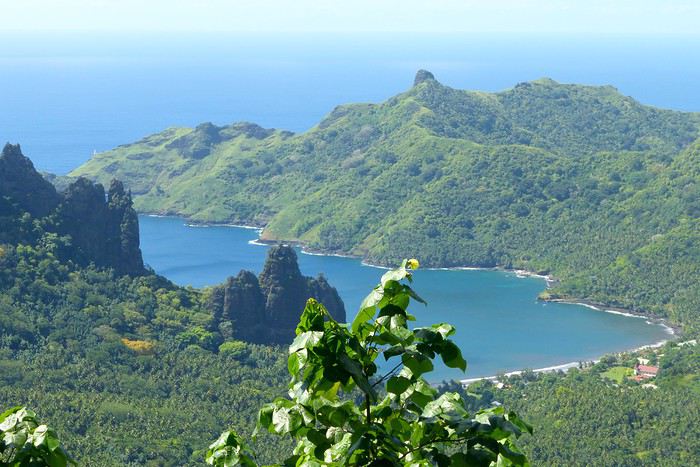
2 / Another famous Scottish writer, Robert Louis Stevenson, arrived in NH aboard a yacht that anchored in Anaho Bay, the island’s most beautiful, in July 1888. Stevenson was already known for two magnificent novels that marked their era: *Treasure Island* and *Dr. Jekyll & Mr. Hyde*. Stevenson, too, was captivated by the island’s natural beauty, though he also noted the devastating decline in identity, socio-cultural life, and physical health of a population ravaged by disease and alcohol. His account of his stay, *In the South Seas: An Account of Experiences and Observations in the Marquesas, Paumotus, and Gilbert Islands During Two Cruises on the Yacht Casco (1888) and the Schooner Equator (1889)*, was published in 1896 in New York, four years after his death in Apia, Western Samoa, where he had settled. It was also published in London in 1900.
3 / In August 1903, Victor Segalen, a French naval doctor, ethnologist, and archaeologist, landed in NH from the ship *La Durance*, sent to Polynesia to recover the possessions of the painter Paul Gauguin, who had died in April of that year. He, too, was enthralled by the Marquesas but lamented the loss of identity, dignity, and pride of the Māori, alienated by a Christianization that destroyed their culture and customs, denied their gods, and erased their past. He wrote about his experience, doubts, and fears in *Les Immémoriaux*.
4 / In December 1907, Jack London arrived in NH aboard the sailboat *Stark*, following in the footsteps of his illustrious predecessor, Herman Melville. London was in poor physical condition, exhausted from his relentless travels that had taken him from the Klondike in Canada to Japan, Australia, and London in Europe. He was appalled and shocked by Nuku Hiva’s degraded health situation: where Melville had encountered over 2,000 vigorous and healthy Marquesan warriors, London found only 12 suffering from various diseases—the rest had been wiped out by tuberculosis! His approach remained humanistic, and he maintained a sharp geopolitical awareness of these traditional Polynesian cultures, weakened by the inexorable advance of modernity in the early 20th century. He continued his journey to the Tuamotu Islands and Tahiti, publishing *Martin Eden*, the moving account of his initiatory voyage in the South Pacific, in 1911.
5 / Finally, Alain Gerbault, a writer, linguist, ethnologist, and tireless traveler, arrived in the Marquesas via the Panama Canal in December 1933. He was completely exhausted after an endless crossing on a small sailboat, the *Firecrest*. Enthralled by his stay in the Marquesas, he continued to the Tuamotu Islands in 1934, then Tahiti in 1935. Gerbault fought for the preservation of traditions, as well as the songs and dances banned by the Churches and the French Administration (these bans lasted over 50 years, mind you...!!!). Bora Bora remained his favorite island. A staunch Pétainist during World War II, he was forced to flee Bora Bora for Samoa, then Tonga, and finally Timor, a half-Portuguese island and thus neutral during the war. His travel accounts, *In Pursuit of the Sun: Logbook from New York to Tahiti* and *A Paradise Is Dying*, were published in the late 1940s. He died in Timor in 1941, and his ashes were repatriated to Bora Bora.
Back to our trip and stay.
**Day 1: April 27**
Departure from Papeete at 6:30 AM—we had to wake up two hours earlier and reach the airport in the dark. Takeoff at dawn, good weather en route, flight duration: 4 hours.
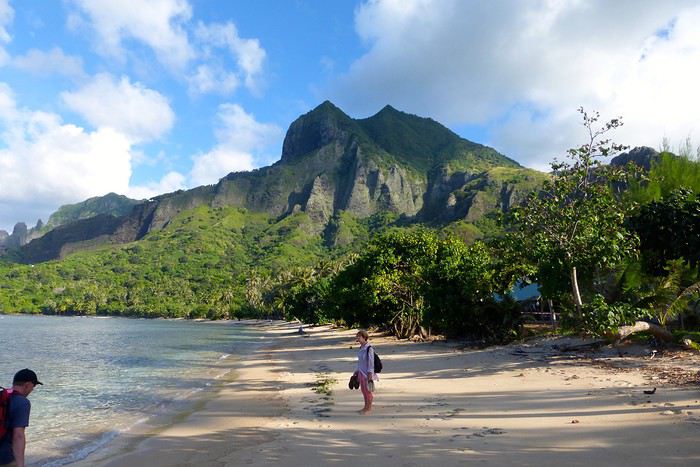
Arrival around 10:30 AM in Nuku Hiva, the first stop of this trip. We booked two nights in half-board at Pension Koku’u, transfers included. Maybe not such a great idea, those included transfers, especially on this unique island where the airport is located on *Terre Déserte*, on the other side of the mountain, opposite and about 45 km from the main village of Taiohae. They’re charged at a steep price. Expect 6,000 XPF round-trip by taxi, but 15,000 XPF charged by guesthouses or hotels. The difference is notable. It wasn’t the best idea, but we can’t go back. Even for residents like us who know how to travel in Polynesia, the Air Tahiti employee who sold me the Pass couldn’t give any useful advice about the stay itself—probably because he’d never been to the Marquesas. It’s really annoying! In short, the good idea to remember is renting a car (like a Suzuki) to be free to manage your time and stop at leisure. The road signage is a bit basic, but you’ll manage just fine. Our host Alvane waits for us—without a sign (sic!)—and after searching for each other for 5 minutes, we’re off on a journey of over an hour (with photo stops) in a Land Rover with smooth tires (luckily, it’s not raining!). The recently paved and marked mountain road is impeccable. No time to catch our breath at the guesthouse; we leave immediately (not a great idea after waking up at dawn plus 4 hours on a plane) for a half-day hike that was also included in the prepaid stay. A sandwich was provided (really pathetic for the physical effort required), we have water, and we fill a few bottles at the spring near the ceremonial site of Taipivai, our first stop. Then the hike begins in the Hanaheu Valley, descending toward Anaho Bay and its namesake beach. A magnificent and wild spot, a few sailboats anchored, we swim—the water is really warm, over 30°C at the shore. That warm is rare and not necessarily pleasant. We then have to climb a very steep slope; this hike is actually quite tough. The air is still, humid, and stifling under the foliage, there’s a bit of mud, and tiny ants (which don’t bite, I’ll have you know), locally called *fofolles*, running over shoes, ankles, and calves. Not very pleasant...! On top of that, there are mosquitoes to protect against! In hindsight, it seems wise to bring energy bars from Papeete if you plan to hike on the afternoon of your arrival day. We weren’t careful... Result: a moment of weakness for me and a hyperventilation attack climbing back up from Anaho Bay!!! We return to the guesthouse at night. There we find Claudine and her four children—Marquesan-style atmosphere, friendly and casual. We share family life. Very simple room with a bathroom, no mosquitoes, we can sleep with the window open, but the night will be noisy, as is often the case in Polynesia. Roosters are everywhere and don’t sleep, dogs bark or whine. So we end up waking up early... like everyone else.
**Day 2: April 28**
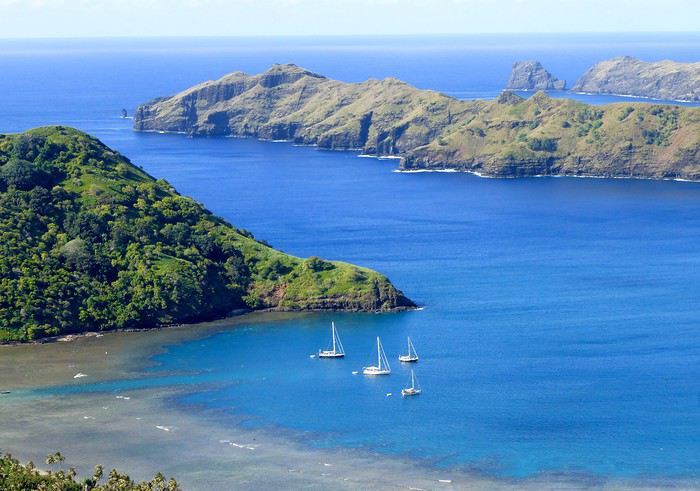
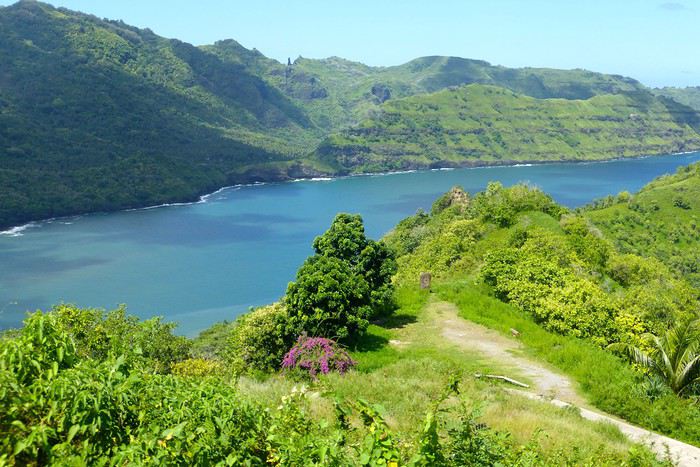
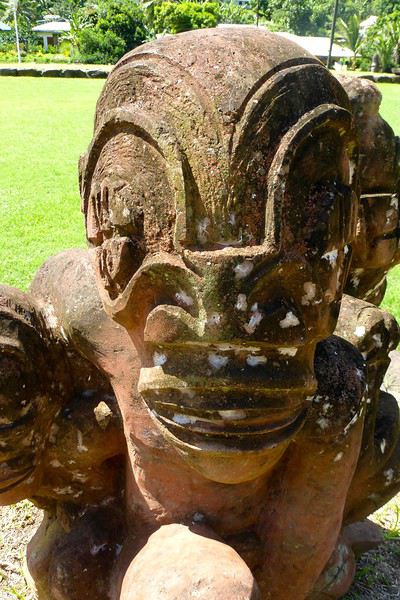
We booked a full-day excursion with Thierry: it starts with a 45-minute boat ride to reach Hakatea Beach, hidden in a small secret bay like many along Nuku Hiva’s coasts. From there, the hike lasts all day—11 km round-trip on flat but also rugged terrain (ancient paved and elevated paths over 1,000 years old)—and river crossings. Bring the right shoes (like plastic Crocs with high socks—not very stylish but practical). We cross the former village of Hakaui, walk along the foundations of dwellings, and there are still weathered tikis in the lush vegetation. The ultimate goal of this hike is to reach the tall Vaipo waterfall. The place is magical, with openings in the vegetation and immense trees allowing photos of the treetops and caves where funeral canoes containing the bones of chiefs or great warriors were once placed. We return the same way to the beach and take another boat ride to reach Taihoae’s port. Back at the guesthouse after a glimpse of Taihoae’s waterfront.
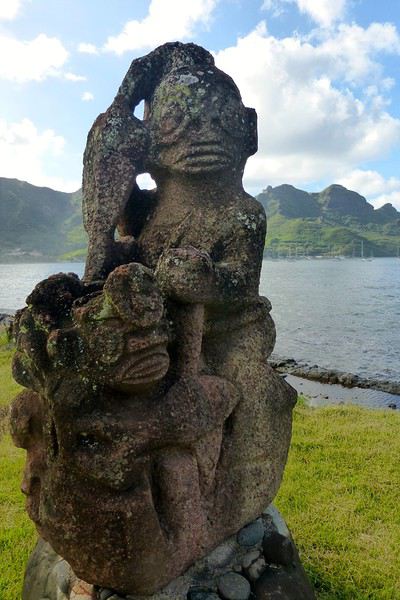
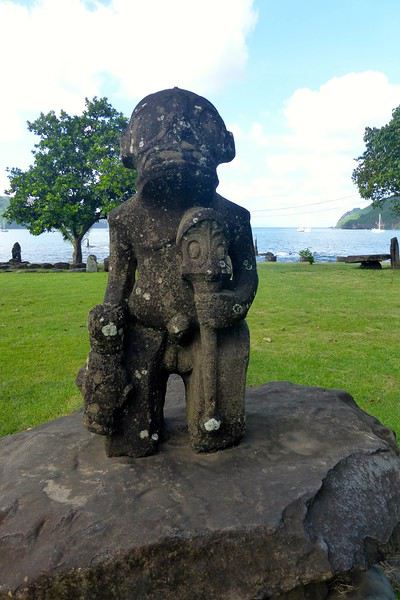
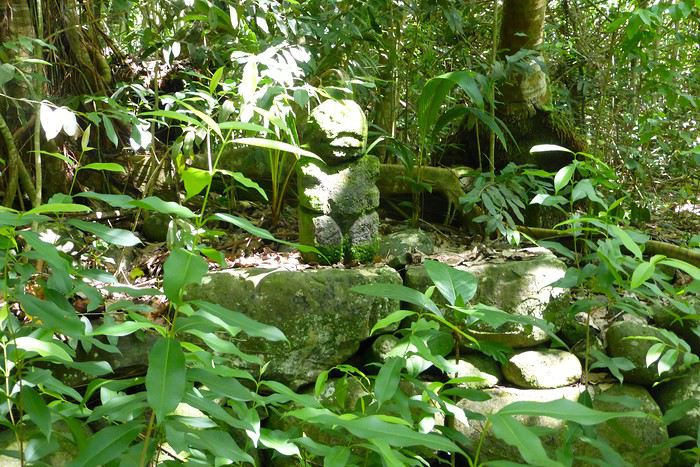
**UA POU**
**Day 3: April 29**
Back to the airport in the late morning for the second flight of the trip to Ua Pou. 20-minute crossing in a Twin Otter (18 seats but only 13 occupied due to cargo between the islands). Beautiful weather, blue sea, nice photos to take upon departure from NH and arrival in UP. We’re greeted by Jérôme, a former military man turned tourism professional, who runs Pension Pukue’e with his wife Elisa, a native of UP. We’re in for two exceptional days. The guesthouse is comfortable, Jérôme and Elisa are very professional and pleasant. Jérôme is also a professional hiker, and Elisa is an excellent cook. We leave quickly for a half-day excursion to Hohoi, after a stop at the archaeological, cultural, and religious site of Maui’a, the Tavaka tribe’s territory. Jérôme is there to explain how Marquesan society functioned at the time and the events that took place on a site still largely buried under vegetation. Then we visit a flower-stone sculptor he knows—the only place in the Marquesas where you’ll find these stones. They’re collected in the river flowing into the sea at Hohoi, sometimes on the beach itself. Back to the guesthouse.
**Day 4: April 30**
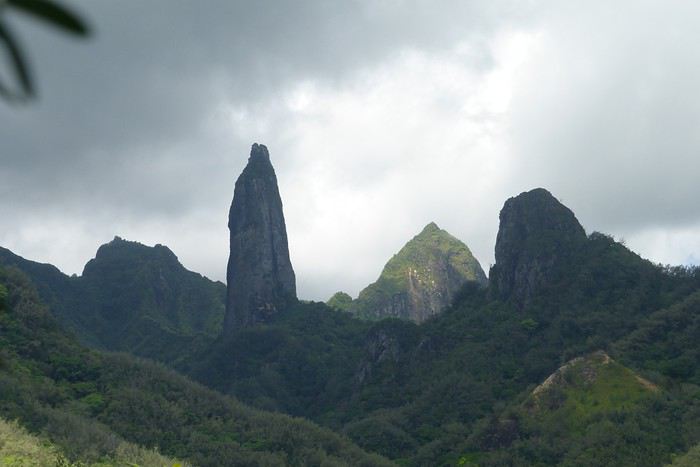
A nature hike in the mountains—moderately difficult—toward the Vaiea waterfall is on our program for a good 4 hours. It’s hot, there are mosquitoes, and the dip in the pool under the waterfall (24°C water) is a rare pleasure. Lunch at a friend of Jérôme’s, a former chef for French minister François Fillon, who prepares delicious food. Elisa picks us up by car to return to the guesthouse. Ua Pou is a beautiful and elegant island with its sharp peaks and wild nature. Our favorite, thanks to Jérôme and his wife.
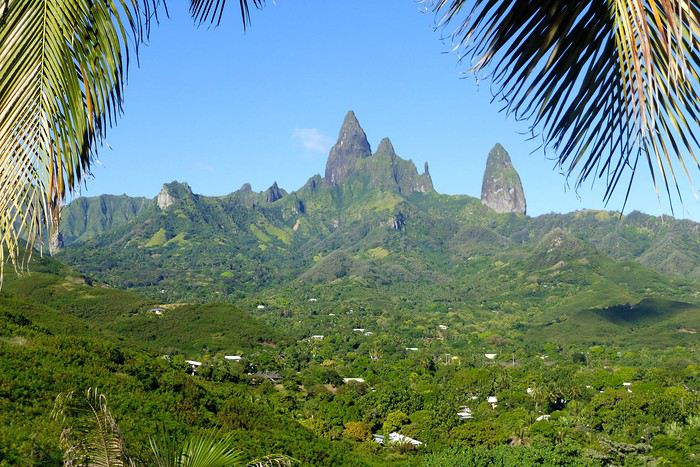
**UA HUKA**
**Day 4: May 1**
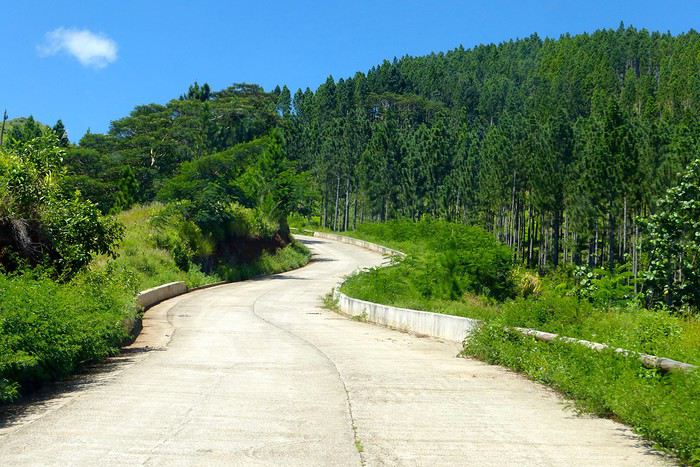
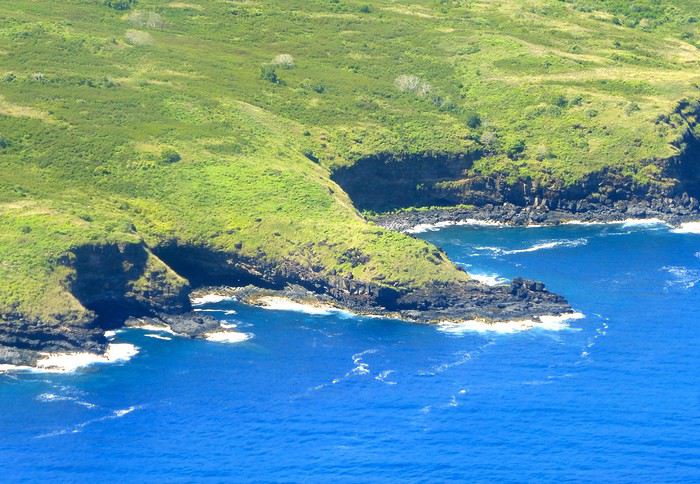
Departure for Ua Huka, the smallest inhabited island in the northern group of the Marquesas, located about 1,300 km northeast of Tahiti. Landing is at the oldest airfield in the Marquesas, built in 1972, between the villages of Vaipaee and Hane. Ua Huka has about 680 inhabitants, according to the last census, spread across 3 villages (since the 1870s): Vaipaee, Hane, and Hokatu. The island peaks at Mount Hitikau at only 884 meters. Its origin: a Hawaiian-type shield volcano that—over a few million years—collapsed to become a caldera (or elliptical depression) in which two small volcanoes appeared, the craters of Tahoatikiau and Teepoepo, now part of the Vaikivi Park. The island is rugged and wild, lower than the others, so less cloud-covered and drier. The bays are jagged, the coastline in ochre tones above the intense blue of the sea, and the beaches are constantly disturbed by the powerful surf. The village of Hokatu is only a few kilometers away (just 14 km of road on the island), but Maurice, our host, drives slowly, and it takes time to go up and down. The road is entirely paved or concreted, which isn’t the case on Ua Pou, for example. The guesthouse is disappointing, perched above the village and thus isolated. Beautiful view of the famous Hane motu and the sparkling sea under the bright sun. Apart from that, there are mosquitoes and cockroaches, the bungalow isn’t clean. Meals are taken with Maurice and Delphine in the village—fine dining isn’t on the menu! Ouch!!! We didn’t luck out...
**Day 5: May 2**
Early in the morning, after breakfast, Delphine takes us to the craft center, which turns out to be a letdown—the items for sale are, in my opinion, crude and poorly carved. Nothing like what’s offered at the Marquesas Fair, held twice a year in Papeete, where you can admire and buy small wonders: wood carvings, flower stone, and coral. Delphine is disappointed we’re not interested, and it shows... She’s a bit sulky! These are items meant for Aranui cruise passengers who land on Ua Huka once every two weeks... Solo travelers like us don’t seem to interest her much. The rest of the day—spent with Maurice—is dedicated to visiting cultural centers and small museums, like the Sea Museum in Hane with its ancient canoes, the municipal archaeological museum on the Te Tumu site above the airfield, the petroglyph house near Hokatu Beach, and finally the Papuakeikaraa arboretum, which gathers endemic plants from all over Polynesia and an impressive citrus collection. No excursion planned to Vaikivi Park, toward the previously mentioned craters that recall the island’s volcanic past. Also missing are the viewpoints, the unique endemic vegetation, and especially the petroglyphs. Too bad... at that price!!! Still, in the evening, we go fishing—with sandwiches and drinks in coolers—with other villagers from the dock at the end of the paved road. It’s cool, windy, no mosquitoes, lots of fish caught, and a great atmosphere. Plus, magnificently starry skies.
Ua Huka is one of the rare islands not invaded by the black rat, which has preserved its birdlife, particularly the ultramarine lorikeet (or *pihiti* in Marquesan), which feeds almost exclusively on flower nectar (banana, coconut, hibiscus, mango, guava trees). A dog imported from New Zealand has been specially trained to detect rats: it inspects cargo unloaded from boats and the docks.
I recommend spending two full days on the island—one for visiting the various museums, the other for hiking in the island’s center park, where the archaeological sites are in their raw state: foundations of agricultural terrace walls, gathering places (or *tohua*), dwelling pavements (or *paepae*), sacred sites (or *me’ae* in Marquesan, *marae* in Tahitian) with their tikis and petroglyphs.
To finish, a bit of info on the island’s name, tied to Marquesan oral culture: according to the legend of the creation of the six Marquesas Islands, Ua Huka is the one that puts the finishing touch on the construction of the god Oatea’s house, each island having a defined architectural function. Ua Huka represents the hole (*ua*) where the god deposits what’s left (*huka* in Marquesan) of the unused materials during construction.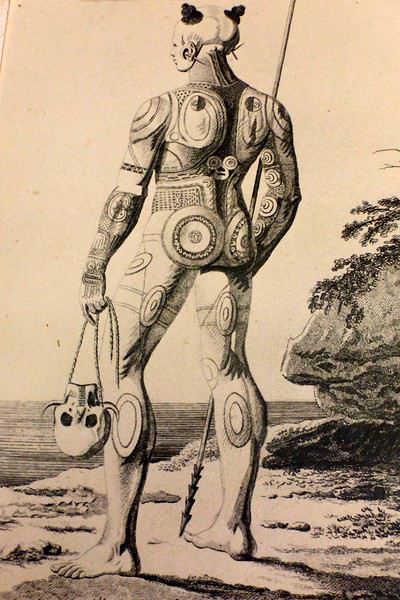
**HIVA OA**
**Day 6: May 3**
Departure in the late morning for Hiva Oa. Maurice—who had other things to do—dropped us off at the airfield 3 hours early... so this stop is a bit of a flop, even if we decided to stay positive! Hiva Oa is the third-largest island in French Polynesia after Tahiti and Nuku Hiva, and before Raiatea in the Leeward Islands. The island is beautiful, lush, verdant, and jagged. The mountains soar into the sky, the sea views are grand, the light is sublime—we’re lucky. Beautiful weather. Tania from Pension Kanahau waits for us at the airport. We’re in for two wonderful days with her. Tania is welcoming, smiling, and dynamic. What a pleasure to be with her, at her place—she cooks divinely and serves the best tuna in the world (the Big Eye reserved for the Japanese) and croquettes made with lobster, shrimp, and crab with breadfruit cubes, for example. Comfortable bungalow, no mosquitoes at night, we can sleep with the window open. It’s fantastic! After settling in, Tania takes us to town in Atuona, a pleasant and well-laid-out little village. We start with lunch—a delicious raw fish in coconut milk—then continue with the must-see attractions: the Catholic cemetery where Paul Gauguin and Jacques Brel’s graves are, overlooking the town; the abandoned Protestant cemetery, reclaimed by the bush, with impressive Marquesan warrior tombs made of huge coral slabs and adorned with a tiki head (harder to find, as no one goes there... ask for directions!); the craft center; the Gauguin Museum (and the Jacques Brel Museum); and the waterfront. While we stroll peacefully, Tania organizes an excursion for the next day, May 4, a full day with Pifa O’Connor, a 36-year-old who knows his island inside out, is passionate about local history, and with whom we’ll hit it off.
**Day 7: May 4**
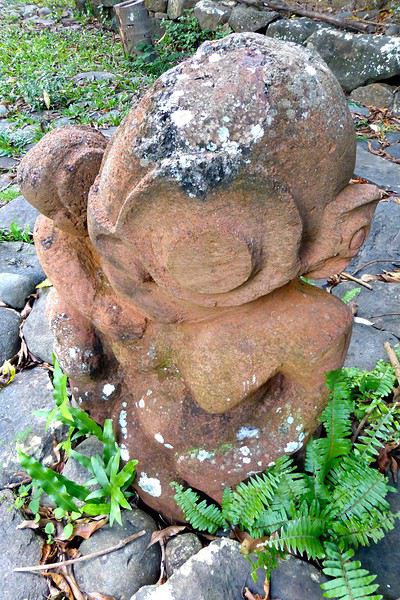
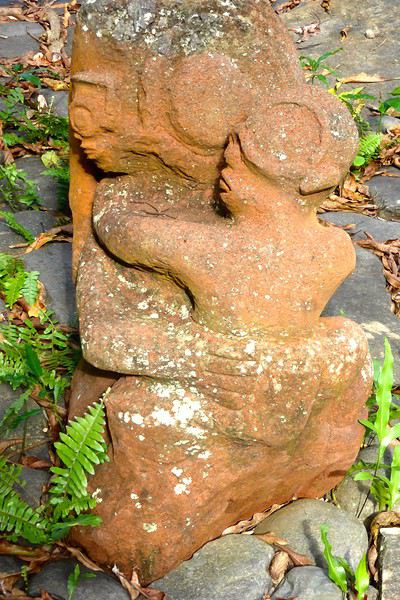
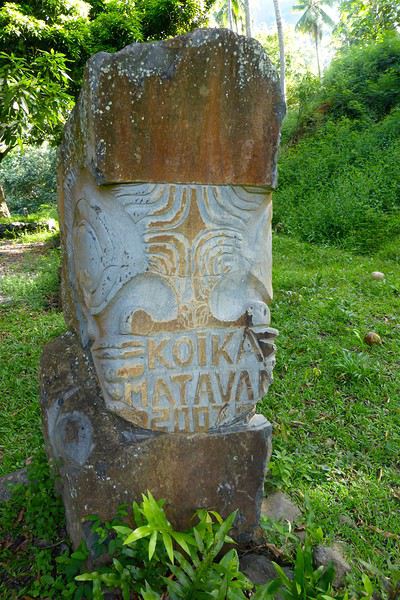
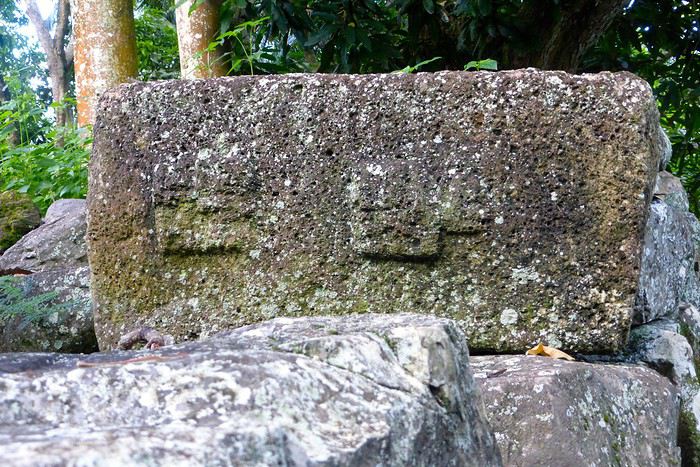
Pifa arrives at 8 AM sharp at the guesthouse, and we immediately buy sandwiches and water at a small supermarket in Atuona. First, we make a brief stop by the roadside at an unmarked spot, from which we descend a small path through dense vegetation leading to the famous smiling tiki—the only one of its kind in the Marquesas and Polynesia. The place is improbable, the tiki isn’t huge, but it’s beautiful and impressive. Then we’re off on the road that, dizzyingly, runs along and overlooks the island’s northern coast, at the edge of the ancient volcano. Few vehicles pass, the road—now a rocky track—is full of potholes, and we proceed slowly. (Note that this road has been fully paved since 2018.) The panoramas are majestic, with every shade of green against the blue sea. We stop again at the top of a cliff adorned with a huge stone, the *sacrifice stone*, from which young virgin girls were once thrown into the sea to appease angry gods. Another pause for lunch this time, at a small restaurant near the exceptional archaeological site of Puamau. We’ll experience the highlights of this trip during this excursion with our guide, Pifa, who spares no explanations. We discover, on a vast esplanade, the ceremonial complexes of Ta’a Oa and Meae Te I’Ipona, the latter featuring superb tikis, particularly the reclining tiki—or *Maki Taua Pepe*—representing Motherhood, a woman giving birth in a squatting position, as was often the case in many civilizations. Also notable is the *Takaii*, the largest tiki recorded in Polynesia to date. There’s also a huge stone with a now-blunt edge, on which the circumcision of chiefs’ and notables’ pre-adolescent sons was performed. A tough ordeal! But that’s not all! It seems there are more on the mountainside rising steeply behind the archaeological site—overturned tikis, platforms, and, apparently, a giant tiki at the top, which must have fallen but was visible from afar on the sea 30 or 40 years ago, according to the island’s elders. This meeting, worship, and living place—it was actually a small town—is immense. Thousands of people once lived in this part of the island. The site—a religious, social, and cultural sanctuary—would be the size of the largest Mayan sites in Yucatán, but the few concerned owners—two or three families who own the mountainside—don’t want to hear about intensive clearing or tree cutting for now. UNESCO rightly asks for some compliance efforts to grant special treatment to Hiva Oa in particular and the Marquesas in general. We’re not there yet, unfortunately, due to insurmountable local rigidities! This kind of attitude is quite typical in Polynesia: people are afraid to uncover *marae* buried under vegetation—they’re taboo and sometimes said to emit negative and deadly waves, so it’s better not to disturb or anger the ancient spirits or gods who might take revenge. The old religion is never far away in Polynesia, despite the successes of the missionaries.
We return to the guesthouse in the late afternoon. Last night in the Marquesas with Tania, who prepares a fine and delicious meal. Note that dinner costs 2,500 XPF per person.
**Day 8: May 5**
We take the plane as planned, via Nuku Hiva (short stopover). Arrival on time in Papeete.
May this travel journal inspire many of you to visit the Marquesas one day. It’s far, it’s expensive, it’s the trip of a lifetime—it’s unforgettable and unmissable.
Our itinerary is perfect for those who aren’t excited by cruises and prefer to get closer to the local communities. This 9-day trip cost us around 2500 € all-inclusive. For a 14-day cruise on the Aranui, expect to pay 2300 € per person for a basic cabin for four, or 3800 € per person for a superior double cabin.
Air Tahiti offers a 4-island Marquesas Pass (Nuku Hiva, Ua Pou, Ua Huka, and Hiva Oa) for 86,000 XPF (about 700 €). The journey is made on an ATR 72 from Tahiti to Nuku Hiva or Hiva Oa, and on a 19-seat Twin Otter between the islands (often only 13 or 15 seats are available due to cargo, so book well in advance). We’re traveling as a couple. We booked our family-run guesthouse stays at the Tourism Fair in early February, where you can meet the owners and make your choice. Stays are almost always half-board or breakfast-only. Transfers are usually included, but you can always book a car or taxi.
**NUKU HIVA**
**A LITTLE GEOGRAPHY** Nuku Hiva (NH) is located about 1,500 km from Tahiti, in the north of French Polynesia. At 387 km², it’s the second-largest island in French Polynesia after Tahiti. It was formed by incredible volcanic phenomena and cataclysms between 1 and 6 million years ago, which lifted the island thousands of meters above the sea. Even after millennia of slow erosion, collapses, and settling, NH remains the most majestic of the Marquesas, with its sheer cliffs, deep valleys featuring immense waterfalls, and black walls that were once the inner walls of enormous volcanoes.
**A LITTLE HISTORY** The first contact between NH’s inhabitants and Europeans was in 1595 with Spanish navigators who only stayed briefly. It wasn’t until the late 18th century that Europeans arrived in greater numbers on NH (and the other Marquesas Islands), disrupting a very fragile social and cultural balance. It’s believed that nearly 100,000 people lived on Nuku Hiva at that time—a population decimated over the decades by epidemics, diseases brought by Europeans, and alcohol used for barter. The disastrous result: by the 1930s, only 2,500 people remained, having largely lost their identity and living in poverty. Today, the island has about 2,600 inhabitants spread across several villages, with Taiohae as the main one.
**NUKU HIVA IN LITERATURE**
1 / One of the famous writers who visited NH and stayed there was Herman Melville, who arrived in July 1842, the author of *Moby Dick*. The island had just come under French protectorate. Seduced by the enchanting *vahinés* and dazzled by his paradisiacal vision of the place, Melville deserted his ship. He ended up a prisoner of a local tribe, the Taipi, in Taipivai, where he stayed for a month and a half until an Australian ship captain secured his release in exchange for a musket and a roll of cotton fabric! Melville wrote a novel about this tumultuous episode in his life, considered a classic of travel literature. The book, *Typee: A Peep at Polynesian Life*, published in 1846 in the United States, was a huge success.
2 / Another famous Scottish writer, Robert Louis Stevenson, arrived in NH aboard a yacht that anchored in Anaho Bay, the island’s most beautiful, in July 1888. Stevenson was already known for two magnificent novels that marked their era: *Treasure Island* and *Dr. Jekyll & Mr. Hyde*. Stevenson, too, was captivated by the island’s natural beauty, though he also noted the devastating decline in identity, socio-cultural life, and physical health of a population ravaged by disease and alcohol. His account of his stay, *In the South Seas: An Account of Experiences and Observations in the Marquesas, Paumotus, and Gilbert Islands During Two Cruises on the Yacht Casco (1888) and the Schooner Equator (1889)*, was published in 1896 in New York, four years after his death in Apia, Western Samoa, where he had settled. It was also published in London in 1900.
3 / In August 1903, Victor Segalen, a French naval doctor, ethnologist, and archaeologist, landed in NH from the ship *La Durance*, sent to Polynesia to recover the possessions of the painter Paul Gauguin, who had died in April of that year. He, too, was enthralled by the Marquesas but lamented the loss of identity, dignity, and pride of the Māori, alienated by a Christianization that destroyed their culture and customs, denied their gods, and erased their past. He wrote about his experience, doubts, and fears in *Les Immémoriaux*.
4 / In December 1907, Jack London arrived in NH aboard the sailboat *Stark*, following in the footsteps of his illustrious predecessor, Herman Melville. London was in poor physical condition, exhausted from his relentless travels that had taken him from the Klondike in Canada to Japan, Australia, and London in Europe. He was appalled and shocked by Nuku Hiva’s degraded health situation: where Melville had encountered over 2,000 vigorous and healthy Marquesan warriors, London found only 12 suffering from various diseases—the rest had been wiped out by tuberculosis! His approach remained humanistic, and he maintained a sharp geopolitical awareness of these traditional Polynesian cultures, weakened by the inexorable advance of modernity in the early 20th century. He continued his journey to the Tuamotu Islands and Tahiti, publishing *Martin Eden*, the moving account of his initiatory voyage in the South Pacific, in 1911.
5 / Finally, Alain Gerbault, a writer, linguist, ethnologist, and tireless traveler, arrived in the Marquesas via the Panama Canal in December 1933. He was completely exhausted after an endless crossing on a small sailboat, the *Firecrest*. Enthralled by his stay in the Marquesas, he continued to the Tuamotu Islands in 1934, then Tahiti in 1935. Gerbault fought for the preservation of traditions, as well as the songs and dances banned by the Churches and the French Administration (these bans lasted over 50 years, mind you...!!!). Bora Bora remained his favorite island. A staunch Pétainist during World War II, he was forced to flee Bora Bora for Samoa, then Tonga, and finally Timor, a half-Portuguese island and thus neutral during the war. His travel accounts, *In Pursuit of the Sun: Logbook from New York to Tahiti* and *A Paradise Is Dying*, were published in the late 1940s. He died in Timor in 1941, and his ashes were repatriated to Bora Bora.
Back to our trip and stay.
**Day 1: April 27**
Departure from Papeete at 6:30 AM—we had to wake up two hours earlier and reach the airport in the dark. Takeoff at dawn, good weather en route, flight duration: 4 hours.
Arrival around 10:30 AM in Nuku Hiva, the first stop of this trip. We booked two nights in half-board at Pension Koku’u, transfers included. Maybe not such a great idea, those included transfers, especially on this unique island where the airport is located on *Terre Déserte*, on the other side of the mountain, opposite and about 45 km from the main village of Taiohae. They’re charged at a steep price. Expect 6,000 XPF round-trip by taxi, but 15,000 XPF charged by guesthouses or hotels. The difference is notable. It wasn’t the best idea, but we can’t go back. Even for residents like us who know how to travel in Polynesia, the Air Tahiti employee who sold me the Pass couldn’t give any useful advice about the stay itself—probably because he’d never been to the Marquesas. It’s really annoying! In short, the good idea to remember is renting a car (like a Suzuki) to be free to manage your time and stop at leisure. The road signage is a bit basic, but you’ll manage just fine. Our host Alvane waits for us—without a sign (sic!)—and after searching for each other for 5 minutes, we’re off on a journey of over an hour (with photo stops) in a Land Rover with smooth tires (luckily, it’s not raining!). The recently paved and marked mountain road is impeccable. No time to catch our breath at the guesthouse; we leave immediately (not a great idea after waking up at dawn plus 4 hours on a plane) for a half-day hike that was also included in the prepaid stay. A sandwich was provided (really pathetic for the physical effort required), we have water, and we fill a few bottles at the spring near the ceremonial site of Taipivai, our first stop. Then the hike begins in the Hanaheu Valley, descending toward Anaho Bay and its namesake beach. A magnificent and wild spot, a few sailboats anchored, we swim—the water is really warm, over 30°C at the shore. That warm is rare and not necessarily pleasant. We then have to climb a very steep slope; this hike is actually quite tough. The air is still, humid, and stifling under the foliage, there’s a bit of mud, and tiny ants (which don’t bite, I’ll have you know), locally called *fofolles*, running over shoes, ankles, and calves. Not very pleasant...! On top of that, there are mosquitoes to protect against! In hindsight, it seems wise to bring energy bars from Papeete if you plan to hike on the afternoon of your arrival day. We weren’t careful... Result: a moment of weakness for me and a hyperventilation attack climbing back up from Anaho Bay!!! We return to the guesthouse at night. There we find Claudine and her four children—Marquesan-style atmosphere, friendly and casual. We share family life. Very simple room with a bathroom, no mosquitoes, we can sleep with the window open, but the night will be noisy, as is often the case in Polynesia. Roosters are everywhere and don’t sleep, dogs bark or whine. So we end up waking up early... like everyone else.
**Day 2: April 28**
We booked a full-day excursion with Thierry: it starts with a 45-minute boat ride to reach Hakatea Beach, hidden in a small secret bay like many along Nuku Hiva’s coasts. From there, the hike lasts all day—11 km round-trip on flat but also rugged terrain (ancient paved and elevated paths over 1,000 years old)—and river crossings. Bring the right shoes (like plastic Crocs with high socks—not very stylish but practical). We cross the former village of Hakaui, walk along the foundations of dwellings, and there are still weathered tikis in the lush vegetation. The ultimate goal of this hike is to reach the tall Vaipo waterfall. The place is magical, with openings in the vegetation and immense trees allowing photos of the treetops and caves where funeral canoes containing the bones of chiefs or great warriors were once placed. We return the same way to the beach and take another boat ride to reach Taihoae’s port. Back at the guesthouse after a glimpse of Taihoae’s waterfront.
**UA POU**
**Day 3: April 29**
Back to the airport in the late morning for the second flight of the trip to Ua Pou. 20-minute crossing in a Twin Otter (18 seats but only 13 occupied due to cargo between the islands). Beautiful weather, blue sea, nice photos to take upon departure from NH and arrival in UP. We’re greeted by Jérôme, a former military man turned tourism professional, who runs Pension Pukue’e with his wife Elisa, a native of UP. We’re in for two exceptional days. The guesthouse is comfortable, Jérôme and Elisa are very professional and pleasant. Jérôme is also a professional hiker, and Elisa is an excellent cook. We leave quickly for a half-day excursion to Hohoi, after a stop at the archaeological, cultural, and religious site of Maui’a, the Tavaka tribe’s territory. Jérôme is there to explain how Marquesan society functioned at the time and the events that took place on a site still largely buried under vegetation. Then we visit a flower-stone sculptor he knows—the only place in the Marquesas where you’ll find these stones. They’re collected in the river flowing into the sea at Hohoi, sometimes on the beach itself. Back to the guesthouse.
**Day 4: April 30**
A nature hike in the mountains—moderately difficult—toward the Vaiea waterfall is on our program for a good 4 hours. It’s hot, there are mosquitoes, and the dip in the pool under the waterfall (24°C water) is a rare pleasure. Lunch at a friend of Jérôme’s, a former chef for French minister François Fillon, who prepares delicious food. Elisa picks us up by car to return to the guesthouse. Ua Pou is a beautiful and elegant island with its sharp peaks and wild nature. Our favorite, thanks to Jérôme and his wife.
**UA HUKA**
**Day 4: May 1**
Departure for Ua Huka, the smallest inhabited island in the northern group of the Marquesas, located about 1,300 km northeast of Tahiti. Landing is at the oldest airfield in the Marquesas, built in 1972, between the villages of Vaipaee and Hane. Ua Huka has about 680 inhabitants, according to the last census, spread across 3 villages (since the 1870s): Vaipaee, Hane, and Hokatu. The island peaks at Mount Hitikau at only 884 meters. Its origin: a Hawaiian-type shield volcano that—over a few million years—collapsed to become a caldera (or elliptical depression) in which two small volcanoes appeared, the craters of Tahoatikiau and Teepoepo, now part of the Vaikivi Park. The island is rugged and wild, lower than the others, so less cloud-covered and drier. The bays are jagged, the coastline in ochre tones above the intense blue of the sea, and the beaches are constantly disturbed by the powerful surf. The village of Hokatu is only a few kilometers away (just 14 km of road on the island), but Maurice, our host, drives slowly, and it takes time to go up and down. The road is entirely paved or concreted, which isn’t the case on Ua Pou, for example. The guesthouse is disappointing, perched above the village and thus isolated. Beautiful view of the famous Hane motu and the sparkling sea under the bright sun. Apart from that, there are mosquitoes and cockroaches, the bungalow isn’t clean. Meals are taken with Maurice and Delphine in the village—fine dining isn’t on the menu! Ouch!!! We didn’t luck out...
**Day 5: May 2**
Early in the morning, after breakfast, Delphine takes us to the craft center, which turns out to be a letdown—the items for sale are, in my opinion, crude and poorly carved. Nothing like what’s offered at the Marquesas Fair, held twice a year in Papeete, where you can admire and buy small wonders: wood carvings, flower stone, and coral. Delphine is disappointed we’re not interested, and it shows... She’s a bit sulky! These are items meant for Aranui cruise passengers who land on Ua Huka once every two weeks... Solo travelers like us don’t seem to interest her much. The rest of the day—spent with Maurice—is dedicated to visiting cultural centers and small museums, like the Sea Museum in Hane with its ancient canoes, the municipal archaeological museum on the Te Tumu site above the airfield, the petroglyph house near Hokatu Beach, and finally the Papuakeikaraa arboretum, which gathers endemic plants from all over Polynesia and an impressive citrus collection. No excursion planned to Vaikivi Park, toward the previously mentioned craters that recall the island’s volcanic past. Also missing are the viewpoints, the unique endemic vegetation, and especially the petroglyphs. Too bad... at that price!!! Still, in the evening, we go fishing—with sandwiches and drinks in coolers—with other villagers from the dock at the end of the paved road. It’s cool, windy, no mosquitoes, lots of fish caught, and a great atmosphere. Plus, magnificently starry skies.
Ua Huka is one of the rare islands not invaded by the black rat, which has preserved its birdlife, particularly the ultramarine lorikeet (or *pihiti* in Marquesan), which feeds almost exclusively on flower nectar (banana, coconut, hibiscus, mango, guava trees). A dog imported from New Zealand has been specially trained to detect rats: it inspects cargo unloaded from boats and the docks.
I recommend spending two full days on the island—one for visiting the various museums, the other for hiking in the island’s center park, where the archaeological sites are in their raw state: foundations of agricultural terrace walls, gathering places (or *tohua*), dwelling pavements (or *paepae*), sacred sites (or *me’ae* in Marquesan, *marae* in Tahitian) with their tikis and petroglyphs.
To finish, a bit of info on the island’s name, tied to Marquesan oral culture: according to the legend of the creation of the six Marquesas Islands, Ua Huka is the one that puts the finishing touch on the construction of the god Oatea’s house, each island having a defined architectural function. Ua Huka represents the hole (*ua*) where the god deposits what’s left (*huka* in Marquesan) of the unused materials during construction.
**HIVA OA**
**Day 6: May 3**
Departure in the late morning for Hiva Oa. Maurice—who had other things to do—dropped us off at the airfield 3 hours early... so this stop is a bit of a flop, even if we decided to stay positive! Hiva Oa is the third-largest island in French Polynesia after Tahiti and Nuku Hiva, and before Raiatea in the Leeward Islands. The island is beautiful, lush, verdant, and jagged. The mountains soar into the sky, the sea views are grand, the light is sublime—we’re lucky. Beautiful weather. Tania from Pension Kanahau waits for us at the airport. We’re in for two wonderful days with her. Tania is welcoming, smiling, and dynamic. What a pleasure to be with her, at her place—she cooks divinely and serves the best tuna in the world (the Big Eye reserved for the Japanese) and croquettes made with lobster, shrimp, and crab with breadfruit cubes, for example. Comfortable bungalow, no mosquitoes at night, we can sleep with the window open. It’s fantastic! After settling in, Tania takes us to town in Atuona, a pleasant and well-laid-out little village. We start with lunch—a delicious raw fish in coconut milk—then continue with the must-see attractions: the Catholic cemetery where Paul Gauguin and Jacques Brel’s graves are, overlooking the town; the abandoned Protestant cemetery, reclaimed by the bush, with impressive Marquesan warrior tombs made of huge coral slabs and adorned with a tiki head (harder to find, as no one goes there... ask for directions!); the craft center; the Gauguin Museum (and the Jacques Brel Museum); and the waterfront. While we stroll peacefully, Tania organizes an excursion for the next day, May 4, a full day with Pifa O’Connor, a 36-year-old who knows his island inside out, is passionate about local history, and with whom we’ll hit it off.
**Day 7: May 4**
Pifa arrives at 8 AM sharp at the guesthouse, and we immediately buy sandwiches and water at a small supermarket in Atuona. First, we make a brief stop by the roadside at an unmarked spot, from which we descend a small path through dense vegetation leading to the famous smiling tiki—the only one of its kind in the Marquesas and Polynesia. The place is improbable, the tiki isn’t huge, but it’s beautiful and impressive. Then we’re off on the road that, dizzyingly, runs along and overlooks the island’s northern coast, at the edge of the ancient volcano. Few vehicles pass, the road—now a rocky track—is full of potholes, and we proceed slowly. (Note that this road has been fully paved since 2018.) The panoramas are majestic, with every shade of green against the blue sea. We stop again at the top of a cliff adorned with a huge stone, the *sacrifice stone*, from which young virgin girls were once thrown into the sea to appease angry gods. Another pause for lunch this time, at a small restaurant near the exceptional archaeological site of Puamau. We’ll experience the highlights of this trip during this excursion with our guide, Pifa, who spares no explanations. We discover, on a vast esplanade, the ceremonial complexes of Ta’a Oa and Meae Te I’Ipona, the latter featuring superb tikis, particularly the reclining tiki—or *Maki Taua Pepe*—representing Motherhood, a woman giving birth in a squatting position, as was often the case in many civilizations. Also notable is the *Takaii*, the largest tiki recorded in Polynesia to date. There’s also a huge stone with a now-blunt edge, on which the circumcision of chiefs’ and notables’ pre-adolescent sons was performed. A tough ordeal! But that’s not all! It seems there are more on the mountainside rising steeply behind the archaeological site—overturned tikis, platforms, and, apparently, a giant tiki at the top, which must have fallen but was visible from afar on the sea 30 or 40 years ago, according to the island’s elders. This meeting, worship, and living place—it was actually a small town—is immense. Thousands of people once lived in this part of the island. The site—a religious, social, and cultural sanctuary—would be the size of the largest Mayan sites in Yucatán, but the few concerned owners—two or three families who own the mountainside—don’t want to hear about intensive clearing or tree cutting for now. UNESCO rightly asks for some compliance efforts to grant special treatment to Hiva Oa in particular and the Marquesas in general. We’re not there yet, unfortunately, due to insurmountable local rigidities! This kind of attitude is quite typical in Polynesia: people are afraid to uncover *marae* buried under vegetation—they’re taboo and sometimes said to emit negative and deadly waves, so it’s better not to disturb or anger the ancient spirits or gods who might take revenge. The old religion is never far away in Polynesia, despite the successes of the missionaries.
We return to the guesthouse in the late afternoon. Last night in the Marquesas with Tania, who prepares a fine and delicious meal. Note that dinner costs 2,500 XPF per person.
**Day 8: May 5**
We take the plane as planned, via Nuku Hiva (short stopover). Arrival on time in Papeete.
May this travel journal inspire many of you to visit the Marquesas one day. It’s far, it’s expensive, it’s the trip of a lifetime—it’s unforgettable and unmissable.
Excursion à Da Lat (Vietnam) English translation pending
Nous avons 3 jours libres en juillet après avoir visité Hué et Hoi An
Que pensez vous d'une escursion à da lat ? quel programme ?
merci
Séjour dans les Cotswolds + Londres English translation pending
Bonjour,
Je pars avec une amie au Royaume Unis début juillet. Ce sera notre premier voyage en Angleterre. Nous y allons en voiture et resterons sur place 10 jours.
LONDRES : Nous avons réserver 3 nuits dans un hotel au Nord de Londres, nous nous rendrons sur Londres en train (30min). Etant en voiture, nous avons fait le choix de nous éloigner du centre pour ne pas être embêter avec la taxe et les problèmes de stationnement. Nous passerons 2 jours plein à visiter Londres et comptons visiter les studios d'Harry Potter le 3ème jour. Certains voyageurs me diront surement que 2 jours à Londres, c'est bien trop peu, et ils auront raison ! Mais nous nous disons que, ce n'est pas très loin de Paris et que par conséquent, nous pourrons y retourner bientôt, sans voiture, ce qui sera bien plus pratique ! Questions: Que privilégier ? Quels quartiers ne pas manquer ?
COTSWALDS (Cheltenham) : Nous avons réservé un petit studio à Cheltenham pour 7 jours (2 heures de route à l'ouest de Londres). Nous aimons la nature, les randonnées, les paysages, l'architecture... Les Cotswalds nous ont donc convaincues. Après avoir fouillé sur internet, et un guide de voyage, je pensais opter pour les visites suivantes : Gloucester et Cheltenham (cathédrale et villes), les Cotwalds (circuit de visite en voiture et promenades à pieds), Oxford, Bath, éventuellement (même si j'ai conscience que c'est plus loin) Windsor. Question : Partant du principe que nous passerons 1 journée à chaque endroit, il nous reste une journée de "libre", j'hésite entre Statford Upon Avon et Stonehenge. Ce sont deux lieux complètement différents... Peut-être certains d'entre-vous connaissent la région et pourront me conseiller ?
D'un point de vue plus général, avez-vous des conseils, des choses à me recommander (pub, restaurant, lieux, plats à manger absolument...) ? Au contraire, pensez-vous que dans les visites prévues certaines choses ne "valent pas le coup" ?
Je suis preneuse de tous vos conseils précieux !
Merci beaucoup !
Lyllyah 🙂
Je pars avec une amie au Royaume Unis début juillet. Ce sera notre premier voyage en Angleterre. Nous y allons en voiture et resterons sur place 10 jours.
LONDRES : Nous avons réserver 3 nuits dans un hotel au Nord de Londres, nous nous rendrons sur Londres en train (30min). Etant en voiture, nous avons fait le choix de nous éloigner du centre pour ne pas être embêter avec la taxe et les problèmes de stationnement. Nous passerons 2 jours plein à visiter Londres et comptons visiter les studios d'Harry Potter le 3ème jour. Certains voyageurs me diront surement que 2 jours à Londres, c'est bien trop peu, et ils auront raison ! Mais nous nous disons que, ce n'est pas très loin de Paris et que par conséquent, nous pourrons y retourner bientôt, sans voiture, ce qui sera bien plus pratique ! Questions: Que privilégier ? Quels quartiers ne pas manquer ?
COTSWALDS (Cheltenham) : Nous avons réservé un petit studio à Cheltenham pour 7 jours (2 heures de route à l'ouest de Londres). Nous aimons la nature, les randonnées, les paysages, l'architecture... Les Cotswalds nous ont donc convaincues. Après avoir fouillé sur internet, et un guide de voyage, je pensais opter pour les visites suivantes : Gloucester et Cheltenham (cathédrale et villes), les Cotwalds (circuit de visite en voiture et promenades à pieds), Oxford, Bath, éventuellement (même si j'ai conscience que c'est plus loin) Windsor. Question : Partant du principe que nous passerons 1 journée à chaque endroit, il nous reste une journée de "libre", j'hésite entre Statford Upon Avon et Stonehenge. Ce sont deux lieux complètement différents... Peut-être certains d'entre-vous connaissent la région et pourront me conseiller ?
D'un point de vue plus général, avez-vous des conseils, des choses à me recommander (pub, restaurant, lieux, plats à manger absolument...) ? Au contraire, pensez-vous que dans les visites prévues certaines choses ne "valent pas le coup" ?
Je suis preneuse de tous vos conseils précieux !
Merci beaucoup !
Lyllyah 🙂
Météo en août en Thaïlande English translation pending
Bonjour à toutes et à tous,
Je me permets de vous demander votre avis car il s'agit de notre premier "grand voyage" et nous souhaiterions donc partir du 31 juillet au 23 août.
Nous avons pour projet d'arriver à Bangkok et d'y passer environs deux jours, puis de partir visiter le Nord ou le Sud (Krabi) de la Thaïlande pendant environ 4 jours et ensuite partir pour Bali.
Je m'interroge sur le passage en Thaïlande début août et sur le climat. Pensez-vous que l'on puisse profiter du Sud de la Thaïlande et de ses îles, ou au contraire vaut-il mieux opter pour le nord?
En vous remerciant pour vos conseils.
Maxence
Je me permets de vous demander votre avis car il s'agit de notre premier "grand voyage" et nous souhaiterions donc partir du 31 juillet au 23 août.
Nous avons pour projet d'arriver à Bangkok et d'y passer environs deux jours, puis de partir visiter le Nord ou le Sud (Krabi) de la Thaïlande pendant environ 4 jours et ensuite partir pour Bali.
Je m'interroge sur le passage en Thaïlande début août et sur le climat. Pensez-vous que l'on puisse profiter du Sud de la Thaïlande et de ses îles, ou au contraire vaut-il mieux opter pour le nord?
En vous remerciant pour vos conseils.
Maxence
Aéroport de Bruxelles, toujours le chaos: évitez! English translation pending
Je suis revenu a Bruxelles hier.
Toujours des queues enormes a l'exterieur pour penetrer dans le hall de depart ! Pour moi, c'est le contraire de la securite, un objectif facile de centaines de personnes !
Meme pour sortir de l'aeroport a l'arrivee vers trains et bus, il faut faire tout un parcours et la queue.
C'est la honte, evitez !
Namibie ou Afrique du Sud pour un premier safari à 4 English translation pending
Bonjour à tous,
Nous aimerions faire un Safari en Afrique d'ici 1 an environ avec nos deux enfants de 11 et 14 ans. J'ai lu déjà pas mal de post sur le forum, et si je me tourne vers vous c'est que nous n'arrivons pas encore à nous décider entre l'Afrique du Sud et la Namibie.
Ces deux pays nous attirent de par la richesse de leur faune et par la facilité d'y voyager non accompagnés. Ce sont deux pays qui me paraissent plus sûrs également par rapport au Kenya, au Botswana ou à la Tanzanie (peut-être un a priori ??).
Outre les Animaux, j'avoue que nous aimerions également beaucoup voir les chutes Victoria. Nous avons eu la chance de voir les chutes du Niagara et surtout celles d'Iguazu ... celles-ci complèteraient bien le trio :)
Parmi nos contraintes de voyage : Nous pensons partir 15 jours max (3 semaines serait hors budget je pense) Nous ne pouvons pas partir à la Toussaint et ayant des enfants scolarisés, les 15 jours en question seront donc forcément aux vacances de Février, de Pâques ou en été (Fin Décembre doit être hors budget je pense aussi :) ). Côté logements, nous avons une petite préférence pour les lodges, mais nous ne sommes pas contre quelques bivouacs au cours du séjour. Côté Budget, pour 4 personnes et pour 15 jours, il faudrait compter 10 000 à 12 000 € en comptant les vols internationaux ?
Si certains d'entre vous ont eu la chance de faire ces deux destinations, pourriez-vous nous donner vos ressentis ? Cela nous permettra de prendre une décision sur la destination avant de creuser un peu plus notre parcours :)
Merci beaucoup, Pierre
Nous aimerions faire un Safari en Afrique d'ici 1 an environ avec nos deux enfants de 11 et 14 ans. J'ai lu déjà pas mal de post sur le forum, et si je me tourne vers vous c'est que nous n'arrivons pas encore à nous décider entre l'Afrique du Sud et la Namibie.
Ces deux pays nous attirent de par la richesse de leur faune et par la facilité d'y voyager non accompagnés. Ce sont deux pays qui me paraissent plus sûrs également par rapport au Kenya, au Botswana ou à la Tanzanie (peut-être un a priori ??).
Outre les Animaux, j'avoue que nous aimerions également beaucoup voir les chutes Victoria. Nous avons eu la chance de voir les chutes du Niagara et surtout celles d'Iguazu ... celles-ci complèteraient bien le trio :)
Parmi nos contraintes de voyage : Nous pensons partir 15 jours max (3 semaines serait hors budget je pense) Nous ne pouvons pas partir à la Toussaint et ayant des enfants scolarisés, les 15 jours en question seront donc forcément aux vacances de Février, de Pâques ou en été (Fin Décembre doit être hors budget je pense aussi :) ). Côté logements, nous avons une petite préférence pour les lodges, mais nous ne sommes pas contre quelques bivouacs au cours du séjour. Côté Budget, pour 4 personnes et pour 15 jours, il faudrait compter 10 000 à 12 000 € en comptant les vols internationaux ?
Si certains d'entre vous ont eu la chance de faire ces deux destinations, pourriez-vous nous donner vos ressentis ? Cela nous permettra de prendre une décision sur la destination avant de creuser un peu plus notre parcours :)
Merci beaucoup, Pierre
Liaison aérienne Singapour - Lombok English translation pending
Coucou amis voyageurs 😉
Les connaisseurs de l Indonésie pourront surement me renseigner.
Je cherche un vol direct de Singapour à Lombok. Air Asia ne le fait pas. Est ce trouvable (mes recherches sur le net ne me donne que des vols avec escale)?
Merci d avance à ceux qui prendront la peine de répondre
Christelle
Les connaisseurs de l Indonésie pourront surement me renseigner.
Je cherche un vol direct de Singapour à Lombok. Air Asia ne le fait pas. Est ce trouvable (mes recherches sur le net ne me donne que des vols avec escale)?
Merci d avance à ceux qui prendront la peine de répondre
Christelle
Nouveau tabassage de touristes européens en Thaïlande English translation pending
Bonjour,
Les violences gratuites contre les touristes européens ont atteint un nouveau degré dans l'ignoble avec le tabassage en règle d'un couple de retraités britanniques (68 ans et 65 ans !!) et de leur fils de 43 ans en pleine rue. Cela a fait la une des journaux dans les pays anglo-saxons et bizarrement aucun mot en France. L'affaire n'a pris de la proportion que lorsque les images de vidéo surveillance ont "fuité", la police thailandaise ne faisant rien auparavant. Outre la violence du tabassage (les retraités continuent à être frapper alors qu'à terre et inconscients), c'est la non intervention des centaines de thailandais qui encerclaient les retraités qui frappe.
http://www.telegraph.co.uk/news/2016/04/28/shocking-video-emerges-of-british-family-being-brutally-attacked/
Les violences gratuites contre les touristes européens ont atteint un nouveau degré dans l'ignoble avec le tabassage en règle d'un couple de retraités britanniques (68 ans et 65 ans !!) et de leur fils de 43 ans en pleine rue. Cela a fait la une des journaux dans les pays anglo-saxons et bizarrement aucun mot en France. L'affaire n'a pris de la proportion que lorsque les images de vidéo surveillance ont "fuité", la police thailandaise ne faisant rien auparavant. Outre la violence du tabassage (les retraités continuent à être frapper alors qu'à terre et inconscients), c'est la non intervention des centaines de thailandais qui encerclaient les retraités qui frappe.
http://www.telegraph.co.uk/news/2016/04/28/shocking-video-emerges-of-british-family-being-brutally-attacked/
Une ligne de bus 100% confort relie la gare de Hanoï à l’aéroport de Nôi Bài English translation pending
Selon la direction de la Compagnie générale de transports de Hanoi (Transerco), une nouvelle ligne de bus reliant la gare de Hanoi à l’aéroport de Nôi Bài est mise en service aujourd'hui 28 avril.
Pour seulement 30.000 dôngs, la nouvelle ligne de bus espère attirer de nombreux passagers souhaitant gagner rapidement l’aéroport, dans des conditions confortables, et ce, sans débourser une somme exorbitante.
D’une longueur de 30 km, le départ se fait depuis la garde de Hanoi et passe, entre autres, par les rues de Trân Hung Dao, Ly Thuong Kiêt, le lac Hoàn Kiêm, Âu Co, et continue aux aérogares T1 et T2 de l’aéroport de Nôi Bài.
Le premier départ depuis la gare de Hanoi se fait à 05h10, et le dernier à 22h30. Quant à l’aéroport, le premier départ est fixé à 06h30 et le dernier à 23h30. Le parcours se réalise entre 50 et 55 minutes, et Transerco promet entre 80 et 94 trajets par jour.
En outre, pour s’adapter aux horaires des vols quotidiens au départ des terminaux T1 et T2 et répondre à la demande des passagers, la fréquence passera aux heures de pointes toutes les 20-25 minutes, au lieu de 30.
Les bus ont la capacité de prendre en charge entre 60 et 80 passagers, avec leurs bagages. Et l’argument de poids pour convaincre les voyageurs les plus indécis : un réseau wifi gratuit est installé à bord.
D’une longueur de 30 km, le départ se fait depuis la garde de Hanoi et passe, entre autres, par les rues de Trân Hung Dao, Ly Thuong Kiêt, le lac Hoàn Kiêm, Âu Co, et continue aux aérogares T1 et T2 de l’aéroport de Nôi Bài.
Le premier départ depuis la gare de Hanoi se fait à 05h10, et le dernier à 22h30. Quant à l’aéroport, le premier départ est fixé à 06h30 et le dernier à 23h30. Le parcours se réalise entre 50 et 55 minutes, et Transerco promet entre 80 et 94 trajets par jour.
En outre, pour s’adapter aux horaires des vols quotidiens au départ des terminaux T1 et T2 et répondre à la demande des passagers, la fréquence passera aux heures de pointes toutes les 20-25 minutes, au lieu de 30.
Les bus ont la capacité de prendre en charge entre 60 et 80 passagers, avec leurs bagages. Et l’argument de poids pour convaincre les voyageurs les plus indécis : un réseau wifi gratuit est installé à bord.
Namibie en novembre-décembre: climat? English translation pending
Bonjour,
J’envisage d'aller en Namibie de mi-novembre à mi-décembre.
Qu’en est-il du climat à cette période ? Pas trop chaud ?
J’envisage d'aller en Namibie de mi-novembre à mi-décembre.
Qu’en est-il du climat à cette période ? Pas trop chaud ?
Rapporter des denrées alimentaires en France (depuis les États-Unis) English translation pending
bonjour a tous.
Bonjour à tous , je pars bientot en voyage a new york, et je sohaiterais savoir si on a le drois de ramener vers la france des denrée alimentaire (confiseries, biscuit, chips, etc), et si oui en quel quantité. et si il faut les declaré car les USA sont reputé pour etres assez stricte. merci d'avence pour vos reponses
Bonjour à tous , je pars bientot en voyage a new york, et je sohaiterais savoir si on a le drois de ramener vers la france des denrée alimentaire (confiseries, biscuit, chips, etc), et si oui en quel quantité. et si il faut les declaré car les USA sont reputé pour etres assez stricte. merci d'avence pour vos reponses
Ouvrir un commerce au Canada English translation pending
Bonsoir, bonjour à toutes et à tous
Donc voila je suis un jeune de 23 ans qui a pour projet d'ouvrir un commerce au Québec ( Montréal de préférence ) je souhaiterai ouvrir un commerce de type bureau tabac j'ai travailler pendant presque 2 ans chez un buraliste à Paris et j'ai beaucoup appris car je m'occuper de beaucoup de chose ( ouverture, fermeture, gestion de stock, revente etc...) je vien d'hériter il y a pas longtemp d'un appartement que je dois revendre normalement entre 150 000 et 200 000 euros donc je m'accorde 150000 euros à investir et j'aimerai savoir pour les gens qui sont bien informé quelle démarche je devrais suivre et si éventuellement y'aurai dès chose qui pourrai blocker
Merci pour toutes vos réponses