Results for "San+Juan+|+38+>+276"
43851 results found.
Où aller en Amérique Centrale? English translation pending
Bonjour,
nous (nous : moi et mon mari et notre fils qui aura 6 ans) allons d'ici peu faire un choix définitif sur notre destination de voyage de cet été
au départ nous avions décidé d'aller au Costa Rica, mais en faisant des recherches ici et là sur le forum, les avis sont partagés sur cette destination
pour nous connaitre mieux, voilà quelques "indices" : nous partons sacs aux dos, jusqu'à maintenant nous n'avons fait que l'Asie, nous avons particulièrement aimé notre dernier voyage en Malaisie et Bornéo, par contre nous gardons un souvenir un peu amère de notre voyage au Vietnam, les paysages sont magnifiques mais les vietnamiens sont peu accueillant il faut se batailler en permanence et ça devient fatiguant.
Nous partons en juillet /Aout, et nous recherchons particulièrement, la nature, les animaux, les plages...., nous avons pour habitude de pas mal bouger, notre fils est très actif et infatiguable, nous n'avons pas envie de nous retrouver dans des attroupements de touristes (nous sommes touristes aussi biensûr, mais vous voyez ce que je veux dire !)
pour en revenir à ma question, peut être devrions nous rester au Costa Rica un peu et puis aller au Guatemala ou au Pérou ? que pensez vous du Guatemala ? est ce une destination facile avec un petit ? les routes sont elles fiables ?
je pense qu'étant donné le coût de la vie au Costa Rica, nous n'allons pas pouvoir rester sur place plus d'un mois
autre question nous ne parlons pas du tout l'espagnol ? est- ce indispensable ?
Merci pour Votre aide
nous (nous : moi et mon mari et notre fils qui aura 6 ans) allons d'ici peu faire un choix définitif sur notre destination de voyage de cet été
au départ nous avions décidé d'aller au Costa Rica, mais en faisant des recherches ici et là sur le forum, les avis sont partagés sur cette destination
pour nous connaitre mieux, voilà quelques "indices" : nous partons sacs aux dos, jusqu'à maintenant nous n'avons fait que l'Asie, nous avons particulièrement aimé notre dernier voyage en Malaisie et Bornéo, par contre nous gardons un souvenir un peu amère de notre voyage au Vietnam, les paysages sont magnifiques mais les vietnamiens sont peu accueillant il faut se batailler en permanence et ça devient fatiguant.
Nous partons en juillet /Aout, et nous recherchons particulièrement, la nature, les animaux, les plages...., nous avons pour habitude de pas mal bouger, notre fils est très actif et infatiguable, nous n'avons pas envie de nous retrouver dans des attroupements de touristes (nous sommes touristes aussi biensûr, mais vous voyez ce que je veux dire !)
pour en revenir à ma question, peut être devrions nous rester au Costa Rica un peu et puis aller au Guatemala ou au Pérou ? que pensez vous du Guatemala ? est ce une destination facile avec un petit ? les routes sont elles fiables ?
je pense qu'étant donné le coût de la vie au Costa Rica, nous n'allons pas pouvoir rester sur place plus d'un mois
autre question nous ne parlons pas du tout l'espagnol ? est- ce indispensable ?
Merci pour Votre aide
le salar en velo?? English translation pending
Allô à tous
Je pars en Bolivie au mois de mai et je veux y inclure la visite du Salar
Je me demandais si c'était possible de faire le trip en vélo au lieu de 4x4
y en a qui ont déjà tenté le coup ??
Merci d'avance
ciao
😉 V
Je pars en Bolivie au mois de mai et je veux y inclure la visite du Salar
Je me demandais si c'était possible de faire le trip en vélo au lieu de 4x4
y en a qui ont déjà tenté le coup ??
Merci d'avance
ciao
😉 V
Voyager of the Seas (Caraibes) English translation pending
Moi et ma copine planifions notre première crosière pour Janvier 2006 dans les Caraibes. Plusieurs choix s'offrent à nous en ce qui concerne les bateaux mais il y en a un qui retiens notre attention, c'est le Voyager of the Seas. Je ne connais personne qui a fait une croisière sur ce bateau. Donc, si possible, j'aimerais avoir des info sur ce bateau ainsi que l'atmosphère qui y règne.
Merci beaucoup de nous éclairer !!!
Merci beaucoup de nous éclairer !!!
Nicaragua: vaccins, sécurité, budget journalier, climat et téléphone English translation pending
Bonjour,
tout d'abord je vous demande d'être indulgent avec moi mais je reconnais que je n'ai parcouru cette partie du forum. Mais j'ai une raison valable...😉 Jusque maintenant je lisais la partie "Amérique du Sud" en vue d'un voyage au Pérou et Bolivie (qui ne tombe pas à l'eau d'ailleurs!). Mais hier mon téléphone sonne... c'est mon pote JC qui me propose un séjour de 3 semaines au Nicaragua fin mars ... mais je dois vite me décider car on prends les billets bientôt...
Mais j'ai des craintes, des questions, ... pour lesquelles j'ai besoin de réponses rapidement car visiblement les billets seront réservés lundi dans 1 semaine...😕
Bon... Le parcours: je les suis... ils ont déjà fait du Mexique à Buenos aires en solitaire en 15 mois... je leur fait confiance...😛
Par contre....:
* les vaccins? que faut-il absolument? Mis a part Tétanos et dyphtérie (je fais le rappel de ces jours-ci) je n'ai rien...
* Mis à part la capitale un peu craignos dans certains coins...( nous ne faisons qu'y atterir... et puis bye), les campagnes sont dangereuses? vous savez tout ce qu'on lit?
* y a vraiment des coins a pas faire?
* 10 € / jour sur place c'est suffisant?
* la nuit il fait froid?
* un GSM pour envoyer un sms de tps à autres à madame qui reste en Belgique c'est possible? (me fou du prix!) ou sert vraiment à rien car pas de réseau???
* Je ne vous cache pas que j'ai toujours voulu faire partie de ce genre de voyage sac à dos... mais que là que ça part tout d'un coup j'ai un peu de craintes, peur d'aller vers l'inconnu... 😊 surtout que si je fais MON voyage, je l'organise à ma manière... là je dois faire confiance... mais bon, d'un autre côté nous serons 6 (2 déjà sur place!) et celui qui m'invite est mon meilleur pote que je connais depuis 20 ans et qui en est toujours revenu...😛
tout d'abord je vous demande d'être indulgent avec moi mais je reconnais que je n'ai parcouru cette partie du forum. Mais j'ai une raison valable...😉 Jusque maintenant je lisais la partie "Amérique du Sud" en vue d'un voyage au Pérou et Bolivie (qui ne tombe pas à l'eau d'ailleurs!). Mais hier mon téléphone sonne... c'est mon pote JC qui me propose un séjour de 3 semaines au Nicaragua fin mars ... mais je dois vite me décider car on prends les billets bientôt...
Mais j'ai des craintes, des questions, ... pour lesquelles j'ai besoin de réponses rapidement car visiblement les billets seront réservés lundi dans 1 semaine...😕
Bon... Le parcours: je les suis... ils ont déjà fait du Mexique à Buenos aires en solitaire en 15 mois... je leur fait confiance...😛
Par contre....:
* les vaccins? que faut-il absolument? Mis a part Tétanos et dyphtérie (je fais le rappel de ces jours-ci) je n'ai rien...
* Mis à part la capitale un peu craignos dans certains coins...( nous ne faisons qu'y atterir... et puis bye), les campagnes sont dangereuses? vous savez tout ce qu'on lit?
* y a vraiment des coins a pas faire?
* 10 € / jour sur place c'est suffisant?
* la nuit il fait froid?
* un GSM pour envoyer un sms de tps à autres à madame qui reste en Belgique c'est possible? (me fou du prix!) ou sert vraiment à rien car pas de réseau???
* Je ne vous cache pas que j'ai toujours voulu faire partie de ce genre de voyage sac à dos... mais que là que ça part tout d'un coup j'ai un peu de craintes, peur d'aller vers l'inconnu... 😊 surtout que si je fais MON voyage, je l'organise à ma manière... là je dois faire confiance... mais bon, d'un autre côté nous serons 6 (2 déjà sur place!) et celui qui m'invite est mon meilleur pote que je connais depuis 20 ans et qui en est toujours revenu...😛
Boucle Chili/Bolivie/Argentine English translation pending
Est-il possible et intéressant de faire une boucle au chili puis entrer en Bolivie puis passer en argentine et traverser les andes pour revenir au Chili ?
Depuis Santiago ou Buenos Aires...
Et cela en 4 ou 5 semaines (sans doute 5 soyons fous).
Est-ce que les régions traversées valent le coup ? Est-ce qu'il vaut mieux privilégier un seul pays ou deux ?
Merci !
Est-ce que les régions traversées valent le coup ? Est-ce qu'il vaut mieux privilégier un seul pays ou deux ?
Merci !
Argentine: 175 morts et 619 blessés dans une discothèque English translation pending
Buenos Aires 11h00 ( Paris 15h00 )
Hier soir aux alentours de 23h00, une discotheque (Republica Cromagnon) du quartier de Once a Buenos Aires a ete devastée par un incendie provoqué par un feu de Bengale lors d'un recital de groupe rock "Los Callejeros"
Un spectateur aurait allumé un feu qui aurait de suite enflammé la decoration des plafonds. Le feu s est propagé a une vitesse folle dans tout l'etablissement.
Pour une raison encore inconnue, l electricite a ete coupé et les 6000 personnes presentes a ce moment dans la discotheque se sont retrouvées plongées dans le noir rendant la fuite tres difficile. La grande majorite des 6000 spectateurs etaient des adolescents de 15 a 19 ans. ( la discotheque n etait habilitée que pour recevoir au maximum 1000 personnes )
D autre part, l unique sortie de secours etaient cadenassée et n a pu etre ouverte.
Le proprietaire ( Omar Chabán ) de la discotheque est recherché par la police et se trouve pour l instant en fuite .
Le bilan pour le moment (11h00 h.arg) est incroyablement eleve : 175 morts et 619 blessés
Peu a peu les familles se sont rendus sur place pour verifier si leurs enfants etaient dans la discotheque, les ambulances ont evacues jusqu a 3 heure du matin les blesses...
La pluparts des jeunes n avaient pas leurs papiers sur eux, ce qui rend tres difficile a la fois la reconnaissance des personnes decedes ainsi que des blesses en etat de choc ou dans le comas .
Voici une premiere liste des personnes hospitalisees dans les differents hopitaux de la zone:
Florencia Gauna, Exequiel Capitanich, Diego Noriega, Federico Bustrac, Gimena Carrizo, Romina Costa, Paula Durray, Daniel Luna, Florencia Gallardo, Miguel Vacarotta, Verónica Creposai, Cristina Guinayer, Facundo Flores, Leonardo Castro, Federico Serrano, Marques Morán, Soledad Grabrielle, Mariano Silva, Ayelen Mona, Alfredo Díaz, Hernán Alderete.Aixa Alvarez, Leandro Alvarez, Rubén Dario Arena, Ezequiel Asco, Hernán Baigorria, Nicolás Barani, Guillermo Canavese, Lucas Córdoba, Martín Charnapolski, Marcelo Churruarín, Luciano Darnica, Ezequiel Díaz, María Victoria Dobal, Carolina Domínguez, Julián Ferrari Lescano, Manuel Gómez, Jorge Jelfi, Javier Laura, Carlos Ledesma, Cintia Lobo, Carina Maciel, Amilcar Moreno, Iván Moreno, Lucía Novoa, Luis Padilla, Yesica Pardo, Gigi Pérez, Jonathan Pérez, Leandro Prinocik, Gerardo Riccini, Samantha Rosembleg, Noemí Santos, Sabrina Santos, Facundo Villalba.Soledad Sequeiro, Candela Martinez, David Couche, Rúben Pérez, Carolina Moreira, Lorenzo Galarza, Cecilia Piner, Faustino Brizuela, Martín Perez, Anahí Aranda, Emanuel Countri, Florencia Uze, Diego Cardozo, Mariana Sosa, María Sánchez, Agustín Gimenez Caro, María Orti, Santiago Perez, Martin Letieri, Ricardo Nuñez, Jorge Ramírez, Lorena Cartineli, Graciela Acuña, Carlos Luna, Adriana Juárez, Agustin Poll, Cristian Godoy, Leandro González, Hugo Domínguez, Octavio Sánchez, Daniel Delgado, Carlos Ramírez.Neomí Salto, Guillermo Canaves, Emanuel Gómez, Belén Olivera, Inés Carrasco, Emanuel Vonkar, Jorge Herrero, Matías Rodríguez, Emanuel Rodríguez.Jorge Scarcella, Paula Canzonieri, Andrés López, Diego Lichtenstein, Hernán Cevallos, Martín Cevallos, Analía Ferreira, Lucas Eletto, Natalia Castelli, Johnatan Iñíguez, Sergio Villalba.Iris Carrasco, Pablo Alanis, Martín Gómez, Maximiliano Laguis, Grabiel Avalos, Cristian Velazquez, Exequiel García, Facundo Bardero, Pablo Espinoza, Mariano Durán, Germán Esquivel, Cristian Tamborini, Julio del Río, Angel Pérez.
Les autorités n ont pas encore rendu public la listes de 175 vicitimes..
Pour avoir acces a la chaine d information continue argentine : "Telenoticias ", se connecter a : www.tn24horas.com Herge!
Hier soir aux alentours de 23h00, une discotheque (Republica Cromagnon) du quartier de Once a Buenos Aires a ete devastée par un incendie provoqué par un feu de Bengale lors d'un recital de groupe rock "Los Callejeros"
Un spectateur aurait allumé un feu qui aurait de suite enflammé la decoration des plafonds. Le feu s est propagé a une vitesse folle dans tout l'etablissement.
Pour une raison encore inconnue, l electricite a ete coupé et les 6000 personnes presentes a ce moment dans la discotheque se sont retrouvées plongées dans le noir rendant la fuite tres difficile. La grande majorite des 6000 spectateurs etaient des adolescents de 15 a 19 ans. ( la discotheque n etait habilitée que pour recevoir au maximum 1000 personnes )
D autre part, l unique sortie de secours etaient cadenassée et n a pu etre ouverte.
Le proprietaire ( Omar Chabán ) de la discotheque est recherché par la police et se trouve pour l instant en fuite .
Le bilan pour le moment (11h00 h.arg) est incroyablement eleve : 175 morts et 619 blessés
Peu a peu les familles se sont rendus sur place pour verifier si leurs enfants etaient dans la discotheque, les ambulances ont evacues jusqu a 3 heure du matin les blesses...
La pluparts des jeunes n avaient pas leurs papiers sur eux, ce qui rend tres difficile a la fois la reconnaissance des personnes decedes ainsi que des blesses en etat de choc ou dans le comas .
Voici une premiere liste des personnes hospitalisees dans les differents hopitaux de la zone:
Florencia Gauna, Exequiel Capitanich, Diego Noriega, Federico Bustrac, Gimena Carrizo, Romina Costa, Paula Durray, Daniel Luna, Florencia Gallardo, Miguel Vacarotta, Verónica Creposai, Cristina Guinayer, Facundo Flores, Leonardo Castro, Federico Serrano, Marques Morán, Soledad Grabrielle, Mariano Silva, Ayelen Mona, Alfredo Díaz, Hernán Alderete.Aixa Alvarez, Leandro Alvarez, Rubén Dario Arena, Ezequiel Asco, Hernán Baigorria, Nicolás Barani, Guillermo Canavese, Lucas Córdoba, Martín Charnapolski, Marcelo Churruarín, Luciano Darnica, Ezequiel Díaz, María Victoria Dobal, Carolina Domínguez, Julián Ferrari Lescano, Manuel Gómez, Jorge Jelfi, Javier Laura, Carlos Ledesma, Cintia Lobo, Carina Maciel, Amilcar Moreno, Iván Moreno, Lucía Novoa, Luis Padilla, Yesica Pardo, Gigi Pérez, Jonathan Pérez, Leandro Prinocik, Gerardo Riccini, Samantha Rosembleg, Noemí Santos, Sabrina Santos, Facundo Villalba.Soledad Sequeiro, Candela Martinez, David Couche, Rúben Pérez, Carolina Moreira, Lorenzo Galarza, Cecilia Piner, Faustino Brizuela, Martín Perez, Anahí Aranda, Emanuel Countri, Florencia Uze, Diego Cardozo, Mariana Sosa, María Sánchez, Agustín Gimenez Caro, María Orti, Santiago Perez, Martin Letieri, Ricardo Nuñez, Jorge Ramírez, Lorena Cartineli, Graciela Acuña, Carlos Luna, Adriana Juárez, Agustin Poll, Cristian Godoy, Leandro González, Hugo Domínguez, Octavio Sánchez, Daniel Delgado, Carlos Ramírez.Neomí Salto, Guillermo Canaves, Emanuel Gómez, Belén Olivera, Inés Carrasco, Emanuel Vonkar, Jorge Herrero, Matías Rodríguez, Emanuel Rodríguez.Jorge Scarcella, Paula Canzonieri, Andrés López, Diego Lichtenstein, Hernán Cevallos, Martín Cevallos, Analía Ferreira, Lucas Eletto, Natalia Castelli, Johnatan Iñíguez, Sergio Villalba.Iris Carrasco, Pablo Alanis, Martín Gómez, Maximiliano Laguis, Grabiel Avalos, Cristian Velazquez, Exequiel García, Facundo Bardero, Pablo Espinoza, Mariano Durán, Germán Esquivel, Cristian Tamborini, Julio del Río, Angel Pérez.
Les autorités n ont pas encore rendu public la listes de 175 vicitimes..
Pour avoir acces a la chaine d information continue argentine : "Telenoticias ", se connecter a : www.tn24horas.com Herge!
Argentine: sécurité à Buenos Aires English translation pending
Bonjour,
On revient a un debat ouvert et reouvert constamment a savoir la securite a Buenos Aires, je reviens dessus car un article avec des stats ( ah j adore ca ! ) a ete publié ce matin concernant les chiffres d octobre et de novembre 2004 sur la delinquance a Bsas et plus specialement envers le "neuneu" ( traduire : touriste brut de decoffrage ) .

Premiere constatation : Alors qu il doit se trouver a la 12 eme place en quantité, le british neuneu est le premier a se faire deplumer ! Est il naif ? con ? ou est ce que les argentins ( voleurs et escrocs ) se font un malin plaisir a se venger des malouines ? En tout cas sur les deux derniers mois ( l anglais est a la premiere place des volés 21% des vols sur touriste ) ........suivi par les american-neuneus ( finalement les argentins n aiment pas les anglosaxons puisque les australiens arrivent en 4 eme place ).
Lorsque on regarde le nombre de touristes arrivant a Bsas, les premieres nationalitees dans l ordre sont : Bresiliens, urugayens, espagnols, italiens, chiliens, franchouillards, allemands .........ce n est bien que plus loin que viennent americains, anglais et australiens......on se demande vraiment pourquoi ce sont eux qui se font plumer !
Deuxieme constatation : On vole avant tout l argent ! ( donc tout mettre dans la poche de son pantalon ..........arretez de vous balader avec sac a main, a dos, ou sac en tout genre ! ), ensuite viennent les cartes de credit, appareil photo, passeport.montre..et meme billet d avion ! ( bref tout dans la poche du pantalon ! ou alors vous laissez a l hotel ! )
Troisieme constatation : Les "hurtos" en premiere ligne, a savoir les vols ( sans s'en rendre compte ), on tourne la tete et hop ! ou on met sa main a son sac et on s appercoit qu il y a une dechirure et que tout est parti par la .....les porteños sont les as des "hurtos" pour 75 % des cas .
le reste 22 % par vol ( les vrais ) avec couteau, armes etc....est moins courant . Et puis vient aussi l'arnaque en tout genre 3 % ( agence de tourisme, transports, taxi. restos. etc ) mais ca reste vraiment negligeable par rapport aux Hurtos !
Quatrieme constatation : L evolution d une annee a l autre : Ca augmente ! ( il y a des voleurs specialises en neuneus ) ...le grand boum sur les hurtos..... le reste trop compliqué ( arme pour les brutaux qui se ballade seuls a San telmo ou a Boca et les arnaques pour les malins dans les boutiques pour touristes )
Cinquieme constatation : Ca se passe a 62 % dans le micro centre ....normal, c est la que sont les touristes ( alors les voleurs spe-touristes y sont aussi ! ) et bien sur en pleine journee ( toujours entre 15h00 et 19h00 ) lorsqu il y a un maximum de monde et que le neuneu commence a fatiguer !
Conclusion : si vous etes anglais, vous promenant sur calle Florida ( n#1 pour les voleurs), vous balladant sac a dos avec appareil photo autour du cou, rolex au poignee et porte feuille depassant du jeans a l'arriere, carte a la main a 16h00, un peu perdu et qu un gentil couple de porteño vous invite avous expliquer comment faire pour trouver un hotel..... VOUS ETES FOUTUS ! Calle pietonne Florida dans le micro centre le 5***** des voleurs ! Le top ce mois ci ; un venezuelien qui a payé 270 USD ( soit 850 ARS ) sept bieres dans un "cabaré" ( sans T en espagnol), il a cru que c'etait un bar, et n a pas tout de suite compris pourquoi d aussi charmantes jeunes filles s'asseyaient sur ses genoux le poussant a boire autant de biere ! ( ben oui il y aussi des neuneus sud americain ! ) A bientot ! Herge !
On revient a un debat ouvert et reouvert constamment a savoir la securite a Buenos Aires, je reviens dessus car un article avec des stats ( ah j adore ca ! ) a ete publié ce matin concernant les chiffres d octobre et de novembre 2004 sur la delinquance a Bsas et plus specialement envers le "neuneu" ( traduire : touriste brut de decoffrage ) .
Premiere constatation : Alors qu il doit se trouver a la 12 eme place en quantité, le british neuneu est le premier a se faire deplumer ! Est il naif ? con ? ou est ce que les argentins ( voleurs et escrocs ) se font un malin plaisir a se venger des malouines ? En tout cas sur les deux derniers mois ( l anglais est a la premiere place des volés 21% des vols sur touriste ) ........suivi par les american-neuneus ( finalement les argentins n aiment pas les anglosaxons puisque les australiens arrivent en 4 eme place ).
Lorsque on regarde le nombre de touristes arrivant a Bsas, les premieres nationalitees dans l ordre sont : Bresiliens, urugayens, espagnols, italiens, chiliens, franchouillards, allemands .........ce n est bien que plus loin que viennent americains, anglais et australiens......on se demande vraiment pourquoi ce sont eux qui se font plumer !
Deuxieme constatation : On vole avant tout l argent ! ( donc tout mettre dans la poche de son pantalon ..........arretez de vous balader avec sac a main, a dos, ou sac en tout genre ! ), ensuite viennent les cartes de credit, appareil photo, passeport.montre..et meme billet d avion ! ( bref tout dans la poche du pantalon ! ou alors vous laissez a l hotel ! )
Troisieme constatation : Les "hurtos" en premiere ligne, a savoir les vols ( sans s'en rendre compte ), on tourne la tete et hop ! ou on met sa main a son sac et on s appercoit qu il y a une dechirure et que tout est parti par la .....les porteños sont les as des "hurtos" pour 75 % des cas .
le reste 22 % par vol ( les vrais ) avec couteau, armes etc....est moins courant . Et puis vient aussi l'arnaque en tout genre 3 % ( agence de tourisme, transports, taxi. restos. etc ) mais ca reste vraiment negligeable par rapport aux Hurtos !
Quatrieme constatation : L evolution d une annee a l autre : Ca augmente ! ( il y a des voleurs specialises en neuneus ) ...le grand boum sur les hurtos..... le reste trop compliqué ( arme pour les brutaux qui se ballade seuls a San telmo ou a Boca et les arnaques pour les malins dans les boutiques pour touristes )
Cinquieme constatation : Ca se passe a 62 % dans le micro centre ....normal, c est la que sont les touristes ( alors les voleurs spe-touristes y sont aussi ! ) et bien sur en pleine journee ( toujours entre 15h00 et 19h00 ) lorsqu il y a un maximum de monde et que le neuneu commence a fatiguer !
Conclusion : si vous etes anglais, vous promenant sur calle Florida ( n#1 pour les voleurs), vous balladant sac a dos avec appareil photo autour du cou, rolex au poignee et porte feuille depassant du jeans a l'arriere, carte a la main a 16h00, un peu perdu et qu un gentil couple de porteño vous invite avous expliquer comment faire pour trouver un hotel..... VOUS ETES FOUTUS !
Calle pietonne Florida dans le micro centre le 5***** des voleurs ! Le top ce mois ci ; un venezuelien qui a payé 270 USD ( soit 850 ARS ) sept bieres dans un "cabaré" ( sans T en espagnol), il a cru que c'etait un bar, et n a pas tout de suite compris pourquoi d aussi charmantes jeunes filles s'asseyaient sur ses genoux le poussant a boire autant de biere ! ( ben oui il y aussi des neuneus sud americain ! ) A bientot ! Herge !Deux mois en Amérique Centrale: que choisir? English translation pending
Bonjour,
nous sommes Patrice et Carine de Toulouse et partons l'été prochain visiter l'Amérique centrale pendant deux mois. Normalement nous arriverons a Cancun (Beurk) avant de rejoindre le Belize, le Guatemala, le Salvador, le Honduras, le Nicaragua, le Costa Rica et le Panama (puis retour case départ). Je suis en train de préparer une petite boucle sympa, mais en deux mois il faut bien faire des choix! Donc si jamais vous avez une bonne experience des voyages en amerique centrale peut etre pouvez vous nous conseiller quelques endroits fantastiques a ne pas louper (voir un circuit possible sans vouloir abuser...)
Merci d'avance!
nous sommes Patrice et Carine de Toulouse et partons l'été prochain visiter l'Amérique centrale pendant deux mois. Normalement nous arriverons a Cancun (Beurk) avant de rejoindre le Belize, le Guatemala, le Salvador, le Honduras, le Nicaragua, le Costa Rica et le Panama (puis retour case départ). Je suis en train de préparer une petite boucle sympa, mais en deux mois il faut bien faire des choix! Donc si jamais vous avez une bonne experience des voyages en amerique centrale peut etre pouvez vous nous conseiller quelques endroits fantastiques a ne pas louper (voir un circuit possible sans vouloir abuser...)
Merci d'avance!
Proust en voyage... English translation pending
Bonjour,
Vous connaissez sûrement le questionnaire de Proust, mais appliqué aux voyages en changeant quelques questions, ça pourrait le faire, non…Pour mieux se connaître…et vous connaître aussi vu que je suis nouveau sur ce site. (C’est un p’tit jeu sans prétention, et ça mange pas de pain)…(Toutes les questions s’entendent en voyage……)
1/ Les moments de bonheur les plus parfaits. 2/ Votre odeur préférée. 3/ Votre son préféré. 4/ Votre souvenir en avion le plus grisant.. 5/ Le paysage le plus renversant. 6/ Votre plage préférée, et votre montagne… 7/ Le ou les visages qui vous ont le + marqué. 8/ La rencontre la + effrayante. 9/ Votre défaut principal en voyage. 10/ Vos principales peurs 11/ Votre livre de voyage préféré…et votre road movie… 12/ Votre boisson préférée, et votre plaisir gastronomique favori. 13/ Votre souvenir musical le plus émouvant… 14/ Votre ou vos voyages rêvés que vous ne ferez jamais. 15/ et enfin…le premier réflexe quand vous rentrez…. Il pourrait y avoir tant d’autres questions, et chacun peut en rajouter ! ! !
1/ Les moments de bonheur les plus parfaits. 2/ Votre odeur préférée. 3/ Votre son préféré. 4/ Votre souvenir en avion le plus grisant.. 5/ Le paysage le plus renversant. 6/ Votre plage préférée, et votre montagne… 7/ Le ou les visages qui vous ont le + marqué. 8/ La rencontre la + effrayante. 9/ Votre défaut principal en voyage. 10/ Vos principales peurs 11/ Votre livre de voyage préféré…et votre road movie… 12/ Votre boisson préférée, et votre plaisir gastronomique favori. 13/ Votre souvenir musical le plus émouvant… 14/ Votre ou vos voyages rêvés que vous ne ferez jamais. 15/ et enfin…le premier réflexe quand vous rentrez…. Il pourrait y avoir tant d’autres questions, et chacun peut en rajouter ! ! !
Santiago de Cuba English translation pending
😎Bonjour une personne sur un autre site nous a parler avec véhémence de Santegio de Cuba c'est dans le sud de Cuba, on nous a dit que c'est moins touristique mais très beau aussi avec la mer des Caraibes et que les cubains ne sont pas obsèdés dans ce coin-là par les pourboires (pas encore)😛 Pourriez-vous nous renseignez sur ce nouveau sujet et les hôtels qui sont potables et etcetcetc...Merci de Berny
Bons plans au Costa Rica English translation pending
Bonjour à toutes et tous,
Je prevois partir au Costa Rica avec mon copain et mes deux enfants dans la période des fêtes de Noël.
Auriez vous des bons plans à me conseiller/suggérer? (gens/hébergement/activités/culturel)
Je ne connais rien du Costa Rica, hormis mes lectures sur le sujet et des ouï-dires 😕.
Par exemple, on m'a dit que la cote Pacifique était plus intérressante que la cote Caraîbe. Pourquoi????Tout ce que la personne trouvait à me dire était "plus craignos" (sous quel critère, j'en sais rien, je répète je n'y ai jamais mis les pieds).
Alors...HELP...tout renseignement sera bon à prendre.
Merci
Je prevois partir au Costa Rica avec mon copain et mes deux enfants dans la période des fêtes de Noël.
Auriez vous des bons plans à me conseiller/suggérer? (gens/hébergement/activités/culturel)
Je ne connais rien du Costa Rica, hormis mes lectures sur le sujet et des ouï-dires 😕.
Par exemple, on m'a dit que la cote Pacifique était plus intérressante que la cote Caraîbe. Pourquoi????Tout ce que la personne trouvait à me dire était "plus craignos" (sous quel critère, j'en sais rien, je répète je n'y ai jamais mis les pieds).
Alors...HELP...tout renseignement sera bon à prendre.
Merci
Some trips are born twice - Peru April - May 2025
Some trips are born twice.
Ours was supposed to happen in 2020. Everything was ready: the itinerary, the flight tickets, hotel reservations and Machu Picchu, the rental car, dreams of high altitudes and wide-open spaces. And then the world stopped.
Like so many other plans, our trip to Peru was put on hold. Disappointment was followed by a more concrete reality: paperwork, endless back-and-forth, and battles to recover some of the costs we’d already paid.
The years went by. Life moved on, with its shifting priorities and unexpected twists. Rescheduling this trip wasn’t possible until 2025.
The itinerary stayed mostly true to what we’d imagined five years earlier. One major difference, though—in 2020, we’d planned to rent a car and explore the roads completely independently. Most importantly, we hadn’t included the three-day Ausangate trek, due to lack of time.
For 2025, our plans evolved. 4x4 rental prices had skyrocketed, and when we looked at our schedule more closely, we realized quite a few days didn’t actually need a vehicle. So we made a different choice and opted for private drivers instead. A decision we never regretted. Always punctual, thoughtful, and available... they were so much more than just drivers.
All our reservations were made in January, except for the trek, which we booked in February.
Finding reliable drivers on our own was tough, so we asked Laurent from Tout Pérou to handle it for us. Going through Tout Pérou also gave us a discount on the train ride to Aguas Calientes, so Laurent booked those tickets too. He also bought our Machu Picchu entrance tickets at the same price we would’ve paid on the official website. When comparing domestic flight prices, we found it was cheaper to book from Peru, so Laurent took care of those as well.
This time, nothing was going to stop us. Peru was waiting. And we were ready. 🙂
Ours was supposed to happen in 2020. Everything was ready: the itinerary, the flight tickets, hotel reservations and Machu Picchu, the rental car, dreams of high altitudes and wide-open spaces. And then the world stopped.
Like so many other plans, our trip to Peru was put on hold. Disappointment was followed by a more concrete reality: paperwork, endless back-and-forth, and battles to recover some of the costs we’d already paid.
The years went by. Life moved on, with its shifting priorities and unexpected twists. Rescheduling this trip wasn’t possible until 2025.
The itinerary stayed mostly true to what we’d imagined five years earlier. One major difference, though—in 2020, we’d planned to rent a car and explore the roads completely independently. Most importantly, we hadn’t included the three-day Ausangate trek, due to lack of time.
For 2025, our plans evolved. 4x4 rental prices had skyrocketed, and when we looked at our schedule more closely, we realized quite a few days didn’t actually need a vehicle. So we made a different choice and opted for private drivers instead. A decision we never regretted. Always punctual, thoughtful, and available... they were so much more than just drivers.
All our reservations were made in January, except for the trek, which we booked in February.
Finding reliable drivers on our own was tough, so we asked Laurent from Tout Pérou to handle it for us. Going through Tout Pérou also gave us a discount on the train ride to Aguas Calientes, so Laurent booked those tickets too. He also bought our Machu Picchu entrance tickets at the same price we would’ve paid on the official website. When comparing domestic flight prices, we found it was cheaper to book from Peru, so Laurent took care of those as well.
This time, nothing was going to stop us. Peru was waiting. And we were ready. 🙂
Havana, Cuba / January 2026
I got into music with the will
To light up many hearths like Che could do,
To circulate ideas, to advance utopia
Alternating barricades, sharp thought, and poetry.
Mc Solaar, Guérilla
Subscribing without a fight to the slightest line of my itinerary sometimes feels like an illusion. Because there are countries where, despite the fever and enthusiasm, despite the triumphant revolution, certain elements block my path. And if I had planned, for F. and me, a beautiful ascent up Tabouret Hill (Loma del Taburete, 453m), it was without accounting for vegetation as dense as it was thorny, which barred our way after just a few quarters of an hour of walking. Exhausted, I had to face the facts: we wouldn’t go any further. I needed to come up with some kind of Plan B.
But what is this country, an unwitting laboratory of the worst that white civilization has done during its reign? What is this magnificent place—yet another—entrusted to the care of oblivion, just 150 km from the land of freedom? According to Donald Trump, a country supporting terrorism; according to the locals, the vast battlefield of 20th-century ideologies; according to the average tourist, a hot country, a beautiful country, a country where the last illusions of a lost paradise are dying.
On the other side of Havana Bay, we love that statue of Christ blessing the city. There’s something gentle, soothing, in that patriarchal gesture. You’d almost be tempted to forget that at the dawn of the 16th century, those who claimed to represent the Church had no scruples about eradicating the Ciboney and Taíno populations. Worse, you’ll find magnificent this cathedral dedicated to the Virgin Mary, right in the heart of the old city. Under the guise of a civilizing necessity, Havana became, like so many other places, the gilded seat of European pretensions, at the expense of local populations doomed to extermination, then enslaved populations—more or less indigenous—who, you can imagine, didn’t often set foot in this holy place.
Lost in my thoughts, I try to push through this tangled vegetation. Nature reclaims its rights; nature abhors a vacuum. Yes, the well-trodden path of revolution couldn’t stay free of weeds! The road is buried. We give up and turn back, until that fork I’d noted before leaving, which would let us reach the top of the hill by skirting its northern slope.
So the white man arrives, settles, and gets rid of everything that bothers him. He has two unstoppable forces at his disposal: gunpowder and the spiritual certainty of being on the side of an all-powerful god. While the first gives him an unmatched material advantage over his new enemy, the second lets him use the first without feeling too guilty. That’s the magic of this supreme Church: it condemns all forms of pleasure—calling them impurity—while promoting plunder and crime under the cover of evangelization.
Walking through the city, you find a bit of Algiers, except that here, the decay is almost irreversible. You feel the splendor of the past, a disconcerting image of all vanity, from an era when men knew how to build beauty—especially if they didn’t have to share it. We’ll debate the benefits of colonialism for a long time, while glossing over the fact that those benefits often stopped at the city limits, limits all too obvious to the indigenous people. Havana isn’t just one or a few buildings; it’s an impressive collection of works of art built one after another, in what I think was a spirit of healthy competition. Yes, you find Algiers in this exuberance. As if these distant cities were the receptacle of everything that was best in the lands of origin. Atlantes and lintels, golds, blues, ogives, and monumental windows—exceptional architecture in an exceptional place.
Some streets are clean, swept with care; others are not, scattered here and there with potholes filled with water. A rather persistent smell of urine invades us regularly. We move on. And we look up: Havana is visited with your nose in the air. Because the beauty is truly up there, on those magnificent balconies and terracotta arches. Also because it’s not impossible that a piece of that balcony might suddenly detach, hurling our ends into an overseas tragedy we’d rather avoid. On the ground, here and there, rubble. Inexorably, this city is returning to dust.
My Plan B turns out to be no more successful than the first attempt. After a cheerful progression of a few hundred meters, same outcome, same struggle—the vegetation opposes any revolution: impossible to go around the hill! Once again, we have to turn back. We’ll try Plan C. I reassure myself by convincing myself to stay in the logic of this country: Cuba has been searching for itself for five centuries.
Coffee, tobacco, and sugarcane—the green gold of the colonies—so that money could flow and Europe could enjoy itself. Cuba’s history isn’t original. In reality, all the hot lands at these latitudes suffer the same fate: to serve the white man. While waiting for the awakening of consciences, UN Resolution 1514 and more or less affirmed revolutionary desires. Except that—and this reflection is just my own—if the awakening of consciences and the revolutionary will don’t play into what Resolution 1514 hides, there’s a good chance the said state will become a pariah. Those who don’t follow the American doctrine risk a lot; those who decide to follow Moscow risk everything. Independence was only the barely discreet instrument of American views. Patrice Lumumba will gladly enlighten us on the subject.
Turning back is good. Setting up Plan C is better. I won’t deviate from my goal: we will reach the top of Tabouret, whatever the cost! Near a small country road, I hesitate to change the program. Time is ticking—is it really reasonable to attempt the ascent? Then a tricycle taxi appears, a kind of tuk-tuk powered by an electric moped. I take it as a sign from fate, and we board for the starting point of Plan C.
In Cuba, even before Resolution 1514, independence was assured by a pawn of the United States, Fulgencio Batista. There’s no need to go over the whole history here; we’ll just remember that if you know how to give without counting to your former masters, you can enjoy a facade of freedom. Fidel Castro, on the other hand, didn’t know how to give. It never even occurred to him. That’s why the United States harbors such terrible hatred for this rebellious state, opposed to capitalist values and political prostitution. From there to slowly killing its people for nearly seventy years, one can legitimately cry injustice. But there are other priorities. Oh yes! Greenland...
Do Cubans eat their fill? Does seeing overweight people mean opulence? Food grows, no doubt about it. The soil is fertile, the climate favorable. No, what shocks here is the absolute precarity, the feeling of a people living in survival mode, and the decay of both goods and hope. Where to go? What’s the point? The stubbornness of the United States in wanting to impose its views on the Cuban government is felt much more by an overwhelmed people than by those few elites—caricatures of communism—who instill their vision of happiness with a crowbar. The embargo imposed in 1960; the false-flag attacks—American planes flying the colors of the Cuban revolution during the Bay of Pigs invasion in 1961—the exasperation of placing Cuba on the list of countries supporting terrorism. More recently, Donald Trump decided to heavily tax countries supplying Cuba with fuel. The last time I saw such long lines near gas stations was during my first trip to Romania... in 1991. It’s not for me to judge whether Raúl and his clique are playing fair by thumbing their noses at the West. I don’t hold the ins and outs of this war of egos that keeps the world’s great powers awake. I only caught a glimpse of the poverty of an island in 2026, while we in Europe are buried under an avalanche of the useless and superficial.
At the start of the San Juan baths, we find the trailhead. It climbs steeply. But the weather is relatively mild, thanks to a cold wave hitting higher up in the United States. Dallas is under snow; we’re walking in 16°C, a stroke of luck. We climb over rocks, under fairly decent vegetation, sometimes low but passable. And we succeed in the ascent in an hour. Up there, the top of the hill is somewhat maintained, at a minimum, but maintained, as if to honor Che through an awful monument erected in his glory—a stubborn specimen from those years when good taste was inversely proportional to the delusional ideas of those being honored. Birds of prey (raptors?) circle overhead; the monument is dying, crumbling, falling into ruin. *Hasta siempre*—forever—will be for the words. Nature, erosion, life itself will have the last word over all revolutions.
Back at the foot of the hill, just before a memorable swim, we talk with a family living there in miserable shacks whose stability wasn’t unlike that of the Leaning Tower of Pisa. The grandmother holds an animal, a rodent, by its feet. The grandfather has just killed it; she’s plucking its fur. A few steps away, water boils in a pot. She plunges the beast into the container. Tonight, the family will eat ragondin stew. Further on, another shack where, in a disorder rivaling the filth, a mother breastfeeds while sitting on the edge of a bed. Then, on the way down, we’ll meet a middle-aged man carrying a large jerrycan of water on his shoulder. Are these people happy here, far from the cities and their stakes? Is it too much to ask that they at least have access to electricity, running water, and decent, safe housing?
Outside the old city, Havana reveals wide avenues serving imposing institutions here and there. But whether in the colorful alleys of the old town or on the majestic and austere Plaza de la Revolución, the same feeling moves me: sadness. Seeing that only chaos has come from ideas crushes me. We praise, we sing the revolution—above all, we impose it in people’s minds as a necessity, when it’s nothing of the sort. Revolution is just the fruit of a few tortured minds who, once in power, do nothing better than all those before them. Enjoy power. Impose their views. It’s just a matter of color. Fidel saw red and knew how to persuade—or silence forever—his many detractors. The West sees everything in white, through the prism of human rights, and also knows how to persuade and silence its slightest detractors forever.
Paradoxically, Cuba survives largely thanks to tourism, a key element—let’s not be afraid to say it—of capitalism. And when a few players pick up the crumbs from transactions, the lion’s share and the foreign currency go to the government. So we won’t go to Varadero, the high place of relaxation overrun by Canadians. Instead, we’ll limit ourselves to crossing the ocean 30 minutes from the capital, at Santa María del Mar, to get an idea of cheaper tourism and to splash around for a few minutes in turquoise water invaded by sargassum. At the heart of the tourist season, we’ll meet few people. Like Havana, and according to its inhabitants, the high season is rather dead. But we won’t have come for nothing: we particularly love this return where, feverish, the taxi driver pushes his Moskvitch 2140 to the max on the highway, singing karaoke versions of hits at the top of his lungs from an onboard DVD player. East/West, the culture clash with a hint of Latino.
It’s time to leave this country of resourcefulness where extremes are very present. We’re leaving a 5-star hotel in front of yet another crumbling building. We’ve known restaurants at 40,000 pesos while in the street people eat for 400. We’ve seen those countless cars from another era and another culture—Pontiac, Lada, Chevrolet, Moskvitch—being overtaken by gleaming Mercedes and other Porsche Cayennes, the prerogative—if it still needed to be demonstrated—of the newly rich in search of recognition. Boarding the plane, we also understand that we’re not just traveling with tourists: there’s undoubtedly a rich and prosperous diaspora, just as there are relatively wealthy Cubans—well, wealthy enough to travel comfortably in the front of the aircraft. Meanwhile, on all the country’s roads, other Cubans try hitchhiking, their wives and children perched on a suitcase by the roadside. The father holds out his arm and holds a few bills in his hand like a card game. Where are they going? Who will pick them up?
Behind me, the gold of the Capitol. I’m told this gold comes from Russia. Like Marx and Lenin’s smoky theories? Like Stalin’s subtle and delicate paternalism? Let’s bet that, like the other buildings crumbling around it, the Capitol will also collapse one day, to avenge the Indians who perished from the diseases and guns of the whites, to avenge the Africans who obliterated their lives so Europeans could enjoy themselves, finally, to avenge all this abandoned people, left to the arbitrariness of democratic or non-democratic elections.
A sign in the street: We understand history. This is the revolution! We understand history. That’s the revolution.
No comment.
Subscribing without a fight to the slightest line of my itinerary sometimes feels like an illusion. Because there are countries where, despite the fever and enthusiasm, despite the triumphant revolution, certain elements block my path. And if I had planned, for F. and me, a beautiful ascent up Tabouret Hill (Loma del Taburete, 453m), it was without accounting for vegetation as dense as it was thorny, which barred our way after just a few quarters of an hour of walking. Exhausted, I had to face the facts: we wouldn’t go any further. I needed to come up with some kind of Plan B.
But what is this country, an unwitting laboratory of the worst that white civilization has done during its reign? What is this magnificent place—yet another—entrusted to the care of oblivion, just 150 km from the land of freedom? According to Donald Trump, a country supporting terrorism; according to the locals, the vast battlefield of 20th-century ideologies; according to the average tourist, a hot country, a beautiful country, a country where the last illusions of a lost paradise are dying.
On the other side of Havana Bay, we love that statue of Christ blessing the city. There’s something gentle, soothing, in that patriarchal gesture. You’d almost be tempted to forget that at the dawn of the 16th century, those who claimed to represent the Church had no scruples about eradicating the Ciboney and Taíno populations. Worse, you’ll find magnificent this cathedral dedicated to the Virgin Mary, right in the heart of the old city. Under the guise of a civilizing necessity, Havana became, like so many other places, the gilded seat of European pretensions, at the expense of local populations doomed to extermination, then enslaved populations—more or less indigenous—who, you can imagine, didn’t often set foot in this holy place.
Lost in my thoughts, I try to push through this tangled vegetation. Nature reclaims its rights; nature abhors a vacuum. Yes, the well-trodden path of revolution couldn’t stay free of weeds! The road is buried. We give up and turn back, until that fork I’d noted before leaving, which would let us reach the top of the hill by skirting its northern slope.
So the white man arrives, settles, and gets rid of everything that bothers him. He has two unstoppable forces at his disposal: gunpowder and the spiritual certainty of being on the side of an all-powerful god. While the first gives him an unmatched material advantage over his new enemy, the second lets him use the first without feeling too guilty. That’s the magic of this supreme Church: it condemns all forms of pleasure—calling them impurity—while promoting plunder and crime under the cover of evangelization.
Walking through the city, you find a bit of Algiers, except that here, the decay is almost irreversible. You feel the splendor of the past, a disconcerting image of all vanity, from an era when men knew how to build beauty—especially if they didn’t have to share it. We’ll debate the benefits of colonialism for a long time, while glossing over the fact that those benefits often stopped at the city limits, limits all too obvious to the indigenous people. Havana isn’t just one or a few buildings; it’s an impressive collection of works of art built one after another, in what I think was a spirit of healthy competition. Yes, you find Algiers in this exuberance. As if these distant cities were the receptacle of everything that was best in the lands of origin. Atlantes and lintels, golds, blues, ogives, and monumental windows—exceptional architecture in an exceptional place.
Some streets are clean, swept with care; others are not, scattered here and there with potholes filled with water. A rather persistent smell of urine invades us regularly. We move on. And we look up: Havana is visited with your nose in the air. Because the beauty is truly up there, on those magnificent balconies and terracotta arches. Also because it’s not impossible that a piece of that balcony might suddenly detach, hurling our ends into an overseas tragedy we’d rather avoid. On the ground, here and there, rubble. Inexorably, this city is returning to dust.
My Plan B turns out to be no more successful than the first attempt. After a cheerful progression of a few hundred meters, same outcome, same struggle—the vegetation opposes any revolution: impossible to go around the hill! Once again, we have to turn back. We’ll try Plan C. I reassure myself by convincing myself to stay in the logic of this country: Cuba has been searching for itself for five centuries.
Coffee, tobacco, and sugarcane—the green gold of the colonies—so that money could flow and Europe could enjoy itself. Cuba’s history isn’t original. In reality, all the hot lands at these latitudes suffer the same fate: to serve the white man. While waiting for the awakening of consciences, UN Resolution 1514 and more or less affirmed revolutionary desires. Except that—and this reflection is just my own—if the awakening of consciences and the revolutionary will don’t play into what Resolution 1514 hides, there’s a good chance the said state will become a pariah. Those who don’t follow the American doctrine risk a lot; those who decide to follow Moscow risk everything. Independence was only the barely discreet instrument of American views. Patrice Lumumba will gladly enlighten us on the subject.
Turning back is good. Setting up Plan C is better. I won’t deviate from my goal: we will reach the top of Tabouret, whatever the cost! Near a small country road, I hesitate to change the program. Time is ticking—is it really reasonable to attempt the ascent? Then a tricycle taxi appears, a kind of tuk-tuk powered by an electric moped. I take it as a sign from fate, and we board for the starting point of Plan C.
In Cuba, even before Resolution 1514, independence was assured by a pawn of the United States, Fulgencio Batista. There’s no need to go over the whole history here; we’ll just remember that if you know how to give without counting to your former masters, you can enjoy a facade of freedom. Fidel Castro, on the other hand, didn’t know how to give. It never even occurred to him. That’s why the United States harbors such terrible hatred for this rebellious state, opposed to capitalist values and political prostitution. From there to slowly killing its people for nearly seventy years, one can legitimately cry injustice. But there are other priorities. Oh yes! Greenland...
Do Cubans eat their fill? Does seeing overweight people mean opulence? Food grows, no doubt about it. The soil is fertile, the climate favorable. No, what shocks here is the absolute precarity, the feeling of a people living in survival mode, and the decay of both goods and hope. Where to go? What’s the point? The stubbornness of the United States in wanting to impose its views on the Cuban government is felt much more by an overwhelmed people than by those few elites—caricatures of communism—who instill their vision of happiness with a crowbar. The embargo imposed in 1960; the false-flag attacks—American planes flying the colors of the Cuban revolution during the Bay of Pigs invasion in 1961—the exasperation of placing Cuba on the list of countries supporting terrorism. More recently, Donald Trump decided to heavily tax countries supplying Cuba with fuel. The last time I saw such long lines near gas stations was during my first trip to Romania... in 1991. It’s not for me to judge whether Raúl and his clique are playing fair by thumbing their noses at the West. I don’t hold the ins and outs of this war of egos that keeps the world’s great powers awake. I only caught a glimpse of the poverty of an island in 2026, while we in Europe are buried under an avalanche of the useless and superficial.
At the start of the San Juan baths, we find the trailhead. It climbs steeply. But the weather is relatively mild, thanks to a cold wave hitting higher up in the United States. Dallas is under snow; we’re walking in 16°C, a stroke of luck. We climb over rocks, under fairly decent vegetation, sometimes low but passable. And we succeed in the ascent in an hour. Up there, the top of the hill is somewhat maintained, at a minimum, but maintained, as if to honor Che through an awful monument erected in his glory—a stubborn specimen from those years when good taste was inversely proportional to the delusional ideas of those being honored. Birds of prey (raptors?) circle overhead; the monument is dying, crumbling, falling into ruin. *Hasta siempre*—forever—will be for the words. Nature, erosion, life itself will have the last word over all revolutions.
Back at the foot of the hill, just before a memorable swim, we talk with a family living there in miserable shacks whose stability wasn’t unlike that of the Leaning Tower of Pisa. The grandmother holds an animal, a rodent, by its feet. The grandfather has just killed it; she’s plucking its fur. A few steps away, water boils in a pot. She plunges the beast into the container. Tonight, the family will eat ragondin stew. Further on, another shack where, in a disorder rivaling the filth, a mother breastfeeds while sitting on the edge of a bed. Then, on the way down, we’ll meet a middle-aged man carrying a large jerrycan of water on his shoulder. Are these people happy here, far from the cities and their stakes? Is it too much to ask that they at least have access to electricity, running water, and decent, safe housing?
Outside the old city, Havana reveals wide avenues serving imposing institutions here and there. But whether in the colorful alleys of the old town or on the majestic and austere Plaza de la Revolución, the same feeling moves me: sadness. Seeing that only chaos has come from ideas crushes me. We praise, we sing the revolution—above all, we impose it in people’s minds as a necessity, when it’s nothing of the sort. Revolution is just the fruit of a few tortured minds who, once in power, do nothing better than all those before them. Enjoy power. Impose their views. It’s just a matter of color. Fidel saw red and knew how to persuade—or silence forever—his many detractors. The West sees everything in white, through the prism of human rights, and also knows how to persuade and silence its slightest detractors forever.
Paradoxically, Cuba survives largely thanks to tourism, a key element—let’s not be afraid to say it—of capitalism. And when a few players pick up the crumbs from transactions, the lion’s share and the foreign currency go to the government. So we won’t go to Varadero, the high place of relaxation overrun by Canadians. Instead, we’ll limit ourselves to crossing the ocean 30 minutes from the capital, at Santa María del Mar, to get an idea of cheaper tourism and to splash around for a few minutes in turquoise water invaded by sargassum. At the heart of the tourist season, we’ll meet few people. Like Havana, and according to its inhabitants, the high season is rather dead. But we won’t have come for nothing: we particularly love this return where, feverish, the taxi driver pushes his Moskvitch 2140 to the max on the highway, singing karaoke versions of hits at the top of his lungs from an onboard DVD player. East/West, the culture clash with a hint of Latino.
It’s time to leave this country of resourcefulness where extremes are very present. We’re leaving a 5-star hotel in front of yet another crumbling building. We’ve known restaurants at 40,000 pesos while in the street people eat for 400. We’ve seen those countless cars from another era and another culture—Pontiac, Lada, Chevrolet, Moskvitch—being overtaken by gleaming Mercedes and other Porsche Cayennes, the prerogative—if it still needed to be demonstrated—of the newly rich in search of recognition. Boarding the plane, we also understand that we’re not just traveling with tourists: there’s undoubtedly a rich and prosperous diaspora, just as there are relatively wealthy Cubans—well, wealthy enough to travel comfortably in the front of the aircraft. Meanwhile, on all the country’s roads, other Cubans try hitchhiking, their wives and children perched on a suitcase by the roadside. The father holds out his arm and holds a few bills in his hand like a card game. Where are they going? Who will pick them up?
Behind me, the gold of the Capitol. I’m told this gold comes from Russia. Like Marx and Lenin’s smoky theories? Like Stalin’s subtle and delicate paternalism? Let’s bet that, like the other buildings crumbling around it, the Capitol will also collapse one day, to avenge the Indians who perished from the diseases and guns of the whites, to avenge the Africans who obliterated their lives so Europeans could enjoy themselves, finally, to avenge all this abandoned people, left to the arbitrariness of democratic or non-democratic elections.
A sign in the street: We understand history. This is the revolution! We understand history. That’s the revolution.
No comment.
5 weeks in the American West with family in summer 2026
Hi everyone!
After years of hoping, waiting, planning, then changing, saving, and searching for the best possible route... we're FINALLY off this summer for a 5-week road trip in the West.
I had planned a trip to Colorado in 2021 but canceled due to COVID, so with time passing and my eldest’s high school graduation approaching fast, I figured it was now or never!
Anyway, the itinerary has been modified and extended to please everyone (I’m no longer the only one making decisions!!)
Here’s our final route: Day 1 - 7/12/2026 - Brussels / Los Angeles Day 2 - 7/13/2026 - Los Angeles Day 3 - 7/14/2026 - Los Angeles Day 4 - 7/15/2026 - Los Angeles Day 5 - 7/16/2026 - Los Angeles Day 6 - 7/17/2026 - Los Angeles / Kingman Day 7 - 7/18/2026 - Kingman / Grand Canyon Day 8 - 7/19/2026 - Grand Canyon / Page Day 9 - 7/20/2026 - Page Day 10 - 7/21/2026 - Page / Monument Valley Day 11 - 7/22/2026 - Monument Valley / Durango Day 12 - 7/23/2026 - Durango Day 13 - 7/24/2026 - Durango Day 14 - 7/25/2026 - Durango Day 15 - 7/26/2026 - Durango / Glenwood Springs Day 16 - 7/27/2026 - Glenwood Springs Day 17 - 7/28/2026 - Glenwood Springs / Moab Day 18 - 7/29/2026 - Moab Day 19 - 7/30/2026 - Moab Day 20 - 7/31/2026 - Moab Day 21 - 8/1/2026 - Moab Day 22 - 8/2/2026 - Moab / Vernal Day 23 - 8/3/2026 - Vernal / Grand Teton Day 24 - 8/4/2026 - Grand Teton Day 25 - 8/5/2026 - Grand Teton / Cody Day 26 - 8/6/2026 - Cody / Yellowstone Day 27 - 8/7/2026 - Yellowstone Day 28 - 8/8/2026 - Yellowstone Day 29 - 8/9/2026 - Yellowstone Day 30 - 8/10/2026 - Yellowstone / Salt Lake City Day 31 - 8/11/2026 - Salt Lake City / Bryce Canyon Day 32 - 8/12/2026 - Bryce Canyon / Zion Day 33 - 8/13/2026 - Zion Day 34 - 8/14/2026 - Zion Day 35 - 8/15/2026 - Zion / Las Vegas Day 36 - 8/16/2026 - Las Vegas Day 37 - 8/17/2026 - Las Vegas / Los Angeles Day 38 - 8/18/2026 - Los Angeles Day 39 - 8/19/2026 - Los Angeles / Brussels Day 40 - 8/20/2026 - Brussels / Home
We’ll be alternating between house swaps, motels, and campgrounds. I’ve booked all the accommodations (except the campground at Bryce since sunset bookings open only 14 days in advance) and the first activities, as well as the most touristy ones.
I’m currently putting together my day-by-day roadbook and having some trouble planning certain days, like in LA or Las Vegas. Choosing hikes isn’t easy either—it’s tough to decide!
We’re really excited but could definitely use your help with choices and optimizations!!
I had planned a trip to Colorado in 2021 but canceled due to COVID, so with time passing and my eldest’s high school graduation approaching fast, I figured it was now or never!
Anyway, the itinerary has been modified and extended to please everyone (I’m no longer the only one making decisions!!)
Here’s our final route: Day 1 - 7/12/2026 - Brussels / Los Angeles Day 2 - 7/13/2026 - Los Angeles Day 3 - 7/14/2026 - Los Angeles Day 4 - 7/15/2026 - Los Angeles Day 5 - 7/16/2026 - Los Angeles Day 6 - 7/17/2026 - Los Angeles / Kingman Day 7 - 7/18/2026 - Kingman / Grand Canyon Day 8 - 7/19/2026 - Grand Canyon / Page Day 9 - 7/20/2026 - Page Day 10 - 7/21/2026 - Page / Monument Valley Day 11 - 7/22/2026 - Monument Valley / Durango Day 12 - 7/23/2026 - Durango Day 13 - 7/24/2026 - Durango Day 14 - 7/25/2026 - Durango Day 15 - 7/26/2026 - Durango / Glenwood Springs Day 16 - 7/27/2026 - Glenwood Springs Day 17 - 7/28/2026 - Glenwood Springs / Moab Day 18 - 7/29/2026 - Moab Day 19 - 7/30/2026 - Moab Day 20 - 7/31/2026 - Moab Day 21 - 8/1/2026 - Moab Day 22 - 8/2/2026 - Moab / Vernal Day 23 - 8/3/2026 - Vernal / Grand Teton Day 24 - 8/4/2026 - Grand Teton Day 25 - 8/5/2026 - Grand Teton / Cody Day 26 - 8/6/2026 - Cody / Yellowstone Day 27 - 8/7/2026 - Yellowstone Day 28 - 8/8/2026 - Yellowstone Day 29 - 8/9/2026 - Yellowstone Day 30 - 8/10/2026 - Yellowstone / Salt Lake City Day 31 - 8/11/2026 - Salt Lake City / Bryce Canyon Day 32 - 8/12/2026 - Bryce Canyon / Zion Day 33 - 8/13/2026 - Zion Day 34 - 8/14/2026 - Zion Day 35 - 8/15/2026 - Zion / Las Vegas Day 36 - 8/16/2026 - Las Vegas Day 37 - 8/17/2026 - Las Vegas / Los Angeles Day 38 - 8/18/2026 - Los Angeles Day 39 - 8/19/2026 - Los Angeles / Brussels Day 40 - 8/20/2026 - Brussels / Home
We’ll be alternating between house swaps, motels, and campgrounds. I’ve booked all the accommodations (except the campground at Bryce since sunset bookings open only 14 days in advance) and the first activities, as well as the most touristy ones.
I’m currently putting together my day-by-day roadbook and having some trouble planning certain days, like in LA or Las Vegas. Choosing hikes isn’t easy either—it’s tough to decide!
We’re really excited but could definitely use your help with choices and optimizations!!
Martine from DD in Arizona and New Mexico
Good evening everyone! 🙂
We’re back from our September 2025 road trip, this time to explore Arizona and New Mexico, and it’s time for me to start my travel journal—especially since everything’s already booked for another trip in September 2026 (to California), and I need to get started on the planning.
I was a little worried this new visit to Uncle Sam’s country might not be as "wow" as the others, but we still discovered some incredible places.
For those who don’t know us, we’re a couple in our seventies who speak very little English, but that didn’t stop us from fully enjoying our stay.
For this 6th road trip in the U.S., we spent 21 nights there, drove 4,160 km by car, and walked nearly 160 km in a loop starting from Phoenix.
We’d been to Arizona before (but not this side) and never to New Mexico. This whole road trip was a huge discovery for us.
In the prices mentioned (some in euros, others in dollars), bank fees and exchange charges are included. The flights, car rental, and parking were all paid for in December 2024 when we booked.
We’d downloaded the MPC (Mobile Passport Control) app, but there wasn’t a dedicated line at Phoenix Airport. Still, we got through quickly with friendly, smiling agents.
I don’t drive at all (I hate it), so the stops were chosen based on activities but also, for some, to limit daily mileage for the sole driver. The kilometers listed in the itinerary are the daily distances.
We traveled from September 9th to 22nd, unfortunately once again without our dear friends Mimi and Maumau.
The itinerary
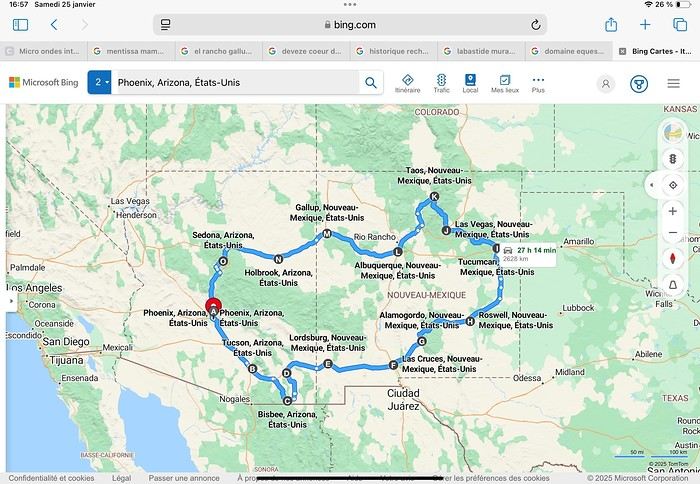
Day 1: Flight Marseille-Paris-Phoenix, then Gold Canyon (133 km) Day 2: Tucson (271 km) Lost Dutchman State Park Day 3: Tucson (155 km) Day 4: Tucson (34 km) Day 5: Bisbee (182 km) Day 6: Lordsburg (345 km) Day 7: Las Cruces (253 km) Day 8: Alamogordo (162 km) Day 9: Roswell (264 km) Day 10: Tucumcari (369 km) Day 11: Las Vegas (281 km) – the one in New Mexico Day 12: Taos (213 km) Day 13: Santa Fe (224 km) Day 14: Albuquerque (123 km) Day 15: Gallup (246 km) Day 16: Holbrook (224 km) Day 17: Flagstaff (179 km) Day 18: Sedona (118 km) Day 19: Sedona (48 km) Day 20: Sedona (41 km) Day 21: Phoenix (256 km) Day 22: Phoenix Airport (35 km)
📊 **Budget**: A little over 7,500 € for both of us, all included. The exchange rate was in our favor (1.17 dollars to 1 €). 📊 **Flights**: Marseille-Paris Charles de Gaulle-Phoenix: 1,787 € for two, with one checked bag each (Air France) 📊 **ESTA**: $42 📊 **America the Beautiful Pass**: $80 📊 **Parking**: 134 € (super eco at Marseille) 📊 **Car rental (Hertz)**: 865 €. Since there were no SUVs left in the reserved category (Nissan Rogue), we got an upgrade (4x4 Ford Explorer). We booked through Air France (15% discount). We’d originally reserved it in December for 1,140 €, but since prices dropped in March, we canceled and rebooked for 865 €. Hertz offers a free Hertz Gold Plus Rewards program, which gives you priority counter service when picking up the car. 📊 **Accommodation**: 2,400 € We stayed in hotels and motels of varying standards (from 60 to 203 € per night, depending on the city), all booked through Booking.com or Hotels.com. Out of 21 nights, only two didn’t include breakfast in the price. Booking.com sometimes offers slightly cheaper rates if you book by phone using the mobile app, and our Genius 3 status on the site also got us some preferential rates. 📊 **Supplementary insurance**: AVA 200 € for medical care if needed 📊 **Cash**: $2,078. We left with 1,000 € exchanged before departure and made two withdrawals of $500. This cash covered: - Evening restaurants and tips - Midday picnics - Gas: $298 for 4,160 km - Museum and private park entries (per person): - Lost Dutchman: $10 - Arizona-Sonora Desert Museum: $28 - Bird Cage Theater: $16 - Tombstone Shootout: $8 - New Mexico Farm & Ranch Museum: $12 - Roswell International UFO Museum: $5 - Billy the Kid Museum: $7 - Rancho de Taos: $22 - West Fork Oak Creek Trail entry: $15 We got a few discounts thanks to our senior age (+65). - Souvenirs and little treats
Like on our previous road trips, we didn’t rent a GPS. We got around using offline GPS apps Here WeGo and Organic Maps, with maps of the states we visited downloaded before we left (on our phones).
❤️❤️❤️ **Highlights** (there are so many!) 📍 Goldfield Ghost Town (even if it’s a reconstruction) 📍 The standing army of Saguaro cacti at Saguaro National Park West 📍 Diving into the cowboy universe of Tombstone 📍 The welcome from Rick and Henry at our guesthouse in Bisbee (Garden at Mile High Ranch) 📍 The tangled rocks of Chiricahua National Monument 📍 The flavored pistachios from Dwayne’s Fresh Jerky and Mac Ginnis Pistachioland 📍 Restaurants: La Posta (Las Cruces), Diner 66 (Albuquerque), and the Haunted Hamburger (Jerome) 📍 The old plazas of New Mexico 📍 The solitude and beauty of the white dunes at White Sands National Park 📍 Stepping back in time at the Billy the Kid Museum (Fort Stanton) 📍 Sections of historic Route 66 and the old motels of Tucumcari, especially at night when all the neon lights are on 📍 Taos Pueblo and diving into Native American culture 📍 After the Rio Grande Bridge, the descent via NM 567 to the very bottom of the Rio Grande Gorge, then the road along the riverbanks to Taos 📍 The tranquility of the Chimayo Sanctuary 📍 Discovering the ingenious native dwellings at Bandelier National Monument and Walnut Canyon National Park 📍 The small towns along the Turquoise Trail 📍 The red rocks of Red Rock Park and the Painted Desert 📍 The extraordinary colors of the petrified trees at Petrified Forest National Park 📍 Sedona, its red rocks, and the reward of the viewpoints at the end of hikes (Devil’s Bridge, The Subway, and West Fork Oak Creek) 📍 The immersion in Mexico when visiting Tlaquepaque 📍 The almost-ghost town of Jerome and its terraced streets 📍 The incredible kindness of Americans, always ready to help and up for a chat ❤️
☹️☹️☹️ **Flops** (there are very few) 📍 Several museums and churches being closed, so we couldn’t visit them 📍 Some museums and visitor centers opening late (10 AM) and closing early (4 PM) 📍 A 64 € phone roaming charge because we got near the Mexican border and picked up their cell tower 📍 The outrageous price ($5.99) for a gallon of gas at the Shell near Phoenix Airport
I hope this helps! Anyway, thanks for reading my long post. Don’t hesitate to reach out, even via PM, if you see I haven’t replied and you’d like more details. Have a great evening, everyone! 🙂
We’re back from our September 2025 road trip, this time to explore Arizona and New Mexico, and it’s time for me to start my travel journal—especially since everything’s already booked for another trip in September 2026 (to California), and I need to get started on the planning.
I was a little worried this new visit to Uncle Sam’s country might not be as "wow" as the others, but we still discovered some incredible places.
For those who don’t know us, we’re a couple in our seventies who speak very little English, but that didn’t stop us from fully enjoying our stay.
For this 6th road trip in the U.S., we spent 21 nights there, drove 4,160 km by car, and walked nearly 160 km in a loop starting from Phoenix.
We’d been to Arizona before (but not this side) and never to New Mexico. This whole road trip was a huge discovery for us.
In the prices mentioned (some in euros, others in dollars), bank fees and exchange charges are included. The flights, car rental, and parking were all paid for in December 2024 when we booked.
We’d downloaded the MPC (Mobile Passport Control) app, but there wasn’t a dedicated line at Phoenix Airport. Still, we got through quickly with friendly, smiling agents.
I don’t drive at all (I hate it), so the stops were chosen based on activities but also, for some, to limit daily mileage for the sole driver. The kilometers listed in the itinerary are the daily distances.
We traveled from September 9th to 22nd, unfortunately once again without our dear friends Mimi and Maumau.
The itinerary
Day 1: Flight Marseille-Paris-Phoenix, then Gold Canyon (133 km) Day 2: Tucson (271 km) Lost Dutchman State Park Day 3: Tucson (155 km) Day 4: Tucson (34 km) Day 5: Bisbee (182 km) Day 6: Lordsburg (345 km) Day 7: Las Cruces (253 km) Day 8: Alamogordo (162 km) Day 9: Roswell (264 km) Day 10: Tucumcari (369 km) Day 11: Las Vegas (281 km) – the one in New Mexico Day 12: Taos (213 km) Day 13: Santa Fe (224 km) Day 14: Albuquerque (123 km) Day 15: Gallup (246 km) Day 16: Holbrook (224 km) Day 17: Flagstaff (179 km) Day 18: Sedona (118 km) Day 19: Sedona (48 km) Day 20: Sedona (41 km) Day 21: Phoenix (256 km) Day 22: Phoenix Airport (35 km)
📊 **Budget**: A little over 7,500 € for both of us, all included. The exchange rate was in our favor (1.17 dollars to 1 €). 📊 **Flights**: Marseille-Paris Charles de Gaulle-Phoenix: 1,787 € for two, with one checked bag each (Air France) 📊 **ESTA**: $42 📊 **America the Beautiful Pass**: $80 📊 **Parking**: 134 € (super eco at Marseille) 📊 **Car rental (Hertz)**: 865 €. Since there were no SUVs left in the reserved category (Nissan Rogue), we got an upgrade (4x4 Ford Explorer). We booked through Air France (15% discount). We’d originally reserved it in December for 1,140 €, but since prices dropped in March, we canceled and rebooked for 865 €. Hertz offers a free Hertz Gold Plus Rewards program, which gives you priority counter service when picking up the car. 📊 **Accommodation**: 2,400 € We stayed in hotels and motels of varying standards (from 60 to 203 € per night, depending on the city), all booked through Booking.com or Hotels.com. Out of 21 nights, only two didn’t include breakfast in the price. Booking.com sometimes offers slightly cheaper rates if you book by phone using the mobile app, and our Genius 3 status on the site also got us some preferential rates. 📊 **Supplementary insurance**: AVA 200 € for medical care if needed 📊 **Cash**: $2,078. We left with 1,000 € exchanged before departure and made two withdrawals of $500. This cash covered: - Evening restaurants and tips - Midday picnics - Gas: $298 for 4,160 km - Museum and private park entries (per person): - Lost Dutchman: $10 - Arizona-Sonora Desert Museum: $28 - Bird Cage Theater: $16 - Tombstone Shootout: $8 - New Mexico Farm & Ranch Museum: $12 - Roswell International UFO Museum: $5 - Billy the Kid Museum: $7 - Rancho de Taos: $22 - West Fork Oak Creek Trail entry: $15 We got a few discounts thanks to our senior age (+65). - Souvenirs and little treats
Like on our previous road trips, we didn’t rent a GPS. We got around using offline GPS apps Here WeGo and Organic Maps, with maps of the states we visited downloaded before we left (on our phones).
❤️❤️❤️ **Highlights** (there are so many!) 📍 Goldfield Ghost Town (even if it’s a reconstruction) 📍 The standing army of Saguaro cacti at Saguaro National Park West 📍 Diving into the cowboy universe of Tombstone 📍 The welcome from Rick and Henry at our guesthouse in Bisbee (Garden at Mile High Ranch) 📍 The tangled rocks of Chiricahua National Monument 📍 The flavored pistachios from Dwayne’s Fresh Jerky and Mac Ginnis Pistachioland 📍 Restaurants: La Posta (Las Cruces), Diner 66 (Albuquerque), and the Haunted Hamburger (Jerome) 📍 The old plazas of New Mexico 📍 The solitude and beauty of the white dunes at White Sands National Park 📍 Stepping back in time at the Billy the Kid Museum (Fort Stanton) 📍 Sections of historic Route 66 and the old motels of Tucumcari, especially at night when all the neon lights are on 📍 Taos Pueblo and diving into Native American culture 📍 After the Rio Grande Bridge, the descent via NM 567 to the very bottom of the Rio Grande Gorge, then the road along the riverbanks to Taos 📍 The tranquility of the Chimayo Sanctuary 📍 Discovering the ingenious native dwellings at Bandelier National Monument and Walnut Canyon National Park 📍 The small towns along the Turquoise Trail 📍 The red rocks of Red Rock Park and the Painted Desert 📍 The extraordinary colors of the petrified trees at Petrified Forest National Park 📍 Sedona, its red rocks, and the reward of the viewpoints at the end of hikes (Devil’s Bridge, The Subway, and West Fork Oak Creek) 📍 The immersion in Mexico when visiting Tlaquepaque 📍 The almost-ghost town of Jerome and its terraced streets 📍 The incredible kindness of Americans, always ready to help and up for a chat ❤️
☹️☹️☹️ **Flops** (there are very few) 📍 Several museums and churches being closed, so we couldn’t visit them 📍 Some museums and visitor centers opening late (10 AM) and closing early (4 PM) 📍 A 64 € phone roaming charge because we got near the Mexican border and picked up their cell tower 📍 The outrageous price ($5.99) for a gallon of gas at the Shell near Phoenix Airport
I hope this helps! Anyway, thanks for reading my long post. Don’t hesitate to reach out, even via PM, if you see I haven’t replied and you’d like more details. Have a great evening, everyone! 🙂
USA 2022 Road Trip
During our first road trip across the United States, we covered 23,000 km and crossed 28 states in 53 days.
Originally, we had planned to drive Route 66 all the way to Oatman in Arizona and visit various national parks in the American West over a two-month period.
This itinerary was planned before our departure, and all the relevant information had been gathered to stick to the schedule.
Everything went so smoothly that we finished visiting the national parks well ahead of our planned return date.
It helped that having a bed, a portable toilet, and a cooler in our vehicle gave us some autonomy since we didn’t have to worry about accommodation.
So, we decided to extend our road trip to the cities of Nashville and Memphis in Tennessee.
We then headed to Louisiana to visit Baton Rouge and New Orleans.
We crossed Mississippi and Alabama before driving along Florida’s west coast all the way to Key West.
We returned via Florida’s east coast and then crossed the eastern U.S. states to get back to Quebec through the Jackman border crossing in Maine.
So, I invite you to keep reading this long recap, which will let you discover the different attractions we visited throughout this amazing journey.
Videos are included throughout the recap. Click on the image to start the video.
To jump to a specific post, here are the relevant links:
Route 66 - Illinois & Missouri Route 66 - St. Louis (Missouri) - Gateway Arch National Park Route 66 - Cuba (Missouri) - City Murals Route 66 - Springfield (Missouri) - Fantastic Caverns Route 66 - Kansas & Oklahoma Route 66 - Texas & Arizona Route 66 - Texas - The Stations of the Cross in Groom Route 66 - Texas - Panhandle - VW Slug Bug Ranch Texas - Palo Duro Canyon State Park - Juniper Trails Texas - Palo Duro Canyon State Park - The Lighthouse Trail Route 66 - Texas - Amarillo - Cadillac Ranch Route 66 - New Mexico - Santa Rosa Blue Hole New Mexico - Bandelier National Monument - Alcove House Trail via Main Loop Trail New Mexico - Bandelier National Monument - Tsankawi Ruins Trail New Mexico - White Rock Overlook Route 66 - New Mexico - Albuquerque - Old Town New Mexico - White Sands National Park New Mexico - White Sands National Park - Dune Life Nature Trail New Mexico - White Sands National Park - Playa Trail New Mexico - White Sands National Park - Interdune Boardwalk New Mexico - Gila Cliff Dwellings National Monument New Mexico - Grants - Ice Cave & Bandera Volcano New Mexico - Gallup - Pyramide Rock Trail & Church Rock Trail Arizona - Holbrook - Painted Desert Arizona - Petrified Forest National Park - Puerco Pueblo & Newspaper Rock Viewpoint Arizona - Petrified Forest National Park - Blue Mesa Arizona - Petrified Forest National Park - The Teepees, Agate Bridge & Jasper Forest Overlook Arizona - Petrified Forest National Park - Crystal Forest Trail Arizona - Petrified Forest National Park - Giant Logs Trail Arizona - Winslow - Two Guns Ghost Town Arizona - Cameron - Little Colorado River Gorge Overlooks Arizona - Grand Canyon National Park - Shoshone Point Trail Arizona - Grand Canyon National Park - Desert View Drive Arizona - Grand Canyon National Park - Rim Route (Orange) & Village Route (Blue) Arizona - Grand Canyon National Park - Hermit Route (Red Line) Route 66 - Arizona - Historic Town of Oatman Arizona - Bullhead City Community Park Nevada - Red Rock Canyon - Calico I & II & Sandstone Quarry Nevada - Red Rock Canyon - Willow Springs Nevada - Red Rock Canyon Lookouts Nevada - Valley of Fire State Park - White Domes Trail Nevada - Valley of Fire State Park - Seven Wonders Trail, Pink Canyon, Fire Wave Nevada - Valley of Fire State Park - Rainbow Vista Trail Nevada - Valley of Fire State Park - Mouse's Tank Trail Nevada - Valley of Fire State Park - Rock Formations Nevada - Valley of Fire State Park - Scenic Routes Nevada - Cathedral Gorge State Park - Slot Canyons Nevada - Cathedral Gorge State Park - Eagle Point & Miller Point Utah - Bryce Canyon National Park - Mossy Cave & Tropic Ditch Waterfall Trail Utah - Bryce Canyon National Park - Scenic Drive Utah - Zion National Park - Pa'rus Trail Utah - Zion National Park - Sand Bench Trail Utah - Zion National Park - Emerald Pools Trail Utah - Zion National Park - West Rim Trail (Trail connecting to Angels Landing) Utah - Zion National Park - Riverside Walk Utah - Zion National Park - Court of The Patriarchs & Big Bend Utah - Zion National Park - Mount Carmel Highway Scenic Drive Utah - Kanab - Jackson Flat Reservoir Utah - Toadstools Trail in Grand Staircase-Escalante National Monument Arizona - Page - Glen Canyon Dam Overlook Arizona - Page - Glen Canyon National Recreation Area Arizona - Page - Horseshoe Bend Overlook Arizona - Page - Upper Antelope Canyon Arizona - Page - Navajo Canyon Boat Tour at Lake Powell Arizona - Page - Antelope Canyon X Arizona - Canyon de Chelly National Monument - Chelly Canyon Arizona - Canyon de Chelly National Monument - Canyon del Muerto Arizona - Monument Valley Navajo Tribal Park Utah - Mexican Hat Utah - Mexican Hat - Goosenecks State Park Utah - Mexican Hat - Valley of the Gods Utah - The Moki Dugway Scenic Backway Utah - Blanding - Natural Bridges National Monument Utah - Lake Powell - Hite Crossing Bridge Utah - Lake Powell - Glen Canyon National Recreation Area - Hite Overlook Utah - Capitol Reef National Park - Chimney Rock Loop Trail Utah - Capitol Reef National Park - Hickman Bridge Trail Utah - Capitol Reef National Park - Grand Wash Trail Utah - Capitol Reef National Park - Sunset Point Trail Utah - Capitol Reef National Park - Goosenecks Trail Utah - Capitol Reef National Park - Viewpoints - Fruita Area Utah - Capitol Reef National Park - Viewpoints - Scenic Drive Utah - Capitol Reef National Park - Cassidy Arch Trail Utah - Capitol Reef National Park - On the way to Capitol Gorge Trailhead Utah - Capitol Reef National Park - Capitol Gorge Trailhead Utah - Monroe - Mystic Hot Springs Utah - Scenic Overlooks on UT-24, UT-119 & I-70 Utah - Arches National Park - Park Avenue Trail Utah - Arches National Park - Courthouse Towers Section's Viewpoints Utah - Arches National Park - Balanced Rock, Pothole Arch, Ham Rock & Garden of Eden Utah - Arches National Park - Double Arch Trail, Cove Arch, Cove of Caves & Panorama Point Utah - Arches National Park - Windows Loop & Turret Arch Trail Utah - Arches National Park - Delicate Arch Trail Utah - Arches National Park - Upper Delicate Arch Viewpoint Trail Utah - Arches National Park - Fiery Furnace Section - Viewpoints Utah - Arches National Park - Sand Dune Arch Trail Utah - Arches National Park - Skyline Arch Trail Utah - Arches National Park - Devils Garden Trail Utah - Dead Horse Point State Park - West Rim Trail Utah - Dead Horse Point State Park - East Rim Trail Utah - Moab - Utah State Route 279 (Potash Road) Utah - Moab - Shafer Trail - Potash Evaporation Ponds Utah - Moab - Potash Road Dinosaur Tracks and Petroglyphs Utah - Moab - Potash Road - Corona, Bowtie & Pinto Arches Trail Utah - Moab - Potash Road - Wall Street Climbing Area Utah - Moab - Kane Springs Road Utah - Moab - Kane Springs Road - Side By Side Adventure Utah - Moab - Kane Springs Road to Moab Utah - Canyonlands National Park - Island in the Sky - Mesa Arch Trail Utah - Canyonlands National Park - Island in the Sky - Aztec Butte Trail Utah - Canyonlands National Park - Island in the Sky - Whale Rock Trail Utah - Canyonlands National Park - Island in the Sky - Upheaval Dome Trail Utah - Canyonlands National Park - Island in the Sky - Grand View Point Overlook Trail Utah - Canyonlands National Park - Island in the Sky - White Rim Overlook Trail Utah - Canyonlands National Park - Island in the Sky - Overlooks Utah - Moab - Wilson Arch Utah - Monticello - Newspaper Rock State Historical Monument Utah - Canyonlands National Park - The Needles - Road Side Ruin Trail Utah - Canyonlands National Park - The Needles - Cave Spring Trail Utah - Canyonlands National Park - The Needles - Pothole Point Trail Utah - Canyonlands National Park - The Needles - Big Spring Canyon Overlook Trail Utah - Canyonlands National Park - The Needles - Overlooks Colorado - Mesa Verde National Park - Mesa Top Ruins Road Colorado - Mesa Verde National Park - Chapin Mesa Road Colorado - Mesa Verde National Park - Mesa Top Loop Colorado - Mesa Verde National Park - Wetherill Mesa Road Colorado - Great Sand Dunes National Park Colorado - Mosca - Zapata Falls Colorado - Colorado Springs - Garden of the Gods Colorado - Black Canyon of the Gunnison National Park Colorado - Gunnison - Curecanti National Recreation Area Colorado - Gunnison - Blue Mesa Dam & Reservoir Colorado - Lake Pueblo State Park (Pueblo Reservoir) Kentucky - Mayfield, 5 months after an EF4 tornado Tennessee - Nashville - Downtown Walking Tour Tennessee - Graceland Mansion - Home of Elvis Presley Tennessee - Graceland - Lisa Marie & Hound Dog II Jets Tennessee - Graceland - Elvis Presley Automobile Museum & Exhibits Tennessee - Exploring Memphis Louisiana - Exploring Baton Rouge Louisiana - Exploring Lafayette Louisiana - Exploring Houma Louisiana - New Orleans - French Quarter Tour Louisiana - New Orleans - Garden District Tour Louisiana - New Orleans - Creole Queen Mississippi River Cruise Florida - Clearwater Beach Florida - Sanibel Island - Bowman's Beach Florida - Siesta Key Beach Florida - Captiva Island - Turner Beach Florida - Key Largo - Sunset Florida - Key West - Smathers Beach Florida - Miami Beach - Art Deco District Florida - Miami Beach South Carolina - Myrtle Beach Virginia - Virginia Beach Maine - Scarborough - Pine Point Beach
Originally, we had planned to drive Route 66 all the way to Oatman in Arizona and visit various national parks in the American West over a two-month period.
This itinerary was planned before our departure, and all the relevant information had been gathered to stick to the schedule.
Everything went so smoothly that we finished visiting the national parks well ahead of our planned return date.
It helped that having a bed, a portable toilet, and a cooler in our vehicle gave us some autonomy since we didn’t have to worry about accommodation.
So, we decided to extend our road trip to the cities of Nashville and Memphis in Tennessee.
We then headed to Louisiana to visit Baton Rouge and New Orleans.
We crossed Mississippi and Alabama before driving along Florida’s west coast all the way to Key West.
We returned via Florida’s east coast and then crossed the eastern U.S. states to get back to Quebec through the Jackman border crossing in Maine.
So, I invite you to keep reading this long recap, which will let you discover the different attractions we visited throughout this amazing journey.
Videos are included throughout the recap. Click on the image to start the video.
To jump to a specific post, here are the relevant links:
Route 66 - Illinois & Missouri Route 66 - St. Louis (Missouri) - Gateway Arch National Park Route 66 - Cuba (Missouri) - City Murals Route 66 - Springfield (Missouri) - Fantastic Caverns Route 66 - Kansas & Oklahoma Route 66 - Texas & Arizona Route 66 - Texas - The Stations of the Cross in Groom Route 66 - Texas - Panhandle - VW Slug Bug Ranch Texas - Palo Duro Canyon State Park - Juniper Trails Texas - Palo Duro Canyon State Park - The Lighthouse Trail Route 66 - Texas - Amarillo - Cadillac Ranch Route 66 - New Mexico - Santa Rosa Blue Hole New Mexico - Bandelier National Monument - Alcove House Trail via Main Loop Trail New Mexico - Bandelier National Monument - Tsankawi Ruins Trail New Mexico - White Rock Overlook Route 66 - New Mexico - Albuquerque - Old Town New Mexico - White Sands National Park New Mexico - White Sands National Park - Dune Life Nature Trail New Mexico - White Sands National Park - Playa Trail New Mexico - White Sands National Park - Interdune Boardwalk New Mexico - Gila Cliff Dwellings National Monument New Mexico - Grants - Ice Cave & Bandera Volcano New Mexico - Gallup - Pyramide Rock Trail & Church Rock Trail Arizona - Holbrook - Painted Desert Arizona - Petrified Forest National Park - Puerco Pueblo & Newspaper Rock Viewpoint Arizona - Petrified Forest National Park - Blue Mesa Arizona - Petrified Forest National Park - The Teepees, Agate Bridge & Jasper Forest Overlook Arizona - Petrified Forest National Park - Crystal Forest Trail Arizona - Petrified Forest National Park - Giant Logs Trail Arizona - Winslow - Two Guns Ghost Town Arizona - Cameron - Little Colorado River Gorge Overlooks Arizona - Grand Canyon National Park - Shoshone Point Trail Arizona - Grand Canyon National Park - Desert View Drive Arizona - Grand Canyon National Park - Rim Route (Orange) & Village Route (Blue) Arizona - Grand Canyon National Park - Hermit Route (Red Line) Route 66 - Arizona - Historic Town of Oatman Arizona - Bullhead City Community Park Nevada - Red Rock Canyon - Calico I & II & Sandstone Quarry Nevada - Red Rock Canyon - Willow Springs Nevada - Red Rock Canyon Lookouts Nevada - Valley of Fire State Park - White Domes Trail Nevada - Valley of Fire State Park - Seven Wonders Trail, Pink Canyon, Fire Wave Nevada - Valley of Fire State Park - Rainbow Vista Trail Nevada - Valley of Fire State Park - Mouse's Tank Trail Nevada - Valley of Fire State Park - Rock Formations Nevada - Valley of Fire State Park - Scenic Routes Nevada - Cathedral Gorge State Park - Slot Canyons Nevada - Cathedral Gorge State Park - Eagle Point & Miller Point Utah - Bryce Canyon National Park - Mossy Cave & Tropic Ditch Waterfall Trail Utah - Bryce Canyon National Park - Scenic Drive Utah - Zion National Park - Pa'rus Trail Utah - Zion National Park - Sand Bench Trail Utah - Zion National Park - Emerald Pools Trail Utah - Zion National Park - West Rim Trail (Trail connecting to Angels Landing) Utah - Zion National Park - Riverside Walk Utah - Zion National Park - Court of The Patriarchs & Big Bend Utah - Zion National Park - Mount Carmel Highway Scenic Drive Utah - Kanab - Jackson Flat Reservoir Utah - Toadstools Trail in Grand Staircase-Escalante National Monument Arizona - Page - Glen Canyon Dam Overlook Arizona - Page - Glen Canyon National Recreation Area Arizona - Page - Horseshoe Bend Overlook Arizona - Page - Upper Antelope Canyon Arizona - Page - Navajo Canyon Boat Tour at Lake Powell Arizona - Page - Antelope Canyon X Arizona - Canyon de Chelly National Monument - Chelly Canyon Arizona - Canyon de Chelly National Monument - Canyon del Muerto Arizona - Monument Valley Navajo Tribal Park Utah - Mexican Hat Utah - Mexican Hat - Goosenecks State Park Utah - Mexican Hat - Valley of the Gods Utah - The Moki Dugway Scenic Backway Utah - Blanding - Natural Bridges National Monument Utah - Lake Powell - Hite Crossing Bridge Utah - Lake Powell - Glen Canyon National Recreation Area - Hite Overlook Utah - Capitol Reef National Park - Chimney Rock Loop Trail Utah - Capitol Reef National Park - Hickman Bridge Trail Utah - Capitol Reef National Park - Grand Wash Trail Utah - Capitol Reef National Park - Sunset Point Trail Utah - Capitol Reef National Park - Goosenecks Trail Utah - Capitol Reef National Park - Viewpoints - Fruita Area Utah - Capitol Reef National Park - Viewpoints - Scenic Drive Utah - Capitol Reef National Park - Cassidy Arch Trail Utah - Capitol Reef National Park - On the way to Capitol Gorge Trailhead Utah - Capitol Reef National Park - Capitol Gorge Trailhead Utah - Monroe - Mystic Hot Springs Utah - Scenic Overlooks on UT-24, UT-119 & I-70 Utah - Arches National Park - Park Avenue Trail Utah - Arches National Park - Courthouse Towers Section's Viewpoints Utah - Arches National Park - Balanced Rock, Pothole Arch, Ham Rock & Garden of Eden Utah - Arches National Park - Double Arch Trail, Cove Arch, Cove of Caves & Panorama Point Utah - Arches National Park - Windows Loop & Turret Arch Trail Utah - Arches National Park - Delicate Arch Trail Utah - Arches National Park - Upper Delicate Arch Viewpoint Trail Utah - Arches National Park - Fiery Furnace Section - Viewpoints Utah - Arches National Park - Sand Dune Arch Trail Utah - Arches National Park - Skyline Arch Trail Utah - Arches National Park - Devils Garden Trail Utah - Dead Horse Point State Park - West Rim Trail Utah - Dead Horse Point State Park - East Rim Trail Utah - Moab - Utah State Route 279 (Potash Road) Utah - Moab - Shafer Trail - Potash Evaporation Ponds Utah - Moab - Potash Road Dinosaur Tracks and Petroglyphs Utah - Moab - Potash Road - Corona, Bowtie & Pinto Arches Trail Utah - Moab - Potash Road - Wall Street Climbing Area Utah - Moab - Kane Springs Road Utah - Moab - Kane Springs Road - Side By Side Adventure Utah - Moab - Kane Springs Road to Moab Utah - Canyonlands National Park - Island in the Sky - Mesa Arch Trail Utah - Canyonlands National Park - Island in the Sky - Aztec Butte Trail Utah - Canyonlands National Park - Island in the Sky - Whale Rock Trail Utah - Canyonlands National Park - Island in the Sky - Upheaval Dome Trail Utah - Canyonlands National Park - Island in the Sky - Grand View Point Overlook Trail Utah - Canyonlands National Park - Island in the Sky - White Rim Overlook Trail Utah - Canyonlands National Park - Island in the Sky - Overlooks Utah - Moab - Wilson Arch Utah - Monticello - Newspaper Rock State Historical Monument Utah - Canyonlands National Park - The Needles - Road Side Ruin Trail Utah - Canyonlands National Park - The Needles - Cave Spring Trail Utah - Canyonlands National Park - The Needles - Pothole Point Trail Utah - Canyonlands National Park - The Needles - Big Spring Canyon Overlook Trail Utah - Canyonlands National Park - The Needles - Overlooks Colorado - Mesa Verde National Park - Mesa Top Ruins Road Colorado - Mesa Verde National Park - Chapin Mesa Road Colorado - Mesa Verde National Park - Mesa Top Loop Colorado - Mesa Verde National Park - Wetherill Mesa Road Colorado - Great Sand Dunes National Park Colorado - Mosca - Zapata Falls Colorado - Colorado Springs - Garden of the Gods Colorado - Black Canyon of the Gunnison National Park Colorado - Gunnison - Curecanti National Recreation Area Colorado - Gunnison - Blue Mesa Dam & Reservoir Colorado - Lake Pueblo State Park (Pueblo Reservoir) Kentucky - Mayfield, 5 months after an EF4 tornado Tennessee - Nashville - Downtown Walking Tour Tennessee - Graceland Mansion - Home of Elvis Presley Tennessee - Graceland - Lisa Marie & Hound Dog II Jets Tennessee - Graceland - Elvis Presley Automobile Museum & Exhibits Tennessee - Exploring Memphis Louisiana - Exploring Baton Rouge Louisiana - Exploring Lafayette Louisiana - Exploring Houma Louisiana - New Orleans - French Quarter Tour Louisiana - New Orleans - Garden District Tour Louisiana - New Orleans - Creole Queen Mississippi River Cruise Florida - Clearwater Beach Florida - Sanibel Island - Bowman's Beach Florida - Siesta Key Beach Florida - Captiva Island - Turner Beach Florida - Key Largo - Sunset Florida - Key West - Smathers Beach Florida - Miami Beach - Art Deco District Florida - Miami Beach South Carolina - Myrtle Beach Virginia - Virginia Beach Maine - Scarborough - Pine Point Beach
15 days in Texas in October 2022
Ah! This trip to Texas, postponed so many times because of Covid. I wanted to discover this state, but not in the summer due to the temperatures.
I’ll try to dig into my memories since I didn’t take any notes.
Day 1: Departure
Early morning flight from Lyon to Frankfurt (I often fly with Lufthansa). We only have a 50-minute layover, but I trust German organization—it’s not just talk, since it took us only 30 minutes to get to the boarding gate. Arriving in Houston, we’re excited because it’s been 3 years since we last visited the USA, and we’ve missed it.
Everything goes smoothly with the formalities and the car rental, so 1.5 hours after landing, I park near Sam Houston Park to start our discovery. The park is pretty, clean, and has the unique feature of housing some well-preserved Victorian houses. The sun is shining, and it’s always fun to see old wooden houses surrounded by gleaming skyscrapers. A quick drive to the Rothko Chapel, which is dedicated to all faiths. There are also modern artworks in an annex building and outside. Then we head to Pasadena to reach our hotel and go to bed since we’ve been awake for a while!
Hotel: A classic Days Inn. It’s standard, but the beds are comfortable, and it’s a quiet place. The + of the day: We're back in the USA The -: Nothing
Day 2: NASA and then Galveston
Of course, we wake up super early. A quick trip to the nearby Walmart for the usual small purchases. Surprise—I can’t buy a bottle of California white wine because in Texas, there are set hours for buying alcohol. Talk about a bummer for my apéro! Next, we head to Kemah, a small, hyper-touristy port where everything is kitschy but clean and nice. It’s a bit overdone, but since NASA doesn’t open until 10 AM and it’s still early, we might as well enjoy the good weather in a pleasant spot.
We arrive at the NASA Houston center without any issues. It’s smaller than the one in Florida and organized a bit differently. There are trains that take passengers to the different sites, but you need to get tickets (included in the price), and once you’ve finished visiting one site, you have to return to the center to get a ticket for another. Not very practical.
We choose to visit the training center and the rockets, skipping the control room, which, based on the photos, looks like the one at Cape Canaveral. The training center is a cool place because it’s still in use. Engineers are working on machines and computers. We don’t see any astronauts training, but we see the space chair, the shuttle’s robotic arm, and lots of gadgets—this hangar is like Gyro Gearloose’s or Doc’s domain!
Next, we head to the rocket hangar, featuring the Saturn V, the same one as at Cape Canaveral. Finally, we wrap up our tour by returning to the center, where a Boeing 747 with a shuttle attached to its back dominates the outside. We can visit the shuttle, and we don’t miss the chance.
A few exhibits inside complete the experience and satisfy our thirst for knowledge. I love the space exploration era, and gotta say, the Americans do it right. Then we drive to Galveston, about 100 km away. Why Galveston? It’s by the sea, so swimming in late October isn’t unpleasant, and there’s a neighborhood called East End Historic District filled with stunning Victorian houses, each more beautiful than the last. Plus, it’s Halloween season, so the decorations are over the top! They really go all out!
Madame takes a swim, but I find the water too cold for my taste. Apéro (they didn’t trick me twice—I had time to go back to another Walmart!) Dinner + bedtime
Hotel: A classic Quality Inn. No issues. The +: NASA, even if it’s smaller than Cape Canaveral The -: I would’ve preferred the water in the Gulf of Mexico to be a bit warmer
Day 1: Departure
Early morning flight from Lyon to Frankfurt (I often fly with Lufthansa). We only have a 50-minute layover, but I trust German organization—it’s not just talk, since it took us only 30 minutes to get to the boarding gate. Arriving in Houston, we’re excited because it’s been 3 years since we last visited the USA, and we’ve missed it.
Everything goes smoothly with the formalities and the car rental, so 1.5 hours after landing, I park near Sam Houston Park to start our discovery. The park is pretty, clean, and has the unique feature of housing some well-preserved Victorian houses. The sun is shining, and it’s always fun to see old wooden houses surrounded by gleaming skyscrapers. A quick drive to the Rothko Chapel, which is dedicated to all faiths. There are also modern artworks in an annex building and outside. Then we head to Pasadena to reach our hotel and go to bed since we’ve been awake for a while!
Hotel: A classic Days Inn. It’s standard, but the beds are comfortable, and it’s a quiet place. The + of the day: We're back in the USA The -: Nothing
Day 2: NASA and then Galveston
Of course, we wake up super early. A quick trip to the nearby Walmart for the usual small purchases. Surprise—I can’t buy a bottle of California white wine because in Texas, there are set hours for buying alcohol. Talk about a bummer for my apéro! Next, we head to Kemah, a small, hyper-touristy port where everything is kitschy but clean and nice. It’s a bit overdone, but since NASA doesn’t open until 10 AM and it’s still early, we might as well enjoy the good weather in a pleasant spot.
We arrive at the NASA Houston center without any issues. It’s smaller than the one in Florida and organized a bit differently. There are trains that take passengers to the different sites, but you need to get tickets (included in the price), and once you’ve finished visiting one site, you have to return to the center to get a ticket for another. Not very practical.
We choose to visit the training center and the rockets, skipping the control room, which, based on the photos, looks like the one at Cape Canaveral. The training center is a cool place because it’s still in use. Engineers are working on machines and computers. We don’t see any astronauts training, but we see the space chair, the shuttle’s robotic arm, and lots of gadgets—this hangar is like Gyro Gearloose’s or Doc’s domain!
Next, we head to the rocket hangar, featuring the Saturn V, the same one as at Cape Canaveral. Finally, we wrap up our tour by returning to the center, where a Boeing 747 with a shuttle attached to its back dominates the outside. We can visit the shuttle, and we don’t miss the chance.
A few exhibits inside complete the experience and satisfy our thirst for knowledge. I love the space exploration era, and gotta say, the Americans do it right. Then we drive to Galveston, about 100 km away. Why Galveston? It’s by the sea, so swimming in late October isn’t unpleasant, and there’s a neighborhood called East End Historic District filled with stunning Victorian houses, each more beautiful than the last. Plus, it’s Halloween season, so the decorations are over the top! They really go all out!
Madame takes a swim, but I find the water too cold for my taste. Apéro (they didn’t trick me twice—I had time to go back to another Walmart!) Dinner + bedtime
Hotel: A classic Quality Inn. No issues. The +: NASA, even if it’s smaller than Cape Canaveral The -: I would’ve preferred the water in the Gulf of Mexico to be a bit warmer
Martine and DD in Colorado and Utah
Hello everyone! 🙂
So many silent months, and now Voyage Forum is accessible again. That’s cool because we can pick up our discussions for our mutual enjoyment.
I hope everyone is doing well and that you’ve been able to take some great trips, whether to the USA or elsewhere.
In September 2020, we had planned a round trip to explore Colorado, but unfortunately, a nasty virus messed up our plans, closing borders and keeping us stuck at home. Luckily for us, canceling the car, flights, and accommodations didn’t cost us a thing—everything was refunded.
In 2023, a loop from Las Vegas let us revisit places we’d seen in 2017 and discover new ones, this time spending more time at each stop with some lovely hikes.
In 2024, we finally revisited the 2020 plan, and I’ll start with that.
However, unforeseen circumstances mean I have much less time than before, so I’ll keep my trip reports shorter (ha ha ha—you’ll have less of my prose to endure).
Another change: for those who remember the "Gang of Four crazy sixty-somethings," it was just DD and me this time. Our dear Mimi and Maumau left the Var to focus on raising horses and can’t leave their little green paradise to join us anymore. We were unfortunately much tamer without them.
We traveled from September 11 to October 3.
The itinerary
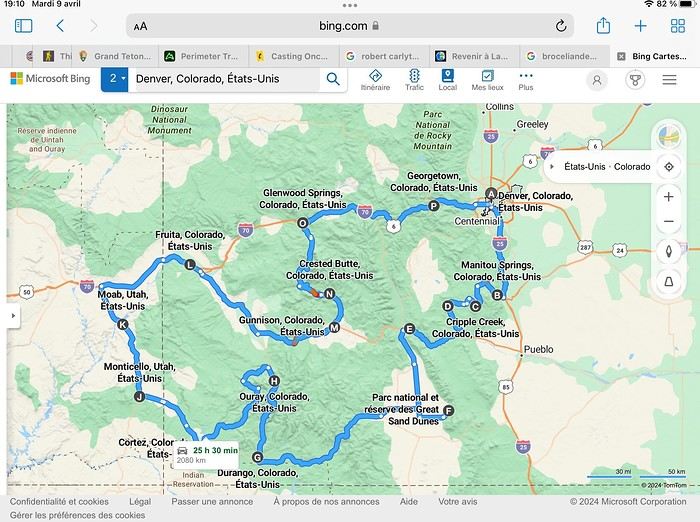
Day 1: Flight Marseille-Paris-Denver, then Manitou Springs (133 km) Day 2: Manitou Springs (49 km) Day 3: Cripple Creek (104 km) Day 4: Salida (254 km) Day 5: Great Sand Dunes (231 km) Day 6: Durango (283 km) Day 7: Durango (Durango-Silverton train) Day 8: Ouray (121 km) Day 9: Ouray (Perimeter Trail hike) Day 10: Cortez (213 km) Day 11: Cortez (Mesa Verde National Park, 134 km) Day 12: Monticello (268 km, detour to Chesler Park) Day 13: Moab (171 km, Delicate Arch) Day 14: Moab (98 km, Fisher Towers) Day 15: Moab (171 km, Canyonlands) Day 16: Fruita (210 km, Colorado National Monument) Day 17: Crested Butte (224 km via Kebler Pass) Day 18: Crested Butte (57 km) Day 19: Glenwood Springs (150 km) Day 20: Glenwood Springs (118 km, Rifle State Park) Day 21: Georgetown (258 km via Independence Pass) Day 22: Denver (123 km), then return flight
We speak very little English. We spent 21 nights there and covered a 3,400 km loop by car and 160 km on foot (we’re still trying to hike while we’re in shape) from Denver in September 2024. We wanted this road trip to help us explore Colorado a bit more—we’d only spent 6 nights there in 2019—and to see it during the fall foliage season. We also wanted to return to Utah (we love Moab) to enjoy its red rocks, which we adore.
In the prices you see (some in euros, others in dollars), I’ve included bank fees and exchange charges. The flights, car, and parking were paid by credit card when we booked in February. Usually, we book around November, but some obligations kept us from doing it earlier. We downloaded the MPC (Mobile Passport Control) app on our phone, which saved us time at immigration.
📊 **Budget: just under 8,500 € for both of us, all included**
📊 **Flights** Marseille-Paris (CDG)-Denver: 2,152 € for both of us, with one checked bag each
📊 **ESTA and America the Beautiful Pass** The ones from our 2023 road trip were still valid
📊 **Parking at Marseille airport: 122 €**
📊 **Car: Nissan Rogue (the French X-Trail) from Hertz: 1,165 €** By booking through Air France (and earning miles), we got a 15% discount. Hertz offers a free Hertz Gold Plus Rewards program, which gives us priority counter service.
📊 **Accommodation: 3,050 €** We stayed in motels and hotels of various ranges (from 100 € to 270 € per night, depending on the city), all booked through Hotels.com or Booking. Booking sometimes offers cheaper rates if you book via the "Booking mobile" app. We also got some preferential rates thanks to our Genius 2 status. Out of 21 nights, only one place didn’t include breakfast.
📊 **Other expenses (activities booked by credit card before leaving)** Durango-Silverton train: 210 € (we booked the enclosed vintage coach in March) Mesa Verde: Balcony House: 15.15 € (booked 14 days before the visit) Timed-entry passes for Arches National Park: 6 € for 3 days (booked June 1 for September entries via http://récreation.gov/). We booked three different days to play with the weather.
📊 **Supplementary insurance with AVA: 204 €** (due to our age 😅 and the high cost of medical consultations in the USA)
📊 **Cash: 1,540 €** We left with 1,000 € exchanged before departure and made two withdrawals (500 $ and 200 $). This cash was used to pay for: - Evening restaurants and tips (between 70 $ and 95 $ for two meals and two drinks) - Two state parks: Dead Horse State Park (20 $) and Rifle State Park (10 $) - The Monarch Pass gondola (24 $) - Midday picnics - Gas (slightly cheaper with cash): 204 $ for 3,400 km - Personal souvenirs and little treats.
Like in our previous road trips, we didn’t rent a GPS. We used the offline GPS app Here We Go, for which we’d downloaded maps of Colorado and Utah from France, as well as a new offline app called Organic Maps as a backup—though we didn’t end up needing it.
❤️❤️❤️ **Highlights (there are so many!)** 📍 The stunning landscapes of Colorado, especially with the fall colors 📍 A step back in time at the old farm in Florissant Fossil Beds National Monument 📍 The prairies of Cripple Creek and the mining remnants of the Vindicator Trail 📍 The cheeky chipmunks in the ghost town of St. Elmo 📍 Great Sand Dunes and its soft sand 📍 The steam train between Durango and Silverton: we’re glad we chose the round-trip because it rained heavily on the way there, but we got to enjoy the scenery on the way back when the sun came out 📍 The unexpected meet-up with Michèle from the group outside a restaurant in Durango 📍 The hot springs in Ouray 📍 Mesa Verde and its still-vibrant past 📍 The red rocks of Moab and Delicate Arch at sunset 📍 The lace-like Fisher Towers and the view from the end of the trail 📍 The gorgeous Route 128 leading to Colorado National Monument—small, easy to visit, and so beautiful 📍 The colors of the fabulous Kebler Pass, Crested Butte, and especially the hike through the golden aspens (Lower and Upper Loop) 📍 The waterfalls at Rifle State Park 📍 The tundra of Independence Pass 📍 The Halloween decorations in Georgetown and Idaho Springs
😞😞 **Flops (there are very few!)** 📍 The viewpoints we missed because they weren’t well-marked or we didn’t see the signs 📍 The closure of some hiking trails (Hanging Lake and parts of Canyonlands) and the Sal Mountain Loop road, which kept us from accessing it 📍😢 The Chesler Park hike we had to cut short due to poor time management—180 km between our stop in Cortez meant we didn’t arrive until 10:30 AM, way too late for a 17 km hike.
Hope this helps! Have a great evening, everyone, and see you soon! 😊
The itinerary
Day 1: Flight Marseille-Paris-Denver, then Manitou Springs (133 km) Day 2: Manitou Springs (49 km) Day 3: Cripple Creek (104 km) Day 4: Salida (254 km) Day 5: Great Sand Dunes (231 km) Day 6: Durango (283 km) Day 7: Durango (Durango-Silverton train) Day 8: Ouray (121 km) Day 9: Ouray (Perimeter Trail hike) Day 10: Cortez (213 km) Day 11: Cortez (Mesa Verde National Park, 134 km) Day 12: Monticello (268 km, detour to Chesler Park) Day 13: Moab (171 km, Delicate Arch) Day 14: Moab (98 km, Fisher Towers) Day 15: Moab (171 km, Canyonlands) Day 16: Fruita (210 km, Colorado National Monument) Day 17: Crested Butte (224 km via Kebler Pass) Day 18: Crested Butte (57 km) Day 19: Glenwood Springs (150 km) Day 20: Glenwood Springs (118 km, Rifle State Park) Day 21: Georgetown (258 km via Independence Pass) Day 22: Denver (123 km), then return flight
We speak very little English. We spent 21 nights there and covered a 3,400 km loop by car and 160 km on foot (we’re still trying to hike while we’re in shape) from Denver in September 2024. We wanted this road trip to help us explore Colorado a bit more—we’d only spent 6 nights there in 2019—and to see it during the fall foliage season. We also wanted to return to Utah (we love Moab) to enjoy its red rocks, which we adore.
In the prices you see (some in euros, others in dollars), I’ve included bank fees and exchange charges. The flights, car, and parking were paid by credit card when we booked in February. Usually, we book around November, but some obligations kept us from doing it earlier. We downloaded the MPC (Mobile Passport Control) app on our phone, which saved us time at immigration.
📊 **Budget: just under 8,500 € for both of us, all included**
📊 **Flights** Marseille-Paris (CDG)-Denver: 2,152 € for both of us, with one checked bag each
📊 **ESTA and America the Beautiful Pass** The ones from our 2023 road trip were still valid
📊 **Parking at Marseille airport: 122 €**
📊 **Car: Nissan Rogue (the French X-Trail) from Hertz: 1,165 €** By booking through Air France (and earning miles), we got a 15% discount. Hertz offers a free Hertz Gold Plus Rewards program, which gives us priority counter service.
📊 **Accommodation: 3,050 €** We stayed in motels and hotels of various ranges (from 100 € to 270 € per night, depending on the city), all booked through Hotels.com or Booking. Booking sometimes offers cheaper rates if you book via the "Booking mobile" app. We also got some preferential rates thanks to our Genius 2 status. Out of 21 nights, only one place didn’t include breakfast.
📊 **Other expenses (activities booked by credit card before leaving)** Durango-Silverton train: 210 € (we booked the enclosed vintage coach in March) Mesa Verde: Balcony House: 15.15 € (booked 14 days before the visit) Timed-entry passes for Arches National Park: 6 € for 3 days (booked June 1 for September entries via http://récreation.gov/). We booked three different days to play with the weather.
📊 **Supplementary insurance with AVA: 204 €** (due to our age 😅 and the high cost of medical consultations in the USA)
📊 **Cash: 1,540 €** We left with 1,000 € exchanged before departure and made two withdrawals (500 $ and 200 $). This cash was used to pay for: - Evening restaurants and tips (between 70 $ and 95 $ for two meals and two drinks) - Two state parks: Dead Horse State Park (20 $) and Rifle State Park (10 $) - The Monarch Pass gondola (24 $) - Midday picnics - Gas (slightly cheaper with cash): 204 $ for 3,400 km - Personal souvenirs and little treats.
Like in our previous road trips, we didn’t rent a GPS. We used the offline GPS app Here We Go, for which we’d downloaded maps of Colorado and Utah from France, as well as a new offline app called Organic Maps as a backup—though we didn’t end up needing it.
❤️❤️❤️ **Highlights (there are so many!)** 📍 The stunning landscapes of Colorado, especially with the fall colors 📍 A step back in time at the old farm in Florissant Fossil Beds National Monument 📍 The prairies of Cripple Creek and the mining remnants of the Vindicator Trail 📍 The cheeky chipmunks in the ghost town of St. Elmo 📍 Great Sand Dunes and its soft sand 📍 The steam train between Durango and Silverton: we’re glad we chose the round-trip because it rained heavily on the way there, but we got to enjoy the scenery on the way back when the sun came out 📍 The unexpected meet-up with Michèle from the group outside a restaurant in Durango 📍 The hot springs in Ouray 📍 Mesa Verde and its still-vibrant past 📍 The red rocks of Moab and Delicate Arch at sunset 📍 The lace-like Fisher Towers and the view from the end of the trail 📍 The gorgeous Route 128 leading to Colorado National Monument—small, easy to visit, and so beautiful 📍 The colors of the fabulous Kebler Pass, Crested Butte, and especially the hike through the golden aspens (Lower and Upper Loop) 📍 The waterfalls at Rifle State Park 📍 The tundra of Independence Pass 📍 The Halloween decorations in Georgetown and Idaho Springs
😞😞 **Flops (there are very few!)** 📍 The viewpoints we missed because they weren’t well-marked or we didn’t see the signs 📍 The closure of some hiking trails (Hanging Lake and parts of Canyonlands) and the Sal Mountain Loop road, which kept us from accessing it 📍😢 The Chesler Park hike we had to cut short due to poor time management—180 km between our stop in Cortez meant we didn’t arrive until 10:30 AM, way too late for a 17 km hike.
Hope this helps! Have a great evening, everyone, and see you soon! 😊
Back from 3 weeks in Guatemala – self-drive trip
Hi everyone.
I wanted to share a little feedback from our trip to Guatemala—we got back a month ago, and I really appreciated the well-commented posts here that helped us out. So, in turn, I wanted to share our own little recap.
We’ve traveled quite a bit together (we’re 38 and 42), and Guatemala had been on our radar for a while. But with so much info out there, it was hard to sort through it all—especially since we only had 3 weeks on the ground and didn’t want to waste time.
Here’s the itinerary we followed: Antigua, the Pacific coast, Lake Atitlán, a private coffee and bird reserve, Chichicastenango, Sayaxché, El Remate, Río Dulce, and Lake Izabal.
We rented a 4x4, which was essential given the state of some roads.
Our highlights: * **Pacific coast**: So authentic and preserved. We met sea turtles, cooked and baked coconut bread with a women’s community—such a meaningful exchange—and kayaked through a pristine mangrove full of birds. * **Lake Atitlán**: Even though we were worried it might feel too touristy, a private tour let us discover local crafts, hidden workshops (weaving, pottery), and the stunning views from the boat. * **Sayaxché**: The starting point for the Aguateca and Dos Pilas sites—one of our favorite outings. The site is breathtaking: walking through the canyon and jungle-covered ruins with almost no one around. We stayed in a little bungalow on an island, totally off the grid. * **In Petén**, we met an Itza Maya tribe—an unforgettable day sharing a meal and plant-based healing rituals. Wow. This tribe resisted the conquistadors and still lives traditionally. We also took a tour on Lake Petén and swam at hidden little beaches. Tikal was nice, but we preferred Yaxhá. * **Río Dulce**: A day at a private cocoa plantation—an adventure in a buggy with the owner himself. We harvested cocoa and ate the chocolate paste afterward, then swam in a waterfall on the property. Since it’s private, there was no one else around. A real privilege. * **Boat tour on the Río Dulce**: For us, the highlight. We visited a school where they’re committed to giving kids a solid education while blending Maya rituals. * **Lake Izabal**: A peaceful end to the trip in a magical setting. We visited Quiriguá.
We went through an organizer who knows the country really well. We weren’t initially planning on that, but thanks to her, we had experiences we never would’ve found on our own. On top of that, we actually paid less for the trip overall because of her local rates. I’m not getting anything out of this—I just think it could help other travelers. Her business is Secretplaceincostarica (she also does Costa Rica, which we’re now eager to explore).
On the ground, we felt completely safe. The people are lovely, the roads can be a little chaotic at times, but we loved every minute of it.
Happy travels to all! Marie
I wanted to share a little feedback from our trip to Guatemala—we got back a month ago, and I really appreciated the well-commented posts here that helped us out. So, in turn, I wanted to share our own little recap.
We’ve traveled quite a bit together (we’re 38 and 42), and Guatemala had been on our radar for a while. But with so much info out there, it was hard to sort through it all—especially since we only had 3 weeks on the ground and didn’t want to waste time.
Here’s the itinerary we followed: Antigua, the Pacific coast, Lake Atitlán, a private coffee and bird reserve, Chichicastenango, Sayaxché, El Remate, Río Dulce, and Lake Izabal.
We rented a 4x4, which was essential given the state of some roads.
Our highlights: * **Pacific coast**: So authentic and preserved. We met sea turtles, cooked and baked coconut bread with a women’s community—such a meaningful exchange—and kayaked through a pristine mangrove full of birds. * **Lake Atitlán**: Even though we were worried it might feel too touristy, a private tour let us discover local crafts, hidden workshops (weaving, pottery), and the stunning views from the boat. * **Sayaxché**: The starting point for the Aguateca and Dos Pilas sites—one of our favorite outings. The site is breathtaking: walking through the canyon and jungle-covered ruins with almost no one around. We stayed in a little bungalow on an island, totally off the grid. * **In Petén**, we met an Itza Maya tribe—an unforgettable day sharing a meal and plant-based healing rituals. Wow. This tribe resisted the conquistadors and still lives traditionally. We also took a tour on Lake Petén and swam at hidden little beaches. Tikal was nice, but we preferred Yaxhá. * **Río Dulce**: A day at a private cocoa plantation—an adventure in a buggy with the owner himself. We harvested cocoa and ate the chocolate paste afterward, then swam in a waterfall on the property. Since it’s private, there was no one else around. A real privilege. * **Boat tour on the Río Dulce**: For us, the highlight. We visited a school where they’re committed to giving kids a solid education while blending Maya rituals. * **Lake Izabal**: A peaceful end to the trip in a magical setting. We visited Quiriguá.
We went through an organizer who knows the country really well. We weren’t initially planning on that, but thanks to her, we had experiences we never would’ve found on our own. On top of that, we actually paid less for the trip overall because of her local rates. I’m not getting anything out of this—I just think it could help other travelers. Her business is Secretplaceincostarica (she also does Costa Rica, which we’re now eager to explore).
On the ground, we felt completely safe. The people are lovely, the roads can be a little chaotic at times, but we loved every minute of it.
Happy travels to all! Marie
3 weeks in Colombia in August 2024
Hi there,
This summer, we spent 3 weeks in northern Colombia. A vibrant trip that complemented our southern Peru adventure from the previous year perfectly. Two neighboring countries, but completely different.
To start, we had to make a choice because the country is vast.
So we focused on 3 different regions for our 3 weeks: - Week 1: Bogotá and the colonial villages (Villa de Leyva, Barichara) - Week 2: Medellín and the Coffee Region - Week 3: the Caribbean coast
We entrusted the organization to a small local agency that handled accommodations, guides, and transportation. Transportation is key. The country is large, the road network isn’t very efficient, and we spent a lot of time traveling (cars, planes, and boats...), but it was the price to pay to explore it.
The overall budget isn’t exactly "backpacker" level. We spent 7,500 € (excluding Air France) for our 3-week stay (hotels, drivers, guides, flights, visits, meals). But we treated ourselves to nice accommodations—you’ll see as we share more posts.
For vacations, I try to follow Philippe Noiret’s motto: "Travel is short. Let’s try to do it first class."
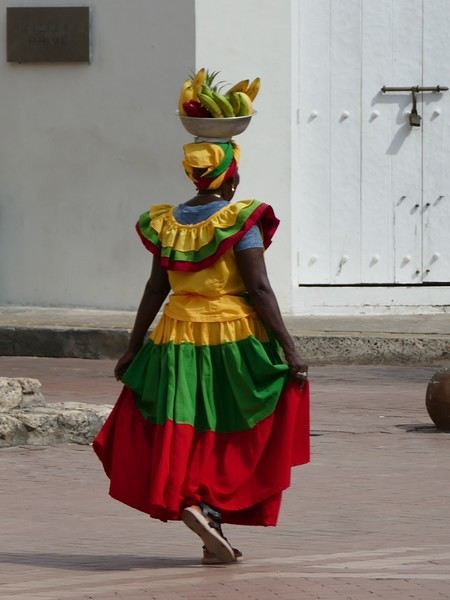
This summer, we spent 3 weeks in northern Colombia. A vibrant trip that complemented our southern Peru adventure from the previous year perfectly. Two neighboring countries, but completely different.
To start, we had to make a choice because the country is vast.
So we focused on 3 different regions for our 3 weeks: - Week 1: Bogotá and the colonial villages (Villa de Leyva, Barichara) - Week 2: Medellín and the Coffee Region - Week 3: the Caribbean coast
We entrusted the organization to a small local agency that handled accommodations, guides, and transportation. Transportation is key. The country is large, the road network isn’t very efficient, and we spent a lot of time traveling (cars, planes, and boats...), but it was the price to pay to explore it.
The overall budget isn’t exactly "backpacker" level. We spent 7,500 € (excluding Air France) for our 3-week stay (hotels, drivers, guides, flights, visits, meals). But we treated ourselves to nice accommodations—you’ll see as we share more posts.
For vacations, I try to follow Philippe Noiret’s motto: "Travel is short. Let’s try to do it first class."
Balade au Cap Ferret English translation pending

En cette année si particulière où les idées de voyage au-delà de nos frontières sont difficilement envisageables … l'occasion nous est donnée de « voyager » plus près de chez nous. Avec ce récit très illustré, je vous invite à découvrir (ou à redécouvrir) un de nos plus beaux sites du Sud-Ouest : le Cap Ferret. Entre les eaux du Bassin d'Arcachon et les vagues de l'Océan Atlantique, ma balade (photographique) suivra les rivages, de plages en dunes et traversera la pinède jusqu'au phare. J'ai choisi de vous présenter ces lieux que j'apprécie tout particulièrement depuis de nombreuses années mais en essayant d'éviter l'affluence estivale … Vous l'avez donc compris, ce sera ce coin de nature privilégiée qui sera à l'honneur mais sans l'agitation et la surfréquentation de la haute saison ! Certaines des photos présentées ont été prises à la fin de ce printemps, d'autres sont plus anciennes mais toutes vous feront partager, je le souhaite, le charme fou de cette si plaisante presqu'île.
……………………………………………………… ………………………………………………………..
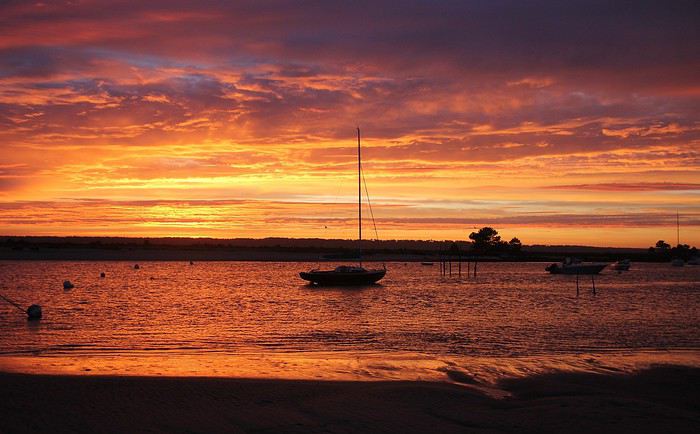
Au Cap-Ferret, un privilège des lèves-tôt consiste à assister parfois au spectacle de l'embrasement du ciel avant le lever du soleil … avec un plus, celui de contempler les nuances sur le miroir d'eau du Bassin d'Arcachon. Des lumières et des teintes dévoilées dans un superbe fondu enchaîné. De minutes en minutes, les tonalités varient passant comme ce matin-là de l'orangé au rose jusqu'à ce que le soleil inonde le paysage marin de sa lumière dorée. Splendide et éblouissant.

Je me trouve sur la plage du phare et il suffit de se retourner pour voir côté terre, le fameux phare avec sa lanterne encore allumée. Le phare du Cap Ferret qui veille sur cette extrémité de presqu'île sera un peu un fil rouge au cours de cette balade qui va vous mener du rivage côté Bassin jusqu'au littoral côté Océan. Un fil rouge … ou plutôt rouge et blanc à l'image des couleurs de sa haute colonne. Un phare qui domine toute cette extrémité de la presqu'île, on l'aperçoit de presque partout, aussi il sera présent sur plusieurs de mes photos de ce récit. En bordure de plage, les villas avec vue marine nous offrent à l'aurore un second miroir avec des reflets d'or sur leurs surfaces vitrées.
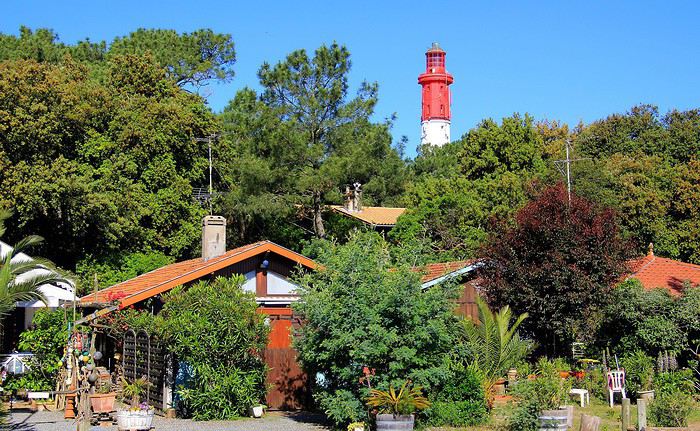
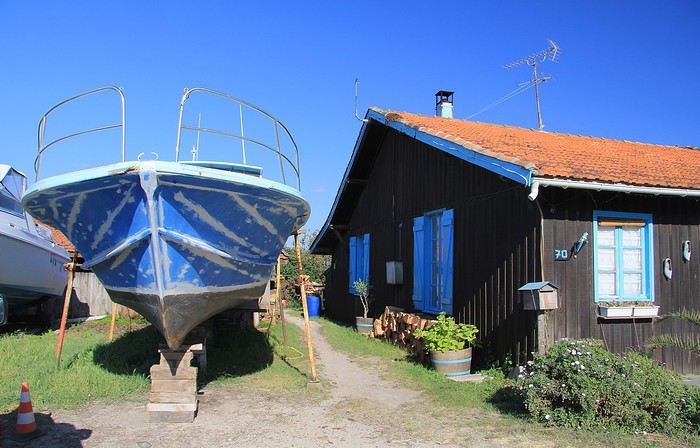
Un peu plus loin et un peu plus tard dans la matinée, nous voici à l'entrée du Quartier des pêcheurs que l'on pourrait également qualifier de quartier des ostréiculteurs. Un site classé pour le pittoresque de ses cabanes en bois. A côté de cette cabane, une pinasse, l'embarcation traditionnelle des lieux, vient de se refaire une beauté à coups de pinceaux. Elle attend sagement la prochaine mise à l'eau. Ici règne une atmosphère d'authenticité, celle des travailleurs de la mer et des parcs ostréicoles.
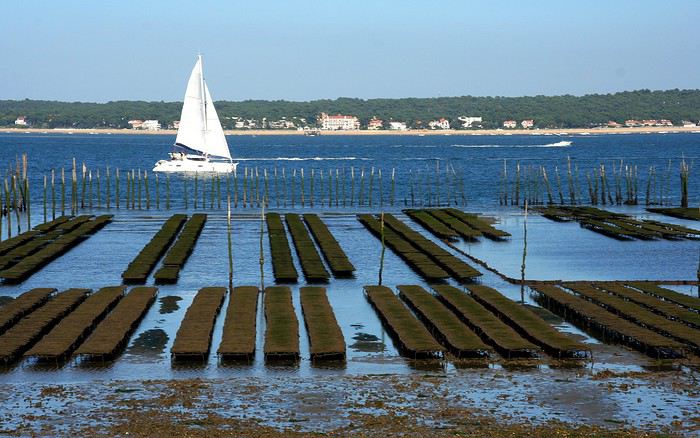

Dans ce hameau on prépare les fameuses huîtres du Bassin que l'on peut même déguster sur des terrasses aménagées avec vue imprenable sur l'étendue d'eau de la baie du Mimbeau.
C'est la dernière cabane ostréicole, tout au bout du quartier des pêcheurs, une cabane avec ici une vue dégagée sur la célèbre Dune du Pilat. J'aime bien cette atmosphère surannée donnée par cette ancienne Aronde des années 50/60. La présentation de la photo en sépia convient parfaitement en renforçant cette impression rétro … mais c'est peut-être dommage de se priver des jolies teintes jaunes des genêts en fleurs ! Bon, une pr��cision, la photo n'a été prise qu'il y a deux ans seulement.

Faisons maintenant un bref crochet à proximité des cabanes des ostréiculteurs en passant parmi les pins. Avec ce soleil matinal et cette photo prise à contre-jour, les pins allongent leurs ombres sur le sol, un bel effet photogénique, je m'empresse de le capturer.
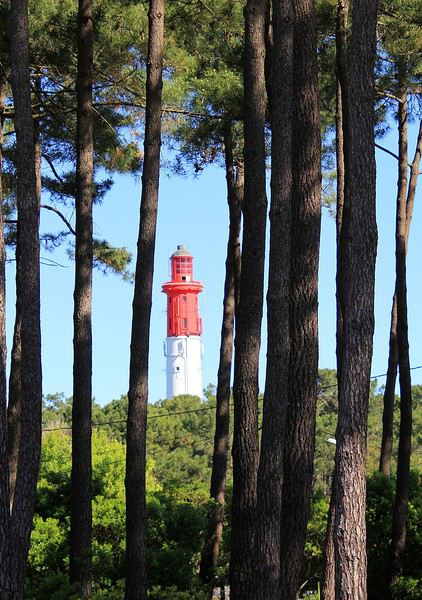
Un autre point de vue depuis ce bosquet. Ici, entre les pins et leurs lignes verticales s'invite la colonne toute droite du phare. Entre deux troncs elle s'immisce et tranche avec sa teinte claire par rapport à celle plus sombre de l'écorce des troncs de résineux.
Questions pour un road trip au Colorado English translation pending
Bonsoir 🙂
Je suis arrivée à J 7 de ma préparation pour notre Road trip de septembre .J’ai quelques questions pour lesquelles je n’ai pas pu obtenir d’infos ( aïe aïe aïe mon anglais !!) Je vous les soumets pour avoir votre avis
Guffey : j’ai cru comprendre que la Rocky Mountain Wildlife foundation était fermée (loups )et est ce que les gorges de Paradise Cove valent l’arrêt ?
Twin Lakes : aller vers le Nord pour les voir nous fera faire un détour d’environ de 80 km. Est ce que ça vaut le détour sachant qu’on ne pourra pas aller jusqu’à Indépendance pass car après nous dormons à Salida (au Sud) . Est qu’il y a une petite marche à faire sur place ou c’est uniquement pour des photos ?
Saint Elmo : qui a fait les Agnes Vaille Falls ?
Great Sand Dune Overlook : facile ou non et combien de temps
Creede : Bachelor Loop : combien de temps pour faire la boucle ? Piste roulante ou 4x4 recommandé ( nous aurons un SUV) ?
Après notre étape de Lake City nous dormons à Ouray. Lors de ma préparation j’avais prévu de passer par les US 20 et 24. En se penchant sur l’ititinéraire il me semble bien que ce sont des routes très techniques que seuls les 4x4 peuvent emprunter 😕 et il va falloir rejoindre Ouray par le nord et le Curecanti ( Sapinero, Montrose ) avant de redescendre
Pouvez vous me le confirmer ?
Bon, c’est tout pour aujourd’hui !! Merci à ceux qui me répondront
Marcalamar 🙂
Quel trajet de Durango à Moab? English translation pending
Bonjour, pouvez-vous me donner vos points de vue sur le trajet de Durango à Moab?
J'hésite entre 2 trajets:
- Passer par Mesa Verde, Cortez, Monticello (pour randonnée dans les Needles). Donc pour voir Silverton, ce serait un aller-retour au départ de Durango. Avec cette option, j'ai des questions: que faire aux alentours de Silverton hormis la ville elle-même? Dans la journée est-ce pertinent de pousser plus loin que Silverton sachant qu'il faudrait retourner à Durango le soir? Ou serait-il judicieux de dormir à Silverton avant de revenir à Durango? Je ne tiens pas à prendre le train à vapeur car le trajet, même avec aller simple, est bien trop long. Est-ce que le trajet en voiture permet de voir les mêmes paysages?
- Passer par Silverton et Ouray. Mesa Verde serait visité lors d'un aller-retour au départ de Durango. Je ne vois pas les Needles dans ce cas-là (j'ai déjà fait une "visite" express de Canyonlands lors d'un précédent séjour à Moab et manquer Needles cette fois me fait de la peine).
Merci. Je suis ouvert à toutes les idées auxquelles je ne pense pas.
J'hésite entre 2 trajets:
- Passer par Mesa Verde, Cortez, Monticello (pour randonnée dans les Needles). Donc pour voir Silverton, ce serait un aller-retour au départ de Durango. Avec cette option, j'ai des questions: que faire aux alentours de Silverton hormis la ville elle-même? Dans la journée est-ce pertinent de pousser plus loin que Silverton sachant qu'il faudrait retourner à Durango le soir? Ou serait-il judicieux de dormir à Silverton avant de revenir à Durango? Je ne tiens pas à prendre le train à vapeur car le trajet, même avec aller simple, est bien trop long. Est-ce que le trajet en voiture permet de voir les mêmes paysages?
- Passer par Silverton et Ouray. Mesa Verde serait visité lors d'un aller-retour au départ de Durango. Je ne vois pas les Needles dans ce cas-là (j'ai déjà fait une "visite" express de Canyonlands lors d'un précédent séjour à Moab et manquer Needles cette fois me fait de la peine).
Merci. Je suis ouvert à toutes les idées auxquelles je ne pense pas.
Projet de voyage en boucle depuis Denver English translation pending
Bonjour, je sais que la période n'est pas propice aux voyage mais voilà j’espère que 2021 oui alors il faut bien préparer.
Voici mon projet qui aura lieu entre le 30 Mai 2021 et le 19 Juin
J1 Arrivé Denver J2 Denver J3 Route vers Great Sand Dunes J4 Route pour Durango J5 Durango J6 Durango Je voudrais faire le train à vapeur il faut s'y prendre combien de temps à l'avance pour réserver ? J7 Route Moab J8 Moab J9 Route Bryce Canyon J10 Bryce Canyon J11 Route SLC J12 Rte WY J13 WY J14WY J15 WY J16 WY J17 OF J18 Jackson J19 Route Casper J20 Route Denver J21 Départ France
Alors Moab j'y serait un weekend donc je ne pense pas faire Arch donc voici je que je compte faire : Je viens de Durango donc le 5 je vais faire Durango/ Mesa Verde le matin. Sur Mesa Verde je compte faire que le secteur de Chapin Mesa avec le Park Point Overlook , Far view site , Spruce House et les deux loop de Mesa Top et Cliff Palace. Pour le moment je ne pense pas faire de visites guidées. J'ai vue que si je changeais d'avis je pourrais réserver sur Durango, 2 jour avant, au 802 Main Av Une fois les visites finis j'ai 3h de route pour rejoindre Moab, ce qui veut dire au plus tard à 17H. Le soleil se couchant après 20h pensez vous que je puisse faire la rando de Fisher Towers dans la foulée? Je ne pense pas faire toute la rando mais au moins rejoindre la vue depuis Titan, je ne sais pas si c'est le bout de la rando et le temps qu'il faut.
Si non pour le Dimanche 6 je pense faire Corona Arh et, si pas fait la, veille Fisher Towers ou Corona et Sal Mountain Loop Road. Faut il mieux faire Corona le matin et en cas Fisher ou Sal l'aprés midi ou l'inverse?? En y étant un dimanche qu'y a t'il d'autre à faire ou je ne trouverais pas trop de monde mais pas compliqué
Merci
J1 Arrivé Denver J2 Denver J3 Route vers Great Sand Dunes J4 Route pour Durango J5 Durango J6 Durango Je voudrais faire le train à vapeur il faut s'y prendre combien de temps à l'avance pour réserver ? J7 Route Moab J8 Moab J9 Route Bryce Canyon J10 Bryce Canyon J11 Route SLC J12 Rte WY J13 WY J14WY J15 WY J16 WY J17 OF J18 Jackson J19 Route Casper J20 Route Denver J21 Départ France
Alors Moab j'y serait un weekend donc je ne pense pas faire Arch donc voici je que je compte faire : Je viens de Durango donc le 5 je vais faire Durango/ Mesa Verde le matin. Sur Mesa Verde je compte faire que le secteur de Chapin Mesa avec le Park Point Overlook , Far view site , Spruce House et les deux loop de Mesa Top et Cliff Palace. Pour le moment je ne pense pas faire de visites guidées. J'ai vue que si je changeais d'avis je pourrais réserver sur Durango, 2 jour avant, au 802 Main Av Une fois les visites finis j'ai 3h de route pour rejoindre Moab, ce qui veut dire au plus tard à 17H. Le soleil se couchant après 20h pensez vous que je puisse faire la rando de Fisher Towers dans la foulée? Je ne pense pas faire toute la rando mais au moins rejoindre la vue depuis Titan, je ne sais pas si c'est le bout de la rando et le temps qu'il faut.
Si non pour le Dimanche 6 je pense faire Corona Arh et, si pas fait la, veille Fisher Towers ou Corona et Sal Mountain Loop Road. Faut il mieux faire Corona le matin et en cas Fisher ou Sal l'aprés midi ou l'inverse?? En y étant un dimanche qu'y a t'il d'autre à faire ou je ne trouverais pas trop de monde mais pas compliqué
Merci
Caraïbes: escales aux Îles Vierges English translation pending
Place au rêve, à l'évasion et au dépaysement … ce sont trois escales dans les Îles des Caraïbes que je vous propose de découvrir avec ce récit de voyage.
Des îles éparpillées dans le nord de l'arc antillais qui finalement ne sont pas totalement vierges, elles possèdent toutes un charme fou.
Des îles diverses, par leurs paysages mais aussi par leur histoire ou leur nationalités.
A « Grand Turk », nous serons en territoire britannique au milieu d'un camaïeu de bleu. Quant à « Saint Thomas », la seconde escale, l'île à tout d'un petit paradis … des USA ! après avoir été à une époque, terre d'un royaume scandinave . Et enfin, nous terminerons le périple à « Virgin Gorda », un île de la Grande Bretagne d'outremer dont on ne peut oublier les plages de rêve parsemées d'impressionnants rochers. Que d'agréables souvenirs !
--__
Grand Turk, entre bleu lagon et or blanc
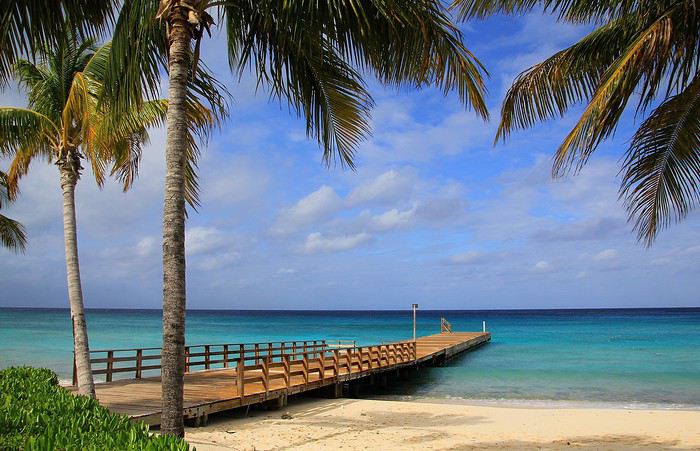
Voilà la vision tant attendue lorsqu'on débarque sur une île des Caraïbes ... A Grand Turk, ce décor de rêve est bien au rendez-vous : des plages de sable blanc et un horizon marin aux fascinantes nuances de bleu, et il y en a tout autour de l'île. Certes, la photo est un peu cliché mais avouons que contempler un tel paysage fait du bien, surtout en cette période où la moindre idée de voyage à l'étranger est à oublier … du moins pour un certain temps ! Sur votre écran, vous avez l'image, à vous de la compléter en imaginant l'environnement sonore. Entendez-vous maintenant le doux bruit des vaguelettes venant lécher ce rivage ?
Comme lors de tout voyage, il y a un temps pour des moments de contemplation et d'autres consacrés à la découverte … à nous à présent, la balade sur Grand Turk.
L'archipel de Grand Turk et Caïcos est situé au nord des Antilles, c'est un chapelet d'îles et d'îlots dans le prolongement des Bahamas et séparé de quelques 160 kilomètres, à vol d'oiseau (marin), du nord de Haïti.
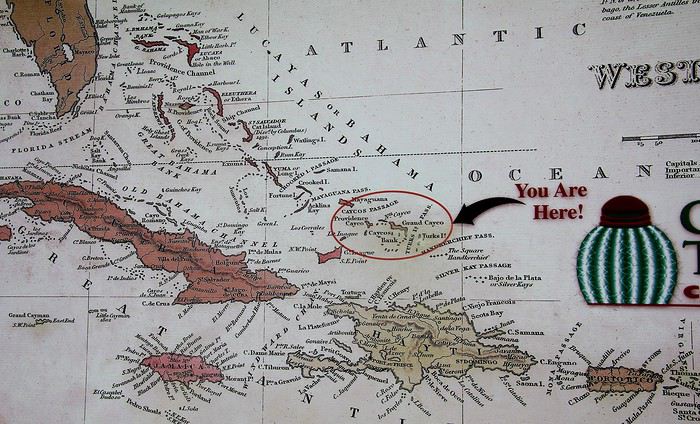
Cette carte apposée sur un mur du port de débarquement permet de mieux localiser l'archipel au milieu d'une myriade d'îles caribéennes. Donc nous voici « Here », facile à repérer notre situation avec ce cercle et cette patine bistre : que de doigts de visiteurs ont du pointer l'archipel ! Une trentaine d'îles dont huit seulement sont habitées constitue Grand Turk & Caïcos. Quant à Grand Turk, l'île n'a de grand que le nom. L'île ne mesure qu'une dizaine de kilomètres pour à peine deux/trois de large, mais c'est sur son territoire qu'est située la capitale du petit État : Cockburn Town.
En bonne place sur cette carte ainsi que sur les drapeaux flottants au vent, on le constate, le cactus est mis en avant. Cette plante a été choisie comme emblème de l'archipel.
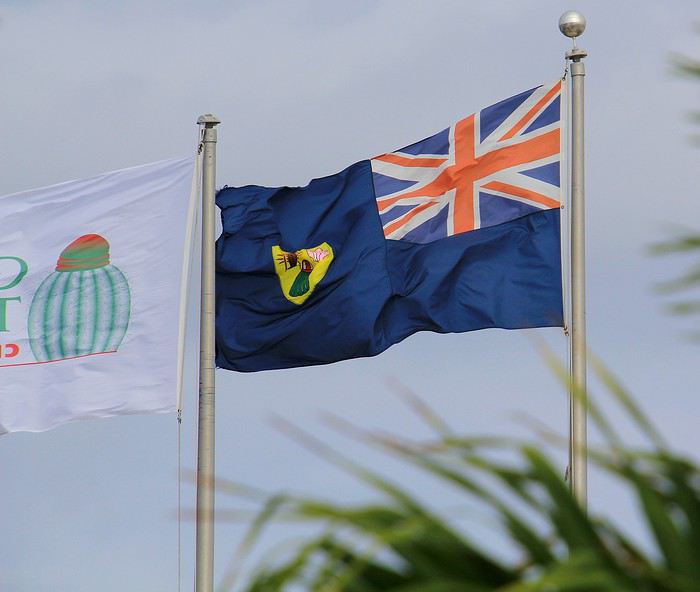
Avec toutes ses épines, on ne peut pas dire que l'aspect de ce cactus local soit particulièrement accueillant ... mais si ! il a quand même belle allure avec son drôle de pompon rouge.
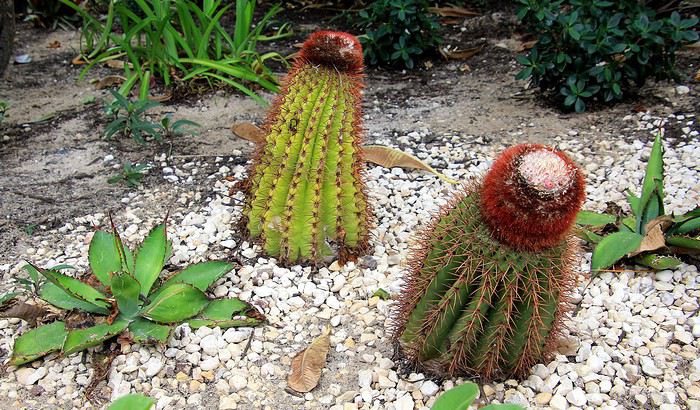
Nommé melocactus, ça fait savant, ou plus simplement Turk 's head in english, cette « Tête de Turc » végétale serait à l'origine du nom de l'archipel des Turks & Caïcos, enfin paraît-il ! Au sujet du drapeau, bien sûr on retrouve l'Union Jack, mère patrie oblige mais à côté figure aussi des armoiries aux couleurs plus locales : une conque, une langouste ainsi que l'incontournable cactus.
Quitté les environs du port, c'est à dire le sud de l'île, la route nous fait passer près de l'aéroport international de Grand Turk, il relie le territoire au reste du monde. Un aéroport à la taille modeste, on pouvait s'en douter, dont la piste est tracée sur une des seules parties parfaitement planes de l'île.
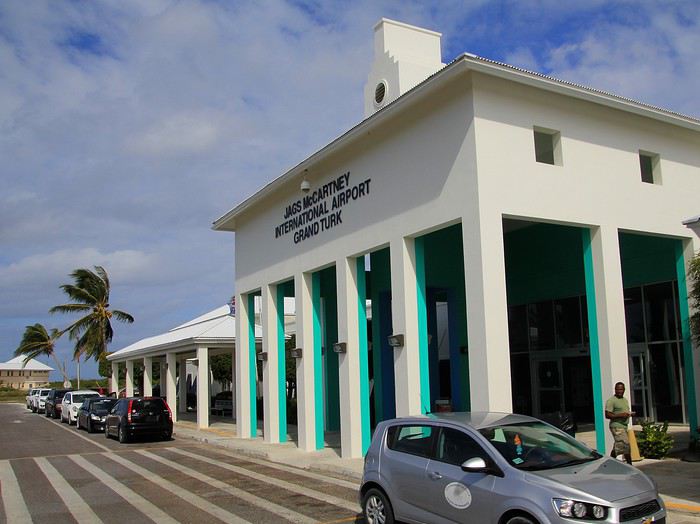
Mc Cartney Airport ? Non, ce n'est pas un hommage au célèbre Paul … des Beatles. JJAGS Mc Carney était un homme politique qui a marqué les T&C. Élu à la tête du territoire insulaire à l'âge de 31 ans, il a enthousiasmé les habitants par son charisme et son souhait d'autonomie pour l’administration de ses îles … mais le destin en a voulu autrement. En 1981 et à seulement 34 ans, l'homme trouva la mort lors d'un crash aérien.
Restons dans le domaine aérien et même bien au-delà … Au carrefour de l'aéroport, trône une ancienne capsule spatiale.
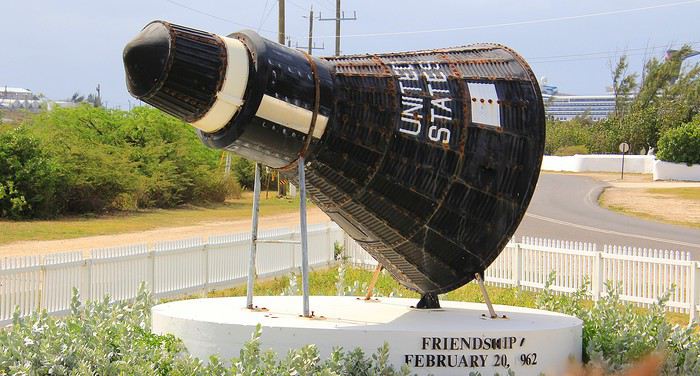
Sur l'île, on est très fier d'évoquer ce souvenir des débuts de la conquête spatiale. En 1962, c'est au large de Grand Turk que l'astronaute John Glenn a effectué son «splashdown », c'est à dire son amerrissage. A bord de Mercury, il venait de faire trois révolutions autour de la terre devenant ainsi le premier américain a effectué un vol en orbite. A l'époque, sur Grand Turk, il y avait une base militaire transformée pour l'occasion en mini NASA. Ainsi les Américains avec cette première avaient rattrapé les Russes dans la course à l'espace … des Russes qui avec Youri Gagarine les avaient devancé dans l'espace dix mois plutôt.
Bienvenue à Cockburn Town, la capitale officielle depuis 1766 des Turks & Caïcos Une capitale de poche avec seulement 3700 habitants sur les quelques 5000 que compte l'ensemble de l'île. Dans la ville, qui s'étire le long du littoral, on y trouve bien entendu quelques bâtiments administratifs. Celui-ci, sur la photo ci-dessous, regroupe dans une même construction la plupart des services administratifs : financiers, juridiques et sans doute encore quelques autres ...
Dans cette capitale-bourgade, on voit surtout des résidences individuelles, un peu dans le style d'un lotissement balnéaire. De simples maisons toutes parées de couleurs aux infinies nuances, les tonalités vont du rose au bleu en passant par le vert …
Sur le front de mer, quelques coquettes villas coloniales semblent particulièrement accueillantes. Leur style architectural est le plus souvent inspiré des maisons bahaméennes.
Si plusieurs ont été rénovées et sont ornées d'une profusion de bougainvilliers d'autres semblent presque à l'abandon, celle-ci par exemple.
Cette ancienne bâtisse Miramar, autrefois le siège de bureaux est proposée à la vente. A bon entendeur, sachez qu'elle est idéalement située en face de la plage cependant, côté remise en état, bon courage pour le budget des travaux à prévoir !
A « Grand Turk », nous serons en territoire britannique au milieu d'un camaïeu de bleu. Quant à « Saint Thomas », la seconde escale, l'île à tout d'un petit paradis … des USA ! après avoir été à une époque, terre d'un royaume scandinave . Et enfin, nous terminerons le périple à « Virgin Gorda », un île de la Grande Bretagne d'outremer dont on ne peut oublier les plages de rêve parsemées d'impressionnants rochers. Que d'agréables souvenirs !
--__
Grand Turk, entre bleu lagon et or blanc
Voilà la vision tant attendue lorsqu'on débarque sur une île des Caraïbes ... A Grand Turk, ce décor de rêve est bien au rendez-vous : des plages de sable blanc et un horizon marin aux fascinantes nuances de bleu, et il y en a tout autour de l'île. Certes, la photo est un peu cliché mais avouons que contempler un tel paysage fait du bien, surtout en cette période où la moindre idée de voyage à l'étranger est à oublier … du moins pour un certain temps ! Sur votre écran, vous avez l'image, à vous de la compléter en imaginant l'environnement sonore. Entendez-vous maintenant le doux bruit des vaguelettes venant lécher ce rivage ?
Comme lors de tout voyage, il y a un temps pour des moments de contemplation et d'autres consacrés à la découverte … à nous à présent, la balade sur Grand Turk.
L'archipel de Grand Turk et Caïcos est situé au nord des Antilles, c'est un chapelet d'îles et d'îlots dans le prolongement des Bahamas et séparé de quelques 160 kilomètres, à vol d'oiseau (marin), du nord de Haïti.
Cette carte apposée sur un mur du port de débarquement permet de mieux localiser l'archipel au milieu d'une myriade d'îles caribéennes. Donc nous voici « Here », facile à repérer notre situation avec ce cercle et cette patine bistre : que de doigts de visiteurs ont du pointer l'archipel ! Une trentaine d'îles dont huit seulement sont habitées constitue Grand Turk & Caïcos. Quant à Grand Turk, l'île n'a de grand que le nom. L'île ne mesure qu'une dizaine de kilomètres pour à peine deux/trois de large, mais c'est sur son territoire qu'est située la capitale du petit État : Cockburn Town.
En bonne place sur cette carte ainsi que sur les drapeaux flottants au vent, on le constate, le cactus est mis en avant. Cette plante a été choisie comme emblème de l'archipel.
Avec toutes ses épines, on ne peut pas dire que l'aspect de ce cactus local soit particulièrement accueillant ... mais si ! il a quand même belle allure avec son drôle de pompon rouge.
Nommé melocactus, ça fait savant, ou plus simplement Turk 's head in english, cette « Tête de Turc » végétale serait à l'origine du nom de l'archipel des Turks & Caïcos, enfin paraît-il ! Au sujet du drapeau, bien sûr on retrouve l'Union Jack, mère patrie oblige mais à côté figure aussi des armoiries aux couleurs plus locales : une conque, une langouste ainsi que l'incontournable cactus.
Quitté les environs du port, c'est à dire le sud de l'île, la route nous fait passer près de l'aéroport international de Grand Turk, il relie le territoire au reste du monde. Un aéroport à la taille modeste, on pouvait s'en douter, dont la piste est tracée sur une des seules parties parfaitement planes de l'île.
Mc Cartney Airport ? Non, ce n'est pas un hommage au célèbre Paul … des Beatles. JJAGS Mc Carney était un homme politique qui a marqué les T&C. Élu à la tête du territoire insulaire à l'âge de 31 ans, il a enthousiasmé les habitants par son charisme et son souhait d'autonomie pour l’administration de ses îles … mais le destin en a voulu autrement. En 1981 et à seulement 34 ans, l'homme trouva la mort lors d'un crash aérien.
Restons dans le domaine aérien et même bien au-delà … Au carrefour de l'aéroport, trône une ancienne capsule spatiale.
Sur l'île, on est très fier d'évoquer ce souvenir des débuts de la conquête spatiale. En 1962, c'est au large de Grand Turk que l'astronaute John Glenn a effectué son «splashdown », c'est à dire son amerrissage. A bord de Mercury, il venait de faire trois révolutions autour de la terre devenant ainsi le premier américain a effectué un vol en orbite. A l'époque, sur Grand Turk, il y avait une base militaire transformée pour l'occasion en mini NASA. Ainsi les Américains avec cette première avaient rattrapé les Russes dans la course à l'espace … des Russes qui avec Youri Gagarine les avaient devancé dans l'espace dix mois plutôt.
Bienvenue à Cockburn Town, la capitale officielle depuis 1766 des Turks & Caïcos Une capitale de poche avec seulement 3700 habitants sur les quelques 5000 que compte l'ensemble de l'île. Dans la ville, qui s'étire le long du littoral, on y trouve bien entendu quelques bâtiments administratifs. Celui-ci, sur la photo ci-dessous, regroupe dans une même construction la plupart des services administratifs : financiers, juridiques et sans doute encore quelques autres ...
Dans cette capitale-bourgade, on voit surtout des résidences individuelles, un peu dans le style d'un lotissement balnéaire. De simples maisons toutes parées de couleurs aux infinies nuances, les tonalités vont du rose au bleu en passant par le vert …
Sur le front de mer, quelques coquettes villas coloniales semblent particulièrement accueillantes. Leur style architectural est le plus souvent inspiré des maisons bahaméennes.
Si plusieurs ont été rénovées et sont ornées d'une profusion de bougainvilliers d'autres semblent presque à l'abandon, celle-ci par exemple.
Cette ancienne bâtisse Miramar, autrefois le siège de bureaux est proposée à la vente. A bon entendeur, sachez qu'elle est idéalement située en face de la plage cependant, côté remise en état, bon courage pour le budget des travaux à prévoir !
Concours photo de juin 2020: "Multicolore" English translation pending
Bonjour,
J'ai le privilège d'organiser le concours photos du moi de juin 2010. J'ai longuement hésité, beaucoup de sujets ont été déjà proposés et faire preuve d’originalité devient de plus en plus compliqué. Il fallait choisir, j'ai choisi : « Multicolore » : « Qui présente des couleurs variées » d 'après la définition. Je n'impose pas le nombre minimum de couleurs présentes, sachant que des photos avec seulement 2 couleurs pourront faire partie du thème, à partir du moment où elles sont en harmonie et que ça « éclate ». En effet, je voudrais que quand on ouvrira une photo, il y ait l'effet : « WHOUAAAAA, les couleurs... « Il faudra malgré tout garder à l'idée la notion de voyage.
Je pense que le thème laisse une grande ouverture.
On pourra présenter une multitude de sujets :
Pourquoi pas des animaux multicolores ?
Des bâtiments multicolores ?
Des personnages ?
Des objets ?
Des scènes de vie ?
Et bien d'autres...
Participation : Chaque participant(e) peut proposer jusqu'à 3 photos, et ce jusqu'au mardi 23/06 à 24h00, heure de Paris. Chaque photo sera présentée dans un seul message, en indiquant son numéro (1, 2 ou 3). Pensez à ajouter une petite explication, commentaire, localisation, date de prise de vue.
Vote : Chaque membre VF peut voter pour les 3 photos qu'il ou elle juge les meilleures selon ses propres critères et en tenant compte du thème.
Les votes se feront du mercredi 24/06 au dimanche 28/06 à 24h00, heure de Paris. Les photos choisies seront citées dans l'ordre de préférence : - la 1re photo : 3 points - la 2e : 2 points - la 3e : 1 point
Un seul et unique vote pour 3 photos est accepté par membre.
Conclusion : Le vainqueur est l'auteur de la photo ayant reçu le plus de points. Les résultats seront publiés le 29/06. En cas d'égalité, le nombre de premières places prévaudra. Le vainqueur aura l'honneur d'organiser le concours du mois de juillet.
La discussion est ici : https://voyageforum.com/discussion/discussions-sujet-concours-photo-juin-2020-multicolore-d10297778/
Philippe
J'ai le privilège d'organiser le concours photos du moi de juin 2010. J'ai longuement hésité, beaucoup de sujets ont été déjà proposés et faire preuve d’originalité devient de plus en plus compliqué. Il fallait choisir, j'ai choisi : « Multicolore » : « Qui présente des couleurs variées » d 'après la définition. Je n'impose pas le nombre minimum de couleurs présentes, sachant que des photos avec seulement 2 couleurs pourront faire partie du thème, à partir du moment où elles sont en harmonie et que ça « éclate ». En effet, je voudrais que quand on ouvrira une photo, il y ait l'effet : « WHOUAAAAA, les couleurs... « Il faudra malgré tout garder à l'idée la notion de voyage.
Je pense que le thème laisse une grande ouverture.
On pourra présenter une multitude de sujets :
Pourquoi pas des animaux multicolores ?
Des bâtiments multicolores ?
Des personnages ?
Des objets ?
Des scènes de vie ?
Et bien d'autres...
Participation : Chaque participant(e) peut proposer jusqu'à 3 photos, et ce jusqu'au mardi 23/06 à 24h00, heure de Paris. Chaque photo sera présentée dans un seul message, en indiquant son numéro (1, 2 ou 3). Pensez à ajouter une petite explication, commentaire, localisation, date de prise de vue.
Vote : Chaque membre VF peut voter pour les 3 photos qu'il ou elle juge les meilleures selon ses propres critères et en tenant compte du thème.
Les votes se feront du mercredi 24/06 au dimanche 28/06 à 24h00, heure de Paris. Les photos choisies seront citées dans l'ordre de préférence : - la 1re photo : 3 points - la 2e : 2 points - la 3e : 1 point
Un seul et unique vote pour 3 photos est accepté par membre.
Conclusion : Le vainqueur est l'auteur de la photo ayant reçu le plus de points. Les résultats seront publiés le 29/06. En cas d'égalité, le nombre de premières places prévaudra. Le vainqueur aura l'honneur d'organiser le concours du mois de juillet.
La discussion est ici : https://voyageforum.com/discussion/discussions-sujet-concours-photo-juin-2020-multicolore-d10297778/
Philippe
La prière dans le monde! English translation pending
La nuit tombe d’un coup et je suis sans cesse étonnée de passer ainsi du clair au noir.
Après cette journée fatigante, je rentre à la maison et jette mes sandales dans un coin.
Dans son petit bassin de bronze, la fleur de lotus est déjà refermée.
Tout est silencieux mais j’entends le léger murmure incantatoire de Tiago.
Il prie.
Assis devant son petit autel, les volutes odorantes des bâtonnets d’encens s’enroulent autour de ses cheveux noirs. Son dos dur et sombre luit et la lueur de la flamme dans la coupelle de ghee danse sur ses épaules.
La grande image de Shiva fixée au mur se décolle dans un angle, pliant les pointes du trident.
Le dieu garde ses yeux mi-clos sur la création du monde et les cycles de l’univers.
Dans sa longue chevelure, au sommet de sa tête s’enroule un serpent.
Un dieu coloré bienveillant dans cette représentation, l’une de ses quatre mains ouverte sur le genou.
Tiago a posé son offrande, une noix de coco est une guirlande de fleurs jaune dont je ne retiens jamais le nom.
Immobile.
Il prie.
__
J’ai vu des gens agenouillés, des gens couchés face contre terre, assis en tailleur, assis mains jointes. J’ai vu des gens danser, j’ai vu des processions colorées, j’ai entendu des mélopées hypnotiques, j’ai écouté des cymbales, des trompettes, de grandes orgues, des chants liturgiques, des psaumes, le fanbai, des chants grégoriens et des gospels, des chants diphoniques qui remuent le ventre.
J’ai vu des flèches perçant les nuages, des coupoles dorées, des dômes de pierre, des cathédrales, des temples, des autels flamboyant de dorures, des allées de chevaux de pierre, des temples de feu et des chapelles de pierre blotties sous les ombrages, de bois ensevelies sous la neige, des cryptes froides et silencieuses, des maisons d’adoration sans effigie, des monastères accrochés à la montagne , des cloîtres dans la ville.
j’ai vu des costumes de cérémonies multicolores, des tenues de fourrure, des saris de fêtes soyeux, des chapeaux rouge étranges, des plumets et des têtes rasées. J’ai vu des hommes tirer des chars la peau du dos distendue par des crochets, j’ai été subjuguée par des mandala de sable, tout est éphémère.
Partout où mes pas ont foulé d’autres terres, j’ai vu des croyants réunis, rassemblés, unis, bruyants, silencieux, exaltés, recueillis.
J’ai touché des chapelets de buis, d’ivoire, en corail, en noyaux, les perles égrenant le nom divin, les mantras, les prières, tenu des croix de roseaux, de feuilles de maïs, porté des couronnes de fleurs, tenu des moulins de prière. J’ai regardé des dieux vêtus d’oripeaux décolorés, vêtus d’habits précieux, nus ceints d’un pagne, l’arbre à souhaits aux rubans multicolores agités par les tourbillons de neige.
J’ai respiré l’odeur de l’encens, j’ai respiré l’odeur de la cire fondue, j’ai respiré le parfum des fleurs fraîches et l’odeur surette des offrandes pourrissantes.
J’ai fermé les yeux, souvent, pour mieux entendre, pour mieux comprendre.
Et je sais, qu’aujourd’hui, je ne sais rien de cette ferveur puissante qui soulève et porte et emporte les peuples du monde. Je sais aussi que le tremblement de mes jambes et les yeux qui picotent devant la ferveur de Tiago, ce soir là, il y a des lustres, huit peut-être, c’est tellement loin, fut ce qui s’approchait le plus d’une prière. Ou, peut-être étais-je secrètement amoureuse...
Ainsi, je crois que beaucoup ont vécu ces instants étranges de communion, d’observation respectueuse, que beaucoup connaissent les rites et rituels, les byzantins, coptes, maronites, et tant d’autres, des rites de passage et des rites d’intercessions appelant la pluie, la fécondité . Ces rites qui rythment la vie dans tous ces pays que je n’aurais plus le temps de connaître.
Comment se vit la prière en Afrique, chez les aborigènes d’Australie, à Madagascar, à Cuba, en Chine, au Japon, en Indonésie ou ailleurs ?. Comment se vit-elle, la prière, aujourd’hui où partout des moments religieux forts s’annoncent ? Monothéiste, animiste, shintoïsme, bouddhisme, syncrétisme religieux, l’aspect religieux est toujours présents dans mes voyages, l’est-il pour vous aussi ?
Z’avez lu jusqu’au bout ? Bravo, vous avez gagné une image pieuse ou non. Pour ce faire, aller dans la rubrique -jeux voyages – sur le fil -défilés et processions -, il y en a des magnifiques.
J’ai vu des gens agenouillés, des gens couchés face contre terre, assis en tailleur, assis mains jointes. J’ai vu des gens danser, j’ai vu des processions colorées, j’ai entendu des mélopées hypnotiques, j’ai écouté des cymbales, des trompettes, de grandes orgues, des chants liturgiques, des psaumes, le fanbai, des chants grégoriens et des gospels, des chants diphoniques qui remuent le ventre.
J’ai vu des flèches perçant les nuages, des coupoles dorées, des dômes de pierre, des cathédrales, des temples, des autels flamboyant de dorures, des allées de chevaux de pierre, des temples de feu et des chapelles de pierre blotties sous les ombrages, de bois ensevelies sous la neige, des cryptes froides et silencieuses, des maisons d’adoration sans effigie, des monastères accrochés à la montagne , des cloîtres dans la ville.
j’ai vu des costumes de cérémonies multicolores, des tenues de fourrure, des saris de fêtes soyeux, des chapeaux rouge étranges, des plumets et des têtes rasées. J’ai vu des hommes tirer des chars la peau du dos distendue par des crochets, j’ai été subjuguée par des mandala de sable, tout est éphémère.
Partout où mes pas ont foulé d’autres terres, j’ai vu des croyants réunis, rassemblés, unis, bruyants, silencieux, exaltés, recueillis.
J’ai touché des chapelets de buis, d’ivoire, en corail, en noyaux, les perles égrenant le nom divin, les mantras, les prières, tenu des croix de roseaux, de feuilles de maïs, porté des couronnes de fleurs, tenu des moulins de prière. J’ai regardé des dieux vêtus d’oripeaux décolorés, vêtus d’habits précieux, nus ceints d’un pagne, l’arbre à souhaits aux rubans multicolores agités par les tourbillons de neige.
J’ai respiré l’odeur de l’encens, j’ai respiré l’odeur de la cire fondue, j’ai respiré le parfum des fleurs fraîches et l’odeur surette des offrandes pourrissantes.
J’ai fermé les yeux, souvent, pour mieux entendre, pour mieux comprendre.
Et je sais, qu’aujourd’hui, je ne sais rien de cette ferveur puissante qui soulève et porte et emporte les peuples du monde. Je sais aussi que le tremblement de mes jambes et les yeux qui picotent devant la ferveur de Tiago, ce soir là, il y a des lustres, huit peut-être, c’est tellement loin, fut ce qui s’approchait le plus d’une prière. Ou, peut-être étais-je secrètement amoureuse...
Ainsi, je crois que beaucoup ont vécu ces instants étranges de communion, d’observation respectueuse, que beaucoup connaissent les rites et rituels, les byzantins, coptes, maronites, et tant d’autres, des rites de passage et des rites d’intercessions appelant la pluie, la fécondité . Ces rites qui rythment la vie dans tous ces pays que je n’aurais plus le temps de connaître.
Comment se vit la prière en Afrique, chez les aborigènes d’Australie, à Madagascar, à Cuba, en Chine, au Japon, en Indonésie ou ailleurs ?. Comment se vit-elle, la prière, aujourd’hui où partout des moments religieux forts s’annoncent ? Monothéiste, animiste, shintoïsme, bouddhisme, syncrétisme religieux, l’aspect religieux est toujours présents dans mes voyages, l’est-il pour vous aussi ?
Z’avez lu jusqu’au bout ? Bravo, vous avez gagné une image pieuse ou non. Pour ce faire, aller dans la rubrique -jeux voyages – sur le fil -défilés et processions -, il y en a des magnifiques.
Concours photo de mai 2020: "Défilés et Cortèges" English translation pending
Salut à tou(te)s.
Gagnant du concours d'avril 2020 il m'échoit de vous proposer celui de mai 2020 :
En ce mois de mai propice aux défilés, surtout le 1er en temps normal (sans pandémie donc sans distanciation physique), je vous propose le sujet du concours de photo du mois « Défilés et Cortèges » avec les précautions suivantes :
Ce sera celui de participants au défilé en nombre, en extérieur, pour une cause explicite dans l'image proposée (pancarte ou slogan, costumes, décor...). Ce ne sera donc ni la déambulation d'une foule, même bigarrée, ni une file d'attente, mais un cortège de rue qu'il soit religieux, militaire, funéraire, festif, revendicatif, exprimant joie ou peine, colère ou détermination. La foule qui peut l'accompagner ne sera pas l'objet central de la photo mais son complément (prouvant son audience). Voir l'introduction de l'article Défilé sur Wikipédia : On l'aura compris : pas de défilé d'animaux, de chars, ni de roches fracturées : des gens qui se réunissent pour une cause explicite, affichant leurs costumes, leurs uniformes.
Exemples : Cortège du Palio de Sienne (août 2012) :
Fête des vignerons 2019 à Vevey, bout de fanfare :
Fête des saintes patronnes de Santa Fiora (Toscane - juillet 2009). Toutes obédiences des autorités municipales à la fin de la procession :
Participation Chaque participant(e) peut proposer jusqu'à 3 photos, et ce jusqu'au vendredi 22/05 à 20h00, heure de Paris. Chaque photo sera présentée dans un seul message, en indiquant son numéro (1, 2 ou 3). Pensez à ajouter une petite explication, commentaire, localisation, date de prise de vue.
Vote Chaque membre VF peut voter pour les 3 photos qu'il ou elle juge les meilleures selon ses propres critères et en tenant compte du thème.
Les votes se feront du samedi 23/05 au vendredi 29/05 à 20h00, heure de Paris. Les photos choisies seront citées dans l'ordre de préférence : - la 1re photo : 3 points - la 2e : 2 points - la 3e : 1 point
Un seul et unique vote pour 3 photos est accepté par membre.
Conclusion Le vainqueur est l'auteur de la photo ayant reçu le plus de points. Les résultats seront publiés le 30/05. En cas d'égalité, le nombre de premières places prévaudra. Le vainqueur aura l'honneur d'organiser le concours du mois de juin.
Le diaporama est là. La discussion est là
À vous de jouer !
En ce mois de mai propice aux défilés, surtout le 1er en temps normal (sans pandémie donc sans distanciation physique), je vous propose le sujet du concours de photo du mois « Défilés et Cortèges » avec les précautions suivantes :
Ce sera celui de participants au défilé en nombre, en extérieur, pour une cause explicite dans l'image proposée (pancarte ou slogan, costumes, décor...). Ce ne sera donc ni la déambulation d'une foule, même bigarrée, ni une file d'attente, mais un cortège de rue qu'il soit religieux, militaire, funéraire, festif, revendicatif, exprimant joie ou peine, colère ou détermination. La foule qui peut l'accompagner ne sera pas l'objet central de la photo mais son complément (prouvant son audience). Voir l'introduction de l'article Défilé sur Wikipédia : On l'aura compris : pas de défilé d'animaux, de chars, ni de roches fracturées : des gens qui se réunissent pour une cause explicite, affichant leurs costumes, leurs uniformes.
Exemples : Cortège du Palio de Sienne (août 2012) :
Fête des vignerons 2019 à Vevey, bout de fanfare :
Fête des saintes patronnes de Santa Fiora (Toscane - juillet 2009). Toutes obédiences des autorités municipales à la fin de la procession :
Participation Chaque participant(e) peut proposer jusqu'à 3 photos, et ce jusqu'au vendredi 22/05 à 20h00, heure de Paris. Chaque photo sera présentée dans un seul message, en indiquant son numéro (1, 2 ou 3). Pensez à ajouter une petite explication, commentaire, localisation, date de prise de vue.
Vote Chaque membre VF peut voter pour les 3 photos qu'il ou elle juge les meilleures selon ses propres critères et en tenant compte du thème.
Les votes se feront du samedi 23/05 au vendredi 29/05 à 20h00, heure de Paris. Les photos choisies seront citées dans l'ordre de préférence : - la 1re photo : 3 points - la 2e : 2 points - la 3e : 1 point
Un seul et unique vote pour 3 photos est accepté par membre.
Conclusion Le vainqueur est l'auteur de la photo ayant reçu le plus de points. Les résultats seront publiés le 30/05. En cas d'égalité, le nombre de premières places prévaudra. Le vainqueur aura l'honneur d'organiser le concours du mois de juin.
Le diaporama est là. La discussion est là
À vous de jouer !
Cuba, Cuba, si... English translation pending
Confinement aidant, la décantation est opérée, comme disent mes voisins vignerons, notre récent voyage à Cuba en début d’année peut désormais être dégusté : Le cru de ce voyage 2020 est excellent !!!
Une volonté de changer de cap pour renouer avec une zone régionale, une culture latino et une histoire politique et sociale, négligées depuis plus de 3 décennies me titillait depuis quelques temps….
Alors, direction les Caraïbes, le pays de Cespedes et Marti pour 24 jours entre janvier et février.
Comme d’habitude, pas mal de lectures, sur VF notamment (grands mercis à Jeeaan, https://voyageforum.com/v.f?post=7694939;#7694939, à Ming2 pour ses 2 carnets en particulier https://voyageforum.com/v.f?post=6977052;#6977052et https://voyageforum.com/v.f?post=7425832;#7425832; à Anne42 https://voyageforum.com/discussion/trois-semaines-havane-baracoa-d8719358/ ainsi quà Stbeat), de blogs, d’articles divers, et de guides avaient permis de fixer un planning très général, avec pour commencer après une courte découverte de La Havane, direction l'Oriente et Baracoa par un vol intérieur pour une petite semaine.
Seules les 2 premières nuits à La Havane en "casa particular", avec vue sur le mythique Malecon, étaient réservées, ainsi que les 6 jours suivants chez Roberto et Manuel à Baracoa.
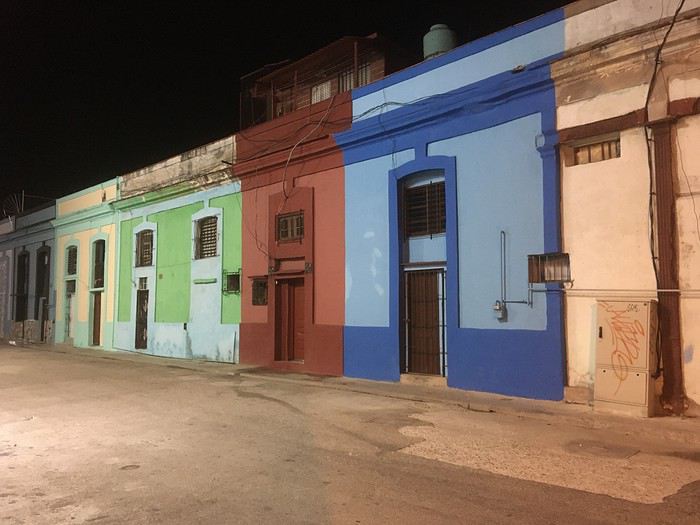
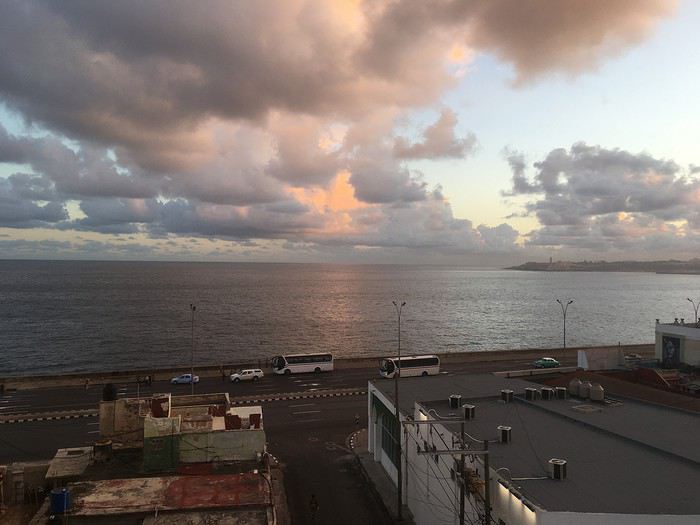
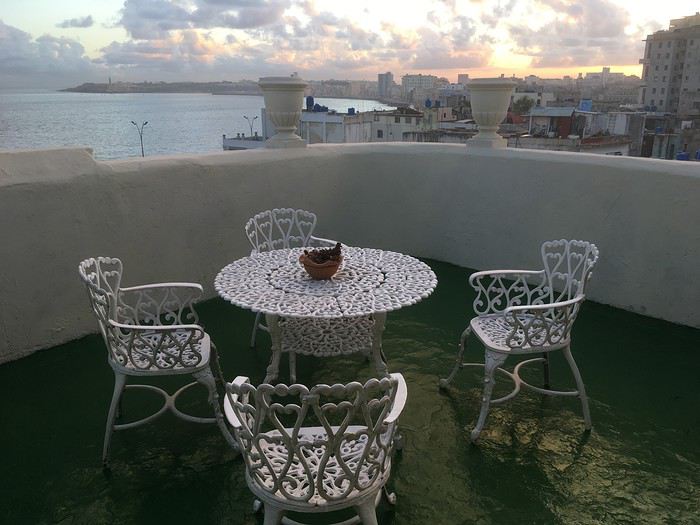
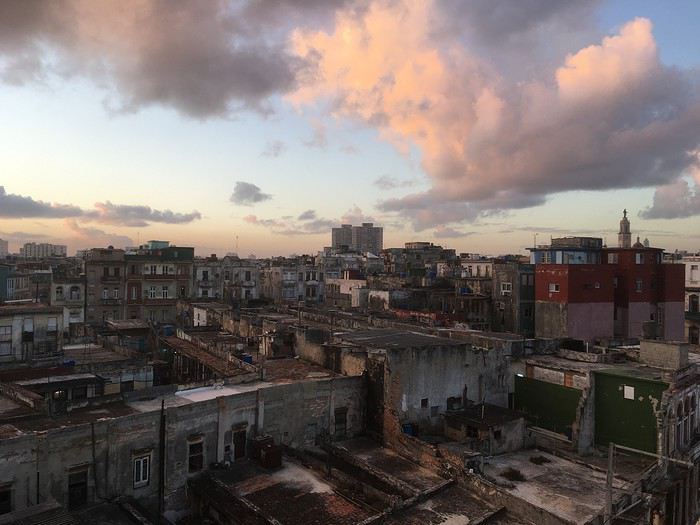
Premier réveil (dur, dur) cubain depuis la terrasse de la casa, après une très courte nuit (et jetlag) , dont la première partie fut passée à la Fabrica del Arte (http://www.fac.cu/) où le festival de jazz attirait une foule très éclectique !
Une volonté de changer de cap pour renouer avec une zone régionale, une culture latino et une histoire politique et sociale, négligées depuis plus de 3 décennies me titillait depuis quelques temps….
Alors, direction les Caraïbes, le pays de Cespedes et Marti pour 24 jours entre janvier et février.
Comme d’habitude, pas mal de lectures, sur VF notamment (grands mercis à Jeeaan, https://voyageforum.com/v.f?post=7694939;#7694939, à Ming2 pour ses 2 carnets en particulier https://voyageforum.com/v.f?post=6977052;#6977052et https://voyageforum.com/v.f?post=7425832;#7425832; à Anne42 https://voyageforum.com/discussion/trois-semaines-havane-baracoa-d8719358/ ainsi quà Stbeat), de blogs, d’articles divers, et de guides avaient permis de fixer un planning très général, avec pour commencer après une courte découverte de La Havane, direction l'Oriente et Baracoa par un vol intérieur pour une petite semaine.
Seules les 2 premières nuits à La Havane en "casa particular", avec vue sur le mythique Malecon, étaient réservées, ainsi que les 6 jours suivants chez Roberto et Manuel à Baracoa.
Premier réveil (dur, dur) cubain depuis la terrasse de la casa, après une très courte nuit (et jetlag) , dont la première partie fut passée à la Fabrica del Arte (http://www.fac.cu/) où le festival de jazz attirait une foule très éclectique !
Concours photo du mois d'avril 2020: "En famille" English translation pending
Le monde traverse une crise éprouvante pour chacun, je vous propose donc un thème universel et optimiste: la famille.
Si une multitude de définitions peuvent s'appliquer au thème, je souhaite cependant que vous nous montriez des enfants et leurs parents (au moins un enfant, un parent). Plusieurs génération doivent-être représentées (minimum deux, vous l'aurez compris).
Ces photos peuvent être des plans larges ou serrés, prises lors de promenades, de scènes de la vie quotidienne, de voyages...
Quelques exemples:
A Bali
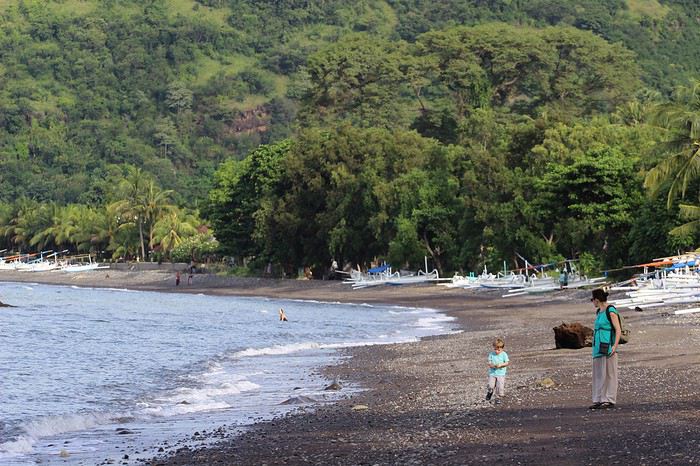
En Roumanie
Au Cambodge
Au Maroc
A Hong Kong

Evidemment, il ne vous sera pas demandé d'attestation sur l'honneur sur la véracité des relations familiales qui unissent les différents sujets de la photo 😉. Cette relation doit être supposée, suggérée.
Chaque participant peut proposer jusqu'à 3 photos, et ce jusqu'au mercredi 22/04 à 20h00, heure de Paris. Chaque photo sera présentée dans un seul message, en indiquant son numéro (1, 2 ou 3). Pensez à ajouter une petite explication, commentaire ou localisation.
Chaque membre VF peut voter pour les 3 photos qu'il ou elle juge les meilleures selon ses propres critères et en tenant compte du thème. Les votes se feront du jeudi 23/04 au mercredi 29/04 à 20h00, heure de Paris. Les photos choisies seront citées dans l'ordre de préférence : - la 1ère photo : 3 points - la 2ème: 2 points - la 3ème: 1 point
Un seul et unique vote pour 3 photos est accepté par membre.
Le vainqueur est l'auteur de la photo ayant reçu le plus de points. Les résultats seront publiés le 30/04. En cas d'égalité, le nombre de premières places prévaudra. Le vainqueur aura l'honneur d'organiser le concours du mois de mai. Le diaporama est ici. La discussion est là.
Une pensée à tous dans ces moments troubles et prenez soin de votre famille 🙂 C'est parti ! 🙂
Quelques exemples:
A Bali
En Roumanie
Au Cambodge
Au Maroc
A Hong Kong
Evidemment, il ne vous sera pas demandé d'attestation sur l'honneur sur la véracité des relations familiales qui unissent les différents sujets de la photo 😉. Cette relation doit être supposée, suggérée.
Chaque participant peut proposer jusqu'à 3 photos, et ce jusqu'au mercredi 22/04 à 20h00, heure de Paris. Chaque photo sera présentée dans un seul message, en indiquant son numéro (1, 2 ou 3). Pensez à ajouter une petite explication, commentaire ou localisation.
Chaque membre VF peut voter pour les 3 photos qu'il ou elle juge les meilleures selon ses propres critères et en tenant compte du thème. Les votes se feront du jeudi 23/04 au mercredi 29/04 à 20h00, heure de Paris. Les photos choisies seront citées dans l'ordre de préférence : - la 1ère photo : 3 points - la 2ème: 2 points - la 3ème: 1 point
Un seul et unique vote pour 3 photos est accepté par membre.
Le vainqueur est l'auteur de la photo ayant reçu le plus de points. Les résultats seront publiés le 30/04. En cas d'égalité, le nombre de premières places prévaudra. Le vainqueur aura l'honneur d'organiser le concours du mois de mai. Le diaporama est ici. La discussion est là.
Une pensée à tous dans ces moments troubles et prenez soin de votre famille 🙂 C'est parti ! 🙂