Results for "Serre+Chevalier+|+127"
27717 results found.
Location de voiture et hébergement au Vénézuela English translation pending
bonjour à toutes et tous
je souhaite partir au venezuela en aout 2004
Compte tenu de la saison des pluies en aout, quelles regions pourriez vous me conseiller
Peux t'on louer une voiture?
ENFIN SI VOUS AVIEZ DES TUYAUX pour les hotels
merci pour vos reponses
je souhaite partir au venezuela en aout 2004
Compte tenu de la saison des pluies en aout, quelles regions pourriez vous me conseiller
Peux t'on louer une voiture?
ENFIN SI VOUS AVIEZ DES TUYAUX pour les hotels
merci pour vos reponses
Seule à Hong Kong, conseils pour l'hébergement English translation pending
Bonjour! Je souhaite partir à Hong Kong pour février ou avril prochain. Mais ne trouvant personne souhaitant m'accompagner, je pense y aller seule car cette destination a pour réputation d'être sûre.
Je ne suis pas très renseignée sur les hotels. Je sais simplement qu'ils sont très chers et que les Chunking Mansion les plus abordables sont aussi les plus craignos. Il reste les auberges de jeunesse où ce n'est pas cher et où ça n'a pas l'air d'être trop mal. Je ne cache pas que mon SEUL souci est de laisser mes bagages dans un hotel où je ne risque pas de me faire piquer des affaires: c'est ma seule crainte.
Faut-il réserver en cette période février ou avril 2004?
Merci d'avance à ceux et celles (c'est un forum féminin!) qui me répondront.
@bientôt. Clairetje
Je ne suis pas très renseignée sur les hotels. Je sais simplement qu'ils sont très chers et que les Chunking Mansion les plus abordables sont aussi les plus craignos. Il reste les auberges de jeunesse où ce n'est pas cher et où ça n'a pas l'air d'être trop mal. Je ne cache pas que mon SEUL souci est de laisser mes bagages dans un hotel où je ne risque pas de me faire piquer des affaires: c'est ma seule crainte.
Faut-il réserver en cette période février ou avril 2004?
Merci d'avance à ceux et celles (c'est un forum féminin!) qui me répondront.
@bientôt. Clairetje
Vos avis sur les sacs de couchage duvet -15? English translation pending
Je suis à la recherche d'un sac de couchage en duvet confort à -15°C. Je suis preneur de vos avis sur les différents sac que vous avez pu tester. Je pensais personnellement au North Face Superlight ??
Infos Tsingy de Bamahara et... English translation pending
😉 bonjour,
Infos pour les routards à destination de Madagascar : Tsingy de Bemaraha, les villages Mangily (Ifaty) fin mai 2003 et Tana.
Taux de change 1€=7200 fmg au 2 juin 2003, il y aura la dévaluation de la monnaie et changement de billet dans les mois qui suivent.
De Tana vers le parc national des Tsingy de Bemaraha : De aéroport Ivato faites vous déposer à gare routière d’Anosibe (au nord de Tana), prix du taxi entre 40000 et 50000 fmg (moi j’ai payé 40000 fmg) ou partager les frais avec d’autres routards, départ tous les jours de Tana vers Morondava à 14h (horaire de départ est flexible et seyez mora mora !) tarif 100000 fmg et arrivé à Morondava le lendemain vers 6h50 du matin. Un conseil réserver votre place à l’avance si cela est possible, les meilleures places sont soient à côté de chauffeur côté fenêtre soient le rangé derrière le chauffeur plus d’espace pour les pieds. Une fois vous êtes à la gare routière de Morondava faites vous déposer par un taxi pour 5000 fmg à la gare routière au centre ville à côté du Menabe hôtel à destination de Belo-sur-Tsiribihina, là vous avez droit au 404 bâché avec deux rangés de siège en bois l’un en face de l’autre et vous êtes serré comme des sardines en boîte, 98 km, 4h de route, tarif 25000 fmg…mais en prime au quart du chemin préparez vos appareils photos car vous avez l’allée des Baobabs ! Tarif taxi de Morondava a/r pour la visite l’allée des Baobabs est de 80000 fmg, et d’après mes renseignements la forêt, les tombeaux, le parc… ne valent le coût pour la visite. Si vous souhaitiez de louer un 4x4 avec chauffeur de Morondava vers Bekopaka cela vous coûtera entre 2 millions à 2, 8 millions fmg pour 2 à 3 jours. Bref, après 4h de trajets vous êtes arrivé à l’embarcadère du village de St-Mary, la traversée dure 35’ et coûte 5000 fmg. Arrivé à l’embarcadère de Belo-sur-Tsiribihina entre 13h et 14h et vous êtes à 1 km du centre ville. Il est trop tard de prendre un taxi brousse pour continuer le chemin, une nuit de repos bien mérité s’impose, a moins que vous avez louer un 4x4 depuis Morondava… Bon il faut le dire un seul hôtel valable à Belo-sur-Tsiribihina est certainement l’hôtel du Menabe (ou Le grand hôtel pour les locaux) tenu par un natif grec marié avec une malgache, (une pensée amicale à eux), douche à l’intérieur, ventilateur, moustiquaire, très propre et vue sur le fleuve Tsiribihina et la ville ! Et il n’y a plus de musique en face pendant le WE depuis un an et demi ! Le guide est comme d’habitude tjs en retard pour la mise à jour et on ne peut plus camper derrière l’hôtel ! 70000 fmg une chambre pour deux ou 80000 fmg chambre familiale. Demander à voir les statuts, les photos, les peintures malgaches de 60 ans voir plus !
Taxi brousse de Belo-sur-Tsiribihina vers Andimaka ou Bekopaka(Tsingy) : Depuis le 24 mai 2003 vous avez un taxi brousse (sté Acoli c’est un karane) qui relie Belo-sur-Tsiribihina vers Bekopaka (Tsingy), tarif jusqu’au Andimaka 25000 fmg et jusqu’au Bekopaka 50000 fmg. Compter au moins 10h de trajet jusqu’au Bekopaka, bcp de poussière et ça secoue pas mal ! En cas où pas taxi brousse s’arrête à Andimaka, là c’est la galère ! soit faire les 23 km à pied ou louer une charrette à zébu jusqu’à Bekopaka entre 120 et 150000 fmg, 6h de route après vous jurez plus jamais la charrette !!!! Conseil faites la provision d’eau, de bière ou de vivre depuis Belo (5000 fmg la bouteille eau vive) sinon vous risquez de payer le double à Bekopaka, et dès fois il n’y a plus d’eau à acheter ! Emportez des micropurs en cas où… Je suppose que vous avez pu prendre le taxi brousse d’Acoli conduit par son fils Chaïne jusqu’au Bekopaka l’embarcadère de la rivière Manambolo, à l’heure actuel le bac ne fonctionne pas car il y a un trou… La traversée en pirogue coûte 2500 fmg/per et dure 15’. Enfin vous êtes au parc national des Tsingy de Bemaraha et le bureau de l’ANGAP se trouve à côté de l’embarcadère. Vous avez le choix de camper pour 10000 fmg/j au bord de la rivière de Manambolo ou de dormir Chez Ibrahim pour 45000 fmg/j mais il se trouve à 2, 5 km de l’embarcadère ! dur dur ! Vous pouvez louer un porteur pour 15000 à 25000 fmg (porteur de bagages et pas vous !) ou louer une charrette. Pour les riches le relais Tsingy est ouvert pour au minimum 250000 fmg/j et obligation de prendre les repas sur place !!!! Le repas Chez Ibrahim coûte 40000 fmg !!! et les boissons…je vous ai déjà prévenu !!! Vu l’état de la chambre, la douche avec un seau d’eau et surtout le wc avec le trou creusé et l’odeur pour 45000 fmg la nuit c’est du vol ! Bref, de toute façon vous avez pas de choix… Tarif parc national : Droit d’entrée pour 3 jours 50000 fmg, Grands Tsingy : Guide obligatoire 100000 fmg/j, assister au couché ou levé du soleil 120000 fmg, la distance totale à parcourir à pied départ Chez Ibrahim et retour Chez Ibrahim 45 km, vous avez égalemant le choix de louer une charrette pour 150000 fmg a/r. Penser à emmener au minimum 3 litres d’eau et à manger car il n’y a rien une fois vous êtes là bas, porteur de 15000 à 25000 fmg/j ; meilleure solution est de camper une nuit à 2 km de l’entrée des grands Tsingy dans un emplacement prévu pour et entamer la visite tôt le matin pour assister au levé du soleil. Circuit combiné petits Tsingy (4h de marche) + les georges Manambolo (2h de pirogue) : 165000 fmg. J’ai surpris d’entendre certains visiteurs dire que ça vaut pas le coût de visiter les petits Tsingy ! Ils répètent bêtement d’après le livre … mais il n’y rien avoir avec les Grands et ce n’est pas le même parcours, ce n’est pas le même paysage !!!! Moi, je l’ai fait des deux ! Par contre si vous n’avez pas le temps de visiter les deux, privilégié les grands Tsingy mais c’est vraiment dommage ! vous mettez des jours pour venir jusqu’ici et …. ! Tsingy un pur chef-d’œuvre de la nature, une merveille ! Pour repartir pour Morondava soit taxi brousse, soit la charrette ou à pieds jusqu’à Andimaka 23 km ! Quant à moi j’ai pu trouvé une place dans une 4X4 loué par un belge nommé jacques G jusqu’au Morondava et une autre 4X4 d’un vazaha résident à Tana nommé JC B (une pensée amicale à eux et merci). Une nuit à Morondava est presque obligatoire pour continuer votre chemin, le Trecigogne est fermé pour travaux (50000 fmg/nuit) pour l’hôtel similaire j’ai dormi Chez Bougainvilliers bord de la mer et j’ai le droit tout l’hôtel à moi tout seul ! Pour info le vol intérieur avec Air Mad de Morondava-Tuléar 101€ et par de liaison routière vers Belo-sur-mer piste encore inondée fin mai/03. Je continuais mon chemin jusqu’au Ansirabe avec le 4x4 de JC qui remontait à vide jusqu’au Tana, une fois à Ansirabe taxi brousse vers Tuléar, j’ai payé 125000 fmg ! en principe c’est 60000 fmg tarif malgache, départ tous les jours à partir de 17 ou 18 h et arrivée à Tuléar vers midi le lendemain (entre 18 et 20 h de trajet). A savoir pour le retour de Tuléar vers Tana il y a dès fois des 4X4 qui remontaient à vide, se renseigner dans la même gare routière (en principe même tarif que le taxi brousse 100000 et 115000 fmg). Taxi brousse de Tuléar vers Tana se fait tous les jours dès 6h du matin tarif 115000 fmg et arrivé à Tana vers 5h du matin le lendemain.
Tuléar vers Ifaty les villages Mangily : Taxi vers la gare routère pour Ifaty 5000 fmg ou en pousse-pousse 3000 fmg. Taxi brousse camion de Tuléar vers Mangily 10000 fmg, 23 km, 2h30 de transport ou en 1h30 avec le taxi brousse 4X4 mais il n’y en a pas tout le temps.
Les villages Mangily (Ifaty) : Chez micheline bungalows-paillottes 25000 fmg/j pas d’électricité et en retrait de la plage. Préférer Chez Alex bungalows-paillottes 35000 fmg bord de la plage, avec électricité de 18h-00h, toilettes et wc propres et discothèque le WE.
Tananarive : (tarif juin 2003) Déplacement avec le taxi dans la ville entre 2000 et 5000 fmg dans la journée, 10000 fmg le soir ou la nuit, de Tana vers aéroport 50000 fmg. Forfait taxi A/R de Tana/marché artisanat/ Croc Farm/Aéroport et une petite course dans la ville compter 150000 fmg.
Hôtel Lambert entre 60000 et 70000 fmg douche à l’intérieure avec eau chaude, préférer 70000 fmg au 1ère étage plus propre et avec vue sur la ville. S’il vous reste de l’argent je vous propose l’hôtel Le Sakamanga entre 132000 et 165000 fmg la nuit, c’est joli et très propre, il faut réserver longtemps à l’avance et c’est tjs complet, un bon restau surtout le filet de zébu avec les légumes grillés au sauce poivre vert, j’ai encore le goût dans la bouche (pour 37000 fmg) !!! Une assiette de foie gras à 27000 fmg il paraît que c’est bon.
Bonne route à tous les routards et un mot pour finir que j’aime Madagascar !
Infos pour les routards à destination de Madagascar : Tsingy de Bemaraha, les villages Mangily (Ifaty) fin mai 2003 et Tana.
Taux de change 1€=7200 fmg au 2 juin 2003, il y aura la dévaluation de la monnaie et changement de billet dans les mois qui suivent.
De Tana vers le parc national des Tsingy de Bemaraha : De aéroport Ivato faites vous déposer à gare routière d’Anosibe (au nord de Tana), prix du taxi entre 40000 et 50000 fmg (moi j’ai payé 40000 fmg) ou partager les frais avec d’autres routards, départ tous les jours de Tana vers Morondava à 14h (horaire de départ est flexible et seyez mora mora !) tarif 100000 fmg et arrivé à Morondava le lendemain vers 6h50 du matin. Un conseil réserver votre place à l’avance si cela est possible, les meilleures places sont soient à côté de chauffeur côté fenêtre soient le rangé derrière le chauffeur plus d’espace pour les pieds. Une fois vous êtes à la gare routière de Morondava faites vous déposer par un taxi pour 5000 fmg à la gare routière au centre ville à côté du Menabe hôtel à destination de Belo-sur-Tsiribihina, là vous avez droit au 404 bâché avec deux rangés de siège en bois l’un en face de l’autre et vous êtes serré comme des sardines en boîte, 98 km, 4h de route, tarif 25000 fmg…mais en prime au quart du chemin préparez vos appareils photos car vous avez l’allée des Baobabs ! Tarif taxi de Morondava a/r pour la visite l’allée des Baobabs est de 80000 fmg, et d’après mes renseignements la forêt, les tombeaux, le parc… ne valent le coût pour la visite. Si vous souhaitiez de louer un 4x4 avec chauffeur de Morondava vers Bekopaka cela vous coûtera entre 2 millions à 2, 8 millions fmg pour 2 à 3 jours. Bref, après 4h de trajets vous êtes arrivé à l’embarcadère du village de St-Mary, la traversée dure 35’ et coûte 5000 fmg. Arrivé à l’embarcadère de Belo-sur-Tsiribihina entre 13h et 14h et vous êtes à 1 km du centre ville. Il est trop tard de prendre un taxi brousse pour continuer le chemin, une nuit de repos bien mérité s’impose, a moins que vous avez louer un 4x4 depuis Morondava… Bon il faut le dire un seul hôtel valable à Belo-sur-Tsiribihina est certainement l’hôtel du Menabe (ou Le grand hôtel pour les locaux) tenu par un natif grec marié avec une malgache, (une pensée amicale à eux), douche à l’intérieur, ventilateur, moustiquaire, très propre et vue sur le fleuve Tsiribihina et la ville ! Et il n’y a plus de musique en face pendant le WE depuis un an et demi ! Le guide est comme d’habitude tjs en retard pour la mise à jour et on ne peut plus camper derrière l’hôtel ! 70000 fmg une chambre pour deux ou 80000 fmg chambre familiale. Demander à voir les statuts, les photos, les peintures malgaches de 60 ans voir plus !
Taxi brousse de Belo-sur-Tsiribihina vers Andimaka ou Bekopaka(Tsingy) : Depuis le 24 mai 2003 vous avez un taxi brousse (sté Acoli c’est un karane) qui relie Belo-sur-Tsiribihina vers Bekopaka (Tsingy), tarif jusqu’au Andimaka 25000 fmg et jusqu’au Bekopaka 50000 fmg. Compter au moins 10h de trajet jusqu’au Bekopaka, bcp de poussière et ça secoue pas mal ! En cas où pas taxi brousse s’arrête à Andimaka, là c’est la galère ! soit faire les 23 km à pied ou louer une charrette à zébu jusqu’à Bekopaka entre 120 et 150000 fmg, 6h de route après vous jurez plus jamais la charrette !!!! Conseil faites la provision d’eau, de bière ou de vivre depuis Belo (5000 fmg la bouteille eau vive) sinon vous risquez de payer le double à Bekopaka, et dès fois il n’y a plus d’eau à acheter ! Emportez des micropurs en cas où… Je suppose que vous avez pu prendre le taxi brousse d’Acoli conduit par son fils Chaïne jusqu’au Bekopaka l’embarcadère de la rivière Manambolo, à l’heure actuel le bac ne fonctionne pas car il y a un trou… La traversée en pirogue coûte 2500 fmg/per et dure 15’. Enfin vous êtes au parc national des Tsingy de Bemaraha et le bureau de l’ANGAP se trouve à côté de l’embarcadère. Vous avez le choix de camper pour 10000 fmg/j au bord de la rivière de Manambolo ou de dormir Chez Ibrahim pour 45000 fmg/j mais il se trouve à 2, 5 km de l’embarcadère ! dur dur ! Vous pouvez louer un porteur pour 15000 à 25000 fmg (porteur de bagages et pas vous !) ou louer une charrette. Pour les riches le relais Tsingy est ouvert pour au minimum 250000 fmg/j et obligation de prendre les repas sur place !!!! Le repas Chez Ibrahim coûte 40000 fmg !!! et les boissons…je vous ai déjà prévenu !!! Vu l’état de la chambre, la douche avec un seau d’eau et surtout le wc avec le trou creusé et l’odeur pour 45000 fmg la nuit c’est du vol ! Bref, de toute façon vous avez pas de choix… Tarif parc national : Droit d’entrée pour 3 jours 50000 fmg, Grands Tsingy : Guide obligatoire 100000 fmg/j, assister au couché ou levé du soleil 120000 fmg, la distance totale à parcourir à pied départ Chez Ibrahim et retour Chez Ibrahim 45 km, vous avez égalemant le choix de louer une charrette pour 150000 fmg a/r. Penser à emmener au minimum 3 litres d’eau et à manger car il n’y a rien une fois vous êtes là bas, porteur de 15000 à 25000 fmg/j ; meilleure solution est de camper une nuit à 2 km de l’entrée des grands Tsingy dans un emplacement prévu pour et entamer la visite tôt le matin pour assister au levé du soleil. Circuit combiné petits Tsingy (4h de marche) + les georges Manambolo (2h de pirogue) : 165000 fmg. J’ai surpris d’entendre certains visiteurs dire que ça vaut pas le coût de visiter les petits Tsingy ! Ils répètent bêtement d’après le livre … mais il n’y rien avoir avec les Grands et ce n’est pas le même parcours, ce n’est pas le même paysage !!!! Moi, je l’ai fait des deux ! Par contre si vous n’avez pas le temps de visiter les deux, privilégié les grands Tsingy mais c’est vraiment dommage ! vous mettez des jours pour venir jusqu’ici et …. ! Tsingy un pur chef-d’œuvre de la nature, une merveille ! Pour repartir pour Morondava soit taxi brousse, soit la charrette ou à pieds jusqu’à Andimaka 23 km ! Quant à moi j’ai pu trouvé une place dans une 4X4 loué par un belge nommé jacques G jusqu’au Morondava et une autre 4X4 d’un vazaha résident à Tana nommé JC B (une pensée amicale à eux et merci). Une nuit à Morondava est presque obligatoire pour continuer votre chemin, le Trecigogne est fermé pour travaux (50000 fmg/nuit) pour l’hôtel similaire j’ai dormi Chez Bougainvilliers bord de la mer et j’ai le droit tout l’hôtel à moi tout seul ! Pour info le vol intérieur avec Air Mad de Morondava-Tuléar 101€ et par de liaison routière vers Belo-sur-mer piste encore inondée fin mai/03. Je continuais mon chemin jusqu’au Ansirabe avec le 4x4 de JC qui remontait à vide jusqu’au Tana, une fois à Ansirabe taxi brousse vers Tuléar, j’ai payé 125000 fmg ! en principe c’est 60000 fmg tarif malgache, départ tous les jours à partir de 17 ou 18 h et arrivée à Tuléar vers midi le lendemain (entre 18 et 20 h de trajet). A savoir pour le retour de Tuléar vers Tana il y a dès fois des 4X4 qui remontaient à vide, se renseigner dans la même gare routière (en principe même tarif que le taxi brousse 100000 et 115000 fmg). Taxi brousse de Tuléar vers Tana se fait tous les jours dès 6h du matin tarif 115000 fmg et arrivé à Tana vers 5h du matin le lendemain.
Tuléar vers Ifaty les villages Mangily : Taxi vers la gare routère pour Ifaty 5000 fmg ou en pousse-pousse 3000 fmg. Taxi brousse camion de Tuléar vers Mangily 10000 fmg, 23 km, 2h30 de transport ou en 1h30 avec le taxi brousse 4X4 mais il n’y en a pas tout le temps.
Les villages Mangily (Ifaty) : Chez micheline bungalows-paillottes 25000 fmg/j pas d’électricité et en retrait de la plage. Préférer Chez Alex bungalows-paillottes 35000 fmg bord de la plage, avec électricité de 18h-00h, toilettes et wc propres et discothèque le WE.
Tananarive : (tarif juin 2003) Déplacement avec le taxi dans la ville entre 2000 et 5000 fmg dans la journée, 10000 fmg le soir ou la nuit, de Tana vers aéroport 50000 fmg. Forfait taxi A/R de Tana/marché artisanat/ Croc Farm/Aéroport et une petite course dans la ville compter 150000 fmg.
Hôtel Lambert entre 60000 et 70000 fmg douche à l’intérieure avec eau chaude, préférer 70000 fmg au 1ère étage plus propre et avec vue sur la ville. S’il vous reste de l’argent je vous propose l’hôtel Le Sakamanga entre 132000 et 165000 fmg la nuit, c’est joli et très propre, il faut réserver longtemps à l’avance et c’est tjs complet, un bon restau surtout le filet de zébu avec les légumes grillés au sauce poivre vert, j’ai encore le goût dans la bouche (pour 37000 fmg) !!! Une assiette de foie gras à 27000 fmg il paraît que c’est bon.
Bonne route à tous les routards et un mot pour finir que j’aime Madagascar !
Tour du monde et internet English translation pending
Comment peut on se connecter avec son ordinateur portable depuis l etranger.
J ai un abonnement a FREE et apparement cela n est pas possible sauf appel numero france donc tres cher.
Merci d avance pour tous conseils utiles.
http://ccarautourdumonde.free.fr
Luc
J ai un abonnement a FREE et apparement cela n est pas possible sauf appel numero france donc tres cher.
Merci d avance pour tous conseils utiles.
http://ccarautourdumonde.free.fr
Luc
Avis sur Star airlines English translation pending
bonjour à vous !
je dois faire ma résa lundi /09, pour dominicus beach, mais le hic c'est que l'on part par star airlines, en formule galaxie (fortement conseillée), mais on ne connait pas leurs services qu'ils offrent.
Merci d'avance pour vos infos😉
Amicalement à vous
manuellla
je dois faire ma résa lundi /09, pour dominicus beach, mais le hic c'est que l'on part par star airlines, en formule galaxie (fortement conseillée), mais on ne connait pas leurs services qu'ils offrent.
Merci d'avance pour vos infos😉
Amicalement à vous
manuellla
Quoi voir en Thaïlande en septembre? English translation pending
Bonjour à tous,
Je compte me rendre en thaïlande vers la mi septembre et cela pour 13 jours.Je me permets de vous poser quelques questions.
En sachant que j'arrive et repars de Bangkok, croyez vous qu'il soit possible de visiter le nord, le sud de la Thaïlande ainsi que Bangkok ?. Je souhaiterais faire un peu de randonnée à Chiang Mai et de la plongée dans le sud (j'ai pas encore déterminé l'endroit).
La période est t-elle adapté pour ce que je compte faire ?
Dois je prendre beaucoup d'habits de rechanges ou est il facile de laver ses habits sur place ?
Je vous remercie en tout cas de vos réponses, j'ai encore pas mal de questions à poser, si quelqu'un veut éventuellement en parler de vive voix, il n'y a pas de problème.......
Je compte me rendre en thaïlande vers la mi septembre et cela pour 13 jours.Je me permets de vous poser quelques questions.
En sachant que j'arrive et repars de Bangkok, croyez vous qu'il soit possible de visiter le nord, le sud de la Thaïlande ainsi que Bangkok ?. Je souhaiterais faire un peu de randonnée à Chiang Mai et de la plongée dans le sud (j'ai pas encore déterminé l'endroit).
La période est t-elle adapté pour ce que je compte faire ?
Dois je prendre beaucoup d'habits de rechanges ou est il facile de laver ses habits sur place ?
Je vous remercie en tout cas de vos réponses, j'ai encore pas mal de questions à poser, si quelqu'un veut éventuellement en parler de vive voix, il n'y a pas de problème.......
Réunion: hôtel ou pension pas cher à St Denis English translation pending
😉 Bonjour,
Routard de passage à St Denis pour une ou deux nuits, je recherche un hotel ou pension le moins cher à Saint Denis (moins de 20 euros la nuit), pourriez vous me donner qqs adresses ou éventuellement des e-mails pour faire la réservation depuis la France. L'avion attérisse vers 22h à Gillot, plus de bus, quel moyen le plus économique pour se rendre à St Denis ?
Merci d'avance,
Où partir quand on est seule? English translation pending
Bonjour a tous!
Cela fait un bout de temps que j'ai envie de voir du pays mais je ne trouve jamais personne de mon entourage qui ait autant la bougeotte que moi et qui serait pret a voyager au bout du monde...
Une amie m'a raconte son voyage en Inde en solitaire et tout bien considere, ce n'est peut etre pas une si mauvaise idee de partir seule. Pour moi ca represente un defi, et c'est peut etre aussi un moyen d'apprendre beaucoup sur soi-meme. Maintenant, c'est vrai que ce serait une experience inedite pour moi, et de +, je suis quand meme de nature un peu trouillarde (mais je me soigne). Je me suis cependant decidee a me lancer le defi, et je partirai en debut d'annee prochaine.
Quelle destination est selon vous l'ideale pour une fille seule en voyage (g 21ans) et qui a un budget un peu serre ? J'attend avec impatience vos temoignages de vos experiences...
A+!
Cela fait un bout de temps que j'ai envie de voir du pays mais je ne trouve jamais personne de mon entourage qui ait autant la bougeotte que moi et qui serait pret a voyager au bout du monde...
Une amie m'a raconte son voyage en Inde en solitaire et tout bien considere, ce n'est peut etre pas une si mauvaise idee de partir seule. Pour moi ca represente un defi, et c'est peut etre aussi un moyen d'apprendre beaucoup sur soi-meme. Maintenant, c'est vrai que ce serait une experience inedite pour moi, et de +, je suis quand meme de nature un peu trouillarde (mais je me soigne). Je me suis cependant decidee a me lancer le defi, et je partirai en debut d'annee prochaine.
Quelle destination est selon vous l'ideale pour une fille seule en voyage (g 21ans) et qui a un budget un peu serre ? J'attend avec impatience vos temoignages de vos experiences...
A+!
Inde: Nord ou Sud pour l'été 2003? English translation pending
Bonjour à tous!
Me voilà faire des petites recherches sur le net pour préparer un voyage en sac à dos en Inde durant l'été 2003 (pas la meilleure saison, je sais, mais on n'a pas trop le choix!). On ne connait pas encore notre itinéraire, mais on passera certainement par le Rajastan et peut-être ira-t-on dans le Sud. Que me conseillez-vous?
Et au niveau sécurité??? Pas de problème pour les filles? Je suis partie en Thaïlande l'année passée. Quelle différence avec l'Inde??? Et niveau hygiène?
J'attends avec impatience vos réponses!!!
Merci!
Me voilà faire des petites recherches sur le net pour préparer un voyage en sac à dos en Inde durant l'été 2003 (pas la meilleure saison, je sais, mais on n'a pas trop le choix!). On ne connait pas encore notre itinéraire, mais on passera certainement par le Rajastan et peut-être ira-t-on dans le Sud. Que me conseillez-vous?
Et au niveau sécurité??? Pas de problème pour les filles? Je suis partie en Thaïlande l'année passée. Quelle différence avec l'Inde??? Et niveau hygiène?
J'attends avec impatience vos réponses!!!
Merci!
Farewell Nathalie (NADU)
Hello everyone,
It’s with immense sadness that I learned this morning of the passing of our friend Nathalie (nadu). Many of us knew her through this forum, which she loved so much. She enjoyed reading your travel stories, joining discussions, sharing her cruise reviews, and offering valuable advice—always with kindness, gentleness, and discretion.
For me, Nathalie was so much more than just a cruise enthusiast. She was a friend, a deeply kind person who was always there to listen, despite the many health challenges she faced with tremendous courage. We corresponded regularly, and sometimes we had the chance to visit each other’s homes or attend the cruise show together with our respective husbands.
We shared a common dream: when we both retired, we had planned to finally go on a cruise together. Life had other plans, and that trip will forever remain a journey we never had the chance to take. That thought weighs heavily on my heart today.
I’ll remember her as a gentle, generous woman who was always ready to help others. Her presence on this forum will leave a huge void, just as her friendship has in my life.
I send my sincerest thoughts to her husband, her family, and all those who had the chance to know her.
Fair winds, Nathalie. I like to think you’re now sailing on an infinitely calm sea, under an eternally blue sky. You’ll remain in our thoughts and hearts every time we talk about cruises or set off on a new journey.
Rest in peace, Nathalie.
For those who’d like to send a message of comfort and sympathy to her husband, you can send me a PM, and I’ll pass it along. THANK YOU
For me, Nathalie was so much more than just a cruise enthusiast. She was a friend, a deeply kind person who was always there to listen, despite the many health challenges she faced with tremendous courage. We corresponded regularly, and sometimes we had the chance to visit each other’s homes or attend the cruise show together with our respective husbands.
We shared a common dream: when we both retired, we had planned to finally go on a cruise together. Life had other plans, and that trip will forever remain a journey we never had the chance to take. That thought weighs heavily on my heart today.
I’ll remember her as a gentle, generous woman who was always ready to help others. Her presence on this forum will leave a huge void, just as her friendship has in my life.
I send my sincerest thoughts to her husband, her family, and all those who had the chance to know her.
Fair winds, Nathalie. I like to think you’re now sailing on an infinitely calm sea, under an eternally blue sky. You’ll remain in our thoughts and hearts every time we talk about cruises or set off on a new journey.
Rest in peace, Nathalie.
For those who’d like to send a message of comfort and sympathy to her husband, you can send me a PM, and I’ll pass it along. THANK YOU
Pray for Nepal
Yeah, VF, which used to be so responsive, still doesn’t even have a thread about this devastating mudslide that’s ravaged a region of Nepal where hundreds have died and hundreds more are missing (provisional toll). But from the images, we know the number of victims is going to be terrifying.
Thoughts to everyone affected, including, according to early reports, many travelers..
Review of the new Paris-Berlin overnight train
Hi everyone, I wanted to take the Paris-Berlin overnight train with a sleeper berth, the new service operated by European Sleepers.
24/05/2026 17:45 Paris-Nord (actually 16:00 from Paris Bercy Seine) -> 25/05/2026 9:59 (actually 7:30 in Berlin) 05/06/2026 18:31 Berlin (actually 20:00) -> 06/06/2026 10:00 Paris Nord (actually 12:30) Part of the journey was operated by bus instead of the promised overnight train.
For 2 people: 340 € round trip
A total disaster. Never again. I was really looking forward to taking the overnight train, but we faced last-minute changes and truly unpleasant travel conditions. Here are the details:
1) 2 days before departure: email announcing a change of departure station for the outbound trip—Bercy Seine bus station instead of Gare du Nord. 2) Change of schedule: 4:00 PM from Bercy instead of 5:45 PM from Gare du Nord. 3) Change of transport mode!! A bus from Paris to Brussels, then an overnight train from Brussels to Berlin. No functional toilets on the bus. No children under 4 allowed on the bus. 4) On the sleeper train at 9:30 PM: no functional toilets in our carriage, so we had to go to other carriages, even in the middle of the night, to find working ones. 5) The onboard staff, though very friendly, were as lost as we were. In particular, they didn’t know how to handle the lower berths, so people using them had less space (armrests and backrests). Berth numbers weren’t respected, so some passengers had to move. The staff also didn’t know who was supposed to join the compartment during the journey. 6) Arrival at 7:30 AM in Berlin instead of 10:00 AM. No arrival announcement. Passengers had to search for staff to get breakfast and ended up with just a coffee (breakfast = 15 €, not bad for just a coffee). 7) Return trip: drastic schedule change announced by email on 26/05/2026—departure at 7:30 PM instead of 6:30 PM, with arrival between 12:00 PM and 1:00 PM in Paris instead of 10:00 AM. No change in transport mode announced. 8) Change in transport mode announced by email on the same day (05/06/2026)!! Overnight train from Brussels to Berlin, then a bus from Paris to Brussels. No functional toilets on the bus. Children under 4 banned from the bus, and families in this situation were asked to find another way—after being notified the same day. 9) The overnight train arrived at Berlin station with a 30-minute delay on top of its initial delay (scheduled for 6:31 PM, then 7:30 PM, finally arriving at 8:00 PM). The heating was blasting in the compartment with no way to turn it off. No functional toilets in the carriage. From that point on, customer service stopped responding to my messages. 10) Woken up at 5:00 AM with an announcement in all carriages about arrival in Liège. 11) Woken up again at 6:00 AM to be told we’d arrive in Brussels at 7:00 AM. 12) Arrival in Brussels at 7:00 AM and a one-hour wait for the bus to Paris. No functional toilets on the bus. 13) Arrival at Paris Nord at 12:30 PM, so 2.5 hours late compared to the originally scheduled time. 14) The overnight trains used are very old—I recognized the carriages from 20 years ago!! No functional power outlets, no Wi-Fi, no air conditioning. Five people per compartment is a bit cramped, but I consider these conditions expected (especially the air conditioning), so I’m not complaining about that. There’s already plenty to gripe about with the travel conditions.
I have little hope of getting even a partial refund. Customer service emails acknowledge the discomfort but only offer to reimburse the cost of a coffee on board if we send them the receipt... a bit weak.
I’m sharing this experience in the hope it might help others.
24/05/2026 17:45 Paris-Nord (actually 16:00 from Paris Bercy Seine) -> 25/05/2026 9:59 (actually 7:30 in Berlin) 05/06/2026 18:31 Berlin (actually 20:00) -> 06/06/2026 10:00 Paris Nord (actually 12:30) Part of the journey was operated by bus instead of the promised overnight train.
For 2 people: 340 € round trip
A total disaster. Never again. I was really looking forward to taking the overnight train, but we faced last-minute changes and truly unpleasant travel conditions. Here are the details:
1) 2 days before departure: email announcing a change of departure station for the outbound trip—Bercy Seine bus station instead of Gare du Nord. 2) Change of schedule: 4:00 PM from Bercy instead of 5:45 PM from Gare du Nord. 3) Change of transport mode!! A bus from Paris to Brussels, then an overnight train from Brussels to Berlin. No functional toilets on the bus. No children under 4 allowed on the bus. 4) On the sleeper train at 9:30 PM: no functional toilets in our carriage, so we had to go to other carriages, even in the middle of the night, to find working ones. 5) The onboard staff, though very friendly, were as lost as we were. In particular, they didn’t know how to handle the lower berths, so people using them had less space (armrests and backrests). Berth numbers weren’t respected, so some passengers had to move. The staff also didn’t know who was supposed to join the compartment during the journey. 6) Arrival at 7:30 AM in Berlin instead of 10:00 AM. No arrival announcement. Passengers had to search for staff to get breakfast and ended up with just a coffee (breakfast = 15 €, not bad for just a coffee). 7) Return trip: drastic schedule change announced by email on 26/05/2026—departure at 7:30 PM instead of 6:30 PM, with arrival between 12:00 PM and 1:00 PM in Paris instead of 10:00 AM. No change in transport mode announced. 8) Change in transport mode announced by email on the same day (05/06/2026)!! Overnight train from Brussels to Berlin, then a bus from Paris to Brussels. No functional toilets on the bus. Children under 4 banned from the bus, and families in this situation were asked to find another way—after being notified the same day. 9) The overnight train arrived at Berlin station with a 30-minute delay on top of its initial delay (scheduled for 6:31 PM, then 7:30 PM, finally arriving at 8:00 PM). The heating was blasting in the compartment with no way to turn it off. No functional toilets in the carriage. From that point on, customer service stopped responding to my messages. 10) Woken up at 5:00 AM with an announcement in all carriages about arrival in Liège. 11) Woken up again at 6:00 AM to be told we’d arrive in Brussels at 7:00 AM. 12) Arrival in Brussels at 7:00 AM and a one-hour wait for the bus to Paris. No functional toilets on the bus. 13) Arrival at Paris Nord at 12:30 PM, so 2.5 hours late compared to the originally scheduled time. 14) The overnight trains used are very old—I recognized the carriages from 20 years ago!! No functional power outlets, no Wi-Fi, no air conditioning. Five people per compartment is a bit cramped, but I consider these conditions expected (especially the air conditioning), so I’m not complaining about that. There’s already plenty to gripe about with the travel conditions.
I have little hope of getting even a partial refund. Customer service emails acknowledge the discomfort but only offer to reimburse the cost of a coffee on board if we send them the receipt... a bit weak.
I’m sharing this experience in the hope it might help others.
Route and transportation in northern Peru
Hi there,
I traveled through southern Peru in November 2024 and now I’d like to explore the north. We’re a group of 5 people for a 15-day trip.
Iquitos or Nauta for the Amazon rainforest—I saw that you have to fly there. Chiclayo Chachapoyas Kuelap Leimebamba Cajamarca Trujillo And if we have time, Huaraz for the Andes cordillera.
No problem taking overnight buses—they save a lot of time. Or renting a car and figuring it out as we go.
We’d also love to take the train from Lima to Huancayo, but it seems complicated—I don’t understand when it runs.
Thanks for your help! Best regards,
I traveled through southern Peru in November 2024 and now I’d like to explore the north. We’re a group of 5 people for a 15-day trip.
Iquitos or Nauta for the Amazon rainforest—I saw that you have to fly there. Chiclayo Chachapoyas Kuelap Leimebamba Cajamarca Trujillo And if we have time, Huaraz for the Andes cordillera.
No problem taking overnight buses—they save a lot of time. Or renting a car and figuring it out as we go.
We’d also love to take the train from Lima to Huancayo, but it seems complicated—I don’t understand when it runs.
Thanks for your help! Best regards,
Trip report: Albania, April 2026
A little trip report from an 11-day journey to Albania at the end of April 2026, with two friends in their early sixties and beyond...
Our route: Berat, Gjirokastër, Himarë, Tirana
Here are some opinions, tips, and great deals to share:
Flight Round-trip Beauvais-Tirana: Ryanair, 260 € with checked baggage (20 kg) and seat selection. Flight was fine and on time. 2h 30min flight.
Exchange: 1 € was worth 95 lek in April 2026. We were advised to exchange in the airport hall at the Illiria counter (98 lek outside the security zone), saying we wouldn’t find a better rate. However, the exchange rate was 93 lek for 1 euro, while in the city it was 95...
Car rental at Tirana airport for 9 days via Booking.com: 144 € (56 € for the car rental and 88 € for optional full insurance deductible waiver).
Wheego agency: the car was fine, but be careful when signing the contract—they tried to convince us that the insurance taken through Booking didn’t cover everything and insisted we take their own insurance for 250 €... We refused.
After reading about driving in Tirana, instead of starting our trip by visiting the capital, we decided to head straight to Berat upon arrival and return the car at the end of the trip to explore the city on foot. This turned out to be a great choice!
Accommodations: All our stays were booked via Booking.com. Everyone prefers to be paid in euros and in cash—they mention this when booking.
Berat: 2-hour drive from the airport.
Accommodation: Vila Arben Elezi: 135 € for 3 nights with breakfast and private parking. The room was decent and clean but a bit dark, located slightly below ground level near the parking. However, the breakfast on the rooftop was excellent, especially with the stunning view of the "city of a thousand windows." Great location.
Berat was our favorite—there are lovely walks through the different neighborhoods on both sides of the river, each with a very different vibe. The citadel visit is also fascinating, as it’s like a small town within the fortress.
The walk along the river is pleasant, with plenty of restaurant choices. Other restaurants in the old town are also very nice. The White House Restaurant, on the first floor along the road, is good and offers a great view of the Gorica district.
Gjirokastër:
Accommodation: Te Ajdini Guest House: 120 € for 3 nights with breakfast. A private home stay. There’s free parking just before entering the city, a 5-minute walk from the accommodation, which is very convenient since the cobblestone streets are narrow and parking is tricky. Yes, it’s a climb to get to the place, but everything in this city is uphill... The room was bright and clean. Breakfast was very good, hearty, and served in the courtyard with a view of the castle. The guesthouse is a 5-minute walk from the city center (the bazaar) but in a quiet area.
Restaurants: Rrapi and Kujtimi—good and affordable with their little pergolas.
The old town of Gjirokastër is charming but very touristy, with streets packed with souvenir shops and restaurant tables and chairs. Lots of people.
-The bunker visit (near the tourist office) is very interesting: Cold War Tunnel.
The castle offers a beautiful view of the city.
-Visit to the Ottoman house Skenduli: very well done. Don’t forget to climb the ladder facing a trapdoor in the ceiling to see the roof’s framework—it’s like a forest of beams: impressive!
-The bridge Ura e Ali Pasha: A steep 45-minute climb from the city to the site is worth it, but once you reach the viewpoint (which is stunning), you have to go back down a path to reach the bridge. You can drive to the viewpoint, but parking is very tricky.
Around Gjirokastër:
-Just outside the city: Lake Liqeni i Viroit: a nice, ordinary-looking lake, but at the end, there’s a natural spring making the water crystal clear and a brilliant blue—really spectacular, like photos of Blue Eye near Sarandë.
-Drive to Përmet along the gorges: beautiful viewpoints along the way and lovely countryside.
Himarë:
Accommodation: Vila Kosteli: 120 € for 2 nights with breakfast—slightly overpriced for this type of place but very close to a small beach and not far from the promenade with all the restaurants. Private parking, but very tight (4 cars on a tiny lot along the road). The "sea view" room is a bit obstructed by the building across the street. However, the rooftop breakfast view is beautiful. Friendly staff.
Himarë is a pleasant seaside resort, quite calm (but it was April...). There’s a cute promenade with restaurants along the beach. The castle on the heights of Himarë is worth a visit.
Around Himarë:
-Qeparo is worth a quick stop, but Qeparo village is really worth the detour: a village lost in the heights after a scenic drive up from the coastal road—narrow but well-maintained. Beautiful view from the top and a charming village.
-The Big Bunker and Llogora Panorama: take a right turn several kilometers after Dhermi—a road that climbs steeply from the start... A breathtaking winding road that reaches 900 meters in altitude. The view is stunning.
-Several small villages between Dhermi and Himarë are worth a quick stop.
-Porto Palermo Castle is somewhat disappointing.
Tirana:
Taxi from Tirana airport to the city center: 15 € with electric taxis (Green Taxi, Bee Taxi, Do Taxi).
Accommodation: Hotel Nevi Apartment: 63 € for 2 nights. A private apartment in an older building but very clean and well-equipped, with a kitchen and small enclosed balcony.
Great welcome and contact—the owner even booked a taxi for our departure. Very well located, close to the main square, shops, and restaurants. A small supermarket nearby is perfect for stocking up on breakfast supplies.
The city is lively and dynamic, with plenty of green spaces and promenades. Buildings are popping up everywhere, often with surprising architecture—like a building shaped like a face, a huge golden cube, and many others under construction.
-Sky Tower: at the top, a rotating bar offers a 360° view of the city and its buildings. Drinks are a bit pricier than usual, but it’s totally worth it (6 € for a beer or a glass of white wine, 3 € for coffee). We were there for sunset, and it was amazing! A must-do. Arrive early, as it fills up quickly.
-The House of Leaves: a house used for secret surveillance and interrogations during the dictatorship... A great way to learn about the surveillance systems of that era.
-Bunk’Art 2: a bunker in the heart of the city—very interesting, covering the dictatorship period and its system...
-The Pazari i Ri Bazaar: the new bazaar district. The large hall is worth a visit, but souvenir prices are often higher than elsewhere... The area is nice.
Restaurant: Kastrati Restaurant—a bit like a canteen with lots of traditional dishes. It’s on the first floor of a building. Excellent value for money, and the waitress explains the dishes in French.
That’s a little overview of our trip and my personal impressions! Albania is a beautiful and pleasant country to visit. If you have any questions, feel free to ask!
That’s a little overview of our trip and my personal impressions! Albania is a beautiful and pleasant country to visit. If you have any questions, feel free to ask!
2-Day Visit in Bangkok
What do you recommend visiting in Bangkok over 2 days during a cruise stop in January?
Tips for a 20-day Montenegro and Croatia itinerary
hello
I’m looking for advice for a last-minute trip—about 3 weeks (half Montenegro, half Croatia).
I’m traveling solo, backpacker style (low budget, hostels). I’m 40 and love exploring cool spots—cities, beaches, mountains, sports activities, you name it.
I’m torn between renting a car or just going with the flow using buses once I’m there. A car would definitely be more convenient, but it might be pricier—plus, parking (is it paid?) and having to return it to the same place. My plan is to start in Montenegro (flying into Podgorica or Albania) and finish in Croatia, so I’d either need to do short-term rentals per country or one-way.
In Montenegro, here are the spots I’ve noted: - Ulcinj and Velika Plaža beach - A side trip to Lake Skadar and Virpazar - Budva, Sveti Stefan, and Petrovac - Cetinje and Lovćen National Park - Kotor / Perast - Žabljak and Durmitor National Park + rafting in the Tara Canyon Is 8–10 days enough?
And in Croatia, I’ve got: - Dubrovnik - Korčula - Hvar - Split + Trogir and Krka National Park - Zadar - Plitvice Lakes National Park - Croatian Istria / Rovinj / Pula - Zagreb Around 10–12 days.
Any tips on the stops (adding or cutting some from my list) or transportation options?
Thanks in advance!
I’m torn between renting a car or just going with the flow using buses once I’m there. A car would definitely be more convenient, but it might be pricier—plus, parking (is it paid?) and having to return it to the same place. My plan is to start in Montenegro (flying into Podgorica or Albania) and finish in Croatia, so I’d either need to do short-term rentals per country or one-way.
In Montenegro, here are the spots I’ve noted: - Ulcinj and Velika Plaža beach - A side trip to Lake Skadar and Virpazar - Budva, Sveti Stefan, and Petrovac - Cetinje and Lovćen National Park - Kotor / Perast - Žabljak and Durmitor National Park + rafting in the Tara Canyon Is 8–10 days enough?
And in Croatia, I’ve got: - Dubrovnik - Korčula - Hvar - Split + Trogir and Krka National Park - Zadar - Plitvice Lakes National Park - Croatian Istria / Rovinj / Pula - Zagreb Around 10–12 days.
Any tips on the stops (adding or cutting some from my list) or transportation options?
Thanks in advance!
Prepping for a North-to-South Africa backpacking trip for 8-9 months
Hey everyone!
I’m diving into planning a trip I’ve dreamed of for a long time: crossing Africa from North to South solo, with a departure planned for October 2025 for about 8-9 months. I’m leaving from Paris with a starting budget of around 7,000 €, aiming to supplement it with work along the way.
My planned route: Senegal → Gambia → Sierra Leone/Liberia (if logistics work out) → Côte d'Ivoire → Ghana → Togo → Benin → Cameroon → Gabon → Kenya (Masai Mara) → Uganda (Bwindi gorillas) → Rwanda → Tanzania (Kili + Serengeti + Zanzibar) → Mozambique → Malawi → Zambia (Victoria Falls) → Botswana → Namibia → South Africa (Cape Town). Madagascar as a bonus if timing/budget allows from Mozambique.
I’m not a backpacking newbie—I’ve done several trips in Europe and I’m familiar with the lifestyle, hostels, local transport, etc. But Africa is my first big adventure on this continent, and I’ve got some very concrete questions I’d love feedback on from people who’ve been there.
🎭 My big dilemma: flexibility vs. pre-organized work
What matters most to me is NOT rushing through. If I feel good somewhere, I’ll stay longer. If a region doesn’t click, I’ll cut it short. That seems totally incompatible with having pre-booked work or volunteer gigs, yet I need that income to stretch my budget.
I’m torn between two approaches:
Option A: The mixed rhythm: 3-4 weeks of volunteering in a country (free accommodation, full immersion), then 1-2 countries in classic backpacker "vacation" mode, then another mission somewhere, etc. This gives a breathing rhythm and avoids burnout from non-stop volunteering.
Option B: The continuous flow: finding gigs as I go, from the previous country, contacting hosts 2-3 weeks in advance with a flexible date range. Keeping maximum spontaneity but never arriving anywhere without a safety net.
Have you tried either? What actually works on the ground in Africa?
🌍 What I’m really looking for in this trip
Not just the classic tourist spots. I want to see the country as it is—eating at local joints, taking local transport (bush taxis, minibuses, sept-places), staying with locals when possible. The big reserves and safaris are part of the plan (Masai Mara, Serengeti, Okavango), but just as much as hanging out in a residential neighborhood in Dakar, understanding how people really live.
Volunteering or work interests me for that reason too (not just for free lodging, but because it’s the deepest way to dive into a country). Working at a school in Ghana, a lodge in Kenya, a permaculture farm in Mozambique—I see it as an immersion that classic tourism can’t offer.
🎒 My concrete questions
About Workaway and Worldpackers: I’ve read a lot but would love on-the-ground feedback, especially for West and East Africa. Are hosts really flexible with dates for long-term travelers? Do the advertised gigs match reality? Are there alternative platforms you’d recommend for Africa specifically (I’ve heard of Help Exchange, WWOOF Africa, local networks…)?
About "off-platform" jobs: Is it really doable to find informal work on the spot (bars, restaurants, lodges) without prior contacts? In which countries/cities is this most accessible for a French speaker without a local work permit?
About logistics between countries: For those who’ve done the West Coast (Senegal → Ghana → Benin), how did you cross borders? Direct buses or local shared taxis at each border? And for the jump from Central Africa → Kenya, is a flight mandatory, or are there feasible overland routes?
About Madagascar: I’m considering adding it from Mozambique (flight Maputo or Beira → Tana). Those who’ve done it backpacker-style on a tight budget—is 3-4 weeks doable, or is it too short to be worth it?
I’m open to all tips, experiences, warnings, and pleasant surprises. And if you’ve got trusted local contacts (Workaway hosts, associations, community lodges), I’m all ears!
I’ve got tons of questions and I’m eager for any advice or experiences you can share!!
I’m diving into planning a trip I’ve dreamed of for a long time: crossing Africa from North to South solo, with a departure planned for October 2025 for about 8-9 months. I’m leaving from Paris with a starting budget of around 7,000 €, aiming to supplement it with work along the way.
My planned route: Senegal → Gambia → Sierra Leone/Liberia (if logistics work out) → Côte d'Ivoire → Ghana → Togo → Benin → Cameroon → Gabon → Kenya (Masai Mara) → Uganda (Bwindi gorillas) → Rwanda → Tanzania (Kili + Serengeti + Zanzibar) → Mozambique → Malawi → Zambia (Victoria Falls) → Botswana → Namibia → South Africa (Cape Town). Madagascar as a bonus if timing/budget allows from Mozambique.
I’m not a backpacking newbie—I’ve done several trips in Europe and I’m familiar with the lifestyle, hostels, local transport, etc. But Africa is my first big adventure on this continent, and I’ve got some very concrete questions I’d love feedback on from people who’ve been there.
🎭 My big dilemma: flexibility vs. pre-organized work
What matters most to me is NOT rushing through. If I feel good somewhere, I’ll stay longer. If a region doesn’t click, I’ll cut it short. That seems totally incompatible with having pre-booked work or volunteer gigs, yet I need that income to stretch my budget.
I’m torn between two approaches:
Option A: The mixed rhythm: 3-4 weeks of volunteering in a country (free accommodation, full immersion), then 1-2 countries in classic backpacker "vacation" mode, then another mission somewhere, etc. This gives a breathing rhythm and avoids burnout from non-stop volunteering.
Option B: The continuous flow: finding gigs as I go, from the previous country, contacting hosts 2-3 weeks in advance with a flexible date range. Keeping maximum spontaneity but never arriving anywhere without a safety net.
Have you tried either? What actually works on the ground in Africa?
🌍 What I’m really looking for in this trip
Not just the classic tourist spots. I want to see the country as it is—eating at local joints, taking local transport (bush taxis, minibuses, sept-places), staying with locals when possible. The big reserves and safaris are part of the plan (Masai Mara, Serengeti, Okavango), but just as much as hanging out in a residential neighborhood in Dakar, understanding how people really live.
Volunteering or work interests me for that reason too (not just for free lodging, but because it’s the deepest way to dive into a country). Working at a school in Ghana, a lodge in Kenya, a permaculture farm in Mozambique—I see it as an immersion that classic tourism can’t offer.
🎒 My concrete questions
About Workaway and Worldpackers: I’ve read a lot but would love on-the-ground feedback, especially for West and East Africa. Are hosts really flexible with dates for long-term travelers? Do the advertised gigs match reality? Are there alternative platforms you’d recommend for Africa specifically (I’ve heard of Help Exchange, WWOOF Africa, local networks…)?
About "off-platform" jobs: Is it really doable to find informal work on the spot (bars, restaurants, lodges) without prior contacts? In which countries/cities is this most accessible for a French speaker without a local work permit?
About logistics between countries: For those who’ve done the West Coast (Senegal → Ghana → Benin), how did you cross borders? Direct buses or local shared taxis at each border? And for the jump from Central Africa → Kenya, is a flight mandatory, or are there feasible overland routes?
About Madagascar: I’m considering adding it from Mozambique (flight Maputo or Beira → Tana). Those who’ve done it backpacker-style on a tight budget—is 3-4 weeks doable, or is it too short to be worth it?
I’m open to all tips, experiences, warnings, and pleasant surprises. And if you’ve got trusted local contacts (Workaway hosts, associations, community lodges), I’m all ears!
I’ve got tons of questions and I’m eager for any advice or experiences you can share!!
A Bold Combo: Southern Peru, Bolivia, and Northern Chile
Hello everyone,
For our latest 3-week family trip (yes, the kids are growing up, and two of them are about to enter the working world), we’re heading to South America! For our first time on this continent, I had planned a classic 3-week loop in Peru.
But since we won’t be returning to this part of the world anytime soon, I thought: why not follow in the footsteps of Franck, aka Bibouns51, who, in 18 days, didn’t just stick to Peru but also added two of the planet’s most stunning landscapes to his itinerary... the Salar de Uyuni in Bolivia and its neighbor, the fabulous Atacama Desert in northern Chile !!
So, I set about the tricky task of limiting the regions we’d visit in Peru to those we considered must-sees, to avoid rushing too much. The visit schedules were optimized, including several comfortable overnight buses that have the huge advantage of letting us hop between regions.
So, we’re off on a somewhat adventurous trip with three domestic flights (two on the first day and one on the last), two overnight buses for quick hops, several car rentals, the services of a few drivers to make the trip more comfortable, and even a tour operator for crossing the Salar...
Our main concern is altitude sickness, and we’re bringing Diamox, aspirin, etc., just in case.
Our second worry before departure was not even getting off the ground... Yes, for once, we’re leaving from France—Marseille, to be exact. The week before our departure, with the surprise air traffic controllers’ strike, I remembered why we usually prefer to leave from abroad, like Turin or Barcelona... In the end, it wasn’t the air traffic controllers who made us nervous but the early July wildfires that paralyzed the airport a few days before our departure. Fortunately, the fires were quickly brought under control, and on the big day, everything was smooth sailing!
Detailed itinerary (which changed on Day 1 due to departure hiccups): Day 0: Flight Marseille - Madrid - Lima PERU Theoretical and abandoned Day 1: Flight Lima - Cuzco and visit Cuzco (Puka Pukara, Tambomachay, Cristo Blanco Observatory, Sacsayhuaman sunset) - Night in Cuzco Day 2: Taxi -> Chinchero - Moray - Maras Salt Mines - Ollantaytambo - Train to Aguas Calientes Day 3: Machu Picchu - Return train to Ollantaytambo Day 4: 2-day taxi -> Pisac - Tipon - Andahuaylillas - Huaro - Night in San Pedro Day 5: Palcoyo - Checacupe - Vinicunca - Return and night in Cuzco Day 6: Day in Cuzco (catch-up on Sacsayhuaman, San Blas district, Temple of the Sun) - Overnight bus to Arequipa Day 7: Rental car -> On the road to Colca Canyon, night in Cabanaconde Day 8: Descent to the bottom of Colca Canyon, night at Oasis Sangalle Day 9: Ascent from the canyon - Maca - Chivay - Return and night in Arequipa Day 10: Visit Arequipa (Santa Catalina Convent, La Recoleta Church and Monastery, La Compañía Church, Cathedral) - Overnight bus to Puno Day 11: Lake Titicaca - Night in Puno BOLIVIA Day 12: Shared taxi -> Road to La Paz, visit downtown La Paz - Night 1 in La Paz Day 13: Moon Valley and Las Animas Valley - Night 2 in La Paz Day 14: Day in La Paz - Night 3 in La Paz Day 15: Flight to Uyuni - Day 1 of Salar de Uyuni tour - Night at the edge of the Salar Day 16: Crossing the Lipez region and lagoons - Night near Laguna Colorada Day 17: Sol de Mañana CHILE Day 17 cont.: Pre-booked transfer to SPDA - 4x4 rental - Pukara de Quitor - Stargazing tour - Night 1 in SPDA Day 18: Death Valley and Moon Valley - Night 2 in SPDA Day 19: Miscanti and Miniques Lagoons, Salar de Aguas Calientes and its Piedra Roja, Tebenquiche Lagoon and Quebrada del Diablo - Night 3 in SPDA Day 20: Rainbow Valley and swim in the Puritama River - Night 4 in SPDA Day 21: Tebenquiche Lagoon - Bus to Calama - Flight to Santiago Day 22: Return Santiago - Madrid - Marseille
Day 0 - 11/07: Destination Lima
Our first flight from Marseille went smoothly to our Iberia layover in Madrid.
In Madrid, just after getting off the plane around 8 PM, and as we were walking through the terminal, we got a rude awakening!!
We saw the word "Cancelled" next to our flight number on the display boards. Thinking it must be a glitch, we checked another screen, but the system was stubborn, and the same dreaded word appeared !
So, we headed to the Iberia counter, where an agent confirmed that our Friday evening flight was canceled and rescheduled for the next morning. The reason? A breakdown and no replacement plane, even though we were in Madrid, Iberia’s home base!
To make matters worse, I remembered our super-tight schedule, planned to the minute, with no buffer day in Lima. Since I’m a bit phobic of megacities and hadn’t found anything appealing in the Peruvian capital in our guidebooks, we’d planned to leave Lima as soon as possible for Cusco, the heart of the Sacred Valley, to spend our first day there.
Bad idea, because we already knew the 4-hour buffer wouldn’t be enough, and we’d miss the domestic flight, which was, of course, non-refundable and non-changeable. So, we had to call LATAM from Madrid to find another flight for Saturday evening and negotiate a rate to recover some of our initial outlay.
After an hour on the phone with customer service, several endless holds, and three failed attempts to dictate our credit card number over the phone to a Spaniard speaking English with a thick accent, we finally managed to confirm the transaction, securing our new flight tickets for a moderate extra cost of just 150 € total.
At first, we were pretty bummed about losing a day and incurring extra fees to reschedule the domestic flight, but then, when we learned from an Iberia customer service rep that we’d receive the max compensation of 600 € per traveler, we even ended up grinning... because 3000 € in refunds for only losing the first day in Cusco? We’d sign up for that 10 times over!!
Iberia then took care of us, putting us up in a hotel where we had dinner before a short 5-hour night and an early morning departure. I took the opportunity to improvise a quick day of sightseeing in Lima, focusing on the Barranco and Miraflores districts.
For our latest 3-week family trip (yes, the kids are growing up, and two of them are about to enter the working world), we’re heading to South America! For our first time on this continent, I had planned a classic 3-week loop in Peru.
But since we won’t be returning to this part of the world anytime soon, I thought: why not follow in the footsteps of Franck, aka Bibouns51, who, in 18 days, didn’t just stick to Peru but also added two of the planet’s most stunning landscapes to his itinerary... the Salar de Uyuni in Bolivia and its neighbor, the fabulous Atacama Desert in northern Chile !!
So, I set about the tricky task of limiting the regions we’d visit in Peru to those we considered must-sees, to avoid rushing too much. The visit schedules were optimized, including several comfortable overnight buses that have the huge advantage of letting us hop between regions.
So, we’re off on a somewhat adventurous trip with three domestic flights (two on the first day and one on the last), two overnight buses for quick hops, several car rentals, the services of a few drivers to make the trip more comfortable, and even a tour operator for crossing the Salar...
Our main concern is altitude sickness, and we’re bringing Diamox, aspirin, etc., just in case.
Our second worry before departure was not even getting off the ground... Yes, for once, we’re leaving from France—Marseille, to be exact. The week before our departure, with the surprise air traffic controllers’ strike, I remembered why we usually prefer to leave from abroad, like Turin or Barcelona... In the end, it wasn’t the air traffic controllers who made us nervous but the early July wildfires that paralyzed the airport a few days before our departure. Fortunately, the fires were quickly brought under control, and on the big day, everything was smooth sailing!
Detailed itinerary (which changed on Day 1 due to departure hiccups): Day 0: Flight Marseille - Madrid - Lima PERU Theoretical and abandoned Day 1: Flight Lima - Cuzco and visit Cuzco (Puka Pukara, Tambomachay, Cristo Blanco Observatory, Sacsayhuaman sunset) - Night in Cuzco Day 2: Taxi -> Chinchero - Moray - Maras Salt Mines - Ollantaytambo - Train to Aguas Calientes Day 3: Machu Picchu - Return train to Ollantaytambo Day 4: 2-day taxi -> Pisac - Tipon - Andahuaylillas - Huaro - Night in San Pedro Day 5: Palcoyo - Checacupe - Vinicunca - Return and night in Cuzco Day 6: Day in Cuzco (catch-up on Sacsayhuaman, San Blas district, Temple of the Sun) - Overnight bus to Arequipa Day 7: Rental car -> On the road to Colca Canyon, night in Cabanaconde Day 8: Descent to the bottom of Colca Canyon, night at Oasis Sangalle Day 9: Ascent from the canyon - Maca - Chivay - Return and night in Arequipa Day 10: Visit Arequipa (Santa Catalina Convent, La Recoleta Church and Monastery, La Compañía Church, Cathedral) - Overnight bus to Puno Day 11: Lake Titicaca - Night in Puno BOLIVIA Day 12: Shared taxi -> Road to La Paz, visit downtown La Paz - Night 1 in La Paz Day 13: Moon Valley and Las Animas Valley - Night 2 in La Paz Day 14: Day in La Paz - Night 3 in La Paz Day 15: Flight to Uyuni - Day 1 of Salar de Uyuni tour - Night at the edge of the Salar Day 16: Crossing the Lipez region and lagoons - Night near Laguna Colorada Day 17: Sol de Mañana CHILE Day 17 cont.: Pre-booked transfer to SPDA - 4x4 rental - Pukara de Quitor - Stargazing tour - Night 1 in SPDA Day 18: Death Valley and Moon Valley - Night 2 in SPDA Day 19: Miscanti and Miniques Lagoons, Salar de Aguas Calientes and its Piedra Roja, Tebenquiche Lagoon and Quebrada del Diablo - Night 3 in SPDA Day 20: Rainbow Valley and swim in the Puritama River - Night 4 in SPDA Day 21: Tebenquiche Lagoon - Bus to Calama - Flight to Santiago Day 22: Return Santiago - Madrid - Marseille
Day 0 - 11/07: Destination Lima
Our first flight from Marseille went smoothly to our Iberia layover in Madrid.
In Madrid, just after getting off the plane around 8 PM, and as we were walking through the terminal, we got a rude awakening!!
We saw the word "Cancelled" next to our flight number on the display boards. Thinking it must be a glitch, we checked another screen, but the system was stubborn, and the same dreaded word appeared !
So, we headed to the Iberia counter, where an agent confirmed that our Friday evening flight was canceled and rescheduled for the next morning. The reason? A breakdown and no replacement plane, even though we were in Madrid, Iberia’s home base!
To make matters worse, I remembered our super-tight schedule, planned to the minute, with no buffer day in Lima. Since I’m a bit phobic of megacities and hadn’t found anything appealing in the Peruvian capital in our guidebooks, we’d planned to leave Lima as soon as possible for Cusco, the heart of the Sacred Valley, to spend our first day there.
Bad idea, because we already knew the 4-hour buffer wouldn’t be enough, and we’d miss the domestic flight, which was, of course, non-refundable and non-changeable. So, we had to call LATAM from Madrid to find another flight for Saturday evening and negotiate a rate to recover some of our initial outlay.
After an hour on the phone with customer service, several endless holds, and three failed attempts to dictate our credit card number over the phone to a Spaniard speaking English with a thick accent, we finally managed to confirm the transaction, securing our new flight tickets for a moderate extra cost of just 150 € total.
At first, we were pretty bummed about losing a day and incurring extra fees to reschedule the domestic flight, but then, when we learned from an Iberia customer service rep that we’d receive the max compensation of 600 € per traveler, we even ended up grinning... because 3000 € in refunds for only losing the first day in Cusco? We’d sign up for that 10 times over!!
Iberia then took care of us, putting us up in a hotel where we had dinner before a short 5-hour night and an early morning departure. I took the opportunity to improvise a quick day of sightseeing in Lima, focusing on the Barranco and Miraflores districts.
What's the best way to get around Northern India?
Hi,
I’m leaving this Saturday for Northern India from 15/02 to 27/02. I’m planning to visit New Delhi, Agra, Chand Baori, Jaipur, Ranthambore, Bundi, Udaipur, and Jodhpur.
What’s the best way to get around? I was thinking of doing everything by train. Maybe taking the bus for some stretches?
As for renting a car with a driver, it seems expensive, so I’ve pretty much ruled that out. Unless someone’s got space for the same dates?
Thanks for your insights!
What’s the best way to get around? I was thinking of doing everything by train. Maybe taking the bus for some stretches?
As for renting a car with a driver, it seems expensive, so I’ve pretty much ruled that out. Unless someone’s got space for the same dates?
Thanks for your insights!
Planning a 17-day trip to Quebec
Hi, I’d like to plan a trip for 4 adults. 14 days.
From June 4–6 to June 21, 2026
Arriving in Montreal
Then Quebec City... Gaspésie, Lac Saint-Jean
Looking for a loop route starting and ending in Montreal
Where to sleep... where to stay 1 day or more
Thanks for your ideas!
Nature, hiking, a little city time—but not too much.
Jean-Yves. B ARBRISSEL
Three beautiful weeks during the Japanese autumn
I’m sharing our three-week trip to Japan from late October to mid-November 2025. There were four of us—my partner and a couple of friends.
I’ve traveled often with my friend Christian (Bolivia, Argentina, Costa Rica, Namibia, Laos), but this time our partners joined us.
The rough itinerary:
Arrival in Tokyo. Visiting Shinjuku/Shibuya districts + day trip to Kamakura
5 days in the Japanese Alps, from Matsumoto to Kanazawa (via Kamikochi, Hirayu Onsen, and Takayama)
5 days in Kyoto
Nara, Osaka, Koyasan
Return to Tokyo (Asakusa district), with a day trip to Nikko
We booked our flights well in advance (9 months ahead): the flight cost 1086 € per person. Compared to over 2000 € if we’d booked for the same dates just 3 months prior.
For accommodations, we mostly used Booking.com. The onsen was booked via Japanican, and in Kyoto, we stayed in an Airbnb.
We also made 5 train reservations a month in advance on Klook or directly on the train’s website.
Day 1: Departure from Brussels (October 24, 2025) Early morning takeoff at 6 AM to Munich (1.5-hour layover) with Lufthansa, then a 12-hour flight with ANA, arriving the next morning at 7 AM at Tokyo Haneda.
Day 2: Arrival in Tokyo Airport formalities were quick. The eSIM we bought before leaving activated as soon as we landed (10 GB plan with Saily—more than enough for our mobile internet needs, mainly Google Maps and Google Translate). We’d received 4 ICOCA cards from our neighbors, which we loaded with 15000 ¥ each. We took the Keihin train, then the Yamanote Line. It’s easy to navigate since everything is in English, and each station is announced on scrolling displays in English too.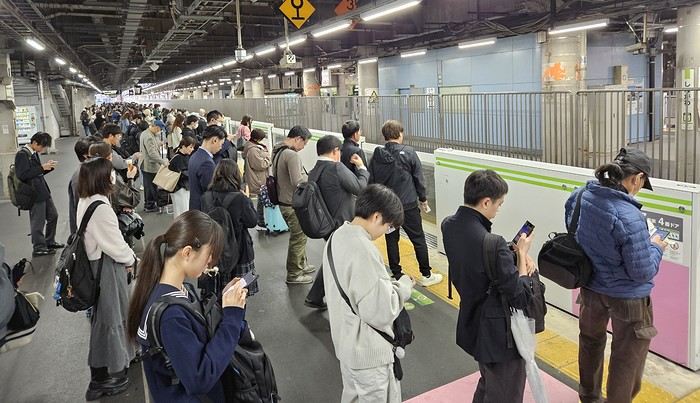
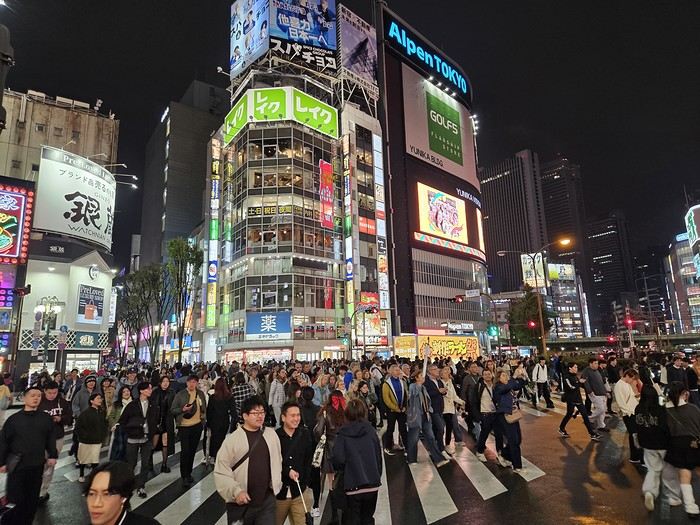
We got off the Yamanote Line at the station just after Shinjuku because it’s easier to exit that massive station with our luggage. So we ended up in Shin-Okubo, right in the Korean district. A 10-minute walk took us to Villa Fontaine Hotel. A great hotel, well-located north of the Kabukichō district. The room even seemed bigger than we’d expected.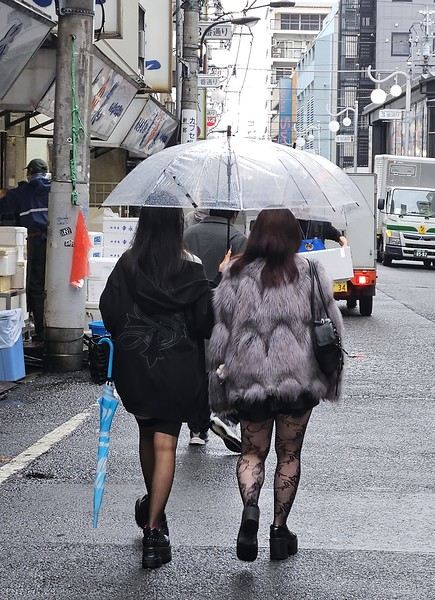
 It was 15°C, but it rained—and kept raining on and off all day. Belgian weather, basically.
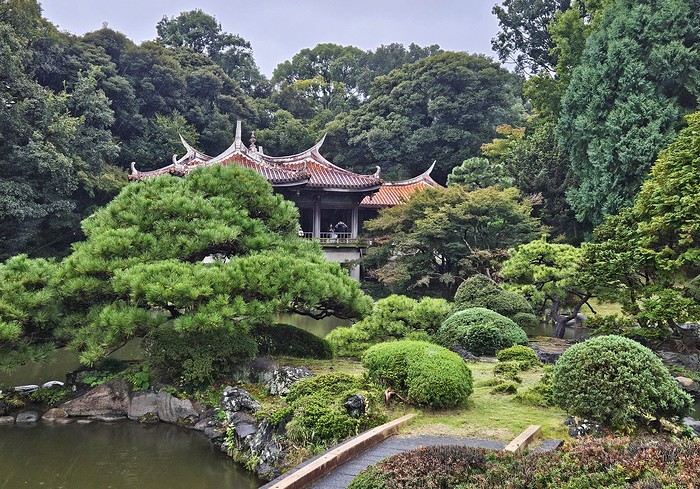
We went for a walk in Shinjuku Gyoen Park. Not as pretty in the rain, but the big greenhouse was interesting.
It was 15°C, but it rained—and kept raining on and off all day. Belgian weather, basically.
We went for a walk in Shinjuku Gyoen Park. Not as pretty in the rain, but the big greenhouse was interesting.
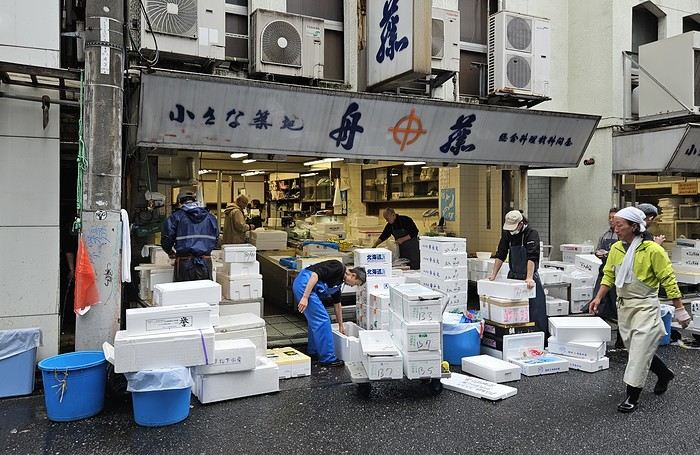
Then our first ramen (hearty and for 1000 ¥—pretty much the price of all our ramen during the trip). We headed back to the hotel since check-in was after 3 PM. Shower and relax before going out for dinner. Dinner was barbecue at Shichirin Yakiniku Anan (1700 ¥ each—good and cheap). Ordering via tablet wasn’t easy, but luckily it was in English.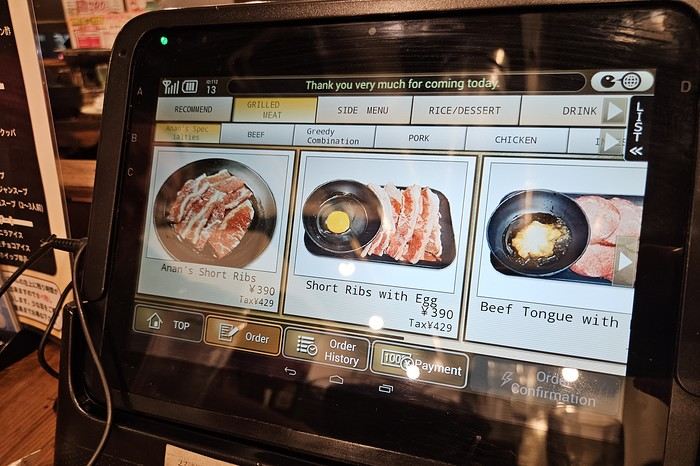
We ended the evening with a stroll through Kabukichō before a well-deserved sleep.
Day 1: Departure from Brussels (October 24, 2025) Early morning takeoff at 6 AM to Munich (1.5-hour layover) with Lufthansa, then a 12-hour flight with ANA, arriving the next morning at 7 AM at Tokyo Haneda.
Day 2: Arrival in Tokyo Airport formalities were quick. The eSIM we bought before leaving activated as soon as we landed (10 GB plan with Saily—more than enough for our mobile internet needs, mainly Google Maps and Google Translate). We’d received 4 ICOCA cards from our neighbors, which we loaded with 15000 ¥ each. We took the Keihin train, then the Yamanote Line. It’s easy to navigate since everything is in English, and each station is announced on scrolling displays in English too.
We got off the Yamanote Line at the station just after Shinjuku because it’s easier to exit that massive station with our luggage. So we ended up in Shin-Okubo, right in the Korean district. A 10-minute walk took us to Villa Fontaine Hotel. A great hotel, well-located north of the Kabukichō district. The room even seemed bigger than we’d expected.
It was 15°C, but it rained—and kept raining on and off all day. Belgian weather, basically.
We went for a walk in Shinjuku Gyoen Park. Not as pretty in the rain, but the big greenhouse was interesting.
Then our first ramen (hearty and for 1000 ¥—pretty much the price of all our ramen during the trip). We headed back to the hotel since check-in was after 3 PM. Shower and relax before going out for dinner. Dinner was barbecue at Shichirin Yakiniku Anan (1700 ¥ each—good and cheap). Ordering via tablet wasn’t easy, but luckily it was in English.
We ended the evening with a stroll through Kabukichō before a well-deserved sleep.
Transport questions for a 9-day Northern/Central Vietnam itinerary
Hi everyone,
We’re heading to Vietnam in February as a family (2 adults and 2 kids) for 9 full days, and I was thinking of this itinerary:
Day 1: Hanoi Day 2: Halong Bay (Lan Ha) Day 3: Halong Bay (Lan Ha) Day 4: Hue Day 5: Danang Day 6: Danang Day 7: Hoi An Day 8: Hoi An/My Son Day 9: Hanoi
After reading almost all the discussions about Vietnam, I don’t see anything about transportation options for getting from Hue to Danang, then from Danang to Hoi An. Any ideas (train, bus)? From the map, it looks like Danang is close to Hoi An—easily accessible by taxi, right?
Also, after reading lots of comments and websites, I’ve noticed that Danang, aside from being a big developing city, seems to be more about hotels for relaxing on the beach—very laid-back, isn’t it? Not really a place to visit like Hanoi or Hoi An.
Generally speaking, if you have any recommendations for the itinerary or tips, I’d love to hear them.
I’ll post a trip report when we get back.
Merry Christmas to all!
Alex
We’re heading to Vietnam in February as a family (2 adults and 2 kids) for 9 full days, and I was thinking of this itinerary:
Day 1: Hanoi Day 2: Halong Bay (Lan Ha) Day 3: Halong Bay (Lan Ha) Day 4: Hue Day 5: Danang Day 6: Danang Day 7: Hoi An Day 8: Hoi An/My Son Day 9: Hanoi
After reading almost all the discussions about Vietnam, I don’t see anything about transportation options for getting from Hue to Danang, then from Danang to Hoi An. Any ideas (train, bus)? From the map, it looks like Danang is close to Hoi An—easily accessible by taxi, right?
Also, after reading lots of comments and websites, I’ve noticed that Danang, aside from being a big developing city, seems to be more about hotels for relaxing on the beach—very laid-back, isn’t it? Not really a place to visit like Hanoi or Hoi An.
Generally speaking, if you have any recommendations for the itinerary or tips, I’d love to hear them.
I’ll post a trip report when we get back.
Merry Christmas to all!
Alex
Spitsbergen – A Night with the Walruses on Lågøya
Spitsbergen, 80° North latitude. A lost archipelago on the edge of the world, northeast of Greenland, the last lands before the pole. I’m aboard the *Grigoriy Mikheev*, a Russian ship from the Murmansk Polar Research Institute. Russian flag, Russian crew. Chartered by OceanWide Expeditions.
Last night, we were stuck in drifting pack ice in the long Hinlopen Strait. This incident led to an unforgettable barbecue and party on the ship’s foredeck, but we had to abandon our plan to head south and circle Spitsbergen. This summer, there’s too much ice in the strait, and it’s too thick. At dawn, the tide turned, allowing us to break free and head north again. The ship is now moving slowly through sea ice density that satellite maps estimate at around five-tenths. Our progress is punctuated by dull thuds: the ship’s bow constantly shoves and fractures enormous ice floes.
At breakfast, Tarik, our expedition leader, informs us that our program will be significantly altered. Since we can’t cross the strait, we’ll turn back and head north. To kick off our Plan B, Tarik plans a landing tonight on the small island of Låg (Lågøya), at 80°10' North. Last summer, he saw a large walrus colony there and hopes we’ll find them again. The weather is perfect—glorious sunshine—and walruses are truly addicted to sunbathing on the beaches.
We’ve now exited the strait and are sailing far from the coast. In case the walrus colony is there, we don’t want the ship’s approach to scare them into the water before we even see them. So, we scan the shore methodically with binoculars. We pass several bays, round a cape, and examine several shorelines littered with driftwood, but no walruses in sight. Several times, clusters of large rounded rocks trigger false alarms… but no, they’re just rocks…
Suddenly, Tarik spots them through his binoculars! On an isolated peninsula, our expedition leader’s highly trained eye has picked out, among those brown masses, the shape and white color of the enormous tusks of what he calls "the heavyweights of the Arctic!" Now, fifteen or twenty pairs of binoculars are pointed in the indicated direction… Sure enough, I see them now! They’re there, huge, sprawled in the sun on the beach. Without Tarik’s sharp eye, we might have missed them. They’re so tightly packed together that they really look like a mass of brown rocks. Only the white, saber-shaped tusks and the occasional furtive movements hint that they’re animals.
It’s 11 PM, and on the deck of the *Grigoriy Mikheev*, as you can imagine, excitement has ramped up several notches. Several of us have already rushed to our cabins to gear up, pulling on boots and life jackets in anticipation of a landing that promises to be absolutely amazing. Tarik reins in our enthusiasm a bit: Okay, so we were lucky to find them, but now we need to think about how to approach them. Not that they’re dangerous—at least not on land… Their enormous bulk and their pseudo-feet (flippers) only allow for very limited mobility. But when they feel threatened, their first instinct is to head for the water, where their perfect ease keeps them safe. So, the challenge will be not to scare them off, to avoid them bolting into the water in the first few seconds! That’s exactly what would happen if we arrived by Zodiac right in front of them.
So, Tarik decides we’ll make a wide detour to land on the other side of the peninsula where they are. From there, we’ll leave the Zodiacs on the beach and cross the peninsula on foot, about a kilometer and a half. That way, we’ll approach the herd from behind. This approach will also keep us downwind of them. There you go—with a few precautions, they shouldn’t hear us coming or catch our scent.
Everyone is geared up now and practically bursting with impatience… While the Zodiacs are being lowered into the water, Tarik and Delphine recap the approach rules: absolute silence, communication only by signs, no dragging feet on the rocks, watch your step, and strict coordination with slow movements.
Here we go… we’re off now! Spray flying from the Zodiac’s bow, icy air whipping our faces, gloves gripping the side ropes, freezing splashes, pure emotion… Ahh, I love this! We describe a wide curve offshore to round the peninsula. Ahead of us, the magnificent landscape of this intensely blue sea unfolds, with the hills of Lågøya and, in the distance, the ice-covered mountains of Nordaustlandet under the sun. It’s midnight now. In July, at 80 degrees North, the sun is just like midday.
This navigation takes us far from the walruses, on the other side of the cape. Easy landing on a shoreline of large pebbles covered in giant seaweed brought in by the currents. They look like long strips of plastic—sometimes translucent, sometimes white, beige, or orange. In places, there are huge tangled layers of it. Our boots sink into this material, which gives off a strong iodine smell. Unfortunately, there’s also some plastic waste—fishing floats and net debris. Seeing this here is crazy… A little farther on, in a cove, tides and storms have piled up numerous tree trunks from Siberia.
We begin crossing the peninsula on foot, staying close together. We’re walking on a nearly deserted polar tundra. We’re only ten degrees of latitude from the North Pole here. The violent winds and extreme temperatures that dominate this island for nine months of the year allow only a few rare plants to grow, close to the ground, between the rocks. In places, rocks are covered with large patches of black lichen.
Gérard, rifle slung over his shoulder, constantly scans the terrain. Tarik and Delphine are also very vigilant. We know no one ever lands here, and although this environment isn’t ideal for bears, you never know—better to be cautious. The terrain is mostly flat, but whenever a small rise blocks our view, Gérard moves ahead and only signals us to proceed when he’s sure there’s no "big man in fur" (tradition dictates we don’t name the polar bear).
After a few hundred meters, we find an enormous whale vertebra. Judging by the state of the bone, it’s likely a relic from the whaling era that ravaged this area in the 17th century and all over northern Spitsbergen. A little farther on, the remains of a grave catch our attention. The only human trace on this remote island, this burial is surely very old, also likely dating from the whalers’ time. But this whaler’s final resting place didn’t shelter him for long—there’s not much left, just a piece of skull and a few broken bones. Due to the permafrost, the body could only be buried a few dozen centimeters deep, between some planks held in place by large stones. This makeshift grave was probably ravaged by a bear shortly after the burial. Several stone blocks are overturned, the planks are broken open. We only linger for a minute to pay our respects to this whaler, whose poor remains now merge with the mineral landscape.
A slight rise bulges in the center of the peninsula, and here we are at the highest point. If our orientation is correct, we’re heading straight for the walrus colony. A moment of emotion… my heart’s pounding. Yes, they’re there, about three hundred meters ahead of us! They haven’t moved since we spotted them from the *Grigoriy Mikheev*’s deck. They’re sprawled in a heap, packed tightly together in the sun, on the shingle beach. The light breeze blowing in our faces confirms we’re on the right track—not to be sniffed out from afar by the big beasts.
By signs, Tarik tells us we’ll approach slowly, in stages, moving about thirty meters at a time, making as little noise as possible with our boots, then freezing completely for a minute or two, crouching down to let them forget us. This strategy proves excellent. We’re now less than a hundred meters away, and it doesn’t seem like our presence is perceived as a threat by the "heavyweights of the Arctic." At this distance, let’s not kid ourselves: we’re certainly spotted, but our way of approaching must seem reassuring—or at least manageable—since they’re only a few meters from the water and know they could dash into it in seconds if they felt the need.
We now advance in shorter stages—twenty meters at a time, then just ten, crouching, then freezing like statues, our breathing nearly held from emotion and concentration. We’re now thirty meters from the mastodons. Our presence must be starting to stress them because they’re moving more. While still sprawled against each other, some suddenly rear up on their flipper-feet, grunting and snorting like monstrous pigs. Their head shakes make their two enormous ivory sabers sway. They jab them into the fat of their neighbors, who in turn stir and emit irritated snorts.
At Tarik’s signal, we move a few more meters, "on velvet paws"… We’re right there now. I hold my breath, throat tight… Intense emotion, a fantastic spectacle—these enormous Arctic animals sprawled in the sun, with the magnificent backdrop of snow-covered mountains across the sound. I think to myself: *I’m here… this can’t be real!* It’s nearly 2 AM now, the air is crystal clear, and the Arctic sun bathes this scene in what might be the most beautiful light I’ve ever seen. We’re about fifteen meters away now. Tarik signals that we won’t go any closer. The walruses are still lying down, but occasionally, our close presence and the clicking of cameras trigger bouts of agitation that ripple through the herd, causing some jostling. They’re so tightly packed and tangled that it’s a bit hard to count them. In the end, we tally sixteen, plus one "little one," half-crushed in the general mass.
Seen from here, they’re truly impressive! The "sumo wrestlers of the Arctic!" According to Tarik, they must weigh about a ton—slightly more for the males than the females—and the "little one" must already be around 200 kg. When the weather’s nice like today, they love sprawling on the beaches to soak up the sun.
Walruses are marvels of Arctic adaptation. They can modify their blood circulation depending on thermal conditions. They withstand extreme cold by directing most of their circulation to vital organs (heart, lungs) and minimizing peripheral blood flow (skin and limbs) to prevent heat loss. Conversely, when they sunbathe, they direct most of their blood flow to the skin, turning themselves into true solar collectors.
At this latitude, there’s practically no difference in sunlight between day and night. Noon or midnight, the sun’s angle barely changes. Walruses make the most of these fair-weather phases by sprawling in the sun 23 hours out of 24… Enough to make siesta lovers dream, right? Twenty-three hours of lounging… and the twenty-fourth for eating!
And when we say "eating," what a feast! The proverb *"Who sleeps dines"* is fully justified here: when a walrus decides to feed, it gulps down between 50 and 60 kg of shellfish in an hour! Its food consists of large bivalve mollusks, which it tears from the seabed with its tusks and sucks up nonstop! A 50 kg meal certainly justifies a 23-hour nap for digestion, right? And speaking of digestion—it’s what the "big guys" in front of us are doing right now! You might wonder how we know this… Well, I’ll tell you: if you were here, downwind (or should I say *down the winds!*) of these marine giants, you’d have no doubt! Pfft… what flatulence! I can confirm that today’s scent is called *"Morsanus, from the North"* (*"Because I’m worth it!"*). Mmm, yeah… Tarik, you had a great idea putting us upwind… at least *they* can’t smell us, but we sure can!
But… heepp! Delphine discreetly signals to get our attention—she’s just spotted something: in the smooth water of the bay, a small V-shaped ripple runs along the beach, then turns toward the shore… So the colony wasn’t complete on the beach… Here’s an 800 kg bather stepping ashore now, right before our astonished eyes! She lifts her head and stays like that for a long moment, her enormous tusks half out of the water. She looks exhausted, resting a bit before coming out. Or more likely, she’s hesitating to climb onto the beach because she’s seen us… The shapeless head stays still for a moment, then violently snorts like a clogged drain! A misshapen head where you can’t make out anything that usually makes a head! No eyes, no ears, no mouth… A sort of monstrous cabbage! But the temptation to join the warmth of the "sunbathers" is too strong! Here’s our pachyderm bather climbing the few meters of the shore and sprawling right in the middle of her companions, who greet her with jostling, grunts, and tusk jabs! Then everything settles back into order—800 kg of fat and flesh added to the fifteen or so tons of local biomass. Welcome to the club!
It seems the walruses have gotten a bit used to us now. They’re moving and grunting much less. I realize it wasn’t obvious to approach them like this without scaring them into the water… It’s thanks to Tarik and Delphine’s advice that we managed it. It’s also, let’s be honest, because we’re all passionate here, and there’s been total discipline and cohesion from the start of this approach.
It’s past 2 AM now—time to head back… We’ll leave them to their wild world, to their life at the beginning of the world. We’re happy to have disturbed them as little as possible and not to have disrupted their nap too much. We leave stealthily, first backing up a few meters, then turning around and crossing the peninsula again, walking slowly, avoiding making noise with our boots as long as we’re still close.
We find the Zodiacs on the shoreline with the giant kelp. The sea is like a lake—easy boarding. We make another wide loop to round the cape, passing offshore. The sharp cold stings my cheeks and ears again—I put my hat back on. The cold—I hadn’t thought about it at all during our encounter with the walruses. In the Zodiac, with the engine noise, no one speaks. The faces and smiles are those of men and women who’ve just crossed an inner frontier—the one that separates dream from reality. But tonight, that frontier was porous, and the dream entered reality.
We return to the *Grigoriy Mikheev*, waiting at anchor. It’s past 3 AM, but I don’t feel any fatigue. A few minutes later, I’m in my bunk, rocked by a gentle swell and the hum of the engines. In the soft warmth of the blanket, a strange sleep overtakes me… A sleep filled with luminous, icy landscapes, with large beasts bearing saber-like tusks. Large beasts that sleep, snore, snort, grunt, and jostle in their sleep… in *my* sleep. An unforgettable memory. It was July 2004, in Spitsbergen.
Chris51.
Last night, we were stuck in drifting pack ice in the long Hinlopen Strait. This incident led to an unforgettable barbecue and party on the ship’s foredeck, but we had to abandon our plan to head south and circle Spitsbergen. This summer, there’s too much ice in the strait, and it’s too thick. At dawn, the tide turned, allowing us to break free and head north again. The ship is now moving slowly through sea ice density that satellite maps estimate at around five-tenths. Our progress is punctuated by dull thuds: the ship’s bow constantly shoves and fractures enormous ice floes.
At breakfast, Tarik, our expedition leader, informs us that our program will be significantly altered. Since we can’t cross the strait, we’ll turn back and head north. To kick off our Plan B, Tarik plans a landing tonight on the small island of Låg (Lågøya), at 80°10' North. Last summer, he saw a large walrus colony there and hopes we’ll find them again. The weather is perfect—glorious sunshine—and walruses are truly addicted to sunbathing on the beaches.
We’ve now exited the strait and are sailing far from the coast. In case the walrus colony is there, we don’t want the ship’s approach to scare them into the water before we even see them. So, we scan the shore methodically with binoculars. We pass several bays, round a cape, and examine several shorelines littered with driftwood, but no walruses in sight. Several times, clusters of large rounded rocks trigger false alarms… but no, they’re just rocks…
Suddenly, Tarik spots them through his binoculars! On an isolated peninsula, our expedition leader’s highly trained eye has picked out, among those brown masses, the shape and white color of the enormous tusks of what he calls "the heavyweights of the Arctic!" Now, fifteen or twenty pairs of binoculars are pointed in the indicated direction… Sure enough, I see them now! They’re there, huge, sprawled in the sun on the beach. Without Tarik’s sharp eye, we might have missed them. They’re so tightly packed together that they really look like a mass of brown rocks. Only the white, saber-shaped tusks and the occasional furtive movements hint that they’re animals.
It’s 11 PM, and on the deck of the *Grigoriy Mikheev*, as you can imagine, excitement has ramped up several notches. Several of us have already rushed to our cabins to gear up, pulling on boots and life jackets in anticipation of a landing that promises to be absolutely amazing. Tarik reins in our enthusiasm a bit: Okay, so we were lucky to find them, but now we need to think about how to approach them. Not that they’re dangerous—at least not on land… Their enormous bulk and their pseudo-feet (flippers) only allow for very limited mobility. But when they feel threatened, their first instinct is to head for the water, where their perfect ease keeps them safe. So, the challenge will be not to scare them off, to avoid them bolting into the water in the first few seconds! That’s exactly what would happen if we arrived by Zodiac right in front of them.
So, Tarik decides we’ll make a wide detour to land on the other side of the peninsula where they are. From there, we’ll leave the Zodiacs on the beach and cross the peninsula on foot, about a kilometer and a half. That way, we’ll approach the herd from behind. This approach will also keep us downwind of them. There you go—with a few precautions, they shouldn’t hear us coming or catch our scent.
Everyone is geared up now and practically bursting with impatience… While the Zodiacs are being lowered into the water, Tarik and Delphine recap the approach rules: absolute silence, communication only by signs, no dragging feet on the rocks, watch your step, and strict coordination with slow movements.
Here we go… we’re off now! Spray flying from the Zodiac’s bow, icy air whipping our faces, gloves gripping the side ropes, freezing splashes, pure emotion… Ahh, I love this! We describe a wide curve offshore to round the peninsula. Ahead of us, the magnificent landscape of this intensely blue sea unfolds, with the hills of Lågøya and, in the distance, the ice-covered mountains of Nordaustlandet under the sun. It’s midnight now. In July, at 80 degrees North, the sun is just like midday.
This navigation takes us far from the walruses, on the other side of the cape. Easy landing on a shoreline of large pebbles covered in giant seaweed brought in by the currents. They look like long strips of plastic—sometimes translucent, sometimes white, beige, or orange. In places, there are huge tangled layers of it. Our boots sink into this material, which gives off a strong iodine smell. Unfortunately, there’s also some plastic waste—fishing floats and net debris. Seeing this here is crazy… A little farther on, in a cove, tides and storms have piled up numerous tree trunks from Siberia.
We begin crossing the peninsula on foot, staying close together. We’re walking on a nearly deserted polar tundra. We’re only ten degrees of latitude from the North Pole here. The violent winds and extreme temperatures that dominate this island for nine months of the year allow only a few rare plants to grow, close to the ground, between the rocks. In places, rocks are covered with large patches of black lichen.
Gérard, rifle slung over his shoulder, constantly scans the terrain. Tarik and Delphine are also very vigilant. We know no one ever lands here, and although this environment isn’t ideal for bears, you never know—better to be cautious. The terrain is mostly flat, but whenever a small rise blocks our view, Gérard moves ahead and only signals us to proceed when he’s sure there’s no "big man in fur" (tradition dictates we don’t name the polar bear).
After a few hundred meters, we find an enormous whale vertebra. Judging by the state of the bone, it’s likely a relic from the whaling era that ravaged this area in the 17th century and all over northern Spitsbergen. A little farther on, the remains of a grave catch our attention. The only human trace on this remote island, this burial is surely very old, also likely dating from the whalers’ time. But this whaler’s final resting place didn’t shelter him for long—there’s not much left, just a piece of skull and a few broken bones. Due to the permafrost, the body could only be buried a few dozen centimeters deep, between some planks held in place by large stones. This makeshift grave was probably ravaged by a bear shortly after the burial. Several stone blocks are overturned, the planks are broken open. We only linger for a minute to pay our respects to this whaler, whose poor remains now merge with the mineral landscape.
A slight rise bulges in the center of the peninsula, and here we are at the highest point. If our orientation is correct, we’re heading straight for the walrus colony. A moment of emotion… my heart’s pounding. Yes, they’re there, about three hundred meters ahead of us! They haven’t moved since we spotted them from the *Grigoriy Mikheev*’s deck. They’re sprawled in a heap, packed tightly together in the sun, on the shingle beach. The light breeze blowing in our faces confirms we’re on the right track—not to be sniffed out from afar by the big beasts.
By signs, Tarik tells us we’ll approach slowly, in stages, moving about thirty meters at a time, making as little noise as possible with our boots, then freezing completely for a minute or two, crouching down to let them forget us. This strategy proves excellent. We’re now less than a hundred meters away, and it doesn’t seem like our presence is perceived as a threat by the "heavyweights of the Arctic." At this distance, let’s not kid ourselves: we’re certainly spotted, but our way of approaching must seem reassuring—or at least manageable—since they’re only a few meters from the water and know they could dash into it in seconds if they felt the need.
We now advance in shorter stages—twenty meters at a time, then just ten, crouching, then freezing like statues, our breathing nearly held from emotion and concentration. We’re now thirty meters from the mastodons. Our presence must be starting to stress them because they’re moving more. While still sprawled against each other, some suddenly rear up on their flipper-feet, grunting and snorting like monstrous pigs. Their head shakes make their two enormous ivory sabers sway. They jab them into the fat of their neighbors, who in turn stir and emit irritated snorts.
At Tarik’s signal, we move a few more meters, "on velvet paws"… We’re right there now. I hold my breath, throat tight… Intense emotion, a fantastic spectacle—these enormous Arctic animals sprawled in the sun, with the magnificent backdrop of snow-covered mountains across the sound. I think to myself: *I’m here… this can’t be real!* It’s nearly 2 AM now, the air is crystal clear, and the Arctic sun bathes this scene in what might be the most beautiful light I’ve ever seen. We’re about fifteen meters away now. Tarik signals that we won’t go any closer. The walruses are still lying down, but occasionally, our close presence and the clicking of cameras trigger bouts of agitation that ripple through the herd, causing some jostling. They’re so tightly packed and tangled that it’s a bit hard to count them. In the end, we tally sixteen, plus one "little one," half-crushed in the general mass.
Seen from here, they’re truly impressive! The "sumo wrestlers of the Arctic!" According to Tarik, they must weigh about a ton—slightly more for the males than the females—and the "little one" must already be around 200 kg. When the weather’s nice like today, they love sprawling on the beaches to soak up the sun.
Walruses are marvels of Arctic adaptation. They can modify their blood circulation depending on thermal conditions. They withstand extreme cold by directing most of their circulation to vital organs (heart, lungs) and minimizing peripheral blood flow (skin and limbs) to prevent heat loss. Conversely, when they sunbathe, they direct most of their blood flow to the skin, turning themselves into true solar collectors.
At this latitude, there’s practically no difference in sunlight between day and night. Noon or midnight, the sun’s angle barely changes. Walruses make the most of these fair-weather phases by sprawling in the sun 23 hours out of 24… Enough to make siesta lovers dream, right? Twenty-three hours of lounging… and the twenty-fourth for eating!
And when we say "eating," what a feast! The proverb *"Who sleeps dines"* is fully justified here: when a walrus decides to feed, it gulps down between 50 and 60 kg of shellfish in an hour! Its food consists of large bivalve mollusks, which it tears from the seabed with its tusks and sucks up nonstop! A 50 kg meal certainly justifies a 23-hour nap for digestion, right? And speaking of digestion—it’s what the "big guys" in front of us are doing right now! You might wonder how we know this… Well, I’ll tell you: if you were here, downwind (or should I say *down the winds!*) of these marine giants, you’d have no doubt! Pfft… what flatulence! I can confirm that today’s scent is called *"Morsanus, from the North"* (*"Because I’m worth it!"*). Mmm, yeah… Tarik, you had a great idea putting us upwind… at least *they* can’t smell us, but we sure can!
But… heepp! Delphine discreetly signals to get our attention—she’s just spotted something: in the smooth water of the bay, a small V-shaped ripple runs along the beach, then turns toward the shore… So the colony wasn’t complete on the beach… Here’s an 800 kg bather stepping ashore now, right before our astonished eyes! She lifts her head and stays like that for a long moment, her enormous tusks half out of the water. She looks exhausted, resting a bit before coming out. Or more likely, she’s hesitating to climb onto the beach because she’s seen us… The shapeless head stays still for a moment, then violently snorts like a clogged drain! A misshapen head where you can’t make out anything that usually makes a head! No eyes, no ears, no mouth… A sort of monstrous cabbage! But the temptation to join the warmth of the "sunbathers" is too strong! Here’s our pachyderm bather climbing the few meters of the shore and sprawling right in the middle of her companions, who greet her with jostling, grunts, and tusk jabs! Then everything settles back into order—800 kg of fat and flesh added to the fifteen or so tons of local biomass. Welcome to the club!
It seems the walruses have gotten a bit used to us now. They’re moving and grunting much less. I realize it wasn’t obvious to approach them like this without scaring them into the water… It’s thanks to Tarik and Delphine’s advice that we managed it. It’s also, let’s be honest, because we’re all passionate here, and there’s been total discipline and cohesion from the start of this approach.
It’s past 2 AM now—time to head back… We’ll leave them to their wild world, to their life at the beginning of the world. We’re happy to have disturbed them as little as possible and not to have disrupted their nap too much. We leave stealthily, first backing up a few meters, then turning around and crossing the peninsula again, walking slowly, avoiding making noise with our boots as long as we’re still close.
We find the Zodiacs on the shoreline with the giant kelp. The sea is like a lake—easy boarding. We make another wide loop to round the cape, passing offshore. The sharp cold stings my cheeks and ears again—I put my hat back on. The cold—I hadn’t thought about it at all during our encounter with the walruses. In the Zodiac, with the engine noise, no one speaks. The faces and smiles are those of men and women who’ve just crossed an inner frontier—the one that separates dream from reality. But tonight, that frontier was porous, and the dream entered reality.
We return to the *Grigoriy Mikheev*, waiting at anchor. It’s past 3 AM, but I don’t feel any fatigue. A few minutes later, I’m in my bunk, rocked by a gentle swell and the hum of the engines. In the soft warmth of the blanket, a strange sleep overtakes me… A sleep filled with luminous, icy landscapes, with large beasts bearing saber-like tusks. Large beasts that sleep, snore, snort, grunt, and jostle in their sleep… in *my* sleep. An unforgettable memory. It was July 2004, in Spitsbergen.
Chris51.
Which airline would you recommend for a CDG - Phnom Penh KTI flight?
Hi there,
I know there are some "airline experts" on this forum 😛
I’ve started doing a bit of research and saw that around ten airlines offer this route with a layover. Price will obviously be a factor, but I’d love to hear your thoughts on the airlines that operate this connection.
Thanks in advance to anyone who joins the discussion!
Off we go on an adventure in Puglia!
Hey there, VF crew!
After wrapping up our travel journal on Java (link below), we’re now diving into our recent adventure in Puglia! Happy reading... Off we go on an adventure in Java (and a bit of Bali) | Travel journal > Indonesia | Voyage Forum
Day 1 - October 19
When you tell your friends and family you’re itching to escape to the other side of the planet to mingle with the Mongols, you can usually expect a barrage of questionable jokes and terrible puns. For this new adventure, it’s a different destination but the same old story—this time, we’re visiting the "pouilleux" (the "scruffy" ones). We’re taking off straight for Puglia! If you need a cheat sheet to remember where this oddly named place is on a world map, just think of it this way: Puglia is the maiden name on the ID card of the heel of the Italian boot! Personally, I prefer to remember it as the land of creamy burrata, the smell of focaccia fresh from the oven, orecchiette shaped by mamas, golden olive oil that shines like the sun (which beams down here 300 days a year), amaretto that makes you happy, and those famous trulli—those little hobbit-like dry-stone houses straight out of a movie set...
But I’ll stop spoiling the rest of our trip and focus on a factual rundown of this first Puglian day. So, are you joining us on this new adventure beyond our Gallic borders? Either way, Sasha (my youngest) and Luna (Flo’s daughter) didn’t need much convincing to stick with us and keep up the pace!
Our plane drops our little crew in Bari, the site of a famously tragic battle lost in 1991. But revenge is sweet! After renting a motorized carriage, we escape the landing zone and head to our military base of operations: Ostuni, a strategic little town where we’ll set up camp for the next four days. Why Ostuni? First, for its central location, which lets us explore a region packed with must-see gems. Second, for its vibe and beauty, which have earned it quite the reputation. Perched high on a hill, the *città bianca* (the "White City") lives up to its nickname. It literally dazzles visitors. The reason? The whitewashed facades of its houses, a testament to the region’s rich architectural heritage.
We arrived late last night, so only the two bravest soldiers volunteered to scout ahead at dawn, while the younger recruits stayed behind—for now. But not for long! After the first wave of streets and the next round of exploration, headquarters made the inevitable call to retreat. Reinforcements were needed! A few strategic errands, a breakfast ration, and our battalion marched in tight formation, flag held high, to conquer Ostuni the White! *Charge!* In my squadron leader’s memoirs, I’ll write that I didn’t expect Ostuni to put up such a fight. What I thought would take two hours to conquer turned into a humbling experience—we could only bow in respect to its beauty, its relentless charm. The alleys are whiter, more labyrinthine, narrower, and more photogenic than the last. *Veni, vidi, vici*—but what an entrance, my troops!
After wrapping up our travel journal on Java (link below), we’re now diving into our recent adventure in Puglia! Happy reading... Off we go on an adventure in Java (and a bit of Bali) | Travel journal > Indonesia | Voyage Forum
Day 1 - October 19
When you tell your friends and family you’re itching to escape to the other side of the planet to mingle with the Mongols, you can usually expect a barrage of questionable jokes and terrible puns. For this new adventure, it’s a different destination but the same old story—this time, we’re visiting the "pouilleux" (the "scruffy" ones). We’re taking off straight for Puglia! If you need a cheat sheet to remember where this oddly named place is on a world map, just think of it this way: Puglia is the maiden name on the ID card of the heel of the Italian boot! Personally, I prefer to remember it as the land of creamy burrata, the smell of focaccia fresh from the oven, orecchiette shaped by mamas, golden olive oil that shines like the sun (which beams down here 300 days a year), amaretto that makes you happy, and those famous trulli—those little hobbit-like dry-stone houses straight out of a movie set...
But I’ll stop spoiling the rest of our trip and focus on a factual rundown of this first Puglian day. So, are you joining us on this new adventure beyond our Gallic borders? Either way, Sasha (my youngest) and Luna (Flo’s daughter) didn’t need much convincing to stick with us and keep up the pace!
Our plane drops our little crew in Bari, the site of a famously tragic battle lost in 1991. But revenge is sweet! After renting a motorized carriage, we escape the landing zone and head to our military base of operations: Ostuni, a strategic little town where we’ll set up camp for the next four days. Why Ostuni? First, for its central location, which lets us explore a region packed with must-see gems. Second, for its vibe and beauty, which have earned it quite the reputation. Perched high on a hill, the *città bianca* (the "White City") lives up to its nickname. It literally dazzles visitors. The reason? The whitewashed facades of its houses, a testament to the region’s rich architectural heritage.
We arrived late last night, so only the two bravest soldiers volunteered to scout ahead at dawn, while the younger recruits stayed behind—for now. But not for long! After the first wave of streets and the next round of exploration, headquarters made the inevitable call to retreat. Reinforcements were needed! A few strategic errands, a breakfast ration, and our battalion marched in tight formation, flag held high, to conquer Ostuni the White! *Charge!* In my squadron leader’s memoirs, I’ll write that I didn’t expect Ostuni to put up such a fight. What I thought would take two hours to conquer turned into a humbling experience—we could only bow in respect to its beauty, its relentless charm. The alleys are whiter, more labyrinthine, narrower, and more photogenic than the last. *Veni, vidi, vici*—but what an entrance, my troops!
Very short layover at Doha Airport
Hi there
I completely forgot the transit procedure at Doha Airport and I’m a bit worried because I only have 1h30 to change planes, since my first flight was rescheduled. My flights: Barcelona/Doha: arrival at 6:15 AM Doha/Bangkok: departure at 7:50 AM
We only have carry-on luggage. Will they be checked again? Do we have to go through security again? Are the connections smooth and well signposted? Finally, is it common in this situation to ask a flight attendant for help?
Thanks! 🙂
I completely forgot the transit procedure at Doha Airport and I’m a bit worried because I only have 1h30 to change planes, since my first flight was rescheduled. My flights: Barcelona/Doha: arrival at 6:15 AM Doha/Bangkok: departure at 7:50 AM
We only have carry-on luggage. Will they be checked again? Do we have to go through security again? Are the connections smooth and well signposted? Finally, is it common in this situation to ask a flight attendant for help?
Thanks! 🙂
World gardens and parks, chatter goes here.
Good evening everyone,
This is where we chat and post non-competition photos. Happy wandering (jogging is also welcome).
See you soon.
Cat
World Gardens and Parks – November 2025 Photo Contest
Good evening everyone,
So, it’s settled—the first idea (this book about the lush garden of a New York state parsonage, "this garden obsessed with the love this man had for his late wife." Reverend Cheney musically noting all the birdsongs, the water droplets in the watering can, the wind rushing through cloaks at the end of the 19th century) will be the theme.
Garden: A plot of land, usually enclosed, attached or not to a dwelling, planted with useful or ornamental vegetation.
So, private gardens, vegetable patches, herb gardens, botanical gardens, winter gardens with their lush greenhouses, the "hortus conclusus" of cloisters evoking the Garden of Eden, public gardens, and their extension into parks are all welcome. I’m sure I’ve forgotten some...
Photos can be posted until Monday, November 24 at midnight, following the usual rules: one per message, numbered from 1 to 3, with the location of the shot and, if you’d like, a few details.
Voting, where you explicitly assign 3 to 1 points to your top 3 photos, will take place from Tuesday, November 25 at 12:01 AM until Sunday, November 30 at midnight. The results will be announced on December 1.
Your turn! 😉
Catherine
PS: This thread is reserved for contest photos. For all other photos and conversations under the trees by the fountains, it’s here.
Connection Time at JNB Airport
Hi there,
I’m heading to Kruger Park for 4 days in May 2026.
Departing from Paris → Skukuza via JNB on Air France.
Here’s what’s worrying me: my flight lands (in theory) at JNB at 8:30 AM (Terminal A), then I’ve got a JNB → Skukuza departure at 10:05 AM (Terminal B).
That leaves me with 1 hour and 35 minutes to make the connection and clear customs.
I don’t have any checked luggage—just carry-on. I called Air France, and they said it’s doable (in theory) with a minimum connection time of 1 hour 30 minutes (which is why they sold the ticket), but I’ll need to move quickly.
From your experience, is this realistic in practice?
Can I ask customs officers to let me through as a priority? (I’ve got my flight ticket to show.)
Thanks for your insights!
Serge