Results for "Cathédrale+|+1+>+87"
10268 results found.
Pénichette dans le sud la France English translation pending
qq a-t-il expérimenté la penichette ds le sud de la france - nous ce serait debut avril .auparavant ns allons faire le Vietnam et le Cambodge et au retour vers Montreal on aimerait bien faire une semaine en penichette -on aimerais bien avoir des info concernant la temp. -quel trajet - les coûts -enfin, tout conseils et info serait bien apprécié -merci
Haïti et grande escapade English translation pending
Je souhaiterai faire un voyage en commencent par Haïti puis la Floride en remontant vers Canada.
Auriez vous des renseignement sur Haïti ?
Si l’aventure intéresse quelqu’un n’hésité pas a me contacter .
Auriez vous des renseignement sur Haïti ?
Si l’aventure intéresse quelqu’un n’hésité pas a me contacter .
Que pensez vous de St Marie en Camargue? (France) English translation pending
Bonjours à 😉tous
Je reviens de St maries de la mer, j'y ai fait quelques activitées, canoé, bateau sur le Rhone(le TIKI) pmd à cheval dans une manade, petit train de megeane, parc ornithologique ou j'ai été déçu, hors mis les flaments roses et les ragondins tout les animaux sont en cages méme les aigrettes, les oies etc....
ceci en 1 semaine en camping au clo du rhone pour au total à deux, tout frais compris(de l'autoroute aux cadeaux)à900 euros.
M'en suis je bien sortis, oubien vous pensez que pour le prix, j'aurais put faire des choses en plus?Qu'ai je manqué?????????
Merci pour vos commentéres😎 PetitePlume alias KATHY😊 A+
Je reviens de St maries de la mer, j'y ai fait quelques activitées, canoé, bateau sur le Rhone(le TIKI) pmd à cheval dans une manade, petit train de megeane, parc ornithologique ou j'ai été déçu, hors mis les flaments roses et les ragondins tout les animaux sont en cages méme les aigrettes, les oies etc....
ceci en 1 semaine en camping au clo du rhone pour au total à deux, tout frais compris(de l'autoroute aux cadeaux)à900 euros.
M'en suis je bien sortis, oubien vous pensez que pour le prix, j'aurais put faire des choses en plus?Qu'ai je manqué?????????
Merci pour vos commentéres😎 PetitePlume alias KATHY😊 A+
Cochin en Inde English translation pending
si qq'un a des infos sur cette ville merçi !🙂
Espagne...quelle ville? English translation pending
Nous aimerions visiter l'Espagne à la mi-décembre prochain, pour un séjour d'environ 1 semaine. Nous ne savons pas quelle (s) ville(s) choisir...que me conseillez-vous? Merci d'avance pour vos impressions! 🙂
Hommage à Stockholm English translation pending
Extrait de mes carnets de route suédois ...
Mardi 8 avril 2003, 01.31. Tant à écrire aujourd’hui. Et puis, encore un long chapitre à écrire …
Stockholm …
Hmmmm. Qu’elle est belle cette ville. Belle belle belle belle belle. Magique, attirante, multiple, déconcertante … Avec cette impression heureuse de te connaître un peu … hmmmm, magique.
Pour un peu te cerner, pour un peu te comprendre, il faut marcher … Ne pas hésiter à accumuler les kilomètres. Passer et repasser dans les mêmes rues, dans tous les sens, à toutes les heures, de toutes les humeurs, en toutes les couleurs. Parce que chaque nouveau passage est nouvelle découverte. Parce que chaque nouveau regard est source d’émerveillement.
Il y a d’abord cette eau … omniprésente et tellement en accord avec tes rues, tes gens, tes battements. Cette eau qui te magnifie et te fait rayonner. Le plaisir de passer d’une île à l’autre, à pied ou à bateau. Le plaisir d’atteindre le bout d’une presque île pour jeter un oeil sur la suivante. Le plaisir de regarder le vent animer ton sang, lui insuffler vie.
Il y a ton noyau, ton centre, ton coeur … Gamla Stan … ta vieille ville. Et ses dizaines de ruelles et ses maisons aux couleurs chatoyantes, toute mignonnes. Adorable. Si chaleureuse aussi. A se lancer le tacite défi de la parcourir chaque fois par un nouveau détour, par un nouveau trajet, par de nouvelles découvertes, on a pu pénétrer au plus profond de tes entrailles. Et puis ces visions magiques sur Gamla Stan depuis les îles adjacentes. Et puis ces marches à l’ouest de Gamla Stan et ce muret au bord de l’eau … lieu privilégié pour admirer un coucher de soleil.
Il y a tes jolis bâtiments. Stadshuset, ton hôtel de ville, au bord de l’eau. De loin pas trop joli, si ce n’est ses trois couronnes dorées qui brillent en haut de son toit. Trois couronnes pour trois rois mages. Ou trois couronnes pour Suède – Norvège – Danemark. De près, magnifique. Sa cour intérieure d’abord, puis son intérieur. C’est dans sa salle gigantesque que se tient chaque année la séance d’attribution des prix nobels. Mille trois cents convives participent alors au faste banquet donné à cette occasion. Sa salle dorée aussi. Son escalier imposant. Une interprétation de l’histoire de Saint Georges et du dragon. Saint Georges est la Suède, le dragon le Danemark …
Storkyrkan, ta cathédrale, petit bijou. On peut y admirer une sculpture en bois de Saint Georges et du dragon. On s’y sent bien. Les églises ont en Suède tout ce qu’il manque à nos églises belges. De la chaleur. Rien que cela, mais cela fait toute la différence. Chaleur quant à la température d’abord. Et puis chaleur de l’architecture. Du bois, par ci par là. Des petits décors infimes mais qui changent tout. Je ne me suis jamais sentie si bien que dans une église qu’en Suède.
Kungliga Slottet, ton Palais Royal, résidence officielle de la famille royale de suède, un des plus grands châteaux d’Europe. On peut en arpenter quelques pièces et couloirs. Un palais royal comme tant d’autres. Celui-ci est de style baroque italien. Une relève de la garde comme tant d’autres, à midi, tous les jours, rythmée de musique.
Riksdaghuset, ton parlement. Ouvert au public qui peut donc assister aux délibérations de lois … on y entre, on découvre, on écoute.
Il y a tes musées.
Sur ton île Djugården, Vasamuseet (www.vasamuseet.se), ton plus célèbre musée. Il renferme le bateau de guerre Vasa, plus fier bateau de la flotte suédoise, qui, au cours de sa traversée inaugurale, sombra lorsqu’une brise légère se leva sur Stockholm. Trop peu large, trop lourd … Il était destiné à rejoindre la Pologne où le roi de Suède se trouvait déjà. C’était en 1628. Plus de trois siècles plus tard, l’emplacement du bateau fut repéré au fond de la mer. En 1961, sous les yeux d’un public charmé, Vasa sortit de l’eau. Admirablement bien conservé et remis en état, le bateau fascine aujourd’hui petits et grands.
Nationalmuseum, ton musée national, siège lors de notre visite d’une exposition espagnole : De El Greco à Dali. On y trouve un peu de tout, du XVIème siècle et ses peintres flamands au XIXème. Mais les impressionnistes tant attendus sont en vadrouille … Copenhague les héberge pour l’instant.
Nobelmuseet, tonmusée temporaire, logé dans Börsen la bourse, sur Gamla Stan, qui célèbre les lauréats et conte l’histoire d’Alfred Nobel. Thème : Hommage à la créativité. Deux salles de projection offrent des vidéos remarquables. Dans l’une, on fait connaissance avec les différents lauréats. L’autre fait hommage aux lieux propicesà la créativité. Les vidéos sont magiques ; on se laisse bercer par leurs jolies histoires.
Moderna Museet, ton musée d’art moderne. On a que l’occasion d’en apercevoir un fragment. Car les bâtiments principaux sont en rénovation.
Ton musée sans doute peu connu, découvert au hasard, dimanche 6 avril au matin, Liljevalchs konsthall. Une voix sortie d’un haut parleur à l’extérieur du musée répète inlassablement une seule phrase : « It’s great ! » Intrigués, on entre. Le petit musée est siège d’expositions temporaires. Aujourd’hui vient de débuter celle de Jårg Gesimar ; elle s’appelle The Optimist. La première salle donne le ton. Une salle gigantesque, toute bleue, bleu découpé de silhouettes toute jaunes. Elles ont été inspirées à l’auteur par des passants dans la rue. Il y a vu quelque optimisme, alors il les a gardées. Bleu et jaune, en rappel aussi du ciel et du soleil qui apparaissent au travers des fenêtres tout en haut. On accroche … on découvre. Art moderne fait de photos, de montages, de baignoires, d’alcool, de vêtements en plastiques et en prises électriques, de vidéos …
Il y a tes parcs aussi. Skansen (www.skansen.se), musée en plein air qui, depuis 1891, par ses maisons reconsitituées et ses personnes qui les habitent, retrace la vie suédoise du siècle dernier. Verrier, marchand d’allumettes, potier, tannerie, vieux magasin, imprimeur, poste … Et puis son zoo d’animaux nordiques aussi. Skansen est situé sur Djugården. Tout près, à l’endroit où accostent les bateaux de traversée venus de Gamla Stan, se trouve Gröna Lund Tivoli, parc d’amusement qui, depuis 1883, faire rire et crier les petits comme les grands.
Il ya a ta partie moderne. Et ses rues commerçantes maintes et maintes fois arpentées. Et sa gare dont on a fini par connaître tous les recoins. Et tes stations de métro – tunnelbana – « oeuvres d’art » dont on a raté les coins les plus jolis 🤪
Il y a aussi ta presque île, Skeppsholmen, terminée par ton Kastellet tout rouge. Sur tes flancs trône ta plus célèbre auberge de jeunesse, Af Chapmann, majestueux bateau blanc orné de trois mâts. Nous on dormira sur une autre rive, dans un autre bateau. Le « nôtre » s’appelle Gustav af Klimt.
Il y a, surtout, partout, ta magie … Dans les ruelles de Gamla Stan, dans ces couleurs de coucher de soleil. Je t’ai vue sous la neige, sous le soleil, sous le vent, au matin, au coucher du soleil … La première fois, c’était en compagnie de Gaëtan, la seconde, avec Nico, Hélène, Koïchi et Jason. Chacune de tes nuances, chacune de tes facettes - même si je n’en ai vu que quelques fragments – m’ont enchantée.
Mardi 8 avril 2003, 01.31. Tant à écrire aujourd’hui. Et puis, encore un long chapitre à écrire …
Stockholm …
Hmmmm. Qu’elle est belle cette ville. Belle belle belle belle belle. Magique, attirante, multiple, déconcertante … Avec cette impression heureuse de te connaître un peu … hmmmm, magique.
Pour un peu te cerner, pour un peu te comprendre, il faut marcher … Ne pas hésiter à accumuler les kilomètres. Passer et repasser dans les mêmes rues, dans tous les sens, à toutes les heures, de toutes les humeurs, en toutes les couleurs. Parce que chaque nouveau passage est nouvelle découverte. Parce que chaque nouveau regard est source d’émerveillement.
Il y a d’abord cette eau … omniprésente et tellement en accord avec tes rues, tes gens, tes battements. Cette eau qui te magnifie et te fait rayonner. Le plaisir de passer d’une île à l’autre, à pied ou à bateau. Le plaisir d’atteindre le bout d’une presque île pour jeter un oeil sur la suivante. Le plaisir de regarder le vent animer ton sang, lui insuffler vie.
Il y a ton noyau, ton centre, ton coeur … Gamla Stan … ta vieille ville. Et ses dizaines de ruelles et ses maisons aux couleurs chatoyantes, toute mignonnes. Adorable. Si chaleureuse aussi. A se lancer le tacite défi de la parcourir chaque fois par un nouveau détour, par un nouveau trajet, par de nouvelles découvertes, on a pu pénétrer au plus profond de tes entrailles. Et puis ces visions magiques sur Gamla Stan depuis les îles adjacentes. Et puis ces marches à l’ouest de Gamla Stan et ce muret au bord de l’eau … lieu privilégié pour admirer un coucher de soleil.
Il y a tes jolis bâtiments. Stadshuset, ton hôtel de ville, au bord de l’eau. De loin pas trop joli, si ce n’est ses trois couronnes dorées qui brillent en haut de son toit. Trois couronnes pour trois rois mages. Ou trois couronnes pour Suède – Norvège – Danemark. De près, magnifique. Sa cour intérieure d’abord, puis son intérieur. C’est dans sa salle gigantesque que se tient chaque année la séance d’attribution des prix nobels. Mille trois cents convives participent alors au faste banquet donné à cette occasion. Sa salle dorée aussi. Son escalier imposant. Une interprétation de l’histoire de Saint Georges et du dragon. Saint Georges est la Suède, le dragon le Danemark …
Storkyrkan, ta cathédrale, petit bijou. On peut y admirer une sculpture en bois de Saint Georges et du dragon. On s’y sent bien. Les églises ont en Suède tout ce qu’il manque à nos églises belges. De la chaleur. Rien que cela, mais cela fait toute la différence. Chaleur quant à la température d’abord. Et puis chaleur de l’architecture. Du bois, par ci par là. Des petits décors infimes mais qui changent tout. Je ne me suis jamais sentie si bien que dans une église qu’en Suède.
Kungliga Slottet, ton Palais Royal, résidence officielle de la famille royale de suède, un des plus grands châteaux d’Europe. On peut en arpenter quelques pièces et couloirs. Un palais royal comme tant d’autres. Celui-ci est de style baroque italien. Une relève de la garde comme tant d’autres, à midi, tous les jours, rythmée de musique.
Riksdaghuset, ton parlement. Ouvert au public qui peut donc assister aux délibérations de lois … on y entre, on découvre, on écoute.
Il y a tes musées.
Sur ton île Djugården, Vasamuseet (www.vasamuseet.se), ton plus célèbre musée. Il renferme le bateau de guerre Vasa, plus fier bateau de la flotte suédoise, qui, au cours de sa traversée inaugurale, sombra lorsqu’une brise légère se leva sur Stockholm. Trop peu large, trop lourd … Il était destiné à rejoindre la Pologne où le roi de Suède se trouvait déjà. C’était en 1628. Plus de trois siècles plus tard, l’emplacement du bateau fut repéré au fond de la mer. En 1961, sous les yeux d’un public charmé, Vasa sortit de l’eau. Admirablement bien conservé et remis en état, le bateau fascine aujourd’hui petits et grands.
Nationalmuseum, ton musée national, siège lors de notre visite d’une exposition espagnole : De El Greco à Dali. On y trouve un peu de tout, du XVIème siècle et ses peintres flamands au XIXème. Mais les impressionnistes tant attendus sont en vadrouille … Copenhague les héberge pour l’instant.
Nobelmuseet, tonmusée temporaire, logé dans Börsen la bourse, sur Gamla Stan, qui célèbre les lauréats et conte l’histoire d’Alfred Nobel. Thème : Hommage à la créativité. Deux salles de projection offrent des vidéos remarquables. Dans l’une, on fait connaissance avec les différents lauréats. L’autre fait hommage aux lieux propicesà la créativité. Les vidéos sont magiques ; on se laisse bercer par leurs jolies histoires.
Moderna Museet, ton musée d’art moderne. On a que l’occasion d’en apercevoir un fragment. Car les bâtiments principaux sont en rénovation.
Ton musée sans doute peu connu, découvert au hasard, dimanche 6 avril au matin, Liljevalchs konsthall. Une voix sortie d’un haut parleur à l’extérieur du musée répète inlassablement une seule phrase : « It’s great ! » Intrigués, on entre. Le petit musée est siège d’expositions temporaires. Aujourd’hui vient de débuter celle de Jårg Gesimar ; elle s’appelle The Optimist. La première salle donne le ton. Une salle gigantesque, toute bleue, bleu découpé de silhouettes toute jaunes. Elles ont été inspirées à l’auteur par des passants dans la rue. Il y a vu quelque optimisme, alors il les a gardées. Bleu et jaune, en rappel aussi du ciel et du soleil qui apparaissent au travers des fenêtres tout en haut. On accroche … on découvre. Art moderne fait de photos, de montages, de baignoires, d’alcool, de vêtements en plastiques et en prises électriques, de vidéos …
Il y a tes parcs aussi. Skansen (www.skansen.se), musée en plein air qui, depuis 1891, par ses maisons reconsitituées et ses personnes qui les habitent, retrace la vie suédoise du siècle dernier. Verrier, marchand d’allumettes, potier, tannerie, vieux magasin, imprimeur, poste … Et puis son zoo d’animaux nordiques aussi. Skansen est situé sur Djugården. Tout près, à l’endroit où accostent les bateaux de traversée venus de Gamla Stan, se trouve Gröna Lund Tivoli, parc d’amusement qui, depuis 1883, faire rire et crier les petits comme les grands.
Il ya a ta partie moderne. Et ses rues commerçantes maintes et maintes fois arpentées. Et sa gare dont on a fini par connaître tous les recoins. Et tes stations de métro – tunnelbana – « oeuvres d’art » dont on a raté les coins les plus jolis 🤪
Il y a aussi ta presque île, Skeppsholmen, terminée par ton Kastellet tout rouge. Sur tes flancs trône ta plus célèbre auberge de jeunesse, Af Chapmann, majestueux bateau blanc orné de trois mâts. Nous on dormira sur une autre rive, dans un autre bateau. Le « nôtre » s’appelle Gustav af Klimt.
Il y a, surtout, partout, ta magie … Dans les ruelles de Gamla Stan, dans ces couleurs de coucher de soleil. Je t’ai vue sous la neige, sous le soleil, sous le vent, au matin, au coucher du soleil … La première fois, c’était en compagnie de Gaëtan, la seconde, avec Nico, Hélène, Koïchi et Jason. Chacune de tes nuances, chacune de tes facettes - même si je n’en ai vu que quelques fragments – m’ont enchantée.
Suggestions pour le nord du Vietnam English translation pending
😏 Voilà c'est parti pour un mois, départ prévu nov/déc 2004. Sur Hanoï arrivée le 16/11 à 6h35 matin j'ai déjà mon resto sur le lac de l'épée GRANDIOSE le Dinh Lang Thuy Ta restaurant. c'est sû le soir j'irai mangé là j'ai un trop beau souvenir. Bon par contre il me reste à réserver l'hôtel il faut que je recherche si quelqu'un a des infos je suis preneur !
J'ai tout prévu pour le sud mais pas le nord alors je suis ouverte à vos suggestions. 17/11 Hanoï - Halong - 24/11 Hué - Hoï an - 30/11 Hchmv.
Merci à vous
J'ai tout prévu pour le sud mais pas le nord alors je suis ouverte à vos suggestions. 17/11 Hanoï - Halong - 24/11 Hué - Hoï an - 30/11 Hchmv.
Merci à vous
Sunscape Casa Del Mar English translation pending
A ceux qui sont allés au Sunscape Casa Del Mar, suggérez-vous le 2ème ou 3ème étage.
Le gérant nous a réservé une chambre au 2ème étage dans le bloc 2. Nous avions demandé au 3ème, mais il nous a dit qu'au 3ème c'était plus bruyant, avec écho.
Par contre au 2ème, j'ai peur d'entendre les gens d'en haut marcher.
Votre avis s.v.p.
Merci!
Le gérant nous a réservé une chambre au 2ème étage dans le bloc 2. Nous avions demandé au 3ème, mais il nous a dit qu'au 3ème c'était plus bruyant, avec écho.
Par contre au 2ème, j'ai peur d'entendre les gens d'en haut marcher.
Votre avis s.v.p.
Merci!
Budget et visites de New-York English translation pending
Salut!
J'aurai aimé avoir les conseils de personnes qui sont allées à New York, car je prévois de partir quelques jours cet été. Quel budjet minimum faut-il prévoir? Quels sont les endroits interressants à voir quand on reste peu de temps sur place....
Tout vos conseils sont les bienvenus, merci.
J'aurai aimé avoir les conseils de personnes qui sont allées à New York, car je prévois de partir quelques jours cet été. Quel budjet minimum faut-il prévoir? Quels sont les endroits interressants à voir quand on reste peu de temps sur place....
Tout vos conseils sont les bienvenus, merci.
Croisière sur le Carnival Destiny Amérique Latine English translation pending
Bonjour!
Mon conjoint et moi partons en croisière dans le sud pour la 1ère fois cet hiver.
Notre bateau sera le CARNIVAL DESTINY (101 353 tonnes, 2 642 passagers (en comptant 2 par cabine)).
Voici l'itinéraire (escale)que suivra notre croisière.
Dimanche: San Juan, Porto Rico, départ à 22:00.(Notre avion atterit à 17:00)
Lundi: Charlotte Amalie, St-Thomas (ou poss. d'excursion à St-John) de 7:00 à 17:00.
Mardi: Roseau, Dominique de 9:00 à 18:00.
Mercredi: Bridgetown, Barbade de 7:00 à 22:00.
Jeudi: Journée de plaisir en mer
Vendredi: Orangestad, Aruba de 8:00 à 23:00
Samedi: Journée de plaisir en mer
Dimanche: retour à San Juan, Porto Rico à 7:00 . Notre avion repart à 16:30.
Si vous avez déjà fait cette croisière ou visiter ces îles, nous aimerions bien avoir vos commentaires et suggestions.
Merci énormément!
Mon conjoint et moi partons en croisière dans le sud pour la 1ère fois cet hiver.
Notre bateau sera le CARNIVAL DESTINY (101 353 tonnes, 2 642 passagers (en comptant 2 par cabine)).
Voici l'itinéraire (escale)que suivra notre croisière.
Dimanche: San Juan, Porto Rico, départ à 22:00.(Notre avion atterit à 17:00)
Lundi: Charlotte Amalie, St-Thomas (ou poss. d'excursion à St-John) de 7:00 à 17:00.
Mardi: Roseau, Dominique de 9:00 à 18:00.
Mercredi: Bridgetown, Barbade de 7:00 à 22:00.
Jeudi: Journée de plaisir en mer
Vendredi: Orangestad, Aruba de 8:00 à 23:00
Samedi: Journée de plaisir en mer
Dimanche: retour à San Juan, Porto Rico à 7:00 . Notre avion repart à 16:30.
Si vous avez déjà fait cette croisière ou visiter ces îles, nous aimerions bien avoir vos commentaires et suggestions.
Merci énormément!
Turquie en avril (séjour organisé ou billet sec) English translation pending
Bonsoir à tous
Nous aimerons découvrir la Turquie la dernière semaine d'avril et nous sommes dans le début de nos recherches. Nous nous demandions s'il est préférable de partir en voyage organisé ou uniquement de prendre le billet d'avion et de faire son circuit soi-meme. Nous sommes interessés de tous les conseils que vous pouvez nous donner.
Merci à tous
Nous aimerons découvrir la Turquie la dernière semaine d'avril et nous sommes dans le début de nos recherches. Nous nous demandions s'il est préférable de partir en voyage organisé ou uniquement de prendre le billet d'avion et de faire son circuit soi-meme. Nous sommes interessés de tous les conseils que vous pouvez nous donner.
Merci à tous
Caribe club princess English translation pending
Bonjour
Mon chum et moi allons au caribe club princess avec notre fille de 8 ans pendant la semaine de relâche, soit la première semaine de mars. Mon conjoint se demande si c'est une période "trop" achalandée (impact sur les chaises à la plage, attente aux restos, pouvoir réserver aux restos à la carte) puisque d'habitude, on ne part pas pendant la semaine de relâche.
De mon côté, je me demandais si les vagues étaient fortes ou juste correctes pour un enfant (sous notre surveillance, bien sûr).
Tout autre commentaire est également bienvenue.
on a bien hâte !! 🙂
Mon chum et moi allons au caribe club princess avec notre fille de 8 ans pendant la semaine de relâche, soit la première semaine de mars. Mon conjoint se demande si c'est une période "trop" achalandée (impact sur les chaises à la plage, attente aux restos, pouvoir réserver aux restos à la carte) puisque d'habitude, on ne part pas pendant la semaine de relâche.
De mon côté, je me demandais si les vagues étaient fortes ou juste correctes pour un enfant (sous notre surveillance, bien sûr).
Tout autre commentaire est également bienvenue.
on a bien hâte !! 🙂
Seule en Équateur English translation pending
allo!je part pour l'Équateur à la fin mai et je souhaite trouver des coopératives las-bas (place ou je peux travailler quelques heures par jours en échange d'une place ou me loger.)Si vous avez des trucs interessants ou peut-être même des conseils, je part en solo(fille).Je peux dire que j'ai un peu la trouille de me retrouver seul las-bas!dangereux😕?Alors les conseils de tous seront bien accueillis.merci
Madras ou Bombay en Inde du sud? English translation pending
salut
on part en inde du sud environ 3 semaines un mois (mi fevrier, mi mars). il vaut mieux atterrir a bombay ou a madras, si l'on veut bien profiter de chaque étape sans trop courrir ?
merci natte
merci natte
Arrivée à Mexico English translation pending
Salut à tous, bonne et heureuse année 2004. Quelle soit pour vous rempli de beaux voyages, de rencontres exceptionnelles. mais surtout la santé, c'est le plus important à mes yeux.
ca y est j'ai acheté mes billets, je débarque à Mexico le 29 Janvier.😇 Comme j'y arrive à 21h, je cherche un hotel, tranquille et pas trop cher, facile d'accés. Je veux pouvoir prendre une bonne douche chaude et bien dormir. Car après c'est 4 à 6 mois d'aventure, et je ne sais pas quand je pourrais reprendre une douche chaude. Tout dépendra de ma gestion budgétaire. Je sais même par avance que je n'ai pas assez pour faire 6 mois, 4 "seulement".😇
J'attends donc des infos de votre part. Je vous laisse mon e-mail perso, car quand je serais là-bas, si vous avez besoin d'infos, je pourrais peut-être vous aider. arnaudmachinal@hotmail.com
je ne réalise pas bien dans quoi, je me lance, mais c'est ça qui m'excite le plus. L'inconnu, l'étranger. Je trouve ça fabuleux de découvrir, enfin je crois!!!
Je redecolle de San José au CR, 4 à 6 mois plus tard...
@++ Les Amis
Gratify
ca y est j'ai acheté mes billets, je débarque à Mexico le 29 Janvier.😇 Comme j'y arrive à 21h, je cherche un hotel, tranquille et pas trop cher, facile d'accés. Je veux pouvoir prendre une bonne douche chaude et bien dormir. Car après c'est 4 à 6 mois d'aventure, et je ne sais pas quand je pourrais reprendre une douche chaude. Tout dépendra de ma gestion budgétaire. Je sais même par avance que je n'ai pas assez pour faire 6 mois, 4 "seulement".😇
J'attends donc des infos de votre part. Je vous laisse mon e-mail perso, car quand je serais là-bas, si vous avez besoin d'infos, je pourrais peut-être vous aider. arnaudmachinal@hotmail.com
je ne réalise pas bien dans quoi, je me lance, mais c'est ça qui m'excite le plus. L'inconnu, l'étranger. Je trouve ça fabuleux de découvrir, enfin je crois!!!
Je redecolle de San José au CR, 4 à 6 mois plus tard...
@++ Les Amis
Gratify
S'habiller pour l'hiver à Montréal English translation pending
Bonjour,
Quelqu'un aurait il quelques bons plans pour acheter des vêtements d'hiver à Montréal (adresse de magasins)
merci
Quoi visiter en France? English translation pending
Bonjour,
Je suis une québécoise qui veut découvrir la France et ces merveilles au mois d'août. Je quitte Montréal le 5 août pour arriver sur Paris, puis je vais visiter des amis en Belgique puis vers le 12 aout je reviens sur Paris. Mon départ se fait sur Marseille le 26 août pour revenir à Montréal. Perpignan m'intéresse, les Calanques aussi, le reste je suis ouverte.
Avez-vous des idées? Voudriez-vous vous joindre? 🙂
Je suis une québécoise qui veut découvrir la France et ces merveilles au mois d'août. Je quitte Montréal le 5 août pour arriver sur Paris, puis je vais visiter des amis en Belgique puis vers le 12 aout je reviens sur Paris. Mon départ se fait sur Marseille le 26 août pour revenir à Montréal. Perpignan m'intéresse, les Calanques aussi, le reste je suis ouverte.
Avez-vous des idées? Voudriez-vous vous joindre? 🙂
Brisas Sierra Mar à Santiago English translation pending
Bonjour tout le monde.
Ma conjointe et moi envisageons des vacances à Cuba (nos premières!) entre le 12 et 26 juillet. Le forfait le plus intéressant est pour l'instant le Brisas Sierra Mar près de Santiago.
Nous aimerions avoir des commentaires sur le site (la proximité de Santiago nous plait et on prévoit visiter la ville), l'hôtel, la nourriture et la température à cette époque de l'année.
On envisageait également ne prendre le forfait qu'une semaine et visiter l'île (ou se rapprocher de Santiago). Quelqu'un a essayé ce genre de formule? Nous en cherchonspas les palaces 5 étoiles et même le camping pourrait s'avérer intéressant.
Bref, toute suggestion et commentaires sont les bienvenus. On aimerait ramener de bons souvenirs de ce premier voyage :)
Merci et au plaisir de vous lire!
Ma conjointe et moi envisageons des vacances à Cuba (nos premières!) entre le 12 et 26 juillet. Le forfait le plus intéressant est pour l'instant le Brisas Sierra Mar près de Santiago.
Nous aimerions avoir des commentaires sur le site (la proximité de Santiago nous plait et on prévoit visiter la ville), l'hôtel, la nourriture et la température à cette époque de l'année.
On envisageait également ne prendre le forfait qu'une semaine et visiter l'île (ou se rapprocher de Santiago). Quelqu'un a essayé ce genre de formule? Nous en cherchonspas les palaces 5 étoiles et même le camping pourrait s'avérer intéressant.
Bref, toute suggestion et commentaires sont les bienvenus. On aimerait ramener de bons souvenirs de ce premier voyage :)
Merci et au plaisir de vous lire!
Quel pays visiter en Europe? English translation pending
Bonjour à tous et à toutes,
Je suis Québécoise et je vais faire mon premier séjour en Europe!! Je passerai d'abord 3 semaines en Suisse. J'aimerais ensuite avoir des suggestions sur les beaux endroits à visiter partout en Europe (je n'ai aucune restriction!) J'aime beaucoup la nature, le camping, la randonnée et la plongée. (en apnée surtout) J'aimerais aussi recevoir des conseils sur le camping en Europe et aussi la meilleure façon de se déplacer (pendant plusieurs semaines) Se louer une voiture?? Train?? Autobus?
Si vous avez des suggestions, des conseils et des idées, veuillez s.v.p. m'en faire part. Merci infiniment!!!
Scuba-Isa 😉
Je suis Québécoise et je vais faire mon premier séjour en Europe!! Je passerai d'abord 3 semaines en Suisse. J'aimerais ensuite avoir des suggestions sur les beaux endroits à visiter partout en Europe (je n'ai aucune restriction!) J'aime beaucoup la nature, le camping, la randonnée et la plongée. (en apnée surtout) J'aimerais aussi recevoir des conseils sur le camping en Europe et aussi la meilleure façon de se déplacer (pendant plusieurs semaines) Se louer une voiture?? Train?? Autobus?
Si vous avez des suggestions, des conseils et des idées, veuillez s.v.p. m'en faire part. Merci infiniment!!!
Scuba-Isa 😉
New adventures from Perpignan to Ranchi (Jharkhand)
March 2nd — Departure by bus from Latour at 6:50 AM. The journey isn’t direct: we pass through Elne then Corneilla. In Perpignan, I switch to a BlablaBus heading to Barcelona’s northern bus station. Before reaching Le Perthus, French police stop us to check IDs. Several people aren’t in order, but after about fifteen minutes, we’re on our way again. We’re checked again at La Jonquera: this time, the wait lasts almost forty-five minutes while police identify those in violation and wait for a vehicle to pick them up. The driver then tries to make up for lost time; we finally arrive at our destination half an hour late.
I quickly head to the Arc de Triomphe metro station, located 200 meters away: you have to cross the bridge along the bus parking lot, then walk through a large garden; the station is on the right before the garden entrance. The trip to the airport isn’t direct: I have to change at Tomasso and take the line to the airport, where I arrive at 1 PM.
At the Emirates counter, I learn my flight was just canceled due to the war in Iran; they offer me another flight for the next day. I have to wait at the airport until 7 PM before being taken to a hotel; the next morning, I’ll take a flight to Vienna (with an 8-hour layover), then an Air India flight to Delhi, and finally a flight to Kolkata. I agree: I don’t know Vienna, so it’ll be an unexpected discovery.
At 7 PM, a small group is taken to the hotel, 35 minutes from the airport, where we’re served a light dinner upon arrival.
March 3rd — A taxi picks me up at 6:30 AM; the flight to Vienna takes off at 9:30 AM and arrives at noon. I’m free until 7 PM; the metro is direct to the city center. The weather is pleasant and not too cold, luckily, since my clothes are light.
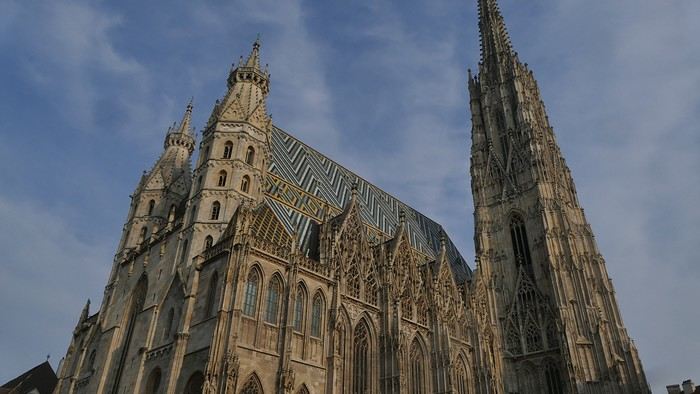
When I exit the metro, I spot the St. Stephen’s Cathedral tower in the distance and approach it: the roof, made of glazed tiles, is remarkable.
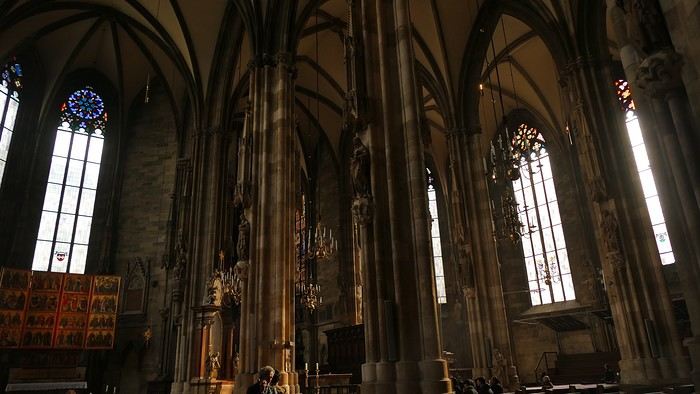
Entry is free, and the interior, a mix of Gothic and Baroque styles in the center, is stunning.
Not far from there is St. Anne’s Church
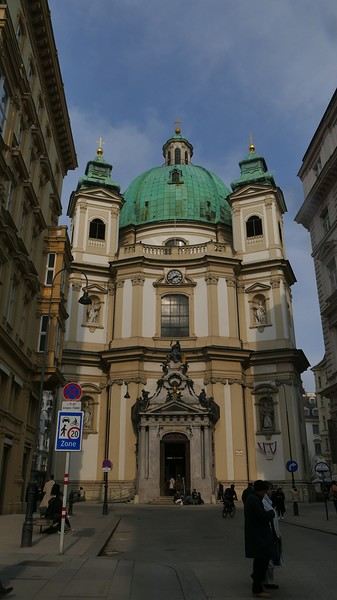
, also Baroque, adorned with beautiful frescoes
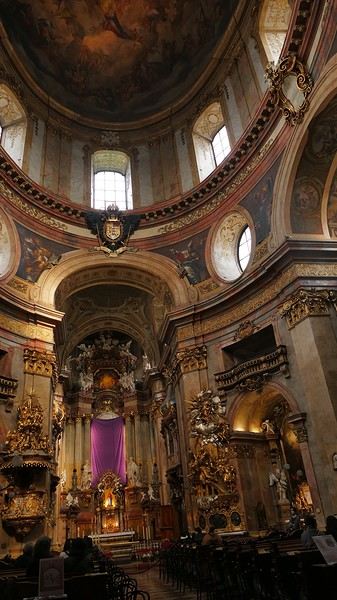
—a music concert adds an enchanting atmosphere to the visit. I continue my walk at random through the pedestrian streets lined with magnificent buildings: I’m charmed by the city.
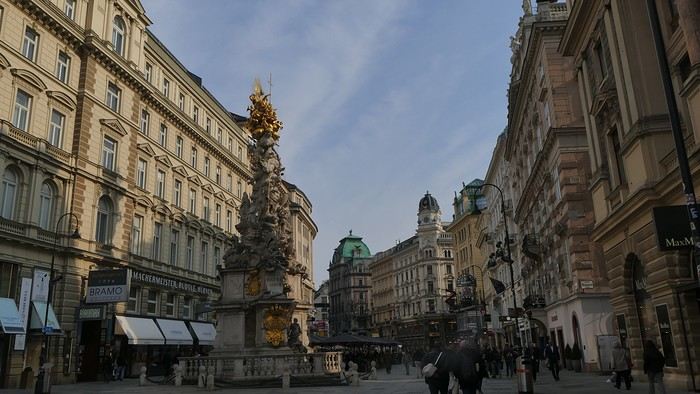
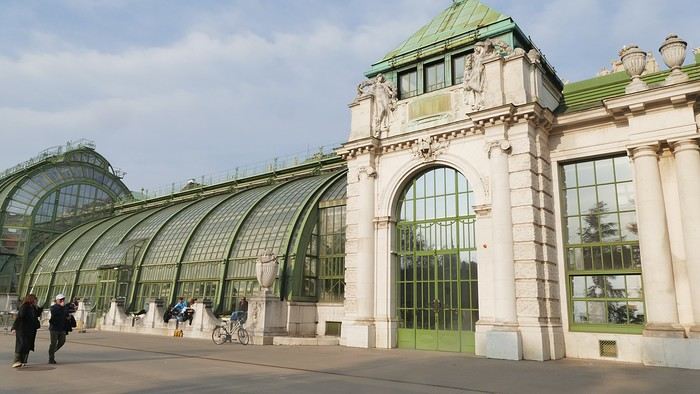
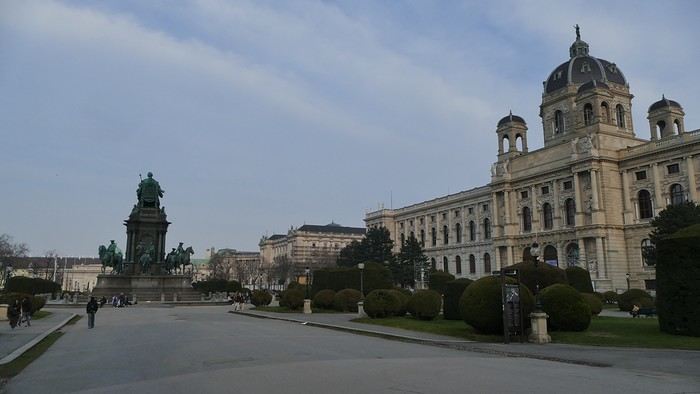
Before heading back to the airport, I stop at a lovely tea salon. My flight will eventually leave with a delay.
Wednesday, March 4th — Delhi and a little luggage scare We arrive in Delhi shortly after noon. Immigration is quick, and good news: my bag was checked through from Barcelona to Kolkata. I head to the connecting terminal and arrive half an hour before boarding: the flight goes smoothly. Upon arrival, the luggage comes out quickly… except mine. After filing a report, I’m told my bag is in Delhi—I have to retrieve it before taking another flight. I didn’t know (or had forgotten): with the delays, I wouldn’t have had time to pick it up and make the connection.
I take a taxi to the Ichamati Hotel. The welcome is warm, and the room is clean but very small. Without my bag, I feel a bit lost—I have nothing to change into.
Tonight, I’m dining with Raja and his friends at a beautiful restaurant, an old colonial house turned into a hotel.
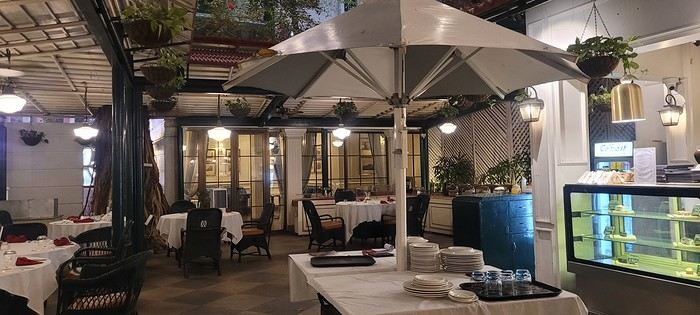
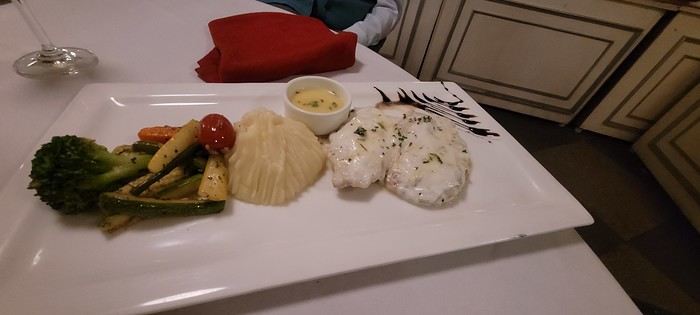
We’re happy to see each other and have a comforting evening together.
I quickly head to the Arc de Triomphe metro station, located 200 meters away: you have to cross the bridge along the bus parking lot, then walk through a large garden; the station is on the right before the garden entrance. The trip to the airport isn’t direct: I have to change at Tomasso and take the line to the airport, where I arrive at 1 PM.
At the Emirates counter, I learn my flight was just canceled due to the war in Iran; they offer me another flight for the next day. I have to wait at the airport until 7 PM before being taken to a hotel; the next morning, I’ll take a flight to Vienna (with an 8-hour layover), then an Air India flight to Delhi, and finally a flight to Kolkata. I agree: I don’t know Vienna, so it’ll be an unexpected discovery.
At 7 PM, a small group is taken to the hotel, 35 minutes from the airport, where we’re served a light dinner upon arrival.
March 3rd — A taxi picks me up at 6:30 AM; the flight to Vienna takes off at 9:30 AM and arrives at noon. I’m free until 7 PM; the metro is direct to the city center. The weather is pleasant and not too cold, luckily, since my clothes are light.
When I exit the metro, I spot the St. Stephen’s Cathedral tower in the distance and approach it: the roof, made of glazed tiles, is remarkable.
Entry is free, and the interior, a mix of Gothic and Baroque styles in the center, is stunning.
Not far from there is St. Anne’s Church
, also Baroque, adorned with beautiful frescoes
—a music concert adds an enchanting atmosphere to the visit. I continue my walk at random through the pedestrian streets lined with magnificent buildings: I’m charmed by the city.
Before heading back to the airport, I stop at a lovely tea salon. My flight will eventually leave with a delay.
Wednesday, March 4th — Delhi and a little luggage scare We arrive in Delhi shortly after noon. Immigration is quick, and good news: my bag was checked through from Barcelona to Kolkata. I head to the connecting terminal and arrive half an hour before boarding: the flight goes smoothly. Upon arrival, the luggage comes out quickly… except mine. After filing a report, I’m told my bag is in Delhi—I have to retrieve it before taking another flight. I didn’t know (or had forgotten): with the delays, I wouldn’t have had time to pick it up and make the connection.
I take a taxi to the Ichamati Hotel. The welcome is warm, and the room is clean but very small. Without my bag, I feel a bit lost—I have nothing to change into.
Tonight, I’m dining with Raja and his friends at a beautiful restaurant, an old colonial house turned into a hotel.
We’re happy to see each other and have a comforting evening together.
Review of the CFC "Pearls of the Baltic" cruise June 2026
Hello,
We’re back from this cruise.
Boarding in Dunkirk: The doors opened around 12 PM. Since we were a bit early, I asked if my husband, who uses a walker, could wait inside instead of outside. I left him with the two suitcases and our two backpacks in the small hall while I parked the car in the reserved CFC parking lot for 10 € per day.
The shuttle that was supposed to take people from the parking lot to the model pavilion was supposed to arrive in 5 minutes, but after 15 minutes, nothing. After waiting 15 minutes, I saw a man walking and asked if I could follow him. In 15 minutes, we arrived, and still no sign of the shuttle—it must have passed us. Arrived at the model pavilion.
My husband had already checked in the suitcases with the help of a CFC staff member. The remaining formalities were completed quickly. We were on board by 12:15 PM. Headed to the buffet on deck 11 and waited in a lounge to access our cabin.
At 2 PM, we discovered our balcony cabin on deck 9 at the rear: spacious with a large balcony compared to MSC/COSTA.
Since we were at the rear, cabin 9202, there was always an issue with elevator number 4: "priority."
Elevator number 2 stops at deck 10... and elevator number 3 was often out of order, leaving only number 1 for those with mobility issues to reach the buffet, especially for people who struggle with stairs. Note: only one child on board and lots of "gray hair."
DAY 2: At sea. Lots of activities offered.
Day 3: GOTHENBURG (Sweden). Sunny, 19°C at 11 AM.
Excursion booked with CFC: Gothenburg and Haga for all.
Interesting visit with a great guide. The HAGA district, in our opinion, is full of cobblestones and nothing special, not suitable for people using a cane or wheelchair. Elevator number 3 was out of order again.
Day 4: Copenhagen. 15°C in the morning, showers in the afternoon.
We didn’t book an excursion since we’d already stopped here with CFC in 2025, and based on advice from this forum, we took the hop-on/hop-off bus right in front of the ship. I still went to see the Little Mermaid again.
No TV, but the elevator was fixed.
DAY 5: At sea. Still no TV.
DAY 6: GDANSK (Poland). 15°C, rain all day.
There’s a shuttle to get to the city center.
We took the excursion: Panorama of Gdansk.
The guide left us at the entrance of the city center for 45 minutes, telling us what to visit. Meet-up for the rest of the tour at 3 PM. The bus left at 3:15 PM to cover 10 km to see St. Mary’s Cathedral. We arrived at 4:16 PM... The guide said there are often traffic jams in that direction. We had 10 minutes on site before heading to see the lighthouse and the Westerplatte monument, where we also had 10 minutes.
Many of us wondered why we didn’t do the tour in the opposite direction since they knew there would be traffic...
I went to reception to complain about the organization. The staff member read me the program: we were supposed to start with the lighthouse, then go to the cathedral and stay for 30 minutes before heading to the center of Gdansk for a short guided walk with some free time to buy souvenirs, etc.
The guide did the complete opposite of what was planned and didn’t even give us a guided tour—just dropped us off in the city...
DAY 7: Bornholm Island (Denmark). 14°C, a few sunny spells.
We saw in the excursions that there was a walking tour of RØNNE. So, like many others, we explored on our own. There was a small orchestra welcoming us at the port and two people with city maps. We took the shuttle to leave the port—it ran every 15 minutes. The tourist office was next to the "shuttle bus." A pleasant visit at our own pace.
DAY 8: KIEL (Germany). 18–23°C, nice weather.
We took the "Kiel for all" excursion. Great guide and interesting visits.
The port is in the city, and in 10 minutes, we were in the city center by following a blue line on the ground from the port. Elevator 3 was stuck again... and the TV was back.
DAY 9: At sea. Elevator 3 works.
DAY 10: At sea. Elevator 3 is out of order again...
DAY 11: Disembarkation in Dunkirk.
Cabins had to be vacated by 7:30 AM. Buffet open until 9 AM.
Elevator number 1 was "reserved," leaving only number 2, which doesn’t go up to deck 11... a problem for people with mobility issues who had to cross the entire deck 11 and try to use one of the four working elevators at the front, which were crowded.
My opinion: Interesting stops.
The onboard staff were always welcoming, smiling, and mostly French-speaking.
Evening shows were better than in March/April 2025—better singers, dancers, and presenters, and the costumes were improved.
I liked the "magician" shows less.
There were three onboard lectures by a very cultured person, but they went off-topic and were too historical for my taste. I didn’t attend the other two; my husband went to the second but not the third.
For this cruise, there was a bridge theme, but we’re not players or interested.
We didn’t take a drink package on board—water, coffee, tea, and herbal teas were available.
We had a water leak in our cabin the night before disembarkation. We reported it, and after the technical staff came (with a translator who didn’t speak English), we were asked to leave the cabin for a while for repairs. We went to a lounge, and after 1.5 hours, I checked in at reception. The repair took longer than expected... we had to change cabins... not ideal the night before disembarkation. No balcony cabins were available, so we got an ocean-view cabin, 6075, with a bathtub (impossible for both of us to use). We packed our suitcases, took a shower in our cabin, and moved to the new one. Noise from chairs until 12:30 AM because the cabin was under a lounge, and constant ventilation noise in the hallway... sleep was hard to come by. Disembarkation: Well organized. We were helped with transporting the two suitcases and bags to the waiting room while I took the shuttle to get the car. Guylène
We had a water leak in our cabin the night before disembarkation. We reported it, and after the technical staff came (with a translator who didn’t speak English), we were asked to leave the cabin for a while for repairs. We went to a lounge, and after 1.5 hours, I checked in at reception. The repair took longer than expected... we had to change cabins... not ideal the night before disembarkation. No balcony cabins were available, so we got an ocean-view cabin, 6075, with a bathtub (impossible for both of us to use). We packed our suitcases, took a shower in our cabin, and moved to the new one. Noise from chairs until 12:30 AM because the cabin was under a lounge, and constant ventilation noise in the hallway... sleep was hard to come by. Disembarkation: Well organized. We were helped with transporting the two suitcases and bags to the waiting room while I took the shuttle to get the car. Guylène
Is it risky to walk around Rio alone?
hi there
I’m leaving on October 1st for Rio, which I’ll be exploring over 10 days while staying in Copacabana and Ipanema.
After that, I’m heading to Ilha Grande, Paraty, and finally a flight to Iguaçu.
I’d love to hear your thoughts on Rio. Is it possible to walk around and explore without constantly worrying about getting my phone snatched?
I’m traveling alone and don’t speak Portuguese.
I need GPS to get around.
I love walking and don’t really like taking taxis, which is why I’ve booked two places to stay in Rio to experience different neighborhoods.
But is this doable given the security concerns there?!
In short, can you travel peacefully?
Thanks for your feedback if you’ve been to Rio!
Best,
Tips for independent stopovers and excursions on a Mediterranean cruise
Hi everyone,
I’m going on a Mediterranean cruise in November and I’m looking for some "tips" to visit the cities of Naples, Messina, and Valletta in Malta without booking the ship’s excursions, which are really expensive.
Thanks so much for your advice and suggestions. We’re a group of 6 people.
Looking forward to hearing from you...
Best,
M
PS: We’re also stopping in Genoa and Barcelona—even though we know these two cities, we’d still love any tips for visiting them! Thanks
PS: We’re also stopping in Genoa and Barcelona—even though we know these two cities, we’d still love any tips for visiting them! Thanks
From Avignon to Casamance Without Flying
Hi there,
Last February, I made a trip using "public transport" from France to southern Senegal via Spain, Morocco, Western Sahara, and Mauritania.
It’s a journey of about 5,000 km, where I took trains (as far as Marrakech), ferries (to cross Gibraltar and then to reach Casamance from Dakar), and mostly buses on the long desert straightaways. I hadn’t planned any stops in advance or booked any hotels, except for the very first train to Spain, which left plenty of room for the unexpected. Why travel by land and sea? In recent years, flight-free travel has been gaining popularity. On social media, posts explaining how to cross Europe by train as quickly as possible go viral. Traveling without flying—and making sure people know about it—has become a great way to earn a badge of eco-responsibility: an essential totem for anyone wanting to prove both their dedication to the ecological cause and the wisdom of slow travel. I haven’t flown in years, and this journey to West Africa could easily be filed under "responsible travel." But it wouldn’t be honest to say that: in reality, it wasn’t really my aversion to flying that motivated this long trek. I see overland travel primarily as a way to experience the world’s geography at a grounded, earthly pace—the pace of the locals. Besides, I’ll be flying back, which disqualifies any claim to being a model of sustainability. So no eco-badge, and no adventurer’s badge either: you won’t find any heroic tales of camel rides in lost lands or mineral train wagons in this account (popular with influencers, the Mauritania iron ore train now attracts tourists from all over the world, turning "the experience" into something you "have to do at least once in your life"). This five-part story, written on the road, has no other ambition than to recount a journey through places and people, and to share the thoughts they inspire in me. As simply and, I hope, as humbly as possible.
I’m posting the episodes here, which you can also find on my blog (with more photos) at the following links:
Episode 1: Spain, from Avignon to Algeciras
Episode 2: Morocco, from Tangier to Tarfaya
Episode 3: Western Sahara, from Tarfaya to Guerguerat
Episode 4: Mauritania, from Guerguerat to Nouakchott
Episode 5: Senegal, from Rosso to Saloulou
To help those who might want to make the same trip, I’ve also put together a summary of the route with recommendations—you can read it at the end of the story and on the blog: From France to Senegal Without Flying: Route and Itinerary Recommendations
Happy reading, and safe travels!
Last February, I made a trip using "public transport" from France to southern Senegal via Spain, Morocco, Western Sahara, and Mauritania.
It’s a journey of about 5,000 km, where I took trains (as far as Marrakech), ferries (to cross Gibraltar and then to reach Casamance from Dakar), and mostly buses on the long desert straightaways. I hadn’t planned any stops in advance or booked any hotels, except for the very first train to Spain, which left plenty of room for the unexpected. Why travel by land and sea? In recent years, flight-free travel has been gaining popularity. On social media, posts explaining how to cross Europe by train as quickly as possible go viral. Traveling without flying—and making sure people know about it—has become a great way to earn a badge of eco-responsibility: an essential totem for anyone wanting to prove both their dedication to the ecological cause and the wisdom of slow travel. I haven’t flown in years, and this journey to West Africa could easily be filed under "responsible travel." But it wouldn’t be honest to say that: in reality, it wasn’t really my aversion to flying that motivated this long trek. I see overland travel primarily as a way to experience the world’s geography at a grounded, earthly pace—the pace of the locals. Besides, I’ll be flying back, which disqualifies any claim to being a model of sustainability. So no eco-badge, and no adventurer’s badge either: you won’t find any heroic tales of camel rides in lost lands or mineral train wagons in this account (popular with influencers, the Mauritania iron ore train now attracts tourists from all over the world, turning "the experience" into something you "have to do at least once in your life"). This five-part story, written on the road, has no other ambition than to recount a journey through places and people, and to share the thoughts they inspire in me. As simply and, I hope, as humbly as possible.
I’m posting the episodes here, which you can also find on my blog (with more photos) at the following links:
Episode 1: Spain, from Avignon to Algeciras
Episode 2: Morocco, from Tangier to Tarfaya
Episode 3: Western Sahara, from Tarfaya to Guerguerat
Episode 4: Mauritania, from Guerguerat to Nouakchott
Episode 5: Senegal, from Rosso to Saloulou
To help those who might want to make the same trip, I’ve also put together a summary of the route with recommendations—you can read it at the end of the story and on the blog: From France to Senegal Without Flying: Route and Itinerary Recommendations
Happy reading, and safe travels!
From Mexico to the Wonderful Chiapas
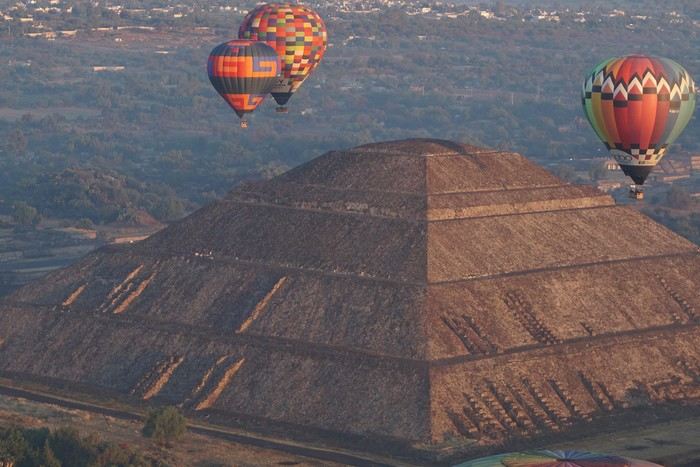
This one-month trip, from January 18 to February 17, 2026, allowed us to visit Mexico City and travel through the states of Puebla, Oaxaca, and Chiapas. We mainly used buses (ADO company) for medium and long distances and colectivos or taxis (or Uber) for shorter trips. Before leaving, I had contacted several people on the ground: Harry, a Vendéan settled in Oaxaca offering, among other things, discoveries of artisan villages or the Monte Albán site, and Oscar in Comitán de Domínguez. I’ll come back to our meeting with Oscar, who runs a local agency (CVL Travel Turismo Alternativo & Corre la voz) and owns a very pleasant hostel, a real highlight of our trip. Our journey took place in 8 stages on a loop starting from Mexico City. The connections between each were made by day or night buses depending on the trip duration. I had booked our seats in advance, either directly on the ADO company’s website or through booking platforms depending on the rates offered. Note that by planning ahead, I was able to benefit from very interesting "Early Booking" rates. There are several comfort classes. For all our trips, I had booked seats in Primera class buses, except for two in GL (Grand Luxe) class. The rates are very reasonable, and the buses turned out to be comfortable or even very comfortable (only the basic seat recline might surprise you).
Our itinerary and number of days per stage: Stage 1 – Mexico City: 4 days Stage 2 – Puebla: 2 days Stage 3 – Oaxaca: 4 days Stage 4 – San Agustinillo: 4 days Stage 5 – San Cristóbal de las Casas: 3 days Stage 6 – Comitán de Domínguez: 6 days Stage 7 – Palenque: 4 days Stage 8 – Mexico City: 2 days If I were to do it again, I’d remove one day from Palenque and add it either to Puebla or San Cristóbal to visit nearby sites or villages, or to San Agustinillo to enjoy one more day by the Pacific Ocean.
Stage 1: Mexico City (2,200 m / 9.2 million inhabitants) We arrived in the Mexican capital around 10:00 PM. The simplified customs process was very quick. After exchanging some money at the airport, we took a taxi to our youth hostel. We got around the capital on foot, of course, but also by metro. Signs are very rare, and we took the train in the wrong direction several times. After a few mistakes, we systematically asked on the platform if we were going the right way. The metro is very affordable. You need to get a rechargeable card (the Tarjeta de Movilidad Integrada) and top it up as needed. This card (less than 1 €) isn’t personal, so there’s no need to get one per person.
Mexico City: Day 1.
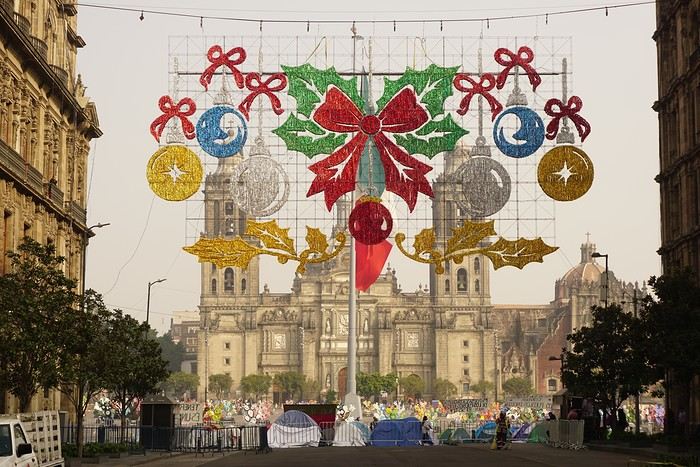
Visits and walks of the day (note: many museums are closed on Mondays): The Zócalo or Constitution Square: it’s one of the most beautiful, largest (195m x 240m), and oldest squares in the world. This is where Cortés decided to build the center of the new Spanish city on the site of the former Tenochtitlan market. Stones from the pyramids were used to pave the esplanade and build the surrounding colonial churches and buildings. During our visit, the huge square was covered with (resin) cacti, the theme of the temporary exhibition at the time. Indeed, temporary events or exhibitions take place here throughout the year. It’s also the endpoint for many protest marches.
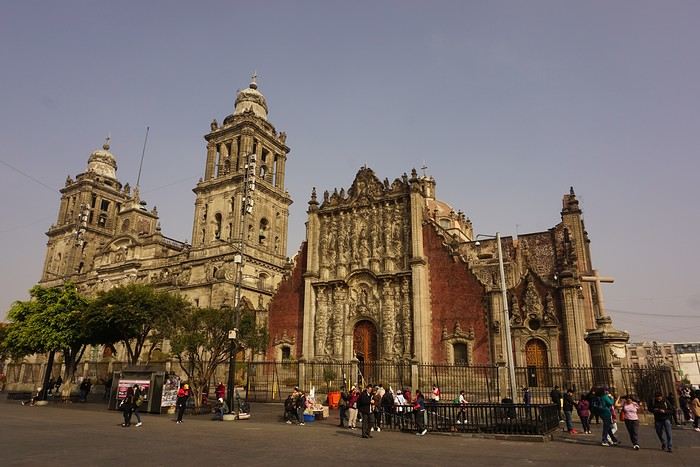
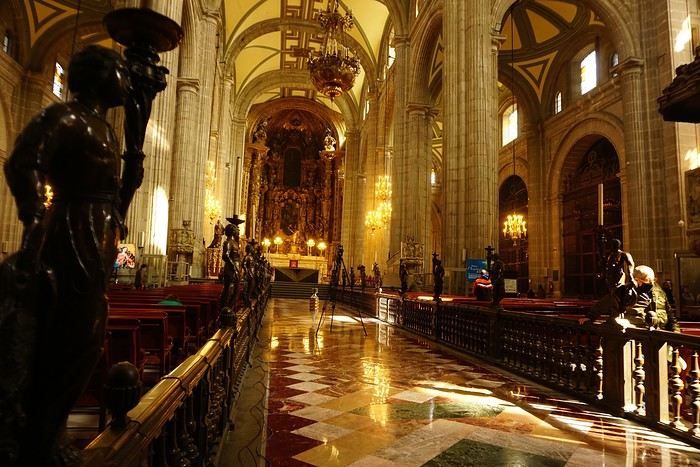


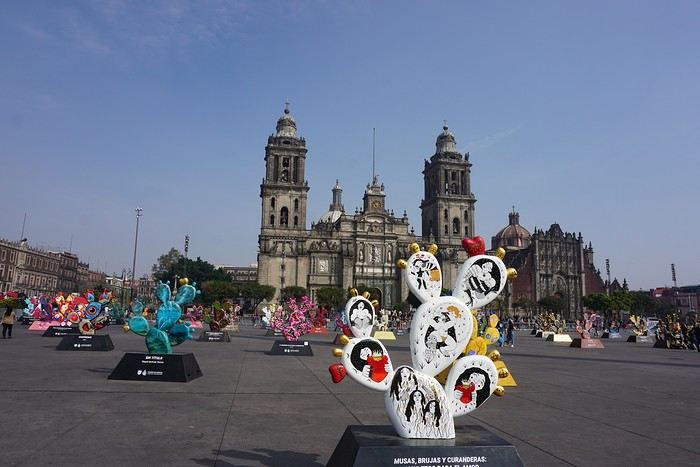
The cathedral: it’s sinking by one centimeter per year despite massive stabilization work (the collapse of many Mexican buildings—30 cm/year—is due to groundwater pumping). It was built starting in 1571 and completed in... 1813. The modest remains of the Templo Mayor (exterior view): they have high symbolic value, as this monument was the most important in the Mexica Empire.
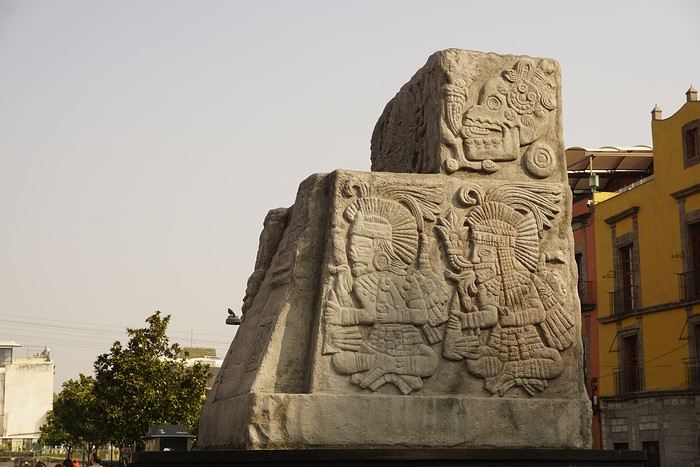 We then walked through the streets of the historic center to the Santísima Church, unfortunately closed for renovation work.
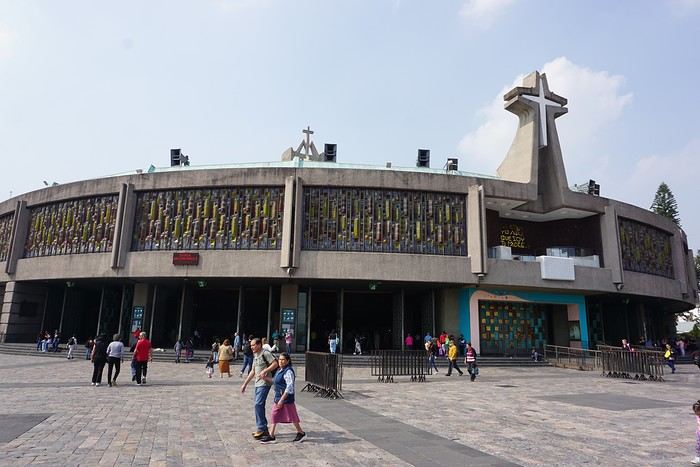
Next, we took the metro to visit one of Mexico’s most important pilgrimage sites: the Insigne y Nacional Basílicas de Santa María de Guadalupe, as well as the Capilla del Cerrito on the hill.
The first, dating from the colonial era, is really leaning a lot.
We then walked through the streets of the historic center to the Santísima Church, unfortunately closed for renovation work.
Next, we took the metro to visit one of Mexico’s most important pilgrimage sites: the Insigne y Nacional Basílicas de Santa María de Guadalupe, as well as the Capilla del Cerrito on the hill.
The first, dating from the colonial era, is really leaning a lot.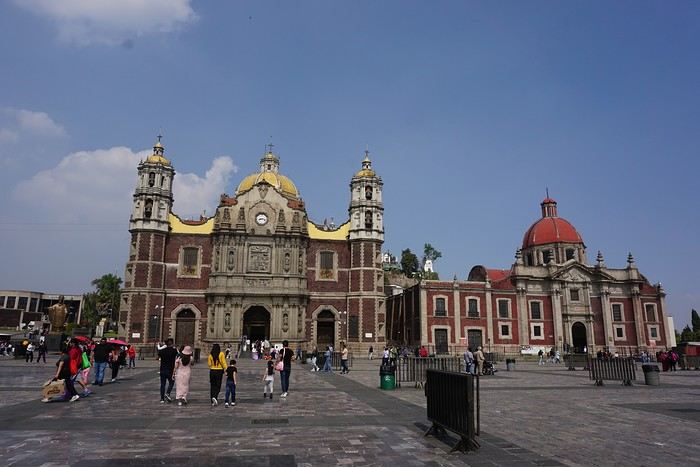
The second, shaped like a rotunda, is very impressive from the inside.
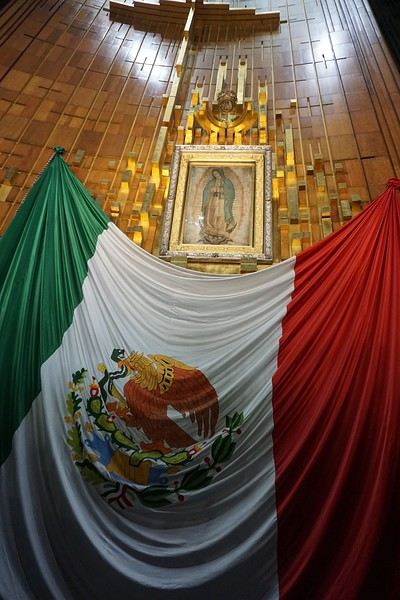
In the basement, there’s a sacred tunic where, in 1531, an image of the Virgin Mary is said to have appeared. A real mystery for scientists, the garment has never deteriorated since that date. Slow-moving conveyor belts allow pilgrims to admire it, preventing crowds from gathering in front of the image for hours. Well thought out!
 From the top of the Capilla del Cerrito, you get beautiful views of huge Mexico City.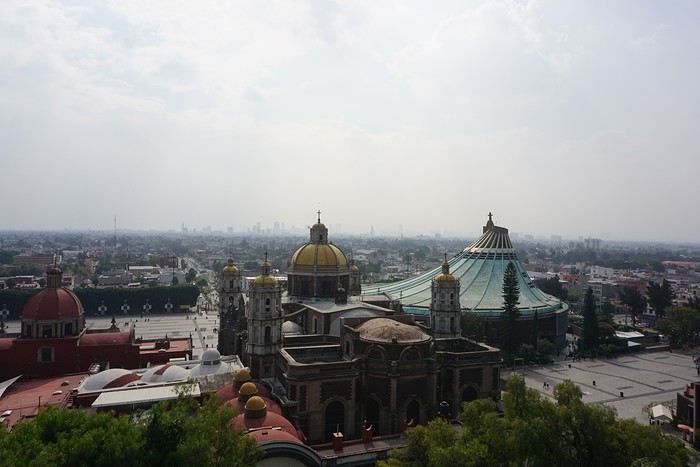
A Bold Combo: Southern Peru, Bolivia, and Northern Chile
Hello everyone,
For our latest 3-week family trip (yes, the kids are growing up, and two of them are about to enter the working world), we’re heading to South America! For our first time on this continent, I had planned a classic 3-week loop in Peru.
But since we won’t be returning to this part of the world anytime soon, I thought: why not follow in the footsteps of Franck, aka Bibouns51, who, in 18 days, didn’t just stick to Peru but also added two of the planet’s most stunning landscapes to his itinerary... the Salar de Uyuni in Bolivia and its neighbor, the fabulous Atacama Desert in northern Chile !!
So, I set about the tricky task of limiting the regions we’d visit in Peru to those we considered must-sees, to avoid rushing too much. The visit schedules were optimized, including several comfortable overnight buses that have the huge advantage of letting us hop between regions.
So, we’re off on a somewhat adventurous trip with three domestic flights (two on the first day and one on the last), two overnight buses for quick hops, several car rentals, the services of a few drivers to make the trip more comfortable, and even a tour operator for crossing the Salar...
Our main concern is altitude sickness, and we’re bringing Diamox, aspirin, etc., just in case.
Our second worry before departure was not even getting off the ground... Yes, for once, we’re leaving from France—Marseille, to be exact. The week before our departure, with the surprise air traffic controllers’ strike, I remembered why we usually prefer to leave from abroad, like Turin or Barcelona... In the end, it wasn’t the air traffic controllers who made us nervous but the early July wildfires that paralyzed the airport a few days before our departure. Fortunately, the fires were quickly brought under control, and on the big day, everything was smooth sailing!
Detailed itinerary (which changed on Day 1 due to departure hiccups): Day 0: Flight Marseille - Madrid - Lima PERU Theoretical and abandoned Day 1: Flight Lima - Cuzco and visit Cuzco (Puka Pukara, Tambomachay, Cristo Blanco Observatory, Sacsayhuaman sunset) - Night in Cuzco Day 2: Taxi -> Chinchero - Moray - Maras Salt Mines - Ollantaytambo - Train to Aguas Calientes Day 3: Machu Picchu - Return train to Ollantaytambo Day 4: 2-day taxi -> Pisac - Tipon - Andahuaylillas - Huaro - Night in San Pedro Day 5: Palcoyo - Checacupe - Vinicunca - Return and night in Cuzco Day 6: Day in Cuzco (catch-up on Sacsayhuaman, San Blas district, Temple of the Sun) - Overnight bus to Arequipa Day 7: Rental car -> On the road to Colca Canyon, night in Cabanaconde Day 8: Descent to the bottom of Colca Canyon, night at Oasis Sangalle Day 9: Ascent from the canyon - Maca - Chivay - Return and night in Arequipa Day 10: Visit Arequipa (Santa Catalina Convent, La Recoleta Church and Monastery, La Compañía Church, Cathedral) - Overnight bus to Puno Day 11: Lake Titicaca - Night in Puno BOLIVIA Day 12: Shared taxi -> Road to La Paz, visit downtown La Paz - Night 1 in La Paz Day 13: Moon Valley and Las Animas Valley - Night 2 in La Paz Day 14: Day in La Paz - Night 3 in La Paz Day 15: Flight to Uyuni - Day 1 of Salar de Uyuni tour - Night at the edge of the Salar Day 16: Crossing the Lipez region and lagoons - Night near Laguna Colorada Day 17: Sol de Mañana CHILE Day 17 cont.: Pre-booked transfer to SPDA - 4x4 rental - Pukara de Quitor - Stargazing tour - Night 1 in SPDA Day 18: Death Valley and Moon Valley - Night 2 in SPDA Day 19: Miscanti and Miniques Lagoons, Salar de Aguas Calientes and its Piedra Roja, Tebenquiche Lagoon and Quebrada del Diablo - Night 3 in SPDA Day 20: Rainbow Valley and swim in the Puritama River - Night 4 in SPDA Day 21: Tebenquiche Lagoon - Bus to Calama - Flight to Santiago Day 22: Return Santiago - Madrid - Marseille
Day 0 - 11/07: Destination Lima
Our first flight from Marseille went smoothly to our Iberia layover in Madrid.
In Madrid, just after getting off the plane around 8 PM, and as we were walking through the terminal, we got a rude awakening!!
We saw the word "Cancelled" next to our flight number on the display boards. Thinking it must be a glitch, we checked another screen, but the system was stubborn, and the same dreaded word appeared !
So, we headed to the Iberia counter, where an agent confirmed that our Friday evening flight was canceled and rescheduled for the next morning. The reason? A breakdown and no replacement plane, even though we were in Madrid, Iberia’s home base!
To make matters worse, I remembered our super-tight schedule, planned to the minute, with no buffer day in Lima. Since I’m a bit phobic of megacities and hadn’t found anything appealing in the Peruvian capital in our guidebooks, we’d planned to leave Lima as soon as possible for Cusco, the heart of the Sacred Valley, to spend our first day there.
Bad idea, because we already knew the 4-hour buffer wouldn’t be enough, and we’d miss the domestic flight, which was, of course, non-refundable and non-changeable. So, we had to call LATAM from Madrid to find another flight for Saturday evening and negotiate a rate to recover some of our initial outlay.
After an hour on the phone with customer service, several endless holds, and three failed attempts to dictate our credit card number over the phone to a Spaniard speaking English with a thick accent, we finally managed to confirm the transaction, securing our new flight tickets for a moderate extra cost of just 150 € total.
At first, we were pretty bummed about losing a day and incurring extra fees to reschedule the domestic flight, but then, when we learned from an Iberia customer service rep that we’d receive the max compensation of 600 € per traveler, we even ended up grinning... because 3000 € in refunds for only losing the first day in Cusco? We’d sign up for that 10 times over!!
Iberia then took care of us, putting us up in a hotel where we had dinner before a short 5-hour night and an early morning departure. I took the opportunity to improvise a quick day of sightseeing in Lima, focusing on the Barranco and Miraflores districts.
For our latest 3-week family trip (yes, the kids are growing up, and two of them are about to enter the working world), we’re heading to South America! For our first time on this continent, I had planned a classic 3-week loop in Peru.
But since we won’t be returning to this part of the world anytime soon, I thought: why not follow in the footsteps of Franck, aka Bibouns51, who, in 18 days, didn’t just stick to Peru but also added two of the planet’s most stunning landscapes to his itinerary... the Salar de Uyuni in Bolivia and its neighbor, the fabulous Atacama Desert in northern Chile !!
So, I set about the tricky task of limiting the regions we’d visit in Peru to those we considered must-sees, to avoid rushing too much. The visit schedules were optimized, including several comfortable overnight buses that have the huge advantage of letting us hop between regions.
So, we’re off on a somewhat adventurous trip with three domestic flights (two on the first day and one on the last), two overnight buses for quick hops, several car rentals, the services of a few drivers to make the trip more comfortable, and even a tour operator for crossing the Salar...
Our main concern is altitude sickness, and we’re bringing Diamox, aspirin, etc., just in case.
Our second worry before departure was not even getting off the ground... Yes, for once, we’re leaving from France—Marseille, to be exact. The week before our departure, with the surprise air traffic controllers’ strike, I remembered why we usually prefer to leave from abroad, like Turin or Barcelona... In the end, it wasn’t the air traffic controllers who made us nervous but the early July wildfires that paralyzed the airport a few days before our departure. Fortunately, the fires were quickly brought under control, and on the big day, everything was smooth sailing!
Detailed itinerary (which changed on Day 1 due to departure hiccups): Day 0: Flight Marseille - Madrid - Lima PERU Theoretical and abandoned Day 1: Flight Lima - Cuzco and visit Cuzco (Puka Pukara, Tambomachay, Cristo Blanco Observatory, Sacsayhuaman sunset) - Night in Cuzco Day 2: Taxi -> Chinchero - Moray - Maras Salt Mines - Ollantaytambo - Train to Aguas Calientes Day 3: Machu Picchu - Return train to Ollantaytambo Day 4: 2-day taxi -> Pisac - Tipon - Andahuaylillas - Huaro - Night in San Pedro Day 5: Palcoyo - Checacupe - Vinicunca - Return and night in Cuzco Day 6: Day in Cuzco (catch-up on Sacsayhuaman, San Blas district, Temple of the Sun) - Overnight bus to Arequipa Day 7: Rental car -> On the road to Colca Canyon, night in Cabanaconde Day 8: Descent to the bottom of Colca Canyon, night at Oasis Sangalle Day 9: Ascent from the canyon - Maca - Chivay - Return and night in Arequipa Day 10: Visit Arequipa (Santa Catalina Convent, La Recoleta Church and Monastery, La Compañía Church, Cathedral) - Overnight bus to Puno Day 11: Lake Titicaca - Night in Puno BOLIVIA Day 12: Shared taxi -> Road to La Paz, visit downtown La Paz - Night 1 in La Paz Day 13: Moon Valley and Las Animas Valley - Night 2 in La Paz Day 14: Day in La Paz - Night 3 in La Paz Day 15: Flight to Uyuni - Day 1 of Salar de Uyuni tour - Night at the edge of the Salar Day 16: Crossing the Lipez region and lagoons - Night near Laguna Colorada Day 17: Sol de Mañana CHILE Day 17 cont.: Pre-booked transfer to SPDA - 4x4 rental - Pukara de Quitor - Stargazing tour - Night 1 in SPDA Day 18: Death Valley and Moon Valley - Night 2 in SPDA Day 19: Miscanti and Miniques Lagoons, Salar de Aguas Calientes and its Piedra Roja, Tebenquiche Lagoon and Quebrada del Diablo - Night 3 in SPDA Day 20: Rainbow Valley and swim in the Puritama River - Night 4 in SPDA Day 21: Tebenquiche Lagoon - Bus to Calama - Flight to Santiago Day 22: Return Santiago - Madrid - Marseille
Day 0 - 11/07: Destination Lima
Our first flight from Marseille went smoothly to our Iberia layover in Madrid.
In Madrid, just after getting off the plane around 8 PM, and as we were walking through the terminal, we got a rude awakening!!
We saw the word "Cancelled" next to our flight number on the display boards. Thinking it must be a glitch, we checked another screen, but the system was stubborn, and the same dreaded word appeared !
So, we headed to the Iberia counter, where an agent confirmed that our Friday evening flight was canceled and rescheduled for the next morning. The reason? A breakdown and no replacement plane, even though we were in Madrid, Iberia’s home base!
To make matters worse, I remembered our super-tight schedule, planned to the minute, with no buffer day in Lima. Since I’m a bit phobic of megacities and hadn’t found anything appealing in the Peruvian capital in our guidebooks, we’d planned to leave Lima as soon as possible for Cusco, the heart of the Sacred Valley, to spend our first day there.
Bad idea, because we already knew the 4-hour buffer wouldn’t be enough, and we’d miss the domestic flight, which was, of course, non-refundable and non-changeable. So, we had to call LATAM from Madrid to find another flight for Saturday evening and negotiate a rate to recover some of our initial outlay.
After an hour on the phone with customer service, several endless holds, and three failed attempts to dictate our credit card number over the phone to a Spaniard speaking English with a thick accent, we finally managed to confirm the transaction, securing our new flight tickets for a moderate extra cost of just 150 € total.
At first, we were pretty bummed about losing a day and incurring extra fees to reschedule the domestic flight, but then, when we learned from an Iberia customer service rep that we’d receive the max compensation of 600 € per traveler, we even ended up grinning... because 3000 € in refunds for only losing the first day in Cusco? We’d sign up for that 10 times over!!
Iberia then took care of us, putting us up in a hotel where we had dinner before a short 5-hour night and an early morning departure. I took the opportunity to improvise a quick day of sightseeing in Lima, focusing on the Barranco and Miraflores districts.
Tunisian Impressions (Live)
Hi there,
I arrived in Tunisia this afternoon for a full 14-day stay.
I took a direct Tunisair flight from Nice, which departed about thirty minutes late (that’s nothing compared to the "nightmares" I’ve had on some of my recent trips).
The flight lasts around 1 hour and 20 minutes, and a small snack was served on board (a sort of quiche with chickpea purée, a small bread roll, a portion of cheese like La Vache qui rit, and a small chocolate cake). It’s worth mentioning because it’s becoming increasingly rare on short flights. I was seated between two Tunisian gentlemen who gave me some great tips for my trip, especially about negotiating prices. One of them is a former cameraman for France Télévisions, very cultured and well-traveled—his daughter is a journalist at France Télévisions (I found some of her articles online). In short, the flight was very pleasant and quick.

I’m staying at the Hôtel Royal Victoria. I booked it yesterday afternoon by email without providing my credit card number. The room costs 241 TND (71 €) with breakfast included. It has heating, a small fridge, a safe, a hairdryer, Wi-Fi, and a TV with international channels. There’s a police van permanently parked in the square where the hotel is located.
This hotel is housed in the former British consulate and later embassy. It has a lot of charm with its painted wood ceilings and doors, and its bathroom covered in ceramic tiles. The tiny elevator is from another era. The main advantage of the hotel is its location between the medina and Avenue Bourguiba. Nearby, there’s the Magasin Général, where you can find groceries and some typical products like rose water, geranium water, and tons of halwa (a customer kindly explained how to eat it and which is the best).
After nightfall, I took a short stroll down Avenue Bourguiba. There weren’t many people around—it’s windy and cold.
I’ve already noticed the warm welcome from Tunisians. The supermarket cashier welcomed me to Tunisia, and a gentleman I asked for directions to the Magasin Général (I was about to climb stairs leading to a mosque!) insisted on inviting me for coffee, but I declined.
The rest of my itinerary will depend on the weather. If it doesn’t rain tomorrow, I might visit Carthage since the Bardo Museum is closed on Mondays, as are the museums in Sidi Bou Said.
TO BE CONTINUED...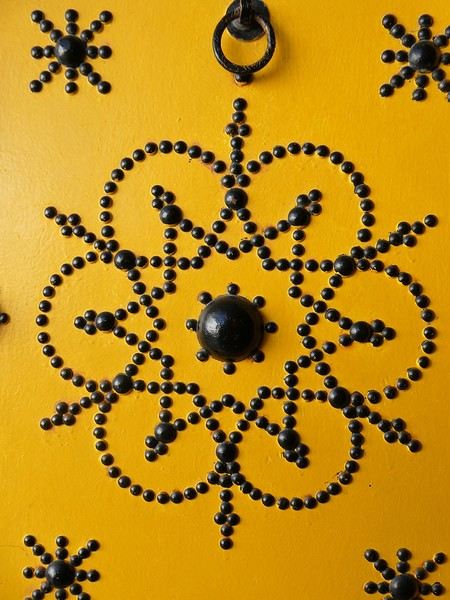


I arrived in Tunisia this afternoon for a full 14-day stay.
I took a direct Tunisair flight from Nice, which departed about thirty minutes late (that’s nothing compared to the "nightmares" I’ve had on some of my recent trips).
The flight lasts around 1 hour and 20 minutes, and a small snack was served on board (a sort of quiche with chickpea purée, a small bread roll, a portion of cheese like La Vache qui rit, and a small chocolate cake). It’s worth mentioning because it’s becoming increasingly rare on short flights. I was seated between two Tunisian gentlemen who gave me some great tips for my trip, especially about negotiating prices. One of them is a former cameraman for France Télévisions, very cultured and well-traveled—his daughter is a journalist at France Télévisions (I found some of her articles online). In short, the flight was very pleasant and quick.
I’m staying at the Hôtel Royal Victoria. I booked it yesterday afternoon by email without providing my credit card number. The room costs 241 TND (71 €) with breakfast included. It has heating, a small fridge, a safe, a hairdryer, Wi-Fi, and a TV with international channels. There’s a police van permanently parked in the square where the hotel is located.
This hotel is housed in the former British consulate and later embassy. It has a lot of charm with its painted wood ceilings and doors, and its bathroom covered in ceramic tiles. The tiny elevator is from another era. The main advantage of the hotel is its location between the medina and Avenue Bourguiba. Nearby, there’s the Magasin Général, where you can find groceries and some typical products like rose water, geranium water, and tons of halwa (a customer kindly explained how to eat it and which is the best).
After nightfall, I took a short stroll down Avenue Bourguiba. There weren’t many people around—it’s windy and cold.
I’ve already noticed the warm welcome from Tunisians. The supermarket cashier welcomed me to Tunisia, and a gentleman I asked for directions to the Magasin Général (I was about to climb stairs leading to a mosque!) insisted on inviting me for coffee, but I declined.
The rest of my itinerary will depend on the weather. If it doesn’t rain tomorrow, I might visit Carthage since the Bardo Museum is closed on Mondays, as are the museums in Sidi Bou Said.
TO BE CONTINUED...
What to see around La Spezia besides the Cinque Terre?
Hi,
I’m planning my trip to La Spezia and I’m struggling to find nice places to visit besides the Cinque Terre and Portovenere.
Budget: Mid-range
NO hiking
Can you help me out?
Thanks!
Can you help me out?
Thanks!
Gosuslugi with biometrics: for SIM cards and banks, among others.
Gosuslugi / Госуслуги is the Russian administrative portal. EBS / ЕБС is the unified biometric system.
Since 2025, foreigners (residents or not) must have a biometric profile in addition to a Gosuslugi profile to obtain SIM cards and open a bank account.
Administrative services are mostly centralized in MFCs, МФЦ (Multi-Functional Center), nicknamed "My Documents" Мои документы.
A non-resident foreigner can register with the pension fund, which provides a social security number, SNILS / СНИЛС. To do this, you must present your passport and a notarized translation at an MFC. The SNILS can be issued on the spot or within a maximum of five days. If not issued immediately, you receive a receipt, and the deadline is communicated by the administrative agent. You return to the MFC after the deadline to collect the certificate with the SNILS.
Once the SNILS is obtained, you revisit an MFC counter to register on the Gosuslugi portal. You must present your passport and notarized translation again, along with a phone number and email. The Gosuslugi portal authenticates users with three pieces of data: SNILS, email or phone number, and password. The agent creates the profile and completes the initial email and SMS confirmations on your phone.
After the Gosuslugi profile is active, you register on the biometric portal. If last year’s law centralization measures are fully implemented, you can do this at any MFC; otherwise, you go to a SBERBANK (or VTB) branch. Again, as always for foreigners, you must present your passport with its translation and show your open Gosuslugi profile on your phone. The employee records your voice (reading a series of numbers) and takes a photo of your face.
After that, you can go to a telecom agency to buy a SIM card. The staff will take your passport details with the translation and your Gosuslugi profile info. Then, they’ll take a photo with their webcam, which is verified by the online EBS biometric portal. However, procedures may vary depending on the provider (Megafon, MTS, Beeline), and some employees may not be familiar with the process.
Potential delays can be caused by network maintenance or slowdowns due to peaks in administrative activity.
I’ll illustrate this process as I experienced it in February and April 2025 in the next post. Just need to gather the photos I took on the spot.
Since 2025, foreigners (residents or not) must have a biometric profile in addition to a Gosuslugi profile to obtain SIM cards and open a bank account.
Administrative services are mostly centralized in MFCs, МФЦ (Multi-Functional Center), nicknamed "My Documents" Мои документы.
A non-resident foreigner can register with the pension fund, which provides a social security number, SNILS / СНИЛС. To do this, you must present your passport and a notarized translation at an MFC. The SNILS can be issued on the spot or within a maximum of five days. If not issued immediately, you receive a receipt, and the deadline is communicated by the administrative agent. You return to the MFC after the deadline to collect the certificate with the SNILS.
Once the SNILS is obtained, you revisit an MFC counter to register on the Gosuslugi portal. You must present your passport and notarized translation again, along with a phone number and email. The Gosuslugi portal authenticates users with three pieces of data: SNILS, email or phone number, and password. The agent creates the profile and completes the initial email and SMS confirmations on your phone.
After the Gosuslugi profile is active, you register on the biometric portal. If last year’s law centralization measures are fully implemented, you can do this at any MFC; otherwise, you go to a SBERBANK (or VTB) branch. Again, as always for foreigners, you must present your passport with its translation and show your open Gosuslugi profile on your phone. The employee records your voice (reading a series of numbers) and takes a photo of your face.
After that, you can go to a telecom agency to buy a SIM card. The staff will take your passport details with the translation and your Gosuslugi profile info. Then, they’ll take a photo with their webcam, which is verified by the online EBS biometric portal. However, procedures may vary depending on the provider (Megafon, MTS, Beeline), and some employees may not be familiar with the process.
Potential delays can be caused by network maintenance or slowdowns due to peaks in administrative activity.
I’ll illustrate this process as I experienced it in February and April 2025 in the next post. Just need to gather the photos I took on the spot.
Feedback on Poland itinerary
Hi there!!
This summer, we're planning to explore Poland from July 4th to 23rd. I’ve outlined our rough itinerary below—could you let me know if the number of days allocated to each destination makes sense or if there’s anything we should change? Thanks in advance!
S4 Departure, overnight in Würzburg (Germany) to break up the drive. D5 Travel day with visits: Jawor and Świdnica churches, Książ Castle (likely just the exterior), and a few other stops. Overnight in Wrocław. L6 Explore Wrocław M7 Explore Wrocław M8 Visit Kłodzko—is one day enough? Overnight near Auschwitz. J9 Visit Auschwitz, overnight in Kraków V10 Explore Kraków S11 Explore Kraków D12 Visit the Wieliczka Salt Mine, overnight near Zakopane L13 Zakopane M14 Zakopane M15 Visit Zamość, overnight in Lublin J16 Explore Lublin, overnight in Masuria (TBD) V17 Explore Masuria S18 Explore Masuria D19 Depart for Gdańsk, visit the Teutonic Castle, overnight in Gdańsk L20 Explore Gdańsk M21 Explore Gdańsk J22 Explore Gdańsk, possible day trip to Sopot? V23 Visit Toruń, then drive back to Germany. Overnight stop like on the way out. S24 Home!
Best, Christophe
This summer, we're planning to explore Poland from July 4th to 23rd. I’ve outlined our rough itinerary below—could you let me know if the number of days allocated to each destination makes sense or if there’s anything we should change? Thanks in advance!
S4 Departure, overnight in Würzburg (Germany) to break up the drive. D5 Travel day with visits: Jawor and Świdnica churches, Książ Castle (likely just the exterior), and a few other stops. Overnight in Wrocław. L6 Explore Wrocław M7 Explore Wrocław M8 Visit Kłodzko—is one day enough? Overnight near Auschwitz. J9 Visit Auschwitz, overnight in Kraków V10 Explore Kraków S11 Explore Kraków D12 Visit the Wieliczka Salt Mine, overnight near Zakopane L13 Zakopane M14 Zakopane M15 Visit Zamość, overnight in Lublin J16 Explore Lublin, overnight in Masuria (TBD) V17 Explore Masuria S18 Explore Masuria D19 Depart for Gdańsk, visit the Teutonic Castle, overnight in Gdańsk L20 Explore Gdańsk M21 Explore Gdańsk J22 Explore Gdańsk, possible day trip to Sopot? V23 Visit Toruń, then drive back to Germany. Overnight stop like on the way out. S24 Home!
Best, Christophe