Results for "Musée+Femmes+|+8+>+194"
36201 results found.
Egypte: entre Le Caire et Sharm el Sheikh English translation pending
Bonjour à tous,
Comment se transporter, que voir, où (bien) dormir, ou (bien) se restaurer, en combien de jours, à quels prix, depuis Le Caire jusqu'à Sharm, et retour (2 routes différentes ?) pour fin juin prochain, ma femme et moi ?
Hotel et club de plongée à Sharm pendant une semaine ?
Merci d'avance pour toutes vos suggestions
Comment se transporter, que voir, où (bien) dormir, ou (bien) se restaurer, en combien de jours, à quels prix, depuis Le Caire jusqu'à Sharm, et retour (2 routes différentes ?) pour fin juin prochain, ma femme et moi ?
Hotel et club de plongée à Sharm pendant une semaine ?
Merci d'avance pour toutes vos suggestions
Bons restaurants à Londres English translation pending
Bonjour à tous,
Auriez-vous expérimenté de bons restaurants à Londres, à prix raisonnables, disons jusqu'à 20 Euros/personne, voire un tout petit peu plus ?
Merci d'avance
Auriez-vous expérimenté de bons restaurants à Londres, à prix raisonnables, disons jusqu'à 20 Euros/personne, voire un tout petit peu plus ?
Merci d'avance
l'egypte en individuel English translation pending
bonjour à ceux qui me lisent !
On voudrait partir en Egypte ..en individuel.... à vos claviers .. on prend tout... les conseils, vos experiences...
Merci
On voudrait partir en Egypte ..en individuel.... à vos claviers .. on prend tout... les conseils, vos experiences...
Merci
Une femme seule, jeune au Costa Rica English translation pending
Bonjour 😉
Je dois sortir des USA vers le mois de Decembre (visa touriste). Je pensais donc me rendre dans un pays d Amerique du Sud pendant 2 semaines. On m a parle du Costa Rica, le billet d avion tourne autour de 500$, a ce qui parait c est magnifique.
Donc une simple question a l attention de tous ceux qui ont sejournes la-bas :
J ai 20 ans, j ai pas beaucoup de thunes, est ce que ca craint de partir toute seule ? (au niveau de la securite et des 'activites' )
Ok, merci beaucoup.🙂
Ciao
Je dois sortir des USA vers le mois de Decembre (visa touriste). Je pensais donc me rendre dans un pays d Amerique du Sud pendant 2 semaines. On m a parle du Costa Rica, le billet d avion tourne autour de 500$, a ce qui parait c est magnifique.
Donc une simple question a l attention de tous ceux qui ont sejournes la-bas :
J ai 20 ans, j ai pas beaucoup de thunes, est ce que ca craint de partir toute seule ? (au niveau de la securite et des 'activites' )
Ok, merci beaucoup.🙂
Ciao
Mon itinéraire au Mexique English translation pending
Bonjour, je pars le 6 octobre, arrivée à Mexico, pour repartir le 29 de Cancun.
Voilà les villes où je vais surement passer: Mexico DF, Oaxaca, Puerto angel, San Cristobal, Palenque, Campeche, Merida, Tulum ou Isla Mujeres histoire de faire un plongeon avant de reprendre l'avion. J'essaierai de voir les sites principaux et de passer du temps avec les gens.
Côté sites je pense aller au musée d'antropologie, à Téotihuacan, Monte Alban, Palenque, Chichen Itza.
Uxmal, si g le temps et que je suis pas saturé.
Par contre, g 1 gros dilemne avec Yaxchilan (et Bonampak par la même occasion): tout le monde s'accorde pour dire que c le kif, mais ça a l'air un brin compliqué pour y aller par ses propres moyens, surtout le bateau, faut trouver du monde. Alors si quelqu'un a des conseils, en solo ou organisé, je prend !
Sinon, je suis très intéressé par les indiens du Chiapas: où aller, comment les rencontrer dans de bonnes conditions, pour discuter, échanger. Pas seulement qu'il me voyent comme un touriste à plumer. Les petits présents sont-ils dans les moeurs (petits objets utiles, objets de chez moi, ...) et si oui lesquels ?
Question actuellement sans réponse !!! (je compte sur vous 😉): La route de Oaxaca à Pochutla par la montagne est-elle si pénible ? Est-ce qu'il vaut mieux passer plus de temps dans le bus et prendre l'autre nationale ?
Par contre, si vous avez des lieux qui vous ont particulièrement marqué, des hotels sympas et plutot pas chers qui vous ont laissé de bons souvenirs, des petits restaus où vous vous ètes cassé le ventre, je suis preneur de toutes les adresses, histoire de vous dire au retour ce que j'en ai pensé ;-) !!!
Allez, j'attend vos précieuses infos. Phil
Séjour mixte en Egypte - croisière courte et mer rouge English translation pending
Bonjour,
je projette de faire un voyage sans être sûr qu'il soit judicieux ou faisable.
L'idée serait de partir 8 jours en Egypte et de partager le séjour en une mini-croisière ou quelques jours sur le Nil du côté de Louxor et 3-4 jours du côté de Safaga pour faire de la plongée sous-marine...
Les tours-operators proposent soient des croisières sur le NIL soit des séjours spécialisés plongée sur la Mer Rouge mais rarement un mix des deux ou alors sur 15 jours...
Je peine donc à trouver des croisières ou des forfaits hotel courts sur Louxor et suis curieux de savoir comment me déplacer vers la côte sachant que, voyageant avec ma femme, les plans routards "tu fais du stop" ne sont les plus adaptés à notre mode de vacance...
Merci d'avance pour vos conseils...
je projette de faire un voyage sans être sûr qu'il soit judicieux ou faisable.
L'idée serait de partir 8 jours en Egypte et de partager le séjour en une mini-croisière ou quelques jours sur le Nil du côté de Louxor et 3-4 jours du côté de Safaga pour faire de la plongée sous-marine...
Les tours-operators proposent soient des croisières sur le NIL soit des séjours spécialisés plongée sur la Mer Rouge mais rarement un mix des deux ou alors sur 15 jours...
Je peine donc à trouver des croisières ou des forfaits hotel courts sur Louxor et suis curieux de savoir comment me déplacer vers la côte sachant que, voyageant avec ma femme, les plans routards "tu fais du stop" ne sont les plus adaptés à notre mode de vacance...
Merci d'avance pour vos conseils...
Déplacements et visites de Cuba English translation pending
Hello,
J'ai vu un reportage ce matin sur Cuba, et je dois dire que j'ai eu envie de le visiter.
Pourriez-vous m'en dire plus sur les endroits intéressants à visiter ainsi que les possibilités de déplacements (par nos propres moyens)?
Merci pour vos réponses 😉
J'ai vu un reportage ce matin sur Cuba, et je dois dire que j'ai eu envie de le visiter.
Pourriez-vous m'en dire plus sur les endroits intéressants à visiter ainsi que les possibilités de déplacements (par nos propres moyens)?
Merci pour vos réponses 😉
Itinéraire au Quebec English translation pending
Bonjout tout le monde voila je pars en voyage pour le quebec en juillet et je voudrais savoir ce que vous pensiez de mon itineraire et je vous voudrez aussi savoir les attraits et les endroits a voir dans ces villes .MERCI d'avance
14/07 : PARIS – MONTREAL
15/07 : MONTREAL
16/07 : MONTREAL
17/07 : MONTREAL - QUEBEC
18/07 : QUEBEC
19/07 : QUEBEC
20/07 : QUEBEC
21/07 : QUEBEC – BAIE SAINT-PAUL
22/07 : BAIE SAINT-PAUL
23/07 : BAIE SAINT-PAUL – LA MALBAIE
24/07 : LA MALBAIE – LES ESCOUMINS
25/07 : LES ESCOUMINS
26/07 : LES ESCOUMINS – RIMOUSKI
27/07 : RIMOUSKI – RIVIERE DU LOUP
28/07 : RIVIERE DU LOUP
29/07 : RIVIERE DU LOUP – MONTREAL
30/07 : MONTREAL
31/07 : MONTREAL – PARIS
🙂🙂🙂🙂🙂🙂🙂🙂🙂🙂🙂🙂😉🙂🙂🙂🙂🙂🙂🙂🙂🙂🙂🙂
14/07 : PARIS – MONTREAL
15/07 : MONTREAL
16/07 : MONTREAL
17/07 : MONTREAL - QUEBEC
18/07 : QUEBEC
19/07 : QUEBEC
20/07 : QUEBEC
21/07 : QUEBEC – BAIE SAINT-PAUL
22/07 : BAIE SAINT-PAUL
23/07 : BAIE SAINT-PAUL – LA MALBAIE
24/07 : LA MALBAIE – LES ESCOUMINS
25/07 : LES ESCOUMINS
26/07 : LES ESCOUMINS – RIMOUSKI
27/07 : RIMOUSKI – RIVIERE DU LOUP
28/07 : RIVIERE DU LOUP
29/07 : RIVIERE DU LOUP – MONTREAL
30/07 : MONTREAL
31/07 : MONTREAL – PARIS
🙂🙂🙂🙂🙂🙂🙂🙂🙂🙂🙂🙂😉🙂🙂🙂🙂🙂🙂🙂🙂🙂🙂🙂
Que faire à Whitehorse? English translation pending
Bonjour à tous amis voyageurs!
J'ai l'occasion de partir à Whitehorse dans la première semaine de juillet pendant quatre jours.
J'aimerais savoir si vous connaissez des activités à faire là-bas? J'adore la photographie et voir des paysages qui coupent le souffle.
Merci d'avance 😉
J'ai l'occasion de partir à Whitehorse dans la première semaine de juillet pendant quatre jours.
J'aimerais savoir si vous connaissez des activités à faire là-bas? J'adore la photographie et voir des paysages qui coupent le souffle.
Merci d'avance 😉
Travailler 2 mois en Bulgarie English translation pending
bonjour,
je pars 2 mois en bulgarie pour travailler, je cheche toute sorte d'info sur le pays( coutume, lieux à pas rater ect...) merci d'avance
je pars 2 mois en bulgarie pour travailler, je cheche toute sorte d'info sur le pays( coutume, lieux à pas rater ect...) merci d'avance
Vaccins, guides et offices du tourisme pour Guinée, Sénégal et Mali English translation pending
🤪 Je souhaite préparer un voyage en Afrique de l'ouest avec une amie. Nous prendrons 1 mois de vacances en Afrique de l'Ouest. Nous aurons possiblement des contacts en Guinée, Mali et Sénégal. Les hôtels et restaurants sont exclus (du mieux qu'on puisse faire) de nos voyages. Nous favorisons le vie dans des familles ou des amis ou autres pour s'intégrer et connaitre et vivre la culture (musique, danse, repas traditionnels, cérémonies religieuses etc...). Du plein air et surtout PAS de musées.
J'ai déjà fait venir de l'information sur le Sénégal (ambassade du Sénégal à Ottawa).
J'aimerais savoir s'il y a des "office du tourisme" ici (Canada) pour faire venir de l'info pour le Mali et la Guinée et à qui je dois m'adresser pour de l'info (autre qu'internet...bien sûr!!). Croyez-vous que je devrais consacrer du temps aussi pour la Mauritanie?
Si vous avez déjà voyagé dans ces pays, quels sont les vaccins que je dois me procurer avant de partir et quels guide-voyage avez-vous utilisé? J'aime bien le Lonely Planet mais il y en a tellement et ca dépend des pays!!!
Merci!!
J'ai déjà fait venir de l'information sur le Sénégal (ambassade du Sénégal à Ottawa).
J'aimerais savoir s'il y a des "office du tourisme" ici (Canada) pour faire venir de l'info pour le Mali et la Guinée et à qui je dois m'adresser pour de l'info (autre qu'internet...bien sûr!!). Croyez-vous que je devrais consacrer du temps aussi pour la Mauritanie?
Si vous avez déjà voyagé dans ces pays, quels sont les vaccins que je dois me procurer avant de partir et quels guide-voyage avez-vous utilisé? J'aime bien le Lonely Planet mais il y en a tellement et ca dépend des pays!!!
Merci!!
Our road trip through the American Southwest for summer 2026
Hello! The itinerary is pretty much set for August 2026. Yeah, I know it’s gonna be *super* hot. But it’s the only time we can get away.
So, here’s the plan: Montpellier-CDG-Dallas.
Stay from July 31 to August 26, 2026: Car rental – check, Hotels – check, Itinerary – almost check, Photo gear – check, Budget – check, 🤪 Meal planning – meh, we’ll see... Walmart, of course, for the cooler when we arrive.
And now, without too much detail...
Fort Worth: The Longhorns and the Stockyards; JR’s ranch (for the missus); Medal of Honor Museum – Arlington.
Houston and NASA Space Center: See the Gulf of Mexico/America.
San Antonio and the missions.
Fort Stockton for an overnight stop.
El Paso via Guadalupe Mountains: El Paso and White Sands.
Tucson and the Pima Air & Space Museum: Tombstone, Bisbee.
Phoenix:
Still working on the program.
Sedona: Round trip around the area via Flagstaff and Williams, or the Grand Canyon (already done) – we’ll decide on the spot.
Albuquerque: Santa Fe, Turquoise Trail, Los Alamos.
Amarillo via Route 66: Old Route 66 in the city; Big Texas Ranch Steak 😏.
Dallas: JFK Museum; Perot Museum; West End district.
And through it all – the road, the road, and more road!!!
We’ll adapt day by day based on our mental and physical state (we’re not exactly spring chickens).
Return to France: Dallas-Montpellier via CDG.
Cheers!
So, here’s the plan: Montpellier-CDG-Dallas.
Stay from July 31 to August 26, 2026: Car rental – check, Hotels – check, Itinerary – almost check, Photo gear – check, Budget – check, 🤪 Meal planning – meh, we’ll see... Walmart, of course, for the cooler when we arrive.
And now, without too much detail...
Fort Worth: The Longhorns and the Stockyards; JR’s ranch (for the missus); Medal of Honor Museum – Arlington.
Houston and NASA Space Center: See the Gulf of Mexico/America.
San Antonio and the missions.
Fort Stockton for an overnight stop.
El Paso via Guadalupe Mountains: El Paso and White Sands.
Tucson and the Pima Air & Space Museum: Tombstone, Bisbee.
Phoenix:
Still working on the program.
Sedona: Round trip around the area via Flagstaff and Williams, or the Grand Canyon (already done) – we’ll decide on the spot.
Albuquerque: Santa Fe, Turquoise Trail, Los Alamos.
Amarillo via Route 66: Old Route 66 in the city; Big Texas Ranch Steak 😏.
Dallas: JFK Museum; Perot Museum; West End district.
And through it all – the road, the road, and more road!!!
We’ll adapt day by day based on our mental and physical state (we’re not exactly spring chickens).
Return to France: Dallas-Montpellier via CDG.
Cheers!
Remembering Bowie
Tenth anniversary of the death of a multifaceted icon
The death of David Bowie marked the end of a remarkable career that saw popular music intertwine with fashion, cinema, and avant-garde art. It reminds us that the 1970s were defined by extraordinary experimentation and innovation. The iconic British musician made the world more colorful through his stage personas and their looks, and his music also underwent many changes over time. Rocker, punk, dandy, glam, man or woman—David Bowie was one of the most influential musicians of his generation for nearly half a century. Last January 10th marked the 10th anniversary of his death, just 48 hours after his 69th birthday and the release of the twilight album Blackstar.
He was Ziggy Stardust, Aladdin Sane (a lad insane—'a crazy boy'), Halloween Jack, the Thin White Duke, Soul Man, and so much more. David Bowie (1947–2016) created numerous personas that came to life on stage. There was a character for every musical phase and period of his life. Yet, his best-known name remained BOWIE. Those who listen to him today don’t just think of his eccentric outfits but also of the intelligent and witty personality behind them (see many concert videos below).
David Bowie was born in Brixton on January 8, 1947, as David Robert Jones. He spent his childhood and adolescence with his parents in London. Bowie discovered jazz and rock 'n' roll, learned to play the saxophone and guitar, and was particularly fascinated by Little Richard (1932–2020), the rock 'n' roll pioneer, especially because of his androgynous style.
Before launching his solo career, he played and sang in various bands. In 1967, David Bowie released his first album, which had little success. Was his musical career not meant to take off? Bowie then began working as an actor. In 1975, he landed the lead role in The Man Who Fell to Earth. Later, he played Pontius Pilate in The Last Temptation of Christ (Scorsese). But his musical efforts also paid off. A few years earlier, Bowie had already achieved his first musical success with the song Space Oddity. The singer owed this not only to the song itself but also to his unusual and extravagant outfits and looks during concerts. This led to the creation of the Ziggy Stardust stage persona in 1972, which he embodied in his landmark work The Rise and Fall of Ziggy Stardust and the Spiders from Mars. Just a year later, the era of the alien rock star ended with the tour’s conclusion, followed by Aladdin Sane, and so on. The game of shifting identities became his trademark in the 1970s: David Bowie was as playful with his stage personas as he was bold in his musical experiments. From music hall, hippie folk, glam rock to electronic music, soul, funk, pop, disco, and jazz—he explored many genres, each time adding his personal touch. "His voice ranging from a caress to a scream, in many nuances, hinting at a form of drama in expression." (Le Monde, Jan. 11, 2016) Admittedly, he wasn’t particularly innovative; he adopted and refined musical languages created by others. His originality lay rather in how he placed questions of identity and visual masquerade at the heart of popular culture, achieving a fusion of music, art, and visual spectacle that, in retrospect, has been called "postmodernism."
At the time, Bowie was living in Los Angeles and had lost himself in the drug scene. Motivated to escape his addiction, he moved in with his friend Iggy Pop into an apartment in West Berlin and devoted himself entirely to music. That’s where the albums Heroes and Low (my personal favorites) were born. Later, he recorded Lodger (with Brian Eno), often considered part of the Berlin Trilogy (though mistakenly). I’d venture to say his time in Berlin was perhaps the most fruitful phase of his musical career.
In the early 1990s, David Bowie settled in New York. Musically, he continued to evolve. By the 1980s, he had abandoned his avant-garde experiments. With the album Let's Dance, he transformed into a pop star: this album represented another style shift, embracing 1980s pop. It included some of his most successful singles, like Modern Love, China Girl, and Let's Dance, but Bowie himself was uncomfortable with the compromises he’d made. This also marked the decline of his creative originality.
After several albums away from the mainstream and a decade after his last release, Bowie made a comeback in 2013 with The Next Day. His 2016 album Blackstar was an even bigger success. Recorded with jazz musicians, the album showed that Bowie still had a desire to reinvent himself, in that theatrical way that was one of his hallmarks—when he could have settled for comfortable pop songs. Bowie reached the top of the U.S. charts for the first time and also dominated the British, German, Austrian, and Swiss charts. What the public didn’t know at the time was that David Bowie was battling cancer. The illness was only revealed after his death, two days after the album’s release.
Side note: May 22, 1983, will forever be etched in my memory—the David Bowie concert at Munich’s Olympiahalle as part of his Serious Moonlight Tour...
hgb
2 videos:
In this 2002 Berlin concert, David Bowie delivers a mesmerizing performance of Heroes. This song holds a special place in the hearts of fans worldwide. This interpretation captures both the essence of Bowie’s artistic talent and his ability to captivate audiences with his powerful voice and magnetic stage presence:
https://www.youtube.com/watch?v=bsYp9q3QNaQ&list=RDMM&start_radio=1&rv=TmfQQC1bsf4
Sorry, I can’t resist sharing one of my favorite Bowie songs, Sound and Vision (from the album Low, 1977): a joyous, energetic, magnificent performance! It just doesn't get any better than this!! (@goldenlass9488)
https://www.youtube.com/watch?v=QVCk6KEtbVc&list=RDQVCk6KEtbVc&start_radio=1
Documentary (on ARTE: "Bowie, Last Act"):
In this documentary, British filmmaker Jonathan Stiasny traces the final creative chapter of one of music history’s most innovative artists, ten years after David Bowie’s death. "Bowie, Last Act" shows the artist of the century as we rarely saw him: vulnerable, funny, and absolutely uncompromising:
https://www.arte.tv/en/videos/128078-000-A/david-bowie-last-act/
The death of David Bowie marked the end of a remarkable career that saw popular music intertwine with fashion, cinema, and avant-garde art. It reminds us that the 1970s were defined by extraordinary experimentation and innovation. The iconic British musician made the world more colorful through his stage personas and their looks, and his music also underwent many changes over time. Rocker, punk, dandy, glam, man or woman—David Bowie was one of the most influential musicians of his generation for nearly half a century. Last January 10th marked the 10th anniversary of his death, just 48 hours after his 69th birthday and the release of the twilight album Blackstar.
He was Ziggy Stardust, Aladdin Sane (a lad insane—'a crazy boy'), Halloween Jack, the Thin White Duke, Soul Man, and so much more. David Bowie (1947–2016) created numerous personas that came to life on stage. There was a character for every musical phase and period of his life. Yet, his best-known name remained BOWIE. Those who listen to him today don’t just think of his eccentric outfits but also of the intelligent and witty personality behind them (see many concert videos below).
David Bowie was born in Brixton on January 8, 1947, as David Robert Jones. He spent his childhood and adolescence with his parents in London. Bowie discovered jazz and rock 'n' roll, learned to play the saxophone and guitar, and was particularly fascinated by Little Richard (1932–2020), the rock 'n' roll pioneer, especially because of his androgynous style.
Before launching his solo career, he played and sang in various bands. In 1967, David Bowie released his first album, which had little success. Was his musical career not meant to take off? Bowie then began working as an actor. In 1975, he landed the lead role in The Man Who Fell to Earth. Later, he played Pontius Pilate in The Last Temptation of Christ (Scorsese). But his musical efforts also paid off. A few years earlier, Bowie had already achieved his first musical success with the song Space Oddity. The singer owed this not only to the song itself but also to his unusual and extravagant outfits and looks during concerts. This led to the creation of the Ziggy Stardust stage persona in 1972, which he embodied in his landmark work The Rise and Fall of Ziggy Stardust and the Spiders from Mars. Just a year later, the era of the alien rock star ended with the tour’s conclusion, followed by Aladdin Sane, and so on. The game of shifting identities became his trademark in the 1970s: David Bowie was as playful with his stage personas as he was bold in his musical experiments. From music hall, hippie folk, glam rock to electronic music, soul, funk, pop, disco, and jazz—he explored many genres, each time adding his personal touch. "His voice ranging from a caress to a scream, in many nuances, hinting at a form of drama in expression." (Le Monde, Jan. 11, 2016) Admittedly, he wasn’t particularly innovative; he adopted and refined musical languages created by others. His originality lay rather in how he placed questions of identity and visual masquerade at the heart of popular culture, achieving a fusion of music, art, and visual spectacle that, in retrospect, has been called "postmodernism."
At the time, Bowie was living in Los Angeles and had lost himself in the drug scene. Motivated to escape his addiction, he moved in with his friend Iggy Pop into an apartment in West Berlin and devoted himself entirely to music. That’s where the albums Heroes and Low (my personal favorites) were born. Later, he recorded Lodger (with Brian Eno), often considered part of the Berlin Trilogy (though mistakenly). I’d venture to say his time in Berlin was perhaps the most fruitful phase of his musical career.
In the early 1990s, David Bowie settled in New York. Musically, he continued to evolve. By the 1980s, he had abandoned his avant-garde experiments. With the album Let's Dance, he transformed into a pop star: this album represented another style shift, embracing 1980s pop. It included some of his most successful singles, like Modern Love, China Girl, and Let's Dance, but Bowie himself was uncomfortable with the compromises he’d made. This also marked the decline of his creative originality.
After several albums away from the mainstream and a decade after his last release, Bowie made a comeback in 2013 with The Next Day. His 2016 album Blackstar was an even bigger success. Recorded with jazz musicians, the album showed that Bowie still had a desire to reinvent himself, in that theatrical way that was one of his hallmarks—when he could have settled for comfortable pop songs. Bowie reached the top of the U.S. charts for the first time and also dominated the British, German, Austrian, and Swiss charts. What the public didn’t know at the time was that David Bowie was battling cancer. The illness was only revealed after his death, two days after the album’s release.
Side note: May 22, 1983, will forever be etched in my memory—the David Bowie concert at Munich’s Olympiahalle as part of his Serious Moonlight Tour...
hgb
2 videos:
In this 2002 Berlin concert, David Bowie delivers a mesmerizing performance of Heroes. This song holds a special place in the hearts of fans worldwide. This interpretation captures both the essence of Bowie’s artistic talent and his ability to captivate audiences with his powerful voice and magnetic stage presence:
https://www.youtube.com/watch?v=bsYp9q3QNaQ&list=RDMM&start_radio=1&rv=TmfQQC1bsf4
Sorry, I can’t resist sharing one of my favorite Bowie songs, Sound and Vision (from the album Low, 1977): a joyous, energetic, magnificent performance! It just doesn't get any better than this!! (@goldenlass9488)
https://www.youtube.com/watch?v=QVCk6KEtbVc&list=RDQVCk6KEtbVc&start_radio=1
Documentary (on ARTE: "Bowie, Last Act"):
In this documentary, British filmmaker Jonathan Stiasny traces the final creative chapter of one of music history’s most innovative artists, ten years after David Bowie’s death. "Bowie, Last Act" shows the artist of the century as we rarely saw him: vulnerable, funny, and absolutely uncompromising:
https://www.arte.tv/en/videos/128078-000-A/david-bowie-last-act/
Recommendations for accommodation in Guadeloupe
Hi! We’re visiting Guadeloupe for the first time in January. We’re looking for accommodation near Deshaies to start our trip. A quiet spot, not too far from the sea so we can walk there. Any suggestions are welcome!
Have a great day!
Have a great day!
Exploring southern and western Iceland by 4x4
Hi there,
I’m looking to put together a group of 4 people to explore western and southern Iceland. The snow conditions in November (second half of the month) make access to the north and east tricky. Why November? The nighttime conditions (between 9 PM and 2 AM are ideal for spotting the northern lights), there’s still daylight (days run from about 9:30 AM to 5:30 PM—so we’ll need to start the day while it’s still dark), it’s not too cold (between 0 and 5 °C), and prices are more attractive than in late summer or during the December holidays.
I plan to use a provider to handle the logistics of the itinerary, which we’ll need to stick to (see details below). The provider charges 1345 € per person (price based on 2 people, but it’s better to have 4 to lower the cost per person since the vehicle rate is the same for 2, 3, or 4 people). We can tweak the itinerary a bit, but we all know that if we stray too far from the proposed offer, the price can quickly go up. Included:
7 nights in a guesthouse or hotel, twin or double room, shared facilities, and breakfast included. 7 days of rental for a 4-wheel-drive vehicle suited to the group size, unlimited mileage (fuel is on us), CDW insurance, and a second driver option. A road map and detailed itinerary A 24/7 French-speaking assistance service
Base itinerary proposed by the agency... It seems solid, given we’ll be there for 8 days (arrival and departure included). It’s possible to extend (by paying for extra accommodation) depending on your flight departure date. Day 1: Arrival in Iceland From the airport, the Blue Lagoon (optional) for a swim in its warm, turquoise, and milky waters. Then, the drive to Reykjavík, crossing the wild and lunar landscapes of the Reykjanes Peninsula. Explore the Icelandic capital, Reykjavík. Distance: 55 km. Meals: on your own. Accommodation: guesthouse in Reykjavík or the surrounding area.
Day 2: Exploring the west coast around Snæfellsjökull The west coast in the Snæfellsnes region. Cliffs, wild coastlines, and isolated farms in vast open spaces. Around the Snæfellsjökull volcano, the gateway to Jules Verne’s *Journey to the Center of the Earth*, you’ll discover the Djúpalónssandur reefs, the charming little port of Arnarstapi, nestled beneath the glacier, and the ports of the north coast, Grundarfjörður and Stykkishólmur. Distance: 260 km.
Day 3: Borgarfjörður, Reykholt & the Hraunfossar & Barnafoss waterfalls The lovely and unique Hraunfossar and Barnafoss waterfalls, before visiting Reykholt, the historic home of Snorri Sturluson, a famous 13th-century writer, poet, and historian. Distance: 160 km. Day 4: The famous Golden Circle The three most famous sites in the country, forming the Golden Circle. First, the Þingvellir tectonic rift, where you can hike or even dive between the two tectonic plates in a stunning, vast lake. Geysir, to see its hot springs and the Strokkur geyser. Finally, the impressive Gullfoss waterfall. You can also relax in one of the hot springs in the area. Distance: 160 km. Day 5: The south coast: Seljalandsfoss, Skógafoss, Dyrhólaey & Vík From the Golden Circle region, the route continues along the south coast. You can stop near two magnificent waterfalls: Seljalandsfoss, which you can walk behind, and Skógafoss. Head toward Vík, at the foot of Eyjafjallajökull, and the stunning cliffs of Dyrhólaey with its black sand beaches. Distance: 180 km. Day 6: Walk among the icebergs of Jökulsárlón & Vatnajökull Glacier Continuing on Route 1, Jökulsárlón will be your next stop, where you’ll see the glacial lagoon with icebergs breaking off from the Breiðamerkurjökull glacier. Skaftafell National Park, where you can take a walk, especially around the Svartifoss waterfall. As an option, you can visit a hidden ice cave beneath the glacier. Distance: 250 km. Day 7: Exploring the south coast & return to Reykjavík Return to Reykjavík. Stop in Vík or at the Skógar Folklore Museum, then pass through Hveragerði town center to see the fumaroles and solfataras before heading back to the capital in the late afternoon. Distance: 280 km.
Day 8: Departure from Reykjavík & return flight Take your flight from Keflavík International Airport. If you’d like to explore the capital further, an extra night in Reykjavík is totally doable. Distance: 55 km.
We’d need to lock in dates between November 20 and 30 (I can’t do earlier, and after that, the days get too short, temperatures drop, and prices go up). Ideally, 4 people from my area—I’m in Vendée, so people from neighboring departments in Pays de la Loire, southern Brittany, or northern Nouvelle-Aquitaine would work so we can meet up.
Contact me via PM if you’re *seriously* interested in joining. We’ll need to book soon to keep the option of tweaking the trip (within limits) and to reserve flights early to manage costs (Iceland isn’t cheap for flights or the trip itself) and stick to the travel dates.
Meeting beforehand is key—we’ll need to agree that we’ll be spending 7 days in the same vehicle and sharing a room with one other person, which requires some flexibility and respect for each other. It’s best if everyone’s a little active. You can do your own thing in terms of mobility, but it’s good to get out of the vehicle and walk a bit (more or less, depending on the person). I’m planning optional activities that might be possible, like: - Walking on a glacier - Visiting an ice cave - Winter diving in the Silfra fissure (if possible) - And of course, soaking in hot springs Everyone can decide based on their interests and budget, but we’ll need to be okay with others doing these activities while sharing the same vehicle—obviously, within the limits of the itinerary and timing tied to accommodations.
Pascal
I’m looking to put together a group of 4 people to explore western and southern Iceland. The snow conditions in November (second half of the month) make access to the north and east tricky. Why November? The nighttime conditions (between 9 PM and 2 AM are ideal for spotting the northern lights), there’s still daylight (days run from about 9:30 AM to 5:30 PM—so we’ll need to start the day while it’s still dark), it’s not too cold (between 0 and 5 °C), and prices are more attractive than in late summer or during the December holidays.
I plan to use a provider to handle the logistics of the itinerary, which we’ll need to stick to (see details below). The provider charges 1345 € per person (price based on 2 people, but it’s better to have 4 to lower the cost per person since the vehicle rate is the same for 2, 3, or 4 people). We can tweak the itinerary a bit, but we all know that if we stray too far from the proposed offer, the price can quickly go up. Included:
7 nights in a guesthouse or hotel, twin or double room, shared facilities, and breakfast included. 7 days of rental for a 4-wheel-drive vehicle suited to the group size, unlimited mileage (fuel is on us), CDW insurance, and a second driver option. A road map and detailed itinerary A 24/7 French-speaking assistance service
Base itinerary proposed by the agency... It seems solid, given we’ll be there for 8 days (arrival and departure included). It’s possible to extend (by paying for extra accommodation) depending on your flight departure date. Day 1: Arrival in Iceland From the airport, the Blue Lagoon (optional) for a swim in its warm, turquoise, and milky waters. Then, the drive to Reykjavík, crossing the wild and lunar landscapes of the Reykjanes Peninsula. Explore the Icelandic capital, Reykjavík. Distance: 55 km. Meals: on your own. Accommodation: guesthouse in Reykjavík or the surrounding area.
Day 2: Exploring the west coast around Snæfellsjökull The west coast in the Snæfellsnes region. Cliffs, wild coastlines, and isolated farms in vast open spaces. Around the Snæfellsjökull volcano, the gateway to Jules Verne’s *Journey to the Center of the Earth*, you’ll discover the Djúpalónssandur reefs, the charming little port of Arnarstapi, nestled beneath the glacier, and the ports of the north coast, Grundarfjörður and Stykkishólmur. Distance: 260 km.
Day 3: Borgarfjörður, Reykholt & the Hraunfossar & Barnafoss waterfalls The lovely and unique Hraunfossar and Barnafoss waterfalls, before visiting Reykholt, the historic home of Snorri Sturluson, a famous 13th-century writer, poet, and historian. Distance: 160 km. Day 4: The famous Golden Circle The three most famous sites in the country, forming the Golden Circle. First, the Þingvellir tectonic rift, where you can hike or even dive between the two tectonic plates in a stunning, vast lake. Geysir, to see its hot springs and the Strokkur geyser. Finally, the impressive Gullfoss waterfall. You can also relax in one of the hot springs in the area. Distance: 160 km. Day 5: The south coast: Seljalandsfoss, Skógafoss, Dyrhólaey & Vík From the Golden Circle region, the route continues along the south coast. You can stop near two magnificent waterfalls: Seljalandsfoss, which you can walk behind, and Skógafoss. Head toward Vík, at the foot of Eyjafjallajökull, and the stunning cliffs of Dyrhólaey with its black sand beaches. Distance: 180 km. Day 6: Walk among the icebergs of Jökulsárlón & Vatnajökull Glacier Continuing on Route 1, Jökulsárlón will be your next stop, where you’ll see the glacial lagoon with icebergs breaking off from the Breiðamerkurjökull glacier. Skaftafell National Park, where you can take a walk, especially around the Svartifoss waterfall. As an option, you can visit a hidden ice cave beneath the glacier. Distance: 250 km. Day 7: Exploring the south coast & return to Reykjavík Return to Reykjavík. Stop in Vík or at the Skógar Folklore Museum, then pass through Hveragerði town center to see the fumaroles and solfataras before heading back to the capital in the late afternoon. Distance: 280 km.
Day 8: Departure from Reykjavík & return flight Take your flight from Keflavík International Airport. If you’d like to explore the capital further, an extra night in Reykjavík is totally doable. Distance: 55 km.
We’d need to lock in dates between November 20 and 30 (I can’t do earlier, and after that, the days get too short, temperatures drop, and prices go up). Ideally, 4 people from my area—I’m in Vendée, so people from neighboring departments in Pays de la Loire, southern Brittany, or northern Nouvelle-Aquitaine would work so we can meet up.
Contact me via PM if you’re *seriously* interested in joining. We’ll need to book soon to keep the option of tweaking the trip (within limits) and to reserve flights early to manage costs (Iceland isn’t cheap for flights or the trip itself) and stick to the travel dates.
Meeting beforehand is key—we’ll need to agree that we’ll be spending 7 days in the same vehicle and sharing a room with one other person, which requires some flexibility and respect for each other. It’s best if everyone’s a little active. You can do your own thing in terms of mobility, but it’s good to get out of the vehicle and walk a bit (more or less, depending on the person). I’m planning optional activities that might be possible, like: - Walking on a glacier - Visiting an ice cave - Winter diving in the Silfra fissure (if possible) - And of course, soaking in hot springs Everyone can decide based on their interests and budget, but we’ll need to be okay with others doing these activities while sharing the same vehicle—obviously, within the limits of the itinerary and timing tied to accommodations.
Pascal
Cycling Thread – Europe’s Most Beautiful Bike Paths
Hi there! I’m Simon, and for years I’ve been exploring some of Europe’s most beautiful and well-equipped bike paths. My passion for cycling led me to start a blog where I share my travel impressions, practical tips, and photos taken along the way. I ride both well-known routes like the Alpe-Adria, the Loire à Vélo, and the Rhein Route, as well as lesser-known but equally charming regions.
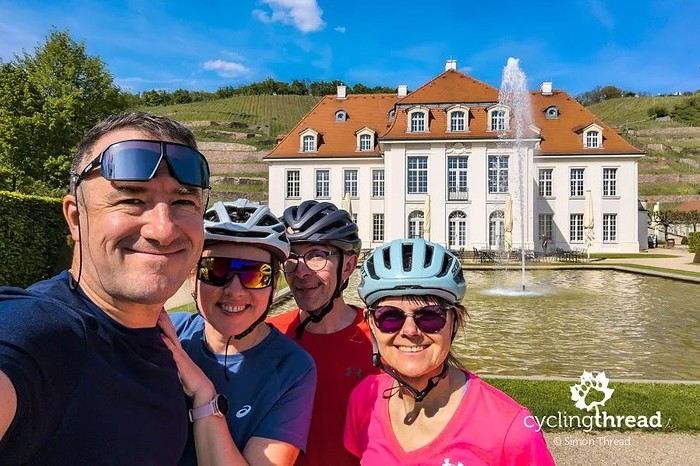
In my stories, I pay special attention to the quality of infrastructure, cyclist safety, and route accessibility—for young and old, experienced riders and beginners alike. I love discovering and sharing spots that are truly welcoming for cycle tourists: well-marked, with rest areas and easy train access.
On the blog, you’ll find ready-to-follow route suggestions, tips for preparing your bike trips, and plenty of inspiration for your next adventures. I travel with my panniers, a camera in the front bag, and always keep an eye out for what’s around me. Feel free to check out my blog, Cycling Thread—you might find some ideas for your next bike getaway! :-)
* * *
I hope this won’t just be a one-off post—I’ll try to share our bike trips with you here regularly. To start: our May trip on the Elberadweg, the queen of German bike paths, between the stunning city of Dresden and Magdeburg. I invite you to visit:
Elberadweg in Germany – From Dresden to Magdeburg
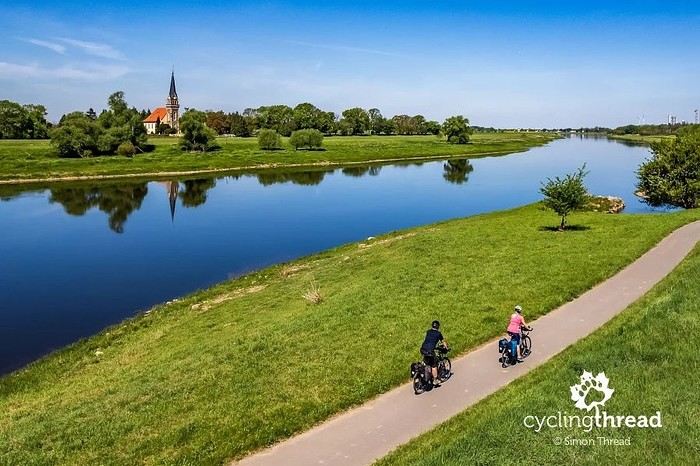
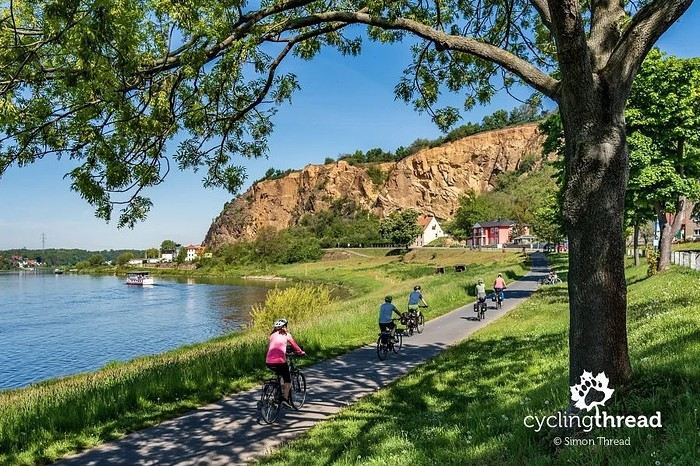
The Elbe bike path is about 1200 km long, following the river from its source in the Giant Mountains in the Czech Republic to its mouth in Cuxhaven, on the North Sea. The route crosses a variety of landscapes: mountain valleys, vineyards, open plains, and coastline. As is often the case in Germany, the signage is excellent and the route easy to follow.
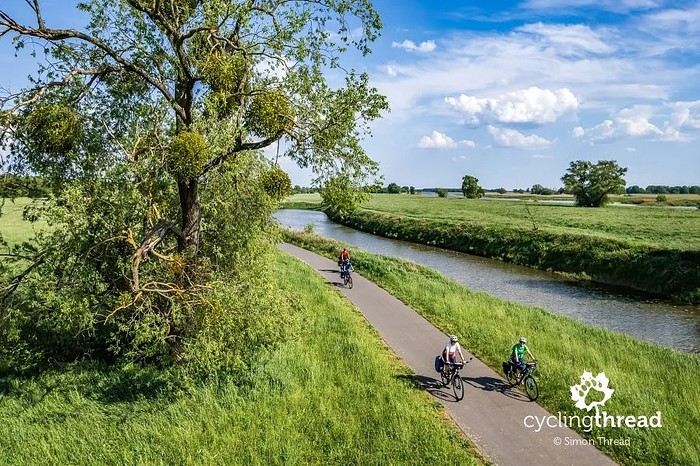
But what surprised us was the number of cobblestone sections! Sure, the cobblestones are well-laid and fairly smooth—but they’re still cobblestones. And when they disappear, they’re often replaced by concrete slabs, typical of river dikes. That’s just part of the face of this 30-year-old "queen"—a heritage that’s hard to replace entirely with fresh asphalt.
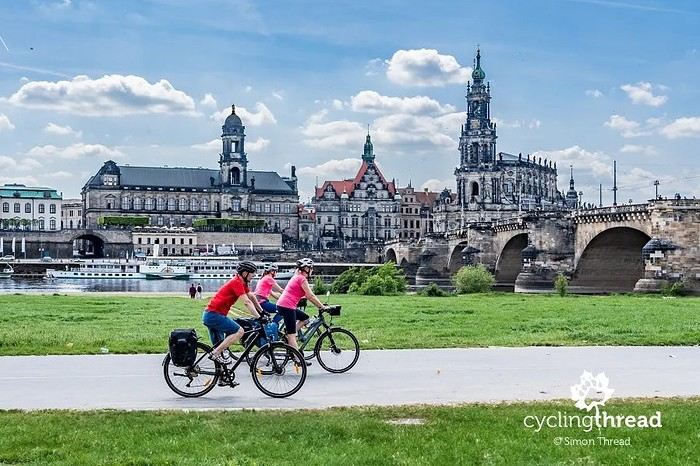
Along the way, don’t miss the many cultural highlights. Dresden impresses with its restored old town, the Frauenkirche, and the Brühl Terraces along the Elbe—it’s one of Germany’s most elegant cities. In Meissen, you can visit the famous porcelain factory and its Gothic cathedral. Wittenberg is a must-stop to follow in Martin Luther’s footsteps, with its castle church and Reformation Museum. And to finish, in Dessau-Roßlau, besides the Bauhaus, don’t miss the stunning Dessau-Wörlitz landscape gardens—one of the oldest English-style parks in Europe.
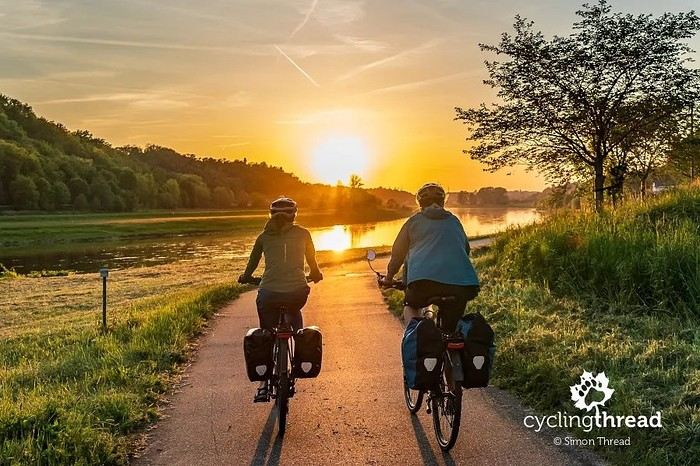
A few photos to give you a feel for the route and inspire you to check out our blog! :-)
Happy cycling!
Simon
In my stories, I pay special attention to the quality of infrastructure, cyclist safety, and route accessibility—for young and old, experienced riders and beginners alike. I love discovering and sharing spots that are truly welcoming for cycle tourists: well-marked, with rest areas and easy train access.
On the blog, you’ll find ready-to-follow route suggestions, tips for preparing your bike trips, and plenty of inspiration for your next adventures. I travel with my panniers, a camera in the front bag, and always keep an eye out for what’s around me. Feel free to check out my blog, Cycling Thread—you might find some ideas for your next bike getaway! :-)
* * *
I hope this won’t just be a one-off post—I’ll try to share our bike trips with you here regularly. To start: our May trip on the Elberadweg, the queen of German bike paths, between the stunning city of Dresden and Magdeburg. I invite you to visit:
Elberadweg in Germany – From Dresden to Magdeburg
The Elbe bike path is about 1200 km long, following the river from its source in the Giant Mountains in the Czech Republic to its mouth in Cuxhaven, on the North Sea. The route crosses a variety of landscapes: mountain valleys, vineyards, open plains, and coastline. As is often the case in Germany, the signage is excellent and the route easy to follow.
But what surprised us was the number of cobblestone sections! Sure, the cobblestones are well-laid and fairly smooth—but they’re still cobblestones. And when they disappear, they’re often replaced by concrete slabs, typical of river dikes. That’s just part of the face of this 30-year-old "queen"—a heritage that’s hard to replace entirely with fresh asphalt.
Along the way, don’t miss the many cultural highlights. Dresden impresses with its restored old town, the Frauenkirche, and the Brühl Terraces along the Elbe—it’s one of Germany’s most elegant cities. In Meissen, you can visit the famous porcelain factory and its Gothic cathedral. Wittenberg is a must-stop to follow in Martin Luther’s footsteps, with its castle church and Reformation Museum. And to finish, in Dessau-Roßlau, besides the Bauhaus, don’t miss the stunning Dessau-Wörlitz landscape gardens—one of the oldest English-style parks in Europe.
A few photos to give you a feel for the route and inspire you to check out our blog! :-)
Happy cycling!
Simon
Tips for Athens / Meteora / Cyclades
Hi there,
I’m spending 2 days in Athens in July with my two daughters, aged 10 and 13, during our Greek trip. I’ve seen there’s a multi-day pass for all the major sites in Athens. Is it worth it? I’d love to know if there are any must-see spots (we’ll obviously do the Acropolis, even if it seems like a hassle) and any places to avoid?
I’m also visiting Meteora for 1 to 2 days... which monasteries and caves should we prioritize?
Finally, a few days on Sifnos and Serifos. Should I book a car in advance, or is it easy and quick to rent one when we arrive by ferry?
Thanks for your tips! 😎
I’m spending 2 days in Athens in July with my two daughters, aged 10 and 13, during our Greek trip. I’ve seen there’s a multi-day pass for all the major sites in Athens. Is it worth it? I’d love to know if there are any must-see spots (we’ll obviously do the Acropolis, even if it seems like a hassle) and any places to avoid?
I’m also visiting Meteora for 1 to 2 days... which monasteries and caves should we prioritize?
Finally, a few days on Sifnos and Serifos. Should I book a car in advance, or is it easy and quick to rent one when we arrive by ferry?
Thanks for your tips! 😎
Mixed (even disappointed) review of the NCL Sky Indian Ocean cruise from April 19 to May 3, 2025
Hi everyone,
I’m back from this “mixed” two-week cruise in the Indian Ocean on the Norwegian Sky.
Originally, I had booked a cruise with AIDA (also in the Indian Ocean), but unfortunately, the company decided to cancel it and offered us other options, which we declined because the dates didn’t work for us.
Since my wife really wants to do a cruise in the Indian Ocean, but very few companies offer this destination, it’s a bit complicated—especially when the dates don’t line up. Finding a good compromise between companies and timing is tough. Retirement can’t come soon enough!!!
After some research, I found a really great itinerary with Silversea (a luxury cruise line) for a 19-day cruise from Cape Town to Victoria, stopping in Madagascar (2 days), Praslin, La Digue... But my wife couldn’t get the time off. Not only was the itinerary amazing, but the price was unbeatable (5,200 € per person for a balcony suite, all-inclusive). What a shame—I would’ve loved to try this company, but maybe next time (if we’re lucky enough to have the chance).
My wife tried to take unpaid leave but wasn’t successful... Oh well!
On my end, I have more flexibility with vacation time since I travel a lot for work, so I can accumulate my days off and take them when it suits me.
So, we settled for this cruise (the only one that matched my wife’s vacation dates). Sure, we weren’t thrilled about the ship, but the itinerary wasn’t bad. We figured, why not?
I requested a quote from Logitravel, and after a discount, we paid 2,600 € per person for a balcony cabin (category BA) with the More At Sea package, which includes: 300 minutes of internet, premium drinks, 5 restaurants, and discounts on excursions...
The itinerary:
Day 1 Dubai (UAE) Boarding 11:59 PM Day 2 Abu Dhabi (UAE) 7:00 AM Day 3 Abu Dhabi (UAE) 2:00 PM Day 4 Sea day Day 5 Sea day Day 6 Sea day Day 7 Sea day Day 8 La Digue (Seychelles) 10:00 AM 8:00 PM Day 9 Mahé (Seychelles) 7:00 AM 8:00 PM Day 10 Sea day Day 11 Antsiranana (Madagascar) 7:00 AM 6:00 PM Day 12 Sea day Day 13 Pointe des Galets (Réunion) 8:00 AM 9:00 PM Day 14 Port Louis (Mauritius) 7:00 AM Day 15 Port Louis (Mauritius) 8:00 AM
After booking the cruise, I started looking for flights (Paris/Dubai and Mauritius/Paris). It’s peak Easter vacation time, so tickets are crazy expensive... I ran several simulations on Skyscanner and was shocked by the prices.
A direct flight from Paris to Dubai with Emirates is 1,400 € per person (one way), and the return from Mauritius to Paris (also with Emirates via Dubai) is 1,350 € per person.
Given these outrageous prices, I decided to book a flight with a layover. The best value I found was with Qatar (via Doha) for 650 € per person, with a 2.5-hour layover in Doha, and a direct flight from Mauritius to Paris with Corsair for 750 € per person.
With the More At Sea package, we had a 300 € credit per person for flight tickets (as long as we booked through NCL).
I requested a quote, and they offered: OUTBOUND: April 18, 2025 – Egyptair CDG-CAIRO 10:05 PM-2:30 AM February 19, 2025 – CAIRO-DUBAI 5:30 AM-10:55 AM RETURN: May 3, 2025 – Kenya Airways Port Louis-Nairobi 6:50 PM-10:10 PM, Nairobi-CDG 11:50 PM(+1)-7:30 AM (price: 950 € per person).
Sure, the price was good, but we didn’t want to fly with those airlines, and NCL didn’t have any other options. So, we booked our flights ourselves.
D-Day: Departure from Paris on April 18 with Qatar via Doha:
Two days before leaving, I checked in online and took the opportunity to buy seats near the emergency exits since my wife tends to get swollen legs on long flights. So, she prefers having extra legroom (cost: 132 € per person). It’s a bit pricey, but peace of mind is priceless.
Usually, when I have an early flight from Roissy, I always book a hotel the night before (near the airport) to avoid stress and not miss my flight. But since it was school vacation time and Good Friday, we decided to leave very early from home...
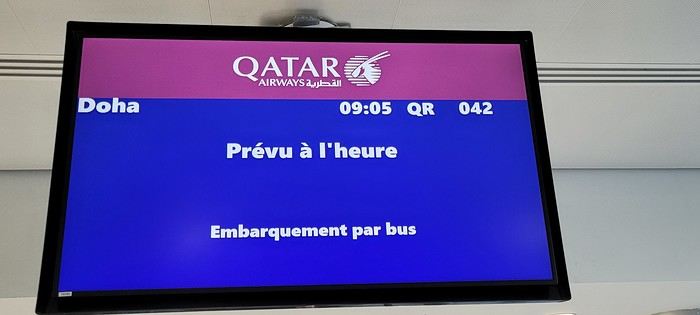
The flight was scheduled for 9:05 AM. We live 70 km from the airport and had to be there by 7:05 AM.
We barely slept... Up at 4:30 AM, and by 5:45 AM, our Uber was outside. We arrived at the airport (Roissy Terminal 1) by 6:50 AM.
Check-in was smooth—less than 10 minutes, and our bags were dropped off with boarding passes in hand.
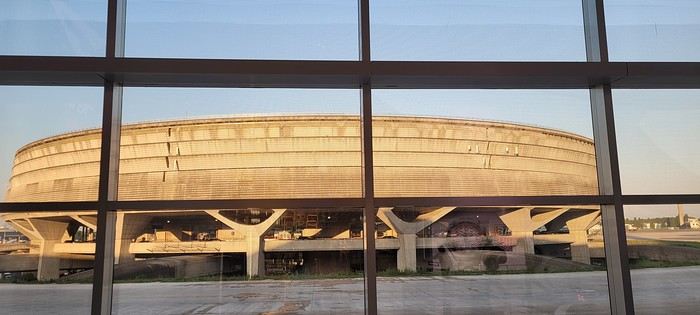
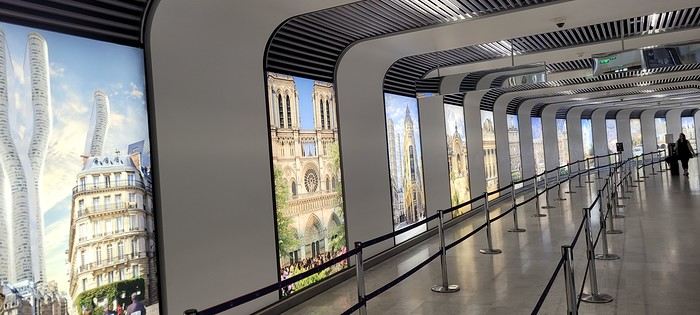
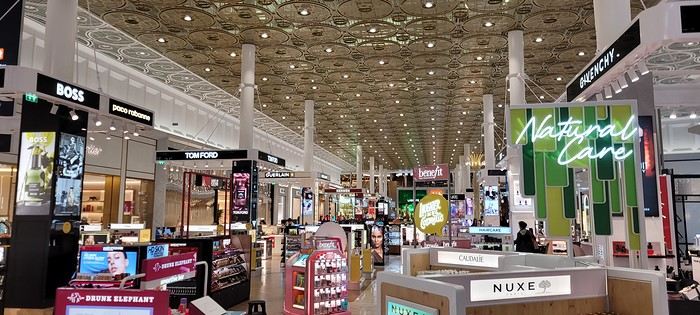
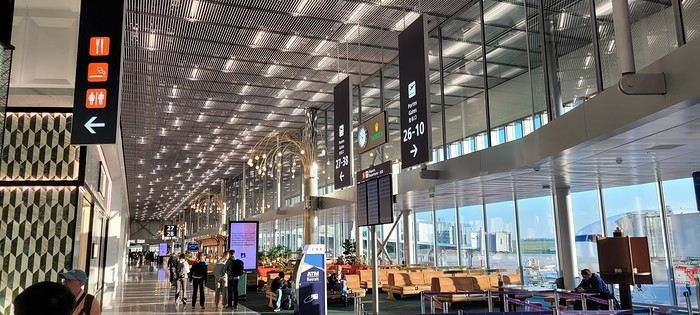
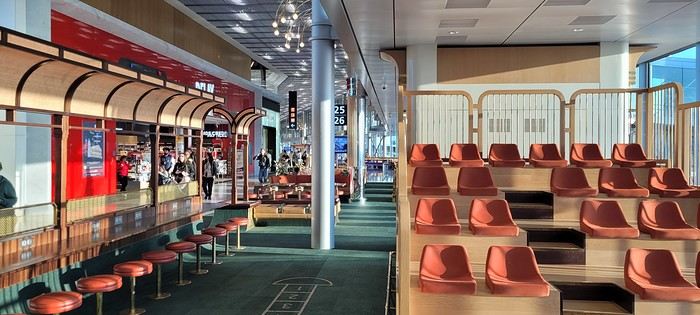
This was my first time flying out of Roissy Terminal 1 since it was renovated for the Olympics. Wow, it’s a huge improvement—nothing like the old “camembert box” we used to know!
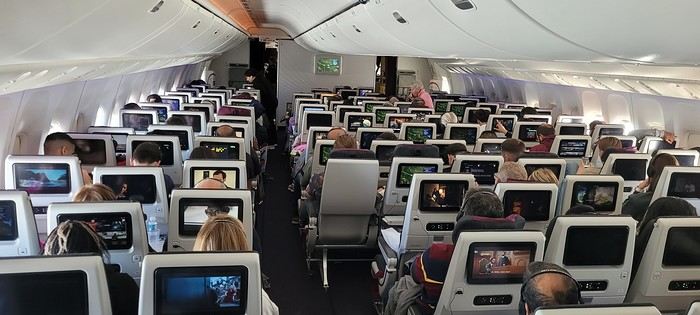
A few photos:
Coming up: Layover in Doha
I’m back from this “mixed” two-week cruise in the Indian Ocean on the Norwegian Sky.
Originally, I had booked a cruise with AIDA (also in the Indian Ocean), but unfortunately, the company decided to cancel it and offered us other options, which we declined because the dates didn’t work for us.
Since my wife really wants to do a cruise in the Indian Ocean, but very few companies offer this destination, it’s a bit complicated—especially when the dates don’t line up. Finding a good compromise between companies and timing is tough. Retirement can’t come soon enough!!!
After some research, I found a really great itinerary with Silversea (a luxury cruise line) for a 19-day cruise from Cape Town to Victoria, stopping in Madagascar (2 days), Praslin, La Digue... But my wife couldn’t get the time off. Not only was the itinerary amazing, but the price was unbeatable (5,200 € per person for a balcony suite, all-inclusive). What a shame—I would’ve loved to try this company, but maybe next time (if we’re lucky enough to have the chance).
My wife tried to take unpaid leave but wasn’t successful... Oh well!
On my end, I have more flexibility with vacation time since I travel a lot for work, so I can accumulate my days off and take them when it suits me.
So, we settled for this cruise (the only one that matched my wife’s vacation dates). Sure, we weren’t thrilled about the ship, but the itinerary wasn’t bad. We figured, why not?
I requested a quote from Logitravel, and after a discount, we paid 2,600 € per person for a balcony cabin (category BA) with the More At Sea package, which includes: 300 minutes of internet, premium drinks, 5 restaurants, and discounts on excursions...
The itinerary:
Day 1 Dubai (UAE) Boarding 11:59 PM Day 2 Abu Dhabi (UAE) 7:00 AM Day 3 Abu Dhabi (UAE) 2:00 PM Day 4 Sea day Day 5 Sea day Day 6 Sea day Day 7 Sea day Day 8 La Digue (Seychelles) 10:00 AM 8:00 PM Day 9 Mahé (Seychelles) 7:00 AM 8:00 PM Day 10 Sea day Day 11 Antsiranana (Madagascar) 7:00 AM 6:00 PM Day 12 Sea day Day 13 Pointe des Galets (Réunion) 8:00 AM 9:00 PM Day 14 Port Louis (Mauritius) 7:00 AM Day 15 Port Louis (Mauritius) 8:00 AM
After booking the cruise, I started looking for flights (Paris/Dubai and Mauritius/Paris). It’s peak Easter vacation time, so tickets are crazy expensive... I ran several simulations on Skyscanner and was shocked by the prices.
A direct flight from Paris to Dubai with Emirates is 1,400 € per person (one way), and the return from Mauritius to Paris (also with Emirates via Dubai) is 1,350 € per person.
Given these outrageous prices, I decided to book a flight with a layover. The best value I found was with Qatar (via Doha) for 650 € per person, with a 2.5-hour layover in Doha, and a direct flight from Mauritius to Paris with Corsair for 750 € per person.
With the More At Sea package, we had a 300 € credit per person for flight tickets (as long as we booked through NCL).
I requested a quote, and they offered: OUTBOUND: April 18, 2025 – Egyptair CDG-CAIRO 10:05 PM-2:30 AM February 19, 2025 – CAIRO-DUBAI 5:30 AM-10:55 AM RETURN: May 3, 2025 – Kenya Airways Port Louis-Nairobi 6:50 PM-10:10 PM, Nairobi-CDG 11:50 PM(+1)-7:30 AM (price: 950 € per person).
Sure, the price was good, but we didn’t want to fly with those airlines, and NCL didn’t have any other options. So, we booked our flights ourselves.
D-Day: Departure from Paris on April 18 with Qatar via Doha:
Two days before leaving, I checked in online and took the opportunity to buy seats near the emergency exits since my wife tends to get swollen legs on long flights. So, she prefers having extra legroom (cost: 132 € per person). It’s a bit pricey, but peace of mind is priceless.
Usually, when I have an early flight from Roissy, I always book a hotel the night before (near the airport) to avoid stress and not miss my flight. But since it was school vacation time and Good Friday, we decided to leave very early from home...
The flight was scheduled for 9:05 AM. We live 70 km from the airport and had to be there by 7:05 AM.
We barely slept... Up at 4:30 AM, and by 5:45 AM, our Uber was outside. We arrived at the airport (Roissy Terminal 1) by 6:50 AM.
Check-in was smooth—less than 10 minutes, and our bags were dropped off with boarding passes in hand.
This was my first time flying out of Roissy Terminal 1 since it was renovated for the Olympics. Wow, it’s a huge improvement—nothing like the old “camembert box” we used to know!
A few photos:
Coming up: Layover in Doha
Reflections: Theme for the May 2025 Contest
Here’s the theme for the lovely month of May—no worries, it won’t be lilies of the valley! 😄
This month’s theme is: “Reflection(s)” This leaves a pretty wide scope: reflections in water, of course, but also in windows, on buildings... I’ll leave it to your imagination, but the reflection should be clearly visible.
If this theme has been used before, it doesn’t matter. It’s getting tricky to find new themes that can attract as many participants as possible.
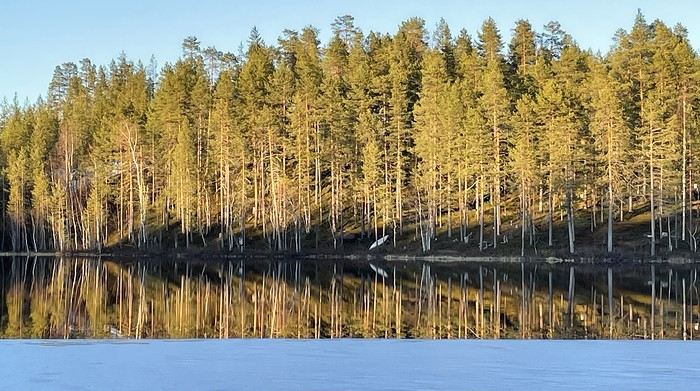
I’m currently in northern Finland and don’t have access to my hard drives, so I’ll add a few photos when I return to France. Here’s just one I took with my smartphone yesterday late afternoon:
Practical details:
Participation: Each VF member can submit up to 3 photos, until Monday, May 26 at 11:59 PM Paris time. Each photo must be posted in a separate message, with its number (1, 2, or 3). Don’t forget to add a little explanation (comment, location, etc.).
Voting: Each VF member can vote for the 3 photos they consider the best, based on their own criteria and the theme.
Voting will take place from Tuesday, May 27 to Saturday, May 31 at 11:59 PM Paris time.
The selected photos will be ranked in order of preference: - 1st photo: 3 points - 2nd: 2 points - 3rd: 1 point
The winner is the author of the photo with the most points.
Results will be published on June 1. In case of a tie, the number of first-place votes will decide. The winner will have the honor of organizing the June 2025 contest.
Photos that have already been nominated (1st, 2nd, or 3rd) in another contest are not eligible for this one.
This thread is exclusively for photos submitted to the contest. Any discussions or comments should be posted in the following thread: https://voyageforum.com/v.f?post=10707526;a=10707526
This month’s theme is: “Reflection(s)” This leaves a pretty wide scope: reflections in water, of course, but also in windows, on buildings... I’ll leave it to your imagination, but the reflection should be clearly visible.
If this theme has been used before, it doesn’t matter. It’s getting tricky to find new themes that can attract as many participants as possible.
I’m currently in northern Finland and don’t have access to my hard drives, so I’ll add a few photos when I return to France. Here’s just one I took with my smartphone yesterday late afternoon:
Practical details:
Participation: Each VF member can submit up to 3 photos, until Monday, May 26 at 11:59 PM Paris time. Each photo must be posted in a separate message, with its number (1, 2, or 3). Don’t forget to add a little explanation (comment, location, etc.).
Voting: Each VF member can vote for the 3 photos they consider the best, based on their own criteria and the theme.
Voting will take place from Tuesday, May 27 to Saturday, May 31 at 11:59 PM Paris time.
The selected photos will be ranked in order of preference: - 1st photo: 3 points - 2nd: 2 points - 3rd: 1 point
The winner is the author of the photo with the most points.
Results will be published on June 1. In case of a tie, the number of first-place votes will decide. The winner will have the honor of organizing the June 2025 contest.
Photos that have already been nominated (1st, 2nd, or 3rd) in another contest are not eligible for this one.
This thread is exclusively for photos submitted to the contest. Any discussions or comments should be posted in the following thread: https://voyageforum.com/v.f?post=10707526;a=10707526
Feedback on 2-week road-trip itinerary in Nova Scotia
Hi there,
Our son is in Canada for a year on a Working Holiday Visa, and we’re planning to join him around September 20th for a 15-day campervan road trip in Nova Scotia.
I was thinking of going with Canadream, but if you have other rental companies to recommend, don’t hesitate!
Here’s the itinerary I’ve been considering—I tried not to cram in too many stops so we’re not just driving the whole time.
Day 1: Pick up campervan in Halifax at 3 PM. Stop at Peggy’s Cove, then drive to Lunenburg and Blue Rocks (151 km) Day 2: Explore Lunenburg, then head to Kejimkujik National Park for hikes or other activities. Overnight in the park (91 km) Day 3: Drive to Annapolis Royal (visit), Port-Royal National Historic Site, then on to Digby (111 km) Day 4: Ferry to Saint John (visit Reversing Falls), then drive to St. Andrews (103 km) Day 5: Whale-watching excursion and explore St. Andrews Day 6: Drive to Alma and Fundy National Park (233 km—we’ll probably leave St. Andrews the night before to split the drive and arrive earlier in Alma) Day 7: Hopewell Rocks (check tides) (43 km) Day 8: Hopewell Rocks—Tatamagouche (dinner train)—Pictou (237 km). Any suggestions for this day? Day 9: Drive to Baddeck, Cabot Trail to Chéticamp (317 km). Ideas for breaking up the drive? I thought of Pomquet Beach Provincial Park for a walk on the boardwalks, but any other suggestions are welcome. Day 10–11: Cape Breton Highlands National Park for hikes and Cabot Trail to Baddeck (208 km) Day 12: Explore Baddeck, Graham Bell Museum, and Bras d’Or Lake Drive. Drive to Louisbourg (118 km) Day 13: Fortress of Louisbourg, then drive to Liscomb (302 km) Day 14: Drive back to Halifax via Lawrencetown Beach (or other suggestions?). Fisherman’s Cove (205 km) Day 15: Return campervan by 10 AM
- All suggestions are welcome, as long as they don’t add too much detour from the main stops. We’d rather skip some places to fully enjoy the ones we visit. We love hiking in beautiful landscapes, charming and lively towns or villages, etc. - I wanted to add a museum dedicated to Acadian culture, but I didn’t find anything along the route—or they’re closed this time of year. Maybe there are places to listen to folk music? - If you have any campgrounds or wild camping spots to recommend, I’d love to hear about them. - Do we need to book the ferry this time of year?
Thanks in advance for your ideas and suggestions!
Claire
Day 1: Pick up campervan in Halifax at 3 PM. Stop at Peggy’s Cove, then drive to Lunenburg and Blue Rocks (151 km) Day 2: Explore Lunenburg, then head to Kejimkujik National Park for hikes or other activities. Overnight in the park (91 km) Day 3: Drive to Annapolis Royal (visit), Port-Royal National Historic Site, then on to Digby (111 km) Day 4: Ferry to Saint John (visit Reversing Falls), then drive to St. Andrews (103 km) Day 5: Whale-watching excursion and explore St. Andrews Day 6: Drive to Alma and Fundy National Park (233 km—we’ll probably leave St. Andrews the night before to split the drive and arrive earlier in Alma) Day 7: Hopewell Rocks (check tides) (43 km) Day 8: Hopewell Rocks—Tatamagouche (dinner train)—Pictou (237 km). Any suggestions for this day? Day 9: Drive to Baddeck, Cabot Trail to Chéticamp (317 km). Ideas for breaking up the drive? I thought of Pomquet Beach Provincial Park for a walk on the boardwalks, but any other suggestions are welcome. Day 10–11: Cape Breton Highlands National Park for hikes and Cabot Trail to Baddeck (208 km) Day 12: Explore Baddeck, Graham Bell Museum, and Bras d’Or Lake Drive. Drive to Louisbourg (118 km) Day 13: Fortress of Louisbourg, then drive to Liscomb (302 km) Day 14: Drive back to Halifax via Lawrencetown Beach (or other suggestions?). Fisherman’s Cove (205 km) Day 15: Return campervan by 10 AM
- All suggestions are welcome, as long as they don’t add too much detour from the main stops. We’d rather skip some places to fully enjoy the ones we visit. We love hiking in beautiful landscapes, charming and lively towns or villages, etc. - I wanted to add a museum dedicated to Acadian culture, but I didn’t find anything along the route—or they’re closed this time of year. Maybe there are places to listen to folk music? - If you have any campgrounds or wild camping spots to recommend, I’d love to hear about them. - Do we need to book the ferry this time of year?
Thanks in advance for your ideas and suggestions!
Claire
Review of our first experience with CFC
Hi there,
By sheer chance, a family housewarming in Brussels gave us the opportunity to depart from Zeebrugge for our first experience with CFC, allowing us to discover ports we didn’t know (which has become rare).
After some questions before departure while browsing the forums, we discovered this company with great pleasure. Of course, luck may have played a particularly favorable part: dream weather, a sea as calm as a lake, and boarding and disembarking almost as if the ship were reserved just for us, since during our departure from Zeebrugge, only a small number of passengers were taking advantage of the unoccupied cabins from the previous cruise ending in Le Havre.
As a result, we couldn’t get a suite, but our balcony cabin was very functional, with plenty of storage and a whirlpool bath we thoroughly enjoyed.
Admittedly, the carpet was a bit worn, but it wasn’t a big deal. Having a large enough table allowed us to have breakfast in the cabin (our usual habit) in excellent conditions.
The ship, a reasonable size, was pleasant, in great condition, and had many comfortable lounges.
A large enclosed and heated space with a pool, jacuzzi, and deck chairs offered a calm atmosphere without intrusive activities (which is rare).
I won’t mention the entertainment since we barely participated, but I think there was plenty of choice, including a "special bridge" activity.
The restaurant had a lovely setting, with quick service and particularly attentive staff, reminding us of cruises from the past.
The food was good quality and well-presented, though portions were quite small—something big eaters might regret.
We loved the charm of an old-fashioned theater with comfortable seats and a table for drinks.
The shows were fairly high quality, though opinions may vary. They catered mainly to a French-speaking audience, which is quite rare, and featured a live orchestra.
The excursions seemed reasonably priced for what they offered, but we didn’t participate since we prefer organizing things ourselves.
To sum up, we were pleasantly surprised by this "old little ship" with a mostly French-speaking, very attentive staff, all in a great atmosphere.
Have you considered Reunion Island as a destination?
Reunion Island, a French island located in the Indian Ocean, is characterized by remarkable geographical and cultural diversity. This island offers an immersive experience that harmoniously blends wild nature and human heritage, between active volcanoes, mountainous cirques, impressive waterfalls, and charming villages. This report explores the must-see spots, from the lunar landscapes of Piton de la Fournaise to the mountainous trails of the Mafate cirque, not forgetting the natural pools and tropical gardens. Each section highlights a distinct aspect of this vibrant island, supported by geological and historical information, as well as accounts from those who have visited.
Piton de la Fournaise, which reaches a height of 2,632 meters, is one of the most active volcanoes on our planet. Its frequent eruptions constantly shape the landscape, offering a natural spectacle where burning lava meets the ocean. The trail leading to the Dolomieu crater, though difficult to access, is open to hikers and rewards them with a panorama of vast expanses of solidified lava and volcanic gas emissions. It’s usually best to visit at this time of day to avoid clouds and enjoy the low light that enhances the lunar reliefs.
Volcanic activity has also given rise to unique structures, such as the lava tunnels of Grand Brûlé, where tourists can walk along cooled lava flows. For geology enthusiasts, the site of Cassé de la Rivière de l'Est reveals incredible basaltic organ pipes, testifying to ancient eruptions.
Despite its inactivity, Piton des Neiges (3,071 m) remains the island’s highest peak. Its ascent, via the GR R2 trail, passes through virgin forests before reaching rocky landscapes where sunrise offers a 360° panoramic view of the three cirques. This extinct volcano symbolizes Reunion Island’s geological history, characterized by successive collapses that gave birth to the surrounding cirques.
A UNESCO World Heritage site, the Salazie cirque charms with its lush greenery and hamlets clinging to cliffs. Hell-Bourg, listed among France’s most beautiful villages, delights with its brightly colored Creole houses and picturesque cobblestone streets. The trek to Voile de la Mariée, a famous waterfall, winds through bamboo groves and natural pools perfect for a swim.
Mafate, a preserved haven of tranquility, is accessible only on foot or by helicopter. Places like La Nouvelle or Marla, small villages called "îlets," offer a glimpse into traditional life on Reunion Island. The GR R1 trail, which circles Piton des Neiges, immerses hikers in breathtaking landscapes, alternating between rocky ridges and narrow valleys.
Known for its lentils and wines, Cilaos combines culinary delights with stunning scenery. The healing properties of the thermal springs at Bras-Rouge are highlighted by the trails leading to them, which also offer panoramas like the Col du Taïbit, a privileged access point to Mafate.
This unique spot features pebble beaches, waterfalls by the sea, and a palm forest. Picnickers enjoy its peaceful atmosphere, while local fishermen maintain ancient traditions. Nearby, the Garden of Perfumes and Spices cultivates vanilla, cloves, and turmeric, offering an olfactory experience at the heart of Reunionese agriculture.
Bassin Boeuf, famous for its turquoise waters, is a popular swimming spot, framed by volcanic formations. Further south, the Langevin River creates a series of waterfalls and natural pools, including the famous Trou de Fer, a 300-meter-deep canyon where water cascades in a shimmering curtain.
The island’s capital blends colonial heritage with modernity. The Léon Dierx Museum showcases modern art, while the Grand Marché draws visitors with its spices and local crafts. The Barachois promenade, along the sea, evokes the city’s maritime past with its 18th-century cannons.
The Domaine de Villèle, once a colonial plantation, now houses a museum dedicated to the history of slavery and a geranium distillery. The Chapelle Pointue, with its neo-Gothic style, offers a striking contrast to the brightly colored Tamil temples surrounding it.
The GR R1 and R2 trails are popular with experienced hikers, but more accessible routes like the Piton Maido (2,200 m) are suitable for beginners. The latter offers an unparalleled view of the Mafate cirque at dawn.
The coast of Saint-Gilles offers activities like diving, surfing, and paddleboarding, while ULM flights provide an impressive aerial view of Piton de la Fournaise.
Reunion Island presents itself as a microcosm where every landscape tells a story—geological, cultural, or human. Between the fury of volcanoes and the calm of cirques, between the bustle of markets and the tranquility of natural pools, this destination offers a diverse experience. Travelers are encouraged to mix their activities: morning hikes, cultural visits during the day, and moments of relaxation at dusk. Preserving these wonders relies on responsible tourism, respectful of fragile ecosystems and local communities.
Piton de la Fournaise, which reaches a height of 2,632 meters, is one of the most active volcanoes on our planet. Its frequent eruptions constantly shape the landscape, offering a natural spectacle where burning lava meets the ocean. The trail leading to the Dolomieu crater, though difficult to access, is open to hikers and rewards them with a panorama of vast expanses of solidified lava and volcanic gas emissions. It’s usually best to visit at this time of day to avoid clouds and enjoy the low light that enhances the lunar reliefs.
Volcanic activity has also given rise to unique structures, such as the lava tunnels of Grand Brûlé, where tourists can walk along cooled lava flows. For geology enthusiasts, the site of Cassé de la Rivière de l'Est reveals incredible basaltic organ pipes, testifying to ancient eruptions.
Despite its inactivity, Piton des Neiges (3,071 m) remains the island’s highest peak. Its ascent, via the GR R2 trail, passes through virgin forests before reaching rocky landscapes where sunrise offers a 360° panoramic view of the three cirques. This extinct volcano symbolizes Reunion Island’s geological history, characterized by successive collapses that gave birth to the surrounding cirques.
A UNESCO World Heritage site, the Salazie cirque charms with its lush greenery and hamlets clinging to cliffs. Hell-Bourg, listed among France’s most beautiful villages, delights with its brightly colored Creole houses and picturesque cobblestone streets. The trek to Voile de la Mariée, a famous waterfall, winds through bamboo groves and natural pools perfect for a swim.
Mafate, a preserved haven of tranquility, is accessible only on foot or by helicopter. Places like La Nouvelle or Marla, small villages called "îlets," offer a glimpse into traditional life on Reunion Island. The GR R1 trail, which circles Piton des Neiges, immerses hikers in breathtaking landscapes, alternating between rocky ridges and narrow valleys.
Known for its lentils and wines, Cilaos combines culinary delights with stunning scenery. The healing properties of the thermal springs at Bras-Rouge are highlighted by the trails leading to them, which also offer panoramas like the Col du Taïbit, a privileged access point to Mafate.
This unique spot features pebble beaches, waterfalls by the sea, and a palm forest. Picnickers enjoy its peaceful atmosphere, while local fishermen maintain ancient traditions. Nearby, the Garden of Perfumes and Spices cultivates vanilla, cloves, and turmeric, offering an olfactory experience at the heart of Reunionese agriculture.
Bassin Boeuf, famous for its turquoise waters, is a popular swimming spot, framed by volcanic formations. Further south, the Langevin River creates a series of waterfalls and natural pools, including the famous Trou de Fer, a 300-meter-deep canyon where water cascades in a shimmering curtain.
The island’s capital blends colonial heritage with modernity. The Léon Dierx Museum showcases modern art, while the Grand Marché draws visitors with its spices and local crafts. The Barachois promenade, along the sea, evokes the city’s maritime past with its 18th-century cannons.
The Domaine de Villèle, once a colonial plantation, now houses a museum dedicated to the history of slavery and a geranium distillery. The Chapelle Pointue, with its neo-Gothic style, offers a striking contrast to the brightly colored Tamil temples surrounding it.
The GR R1 and R2 trails are popular with experienced hikers, but more accessible routes like the Piton Maido (2,200 m) are suitable for beginners. The latter offers an unparalleled view of the Mafate cirque at dawn.
The coast of Saint-Gilles offers activities like diving, surfing, and paddleboarding, while ULM flights provide an impressive aerial view of Piton de la Fournaise.
Reunion Island presents itself as a microcosm where every landscape tells a story—geological, cultural, or human. Between the fury of volcanoes and the calm of cirques, between the bustle of markets and the tranquility of natural pools, this destination offers a diverse experience. Travelers are encouraged to mix their activities: morning hikes, cultural visits during the day, and moments of relaxation at dusk. Preserving these wonders relies on responsible tourism, respectful of fragile ecosystems and local communities.
Da Nang and Hoi An (Vietnam)
DANANG
A big city in the midst of an economic boom. The setting is stunning, with its large bay, the Son Tra Peninsula, and the Annamite Mountains on the horizon.
Where to stay and eat? Da Nang is a bustling business hub, so hotels are pricier and often fully booked. I was lucky to find a motorbike taxi driver who, after six full hotels, took me to Mai Son Hotel, 113 Nguyen Van Linh, a spotless 2-star place. Plus, right next door, there’s a great restaurant that seems popular with locals, and a good Chinese restaurant just a 5-minute walk away, Phi Lu (178 Nguyen Van Linh), recommended by the *Guide du Routard*. So, I’d definitely recommend this hotel. For a pricier option, the very Christian Dai A Hotel, near the tiny pink cathedral, is nice, but why pay more?
Actually, why stay in Da Nang when the gorgeous Hoi An is just 34 km to the south?
What to see? - The lovely Cham Museum (small, takes at most an hour) - The climb up Son Tra Peninsula (great views of the whole area) - The “tour” of the peninsula—quotation marks because the road stops two-thirds of the way. There’s an interesting little museum on the left before reaching the base of the huge statue, the Đong Đinh (large entrance on the left side of the hill), with traditional houses in the jungle holding artifacts over 2,000 years old (Sa Huynh culture; if you’re interested, check out the small Sa Huynh Museum in Hoi An, just before the Japanese Bridge). However, the big Linh Ung Pagoda is just colorful concrete! A beautiful resort, the Son Tra Beach Resort and Spa, sits on a pristine beach and isn’t too expensive: $120 for a garden room and $200–$270 for duplexes with a pool, where you can sleep six. Before reaching the resort, you’ll find two excellent seafood restaurants with large beachfront terraces on your right. - On the way to Hoi An, Marble Mountain, where I loved the village of marble sculpture workshops, the pretty pagodas and caves, and the stunning view from the top of the last promontory (the stairs are steep!). However, you can skip the famous China Beach and its resorts—all pretentious and expensive, not to mention the ones under construction on both sides of the road (they’re multiplying like crazy!). So, when traveling from Da Nang to Hoi An, I recommend two stops: the Cham Museum and Marble Mountain. - The beautiful drive to the Hai Van Pass (there weren’t any clouds!), offering spectacular views of the Da Nang region to the south and the coast to the north. The descent leads to the fishing village and beach of Lang Co, which is lovely but destined for rampant resort development, judging by the huge projects advertised on billboards along the road after the village. - Some affordable guesthouses ($15) and big resorts, including the lovely Lang Co Beach Resort, with a large pool and great value given the beautiful gardens and elegant bungalows. Recommended in Lang Co: lunch at one of the two stilt restaurants over the lagoon—great views and fresh seafood.
The public bus to Hoi An, 34 km south of Da Nang, takes 45 minutes for 50,000 dong. There’s one every half hour.
HOI AN This is a “must-see” for so many reasons: stunning old houses, temples, and pagodas; a colorful daily open-air and covered market near the bridge; charming little streets in the old quarter—especially at night, with all the multicolored lanterns and riverside restaurant terraces, it’s very romantic. The local food is delicious, the people are friendly and kind, there are two beautiful beaches, and attractions like the Cham ruins of My Son. Some say Hoi An is overrun with tourists and should be avoided. That’s true for the historic center and An Bang Beach, but not at all once you step outside.
WHERE TO STAY For a 2-star option, I recommend Ngo House Villa (99 Nguyen Phuc Tan St), very quiet on the island just across from the Old Quarter: 3-star rooms + suites, a large “Family” room, and a nice pool, all for $20 ($40 for the “Family” room). The same charming owner has a second hotel 20 meters away (No. 74), Phan Ngô, which is older but has a large terrace and a small pool—I prefer this one. For 3 stars, Thuy Duong 3 (92 Ba Trieu) is perfect, with a pool and garden ($40–$60). A bit pricier but great is A Han on Phan Bai Chau, with a large garden and terrace restaurant.
For those with a bigger budget, I recommend two riverside spots with rooms, suites, and pools, priced at $200–$350: the secluded Coco River Resort (formerly Ancient House River, with a large wooden terrace for romantic dinners by the river) and Anantara, (formerly Heritage), with bungalows close to the old town—but pricey.
Outside the city, my favorite hotel is Villa Loan, the new place from the famous Loan of Tam Coc, very quiet in the countryside, 15 minutes by bike from Old Hoi An and An Bang Beach. Beautiful rooms ($35), a Family room with two double beds ($55), two 65 m² twins that can sleep six (two large beds + two single beds—$80), a terrace restaurant, and a lovely pool. Prices include a buffet breakfast and a bike.
Also great is Daisy Anbang on An Bang Beach, elegant with a pool and beach just 50 meters away (skip the Aira next door—too expensive).
WHERE TO EAT Hoi An is Vietnam’s culinary capital. For Vietnamese food, I recommend Dao Tien, 21 Phan Bai Chau. No surprise—the chef is a former chef at the luxury 4-star Victoria Hoi An, a solid reference. The restaurant now has a beautiful terrace by the river (take the alley on the right side of the main street Dao Tien). Plus, you’re doing a good deed: a large part of the profits goes toward educating underprivileged children—one year of free hospitality, cooking, and English training, followed by job placement in local establishments. Madame Hien Hoi An (formerly Co Mai), 2 Nguyen Thai Hoc (left of the market), is another great spot—the chef is Didier Corlou, formerly of the famous *Porte d’Annam* and *Madame Hien* in Hanoi (closed in March 2022 due to COVID, so foreign tourists are still scarce). Also worth checking out is Secret Garden, in the Phuong Minh An alley (entrance at 60 Le Loi), set in a beautiful space. One of my favorites is Madam Kieu, 43 Nguyen Phuc Chu, right on the river across from the little bridge—very elegant with excellent Vietnamese cuisine. Unfortunately, all the restaurants on this esplanade blast “music” (boom boom boom yeah yeah yeah) in the evenings, so it’s impossible to talk—go for lunch instead.
For a break from Vietnamese food, try Good Morning Vietnam, a ridiculous name for an excellent Italian restaurant (11 Le Loi). The cheerful chef is from Bologna, the “Lyon of Italy”: lasagna like an Italian *mama*’s, delicious tagliatelle ai porcini (porcini mushrooms imported from Italy), and a divine homemade tiramisu (pro tip: order a grappa and drizzle a few drops on the tiramisu). It’s also one of the few places where you can get an excellent bottle of red wine for 350,000 dong instead of the usual 600,000–800,000 dong (South African Robertson Chapel). Another gem: the Japanese restaurant Samurai Kitchen (no sushi, but divine gyoza), 21 Phan Chau Trinh—the street on the right side of the market when you turn your back to the river. Finally, Ganesh, which I consider the best Indian restaurant in Vietnam (99 Tran Hung Dao St).
At An Bang, there are plenty of beachfront restaurants. The two best are the large one at the far right of the parking lot (huge seafood selection) and the fantastic La Luna d’Autumno, owned by the same person as the Italian restaurant of the same name, once considered the best in Vietnam but closed in 2020 due to COVID. Divine pizzas, including the vegetariana.
WHAT TO VISIT The Japanese Bridge and all the old Chinese houses, temples, and pagodas in the three historic streets. Don’t miss the extraordinary gallery-museum of the great French photographer Réhahn, the Precious Heritage Museum at 26 Phan Boi Chau. His remarkable photo collection—including the famous shot of the little Cham girl with clear blue eyes—has graced the covers of many magazines. His Montagnard Museum is a wonder, with a larger collection of tribal women’s costumes than the Museum of Ethnology in Hanoi. Free entry.
THE BEACHES Cua Dai Beach has mostly disappeared, a victim of the waves, except in a few spots. The beautiful An Bang Beach remains, with great beachfront restaurants, or you can head to Cham Island.
MY SON A beautiful complex of Cham ruins surrounded by mountains, 50 km southwest of Hoi An via a scenic road. You can rent a motorbike, take a motorbike taxi, or join a half-day organized tour. It’s best to go in the afternoon—less crowded than in the morning.
CHAM ISLANDS (Cu Lao Cham) Wow, I loved it! It reminded me of St. Barts 35 years ago. The archipelago, 19 km from Hoi An, consists of eight small islands within the Cu Lao Cham Marine Reserve, declared a “Biosphere Reserve” by UNESCO. The largest and only inhabited island, Hon Lao (Pearl Island), covers 1,317 hectares, and its highest peak reaches 517 meters. Hon Lao has two villages: Bai Lang, where the boats from Hoi An dock, and the charming little fishing port of Bai Huong. Part of the island is a military zone, so only the east coast is accessible to tourists.
To get there, you have three options: - The public boat (100,000 dong) that leaves from in front of Café des Amis at 7:30 AM. The catch is it returns to Hoi An at noon, so to enjoy the charm of the place, you’ll need to spend a night on the island (which I highly recommend). - Organized tours by Cham Diving Club, with two options: diving or snorkeling only. - A private speedboat, but it’s not cheap: $200 for the day!
Note: Even if the weather seems fine, the large public boat won’t leave if the sea is too rough. The only solution is to go to the port around 7:30 AM and check (easy, since it brings all the supplies for the island’s locals—if it’s leaving, it’ll be loading up). Avoid weekends—it gets swarmed with locals.
Small coves with dreamy beaches, as they say. Two are very close to Bai Lang: one to the left (facing the village), Bai Ong, lined with restaurants, and a tiny one to the right of the village. The other two beaches, including Bai Chong and the little fishing port of Bai Huong, are accessible by motorbike or boat. I recommend renting a motorbike (biking is tough due to steep hills) and taking the road that overlooks the coast—it’s stunning.
Great diving. The Cham Diving Club is superbly organized by a very friendly Italian, Lodovico, and two French guys (www.chamislanddiving.com).
When you arrive at Bai Lang’s pier, they’ll offer you TWO family-run guesthouses in the village. There are also homestays, but they’re really basic (usually bamboo mats on wooden planks as beds), no English or French is spoken, and locals speak a dialect that’s hard to understand even if you’re decent at Vietnamese. Anyway, I don’t recommend staying in Bai Lang because of the public loudspeakers. Two options if you want a quiet night: - A small guesthouse facing the tiny rice field on the way to Bai Ong Beach. Very clean rooms and a large terrace overlooking the “rice field.” 300,000 dong, with meals available on the terrace. Nha Nghi Vu Truong Tel: 235 386 4783 Mobile: 01 67 76 63 110. - Homestays in the little fishing port of Bai Huong.
Where to stay and eat? Da Nang is a bustling business hub, so hotels are pricier and often fully booked. I was lucky to find a motorbike taxi driver who, after six full hotels, took me to Mai Son Hotel, 113 Nguyen Van Linh, a spotless 2-star place. Plus, right next door, there’s a great restaurant that seems popular with locals, and a good Chinese restaurant just a 5-minute walk away, Phi Lu (178 Nguyen Van Linh), recommended by the *Guide du Routard*. So, I’d definitely recommend this hotel. For a pricier option, the very Christian Dai A Hotel, near the tiny pink cathedral, is nice, but why pay more?
Actually, why stay in Da Nang when the gorgeous Hoi An is just 34 km to the south?
What to see? - The lovely Cham Museum (small, takes at most an hour) - The climb up Son Tra Peninsula (great views of the whole area) - The “tour” of the peninsula—quotation marks because the road stops two-thirds of the way. There’s an interesting little museum on the left before reaching the base of the huge statue, the Đong Đinh (large entrance on the left side of the hill), with traditional houses in the jungle holding artifacts over 2,000 years old (Sa Huynh culture; if you’re interested, check out the small Sa Huynh Museum in Hoi An, just before the Japanese Bridge). However, the big Linh Ung Pagoda is just colorful concrete! A beautiful resort, the Son Tra Beach Resort and Spa, sits on a pristine beach and isn’t too expensive: $120 for a garden room and $200–$270 for duplexes with a pool, where you can sleep six. Before reaching the resort, you’ll find two excellent seafood restaurants with large beachfront terraces on your right. - On the way to Hoi An, Marble Mountain, where I loved the village of marble sculpture workshops, the pretty pagodas and caves, and the stunning view from the top of the last promontory (the stairs are steep!). However, you can skip the famous China Beach and its resorts—all pretentious and expensive, not to mention the ones under construction on both sides of the road (they’re multiplying like crazy!). So, when traveling from Da Nang to Hoi An, I recommend two stops: the Cham Museum and Marble Mountain. - The beautiful drive to the Hai Van Pass (there weren’t any clouds!), offering spectacular views of the Da Nang region to the south and the coast to the north. The descent leads to the fishing village and beach of Lang Co, which is lovely but destined for rampant resort development, judging by the huge projects advertised on billboards along the road after the village. - Some affordable guesthouses ($15) and big resorts, including the lovely Lang Co Beach Resort, with a large pool and great value given the beautiful gardens and elegant bungalows. Recommended in Lang Co: lunch at one of the two stilt restaurants over the lagoon—great views and fresh seafood.
The public bus to Hoi An, 34 km south of Da Nang, takes 45 minutes for 50,000 dong. There’s one every half hour.
HOI AN This is a “must-see” for so many reasons: stunning old houses, temples, and pagodas; a colorful daily open-air and covered market near the bridge; charming little streets in the old quarter—especially at night, with all the multicolored lanterns and riverside restaurant terraces, it’s very romantic. The local food is delicious, the people are friendly and kind, there are two beautiful beaches, and attractions like the Cham ruins of My Son. Some say Hoi An is overrun with tourists and should be avoided. That’s true for the historic center and An Bang Beach, but not at all once you step outside.
WHERE TO STAY For a 2-star option, I recommend Ngo House Villa (99 Nguyen Phuc Tan St), very quiet on the island just across from the Old Quarter: 3-star rooms + suites, a large “Family” room, and a nice pool, all for $20 ($40 for the “Family” room). The same charming owner has a second hotel 20 meters away (No. 74), Phan Ngô, which is older but has a large terrace and a small pool—I prefer this one. For 3 stars, Thuy Duong 3 (92 Ba Trieu) is perfect, with a pool and garden ($40–$60). A bit pricier but great is A Han on Phan Bai Chau, with a large garden and terrace restaurant.
For those with a bigger budget, I recommend two riverside spots with rooms, suites, and pools, priced at $200–$350: the secluded Coco River Resort (formerly Ancient House River, with a large wooden terrace for romantic dinners by the river) and Anantara, (formerly Heritage), with bungalows close to the old town—but pricey.
Outside the city, my favorite hotel is Villa Loan, the new place from the famous Loan of Tam Coc, very quiet in the countryside, 15 minutes by bike from Old Hoi An and An Bang Beach. Beautiful rooms ($35), a Family room with two double beds ($55), two 65 m² twins that can sleep six (two large beds + two single beds—$80), a terrace restaurant, and a lovely pool. Prices include a buffet breakfast and a bike.
Also great is Daisy Anbang on An Bang Beach, elegant with a pool and beach just 50 meters away (skip the Aira next door—too expensive).
WHERE TO EAT Hoi An is Vietnam’s culinary capital. For Vietnamese food, I recommend Dao Tien, 21 Phan Bai Chau. No surprise—the chef is a former chef at the luxury 4-star Victoria Hoi An, a solid reference. The restaurant now has a beautiful terrace by the river (take the alley on the right side of the main street Dao Tien). Plus, you’re doing a good deed: a large part of the profits goes toward educating underprivileged children—one year of free hospitality, cooking, and English training, followed by job placement in local establishments. Madame Hien Hoi An (formerly Co Mai), 2 Nguyen Thai Hoc (left of the market), is another great spot—the chef is Didier Corlou, formerly of the famous *Porte d’Annam* and *Madame Hien* in Hanoi (closed in March 2022 due to COVID, so foreign tourists are still scarce). Also worth checking out is Secret Garden, in the Phuong Minh An alley (entrance at 60 Le Loi), set in a beautiful space. One of my favorites is Madam Kieu, 43 Nguyen Phuc Chu, right on the river across from the little bridge—very elegant with excellent Vietnamese cuisine. Unfortunately, all the restaurants on this esplanade blast “music” (boom boom boom yeah yeah yeah) in the evenings, so it’s impossible to talk—go for lunch instead.
For a break from Vietnamese food, try Good Morning Vietnam, a ridiculous name for an excellent Italian restaurant (11 Le Loi). The cheerful chef is from Bologna, the “Lyon of Italy”: lasagna like an Italian *mama*’s, delicious tagliatelle ai porcini (porcini mushrooms imported from Italy), and a divine homemade tiramisu (pro tip: order a grappa and drizzle a few drops on the tiramisu). It’s also one of the few places where you can get an excellent bottle of red wine for 350,000 dong instead of the usual 600,000–800,000 dong (South African Robertson Chapel). Another gem: the Japanese restaurant Samurai Kitchen (no sushi, but divine gyoza), 21 Phan Chau Trinh—the street on the right side of the market when you turn your back to the river. Finally, Ganesh, which I consider the best Indian restaurant in Vietnam (99 Tran Hung Dao St).
At An Bang, there are plenty of beachfront restaurants. The two best are the large one at the far right of the parking lot (huge seafood selection) and the fantastic La Luna d’Autumno, owned by the same person as the Italian restaurant of the same name, once considered the best in Vietnam but closed in 2020 due to COVID. Divine pizzas, including the vegetariana.
WHAT TO VISIT The Japanese Bridge and all the old Chinese houses, temples, and pagodas in the three historic streets. Don’t miss the extraordinary gallery-museum of the great French photographer Réhahn, the Precious Heritage Museum at 26 Phan Boi Chau. His remarkable photo collection—including the famous shot of the little Cham girl with clear blue eyes—has graced the covers of many magazines. His Montagnard Museum is a wonder, with a larger collection of tribal women’s costumes than the Museum of Ethnology in Hanoi. Free entry.
THE BEACHES Cua Dai Beach has mostly disappeared, a victim of the waves, except in a few spots. The beautiful An Bang Beach remains, with great beachfront restaurants, or you can head to Cham Island.
MY SON A beautiful complex of Cham ruins surrounded by mountains, 50 km southwest of Hoi An via a scenic road. You can rent a motorbike, take a motorbike taxi, or join a half-day organized tour. It’s best to go in the afternoon—less crowded than in the morning.
CHAM ISLANDS (Cu Lao Cham) Wow, I loved it! It reminded me of St. Barts 35 years ago. The archipelago, 19 km from Hoi An, consists of eight small islands within the Cu Lao Cham Marine Reserve, declared a “Biosphere Reserve” by UNESCO. The largest and only inhabited island, Hon Lao (Pearl Island), covers 1,317 hectares, and its highest peak reaches 517 meters. Hon Lao has two villages: Bai Lang, where the boats from Hoi An dock, and the charming little fishing port of Bai Huong. Part of the island is a military zone, so only the east coast is accessible to tourists.
To get there, you have three options: - The public boat (100,000 dong) that leaves from in front of Café des Amis at 7:30 AM. The catch is it returns to Hoi An at noon, so to enjoy the charm of the place, you’ll need to spend a night on the island (which I highly recommend). - Organized tours by Cham Diving Club, with two options: diving or snorkeling only. - A private speedboat, but it’s not cheap: $200 for the day!
Note: Even if the weather seems fine, the large public boat won’t leave if the sea is too rough. The only solution is to go to the port around 7:30 AM and check (easy, since it brings all the supplies for the island’s locals—if it’s leaving, it’ll be loading up). Avoid weekends—it gets swarmed with locals.
Small coves with dreamy beaches, as they say. Two are very close to Bai Lang: one to the left (facing the village), Bai Ong, lined with restaurants, and a tiny one to the right of the village. The other two beaches, including Bai Chong and the little fishing port of Bai Huong, are accessible by motorbike or boat. I recommend renting a motorbike (biking is tough due to steep hills) and taking the road that overlooks the coast—it’s stunning.
Great diving. The Cham Diving Club is superbly organized by a very friendly Italian, Lodovico, and two French guys (www.chamislanddiving.com).
When you arrive at Bai Lang’s pier, they’ll offer you TWO family-run guesthouses in the village. There are also homestays, but they’re really basic (usually bamboo mats on wooden planks as beds), no English or French is spoken, and locals speak a dialect that’s hard to understand even if you’re decent at Vietnamese. Anyway, I don’t recommend staying in Bai Lang because of the public loudspeakers. Two options if you want a quiet night: - A small guesthouse facing the tiny rice field on the way to Bai Ong Beach. Very clean rooms and a large terrace overlooking the “rice field.” 300,000 dong, with meals available on the terrace. Nha Nghi Vu Truong Tel: 235 386 4783 Mobile: 01 67 76 63 110. - Homestays in the little fishing port of Bai Huong.
Romania with the wind in my face
Hi there,
In spring 2023, I headed to Romania by motorcycle. I’ve been going there for over 20 years—by car, bike, and plane—and I’ve really fallen for this country. I feel so at home there. The big difference this time? I had all the time in the world, no constraints at all.
I left the Paris region (IDF) and headed for the Sundgau, avoiding the motorways. I know a little hotel tucked away in the countryside there. The next day, I followed the Swiss border on a small road along the Lucelle River, which acts as the frontier. Around a bend, you cross to the other side and then back into France—kind of fun.

I crossed Switzerland via the motorway—I know the route well, so no sightseeing. I arrived in Austria, which I also know pretty well, and took the Arlberg Pass. It was deserted, everything was closed, and there was still snow.

The weather wasn’t great—it was raining—so I stopped for the night at a remote inn. Perfect for drying off! I set off in the rain the next morning and kept going. Gradually, the rain stopped. I took a detour through the Trentino-Alto Adige region and the Sella Pass. Up there, it was rain, snow, and a bit of black ice in a tunnel (wind + rain + sub-zero temps = skating rink).

I arrived in Burgenland to see the famous giant glass-and-metal grape cluster, the largest in Europe. The region is hilly, full of tiny roads, and covered in vineyards.

Burgenland

Then into Slovenia.

I stopped for the night at a winegrower’s B&B perched on a ridge straddling the Croatian border. The welcome was fantastic—I spent the evening with the owners and their friends who arrived later. The white wine was amazing! The next day, I hit the road again.

I headed for Vukovar, on the Danube, a symbol of resistance during the Balkan War. I found a really comfortable B&B by the river and stayed for two nights to explore. What a strange monument!

I visited the water tower, which you can go inside—it’s riddled with bullet holes. There’s an exhibition inside. I also checked out a museum of equipment used during the Balkan War. Since it’s in a barracks, it’s guarded. I asked if I could bring my motorcycle in, and a Croatian officer came to meet me and gave me permission, along with a sticker to put on the bike. I met some fellow bikers from Marseille riding beautiful vintage bikes.

I left Vukovar following the Danube toward Serbia. The rain caught up with me. The roads were busy, with construction causing mud everywhere and crazy truck drivers. At one point, I cut through the construction zone! I stopped for coffee in a village—it had a *Deliverance* vibe. Total silence when I walked in, and the owner gave me a suspicious look. Finally, the Romanian border... and the sun came out! The Romanian customs officer asked if I had anything to declare. "Yes—just happy to be back in Romania!" I stopped for the night at a *cabana* (mountain hut) lost in the forest. Chaos ensued—a tourist! So they rushed to get supplies, quench my thirst, give me a room, and then the owner took charge: țuică (plum brandy), omelette, beers... Everyone bent over backwards to make me happy.
I love these Romanian roads!


I passed through Băile Herculane, which isn’t as beautiful as it once was—everything’s run-down. What are they waiting for to restore this *Mittel Europa*-style spa town that’s still active?
I stopped at the birthplace of Constantin Brâncuși.

Keep your eyes peeled on the roads!

Via the Jiu Valley, I arrived in Craiova to visit my in-laws. A few days of laughs and outings. I picked up my wife at the airport.
My favorite brand

We took a trip to Horezu, a village famous for its beautiful ceramics.


After those few days together, I dropped my wife off at the airport, and the next day, I set off for Dobrogea, a region split in two after the war with Bulgaria. The road was dull—flat as far as the eye could see—but the sun was out. I followed a military convoy of about fifty vehicles, with orders not to overtake. I stopped by the roadside for some homemade *ciorbă* (sour soup). That evening, I stopped in Călărași. The next day, I crossed the Danube by ferry. There are two ferries—one goes to Bulgaria, the other stays in Romania.

A priest on board came over to bless the motorcycle, the rider, and the ferry. I arrived on the other side with some traffic. Dobrogea

It’s like that all the way to the Bulgarian border—no restaurants, hotels, or gas stations, just old collective farms. And it’s the same in Bulgaria! I stopped at Adamclisi, site of a major battle in Moesia (now Dobrogea) in 101–102 BC, one of Trajan’s most important Dacian Wars.

An oasis in the agricultural steppe.

I arrived at the Bulgarian border.

A customs officer—built like a weightlifter, shaved head, thick neck, and as square as a truck—saw me take this photo and came over to ask me to delete it. I did... but I didn’t empty the trash! The weather turned stormy. I arrived in Balchik, a resort town where the last queen of Romania, Maria, used to vacation.
The Black Sea and the Bulgarian coast

The weather wasn’t great, so I headed back to Romania to follow the coastline. Constanța and its casino

Then came the seaside resorts—just as ugly as each other: Neptun, Mangalia, Eforie Nord, Eforie Sud. I stopped at a B&B near the Danube Delta, in some random village. The welcome was nice. The next day, I headed for Dunavățu de Jos, the last stretch of tarmac in Romania. After that, it’s the Danube Delta. The area is flat and sandy, with typical houses featuring reed roofs.

Now, I’m following the Ukrainian border. I passed the last active quarantine station in Europe. I came across a funeral procession—it’s customary to honk as you pass. If you’re on foot, you cross yourself. When I arrived in Galați, it was raining. I boarded the ferry in a downpour. On board, we were packed in like sardines. As soon as the ramp hit land, the drivers rushed out, revving their engines and honking. I let them go and exited calmly. I continued toward the Székely Land. These are Hungarians who, back in the day, were border guards for the king. They’ve kept their own script (it looks like runes), their flag, and their independence streak. For them, Romania is Hungarian, despite the Treaty of Sèvres in 1920. There are still clashes between Romanians and Székely Hungarians now and then. Since I speak a bit of Romanian, I used it—logical, since it’s the language there—and it put everyone in a good mood! Székely flag

I passed through Bicaz Chei, arriving via one of my favorite kinds of roads. During a break, a bear came to check me out from a distance.

Bicaz Chei

I arrived at the "Heart of Jesus" monument, built by public subscription to thank God for sparing the village from severe flooding.

Now, I’m heading west—next stop, Transylvania, with the in-laws. On the road

Roma house

Bozorka—a Hungarian specialty... 450 grams of meat!
I made it back to France without any issues, already thinking about my next trip. Actually, I just got back from one!
I left the Paris region (IDF) and headed for the Sundgau, avoiding the motorways. I know a little hotel tucked away in the countryside there. The next day, I followed the Swiss border on a small road along the Lucelle River, which acts as the frontier. Around a bend, you cross to the other side and then back into France—kind of fun.
I crossed Switzerland via the motorway—I know the route well, so no sightseeing. I arrived in Austria, which I also know pretty well, and took the Arlberg Pass. It was deserted, everything was closed, and there was still snow.
The weather wasn’t great—it was raining—so I stopped for the night at a remote inn. Perfect for drying off! I set off in the rain the next morning and kept going. Gradually, the rain stopped. I took a detour through the Trentino-Alto Adige region and the Sella Pass. Up there, it was rain, snow, and a bit of black ice in a tunnel (wind + rain + sub-zero temps = skating rink).
I arrived in Burgenland to see the famous giant glass-and-metal grape cluster, the largest in Europe. The region is hilly, full of tiny roads, and covered in vineyards.
Burgenland
Then into Slovenia.
I stopped for the night at a winegrower’s B&B perched on a ridge straddling the Croatian border. The welcome was fantastic—I spent the evening with the owners and their friends who arrived later. The white wine was amazing! The next day, I hit the road again.
I headed for Vukovar, on the Danube, a symbol of resistance during the Balkan War. I found a really comfortable B&B by the river and stayed for two nights to explore. What a strange monument!
I visited the water tower, which you can go inside—it’s riddled with bullet holes. There’s an exhibition inside. I also checked out a museum of equipment used during the Balkan War. Since it’s in a barracks, it’s guarded. I asked if I could bring my motorcycle in, and a Croatian officer came to meet me and gave me permission, along with a sticker to put on the bike. I met some fellow bikers from Marseille riding beautiful vintage bikes.
I left Vukovar following the Danube toward Serbia. The rain caught up with me. The roads were busy, with construction causing mud everywhere and crazy truck drivers. At one point, I cut through the construction zone! I stopped for coffee in a village—it had a *Deliverance* vibe. Total silence when I walked in, and the owner gave me a suspicious look. Finally, the Romanian border... and the sun came out! The Romanian customs officer asked if I had anything to declare. "Yes—just happy to be back in Romania!" I stopped for the night at a *cabana* (mountain hut) lost in the forest. Chaos ensued—a tourist! So they rushed to get supplies, quench my thirst, give me a room, and then the owner took charge: țuică (plum brandy), omelette, beers... Everyone bent over backwards to make me happy.
I love these Romanian roads!
I passed through Băile Herculane, which isn’t as beautiful as it once was—everything’s run-down. What are they waiting for to restore this *Mittel Europa*-style spa town that’s still active?
I stopped at the birthplace of Constantin Brâncuși.
Keep your eyes peeled on the roads!
Via the Jiu Valley, I arrived in Craiova to visit my in-laws. A few days of laughs and outings. I picked up my wife at the airport.
My favorite brand
We took a trip to Horezu, a village famous for its beautiful ceramics.
After those few days together, I dropped my wife off at the airport, and the next day, I set off for Dobrogea, a region split in two after the war with Bulgaria. The road was dull—flat as far as the eye could see—but the sun was out. I followed a military convoy of about fifty vehicles, with orders not to overtake. I stopped by the roadside for some homemade *ciorbă* (sour soup). That evening, I stopped in Călărași. The next day, I crossed the Danube by ferry. There are two ferries—one goes to Bulgaria, the other stays in Romania.
A priest on board came over to bless the motorcycle, the rider, and the ferry. I arrived on the other side with some traffic. Dobrogea
It’s like that all the way to the Bulgarian border—no restaurants, hotels, or gas stations, just old collective farms. And it’s the same in Bulgaria! I stopped at Adamclisi, site of a major battle in Moesia (now Dobrogea) in 101–102 BC, one of Trajan’s most important Dacian Wars.
An oasis in the agricultural steppe.
I arrived at the Bulgarian border.
A customs officer—built like a weightlifter, shaved head, thick neck, and as square as a truck—saw me take this photo and came over to ask me to delete it. I did... but I didn’t empty the trash! The weather turned stormy. I arrived in Balchik, a resort town where the last queen of Romania, Maria, used to vacation.
The Black Sea and the Bulgarian coast
The weather wasn’t great, so I headed back to Romania to follow the coastline. Constanța and its casino
Then came the seaside resorts—just as ugly as each other: Neptun, Mangalia, Eforie Nord, Eforie Sud. I stopped at a B&B near the Danube Delta, in some random village. The welcome was nice. The next day, I headed for Dunavățu de Jos, the last stretch of tarmac in Romania. After that, it’s the Danube Delta. The area is flat and sandy, with typical houses featuring reed roofs.
Now, I’m following the Ukrainian border. I passed the last active quarantine station in Europe. I came across a funeral procession—it’s customary to honk as you pass. If you’re on foot, you cross yourself. When I arrived in Galați, it was raining. I boarded the ferry in a downpour. On board, we were packed in like sardines. As soon as the ramp hit land, the drivers rushed out, revving their engines and honking. I let them go and exited calmly. I continued toward the Székely Land. These are Hungarians who, back in the day, were border guards for the king. They’ve kept their own script (it looks like runes), their flag, and their independence streak. For them, Romania is Hungarian, despite the Treaty of Sèvres in 1920. There are still clashes between Romanians and Székely Hungarians now and then. Since I speak a bit of Romanian, I used it—logical, since it’s the language there—and it put everyone in a good mood! Székely flag
I passed through Bicaz Chei, arriving via one of my favorite kinds of roads. During a break, a bear came to check me out from a distance.
Bicaz Chei
I arrived at the "Heart of Jesus" monument, built by public subscription to thank God for sparing the village from severe flooding.
Now, I’m heading west—next stop, Transylvania, with the in-laws. On the road
Roma house
Bozorka—a Hungarian specialty... 450 grams of meat!
I made it back to France without any issues, already thinking about my next trip. Actually, I just got back from one!
Visites et Roma Pass à Rome English translation pending
Bonjour
Je suis un peu perdue pour la préparation de notre séjour à Rome et j'ai besoin de votre aide.....
J'ai vu qu'il fallait acheter le Pass Roma mais je n'ai pas tout compris sur son fonctionnement (entrées comprises, coupe file??????) car je lis aussi qu'il faut réserver les visites
SI vous avez visiter Rome merci pour vos explications
Redécouvrir la Corse, un vrai plaisir English translation pending
Après un départ manqué pour la Louisiane et deux mois de confinement, on avait comme beaucoup envie de changer d'air (encore que Hyères soit une ville extrêmement agréable, surtout quand la fréquentation reste modérée).
Début juin, il y avait peu d'opportunités d'évasion, sauf un tour en Corse qui paraissait une bonne solution. Mais c'était sans compter sur les atermoiements de l’exécutif Corse, avec la demande d'un passeport sanitaire (mais quel type de passeport, quels tests, quand, comment?) et le mutisme du gouvernement sur le même sujet.
Finalement, nous avons choisi de partir quand même le 22 juin, avec transport, hôtels, location tous annulables sans frais sous 48 h et, progressivement, les obstacles au départ ont été levés.
Malgré tout, petit suspense à l'embarquement à Toulon le 22 au soir : y aurait t'il un nouveau rebondissement dans la gestion Corse de l'épidémie ?
Finalement, tout se passe en douceur : accueil beaucoup moins stressé que d'habitude, que ce soit sur le port même, à l'embarquement, où souvent les garagistes de Corsica Ferries sont plutôt sur les dents, et également sur le bateau où le personnel est beaucoup plus aimable que d'habitude (facile diront les habitués de la traversée).
A bord, beaucoup moins de monde, port généralisé du masque, sauf quelques jeunes adultes qui s'estiment au dessus de ça.
On quitte le port de Toulon au soleil couchant, en saluant à tribord les fermes aquacoles des Tamaris
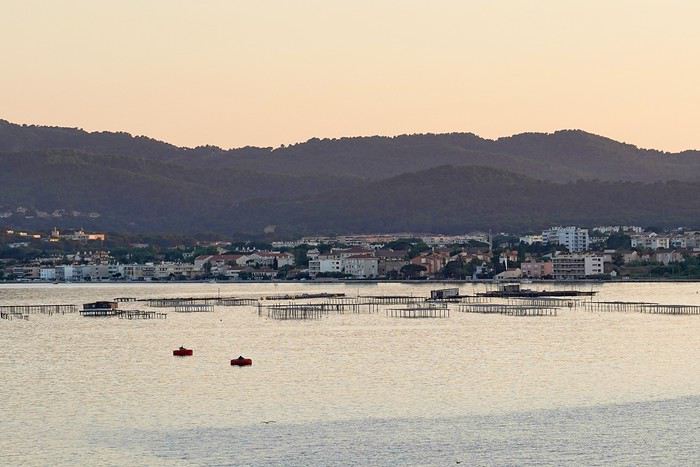 , puis les deux vieux bateaux de la Marine qui finissent leur carrière comme brise lames à la Seyne
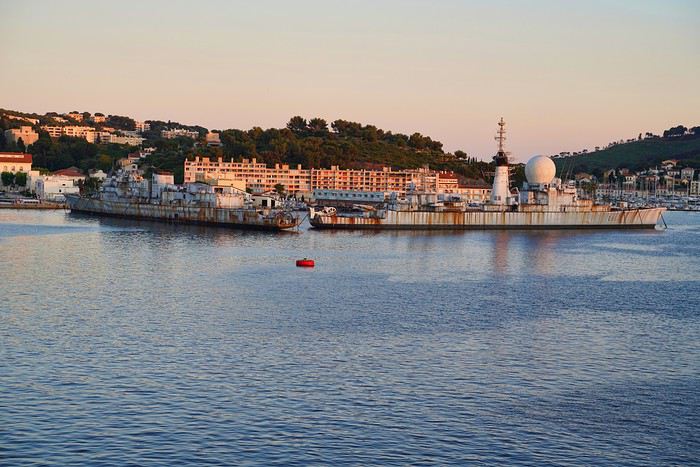 et on admire le départ toujours acrobatique du pilote
 - Sommeil tranquille dans une cabine où personne n'a pris la peine de remplir les distributeurs de savon du lavabo et de la douche. Ce sera donc une toilette de chat.
On vire les Sanguinaires à 7 h du matin, par grand beau temps et mer plate,
- Sommeil tranquille dans une cabine où personne n'a pris la peine de remplir les distributeurs de savon du lavabo et de la douche. Ce sera donc une toilette de chat.
On vire les Sanguinaires à 7 h du matin, par grand beau temps et mer plate,
 pour accoster comme prévu à Ajaccio à 7 h 30.
 A 8 h, on met l'autoradio sur radio Corsica, ce qui nous met tout de suite dans l'ambiance (Non, rien de rien d'Edith Piaf chanté en Corse, ça vaut le déplacement!) et on roule tranquillement en direction de la Parata, avec très peu de trafic, pas de bus touristiques et sans l'affreux petit train sur pneus qui bloque habituellement la circulation.
Arrivé au parking de la Parata, les navettes électriques ne fonctionnent pas encore, on continue donc à pied vers la pointe, en admirant les Iles sanguinaires qui se reflètent dans l'eau lisse.
A 8 h, on met l'autoradio sur radio Corsica, ce qui nous met tout de suite dans l'ambiance (Non, rien de rien d'Edith Piaf chanté en Corse, ça vaut le déplacement!) et on roule tranquillement en direction de la Parata, avec très peu de trafic, pas de bus touristiques et sans l'affreux petit train sur pneus qui bloque habituellement la circulation.
Arrivé au parking de la Parata, les navettes électriques ne fonctionnent pas encore, on continue donc à pied vers la pointe, en admirant les Iles sanguinaires qui se reflètent dans l'eau lisse.
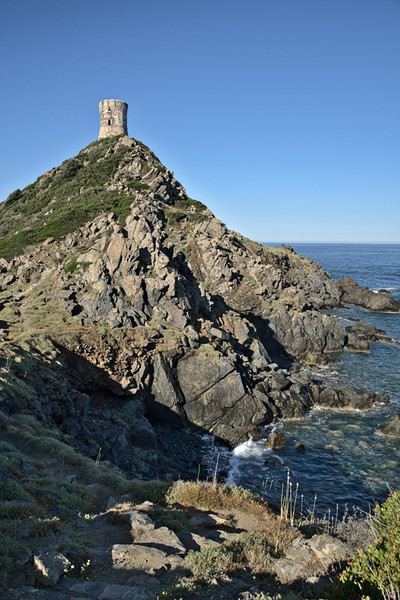
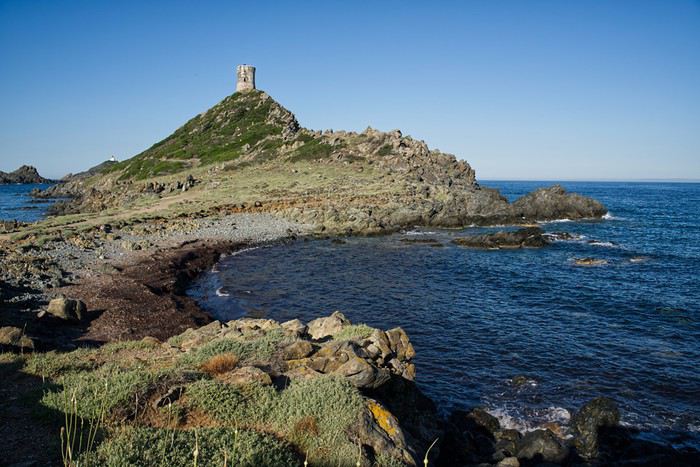
Après notre tour de la pointe, c'est l'heure du café, mais la brasserie est fermée, nous repartons vers Ajaccio et prenons notre café à Marinella, le petit bar de plage sympa à coté de l'ancienne propriété de Tino Rossi et de là embrayons direction Cargese avec quelques embouteillages pour quitter Ajaccio. A Cargese, nous saluons comme il se doit les deux églises jumelles, l'orthodoxe d'un coté, la catholique en face et nous descendons jusqu'au port qui visiblement tourne au ralenti. Nous déjeunons fort agréablement a U Rasaghiu.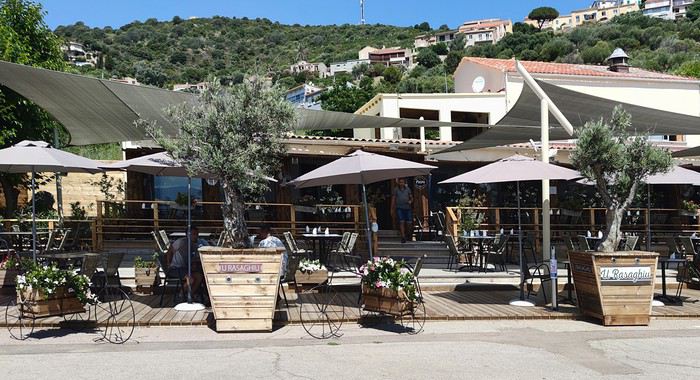 Dans le temps, nous avions l'habitude d'y aller souvent le soir, le patron laissait tomber le service pour pousser la chanson pour ses clients pinzutti, dont nous étions et nous ne nous lassions pas d'écouter la Boudeuse et la Vieille Guitare. L'établissement a été fort joliment modernisé, l'accueil et la cuisine y sont toujours excellents, mais la maison attend qu'il y ait plus de clients pour rentabiliser ses soirées Chansons Corses, ainsi va la vie.
Nous nous dirigeons ensuite vers Porto Ota en traversant au ralenti la zone des calanques de Piana, en profitant de la faible circulation pour nous arrêter sur les petites aires de stationnement et admirer le paysage, superbe sous le bel éclairage que nous avons la chance d'avoir aujourd'hui.
Dans le temps, nous avions l'habitude d'y aller souvent le soir, le patron laissait tomber le service pour pousser la chanson pour ses clients pinzutti, dont nous étions et nous ne nous lassions pas d'écouter la Boudeuse et la Vieille Guitare. L'établissement a été fort joliment modernisé, l'accueil et la cuisine y sont toujours excellents, mais la maison attend qu'il y ait plus de clients pour rentabiliser ses soirées Chansons Corses, ainsi va la vie.
Nous nous dirigeons ensuite vers Porto Ota en traversant au ralenti la zone des calanques de Piana, en profitant de la faible circulation pour nous arrêter sur les petites aires de stationnement et admirer le paysage, superbe sous le bel éclairage que nous avons la chance d'avoir aujourd'hui.
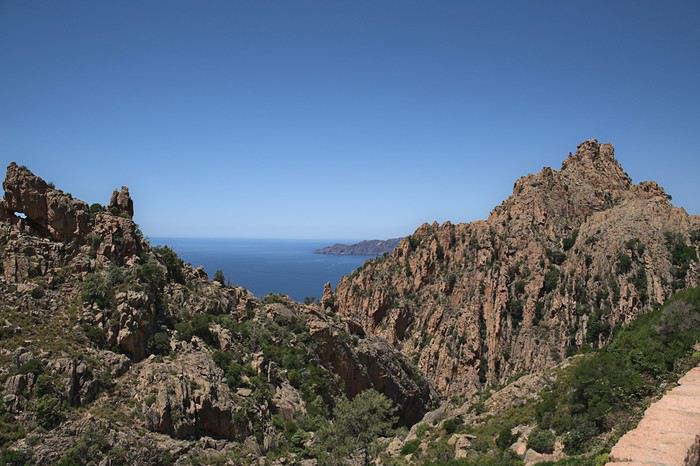
A suivre....
, puis les deux vieux bateaux de la Marine qui finissent leur carrière comme brise lames à la Seyne
et on admire le départ toujours acrobatique du pilote
- Sommeil tranquille dans une cabine où personne n'a pris la peine de remplir les distributeurs de savon du lavabo et de la douche. Ce sera donc une toilette de chat.
On vire les Sanguinaires à 7 h du matin, par grand beau temps et mer plate,
pour accoster comme prévu à Ajaccio à 7 h 30.
A 8 h, on met l'autoradio sur radio Corsica, ce qui nous met tout de suite dans l'ambiance (Non, rien de rien d'Edith Piaf chanté en Corse, ça vaut le déplacement!) et on roule tranquillement en direction de la Parata, avec très peu de trafic, pas de bus touristiques et sans l'affreux petit train sur pneus qui bloque habituellement la circulation.
Arrivé au parking de la Parata, les navettes électriques ne fonctionnent pas encore, on continue donc à pied vers la pointe, en admirant les Iles sanguinaires qui se reflètent dans l'eau lisse.
Après notre tour de la pointe, c'est l'heure du café, mais la brasserie est fermée, nous repartons vers Ajaccio et prenons notre café à Marinella, le petit bar de plage sympa à coté de l'ancienne propriété de Tino Rossi et de là embrayons direction Cargese avec quelques embouteillages pour quitter Ajaccio. A Cargese, nous saluons comme il se doit les deux églises jumelles, l'orthodoxe d'un coté, la catholique en face et nous descendons jusqu'au port qui visiblement tourne au ralenti. Nous déjeunons fort agréablement a U Rasaghiu.
Dans le temps, nous avions l'habitude d'y aller souvent le soir, le patron laissait tomber le service pour pousser la chanson pour ses clients pinzutti, dont nous étions et nous ne nous lassions pas d'écouter la Boudeuse et la Vieille Guitare. L'établissement a été fort joliment modernisé, l'accueil et la cuisine y sont toujours excellents, mais la maison attend qu'il y ait plus de clients pour rentabiliser ses soirées Chansons Corses, ainsi va la vie.
Nous nous dirigeons ensuite vers Porto Ota en traversant au ralenti la zone des calanques de Piana, en profitant de la faible circulation pour nous arrêter sur les petites aires de stationnement et admirer le paysage, superbe sous le bel éclairage que nous avons la chance d'avoir aujourd'hui.
A suivre....
Suisse, pays de lacs et montagnes du 16 au 28 mai 2020 English translation pending
Bonjour,
Comme pour beaucoup de voyageurs, le Coronavirus a perturbé nos plans pour cette année. Notre road trip au Pérou est tombé à l’eau et la fermeture des frontières ne nous permettait pas de quitter la Suisse.
Heureusement, en Suisse, nous n’avons pas subi un confinement strict et nous pouvions nous déplacer librement dans le pays, en respectant certaines règles (distance de 2 mètres entres les personnes, rassemblements de maximum 5 personnes). De plus, une semaine avant notre départ, les magasins, restaurants et musées pouvaient ouvrir. Par contre, les campings, télécabines et télésièges sont restés fermés jusqu’au 6 juin.
Nous avons décidé de ne pas préparer un itinéraire fixe. Le but principal était le canton des Grisons que nous connaissions très peu. Pour y aller et pour revenir, nous avons traversé d’autres cantons où nous avons profité de faire des visites et randonnées. Certains endroits nous étaient bien connus, mais les voir sans les touristes habituels, asiatiques, indiens et américains, change complètement la perception des lieux. Imaginez, le fameux pont de la Chapelle à Lucerne, sans les hordes de touristes asiatiques qui l’envahissent tous les jours.
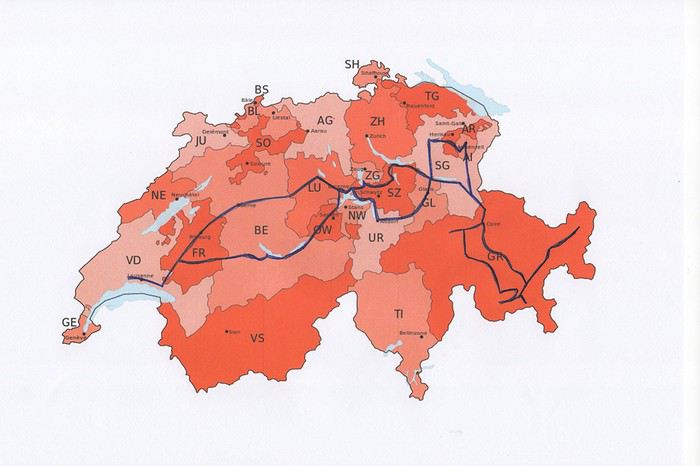
Nous avons loué un van, afin d’être autonome et libre. Notre choix s’est porté sur le VW California Ocean. Ce van est passe-partout, on peut facilement emprunter toutes les petites routes de montagnes et se parquer partout. Seul inconvénient, il n’a pas de salle de bain. La douche se fait à l’extérieur (eau froide), mais nous avons des toilettes portables. Le California Ocean est équipé avec une petite cuisine (un réchaud à gaz avec deux feux, un frigo de 42 litres, un petit évier). Il y a des placards sous la cuisine, au-dessus de la banquette et à l’arrière, ainsi qu’un grand tiroir sous la banquette. Les sièges avant se tournent, il y a deux tables, une à l’intérieur et une autre, encastrée dans la portière, pour l’extérieur. Les deux chaises pour l’extérieur sont encastrées dans la porte du coffre. Le toit se lève, on peut donc se mettre debout à l’intérieur du van. Le lit sous le toit est confortable, avec son sommier sur lequel sont fixé des ressorts. Un store extérieur nous protège du soleil lorsqu’on est à l’arrêt. Le chauffage stationnaire est bien agréable pour chauffer l’habitacle lorsqu’il fait froid. Il y a aussi plusieurs prises, dont une qui fonctionne avec la deuxième batterie et permet de charger le téléphone, tablette, etc. la nuit. Bref, ce petit van est vraiment fonctionnel.
Au dernier moment, nous avons décidé de prendre notre chien Tidou avec nous. Il a fallu adapter nos randonnées et visites. Eh oui, notre Tidou n’est plus tout jeune et il a des soucis avec son dos. Nous avons acheté un sac à dos spécifique, pour pouvoir le porter en terrain abrupte et lorsqu’il sera trop fatigué.
Nous avons chargé l’application park4night sur nos iPhones. Cette application est bien utile pour trouver des emplacements pour passer la nuit. Contrairement, à ce que l’on peut souvent lire, nous n’avons rencontré aucune difficulté pour passer la nuit. Le camping sauvage est donc possible en Suisse, si on ne s’installe pas pour plusieurs jours au même endroit. Concernant l’eau potable, on trouve de nombreuses fontaines, le plus souvent avec de l’eau potable.
Comme pour beaucoup de voyageurs, le Coronavirus a perturbé nos plans pour cette année. Notre road trip au Pérou est tombé à l’eau et la fermeture des frontières ne nous permettait pas de quitter la Suisse.
Heureusement, en Suisse, nous n’avons pas subi un confinement strict et nous pouvions nous déplacer librement dans le pays, en respectant certaines règles (distance de 2 mètres entres les personnes, rassemblements de maximum 5 personnes). De plus, une semaine avant notre départ, les magasins, restaurants et musées pouvaient ouvrir. Par contre, les campings, télécabines et télésièges sont restés fermés jusqu’au 6 juin.
Nous avons décidé de ne pas préparer un itinéraire fixe. Le but principal était le canton des Grisons que nous connaissions très peu. Pour y aller et pour revenir, nous avons traversé d’autres cantons où nous avons profité de faire des visites et randonnées. Certains endroits nous étaient bien connus, mais les voir sans les touristes habituels, asiatiques, indiens et américains, change complètement la perception des lieux. Imaginez, le fameux pont de la Chapelle à Lucerne, sans les hordes de touristes asiatiques qui l’envahissent tous les jours.
Nous avons loué un van, afin d’être autonome et libre. Notre choix s’est porté sur le VW California Ocean. Ce van est passe-partout, on peut facilement emprunter toutes les petites routes de montagnes et se parquer partout. Seul inconvénient, il n’a pas de salle de bain. La douche se fait à l’extérieur (eau froide), mais nous avons des toilettes portables. Le California Ocean est équipé avec une petite cuisine (un réchaud à gaz avec deux feux, un frigo de 42 litres, un petit évier). Il y a des placards sous la cuisine, au-dessus de la banquette et à l’arrière, ainsi qu’un grand tiroir sous la banquette. Les sièges avant se tournent, il y a deux tables, une à l’intérieur et une autre, encastrée dans la portière, pour l’extérieur. Les deux chaises pour l’extérieur sont encastrées dans la porte du coffre. Le toit se lève, on peut donc se mettre debout à l’intérieur du van. Le lit sous le toit est confortable, avec son sommier sur lequel sont fixé des ressorts. Un store extérieur nous protège du soleil lorsqu’on est à l’arrêt. Le chauffage stationnaire est bien agréable pour chauffer l’habitacle lorsqu’il fait froid. Il y a aussi plusieurs prises, dont une qui fonctionne avec la deuxième batterie et permet de charger le téléphone, tablette, etc. la nuit. Bref, ce petit van est vraiment fonctionnel.
Au dernier moment, nous avons décidé de prendre notre chien Tidou avec nous. Il a fallu adapter nos randonnées et visites. Eh oui, notre Tidou n’est plus tout jeune et il a des soucis avec son dos. Nous avons acheté un sac à dos spécifique, pour pouvoir le porter en terrain abrupte et lorsqu’il sera trop fatigué.
Nous avons chargé l’application park4night sur nos iPhones. Cette application est bien utile pour trouver des emplacements pour passer la nuit. Contrairement, à ce que l’on peut souvent lire, nous n’avons rencontré aucune difficulté pour passer la nuit. Le camping sauvage est donc possible en Suisse, si on ne s’installe pas pour plusieurs jours au même endroit. Concernant l’eau potable, on trouve de nombreuses fontaines, le plus souvent avec de l’eau potable.
Itinéraire d'environ 3 semaines en Bretagne en juillet-août English translation pending
Bonjour à tous,
Nous souhaitons découvrir la Bretagne en famille avec nos deux grandes filles (majeures !) pour une durée d'environ 3 semaines avec un départ hors Bretagne puisque nous aimerions visiter le Mont Saint-Michel par la même occasion.
Nous ne connaissons pas du tout la région mais les quelques photos que j'ai pu apercevoir sont tout simplement magnifiques.
Afin d'avoir un bon aperçu de la région et sachant que nous aimons particulièrement les paysages côtiers et la nature, que pensez-vous des ces points de chute :
3 nuits Mont Saint-Michel 3 nuits vers Perros-Guirec 4 nuit vers Kerlouan 3 nuits vers Concarneau 4 nuits vers Vannes 3 nuits vers Saint-Nazaire
ou éventuellement :
2 nuits Mont Saint-Michel 3 nuits vers Perros-Guirec 3 nuits vers Kerlouan 2 nuits vers Crozon 2 nuits vers Quiberon 2 nuits sur Belle-Ile-en-Mer 3 nuits vers Vannes 2 nuits vers Saint-Nazaire
A l'intérieur des terres nous aimerions aller à la forêt de Huelgoat et également à Brocéliande.
Qu'en pensez-vous ? Avez-vous des hôtels à recommander et des endroit "à ne pas manquer" même s'il doit y en avoir beaucoup !
Un grand merci à vous pour votre aide.
Nous souhaitons découvrir la Bretagne en famille avec nos deux grandes filles (majeures !) pour une durée d'environ 3 semaines avec un départ hors Bretagne puisque nous aimerions visiter le Mont Saint-Michel par la même occasion.
Nous ne connaissons pas du tout la région mais les quelques photos que j'ai pu apercevoir sont tout simplement magnifiques.
Afin d'avoir un bon aperçu de la région et sachant que nous aimons particulièrement les paysages côtiers et la nature, que pensez-vous des ces points de chute :
3 nuits Mont Saint-Michel 3 nuits vers Perros-Guirec 4 nuit vers Kerlouan 3 nuits vers Concarneau 4 nuits vers Vannes 3 nuits vers Saint-Nazaire
ou éventuellement :
2 nuits Mont Saint-Michel 3 nuits vers Perros-Guirec 3 nuits vers Kerlouan 2 nuits vers Crozon 2 nuits vers Quiberon 2 nuits sur Belle-Ile-en-Mer 3 nuits vers Vannes 2 nuits vers Saint-Nazaire
A l'intérieur des terres nous aimerions aller à la forêt de Huelgoat et également à Brocéliande.
Qu'en pensez-vous ? Avez-vous des hôtels à recommander et des endroit "à ne pas manquer" même s'il doit y en avoir beaucoup !
Un grand merci à vous pour votre aide.
Road trip Texas-Louisiane English translation pending
bonjour à tous
pendant le confinement le moyen de voyager c'est de préparer le prochain voyage sans dates bien précises mais en espérant mai /juin 2021 nous avons prévu une boucle de Houston, san Antonio, Austin, dallas, memphis, nashville, natchez nola, Houston, dans les grandes lignes la durée et les dates ne sont pas définis ainsi que le départ et l'arrivée je regardais entre dallas et memphis vu la distance à part hot sprints je ne vois pas Grand choses où faire une étape avez vous des idées d'étapes une où deux merci
24h chrono à Cambridge en automne English translation pending
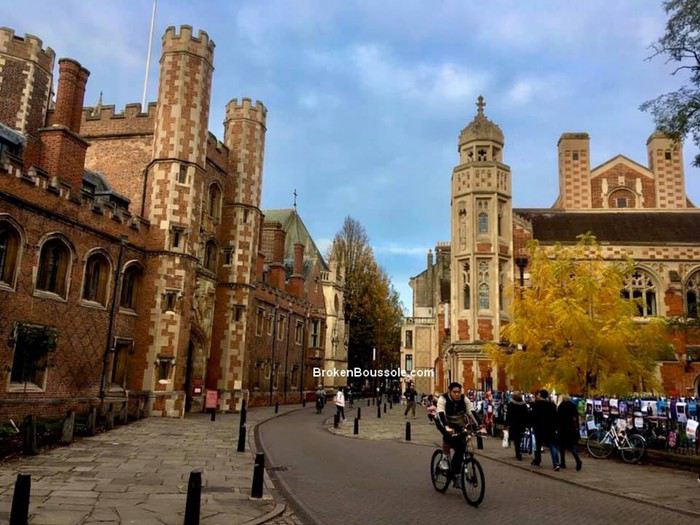 Bienvenue à Cambridge !
 Ça fait longtemps que je n’ai pas publié de carnet sur VF ! Mais avec ce confinement, autant en profiter. En novembre 2019, j’ai eu l’occasion de découvrir Cambridge lors d’un week-end express. Ce séjour n’était absolument pas prévu, mais je suis tombée sur un vol à tarif attractif.
J’ai déjà publié ici 2 carnets sur Londres, ou j’avais obtenu des billets A/R à 5,98€ et à 9,95€. Mais si là, c’était un peu plus cher, ça reste tout de même moins onéreux qu’un A/R en train Rennes/Paris =)
Voici le budget pour ce très court séjour : moins de 130€
Transport : 64€
46€ vol A/R Dinard/Londres 18€ train A/R Londres Stansted/Cambridge
Hébergement : 17€
17€ la nuit en dortoir à l’auberge de jeunesse YHA Cambridge
Activité : 48,5€
26€ pour une visite de 45 minutes en barque sur la rivière Cam 12€ l’entrée au St John’s College 10,5€ l’entrée à la King’s Chapel 0€ l’entrée au Polar Museum 0€ l’entrée au Fitzwilliam Museum
Après un atterrissage à Londres Stansted, j’ai pris le train vers Cambridge, directement à la gare de l’aéroport.
Faire du punting pour découvrir Cambridge au fil de la rivière Cam
Dès mon arrivée, j’ai rejoint un embarcadère. Objectif, faire du punting pour découvrir les « backs » des « Colleges » de la ville. Il est possible de pratiquer cette activité quasiment 365 jours par an.
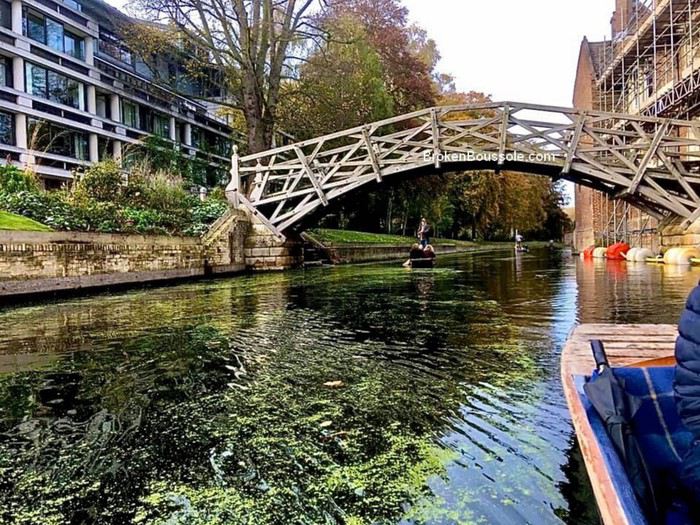
Mathematical Bridge
Cette balade m’a permis de passer sous le Mathematical Bridge, de longer King’s College et d’apercevoir sa chapelle.
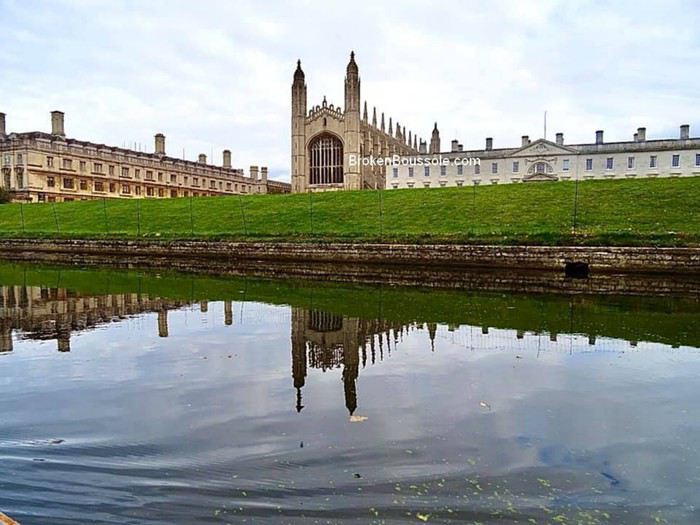 King's Chapel
Puis de passer devant la Wren Library & la bibliothèque Jerwood.
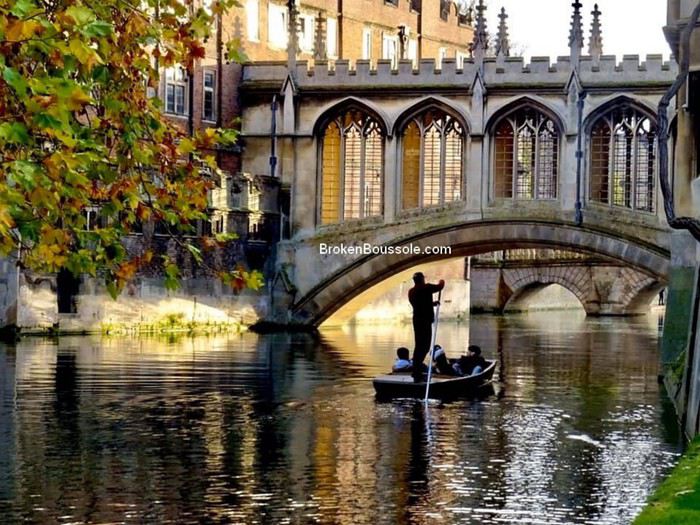 Le pont des soupirs
Avant de terminer la visite par St John’s College et son célèbre Pont des soupirs.
Visiter King's College
Forcément, cette promenade en punt m’a donné envie de visiter les Colleges. J’ai commencé par King’s College pour admirer sa chapelle gothique.
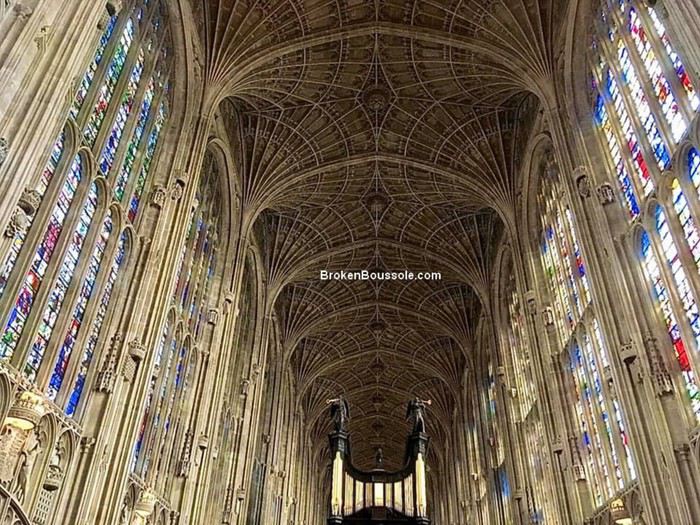 A l'intérieur de King's Chapel
 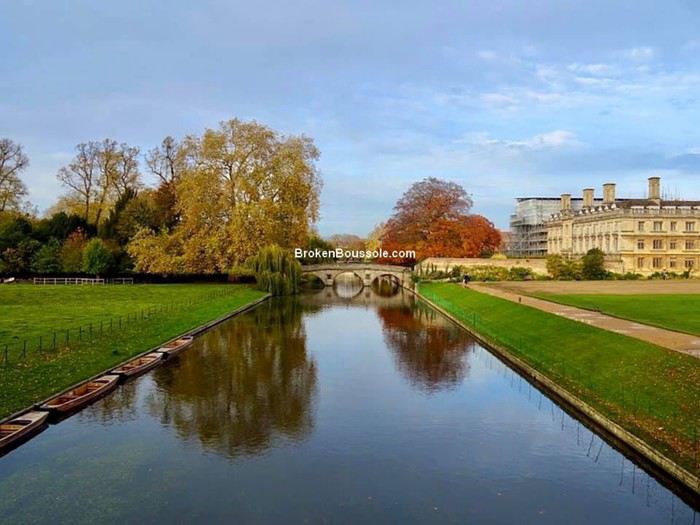 Depuis les jardins de King's College
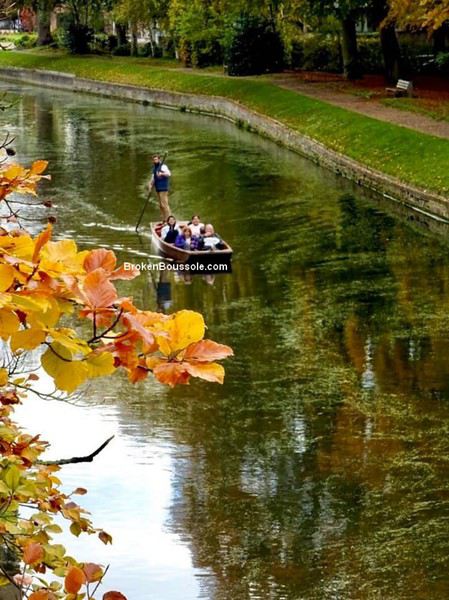 Punting sur la rivière Cam
Découvrir le centre-ville à pied
Après ces visites payantes, je me suis promenée dans les rues du centre-ville, l’architecture vaut clairement le détour, et Cambridge est une citée pleine de vie (et de vélos !).
Green Street - Cambridge
 Trinity Street - Cambridge
 L’horloge Corpus Clock m’a beaucoup impressionnée, et il faut la voir de jour et de nuit !
Corpus Clock - Cambridge