Results for "Rotterdam+|+55+>+223"
532 results found.
Première expérience de voyage aux Pays-Bas English translation pending
On est deux cousines de 18 et 17 ans et on a un rêve un peu fou mais réalisable de visiter le plus de pays possible dans le monde. Étant jeunes, on a décidé de commencer par un pays proche de la France et on s'est tournées vers les Pays-Bas, dans le sens où on est plutôt du genre écolo et que les Pays-Bas sont le pays du vélo.
On s'y est prises en avance car notre voyage est prévu pour l'été 2010, mais on veut l'organiser pour pouvoir en profiter au maximum. Seulement notre première interrogation est de connaître les endroits que l'on veut voir, et ne connaissant pas du tout les Pays-Bas, on se sait pas vraiment ce qui vaut le coup.
Donc d'après vos propres expériences, quels sont les endroits qui vont ont le plus plu aux Pays-Bas ? On sais que ça dépend des goûts de chacun, mais pour vous donner une idée de ce qui risque de nous plaire, on a trouvé un endroit très joli en regardant un peu sur internet : Giethoorn.
On s'y est prises en avance car notre voyage est prévu pour l'été 2010, mais on veut l'organiser pour pouvoir en profiter au maximum. Seulement notre première interrogation est de connaître les endroits que l'on veut voir, et ne connaissant pas du tout les Pays-Bas, on se sait pas vraiment ce qui vaut le coup.
Donc d'après vos propres expériences, quels sont les endroits qui vont ont le plus plu aux Pays-Bas ? On sais que ça dépend des goûts de chacun, mais pour vous donner une idée de ce qui risque de nous plaire, on a trouvé un endroit très joli en regardant un peu sur internet : Giethoorn.
Itinéraire à vélo Nord de la France - Flandre? English translation pending
Bonjour,
2 séniors à vélo cyclotouriste ( avec remorque camping ) à et depuis Lille vers le 25 mai, nous projetons une boucle d'environ 250 km en 10 jours maxi : Profil : Lille - Bruges- Ostende - Côte de la mer du Nord, et retour Lille . Nous ne connaissons pas du tout le Nord de la France et la Flandre . Quel itinéraire préférer, en voies vertes ou véloroutes, côté tourisme : attrait des sites et parcours ?
2 séniors à vélo cyclotouriste ( avec remorque camping ) à et depuis Lille vers le 25 mai, nous projetons une boucle d'environ 250 km en 10 jours maxi : Profil : Lille - Bruges- Ostende - Côte de la mer du Nord, et retour Lille . Nous ne connaissons pas du tout le Nord de la France et la Flandre . Quel itinéraire préférer, en voies vertes ou véloroutes, côté tourisme : attrait des sites et parcours ?
Hollande: routes sur digues en mer accessibles aux vélos ou pas? English translation pending
Salut,
J'envisage pour juin/juillet un voyage à vélo et en solo aux Pays-Bas. Mon itinéraire me conduit à HENKHUIZEN et je désire savoir si la N 302 qui fait 30 km en mer et qui m'amènera à LELYSTAD est vraiment autorisée ou prévue pour les cyclistes Même question pour la digue empruntée par l'autoroute A7-E22 31Km de mer entre STEVINSLUIN et BOLSWARD (une trentaine de km en mer) cette digue comporte-t-elle une piste cyclable ? Un grand merci pour vos réponses et tiens une autre et vaste question : trouver durant la période 20/6 - 15/07/09 une chambre chez l'habitant sans réserver, utopie ou pas ?
J'envisage pour juin/juillet un voyage à vélo et en solo aux Pays-Bas. Mon itinéraire me conduit à HENKHUIZEN et je désire savoir si la N 302 qui fait 30 km en mer et qui m'amènera à LELYSTAD est vraiment autorisée ou prévue pour les cyclistes Même question pour la digue empruntée par l'autoroute A7-E22 31Km de mer entre STEVINSLUIN et BOLSWARD (une trentaine de km en mer) cette digue comporte-t-elle une piste cyclable ? Un grand merci pour vos réponses et tiens une autre et vaste question : trouver durant la période 20/6 - 15/07/09 une chambre chez l'habitant sans réserver, utopie ou pas ?
Visiter Amsterdam à petits prix: visites, restaurants, campings... English translation pending
bonjour à tous
Nous partons à Amsterdam quatre jours fin octobre. On aimerait donc naturellement visiter la ville, rejoindre les villages alentours en vélo.... Pour limiter les frais, on va dormir dans des campings.
Si vous avez des infos, des bons plans, on est preneurs... tout à moindre frais si possible !! quelles visites sont intéressantes? les incontournables de la ville? des idées de resto typiques? quels villages à visiter ? des moulins? des campings pas chers? des idées de prix pour les transports? météo pour cette période (surtout un ordre d'idée)?
merci d'avance pour vos précieux conseils.
merci d'avance pour vos précieux conseils.
Aide sur les coutumes et attitudes de différents pays: appel à votre vécu English translation pending
Bonjour à tous,
Actuellement sur une étude des coutumes dans différents pays j'ai besoin de votre aide, et de vos suggestions étant donné vos voyages donc expériences mais aussi et peut être vos origines!! Je souhaiterais connaître les coutumes suivantes: Américaines Japonaises Anglaises Chinoises Scandinaves Italiennes Espagnoles Russes et Ukrainiennes Belges
Quand je dis coutumes, je vous donne plusieurs exemples: On ne dit pas "non" à un japonais mais "peut être" Les chinois crachent...
Je vous remercie d'avance pour votre aide!!! Biz
Actuellement sur une étude des coutumes dans différents pays j'ai besoin de votre aide, et de vos suggestions étant donné vos voyages donc expériences mais aussi et peut être vos origines!! Je souhaiterais connaître les coutumes suivantes: Américaines Japonaises Anglaises Chinoises Scandinaves Italiennes Espagnoles Russes et Ukrainiennes Belges
Quand je dis coutumes, je vous donne plusieurs exemples: On ne dit pas "non" à un japonais mais "peut être" Les chinois crachent...
Je vous remercie d'avance pour votre aide!!! Biz
Strasbourg-Amsterdam aller/retour à vélo English translation pending
Bonjour,
Je pense faire l'allez-retour en velo entre Strasbourg et Amsterdam cet été.
dans l'ideal pour l'allez je pensais suivre le rhin jusqu'a utrecht puis bifurquer sur amsterdam; pour le retour j'envisage plutot un chemin plus direct via Maastricht et la belgique et le luxembourg. Cependant je galère un peu pour en savoir plus, alors j'aurais quelques questions :
Est-ce que quelqu'un a deja fait un trajet similaire, et est ce un bon itineraire? Combien faut-il prévoir de Km environ?
De plus je ne dispose que de 15 jours pour ce tour (ce qui est peut etre un peu court 😐), alors si vous pouvez m'aider à me décider ce serait vraiment cool.
merci d'avance!🙂
dans l'ideal pour l'allez je pensais suivre le rhin jusqu'a utrecht puis bifurquer sur amsterdam; pour le retour j'envisage plutot un chemin plus direct via Maastricht et la belgique et le luxembourg. Cependant je galère un peu pour en savoir plus, alors j'aurais quelques questions :
Est-ce que quelqu'un a deja fait un trajet similaire, et est ce un bon itineraire? Combien faut-il prévoir de Km environ?
De plus je ne dispose que de 15 jours pour ce tour (ce qui est peut etre un peu court 😐), alors si vous pouvez m'aider à me décider ce serait vraiment cool.
merci d'avance!🙂
Visite princière à Cannes English translation pending
A Cannes, il y a des stars et aussi une vraie princesse thaïlandaise  Son altesse royale la princesse Ubolratana, le 15 mai 2008 à Cannes
A Cannes, il y a les stars comme Angelina Jolie ou Sharon Stone. Mais il y a aussi une vraie princesse thaïlandaise, venue défendre le film qu'elle a écrit et dans lequel elle joue, "Quand le miracle se produit".
Son altesse royale la princesse Ubolratana, le 15 mai 2008 à Cannes
A Cannes, il y a les stars comme Angelina Jolie ou Sharon Stone. Mais il y a aussi une vraie princesse thaïlandaise, venue défendre le film qu'elle a écrit et dans lequel elle joue, "Quand le miracle se produit".
Son altesse royale la princesse Ubolratana, 57 ans, est la fille aînée du roi Bhumibol Adulyadej de Thaïlande. Son film veut attirer l'attention sur les difficultés tant économiques que familiales des jeunes Thaïlandais. "C'est un bon moyen de tendre la main aux personnes qui ne sont pas aussi privilégiées que nous, " a-t-elle déclaré à l'AFP. Le film raconte le double traumatisme d'une femme, Pimdao, qui a perdu sa fille dans un accident de la route et qui, en attente de greffe de coeur, finit par recevoir celui de sa fille décédée. Pimdao change. La femme d'affaires très active devient une philanthrope qui voyage à travers les campagnes pour aider à la construction d'écoles et faire progresser l'éducation. La princesse, qui a perdu un fils lors du tsunami de décembre 2004, raconte qu'elle voyage elle-même souvent dans son pays pour ce type d'action. Ubolratana, qui a étudié aux Etats-Unis et y a élevé sa famille avant de divorcer et rentrer dans son pays, joue le rôle principal du film. "Je connaissais déjà le personnage et le propos du film donc je me suis dit que je pourrais aussi bien jouer le rôle moi-même", a-t-elle dit. Habillée d'une robe de soie et portant des boucles d'oreilles et des bracelets en diamants, la princesse Ubolratana ressemble à une vraie diva hollywoodienne.
source www.lematin.ch
Son altesse royale la princesse Ubolratana, le 15 mai 2008 à Cannes
A Cannes, il y a les stars comme Angelina Jolie ou Sharon Stone. Mais il y a aussi une vraie princesse thaïlandaise, venue défendre le film qu'elle a écrit et dans lequel elle joue, "Quand le miracle se produit".Son altesse royale la princesse Ubolratana, 57 ans, est la fille aînée du roi Bhumibol Adulyadej de Thaïlande. Son film veut attirer l'attention sur les difficultés tant économiques que familiales des jeunes Thaïlandais. "C'est un bon moyen de tendre la main aux personnes qui ne sont pas aussi privilégiées que nous, " a-t-elle déclaré à l'AFP. Le film raconte le double traumatisme d'une femme, Pimdao, qui a perdu sa fille dans un accident de la route et qui, en attente de greffe de coeur, finit par recevoir celui de sa fille décédée. Pimdao change. La femme d'affaires très active devient une philanthrope qui voyage à travers les campagnes pour aider à la construction d'écoles et faire progresser l'éducation. La princesse, qui a perdu un fils lors du tsunami de décembre 2004, raconte qu'elle voyage elle-même souvent dans son pays pour ce type d'action. Ubolratana, qui a étudié aux Etats-Unis et y a élevé sa famille avant de divorcer et rentrer dans son pays, joue le rôle principal du film. "Je connaissais déjà le personnage et le propos du film donc je me suis dit que je pourrais aussi bien jouer le rôle moi-même", a-t-elle dit. Habillée d'une robe de soie et portant des boucles d'oreilles et des bracelets en diamants, la princesse Ubolratana ressemble à une vraie diva hollywoodienne.
source www.lematin.ch
Voyage en Hollande à vélo (Pays-Bas) English translation pending
Avec ma famille (2 adultes et 4 enfants) on voudrait partir en Hollande en vélo, une petite semaine.
On aimerait des renseignements sur les sites à visiter, les itinéraires possibles, les possibilités d'hébergements...
merci d'avance 😛
Visiter Amsterdam en décembre? English translation pending
Bonjour
Nous avons l'intention de profiter d'un pont que nous avons en Espagne pour visiter du 5 au 9 décembre Amsterdam et j'aimerais savoir si quelqu'un d'entre vous a déjà visité cette ville en décembre
J'ai lu que 4 jours c'était plus que suffisant et même de trop ...
Est-ce que vous me conseiller de rajouter Bruges, qui est parait-il une ville cahrmante, dans ce séjour ?? Est-ce qu'il y a de bonnes ocmmunications par train entre les 2 villes ? Est-ce que vous pensez qu'il vaut mieux que je visite d'autres villes hollandaises plutôt que Bruges et si oui lesquelles .. ne pas oublier que nous allons pour 4 jours. Est-ce que vous avez d'autres conseils à me donner ?
Merci pour votre aide Marie-Hélène
Nous avons l'intention de profiter d'un pont que nous avons en Espagne pour visiter du 5 au 9 décembre Amsterdam et j'aimerais savoir si quelqu'un d'entre vous a déjà visité cette ville en décembre
J'ai lu que 4 jours c'était plus que suffisant et même de trop ...
Est-ce que vous me conseiller de rajouter Bruges, qui est parait-il une ville cahrmante, dans ce séjour ?? Est-ce qu'il y a de bonnes ocmmunications par train entre les 2 villes ? Est-ce que vous pensez qu'il vaut mieux que je visite d'autres villes hollandaises plutôt que Bruges et si oui lesquelles .. ne pas oublier que nous allons pour 4 jours. Est-ce que vous avez d'autres conseils à me donner ?
Merci pour votre aide Marie-Hélène
Amsterdam: incontournables et coins sympathiques English translation pending
Vala je par à Amsterdam fin juillet pour 4 jours, avec une copine et jvoudrais savoir quels sont les choses à voir absolument ?
Et vous, si vous y etes allés, avez vous trouvez des coins particulierement sympa ?
Se deplacer, comment ? C'est une ville à faire à pied ? En velo ?
Les alentours sont comment ? Y a de la nature pas loin ? Et une pelouse pour un pique nique ou trouver ?
Enfin si vous y avé deja mis les pieds merci de faire part devos coup de coeur.
(bon c'est sur j'orai pu chercher dans des guides auparavant mais jusqu'a avant hier j'étais dans les concours^^ et ca occupe, donk je solicite un peu d'aide;))
Merci d'avance
Et vous, si vous y etes allés, avez vous trouvez des coins particulierement sympa ?
Se deplacer, comment ? C'est une ville à faire à pied ? En velo ?
Les alentours sont comment ? Y a de la nature pas loin ? Et une pelouse pour un pique nique ou trouver ?
Enfin si vous y avé deja mis les pieds merci de faire part devos coup de coeur.
(bon c'est sur j'orai pu chercher dans des guides auparavant mais jusqu'a avant hier j'étais dans les concours^^ et ca occupe, donk je solicite un peu d'aide;))
Merci d'avance
Belgique et Pays Bas: de l'eau et du bivouac? English translation pending
Bonjour
Nous allons faire la LF1 de Boulogne sur Mer (FR) à Den Helder (Pays Bas) en suivant la côte Belge et Hollandaise au passage, puis retour probablement plus dans les terres (peut etre même une incursion en allemagne...). Nous sommes adeptes du bivouac (tranquilité, prix, contact avec la nature...) et nous interrogeons donc sur la tolérance propre à chaque pays. En France ça se passe toujours plutôt bien (en tout cas pour nous jusqu'à présent) mais qu'en est-il dans ces autres pays ? Par ailleurs, pour ceux qui connaissent un peu notre trajet, est-il facile de trouver des coins tranquilles où poser sa tente (à l'abri du passage et des regards en gros) ?
Concernant l'eau, en France on trouve de l'eau potable dans tous les cimetières, est-ce le cas aussi dans ces autres pays ? Si non, quelles sont alors les bonnes astuces pour ne jamais risquer d'être à court d'eau ?
Merci par avance
Nous allons faire la LF1 de Boulogne sur Mer (FR) à Den Helder (Pays Bas) en suivant la côte Belge et Hollandaise au passage, puis retour probablement plus dans les terres (peut etre même une incursion en allemagne...). Nous sommes adeptes du bivouac (tranquilité, prix, contact avec la nature...) et nous interrogeons donc sur la tolérance propre à chaque pays. En France ça se passe toujours plutôt bien (en tout cas pour nous jusqu'à présent) mais qu'en est-il dans ces autres pays ? Par ailleurs, pour ceux qui connaissent un peu notre trajet, est-il facile de trouver des coins tranquilles où poser sa tente (à l'abri du passage et des regards en gros) ?
Concernant l'eau, en France on trouve de l'eau potable dans tous les cimetières, est-ce le cas aussi dans ces autres pays ? Si non, quelles sont alors les bonnes astuces pour ne jamais risquer d'être à court d'eau ?
Merci par avance
Les cinq plus belles villes françaises English translation pending
Pour moi c'est Paris en 1er évidemment mais derrière ?
Lille Strasbourg Dinant Vannes
Certes mon choix est subjectif et je compte sur vos avis pour me faire connaitre d'autres villes.
Lille Strasbourg Dinant Vannes
Certes mon choix est subjectif et je compte sur vos avis pour me faire connaitre d'autres villes.
Une semaine aux Pays-Bas à vélo English translation pending
Bonjour à tous,
J'ai prévu de partir avec ma soeur pendant une semaine aux pays bas à vélo...🙂
j'ai une question qui me taraude et j'ai cherché deseperement une réponse que je n'ai pas trouvé!! Est ce que les vélos qu'on loue directement sur place sont équipées de saccoches?
Quand on est en auberge de jeunesse y a t il un lieu prévu pour laisser les vélos pendant qu'on visite la ville?
est il facile de manger pas cher?
faut il vraiment reserver les logements quand on part debut juillet?
merci d'avance
Prague ou Amsterdam en septembre? English translation pending
Je dispose du mois d'un mois de vacance en Septembre (et oui je suis etudiante!)et j'aimerai rester en Europe.
Mais, enorme dilleme ... je n'arrive pas a me decider entre Amsterdam ou Prague.
Je cherche bien sure a ce que mon voyage soit le moins chere possible et le mieux possible -evidement-, pour decouvrir un autre pays, autre culture, rencontrer des gens et faire la fête quand même!
Ces deux villes me semblent donc apropriée pour ce que je recherche, d'ou mon probleme..
Prague m'a l'air tout de même moins chere...
Conseillez-moi...
"North Sea Cycle" route entre Amsterdam et Bruges English translation pending
bonjours avous tous, , est-ce que quelqu'un pourrais me dire ce a quoi ressemble la north sea cycle route......surtout le trajet entre Amsterdam et Bruges.......camping et hotel....securite.......distance......beaute du paysage......enfin tout ce que nous devrions savoir sur ce trajet......agreable ou non......merci beaucoup de m'aider a preparer mon voyages......chacla
France-Sénégal en voiture English translation pending
Bonjour,
J'envisage de m'installer au Sénégal. Pour le déplacement, j'envisage de vendre ma voiture actuelle (elle a plus de 5 ans) et d'acheter un nouveau véhicule. Cela me permettrait de ne pas vendre tout mon mobilier et d'emporter avec moi réfrigérateur Gazinière chaine hi-fi...
Qui peut me donner des conseils sur les points suivants : Est-ce une bonne idée ou vaut-il mieux que je vende tout mes meubles avant de partir et que j'achète mon véhicule au Sénégal ? si l'idée est bonne : Quel type de véhicule vaut-il mieux acheter (compte tenu de la réglementation de dédouannement du sénégal) Essence ou diesel ? Privilégier des moteurs rustiques (pas de HDI, de DCI, ...) ? Le mobilier que je vais transporter va t-il faire l'objet de taxes de dédouannement ? Quels documents prévoir pour le transport ?
Merci par avance pour vos réponses et touts les conseils que vous pourrez me donner.
bzh-nature@club-internet.fr
J'envisage de m'installer au Sénégal. Pour le déplacement, j'envisage de vendre ma voiture actuelle (elle a plus de 5 ans) et d'acheter un nouveau véhicule. Cela me permettrait de ne pas vendre tout mon mobilier et d'emporter avec moi réfrigérateur Gazinière chaine hi-fi...
Qui peut me donner des conseils sur les points suivants : Est-ce une bonne idée ou vaut-il mieux que je vende tout mes meubles avant de partir et que j'achète mon véhicule au Sénégal ? si l'idée est bonne : Quel type de véhicule vaut-il mieux acheter (compte tenu de la réglementation de dédouannement du sénégal) Essence ou diesel ? Privilégier des moteurs rustiques (pas de HDI, de DCI, ...) ? Le mobilier que je vais transporter va t-il faire l'objet de taxes de dédouannement ? Quels documents prévoir pour le transport ?
Merci par avance pour vos réponses et touts les conseils que vous pourrez me donner.
bzh-nature@club-internet.fr
DMV et permis français pour achat de voiture d'occasion en Californie English translation pending
Bonjour
Pour mon deuxième voyage en californie, j ia décidé de partir en touriste 3 mois et acheter une voiture d occasion? Pas de problème pour en trouver une et me faire assurer avec mon simple permis français, mais je ne trouve absolument rien concernant sur le Department of Motor Vehicles???
En effet je ne souhaite pas changer mon permis contre un permis californien puisque je ne compte pas m y installer ! je ne trouve absolument aucune infos si je peux aller au DMV avec mon permis français pour faire enregistrer ma voiture d occasion ? peut on acheter une voiture d occasion à son nom avec son permis français pour du TOURISME de moins de 3 mois ?
j ai cherché pendant 1 heure sur le DMV california mais rien😕
Pour mon deuxième voyage en californie, j ia décidé de partir en touriste 3 mois et acheter une voiture d occasion? Pas de problème pour en trouver une et me faire assurer avec mon simple permis français, mais je ne trouve absolument rien concernant sur le Department of Motor Vehicles???
En effet je ne souhaite pas changer mon permis contre un permis californien puisque je ne compte pas m y installer ! je ne trouve absolument aucune infos si je peux aller au DMV avec mon permis français pour faire enregistrer ma voiture d occasion ? peut on acheter une voiture d occasion à son nom avec son permis français pour du TOURISME de moins de 3 mois ?
j ai cherché pendant 1 heure sur le DMV california mais rien😕
Collecte pour les cubains English translation pending
J'étais à Cuba en juillet dernier et j'ai constaté à quel point il manque des produits de première necessité : dentifrice, brosses à dents, shampoing, gel douche... des crayons et des cahiers pour les enfants, des vêtements... et tellement d'autres choses...
je travaille dans une administration française et il m'est facile d'organiser une collecte...
Mais je ne sais comment l'acheminer et à qui le faire... j'ai rencontré des gens charmants à Cuba dans plusieurs villes ... je peux partager et faire parvenir un peu à chacun...
A part la poste, quels sont les moyens les plus faciles ? les paquets arrivent ils entiers ? Autant de questions que je me pose ?
Merci de m'aider si vous avez des propositions .🙂
je travaille dans une administration française et il m'est facile d'organiser une collecte...
Mais je ne sais comment l'acheminer et à qui le faire... j'ai rencontré des gens charmants à Cuba dans plusieurs villes ... je peux partager et faire parvenir un peu à chacun...
A part la poste, quels sont les moyens les plus faciles ? les paquets arrivent ils entiers ? Autant de questions que je me pose ?
Merci de m'aider si vous avez des propositions .🙂
Buenos Aires-Ushuaïa-Valparaíso en trois semaines à moto? English translation pending
Bonjour,
D'abord merci aux précieux renseignements que j'ai trouvé via le forum.
Pour ceux qui s'y sont rendu, pensez-vous qu'en moto (BMW R 69S) en janvier sans être prétentieux cela est possible?
J'ai compté comme distance 7000 km soit environ 333 km par jour.
La distance est-elle juste et les routes praticables?
Est-il vrai que les bus font B-A/US en 2 jours?
Merci d'avance pour vos réponses
P-S Quelqu'un a-t'il dédouané (dans notre cas une moto) en Argentine et au Chili (douane portuaire)? Est-ce compliqué comme en Afrique?
D'abord merci aux précieux renseignements que j'ai trouvé via le forum.
Pour ceux qui s'y sont rendu, pensez-vous qu'en moto (BMW R 69S) en janvier sans être prétentieux cela est possible?
J'ai compté comme distance 7000 km soit environ 333 km par jour.
La distance est-elle juste et les routes praticables?
Est-il vrai que les bus font B-A/US en 2 jours?
Merci d'avance pour vos réponses
P-S Quelqu'un a-t'il dédouané (dans notre cas une moto) en Argentine et au Chili (douane portuaire)? Est-ce compliqué comme en Afrique?
Région de Mecklembourg-Poméranie (Allemagne) English translation pending
Salut !
Voilà, je me demandais si certains d'entre vous connaissait la région du Meckembourg-Poméranie en Allemagne, y avait déjà séjourné et ce que vous en pensez ?
En fait j'y suis depuis janvier et je rentre en Suisse dans 3 semaines, mais je suis curieuse d'échanger mes impressions avec d'autres.
Pour ceux qui connaissent pas, n'hésitez pas à y passer vos prochaines vacances. On y pense pas toujours, mais on peut aussi se baigner dans la Mer Baltique (et pas seulement dans la Méditerranée ou dans les Caraïbes 😛). La région est très nature, grands espaces, belles îles, vieilles villes hanséatiques, architecture briques rouges gothiques, longues plages des sables et un vrai paradis pour le balade à vélo (très plat !). Malheureusement, ce coin d'Allemagne souffre du chômage (plus de 20%) et reste encore très marqué par l'ère soviétique, mais ça n'empêche pas que c'est une destination que je conseille.
Au plaisir de lire vos commentaires !
Valérie
Voilà, je me demandais si certains d'entre vous connaissait la région du Meckembourg-Poméranie en Allemagne, y avait déjà séjourné et ce que vous en pensez ?
En fait j'y suis depuis janvier et je rentre en Suisse dans 3 semaines, mais je suis curieuse d'échanger mes impressions avec d'autres.
Pour ceux qui connaissent pas, n'hésitez pas à y passer vos prochaines vacances. On y pense pas toujours, mais on peut aussi se baigner dans la Mer Baltique (et pas seulement dans la Méditerranée ou dans les Caraïbes 😛). La région est très nature, grands espaces, belles îles, vieilles villes hanséatiques, architecture briques rouges gothiques, longues plages des sables et un vrai paradis pour le balade à vélo (très plat !). Malheureusement, ce coin d'Allemagne souffre du chômage (plus de 20%) et reste encore très marqué par l'ère soviétique, mais ça n'empêche pas que c'est une destination que je conseille.
Au plaisir de lire vos commentaires !
Valérie
route des fleurs et du fromage en hollande English translation pending
😉salut,
je voudrai faire le un petit tour en hollande et parcourir la route des fleurs et du fromage
je sais qu'il faut partir en avril/mai pour que tout soit fleuri, mais quand exactement? debut/fin avril? plutot en mai?
j'ai deja traverse la hollande en velo mais au mois d'aout, tres sympa mais ça manque un peu de couleurs🤪
j'attends vos infos
a+ sur le forum
tony😛
je voudrai faire le un petit tour en hollande et parcourir la route des fleurs et du fromage
je sais qu'il faut partir en avril/mai pour que tout soit fleuri, mais quand exactement? debut/fin avril? plutot en mai?
j'ai deja traverse la hollande en velo mais au mois d'aout, tres sympa mais ça manque un peu de couleurs🤪
j'attends vos infos
a+ sur le forum
tony😛
norvège en vélo English translation pending
Bonsoir,
Je souhaite faire une voyage Bergen-Angers en vélo, aucune idée par ou commencer, super motivé pour le faire, plein de questions genre hebergement à pas cher, le materiel à acheter, les bonnes routes à prendre, lien internet sur des sites du meme genre...etc, je débute mais je veux changer mon quotidien...merci
Je souhaite faire une voyage Bergen-Angers en vélo, aucune idée par ou commencer, super motivé pour le faire, plein de questions genre hebergement à pas cher, le materiel à acheter, les bonnes routes à prendre, lien internet sur des sites du meme genre...etc, je débute mais je veux changer mon quotidien...merci
100 jours/20 villes (régions) en Europe de l'ouest English translation pending
Bonjour,
J'ai 26 ans et je pars pour l'Europe de l'Ouest du 22 aout au 30 novembre avec un Eurail pass qui me permet de voyager à volonté en France, Espagne, Portugal, Italie, Belgique, Allemagne, Hollande, Autriche...
J'aimerais savoir ce que vous visiteriez en 20 coups de coeurs. Soyez diversifiez, c'est surement ma seule chance d'y aller...
MErci
Nancy
J'ai 26 ans et je pars pour l'Europe de l'Ouest du 22 aout au 30 novembre avec un Eurail pass qui me permet de voyager à volonté en France, Espagne, Portugal, Italie, Belgique, Allemagne, Hollande, Autriche...
J'aimerais savoir ce que vous visiteriez en 20 coups de coeurs. Soyez diversifiez, c'est surement ma seule chance d'y aller...
MErci
Nancy
Review of Renaissance Cruise (Iberian Flavors) from October 18 to 29, 2025
Hi there,
Here’s a little review of our cruise on the Renaissance from October 18 to 29, 2025 (11 nights). It was our first experience with CFC.
Some other forum members were on board too, so we can probably compare notes and correct me if I’m wrong!
The stops were as follows: 10/18 departure from Marseille 10/19 at sea 10/20 Cartagena 10/21 Almería 10/22 Gibraltar 10/23 Cádiz 10/24 at sea 10/25 Leixões (Porto) 10/26 Vigo 10/27 at sea 10/28 at sea 10/29 Dunkirk
First, a quick intro. We’re a family of four with two kids, ages 8 and 11. We booked this cruise in January 2025, right when it went on sale. At the time, it was priced at 763 € per adult (+ 99 € in tips) and 114.45 € per child (under 12, no tips to pay) for an ocean-view cabin (all ocean-view categories were the same price). Since there was also a single-parent offer (meaning one paying adult in the cabin was enough to get the child rate for the accompanying kid), I asked if we could take advantage of this offer to get two double cabins at the same price as one quadruple cabin (to have more space), and yes, it was possible. So we booked two premium ocean-view double cabins side by side. It was the same price as a quadruple. We booked directly through CFC because my husband had a promotional code from his works council. In total, for the four of us, we paid 1830 €, tips included. It’s true we booked early, but the rate was good, and we had the constraint of traveling as a family of four, so cabin choices were more limited. It’s also worth noting that the single-parent offer is limited.
Now, about embarkation: 10/18 Marseille Coming from the north, we took the direct TGV that morning at 7:22 AM, scheduled to arrive in Marseille at 12:24 PM. The trip went smoothly, great weather, and we arrived just one minute late. I had planned to get to the port using the free 35T shuttle from Joliette. To get to the bus stop, there were two options: the metro or walking. Since the weather was beautiful and the kids needed to stretch their legs, we opted for the second option. The route is all downhill, so it was pretty easy even with the suitcases. But I wouldn’t do it the other way around! We arrived at Joliette around 12:50 PM, just in time for the 1:00 PM shuttle, which arrived a few minutes late. Other cruisers got on board too. That day, there were two Costa ships and one MSC ship at the port as well. Traffic was heavy, and the shuttle arrived at the port entrance at 1:30 PM. We were scheduled for 2:30 PM. We were lucky to be at the closest embarkation terminal. So we were among those who had the least walking to do. We dropped off our suitcases and headed to the check-in counter. There were plenty of desks and almost no passengers. So we quickly completed the embarkation formalities—in just a few minutes—and when we boarded, it wasn’t even 2:00 PM yet. We headed to the buffet, where there weren’t many people. As we finished lunch, it was around 3:00 PM when they announced the cabins were ready. We went down to drop off our luggage in the cabins and then went up to the top deck to take some photos. The ship’s daily program said the safety drill would be at 4:00 PM. So we went to deck 6 at the scheduled time. But later, they announced it would actually be at 4:30 PM! In short, we waited 30 minutes for nothing because of a difference between the scheduled and actual time! The drill itself was long. Gathering everyone took about 20 minutes, I think. Just as we finished, they announced the departure, originally scheduled for 5:00 PM, was delayed until 9:00 PM due to latecomers. We went to check out the library, which had tons of board games and books—more than we’d ever seen. What stood out on this first day was that, for the first time, we had a French-speaking embarkation, announcements only in French (except for the safety drill), French-speaking servers, a paper daily program in French, books in French (which we’d never find on another ship), and menus in French. To wrap up the day, we had dinner at Vatel. I had requested the first seating (6:30 PM) and a table for four, and we got it. We were seated upstairs near the window—a very pleasant table that we’d occupy every evening. What was a little surprising, but we got used to it, was that you had to order everything you wanted at once. The portions weren’t big, but you could choose what you wanted. The cheese was French and excellent.
To be continued...
The stops were as follows: 10/18 departure from Marseille 10/19 at sea 10/20 Cartagena 10/21 Almería 10/22 Gibraltar 10/23 Cádiz 10/24 at sea 10/25 Leixões (Porto) 10/26 Vigo 10/27 at sea 10/28 at sea 10/29 Dunkirk
First, a quick intro. We’re a family of four with two kids, ages 8 and 11. We booked this cruise in January 2025, right when it went on sale. At the time, it was priced at 763 € per adult (+ 99 € in tips) and 114.45 € per child (under 12, no tips to pay) for an ocean-view cabin (all ocean-view categories were the same price). Since there was also a single-parent offer (meaning one paying adult in the cabin was enough to get the child rate for the accompanying kid), I asked if we could take advantage of this offer to get two double cabins at the same price as one quadruple cabin (to have more space), and yes, it was possible. So we booked two premium ocean-view double cabins side by side. It was the same price as a quadruple. We booked directly through CFC because my husband had a promotional code from his works council. In total, for the four of us, we paid 1830 €, tips included. It’s true we booked early, but the rate was good, and we had the constraint of traveling as a family of four, so cabin choices were more limited. It’s also worth noting that the single-parent offer is limited.
Now, about embarkation: 10/18 Marseille Coming from the north, we took the direct TGV that morning at 7:22 AM, scheduled to arrive in Marseille at 12:24 PM. The trip went smoothly, great weather, and we arrived just one minute late. I had planned to get to the port using the free 35T shuttle from Joliette. To get to the bus stop, there were two options: the metro or walking. Since the weather was beautiful and the kids needed to stretch their legs, we opted for the second option. The route is all downhill, so it was pretty easy even with the suitcases. But I wouldn’t do it the other way around! We arrived at Joliette around 12:50 PM, just in time for the 1:00 PM shuttle, which arrived a few minutes late. Other cruisers got on board too. That day, there were two Costa ships and one MSC ship at the port as well. Traffic was heavy, and the shuttle arrived at the port entrance at 1:30 PM. We were scheduled for 2:30 PM. We were lucky to be at the closest embarkation terminal. So we were among those who had the least walking to do. We dropped off our suitcases and headed to the check-in counter. There were plenty of desks and almost no passengers. So we quickly completed the embarkation formalities—in just a few minutes—and when we boarded, it wasn’t even 2:00 PM yet. We headed to the buffet, where there weren’t many people. As we finished lunch, it was around 3:00 PM when they announced the cabins were ready. We went down to drop off our luggage in the cabins and then went up to the top deck to take some photos. The ship’s daily program said the safety drill would be at 4:00 PM. So we went to deck 6 at the scheduled time. But later, they announced it would actually be at 4:30 PM! In short, we waited 30 minutes for nothing because of a difference between the scheduled and actual time! The drill itself was long. Gathering everyone took about 20 minutes, I think. Just as we finished, they announced the departure, originally scheduled for 5:00 PM, was delayed until 9:00 PM due to latecomers. We went to check out the library, which had tons of board games and books—more than we’d ever seen. What stood out on this first day was that, for the first time, we had a French-speaking embarkation, announcements only in French (except for the safety drill), French-speaking servers, a paper daily program in French, books in French (which we’d never find on another ship), and menus in French. To wrap up the day, we had dinner at Vatel. I had requested the first seating (6:30 PM) and a table for four, and we got it. We were seated upstairs near the window—a very pleasant table that we’d occupy every evening. What was a little surprising, but we got used to it, was that you had to order everything you wanted at once. The portions weren’t big, but you could choose what you wanted. The cheese was French and excellent.
To be continued...
Hitchhiking in the 70s-80s
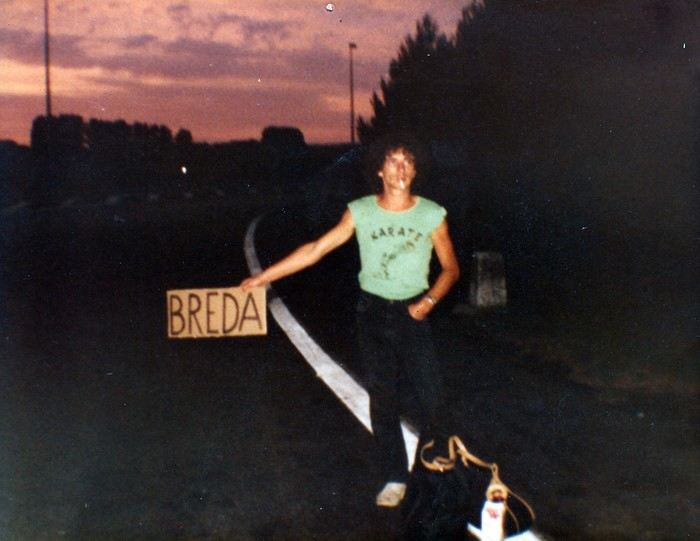
“Hey, your Marker... - My Marker? - The one you used to make hitchhiking signs.”
The marker in question is sitting proudly on the kitchen table. Marielle found it at the bottom of a moving box.
I’ve been meaning to tell the long story of my love affair with hitchhiking for years. Here we go.
To be honest, I’m not quite sure when it started. My earliest memory goes back to a fair with a bike race in my maternal grandparents’ village. I was with my cousin, my little sister, and three girl cousins. There were six of us, ages ranging from six or seven to thirteen or fourteen. Our parents stayed at the fair, and we’d had enough. So we decided to walk home. Only it was four kilometers away. So we hitchhiked. A guy driving an old car picked us all up and dropped us off at the farm. He probably found it amusing to see us thumbing a ride by the side of the road, but maybe it also worried him a bit. With everything you read in the papers...
Around fifteen or sixteen, I started hitchhiking regularly, alone or with a friend, to go to the nearby town. But it was especially when I started boarding school in Orléans that it became more regular. The first year, I’d leave Monday morning and come back Saturday noon by bus. It was an old, uncomfortable bus where we froze in winter. To make matters worse, I often got motion sickness if, as was too often the case, I ended up sitting in the back. In the spring, a high school friend suggested I hitchhike back. It meant a slight detour, but the advantage was taking only national roads.
So that’s how, from the end of tenth grade to twelfth grade, I’d thumb a ride every Saturday on the Pont de Bourgogne. Drivers were used to seeing young people hitchhiking, and it worked pretty well. Our biggest fear? Soldiers! At that time, military service was still mandatory, and on weekends, it wasn’t rare to see them competing with us. They’d keep their uniforms on to go home. That gave people confidence—with everything you read in the papers—and they’d rarely wait more than five minutes. We, with our long hair, were definitely less popular. From time to time, three big red-faced guys in a van coming back from a construction site would flip us off, yelling things like “go get a haircut, you bums!” Those were the good old days.
We still had a good laugh, though. Patrice, the friend I’d hitchhike back from school with on Saturdays, is a musician—I’d later discover he’s an excellent composer. A die-hard Beatles fan, he knows their repertoire by heart and spends his time singing at the top of his lungs while we thumb a ride. One Saturday late morning, we’d been waiting for a while at the exit of Châteauneuf-sur-Loire when a little lady came up to him and asked if he could please sing a little quieter: a baby was sleeping in the house. He put on the most sorry face: “Oh, sorry ma’am, we didn’t realize.” No sooner had the lady gone back inside than he started again. Luckily, a car stopped just then, sparing me the embarrassment of seeing the lady come back out.
Saturday was also the day when the cigarette pack was dangerously low. So before leaving, we’d go buy some “Parisiennes,” the “P4s” as we called them back then. They were slightly thinner cigarettes with a mix of tobacco scraps. Sometimes they tasted like light tobacco, sometimes like dark. Not great, but by the end of the week, our pocket money was gone. They were sold in small packs of four, hence the name P4. We’d only pay 20 centimes. On Saturdays, it was rare for the two of us to manage to scrape together 1.50 F to buy a whole pack of Gauloises...
The last twenty kilometers, I’d usually do alone, Patrice having reached his destination. From time to time, luck would smile on me: an acquaintance would just happen to pass by and stop. One January Saturday, at the exit of Gien, I ran into another guy from Argenton whom I knew a little. That day, the weather was nice, but the temperature was well below zero. It was around noon, and it was the off-peak hour. We were shivering, stamping our feet by the side of the road, when a Citroën “Tube” arrived: it was his father’s boss’s, a mason. They were both sitting in the front, but since they were obese, they had us climb onto the open back. Even though we huddled against the cab to shelter from the wind, the twenty kilometers felt very long, especially since we were only going sixty kilometers an hour. Our hands and cheeks were blue when we finally arrived.
The year I took my baccalaureate, a friend with a 2CV would take me Monday mornings with one or two others we’d pick up in nearby villages. We’d share the gas costs, but it was still cheaper than the bus. And in winter, the bus was my nightmare. You had to get up at five to catch it at six. Not enough sleep, and outside it was freezing or raining—or both. The 2CV was luxury. Plus, Philippe would pick me up at home. On the other hand, since I didn’t have class Saturday mornings—well, I did, but we only had PE the first two hours and nothing after—I’d skip class and slip out right after breakfast to thumb a ride at the Pont de Bourgogne.
Those three high school years were formative in this optional subject that was hitchhiking. Little by little, I learned the rules of the game. First, you shouldn’t walk along the road while thumbing. Cars go too fast and can’t stop easily. Accepting a ride that’s too short is also a no-go. The guy who offers to take you a little way but drops you off at some vague crossroads in the middle of nowhere? No thanks. You need to get dropped off in a town. If it’s a fairly big city, you often have to cross it from one end to the other, but it’s better. At the exit, you have to choose your spot well. Actually, you have to put yourself in the driver’s shoes: they need to see you early enough, not be going too fast, and be able to stop easily without risking an accident. So when leaving a city, it’s better not to go too far. It’s wiser to find a spot where cars go slowly and can stop easily. And preferably near a café. The café is for when you still have a few coins for a coffee and need to warm up. From time to time, you’d run into someone nice who’d make a detour to drop you off at a better spot to start again. Finally, if possible, avoid hitchhiking on Sundays. Cars are packed with whole families who, most of the time, aren’t going far. And then there’s the little worry of those people who rarely leave home: with everything you read in the papers...
During those high school years, it was only short trips, rarely exceeding a hundred kilometers. Later, I aimed bigger, and things were a bit different. In 1973-74, I crossed part of France for the first time on two or three occasions, coming back from the German border or returning to Bordeaux, where we lived briefly. Since there weren’t many highways back then, we took national roads. It was during these trips that I realized it was better to leave in the evening. As I said earlier, Sunday is to be avoided, but on weekdays, there’s another problem: if you leave in the morning, you only make short hops. First, it often takes longer to get going because drivers are people going to work nearby. Which brings us back to those who drop you off in a bad spot, far from everything. There, you have to know how to refuse. You thank the driver for stopping—oh, if only everyone could be like you—while explaining why you’d rather stay put. People don’t take offense, by the way. Those who pick up hitchhikers often hitchhiked themselves when they were in the military or before they had a car. In the late afternoon, you’d often run into salespeople or truckers, in other words, people who drive a lot. At that time, salespeople no longer had appointments and were more relaxed. They wanted to talk about something other than the merits of their products. On the radio, it was time for *Les Grosses Têtes*. You’d also quite often run into small business owners, professionals, or even hippies. The conversations were pleasant and often enriching. A little later in the evening, truckers would take over. They’d already driven a few hundred kilometers, and the depot or customs was still far away. So they’d gladly take a hitchhiker to stay awake at the wheel and chat. The radio with Max Ménier’s show *Les routiers sont sympas*, you’d eventually get tired of it. So a hitchhiker was a change. Others, who’d hit the road at midnight to be at their destination by morning, were nice and offered to let you lie down on the bunk while they drove. When you’d been hitchhiking since six in the evening, freezing in the wind between two vehicles, you weren’t unhappy to take a little nap.
Speaking of Max Ménier, he’d often make announcements for hitchhikers. One evening, I called him. It was getting late, and I still had quite a way to go. No luck: the show had ended for good the day before!
In short, it’s better not to rush, sleep in, and leave after lunch, or better yet, in the late afternoon. Obviously, I’m talking about when you have several hundred kilometers to cover. That’s when you have to play it pro.
First thing, especially at night, but it also applies in the middle of summer when the light is blinding: dress to be seen from far away. I’ll admit I have an advantage over most other hitchhikers: I’m small and don’t scare people. To balance that out, racist drivers often take me for an Arab and are less likely to pick me up, but overall, the balance tips in my favor. Back to the need to be seen: at night, I wear light-colored clothes. In headlights, you can see me from far away.
Second thing: travel light. Forget the big backpack with a frame. Drivers don’t always have room in the trunk or on the back seat, especially if it’s rained and the ground is wet. Plus, it forces them to get out of the car. If they’re nice enough to pick up a hitchhiker, you shouldn’t ask for too much either.
Third thing: bring a cardboard sign and a big marker—like the ones in the photo at the start of this post—to write the name of your destination. In the early 80s, I ran a tourist house in the Cher, but I lived in the Netherlands. In the off-season, it was only open on weekends. On Fridays, I’d leave Holland and return on Mondays. 1200 km round trip. On the way there, in Paris, I’d stand at Porte de la Chapelle. At that spot, the road is very wide, and drivers could stop easily. Obviously, on the sign, I didn’t write Eindhoven, which not everyone knows, and even less Amsterdam because of its seedy reputation. In that case, you’d expect to see a police car stop and two officers in kepis ask for your papers. So as a first destination, I’d write Compiègne. We were well out of Paris, and since it wasn’t too far, a trucker or salesperson was less reluctant to stop. Once past Compiègne, I’d take out my Lille sign. Once in Belgium, it wasn’t really necessary to use a sign anymore, since everyone was going in the same direction. Usually, the guy who picked me up at Porte de la Chapelle would say he wasn’t going far but could take me a little way. Before that, I’d still ask if there was a gas station on the highway where he could drop me off before exiting. While talking, the guy would realize he wasn’t dealing with a dangerous criminal. He’d pretend to check his watch, think for a moment, then say that actually, he was going to Belgium and could take me to the border or a little beyond. To leave Paris on the way back, I’d take the train to Melun, where it was easier to hitchhike than at Porte d’Italie.
Over all those years, I think I was pretty lucky. Or maybe philosophical enough not to imagine a car would stop after a few minutes. An hour’s wait was average. Sure, I sometimes waited three, four, or five hours. Most often at odd hours and in terrible weather. When it doesn’t work, it doesn’t work. But there’s always a moment when things pick up. Sure, when you’re soaked in freezing rain in the early morning after a sleepless night, you’re less philosophical than when I’m writing these lines comfortably at my computer, but it still holds true.
Earlier, I mentioned clothing and the importance of being well-rested before leaving. When you’ve eaten well and just gotten out of the shower, shaved, you’re in a better mood. And somehow, drivers sense it. Or at least, that’s the impression I’ve always had. It’s better to look in shape than disgusted at standing there, half-heartedly thumbing a ride. In short, when I’d start to get fed up with waiting, I’d go into the first café I saw for a coffee. Coming back out, I’d be refreshed, and most of the time, a car would stop within minutes. I’ve often said that when I stood by the side of the road thumbing a ride, I felt a bit like a gambler in front of a slot machine. It was a matter of giving luck a chance. And well, it worked out pretty well.
Then, there are countries where hitchhiking works really well and others where it’s harder. In the 70s-80s, it worked best in Germany and England. In the late afternoon, it wasn’t rare to be invited for tea. Well, that was in England. Tea meant being offered room and board. In Germany, they’d offer you coffee. Once there, they’d first show you the guest room and point out the bathroom before sitting you down in front of a big plate of cold cuts. In the evening, they’d go out in town, and the next morning, they’d usually drop you off at a good spot for hitchhiking. On the other hand, in Mediterranean and Scandinavian countries, you’d better be patient. In Spain or Italy, it’s better to take the train, which was dirt cheap back then. However, if you’re a couple traveling light, it’s already easier in most countries.
In 1982, I went on a trip around Turkey with my girlfriend. We only had two small bags, which was plenty. It was November-December, and we wore our warm, bulky clothes. Leaving Eindhoven at nine in the morning, we arrived in Graz, near the Yugoslav border, at eleven at night. 1300 km in a day! In just four or five vehicles. One to the German border, about fifty kilometers from Eindhoven, the second to Hagen in the Ruhr, the third to Salzburg, and the last to Graz at the Yugoslav border. Record broken. During the night crossing of Yugoslavia, we ran into a trucker close to retirement who lent us the truck’s bunk. So we arrived fresh and rested near Skopje the next morning. We continued to Thessaloniki in northern Greece before taking the train to Istanbul. In Turkey, we traveled a good part of the country by hitchhiking too. With truckers in old, overloaded, slow trucks that climbed hills at fifteen kilometers an hour, but also in cars where five or six people were already crammed in. And every time, we were invited for tea. Once, we were even picked up by a big shot in his Mercedes with a chauffeur. Until then, the average speed was around fifty kilometers an hour. There, we were going two hundred. On a national road, not a nice European highway.
I’ve also hitchhiked in Nepal, from Lumbini, Buddha’s birthplace, to a village on the way to Pokhara. It must have been midday. No bus until the next day. I gave it a try. A small truck overloaded with rice sacks, with two or three young people already perched on top, stopped. I rode on the roof of the cab. At fifty kilometers an hour when it was going well, with a breathtaking view. Coming back from India, I also crossed part of Iran by hitchhiking, from Tehran to the Turkish border. I did this trip with an Austrian I met at the hotel who, like me, had to watch his pennies. We gave it a shot. There was almost no traffic, but to our great surprise, the first car that passed in the area would always stop. They’d just ask for a modest contribution for gas, and it cost next to nothing.
Sometimes, you get scared too. After leaving Turkey in early December 82, we spent about two weeks in the southern Peloponnese harvesting olives. A few days before Christmas, we hitchhiked back to Holland. A girl picked us up in her little Fiat 500. We were driving on a mountain road, and that morning there was a bit of black ice. After crossing a pass, we saw the old Ford Taunus ahead of us at fifty meters start to skid. The driver let out a “heeee!” while grabbing my knees. I reflexively grabbed the wheel. Finally, the Taunus got back on track. And we didn’t swerve. But those few seconds felt very long.
In January 77, while I’d been living in Germany for a few months, I decided to spend a few days in Italy. By hitchhiking, of course. I left in the early afternoon, and by ten at night, I wasn’t far from Frankfurt. I saw a big Mercedes stop. The four or five young people crammed inside were listening to Schlager at full volume. Beer cans littered the floor. They didn’t have a precise destination, and as long as they were going south, that was fine with me. They’d finished their military service that very day and had clearly already celebrated their discharge. The driver was going 160, zigzagging dangerously from one side of the highway to the other. I should have realized he wasn’t entirely sober either. Luckily, there was almost no traffic. Finally, I managed to get dropped off at a gas station just before Frankfurt, relieved. I hope their trip didn’t end tragically.
Another time, coming back from Holland with my wife, we were picked up early in the morning near Senlis by two guys from Lille. They were going to work near Tours and could drop us off at Porte d’Italie. Apparently, they were coworkers but barely knew each other. The driver offered us a beer—at six in the morning, sure!—before opening another can for himself. He was clearly having trouble staying in the right lane. We politely declined, the passenger too. Everyone was tense. Luckily, it was rush hour on the ring road, and we were going slowly. When we got out of the car, the passenger said goodbye with the look of a guy being offered the condemned man’s rum and cigarette.
Finally, there are the annoying remarks from drivers who are either gay when you’re alone or turned on by the sight of your girlfriend when you’re a couple. In those cases, I’d get in the back so the guy wouldn’t feel too confident. And if the conversation got a little too suggestive, we’d deflect until we got dropped off.
And luckily, there are the times, not so rare after all, when you run into really nice people who invite you to eat and sleep at their place and drive you to a good spot the next morning. In Germany and England, that was common. And then there are the big strokes of luck, like during our trip to Turkey when we crossed most of Germany in one car, or that other time when some Germans drove me from the exit of Geneva all the way to the Costa Brava.
Going back to “with everything you read in the papers” and its variant “with everything you see on TV”—and now on the internet—it’s always left me perplexed. Personally, I’ve never heard of hitchhikers assaulting drivers, even if it may have happened. On the other hand, what was most common were hitchhikers being assaulted, especially girls. Anyway, even armed, it seems a bit stupid to assault the driver—wouldn’t that risk causing an accident?
Finally, since that time, I’ve occasionally wanted to hitchhike somewhere far away in France. Most often, too busy with work, it never happened, but the nostalgia hasn’t completely disappeared.
* * *
Other Hitchhikers
And then one day, I... settled down to become a driver myself. Ten years had passed, and you saw fewer and fewer hitchhikers. Or maybe I saw fewer because I had a regular job and wasn’t traveling the same way. And then I understood a few things.
Several times, I was tempted to pick up a hitchhiker, but they didn’t meet the required conditions. They were walking along the road instead of staying at the exit of the previous town. Hard to stop without risking an accident. Or the guy looked really scruffy. Or he was sulking, if not both. Then you think of that famous “with everything you read in the papers.” Not that I was scared, but unfortunately, the few hitchhikers I did pick up later were rarely interesting.
A few years ago, we picked up a young guy at the exit of a small town in Sologne. Not an easy spot for hitchhiking. Bad luck, he was a pretentious little jerk. He was barely 20 or 25 and talked like a bitter old man. He was a waiter in a restaurant. According to him, it was lucky he was there, otherwise the boss would have closed up shop long ago. You’d think he had thirty or forty years of professional experience behind him. As we approached Blois, he started ranting about Arabs, blaming them for all evils. And he laid it on thick. That morning, we were going to a teenager’s funeral who had just committed suicide, so he really got on our nerves, Mr. Know-It-All. Out of anger, I dropped him off next to a shopping center a few kilometers from downtown. Not nice, but it felt good.
Some time ago, we were driving around the Limousin on a Sunday to try out the used Twingo we’d just bought. We picked up a guy in his forties. A German who spoke French well. He started talking about the environment. He was a green Khmer. He got worked up all by himself with his pseudo-eco rant and, after a few kilometers, was almost yelling at us. As we were about to leave the main road for a small one, I dropped him off at a crossroads in the middle of nowhere. Normally, I would have made a little detour to take him to a better spot, but this time, I didn’t feel like doing the... eco-warrior a favor.
On the other hand, I’ve still done my good deed a few times. One June morning, coming back from Orléans, I saw a man in his sixties hitchhiking. The poor guy had had a rough time. He was from Montpellier and was coming back from Caen, where he’d been promised a job. Once there, they bluntly told him the position was already taken, and he had to go back. Except he didn’t have enough money left for the train. He’d spent the night hitchhiking without success. I could only take him as far as Lamotte-Beuvron, where I dropped him off near the fire station. Apparently, there was some vague shelter there or something, but it only opened a few hours later. In the meantime, he settled on the grass in a corner to sleep a little. While he was doing that, I quickly went to the train station to check the price of a ticket to Montpellier. It was within my means. Since he was sound asleep, I slipped the train ticket and 100 francs into his pocket. I couldn’t imagine him continuing to hitchhike all the way to Montpellier. And I bet he didn’t even have a piece of cardboard and a marker!
When we go to Brazil, we usually rent a small car. One day, we were coming back from Paracuru to Fortaleza when we saw a whole family hitchhiking. Two adults and two or three small children. Here near the equator, the sun sets very quickly, and it would soon be night. There was little traffic, and trucks wouldn’t stop because there was no room in the cab. As for the rich people driving big 4x4s, they wouldn’t stoop to picking up the lower classes. The only hope for this kind of family was usually a farmer or artisan who’d let them ride in the back of his pickup. Obviously, they were a bit surprised to see us. Everyone crammed in as best they could in the back of our little car. When we dropped them off, we got a whole string of “Deus lhes abençõe”—God bless you.
Still in Brazil, we were on the road from Barreirinhas to São Luís do Maranhão. About 150 km of deserted road with an isolated mud house here and there. A young woman flagged us down. She was very pregnant and had to get to the clinic twenty or thirty kilometers away to give birth. Someone was supposed to drive her, but the first signs of labor started earlier than expected, and the driver was unavailable. Even driving fast, we weren’t feeling great: it would be just our luck if she gave birth in the car!
Today, we’re in the age of smartphones and carpooling apps. Safety. With everything you see on TV... Three or four years ago, we signed up on a platform. Our first, and only, “client” was a little jerk who didn’t say a word the whole trip. No hello, no goodbye, and certainly no thank you. The next day, we found his Ray-Bans in the car. We didn’t run after him to give them back. Ha!
Cruise Review: Regal Princess in the British Isles
Hi there!
Here’s a quick review of my cruise on the REGAL PRINCESS.
This was my 35th cruise and my second on the REGAL PRINCESS, which I first discovered in 2017 during a Caribbean cruise.
A few months ago, we received an email from PRINCESS changing the itinerary—DUBLIN and EDINBURGH were replaced by two Scottish islands. We were a little disappointed, but since we’d never sailed around the UK, we didn’t really know any of the ports anyway.
The itinerary was:
SOUTHAMPTON
AT SEA
KIRKWALL
INVERGORDON
AT SEA
STORNOWAY
GLASGOW
BELFAST
AT SEA
CORK
AT SEA
PORTLAND
LE HAVRE
SOUTHAMPTON
A 13-day/12-night cruise for 1350 € per person in a guaranteed deluxe balcony cabin. PRINCESS assigned us a balcony cabin on deck 8 with a large balcony. We ended up happy with our cabin, even though we’d initially preferred a higher deck. I’ll admit I hesitated to choose this cruise because of the weather—I love sunshine and good weather—but the desire to discover new ports won out, especially with the promise of heading to Corsica afterward to soak up some sun again 😉
On PRINCESS, as Catherine mentioned, there’s no card—everyone has a medallion! I loved this system, which unlocks your cabin door as you approach. It’s really well thought out!
We took the EUROSTAR from Lille to London, then a train from London to Southampton the day before. We stayed in a nice IHG hotel near the port.
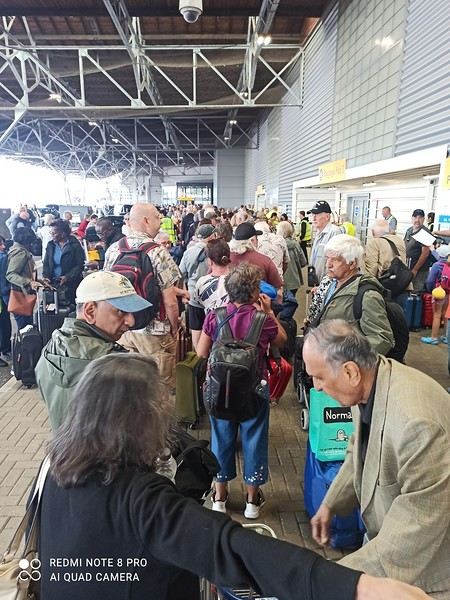
EMBARKATION It’s Friday, August 1st. After a good breakfast and a quick check-out, we realize our UBER app isn’t working in England ;(. We have to go back to reception to ask for a taxi because, even though the hotel is close to the port, the ship is still over 2 km away—hardly ideal with luggage! The problem is that many hotel guests also requested taxis... so we wait a good 30 minutes before ours arrives! We get to the REGAL PRINCESS pretty quickly but are shocked to see a huge line outside!!! We hadn’t seen that in over a decade! Not the best start! 🙁
TO BE CONTINUED!
A 13-day/12-night cruise for 1350 € per person in a guaranteed deluxe balcony cabin. PRINCESS assigned us a balcony cabin on deck 8 with a large balcony. We ended up happy with our cabin, even though we’d initially preferred a higher deck. I’ll admit I hesitated to choose this cruise because of the weather—I love sunshine and good weather—but the desire to discover new ports won out, especially with the promise of heading to Corsica afterward to soak up some sun again 😉
On PRINCESS, as Catherine mentioned, there’s no card—everyone has a medallion! I loved this system, which unlocks your cabin door as you approach. It’s really well thought out!
We took the EUROSTAR from Lille to London, then a train from London to Southampton the day before. We stayed in a nice IHG hotel near the port.
EMBARKATION It’s Friday, August 1st. After a good breakfast and a quick check-out, we realize our UBER app isn’t working in England ;(. We have to go back to reception to ask for a taxi because, even though the hotel is close to the port, the ship is still over 2 km away—hardly ideal with luggage! The problem is that many hotel guests also requested taxis... so we wait a good 30 minutes before ours arrives! We get to the REGAL PRINCESS pretty quickly but are shocked to see a huge line outside!!! We hadn’t seen that in over a decade! Not the best start! 🙁
TO BE CONTINUED!
Plan de reprise des croisières Costa English translation pending
Bonjour
Voilà ce qui serait prévu à partir de la mi-août :
http://crew-center.com/costa-cruises-plans-re-start-voyages-7-ships-5-phases
Cordialement
Voilà ce qui serait prévu à partir de la mi-août :
http://crew-center.com/costa-cruises-plans-re-start-voyages-7-ships-5-phases
Cordialement
Mais où qu'il est ce truc là (4) English translation pending
Croisière Costa Victoria avec départ des Maldives pour Venise le 7 mars 2020 English translation pending
Bonjour
Je dois partir le 7 Mars 2020 de Male aux Maldives sur le Costa Victoria pour 21 jours vers Venise
Je me demande si j y vais ou pas vu ce qu il se passe sur les bateaux de croisiere et a Venise en Croatie en Istael
Pour l instant je pense sue je vais tout annuler
J aimerai avoir vos avis si vous êtes dans la même situation
Au plaisir de vous lire
Marc
Discussions du concours "Les édifices religieux dans le monde" English translation pending
C'est ici que l'on discute dans la bonne humeur et le respect de l'autre du concours du mois de novembre.😏
C'est aussi ici que l'on partage des photos en "OFF du concours" avant d'avoir trouver "la" bonne photo pour le concours.
Retour au concours de novembre:
voyageforum.com/...5795;live=1;#9805795