Results for "Susak+|+123+>+204"
434 results found.
Hôtel sympathique sur Gili Trawangan? (Indonésie) English translation pending
Salut,
je cherche un hôtel sympa sur Gilis Trawangan, aux environs de 20 euros, climatisé, avec piscine, petit déj etc... Un hôtel bien situé et bien agréable... Vos conseils ?
je cherche un hôtel sympa sur Gilis Trawangan, aux environs de 20 euros, climatisé, avec piscine, petit déj etc... Un hôtel bien situé et bien agréable... Vos conseils ?
Aller en Indonésie? English translation pending
Salut, je me questionne sur quelque points. Nous partons le 14 octobre 2007 pour travailler en Angleterre. De l'Angleterre, le 23 Avril, nous voulons nous rendre en Indonésie. Nous avons un probleme consernant notre visa.
J'ai appelle a l'embassage de l'indonesie au Canada (On habite au Canada) et ils ne peuvent pas nous emettre un visa(60 jours) pour cette date car c'est trop loin.
Ils m'ont donc donnée 2 options.Une fois en Angleterre. On achete nos billets d'avion pour l'indonesie et un moin avant le depart on fait les demarches pour avoir notre visa a l'embassade de l'indonesie a Londre. L'inconvenient, c'est qu'on pait un billet d'avion sans savoir si on va avoir le visa.On prend un billet d'avion aller retour pour singapour. On demande notre visa la bas et normalement il nous le donne. On prend par la suite un vol aller retour de singapour bali. L'inconvenient est que l'on pert 1 semaine pour le visa a singapour et on pert quelque jours pour le retour car on reviens en angleterre puis par la suite au canada.Ca devient vraiment compliquer. Nous voullons vraiment aller en Indonesie. Quelqu'un a vecu quelque chose de semblable? On ne sait pas quoi faire.
J'ai appelle a l'embassage de l'indonesie au Canada (On habite au Canada) et ils ne peuvent pas nous emettre un visa(60 jours) pour cette date car c'est trop loin.
Ils m'ont donc donnée 2 options.Une fois en Angleterre. On achete nos billets d'avion pour l'indonesie et un moin avant le depart on fait les demarches pour avoir notre visa a l'embassade de l'indonesie a Londre. L'inconvenient, c'est qu'on pait un billet d'avion sans savoir si on va avoir le visa.On prend un billet d'avion aller retour pour singapour. On demande notre visa la bas et normalement il nous le donne. On prend par la suite un vol aller retour de singapour bali. L'inconvenient est que l'on pert 1 semaine pour le visa a singapour et on pert quelque jours pour le retour car on reviens en angleterre puis par la suite au canada.Ca devient vraiment compliquer. Nous voullons vraiment aller en Indonesie. Quelqu'un a vecu quelque chose de semblable? On ne sait pas quoi faire.
Orphelinat Lac Dao à Phan Thiet en 1969 (Vietnam) English translation pending
Bonjour à tous,
Née en 1969 d'un père noir américain et d'une mère vietnamienne et adoptée par une famille en 1975, cela fait un an que je me suis inscrite sur ce site et lancée dans des recherches concernant mes origines vietnamiennes.
Parmi tous les documents en ma possession, l'un me donne l'information d'un orphelinat LAC DAO à PHAN THIET. Il semblerait que LAC DAO corresponde à une "province" intégrée dans PHAN THIET. On m'a dit que les familles vietnamiennes ne sont pas des nomades...
Aussi, aujourd'hui, je m'adresse tout particulièrement aux "locaux" du Vietnam, surtout PHAN THIET, qui seraient susceptibles de m'aider et de me donner des informations : savoir si l'établissement existe toujours ou a été remplacé..., et éventuellement faire des recherches pour moi.
Je pensais pouvoir me rendre sur place cet année mais les évènements familiaux et professionnelles ont changé mes projets.
Merci par avance de prendre le temps de me lire et, je l'espère, de répondre positivement à cet appel.
Sara
Donne informations sur les îles Andaman English translation pending
Salut, j'ai ouie dire que des personnes cherchaient des infos sur les Andaman, comme nous en revenons, je suis à leur disposition, à +
Retour de trois semaines en Ouganda et Rwanda: gorilles English translation pending
Bon, je sens que je vais me faire incendier, j'entends déjà les cries d'orfraie, mais voilà... Je rentre de trois semaines en Ouganda et Rwanda. Alors, les gorilles? Je lis partout "magnifique", génial". Oui, sans doute. Je les ai vu au parc national des Volcans au Rwanda. Oui, ils étaient là, cinq ou six, presque palpables, à trois mètres. Visiblement très habitués aux hommes... Du coup, comment dire, l'aspect "sauvage" était presque inexistant. Mais je vais quand même pas me plaindre, hein... Pour les trouver, on a mis 30 min à peine, dans un paysage il est vrai somptueux. Tellement rapide que c'en était presque frustrant pour ceux qui aiment marcher, traquer, chercher, fouiller. Bref, tout ceci était tellement facile que ça en devenait un tantinet artificiel, qu'on ce serait presque cru -et c'est là que vous allez crier- dans un parc d'attraction, certes immense, magnifique et tout et tout, mais quand-même... Un parc pour touristes fortunés puisqu'il faut s'acquitter d'un droit d'entrée de 375 dollars (si cet argent sert vraiment à la protection des gorilles, c'est avec plaisir que j'aurai versé mon obole). Et au bout d'une heure, merci tout le monde et au revoir "et dites bien à un maximum de monde de venir nous voir". Là où j'ai imaginé passer une journée, j'ai mis au total trois heures environ...
Côté pratique, puisque cette question revient souvent: pour le permis gorilles, franchement, inutile de se prendre la tête et de payer des frais de banque en réservant à l'avance. On l'obtient très facilement à l'Office national du tourisme à Kigali, il y a généralement peu d'attente (trois quatre jours pour moi). Il y a des tonnes de bus rapides entre Kigali et Ruhengeri. Et entre Ruhengeri à Kinigi (lieu de départ pour les gorilles), prenez un boda boda (moto taxi) qui, en mois d'une demi-heure, vous conduira à bon port (rendez-vous fixés à 7 heures le mat) pour quelques euros (je ne me souviens plus exactement) et ne suivez pas les conseils de l'office de tourisme qui vous propose un moyen de transport à 50 dollars... Eh oui, c'est quand même un peu du business tout ça...
Bon voyage!
Lombok, Indonesia: A Forgotten Paradise?
Lombok, Indonesia: A Forgotten Paradise?
We’ve just returned from 3 weeks (yes, only that!) in Lombok, an island next to Bali, just a few miles away. Since I found very little information before leaving—except about the Gili Islands and organized Rinjani treks—I’ve tried to gather some details that might be useful for a Voyage Forum member looking to explore the area. Nothing exhaustive, but maybe a few great tips.
For those considering a Lonely Planet *Bali & Lombok* guide, be aware that the prices are wrong (expect a 30% increase, especially due to rising fuel costs), much of the info is outdated (the latest edition must be at least 2 or 3 years old), and the real good deals aren’t included. In short, don’t bother weighing down your bag (we already had 17kg of luggage for two—we’re getting soft!). A good map will be far more useful.
Climate: We went in late August to mid-September, so the weather was ideal in this region (best from June to September). It was pleasant, not too hot, with a light breeze keeping the Bintang cold in the evening—pure bliss!
Getting There: The cheapest way is to fly to Kuala Lumpur (Malaysia Airlines), then switch airports (getting to the LCC terminal costs 1.5 ringgit by bus) and take an AirAsia flight to Bali (booked in advance online). Once in Bali, to reach Lombok: either another flight—around 30 €—on a small propeller plane (probably a Dutch legacy); or by boat, but since you have to get to Padangbai in eastern Bali to catch the ferry, you “lose” (a very relative term when traveling) a lot of time (at least 6 hours total) to save a few euros. Since we were already mid-afternoon and didn’t want to spend a night in Bali, we opted for the “tuk-tuk with propellers” 😉. It was the first time I was weighed with my bag before boarding a plane! I know I’ve put on weight lately, but still…
After arriving in the late afternoon in Mataram, Lombok, we decided to find a bed nearby. Headed to Senggigi, Lombok’s main beach resort. We ended up at the first guesthouse, “Lina Cottages,” for 75,000 IDR a night. Exhausted, we headed straight to dreamland. I woke up around midnight, thinking I heard Massimo!??!! I hadn’t even had too much Bintang—was the jet lag giving me hallucinations ? No, I really did hear Massimo belting out a song! After a few seconds of “lost in translation,” I realized the Marina, Senggigi’s trendy bar, had—like every night—a live band playing, and these guys were covering that French classic (sic) you’ve probably heard at least once. Coming all this way just to hear “Massiiiimooooo, Massiiimmoooo, Massiiimmooomooooo…” blasting in your ears like you’re at a campsite in Juan-les-Pins—enough to depress anyone! Anyway, we left ASAP. Just enough time to check out Senggigi: its 4 or 5 bars, 10 restaurants, 3 or 4 luxury hotels—still far from Kuta Bali, but not really our scene anyway. We quickly realized there’s very little organized transport (except for a few Perama bus routes, almost all passing through Senggigi) in Lombok. To avoid spending our 3 weeks in bemos, we quickly opted to rent a car (too old for a two-person motorbike, though we’d done it in Bali… Turns out we made the right call—the roads in Lombok are way too rough for bikes). Senggigi is one of the few places on the island where you can rent a car and withdraw cash. After some tough negotiation, I got a Suzuki Katana for 120,000 IDR/day (instead of the usual 200,000 IDR). I was a bit frustrated—thought it was expensive. A local on vacation in Lombok (he’s lived in Australia for years) later told me he couldn’t even get that rate, saying prices had jumped with the fuel hike (from 2,500 IDR/liter two years ago to 5,000 IDR now).
Anyway, we left Massimo to his interplanetary success and headed south. I was curious to see if we could stay on a small island off Lombok’s southwest peninsula. After 60km and 1.5 hours, we arrived in Taun, where we found a “captain” willing to take us to Gili Nanggu. There seemed to be a guesthouse on the island. After some *very* tough negotiation, we got a round-trip price of 150,000 IDR for two days later (a guide taking tourists to the island for the day later told me he pays 185,000 IDR for the same trip). The island is barely a few hundred meters across, and the only guesthouse, “Gili Nanggu Cottages” (165,000 IDR/night), offered us a charming bungalow in traditional Lombok style. No negotiating possible—we were stuck on the island anyway! By mid-afternoon, the day-trippers (often from Senggigi) left. There were about ten of us staying overnight. The sand was white, the water crystal-clear with fish, and the sunsets stunning… but the coral was pretty damaged.
Next, we headed south to Kuta Lombok. The most direct route via Sepi was marked as “small” on the map… mmm… The Lonely Planet—this was the *only* time it was “useful” (sic)—had a special warning saying many readers had been robbed in the area. Wanting to clear this up for my Voyage Forum friends, we took the plunge! The road was *completely* wrecked—potholes everywhere, and if you ignore the rain-carved ravines, it was like a pothole per square meter! I was searching for tarmac to park my wheels! After 80km and 3 hours of bone-rattling driving, with stunning views of Lombok’s arid southern countryside and deserted turquoise bays, we arrived in Kuta Lombok. On the way, instead of robbers and thieves, we only met schoolchildren with big smiles shouting cheerful “hellloooo’s.” We didn’t see a single other car the whole trip.
Kuta is nothing like its Balinese namesake. It stretches just a few hundred meters along a beautiful round-sand bay (yes, round—it rolls under your feet). About ten deserted restaurants and just as many guesthouses (5% occupancy, I was told—we only saw about ten Westerners in 3 days). No guesthouses face the beach; they’re all on the other side of the road in an inner garden. A bit of a shame. Still, the bay is gorgeous, and a few fishing families live in very basic huts on the beach. We decided to check out the Novotel to get a feel for the area. The lush vegetation contrasted with the surrounding aridity, two pools… all that fresh water being used, plus the Accor flag, made me want to head back to the fishermen’s huts. Finally, we found a guesthouse on the beach at the eastern end of Kuta Bay, just before the Novotel: “Lombok Baru.” It’s the only one on the beach. The bungalow was spotless, right by the sea, for 105,000 IDR/night. The Chinese-Indonesian family running the place told me they’d only been open for 3 years and were growing slowly as they saved up. A new bungalow was under construction, and the “garden” was still a work in progress.
The Tanjung Aan bay, a few kilometers east of Kuta, is stunning—huge, white sand, and almost no one except a few persistent sarong sellers. The bay is definitely worth a visit (if not a sunburn). A toothless old man even tried to sell us a coconut, improvising a song (after my girlfriend started singing to ignore them 😉). With his three words of broken English, he sang: “Coconut mist’errrr… mister coconuttttee… If no coconut, no monyyyy… Coconut mister…” for at least 10 minutes! A rare moment, a beautiful encounter. The song stuck with us for the rest of the trip—even now, I hum it to avoid getting too depressed about being back home. One evening, a Balinese waiter who’d been living in Lombok for 7 years gave us lots of info about the area, the culture, and the people. He talked about the security issues in Kuta—yes, there are frequent thefts (money, cars, etc.). For him, it’s due to the lack of education among many locals, who don’t see beyond their immediate needs and risk scaring tourists away (which is why Kuta is so deserted). After a few days there, you do get the sense that you shouldn’t tempt fate by flashing money or jewelry amid such poverty in southern Lombok. But calling it a “dangerous area” is a stretch! That won’t stop me from going back, though!
Next, we headed east—northeast, actually. I was curious about the small islands on my map, and I hadn’t found *anyone* who’d been there to give me tips. So we drove to Labu Pandan (115km, 3 hours—I may have pushed the Katana a bit…). What looked like a small village was actually just a guesthouse and a few fishing boats on the beach. The “Pondok Gili Lampu” guesthouse also sold basic supplies to locals and had a simple restaurant with 5 or 6 basic bungalows (60,000 IDR/night) and a beautiful deserted black-sand beach. They offered snorkeling trips to Gili Lampu and camping there (organized by the guesthouse), but there were no facilities or water on the island. The strong wind made us decide to stay on the beach—poor visibility for snorkeling and sand in the sleeping bags didn’t sound appealing… The owner, Yanto, didn’t speak a word of English but was absolutely lovely. Another heartwarming encounter that did us so much good. Life was sweet, and we let ourselves drift to the rhythm of faraway relaxation.
Then we headed to Sembalun Lawang, the least crowded starting point for the Rinjani trek (most people start from Senaru). The southern route was fine—we crossed a 1,700m pass. The only person we met was an ice cream vendor on a motorbike overtaking us on the climb—he must’ve been in a hurry, which is ironic for an ice cream seller! After 65km and 1h15 of winding roads, we arrived in Sembalun Lawang and parked our trusty Katana at “Sembalun Nauli,” which had 4 standalone bungalows (90,000 IDR/night) in the middle of nowhere. There was nothing around—just the Rinjani looming ahead, our goal for the next 3 days. The guesthouse arranged our gear (sleeping bags, tent), hired two porters, and bought food. I got a price of 1,400,000 IDR for 2 people for 3 days. I think you could get it down to 1,000,000 or 1,200,000 if you did it yourself, but we hadn’t seen a single person in SL (not a restaurant in sight—even the Rinjani Trekking Center was closed, the guy was supposedly napping…). I didn’t feel like stressing over it. It was a far cry from the 170 USD/person quoted in Senggigi!
The 3-Day Rinjani Trek was a unique experience—not just for the scenery but also for the (relative) “sharing” with the porters: Mister Adi (who spoke a little English) and Mister An (who only spoke Sasak and Indonesian). On the first day, we went from Sembalun to base camp: 1,700m elevation gain under the sun, 6 solid hours of hiking (not counting breaks). My shared backpack, weighing around 10kg, felt heavy on the climb. We took breaks to drink, while our porters smoked!! I don’t know how they did it! The next day, we left at 2:30 AM to reach the summit (1,500m elevation gain) by 6 AM for sunrise. The last 300 meters were brutal—a 35/40° slope, straight up in sand and small stones. Those who say you move a meter forward and slide 50cm back haven’t seen the slope! It’s more like 20cm forward and sometimes 20cm back… tough stuff. But we made it to the summit (3,726m)—not everyone does. A word to the wise: you’d better be in good shape and, above all, have the right mindset! More beautiful than the sunrise was the moonrise—almost full and reddish—around 4 AM. It was stunning! As for vertigo, sure, you’re walking along a ridge, but even for someone like me who’s not a fan of heights, it was fine. Back at base camp, Mister An had made delicious banana pancakes—a local ritual, apparently, and a treat for us! Then we descended to Segara Anak Lake in the crater. It was steep, and with our legs like telephone poles, it wasn’t easy: “Adeng adeng, Mister An!!!” We enjoyed the hot springs (40°C!) and I even swam in the lake itself—the water must’ve been around 20°C, incredibly pure. I was alone facing Gunung Baru, the active volcanic cone: unforgettable! On the third day, we climbed back out of the crater, then descended 2,000m to Senaru, where ojek (motorcycle taxis) were waiting to take us back to Sembalun to retrieve our car, still parked at Sembalun Nauli. Then we drove to Senggigi (2 hours, flat out), where this time we stayed at Dharmarie (150,000 IDR instead of 300,000 IDR)—spotless room, nice bathroom, much quieter than Lina! We returned our Suzuki Katana 3 days late (I thought they’d have a heart attack—they’d been looking for us everywhere, even going to Kuta!). Anyway, I paid for 2 extra days out of the 3, and we headed to catch the Perama boat directly to Gili Air from Senggigi (70,000 IDR/person).
We chose Gili Air based on the posts I’d read on Voyage Forum (thanks 😉). Somehow, we ended up with a French friend at Hotel Gili Air (yes, I know—after our Rinjani adventure, we treated ourselves…) on the north side of the island, where we negotiated the room down to 225,000 IDR/night from the listed 38 USD. The included breakfast was huge, and the seawater pool was a nice touch (if not the hotel staff…). The island was pretty nice—white sand, pretty fish, turtles—but the coral was damaged in many places. Hammock, snorkeling, grilled fish, and Bintang—a simple pleasure
After 3 days, the travel bug bit us again. We wanted to reach Komodo by boat. Two agencies offered 4-day one-way trips to Flores: Perama (1,400,000 IDR/person for deck sleeping) and another (name forgotten) for 850,000 IDR. Couldn’t negotiate with Perama—the next departure was in 5 days (every 6 days, I think). We went with the other one. Everything seemed fine (the boat actually left from Labuhan Lombok, east of Lombok, which we reached by bus from Gili Air) until the agency told us there were only 2 flights a week from Labuan Bajo in Flores back to Bali, which would leave us stuck for 3 days in Flores and make us miss our return flight to Kuala Lumpur. To top it off, the agency lady said we were only 6 people signed up, and the boat wouldn’t leave with fewer than 8… so it fell through. We decided to end our trip with a few days in Bali to see how the island had changed since our last visit in 2003.
I won’t go on about Bali—it’s much better known than Lombok—but here are 3 great spots: - Ubud: So much construction since 2003! You’d think you were in a French city center with all the shops! “Nick’s Pension,” near the top of Monkey Forest—take a small alley to the left as you go up, all the way to the end. A green paradise in the middle of rice fields, quiet, just 50m from Monkey Forest. Nice pool. 300,000 IDR/night, negotiated down to 150,000 IDR. - Amed: “Wa Wa We We II” (120,000 IDR/night)—gorgeous infinity pool, charming bungalows, “relax” vibe. - Jimbaran: “Villa Puri Royan” (from 120,000 IDR)—like a hacienda on 3 levels with a pool in the middle. Right next to the beach warungs. *The* good deal in Jimbaran.
When you go from Lombok to Bali, you notice a clear difference. First, in terms of development. In Lombok, cars are rare outside Mataram/Senggigi. Development is far behind Bali—probably what Bali was like 20 years ago! I heard that construction on an international airport in Praya, central Lombok, started on August 1, 2006… Even if it takes 5 or 10 years to build, maybe it’s time to go. Then there’s the “people” factor—culture or religion plays a role. It’s true that it’s less easy than in Bali (which is so unique…), and relationships can be tougher, even tense at times. Maybe it’s just less accessible for “whirlwind travelers” like us. The car also saved us from many hassles (negotiating bemos, ferry arrivals, etc.). Still, we had some amazing encounters and never felt unsafe. I imagine other experiences could be different, especially if you’re easily intimidated.
I hope you’ll find some useful info in this post. When you visit this part of the world, try to get off the beaten path of the Gili Islands or Senggigi. Lombok and its people are well worth a detour.
Selamat Jalan
We’ve just returned from 3 weeks (yes, only that!) in Lombok, an island next to Bali, just a few miles away. Since I found very little information before leaving—except about the Gili Islands and organized Rinjani treks—I’ve tried to gather some details that might be useful for a Voyage Forum member looking to explore the area. Nothing exhaustive, but maybe a few great tips.
For those considering a Lonely Planet *Bali & Lombok* guide, be aware that the prices are wrong (expect a 30% increase, especially due to rising fuel costs), much of the info is outdated (the latest edition must be at least 2 or 3 years old), and the real good deals aren’t included. In short, don’t bother weighing down your bag (we already had 17kg of luggage for two—we’re getting soft!). A good map will be far more useful.
Climate: We went in late August to mid-September, so the weather was ideal in this region (best from June to September). It was pleasant, not too hot, with a light breeze keeping the Bintang cold in the evening—pure bliss!
Getting There: The cheapest way is to fly to Kuala Lumpur (Malaysia Airlines), then switch airports (getting to the LCC terminal costs 1.5 ringgit by bus) and take an AirAsia flight to Bali (booked in advance online). Once in Bali, to reach Lombok: either another flight—around 30 €—on a small propeller plane (probably a Dutch legacy); or by boat, but since you have to get to Padangbai in eastern Bali to catch the ferry, you “lose” (a very relative term when traveling) a lot of time (at least 6 hours total) to save a few euros. Since we were already mid-afternoon and didn’t want to spend a night in Bali, we opted for the “tuk-tuk with propellers” 😉. It was the first time I was weighed with my bag before boarding a plane! I know I’ve put on weight lately, but still…
After arriving in the late afternoon in Mataram, Lombok, we decided to find a bed nearby. Headed to Senggigi, Lombok’s main beach resort. We ended up at the first guesthouse, “Lina Cottages,” for 75,000 IDR a night. Exhausted, we headed straight to dreamland. I woke up around midnight, thinking I heard Massimo!??!! I hadn’t even had too much Bintang—was the jet lag giving me hallucinations ? No, I really did hear Massimo belting out a song! After a few seconds of “lost in translation,” I realized the Marina, Senggigi’s trendy bar, had—like every night—a live band playing, and these guys were covering that French classic (sic) you’ve probably heard at least once. Coming all this way just to hear “Massiiiimooooo, Massiiimmoooo, Massiiimmooomooooo…” blasting in your ears like you’re at a campsite in Juan-les-Pins—enough to depress anyone! Anyway, we left ASAP. Just enough time to check out Senggigi: its 4 or 5 bars, 10 restaurants, 3 or 4 luxury hotels—still far from Kuta Bali, but not really our scene anyway. We quickly realized there’s very little organized transport (except for a few Perama bus routes, almost all passing through Senggigi) in Lombok. To avoid spending our 3 weeks in bemos, we quickly opted to rent a car (too old for a two-person motorbike, though we’d done it in Bali… Turns out we made the right call—the roads in Lombok are way too rough for bikes). Senggigi is one of the few places on the island where you can rent a car and withdraw cash. After some tough negotiation, I got a Suzuki Katana for 120,000 IDR/day (instead of the usual 200,000 IDR). I was a bit frustrated—thought it was expensive. A local on vacation in Lombok (he’s lived in Australia for years) later told me he couldn’t even get that rate, saying prices had jumped with the fuel hike (from 2,500 IDR/liter two years ago to 5,000 IDR now).
Anyway, we left Massimo to his interplanetary success and headed south. I was curious to see if we could stay on a small island off Lombok’s southwest peninsula. After 60km and 1.5 hours, we arrived in Taun, where we found a “captain” willing to take us to Gili Nanggu. There seemed to be a guesthouse on the island. After some *very* tough negotiation, we got a round-trip price of 150,000 IDR for two days later (a guide taking tourists to the island for the day later told me he pays 185,000 IDR for the same trip). The island is barely a few hundred meters across, and the only guesthouse, “Gili Nanggu Cottages” (165,000 IDR/night), offered us a charming bungalow in traditional Lombok style. No negotiating possible—we were stuck on the island anyway! By mid-afternoon, the day-trippers (often from Senggigi) left. There were about ten of us staying overnight. The sand was white, the water crystal-clear with fish, and the sunsets stunning… but the coral was pretty damaged.
Next, we headed south to Kuta Lombok. The most direct route via Sepi was marked as “small” on the map… mmm… The Lonely Planet—this was the *only* time it was “useful” (sic)—had a special warning saying many readers had been robbed in the area. Wanting to clear this up for my Voyage Forum friends, we took the plunge! The road was *completely* wrecked—potholes everywhere, and if you ignore the rain-carved ravines, it was like a pothole per square meter! I was searching for tarmac to park my wheels! After 80km and 3 hours of bone-rattling driving, with stunning views of Lombok’s arid southern countryside and deserted turquoise bays, we arrived in Kuta Lombok. On the way, instead of robbers and thieves, we only met schoolchildren with big smiles shouting cheerful “hellloooo’s.” We didn’t see a single other car the whole trip.
Kuta is nothing like its Balinese namesake. It stretches just a few hundred meters along a beautiful round-sand bay (yes, round—it rolls under your feet). About ten deserted restaurants and just as many guesthouses (5% occupancy, I was told—we only saw about ten Westerners in 3 days). No guesthouses face the beach; they’re all on the other side of the road in an inner garden. A bit of a shame. Still, the bay is gorgeous, and a few fishing families live in very basic huts on the beach. We decided to check out the Novotel to get a feel for the area. The lush vegetation contrasted with the surrounding aridity, two pools… all that fresh water being used, plus the Accor flag, made me want to head back to the fishermen’s huts. Finally, we found a guesthouse on the beach at the eastern end of Kuta Bay, just before the Novotel: “Lombok Baru.” It’s the only one on the beach. The bungalow was spotless, right by the sea, for 105,000 IDR/night. The Chinese-Indonesian family running the place told me they’d only been open for 3 years and were growing slowly as they saved up. A new bungalow was under construction, and the “garden” was still a work in progress.
The Tanjung Aan bay, a few kilometers east of Kuta, is stunning—huge, white sand, and almost no one except a few persistent sarong sellers. The bay is definitely worth a visit (if not a sunburn). A toothless old man even tried to sell us a coconut, improvising a song (after my girlfriend started singing to ignore them 😉). With his three words of broken English, he sang: “Coconut mist’errrr… mister coconuttttee… If no coconut, no monyyyy… Coconut mister…” for at least 10 minutes! A rare moment, a beautiful encounter. The song stuck with us for the rest of the trip—even now, I hum it to avoid getting too depressed about being back home. One evening, a Balinese waiter who’d been living in Lombok for 7 years gave us lots of info about the area, the culture, and the people. He talked about the security issues in Kuta—yes, there are frequent thefts (money, cars, etc.). For him, it’s due to the lack of education among many locals, who don’t see beyond their immediate needs and risk scaring tourists away (which is why Kuta is so deserted). After a few days there, you do get the sense that you shouldn’t tempt fate by flashing money or jewelry amid such poverty in southern Lombok. But calling it a “dangerous area” is a stretch! That won’t stop me from going back, though!
Next, we headed east—northeast, actually. I was curious about the small islands on my map, and I hadn’t found *anyone* who’d been there to give me tips. So we drove to Labu Pandan (115km, 3 hours—I may have pushed the Katana a bit…). What looked like a small village was actually just a guesthouse and a few fishing boats on the beach. The “Pondok Gili Lampu” guesthouse also sold basic supplies to locals and had a simple restaurant with 5 or 6 basic bungalows (60,000 IDR/night) and a beautiful deserted black-sand beach. They offered snorkeling trips to Gili Lampu and camping there (organized by the guesthouse), but there were no facilities or water on the island. The strong wind made us decide to stay on the beach—poor visibility for snorkeling and sand in the sleeping bags didn’t sound appealing… The owner, Yanto, didn’t speak a word of English but was absolutely lovely. Another heartwarming encounter that did us so much good. Life was sweet, and we let ourselves drift to the rhythm of faraway relaxation.
Then we headed to Sembalun Lawang, the least crowded starting point for the Rinjani trek (most people start from Senaru). The southern route was fine—we crossed a 1,700m pass. The only person we met was an ice cream vendor on a motorbike overtaking us on the climb—he must’ve been in a hurry, which is ironic for an ice cream seller! After 65km and 1h15 of winding roads, we arrived in Sembalun Lawang and parked our trusty Katana at “Sembalun Nauli,” which had 4 standalone bungalows (90,000 IDR/night) in the middle of nowhere. There was nothing around—just the Rinjani looming ahead, our goal for the next 3 days. The guesthouse arranged our gear (sleeping bags, tent), hired two porters, and bought food. I got a price of 1,400,000 IDR for 2 people for 3 days. I think you could get it down to 1,000,000 or 1,200,000 if you did it yourself, but we hadn’t seen a single person in SL (not a restaurant in sight—even the Rinjani Trekking Center was closed, the guy was supposedly napping…). I didn’t feel like stressing over it. It was a far cry from the 170 USD/person quoted in Senggigi!
The 3-Day Rinjani Trek was a unique experience—not just for the scenery but also for the (relative) “sharing” with the porters: Mister Adi (who spoke a little English) and Mister An (who only spoke Sasak and Indonesian). On the first day, we went from Sembalun to base camp: 1,700m elevation gain under the sun, 6 solid hours of hiking (not counting breaks). My shared backpack, weighing around 10kg, felt heavy on the climb. We took breaks to drink, while our porters smoked!! I don’t know how they did it! The next day, we left at 2:30 AM to reach the summit (1,500m elevation gain) by 6 AM for sunrise. The last 300 meters were brutal—a 35/40° slope, straight up in sand and small stones. Those who say you move a meter forward and slide 50cm back haven’t seen the slope! It’s more like 20cm forward and sometimes 20cm back… tough stuff. But we made it to the summit (3,726m)—not everyone does. A word to the wise: you’d better be in good shape and, above all, have the right mindset! More beautiful than the sunrise was the moonrise—almost full and reddish—around 4 AM. It was stunning! As for vertigo, sure, you’re walking along a ridge, but even for someone like me who’s not a fan of heights, it was fine. Back at base camp, Mister An had made delicious banana pancakes—a local ritual, apparently, and a treat for us! Then we descended to Segara Anak Lake in the crater. It was steep, and with our legs like telephone poles, it wasn’t easy: “Adeng adeng, Mister An!!!” We enjoyed the hot springs (40°C!) and I even swam in the lake itself—the water must’ve been around 20°C, incredibly pure. I was alone facing Gunung Baru, the active volcanic cone: unforgettable! On the third day, we climbed back out of the crater, then descended 2,000m to Senaru, where ojek (motorcycle taxis) were waiting to take us back to Sembalun to retrieve our car, still parked at Sembalun Nauli. Then we drove to Senggigi (2 hours, flat out), where this time we stayed at Dharmarie (150,000 IDR instead of 300,000 IDR)—spotless room, nice bathroom, much quieter than Lina! We returned our Suzuki Katana 3 days late (I thought they’d have a heart attack—they’d been looking for us everywhere, even going to Kuta!). Anyway, I paid for 2 extra days out of the 3, and we headed to catch the Perama boat directly to Gili Air from Senggigi (70,000 IDR/person).
We chose Gili Air based on the posts I’d read on Voyage Forum (thanks 😉). Somehow, we ended up with a French friend at Hotel Gili Air (yes, I know—after our Rinjani adventure, we treated ourselves…) on the north side of the island, where we negotiated the room down to 225,000 IDR/night from the listed 38 USD. The included breakfast was huge, and the seawater pool was a nice touch (if not the hotel staff…). The island was pretty nice—white sand, pretty fish, turtles—but the coral was damaged in many places. Hammock, snorkeling, grilled fish, and Bintang—a simple pleasure
After 3 days, the travel bug bit us again. We wanted to reach Komodo by boat. Two agencies offered 4-day one-way trips to Flores: Perama (1,400,000 IDR/person for deck sleeping) and another (name forgotten) for 850,000 IDR. Couldn’t negotiate with Perama—the next departure was in 5 days (every 6 days, I think). We went with the other one. Everything seemed fine (the boat actually left from Labuhan Lombok, east of Lombok, which we reached by bus from Gili Air) until the agency told us there were only 2 flights a week from Labuan Bajo in Flores back to Bali, which would leave us stuck for 3 days in Flores and make us miss our return flight to Kuala Lumpur. To top it off, the agency lady said we were only 6 people signed up, and the boat wouldn’t leave with fewer than 8… so it fell through. We decided to end our trip with a few days in Bali to see how the island had changed since our last visit in 2003.
I won’t go on about Bali—it’s much better known than Lombok—but here are 3 great spots: - Ubud: So much construction since 2003! You’d think you were in a French city center with all the shops! “Nick’s Pension,” near the top of Monkey Forest—take a small alley to the left as you go up, all the way to the end. A green paradise in the middle of rice fields, quiet, just 50m from Monkey Forest. Nice pool. 300,000 IDR/night, negotiated down to 150,000 IDR. - Amed: “Wa Wa We We II” (120,000 IDR/night)—gorgeous infinity pool, charming bungalows, “relax” vibe. - Jimbaran: “Villa Puri Royan” (from 120,000 IDR)—like a hacienda on 3 levels with a pool in the middle. Right next to the beach warungs. *The* good deal in Jimbaran.
When you go from Lombok to Bali, you notice a clear difference. First, in terms of development. In Lombok, cars are rare outside Mataram/Senggigi. Development is far behind Bali—probably what Bali was like 20 years ago! I heard that construction on an international airport in Praya, central Lombok, started on August 1, 2006… Even if it takes 5 or 10 years to build, maybe it’s time to go. Then there’s the “people” factor—culture or religion plays a role. It’s true that it’s less easy than in Bali (which is so unique…), and relationships can be tougher, even tense at times. Maybe it’s just less accessible for “whirlwind travelers” like us. The car also saved us from many hassles (negotiating bemos, ferry arrivals, etc.). Still, we had some amazing encounters and never felt unsafe. I imagine other experiences could be different, especially if you’re easily intimidated.
I hope you’ll find some useful info in this post. When you visit this part of the world, try to get off the beaten path of the Gili Islands or Senggigi. Lombok and its people are well worth a detour.
Selamat Jalan
Passage à Iguazu entre Argentine et Brésil English translation pending
Bonjour à tout le monde !
Depuis donc début Aout, le gouvernement argentin a mis par decret en application une nouvelle taxe, "Tasa Migratoria" qui s applique a toute personne quittant le sol argentin a pied, en voiture, a cheval, en roulote ou en rollers...
En effet, les 5 pesos demandés à tous ceux qui sorte par la route, et pas uniquement a partir de la province de Misiones de Puerto Iguazu vers Foz do Iguazu, mais sur l ensemble du territoire argentins vers le Chili, la Bolivie, le Paraguay, le Bresil et l'Uruguay, ont peu a peu poussé les mecontents a couper les routes. frontiere entre le Bresil et l'Argentine mercredi apres midi.
Depuis quelques jours a Iguazu, la frontiere etait bloquée par des mecontents......je dis "etait" parce qu'à midi et demi ( 17h30 h.fra) aujourd'hui le gouvernement a enfin "suspendu" la taxe de 5 pesos. Il est donc cet apres midi possible de franchir à nouveau la frontiere.
Depuis la mise en place de la taxes, les bresiliens ne venaient plus a Puerto Iguazu (arg), et certains commercants ont vu baissé leurs chiffres d'affaire de 80% !!!!! N'oubliez pas que Puerto Iguazu ( et donc une bonne partie du parc naturel coté argentin ) vit essentiellement du tourisme bresilien......
Autre probleme : Toujours le meme gouvernement argentin a sorti un super bon nouveau decret qui decrete qu'aux stations services, l'essence, gas oil et autres carburants seront vendu plus chers aux voitures portant des plaques etrangeres.............Comme au Bresil l'essence est plus chere qu'en Argentine, bon nombre de bresiliens frontaliers passaient la frontieres pour remplir les reservoirs et aussi depenser leurs sous a Puerto Iguazu............mais depuis ce nouveau decret, pas l ombre d un bresilien dans la ville de puerto Iguazu !
Alors tout le monde gueule a Puerto Iguazu, Hoteliers, commerçants, stations services, restaurants...etc.......
Le decret sur les 5 pesos a sauté cet apres midi ( officielement il est reporté de 180 jours, ca c est pour sauver la face ), mais le decret sur les carburants reste, donc a la frontiere les manifestants ont relaché leur blocus et mis en place un barrage filtrant, ils laissent enfin passer les touristes mais bloquent les autres...........
- Autre nouvelle :
Toujours dans la meme province de Misiones, les accidents de bus de longues distances continuent et la liste chaque jour de blessés et de morts s'allonge. En effet hier, ce sont trois bus et un camion qui se sont emboutis sur la RN12 reliant Puerto Iguazu. Cette fois ci il va y avoir peut etre un peu plus de repercussion internationale, car il y a cette fois ci des touristes allemands blessés, le gouvernement va commencer par reagir ( peut etre ?). 6 morts et 15 bléssés !

Le bus reponsable : PLUS ULTRA , Il doublait en pleine courbe a 155 km/h et reliait Iguazu à Cordoba, donc surtout ne pas prendre du tout cette compagnie. Apres une premiere enquete voila ce qui ressort d une inspection des bus de l entreprise : "Entre los vehículos controlados estaban los de Plus Ultra. Tenían 12 micros, de los cuales 12 estaban en infracción, básicamente con las mismas violaciones: falta de libreta, exceso de trabajo y la falta de descanso de los choferes". ( Certains chauffeurs roulaient 30 jours sur 30, et ne dormaient que 4 heures par nuit !)....pour gagner des heures sup.
A la Terminal de Cordoba, il y a eu une operation surprise d'inspection, sur 100 bus, 68 etaient en infraction avec la loi ( ca fait peur non ?).
Dans la rubrique " On s'amuse au pays des rigolus" A 8h30 ce matin, un colectivo de la ligne 68 de Buenos Aires est entré dans un immeuble à Palermo ( 13 blessés ). Depuis hier plus un seul flic dans les rues de Santiago del Estero, en effet ils sont en greve ! Hier dans une ecole de Palermo à Buenos Aires, un ascenseur s'est ecrasé avec 3 profs et une dizaine de gamins ( heureusement que des blessés ). Depuis ce matin, les bus longues distances augmentent de 10%

Que mala suerte no ?
A bientot !
Herge !
Depuis donc début Aout, le gouvernement argentin a mis par decret en application une nouvelle taxe, "Tasa Migratoria" qui s applique a toute personne quittant le sol argentin a pied, en voiture, a cheval, en roulote ou en rollers...
En effet, les 5 pesos demandés à tous ceux qui sorte par la route, et pas uniquement a partir de la province de Misiones de Puerto Iguazu vers Foz do Iguazu, mais sur l ensemble du territoire argentins vers le Chili, la Bolivie, le Paraguay, le Bresil et l'Uruguay, ont peu a peu poussé les mecontents a couper les routes.
frontiere entre le Bresil et l'Argentine mercredi apres midi.Depuis quelques jours a Iguazu, la frontiere etait bloquée par des mecontents......je dis "etait" parce qu'à midi et demi ( 17h30 h.fra) aujourd'hui le gouvernement a enfin "suspendu" la taxe de 5 pesos. Il est donc cet apres midi possible de franchir à nouveau la frontiere.
Depuis la mise en place de la taxes, les bresiliens ne venaient plus a Puerto Iguazu (arg), et certains commercants ont vu baissé leurs chiffres d'affaire de 80% !!!!! N'oubliez pas que Puerto Iguazu ( et donc une bonne partie du parc naturel coté argentin ) vit essentiellement du tourisme bresilien......
Autre probleme : Toujours le meme gouvernement argentin a sorti un super bon nouveau decret qui decrete qu'aux stations services, l'essence, gas oil et autres carburants seront vendu plus chers aux voitures portant des plaques etrangeres.............Comme au Bresil l'essence est plus chere qu'en Argentine, bon nombre de bresiliens frontaliers passaient la frontieres pour remplir les reservoirs et aussi depenser leurs sous a Puerto Iguazu............mais depuis ce nouveau decret, pas l ombre d un bresilien dans la ville de puerto Iguazu !
Alors tout le monde gueule a Puerto Iguazu, Hoteliers, commerçants, stations services, restaurants...etc.......
Le decret sur les 5 pesos a sauté cet apres midi ( officielement il est reporté de 180 jours, ca c est pour sauver la face ), mais le decret sur les carburants reste, donc a la frontiere les manifestants ont relaché leur blocus et mis en place un barrage filtrant, ils laissent enfin passer les touristes mais bloquent les autres...........
- Autre nouvelle :
Toujours dans la meme province de Misiones, les accidents de bus de longues distances continuent et la liste chaque jour de blessés et de morts s'allonge. En effet hier, ce sont trois bus et un camion qui se sont emboutis sur la RN12 reliant Puerto Iguazu. Cette fois ci il va y avoir peut etre un peu plus de repercussion internationale, car il y a cette fois ci des touristes allemands blessés, le gouvernement va commencer par reagir ( peut etre ?). 6 morts et 15 bléssés !
Le bus reponsable : PLUS ULTRA , Il doublait en pleine courbe a 155 km/h et reliait Iguazu à Cordoba, donc surtout ne pas prendre du tout cette compagnie. Apres une premiere enquete voila ce qui ressort d une inspection des bus de l entreprise : "Entre los vehículos controlados estaban los de Plus Ultra. Tenían 12 micros, de los cuales 12 estaban en infracción, básicamente con las mismas violaciones: falta de libreta, exceso de trabajo y la falta de descanso de los choferes". ( Certains chauffeurs roulaient 30 jours sur 30, et ne dormaient que 4 heures par nuit !)....pour gagner des heures sup.
A la Terminal de Cordoba, il y a eu une operation surprise d'inspection, sur 100 bus, 68 etaient en infraction avec la loi ( ca fait peur non ?).
Dans la rubrique " On s'amuse au pays des rigolus" A 8h30 ce matin, un colectivo de la ligne 68 de Buenos Aires est entré dans un immeuble à Palermo ( 13 blessés ). Depuis hier plus un seul flic dans les rues de Santiago del Estero, en effet ils sont en greve ! Hier dans une ecole de Palermo à Buenos Aires, un ascenseur s'est ecrasé avec 3 profs et une dizaine de gamins ( heureusement que des blessés ). Depuis ce matin, les bus longues distances augmentent de 10%
Que mala suerte no ?
A bientot !
Herge !
Comment faire quand une mère refuse de nous laisser partir? English translation pending
Salut a tous, j'ai un gros probleme en ce moment, je sui invité par 3 amies vers 3 destinations Taiwan, Colombie et Canada
J'aimerai aller rendre visite à chacun de ces amies, mais le problme cest que ma mere ne veut pas, comment faire, , , ,
J'adore les voyages, je viens de terminer mes etudes de tourisme et je souhaiterais me prendre 3 mois sabatiques, Octobre, Novembre et Decembre, apres ca je sais que je n'aurai plus l'occasion de le faire, si je trouve un emploi, les vacances sauront plus difficiles à obtenir, alors si une personne lis ce message, j'aimerai quelle puisse me donner une solution, parce que j'ai tres envhie de realiser ce Fabuleux periple, helpppppppppppppppppppp
Laura, pour qui le voyage est bien plus qu'une simple évasion
Laura, pour qui le voyage est bien plus qu'une simple évasion
Louer une voiture ou prendre sa voiture pour visiter la Tunisie? English translation pending
bonjour je souhaite partir en tunisie pour 2 à3 semaines et je demandais qu'elle était le mieux:prendre sa propre voiture ou louer?toute en sachant que c'est pour minimun 2 semaines.
Recherche d'un paradis à partir de Singapour English translation pending
Bonjour,
Je serai à Singapour en juillet pour raisons professionnelles.
J'aimerais enchaîner sur 10 jours de vacances en couple dans la région (maximum 2-3 heures d'avion). Envie de belles plages, pas trop de touristes (l'espoir fait vivre !), un bon hôtel... Bref un petit coin de paradis où se ressourcer, plongée et ballades à volonté.
Je ne connais que la thaïlande dans cette région, et je cherche un petit coin de bleu pour un grand dépaysement...
Des idées, des suggestions ?
Merci 😄
Je serai à Singapour en juillet pour raisons professionnelles.
J'aimerais enchaîner sur 10 jours de vacances en couple dans la région (maximum 2-3 heures d'avion). Envie de belles plages, pas trop de touristes (l'espoir fait vivre !), un bon hôtel... Bref un petit coin de paradis où se ressourcer, plongée et ballades à volonté.
Je ne connais que la thaïlande dans cette région, et je cherche un petit coin de bleu pour un grand dépaysement...
Des idées, des suggestions ?
Merci 😄
Votre livre culte? English translation pending
quel rdt votre livre culte (en rapport avec voyage) ?
pour ma part voici un livre qui a sans doute confirmé mon attrait les voyages : l'usage du monde de Nicolas Bouvier.
si un livre vous a plu (mais vraiment très très beaucoup plu) n'hésitez pas à communiquer votre liste ici. merci
pour ma part voici un livre qui a sans doute confirmé mon attrait les voyages : l'usage du monde de Nicolas Bouvier.
si un livre vous a plu (mais vraiment très très beaucoup plu) n'hésitez pas à communiquer votre liste ici. merci
La Thaïlande pour un an English translation pending
Bonjour tout le monde
Je part seul le 28 septembre pour la Thailande durant 1 an. Je ne sais pas ou l'aéroport se situe a bangkok . Est-ce que quelqu'un pourrait me montrer un lien ou il y a une carte de bangkok avec l'aéroport. Étant donner que je vais vivre la bas durant 1 an, je conte vivre dans des auberges de jeunesse et des trucs de ce genre. Je me demandais si vous n'auriez pas une adresse ou je pourrais réserver près de l'aéroport. Je cherche vraiment le minimum, pas de luxe. Le moins cher possible, mais quelques chose de sympathique.
Je voudrais aussi savoir combien devrais-je payer à un chauffer de taxi pour qu'il m'apporte en mon "hotel", et à combien cela correspond-t-il en dollar can.
J'aimerais aussi avoir un étinéraire de quoi visiter à bangkok, puis ensuite dans tout le reste de la thailande. Les endroits à visiter ainsi que les endroits à éviter. Je voudrais aussi connaitre la correspondance du dollar canadien par raport au bath. (par exemple: combien 5$ vaut de bath).
J'aimerais aussi savoir si je dois me procurer un visa à long terme ici avant de partir ou je dois le faire la bas. Si je dois le faire la bas, ou dois-je le faire et comment.
Merci beaucoup d'avance tout le monde.
Je part seul le 28 septembre pour la Thailande durant 1 an. Je ne sais pas ou l'aéroport se situe a bangkok . Est-ce que quelqu'un pourrait me montrer un lien ou il y a une carte de bangkok avec l'aéroport. Étant donner que je vais vivre la bas durant 1 an, je conte vivre dans des auberges de jeunesse et des trucs de ce genre. Je me demandais si vous n'auriez pas une adresse ou je pourrais réserver près de l'aéroport. Je cherche vraiment le minimum, pas de luxe. Le moins cher possible, mais quelques chose de sympathique.
Je voudrais aussi savoir combien devrais-je payer à un chauffer de taxi pour qu'il m'apporte en mon "hotel", et à combien cela correspond-t-il en dollar can.
J'aimerais aussi avoir un étinéraire de quoi visiter à bangkok, puis ensuite dans tout le reste de la thailande. Les endroits à visiter ainsi que les endroits à éviter. Je voudrais aussi connaitre la correspondance du dollar canadien par raport au bath. (par exemple: combien 5$ vaut de bath).
J'aimerais aussi savoir si je dois me procurer un visa à long terme ici avant de partir ou je dois le faire la bas. Si je dois le faire la bas, ou dois-je le faire et comment.
Merci beaucoup d'avance tout le monde.
Vos plus beaux portraits English translation pending
Vos plus beaux portraits ...
Je commence ...
Pak. = Pakistanais photographiés au nord Pakistan
Xin = Hommes et femmes Ouïghours du Xin-Jiang
Je commence ...
Pak. = Pakistanais photographiés au nord Pakistan
Xin = Hommes et femmes Ouïghours du Xin-Jiang
Page by Page on the Assisi Way – 1,200 km on Foot
Preamble
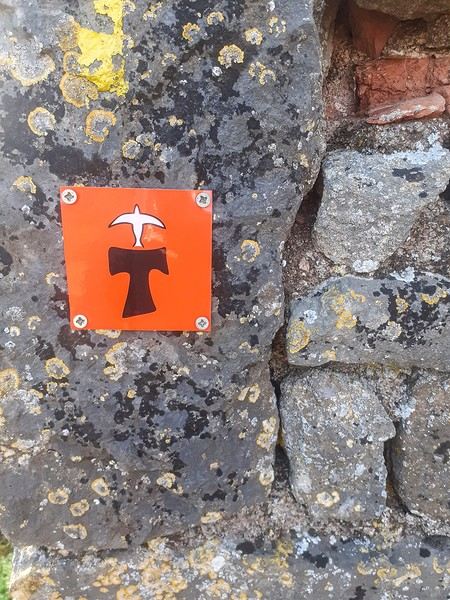
June 2024. While hiking with my brother on the GR 36 Tour du Morvan, I catch sight now and then of strange rectangular markers fixed to tree trunks. Against a bright orange background, a deep black Greek tau topped with a white dove. My first encounter with the Assisi Way. The Way of St. Francis: a pilgrimage route linking Vézelay in Burgundy to Assisi in Italy, covering nearly 1,800 km. It felt like an obvious next step—I immediately knew I’d take it on, attempt the adventure solo.
In the months that followed, I talked about my project to everyone—family, friends, my partner. An avalanche of comments, more or less the same but varying depending on each person’s character and life experiences. But deep down, it all boiled down to one legitimate question: why?
And the answers? Hesitant, awkward, partial, even confused. I quickly realized they weren’t so easy to find. It was as if my project seemed more like a whim, a kind of intimate caprice, rather than a well-thought-out plan. Of course, I knew the reasons that pushed me to leave—you always have to give some. Loved ones need to understand to feel reassured, and that’s understandable. But I fear that when I list them, they’ll sound like the same old checklist anyone embarking on this kind of journey might give. Of all the reasons I could mention, I’ll highlight just one here: the call of the road, the solo adventure that brings a powerful sense of freedom. A bit like Monsieur Seguin’s goat, who from her comfortable pen gazes longingly at the unconstrained horizon of the mountain. But if I’m being honest, I think I didn’t really know what I was looking for—or, more importantly, what I’d find. Deep down, when I reflect on it, one word keeps coming up that explains nothing and everything at once: desire.
Now well past sixty, I know that when I ask myself who I am or where I’m going, two things bring me fully back to myself: hiking and writing. And my intention was also to anchor this adventure through words, day by day. Writing down my feelings, emotions, discoveries, and reflections each evening. The famous travel journal that grounds the daily experience in reality. When I discovered the app "Polarstep," which was initially just meant to keep my loved ones updated and reassured, inform them of my progress, and maintain a connection, I found an opportunity to do it a little differently than usual. No retrospective notes polished up after returning, but spontaneous writing—recounting everything that crossed my mind during the day and publishing it immediately. A journey lived in real time.
This text is the exact transcription of my daily writings. Rereading them, I didn’t change a thing—just corrected a few mistakes and tweaked some awkward phrasing here and there. Short texts, fitting the format imposed by this kind of app. Writing as if addressing others.
Now, all that was left was to walk. April 18, 2026 – Vézelay.
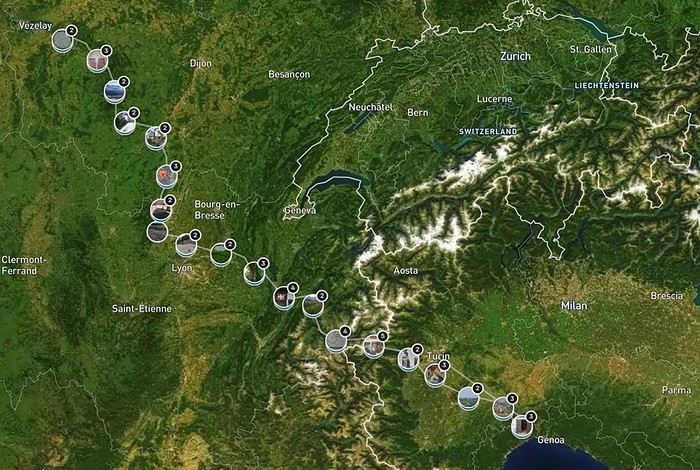
June 2024. While hiking with my brother on the GR 36 Tour du Morvan, I catch sight now and then of strange rectangular markers fixed to tree trunks. Against a bright orange background, a deep black Greek tau topped with a white dove. My first encounter with the Assisi Way. The Way of St. Francis: a pilgrimage route linking Vézelay in Burgundy to Assisi in Italy, covering nearly 1,800 km. It felt like an obvious next step—I immediately knew I’d take it on, attempt the adventure solo.
In the months that followed, I talked about my project to everyone—family, friends, my partner. An avalanche of comments, more or less the same but varying depending on each person’s character and life experiences. But deep down, it all boiled down to one legitimate question: why?
And the answers? Hesitant, awkward, partial, even confused. I quickly realized they weren’t so easy to find. It was as if my project seemed more like a whim, a kind of intimate caprice, rather than a well-thought-out plan. Of course, I knew the reasons that pushed me to leave—you always have to give some. Loved ones need to understand to feel reassured, and that’s understandable. But I fear that when I list them, they’ll sound like the same old checklist anyone embarking on this kind of journey might give. Of all the reasons I could mention, I’ll highlight just one here: the call of the road, the solo adventure that brings a powerful sense of freedom. A bit like Monsieur Seguin’s goat, who from her comfortable pen gazes longingly at the unconstrained horizon of the mountain. But if I’m being honest, I think I didn’t really know what I was looking for—or, more importantly, what I’d find. Deep down, when I reflect on it, one word keeps coming up that explains nothing and everything at once: desire.
Now well past sixty, I know that when I ask myself who I am or where I’m going, two things bring me fully back to myself: hiking and writing. And my intention was also to anchor this adventure through words, day by day. Writing down my feelings, emotions, discoveries, and reflections each evening. The famous travel journal that grounds the daily experience in reality. When I discovered the app "Polarstep," which was initially just meant to keep my loved ones updated and reassured, inform them of my progress, and maintain a connection, I found an opportunity to do it a little differently than usual. No retrospective notes polished up after returning, but spontaneous writing—recounting everything that crossed my mind during the day and publishing it immediately. A journey lived in real time.
This text is the exact transcription of my daily writings. Rereading them, I didn’t change a thing—just corrected a few mistakes and tweaked some awkward phrasing here and there. Short texts, fitting the format imposed by this kind of app. Writing as if addressing others.
Now, all that was left was to walk. April 18, 2026 – Vézelay.