Results for "Maria+Luisa+|+9+>+206"
77020 results found.
Hébergement et excursions en Équateur English translation pending
bonjour,
nous envisgeons de faire un voyage en equateur entre le 20 juillet et le 20 aout 2004. et ... nous sommes à la recherche de conseils et de bons plans pour se loger ( chez l'habitant ça nous tenterait bien) et pour se faire une idée des coins interessants mais pas trop touristiques.( a ce sujet, les iles galapagos sont elles vraiment incontournables ?)
donc si vous avez des infos, adresses nous sommes preneurs ! merci d'avance
nous envisgeons de faire un voyage en equateur entre le 20 juillet et le 20 aout 2004. et ... nous sommes à la recherche de conseils et de bons plans pour se loger ( chez l'habitant ça nous tenterait bien) et pour se faire une idée des coins interessants mais pas trop touristiques.( a ce sujet, les iles galapagos sont elles vraiment incontournables ?)
donc si vous avez des infos, adresses nous sommes preneurs ! merci d'avance
Tout-inclus nudiste English translation pending
Je recherche un tout-inclus de 4 étoiles ou plus dans le Sud où les plages sont nudistes et où les gens, ont l’esprit bien ouvert!!! J'attends vos suggestions
Terre et Mer
Terre et Mer
Climat à Cuba en février? English translation pending
🙂 Bonjour, je compte me rendre à Guadarlavaca au début février 2004, des personnes qui connaisse tout, me disent que je devrai porter du linge "long" et que sur la plage, ce n'est pas très chaud non plus.Mes derniers voyages, je les ait fait en République Dominicaine et au Mexique à peu près dans la même période et j'ai trouvé la température merveilleuse et même chaud.Quel est le problème à Cuba, qui se situe pourtant entre les 2, est-ce que c'est si froid en début d'année?J'aimerais avoir votre opinion, vous qui avez déjà été dans cet "iceberg" en février😕
merci
Dinosaure
merci
Dinosaure
Kayak et température à Cuba en décembre? English translation pending
Bonjour à tous,
Je veux aller à Cuba en décembre et j'aimerais savoir par expérience ce que vous en retenez. Je veux faire entre autres du kayak et profiter de la mer. Est-ce que vous me le conseillez étant donné la température fragile ? Je pensais peut-être à Cayo Coco.
Merci de me revenir avec vos expériences et suggestions,
Jeanne.
Je veux aller à Cuba en décembre et j'aimerais savoir par expérience ce que vous en retenez. Je veux faire entre autres du kayak et profiter de la mer. Est-ce que vous me le conseillez étant donné la température fragile ? Je pensais peut-être à Cayo Coco.
Merci de me revenir avec vos expériences et suggestions,
Jeanne.
Bons plans à Cuba pour un cadeau? English translation pending
bonjour à tous !
je suis face à un problème : celui d'organiser un voyage à cuba pour mes parents(leurs 60 ans). L'ombre au tableau est que je n'y est jamais mis les pieds, et que j'ai l'impression de me retrouver avec plein d'informations sans savoir les decrypter.
Toutes vos suggestions me seront utiles, tant sur le plan du trajet, du logement, des activitées.
je vous remercie d'avance et espère pouvoir vous aider de retour sur d'autres thèmes(plus musicaux que celui-ci).
a+
je suis face à un problème : celui d'organiser un voyage à cuba pour mes parents(leurs 60 ans). L'ombre au tableau est que je n'y est jamais mis les pieds, et que j'ai l'impression de me retrouver avec plein d'informations sans savoir les decrypter.
Toutes vos suggestions me seront utiles, tant sur le plan du trajet, du logement, des activitées.
je vous remercie d'avance et espère pouvoir vous aider de retour sur d'autres thèmes(plus musicaux que celui-ci).
a+
Voyage à travers le Canada et les États-Unis English translation pending
Allo,
Je compte partir en voyage a partir de début mai(après mes cours). J'aimerai avoir de l'information sur la plantation d'arbres et autres boulots payant qu'on peut faire dans l'ouest Canadian. Car d'ici à mai l'argent que je vais me ramasser sera seulement suffisant pour m'acheter le stock de camping et le billet d'avion.
J'aimerai en savoir plus sur les excurssions que je pourrait faire ds l'ouest et les prix.
Merci
J'aimerai en savoir plus sur les excurssions que je pourrait faire ds l'ouest et les prix.
Merci
Cherche hébergement à Alberta Banff English translation pending
Bonjour, je projette partir comme bien des québécois à Banff pour avril-mai, j'aimerais savoir si vous ne connaisseriez pas quelques lieux genre ''room and board" pas trop dispendieux pour une étudiante qui veut travailler dans un hôtel. Je sais que souvent les hôtels offrent une chambre à prix réduit pour les employés, mais vivre avec des anglais me plairait un peu plus.
merci de vos furturs conseil.
vive la liberté . Maria eva
merci de vos furturs conseil.
vive la liberté . Maria eva
Guardalavaca: Hôtel Club Amigo English translation pending
J'aimerais avoir des commentaires sur le club Amigo Guardalavaca.J'ai réservé dans la nouvelle section de bungalows.On m'a dit dans un autre forum que la plage était publique.Cela m'inquiète un peu car je suis un habitué des plages privées.Une plage privée pour l'hôtel.Merci à l'avance. Serge.
Travel companions for Sicily in May/June or Vietnam in September
Hello,
I’m a 70-year-old retiree looking for two or three travel companions to visit Sicily, which I haven’t been to, in May or June. I’m also planning to visit Vietnam in September. I love exploring, learning, and meeting new people, and I’m adaptable, but it’s not easy to find people with the same interests. Team spirit is important to me. I travel on a mid-range budget. Looking forward to your comments. You can reach me at: maryse.21 @orange.fr Best regards,
I’m a 70-year-old retiree looking for two or three travel companions to visit Sicily, which I haven’t been to, in May or June. I’m also planning to visit Vietnam in September. I love exploring, learning, and meeting new people, and I’m adaptable, but it’s not easy to find people with the same interests. Team spirit is important to me. I travel on a mid-range budget. Looking forward to your comments. You can reach me at: maryse.21 @orange.fr Best regards,
From Mexico to the Wonderful Chiapas
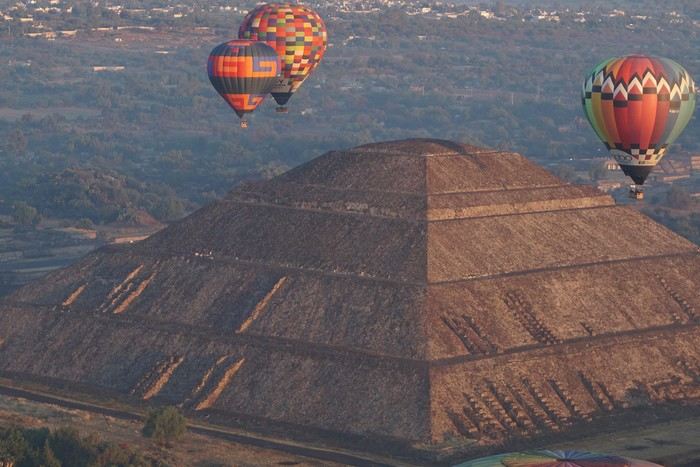
This one-month trip, from January 18 to February 17, 2026, allowed us to visit Mexico City and travel through the states of Puebla, Oaxaca, and Chiapas. We mainly used buses (ADO company) for medium and long distances and colectivos or taxis (or Uber) for shorter trips. Before leaving, I had contacted several people on the ground: Harry, a Vendéan settled in Oaxaca offering, among other things, discoveries of artisan villages or the Monte Albán site, and Oscar in Comitán de Domínguez. I’ll come back to our meeting with Oscar, who runs a local agency (CVL Travel Turismo Alternativo & Corre la voz) and owns a very pleasant hostel, a real highlight of our trip. Our journey took place in 8 stages on a loop starting from Mexico City. The connections between each were made by day or night buses depending on the trip duration. I had booked our seats in advance, either directly on the ADO company’s website or through booking platforms depending on the rates offered. Note that by planning ahead, I was able to benefit from very interesting "Early Booking" rates. There are several comfort classes. For all our trips, I had booked seats in Primera class buses, except for two in GL (Grand Luxe) class. The rates are very reasonable, and the buses turned out to be comfortable or even very comfortable (only the basic seat recline might surprise you).
Our itinerary and number of days per stage: Stage 1 – Mexico City: 4 days Stage 2 – Puebla: 2 days Stage 3 – Oaxaca: 4 days Stage 4 – San Agustinillo: 4 days Stage 5 – San Cristóbal de las Casas: 3 days Stage 6 – Comitán de Domínguez: 6 days Stage 7 – Palenque: 4 days Stage 8 – Mexico City: 2 days If I were to do it again, I’d remove one day from Palenque and add it either to Puebla or San Cristóbal to visit nearby sites or villages, or to San Agustinillo to enjoy one more day by the Pacific Ocean.
Stage 1: Mexico City (2,200 m / 9.2 million inhabitants) We arrived in the Mexican capital around 10:00 PM. The simplified customs process was very quick. After exchanging some money at the airport, we took a taxi to our youth hostel. We got around the capital on foot, of course, but also by metro. Signs are very rare, and we took the train in the wrong direction several times. After a few mistakes, we systematically asked on the platform if we were going the right way. The metro is very affordable. You need to get a rechargeable card (the Tarjeta de Movilidad Integrada) and top it up as needed. This card (less than 1 €) isn’t personal, so there’s no need to get one per person.
Mexico City: Day 1.
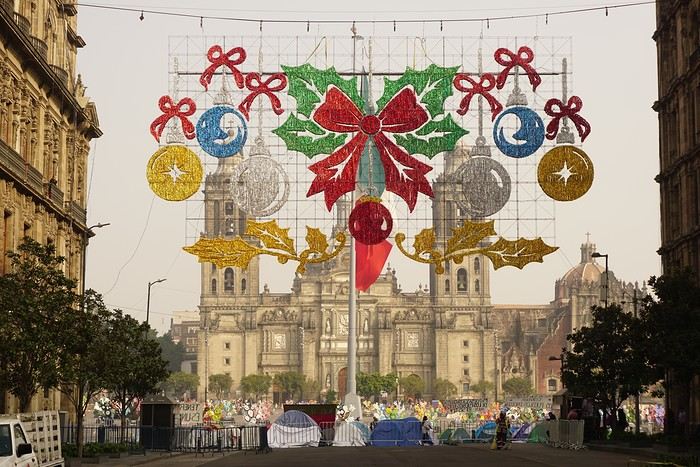
Visits and walks of the day (note: many museums are closed on Mondays): The Zócalo or Constitution Square: it’s one of the most beautiful, largest (195m x 240m), and oldest squares in the world. This is where Cortés decided to build the center of the new Spanish city on the site of the former Tenochtitlan market. Stones from the pyramids were used to pave the esplanade and build the surrounding colonial churches and buildings. During our visit, the huge square was covered with (resin) cacti, the theme of the temporary exhibition at the time. Indeed, temporary events or exhibitions take place here throughout the year. It’s also the endpoint for many protest marches.
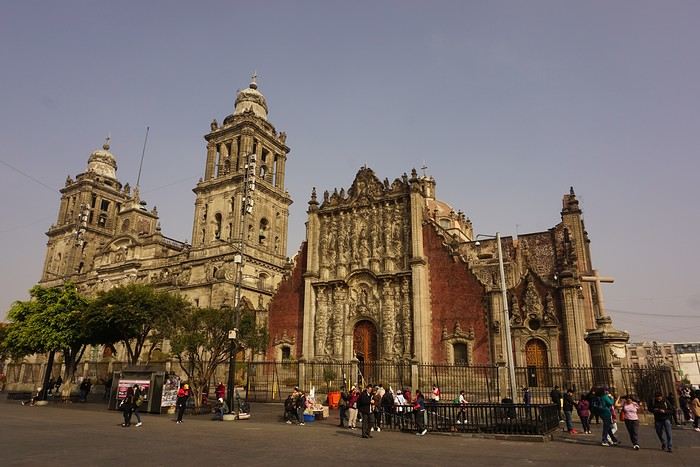
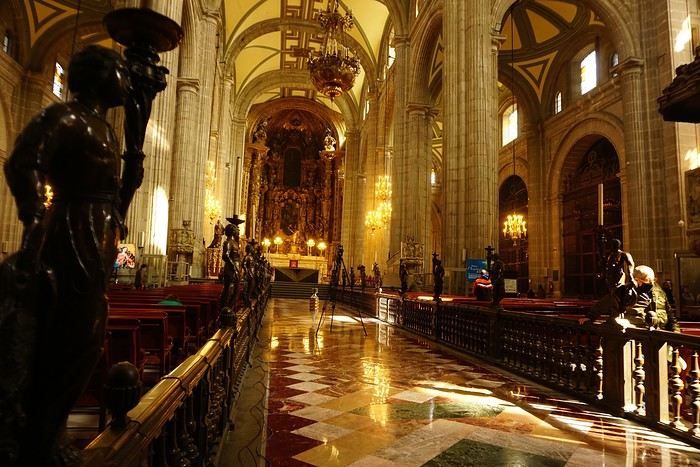


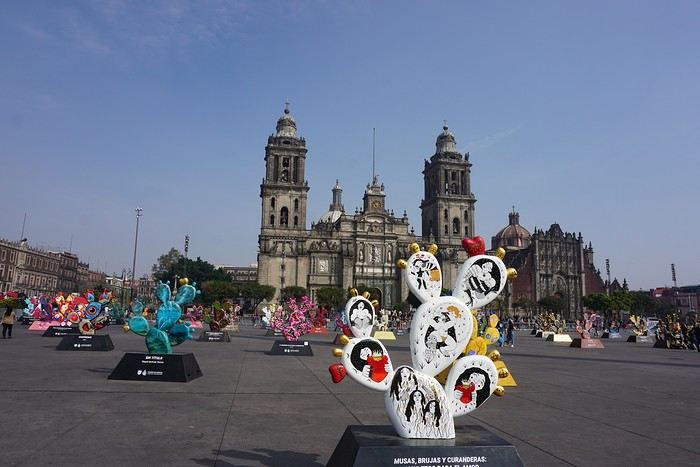
The cathedral: it’s sinking by one centimeter per year despite massive stabilization work (the collapse of many Mexican buildings—30 cm/year—is due to groundwater pumping). It was built starting in 1571 and completed in... 1813. The modest remains of the Templo Mayor (exterior view): they have high symbolic value, as this monument was the most important in the Mexica Empire.
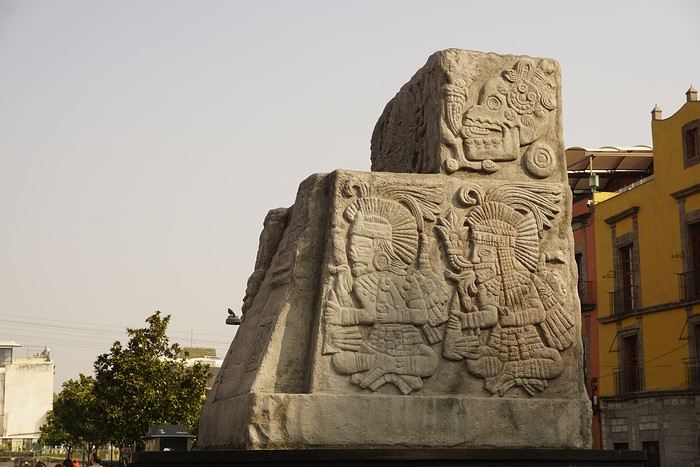 We then walked through the streets of the historic center to the Santísima Church, unfortunately closed for renovation work.
Next, we took the metro to visit one of Mexico’s most important pilgrimage sites: the Insigne y Nacional Basílicas de Santa María de Guadalupe, as well as the Capilla del Cerrito on the hill.
The first, dating from the colonial era, is really leaning a lot.
We then walked through the streets of the historic center to the Santísima Church, unfortunately closed for renovation work.
Next, we took the metro to visit one of Mexico’s most important pilgrimage sites: the Insigne y Nacional Basílicas de Santa María de Guadalupe, as well as the Capilla del Cerrito on the hill.
The first, dating from the colonial era, is really leaning a lot.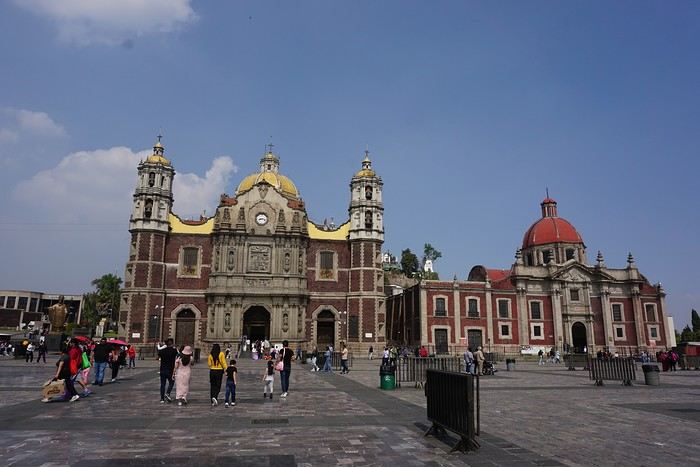
The second, shaped like a rotunda, is very impressive from the inside.
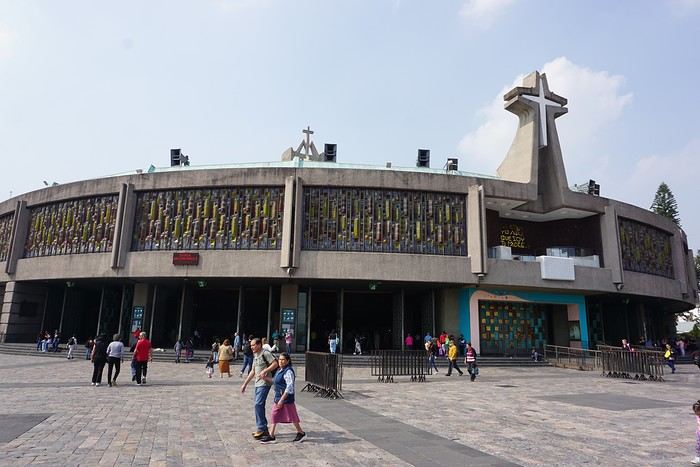
In the basement, there’s a sacred tunic where, in 1531, an image of the Virgin Mary is said to have appeared. A real mystery for scientists, the garment has never deteriorated since that date. Slow-moving conveyor belts allow pilgrims to admire it, preventing crowds from gathering in front of the image for hours. Well thought out!
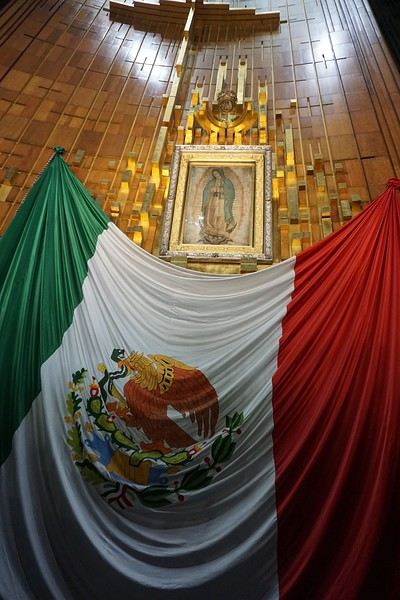 From the top of the Capilla del Cerrito, you get beautiful views of huge Mexico City.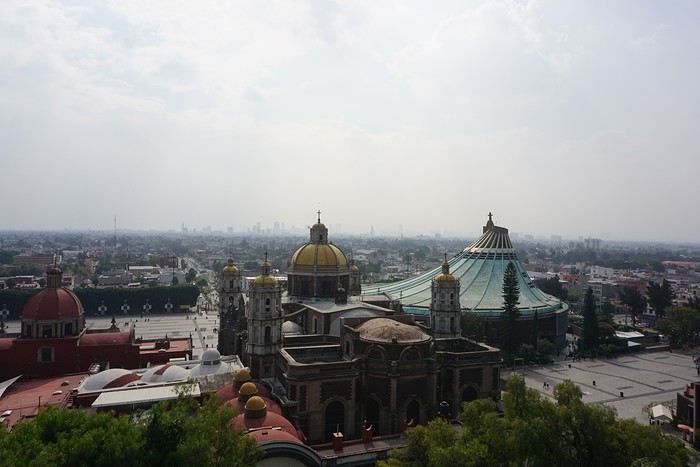
March 2026 Photo Contest Theme: Metal, Metallic
The 139th edition of this contest is now open, and this month’s theme is:
« Metal, Metallic».
From ore to rockets, wire to the Eiffel Tower—or in a pinch, even a self-portrait at the bottom of a spoon—the theme is broad enough that you should be able to come up with at least three ideas pretty easily! Sure, things might get tricky when it’s time to vote, but that could just be a sign of a successful contest, right?! But we’re not there yet.
Contest rules: You can post up to three photos, each in a separate message, clearly indicating their number (1, 2, or 3) along with the location where the photo was taken. Any explanations about your photos are welcome.
You’ll vote for three photos, clearly stating the name of the participant you’ve chosen, followed by the photo number. The first photo in your vote will receive three points, the second two points, and the third one point.
The winner will be the person whose photo earns the most points. In case of a tie, the winner will be the one with the most first-place votes—or, if still tied, the most second-place votes. Finally, if it’s a perfect tie, the winner will be the one who reached their score first. The winner will then have the pleasure of choosing the theme for the April 2026 contest and organizing it. Ties for any position other than first won’t be broken. Lastly, you don’t need to participate in the contest to vote. However, participants (and I hope there’ll be lots of you!) are strongly encouraged to vote!
Please only post contest photos in this thread, and starting Thursday, March 26 (00:01 Paris time), only votes.
Key dates: You can submit your photos starting today, Tuesday, March 3, 2026, until Wednesday, March 25, 2026 (23:59 Paris time). Voting will begin the minute after and end on Monday, March 30 (23:59 Paris time). Results will be announced on Tuesday, March 31, 2026 ... if all goes well!
A discussion thread for this contest is open HERE: The photorama can be found HERE
From ore to rockets, wire to the Eiffel Tower—or in a pinch, even a self-portrait at the bottom of a spoon—the theme is broad enough that you should be able to come up with at least three ideas pretty easily! Sure, things might get tricky when it’s time to vote, but that could just be a sign of a successful contest, right?! But we’re not there yet.
Contest rules: You can post up to three photos, each in a separate message, clearly indicating their number (1, 2, or 3) along with the location where the photo was taken. Any explanations about your photos are welcome.
You’ll vote for three photos, clearly stating the name of the participant you’ve chosen, followed by the photo number. The first photo in your vote will receive three points, the second two points, and the third one point.
The winner will be the person whose photo earns the most points. In case of a tie, the winner will be the one with the most first-place votes—or, if still tied, the most second-place votes. Finally, if it’s a perfect tie, the winner will be the one who reached their score first. The winner will then have the pleasure of choosing the theme for the April 2026 contest and organizing it. Ties for any position other than first won’t be broken. Lastly, you don’t need to participate in the contest to vote. However, participants (and I hope there’ll be lots of you!) are strongly encouraged to vote!
Please only post contest photos in this thread, and starting Thursday, March 26 (00:01 Paris time), only votes.
Key dates: You can submit your photos starting today, Tuesday, March 3, 2026, until Wednesday, March 25, 2026 (23:59 Paris time). Voting will begin the minute after and end on Monday, March 30 (23:59 Paris time). Results will be announced on Tuesday, March 31, 2026 ... if all goes well!
A discussion thread for this contest is open HERE: The photorama can be found HERE
Feedback on Kruger itinerary
Hi everyone,
I’m planning my next trip in September, and after two self-drive trips to Botswana last year, I’d love to explore Kruger. Since I’m used to camping, I’m thinking of renting an equipped van from Kitted Africa (a small Suzuki van—thanks Safari Expert!) to sleep in a tent and occasionally in a hut.
Here’s my provisional itinerary, and I’d love to hear your thoughts if you don’t mind. I’ve got 13 nights to plan in Kruger. The rental company is based in Nelspruit.
Entering from the south: 14-15-16.09: 3 nights at Crocodile Bridge or Lower Sabie 17-18-19.09: 3 nights at Skukuza 20-21.09: 2 nights at Satara 22-23-24.09: 3 nights at Olifants 25-26.09: 2 nights at Tamboti or Talamati
Exiting the park on 27.09 via Orpen Gate, then heading to Blyde River Canyon for a night in a hotel or elsewhere. 28.09: Return to Nelspruit, drop off the van, and stay in a hotel. 29.09 (midday): Airlink flight to Johannesburg, then an evening return flight to GVA.
What do you think? Too many nights here, not enough there?
I’ll be traveling solo, I love driving, and I enjoy settling in the middle of nature to listen, observe, and take photos (Botswana was perfect for that).
Thanks in advance! Nicole Photo: Baines Baobab, Botswana, April 2025
I’m planning my next trip in September, and after two self-drive trips to Botswana last year, I’d love to explore Kruger. Since I’m used to camping, I’m thinking of renting an equipped van from Kitted Africa (a small Suzuki van—thanks Safari Expert!) to sleep in a tent and occasionally in a hut.
Here’s my provisional itinerary, and I’d love to hear your thoughts if you don’t mind. I’ve got 13 nights to plan in Kruger. The rental company is based in Nelspruit.
Entering from the south: 14-15-16.09: 3 nights at Crocodile Bridge or Lower Sabie 17-18-19.09: 3 nights at Skukuza 20-21.09: 2 nights at Satara 22-23-24.09: 3 nights at Olifants 25-26.09: 2 nights at Tamboti or Talamati
Exiting the park on 27.09 via Orpen Gate, then heading to Blyde River Canyon for a night in a hotel or elsewhere. 28.09: Return to Nelspruit, drop off the van, and stay in a hotel. 29.09 (midday): Airlink flight to Johannesburg, then an evening return flight to GVA.
What do you think? Too many nights here, not enough there?
I’ll be traveling solo, I love driving, and I enjoy settling in the middle of nature to listen, observe, and take photos (Botswana was perfect for that).
Thanks in advance! Nicole Photo: Baines Baobab, Botswana, April 2025
April trip itinerary around Pisa with 2 kids
Hi everyone!
We’re so excited to be heading to Italy for the first time this April with our two kids for a week. We’ve booked our round-trip flight, and we’ll be arriving and departing from Pisa.
Our rough plan so far includes visiting Pisa, taking the train to Florence, and exploring the Cinque Terre. Last night, a friend also suggested adding Siena to the list.
Our kids are 12 and 9 and are used to walking, but we’re not looking to rush around too much. We’d love any advice, especially about accommodation. Should we stay in Pisa and take day trips by train, or split our nights between a couple of different places?
We’re just starting our research, so any tips would be amazing! 😉
Thanks in advance!
Australia-New Zealand combo: which month is best?
Hi everyone,
For a combined trip to New Zealand and eastern Australia, which time of year would you pick for photography and videography?
Thanks for your help
For a combined trip to New Zealand and eastern Australia, which time of year would you pick for photography and videography?
Thanks for your help
October Photo Contest Theme: Doors
Hi everyone!
This theme has probably been done before... but not recently, at least 😉 Doors—open, closed, of houses, castles... even if only the threshold remains. Since I’m not home, I don’t have access to my photos right now, and regarding the rules, I’ll let you refer to one of the previous contests.
Photos can be posted until Thursday the 23rd at 11:59 PM (Paris time). Voting will take place from the 24th to the 30th of October, and the results will be announced on the 31st during the day.
See you soon! 🙂
This theme has probably been done before... but not recently, at least 😉 Doors—open, closed, of houses, castles... even if only the threshold remains. Since I’m not home, I don’t have access to my photos right now, and regarding the rules, I’ll let you refer to one of the previous contests.
Photos can be posted until Thursday the 23rd at 11:59 PM (Paris time). Voting will take place from the 24th to the 30th of October, and the results will be announced on the 31st during the day.
See you soon! 🙂
How to choose your accommodation in South African national parks
Hi there,
It’s not always easy to pick where to stay in national parks... like Kruger, for example.
Below is an attempt to decode the different types and options...
Remember, to book in a national park, you do it through the Sanparks website, except in KwaZulu-Natal (KZN Wildlife).
Choosing the type of camp that suits you: · Main Rest Camps, Satellite Camps, Bushveld Camps, Overnight Hides, Bush Lodges, Camp Site, Luxury Lodges Main Rest Camps These camps are usually quite large, even very large, like Skukuza. They have a fence! You can move around freely inside these camps at night with a torch. Staff are available, and there are security guards. Shops are more or less well-stocked but have the basics. You’ll find souvenir shops, restaurants, bars, and most often a pool. Depending on your choice, there are camping spots, chalets, huts, etc., with varying levels of comfort. Shared kitchens, shared bathrooms, or private facilities in each accommodation (see below). This isn’t the "wild" version but rather the more luxurious and secure option. Bushveld Camps Smaller and more intimate, with some amenities, but no restaurants or shops. Check if there’s a fence. Satellite Camps Always close to the main camps (more or less). As a rule, you check in at the main camp. Comfort level is lower than the options above. Check if there’s a fence. Camp Site + Overnight Hide The wildest level. That says it all. Bush Lodges + Luxury Lodges Bush lodges: exclusive environment. Since I haven’t tried them, I can’t give any tips. Luxury lodges: well, the name says it all. This is Kruger’s version of a private game reserve lodge. Game drives with a ranger in an open vehicle. Accommodation ranges from luxurious to very luxurious. Meals and lodging are of the same standard. But even so, the game drive rules are the same. Sure, you get exclusive access to a small area, but you can’t leave the marked trails, and normally, the return time to camp is exactly the same. The rule actually says that exceptionally, if there’s a great opportunity within x meters, they *might* go off-trail. First case in the far south: a very flexible ranger and an amazing game drive. Second case: a mediocre ranger and a boring game drive. Note that some may only offer lodging. Personally, I think the added value can be excessively expensive. Choosing your accommodation within a camp. This depends on the camp. Below is an attempt to decode. Camp site: just a spot, that’s it. Access to facilities like toilets, shared kitchen, etc. Huts: basic amenities, usually just a fan. Safari tent: the name says it all. It’s already set up. Bungalow: well, it’s a bungalow, and a guest house is a bungalow for a group. Decoding: AC = air conditioning. Fan = fan. Private or shared toilets. Private or shared bathroom. Equipped kitchen or shared. Terrace. Perimeter or not. View or not. First 2–5 letters — the type of accommodation.
CK = Campsite EH/EA/EB = Hut (AC, so air-conditioned) ES = Hut (fan only) CTT/ST= Safari Tent LBVST = Safari Tent with bush view LRVST = Safari Tent with river view BD/BA = Bungalow with private (and equipped) kitchen BG/BE = Bungalow with shared kitchen F, G or CO = Guesthouse or Cottages (more than one bedroom)
Number after the letters — number of beds 2, 3, 4, or 6 beds. The base price is for 2 people. There’s an extra charge for each additional person. The last letter, if present, indicates a particular feature.
U = Perimeter — close to the camp’s edge V = Perimeter + view (e.g., river) Z = For disabled access L = Large spot (camping) D = DSTV (television) E = Enclosed veranda
Example: BD3U = 3 people, private kitchen (and bathroom/toilet), perimeter with view.
Choosing the type of camp that suits you: · Main Rest Camps, Satellite Camps, Bushveld Camps, Overnight Hides, Bush Lodges, Camp Site, Luxury Lodges Main Rest Camps These camps are usually quite large, even very large, like Skukuza. They have a fence! You can move around freely inside these camps at night with a torch. Staff are available, and there are security guards. Shops are more or less well-stocked but have the basics. You’ll find souvenir shops, restaurants, bars, and most often a pool. Depending on your choice, there are camping spots, chalets, huts, etc., with varying levels of comfort. Shared kitchens, shared bathrooms, or private facilities in each accommodation (see below). This isn’t the "wild" version but rather the more luxurious and secure option. Bushveld Camps Smaller and more intimate, with some amenities, but no restaurants or shops. Check if there’s a fence. Satellite Camps Always close to the main camps (more or less). As a rule, you check in at the main camp. Comfort level is lower than the options above. Check if there’s a fence. Camp Site + Overnight Hide The wildest level. That says it all. Bush Lodges + Luxury Lodges Bush lodges: exclusive environment. Since I haven’t tried them, I can’t give any tips. Luxury lodges: well, the name says it all. This is Kruger’s version of a private game reserve lodge. Game drives with a ranger in an open vehicle. Accommodation ranges from luxurious to very luxurious. Meals and lodging are of the same standard. But even so, the game drive rules are the same. Sure, you get exclusive access to a small area, but you can’t leave the marked trails, and normally, the return time to camp is exactly the same. The rule actually says that exceptionally, if there’s a great opportunity within x meters, they *might* go off-trail. First case in the far south: a very flexible ranger and an amazing game drive. Second case: a mediocre ranger and a boring game drive. Note that some may only offer lodging. Personally, I think the added value can be excessively expensive. Choosing your accommodation within a camp. This depends on the camp. Below is an attempt to decode. Camp site: just a spot, that’s it. Access to facilities like toilets, shared kitchen, etc. Huts: basic amenities, usually just a fan. Safari tent: the name says it all. It’s already set up. Bungalow: well, it’s a bungalow, and a guest house is a bungalow for a group. Decoding: AC = air conditioning. Fan = fan. Private or shared toilets. Private or shared bathroom. Equipped kitchen or shared. Terrace. Perimeter or not. View or not. First 2–5 letters — the type of accommodation.
CK = Campsite EH/EA/EB = Hut (AC, so air-conditioned) ES = Hut (fan only) CTT/ST= Safari Tent LBVST = Safari Tent with bush view LRVST = Safari Tent with river view BD/BA = Bungalow with private (and equipped) kitchen BG/BE = Bungalow with shared kitchen F, G or CO = Guesthouse or Cottages (more than one bedroom)
Number after the letters — number of beds 2, 3, 4, or 6 beds. The base price is for 2 people. There’s an extra charge for each additional person. The last letter, if present, indicates a particular feature.
U = Perimeter — close to the camp’s edge V = Perimeter + view (e.g., river) Z = For disabled access L = Large spot (camping) D = DSTV (television) E = Enclosed veranda
Example: BD3U = 3 people, private kitchen (and bathroom/toilet), perimeter with view.
Come discover the Gaspésie with me
Introduction
In this travel journal, you’ll find a list of all the activities we did during our road trip through the Gaspésie.
Videos are embedded throughout the summary. Just click on the image to start the video.
To jump to a specific post, here are the relevant links:
Gaspé - Forillon National Park - Interpretation Center Gaspé - Forillon National Park - Mont-Saint-Alban Trail Gaspé - Forillon National Park - La Chute Trail Gaspé - Forillon National Park - Les Graves Trail Percé - Rivière-aux-Émeraudes Waterfall Percé - Bonaventure Island National Park Percé - Hike at the Foot of Percé Rock Percé Geopark - Suspended Glass Platform Percé Geopark - Magic Forest Loop Percé Geopark - Belvedere Trails Percé Geopark - Springs and Les Pieds Croches Trails Percé Geopark - Crevasse Trail Percé Geopark - Grande Coupe Trail Percé Geopark - Grotto Path Bonaventure - Le Malin de la Rivière Bonaventure Maria - Grand Sault Waterfall Carleton-sur-Mer - Les Saults Waterfall - Éperlan Trail Matapédia - Two Rivers Belvedere Saint-Alexis-de-Matapédia - Dream Horizon Belvedere Saint-André-de-Restigouche - Heart of the Plateaus Belvedere Saint-André-de-Restigouche - Picot Waterfalls Saint-Alexis-de-Matapédia - Robitaille Stream Waterfalls Trail Saint-Alexandre-des-Lacs - Philomène Waterfall Saint-Ulric - Ti-Mé Waterfall
In this travel journal, you’ll find a list of all the activities we did during our road trip through the Gaspésie.
Videos are embedded throughout the summary. Just click on the image to start the video.
To jump to a specific post, here are the relevant links:
Gaspé - Forillon National Park - Interpretation Center Gaspé - Forillon National Park - Mont-Saint-Alban Trail Gaspé - Forillon National Park - La Chute Trail Gaspé - Forillon National Park - Les Graves Trail Percé - Rivière-aux-Émeraudes Waterfall Percé - Bonaventure Island National Park Percé - Hike at the Foot of Percé Rock Percé Geopark - Suspended Glass Platform Percé Geopark - Magic Forest Loop Percé Geopark - Belvedere Trails Percé Geopark - Springs and Les Pieds Croches Trails Percé Geopark - Crevasse Trail Percé Geopark - Grande Coupe Trail Percé Geopark - Grotto Path Bonaventure - Le Malin de la Rivière Bonaventure Maria - Grand Sault Waterfall Carleton-sur-Mer - Les Saults Waterfall - Éperlan Trail Matapédia - Two Rivers Belvedere Saint-Alexis-de-Matapédia - Dream Horizon Belvedere Saint-André-de-Restigouche - Heart of the Plateaus Belvedere Saint-André-de-Restigouche - Picot Waterfalls Saint-Alexis-de-Matapédia - Robitaille Stream Waterfalls Trail Saint-Alexandre-des-Lacs - Philomène Waterfall Saint-Ulric - Ti-Mé Waterfall
Weather in Cap Corse in February
Hi there,
I’m thinking of visiting Cap Corse in the second half of February, specifically Rogliano. Renting a house.
I’ve been told, “Oh no, not a good time—it’s the season for strong winds, Mistral, Tramontane, etc.” What do you all think? I’m now hesitating
I’ve been told, “Oh no, not a good time—it’s the season for strong winds, Mistral, Tramontane, etc.” What do you all think? I’m now hesitating
Family Trip Itinerary for the Yucatán
Hi there,
Back in 2002, we spent two weeks in Playa del Carmen. We did day trips to Cozumel, Isla Mujeres, Chichén Itzá, Tulum, and Xcaret.
We’re heading back at Christmas with our two daughters, aged 15 and 19. I’m sure it’s changed a lot with the booming tourism.
Flights are booked: Paris-Cancún on 19/12 (arriving at 8:20 PM) and Cancún-Paris on 01/01 at 1:30 PM. We’re still finalizing the itinerary because we want to explore but don’t want to switch hotels too often. We’ll be there for 13 nights and 12 days, so we’re choosing among: - Playa del Carmen - Cozumel - Holbox - Valladolid - Tulum - Mahahual
We won’t do everything, so any tips would be great! I’m also unsure if renting a car is the best option.
Thanks in advance!
Stéphane
Back in 2002, we spent two weeks in Playa del Carmen. We did day trips to Cozumel, Isla Mujeres, Chichén Itzá, Tulum, and Xcaret.
We’re heading back at Christmas with our two daughters, aged 15 and 19. I’m sure it’s changed a lot with the booming tourism.
Flights are booked: Paris-Cancún on 19/12 (arriving at 8:20 PM) and Cancún-Paris on 01/01 at 1:30 PM. We’re still finalizing the itinerary because we want to explore but don’t want to switch hotels too often. We’ll be there for 13 nights and 12 days, so we’re choosing among: - Playa del Carmen - Cozumel - Holbox - Valladolid - Tulum - Mahahual
We won’t do everything, so any tips would be great! I’m also unsure if renting a car is the best option.
Thanks in advance!
Stéphane
Second trip to Sardinia from 05/01/25 to 05/11/25
Following my first trip from May 1st to 11th, 2025:
-Flight: easyJet Geneva-Olbia 11:50 AM-1:20 PM (306 € for 2) + 102 € for checked baggage (408 € total)
-Flight: easyJet Cagliari-Geneva 12:45 PM-2:25 PM (308 € for 2)
-Car rental: Olbia-Cagliari (rental: 338.31 € + 120 € for one-way drop-off) + 320 € mandatory insurance imposed by Centauro) 778.31 € total
*May 1st: ***OLBIA: arrived at the airport at 3:15 PM: 1-hour delay with EasyJet! 😕 Car rental issue** Big scam with B Rent (hard to find their counter because of poor signage—they demanded an extra 320 €! But after 5.5 hours, Centauro also charged 320 € for insurance!!!) On top of that, we only got the car at 6:30 PM. Due to the delay, we went straight to our accommodation after grocery shopping. -Bandi House via Mastru Giogliu, San Teodoro 0039 338 852 8569 70 € (very nice apartment, spacious, great welcome from Paola but hard to find) -Nearby: San Teodoro: stagno (birds) Lonely Planet p.159
*May 2nd: -Heading to Isola Tavolara: boat from San Paolo. It was a holiday weekend, and all the Sardinians plus tourists were heading to the island. Everyone wanted to visit the cave and all the beaches—so crowded we gave up. Plus, we had to wait for the first departure at 11 AM with a return no earlier than 2 PM, and all boats left at the same time, so everyone ended up at the cave simultaneously! GUIDES: Green Guide p.140 and Lonely Planet p.158 -Capo Coda Cavallo: beautiful spot with a stunning beach (reserve) -EAST COAST: Budoni, Posada, La Caletta (port) with many white sand beaches
*Orosei (Green Guide p.102, Lonely Planet p.201) and Galtelli (lovely medieval village) *Dorgali (Green Guide p.96, Lonely Planet p.205): don’t skip Pasticceria Mulas (exceptional pastries at very reasonable prices) -Agriturismo Nennelle in Loculi: great welcome at this fairly new site—a farm with sheep. Large room with private bathroom and outdoor tables/chairs. Small fridge, kettle, and coffee machine. 54 0039 3495343765 €
***May 3rd:*** -Hike to Gola Su Gorropu: magnificent 4-hour trek (Lonely Planet p.205, Green Guide p.96)
-Arbatax: Rocce Rosse: stunning red porphyry rocks at the end of the port (Green Guide p.87, Lonely Planet p.210) -Aer Sana in Arzana: a remote village with a very narrow, picturesque road (there’s actually a second one). Via Don Bosco No. 12. 68.60 € 0039 347 9601599 Great welcome from Bruna/message—decorated with lots of taste and care. One room with private bathroom and a super well-equipped shared kitchen.
***May 4th:*** -Supramonte National Park and Gulf of Orosei (Green Guide p.98, Lonely Planet p.201) -Arzana-Ussassai-Seui-Sadali-Goldoni -Aritzo: small village on a slope—very friendly locals -Antonio Mura Museum: Sardinian expressionist painter -Ethnographic Museum: quite comprehensive -Spanish Prison "Sa Bovida" (prison under Spanish rule where people were imprisoned for witchcraft) -Antico Restauro: Via Umberto 38, Fonni. Small Sardinian house in the village with little light but tastefully decorated. Warm welcome from Mario Loddo. 65.02 €
*May 5th: Gennargentu Massif and Supramonte -Orgosolo: Lonely Planet p.190, Green Guide p.123 -Nuraghe di Tiscali (Green Guide p.122, Lonely Planet p.207): allow over 1 hour of hiking to reach a slope with a cave (good shoes required) -Arrival in Nuoro: large city. Via Salvatore Manniri 39 (0039 33118617847). French expat living in Sardinia—very large, well-designed apartment on the 5th floor. 73 €
*May 6th: -NUORO (Lonely Planet p.186, Green Guide p.112) .Museum of Sardinian writer Grazia Deledda (1871-1936), Nobel Prize in Literature 1927 .Sardinian Ethnographic Museum -Ulassai: Stazione dell’Arte Maria Lai (1919-2013) (Lonely Planet p.212, Green Guide p.85). Major climbing spot in a charming little village -Jerzu: "La Finestra sulla Volla" Via Umberto I 551 0039 3403754751 72 € apartment with 1 bedroom, 1 bathroom, and 1 kitchen
*May 7th: OGLIASTRA: -Jerzu to Tortolì via Barisardo: quite difficult route through narrow streets in various villages! Return to Porto Corallo, Capo Ferrato (Green Guide p.64) -Hotel in San Vito: "Su Furriadroxiu" Via Lamarmora 35/37 0039 3501041432 61.20 € (Green Guide p.65)
*May 8th: -San Vito -Armungia (Green Guide p.65): small village at 566 m with nuraghe and museum + fresco "Homage to the Sassari Brigade" -Goni: cork oak forests and Nuraghe di Pranu Muteddu (60 aligned menhirs and tombs) (Green Guide p.66, Lonely Planet p.197) -San Vito: restaurant "La Capinera" Via Nazionale 80, 09040: very good -From Villasimius to Costa Rei: Lonely Planet p.65, Green Guide p.60 .Punta Molentis: white sand, rocks, but very touristy -Capo Carbonara: military zone, not much to see -Accommodation in Cagliari: Villa Volta 18, Monserrato 0039 3480640592: 74.70 € Well-equipped studio, city center, quiet
*May 9th: -Visit to Cagliari with underground tunnels Regina at the foot of the citadel (elevator) (Lonely Planet p.48, Green Guide p.32) .Castello, prefecture, San Maria church .Charming and picturesque Villanova district -Barumini (Green Guide p.70, Lonely Planet p.90): Nuraghe di Su Nuraxi, 1500 BC with its tower and fortifications—the largest Sardinian site (UNESCO) Entry: 15 € with mandatory guided tour -Parco della Giara di Gesturi (basaltic plateau): great for hiking Presence of the Sardinian pony: small Sardinian horse -Accommodation in Sanluri: 2 Via Giacomo Mozart 0039 3495343765: 80 €
*May 10th: -Beautiful Isola di San Pietro: ferry from Portovesme to Carloforte (round trip) 33.50 € with car (Green Guide p.318, Lonely Planet p.81) 15 km long and 15 km wide .Carloforte: peaceful little town with its palazzi and colorful houses .Tonnara della Punta: former tuna cannery—can be visited by reservation .Capo Sandalo: with its lighthouse (nice little trail to hike) .La Caletta: beaches and cliffs .Punta delle Colonne: 2 trachyte formations—very pretty
-TOTAL: 2432 € for 2 -1400 km by car: 160 € for gas (between 1.60 and 1.76 €/L) -Food, including 2 restaurants: 265 € -Accommodation via Booking: 685 € -Flights: 614 € for 2 -Car: 708.50 € + one-way drop-off: 120 € + mandatory insurance of 320 € (not planned!)
*May 1st: ***OLBIA: arrived at the airport at 3:15 PM: 1-hour delay with EasyJet! 😕 Car rental issue** Big scam with B Rent (hard to find their counter because of poor signage—they demanded an extra 320 €! But after 5.5 hours, Centauro also charged 320 € for insurance!!!) On top of that, we only got the car at 6:30 PM. Due to the delay, we went straight to our accommodation after grocery shopping. -Bandi House via Mastru Giogliu, San Teodoro 0039 338 852 8569 70 € (very nice apartment, spacious, great welcome from Paola but hard to find) -Nearby: San Teodoro: stagno (birds) Lonely Planet p.159
*May 2nd: -Heading to Isola Tavolara: boat from San Paolo. It was a holiday weekend, and all the Sardinians plus tourists were heading to the island. Everyone wanted to visit the cave and all the beaches—so crowded we gave up. Plus, we had to wait for the first departure at 11 AM with a return no earlier than 2 PM, and all boats left at the same time, so everyone ended up at the cave simultaneously! GUIDES: Green Guide p.140 and Lonely Planet p.158 -Capo Coda Cavallo: beautiful spot with a stunning beach (reserve) -EAST COAST: Budoni, Posada, La Caletta (port) with many white sand beaches
*Orosei (Green Guide p.102, Lonely Planet p.201) and Galtelli (lovely medieval village) *Dorgali (Green Guide p.96, Lonely Planet p.205): don’t skip Pasticceria Mulas (exceptional pastries at very reasonable prices) -Agriturismo Nennelle in Loculi: great welcome at this fairly new site—a farm with sheep. Large room with private bathroom and outdoor tables/chairs. Small fridge, kettle, and coffee machine. 54 0039 3495343765 €
***May 3rd:*** -Hike to Gola Su Gorropu: magnificent 4-hour trek (Lonely Planet p.205, Green Guide p.96)
-Arbatax: Rocce Rosse: stunning red porphyry rocks at the end of the port (Green Guide p.87, Lonely Planet p.210) -Aer Sana in Arzana: a remote village with a very narrow, picturesque road (there’s actually a second one). Via Don Bosco No. 12. 68.60 € 0039 347 9601599 Great welcome from Bruna/message—decorated with lots of taste and care. One room with private bathroom and a super well-equipped shared kitchen.
***May 4th:*** -Supramonte National Park and Gulf of Orosei (Green Guide p.98, Lonely Planet p.201) -Arzana-Ussassai-Seui-Sadali-Goldoni -Aritzo: small village on a slope—very friendly locals -Antonio Mura Museum: Sardinian expressionist painter -Ethnographic Museum: quite comprehensive -Spanish Prison "Sa Bovida" (prison under Spanish rule where people were imprisoned for witchcraft) -Antico Restauro: Via Umberto 38, Fonni. Small Sardinian house in the village with little light but tastefully decorated. Warm welcome from Mario Loddo. 65.02 €
*May 5th: Gennargentu Massif and Supramonte -Orgosolo: Lonely Planet p.190, Green Guide p.123 -Nuraghe di Tiscali (Green Guide p.122, Lonely Planet p.207): allow over 1 hour of hiking to reach a slope with a cave (good shoes required) -Arrival in Nuoro: large city. Via Salvatore Manniri 39 (0039 33118617847). French expat living in Sardinia—very large, well-designed apartment on the 5th floor. 73 €
*May 6th: -NUORO (Lonely Planet p.186, Green Guide p.112) .Museum of Sardinian writer Grazia Deledda (1871-1936), Nobel Prize in Literature 1927 .Sardinian Ethnographic Museum -Ulassai: Stazione dell’Arte Maria Lai (1919-2013) (Lonely Planet p.212, Green Guide p.85). Major climbing spot in a charming little village -Jerzu: "La Finestra sulla Volla" Via Umberto I 551 0039 3403754751 72 € apartment with 1 bedroom, 1 bathroom, and 1 kitchen
*May 7th: OGLIASTRA: -Jerzu to Tortolì via Barisardo: quite difficult route through narrow streets in various villages! Return to Porto Corallo, Capo Ferrato (Green Guide p.64) -Hotel in San Vito: "Su Furriadroxiu" Via Lamarmora 35/37 0039 3501041432 61.20 € (Green Guide p.65)
*May 8th: -San Vito -Armungia (Green Guide p.65): small village at 566 m with nuraghe and museum + fresco "Homage to the Sassari Brigade" -Goni: cork oak forests and Nuraghe di Pranu Muteddu (60 aligned menhirs and tombs) (Green Guide p.66, Lonely Planet p.197) -San Vito: restaurant "La Capinera" Via Nazionale 80, 09040: very good -From Villasimius to Costa Rei: Lonely Planet p.65, Green Guide p.60 .Punta Molentis: white sand, rocks, but very touristy -Capo Carbonara: military zone, not much to see -Accommodation in Cagliari: Villa Volta 18, Monserrato 0039 3480640592: 74.70 € Well-equipped studio, city center, quiet
*May 9th: -Visit to Cagliari with underground tunnels Regina at the foot of the citadel (elevator) (Lonely Planet p.48, Green Guide p.32) .Castello, prefecture, San Maria church .Charming and picturesque Villanova district -Barumini (Green Guide p.70, Lonely Planet p.90): Nuraghe di Su Nuraxi, 1500 BC with its tower and fortifications—the largest Sardinian site (UNESCO) Entry: 15 € with mandatory guided tour -Parco della Giara di Gesturi (basaltic plateau): great for hiking Presence of the Sardinian pony: small Sardinian horse -Accommodation in Sanluri: 2 Via Giacomo Mozart 0039 3495343765: 80 €
*May 10th: -Beautiful Isola di San Pietro: ferry from Portovesme to Carloforte (round trip) 33.50 € with car (Green Guide p.318, Lonely Planet p.81) 15 km long and 15 km wide .Carloforte: peaceful little town with its palazzi and colorful houses .Tonnara della Punta: former tuna cannery—can be visited by reservation .Capo Sandalo: with its lighthouse (nice little trail to hike) .La Caletta: beaches and cliffs .Punta delle Colonne: 2 trachyte formations—very pretty
-TOTAL: 2432 € for 2 -1400 km by car: 160 € for gas (between 1.60 and 1.76 €/L) -Food, including 2 restaurants: 265 € -Accommodation via Booking: 685 € -Flights: 614 € for 2 -Car: 708.50 € + one-way drop-off: 120 € + mandatory insurance of 320 € (not planned!)
Madeira Between Lockdowns - July-August 2021
Hi there,
I'm starting a new travel journal with my itinerary and memories in mind, and maybe a few photos if I can find some.
The context:
April 2020, I was supposed to go to Uzbekistan, and October 2020 to Texas: both canceled due to COVID. Summer vacations in 2020 weren’t gonna be fun. Optimistic, I’d rescheduled both trips for roughly the same dates in 2021: the first was canceled again because of COVID, the second due to U.S. entry conditions (still COVID-related!). Summer vacations in 2021 *had* to be more fun, or I was gonna lose it!!! Plus, our parents are dealing with health issues, which is weighing us down—we really need to get away!
So I looked into where we could go, somewhere we could live almost normally. I saw that Madeira had implemented strict COVID measures but that life on the island was pretty chill afterward. For me, Madeira = sun + hiking + landscapes. BINGO.
Day 1: The flight and arrival on the island
Flight with TAP via Lisbon, departing around noon. We wore our masks properly on the plane. (My last flight was to Portugal, and I told myself I’d break the jinx and leave COVID behind us.) Layover in Lisbon, then an afternoon flight to Madeira. The landing went smoothly, no wind. Cristiano Ronaldo Airport in Funchal is known for being one of the trickiest in the world due to crosswinds. The checks were standard, except COVID added an extra step. Before the trip, I had to fill out a questionnaire (Madeira Safe). Once there, a group of young people—probably students—greeted us, each with a tablet. The health questionnaire and vaccine check were super quick. Then we saw a doctor, and just like that, we were wished a great stay. Honestly, it was so well organized that it only took 10 minutes. We wouldn’t put our masks back on until we returned!
A taxi took us to our hotel in the hills above Funchal—a pretty upscale place, which isn’t our usual style, but we needed it this time! Dinner on the hotel terrace with the city at our feet. Amazing!
HOTEL: Quinta da Bela Vista
The +: We’re traveling!!! The -: Nothing.
The context:
April 2020, I was supposed to go to Uzbekistan, and October 2020 to Texas: both canceled due to COVID. Summer vacations in 2020 weren’t gonna be fun. Optimistic, I’d rescheduled both trips for roughly the same dates in 2021: the first was canceled again because of COVID, the second due to U.S. entry conditions (still COVID-related!). Summer vacations in 2021 *had* to be more fun, or I was gonna lose it!!! Plus, our parents are dealing with health issues, which is weighing us down—we really need to get away!
So I looked into where we could go, somewhere we could live almost normally. I saw that Madeira had implemented strict COVID measures but that life on the island was pretty chill afterward. For me, Madeira = sun + hiking + landscapes. BINGO.
Day 1: The flight and arrival on the island
Flight with TAP via Lisbon, departing around noon. We wore our masks properly on the plane. (My last flight was to Portugal, and I told myself I’d break the jinx and leave COVID behind us.) Layover in Lisbon, then an afternoon flight to Madeira. The landing went smoothly, no wind. Cristiano Ronaldo Airport in Funchal is known for being one of the trickiest in the world due to crosswinds. The checks were standard, except COVID added an extra step. Before the trip, I had to fill out a questionnaire (Madeira Safe). Once there, a group of young people—probably students—greeted us, each with a tablet. The health questionnaire and vaccine check were super quick. Then we saw a doctor, and just like that, we were wished a great stay. Honestly, it was so well organized that it only took 10 minutes. We wouldn’t put our masks back on until we returned!
A taxi took us to our hotel in the hills above Funchal—a pretty upscale place, which isn’t our usual style, but we needed it this time! Dinner on the hotel terrace with the city at our feet. Amazing!
HOTEL: Quinta da Bela Vista
The +: We’re traveling!!! The -: Nothing.
Visiting Bologna in Photos
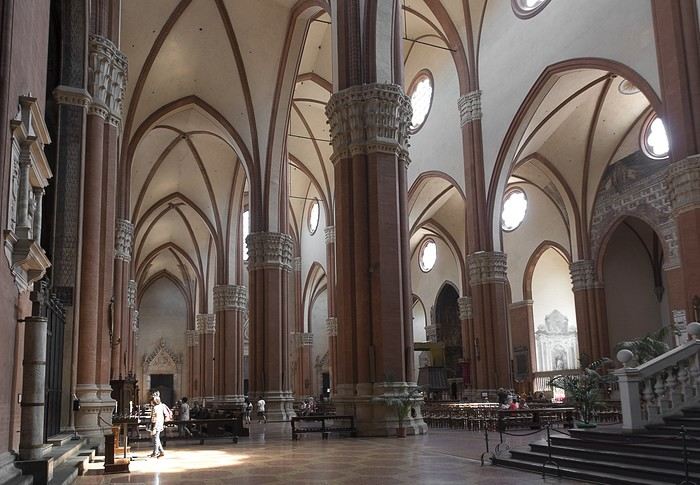
Since I didn’t have time to write a proper travel journal, I thought I’d share a few photos of Bologna—a really lovely city I discovered in 2017 while stopping on my way to Tuscany.
Around Piazza Maggiore, which was packed with a stage and chairs for a show, stands the Basilica of San Petronio, massive and Gothic in style, with an unfinished façade (a common sight in Italy).

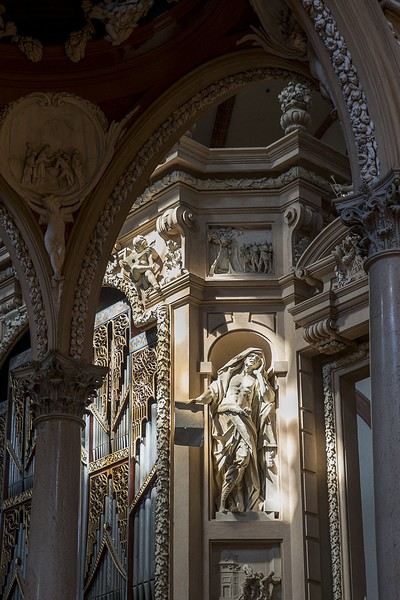
Another building near the square:
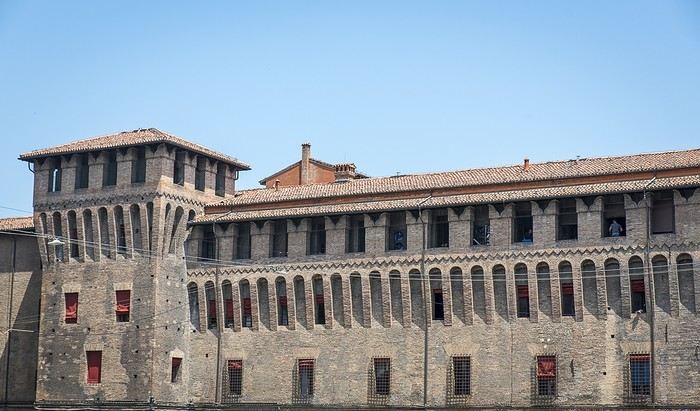 But Bologna’s real charm lies in its porticoes, which were added to the UNESCO World Heritage list in 2021: 62 km of arcades running along buildings, letting you walk sheltered from the sun or rain. Back in 1288, the city required houses to include private arcades for public use. In the city center, you can stroll under 32 km of porticoes in all sorts of styles—some plain, some ornate—with a strong presence of red tones.
Another building near the square:
But Bologna’s real charm lies in its porticoes, which were added to the UNESCO World Heritage list in 2021: 62 km of arcades running along buildings, letting you walk sheltered from the sun or rain. Back in 1288, the city required houses to include private arcades for public use. In the city center, you can stroll under 32 km of porticoes in all sorts of styles—some plain, some ornate—with a strong presence of red tones.Where to stay between Tarifa and Cadiz for hiking along the beaches?
Hi there!
We’re heading to Andalusia for a week in early April. We’ll spend 3 days in Seville and 1 day in Córdoba. After that, we’d like to rent a car for the remaining 3 days to explore the Costa de la Luz.
We’d love to do some great hikes along the beaches between Tarifa and Cadiz and visit Cadiz itself. Is 3 full days enough to do this? Is it better to stay in Cadiz and explore the area from there, or should we move around to different villages? Do you have any hiking suggestions? We’ve spotted some hikes in Barbate, Trafalgar Beach, and Bolonia.
Thanks for your tips and hiking ideas! :-)
We’d love to do some great hikes along the beaches between Tarifa and Cadiz and visit Cadiz itself. Is 3 full days enough to do this? Is it better to stay in Cadiz and explore the area from there, or should we move around to different villages? Do you have any hiking suggestions? We’ve spotted some hikes in Barbate, Trafalgar Beach, and Bolonia.
Thanks for your tips and hiking ideas! :-)
A Trip to Australia: Tasmania
Sunday, November 26, 2023
Melbourne - Hobart
Flawless journey to Hobart. Our stay in the southernmost land we’ve ever visited. And indeed, everything’s different. The climate—14°C, rain that varies in intensity but never stops, the landscapes… It’s a shock! But, apart from the bad weather, Dom is thrilled.
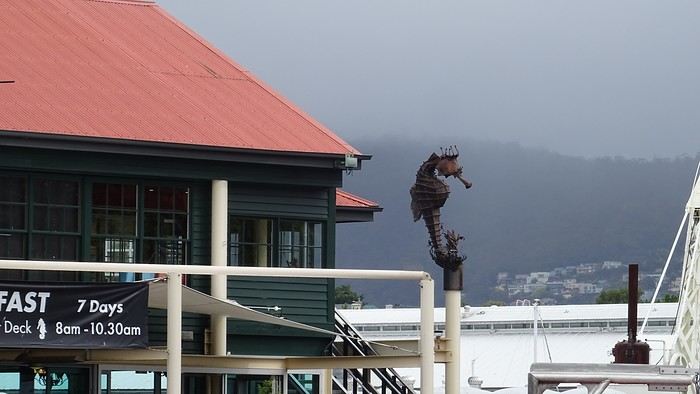
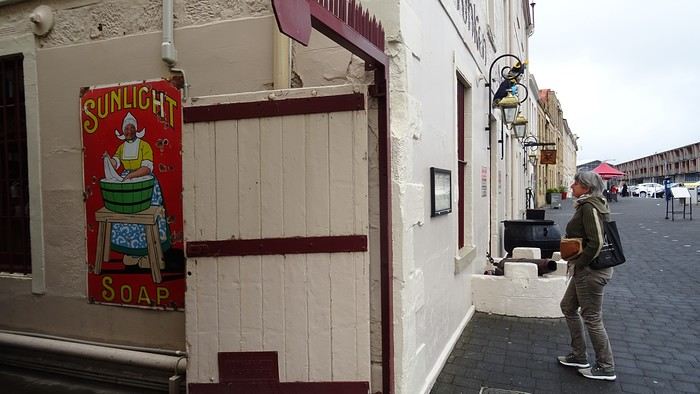
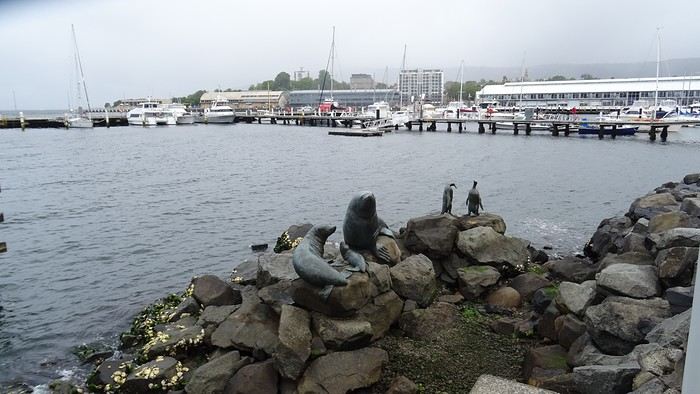
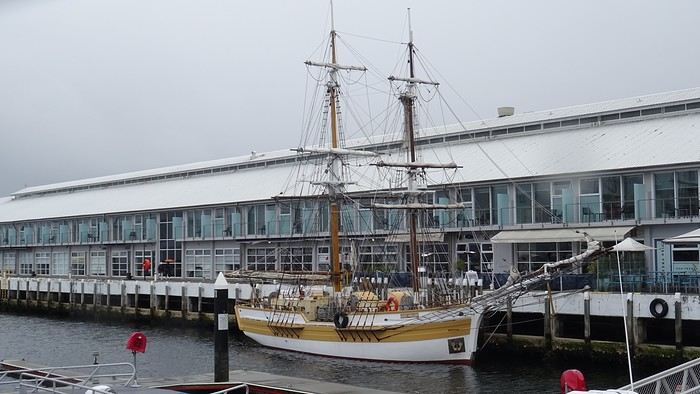
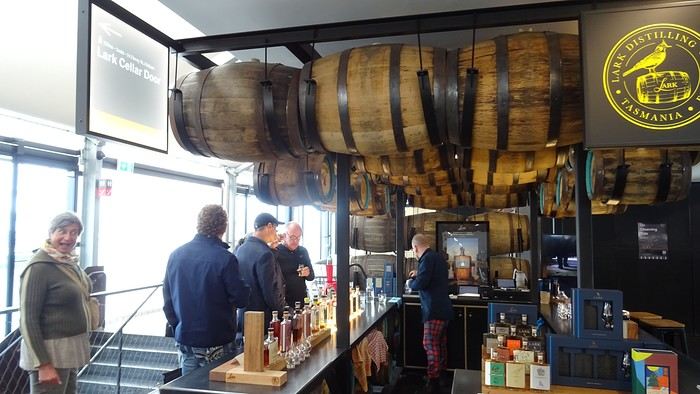
We’ve also downgraded our accommodations. We’ve got a tiny room, and the bathroom—private, at least—is two hallways away… But the price is reasonable (under 100 €) and the location is central.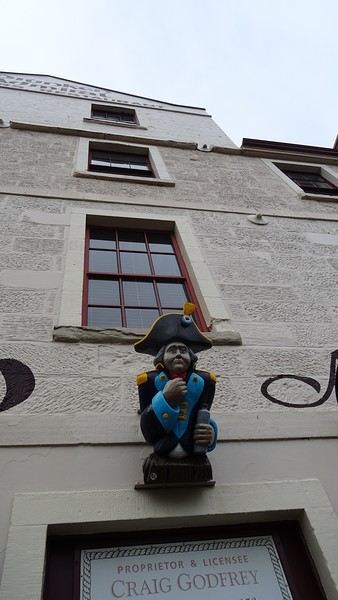
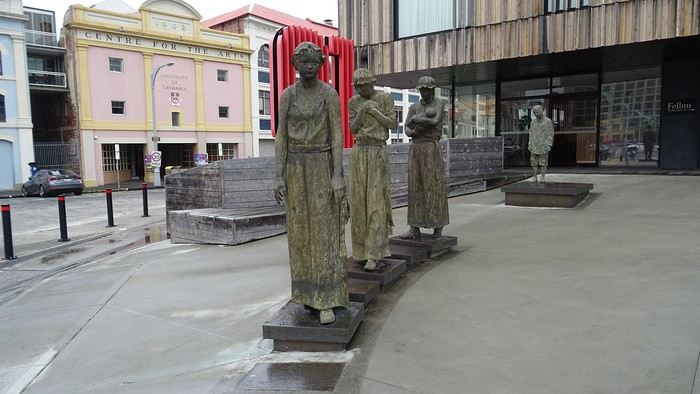
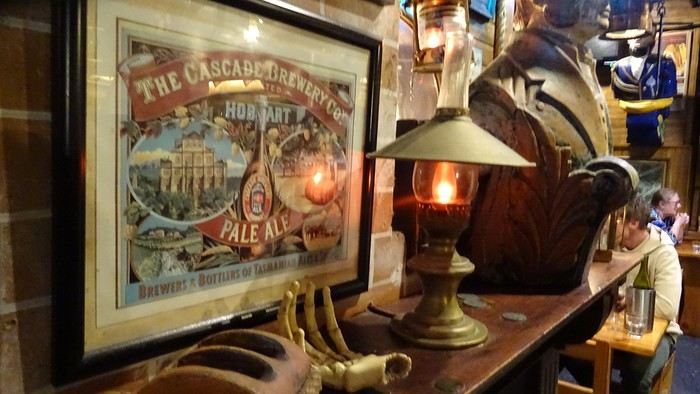
We cheered ourselves up by dining at *The Drunken Admiral* (reservations are a must—we barely snagged a table for 8 PM!). The decor is straight out of an old ship, complete with cheeky statues in the style of *Pirates of the Caribbean*… We had fun! The food was decent, but pricey. Dom loved it; I was less impressed.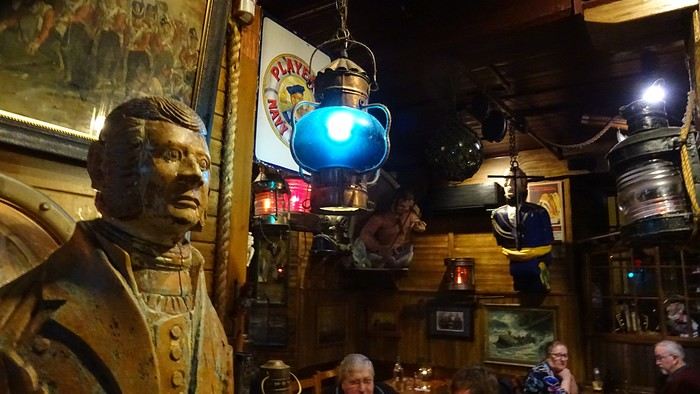
We bailed on the British series *Emma*, based on Jane Austen. We couldn’t take it anymore. The boredom was so intense that the specter of a collective suicide loomed over us. This show, where the world’s most insufferable bourgeoisie—the English nobility—lives out love stories with such improbable naivety that I wanted to scream, is pure torture. Mercy, I surrender! I’ll tell you anything you want, just make it stop! We got rid of it. We’re safe now!
We’ve also downgraded our accommodations. We’ve got a tiny room, and the bathroom—private, at least—is two hallways away… But the price is reasonable (under 100 €) and the location is central.
We cheered ourselves up by dining at *The Drunken Admiral* (reservations are a must—we barely snagged a table for 8 PM!). The decor is straight out of an old ship, complete with cheeky statues in the style of *Pirates of the Caribbean*… We had fun! The food was decent, but pricey. Dom loved it; I was less impressed.
We bailed on the British series *Emma*, based on Jane Austen. We couldn’t take it anymore. The boredom was so intense that the specter of a collective suicide loomed over us. This show, where the world’s most insufferable bourgeoisie—the English nobility—lives out love stories with such improbable naivety that I wanted to scream, is pure torture. Mercy, I surrender! I’ll tell you anything you want, just make it stop! We got rid of it. We’re safe now!
Review of a Mediterranean cruise on the Splendida and 24 hours in Venice – October 2024
Hi everyone,
What a joy to be back here and pick up where we left off after all these months of hiatus.
I hope you’ll enjoy the story of this little trip around the Eastern Mediterranean. This cruise was the perfect way to satisfy our longing to return to Greece and Istanbul. The end of the season, until late November, is the best time to visit the Mediterranean in my opinion—when climate disruptions don’t get in the way.
Departing from Trieste, our stops were Katakolon, Piraeus, Kusadasi, Istanbul, Corfu, and Bari, before returning to Trieste and then Venice, where we planned a very short 24-hour stay.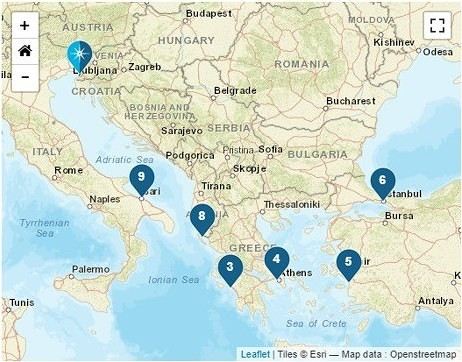
We left home at 6:15 AM—our first cruise departure since moving to Normandy. What I miss most about living in the Gard is how close we were to Marseille Airport. No more hopping over to Marignane in an hour; now we have to plan for a three-hour trip to CDG, even under the best conditions on an early Sunday morning.
It was impossible to book a hotel night before our flight because, starting in April, the Ibis was priced at 450 € per night, and the Mercure was flirting with 800 €—breakfast not included, of course. 😏
I had a feeling there must’ve been a conference or something going on… Turns out, it was just the auto show. They simply adjusted the room prices to match the cost of the cars. 😛
Our flight took us to Venice, where we caught a FlixBus to Trieste. We arrived at Trieste’s train station in the afternoon and walked to our hotel in the city center.
After treating ourselves to an amazing pizza at a restaurant (Di Napoli Maestri Pizzaioli, Via Armando Diaz 10) for a very reasonable price, we enjoyed the mild evening temperature while exploring the stunning buildings of this charming city by night. These magnificent structures are a testament to the city’s past. Trieste became Austrian in 1382 due to its complicated relationship with Venice, and it wasn’t until 1918, at the end of World War I, that it became Italian again. The city’s lighting beautifully highlights the architecture of the buildings.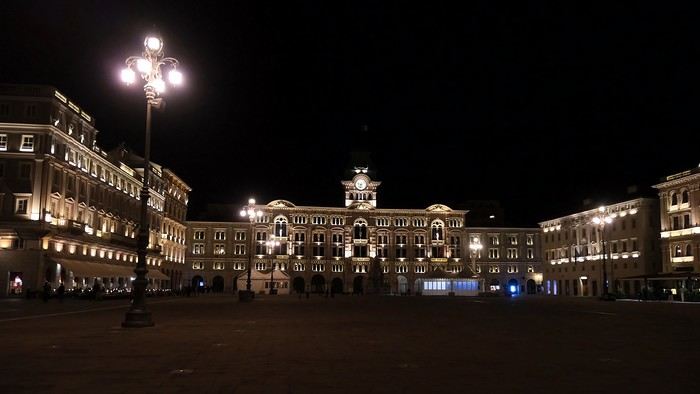
The terraces were lively, and the atmosphere was so warm and inviting that we wanted to stay out even longer.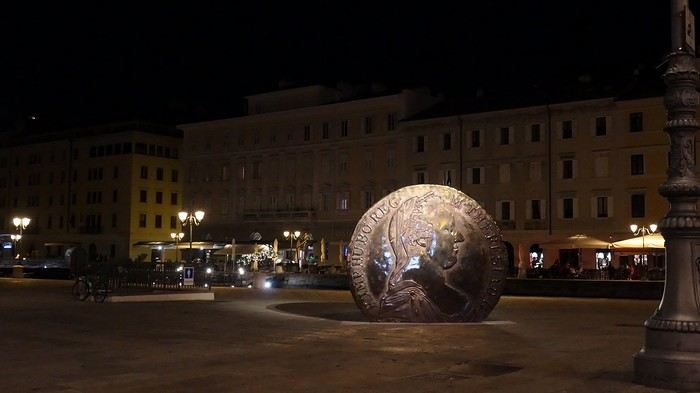
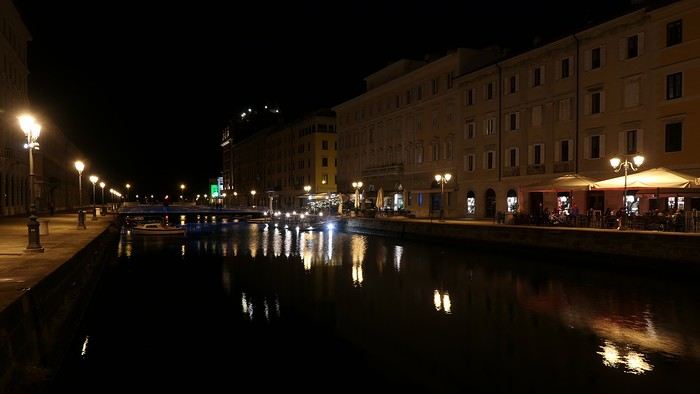
But we’d been up since 4 AM, so we were happy to retreat to the quiet of our hotel, located in the pedestrian center just a few steps from the port (Urban Hotel Design—highly recommended).
More to come soon.
What a joy to be back here and pick up where we left off after all these months of hiatus.
I hope you’ll enjoy the story of this little trip around the Eastern Mediterranean. This cruise was the perfect way to satisfy our longing to return to Greece and Istanbul. The end of the season, until late November, is the best time to visit the Mediterranean in my opinion—when climate disruptions don’t get in the way.
Departing from Trieste, our stops were Katakolon, Piraeus, Kusadasi, Istanbul, Corfu, and Bari, before returning to Trieste and then Venice, where we planned a very short 24-hour stay.
We left home at 6:15 AM—our first cruise departure since moving to Normandy. What I miss most about living in the Gard is how close we were to Marseille Airport. No more hopping over to Marignane in an hour; now we have to plan for a three-hour trip to CDG, even under the best conditions on an early Sunday morning.
It was impossible to book a hotel night before our flight because, starting in April, the Ibis was priced at 450 € per night, and the Mercure was flirting with 800 €—breakfast not included, of course. 😏
I had a feeling there must’ve been a conference or something going on… Turns out, it was just the auto show. They simply adjusted the room prices to match the cost of the cars. 😛
Our flight took us to Venice, where we caught a FlixBus to Trieste. We arrived at Trieste’s train station in the afternoon and walked to our hotel in the city center.
After treating ourselves to an amazing pizza at a restaurant (Di Napoli Maestri Pizzaioli, Via Armando Diaz 10) for a very reasonable price, we enjoyed the mild evening temperature while exploring the stunning buildings of this charming city by night. These magnificent structures are a testament to the city’s past. Trieste became Austrian in 1382 due to its complicated relationship with Venice, and it wasn’t until 1918, at the end of World War I, that it became Italian again. The city’s lighting beautifully highlights the architecture of the buildings.
The terraces were lively, and the atmosphere was so warm and inviting that we wanted to stay out even longer.
But we’d been up since 4 AM, so we were happy to retreat to the quiet of our hotel, located in the pedestrian center just a few steps from the port (Urban Hotel Design—highly recommended).
More to come soon.
Romania with the wind in my face
Hi there,
In spring 2023, I headed to Romania by motorcycle. I’ve been going there for over 20 years—by car, bike, and plane—and I’ve really fallen for this country. I feel so at home there. The big difference this time? I had all the time in the world, no constraints at all.
I left the Paris region (IDF) and headed for the Sundgau, avoiding the motorways. I know a little hotel tucked away in the countryside there. The next day, I followed the Swiss border on a small road along the Lucelle River, which acts as the frontier. Around a bend, you cross to the other side and then back into France—kind of fun.

I crossed Switzerland via the motorway—I know the route well, so no sightseeing. I arrived in Austria, which I also know pretty well, and took the Arlberg Pass. It was deserted, everything was closed, and there was still snow.

The weather wasn’t great—it was raining—so I stopped for the night at a remote inn. Perfect for drying off! I set off in the rain the next morning and kept going. Gradually, the rain stopped. I took a detour through the Trentino-Alto Adige region and the Sella Pass. Up there, it was rain, snow, and a bit of black ice in a tunnel (wind + rain + sub-zero temps = skating rink).

I arrived in Burgenland to see the famous giant glass-and-metal grape cluster, the largest in Europe. The region is hilly, full of tiny roads, and covered in vineyards.

Burgenland

Then into Slovenia.

I stopped for the night at a winegrower’s B&B perched on a ridge straddling the Croatian border. The welcome was fantastic—I spent the evening with the owners and their friends who arrived later. The white wine was amazing! The next day, I hit the road again.

I headed for Vukovar, on the Danube, a symbol of resistance during the Balkan War. I found a really comfortable B&B by the river and stayed for two nights to explore. What a strange monument!

I visited the water tower, which you can go inside—it’s riddled with bullet holes. There’s an exhibition inside. I also checked out a museum of equipment used during the Balkan War. Since it’s in a barracks, it’s guarded. I asked if I could bring my motorcycle in, and a Croatian officer came to meet me and gave me permission, along with a sticker to put on the bike. I met some fellow bikers from Marseille riding beautiful vintage bikes.

I left Vukovar following the Danube toward Serbia. The rain caught up with me. The roads were busy, with construction causing mud everywhere and crazy truck drivers. At one point, I cut through the construction zone! I stopped for coffee in a village—it had a *Deliverance* vibe. Total silence when I walked in, and the owner gave me a suspicious look. Finally, the Romanian border... and the sun came out! The Romanian customs officer asked if I had anything to declare. "Yes—just happy to be back in Romania!" I stopped for the night at a *cabana* (mountain hut) lost in the forest. Chaos ensued—a tourist! So they rushed to get supplies, quench my thirst, give me a room, and then the owner took charge: țuică (plum brandy), omelette, beers... Everyone bent over backwards to make me happy.
I love these Romanian roads!


I passed through Băile Herculane, which isn’t as beautiful as it once was—everything’s run-down. What are they waiting for to restore this *Mittel Europa*-style spa town that’s still active?
I stopped at the birthplace of Constantin Brâncuși.

Keep your eyes peeled on the roads!

Via the Jiu Valley, I arrived in Craiova to visit my in-laws. A few days of laughs and outings. I picked up my wife at the airport.
My favorite brand

We took a trip to Horezu, a village famous for its beautiful ceramics.


After those few days together, I dropped my wife off at the airport, and the next day, I set off for Dobrogea, a region split in two after the war with Bulgaria. The road was dull—flat as far as the eye could see—but the sun was out. I followed a military convoy of about fifty vehicles, with orders not to overtake. I stopped by the roadside for some homemade *ciorbă* (sour soup). That evening, I stopped in Călărași. The next day, I crossed the Danube by ferry. There are two ferries—one goes to Bulgaria, the other stays in Romania.

A priest on board came over to bless the motorcycle, the rider, and the ferry. I arrived on the other side with some traffic. Dobrogea

It’s like that all the way to the Bulgarian border—no restaurants, hotels, or gas stations, just old collective farms. And it’s the same in Bulgaria! I stopped at Adamclisi, site of a major battle in Moesia (now Dobrogea) in 101–102 BC, one of Trajan’s most important Dacian Wars.

An oasis in the agricultural steppe.

I arrived at the Bulgarian border.

A customs officer—built like a weightlifter, shaved head, thick neck, and as square as a truck—saw me take this photo and came over to ask me to delete it. I did... but I didn’t empty the trash! The weather turned stormy. I arrived in Balchik, a resort town where the last queen of Romania, Maria, used to vacation.
The Black Sea and the Bulgarian coast

The weather wasn’t great, so I headed back to Romania to follow the coastline. Constanța and its casino

Then came the seaside resorts—just as ugly as each other: Neptun, Mangalia, Eforie Nord, Eforie Sud. I stopped at a B&B near the Danube Delta, in some random village. The welcome was nice. The next day, I headed for Dunavățu de Jos, the last stretch of tarmac in Romania. After that, it’s the Danube Delta. The area is flat and sandy, with typical houses featuring reed roofs.

Now, I’m following the Ukrainian border. I passed the last active quarantine station in Europe. I came across a funeral procession—it’s customary to honk as you pass. If you’re on foot, you cross yourself. When I arrived in Galați, it was raining. I boarded the ferry in a downpour. On board, we were packed in like sardines. As soon as the ramp hit land, the drivers rushed out, revving their engines and honking. I let them go and exited calmly. I continued toward the Székely Land. These are Hungarians who, back in the day, were border guards for the king. They’ve kept their own script (it looks like runes), their flag, and their independence streak. For them, Romania is Hungarian, despite the Treaty of Sèvres in 1920. There are still clashes between Romanians and Székely Hungarians now and then. Since I speak a bit of Romanian, I used it—logical, since it’s the language there—and it put everyone in a good mood! Székely flag

I passed through Bicaz Chei, arriving via one of my favorite kinds of roads. During a break, a bear came to check me out from a distance.

Bicaz Chei

I arrived at the "Heart of Jesus" monument, built by public subscription to thank God for sparing the village from severe flooding.

Now, I’m heading west—next stop, Transylvania, with the in-laws. On the road

Roma house

Bozorka—a Hungarian specialty... 450 grams of meat!
I made it back to France without any issues, already thinking about my next trip. Actually, I just got back from one!
I left the Paris region (IDF) and headed for the Sundgau, avoiding the motorways. I know a little hotel tucked away in the countryside there. The next day, I followed the Swiss border on a small road along the Lucelle River, which acts as the frontier. Around a bend, you cross to the other side and then back into France—kind of fun.
I crossed Switzerland via the motorway—I know the route well, so no sightseeing. I arrived in Austria, which I also know pretty well, and took the Arlberg Pass. It was deserted, everything was closed, and there was still snow.
The weather wasn’t great—it was raining—so I stopped for the night at a remote inn. Perfect for drying off! I set off in the rain the next morning and kept going. Gradually, the rain stopped. I took a detour through the Trentino-Alto Adige region and the Sella Pass. Up there, it was rain, snow, and a bit of black ice in a tunnel (wind + rain + sub-zero temps = skating rink).
I arrived in Burgenland to see the famous giant glass-and-metal grape cluster, the largest in Europe. The region is hilly, full of tiny roads, and covered in vineyards.
Burgenland
Then into Slovenia.
I stopped for the night at a winegrower’s B&B perched on a ridge straddling the Croatian border. The welcome was fantastic—I spent the evening with the owners and their friends who arrived later. The white wine was amazing! The next day, I hit the road again.
I headed for Vukovar, on the Danube, a symbol of resistance during the Balkan War. I found a really comfortable B&B by the river and stayed for two nights to explore. What a strange monument!
I visited the water tower, which you can go inside—it’s riddled with bullet holes. There’s an exhibition inside. I also checked out a museum of equipment used during the Balkan War. Since it’s in a barracks, it’s guarded. I asked if I could bring my motorcycle in, and a Croatian officer came to meet me and gave me permission, along with a sticker to put on the bike. I met some fellow bikers from Marseille riding beautiful vintage bikes.
I left Vukovar following the Danube toward Serbia. The rain caught up with me. The roads were busy, with construction causing mud everywhere and crazy truck drivers. At one point, I cut through the construction zone! I stopped for coffee in a village—it had a *Deliverance* vibe. Total silence when I walked in, and the owner gave me a suspicious look. Finally, the Romanian border... and the sun came out! The Romanian customs officer asked if I had anything to declare. "Yes—just happy to be back in Romania!" I stopped for the night at a *cabana* (mountain hut) lost in the forest. Chaos ensued—a tourist! So they rushed to get supplies, quench my thirst, give me a room, and then the owner took charge: țuică (plum brandy), omelette, beers... Everyone bent over backwards to make me happy.
I love these Romanian roads!
I passed through Băile Herculane, which isn’t as beautiful as it once was—everything’s run-down. What are they waiting for to restore this *Mittel Europa*-style spa town that’s still active?
I stopped at the birthplace of Constantin Brâncuși.
Keep your eyes peeled on the roads!
Via the Jiu Valley, I arrived in Craiova to visit my in-laws. A few days of laughs and outings. I picked up my wife at the airport.
My favorite brand
We took a trip to Horezu, a village famous for its beautiful ceramics.
After those few days together, I dropped my wife off at the airport, and the next day, I set off for Dobrogea, a region split in two after the war with Bulgaria. The road was dull—flat as far as the eye could see—but the sun was out. I followed a military convoy of about fifty vehicles, with orders not to overtake. I stopped by the roadside for some homemade *ciorbă* (sour soup). That evening, I stopped in Călărași. The next day, I crossed the Danube by ferry. There are two ferries—one goes to Bulgaria, the other stays in Romania.
A priest on board came over to bless the motorcycle, the rider, and the ferry. I arrived on the other side with some traffic. Dobrogea
It’s like that all the way to the Bulgarian border—no restaurants, hotels, or gas stations, just old collective farms. And it’s the same in Bulgaria! I stopped at Adamclisi, site of a major battle in Moesia (now Dobrogea) in 101–102 BC, one of Trajan’s most important Dacian Wars.
An oasis in the agricultural steppe.
I arrived at the Bulgarian border.
A customs officer—built like a weightlifter, shaved head, thick neck, and as square as a truck—saw me take this photo and came over to ask me to delete it. I did... but I didn’t empty the trash! The weather turned stormy. I arrived in Balchik, a resort town where the last queen of Romania, Maria, used to vacation.
The Black Sea and the Bulgarian coast
The weather wasn’t great, so I headed back to Romania to follow the coastline. Constanța and its casino
Then came the seaside resorts—just as ugly as each other: Neptun, Mangalia, Eforie Nord, Eforie Sud. I stopped at a B&B near the Danube Delta, in some random village. The welcome was nice. The next day, I headed for Dunavățu de Jos, the last stretch of tarmac in Romania. After that, it’s the Danube Delta. The area is flat and sandy, with typical houses featuring reed roofs.
Now, I’m following the Ukrainian border. I passed the last active quarantine station in Europe. I came across a funeral procession—it’s customary to honk as you pass. If you’re on foot, you cross yourself. When I arrived in Galați, it was raining. I boarded the ferry in a downpour. On board, we were packed in like sardines. As soon as the ramp hit land, the drivers rushed out, revving their engines and honking. I let them go and exited calmly. I continued toward the Székely Land. These are Hungarians who, back in the day, were border guards for the king. They’ve kept their own script (it looks like runes), their flag, and their independence streak. For them, Romania is Hungarian, despite the Treaty of Sèvres in 1920. There are still clashes between Romanians and Székely Hungarians now and then. Since I speak a bit of Romanian, I used it—logical, since it’s the language there—and it put everyone in a good mood! Székely flag
I passed through Bicaz Chei, arriving via one of my favorite kinds of roads. During a break, a bear came to check me out from a distance.
Bicaz Chei
I arrived at the "Heart of Jesus" monument, built by public subscription to thank God for sparing the village from severe flooding.
Now, I’m heading west—next stop, Transylvania, with the in-laws. On the road
Roma house
Bozorka—a Hungarian specialty... 450 grams of meat!
I made it back to France without any issues, already thinking about my next trip. Actually, I just got back from one!
De l'aéroport de Bologne à Firenze par train English translation pending
Bonjour à tous les forumeurs,
La faute au Corona, je ne trouve pas de vol direct pour Florence en octobre. Je vais donc prendre un billet pour Bologne. Quelqu'un sait-il si depuis l'aéroport, on peut aller en train directement à Florence ou faut il déjà rejoindre la gare centrale de Bologne avant de prendre un train pour Florence ?
Merci de votre aide. Anne
La faute au Corona, je ne trouve pas de vol direct pour Florence en octobre. Je vais donc prendre un billet pour Bologne. Quelqu'un sait-il si depuis l'aéroport, on peut aller en train directement à Florence ou faut il déjà rejoindre la gare centrale de Bologne avant de prendre un train pour Florence ?
Merci de votre aide. Anne
Endroits "sympas" pour se poser à Venise? English translation pending
Bonjour/bonsoir
Si tout va bien (on croise les doigts) je pars bientôt à Venise, bien sûr très contente de redécouvrir la Sérénissime avec je l'espère moins de monde qu'une année classique.
Comme il a été remarqué sur ce même forum, Venise a beau être une ville unique et magnifique, elle ne semble pas regorger d'endroits pour se poser tranquillement entre deux balades (j'avais un peu remarqué ça lors de mon passage éclair dans la ville il y a des années).
Alors je ne demande pas la lune, je sais que si l'Italie est le pays de la gastronomie (et je compte bien en profiter 😛 ) ce n'est pas celui des salons de thé, mais j'avoue qu'on aime bien faire des petites pauses après avoir marché des heures ou avoir visité un musée, palais, etc. J'aime bien reposer mes pattes 😇
Bien sûr j'imagine qu'on trouve facilement des bars ou s'arrêter boire un café (et faire une pause pipi 😊) mais certains ont-ils des adresses un peu sympas à me conseiller ?
Pâtisseries où on peut s'asseoir ? Salons de thé (soyons fous !), endroit où boire son Aperol Spritz ?
Bien sûr je préfère éviter les trucs trop à touristes (non, pas de Café Florian pour nous) ou hors de prix (genre 10€ le cappuccino, je passe mon tour).
Bon j'ai trouvé un appartement assez central qui permettra au pire de se poser un peu avant de ressortir dîner, mais je suis quand même preneuse de bons plans ! 🙂
Si tout va bien (on croise les doigts) je pars bientôt à Venise, bien sûr très contente de redécouvrir la Sérénissime avec je l'espère moins de monde qu'une année classique.
Comme il a été remarqué sur ce même forum, Venise a beau être une ville unique et magnifique, elle ne semble pas regorger d'endroits pour se poser tranquillement entre deux balades (j'avais un peu remarqué ça lors de mon passage éclair dans la ville il y a des années).
Alors je ne demande pas la lune, je sais que si l'Italie est le pays de la gastronomie (et je compte bien en profiter 😛 ) ce n'est pas celui des salons de thé, mais j'avoue qu'on aime bien faire des petites pauses après avoir marché des heures ou avoir visité un musée, palais, etc. J'aime bien reposer mes pattes 😇
Bien sûr j'imagine qu'on trouve facilement des bars ou s'arrêter boire un café (et faire une pause pipi 😊) mais certains ont-ils des adresses un peu sympas à me conseiller ?
Pâtisseries où on peut s'asseoir ? Salons de thé (soyons fous !), endroit où boire son Aperol Spritz ?
Bien sûr je préfère éviter les trucs trop à touristes (non, pas de Café Florian pour nous) ou hors de prix (genre 10€ le cappuccino, je passe mon tour).
Bon j'ai trouvé un appartement assez central qui permettra au pire de se poser un peu avant de ressortir dîner, mais je suis quand même preneuse de bons plans ! 🙂
Itinéraire d'une semaine pour visiter les lacs italiens en voiture English translation pending
Bonjour à tous
Nous envisageons d'aller visiter les lacs italiens (1ere fois) pour les vacances de la Toussaint, nous disposons d'une petite semaine à partir du 17 octobre. Nous partons en voiture depuis le Var.
J'ai commencé à planifier un petit itinéraire. Qu'en pensez vous? On hésite à inclure Milan! Nous ne savons pas encore si nous devrons rentrer le vendredi ou le samedi soir chez nous.. Donc'il y a 3 possibilités de fin de séjour...
samedi 17 : route tôt vers orta San Giulio. Lac d'orta (5h30) 493km, dejeuner tardif ;parking à l'entrée de la ville. visite village face isola San Giulio. Ascension sacré monte Di orta. . Puis route vers Stresa.30 min, 26 km. nuit à Stresa.
dimanche 18 : iles Borromées, lac Majeur – prendre des tickets pour visiter l'ensemble des îles villas et jardins. Isola Bella puis isola superiore (déjeuner) puis isola madre. nuit à Stresa
Lundi 19 : route vers Menaggio avec visite en route de la ville de Côme. 1h15 de route. Visite de Côme 3h et déjeuner sur place. Puis route vers Lenno 45 min. Arrêt à villa Olmo. Visite du bord du lac. Proximité de l'hôtel. ( ou passage par lac de Lugano avec arrêt shopping store Factory fowtown)? Vous connaissez ce leur de shopping ??
mardi 20 : visite lac de come ( villa del Balbianello. Accès en bateau ou à pied par sentier ) puis villa Carlotta. visite Menaggio en fin de journée.
mercredi 21 : transfert en bateau vers 9h30 vers Bellagio le matin pour visite et dejeuner ( jardin villa melzi, quartier de pescallo et ruelles de Bellagio) , puis l’après midi à Varenna ( village et villa monastero).
jeudi 22 : le matin, route vers Vérone. 3h de route. 200km. Visite Vérone. Puis route vers Sirmione. 40 min. Nuit à Sirmione
vendredi 23 : visite de Sirmione le matin et début après-midi puis retour maison 6h30 de route . 580 km.
Ou
Jeudi 22: route vers Sirmione avec visite de Côme puis Bergame au passage.( 3h de route au total), nuit à Sirmione
Vendredi 23: visite de Vérone et fin de visite Sirmione
Samedi 24: retour maison
Ou
Jeudi 22: route vers Milan. 1h15.,72 km. Visite Milan.
Vendredi 23: visite Milan matin et début après-midi. Retour maison 5h10. 482 km
Je n'arrive pas à me rendre compte si tout est faisable ? Merci pour vos suggestions Marie
Nous envisageons d'aller visiter les lacs italiens (1ere fois) pour les vacances de la Toussaint, nous disposons d'une petite semaine à partir du 17 octobre. Nous partons en voiture depuis le Var.
J'ai commencé à planifier un petit itinéraire. Qu'en pensez vous? On hésite à inclure Milan! Nous ne savons pas encore si nous devrons rentrer le vendredi ou le samedi soir chez nous.. Donc'il y a 3 possibilités de fin de séjour...
samedi 17 : route tôt vers orta San Giulio. Lac d'orta (5h30) 493km, dejeuner tardif ;parking à l'entrée de la ville. visite village face isola San Giulio. Ascension sacré monte Di orta. . Puis route vers Stresa.30 min, 26 km. nuit à Stresa.
dimanche 18 : iles Borromées, lac Majeur – prendre des tickets pour visiter l'ensemble des îles villas et jardins. Isola Bella puis isola superiore (déjeuner) puis isola madre. nuit à Stresa
Lundi 19 : route vers Menaggio avec visite en route de la ville de Côme. 1h15 de route. Visite de Côme 3h et déjeuner sur place. Puis route vers Lenno 45 min. Arrêt à villa Olmo. Visite du bord du lac. Proximité de l'hôtel. ( ou passage par lac de Lugano avec arrêt shopping store Factory fowtown)? Vous connaissez ce leur de shopping ??
mardi 20 : visite lac de come ( villa del Balbianello. Accès en bateau ou à pied par sentier ) puis villa Carlotta. visite Menaggio en fin de journée.
mercredi 21 : transfert en bateau vers 9h30 vers Bellagio le matin pour visite et dejeuner ( jardin villa melzi, quartier de pescallo et ruelles de Bellagio) , puis l’après midi à Varenna ( village et villa monastero).
jeudi 22 : le matin, route vers Vérone. 3h de route. 200km. Visite Vérone. Puis route vers Sirmione. 40 min. Nuit à Sirmione
vendredi 23 : visite de Sirmione le matin et début après-midi puis retour maison 6h30 de route . 580 km.
Ou
Jeudi 22: route vers Sirmione avec visite de Côme puis Bergame au passage.( 3h de route au total), nuit à Sirmione
Vendredi 23: visite de Vérone et fin de visite Sirmione
Samedi 24: retour maison
Ou
Jeudi 22: route vers Milan. 1h15.,72 km. Visite Milan.
Vendredi 23: visite Milan matin et début après-midi. Retour maison 5h10. 482 km
Je n'arrive pas à me rendre compte si tout est faisable ? Merci pour vos suggestions Marie
Optimiser un circuit Cinq Terres, Venise et côte almafitaine (en train) English translation pending
Bonjour !
Je compte prendre un vol de Paris, m'envoler pour l'Italie et une fois sur place m'y déplacer en train. Je pensais atterrir à Venise , rejoindre les Cinq Terres puis terminer par la côte (retour par avion de Naples) mais il semblerait que le trajet Venise<-->Cinq Terres ne soit pas de tout repos en train (plusieurs changement). Est-ce que ceux qui ont une bonne connaissance du réseau ferroviaire italien peuvent me dire s'il est préférable de faire un V soit:
atterrir au nord (Cinq Terres ou Venise ?) descendre sur la côte almafitaine puis remonter vers la région qui n'aura pas été faite en 1 (le billet d'avion du retour dépendant bien sûr de cette dernière) ?
Sachant que quelque soit le tronçon envisagé, il y en a pour +5h, peut-être qu'il y a moyen d'optimiser le circuit en remplaçant le train par un vol interne sur l'un des parcours sans trop faire exploser le budget ?
Merci d'avance à tous ceux qui me feront part de leurs lumières ! TM
Je compte prendre un vol de Paris, m'envoler pour l'Italie et une fois sur place m'y déplacer en train. Je pensais atterrir à Venise , rejoindre les Cinq Terres puis terminer par la côte (retour par avion de Naples) mais il semblerait que le trajet Venise<-->Cinq Terres ne soit pas de tout repos en train (plusieurs changement). Est-ce que ceux qui ont une bonne connaissance du réseau ferroviaire italien peuvent me dire s'il est préférable de faire un V soit:
atterrir au nord (Cinq Terres ou Venise ?) descendre sur la côte almafitaine puis remonter vers la région qui n'aura pas été faite en 1 (le billet d'avion du retour dépendant bien sûr de cette dernière) ?
Sachant que quelque soit le tronçon envisagé, il y en a pour +5h, peut-être qu'il y a moyen d'optimiser le circuit en remplaçant le train par un vol interne sur l'un des parcours sans trop faire exploser le budget ?
Merci d'avance à tous ceux qui me feront part de leurs lumières ! TM