Results for "Natural+Bridges+|+3+>+99"
12836 results found.
Caribbean - Saint Martin Island: On the Beach and on Horseback
A horseback ride by the sea on the Caribbean island of Saint Martin
or ... on the beach, but at a walk and trot!
It was probably these visions that gave me the irresistible urge to do this horseback trek—to walk on the sand, but as a rider, and also enjoy a swim that was anything but ordinary.
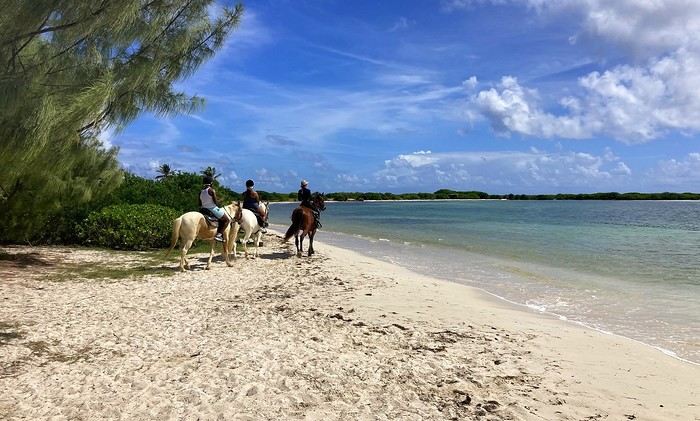
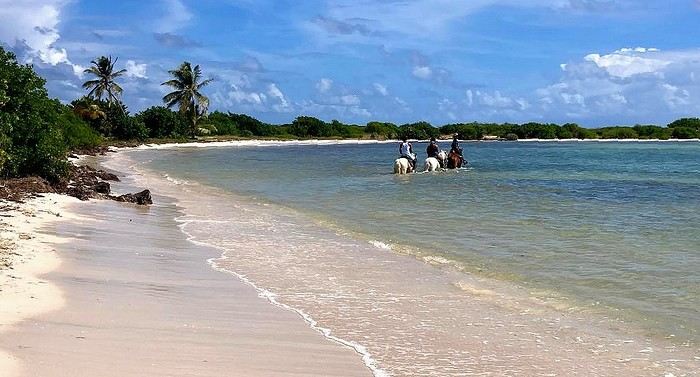
From wish to reality ... all it took was heading to Ranch du Galion. Here we are, on the heights of the east coast of the charming island of Saint Martin, in the heart of the Caribbean.
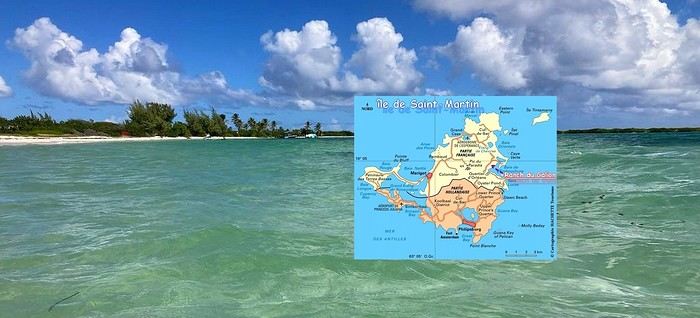
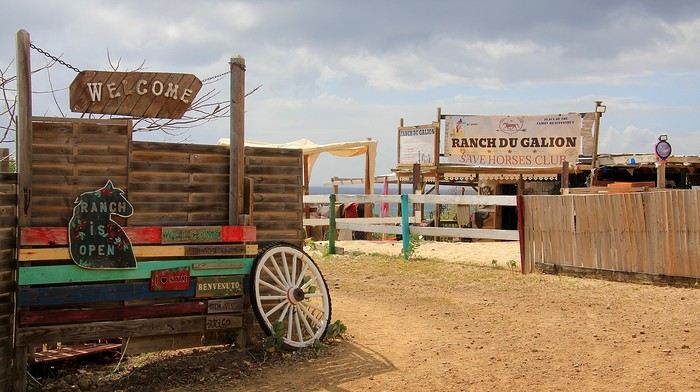
After a first horseback ride that we really enjoyed, with a simple trip to the beach, it didn’t take much to make us want to repeat the pleasant experience. My daughter Emma had been dreaming of it too—so why not share this change of scenery, but this time opting for a slightly longer trek? It’s the big day. And Jess is there to greet us this morning with a big smile. Jess—or Jessica—is the one who runs this tropical ranch with passion; she looks after a whole little family of horses. This morning, she’ll be our guide and companion for this seaside horseback ride.
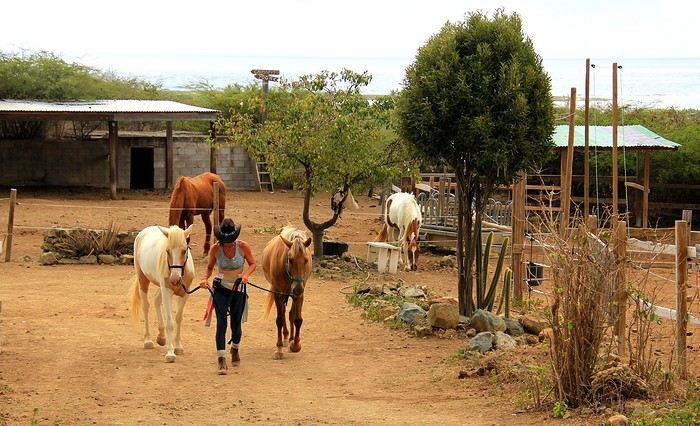
So, we set off along the wild shores of the stunning Anse du Galion.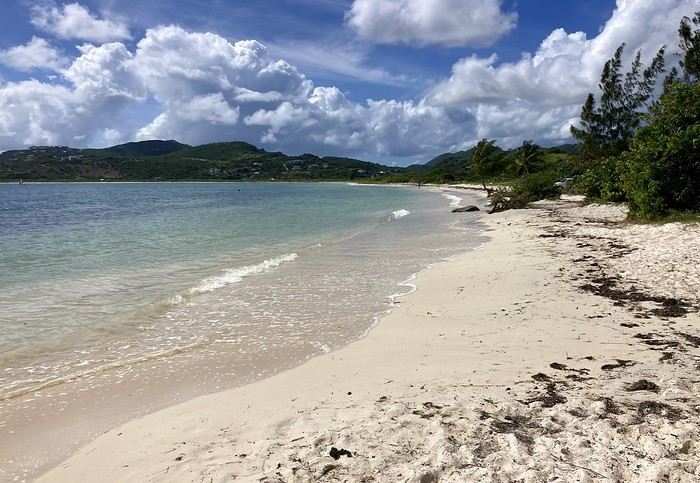
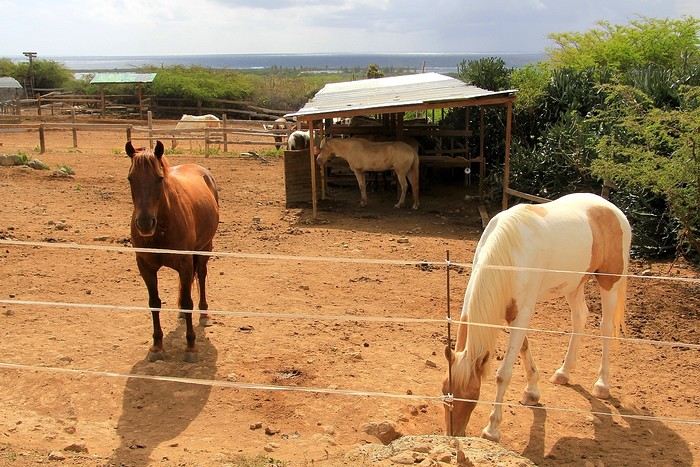
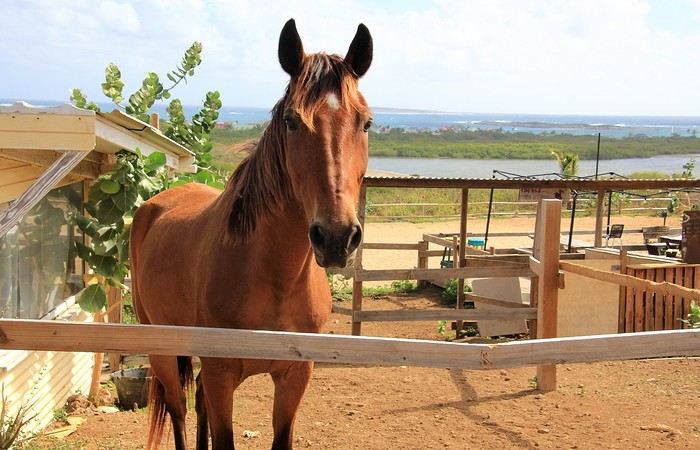
In the enclosures, behind the fences and ropes, some stallions already seem impatient to stretch their legs! They know the place, the routines, and the trails ... and the soothing reward halfway through—a dip in the sea. Maybe that’s what’s causing a little excitement among these mounts!
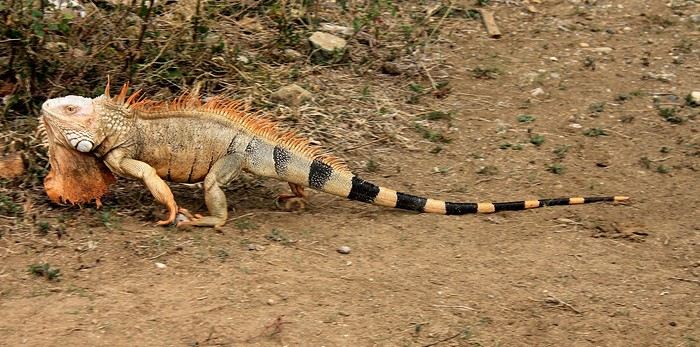
Horses and ... an iguana slipping into the bushes. Given its appearance—its crest, its parched skin, and the dewlap hanging under its head—you’d think it wasn’t exactly young.
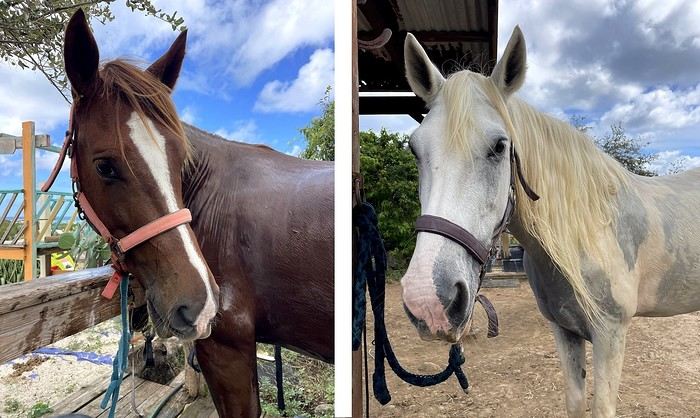
Anyway, back to the horses. Among the mares and stallions, I try to spot "Avenir" and his elegant gait—he was "my" horse during my last trek here, on the trails and sands of Galion. Well, spotting him isn’t going to be easy! My memories are a bit fuzzy, and several of these horses look like him ... -- Before setting off on the trek, it’s time for Jess to choose our mounts. For riders with little experience ... it’ll be calm horses, well-used to trekking—definitely easier and more enjoyable. Titia, a beautiful white mare for my daughter, and Prince, a gentle stallion for me. A little anecdote along the way: we’re really staying in the family for this horseback ride—these two horses are actually related: "my" Prince is the son of the lovely Titia!
to be continued -->
From wish to reality ... all it took was heading to Ranch du Galion. Here we are, on the heights of the east coast of the charming island of Saint Martin, in the heart of the Caribbean.
After a first horseback ride that we really enjoyed, with a simple trip to the beach, it didn’t take much to make us want to repeat the pleasant experience. My daughter Emma had been dreaming of it too—so why not share this change of scenery, but this time opting for a slightly longer trek? It’s the big day. And Jess is there to greet us this morning with a big smile. Jess—or Jessica—is the one who runs this tropical ranch with passion; she looks after a whole little family of horses. This morning, she’ll be our guide and companion for this seaside horseback ride.
So, we set off along the wild shores of the stunning Anse du Galion.
In the enclosures, behind the fences and ropes, some stallions already seem impatient to stretch their legs! They know the place, the routines, and the trails ... and the soothing reward halfway through—a dip in the sea. Maybe that’s what’s causing a little excitement among these mounts!
Horses and ... an iguana slipping into the bushes. Given its appearance—its crest, its parched skin, and the dewlap hanging under its head—you’d think it wasn’t exactly young.
Anyway, back to the horses. Among the mares and stallions, I try to spot "Avenir" and his elegant gait—he was "my" horse during my last trek here, on the trails and sands of Galion. Well, spotting him isn’t going to be easy! My memories are a bit fuzzy, and several of these horses look like him ... -- Before setting off on the trek, it’s time for Jess to choose our mounts. For riders with little experience ... it’ll be calm horses, well-used to trekking—definitely easier and more enjoyable. Titia, a beautiful white mare for my daughter, and Prince, a gentle stallion for me. A little anecdote along the way: we’re really staying in the family for this horseback ride—these two horses are actually related: "my" Prince is the son of the lovely Titia!
to be continued -->
Need help organizing a trip to Cape Verde during Carnival
Hi everyone,
After a year where I’ve worked way too much and with a house under renovation, it’s become essential to take a breather. My contract ends on 01/30, and I’ll try to find a new client for early March, so overall, let’s go somewhere in February!
I thought Réunion with the full trek around the Mafate cirque for reconnecting with Nature would be perfect, but since it’s cyclone season, it wasn’t such a great idea. Then came the idea that Southeast Asia could fulfill the peace-and-beach vibe, especially Cambodia with its cultural past, but the flight ticket price and a chat with a friend made me change my mind—and boom, Cape Verde popped up, with Santo Antão for hiking and São Vicente for culture and the beach.
So I bought a ticket a week ago, and oh, what a coincidence—it’s during Carnival!
Except now, I don’t know if it’s reality or just exhaustion talking, but I feel like I’m making a mess of things.
I’ve traveled a lot without even booking the first night, but this time, I pre-booked 2 nights in Mindelo (though one of them ended up canceling itself).
But the main issue is that I arrive on Monday, 02/09 at 6 PM and leave on Sunday, 02/22 at 11 AM, and there’s a little hiccup in the logical organization—actually, several hiccups—since I don’t really have any organization right now, and that’s where I need help
Because Carnival is in full swing from 02/15 to 02/17, right in the middle of my trip, so the logic of my visit to Santo Antão isn’t clicking for me. Plus, I just checked, and there’s zero accommodation available in Mindelo from 02/15 to 02/18 😕
So I don’t know: should I skip Carnival, should I forget about planning and just wing it once I’m there, should I stay on São Vicente after Carnival (because I read Montaganrd’s trip report, and he made São Vicente sound like a rock !), or should I keep in mind the option of heading to Santiago afterward and buying a return flight to Paris from Praia?
I need help 🏴☠️
Back from two months in Guatemala
Hi there,
I spent two months alone in Guatemala this summer, without a guide or agency, and I’d love to share a quick recap of my impressions.
● First off, it’s really easy to travel without a guide or agency. If you want a guide for excursions, you can easily find one through the many agencies in Antigua or Panajachel. In Flores, there are also plenty of agencies offering multi-day jungle treks.
● I got around by shuttle for part of the "classic" and more touristy route. To step off that path, I took "camionetas" (chicken buses) or minibuses.
For me, "camionetas" are the best way to get around Guatemala. They let you travel everywhere, fully immersed, at the local pace. They run all the time and are even an adventure in themselves.
Shuttles are direct, but local buses aren’t. No matter how you travel, trips take a while because roads are often in bad shape, and in the mountains, you can’t overtake.
● As for safety, there’s nothing unusual compared to other Latin American countries. Just keep in mind it’s not Europe. As a solo woman, I try not to draw too much attention—though traveling alone already does that. Like in other countries, I was often asked where my kids and husband were, and I just gave whatever answer I felt like.
● Budget-wise, Guatemala isn’t too expensive for French tourists, but Antigua and Panajachel—two very touristy spots—are pricier.
● Guatemala is a small country but incredibly rich in culture and nature (volcanoes, mountains, beaches, etc.). You can easily spend several days (or even weeks) in each region.
● My top picks ❤️:
- The Mayan markets, especially the one in San Francisco El Alto - The Ixil Triangle: Nebaj, Chajul, Acul - The stunning landscapes around Todos Santos Cuchumatán - Antigua, very touristy but beautiful - Lake Atitlán, also touristy but gorgeous
I planned to climb Pacaya Volcano, but early in my trip, there was an earthquake in Antigua, and by the end, I wasn’t in the mood. Climbing Acatenango is more spectacular but also more challenging.
● Biggest highlights ❤️ ❤️:
- Tikal—it’s THE must-see site, an incredible mix of archaeology and nature!
- The Joyabaj Fair, which I hadn’t planned to visit but ended up spending a week at: Mayan ceremonies, equestrian parades, diverse dances, processions with Mayan priests, and especially the "palo volador"—the highlight of the festival!
● Small letdown 👎:
- Ranchitos del Quetzal, where I went hoping to spot the quetzal. I knew it wasn’t the right season, but I was still disappointed—I didn’t see any other birds either, and the hiking options were limited. It also took me a slight detour from Cobán.
If you have any questions, I’d be happy to answer them.
● If you’re interested, I kept a more detailed travel journal, and I’m working on another one just about the Joyabaj Fair:
https://www.myatlas.com/borboleta/guatemala-deux-mois-au-pays-de-la-couleur
I spent two months alone in Guatemala this summer, without a guide or agency, and I’d love to share a quick recap of my impressions.
● First off, it’s really easy to travel without a guide or agency. If you want a guide for excursions, you can easily find one through the many agencies in Antigua or Panajachel. In Flores, there are also plenty of agencies offering multi-day jungle treks.
● I got around by shuttle for part of the "classic" and more touristy route. To step off that path, I took "camionetas" (chicken buses) or minibuses.
For me, "camionetas" are the best way to get around Guatemala. They let you travel everywhere, fully immersed, at the local pace. They run all the time and are even an adventure in themselves.
Shuttles are direct, but local buses aren’t. No matter how you travel, trips take a while because roads are often in bad shape, and in the mountains, you can’t overtake.
● As for safety, there’s nothing unusual compared to other Latin American countries. Just keep in mind it’s not Europe. As a solo woman, I try not to draw too much attention—though traveling alone already does that. Like in other countries, I was often asked where my kids and husband were, and I just gave whatever answer I felt like.
● Budget-wise, Guatemala isn’t too expensive for French tourists, but Antigua and Panajachel—two very touristy spots—are pricier.
● Guatemala is a small country but incredibly rich in culture and nature (volcanoes, mountains, beaches, etc.). You can easily spend several days (or even weeks) in each region.
● My top picks ❤️:
- The Mayan markets, especially the one in San Francisco El Alto - The Ixil Triangle: Nebaj, Chajul, Acul - The stunning landscapes around Todos Santos Cuchumatán - Antigua, very touristy but beautiful - Lake Atitlán, also touristy but gorgeous
I planned to climb Pacaya Volcano, but early in my trip, there was an earthquake in Antigua, and by the end, I wasn’t in the mood. Climbing Acatenango is more spectacular but also more challenging.
● Biggest highlights ❤️ ❤️:
- Tikal—it’s THE must-see site, an incredible mix of archaeology and nature!
- The Joyabaj Fair, which I hadn’t planned to visit but ended up spending a week at: Mayan ceremonies, equestrian parades, diverse dances, processions with Mayan priests, and especially the "palo volador"—the highlight of the festival!
● Small letdown 👎:
- Ranchitos del Quetzal, where I went hoping to spot the quetzal. I knew it wasn’t the right season, but I was still disappointed—I didn’t see any other birds either, and the hiking options were limited. It also took me a slight detour from Cobán.
If you have any questions, I’d be happy to answer them.
● If you’re interested, I kept a more detailed travel journal, and I’m working on another one just about the Joyabaj Fair:
https://www.myatlas.com/borboleta/guatemala-deux-mois-au-pays-de-la-couleur
Three weeks in Yunnan in October 2025
We just spent three weeks in Yunnan.
I’ve started writing up a travel journal about the trip.
Solo backpacking trip to Benin
Hi everyone, thanks for your advice! I’m starting a new thread because it seems my first one about Senegal was deleted—or maybe it’s just my computer acting up again 😉. Anyway, I’ve decided to go to Benin instead. I’ll be there from January 5th to February 2nd—why count the days when you love traveling😄? I’d love all your tips on accommodations, restaurants, and itineraries. I’m basically starting from scratch to plan my trip.
Tadoussac-Saguenay and activities near Hautes-Gorges de la Malbaie National Park
Hello,
We’re heading to Quebec in just over a week to meet up with our son, a young adult on a Working Holiday Visa who’s been there for nearly a year 🙂🙂🙂 and I still have a few questions:
1) We’re starting with 3 nights near Shawinigan (Lac à la Tortue). The day after we arrive, we’ll have a relaxed day with one or two activities (sugar shack in St-Mathieu-du-Parc? A seaplane ride?). Any other suggestions? (Besides Parc de la Mauricie, which we’ll visit the next day.)
2) Then, we’ll head to Quebec City via the Chemin du Roy, where we’ll spend 3 nights, followed by a scenic drive to La Malbaie. We’ll be staying in St-Aimé-des-Lacs near Hautes-Gorges de la Malbaie National Park for another 3 nights. One day will be dedicated to hiking in the park—likely the Acropole des Draveurs for our son, and the Riverain trail plus two shorter walks for my husband and me, since he can’t use hiking poles. So, I’m unsure about the second day: should we go back to the park for the cruise, or do something else nearby? Any suggestions?
3) After St-Aimé-des-Lacs, we’ll spend 3 nights in Tadoussac. We’ll definitely stop at Port-au-Persil, but since the drive isn’t too long, we’ll arrive pretty quickly (I think you say "rendu" here 😉). I was thinking of exploring Tadoussac that day, doing the Pointe de l’Islet trail, the Estuary trail, and the Dunes lookout. The second day, we’d head toward Les Bergeronnes and Les Escoumins to visit the interpretation center and take a Zodiac cruise. I was considering Neptune because they offer covered boats. Any other options? And on the third day, we’d go to Sainte-Rose-du-Nord via the Saguenay Fjord National Park’s Baie Sainte-Marguerite sector to hike part of the "Le Fjord" trail from the Beluga Observation Center. I’m aware this trail requires a park access fee. However, I just realized that the trails we planned for the first day (Estuary and Pointe de l’Islet) are also part of the Tadoussac sector of the park. Do we need to pay the access fee (10.10 CAD) for these two short trails? If so, it might make sense to do them on the third day. In that case, can we pay the fee in Tadoussac, then head to the Baie Sainte-Marguerite sector and use the same ticket?
Feel free to share any thoughts or suggestions!
Claire
We’re heading to Quebec in just over a week to meet up with our son, a young adult on a Working Holiday Visa who’s been there for nearly a year 🙂🙂🙂 and I still have a few questions:
1) We’re starting with 3 nights near Shawinigan (Lac à la Tortue). The day after we arrive, we’ll have a relaxed day with one or two activities (sugar shack in St-Mathieu-du-Parc? A seaplane ride?). Any other suggestions? (Besides Parc de la Mauricie, which we’ll visit the next day.)
2) Then, we’ll head to Quebec City via the Chemin du Roy, where we’ll spend 3 nights, followed by a scenic drive to La Malbaie. We’ll be staying in St-Aimé-des-Lacs near Hautes-Gorges de la Malbaie National Park for another 3 nights. One day will be dedicated to hiking in the park—likely the Acropole des Draveurs for our son, and the Riverain trail plus two shorter walks for my husband and me, since he can’t use hiking poles. So, I’m unsure about the second day: should we go back to the park for the cruise, or do something else nearby? Any suggestions?
3) After St-Aimé-des-Lacs, we’ll spend 3 nights in Tadoussac. We’ll definitely stop at Port-au-Persil, but since the drive isn’t too long, we’ll arrive pretty quickly (I think you say "rendu" here 😉). I was thinking of exploring Tadoussac that day, doing the Pointe de l’Islet trail, the Estuary trail, and the Dunes lookout. The second day, we’d head toward Les Bergeronnes and Les Escoumins to visit the interpretation center and take a Zodiac cruise. I was considering Neptune because they offer covered boats. Any other options? And on the third day, we’d go to Sainte-Rose-du-Nord via the Saguenay Fjord National Park’s Baie Sainte-Marguerite sector to hike part of the "Le Fjord" trail from the Beluga Observation Center. I’m aware this trail requires a park access fee. However, I just realized that the trails we planned for the first day (Estuary and Pointe de l’Islet) are also part of the Tadoussac sector of the park. Do we need to pay the access fee (10.10 CAD) for these two short trails? If so, it might make sense to do them on the third day. In that case, can we pay the fee in Tadoussac, then head to the Baie Sainte-Marguerite sector and use the same ticket?
Feel free to share any thoughts or suggestions!
Claire
Looking for feedback and advice on a Thailand-Laos-Cambodia itinerary plan
Hi everyone,
I’m starting to plan my next trip to Southeast Asia this winter (2.5 months, leaving in early December), and here’s a rough outline of my route—I’d love to share it with you and hear your thoughts and tips.
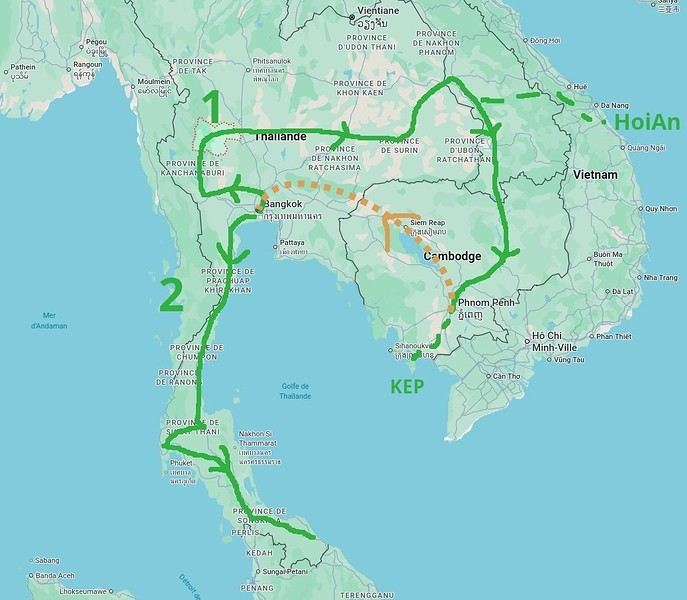
- I’ll start in Bangkok and already have three spots I’ve marked: Ayutthaya, Kanchanaburi, and Uthai Thani (I haven’t been to any of these places yet). - Next, I’d like to cross the country from west to east to reach the Laos border. I’d love suggestions for any interesting stops along this route—I don’t know this part of Thailand at all... - Then I’ll head into Laos, probably at Savannakhet (you can usually get a visa at the border). - > I’m tempted to spend a week in Hoi An, Vietnam, since I loved that city and the area when I visited two years ago. No visa needed for Vietnam now, so it could be a nice little detour. On the map, it doesn’t look too far, but I know you’ve got to be careful with these things, and I’m not sure if it’s a good idea. Any opinions on this? - Back to Laos (maybe via Dakta), and I’ll head south along the Mekong, probably doing the Bolaven Plateau loop that I missed last time. Then Paksé, the 4,000 Islands... I’ve been before, but I’d happily go back. - Crossing into Cambodia, I’ll follow the Mekong down to Phnom Penh (I know this area and love how untouristy it is). From there, I’ll probably spend a few days in Kep (quieter than Kampot). Still undecided, though. - Then back to Thailand (BKK), likely by plane from Phnom Penh since the borders between the two countries are currently closed (plus, let’s be honest, Cambodian roads... ;-). We’ll see how things look when the time comes. - After that, I’d like to explore southern Thailand, taking it slow with short hops. I’ve got my eye on Khao Sok National Park, and I’ve heard good things about Krabi... Again, I don’t know this region well, so any info or tips would be great.
So, I think this should be doable in 2.5 months, especially since I prefer short hops of 300 km max to avoid getting too tired, and I like staying 2-3 days in each place to explore. Plus, I’ll take a week off to relax if I find a spot I love—maybe by the sea for some real downtime.
Thanks for your feedback and for sharing your favorite spots! Pascal
- I’ll start in Bangkok and already have three spots I’ve marked: Ayutthaya, Kanchanaburi, and Uthai Thani (I haven’t been to any of these places yet). - Next, I’d like to cross the country from west to east to reach the Laos border. I’d love suggestions for any interesting stops along this route—I don’t know this part of Thailand at all... - Then I’ll head into Laos, probably at Savannakhet (you can usually get a visa at the border). - > I’m tempted to spend a week in Hoi An, Vietnam, since I loved that city and the area when I visited two years ago. No visa needed for Vietnam now, so it could be a nice little detour. On the map, it doesn’t look too far, but I know you’ve got to be careful with these things, and I’m not sure if it’s a good idea. Any opinions on this? - Back to Laos (maybe via Dakta), and I’ll head south along the Mekong, probably doing the Bolaven Plateau loop that I missed last time. Then Paksé, the 4,000 Islands... I’ve been before, but I’d happily go back. - Crossing into Cambodia, I’ll follow the Mekong down to Phnom Penh (I know this area and love how untouristy it is). From there, I’ll probably spend a few days in Kep (quieter than Kampot). Still undecided, though. - Then back to Thailand (BKK), likely by plane from Phnom Penh since the borders between the two countries are currently closed (plus, let’s be honest, Cambodian roads... ;-). We’ll see how things look when the time comes. - After that, I’d like to explore southern Thailand, taking it slow with short hops. I’ve got my eye on Khao Sok National Park, and I’ve heard good things about Krabi... Again, I don’t know this region well, so any info or tips would be great.
So, I think this should be doable in 2.5 months, especially since I prefer short hops of 300 km max to avoid getting too tired, and I like staying 2-3 days in each place to explore. Plus, I’ll take a week off to relax if I find a spot I love—maybe by the sea for some real downtime.
Thanks for your feedback and for sharing your favorite spots! Pascal
Thailand and TDAC: How does it work?
Hello to all the Thailand regulars.
I’ve been to Thailand several times, but it was about 20 years ago…
There’s a new system in place now, it seems.
TDAC – Thailand Digital Arrival Card.
Before arriving, I apply for a TDAC, okay. If during my stay I cross the border to spend a few days in Malaysia and then re-enter Thailand, do I need to submit a new TDAC application? Do I use the same TDAC as when I first entered the country?
Or do I initially have to pay for a Thai multi-entry visa?
Thanks in advance for your insights—I can’t find the answer online.
Pierre
I’ve been to Thailand several times, but it was about 20 years ago…
There’s a new system in place now, it seems.
TDAC – Thailand Digital Arrival Card.
Before arriving, I apply for a TDAC, okay. If during my stay I cross the border to spend a few days in Malaysia and then re-enter Thailand, do I need to submit a new TDAC application? Do I use the same TDAC as when I first entered the country?
Or do I initially have to pay for a Thai multi-entry visa?
Thanks in advance for your insights—I can’t find the answer online.
Pierre
Borneo/Kalimantan/Sulawesi
Hi there, fellow travelers,
My mom and I are heading to Indonesia on July 11, 2025, for a month. We’ll spend 15 days in Borneo (Kalimantan) and 15 days in Sulawesi. We’re traveling with backpacks and really want to meet locals and experience their culture. We have a layover in Singapore before flying to Borneo, but we’re not sure yet which part of the island we’d like to land in.
I’m looking for the most up-to-date info possible because our research results are pretty confusing. Initially, we wanted to focus on the Indonesian side of the island, but we’re finding way more info on the Malaysian side (better tourist infrastructure). We’re feeling a bit lost...
Our priority is a 4-5 day trek max. We also want to connect with an English-speaking guide to explore Borneo’s primary forest and its wildlife. Ideally, we’d like to venture into the island’s center. But we might not have the time (given the lack of infrastructure and long distances—we don’t have 15 days just for a trek) or the physical stamina to get there. Still, we’d love to get off the beaten path and avoid pricey, touristy excursions. From our research, we’ve come across 3-day, 2-night trips on longboats or 4x4s (e.g., orangutans in Tanjung Puting) for 400 to 500 €. But that’s way out of our budget, and we think it’s too expensive. We get that as tourists with higher incomes than locals, we should pay more—but there’s a limit, especially compared to the cost of living in Indonesia. We want to avoid tour operators and crowds of tourists. Our goal is to see what’s left of Borneo’s preserved and wild tropical forest and observe animals in their natural habitat. If we don’t see any during a trek, oh well—we’ll take our chances.
On the Malaysian side, there’s Danum Valley, and on the Indonesian side, places like Gunung Palung, Betung Kerihun, and Kayan Mentarang...
What do you think?
Does anyone have any tips?
Has anyone here met indigenous communities on the island?
Does anyone know a friendly local guide?
We’d love any extra info on Borneo and Sulawesi! ;)
Take care!
My mom and I are heading to Indonesia on July 11, 2025, for a month. We’ll spend 15 days in Borneo (Kalimantan) and 15 days in Sulawesi. We’re traveling with backpacks and really want to meet locals and experience their culture. We have a layover in Singapore before flying to Borneo, but we’re not sure yet which part of the island we’d like to land in.
I’m looking for the most up-to-date info possible because our research results are pretty confusing. Initially, we wanted to focus on the Indonesian side of the island, but we’re finding way more info on the Malaysian side (better tourist infrastructure). We’re feeling a bit lost...
Our priority is a 4-5 day trek max. We also want to connect with an English-speaking guide to explore Borneo’s primary forest and its wildlife. Ideally, we’d like to venture into the island’s center. But we might not have the time (given the lack of infrastructure and long distances—we don’t have 15 days just for a trek) or the physical stamina to get there. Still, we’d love to get off the beaten path and avoid pricey, touristy excursions. From our research, we’ve come across 3-day, 2-night trips on longboats or 4x4s (e.g., orangutans in Tanjung Puting) for 400 to 500 €. But that’s way out of our budget, and we think it’s too expensive. We get that as tourists with higher incomes than locals, we should pay more—but there’s a limit, especially compared to the cost of living in Indonesia. We want to avoid tour operators and crowds of tourists. Our goal is to see what’s left of Borneo’s preserved and wild tropical forest and observe animals in their natural habitat. If we don’t see any during a trek, oh well—we’ll take our chances.
On the Malaysian side, there’s Danum Valley, and on the Indonesian side, places like Gunung Palung, Betung Kerihun, and Kayan Mentarang...
What do you think?
Does anyone have any tips?
Has anyone here met indigenous communities on the island?
Does anyone know a friendly local guide?
We’d love any extra info on Borneo and Sulawesi! ;)
Take care!
Boat trip on the Pangalanes Canal from Toamasina to Manakara
Hi there, I’m looking for info on whether it’s feasible to travel the Pangalanes Canal by boat from Toamasina to Manakara. I know the canal is poorly maintained with some sections that aren’t navigable. This is my 5th trip to Madagascar. Thanks for any tips!
Any recent feedback on safety in Iquitos?
Hi there,
I’m planning our trip to Peru in September-October. Flights are booked, itinerary is pretty much set, but...
after hearing about recent attacks on the river (Iquitos)—apparently around ten—I’m having second thoughts.
It’s my husband’s dream to spend a few days in the jungle.
I know if we read all the official travel advisories, we’d never go anywhere (no info on the government site, but I saw something on a forum).
Has anyone been there recently? How did it feel? Is Iquitos sketchy?
Thanks for your help!
Patricia
Trip report: Coron and Palawan in the Philippines
Hi everyone,
We (two adults, 74 and 70 years old) had already shared a travel journal about our first trip to the Philippines in February/March 2019 on this forum (https://voyageforum.com/v.f?post=9377175;search_string=carnet%20philippines). We had visited Manila, the Banaue rice terraces, Sagada, the Visayas (Bohol, Siquijor, Dumaguette), and on our way back to Luzon, the Taal volcano before returning to France. Delighted by this trip, organized by the French-speaking agency Alizé, we decided to further explore this beautiful country, this time focusing on Coron and Palawan.
Before writing this journal, I should mention that these are personal comments and don’t reflect any differing opinions. Without any literary or photographic talent, I’ll stick to the facts and share a few details about the visits, hotels, and restaurants.
Preparations
We decided to return in mid-January 2025 and consulted three French-speaking tour operators to create a trip based on our wishes (places to visit, type of accommodation) and budget. Comparing three operators helped us weigh their advice and make our choices. Only our first operator respected the budget, a second came close, and the third proposed a slightly more upscale trip. In the end, we chose the agency from our first trip. Our discussions helped refine our itinerary, and when we reviewed it point by point, the document provided was perfect, full of great tips. The most debated point was a 3-day, 2-night cruise between Coron and Palawan. We were tempted but worried about being the only "older" travelers among younger people and feared two uncomfortable nights. Reassured by our tour operator, we finally opted for this "exploration." We’ll come back to that later. Once the choice was made and dates set, we booked our international flights with Cathay Pacific for 750 € per person, which offers the best schedules (short layovers) at an acceptable price for flights arriving in Cebu. Our trip started on February 25 and returned to Paris on March 15.
International flights
The round-trip flights went smoothly. Cathay does the job well, without frills. The service quality seems to have slightly declined compared to our previous trips with them. Hong Kong Airport is huge but very practical. Note that not all airlines serve Cebu. Recommendation: Fill out your Philippine entry form within 72 hours before your flight. This can prevent issues with the airline (possible boarding refusal) and saves a lot of time upon arrival (see the Philippine embassy website).
Domestic flights
For our two domestic flights—Cebu to Coron and Puerto Princesa to Cebu—our tour operator chose Philippine Airlines and their propeller planes. No problems there.
Day 1: We landed around 12 PM (local time) after 17 hours of travel. A driver was waiting for us at the airport exit and took us to our hotel, intentionally chosen near the airport (Mandaue, about 10 minutes away) to help us recover and get a good night’s sleep before our early morning domestic flight the next day. The Mayoo Hotel, reasonably priced, was perfect for this. Large, beautiful room in a new building—clean, comfortable, with a spa. We could relax by the pool on the 16th floor and enjoy the city view. The breakfast was exceptional, and the staff was smiling, attentive, and helpful. An ATM in the lobby allowed for withdrawals. However, the hotel is in a neighborhood with nothing to see or do. We dined at the Korean restaurant K-GOGI across from the hotel—a real attraction and a great discovery.
Day 2: After a restful night, we were driven to the airport around 6:30 AM for an 8:10 AM flight from Cebu to Busuanga (Coron).

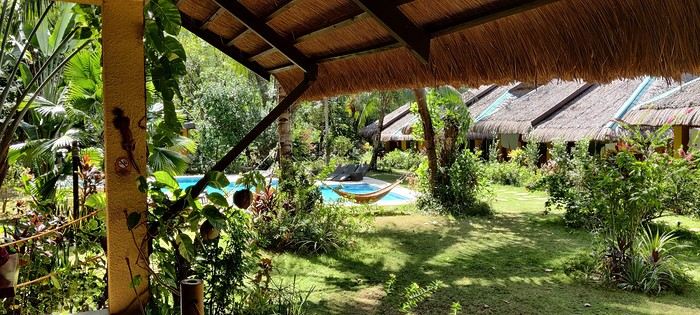
The flight was uneventful. Upon arrival, we paid 200 pesos per person for the Coron tourist fee before a 40-minute transfer to our hotel: Natura Resort, located outside the city in a secluded spot. The setting is stunning—a beautifully maintained tropical garden, a pleasant pool, and the option to book massages. The cottages are tropical-style with thatched roofs, simple and unpretentious.
The owner, who speaks French, told us that given the heat and our ages, climbing the 721 steps to the top of Mount Tapyas wasn’t necessary. She gave us a few rooftop recommendations to watch the sunset over Coron Bay. After a good swim in the pool and a meal at the resort’s pleasant restaurant, we hired a tricycle to go into town. We were told it costs 150 pesos one way, and depending on the return time, it could exceed 250 pesos. But our driver gave us his WhatsApp number and charged the same price regardless of the time. He just earned two days’ worth of customers. He dropped us off at the port where bangkas (local boats) gather for day trips. It was the end of the day, so there was a rush. A few shops around the port sold waterproof bags for marine excursions at reasonable prices (compared to back home), after some bargaining. We wandered the town’s alleys looking for the Top Hotel, whose rooftop is famous. Indeed, it’s perfectly located to admire the sunset and enjoy a refreshing drink.
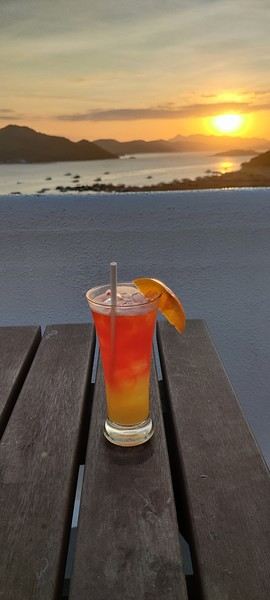
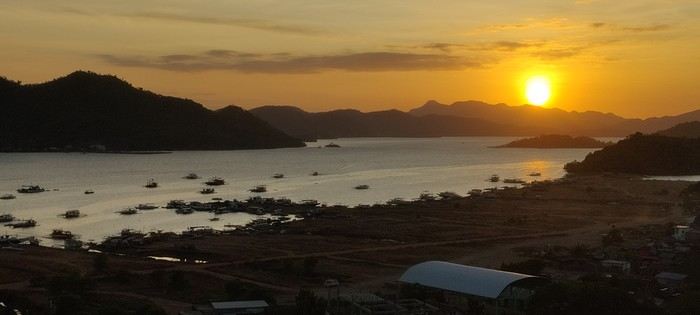
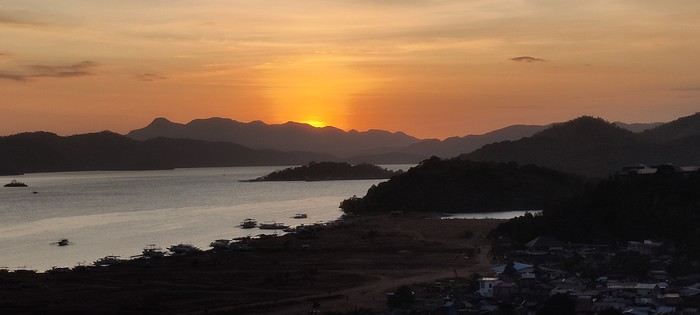
We dined nearby at a small Chinese restaurant, then just had to call our driver to head back. The night wasn’t entirely restful—our hotel had a soundtrack of all the countryside animals, and it seemed they had no set bedtime! :
Preparations
We decided to return in mid-January 2025 and consulted three French-speaking tour operators to create a trip based on our wishes (places to visit, type of accommodation) and budget. Comparing three operators helped us weigh their advice and make our choices. Only our first operator respected the budget, a second came close, and the third proposed a slightly more upscale trip. In the end, we chose the agency from our first trip. Our discussions helped refine our itinerary, and when we reviewed it point by point, the document provided was perfect, full of great tips. The most debated point was a 3-day, 2-night cruise between Coron and Palawan. We were tempted but worried about being the only "older" travelers among younger people and feared two uncomfortable nights. Reassured by our tour operator, we finally opted for this "exploration." We’ll come back to that later. Once the choice was made and dates set, we booked our international flights with Cathay Pacific for 750 € per person, which offers the best schedules (short layovers) at an acceptable price for flights arriving in Cebu. Our trip started on February 25 and returned to Paris on March 15.
International flights
The round-trip flights went smoothly. Cathay does the job well, without frills. The service quality seems to have slightly declined compared to our previous trips with them. Hong Kong Airport is huge but very practical. Note that not all airlines serve Cebu. Recommendation: Fill out your Philippine entry form within 72 hours before your flight. This can prevent issues with the airline (possible boarding refusal) and saves a lot of time upon arrival (see the Philippine embassy website).
Domestic flights
For our two domestic flights—Cebu to Coron and Puerto Princesa to Cebu—our tour operator chose Philippine Airlines and their propeller planes. No problems there.
Day 1: We landed around 12 PM (local time) after 17 hours of travel. A driver was waiting for us at the airport exit and took us to our hotel, intentionally chosen near the airport (Mandaue, about 10 minutes away) to help us recover and get a good night’s sleep before our early morning domestic flight the next day. The Mayoo Hotel, reasonably priced, was perfect for this. Large, beautiful room in a new building—clean, comfortable, with a spa. We could relax by the pool on the 16th floor and enjoy the city view. The breakfast was exceptional, and the staff was smiling, attentive, and helpful. An ATM in the lobby allowed for withdrawals. However, the hotel is in a neighborhood with nothing to see or do. We dined at the Korean restaurant K-GOGI across from the hotel—a real attraction and a great discovery.
Day 2: After a restful night, we were driven to the airport around 6:30 AM for an 8:10 AM flight from Cebu to Busuanga (Coron).
The flight was uneventful. Upon arrival, we paid 200 pesos per person for the Coron tourist fee before a 40-minute transfer to our hotel: Natura Resort, located outside the city in a secluded spot. The setting is stunning—a beautifully maintained tropical garden, a pleasant pool, and the option to book massages. The cottages are tropical-style with thatched roofs, simple and unpretentious.
The owner, who speaks French, told us that given the heat and our ages, climbing the 721 steps to the top of Mount Tapyas wasn’t necessary. She gave us a few rooftop recommendations to watch the sunset over Coron Bay. After a good swim in the pool and a meal at the resort’s pleasant restaurant, we hired a tricycle to go into town. We were told it costs 150 pesos one way, and depending on the return time, it could exceed 250 pesos. But our driver gave us his WhatsApp number and charged the same price regardless of the time. He just earned two days’ worth of customers. He dropped us off at the port where bangkas (local boats) gather for day trips. It was the end of the day, so there was a rush. A few shops around the port sold waterproof bags for marine excursions at reasonable prices (compared to back home), after some bargaining. We wandered the town’s alleys looking for the Top Hotel, whose rooftop is famous. Indeed, it’s perfectly located to admire the sunset and enjoy a refreshing drink.
We dined nearby at a small Chinese restaurant, then just had to call our driver to head back. The night wasn’t entirely restful—our hotel had a soundtrack of all the countryside animals, and it seemed they had no set bedtime! :
Whale watching: Tadoussac or Bay of Fundy?
Hi there,
My partner and I are planning a trip with our two kids to see whales this summer in Canada. We’ve got two options: Tadoussac or the Bay of Fundy in Saint Andrews. We’ll be there at the end of July.
Could you let me know if one spot is better than the other? Especially in terms of how likely we are to actually see the whales.
Thanks in advance, and have a great day!
Bruno
Discover the 10 Must-See Spots in Sardinia
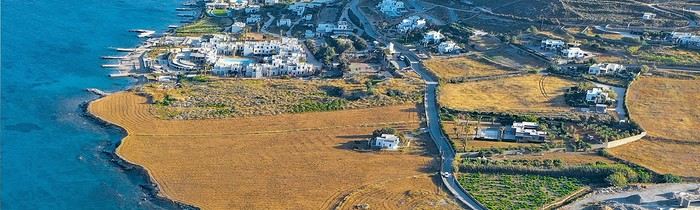
If you're dreaming of idyllic beaches and picturesque villages, you're in the right place! Known for its crystal-clear waters, millennia-old traditions, and preserved nature, Sardinia captivates travelers seeking a change of scenery. Here, you can enjoy a spectacular coastline, but also discover the authentic heart of the island, with its wild mountains and history-laden towns. Visiting Sardinia means taking the time to let yourself be lulled by the song of cicadas and the scent of the maquis. Escape to Sardinia with an all-inclusive stay at a 5-star hotel, allowing you to get away from it all.
To help you plan your itinerary, here’s an overview of ten must-see spots and a few off-the-beaten-path escapes.
Cagliari, the vibrant capital
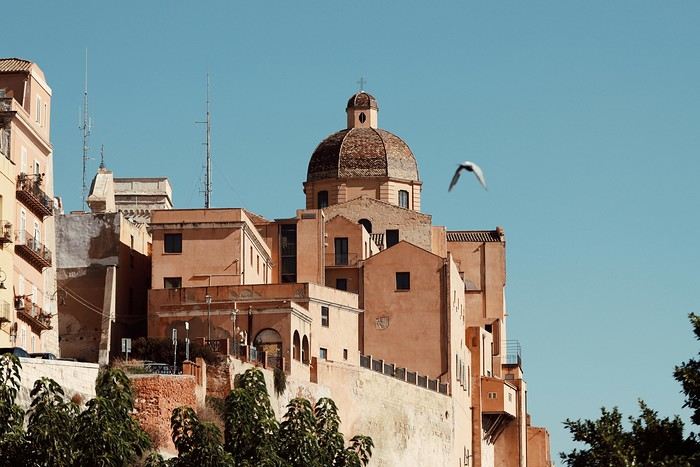
Often the first point of contact with the island, Cagliari charms with its historic center, dominated by the medieval Castello district. Stroll through the narrow streets to reach the Santa Maria Cathedral, then climb up to the Saint-Remy Bastion, where the view of the city and the sea is well worth the effort. Be sure to visit the San Benedetto market, where stalls of cheeses, cured meats, and fish reflect Sardinia’s culinary diversity.
Villasimius, fine sand and turquoise waters
Less than an hour’s drive from Cagliari, the Villasimius area is famous for its dreamy beaches, including Porto Giunco and Simius Beach. The white sand contrasts beautifully with the crystal-clear blue of the sea—a postcard-perfect setting. Diving enthusiasts will be delighted, while hikers can explore Capo Carbonara, a protected area home to pink flamingos.
Costa Smeralda, the glamorous side of the island
Renowned for its prestigious seaside resorts, the Costa Smeralda attracts yachts and lively evenings. Porto Cervo, its iconic port, draws travelers from around the world. Don’t worry—if you venture a little off the beaten path, you’ll find small, wild coves and trails lined with umbrella pines. A stop at a local wine bar to taste a glass of vermentino is highly recommended, if only to admire the view.
The La Maddalena Archipelago, a marine gem
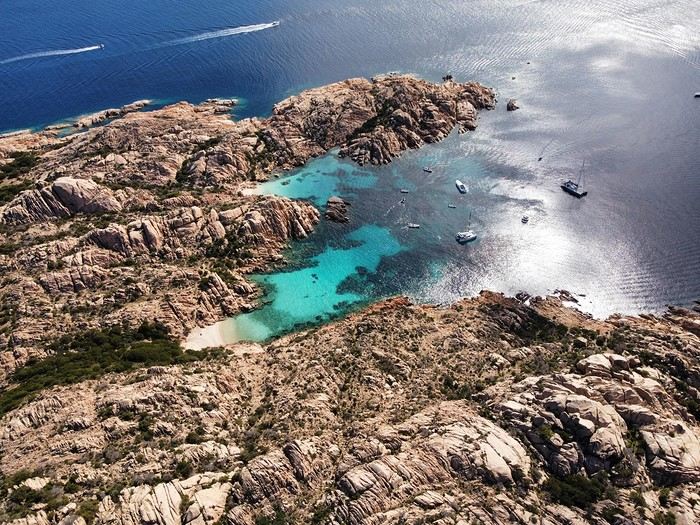
In the northeast, this national marine park comprises several islands with stunning beaches. La Maddalena, the main island, charms with its colorful houses and lively port. Offshore, wonders like Spargi Island or the famous Pink Beach of Budelli await visitors. It’s best to dedicate a full day—or more—to exploring this paradise by boat.
Alghero, the Catalan city
On the northwest coast, Alghero reveals a historic center encircled by ramparts, where the Catalan influence is still strong. Walk along the fortifications to watch the sunset, then sample the local cuisine, focused on seafood and wine. A short drive away, Neptune’s Grotto is a spectacular site: you can reach it via a staircase of 654 steps carved into the cliff or by boat for a more romantic approach.
Bosa, a painting under the open sky
Heading south along the coast from Alghero, you’ll reach Bosa, one of Sardinia’s most charming villages. Its colorful houses line the Temo River, overlooked by the Serravalle Castle. Wander the streets, admiring the vibrant facades, then settle into a small restaurant to taste the famous bottarga. The atmosphere is peaceful—this is la dolce vita.
The Piscinas Dunes, a desert by the sea
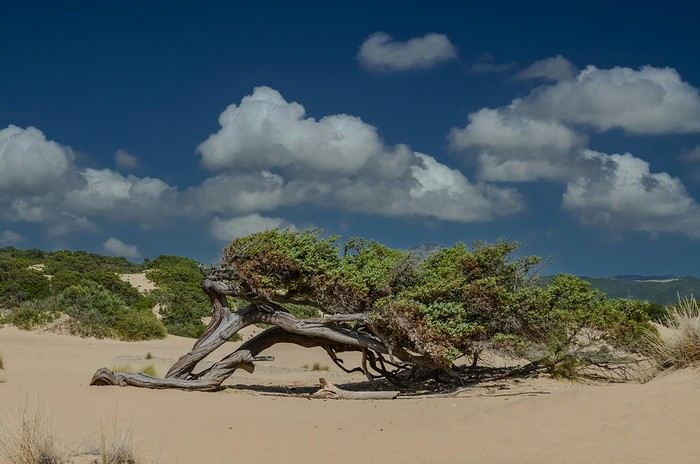
Head southwest to discover Piscinas, a natural site where sand dunes evoke a desert. Between sparse vegetation and turquoise sea, the contrast is simply stunning. The beaches, rarely crowded, offer a soothing tranquility. A perfect spot for lovers of wild landscapes, far from the hustle and bustle of seaside resorts.
Su Nuraxi di Barumini, a prehistoric relic
You can’t truly understand Sardinian history without mentioning the nuraghes, mysterious stone towers left by the Nuragic civilization. In Barumini, you can explore Su Nuraxi, the most famous, a UNESCO World Heritage site. Its millennia-old architecture and vast complex make it a must-visit for anyone wanting to delve into the island’s past.
Orgosolo and the mountainous interior
To experience the deep soul of Sardinia, head to the Supramonte massif. Orgosolo, once a bandit hideout, is known for its mural paintings adorning house facades. These artworks tell the local history, social struggles, and Sardinian pride. The surrounding nature is breathtaking: forests, canyons, and panoramic views invite you to hike.
The Gulf of Orosei, dreamy coves
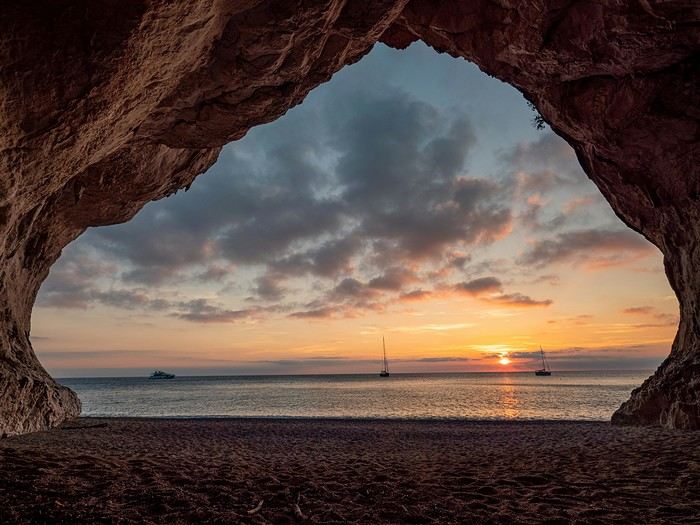
Finally, it’s hard to miss the beaches of the Gulf of Orosei. Cala Luna, Cala Mariolu, and Cala Goloritzé are among the most beautiful in the Mediterranean. Accessible by boat or on foot, each reveals transparent waters perfect for diving. Time seems to stand still in these wild landscapes, immersing you in the charm of a preserved Sardinia. From its sandy beaches to its rugged mountains, the island offers a stunning array of scenery. Far beyond the Costa Smeralda, Sardinia is full of hidden corners where nature reigns supreme and traditions are still very much alive. Once there, let yourself be swept up by the Sardinian dolce vita, savor its generous cuisine, and soak in its legends.
Happy travels!
Authentic Greece: Immersion in the Hellenic Soul
Beyond Athens' iconic sites and Santorini's popular beaches, Greece reveals its hidden treasures to those who dare venture off the beaten path. FairMoove travel agency offers eco-responsible stays in Greece for an authentic experience at the heart of Hellenic traditions.
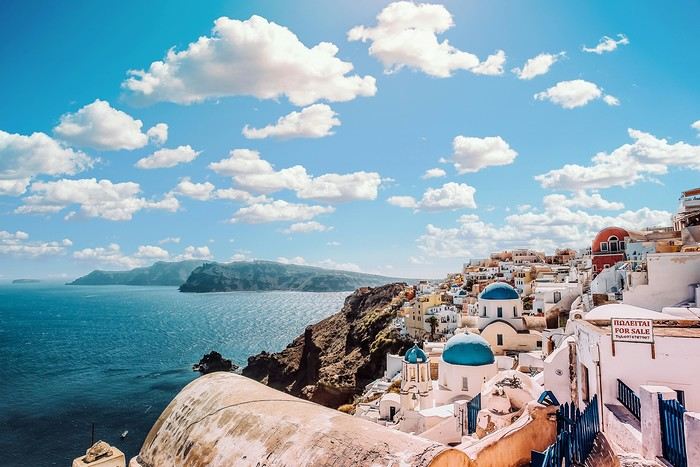
Authentic Peloponnese: A Land of Living Traditions
The Peloponnese peninsula is home to traditional villages where time seems to have stood still. In Dimitsana, perched in the Arcadian mountains, locals keep centuries-old traditions alive in their craft workshops. The cobbled streets echo with the sound of traditional looms, where artisans still create textiles using age-old methods.
In the Mani region, ancient stone towers tell the story of an untamed land. Local families welcome you into their traditional homes to share their culinary art: olive oil preparation, olive bread making, and dolmades crafted according to recipes passed down through generations. The Unknown Islands: Preserved Jewels of the Aegean Sea
Far from Mykonos' hustle and bustle, Ikaria island reveals its longevity secrets. This blue island, known for its inhabitants' exceptional lifespan, invites you to discover a unique way of life. Join the panigiria, traditional festivals where the entire community gathers to dance, sing, and share local dishes prepared in large communal ovens.
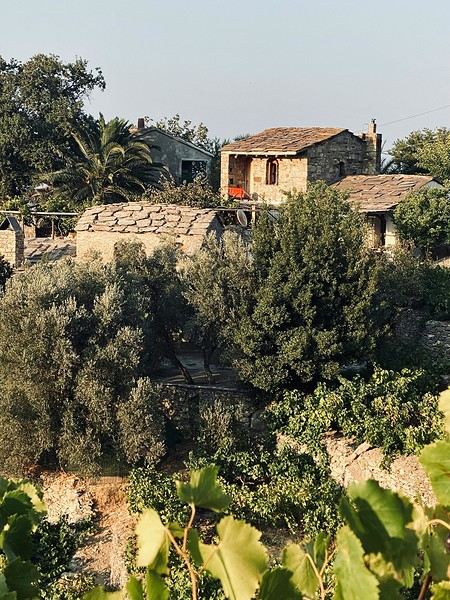
On Lemnos island, fishermen introduce you to their traditional sustainable fishing techniques. The ancient salt pans, still in operation, bear witness to ancestral know-how. In family-run tavernas by the harbor, taste thallasomelo, a unique sea honey produced by bees foraging on wild thyme from coastal cliffs. Greek Macedonia: A Living Heritage
In the northern mountains, the villages of Zagoria preserve their characteristic stone architecture. Eighteenth-century arched bridges still span deep gorges, showcasing a unique construction art. Locals invite you to discover medicinal herb gathering and traditional herbal tea preparation, knowledge passed down through generations.
In Nymfaio, a village perched at 1,350 meters altitude, ecotourism initiatives help preserve the natural habitat of brown bears. Traditional stone guesthouses offer an ideal base for exploring the region and observing wildlife in its natural environment. Agritourism and Authentic Rural Life
Traditional farms in Thessaly open their doors to travelers eager to discover sustainable agriculture. Participate in the autumn olive harvest, traditional feta cheese making, or the cultivation of aromatic herbs that flavor Greek cuisine. These experiences not only support the local economy but also help preserve ancestral farming practices.
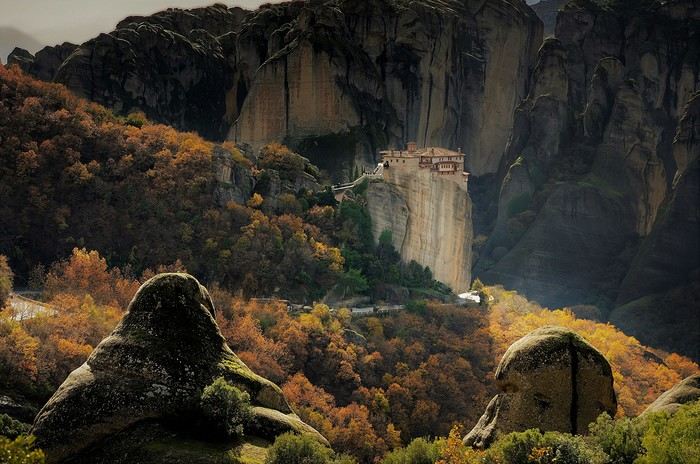
Traditional Festivals and Local Celebrations
The Greek calendar is marked by authentic celebrations that vary by region. In Pelion, the Goat Carnival transforms villages into living theater stages, where pagan traditions blend with Christian folklore. On Syros, the rebetiko festival lets you discover this UNESCO-listed music in its original context. Sustainable Initiatives and Heritage Preservation
Many Greek communities are committed to sustainable tourism projects. On Thirassia, Santorini's lesser-known neighbor, a traditional troglodyte house rehabilitation project allows visitors to stay in authentic dwellings while contributing to architectural heritage preservation. Supporting Local Communities
Women's cooperatives, particularly active in rural areas, offer traditional craft workshops. In Arnaia, Chalkidiki, learn to weave on traditional looms or prepare preserves using age-old methods. These initiatives help women maintain economic independence while preserving local traditions.
For more responsible tourism, many accommodations adopt eco-friendly practices. Using local products, sustainable water management, and solar energy production are among the initiatives that help preserve places' authenticity while respecting the environment.
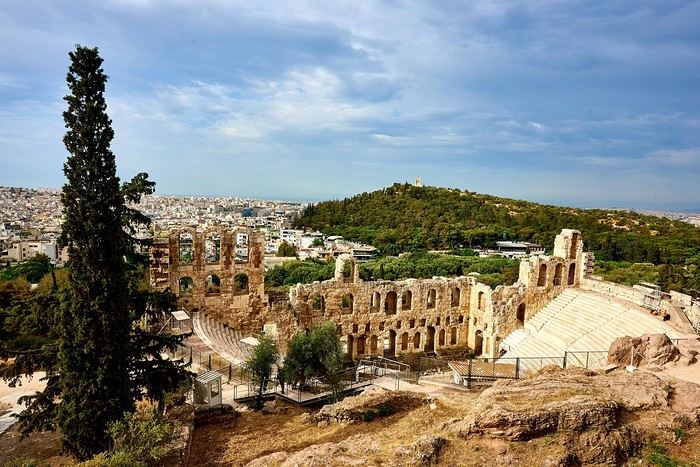
Tips for an Authentic Trip
To discover the real Greece, choose off-season stays from October to April. Milder temperatures and fewer crowds allow for more authentic encounters with locals. Opt for small family-run guesthouses and host tables that offer true immersion in local culture.
Greece's regions thus invite you to discover another facet of this millennia-old country, far from tourist clichés. Each village, each island, each mountain holds authentic treasures waiting to be discovered by travelers who respect traditions and the environment.
Authentic Peloponnese: A Land of Living Traditions
The Peloponnese peninsula is home to traditional villages where time seems to have stood still. In Dimitsana, perched in the Arcadian mountains, locals keep centuries-old traditions alive in their craft workshops. The cobbled streets echo with the sound of traditional looms, where artisans still create textiles using age-old methods.
In the Mani region, ancient stone towers tell the story of an untamed land. Local families welcome you into their traditional homes to share their culinary art: olive oil preparation, olive bread making, and dolmades crafted according to recipes passed down through generations. The Unknown Islands: Preserved Jewels of the Aegean Sea
Far from Mykonos' hustle and bustle, Ikaria island reveals its longevity secrets. This blue island, known for its inhabitants' exceptional lifespan, invites you to discover a unique way of life. Join the panigiria, traditional festivals where the entire community gathers to dance, sing, and share local dishes prepared in large communal ovens.
On Lemnos island, fishermen introduce you to their traditional sustainable fishing techniques. The ancient salt pans, still in operation, bear witness to ancestral know-how. In family-run tavernas by the harbor, taste thallasomelo, a unique sea honey produced by bees foraging on wild thyme from coastal cliffs. Greek Macedonia: A Living Heritage
In the northern mountains, the villages of Zagoria preserve their characteristic stone architecture. Eighteenth-century arched bridges still span deep gorges, showcasing a unique construction art. Locals invite you to discover medicinal herb gathering and traditional herbal tea preparation, knowledge passed down through generations.
In Nymfaio, a village perched at 1,350 meters altitude, ecotourism initiatives help preserve the natural habitat of brown bears. Traditional stone guesthouses offer an ideal base for exploring the region and observing wildlife in its natural environment. Agritourism and Authentic Rural Life
Traditional farms in Thessaly open their doors to travelers eager to discover sustainable agriculture. Participate in the autumn olive harvest, traditional feta cheese making, or the cultivation of aromatic herbs that flavor Greek cuisine. These experiences not only support the local economy but also help preserve ancestral farming practices.
Traditional Festivals and Local Celebrations
The Greek calendar is marked by authentic celebrations that vary by region. In Pelion, the Goat Carnival transforms villages into living theater stages, where pagan traditions blend with Christian folklore. On Syros, the rebetiko festival lets you discover this UNESCO-listed music in its original context. Sustainable Initiatives and Heritage Preservation
Many Greek communities are committed to sustainable tourism projects. On Thirassia, Santorini's lesser-known neighbor, a traditional troglodyte house rehabilitation project allows visitors to stay in authentic dwellings while contributing to architectural heritage preservation. Supporting Local Communities
Women's cooperatives, particularly active in rural areas, offer traditional craft workshops. In Arnaia, Chalkidiki, learn to weave on traditional looms or prepare preserves using age-old methods. These initiatives help women maintain economic independence while preserving local traditions.
For more responsible tourism, many accommodations adopt eco-friendly practices. Using local products, sustainable water management, and solar energy production are among the initiatives that help preserve places' authenticity while respecting the environment.
Tips for an Authentic Trip
To discover the real Greece, choose off-season stays from October to April. Milder temperatures and fewer crowds allow for more authentic encounters with locals. Opt for small family-run guesthouses and host tables that offer true immersion in local culture.
Greece's regions thus invite you to discover another facet of this millennia-old country, far from tourist clichés. Each village, each island, each mountain holds authentic treasures waiting to be discovered by travelers who respect traditions and the environment.
2 weeks in mojito country - March 2024 (Cuba)
Hey everyone,
A lot has happened in 4 years when it comes to travel. It wasn’t a little virus that would stop us from traveling, even if we sometimes had to adjust our destinations. So, I’m going to try to get back into posting travel journals, starting with destinations where there aren’t many recent stories.
I’ll begin with our trip of 2 weeks exploring the western part of Cuba. For those eager to read the story, I invite you to check out MyAtlas, where I started writing my travel journals during VoyageForum’s long hiatus: https://www.myatlas.com/Lofwyra/cuba-petit-detour-au-pays-du-mojito
Our itinerary, traveled in a 1954 classic American car with our driver Yoan, who spoke excellent French. I’ll add links to the posts as I write them.
2 nights in Habana Vieja - <<click here to go directly to the post>> 2 nights in Playa Larga** 2 nights in Cienfuegos** 3 nights in Trinidad*** 2 nights in Matanzas*** 3 nights in Viñales**** 1 night in Havana, downtown and Vedado
Before diving into the story, here are a few photos of what stood out to us beyond the usual sights of this country:
🙂 The birds, in large numbers—hummingbirds, pink flamingos, pelicans, and especially the tocororo, Cuba’s endemic bird, considered the national bird because the colors of its plumage match the Cuban flag.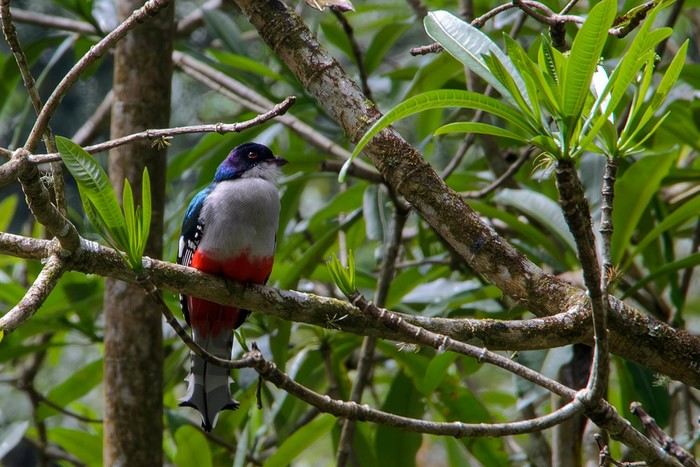
🙂 Matanzas, a city that doesn’t get much attention, sandwiched between Varadero and Havana. It doesn’t have the architectural splendor of Trinidad or Cienfuegos, some streets are really dirty, but it has a dynamic, lively vibe that really touched us.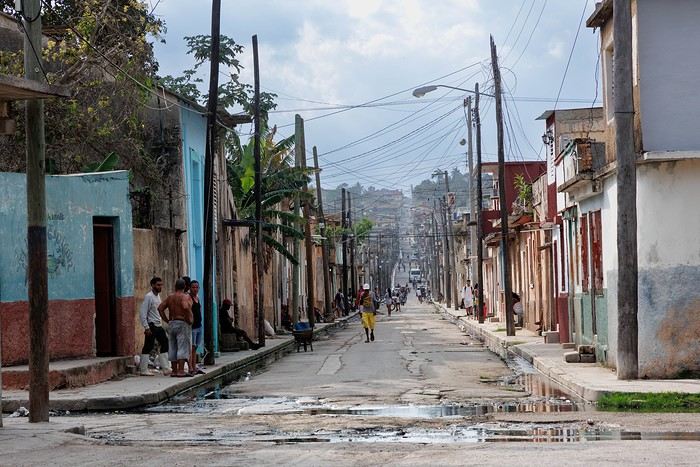
🙂 The ever-present blue, in the architecture, the cars, and the natural surroundings.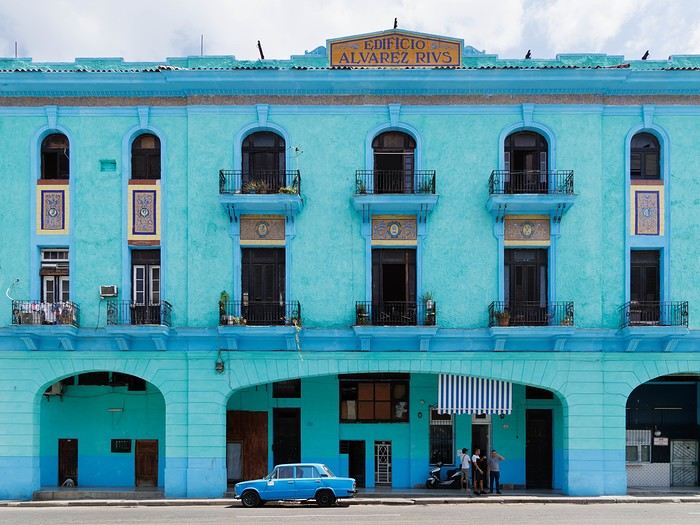
...and what we called the "Cuban style": rum and cigars in the company of Che 😎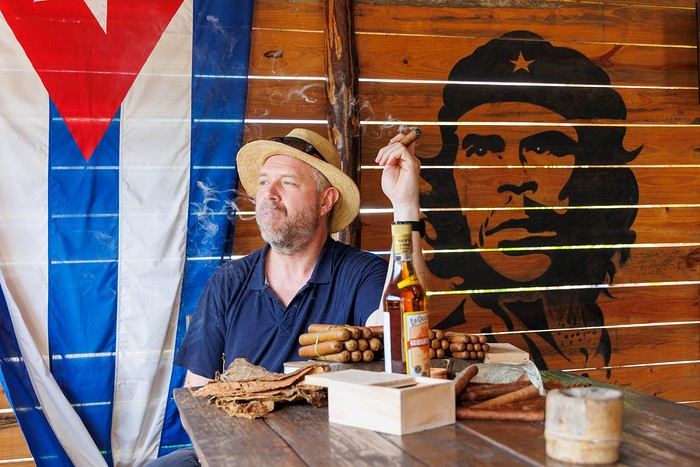
There’s still so much more to remember about this captivating and vibrant country, despite the economic crisis hitting Cubans hard... to be continued in the story.
Happy reading, Pascale
A lot has happened in 4 years when it comes to travel. It wasn’t a little virus that would stop us from traveling, even if we sometimes had to adjust our destinations. So, I’m going to try to get back into posting travel journals, starting with destinations where there aren’t many recent stories.
I’ll begin with our trip of 2 weeks exploring the western part of Cuba. For those eager to read the story, I invite you to check out MyAtlas, where I started writing my travel journals during VoyageForum’s long hiatus: https://www.myatlas.com/Lofwyra/cuba-petit-detour-au-pays-du-mojito
Our itinerary, traveled in a 1954 classic American car with our driver Yoan, who spoke excellent French. I’ll add links to the posts as I write them.
2 nights in Habana Vieja - <<click here to go directly to the post>> 2 nights in Playa Larga** 2 nights in Cienfuegos** 3 nights in Trinidad*** 2 nights in Matanzas*** 3 nights in Viñales**** 1 night in Havana, downtown and Vedado
Before diving into the story, here are a few photos of what stood out to us beyond the usual sights of this country:
🙂 The birds, in large numbers—hummingbirds, pink flamingos, pelicans, and especially the tocororo, Cuba’s endemic bird, considered the national bird because the colors of its plumage match the Cuban flag.
🙂 Matanzas, a city that doesn’t get much attention, sandwiched between Varadero and Havana. It doesn’t have the architectural splendor of Trinidad or Cienfuegos, some streets are really dirty, but it has a dynamic, lively vibe that really touched us.
🙂 The ever-present blue, in the architecture, the cars, and the natural surroundings.
...and what we called the "Cuban style": rum and cigars in the company of Che 😎
There’s still so much more to remember about this captivating and vibrant country, despite the economic crisis hitting Cubans hard... to be continued in the story.
Happy reading, Pascale
St. Lucia and iSimangaliso: Stories from Different Trips
Hello there,

As mentioned in the title, this is a travel journal focused on St. Lucia and iSimangaliso ("this place is miraculous" in Zulu) over various trips spanning about twenty years.
The Elephant Coast stretches from Hluhluwe Umfolozi, through St. Lucia and iSimangaliso, all the way to the Mozambique border near Kosi Bay and Tembe. This region was conquered by the Zulus (for context, in the 19th century, the Zulus were just one Bantu group among many—it was a local Napoleon, Shaka, who was both cruel and inventive, conquering and subjugating all other groups to form the Zulu nation). The Tonga were the big losers in this area, and a certain "animosity" is still very noticeable... With our two guides (one Zulu and the other Tonga), we ran into some Tonga folks—definitely not a warm atmosphere. The Tonga were pushed back into the marshes. Fish traps are their main source of wealth. (iSimangaliso is a lagoon and marshland area with several interconnected lakes—it used to be called Vetland Park, and for good reason.) So, lakes, fishing with fish traps...
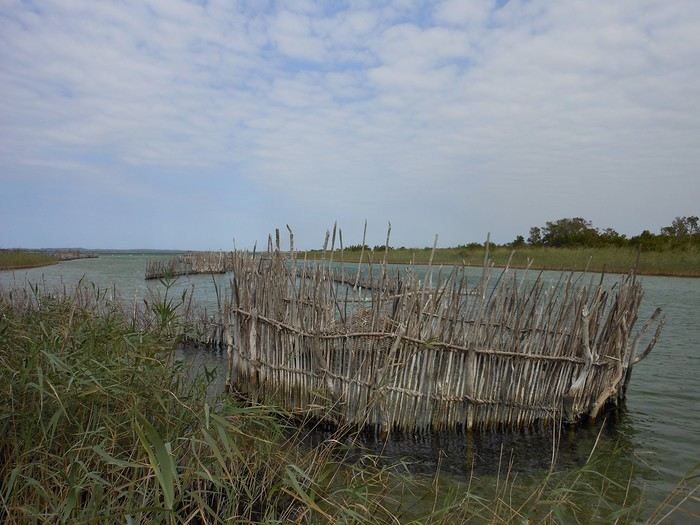
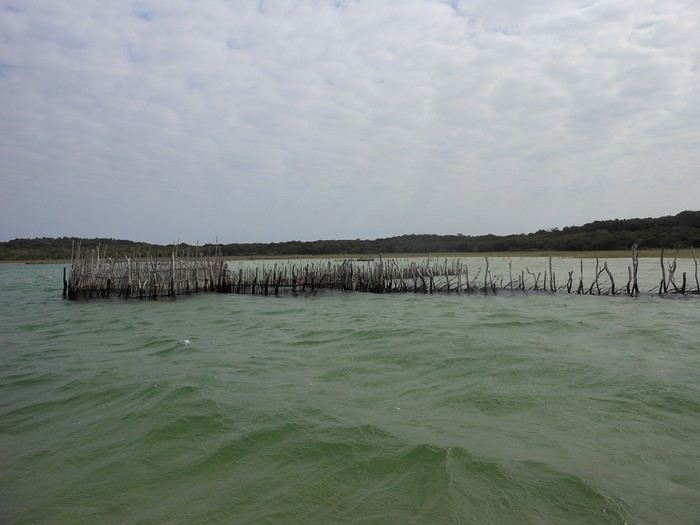
Traditionally done with raffia boats
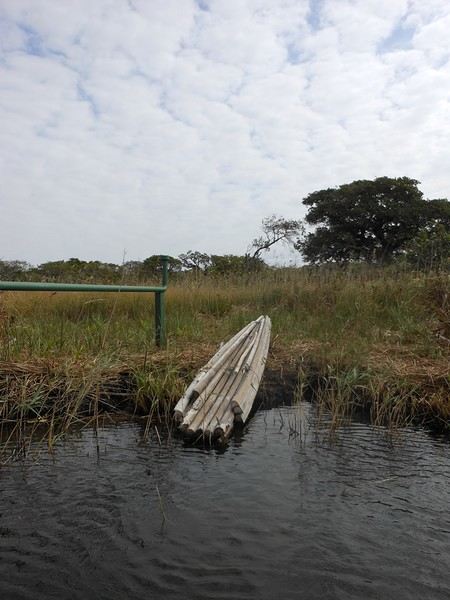
Made from forest raffia
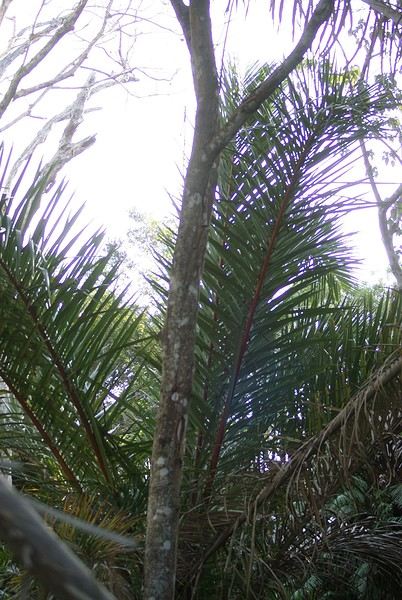
Where we spotted a particularly rare and endemic bird (whose name I can’t remember... and I can’t be bothered to dig through my notes)
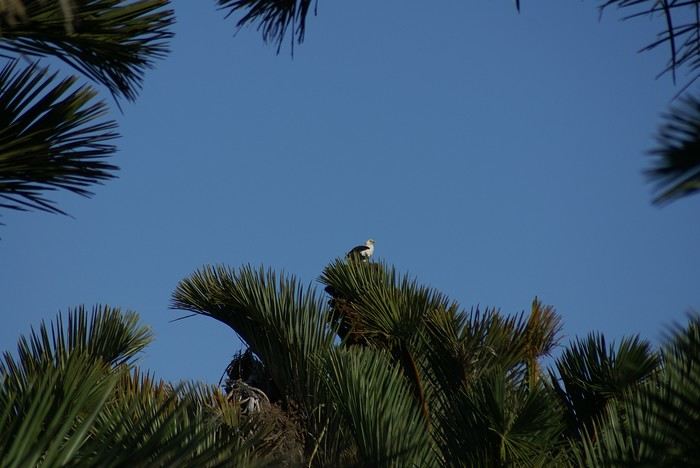 Here, those are eagles
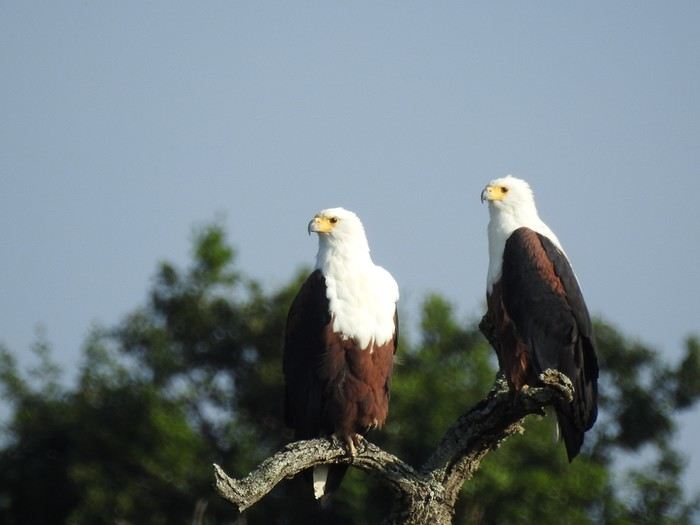
And they’re pretty brave because... they’re not far away...
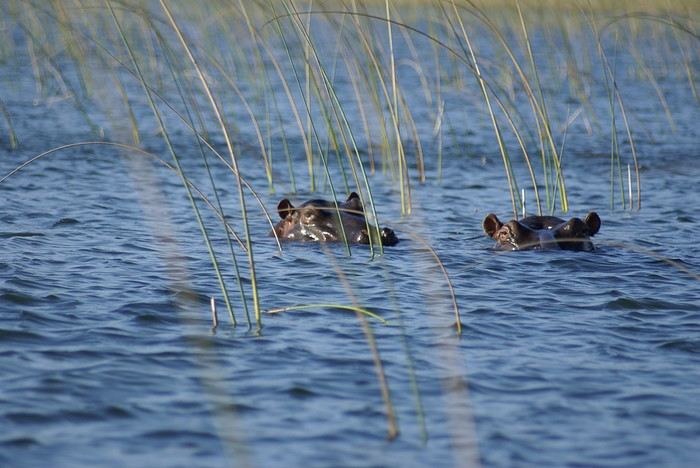
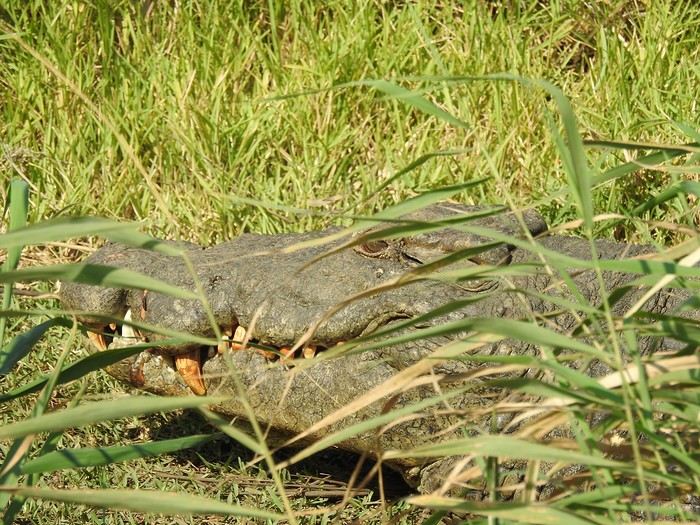
Yet we still swim there... with supervision...
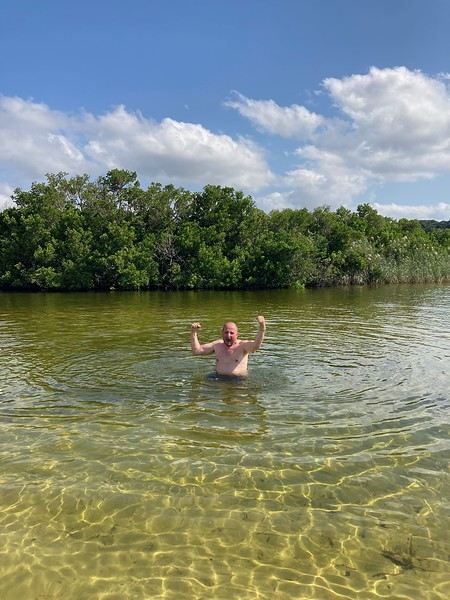
So, between St. Lucia and Mozambique, you’ll find marshes, lagoons, lakes, and coastline, with our Tonga friends, Zulu friends, and—just a bit further up—the Tembe... and their king. (I’m showing off a bit because I got to see a king up close, ate in the same room as him, and even talked to him!)
Originally, the Boers tried to farm there... including sugarcane...
But... between the hippos, snakes, crocs, and malaria-carrying mosquitoes... They lost count of the deaths and disappearances.
The story goes that when Madiba (Mandela) came to power, he passed through the area and convinced them to turn it into a natural space that would attract tourists—and that’s when the big change happened.
And it’s pretty incredible to see how this place has evolved, going from extreme poverty to a certain level of gentrification... How this once "chaotic" area saw shops, roads, and housing spring up (I’m mainly talking about Mtubatuba, the nearby Black town). In fact, in St. Lucia now, the homes that aren’t tourist accommodations can be counted on one hand.
St. Lucia has become a "seaside resort"... very busy during school holidays and certain weekends, increasingly cosmopolitan (20 years ago, speaking French was exotic—now it’s completely ordinary).
As mentioned in the title, this is a travel journal focused on St. Lucia and iSimangaliso ("this place is miraculous" in Zulu) over various trips spanning about twenty years.
The Elephant Coast stretches from Hluhluwe Umfolozi, through St. Lucia and iSimangaliso, all the way to the Mozambique border near Kosi Bay and Tembe. This region was conquered by the Zulus (for context, in the 19th century, the Zulus were just one Bantu group among many—it was a local Napoleon, Shaka, who was both cruel and inventive, conquering and subjugating all other groups to form the Zulu nation). The Tonga were the big losers in this area, and a certain "animosity" is still very noticeable... With our two guides (one Zulu and the other Tonga), we ran into some Tonga folks—definitely not a warm atmosphere. The Tonga were pushed back into the marshes. Fish traps are their main source of wealth. (iSimangaliso is a lagoon and marshland area with several interconnected lakes—it used to be called Vetland Park, and for good reason.) So, lakes, fishing with fish traps...
Traditionally done with raffia boats
Made from forest raffia
Where we spotted a particularly rare and endemic bird (whose name I can’t remember... and I can’t be bothered to dig through my notes)
Here, those are eagles
And they’re pretty brave because... they’re not far away...
Yet we still swim there... with supervision...
So, between St. Lucia and Mozambique, you’ll find marshes, lagoons, lakes, and coastline, with our Tonga friends, Zulu friends, and—just a bit further up—the Tembe... and their king. (I’m showing off a bit because I got to see a king up close, ate in the same room as him, and even talked to him!)
Originally, the Boers tried to farm there... including sugarcane...
But... between the hippos, snakes, crocs, and malaria-carrying mosquitoes... They lost count of the deaths and disappearances.
The story goes that when Madiba (Mandela) came to power, he passed through the area and convinced them to turn it into a natural space that would attract tourists—and that’s when the big change happened.
And it’s pretty incredible to see how this place has evolved, going from extreme poverty to a certain level of gentrification... How this once "chaotic" area saw shops, roads, and housing spring up (I’m mainly talking about Mtubatuba, the nearby Black town). In fact, in St. Lucia now, the homes that aren’t tourist accommodations can be counted on one hand.
St. Lucia has become a "seaside resort"... very busy during school holidays and certain weekends, increasingly cosmopolitan (20 years ago, speaking French was exotic—now it’s completely ordinary).
A Trip to Australia: Tasmania
Sunday, November 26, 2023
Melbourne - Hobart
Flawless journey to Hobart. Our stay in the southernmost land we’ve ever visited. And indeed, everything’s different. The climate—14°C, rain that varies in intensity but never stops, the landscapes… It’s a shock! But, apart from the bad weather, Dom is thrilled.
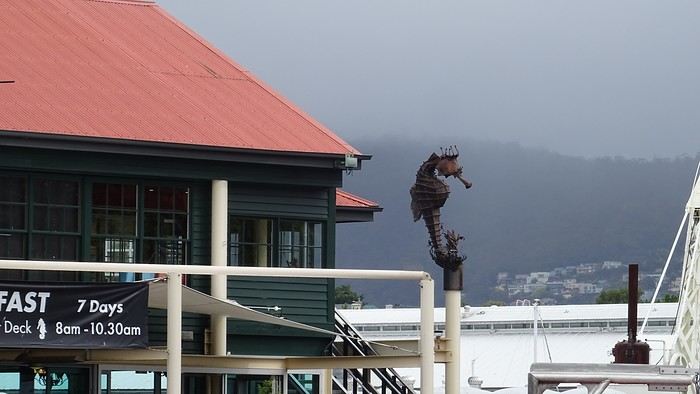
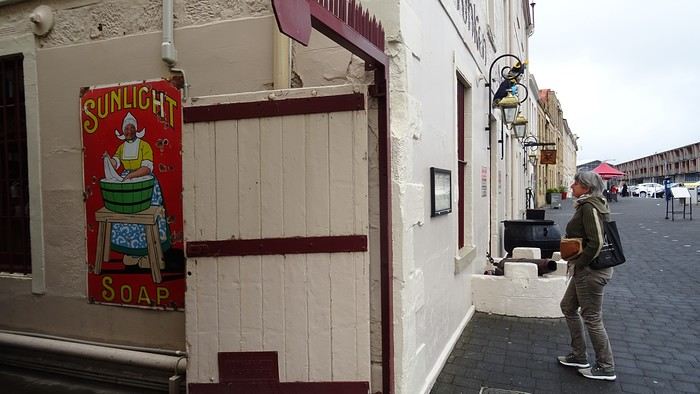
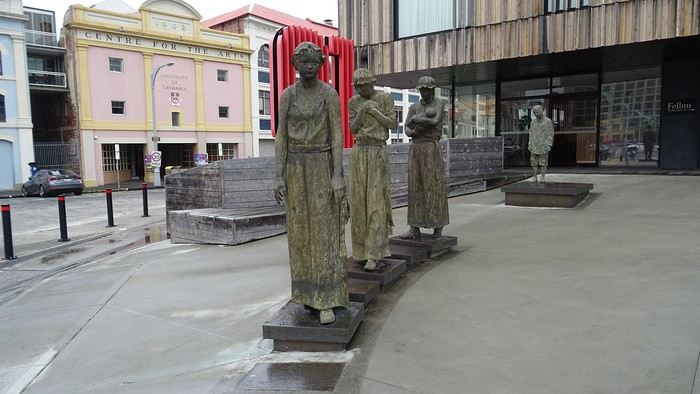
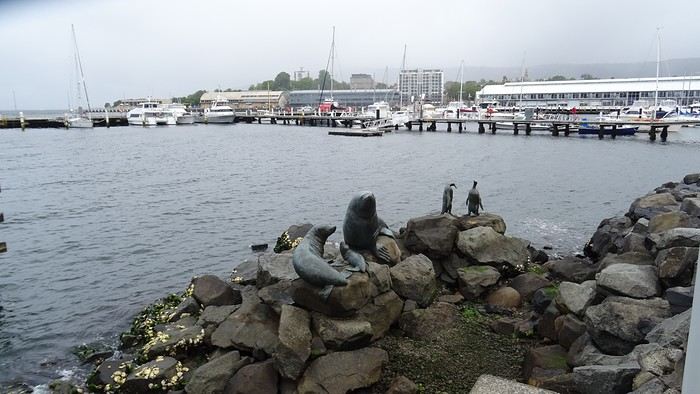
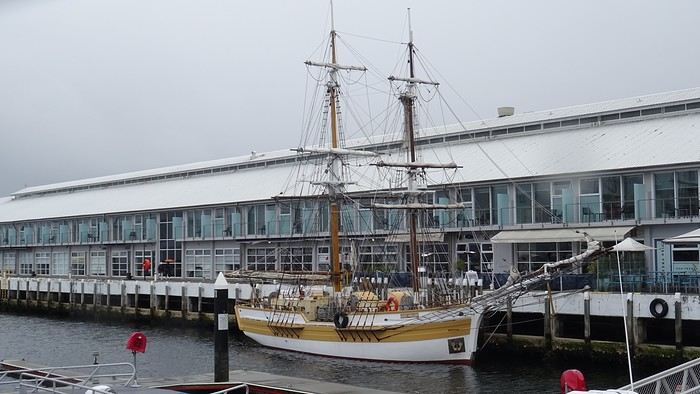
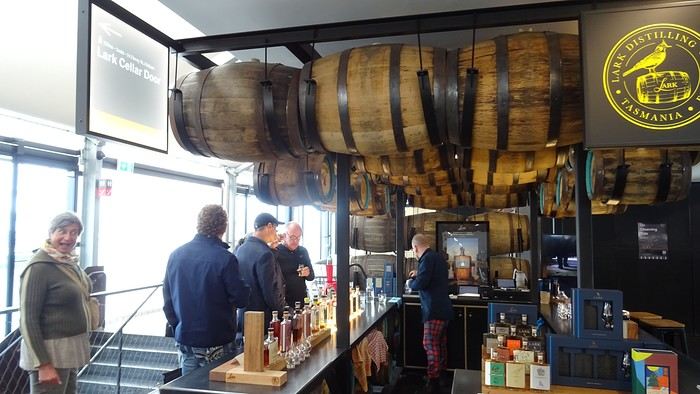
We’ve also downgraded our accommodations. We’ve got a tiny room, and the bathroom—private, at least—is two hallways away… But the price is reasonable (under 100 €) and the location is central.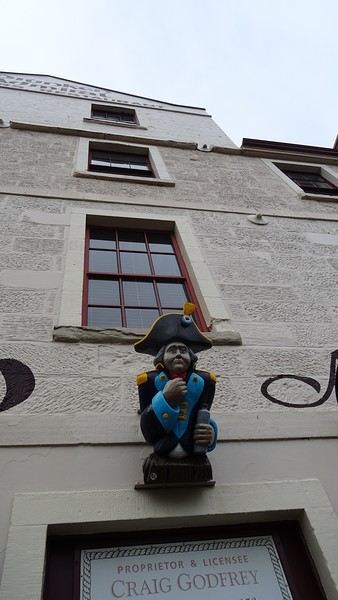
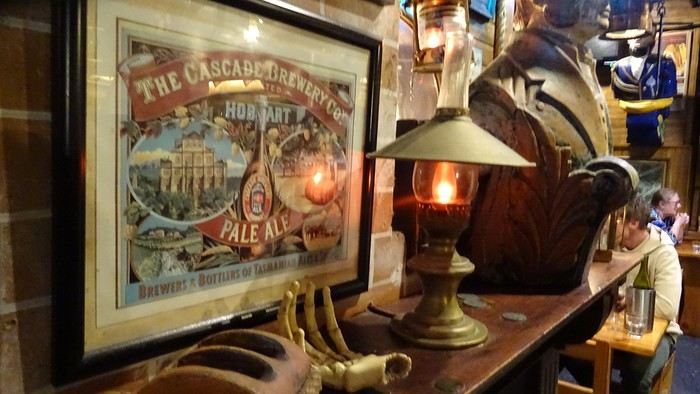
We cheered ourselves up by dining at *The Drunken Admiral* (reservations are a must—we barely snagged a table for 8 PM!). The decor is straight out of an old ship, complete with cheeky statues in the style of *Pirates of the Caribbean*… We had fun! The food was decent, but pricey. Dom loved it; I was less impressed.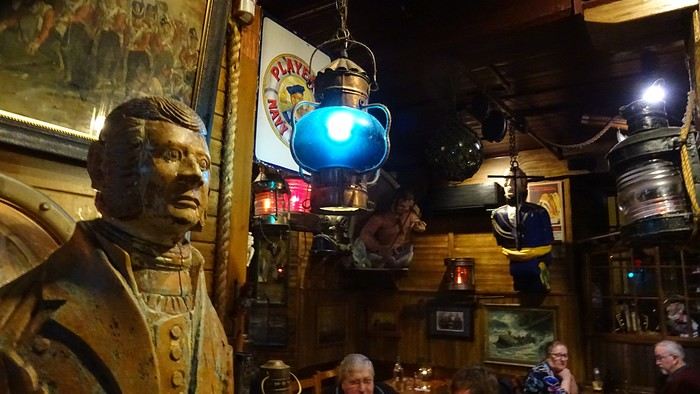
We bailed on the British series *Emma*, based on Jane Austen. We couldn’t take it anymore. The boredom was so intense that the specter of a collective suicide loomed over us. This show, where the world’s most insufferable bourgeoisie—the English nobility—lives out love stories with such improbable naivety that I wanted to scream, is pure torture. Mercy, I surrender! I’ll tell you anything you want, just make it stop! We got rid of it. We’re safe now!
We’ve also downgraded our accommodations. We’ve got a tiny room, and the bathroom—private, at least—is two hallways away… But the price is reasonable (under 100 €) and the location is central.
We cheered ourselves up by dining at *The Drunken Admiral* (reservations are a must—we barely snagged a table for 8 PM!). The decor is straight out of an old ship, complete with cheeky statues in the style of *Pirates of the Caribbean*… We had fun! The food was decent, but pricey. Dom loved it; I was less impressed.
We bailed on the British series *Emma*, based on Jane Austen. We couldn’t take it anymore. The boredom was so intense that the specter of a collective suicide loomed over us. This show, where the world’s most insufferable bourgeoisie—the English nobility—lives out love stories with such improbable naivety that I wanted to scream, is pure torture. Mercy, I surrender! I’ll tell you anything you want, just make it stop! We got rid of it. We’re safe now!
The 8 Most Beautiful Hikes to Do in Réunion Island
Réunion Island, this paradise in the Indian Ocean, is a must-visit destination for hiking enthusiasts. With its active volcanoes, majestic cirques, and impressive peaks, there’s plenty to delight nature and adventure lovers. This article takes you on a journey to discover the eight most beautiful hikes the island has to offer. Lace up your hiking boots—let’s go!
1- Piton des Neiges: The Summit of Réunion
Piton des Neiges is the highest point on Réunion Island at 3,070 meters. It’s an iconic hike that attracts a large number of hikers every year. Climbing Piton des Neiges is like stepping into a unique atmosphere where volcanic landscapes blend with lush vegetation.
The hike usually starts from the picturesque village of Cilaos. It takes about six hours to reach the summit, so good physical condition is a must. Once at the top, you’ll be rewarded with a breathtaking panoramic view of the entire island. A simple flight from Paris to Saint-Denis and you’re ready for this stunning adventure.
Here are a few tips:
Bring warm clothes—it can get very cold at the summit. Pack enough water and food. Start before dawn to catch the sunrise from the summit.
2- Piton de la Fournaise: A Volcanic Walk
You can’t visit Réunion without stopping by Piton de la Fournaise, one of the world’s most active volcanoes. The hike usually begins at Pas de Bellecombe, accessible after a winding road that already offers spectacular views. The well-marked trail first takes you through lunar landscapes to the Enclos Fouqué, then continues toward the Dolomieu crater. Frequent eruptions often change the scenery, making each visit unique. Piton de la Fournaise is a grand natural spectacle you won’t want to miss during your trip.
Here are a few tips:
Check the volcano’s current activity before heading out. Wear sturdy shoes for walking on solidified lava. Always bring maps or a GPS, as signs may be damaged by eruptions.
3- Cirque de Mafate: In the Heart of Nature
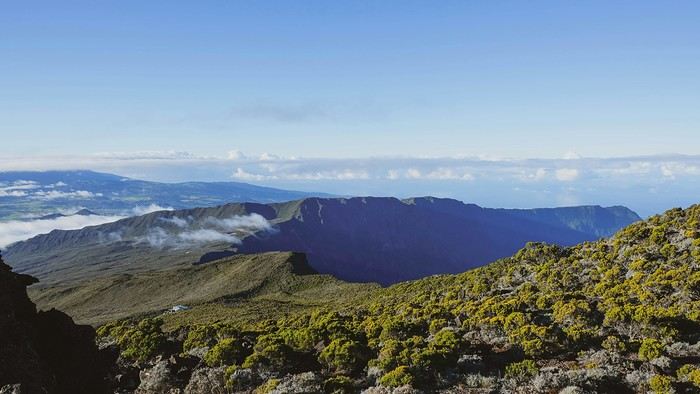
Accessible only on foot or by helicopter, the Cirque de Mafate is a true paradise for hikers. This isolated area offers a multitude of trails leading to authentic villages, stunning viewpoints, and untouched nature. The Sentier Scout is one of the most popular routes for exploring Mafate. It starts at Le Bélier, passes through the Col des Bœufs, and then descends into the cirque. Get ready to be amazed by the enchanting panoramas and majestic peaks along the way. It’s a full immersion into the tranquility of Mafate.
Here are a few tips:
Wear good hiking shoes, as some sections can be steep. Book your nights in a gîte in advance if you’re planning a multi-day hike. Respect the environment and locals by taking all your trash with you.
4- Cirque de Cilaos: Between Mountains and Vineyards
The Cirque de Cilaos, with its waterfalls and lush forests, also offers magnificent hiking opportunities. One of the most remarkable trails leads to Grand Bénare, the island’s third-highest peak.
The hike usually starts from the Plateau des Chênes. This moderate-difficulty hike takes about five hours to reach the summit. Once there, you’ll be treated to a breathtaking view of the Cirque de Cilaos and Piton des Neiges.
Here are a few tips:
Start early to avoid clouds that can quickly envelop the summit. Don’t forget your camera to capture the stunning landscapes. Visit the vineyards of Cilaos after your hike to taste local wine.
5- Cirque de Salazie: The Valley of Waterfalls
Known for its humid climate, the Cirque de Salazie is filled with impressive waterfalls and lush tropical forests. One of the most popular hikes leads to the Trou de Fer.
The trail starts in Hell-Bourg, ranked among France’s most beautiful villages. After a few hours of hiking through primary forest, you’ll reach a viewpoint offering an incredible view of the Trou de Fer’s abyss and its dizzying waterfalls.
Here are a few tips:
Wear waterproof and mosquito-repellent clothing. Bring a headlamp and compass, as fog can make the trail hard to follow. Check trail conditions before heading out, especially after heavy rain.
6- Grand Bénare: A Stunning Panorama
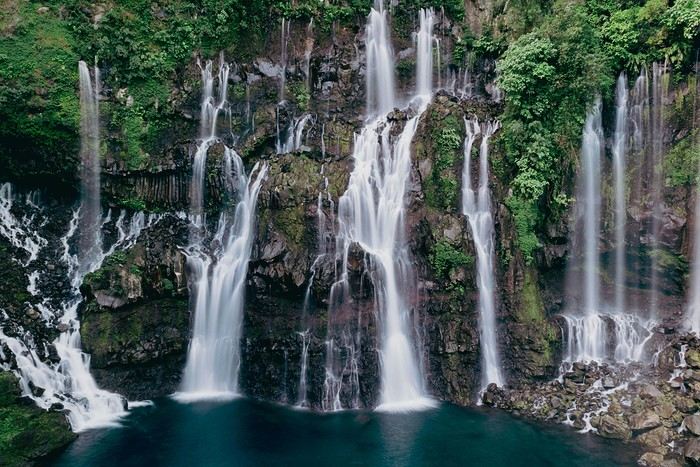
Grand Bénare offers a spectacular hike that’s a must-do on Réunion Island. Starting from the well-known viewpoint of Maïdo, the challenging yet rewarding ascent leads to the summit.
Over about ten kilometers of climbing through varied vegetation, the summit reveals a breathtaking panorama of the three cirques—Mafate, Cilaos, and Salazie. It’s a true feast for the eyes and a memorable experience for mountain lovers.
Here are a few tips:
Go when the weather is clear to fully enjoy the view from the summit. Wear good hiking shoes and bring trekking poles to make the climb easier. Don’t underestimate the duration—prepare physically for this long hike.
7- Roche Écrite: Biodiversity at Altitude
Located between the Cirque de Salazie and the Cirque de Mafate, Roche Écrite offers a hike that lets you discover exceptional flora and fauna. The hike often starts at Le Colorado, near Saint-Denis, the island’s capital.
After several hours of walking through tropical forests and varied landscapes, you’ll reach the summit at 2,276 meters. From there, you can enjoy a spectacular view of the two adjacent cirques and even spot Piton des Neiges in the distance. A must for adventurers and budding biologists.
Here are a few tips:
Check the weather forecast before heading out, as conditions can change quickly at altitude. Bring binoculars to observe endemic birds and other wildlife. Take regular breaks to soak in the scenery and recharge your energy.
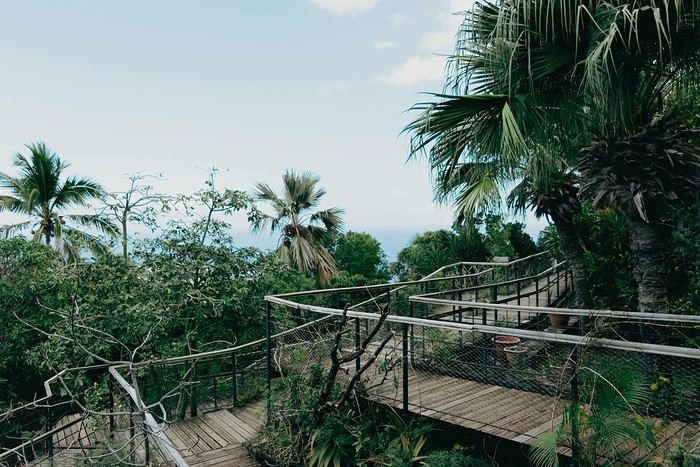
8- Col des Bœufs: The Gateway to Mafate
Col des Bœufs is another popular starting point for accessing the Cirque de Mafate. This comfortable hike offers beautiful views along the way and leads to picturesque villages like Marla and La Nouvelle.
The trail starts gently from the Col des Bœufs parking lot, climbing slightly before revealing a panoramic view of Mafate. Perfect for a relaxed day hike, this route is suitable for all levels of hikers.
Here are a few tips:
Bring a picnic to enjoy a lunch break with a view. Start early to avoid crowds and the afternoon heat. Check local bus schedules to avoid any surprises at the end of your hike.
In conclusion, Réunion Island offers a multitude of exceptional hikes that let you discover breathtaking landscapes—volcanoes, cirques, tropical forests, and waterfalls. Whether you’re a beginner or an experienced hiker, the island will amaze you with the diversity of its trails. Get ready for unforgettable adventures in the heart of preserved nature while admiring the unique beauty of this volcanic island.
1- Piton des Neiges: The Summit of Réunion
Piton des Neiges is the highest point on Réunion Island at 3,070 meters. It’s an iconic hike that attracts a large number of hikers every year. Climbing Piton des Neiges is like stepping into a unique atmosphere where volcanic landscapes blend with lush vegetation.
The hike usually starts from the picturesque village of Cilaos. It takes about six hours to reach the summit, so good physical condition is a must. Once at the top, you’ll be rewarded with a breathtaking panoramic view of the entire island. A simple flight from Paris to Saint-Denis and you’re ready for this stunning adventure.
Here are a few tips:
Bring warm clothes—it can get very cold at the summit. Pack enough water and food. Start before dawn to catch the sunrise from the summit.
2- Piton de la Fournaise: A Volcanic Walk
You can’t visit Réunion without stopping by Piton de la Fournaise, one of the world’s most active volcanoes. The hike usually begins at Pas de Bellecombe, accessible after a winding road that already offers spectacular views. The well-marked trail first takes you through lunar landscapes to the Enclos Fouqué, then continues toward the Dolomieu crater. Frequent eruptions often change the scenery, making each visit unique. Piton de la Fournaise is a grand natural spectacle you won’t want to miss during your trip.
Here are a few tips:
Check the volcano’s current activity before heading out. Wear sturdy shoes for walking on solidified lava. Always bring maps or a GPS, as signs may be damaged by eruptions.
3- Cirque de Mafate: In the Heart of Nature
Accessible only on foot or by helicopter, the Cirque de Mafate is a true paradise for hikers. This isolated area offers a multitude of trails leading to authentic villages, stunning viewpoints, and untouched nature. The Sentier Scout is one of the most popular routes for exploring Mafate. It starts at Le Bélier, passes through the Col des Bœufs, and then descends into the cirque. Get ready to be amazed by the enchanting panoramas and majestic peaks along the way. It’s a full immersion into the tranquility of Mafate.
Here are a few tips:
Wear good hiking shoes, as some sections can be steep. Book your nights in a gîte in advance if you’re planning a multi-day hike. Respect the environment and locals by taking all your trash with you.
4- Cirque de Cilaos: Between Mountains and Vineyards
The Cirque de Cilaos, with its waterfalls and lush forests, also offers magnificent hiking opportunities. One of the most remarkable trails leads to Grand Bénare, the island’s third-highest peak.
The hike usually starts from the Plateau des Chênes. This moderate-difficulty hike takes about five hours to reach the summit. Once there, you’ll be treated to a breathtaking view of the Cirque de Cilaos and Piton des Neiges.
Here are a few tips:
Start early to avoid clouds that can quickly envelop the summit. Don’t forget your camera to capture the stunning landscapes. Visit the vineyards of Cilaos after your hike to taste local wine.
5- Cirque de Salazie: The Valley of Waterfalls
Known for its humid climate, the Cirque de Salazie is filled with impressive waterfalls and lush tropical forests. One of the most popular hikes leads to the Trou de Fer.
The trail starts in Hell-Bourg, ranked among France’s most beautiful villages. After a few hours of hiking through primary forest, you’ll reach a viewpoint offering an incredible view of the Trou de Fer’s abyss and its dizzying waterfalls.
Here are a few tips:
Wear waterproof and mosquito-repellent clothing. Bring a headlamp and compass, as fog can make the trail hard to follow. Check trail conditions before heading out, especially after heavy rain.
6- Grand Bénare: A Stunning Panorama
Grand Bénare offers a spectacular hike that’s a must-do on Réunion Island. Starting from the well-known viewpoint of Maïdo, the challenging yet rewarding ascent leads to the summit.
Over about ten kilometers of climbing through varied vegetation, the summit reveals a breathtaking panorama of the three cirques—Mafate, Cilaos, and Salazie. It’s a true feast for the eyes and a memorable experience for mountain lovers.
Here are a few tips:
Go when the weather is clear to fully enjoy the view from the summit. Wear good hiking shoes and bring trekking poles to make the climb easier. Don’t underestimate the duration—prepare physically for this long hike.
7- Roche Écrite: Biodiversity at Altitude
Located between the Cirque de Salazie and the Cirque de Mafate, Roche Écrite offers a hike that lets you discover exceptional flora and fauna. The hike often starts at Le Colorado, near Saint-Denis, the island’s capital.
After several hours of walking through tropical forests and varied landscapes, you’ll reach the summit at 2,276 meters. From there, you can enjoy a spectacular view of the two adjacent cirques and even spot Piton des Neiges in the distance. A must for adventurers and budding biologists.
Here are a few tips:
Check the weather forecast before heading out, as conditions can change quickly at altitude. Bring binoculars to observe endemic birds and other wildlife. Take regular breaks to soak in the scenery and recharge your energy.
8- Col des Bœufs: The Gateway to Mafate
Col des Bœufs is another popular starting point for accessing the Cirque de Mafate. This comfortable hike offers beautiful views along the way and leads to picturesque villages like Marla and La Nouvelle.
The trail starts gently from the Col des Bœufs parking lot, climbing slightly before revealing a panoramic view of Mafate. Perfect for a relaxed day hike, this route is suitable for all levels of hikers.
Here are a few tips:
Bring a picnic to enjoy a lunch break with a view. Start early to avoid crowds and the afternoon heat. Check local bus schedules to avoid any surprises at the end of your hike.
In conclusion, Réunion Island offers a multitude of exceptional hikes that let you discover breathtaking landscapes—volcanoes, cirques, tropical forests, and waterfalls. Whether you’re a beginner or an experienced hiker, the island will amaze you with the diversity of its trails. Get ready for unforgettable adventures in the heart of preserved nature while admiring the unique beauty of this volcanic island.
What’s your definition of a nature destination?
Hi,
I’m starting this thread after a digression that began in the India section and continued in a travel journal about Kerala.
The original topic was whether India is—or isn’t—a nature destination.
I’ll let you all discuss and share your own definition of a nature destination. 🙂
I’m starting this thread after a digression that began in the India section and continued in a travel journal about Kerala.
The original topic was whether India is—or isn’t—a nature destination.
I’ll let you all discuss and share your own definition of a nature destination. 🙂
First trip to Egypt: what to know before leaving?
Hello everyone and HAPPY NEW YEAR!
Amateur Egyptologist here, 🙂 and I’ve finally planned a trip there before age catches up with me. I’ve booked a 10-day tour with our dear Amandine Marshall and her favorite agency (which I won’t name to avoid advertising).
The organizer’s fact sheet recommends:
Personal gear - Sunglasses - High-SPF sunscreen - Toiletries (preferably biodegradable products) - Hat or cap with neck coverage
Personal first-aid kit - Aspirin/paracetamol - Anti-diarrheal tablets - Throat lozenges - Antiseptic cream - Insect bite cream - Bandages and adhesive tape - Any regularly used medications or toiletries
What luggage should we bring? - Travel bag (70 liters) or suitcase. - Small backpack (30 liters) for day trips.
What should we pack? - Shoes: opt for "trekking" or mid-mountain hiking shoes with thick but flexible soles, preferably made of canvas. Choose shoes with good ankle support. - Lightweight, loose-fitting canvas pants that are comfortable and versatile. - Shirts/T-shirts: 2 or 3 shirts, preferably long-sleeved to avoid sunburn. T-shirts are also recommended, but watch out for sunburn. - Sweater or fleece for the evenings, as winter nights can get chilly.
Would any seasoned Egypt travelers have any tips or suggestions to add? Thanks!
The organizer’s fact sheet recommends:
Personal gear - Sunglasses - High-SPF sunscreen - Toiletries (preferably biodegradable products) - Hat or cap with neck coverage
Personal first-aid kit - Aspirin/paracetamol - Anti-diarrheal tablets - Throat lozenges - Antiseptic cream - Insect bite cream - Bandages and adhesive tape - Any regularly used medications or toiletries
What luggage should we bring? - Travel bag (70 liters) or suitcase. - Small backpack (30 liters) for day trips.
What should we pack? - Shoes: opt for "trekking" or mid-mountain hiking shoes with thick but flexible soles, preferably made of canvas. Choose shoes with good ankle support. - Lightweight, loose-fitting canvas pants that are comfortable and versatile. - Shirts/T-shirts: 2 or 3 shirts, preferably long-sleeved to avoid sunburn. T-shirts are also recommended, but watch out for sunburn. - Sweater or fleece for the evenings, as winter nights can get chilly.
Would any seasoned Egypt travelers have any tips or suggestions to add? Thanks!
Slow Travel or the Illusion of Authenticity
“Slow travel” is a concept that some tout as a philosophical revolution in travel. But on closer inspection, it’s nothing more than a marketing repackaging of an age-old practice.
This term is wrapped in an aura of intellectualism. It promises to reinvent the experience of travel by valuing slowness, contemplation, and cultural immersion.
The term “slow travel” claims to bring depth to travel, but it often relies on clichés.
Taking your time, meeting locals, avoiding quick visits—these practices have always existed and are nothing revolutionary.
Before the era of airplanes, high-speed trains, and express stays, traveling necessarily meant taking your time. Pilgrims, merchants, and explorers already practiced a form of “slow travel,” without hashtags or self-proclaimed spiritual guides.
Crossing lands on foot or by horse required total immersion in the landscapes, cultures, and unpredictability of the journey. Yet, no one attributed philosophical intentions to them: it was a necessity.
Slow travel, in its current version, may be less a philosophy than a reflection of the contradictions of an affluent class searching for meaning in a world they help overload.
So-called “slow” travel is presented as a privileged way to understand a culture, but this claim is debatable. A region never represents an entire country.
Immersing yourself in a community doesn’t guarantee a complete or more authentic understanding than any other way of traveling.
Slowness in itself doesn’t guarantee depth or ethics. You can immerse yourself in a place over a weekend, just as you can spend months in a country without grasping its subtleties.
By positioning itself as an antidote to “fast” tourism, slow travel fetishizes a temporality that only makes sense if it’s accompanied by real openness and an effort to integrate.
But this over-intellectualization often masks a desire to belong to a trend or a need to stand out socially.
Behind this posture sometimes lies a whim: the urge to reinvent one’s life elsewhere in an idealized form. But this quest for elsewhere remains fundamentally a way to escape or respond to unease, rather than a true commitment to the cultures visited.
When we talk about “encounters” while traveling, we often forget that these exchanges are facilitated by biased contexts. As a traveler, you’re seen as a temporary visitor, unattached, and that changes the dynamic.
Locals, whether curious or used to tourists, adopt a different stance than they would with a neighbor they see daily.
This interaction is also tinged with asymmetry: the traveler has the luxury of time and availability, while in daily life, personal concerns often take precedence over the desire to connect.
The flip side is that the openness displayed while traveling is often a facade. We boast about chatting with a fisherman or sharing a meal with a local family, but how many of these encounters lead to a real understanding of cultural differences or sincere reflection?
Once home, these moments become anecdotes, social trophies to show off, without fundamentally changing our relationship with others in our daily lives.
By imposing a definition, we push people to adapt their practices to fit an idealized model. This can lead to a paradoxical standardization: “slow travel” becomes a checklist of behaviors (meetings, immersion, slowness).
The “bobos” (bourgeois-bohemians), often in search of meaning in a world saturated with options, believe that giving a name to a practice grants it legitimacy or moral value. But this obsession with framing and theorizing travel only drains it of its spontaneity.
Someone who grew up at the crossroads of multiple cultures, on the other hand, doesn’t feel this need. For them, traveling isn’t a philosophical project but an intrinsic part of their life.
The very concept of “slow travel” can seem absurd: why glorify what’s simply natural?
Why try to turn into an ideology what should be a personal, intimate experience, free from semantic constraints?
Ultimately, this need for labeling, this frantic quest to name every gesture, reveals a society craving simplicity.
Travel, in its purest form, doesn’t need justification or slogans. It doesn’t need slowness or speed: it’s simply lived.
Perhaps the real challenge is to unlearn this Western habit of conceptualizing everything that should simply be felt.
For many, travel is a parenthesis, a temporary break from daily life. But if we reject this distinction between “home” and “elsewhere,” every human life becomes a continuous journey through varied environments.
From this perspective, “slow travel” loses all meaning, because living somewhere—whether for a week or five years—is part of the same experience of adaptation.
So, we ask the fans of marketing slogans: is travel a parenthesis or a journey?
“Slow travel” is often driven by a Western eco-bobo ideology, tinged with post-colonial guilt. This discourse promotes a supposedly virtuous way of traveling while forgetting that these practices remain a privilege.
Far from deconstructing power dynamics, it sometimes reinforces them by glorifying a different kind of consumption, still centered on comfort.
There’s also a condescending side to this rhetoric. By idealizing slowness, slow travel advocates imply that those who travel quickly or on a budget are less “authentic” in their approach.
Yet, isn’t that a form of contempt? Do those who leave for a well-deserved week after months of hard work deserve less consideration?
Concepts like “slow travel” or “sustainable tourism” seem hollow when reduced to marketing slogans or standardized behaviors. They confine travel to preconceived frameworks, stripping it of its spontaneous and unpredictable dimension.
Instead of categorizing, it would be more relevant to recognize the plurality of human experiences without trying to define them.
Slow travel doesn’t invent anything. It simply puts into words—and often slogans—what travel has always been for those who practice it with intention.
Maybe we should stop trying to theorize every movement and simply rediscover travel for what it is: a human experience, sometimes slow, sometimes fast, but always personal.
More info on our site
This term is wrapped in an aura of intellectualism. It promises to reinvent the experience of travel by valuing slowness, contemplation, and cultural immersion.
The term “slow travel” claims to bring depth to travel, but it often relies on clichés.
Taking your time, meeting locals, avoiding quick visits—these practices have always existed and are nothing revolutionary.
Before the era of airplanes, high-speed trains, and express stays, traveling necessarily meant taking your time. Pilgrims, merchants, and explorers already practiced a form of “slow travel,” without hashtags or self-proclaimed spiritual guides.
Crossing lands on foot or by horse required total immersion in the landscapes, cultures, and unpredictability of the journey. Yet, no one attributed philosophical intentions to them: it was a necessity.
Slow travel, in its current version, may be less a philosophy than a reflection of the contradictions of an affluent class searching for meaning in a world they help overload.
So-called “slow” travel is presented as a privileged way to understand a culture, but this claim is debatable. A region never represents an entire country.
Immersing yourself in a community doesn’t guarantee a complete or more authentic understanding than any other way of traveling.
Slowness in itself doesn’t guarantee depth or ethics. You can immerse yourself in a place over a weekend, just as you can spend months in a country without grasping its subtleties.
By positioning itself as an antidote to “fast” tourism, slow travel fetishizes a temporality that only makes sense if it’s accompanied by real openness and an effort to integrate.
But this over-intellectualization often masks a desire to belong to a trend or a need to stand out socially.
Behind this posture sometimes lies a whim: the urge to reinvent one’s life elsewhere in an idealized form. But this quest for elsewhere remains fundamentally a way to escape or respond to unease, rather than a true commitment to the cultures visited.
When we talk about “encounters” while traveling, we often forget that these exchanges are facilitated by biased contexts. As a traveler, you’re seen as a temporary visitor, unattached, and that changes the dynamic.
Locals, whether curious or used to tourists, adopt a different stance than they would with a neighbor they see daily.
This interaction is also tinged with asymmetry: the traveler has the luxury of time and availability, while in daily life, personal concerns often take precedence over the desire to connect.
The flip side is that the openness displayed while traveling is often a facade. We boast about chatting with a fisherman or sharing a meal with a local family, but how many of these encounters lead to a real understanding of cultural differences or sincere reflection?
Once home, these moments become anecdotes, social trophies to show off, without fundamentally changing our relationship with others in our daily lives.
By imposing a definition, we push people to adapt their practices to fit an idealized model. This can lead to a paradoxical standardization: “slow travel” becomes a checklist of behaviors (meetings, immersion, slowness).
The “bobos” (bourgeois-bohemians), often in search of meaning in a world saturated with options, believe that giving a name to a practice grants it legitimacy or moral value. But this obsession with framing and theorizing travel only drains it of its spontaneity.
Someone who grew up at the crossroads of multiple cultures, on the other hand, doesn’t feel this need. For them, traveling isn’t a philosophical project but an intrinsic part of their life.
The very concept of “slow travel” can seem absurd: why glorify what’s simply natural?
Why try to turn into an ideology what should be a personal, intimate experience, free from semantic constraints?
Ultimately, this need for labeling, this frantic quest to name every gesture, reveals a society craving simplicity.
Travel, in its purest form, doesn’t need justification or slogans. It doesn’t need slowness or speed: it’s simply lived.
Perhaps the real challenge is to unlearn this Western habit of conceptualizing everything that should simply be felt.
For many, travel is a parenthesis, a temporary break from daily life. But if we reject this distinction between “home” and “elsewhere,” every human life becomes a continuous journey through varied environments.
From this perspective, “slow travel” loses all meaning, because living somewhere—whether for a week or five years—is part of the same experience of adaptation.
So, we ask the fans of marketing slogans: is travel a parenthesis or a journey?
“Slow travel” is often driven by a Western eco-bobo ideology, tinged with post-colonial guilt. This discourse promotes a supposedly virtuous way of traveling while forgetting that these practices remain a privilege.
Far from deconstructing power dynamics, it sometimes reinforces them by glorifying a different kind of consumption, still centered on comfort.
There’s also a condescending side to this rhetoric. By idealizing slowness, slow travel advocates imply that those who travel quickly or on a budget are less “authentic” in their approach.
Yet, isn’t that a form of contempt? Do those who leave for a well-deserved week after months of hard work deserve less consideration?
Concepts like “slow travel” or “sustainable tourism” seem hollow when reduced to marketing slogans or standardized behaviors. They confine travel to preconceived frameworks, stripping it of its spontaneous and unpredictable dimension.
Instead of categorizing, it would be more relevant to recognize the plurality of human experiences without trying to define them.
Slow travel doesn’t invent anything. It simply puts into words—and often slogans—what travel has always been for those who practice it with intention.
Maybe we should stop trying to theorize every movement and simply rediscover travel for what it is: a human experience, sometimes slow, sometimes fast, but always personal.
More info on our site
15 days in Rajasthan by train and bus
Good evening everyone.
I’m so glad VoyageForum is back up and running.
This forum has helped me plan so many trips thanks to all your contributions.
So, I’m turning to you for advice on a trip I’m planning for March 2025, from the 7th to the 21st.
I was thinking of a classic itinerary:
Arrival in Delhi at 12:05 AM on Saturday, then taking a train in the afternoon to Agra.
2 nights in Agra
2 nights in Jaipur
2 nights in Pushkar
2 nights in Jodhpur
3 nights in Udaipur
Then flying back to Delhi.
The trip would mostly be by train (which we love) and bus.
However, after reading various travelers’ comments, some cities seem less interesting, while others I hadn’t included—like Bundi and Jaisalmer—are catching my eye. But traveling by train and bus, I’m worried it might get really complicated.
I’m not sure how to organize my stay anymore, especially since we love nature and peace and quiet… and I’m afraid of too much hassle if everything isn’t planned.
Also, how can I book trains and buses in advance from France?
Thanks in advance for your help.
Magali
Looking for speakers for "Itinérance", the Cornimont Travel Festival from May 8 to 11, 2025
Hi everyone, it’s with a little pang in my heart that I’m back here chatting after four long years away.
In May 2025, the village of Cornimont is organizing a travel festival called Itinérance. I’m sharing the two communication documents, knowing that we’re also looking for speakers. We already have quite a few lined up. We’re not just looking for technically polished films with stunning drone footage. We’re looking for people who want to share their passion, whether it’s a trip around their department or a journey around the world.
ITINERANCE PRESS RELEASE – October 2024
Itinérance, the travel festival, from your doorstep to the ends of the Earth First edition, May 8–11, 2025, Polyactivity Center in Cornimont (Vosges)
What could be a more beautiful journey than one that loops right from your doorstep, on foot or by bike, in the spirit of the ancient pilgrims of Saint-Jacques-de-Compostelle?
For this first edition, Itinérance aims to celebrate local travel, in France and nearby regions, while also making room for distant expeditions that require motorized transport.
Talks, photo exhibitions, personal stories, films... will highlight the harmony with nature, the joy of unexpected encounters along the trail or road, the lightness of minimalist logistics, and the discovery of landscapes in all their simplicity and authenticity.
Cornimont is an hour’s bike ride from Remiremont train station via the Voie Verte, in the heart of the Parc Naturel Régional des Ballons des Vosges, in the Hautes-Vosges area. A bus line also connects Remiremont train station to the center of Cornimont.
For more information: itinerance.cornimont@gmail.com Facebook: Itinérance Cornimont
In May 2025, the village of Cornimont is organizing a travel festival called Itinérance. I’m sharing the two communication documents, knowing that we’re also looking for speakers. We already have quite a few lined up. We’re not just looking for technically polished films with stunning drone footage. We’re looking for people who want to share their passion, whether it’s a trip around their department or a journey around the world.
ITINERANCE PRESS RELEASE – October 2024
Itinérance, the travel festival, from your doorstep to the ends of the Earth First edition, May 8–11, 2025, Polyactivity Center in Cornimont (Vosges)
What could be a more beautiful journey than one that loops right from your doorstep, on foot or by bike, in the spirit of the ancient pilgrims of Saint-Jacques-de-Compostelle?
For this first edition, Itinérance aims to celebrate local travel, in France and nearby regions, while also making room for distant expeditions that require motorized transport.
Talks, photo exhibitions, personal stories, films... will highlight the harmony with nature, the joy of unexpected encounters along the trail or road, the lightness of minimalist logistics, and the discovery of landscapes in all their simplicity and authenticity.
Cornimont is an hour’s bike ride from Remiremont train station via the Voie Verte, in the heart of the Parc Naturel Régional des Ballons des Vosges, in the Hautes-Vosges area. A bus line also connects Remiremont train station to the center of Cornimont.
For more information: itinerance.cornimont@gmail.com Facebook: Itinérance Cornimont
Tour du monde à moto English translation pending
Bonjour, je souhaite réaliser un tour du monde moto
Le parcours dans ma tête :
Ushuaïa > Alaska > Russie, route des os et lac baikal > nepal par la trans himalayenne, > retour en france par la route de la soie et par les stans
problème :
Comment passer du sud au nord au panama, parce qu'il n'y a pas de route
quelle est la route la plus courte (avion ou bateau) entre l'alaska et la russie (voire canada russie)
Quelle société de fret est selon vous la meilleure pour organiser les transports
allez, c'est cadeau, quels sont, selon vous, les lieux immanquables sur la route ? sachant que ma route n'est pas encore vraiment définie, donc c'est assez vaste, mais ça peut aider à définir tel ou tel point de passage
je vous souhaite à tous une belle soirée, et plein de voyages
Ushuaïa > Alaska > Russie, route des os et lac baikal > nepal par la trans himalayenne, > retour en france par la route de la soie et par les stans
problème :
Comment passer du sud au nord au panama, parce qu'il n'y a pas de route
quelle est la route la plus courte (avion ou bateau) entre l'alaska et la russie (voire canada russie)
Quelle société de fret est selon vous la meilleure pour organiser les transports
allez, c'est cadeau, quels sont, selon vous, les lieux immanquables sur la route ? sachant que ma route n'est pas encore vraiment définie, donc c'est assez vaste, mais ça peut aider à définir tel ou tel point de passage
je vous souhaite à tous une belle soirée, et plein de voyages
Conversation transatlantique English translation pending
Ciao a tutti,
Ras le censuré du covid! Et si on causait d'autre chose, hein?
Dans un livre au beau titre, Globe-trotteur en français, Svetski putnik en langue originale bcms (littéralement La Conscience du voyageur) David Albahari, auteur serbe émigré au Canada, place ces mots dans la bouche de l'un des personnages du roman, Daniel Atias, écrivain de l'"ex-pays" invité à une résidence d'artistes à Banff :
Dans son monde, l'Europe,
il n’y a que l’instant présent, et dans cet instant on vit, en fait, pour le passé, que chacun voudrait bien changer, alors qu’ici, s’il ne se trompait point […] l’instant présent n’est que l’antichambre du futur, et le passé reste, comme il se doit, aussi immuable que les montagnes qui nous entourent.
L'ici qu'il évoque est le Nouveau Monde, l'Amérique aux vastes étendues.
La lectrice que je suis avait adhéré à la vision d' Albahari sur l'homme européen, du moins d'un certain âge et curiosité intellectuelle sur sa propre histoire, sur la matière de sa mémoire, Frankenstein couturé de traumatismes mal digérés (comment ne pas entendre aujourd'hui sans masque sur les oreilles les grincements de dents dans l'Egée?) et de quelques rares périodes resplendissantes. Je n'avais eu en revanche aucun point d'appui pour évaluer sa perception du Nord Américain.
Qu'en pensent mes compatriotes européens et les natifs des vastes étendues (pratiquement absents de cette rubrique) ou bourlingueurs attentifs des deux rives de l'Atlantique?
Catherine (qui se dit que son esprit serait peut-être différent, autre texture, autres réflexes, si elle habitait rue des écureuils au lieu de rue d'un général napoléonien syphilitique à quelques pas de la place d'un empereur romain grand massacreur de chrétiens)
PS : pour contextualiser (sans épistémologiser 😇) la citation extraite du livre, voici la critique complète que j'avais écrite de l'ouvrage :
« Ce qui m’inquiétait c’était une chose que je devinais plutôt que je ne la voyais vraiment, une chose qui n’avait pas encore de forme déterminée et ne se rattachait pas davantage à telle ou telle partie de son visage, quelque chose qui du moins à ce moment là n’aurait pas pu être saisi par le dessin, mais qui, telle une ombre, ne cessait de glisser sur ses joues, ses sourcils et l arête de son nez, menaçant de s’y fixer et – la voilà mon inquiétude, de s’y établir à demeure. »
Deux hommes. Un peintre et un écrivain. Un peintre canadien et un écrivain de Belgrade. En cet été 1998, ils sont tout deux invités du Centre des Arts de Banff, artistes en résidence, longue pour le premier, à peine 13 jours pour le second. Le visage de l’auteur fascine le plasticien, qui en scrute les moindres détails, les moindres expressions, et tente dans les heures où ils ne sont pas ensemble de dessiner ses traits, de la simple épure d’une ride à la physionomie complète. Il tente péniblement de faire apparaître une forme qui se dérobe.
Cette passion exclusive et oh combien possessive du peintre envers l’écrivain qui ne la découvrira, en feuilletant le haut paquet de dessins dans un parfait silence, que quelques minutes avant son départ définitif de Banff, est contrariée par l’arrivée d’un troisième homme, un Canadien de Calgary, rejeton d’Ivan Matulić, globe-trotter croate dont les deux artistes ont vu la signature dans une vitrine du Musée d’Histoire naturelle de Banff. L’écrivain et le petit-fils partageant une origine géographique commune et par là même une fraction d’histoire commune, il se noue entre eux une discussion, une entente même, dont le peintre, à son grand regret, se sent exclu.
Le peintre est le narrateur. Narration intime où il relate ses sentiments, les mouvements du groupe, les discussions.
Thé pris au grand hôtel à l’orgueilleuse architecture, conférences au Centre des Arts, cocktail petit doigt en l’air et expression inspirée de rigueur chez le directeur des programmes littéraires, fraîches eaux des torrents et wapitis vaquant, indifférents aux hommes, à leurs occupations. Déambulations plus ou moins rapides selon l’heure et l’humeur dans les rues du Bison, de la Loutre, du Castor…
Les rues ont à Banff des noms d’animaux, le peintre s’attirera la sympathie de Daniel Atias en définissant son identité par la prairie.
Les deux hommes viennent de deux mondes profondément différents. Dans le monde de Daniel Atias dit-il, « il n’y a que l’instant présent, et dans cet instant on vit, en fait, pour le passé, que chacun voudrait bien changer, alors qu’ici, s’il ne se trompait point […] l’instant présent n’est que l’antichambre du futur, et le passé reste, comme il se doit, aussi immuable que les montagnes qui nous entourent. » La réflexion sur le temps, sur l’histoire, sur les relations que les peuples entretiennent avec elle influençant ainsi leur existence, charpente le livre.
Au-delà de la confrontation du rapport au temps, à la mémoire sur les deux rives de l’Atlantique se développe la relation entre des ressortissants de deux camps opposés de l' »ex-pays » comme le nomme l’écrivain qui ne mentionnera jamais ni la « Yougoslavie« , ni encore moins la « Serbie« , discussions intenses, prises de conscience qui réveillent l’espoir assoupi de Daniel Atias. Mais le petit-fils du globe-trotter croate, né dans un pays d’avenir, cédant à l’impulsion de contempler le passé de son ancêtre, de Canadien devenant ainsi Croate, sera empoisonné, à mort, par cette dislocation abyssale de son identité.
En mode mineur, une réflexion sur la nature de la peinture et de la littérature, sur leur façon différente d’appréhender le monde, d’en rendre compte, traverse l’ouvrage.
Le texte est dense, pas de chapitre, pas même d’alinéa. Un bloc de langue, d’idées, de sentiments. Daniel Atias prétend que « le mieux serait encore de lire un seul livre pendant toute sa vie…« . Au vu de l’épaisseur de ces 200 pages, on se dit que si elles n’occupent pas toute une vie, il ne serait sans doute pas inutile de les fréquenter longuement pour en approfondir la compréhension, en déceler le cheminement, en apprécier le système d’échos.
Ras le censuré du covid! Et si on causait d'autre chose, hein?
Dans un livre au beau titre, Globe-trotteur en français, Svetski putnik en langue originale bcms (littéralement La Conscience du voyageur) David Albahari, auteur serbe émigré au Canada, place ces mots dans la bouche de l'un des personnages du roman, Daniel Atias, écrivain de l'"ex-pays" invité à une résidence d'artistes à Banff :
Dans son monde, l'Europe,
il n’y a que l’instant présent, et dans cet instant on vit, en fait, pour le passé, que chacun voudrait bien changer, alors qu’ici, s’il ne se trompait point […] l’instant présent n’est que l’antichambre du futur, et le passé reste, comme il se doit, aussi immuable que les montagnes qui nous entourent.
L'ici qu'il évoque est le Nouveau Monde, l'Amérique aux vastes étendues.
La lectrice que je suis avait adhéré à la vision d' Albahari sur l'homme européen, du moins d'un certain âge et curiosité intellectuelle sur sa propre histoire, sur la matière de sa mémoire, Frankenstein couturé de traumatismes mal digérés (comment ne pas entendre aujourd'hui sans masque sur les oreilles les grincements de dents dans l'Egée?) et de quelques rares périodes resplendissantes. Je n'avais eu en revanche aucun point d'appui pour évaluer sa perception du Nord Américain.
Qu'en pensent mes compatriotes européens et les natifs des vastes étendues (pratiquement absents de cette rubrique) ou bourlingueurs attentifs des deux rives de l'Atlantique?
Catherine (qui se dit que son esprit serait peut-être différent, autre texture, autres réflexes, si elle habitait rue des écureuils au lieu de rue d'un général napoléonien syphilitique à quelques pas de la place d'un empereur romain grand massacreur de chrétiens)
PS : pour contextualiser (sans épistémologiser 😇) la citation extraite du livre, voici la critique complète que j'avais écrite de l'ouvrage :
« Ce qui m’inquiétait c’était une chose que je devinais plutôt que je ne la voyais vraiment, une chose qui n’avait pas encore de forme déterminée et ne se rattachait pas davantage à telle ou telle partie de son visage, quelque chose qui du moins à ce moment là n’aurait pas pu être saisi par le dessin, mais qui, telle une ombre, ne cessait de glisser sur ses joues, ses sourcils et l arête de son nez, menaçant de s’y fixer et – la voilà mon inquiétude, de s’y établir à demeure. »
Deux hommes. Un peintre et un écrivain. Un peintre canadien et un écrivain de Belgrade. En cet été 1998, ils sont tout deux invités du Centre des Arts de Banff, artistes en résidence, longue pour le premier, à peine 13 jours pour le second. Le visage de l’auteur fascine le plasticien, qui en scrute les moindres détails, les moindres expressions, et tente dans les heures où ils ne sont pas ensemble de dessiner ses traits, de la simple épure d’une ride à la physionomie complète. Il tente péniblement de faire apparaître une forme qui se dérobe.
Cette passion exclusive et oh combien possessive du peintre envers l’écrivain qui ne la découvrira, en feuilletant le haut paquet de dessins dans un parfait silence, que quelques minutes avant son départ définitif de Banff, est contrariée par l’arrivée d’un troisième homme, un Canadien de Calgary, rejeton d’Ivan Matulić, globe-trotter croate dont les deux artistes ont vu la signature dans une vitrine du Musée d’Histoire naturelle de Banff. L’écrivain et le petit-fils partageant une origine géographique commune et par là même une fraction d’histoire commune, il se noue entre eux une discussion, une entente même, dont le peintre, à son grand regret, se sent exclu.
Le peintre est le narrateur. Narration intime où il relate ses sentiments, les mouvements du groupe, les discussions.
Thé pris au grand hôtel à l’orgueilleuse architecture, conférences au Centre des Arts, cocktail petit doigt en l’air et expression inspirée de rigueur chez le directeur des programmes littéraires, fraîches eaux des torrents et wapitis vaquant, indifférents aux hommes, à leurs occupations. Déambulations plus ou moins rapides selon l’heure et l’humeur dans les rues du Bison, de la Loutre, du Castor…
Les rues ont à Banff des noms d’animaux, le peintre s’attirera la sympathie de Daniel Atias en définissant son identité par la prairie.
Les deux hommes viennent de deux mondes profondément différents. Dans le monde de Daniel Atias dit-il, « il n’y a que l’instant présent, et dans cet instant on vit, en fait, pour le passé, que chacun voudrait bien changer, alors qu’ici, s’il ne se trompait point […] l’instant présent n’est que l’antichambre du futur, et le passé reste, comme il se doit, aussi immuable que les montagnes qui nous entourent. » La réflexion sur le temps, sur l’histoire, sur les relations que les peuples entretiennent avec elle influençant ainsi leur existence, charpente le livre.
Au-delà de la confrontation du rapport au temps, à la mémoire sur les deux rives de l’Atlantique se développe la relation entre des ressortissants de deux camps opposés de l' »ex-pays » comme le nomme l’écrivain qui ne mentionnera jamais ni la « Yougoslavie« , ni encore moins la « Serbie« , discussions intenses, prises de conscience qui réveillent l’espoir assoupi de Daniel Atias. Mais le petit-fils du globe-trotter croate, né dans un pays d’avenir, cédant à l’impulsion de contempler le passé de son ancêtre, de Canadien devenant ainsi Croate, sera empoisonné, à mort, par cette dislocation abyssale de son identité.
En mode mineur, une réflexion sur la nature de la peinture et de la littérature, sur leur façon différente d’appréhender le monde, d’en rendre compte, traverse l’ouvrage.
Le texte est dense, pas de chapitre, pas même d’alinéa. Un bloc de langue, d’idées, de sentiments. Daniel Atias prétend que « le mieux serait encore de lire un seul livre pendant toute sa vie…« . Au vu de l’épaisseur de ces 200 pages, on se dit que si elles n’occupent pas toute une vie, il ne serait sans doute pas inutile de les fréquenter longuement pour en approfondir la compréhension, en déceler le cheminement, en apprécier le système d’échos.
Fin du sentier en toute sécurité, la partie dangereuse de la Via Francigena commence English translation pending
Fin du sentier en toute sécurité. La partie dangereuse commence. - Jour 10 de la Via Francigena de Monteriggioni à Sienne
C'était le 10ème jour du sentier Via Francigena lorsque nous avons parcouru environ 17 km de la ville de Monteriggioni à la ville de Sienne.
Regardez la vidéo complète ici: https://youtu.be/1evx0rbq1l8 N'oubliez pas de cliquer sur les sous-titres français dans la vidéo.
La matinée a commencé très tôt pour nous à 5h30 car nous voulions faire le plus de randonnée possible le plus tôt possible. Le temps promettait une autre journée chaude et folle et nous ne voulions pas être frappés par une vague de chaleur.
La nuit, nous n'avons pas bien dormi et nous pensons avoir trouvé la raison pour laquelle cela s'est produit ces derniers jours. C'était à cause de la température chaude, même pendant la nuit, il ne faisait pas moins de 20 degrés et pas de vent du tout - dans la tente, il devenait très étouffant et il était difficile de respirer. Dans de telles conditions, aucun bon sommeil n'était malheureusement possible. Les ce rfs venaient nous rendre visite une autre fois cette nuit-là mais nous avons utilisé la lampe de poche et ils se sont enfuis effrayés par la lumière.
Nous avons donc pu rassembler toutes les choses le plus rapidement possible en environ une heure et nous étions sur la piste à 7h du matin. Le soleil était déjà levé et brillait fort.
Sur la première partie du sentier, nous avons apprécié les sentiers forestiers ombragés et les vues sur les vieux châteaux. Et en les regardant et tous les vieux bâtiments et sites fortifiés en général, nous nous demandions comment il était possible d'y vivre. La lumière du soleil ne passait pas vraiment à travers les petites ouvertures des fenêtres et les murs de pierre en combinaison avec d'énormes pièces et de hauts plafonds n'étaient pas confortables du tout. Et en hiver on parie qu'il ferait très froid dans ces murs sans isolement. Nous ne pouvions donc pas nous imaginer vivre dans un tel espace. Mais profiter de l'extérieur magnifique et inhabituel de ces châteaux était super bien sûr.
Les panneaux devenaient parfois confus et nous devions le rechercher dans le GPS, parfois les habitants nous dirigeaient aussi. Mais dans l'ensemble, si vous faites attention aux roches solides avec le signe VF, vous pouvez toujours trouver la bonne direction.
Ensuite, après une belle mais très courte partie dans la forêt et l'ombre, nous avons dû reprendre la route automobile. Et nous avons remarqué que pendant que le chemin tournait vers les routes de voiture, il y avait des panneaux indiquant que la route sécurisée se termine. Et c'était très étrange de voir comme s'ils enlevaient la responsabilité de la route dangereuse. Nous n'avons pas d'autre alternative à prendre, donc nous pensons que c'est très injuste pour les pèlerins. Il serait préférable d'adapter ces mauvaises pièces dangereuses en conséquence avec les trottoirs et les panneaux appropriés aux voitures plutôt que de simplement dire que c'est notre propre responsabilité. Ce fait était vraiment mauvais et nous en étions très indignés.
N'ayant toujours pas d'autre option, nous devions prendre la route des voitures et marcher sur l'herbe sur le côté la plupart du temps parce que les voitures passaient trop vite sans se soucier des limites de vitesse et c'était comme ça à chaque fois route de voiture. Il y avait aussi la chose drôle et triste que nous avons remarquée chez les conducteurs des voitures qui passaient, à quel point ils étaient surpris en nous voyant sur la route. Ils étaient comme nous demander ce que tu fais ici? Pourquoi marchez-vous? Et pour nous, c'est le signe que les gens ont oublié comment marcher et même le voir comme quelque chose d'étrange. Et c'était vraiment une chose terrible à savoir. Parce que nous apprenons d'abord à marcher et que cela devrait être notre première capacité prioritaire, la conduite est facultative et ne doit pas remplacer la marche.
Ensuite, le sentier s'est détourné de la route automobile et a commencé à se rapprocher de la forêt qui semblait être un soulagement après une longue partie ensoleillée. Il allait principalement à plat avec quelques montées et descentes douces, les mêmes que celles des derniers jours. Et s'il n'y avait pas le temps chaud, nous appellerions cette randonnée l'une des plus faciles que nous ayons faites.
En se rapprochant de la ville de Sienne, le sentier montait et tout était sur les routes automobiles. Le soleil était déjà très haut dans le ciel à cette époque et il nous a fallu beaucoup de sueur pour arriver en ville. L'intérieur de Sienne nous a semblé une ville sombre avec ses façades noires et ses vieilles rues et bâtiments étroits. Ce serait effrayant pour nous de marcher ici la nuit. Nous avons donc traversé les rues principales et visité la place centrale qui était pleine de soleil. Nous étions contents de ne pas y rester plus longtemps.
Nous nous sommes précipités au supermarché pour acheter des nourriture pour plusieurs jours et ensuite nous avons dû prendre le bus pour le camping, qui était à 30 km de la ville. Nous voulions trouver un endroit calme pour rester quelques jours et récupérer nos pouvoirs pour continuer la piste. Nous avions l'impression que le temps chaud nous fatiguait beaucoup et nous étions épuisés à ce moment-là. Nous avons eu de la chance car ce camping était dans un endroit isolé dans la forêt, loin des routes de voiture très fréquentées et il n'y avait pas beaucoup de monde pendant la semaine. C'était aussi un peu moins cher que la plupart des autres campings en haute saison. Nous avons aimé qu'il ait un concept naturel respectueux de l'environnement avec beaucoup de structures en bois, l'utilisation d'énergie solaire et une forêt ouverte. Nous espérions donc vraiment avoir un repos agréable et récupérant afin de pouvoir commencer avec de nouveaux pouvoirs les nouvelles aventures et découvrir plus de sentiers.
Que pensez-vous que l'on puisse faire sur les routes automobiles pour avoir une expérience plus sûre pour le randonneur?
C'était le 10ème jour du sentier Via Francigena lorsque nous avons parcouru environ 17 km de la ville de Monteriggioni à la ville de Sienne.
Regardez la vidéo complète ici: https://youtu.be/1evx0rbq1l8 N'oubliez pas de cliquer sur les sous-titres français dans la vidéo.
La matinée a commencé très tôt pour nous à 5h30 car nous voulions faire le plus de randonnée possible le plus tôt possible. Le temps promettait une autre journée chaude et folle et nous ne voulions pas être frappés par une vague de chaleur.
La nuit, nous n'avons pas bien dormi et nous pensons avoir trouvé la raison pour laquelle cela s'est produit ces derniers jours. C'était à cause de la température chaude, même pendant la nuit, il ne faisait pas moins de 20 degrés et pas de vent du tout - dans la tente, il devenait très étouffant et il était difficile de respirer. Dans de telles conditions, aucun bon sommeil n'était malheureusement possible. Les ce rfs venaient nous rendre visite une autre fois cette nuit-là mais nous avons utilisé la lampe de poche et ils se sont enfuis effrayés par la lumière.
Nous avons donc pu rassembler toutes les choses le plus rapidement possible en environ une heure et nous étions sur la piste à 7h du matin. Le soleil était déjà levé et brillait fort.
Sur la première partie du sentier, nous avons apprécié les sentiers forestiers ombragés et les vues sur les vieux châteaux. Et en les regardant et tous les vieux bâtiments et sites fortifiés en général, nous nous demandions comment il était possible d'y vivre. La lumière du soleil ne passait pas vraiment à travers les petites ouvertures des fenêtres et les murs de pierre en combinaison avec d'énormes pièces et de hauts plafonds n'étaient pas confortables du tout. Et en hiver on parie qu'il ferait très froid dans ces murs sans isolement. Nous ne pouvions donc pas nous imaginer vivre dans un tel espace. Mais profiter de l'extérieur magnifique et inhabituel de ces châteaux était super bien sûr.
Les panneaux devenaient parfois confus et nous devions le rechercher dans le GPS, parfois les habitants nous dirigeaient aussi. Mais dans l'ensemble, si vous faites attention aux roches solides avec le signe VF, vous pouvez toujours trouver la bonne direction.
Ensuite, après une belle mais très courte partie dans la forêt et l'ombre, nous avons dû reprendre la route automobile. Et nous avons remarqué que pendant que le chemin tournait vers les routes de voiture, il y avait des panneaux indiquant que la route sécurisée se termine. Et c'était très étrange de voir comme s'ils enlevaient la responsabilité de la route dangereuse. Nous n'avons pas d'autre alternative à prendre, donc nous pensons que c'est très injuste pour les pèlerins. Il serait préférable d'adapter ces mauvaises pièces dangereuses en conséquence avec les trottoirs et les panneaux appropriés aux voitures plutôt que de simplement dire que c'est notre propre responsabilité. Ce fait était vraiment mauvais et nous en étions très indignés.
N'ayant toujours pas d'autre option, nous devions prendre la route des voitures et marcher sur l'herbe sur le côté la plupart du temps parce que les voitures passaient trop vite sans se soucier des limites de vitesse et c'était comme ça à chaque fois route de voiture. Il y avait aussi la chose drôle et triste que nous avons remarquée chez les conducteurs des voitures qui passaient, à quel point ils étaient surpris en nous voyant sur la route. Ils étaient comme nous demander ce que tu fais ici? Pourquoi marchez-vous? Et pour nous, c'est le signe que les gens ont oublié comment marcher et même le voir comme quelque chose d'étrange. Et c'était vraiment une chose terrible à savoir. Parce que nous apprenons d'abord à marcher et que cela devrait être notre première capacité prioritaire, la conduite est facultative et ne doit pas remplacer la marche.
Ensuite, le sentier s'est détourné de la route automobile et a commencé à se rapprocher de la forêt qui semblait être un soulagement après une longue partie ensoleillée. Il allait principalement à plat avec quelques montées et descentes douces, les mêmes que celles des derniers jours. Et s'il n'y avait pas le temps chaud, nous appellerions cette randonnée l'une des plus faciles que nous ayons faites.
En se rapprochant de la ville de Sienne, le sentier montait et tout était sur les routes automobiles. Le soleil était déjà très haut dans le ciel à cette époque et il nous a fallu beaucoup de sueur pour arriver en ville. L'intérieur de Sienne nous a semblé une ville sombre avec ses façades noires et ses vieilles rues et bâtiments étroits. Ce serait effrayant pour nous de marcher ici la nuit. Nous avons donc traversé les rues principales et visité la place centrale qui était pleine de soleil. Nous étions contents de ne pas y rester plus longtemps.
Nous nous sommes précipités au supermarché pour acheter des nourriture pour plusieurs jours et ensuite nous avons dû prendre le bus pour le camping, qui était à 30 km de la ville. Nous voulions trouver un endroit calme pour rester quelques jours et récupérer nos pouvoirs pour continuer la piste. Nous avions l'impression que le temps chaud nous fatiguait beaucoup et nous étions épuisés à ce moment-là. Nous avons eu de la chance car ce camping était dans un endroit isolé dans la forêt, loin des routes de voiture très fréquentées et il n'y avait pas beaucoup de monde pendant la semaine. C'était aussi un peu moins cher que la plupart des autres campings en haute saison. Nous avons aimé qu'il ait un concept naturel respectueux de l'environnement avec beaucoup de structures en bois, l'utilisation d'énergie solaire et une forêt ouverte. Nous espérions donc vraiment avoir un repos agréable et récupérant afin de pouvoir commencer avec de nouveaux pouvoirs les nouvelles aventures et découvrir plus de sentiers.
Que pensez-vous que l'on puisse faire sur les routes automobiles pour avoir une expérience plus sûre pour le randonneur?
Une dizaine de jours dans le Gard English translation pending
Bonjour,
Breton, je vais me baser une dizaine de jours à Connaux dans le Gard à la mi septembre avec quelques amis.
Nous serons 6.
Nous sommes assez éclectiques et indépendants : 4 en voiture et 2 à moto, 4 assez agiles et 2 contemplatifs qui le sont fort peu.
Nous ne détestons pas faire des choses ensemble dans la journée, bien loin de là quand c’est possible, mais notre grand plaisir est en toutes hypothèses de partager nos soirées.
Je pense à priori que nous devrions pouvoir rayonner chaque jour dans un rayon maximum d’une centaine de km, en sachant bien sûr que l’objectif n’est pas de cumuler ces km.
Evidemment, j’ai consulté la documentation touristique accessible par internet et je dois recevoir bientôt un peu de complément par courrier : je me sens donc « armé » pour les « fondamentaux ».
Mais je suis à la recherche de projets plus originaux, plus insolites, éventuellement plus relationnels car je suis convaincu que le sel des voyages ce sont les rencontres.
Toute suggestion serait très bienvenue.
A charge de revanche… ;-)
Breton, je vais me baser une dizaine de jours à Connaux dans le Gard à la mi septembre avec quelques amis.
Nous serons 6.
Nous sommes assez éclectiques et indépendants : 4 en voiture et 2 à moto, 4 assez agiles et 2 contemplatifs qui le sont fort peu.
Nous ne détestons pas faire des choses ensemble dans la journée, bien loin de là quand c’est possible, mais notre grand plaisir est en toutes hypothèses de partager nos soirées.
Je pense à priori que nous devrions pouvoir rayonner chaque jour dans un rayon maximum d’une centaine de km, en sachant bien sûr que l’objectif n’est pas de cumuler ces km.
Evidemment, j’ai consulté la documentation touristique accessible par internet et je dois recevoir bientôt un peu de complément par courrier : je me sens donc « armé » pour les « fondamentaux ».
Mais je suis à la recherche de projets plus originaux, plus insolites, éventuellement plus relationnels car je suis convaincu que le sel des voyages ce sont les rencontres.
Toute suggestion serait très bienvenue.
A charge de revanche… ;-)
Majorque, rien que pour vos yeux English translation pending
Salut à tous,
Dimanche pluvieux, rentrée dans 2 jours, des masques partout, bref ambiance sinistrose à fond😕... alors je me suis dit qu'il est tant de me replonger dans les photos de Majorque et de vous en faire profiter afin d'égayer (je l'espère) les jours à venir 🙂
Majorque... Franchement cette destination ne m'a jamais fait rêver. Les Baléares, dans mon imaginaire personnel, c'était un peu les vacances Fram pas chères, de la bidasse au bord de la plage et train de siroter des mauvais cocktails, et de la jeunesse encannaillée en boite de nuit au son des boum boum boum...
Cet été, on projetait d'aller en Sicile. Nous c'est Papa, Maman, notre p'tit gars de 10 ans, et notre princesse de 6 ans. Et j'étais plus particulièrement motivé par les îles éoliennes, qui est un des must de la plongée méditerranéenne (ah oui, je suis plongeur, alors c'est toujours un critère obligé de nos destinations de vacances 😎) avec des décors volcaniques qui semblaient magiques. Mais pour différentes raisons, celà ne s'est pas fait. Alors quand ma femme, ayant vu le blog d'une instagrameuse, m'a parlé de Majorque à la place des Eoliennes, j'ai plutôt bondi... Elle a insisté, j'ai cédé, on a acheté le Lonely Planet, et j'ai commencé, toujours peu motivé, à le feuilleter... Et là, ce que je lisais n'était pas du tout en phase avec l'image d'Epinal que j'en avais... Majorque était décrit comme un écrin naturel, à base de criques turquoises, montagnes plongeant dans la mer, petits villages, plantations d'agrumes... Et de très beau coin à plongée, notamment pas mal de grottes autour du Cap de Formentor. Destination parfaite pour allier plaisir des enfants et des parents 🙂 Alors j'ai dit banco !
Un chaine montagneuse (Sierra de Tramontana) couvre la cote Ouest de l'île et se termine par le Cap de Formentor, avec nombreuses criques, parfois sauvages, un peu partout. Le Nord est formé de 2 grandes baies (celles de Pollenca et Alcudia). L'Est est très bétonné ; de belles criques mais pas vraiment sauvages. Le Sud c'est essentiellement la baie de Palma où s'entassent les jeunes anglais et allemands venus ce retourner la tête... Pas grand chose à voir au centre.
Alors on a préparé celà gentiment. Etant donné que nous ciblions la découverte du Nord et de l'Ouest de l'île , on a ciblé un logement dans la région de Sa Pobla, proche de la baie de Pollenca. Billets Transavia en poche en février pour un départ en Juillet, réservation d'une villa par Air b'n'b, il n'y avait plus qu'à... Et la Covid est arrivé🏴☠️. On n'a rien annulé, on a a serré les fesses, et finalement on est passé entre les gouttes. Nos vols ont été maintenus aux dates et horaires prévus.
La dernière chose à faire était la réservation de la voiture de location, faite au dernier moment. Oubliez les prestataires institutionnels, il y a une multitude d'agences locales à l'aéroport de Majorque. On est passé par Wiber, RAS
Et ces deux semaines furent incroyables. Un vrai choc, je ne m'attendais pas à une telle beauté à 1h30 de vol de Paris 😛
Je vais vous raconter, et surtout vous montrer tout celà, tranquillement 😉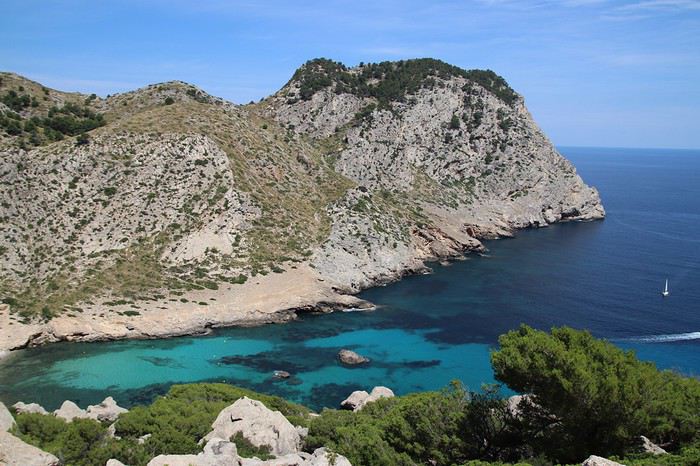
Dimanche pluvieux, rentrée dans 2 jours, des masques partout, bref ambiance sinistrose à fond😕... alors je me suis dit qu'il est tant de me replonger dans les photos de Majorque et de vous en faire profiter afin d'égayer (je l'espère) les jours à venir 🙂
Majorque... Franchement cette destination ne m'a jamais fait rêver. Les Baléares, dans mon imaginaire personnel, c'était un peu les vacances Fram pas chères, de la bidasse au bord de la plage et train de siroter des mauvais cocktails, et de la jeunesse encannaillée en boite de nuit au son des boum boum boum...
Cet été, on projetait d'aller en Sicile. Nous c'est Papa, Maman, notre p'tit gars de 10 ans, et notre princesse de 6 ans. Et j'étais plus particulièrement motivé par les îles éoliennes, qui est un des must de la plongée méditerranéenne (ah oui, je suis plongeur, alors c'est toujours un critère obligé de nos destinations de vacances 😎) avec des décors volcaniques qui semblaient magiques. Mais pour différentes raisons, celà ne s'est pas fait. Alors quand ma femme, ayant vu le blog d'une instagrameuse, m'a parlé de Majorque à la place des Eoliennes, j'ai plutôt bondi... Elle a insisté, j'ai cédé, on a acheté le Lonely Planet, et j'ai commencé, toujours peu motivé, à le feuilleter... Et là, ce que je lisais n'était pas du tout en phase avec l'image d'Epinal que j'en avais... Majorque était décrit comme un écrin naturel, à base de criques turquoises, montagnes plongeant dans la mer, petits villages, plantations d'agrumes... Et de très beau coin à plongée, notamment pas mal de grottes autour du Cap de Formentor. Destination parfaite pour allier plaisir des enfants et des parents 🙂 Alors j'ai dit banco !
Un chaine montagneuse (Sierra de Tramontana) couvre la cote Ouest de l'île et se termine par le Cap de Formentor, avec nombreuses criques, parfois sauvages, un peu partout. Le Nord est formé de 2 grandes baies (celles de Pollenca et Alcudia). L'Est est très bétonné ; de belles criques mais pas vraiment sauvages. Le Sud c'est essentiellement la baie de Palma où s'entassent les jeunes anglais et allemands venus ce retourner la tête... Pas grand chose à voir au centre.
Alors on a préparé celà gentiment. Etant donné que nous ciblions la découverte du Nord et de l'Ouest de l'île , on a ciblé un logement dans la région de Sa Pobla, proche de la baie de Pollenca. Billets Transavia en poche en février pour un départ en Juillet, réservation d'une villa par Air b'n'b, il n'y avait plus qu'à... Et la Covid est arrivé🏴☠️. On n'a rien annulé, on a a serré les fesses, et finalement on est passé entre les gouttes. Nos vols ont été maintenus aux dates et horaires prévus.
La dernière chose à faire était la réservation de la voiture de location, faite au dernier moment. Oubliez les prestataires institutionnels, il y a une multitude d'agences locales à l'aéroport de Majorque. On est passé par Wiber, RAS
Et ces deux semaines furent incroyables. Un vrai choc, je ne m'attendais pas à une telle beauté à 1h30 de vol de Paris 😛
Je vais vous raconter, et surtout vous montrer tout celà, tranquillement 😉
Identité de genre et orientations sexuelles en voyage English translation pending
Bonjour à toutes et à tous!
J'aimerais bien avoir votre opinion sur la façon dont les questions du genre et de l'orientation sexuelle sont perçues dans les différentes régions du monde que vous avez visitées.
En Occident, ces questions sont débattues et les différences de mieux en mieux acceptées, même s'il y a encore beaucoup de chemin à faire. Mais comment ça se passe ailleurs ? En Afrique par exemple, ou en Asie ?
Si je pose ma question sur ce forum c'est parce que j'aimerais avoir des avis de première main. Par exemple, qui d'entre vous a parlé à des hijras (Inde) ou à des Katoï (Thaïlande) de leurs conditions de vie? Savez-vous comment elles/ils sont vu.e.s par leurs compatriotes? Sont-elles/ils admis.e.s ou rejeté.e.s?
Une autre de mes questions tourne autour des touristes occidentales/aux LGBT. Y a-t-il des pays ou des régions où on peut en toute tranquillité afficher ses préférences? Par exemple, est-ce que deux lesbiennes peuvent marcher main dans la main dans le centre de Marrakech ou est-ce qu'il y a des bars LGBT en Chine?
Si vous êtes vous-même concerné.e.s par ces questions, pouvez-vous raconter des anecdotes et bien entendu donner des conseils sur où aller et où ne pas aller?
Merci d'avance 😎
PS:Pourquoi n'a-t-on le choix qu'entre deux sexes dans le formulaire d'inscription du site ?

PS:Pourquoi n'a-t-on le choix qu'entre deux sexes dans le formulaire d'inscription du site ?