Results for "Carson+|+3+>+99"
4841 results found.
La Jamaique, dangereuse?? English translation pending
Bonjour!
Je fais des recherches pour un éventuel voyage avec mon conjoint et nos 2 filles.
Je m'intéressais à la Jamaique, et j'ai meme découvert un club qui semblait tres interessant : http://www.fdrholidays.com/
Mais suite à d'autres lectures, je m'inquiète de la sécurité "relative" de l'île et des touristes. http://www.all-jamaica.com/jamaica/dangers.html
Qu'en pensez-vous? Iriez-vous là-bas avec de jeunes enfants? J'ai pas envie de les mettre en danger de quelque façon que ce soit. Ni même ma propre personne d'ailleurs! 😉
N.B. Je ne parle pas de simple "vol à la tire" ou autres, présents dans n'importe quel voyage à l'étranger. Je m'inquiète du niveau de criminalité qui semble être très élevé...)
Merci! 🙂
Mais suite à d'autres lectures, je m'inquiète de la sécurité "relative" de l'île et des touristes. http://www.all-jamaica.com/jamaica/dangers.html
Qu'en pensez-vous? Iriez-vous là-bas avec de jeunes enfants? J'ai pas envie de les mettre en danger de quelque façon que ce soit. Ni même ma propre personne d'ailleurs! 😉
N.B. Je ne parle pas de simple "vol à la tire" ou autres, présents dans n'importe quel voyage à l'étranger. Je m'inquiète du niveau de criminalité qui semble être très élevé...)
Merci! 🙂
Infos sur l'Ile margarita au Vénézuela English translation pending
Bonjour à tous, 🙁
Je suis vraiment décue, je pars pour margarita dans 26 jours et personne n'a encore voulue partager un peu d'info avce moi!!!!J'ai ecrit un message il y a quelque temps sans reponse!!!!! Laissez moi vous dire q2ue plus la date approche et plus je suis stressée, je ne sais toujours pas comment cela ce passe, autant pour les $$$ (us ou travel cheque ou canadien??) Les plages sont eslles belles? qu'elles excursions??? Le 31 decembre ca ce passe comment???
Encore une fois j'apprécirais vraiment une reponse... Jessica
Je suis vraiment décue, je pars pour margarita dans 26 jours et personne n'a encore voulue partager un peu d'info avce moi!!!!J'ai ecrit un message il y a quelque temps sans reponse!!!!! Laissez moi vous dire q2ue plus la date approche et plus je suis stressée, je ne sais toujours pas comment cela ce passe, autant pour les $$$ (us ou travel cheque ou canadien??) Les plages sont eslles belles? qu'elles excursions??? Le 31 decembre ca ce passe comment???
Encore une fois j'apprécirais vraiment une reponse... Jessica
Travailler en Algérie English translation pending
bonjour,
jaimerais savoir sil est possible de travailler en algérie....je suis enseignante mais je suis prete a faire autres choses... je sais ke c pas un pays tres recommandé mais jaimerais bien y aller pour des raisons personnelles....so kelkun a de linformation...jaimerais ke vous mécriviez
merci
au pire si y a pa de travail la....pq pas le maroc ou la tunisie
jaimerais savoir sil est possible de travailler en algérie....je suis enseignante mais je suis prete a faire autres choses... je sais ke c pas un pays tres recommandé mais jaimerais bien y aller pour des raisons personnelles....so kelkun a de linformation...jaimerais ke vous mécriviez
merci
au pire si y a pa de travail la....pq pas le maroc ou la tunisie
Tourisme équitable en Mauritanie English translation pending
😉salut, certains maintenant connaissent notre objectif, mais je vais recapipetter!!!
Depuis presque 2 ans, je bosse, sur investissement personnel, à nouadhibou dans une auberge populaire de style auberge relais avec restaurant, prix locaux soit moins d'un euro certains plats parceque je considere que la qualité peut etre autant pour les mauritaniens que les touristes...Nous servons de relais touristiques en affichant les differents parcourts, effets de cartes, d'adresses et même pour ceux qui tentent la descentes pour vendre des véhicules!!!, j'insiste auprés de mes associés pour déclarer nos employés avec salaire convenable et horaire correct
Mais mon boulot ne s'arrette pas là, je coordonne des assos depuis la mauritanie, avec suivit des projets, conseils, logistiques, etc...En ce moment, j'ai croisé soeur laurence, une avalanche de bonne intention et du boulot par dessus les épaules alors j'ai decidé de filer un coup de pouce, comme je surf sur pas mal de forum et ces temps çi, et j'ai du temps car les élections freinent l'arrivée des visiteurs, j'inscrit la liste des besoins d'une de leur activité. Association enfant et développement en mauritanie= AEDM (enfants de la rue)
2 TROUSSES SOINS:boite de pansement, pince à dissequer sans griffes, pince kocher avec griffes, paire de ciseaux, compresses stériles, bétadine jaune, bandes.....MEDICAMENTS, non périmés: efferalgan/paracetamol, métronidazole, antitoussifs....APPAREIL A TENSION...HOSPITALISATION/PEDIATRIQUE: flacons ringer-lactaté(500ml), flacons glucosés(500ml), perfuseurs(tubulures), microperfuseurs(épicraniennes n°25 et n°27), catheter n°24, sondes naso-gastriquesn°8 et n°6, boites à instuments pour pansements au moins 2 avec pince krocher à griffer, ciseaux, pince péan, pince à disséquer sans griffes, tulles gras, compresses stériles, bétadine rouge et jaune, bandes...MEDICAMENTS USUELS: antipyretiques nourrissons, ampicilline 500gr/1gr-iv/im, hydrocortisone iv/im, amoxilline pédiatrie(sirop), augmentin pédiatrique(sirop, sachet), gentamicine iv, trophires supositions:sirop-pédiatrique....NUTRITION DU NOURRISSON HOSPITALIER: lait 1er age et 2eme age, farine de riz/carottes...GLUCOSES...PARASITOSES:mebendazole, métronidazole-comprimé/injectable, albendazole, benzoate de benzyl ou ddt, chloroquine...DERMATOLOGIE: vasseline salicilée 30% à 40%, pomades antibiotiques, biafine, betadine gel, savons de marseilles, talc, dermocorticoïdes et cremes rehydratantes
POur ceux que cela intéressent, elles sont capables de recevoir des volontaires mais cas par cas suivant leurs projets, leurs adresses: NOTRE DAME D'AFRIQUE, soeur laurence huard, bp 69 nouadhibou, tel:5746031, email: laurencesmnda@yahoo.fr. Ou me contactez, je passerais les messages...pour faire du tourisme équitable une realité, deplus j'espere que vous passerez la liste autour de vous car ce sont des produits dont elles ont besoins tout les jours et même si certains pensent que c'est le boulot des ONGs, faire de votre voyage, une rencontre de solidarité me parait cool. Merçi d'avance et à bientôt, fabrice de nouadhibou du monde
Depuis presque 2 ans, je bosse, sur investissement personnel, à nouadhibou dans une auberge populaire de style auberge relais avec restaurant, prix locaux soit moins d'un euro certains plats parceque je considere que la qualité peut etre autant pour les mauritaniens que les touristes...Nous servons de relais touristiques en affichant les differents parcourts, effets de cartes, d'adresses et même pour ceux qui tentent la descentes pour vendre des véhicules!!!, j'insiste auprés de mes associés pour déclarer nos employés avec salaire convenable et horaire correct
Mais mon boulot ne s'arrette pas là, je coordonne des assos depuis la mauritanie, avec suivit des projets, conseils, logistiques, etc...En ce moment, j'ai croisé soeur laurence, une avalanche de bonne intention et du boulot par dessus les épaules alors j'ai decidé de filer un coup de pouce, comme je surf sur pas mal de forum et ces temps çi, et j'ai du temps car les élections freinent l'arrivée des visiteurs, j'inscrit la liste des besoins d'une de leur activité. Association enfant et développement en mauritanie= AEDM (enfants de la rue)
2 TROUSSES SOINS:boite de pansement, pince à dissequer sans griffes, pince kocher avec griffes, paire de ciseaux, compresses stériles, bétadine jaune, bandes.....MEDICAMENTS, non périmés: efferalgan/paracetamol, métronidazole, antitoussifs....APPAREIL A TENSION...HOSPITALISATION/PEDIATRIQUE: flacons ringer-lactaté(500ml), flacons glucosés(500ml), perfuseurs(tubulures), microperfuseurs(épicraniennes n°25 et n°27), catheter n°24, sondes naso-gastriquesn°8 et n°6, boites à instuments pour pansements au moins 2 avec pince krocher à griffer, ciseaux, pince péan, pince à disséquer sans griffes, tulles gras, compresses stériles, bétadine rouge et jaune, bandes...MEDICAMENTS USUELS: antipyretiques nourrissons, ampicilline 500gr/1gr-iv/im, hydrocortisone iv/im, amoxilline pédiatrie(sirop), augmentin pédiatrique(sirop, sachet), gentamicine iv, trophires supositions:sirop-pédiatrique....NUTRITION DU NOURRISSON HOSPITALIER: lait 1er age et 2eme age, farine de riz/carottes...GLUCOSES...PARASITOSES:mebendazole, métronidazole-comprimé/injectable, albendazole, benzoate de benzyl ou ddt, chloroquine...DERMATOLOGIE: vasseline salicilée 30% à 40%, pomades antibiotiques, biafine, betadine gel, savons de marseilles, talc, dermocorticoïdes et cremes rehydratantes
POur ceux que cela intéressent, elles sont capables de recevoir des volontaires mais cas par cas suivant leurs projets, leurs adresses: NOTRE DAME D'AFRIQUE, soeur laurence huard, bp 69 nouadhibou, tel:5746031, email: laurencesmnda@yahoo.fr. Ou me contactez, je passerais les messages...pour faire du tourisme équitable une realité, deplus j'espere que vous passerez la liste autour de vous car ce sont des produits dont elles ont besoins tout les jours et même si certains pensent que c'est le boulot des ONGs, faire de votre voyage, une rencontre de solidarité me parait cool. Merçi d'avance et à bientôt, fabrice de nouadhibou du monde
Playa pesquero ou Breezes costa verde? English translation pending
🙂Bonjour,
Nous sommes 2 couples et nous voulons aller à cuba à Guardalavaca en février 2004. Nous voulions aller à playa pesquero puis l'agence de voyage nous dit que c'est un beau site mais immense alors pour ceux qui n'aiment pas la marche, elle nous recommande breezes costa verde...Ça nous dérange pas de marcher un peu mais il y a des limites...Pour ceux qui ont déja voyagé dans ses hotels, nous aimerions savoir: lequel est le mieux selon vous? playa pesquero immense, combien de minutes de marche des chambres à la plage? des restos à la plage? quelle plage est la mieux?(vagues, eau, sable) pour nager avec les dauphins, est-ce bien loin?(car c'est certain que nous voulons y aller) combien coûte l'excursion pour aller nager avec les dauphins? est-ce que l'on peut avoir une chambre avec vu sur la mer? je suis très difficile alors les restos est-ce pas pire? départ environ le 6 février 2004 pour 1 semaine, avons-nous des chances d'avoir de la belle température?
Merci à l'avance pour les réponses et si vous avez d'autres commentaires qui peuvent nous aider à nous faire un idée, n'hésitez pas...
PS: nous voulons réserver d'ici le 20 septembre 2003, répondez-moi vite s.v.p!!!😉
Nous sommes 2 couples et nous voulons aller à cuba à Guardalavaca en février 2004. Nous voulions aller à playa pesquero puis l'agence de voyage nous dit que c'est un beau site mais immense alors pour ceux qui n'aiment pas la marche, elle nous recommande breezes costa verde...Ça nous dérange pas de marcher un peu mais il y a des limites...Pour ceux qui ont déja voyagé dans ses hotels, nous aimerions savoir: lequel est le mieux selon vous? playa pesquero immense, combien de minutes de marche des chambres à la plage? des restos à la plage? quelle plage est la mieux?(vagues, eau, sable) pour nager avec les dauphins, est-ce bien loin?(car c'est certain que nous voulons y aller) combien coûte l'excursion pour aller nager avec les dauphins? est-ce que l'on peut avoir une chambre avec vu sur la mer? je suis très difficile alors les restos est-ce pas pire? départ environ le 6 février 2004 pour 1 semaine, avons-nous des chances d'avoir de la belle température?
Merci à l'avance pour les réponses et si vous avez d'autres commentaires qui peuvent nous aider à nous faire un idée, n'hésitez pas...
PS: nous voulons réserver d'ici le 20 septembre 2003, répondez-moi vite s.v.p!!!😉
Playa pasquero English translation pending
Bonjour, je prévoit me rendre a l'hotel Playa Pasquero a Holquin à la mi-février prochain, est-que la plage est belle, j'ai entendu parler qu'il ya beaucoup de coquillage et pour la nouriture, est-ce qu'elle peut s'endurer 2 semaines.
merci
merci
Les révélations qu'on peut avoir lors d'un voyage English translation pending
J'ouvre un nouveau sujet:
on a tous connu des moments plus ou moins marquants lors de nos voyages. Certains instants étaient même si forts qu'ils ont contribué à une révélation. Par exemple untel a compris que le plus important, finalement, était de rester en vie, un autre qu'il devait se mettre à tel instrument, un autre enfin qu'en Occident, on était quand même gâtés, par rapport à plein d'autres endroits. Il peut s'agir d'une prise de conscience sur soi, ou sur le monde, ou les deux...
Je vous invite donc à nous faire part de vos récits de "révélations". Racontez l'évènement vécu, et le déclic qu'il a produit en vous. Ces moments de forte émotions passionneront, j'en suis sûr, beaucoup de personnes du forum. Voire, les interpelleront parce qu'elles auront senti les choses d'une façon similaire.
on a tous connu des moments plus ou moins marquants lors de nos voyages. Certains instants étaient même si forts qu'ils ont contribué à une révélation. Par exemple untel a compris que le plus important, finalement, était de rester en vie, un autre qu'il devait se mettre à tel instrument, un autre enfin qu'en Occident, on était quand même gâtés, par rapport à plein d'autres endroits. Il peut s'agir d'une prise de conscience sur soi, ou sur le monde, ou les deux...
Je vous invite donc à nous faire part de vos récits de "révélations". Racontez l'évènement vécu, et le déclic qu'il a produit en vous. Ces moments de forte émotions passionneront, j'en suis sûr, beaucoup de personnes du forum. Voire, les interpelleront parce qu'elles auront senti les choses d'une façon similaire.
16 days with family in La Gomera (Canary Islands)
Preamble: Why La Gomera?
When we started looking for a summer destination a few months ago, our first criterion was to avoid extreme heat and heatwaves. We had already been to Norway two years ago and are considering going back in the future for other occasions. So, we had some fun asking ChatGPT which destinations enjoyed a mild climate during the summer without going too far. Among the list provided by the AI were the Canary Islands... The idea of a place we wouldn’t have thought of first, both not too far away and exotic enough, appealed to us: “Hmm, why not?”
This destination had never really attracted me, though Magali was a bit more interested. Five years earlier, COVID had caused a short break in my professional activity, and I had planned a trip because the flight price was attractive, and I was looking for a destination different from what usually appeals to me, more than out of deep interest. From a distance and with a social judgment I acknowledge (it’s not great, but it’s not completely wrong), I had the image of a destination for party-goers enjoying the sun without the slightest interest in local culture, with concrete coastlines and denatured landscapes—everything I detest the most. Still, I had done some quick research on the different islands and spotted Lanzarote for its beautiful volcanic landscapes, hiking trails, beaches, and the impression of a good balance between activity and fewer crowds than Tenerife or Gran Canaria. Then I dropped the idea of going, without ever reconsidering traveling to the Canaries...
Until now! Because we started researching the different islands of the archipelago to see which ones might appeal to us the most. It was La Gomera, the third smallest island of the archipelago, more praised for its hiking trails and preserved nature than for its beaches, away from mass tourism (fifty times fewer tourists than Tenerife) but still a bit more developed than its wild neighbor El Hierro, that caught our attention. Contrary to what might be suggested later, I’m not at all addicted to AI, but I use it from time to time to synthesize quick research or simply for experimentation. Since ChatGPT had started anticipating my tastes lately as if it had become my buddy (often successfully, sometimes off the mark), I asked which Canary Island would suit me best for a trip with my family. The tool answered first with... La Gomera. So, I tested it and teased it a bit to see if this suggestion was well-founded, as the method sometimes makes it contradict itself. But no luck: “You’d appreciate the wild nature of El Hierro, but with family, you’ll find little activity for the kids. You won’t like the touristy vibe of the big islands like Tenerife, Gran Canaria, Lanzarote, and Fuerteventura. You could consider La Palma, but it’s really La Gomera that will suit you best, based on your interests and the criteria given.” So, we dug deeper into our research and were convinced without a shadow of a doubt that this island was the one waiting for us.
Without knowing it, we had Canarians in our circle who revealed their origins when they heard about our travel plans. One from Tenerife insisted we’d be better off choosing Tenerife (obviously...) because it also has preserved spots and that La Gomera, “you can explore it in two or three days, you’ll get bored quickly...” The other, a colleague from Gran Canaria who had never visited La Gomera, still recommended it without hesitation because it turned out her parents had just gone there on vacation: they loved it and had encountered few tourists. She also tended to think this destination was usually the subject of short stays, but according to what her parents told her, taking your time there was also a great idea. However, in our research, the idea that La Gomera is an island you can explore in three or four days max kept coming up. So, we considered combining its visit with La Palma or El Hierro, the other two that caught our eye. But hopping between islands by ferry represents a significant budget for non-Canarians, even more so for a family of four. Then, scrutinizing Google Maps, it seemed obvious that two weeks were too short to discover two islands as they deserve, and that there seemed to be plenty to see in La Gomera, given its very unique culture. After all, we read that some people spend several months a year there, others never even leave... Finally, these landscapes and this atmosphere, which seemed to us a mix of Europe, North Africa, and Latin America, tempted us. So, it would be two weeks in La Gomera, deal!
La Gomera is therefore the second... well, the third smallest island of the Canaries since La Graciosa was recently recognized as a fully inhabited island. It has the shape of a rough circle about 20 to 25 kilometers in diameter and has just over 20,000 inhabitants, half of them in its capital, San Sebastián de la Gomera, the only real town. Like its Canarian sisters, La Gomera is a volcanic formation that rose about 10 million years ago. The island is very mountainous and rugged, covered with red and black rocky landscapes. Geological activity has shaped, between the sprawling massifs that end in steep cliffs in the ocean, six coastal valleys with tropical vegetation that have favored human settlement. They divide the island like slices of a cake; from the north clockwise: the agricultural Vallehermoso, the rustic Agulo, the green, humid, and fertile Hermigua, the sunny capital San Sebastián de la Gomera, the southern and isolated Alajeró-Santiago, and the seaside Valle Gran Rey. They constitute the six municipalities (more like cantons to our French understanding) of the territory.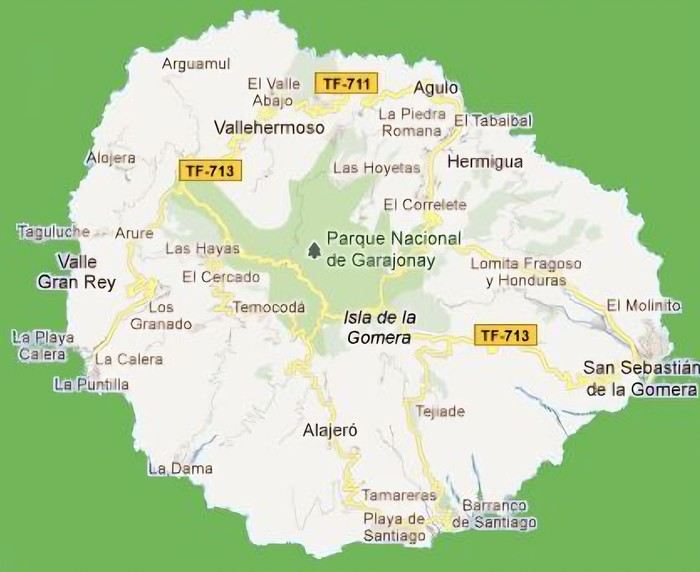 The large solidified magma massifs that shape the heart of the island have created a large depression more protected from the sun at its center, allowing the growth of a vast laurel forest, today grouped within the Garajonay National Park, La Gomera’s green lung, which has earned it the status of a World Biosphere Reserve. Its completely European appearance contrasts sharply with the rocky and tropical landscapes of the rest of the island. Thus, the climate varies greatly from one point to another on the island: in summer, you can quickly go from a dry and sunny valley at 35°C to a humid forest area at altitude at 18°C.
La Gomera was populated late. As with the rest of the Canaries, human presence is thought to have begun about 2,000 years ago. Groups of animist Berbers, probably fleeing persecution, gradually populated the archipelago, especially the western islands and La Gomera, becoming its small aboriginal population: the Guanches (or later Gomeros). The animist and pastoral civilization of the Guanches thrived until the Spanish takeover in the 15th century, which, after a short period of harmony and mixing with the indigenous people, suddenly ended in bloodshed... La Gomera later became the “Columbus Island” after Christopher Columbus’s stopover, increasing the blending of populations. In the 20th century, many Gomeros emigrated to Cuba and other Latin American countries in search of a better life, bringing back a mix of cultures and traits quite palpable in today’s Gomeran culture. It is, however, in La Gomera that the vestiges of Guanche culture seem to have left the most traces, in the language, gastronomy, social practices... Moreover, most Gomeros, especially in remote villages, have a particular identifiable type and proudly claim their ancestral roots, even making La Gomera a bit exotic in the eyes of other Canarians.
Perhaps that’s why it has never really wanted to develop its tourist infrastructure too much. If we set aside the tourists who visit for the day by bus or boat from Tenerife on a marked itinerary (and whom we ultimately rarely encounter), La Gomera has remained a hidden gem, a destination focused on nature discovery that attracts hikers, nature-loving divers, and scientists for its fauna and flora, and to a lesser extent, beachgoers who don’t seek overly developed coastlines. Tourist activity is therefore limited. Roughly speaking, you’ll find a majority of Spaniards, including a substantial number of residents from other Canary Islands, many Germans who have a particular fondness for La Gomera and spend long stays there or own second homes, to the point that the German cultural footprint is clearly noticeable in some places (it’s said to be Angela Merkel’s favorite holiday spot), and still quite a few French. The presence of other nationalities seemed negligible to us. Most travelers come mainly for hiking, but it’s also a prime spot for whale watching. Additionally, the seaside resorts of La Gomera—San Sebastián, Santiago, and especially Valle Gran Rey—are well-known destinations for hippies, especially German ones, ranging from chic boho hippies to old-school hippies who’ve been there for decades, quite similar to those you’d meet in India in Goa, Rishikesh, or Paharganj. Thus, practices like naturism, vegetarianism, and local organic production are quite well established in some areas.
Some practical info: - The round-trip flight from Paris to Tenerife cost us 365 € per person (outbound with Transavia, return with EasyJet), including checked luggage and three seats reserved side by side. - We chose two bases to explore the island: one week in Valle Gran Rey, reputed to be the most pleasant of the three seaside resorts, and one week in Hermigua, more mountainous and close to the natural park. We booked two houses with balconies and views: the first at 120 € per night, the second at 99 €. - The round-trip ferry between Tenerife and La Gomera cost us 270 € with the company Baleària Canarias, including discounts for children aged 4 and 12, but I don’t have the exact details. It was a bit cheaper than with the other company, Fred Olsen. - Finally, we rented a car through the agency Cicar for 360 € for 16 days, which comes to 22.50 € per day. - Apart from that, we didn’t plan anything and decided the day before or even the morning of what we wanted to do. We didn’t invest in any paper guide on the Canaries, as information on La Gomera was scarce, but we used the very comprehensive site La Gomera Travel, a travel guide published by the Canary Islands Tourism Council, a real goldmine of almost exhaustive information on the island.
Alright, off we go for 16 days of adventure discovering La Gomera!
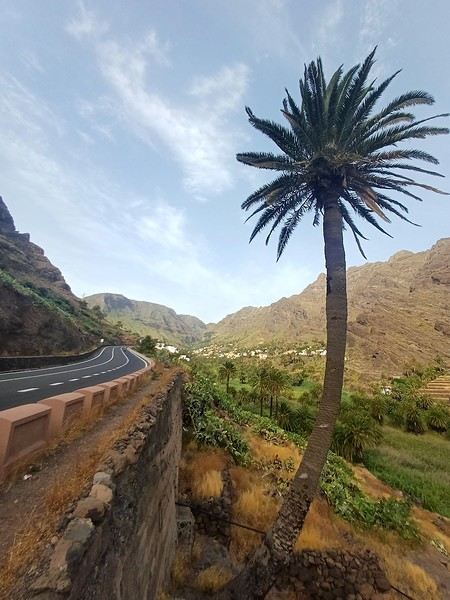
And we start the trip with music!
We start the trip with music!
When we started looking for a summer destination a few months ago, our first criterion was to avoid extreme heat and heatwaves. We had already been to Norway two years ago and are considering going back in the future for other occasions. So, we had some fun asking ChatGPT which destinations enjoyed a mild climate during the summer without going too far. Among the list provided by the AI were the Canary Islands... The idea of a place we wouldn’t have thought of first, both not too far away and exotic enough, appealed to us: “Hmm, why not?”
This destination had never really attracted me, though Magali was a bit more interested. Five years earlier, COVID had caused a short break in my professional activity, and I had planned a trip because the flight price was attractive, and I was looking for a destination different from what usually appeals to me, more than out of deep interest. From a distance and with a social judgment I acknowledge (it’s not great, but it’s not completely wrong), I had the image of a destination for party-goers enjoying the sun without the slightest interest in local culture, with concrete coastlines and denatured landscapes—everything I detest the most. Still, I had done some quick research on the different islands and spotted Lanzarote for its beautiful volcanic landscapes, hiking trails, beaches, and the impression of a good balance between activity and fewer crowds than Tenerife or Gran Canaria. Then I dropped the idea of going, without ever reconsidering traveling to the Canaries...
Until now! Because we started researching the different islands of the archipelago to see which ones might appeal to us the most. It was La Gomera, the third smallest island of the archipelago, more praised for its hiking trails and preserved nature than for its beaches, away from mass tourism (fifty times fewer tourists than Tenerife) but still a bit more developed than its wild neighbor El Hierro, that caught our attention. Contrary to what might be suggested later, I’m not at all addicted to AI, but I use it from time to time to synthesize quick research or simply for experimentation. Since ChatGPT had started anticipating my tastes lately as if it had become my buddy (often successfully, sometimes off the mark), I asked which Canary Island would suit me best for a trip with my family. The tool answered first with... La Gomera. So, I tested it and teased it a bit to see if this suggestion was well-founded, as the method sometimes makes it contradict itself. But no luck: “You’d appreciate the wild nature of El Hierro, but with family, you’ll find little activity for the kids. You won’t like the touristy vibe of the big islands like Tenerife, Gran Canaria, Lanzarote, and Fuerteventura. You could consider La Palma, but it’s really La Gomera that will suit you best, based on your interests and the criteria given.” So, we dug deeper into our research and were convinced without a shadow of a doubt that this island was the one waiting for us.
Without knowing it, we had Canarians in our circle who revealed their origins when they heard about our travel plans. One from Tenerife insisted we’d be better off choosing Tenerife (obviously...) because it also has preserved spots and that La Gomera, “you can explore it in two or three days, you’ll get bored quickly...” The other, a colleague from Gran Canaria who had never visited La Gomera, still recommended it without hesitation because it turned out her parents had just gone there on vacation: they loved it and had encountered few tourists. She also tended to think this destination was usually the subject of short stays, but according to what her parents told her, taking your time there was also a great idea. However, in our research, the idea that La Gomera is an island you can explore in three or four days max kept coming up. So, we considered combining its visit with La Palma or El Hierro, the other two that caught our eye. But hopping between islands by ferry represents a significant budget for non-Canarians, even more so for a family of four. Then, scrutinizing Google Maps, it seemed obvious that two weeks were too short to discover two islands as they deserve, and that there seemed to be plenty to see in La Gomera, given its very unique culture. After all, we read that some people spend several months a year there, others never even leave... Finally, these landscapes and this atmosphere, which seemed to us a mix of Europe, North Africa, and Latin America, tempted us. So, it would be two weeks in La Gomera, deal!
La Gomera is therefore the second... well, the third smallest island of the Canaries since La Graciosa was recently recognized as a fully inhabited island. It has the shape of a rough circle about 20 to 25 kilometers in diameter and has just over 20,000 inhabitants, half of them in its capital, San Sebastián de la Gomera, the only real town. Like its Canarian sisters, La Gomera is a volcanic formation that rose about 10 million years ago. The island is very mountainous and rugged, covered with red and black rocky landscapes. Geological activity has shaped, between the sprawling massifs that end in steep cliffs in the ocean, six coastal valleys with tropical vegetation that have favored human settlement. They divide the island like slices of a cake; from the north clockwise: the agricultural Vallehermoso, the rustic Agulo, the green, humid, and fertile Hermigua, the sunny capital San Sebastián de la Gomera, the southern and isolated Alajeró-Santiago, and the seaside Valle Gran Rey. They constitute the six municipalities (more like cantons to our French understanding) of the territory.
The large solidified magma massifs that shape the heart of the island have created a large depression more protected from the sun at its center, allowing the growth of a vast laurel forest, today grouped within the Garajonay National Park, La Gomera’s green lung, which has earned it the status of a World Biosphere Reserve. Its completely European appearance contrasts sharply with the rocky and tropical landscapes of the rest of the island. Thus, the climate varies greatly from one point to another on the island: in summer, you can quickly go from a dry and sunny valley at 35°C to a humid forest area at altitude at 18°C.La Gomera was populated late. As with the rest of the Canaries, human presence is thought to have begun about 2,000 years ago. Groups of animist Berbers, probably fleeing persecution, gradually populated the archipelago, especially the western islands and La Gomera, becoming its small aboriginal population: the Guanches (or later Gomeros). The animist and pastoral civilization of the Guanches thrived until the Spanish takeover in the 15th century, which, after a short period of harmony and mixing with the indigenous people, suddenly ended in bloodshed... La Gomera later became the “Columbus Island” after Christopher Columbus’s stopover, increasing the blending of populations. In the 20th century, many Gomeros emigrated to Cuba and other Latin American countries in search of a better life, bringing back a mix of cultures and traits quite palpable in today’s Gomeran culture. It is, however, in La Gomera that the vestiges of Guanche culture seem to have left the most traces, in the language, gastronomy, social practices... Moreover, most Gomeros, especially in remote villages, have a particular identifiable type and proudly claim their ancestral roots, even making La Gomera a bit exotic in the eyes of other Canarians.
Perhaps that’s why it has never really wanted to develop its tourist infrastructure too much. If we set aside the tourists who visit for the day by bus or boat from Tenerife on a marked itinerary (and whom we ultimately rarely encounter), La Gomera has remained a hidden gem, a destination focused on nature discovery that attracts hikers, nature-loving divers, and scientists for its fauna and flora, and to a lesser extent, beachgoers who don’t seek overly developed coastlines. Tourist activity is therefore limited. Roughly speaking, you’ll find a majority of Spaniards, including a substantial number of residents from other Canary Islands, many Germans who have a particular fondness for La Gomera and spend long stays there or own second homes, to the point that the German cultural footprint is clearly noticeable in some places (it’s said to be Angela Merkel’s favorite holiday spot), and still quite a few French. The presence of other nationalities seemed negligible to us. Most travelers come mainly for hiking, but it’s also a prime spot for whale watching. Additionally, the seaside resorts of La Gomera—San Sebastián, Santiago, and especially Valle Gran Rey—are well-known destinations for hippies, especially German ones, ranging from chic boho hippies to old-school hippies who’ve been there for decades, quite similar to those you’d meet in India in Goa, Rishikesh, or Paharganj. Thus, practices like naturism, vegetarianism, and local organic production are quite well established in some areas.
Some practical info: - The round-trip flight from Paris to Tenerife cost us 365 € per person (outbound with Transavia, return with EasyJet), including checked luggage and three seats reserved side by side. - We chose two bases to explore the island: one week in Valle Gran Rey, reputed to be the most pleasant of the three seaside resorts, and one week in Hermigua, more mountainous and close to the natural park. We booked two houses with balconies and views: the first at 120 € per night, the second at 99 €. - The round-trip ferry between Tenerife and La Gomera cost us 270 € with the company Baleària Canarias, including discounts for children aged 4 and 12, but I don’t have the exact details. It was a bit cheaper than with the other company, Fred Olsen. - Finally, we rented a car through the agency Cicar for 360 € for 16 days, which comes to 22.50 € per day. - Apart from that, we didn’t plan anything and decided the day before or even the morning of what we wanted to do. We didn’t invest in any paper guide on the Canaries, as information on La Gomera was scarce, but we used the very comprehensive site La Gomera Travel, a travel guide published by the Canary Islands Tourism Council, a real goldmine of almost exhaustive information on the island.
Alright, off we go for 16 days of adventure discovering La Gomera!
And we start the trip with music!
We start the trip with music!
Off on an adventure in Uzbekistan!
April 5 - Day 1
After as many weeks as I have fingers on my right hand, we're hitting the road again, fully recovered from our pharaonic adventure. Back in France to drop off our daughters (sorry, girls!), this time it's just the two of us, ready to be welcomed by a new destination. They say it offers one of the richest cultural heritages in the world for those willing to put in the effort. It's the land of the ancient Silk Road, where we'll follow a journey steeped in history and discoveries straight out of *One Thousand and One Nights*. A former Soviet bloc region independent only since 1991, we'll be walking in the footsteps of Genghis Khan, Tamerlane, Alexander the Great, Marco Polo...
Another fun fact about this country: it's strictly forbidden to import porn on your phone. True story. The same goes for painkillers! Unless it's about sodomy—though the two don’t seem connected, that’s just how it is. Don’t ask me why! Anyway, I’m getting off track. Here’s the big question: Where do you think we’ve just landed?... To give you a hint, the locals are known for being incredibly welcoming. No sooner said than done—our first taxi driver, proud to transport French travelers, refused to let us pay for the ride. Great vibes for these two weeks ahead. So, any guesses? Uzbekistan!!!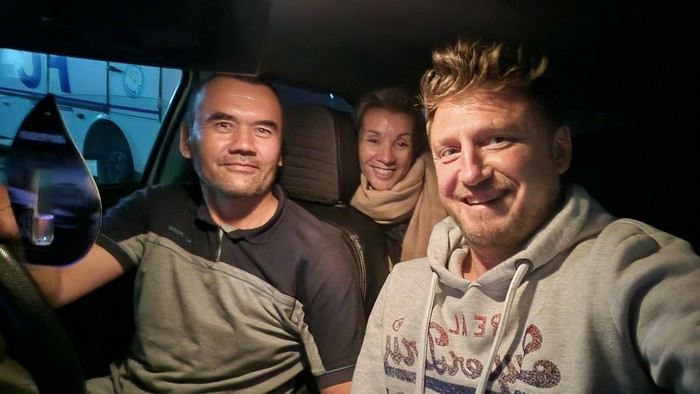
After as many weeks as I have fingers on my right hand, we're hitting the road again, fully recovered from our pharaonic adventure. Back in France to drop off our daughters (sorry, girls!), this time it's just the two of us, ready to be welcomed by a new destination. They say it offers one of the richest cultural heritages in the world for those willing to put in the effort. It's the land of the ancient Silk Road, where we'll follow a journey steeped in history and discoveries straight out of *One Thousand and One Nights*. A former Soviet bloc region independent only since 1991, we'll be walking in the footsteps of Genghis Khan, Tamerlane, Alexander the Great, Marco Polo...
Another fun fact about this country: it's strictly forbidden to import porn on your phone. True story. The same goes for painkillers! Unless it's about sodomy—though the two don’t seem connected, that’s just how it is. Don’t ask me why! Anyway, I’m getting off track. Here’s the big question: Where do you think we’ve just landed?... To give you a hint, the locals are known for being incredibly welcoming. No sooner said than done—our first taxi driver, proud to transport French travelers, refused to let us pay for the ride. Great vibes for these two weeks ahead. So, any guesses? Uzbekistan!!!
The 2026 Southwest USA Road Trip
Hi everyone, we're back from a DIY USA road trip we organized from July 31, 2026, to August 26, 2026.
The destination: The Southwest USA, including Texas, Arizona, and New Mexico. Roughly 7,000 kilometers covered.
The car: A Chevrolet Equinox for two, rented through BSP Auto and Avis. Inside, we had 2 suitcases, a travel bag, two carry-on bags, a Walmart cooler, photo gear, and water bottles (a 40-pack).
The route: Dallas DFW, Fort Worth, Houston, Austin, San Antonio, Alpine, El Paso, Tucson, Sedona, Albuquerque, Amarillo, and back to Dallas to finish with a departure from DFW.
The travelers: Two seniors well advanced in years (73 and 75) but still active (nothing too physically demanding—to stay alive and fund our trips), fully independent physically, though a bit less so mentally. Big USA fans, a country where anything is possible. More walkers than hikers, preferring 3-star hotels over roadside motels, Italian restaurants over US food, frequent stops for photos, museums over nothing, naps over forced marches. Not too whiny, just enough to stay French in the land of the "great Satan," as they say. Not great with languages—street English (but handy), and my Spanish is non-existent except for: "Hola! Una cerveza por favor!" That’s about it. My wife understands everything but refuses to speak.
The cost of the road trip: Around 12,000 €, including AF flights, the car, gas, gifts, visits, and everything else. Well managed, since we’d budgeted 13,500 € initially.
The positive side: A delight, with those endless open roads. Museums to discover. The realization of the Hispanic presence and its important history in this part of America. Lovely locals. Tourists who were more or less friendly. A terrible Texan accent that was hard to understand. Gas stations that were like real stores, with prepared food, alcohol sold in Arizona and New Mexico, and employees who were always up for a laugh!
The negative side: The heat throughout the trip... 43°C in Dallas at the end. Impossible to walk the streets. Lots of homeless people in downtown Dallas. Hotel breakfasts that were always the same. You get used to it.
So, it was positive overall, but the concept is starting to wear us out. We might rethink the DIY road trip model for next time. If the man upstairs grants us more time.
Next up, we’ll wait for the first batch of sorted photos to go through the wringer.
See you soon.
The destination: The Southwest USA, including Texas, Arizona, and New Mexico. Roughly 7,000 kilometers covered.
The car: A Chevrolet Equinox for two, rented through BSP Auto and Avis. Inside, we had 2 suitcases, a travel bag, two carry-on bags, a Walmart cooler, photo gear, and water bottles (a 40-pack).
The route: Dallas DFW, Fort Worth, Houston, Austin, San Antonio, Alpine, El Paso, Tucson, Sedona, Albuquerque, Amarillo, and back to Dallas to finish with a departure from DFW.
The travelers: Two seniors well advanced in years (73 and 75) but still active (nothing too physically demanding—to stay alive and fund our trips), fully independent physically, though a bit less so mentally. Big USA fans, a country where anything is possible. More walkers than hikers, preferring 3-star hotels over roadside motels, Italian restaurants over US food, frequent stops for photos, museums over nothing, naps over forced marches. Not too whiny, just enough to stay French in the land of the "great Satan," as they say. Not great with languages—street English (but handy), and my Spanish is non-existent except for: "Hola! Una cerveza por favor!" That’s about it. My wife understands everything but refuses to speak.
The cost of the road trip: Around 12,000 €, including AF flights, the car, gas, gifts, visits, and everything else. Well managed, since we’d budgeted 13,500 € initially.
The positive side: A delight, with those endless open roads. Museums to discover. The realization of the Hispanic presence and its important history in this part of America. Lovely locals. Tourists who were more or less friendly. A terrible Texan accent that was hard to understand. Gas stations that were like real stores, with prepared food, alcohol sold in Arizona and New Mexico, and employees who were always up for a laugh!
The negative side: The heat throughout the trip... 43°C in Dallas at the end. Impossible to walk the streets. Lots of homeless people in downtown Dallas. Hotel breakfasts that were always the same. You get used to it.
So, it was positive overall, but the concept is starting to wear us out. We might rethink the DIY road trip model for next time. If the man upstairs grants us more time.
Next up, we’ll wait for the first batch of sorted photos to go through the wringer.
See you soon.
Off on an adventure in Réunion!
Week 1 - July 2026
Traveling with just one spare pair of underwear, considering a hot shower a miracle, never staying in the same place too long by sleeping wherever night catches us, taking whatever local, improbable, and rickety transport we can find—this is the DNA of us wanderers. Except this time, the script for our movie is going to be a whole different genre. On paper, the destination doesn’t exactly scream epic adventure: Réunion! And what’s more... we won’t be two, or four, or even ten. We’ll be a solid thirty. All from the same family. Yes, thirty. At this point, it’s not just a trip—it’s a summer camp on the move! Why inflict this on such a peaceful island? Because my brother decided to get married there with his lovely bride. A great idea, you might say... especially when it involves relocating the equivalent of a small Ardennes village 10,000 kilometers from home for three weeks! So who’s stepping up to be the guide and wave the little flag?
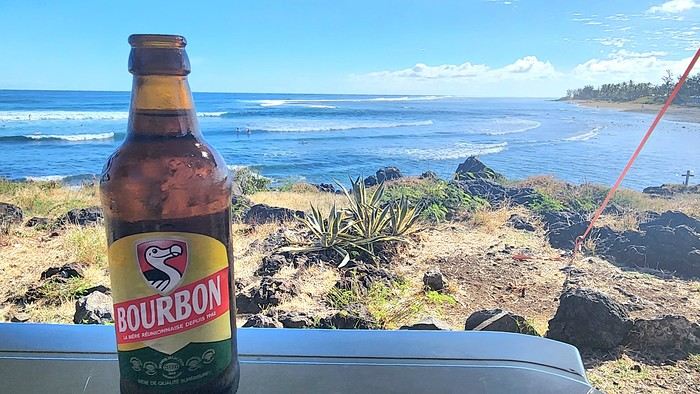
So, for an exceptional trip, exceptional stories! Don’t worry, the debates at the supermarket over whether to choose plain chips or roast chicken chips, the beach picnics washed down with ti’ punch, and other rougail sausages to digest by the pool will only make it into the family archives. Here, I’ll stick to the tales of our beautiful escapes, the ones where we explore the wild corners of this little volcanic rock planted in the middle of the Indian Ocean. So where exactly are we headed?
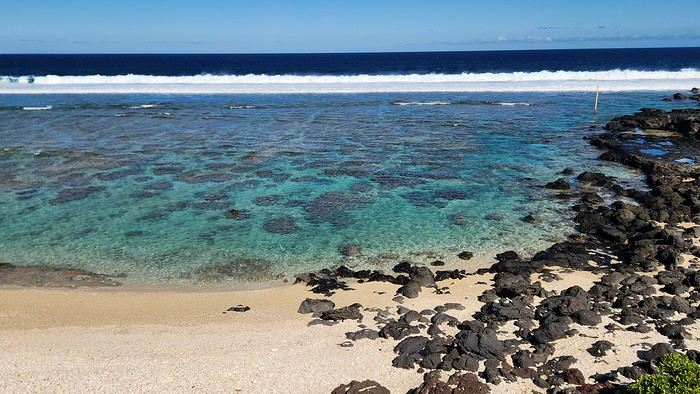
For the first week—the subject of this first installment—we’re taking it easy. We’ll start by rediscovering the coastline, from the Souffleur in Saint-Leu to the Hermitage lagoon, before a little trip to the Cirque de Cilaos and its legendary road with 400 turns, just to get our legs warmed up.
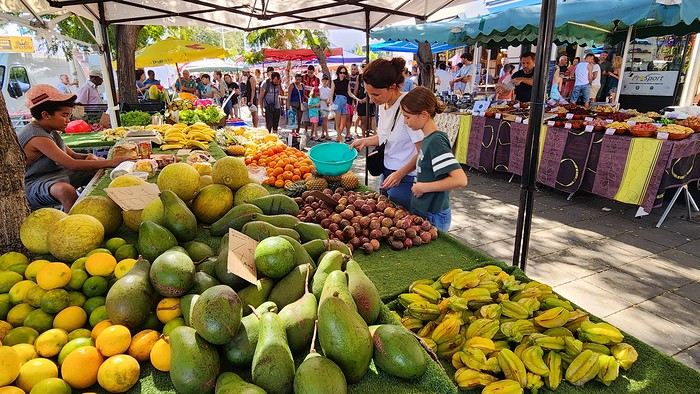
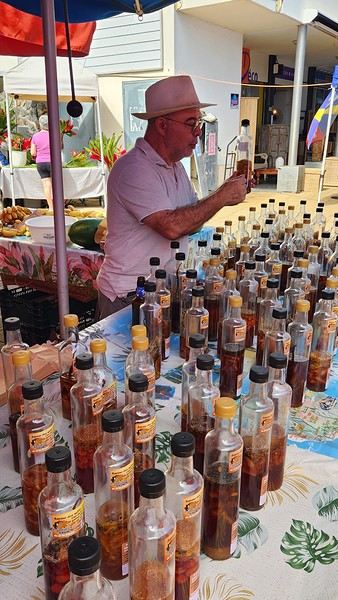
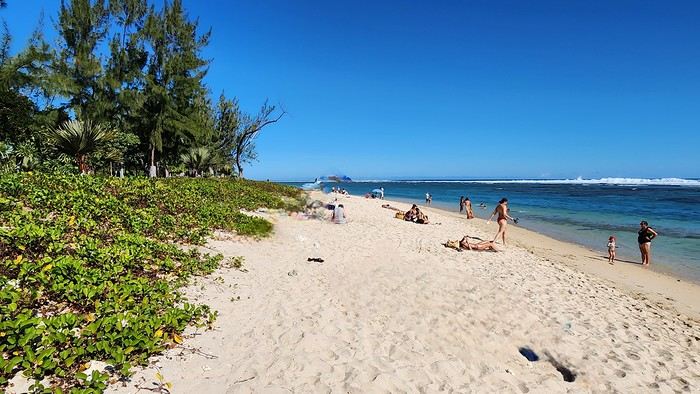
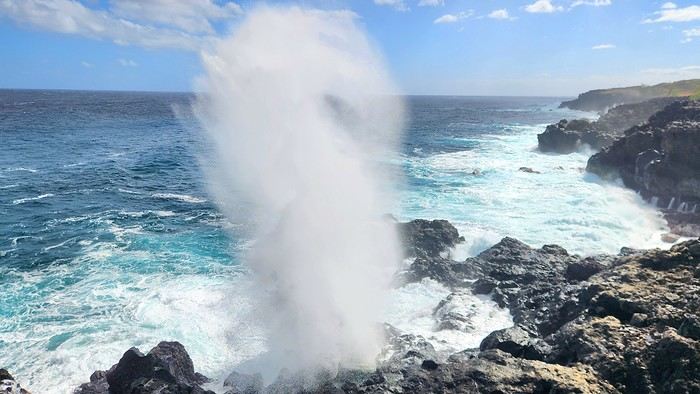
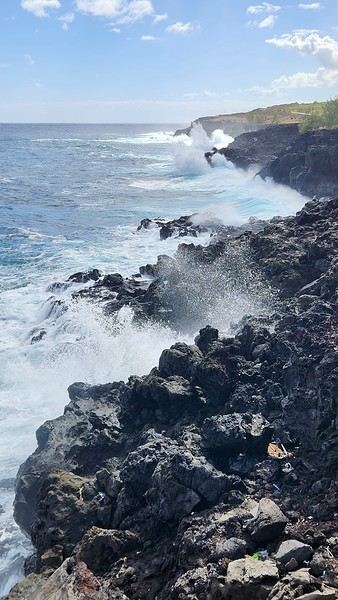
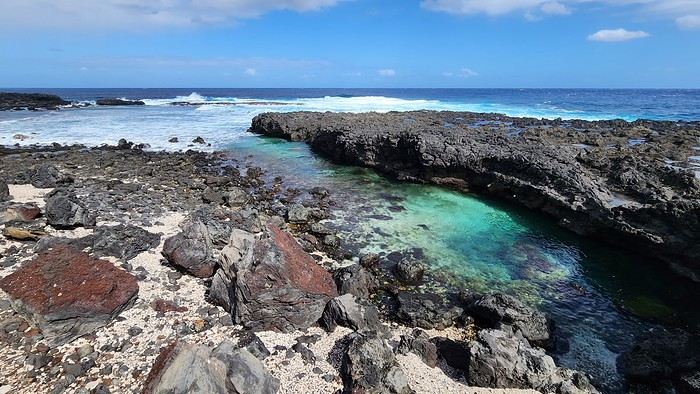
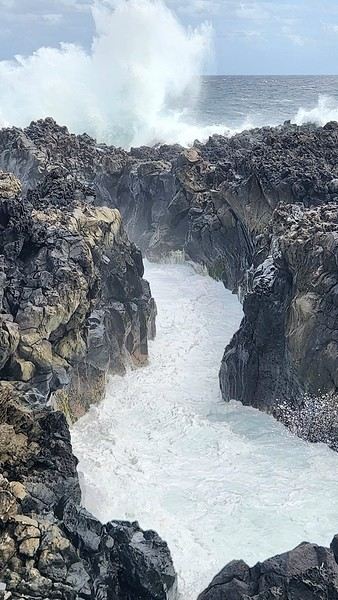
Traveling with just one spare pair of underwear, considering a hot shower a miracle, never staying in the same place too long by sleeping wherever night catches us, taking whatever local, improbable, and rickety transport we can find—this is the DNA of us wanderers. Except this time, the script for our movie is going to be a whole different genre. On paper, the destination doesn’t exactly scream epic adventure: Réunion! And what’s more... we won’t be two, or four, or even ten. We’ll be a solid thirty. All from the same family. Yes, thirty. At this point, it’s not just a trip—it’s a summer camp on the move! Why inflict this on such a peaceful island? Because my brother decided to get married there with his lovely bride. A great idea, you might say... especially when it involves relocating the equivalent of a small Ardennes village 10,000 kilometers from home for three weeks! So who’s stepping up to be the guide and wave the little flag?
So, for an exceptional trip, exceptional stories! Don’t worry, the debates at the supermarket over whether to choose plain chips or roast chicken chips, the beach picnics washed down with ti’ punch, and other rougail sausages to digest by the pool will only make it into the family archives. Here, I’ll stick to the tales of our beautiful escapes, the ones where we explore the wild corners of this little volcanic rock planted in the middle of the Indian Ocean. So where exactly are we headed?
For the first week—the subject of this first installment—we’re taking it easy. We’ll start by rediscovering the coastline, from the Souffleur in Saint-Leu to the Hermitage lagoon, before a little trip to the Cirque de Cilaos and its legendary road with 400 turns, just to get our legs warmed up.