Results for "Kilimandjaro+|+121+>+84"
1021 results found.
Trek pour le Machu Picchu English translation pending
Bonjour!
Je prévois aller au Pérou en 2009 faire le trek possiblemeent de 4 jours vers le Machu Picchu et j'aimerais recevoir l'avis de membre qui l'ont fait.
1- Je me considère pas comme une très grande sportive, je suis quant même active et pratique des sports comme le vélo, la marche et quelque fois des randonnées, compte tenu de ma condition physique est-ce que c'est réalisable. Je prévois faire dès maintenant m'entraîner dans un centre de conditionnement physique pour améliorer mon cardio.
2- Est-ce que l'agence "Chemin Inca" est bien en tout cas le site est génial!
3- Comment on se sent en haute altitude ?
Merci de me répondre
🙂
Je prévois aller au Pérou en 2009 faire le trek possiblemeent de 4 jours vers le Machu Picchu et j'aimerais recevoir l'avis de membre qui l'ont fait.
1- Je me considère pas comme une très grande sportive, je suis quant même active et pratique des sports comme le vélo, la marche et quelque fois des randonnées, compte tenu de ma condition physique est-ce que c'est réalisable. Je prévois faire dès maintenant m'entraîner dans un centre de conditionnement physique pour améliorer mon cardio.
2- Est-ce que l'agence "Chemin Inca" est bien en tout cas le site est génial!
3- Comment on se sent en haute altitude ?
Merci de me répondre
🙂
Voyage en Floride cet été avec quatre adolescents English translation pending
Hello
Nous avons prévu d'aller en Floride au mois d'août (seule possibilité de mon mari), plusieurs personnes me disent qu'il fait une chaleur et une humidité insupportable à cette époque, c'est si atroce que ça ? Je précise que nous n'avons pas 80 ans ! Nous sommes deux quarantenaires et 4 ados Sinon, est-ce que quelqu'un pourrait me décrire un peu "animal kingdom"? C'est pas trop flippant? J'avoue que certaines bestioles m'effraient (genre serpents).😕
Nous avons prévu d'aller en Floride au mois d'août (seule possibilité de mon mari), plusieurs personnes me disent qu'il fait une chaleur et une humidité insupportable à cette époque, c'est si atroce que ça ? Je précise que nous n'avons pas 80 ans ! Nous sommes deux quarantenaires et 4 ados Sinon, est-ce que quelqu'un pourrait me décrire un peu "animal kingdom"? C'est pas trop flippant? J'avoue que certaines bestioles m'effraient (genre serpents).😕
Afrique du Sud, Tanzanie ou Cameroun? English translation pending
voilà, je souhaiterais partir en septembre, dans l'un de ces pays. pour faire un safari, ou visiter le pays en marchant, la montée du kili, je sais pas tro...lol
et j'aurais aimer avoirs des idées surtout avoir un ordre de prix, car le prix fera malheureusement le choix final, nous serions 2.
partir en groupe, devient il plus avantageux là bas?
je voudrais en prendre pleins les yeux!!! et je ne veux pas d'un voyage super organisé, du moins pas dans le genre "tres belles prestations, chambres de luxe.." 🤪
je veux plus d'un voyage sans chichi, baroudeurs...
j'espère que vous pourrez m'éclairer!
merci😉
Cherche musique kilalaka (Madagascar) English translation pending
au cours de la descente de la tsiribihina, sur le bord du fleuve un soir, des villageois nous ont offert un spectacle de chants et danses traditionnels sakalava : le KILALAKA et j'aimerais retrouver ces rythmes sur cd ou video mais attention uniquement en traditionnel avec les instruments traditionnels et non pas des arrangements "sur rythmés" comme on en trouve partout à Mada
Bons plans pour la Tanzanie? English translation pending
bonjours a tous
Jai l opporutnite de partire en tanzanie le 15 novembre jusq au 20 decembre, je susi a lqa recherche de toutes les infos possible surtout :
est ce la bonne saison? sinon qu en pensez vous
la vie est elle cher? peut on manger local pour pas cher ?
la visite des parcs nationaux est elle cher, combien a peu pres ?
estil facile de se loger en tanzanie, ou faut il prevoir a l avance
quel bubget journalier a peu pres ?
merci davance a tous pour vos reponse et vos bon plan n hesitez pas a me les faire partager merci 😉
merci davance a tous pour vos reponse et vos bon plan n hesitez pas a me les faire partager merci 😉
Le Botswana? English translation pending
Bonjour,
Mon projet de voyage en Afrique pour Aout 2008 en est à son balbutiement ! J'envisage de partir au Bostwana en famille à 4, pour 15 jours avec un budget de 8000- 8500 Euros tout compris . Est-ce que mon projet est réalisable ? BOSTWANA, Namibie, Tanzanie, Kenya ? Pas facile de faire un choix ! J'ai envie de voyager en Afrique, de voir des beaux payasages et quelques "bestioles" pour mes enfants, découvrir les habitants et surtout, surtout m'éloigner des foules de touristes ! J'ai peur que le Kenya et la Tanzanie soient trop touristiques à mon gout, surtout à cette date ! Qu'en pensez-vous ? Merci pour tout vos bons tuyaux Anne🙂
Mon projet de voyage en Afrique pour Aout 2008 en est à son balbutiement ! J'envisage de partir au Bostwana en famille à 4, pour 15 jours avec un budget de 8000- 8500 Euros tout compris . Est-ce que mon projet est réalisable ? BOSTWANA, Namibie, Tanzanie, Kenya ? Pas facile de faire un choix ! J'ai envie de voyager en Afrique, de voir des beaux payasages et quelques "bestioles" pour mes enfants, découvrir les habitants et surtout, surtout m'éloigner des foules de touristes ! J'ai peur que le Kenya et la Tanzanie soient trop touristiques à mon gout, surtout à cette date ! Qu'en pensez-vous ? Merci pour tout vos bons tuyaux Anne🙂
Beau voyage dépaysant: Kenya ou Thaïlande? English translation pending
Nous avons, en 2008, 30 ans de mariage et nous désirons faire un beau voyage, style dépaysant et qui nous marquera pour la vie. Nous avons déjà fait cuba, l'égypte en croisière, turquie, canaries, madère mais nous hésitons entre le kenya et la thailande (circuit et extension )Aux grands voyageurs que vous êtes, pouvez-vous nous conseiller ? afin que nous ne soyons pas déçu, ce sera notre premier vrai circuit. Inutile de nous conseiller les petits opérateurs sur place, nous ne sommes pas assez francs pour cela.
Si vous nous conseillez Kenya : que pensez-vous de l'essentiel du Kenya et l'hotel neptune paradise beach au sud de mombasa
Si vous nous conseillez Thailande : que pensez-vous de siam lointain (chez transat) et kata beach resort Remerciements à tous Monique
Si vous nous conseillez Kenya : que pensez-vous de l'essentiel du Kenya et l'hotel neptune paradise beach au sud de mombasa
Si vous nous conseillez Thailande : que pensez-vous de siam lointain (chez transat) et kata beach resort Remerciements à tous Monique
Budget pour le safari Tsavo et Amboseli? (Kenya) English translation pending
Bonjour,
j'ai réservé mes vacances à l'hotel Sun'N Sand Beach Resort pour début octobre.
Bcp me parle du Safari Tsavo Est, Ouest et Amboseli. Comme je compte le réserver sur place, quelqu'un saurait-il me donner une idée du budget que je dois y consacrer ????
Si quelqu'un à autres choses à me proposer ou conseiller .... 😉
Grand merci d'avance et à très bientôt ! Tchoupiou.
j'ai réservé mes vacances à l'hotel Sun'N Sand Beach Resort pour début octobre.
Bcp me parle du Safari Tsavo Est, Ouest et Amboseli. Comme je compte le réserver sur place, quelqu'un saurait-il me donner une idée du budget que je dois y consacrer ????
Si quelqu'un à autres choses à me proposer ou conseiller .... 😉
Grand merci d'avance et à très bientôt ! Tchoupiou.
Transport et visa entre le Kenya et la Tanzanie English translation pending
bonjour,
vivant au Caire, je vais rejoindre deux voyages organisés en Tanzanie et au Kenya avec un TO francophone.
ayant dû par contre organiser mes vols seule au départ du Caire, je dois organiser aussi mes arrivées, visa et transferts entre Nairobi et arusha aller et retour car arriverais sur nairobi par egyptair.
J'ai lu pas mal de sites et de post mais trouve tout et le contraire comme info ! Nairobi /arusha en bus ; est ce exact qu'il existe un bus type express climatisé entre l'aéroport de nairobi vers arusha partant 2X/Jour à horaire fixe et de qualité correcte (climatisé au minimum)est il possible de le réserver sur internet, ou achat selon dispo seulement sur place ? prix ? la route prend elle 4H / 6H ou plus ?
visa transit nairobi ou visa entrées multiples ? sachant que j'arrive le premier jour juste en transit vers la tanzanie où je resterais une semaine, mais que je vais revenir par le meme bus, faire un itinéraire de 8 jours dans les parcs du coté kenian ; quelle est la formule la plus logique de visa ? possible à demander sur place à l'arrivée ? et quel est le cout ? visa tanzanie dans le bus en passant la frontière de tanzanie possible ? ou besoin démarche ambassade au caire avant impérative ? prix du visa ?
merci de votre aide pour préparer mon voyage amicalement
vivant au Caire, je vais rejoindre deux voyages organisés en Tanzanie et au Kenya avec un TO francophone.
ayant dû par contre organiser mes vols seule au départ du Caire, je dois organiser aussi mes arrivées, visa et transferts entre Nairobi et arusha aller et retour car arriverais sur nairobi par egyptair.
J'ai lu pas mal de sites et de post mais trouve tout et le contraire comme info ! Nairobi /arusha en bus ; est ce exact qu'il existe un bus type express climatisé entre l'aéroport de nairobi vers arusha partant 2X/Jour à horaire fixe et de qualité correcte (climatisé au minimum)est il possible de le réserver sur internet, ou achat selon dispo seulement sur place ? prix ? la route prend elle 4H / 6H ou plus ?
visa transit nairobi ou visa entrées multiples ? sachant que j'arrive le premier jour juste en transit vers la tanzanie où je resterais une semaine, mais que je vais revenir par le meme bus, faire un itinéraire de 8 jours dans les parcs du coté kenian ; quelle est la formule la plus logique de visa ? possible à demander sur place à l'arrivée ? et quel est le cout ? visa tanzanie dans le bus en passant la frontière de tanzanie possible ? ou besoin démarche ambassade au caire avant impérative ? prix du visa ?
merci de votre aide pour préparer mon voyage amicalement
Vous étiez deux ou plus à partir pourtant vous vous êtes retrouvé/e seul/e: racontez-nous English translation pending
Tous les voyageurs ont connu cette expérience.
Tout le monde était d'accord (amis ou famille). Mais le jour-J vous êtes tout/e seul/e à Orly😕, après des excuses bidons tardives et de la mauvaise foi. Ex1: "Mais copine Bali j'en ai parlé comme ça !" Ex2 : "Attend copain c'est 60€ le passeport faut pas déconner, l'Inde j'irai une autre fois !"
Je sais ça sent le vécu.
Je ressens encore de la rancune envers ces gens là même si je ne regrette pas d'être partie seule (question de principe je suppose😏)
Tout le monde était d'accord (amis ou famille). Mais le jour-J vous êtes tout/e seul/e à Orly😕, après des excuses bidons tardives et de la mauvaise foi. Ex1: "Mais copine Bali j'en ai parlé comme ça !" Ex2 : "Attend copain c'est 60€ le passeport faut pas déconner, l'Inde j'irai une autre fois !"
Je sais ça sent le vécu.
Je ressens encore de la rancune envers ces gens là même si je ne regrette pas d'être partie seule (question de principe je suppose😏)
Circuit au Kenya pour un voyage de noces English translation pending
Bonjour à tous,
Alors voilà, je vais passer le pas et me marier le 30 juin.
Nous partons ensuite en voyage de noces au Kenya avec une extension à Zanzibar (du 8 au 20 juillet).
Nous aurions voulu connaître vos points de vue ou conseil sur ce circuit:
Notre organiste est club-faune. on voyage en minibus mais nous ne serons que tout les 2.
On passe 2 nuits à Amboseli au lodge "Ol Tukai"
Ensuite 1 nuit au "Sarova lion hill" à Nakuru
3 nuits au "Mara sarova camp" au Masai Mara.
Pour finir, Zanzibar avec 1 nuit à Stown town au "Tembo House" et 3 nuits au "Hakuna Majiwe" au bord de la mer
Pourriez-vous nous donner vos avis sur les lodges, sur le circuit ou bien des conseils qui seront les bienvenus.
Merci beaucoup.
Aurélien
Trajectoires aériennes d'Air Austral et Air France pour Paris-St-Denis de la Réunion English translation pending
Des personnes qui ont effectuées la liaison :
Paris-St-Denis de la Réunion avec Air France, AIR AUSTRAL, CORSAIR peuvent-elles répondrent aux questions suivantes :
Air France utilise t-elle toujours sur cette liaison leurs boeing 747 ou bien à présent cela se fait sur Boeing 777 ?
quelle sont les villes survolées par l'une ou l'autre compagnie ou les zones géographiques au cours du vol
l'altitude de croisère sur les 3 compagnies
merci
merci
Grossiste pour safari en Tanzanie? English translation pending
Bonjour j'essaie actuellement de préparer mon second voyage pour la Tanzanie, et je suis a la recherche d'agence ou de grossiste pour faire mes réservations via la France. J'ai actuellement un contact avec une agence a Paris et j'ai quelques difficultés a obtenir un service acceptable ( il est vraiment médiocre leur service). Alors si vous avez des suggestions pour des endroits, des adresses ou je pourrais obtenir un bon service...Par pitié...faites-les moi parvenir....Je trouverais vraiment embêtant d'investir un gros montant d'argent avec une agence au service médiocre. Merci
Hôtel Kilifi Bay English translation pending
bonjour
je suis encore hésitante sur la destination de notre prochain voyage.
Cependant, l'hotel Kilifi Bay me parait sympa et pas trop cher.
Pouvez vous me donner des infos sur celui.ci si vous y etes déja allés?
merci d'avance
karine
je suis encore hésitante sur la destination de notre prochain voyage.
Cependant, l'hotel Kilifi Bay me parait sympa et pas trop cher.
Pouvez vous me donner des infos sur celui.ci si vous y etes déja allés?
merci d'avance
karine
Tenues vestimentaires au Kenya English translation pending
Voila, malgre des recherches sur ce site je n'arrive pas à trouver des renseignements concernant les vetements a emporter.
Nous partons dans 10 jours pour deux semaines de safari(11 jours de safari en lodge et campement et 4 jours de plage).
Quelles tenues mettre dans la valise, les nuits ont l'air assez fraiches, et surtout comment se chausser??(sandales ou basquettes???
Merci par avance
Vos parcs préférés au Kenya? English translation pending
Pour m'aider à préparer un trip au Kenya dites moi quel sont les parcs que vous avez préférés la-bas ! 😉
( Ah, et comme à l"école, dites moi aussi pourquoi ! ) 😎
Livres sur Lamu au Kenya et informations sur Majenga et Tananarive à Madagascar English translation pending
Je reviens de Lamu que j'ai adoré; je voudrais savoir s'il existe des lives sur l'histoire desvilles-états de cette côte africaine, sur la culture swahili. ou des livres sur l'architecture à Lamu. D'autre part, je pars mi juillet à Madagascar (j'habite Mayotte que je trouve la moins interessante des îles de la région) .Nous atterrissons à Majenga et voulons ensuite nous rendre à tana. Que voir à Majenga en deux jours, quel hotel prendre, comment nous rendre à Tana pour pas trop cher ? Que ceux qui peuvent me donner des tuyaux me répondent. Merci d'avance.Je peux leur parler de L'Ethiopie et de Lamu...
Météo et conseils pour un premier voyage au Kenya en septembre? English translation pending
Bonsoir,
J'ai actuellement le nez dans les catalogues des agences... dans google.fr.... à la recherche de la destination de cet été (enfin septembre!) : et nous nous sommes arrêtés sur le KENYA avec un mixte sur 15 jours de Safari et d'hôtel relax... Ce sera notre premier voyage et il est vrai qu'on hésite à se lancer un peu dans un pays vraiment différent et on hésite sur plusieurs choses : tout d'abord, la météo en septembre...? ensuite, on ne connaît pas encore le pays et on ne sait pas quel Safari, ni quel Hotel prendre... alors nous sommes ouverts à toutes remrques et à toute aide !
Merci !!
😉
Vol entre Nairobi (Kenya) et Arusha (Tanzanie) English translation pending
Avez-vous des tuyaux pour des vols entre Nairobi et Arusha?Agence sur place ou en France?Merci.
Record du monde des voyages English translation pending
Certains sur ce forum ont un curriculum vitae voyageur des plus impressionnants. Mais ce n'est rien par rapport aux "professionnels du voyage". J'entends par là non pas ceux qui vivent d'un métier lié au voyage, mais ceux qui consacrent leur vie à battre un record du monde.
Gag stupide? Poisson d'avril avant l'heure?
Ce "championnat du monde" existe réellement je crois. Il existait en tout cas il y a une quinzaine d'années, lorsque mon père de retour d'une croisière dans l'Antarctique m'a rapporté cette anecdote étonnante:
Il y avait à bord un type assez âgé, et pris de malaises réguliers, qui avait embarqué sur ce navire, non pas tout à fait pour admirer les charmes des icebergs et de la côte atlantique du continent glacé. Non non, il n'avait qu'un seul but à ce voyage: poser les pieds à un endroit très précis sur la côté antarctique, devant témoins, afin d'homologuer la visite du Xième point sur une liste mystérieuse recensant les endroits où il faut être allé pour gagner le championnat. Le personnage étant bien mal en point le jour où le brise glace approcha du point fatidique, il dut être transporté à dos d'homme à bord du zodiaque où, une fois accosté, les gens l'aidèrent à homologuer sa "visite".
Je ne sais plus combien de points compte la planète (quelques centaines voire milliers), ni qui a déterminé la fameuse liste. Je crois qu'il faut avoir mis les pieds dans tous les pays souverains et territoires à statut particulier de la planète, et bien entendu pour les plus grands pays, il y a une foule d'endroits à "visiter". A l'époque (vers 1990), il y avait une poignée de types qui rivalisaient pour être le premier à accumuler tous les points. A celui du bateau, il n'en manquait plus qu'une dizaine je crois, et on se doute bien que vu son état de santé, il devait être vraiment prêt à tout pour embarquer sur une croisière dans l'Antarctique uniquement pour homologuer un point.
Quelqu'un a-t-il entendu parler de ce "championnat" farfelu?
Gag stupide? Poisson d'avril avant l'heure?
Ce "championnat du monde" existe réellement je crois. Il existait en tout cas il y a une quinzaine d'années, lorsque mon père de retour d'une croisière dans l'Antarctique m'a rapporté cette anecdote étonnante:
Il y avait à bord un type assez âgé, et pris de malaises réguliers, qui avait embarqué sur ce navire, non pas tout à fait pour admirer les charmes des icebergs et de la côte atlantique du continent glacé. Non non, il n'avait qu'un seul but à ce voyage: poser les pieds à un endroit très précis sur la côté antarctique, devant témoins, afin d'homologuer la visite du Xième point sur une liste mystérieuse recensant les endroits où il faut être allé pour gagner le championnat. Le personnage étant bien mal en point le jour où le brise glace approcha du point fatidique, il dut être transporté à dos d'homme à bord du zodiaque où, une fois accosté, les gens l'aidèrent à homologuer sa "visite".
Je ne sais plus combien de points compte la planète (quelques centaines voire milliers), ni qui a déterminé la fameuse liste. Je crois qu'il faut avoir mis les pieds dans tous les pays souverains et territoires à statut particulier de la planète, et bien entendu pour les plus grands pays, il y a une foule d'endroits à "visiter". A l'époque (vers 1990), il y avait une poignée de types qui rivalisaient pour être le premier à accumuler tous les points. A celui du bateau, il n'en manquait plus qu'une dizaine je crois, et on se doute bien que vu son état de santé, il devait être vraiment prêt à tout pour embarquer sur une croisière dans l'Antarctique uniquement pour homologuer un point.
Quelqu'un a-t-il entendu parler de ce "championnat" farfelu?
Tour opérator pour circuit au Kenya et en Tanzanie? English translation pending
Bonjour,
Selon vous quels sont les meilleurs Tour Operator pour un circuit organisé dans ces 2 pays? A choisir entre les 2, que conseillez vous : kenya OU Tanzanie?
MERCI BEAUCOUP DE VOTRE AIDE
Selon vous quels sont les meilleurs Tour Operator pour un circuit organisé dans ces 2 pays? A choisir entre les 2, que conseillez vous : kenya OU Tanzanie?
MERCI BEAUCOUP DE VOTRE AIDE
africa trek tome 2 English translation pending
suis passé encore aujourd'hui pour l'acheter, pas encore sorti sur Marseille 😕 et chez vous ?
patientons
yann
patientons
yann
safari au Kenya English translation pending
Elaborant un projet de safaris au Kenya, j'aurais besoin de renseignements sur deux étapes pour dormir:
A Nairobi, le Safari Park Hotel situé au nord de la ville
Dans le Masai Mara, le Sekenani Camp
Quelqun connaît?
Merci d'avance!
A Nairobi, le Safari Park Hotel situé au nord de la ville
Dans le Masai Mara, le Sekenani Camp
Quelqun connaît?
Merci d'avance!
Vos plus beaux souvenirs en avion English translation pending
bonjour à tous
Nombreux d'entre vous ont eu des retards, bagages perdus, correspondances loupées. Mais j'en suis sûr, vous avez tous eu de très agréables moments pendant un ou plusieurs vols. Quels sont vos plus beaux souvenirs ???
Nombreux d'entre vous ont eu des retards, bagages perdus, correspondances loupées. Mais j'en suis sûr, vous avez tous eu de très agréables moments pendant un ou plusieurs vols. Quels sont vos plus beaux souvenirs ???
À ne pas manquer en Afrique australe English translation pending
bonjour
nous partons en janvier pour un tour du monde commencant par l afrique australe: tanzanie, chute victoria, botswana, af du sud.
j aimerai savoir les choses a ne pas manquer en tanzanie et botswana et les conseils pour ne pas se ruiner car ce pays ont l air tres cher.
merci
nous partons en janvier pour un tour du monde commencant par l afrique australe: tanzanie, chute victoria, botswana, af du sud.
j aimerai savoir les choses a ne pas manquer en tanzanie et botswana et les conseils pour ne pas se ruiner car ce pays ont l air tres cher.
merci
Review of our family safari in Tanzania and Zanzibar
Jambo! I organized my trip through this kind of group, so I thought I’d share my experience here. We traveled as a group of four, including two kids aged 9 and 11. After requesting around twenty quotes, I decided to book the safari portion with MAKING MEMORIES IN AFRICA. Ally responded quickly and listened to all my requests—unlike other agencies—such as having a French-speaking guide, the order of park visits (Tarangire, Manyara, Serengeti, then Ngorongoro), and a mix of budget hotels and camping to keep costs down. There were still four agencies in the running, and price was the deciding factor. Even though they were the cheapest, I felt better taken care of than with others. For example, all meals were prepared by a Maasai chef, Louis, who accompanied us throughout the trip, while some others ate meals out of cardboard boxes. Samuel, our guide, explained so many things and answered all our questions. José drove us safely the whole way. Everything was done with great cheer!
At the end of the stay, Ally came to meet us and gave us t-shirts with the agency’s logo—we loved that they took the time to hear our feedback in person. In short, I highly recommend them +++, especially since it’s a local agency that also supports a charity for women and children.
For Zanzibar, I organized everything myself. I hesitated for a long time but eventually booked all four nights at the same place. We don’t like crowds, so I initially considered Jambiani but ended up choosing EVERGREEN BUNGALOWS in Bwejuu. We took their first airport-to-hotel transfer since we arrived at night, and it felt safer. Great value for money, in our opinion. Just be aware that it’s quite isolated—perfect for relaxing and going on excursions. There were very few beach vendors, unlike what I’d read about Zanzibar. We lived with our feet in the sand from morning to night, with a small basin of water outside our room to rinse off. Such a lovely spot!
I had asked for some excursion prices before leaving but ended up booking on-site. Not at our hotel, but at a nearby restaurant that was cheaper. After some thought, since we were based in Bwejuu, I wanted to do Blue Lagoon and Pungume (both departing from the south of Zanzibar).
Blue Lagoon: About 3 hours total, with snorkeling on a small reef full of fish (coral wasn’t great) and a stop at a spot with tons of starfish, plus local snacks, fruit, and drinks.
Pungume: An amazing day with a 50% chance of seeing dolphins (we missed them), a visit to the mangroves, then snorkeling at a spot with some nice coral and, of course, fish. We ended with a fantastic grill (tuna, shrimp, squid, lobster, and fries) on a sandbank in the shade.
Finally, before heading to Stone Town, we visited Paje Cave, which is much less known than Maalum. It’s smaller, but we saw bats, went for a swim, and fed the chickens and rabbits (great for the kids). To finish, we explored Stone Town on our own and had dinner at Forodhani Market.
For flights, we flew with Turkish Airlines from Barcelona to Kilimanjaro and back from Zanzibar—no issues there. However, I don’t recommend the Kilimanjaro-Zanzibar leg with Precision Air. Our luggage didn’t arrive, and according to the hotel, this happens often. We only got it back a day and a half later.
At the end of the stay, Ally came to meet us and gave us t-shirts with the agency’s logo—we loved that they took the time to hear our feedback in person. In short, I highly recommend them +++, especially since it’s a local agency that also supports a charity for women and children.
For Zanzibar, I organized everything myself. I hesitated for a long time but eventually booked all four nights at the same place. We don’t like crowds, so I initially considered Jambiani but ended up choosing EVERGREEN BUNGALOWS in Bwejuu. We took their first airport-to-hotel transfer since we arrived at night, and it felt safer. Great value for money, in our opinion. Just be aware that it’s quite isolated—perfect for relaxing and going on excursions. There were very few beach vendors, unlike what I’d read about Zanzibar. We lived with our feet in the sand from morning to night, with a small basin of water outside our room to rinse off. Such a lovely spot!
I had asked for some excursion prices before leaving but ended up booking on-site. Not at our hotel, but at a nearby restaurant that was cheaper. After some thought, since we were based in Bwejuu, I wanted to do Blue Lagoon and Pungume (both departing from the south of Zanzibar).
Blue Lagoon: About 3 hours total, with snorkeling on a small reef full of fish (coral wasn’t great) and a stop at a spot with tons of starfish, plus local snacks, fruit, and drinks.
Pungume: An amazing day with a 50% chance of seeing dolphins (we missed them), a visit to the mangroves, then snorkeling at a spot with some nice coral and, of course, fish. We ended with a fantastic grill (tuna, shrimp, squid, lobster, and fries) on a sandbank in the shade.
Finally, before heading to Stone Town, we visited Paje Cave, which is much less known than Maalum. It’s smaller, but we saw bats, went for a swim, and fed the chickens and rabbits (great for the kids). To finish, we explored Stone Town on our own and had dinner at Forodhani Market.
For flights, we flew with Turkish Airlines from Barcelona to Kilimanjaro and back from Zanzibar—no issues there. However, I don’t recommend the Kilimanjaro-Zanzibar leg with Precision Air. Our luggage didn’t arrive, and according to the hotel, this happens often. We only got it back a day and a half later.
June 2026 Photo Contest Theme: Such a Beautiful Landscape
Hello,
It might not be very original, but I see it hasn’t been suggested—or at least not for a very long time. I’d like to invite you to discover the beauty of the great outdoors through landscape photos. Whether they’re desert, sea, countryside, or mountain scenes—with or without other elements (people, buildings, animals, etc.)—they should make us want to dive right in without hesitation.
To participate: Photo submissions until Wednesday, June 24 at 11:59 PM You can post up to 3 photos, numbered and shared in separate messages, along with a short description of the place and the story behind it.
To vote: from Thursday, June 25 at 12:01 AM to Monday, June 29 at 11:59 PM After the deadline, it’s too late!
Please include the photo number, username, and the points awarded: Photo #1 = 3 pts Photo #2 = 2 pts Photo #3 = 1 pt
All VF members can vote (even those who didn’t submit photos). In case of a tie for first place, the winning photo will be the one with the most first-place votes, then second-place votes! The lucky winner will get to organize July 2026’s photo contest.
For discussions about the theme, it’s here: Discussion thread for June 2026’s theme: Such a Beautiful Landscape
Good luck to everyone!
Philippe
Chumphon, Thailand: Doi Tapang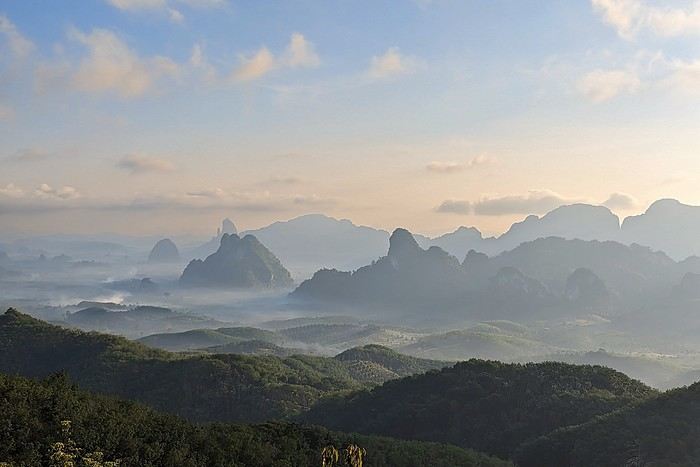
It might not be very original, but I see it hasn’t been suggested—or at least not for a very long time. I’d like to invite you to discover the beauty of the great outdoors through landscape photos. Whether they’re desert, sea, countryside, or mountain scenes—with or without other elements (people, buildings, animals, etc.)—they should make us want to dive right in without hesitation.
To participate: Photo submissions until Wednesday, June 24 at 11:59 PM You can post up to 3 photos, numbered and shared in separate messages, along with a short description of the place and the story behind it.
To vote: from Thursday, June 25 at 12:01 AM to Monday, June 29 at 11:59 PM After the deadline, it’s too late!
Please include the photo number, username, and the points awarded: Photo #1 = 3 pts Photo #2 = 2 pts Photo #3 = 1 pt
All VF members can vote (even those who didn’t submit photos). In case of a tie for first place, the winning photo will be the one with the most first-place votes, then second-place votes! The lucky winner will get to organize July 2026’s photo contest.
For discussions about the theme, it’s here: Discussion thread for June 2026’s theme: Such a Beautiful Landscape
Good luck to everyone!
Philippe
Chumphon, Thailand: Doi Tapang
Love at First Sight in Kenya
Hello,
After several years, I’ve finally decided to repost a travel journal on the forum. We returned a few weeks ago from an incredible trip to Kenya, and it’s reignited my desire to share our emotions in the face of these animals.
Kenya wasn’t originally a priority for us in terms of safari—we had the impression it was too touristy. So, we started with other destinations: Namibia, Tanzania, Botswana, and South Africa. But as I did more research, especially on the forum (thanks in part to Sylvie’s many trips), I eventually convinced myself that Kenya could be magnificent, as long as we chose our itinerary carefully and avoided peak seasons.
We ended up going in January, from the 17th to the 31st. We worked with a travel agency (TP) that crafted a custom itinerary for us: Samburu-Ol Pejeta-Naivasha-Maji Moto-Maasai Mara-Diani. They partnered with a local French-speaking agency, and everything was perfectly organized. Our trip exceeded all our expectations, and none of it would’ve been as amazing without our guide, Alfred. He accompanied us for 10 days and was a fantastic travel companion—professional, respectful of the animals, and always in good spirits. We formed a great bond with him in such a short time.
- **January 17th** After meeting up with Juliette and Charlotte in Rennes the night before, we left at 4 AM for Roissy Charles de Gaulle Airport. The thick fog made the drive pretty rough, but we arrived safely around 7:45 AM. A Blue Valet driver was waiting to take our car. Check-in went smoothly, and we waited patiently for our 10:40 AM flight. Unfortunately, despite boarding on time, a passenger was missing, and we had to find a replacement last minute. Then, another passenger who had checked in and dropped off their luggage wasn’t on the plane, so they had to unload their bags. After a long period of uncertainty and spotty communication from the crew, we finally took off over an hour late.
We arrived in Nairobi in the late afternoon, 45 minutes behind schedule. The administrative formalities were endless—it took nearly 1.5 hours from landing to leaving the airport with our luggage. When we stepped out, Alfred, our guide, was waiting with a big smile and drove us to the Eka Hotel, not far from the airport. Exhausted from the long journey, we fell asleep quickly.
- **January 18th** Alfred met us at 7 AM for a long drive to Samburu Reserve. We had a peaceful night, unlike the girls, who barely slept because their neighbors were talking loudly all night. Things even escalated when Charlotte started shouting insults to get them to quiet down, but it didn’t work.
It was Sunday, so traffic around Nairobi and along the route was light. Aside from a quick "technical stop," we drove straight through and arrived in Samburu after just under 6 hours. Because of the lower altitude (around 1,000m on average), it was hot—over 30°C in mid-January.
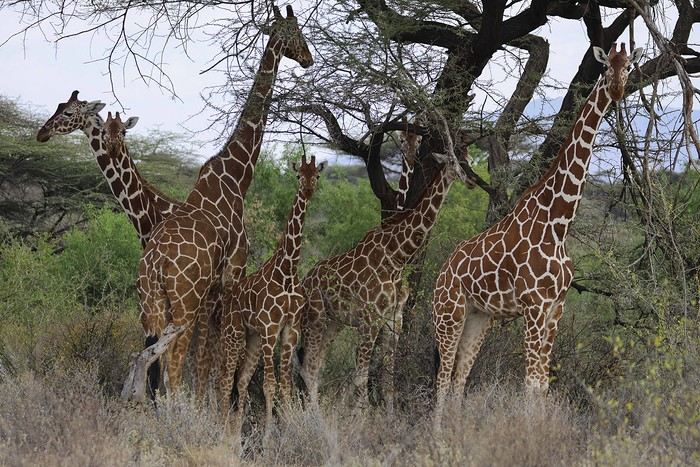
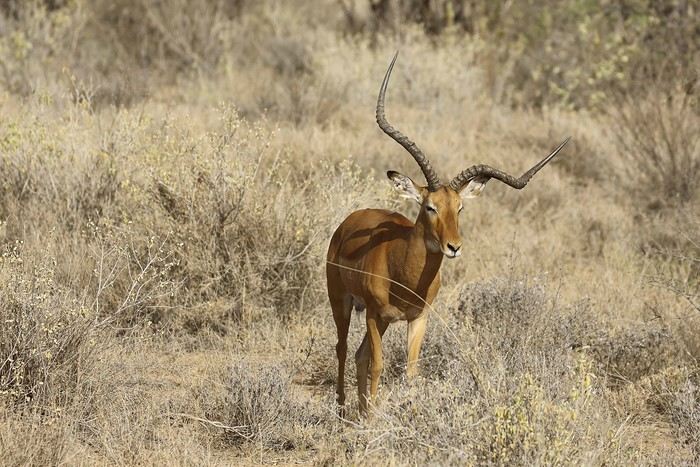
As soon as we entered the reserve, we spotted some impalas and quickly came across one of the region’s endemic species: the reticulated giraffe, which is absolutely stunning.
While heading to our camp for lunch, Alfred crossed paths with another vehicle and learned that a leopard was nearby. We started searching, and a few minutes later, Anny spotted a shape in a tree—it was our leopard!
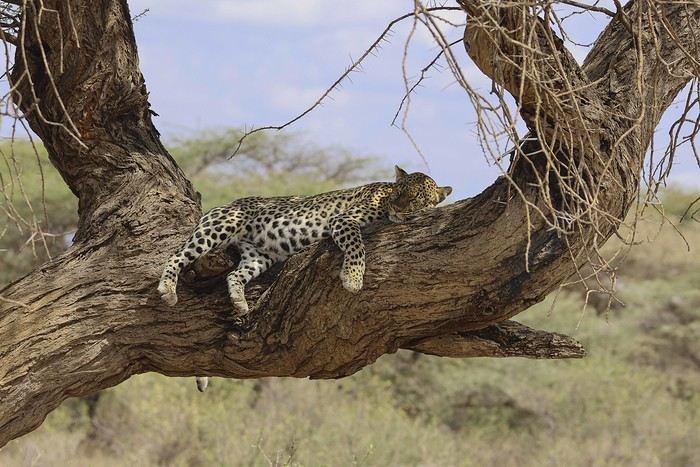
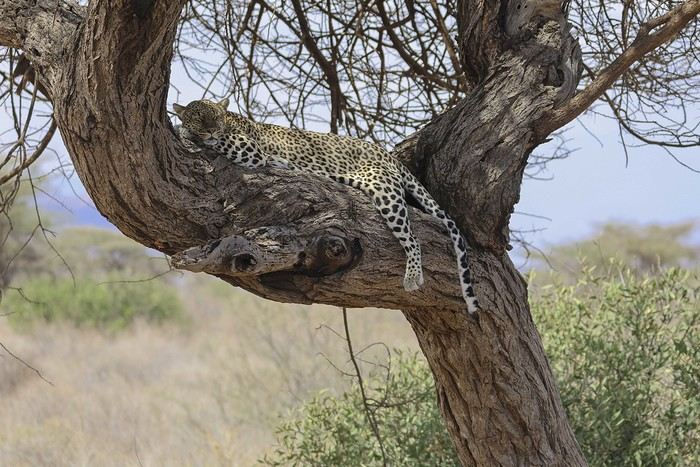
There were actually two of them—a mother and her adolescent. The young one was perched high in the tree, in the shade. We got to observe them for a good half-hour in excellent conditions, with just one other vehicle nearby.
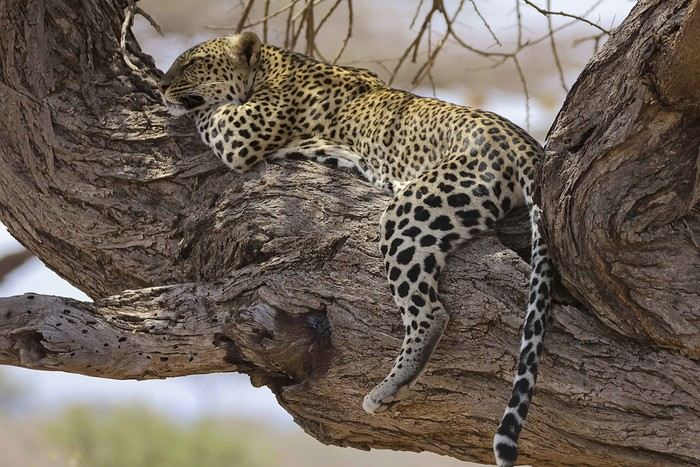
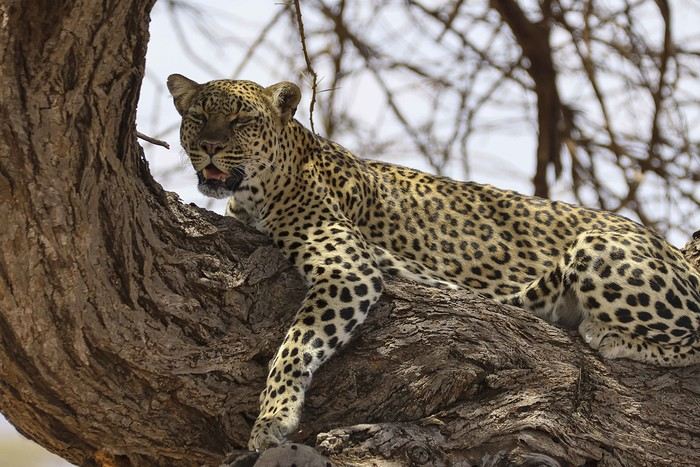
Alfred also noticed that the mother had hidden prey (a gerenuk gazelle) in the vegetation, away from prying eyes.
It was time to head to our camp, the Ashnil Samburu Camp, located in the Buffalo Springs area, by the river, in an idyllic setting surrounded by the region’s typical vegetation.
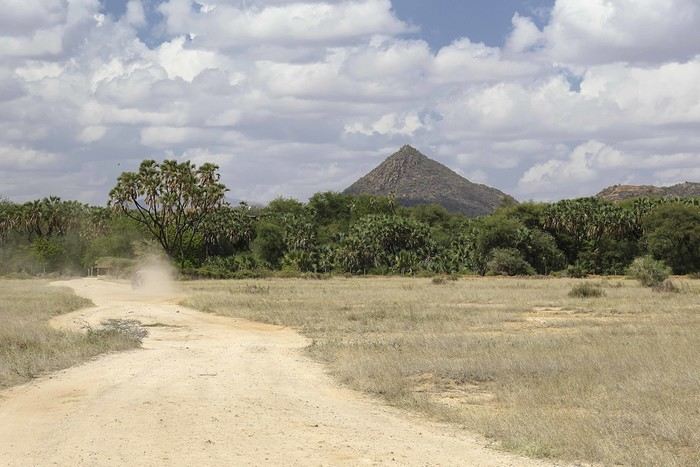
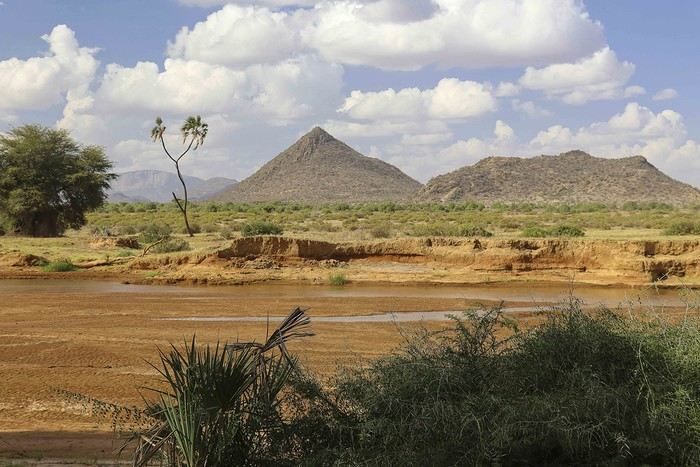
The welcome was fantastic—we immediately felt at home, and that feeling lasted throughout our 3-day stay in the reserve. It was 2 PM, but no one rushed us to the table. Our waitress, Sheila, who took care of us the whole time, was as lovely as the rest of the team. Barely seated, we were invited to watch an elephant passing right by the camp, in front of the restaurant. This trip was off to a great start!
After lunch, we relaxed by the pool. Monkeys, especially vervets, were everywhere, and a camp employee was assigned to keep an eye on them and shoo them away if needed (especially the baboons).
A little before 4 PM, we met up with Alfred for our first game drive. Just outside the camp, a few elephants were in the valley near the river.
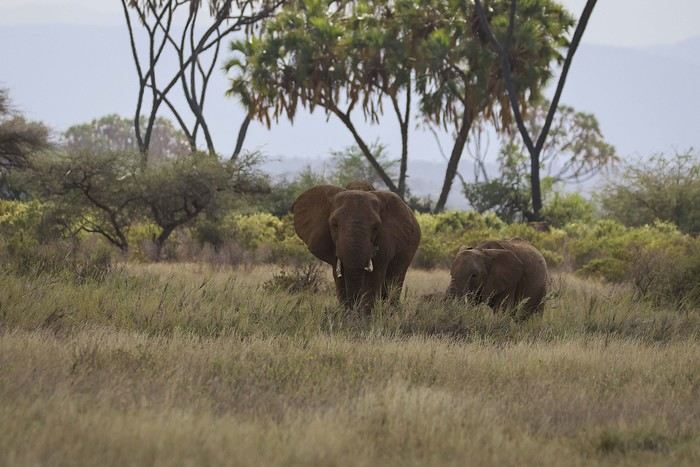
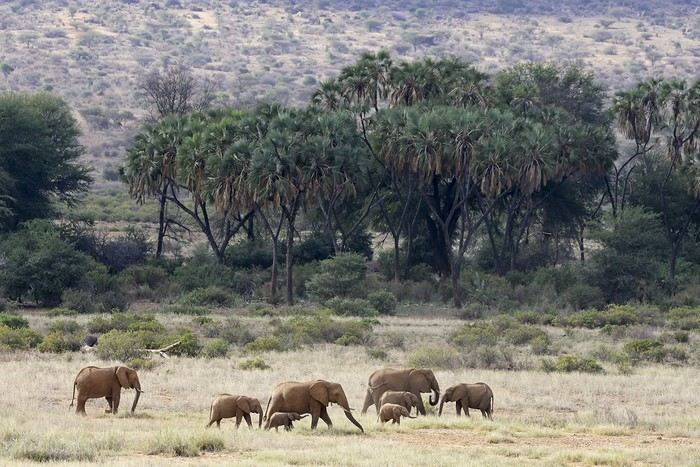
We’d see them in the same area almost every day. We also spotted some gazelles.
After several years, I’ve finally decided to repost a travel journal on the forum. We returned a few weeks ago from an incredible trip to Kenya, and it’s reignited my desire to share our emotions in the face of these animals.
Kenya wasn’t originally a priority for us in terms of safari—we had the impression it was too touristy. So, we started with other destinations: Namibia, Tanzania, Botswana, and South Africa. But as I did more research, especially on the forum (thanks in part to Sylvie’s many trips), I eventually convinced myself that Kenya could be magnificent, as long as we chose our itinerary carefully and avoided peak seasons.
We ended up going in January, from the 17th to the 31st. We worked with a travel agency (TP) that crafted a custom itinerary for us: Samburu-Ol Pejeta-Naivasha-Maji Moto-Maasai Mara-Diani. They partnered with a local French-speaking agency, and everything was perfectly organized. Our trip exceeded all our expectations, and none of it would’ve been as amazing without our guide, Alfred. He accompanied us for 10 days and was a fantastic travel companion—professional, respectful of the animals, and always in good spirits. We formed a great bond with him in such a short time.
- **January 17th** After meeting up with Juliette and Charlotte in Rennes the night before, we left at 4 AM for Roissy Charles de Gaulle Airport. The thick fog made the drive pretty rough, but we arrived safely around 7:45 AM. A Blue Valet driver was waiting to take our car. Check-in went smoothly, and we waited patiently for our 10:40 AM flight. Unfortunately, despite boarding on time, a passenger was missing, and we had to find a replacement last minute. Then, another passenger who had checked in and dropped off their luggage wasn’t on the plane, so they had to unload their bags. After a long period of uncertainty and spotty communication from the crew, we finally took off over an hour late.
We arrived in Nairobi in the late afternoon, 45 minutes behind schedule. The administrative formalities were endless—it took nearly 1.5 hours from landing to leaving the airport with our luggage. When we stepped out, Alfred, our guide, was waiting with a big smile and drove us to the Eka Hotel, not far from the airport. Exhausted from the long journey, we fell asleep quickly.
- **January 18th** Alfred met us at 7 AM for a long drive to Samburu Reserve. We had a peaceful night, unlike the girls, who barely slept because their neighbors were talking loudly all night. Things even escalated when Charlotte started shouting insults to get them to quiet down, but it didn’t work.
It was Sunday, so traffic around Nairobi and along the route was light. Aside from a quick "technical stop," we drove straight through and arrived in Samburu after just under 6 hours. Because of the lower altitude (around 1,000m on average), it was hot—over 30°C in mid-January.
As soon as we entered the reserve, we spotted some impalas and quickly came across one of the region’s endemic species: the reticulated giraffe, which is absolutely stunning.
While heading to our camp for lunch, Alfred crossed paths with another vehicle and learned that a leopard was nearby. We started searching, and a few minutes later, Anny spotted a shape in a tree—it was our leopard!
There were actually two of them—a mother and her adolescent. The young one was perched high in the tree, in the shade. We got to observe them for a good half-hour in excellent conditions, with just one other vehicle nearby.
Alfred also noticed that the mother had hidden prey (a gerenuk gazelle) in the vegetation, away from prying eyes.
It was time to head to our camp, the Ashnil Samburu Camp, located in the Buffalo Springs area, by the river, in an idyllic setting surrounded by the region’s typical vegetation.
The welcome was fantastic—we immediately felt at home, and that feeling lasted throughout our 3-day stay in the reserve. It was 2 PM, but no one rushed us to the table. Our waitress, Sheila, who took care of us the whole time, was as lovely as the rest of the team. Barely seated, we were invited to watch an elephant passing right by the camp, in front of the restaurant. This trip was off to a great start!
After lunch, we relaxed by the pool. Monkeys, especially vervets, were everywhere, and a camp employee was assigned to keep an eye on them and shoo them away if needed (especially the baboons).
A little before 4 PM, we met up with Alfred for our first game drive. Just outside the camp, a few elephants were in the valley near the river.
We’d see them in the same area almost every day. We also spotted some gazelles.
Arusha, Tanzania - October 2025
I would wish never to go to bed where I had woken up, to wander my tent from the shores of Egypt to those of the Persian Gulf; to have no goal for the evening other than the evening itself; to traverse on foot, with my eyes and my heart, all these unknown lands, all these races of people so different from my own; to contemplate humanity, God’s finest creation, in all its forms.
Lamartine in Fatalla Sayeghir’s Account (1861)
As soon as it’s about flying, I lose all willpower. Being reasonable and thoughtful, I still lose all my composure at the mere possibility of a flight—especially if it’s piloted by F.—and even more so if that flight can take me to unexplored lands. I’ve long wanted to unravel the mystery of animal tourism, and why not in Tanzania, following up on my trip from four years ago, when I was already questioning the glaring inequalities in Zanzibar: the coastal strip sacrificed to capitalism, and the inland areas, just a hundred meters from the waves, where you find—though a bit more peaceful than elsewhere on the continent—the chaos of Africa.
I’m an adventurer at heart. When it comes to the terrain, though, it’s a whole different story. I see people setting off for months at a time; I know my endurance doesn’t last beyond three days. It’s not that I’m afraid of this unfamiliar environment when it comes to embracing different realities. I’m mostly afraid of myself—of this heightened sensitivity that makes me see things I’d rather not see and understand others that sometimes overwhelm me.
After an absolutely fantastic daytime flight, I land in Zanzibar and have to resign myself—this is the whole point of the trip—to what feels like a real spacewalk. I’m alone. My lucky star, backed up by my phone, will serve as my lifeline. I step out of the airport and breathe in the scent of Africa full-on: a mix of exotic perfumes, baked earth, and poorly refined fuel, inevitably mingled with the smell of wood smoke. So many images come flooding back. So many stories. Another world.
I head to Arusha the very next day. The gateway to the country’s northern national parks, this city of half a million offers one of those rare breath-holding dives that Africa keeps secret. As the only white person walking the streets, I know I’m visible and vulnerable, yet I move forward confidently, barely bothered. But where are all my fellow Westerners? While this city draws countless tourists, I only cross paths with one white couple in nearly three hours of walking. Because you have to hold on tight to wander here. You have to stay alert. The traffic is dense and erratic—don’t even trust the fact that in Tanzania, people drive on the left. That can change from one minute to the next, especially with motorbikes. With barely centimeters between vehicles, I weave my way through the urban jungle, trying not to stumble into the huge ditch on my left or get sideswiped by cars brushing past me on the right. Speakers blare music, ads, or political speeches at will—the explosion of yellow and green tells us we’re on the eve of the presidential election—but they barely compete with the calls to prayer, nearly nonstop on this holy Friday. The vital space is as saturated as the sound. Imagine an unbroken line of shops and stalls of every kind—supermarkets haven’t made it here yet—where you can find just about anything: phones, copper pipes, Chinese-made hardware, shoes, clothes, basins, and professional tools… The luckiest own a big store; others spend their lives trying to survive on the profits from selling toothbrushes one at a time on the streets. But maybe it’s more lucrative than spending the day slumped on the sidewalk, preferably missing a limb, trusting your survival to the mercy of passersby.
I think I’ll escape the street by slipping into the narrow alleys of the central market. Here, I know I won’t run into anyone like me! The vendors’ stalls start at waist height; the sellers, perched higher up, haggle or not while discussing prices. Here, colorful fruits and vegetables; there, huge piles of dried fish. Spices, seeds, roots. Smells. Noises. Africa. Life. Further on, the fresh fish aisle makes a right angle with the butchers’. Everywhere, flies—everywhere, the same gesture from vendors swatting blindly at these relentless pests. Aware that I’ll be eating this same meat within the hour, displayed with total disregard for basic hygiene, I reassure myself that Arusha sits at 1400m altitude. Yes, we can probably do without a fridge.
*
It’s time to leave the city and go wildlife spotting in the surrounding parks. To that end, I’ve negotiated a package deal with a local agency that prides itself on grouping solo travelers into a vehicle meant for seven. We leave behind the imposing masses of Mount Meru and Kilimanjaro, peaking at 4565m and 5895m respectively, and head west to conquer Tarangire and Ngorongoro parks. I’ve been promised a spectacle; I remain cautious. I’ve read rave reviews; I know how to temper my expectations. Above all, I know what I came for—and paradoxically, my hopes are less about animals than strictly anthropological. So I’m sure I won’t go home disappointed.
I’m in the thick of it. Since 2021, tourism has been booming: I’m one of the two million tourists who come here every year seeking thrills. I also contribute, in a small way, to the 20% of the country’s GDP generated by tourism revenue. Around 3 billion € annually… Tanzania has 16 national parks, twice as many reserves; it charges meticulously for every entry, every night, every activity, to the tune of several dozen euros. I calculated that Tarangire Park alone rakes in around 15 million € a year. Mind-boggling. Yet to get there, a dusty, rickety old track is used daily by hundreds of vehicles that literally saturate the surrounding area with white dust and exhaust fumes. At the park entrance, we wait a good hour while the driver pays the entry fees. Then it’s a free-for-all: dozens of 4x4s try to enter at the same time through the single access point, to the left of the building, while the three barriers are stuck due to a computer glitch. It’s pure chaos: no way to buy your ticket in advance—the QR code revolution hasn’t arrived; no smart layout before the barriers; nothing smooth, nothing practical, everything improvised.
So, the animals? Given the time and money involved, I’d be tempted to say it’s not worth the hassle and there’s really no need to break five legs off one of the too-many zebras we pass. Hours and hours of travel to get to Tanzania, specifically Arusha; hours and hours on the road—up to 12 hours a day—to spend barely three in the parks; at least 200 € per day for the most basic option, so 400 € in my case, and up to several thousand for those wealthy couples opting for the luxury package with a private vehicle. Sure, I saw zebras and elephants in their natural habitat, wildebeest, buffalo, and a few hippos, but I didn’t feel the thrill touted in the articles or even by my two-day trip organizer. Would I have been more satisfied if I’d seen the lion, the leopard, and the rhino? Maybe. But the story won’t be rewritten in light of those assumptions.
Yet I’m not disappointed. As I said earlier: I know what I came for. I wanted to see the world as it is with my own eyes. And the safari world fascinates me more for its anthropological aspect than for what it offers. Yes, the fact that people from all over the world come here, juggling hotels and big 4x4s—while notably avoiding the streets of cities and villages—truly fascinates me. Two worlds coexist on either side of a barely porous border. As soon as the tourist sets foot in the airport, they’re whisked away, sight unseen, into a tourist vehicle. Dropped off at the hotel, they rest there, shielded from view, until the 4x4 departs. Then they speed through those same cities and villages they scorn out of fear or disdain, leaving on the roadside the Maasai herding their flocks and all those poignant or mundane scenes that make up daily African life. In the evening, in their lodge, far from the city’s pulse, they fall asleep thinking about the images they’ve collected, those long hours on the road, the wait for the animals. And the days go by… Maybe the term *luxury*, whether for food or accommodation, refers to what we experience as utterly ordinary in the West? Forgetting that you’re there, in Africa, just steps away from poverty and a certain arbitrariness. And at the end of the journey: back to the airport, back to normal life.
Maybe we need to take a broader view. All that money seems invisible, yet it must serve the population at some point, right? The main roads are passable, the power grid seems well-maintained—I can tell by the excellent condition of the high-voltage transmission towers. Is it really too expensive to significantly improve all the infrastructure? I hoped this windfall would truly serve the people’s interests. The driver taking me back to the airport on the last evening dashes my sweet illusions: « All this is bad. Africa is bad. But you have no choice. The hospitals don’t work, the schools don’t work, the roads don’t work (just as he says this, roadworks force us onto a terrible detour for several kilometers—a rutted track, in fact), and if you say anything, if you speak up too much, they come for you and then you disappear. » That’s just one opinion. Nothing empirical. But I don’t need to be a West Point graduate to realize how rampant corruption is in these regions: while the muezzin bellows the greatness of Allah, I consider the dilapidated equipment and the energy expended by the masses just to survive here. But maybe all that money keeps the country afloat by paying civil servants’ salaries? Meanwhile, one thing is certain: regardless of where the profits go, tourism supports millions of people, and I’m in no position to judge this system too harshly. Maybe I’m too much of an aesthete to appreciate the almost exclusive use of corrugated iron at its true value…
*
I’ll give this system credit for one thing: the chance to set foot in spaces impossible to visit otherwise. At one point, in the heart of the Ngorongoro Crater—a vast 20km-wide plain topped by a 600m-high caldera—I was simply happy to be there. Barely bothered by the constant ballet of 4x4s—the space is vast—I contemplate the simple life of the local animals. Buffalo, wildebeest, zebras as numerous as the flamingos patiently standing on one leg, waiting for the day to pass. Over there, you can make out a few hyenas with vultures circling above. Finally, in a large body of water, hippos surface at regular intervals. I’m aware of my luck. I’m especially aware that, unlike all the people I’ve met there, a lot of money and a little resourcefulness greatly favor the luck factor.
I’m heading home. I soak up the last images of this improbable Africa as night falls quickly over the countryside. I’m fascinated by the number of Maasai herding their livestock along the main road. Some pass the time, globalization obliges, on an old phone; others, sometimes as young as my eldest—barely 10 years old—watch us pass, indifferent. We overtake or are overtaken; the two-lane road is the stage for a majestic ballet of semi-trailers, *dalas-dalas*, and other 4x4s, as numerous as the names of their companies: Leopard Tours, Climbing Kilimanjaro, Smiling Zebra, Nomad Life Enhanced, Elephant Roaming, Mountain Warrior, Master of the Ambush… They drop me off at the hotel, where I have an hour to shower and change into clean clothes before my return flight. Already, I’m slipping back into my own world without really seeing it, leaving behind the hotel’s glass window that African life to which nothing truly binds me. Then that chaotic, suffocating nighttime drive to the airport. Check-in; the stupid questions (« Where are you going? »); the slow police officer who, in the end, stamps my passport anywhere; the idiocy of the security agent (my empty 33cl bottle is forbidden); the rather shabby lounge at Kilimanjaro Airport. Then the return to the vessel—to the Air France plane that left Zanzibar an hour earlier—after this 72-hour spacewalk without a real lifeline. I’ve never been so happy to see F. again.
As soon as it’s about flying, I lose all willpower. Being reasonable and thoughtful, I still lose all my composure at the mere possibility of a flight—especially if it’s piloted by F.—and even more so if that flight can take me to unexplored lands. I’ve long wanted to unravel the mystery of animal tourism, and why not in Tanzania, following up on my trip from four years ago, when I was already questioning the glaring inequalities in Zanzibar: the coastal strip sacrificed to capitalism, and the inland areas, just a hundred meters from the waves, where you find—though a bit more peaceful than elsewhere on the continent—the chaos of Africa.
I’m an adventurer at heart. When it comes to the terrain, though, it’s a whole different story. I see people setting off for months at a time; I know my endurance doesn’t last beyond three days. It’s not that I’m afraid of this unfamiliar environment when it comes to embracing different realities. I’m mostly afraid of myself—of this heightened sensitivity that makes me see things I’d rather not see and understand others that sometimes overwhelm me.
After an absolutely fantastic daytime flight, I land in Zanzibar and have to resign myself—this is the whole point of the trip—to what feels like a real spacewalk. I’m alone. My lucky star, backed up by my phone, will serve as my lifeline. I step out of the airport and breathe in the scent of Africa full-on: a mix of exotic perfumes, baked earth, and poorly refined fuel, inevitably mingled with the smell of wood smoke. So many images come flooding back. So many stories. Another world.
I head to Arusha the very next day. The gateway to the country’s northern national parks, this city of half a million offers one of those rare breath-holding dives that Africa keeps secret. As the only white person walking the streets, I know I’m visible and vulnerable, yet I move forward confidently, barely bothered. But where are all my fellow Westerners? While this city draws countless tourists, I only cross paths with one white couple in nearly three hours of walking. Because you have to hold on tight to wander here. You have to stay alert. The traffic is dense and erratic—don’t even trust the fact that in Tanzania, people drive on the left. That can change from one minute to the next, especially with motorbikes. With barely centimeters between vehicles, I weave my way through the urban jungle, trying not to stumble into the huge ditch on my left or get sideswiped by cars brushing past me on the right. Speakers blare music, ads, or political speeches at will—the explosion of yellow and green tells us we’re on the eve of the presidential election—but they barely compete with the calls to prayer, nearly nonstop on this holy Friday. The vital space is as saturated as the sound. Imagine an unbroken line of shops and stalls of every kind—supermarkets haven’t made it here yet—where you can find just about anything: phones, copper pipes, Chinese-made hardware, shoes, clothes, basins, and professional tools… The luckiest own a big store; others spend their lives trying to survive on the profits from selling toothbrushes one at a time on the streets. But maybe it’s more lucrative than spending the day slumped on the sidewalk, preferably missing a limb, trusting your survival to the mercy of passersby.
I think I’ll escape the street by slipping into the narrow alleys of the central market. Here, I know I won’t run into anyone like me! The vendors’ stalls start at waist height; the sellers, perched higher up, haggle or not while discussing prices. Here, colorful fruits and vegetables; there, huge piles of dried fish. Spices, seeds, roots. Smells. Noises. Africa. Life. Further on, the fresh fish aisle makes a right angle with the butchers’. Everywhere, flies—everywhere, the same gesture from vendors swatting blindly at these relentless pests. Aware that I’ll be eating this same meat within the hour, displayed with total disregard for basic hygiene, I reassure myself that Arusha sits at 1400m altitude. Yes, we can probably do without a fridge.
*
It’s time to leave the city and go wildlife spotting in the surrounding parks. To that end, I’ve negotiated a package deal with a local agency that prides itself on grouping solo travelers into a vehicle meant for seven. We leave behind the imposing masses of Mount Meru and Kilimanjaro, peaking at 4565m and 5895m respectively, and head west to conquer Tarangire and Ngorongoro parks. I’ve been promised a spectacle; I remain cautious. I’ve read rave reviews; I know how to temper my expectations. Above all, I know what I came for—and paradoxically, my hopes are less about animals than strictly anthropological. So I’m sure I won’t go home disappointed.
I’m in the thick of it. Since 2021, tourism has been booming: I’m one of the two million tourists who come here every year seeking thrills. I also contribute, in a small way, to the 20% of the country’s GDP generated by tourism revenue. Around 3 billion € annually… Tanzania has 16 national parks, twice as many reserves; it charges meticulously for every entry, every night, every activity, to the tune of several dozen euros. I calculated that Tarangire Park alone rakes in around 15 million € a year. Mind-boggling. Yet to get there, a dusty, rickety old track is used daily by hundreds of vehicles that literally saturate the surrounding area with white dust and exhaust fumes. At the park entrance, we wait a good hour while the driver pays the entry fees. Then it’s a free-for-all: dozens of 4x4s try to enter at the same time through the single access point, to the left of the building, while the three barriers are stuck due to a computer glitch. It’s pure chaos: no way to buy your ticket in advance—the QR code revolution hasn’t arrived; no smart layout before the barriers; nothing smooth, nothing practical, everything improvised.
So, the animals? Given the time and money involved, I’d be tempted to say it’s not worth the hassle and there’s really no need to break five legs off one of the too-many zebras we pass. Hours and hours of travel to get to Tanzania, specifically Arusha; hours and hours on the road—up to 12 hours a day—to spend barely three in the parks; at least 200 € per day for the most basic option, so 400 € in my case, and up to several thousand for those wealthy couples opting for the luxury package with a private vehicle. Sure, I saw zebras and elephants in their natural habitat, wildebeest, buffalo, and a few hippos, but I didn’t feel the thrill touted in the articles or even by my two-day trip organizer. Would I have been more satisfied if I’d seen the lion, the leopard, and the rhino? Maybe. But the story won’t be rewritten in light of those assumptions.
Yet I’m not disappointed. As I said earlier: I know what I came for. I wanted to see the world as it is with my own eyes. And the safari world fascinates me more for its anthropological aspect than for what it offers. Yes, the fact that people from all over the world come here, juggling hotels and big 4x4s—while notably avoiding the streets of cities and villages—truly fascinates me. Two worlds coexist on either side of a barely porous border. As soon as the tourist sets foot in the airport, they’re whisked away, sight unseen, into a tourist vehicle. Dropped off at the hotel, they rest there, shielded from view, until the 4x4 departs. Then they speed through those same cities and villages they scorn out of fear or disdain, leaving on the roadside the Maasai herding their flocks and all those poignant or mundane scenes that make up daily African life. In the evening, in their lodge, far from the city’s pulse, they fall asleep thinking about the images they’ve collected, those long hours on the road, the wait for the animals. And the days go by… Maybe the term *luxury*, whether for food or accommodation, refers to what we experience as utterly ordinary in the West? Forgetting that you’re there, in Africa, just steps away from poverty and a certain arbitrariness. And at the end of the journey: back to the airport, back to normal life.
Maybe we need to take a broader view. All that money seems invisible, yet it must serve the population at some point, right? The main roads are passable, the power grid seems well-maintained—I can tell by the excellent condition of the high-voltage transmission towers. Is it really too expensive to significantly improve all the infrastructure? I hoped this windfall would truly serve the people’s interests. The driver taking me back to the airport on the last evening dashes my sweet illusions: « All this is bad. Africa is bad. But you have no choice. The hospitals don’t work, the schools don’t work, the roads don’t work (just as he says this, roadworks force us onto a terrible detour for several kilometers—a rutted track, in fact), and if you say anything, if you speak up too much, they come for you and then you disappear. » That’s just one opinion. Nothing empirical. But I don’t need to be a West Point graduate to realize how rampant corruption is in these regions: while the muezzin bellows the greatness of Allah, I consider the dilapidated equipment and the energy expended by the masses just to survive here. But maybe all that money keeps the country afloat by paying civil servants’ salaries? Meanwhile, one thing is certain: regardless of where the profits go, tourism supports millions of people, and I’m in no position to judge this system too harshly. Maybe I’m too much of an aesthete to appreciate the almost exclusive use of corrugated iron at its true value…
*
I’ll give this system credit for one thing: the chance to set foot in spaces impossible to visit otherwise. At one point, in the heart of the Ngorongoro Crater—a vast 20km-wide plain topped by a 600m-high caldera—I was simply happy to be there. Barely bothered by the constant ballet of 4x4s—the space is vast—I contemplate the simple life of the local animals. Buffalo, wildebeest, zebras as numerous as the flamingos patiently standing on one leg, waiting for the day to pass. Over there, you can make out a few hyenas with vultures circling above. Finally, in a large body of water, hippos surface at regular intervals. I’m aware of my luck. I’m especially aware that, unlike all the people I’ve met there, a lot of money and a little resourcefulness greatly favor the luck factor.
I’m heading home. I soak up the last images of this improbable Africa as night falls quickly over the countryside. I’m fascinated by the number of Maasai herding their livestock along the main road. Some pass the time, globalization obliges, on an old phone; others, sometimes as young as my eldest—barely 10 years old—watch us pass, indifferent. We overtake or are overtaken; the two-lane road is the stage for a majestic ballet of semi-trailers, *dalas-dalas*, and other 4x4s, as numerous as the names of their companies: Leopard Tours, Climbing Kilimanjaro, Smiling Zebra, Nomad Life Enhanced, Elephant Roaming, Mountain Warrior, Master of the Ambush… They drop me off at the hotel, where I have an hour to shower and change into clean clothes before my return flight. Already, I’m slipping back into my own world without really seeing it, leaving behind the hotel’s glass window that African life to which nothing truly binds me. Then that chaotic, suffocating nighttime drive to the airport. Check-in; the stupid questions (« Where are you going? »); the slow police officer who, in the end, stamps my passport anywhere; the idiocy of the security agent (my empty 33cl bottle is forbidden); the rather shabby lounge at Kilimanjaro Airport. Then the return to the vessel—to the Air France plane that left Zanzibar an hour earlier—after this 72-hour spacewalk without a real lifeline. I’ve never been so happy to see F. again.
Organizing a 3-day safari with kids then Zanzibar
Hi everyone,
I’m reaching out for your advice since we’re planning a trip to Tanzania for our 10th wedding anniversary, with a continental part (4 nights) followed by Zanzibar for some relaxation (7 nights). A childhood dream.
My first question is: have families with kids this age already done this trip? Is it relatively safe, because I know that if there’s even the slightest health issue, the infrastructure can be tricky, especially on the mainland in Tanzania. We’ll of course take our precautions (vaccines and Malarone), but I want to make sure we’re not being reckless, as my in-laws seem to suggest (they’ve never traveled).
Also, for the safari, I need your opinions. I’m in advanced talks with the agency *Tanzania Wise Safari*. Has anyone heard of them?
Day 1 - night in Arusha to rest Day 2 - departure for Tarangire and safari (likely in the early afternoon), night in a lodge near the northern part of the lake at the crater entrance Day 3 - crater - night in the same lodge (I want to limit changes for my kids, but I’m not sure if that’s smart) Day 4 - I’m hesitating - what to do in the morning? Lake Manyara? Or return to Arusha at a relaxed pace and spend the night there? The guide suggested Arusha National Park, but I think it’s too much driving for the kids, since there’s already the trip from the crater to Arusha to get to the park. Day 5 - departure for Zanzibar. Do you have a recommended airline?
For flights, I tried a multi-destination option, but it seems complicated.
Thanks so much for your feedback
I’m reaching out for your advice since we’re planning a trip to Tanzania for our 10th wedding anniversary, with a continental part (4 nights) followed by Zanzibar for some relaxation (7 nights). A childhood dream.
My first question is: have families with kids this age already done this trip? Is it relatively safe, because I know that if there’s even the slightest health issue, the infrastructure can be tricky, especially on the mainland in Tanzania. We’ll of course take our precautions (vaccines and Malarone), but I want to make sure we’re not being reckless, as my in-laws seem to suggest (they’ve never traveled).
Also, for the safari, I need your opinions. I’m in advanced talks with the agency *Tanzania Wise Safari*. Has anyone heard of them?
Day 1 - night in Arusha to rest Day 2 - departure for Tarangire and safari (likely in the early afternoon), night in a lodge near the northern part of the lake at the crater entrance Day 3 - crater - night in the same lodge (I want to limit changes for my kids, but I’m not sure if that’s smart) Day 4 - I’m hesitating - what to do in the morning? Lake Manyara? Or return to Arusha at a relaxed pace and spend the night there? The guide suggested Arusha National Park, but I think it’s too much driving for the kids, since there’s already the trip from the crater to Arusha to get to the park. Day 5 - departure for Zanzibar. Do you have a recommended airline?
For flights, I tried a multi-destination option, but it seems complicated.
Thanks so much for your feedback