Results for "Fortaleza+|+38+>+126"
930 results found.
Route côtière de Belem à Rio de Janeiro et Sao Paulo (Brésil) English translation pending
y a t il une route cotiere qui aille de belem a rio et sao paulo?
est elle en bon etat, je veux dire est elle asphaltee tout du long?
comment sont les bus qui font le trajet, et combien de temps cela prend il?
merci d avance...
Le Vénézuela quand on n'est pas du tout trek?! English translation pending
Bonjour à tous, j'ai déjà demandé des infos sur le Vénézuela mais je ne suis finalement pas encore décidée à en faire ma destination du mois de septembre.
Ma crainte: je n'aime pas les treks...alors, est-ce que je ne vais pas m'y ennuyer ? Apparemment, y'a pas de sites archéologiques à visiter. Sinon, j'aime les belles plages mais quelques jours suffisent. J'aime me ballader des heures dans des villes charmantes, j'aime les ambiances (marchés, ports...) ou partir à la rencontre des gens dans les villages.
Alors, pensez-vous que c'est une destination pour moi ???!!
Mercii de votre aide🙂
Ma crainte: je n'aime pas les treks...alors, est-ce que je ne vais pas m'y ennuyer ? Apparemment, y'a pas de sites archéologiques à visiter. Sinon, j'aime les belles plages mais quelques jours suffisent. J'aime me ballader des heures dans des villes charmantes, j'aime les ambiances (marchés, ports...) ou partir à la rencontre des gens dans les villages.
Alors, pensez-vous que c'est une destination pour moi ???!!
Mercii de votre aide🙂
Achat de billets Salta-Buenos Aires English translation pending
Bonjour,
je suis en Bolivie jusqu au 25 aout, date a laquelle je compte rejoindre Salta, et j ai un billet intercontinental : depart de buenos aires le 31 aout. Beaucoup conseillent d etre sur place pour avoir des tarifs interressants (en effet, chez aerolineas, on me propose du 450 euros aller-retour salta buenos aires !). Est-ce que je ne risque pas trop a attendre le 25 aout quand meme ? ou existe t-il une solution pour acheter des billets par internet a prix moins exorbitants ?
Merci pour vos conseils
PS : ayant une date de retour a Buenos aires en septembre, je recherche en effet un aller-retour salta buenos aires.
Charles www.lesderoutes.com
PS : ayant une date de retour a Buenos aires en septembre, je recherche en effet un aller-retour salta buenos aires.
Charles www.lesderoutes.com
Itinéraire conseillé pour deux semaines au Brésil English translation pending
bonjour,
je part deux semaines au Brésil du 11 au 26 septembre avec un amis.Nous arrivons et repartons de Rio de Janeiro mais nous souhaiterions bouger.J'ai deja quelques villes ou quelques sites en tête mais comme le Brésil est un pays immense je ne sais pas trop comment m'y prendre.
Voici une liste des villes/sites que j'aimerais visiter:
ilha grande, foz de iguaçu, salvador de bahia, paraty et j'aimerais aussi voir le Sertao et si possible un peu d'amazonie....
Toute ces destinations n'étant pas très proche l'une de l'autre et n'ayant pas les moyens de prendre des vols interieurs, j'aimerais qu'on me conseille sur un éventuel itinéraire qui rassemble un maximum de site noté ci dessus...
merci d'avance à tous ceux qui voudrons bien m'apporter quelquonques renseignement
merci d'avance à tous ceux qui voudrons bien m'apporter quelquonques renseignement
Vols intérieurs au Brésil et trajet en bus Rio-Recife English translation pending
bonjour,
avec mon mari on part à joao pessoa en novembre, j'ai déjà habité un an là bas il y a quelques années mais je suis toujours venue de france, par la tap ou la varig, or là nous viendrons de New York et c'est air france qui assure le trajet (leurs billets tour du monde sont pas chers). Donc on s'arrête à Rio. J'aimerai avoir des infos sur les trajets en bus rio recife, les coûts, la durée du trajet, la sécurité de telle ou telle compagnie, voire aussi des infos sur les vols intérieurs.
perso je peux donner des renseignements sur le nordeste!
merci d'avance
lna
Aéroport de Rio de Janeiro le plus pratique pour vols intérieurs? English translation pending
Bonjour,
J'aimerais s'il vous plaît savoir quel est l'aéroport de Rio le plus pratique pour les vols intérieurs, Rio-Galeao ou Rio-Santos Dumont, ou s'il n'y a aucune importance.
Merci
J'aimerais s'il vous plaît savoir quel est l'aéroport de Rio le plus pratique pour les vols intérieurs, Rio-Galeao ou Rio-Santos Dumont, ou s'il n'y a aucune importance.
Merci
Budget pour un mois au Brésil English translation pending
Salut tout le monde!
Je pars un mois au Brésil de fin décembre 2006 à fin janvier 2007 pour passer le nouvel an à Rio (juste qqes jours) et ensuite voyager un peu, surement au Sud. J'ai rencontré pas mal de Brésilien ici à Lisbonne qui vont m'aider à faire un choix parmis toutes les destinations de rêve dans ce grand pays!
Seulement ils n'ont pas réussi à se mettre d'accord sur le budget que je devrais prévoir: ça allait de 1000€ à 2000€ pour un mois (tout compris hors billet d'avion international:logement, nouriture, sorties, transports...). L'idée de ce voyage c'est de visiter le pays (bien sûr) en insistant sur le coté nature: je pars avec 2 potes, et on est tous les 3 fans de rando, et d'espaces sauvages; beaucoup moins des grands centres de civilsation. On en profitera quand même pour se faire quelques fêtes, parcequ'il parait que Janvier au Brésil c'est inévitable et exceptionnel à ce niveau là!
Est-ce que certains d'entre vous ont une idée du budget à prévoir? De par votre expérience j'espère que vous pourrez m'aider! Si vous avez des bons plans pour faire des économies sur place, je suis également toute ouïe! :oD
Merci beaucoup pour votre aide!😎
Je pars un mois au Brésil de fin décembre 2006 à fin janvier 2007 pour passer le nouvel an à Rio (juste qqes jours) et ensuite voyager un peu, surement au Sud. J'ai rencontré pas mal de Brésilien ici à Lisbonne qui vont m'aider à faire un choix parmis toutes les destinations de rêve dans ce grand pays!
Seulement ils n'ont pas réussi à se mettre d'accord sur le budget que je devrais prévoir: ça allait de 1000€ à 2000€ pour un mois (tout compris hors billet d'avion international:logement, nouriture, sorties, transports...). L'idée de ce voyage c'est de visiter le pays (bien sûr) en insistant sur le coté nature: je pars avec 2 potes, et on est tous les 3 fans de rando, et d'espaces sauvages; beaucoup moins des grands centres de civilsation. On en profitera quand même pour se faire quelques fêtes, parcequ'il parait que Janvier au Brésil c'est inévitable et exceptionnel à ce niveau là!
Est-ce que certains d'entre vous ont une idée du budget à prévoir? De par votre expérience j'espère que vous pourrez m'aider! Si vous avez des bons plans pour faire des économies sur place, je suis également toute ouïe! :oD
Merci beaucoup pour votre aide!😎
Plages de la Colombie et du Vénézuela English translation pending
hello,
j'ai eu des infos sur le forum comme quoi les plages du venez seraient plus belles que celles de colombie coté caraibes ...? qui confirme ?..a part los roques ( je crois que on en fait vite le tour ! ) que voir ? quand partir ... ? pour avoir le soleil et des prix hors saison ................................................................................ pas question d'aller crapahuter dans les tepuis et a salto angel !..............................................................................ou bronzer idiot aux roques ?
la deuxieme option est donc la colombie a san andres, cartagena et popayan pour le café...et donc eviter les FARCs !... qui a des infos sur la cote pacifique ? pas trop "secure" ? les plages sont belles ou, comme au mexique avec des rouleaux ? c'set vrai que le coté caraibe est ok... mais j'aime pas le coté cancun, ni meme acapulco donc pas tres sur non plus de trouver mon bonheur a cartagena, meme si c'est vrai que san andres est le rv spring break des canadiens, justement, apres j'aimerais plutot toucher de l'authenticité !
etre heureux n'est pas une destination ? a chacun son paradis ...
mon message precedent ayant ete re-dirigé, une legere modif pour etre sur de ne pas etre " balancé" ailleurs dans la rubrique voyager avec des enfants !, ...merci le ctrl "c "ctrl "v" car je voyage seul avec ma fille de 3 ans, mais chut ! faut pas l'dire sur ce forum " j'ai donc grisé 2 lignes !
merci a yop qui m'a deja donné des infos !
j'ai eu des infos sur le forum comme quoi les plages du venez seraient plus belles que celles de colombie coté caraibes ...? qui confirme ?..a part los roques ( je crois que on en fait vite le tour ! ) que voir ? quand partir ... ? pour avoir le soleil et des prix hors saison ................................................................................ pas question d'aller crapahuter dans les tepuis et a salto angel !..............................................................................ou bronzer idiot aux roques ?
la deuxieme option est donc la colombie a san andres, cartagena et popayan pour le café...et donc eviter les FARCs !... qui a des infos sur la cote pacifique ? pas trop "secure" ? les plages sont belles ou, comme au mexique avec des rouleaux ? c'set vrai que le coté caraibe est ok... mais j'aime pas le coté cancun, ni meme acapulco donc pas tres sur non plus de trouver mon bonheur a cartagena, meme si c'est vrai que san andres est le rv spring break des canadiens, justement, apres j'aimerais plutot toucher de l'authenticité !
etre heureux n'est pas une destination ? a chacun son paradis ...
mon message precedent ayant ete re-dirigé, une legere modif pour etre sur de ne pas etre " balancé" ailleurs dans la rubrique voyager avec des enfants !, ...merci le ctrl "c "ctrl "v" car je voyage seul avec ma fille de 3 ans, mais chut ! faut pas l'dire sur ce forum " j'ai donc grisé 2 lignes !
merci a yop qui m'a deja donné des infos !
Moyens de paiement au Brésil English translation pending
Bonjour,
Nous sommes des voyageurs très débutants... et partons au Brésil avec nos filles de 3 et 7 ans.
Je lis un peu tout et son contraire, pouvez-vous m'aider ? Transfert Congohnas-Guarulhos en 3h30 heures tout compris (bagages, bus, re-enregistrement, embarquement) : ça me semble impossible mais nos bilets sont payés... quel recours ? nous allons à Curitiba, puis Bombinhas. Quel moyen de régler : je lis que les CB internationales ne sont pas tjs aceptées ? qu'il n'y a pas bcp de distribiteurs comment obtenir un change le plus avantageux ? Ici ou là-bas ? les chèques voyage, vous en pensez ?
Je suis preneuse de tout autre renseignement.
Merci !
Nous sommes des voyageurs très débutants... et partons au Brésil avec nos filles de 3 et 7 ans.
Je lis un peu tout et son contraire, pouvez-vous m'aider ? Transfert Congohnas-Guarulhos en 3h30 heures tout compris (bagages, bus, re-enregistrement, embarquement) : ça me semble impossible mais nos bilets sont payés... quel recours ? nous allons à Curitiba, puis Bombinhas. Quel moyen de régler : je lis que les CB internationales ne sont pas tjs aceptées ? qu'il n'y a pas bcp de distribiteurs comment obtenir un change le plus avantageux ? Ici ou là-bas ? les chèques voyage, vous en pensez ?
Je suis preneuse de tout autre renseignement.
Merci !
Vol pas cher pour le Brésil? English translation pending
bonjour cher(es) internautes
je désire me rendre cet été au mois d'aout au brésil et les tarifs que je vois sont au minimum à plus de mille euros . Peut on obtenir des tarifs moins chers ? Merci d'avance pour vos réponses
bise Nath
Problèmes pour entrer au Brésil English translation pending
Bonjour,
Je prépare un voyage de 6 mois en Amérique du Sud. Départ prévu dans moins de 10 jours !!! J'ai un gros souci. J'ai un billet Paris-Rio pour l'aller et un retour Buenos Aires-PAris 6 mois + tard pour le retour. Problème: l'ambassade me dit que je ne pourrai pas entrer au Brésil sans une preuve que je quitte le pays sous 3 mois....
Je ne sais pas comment faire. Si l'un de vous connait une solution ou a vécu la même expérience, je commence sérieusement à paniquer...
Conseils sur le Brésil English translation pending
Salut à toutes et à tous !!!
Pour 15 jours au brésil, qu'est ce que vous conseillerez ???
On peut se ballader peinard en voiture ??? routes ok ???
Pour le logement ya des trucs chez l'habitant ??? les hôtels ???
Vous conseillez des vols intérieurs ???
Merci d'avance, je suis friand de vos expériences
Géphil
Pour 15 jours au brésil, qu'est ce que vous conseillerez ???
On peut se ballader peinard en voiture ??? routes ok ???
Pour le logement ya des trucs chez l'habitant ??? les hôtels ???
Vous conseillez des vols intérieurs ???
Merci d'avance, je suis friand de vos expériences
Géphil
Route panaméricaine en Land Rover English translation pending
Bonjour
Nous sommes en pleine préparation d'un voyage d'une dizaine de mois à compter de décembre 2006. Nous aurions
besoin d'aide notamment pour faire un budget pour une traversee des Ameriques en 4*4 le long de la panaméricaine
(du Sud :Patagonie, au Nord :Alaska) au depart de France.
Il nous faut compter les traversees en cargo pour le vehicule, les billets d'avions, la vie sur place (nuit en voiture
et cuisine personnelle) et certainement pleins de choses auxquelles nous n'avons pas encore pensées!!
Connaissez vous des compagnies maritimes réalisant la traversée de la France au Bresil (voire Argentine) et du
Quebec en France? Comment traverser entre l'Amerique du Sud et du Nord (idéalement entre l'Equateur et l'amérique centrale)?
Merci d'avance pour votre aide!
Star Airlines offre des vols sur le Brésil English translation pending
[31-10-2005] Quoi de neuf cet hiver : l’année du Brésil chez Star airlines.
Pour Star aussi, c’est l’année du Brésil : tout l’hiver, Star airlines va relier Paris à Porto Seguro et Salvador de Bahia. Porto Seguro est une petite ville balnéaire du Nordeste peu connue des français. Son charme et ses plages en ont fait depuis de nombreuses années une destination incontournable des brésiliens, et c’est le Club Med, qui y a installé un superbe club, qui donne l’opportunité aux français de cette découverte. Bahia, elle, est une ville mythique : 365 églises, berceau du syncrétisme culturel, architecture sublime, saveurs culinaires inouïes, et mille autres aspects à (re)découvrir !
Maranhao ou Salvador de Bahia au Brésil English translation pending
pourquoi pas le bresil?.on hesite avec l'indonesie. quel temps en mai dans le nord este.et que pensez vous de maranhao. et puis en 15 jours que peut on faire quand on utilise transports locaux.donnez moi vos conseils. merci
Partir en voilier vers l'Amérique du Sud English translation pending
Salut
Je m appelle Geri, je cherche a partir en voilier de la france ou espagne vers l amérique du sud fin mars debut avril..
Quelqu un aurait il une idée?
Merci
Quels pays visiter en Amérique Centrale/du Sud? English translation pending
Bonjour,
J'ai envie de faire un petit voyage en amerique du sud ou amerique centrale l'année prochaine, je ne suis pas encore décidé de l'endroit, y a t il des pays qui ne demandent pas de visa aux européens pour un sejour de moins de 30 jours ?
Et quels sont les pays que vous me conseilleriez de visiter ? je ne suis pas vraiment un aventurier mais je n'aime pas non plus le tourisme de masse, il me faudrait un juste milieu 😛 un pays où on se sent en sécurité aussi 🙂 Il parait que le Venezuela n'est pas mal ?
merci d'avance pour vos futurs precieux conseils 😇
Attention dans Main Bazar à New Delhi! English translation pending
un post pour prévenir les tourisites ds Main Bazar ( NDelhi! ).
🙁Un ami ( vieux routard qui écume l'Inde chaque année depuis 25 ans !! ) a été agressé ds Main Bazar le matin : un garçon de 7/8 ans qui découpait un ananas dans la rue lui a proposé une tranche de fruit. Il a accepté et 2 mn après, il s"est retrouvé ds le gaz, s'est fait emmener par un type ds une petite rue et s'est fait détroussé. Il n' a rien pu faire, étant complètement anesthésié. Le police l'a réveillé plusieurs haures après, il était blessé à la jambe + nbses contusions ds le dos + bosses sur la tête. 🏴☠️
Les policiers l'ont emmené au commissariat de Pahar Ganj où il lui ont "offert" gracieusement 3000 roupies pour qu'il signe un papier comme quoi il avait perdu son passeport et ne mentionne aucune agression.
A l'ambassade de France, il lui a été dit que la veille, une jeune fille avait subi le même sort !!
Un tuyau : c'est les ananas et les pamplemouses qui dissimulent le mieux le gout de produits stupéfiants
Un tuyau : c'est les ananas et les pamplemouses qui dissimulent le mieux le gout de produits stupéfiants
Budget journalier au Panama et Costa Rica English translation pending
Bonjour à tous et à toutes,
Je suis sur le point de quitter la france pour essayer de vivre 4 ou 5 mois au costa rica ou à panama... Est il possible de vivre dans ces pays pour moins de 20 euros par jour ??? J'ai énormément de mal à connaitre les tarifs minimums pour dormir ainsi que pour manger... Si vous avez des infos à me communiquer, c tres cool... Aussi, si certaines personnes sont branchées pour des sessions surf sur place, je suisouvert à toutes propositions !!!
Merci d'avance.
Je suis sur le point de quitter la france pour essayer de vivre 4 ou 5 mois au costa rica ou à panama... Est il possible de vivre dans ces pays pour moins de 20 euros par jour ??? J'ai énormément de mal à connaitre les tarifs minimums pour dormir ainsi que pour manger... Si vous avez des infos à me communiquer, c tres cool... Aussi, si certaines personnes sont branchées pour des sessions surf sur place, je suisouvert à toutes propositions !!!
Merci d'avance.
Voyage à moto en Amérique du Sud English translation pending
salut a toutes et a tous,
j' aimerais visiter l' amerique du sud a moto qq'un a-t-il des informations sur la possibilité de mettre une moto dans un container et quels pays visiter? merci d'avance
j' aimerais visiter l' amerique du sud a moto qq'un a-t-il des informations sur la possibilité de mettre une moto dans un container et quels pays visiter? merci d'avance
Vos suggestions pour Belem, Recife et Salvador (Brésil) English translation pending
Salut !
Je pars dans 3 semaine pour un tour du Brésil de 3 semaine... avec passages notamment à Récife, Salavador et Bélem...
Pour Belem, je pensais me focaliser sur la ville, dont le marché Ver-o-peso, et le parc Emilio Goeldi... avec un petit passage vers l'Ile aux perroquets...
Pour Recife, un peu de ville, et surtout Olinda !
Pour Salavador de Bahia, le Pelourinho, L'ile d'Itaparica et sa baie, voire Praia do Forte...
Donc mes questions sont :
1- quels coins vous me conseillez si je dois en annuler qq1s (faute de temps).. 2- niveau pratique : comment faire pour avoir suffisamment de thunes sur soi, sans risquer de se faire braquer... Cheques de voyages, retraits au cas par cas, planquer tout sur soi ? 3. si en plus vous avez des adresses pour dormir, là... je dis bravo !
Merci d'avance !
JP
Je pars dans 3 semaine pour un tour du Brésil de 3 semaine... avec passages notamment à Récife, Salavador et Bélem...
Pour Belem, je pensais me focaliser sur la ville, dont le marché Ver-o-peso, et le parc Emilio Goeldi... avec un petit passage vers l'Ile aux perroquets...
Pour Recife, un peu de ville, et surtout Olinda !
Pour Salavador de Bahia, le Pelourinho, L'ile d'Itaparica et sa baie, voire Praia do Forte...
Donc mes questions sont :
1- quels coins vous me conseillez si je dois en annuler qq1s (faute de temps).. 2- niveau pratique : comment faire pour avoir suffisamment de thunes sur soi, sans risquer de se faire braquer... Cheques de voyages, retraits au cas par cas, planquer tout sur soi ? 3. si en plus vous avez des adresses pour dormir, là... je dis bravo !
Merci d'avance !
JP
Logements et connexions entre villes sur la côte du Brésil English translation pending
Bonjour !
Apres avoir longuement consulté les messages présents sur ce forum je viens demander directement qq infos aux nombreux routards déjà passés par le Brésil !
Je souhaite en effet descendre de Belem a Rio durant le moins d aout, etant en stage a Manaus jusque là.
Je cherche principalement des bons plans de logement avec budget type étudiant et où le confort n est pas forcement necessaire. J aimerais passer par Belem, Salvador (pousada Ibiza ? Hotel Arthemis ?), le Parc des Lencois Marahenses, Porto do Galinhas, Ilheus et Itacare. Si l un ou l autre d entre vous y connait de bonnes adresses je suis tres preneuse !
En outre je me demande s il est possible d aller de Belem au parc des Lencois sans passer par Sao Luis. Quelqu'un l a t il fait et pourrait il me dire de quelle maniere et a que prix ?
Merci beaucoup !
Line
Apres avoir longuement consulté les messages présents sur ce forum je viens demander directement qq infos aux nombreux routards déjà passés par le Brésil !
Je souhaite en effet descendre de Belem a Rio durant le moins d aout, etant en stage a Manaus jusque là.
Je cherche principalement des bons plans de logement avec budget type étudiant et où le confort n est pas forcement necessaire. J aimerais passer par Belem, Salvador (pousada Ibiza ? Hotel Arthemis ?), le Parc des Lencois Marahenses, Porto do Galinhas, Ilheus et Itacare. Si l un ou l autre d entre vous y connait de bonnes adresses je suis tres preneuse !
En outre je me demande s il est possible d aller de Belem au parc des Lencois sans passer par Sao Luis. Quelqu'un l a t il fait et pourrait il me dire de quelle maniere et a que prix ?
Merci beaucoup !
Line
Argentine à moto: Motocycle Diaries English translation pending
Salut tous!
Je viens d arriver de NZ a Santiago.J ai un billet tour du monde qui s arrete a Mexico en Juillet. J ai pris un sacre retard sur le planning et j ai plus envie de courir jusqu a l amerique centrale et surtout la traverser en moins de deux mois..Les sensations recherchees en voyage ont bien change depuis mon depart! Bref...Je pense du coup consacrer ce temps restant a l Argentine.
En cours de route, j ai pu voir le film 'Motocycle Diaries', avec le parcours des jeunes Ernesto GUEVARA et Alberto Granado dans une argentine des annees 50. Flash.
D apres les specialistes du coin(Herge?), pensez vous qu il soit possible de trouver faciement encore une vielle Norton 500 ou comparse dans les alentours de Bueno Aires?L hiver se montre ici, mais si on reste dans le nord, cela reste t il jouable? el Nino touche plus l amerique central, m e semble til?Enfin, ce qui m interpelle le plus est la securite de mon sac a dos sur la moto, lors de mes nombreux petits stops..Si quelqu un a deja vecu de genre de trip, je suis plus qu interesse par son retour d experience.
A priori, je repartirais de BSAS mi Juillet..
Je viens d arriver de NZ a Santiago.J ai un billet tour du monde qui s arrete a Mexico en Juillet. J ai pris un sacre retard sur le planning et j ai plus envie de courir jusqu a l amerique centrale et surtout la traverser en moins de deux mois..Les sensations recherchees en voyage ont bien change depuis mon depart! Bref...Je pense du coup consacrer ce temps restant a l Argentine.
En cours de route, j ai pu voir le film 'Motocycle Diaries', avec le parcours des jeunes Ernesto GUEVARA et Alberto Granado dans une argentine des annees 50. Flash.
D apres les specialistes du coin(Herge?), pensez vous qu il soit possible de trouver faciement encore une vielle Norton 500 ou comparse dans les alentours de Bueno Aires?L hiver se montre ici, mais si on reste dans le nord, cela reste t il jouable? el Nino touche plus l amerique central, m e semble til?Enfin, ce qui m interpelle le plus est la securite de mon sac a dos sur la moto, lors de mes nombreux petits stops..Si quelqu un a deja vecu de genre de trip, je suis plus qu interesse par son retour d experience.
A priori, je repartirais de BSAS mi Juillet..
Bebêtes au Brésil English translation pending
Bonjour à tous,
La date de départ vers le Brésil approche et quand le sujet des vacances est évoqué nombreuses personnes dans mon entourage commencent à me parler (de manière bien intentionnée, évidemment) de la faune tropicale et de toutes ces bébêtes sans pattes ou à plus de 4 pattes que je risque de rencontrer. 😕
Cela va certainement sembler idiot à beaucoup de gens, mais vu que j’ai une peur bleue des insectes (raison pour laquelle l’Amazonie n’est pas au programme) quel est le risque de me retrouver quand même nez à nez avec une de ces bestioles (surtout des arachnides grand format) dans une chambre d’hôtel ou d’une pousada sachant que je compte séjourner à Sao Paulo, Foz do Iguaçu, Curtiba, Parati, Tiradentes et Rio. Je parle bien de l'intérieur des chambres. S'ils sont à l'éxtérieur, je n'ai qu'à m'écarter, après tout c'est leur habitat.
J’essaie de me convaincre que je m’inquiète pour rien, mais si quelqu’un pourrait me conforter dans cette idée, cela me permettra de partir un plus détendue. 🙂
Un grand merci d’avance.
Une grande chochotte 😊
La date de départ vers le Brésil approche et quand le sujet des vacances est évoqué nombreuses personnes dans mon entourage commencent à me parler (de manière bien intentionnée, évidemment) de la faune tropicale et de toutes ces bébêtes sans pattes ou à plus de 4 pattes que je risque de rencontrer. 😕
Cela va certainement sembler idiot à beaucoup de gens, mais vu que j’ai une peur bleue des insectes (raison pour laquelle l’Amazonie n’est pas au programme) quel est le risque de me retrouver quand même nez à nez avec une de ces bestioles (surtout des arachnides grand format) dans une chambre d’hôtel ou d’une pousada sachant que je compte séjourner à Sao Paulo, Foz do Iguaçu, Curtiba, Parati, Tiradentes et Rio. Je parle bien de l'intérieur des chambres. S'ils sont à l'éxtérieur, je n'ai qu'à m'écarter, après tout c'est leur habitat.
J’essaie de me convaincre que je m’inquiète pour rien, mais si quelqu’un pourrait me conforter dans cette idée, cela me permettra de partir un plus détendue. 🙂
Un grand merci d’avance.
Une grande chochotte 😊
renseignement sur mini croisière jusque manaus English translation pending
salut à tous
je suis nouvelle sur ce site, et recherche des renseignements pour faire une croisière sur l'amazonie jusque manaus, prix, type de bateaux etc...
merci
cat
je suis nouvelle sur ce site, et recherche des renseignements pour faire une croisière sur l'amazonie jusque manaus, prix, type de bateaux etc...
merci
cat
Voyageuse seule à Ilha Grande au Brésil English translation pending
Bonjour,
Autre petite question: je me demandais s'il était risqué de voyager seule de Sao Paolo à Rio et ensuite à Ilha Grande? Je comptais entre autres prendre le bus de Sao Paolo jusqu'à Mangaratiba et ensuite le ferry jusqu'à Ilha Grande. Je pensais arriver sur place sans réservation (20 mars 05). Est-ce pensable? Suggestions de poussadas et d'activités? Est-ce risqué de se promener seule sur les plages à Ilha Grande?
Merci!!!
Autre petite question: je me demandais s'il était risqué de voyager seule de Sao Paolo à Rio et ensuite à Ilha Grande? Je comptais entre autres prendre le bus de Sao Paolo jusqu'à Mangaratiba et ensuite le ferry jusqu'à Ilha Grande. Je pensais arriver sur place sans réservation (20 mars 05). Est-ce pensable? Suggestions de poussadas et d'activités? Est-ce risqué de se promener seule sur les plages à Ilha Grande?
Merci!!!
Compte-rendu du Brésil English translation pending
Je viens de passer 15 jours au Brésil : Salvador, Brasilia, amazonie, ouro preto, iguacu et rio.
Genial...
J'ai l'impression d'avoir visité plusieurs pays en trés peu de temps. Le rythme était trés soutenu (11 avions différents en 15 jours), mais je suis passé d'une ville africaine à la forêt tropicale, de villes modernes ou coloniales baroques aux plus belles chutes d'eau du monde (j'ai vu niagara et victoria...)pour finir par la "ville merveilleuse"...
j'ai chassé les piranhas et les caimans en amazonie, survolé les chutes d'iguacu en hélicoptère, navigué dans la baie de tous les saints à salvador, assisté à un spectacle de samba à rio, admiré les pierres précieuses et semi-précieuses dans le minas gerais😎, mangé dans des churascarias 😛, vu brasilia de la tour de la télévision (j'ai vu l'avion), dit bonjour au christ du corcovado, pris le petit train du pain de sucre et flané sur les plages de copacabana et ipanema
En un mot : sublime
Je craignais un peu avant de partir au sujet des problémes de sécurité. En étant normalement prudente (pas d'étalage de bijoux ou de dollars, sortie le soir uniquement en taxis, éviter les quartiers chauds...) j'ai passer ces 15 jours sans problémes.
Les brésiliens sont accueillants (surtout si vous essayer de parler en "portugnol")et heureux de vivre...
La temperature était idéale : entre 20 et 27° sauf amazonie : 32°
Les paysages sont trés beaux et trés variés.
Nous n'avons pas été trés génés par les moustiques en amazonie (un conseil pour choisir l'hotel de jungle : préférez un lieu situé sur le rio negro, les eaux noires attirent moins les moustiques que les eaux jaunatres), mais emmenez tout de même vos produits anti moustiques...
conclusion : allez au Brésil, vous ne serez pas déçus !😎
conclusion : allez au Brésil, vous ne serez pas déçus !😎
Gran Canaria... a trip that wasn't exactly thrilling
Okay, it wasn’t a total disaster either. Actually, I hesitated before starting this travel journal: is it even worth writing about a holiday that won’t leave an unforgettable memory?
In the end, I went for it (there aren’t many recent travel journals about this destination).
So, read on... or don’t .
Every time we’ve been to the Canary Islands, it’s been by default (basically: where can we go in winter or early spring when we only have a week—so not too far, not too much jet lag, but with decent weather?).
This time, we had two weeks, but the winter plan kept changing: first Thailand (dropped for personal reasons), then Martinique (dropped because of work leave dates that weren’t up to me), and finally, the Canary Islands.
We’ve already been to Tenerife (which we really liked) and Lanzarote (which we liked a little less). This year, two options: Gran Canaria or one of the smaller islands west of Tenerife (La Palma, or even La Gomera or El Hierro). We chose Gran Canaria... not sure it was the right call! Whose fault is it? Storm Thérèse’s! Yes, Storm Thérèse followed us on arrival, and its effects lasted quite a while. We had to adapt, cancel visits, change activities...
But even without Thérèse...
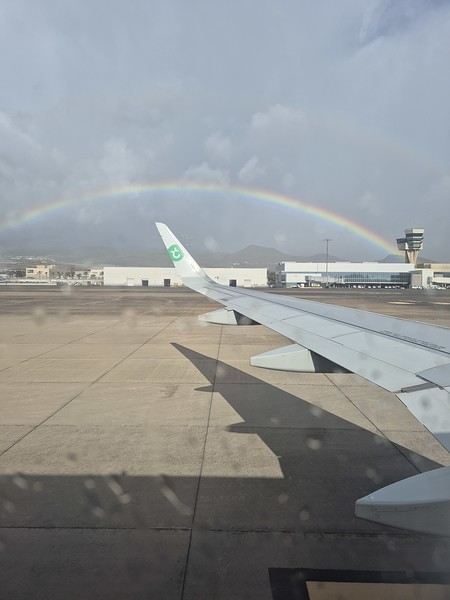
Saturday 21/03 Departure from Orly at 6:10 AM with Transavia. The plane took off on time and landed a little early, tossed around by strong winds before touching down. It had just rained, but it was (almost) no longer raining.
We quickly picked up our luggage and then the car at the Cicar counter. We got a Seat Arona instead of the Corsa we’d booked. Well, while the driving position didn’t feel great at first (I got used to it), the engine’s smoothness and power were much appreciated on the island’s winding and sometimes steep roads.
It was only 10 AM, and we couldn’t theoretically check into our accommodation until 3 PM (the owner promised to message me if it was ready earlier). So, we headed to the (big) *Jardín Botánico Viera y Clavijo*, where we planned to spend a few hours. We found a huge parking lot... empty. The passenger in the car in front of us (yes, we weren’t the only ones at the closed gate—there was a car in front and one behind) went to ask for info: it was closed due to the storm 😕. So, we calmly headed toward Puerto de las Nieves, on the northwest coast of the island.
The plan: go to a restaurant, visit the village, and do some shopping while waiting for early afternoon. As soon as we got out of the car, it started raining... we took shelter under the awning of a shop, waiting for it to pass. But the rain turned into a downpour, and within minutes, awning or not, Gore-Tex or not, we were soaked!
Since we were already wet, we might as well go to the restaurant—they weren’t far! But here’s the thing: contrary to what Google Maps said, they all opened at 1 PM, not noon! Back to the car, wading through 5 cm of water because all the village streets were flooded . The rain let up, we did some shopping, went to eat, and I got a message from the owner saying the accommodation was ready 🙂.
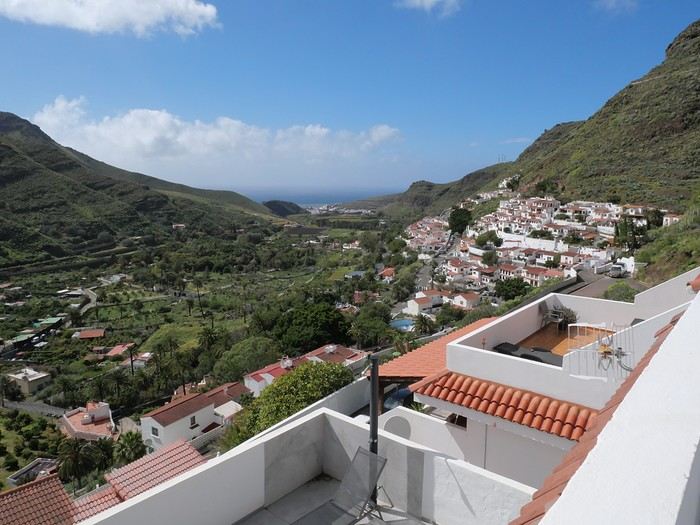
So, off we went to La Suerte, a few kilometers north of Agaete. The downside of the place, especially with luggage, is that you have to climb several flights of stairs via an outdoor staircase (after parking more or less far away on a steep street) to get there 😛). Of course, on the way from the car to the apartment, it started pouring again—the bags got soaked! Enough rain for today! We settled in quietly, and by late afternoon, we could (finally!) go admire the view from the terrace.
Every time we’ve been to the Canary Islands, it’s been by default (basically: where can we go in winter or early spring when we only have a week—so not too far, not too much jet lag, but with decent weather?).
This time, we had two weeks, but the winter plan kept changing: first Thailand (dropped for personal reasons), then Martinique (dropped because of work leave dates that weren’t up to me), and finally, the Canary Islands.
We’ve already been to Tenerife (which we really liked) and Lanzarote (which we liked a little less). This year, two options: Gran Canaria or one of the smaller islands west of Tenerife (La Palma, or even La Gomera or El Hierro). We chose Gran Canaria... not sure it was the right call! Whose fault is it? Storm Thérèse’s! Yes, Storm Thérèse followed us on arrival, and its effects lasted quite a while. We had to adapt, cancel visits, change activities...
But even without Thérèse...
Saturday 21/03 Departure from Orly at 6:10 AM with Transavia. The plane took off on time and landed a little early, tossed around by strong winds before touching down. It had just rained, but it was (almost) no longer raining.
We quickly picked up our luggage and then the car at the Cicar counter. We got a Seat Arona instead of the Corsa we’d booked. Well, while the driving position didn’t feel great at first (I got used to it), the engine’s smoothness and power were much appreciated on the island’s winding and sometimes steep roads.
It was only 10 AM, and we couldn’t theoretically check into our accommodation until 3 PM (the owner promised to message me if it was ready earlier). So, we headed to the (big) *Jardín Botánico Viera y Clavijo*, where we planned to spend a few hours. We found a huge parking lot... empty. The passenger in the car in front of us (yes, we weren’t the only ones at the closed gate—there was a car in front and one behind) went to ask for info: it was closed due to the storm 😕. So, we calmly headed toward Puerto de las Nieves, on the northwest coast of the island.
The plan: go to a restaurant, visit the village, and do some shopping while waiting for early afternoon. As soon as we got out of the car, it started raining... we took shelter under the awning of a shop, waiting for it to pass. But the rain turned into a downpour, and within minutes, awning or not, Gore-Tex or not, we were soaked!
Since we were already wet, we might as well go to the restaurant—they weren’t far! But here’s the thing: contrary to what Google Maps said, they all opened at 1 PM, not noon! Back to the car, wading through 5 cm of water because all the village streets were flooded . The rain let up, we did some shopping, went to eat, and I got a message from the owner saying the accommodation was ready 🙂.
So, off we went to La Suerte, a few kilometers north of Agaete. The downside of the place, especially with luggage, is that you have to climb several flights of stairs via an outdoor staircase (after parking more or less far away on a steep street) to get there 😛). Of course, on the way from the car to the apartment, it started pouring again—the bags got soaked! Enough rain for today! We settled in quietly, and by late afternoon, we could (finally!) go admire the view from the terrace.
Hitchhiking in the 70s-80s
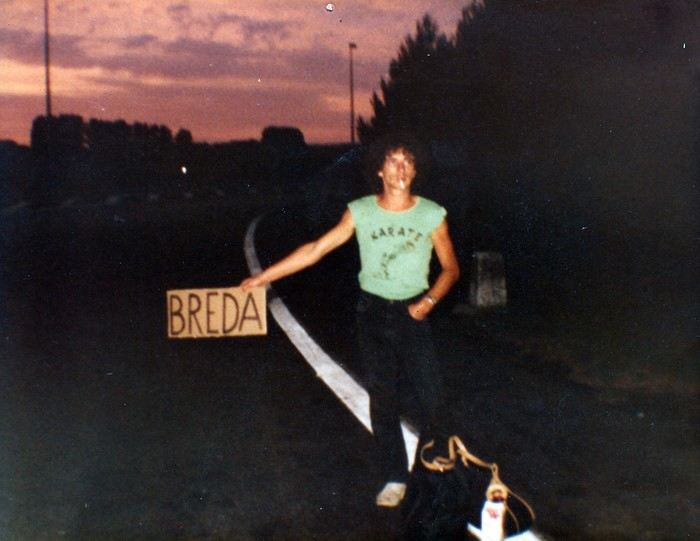
“Hey, your Marker... - My Marker? - The one you used to make hitchhiking signs.”
The marker in question is sitting proudly on the kitchen table. Marielle found it at the bottom of a moving box.
I’ve been meaning to tell the long story of my love affair with hitchhiking for years. Here we go.
To be honest, I’m not quite sure when it started. My earliest memory goes back to a fair with a bike race in my maternal grandparents’ village. I was with my cousin, my little sister, and three girl cousins. There were six of us, ages ranging from six or seven to thirteen or fourteen. Our parents stayed at the fair, and we’d had enough. So we decided to walk home. Only it was four kilometers away. So we hitchhiked. A guy driving an old car picked us all up and dropped us off at the farm. He probably found it amusing to see us thumbing a ride by the side of the road, but maybe it also worried him a bit. With everything you read in the papers...
Around fifteen or sixteen, I started hitchhiking regularly, alone or with a friend, to go to the nearby town. But it was especially when I started boarding school in Orléans that it became more regular. The first year, I’d leave Monday morning and come back Saturday noon by bus. It was an old, uncomfortable bus where we froze in winter. To make matters worse, I often got motion sickness if, as was too often the case, I ended up sitting in the back. In the spring, a high school friend suggested I hitchhike back. It meant a slight detour, but the advantage was taking only national roads.
So that’s how, from the end of tenth grade to twelfth grade, I’d thumb a ride every Saturday on the Pont de Bourgogne. Drivers were used to seeing young people hitchhiking, and it worked pretty well. Our biggest fear? Soldiers! At that time, military service was still mandatory, and on weekends, it wasn’t rare to see them competing with us. They’d keep their uniforms on to go home. That gave people confidence—with everything you read in the papers—and they’d rarely wait more than five minutes. We, with our long hair, were definitely less popular. From time to time, three big red-faced guys in a van coming back from a construction site would flip us off, yelling things like “go get a haircut, you bums!” Those were the good old days.
We still had a good laugh, though. Patrice, the friend I’d hitchhike back from school with on Saturdays, is a musician—I’d later discover he’s an excellent composer. A die-hard Beatles fan, he knows their repertoire by heart and spends his time singing at the top of his lungs while we thumb a ride. One Saturday late morning, we’d been waiting for a while at the exit of Châteauneuf-sur-Loire when a little lady came up to him and asked if he could please sing a little quieter: a baby was sleeping in the house. He put on the most sorry face: “Oh, sorry ma’am, we didn’t realize.” No sooner had the lady gone back inside than he started again. Luckily, a car stopped just then, sparing me the embarrassment of seeing the lady come back out.
Saturday was also the day when the cigarette pack was dangerously low. So before leaving, we’d go buy some “Parisiennes,” the “P4s” as we called them back then. They were slightly thinner cigarettes with a mix of tobacco scraps. Sometimes they tasted like light tobacco, sometimes like dark. Not great, but by the end of the week, our pocket money was gone. They were sold in small packs of four, hence the name P4. We’d only pay 20 centimes. On Saturdays, it was rare for the two of us to manage to scrape together 1.50 F to buy a whole pack of Gauloises...
The last twenty kilometers, I’d usually do alone, Patrice having reached his destination. From time to time, luck would smile on me: an acquaintance would just happen to pass by and stop. One January Saturday, at the exit of Gien, I ran into another guy from Argenton whom I knew a little. That day, the weather was nice, but the temperature was well below zero. It was around noon, and it was the off-peak hour. We were shivering, stamping our feet by the side of the road, when a Citroën “Tube” arrived: it was his father’s boss’s, a mason. They were both sitting in the front, but since they were obese, they had us climb onto the open back. Even though we huddled against the cab to shelter from the wind, the twenty kilometers felt very long, especially since we were only going sixty kilometers an hour. Our hands and cheeks were blue when we finally arrived.
The year I took my baccalaureate, a friend with a 2CV would take me Monday mornings with one or two others we’d pick up in nearby villages. We’d share the gas costs, but it was still cheaper than the bus. And in winter, the bus was my nightmare. You had to get up at five to catch it at six. Not enough sleep, and outside it was freezing or raining—or both. The 2CV was luxury. Plus, Philippe would pick me up at home. On the other hand, since I didn’t have class Saturday mornings—well, I did, but we only had PE the first two hours and nothing after—I’d skip class and slip out right after breakfast to thumb a ride at the Pont de Bourgogne.
Those three high school years were formative in this optional subject that was hitchhiking. Little by little, I learned the rules of the game. First, you shouldn’t walk along the road while thumbing. Cars go too fast and can’t stop easily. Accepting a ride that’s too short is also a no-go. The guy who offers to take you a little way but drops you off at some vague crossroads in the middle of nowhere? No thanks. You need to get dropped off in a town. If it’s a fairly big city, you often have to cross it from one end to the other, but it’s better. At the exit, you have to choose your spot well. Actually, you have to put yourself in the driver’s shoes: they need to see you early enough, not be going too fast, and be able to stop easily without risking an accident. So when leaving a city, it’s better not to go too far. It’s wiser to find a spot where cars go slowly and can stop easily. And preferably near a café. The café is for when you still have a few coins for a coffee and need to warm up. From time to time, you’d run into someone nice who’d make a detour to drop you off at a better spot to start again. Finally, if possible, avoid hitchhiking on Sundays. Cars are packed with whole families who, most of the time, aren’t going far. And then there’s the little worry of those people who rarely leave home: with everything you read in the papers...
During those high school years, it was only short trips, rarely exceeding a hundred kilometers. Later, I aimed bigger, and things were a bit different. In 1973-74, I crossed part of France for the first time on two or three occasions, coming back from the German border or returning to Bordeaux, where we lived briefly. Since there weren’t many highways back then, we took national roads. It was during these trips that I realized it was better to leave in the evening. As I said earlier, Sunday is to be avoided, but on weekdays, there’s another problem: if you leave in the morning, you only make short hops. First, it often takes longer to get going because drivers are people going to work nearby. Which brings us back to those who drop you off in a bad spot, far from everything. There, you have to know how to refuse. You thank the driver for stopping—oh, if only everyone could be like you—while explaining why you’d rather stay put. People don’t take offense, by the way. Those who pick up hitchhikers often hitchhiked themselves when they were in the military or before they had a car. In the late afternoon, you’d often run into salespeople or truckers, in other words, people who drive a lot. At that time, salespeople no longer had appointments and were more relaxed. They wanted to talk about something other than the merits of their products. On the radio, it was time for *Les Grosses Têtes*. You’d also quite often run into small business owners, professionals, or even hippies. The conversations were pleasant and often enriching. A little later in the evening, truckers would take over. They’d already driven a few hundred kilometers, and the depot or customs was still far away. So they’d gladly take a hitchhiker to stay awake at the wheel and chat. The radio with Max Ménier’s show *Les routiers sont sympas*, you’d eventually get tired of it. So a hitchhiker was a change. Others, who’d hit the road at midnight to be at their destination by morning, were nice and offered to let you lie down on the bunk while they drove. When you’d been hitchhiking since six in the evening, freezing in the wind between two vehicles, you weren’t unhappy to take a little nap.
Speaking of Max Ménier, he’d often make announcements for hitchhikers. One evening, I called him. It was getting late, and I still had quite a way to go. No luck: the show had ended for good the day before!
In short, it’s better not to rush, sleep in, and leave after lunch, or better yet, in the late afternoon. Obviously, I’m talking about when you have several hundred kilometers to cover. That’s when you have to play it pro.
First thing, especially at night, but it also applies in the middle of summer when the light is blinding: dress to be seen from far away. I’ll admit I have an advantage over most other hitchhikers: I’m small and don’t scare people. To balance that out, racist drivers often take me for an Arab and are less likely to pick me up, but overall, the balance tips in my favor. Back to the need to be seen: at night, I wear light-colored clothes. In headlights, you can see me from far away.
Second thing: travel light. Forget the big backpack with a frame. Drivers don’t always have room in the trunk or on the back seat, especially if it’s rained and the ground is wet. Plus, it forces them to get out of the car. If they’re nice enough to pick up a hitchhiker, you shouldn’t ask for too much either.
Third thing: bring a cardboard sign and a big marker—like the ones in the photo at the start of this post—to write the name of your destination. In the early 80s, I ran a tourist house in the Cher, but I lived in the Netherlands. In the off-season, it was only open on weekends. On Fridays, I’d leave Holland and return on Mondays. 1200 km round trip. On the way there, in Paris, I’d stand at Porte de la Chapelle. At that spot, the road is very wide, and drivers could stop easily. Obviously, on the sign, I didn’t write Eindhoven, which not everyone knows, and even less Amsterdam because of its seedy reputation. In that case, you’d expect to see a police car stop and two officers in kepis ask for your papers. So as a first destination, I’d write Compiègne. We were well out of Paris, and since it wasn’t too far, a trucker or salesperson was less reluctant to stop. Once past Compiègne, I’d take out my Lille sign. Once in Belgium, it wasn’t really necessary to use a sign anymore, since everyone was going in the same direction. Usually, the guy who picked me up at Porte de la Chapelle would say he wasn’t going far but could take me a little way. Before that, I’d still ask if there was a gas station on the highway where he could drop me off before exiting. While talking, the guy would realize he wasn’t dealing with a dangerous criminal. He’d pretend to check his watch, think for a moment, then say that actually, he was going to Belgium and could take me to the border or a little beyond. To leave Paris on the way back, I’d take the train to Melun, where it was easier to hitchhike than at Porte d’Italie.
Over all those years, I think I was pretty lucky. Or maybe philosophical enough not to imagine a car would stop after a few minutes. An hour’s wait was average. Sure, I sometimes waited three, four, or five hours. Most often at odd hours and in terrible weather. When it doesn’t work, it doesn’t work. But there’s always a moment when things pick up. Sure, when you’re soaked in freezing rain in the early morning after a sleepless night, you’re less philosophical than when I’m writing these lines comfortably at my computer, but it still holds true.
Earlier, I mentioned clothing and the importance of being well-rested before leaving. When you’ve eaten well and just gotten out of the shower, shaved, you’re in a better mood. And somehow, drivers sense it. Or at least, that’s the impression I’ve always had. It’s better to look in shape than disgusted at standing there, half-heartedly thumbing a ride. In short, when I’d start to get fed up with waiting, I’d go into the first café I saw for a coffee. Coming back out, I’d be refreshed, and most of the time, a car would stop within minutes. I’ve often said that when I stood by the side of the road thumbing a ride, I felt a bit like a gambler in front of a slot machine. It was a matter of giving luck a chance. And well, it worked out pretty well.
Then, there are countries where hitchhiking works really well and others where it’s harder. In the 70s-80s, it worked best in Germany and England. In the late afternoon, it wasn’t rare to be invited for tea. Well, that was in England. Tea meant being offered room and board. In Germany, they’d offer you coffee. Once there, they’d first show you the guest room and point out the bathroom before sitting you down in front of a big plate of cold cuts. In the evening, they’d go out in town, and the next morning, they’d usually drop you off at a good spot for hitchhiking. On the other hand, in Mediterranean and Scandinavian countries, you’d better be patient. In Spain or Italy, it’s better to take the train, which was dirt cheap back then. However, if you’re a couple traveling light, it’s already easier in most countries.
In 1982, I went on a trip around Turkey with my girlfriend. We only had two small bags, which was plenty. It was November-December, and we wore our warm, bulky clothes. Leaving Eindhoven at nine in the morning, we arrived in Graz, near the Yugoslav border, at eleven at night. 1300 km in a day! In just four or five vehicles. One to the German border, about fifty kilometers from Eindhoven, the second to Hagen in the Ruhr, the third to Salzburg, and the last to Graz at the Yugoslav border. Record broken. During the night crossing of Yugoslavia, we ran into a trucker close to retirement who lent us the truck’s bunk. So we arrived fresh and rested near Skopje the next morning. We continued to Thessaloniki in northern Greece before taking the train to Istanbul. In Turkey, we traveled a good part of the country by hitchhiking too. With truckers in old, overloaded, slow trucks that climbed hills at fifteen kilometers an hour, but also in cars where five or six people were already crammed in. And every time, we were invited for tea. Once, we were even picked up by a big shot in his Mercedes with a chauffeur. Until then, the average speed was around fifty kilometers an hour. There, we were going two hundred. On a national road, not a nice European highway.
I’ve also hitchhiked in Nepal, from Lumbini, Buddha’s birthplace, to a village on the way to Pokhara. It must have been midday. No bus until the next day. I gave it a try. A small truck overloaded with rice sacks, with two or three young people already perched on top, stopped. I rode on the roof of the cab. At fifty kilometers an hour when it was going well, with a breathtaking view. Coming back from India, I also crossed part of Iran by hitchhiking, from Tehran to the Turkish border. I did this trip with an Austrian I met at the hotel who, like me, had to watch his pennies. We gave it a shot. There was almost no traffic, but to our great surprise, the first car that passed in the area would always stop. They’d just ask for a modest contribution for gas, and it cost next to nothing.
Sometimes, you get scared too. After leaving Turkey in early December 82, we spent about two weeks in the southern Peloponnese harvesting olives. A few days before Christmas, we hitchhiked back to Holland. A girl picked us up in her little Fiat 500. We were driving on a mountain road, and that morning there was a bit of black ice. After crossing a pass, we saw the old Ford Taunus ahead of us at fifty meters start to skid. The driver let out a “heeee!” while grabbing my knees. I reflexively grabbed the wheel. Finally, the Taunus got back on track. And we didn’t swerve. But those few seconds felt very long.
In January 77, while I’d been living in Germany for a few months, I decided to spend a few days in Italy. By hitchhiking, of course. I left in the early afternoon, and by ten at night, I wasn’t far from Frankfurt. I saw a big Mercedes stop. The four or five young people crammed inside were listening to Schlager at full volume. Beer cans littered the floor. They didn’t have a precise destination, and as long as they were going south, that was fine with me. They’d finished their military service that very day and had clearly already celebrated their discharge. The driver was going 160, zigzagging dangerously from one side of the highway to the other. I should have realized he wasn’t entirely sober either. Luckily, there was almost no traffic. Finally, I managed to get dropped off at a gas station just before Frankfurt, relieved. I hope their trip didn’t end tragically.
Another time, coming back from Holland with my wife, we were picked up early in the morning near Senlis by two guys from Lille. They were going to work near Tours and could drop us off at Porte d’Italie. Apparently, they were coworkers but barely knew each other. The driver offered us a beer—at six in the morning, sure!—before opening another can for himself. He was clearly having trouble staying in the right lane. We politely declined, the passenger too. Everyone was tense. Luckily, it was rush hour on the ring road, and we were going slowly. When we got out of the car, the passenger said goodbye with the look of a guy being offered the condemned man’s rum and cigarette.
Finally, there are the annoying remarks from drivers who are either gay when you’re alone or turned on by the sight of your girlfriend when you’re a couple. In those cases, I’d get in the back so the guy wouldn’t feel too confident. And if the conversation got a little too suggestive, we’d deflect until we got dropped off.
And luckily, there are the times, not so rare after all, when you run into really nice people who invite you to eat and sleep at their place and drive you to a good spot the next morning. In Germany and England, that was common. And then there are the big strokes of luck, like during our trip to Turkey when we crossed most of Germany in one car, or that other time when some Germans drove me from the exit of Geneva all the way to the Costa Brava.
Going back to “with everything you read in the papers” and its variant “with everything you see on TV”—and now on the internet—it’s always left me perplexed. Personally, I’ve never heard of hitchhikers assaulting drivers, even if it may have happened. On the other hand, what was most common were hitchhikers being assaulted, especially girls. Anyway, even armed, it seems a bit stupid to assault the driver—wouldn’t that risk causing an accident?
Finally, since that time, I’ve occasionally wanted to hitchhike somewhere far away in France. Most often, too busy with work, it never happened, but the nostalgia hasn’t completely disappeared.
* * *
Other Hitchhikers
And then one day, I... settled down to become a driver myself. Ten years had passed, and you saw fewer and fewer hitchhikers. Or maybe I saw fewer because I had a regular job and wasn’t traveling the same way. And then I understood a few things.
Several times, I was tempted to pick up a hitchhiker, but they didn’t meet the required conditions. They were walking along the road instead of staying at the exit of the previous town. Hard to stop without risking an accident. Or the guy looked really scruffy. Or he was sulking, if not both. Then you think of that famous “with everything you read in the papers.” Not that I was scared, but unfortunately, the few hitchhikers I did pick up later were rarely interesting.
A few years ago, we picked up a young guy at the exit of a small town in Sologne. Not an easy spot for hitchhiking. Bad luck, he was a pretentious little jerk. He was barely 20 or 25 and talked like a bitter old man. He was a waiter in a restaurant. According to him, it was lucky he was there, otherwise the boss would have closed up shop long ago. You’d think he had thirty or forty years of professional experience behind him. As we approached Blois, he started ranting about Arabs, blaming them for all evils. And he laid it on thick. That morning, we were going to a teenager’s funeral who had just committed suicide, so he really got on our nerves, Mr. Know-It-All. Out of anger, I dropped him off next to a shopping center a few kilometers from downtown. Not nice, but it felt good.
Some time ago, we were driving around the Limousin on a Sunday to try out the used Twingo we’d just bought. We picked up a guy in his forties. A German who spoke French well. He started talking about the environment. He was a green Khmer. He got worked up all by himself with his pseudo-eco rant and, after a few kilometers, was almost yelling at us. As we were about to leave the main road for a small one, I dropped him off at a crossroads in the middle of nowhere. Normally, I would have made a little detour to take him to a better spot, but this time, I didn’t feel like doing the... eco-warrior a favor.
On the other hand, I’ve still done my good deed a few times. One June morning, coming back from Orléans, I saw a man in his sixties hitchhiking. The poor guy had had a rough time. He was from Montpellier and was coming back from Caen, where he’d been promised a job. Once there, they bluntly told him the position was already taken, and he had to go back. Except he didn’t have enough money left for the train. He’d spent the night hitchhiking without success. I could only take him as far as Lamotte-Beuvron, where I dropped him off near the fire station. Apparently, there was some vague shelter there or something, but it only opened a few hours later. In the meantime, he settled on the grass in a corner to sleep a little. While he was doing that, I quickly went to the train station to check the price of a ticket to Montpellier. It was within my means. Since he was sound asleep, I slipped the train ticket and 100 francs into his pocket. I couldn’t imagine him continuing to hitchhike all the way to Montpellier. And I bet he didn’t even have a piece of cardboard and a marker!
When we go to Brazil, we usually rent a small car. One day, we were coming back from Paracuru to Fortaleza when we saw a whole family hitchhiking. Two adults and two or three small children. Here near the equator, the sun sets very quickly, and it would soon be night. There was little traffic, and trucks wouldn’t stop because there was no room in the cab. As for the rich people driving big 4x4s, they wouldn’t stoop to picking up the lower classes. The only hope for this kind of family was usually a farmer or artisan who’d let them ride in the back of his pickup. Obviously, they were a bit surprised to see us. Everyone crammed in as best they could in the back of our little car. When we dropped them off, we got a whole string of “Deus lhes abençõe”—God bless you.
Still in Brazil, we were on the road from Barreirinhas to São Luís do Maranhão. About 150 km of deserted road with an isolated mud house here and there. A young woman flagged us down. She was very pregnant and had to get to the clinic twenty or thirty kilometers away to give birth. Someone was supposed to drive her, but the first signs of labor started earlier than expected, and the driver was unavailable. Even driving fast, we weren’t feeling great: it would be just our luck if she gave birth in the car!
Today, we’re in the age of smartphones and carpooling apps. Safety. With everything you see on TV... Three or four years ago, we signed up on a platform. Our first, and only, “client” was a little jerk who didn’t say a word the whole trip. No hello, no goodbye, and certainly no thank you. The next day, we found his Ray-Bans in the car. We didn’t run after him to give them back. Ha!
Join me in discovering Gran Canaria
Introduction
We stayed on the island of Gran Canaria during the first three months of 2024. It’s the third Canary Island we’ve visited, after Tenerife and Lanzarote.
We rented an apartment in Temisas. By staying in the same place for such a long period, the total price dropped by 50%.
We also rented a vehicle to make getting around the island easier.
Why the Canary Islands, and Gran Canaria in particular? For its pleasant climate, the nature and diversity of its landscapes, the charming villages, and especially the beauty of its many beaches.
In this travel journal, you’ll find a list of the many activities we did during our stay to explore the different attractions of this island.
These attractions are categorized to make it easier to find what interests you.
Videos are included throughout the summary. Click on the image to start the video.
To jump to a specific post, here are the relevant links:
HIKES:
Roque Nublo Maspalomas Dunes - Part 1 Maspalomas Dunes - Part 2 Los Azulejos de Veneguera Barranco de Las Vacas Ventana del Bentayga (Arco del Aserrador) Caves of the King Ventana de Morro (Ventana de la Ganifa) The Dog of Bentayga Cave of the Four Doors Ventana del Nublo Artenera - Caves of Acusa Seca Temisas - El Gigante Cave Fortress of Ansite Puerto de Las Nieves - Roque de Las Nieves Temisas - Cuevas de la Audiencia Roque Bentayga Guayadeque Ravine (Guayadeque Hermitage) Guayadeque Ravine (Cueva de Bartalo) El Zumacal - Barranco Tauco Casablanca Dam (Los Dolores Dam) Ayagaures - La Angostura Dam & Gambuesa Dam Santa Brígida - Alonso Ravine & Centennial Dragon Tree Pino Santo Hike in the Azuaje Ravine Gáldar - Red Lands of Samarrita Tejeda - Charco de La Paloma Bandama Boiler (Camino Borde de Caldera Bandama) Teror - Alamo Ravine Trail – SL-4 Telde - Calasio Caves Special Natural Reserve of Los Tilos de Moya Los Azulejos - Charco de Las Aneas Fataga Ravine Arinaga Military Battery Trail Maspalomas - Las Fuentes and del Canizo Ravines Mogán - Tauro Mountain Trail Tamabada - Llanos de La Mimbre & Sobre la Cueva Viewpoints Trail Hike to the Coronadero Arch via Barranco Hondo Barranco de Silva - Hike to the Jerez Caves Gáldar - Samson Cave - La Atalaya Peak Agaete - Roque Guayedra and Guayedra Ravine Artenara - Caballero Caves Arucas - Bufadero Salt Flats Barranco de Pino Gordo - Natural Pools Telde - Los Cernícalos Ravine Las Cruces - Toba Caves & Picón Puerto de Las Nieves - Moro Cave Agüimes - Morros de Ávila Caves Juncalillo del Sur - Laguna & Salinas de Abajo Caves of Camino de San Felipe Cruz de Tejeda, Cruz Chico and Degollada Viewpoint Hike on the Patalavaca Circuit Motor Grande - Puerto Rico Arch El Montañón - Los Hornos Dam Seafront Walk - Amadores Beach – Puerto Rico Beach Las Niñas Dam El Hornillo - Omega & Omicron Caves Arteara Necropolis Mogán - El Mulato Dam Las Garzas - El Regante Dam La Plata Route - Cho Flores Dam & El Charco Hondo Vega de Acusa - La Candelaria Dam Candelaria Hermitage – Acusa Seca Viewpoint Valsequillo de Gran Canaria – Roque La Vela Ayagaures Dam – GC-602 Lomo del Palo - Monte Pavón Trail Lugar La Laguna - Levada Fataga Dam & Ravine
BEACHES:
Mogán Beach Taurito Beach Tauro Beach Amadores Beach Puerto Rico Beach Anfi del Mar Beach Patalavaca Beach Meloneras Beach Maspalomas Beach English Beach (Playa del Inglés) Las Burras Beach San Agustin Beach Las Alcaravaneras Beach Las Canteras Beach (La Cicer) Las Canteras Beach (La Puntilla) Las Canteras Beach (Santa Catalina) Aquamarina Beach El Agujero - Bocabarranco Beach Hoya Del Pozo Beach Hoya Del Pozo Beach - Lizard with amputated tail El Cabron Beach Ojos de Garza Beach El Burrero Beach
NATURAL POOLS:
Charco Azul - El Risco Agaete Salt Flats Charco de Los Espejos - Sardina del Norte Natural Pools of Punta de Gáldar Snorkeling in the natural pool of Punta de Gáldar Natural Pool La Furnia o El Clavo - Gáldar Natural Pool of Los Dos Roques Emiliano Natural Pool - El Agujero Natural Pool of El Agujero Natural Pools of Roque Prieto Natural Pool El Altillo Los Charcones de Bañaderos – Arucas Natural Pools of El Charco de Las Palomas – Arucas Natural Pools of La Laja - Las Palmas de Gran Canaria Cueva de la Reina Mora - La Garita Natural Pools of Castillo del Romeral
TOWNS:
Center
Santa Brigida Vega de San Mateo Tejeda Artenara Vallesco Teror
Southwest
Santa Lucia de Tirajana Fataga San Bartolomé de Tirajana Puerto de Mogán La Aldea de San Nicolas
North
Arucas Firgas Moya Santa Maria de Guia Gáldar Agaete Puerto de Las Nieves
East
Vegueta - Las Palmas de Gran Canaria Triana - Las Palmas de Gran Canaria Ciudad Jardin - Las Palmas de Gran Canaria Canteras - Las Palmas de Gran Canaria Telde Valsequillo de Gran Canaria Ingenio Agüimes Temisas
VIEWPOINTS:
GC-60 Route (or nearby) GC-210 Route (or nearby) GC-210 Route between the tunnel and La Aldea de San Nicolás GC-215 & GC-65 Routes (or nearby) GC-200 Route (or nearby) GC-130 Route (or nearby) & GC-605 GC-70 Route (or nearby) & GC-21 Sheep herd on GC-70 Route GC-150, GC-240, GC-305, GC-350 & GC-301 Routes GC-606, GC-295, GC-231 and GC-41 Routes (or nearby) Viewpoints – GC-1 Route (or nearby) Viewpoints - Las Palmas de Gran Canaria Viewpoints - GC-2, GC-21, GC-15, GC-216 and GC-132 Routes (or nearby) Viewpoints - GC-503 & GC-217 Routes Viewpoints - GC-604, GC-505, GC-132, GC-42 and GC-802 Routes
MISCELLANEOUS:
San Rafael Aqueduct - Telde Abandoned San Rafael Estate - La Higuera Cenobio de Valerón La Cesta - Tejeda Puerto de la Aldea Scenic Route GC-671 to El Espinillo Scenic Route GC-607 to El Chorrillo The Galdar Cube (Santiago Quarry) Scenic Route GC-504 to Ayagaures Abandoned seaside resort in the Azuaje Ravine El Bufadero de La Garita – Telde GC-505 Route Abandoned Finca Las Haciendas (Los Mocanes) – Las Vegas de Valsequillo Ruins of San Juan Battery - Las Palmas de Gran Canaria Viera y Clavijo Canarian Botanical Garden - Las Palmas de Gran Canaria Tenefé Salt Flats Los Pérez, Lugarejos & Las Hoyas Dams Monte Pavón, Gran Canaria’s little Ireland Valleseco Lagoon Recreational Area Climbing - Fataga Ravine Surfing – El Agujero El Cairete Restaurant - Carrizal de Tejeda Paragliding flight observation - Los Giles La Cuevita Ayagaures Restaurant Statues and Murals - Cruce de Arinaga Aviation Monument (Las Majoreras) & Murals – Carrizal Artistic recycling by Antonio Peñita - Ojos de Garza Rainbows
We stayed on the island of Gran Canaria during the first three months of 2024. It’s the third Canary Island we’ve visited, after Tenerife and Lanzarote.
We rented an apartment in Temisas. By staying in the same place for such a long period, the total price dropped by 50%.
We also rented a vehicle to make getting around the island easier.
Why the Canary Islands, and Gran Canaria in particular? For its pleasant climate, the nature and diversity of its landscapes, the charming villages, and especially the beauty of its many beaches.
In this travel journal, you’ll find a list of the many activities we did during our stay to explore the different attractions of this island.
These attractions are categorized to make it easier to find what interests you.
Videos are included throughout the summary. Click on the image to start the video.
To jump to a specific post, here are the relevant links:
HIKES:
Roque Nublo Maspalomas Dunes - Part 1 Maspalomas Dunes - Part 2 Los Azulejos de Veneguera Barranco de Las Vacas Ventana del Bentayga (Arco del Aserrador) Caves of the King Ventana de Morro (Ventana de la Ganifa) The Dog of Bentayga Cave of the Four Doors Ventana del Nublo Artenera - Caves of Acusa Seca Temisas - El Gigante Cave Fortress of Ansite Puerto de Las Nieves - Roque de Las Nieves Temisas - Cuevas de la Audiencia Roque Bentayga Guayadeque Ravine (Guayadeque Hermitage) Guayadeque Ravine (Cueva de Bartalo) El Zumacal - Barranco Tauco Casablanca Dam (Los Dolores Dam) Ayagaures - La Angostura Dam & Gambuesa Dam Santa Brígida - Alonso Ravine & Centennial Dragon Tree Pino Santo Hike in the Azuaje Ravine Gáldar - Red Lands of Samarrita Tejeda - Charco de La Paloma Bandama Boiler (Camino Borde de Caldera Bandama) Teror - Alamo Ravine Trail – SL-4 Telde - Calasio Caves Special Natural Reserve of Los Tilos de Moya Los Azulejos - Charco de Las Aneas Fataga Ravine Arinaga Military Battery Trail Maspalomas - Las Fuentes and del Canizo Ravines Mogán - Tauro Mountain Trail Tamabada - Llanos de La Mimbre & Sobre la Cueva Viewpoints Trail Hike to the Coronadero Arch via Barranco Hondo Barranco de Silva - Hike to the Jerez Caves Gáldar - Samson Cave - La Atalaya Peak Agaete - Roque Guayedra and Guayedra Ravine Artenara - Caballero Caves Arucas - Bufadero Salt Flats Barranco de Pino Gordo - Natural Pools Telde - Los Cernícalos Ravine Las Cruces - Toba Caves & Picón Puerto de Las Nieves - Moro Cave Agüimes - Morros de Ávila Caves Juncalillo del Sur - Laguna & Salinas de Abajo Caves of Camino de San Felipe Cruz de Tejeda, Cruz Chico and Degollada Viewpoint Hike on the Patalavaca Circuit Motor Grande - Puerto Rico Arch El Montañón - Los Hornos Dam Seafront Walk - Amadores Beach – Puerto Rico Beach Las Niñas Dam El Hornillo - Omega & Omicron Caves Arteara Necropolis Mogán - El Mulato Dam Las Garzas - El Regante Dam La Plata Route - Cho Flores Dam & El Charco Hondo Vega de Acusa - La Candelaria Dam Candelaria Hermitage – Acusa Seca Viewpoint Valsequillo de Gran Canaria – Roque La Vela Ayagaures Dam – GC-602 Lomo del Palo - Monte Pavón Trail Lugar La Laguna - Levada Fataga Dam & Ravine
BEACHES:
Mogán Beach Taurito Beach Tauro Beach Amadores Beach Puerto Rico Beach Anfi del Mar Beach Patalavaca Beach Meloneras Beach Maspalomas Beach English Beach (Playa del Inglés) Las Burras Beach San Agustin Beach Las Alcaravaneras Beach Las Canteras Beach (La Cicer) Las Canteras Beach (La Puntilla) Las Canteras Beach (Santa Catalina) Aquamarina Beach El Agujero - Bocabarranco Beach Hoya Del Pozo Beach Hoya Del Pozo Beach - Lizard with amputated tail El Cabron Beach Ojos de Garza Beach El Burrero Beach
NATURAL POOLS:
Charco Azul - El Risco Agaete Salt Flats Charco de Los Espejos - Sardina del Norte Natural Pools of Punta de Gáldar Snorkeling in the natural pool of Punta de Gáldar Natural Pool La Furnia o El Clavo - Gáldar Natural Pool of Los Dos Roques Emiliano Natural Pool - El Agujero Natural Pool of El Agujero Natural Pools of Roque Prieto Natural Pool El Altillo Los Charcones de Bañaderos – Arucas Natural Pools of El Charco de Las Palomas – Arucas Natural Pools of La Laja - Las Palmas de Gran Canaria Cueva de la Reina Mora - La Garita Natural Pools of Castillo del Romeral
TOWNS:
Center
Santa Brigida Vega de San Mateo Tejeda Artenara Vallesco Teror
Southwest
Santa Lucia de Tirajana Fataga San Bartolomé de Tirajana Puerto de Mogán La Aldea de San Nicolas
North
Arucas Firgas Moya Santa Maria de Guia Gáldar Agaete Puerto de Las Nieves
East
Vegueta - Las Palmas de Gran Canaria Triana - Las Palmas de Gran Canaria Ciudad Jardin - Las Palmas de Gran Canaria Canteras - Las Palmas de Gran Canaria Telde Valsequillo de Gran Canaria Ingenio Agüimes Temisas
VIEWPOINTS:
GC-60 Route (or nearby) GC-210 Route (or nearby) GC-210 Route between the tunnel and La Aldea de San Nicolás GC-215 & GC-65 Routes (or nearby) GC-200 Route (or nearby) GC-130 Route (or nearby) & GC-605 GC-70 Route (or nearby) & GC-21 Sheep herd on GC-70 Route GC-150, GC-240, GC-305, GC-350 & GC-301 Routes GC-606, GC-295, GC-231 and GC-41 Routes (or nearby) Viewpoints – GC-1 Route (or nearby) Viewpoints - Las Palmas de Gran Canaria Viewpoints - GC-2, GC-21, GC-15, GC-216 and GC-132 Routes (or nearby) Viewpoints - GC-503 & GC-217 Routes Viewpoints - GC-604, GC-505, GC-132, GC-42 and GC-802 Routes
MISCELLANEOUS:
San Rafael Aqueduct - Telde Abandoned San Rafael Estate - La Higuera Cenobio de Valerón La Cesta - Tejeda Puerto de la Aldea Scenic Route GC-671 to El Espinillo Scenic Route GC-607 to El Chorrillo The Galdar Cube (Santiago Quarry) Scenic Route GC-504 to Ayagaures Abandoned seaside resort in the Azuaje Ravine El Bufadero de La Garita – Telde GC-505 Route Abandoned Finca Las Haciendas (Los Mocanes) – Las Vegas de Valsequillo Ruins of San Juan Battery - Las Palmas de Gran Canaria Viera y Clavijo Canarian Botanical Garden - Las Palmas de Gran Canaria Tenefé Salt Flats Los Pérez, Lugarejos & Las Hoyas Dams Monte Pavón, Gran Canaria’s little Ireland Valleseco Lagoon Recreational Area Climbing - Fataga Ravine Surfing – El Agujero El Cairete Restaurant - Carrizal de Tejeda Paragliding flight observation - Los Giles La Cuevita Ayagaures Restaurant Statues and Murals - Cruce de Arinaga Aviation Monument (Las Majoreras) & Murals – Carrizal Artistic recycling by Antonio Peñita - Ojos de Garza Rainbows