Results for "Grasse+|+127"
39063 results found.
De retour du Viva Dominicus beach à Bayahibe English translation pending
Hé oui nous sommes de retour ! ! !
comme promis voila un petit commentaire.
Malgré le temps qui parfois a était à la pluie c’est l’esprit remplie de rayons de soleil que nous revenons
La beauté des paysage et bonne humeur dominiquaine remplace le soleil quand il disparaît…..
Nous sommes donc partis avec vacances air transat au viva dominicus beach nous étions dans un bungalow en pierre de corail avec une toiture en palme ( percée il pleuvait dans la salle de bain)
Vol Air France Paris Punta canna (mon conjoint et mois étions séparés sa fais long le trajet quand on est seul……)
On nous a donc transférer de Punta canna à Bayahibe en navette l’accompagnateur nous a déjà mis dans l’ambiance ….. malheureusement nous avons croisé un accident…. Hé oui les dominiquains ne sont pas prudents au volent ! ! ! ! !
Nous sommes donc arrivés avec un peu de retard à notre hôtel il faisait déjà nuit…….
Le soir même il y avais la fête sur la plage avec des fruits et des cocktails de fruits avec ou sans rhum…….
L’ambiance était vraiment géniale ! même fatigués nous avons fais la fête !
Le lendemain nous avons pu nous rendre compte de la beauté du paysage.
Nous étions pas très loin d’un parc national, et également de l’île saona
La mer des caraïbes est très calme par rapport à bavaro.
L’hôtel se situé dans une rue marchande et l’on se rend rapidement à bayahibe en voiture.
C’est vrais que les hôtel proposent toujours les mêmes excursions alors nous avons beaucoup profiter de la plage ! ! ! ! !
La nourriture était très grasse et peu variée bref pas terrible.
Nous étions allé au RIU Mélao pour les vacances de fin d’année 2002 il y avais plus de vagues et plus d’algues mais le complexe était beaucoup plus confortable et la nourriture était très bonne mais on ne retrouvais pas une animations comme celle du viva ou chaque soir il y a un spectacle de danse très sympathique ! Puis il n’y avais rien aux alentours proche a part des hôtels….
Les dominiquain restent toujours aussi serviables et aimable !
Un vrais rayon de soleil !😎
comme promis voila un petit commentaire.
Malgré le temps qui parfois a était à la pluie c’est l’esprit remplie de rayons de soleil que nous revenons
La beauté des paysage et bonne humeur dominiquaine remplace le soleil quand il disparaît…..
Nous sommes donc partis avec vacances air transat au viva dominicus beach nous étions dans un bungalow en pierre de corail avec une toiture en palme ( percée il pleuvait dans la salle de bain)
Vol Air France Paris Punta canna (mon conjoint et mois étions séparés sa fais long le trajet quand on est seul……)
On nous a donc transférer de Punta canna à Bayahibe en navette l’accompagnateur nous a déjà mis dans l’ambiance ….. malheureusement nous avons croisé un accident…. Hé oui les dominiquains ne sont pas prudents au volent ! ! ! ! !
Nous sommes donc arrivés avec un peu de retard à notre hôtel il faisait déjà nuit…….
Le soir même il y avais la fête sur la plage avec des fruits et des cocktails de fruits avec ou sans rhum…….
L’ambiance était vraiment géniale ! même fatigués nous avons fais la fête !
Le lendemain nous avons pu nous rendre compte de la beauté du paysage.
Nous étions pas très loin d’un parc national, et également de l’île saona
La mer des caraïbes est très calme par rapport à bavaro.
L’hôtel se situé dans une rue marchande et l’on se rend rapidement à bayahibe en voiture.
C’est vrais que les hôtel proposent toujours les mêmes excursions alors nous avons beaucoup profiter de la plage ! ! ! ! !
La nourriture était très grasse et peu variée bref pas terrible.
Nous étions allé au RIU Mélao pour les vacances de fin d’année 2002 il y avais plus de vagues et plus d’algues mais le complexe était beaucoup plus confortable et la nourriture était très bonne mais on ne retrouvais pas une animations comme celle du viva ou chaque soir il y a un spectacle de danse très sympathique ! Puis il n’y avais rien aux alentours proche a part des hôtels….
Les dominiquain restent toujours aussi serviables et aimable !
Un vrais rayon de soleil !😎
Vivre sur un bateau English translation pending
Bonjour a tous,
Ce qui me remplit le coeur de joie, c'est de voyager. C'est etonnant sur vf, hein???
Maintenant quand j'y reflechis un peu, je vois bien d'autres choses qui me font plaisir, mais si on me demande qu'est ce que j'ai envie faire dans ma vie, il y a que "voyage" qui me vient a l'esprit.
C'est grave? C'est bien ici qu'il faut en parler, hein ???
Je suis fou ou bien???🤪😉
La question qui vient alors c'est celle la: Vous en avez peut etre vu des meilleures, mais c'est vraiment ma question personnelle que je me pose a moi meme...
Personnellement.
La question donc, celle qui vient ensuite, la voici:
Comment on fait quand on a envie d'aller partout?😕 C'est con a dire mais j'en suis la.
Si y a quelqu'un qui voit quelque chose a dire, j'ecoute... Ouvert a toute suggestion!!!
Cependant voila ce qui me trotte dans la tete depuis quelque mois et qui m'est apparu comme une qasi-necessite cet apres midi lors d'une ballade en foret. J'habite pres d'un fleuve, ca peu paraitre bete comme ca mais sur un fleuve y a des bateaux qui remontent et des fleuves y en a partout. Hier je bouquinais quelque chose sur l'Alaska et je me suis rendu compte qu'il y a quelques milliers de kilometres ou la cote n'est accessible que par bateau ou hydravion.
Je ne veux pas parler de voyage en hydravion, mais bien en bateau...
Je m'appercois de plus en plus des avantages immenses: Pas d'avion cher qui pollue L'acces (je me demande d'ailleurs dans quelles mesures???) a la plupart des pays (peut etre pas le tibet), et a l'interieur des terres graces aux reseaux fluviales! Pas de loyers(ou du moins que du gardiennage) et le choix (en temps et en lieu) de rester ou pas. La possibilite d'explorer les pays plus a l'interieur des terres avec un point fixe quand meme! Tu peux passer ta vie en voyage et avoir quelques affaires a toi. (En effet apres quatre ans ou ma vie tient dans un sac a dos, il y a toujours plein de choses que tu abandonnes (musique, livre, outils, etc...)) Et surtout le plaisir (et ca je me l'imagine deja si bien que ca fait battre mon p'tit coeur version chiot de six semaines), le plaisir, donc, que dis je ? La jouissance de se reveiller apres quelques semaines ou quelques mois a decouvrir un pays et de te dire qu'est ce que je fais aujourd'hui???
Tiens et si je mettais les voiles pour aller voir ce qui se passe chez le voisin???
Je vais me prendre un petit dej au cafe des pecheurs (qui doit avoir un equivalent dans a peu pres toutes les langues d'ailleurs, excepte le bolivien 😕, a bon entendeur salop) dire au revoir aux potes du port et je largue les ammarres (c'est surement pas la bonne orthographe, faudrait peut etre que je commence par ca😊)
Qu'est ce qu'il y a un peu plus loin?😠
ouhhh les arbres y sont diffrerents!🙂
ouhhh la bas y a plus d'arbres!😮
Ouhh dans le coin ca a l'air marecageux!!! Je me demande a quoi ca ressemble a l'interieur???
Ouhhh Mais dis donc, dis donc, elle a l'air mignonne cette riviere qu'est ce tu penses de passer une nuit ou deux avec nos potes les moustiques???😏
Bref excusez les elucubrations de fin de semaines. La question, la vraie c'est celle-ci:😐
Est ce que certains d'entre vous on fait leur voyage ou plutot on decide de vivre sur un bateau pour avoir leur dose???
Pourriez vous m'ouvrir les yeux, il y a surement des defauts auxquels je n'ai pas pense.😠
Sinon ca coute combien un vingt metres???
Ce qui me remplit le coeur de joie, c'est de voyager. C'est etonnant sur vf, hein???
Maintenant quand j'y reflechis un peu, je vois bien d'autres choses qui me font plaisir, mais si on me demande qu'est ce que j'ai envie faire dans ma vie, il y a que "voyage" qui me vient a l'esprit.
C'est grave? C'est bien ici qu'il faut en parler, hein ???
Je suis fou ou bien???🤪😉
La question qui vient alors c'est celle la: Vous en avez peut etre vu des meilleures, mais c'est vraiment ma question personnelle que je me pose a moi meme...
Personnellement.
La question donc, celle qui vient ensuite, la voici:
Comment on fait quand on a envie d'aller partout?😕 C'est con a dire mais j'en suis la.
Si y a quelqu'un qui voit quelque chose a dire, j'ecoute... Ouvert a toute suggestion!!!
Cependant voila ce qui me trotte dans la tete depuis quelque mois et qui m'est apparu comme une qasi-necessite cet apres midi lors d'une ballade en foret. J'habite pres d'un fleuve, ca peu paraitre bete comme ca mais sur un fleuve y a des bateaux qui remontent et des fleuves y en a partout. Hier je bouquinais quelque chose sur l'Alaska et je me suis rendu compte qu'il y a quelques milliers de kilometres ou la cote n'est accessible que par bateau ou hydravion.
Je ne veux pas parler de voyage en hydravion, mais bien en bateau...
Je m'appercois de plus en plus des avantages immenses: Pas d'avion cher qui pollue L'acces (je me demande d'ailleurs dans quelles mesures???) a la plupart des pays (peut etre pas le tibet), et a l'interieur des terres graces aux reseaux fluviales! Pas de loyers(ou du moins que du gardiennage) et le choix (en temps et en lieu) de rester ou pas. La possibilite d'explorer les pays plus a l'interieur des terres avec un point fixe quand meme! Tu peux passer ta vie en voyage et avoir quelques affaires a toi. (En effet apres quatre ans ou ma vie tient dans un sac a dos, il y a toujours plein de choses que tu abandonnes (musique, livre, outils, etc...)) Et surtout le plaisir (et ca je me l'imagine deja si bien que ca fait battre mon p'tit coeur version chiot de six semaines), le plaisir, donc, que dis je ? La jouissance de se reveiller apres quelques semaines ou quelques mois a decouvrir un pays et de te dire qu'est ce que je fais aujourd'hui???
Tiens et si je mettais les voiles pour aller voir ce qui se passe chez le voisin???
Je vais me prendre un petit dej au cafe des pecheurs (qui doit avoir un equivalent dans a peu pres toutes les langues d'ailleurs, excepte le bolivien 😕, a bon entendeur salop) dire au revoir aux potes du port et je largue les ammarres (c'est surement pas la bonne orthographe, faudrait peut etre que je commence par ca😊)
Qu'est ce qu'il y a un peu plus loin?😠
ouhhh les arbres y sont diffrerents!🙂
ouhhh la bas y a plus d'arbres!😮
Ouhh dans le coin ca a l'air marecageux!!! Je me demande a quoi ca ressemble a l'interieur???
Ouhhh Mais dis donc, dis donc, elle a l'air mignonne cette riviere qu'est ce tu penses de passer une nuit ou deux avec nos potes les moustiques???😏
Bref excusez les elucubrations de fin de semaines. La question, la vraie c'est celle-ci:😐
Est ce que certains d'entre vous on fait leur voyage ou plutot on decide de vivre sur un bateau pour avoir leur dose???
Pourriez vous m'ouvrir les yeux, il y a surement des defauts auxquels je n'ai pas pense.😠
Sinon ca coute combien un vingt metres???
Retour du Grand Playa Turquesa English translation pending
Bonjour à tous 😉
De retour du Grand Playa Turquesa 11 avril dernier. Plein de chose à vous raconter.
Si vous avez des questions je suis là pour vous répondre.
J'attend de vos nouvelles. 🙂
Tidoux (Bronzé)
ps: Je vous reviens avec plus de détails sur mon séjour
De retour du Grand Playa Turquesa 11 avril dernier. Plein de chose à vous raconter.
Si vous avez des questions je suis là pour vous répondre.
J'attend de vos nouvelles. 🙂
Tidoux (Bronzé)
ps: Je vous reviens avec plus de détails sur mon séjour
Voyage à Montpellier et en Provence (France) English translation pending
Bonjour à tous!
Tout d’abord, je passerai une dizaine de jours à Montpellier pour un congrès à la mi-juin. J’aimerais connaître les principaux attraits de cette région ainsi que le moyen de transport à privilégier.
Par la suite, je serai en Provence pour 2 semaines. J’aimerais élaborer un itinéraire me permettant de découvrir cette merveilleuse région. Y a-t-il un point central à partir duquel on peut poursuivre l’exploration?
Les guides voyages sont nombreux, mais je crains leur aspect plutôt « commercial ». J’apprécie le juste équilibre entre le côté urbain et la campagne, avec toutefois une préférence pour la nature, origine québécoise oblige. Pouvez-vous m’aider?
Ici, c'est la tempête de neige…et le sirop d’érable…. « L’impulsion du voyage est l’un des plus encourageants symptôme de la vie ».(Agnes Repplier)
Merci de porter attention à la présente
Stéphane Morin Québec, Canada
Tout d’abord, je passerai une dizaine de jours à Montpellier pour un congrès à la mi-juin. J’aimerais connaître les principaux attraits de cette région ainsi que le moyen de transport à privilégier.
Par la suite, je serai en Provence pour 2 semaines. J’aimerais élaborer un itinéraire me permettant de découvrir cette merveilleuse région. Y a-t-il un point central à partir duquel on peut poursuivre l’exploration?
Les guides voyages sont nombreux, mais je crains leur aspect plutôt « commercial ». J’apprécie le juste équilibre entre le côté urbain et la campagne, avec toutefois une préférence pour la nature, origine québécoise oblige. Pouvez-vous m’aider?
Ici, c'est la tempête de neige…et le sirop d’érable…. « L’impulsion du voyage est l’un des plus encourageants symptôme de la vie ».(Agnes Repplier)
Merci de porter attention à la présente
Stéphane Morin Québec, Canada
Conseils sur 4 jours dans le sud de la France English translation pending
Bonjour !
Avec 2 copines, on aimerait se faire un ptit trip de 4 jours à Paques en Provence-Cote d'Azur. Départ vendredi 6h du mat et retour lundi soir très tard! 😉
Qu'est ce que vous nous conseillez ? On a envie de se relaxer, faire les marchés, sortir et faire la fête ? 😎 Vous connaissez des coins sympa ? J'attends toutes vos suggestions !!!
Byebye !
Avec 2 copines, on aimerait se faire un ptit trip de 4 jours à Paques en Provence-Cote d'Azur. Départ vendredi 6h du mat et retour lundi soir très tard! 😉
Qu'est ce que vous nous conseillez ? On a envie de se relaxer, faire les marchés, sortir et faire la fête ? 😎 Vous connaissez des coins sympa ? J'attends toutes vos suggestions !!!
Byebye !
Retour du Riu Bachata, Merengue et Mambo à Bahia de Maimon English translation pending
Bonjour.
Je reviens cette semaine d'un séjour de 11 jours à l'hotel Riu Bachata à la baie de Maimon, près de Puerto Plata. C'est donc tout frais.
Voici quelques commentaires:
1- la baie de Maimon.
C'est environ à 10 kilomètres à l'ouest de Puerto Plata. La baie est très jolie, entourée de collines. Elle entre assez profondément dans la terre. La mer y est calme, mais pas très claire. L'hotel Riu Bachata est situé juste à l'est de cette baie. Il donne donc en partie sur elle mais sa grande et belle plage est de l'autre côté.
Les activités nautiques (planche à voile, pédalo, voile) ont lieu dans la baie.
2- l'hôtel Riu Bachata.
L'hôtel Riu Bachata fait partie d'un "resort" comprenant 3 hôtels, à l'ouest le Riu Bachata, au milieu le Riu Merengue, à l'est le Riu Mambo. En tout ça fait +/- 1500 chambres. Il faut dire que c'est au milieu de nulle part: à 10 kilomètres de Puerto Plata (ville affreuse et totalement dénuée d'intérêt) en pleine campagne.
Des 3 hôtels, le Riu Bachata est de loin le mieux, suivi par le Riu Merengue et le Riu Mambo.
Les 3 hôtels sont présentés par Riu sur son site (http://www.riu.com/index.php) comme des 5 étoiles. En fait, je pense que la définition des 3, 4 et 5 étoiles dépendent des pays, et peut-être qu'un 5 étoiles en république Dominicaine serait un 4 étoiles ailleurs. Personnellement, j'aurais donné 4 étoiles au Riu Bachata. Mais disons ceci, si on donne 5 étoiles au Riu Bachata, on devrait en donner 4 au Riu Merengue et 3 au Riu Mambo. Le Bachata est plus récent, plus spacieux, les autres donnent une impression de promiscuité et semblent plus vieux.
La clientèle des 3 hôtels est en écrasante majorité nord-américaine. Le Riu Merengue étant, curieusement, aussi un "Paladien Nouvelles Frontières", on y trouve de ce fait plus de Français qu'aux deux autres.
Mais ce n'est pas ce qui doit vous déterminer. Disons que si vous voulez aller dans ce "resort", vous devez choisir le Bachata en priorité. Surtout que les prix y sont les mêmes qu'aux 2 autres.
Le resort étant tellement grand, il y a de fortes chances qu'il y ait de la place en dernière minute, alors faites comme nous: profitez d'une offre last minute.
Que penser du Riu Bachata ?
Confort des chambres. 4*. Certaines sont mieux situées que d'autres. Notamment celles qui ont des numéros commençant par 100 et 300. Inutile de payer un supplément vue mer. quand vous arrivez, vous demandez une chambre vue mer. Soit on vous en donne une d'office, soit on vous propose de changer (gratuitement) le lendemain.
Repas: Bof ! OK, je suis français, donc difficile, mais disons que c'est abondant mais pas fameux. C'est en fait un hôtel pour ceux qui veulent pouvoir manger beaucoup. D'ailleurs, la clientèle y est à 60 % composée d'obèses. La cuisine est tout sauf fine. Il y a pas mal de choix, mais chaque jour nous avons dû chercher pour trouver quelque chose qui nous plaisait. Pour être franc, je dois dire que la majorité des clients en sont sans doute très contents. Il y a un restaurant qui fait buffet et 2 "restaurants" où on est servi: un dit "méditerranéen" et un dit "steak house". On mange - un peu- mieux dans ces 2 restaurants où il faut réserver. La cuisine est la même dans les 3 hôtels. On peut d'ailleurs indifféremment manger le midi dans les trois.
Bars. formule all inclusive, donc boissons à volonté. honnêtement, c'est bien.
Piscine. Le Bachata a 2 piscines, mais les nageurs n'y sont pas les bienvenus. Les 2 piscines ont une profondeur de 1, 40 mètre chacune. L'une est occupée par des buveurs du bar, l'autre par les gens qui jouent au volley ou ou water-polo. celui qui voudra un transat en bord de piscine n'a pas intérêt à faire la grasse matinée.
Plages. 2 plages: la grande, face aux 3 hôtels. Très belle pour les photos, mais pas très agréable pour se baigner (prévoir des sandales) et très ventée. la petite, qui donne à l'ouest sur la Baie de Maimon. Plus calme et à l'abri du vent, mais juste pour se tremper les pieds et eau boueuse.
Animation. Certains apprécient, nous avons trouvé nul. Du bruit et un baragouin dans un anglais incompréhensible même des anglophones.
Sports. Peu de gens semblent aller dans cet hôtel ou dans les 2 autres pour le sport. Le fait qu'il n'y ait que 4 planches à voiles disponibles, ou 2 voiliers ne gêne pas grand monde. C'est très bien pour la planche (vent, site). pour la voile, c'est vraiment des mini voiliers- je ne connais pas leur nom- à une seule voile. Concernant les sports terrestres, il y a bien sûr des boules, du volley et du foot. Et comme je l'ai dit water-polo et volley dans la piscine.
Personnel. Gentil et serviable.
Excursions. Tout ce qu'il y a à voir est très loin. Saint Domingue 4 à 5 heures, les baleines de Samana à 270 kilomètres: départ à 5 heures du matin, retour à 9 h du soir...
Conclusion:
Si vous voulez
1/ bouffer beaucoup
2/ vous reposer
3/ ne rien visiter
allez au Riu Bachata . Mais essayez de trouver le moyen d'y aller moins cher que le plein tarif.
Bonnes vacances !
Michel.
PS. Des gens qui étaient là en même temps que nous et qui avaient été à l’Iberostar Playa Dorada l’année précédente estimaient que l’Iberostar est beaucoup mieux.
Je reviens cette semaine d'un séjour de 11 jours à l'hotel Riu Bachata à la baie de Maimon, près de Puerto Plata. C'est donc tout frais.
Voici quelques commentaires:
1- la baie de Maimon.
C'est environ à 10 kilomètres à l'ouest de Puerto Plata. La baie est très jolie, entourée de collines. Elle entre assez profondément dans la terre. La mer y est calme, mais pas très claire. L'hotel Riu Bachata est situé juste à l'est de cette baie. Il donne donc en partie sur elle mais sa grande et belle plage est de l'autre côté.
Les activités nautiques (planche à voile, pédalo, voile) ont lieu dans la baie.
2- l'hôtel Riu Bachata.
L'hôtel Riu Bachata fait partie d'un "resort" comprenant 3 hôtels, à l'ouest le Riu Bachata, au milieu le Riu Merengue, à l'est le Riu Mambo. En tout ça fait +/- 1500 chambres. Il faut dire que c'est au milieu de nulle part: à 10 kilomètres de Puerto Plata (ville affreuse et totalement dénuée d'intérêt) en pleine campagne.
Des 3 hôtels, le Riu Bachata est de loin le mieux, suivi par le Riu Merengue et le Riu Mambo.
Les 3 hôtels sont présentés par Riu sur son site (http://www.riu.com/index.php) comme des 5 étoiles. En fait, je pense que la définition des 3, 4 et 5 étoiles dépendent des pays, et peut-être qu'un 5 étoiles en république Dominicaine serait un 4 étoiles ailleurs. Personnellement, j'aurais donné 4 étoiles au Riu Bachata. Mais disons ceci, si on donne 5 étoiles au Riu Bachata, on devrait en donner 4 au Riu Merengue et 3 au Riu Mambo. Le Bachata est plus récent, plus spacieux, les autres donnent une impression de promiscuité et semblent plus vieux.
La clientèle des 3 hôtels est en écrasante majorité nord-américaine. Le Riu Merengue étant, curieusement, aussi un "Paladien Nouvelles Frontières", on y trouve de ce fait plus de Français qu'aux deux autres.
Mais ce n'est pas ce qui doit vous déterminer. Disons que si vous voulez aller dans ce "resort", vous devez choisir le Bachata en priorité. Surtout que les prix y sont les mêmes qu'aux 2 autres.
Le resort étant tellement grand, il y a de fortes chances qu'il y ait de la place en dernière minute, alors faites comme nous: profitez d'une offre last minute.
Que penser du Riu Bachata ?
Confort des chambres. 4*. Certaines sont mieux situées que d'autres. Notamment celles qui ont des numéros commençant par 100 et 300. Inutile de payer un supplément vue mer. quand vous arrivez, vous demandez une chambre vue mer. Soit on vous en donne une d'office, soit on vous propose de changer (gratuitement) le lendemain.
Repas: Bof ! OK, je suis français, donc difficile, mais disons que c'est abondant mais pas fameux. C'est en fait un hôtel pour ceux qui veulent pouvoir manger beaucoup. D'ailleurs, la clientèle y est à 60 % composée d'obèses. La cuisine est tout sauf fine. Il y a pas mal de choix, mais chaque jour nous avons dû chercher pour trouver quelque chose qui nous plaisait. Pour être franc, je dois dire que la majorité des clients en sont sans doute très contents. Il y a un restaurant qui fait buffet et 2 "restaurants" où on est servi: un dit "méditerranéen" et un dit "steak house". On mange - un peu- mieux dans ces 2 restaurants où il faut réserver. La cuisine est la même dans les 3 hôtels. On peut d'ailleurs indifféremment manger le midi dans les trois.
Bars. formule all inclusive, donc boissons à volonté. honnêtement, c'est bien.
Piscine. Le Bachata a 2 piscines, mais les nageurs n'y sont pas les bienvenus. Les 2 piscines ont une profondeur de 1, 40 mètre chacune. L'une est occupée par des buveurs du bar, l'autre par les gens qui jouent au volley ou ou water-polo. celui qui voudra un transat en bord de piscine n'a pas intérêt à faire la grasse matinée.
Plages. 2 plages: la grande, face aux 3 hôtels. Très belle pour les photos, mais pas très agréable pour se baigner (prévoir des sandales) et très ventée. la petite, qui donne à l'ouest sur la Baie de Maimon. Plus calme et à l'abri du vent, mais juste pour se tremper les pieds et eau boueuse.
Animation. Certains apprécient, nous avons trouvé nul. Du bruit et un baragouin dans un anglais incompréhensible même des anglophones.
Sports. Peu de gens semblent aller dans cet hôtel ou dans les 2 autres pour le sport. Le fait qu'il n'y ait que 4 planches à voiles disponibles, ou 2 voiliers ne gêne pas grand monde. C'est très bien pour la planche (vent, site). pour la voile, c'est vraiment des mini voiliers- je ne connais pas leur nom- à une seule voile. Concernant les sports terrestres, il y a bien sûr des boules, du volley et du foot. Et comme je l'ai dit water-polo et volley dans la piscine.
Personnel. Gentil et serviable.
Excursions. Tout ce qu'il y a à voir est très loin. Saint Domingue 4 à 5 heures, les baleines de Samana à 270 kilomètres: départ à 5 heures du matin, retour à 9 h du soir...
Conclusion:
Si vous voulez
1/ bouffer beaucoup
2/ vous reposer
3/ ne rien visiter
allez au Riu Bachata . Mais essayez de trouver le moyen d'y aller moins cher que le plein tarif.
Bonnes vacances !
Michel.
PS. Des gens qui étaient là en même temps que nous et qui avaient été à l’Iberostar Playa Dorada l’année précédente estimaient que l’Iberostar est beaucoup mieux.
Voyage au Kenya /Tanzanie avec enfants English translation pending
Bonjour,
nous souhaitons passer nos vacances été 2004 au Kenya / Tanzanie avec nos 3 enfants (7-10-12 ans). Nous nous posons des questions sur la durée d'un safari en campement avec le risque qu'ils décrochent (fatigue liée au rythme, lassitude ??) . Nous envisagions de le faire sur 8j mais peut être couper en 2 avec repos sur Mombasa (plages de Diani)? Si quelqu'un a une expérience semblable ce serait sympa de la partager .
Merci de votre aide
nous souhaitons passer nos vacances été 2004 au Kenya / Tanzanie avec nos 3 enfants (7-10-12 ans). Nous nous posons des questions sur la durée d'un safari en campement avec le risque qu'ils décrochent (fatigue liée au rythme, lassitude ??) . Nous envisagions de le faire sur 8j mais peut être couper en 2 avec repos sur Mombasa (plages de Diani)? Si quelqu'un a une expérience semblable ce serait sympa de la partager .
Merci de votre aide
Visas Chine-Russie-Mongolie? English translation pending
salut a tous, je compte partir par le trans de moscou jusqu a pekin, mais je ne sais comment m organiser par rapport au visas !faut il qu au depart je prenne juste le visas russe et prendre les autre sur place?la j ai recue tout les formulaires pr l obtention des visas, ils demandent enormement de details sur les sorties l itineraire, les adresses, le billets de retour etc.. moi je voulait partir sans trop prevoir tout ca!!comment dois je proceder?ah oui, peut on sortir par ex de mongolie qd le visa est expire, aller en chine et "rerentrer" en ayant un nouveau visa? et faire comme ca pendant un voyage d au moin 4 mois, en passant d un pays a un autre. merci a tous de vos prochaine reponses et experiences marie
Tibet: épopée très longue avec photos English translation pending
En fait avec Marsu (c Ivo qui ecrit la), on a ete faire un tour au Tibet, et on s'est dit qu'on allait raconter toutes ces belles choses. Alors on s'est laisse aller sur un clavier, il y a 6 pages. On espere que ca va vous plaire, et surtout vous donner envie d'aller faire un tour sur le pays du toit du monde.
Un rayon matinal éclaire doucement les terrasses de la vallée de KTM. Le vert éclatant mélangé aux couleurs dorées des tiges de riz coupées accompagnent notre regard sur la longue route menant à la terre interdite du Tibet. Nos corps ballottés de tous côtés sentent à peine les vibrations du bus tellement nos sens sont en éveil. Partout où notre regard se pose, nos yeux volent un instant de vie, captent un geste, un sourire, une moue pleine de rides jetant un regard tendre sur un petit enfant. Le travail des champs ne peux attendre, le riz doit être battu. D’un mouvement habile une femme au corps velouté dans son sari chatoyant, fait tournoyer autour de sa tête un long bâton, qu’elle abat de manière régulière sur les gerbes de riz posées a ses pieds. Mouvement lent, langoureusement rythmé, simplement naturel.
C’est le début du voyage, on a oublié la course poursuite dans Thamel, les taxis, la poussière, les combats de klaxons, les Tata imposants dans la lumière matinale, l’agitation qui les entoure, les visages curieux fixés sur les quelques occidentaux que nous sommes. Le Tata, c’est un monstre moderne qui trimballe les voyageurs et la marchandise, qui passe partout ou presque, coloré et chromé, au klaxon puissant, moyen de transport fonctionnel et multiforme, qui s’impose par sa présence à l’arrêt comme sur la route.
Des gens partout, sur les sièges, debout dans la travée, assis sur le toit, des hommes au teint couleur terre, des femmes portant des tissus aux milles nuances, des enfants souriants dans le vide, nous détaillant. Ce sont pour la plupart des gens de la terre, aux paniers chargés et aux mains calleuses, qui voyagent à travers le pays. L’aide du chauffeur, qui fait office de contrôleur, rameute les voyageurs en criant par la porte entrouverte, accroché d’une main, penché au dessus de la route. Il monte sur le toit pour encaisser le trajet, les billets croisés entre ses doigts, tape du poing sur la cabine pour signifier les arrêts au chauffeur, siffle pour aider à la manœuvre dans les parties délicates. Il est jeune et agile, son visage et lisse et souriant, il a de la prestance lorsqu’il se glisse par la porte. À l’approche d’un village, une jeune fille s’apprête à descendre : elle est jeune aussi, porte une robe punjabi aux couleurs miroitantes, elle se tient à coté de la porte, ses cheveux longs lâchés brillent dans le courant d’air, elle tient son sac d’une main, se tenant de l’autre, son bras frôlant le visage du jeune qui regarde dehors. Le Tata file, loin dessous c’est la rivière, des parcelles de riz, devant un village s’approche. Klaxon tonitruant, on rentre a vive allure, le jeune tape du poing. Freinage brusque, balancement des corps dans tout le bus, le coude de la jeune fille vient frapper le visage du jeune. Dans le même élan, elle descend du bus, son bras tendu vient laisser une caresse douce sur la joue du garçon, avec tendresse, pour s’excuser du choc, et plus encore car tout deux sont jeunes, mais enfermés dans la rigueur d’une société. Une fois sortie, c’est le plus beau de ses sourires qu’elle lui offre. Témoignage d’une jeunesse cloîtrée qui demande à vivre, ailleurs que dans l’instant furtif.
Un nuage de poussière s’élève devant nous laissant passer un rayon de lumière qui éclaire les montagnes drues et arides. Les strates semblables à des coulées de lave forment les montagnes des plateaux tibétains. La lumière glisse langoureusement dans les sillons de l’érosion de la dernière saison des pluies.
On a changé de monde, même si on garde en tête la longue montée dans la gorge, la rivière plusieurs centaines de mètres en contre bas, les pentes escarpées et encore boisées, la piste sinueuse accrochée aux flancs, l’eau qui ruisselle sur la roche. À quel moment sont apparues les premières pierres, quand ont disparus arbres, bambous plantes, terre grasse? L’aridité prend le dessus, la poussière s’élève derrière le véhicule, et malgré les cahots, les yeux parcourent chaque détail de ce nouveau monde, de ce grand vide qui nous aspire, de cet instant sorti du néant des mémoires et de l’imagination. Le toit du monde est sec, recouvrant d’une toile bleue tendue vers l’infini des pierres semées par un petit Poucet errant depuis l’éternité, laissant à penser que ici tout est sans repères. Ce petit Poucet, c’est celui que vous croiserez au bord de la route, jouant avec une roue de vélo, tirant sur un mégot ou bien que vous apercevrez sous l’habit d’un petit berger fouettant un âne, dirigeant un troupeau de chèvres, flattant un yack. C’est peut être la petite fille venant vous voir dans un village avec sa petite figure sale, ses yeux noirs de profondeur, mais éclatants d’une beauté intérieure. Le petit Poucet, c’est celui qui marche au fond de vous, qui vous cherche.
Shigatse
À l’aurore, l’air est frais à 4200 mètres, les rayons de soleil bataillent doucement pour réchauffer les parcelles de terre gelée. L’immense allée de bowling de 987 mètres de long par 24 de large, flanquée de part et d’autre de boutiques en tous genres, se dresse devant nous en jurant dans le décor. Lorsqu’on jette un coup d’œil à l’intérieur, nos yeux se butent sur des locaux vides, derrières les belles devantures à la gloire du communisme, les dépotoirs s’accumulent. Les tibétains avec leur allure rustre et sans façons font presque vulgaires dans ce décor aseptisé, leur beauté naturelle rehaussée par les rouges, turquoises et ambres ornant leurs cheveux n’arrivant pas à compenser cette incongruité. Caché entre deux majestueuses devantures, un discret bouiboui pointe devant une bande de joyeux nomades jouant avec ardeur à un jeu de dés sans signification pour nous. Ils font peu cas de notre passage, l’attrait du jeu étant plus fort. Nos pas nous mènent de nouveau devant une grande allée, plus sobre, bordée de pèlerins aux coiffures complexes et aux habits divers. Les moulins tournent, les Om mani padme hum fusent et sous nos yeux éblouis par la forte lumière des couleurs ocres, blanches et jaunes, le monastère de TashiLompo s’élève fier et majestueux devant nous.
Le chemin des pèlerins parsemé d’arbres divers nous entraîne dans son sillage, à l’assaut d’une bâtisse orange feu, précédée d’un escalier pentu et glissant menant à une porte masquée d’une tenture. Dans le désordre, les pèlerins surgissent du passage, le visage composé en prosternations, les lèvres marmonnant les Om mani padme hum de façon incessante, aucune cohésion dans la descente, tout le monde se lance de manière désordonnée, concentrés dans leur dévotion. On attaque l’escalier essayant de se faire un chemin au travers des pèlerins, intrus que nous sommes, je ressens une forme de rejet, spécialement lorsque nous arrivons à l’intérieur et que je nous sens coincés entre l’énorme Bouddha de 26 mètres et les pèlerins qui sont tous à leur adoration. Impressionnée par le regard perçant de Bouddha et l’émotion de la ferveur des pèlerins, je suis assaillie d’un sentiment de gène et de voyeurisme, qui me pousse à contourner respectueusement par la gauche et avec humilité cette immense force de spiritualité pour retourner à ma place, au grand air.
Un groupe attire le regard, ils sont une dizaine entre enfants, adultes et le Monk de la famille. Ils tranchent parmi les autres avec leurs cheveux scintillants finement tressés, ornés de parures de turquoises et d’ambres pour les femmes. Les hommes portent entremêlés dans leur grosses tresses de minces fils rouges ou noirs qui attirent l’œil comme un aimant, parfois au centre un énorme anneau en os de yack est glissé dans l’enroulement complexe de leur chevelure. Les gros manteaux doublés en fourrure de yack sont portés avec élégance, leurs habits sont simples mais raffinés, nomades de l’est ils se doivent d’être à l’abris des intempéries et des vents violents, ils sont beaux, plein de prestance, se tiennent droit pour montrer qu’ils sont fiers de leurs origines. Une seule manche couvre leur corps tandis que l’autre est artistiquement nouée autour de la taille. Difficile de deviner leur forme sous ces épaisseurs mais on arrive tout de même à percevoir leur grâce.
Parmi eux une petite princesse des hauts plateaux virevolte en tous sens avec espièglerie comme tous les enfants de son âge. Un petit manteau de soie rose lui cintre la taille, tombant en cascade de froufrou sur ses frêles chevilles. Ses délicates tresses remontées comme ceux de la princesse Léa contraste avec les cheveux noirs de jais du reste de la troupe par un semblant de reflets blond-roux. Un sourire resplendissant d’innocence reste suspendu à ses lèvres pendant qu’elle titille sa grand-mère au regard attendri appuyée sur un bâton qui supporte le poids de son âge.
Contraste entre âge et innocence, entre technologie et temps passé, entre Occident et Asie qui se mélangent dans une même dévotion. À leur suite deux personnes arrivent pour continuer le pèlerinage, pour mettre les dissemblances plus en évidence. Une jeune fille aux habits modernes, jeans moulant, pull échancré, coupe stylé, tient dans une main le beurre de yack qui sert à entretenir le feu des offrandes. De l’autre, elle soutient avec tendresse une autre main, plus usée, plus foncée, plus marquée par la vie. Lorsqu’on lève les yeux sur cette main on découvre une femme sans âge, aux rides souriantes cachées derrière une grosse paire de lunettes sortie d’une autre époque. Elle prend son bol nacré usé par les années pour puiser l’eau de la fontaine sacrée tandis que la jeune fille utilise sans broncher une vieille bouteille de Pepsi machouillée pour exécuter le même geste.
Les pas résonnent dans les petites ruelles du monastère, nous voilà entourés de jeunes, de vieux, de tibétains sans âge. Des voix rauques, des yeux curieux, une odeur de yack rance emplit leur aura comme une deuxième peau. Le croisement Asie-Occident se soude, les sourires se font hésitants, puis plein de franchise à la limite de la rigolade de part et d’autre. Échange de mots via le guide, échange d’écriture, curiosité dans les deux camps. L’un essayant de prononcer tant bien que mal dans la langue de l’autre. Intérêt des différences, les piercing, les cheveux blonds, les bijoux lourds, les vêtements tout est susceptible d’attirer l’attention de l’autre sans permettre d’en comprendre les significations profondes. Jeunesse insouciante qui prend le temps de connaître l’autre, de lire au fond de lui pour y trouver ce qu’il y a de meilleur, qui porte une attention sincère sans arrière pensée. Les adieux sont émouvants, l’impression d’avoir touché un bout de vie, d’âme, d’avoir trouvé des amis sincères qui n’attendent rien d’autre qu’un sourire provenant du cœur.
La cœur lourd, la tête pleine de sourire, de joie on découvre sous un nuage de poussière la petite ville de Gyatse. Ici tout est simple et grandiose de simplicité. Pas de fioriture à l’essence chinoise, juste la simplicité tibétaine malgré l’imposant fort dominant la ville. Le monastère dégage une atmosphère de grandeur, de sérénité qui nous prend dans ses filets. Les murs noirs aux mille représentations de Bouddha nous clouent sur place, nos petites lampes arrivent à peine a rendre la splendeur du lieu. Les pèlerins profitent de cette parcelle de lumière pour vénérer avec encore plus d’émotion ce dieu de la générosité.
Lhassa
Cinq jours que nos corps subissent les contre coups de la piste défoncée que notre jeep suit sans fin. Un sourire éclaire tout a coup le visage de notre chauffeur sans nom car malgré nos efforts la communication est impossible. Un sourire parce que devant nous se dresse enfin Lhassa, le but ultime de cette longue route. On a eu beau se le faire dire, on a essayé de se préparer mentalement mais le choc est grand, Lhassa n’est pas le reflet d’une petite ville paisible avec un temple aux consonances magiques, nous ramenant aux textes féeriques de Henrich Harrer ou Alexandra David-Neel, flanqué au centre de la ville comme on l’imaginait. C’est la première ville du Tibet autonome où il y a le moins de tibétains, son centre et ses environs sont remplis de chinois, l’allure en est chinoise. Cachées derrière les grandes devantures de magasins à rayons vides de monde, se dressent les petites rues sinueuses et pleines de vie du quartier tibétain dans une ville dite tibétaine. Découvrir les grandes artères chinoises nous donne l’impression de vivre dans deux univers parallèles, où les longs trottoirs luisants sont habités par les nomades mendiants qui regardent devant eux les fringues des boutiques de luxe comme s’il s’agissait d’habits d’extra-terrestre.
Une petite porte s’ouvre sur un grand couloir à ciel ouvert, la pénombre se mélange à la fumée et semble nous envelopper dans un doux cocon . Une rumeur s’élève au loin presque indescriptible, un petit chant imperceptible, des mots éparses incompréhensibles, les mains rudes pleines de sillons, sales, presque sans forme, se tendent vers nous. Dans l’autre main dans un tourbillon incessant, un moulin à prière tourne presque sans effort comme si une force ultime aidait au roulement. Au bout de la voie une essence de pin s’insinue dans nos narines, des dizaines de pèlerins assis de façon éparse, en structure finie mais chaotique, tournent d’un même rythme lancinant leur moulins tout en répétant de manière imperceptible le chant de leurs offrandes. Leurs regards sont souriants et accueillants, nos pas glissent doucement entre eux comme si nous nous promenions sur un nuage, le bien-être s’emparent de nous, sans nous sentir intrus ou malvenus. Nous laissons nos regards se fondre dans leurs yeux malins où toute une vie tient. Leur peau mate, durcie par le soleil, recueille les mystères d’une vie de nomade perdu au milieu des plateaux vides et silencieux. Les mains tendues égrainant les chapelets nous dirigent avec bonté vers l’immense moulin à prière tourné avec ferveur par des doigts calleux. De nouveau la pénombre nous oblige a plisser les yeux pour voir et sentir au travers des effluves les pèlerins assis en rond autour des moines à la voix sourde entonnant les prières. Des sourires invitant nous attirent a l’intérieur pour un tour dans un autre monde…..
On touche le cœur du Tibet, celui des anciens et des fervents religieux, force tranquille et combien reposante quand on connaît l’histoire ensanglantée du pays. Ces gens, cette cours des miracles fantastique, leur nombre, le mouvement des moulins omniprésent dans les yeux, leur son dans les oreilles, le balancement des corps, les bouches qui ruminent et mâchent, glaviots et chicots. Rentrer dans ce lieu, c’est renouer avec le Tibet antique, avec ses couleurs et ses traditions religieuses : il y a un sentiment très fort a vivre cela, a sentir tous ces regards pointés sur soi, cette bienveillance dont ils sont chargés alors que nous sommes des intrus. La bâche qui recouvre l’assemblée devient une tenture, les chaudrons fument de thé salé, et partout tournent les moulins, les tissus sont des trônes, les cartons deviennent tapis, ils sont beaux de leur age, de leur saleté, de leur difformités, et nous, nous sommes choquant de notre modernité, de notre regard pacifique et si éloigné de ce qu’ils connaissent. Nous sommes bercés du son des moulins, de ce marmonnement sorti de ces nombreuses bouches, de ces regards encore et toujours fixés sur nous. Cette tranquillité qu’ils sont capables de transmettre, laminant tout ce que nous croyons savoir, sur nous, sur les autres. Mon souhait le plus profond a alors été de ressentir cela au plus profond de moi, d’être en communion avec cette assemblée, en paix avec moi même également, avec les raisons du voyage. Nous n’avons pas su comment décrire, transmettre cet instant, ou bien plutôt ces instant, si forts que nous y sommes revenus, de même que nous n’avons pas voulu trahir le bien-être et la confiance de ces pèlerins en prenant des images qui n’auraient été que des reflets vides de sens.
Soir
On roule depuis des heures, les kilomètres s’accumulent au ralenti, la vallée s’allonge loin devant nous, bordée de collines. Des collines devant, des montagnes derrières, des sommets posés sur l’infini du plateau tibétain. Nous sommes assis, le programme télé dans le pare-brise est différent de celui des vitres arrières et des portières, le ronronnement du moteur, les vibrations et les cahots encore et toujours sont les seuls éléments réels. Dehors, c’est l’explosion des teintes, le grand feu d’artifice pour notre retour dans les plaines du Népal, la route du retour que nous avions parcourue au petit matin il y a peu, vers l’avant, en direction de Lhassa. Les rivières sont sages, gelées dans leur lit, les berges blanches de glace sont le présage d’un hiver proche et rude, bloquant la route et les cols, isolant cette partie du monde sous une cloche de froidure. On se croirait sur Mars, la planète rouge, le sol parsemé de caillasses, de rochers, modulé par les glissements de terrain sur les pentes arides, aux lignes cassées par les empilements en équilibres sur les promontoires, et si ce n’��tait des ruines ou bien des troupeaux éparpillés, on pourrait croire toute vie absente. Il faut imaginer une sorte de couloir, le fond de vallée, qui s’étire langoureusement en de larges virages, cerné par une haute dentelle décharnée, accessible par des pentes empierrées, des talus abrupts. Ces broderies semblent avoir été arrachées par des doigts géants, déchirées d’un mouvement brusque, laissant des cicatrices dans chaque profil de la roche, ouvrant des brèches, déformant les strates colorées, remontant du plus profond de la terre des couleurs chaudes et douces. Le soleil couchant renforce la teinte qui se nuance à l’infini, palette magique et folle, oxyde de fer, érosion, terres soulevées durant des siècles, offertes en pâture aux éléments naturels, aujourd`hui spectacle magique pour touristes en mal de vie. L’homme comme nous le connaissons ne peut vivre ici, mais on ne s’étonne plus de trouver ses maisons colorées, ses troupeaux éparpillés dans les collines, des enfants marchant dans la poussière, un panier en osier sur le dos. On regarde avec normalité un chariot chargé, un tracteur transportant vers nulle part une quinzaine de personnes, un cavalier tendu sur sa montures, des bottes colorées aux pieds. Mais nous nous émerveillons toujours autant, le charme agit toujours, comme des enfants à qui on raconte encore une même histoire. Nous sommes sans voix face à ce dernier cadeau, à ces couleurs, ces ombres, ces nappes de soleil surgissant dans un recoin, isolées dans l’ombre. Le lendemain, c’est le dernier col, les derniers nomades, devant nous en arc de cercle et chargés de blanc, les sommets du Tibet, du Népal et de l’Inde, pesant de tout leur poids sur le tissus de velours qui se tend au sol, creux et rondeurs, courbes de femme allongée, la peau brunie par le soleil, lissée par les ages. Pas de vent, les drapeaux de prières se laissent aller dans cet instant de répit, attendant la neige prochaine et le calme du plateau durant la période d’hiver. Quant à nous, nous amorçons notre descente vers la frontière, les gorges embrumées, les arbres suspendus au dessus du vide, les rizières et nous nous réjouissons de retrouver le Népal, avec au fond de la bouche, des yeux et du cœur des sensations éternelles.
Escapade au Tibet, 3 novembre - 15 novembre 2003
Marsu et Ivo pour Luc, Maeva, Ismaël, Chantal, Yves 😉
Un rayon matinal éclaire doucement les terrasses de la vallée de KTM. Le vert éclatant mélangé aux couleurs dorées des tiges de riz coupées accompagnent notre regard sur la longue route menant à la terre interdite du Tibet. Nos corps ballottés de tous côtés sentent à peine les vibrations du bus tellement nos sens sont en éveil. Partout où notre regard se pose, nos yeux volent un instant de vie, captent un geste, un sourire, une moue pleine de rides jetant un regard tendre sur un petit enfant. Le travail des champs ne peux attendre, le riz doit être battu. D’un mouvement habile une femme au corps velouté dans son sari chatoyant, fait tournoyer autour de sa tête un long bâton, qu’elle abat de manière régulière sur les gerbes de riz posées a ses pieds. Mouvement lent, langoureusement rythmé, simplement naturel.
C’est le début du voyage, on a oublié la course poursuite dans Thamel, les taxis, la poussière, les combats de klaxons, les Tata imposants dans la lumière matinale, l’agitation qui les entoure, les visages curieux fixés sur les quelques occidentaux que nous sommes. Le Tata, c’est un monstre moderne qui trimballe les voyageurs et la marchandise, qui passe partout ou presque, coloré et chromé, au klaxon puissant, moyen de transport fonctionnel et multiforme, qui s’impose par sa présence à l’arrêt comme sur la route.
Des gens partout, sur les sièges, debout dans la travée, assis sur le toit, des hommes au teint couleur terre, des femmes portant des tissus aux milles nuances, des enfants souriants dans le vide, nous détaillant. Ce sont pour la plupart des gens de la terre, aux paniers chargés et aux mains calleuses, qui voyagent à travers le pays. L’aide du chauffeur, qui fait office de contrôleur, rameute les voyageurs en criant par la porte entrouverte, accroché d’une main, penché au dessus de la route. Il monte sur le toit pour encaisser le trajet, les billets croisés entre ses doigts, tape du poing sur la cabine pour signifier les arrêts au chauffeur, siffle pour aider à la manœuvre dans les parties délicates. Il est jeune et agile, son visage et lisse et souriant, il a de la prestance lorsqu’il se glisse par la porte. À l’approche d’un village, une jeune fille s’apprête à descendre : elle est jeune aussi, porte une robe punjabi aux couleurs miroitantes, elle se tient à coté de la porte, ses cheveux longs lâchés brillent dans le courant d’air, elle tient son sac d’une main, se tenant de l’autre, son bras frôlant le visage du jeune qui regarde dehors. Le Tata file, loin dessous c’est la rivière, des parcelles de riz, devant un village s’approche. Klaxon tonitruant, on rentre a vive allure, le jeune tape du poing. Freinage brusque, balancement des corps dans tout le bus, le coude de la jeune fille vient frapper le visage du jeune. Dans le même élan, elle descend du bus, son bras tendu vient laisser une caresse douce sur la joue du garçon, avec tendresse, pour s’excuser du choc, et plus encore car tout deux sont jeunes, mais enfermés dans la rigueur d’une société. Une fois sortie, c’est le plus beau de ses sourires qu’elle lui offre. Témoignage d’une jeunesse cloîtrée qui demande à vivre, ailleurs que dans l’instant furtif.
Un nuage de poussière s’élève devant nous laissant passer un rayon de lumière qui éclaire les montagnes drues et arides. Les strates semblables à des coulées de lave forment les montagnes des plateaux tibétains. La lumière glisse langoureusement dans les sillons de l’érosion de la dernière saison des pluies.
On a changé de monde, même si on garde en tête la longue montée dans la gorge, la rivière plusieurs centaines de mètres en contre bas, les pentes escarpées et encore boisées, la piste sinueuse accrochée aux flancs, l’eau qui ruisselle sur la roche. À quel moment sont apparues les premières pierres, quand ont disparus arbres, bambous plantes, terre grasse? L’aridité prend le dessus, la poussière s’élève derrière le véhicule, et malgré les cahots, les yeux parcourent chaque détail de ce nouveau monde, de ce grand vide qui nous aspire, de cet instant sorti du néant des mémoires et de l’imagination. Le toit du monde est sec, recouvrant d’une toile bleue tendue vers l’infini des pierres semées par un petit Poucet errant depuis l’éternité, laissant à penser que ici tout est sans repères. Ce petit Poucet, c’est celui que vous croiserez au bord de la route, jouant avec une roue de vélo, tirant sur un mégot ou bien que vous apercevrez sous l’habit d’un petit berger fouettant un âne, dirigeant un troupeau de chèvres, flattant un yack. C’est peut être la petite fille venant vous voir dans un village avec sa petite figure sale, ses yeux noirs de profondeur, mais éclatants d’une beauté intérieure. Le petit Poucet, c’est celui qui marche au fond de vous, qui vous cherche.
Shigatse
À l’aurore, l’air est frais à 4200 mètres, les rayons de soleil bataillent doucement pour réchauffer les parcelles de terre gelée. L’immense allée de bowling de 987 mètres de long par 24 de large, flanquée de part et d’autre de boutiques en tous genres, se dresse devant nous en jurant dans le décor. Lorsqu’on jette un coup d’œil à l’intérieur, nos yeux se butent sur des locaux vides, derrières les belles devantures à la gloire du communisme, les dépotoirs s’accumulent. Les tibétains avec leur allure rustre et sans façons font presque vulgaires dans ce décor aseptisé, leur beauté naturelle rehaussée par les rouges, turquoises et ambres ornant leurs cheveux n’arrivant pas à compenser cette incongruité. Caché entre deux majestueuses devantures, un discret bouiboui pointe devant une bande de joyeux nomades jouant avec ardeur à un jeu de dés sans signification pour nous. Ils font peu cas de notre passage, l’attrait du jeu étant plus fort. Nos pas nous mènent de nouveau devant une grande allée, plus sobre, bordée de pèlerins aux coiffures complexes et aux habits divers. Les moulins tournent, les Om mani padme hum fusent et sous nos yeux éblouis par la forte lumière des couleurs ocres, blanches et jaunes, le monastère de TashiLompo s’élève fier et majestueux devant nous.
Le chemin des pèlerins parsemé d’arbres divers nous entraîne dans son sillage, à l’assaut d’une bâtisse orange feu, précédée d’un escalier pentu et glissant menant à une porte masquée d’une tenture. Dans le désordre, les pèlerins surgissent du passage, le visage composé en prosternations, les lèvres marmonnant les Om mani padme hum de façon incessante, aucune cohésion dans la descente, tout le monde se lance de manière désordonnée, concentrés dans leur dévotion. On attaque l’escalier essayant de se faire un chemin au travers des pèlerins, intrus que nous sommes, je ressens une forme de rejet, spécialement lorsque nous arrivons à l’intérieur et que je nous sens coincés entre l’énorme Bouddha de 26 mètres et les pèlerins qui sont tous à leur adoration. Impressionnée par le regard perçant de Bouddha et l’émotion de la ferveur des pèlerins, je suis assaillie d’un sentiment de gène et de voyeurisme, qui me pousse à contourner respectueusement par la gauche et avec humilité cette immense force de spiritualité pour retourner à ma place, au grand air.
Un groupe attire le regard, ils sont une dizaine entre enfants, adultes et le Monk de la famille. Ils tranchent parmi les autres avec leurs cheveux scintillants finement tressés, ornés de parures de turquoises et d’ambres pour les femmes. Les hommes portent entremêlés dans leur grosses tresses de minces fils rouges ou noirs qui attirent l’œil comme un aimant, parfois au centre un énorme anneau en os de yack est glissé dans l’enroulement complexe de leur chevelure. Les gros manteaux doublés en fourrure de yack sont portés avec élégance, leurs habits sont simples mais raffinés, nomades de l’est ils se doivent d’être à l’abris des intempéries et des vents violents, ils sont beaux, plein de prestance, se tiennent droit pour montrer qu’ils sont fiers de leurs origines. Une seule manche couvre leur corps tandis que l’autre est artistiquement nouée autour de la taille. Difficile de deviner leur forme sous ces épaisseurs mais on arrive tout de même à percevoir leur grâce.
Parmi eux une petite princesse des hauts plateaux virevolte en tous sens avec espièglerie comme tous les enfants de son âge. Un petit manteau de soie rose lui cintre la taille, tombant en cascade de froufrou sur ses frêles chevilles. Ses délicates tresses remontées comme ceux de la princesse Léa contraste avec les cheveux noirs de jais du reste de la troupe par un semblant de reflets blond-roux. Un sourire resplendissant d’innocence reste suspendu à ses lèvres pendant qu’elle titille sa grand-mère au regard attendri appuyée sur un bâton qui supporte le poids de son âge.
Contraste entre âge et innocence, entre technologie et temps passé, entre Occident et Asie qui se mélangent dans une même dévotion. À leur suite deux personnes arrivent pour continuer le pèlerinage, pour mettre les dissemblances plus en évidence. Une jeune fille aux habits modernes, jeans moulant, pull échancré, coupe stylé, tient dans une main le beurre de yack qui sert à entretenir le feu des offrandes. De l’autre, elle soutient avec tendresse une autre main, plus usée, plus foncée, plus marquée par la vie. Lorsqu’on lève les yeux sur cette main on découvre une femme sans âge, aux rides souriantes cachées derrière une grosse paire de lunettes sortie d’une autre époque. Elle prend son bol nacré usé par les années pour puiser l’eau de la fontaine sacrée tandis que la jeune fille utilise sans broncher une vieille bouteille de Pepsi machouillée pour exécuter le même geste.
Les pas résonnent dans les petites ruelles du monastère, nous voilà entourés de jeunes, de vieux, de tibétains sans âge. Des voix rauques, des yeux curieux, une odeur de yack rance emplit leur aura comme une deuxième peau. Le croisement Asie-Occident se soude, les sourires se font hésitants, puis plein de franchise à la limite de la rigolade de part et d’autre. Échange de mots via le guide, échange d’écriture, curiosité dans les deux camps. L’un essayant de prononcer tant bien que mal dans la langue de l’autre. Intérêt des différences, les piercing, les cheveux blonds, les bijoux lourds, les vêtements tout est susceptible d’attirer l’attention de l’autre sans permettre d’en comprendre les significations profondes. Jeunesse insouciante qui prend le temps de connaître l’autre, de lire au fond de lui pour y trouver ce qu’il y a de meilleur, qui porte une attention sincère sans arrière pensée. Les adieux sont émouvants, l’impression d’avoir touché un bout de vie, d’âme, d’avoir trouvé des amis sincères qui n’attendent rien d’autre qu’un sourire provenant du cœur.
La cœur lourd, la tête pleine de sourire, de joie on découvre sous un nuage de poussière la petite ville de Gyatse. Ici tout est simple et grandiose de simplicité. Pas de fioriture à l’essence chinoise, juste la simplicité tibétaine malgré l’imposant fort dominant la ville. Le monastère dégage une atmosphère de grandeur, de sérénité qui nous prend dans ses filets. Les murs noirs aux mille représentations de Bouddha nous clouent sur place, nos petites lampes arrivent à peine a rendre la splendeur du lieu. Les pèlerins profitent de cette parcelle de lumière pour vénérer avec encore plus d’émotion ce dieu de la générosité.
Lhassa
Cinq jours que nos corps subissent les contre coups de la piste défoncée que notre jeep suit sans fin. Un sourire éclaire tout a coup le visage de notre chauffeur sans nom car malgré nos efforts la communication est impossible. Un sourire parce que devant nous se dresse enfin Lhassa, le but ultime de cette longue route. On a eu beau se le faire dire, on a essayé de se préparer mentalement mais le choc est grand, Lhassa n’est pas le reflet d’une petite ville paisible avec un temple aux consonances magiques, nous ramenant aux textes féeriques de Henrich Harrer ou Alexandra David-Neel, flanqué au centre de la ville comme on l’imaginait. C’est la première ville du Tibet autonome où il y a le moins de tibétains, son centre et ses environs sont remplis de chinois, l’allure en est chinoise. Cachées derrière les grandes devantures de magasins à rayons vides de monde, se dressent les petites rues sinueuses et pleines de vie du quartier tibétain dans une ville dite tibétaine. Découvrir les grandes artères chinoises nous donne l’impression de vivre dans deux univers parallèles, où les longs trottoirs luisants sont habités par les nomades mendiants qui regardent devant eux les fringues des boutiques de luxe comme s’il s’agissait d’habits d’extra-terrestre.
Une petite porte s’ouvre sur un grand couloir à ciel ouvert, la pénombre se mélange à la fumée et semble nous envelopper dans un doux cocon . Une rumeur s’élève au loin presque indescriptible, un petit chant imperceptible, des mots éparses incompréhensibles, les mains rudes pleines de sillons, sales, presque sans forme, se tendent vers nous. Dans l’autre main dans un tourbillon incessant, un moulin à prière tourne presque sans effort comme si une force ultime aidait au roulement. Au bout de la voie une essence de pin s’insinue dans nos narines, des dizaines de pèlerins assis de façon éparse, en structure finie mais chaotique, tournent d’un même rythme lancinant leur moulins tout en répétant de manière imperceptible le chant de leurs offrandes. Leurs regards sont souriants et accueillants, nos pas glissent doucement entre eux comme si nous nous promenions sur un nuage, le bien-être s’emparent de nous, sans nous sentir intrus ou malvenus. Nous laissons nos regards se fondre dans leurs yeux malins où toute une vie tient. Leur peau mate, durcie par le soleil, recueille les mystères d’une vie de nomade perdu au milieu des plateaux vides et silencieux. Les mains tendues égrainant les chapelets nous dirigent avec bonté vers l’immense moulin à prière tourné avec ferveur par des doigts calleux. De nouveau la pénombre nous oblige a plisser les yeux pour voir et sentir au travers des effluves les pèlerins assis en rond autour des moines à la voix sourde entonnant les prières. Des sourires invitant nous attirent a l’intérieur pour un tour dans un autre monde…..
On touche le cœur du Tibet, celui des anciens et des fervents religieux, force tranquille et combien reposante quand on connaît l’histoire ensanglantée du pays. Ces gens, cette cours des miracles fantastique, leur nombre, le mouvement des moulins omniprésent dans les yeux, leur son dans les oreilles, le balancement des corps, les bouches qui ruminent et mâchent, glaviots et chicots. Rentrer dans ce lieu, c’est renouer avec le Tibet antique, avec ses couleurs et ses traditions religieuses : il y a un sentiment très fort a vivre cela, a sentir tous ces regards pointés sur soi, cette bienveillance dont ils sont chargés alors que nous sommes des intrus. La bâche qui recouvre l’assemblée devient une tenture, les chaudrons fument de thé salé, et partout tournent les moulins, les tissus sont des trônes, les cartons deviennent tapis, ils sont beaux de leur age, de leur saleté, de leur difformités, et nous, nous sommes choquant de notre modernité, de notre regard pacifique et si éloigné de ce qu’ils connaissent. Nous sommes bercés du son des moulins, de ce marmonnement sorti de ces nombreuses bouches, de ces regards encore et toujours fixés sur nous. Cette tranquillité qu’ils sont capables de transmettre, laminant tout ce que nous croyons savoir, sur nous, sur les autres. Mon souhait le plus profond a alors été de ressentir cela au plus profond de moi, d’être en communion avec cette assemblée, en paix avec moi même également, avec les raisons du voyage. Nous n’avons pas su comment décrire, transmettre cet instant, ou bien plutôt ces instant, si forts que nous y sommes revenus, de même que nous n’avons pas voulu trahir le bien-être et la confiance de ces pèlerins en prenant des images qui n’auraient été que des reflets vides de sens.
Soir
On roule depuis des heures, les kilomètres s’accumulent au ralenti, la vallée s’allonge loin devant nous, bordée de collines. Des collines devant, des montagnes derrières, des sommets posés sur l’infini du plateau tibétain. Nous sommes assis, le programme télé dans le pare-brise est différent de celui des vitres arrières et des portières, le ronronnement du moteur, les vibrations et les cahots encore et toujours sont les seuls éléments réels. Dehors, c’est l’explosion des teintes, le grand feu d’artifice pour notre retour dans les plaines du Népal, la route du retour que nous avions parcourue au petit matin il y a peu, vers l’avant, en direction de Lhassa. Les rivières sont sages, gelées dans leur lit, les berges blanches de glace sont le présage d’un hiver proche et rude, bloquant la route et les cols, isolant cette partie du monde sous une cloche de froidure. On se croirait sur Mars, la planète rouge, le sol parsemé de caillasses, de rochers, modulé par les glissements de terrain sur les pentes arides, aux lignes cassées par les empilements en équilibres sur les promontoires, et si ce n’��tait des ruines ou bien des troupeaux éparpillés, on pourrait croire toute vie absente. Il faut imaginer une sorte de couloir, le fond de vallée, qui s’étire langoureusement en de larges virages, cerné par une haute dentelle décharnée, accessible par des pentes empierrées, des talus abrupts. Ces broderies semblent avoir été arrachées par des doigts géants, déchirées d’un mouvement brusque, laissant des cicatrices dans chaque profil de la roche, ouvrant des brèches, déformant les strates colorées, remontant du plus profond de la terre des couleurs chaudes et douces. Le soleil couchant renforce la teinte qui se nuance à l’infini, palette magique et folle, oxyde de fer, érosion, terres soulevées durant des siècles, offertes en pâture aux éléments naturels, aujourd`hui spectacle magique pour touristes en mal de vie. L’homme comme nous le connaissons ne peut vivre ici, mais on ne s’étonne plus de trouver ses maisons colorées, ses troupeaux éparpillés dans les collines, des enfants marchant dans la poussière, un panier en osier sur le dos. On regarde avec normalité un chariot chargé, un tracteur transportant vers nulle part une quinzaine de personnes, un cavalier tendu sur sa montures, des bottes colorées aux pieds. Mais nous nous émerveillons toujours autant, le charme agit toujours, comme des enfants à qui on raconte encore une même histoire. Nous sommes sans voix face à ce dernier cadeau, à ces couleurs, ces ombres, ces nappes de soleil surgissant dans un recoin, isolées dans l’ombre. Le lendemain, c’est le dernier col, les derniers nomades, devant nous en arc de cercle et chargés de blanc, les sommets du Tibet, du Népal et de l’Inde, pesant de tout leur poids sur le tissus de velours qui se tend au sol, creux et rondeurs, courbes de femme allongée, la peau brunie par le soleil, lissée par les ages. Pas de vent, les drapeaux de prières se laissent aller dans cet instant de répit, attendant la neige prochaine et le calme du plateau durant la période d’hiver. Quant à nous, nous amorçons notre descente vers la frontière, les gorges embrumées, les arbres suspendus au dessus du vide, les rizières et nous nous réjouissons de retrouver le Népal, avec au fond de la bouche, des yeux et du cœur des sensations éternelles.
Escapade au Tibet, 3 novembre - 15 novembre 2003
Marsu et Ivo pour Luc, Maeva, Ismaël, Chantal, Yves 😉
Quoi voir en Thaïlande en septembre? English translation pending
Bonjour à tous,
Je compte me rendre en thaïlande vers la mi septembre et cela pour 13 jours.Je me permets de vous poser quelques questions.
En sachant que j'arrive et repars de Bangkok, croyez vous qu'il soit possible de visiter le nord, le sud de la Thaïlande ainsi que Bangkok ?. Je souhaiterais faire un peu de randonnée à Chiang Mai et de la plongée dans le sud (j'ai pas encore déterminé l'endroit).
La période est t-elle adapté pour ce que je compte faire ?
Dois je prendre beaucoup d'habits de rechanges ou est il facile de laver ses habits sur place ?
Je vous remercie en tout cas de vos réponses, j'ai encore pas mal de questions à poser, si quelqu'un veut éventuellement en parler de vive voix, il n'y a pas de problème.......
Je compte me rendre en thaïlande vers la mi septembre et cela pour 13 jours.Je me permets de vous poser quelques questions.
En sachant que j'arrive et repars de Bangkok, croyez vous qu'il soit possible de visiter le nord, le sud de la Thaïlande ainsi que Bangkok ?. Je souhaiterais faire un peu de randonnée à Chiang Mai et de la plongée dans le sud (j'ai pas encore déterminé l'endroit).
La période est t-elle adapté pour ce que je compte faire ?
Dois je prendre beaucoup d'habits de rechanges ou est il facile de laver ses habits sur place ?
Je vous remercie en tout cas de vos réponses, j'ai encore pas mal de questions à poser, si quelqu'un veut éventuellement en parler de vive voix, il n'y a pas de problème.......
Villa Tortuga Varadero English translation pending
😉 Quelqu'un connait cette hotel? C, est un 3 etoiles est-ce bien ?
Merci Jacynthe
Merci Jacynthe
Storm in the Canary Islands
15 days across Gran Canaria, El Hierro, and a dash of Tenerife under the storm Thérèse!
The planned itinerary will be slightly disrupted...
(The version without discussions is here)
The planned itinerary will be slightly disrupted...
(The version without discussions is here)
A Bold Combo: Southern Peru, Bolivia, and Northern Chile
Hello everyone,
For our latest 3-week family trip (yes, the kids are growing up, and two of them are about to enter the working world), we’re heading to South America! For our first time on this continent, I had planned a classic 3-week loop in Peru.
But since we won’t be returning to this part of the world anytime soon, I thought: why not follow in the footsteps of Franck, aka Bibouns51, who, in 18 days, didn’t just stick to Peru but also added two of the planet’s most stunning landscapes to his itinerary... the Salar de Uyuni in Bolivia and its neighbor, the fabulous Atacama Desert in northern Chile !!
So, I set about the tricky task of limiting the regions we’d visit in Peru to those we considered must-sees, to avoid rushing too much. The visit schedules were optimized, including several comfortable overnight buses that have the huge advantage of letting us hop between regions.
So, we’re off on a somewhat adventurous trip with three domestic flights (two on the first day and one on the last), two overnight buses for quick hops, several car rentals, the services of a few drivers to make the trip more comfortable, and even a tour operator for crossing the Salar...
Our main concern is altitude sickness, and we’re bringing Diamox, aspirin, etc., just in case.
Our second worry before departure was not even getting off the ground... Yes, for once, we’re leaving from France—Marseille, to be exact. The week before our departure, with the surprise air traffic controllers’ strike, I remembered why we usually prefer to leave from abroad, like Turin or Barcelona... In the end, it wasn’t the air traffic controllers who made us nervous but the early July wildfires that paralyzed the airport a few days before our departure. Fortunately, the fires were quickly brought under control, and on the big day, everything was smooth sailing!
Detailed itinerary (which changed on Day 1 due to departure hiccups): Day 0: Flight Marseille - Madrid - Lima PERU Theoretical and abandoned Day 1: Flight Lima - Cuzco and visit Cuzco (Puka Pukara, Tambomachay, Cristo Blanco Observatory, Sacsayhuaman sunset) - Night in Cuzco Day 2: Taxi -> Chinchero - Moray - Maras Salt Mines - Ollantaytambo - Train to Aguas Calientes Day 3: Machu Picchu - Return train to Ollantaytambo Day 4: 2-day taxi -> Pisac - Tipon - Andahuaylillas - Huaro - Night in San Pedro Day 5: Palcoyo - Checacupe - Vinicunca - Return and night in Cuzco Day 6: Day in Cuzco (catch-up on Sacsayhuaman, San Blas district, Temple of the Sun) - Overnight bus to Arequipa Day 7: Rental car -> On the road to Colca Canyon, night in Cabanaconde Day 8: Descent to the bottom of Colca Canyon, night at Oasis Sangalle Day 9: Ascent from the canyon - Maca - Chivay - Return and night in Arequipa Day 10: Visit Arequipa (Santa Catalina Convent, La Recoleta Church and Monastery, La Compañía Church, Cathedral) - Overnight bus to Puno Day 11: Lake Titicaca - Night in Puno BOLIVIA Day 12: Shared taxi -> Road to La Paz, visit downtown La Paz - Night 1 in La Paz Day 13: Moon Valley and Las Animas Valley - Night 2 in La Paz Day 14: Day in La Paz - Night 3 in La Paz Day 15: Flight to Uyuni - Day 1 of Salar de Uyuni tour - Night at the edge of the Salar Day 16: Crossing the Lipez region and lagoons - Night near Laguna Colorada Day 17: Sol de Mañana CHILE Day 17 cont.: Pre-booked transfer to SPDA - 4x4 rental - Pukara de Quitor - Stargazing tour - Night 1 in SPDA Day 18: Death Valley and Moon Valley - Night 2 in SPDA Day 19: Miscanti and Miniques Lagoons, Salar de Aguas Calientes and its Piedra Roja, Tebenquiche Lagoon and Quebrada del Diablo - Night 3 in SPDA Day 20: Rainbow Valley and swim in the Puritama River - Night 4 in SPDA Day 21: Tebenquiche Lagoon - Bus to Calama - Flight to Santiago Day 22: Return Santiago - Madrid - Marseille
Day 0 - 11/07: Destination Lima
Our first flight from Marseille went smoothly to our Iberia layover in Madrid.
In Madrid, just after getting off the plane around 8 PM, and as we were walking through the terminal, we got a rude awakening!!
We saw the word "Cancelled" next to our flight number on the display boards. Thinking it must be a glitch, we checked another screen, but the system was stubborn, and the same dreaded word appeared !
So, we headed to the Iberia counter, where an agent confirmed that our Friday evening flight was canceled and rescheduled for the next morning. The reason? A breakdown and no replacement plane, even though we were in Madrid, Iberia’s home base!
To make matters worse, I remembered our super-tight schedule, planned to the minute, with no buffer day in Lima. Since I’m a bit phobic of megacities and hadn’t found anything appealing in the Peruvian capital in our guidebooks, we’d planned to leave Lima as soon as possible for Cusco, the heart of the Sacred Valley, to spend our first day there.
Bad idea, because we already knew the 4-hour buffer wouldn’t be enough, and we’d miss the domestic flight, which was, of course, non-refundable and non-changeable. So, we had to call LATAM from Madrid to find another flight for Saturday evening and negotiate a rate to recover some of our initial outlay.
After an hour on the phone with customer service, several endless holds, and three failed attempts to dictate our credit card number over the phone to a Spaniard speaking English with a thick accent, we finally managed to confirm the transaction, securing our new flight tickets for a moderate extra cost of just 150 € total.
At first, we were pretty bummed about losing a day and incurring extra fees to reschedule the domestic flight, but then, when we learned from an Iberia customer service rep that we’d receive the max compensation of 600 € per traveler, we even ended up grinning... because 3000 € in refunds for only losing the first day in Cusco? We’d sign up for that 10 times over!!
Iberia then took care of us, putting us up in a hotel where we had dinner before a short 5-hour night and an early morning departure. I took the opportunity to improvise a quick day of sightseeing in Lima, focusing on the Barranco and Miraflores districts.
For our latest 3-week family trip (yes, the kids are growing up, and two of them are about to enter the working world), we’re heading to South America! For our first time on this continent, I had planned a classic 3-week loop in Peru.
But since we won’t be returning to this part of the world anytime soon, I thought: why not follow in the footsteps of Franck, aka Bibouns51, who, in 18 days, didn’t just stick to Peru but also added two of the planet’s most stunning landscapes to his itinerary... the Salar de Uyuni in Bolivia and its neighbor, the fabulous Atacama Desert in northern Chile !!
So, I set about the tricky task of limiting the regions we’d visit in Peru to those we considered must-sees, to avoid rushing too much. The visit schedules were optimized, including several comfortable overnight buses that have the huge advantage of letting us hop between regions.
So, we’re off on a somewhat adventurous trip with three domestic flights (two on the first day and one on the last), two overnight buses for quick hops, several car rentals, the services of a few drivers to make the trip more comfortable, and even a tour operator for crossing the Salar...
Our main concern is altitude sickness, and we’re bringing Diamox, aspirin, etc., just in case.
Our second worry before departure was not even getting off the ground... Yes, for once, we’re leaving from France—Marseille, to be exact. The week before our departure, with the surprise air traffic controllers’ strike, I remembered why we usually prefer to leave from abroad, like Turin or Barcelona... In the end, it wasn’t the air traffic controllers who made us nervous but the early July wildfires that paralyzed the airport a few days before our departure. Fortunately, the fires were quickly brought under control, and on the big day, everything was smooth sailing!
Detailed itinerary (which changed on Day 1 due to departure hiccups): Day 0: Flight Marseille - Madrid - Lima PERU Theoretical and abandoned Day 1: Flight Lima - Cuzco and visit Cuzco (Puka Pukara, Tambomachay, Cristo Blanco Observatory, Sacsayhuaman sunset) - Night in Cuzco Day 2: Taxi -> Chinchero - Moray - Maras Salt Mines - Ollantaytambo - Train to Aguas Calientes Day 3: Machu Picchu - Return train to Ollantaytambo Day 4: 2-day taxi -> Pisac - Tipon - Andahuaylillas - Huaro - Night in San Pedro Day 5: Palcoyo - Checacupe - Vinicunca - Return and night in Cuzco Day 6: Day in Cuzco (catch-up on Sacsayhuaman, San Blas district, Temple of the Sun) - Overnight bus to Arequipa Day 7: Rental car -> On the road to Colca Canyon, night in Cabanaconde Day 8: Descent to the bottom of Colca Canyon, night at Oasis Sangalle Day 9: Ascent from the canyon - Maca - Chivay - Return and night in Arequipa Day 10: Visit Arequipa (Santa Catalina Convent, La Recoleta Church and Monastery, La Compañía Church, Cathedral) - Overnight bus to Puno Day 11: Lake Titicaca - Night in Puno BOLIVIA Day 12: Shared taxi -> Road to La Paz, visit downtown La Paz - Night 1 in La Paz Day 13: Moon Valley and Las Animas Valley - Night 2 in La Paz Day 14: Day in La Paz - Night 3 in La Paz Day 15: Flight to Uyuni - Day 1 of Salar de Uyuni tour - Night at the edge of the Salar Day 16: Crossing the Lipez region and lagoons - Night near Laguna Colorada Day 17: Sol de Mañana CHILE Day 17 cont.: Pre-booked transfer to SPDA - 4x4 rental - Pukara de Quitor - Stargazing tour - Night 1 in SPDA Day 18: Death Valley and Moon Valley - Night 2 in SPDA Day 19: Miscanti and Miniques Lagoons, Salar de Aguas Calientes and its Piedra Roja, Tebenquiche Lagoon and Quebrada del Diablo - Night 3 in SPDA Day 20: Rainbow Valley and swim in the Puritama River - Night 4 in SPDA Day 21: Tebenquiche Lagoon - Bus to Calama - Flight to Santiago Day 22: Return Santiago - Madrid - Marseille
Day 0 - 11/07: Destination Lima
Our first flight from Marseille went smoothly to our Iberia layover in Madrid.
In Madrid, just after getting off the plane around 8 PM, and as we were walking through the terminal, we got a rude awakening!!
We saw the word "Cancelled" next to our flight number on the display boards. Thinking it must be a glitch, we checked another screen, but the system was stubborn, and the same dreaded word appeared !
So, we headed to the Iberia counter, where an agent confirmed that our Friday evening flight was canceled and rescheduled for the next morning. The reason? A breakdown and no replacement plane, even though we were in Madrid, Iberia’s home base!
To make matters worse, I remembered our super-tight schedule, planned to the minute, with no buffer day in Lima. Since I’m a bit phobic of megacities and hadn’t found anything appealing in the Peruvian capital in our guidebooks, we’d planned to leave Lima as soon as possible for Cusco, the heart of the Sacred Valley, to spend our first day there.
Bad idea, because we already knew the 4-hour buffer wouldn’t be enough, and we’d miss the domestic flight, which was, of course, non-refundable and non-changeable. So, we had to call LATAM from Madrid to find another flight for Saturday evening and negotiate a rate to recover some of our initial outlay.
After an hour on the phone with customer service, several endless holds, and three failed attempts to dictate our credit card number over the phone to a Spaniard speaking English with a thick accent, we finally managed to confirm the transaction, securing our new flight tickets for a moderate extra cost of just 150 € total.
At first, we were pretty bummed about losing a day and incurring extra fees to reschedule the domestic flight, but then, when we learned from an Iberia customer service rep that we’d receive the max compensation of 600 € per traveler, we even ended up grinning... because 3000 € in refunds for only losing the first day in Cusco? We’d sign up for that 10 times over!!
Iberia then took care of us, putting us up in a hotel where we had dinner before a short 5-hour night and an early morning departure. I took the opportunity to improvise a quick day of sightseeing in Lima, focusing on the Barranco and Miraflores districts.
Trip to Thailand and Laos
Hello! 🙂
January 2026 Here we go again for new adventures and the pleasure of sharing them with you here! First of all, I’d like to thank everyone who helped me with the preparations, even with some last-minute improvisations just days before departure. Thanks to Montagnard74, Jojoone1, Songsam, Attila, Dennis2, NadegerFERM, and the authors whose travel journals about Laos inspired me (Montagnard74, Muriel18, Mavietongs...).
In this story, written by Richard and illustrated by me, we’ll tell you about the journey of four friends: Catherine, Richard, Nathalie, and Bruno. A reinvented but overall successful trip, filled with discoveries and surprises, the scents of spices and frangipani flowers, (too) spicy food, sunsets, and... one big mess.
January 2026 Here we go again for new adventures and the pleasure of sharing them with you here! First of all, I’d like to thank everyone who helped me with the preparations, even with some last-minute improvisations just days before departure. Thanks to Montagnard74, Jojoone1, Songsam, Attila, Dennis2, NadegerFERM, and the authors whose travel journals about Laos inspired me (Montagnard74, Muriel18, Mavietongs...).
In this story, written by Richard and illustrated by me, we’ll tell you about the journey of four friends: Catherine, Richard, Nathalie, and Bruno. A reinvented but overall successful trip, filled with discoveries and surprises, the scents of spices and frangipani flowers, (too) spicy food, sunsets, and... one big mess.
Hitchhiking in Thailand
Is hitchhiking in Thailand a good idea? A bad one? Safe or not?
Instead of sharing my thoughts on the subject, I’ll tell you about my four short hitchhiking "adventures" over 40 years of traveling there. Hopefully, this will help you form your own opinion.
First, a general rule I always follow in Southeast Asia: whether you're a woman or a man, in the city or the countryside, if you're a foreigner—even in a small group—never let yourself get completely isolated once night falls.
Okay, here we go.
My first time:
This happened in the late 80s in Kanchanaburi province, on route 3272/4088, somewhere between the charming Thong Pha Phum and that spot on the Burmese border where a gas pipeline—owned at the time by a major French company—crosses. I don’t remember why or how I ended up on that remote road, but since I love getting lost, it was fine. Except that it was already mid-afternoon, no songthaew had shown up after an hour of waiting, and I wanted to get back to T.P. Phum before dark. So I started walking, keeping an ear out for any approaching engine to flag down (hand flat, palm down, waving as if saying goodbye). Soon after, a slightly upscale car stopped—a high-end Japanese model. Inside was a couple in their thirties. "You guys headin’ to Thong Pha Phum?" "Sure, no problem, my good farang, hop in." I was saved. We drove for 20-30 kilometers, then the guy pulled over: "Come on, let’s grab a drink..." Later, I’d learn we were near the spot where they were spending a short vacation, south of the reservoir stretching from T.P.P. to Sangkhlaburi—a place (that part of the lake) known for its waterfront resorts for couples, families (next stop...), and other Thais out for a good time (I’d stay there myself a weekend a few years later, in a dorm room with about thirty Thai friends). We had a drink. The woman barely sipped hers. We had a second. She didn’t say anything, but I could read in her eyes what she was thinking (no language barrier for that kind of communication). Then he ordered a third. She shot her husband a disapproving, embarrassed look. As for me, aware I was still far from "home" and that night was falling, I started pretending to drink too. You can guess the rest: the guy kept ordering, got drunker and drunker, and his wife didn’t dare scold him in front of me, but the looks she gave him—and her discomfort around the other people in the roadside joint—spoke volumes.
After a (very) long while, the woman couldn’t take it anymore and finally reminded him, I assume, that they still had to take me to T.P.P. But given his state, it was unanimously decided—by both of us—that there was no way he was driving. I felt stuck, especially since I don’t drive. And her? Oh, she could. I helped the guy as best I could, and the joint’s owner, taking pity on me, lent a hand. We got him into the back seat, where he fell asleep almost immediately. It was around 8 PM when, with her husband still snoring in the back, she dropped me off at the entrance of the guesthouse in Thong Pha Phum, near the market square. I thanked her, feeling a pang of sympathy for the moment she’d have to haul her husband from the car to their room. They drove off. I was hungry. At the far end of the market square was a great restaurant with a direct view of the Mae Nam Khwae. I headed that way.
Instead of sharing my thoughts on the subject, I’ll tell you about my four short hitchhiking "adventures" over 40 years of traveling there. Hopefully, this will help you form your own opinion.
First, a general rule I always follow in Southeast Asia: whether you're a woman or a man, in the city or the countryside, if you're a foreigner—even in a small group—never let yourself get completely isolated once night falls.
Okay, here we go.
My first time:
This happened in the late 80s in Kanchanaburi province, on route 3272/4088, somewhere between the charming Thong Pha Phum and that spot on the Burmese border where a gas pipeline—owned at the time by a major French company—crosses. I don’t remember why or how I ended up on that remote road, but since I love getting lost, it was fine. Except that it was already mid-afternoon, no songthaew had shown up after an hour of waiting, and I wanted to get back to T.P. Phum before dark. So I started walking, keeping an ear out for any approaching engine to flag down (hand flat, palm down, waving as if saying goodbye). Soon after, a slightly upscale car stopped—a high-end Japanese model. Inside was a couple in their thirties. "You guys headin’ to Thong Pha Phum?" "Sure, no problem, my good farang, hop in." I was saved. We drove for 20-30 kilometers, then the guy pulled over: "Come on, let’s grab a drink..." Later, I’d learn we were near the spot where they were spending a short vacation, south of the reservoir stretching from T.P.P. to Sangkhlaburi—a place (that part of the lake) known for its waterfront resorts for couples, families (next stop...), and other Thais out for a good time (I’d stay there myself a weekend a few years later, in a dorm room with about thirty Thai friends). We had a drink. The woman barely sipped hers. We had a second. She didn’t say anything, but I could read in her eyes what she was thinking (no language barrier for that kind of communication). Then he ordered a third. She shot her husband a disapproving, embarrassed look. As for me, aware I was still far from "home" and that night was falling, I started pretending to drink too. You can guess the rest: the guy kept ordering, got drunker and drunker, and his wife didn’t dare scold him in front of me, but the looks she gave him—and her discomfort around the other people in the roadside joint—spoke volumes.
After a (very) long while, the woman couldn’t take it anymore and finally reminded him, I assume, that they still had to take me to T.P.P. But given his state, it was unanimously decided—by both of us—that there was no way he was driving. I felt stuck, especially since I don’t drive. And her? Oh, she could. I helped the guy as best I could, and the joint’s owner, taking pity on me, lent a hand. We got him into the back seat, where he fell asleep almost immediately. It was around 8 PM when, with her husband still snoring in the back, she dropped me off at the entrance of the guesthouse in Thong Pha Phum, near the market square. I thanked her, feeling a pang of sympathy for the moment she’d have to haul her husband from the car to their room. They drove off. I was hungry. At the far end of the market square was a great restaurant with a direct view of the Mae Nam Khwae. I headed that way.
Martine from DD in Arizona and New Mexico
Good evening everyone! 🙂
We’re back from our September 2025 road trip, this time to explore Arizona and New Mexico, and it’s time for me to start my travel journal—especially since everything’s already booked for another trip in September 2026 (to California), and I need to get started on the planning.
I was a little worried this new visit to Uncle Sam’s country might not be as "wow" as the others, but we still discovered some incredible places.
For those who don’t know us, we’re a couple in our seventies who speak very little English, but that didn’t stop us from fully enjoying our stay.
For this 6th road trip in the U.S., we spent 21 nights there, drove 4,160 km by car, and walked nearly 160 km in a loop starting from Phoenix.
We’d been to Arizona before (but not this side) and never to New Mexico. This whole road trip was a huge discovery for us.
In the prices mentioned (some in euros, others in dollars), bank fees and exchange charges are included. The flights, car rental, and parking were all paid for in December 2024 when we booked.
We’d downloaded the MPC (Mobile Passport Control) app, but there wasn’t a dedicated line at Phoenix Airport. Still, we got through quickly with friendly, smiling agents.
I don’t drive at all (I hate it), so the stops were chosen based on activities but also, for some, to limit daily mileage for the sole driver. The kilometers listed in the itinerary are the daily distances.
We traveled from September 9th to 22nd, unfortunately once again without our dear friends Mimi and Maumau.
The itinerary
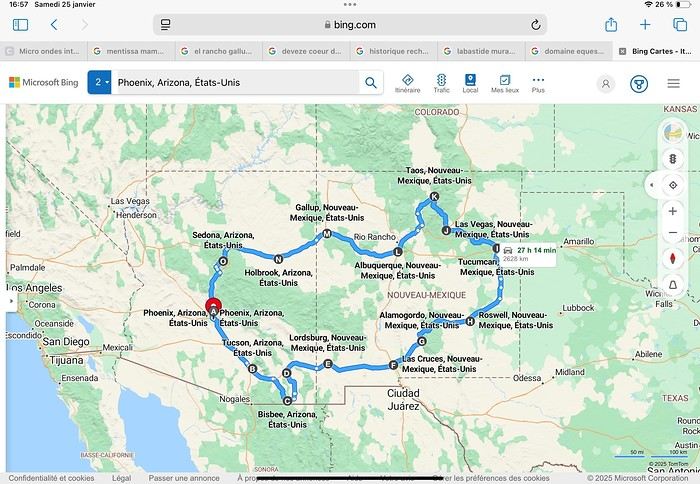
Day 1: Flight Marseille-Paris-Phoenix, then Gold Canyon (133 km) Day 2: Tucson (271 km) Lost Dutchman State Park Day 3: Tucson (155 km) Day 4: Tucson (34 km) Day 5: Bisbee (182 km) Day 6: Lordsburg (345 km) Day 7: Las Cruces (253 km) Day 8: Alamogordo (162 km) Day 9: Roswell (264 km) Day 10: Tucumcari (369 km) Day 11: Las Vegas (281 km) – the one in New Mexico Day 12: Taos (213 km) Day 13: Santa Fe (224 km) Day 14: Albuquerque (123 km) Day 15: Gallup (246 km) Day 16: Holbrook (224 km) Day 17: Flagstaff (179 km) Day 18: Sedona (118 km) Day 19: Sedona (48 km) Day 20: Sedona (41 km) Day 21: Phoenix (256 km) Day 22: Phoenix Airport (35 km)
📊 **Budget**: A little over 7,500 € for both of us, all included. The exchange rate was in our favor (1.17 dollars to 1 €). 📊 **Flights**: Marseille-Paris Charles de Gaulle-Phoenix: 1,787 € for two, with one checked bag each (Air France) 📊 **ESTA**: $42 📊 **America the Beautiful Pass**: $80 📊 **Parking**: 134 € (super eco at Marseille) 📊 **Car rental (Hertz)**: 865 €. Since there were no SUVs left in the reserved category (Nissan Rogue), we got an upgrade (4x4 Ford Explorer). We booked through Air France (15% discount). We’d originally reserved it in December for 1,140 €, but since prices dropped in March, we canceled and rebooked for 865 €. Hertz offers a free Hertz Gold Plus Rewards program, which gives you priority counter service when picking up the car. 📊 **Accommodation**: 2,400 € We stayed in hotels and motels of varying standards (from 60 to 203 € per night, depending on the city), all booked through Booking.com or Hotels.com. Out of 21 nights, only two didn’t include breakfast in the price. Booking.com sometimes offers slightly cheaper rates if you book by phone using the mobile app, and our Genius 3 status on the site also got us some preferential rates. 📊 **Supplementary insurance**: AVA 200 € for medical care if needed 📊 **Cash**: $2,078. We left with 1,000 € exchanged before departure and made two withdrawals of $500. This cash covered: - Evening restaurants and tips - Midday picnics - Gas: $298 for 4,160 km - Museum and private park entries (per person): - Lost Dutchman: $10 - Arizona-Sonora Desert Museum: $28 - Bird Cage Theater: $16 - Tombstone Shootout: $8 - New Mexico Farm & Ranch Museum: $12 - Roswell International UFO Museum: $5 - Billy the Kid Museum: $7 - Rancho de Taos: $22 - West Fork Oak Creek Trail entry: $15 We got a few discounts thanks to our senior age (+65). - Souvenirs and little treats
Like on our previous road trips, we didn’t rent a GPS. We got around using offline GPS apps Here WeGo and Organic Maps, with maps of the states we visited downloaded before we left (on our phones).
❤️❤️❤️ **Highlights** (there are so many!) 📍 Goldfield Ghost Town (even if it’s a reconstruction) 📍 The standing army of Saguaro cacti at Saguaro National Park West 📍 Diving into the cowboy universe of Tombstone 📍 The welcome from Rick and Henry at our guesthouse in Bisbee (Garden at Mile High Ranch) 📍 The tangled rocks of Chiricahua National Monument 📍 The flavored pistachios from Dwayne’s Fresh Jerky and Mac Ginnis Pistachioland 📍 Restaurants: La Posta (Las Cruces), Diner 66 (Albuquerque), and the Haunted Hamburger (Jerome) 📍 The old plazas of New Mexico 📍 The solitude and beauty of the white dunes at White Sands National Park 📍 Stepping back in time at the Billy the Kid Museum (Fort Stanton) 📍 Sections of historic Route 66 and the old motels of Tucumcari, especially at night when all the neon lights are on 📍 Taos Pueblo and diving into Native American culture 📍 After the Rio Grande Bridge, the descent via NM 567 to the very bottom of the Rio Grande Gorge, then the road along the riverbanks to Taos 📍 The tranquility of the Chimayo Sanctuary 📍 Discovering the ingenious native dwellings at Bandelier National Monument and Walnut Canyon National Park 📍 The small towns along the Turquoise Trail 📍 The red rocks of Red Rock Park and the Painted Desert 📍 The extraordinary colors of the petrified trees at Petrified Forest National Park 📍 Sedona, its red rocks, and the reward of the viewpoints at the end of hikes (Devil’s Bridge, The Subway, and West Fork Oak Creek) 📍 The immersion in Mexico when visiting Tlaquepaque 📍 The almost-ghost town of Jerome and its terraced streets 📍 The incredible kindness of Americans, always ready to help and up for a chat ❤️
☹️☹️☹️ **Flops** (there are very few) 📍 Several museums and churches being closed, so we couldn’t visit them 📍 Some museums and visitor centers opening late (10 AM) and closing early (4 PM) 📍 A 64 € phone roaming charge because we got near the Mexican border and picked up their cell tower 📍 The outrageous price ($5.99) for a gallon of gas at the Shell near Phoenix Airport
I hope this helps! Anyway, thanks for reading my long post. Don’t hesitate to reach out, even via PM, if you see I haven’t replied and you’d like more details. Have a great evening, everyone! 🙂
We’re back from our September 2025 road trip, this time to explore Arizona and New Mexico, and it’s time for me to start my travel journal—especially since everything’s already booked for another trip in September 2026 (to California), and I need to get started on the planning.
I was a little worried this new visit to Uncle Sam’s country might not be as "wow" as the others, but we still discovered some incredible places.
For those who don’t know us, we’re a couple in our seventies who speak very little English, but that didn’t stop us from fully enjoying our stay.
For this 6th road trip in the U.S., we spent 21 nights there, drove 4,160 km by car, and walked nearly 160 km in a loop starting from Phoenix.
We’d been to Arizona before (but not this side) and never to New Mexico. This whole road trip was a huge discovery for us.
In the prices mentioned (some in euros, others in dollars), bank fees and exchange charges are included. The flights, car rental, and parking were all paid for in December 2024 when we booked.
We’d downloaded the MPC (Mobile Passport Control) app, but there wasn’t a dedicated line at Phoenix Airport. Still, we got through quickly with friendly, smiling agents.
I don’t drive at all (I hate it), so the stops were chosen based on activities but also, for some, to limit daily mileage for the sole driver. The kilometers listed in the itinerary are the daily distances.
We traveled from September 9th to 22nd, unfortunately once again without our dear friends Mimi and Maumau.
The itinerary
Day 1: Flight Marseille-Paris-Phoenix, then Gold Canyon (133 km) Day 2: Tucson (271 km) Lost Dutchman State Park Day 3: Tucson (155 km) Day 4: Tucson (34 km) Day 5: Bisbee (182 km) Day 6: Lordsburg (345 km) Day 7: Las Cruces (253 km) Day 8: Alamogordo (162 km) Day 9: Roswell (264 km) Day 10: Tucumcari (369 km) Day 11: Las Vegas (281 km) – the one in New Mexico Day 12: Taos (213 km) Day 13: Santa Fe (224 km) Day 14: Albuquerque (123 km) Day 15: Gallup (246 km) Day 16: Holbrook (224 km) Day 17: Flagstaff (179 km) Day 18: Sedona (118 km) Day 19: Sedona (48 km) Day 20: Sedona (41 km) Day 21: Phoenix (256 km) Day 22: Phoenix Airport (35 km)
📊 **Budget**: A little over 7,500 € for both of us, all included. The exchange rate was in our favor (1.17 dollars to 1 €). 📊 **Flights**: Marseille-Paris Charles de Gaulle-Phoenix: 1,787 € for two, with one checked bag each (Air France) 📊 **ESTA**: $42 📊 **America the Beautiful Pass**: $80 📊 **Parking**: 134 € (super eco at Marseille) 📊 **Car rental (Hertz)**: 865 €. Since there were no SUVs left in the reserved category (Nissan Rogue), we got an upgrade (4x4 Ford Explorer). We booked through Air France (15% discount). We’d originally reserved it in December for 1,140 €, but since prices dropped in March, we canceled and rebooked for 865 €. Hertz offers a free Hertz Gold Plus Rewards program, which gives you priority counter service when picking up the car. 📊 **Accommodation**: 2,400 € We stayed in hotels and motels of varying standards (from 60 to 203 € per night, depending on the city), all booked through Booking.com or Hotels.com. Out of 21 nights, only two didn’t include breakfast in the price. Booking.com sometimes offers slightly cheaper rates if you book by phone using the mobile app, and our Genius 3 status on the site also got us some preferential rates. 📊 **Supplementary insurance**: AVA 200 € for medical care if needed 📊 **Cash**: $2,078. We left with 1,000 € exchanged before departure and made two withdrawals of $500. This cash covered: - Evening restaurants and tips - Midday picnics - Gas: $298 for 4,160 km - Museum and private park entries (per person): - Lost Dutchman: $10 - Arizona-Sonora Desert Museum: $28 - Bird Cage Theater: $16 - Tombstone Shootout: $8 - New Mexico Farm & Ranch Museum: $12 - Roswell International UFO Museum: $5 - Billy the Kid Museum: $7 - Rancho de Taos: $22 - West Fork Oak Creek Trail entry: $15 We got a few discounts thanks to our senior age (+65). - Souvenirs and little treats
Like on our previous road trips, we didn’t rent a GPS. We got around using offline GPS apps Here WeGo and Organic Maps, with maps of the states we visited downloaded before we left (on our phones).
❤️❤️❤️ **Highlights** (there are so many!) 📍 Goldfield Ghost Town (even if it’s a reconstruction) 📍 The standing army of Saguaro cacti at Saguaro National Park West 📍 Diving into the cowboy universe of Tombstone 📍 The welcome from Rick and Henry at our guesthouse in Bisbee (Garden at Mile High Ranch) 📍 The tangled rocks of Chiricahua National Monument 📍 The flavored pistachios from Dwayne’s Fresh Jerky and Mac Ginnis Pistachioland 📍 Restaurants: La Posta (Las Cruces), Diner 66 (Albuquerque), and the Haunted Hamburger (Jerome) 📍 The old plazas of New Mexico 📍 The solitude and beauty of the white dunes at White Sands National Park 📍 Stepping back in time at the Billy the Kid Museum (Fort Stanton) 📍 Sections of historic Route 66 and the old motels of Tucumcari, especially at night when all the neon lights are on 📍 Taos Pueblo and diving into Native American culture 📍 After the Rio Grande Bridge, the descent via NM 567 to the very bottom of the Rio Grande Gorge, then the road along the riverbanks to Taos 📍 The tranquility of the Chimayo Sanctuary 📍 Discovering the ingenious native dwellings at Bandelier National Monument and Walnut Canyon National Park 📍 The small towns along the Turquoise Trail 📍 The red rocks of Red Rock Park and the Painted Desert 📍 The extraordinary colors of the petrified trees at Petrified Forest National Park 📍 Sedona, its red rocks, and the reward of the viewpoints at the end of hikes (Devil’s Bridge, The Subway, and West Fork Oak Creek) 📍 The immersion in Mexico when visiting Tlaquepaque 📍 The almost-ghost town of Jerome and its terraced streets 📍 The incredible kindness of Americans, always ready to help and up for a chat ❤️
☹️☹️☹️ **Flops** (there are very few) 📍 Several museums and churches being closed, so we couldn’t visit them 📍 Some museums and visitor centers opening late (10 AM) and closing early (4 PM) 📍 A 64 € phone roaming charge because we got near the Mexican border and picked up their cell tower 📍 The outrageous price ($5.99) for a gallon of gas at the Shell near Phoenix Airport
I hope this helps! Anyway, thanks for reading my long post. Don’t hesitate to reach out, even via PM, if you see I haven’t replied and you’d like more details. Have a great evening, everyone! 🙂
Old Burmese Adventures (oh, so many!)
Hey everyone,
Yesterday, I checked the Thailand forum to see if there were any questions to answer, but not much was happening—it was pretty quiet. Then I scrolled through the Southeast Asia section and realized that, even though Burma (Myanmar) was included, there weren’t many posts about it... I’ve only been there once, back in 1987, so it’s hard to create a photo thread about multiple trips like I sometimes do for Thailand. Still, that one trip was packed with unusual adventures, so I thought I’d share a few stories from it.
Since I didn’t take any notes at the time, this is all from memory—it’s not an exhaustive travel journal and isn’t meant to help plan a future trip to Myanmar.
Don’t expect photos; there won’t be any. I have some, but they’re slides that would need scanning and editing one by one to fix the wear and tear of time—way too much work.
The Context.
Back then (reminder: 1987), I was volunteering in Paris at the counter of a travel agency on Rue des Écoles. The agency was part of a well-known organization based in Mulhouse that mostly offered scheduled flights to Asia, charter flights to the Mediterranean, and flights to Mali with their own plane. They also had a few rare "roots"-style trips to certain destinations—trips where you didn’t bring your tennis racket but were ready to soak in everything, even if it meant tough conditions.
I’d already been to Thailand, Indonesia, and the Philippines in Asia. The director knew this, so he asked me to accompany a group to Burma. At the time, tours to Burma were already being sold by competitors, but they all had to go through the state-run agency, Touristburma (buses and hotels for tourists, and they only showed you what they wanted you to see—kind of like traveling in North Korea today). The service was only payable in dollars at the official exchange rate (which was six times worse than the black market rate, mind you...), and since it went through the state agency, all the money ended up with the junta.
My job was to do everything *without* going through Touristburma, which was completely illegal there. Nothing would be booked in advance. Back then, the Burmese visa was only valid for 8 days/7 nights, and since clients were paying for the experience, the itinerary was planned ahead. I’d have to find transport and a guide on the black market as soon as I arrived.
The clients weren’t misled—they knew from the start that the trip would be off the books, that officially we’d be a small group of friends (not an agency), unlike the truth (Touristburma wasn’t mandatory for individual travelers), and that it would be challenging. They also knew their trip would cost 3-4 times less while giving them a much better experience of Burma. As for pretending to be a group of friends, there were only six of us, so it worked out.
To cover all expenses (accommodation, transport, excursions), the agency gave me a sufficient budget. They also gave me the *same* budget a second time, which was strictly for bribing officials who might cause trouble, for backshish (tips), and, if needed, to "help" me get out of prison.
Before I left, I was thoroughly briefed by another guy who’d led the previous trip (he’d dealt with all the initial challenges). He explained everything I needed to know, what to watch out for, and advised me on what to bring as "gifts" (samples of well-known perfumes, specific cigarette and whisky brands, etc.). For the perfume samples, I rallied my family, friends, and even stores. For the rest, I’d pick things up at the duty-free shops in Don Muang (Bangkok’s only airport at the time)—I had the budget for it.
I couldn’t wait to leave...
Yesterday, I checked the Thailand forum to see if there were any questions to answer, but not much was happening—it was pretty quiet. Then I scrolled through the Southeast Asia section and realized that, even though Burma (Myanmar) was included, there weren’t many posts about it... I’ve only been there once, back in 1987, so it’s hard to create a photo thread about multiple trips like I sometimes do for Thailand. Still, that one trip was packed with unusual adventures, so I thought I’d share a few stories from it.
Since I didn’t take any notes at the time, this is all from memory—it’s not an exhaustive travel journal and isn’t meant to help plan a future trip to Myanmar.
Don’t expect photos; there won’t be any. I have some, but they’re slides that would need scanning and editing one by one to fix the wear and tear of time—way too much work.
The Context.
Back then (reminder: 1987), I was volunteering in Paris at the counter of a travel agency on Rue des Écoles. The agency was part of a well-known organization based in Mulhouse that mostly offered scheduled flights to Asia, charter flights to the Mediterranean, and flights to Mali with their own plane. They also had a few rare "roots"-style trips to certain destinations—trips where you didn’t bring your tennis racket but were ready to soak in everything, even if it meant tough conditions.
I’d already been to Thailand, Indonesia, and the Philippines in Asia. The director knew this, so he asked me to accompany a group to Burma. At the time, tours to Burma were already being sold by competitors, but they all had to go through the state-run agency, Touristburma (buses and hotels for tourists, and they only showed you what they wanted you to see—kind of like traveling in North Korea today). The service was only payable in dollars at the official exchange rate (which was six times worse than the black market rate, mind you...), and since it went through the state agency, all the money ended up with the junta.
My job was to do everything *without* going through Touristburma, which was completely illegal there. Nothing would be booked in advance. Back then, the Burmese visa was only valid for 8 days/7 nights, and since clients were paying for the experience, the itinerary was planned ahead. I’d have to find transport and a guide on the black market as soon as I arrived.
The clients weren’t misled—they knew from the start that the trip would be off the books, that officially we’d be a small group of friends (not an agency), unlike the truth (Touristburma wasn’t mandatory for individual travelers), and that it would be challenging. They also knew their trip would cost 3-4 times less while giving them a much better experience of Burma. As for pretending to be a group of friends, there were only six of us, so it worked out.
To cover all expenses (accommodation, transport, excursions), the agency gave me a sufficient budget. They also gave me the *same* budget a second time, which was strictly for bribing officials who might cause trouble, for backshish (tips), and, if needed, to "help" me get out of prison.
Before I left, I was thoroughly briefed by another guy who’d led the previous trip (he’d dealt with all the initial challenges). He explained everything I needed to know, what to watch out for, and advised me on what to bring as "gifts" (samples of well-known perfumes, specific cigarette and whisky brands, etc.). For the perfume samples, I rallied my family, friends, and even stores. For the rest, I’d pick things up at the duty-free shops in Don Muang (Bangkok’s only airport at the time)—I had the budget for it.
I couldn’t wait to leave...
A summer in the sun in... Iceland!!
Ah, Iceland and us—it’s quite the story, or rather, a long wait... The first time we considered going was already 7-8 years ago, after reading travel journals describing breathtaking landscapes, countless active and dormant volcanoes, glaciers, and waterfalls with extraordinary flows. In short, this island, made of fire and ice, right at Europe’s doorstep with its own unique culture, had nothing but advantages, and it was urgent to visit without delay 😇
My *Routard* guidebook is actually from 2016. So why did Iceland make us wait so long before we finally gave in to its charms? Yes, why indeed?
Simply because reading other travel journals revealed the cost of living there—and especially the harsh climate, even in the middle of July 🤪! Some journals described entire weeks of rain and foggy weather, making it tricky to explore the island. The budget wasn’t spared either, because in the most touristy areas, especially in the south and around Myvatn, accommodation prices are downright indecent—even outright robbery. 😕
Plus, in the Highlands, there’s literally no permanent lodging, and the only way to spend several nights there is to camp. And camping in winter conditions wasn’t exactly part of our plans... 😄
So, year after year, this trip kept getting postponed...
until August 2023, when prices for Southern Africa, North or South America, or even Asia were all way too high for summer 2024!
That’s when I turned my attention back to the Land of Fire and Ice and scoured all the comparison sites for the best accommodation deals across the country. Planning for 20 nights, I found 13 nights in "proper" lodging for 5 people at an average cost of under 200 €! A miracle, considering that in the southern glacier region, around Vik or Myvatn, prices range from 300 to 1000 € per night 😮 😮!
Still, that means we’ll have to camp for 7 nights, mostly in the Highlands, near Askja or Landmannalaugar. 😎
For once, I built the daily itinerary entirely around the decently priced lodgings I found 11 months in advance! The shortage of places to stay in some areas forced me to plan a few long transition days and make some tough choices. No big deal, though—there’s so much to do on this island 🙂!
Once the main itinerary was set, everyone agreed to the plan: 2/3 in proper lodging and 1/3 camping, even the most camping-averse among us! *Follow my gaze...*
By the time we bought the flight tickets, I had to tweak the itinerary a bit because one or two places were already booked! Plus, it was impossible to wait for a more refined plan to adjust reservations, since almost all bookings are non-refundable!! The harsh law of supply and demand...
For the car rental, we booked a Hyundai Tucson, approved for the Highlands, from Lava Car Rental—a company I’d read good reviews about in a Facebook group—for a cool 2500 € with full insurance. A real 4x4, like a Defender, would’ve been more than double...! Welcome to Iceland 😕...
Activities and excursions also required some tough choices. We had two must-dos: whale watching in Húsavík (60 € pp on Getyourguide) and a Glacier and Summer Treasure Glacier Walk with BlueIceland (165 € pp with discount codes on Getyourguide).
For the baths, we skipped the Blue Lagoon—too expensive—in favor of the Secret Lagoon and the Myvatn Baths, the Blue Lagoon’s equivalent but half the price.
Two baths for the price of one... and even more, since I spotted several free hot-water swimming spots.
Itinerary: Day 1: Arrival in Reykjavik - Hraunfossar Waterfall - Surtshellir Cave Day 2: Grábrók Crater - Snæfellsnes Peninsula Day 3: Stykkishólmur - Sturlungalaug Hot Springs Day 4: Northwest Coast - Akureyri - Goðafoss Day 5: Myvatn Day 6: Myvatn - Dettifoss - Selfoss - Rauðhólar Day 7: Húsavík Whale Watching - Dettifoss - Selfoss Day 8: Stuðlagil Canyon - Seyðisfjörður Day 9: Puffin colony - Störurð Hike Day 10: Hengifoss - East Fjords, Mjóifjörður Day 11: Viking Village - Jökulsárlón - Fjallsárlón Day 12: Glacier Excursion - Svartifoss Day 13: Fjaðrárgljúfur Canyon - Vík Day 14: Þakgil - Lava Show Vík Day 15: Southern Waterfalls Day Day 16: Landmannalaugar - Skalli Hike Day 17: Landmannalaugar - Bláhnjúkur - Brennisteinsalda Day 18: Secret Lagoon, Kerlingarfjöll, and Gullfoss Day 19: Geysir - Reykjavik Day 20: Bruarfoss - Þingvellir - Kerid Crater - Krýsuvík Geothermal Area Day 21: Reykjanes Peninsula
Friday, July 5, 2024, is our last workday before driving up to Alsace overnight to leave the cockers at Grandpa’s for boarding. Then, at 1:30 AM, we’ll head to Frankfurt, where a direct flight to Iceland awaits.
We arrive at 4 AM. Since we leave at 7 AM, the "night" will only last the equivalent of a 30-minute nap 🤪... just enough to get us in the road-trip mood 😏!!
My *Routard* guidebook is actually from 2016. So why did Iceland make us wait so long before we finally gave in to its charms? Yes, why indeed?
Simply because reading other travel journals revealed the cost of living there—and especially the harsh climate, even in the middle of July 🤪! Some journals described entire weeks of rain and foggy weather, making it tricky to explore the island. The budget wasn’t spared either, because in the most touristy areas, especially in the south and around Myvatn, accommodation prices are downright indecent—even outright robbery. 😕
Plus, in the Highlands, there’s literally no permanent lodging, and the only way to spend several nights there is to camp. And camping in winter conditions wasn’t exactly part of our plans... 😄
So, year after year, this trip kept getting postponed...
until August 2023, when prices for Southern Africa, North or South America, or even Asia were all way too high for summer 2024!
That’s when I turned my attention back to the Land of Fire and Ice and scoured all the comparison sites for the best accommodation deals across the country. Planning for 20 nights, I found 13 nights in "proper" lodging for 5 people at an average cost of under 200 €! A miracle, considering that in the southern glacier region, around Vik or Myvatn, prices range from 300 to 1000 € per night 😮 😮!
Still, that means we’ll have to camp for 7 nights, mostly in the Highlands, near Askja or Landmannalaugar. 😎
For once, I built the daily itinerary entirely around the decently priced lodgings I found 11 months in advance! The shortage of places to stay in some areas forced me to plan a few long transition days and make some tough choices. No big deal, though—there’s so much to do on this island 🙂!
Once the main itinerary was set, everyone agreed to the plan: 2/3 in proper lodging and 1/3 camping, even the most camping-averse among us! *Follow my gaze...*
By the time we bought the flight tickets, I had to tweak the itinerary a bit because one or two places were already booked! Plus, it was impossible to wait for a more refined plan to adjust reservations, since almost all bookings are non-refundable!! The harsh law of supply and demand...
For the car rental, we booked a Hyundai Tucson, approved for the Highlands, from Lava Car Rental—a company I’d read good reviews about in a Facebook group—for a cool 2500 € with full insurance. A real 4x4, like a Defender, would’ve been more than double...! Welcome to Iceland 😕...
Activities and excursions also required some tough choices. We had two must-dos: whale watching in Húsavík (60 € pp on Getyourguide) and a Glacier and Summer Treasure Glacier Walk with BlueIceland (165 € pp with discount codes on Getyourguide).
For the baths, we skipped the Blue Lagoon—too expensive—in favor of the Secret Lagoon and the Myvatn Baths, the Blue Lagoon’s equivalent but half the price.
Two baths for the price of one... and even more, since I spotted several free hot-water swimming spots.
Itinerary: Day 1: Arrival in Reykjavik - Hraunfossar Waterfall - Surtshellir Cave Day 2: Grábrók Crater - Snæfellsnes Peninsula Day 3: Stykkishólmur - Sturlungalaug Hot Springs Day 4: Northwest Coast - Akureyri - Goðafoss Day 5: Myvatn Day 6: Myvatn - Dettifoss - Selfoss - Rauðhólar Day 7: Húsavík Whale Watching - Dettifoss - Selfoss Day 8: Stuðlagil Canyon - Seyðisfjörður Day 9: Puffin colony - Störurð Hike Day 10: Hengifoss - East Fjords, Mjóifjörður Day 11: Viking Village - Jökulsárlón - Fjallsárlón Day 12: Glacier Excursion - Svartifoss Day 13: Fjaðrárgljúfur Canyon - Vík Day 14: Þakgil - Lava Show Vík Day 15: Southern Waterfalls Day Day 16: Landmannalaugar - Skalli Hike Day 17: Landmannalaugar - Bláhnjúkur - Brennisteinsalda Day 18: Secret Lagoon, Kerlingarfjöll, and Gullfoss Day 19: Geysir - Reykjavik Day 20: Bruarfoss - Þingvellir - Kerid Crater - Krýsuvík Geothermal Area Day 21: Reykjanes Peninsula
Friday, July 5, 2024, is our last workday before driving up to Alsace overnight to leave the cockers at Grandpa’s for boarding. Then, at 1:30 AM, we’ll head to Frankfurt, where a direct flight to Iceland awaits.
We arrive at 4 AM. Since we leave at 7 AM, the "night" will only last the equivalent of a 30-minute nap 🤪... just enough to get us in the road-trip mood 😏!!
55 days with the family in the Yucatán, including a side trip to Belize...
Hi everyone!
That was about all the Spanish I could speak before we left... Luckily, Tom, 15 and in high school, gets by just fine! And Caroline did a year of Duolingo before we took off... Anyway, after 55 days in the American West three years ago, it’s Mexico’s turn for this second long adventure.
A quick intro to the crew:

- Oscar, 10, a sporty and lively little boy who loves swimming and basketball, - Tom, 15, a high schooler, sporty and tall, who loves swimming and American football, - Caroline, 47, a PE teacher, sporty , loves hiking and snorkeling, - and me, Sylvain, 50, a science teacher, sporty, loves traveling and always has a possible next trip in mind
We mostly travel by swapping our house to discover beautiful France and the world: 135 swaps over the last 13 years.....
Our itinerary is pretty classic since it’s our first time in the Yucatán, and we’ll make a little 10-day detour to Belize...
See you soon...
Hitchhiking in the 70s-80s
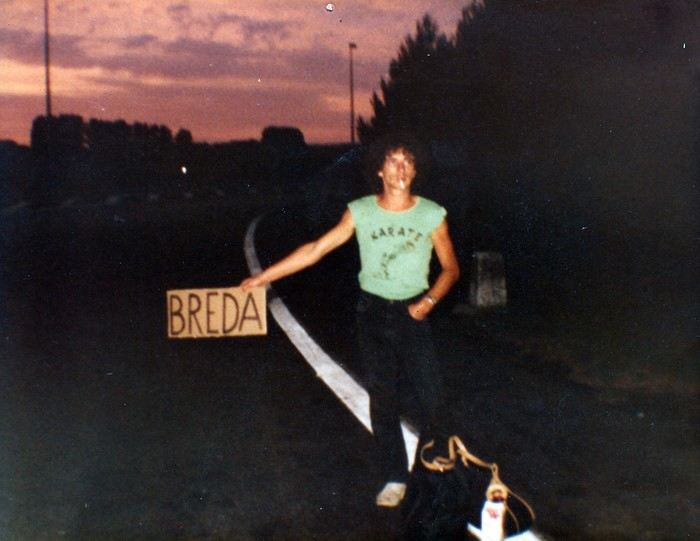
“Hey, your Marker... - My Marker? - The one you used to make hitchhiking signs.”
The marker in question is sitting proudly on the kitchen table. Marielle found it at the bottom of a moving box.
I’ve been meaning to tell the long story of my love affair with hitchhiking for years. Here we go.
To be honest, I’m not quite sure when it started. My earliest memory goes back to a fair with a bike race in my maternal grandparents’ village. I was with my cousin, my little sister, and three girl cousins. There were six of us, ages ranging from six or seven to thirteen or fourteen. Our parents stayed at the fair, and we’d had enough. So we decided to walk home. Only it was four kilometers away. So we hitchhiked. A guy driving an old car picked us all up and dropped us off at the farm. He probably found it amusing to see us thumbing a ride by the side of the road, but maybe it also worried him a bit. With everything you read in the papers...
Around fifteen or sixteen, I started hitchhiking regularly, alone or with a friend, to go to the nearby town. But it was especially when I started boarding school in Orléans that it became more regular. The first year, I’d leave Monday morning and come back Saturday noon by bus. It was an old, uncomfortable bus where we froze in winter. To make matters worse, I often got motion sickness if, as was too often the case, I ended up sitting in the back. In the spring, a high school friend suggested I hitchhike back. It meant a slight detour, but the advantage was taking only national roads.
So that’s how, from the end of tenth grade to twelfth grade, I’d thumb a ride every Saturday on the Pont de Bourgogne. Drivers were used to seeing young people hitchhiking, and it worked pretty well. Our biggest fear? Soldiers! At that time, military service was still mandatory, and on weekends, it wasn’t rare to see them competing with us. They’d keep their uniforms on to go home. That gave people confidence—with everything you read in the papers—and they’d rarely wait more than five minutes. We, with our long hair, were definitely less popular. From time to time, three big red-faced guys in a van coming back from a construction site would flip us off, yelling things like “go get a haircut, you bums!” Those were the good old days.
We still had a good laugh, though. Patrice, the friend I’d hitchhike back from school with on Saturdays, is a musician—I’d later discover he’s an excellent composer. A die-hard Beatles fan, he knows their repertoire by heart and spends his time singing at the top of his lungs while we thumb a ride. One Saturday late morning, we’d been waiting for a while at the exit of Châteauneuf-sur-Loire when a little lady came up to him and asked if he could please sing a little quieter: a baby was sleeping in the house. He put on the most sorry face: “Oh, sorry ma’am, we didn’t realize.” No sooner had the lady gone back inside than he started again. Luckily, a car stopped just then, sparing me the embarrassment of seeing the lady come back out.
Saturday was also the day when the cigarette pack was dangerously low. So before leaving, we’d go buy some “Parisiennes,” the “P4s” as we called them back then. They were slightly thinner cigarettes with a mix of tobacco scraps. Sometimes they tasted like light tobacco, sometimes like dark. Not great, but by the end of the week, our pocket money was gone. They were sold in small packs of four, hence the name P4. We’d only pay 20 centimes. On Saturdays, it was rare for the two of us to manage to scrape together 1.50 F to buy a whole pack of Gauloises...
The last twenty kilometers, I’d usually do alone, Patrice having reached his destination. From time to time, luck would smile on me: an acquaintance would just happen to pass by and stop. One January Saturday, at the exit of Gien, I ran into another guy from Argenton whom I knew a little. That day, the weather was nice, but the temperature was well below zero. It was around noon, and it was the off-peak hour. We were shivering, stamping our feet by the side of the road, when a Citroën “Tube” arrived: it was his father’s boss’s, a mason. They were both sitting in the front, but since they were obese, they had us climb onto the open back. Even though we huddled against the cab to shelter from the wind, the twenty kilometers felt very long, especially since we were only going sixty kilometers an hour. Our hands and cheeks were blue when we finally arrived.
The year I took my baccalaureate, a friend with a 2CV would take me Monday mornings with one or two others we’d pick up in nearby villages. We’d share the gas costs, but it was still cheaper than the bus. And in winter, the bus was my nightmare. You had to get up at five to catch it at six. Not enough sleep, and outside it was freezing or raining—or both. The 2CV was luxury. Plus, Philippe would pick me up at home. On the other hand, since I didn’t have class Saturday mornings—well, I did, but we only had PE the first two hours and nothing after—I’d skip class and slip out right after breakfast to thumb a ride at the Pont de Bourgogne.
Those three high school years were formative in this optional subject that was hitchhiking. Little by little, I learned the rules of the game. First, you shouldn’t walk along the road while thumbing. Cars go too fast and can’t stop easily. Accepting a ride that’s too short is also a no-go. The guy who offers to take you a little way but drops you off at some vague crossroads in the middle of nowhere? No thanks. You need to get dropped off in a town. If it’s a fairly big city, you often have to cross it from one end to the other, but it’s better. At the exit, you have to choose your spot well. Actually, you have to put yourself in the driver’s shoes: they need to see you early enough, not be going too fast, and be able to stop easily without risking an accident. So when leaving a city, it’s better not to go too far. It’s wiser to find a spot where cars go slowly and can stop easily. And preferably near a café. The café is for when you still have a few coins for a coffee and need to warm up. From time to time, you’d run into someone nice who’d make a detour to drop you off at a better spot to start again. Finally, if possible, avoid hitchhiking on Sundays. Cars are packed with whole families who, most of the time, aren’t going far. And then there’s the little worry of those people who rarely leave home: with everything you read in the papers...
During those high school years, it was only short trips, rarely exceeding a hundred kilometers. Later, I aimed bigger, and things were a bit different. In 1973-74, I crossed part of France for the first time on two or three occasions, coming back from the German border or returning to Bordeaux, where we lived briefly. Since there weren’t many highways back then, we took national roads. It was during these trips that I realized it was better to leave in the evening. As I said earlier, Sunday is to be avoided, but on weekdays, there’s another problem: if you leave in the morning, you only make short hops. First, it often takes longer to get going because drivers are people going to work nearby. Which brings us back to those who drop you off in a bad spot, far from everything. There, you have to know how to refuse. You thank the driver for stopping—oh, if only everyone could be like you—while explaining why you’d rather stay put. People don’t take offense, by the way. Those who pick up hitchhikers often hitchhiked themselves when they were in the military or before they had a car. In the late afternoon, you’d often run into salespeople or truckers, in other words, people who drive a lot. At that time, salespeople no longer had appointments and were more relaxed. They wanted to talk about something other than the merits of their products. On the radio, it was time for *Les Grosses Têtes*. You’d also quite often run into small business owners, professionals, or even hippies. The conversations were pleasant and often enriching. A little later in the evening, truckers would take over. They’d already driven a few hundred kilometers, and the depot or customs was still far away. So they’d gladly take a hitchhiker to stay awake at the wheel and chat. The radio with Max Ménier’s show *Les routiers sont sympas*, you’d eventually get tired of it. So a hitchhiker was a change. Others, who’d hit the road at midnight to be at their destination by morning, were nice and offered to let you lie down on the bunk while they drove. When you’d been hitchhiking since six in the evening, freezing in the wind between two vehicles, you weren’t unhappy to take a little nap.
Speaking of Max Ménier, he’d often make announcements for hitchhikers. One evening, I called him. It was getting late, and I still had quite a way to go. No luck: the show had ended for good the day before!
In short, it’s better not to rush, sleep in, and leave after lunch, or better yet, in the late afternoon. Obviously, I’m talking about when you have several hundred kilometers to cover. That’s when you have to play it pro.
First thing, especially at night, but it also applies in the middle of summer when the light is blinding: dress to be seen from far away. I’ll admit I have an advantage over most other hitchhikers: I’m small and don’t scare people. To balance that out, racist drivers often take me for an Arab and are less likely to pick me up, but overall, the balance tips in my favor. Back to the need to be seen: at night, I wear light-colored clothes. In headlights, you can see me from far away.
Second thing: travel light. Forget the big backpack with a frame. Drivers don’t always have room in the trunk or on the back seat, especially if it’s rained and the ground is wet. Plus, it forces them to get out of the car. If they’re nice enough to pick up a hitchhiker, you shouldn’t ask for too much either.
Third thing: bring a cardboard sign and a big marker—like the ones in the photo at the start of this post—to write the name of your destination. In the early 80s, I ran a tourist house in the Cher, but I lived in the Netherlands. In the off-season, it was only open on weekends. On Fridays, I’d leave Holland and return on Mondays. 1200 km round trip. On the way there, in Paris, I’d stand at Porte de la Chapelle. At that spot, the road is very wide, and drivers could stop easily. Obviously, on the sign, I didn’t write Eindhoven, which not everyone knows, and even less Amsterdam because of its seedy reputation. In that case, you’d expect to see a police car stop and two officers in kepis ask for your papers. So as a first destination, I’d write Compiègne. We were well out of Paris, and since it wasn’t too far, a trucker or salesperson was less reluctant to stop. Once past Compiègne, I’d take out my Lille sign. Once in Belgium, it wasn’t really necessary to use a sign anymore, since everyone was going in the same direction. Usually, the guy who picked me up at Porte de la Chapelle would say he wasn’t going far but could take me a little way. Before that, I’d still ask if there was a gas station on the highway where he could drop me off before exiting. While talking, the guy would realize he wasn’t dealing with a dangerous criminal. He’d pretend to check his watch, think for a moment, then say that actually, he was going to Belgium and could take me to the border or a little beyond. To leave Paris on the way back, I’d take the train to Melun, where it was easier to hitchhike than at Porte d’Italie.
Over all those years, I think I was pretty lucky. Or maybe philosophical enough not to imagine a car would stop after a few minutes. An hour’s wait was average. Sure, I sometimes waited three, four, or five hours. Most often at odd hours and in terrible weather. When it doesn’t work, it doesn’t work. But there’s always a moment when things pick up. Sure, when you’re soaked in freezing rain in the early morning after a sleepless night, you’re less philosophical than when I’m writing these lines comfortably at my computer, but it still holds true.
Earlier, I mentioned clothing and the importance of being well-rested before leaving. When you’ve eaten well and just gotten out of the shower, shaved, you’re in a better mood. And somehow, drivers sense it. Or at least, that’s the impression I’ve always had. It’s better to look in shape than disgusted at standing there, half-heartedly thumbing a ride. In short, when I’d start to get fed up with waiting, I’d go into the first café I saw for a coffee. Coming back out, I’d be refreshed, and most of the time, a car would stop within minutes. I’ve often said that when I stood by the side of the road thumbing a ride, I felt a bit like a gambler in front of a slot machine. It was a matter of giving luck a chance. And well, it worked out pretty well.
Then, there are countries where hitchhiking works really well and others where it’s harder. In the 70s-80s, it worked best in Germany and England. In the late afternoon, it wasn’t rare to be invited for tea. Well, that was in England. Tea meant being offered room and board. In Germany, they’d offer you coffee. Once there, they’d first show you the guest room and point out the bathroom before sitting you down in front of a big plate of cold cuts. In the evening, they’d go out in town, and the next morning, they’d usually drop you off at a good spot for hitchhiking. On the other hand, in Mediterranean and Scandinavian countries, you’d better be patient. In Spain or Italy, it’s better to take the train, which was dirt cheap back then. However, if you’re a couple traveling light, it’s already easier in most countries.
In 1982, I went on a trip around Turkey with my girlfriend. We only had two small bags, which was plenty. It was November-December, and we wore our warm, bulky clothes. Leaving Eindhoven at nine in the morning, we arrived in Graz, near the Yugoslav border, at eleven at night. 1300 km in a day! In just four or five vehicles. One to the German border, about fifty kilometers from Eindhoven, the second to Hagen in the Ruhr, the third to Salzburg, and the last to Graz at the Yugoslav border. Record broken. During the night crossing of Yugoslavia, we ran into a trucker close to retirement who lent us the truck’s bunk. So we arrived fresh and rested near Skopje the next morning. We continued to Thessaloniki in northern Greece before taking the train to Istanbul. In Turkey, we traveled a good part of the country by hitchhiking too. With truckers in old, overloaded, slow trucks that climbed hills at fifteen kilometers an hour, but also in cars where five or six people were already crammed in. And every time, we were invited for tea. Once, we were even picked up by a big shot in his Mercedes with a chauffeur. Until then, the average speed was around fifty kilometers an hour. There, we were going two hundred. On a national road, not a nice European highway.
I’ve also hitchhiked in Nepal, from Lumbini, Buddha’s birthplace, to a village on the way to Pokhara. It must have been midday. No bus until the next day. I gave it a try. A small truck overloaded with rice sacks, with two or three young people already perched on top, stopped. I rode on the roof of the cab. At fifty kilometers an hour when it was going well, with a breathtaking view. Coming back from India, I also crossed part of Iran by hitchhiking, from Tehran to the Turkish border. I did this trip with an Austrian I met at the hotel who, like me, had to watch his pennies. We gave it a shot. There was almost no traffic, but to our great surprise, the first car that passed in the area would always stop. They’d just ask for a modest contribution for gas, and it cost next to nothing.
Sometimes, you get scared too. After leaving Turkey in early December 82, we spent about two weeks in the southern Peloponnese harvesting olives. A few days before Christmas, we hitchhiked back to Holland. A girl picked us up in her little Fiat 500. We were driving on a mountain road, and that morning there was a bit of black ice. After crossing a pass, we saw the old Ford Taunus ahead of us at fifty meters start to skid. The driver let out a “heeee!” while grabbing my knees. I reflexively grabbed the wheel. Finally, the Taunus got back on track. And we didn’t swerve. But those few seconds felt very long.
In January 77, while I’d been living in Germany for a few months, I decided to spend a few days in Italy. By hitchhiking, of course. I left in the early afternoon, and by ten at night, I wasn’t far from Frankfurt. I saw a big Mercedes stop. The four or five young people crammed inside were listening to Schlager at full volume. Beer cans littered the floor. They didn’t have a precise destination, and as long as they were going south, that was fine with me. They’d finished their military service that very day and had clearly already celebrated their discharge. The driver was going 160, zigzagging dangerously from one side of the highway to the other. I should have realized he wasn’t entirely sober either. Luckily, there was almost no traffic. Finally, I managed to get dropped off at a gas station just before Frankfurt, relieved. I hope their trip didn’t end tragically.
Another time, coming back from Holland with my wife, we were picked up early in the morning near Senlis by two guys from Lille. They were going to work near Tours and could drop us off at Porte d’Italie. Apparently, they were coworkers but barely knew each other. The driver offered us a beer—at six in the morning, sure!—before opening another can for himself. He was clearly having trouble staying in the right lane. We politely declined, the passenger too. Everyone was tense. Luckily, it was rush hour on the ring road, and we were going slowly. When we got out of the car, the passenger said goodbye with the look of a guy being offered the condemned man’s rum and cigarette.
Finally, there are the annoying remarks from drivers who are either gay when you’re alone or turned on by the sight of your girlfriend when you’re a couple. In those cases, I’d get in the back so the guy wouldn’t feel too confident. And if the conversation got a little too suggestive, we’d deflect until we got dropped off.
And luckily, there are the times, not so rare after all, when you run into really nice people who invite you to eat and sleep at their place and drive you to a good spot the next morning. In Germany and England, that was common. And then there are the big strokes of luck, like during our trip to Turkey when we crossed most of Germany in one car, or that other time when some Germans drove me from the exit of Geneva all the way to the Costa Brava.
Going back to “with everything you read in the papers” and its variant “with everything you see on TV”—and now on the internet—it’s always left me perplexed. Personally, I’ve never heard of hitchhikers assaulting drivers, even if it may have happened. On the other hand, what was most common were hitchhikers being assaulted, especially girls. Anyway, even armed, it seems a bit stupid to assault the driver—wouldn’t that risk causing an accident?
Finally, since that time, I’ve occasionally wanted to hitchhike somewhere far away in France. Most often, too busy with work, it never happened, but the nostalgia hasn’t completely disappeared.
* * *
Other Hitchhikers
And then one day, I... settled down to become a driver myself. Ten years had passed, and you saw fewer and fewer hitchhikers. Or maybe I saw fewer because I had a regular job and wasn’t traveling the same way. And then I understood a few things.
Several times, I was tempted to pick up a hitchhiker, but they didn’t meet the required conditions. They were walking along the road instead of staying at the exit of the previous town. Hard to stop without risking an accident. Or the guy looked really scruffy. Or he was sulking, if not both. Then you think of that famous “with everything you read in the papers.” Not that I was scared, but unfortunately, the few hitchhikers I did pick up later were rarely interesting.
A few years ago, we picked up a young guy at the exit of a small town in Sologne. Not an easy spot for hitchhiking. Bad luck, he was a pretentious little jerk. He was barely 20 or 25 and talked like a bitter old man. He was a waiter in a restaurant. According to him, it was lucky he was there, otherwise the boss would have closed up shop long ago. You’d think he had thirty or forty years of professional experience behind him. As we approached Blois, he started ranting about Arabs, blaming them for all evils. And he laid it on thick. That morning, we were going to a teenager’s funeral who had just committed suicide, so he really got on our nerves, Mr. Know-It-All. Out of anger, I dropped him off next to a shopping center a few kilometers from downtown. Not nice, but it felt good.
Some time ago, we were driving around the Limousin on a Sunday to try out the used Twingo we’d just bought. We picked up a guy in his forties. A German who spoke French well. He started talking about the environment. He was a green Khmer. He got worked up all by himself with his pseudo-eco rant and, after a few kilometers, was almost yelling at us. As we were about to leave the main road for a small one, I dropped him off at a crossroads in the middle of nowhere. Normally, I would have made a little detour to take him to a better spot, but this time, I didn’t feel like doing the... eco-warrior a favor.
On the other hand, I’ve still done my good deed a few times. One June morning, coming back from Orléans, I saw a man in his sixties hitchhiking. The poor guy had had a rough time. He was from Montpellier and was coming back from Caen, where he’d been promised a job. Once there, they bluntly told him the position was already taken, and he had to go back. Except he didn’t have enough money left for the train. He’d spent the night hitchhiking without success. I could only take him as far as Lamotte-Beuvron, where I dropped him off near the fire station. Apparently, there was some vague shelter there or something, but it only opened a few hours later. In the meantime, he settled on the grass in a corner to sleep a little. While he was doing that, I quickly went to the train station to check the price of a ticket to Montpellier. It was within my means. Since he was sound asleep, I slipped the train ticket and 100 francs into his pocket. I couldn’t imagine him continuing to hitchhike all the way to Montpellier. And I bet he didn’t even have a piece of cardboard and a marker!
When we go to Brazil, we usually rent a small car. One day, we were coming back from Paracuru to Fortaleza when we saw a whole family hitchhiking. Two adults and two or three small children. Here near the equator, the sun sets very quickly, and it would soon be night. There was little traffic, and trucks wouldn’t stop because there was no room in the cab. As for the rich people driving big 4x4s, they wouldn’t stoop to picking up the lower classes. The only hope for this kind of family was usually a farmer or artisan who’d let them ride in the back of his pickup. Obviously, they were a bit surprised to see us. Everyone crammed in as best they could in the back of our little car. When we dropped them off, we got a whole string of “Deus lhes abençõe”—God bless you.
Still in Brazil, we were on the road from Barreirinhas to São Luís do Maranhão. About 150 km of deserted road with an isolated mud house here and there. A young woman flagged us down. She was very pregnant and had to get to the clinic twenty or thirty kilometers away to give birth. Someone was supposed to drive her, but the first signs of labor started earlier than expected, and the driver was unavailable. Even driving fast, we weren’t feeling great: it would be just our luck if she gave birth in the car!
Today, we’re in the age of smartphones and carpooling apps. Safety. With everything you see on TV... Three or four years ago, we signed up on a platform. Our first, and only, “client” was a little jerk who didn’t say a word the whole trip. No hello, no goodbye, and certainly no thank you. The next day, we found his Ray-Bans in the car. We didn’t run after him to give them back. Ha!
Travel Journal - 28 Days in China in August 2025
Hi everyone! I’m sharing a modest travel journal from my trip to China in August 2025.
There wasn’t much room for improvisation on this trip—everything was planned in advance. Since August is peak season, I decided to book train tickets early, and once that was set, I reserved all the accommodations too. I got everything on Trip.com.
I bought the flight tickets back in March from Hainan Airlines. They were super expensive, but with these travel dates, I couldn’t exactly dream of a bargain!
I picked up e-SIMs valid for a month from Free just before departure: 10 € for the e-SIM + 19.90 € for a one-month plan with 35 GB of data abroad.
No need for a VPN with these e-SIMs, but D. still got one—a multi-device plan for 5 € with a discount from Let’s VPN, valid for a month. It was for evenings at the hotel on Wi-Fi to avoid burning through the 35 GB with video.
I downloaded Alipay, WeChat, Amap (Baidu Maps), and Trip.com. We also have Google Translate and Maps.me—absolute must-haves.
We’re ready to go!
I’ve been waiting for this day for nearly 15 years!! I travel a lot, but this one—this is MY TRIP 🙂 It’s been postponed so many times: because I wanted to do it with the right person, because I have a Turkish stamp in my passport and heard they don’t issue visas with that, because of COVID... and then China introduced a 30-day visa exemption, and that was the green light! Ugh, they forced us to take our vacation in August this year—far from ideal—but no more delays. Saturday, August 2, 2025: it’s finally the big day!
Days 1 and 2: We got dropped off at Charles de Gaulle at 9:30 AM. I supposedly checked in online, but only for the first flight and without getting the boarding pass... Might as well scrap online check-in in that case. So, we spent over an hour in line at the counter to get them. We didn’t have any checked luggage—just our backpacks as carry-ons—so this was a step we’d never had to deal with before, but whatever, it’s done. No wait at passport control, 5 minutes through security, a quick walk around the terminal, 10 minutes in the boarding area, and it was already time to board. Departure around 12:45 PM, arrival in Chongqing at 4:50 AM. We had a few hours of layover before our next flight. Went through immigration, connecting flight control, and security. Pro tip: check your next flight’s boarding gate right after immigration. We never saw it displayed again anywhere in the terminal.
The Free e-SIMs work—phew!
Took off at 9:30 AM, arrived in Guangzhou (Canton) at 11:20 AM in the rain. I love how Chongqing is translated as "Tchoung King" on the screens in the plane—very French!
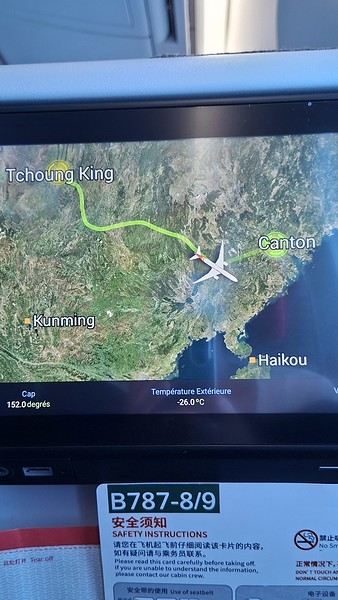
During my first two trips to China, we paid for everything in cash, but this time, we’re going all-in on Alipay and WeChat. I still brought the leftover change from previous trips—it might come in handy. At the metro station, they showed us a QR code to buy tickets via WeChat. There were probably machines and even a ticket counter, but we didn’t see them, and buying via WeChat was pretty simple. 8 yuan to Changshu Lu, which is 22 stops. So far, so good. Then, we had to find the hotel, which wasn’t on Google Maps, Maps.me, or Amap... Easy 😎! We found it without too much hassle, though. Dropped off our stuff and went out to eat. 55 yuan for two claypots with fish/eel, rice, cabbage, and purple eggplant. When we left, it was pouring. We grabbed our umbrellas and set off to explore the neighborhood: Enning Road (we’ll come back later to check out a specific spot), Shangxiajiu (the pedestrian shopping street), Baohua Road... The area is pretty diverse—one street to the next, it’s like stepping into a different world.

There weren’t many people around, probably because of the rain. We grabbed a quick street food dinner and went to bed—we were exhausted. We struggled to stay awake until 11 PM to adjust to the time change as quickly as possible. There’s a 6-hour time difference.
There wasn’t much room for improvisation on this trip—everything was planned in advance. Since August is peak season, I decided to book train tickets early, and once that was set, I reserved all the accommodations too. I got everything on Trip.com.
I bought the flight tickets back in March from Hainan Airlines. They were super expensive, but with these travel dates, I couldn’t exactly dream of a bargain!
I picked up e-SIMs valid for a month from Free just before departure: 10 € for the e-SIM + 19.90 € for a one-month plan with 35 GB of data abroad.
No need for a VPN with these e-SIMs, but D. still got one—a multi-device plan for 5 € with a discount from Let’s VPN, valid for a month. It was for evenings at the hotel on Wi-Fi to avoid burning through the 35 GB with video.
I downloaded Alipay, WeChat, Amap (Baidu Maps), and Trip.com. We also have Google Translate and Maps.me—absolute must-haves.
We’re ready to go!
I’ve been waiting for this day for nearly 15 years!! I travel a lot, but this one—this is MY TRIP 🙂 It’s been postponed so many times: because I wanted to do it with the right person, because I have a Turkish stamp in my passport and heard they don’t issue visas with that, because of COVID... and then China introduced a 30-day visa exemption, and that was the green light! Ugh, they forced us to take our vacation in August this year—far from ideal—but no more delays. Saturday, August 2, 2025: it’s finally the big day!
Days 1 and 2: We got dropped off at Charles de Gaulle at 9:30 AM. I supposedly checked in online, but only for the first flight and without getting the boarding pass... Might as well scrap online check-in in that case. So, we spent over an hour in line at the counter to get them. We didn’t have any checked luggage—just our backpacks as carry-ons—so this was a step we’d never had to deal with before, but whatever, it’s done. No wait at passport control, 5 minutes through security, a quick walk around the terminal, 10 minutes in the boarding area, and it was already time to board. Departure around 12:45 PM, arrival in Chongqing at 4:50 AM. We had a few hours of layover before our next flight. Went through immigration, connecting flight control, and security. Pro tip: check your next flight’s boarding gate right after immigration. We never saw it displayed again anywhere in the terminal.
The Free e-SIMs work—phew!
Took off at 9:30 AM, arrived in Guangzhou (Canton) at 11:20 AM in the rain. I love how Chongqing is translated as "Tchoung King" on the screens in the plane—very French!
During my first two trips to China, we paid for everything in cash, but this time, we’re going all-in on Alipay and WeChat. I still brought the leftover change from previous trips—it might come in handy. At the metro station, they showed us a QR code to buy tickets via WeChat. There were probably machines and even a ticket counter, but we didn’t see them, and buying via WeChat was pretty simple. 8 yuan to Changshu Lu, which is 22 stops. So far, so good. Then, we had to find the hotel, which wasn’t on Google Maps, Maps.me, or Amap... Easy 😎! We found it without too much hassle, though. Dropped off our stuff and went out to eat. 55 yuan for two claypots with fish/eel, rice, cabbage, and purple eggplant. When we left, it was pouring. We grabbed our umbrellas and set off to explore the neighborhood: Enning Road (we’ll come back later to check out a specific spot), Shangxiajiu (the pedestrian shopping street), Baohua Road... The area is pretty diverse—one street to the next, it’s like stepping into a different world.
There weren’t many people around, probably because of the rain. We grabbed a quick street food dinner and went to bed—we were exhausted. We struggled to stay awake until 11 PM to adjust to the time change as quickly as possible. There’s a 6-hour time difference.
Off on an adventure to Java (and a bit of Bali)
Hey there, community! Back this weekend, below is my travel journal from my adventure in Indonesia. Enjoy the read!!!
Day 1 - August 10, 2025 New life downloading for three weeks! And for that, Flo and I launched a public tender... A public tender? What’s that got to do with a travel journal???... Well, when you think about it, few destinations tick all the boxes for an August adventure: Meaning, finding a place that’s exotic in the middle of August, not too expensive, not too packed with tourists, warm but not *too* warm, with postcard-perfect landscapes, dreamy beaches, tasty cuisine with a hint of exoticism, friendly and welcoming locals, where you’re free to sleep under the stars among the mosquitos, take transport surrounded by chickens, and even eat from a pig trough if you feel like it—well, turns out it’s not that easy to find! I’d even say, given how thick the list of requirements is, there’s a big risk the tender could be declared unsuccessful for failing to meet just one criterion. Let’s just say the candidates better submit a rock-solid proposal!
After reviewing all the responses and presentations from the candidates, the obvious choice for us is... Indonesia! Except that trying to explore a country as vast as Indonesia and its 17,504 islands in less than five years is a bit like reading the summary of a Proust novel without taking the time to savor each of its 950 pages! Don’t worry, I won’t name them all here. Besides, do they even all have names? No! Only 7,870 have been named—their parents clearly ran out of ideas for the rest. Anyway, our society, which worships the "work more to earn more" mantra, unfortunately limits our adventure time. So we’ll only get to see a small part of Indonesia, and we’ll have to make a tough choice to head for the best of the best in this archipelago of over seventeen thousand islands. Each one has its own selling points: Sumatra, Sulawesi, Java, the Celebes, Bali, Borneo, Papua, Timor, the Moluccas... So many names that smell of adventure... Another tender, another list of requirements, another review of proposals... Drumroll... Splash splash... And the lucky winner is... Ta-da... Java, Bali’s big sister, where I’ve already been eight years ago... Java the programming language. The Java of Broadway. We’re gonna *do* the Java. Java the coffee. And yes, Java is also an island!
This island, four times smaller than France, is home to 136 million people, making it the most populated island in the world! Fun fact: Indonesia, with its 260 million inhabitants, is just shy of the podium for the world’s most populated countries, after the winning trio of India, China, and the United States. And it’s on this island of Java that you’ll find Jakarta, the (soon-to-be-former) capital and main airport of the country, where we’ll soon land after our nineteen-hour flight! Yep, nineteen hours! I mean, Indonesia in general—and Java in particular—is a *tad* farther than going on vacation to Grandma Yoyo’s! Not sure where it is? Easy. Grab a map. Plant your finger on the big island at the bottom right—aka Australia for those who struggle with geography—move it up two centimeters, and bam, welcome to Indonesia!
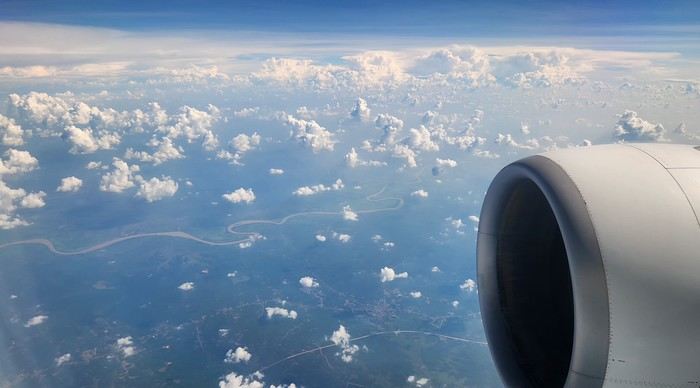
Nice transition, right? Because "Welcome to Indonesia" is exactly what the friendly flight attendant just said to me as we got off the plane! That’s it, our chakras are open, we’ve arrived at our (air)port. Time for rest, pool, cocktails, and a beach with our toes spread out... Wait, if you bought that, you clearly don’t know us yet! Since we still have energy to burn and need to adjust to the flight and time difference, we tackle the long administrative formalities to enter Indonesia, just to earn the right to hop in a 45-minute Grab taxi to the train station. The train station? What train station?... What do you usually do at a train station? Take a train, of course! Off we go for a three-hour train ride to Bandung, where we’ll officially start our adventure tomorrow after our first Indonesian night...
Unfortunately, we were a bit slow off the mark, which meant we missed the 6:25 PM train by two minutes. Oh well, we’ll have to wait until 11 PM. We take the opportunity to stretch our legs in Jakarta, soak up the atmosphere, and enjoy the delicious smells wafting from the *warungs*—those little typical street restaurants. A quick stop at the National Monument, a detour to a night market to devour our first *kwetiaw goreng* and *teh manis* for 60,000 rupiahs (that’s 3 € for two), and just like that, our penalty is lifted, and we’re allowed to hit the road again. Off to Bandung, where we arrive at 2 AM for... a *very* short night...
Day 1 - August 10, 2025 New life downloading for three weeks! And for that, Flo and I launched a public tender... A public tender? What’s that got to do with a travel journal???... Well, when you think about it, few destinations tick all the boxes for an August adventure: Meaning, finding a place that’s exotic in the middle of August, not too expensive, not too packed with tourists, warm but not *too* warm, with postcard-perfect landscapes, dreamy beaches, tasty cuisine with a hint of exoticism, friendly and welcoming locals, where you’re free to sleep under the stars among the mosquitos, take transport surrounded by chickens, and even eat from a pig trough if you feel like it—well, turns out it’s not that easy to find! I’d even say, given how thick the list of requirements is, there’s a big risk the tender could be declared unsuccessful for failing to meet just one criterion. Let’s just say the candidates better submit a rock-solid proposal!
After reviewing all the responses and presentations from the candidates, the obvious choice for us is... Indonesia! Except that trying to explore a country as vast as Indonesia and its 17,504 islands in less than five years is a bit like reading the summary of a Proust novel without taking the time to savor each of its 950 pages! Don’t worry, I won’t name them all here. Besides, do they even all have names? No! Only 7,870 have been named—their parents clearly ran out of ideas for the rest. Anyway, our society, which worships the "work more to earn more" mantra, unfortunately limits our adventure time. So we’ll only get to see a small part of Indonesia, and we’ll have to make a tough choice to head for the best of the best in this archipelago of over seventeen thousand islands. Each one has its own selling points: Sumatra, Sulawesi, Java, the Celebes, Bali, Borneo, Papua, Timor, the Moluccas... So many names that smell of adventure... Another tender, another list of requirements, another review of proposals... Drumroll... Splash splash... And the lucky winner is... Ta-da... Java, Bali’s big sister, where I’ve already been eight years ago... Java the programming language. The Java of Broadway. We’re gonna *do* the Java. Java the coffee. And yes, Java is also an island!
This island, four times smaller than France, is home to 136 million people, making it the most populated island in the world! Fun fact: Indonesia, with its 260 million inhabitants, is just shy of the podium for the world’s most populated countries, after the winning trio of India, China, and the United States. And it’s on this island of Java that you’ll find Jakarta, the (soon-to-be-former) capital and main airport of the country, where we’ll soon land after our nineteen-hour flight! Yep, nineteen hours! I mean, Indonesia in general—and Java in particular—is a *tad* farther than going on vacation to Grandma Yoyo’s! Not sure where it is? Easy. Grab a map. Plant your finger on the big island at the bottom right—aka Australia for those who struggle with geography—move it up two centimeters, and bam, welcome to Indonesia!
Nice transition, right? Because "Welcome to Indonesia" is exactly what the friendly flight attendant just said to me as we got off the plane! That’s it, our chakras are open, we’ve arrived at our (air)port. Time for rest, pool, cocktails, and a beach with our toes spread out... Wait, if you bought that, you clearly don’t know us yet! Since we still have energy to burn and need to adjust to the flight and time difference, we tackle the long administrative formalities to enter Indonesia, just to earn the right to hop in a 45-minute Grab taxi to the train station. The train station? What train station?... What do you usually do at a train station? Take a train, of course! Off we go for a three-hour train ride to Bandung, where we’ll officially start our adventure tomorrow after our first Indonesian night...
Unfortunately, we were a bit slow off the mark, which meant we missed the 6:25 PM train by two minutes. Oh well, we’ll have to wait until 11 PM. We take the opportunity to stretch our legs in Jakarta, soak up the atmosphere, and enjoy the delicious smells wafting from the *warungs*—those little typical street restaurants. A quick stop at the National Monument, a detour to a night market to devour our first *kwetiaw goreng* and *teh manis* for 60,000 rupiahs (that’s 3 € for two), and just like that, our penalty is lifted, and we’re allowed to hit the road again. Off to Bandung, where we arrive at 2 AM for... a *very* short night...
From Southern Shikoku, between land and sea, to the blue waters of Miyakojima and finally the Tokyo metropolis
From Southern Shikoku, between land and sea, to the blue waters of Miyakojima and finally Tokyo’s megacity
Hi everyone,
I have to admit, I really hesitated before deciding to write this travel journal... Writing one takes a lot of time and energy, and since this is my 4th trip, I wondered if it would even interest anyone other than myself (both for the discovery and the writing). But after a few people asked, "Are you going to write a journal?" and especially after rediscovering the joy of reading other travelers’ journals about Japan or elsewhere on this forum, I’ve decided to share my 4th installment in the Land of the Rising Sun here.
The itinerary: 27 full days, from late May to late June 2025, right in the middle of the rainy season, including:
-->13 days in Shikoku, from Kochi (Kochi Prefecture) to Matsuyama (Ehime Prefecture)
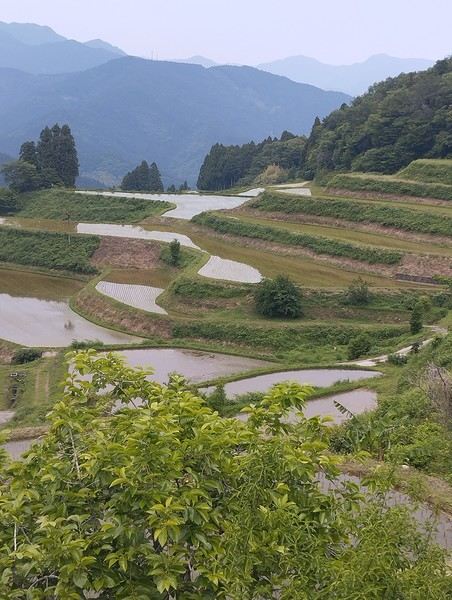
-->7 days in Miyakojima (Okinawa Prefecture)
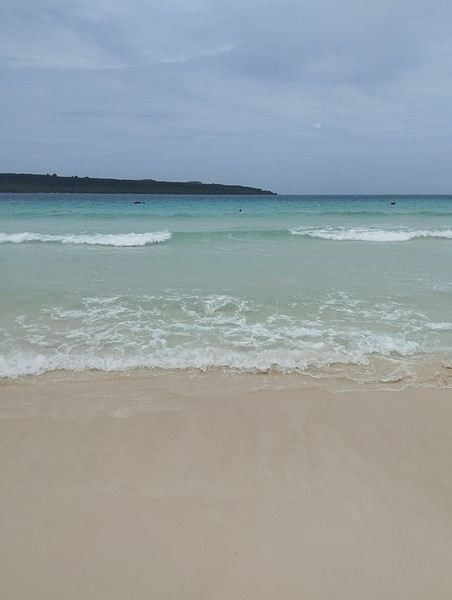
-->7 days in Tokyo
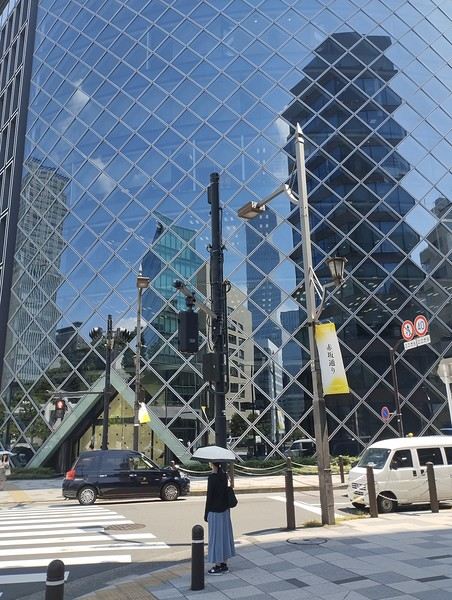
The trip was decided on fairly last-minute again this year.
Since I regularly check flight prices to track fluctuations for this destination even without concrete plans, stumbling upon a slightly cheaper direct flight (900 €) than what I’d seen in previous months (around 1,200–1,400 € on average) for a Paris-Tokyo route with Japanese airline ANA was too tempting to resist the urge to return to this enchanting country. After much hesitation between exploring the San’in region (Matsue, Tottori, Yamaguchi) and Southern Shikoku, the decision was made—I took the plunge! The ticket is booked: Paris to Kochi with a layover in Tokyo, all with ANA, the airline I’d been dreaming of... for 1,120 € per person. Okay, it’s not cheap, but it’s better than in 2023.
Departure in 2 weeks! Now I just have to get everything ready!
Intense prep work over these next 2 weeks to:
finalize a more precise itinerary and reach an agreement—yep, because even though we both love Japan, our preferences differ slightly, and we have to choose between exploring new places or revisiting beloved spots... decide how much time to spend in each area without rushing while still exploring research places that might interest us and watch videos about Japan book accommodations: yes, it’s possible to do this on the spot, but last year, we realized that last-minute options were pretty expensive, so we’re booking ahead—though we’ll keep a few options open in case better deals pop up later reserve rental cars order yen check the weather regularly and wonder if choosing the *tsuyu* (rainy season) was really a good idea—are we going to be drenched the whole time???
"What hard work," you might say! Going to Japan for a month—what a tough life! Despite this being my 4th trip, the excitement is just as intense as the first time.
The only small downside is that when we booked the flight, there weren’t many seats left, so we’re only sitting together on the international return flight. Plus, on the way there, we have middle seats. Another lingering question: what French-language films will be available? According to the internet, the selection seems limited. Oh well, these are just minor details—it’s already time to fly! PS: I’ll be posting slowly and irregularly... so for those interested, be patient, and maybe set an alert...
Hi everyone,
I have to admit, I really hesitated before deciding to write this travel journal... Writing one takes a lot of time and energy, and since this is my 4th trip, I wondered if it would even interest anyone other than myself (both for the discovery and the writing). But after a few people asked, "Are you going to write a journal?" and especially after rediscovering the joy of reading other travelers’ journals about Japan or elsewhere on this forum, I’ve decided to share my 4th installment in the Land of the Rising Sun here.
The itinerary: 27 full days, from late May to late June 2025, right in the middle of the rainy season, including:
-->13 days in Shikoku, from Kochi (Kochi Prefecture) to Matsuyama (Ehime Prefecture)
-->7 days in Miyakojima (Okinawa Prefecture)
-->7 days in Tokyo
The trip was decided on fairly last-minute again this year.
Since I regularly check flight prices to track fluctuations for this destination even without concrete plans, stumbling upon a slightly cheaper direct flight (900 €) than what I’d seen in previous months (around 1,200–1,400 € on average) for a Paris-Tokyo route with Japanese airline ANA was too tempting to resist the urge to return to this enchanting country. After much hesitation between exploring the San’in region (Matsue, Tottori, Yamaguchi) and Southern Shikoku, the decision was made—I took the plunge! The ticket is booked: Paris to Kochi with a layover in Tokyo, all with ANA, the airline I’d been dreaming of... for 1,120 € per person. Okay, it’s not cheap, but it’s better than in 2023.
Departure in 2 weeks! Now I just have to get everything ready!
Intense prep work over these next 2 weeks to:
finalize a more precise itinerary and reach an agreement—yep, because even though we both love Japan, our preferences differ slightly, and we have to choose between exploring new places or revisiting beloved spots... decide how much time to spend in each area without rushing while still exploring research places that might interest us and watch videos about Japan book accommodations: yes, it’s possible to do this on the spot, but last year, we realized that last-minute options were pretty expensive, so we’re booking ahead—though we’ll keep a few options open in case better deals pop up later reserve rental cars order yen check the weather regularly and wonder if choosing the *tsuyu* (rainy season) was really a good idea—are we going to be drenched the whole time???
"What hard work," you might say! Going to Japan for a month—what a tough life! Despite this being my 4th trip, the excitement is just as intense as the first time.
The only small downside is that when we booked the flight, there weren’t many seats left, so we’re only sitting together on the international return flight. Plus, on the way there, we have middle seats. Another lingering question: what French-language films will be available? According to the internet, the selection seems limited. Oh well, these are just minor details—it’s already time to fly! PS: I’ll be posting slowly and irregularly... so for those interested, be patient, and maybe set an alert...
Swedish Lapland - Padjelantaledden solo trek
A travel journal—it’s been a while!
I must say, my personal situation has "changed a bit" since my last journals (my 3 kids are grown up + a divorce finalized in early 2021). So, no more long-haul family trips; now I’m focusing on multi-day hikes for my vacations. I found a hiking buddy in 2021 to join me on the Laugavegur trek in Iceland, but this year, no one was available.
That’s how the idea of a solo trek in Lapland took root—a region I’ve been dreaming about ever since I read Marie Lefevre’s 2012 journal on the topic.
Marie, who I hiked with for the first time in 2015 during my very first multi-day trek, and whom I can never thank enough for sharing her knowledge and saving me so much time.
To build my confidence for this solo trek, I hiked around Cantal in May (okay, I’m capable of spending nights alone in the middle of nowhere without being overly terrified) and camped in the Mercantour in July, where a massive storm made me realize I still had room for improvement in managing wet conditions...
After some research, I bought 2 Nylofume bags—large, ultra-lightweight ones to protect my gear in my backpack—and a set of 4 Aloksak bags in different sizes for my passport, camera, battery, etc. (and I’m so glad I did!!)
Well, I think I’m all set...
My 16/08 - Day 1 - Ritsem – Gisuris (well, almost) Wed 17/08 – Day 2 - Partly in the tent + minimal progress toward Gisuris Thu 18/08 – Day 3 - Gisuris – Laddejakha (23 km) Fri 19/08 – Day 4 – Laddejakha – Arasluokta (13 km) Sat 20/08 - Day 5 - Arasluokta – Staloluokta (12 km) Sun 21/08 – Day 6 - Staloluokta – Duottar (18 km) Mon 22/08 Day 7 - Duottar – Dareluoppal (10 km) Sammarlappa (15.3 km) Tue 23/08 - Day 8 - Sammarlappa – Tarrekaise (12 km) + halfway to Tarrekaise-Nunjes (approx. 3 km) Wed 24/08 – Day 9 – Finish Tarrekaise-Nunjes (approx. 4 km) Kvikkjokk (12.6 km) Thu 25/08 and Fri 26/08 – Around Kvikkjokk Food and gear summary
I must say, my personal situation has "changed a bit" since my last journals (my 3 kids are grown up + a divorce finalized in early 2021). So, no more long-haul family trips; now I’m focusing on multi-day hikes for my vacations. I found a hiking buddy in 2021 to join me on the Laugavegur trek in Iceland, but this year, no one was available.
That’s how the idea of a solo trek in Lapland took root—a region I’ve been dreaming about ever since I read Marie Lefevre’s 2012 journal on the topic.
Marie, who I hiked with for the first time in 2015 during my very first multi-day trek, and whom I can never thank enough for sharing her knowledge and saving me so much time.
To build my confidence for this solo trek, I hiked around Cantal in May (okay, I’m capable of spending nights alone in the middle of nowhere without being overly terrified) and camped in the Mercantour in July, where a massive storm made me realize I still had room for improvement in managing wet conditions...
After some research, I bought 2 Nylofume bags—large, ultra-lightweight ones to protect my gear in my backpack—and a set of 4 Aloksak bags in different sizes for my passport, camera, battery, etc. (and I’m so glad I did!!)
Well, I think I’m all set...
My 16/08 - Day 1 - Ritsem – Gisuris (well, almost) Wed 17/08 – Day 2 - Partly in the tent + minimal progress toward Gisuris Thu 18/08 – Day 3 - Gisuris – Laddejakha (23 km) Fri 19/08 – Day 4 – Laddejakha – Arasluokta (13 km) Sat 20/08 - Day 5 - Arasluokta – Staloluokta (12 km) Sun 21/08 – Day 6 - Staloluokta – Duottar (18 km) Mon 22/08 Day 7 - Duottar – Dareluoppal (10 km) Sammarlappa (15.3 km) Tue 23/08 - Day 8 - Sammarlappa – Tarrekaise (12 km) + halfway to Tarrekaise-Nunjes (approx. 3 km) Wed 24/08 – Day 9 – Finish Tarrekaise-Nunjes (approx. 4 km) Kvikkjokk (12.6 km) Thu 25/08 and Fri 26/08 – Around Kvikkjokk Food and gear summary
World's Felines: August 2025 Photo Contest
Hi everyone,
Here’s the theme for August... the world’s felines.
Yep, wildlife photography! 😺
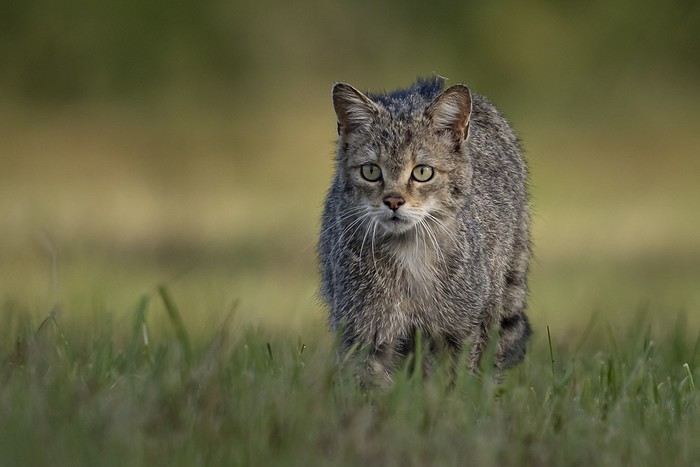 Forest cat
So, this theme isn’t exactly a "travel invitation," but coming up with a new one is quite a puzzle 😅. During February’s “white” theme discussion, we had pages of cats, so you should be inspired 😸. I won’t be restrictive—wild felines, domestic cats, and even those in zoos (though I’m not a fan) will be accepted. Plus, engravings, paintings, statues, or any other representations of felines fit the theme. The Sphinx is also welcome ;).
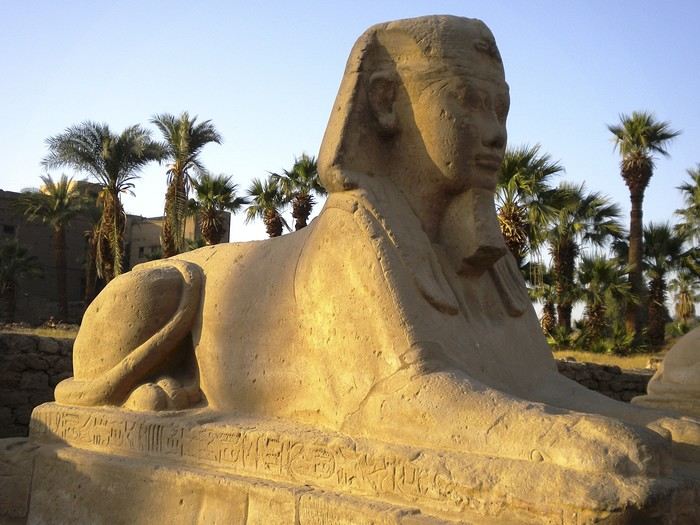
Practical details:
Participation: Each VF member can submit up to 3 photos, until Monday, August 25th at 11:59 PM Paris time. Each photo must be posted in a separate message, with its number (1, 2, or 3). Don’t forget to add a little explanation (comment, location, etc.).
Voting: Each VF member can vote for the 3 photos they consider the best, based on their own criteria and the theme.
Voting will take place from Tuesday, August 26th to Saturday, August 30th at 11:59 PM Paris time.
Selected photos will be ranked in order of preference: - 1st photo: 3 points - 2nd photo: 2 points - 3rd photo: 1 point
The winner is the photographer with the most points.
Results will be published on August 31st. In case of a tie, the number of first-place votes will decide. The winner will have the honor of organizing September 2025’s contest.
Photos that have already been nominated (1st, 2nd, or 3rd place) in another contest are not eligible for this one.
This thread is exclusively for contest submissions. Any discussions or comments should be posted here.
Forest catSo, this theme isn’t exactly a "travel invitation," but coming up with a new one is quite a puzzle 😅. During February’s “white” theme discussion, we had pages of cats, so you should be inspired 😸. I won’t be restrictive—wild felines, domestic cats, and even those in zoos (though I’m not a fan) will be accepted. Plus, engravings, paintings, statues, or any other representations of felines fit the theme. The Sphinx is also welcome ;).
Practical details:
Participation: Each VF member can submit up to 3 photos, until Monday, August 25th at 11:59 PM Paris time. Each photo must be posted in a separate message, with its number (1, 2, or 3). Don’t forget to add a little explanation (comment, location, etc.).
Voting: Each VF member can vote for the 3 photos they consider the best, based on their own criteria and the theme.
Voting will take place from Tuesday, August 26th to Saturday, August 30th at 11:59 PM Paris time.
Selected photos will be ranked in order of preference: - 1st photo: 3 points - 2nd photo: 2 points - 3rd photo: 1 point
The winner is the photographer with the most points.
Results will be published on August 31st. In case of a tie, the number of first-place votes will decide. The winner will have the honor of organizing September 2025’s contest.
Photos that have already been nominated (1st, 2nd, or 3rd place) in another contest are not eligible for this one.
This thread is exclusively for contest submissions. Any discussions or comments should be posted here.
Croatia, Montenegro – two victims of overtourism?
Mid-June, two Auvergnats on the starting blocks—off we go to the former Yugoslavia!
We’d already explored some nooks and crannies of northern Croatia back in 2019, so we’re keeping the momentum going by planning a trip to the south of the country and then Montenegro.
On the way back, we’ll drift into Bosnia-Herzegovina just to mix things up a bit!
We’re a little unsure about what to expect in terms of tourist crowds.
Dubrovnik has a reputation for being the hardest-hit city by overtourism, and Kotor and the whole Dalmatian coast aren’t exactly empty...
Luckily, most European countries haven’t started school holidays yet, and some measures seem to have been put in place to limit the flow (like restrictions on the number of cruise ships allowed to dock at the same time).
Maybe we’ll manage to escape the promised hell?
For now, we’re slamming the doors of the Scirocco and heading off to our first stop: northern Italy!
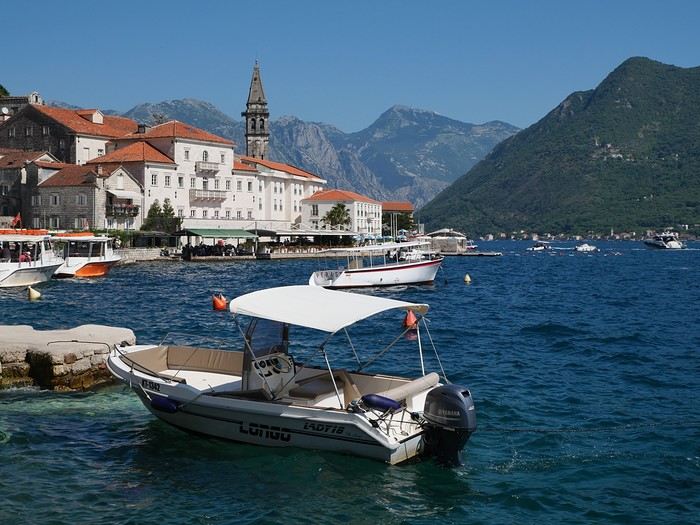
On the way back, we’ll drift into Bosnia-Herzegovina just to mix things up a bit!
We’re a little unsure about what to expect in terms of tourist crowds.
Dubrovnik has a reputation for being the hardest-hit city by overtourism, and Kotor and the whole Dalmatian coast aren’t exactly empty...
Luckily, most European countries haven’t started school holidays yet, and some measures seem to have been put in place to limit the flow (like restrictions on the number of cruise ships allowed to dock at the same time).
Maybe we’ll manage to escape the promised hell?
For now, we’re slamming the doors of the Scirocco and heading off to our first stop: northern Italy!
Meghalaya: A Very Rainy Week
Friday, April 18
Night in Guwahati
Before leaving the guesthouse, I drop off a small bag that I’ll pick up when I return.
I take a tuk-tuk at 7:40 AM to get to the sumo departure point for Shillong, the capital of Meghalaya.
My bag is loaded onto the roof, my seat is assigned, and we have to wait for the car to fill up.
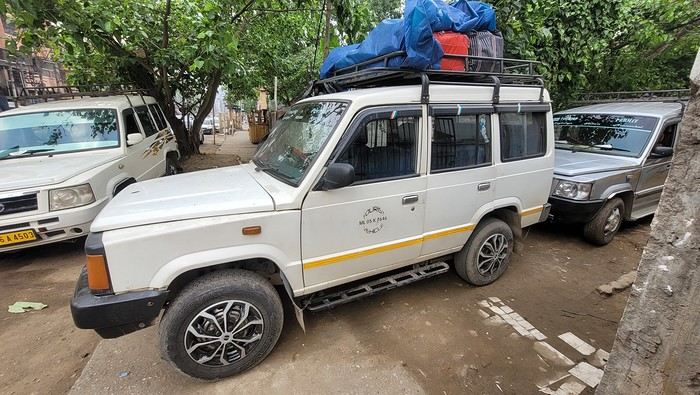
While waiting, I watch the street come to life. I have fun photographing the different modes of transport passing by.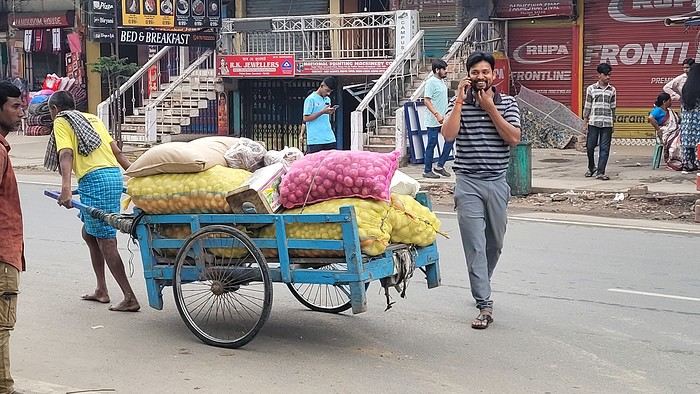
Time passes faster when you’re occupied. We leave at 8:20 AM, and the driver does door-to-door service along the way. We make our first stop for 25 minutes at 9:10 AM, then another for breakfast at 10:10 AM. The scenery is very different from Assam and Nagaland. We drive alongside a pine forest and a large lake. There are beautiful viewpoints, but the driver isn’t stopping for sightseeing, so I have to settle for looking through the car windows.
We finally arrive in Shillong at 11:45 AM. The driver stops in the middle of nowhere, so I have to walk up the street to find a taxi. I flag one down, and he agrees to take me to my new guesthouse, the Rockski Boutique Bed & Breakfast. No sooner do I arrive than a storm with a heavy downpour welcomes me. When I arrived in Guwahati at the end of October, I’d booked a guide with a car for this week. There’s no public transport to get from village to village, so I had to take a car to visit. The tourism manager, Sachin, sent me a message to let me know that the driver, Welbis, will pick me up tomorrow morning at 8 AM. The temperature is much cooler here—only 19°C. At 2:30 PM, the rain stops, and I take the opportunity to explore the city. I start with the cathedral. Today is Good Friday, so I’m going to see how it’s celebrated here. Meghalaya is a Catholic state. The cathedral isn’t far from the guesthouse—it’s huge and all blue.
I arrive during mass, and it’s impossible to enter—the faithful are numerous outside in the parking lot. Giant screens broadcast the ceremony.

While waiting, I watch the street come to life. I have fun photographing the different modes of transport passing by.
Time passes faster when you’re occupied. We leave at 8:20 AM, and the driver does door-to-door service along the way. We make our first stop for 25 minutes at 9:10 AM, then another for breakfast at 10:10 AM. The scenery is very different from Assam and Nagaland. We drive alongside a pine forest and a large lake. There are beautiful viewpoints, but the driver isn’t stopping for sightseeing, so I have to settle for looking through the car windows.
We finally arrive in Shillong at 11:45 AM. The driver stops in the middle of nowhere, so I have to walk up the street to find a taxi. I flag one down, and he agrees to take me to my new guesthouse, the Rockski Boutique Bed & Breakfast. No sooner do I arrive than a storm with a heavy downpour welcomes me. When I arrived in Guwahati at the end of October, I’d booked a guide with a car for this week. There’s no public transport to get from village to village, so I had to take a car to visit. The tourism manager, Sachin, sent me a message to let me know that the driver, Welbis, will pick me up tomorrow morning at 8 AM. The temperature is much cooler here—only 19°C. At 2:30 PM, the rain stops, and I take the opportunity to explore the city. I start with the cathedral. Today is Good Friday, so I’m going to see how it’s celebrated here. Meghalaya is a Catholic state. The cathedral isn’t far from the guesthouse—it’s huge and all blue.
I arrive during mass, and it’s impossible to enter—the faithful are numerous outside in the parking lot. Giant screens broadcast the ceremony.
West USA Road Trip August 2022
Hello everyone,
I’m starting a travel journal about the amazing round trip I took in August 2022 with a big circuit through the US West.
Here’s what I posted on another travel forum back when VoyageForum hadn’t yet regained its freedom. 😉
Hello!
We got back yesterday in the middle of the afternoon, and here’s a quick first take on the 2022 round trip.
Has America changed? You could say that, yeah. For better? For worse? Who knows. A massive circuit—nearly 8,000 kilometers, actually around 5,000–6,000 miles.
Round-trip flights went smoothly, except for Air France on the way back, which let a rather large dog in the cabin with an owner who let it roam around the plane. Cool, Air France... Outrageous!
The rough itinerary: Salt Lake City. Jackson Hole–Grand Teton. Yellowstone. Cody. Rock Springs. Moab–Arches–Canyonlands. Monument Valley. Grand Canyon. Bryce Canyon. Zion Park. Las Vegas. Death Valley. Mammoth Lakes. Tioga Road. Mariposa. Yosemite Valley. San Francisco.
Tourists on site—a sociological study:
Italians: Always nice but just as loud as ever! Hispanics: Same as the Italians, just a different language. Germans: *Ein, zwei, ach mein Gott!* Order and discipline! Americans: Still no manners whatsoever. Pathetic. I’m only talking about the tourists, not the locals who work there. Quebecers: Pure joy! English-speaking Canadians: Same as the Americans. Asians: For the Japanese, it’s perfect. But the others from the Middle Kingdom... Let’s not start a war over this. There’s already Ukraine going on. And yet... Israelis: Still no manners. The Kibbutz kids are the bane of this country. French: Some excellent, some very good, some good, and some... not much.
Note that tourists in the northern part of the trip were much better behaved than those in the south. "Hello," "Goodbye," offering a hand? Etc. Few Asians in Grand Teton and Yellowstone. Lots of locals. The same goes for hotel staff in the northern part—more attentive. Really cool!
On the other hand, we were pretty surprised not to encounter any African-American locals in Montana, Wyoming, Utah, or even Arizona—whether tourists or employees. It’s quite striking, to be honest.
The Hotels:
Holiday Inn - 206 South West Temple, Salt Lake City, UT 84101, United States. A modern but soulless hotel. Basically, a place to pass through. Minimal breakfast.
Miller Park Lodge - 155 North Jackson Street - Jackson Hole, Wyoming. Not a hotel but a luxury motel. 750 € for two nights!! No breakfast. Huge room where you could hold a tea dance!! Well-located. No staff. Only room of the month-long stay that was fully redone during those two days.
Best Western Weston Inn. 103 Gibbon Avenue, West Yellowstone, MT 59758 Well-located, not far from the park entrance. Minimal breakfast. Friendly staff. Room refreshed every two days.
Best Western Sunset Inn. 1601 8th St, Cody, 82414-4134 Very good. Quiet. Good breakfast. Friendly staff.
Baymont by Wyndham 2717 Dewar Drive, Rock Springs, WY 82901 Very good. Quiet. Good breakfast. Friendly staff. Too many pets that should be "not allowed." Hello, hygiene!
Wingate by Wyndham Moab. 126 South Highway 191, Moab, 84532 End of the "family" hotels. Start of the tourist hotels. Too many pets that should be "not allowed." Hello, hygiene! Minimal breakfast.
Hampton Inn Kayenta. US Highway 160, Kayenta, AZ 86033, United States A stopover hotel run by the Navajos. Friendly staff wearing masks. Lots of people. Too many pets that should be "not allowed." Hello, hygiene! Minimal breakfast.
La Quinta by Wyndham Williams. 1100 Cataract Lake Rd, Williams, AZ 86046, United States Finally, Route 66 for 500 meters! The staff is there. Nothing more. Too many pets that should be "not allowed." Hello, hygiene! Minimal breakfast.
BEST WESTERN PLUS Ruby's Inn. 26 South Main Street, Bryce Canyon City, UT 84764, United States A factory!!! Great Hispanic or Romanian staff! A liquor store in the hotel! Awesome! Very good breakfast, but go early because the crowd—and the jerks—are there! Too many pets that should be "not allowed." Hello, hygiene!
BEST WESTERN Casino Royale - 3411 Las Vegas Boulevard South, Strip, Las Vegas Good hotel at a reasonable price. No breakfast, but Denny’s is next door. Quiet hotel despite the casino. Friendly staff. No memory of seeing any pets!
Shilo Inn Mammoth Lake. 2963 Main Street, Mammoth Lake Disastrous! Ineffective security system. Fire doors propped open with wooden wedges. Tiny breakfast room. No staff in the room. Tables not cleaned. Minimal breakfast. Gross pool. Rooms need work. No, the whole hotel needs to be redone. They say they’re renovating. They’d be better off tearing it down. Too many pets that should be "not allowed." Hello, hygiene! Very bad memory. Apparently, there’s supposed to be staff in this hotel.
Quality Inn Yosemite Valley Gateway. 4994 Bullion Street, Mariposa, CA 95338 Hotel or motel? Booking should clean up its listings! No room refresh! Minimal breakfast. The staff is there. Nothing more.
Comfort Inn by the Bay. 775 Van Ness Avenue, Marina District, San Francisco No room refresh in four days! Minimal breakfast. Friendly and helpful staff. Well-located. Depends on what for, but well-located.
And then there are those who steal apples from the breakfast to put in their bags in the morning, those who fill up their famous US water bottles with orange juice from the breakfast pump, those who don’t clear their tables—I could go on. And also, those who don’t say hello or respond to a greeting!
Met some super nice French people (in the northern parks)! They’ll recognize themselves!
And the magic phrase that opens doors with Americans: "Do you speak French? OK, good!" Laughter guaranteed!
Don’t try that with Asians who run souvenir shops in big cities—they have no sense of humor unless it’s about the color of the green bill.
The park rangers are always available! Great!
And 5,000 photos to sort and organize, plus a few hours of dashcam videos!
See you soon.
Until the next update...
I’m starting a travel journal about the amazing round trip I took in August 2022 with a big circuit through the US West.
Here’s what I posted on another travel forum back when VoyageForum hadn’t yet regained its freedom. 😉
Hello!
We got back yesterday in the middle of the afternoon, and here’s a quick first take on the 2022 round trip.
Has America changed? You could say that, yeah. For better? For worse? Who knows. A massive circuit—nearly 8,000 kilometers, actually around 5,000–6,000 miles.
Round-trip flights went smoothly, except for Air France on the way back, which let a rather large dog in the cabin with an owner who let it roam around the plane. Cool, Air France... Outrageous!
The rough itinerary: Salt Lake City. Jackson Hole–Grand Teton. Yellowstone. Cody. Rock Springs. Moab–Arches–Canyonlands. Monument Valley. Grand Canyon. Bryce Canyon. Zion Park. Las Vegas. Death Valley. Mammoth Lakes. Tioga Road. Mariposa. Yosemite Valley. San Francisco.
Tourists on site—a sociological study:
Italians: Always nice but just as loud as ever! Hispanics: Same as the Italians, just a different language. Germans: *Ein, zwei, ach mein Gott!* Order and discipline! Americans: Still no manners whatsoever. Pathetic. I’m only talking about the tourists, not the locals who work there. Quebecers: Pure joy! English-speaking Canadians: Same as the Americans. Asians: For the Japanese, it’s perfect. But the others from the Middle Kingdom... Let’s not start a war over this. There’s already Ukraine going on. And yet... Israelis: Still no manners. The Kibbutz kids are the bane of this country. French: Some excellent, some very good, some good, and some... not much.
Note that tourists in the northern part of the trip were much better behaved than those in the south. "Hello," "Goodbye," offering a hand? Etc. Few Asians in Grand Teton and Yellowstone. Lots of locals. The same goes for hotel staff in the northern part—more attentive. Really cool!
On the other hand, we were pretty surprised not to encounter any African-American locals in Montana, Wyoming, Utah, or even Arizona—whether tourists or employees. It’s quite striking, to be honest.
The Hotels:
Holiday Inn - 206 South West Temple, Salt Lake City, UT 84101, United States. A modern but soulless hotel. Basically, a place to pass through. Minimal breakfast.
Miller Park Lodge - 155 North Jackson Street - Jackson Hole, Wyoming. Not a hotel but a luxury motel. 750 € for two nights!! No breakfast. Huge room where you could hold a tea dance!! Well-located. No staff. Only room of the month-long stay that was fully redone during those two days.
Best Western Weston Inn. 103 Gibbon Avenue, West Yellowstone, MT 59758 Well-located, not far from the park entrance. Minimal breakfast. Friendly staff. Room refreshed every two days.
Best Western Sunset Inn. 1601 8th St, Cody, 82414-4134 Very good. Quiet. Good breakfast. Friendly staff.
Baymont by Wyndham 2717 Dewar Drive, Rock Springs, WY 82901 Very good. Quiet. Good breakfast. Friendly staff. Too many pets that should be "not allowed." Hello, hygiene!
Wingate by Wyndham Moab. 126 South Highway 191, Moab, 84532 End of the "family" hotels. Start of the tourist hotels. Too many pets that should be "not allowed." Hello, hygiene! Minimal breakfast.
Hampton Inn Kayenta. US Highway 160, Kayenta, AZ 86033, United States A stopover hotel run by the Navajos. Friendly staff wearing masks. Lots of people. Too many pets that should be "not allowed." Hello, hygiene! Minimal breakfast.
La Quinta by Wyndham Williams. 1100 Cataract Lake Rd, Williams, AZ 86046, United States Finally, Route 66 for 500 meters! The staff is there. Nothing more. Too many pets that should be "not allowed." Hello, hygiene! Minimal breakfast.
BEST WESTERN PLUS Ruby's Inn. 26 South Main Street, Bryce Canyon City, UT 84764, United States A factory!!! Great Hispanic or Romanian staff! A liquor store in the hotel! Awesome! Very good breakfast, but go early because the crowd—and the jerks—are there! Too many pets that should be "not allowed." Hello, hygiene!
BEST WESTERN Casino Royale - 3411 Las Vegas Boulevard South, Strip, Las Vegas Good hotel at a reasonable price. No breakfast, but Denny’s is next door. Quiet hotel despite the casino. Friendly staff. No memory of seeing any pets!
Shilo Inn Mammoth Lake. 2963 Main Street, Mammoth Lake Disastrous! Ineffective security system. Fire doors propped open with wooden wedges. Tiny breakfast room. No staff in the room. Tables not cleaned. Minimal breakfast. Gross pool. Rooms need work. No, the whole hotel needs to be redone. They say they’re renovating. They’d be better off tearing it down. Too many pets that should be "not allowed." Hello, hygiene! Very bad memory. Apparently, there’s supposed to be staff in this hotel.
Quality Inn Yosemite Valley Gateway. 4994 Bullion Street, Mariposa, CA 95338 Hotel or motel? Booking should clean up its listings! No room refresh! Minimal breakfast. The staff is there. Nothing more.
Comfort Inn by the Bay. 775 Van Ness Avenue, Marina District, San Francisco No room refresh in four days! Minimal breakfast. Friendly and helpful staff. Well-located. Depends on what for, but well-located.
And then there are those who steal apples from the breakfast to put in their bags in the morning, those who fill up their famous US water bottles with orange juice from the breakfast pump, those who don’t clear their tables—I could go on. And also, those who don’t say hello or respond to a greeting!
Met some super nice French people (in the northern parks)! They’ll recognize themselves!
And the magic phrase that opens doors with Americans: "Do you speak French? OK, good!" Laughter guaranteed!
Don’t try that with Asians who run souvenir shops in big cities—they have no sense of humor unless it’s about the color of the green bill.
The park rangers are always available! Great!
And 5,000 photos to sort and organize, plus a few hours of dashcam videos!
See you soon.
Until the next update...
Zambia in Summer 2024 – Self-Drive Trip
Well, here we go,
despite the lack of info on Zambia, I managed to pull off this pretty special trip.
I’d posted asking for tips but got very few replies. So I leaned heavily on Giradhino’s travel journal to plan the route.
The context: After visiting Kenya, then Namibia, then Botswana, I wanted to see another Southern African country—hence Zambia. This time, we’re two couples: us (of course) and our friends we’ve traveled with to the last two countries mentioned. The idea was to do a self-drive trip, picking up a 4x4 at the airport and figuring it out as we went.
We rented our fully equipped vehicle from Hemingways, an agency in Livingstone. Great agency (really), I’ll talk more about them later. It came with rooftop tents and all the gear for cooking and everything... However, our goal was to sleep in lodges and only use the tents as a last resort. Mission accomplished—we never even unfolded the tents. Guess we’re getting old 🙂
The route (summary): Lusaka - Kasanka NP - Bangweulu NP - Mutinondo - Kapishya - North Luangwa - South Luangwa and back to Lusaka.
That said, let’s hit the road for this travel journal of a pretty lively trip. Reminder: I’m more of a filmmaker, so I’ve got tons of footage but very few photos. The ones I have were taken on my phone, so they’re not great quality. My wife’s the one who handles that side of things.
Day 1:
At 9 a.m. sharp (or close enough), we leave the Lyon area, heading to Paris CDG. Our flight’s at 9:30 p.m., but it’s a busy Saturday with holiday traffic, so we play it safe to avoid jams—especially since the Olympics (hosted in Paris, in case you didn’t know) are causing extra traffic issues.
We’re relaxed and happy to be on our way. The drive goes smoothly. We take the eastern route around Paris to reach a hotel with parking at a better price than the airport lots. We leave the car there, and a shuttle takes us to Terminal 2. Bad luck—we’re actually flying from Terminal 1! The transfer between terminals is quick, though, so no stress.
After the usual formalities (with Rwandair), we end up in the Duty Free.
A rare rant-free moment: Usually, I let off steam in my travel journals now and then, but this time it’s the opposite. I had a terrible memory of CDG and had been avoiding it for years. But this time—Olympics effect? A big change? What a pleasant surprise! The staff were plentiful and super friendly at every pre-flight step, making everything easier. Comfortable seats for waiting to board. Well done, CDG!
We buy Ricard, Jack Daniel’s, and Get 27 to handle any situation that might come up. We board on time, and that’s when our adventures with Rwandair really begin. Yep, the first hiccup!
We’d booked our tickets back in October and (since we don’t hold back!) had paid extra for preferred seats on all our flights. Since October, we’d received emails about schedule changes—just a few minutes here and there. Unfortunately, we never got an email saying that *on top of* the schedule change, the plane’s configuration had also changed. So when we boarded with our seats (all four of us together at row 25), we were furious to see that the preferred seats were now row 23. We’d been *completely* scammed. We’d paid extra to end up in seats we’d been trying to avoid! You could say Rwandair double-dipped on the same seats. What a rip-off! We tried to negotiate an upgrade, but the flight was full. So our flight to Kigali started with a real sense of anger.
The +: We’re on our way The -: Rwandair
The context: After visiting Kenya, then Namibia, then Botswana, I wanted to see another Southern African country—hence Zambia. This time, we’re two couples: us (of course) and our friends we’ve traveled with to the last two countries mentioned. The idea was to do a self-drive trip, picking up a 4x4 at the airport and figuring it out as we went.
We rented our fully equipped vehicle from Hemingways, an agency in Livingstone. Great agency (really), I’ll talk more about them later. It came with rooftop tents and all the gear for cooking and everything... However, our goal was to sleep in lodges and only use the tents as a last resort. Mission accomplished—we never even unfolded the tents. Guess we’re getting old 🙂
The route (summary): Lusaka - Kasanka NP - Bangweulu NP - Mutinondo - Kapishya - North Luangwa - South Luangwa and back to Lusaka.
That said, let’s hit the road for this travel journal of a pretty lively trip. Reminder: I’m more of a filmmaker, so I’ve got tons of footage but very few photos. The ones I have were taken on my phone, so they’re not great quality. My wife’s the one who handles that side of things.
Day 1:
At 9 a.m. sharp (or close enough), we leave the Lyon area, heading to Paris CDG. Our flight’s at 9:30 p.m., but it’s a busy Saturday with holiday traffic, so we play it safe to avoid jams—especially since the Olympics (hosted in Paris, in case you didn’t know) are causing extra traffic issues.
We’re relaxed and happy to be on our way. The drive goes smoothly. We take the eastern route around Paris to reach a hotel with parking at a better price than the airport lots. We leave the car there, and a shuttle takes us to Terminal 2. Bad luck—we’re actually flying from Terminal 1! The transfer between terminals is quick, though, so no stress.
After the usual formalities (with Rwandair), we end up in the Duty Free.
A rare rant-free moment: Usually, I let off steam in my travel journals now and then, but this time it’s the opposite. I had a terrible memory of CDG and had been avoiding it for years. But this time—Olympics effect? A big change? What a pleasant surprise! The staff were plentiful and super friendly at every pre-flight step, making everything easier. Comfortable seats for waiting to board. Well done, CDG!
We buy Ricard, Jack Daniel’s, and Get 27 to handle any situation that might come up. We board on time, and that’s when our adventures with Rwandair really begin. Yep, the first hiccup!
We’d booked our tickets back in October and (since we don’t hold back!) had paid extra for preferred seats on all our flights. Since October, we’d received emails about schedule changes—just a few minutes here and there. Unfortunately, we never got an email saying that *on top of* the schedule change, the plane’s configuration had also changed. So when we boarded with our seats (all four of us together at row 25), we were furious to see that the preferred seats were now row 23. We’d been *completely* scammed. We’d paid extra to end up in seats we’d been trying to avoid! You could say Rwandair double-dipped on the same seats. What a rip-off! We tried to negotiate an upgrade, but the flight was full. So our flight to Kigali started with a real sense of anger.
The +: We’re on our way The -: Rwandair
Grand tour of Argentina March 2025
My buddy Christian and I (Patrick) are off for 28 days in Argentina in March.
We’ve already shared several trips as a duo (Bolivia Peru, Namibia, Laos, Costa Rica).
Since we’re starting from the idea that at our age (65) we won’t be coming back here—there are just too many other corners of the world to discover—we did the "grand tour" of Argentina, with 6 domestic flights to make the most of our 28 days.
Here are our stops:
1) Departure from Brussels to Buenos Aires via Madrid
2) Arrival and first contact with Buenos Aires
3) Early morning flight to Ushuaia. Boat trip on the Beagle Channel
4) Ushuaia: hikes in Tierra del Fuego National Park
5) Ushuaia: last hike and flight to El Calafate
6) El Calafate to El Chaltén by bus. First hike
7) El Chaltén: hike
8) El Chaltén: hike
9) El Chaltén: hike and bus back to El Calafate
10) El Calafate: Perito Moreno Glacier
11) Flight to Bariloche. Car rental and surrounding areas
12) Seven Lakes Region
13) Nahuel Huapi National Park region
14) Flight to Salta. Car rental
15) To Tilcara
16) To Humahuaca
17) To Purmamarca
18) To Jujuy via the salt flats
19) To Cafayate
20) Around Cafayate
21) To Cachi
22) Back to Salta
23) Flight to Iguazu
24) Waterfalls on the Argentine side
25) Waterfalls on the Brazilian side and flight to Buenos Aires
26) Buenos Aires
27) Return flight
28) Morning arrival
Happy reading!..