Results for "Trois+Gorges+|+112+>+171"
94057 results found.
Quebec road trip: questions about travel distances and accommodation prices
Hi there,
We’re planning a trip to Quebec from June 15 to 28, 2025, specifically along the St. Lawrence River. As I’ve been looking into it, I’ve got two main questions:
First, about our route—I feel like I might be biting off more than we can chew by wanting to follow the left bank downstream from Quebec City (including the Saguenay Fjord and Lac Saint-Jean), then heading to Gaspésie by ferry, and finally returning along the right bank. We’re flying into Montreal and will likely stop in Quebec City too. Over about ten days, is that too much? Would it be better to stick to the left bank, enjoy the coast and the lake, and maybe explore Mauricie or Mont-Tremblant on the way back instead?
Second, about prices. Since we’re thinking of renting a car and booking accommodations at each stop, I was a bit surprised by hotel and motel rates. I’ve always heard Canada is a pretty expensive destination, but I’m seeing average prices very similar to France—between 60 € and 90 €. Am I missing something? Is service not included? Meanwhile, on platforms like Airbnb, the prices seem exorbitant.
This second question is a bit generic, but as I’m trying to budget, I don’t feel like there’s a huge difference compared to France, even for meals. Am I way off base?
Have a great evening! !
First, about our route—I feel like I might be biting off more than we can chew by wanting to follow the left bank downstream from Quebec City (including the Saguenay Fjord and Lac Saint-Jean), then heading to Gaspésie by ferry, and finally returning along the right bank. We’re flying into Montreal and will likely stop in Quebec City too. Over about ten days, is that too much? Would it be better to stick to the left bank, enjoy the coast and the lake, and maybe explore Mauricie or Mont-Tremblant on the way back instead?
Second, about prices. Since we’re thinking of renting a car and booking accommodations at each stop, I was a bit surprised by hotel and motel rates. I’ve always heard Canada is a pretty expensive destination, but I’m seeing average prices very similar to France—between 60 € and 90 €. Am I missing something? Is service not included? Meanwhile, on platforms like Airbnb, the prices seem exorbitant.
This second question is a bit generic, but as I’m trying to budget, I don’t feel like there’s a huge difference compared to France, even for meals. Am I way off base?
Have a great evening! !
Backpacking itinerary in Tunisia
Hi there,
I'm urgently planning a trip to Tunisia in November, backpacker-style (no agency, no guide or taxi, public transport, youth hostels or small hotels, local restaurants). I'm not interested in the beach, and I like to take my time at archaeological sites and museums (twice as long as the average visitor). I'm aiming for about two weeks, give or take.
First, I'm trying to roughly outline a route/schedule so I can book my flight as soon as possible (no desert in the south this time—I went there years ago and want to stay independent). I’ve sketched out the following itinerary, knowing that apparently, there are quite a few towns without budget-friendly hotels (even on Airbnb), which means I’ll be staying longer where they’re available. Three questions: 1. Does this seem reasonable overall (time spent in each city)? 2. Should I add other cities, maybe in the northwest? 3. For hotels, in November, is it better to scout options on booking sites first, then book on the spot for cheaper rates (no site commission + possible negotiation)? Also, are hotels not listed online and found randomly on-site much cheaper?
ROUGH ITINERARY (order to be confirmed)
TUNIS 5 days (cheap accommodations: 13 or 19 €) 2 days: Medina, souks, Bardo Museum, Royal Mausoleum of Tourbet El Bey, Zitouna Mosque (exterior) 1 day: Sidi Bou Said 1 day: Carthage 1 day: A-R Dougga (bus to Tebersouk 2h + taxi) – pack a picnic + option: hike to Zaghouan (750m+, 10km round trip) – worth it? Doable alone?
KAIROUAN 2 days (very expensive room: 40-50 €!) Great Mosque, Medina, Three Doors Mosque, medieval cemetery, Sidi Sahbi Mosque...
SOUSSE 3 days (room 15 €) 2 days: Medina, archaeological museum, Port El Kantaoui, the Ribat (fortress), Contemporary Art Museum Dar Am Taïeb, Dar Essid (17th-century traditional house) 1 day: A-R El Jem (60km away) + option: 1 day A-R Monastir? Worth it? + option: 1 day A-R Mahdia (or 2 days sleeping there)?
OPTIONS -> Gabes to mix things up? But is it easy to find cheap lodging and get around/visit alone? -> Other sights or stops to sleep: Sfax, El Kef, others? -> Kerkenna Islands (easy accommodation?)
Thanks for your thoughts and opinions on these options. Once I’ve adjusted the duration, I’ll book my tickets for early November! (By the way, do you think I should arrive and depart from two different airports?)
I'm urgently planning a trip to Tunisia in November, backpacker-style (no agency, no guide or taxi, public transport, youth hostels or small hotels, local restaurants). I'm not interested in the beach, and I like to take my time at archaeological sites and museums (twice as long as the average visitor). I'm aiming for about two weeks, give or take.
First, I'm trying to roughly outline a route/schedule so I can book my flight as soon as possible (no desert in the south this time—I went there years ago and want to stay independent). I’ve sketched out the following itinerary, knowing that apparently, there are quite a few towns without budget-friendly hotels (even on Airbnb), which means I’ll be staying longer where they’re available. Three questions: 1. Does this seem reasonable overall (time spent in each city)? 2. Should I add other cities, maybe in the northwest? 3. For hotels, in November, is it better to scout options on booking sites first, then book on the spot for cheaper rates (no site commission + possible negotiation)? Also, are hotels not listed online and found randomly on-site much cheaper?
ROUGH ITINERARY (order to be confirmed)
TUNIS 5 days (cheap accommodations: 13 or 19 €) 2 days: Medina, souks, Bardo Museum, Royal Mausoleum of Tourbet El Bey, Zitouna Mosque (exterior) 1 day: Sidi Bou Said 1 day: Carthage 1 day: A-R Dougga (bus to Tebersouk 2h + taxi) – pack a picnic + option: hike to Zaghouan (750m+, 10km round trip) – worth it? Doable alone?
KAIROUAN 2 days (very expensive room: 40-50 €!) Great Mosque, Medina, Three Doors Mosque, medieval cemetery, Sidi Sahbi Mosque...
SOUSSE 3 days (room 15 €) 2 days: Medina, archaeological museum, Port El Kantaoui, the Ribat (fortress), Contemporary Art Museum Dar Am Taïeb, Dar Essid (17th-century traditional house) 1 day: A-R El Jem (60km away) + option: 1 day A-R Monastir? Worth it? + option: 1 day A-R Mahdia (or 2 days sleeping there)?
OPTIONS -> Gabes to mix things up? But is it easy to find cheap lodging and get around/visit alone? -> Other sights or stops to sleep: Sfax, El Kef, others? -> Kerkenna Islands (easy accommodation?)
Thanks for your thoughts and opinions on these options. Once I’ve adjusted the duration, I’ll book my tickets for early November! (By the way, do you think I should arrive and depart from two different airports?)
Back from 4 weeks in Mongolia
Hi there,
After making good use of the tips on this site, I’m now adding my own contribution.
We’ve just returned from 25 days exploring Mongolia.
A trip that took us from the capital to the Gobi Desert, from the ancient capital Karakhorum to the Orkhon Valley, and also off the beaten path to places close to nature and nomadic life, all thanks to our guide Hacha.
I’m used to traveling as a couple or solo, in "backpacker" mode, and I rarely—or only occasionally—hire a guide. But this time, I have to admit that choosing a guide-interpreter and a driver was an excellent idea.
We set off as a group of four to share the costs. I’d spoken with Hacha, a Mongolian who used to work at the French Alliance, speaks perfect French, and has been organizing trips for over 25 years.
Needless to say, she knows her job inside out and has built strong relationships with nomadic families over the years. Since she only works with small groups, she can steer clear of the main tourist spots. With her help, we were able to personalize our itinerary—and even adjust it as we went along. For example, we’d planned to attend the Naadam festival in a small town, but we found out there was another festival two days later that wasn’t on the schedule. So we tweaked our route to catch both, and we didn’t regret it.
Anyway, if you’d like more details or Hacha’s contact info, feel free to reach out.
Feedback on Quebec itinerary in September-October
Hello,
I need some advice because I can't decide on an itinerary. We're going to join our son around September 20th, who's spending a year in Canada on a working holiday visa. I did the classic Quebec loop over 30 years ago, so I’m ruling out the Saguenay Fjord and Lac Saint-Jean right away. Here are the stops (overnights) I’ve tentatively planned:
D1-2-3: Quebec City D4: Malbaie Gorges National Park via Routes 360 and 362 D5: Malbaie Gorges National Park (fishing and canoeing) D6: Tadoussac (walks and whale watching from the shore, hiking up to Cap du Bon Désir) D7: Whale-watching zodiac excursion – ferry – Bic National Park D8: Bic National Park D9: Carleton-sur-Mer via the Matapedia Valley D10: Percé D11: Percé (Bonaventure Island excursion) D12: Forillon National Park D13: Forillon National Park D14: Sainte-Anne-des-Monts via Route 132 D15: Sainte-Anne-des-Monts (Gaspésie National Park) D16: Kamouraska D17: Quebec City D18-19-20: Montreal
I feel like one night in Tadoussac is too short. Wouldn’t it be better to add another night there and only spend one night in Sainte-Anne-des-Monts, skipping Gaspésie National Park? Just to clarify, we love nature and hiking but limit ourselves to about 10 km per day.
Also, I’m wondering about the distances (even though I tried to keep them reasonable), the short stops (max 2 nights except in Quebec City and Montreal, so not much time to settle in), and the weather in Gaspésie in late September-October (my husband doesn’t handle the cold well). Maybe it’d be better to only go as far as Bic National Park, then head back, and add more nights at Malbaie Gorges National Park (I didn’t stay in a park on my first trip, and my son, who got his fishing license, would be proud to bring us dinner 😊), Tadoussac, and maybe around Bic/Rimouski?
One last detail: the plan is to land in Quebec City, rent a car on D4, return it on D17, and take the train or bus to Montreal the next day, where we’ll catch our flight 4 days later. This is to cut down on rental costs and avoid having a car in Quebec City.
Thanks for reading this far—I hope I can count on your advice! 😊
Claire
D1-2-3: Quebec City D4: Malbaie Gorges National Park via Routes 360 and 362 D5: Malbaie Gorges National Park (fishing and canoeing) D6: Tadoussac (walks and whale watching from the shore, hiking up to Cap du Bon Désir) D7: Whale-watching zodiac excursion – ferry – Bic National Park D8: Bic National Park D9: Carleton-sur-Mer via the Matapedia Valley D10: Percé D11: Percé (Bonaventure Island excursion) D12: Forillon National Park D13: Forillon National Park D14: Sainte-Anne-des-Monts via Route 132 D15: Sainte-Anne-des-Monts (Gaspésie National Park) D16: Kamouraska D17: Quebec City D18-19-20: Montreal
I feel like one night in Tadoussac is too short. Wouldn’t it be better to add another night there and only spend one night in Sainte-Anne-des-Monts, skipping Gaspésie National Park? Just to clarify, we love nature and hiking but limit ourselves to about 10 km per day.
Also, I’m wondering about the distances (even though I tried to keep them reasonable), the short stops (max 2 nights except in Quebec City and Montreal, so not much time to settle in), and the weather in Gaspésie in late September-October (my husband doesn’t handle the cold well). Maybe it’d be better to only go as far as Bic National Park, then head back, and add more nights at Malbaie Gorges National Park (I didn’t stay in a park on my first trip, and my son, who got his fishing license, would be proud to bring us dinner 😊), Tadoussac, and maybe around Bic/Rimouski?
One last detail: the plan is to land in Quebec City, rent a car on D4, return it on D17, and take the train or bus to Montreal the next day, where we’ll catch our flight 4 days later. This is to cut down on rental costs and avoid having a car in Quebec City.
Thanks for reading this far—I hope I can count on your advice! 😊
Claire
Drakensberg in August: is it the right time?
Hi there,
We’re heading to South Africa in August 2025 and planning a classic loop that I’d love to finish with the Drakensberg (I’m a big hiking fan) before returning to Johannesburg to catch our flight.
I’ve got 3 nights for this part of our trip. But I’m wondering if it’s actually a good idea to hike in the Drakensberg in August, since it’s the Southern Hemisphere winter (I’m from Réunion and we hike year-round there, but I don’t know what the climate’s like in South Africa, especially the Drakensberg).
I’m particularly worried about getting stuck because of snow and missing our flight... ;)
I’ve read so many different things that I’m totally confused!
If it’s okay to hike at this time of year, what would you recommend? I’m torn between Champagne Valley and Royal Natal National Park.
Thanks in advance for your firsthand tips!
Malijp
Travel tips for Québec / Toronto.
Hi everyone,
We’re planning to head to Québec on June 11th (departing from CDG) and return around July 3rd, leaving from Toronto—so about 3 weeks there, traveling by rental car.
We’re thinking of stopping in Ottawa to visit a friend.
We’d love to see the "must-see" spots, but not *too* many, along with nature, parks, some short hikes, canoeing, a seaplane ride, and wrapping up with Niagara Falls.
Do you think we can fit all that into the time we have?
What are the spots you’d recommend not missing along our route?
Is a short trip to Gaspésie at the start of our trip worth considering?
Anyway, as you’ve probably guessed, we’re still in the early planning stages and aren’t quite sure how to organize everything 🤪
Thanks in advance for your thoughts and advice!
15 days in Turkey with family: Is this itinerary doable?
Hi there.
About a month ago, I posted a potential itinerary for Bulgaria and Istanbul, but in the end, since we found some relatively cheap flight tickets to Istanbul, we decided to go for a trip to Turkey instead.
When? 2 weeks, late August (14th to 29th) Who? Dad, mom, a 17-year-old teen, and an 11-year-old child
Here’s our plan: do you think it’s doable? Any practical tips?
We start with 4 full days in Istanbul (5 nights) Then, we rent a car and head to Ephesus. We stay there for 1 day (2 nights) After that, we drive to Kaş. We stay there for 4 full days (5 nights), enough time to relax a bit, see Kaputaş Beach and Kekova, the site of Myra, the site of Patara, and possibly the site of Çıralı/Olympos—even though it’s a bit far—and Saklıkent Gorge. From Kaş, we spend 2 nights near Denizli to see Pamukkale and Aphrodisias. Is it possible to visit both sites in the same day? Then, we travel from Pamukkale back to Istanbul, return the car, and spend one last night in Istanbul.
Thanks for your thoughts!
When? 2 weeks, late August (14th to 29th) Who? Dad, mom, a 17-year-old teen, and an 11-year-old child
Here’s our plan: do you think it’s doable? Any practical tips?
We start with 4 full days in Istanbul (5 nights) Then, we rent a car and head to Ephesus. We stay there for 1 day (2 nights) After that, we drive to Kaş. We stay there for 4 full days (5 nights), enough time to relax a bit, see Kaputaş Beach and Kekova, the site of Myra, the site of Patara, and possibly the site of Çıralı/Olympos—even though it’s a bit far—and Saklıkent Gorge. From Kaş, we spend 2 nights near Denizli to see Pamukkale and Aphrodisias. Is it possible to visit both sites in the same day? Then, we travel from Pamukkale back to Istanbul, return the car, and spend one last night in Istanbul.
Thanks for your thoughts!
Crete Spring 2024
CRETE
Spring 2024 from April 11 to May 9
Thursday, April 11: Flight Montreal – Athens (Air Canada # AC 898) Flight Athens – Heraklion (Air Agean # A 3318) Fri 12, Sat 13, and Sun 14 April: Heraklion: Marin Dream Hotel: room great (a bit cramped); location great; breakfast excellent. Spectacular view (5th floor) of the port, balcony, close to the center and restaurants, cleanliness and comfort. I’ll definitely go back! We enjoyed this city, often unfairly criticized because it’s compared to the "three beauties." It’s a great entry point to the island, lets you catch your breath after a few hours of flying and jet lag, and you won’t get bored for 2-3 days. Monday, April 15 am: Car rental (pickup at the airport) Rental company: Auto Europe / Enterprise. Opel Corsica. Efficient and courteous service. Clean car in good condition. No issues. Quick return. I’ll rent again. PS: The two trips between the city center and the airport: public transport (bus): fast, efficient, and cheap.
Mon 15, Tue 16, and Wed 17 April: Agios Nikolaos Highlights: Kritsa, Knossos, Spinalonga, and Mochlos (for the breathtaking descent and the restaurant (Taverna Natural) a short distance from the descent). Accommodation in Ammoudara 72 100 (7-8 km from A.N.): Panorama Bay Villas Apartments. Location (elevated with a view of the blue sea), setting (unbeatable view), convenience, cleanliness, pool: Excellent. I’d run back here. A breakfast in Kritsa is lovely.
Thu 18 and Fri 19 April: Mirtos 720 56: A small seaside town, a bit sleepy, that can be summed up by a main street parallel and very close to the sea, with simple and smiling people. A base for lovely mountain hikes... and Gortyn. Accommodation: Hotel Mirtos: I’ve seen better! But it was only for 2 nights, and considering the rates, the enormous breakfast, and the kindness of the lady... it’s hard to complain. I’d go back if I’m in the area... for 1 or 2 nights. A taverna worth mentioning: Sigelakis, in Sivas. Sat 20, Sun 21, and Mon 22 April: Matala area: Matala: can someone explain the hype? But we were charmed by the region, its small villages (a little nod to Agia Galini), a small mountain school with its students and teacher, and its hidden little beaches... and a taverna (whose owner was a shepherd in another life) and a restaurant where we had our 3 dinners (no need to look elsewhere!). Accommodation in Kamilari(on) 700 20: Aelia Apartments: A long, narrow road through olive groves... the further we went, the more we thought we were on the wrong track! Phew! What an apartment (kitchenette, living room, two bedrooms including one in a mezzanine, balcony). Phew! What a setting, overlooking the surroundings from the terrace! I’d book again right away! Tue 23, Wed 24, and Thu 25 April: Plakias: A favorite! A lovely seaside walk with several terrace bars for an aperitif and really feeling on vacation. Morning hikes and discoveries, and in the afternoon, beach-pool at all-inclusive resorts a few kilometers away (one drink gets you in) and other small beaches. The charm of Spili, the softness of Loutro, and the enchantment of the Imbros Gorge. Accommodation: Horizon Beach Hotel: on the upper floor, a large bright room, a big balcony, and the vast sea right in front of us. Great location. A 10-15 minute walk from the center of Plakias. A great find: I’ll remember this address. In the center, on a street perpendicular to the sea, at the end of this street on your left (facing a tiny bar), one of our best dinners in Crete. The Plakias-Chora Sfakion road is breathtaking, but avoid the road—or rather the path—that hugs the sea too closely... which we didn’t do. Guaranteed sweating!
Fri 26, Sat 27, Sun 28, and Mon 29: Chania: The "big" city. The contrast with the Cretan countryside! Chania offers many attractions for tourists. We happily got "lost" in its alleys. We really enjoyed the quays for a drink at any time and for the lively atmosphere... but I wouldn’t want to be there in July! Accommodation: Boutique Hotel Del Doge. Good location. Close to the port and well soundproofed. A slightly faded decor but very decent. Spacious room and a somewhat narrow bathroom. Parking in a vacant lot along the sea: a 15-20 minute walk. I’d go back unless I find something better! Our favorite spots: we’ll remember Faka, To Stachi, and a restaurant in the center of a small square in the old part (every time we passed by, the TV was on a sports channel!) for the food, service, and friendliness of the staff. AND the ice cream! Great excursions to Valmos and Balos, Kefalas, Kaviles, Almirida, and Gavalochori. Three (3) days would have been enough to get a good sense of the city and the immediate area. It’s not a city—and I’m not even talking about the historic part—where it’s easy to drive. Tue 30, Wed May 1, and Thu 2: Paleochora. Or rather near Paleochora, in Kountoura Selinou (730 01), we stayed at Vienna Rooms Apartments. A few kilometers from the city, a short 10-minute drive, in a lovely olive grove that makes you forget the greenhouses that proliferate in the neighborhood. A large green garden, a big pool, tranquility, and the sea in front of you. Lovely apartments, well furnished, functional, and brand new (still smells new!) On the P-KS road, halfway, on the sea side, there’s a small, brand-new hotel where I’ll stop next time. What a view from the upper floor! Paleochora is a charming little town with a pleasant seaside promenade and an inner street parallel to it, lined with pretty shops. And an important detail: there’s a well-stocked wine bar, Monika Wine Bar, with attentive staff. A good selection of restaurants and a superb breakfast offering. What extraordinary excursions! Elafonissi, Sougia by boat, and up high, many tiny villages and breathtaking panoramas! Fri 03, Sat 04, and Happy Easter May 05: Rethymnon Accommodation: Hotel Casa dei Delfini. Very well located, comfortable, modern, with a certain prestige. A large dining room, stone walls, and a monumental staircase... feels like a castle (parador) in Spain... and a great breakfast. Friendly staff. The market where you can park is a 10-minute walk away. I’ll book again. Of the three "beauties" of Crete, this is our favorite. The center doesn’t (yet) have the "shopping mall" vibe that Chania has a bit too much. It feels good there. It has a cheerful air. Great restaurants. Easter day: visit around Arkadi. Otherwise, we strolled through the city to soak in the beauty of this island. Mon 06, Tue 07, and Wed 08 May: Athens. Flight Aegean #3307 (from Heraklion) Thu 09 May: Return flight: Athens-Montreal. Air Canada #899.
This was our second trip to Greece but our first to Crete. I say "first" because we’re seriously thinking of coming back in May 2025. We traveled in the blooming spring, so without the tourist crowds, and with restaurant and hotel staff in good shape... we could imagine what Crete must be like between July 15 and August 15!!! So our comments should be considered with that in mind. We’re a couple, she’s 76, and he—the driver, GPS, road map, and more—is 79. We’re living proof that Cretan roads are good. They wind, which is normal—we’re in the mountains—sometimes narrow, which is normal—we’re in the mountains—but they’re in very good condition, and Cretan drivers are respectful. Ideal travel climate: not a drop of rain or I don’t remember any! We’ll come back in May for a bit more warmth to enjoy the sea more. Food: the quality and quantity of breakfasts; dinners are good or even very good but sometimes a bit "copy-paste." Landscapes, green mountains, dark canyons (what we saw at 76+79), and endless deep blue, breathtaking. Tomatoes, olives, and honey: we’d want more. The trust restaurateurs show: you have to insist to get the bill!!! Easter: we were in Rethymnon: the crowd was much less oppressive than in Chania two weeks earlier. The kindness and eagerness of people in shops and on the street... which doubles or triples when you stammer a few words of Greek. Our favorites: Kamilari, Plakias, and... Heraklion, yes. In short, we loved it!
PS: Car rental: Why Auto Europe (Enterprise)? The ‘small local rental companies’ don’t rent (re: insurance) to people over 75 springs old!
Thursday, April 11: Flight Montreal – Athens (Air Canada # AC 898) Flight Athens – Heraklion (Air Agean # A 3318) Fri 12, Sat 13, and Sun 14 April: Heraklion: Marin Dream Hotel: room great (a bit cramped); location great; breakfast excellent. Spectacular view (5th floor) of the port, balcony, close to the center and restaurants, cleanliness and comfort. I’ll definitely go back! We enjoyed this city, often unfairly criticized because it’s compared to the "three beauties." It’s a great entry point to the island, lets you catch your breath after a few hours of flying and jet lag, and you won’t get bored for 2-3 days. Monday, April 15 am: Car rental (pickup at the airport) Rental company: Auto Europe / Enterprise. Opel Corsica. Efficient and courteous service. Clean car in good condition. No issues. Quick return. I’ll rent again. PS: The two trips between the city center and the airport: public transport (bus): fast, efficient, and cheap.
Mon 15, Tue 16, and Wed 17 April: Agios Nikolaos Highlights: Kritsa, Knossos, Spinalonga, and Mochlos (for the breathtaking descent and the restaurant (Taverna Natural) a short distance from the descent). Accommodation in Ammoudara 72 100 (7-8 km from A.N.): Panorama Bay Villas Apartments. Location (elevated with a view of the blue sea), setting (unbeatable view), convenience, cleanliness, pool: Excellent. I’d run back here. A breakfast in Kritsa is lovely.
Thu 18 and Fri 19 April: Mirtos 720 56: A small seaside town, a bit sleepy, that can be summed up by a main street parallel and very close to the sea, with simple and smiling people. A base for lovely mountain hikes... and Gortyn. Accommodation: Hotel Mirtos: I’ve seen better! But it was only for 2 nights, and considering the rates, the enormous breakfast, and the kindness of the lady... it’s hard to complain. I’d go back if I’m in the area... for 1 or 2 nights. A taverna worth mentioning: Sigelakis, in Sivas. Sat 20, Sun 21, and Mon 22 April: Matala area: Matala: can someone explain the hype? But we were charmed by the region, its small villages (a little nod to Agia Galini), a small mountain school with its students and teacher, and its hidden little beaches... and a taverna (whose owner was a shepherd in another life) and a restaurant where we had our 3 dinners (no need to look elsewhere!). Accommodation in Kamilari(on) 700 20: Aelia Apartments: A long, narrow road through olive groves... the further we went, the more we thought we were on the wrong track! Phew! What an apartment (kitchenette, living room, two bedrooms including one in a mezzanine, balcony). Phew! What a setting, overlooking the surroundings from the terrace! I’d book again right away! Tue 23, Wed 24, and Thu 25 April: Plakias: A favorite! A lovely seaside walk with several terrace bars for an aperitif and really feeling on vacation. Morning hikes and discoveries, and in the afternoon, beach-pool at all-inclusive resorts a few kilometers away (one drink gets you in) and other small beaches. The charm of Spili, the softness of Loutro, and the enchantment of the Imbros Gorge. Accommodation: Horizon Beach Hotel: on the upper floor, a large bright room, a big balcony, and the vast sea right in front of us. Great location. A 10-15 minute walk from the center of Plakias. A great find: I’ll remember this address. In the center, on a street perpendicular to the sea, at the end of this street on your left (facing a tiny bar), one of our best dinners in Crete. The Plakias-Chora Sfakion road is breathtaking, but avoid the road—or rather the path—that hugs the sea too closely... which we didn’t do. Guaranteed sweating!
Fri 26, Sat 27, Sun 28, and Mon 29: Chania: The "big" city. The contrast with the Cretan countryside! Chania offers many attractions for tourists. We happily got "lost" in its alleys. We really enjoyed the quays for a drink at any time and for the lively atmosphere... but I wouldn’t want to be there in July! Accommodation: Boutique Hotel Del Doge. Good location. Close to the port and well soundproofed. A slightly faded decor but very decent. Spacious room and a somewhat narrow bathroom. Parking in a vacant lot along the sea: a 15-20 minute walk. I’d go back unless I find something better! Our favorite spots: we’ll remember Faka, To Stachi, and a restaurant in the center of a small square in the old part (every time we passed by, the TV was on a sports channel!) for the food, service, and friendliness of the staff. AND the ice cream! Great excursions to Valmos and Balos, Kefalas, Kaviles, Almirida, and Gavalochori. Three (3) days would have been enough to get a good sense of the city and the immediate area. It’s not a city—and I’m not even talking about the historic part—where it’s easy to drive. Tue 30, Wed May 1, and Thu 2: Paleochora. Or rather near Paleochora, in Kountoura Selinou (730 01), we stayed at Vienna Rooms Apartments. A few kilometers from the city, a short 10-minute drive, in a lovely olive grove that makes you forget the greenhouses that proliferate in the neighborhood. A large green garden, a big pool, tranquility, and the sea in front of you. Lovely apartments, well furnished, functional, and brand new (still smells new!) On the P-KS road, halfway, on the sea side, there’s a small, brand-new hotel where I’ll stop next time. What a view from the upper floor! Paleochora is a charming little town with a pleasant seaside promenade and an inner street parallel to it, lined with pretty shops. And an important detail: there’s a well-stocked wine bar, Monika Wine Bar, with attentive staff. A good selection of restaurants and a superb breakfast offering. What extraordinary excursions! Elafonissi, Sougia by boat, and up high, many tiny villages and breathtaking panoramas! Fri 03, Sat 04, and Happy Easter May 05: Rethymnon Accommodation: Hotel Casa dei Delfini. Very well located, comfortable, modern, with a certain prestige. A large dining room, stone walls, and a monumental staircase... feels like a castle (parador) in Spain... and a great breakfast. Friendly staff. The market where you can park is a 10-minute walk away. I’ll book again. Of the three "beauties" of Crete, this is our favorite. The center doesn’t (yet) have the "shopping mall" vibe that Chania has a bit too much. It feels good there. It has a cheerful air. Great restaurants. Easter day: visit around Arkadi. Otherwise, we strolled through the city to soak in the beauty of this island. Mon 06, Tue 07, and Wed 08 May: Athens. Flight Aegean #3307 (from Heraklion) Thu 09 May: Return flight: Athens-Montreal. Air Canada #899.
This was our second trip to Greece but our first to Crete. I say "first" because we’re seriously thinking of coming back in May 2025. We traveled in the blooming spring, so without the tourist crowds, and with restaurant and hotel staff in good shape... we could imagine what Crete must be like between July 15 and August 15!!! So our comments should be considered with that in mind. We’re a couple, she’s 76, and he—the driver, GPS, road map, and more—is 79. We’re living proof that Cretan roads are good. They wind, which is normal—we’re in the mountains—sometimes narrow, which is normal—we’re in the mountains—but they’re in very good condition, and Cretan drivers are respectful. Ideal travel climate: not a drop of rain or I don’t remember any! We’ll come back in May for a bit more warmth to enjoy the sea more. Food: the quality and quantity of breakfasts; dinners are good or even very good but sometimes a bit "copy-paste." Landscapes, green mountains, dark canyons (what we saw at 76+79), and endless deep blue, breathtaking. Tomatoes, olives, and honey: we’d want more. The trust restaurateurs show: you have to insist to get the bill!!! Easter: we were in Rethymnon: the crowd was much less oppressive than in Chania two weeks earlier. The kindness and eagerness of people in shops and on the street... which doubles or triples when you stammer a few words of Greek. Our favorites: Kamilari, Plakias, and... Heraklion, yes. In short, we loved it!
PS: Car rental: Why Auto Europe (Enterprise)? The ‘small local rental companies’ don’t rent (re: insurance) to people over 75 springs old!
Visiting Martinique and Guadeloupe in 15 days
Hi everyone,
I bought tickets for Martinique in April 2025 for 15 days, without really looking into what there was to do, and with the idea in my head that we could: hike, do water activities, swim, visit rum distilleries...
But... I’m worried I’ll get bored over 15 days and I’m considering maybe spending 1 week in Guadeloupe and 1 week in Martinique. For example, I don’t know how to spend a whole afternoon at the beach. 2 hours, max.
I know it’s a personal question and depends on how you travel, but I’d love to hear your thoughts if you’ve done it: - Did you feel too rushed? - Is it reasonable to do? - How much time would you spend on each island?
I’m open to all your comments.
Thanks so much.
Have a lovely afternoon! :)
I bought tickets for Martinique in April 2025 for 15 days, without really looking into what there was to do, and with the idea in my head that we could: hike, do water activities, swim, visit rum distilleries...
But... I’m worried I’ll get bored over 15 days and I’m considering maybe spending 1 week in Guadeloupe and 1 week in Martinique. For example, I don’t know how to spend a whole afternoon at the beach. 2 hours, max.
I know it’s a personal question and depends on how you travel, but I’d love to hear your thoughts if you’ve done it: - Did you feel too rushed? - Is it reasonable to do? - How much time would you spend on each island?
I’m open to all your comments.
Thanks so much.
Have a lovely afternoon! :)
Review of a Mediterranean cruise on the Splendida and 24 hours in Venice – October 2024
Hi everyone,
What a joy to be back here and pick up where we left off after all these months of hiatus.
I hope you’ll enjoy the story of this little trip around the Eastern Mediterranean. This cruise was the perfect way to satisfy our longing to return to Greece and Istanbul. The end of the season, until late November, is the best time to visit the Mediterranean in my opinion—when climate disruptions don’t get in the way.
Departing from Trieste, our stops were Katakolon, Piraeus, Kusadasi, Istanbul, Corfu, and Bari, before returning to Trieste and then Venice, where we planned a very short 24-hour stay.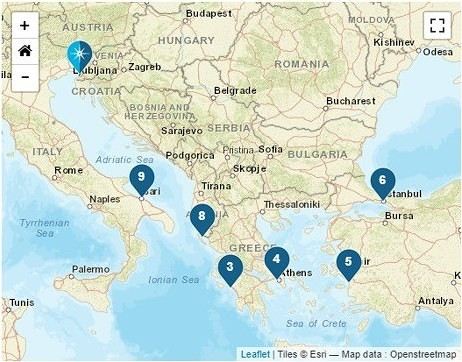
We left home at 6:15 AM—our first cruise departure since moving to Normandy. What I miss most about living in the Gard is how close we were to Marseille Airport. No more hopping over to Marignane in an hour; now we have to plan for a three-hour trip to CDG, even under the best conditions on an early Sunday morning.
It was impossible to book a hotel night before our flight because, starting in April, the Ibis was priced at 450 € per night, and the Mercure was flirting with 800 €—breakfast not included, of course. 😏
I had a feeling there must’ve been a conference or something going on… Turns out, it was just the auto show. They simply adjusted the room prices to match the cost of the cars. 😛
Our flight took us to Venice, where we caught a FlixBus to Trieste. We arrived at Trieste’s train station in the afternoon and walked to our hotel in the city center.
After treating ourselves to an amazing pizza at a restaurant (Di Napoli Maestri Pizzaioli, Via Armando Diaz 10) for a very reasonable price, we enjoyed the mild evening temperature while exploring the stunning buildings of this charming city by night. These magnificent structures are a testament to the city’s past. Trieste became Austrian in 1382 due to its complicated relationship with Venice, and it wasn’t until 1918, at the end of World War I, that it became Italian again. The city’s lighting beautifully highlights the architecture of the buildings.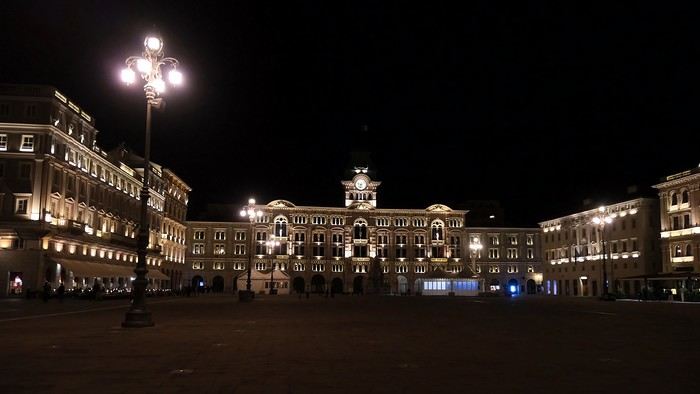
The terraces were lively, and the atmosphere was so warm and inviting that we wanted to stay out even longer.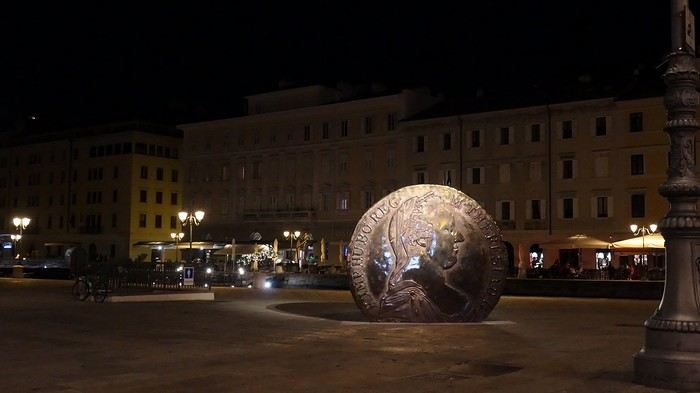
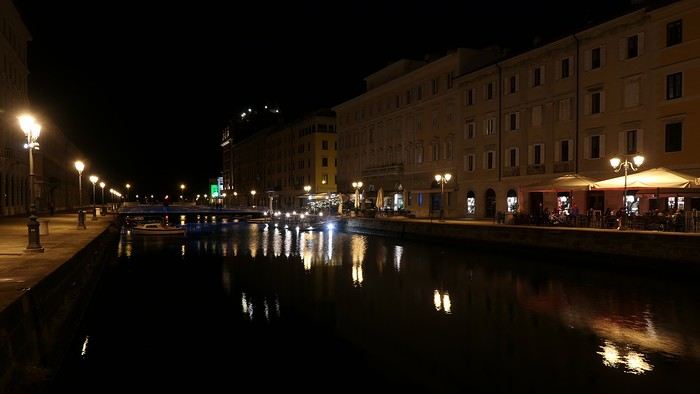
But we’d been up since 4 AM, so we were happy to retreat to the quiet of our hotel, located in the pedestrian center just a few steps from the port (Urban Hotel Design—highly recommended).
More to come soon.
What a joy to be back here and pick up where we left off after all these months of hiatus.
I hope you’ll enjoy the story of this little trip around the Eastern Mediterranean. This cruise was the perfect way to satisfy our longing to return to Greece and Istanbul. The end of the season, until late November, is the best time to visit the Mediterranean in my opinion—when climate disruptions don’t get in the way.
Departing from Trieste, our stops were Katakolon, Piraeus, Kusadasi, Istanbul, Corfu, and Bari, before returning to Trieste and then Venice, where we planned a very short 24-hour stay.
We left home at 6:15 AM—our first cruise departure since moving to Normandy. What I miss most about living in the Gard is how close we were to Marseille Airport. No more hopping over to Marignane in an hour; now we have to plan for a three-hour trip to CDG, even under the best conditions on an early Sunday morning.
It was impossible to book a hotel night before our flight because, starting in April, the Ibis was priced at 450 € per night, and the Mercure was flirting with 800 €—breakfast not included, of course. 😏
I had a feeling there must’ve been a conference or something going on… Turns out, it was just the auto show. They simply adjusted the room prices to match the cost of the cars. 😛
Our flight took us to Venice, where we caught a FlixBus to Trieste. We arrived at Trieste’s train station in the afternoon and walked to our hotel in the city center.
After treating ourselves to an amazing pizza at a restaurant (Di Napoli Maestri Pizzaioli, Via Armando Diaz 10) for a very reasonable price, we enjoyed the mild evening temperature while exploring the stunning buildings of this charming city by night. These magnificent structures are a testament to the city’s past. Trieste became Austrian in 1382 due to its complicated relationship with Venice, and it wasn’t until 1918, at the end of World War I, that it became Italian again. The city’s lighting beautifully highlights the architecture of the buildings.
The terraces were lively, and the atmosphere was so warm and inviting that we wanted to stay out even longer.
But we’d been up since 4 AM, so we were happy to retreat to the quiet of our hotel, located in the pedestrian center just a few steps from the port (Urban Hotel Design—highly recommended).
More to come soon.
2 semaine en voiture à Parga et ses environs (Grèce) English translation pending
Bonjour les amis de la Grèce de Parga et régions.
Vos connaissances sur Parga et régions m'enthousiasment ! Je pense aux à Papito93, Tuture, ...
Aussi je me permets de vous demander conseils... C'est pour mes prochaines 2 semaines debut Septembre, 5 personnes.
1/ Nous atterrissons à Corfou à minuit. D'après certains posts, on peut sans regret zapper Corfou. Je pense donc me rendre dans la région d'autour de Parga dès le lendemain. J'ai bien fait de zapper Corfou ?
2/ Pour 2 semaines donc autour de Parga et régions, Je voudrais savoir où stratégiquement se loger pour apprécier les beautés de cette région ( ballade, randonnées légères, baignade, ). Je serai mobile ( voiture location + logement AirBnb ), ainsi vous pouvez me suggérer 2 ou même 3 changement de lieu de logement si nécessaires ? Pouvez vous également me quantifier le nombre de jours à rester sur chaque lieu ? Et les endroits à visiter du lieu ?
Merci d'avance pour votre science de Parga et régions ( Epire je crois ) !
Vos connaissances sur Parga et régions m'enthousiasment ! Je pense aux à Papito93, Tuture, ...
Aussi je me permets de vous demander conseils... C'est pour mes prochaines 2 semaines debut Septembre, 5 personnes.
1/ Nous atterrissons à Corfou à minuit. D'après certains posts, on peut sans regret zapper Corfou. Je pense donc me rendre dans la région d'autour de Parga dès le lendemain. J'ai bien fait de zapper Corfou ?
2/ Pour 2 semaines donc autour de Parga et régions, Je voudrais savoir où stratégiquement se loger pour apprécier les beautés de cette région ( ballade, randonnées légères, baignade, ). Je serai mobile ( voiture location + logement AirBnb ), ainsi vous pouvez me suggérer 2 ou même 3 changement de lieu de logement si nécessaires ? Pouvez vous également me quantifier le nombre de jours à rester sur chaque lieu ? Et les endroits à visiter du lieu ?
Merci d'avance pour votre science de Parga et régions ( Epire je crois ) !
Valence - Toulouse à vélo, en bivouac English translation pending
Bonjour à vous,
Je vais partir demain pour Valence -> Toulouse à velo, en bivouacs. Est-ce que vous auriez des conseils sur des lieux à visiter, des routes ou piscts cyclables sympas svp ?
Merci par avance !
William
Je vais partir demain pour Valence -> Toulouse à velo, en bivouacs. Est-ce que vous auriez des conseils sur des lieux à visiter, des routes ou piscts cyclables sympas svp ?
Merci par avance !
William
40 ans de randonnées: quelques expériences marquantes English translation pending
La plus haute altitude: Mont Kanamo, Inde, 2011
24/9/2011 Je me trouve à Kibber, au Spiti, 4270 mètres. Je randonne déjà au Ladakh, puis au Spiti depuis un mois. Je suis complètement accoutumé à la haute altitude. Il fait très beau, pas trop froid, j'ai passé la nuit dans une guest house à Kibber, un village authentique dans un cirque plutôt sec, brun. Après le petit déjeuner chapatis omelette, je pars à 8 heures. En fait, je projette une traversée vers les villages de Langza et Komik mais je ne possède pas de carte détaillée. Je coupe dans les champs déjà récoltés, en cote, pour rejoindre la mauvaise piste vers le hameau de Gete, quelques maisons éparpillées, je vois un groupe de bharals (aussi appelés moutons bleus, abondants dans l'Himalaya indien), je me détourne au sommet des falaises pour la vue sur la vallée principale et le monastère de Kyi juste en contrebas. Je reprends la piste qui tourne vers un petit col puis redescend un peu vers un autre hameau en contrebas, mais je prends à gauche sur une piste en construction, plus tard je rencontre 6 ouvriers, ils ne se fatiguent pas trop. Vers le Sud, juste en face, je vois les vastes alpages de Langza ... pas loin, mais au milieu il y a la profonde entaille des gorges de la Shila. 3 heures 30 de marche déjà, je monte sur une petite butte pour voir l'itinéraire mais non, les gorges sont infranchissables ici, et en amont aussi. J'en profite pour manger le casse croute, pain confiture. Je ne regrette pas, très beau panorama avec le Chau Chau Kang Nilda, 6300 mètres, je décide de continuer un circuit pour revenir à Kibber par un col sur la crête plus à l'Est. La piste se termine, à un campement d'été avec des canaux d'irrigation, déserté fin septembre. Un sentier maintenant monte franchement vers le col, je suis en forme. En arrivant à un petit replat, je tombe sur 3 loups, pour le première fois dans l'Himalaya, je n'en ai vu que dans le parc national Denali en Alaska ! Ils sont aussi surpris que moi et ils s'enfuient. J'atteins le col à 4800 ou 4900 mètres et là, le mont Kanamo, 5975 mètres est proche, semble facile, c'est trop tentant. Je fais face quand même à une difficulté, le manque d'eau. Je dois trouver un camp qui en dispose sans trop redescendre. Je longe plus ou moins la crête vers l'Est vers un deuxième col, puis dans les éboulis vers un troisième col. Enfin la chance me souris, je vois un ruisseau plus bas dans la petite vallée vers le Sud . C'est un excellent camp, même un peu d'herbe, les yaks broutent ici en été. Le temps devient froid et nuageux, je mets mes vêtements chauds. Je cuisine du spaghetti au fromage sous le double toit, je lis un peu, avant 7 heures je suis couché.
25/9 Je ne dors pas très bien, j'ai plutôt trop chaud dans le sac de couchage. Lever à 5 heures 50. La tente est couverte de givre, il y a de la glace dans les gourdes mais le ruisseau coule. Pain confiture et grande tasse de Nescafe. Je pars à 6 heures 45, 35 minutes au col et je cache le gros de mes affaires sous des pierres. Je monte des éboulis raides sur une vague trace en 45 minutes jusqu'à une crête plus facile. Je me sens très bien, l'altitude ne me gêne pas. Je ne fais aucun arrêt. Je monte dans des éboulis très raides, mais stables, sur un épaulement, un peu de neige sur le haut, sans difficultes. En 2 heures 15 depuis le col, je rejoins l'extrémité de l'arrête sommitale du mont Kanamo, à environ 5900 mètres, avec un cairn et des drapeaux à prière, j'ai battu mon record d'altitude. J'ai bien mérité quelques biscuits. Mais le vrai sommet reste inaccessible pour moi, il faut longer la crête étroite et glacée, des crampons seraient nécessaires. En plus, un vent glacé souffle très fort, je ne peux pas rester. Je profite juste un peu de la vue des sommets dechiquetes et du glacier à l'arrière, avec une corniche. La descente ne présente aucune difficulté, même hors sentier, je passe par un petit lac bleu, je ne rencontre personne avant Kibber, bien un renard. Je peux me reposer au Norling Homestay, pas d'eau chaude mais à part cela confortable. Je reçois du the avec des biscuits, et le soir un dal bhat abondant. Je sors un peu dans le village, il semble n'y avoir qu'un seul autre touriste
26/9 À 8 heures 30 je prends le bus local pour Kaza.
A SUIVRE Prochain épisode: mon plus haut camp, au Pakistan. Merci de m'avoir lu.
24/9/2011 Je me trouve à Kibber, au Spiti, 4270 mètres. Je randonne déjà au Ladakh, puis au Spiti depuis un mois. Je suis complètement accoutumé à la haute altitude. Il fait très beau, pas trop froid, j'ai passé la nuit dans une guest house à Kibber, un village authentique dans un cirque plutôt sec, brun. Après le petit déjeuner chapatis omelette, je pars à 8 heures. En fait, je projette une traversée vers les villages de Langza et Komik mais je ne possède pas de carte détaillée. Je coupe dans les champs déjà récoltés, en cote, pour rejoindre la mauvaise piste vers le hameau de Gete, quelques maisons éparpillées, je vois un groupe de bharals (aussi appelés moutons bleus, abondants dans l'Himalaya indien), je me détourne au sommet des falaises pour la vue sur la vallée principale et le monastère de Kyi juste en contrebas. Je reprends la piste qui tourne vers un petit col puis redescend un peu vers un autre hameau en contrebas, mais je prends à gauche sur une piste en construction, plus tard je rencontre 6 ouvriers, ils ne se fatiguent pas trop. Vers le Sud, juste en face, je vois les vastes alpages de Langza ... pas loin, mais au milieu il y a la profonde entaille des gorges de la Shila. 3 heures 30 de marche déjà, je monte sur une petite butte pour voir l'itinéraire mais non, les gorges sont infranchissables ici, et en amont aussi. J'en profite pour manger le casse croute, pain confiture. Je ne regrette pas, très beau panorama avec le Chau Chau Kang Nilda, 6300 mètres, je décide de continuer un circuit pour revenir à Kibber par un col sur la crête plus à l'Est. La piste se termine, à un campement d'été avec des canaux d'irrigation, déserté fin septembre. Un sentier maintenant monte franchement vers le col, je suis en forme. En arrivant à un petit replat, je tombe sur 3 loups, pour le première fois dans l'Himalaya, je n'en ai vu que dans le parc national Denali en Alaska ! Ils sont aussi surpris que moi et ils s'enfuient. J'atteins le col à 4800 ou 4900 mètres et là, le mont Kanamo, 5975 mètres est proche, semble facile, c'est trop tentant. Je fais face quand même à une difficulté, le manque d'eau. Je dois trouver un camp qui en dispose sans trop redescendre. Je longe plus ou moins la crête vers l'Est vers un deuxième col, puis dans les éboulis vers un troisième col. Enfin la chance me souris, je vois un ruisseau plus bas dans la petite vallée vers le Sud . C'est un excellent camp, même un peu d'herbe, les yaks broutent ici en été. Le temps devient froid et nuageux, je mets mes vêtements chauds. Je cuisine du spaghetti au fromage sous le double toit, je lis un peu, avant 7 heures je suis couché.
25/9 Je ne dors pas très bien, j'ai plutôt trop chaud dans le sac de couchage. Lever à 5 heures 50. La tente est couverte de givre, il y a de la glace dans les gourdes mais le ruisseau coule. Pain confiture et grande tasse de Nescafe. Je pars à 6 heures 45, 35 minutes au col et je cache le gros de mes affaires sous des pierres. Je monte des éboulis raides sur une vague trace en 45 minutes jusqu'à une crête plus facile. Je me sens très bien, l'altitude ne me gêne pas. Je ne fais aucun arrêt. Je monte dans des éboulis très raides, mais stables, sur un épaulement, un peu de neige sur le haut, sans difficultes. En 2 heures 15 depuis le col, je rejoins l'extrémité de l'arrête sommitale du mont Kanamo, à environ 5900 mètres, avec un cairn et des drapeaux à prière, j'ai battu mon record d'altitude. J'ai bien mérité quelques biscuits. Mais le vrai sommet reste inaccessible pour moi, il faut longer la crête étroite et glacée, des crampons seraient nécessaires. En plus, un vent glacé souffle très fort, je ne peux pas rester. Je profite juste un peu de la vue des sommets dechiquetes et du glacier à l'arrière, avec une corniche. La descente ne présente aucune difficulté, même hors sentier, je passe par un petit lac bleu, je ne rencontre personne avant Kibber, bien un renard. Je peux me reposer au Norling Homestay, pas d'eau chaude mais à part cela confortable. Je reçois du the avec des biscuits, et le soir un dal bhat abondant. Je sors un peu dans le village, il semble n'y avoir qu'un seul autre touriste
26/9 À 8 heures 30 je prends le bus local pour Kaza.
A SUIVRE Prochain épisode: mon plus haut camp, au Pakistan. Merci de m'avoir lu.
Quelles randonnées d'une demi-journée à faire entre Fès et Marrakech English translation pending
Bonjour à tous,
Nous sommes un couple de trentenaire sans enfant et nous faisons un voyage itinérant de Fès à Marrakech sur 7 jours. Nous louerons une voiture au départ de Fès et la rendrons à Marrakech. Nous cherchons à savoir quelles randonnées de 4-6h et quelles balades ≃ 2h nous pourrions faire sur notre itinéraire. Pour infos nous passerons les nuits dans l'ordre : - A Fès (2 nuits) - A Tinghir (1 nuit) - A Ouarzazate (1 nuit) - A Ourika (1 nuit) - A Marrakech (2 nuits)
Les rando un peu sportives sont les bienvenues ! Les petites balades contemplatives aussi !
Est- il nécessaire de prendre un guide pour des rando à la demi-journée ? Quelques coups de coeur culinaires sur le chemin ?
Et si jamais vous avez une agence de location de voiture à conseiller avec un lieu de prise et de retour dans deux villes différentes...
Merci pour vos réponses !
Nous sommes un couple de trentenaire sans enfant et nous faisons un voyage itinérant de Fès à Marrakech sur 7 jours. Nous louerons une voiture au départ de Fès et la rendrons à Marrakech. Nous cherchons à savoir quelles randonnées de 4-6h et quelles balades ≃ 2h nous pourrions faire sur notre itinéraire. Pour infos nous passerons les nuits dans l'ordre : - A Fès (2 nuits) - A Tinghir (1 nuit) - A Ouarzazate (1 nuit) - A Ourika (1 nuit) - A Marrakech (2 nuits)
Les rando un peu sportives sont les bienvenues ! Les petites balades contemplatives aussi !
Est- il nécessaire de prendre un guide pour des rando à la demi-journée ? Quelques coups de coeur culinaires sur le chemin ?
Et si jamais vous avez une agence de location de voiture à conseiller avec un lieu de prise et de retour dans deux villes différentes...
Merci pour vos réponses !
Circuit sur les routes du Québec, visites et activités (avec enfants) English translation pending
Bonjour,
J'ai réservé un autotour au canada avec mes 3 enfants ( 8, 15 et 18 ans) pour début juillet.
Voici le circuit prévu:
Jour 1 : Arrivée à Montréal
Jour 2 : Visite de Montréal
Jour 3 : Montréal - la belle région de la Mauricie
Jour 4 :Mauricie - le Lac Saint Jean
Jour 5 : Lac Saint Jean - le Fjord du Saguenay
Jour 6 :Saguenay - Tadoussac
Jour 7 : Tadoussac - la région de Charlevoix
Jour 8 : Charlevoix - la région de Québec
Jour 9 : Visite de Québec.
Jour 10 : Québec - retour à Montréal
Les vols et les hébergements sont déjà réservés, ainsi que la voiture de location et la croisière à Tadoussac pour l'observation des baleines.
Voici quelques activités que j'ai trouvées et qu'il me semble intéressantes de faire:
Safari photo à l'ours noir
Croisière des Hautes-Gorges Repas à la cabane à sucre VILLAGE FANTÔME VAL-JALBERT ZOO SAUVAGE DE ST-FÉLICIEN VILLAGE NOUVELLE-FRANCE SPECTACLE LA FABULEUSE CITÉ DE L'ÉNERGIE Canyon Ste-Anne Observation du castor
Il me reste à voir quoi réserver et comment?
Avez vous des avis sur ces activités, d'autres coup de cœurs?
Visite de Montréal:
- Basilique Notre Dame - Quartier chinois - Vieux port de Montréal - Centre des Sciences de Montréal - Casino de Montréal - Rue Sainte-Catherine - Oratoire Saint Joseph - Parc du Mont Royal - Rue Crescent - Square Dorchester
Visite de Quebec: j'ai pas encore trop regardé.
Les vols et les hébergements sont déjà réservés, ainsi que la voiture de location et la croisière à Tadoussac pour l'observation des baleines.
Voici quelques activités que j'ai trouvées et qu'il me semble intéressantes de faire:
Safari photo à l'ours noir
Croisière des Hautes-Gorges Repas à la cabane à sucre VILLAGE FANTÔME VAL-JALBERT ZOO SAUVAGE DE ST-FÉLICIEN VILLAGE NOUVELLE-FRANCE SPECTACLE LA FABULEUSE CITÉ DE L'ÉNERGIE Canyon Ste-Anne Observation du castor
Il me reste à voir quoi réserver et comment?
Avez vous des avis sur ces activités, d'autres coup de cœurs?
Visite de Montréal:
- Basilique Notre Dame - Quartier chinois - Vieux port de Montréal - Centre des Sciences de Montréal - Casino de Montréal - Rue Sainte-Catherine - Oratoire Saint Joseph - Parc du Mont Royal - Rue Crescent - Square Dorchester
Visite de Quebec: j'ai pas encore trop regardé.
Affiner mon itinéraire entre Budapest et Bucarest (à vélo) English translation pending
Bonjour, cet été nous projetons avec des amis de faire Budapest-Bucarest pendant 2 semaines, à environ 100km/j. Un trajet que nous ne connaissons pas du tout.
J'ai relié ces 2 villes avec BRouter pour avoir un 1er aperçu, la trace donnée fait 1100km, nous comptons en faire environ 1500km.
Pour ceux qui connaissent, par où passer, que voir entre ces 2 villes pour ajouter 3 à 400km à la trace ?
Ou pourquoi pas totalement modifier l'itinéraire si c'est judicieux ?
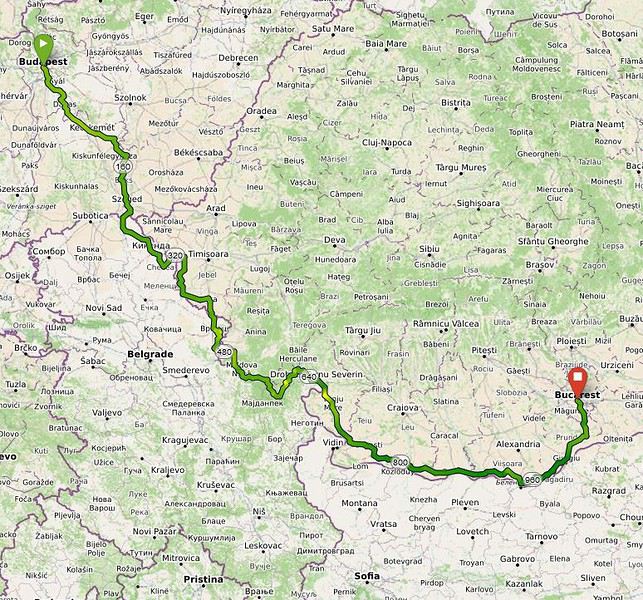
Le lien (laisser le temps à BRouter de charger la trace) : http://brouter.de/brouter-web/#map=7/45.740/21.072/osmfr, route-quality&lonlats=19.039307,47.501525;26.103516,44.439959
Merci !
Le lien (laisser le temps à BRouter de charger la trace) : http://brouter.de/brouter-web/#map=7/45.740/21.072/osmfr, route-quality&lonlats=19.039307,47.501525;26.103516,44.439959
Merci !
Quelle ville choisir avec de (très) belles plages et centre-ville animé en Crète (avec enfants) English translation pending
Bonjour
Je suis à la recherche d'infos sur plusieurs villes de Grèce :
Paleóchora Plakias Kavros Rethymnon Kissamos Gerani Frangokastello
En gros, je voudrai savoir parmi ces villes, quelles sont celles qui ont de (très) belles plages, pas polluées avec d'un autre côté un centre ville animé où on peut aller avec des enfants tranquillement le soir.
Autre question, j'ai vu que beaucoup de personnes mettent en place des road trips sur la Crète plutôt que de rester tout le temps au même endroit. Est-ce que ça veut dire que ça ne vaut pas le coup de rester 2 semaines au même endroit ?
Merci pour vos réponses
Marcin
Je suis à la recherche d'infos sur plusieurs villes de Grèce :
Paleóchora Plakias Kavros Rethymnon Kissamos Gerani Frangokastello
En gros, je voudrai savoir parmi ces villes, quelles sont celles qui ont de (très) belles plages, pas polluées avec d'un autre côté un centre ville animé où on peut aller avec des enfants tranquillement le soir.
Autre question, j'ai vu que beaucoup de personnes mettent en place des road trips sur la Crète plutôt que de rester tout le temps au même endroit. Est-ce que ça veut dire que ça ne vaut pas le coup de rester 2 semaines au même endroit ?
Merci pour vos réponses
Marcin
Les incontournables à voir dans le Massif Central? (à vélo) English translation pending
Bonjour,
Au départ d'Angoulème, j'aimerais faire un voyage à vélo non VTT dans le Massif central.
Si vous connaissez bien la région, quels sont selon vous les incontournables ?
Merci.
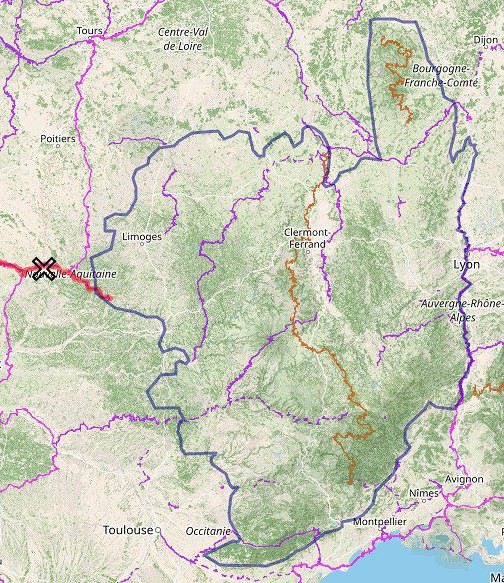
Au départ d'Angoulème, j'aimerais faire un voyage à vélo non VTT dans le Massif central.
Si vous connaissez bien la région, quels sont selon vous les incontournables ?
Merci.
Séjour au Maroc avec arrivée à Agadir puis bus pour Tafraout English translation pending
Bonjour,
Nous essayons de construire un séjour avec une arrivée à Agadir le 7 février 2020, genre 2 nuits sur place, puis Tafraout 4 nuits et encore 2 ou 3 nuits ailleurs. Pour un séjour de 7 à 9 nuits maxi
Petites questions à ceux qui connaissent évidemment :)
Peut on réserver et avoir à coup sur un bus qui va d'Agadir à Tafraout sur place (du jour pour le lendemain) ?
4 nuits dans Tafraout même, aurons nous de quoi nous balader sans nous ennuyer ? à pied ou en vélo...
Quel autre endroit sympathique pourrions nous faire, accessible en bus, pour repartir d'Agadir entre le 14 et le 16 février ?
Merci pour vos lumières :)
Stéphanie
Cherche motards (débutants?) pour le Maroc en avril 2020 English translation pending
Bonjour,
Mon premier voyage au Maroc est programmé pour 2020.
Je suis à la recherche éventuellement d'un ou deux autres motards , débutant ? comme moi pour cette destination.
La moto une Africa Twin 750 équipé avec des pneus "trail"
- Je pars de chez moi en sud-Corrèze le 18 avril pour un retour au plus tard le 17 mai.
- Traversée de l'Espagne pour prendre le bateau à Tarifa
- Je ne veux pas prendre le bateau à Sète ni à Barcelone
- Le parcours au Maroc se fera essentiellement sur les petites routes , exceptionnellement sur une piste ROULANTE.
- Le trajet en gros :
Tanger , Chefchaouen , Meknès , Azrou, Agoudal , gorges du Dadès/Todra , Ouazazate , Descente au sud à voir ? : Merzouga ,
Zagora , vers Tata....? Agadir......remontée par la côte vers Tanger et retour.......
Donc si vous êtes libre à cette période à 2 ou 3 ce serait sympa , sinon j'irai en solitaire............ https://www.solartrike.fr/voyages-%C3%A0-moto/
Donc si vous êtes libre à cette période à 2 ou 3 ce serait sympa , sinon j'irai en solitaire............ https://www.solartrike.fr/voyages-%C3%A0-moto/
15 jours en Slovénie English translation pending
Nous sommes partis un mercredi matin depuis Berne, direction le Tessin, pour se rendre dans le Val Cama, car une amie était sur l’alpage Alp de Lagh pendant 2 mois à s’occuper de chèvres.
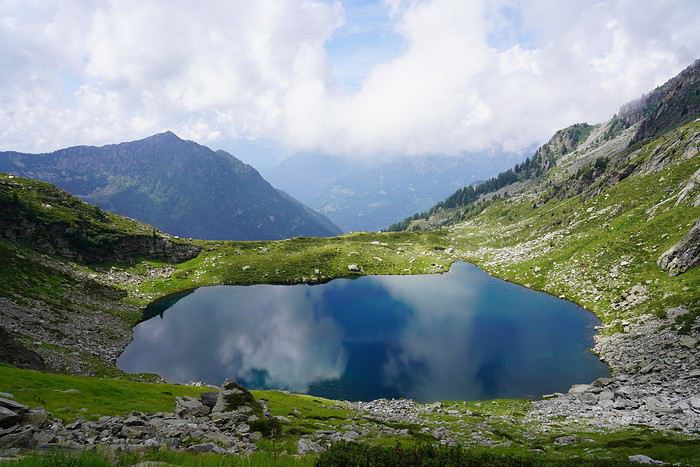
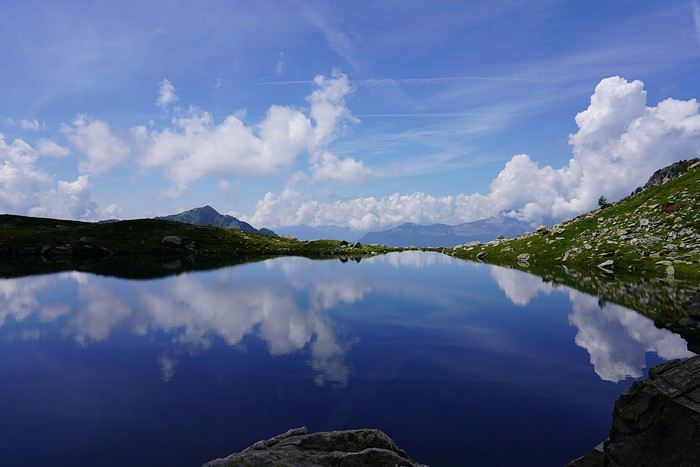
Arrivée à Cama, nous faisons un pic-nique sous quelques gouttes d’un orage passé, puis montons pendant 2:30 dans la forêt pour atteindre ce petit vallon merveilleux. La montée est belle, très belle: les arbres sont denses, châtaigniers et sapins de côtoient, la mousse verte luxuriante s’étale partout, sur les pierres et les rochers de calcaire. Les ruines de maisons en pierres abandonnées donnent un charme à ce valon aux grandes promesses. Les châtaignes de l’année dernière sont encore parterre, les nouvelles pendent en l’air, les feuilles de l’automne ensevelissent la forêt et cachent mille trésors. Nous cueillons des champignons, les chanterelles d’été pointent leur tête par centaines, beaucoup d’autres champignons nous sont inconnus. Arrivés en haut, nous sommes accueillis par un lac à l’effet miroir, impressionnant, envoûtant. Un bleu azur, dans lequel plongent les montagnes l’entourant. Nous voyons l’alpage, rénové en 2013, dont une partie date même de 2017. 130 chèvres y logent pendant l’été, 5 femmes s’occupent d’elles et de l’agrotourismo, pouvant loger jusqu’à 10 personnes. On y fait aussi du fromage de chèvre, en cinq variations. Un délice. Et on y mange bien, les ingrédients biologiques sont privilégiés. On reçoit de la tresse pour le 1er août, de la confiture de myrtilles cueillies dans les bois environnants, du fromage de l’alpage.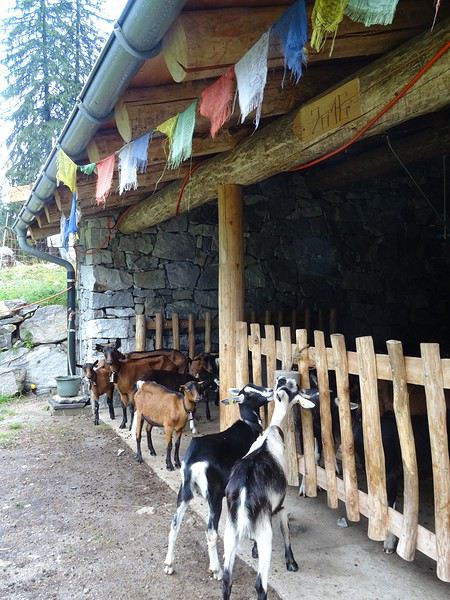
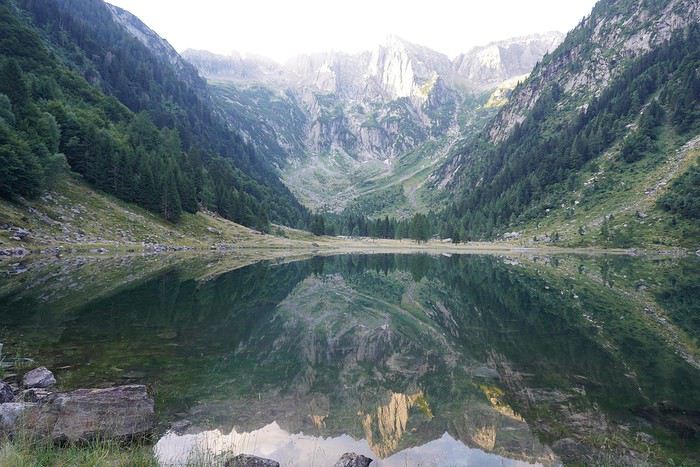
Nous partons le lendemain pour un petit lac de montagne, encore plus haut, encore plus beau. Un vrai miroir des montagnes. On remplit nos poches de myrtilles, pour le muesli du lendemain matin - nous a-t-on demandé. On se baigne nus dans le lac du Val Cama, se faisant mordiller les peaux mortes des pieds par les petits poissons. Nous dormons une deuxième nuit à l’alpage, très orageuse, un mariage de pluie et de grêle s’invite et fait peur aux chèvres pâturant: il faut les rentrer dans l’étable - jamais elles n’auront aussi bien suivi que cette nuit-là. Le lendemain matin est ensoleillé, le ciel bleu et les nuages noirs bien loin. Nous descendons dans la vallée après avoir fait nos aurevoirs et rempli notre estomac de bons petits mets.
Un nouvel orage nous surprend une fois nos fesses posées dans la voiture, orage qui nous suivra jusqu’en Italie, jusqu’à Como, où nous dînons en vieille ville, trop touristique à notre goût.
Nous partons direction la Slovénie. Nous ne savons pas où nous dormirons le soir, vers Venise ou vers Trévise, sur un parking ou un camping? Finalement nous sortons de l’autoroute à Portogruaro, soupons dans un restaurant inscrit dans le guide des Osterie d’Italia de Slow Food, et dormirons près de la mer. Notre première nuit en camping sauvage, dans un espace a priori interdit au camping, pourtant avec un parking utilisé par de nombreux campeurs et utilisateurs de l’application park4night. Nuit un peu agitée, pluie et bruits, voitures qui passent, nous attendons la police. Elle ne viendra pas. Le lendemain matin, grand soleil, trois autres camping-cars sont à nos côtés. Les voitures arrivent, avec les seaux pour jouer dans le sable et les parasols. Nous marchons jusqu’à la mer à travers la réserve naturelle, Sascha s’y baigne avec le chien, je les regarde les pieds dans l’eau. Déjeuner. Petites courses en ville. Pharmacie pour les piqûres de moustiques (car il y a en avait beaucoup!!). Épicerie bio. Nous roulons direction la Slovénie.
Nous y arrivons dans l’après-midi, après quelques ralentissements sur la route. Nous n’avons pas acheté de vignette pour les autoroutes en Slovénie, nous n’en avons pas trouvé (et peu cherché). Nous arrivons dans le Karst, cette région viticole. Nous roulons vers deux vignerons différents pour y déguster des vins en biodynamie et oranges (Simcic et Movia, à Ceglo) (ces vins blancs fermentés sans levures additionnelles, et dans lesquelles les peaux des raisins trempent avec le jus pendant plusieurs années - un délice en accord avec la nature). Gros échecs. Les deux vignerons sont fermés et en vacances. Nous allons donc vers le château de Dobrovo, où nous pouvons déguster des vins de la région. Nous commençons par une balade dans les vignes, quelle chaleur! Et nous atterrissons dans le village de Medana avec son vigneron Klinec: petit restaurant, petite carte, vins oranges. Que souhaitions-nous de plus? Nous y dégustons deux vins l’après-midi, réservons pour souper le soir (on recommande!), dégustons d’autres vins et achetons finalement 12 bouteilles. Excellent repas avec des petits plats traditionnels, de produits locaux, très bien cuisinés, avec une touche de modernité. Accessible, sympa, service très gentil, on reviendrait! Nous dormons à Dobrovo, sur le parking d’un supermarché, à l’abri des regards, entourés d’arbres, aucune interdiction en vue. Douce nuit en perspective.
Lendemain serein, nous partons pour Tolmin. Nous y faisons une partie des gorges du même nom, mais sur la route asphaltée, jusqu’au petit hameau Cadrg, tout en haut. Une vue exceptionnelle sur une vallée intérieure, puis redescende à pied. Parce que nous sommes dans le parc national, nous ne voulons pas prendre de risques avec du camping sauvage et dormons dans le camping Gabrje, très très grand, très nature, au bord de la Soca, nous avons de la place et nous ne nous sentons pas dans un camping. On recommande.
Nous partons dans la matinée suivante pour Bovec (nous laissons de côté Kobarid et la rivière Idrija, apparement deux beaux endroits) pour faire les courses, puis le village Soca, pour se parquer et débuter le Soca Trail: nous remontons la rivière jusqu’à sa source, une randonnée longue en kilomètres, peu de dénivelé, mais longue. Très belle, au bord de l’eau. Nous avions anticipé une décision spontanée de dormir en haut, et oui, finalement nous resterons en haut. Nous dormons au pied de la source de la Soca, dans la petite auberge qui a dix lits, nous y mangeons une cuisine typique slovène, le service et l’accueil est excellent, ils aiment les chiens, Odin dort donc même avec nous dans la chambre. Le lendemain, nous montons jusqu’à la cabane au pied du Spicek à pied, une ascension inoubliable, la vue est à couper le souffle et les paysages de calcaire incomparables. Nous y mangeons une soupe de choucroute, pois et pommes de terre - et redescendons jusqu’à l’auberge, puis jusqu’au village Soca. Très longue randonnée, nous sommes fatigués, le chien aussi. Je demande au couple de personnes âgées qui habitent en face d’où nous étions parqués pendant deux jours si nous pouvons passer la nuit sur leur parking, nous évitant de chercher un camping en fin de journée. Les campings dans la région sont bien remplis d’ailleurs. Après quelques hésitations et toutes les recommandations possibles, ils nous laissent dormir chez eux. Merci! Nous nous baignons dans la Soca (quelques 10 degrés) après deux jours intensifs, cuisinons sur place, sous quelques gouttes de pluie, et dormons paisiblement.
Nous partons le lendemain de l’autre côté du Triglav, la plus haute montagne de Slovénie. Nous traversons un pass et nous nous retrouvons dans une station touristique, Kranjska Gora. Nous passons à la poste et chez le coiffeur, ainsi que dans un magasin de sport, mais la ville ne vaut pas un détour selon nous. Emplettes, et direction Bled! Un village hyper touristique qu’il faudrait éviter (bouchons pour y rentrer et y sortir, en voiture), s’il n’y avais pas ce merveilleux lac. Nous dormons finalement en dehors du village, après quelques recherches de campings, à Radovlijka, dans un camping avec piscine. Rien de spécial mais bien pratique. Nous mangeons chez Gostlina Kunstelj, un très bon repas slovène, accompagné d’un vin orange absolument merveilleux. Très bons conseils du serveur et sommelier qui connaît bien le vigneron.
Nous partons après une nuit interrompue par les bruits du camping (une première) à nouveau vers Bled, pour faire le tour du lac à pied, en montant sur la colline renommée pour la vue imprenable sur l’île, et celle du château. Achats chez Merkator pour le repas du soir, qui est pris à Bohinjska, départ pour notre prochaine (et dernière?) randonnée vers les 7 lacs. Dodo au campement pour les camping cars au bord des voies vers la gare de Bohinjska, car tous les campings sont plein. Peu adéquat au premier abord, il s’avère paisible et très peu cher (15.- par voiture), sans infrastructures toutefois (vaisselle, toilettes simples, chimiques). L’astuce: remplir son bidon ou tank d’eau dans un cimetière! Tous les cimetières ont une fontaine avec de l’eau et un robinet avec assez de place pour y glisser un gros bidon dessous (et pas un arrosoir).
Nous partons le lendemain vers les chutes d’eau Savica, touristiques, et démarrons une randonnée difficile mais accessible (bonnes chaussures !), vers les 7 lacs. Première partie très difficile, mais les lacs sont d’une pure beauté. Nous ne les faisons pas tous, car il faudrait dormir à la cabane le soir (aucun lit de libre en ce vendredi soir), et continuer le lendemain. Belle balade dans les montagnes. Beaucoup de forêt. Nous reprenons le même chemin en retour et après une glace bien méritée, nous roulons direction la capitale Ljubljana.
A Ljubljana, nous avons réservé une chambre, avec chien, pas chère (la capitale est onéreuse!), dans un ancien internat, qui fait auberge de jeunesse. Buffet petit déjeuner complet et correct, mais pas de grande gastronomie. Grosse maison, donc c’est un peu l’industrie. Mais c’est pratique (Hostel DIC). Nous passons le week-end à Ljubljana, flânons dans les petites rues du quartier alternatif, et dans les grandes rues de la vieille ville. Promenades sur les quais, au bord de la rivière. On s’y sent bien, c’est agréable, propre, tranquille. Nous faisons le château, les pièces intérieures, quelques cafés (affiliés à la speciality coffee association - on est plutôt sûr d’avoir de la qualité), des petits magasins, nous prenons l’apéro chez Movia, qui a un bar dans la capitale. Nous goûtons les vins qui nous intéressent et iront les acheter directement chez le vigneron quelques jours plus tard. Il y a des concerts et des marchés, on recommande cette belle ville!
Nous décidons de ne pas aller dans l’Est du pays et nous partons vers le sud. Nous visitons le château impressionnant Predjama, incorporé dans une falaise géante. Et nous faisons les grottes et caves inscrites au patrimoine de l’UNESCO, Skocjan: beaucoup de monde, un peu d’attente, mais la visite guidée reste l’une des plus belles choses que nous avons faites pendant ces vacances. Une cave énorme (ÉNORME!!) avec des stalagmites et stalactites partout. Informations claires et réponses aux questions, organisation optimale, en anglais.
Nous dormons en route sur le parking d’un restaurant où nous avons mangé, puis allons le lendemain visiter des anciennes salines, aujourd’hui petit musée et minuscule exposition. Ils font encore du sel selon une méthode bien ancienne, en utilisant des bactéries du sol, pour créer des bassins imperméables où le sel se forme, par l’eau stagnante: Museo dei Salinai, près de Secovlje, juste à la frontière de la Croatie. Et c’est un peu le hic: nous sommes pendant 30 minutes dans les bouchons avec toutes les voitures qui veulent passer la frontière entre la Slovénie et la Croatie. L’entrée du musée se trouve juste entre les deux passages des frontières. On y va car on aime marcher, on découvre la tradition de fabrication du sel et on discute beaucoup avec le monsieur présent sur place. Sans lui, le musée est plutôt petit et peu intéressant.
Nous partons ensuite vers Piran, où nous mangeons et passons tout l’après-midi. Nous dormons en dehors, sur un camping (voir l’application park4night). Piran nous a beaucoup plu, une belle petite ville où l’on se parque sur un parking extérieur, au bord de la mer, avec des dizaines de petits restaurants et de minuscules ruelles dans lesquelles déambuler.
Le lendemain nous allons à Koper, sympa aussi, avec un marché extérieur et intérieur.
Le lendemain, nous faisons Trieste, qui vaut absolument le détour. Une belle grande ville aux bâtiments imposantsdatant de l’époque de l’empire austro-hongrois. On y vit à l’italienne (on est en Italie à nouveau!) et on apprécie les terrasses.
Parce que nous aimons le vin, nous repartons depuis Trieste vers Ceglo, où nous étions au début de nos vacances. Nous mangeons dans un restaurant réputé (la meilleure femme cuisinière slovène qui cuisine en... Italie! Juste à la frontière!), dormons sur place sur une aire aménagée, puis allons le lendemain chez Movia acheter beaucoup (trop) de vins. On nous en offre 4 bouteilles, et on passe un agréable moment.
Nous partons pour la Suisse, nous nous arrêterons au Tessin à Lugano pour une nuit, avant de rentrer.
Arrivée à Cama, nous faisons un pic-nique sous quelques gouttes d’un orage passé, puis montons pendant 2:30 dans la forêt pour atteindre ce petit vallon merveilleux. La montée est belle, très belle: les arbres sont denses, châtaigniers et sapins de côtoient, la mousse verte luxuriante s’étale partout, sur les pierres et les rochers de calcaire. Les ruines de maisons en pierres abandonnées donnent un charme à ce valon aux grandes promesses. Les châtaignes de l’année dernière sont encore parterre, les nouvelles pendent en l’air, les feuilles de l’automne ensevelissent la forêt et cachent mille trésors. Nous cueillons des champignons, les chanterelles d’été pointent leur tête par centaines, beaucoup d’autres champignons nous sont inconnus. Arrivés en haut, nous sommes accueillis par un lac à l’effet miroir, impressionnant, envoûtant. Un bleu azur, dans lequel plongent les montagnes l’entourant. Nous voyons l’alpage, rénové en 2013, dont une partie date même de 2017. 130 chèvres y logent pendant l’été, 5 femmes s’occupent d’elles et de l’agrotourismo, pouvant loger jusqu’à 10 personnes. On y fait aussi du fromage de chèvre, en cinq variations. Un délice. Et on y mange bien, les ingrédients biologiques sont privilégiés. On reçoit de la tresse pour le 1er août, de la confiture de myrtilles cueillies dans les bois environnants, du fromage de l’alpage.
Nous partons le lendemain pour un petit lac de montagne, encore plus haut, encore plus beau. Un vrai miroir des montagnes. On remplit nos poches de myrtilles, pour le muesli du lendemain matin - nous a-t-on demandé. On se baigne nus dans le lac du Val Cama, se faisant mordiller les peaux mortes des pieds par les petits poissons. Nous dormons une deuxième nuit à l’alpage, très orageuse, un mariage de pluie et de grêle s’invite et fait peur aux chèvres pâturant: il faut les rentrer dans l’étable - jamais elles n’auront aussi bien suivi que cette nuit-là. Le lendemain matin est ensoleillé, le ciel bleu et les nuages noirs bien loin. Nous descendons dans la vallée après avoir fait nos aurevoirs et rempli notre estomac de bons petits mets.
Un nouvel orage nous surprend une fois nos fesses posées dans la voiture, orage qui nous suivra jusqu’en Italie, jusqu’à Como, où nous dînons en vieille ville, trop touristique à notre goût.
Nous partons direction la Slovénie. Nous ne savons pas où nous dormirons le soir, vers Venise ou vers Trévise, sur un parking ou un camping? Finalement nous sortons de l’autoroute à Portogruaro, soupons dans un restaurant inscrit dans le guide des Osterie d’Italia de Slow Food, et dormirons près de la mer. Notre première nuit en camping sauvage, dans un espace a priori interdit au camping, pourtant avec un parking utilisé par de nombreux campeurs et utilisateurs de l’application park4night. Nuit un peu agitée, pluie et bruits, voitures qui passent, nous attendons la police. Elle ne viendra pas. Le lendemain matin, grand soleil, trois autres camping-cars sont à nos côtés. Les voitures arrivent, avec les seaux pour jouer dans le sable et les parasols. Nous marchons jusqu’à la mer à travers la réserve naturelle, Sascha s’y baigne avec le chien, je les regarde les pieds dans l’eau. Déjeuner. Petites courses en ville. Pharmacie pour les piqûres de moustiques (car il y a en avait beaucoup!!). Épicerie bio. Nous roulons direction la Slovénie.
Nous y arrivons dans l’après-midi, après quelques ralentissements sur la route. Nous n’avons pas acheté de vignette pour les autoroutes en Slovénie, nous n’en avons pas trouvé (et peu cherché). Nous arrivons dans le Karst, cette région viticole. Nous roulons vers deux vignerons différents pour y déguster des vins en biodynamie et oranges (Simcic et Movia, à Ceglo) (ces vins blancs fermentés sans levures additionnelles, et dans lesquelles les peaux des raisins trempent avec le jus pendant plusieurs années - un délice en accord avec la nature). Gros échecs. Les deux vignerons sont fermés et en vacances. Nous allons donc vers le château de Dobrovo, où nous pouvons déguster des vins de la région. Nous commençons par une balade dans les vignes, quelle chaleur! Et nous atterrissons dans le village de Medana avec son vigneron Klinec: petit restaurant, petite carte, vins oranges. Que souhaitions-nous de plus? Nous y dégustons deux vins l’après-midi, réservons pour souper le soir (on recommande!), dégustons d’autres vins et achetons finalement 12 bouteilles. Excellent repas avec des petits plats traditionnels, de produits locaux, très bien cuisinés, avec une touche de modernité. Accessible, sympa, service très gentil, on reviendrait! Nous dormons à Dobrovo, sur le parking d’un supermarché, à l’abri des regards, entourés d’arbres, aucune interdiction en vue. Douce nuit en perspective.
Lendemain serein, nous partons pour Tolmin. Nous y faisons une partie des gorges du même nom, mais sur la route asphaltée, jusqu’au petit hameau Cadrg, tout en haut. Une vue exceptionnelle sur une vallée intérieure, puis redescende à pied. Parce que nous sommes dans le parc national, nous ne voulons pas prendre de risques avec du camping sauvage et dormons dans le camping Gabrje, très très grand, très nature, au bord de la Soca, nous avons de la place et nous ne nous sentons pas dans un camping. On recommande.
Nous partons dans la matinée suivante pour Bovec (nous laissons de côté Kobarid et la rivière Idrija, apparement deux beaux endroits) pour faire les courses, puis le village Soca, pour se parquer et débuter le Soca Trail: nous remontons la rivière jusqu’à sa source, une randonnée longue en kilomètres, peu de dénivelé, mais longue. Très belle, au bord de l’eau. Nous avions anticipé une décision spontanée de dormir en haut, et oui, finalement nous resterons en haut. Nous dormons au pied de la source de la Soca, dans la petite auberge qui a dix lits, nous y mangeons une cuisine typique slovène, le service et l’accueil est excellent, ils aiment les chiens, Odin dort donc même avec nous dans la chambre. Le lendemain, nous montons jusqu’à la cabane au pied du Spicek à pied, une ascension inoubliable, la vue est à couper le souffle et les paysages de calcaire incomparables. Nous y mangeons une soupe de choucroute, pois et pommes de terre - et redescendons jusqu’à l’auberge, puis jusqu’au village Soca. Très longue randonnée, nous sommes fatigués, le chien aussi. Je demande au couple de personnes âgées qui habitent en face d’où nous étions parqués pendant deux jours si nous pouvons passer la nuit sur leur parking, nous évitant de chercher un camping en fin de journée. Les campings dans la région sont bien remplis d’ailleurs. Après quelques hésitations et toutes les recommandations possibles, ils nous laissent dormir chez eux. Merci! Nous nous baignons dans la Soca (quelques 10 degrés) après deux jours intensifs, cuisinons sur place, sous quelques gouttes de pluie, et dormons paisiblement.
Nous partons le lendemain de l’autre côté du Triglav, la plus haute montagne de Slovénie. Nous traversons un pass et nous nous retrouvons dans une station touristique, Kranjska Gora. Nous passons à la poste et chez le coiffeur, ainsi que dans un magasin de sport, mais la ville ne vaut pas un détour selon nous. Emplettes, et direction Bled! Un village hyper touristique qu’il faudrait éviter (bouchons pour y rentrer et y sortir, en voiture), s’il n’y avais pas ce merveilleux lac. Nous dormons finalement en dehors du village, après quelques recherches de campings, à Radovlijka, dans un camping avec piscine. Rien de spécial mais bien pratique. Nous mangeons chez Gostlina Kunstelj, un très bon repas slovène, accompagné d’un vin orange absolument merveilleux. Très bons conseils du serveur et sommelier qui connaît bien le vigneron.
Nous partons après une nuit interrompue par les bruits du camping (une première) à nouveau vers Bled, pour faire le tour du lac à pied, en montant sur la colline renommée pour la vue imprenable sur l’île, et celle du château. Achats chez Merkator pour le repas du soir, qui est pris à Bohinjska, départ pour notre prochaine (et dernière?) randonnée vers les 7 lacs. Dodo au campement pour les camping cars au bord des voies vers la gare de Bohinjska, car tous les campings sont plein. Peu adéquat au premier abord, il s’avère paisible et très peu cher (15.- par voiture), sans infrastructures toutefois (vaisselle, toilettes simples, chimiques). L’astuce: remplir son bidon ou tank d’eau dans un cimetière! Tous les cimetières ont une fontaine avec de l’eau et un robinet avec assez de place pour y glisser un gros bidon dessous (et pas un arrosoir).
Nous partons le lendemain vers les chutes d’eau Savica, touristiques, et démarrons une randonnée difficile mais accessible (bonnes chaussures !), vers les 7 lacs. Première partie très difficile, mais les lacs sont d’une pure beauté. Nous ne les faisons pas tous, car il faudrait dormir à la cabane le soir (aucun lit de libre en ce vendredi soir), et continuer le lendemain. Belle balade dans les montagnes. Beaucoup de forêt. Nous reprenons le même chemin en retour et après une glace bien méritée, nous roulons direction la capitale Ljubljana.
A Ljubljana, nous avons réservé une chambre, avec chien, pas chère (la capitale est onéreuse!), dans un ancien internat, qui fait auberge de jeunesse. Buffet petit déjeuner complet et correct, mais pas de grande gastronomie. Grosse maison, donc c’est un peu l’industrie. Mais c’est pratique (Hostel DIC). Nous passons le week-end à Ljubljana, flânons dans les petites rues du quartier alternatif, et dans les grandes rues de la vieille ville. Promenades sur les quais, au bord de la rivière. On s’y sent bien, c’est agréable, propre, tranquille. Nous faisons le château, les pièces intérieures, quelques cafés (affiliés à la speciality coffee association - on est plutôt sûr d’avoir de la qualité), des petits magasins, nous prenons l’apéro chez Movia, qui a un bar dans la capitale. Nous goûtons les vins qui nous intéressent et iront les acheter directement chez le vigneron quelques jours plus tard. Il y a des concerts et des marchés, on recommande cette belle ville!
Nous décidons de ne pas aller dans l’Est du pays et nous partons vers le sud. Nous visitons le château impressionnant Predjama, incorporé dans une falaise géante. Et nous faisons les grottes et caves inscrites au patrimoine de l’UNESCO, Skocjan: beaucoup de monde, un peu d’attente, mais la visite guidée reste l’une des plus belles choses que nous avons faites pendant ces vacances. Une cave énorme (ÉNORME!!) avec des stalagmites et stalactites partout. Informations claires et réponses aux questions, organisation optimale, en anglais.
Nous dormons en route sur le parking d’un restaurant où nous avons mangé, puis allons le lendemain visiter des anciennes salines, aujourd’hui petit musée et minuscule exposition. Ils font encore du sel selon une méthode bien ancienne, en utilisant des bactéries du sol, pour créer des bassins imperméables où le sel se forme, par l’eau stagnante: Museo dei Salinai, près de Secovlje, juste à la frontière de la Croatie. Et c’est un peu le hic: nous sommes pendant 30 minutes dans les bouchons avec toutes les voitures qui veulent passer la frontière entre la Slovénie et la Croatie. L’entrée du musée se trouve juste entre les deux passages des frontières. On y va car on aime marcher, on découvre la tradition de fabrication du sel et on discute beaucoup avec le monsieur présent sur place. Sans lui, le musée est plutôt petit et peu intéressant.
Nous partons ensuite vers Piran, où nous mangeons et passons tout l’après-midi. Nous dormons en dehors, sur un camping (voir l’application park4night). Piran nous a beaucoup plu, une belle petite ville où l’on se parque sur un parking extérieur, au bord de la mer, avec des dizaines de petits restaurants et de minuscules ruelles dans lesquelles déambuler.
Le lendemain nous allons à Koper, sympa aussi, avec un marché extérieur et intérieur.
Le lendemain, nous faisons Trieste, qui vaut absolument le détour. Une belle grande ville aux bâtiments imposantsdatant de l’époque de l’empire austro-hongrois. On y vit à l’italienne (on est en Italie à nouveau!) et on apprécie les terrasses.
Parce que nous aimons le vin, nous repartons depuis Trieste vers Ceglo, où nous étions au début de nos vacances. Nous mangeons dans un restaurant réputé (la meilleure femme cuisinière slovène qui cuisine en... Italie! Juste à la frontière!), dormons sur place sur une aire aménagée, puis allons le lendemain chez Movia acheter beaucoup (trop) de vins. On nous en offre 4 bouteilles, et on passe un agréable moment.
Nous partons pour la Suisse, nous nous arrêterons au Tessin à Lugano pour une nuit, avant de rentrer.
Taïwan sans voiture en août English translation pending
Bonsoir tout le monde,
Je jette une bouteille à la mer en espérant que de gentils membres m'aiguilleront.
Voilà je n'ai pas encore organisé mes vacances mais mon époux souhaiterait éventuellement partir en Taïwan.
Du coup j'ai qq questions:
Comment est le temps ? Peut-on découvrir l'île sans voiture ? (Nous n'avons pas le permis...enfin si je l'ai mais étant phobique autant dire que je ne l'ai pas ) Combien de temps pour avoir un premier aperçu de l'île Coût de la vie
En vous remerciant pat avance pour votre aide précieuse.
Bon week-end à vous :)😉
Je jette une bouteille à la mer en espérant que de gentils membres m'aiguilleront.
Voilà je n'ai pas encore organisé mes vacances mais mon époux souhaiterait éventuellement partir en Taïwan.
Du coup j'ai qq questions:
Comment est le temps ? Peut-on découvrir l'île sans voiture ? (Nous n'avons pas le permis...enfin si je l'ai mais étant phobique autant dire que je ne l'ai pas ) Combien de temps pour avoir un premier aperçu de l'île Coût de la vie
En vous remerciant pat avance pour votre aide précieuse.
Bon week-end à vous :)😉
La vallée du Lot à bicyclette English translation pending
Est-ce que quelqu'un a fait la bicyclette la vallée du Lot de sa source le bleymard jusqu'à Cahors
Si c'est le cas nous sommes très intéressé par l'itinéraire emprunté et l'avis de l'intéressé à bicyclette
Merci
Circuit de 7 jours désert - Ouarzazate - Merzouga English translation pending
Bonjour à tous,
je parts dans une semaine pour le Maroc j'aimerai faire le désert cette année mais quid de l'itinéraire, je n'ai que 7 jours j'ai un véhicule et nous sommes 2 conducteurs. Avez vous des avis sur un parcourt ? pourquoi pas : 1) Casa-Ouzoud 1 nuit 2) Ouzoud-ouarzate 2 nuits visite ou et peut être nuit à Ait benhaddou 3)Ouarzazate-Merzouga 2nuits en remontant par la vallée du draa Dades Thinghirt peut etre pause à erfoud ( dunes de l'Erg Chebbi ? 2 nuits je me tâte ensuite pour monter sur Ifrane et Meknes ou oulmes et rentrer sur casa
Vous avez des idées ou des parcours à partager merci à tous pour vos remarques 😎
je parts dans une semaine pour le Maroc j'aimerai faire le désert cette année mais quid de l'itinéraire, je n'ai que 7 jours j'ai un véhicule et nous sommes 2 conducteurs. Avez vous des avis sur un parcourt ? pourquoi pas : 1) Casa-Ouzoud 1 nuit 2) Ouzoud-ouarzate 2 nuits visite ou et peut être nuit à Ait benhaddou 3)Ouarzazate-Merzouga 2nuits en remontant par la vallée du draa Dades Thinghirt peut etre pause à erfoud ( dunes de l'Erg Chebbi ? 2 nuits je me tâte ensuite pour monter sur Ifrane et Meknes ou oulmes et rentrer sur casa
Vous avez des idées ou des parcours à partager merci à tous pour vos remarques 😎
Nature et culture à Kyushu, autre Japon, sans les foules English translation pending
Si vous voulez découvrir un autre Japon, loin de celle que vous connaissez, de ces grandes villes avec ses foules, partez découvrir l’ile de Kyushu, au sud du Japon.
Pour y aller, nous avons pris un vol direct de Finnair via Helsinki, ce qui vous évite de transiter à Tokio ou à d’autres méga-aéroports asiatiques. La compagnie finlandaise assure cette liaison entre mai et septembre.
Nous sommes donc partis le 11 mai, ce qui doit être une des meilleures périodes pour visiter le Japon car le temps et plutôt sec il ne fait pas encore trop chaud, comme en été. Pendant notre voyage, les températures sillonnaient entre 20 et 26 dégrées la plupart de temps. Bien que c’est trop tard pour les fameux « sakura », où les hôtels affichent complet et les prix grimpent, l’autre avantage de voyager en mai signifie que vous êtes dans une nature verdoyante et splendide, souvent remplis des magnifiques azalées dans les zones volcaniques.
Nous avons pris un Japan Rail Pass pour 14 jours, surtout pour aller visiter Osaka, Nara et Hiroshima à la fin de notre voyage. Comme une partie des chemins de fer sur Kyushu (entre Kumamoto et Aso) reste fermée suite au séisme de 2016, nous avons quand-même loué une voiture pendant 5 jours.
Pour pouvoir conduire au Japon, il est nécessaire de faire traduire son permis de conduire français. Ceci est pourtant très facile en ligne et j’ai reçu la traduction de mon permis en trois semaines, au lieu des quatre semaines affichées.
Même si on roule à la gauche au Japon, la conduite reste très facile car les japonais sont très disciplinés, même au volant. Tous les panneaux sont en anglais et le GPS de notre voiture de location fonctionnait merveilleusement bien.
La crainte majeure avant de partir, c’était bien évidemment la langue. Comment comprendre et se faire comprendre dans un pays, où on ne parle que très peu d’anglais, surtout en dehors des sentiers battus ? Restez rassurés, car comme les japonais font tout pour vous plaire, au cas où ils ne maitrisaient pas assez la langue de Shakespeare, ils étaient prêts à sortir leurs smartphones et à l’aide du traducteur de Google on a toujours réussi à se faire comprendre.
Depuis mon premier voyage au Japon il y a un an, je me suis investi dans l’apprentissage des deux alphabets (hiragana et katakana), mais avec les kanji, qui apparaissent dans tous les panneaux, il fallait bien souvent se confier au traducteur de Google (penser à avoir une carte SIM locale !). C’est vrai que des fois, il se plante, mais ça fait partie de l’aventure !
La seule chose ce qui nous manquait pendant ce voyage, ça aurait été la capacité de savoir ce que nous avons mangé. Tout était absolument délicieux, mais la plupart de temps, nous n’avions aucune idée de ce que l’on mangeait. Si jamais quelqu’un aurait une idée de créer une dictionnaire avec de bonnes photos de la nourriture des restaurants japonais, ça serait fabuleux.
Pour les coûts du voyage, voici une excellente nouvelle : hors-mis le billet d’avion, j’ai payé un total de € 1,700 pour 15 nuits en chambre individuelle dans des hôtels trois étoiles tout à fait corrects. Souvent, même le petit déjeuner était inclus. Ceci comprenait aussi la location de voiture à la base de deux loueurs.
Voici donc un récit de ce fabuleux voyage :
J 1 Paris - Japon Départ de Paris CDG à Fukuoka. Le premier tronçon de 2h50 jusqu’à Helsinki dans un Airbus 320 archiplein, où l’on ne vous sert que du café, thé ou jus de myrtilles, en plus de sandwich payants . Transit de 45 minutes avec contrôle de passeport automatisé et embarquement dans un Airbus A330 de Finnair pour le Japon. Service sympa à bord avec équipage finlandais et japonais. Pareil pour le repas : à choisir entre occidental et japonais, plus ou moins correct.
J 2 Fukuoka Arrivée à Fukuoka tôt le matin. Comme les hôtels japonais ne vous laissent jamais entrer avant 15h00 dans votre chambre, nous avons donc choisi de continuer directement de l’aéroport de Fukuoka à Nagasaki, ce qui prouvait être une très bonne décision. L’aéroport de Fukuoka est assez petit et en sortant à la gauche, nous avons toute de suite trouvé le bus pour Nagasaki qui part toutes les heures et ne coûte que 2,500 yen. Arrivée à Nagasaki à la station d’autobus juste en face de la gare déjà à midi, nous nous sommes dirigées d’abord dans un restaurant à la gare. A 25 minutes à pied de la gare, nous avons trouvé notre hôtel Monterrey, bien situé avec des chambres tout à fait corrects et calmes. Personnel anglophone, sans problèmes. L’après-midi, visite du Glover Gardens, avec des belles maisons de la fin 19e siècle appartenant aux commerçants britanniques, très bien entretenus. Jolies vues à l’autre côté de la baie avec vues sur les chantiers navales, qui auraient dû être le cible des avions américaines qui ont raté leur coup et ont fait sauter la bombe atomique en peu avant, ainsi limitant les dégâts un peu.
J 3 Nagasaki Visite de Nagasaki à pied et en tram, en commençant par Dejima, quartier impressionnant, le seul où les étrangers (=hollandais) étaient autorisés à vivre et faire du commerce pendant la période Edo. Continuation de visite du reste de Nagasaki.
J 4-5 Unzen Départ de Nagasaki pour Unzen en bus. Arrivée à hôtel Yumoto. Drôle de sentiment d’^étre dans un village avec plein de fumerolles, sans aucun touriste occidental. Belle balade au sommet du volcan par un funiculaire (Unzen ropeway accessible par un taxi minibus, horaire disponible dans le syndicat d’initiative). Superbe trek de 2 heures parmi des volcans avec des fumerolles, au milieu des azalées. (photos 1 & 2) Par contre, le soir, pas beaucoup d’animation au village, mais un ou deux restos ouverts – même un qui affichait son menu en français.
J 6 Fukuoka Retour à Nagasaki par bus et déjeuner à côté de la gare routière. Echange de nos JR Pass à la gare de Nagasaki et réservation de nos places de train pour tous nos trajets. Train de Nagasaki à Fukuoka. Marche à l’hôtel Hôtel Nakasu WBF, 25 minutes. Hôtel correct, mais malheureusement, dans un quartier plein de bars à filles.
J 7 Fukuoka Fukuoka – visite de Dazaifu, temple et sanctuaire construit à l’honneur d’un poète et philosophe, qui attire toujours beaucoup des foules. Visite du musée de Kyushu juste à côté, un édifice moderne qui vaut vraiment la peine d’être découverte. Un des rares musées qui a réussi à exposer ses objets d’une manière tellement vivante et esthétique avec des superbes illuminations, que l’on a fini de passer deux plus de temps, que prévu. Présentations vraiment superbes de l’histoire de tout Kyushu avec un audioguide anglais remarquable. Excellent déjeuner au restaurant du musée. (photo 3)
J 8 Kumamoto Départ de Fukuoka à Kumamoto en Shinkansen Installation à l’hôtel Richmond dans une galerie commerciale à moins d’une demi-heure à pied de la gare, le long de la rivière. Une location parfaite pour visiter le château de Kumamoto, ce qui n’était pas si impressionnant, à cause du tremblement de terre qui le rendait inaccessible.
J 9 Aso Location de voiture chez Times Rental à la gare de Kumamoto. Direction Aso, en passant par les gorges de Kikuchi. Vers 13h, arrêt dans un restaurant superbe, Yakiniku, sur la route 45, où la maman a préparé tout un buffet avec une choix impressionnant des plats variés. Même si on est arrivé à se comprendre, c’était l’endroit où j’aurais désiré de comprendre un peu mieux, tout ce que je mangeais. En tout cas, une belle expérience. Installation à l’hôtel Yumei-So, où, tout d’un coup, pas mal de monde, surtout des chinois et quelques japonais. Un hôtel où apparemment, les gens viennent pour leur onsen et par conséquent, tout le monde se promène en « yukata » dans l’hôtel, même au petit déjeuner. Le soir, comme à Unzen, très peu de restaurants pour dîner et quelques difficultés à se faire comprendre.
J 10 Aso Trek magnifique à Mont Aso de 1h30-2h00 dans de paysages de rêve. Volcans avec des fumerolles, azalées et toute une nature formidable ! Après, tour de la caldera en voiture : impressionnant ! (photos 4 & 5)
J 11 Takachiho Départ pour Takachiho, 2 heures en traversant des paysages magnifiques en pleine campagne et montagne ! Visite de Takachico Gorge, ce qui reste parmi des points forts de tout ce voyage. Avant d’arriver au canyon, visite de la sanctuaire d’Amanowaito le long de la rivière, en pleine nature sauvage. Installation à l’hotel Grateful Takachiho, un établissement tout à fait correct. Le soir, de nouveau, il fallait utiliser son esprit d’aventurier, pour dîner. (photos 6 & 7)
J 12-14 Usuki, Beppu, Kunisaki De Takahico Gorge vers l’océan Pacifique, où l’on a pu apercevoir des paysages magnifiques sur le littoral. Pour déjeuner, on s’est arrêté dans un petit port de pêche où nous avons pu manger du poisson ultra – frais ! Arrêt à Usuki, pour voir les statues de Bouddha en pierre, vraiment remarquables ! (photos 10 & 11) Ensuite, nous voulions visiter un pagoda à cinq étages ainsi qu’un foret de bambous que nous avons trouvé dans une brochure, mais malheureusement, ça ne valait pas trop la peine. Continuation en voiture vers Beppu. A la gare, info de touristes : «Tourist Lounge». Accueil sympa, où on parle bien l’anglais. Visite des « enfers » de Beppu, sources chaudes très impressionnantes. (photos 8 & 9) A Beppu, on s’est payé un hôtel vraiment très sympa au bord de l’océan : Seaside Mimatu Oetei Beppu avec chambres style japonaises donnant sur l’océan. Le soir, non loin de l’hôtel, une galerie pleine des restaurants, où on a trouvé des gens qui parlaient un peu anglais. De nouveau, poissons ultra-frais ! Le lendemain, on a continué encore avec la location de voiture, pour visiter la péninsule de Kunisaki, avec ses temples et sanctuaires dans les montagnes.
J 15 Osaka Train pour Osaka. Après deux semaines dans la tranquillité de Kyushu, grand choc de retrouver les foules d’une grande métropole. Grace à un bon plan trouvé sur internet, hébergement dans un hôtel à l’américaine, le Westin, à 10 minutes à pied de la gare. A Osaka, très belle expérience culinaire trouvé sur airbnb : « Make Udon and Waguy beef ». Dans une demi-journée, on apprend, comment faire les meilleurs pâtes Udon à la main (et ses pieds !). Cuisto qui parle bien l’anglais et explique tout cela merveilleusement bien. De plus, un déjeuner vraiment délicieux !
J 16 Nara Visite de Nara en train. Bien que très impressionnant, mais la visite était un peu gâchée par les hordes de touristes chinois, même tôt le matin et qui s’intéressent plus aux chevreuils omniprésents dans le parc. Bonne idée d’avoir loué un vélo pour échapper à cela et pouvoir rouler tranquille dans la forêt, après la visite des temples.
J 17 Hiroshima-Fukuoka Départ d’Osaka pour prendre le Shinkansen à Hiroshima après un bref transfert à Shin-Osaka pour acheter le bento-box pour déjeuner. Visite de Hiroshima et les monuments de la bombe atomique sous la pluie, avant de continuer en Shinkansen pour Fukuoka. Dernière nuit à Fukuoka à l’hôtel Nishitetsu Hotel Croom Hakata avec un dernier Onsen bien reposant.
J 18 Fukuoka-Paris Bus direct de l’autogare de Fukuoka pour l’aéroport, en seulement 10 minutes. De nouveau à l’aéroport de Fukuoka, facile et pratique. Départ pour Helsinki à bord de la compagnie finlandaise. Equipage très sympa. Escale rapide à Helsinki avec contrôle de sécurité. Pas mal de queues car tous les vols de Finnair de l’Asie arrivent en même temps, mais on a réussi à attraper notre vol vers Paris à temps.
Voici donc un récit de ce fabuleux voyage :
J 1 Paris - Japon Départ de Paris CDG à Fukuoka. Le premier tronçon de 2h50 jusqu’à Helsinki dans un Airbus 320 archiplein, où l’on ne vous sert que du café, thé ou jus de myrtilles, en plus de sandwich payants . Transit de 45 minutes avec contrôle de passeport automatisé et embarquement dans un Airbus A330 de Finnair pour le Japon. Service sympa à bord avec équipage finlandais et japonais. Pareil pour le repas : à choisir entre occidental et japonais, plus ou moins correct.
J 2 Fukuoka Arrivée à Fukuoka tôt le matin. Comme les hôtels japonais ne vous laissent jamais entrer avant 15h00 dans votre chambre, nous avons donc choisi de continuer directement de l’aéroport de Fukuoka à Nagasaki, ce qui prouvait être une très bonne décision. L’aéroport de Fukuoka est assez petit et en sortant à la gauche, nous avons toute de suite trouvé le bus pour Nagasaki qui part toutes les heures et ne coûte que 2,500 yen. Arrivée à Nagasaki à la station d’autobus juste en face de la gare déjà à midi, nous nous sommes dirigées d’abord dans un restaurant à la gare. A 25 minutes à pied de la gare, nous avons trouvé notre hôtel Monterrey, bien situé avec des chambres tout à fait corrects et calmes. Personnel anglophone, sans problèmes. L’après-midi, visite du Glover Gardens, avec des belles maisons de la fin 19e siècle appartenant aux commerçants britanniques, très bien entretenus. Jolies vues à l’autre côté de la baie avec vues sur les chantiers navales, qui auraient dû être le cible des avions américaines qui ont raté leur coup et ont fait sauter la bombe atomique en peu avant, ainsi limitant les dégâts un peu.
J 3 Nagasaki Visite de Nagasaki à pied et en tram, en commençant par Dejima, quartier impressionnant, le seul où les étrangers (=hollandais) étaient autorisés à vivre et faire du commerce pendant la période Edo. Continuation de visite du reste de Nagasaki.
J 4-5 Unzen Départ de Nagasaki pour Unzen en bus. Arrivée à hôtel Yumoto. Drôle de sentiment d’^étre dans un village avec plein de fumerolles, sans aucun touriste occidental. Belle balade au sommet du volcan par un funiculaire (Unzen ropeway accessible par un taxi minibus, horaire disponible dans le syndicat d’initiative). Superbe trek de 2 heures parmi des volcans avec des fumerolles, au milieu des azalées. (photos 1 & 2) Par contre, le soir, pas beaucoup d’animation au village, mais un ou deux restos ouverts – même un qui affichait son menu en français.
J 6 Fukuoka Retour à Nagasaki par bus et déjeuner à côté de la gare routière. Echange de nos JR Pass à la gare de Nagasaki et réservation de nos places de train pour tous nos trajets. Train de Nagasaki à Fukuoka. Marche à l’hôtel Hôtel Nakasu WBF, 25 minutes. Hôtel correct, mais malheureusement, dans un quartier plein de bars à filles.
J 7 Fukuoka Fukuoka – visite de Dazaifu, temple et sanctuaire construit à l’honneur d’un poète et philosophe, qui attire toujours beaucoup des foules. Visite du musée de Kyushu juste à côté, un édifice moderne qui vaut vraiment la peine d’être découverte. Un des rares musées qui a réussi à exposer ses objets d’une manière tellement vivante et esthétique avec des superbes illuminations, que l’on a fini de passer deux plus de temps, que prévu. Présentations vraiment superbes de l’histoire de tout Kyushu avec un audioguide anglais remarquable. Excellent déjeuner au restaurant du musée. (photo 3)
J 8 Kumamoto Départ de Fukuoka à Kumamoto en Shinkansen Installation à l’hôtel Richmond dans une galerie commerciale à moins d’une demi-heure à pied de la gare, le long de la rivière. Une location parfaite pour visiter le château de Kumamoto, ce qui n’était pas si impressionnant, à cause du tremblement de terre qui le rendait inaccessible.
J 9 Aso Location de voiture chez Times Rental à la gare de Kumamoto. Direction Aso, en passant par les gorges de Kikuchi. Vers 13h, arrêt dans un restaurant superbe, Yakiniku, sur la route 45, où la maman a préparé tout un buffet avec une choix impressionnant des plats variés. Même si on est arrivé à se comprendre, c’était l’endroit où j’aurais désiré de comprendre un peu mieux, tout ce que je mangeais. En tout cas, une belle expérience. Installation à l’hôtel Yumei-So, où, tout d’un coup, pas mal de monde, surtout des chinois et quelques japonais. Un hôtel où apparemment, les gens viennent pour leur onsen et par conséquent, tout le monde se promène en « yukata » dans l’hôtel, même au petit déjeuner. Le soir, comme à Unzen, très peu de restaurants pour dîner et quelques difficultés à se faire comprendre.
J 10 Aso Trek magnifique à Mont Aso de 1h30-2h00 dans de paysages de rêve. Volcans avec des fumerolles, azalées et toute une nature formidable ! Après, tour de la caldera en voiture : impressionnant ! (photos 4 & 5)
J 11 Takachiho Départ pour Takachiho, 2 heures en traversant des paysages magnifiques en pleine campagne et montagne ! Visite de Takachico Gorge, ce qui reste parmi des points forts de tout ce voyage. Avant d’arriver au canyon, visite de la sanctuaire d’Amanowaito le long de la rivière, en pleine nature sauvage. Installation à l’hotel Grateful Takachiho, un établissement tout à fait correct. Le soir, de nouveau, il fallait utiliser son esprit d’aventurier, pour dîner. (photos 6 & 7)
J 12-14 Usuki, Beppu, Kunisaki De Takahico Gorge vers l’océan Pacifique, où l’on a pu apercevoir des paysages magnifiques sur le littoral. Pour déjeuner, on s’est arrêté dans un petit port de pêche où nous avons pu manger du poisson ultra – frais ! Arrêt à Usuki, pour voir les statues de Bouddha en pierre, vraiment remarquables ! (photos 10 & 11) Ensuite, nous voulions visiter un pagoda à cinq étages ainsi qu’un foret de bambous que nous avons trouvé dans une brochure, mais malheureusement, ça ne valait pas trop la peine. Continuation en voiture vers Beppu. A la gare, info de touristes : «Tourist Lounge». Accueil sympa, où on parle bien l’anglais. Visite des « enfers » de Beppu, sources chaudes très impressionnantes. (photos 8 & 9) A Beppu, on s’est payé un hôtel vraiment très sympa au bord de l’océan : Seaside Mimatu Oetei Beppu avec chambres style japonaises donnant sur l’océan. Le soir, non loin de l’hôtel, une galerie pleine des restaurants, où on a trouvé des gens qui parlaient un peu anglais. De nouveau, poissons ultra-frais ! Le lendemain, on a continué encore avec la location de voiture, pour visiter la péninsule de Kunisaki, avec ses temples et sanctuaires dans les montagnes.
J 15 Osaka Train pour Osaka. Après deux semaines dans la tranquillité de Kyushu, grand choc de retrouver les foules d’une grande métropole. Grace à un bon plan trouvé sur internet, hébergement dans un hôtel à l’américaine, le Westin, à 10 minutes à pied de la gare. A Osaka, très belle expérience culinaire trouvé sur airbnb : « Make Udon and Waguy beef ». Dans une demi-journée, on apprend, comment faire les meilleurs pâtes Udon à la main (et ses pieds !). Cuisto qui parle bien l’anglais et explique tout cela merveilleusement bien. De plus, un déjeuner vraiment délicieux !
J 16 Nara Visite de Nara en train. Bien que très impressionnant, mais la visite était un peu gâchée par les hordes de touristes chinois, même tôt le matin et qui s’intéressent plus aux chevreuils omniprésents dans le parc. Bonne idée d’avoir loué un vélo pour échapper à cela et pouvoir rouler tranquille dans la forêt, après la visite des temples.
J 17 Hiroshima-Fukuoka Départ d’Osaka pour prendre le Shinkansen à Hiroshima après un bref transfert à Shin-Osaka pour acheter le bento-box pour déjeuner. Visite de Hiroshima et les monuments de la bombe atomique sous la pluie, avant de continuer en Shinkansen pour Fukuoka. Dernière nuit à Fukuoka à l’hôtel Nishitetsu Hotel Croom Hakata avec un dernier Onsen bien reposant.
J 18 Fukuoka-Paris Bus direct de l’autogare de Fukuoka pour l’aéroport, en seulement 10 minutes. De nouveau à l’aéroport de Fukuoka, facile et pratique. Départ pour Helsinki à bord de la compagnie finlandaise. Equipage très sympa. Escale rapide à Helsinki avec contrôle de sécurité. Pas mal de queues car tous les vols de Finnair de l’Asie arrivent en même temps, mais on a réussi à attraper notre vol vers Paris à temps.
Two weeks with a friend in southern Kazakhstan
Hello everyone!
I’m back from two weeks in southern Kazakhstan. I went with a friend, and we organized everything ourselves. We came back enchanted by this trip: stunning landscapes, lots of animals seen in the parks, and above all, top-notch hospitality and welcome... All of this makes me really want to go back and explore the other countries in the region. In the meantime, I’m sharing the story of these two weeks of travel... Don’t hesitate if you have any questions. And if you want more practical info and/or see more photos, you can check out my blog: https://smilingaroundtheworld.com/category/kazakhstan/
Day 1: First Kazakh steps in Shymkent
So here we are in Kazakhstan for two weeks. We had an excellent flight with Air Astana, which instantly made it into my top 3 best airlines! From the airport, the service was top-notch, with very friendly staff who went out of their way to ensure we both got vegetarian meals (my order hadn’t been taken into account when booking the tickets online). The flight to Nur-Sultan (the new name for the capital, formerly Astana, renamed last month in honor of the resigning president) was three-quarters empty, and we each got to stretch out over three seats. We were given an incredible travel kit, including a reversible sleep mask with phosphorescent writing: “Do not disturb” or “Wake me for meals.” Awesome! As for the lighting in the plane, I think the interior cycled through every color to simulate evening, early night, pitch-black night, and then dawn. It was even a bit surreal—those lights and everyone’s glowing masks ^^ The flight was a bit early and too short for us to sleep well, but it was still pleasant :-)
Upon arriving in Nur-Sultan, the atmosphere was a bit colder. There was staff everywhere, and we were under heavy surveillance. A camera even filmed us as we entered the terminal. We got our passports stamped and settled in to wait for our second flight. We eventually realized we were waiting in the wrong place... We were still in the international terminal, while our next flight was domestic. We finally found the right spot—saved! We started our trip in Shymkent, in the south of the country. We dropped our bags at the City Hostel, a super modern youth hostel offering double rooms. The decor is industrial-style, with very high ceilings—we loved it. When we arrived, it was too early for check-in, so we just left our luggage and went for a walk around the neighborhood. There was quite a bit of traffic, and the avenues were very wide. Despite that, there was also a lot of greenery and green spaces, which lightened things up a bit.
We had lunch (pizza + smoothie) on the top floor of a shopping mall, then headed to the pre-Russian quarter, a much quieter area with its little streets and individual houses.
Back at the hostel, after checking in, we treated ourselves to a two-hour nap—it felt great! In the late afternoon, we set out to find the Salman Bazaar. It wasn’t easy to organize—we realized Shymkent isn’t a very touristy destination—but we eventually managed with the help of the hostel receptionist, who called us a taxi. This bazaar is huge and has everything you could need for daily life: clothes, food, household products, toys... We did some shopping for dinner, then took another taxi to Independence Park, inaugurated in 2011 for the 20th anniversary of Kazakhstan’s independence. We really liked this park—it’s very wooded, and the late afternoon light was, as always, beautiful and pleasant... In the center, a large monument resembles the center of a yurt.
We then walked back to the hostel via Independence Square and several parks. We wanted to grab a drink along the way but didn’t find anything inspiring—oh well. We had dinner at the hostel and went straight to bed. Tomorrow, we’re getting up early... We’re heading out for two days to explore Aksou-Jabagly National Park. This park is famous for its landscapes at this time of year—it should be in full bloom, especially with tulips. We’ll see!
Days 2 & 3: Canyon, tulips, and wildlife in Aksou-Jabagly Park
Located two hours from Shymkent, Aksou-Jabagly Park is reputed to be one of the most beautiful in the region. We took a taxi from Shymkent, and upon arrival, we were warmly welcomed by Ruslan and his mother. They live at the entrance to the reserve, at the foot of the mountains, in a house surrounded by poplars. The setting is exceptional, and we immediately fell in love with the place. For our first day, we set off to explore the Aksou Canyon. Ruslan arranged a 4x4 with a driver and a ranger. The ranger speaks a few words of English, and with Coralie’s few words of Russian, we should manage! After a “viewpoint” stop, the road turns into a dirt track. It’s rained a lot lately, and the track is sometimes very muddy—at one point, we even had to cross a river. Four-wheel drive was definitely needed! The ranger pointed out some marmots by the side of the path—they were adorable.
We finally arrived at “Inspector’s House No. 1,” which overlooks the canyon. The view is magnificent, with high cliffs, wildflowers, conifers, and the Aksou River winding far below. While the driver chatted with the inspector, we descended to the bottom of the canyon with the ranger. The tulips I’d been hoping for were there—I was so happy! There were red, yellow, and even bicolor ones...
At the bottom of the canyon, we took a little break by the river. “Aksou” means “white waters” in Kazakh—the water does indeed have a very special color, a blue that’s both very light and very intense, like some South American lagoons. It bubbles around the rocks. The climb back up was easier than we feared. Once at the top, we continued along the canyon. The perspective changed as we progressed, and we never got tired of the view... Eagles circled above us.
After about 2 km, the driver picked us up, and we continued to a small kiosk at the foot of the mountains, where we had a picnic. Ruslan’s mother had prepared vegetarian “lunch boxes”—it was delicious and felt good to eat. However, it had gotten noticeably colder, so we put our jackets and scarves back on! After the meal, the driver walked off with a bucket—we figured he was going mushroom picking with Inspector No. 2, who had a house nearby.
We enjoyed the spot a bit longer while the driver gathered mushrooms, and then we headed back toward Ruslan’s place. Or so we thought... The return trip turned out to be quite long—the park wasn’t as deserted as it seemed, and the driver stopped every five minutes to chat with people we passed. At one point, we ran into Inspector No. 2 on horseback—it looked like there was a problem with a car further ahead... The driver and ranger bolted out of the car, headed toward the other vehicle, and we heard raised voices... When they came back, we tried to figure out what had happened, but no luck. We stopped again at Inspector No. 1’s house (are you following?), and they made us get out, telling us Inspector No. 2 needed the car for a few minutes... They left us stranded with Inspector No. 1, who went home, leaving us in the garden :-D We kept busy with the puppies, and I even took a little nap in the sun... Three-quarters of an hour later, we finally left—we didn’t fully understand what happened and never found out!
We got back (almost) without stopping to Ruslan’s house. Our room was ready, and we settled in quickly before dinner. It was already 6:30 PM, even though we were supposed to be back by 4 PM. Mushroom picking really slows things down ^^ Ruslan’s mother had prepared a delicious meal: vegetable soup, raw vegetable salad, and a mushroom, carrot, and potato stew. We loved it!
We spent the rest of the evening planning the rest of our trip while sipping tea. At one point, Ruslan and his mother signaled that there were wild boars right across from us—we could see them clearly! There were three adults and three piglets. We also took a little walk in the garden, watched the sunset, I did some blogging, and Coralie read... A lovely evening, and an equally lovely ten-hour night! The next morning, after a good breakfast, we set off on foot into the park. The trail starts right next to Ruslan’s house—so convenient! Today, we were with another ranger, two Germans (brother and sister), and their English-speaking guide (who didn’t guide much). We walked on a dirt road—there were even more tulips than yesterday, and the snow-capped mountains in the distance were stunning. After 5 km, we reached a small cabin, then continued another kilometer to Kishy Kaindy, a viewpoint overlooking the Jabagly River waterfalls (Jabagly means “year-old foal”). It was spectacular! We stayed a good while admiring this natural wonder. Like yesterday, the ranger didn’t rush us at all—it was really nice. We also saw eagles and an ibex perched on a ridge.
We had a picnic at the cabin before heading back the same way we came. This time, the snow-capped peaks were facing us—so beautiful! We picked up our bags and said goodbye to Ruslan’s mother. She was really happy today because her granddaughter was there. She told us she was a “babushka”—I understood that! Ruslan then drove us to Turar Ryskulov, where we took a shared taxi back to Shymkent.
In Shymkent, we struggled a bit with our Airbnb. We waited half an hour for the person who was supposed to let us in, then discovered the Wi-Fi wasn’t working—but we had a lot of bookings to make that evening. The lady finally lent us a Kazakh SIM card with data, which Coralie put in her phone in “hotspot” mode so I could get some internet too. All of that took nearly two hours. Phew! We then rushed to do some shopping at the supermarket. On the way back, some lights caught my eye—it was a pedestrian street all decorated with a funfair next to it. It was very lively, and we spent a good while strolling and people-watching! The rest of our evening was studious, between preparing dinner and booking our next stops.
Day 4: Turkestan, Yasawi Mausoleum, and Sauran ruins
This morning, after one last stroll in Shymkent, we headed to Turkestan. When we arrived at the bus station, we were told the next bus was in nearly three hours, but there were minibuses leaving when full. The system was well-oiled, and in just fifteen minutes, our minibus was ready to go. We each had a seat (and one for our luggage since there’s no trunk!), and the minibus was quite new—nothing like Madagascar ;-)
The trip went well despite a few driving scares—the driver was going a bit fast for my liking! Along the road, the fields were full of poppies—so pretty. When we arrived, we headed straight to the Edem hotel, where we wouldn’t be staying (we had a train to Almaty at midnight) but where we wanted to leave our luggage for the day. They agreed easily—great! Once we’d dropped off our bags and suitcases, we started our visits.
We began with the architectural gem and largest pilgrimage site in Kazakhstan: the mausoleum of Khodja Ahmad Yasawi, a great Sufi sage. Yasawi’s original tomb was already a pilgrimage site when Tamerlane ordered the construction of a larger mausoleum in 1390. It’s decorated with white and blue tiles and has a turquoise dome (currently under renovation). The main facade, unfinished at Tamerlane’s death, was left in earth with visible scaffolding. Impressive! The site is UNESCO-listed. Inside, the main hall displays a large cauldron, and other small rooms showcase plates, ancient coins, belts... Yasawi’s tomb is visible via two adjacent corridors.
We then strolled through the park, which includes many other mausoleums and tombs. We visited the old baths, the Friday Mosque, and then the history museum. The underground mosque, where Yasawi’s cell is located (where he retreated at the end of his life), was unfortunately closed for renovations.
We then went back to the Edem hotel to have them call us a taxi, and we set off to visit the ancient fortress of Sauran. This Silk Road city, once prosperous, is now reduced to ruins, with thousands of poppies blooming between them. High walls once surrounded a bustling and pleasant city. Many foundations remain visible. The place is vast, quiet, almost deserted, and imbued with a certain melancholy... The deep red poppies swayed in the wind, between the remnants of this city, reminding us how fleeting things are.
Back in Turkestan, we had dinner at the Edem hotel’s restaurant (we had to thank them somehow ;-)) and then rushed to the station to catch our train... 18 hours of travel awaited us to Almaty!
Day 5: From Turkestan to Almaty, 18 hours by train across the Kazakh steppe
We traveled from Turkestan to Almaty by train. We booked our tickets the day before departure, and only six seats were left: three in second class, not together at all, and three in first class, also not together but in the same carriage. We opted for first class! It was more expensive, but for such a long trip, a little comfort wouldn’t hurt... We wondered if we’d manage to switch cabins to be together, but it resolved itself: when we boarded, the conductor/carriage chief immediately noticed we weren’t together. He literally kicked a young man out of his berth so we could travel in the same cabin. We felt bad for the young man, even though he seemed to take it well... we thanked him with dried fruit (and I can confirm he took it well—the next day, he came to chat with us). In any case, we were really happy to have our own little cabin for this long journey, especially since we were the only foreigners and the only women in the carriage.
Eighteen hours by train might seem long, but these long trips while traveling aren’t wasted time—they’re the breathing space of the journey. They’re the essential moments for digesting what we’ve already experienced and preparing for future discoveries. They’re also privileged moments for reflection. Traveling slowly, to the rhythm of the train, means falling asleep in Turkestan’s outskirts, lulled by the train’s rocking and creaking, and waking up in the steppe. It’s feeling the train slow down and stop, stepping onto the platform for a moment, and watching the women sell food to passengers. It’s taking the time to write, read, think. It’s chatting with our neighbors and, despite the language barrier, managing to communicate a little. It’s picnicking at the little table in our cabin, with the landscape rolling by outside, and listening to music. It’s feeling privileged, imagining ourselves on the Orient Express or the Trans-Siberian. Reminding ourselves that one day, one day for real, we’ll take that Trans-Siberian. And smiling, thinking that in the meantime, in a few months, there’ll be the Trans-Canadian...
Days 6 & 7: Almaty, the “little apple”
The former capital of Kazakhstan, Almaty is known as the most Western and lively city in the country. At first, we had a bit of trouble identifying the city center—it’s more spread out and less dense than what we’re used to in Europe—but once we got our bearings, we really enjoyed strolling along the wide avenues lined with cafés and in the few pedestrian streets. The city’s emblem is the apple, which you’ll find in various forms around the city, from benches to statues to fountains. The original apple, from which all the apples we know today descend, is said to come from the mountains of Kazakhstan.
For nature, Almaty is a pretty green city. It has large parks, like Panfilov Park, which houses the Zenkov Cathedral. Some streets are also very tree-lined, so much so that they almost look like gardens. Often, high mountains peek out from behind the streets...
For shopping, traditional boutiques sit alongside big international brands. We really liked the Green Bazaar, a large market that sells everything. The food section was great, with stalls of pickled vegetables, dried fruits, and beautifully stacked fresh fruits... A feast for the eyes and lots of temptations for me!
For culture, Almaty has several museums. We visited two: the Fine Arts Museum and the National Museum. Both are housed in very Soviet-looking buildings on the outside, but the Fine Arts Museum turned out to be quite modern inside, with a pleasant museography. The National Museum, on the other hand, has stayed true to its roots ^^ Just walking through it was an experience in itself. And we did quite a bit of shopping there... The hall is a giant shop with lots of handicrafts—we treated ourselves.
The Arasan Baths are a must in Almaty. They’re said to be among the most beautiful baths in Central Asia... Architecturally, I didn’t find them amazing (nothing like Budapest’s, for example), but wow, did it feel good to relax there after a day of sightseeing! I happily moved between the sauna, hammam, and Russian sauna, with a preference for the latter—less dry than a traditional sauna and less humid than the hammam. You can buy bundles of leaves to slap yourself (or get slapped) with to boost circulation. The prices are very affordable too... On a weekday evening, we paid 1,800 tenge, or 4.5 euros, for an hour. Note that they add 20 minutes for changing, so you really get a full hour in the baths.
For restaurants, we didn’t try many because we preferred to limit our food budget by cooking ourselves. However, we did try and highly recommend Daredzhani, a great Georgian restaurant where we feasted. We didn’t know Georgian cuisine before, but we really liked it—vegetables cooked in various ways, cheese-filled breads, potato and/or egg-filled breads, and very thin fruit pastes made from grapes. We actually ate there twice because it was so good! We also loved Coffee Delia, where you can enjoy delicious pastries in a very cozy setting.
Besides being a pleasant place to live, Almaty is also a great base for exploring the surrounding area, and we were happy to stay eight days to discover more of the region!
Days 7, 8 & 9: Getting green around Almaty: Kok Tobe, Shymbulak, Medeo, and Big Almaty Lake
During our stay in Almaty, we used a rather unusual means of transport several times: the cable car! Here, it’s called a "gondola," and it allowed us to gain some altitude and breathe in the fresh mountain air surrounding Almaty ;-)
First cable car ride: Kok Tobe. The cable car starts in the city center and takes you to the top of a hill overlooking Almaty. At the top, it’s fairground vibes with an upside-down house, a Ferris wheel, rides, and the inevitable eagle trainer... There’s even a little corner dedicated to the Beatles, complete with music and a statue!
Second ride: Shymbulak. This time, you take a bus to Medeo, then three cable cars to the top of the mountain, at 3,200 meters altitude. Shymbulak is the largest ski resort in Central Asia. We went there to hike, but there was still snow and skiers, so we settled for admiring the view... With the blue sky and sun we had, it was gorgeous! We then treated ourselves to tea on the terrace—chalet vibes... At Paul’s, we weren’t completely out of place ;-)
Before taking the bus back, we stopped by Medeo, where there’s a large ice rink. With 10,000 m², it can host a thousand skaters in winter! This season, it’s closed; part of it is used as a go-kart track, and the other as a landing strip for paragliders.
Located an hour’s drive from the city center, Big Almaty Lake reveals itself at the last moment, around a bend, nestled in a setting of mountains and greenery. With the recent cold snap, it’s frozen, and the edges are snowy—a beautiful winter atmosphere! The ice was starting to melt, though—we could hear the water moving underneath, and when Coralie tried to walk on the ice, it collapsed under her feet. Unfortunately, it’s impossible to walk around it—a ranger keeps an eye out and blocks the adventurous (including us ;-)).
Days 10 & 11: Excursions around Almaty: Charyn Canyon, Issyk, and Turgen
Almaty’s tourism office is very active and organizes outings on weekends and holidays. We went to Charyn Canyon and then to Issyk and Turgen. A great way to discover the Almaty area at a modest cost (the outing costs about 6,000 tenge, or 15 euros per person).
Formed over millennia by erosion and wind, Charyn Canyon is reminiscent of the Colorado and the Grand Canyon. The most touristy part we visited is called the Valley of Castles, referring to the rock formations that resemble towers. We first walked along the ridge, where there are many viewpoints, then descended into the canyon. A three-kilometer walk leads to the banks of the Charyn River. The place seems to be a favorite relaxation spot for Kazakh families, who picnic, play ball, sunbathe... There’s also a hotel, bungalows, yurts, and a restaurant. Issyk is famous for its burial mounds and its Golden Man—maybe even a Golden Woman—found there. A small museum displays some artifacts. A little further on is Issyk Lake, once dried up but now reappearing... Whether naturally or not isn’t very clear!
As for Turgen, it’s a natural park known for its gorges and waterfalls. We didn’t have time to explore it in detail, but the bus drove through some beautiful landscapes, and we still walked to Bear Waterfall. It’s not incredible, but it’s still a nice little hike.
Besides the practical side of these organized excursions from Almaty, we appreciated being able to do an activity that Kazakhs do on weekends. During the Issyk/Turgen excursion, we really hit it off with Karina, a young student dragged there on vacation by her mother. She’s currently studying computer science at the best university in Astana and hopes to go to Europe eventually... A brilliant young woman, and a chance for us to chat in English ;-)
Days 12 & 13: The spectacular landscapes of Altyn-Emel Park
The last stop on our Kazakhstan trip was Altyn-Emel Park. This park is quite hard to access, so we opted for a car with a driver for two days—pure luxury!
Our driver’s name is Andrei. We met him at 7 AM outside our apartment on Wednesday morning. He doesn’t speak English, but a young man from the agency we booked through was also there, and we went over the itinerary together before leaving with Andrei.
Our first stop was Tamgaly Tas, two hours from Almaty. It’s a site where you can see 16th-century petroglyphs depicting Buddha. The place is also known for climbing—there were lots of young people harnessed up and/or climbing. It’s right in the middle of the Kazakh countryside, and we had a bit of trouble finding it!
Even with the language barrier, Andrei turned out to be very friendly. He suggested photo stops from time to time, didn’t rush us, and pointed out animals he saw... We even backed up on the road to see and help a tortoise cross!
It took another two and a half hours to reach Bashi, the “gateway” village to Altyn-Emel Park. After a quick stop at the rangers’, we arrived at the hotel. Our guidebook mentioned modest guesthouses, but things are changing... The hotel is large, brand new, and still being expanded. It reminded me of some Chinese hotels in Laos.
We had a quick lunch with Andrei—he explained that he’s a truck driver normally, delivering clothes and fabrics between Kazakhstan, Afghanistan, and Russia. He also showed us photos of his wife and son and told us he’s recently become a grandfather! We then headed to the park, grabbing a ranger on the way. Like in Aksou-Jabagly, he was dressed in full military gear. We first headed toward the Katutau Mountains. The rocks are reddish, sculpted by wind and erosion—the place reminded us a bit of Charyn Canyon. We had some “free time” to explore—we didn’t need to be told twice... Meanwhile, Andrei and the ranger chatted nonstop—it looked like they’d hit it off!
We got back in the car and continued along the track to the Aktau Mountains. Change of scenery! The mountains weren’t red anymore but white... Or so they appeared from afar. When we got closer, we realized they were actually multicolored, striped with yellow, pink, and ochre veins... It was magnificent, even more so with the late afternoon light. We had time to explore on our own again, and we walked with delight in this almost dreamlike landscape. We thought we’d made the right choice coming here ;-) We made one last stop before heading back to see a 700-year-old willow. It’s in an oasis where other tourists were camping—very tempting... I got the coordinates of their guide for next time ;-) The way back was in beautiful light, between sunset and a distant storm. Nature even treated us to a gorgeous sunset!
It was past 8 PM when we got back to the hotel, but our dinner was still waiting for us. We ate with Andrei, chatted a bit with a Polish woman who spoke both Russian and French (we put her to work chatting with Andrei ;-)), and then had a quiet evening with Wi-Fi, a shower, and reading in our room.
The next day, after breakfast, we met up with the same ranger and headed toward the singing dunes. These dunes are supposed to make a sound when you slide down their slopes. I was more than skeptical, but okay! When we arrived, we discovered a beautiful landscape—the main dune is gigantic, and when we reached the top, the view was extraordinary: it was the first time I’d seen a dune in the desert, snow-capped mountains, and a river all in one glance! A group of Chinese tourists was ahead of us on the dune, but they turned back quickly, and we were alone. After studying the terrain, I chose a slope that seemed good, and I started sliding down on my bottom... Quickly, I heard and felt a strong vibration, which turned into a hum. The dune really sings! It’s completely crazy... We did several tests—the most effective was sliding down side by side. But it works as long as there aren’t too many tourists doing it and the dune has time to rebuild between slides... There are about thirty singing dunes in the world. This phenomenon, already described by Marco Polo, comes from the synchronous movement of sand grains, which must be very round and covered with a varnish called “desert glaze”...
Covered in sand but delighted, we headed back to Bashi. The ranger stopped at a small spring so we could wash up, but it was almost dry. Along the way, we also saw the “Oshaktas,” a place where Genghis Khan’s expedition is said to have camped in 1219 during his conquest of Central Asia. The stones were apparently used to support the cauldron where food was prepared. A little further on, the ranger made us stop: there were antelopes!!! We saw one up close and a herd further away.
When we got back to the hotel, I took a quick shower to get rid of the sand—I felt like I had it everywhere! We had a quick lunch and then hit the road back to Almaty. Andrei drove very well, had a nice playlist, and I let myself be lulled while watching the landscape roll by outside...
For our last night in Kazakhstan, we booked a yurt in the hills above Almaty, not far from Medeo. For one night, we pretended to be nomads... The bed was a bit hard, and the air was a bit chilly, but we loved it! And the welcome was kind, the meal very good—only downside: the horse milk and camel milk, still warm... I almost threw up. Well, it was an experience, and all of this beautifully concluded our Kazakh stay!
I’m back from two weeks in southern Kazakhstan. I went with a friend, and we organized everything ourselves. We came back enchanted by this trip: stunning landscapes, lots of animals seen in the parks, and above all, top-notch hospitality and welcome... All of this makes me really want to go back and explore the other countries in the region. In the meantime, I’m sharing the story of these two weeks of travel... Don’t hesitate if you have any questions. And if you want more practical info and/or see more photos, you can check out my blog: https://smilingaroundtheworld.com/category/kazakhstan/
Day 1: First Kazakh steps in Shymkent
So here we are in Kazakhstan for two weeks. We had an excellent flight with Air Astana, which instantly made it into my top 3 best airlines! From the airport, the service was top-notch, with very friendly staff who went out of their way to ensure we both got vegetarian meals (my order hadn’t been taken into account when booking the tickets online). The flight to Nur-Sultan (the new name for the capital, formerly Astana, renamed last month in honor of the resigning president) was three-quarters empty, and we each got to stretch out over three seats. We were given an incredible travel kit, including a reversible sleep mask with phosphorescent writing: “Do not disturb” or “Wake me for meals.” Awesome! As for the lighting in the plane, I think the interior cycled through every color to simulate evening, early night, pitch-black night, and then dawn. It was even a bit surreal—those lights and everyone’s glowing masks ^^ The flight was a bit early and too short for us to sleep well, but it was still pleasant :-)
Upon arriving in Nur-Sultan, the atmosphere was a bit colder. There was staff everywhere, and we were under heavy surveillance. A camera even filmed us as we entered the terminal. We got our passports stamped and settled in to wait for our second flight. We eventually realized we were waiting in the wrong place... We were still in the international terminal, while our next flight was domestic. We finally found the right spot—saved! We started our trip in Shymkent, in the south of the country. We dropped our bags at the City Hostel, a super modern youth hostel offering double rooms. The decor is industrial-style, with very high ceilings—we loved it. When we arrived, it was too early for check-in, so we just left our luggage and went for a walk around the neighborhood. There was quite a bit of traffic, and the avenues were very wide. Despite that, there was also a lot of greenery and green spaces, which lightened things up a bit.
We had lunch (pizza + smoothie) on the top floor of a shopping mall, then headed to the pre-Russian quarter, a much quieter area with its little streets and individual houses.
Back at the hostel, after checking in, we treated ourselves to a two-hour nap—it felt great! In the late afternoon, we set out to find the Salman Bazaar. It wasn’t easy to organize—we realized Shymkent isn’t a very touristy destination—but we eventually managed with the help of the hostel receptionist, who called us a taxi. This bazaar is huge and has everything you could need for daily life: clothes, food, household products, toys... We did some shopping for dinner, then took another taxi to Independence Park, inaugurated in 2011 for the 20th anniversary of Kazakhstan’s independence. We really liked this park—it’s very wooded, and the late afternoon light was, as always, beautiful and pleasant... In the center, a large monument resembles the center of a yurt.
We then walked back to the hostel via Independence Square and several parks. We wanted to grab a drink along the way but didn’t find anything inspiring—oh well. We had dinner at the hostel and went straight to bed. Tomorrow, we’re getting up early... We’re heading out for two days to explore Aksou-Jabagly National Park. This park is famous for its landscapes at this time of year—it should be in full bloom, especially with tulips. We’ll see!
Days 2 & 3: Canyon, tulips, and wildlife in Aksou-Jabagly Park
Located two hours from Shymkent, Aksou-Jabagly Park is reputed to be one of the most beautiful in the region. We took a taxi from Shymkent, and upon arrival, we were warmly welcomed by Ruslan and his mother. They live at the entrance to the reserve, at the foot of the mountains, in a house surrounded by poplars. The setting is exceptional, and we immediately fell in love with the place. For our first day, we set off to explore the Aksou Canyon. Ruslan arranged a 4x4 with a driver and a ranger. The ranger speaks a few words of English, and with Coralie’s few words of Russian, we should manage! After a “viewpoint” stop, the road turns into a dirt track. It’s rained a lot lately, and the track is sometimes very muddy—at one point, we even had to cross a river. Four-wheel drive was definitely needed! The ranger pointed out some marmots by the side of the path—they were adorable.
We finally arrived at “Inspector’s House No. 1,” which overlooks the canyon. The view is magnificent, with high cliffs, wildflowers, conifers, and the Aksou River winding far below. While the driver chatted with the inspector, we descended to the bottom of the canyon with the ranger. The tulips I’d been hoping for were there—I was so happy! There were red, yellow, and even bicolor ones...
At the bottom of the canyon, we took a little break by the river. “Aksou” means “white waters” in Kazakh—the water does indeed have a very special color, a blue that’s both very light and very intense, like some South American lagoons. It bubbles around the rocks. The climb back up was easier than we feared. Once at the top, we continued along the canyon. The perspective changed as we progressed, and we never got tired of the view... Eagles circled above us.
After about 2 km, the driver picked us up, and we continued to a small kiosk at the foot of the mountains, where we had a picnic. Ruslan’s mother had prepared vegetarian “lunch boxes”—it was delicious and felt good to eat. However, it had gotten noticeably colder, so we put our jackets and scarves back on! After the meal, the driver walked off with a bucket—we figured he was going mushroom picking with Inspector No. 2, who had a house nearby.
We enjoyed the spot a bit longer while the driver gathered mushrooms, and then we headed back toward Ruslan’s place. Or so we thought... The return trip turned out to be quite long—the park wasn’t as deserted as it seemed, and the driver stopped every five minutes to chat with people we passed. At one point, we ran into Inspector No. 2 on horseback—it looked like there was a problem with a car further ahead... The driver and ranger bolted out of the car, headed toward the other vehicle, and we heard raised voices... When they came back, we tried to figure out what had happened, but no luck. We stopped again at Inspector No. 1’s house (are you following?), and they made us get out, telling us Inspector No. 2 needed the car for a few minutes... They left us stranded with Inspector No. 1, who went home, leaving us in the garden :-D We kept busy with the puppies, and I even took a little nap in the sun... Three-quarters of an hour later, we finally left—we didn’t fully understand what happened and never found out!
We got back (almost) without stopping to Ruslan’s house. Our room was ready, and we settled in quickly before dinner. It was already 6:30 PM, even though we were supposed to be back by 4 PM. Mushroom picking really slows things down ^^ Ruslan’s mother had prepared a delicious meal: vegetable soup, raw vegetable salad, and a mushroom, carrot, and potato stew. We loved it!
We spent the rest of the evening planning the rest of our trip while sipping tea. At one point, Ruslan and his mother signaled that there were wild boars right across from us—we could see them clearly! There were three adults and three piglets. We also took a little walk in the garden, watched the sunset, I did some blogging, and Coralie read... A lovely evening, and an equally lovely ten-hour night! The next morning, after a good breakfast, we set off on foot into the park. The trail starts right next to Ruslan’s house—so convenient! Today, we were with another ranger, two Germans (brother and sister), and their English-speaking guide (who didn’t guide much). We walked on a dirt road—there were even more tulips than yesterday, and the snow-capped mountains in the distance were stunning. After 5 km, we reached a small cabin, then continued another kilometer to Kishy Kaindy, a viewpoint overlooking the Jabagly River waterfalls (Jabagly means “year-old foal”). It was spectacular! We stayed a good while admiring this natural wonder. Like yesterday, the ranger didn’t rush us at all—it was really nice. We also saw eagles and an ibex perched on a ridge.
We had a picnic at the cabin before heading back the same way we came. This time, the snow-capped peaks were facing us—so beautiful! We picked up our bags and said goodbye to Ruslan’s mother. She was really happy today because her granddaughter was there. She told us she was a “babushka”—I understood that! Ruslan then drove us to Turar Ryskulov, where we took a shared taxi back to Shymkent.
In Shymkent, we struggled a bit with our Airbnb. We waited half an hour for the person who was supposed to let us in, then discovered the Wi-Fi wasn’t working—but we had a lot of bookings to make that evening. The lady finally lent us a Kazakh SIM card with data, which Coralie put in her phone in “hotspot” mode so I could get some internet too. All of that took nearly two hours. Phew! We then rushed to do some shopping at the supermarket. On the way back, some lights caught my eye—it was a pedestrian street all decorated with a funfair next to it. It was very lively, and we spent a good while strolling and people-watching! The rest of our evening was studious, between preparing dinner and booking our next stops.
Day 4: Turkestan, Yasawi Mausoleum, and Sauran ruins
This morning, after one last stroll in Shymkent, we headed to Turkestan. When we arrived at the bus station, we were told the next bus was in nearly three hours, but there were minibuses leaving when full. The system was well-oiled, and in just fifteen minutes, our minibus was ready to go. We each had a seat (and one for our luggage since there’s no trunk!), and the minibus was quite new—nothing like Madagascar ;-)
The trip went well despite a few driving scares—the driver was going a bit fast for my liking! Along the road, the fields were full of poppies—so pretty. When we arrived, we headed straight to the Edem hotel, where we wouldn’t be staying (we had a train to Almaty at midnight) but where we wanted to leave our luggage for the day. They agreed easily—great! Once we’d dropped off our bags and suitcases, we started our visits.
We began with the architectural gem and largest pilgrimage site in Kazakhstan: the mausoleum of Khodja Ahmad Yasawi, a great Sufi sage. Yasawi’s original tomb was already a pilgrimage site when Tamerlane ordered the construction of a larger mausoleum in 1390. It’s decorated with white and blue tiles and has a turquoise dome (currently under renovation). The main facade, unfinished at Tamerlane’s death, was left in earth with visible scaffolding. Impressive! The site is UNESCO-listed. Inside, the main hall displays a large cauldron, and other small rooms showcase plates, ancient coins, belts... Yasawi’s tomb is visible via two adjacent corridors.
We then strolled through the park, which includes many other mausoleums and tombs. We visited the old baths, the Friday Mosque, and then the history museum. The underground mosque, where Yasawi’s cell is located (where he retreated at the end of his life), was unfortunately closed for renovations.
We then went back to the Edem hotel to have them call us a taxi, and we set off to visit the ancient fortress of Sauran. This Silk Road city, once prosperous, is now reduced to ruins, with thousands of poppies blooming between them. High walls once surrounded a bustling and pleasant city. Many foundations remain visible. The place is vast, quiet, almost deserted, and imbued with a certain melancholy... The deep red poppies swayed in the wind, between the remnants of this city, reminding us how fleeting things are.
Back in Turkestan, we had dinner at the Edem hotel’s restaurant (we had to thank them somehow ;-)) and then rushed to the station to catch our train... 18 hours of travel awaited us to Almaty!
Day 5: From Turkestan to Almaty, 18 hours by train across the Kazakh steppe
We traveled from Turkestan to Almaty by train. We booked our tickets the day before departure, and only six seats were left: three in second class, not together at all, and three in first class, also not together but in the same carriage. We opted for first class! It was more expensive, but for such a long trip, a little comfort wouldn’t hurt... We wondered if we’d manage to switch cabins to be together, but it resolved itself: when we boarded, the conductor/carriage chief immediately noticed we weren’t together. He literally kicked a young man out of his berth so we could travel in the same cabin. We felt bad for the young man, even though he seemed to take it well... we thanked him with dried fruit (and I can confirm he took it well—the next day, he came to chat with us). In any case, we were really happy to have our own little cabin for this long journey, especially since we were the only foreigners and the only women in the carriage.
Eighteen hours by train might seem long, but these long trips while traveling aren’t wasted time—they’re the breathing space of the journey. They’re the essential moments for digesting what we’ve already experienced and preparing for future discoveries. They’re also privileged moments for reflection. Traveling slowly, to the rhythm of the train, means falling asleep in Turkestan’s outskirts, lulled by the train’s rocking and creaking, and waking up in the steppe. It’s feeling the train slow down and stop, stepping onto the platform for a moment, and watching the women sell food to passengers. It’s taking the time to write, read, think. It’s chatting with our neighbors and, despite the language barrier, managing to communicate a little. It’s picnicking at the little table in our cabin, with the landscape rolling by outside, and listening to music. It’s feeling privileged, imagining ourselves on the Orient Express or the Trans-Siberian. Reminding ourselves that one day, one day for real, we’ll take that Trans-Siberian. And smiling, thinking that in the meantime, in a few months, there’ll be the Trans-Canadian...
Days 6 & 7: Almaty, the “little apple”
The former capital of Kazakhstan, Almaty is known as the most Western and lively city in the country. At first, we had a bit of trouble identifying the city center—it’s more spread out and less dense than what we’re used to in Europe—but once we got our bearings, we really enjoyed strolling along the wide avenues lined with cafés and in the few pedestrian streets. The city’s emblem is the apple, which you’ll find in various forms around the city, from benches to statues to fountains. The original apple, from which all the apples we know today descend, is said to come from the mountains of Kazakhstan.
For nature, Almaty is a pretty green city. It has large parks, like Panfilov Park, which houses the Zenkov Cathedral. Some streets are also very tree-lined, so much so that they almost look like gardens. Often, high mountains peek out from behind the streets...
For shopping, traditional boutiques sit alongside big international brands. We really liked the Green Bazaar, a large market that sells everything. The food section was great, with stalls of pickled vegetables, dried fruits, and beautifully stacked fresh fruits... A feast for the eyes and lots of temptations for me!
For culture, Almaty has several museums. We visited two: the Fine Arts Museum and the National Museum. Both are housed in very Soviet-looking buildings on the outside, but the Fine Arts Museum turned out to be quite modern inside, with a pleasant museography. The National Museum, on the other hand, has stayed true to its roots ^^ Just walking through it was an experience in itself. And we did quite a bit of shopping there... The hall is a giant shop with lots of handicrafts—we treated ourselves.
The Arasan Baths are a must in Almaty. They’re said to be among the most beautiful baths in Central Asia... Architecturally, I didn’t find them amazing (nothing like Budapest’s, for example), but wow, did it feel good to relax there after a day of sightseeing! I happily moved between the sauna, hammam, and Russian sauna, with a preference for the latter—less dry than a traditional sauna and less humid than the hammam. You can buy bundles of leaves to slap yourself (or get slapped) with to boost circulation. The prices are very affordable too... On a weekday evening, we paid 1,800 tenge, or 4.5 euros, for an hour. Note that they add 20 minutes for changing, so you really get a full hour in the baths.
For restaurants, we didn’t try many because we preferred to limit our food budget by cooking ourselves. However, we did try and highly recommend Daredzhani, a great Georgian restaurant where we feasted. We didn’t know Georgian cuisine before, but we really liked it—vegetables cooked in various ways, cheese-filled breads, potato and/or egg-filled breads, and very thin fruit pastes made from grapes. We actually ate there twice because it was so good! We also loved Coffee Delia, where you can enjoy delicious pastries in a very cozy setting.
Besides being a pleasant place to live, Almaty is also a great base for exploring the surrounding area, and we were happy to stay eight days to discover more of the region!
Days 7, 8 & 9: Getting green around Almaty: Kok Tobe, Shymbulak, Medeo, and Big Almaty Lake
During our stay in Almaty, we used a rather unusual means of transport several times: the cable car! Here, it’s called a "gondola," and it allowed us to gain some altitude and breathe in the fresh mountain air surrounding Almaty ;-)
First cable car ride: Kok Tobe. The cable car starts in the city center and takes you to the top of a hill overlooking Almaty. At the top, it’s fairground vibes with an upside-down house, a Ferris wheel, rides, and the inevitable eagle trainer... There’s even a little corner dedicated to the Beatles, complete with music and a statue!
Second ride: Shymbulak. This time, you take a bus to Medeo, then three cable cars to the top of the mountain, at 3,200 meters altitude. Shymbulak is the largest ski resort in Central Asia. We went there to hike, but there was still snow and skiers, so we settled for admiring the view... With the blue sky and sun we had, it was gorgeous! We then treated ourselves to tea on the terrace—chalet vibes... At Paul’s, we weren’t completely out of place ;-)
Before taking the bus back, we stopped by Medeo, where there’s a large ice rink. With 10,000 m², it can host a thousand skaters in winter! This season, it’s closed; part of it is used as a go-kart track, and the other as a landing strip for paragliders.
Located an hour’s drive from the city center, Big Almaty Lake reveals itself at the last moment, around a bend, nestled in a setting of mountains and greenery. With the recent cold snap, it’s frozen, and the edges are snowy—a beautiful winter atmosphere! The ice was starting to melt, though—we could hear the water moving underneath, and when Coralie tried to walk on the ice, it collapsed under her feet. Unfortunately, it’s impossible to walk around it—a ranger keeps an eye out and blocks the adventurous (including us ;-)).
Days 10 & 11: Excursions around Almaty: Charyn Canyon, Issyk, and Turgen
Almaty’s tourism office is very active and organizes outings on weekends and holidays. We went to Charyn Canyon and then to Issyk and Turgen. A great way to discover the Almaty area at a modest cost (the outing costs about 6,000 tenge, or 15 euros per person).
Formed over millennia by erosion and wind, Charyn Canyon is reminiscent of the Colorado and the Grand Canyon. The most touristy part we visited is called the Valley of Castles, referring to the rock formations that resemble towers. We first walked along the ridge, where there are many viewpoints, then descended into the canyon. A three-kilometer walk leads to the banks of the Charyn River. The place seems to be a favorite relaxation spot for Kazakh families, who picnic, play ball, sunbathe... There’s also a hotel, bungalows, yurts, and a restaurant. Issyk is famous for its burial mounds and its Golden Man—maybe even a Golden Woman—found there. A small museum displays some artifacts. A little further on is Issyk Lake, once dried up but now reappearing... Whether naturally or not isn’t very clear!
As for Turgen, it’s a natural park known for its gorges and waterfalls. We didn’t have time to explore it in detail, but the bus drove through some beautiful landscapes, and we still walked to Bear Waterfall. It’s not incredible, but it’s still a nice little hike.
Besides the practical side of these organized excursions from Almaty, we appreciated being able to do an activity that Kazakhs do on weekends. During the Issyk/Turgen excursion, we really hit it off with Karina, a young student dragged there on vacation by her mother. She’s currently studying computer science at the best university in Astana and hopes to go to Europe eventually... A brilliant young woman, and a chance for us to chat in English ;-)
Days 12 & 13: The spectacular landscapes of Altyn-Emel Park
The last stop on our Kazakhstan trip was Altyn-Emel Park. This park is quite hard to access, so we opted for a car with a driver for two days—pure luxury!
Our driver’s name is Andrei. We met him at 7 AM outside our apartment on Wednesday morning. He doesn’t speak English, but a young man from the agency we booked through was also there, and we went over the itinerary together before leaving with Andrei.
Our first stop was Tamgaly Tas, two hours from Almaty. It’s a site where you can see 16th-century petroglyphs depicting Buddha. The place is also known for climbing—there were lots of young people harnessed up and/or climbing. It’s right in the middle of the Kazakh countryside, and we had a bit of trouble finding it!
Even with the language barrier, Andrei turned out to be very friendly. He suggested photo stops from time to time, didn’t rush us, and pointed out animals he saw... We even backed up on the road to see and help a tortoise cross!
It took another two and a half hours to reach Bashi, the “gateway” village to Altyn-Emel Park. After a quick stop at the rangers’, we arrived at the hotel. Our guidebook mentioned modest guesthouses, but things are changing... The hotel is large, brand new, and still being expanded. It reminded me of some Chinese hotels in Laos.
We had a quick lunch with Andrei—he explained that he’s a truck driver normally, delivering clothes and fabrics between Kazakhstan, Afghanistan, and Russia. He also showed us photos of his wife and son and told us he’s recently become a grandfather! We then headed to the park, grabbing a ranger on the way. Like in Aksou-Jabagly, he was dressed in full military gear. We first headed toward the Katutau Mountains. The rocks are reddish, sculpted by wind and erosion—the place reminded us a bit of Charyn Canyon. We had some “free time” to explore—we didn’t need to be told twice... Meanwhile, Andrei and the ranger chatted nonstop—it looked like they’d hit it off!
We got back in the car and continued along the track to the Aktau Mountains. Change of scenery! The mountains weren’t red anymore but white... Or so they appeared from afar. When we got closer, we realized they were actually multicolored, striped with yellow, pink, and ochre veins... It was magnificent, even more so with the late afternoon light. We had time to explore on our own again, and we walked with delight in this almost dreamlike landscape. We thought we’d made the right choice coming here ;-) We made one last stop before heading back to see a 700-year-old willow. It’s in an oasis where other tourists were camping—very tempting... I got the coordinates of their guide for next time ;-) The way back was in beautiful light, between sunset and a distant storm. Nature even treated us to a gorgeous sunset!
It was past 8 PM when we got back to the hotel, but our dinner was still waiting for us. We ate with Andrei, chatted a bit with a Polish woman who spoke both Russian and French (we put her to work chatting with Andrei ;-)), and then had a quiet evening with Wi-Fi, a shower, and reading in our room.
The next day, after breakfast, we met up with the same ranger and headed toward the singing dunes. These dunes are supposed to make a sound when you slide down their slopes. I was more than skeptical, but okay! When we arrived, we discovered a beautiful landscape—the main dune is gigantic, and when we reached the top, the view was extraordinary: it was the first time I’d seen a dune in the desert, snow-capped mountains, and a river all in one glance! A group of Chinese tourists was ahead of us on the dune, but they turned back quickly, and we were alone. After studying the terrain, I chose a slope that seemed good, and I started sliding down on my bottom... Quickly, I heard and felt a strong vibration, which turned into a hum. The dune really sings! It’s completely crazy... We did several tests—the most effective was sliding down side by side. But it works as long as there aren’t too many tourists doing it and the dune has time to rebuild between slides... There are about thirty singing dunes in the world. This phenomenon, already described by Marco Polo, comes from the synchronous movement of sand grains, which must be very round and covered with a varnish called “desert glaze”...
Covered in sand but delighted, we headed back to Bashi. The ranger stopped at a small spring so we could wash up, but it was almost dry. Along the way, we also saw the “Oshaktas,” a place where Genghis Khan’s expedition is said to have camped in 1219 during his conquest of Central Asia. The stones were apparently used to support the cauldron where food was prepared. A little further on, the ranger made us stop: there were antelopes!!! We saw one up close and a herd further away.
When we got back to the hotel, I took a quick shower to get rid of the sand—I felt like I had it everywhere! We had a quick lunch and then hit the road back to Almaty. Andrei drove very well, had a nice playlist, and I let myself be lulled while watching the landscape roll by outside...
For our last night in Kazakhstan, we booked a yurt in the hills above Almaty, not far from Medeo. For one night, we pretended to be nomads... The bed was a bit hard, and the air was a bit chilly, but we loved it! And the welcome was kind, the meal very good—only downside: the horse milk and camel milk, still warm... I almost threw up. Well, it was an experience, and all of this beautifully concluded our Kazakh stay!
Prix des entrées dans les parcs sud-africains et le Kruger English translation pending
Bonjour,
Je me rends 2 semaines en afrique du sud cet été. Les entrées dans les parcs sont payants par personnes, par voiture ET par jour. Est ce exact ? connaissez vous le prix svp ? Existe il des cartes forfaitaires ? (nous sommes 5 adultes).
Un grand merci pour vos retours
Karin
Je me rends 2 semaines en afrique du sud cet été. Les entrées dans les parcs sont payants par personnes, par voiture ET par jour. Est ce exact ? connaissez vous le prix svp ? Existe il des cartes forfaitaires ? (nous sommes 5 adultes).
Un grand merci pour vos retours
Karin
D'Aswan à Khartoum, janvier 2019 English translation pending
Pour éviter de faire 2 fois la route et pour voir Philae que nous n'avions pas visité lors de notre 1ère venue à Aswan en 2011 où nous avions pris une felouque pour descendre le Nil jusque Edfou( génial ) j'ai décidé de remonter le Nil depuis l'Egypte .
Ma canne anglaise ayant franchi les contrôles sans trop de Pb nous voici à Asw à l'hôtel Keylani , modeste mais propre . Petit dej modeste également , puis discussion avec un voyagiste local convoqué à ma demande pour organiser notre voyage jusqu'à Wadi-Halfa porte d'entrée au Soudan . J'avais passé un temps fou pour l'organiser depuis la France : en vain. Là en trois coups de cuillère à pot c'était réglé . Le car pour les touristes part à 4h du mat.!!!J'ai jamais été foutu de me lever si tôt sauf urgence ; en fait le car part en convoi militaire . je discute dur et j'apprends qu'il y a un bus local qui part à 8h30 à moitié prix sans convoi adopté ! Puis nous partons à Philae avec Geffrey , un Ecossais rencontré à l_' hôtel . Première surprise une présence policière incroyable avec cabanons de béton tous les 500m et automitrailleuses à l'abri du soleil à côté . Le taxi nous fait passer par la grande digue sans intérêt mais payante . Enfin arrivée au débarcadère (pas un touriste ) où Geffrey marchande comme un fou la traversée et où nous récupérons un espagnol muy sympatico . Philae pour nous seuls ou presque vraiment chouette . Retour à Asw où Geffrey nous propose d'aller en felouque visiter les îles . O.K. remarchandage forcené . La felouque se traine et finit par s'arrêter faute de vent vers l'autre côté du Nil . Pas vu les îles mais nous assistons à un coucher de soleil splendide . Un collègue de nos marins d'eau douce , motorisé , nous remorque jusqu'à la rive . Je hèle un taxi collectif qui nous amène au " Salah ed Din " , repéré dans le petit Fûté , pour nous remettre de nos émotions : excellent et mérité . Retour à l'hôtel tout proche par le souk où en passant j'achète un superbe jean , égyptien garanti .
De Montréal à Natashquan en passant par le Saguenay English translation pending
Nostalgie quand tu nous tiens....
Cette année je ne rejoins pas la belle province ..Hélas..
A défaut je vais partager avec vous notre voyage de 2012.. Il commence un peu à dater mais les sites ne changent pas ... ou presque...
Je suis partie un mois avec mes enfants (22, 20 et 12 ans). Plus de 5000 kms à la découverte d'une partie du Québec.
23 juin 2012 : Les examens finis, nous embarquons à la gare de Bruxelles Midi vers Paris Charles de Gaule. Pratique, c'est un billet combiné et l'enregistrement se fait à la gare! Heureusement car suite à un vol de câbles, le TGV aura pas mal de retard et il nous faudra courir un peu pour ne pas rater le vol.. J'ai loué un petit appartement rue de Gaspé, près du métro Jarry. Nous visiteront Montréal jusqu'au 26 juin, le temps de bien se remettre du décalage horaire. Le vieux port, noir de monde en ce début d'été,
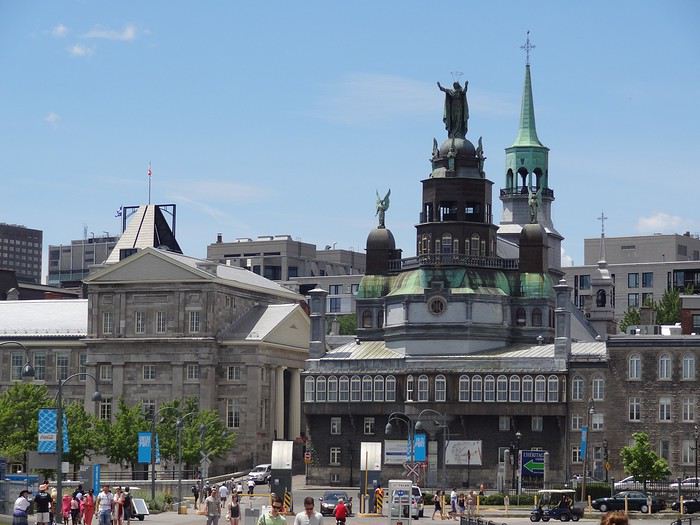 le vieux Montréal
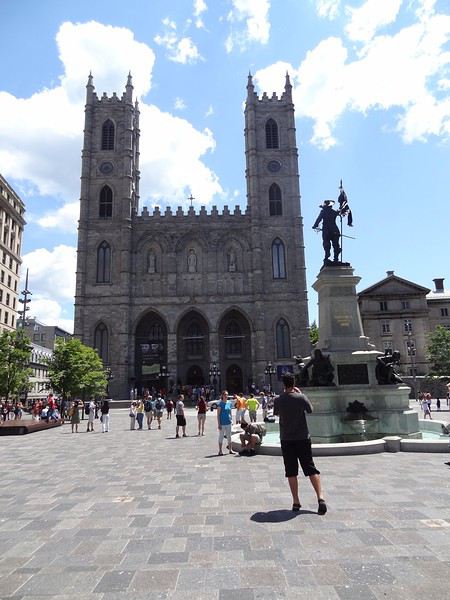 , le marché Jean Talon,
 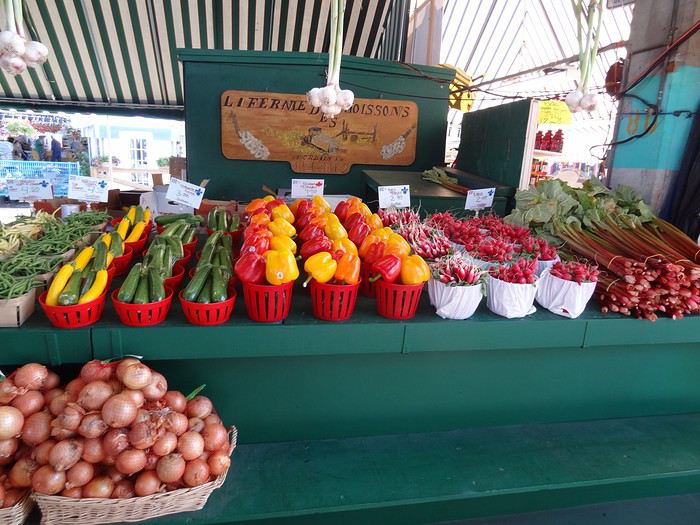 l
l
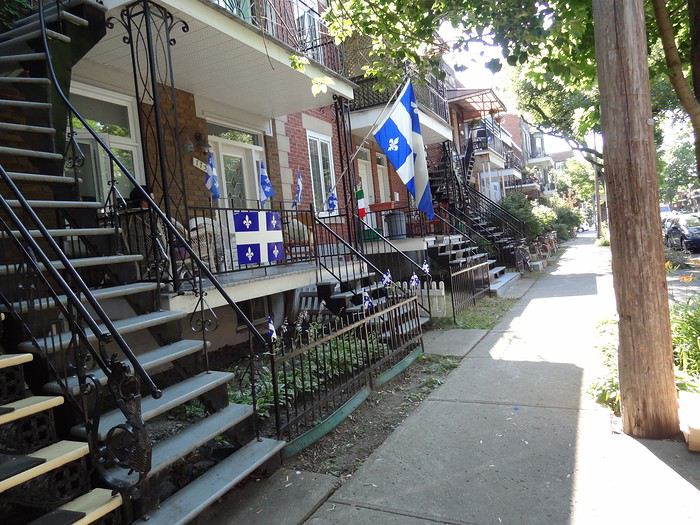 le 24 c'est la fête du Québec!
le mont royal,
le 24 c'est la fête du Québec!
le mont royal, 
 la biosphère,
 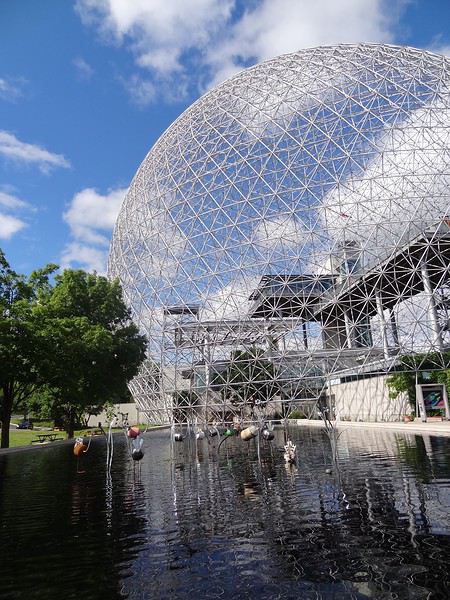 mais aussi le biodôme ,
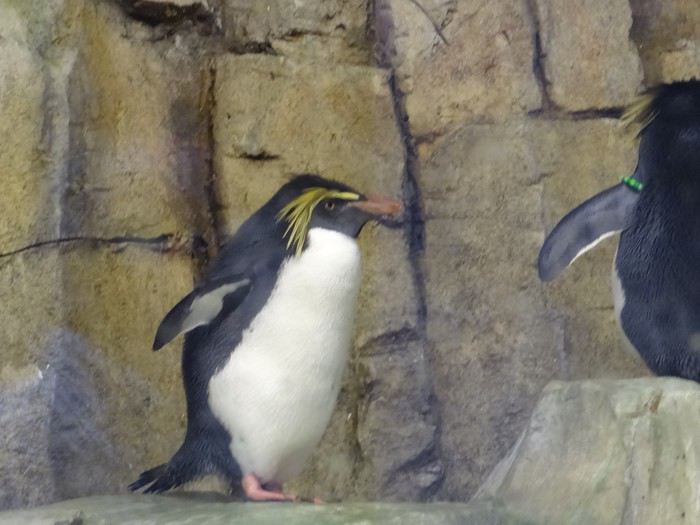 la tour olympique

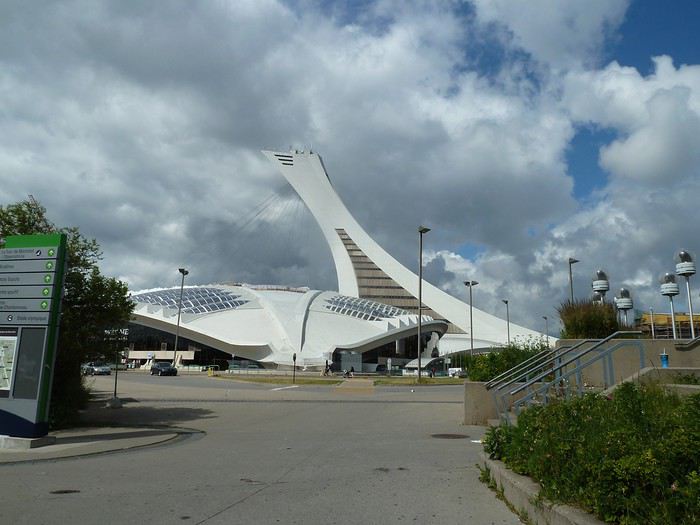 et ...la Ronde pour mes jeunes fans!!! Trop heureux de faire les montagnes russes en bois les plus hautes du monde...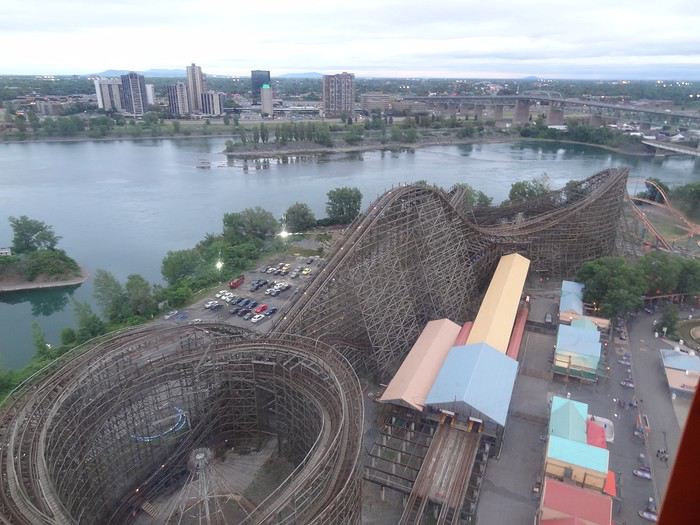
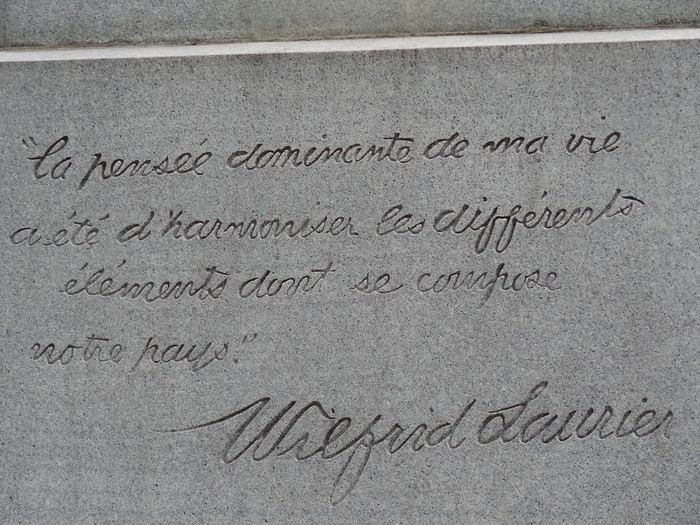
Nous avons eu l'occasion d'avoir un bel aperçu de la ville durant ces trois jours. Si moi je suis conquise par la ville depuis mon premier voyage, je constate que les jeunes le sont aussi!!!
23 juin 2012 : Les examens finis, nous embarquons à la gare de Bruxelles Midi vers Paris Charles de Gaule. Pratique, c'est un billet combiné et l'enregistrement se fait à la gare! Heureusement car suite à un vol de câbles, le TGV aura pas mal de retard et il nous faudra courir un peu pour ne pas rater le vol.. J'ai loué un petit appartement rue de Gaspé, près du métro Jarry. Nous visiteront Montréal jusqu'au 26 juin, le temps de bien se remettre du décalage horaire. Le vieux port, noir de monde en ce début d'été,
le vieux Montréal
, le marché Jean Talon, l
le 24 c'est la fête du Québec!
le mont royal,
la biosphère,
mais aussi le biodôme ,
la tour olympique
et ...la Ronde pour mes jeunes fans!!! Trop heureux de faire les montagnes russes en bois les plus hautes du monde...Nous avons eu l'occasion d'avoir un bel aperçu de la ville durant ces trois jours. Si moi je suis conquise par la ville depuis mon premier voyage, je constate que les jeunes le sont aussi!!!
Tour du Dhaulagiri English translation pending
Bonjour à tous ,
je pars pour le tour du Dhaulaghiri en avril ; Je vous ferai un petit compte rendu en rentrant.
En attendant , si certains le font actuellemnt , ou bientôt, merci, de me dire si les camps sont ouverts et natamment si ils servent a manger ( dal bath , riz et thé ) J'eesaie d'alléger mon sac au maximum en raison d 'un mal de dos réccurrent.
Merci également de préciser les conditions d'enneigement en ce moment.
Merci d'avance,
Bertrand
je pars pour le tour du Dhaulaghiri en avril ; Je vous ferai un petit compte rendu en rentrant.
En attendant , si certains le font actuellemnt , ou bientôt, merci, de me dire si les camps sont ouverts et natamment si ils servent a manger ( dal bath , riz et thé ) J'eesaie d'alléger mon sac au maximum en raison d 'un mal de dos réccurrent.
Merci également de préciser les conditions d'enneigement en ce moment.
Merci d'avance,
Bertrand