Results for "Salers+|+127"
5423 results found.
Votre avis sur l'hôtel Villas Bavaro Beach Resort English translation pending
Salut tout le monde, je cherche des renseignements sur l'hôtel Villas Bavaro, tels que le confort, la propreté, la clim dans les chambres, etc..., ainsi que l'environnement de l'hôtel
D'autre part, y-a-t'il dans ce ce secteur de la République Dominicaine, des plages avec vagues pour faire du bodyboard et du surf?D'avance, merci à ceux qui connaissent l'endroit.@ bientôt.😎
D'autre part, y-a-t'il dans ce ce secteur de la République Dominicaine, des plages avec vagues pour faire du bodyboard et du surf?D'avance, merci à ceux qui connaissent l'endroit.@ bientôt.😎
Budget moyen en Jordanie? English translation pending
Hello tlm,
J'aurai aimé savoir quel était le budget moyen pour un voyage de +/-9 nuits en Jordanie ? Il est préférable de loger où et à quel prix ? Qu'est ce qu'il coûte cher ?
Par ailleurs, pour ceux qui sont allé en Jordanie, qu'est ce qu'il n'est pas indispensable de visiter...étant donné qu'on ne passera qu'une dizaine de jours.
Toute adresse, info, conseil etc sont les bienvenue et d'avance je vous en remercie !
A+ Birzouki
J'aurai aimé savoir quel était le budget moyen pour un voyage de +/-9 nuits en Jordanie ? Il est préférable de loger où et à quel prix ? Qu'est ce qu'il coûte cher ?
Par ailleurs, pour ceux qui sont allé en Jordanie, qu'est ce qu'il n'est pas indispensable de visiter...étant donné qu'on ne passera qu'une dizaine de jours.
Toute adresse, info, conseil etc sont les bienvenue et d'avance je vous en remercie !
A+ Birzouki
"Molee de poisson" recette du Kérala Inde sud English translation pending
Le Kérala, presque le paradis! végétation luxuriante, montagnes, plantations d'épices et de thé, des canaux pour relier les villages, des plages superbes...
recette très facile !
ingrédients : 1/4 de cuillérée à café (cc) de curcuma, sel. jus d'1/2 citron. 400 ml de lait de coco en conserve. 3 cc d'huile.1 gros oignon haché.6 piments verts fendus en long. 6 gousses d'ail écrasées. 2 morceaux de gingembre frais (2, 5cms chacun). 1 petite tomate. 2 grains de poivre.1 clou de girofle. 2 cardamones. 1 petite tomate écrasée. filets de poisson.
1 : préparer une marinade avec la moitié du curcuma, le citron et le sel. Enduire le poisson avec cette marinade.(15 minutes).
2 : faire chauffer l'huile ds une grande cocotte. Y faire revenir les oignons, les piments, l'ail et le gingembre (feu doux) jusqu'à coloration des oignons. (environ 10 mn). Ajouter la tomate, les grains de poivre, le clou de girofle, les cardamones.Attendre 2 minutes avant d'ajouter la moitié du lait de coco et le reste du curcuma, saler, laisser encore cuire 10 minutes, feu doux.
3 : ajouter les morceaux de poisson et l'autre moitié du lait de coco. Laisser cuire (3 à 5 minutes selon le filet de poisson.) Oter les épices entières avant de servir.
Accompagnement : riz nature, basmati.
Bon appétit !
recette très facile !
ingrédients : 1/4 de cuillérée à café (cc) de curcuma, sel. jus d'1/2 citron. 400 ml de lait de coco en conserve. 3 cc d'huile.1 gros oignon haché.6 piments verts fendus en long. 6 gousses d'ail écrasées. 2 morceaux de gingembre frais (2, 5cms chacun). 1 petite tomate. 2 grains de poivre.1 clou de girofle. 2 cardamones. 1 petite tomate écrasée. filets de poisson.
1 : préparer une marinade avec la moitié du curcuma, le citron et le sel. Enduire le poisson avec cette marinade.(15 minutes).
2 : faire chauffer l'huile ds une grande cocotte. Y faire revenir les oignons, les piments, l'ail et le gingembre (feu doux) jusqu'à coloration des oignons. (environ 10 mn). Ajouter la tomate, les grains de poivre, le clou de girofle, les cardamones.Attendre 2 minutes avant d'ajouter la moitié du lait de coco et le reste du curcuma, saler, laisser encore cuire 10 minutes, feu doux.
3 : ajouter les morceaux de poisson et l'autre moitié du lait de coco. Laisser cuire (3 à 5 minutes selon le filet de poisson.) Oter les épices entières avant de servir.
Accompagnement : riz nature, basmati.
Bon appétit !
Infos sur l'Amérique du sud? (Chili) English translation pending
Bonjour à tous les voyageurs,
Avec ma femme nous préparons un voyage (de noces😉) en amérique du sud. Pour l'instant notre destination est le Chilie🙂. Mais rien n'est fixe. On cherche une destination nous permettant de vivre deux temps distincts: un temps de relaxation sur des belles plages( brésil??) . Ma femme adore cela!😎! Mais également un temps de découverte de la culture locale et de balade en montagne ( niveau intermédiaire).
Nous ne connaissons guère ce coin du monde, c'st pourquoi j'espère avoir quelques informations utiles.
Merci pour tous vos renseignements sur cette régions.
Bon voyage!!😇
Guiguch
Avec ma femme nous préparons un voyage (de noces😉) en amérique du sud. Pour l'instant notre destination est le Chilie🙂. Mais rien n'est fixe. On cherche une destination nous permettant de vivre deux temps distincts: un temps de relaxation sur des belles plages( brésil??) . Ma femme adore cela!😎! Mais également un temps de découverte de la culture locale et de balade en montagne ( niveau intermédiaire).
Nous ne connaissons guère ce coin du monde, c'st pourquoi j'espère avoir quelques informations utiles.
Merci pour tous vos renseignements sur cette régions.
Bon voyage!!😇
Guiguch
Un mois au Vietnam (novembre/décembre 2001) English translation pending
🙂Globalement voici ce que nous pensons du Vietnam, après y avoir séjourné un mois, du 1 Novembre au 1 Décembre 2001.
Généralités
Le paysage est superbe et très varié. Rizières dans les plaines, et en plateaux là où c’est possible. Bords de mer escarpés et plages sablonneuses. Quelques forets de pins et évidemment plusieurs forets tropicales. Les routes sont généralement étroites et leur état très variable. Nous avons souvent du rouler plusieurs kilomètres au milieu de travaux, et il reste encore malheureusement plusieurs chemins de terre plus ou moins carrossables. En ville les rues sont en général acceptables, mais les trottoirs sont affreusement embarrassés de motos, bicyclettes tables de restaurants et il faut toujours se méfier des dénivellations et des canalisations d’égouts sans couvercles. Circuler à pied en ville est très éprouvant et on finit par marcher dans la rue. S’il y a un mur, plus haut que un mètre et si ce n’est pas une bâtisse officielle ou une pagode, on est certains d’y voir des excréments et de sentir une forte odeur d’urine. Très souvent on a vu des hommes et même des femmes uriner devant nous sans aucune gêne.
On ne respecte pratiquement jamais les feux de circulation (Sauf à Saigon peut être). On a même vu aux intersections des compteur a rebours, indiquant aux gens impatients de rouler, les secondes restantes avant le changement de feux. Les villes sont sales. Tout le monde jette tout parterre, on pousse tout a la rue avec des balais a manche court, et le soir les éboueurs ramassent le tout. Et on recommence le lendemain matin avec comme résultat que c’est toujours sale.
Les nouvelles maisons ont trois mètres de façade, et sont assez profondes. Voir plusieurs de ces maisons alignées sur une rue nous rappelle un peu Amsterdam, en plus bas mais surtout plus coloré. A l’intérieur d’un bloc de hautes maisons, il y a souvent des ruelles qui mènent a de plus petites demeures.
Le Delta du Mékong mérite 3 jours de visite. Les organisateurs de tours offrent d’excellents forfaits qui utilisent l’autobus, le bateau et même le tout petit bateau à rames à 4 places. On se promène dans de petits canaux bordés de forets, de champs ou on peut voir les gens travailler aux champs, ou dans leurs échoppes d’artisanat Selon moi, ces îles et ces îlots, représentent vraiment le Vietnam et sont uniques au monde.
La baie de Halong vaut elle aussi le déplacement. On a été très chanceux. Lors de notre trajet vers l’île de Catba on a eu un soleil radieux, et au retour de gros nuages, et de la brume donnaient à ce paysage, déjà fantastique, une allure de repère de pirates hallucinant.
Les Transports
Se déplacer au Vietnam peut être facile ou difficile selon le choix de moyens de transport qu’on fait. Les autobus sont archibondés, 3 par siège, l’allée centrale pleine de monde debout, bagages entassés sur le toit et vitres ouvertes pour éviter de suffoquer. Les terminus sont souvent loin des centres et occasionnent une dépense supplémentaire souvent non négligeable. Le train est relativement confortable, très lent mais surtout très cher pour l’Asie. Les touristes paient 5 fois le prix des locaux et doivent invariablement utiliser le guichet touriste dans les gares.
La très grande majorité des touristes se rabattent donc sur Open Tour (ou ses équivalents) . Leurs prix sont super abordables et ils vous rendent la vie tellement facile que même les routards les plus aguerris finissent pas céder… Ils vous ramassent à votre hôtel, et vous déposent devant leur hôtel, que vous êtes libres de choisir évidemment. Ils s’arrêtent aux deux heures, pour vous restaurer et pour aller aux toilettes, toujours dans un endroit ou vous pourrez, évidemment, choisir un souvenir .
En ville, les cyclo offrent leurs services à 15, 000 dongs l’heure, par personne. On a pas réussi a trouver de cartes pour les routes d’autobus dans les grandes villes. Il y a des taxis avec compteur, la possibilité de louer une moto avec ou sans chauffeur et les vélos. Nous avons opté pour la marche, le meilleur moyen de ne rien manquer.
Nous avons utilisé TM Brothers pour nos tours et avons été très satisfaits. Les tours sont bien équilibrés, ils savent doser les trajets en autobus, les arrêts pauses, les trajets en bateau et même à pied. Il est pratiquement impossible de réaliser ces tours par nos propres moyens. Le coût serait de beaucoup supérieur, et les possibilités de louer des bateaux pour explorer les canaux par exemple, quasi impossible. On nous a dit qu’il était défendu à tout Vietnamien, ne possédant pas un permis du gouvernement, de transiger avec les touristes, donc mieux vaut se résigner. 2 jours d’excursion à la baie d’Halong, incluant l’hôtel, et les repas coûte 15 $US par personne, difficile à battre. Les guides Vietnamiens sont endoctrinés et répondent aux questions trop curieuses par de belles phrases toutes faites qui vantent le bon gouvernement Vietnamien et promettent un avenir meilleur au pays. TM Brothers nous a fait marcher dans des rizières, dans des villages perdus dans les montagnes, prendre le thé dans une maison familiale en plein milieu de la forêt tropicale, visiter des artisans tisserands, faiseurs de nouilles etc.…toujours en douceur et avec le sourire. Les hôtels étaient toujours très propres et là ou les repas étaient inclus, c’était toujours copieux et délicieux. Évidemment tout est orchestré par les Tours Opérators, mais encore une fois, il serait pratiquement impossible d’en voir autant en individuel.
La bouffe
Se nourrir au Vietnam ne coûte pas cher si on mange Vietnamien. Dans les restos touristiques on peut s’attendre à débourser un peu plus, et comme partout ailleurs dans le monde les Hôtels Internationaux peuvent vous arracher la peau des fesses. Dans les restos Vietnamiens, tout tourne autour du plat de riz, un peu de viande et beaucoup de légumes. On assaisonne le tout de sauces fortes ou salées. On s’en tire pour environ 1$ par personne avant breuvages. Les poissons et fruits de mer sont, comme partout, beaucoup plus cher, mais ils sont bien apprêtés et très frais. Le Pho est le plat idéal pour le lunch. La qualité peut varier d’un endroit à l’autre, la meilleure garantie c’est encore l’achalandage de Vietnamiens. Les gargotes sur la rue vont du meilleur au pire . Vous êtes installés sur une mini-chaise ou un mini-tabouret, le nez à la hauteur des échappements des autobus, ou des égouts… Vous enfilez votre repas en moins de dix minutes et ca ne coûte que quelques cents.
Les petits déjeuners sont copieux, Un pain croûté entier par personne, œufs frits, confiture fruits et café Vietnamien. Pour le café il faut être patients, souvent les filtres sont très lents, on rallonge avec l’eau bouillante qu’on vous sert avec le café.
La bière est excellente et pas chère dutout. La locale, 70 a 80 cents, et la Bia Oi (pression) 35 cents le litre. Avec la bière pression les problèmes de constipation dus au riz se règlent très très rapidement. On s’est bien régalés pendant ce mois au Vietnam.
Le logement
Ce qu’on a préféré comme logement, c’est la villa Française à Hué. Grande chambre, grande salle de bain, meubles massifs, belle grande galerie avec les colonnes typiques dans un jardin fleuri et ombragé, c’était super reposant. Ailleurs les chambres sont toujours correctes. Les prix varient de 9$ à 14$ avec ventilateur, TV, et frigo. Dans les villes plus petites, les prix sont autour de 7$. Les tours organisateurs vous déposent devant leurs hôtels, libre à vous de le choisir ou d’en chercher un autre; généralement ils sont très bien. Les prix demandés sont souvent négociables. Les chambres sont bien équipées et fournissent serviettes, draps savon et papier hygiénique et télévision ( TV5 presque partout, Fait étrange les doublages en Vietnamien se font par une seule personne, et tout sur le même ton) Il y a de l’eau chaude partout. L’accueil varie d’un endroit à l’autre selon l’humeur des employés, généralement dans les hôtels familiaux, l’accueils est plus sympathique.
Les Gens
A première vue les Vietnamiens ne sont pas des gens heureux. Ils semblent préoccupés à vivre leur quotidien. Ceux qui ont des contacts avec les touristes, ont le sourire et la gentillesse orientés sur vos dollars. Nous avons souvent constatés un brusque changement d’attitude, lorsqu’ils réalisent qu’il n’y aura pas de `Business`` ou pas de pourboire pour eux. La multitude de vendeurs de rue finit par tomber sur les nerfs. Les cyclos sont carrément accablants. Souvent ils s’y prennent tellement mal qu’il est difficile de garder son sourire quand on leur dit non. ``Where do you go `` Pas de mauvaise volonté mais triste manque de finesse, et même du savoir vivre minimum. Les rabatteurs d’hôtels de restaurants et autres commerces poussent régulièrement trop fort. Ils sont brusques, vous poussent littéralement un manque de respect qui tape royalement sur les nerfs. On voit des enfants quêteurs ou vendeurs dressés par les parents. Ils les transportent à bicyclette dans tous les coins de la ville ou il y a des touristes jusqu’aux petites heures pour vendre leurs produits. Ils vous collent dessus, vous flattent les bras, et sont nettement trop collants à notre goût.
Les gens qui n’ont rien a gagner des touristes sont beaucoup plus plaisants. Ils répondent généreusement aux sourires et incitent les enfants à nous dire Hello.
L’argent
Nous nous sommes déplacés de Hanoi à Saigon. En train de Hanoi à Hué, puis avec Open Tour pour le reste. Nous avons pris 3 tours organisés. Le delta du Mékong, Mai Chau, et la baie de Halong (2 jours chaque tour) Nous avons extrêmement bien mangé et avons étés très bien logés pendant tout le mois de Novembre. Nous avons dépensé une moyenne de 40$ CND par jour pour les deux. Le Vietnam n’est pas un pays cher si on fait juste un petit peu attention. Tout est négociable ( et devrait être négocié) sauf les billets de transports et les restaurants. Au Vietnam il faut être prêts à dire NON . Partout même dans les restaurants on est toujours sollicités Livres, briquets, Lunettes soleil, journaux, cartes postales gomme ça ne s’arrête jamais.
N'hésitez pas à me contacter
Généralités
Le paysage est superbe et très varié. Rizières dans les plaines, et en plateaux là où c’est possible. Bords de mer escarpés et plages sablonneuses. Quelques forets de pins et évidemment plusieurs forets tropicales. Les routes sont généralement étroites et leur état très variable. Nous avons souvent du rouler plusieurs kilomètres au milieu de travaux, et il reste encore malheureusement plusieurs chemins de terre plus ou moins carrossables. En ville les rues sont en général acceptables, mais les trottoirs sont affreusement embarrassés de motos, bicyclettes tables de restaurants et il faut toujours se méfier des dénivellations et des canalisations d’égouts sans couvercles. Circuler à pied en ville est très éprouvant et on finit par marcher dans la rue. S’il y a un mur, plus haut que un mètre et si ce n’est pas une bâtisse officielle ou une pagode, on est certains d’y voir des excréments et de sentir une forte odeur d’urine. Très souvent on a vu des hommes et même des femmes uriner devant nous sans aucune gêne.
On ne respecte pratiquement jamais les feux de circulation (Sauf à Saigon peut être). On a même vu aux intersections des compteur a rebours, indiquant aux gens impatients de rouler, les secondes restantes avant le changement de feux. Les villes sont sales. Tout le monde jette tout parterre, on pousse tout a la rue avec des balais a manche court, et le soir les éboueurs ramassent le tout. Et on recommence le lendemain matin avec comme résultat que c’est toujours sale.
Les nouvelles maisons ont trois mètres de façade, et sont assez profondes. Voir plusieurs de ces maisons alignées sur une rue nous rappelle un peu Amsterdam, en plus bas mais surtout plus coloré. A l’intérieur d’un bloc de hautes maisons, il y a souvent des ruelles qui mènent a de plus petites demeures.
Le Delta du Mékong mérite 3 jours de visite. Les organisateurs de tours offrent d’excellents forfaits qui utilisent l’autobus, le bateau et même le tout petit bateau à rames à 4 places. On se promène dans de petits canaux bordés de forets, de champs ou on peut voir les gens travailler aux champs, ou dans leurs échoppes d’artisanat Selon moi, ces îles et ces îlots, représentent vraiment le Vietnam et sont uniques au monde.
La baie de Halong vaut elle aussi le déplacement. On a été très chanceux. Lors de notre trajet vers l’île de Catba on a eu un soleil radieux, et au retour de gros nuages, et de la brume donnaient à ce paysage, déjà fantastique, une allure de repère de pirates hallucinant.
Les Transports
Se déplacer au Vietnam peut être facile ou difficile selon le choix de moyens de transport qu’on fait. Les autobus sont archibondés, 3 par siège, l’allée centrale pleine de monde debout, bagages entassés sur le toit et vitres ouvertes pour éviter de suffoquer. Les terminus sont souvent loin des centres et occasionnent une dépense supplémentaire souvent non négligeable. Le train est relativement confortable, très lent mais surtout très cher pour l’Asie. Les touristes paient 5 fois le prix des locaux et doivent invariablement utiliser le guichet touriste dans les gares.
La très grande majorité des touristes se rabattent donc sur Open Tour (ou ses équivalents) . Leurs prix sont super abordables et ils vous rendent la vie tellement facile que même les routards les plus aguerris finissent pas céder… Ils vous ramassent à votre hôtel, et vous déposent devant leur hôtel, que vous êtes libres de choisir évidemment. Ils s’arrêtent aux deux heures, pour vous restaurer et pour aller aux toilettes, toujours dans un endroit ou vous pourrez, évidemment, choisir un souvenir .
En ville, les cyclo offrent leurs services à 15, 000 dongs l’heure, par personne. On a pas réussi a trouver de cartes pour les routes d’autobus dans les grandes villes. Il y a des taxis avec compteur, la possibilité de louer une moto avec ou sans chauffeur et les vélos. Nous avons opté pour la marche, le meilleur moyen de ne rien manquer.
Nous avons utilisé TM Brothers pour nos tours et avons été très satisfaits. Les tours sont bien équilibrés, ils savent doser les trajets en autobus, les arrêts pauses, les trajets en bateau et même à pied. Il est pratiquement impossible de réaliser ces tours par nos propres moyens. Le coût serait de beaucoup supérieur, et les possibilités de louer des bateaux pour explorer les canaux par exemple, quasi impossible. On nous a dit qu’il était défendu à tout Vietnamien, ne possédant pas un permis du gouvernement, de transiger avec les touristes, donc mieux vaut se résigner. 2 jours d’excursion à la baie d’Halong, incluant l’hôtel, et les repas coûte 15 $US par personne, difficile à battre. Les guides Vietnamiens sont endoctrinés et répondent aux questions trop curieuses par de belles phrases toutes faites qui vantent le bon gouvernement Vietnamien et promettent un avenir meilleur au pays. TM Brothers nous a fait marcher dans des rizières, dans des villages perdus dans les montagnes, prendre le thé dans une maison familiale en plein milieu de la forêt tropicale, visiter des artisans tisserands, faiseurs de nouilles etc.…toujours en douceur et avec le sourire. Les hôtels étaient toujours très propres et là ou les repas étaient inclus, c’était toujours copieux et délicieux. Évidemment tout est orchestré par les Tours Opérators, mais encore une fois, il serait pratiquement impossible d’en voir autant en individuel.
La bouffe
Se nourrir au Vietnam ne coûte pas cher si on mange Vietnamien. Dans les restos touristiques on peut s’attendre à débourser un peu plus, et comme partout ailleurs dans le monde les Hôtels Internationaux peuvent vous arracher la peau des fesses. Dans les restos Vietnamiens, tout tourne autour du plat de riz, un peu de viande et beaucoup de légumes. On assaisonne le tout de sauces fortes ou salées. On s’en tire pour environ 1$ par personne avant breuvages. Les poissons et fruits de mer sont, comme partout, beaucoup plus cher, mais ils sont bien apprêtés et très frais. Le Pho est le plat idéal pour le lunch. La qualité peut varier d’un endroit à l’autre, la meilleure garantie c’est encore l’achalandage de Vietnamiens. Les gargotes sur la rue vont du meilleur au pire . Vous êtes installés sur une mini-chaise ou un mini-tabouret, le nez à la hauteur des échappements des autobus, ou des égouts… Vous enfilez votre repas en moins de dix minutes et ca ne coûte que quelques cents.
Les petits déjeuners sont copieux, Un pain croûté entier par personne, œufs frits, confiture fruits et café Vietnamien. Pour le café il faut être patients, souvent les filtres sont très lents, on rallonge avec l’eau bouillante qu’on vous sert avec le café.
La bière est excellente et pas chère dutout. La locale, 70 a 80 cents, et la Bia Oi (pression) 35 cents le litre. Avec la bière pression les problèmes de constipation dus au riz se règlent très très rapidement. On s’est bien régalés pendant ce mois au Vietnam.
Le logement
Ce qu’on a préféré comme logement, c’est la villa Française à Hué. Grande chambre, grande salle de bain, meubles massifs, belle grande galerie avec les colonnes typiques dans un jardin fleuri et ombragé, c’était super reposant. Ailleurs les chambres sont toujours correctes. Les prix varient de 9$ à 14$ avec ventilateur, TV, et frigo. Dans les villes plus petites, les prix sont autour de 7$. Les tours organisateurs vous déposent devant leurs hôtels, libre à vous de le choisir ou d’en chercher un autre; généralement ils sont très bien. Les prix demandés sont souvent négociables. Les chambres sont bien équipées et fournissent serviettes, draps savon et papier hygiénique et télévision ( TV5 presque partout, Fait étrange les doublages en Vietnamien se font par une seule personne, et tout sur le même ton) Il y a de l’eau chaude partout. L’accueil varie d’un endroit à l’autre selon l’humeur des employés, généralement dans les hôtels familiaux, l’accueils est plus sympathique.
Les Gens
A première vue les Vietnamiens ne sont pas des gens heureux. Ils semblent préoccupés à vivre leur quotidien. Ceux qui ont des contacts avec les touristes, ont le sourire et la gentillesse orientés sur vos dollars. Nous avons souvent constatés un brusque changement d’attitude, lorsqu’ils réalisent qu’il n’y aura pas de `Business`` ou pas de pourboire pour eux. La multitude de vendeurs de rue finit par tomber sur les nerfs. Les cyclos sont carrément accablants. Souvent ils s’y prennent tellement mal qu’il est difficile de garder son sourire quand on leur dit non. ``Where do you go `` Pas de mauvaise volonté mais triste manque de finesse, et même du savoir vivre minimum. Les rabatteurs d’hôtels de restaurants et autres commerces poussent régulièrement trop fort. Ils sont brusques, vous poussent littéralement un manque de respect qui tape royalement sur les nerfs. On voit des enfants quêteurs ou vendeurs dressés par les parents. Ils les transportent à bicyclette dans tous les coins de la ville ou il y a des touristes jusqu’aux petites heures pour vendre leurs produits. Ils vous collent dessus, vous flattent les bras, et sont nettement trop collants à notre goût.
Les gens qui n’ont rien a gagner des touristes sont beaucoup plus plaisants. Ils répondent généreusement aux sourires et incitent les enfants à nous dire Hello.
L’argent
Nous nous sommes déplacés de Hanoi à Saigon. En train de Hanoi à Hué, puis avec Open Tour pour le reste. Nous avons pris 3 tours organisés. Le delta du Mékong, Mai Chau, et la baie de Halong (2 jours chaque tour) Nous avons extrêmement bien mangé et avons étés très bien logés pendant tout le mois de Novembre. Nous avons dépensé une moyenne de 40$ CND par jour pour les deux. Le Vietnam n’est pas un pays cher si on fait juste un petit peu attention. Tout est négociable ( et devrait être négocié) sauf les billets de transports et les restaurants. Au Vietnam il faut être prêts à dire NON . Partout même dans les restaurants on est toujours sollicités Livres, briquets, Lunettes soleil, journaux, cartes postales gomme ça ne s’arrête jamais.
N'hésitez pas à me contacter
Where to find the non-digital paper toll sticker for Austria-Slovenia highways?
hi
I’d like to know the opening hours of physical stores between Germany and Austria, and between Austria and Slovenia, that sell the PAPER STICKER toll vignettes that still exist for 2026—non-digital ones. I don’t think they’re open 24/7, and I can’t find the info anywhere. Thanks
I’d like to know the opening hours of physical stores between Germany and Austria, and between Austria and Slovenia, that sell the PAPER STICKER toll vignettes that still exist for 2026—non-digital ones. I don’t think they’re open 24/7, and I can’t find the info anywhere. Thanks
February contest theme: lakes and ponds around the world
Let’s stick with the water theme—it’s definitely the season (maybe a bit *too* much for some of those dealing with floods 😕).
After the flowing waters (with varying energy levels), let’s take it easy with still waters:
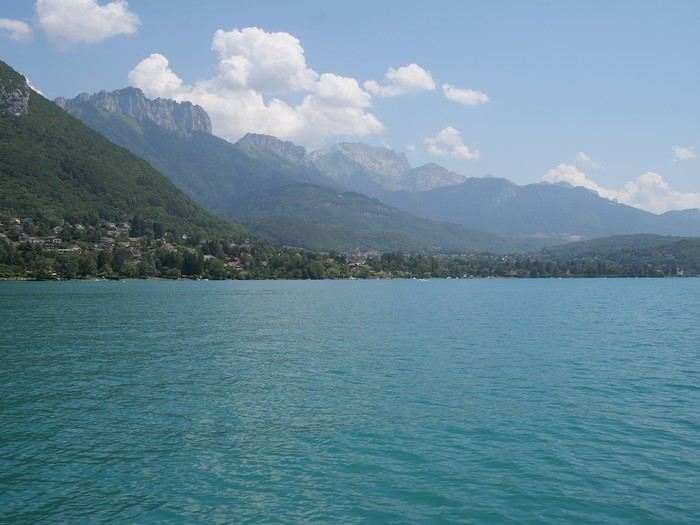 Lakes (Annecy)
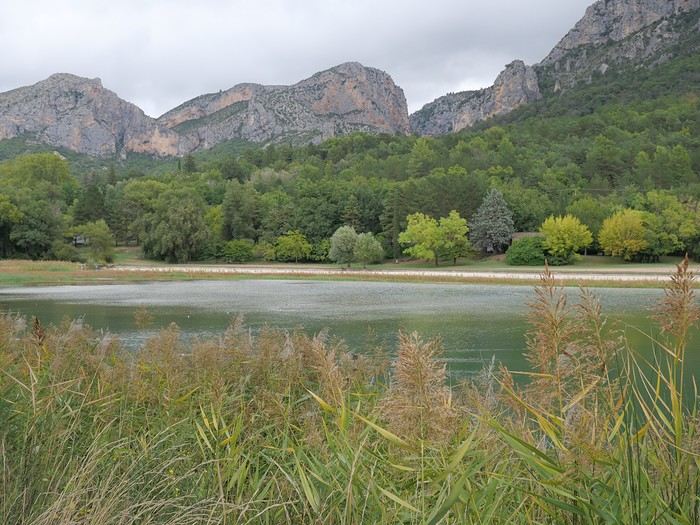 Ponds (near Moustiers Saint Marie)
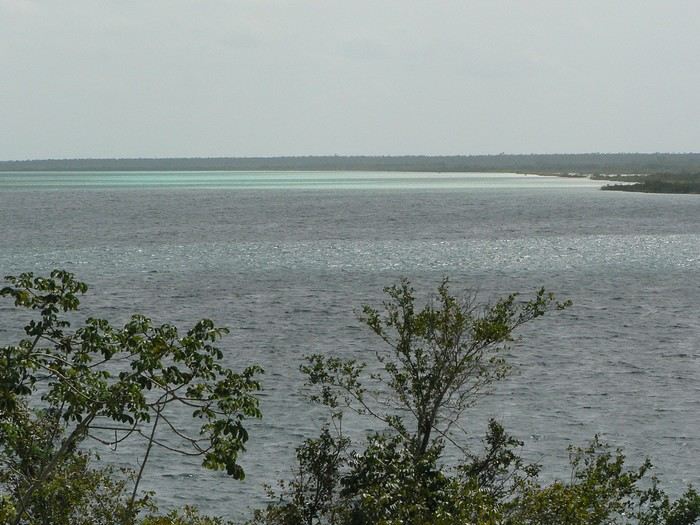 Lagoons (Bacalar)
If you’ve got nice photos of a pond—or even a puddle—why not? Natural bodies of water only: no pools or fountains (reservoir lakes are accepted… because they often look like natural lakes ).
The contest rules are the same as always 😉: Up to 3 photos per member, one photo per post (a little explanation is better), and past winning photos from other VF contests aren’t allowed. You have until Sunday, February 22nd at 11:59 PM (Paris time) to post your photos. Voting starts Monday the 23rd at midnight—rank your top 3 photos in order (3, 2, and 1 points). Voting ends Saturday, February 28th at 11:59 PM. Results will be announced on March 1st. The winning photo is the one with the most points (in case of a tie, the photo ranked first the most times wins). The lucky winner gets to organize March’s contest 😎.
Dig into your archives…
Lakes (Annecy)
Ponds (near Moustiers Saint Marie)
Lagoons (Bacalar)If you’ve got nice photos of a pond—or even a puddle—why not? Natural bodies of water only: no pools or fountains (reservoir lakes are accepted… because they often look like natural lakes ).
The contest rules are the same as always 😉: Up to 3 photos per member, one photo per post (a little explanation is better), and past winning photos from other VF contests aren’t allowed. You have until Sunday, February 22nd at 11:59 PM (Paris time) to post your photos. Voting starts Monday the 23rd at midnight—rank your top 3 photos in order (3, 2, and 1 points). Voting ends Saturday, February 28th at 11:59 PM. Results will be announced on March 1st. The winning photo is the one with the most points (in case of a tie, the photo ranked first the most times wins). The lucky winner gets to organize March’s contest 😎.
Dig into your archives…
Crossing the border from 4000 Islands (Laos) to Cambodia and ongoing conflict
Hi,
I’m arriving soon in southern Laos and the 4000 Islands, with plans to head to Cambodia next.
The latest news I got this morning (Paksé, La Boulange) isn’t great—the Cambodian border is also in a latent conflict with Laos for the same reasons as with Thailand...
So, what’s the best site to check for updates on the border opening? Since the situation isn’t stable right now and could change from one day to the next?
Thanks for your input.
So, what’s the best site to check for updates on the border opening? Since the situation isn’t stable right now and could change from one day to the next?
Thanks for your input.
New Navi Mumbai International Airport
India inaugurates the new Navi Mumbai International Airport and the final phase of Mumbai’s Metro Line 3—a major turning point for the country’s infrastructure.
Mumbai, India’s economic capital, is entering a new era of modernization. The Indian government has officially inaugurated the Navi Mumbai International Airport, one of the country’s most ambitious infrastructure projects, along with the final phase of Metro Line 3, a key axis to ease congestion in the megacity.
The Navi Mumbai International Airport (NMIA), located about 35 km from the city center, aims to eventually handle up to 60 million passengers per year. Built to reduce pressure on the already saturated Chhatrapati Shivaji Maharaj Airport, it features ultra-modern facilities, sustainable design, and cutting-edge technologies for air traffic management and energy efficiency.
At the same time, the completion of Mumbai’s Metro Line 3, connecting Colaba to Bandra-SEEPZ, marks a major advancement in urban mobility. This 33.5 km underground section will significantly reduce travel time and congestion in a city known for its chronic traffic jams.
These two projects reflect the Indian government’s commitment to transforming Mumbai into a global hub, combining connectivity, sustainability, and economic development.
The Navi Mumbai International Airport (NMIA), a project two decades in the making, has finally come to fruition. Phase one of the airport was inaugurated Wednesday by Prime Minister Narendra Modi, in the presence of Chief Minister Devendra Fadnavis and Deputy Chief Ministers Eknath Shinde and Ajit Pawar. Although the first phase, which includes Terminal 1 and Runway 1 with 10 bus gates and 29 aero bridges, has been inaugurated, flight operations will not begin immediately.
"Post-inauguration, the airport will be handed over to the Central Industrial Security Force (CISF) for a security sweep, which could take 30 to 45 days. We also need to mobilize customs and immigration teams and complete end-to-end testing, which is a 45-60-day process," said Arun Bansal, CEO of Adani Airports Holdings Ltd, developer and operator of the NMIA, during a press briefing at the NMIA premises Monday. Even though an exact date hasn’t been announced, NMIA CEO Captain B V J K Sharma and Bansal said commercial flights are expected to begin in December 2025. Plans of major carriers Three major airlines—Air India, Akasa Air, and IndiGo—have already signed on to shift part of their operations to NMIA. Last month, Air India announced plans to start with 20 daily departures (40 air traffic movements) through Air India Express, connecting 15 Indian cities in the first phase. By mid-2026, it aims to scale up to 55 daily departures, including up to five international flights. IndiGo, which made its announcement in May, plans to operate 18 daily flights to more than 15 cities from the first day of commercial operations and intends to expand to 140 daily flights—30 of which will be international—within 18 months. In June, Akasa Air said it will start with 15 daily domestic flights, scaling up to over 300 domestic and 50 international flights a week within a few months. When asked which airline will operate the first flight, Bansal said, "We want all three airlines to be there on Day 1. It depends on who has the earliest slot that day, and the destination choice lies entirely with the airlines." Operations to begin with 12-hour window In the first month, flights will operate between 8 am and 8 pm, with the 12-hour window likely to be extended as operations stabilize. Although NMIA’s full capacity is 40 air traffic movements (ATMs) per hour, the initial phase will handle 10 ATMs—allowing 10 aircraft to land or take off every hour. Airlines are expected to announce routes and ticket sales soon. Touted as an international aviation hub, NMIA positions Mumbai alongside global twin-airport cities such as London, Dubai, and New York, and plans to launch both domestic and international operations from Day 1. Concession for international carriers When asked if international carriers will be given any concessions, Bansal said, "For international airlines, we will not charge them parking fees for the first year." The duo added that NMIA aims to reclaim Mumbai’s rightful place on the global aviation map. "For a decade… travelers didn’t have a choice—airlines couldn’t get additional slots (at the Mumbai airport), so traffic shifted to Delhi. We are course-correcting that with NMIA. It won’t happen overnight, but over the next five–seven years, you’ll see the change," said Bansal. He noted that Mumbai currently lacks direct flights to major destinations in Europe and the U.S., something NMIA hopes to change. "If you see east-to-west flights, Mumbai is a natural stop," added Sharma. As reported earlier, NMIA will eventually feature four terminals and two parallel runways, with a total capacity to handle up to 90 million passengers per annum (MPPA), compared to 20 MPPA in the first phase. In the long term, the airport aims to serve as a key transfer hub between the East and the West, enabling passengers from Southeast Asia to connect seamlessly to Europe and North America.
The Navi Mumbai International Airport (NMIA), a project two decades in the making, has finally come to fruition. Phase one of the airport was inaugurated Wednesday by Prime Minister Narendra Modi, in the presence of Chief Minister Devendra Fadnavis and Deputy Chief Ministers Eknath Shinde and Ajit Pawar. Although the first phase, which includes Terminal 1 and Runway 1 with 10 bus gates and 29 aero bridges, has been inaugurated, flight operations will not begin immediately.
"Post-inauguration, the airport will be handed over to the Central Industrial Security Force (CISF) for a security sweep, which could take 30 to 45 days. We also need to mobilize customs and immigration teams and complete end-to-end testing, which is a 45-60-day process," said Arun Bansal, CEO of Adani Airports Holdings Ltd, developer and operator of the NMIA, during a press briefing at the NMIA premises Monday. Even though an exact date hasn’t been announced, NMIA CEO Captain B V J K Sharma and Bansal said commercial flights are expected to begin in December 2025. Plans of major carriers Three major airlines—Air India, Akasa Air, and IndiGo—have already signed on to shift part of their operations to NMIA. Last month, Air India announced plans to start with 20 daily departures (40 air traffic movements) through Air India Express, connecting 15 Indian cities in the first phase. By mid-2026, it aims to scale up to 55 daily departures, including up to five international flights. IndiGo, which made its announcement in May, plans to operate 18 daily flights to more than 15 cities from the first day of commercial operations and intends to expand to 140 daily flights—30 of which will be international—within 18 months. In June, Akasa Air said it will start with 15 daily domestic flights, scaling up to over 300 domestic and 50 international flights a week within a few months. When asked which airline will operate the first flight, Bansal said, "We want all three airlines to be there on Day 1. It depends on who has the earliest slot that day, and the destination choice lies entirely with the airlines." Operations to begin with 12-hour window In the first month, flights will operate between 8 am and 8 pm, with the 12-hour window likely to be extended as operations stabilize. Although NMIA’s full capacity is 40 air traffic movements (ATMs) per hour, the initial phase will handle 10 ATMs—allowing 10 aircraft to land or take off every hour. Airlines are expected to announce routes and ticket sales soon. Touted as an international aviation hub, NMIA positions Mumbai alongside global twin-airport cities such as London, Dubai, and New York, and plans to launch both domestic and international operations from Day 1. Concession for international carriers When asked if international carriers will be given any concessions, Bansal said, "For international airlines, we will not charge them parking fees for the first year." The duo added that NMIA aims to reclaim Mumbai’s rightful place on the global aviation map. "For a decade… travelers didn’t have a choice—airlines couldn’t get additional slots (at the Mumbai airport), so traffic shifted to Delhi. We are course-correcting that with NMIA. It won’t happen overnight, but over the next five–seven years, you’ll see the change," said Bansal. He noted that Mumbai currently lacks direct flights to major destinations in Europe and the U.S., something NMIA hopes to change. "If you see east-to-west flights, Mumbai is a natural stop," added Sharma. As reported earlier, NMIA will eventually feature four terminals and two parallel runways, with a total capacity to handle up to 90 million passengers per annum (MPPA), compared to 20 MPPA in the first phase. In the long term, the airport aims to serve as a key transfer hub between the East and the West, enabling passengers from Southeast Asia to connect seamlessly to Europe and North America.
Holiday in Brittany: Pink Granite Coast and Cornwall
We were invited to a friend’s wedding in this beautiful part of Brittany, so we took the opportunity to spend a few days there—first on the Pink Granite Coast and then in Cornwall.
Our friends, who are from the Trégor region, had found us a really nice little gîte in Tonquédec, just a stone’s throw from the coast. It was the perfect base for exploring the area’s iconic sites. We stayed in a lovely little house that combined authenticity, comfort, elegance, and tranquility.
Our first trip to the coast was to Ploumanac’h, a small village we discovered thanks to Stéphane Bern’s show. It’s an adorable little fishing port where we parked the car before continuing on foot along the sea. It’s charming—more than that, it’s magical!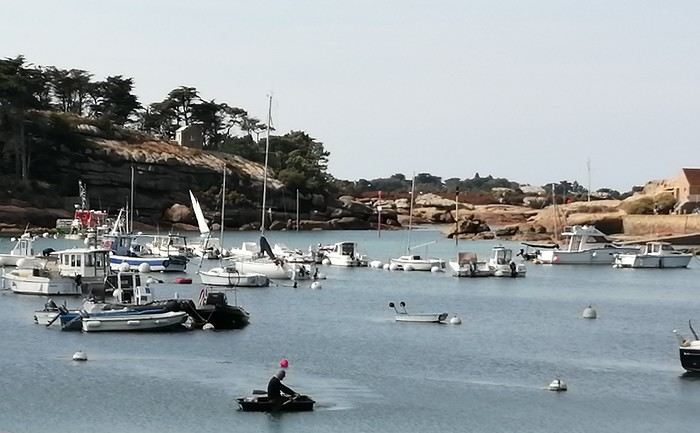
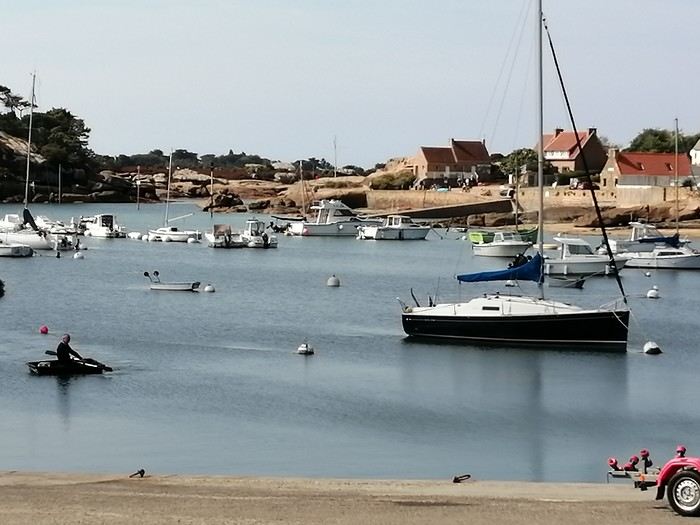
Our first walk, our first hike along the coastal path, and our first photos of these massive rocks bathed in light.
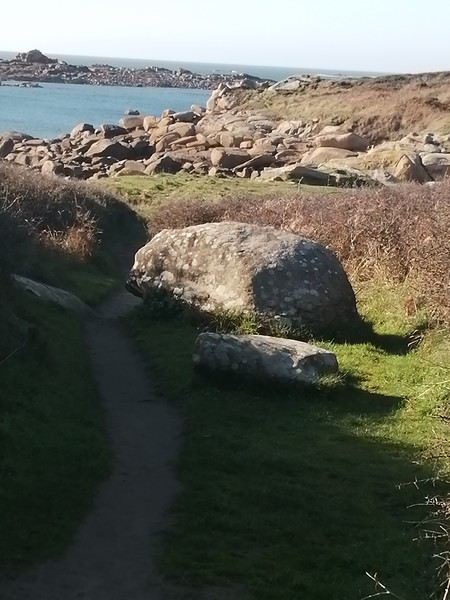
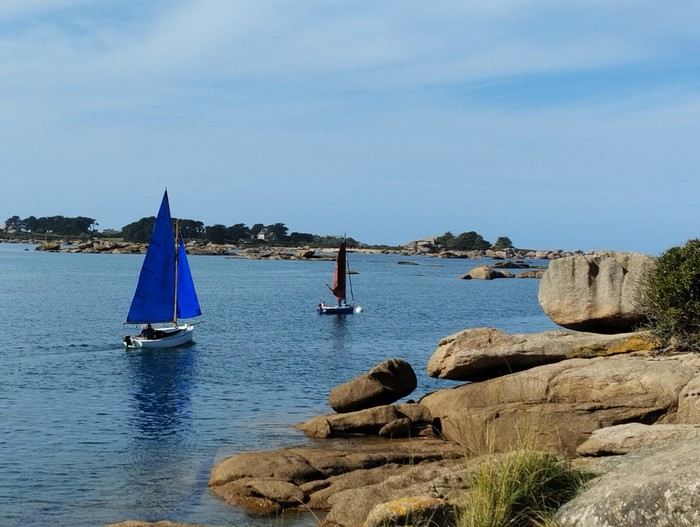
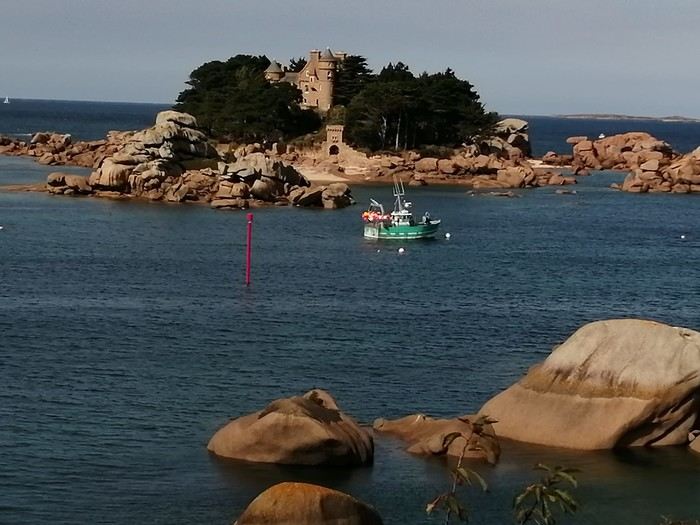
The views change with every turn, and so do the surprises—especially the view of the Château de Costaérès.
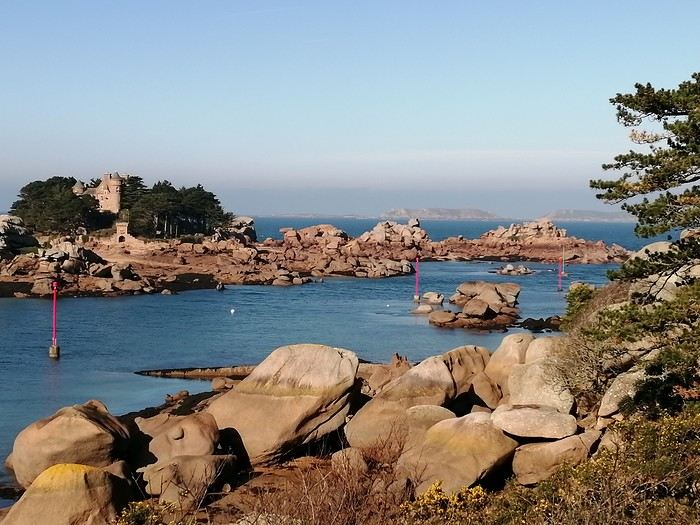
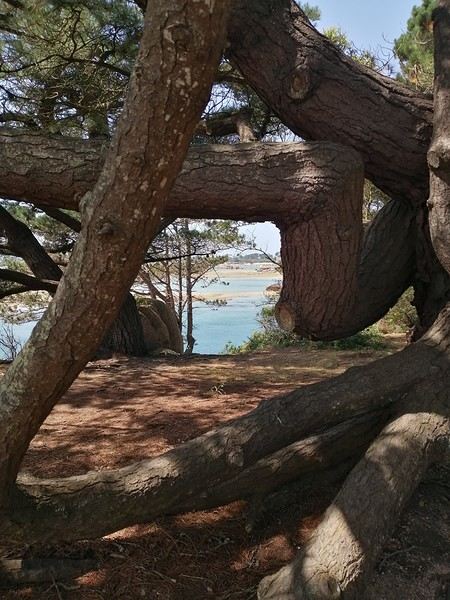
 The path through the woods leads us to the Chapel of Saint Guirec, which overlooks the beach.
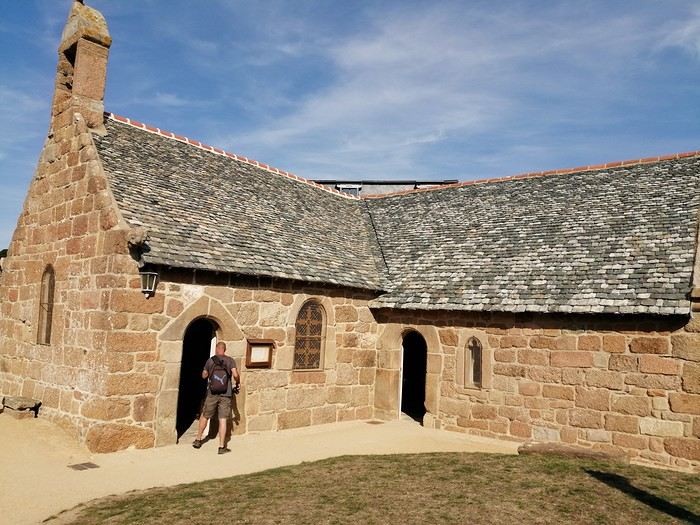
This pretty little beach is famous for its oratory, which sits in the middle of the sand and houses the statue of St. Guirec. In the past, young women hoping to marry within the year would often pray to him—they’d stick a needle into his nose! Today, the statue is made of stone, but back then, it was wooden, which must’ve made it easier.
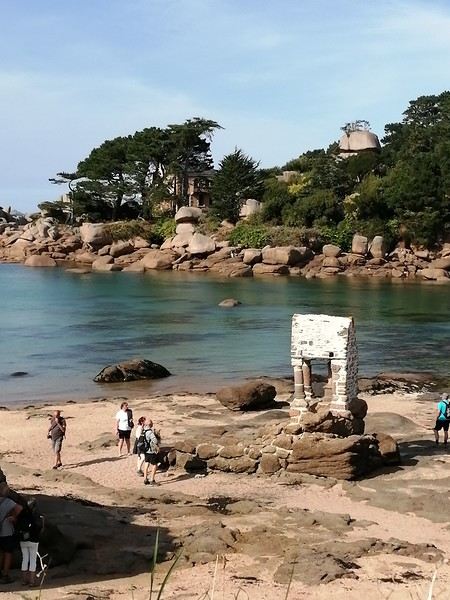
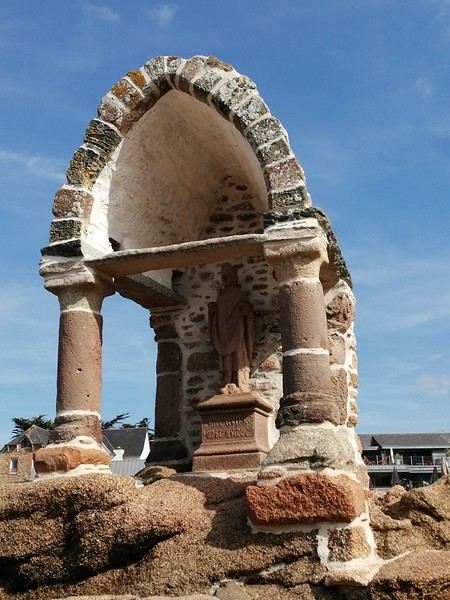
It’s really charming, well-sheltered, and the water is crystal clear. We noticed that everywhere we went!
Our first trip to the coast was to Ploumanac’h, a small village we discovered thanks to Stéphane Bern’s show. It’s an adorable little fishing port where we parked the car before continuing on foot along the sea. It’s charming—more than that, it’s magical!
Our first walk, our first hike along the coastal path, and our first photos of these massive rocks bathed in light.
The views change with every turn, and so do the surprises—especially the view of the Château de Costaérès.
The path through the woods leads us to the Chapel of Saint Guirec, which overlooks the beach.This pretty little beach is famous for its oratory, which sits in the middle of the sand and houses the statue of St. Guirec. In the past, young women hoping to marry within the year would often pray to him—they’d stick a needle into his nose! Today, the statue is made of stone, but back then, it was wooden, which must’ve made it easier.
It’s really charming, well-sheltered, and the water is crystal clear. We noticed that everywhere we went!
Terrible experience at MMV Arêches-Beaufort – bed bugs + total disregard
Hi everyone,
I’m posting this as a not-so-pleasant experience, but one I think is important to share.
We stayed at MMV Arêches-Beaufort at the end of June 2025 (from the 21st to the 28th), in room 317, as a family with our young daughter.
Everything was fine until the night of June 25th to 26th, when we discovered a bed bug infestation right next to our bedhead. We’d already slept 4 nights in that infested room without noticing anything. Needless to say, the shock was huge, especially with a little one.
MMV offered to relocate us, but by that point, trust was completely broken. The rest of the stay was spent in constant stress: disinfecting, isolating our belongings, and worrying about bringing these pests home with us.
They refunded our stay (which was the least they could do), but they’d also promised compensation of 150 €, which was never paid. Since then, no news at all. We felt erased, ignored, and not taken seriously.
I’m sharing this not to stir up controversy, but to warn other travelers. We thought we were staying in a reliable residence with responsive customer service—it wasn’t the case.
I’m genuinely wondering: Am I an isolated case with MMV? Have others experienced similar situations (bed bugs or a lack of consideration when problems arise)?
Thanks to those who take the time to read this. And above all, be wary when everything seems "too good on paper."
I’m posting this as a not-so-pleasant experience, but one I think is important to share.
We stayed at MMV Arêches-Beaufort at the end of June 2025 (from the 21st to the 28th), in room 317, as a family with our young daughter.
Everything was fine until the night of June 25th to 26th, when we discovered a bed bug infestation right next to our bedhead. We’d already slept 4 nights in that infested room without noticing anything. Needless to say, the shock was huge, especially with a little one.
MMV offered to relocate us, but by that point, trust was completely broken. The rest of the stay was spent in constant stress: disinfecting, isolating our belongings, and worrying about bringing these pests home with us.
They refunded our stay (which was the least they could do), but they’d also promised compensation of 150 €, which was never paid. Since then, no news at all. We felt erased, ignored, and not taken seriously.
I’m sharing this not to stir up controversy, but to warn other travelers. We thought we were staying in a reliable residence with responsive customer service—it wasn’t the case.
I’m genuinely wondering: Am I an isolated case with MMV? Have others experienced similar situations (bed bugs or a lack of consideration when problems arise)?
Thanks to those who take the time to read this. And above all, be wary when everything seems "too good on paper."
15 days in Turkey with family: Is this itinerary doable?
Hi there.
About a month ago, I posted a potential itinerary for Bulgaria and Istanbul, but in the end, since we found some relatively cheap flight tickets to Istanbul, we decided to go for a trip to Turkey instead.
When? 2 weeks, late August (14th to 29th) Who? Dad, mom, a 17-year-old teen, and an 11-year-old child
Here’s our plan: do you think it’s doable? Any practical tips?
We start with 4 full days in Istanbul (5 nights) Then, we rent a car and head to Ephesus. We stay there for 1 day (2 nights) After that, we drive to Kaş. We stay there for 4 full days (5 nights), enough time to relax a bit, see Kaputaş Beach and Kekova, the site of Myra, the site of Patara, and possibly the site of Çıralı/Olympos—even though it’s a bit far—and Saklıkent Gorge. From Kaş, we spend 2 nights near Denizli to see Pamukkale and Aphrodisias. Is it possible to visit both sites in the same day? Then, we travel from Pamukkale back to Istanbul, return the car, and spend one last night in Istanbul.
Thanks for your thoughts!
When? 2 weeks, late August (14th to 29th) Who? Dad, mom, a 17-year-old teen, and an 11-year-old child
Here’s our plan: do you think it’s doable? Any practical tips?
We start with 4 full days in Istanbul (5 nights) Then, we rent a car and head to Ephesus. We stay there for 1 day (2 nights) After that, we drive to Kaş. We stay there for 4 full days (5 nights), enough time to relax a bit, see Kaputaş Beach and Kekova, the site of Myra, the site of Patara, and possibly the site of Çıralı/Olympos—even though it’s a bit far—and Saklıkent Gorge. From Kaş, we spend 2 nights near Denizli to see Pamukkale and Aphrodisias. Is it possible to visit both sites in the same day? Then, we travel from Pamukkale back to Istanbul, return the car, and spend one last night in Istanbul.
Thanks for your thoughts!
Buying a 4x4 in Africa as a tourist
We're planning a round-the-world trip in a 4x4 with a roof tent and all the gear.
We're wondering which African country allows tourists to buy a vehicle (left-hand drive)?
Thanks for any tips—they’ll be super helpful!
Cécile, from Big Sur to Sausalito
After our first trip discovering the American West with our teens, Cécile asked me to go back for a romantic getaway to this wonderful destination. Whatever my wife wants, so here we are on a plane in September 2022, heading to San Francisco. Since we’d already visited the main parks two years earlier, this time we took the scenic route:
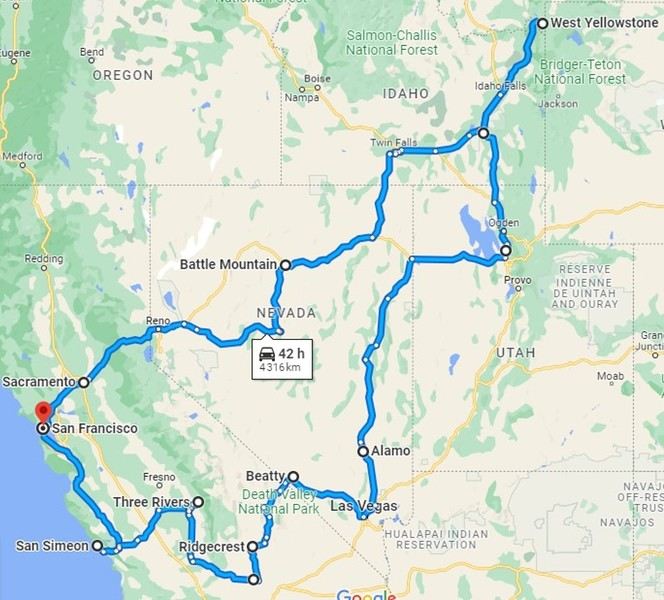
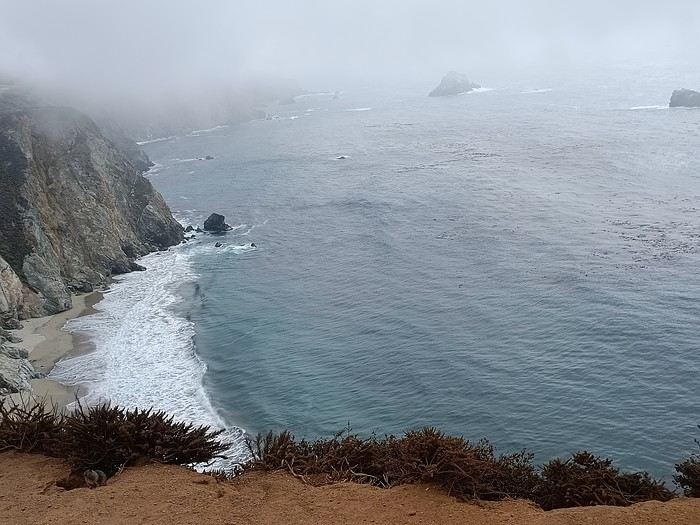
We arrived late in the evening, spent a short night at the hotel, and picked up our rental car to hit Highway 1 and the Pacific coast. The sky was gray, foggy, and a bit disappointing for now.
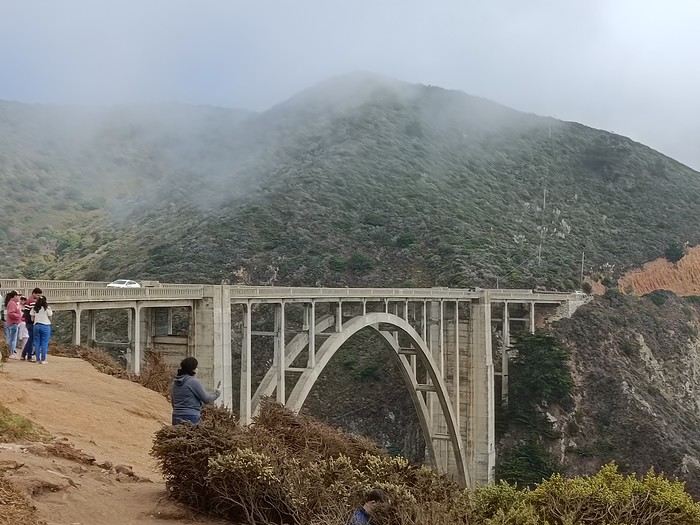
As Brittany lovers, we know coastal weather can change quickly... but no! Bixby Bridge was just a quick view from the car, and it was only 11°C outside.
We had a quick picnic on the spot, quickly bothered by the local wildlife.

And then—miracle! This charming animal made the wind shift and brought us sunshine. So this coast is absolutely worth the trip—it’s just stunning.
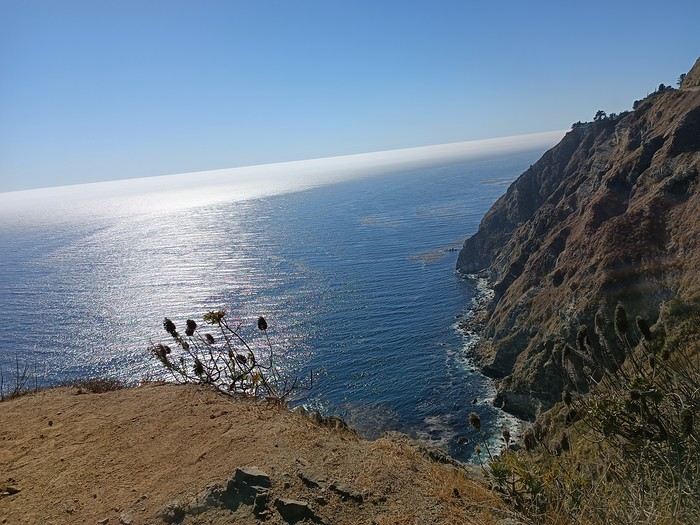
Only the sound of the wind and the seals’ calls disturbed the tranquility of the moment.
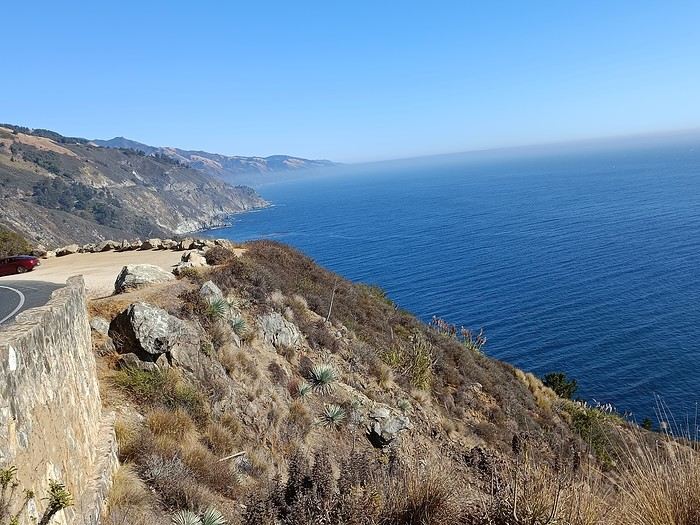
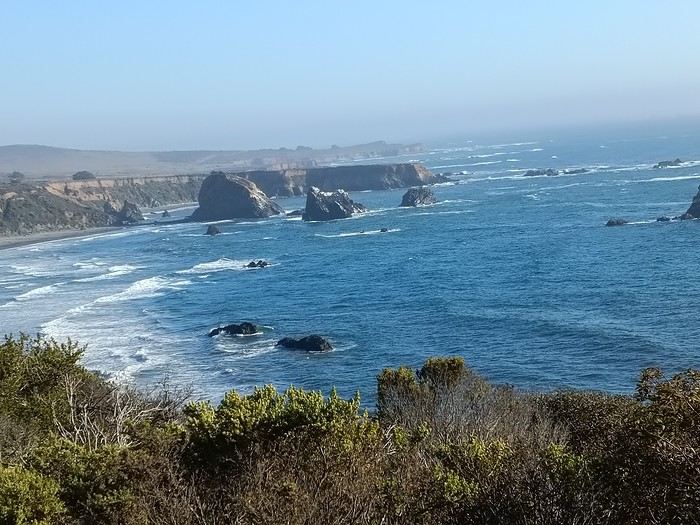
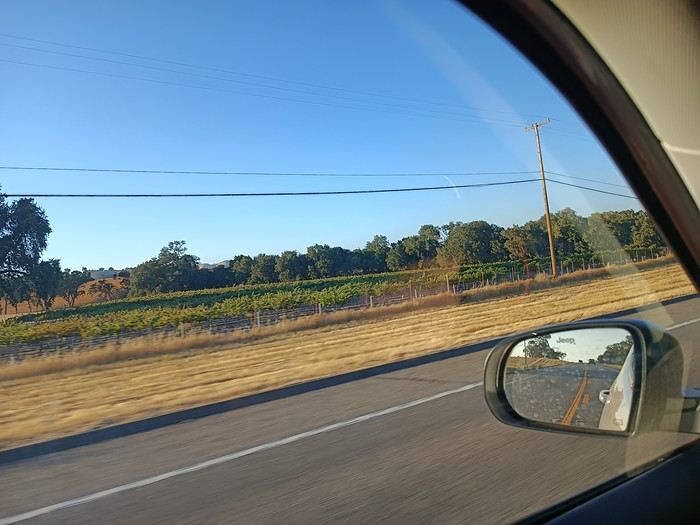
But even the best things come to an end, and we turned inland toward the sequoias. We drove through a long plain with fruit trees, vineyards, and endless straight roads.
First night at the hotel, tired but happy! !
We arrived late in the evening, spent a short night at the hotel, and picked up our rental car to hit Highway 1 and the Pacific coast. The sky was gray, foggy, and a bit disappointing for now.
As Brittany lovers, we know coastal weather can change quickly... but no! Bixby Bridge was just a quick view from the car, and it was only 11°C outside.
We had a quick picnic on the spot, quickly bothered by the local wildlife.
And then—miracle! This charming animal made the wind shift and brought us sunshine. So this coast is absolutely worth the trip—it’s just stunning.
Only the sound of the wind and the seals’ calls disturbed the tranquility of the moment.
But even the best things come to an end, and we turned inland toward the sequoias. We drove through a long plain with fruit trees, vineyards, and endless straight roads.
First night at the hotel, tired but happy! !
3-Week Itinerary in Sri Lanka with Two Kids
Hi everyone,
We’re heading to Sri Lanka for three weeks in July with two kids (ages 6 and 13). We’ve drafted a rough itinerary but would love to hear from those who’ve already been there 😊 Of course, we want to see everything, but we have to make choices—even though three weeks on the ground lets us do quite a bit. We originally planned a schedule that felt too packed, so we had to cut one stop. We decided to skip Tangalle, even though we were really tempted. The monsoon won’t let us swim there, and the weather in the south is too uncertain, so we preferred to keep our stops on the east coast. Plus, we don’t think it’s reasonable to cut nights from other places. We’ve added a stop in Batticaloa, which we think will be a nice break between Arugam Bay and Sigiriya. What do you think? We’re also debating between Batticaloa and Passikudah. Does the itinerary seem logical to you?
Here it is:
Sri Lanka Itinerary Day 1 Arrival around 1 PM at the airport Night in Negombo Day 2 Drive from Negombo to Galle Visit Galle and surrounding areas Night in Galle Day 3 Visit Galle and surrounding areas Night in Galle Day 4 Visit Galle and surrounding areas Drive from Galle to Udawalawe Night in Udawalawe Day 5 Visit Udawalawe National Park Night in Udawalawe Day 6 Drive from Udawalawe to Ella Night in Ella Day 7 Ella Rock + Nine Arch Bridge Night in Ella Day 8 Visit Haputale Lipton’s Seat and Dambatenne Tea Factory Train ride back from Haputale to Ella Night in Ella Day 9 Little Adam’s Peak + drive from Ella to Arugam Bay Night in Arugam Bay Day 10 Visit Arugam Bay and surrounding areas Night in Arugam Bay Day 11 Visit Arugam Bay and surrounding areas Night in Arugam Bay Day 12 Drive from Arugam Bay to Batticaloa Night in Batticaloa Day 13 Visit Batticaloa Night in Batticaloa Day 14 Drive from Batticaloa to Sigiriya Night in Sigiriya Day 15 Lion Rock and Pidurangala Night in Sigiriya Day 16 Visit Dambulla Drive from Sigiriya to Trincomalee Night in Trincomalee Day 17 Visit Trincomalee and surrounding areas Night in Trincomalee Day 18 Visit Trincomalee and surrounding areas Night in Trincomalee Day 19 Drive from Trincomalee to Anuradhapura Night in Anuradhapura Day 20 Visit Anuradhapura Night in Anuradhapura Day 21 Visit Mihintale Drive from Anuradhapura to Negombo Night in Negombo Day 22 Day in Negombo and return flight
We’d love to hear your thoughts and tips! Thanks in advance!
We’re heading to Sri Lanka for three weeks in July with two kids (ages 6 and 13). We’ve drafted a rough itinerary but would love to hear from those who’ve already been there 😊 Of course, we want to see everything, but we have to make choices—even though three weeks on the ground lets us do quite a bit. We originally planned a schedule that felt too packed, so we had to cut one stop. We decided to skip Tangalle, even though we were really tempted. The monsoon won’t let us swim there, and the weather in the south is too uncertain, so we preferred to keep our stops on the east coast. Plus, we don’t think it’s reasonable to cut nights from other places. We’ve added a stop in Batticaloa, which we think will be a nice break between Arugam Bay and Sigiriya. What do you think? We’re also debating between Batticaloa and Passikudah. Does the itinerary seem logical to you?
Here it is:
Sri Lanka Itinerary Day 1 Arrival around 1 PM at the airport Night in Negombo Day 2 Drive from Negombo to Galle Visit Galle and surrounding areas Night in Galle Day 3 Visit Galle and surrounding areas Night in Galle Day 4 Visit Galle and surrounding areas Drive from Galle to Udawalawe Night in Udawalawe Day 5 Visit Udawalawe National Park Night in Udawalawe Day 6 Drive from Udawalawe to Ella Night in Ella Day 7 Ella Rock + Nine Arch Bridge Night in Ella Day 8 Visit Haputale Lipton’s Seat and Dambatenne Tea Factory Train ride back from Haputale to Ella Night in Ella Day 9 Little Adam’s Peak + drive from Ella to Arugam Bay Night in Arugam Bay Day 10 Visit Arugam Bay and surrounding areas Night in Arugam Bay Day 11 Visit Arugam Bay and surrounding areas Night in Arugam Bay Day 12 Drive from Arugam Bay to Batticaloa Night in Batticaloa Day 13 Visit Batticaloa Night in Batticaloa Day 14 Drive from Batticaloa to Sigiriya Night in Sigiriya Day 15 Lion Rock and Pidurangala Night in Sigiriya Day 16 Visit Dambulla Drive from Sigiriya to Trincomalee Night in Trincomalee Day 17 Visit Trincomalee and surrounding areas Night in Trincomalee Day 18 Visit Trincomalee and surrounding areas Night in Trincomalee Day 19 Drive from Trincomalee to Anuradhapura Night in Anuradhapura Day 20 Visit Anuradhapura Night in Anuradhapura Day 21 Visit Mihintale Drive from Anuradhapura to Negombo Night in Negombo Day 22 Day in Negombo and return flight
We’d love to hear your thoughts and tips! Thanks in advance!
2 weeks in mojito country - March 2024 (Cuba)
Hey everyone,
A lot has happened in 4 years when it comes to travel. It wasn’t a little virus that would stop us from traveling, even if we sometimes had to adjust our destinations. So, I’m going to try to get back into posting travel journals, starting with destinations where there aren’t many recent stories.
I’ll begin with our trip of 2 weeks exploring the western part of Cuba. For those eager to read the story, I invite you to check out MyAtlas, where I started writing my travel journals during VoyageForum’s long hiatus: https://www.myatlas.com/Lofwyra/cuba-petit-detour-au-pays-du-mojito
Our itinerary, traveled in a 1954 classic American car with our driver Yoan, who spoke excellent French. I’ll add links to the posts as I write them.
2 nights in Habana Vieja - <<click here to go directly to the post>> 2 nights in Playa Larga** 2 nights in Cienfuegos** 3 nights in Trinidad*** 2 nights in Matanzas*** 3 nights in Viñales**** 1 night in Havana, downtown and Vedado
Before diving into the story, here are a few photos of what stood out to us beyond the usual sights of this country:
🙂 The birds, in large numbers—hummingbirds, pink flamingos, pelicans, and especially the tocororo, Cuba’s endemic bird, considered the national bird because the colors of its plumage match the Cuban flag.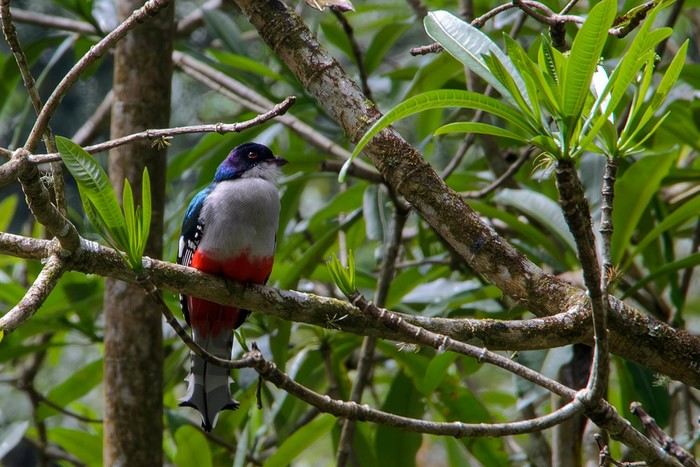
🙂 Matanzas, a city that doesn’t get much attention, sandwiched between Varadero and Havana. It doesn’t have the architectural splendor of Trinidad or Cienfuegos, some streets are really dirty, but it has a dynamic, lively vibe that really touched us.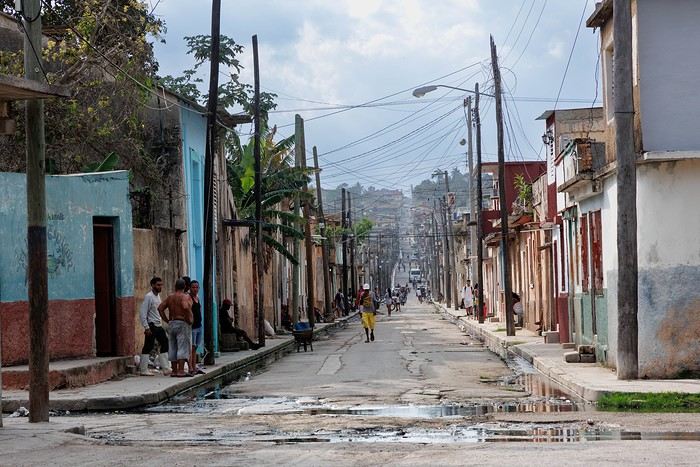
🙂 The ever-present blue, in the architecture, the cars, and the natural surroundings.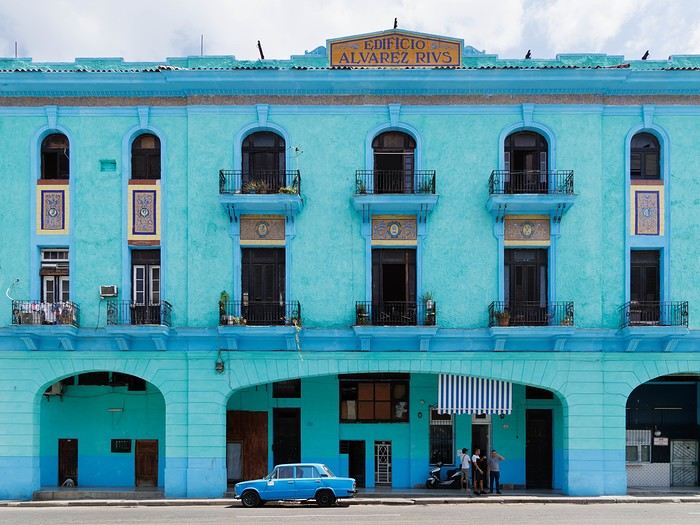
...and what we called the "Cuban style": rum and cigars in the company of Che 😎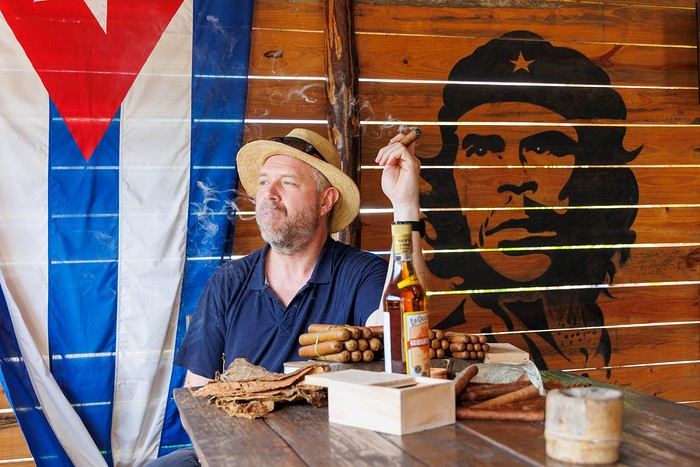
There’s still so much more to remember about this captivating and vibrant country, despite the economic crisis hitting Cubans hard... to be continued in the story.
Happy reading, Pascale
A lot has happened in 4 years when it comes to travel. It wasn’t a little virus that would stop us from traveling, even if we sometimes had to adjust our destinations. So, I’m going to try to get back into posting travel journals, starting with destinations where there aren’t many recent stories.
I’ll begin with our trip of 2 weeks exploring the western part of Cuba. For those eager to read the story, I invite you to check out MyAtlas, where I started writing my travel journals during VoyageForum’s long hiatus: https://www.myatlas.com/Lofwyra/cuba-petit-detour-au-pays-du-mojito
Our itinerary, traveled in a 1954 classic American car with our driver Yoan, who spoke excellent French. I’ll add links to the posts as I write them.
2 nights in Habana Vieja - <<click here to go directly to the post>> 2 nights in Playa Larga** 2 nights in Cienfuegos** 3 nights in Trinidad*** 2 nights in Matanzas*** 3 nights in Viñales**** 1 night in Havana, downtown and Vedado
Before diving into the story, here are a few photos of what stood out to us beyond the usual sights of this country:
🙂 The birds, in large numbers—hummingbirds, pink flamingos, pelicans, and especially the tocororo, Cuba’s endemic bird, considered the national bird because the colors of its plumage match the Cuban flag.
🙂 Matanzas, a city that doesn’t get much attention, sandwiched between Varadero and Havana. It doesn’t have the architectural splendor of Trinidad or Cienfuegos, some streets are really dirty, but it has a dynamic, lively vibe that really touched us.
🙂 The ever-present blue, in the architecture, the cars, and the natural surroundings.
...and what we called the "Cuban style": rum and cigars in the company of Che 😎
There’s still so much more to remember about this captivating and vibrant country, despite the economic crisis hitting Cubans hard... to be continued in the story.
Happy reading, Pascale
Mauritius or Guadeloupe in July/August
Hi everyone,
We’re a couple with an 8-year-old daughter, and we’d love to head to the islands this summer (late July to early August) for 15 days to enjoy the beaches, beautiful landscapes, snorkeling, and see sea turtles.
We’re torn between Mauritius and Guadeloupe (where we went about ten years ago as a "just the two of us" couple).
We’ve read a few things about both destinations: - About Mauritius: July and August are during the southern winter, so temperatures are cooler, and the water isn’t always very warm (it’s all relative, though!). On the east coast, it can be quite windy and therefore cooler. - About Guadeloupe: July and August are the rainy season, but the rain is mostly at night and in the morning. That means warm, sunny days with nice warm water!
Of course, it’s impossible to predict the weather six months in advance, but we’d love to hear your thoughts on these destinations.
Thanks in advance for your feedback,
Gaëlle and Laurent (and Emma!)
We’re a couple with an 8-year-old daughter, and we’d love to head to the islands this summer (late July to early August) for 15 days to enjoy the beaches, beautiful landscapes, snorkeling, and see sea turtles.
We’re torn between Mauritius and Guadeloupe (where we went about ten years ago as a "just the two of us" couple).
We’ve read a few things about both destinations: - About Mauritius: July and August are during the southern winter, so temperatures are cooler, and the water isn’t always very warm (it’s all relative, though!). On the east coast, it can be quite windy and therefore cooler. - About Guadeloupe: July and August are the rainy season, but the rain is mostly at night and in the morning. That means warm, sunny days with nice warm water!
Of course, it’s impossible to predict the weather six months in advance, but we’d love to hear your thoughts on these destinations.
Thanks in advance for your feedback,
Gaëlle and Laurent (and Emma!)
Good place for one night in Delhi
Hi fellow travelers!
I arrive in New Delhi on January 5th, and this is the third time I’ve come across what turns out to be a scam (after some research outside of booking.com): dirty places, fake reviews, etc.
So I’m starting to distrust booking.com because it really doesn’t seem like a reliable site (at least when it comes to booking hotels in New Delhi).
If you have a good place to stay (max 1500 € per night, and I don’t want a dorm) in New Delhi, I’d love to hear about it! :)
Looking forward to your replies!
If you have a good place to stay (max 1500 € per night, and I don’t want a dorm) in New Delhi, I’d love to hear about it! :)
Looking forward to your replies!
Our 22-day Ecuador road trip itinerary with a rental car
Hi everyone,
My husband and I are planning to explore Ecuador in the coming year, and to make the most of the trip, we’d like to do it with a rental car. We already have a rough idea of the route we’d take, and I’m reaching out to the community to help us refine this journey. Here’s the plan:
Day 1: Flight to Quito
Days 2 and 3: Exploring Quito
Days 4 and 5: Picking up the rental car and driving to Otavalo and Laguna Cuicocha
Day 6: Drive to Papallacta via Cayambe to enjoy the hot springs in the evening
Days 7 and 8: Drive to Lasso via Malachi – Excursions in Cotopaxi National Park. Laguna Limpiopungo
Days 9 and 10: Laguna Quilotoa
Day 11: Drive to Baños via Latacunga/Ambato to enjoy the hot springs in Baños
Days 12 and 13: Hiking in the Chimborazo Reserve
Day 14: Hiking in Sangay National Park
Day 15: Drive to Guamote to arrive by late afternoon
Day 16: Guamote market in the morning. Drive to Cañar in the afternoon
Day 17: Guided tour of Ingapirca, then drive to Cuenca
Day 18: Visit Cajas National Park early in the morning
Day 19: Exploring Cuenca
Day 20: Returning the rental car and flight to Quito or driving back to Quito (depending on cost)
Day 21: Relaxing in Quito
Day 22: Flight back to France
We won’t be doing any ascents—just hikes in the parks (we’re walkers, but we’re feeling our age and prefer to take it easy now!).
We’d love to hear your thoughts, critiques, or advice... Thanks in advance. Looking forward to reading your replies! martine
We won’t be doing any ascents—just hikes in the parks (we’re walkers, but we’re feeling our age and prefer to take it easy now!).
We’d love to hear your thoughts, critiques, or advice... Thanks in advance. Looking forward to reading your replies! martine
Alternative to the Revolut card
Hi,
I’ve been using a Revolut card for my travels so far, and it’s been working great for me.
But now it has two issues: 1) There are spending limits before fees kick in (1000 euros—easy to hit on a trip abroad) 2) You can’t top it up with a Visa or Mastercard anymore since those networks block those transfers. Now you have to do a bank transfer, which is less convenient. And, debatable, but Revolut now uses its own exchange rate instead of the official one like before. I say "debatable" because when I checked, it’s pretty close to the official rate and the difference is minimal.
So I’m looking for an alternative. Some of you here mention the N26 card. Is it worth it?
I’ve been using a Revolut card for my travels so far, and it’s been working great for me.
But now it has two issues: 1) There are spending limits before fees kick in (1000 euros—easy to hit on a trip abroad) 2) You can’t top it up with a Visa or Mastercard anymore since those networks block those transfers. Now you have to do a bank transfer, which is less convenient. And, debatable, but Revolut now uses its own exchange rate instead of the official one like before. I say "debatable" because when I checked, it’s pretty close to the official rate and the difference is minimal.
So I’m looking for an alternative. Some of you here mention the N26 card. Is it worth it?
Questions about Tamil Nadu and Kerala
Hi there,
I’ve got a few questions about my upcoming 3.5-week trip to Tamil Nadu and Kerala (January 2025).
On the itinerary, we’re supposed to spend 3 or 4 days in Thanjavur (Tanjore). I thought the location would let us explore the surrounding area, but I’m realizing everything I want to see won’t fit into the schedule! I’d planned: 1 day to arrive from Pondicherry 1 day to go to Darasuram 1 day to go to Tiruchirappalli 1 day to head to Madurai with a stop in Chettinad Basically, we won’t see anything of Thanjavur itself! Should I skip one of the destinations?
In Kerala, after 3 days in Munnar, I’ve planned to spend a few days in Munroe Island since I didn’t get great feedback about Alleppey. I wanted to "wander" through the backwaters. Has anyone been there?
Finally, we’re ending the trip in Cherai. After booking, I realized the beaches seemed unusable (trash, rough sea...) and I’m pretty frustrated about not being able to swim. Unless there’s a better spot nearby?
Thanks for your input!
I’ve got a few questions about my upcoming 3.5-week trip to Tamil Nadu and Kerala (January 2025).
On the itinerary, we’re supposed to spend 3 or 4 days in Thanjavur (Tanjore). I thought the location would let us explore the surrounding area, but I’m realizing everything I want to see won’t fit into the schedule! I’d planned: 1 day to arrive from Pondicherry 1 day to go to Darasuram 1 day to go to Tiruchirappalli 1 day to head to Madurai with a stop in Chettinad Basically, we won’t see anything of Thanjavur itself! Should I skip one of the destinations?
In Kerala, after 3 days in Munnar, I’ve planned to spend a few days in Munroe Island since I didn’t get great feedback about Alleppey. I wanted to "wander" through the backwaters. Has anyone been there?
Finally, we’re ending the trip in Cherai. After booking, I realized the beaches seemed unusable (trash, rough sea...) and I’m pretty frustrated about not being able to swim. Unless there’s a better spot nearby?
Thanks for your input!
L'alimentation idéale en voyage à vélo English translation pending
Je suis a la recherche de menus idéal pour avoir une alimentation équilibré en voyage a vélo qui pourrai donner assez d'énergie pour la journée et éviter les carences et autres fringales . Merci pour vos idées .
To the Top West End
In this time of general travel-journal scarcity, I’m stepping up to tell you about a far-too-short getaway to the Top West End, a local term for the very northern part of Western Australia, right on the border ( ;) ) with the Northern Territory.
As usual, I didn’t manage to keep it short, but this time I’ve got photos to go with it!
August 2020. Since the opportunities to explore the world are extremely limited right now, all we (R&X) can do is explore our own island! Well, just a part of it, because with the state borders still closed, we’re stuck in Western Australia (WA).
Luckily, we’re pretty fortunate because this state is huge: over 2.5 million km² (that’s more than four times the size of France or 1.5 times Quebec). What’s more, stretching over 20 degrees of latitude between the Antarctic Ocean and the Timor Sea, you’ll find climates ranging from Mediterranean to arid to tropical. That’s actually why we decided to head as far north as possible. Sick of the endless rainy winter in Perth, bring on the heat of the Kimberley... way up Nooorth!
Friday. At the airport, the main terminal was closed (not enough flights), so we ended up in the annex (where flights to the various mines usually depart from). There was no crowd at the gate, and in this huge, single departure lounge, empty seats were plentiful. Only three flights were listed on the screens for the rest of the morning: the first to Coondewanna (?), the second to Darwin, and ours to Kununurra (code KNX).
A cool breeze swept through the half-open corridors along the runways. At the top of the walkway leading to the Fokker 100 (the Airbuses and Boeings are now parked!), a flight attendant greeted us with a basket full of sanitary masks. We were actually the only masked passengers (the staff weren’t wearing them either). With zero Covid-19 cases in WA at the time, the only rule was to maintain social distancing—something pretty hard to do on a full plane!
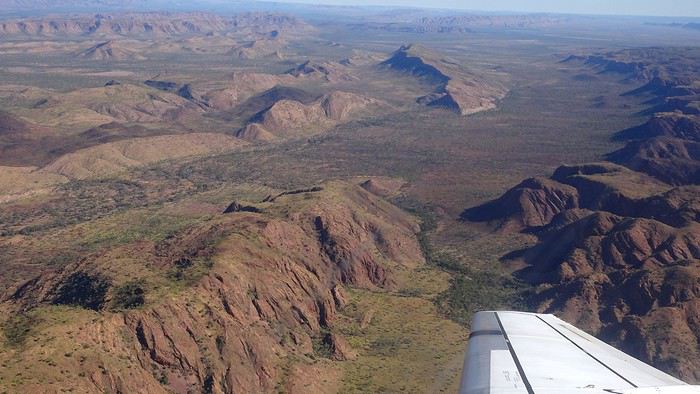
It was also my first time wearing a mask—it felt weird, pretty uncomfortable, and after a while, painful behind the ears. I really feel for those who have to wear one all day, every day. The flight lasted three long hours, but luckily, I had a good book. From the window, I watched an endless expanse of salt lakes in all shapes and sizes—round, elongated, gray, white, sometimes blue and green—and an infinity of winding, capricious meanders, along with long straight lines that led nowhere. The last half-hour got more interesting as rocky, swollen formations and long, sloping plateaus appeared. Against the vast ochre landscape, green patches became more frequent.
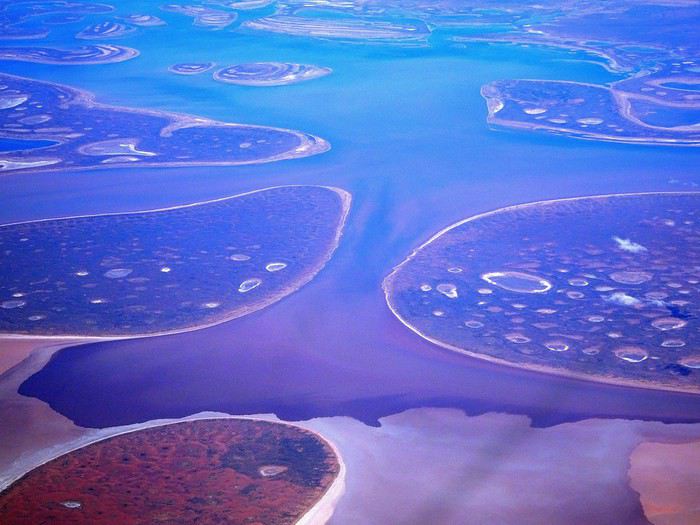
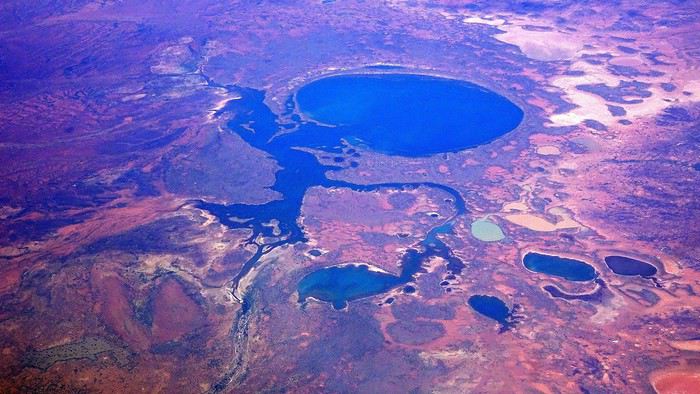
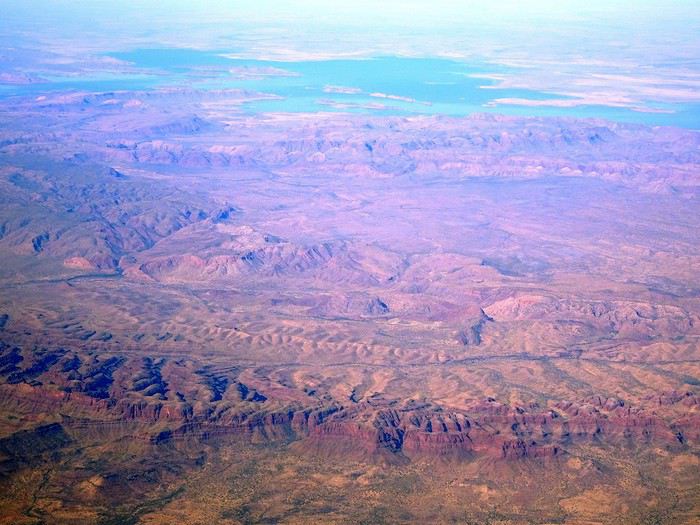
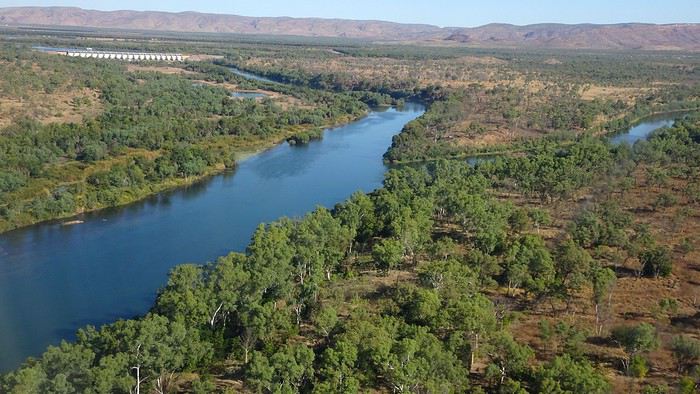
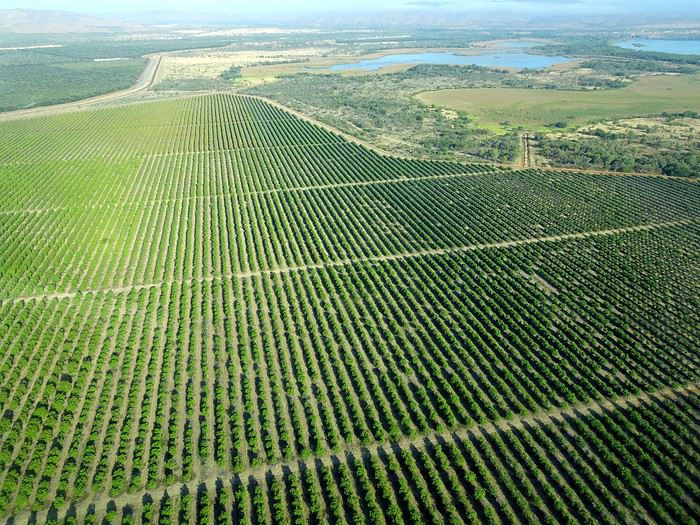
Just before landing, rows of green fields briefly appeared, along with an surprisingly wide river—but we were already rolling down the tarmac. A few hangars, a myriad of small, stationary planes, and a tiny terminal topped with a sign: “Welcome to Kununurra.”
We wanted heat, and here it was—34°C the moment we stepped off the plane! We felt alive again and totally ridiculous in our jeans and sweaters. We quickly grabbed our suitcase and picked up the 4x4 we’d rented—more out of necessity, since only that type of vehicle can access the national parks we planned to visit.
Just four kilometers separated us from Kununurra, a town of 5,000 people founded in 1961 during the construction of the Lake Argyle Dam and the development of the Ord River Irrigation Area Scheme (more on that later). On the horizon, mountain ranges (a bit of an exaggeration, since we know Mt. Meharry, WA’s highest ‘mountain,’ doesn’t even reach 1,250 meters!) and closer to the road, a few irrigation canals cutting through stretches of bush, then a huge park overlooking a small lake lined with reeds.
A row of baobabs (yes, there are baobabs in Australia too!), a series of motels with immaculate lawns, a gas station, and there’s the main street leading to the town center—that is, the parking lots of the two supermarkets, the bottleshop, the pub, the Town Hall, the municipal pool, and the Tourist Office (already closed!), and at the next roundabout, another park, the Presbyterian church, and a few other shops. In short, two or three green blocks that you can explore in no time.
One road leads to the small industrial area and one of the town’s three or four campgrounds, while another heads toward the residential neighborhoods, which look just like the typical suburbs you find in any Australian city—except with tropical vegetation. We stocked up at Coles, an identical copy of the one near our place, and—surprise—the prices were practically the same.
We checked into one of the motels. The receptionist listed the town’s three or four restaurants, insisting that it’s always better to book a table. She recommended the Pump House, a bit outside town on the lake’s edge. “Best spot to watch the sunset, but hurry up.” she told us. It was only 5:00 PM!
When we got there half an hour later, the place was packed, and the sun had already disappeared behind a row of trees! Sure enough, we’d see a few days later that the sunset can be a stunning spectacle—if you wait a bit for the sky (especially if it’s cloudy) to blaze and reflect in the lake’s calm waters. A little disappointed, we headed back into town, where we easily found the other lively spot in town: the pub (nothing like an old English pub). Above the long L-shaped bar, several giant screens (thankfully muted) were broadcasting live footy, rugby league, etc. In one corner, players circled the pool table, while in another, customers were digging into plates of the day’s special. Instead of rooms, there were various patios where groups of friends and coworkers (easily recognizable by the fluoro vests they were still wearing) were gathered. We found a table under a mango tree—unfortunately, a little too close to the guitarist strumming his entire Country Music repertoire, complete with Keith Urban-style tremolos. Guaranteed culture shock!
Since it’s the custom here, we called the Country Club to book a table before the kitchen closed! The CC is the town’s—and even the region’s—fancy spot. Dark decor, modern furniture, dim lighting, and the air conditioning blasting. The twenty or so customers had taken refuge on the vast terrace, lit by torches. The view of the tall eucalyptus trees, illuminated by spotlights shifting from red to blue, was breathtaking.
The menu was minimal, but the grilled salmon was excellent, and the Pavlova (the meringue dessert Kiwis and Aussies have been arguing over since 1906) with melon and watermelon was absolutely divine.
It wasn’t even 9:00 PM, and we were already in bed. Had we already adopted the Top West End’s chicken schedule?!
To be continued... Journal dedicated to Attila
As usual, I didn’t manage to keep it short, but this time I’ve got photos to go with it!
August 2020. Since the opportunities to explore the world are extremely limited right now, all we (R&X) can do is explore our own island! Well, just a part of it, because with the state borders still closed, we’re stuck in Western Australia (WA).
Luckily, we’re pretty fortunate because this state is huge: over 2.5 million km² (that’s more than four times the size of France or 1.5 times Quebec). What’s more, stretching over 20 degrees of latitude between the Antarctic Ocean and the Timor Sea, you’ll find climates ranging from Mediterranean to arid to tropical. That’s actually why we decided to head as far north as possible. Sick of the endless rainy winter in Perth, bring on the heat of the Kimberley... way up Nooorth!
Friday. At the airport, the main terminal was closed (not enough flights), so we ended up in the annex (where flights to the various mines usually depart from). There was no crowd at the gate, and in this huge, single departure lounge, empty seats were plentiful. Only three flights were listed on the screens for the rest of the morning: the first to Coondewanna (?), the second to Darwin, and ours to Kununurra (code KNX).
A cool breeze swept through the half-open corridors along the runways. At the top of the walkway leading to the Fokker 100 (the Airbuses and Boeings are now parked!), a flight attendant greeted us with a basket full of sanitary masks. We were actually the only masked passengers (the staff weren’t wearing them either). With zero Covid-19 cases in WA at the time, the only rule was to maintain social distancing—something pretty hard to do on a full plane!
It was also my first time wearing a mask—it felt weird, pretty uncomfortable, and after a while, painful behind the ears. I really feel for those who have to wear one all day, every day. The flight lasted three long hours, but luckily, I had a good book. From the window, I watched an endless expanse of salt lakes in all shapes and sizes—round, elongated, gray, white, sometimes blue and green—and an infinity of winding, capricious meanders, along with long straight lines that led nowhere. The last half-hour got more interesting as rocky, swollen formations and long, sloping plateaus appeared. Against the vast ochre landscape, green patches became more frequent.
Just before landing, rows of green fields briefly appeared, along with an surprisingly wide river—but we were already rolling down the tarmac. A few hangars, a myriad of small, stationary planes, and a tiny terminal topped with a sign: “Welcome to Kununurra.”
We wanted heat, and here it was—34°C the moment we stepped off the plane! We felt alive again and totally ridiculous in our jeans and sweaters. We quickly grabbed our suitcase and picked up the 4x4 we’d rented—more out of necessity, since only that type of vehicle can access the national parks we planned to visit.
Just four kilometers separated us from Kununurra, a town of 5,000 people founded in 1961 during the construction of the Lake Argyle Dam and the development of the Ord River Irrigation Area Scheme (more on that later). On the horizon, mountain ranges (a bit of an exaggeration, since we know Mt. Meharry, WA’s highest ‘mountain,’ doesn’t even reach 1,250 meters!) and closer to the road, a few irrigation canals cutting through stretches of bush, then a huge park overlooking a small lake lined with reeds.
A row of baobabs (yes, there are baobabs in Australia too!), a series of motels with immaculate lawns, a gas station, and there’s the main street leading to the town center—that is, the parking lots of the two supermarkets, the bottleshop, the pub, the Town Hall, the municipal pool, and the Tourist Office (already closed!), and at the next roundabout, another park, the Presbyterian church, and a few other shops. In short, two or three green blocks that you can explore in no time.
One road leads to the small industrial area and one of the town’s three or four campgrounds, while another heads toward the residential neighborhoods, which look just like the typical suburbs you find in any Australian city—except with tropical vegetation. We stocked up at Coles, an identical copy of the one near our place, and—surprise—the prices were practically the same.
We checked into one of the motels. The receptionist listed the town’s three or four restaurants, insisting that it’s always better to book a table. She recommended the Pump House, a bit outside town on the lake’s edge. “Best spot to watch the sunset, but hurry up.” she told us. It was only 5:00 PM!
When we got there half an hour later, the place was packed, and the sun had already disappeared behind a row of trees! Sure enough, we’d see a few days later that the sunset can be a stunning spectacle—if you wait a bit for the sky (especially if it’s cloudy) to blaze and reflect in the lake’s calm waters. A little disappointed, we headed back into town, where we easily found the other lively spot in town: the pub (nothing like an old English pub). Above the long L-shaped bar, several giant screens (thankfully muted) were broadcasting live footy, rugby league, etc. In one corner, players circled the pool table, while in another, customers were digging into plates of the day’s special. Instead of rooms, there were various patios where groups of friends and coworkers (easily recognizable by the fluoro vests they were still wearing) were gathered. We found a table under a mango tree—unfortunately, a little too close to the guitarist strumming his entire Country Music repertoire, complete with Keith Urban-style tremolos. Guaranteed culture shock!
Since it’s the custom here, we called the Country Club to book a table before the kitchen closed! The CC is the town’s—and even the region’s—fancy spot. Dark decor, modern furniture, dim lighting, and the air conditioning blasting. The twenty or so customers had taken refuge on the vast terrace, lit by torches. The view of the tall eucalyptus trees, illuminated by spotlights shifting from red to blue, was breathtaking.
The menu was minimal, but the grilled salmon was excellent, and the Pavlova (the meringue dessert Kiwis and Aussies have been arguing over since 1906) with melon and watermelon was absolutely divine.
It wasn’t even 9:00 PM, and we were already in bed. Had we already adopted the Top West End’s chicken schedule?!
To be continued... Journal dedicated to Attila
Annulation de vol Aerolíneas Argentinas English translation pending
Bonjour
Je cherche à joindre aerolinas argentinas
Avec tous les numéros que j ai
Rien ne fonctionne
Donc auriez vous des numéros fiables soit en france, bien sûr ce serait le mieux, ou l Argentine ou l Espagne
Sinon si vous avez une adresse mail pour les joindre Je vais annuler mes vols suite à la maladie Donc je voudrais réagir vite Merci encore Isabel
Sinon si vous avez une adresse mail pour les joindre Je vais annuler mes vols suite à la maladie Donc je voudrais réagir vite Merci encore Isabel
La meilleure façon d'marcher, c'est de mettre un pied d'vant l'autre... English translation pending
Je déteste toujours autant marcher et pourtant, je recommence.
Comme un sentiment d’urgence pour n’entendre que les battements de mon cœur si secoué de peine qu’il ne me fallait plus entendre ni compréhension, ni compassion de quiconque.
Être seule, vraiment seule.
La terre est vivante, douée de mémoire et je ne voulais que cette mémoire. Je ne voulais m’encombrer de rien.
Homme sceptique un peu goguenard : « Fais-le mais je me souviens bien de ta dernière expédition ! » C’était il y a dix ans ou plus, je ne me souviens plus. « C’est facile, y’en a eu qu’une ! » Des pieds en plomb, les mollets noués, l’estomac creux, les aisselles malodorantes, les bras griffés mais j’avais vécu l’intense sentiment d’avancer malgré toute ma paresse et mon inexpérience. « Où veux-tu aller ? » « Au Mont-Beuvray » « 50 km en voiture, 100 aller-retour, ça va je pourrais aisément te récupérer, tu prévois combien de jours ? » Il rit.
« Chais pas, 10 km par jour, pas plus, et comme j’y vais au pif, je ne saurais pas ce que j’ai parcouru, je m’arrêterai quand j’en aurais marre, je verrai bien ».
La veille du départ, Fils aîné au téléphone, moqueur : « Maman, t’es toujours aussi dingue. Tu ne marches jamais, t’as même pas de bonnes godasses, tu f’rais mieux d’aller chez xxx, là, tu te ressourcerais. Un jour, il t’arrivera des bricoles avec tes idées huluberlues.../... » « Ehh, je ne monte qu’au Mont-Beuvray, tu parles d’une expédition ! » « Ouais mais t’as vu ton âge ? » « Merci mon grand. Tu sais, il y a tellement de gens qui marchent pour de bon, des centaines de kilomètres sur toute la terre. Marcher pour le plaisir, marcher pour aller chercher de l’eau au puits, marcher en compétition, marcher pour aller à l’école, pour tous ceux là, je vais faire une balade, une promenade de santé, ça n’a rien d’une aventure ou d’un exploit, j’vais mettre un pas d’vant l’autre et recommencer, c’est tout. »
Et le 13 juin, j’ai pris le sentier forestier derrière la maison.
Le sac à dos, celui dont je me sers pour le goûter des petits, est rempli avec un kway, un morceau de bâche. J’ai coupé celle qui traînait par terre recouvrant la moto pour la protéger des chiures d’hirondelles, un pull, la gourde, un gant de toilette, un savon, ma brosse à dents, un sac de cacahuètes bien grasses et bien salées, des bananes sèches bien trop sucrées, cinq pommes et mon opinel. Il a une forme bizarre ce sac, comme un ballon accroché à mon dos. Il pèse 2,8 kg. Et dans les poches de mon pantalon en toile, à droite mes clopes et mon briquet, à gauche le-pied-de-biche-à-tiques. J’me demande à quoi il me servira si j’ai une tique dans le dos ou sur la nuque ! J’ai rajouté ma carte d’identité, 40 euros, et concession pour Homme, mon téléphone. Il veut me géolocaliser. C’est qu’il m’aime Homme, à lui tout seul un océan dans lequel je nage avec tant de bonheur. Mais là, pas de nage papillon, des pas.
Et quand le téléphone n’aura plus de batteries ? On verra bien. Je dis toujours -on verra bien - .
Dans le Morvan, les fées laissent leurs empreintes surnaturelles et comme je n’ai aucune carte, je ne sais pas les lire et n’ai pas envie d’apprendre, je vais leur faire confiance. Le soleil se lève à l’est et se couche à l’ouest, je dois aller à l’ouest, je suivrai sa course.
Et le 13 juin, j’ai serré les paupières pour repousser l’aube naissante. Je n’avais plus du tout envie de partir, plus du tout envie de marcher. Mais quand la brûlure salée a piqué derrière les paupières comme tous ces derniers jours, je n’ai pas reculé. J’ai lu un jour que les mauvais souvenirs et les chagrins ont de longues ombres et si on passe notre vie dedans on ne verrait plus jamais le soleil.
Ce 13 juin, le soleil était là alors, j’ai pris le sentier derrière la maison.
J’m’en vais vous raiconter l’ histôère
.../...
Comme un sentiment d’urgence pour n’entendre que les battements de mon cœur si secoué de peine qu’il ne me fallait plus entendre ni compréhension, ni compassion de quiconque.
Être seule, vraiment seule.
La terre est vivante, douée de mémoire et je ne voulais que cette mémoire. Je ne voulais m’encombrer de rien.
Homme sceptique un peu goguenard : « Fais-le mais je me souviens bien de ta dernière expédition ! » C’était il y a dix ans ou plus, je ne me souviens plus. « C’est facile, y’en a eu qu’une ! » Des pieds en plomb, les mollets noués, l’estomac creux, les aisselles malodorantes, les bras griffés mais j’avais vécu l’intense sentiment d’avancer malgré toute ma paresse et mon inexpérience. « Où veux-tu aller ? » « Au Mont-Beuvray » « 50 km en voiture, 100 aller-retour, ça va je pourrais aisément te récupérer, tu prévois combien de jours ? » Il rit.
« Chais pas, 10 km par jour, pas plus, et comme j’y vais au pif, je ne saurais pas ce que j’ai parcouru, je m’arrêterai quand j’en aurais marre, je verrai bien ».
La veille du départ, Fils aîné au téléphone, moqueur : « Maman, t’es toujours aussi dingue. Tu ne marches jamais, t’as même pas de bonnes godasses, tu f’rais mieux d’aller chez xxx, là, tu te ressourcerais. Un jour, il t’arrivera des bricoles avec tes idées huluberlues.../... » « Ehh, je ne monte qu’au Mont-Beuvray, tu parles d’une expédition ! » « Ouais mais t’as vu ton âge ? » « Merci mon grand. Tu sais, il y a tellement de gens qui marchent pour de bon, des centaines de kilomètres sur toute la terre. Marcher pour le plaisir, marcher pour aller chercher de l’eau au puits, marcher en compétition, marcher pour aller à l’école, pour tous ceux là, je vais faire une balade, une promenade de santé, ça n’a rien d’une aventure ou d’un exploit, j’vais mettre un pas d’vant l’autre et recommencer, c’est tout. »
Et le 13 juin, j’ai pris le sentier forestier derrière la maison.
Le sac à dos, celui dont je me sers pour le goûter des petits, est rempli avec un kway, un morceau de bâche. J’ai coupé celle qui traînait par terre recouvrant la moto pour la protéger des chiures d’hirondelles, un pull, la gourde, un gant de toilette, un savon, ma brosse à dents, un sac de cacahuètes bien grasses et bien salées, des bananes sèches bien trop sucrées, cinq pommes et mon opinel. Il a une forme bizarre ce sac, comme un ballon accroché à mon dos. Il pèse 2,8 kg. Et dans les poches de mon pantalon en toile, à droite mes clopes et mon briquet, à gauche le-pied-de-biche-à-tiques. J’me demande à quoi il me servira si j’ai une tique dans le dos ou sur la nuque ! J’ai rajouté ma carte d’identité, 40 euros, et concession pour Homme, mon téléphone. Il veut me géolocaliser. C’est qu’il m’aime Homme, à lui tout seul un océan dans lequel je nage avec tant de bonheur. Mais là, pas de nage papillon, des pas.
Et quand le téléphone n’aura plus de batteries ? On verra bien. Je dis toujours -on verra bien - .
Dans le Morvan, les fées laissent leurs empreintes surnaturelles et comme je n’ai aucune carte, je ne sais pas les lire et n’ai pas envie d’apprendre, je vais leur faire confiance. Le soleil se lève à l’est et se couche à l’ouest, je dois aller à l’ouest, je suivrai sa course.
Et le 13 juin, j’ai serré les paupières pour repousser l’aube naissante. Je n’avais plus du tout envie de partir, plus du tout envie de marcher. Mais quand la brûlure salée a piqué derrière les paupières comme tous ces derniers jours, je n’ai pas reculé. J’ai lu un jour que les mauvais souvenirs et les chagrins ont de longues ombres et si on passe notre vie dedans on ne verrait plus jamais le soleil.
Ce 13 juin, le soleil était là alors, j’ai pris le sentier derrière la maison.
J’m’en vais vous raiconter l’ histôère
.../...
Formalités pour acheter un billet d’avion pour quelqu'un English translation pending
Bonjour à tous,
Tout d’abord, j’ai bien conscience que la question a été posée plusieurs fois mais je veux vraiment faire les choses correctement et sans prendre de risque, c’est pour cette raison que j’aimerais des retours d’expériences:
J’aimerais acheter un billet d’avion du Venezuela vers l’Espagne pour quelqu’un vivant au Vénézuéla (de la nationalité de ce pays aussi). Visiblement, certaines compagnies réclament la carte bancaire ayant servi au paiement et autres formalités mais ce n’est pas toujours très clair car il y a des versions différentes.
Par exemple, j’ai appelé Turkish Airlines qui n’ont pas su me dire si le voyageur aurait besoin de la carte bancaire ou non... Ils m’ont dit « ça dépend de ce qui est inscrit sur le billet » (véridique).
J’ai lu que si l’on passait par une agence de voyage ou via un site de type GoVoyages (etc...), il n’y aurait pas de problème. Qu’en pensez-vous? Quel est le plus « safe » pour mon cas de figure? Dans l’idéal, j’aimerais éviter de passer par une agence de voyage. J’ai tenté d’appeler AirFrance aussi mais les événements récents liés au COVID font qu’il est difficile de les joindre (je n’ai donc eu personne).
Voyageant souvent, il est vrai qu’on ne m’a jamais demandé une seule fois la carte bancaire ayant servi au paiement (parfois c’est pourtant ma société qui payait les billets) donc je m’étonne un peu de cette formalité.
Merci d’avance pour vos retours et vos conseils. Je tiens vraiment à éviter que la personne en question se retrouve bloqué au Vénézuéla a cause d’une histoire de carte bleue.
Bonne journée à tous.
Tout d’abord, j’ai bien conscience que la question a été posée plusieurs fois mais je veux vraiment faire les choses correctement et sans prendre de risque, c’est pour cette raison que j’aimerais des retours d’expériences:
J’aimerais acheter un billet d’avion du Venezuela vers l’Espagne pour quelqu’un vivant au Vénézuéla (de la nationalité de ce pays aussi). Visiblement, certaines compagnies réclament la carte bancaire ayant servi au paiement et autres formalités mais ce n’est pas toujours très clair car il y a des versions différentes.
Par exemple, j’ai appelé Turkish Airlines qui n’ont pas su me dire si le voyageur aurait besoin de la carte bancaire ou non... Ils m’ont dit « ça dépend de ce qui est inscrit sur le billet » (véridique).
J’ai lu que si l’on passait par une agence de voyage ou via un site de type GoVoyages (etc...), il n’y aurait pas de problème. Qu’en pensez-vous? Quel est le plus « safe » pour mon cas de figure? Dans l’idéal, j’aimerais éviter de passer par une agence de voyage. J’ai tenté d’appeler AirFrance aussi mais les événements récents liés au COVID font qu’il est difficile de les joindre (je n’ai donc eu personne).
Voyageant souvent, il est vrai qu’on ne m’a jamais demandé une seule fois la carte bancaire ayant servi au paiement (parfois c’est pourtant ma société qui payait les billets) donc je m’étonne un peu de cette formalité.
Merci d’avance pour vos retours et vos conseils. Je tiens vraiment à éviter que la personne en question se retrouve bloqué au Vénézuéla a cause d’une histoire de carte bleue.
Bonne journée à tous.
L'industrie de la musique à l'arrêt mardi contre les violences policières English translation pending
Le tour de Bali à pied? English translation pending
Bonjour tout le monde !
J'ai pour projet de voyager à pied, et de faire le tour de Bali seulement à pied.
Est-ce faisable ? En combien de temps ? De quelle carte puis-je me servir pour ne pas rester sur les routes? Dangers ?
Merci de vos réponses !
Excursions organisées en Guadeloupe English translation pending
Bonjour ,
Mon conjoint et moi serons en Guadeloupe pendant 7 jours en février 2020. Nous logerons à l'hôtel Karibea Beach Hotel ( Gosier ).
Y a-t-il possibilité de faire des excursions intéressantes qui nous permettent de visiter la Guadeloupe ? Que nous suggérez-vous ?
Village ou petite ville dans les environs de Catane en Sicile English translation pending
Bonjour,
Quelqu'un peut il m'indiquer où passer 3 à 4 jours dans un village ou petite ville très proche de Catane car nous repartirons de cet aéroport, mais nous voudrions éviter de loger dans la ville elle même; Nous serons là bas au mois de juin; Merci pour votre aide
Quelqu'un peut il m'indiquer où passer 3 à 4 jours dans un village ou petite ville très proche de Catane car nous repartirons de cet aéroport, mais nous voudrions éviter de loger dans la ville elle même; Nous serons là bas au mois de juin; Merci pour votre aide