Results for "Tinos+|+123+>+211"
1377 results found.
Une femme seule, jeune au Costa Rica English translation pending
Bonjour 😉
Je dois sortir des USA vers le mois de Decembre (visa touriste). Je pensais donc me rendre dans un pays d Amerique du Sud pendant 2 semaines. On m a parle du Costa Rica, le billet d avion tourne autour de 500$, a ce qui parait c est magnifique.
Donc une simple question a l attention de tous ceux qui ont sejournes la-bas :
J ai 20 ans, j ai pas beaucoup de thunes, est ce que ca craint de partir toute seule ? (au niveau de la securite et des 'activites' )
Ok, merci beaucoup.🙂
Ciao
Je dois sortir des USA vers le mois de Decembre (visa touriste). Je pensais donc me rendre dans un pays d Amerique du Sud pendant 2 semaines. On m a parle du Costa Rica, le billet d avion tourne autour de 500$, a ce qui parait c est magnifique.
Donc une simple question a l attention de tous ceux qui ont sejournes la-bas :
J ai 20 ans, j ai pas beaucoup de thunes, est ce que ca craint de partir toute seule ? (au niveau de la securite et des 'activites' )
Ok, merci beaucoup.🙂
Ciao
Casa Marina Bay English translation pending
Hello, ça serait sympa de nous donner des nouvelles du coin ^(samana) et de l'hôtel. Merci ns partons bientôt 😉
Beaux endroits en République Dominicaine? English translation pending
Bonjour,
Je prévois aller en République Dominicaine le mois de Février prochain et j'aurais besoin de conseils.
J'ai déja lu quelques messages précédent et ce que j'en retire c'est qu'à Puerto Plata les plages sont plus ou moins belles et qu'à Punta Cana les plages sont tres belles mais qu'à part ca il n'y a pas grand chose à voir. Par contre je me rends compte que les gens parlent beaucoup de Boca Chica et les allentours. Est-ce que quelqu'un peut me dire si cet endroit est un bon choix et si oui quelles sont les belles plages (sable blanc) entre bayahibe et Santo Domingo et les bons hotels (tout inclus).
Merci à l'avance,
MariaAlicia
Je prévois aller en République Dominicaine le mois de Février prochain et j'aurais besoin de conseils.
J'ai déja lu quelques messages précédent et ce que j'en retire c'est qu'à Puerto Plata les plages sont plus ou moins belles et qu'à Punta Cana les plages sont tres belles mais qu'à part ca il n'y a pas grand chose à voir. Par contre je me rends compte que les gens parlent beaucoup de Boca Chica et les allentours. Est-ce que quelqu'un peut me dire si cet endroit est un bon choix et si oui quelles sont les belles plages (sable blanc) entre bayahibe et Santo Domingo et les bons hotels (tout inclus).
Merci à l'avance,
MariaAlicia
Bons plans et argent à San Andres English translation pending
Allo a tous
On est 2 gars de 20ans a aller a San andres en comlombie. On part le 26 décembre 2004 pour 2 semaine. Pis j'avais quelque question a poser.
Pour commencer j'aimerais ca savoir si ca fut la peine d'apporter des peso colombien ou d'apporter seulement de l'argent US, et j'aurais aimer savoir les attraction a ne pas manquer. Ahh oui pis cé au San luis quon va etre héberger en tk jespere quon a choisi une bonne destination pis que ca va bouger la bas ....
merci davance pour vos réponse :) HuR|eY
merci davance pour vos réponse :) HuR|eY
Bayahibe hotel sunscape casa de mar English translation pending
😏avec mon mari nous partons le 24/10/04 à bayahibe au sunscape casa del mar. nous voulons visiter un maximum de chose mais pour avoir une notion des distances d'une ville à une autre c'est très difficile.quelqu'un peut il me conseiller des endroit à visiter et quel moyen de transport utiliser.
l'hotel est il bien?😇
votre expérience peut sûrement m'être utile alors répondez moi.
merci
l'hotel est il bien?😇
votre expérience peut sûrement m'être utile alors répondez moi.
merci
2 semaines au casa marina bay English translation pending
bonjour je pars du 29 juillet au 13 aout au casa marina bay via promovacances et j'aurais besoin d'une petite information concernant l'argent qu'il faut enmener pour 15 jours en rd pour etre a l'aise sachant que les sorties en dehors de l'hotel les sports payant ainsi que les excurssions ect sont dans notre programme en quelques mot la vie est t'elle chere la bas?merci de vos reponses
Prix des excursions ile de Saona et San Domingo English translation pending
Bonjour, J'aimerais savoir combien coûte ces excursions a Bayahibe, celle pour l'Ile Saona et l'autre pour la visite de Santo Domingo (en dollars US)? Car je prevoie partir pour le Palace ou l'Iberostar et j'aimerais prevoir le budget a avoir la-bas...
Merci pour vos reponses!!
Merci pour vos reponses!!
Déplacements et hôtels au Rajasthan en Inde du Nord English translation pending
Bonsoir tout le monde,
Je vais passer une bonne partie des mois juillet-aout pour la première fois en Inde ; direction, après mon arrivée à Delhi, plutôt vers le nord (Hardwar, Dharamsala) et aussi, une partie du Rajasthan (Bikaner, Jaisalmer, Jodhpur… :)
Merci à l’un(e) d’entre vous de me donner quelques p’tits « tuyaux », plutôt du genre pratique comme les « bons » moyens de déplacements, des endroits où passer ses nuits, des gens déjà connus sur place (je souhaite en rencontrer beaucoup d’autres)… ; je me suis déjà noté quelques idées prises comme ça sur les forums ;-)
Si jamais vous vous trouvez dans les mêmes endroits durant cette période, ça serait sympa de pouvoir se dire bonjour…
A bientôt peut-être.
Astrid
Je vais passer une bonne partie des mois juillet-aout pour la première fois en Inde ; direction, après mon arrivée à Delhi, plutôt vers le nord (Hardwar, Dharamsala) et aussi, une partie du Rajasthan (Bikaner, Jaisalmer, Jodhpur… :)
Merci à l’un(e) d’entre vous de me donner quelques p’tits « tuyaux », plutôt du genre pratique comme les « bons » moyens de déplacements, des endroits où passer ses nuits, des gens déjà connus sur place (je souhaite en rencontrer beaucoup d’autres)… ; je me suis déjà noté quelques idées prises comme ça sur les forums ;-)
Si jamais vous vous trouvez dans les mêmes endroits durant cette période, ça serait sympa de pouvoir se dire bonjour…
A bientôt peut-être.
Astrid
Infos Costa Rica et Panama English translation pending
Salut!
Je pense aller 3 semaines cet été au costa rica et au panama, mais ne connais en fait pas encore grand chose à ces pays. J'ai vécu plusieurs mois dans le sud du mexique et voudrais savoir si au niveau de l'architecture notamment c'est ressemblant ou non? j'entends par là, les maisons colorées, le style un peu colonial (je sais, je devrais me documenter mais je n'ai pas encore eu le temps ;) Est-ce assez facile de créer un contact avec la population locale? de se déplacer en bus dans les différentes parties du pays?
Merci d'avance pour vos commentaires/suggestions...
Je pense aller 3 semaines cet été au costa rica et au panama, mais ne connais en fait pas encore grand chose à ces pays. J'ai vécu plusieurs mois dans le sud du mexique et voudrais savoir si au niveau de l'architecture notamment c'est ressemblant ou non? j'entends par là, les maisons colorées, le style un peu colonial (je sais, je devrais me documenter mais je n'ai pas encore eu le temps ;) Est-ce assez facile de créer un contact avec la population locale? de se déplacer en bus dans les différentes parties du pays?
Merci d'avance pour vos commentaires/suggestions...
Conseils sur notre itinéraire au Costa Rica English translation pending
bonjour à tous,
Nous sommes 4 filles qui partont au Costa Rica vers le 20 mars pour un durée de deux semaines. Notre style de voyage est sac à dos, bus de ville, cabinas pas cher et maximum de visite pour petit budjet alors voici notre itinéraire planifié avec plusieurs conseil du forum vous nous direz s'il et réalisable ou les changemens à apportés: Jour 1 arrivé à San José, dépendement de l'heure nous dormons sur place et pas le choix d'aller en hotel. Jour2 Départ tôt le matin pour Monterverde 4 heures d'autobus . Visite du Parc national de monterverde nuit au Camping près du lac Arenal...(il paraît que c'est le seul hébergement dans le coin. Jour 3 Sentier qui mènent au Volcan Arenal et source thermale de Tabacon ou d'autre gratuite si on en trouvent Jour 4 Départ vers.....la on ne s'est plus on va vers Cahuita les caraibes ou vers le pacifiqe . J'ai entendu beaucoup de bien sur la Péninsule d'Osa ....le Parc Manuel Antonio et le parc Corcovado. On trippe beaucoup nature et animaux car c'est notre domaine d'étude alors on veut visiter des lieux pas trop touristique. Alors qu'est ce qu'on fait? il reste 10 jours? Est-ce possible d'avoir des billets dernières minutes pour la mi-mars car le moins cher qu'on a trouver est également 740$. Pour ce qui est des vaccins et des pillules anti malaria ca vaut tu vraiement la peine de les prendres? Est-ce qu on peut faire tout le voyage en parlant anglais car seulement une d'entre nous parle un peu l'espagnol. Bon si quelqu'un a des idées, des suggestions pour notre voyage SVP. ca serait bien apprécié
Merci à tous
Nous sommes 4 filles qui partont au Costa Rica vers le 20 mars pour un durée de deux semaines. Notre style de voyage est sac à dos, bus de ville, cabinas pas cher et maximum de visite pour petit budjet alors voici notre itinéraire planifié avec plusieurs conseil du forum vous nous direz s'il et réalisable ou les changemens à apportés: Jour 1 arrivé à San José, dépendement de l'heure nous dormons sur place et pas le choix d'aller en hotel. Jour2 Départ tôt le matin pour Monterverde 4 heures d'autobus . Visite du Parc national de monterverde nuit au Camping près du lac Arenal...(il paraît que c'est le seul hébergement dans le coin. Jour 3 Sentier qui mènent au Volcan Arenal et source thermale de Tabacon ou d'autre gratuite si on en trouvent Jour 4 Départ vers.....la on ne s'est plus on va vers Cahuita les caraibes ou vers le pacifiqe . J'ai entendu beaucoup de bien sur la Péninsule d'Osa ....le Parc Manuel Antonio et le parc Corcovado. On trippe beaucoup nature et animaux car c'est notre domaine d'étude alors on veut visiter des lieux pas trop touristique. Alors qu'est ce qu'on fait? il reste 10 jours? Est-ce possible d'avoir des billets dernières minutes pour la mi-mars car le moins cher qu'on a trouver est également 740$. Pour ce qui est des vaccins et des pillules anti malaria ca vaut tu vraiement la peine de les prendres? Est-ce qu on peut faire tout le voyage en parlant anglais car seulement une d'entre nous parle un peu l'espagnol. Bon si quelqu'un a des idées, des suggestions pour notre voyage SVP. ca serait bien apprécié
Merci à tous
Ascension de la montagne Chirippo au Costa Rica? English translation pending
Bonjour à tous,
Avez-vous vécu l'expérience de cette montagne? Si oui Est-ce difficile comme parcours?
Merci.
Avez-vous vécu l'expérience de cette montagne? Si oui Est-ce difficile comme parcours?
Merci.
Cuba por la ultima vez... English translation pending
Cuba por la ultima vez....
Apres une premiere experience à Varadero en 1987(ct juste avant la ghettoisation....) une seconde à Santiago en 1995 (le + beau voyage...), nous revenons d'un séjour de quatre semaines à travers Cuba...Cuba et ses incohérences...ses disparités....absurdités...sourires d'enfants...et des grands aussi ! Un questionnement perpétuel avec peu de réponses. Une seule constante: la lente agonie d'un système communiste qui n'en fini pas de mourrir.... Todos juntos...siempre.......venceremos.....Contre qui...?Toute la dérision des 45 dernieres années dans une seule phrase ! Un véritable génocide économique...Je me rappelle les paroles de Rigoberta Manchu lors d'un reportage de National Geographic sur le Guatemala :Ils nous ont tout enlevé mais il nous reste l'espoir... Quel espoir pour Cuba....?Fidel parti et remplacé par qui ? Raul, son frere à peine plus jeune ? Un quelconque ministre encore inconnu de tous ? Ou un téléguidé de Miami (via Washington) ? Voyager, c'est aussi comparer. Voir un progres quelque part....S'il y a changement et amélioration à Cuba c'est dans la liberté d'expression(sic...) : seul à seul ou en tres petit comité on peut maintenant discuter ouvertement de la vie cubaine ce qui n'était pas le cas il y a qq années . Le ras-le-bol est omniprésent.. . On s'accroche à n'importe quelle victoire...:A Guama une vendeuse de T-shirt était désolée que je n'accorde aucune attention à celui qu'elle voulait me vendre: Cuba campeon del mundo de beisbol.....Cuba c'est aussi le championnat mondial toutes categories de la course effrenée aux $$$. Nécessité fait loi...Sauf que la norme maintenant est de prendre les touristes pour des guichets automatiques ambulants....!!! J'avais loué une voiture pour 2 petites semaines afin de parcourir une partie du pays que ns ne connaissions pas du tout . Notamment la region de Pinar del rio et Santa Clara . Signalisation quasi-inexistante mais on s'y attendait. Peu de circulation, donc facile de conduire .Bonnes routes partout.....auto-stoppeurs fréquents : ne pas avoir peur de leur offrir un bout de conduite...ils vous serviront de guide à l'occasion et c'est un excellent moyen de mieux faire connaissance .Hors circuit touristique la connaissance de l'espagnol est indispensable. Au sujet de la langue, il est quand même effarant de constater que des touristes (d'où qu'ils viennent....) qui en sont à leur 4 e ou 5e voyage à Cuba ou tout autre pays hispanique soient tjs incapables de composer la moindre petite phrase en espagnol. A Cienfuegos, au Rancho Luna (un modeste "tout inclus" 3***) tout se fait en anglais avec le personnel....! Du même souffle je me suis demandé : Qui consulte un guide de voyage avant de partir vers ce genre de destination(tout inclus). J'ai posé la question par 2 fois pour avoir 2 x la même réponse: je fais confiance à mon agent de voyage....bin wiiiiiii ! QUE CHERCHEZ-VOUS À CUBA: il y a les amateurs de plages et à ce niveau Cuba n'a sans doute rien a envier à aucune autre destination soleil. Même au Rancho quoiqu'on en dise c'était pas si mal... Il y a ceux qui sont plutot...culture...découverte etc...A ce niveau-là La Havane est sans contredit la ville cubaine à visiter en priorité .On y est resté une semaine et ce n'est pas trop. Seule petite déception: les paladares; réputation de bonne cuisine surfaite .Rapport qualité/prix déficient: 50$ avec vin pour un plat "ordinaire"(cotes de porc) je trouve que c'est exagéré On s'est fait avoir 2 fois....mais à la 3e on a découvert une petite merveille dans le Vedado: restaurant La Roca avec spectacle a partir de 22h30(tres bon) A voir :le Capitolio, un incontournable, et même si toute la déco interieure a disparu il reste de tres belles fresques aux plafonds ainsi que du mobilier d'époque (bcp de reproduction louis XIV) Les musées : celui de la Révolution fait 3 etages ! Fidel et le Ché en long et en large.... J'oubliais: 2 salles consacrées à playa Giron :1ere défaite de l'impérialisme yankee...! Musee de la musique et des instruments . On a bien aimé, mais même là ils nous ramenent leur révolution en montrant qq instruments fabriques dans la sierra pour distraire el ejercito rebelde... Le paseo del prado à marcher de long en large...se laisser aborder par les gens et ...comploter ! Souvent décevant pcq finalement quand ils ns abordaient cela se terminait tjs par la quête de qqchose...! Un tour de ville en caleche; coup de chance notre cocher était un de ces nombreux ingenieurs diplomés qui a compris que c'est plus payant de faire affaire avec le touriste qu'avec une table à dessin... Lors de ce tour :arrêt devant ambassade d'Espagne : il y a foule de cubains tous avec documents en mains. On s'informe aupres du gardien:"Ils attendent le visa espagnol pour partir...." Notre ingenieur/cocher confirme: "ns pouvons sortir de l'île ce sont les pays -hôtes qui font des difficultés" et à ce niveau le Canada est le plus exigeant... La Havane, 4 jours à l'hotel Deauville(Galeano/Malecon) un autre modeste 3*** et 4 autres jours en casas particulares nous a laissé un tres bon souvenir.....mais c'est finalement une ville assez chère: La calèche :30$/2hr...(prix gouvernemental).Les coco-taxis: 2 à 3$ dépendant de la distance mais c'est sympa...
Playa Giron et village Tainos de Guama....Boffff... mais le croco servi au diner était excellent. La langouste aussi... Santa Clara et Remedios :commençons par Remedios. Je me suis laissé influencé par un de ses multiples carnets de voyages que l'on retrouve sur le net ;mal m'en a pris car il n'y a strictement rien à voir ou à faire là...Enfin... Santa Clara : la ville du Ché....On a vite compris qu'à Cuba Fidel est le boss mais le Ché est le modèle....D'ailleurs juste en face de sa statue...il y a un immense panneau- déclaration de Fidel:QUEREMOS QUE SEAN COMO EL CHE.... Le gouvernement cubain y a mit le paquet pour rendre hommage à Guevarra....Petit musée bien fait et visite "émotive" du mausolée. Que le plus cubain des argentins repose en paix... Toujours à Santa Clara faut voir "el Trein". Celui que Guevarra a arrêter au buldozzer et qui fut le tournant majeur de la révolution. Un ancien compagnon du Ché est là pour nous servir de guide. En fait on visite les qq wagons restés en place...nous sommes les seuls touristes, il nous consacre une bonne partie de l'aprem....quel délice! Il connait tout sur Cuba depuis le débarquement de Christophe Colomb du coté de Baracoa jusqu'à Castro et el Ché bien sur, en passant par Cortes...le marquis del Valle, de Cespedes, Marti etc....Quand je veux lui glisser un billet dans la main...il refuse:EL CHE N'AURAIT PAS APPRÉCIER.....!!!! bin la je suis soufflé....!!! PINAR DEL RIO ET VINALES :une agréable découverte, surtout Vinales: contacts tres chaleureux avec l'habitant, pas trop collant... visite de la grotte de l'indien(incontournable)plantation de tabac... Casa particular( chez René-rené Martinez) Acceuil tres tres familial(4 générations sous le même toit) .Excellente langouste(encore....) au même prix qu'un roti de porc (8$).Visite de la petite ecole.J'en profite pour laisser a la maestra les 100 derniers crayons qui me restent(merci DESJARDINS!).Mon épouse a apporté sa guitare: elle leur joue Narciso Yepes et Aranjuez sans trop de fausses-notes (me semble....) Le lendemain matin départ vers Pinar del Rio à +- 30km. On prend en stop 2 jeunes qui travaillent a la plantation Alejandro Robaina (celle décrite dans Le routard). Visite tres interessante: il nous font goûter à 2 sortes de cigares(moi qui ne fume pas...). faut bien leur dire qu'effectivement ils sont tres bons....(les cigares...)
Grosse déception pour le petit- fils du fondateur cependant pcq nous n'acheterons aucun cigare(Pour les offrir à qui....?). Il est midi il faut retrouver l'autopista qui ns ramenera d'abord à La Havane et ensuite à Cienfuegos. Arriée vers 2lhr...oufff une tres grosse journée. Il nous reste 2 jours à passer au Rancho....achat de qq bouteilles de rhum(6...) un peu de catamaran, un peu de plongée et c'est à nouveau le bus Viazul vers La Havane et aéroport José Marti... Ns avons bcp aimé: -Habana viega.Le Vedado un peu moinsSanta Clara( le guide surtout....)Vinales pour l'ambiance en générale et les proprios de la casa...les installations:hebergement/resto/acceuil au Rancho luna
Ns avons eu honte... parfois du manque de discrétion de certains touristes qbcois et italiens à ce même Rancho.......sommes restés estomaqués aussi de la désinvolture avec laquelle ces mêmes qbcois distribuaient leurs $$$...
Nous n'avons pas aimé....la quête insistante de $$ dans La Havane à Pinar ou à Cienfuegos.
Nous avons été tres déçu: de la ville de TRINIDAD....On se demande en quoi elle mérite de faire partie du patrimoine mondial de l'Unesco....On a été déçu et en y repensant on sait pkoi: cette ville que d'aucuns comparent avec Antigua au Guatémala ne lui arrive pas à la cheville.... Nous n, avons pas été surpris...du toutisme sexuel tel qu, il se pratique à La Havane!!!
Nous sommes heureux...d'avoir passé un mois à la chaleur et au soleil tout le temps....un peu moins heureux en se disant qu'on en a encore pour 2 mois à se geler les... ici au Quebec.
Memphre(qui compte ses sous pour repartir...mais plus à Cuba)
Apres une premiere experience à Varadero en 1987(ct juste avant la ghettoisation....) une seconde à Santiago en 1995 (le + beau voyage...), nous revenons d'un séjour de quatre semaines à travers Cuba...Cuba et ses incohérences...ses disparités....absurdités...sourires d'enfants...et des grands aussi ! Un questionnement perpétuel avec peu de réponses. Une seule constante: la lente agonie d'un système communiste qui n'en fini pas de mourrir.... Todos juntos...siempre.......venceremos.....Contre qui...?Toute la dérision des 45 dernieres années dans une seule phrase ! Un véritable génocide économique...Je me rappelle les paroles de Rigoberta Manchu lors d'un reportage de National Geographic sur le Guatemala :Ils nous ont tout enlevé mais il nous reste l'espoir... Quel espoir pour Cuba....?Fidel parti et remplacé par qui ? Raul, son frere à peine plus jeune ? Un quelconque ministre encore inconnu de tous ? Ou un téléguidé de Miami (via Washington) ? Voyager, c'est aussi comparer. Voir un progres quelque part....S'il y a changement et amélioration à Cuba c'est dans la liberté d'expression(sic...) : seul à seul ou en tres petit comité on peut maintenant discuter ouvertement de la vie cubaine ce qui n'était pas le cas il y a qq années . Le ras-le-bol est omniprésent.. . On s'accroche à n'importe quelle victoire...:A Guama une vendeuse de T-shirt était désolée que je n'accorde aucune attention à celui qu'elle voulait me vendre: Cuba campeon del mundo de beisbol.....Cuba c'est aussi le championnat mondial toutes categories de la course effrenée aux $$$. Nécessité fait loi...Sauf que la norme maintenant est de prendre les touristes pour des guichets automatiques ambulants....!!! J'avais loué une voiture pour 2 petites semaines afin de parcourir une partie du pays que ns ne connaissions pas du tout . Notamment la region de Pinar del rio et Santa Clara . Signalisation quasi-inexistante mais on s'y attendait. Peu de circulation, donc facile de conduire .Bonnes routes partout.....auto-stoppeurs fréquents : ne pas avoir peur de leur offrir un bout de conduite...ils vous serviront de guide à l'occasion et c'est un excellent moyen de mieux faire connaissance .Hors circuit touristique la connaissance de l'espagnol est indispensable. Au sujet de la langue, il est quand même effarant de constater que des touristes (d'où qu'ils viennent....) qui en sont à leur 4 e ou 5e voyage à Cuba ou tout autre pays hispanique soient tjs incapables de composer la moindre petite phrase en espagnol. A Cienfuegos, au Rancho Luna (un modeste "tout inclus" 3***) tout se fait en anglais avec le personnel....! Du même souffle je me suis demandé : Qui consulte un guide de voyage avant de partir vers ce genre de destination(tout inclus). J'ai posé la question par 2 fois pour avoir 2 x la même réponse: je fais confiance à mon agent de voyage....bin wiiiiiii ! QUE CHERCHEZ-VOUS À CUBA: il y a les amateurs de plages et à ce niveau Cuba n'a sans doute rien a envier à aucune autre destination soleil. Même au Rancho quoiqu'on en dise c'était pas si mal... Il y a ceux qui sont plutot...culture...découverte etc...A ce niveau-là La Havane est sans contredit la ville cubaine à visiter en priorité .On y est resté une semaine et ce n'est pas trop. Seule petite déception: les paladares; réputation de bonne cuisine surfaite .Rapport qualité/prix déficient: 50$ avec vin pour un plat "ordinaire"(cotes de porc) je trouve que c'est exagéré On s'est fait avoir 2 fois....mais à la 3e on a découvert une petite merveille dans le Vedado: restaurant La Roca avec spectacle a partir de 22h30(tres bon) A voir :le Capitolio, un incontournable, et même si toute la déco interieure a disparu il reste de tres belles fresques aux plafonds ainsi que du mobilier d'époque (bcp de reproduction louis XIV) Les musées : celui de la Révolution fait 3 etages ! Fidel et le Ché en long et en large.... J'oubliais: 2 salles consacrées à playa Giron :1ere défaite de l'impérialisme yankee...! Musee de la musique et des instruments . On a bien aimé, mais même là ils nous ramenent leur révolution en montrant qq instruments fabriques dans la sierra pour distraire el ejercito rebelde... Le paseo del prado à marcher de long en large...se laisser aborder par les gens et ...comploter ! Souvent décevant pcq finalement quand ils ns abordaient cela se terminait tjs par la quête de qqchose...! Un tour de ville en caleche; coup de chance notre cocher était un de ces nombreux ingenieurs diplomés qui a compris que c'est plus payant de faire affaire avec le touriste qu'avec une table à dessin... Lors de ce tour :arrêt devant ambassade d'Espagne : il y a foule de cubains tous avec documents en mains. On s'informe aupres du gardien:"Ils attendent le visa espagnol pour partir...." Notre ingenieur/cocher confirme: "ns pouvons sortir de l'île ce sont les pays -hôtes qui font des difficultés" et à ce niveau le Canada est le plus exigeant... La Havane, 4 jours à l'hotel Deauville(Galeano/Malecon) un autre modeste 3*** et 4 autres jours en casas particulares nous a laissé un tres bon souvenir.....mais c'est finalement une ville assez chère: La calèche :30$/2hr...(prix gouvernemental).Les coco-taxis: 2 à 3$ dépendant de la distance mais c'est sympa...
Playa Giron et village Tainos de Guama....Boffff... mais le croco servi au diner était excellent. La langouste aussi... Santa Clara et Remedios :commençons par Remedios. Je me suis laissé influencé par un de ses multiples carnets de voyages que l'on retrouve sur le net ;mal m'en a pris car il n'y a strictement rien à voir ou à faire là...Enfin... Santa Clara : la ville du Ché....On a vite compris qu'à Cuba Fidel est le boss mais le Ché est le modèle....D'ailleurs juste en face de sa statue...il y a un immense panneau- déclaration de Fidel:QUEREMOS QUE SEAN COMO EL CHE.... Le gouvernement cubain y a mit le paquet pour rendre hommage à Guevarra....Petit musée bien fait et visite "émotive" du mausolée. Que le plus cubain des argentins repose en paix... Toujours à Santa Clara faut voir "el Trein". Celui que Guevarra a arrêter au buldozzer et qui fut le tournant majeur de la révolution. Un ancien compagnon du Ché est là pour nous servir de guide. En fait on visite les qq wagons restés en place...nous sommes les seuls touristes, il nous consacre une bonne partie de l'aprem....quel délice! Il connait tout sur Cuba depuis le débarquement de Christophe Colomb du coté de Baracoa jusqu'à Castro et el Ché bien sur, en passant par Cortes...le marquis del Valle, de Cespedes, Marti etc....Quand je veux lui glisser un billet dans la main...il refuse:EL CHE N'AURAIT PAS APPRÉCIER.....!!!! bin la je suis soufflé....!!! PINAR DEL RIO ET VINALES :une agréable découverte, surtout Vinales: contacts tres chaleureux avec l'habitant, pas trop collant... visite de la grotte de l'indien(incontournable)plantation de tabac... Casa particular( chez René-rené Martinez) Acceuil tres tres familial(4 générations sous le même toit) .Excellente langouste(encore....) au même prix qu'un roti de porc (8$).Visite de la petite ecole.J'en profite pour laisser a la maestra les 100 derniers crayons qui me restent(merci DESJARDINS!).Mon épouse a apporté sa guitare: elle leur joue Narciso Yepes et Aranjuez sans trop de fausses-notes (me semble....) Le lendemain matin départ vers Pinar del Rio à +- 30km. On prend en stop 2 jeunes qui travaillent a la plantation Alejandro Robaina (celle décrite dans Le routard). Visite tres interessante: il nous font goûter à 2 sortes de cigares(moi qui ne fume pas...). faut bien leur dire qu'effectivement ils sont tres bons....(les cigares...)
Grosse déception pour le petit- fils du fondateur cependant pcq nous n'acheterons aucun cigare(Pour les offrir à qui....?). Il est midi il faut retrouver l'autopista qui ns ramenera d'abord à La Havane et ensuite à Cienfuegos. Arriée vers 2lhr...oufff une tres grosse journée. Il nous reste 2 jours à passer au Rancho....achat de qq bouteilles de rhum(6...) un peu de catamaran, un peu de plongée et c'est à nouveau le bus Viazul vers La Havane et aéroport José Marti... Ns avons bcp aimé: -Habana viega.Le Vedado un peu moinsSanta Clara( le guide surtout....)Vinales pour l'ambiance en générale et les proprios de la casa...les installations:hebergement/resto/acceuil au Rancho luna
Ns avons eu honte... parfois du manque de discrétion de certains touristes qbcois et italiens à ce même Rancho.......sommes restés estomaqués aussi de la désinvolture avec laquelle ces mêmes qbcois distribuaient leurs $$$...
Nous n'avons pas aimé....la quête insistante de $$ dans La Havane à Pinar ou à Cienfuegos.
Nous avons été tres déçu: de la ville de TRINIDAD....On se demande en quoi elle mérite de faire partie du patrimoine mondial de l'Unesco....On a été déçu et en y repensant on sait pkoi: cette ville que d'aucuns comparent avec Antigua au Guatémala ne lui arrive pas à la cheville.... Nous n, avons pas été surpris...du toutisme sexuel tel qu, il se pratique à La Havane!!!
Nous sommes heureux...d'avoir passé un mois à la chaleur et au soleil tout le temps....un peu moins heureux en se disant qu'on en a encore pour 2 mois à se geler les... ici au Quebec.
Memphre(qui compte ses sous pour repartir...mais plus à Cuba)
Mes commentaires sur le Mélia de Cayo Guillermo English translation pending
Ma femme et moi revenons d'une semaine au Mélia de Cayo Guillermo. Notre expérience peut se résumer en un mot "Fantastique". L'endroit est tout à fait magnifique, très propre. Le personnel courtois et le service impecable. C'était ma première expérience et je suis tout à fait ravi. Nous avons bien mangé, il y a avait une bonne variété de nourriture. La plage était aussi très belle. L'équipe d'animation était excellente (Lee, Roy, Doris). L'endroit est plutôt tranquille, ce n'est pas la place à aller pour faire la fête, ce que nous ne recherchions pas d'ailleurs. Nous avons tout de même eu bien du plaisir. Il y avait beaucoup de québécois, torontois, allemand et anglais. Je n'ai aucun commentaire négatif concernant mon voyage. Ce qui je crois était le plus désagréable, c'est l'humidité dans la chambre, surtout pour nos vêtements. Pourtant l'air climatisé fonctionnait bien. Ce qui m'a le plus frappé, c'est la beauté de la place ainsi que la chaleur humaine dégagée par le personnel. Nous avons été traité comme des rois dans ce palais. Je vous conseil cet endroit sans hésitation. Je dois tout de même vous dire que j'ai quand même entendu des gens se plaindre. Je suis habituellement assez exigeant et critique, mais dans ce voyage, rien ne m'a permis d'exprimer mon mécontentement.
A la conquête de Kuala Lumpur English translation pending
C'est une petite histoire authentique, un peu dans la même veine que "les petites galères de voyage dont nous rigolons volontiers aujourd'hui", initié par José.
J'étais à K.L depuis une semaine déjà et je ne me lassais pas de battre le pavé dans ses quartiers chinois et indien et de découvrir chacune de ses multiples facettes. Je la trouvais fascinante et, contrairement à ses bruyantes voisines, cette capitale n'était pas surpeuplée et n'étouffait pas sous le béton et la pollution. Je ne comprenais pas d'ailleurs pourquoi les routards faisaient si peu de cas de cette ville harmonieuse et cosmopolite, la considérant seulement comme une étape obligée après les randonnées aux Cameron Highlands et avant le farnienté aux Perentian Islands. La Malaisie ne se résume pas aux Perentian tout de même! Ce jour là, j'étais monté aux Twin Towers, assimilées par les uns à un pied de nez adressé à l'Empire State Building, par d'autres à un signe éclatant de la modernité du pays, par d'autres encore à l'oeuvre d'un chef d'état mégalo comme on en trouve dans tous les pays. Bah! Je ne savais pas trop quoi en penser. J'étais ensuite descendu à Little India pour me sustenter, avant de partager l'après-midi entre le National Art Gallery et le fameux Central Market.
En début de soirée, douché, rasé de près, avec le sentiment agréable d'une journée bien remplie, j'avais pris la direction de Chinatown, savourant à l'avance ce repas gargantuesque que je m'étais programmé sur une terrasse de ce quartier haut en couleur. C'est devant un arrêt de bus que je l'aperçus. La taille svelte, élégante et avec un mélange de je ne sais quoi d'effronterie et de douceur, elle me décocha une oeillade appuyée. Il n'est pas coutume chez les routards (et VF l'illustre bien) de s'épancher sur leurs rencontres charnelles. Le routard n'est pourtant pas asexué, que je sache. Le routard séducteur existe. Ainsi, un voyageur, croisé un jour, me confiait avec un zest de lubricité dans les yeux, que " quand on voyage en toute liberté, on n'a que "ça" à faire...". Un autre, plus méchant, me lançait carrément: " Je ne comprends pas ceux qui voyagent avec leur femme; c'est comme aller au restaurant avec son sandwich". (!!!)
Bref, en apercevant cette malaisienne toute de jeunesse et de beauté, ma décision était prise. Elle dînerait avec moi. Je lui tins en anglais à peu près ce discours: " Comme tu es belle, ma brune, le teint brun est le joyau de la beauté et l'âme de la légèreté! M'attendais-tu par hasard? " Doha (c'était son nom et 25 printemps étaient son âge) ne répondit pas immédiatement, se contentant d'accentuer son sourire délicieux qui me transportait d'aise. Elle me fit comprendre ensuite que les bus, il y en avait treize à la douzaine et qu'elle n'avait aucune urgence. Notre choix se porta sur une gargote chinoise à la façade colorée et c'est Doha qui, sitôt installée et avec beaucoup d'entrain, fit les commandes à un serveur placide. Elle montra la même énergie, à la limite de la voracité, en dégustant à pleines dents son chicken rice. Nous parlâmes de tout et de rien. Au moment d'entamer le dessert, Doha évoqua sa famille. Mais elle ne parlait d'elle-même qu'avec parcimonie. Le dessert englouti, elle s'excusa, s'éclipsa et revint quelques instants plus tard, maquillée et droite dans ses chaussures. Elle se rassit, s'éclaircit la voix et me lança:
" Dis moi, n'as-tu rien noté de spécial chez moi? A part ta beauté et ton solide appétit, ma foi, non, repartis-je presqu'instinctivement. Vraiment? Regarde moi plus attentivement", fit-elle en me fixant de ses yeux écarquillés.
Au moment où elle achevait sa phrase, je reçus un coup magistral, je fus frappé de stupeur! Ce nez épais, cette ossature ample du visage, cette bouche et ces joues fardées à outrance, cette dentition...ce n'est pas possible! C'est un homme!!! Enfin...un jeune homme, mais un homme quand même! Je restai bouche bée, interdit, puis j'éclatai de rire. "L'autre" m'accompagna dans mon rire, non sans une certaine appréhension dans les yeux. J'appris dans la foulée que la semaine précédente, c'est un robuste moustachu en provenance d'Oman qui eut l'honneur d'avoir Doha à sa table et qu'il envoya tout bouler (la table et ce qu'il y avait au-dessus) lorsqu'il sut qui était Doha. Doha était maintenant tout silence et semblait attendre une espèce de verdict de ma part. Je m'empressai de "la" rassurer. Non, je n'étais pas faché. La situation était d'une telle cocasserie; on ne pouvait qu'en rire. Nous ne pûmes faire autrement que devenir les meilleurs amis du monde. En nous voyant nous diriger vers un bar pour déguster une bière, des jeunes dans la rue entonnèrent: "Oh! My love, my Daaaaaaaaaaaaaaaarling....."
Quand j'y repense... Rio, Nice, Hamburg, toutes ces villes "chaudes" visitées et revisitées sans intercepter la moindre grimace d'un travelo. Il m'a fallu la K.L musulmane et feutrée pour me faire avoir comme un bénêt.
Khaldoun
J'étais à K.L depuis une semaine déjà et je ne me lassais pas de battre le pavé dans ses quartiers chinois et indien et de découvrir chacune de ses multiples facettes. Je la trouvais fascinante et, contrairement à ses bruyantes voisines, cette capitale n'était pas surpeuplée et n'étouffait pas sous le béton et la pollution. Je ne comprenais pas d'ailleurs pourquoi les routards faisaient si peu de cas de cette ville harmonieuse et cosmopolite, la considérant seulement comme une étape obligée après les randonnées aux Cameron Highlands et avant le farnienté aux Perentian Islands. La Malaisie ne se résume pas aux Perentian tout de même! Ce jour là, j'étais monté aux Twin Towers, assimilées par les uns à un pied de nez adressé à l'Empire State Building, par d'autres à un signe éclatant de la modernité du pays, par d'autres encore à l'oeuvre d'un chef d'état mégalo comme on en trouve dans tous les pays. Bah! Je ne savais pas trop quoi en penser. J'étais ensuite descendu à Little India pour me sustenter, avant de partager l'après-midi entre le National Art Gallery et le fameux Central Market.
En début de soirée, douché, rasé de près, avec le sentiment agréable d'une journée bien remplie, j'avais pris la direction de Chinatown, savourant à l'avance ce repas gargantuesque que je m'étais programmé sur une terrasse de ce quartier haut en couleur. C'est devant un arrêt de bus que je l'aperçus. La taille svelte, élégante et avec un mélange de je ne sais quoi d'effronterie et de douceur, elle me décocha une oeillade appuyée. Il n'est pas coutume chez les routards (et VF l'illustre bien) de s'épancher sur leurs rencontres charnelles. Le routard n'est pourtant pas asexué, que je sache. Le routard séducteur existe. Ainsi, un voyageur, croisé un jour, me confiait avec un zest de lubricité dans les yeux, que " quand on voyage en toute liberté, on n'a que "ça" à faire...". Un autre, plus méchant, me lançait carrément: " Je ne comprends pas ceux qui voyagent avec leur femme; c'est comme aller au restaurant avec son sandwich". (!!!)
Bref, en apercevant cette malaisienne toute de jeunesse et de beauté, ma décision était prise. Elle dînerait avec moi. Je lui tins en anglais à peu près ce discours: " Comme tu es belle, ma brune, le teint brun est le joyau de la beauté et l'âme de la légèreté! M'attendais-tu par hasard? " Doha (c'était son nom et 25 printemps étaient son âge) ne répondit pas immédiatement, se contentant d'accentuer son sourire délicieux qui me transportait d'aise. Elle me fit comprendre ensuite que les bus, il y en avait treize à la douzaine et qu'elle n'avait aucune urgence. Notre choix se porta sur une gargote chinoise à la façade colorée et c'est Doha qui, sitôt installée et avec beaucoup d'entrain, fit les commandes à un serveur placide. Elle montra la même énergie, à la limite de la voracité, en dégustant à pleines dents son chicken rice. Nous parlâmes de tout et de rien. Au moment d'entamer le dessert, Doha évoqua sa famille. Mais elle ne parlait d'elle-même qu'avec parcimonie. Le dessert englouti, elle s'excusa, s'éclipsa et revint quelques instants plus tard, maquillée et droite dans ses chaussures. Elle se rassit, s'éclaircit la voix et me lança:
" Dis moi, n'as-tu rien noté de spécial chez moi? A part ta beauté et ton solide appétit, ma foi, non, repartis-je presqu'instinctivement. Vraiment? Regarde moi plus attentivement", fit-elle en me fixant de ses yeux écarquillés.
Au moment où elle achevait sa phrase, je reçus un coup magistral, je fus frappé de stupeur! Ce nez épais, cette ossature ample du visage, cette bouche et ces joues fardées à outrance, cette dentition...ce n'est pas possible! C'est un homme!!! Enfin...un jeune homme, mais un homme quand même! Je restai bouche bée, interdit, puis j'éclatai de rire. "L'autre" m'accompagna dans mon rire, non sans une certaine appréhension dans les yeux. J'appris dans la foulée que la semaine précédente, c'est un robuste moustachu en provenance d'Oman qui eut l'honneur d'avoir Doha à sa table et qu'il envoya tout bouler (la table et ce qu'il y avait au-dessus) lorsqu'il sut qui était Doha. Doha était maintenant tout silence et semblait attendre une espèce de verdict de ma part. Je m'empressai de "la" rassurer. Non, je n'étais pas faché. La situation était d'une telle cocasserie; on ne pouvait qu'en rire. Nous ne pûmes faire autrement que devenir les meilleurs amis du monde. En nous voyant nous diriger vers un bar pour déguster une bière, des jeunes dans la rue entonnèrent: "Oh! My love, my Daaaaaaaaaaaaaaaarling....."
Quand j'y repense... Rio, Nice, Hamburg, toutes ces villes "chaudes" visitées et revisitées sans intercepter la moindre grimace d'un travelo. Il m'a fallu la K.L musulmane et feutrée pour me faire avoir comme un bénêt.
Khaldoun
Hôtel Iberostar Bella costa à Varadero English translation pending
Bonjour,
Nous partons avec un couple d'ami à Cuba du 06 mars 2004 au 17 mars 2004, à l'hôtel BELLA COSTA à Varadero. Nous partons de l'aéroport de bruxelles, et nous aimerions avoir des informations concernant : le temps qu'il fait à cette époque de l'année, quelles affaires emportées? les différents sites de plongée, les clubs de plongée à proximité (PADI par exemple), quel matériel emporter? le type de valise à emporter, car nous emportons de petites valises de cabine, car lors de notre voyage de noce en juillet 2003 nous avons perdus une de nos valises avec toutes nos affaires de plongée. Nous aimerions avoir des informations concernant les dimensions accéptees en cabine, car ils nous est impossible de les connaitre sur les différents sites des aeéroports.
En vous remerciant par avance!
A bientôt
Christelle et Yann
PS : nous sommes partis à l'ile de la réunion et l'ile maurice en juillet 2003 n'hésitez pas à me poser des questions. Nous étions dans l'hôtel "Shandrani" à Maurice.
Nous partons avec un couple d'ami à Cuba du 06 mars 2004 au 17 mars 2004, à l'hôtel BELLA COSTA à Varadero. Nous partons de l'aéroport de bruxelles, et nous aimerions avoir des informations concernant : le temps qu'il fait à cette époque de l'année, quelles affaires emportées? les différents sites de plongée, les clubs de plongée à proximité (PADI par exemple), quel matériel emporter? le type de valise à emporter, car nous emportons de petites valises de cabine, car lors de notre voyage de noce en juillet 2003 nous avons perdus une de nos valises avec toutes nos affaires de plongée. Nous aimerions avoir des informations concernant les dimensions accéptees en cabine, car ils nous est impossible de les connaitre sur les différents sites des aeéroports.
En vous remerciant par avance!
A bientôt
Christelle et Yann
PS : nous sommes partis à l'ile de la réunion et l'ile maurice en juillet 2003 n'hésitez pas à me poser des questions. Nous étions dans l'hôtel "Shandrani" à Maurice.
Quel hôtel pour Cuba et République Dominicaine? English translation pending
J'aimerais avoir 2 a 3 hotels que vous me suggereriez pour le mois de fevrier a cuba ou en republique.Merci je suis vraiment indecis🙁
Visiter le parc national du Corcovado au Costa Rica? English translation pending
Bonjour,
Est-ce quelqu'un aurait de l'information sur la meilleure facon de visiter le parc Corcovado, a part les lodges tres chers?
Ou tout autre endroit du Costa Rica pas trop touristique?
Merci et Joyeux Noel!!
Merci et Joyeux Noel!!
Faut-il un 4x4 au Costa Rica? English translation pending
salut tout le monde
Je suis en train de chercher des loueurs de voitures, si vous avez une adresse...
J'hésite entre 4x4 et voiture normale, un 4x4 est-il indispensable au Costa Rica?
merci!
Je suis en train de chercher des loueurs de voitures, si vous avez une adresse...
J'hésite entre 4x4 et voiture normale, un 4x4 est-il indispensable au Costa Rica?
merci!
Voiture ou 4x4 au Costa Rica? English translation pending
Nous allons au costa rica en fevrier et nous visiterons le volcan arenal, le parc manuel antonio, samara dans le guanacaste, et monteverde. Doit-on louer une auto ou un 4x4. Nous pensions prendre une auto parce que moins cher mais il y a des personnes qui disent que ca prends un 4x4 absolument.
Merci de votre aide, Denis
Merci de votre aide, Denis
Conseils sur commerce de restauration rapide au Costa Rica English translation pending
hello,
j' aimerais ouvrir un commerce de restauration rapide au Costa Rica et il me faudrais quelques infomations.
Pourriez vous me dire si il y a une réelle demande dans ce domaine et quelles types de plats sont le plus fréquement consommés ex : pizza, tacos, hamburgers, sandwiches variées....ou lesquels pourraient séduire la population (locale et touristique), deplus est-il difficile d' avoir un visa de travaille.
Merci d'avance.
j' aimerais ouvrir un commerce de restauration rapide au Costa Rica et il me faudrais quelques infomations.
Pourriez vous me dire si il y a une réelle demande dans ce domaine et quelles types de plats sont le plus fréquement consommés ex : pizza, tacos, hamburgers, sandwiches variées....ou lesquels pourraient séduire la population (locale et touristique), deplus est-il difficile d' avoir un visa de travaille.
Merci d'avance.
Votre avis sur itinéraire Guatemala au Costa Rica? English translation pending
Salut à tous et à toutes...
Je viens de me fixer un itinèraire, donc si vous pouviez me dire ce que vous en pensez. Si les sites choisis sont biens, pas biens, à eviter. Si d'après le parcours que je fais, vous avez des renseignements pour les bus pour loger, des lieux à voir pas connus, enfin tout ce qui pourrait m'aider à affiner et budgetiser mon voyage. Je vous remercie tous et toutes d'avance.
Guatemala : Lac Atitlan San Pedro (15 jours minimum) pour cours d’espagnol + visites des alentours) San Pedro (Direction Frontière Mexicaine) -- Puerto Escondido (Mexique)
Mexique Puerto Escondido -- Oaxaca Oaxaca et ses environs dont Monte altan Oaxaca (direction côte Caraibes Mexique) -- Merida (Uxmal) Uxmal -- Chichen Itza Chichen Itza -- Cancùn (juste pour prendre une photo, mettre mes pieds dans l’eau et dire, j’y suis allé ! ! !) Cancùn -- Tulum -- Coba Tulum -- Belize ? ? ? ? (je ne sais vraiment pas si cela vaut le coup d’y aller, aidés moi…) Tulum -- Palenque Palenque -- Bonampa Bonampa -- San cristobal (car je crois que c’est dans les coins et que c’est magnifique y a paraît). San Cristobal -- Tikal (Guatemala)
Guatemala Tikal -- Flores -- Cobàn Cobàn -- Quirigua Quirigua -- Copan (Honduras)
Honduras Copan -- Islas de la Bahia Islas de la Bahia -- Trujillo Trujillo -- La Mosquita La Mosquita -- Miskitos Cayes (Nicaragua)
Nicaragua Miskitos Cayes -- Matagalpa Matagalpa -- Léon et ses environs Léon -- Massaya et ses volcans Massaya -- Granada Granada -- Ometepe Ometepe -- Lago Nicaragua -- San Carlos San carlos -- Monteverde (Costa-Rica)
Costa –Rica Monteverde -- Tortuereguo Tortureguo -- Cahuita -- Puerto Viejo Puerto Viejo -- San josé (retour en France quelques 4 mois après mon arrivée)
Merci encore une fois
Gratify
Je viens de me fixer un itinèraire, donc si vous pouviez me dire ce que vous en pensez. Si les sites choisis sont biens, pas biens, à eviter. Si d'après le parcours que je fais, vous avez des renseignements pour les bus pour loger, des lieux à voir pas connus, enfin tout ce qui pourrait m'aider à affiner et budgetiser mon voyage. Je vous remercie tous et toutes d'avance.
Guatemala : Lac Atitlan San Pedro (15 jours minimum) pour cours d’espagnol + visites des alentours) San Pedro (Direction Frontière Mexicaine) -- Puerto Escondido (Mexique)
Mexique Puerto Escondido -- Oaxaca Oaxaca et ses environs dont Monte altan Oaxaca (direction côte Caraibes Mexique) -- Merida (Uxmal) Uxmal -- Chichen Itza Chichen Itza -- Cancùn (juste pour prendre une photo, mettre mes pieds dans l’eau et dire, j’y suis allé ! ! !) Cancùn -- Tulum -- Coba Tulum -- Belize ? ? ? ? (je ne sais vraiment pas si cela vaut le coup d’y aller, aidés moi…) Tulum -- Palenque Palenque -- Bonampa Bonampa -- San cristobal (car je crois que c’est dans les coins et que c’est magnifique y a paraît). San Cristobal -- Tikal (Guatemala)
Guatemala Tikal -- Flores -- Cobàn Cobàn -- Quirigua Quirigua -- Copan (Honduras)
Honduras Copan -- Islas de la Bahia Islas de la Bahia -- Trujillo Trujillo -- La Mosquita La Mosquita -- Miskitos Cayes (Nicaragua)
Nicaragua Miskitos Cayes -- Matagalpa Matagalpa -- Léon et ses environs Léon -- Massaya et ses volcans Massaya -- Granada Granada -- Ometepe Ometepe -- Lago Nicaragua -- San Carlos San carlos -- Monteverde (Costa-Rica)
Costa –Rica Monteverde -- Tortuereguo Tortureguo -- Cahuita -- Puerto Viejo Puerto Viejo -- San josé (retour en France quelques 4 mois après mon arrivée)
Merci encore une fois
Gratify
Où aller à Cuba? English translation pending
Bonjour,
Nous sommes un groupe de 4 amis qui veulent aller passer une semaine de rêve à cuba cet hiver (Décembre). Nous voulons savoir quel est le meilleur endroit à cuba? Nous voulons un endroit où il y a une belle plage bleu turquoise, sable blanc, pas trop de gens, divertissements++, bonne nourriture, proche de la ville.
J'attens des suggestions.
Merci!
Chantal.
😎
Nous sommes un groupe de 4 amis qui veulent aller passer une semaine de rêve à cuba cet hiver (Décembre). Nous voulons savoir quel est le meilleur endroit à cuba? Nous voulons un endroit où il y a une belle plage bleu turquoise, sable blanc, pas trop de gens, divertissements++, bonne nourriture, proche de la ville.
J'attens des suggestions.
Merci!
Chantal.
😎
Hôtel Dominican Bay English translation pending
Quelqu 'un a t -il un avis sur l'hotel Dominican Bay à Boca Chica ?
Quels sont les coins sympas à voir dans les environs ? Merci d'avance pour vos réponses .😏
Quels sont les coins sympas à voir dans les environs ? Merci d'avance pour vos réponses .😏
Itinéraire 2 semaines au Costa Rica English translation pending
Bonjour,
Qui peut me suggèrer un itinéraire de 2 semaines (mer, plage, excursion tropical) au Costa Rica? Nous pensons louer un 4X4.
Merci beaucoup!
Qui peut me suggèrer un itinéraire de 2 semaines (mer, plage, excursion tropical) au Costa Rica? Nous pensons louer un 4X4.
Merci beaucoup!
Ideas for a one-week Andalusia itinerary
Hi everyone,
I’m sharing my draft itinerary with you because I just booked our flight tickets, and I feel like it’s quite late in the season. So, I’d like to be sure about my stops before reserving the hotels. I’ll be traveling alone with my two adult children. We want to prioritize outdoor walks, avoid too many indoor visits (both for budget and preference), and not spend too much time on the road.
D1: Arrival at 9 AM in Malaga, day in Malaga and overnight stay D2: Head straight to Nerja (1-hour drive) and spend the night there D3: Head straight to Granada (1.5-hour drive), spend the day and night there D4: Granada. Visit the Alhambra (Nasrid Palaces tour at 5 PM) and spend the night D5: Head to Ronda (2.5-hour drive) and spend the night D6: White Villages and overnight in Ronda D7: Head straight to the Costa del Sol (e.g., Estepona), spend the day and night there D8: Return to Malaga to catch our flight
There you go! This itinerary takes into account that we’d like to do a circuit starting from Seville in a few years. That said, it’d be a shame to miss something doable from Malaga.
Questions: Since the Alhambra visit is only at 5 PM, and we’d already have the day to explore Granada, would arriving the day before be a mistake? Or should we skip this day and dedicate it elsewhere (Costa del Sol? Head toward Tabernas?)? The old town appeals to me, but maybe the Sacromonte neighborhood isn’t essential... Same question for Ronda: should we dedicate a full day to it, or combine Ronda and the White Villages in one day? Note that we love wandering around villages outside, so that might answer my question! :)
Final question: Is it better to rent the car at Malaga Airport or in the city? If we rent at the airport, we’d need a hotel with parking, which doesn’t seem easy. Or stay outside the city and park for free near the center if possible? I’ve read comments about taking a taxi to Malaga and then picking up the rental car at the airport the next morning. The taxi would really need to be affordable...
Thanks so much for your feedback and suggestions for visits during this little circuit. Have a great day, everyone! Christine
D1: Arrival at 9 AM in Malaga, day in Malaga and overnight stay D2: Head straight to Nerja (1-hour drive) and spend the night there D3: Head straight to Granada (1.5-hour drive), spend the day and night there D4: Granada. Visit the Alhambra (Nasrid Palaces tour at 5 PM) and spend the night D5: Head to Ronda (2.5-hour drive) and spend the night D6: White Villages and overnight in Ronda D7: Head straight to the Costa del Sol (e.g., Estepona), spend the day and night there D8: Return to Malaga to catch our flight
There you go! This itinerary takes into account that we’d like to do a circuit starting from Seville in a few years. That said, it’d be a shame to miss something doable from Malaga.
Questions: Since the Alhambra visit is only at 5 PM, and we’d already have the day to explore Granada, would arriving the day before be a mistake? Or should we skip this day and dedicate it elsewhere (Costa del Sol? Head toward Tabernas?)? The old town appeals to me, but maybe the Sacromonte neighborhood isn’t essential... Same question for Ronda: should we dedicate a full day to it, or combine Ronda and the White Villages in one day? Note that we love wandering around villages outside, so that might answer my question! :)
Final question: Is it better to rent the car at Malaga Airport or in the city? If we rent at the airport, we’d need a hotel with parking, which doesn’t seem easy. Or stay outside the city and park for free near the center if possible? I’ve read comments about taking a taxi to Malaga and then picking up the rental car at the airport the next morning. The taxi would really need to be affordable...
Thanks so much for your feedback and suggestions for visits during this little circuit. Have a great day, everyone! Christine
On the Roads of Costa Rica
Hello everyone, I’m happy to welcome you to this new travel journal.
We’re heading to Costa Rica together—a Central American destination that dreams are made of for many French travelers and attracts crowds from France.
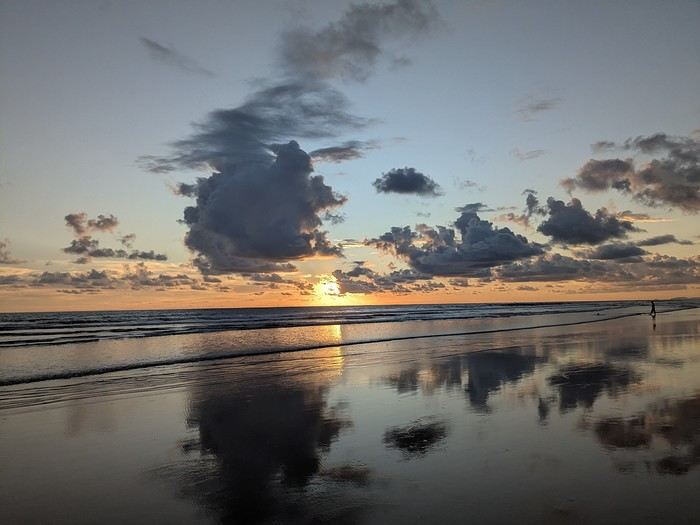
It was the country’s wild nature and safety that convinced us to go, since we’re traveling with our 7-year-old little one. We didn’t have much vacation time in February 2026 (only 12 days), so we optimized as much as possible.
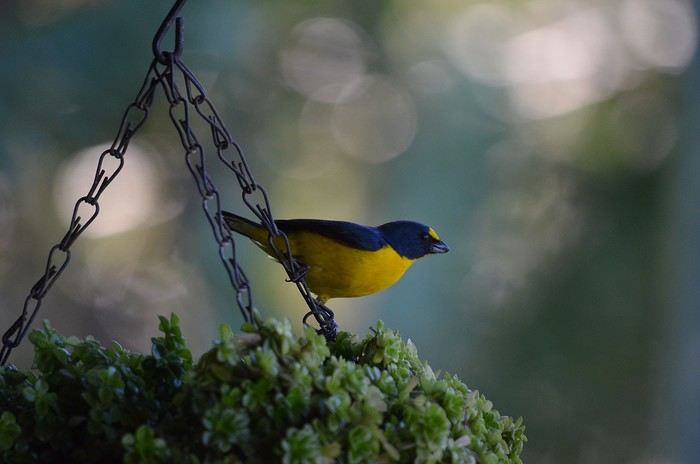
Here’s the itinerary: Wednesday, February 11: Flight from Marseille to San Jose via Paris and Atlanta Thursday, February 12: Pick up the car, drive to Poas Volcano, visit La Paz Waterfall Gardens Friday, February 13: Poas Volcano and drive to Manuel Antonio Saturday, February 14: Manuel Antonio National Park Sunday, February 15: Nauyaca Waterfall and Playa Linda Monday, February 16: Drive to Monte Verde and Santa Elena Reserve Tuesday, February 17: El Tigre Waterfall Reserve and Treetopia Park Wednesday, February 18: Monte Verde Reserve with a guide and drive to La Fortuna Thursday, February 19: Sloth guided tour, Observatory Lodge Park Friday, February 20: Arenal Volcano National Park, Termalistas del Arenal hot springs, and night tour Saturday, February 21: Return to San Jose, flight to Paris via Atlanta Sunday, February 22: Arrival in Paris and flight to Marseille. That gives us a solid 9 days in the country.
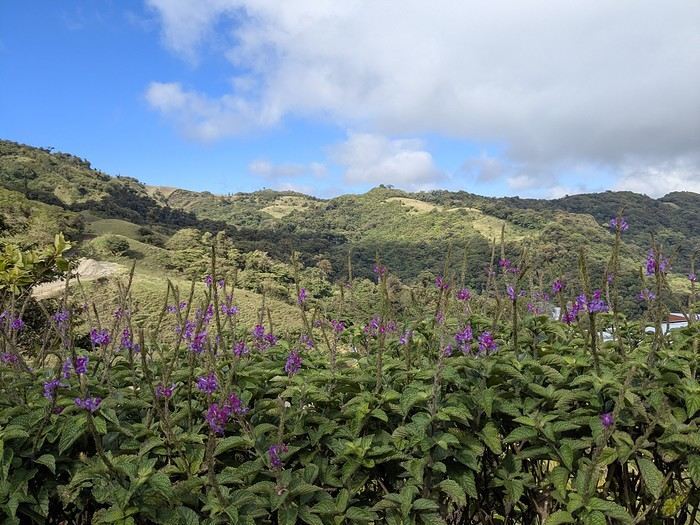
Budget breakdown: Costa Rica is an expensive country, but no more so than France. However, almost all hikes and waterfalls are paid entry, which can really add up. For meals, sodas (6–10 €) are cheaper than restaurants (10–20 € per dish).
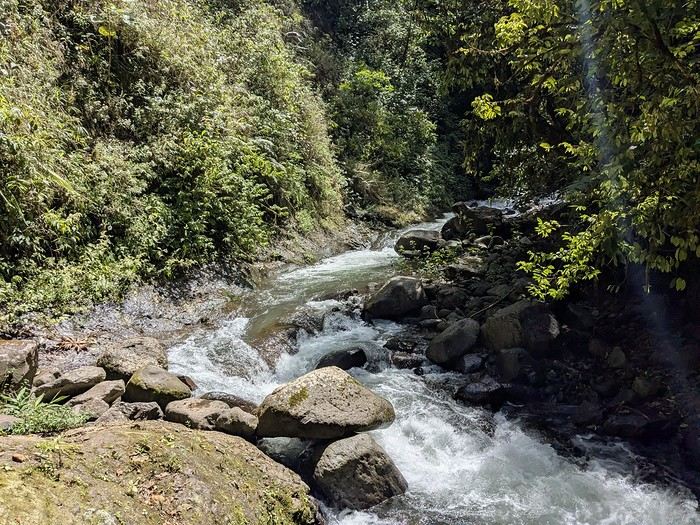
Flights: We chose Delta Airlines for the price: Marseille to San Jose was 740 € per person (modifiable, with checked baggage and seat selection included). Other direct flights from Europe were priced between 1200 € and 1600 € with more restrictive conditions. That’s 2220 € for the family.
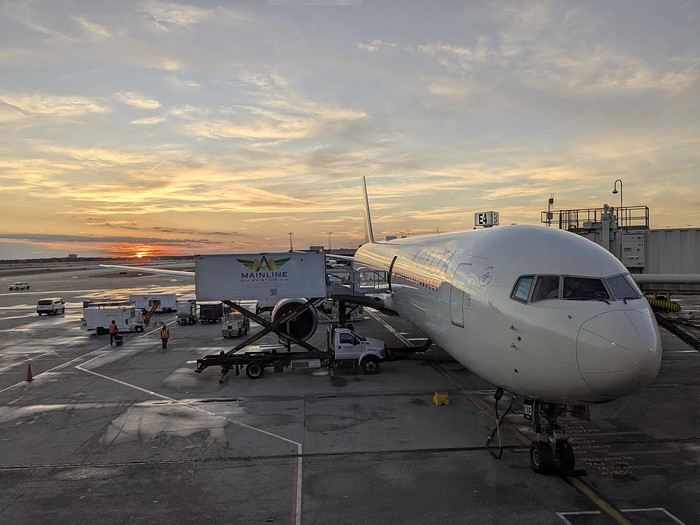
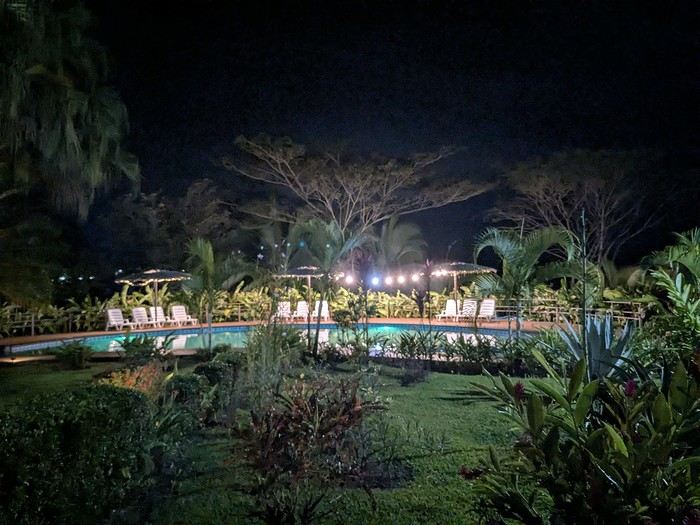
Accommodations: Alajuela, first night: 139 € (1 night) at Rodeo Estancia Boutique Hotel, with personalized airport pickup, transfer to the hotel, and a briefing from Vert Costa Rica agency the next day. Poas: 66 € (1 night) at Cabañas Tierra Fértil (entire apartment). Manuel Antonio: 394 € (3 nights) at La Palapa Ecolodge (hotel in the jungle). Monte Verde: Chalet Aloha Monteverde Cloud Forest (2 bedrooms): 125 € (2 nights). La Fortuna: Arenal Dream Garden (1 bedroom): 217 € (3 nights). Total: 941 €.
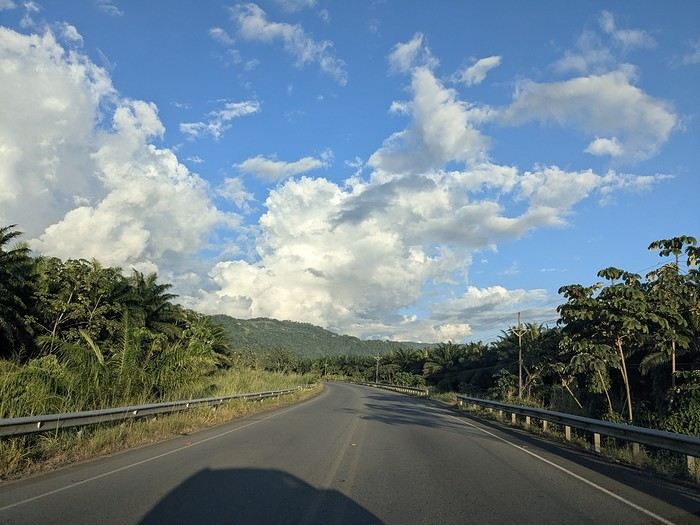
Car rental: I went through Vert Costa Rica agency (Vincent is a French expat who set up the agency in Costa Rica and makes great YouTube videos with useful tips). I rented a 4x4 that was delivered to the hotel the day after arrival and returned at the airport before the flight. The total was 772 €, including full insurance (zero deductible), a child seat, and a phone with a Costa Rican SIM and WhatsApp. The rental company was Poas Rent a Car. The vehicle was well-maintained—no complaints. Gas: 100 € for the whole trip (3 fill-ups).
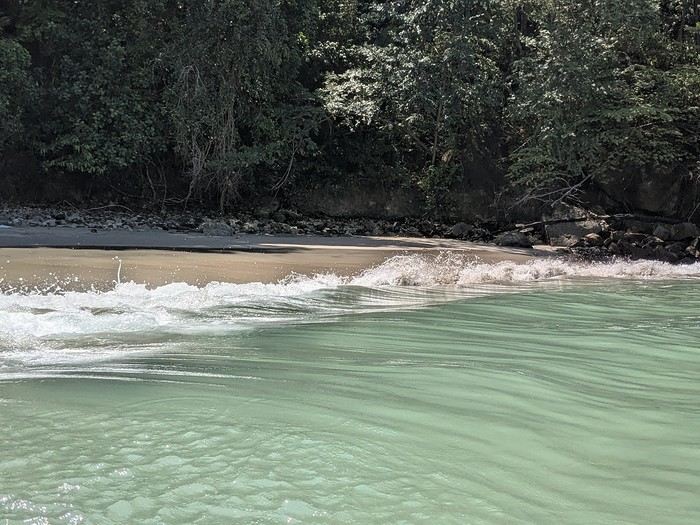
Activities: To get discounts, I bought the pass offered by Vincent, which paid for itself after just one activity. It cost me 30 € (promo since I rented the car through him). Prices are for 3 people. I’ve added stars to rate them: La Paz Waterfall Gardens ****: 112 € Poas Volcano National Park *: 33 € Manuel Antonio National Park ****: 35 € Nauyaca Waterfall ***: 25 € Santa Elena Reserve **: 45 € El Tigre Waterfall Reserve ****: 141 € (with meal) Treetopia (ziplining, suspension bridges) **: 250 € Guided tour of Monte Verde Reserve ***: 113 € Sloth guided tour (with breakfast) ***: 115 € Arenal Observatory Lodge (with meal) ****: 102 € Arenal Volcano National Park *: 34 € Termalistas del Arenal ****: 20 € Night tour ***: 116 € Total: 1171 €.
Meals: 600 € My favorite restaurants: Poas: Food court Mercaditas in Fraijanes Manuel Antonio (near La Palapa): La Langosta and also El Patio Near Nauyaca Waterfall: Ricar2 el Avión Between Manuel Antonio and Monte Verde: Soda D’Calle Santa Elena: HG’s Food Guadalupe (between Monte Verde and La Fortuna): Soda Río Piedras Arenal Observatory Lodge restaurant Arenal Oasis Ecolodge restaurant
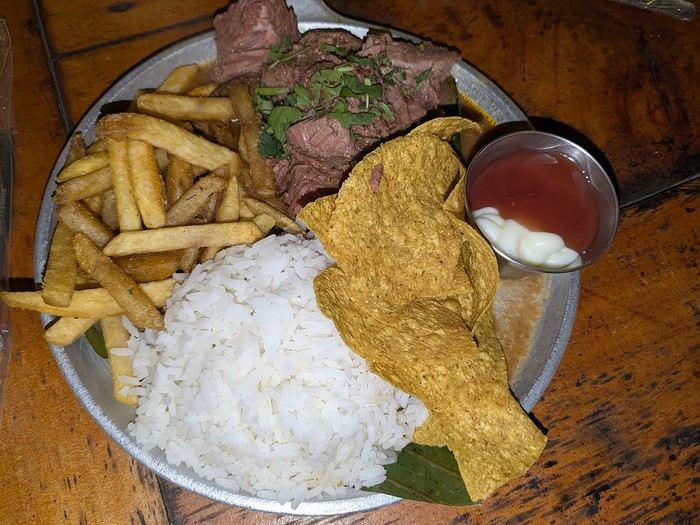
Other expenses: 300 € (groceries for breakfast, drinks, ice cream, souvenirs, etc.) Total overall: 6065 € (about 2020 € per person).
Now, here’s the day-by-day account of this beautiful trip.
https://voyageforum.com/images/posts/small/1772295011-z8mILBEUXHU8Ajz.jpg
It was the country’s wild nature and safety that convinced us to go, since we’re traveling with our 7-year-old little one. We didn’t have much vacation time in February 2026 (only 12 days), so we optimized as much as possible.
Here’s the itinerary: Wednesday, February 11: Flight from Marseille to San Jose via Paris and Atlanta Thursday, February 12: Pick up the car, drive to Poas Volcano, visit La Paz Waterfall Gardens Friday, February 13: Poas Volcano and drive to Manuel Antonio Saturday, February 14: Manuel Antonio National Park Sunday, February 15: Nauyaca Waterfall and Playa Linda Monday, February 16: Drive to Monte Verde and Santa Elena Reserve Tuesday, February 17: El Tigre Waterfall Reserve and Treetopia Park Wednesday, February 18: Monte Verde Reserve with a guide and drive to La Fortuna Thursday, February 19: Sloth guided tour, Observatory Lodge Park Friday, February 20: Arenal Volcano National Park, Termalistas del Arenal hot springs, and night tour Saturday, February 21: Return to San Jose, flight to Paris via Atlanta Sunday, February 22: Arrival in Paris and flight to Marseille. That gives us a solid 9 days in the country.
Budget breakdown: Costa Rica is an expensive country, but no more so than France. However, almost all hikes and waterfalls are paid entry, which can really add up. For meals, sodas (6–10 €) are cheaper than restaurants (10–20 € per dish).
Flights: We chose Delta Airlines for the price: Marseille to San Jose was 740 € per person (modifiable, with checked baggage and seat selection included). Other direct flights from Europe were priced between 1200 € and 1600 € with more restrictive conditions. That’s 2220 € for the family.
Accommodations: Alajuela, first night: 139 € (1 night) at Rodeo Estancia Boutique Hotel, with personalized airport pickup, transfer to the hotel, and a briefing from Vert Costa Rica agency the next day. Poas: 66 € (1 night) at Cabañas Tierra Fértil (entire apartment). Manuel Antonio: 394 € (3 nights) at La Palapa Ecolodge (hotel in the jungle). Monte Verde: Chalet Aloha Monteverde Cloud Forest (2 bedrooms): 125 € (2 nights). La Fortuna: Arenal Dream Garden (1 bedroom): 217 € (3 nights). Total: 941 €.
Car rental: I went through Vert Costa Rica agency (Vincent is a French expat who set up the agency in Costa Rica and makes great YouTube videos with useful tips). I rented a 4x4 that was delivered to the hotel the day after arrival and returned at the airport before the flight. The total was 772 €, including full insurance (zero deductible), a child seat, and a phone with a Costa Rican SIM and WhatsApp. The rental company was Poas Rent a Car. The vehicle was well-maintained—no complaints. Gas: 100 € for the whole trip (3 fill-ups).
Activities: To get discounts, I bought the pass offered by Vincent, which paid for itself after just one activity. It cost me 30 € (promo since I rented the car through him). Prices are for 3 people. I’ve added stars to rate them: La Paz Waterfall Gardens ****: 112 € Poas Volcano National Park *: 33 € Manuel Antonio National Park ****: 35 € Nauyaca Waterfall ***: 25 € Santa Elena Reserve **: 45 € El Tigre Waterfall Reserve ****: 141 € (with meal) Treetopia (ziplining, suspension bridges) **: 250 € Guided tour of Monte Verde Reserve ***: 113 € Sloth guided tour (with breakfast) ***: 115 € Arenal Observatory Lodge (with meal) ****: 102 € Arenal Volcano National Park *: 34 € Termalistas del Arenal ****: 20 € Night tour ***: 116 € Total: 1171 €.
Meals: 600 € My favorite restaurants: Poas: Food court Mercaditas in Fraijanes Manuel Antonio (near La Palapa): La Langosta and also El Patio Near Nauyaca Waterfall: Ricar2 el Avión Between Manuel Antonio and Monte Verde: Soda D’Calle Santa Elena: HG’s Food Guadalupe (between Monte Verde and La Fortuna): Soda Río Piedras Arenal Observatory Lodge restaurant Arenal Oasis Ecolodge restaurant
Other expenses: 300 € (groceries for breakfast, drinks, ice cream, souvenirs, etc.) Total overall: 6065 € (about 2020 € per person).
Now, here’s the day-by-day account of this beautiful trip.
https://voyageforum.com/images/posts/small/1772295011-z8mILBEUXHU8Ajz.jpg
15 days in La Palma, a hidden gem with a thousand contrasts
Hello,
First attempt at a travel journal for me and first post after 7 years away from this forum. 😮 I went to the island of La Palma for 15 days in September 2025. After visiting Lanzarote in February, I was looking for a different and greener island. Well, I wasn’t disappointed. 😎
We stayed in Breña Baja on the east coast of the island, 5 minutes from the airport. This choice was mainly motivated by the desire not to change accommodation during the stay and to be in a "central" location close to amenities. It worked out well, but if I were to do it again, I’d split the stay in two by getting another place in the north of the island to explore that area, which really appeals to me. Note that the island is "climatically divided in two": the west coast is sunnier and drier, while the east coast is often foggy or cloudy. It’s quite impressive when you come out of the LP-3 road tunnel connecting the two sides—you feel like you’ve changed regions even though it’s less than 3 km apart.
Flight options weren’t plentiful (no direct flights from France), so I went with Iberia, connecting in Madrid for 250 € round-trip per person excluding checked baggage (80 € round-trip for one 23 kg suitcase on this route). Make sure to buy the checked baggage at the same time as your flight, as it’ll cost about 15 € more if you add it later. I booked the tickets 5 months in advance directly on Iberia’s website. You could also take a low-cost airline to Tenerife or Gran Canaria and then a flight with a Canarian carrier, but in my opinion, that only makes sense if you’re visiting one of those islands first, as the connection isn’t "guaranteed." The ferry is an option from Tenerife (about 2.5 hours crossing).
Our departure from Lyon was initially scheduled for 6 AM but took off at 9 AM so the crew could rest after the late arrival of the previous flight. This let us grab breakfast on the airline’s dime—thanks, EU Regulation (EC) No 261/2004. 😉 Iberia took a week to reimburse me after I submitted my passport, receipts, and bank details via their online claim form.
Our small but spacious CRJ-1000 Air Nostrum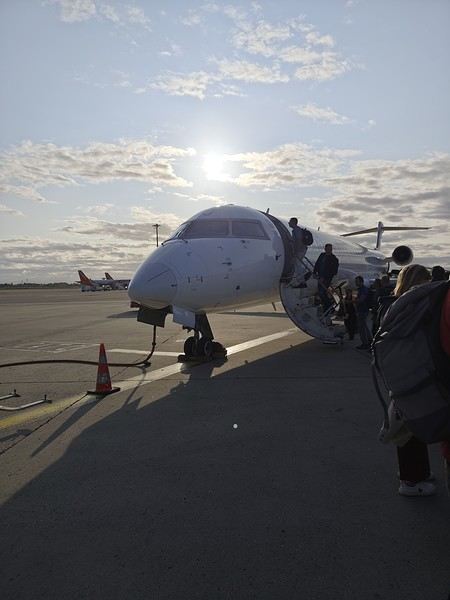 Bye-bye, Bugey nuclear plant
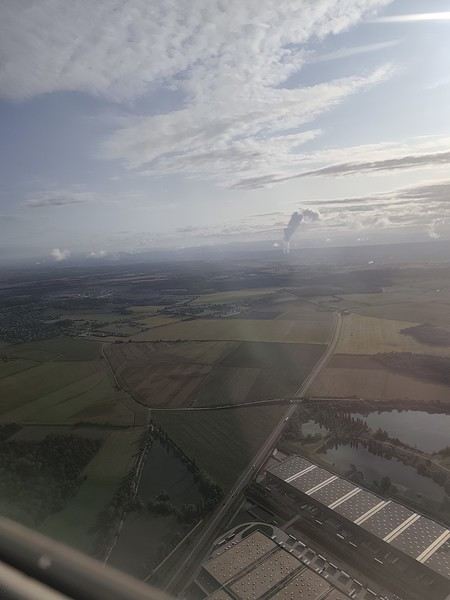 And hello, Madrid—or rather, its very dry region.
Our layover was initially 4 hours but shrank to 1 hour due to the previous flight’s delay. That worked out for us because Terminal 4 at Barajas is way less comfortable for resting than Lyon’s T1.
And hello, Madrid—or rather, its very dry region.
Our layover was initially 4 hours but shrank to 1 hour due to the previous flight’s delay. That worked out for us because Terminal 4 at Barajas is way less comfortable for resting than Lyon’s T1.
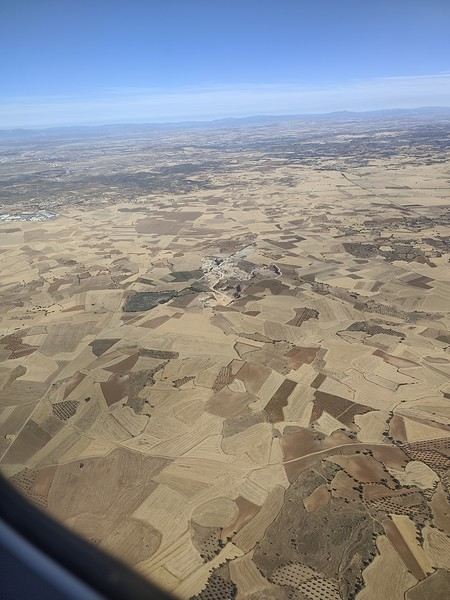
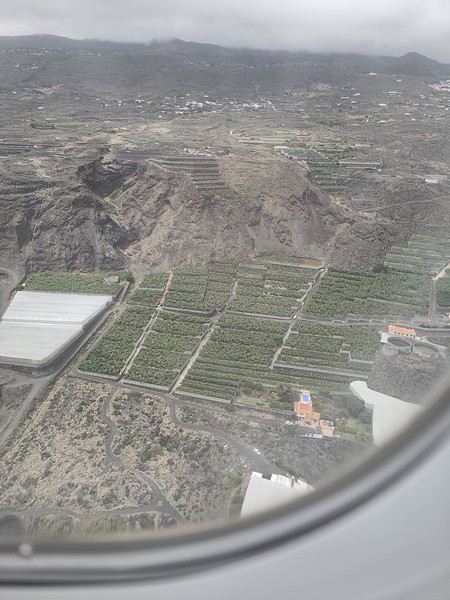
Landing with a view of Playa de la Cangrejera and del Pozo. When I say the east coast is often cloudy... 😇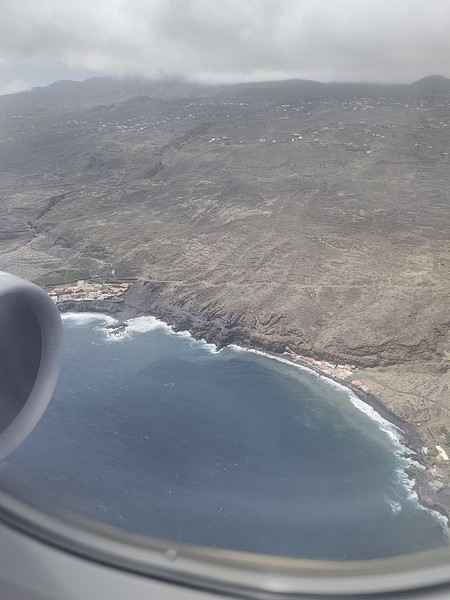 First sight of "plátano" plantations. Banana farming makes up 50% of the island’s GDP!
More to come soon. [;]
First attempt at a travel journal for me and first post after 7 years away from this forum. 😮 I went to the island of La Palma for 15 days in September 2025. After visiting Lanzarote in February, I was looking for a different and greener island. Well, I wasn’t disappointed. 😎
We stayed in Breña Baja on the east coast of the island, 5 minutes from the airport. This choice was mainly motivated by the desire not to change accommodation during the stay and to be in a "central" location close to amenities. It worked out well, but if I were to do it again, I’d split the stay in two by getting another place in the north of the island to explore that area, which really appeals to me. Note that the island is "climatically divided in two": the west coast is sunnier and drier, while the east coast is often foggy or cloudy. It’s quite impressive when you come out of the LP-3 road tunnel connecting the two sides—you feel like you’ve changed regions even though it’s less than 3 km apart.
Flight options weren’t plentiful (no direct flights from France), so I went with Iberia, connecting in Madrid for 250 € round-trip per person excluding checked baggage (80 € round-trip for one 23 kg suitcase on this route). Make sure to buy the checked baggage at the same time as your flight, as it’ll cost about 15 € more if you add it later. I booked the tickets 5 months in advance directly on Iberia’s website. You could also take a low-cost airline to Tenerife or Gran Canaria and then a flight with a Canarian carrier, but in my opinion, that only makes sense if you’re visiting one of those islands first, as the connection isn’t "guaranteed." The ferry is an option from Tenerife (about 2.5 hours crossing).
Our departure from Lyon was initially scheduled for 6 AM but took off at 9 AM so the crew could rest after the late arrival of the previous flight. This let us grab breakfast on the airline’s dime—thanks, EU Regulation (EC) No 261/2004. 😉 Iberia took a week to reimburse me after I submitted my passport, receipts, and bank details via their online claim form.
Our small but spacious CRJ-1000 Air Nostrum
Bye-bye, Bugey nuclear plant
And hello, Madrid—or rather, its very dry region.
Our layover was initially 4 hours but shrank to 1 hour due to the previous flight’s delay. That worked out for us because Terminal 4 at Barajas is way less comfortable for resting than Lyon’s T1.
Landing with a view of Playa de la Cangrejera and del Pozo. When I say the east coast is often cloudy... 😇
First sight of "plátano" plantations. Banana farming makes up 50% of the island’s GDP!
More to come soon. [;]
2 weeks in the Cyclades
Hi everyone!
Blue skies (lots of them), whitewashed villages with steep alleyways, hundreds of churches, and... thousands of stairs? Welcome to the Cyclades! 🙂
We’d been dreaming about this for a while, but in July-August—with the crowds—no way! Now that I can travel outside school holidays, the Cyclades are back on the agenda. And so begins a loooong period of planning and second-guessing, with countless itinerary changes: the Cyclades, yes, but which ones? I was fixated on Folegandros (we won’t be going after all) and really wanted to visit Delos. So, for this first trip, it’ll be: Mykonos (and Delos)-Naxos-Amorgos-Santorini.
Saturday 24/05: Departure from Orly on a Transavia flight, arriving in Mykonos in the late afternoon. We found a hotel that offers free transfers (pretty rare and not insignificant—it’s 25 € each way for just a few kilometers 😠) and at a reasonable price (83 € per night for B&B). Time for dinner already: Greek salad and souvlaki (we’re in Greece, right?)
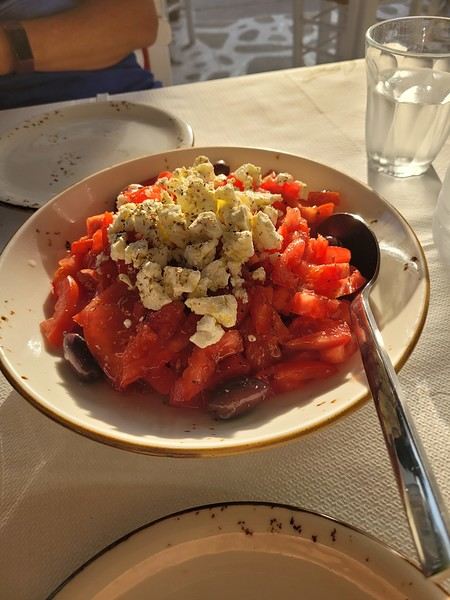 (Okay, this is actually a dakos with Naxos cheese, but I don’t have a photo of a Greek salad 😏).
Blue skies (lots of them), whitewashed villages with steep alleyways, hundreds of churches, and... thousands of stairs? Welcome to the Cyclades! 🙂
We’d been dreaming about this for a while, but in July-August—with the crowds—no way! Now that I can travel outside school holidays, the Cyclades are back on the agenda. And so begins a loooong period of planning and second-guessing, with countless itinerary changes: the Cyclades, yes, but which ones? I was fixated on Folegandros (we won’t be going after all) and really wanted to visit Delos. So, for this first trip, it’ll be: Mykonos (and Delos)-Naxos-Amorgos-Santorini.
Saturday 24/05: Departure from Orly on a Transavia flight, arriving in Mykonos in the late afternoon. We found a hotel that offers free transfers (pretty rare and not insignificant—it’s 25 € each way for just a few kilometers 😠) and at a reasonable price (83 € per night for B&B). Time for dinner already: Greek salad and souvlaki (we’re in Greece, right?)
(Okay, this is actually a dakos with Naxos cheese, but I don’t have a photo of a Greek salad 😏).21-Day Trip to La Gomera and La Palma
Travel Journal: 21 Days in La Gomera and La Palma
From February 6 to February 26, 2024
Tuesday, February 6 We left around 9 AM with our car, along with Pierre-Paul and Patricia, heading to the Bluepark parking lot in Bartenheim. As expected, we were awaited and left promptly for EuroAirport Basel. Took off at 12:25 PM for a 4-hour-15-minute flight under excellent conditions. Beautiful arrival in Tenerife with Teide in sight under a clear blue sky. Fifteen minutes later, we waited for bus No. 40 to Los Cristianos with quite a few other tourists, but we managed to find four seats. From the bus station, it was a 20-minute walk to our hotel. We checked into a lovely apartment for the four of us, complete with all the comforts. Outside, it was quite warm—at least 25°C! After dropping off our luggage, we went for a stroll. The immediate surroundings of the hotel held no interest for us: a modern, concrete area filled with hotels, bars, tourist agencies, and unappealing restaurants all offering the same bland international cuisine. Pat went to cool off at the pool, unfortunately overrun by loud, drunk English tourists. I took a walk to the paseo maritimo that leads to the port, skirting the seafront. The promenade was pleasant, but it could have been any seaside resort in the world—same old scene: a succession of bars with blaring music where many elderly people sipped cold beers waiting for the sunset, the backdrop a wall of resort-style hotels resembling rabbit hutches! Upon reaching the port, I scouted the route we’d take the next day to the Fred Olsen ferry. Back at the apartment, in the early evening, we looked for a non-touristy restaurant for dinner. Monique stopped a woman to ask her opinion! In this area, she told us, there’s no restaurant that serves Canarian or Spanish cuisine! The only place with decent restaurants is at the port. Off we went to the port, where we sat down at Al Bordo restaurant and ordered a seafood paella for four. Excellent, and at a very reasonable price (36 € for two). We returned to the hotel along the seafront.
Wednesday, February 7
Woke up at 6 AM. Had breakfast in the apartment with what we’d bought the day before at a supermarket. It was still dark when we left on foot toward the port, walking along the calm seafront at this early hour. Forty minutes later, we arrived and waited 10 minutes before the ferry docked. At 9:30 AM, we left the port of Los Cristianos for a 50-minute crossing on a calm sea under a beautiful blue sky. There were quite a few people on this large ferry, but many had no luggage, meaning they were visiting La Gomera for the day and would take the ferry back in the evening. Upon disembarking, we went straight to our rental car agency to pick up the car we’d booked online a few months earlier. It was a nice Peugeot 2008, spacious enough for the four of us and our luggage. We immediately took the beautiful road from San Sebastián that climbs directly into the mountains toward our rental in Vallehermoso. The road was in perfect condition—it seemed brand new, like all the others we’d take on this island later. This side of the island is very arid with little vegetation, and the terrain is particularly rugged, as it is throughout the island. We stopped at our first miradors, which would be followed by many more throughout our Canarian trip. Our first visit was to the small village of Agulo, perched on a promontory above the sea and at the foot of a high cliff. The village features typical Canarian houses with windows flush with the façade and black volcanic stone masonry on white or reddish-brown walls. The first recommended restaurant was already booked for a group, so we settled for the shaded terrace of the excellent El Alameda bar-restaurant. From Agulo, you can access the Abrante viewpoint via a winding road, where the view of Agulo, 600 meters below, is exceptional. A glass ledge over the void lets you test your fear of heights!
We drove to Vallehermoso to do our grocery shopping at the supermarket—a habit that would continue until the end of the trip. Our little house, "Casa rural El Encatadora," is located in a beautiful flower-filled valley a few kilometers west of Vallehermoso. Each of us had a bedroom with an en-suite bathroom, plus a living room, kitchen, and a small terrace overlooking the quiet street at the valley’s end, which didn’t bother us at all.
Thursday, February 8 The good weather seemed to follow us since our arrival in the Canary Islands. This morning, we took the road—still as beautiful and new—toward Arure, high up to the west. The landscape was magnificent, with breathtaking glimpses of the sea far below. In Arure, we parked in front of Conchita’s bar, where a hike (Rother No. 30) starts toward two viewpoints: Alojera, which we reached after 45 minutes on a lovely path. Monique, tired from the first steep climb, stopped at the first viewpoint and hitchhiked back to Arure. Meanwhile, we continued toward the second viewpoint, Los Barranquillos, where the view of the surroundings was partially hidden by misty clouds rising from the sea. The entire mountain is sculpted by ancient, endless terraces climbing until the slope becomes too steep for construction—visible traces of the hard work of past inhabitants trying to survive in a harsh environment. We had a decent lunch at La Conchita bar, then drove to the small seaside town of Puerto la Caleta, sheltered by an immense cliff plunging into the sea. Black sand beach, rough sea—despite our encouragement, Pat didn’t dare to swim! As for the old village of Caleta, it’s perched on the mountainside, and visiting it requires climbing steep, stair-filled alleys to discover a few traditional houses. Back at the casa, dinner in, and card games...
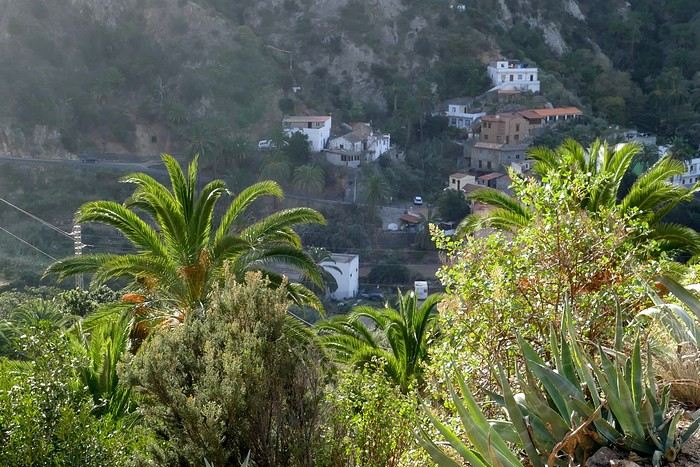 Vallehermoso
Friday, February 9 This morning, the sky was overcast, and the peaks around us were shrouded in clouds. We took the same road as yesterday to hike Las Creces. Quickly gaining altitude, we entered a thick fog—visibility was very limited. We stopped at the Las Creces parking lot; visibility improved, and the sun wasn’t far off. The hike is entirely within a beautiful laurel forest, with the sun playing hide-and-seek, but it wasn’t cold despite the altitude. After finishing the loop trail, we decided to picnic—not there, as it was too chilly—but on Vallehermoso’s beach, where we found a nice picnic area sheltered by large black rocks. A short digestive walk on the surrounding hill to admire the little beach from above. Back in Vallehermoso, we did some grocery shopping, then tried to return to the casa—only to find ourselves locked out because we’d left the key in the lock inside! After several attempts and with the help of Yéli, a relative of the owner we called for help, we were finally able to get back in!
Saturday, February 10
It rained last night, and the sky remained overcast. Monique decided to rest this morning. PP, Pat, and I set off on the hike that starts from the house toward the Marichal reservoir. The sun wasn’t far off, and by 11 AM, it was fully out. The pleasant hike passed by many flower-filled gardens and orchards—orange, lemon, and mandarin trees in fruit. The path climbed gently toward the reservoir, where the view of the Cano rock dominating the landscape was magnificent. The last part of the climb was a bit tough, overgrown with lush vegetation, and the trail was slippery from last night’s rain. We descended via a different, much more pleasant path and returned to the casa just in time for lunch, prepared by Monique. This valley is rich with its many farmers and market gardeners who’ve cultivated the entire valley, taking advantage of the water flowing down from the mountain, captured upstream and redistributed through countless pipes snaking along the paths. Numerous tanks also store water during dry periods. The houses are scattered across both sides of the valley, and these colorful little homes add a beautiful touch to the landscape. The many palm trees give this valley a distinctly tropical feel—you could almost imagine yourself in the Caribbean. Add to that some salsa music drifting from a hut where farmers were working, and the picture is complete. A well-chilled beer apéro capped off a lovely morning. The afternoon was dedicated to rest, relaxation, reading, and games.
Sunday, February 11 The blue sky returned, though a few clouds still capped the highest peaks. Today, we visited Garajonay National Park, which covers the highest central mountains. Up there, we were above the clouds, and the panoramas from the various viewpoints were stunning: first, Cherelepin, accessible from the Laguna Grande parking lot, then Alto de Garajonay, offering an exceptional view of Teide—over 3,000 meters high—emerging from the clouds on Tenerife, far in the distance. We continued to the Los Roques viewpoints, then stopped for lunch at the Degollada de Peraza restaurant, where the view of the barranco was impressive. We descended toward San Sebastián and checked into our new lodging, La Cabezada, located in the countryside about 3 km above San Sebastián. It’s a small apartment adjacent to the owner’s, with a lovely terrace overlooking the surrounding mountains and surrounded by a beautiful garden. Apéro, then dinner on our beautiful terrace.
Monday, February 12 This morning, we went down to visit San Sebastián de La Gomera: its old tower, main street with some beautiful traditional houses, and the Church of the Assumption. Back at the casa for lunch. In the afternoon, Pat, PP, and I set off on the short hike from San Sebastián beach to La Guancha beach. We drove down and parked on the beach. The path climbs along the hill overlooking San Sebastián, passes by the tall Christ statue dominating the landscape, and roughly follows the coast down to the isolated Guancha beach. A beautiful hike under a hot sun, and a swim was welcome, even if the beach and sea access weren’t very comfortable due to large pebbles and quickly deepening water. Apart from two nudist bathers, there was no one on this beach. We returned the same way.
Tuesday, February 13 Rest day. We went down to town to stroll and do some shopping. I took the opportunity to visit the parador, beautifully situated above the city in a lovely garden overlooking the port and town. Together, we went for a cuba libre at the "Cuba Libre" bar, then had lunch at Breñusca (mediocre paella!). Back at the casa, then we went back down to town to see a carnival parade, a "passacalles," which actually passed an hour earlier than scheduled. Oh well.
Wednesday, February 14 Each to their own program this morning. Pat went swimming at San Sebastián beach, Monique rested at the casa, and PP and I set off on the hike from Playa de Avalos to the Ermita de Guadalupe on Playa del Cangrejo. It wasn’t easy to find the right road or the parking spot, but we managed. The path seemed to have suffered landslides, according to a sign at the trailhead! We decided to check it out, ready to turn back if it seemed too dangerous. In the end, apart from one or two slightly tricky spots where we had to climb a pile of rocks, the trail remained passable, though a bit vertigo-inducing in places. The narrow path clings to very vertical cliffs nearly 300 meters above sea level! But what a magnificent view. At one point, the trail runs alongside a wall of basaltic pipes. We returned via the drivable track that parallels the trail a bit lower. Back at the house for lunch. In the late afternoon, we returned to town to attend the "Entierro de las Sardinas" (Burial of the Sardine), which closes the Canarian carnival festivities. While waiting, we strolled through the parador’s gardens and had mojitos in town. Around 9 PM, we heard the noise and cries of the mourners. The procession advanced, led by a large papier-mâché sardine on a float, surrounded by wailing mourners. The procession headed toward the sea, where the sardine was burned, and a mini fireworks display ended the procession. It was all very good-natured, and everyone had fun. We ended the evening with dinner at a good fish restaurant, El Pajar.
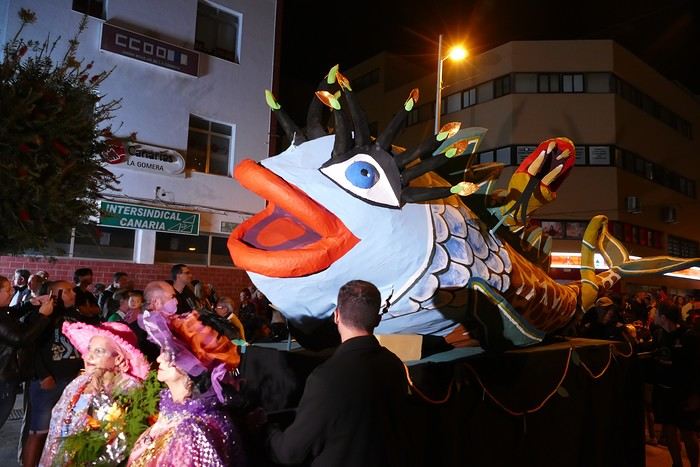 Entierro de la Sardina in San Sebastián de La Gomera
Thursday, February 15
Woke up at 5:15 AM. The only suitable ferry was at 7 AM, which would get us to La Palma by late morning rather than evening. We packed our bags, had breakfast, then headed to the port, left our rental car, and boarded the ferry to Tenerife, from where we’d continue to La Palma. Calm sea, beautiful sun—by 10:30 AM, we disembarked in La Palma. We picked up our car and immediately headed to our new apartment in Breña Alta. It’s a large apartment with a superb terrace facing the sea, fully equipped and very comfortable. The hosts recommended Casa Goyo restaurant, near the airport and close to us. It’s a restaurant with many small rooms, some of which can be reserved for families. The fish-based cuisine (chipirones, pulpo) was excellent, hearty, and reasonably priced. Since it’s in the airport’s flight path, we occasionally heard planes landing. Quick and efficient service. Afterward, we visited Santa Cruz de La Palma, which reminded us of the historic quarters of La Orotava in Tenerife or the capital of Gran Canaria.
Friday, February 16
Beautiful weather, blue sky. We headed to the San Bartolo viewpoint toward the northeast coast, then to the lovely village of San Andrés, which we explored. From there, we walked along the shore to the natural pools of Charco Azul, where we swam in the cool but "swimmable" sea. Back in San Andrés for lunch at the "San Andrés" restaurant on the beautiful church square. Very good fish-based meal. We got back in the car and continued along the north coast to the port of Espindola and the natural pools of Fajana near the Cumplida lighthouse. A fairly strong wind whipped up beautiful waves crashing onto the rocky coast in bursts of foam. Back in Santa Cruz, we stopped at the Mercadona supermarket to buy fresh shrimp for dinner.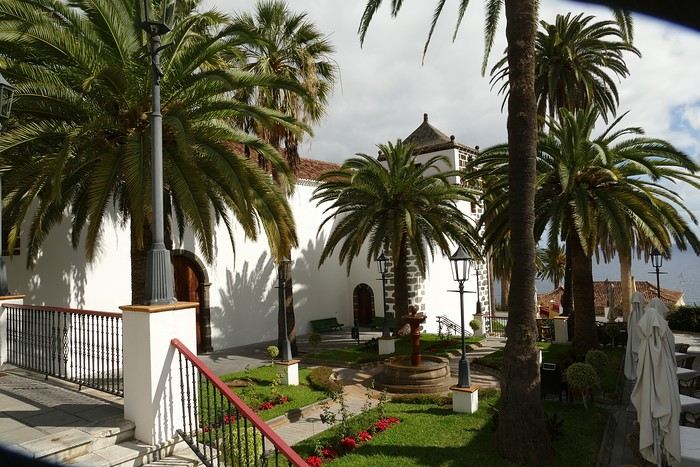 San Andrés
Saturday, February 17
Uniform blue sky, even on the heights. We took the beautiful road that winds up to the summit of the Caldera de Taburiente. Several viewpoints offer 360° views of the entire island and beyond: you can make out La Gomera, El Hierro, and, of course, Tenerife with the perfect triangle of Teide. We parked at the Los Andes viewpoint parking lot and started our hike to Pico de la Cruz along a trail following the ridge, offering superb views into the caldera. We got back in the car and passed by the Roque de los Muchachos astronomical complex, composed of numerous observatories, some with very aesthetic mirror telescopes. We hiked from the Roque de los Muchachos parking lot to the various viewpoints, always as impressive. Picnic on site, then back to Santa Cruz. We stopped by our car dealer because the oil warning light came on—better safe than sorry. The representative reassured us but preferred to give us a Fiat Cross SUV instead.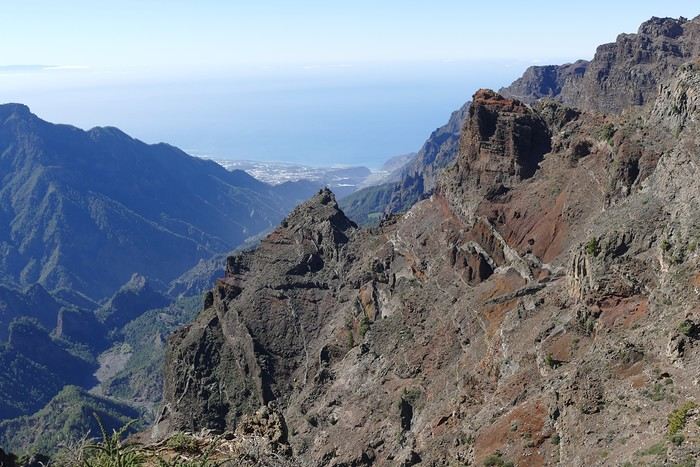 The Caldera de Taburiente
Sunday, February 18 The weather was a bit mixed, with cloudy patches. We set off to hike the Barranco de la Cuba de Galga. Unfortunately, the Los Tilos trail had been closed for several months due to a major landslide. The parking lot by the road was already quite full, and indeed, we crossed paths with many hikers along the way—it’s an easy hike with little elevation gain, which is rare here in La Palma! The beautiful path winds through a very narrow, deep gorge covered in lush tropical vegetation—you’d think you were in a Southeast Asian forest, especially with the humidity in the gorge bringing out earthy and floral scents. Halfway through, Monique turned back while the rest of us continued to the Cuba de Galga. A light drizzle accompanied us on the return. For lunch, we went to Chipi Chipi restaurant in the heights of Santa Cruz. The cool air forced us to leave the lovely terrace for the slightly noisy dining room. The meal was very good and hearty. Afternoon spent resting at our house.
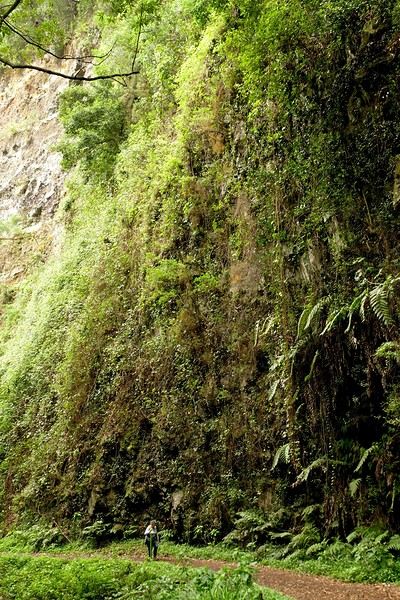 La Cuba de la Galga
Monday, February 19 A few clouds still clung to the nearby mountain peaks. We headed south to Los Canarios. We stopped in front of the small San Antonio Abad church, where a path leads to the viewpoint in 15 minutes. Then we visited the San Antonio Volcano Interpretation Center and climbed to the viewpoint via the trail along the crater’s edge, offering a plunging view into the crater. Then PP, Pat, and I headed toward the Teneguía volcano but turned back given the remaining distance and the intense heat bearing down on us! Plus, the landscape was rather arid and not very interesting. We got back in the car and drove down to the salt flats at the island’s southern tip. The ocean crashes here in large waves, exploding against the volcanic rocks and feeding a "blowhole" carved into the rock. We stopped for drinks at the salt flats restaurant, then headed home.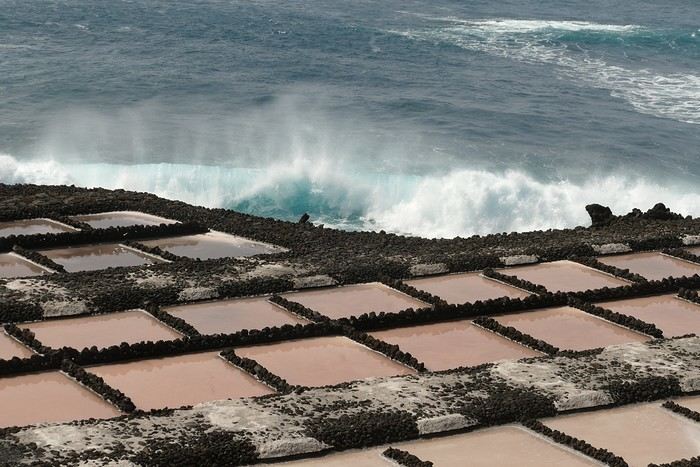 The salt flats in Fuencaliente
Tuesday, February 20 Beautiful weather with a few clouds clinging to the mountains, as usual. A relaxed morning since my parking reservation at La Cumbrecita didn’t start until 1 PM. It takes about 30 minutes from Santa Cruz to reach the valley floor via a beautiful but narrow road toward the end, though there’s very little traffic. Meanwhile, the clouds had disappeared, and the view from the La Cumbrecita viewpoint was superb. We recognized Pico de la Cruz in the distance, where we’d been a few days earlier. We then took the path leading to the Las Chozas viewpoint through a magnificent Canarian pine forest. We picnicked on site, then took the path to the Los Roques viewpoint. We returned the same way since the direct route was closed for construction. Back in Santa Cruz, we visited the Sanctuary of Las Nieves, with its beautiful golden Baroque altar.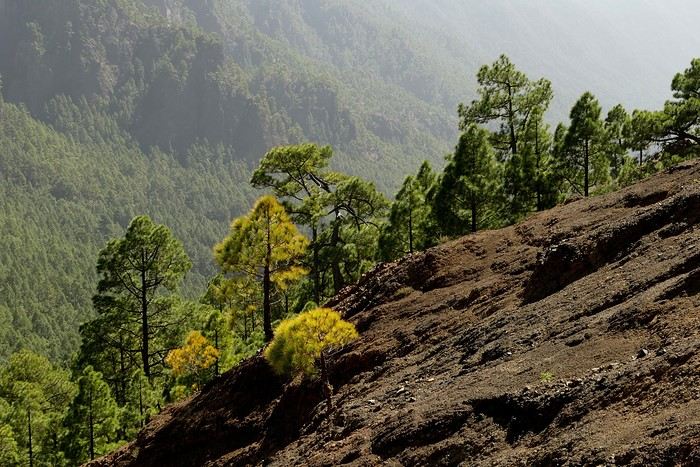 Hike from La Cumbrecita
Wednesday, February 21 After packing our things and loading the car, we left Santa Cruz under a very blue sky for Los Llanos de Aridane, where we stopped to visit this lovely town. The Church of Nuestra Señora de los Remedios has a beautiful coffered ceiling and an original papier-mâché Christ statue from the 16th century. Around it, colorful old Canarian houses brighten the streets of the town center. We took the opportunity to stroll, do some shopping, and finally sat down at La Pergola restaurant for a mediocre lunch. We got back in the car to check into our new house in Arecida. On the way, we stopped at the Mirador del Time, which once again offered an impressive panorama, allowing us—for the first time—to see the damage caused by the Tajogaite volcano eruption in 2021. You can clearly see the still-smoking crater and the large black lava flow covering the landscape down to the sea. We really liked our new accommodation: a local house that’s been renovated on the heights of Arecida, not far from the Canarian pine forest. From several terraces, we have a 360° view of the sea and mountains. We even have a private pool! There are two beautiful, brand-new bedrooms, each with its own bathroom—the best. Plus, we’re on the GR 131 trail that runs along the Barranco de las Angustias toward the northeast.
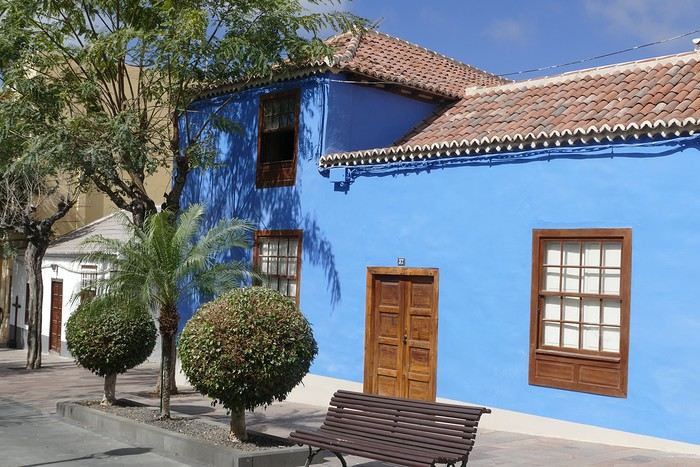 Los Llanos de Aridane
Thursday, February 22 Once again, beautiful weather greeted us when we woke up. We started the GR 131 with the goal of reaching the Torre del Time viewpoint—about 400 meters of elevation gain. The path, quite steep at first, winds through a superb Canarian pine forest. A few viewpoints let you appreciate the sheer drop of the Barranco de las Angustias—watch out for vertigo! At the Torre del Time viewpoint, there’s a nearly 1,000-meter vertical drop. We returned via another path, the PLP1, which meanders first through this beautiful forest, then along lovely flower-filled gardens adjacent to beautiful properties that cascade from the forest down to the road serving these neighborhoods. This afternoon, we tried to get closer to the area devastated by the 2021 lava flows. Several roads are still closed or reserved for residents, while others—brand new—have been rebuilt to open up this densely populated and cultivated region. In some places, the lava flow slightly diverted, sparing some properties that logically should have disappeared. Now, they’re encircled by a massive cooled lava field. In other spots, twisted and charred metal scraps or greenhouse remains protrude from the lava—all that’s left of the former banana plantations. A little higher up, you can see the slightly smoking crater of Tajogaite, responsible for this disaster. Back to Casa Barreros.
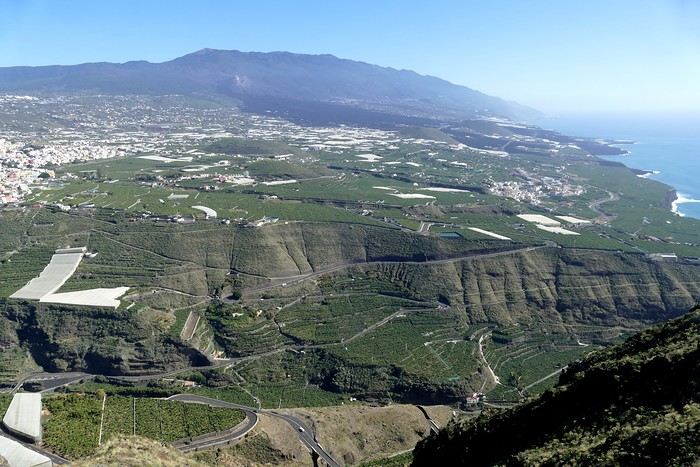 View of Los Llanos and, in the background, the 2021 lava flow
Friday, February 23
Though the sky was still blue, the temperature had dropped due to a chilly wind. By midday, it still rose to 22°C. Today, we headed north, specifically to the town of Tijarafe, where a very narrow road descends to the small port, Porís de Candelaria. The 3.7-kilometer road drops 700 meters in elevation, with gradients up to 30%—it was going to be intense! Indeed, the descent was scary, with the void right next to the very narrow road where passing was impossible except at a few rare spots. Everything went well—there was little traffic at this early hour. From the parking lot at the bottom, a path leads to Porís de Candelaria. It’s surprising to see this small fishing hamlet nestled in the shelter of an immense cave opening onto the sea, which was quite rough today. The sun, at this time of year, would appear late in the cave, which remained in shadow for much of the day. We returned via the same road, strolled through the small town of Puntagorda, and had lunch at El Jardín de los Naranjos restaurant—excellent meal.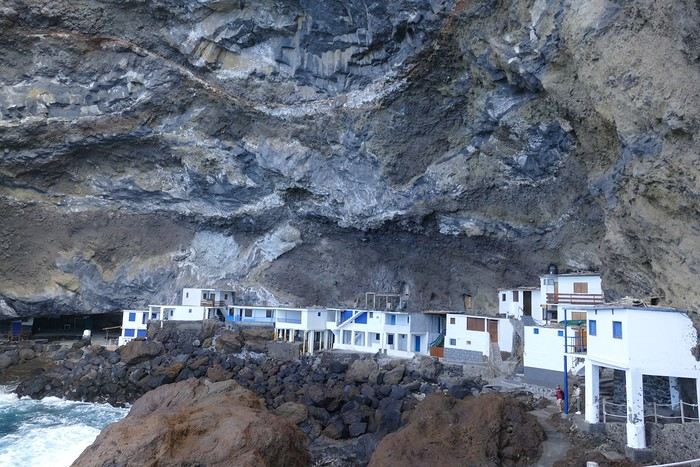 Fishing hamlet of Candelaria
Saturday, February 24 The air was still cool, but the sun was beautiful. While Monique stayed home to rest, the three of us headed to the village of Las Tricias to hike the Buracas Caves trail. We left the car parked on the LP1 road and took the small paved road down to the sign marking the trail’s start. The signage for all the trails we took here, as in La Gomera, was very well done. The path descended steadily, then more steeply toward the caves where the island’s first inhabitants lived—some petroglyphs are still visible in certain caves. The path then climbed back up, passing magnificent dragon trees and more or less elaborate huts occupied by Germans who’ve lived here for many years. Back at Casa Barreros for some rest.
Sunday, February 25 The weather once again blessed us with a beautiful day. This morning, we visited the local produce market held on weekends in Puntagorda. You’ll find agricultural products, crafts, and food to keep you going. A little further on, there’s a glass viewpoint overlooking the barranco plunging toward the sea, with a view of the thrill-seekers trying the zip line right next to it. Lunch at Naranjos—definitely a good spot—with their shrimp and spice tagliatelle. Back home for an afternoon of relaxation.
Monday, February 26 We left Arecida under a cloudy sky. Driving up from Los Llanos de Aridane toward the east, an enormous cascade of clouds poured from the mountain peaks into the Los Llanos plain—very impressive. Arriving in Santa Cruz, we went for a stroll, did some last-minute shopping, then had a final good-quality paella at La Chalana on the paseo maritimo. We left the car in the parking lot and took the 5 PM Olsen ferry to Tenerife on a slightly choppy sea, but the ferry didn’t rock too much. Arriving at 7:15 PM, we dropped off our things near the port in our reserved apartment and went for dinner at Abordo—rubbery chipirones. A digestive stroll among the ever-increasing number of tourists in Los Cristianos—restaurants were packed to the brim, the season is in full swing here. Gone is the calm of La Gomera and La Palma, and the laid-back tourism of German hikers among whom a few French were hiding!
Tuesday, February 27 To make our homemade breakfast more enjoyable, we went to buy pastries at the local bakery, then took one last walk on the paseo along the beaches, mingling with the many mobility scooters driven by elderly or disabled people, joggers, and tourists. Last apéro near the bus station, then off to the airport. After a smooth 4-hour-30-minute flight, we arrived in Basel-Mulhouse at 10:20 PM.
THE END
Conclusion A fantastic trip to two islands with magnificent and diverse nature, where landscapes range from desert-like to tropical depending on exposure to winds and clouds. Thanks to the many beautiful viewpoints, you can truly appreciate these exceptionally dynamic reliefs. A hiker’s paradise, the trails are all very well marked, though the choice of easy or moderate paths for "casual walkers" is quite limited. Another notable advantage, in our opinion, is that these islands are very lightly developed—you’ll hardly see any of those ugly hotel blocks that spoil the landscapes of some other Canary Islands. It’s true that the beaches on these two islands don’t meet traditional international tourism criteria: they’re small, with black sand, and often difficult to access. Special mention for the quality of the road network (except for a few small local roads), which seems brand new, well-paved, and well-signposted. We also enjoyed exceptional weather for February, with fewer than three days of gray or rainy weather out of 21.
Almost all the accommodations we chose met or exceeded our expectations, often at reasonable prices: an average of 98 € per night for an apartment or house with two bedrooms for four people.
All photos can be viewed by clicking this link: https://photos.app.goo.gl/G44pPk4g9PW1rNzg8
Tuesday, February 6 We left around 9 AM with our car, along with Pierre-Paul and Patricia, heading to the Bluepark parking lot in Bartenheim. As expected, we were awaited and left promptly for EuroAirport Basel. Took off at 12:25 PM for a 4-hour-15-minute flight under excellent conditions. Beautiful arrival in Tenerife with Teide in sight under a clear blue sky. Fifteen minutes later, we waited for bus No. 40 to Los Cristianos with quite a few other tourists, but we managed to find four seats. From the bus station, it was a 20-minute walk to our hotel. We checked into a lovely apartment for the four of us, complete with all the comforts. Outside, it was quite warm—at least 25°C! After dropping off our luggage, we went for a stroll. The immediate surroundings of the hotel held no interest for us: a modern, concrete area filled with hotels, bars, tourist agencies, and unappealing restaurants all offering the same bland international cuisine. Pat went to cool off at the pool, unfortunately overrun by loud, drunk English tourists. I took a walk to the paseo maritimo that leads to the port, skirting the seafront. The promenade was pleasant, but it could have been any seaside resort in the world—same old scene: a succession of bars with blaring music where many elderly people sipped cold beers waiting for the sunset, the backdrop a wall of resort-style hotels resembling rabbit hutches! Upon reaching the port, I scouted the route we’d take the next day to the Fred Olsen ferry. Back at the apartment, in the early evening, we looked for a non-touristy restaurant for dinner. Monique stopped a woman to ask her opinion! In this area, she told us, there’s no restaurant that serves Canarian or Spanish cuisine! The only place with decent restaurants is at the port. Off we went to the port, where we sat down at Al Bordo restaurant and ordered a seafood paella for four. Excellent, and at a very reasonable price (36 € for two). We returned to the hotel along the seafront.
Wednesday, February 7
Woke up at 6 AM. Had breakfast in the apartment with what we’d bought the day before at a supermarket. It was still dark when we left on foot toward the port, walking along the calm seafront at this early hour. Forty minutes later, we arrived and waited 10 minutes before the ferry docked. At 9:30 AM, we left the port of Los Cristianos for a 50-minute crossing on a calm sea under a beautiful blue sky. There were quite a few people on this large ferry, but many had no luggage, meaning they were visiting La Gomera for the day and would take the ferry back in the evening. Upon disembarking, we went straight to our rental car agency to pick up the car we’d booked online a few months earlier. It was a nice Peugeot 2008, spacious enough for the four of us and our luggage. We immediately took the beautiful road from San Sebastián that climbs directly into the mountains toward our rental in Vallehermoso. The road was in perfect condition—it seemed brand new, like all the others we’d take on this island later. This side of the island is very arid with little vegetation, and the terrain is particularly rugged, as it is throughout the island. We stopped at our first miradors, which would be followed by many more throughout our Canarian trip. Our first visit was to the small village of Agulo, perched on a promontory above the sea and at the foot of a high cliff. The village features typical Canarian houses with windows flush with the façade and black volcanic stone masonry on white or reddish-brown walls. The first recommended restaurant was already booked for a group, so we settled for the shaded terrace of the excellent El Alameda bar-restaurant. From Agulo, you can access the Abrante viewpoint via a winding road, where the view of Agulo, 600 meters below, is exceptional. A glass ledge over the void lets you test your fear of heights!
We drove to Vallehermoso to do our grocery shopping at the supermarket—a habit that would continue until the end of the trip. Our little house, "Casa rural El Encatadora," is located in a beautiful flower-filled valley a few kilometers west of Vallehermoso. Each of us had a bedroom with an en-suite bathroom, plus a living room, kitchen, and a small terrace overlooking the quiet street at the valley’s end, which didn’t bother us at all.
Thursday, February 8 The good weather seemed to follow us since our arrival in the Canary Islands. This morning, we took the road—still as beautiful and new—toward Arure, high up to the west. The landscape was magnificent, with breathtaking glimpses of the sea far below. In Arure, we parked in front of Conchita’s bar, where a hike (Rother No. 30) starts toward two viewpoints: Alojera, which we reached after 45 minutes on a lovely path. Monique, tired from the first steep climb, stopped at the first viewpoint and hitchhiked back to Arure. Meanwhile, we continued toward the second viewpoint, Los Barranquillos, where the view of the surroundings was partially hidden by misty clouds rising from the sea. The entire mountain is sculpted by ancient, endless terraces climbing until the slope becomes too steep for construction—visible traces of the hard work of past inhabitants trying to survive in a harsh environment. We had a decent lunch at La Conchita bar, then drove to the small seaside town of Puerto la Caleta, sheltered by an immense cliff plunging into the sea. Black sand beach, rough sea—despite our encouragement, Pat didn’t dare to swim! As for the old village of Caleta, it’s perched on the mountainside, and visiting it requires climbing steep, stair-filled alleys to discover a few traditional houses. Back at the casa, dinner in, and card games...
VallehermosoFriday, February 9 This morning, the sky was overcast, and the peaks around us were shrouded in clouds. We took the same road as yesterday to hike Las Creces. Quickly gaining altitude, we entered a thick fog—visibility was very limited. We stopped at the Las Creces parking lot; visibility improved, and the sun wasn’t far off. The hike is entirely within a beautiful laurel forest, with the sun playing hide-and-seek, but it wasn’t cold despite the altitude. After finishing the loop trail, we decided to picnic—not there, as it was too chilly—but on Vallehermoso’s beach, where we found a nice picnic area sheltered by large black rocks. A short digestive walk on the surrounding hill to admire the little beach from above. Back in Vallehermoso, we did some grocery shopping, then tried to return to the casa—only to find ourselves locked out because we’d left the key in the lock inside! After several attempts and with the help of Yéli, a relative of the owner we called for help, we were finally able to get back in!
Saturday, February 10
It rained last night, and the sky remained overcast. Monique decided to rest this morning. PP, Pat, and I set off on the hike that starts from the house toward the Marichal reservoir. The sun wasn’t far off, and by 11 AM, it was fully out. The pleasant hike passed by many flower-filled gardens and orchards—orange, lemon, and mandarin trees in fruit. The path climbed gently toward the reservoir, where the view of the Cano rock dominating the landscape was magnificent. The last part of the climb was a bit tough, overgrown with lush vegetation, and the trail was slippery from last night’s rain. We descended via a different, much more pleasant path and returned to the casa just in time for lunch, prepared by Monique. This valley is rich with its many farmers and market gardeners who’ve cultivated the entire valley, taking advantage of the water flowing down from the mountain, captured upstream and redistributed through countless pipes snaking along the paths. Numerous tanks also store water during dry periods. The houses are scattered across both sides of the valley, and these colorful little homes add a beautiful touch to the landscape. The many palm trees give this valley a distinctly tropical feel—you could almost imagine yourself in the Caribbean. Add to that some salsa music drifting from a hut where farmers were working, and the picture is complete. A well-chilled beer apéro capped off a lovely morning. The afternoon was dedicated to rest, relaxation, reading, and games.
Sunday, February 11 The blue sky returned, though a few clouds still capped the highest peaks. Today, we visited Garajonay National Park, which covers the highest central mountains. Up there, we were above the clouds, and the panoramas from the various viewpoints were stunning: first, Cherelepin, accessible from the Laguna Grande parking lot, then Alto de Garajonay, offering an exceptional view of Teide—over 3,000 meters high—emerging from the clouds on Tenerife, far in the distance. We continued to the Los Roques viewpoints, then stopped for lunch at the Degollada de Peraza restaurant, where the view of the barranco was impressive. We descended toward San Sebastián and checked into our new lodging, La Cabezada, located in the countryside about 3 km above San Sebastián. It’s a small apartment adjacent to the owner’s, with a lovely terrace overlooking the surrounding mountains and surrounded by a beautiful garden. Apéro, then dinner on our beautiful terrace.
Monday, February 12 This morning, we went down to visit San Sebastián de La Gomera: its old tower, main street with some beautiful traditional houses, and the Church of the Assumption. Back at the casa for lunch. In the afternoon, Pat, PP, and I set off on the short hike from San Sebastián beach to La Guancha beach. We drove down and parked on the beach. The path climbs along the hill overlooking San Sebastián, passes by the tall Christ statue dominating the landscape, and roughly follows the coast down to the isolated Guancha beach. A beautiful hike under a hot sun, and a swim was welcome, even if the beach and sea access weren’t very comfortable due to large pebbles and quickly deepening water. Apart from two nudist bathers, there was no one on this beach. We returned the same way.
Tuesday, February 13 Rest day. We went down to town to stroll and do some shopping. I took the opportunity to visit the parador, beautifully situated above the city in a lovely garden overlooking the port and town. Together, we went for a cuba libre at the "Cuba Libre" bar, then had lunch at Breñusca (mediocre paella!). Back at the casa, then we went back down to town to see a carnival parade, a "passacalles," which actually passed an hour earlier than scheduled. Oh well.
Wednesday, February 14 Each to their own program this morning. Pat went swimming at San Sebastián beach, Monique rested at the casa, and PP and I set off on the hike from Playa de Avalos to the Ermita de Guadalupe on Playa del Cangrejo. It wasn’t easy to find the right road or the parking spot, but we managed. The path seemed to have suffered landslides, according to a sign at the trailhead! We decided to check it out, ready to turn back if it seemed too dangerous. In the end, apart from one or two slightly tricky spots where we had to climb a pile of rocks, the trail remained passable, though a bit vertigo-inducing in places. The narrow path clings to very vertical cliffs nearly 300 meters above sea level! But what a magnificent view. At one point, the trail runs alongside a wall of basaltic pipes. We returned via the drivable track that parallels the trail a bit lower. Back at the house for lunch. In the late afternoon, we returned to town to attend the "Entierro de las Sardinas" (Burial of the Sardine), which closes the Canarian carnival festivities. While waiting, we strolled through the parador’s gardens and had mojitos in town. Around 9 PM, we heard the noise and cries of the mourners. The procession advanced, led by a large papier-mâché sardine on a float, surrounded by wailing mourners. The procession headed toward the sea, where the sardine was burned, and a mini fireworks display ended the procession. It was all very good-natured, and everyone had fun. We ended the evening with dinner at a good fish restaurant, El Pajar.
Entierro de la Sardina in San Sebastián de La GomeraThursday, February 15
Woke up at 5:15 AM. The only suitable ferry was at 7 AM, which would get us to La Palma by late morning rather than evening. We packed our bags, had breakfast, then headed to the port, left our rental car, and boarded the ferry to Tenerife, from where we’d continue to La Palma. Calm sea, beautiful sun—by 10:30 AM, we disembarked in La Palma. We picked up our car and immediately headed to our new apartment in Breña Alta. It’s a large apartment with a superb terrace facing the sea, fully equipped and very comfortable. The hosts recommended Casa Goyo restaurant, near the airport and close to us. It’s a restaurant with many small rooms, some of which can be reserved for families. The fish-based cuisine (chipirones, pulpo) was excellent, hearty, and reasonably priced. Since it’s in the airport’s flight path, we occasionally heard planes landing. Quick and efficient service. Afterward, we visited Santa Cruz de La Palma, which reminded us of the historic quarters of La Orotava in Tenerife or the capital of Gran Canaria.
Friday, February 16
Beautiful weather, blue sky. We headed to the San Bartolo viewpoint toward the northeast coast, then to the lovely village of San Andrés, which we explored. From there, we walked along the shore to the natural pools of Charco Azul, where we swam in the cool but "swimmable" sea. Back in San Andrés for lunch at the "San Andrés" restaurant on the beautiful church square. Very good fish-based meal. We got back in the car and continued along the north coast to the port of Espindola and the natural pools of Fajana near the Cumplida lighthouse. A fairly strong wind whipped up beautiful waves crashing onto the rocky coast in bursts of foam. Back in Santa Cruz, we stopped at the Mercadona supermarket to buy fresh shrimp for dinner.
San AndrésSaturday, February 17
Uniform blue sky, even on the heights. We took the beautiful road that winds up to the summit of the Caldera de Taburiente. Several viewpoints offer 360° views of the entire island and beyond: you can make out La Gomera, El Hierro, and, of course, Tenerife with the perfect triangle of Teide. We parked at the Los Andes viewpoint parking lot and started our hike to Pico de la Cruz along a trail following the ridge, offering superb views into the caldera. We got back in the car and passed by the Roque de los Muchachos astronomical complex, composed of numerous observatories, some with very aesthetic mirror telescopes. We hiked from the Roque de los Muchachos parking lot to the various viewpoints, always as impressive. Picnic on site, then back to Santa Cruz. We stopped by our car dealer because the oil warning light came on—better safe than sorry. The representative reassured us but preferred to give us a Fiat Cross SUV instead.
The Caldera de TaburienteSunday, February 18 The weather was a bit mixed, with cloudy patches. We set off to hike the Barranco de la Cuba de Galga. Unfortunately, the Los Tilos trail had been closed for several months due to a major landslide. The parking lot by the road was already quite full, and indeed, we crossed paths with many hikers along the way—it’s an easy hike with little elevation gain, which is rare here in La Palma! The beautiful path winds through a very narrow, deep gorge covered in lush tropical vegetation—you’d think you were in a Southeast Asian forest, especially with the humidity in the gorge bringing out earthy and floral scents. Halfway through, Monique turned back while the rest of us continued to the Cuba de Galga. A light drizzle accompanied us on the return. For lunch, we went to Chipi Chipi restaurant in the heights of Santa Cruz. The cool air forced us to leave the lovely terrace for the slightly noisy dining room. The meal was very good and hearty. Afternoon spent resting at our house.
La Cuba de la GalgaMonday, February 19 A few clouds still clung to the nearby mountain peaks. We headed south to Los Canarios. We stopped in front of the small San Antonio Abad church, where a path leads to the viewpoint in 15 minutes. Then we visited the San Antonio Volcano Interpretation Center and climbed to the viewpoint via the trail along the crater’s edge, offering a plunging view into the crater. Then PP, Pat, and I headed toward the Teneguía volcano but turned back given the remaining distance and the intense heat bearing down on us! Plus, the landscape was rather arid and not very interesting. We got back in the car and drove down to the salt flats at the island’s southern tip. The ocean crashes here in large waves, exploding against the volcanic rocks and feeding a "blowhole" carved into the rock. We stopped for drinks at the salt flats restaurant, then headed home.
The salt flats in FuencalienteTuesday, February 20 Beautiful weather with a few clouds clinging to the mountains, as usual. A relaxed morning since my parking reservation at La Cumbrecita didn’t start until 1 PM. It takes about 30 minutes from Santa Cruz to reach the valley floor via a beautiful but narrow road toward the end, though there’s very little traffic. Meanwhile, the clouds had disappeared, and the view from the La Cumbrecita viewpoint was superb. We recognized Pico de la Cruz in the distance, where we’d been a few days earlier. We then took the path leading to the Las Chozas viewpoint through a magnificent Canarian pine forest. We picnicked on site, then took the path to the Los Roques viewpoint. We returned the same way since the direct route was closed for construction. Back in Santa Cruz, we visited the Sanctuary of Las Nieves, with its beautiful golden Baroque altar.
Hike from La CumbrecitaWednesday, February 21 After packing our things and loading the car, we left Santa Cruz under a very blue sky for Los Llanos de Aridane, where we stopped to visit this lovely town. The Church of Nuestra Señora de los Remedios has a beautiful coffered ceiling and an original papier-mâché Christ statue from the 16th century. Around it, colorful old Canarian houses brighten the streets of the town center. We took the opportunity to stroll, do some shopping, and finally sat down at La Pergola restaurant for a mediocre lunch. We got back in the car to check into our new house in Arecida. On the way, we stopped at the Mirador del Time, which once again offered an impressive panorama, allowing us—for the first time—to see the damage caused by the Tajogaite volcano eruption in 2021. You can clearly see the still-smoking crater and the large black lava flow covering the landscape down to the sea. We really liked our new accommodation: a local house that’s been renovated on the heights of Arecida, not far from the Canarian pine forest. From several terraces, we have a 360° view of the sea and mountains. We even have a private pool! There are two beautiful, brand-new bedrooms, each with its own bathroom—the best. Plus, we’re on the GR 131 trail that runs along the Barranco de las Angustias toward the northeast.
Los Llanos de AridaneThursday, February 22 Once again, beautiful weather greeted us when we woke up. We started the GR 131 with the goal of reaching the Torre del Time viewpoint—about 400 meters of elevation gain. The path, quite steep at first, winds through a superb Canarian pine forest. A few viewpoints let you appreciate the sheer drop of the Barranco de las Angustias—watch out for vertigo! At the Torre del Time viewpoint, there’s a nearly 1,000-meter vertical drop. We returned via another path, the PLP1, which meanders first through this beautiful forest, then along lovely flower-filled gardens adjacent to beautiful properties that cascade from the forest down to the road serving these neighborhoods. This afternoon, we tried to get closer to the area devastated by the 2021 lava flows. Several roads are still closed or reserved for residents, while others—brand new—have been rebuilt to open up this densely populated and cultivated region. In some places, the lava flow slightly diverted, sparing some properties that logically should have disappeared. Now, they’re encircled by a massive cooled lava field. In other spots, twisted and charred metal scraps or greenhouse remains protrude from the lava—all that’s left of the former banana plantations. A little higher up, you can see the slightly smoking crater of Tajogaite, responsible for this disaster. Back to Casa Barreros.
View of Los Llanos and, in the background, the 2021 lava flowFriday, February 23
Though the sky was still blue, the temperature had dropped due to a chilly wind. By midday, it still rose to 22°C. Today, we headed north, specifically to the town of Tijarafe, where a very narrow road descends to the small port, Porís de Candelaria. The 3.7-kilometer road drops 700 meters in elevation, with gradients up to 30%—it was going to be intense! Indeed, the descent was scary, with the void right next to the very narrow road where passing was impossible except at a few rare spots. Everything went well—there was little traffic at this early hour. From the parking lot at the bottom, a path leads to Porís de Candelaria. It’s surprising to see this small fishing hamlet nestled in the shelter of an immense cave opening onto the sea, which was quite rough today. The sun, at this time of year, would appear late in the cave, which remained in shadow for much of the day. We returned via the same road, strolled through the small town of Puntagorda, and had lunch at El Jardín de los Naranjos restaurant—excellent meal.
Fishing hamlet of CandelariaSaturday, February 24 The air was still cool, but the sun was beautiful. While Monique stayed home to rest, the three of us headed to the village of Las Tricias to hike the Buracas Caves trail. We left the car parked on the LP1 road and took the small paved road down to the sign marking the trail’s start. The signage for all the trails we took here, as in La Gomera, was very well done. The path descended steadily, then more steeply toward the caves where the island’s first inhabitants lived—some petroglyphs are still visible in certain caves. The path then climbed back up, passing magnificent dragon trees and more or less elaborate huts occupied by Germans who’ve lived here for many years. Back at Casa Barreros for some rest.
Sunday, February 25 The weather once again blessed us with a beautiful day. This morning, we visited the local produce market held on weekends in Puntagorda. You’ll find agricultural products, crafts, and food to keep you going. A little further on, there’s a glass viewpoint overlooking the barranco plunging toward the sea, with a view of the thrill-seekers trying the zip line right next to it. Lunch at Naranjos—definitely a good spot—with their shrimp and spice tagliatelle. Back home for an afternoon of relaxation.
Monday, February 26 We left Arecida under a cloudy sky. Driving up from Los Llanos de Aridane toward the east, an enormous cascade of clouds poured from the mountain peaks into the Los Llanos plain—very impressive. Arriving in Santa Cruz, we went for a stroll, did some last-minute shopping, then had a final good-quality paella at La Chalana on the paseo maritimo. We left the car in the parking lot and took the 5 PM Olsen ferry to Tenerife on a slightly choppy sea, but the ferry didn’t rock too much. Arriving at 7:15 PM, we dropped off our things near the port in our reserved apartment and went for dinner at Abordo—rubbery chipirones. A digestive stroll among the ever-increasing number of tourists in Los Cristianos—restaurants were packed to the brim, the season is in full swing here. Gone is the calm of La Gomera and La Palma, and the laid-back tourism of German hikers among whom a few French were hiding!
Tuesday, February 27 To make our homemade breakfast more enjoyable, we went to buy pastries at the local bakery, then took one last walk on the paseo along the beaches, mingling with the many mobility scooters driven by elderly or disabled people, joggers, and tourists. Last apéro near the bus station, then off to the airport. After a smooth 4-hour-30-minute flight, we arrived in Basel-Mulhouse at 10:20 PM.
THE END
Conclusion A fantastic trip to two islands with magnificent and diverse nature, where landscapes range from desert-like to tropical depending on exposure to winds and clouds. Thanks to the many beautiful viewpoints, you can truly appreciate these exceptionally dynamic reliefs. A hiker’s paradise, the trails are all very well marked, though the choice of easy or moderate paths for "casual walkers" is quite limited. Another notable advantage, in our opinion, is that these islands are very lightly developed—you’ll hardly see any of those ugly hotel blocks that spoil the landscapes of some other Canary Islands. It’s true that the beaches on these two islands don’t meet traditional international tourism criteria: they’re small, with black sand, and often difficult to access. Special mention for the quality of the road network (except for a few small local roads), which seems brand new, well-paved, and well-signposted. We also enjoyed exceptional weather for February, with fewer than three days of gray or rainy weather out of 21.
Almost all the accommodations we chose met or exceeded our expectations, often at reasonable prices: an average of 98 € per night for an apartment or house with two bedrooms for four people.
All photos can be viewed by clicking this link: https://photos.app.goo.gl/G44pPk4g9PW1rNzg8
Eastern Crete in September 2024
Travel journal in Eastern Crete from September 8th to 29th, 2024
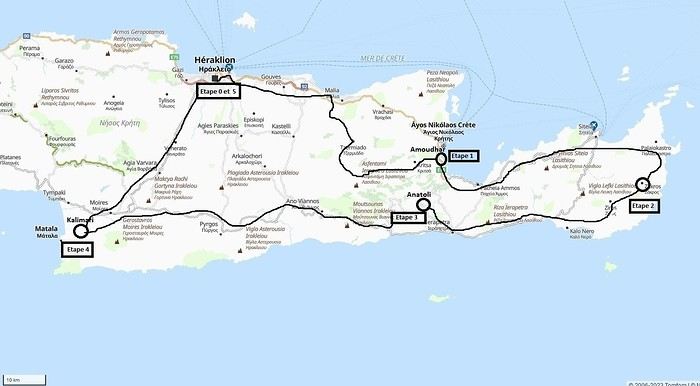 Our 21-day itinerary
Sunday, 08/09: Once again—and this is the eighth time—we’re setting off, the four of us: Patrick, Michelle, Jacques, and Monique, for the Greek islands. This time, we’ve chosen Crete. No need to wake up at 3 or 4 a.m. to reach Basel-Mulhouse Airport at dawn to catch the first flight to Greece at 6 a.m.! Given the prohibitive prices charged by EasyJet, we found flights that were half the price from Zurich Airport, which is accessible in 3 hours by train from Colmar. Pierre-Paul drives all four of us to Colmar train station, where we take the train to Basel and then, 20 minutes later, the direct train to Zurich Airport. After wandering around the airport, we go for a coffee at 6 € each! We’re in Switzerland, after all. The other dining areas all have vending machines for selecting and paying for meals—soon, there won’t be anyone left to serve you! After a short wait, we take off at 7:45 p.m. (20 minutes late) in an Aegean Airbus A321. Free in-flight meal service isn’t bad either! We land in Heraklion around 11:15 p.m. We pick up our rental car (a red Seat Ibiza) at the airport and head straight to our apartment, located 2 km from the city center. Thanks to the GPS, we find it quickly. It’s a beautiful, fully renovated apartment with all the comforts and well-equipped. On the table, there’s wine, bottles of water, jam, coffee, etc. Given the late hour, we won’t stay up long.
Monday, 09/09: To enhance our breakfast, Michelle and Monique set off to find a bakery nearby. They return with croissants and donuts—yum... Then we head to the west coast. The highway follows the coastline, but we prefer taking the old road to Malia, our first stop. We visit the major archaeological site of this Minoan city under the hot sun. The site covers a vast area, but the ruins aren’t very evocative except for a few beautiful amphorae scattered around. The explanations in a small house at the entrance are interesting and help us better understand the organization of the ancient city with its different districts. From there, we head toward the nearby mountains to see the thousand-year-old plane tree in the village of Krasi. We take the opportunity to enjoy an excellent lunch of moussaka and delicious gemista at the Krassopsychia taverna in the village center. Pleasant surprise: the prices are still reasonable, with a bill of 70 € for four, including wine and water. The friendly tradition of complimentary dessert and glasses of raki continues—great! We’ve set the bar high right away! Let’s hope the rest lives up to it! On the way back toward the Lassithi Plateau, we stop at the Kardiotisa Monastery perched high on the mountain to enjoy a magnificent view of the entire region. Just a little further, we arrive at the Lassithi Plateau: the presence of small windmills used to pump water from the ground is the typical feature of this plateau. We complete a full loop around the plateau, passing by numerous orchards and vegetable gardens that occupy the entire space. At the end of the plateau, we once again cross mountain passes via winding roads that bring us near Agios Nikolaos. Our apartment is located about ten kilometers further south in Amoudhara. The owner, who was notified, waits for us and shows us her superb apartment, whose large terrace overlooks the entire Mirabello Bay. She then gives us valuable information about the different beaches in the area. Dinner will be frugal, given our hearty lunch in Krasi!
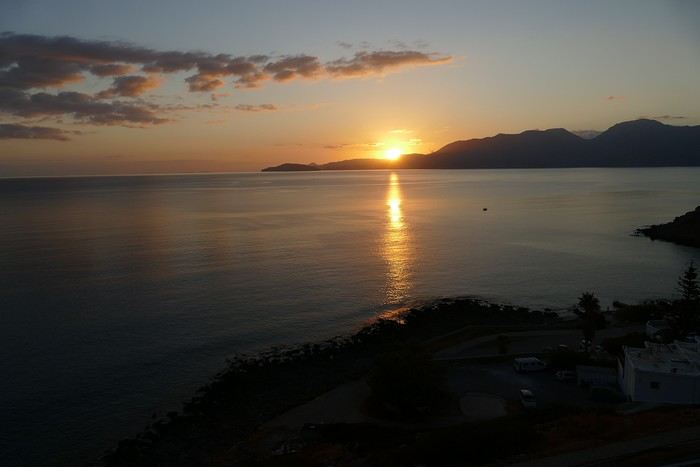 Sunset over Mirabello Bay
Tuesday, 10/09: A bit of a gray sky when we wake up around 8 a.m., but the sun will soon triumph over the scattered clouds. For our first swim, we opt for Voulisma Beach, even though our host warned us it was a bit “crowdy.” That’s understandable given the beautiful emerald color of the sea and the lovely curve of the beach. To avoid the big crowds, we move toward the eastern part of the beach, accessible via a steep staircase. The water is very warm, and this first dip is very pleasant. Before returning to the apartment, we stop at the bakery to buy spinach pies, essential ingredients to accompany our Greek salad for lunch. Of course, everything will be washed down with ouzo, which will remain our favorite drink for the next three weeks—but in moderation!!! A nap is in order after all that effort. In the late afternoon, we drive to Agios Nikolaos, the main seaside resort in Crete. We’re not too enthusiastic about visiting this mass-tourism resort, but the center of Agios, concentrated around the small inner harbor, is pleasant to see despite the plethora of shops and restaurants. We dine a little outside the harbor in the shaded courtyard of the Avli taverna: the oven-baked lamb, squid with spinach, and cuttlefish ink orzo pasta are all highly appreciated. We still stay under a 75 € bill for four.
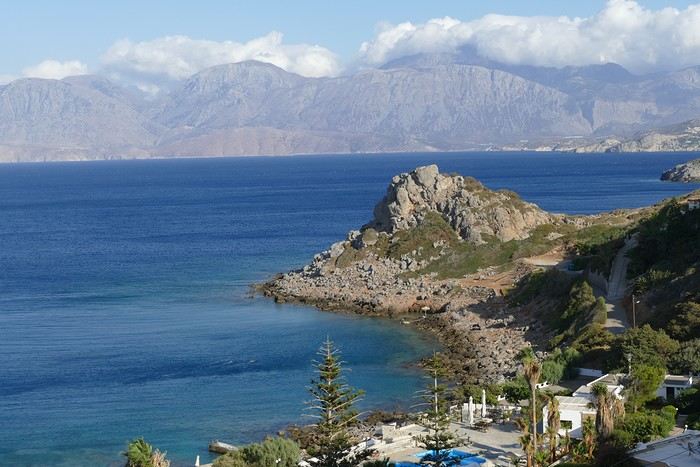 Mirabello Bay seen from our terrace
Wednesday, 11/09: At 8 a.m., the terrace is already bathed in sunlight, and it’s already quite hot. The small parasol barely gives us enough shade, but we’re not complaining! For our second swim, we head to a tiny beach recommended by our host, just 3 minutes by car from our place. The path leading to it is very discreet, and we don’t find it right away! It’s a small sandy cove with a few welcome tamarisk trees for shade. When we arrive, there are two swimmers, and there won’t be more than five or six in the morning. After lunch and a nap, we head to the beautiful village of Kritsa, just a few kilometers away. It’s too late to visit the beautiful church of Kera Panagia, which is already closed. We settle for the exterior, which is worth a look. The weather is clouding over, and big clouds are gathering. Upon arriving in Kritsa, a heavy shower forces us to take shelter in the Platanos taverna in the village center, and since it’s nearly 7 p.m., we decide to stay and dine there. Good choice—excellent meze: croquettes and stuffed zucchini flowers, gigantes beans, grilled tomatoes and feta, and pancetta as the main dish. The rain stops just as we decide to head back.
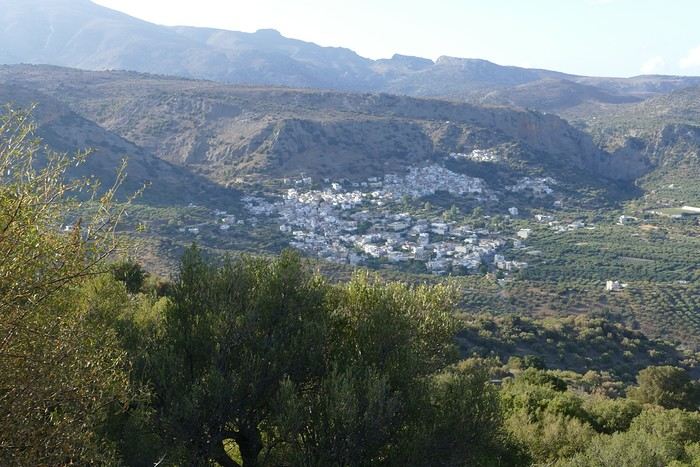 Village of Kritsa
Thursday, 12/09: Our terrace faces east, so we get to watch the sunrise around 7 a.m.—it’s truly a beautiful sight we never tire of. Around 9 a.m., we head to the village of Plaka, where boats depart for the island of Spinalonga, located north of Agios Nikolaos. We board the first boat, which sets sail at 10 a.m., and we’re not alone—the boat is practically full. After 10 minutes, we land on the island at the same time as several other boats from Elounda or Agios. Needless to say, there are already quite a few people walking through the streets of the leper village. The visit remains interesting and moving as we read the explanatory panels recounting the island’s history under Byzantine and then Turkish rule, followed by its transformation into a leper colony. As soon as we climb toward the top of the island via more or less maintained paths, there’s almost no one left. The 360° view from up there is stunning.
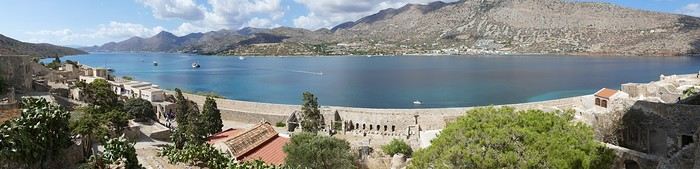
Spinalonga Island
The heat is now unbearable, and we can’t wait to get back home to have lunch on our terrace and rest. In the late afternoon, we go grocery shopping at the AB supermarket at the entrance of Agios. We had spotted another nice restaurant in our guide, but unfortunately, there’s a different one at the indicated location that doesn’t inspire us. So, we return to the Avli taverna for another dinner just as good as the first.
Friday, 13/09: We repeat yesterday’s successful program: a swim in our little cove, lunch on the terrace, a nap, and then, in the late afternoon, we discover another nearby village, Kroustas, nestled in the olive groves near Kritsa. Much less touristy than Kritsa, it’s mostly inhabited by locals, especially the elderly who are enjoying the cool air on their chairs—if you can call it cool given the still-high temperatures in the late afternoon! We then return to visit Kritsa, which we hadn’t been able to explore due to the rain. Dinner at a taverna in the village center at a very reasonable price.
Saturday, 14/09: Today, we move to our new base further east. We start with a high viewpoint at the Faneromeni Monastery, which overlooks Mirabello Bay. The monastery itself is of little interest as it’s under renovation with excessive concrete work. We continue to the village of Kavoussi to see another exceptional tree after a few kilometers on a dusty, bumpy track. It’s an olive tree said to be about 3,200 years old—impressive, and the countryside is very beautiful. It’s time to find a place for lunch. We find one in the charming little port of Mohlos, where a few tavernas surround a very nice small beach. Our choice falls on the Bogazzi taverna, where we enjoy fried fish. To reach our new base in Zakros, we still have to drive through the mountains before reaching Sitia, Paleokastro, and finally Zakros. The region is beautiful, with olive groves and rows of wind turbines taking advantage of the strong wind near the northern tip of the island. In Zakros, we’re greeted by our very friendly host. Here too, we have all the comforts and a beautiful terrace overlooking the village. The apartment has reversible air conditioners, but the overly simple instructions leave us puzzled. Thinking we’ve set it correctly, we realize a little too late that it’s blowing hot air over 30°C! After numerous attempts and testing several confusing programs, we finally succeed! Dinner on our new terrace.
Sunday, 15/09: This morning, we get up early to hike in the “Gorge of the Dead” while it’s still cool. The sky is blue as usual! We park in the nearest parking lot and start our descent via a beautiful path winding through the olive groves. A little further on, the landscape opens up, and the path, now a stony trail, begins the descent to the dry riverbed. On either side of the riverbed rise beautiful reddish cliffs.
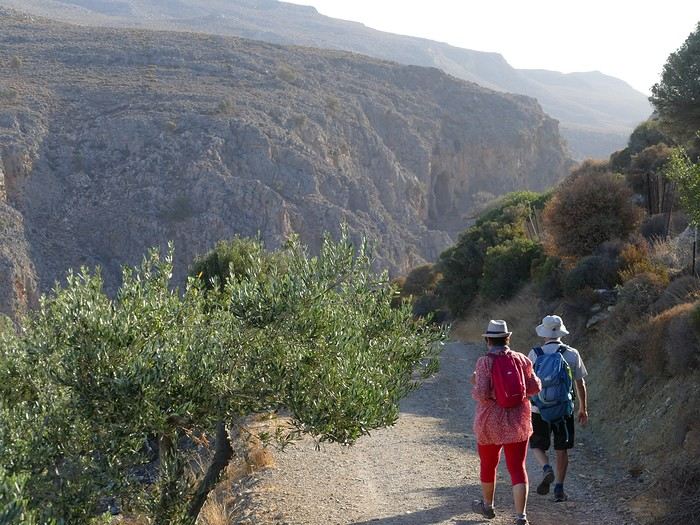
Gorge of the Dead
The trail winds its way through this narrow gorge with difficulty. It was in the many caves visible halfway up the slope that the Minoans buried their dead, hence the name “Gorge of the Dead.” The gorge opens onto a beautiful small pebble beach. A swim is welcome after this hike that made us sweat. The hike took us 1 hour and 25 minutes, and a little less on the way back. Meanwhile, Monique did some shopping and prepared an excellent lunch. In the late afternoon, we go down to dine at Platanakis, a taverna in the small village of Kato Zakros.
Monday, 16/09: This morning, we explore the northern part of the east coast near Palekastro. We start with a dip at the beautiful Hionia Beach near Palekastro. The water is still just as nice, but a light breeze is blowing—not enough to spoil our fun! Seeing all the wind turbines lining the ridges, it’s no surprise.
 Grocery shopping in Palekastro and return to Zakros. A little rain in the late afternoon and an excellent dinner at Iannis Mitsakakis’ Taverna in Adravastis. These are the kind of small tavernas we love—unpretentious, a few tables on a terrace, a warm welcome, a short menu guaranteeing freshness, tasty dishes prepared by the server’s mom, and a light bill. What more could you ask for!
Tuesday, 17/09: We head back toward Palekastro to do some shopping, but it’s also the road to the Toplou Monastery. There, we see a collection of magnificent icons dating from the 15th to the 20th century. We can also admire drawings of Orthodox religious architecture. We continue toward the Mavros Akrotiri headland to enjoy the view of the sea and rocky capes. On the way back to our place, we make a small detour to see the famous Vai palm grove. Meh... As for Vai Beach, it’s filled with paid umbrellas and sunbeds, and there are so many people that we flee. Plus, having to pay for parking is another reason to snub this trendy beach. We prefer our Hionia Beach, which we already appreciated the other day. In the late afternoon, Pat and I start the trail that begins at Kato Zakros Beach heading south. The poorly marked path crosses a plateau of sharp limestone. The paint and cairn markings are no longer very visible, and with dusk approaching, we turn back toward Kato Zakros. Dinner at the Platanakis taverna—less good than last time.
Wednesday, 18/09: To avoid the scorching sun, Pat, Mimi, and I get up earlier than usual to hike the Hohlakies Gorge. At this early hour, the sky is quite cloudy, and it’s drizzling. When we arrive in the village of Hohlakies, we park in front of a small chapel, the start of the hike. The sky is now completely clear. The trail starts among the olive groves, then after passing through a gate, we descend into the gorge filled with large rocks. We’re alone in the world, and the landscape is magnificent. A few wild goats clinging to the cliff watch us from above. After 1 hour and 15 minutes, we emerge onto the wonderful Karoumès Beach. A pleasant swim, then back to civilization! A walk in the late afternoon in Zakros to discover the beautiful springs route. Dinner in Adravastis.
Thursday, 19/09: Another move: Before heading to our next stop, we make a detour to see the beautiful Keratokampos Beach and can’t resist a swim in the still-warm, clear water. We continue our journey via Ziros, then reach the south coast and have lunch at the Stephi taverna in Ferma—excellent meal! The south coast is quite urbanized and has much less charm than the east coast we’ve just left! The numerous plastic greenhouses are partly to blame. We stop for groceries in Ierapetra. Around 3 p.m., we arrive at our destination in the small perched village of Anatoli. Our lodging is at the top of the village, and from the path leading to it, we have a magnificent view of the coastal plain, unfortunately overloaded with plastic greenhouses. It reminds us of the landscapes of El Ejido in Andalusia.
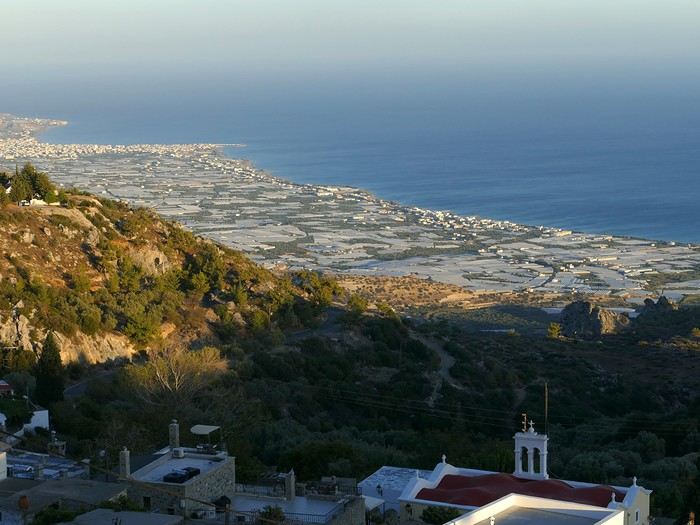 View of the Ierapetra coast from Anatoli
Friday, 20/09: A walk and discovery of the hamlet of Anatoli. There are few services—a tiny grocery store, a taverna, and that’s it. Fortunately, the traveling baker arrives and honks. We take the opportunity to buy fresh bread. Leaving the village, we take a path that should lead us to the hamlet of Drygies. The landscape is beautiful. We walk through a lovely pine forest before arriving at the hamlet. The path continues to a taverna that’s closed today, with a superb terrace overlooking the coast. Luckily, the owner arrives and informs us that the taverna will be open next Sunday and that we can enjoy barbecued meat. Noted! We head back to Anatoli via the small paved road with, fortunately, very limited traffic. Lunch on our terrace, then a dip in our private pool! The water is noticeably cooler than at the beach. Dinner at the village taverna: there’s only one menu—meze starters, souvlaki, water, wine, and bread—all for 35 €! We think we’re dreaming—was there a mistake? No.
Saturday, 21/09: We discover the beach of the village of Myrtos, a small seaside resort that’s quite touristy but on a human scale. We swim in the western part of the beach, and once again, we’re alone in the water. The best part: warm water and tamarisk trees for welcome shade. There’s even a shower to rinse off! In the late afternoon, Pat and I decide to go for a hike in the Selakano pine forest. To get there, we take a narrow, winding, and poorly paved road after the village of Christos. Plus, at this altitude, we encounter clouds clinging to the mountain, so it’s drizzling, and visibility is reduced. We decide to turn back and return to Anatoli. As compensation, we take the path that passes in front of the lodging and leads us to the Timios Stavros chapel, which crowns the summit of the nearby mountain. We arrive at the summit just in time for the sunset at 7 p.m. Breathtaking 360° panorama and magnificent colors!
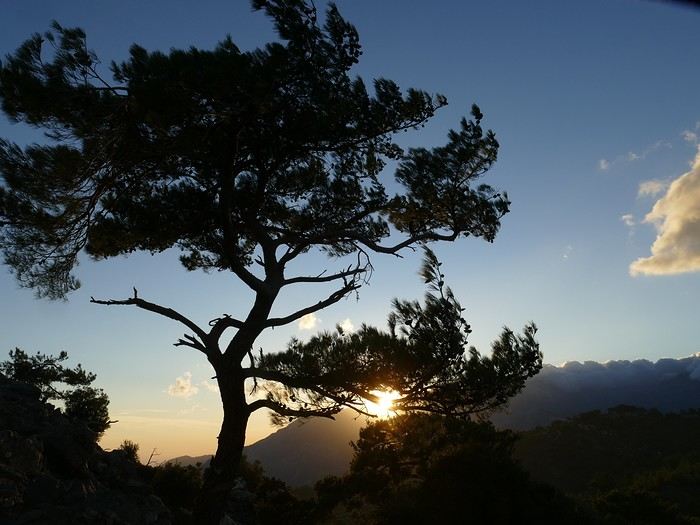 Sunset from Anatoli
Sunday, 22/09: This morning, Pat, Mimi, and I go for a hike in the Sarakina Gorge, located about 12 km from Anatoli via a beautiful road winding through irrigated olive groves. We park in the small parking lot before the trail. At the start, the path follows a levada (small irrigation canal) and quickly enters a very narrow gorge flanked by high cliffs. The riverbed is cluttered with huge rocks blocking the passage. No matter—in the technical sections, ropes or ladders allow us to overcome these obstacles with a bit of skill. You can imagine how quickly the riverbed must rise during a storm, given the narrowness of the gorge!
We progress slowly through this magnificent and impressive rocky chaos. At the exit of the gorge, we take another return path that partly follows the paved road. Back in Anatoli, we go to lunch at the Drygies taverna. We sit at the edge of the terrace under a huge tree that covers almost the entire terrace and order grilled lamb dishes prepared according to the ancient “antikristo” method.
Monday, 23/09: Departure for our last stop before Heraklion. We thought about swimming at Tertsa Beach, but it turns out to be less pleasant than expected, with pebbles and an uneven rocky plateau. So, we return to Myrtos Beach, which we know well and suits us perfectly. We head west, leaving the coast a bit. Around 3:30 p.m., we arrive at our destination in the village of Kamilari, near the famous Matala spot. We’ve rented a beautiful, modern, well-equipped apartment with a lovely shaded terrace. The owner is very friendly and explains everything necessary for a good stay. We explore the quite touristy village with its few tavernas, all full of tourists, mostly Germans.
Tuesday, 24/09: Visit to the village of Sivas, well restored thanks to the Germans, who have invested a lot here. We take the opportunity to scout out “friendly” tavernas, then go for a swim at Kalamaki Beach. Apart from a small sandy access, you have to enter the water via a chaotic limestone plateau—proof of this is that Monique trips slightly when entering the water. A group of very unfriendly German women blocks the sandy passage and doesn’t hesitate to push swimmers they deem too close. Back home, lunch, and a nap. In the late afternoon, we drive to visit the nearby Phaistos site. We benefit from very beautiful lighting. From the elevated site, we overlook the Messara Plain with a beautiful view of the olive grove checkerboards highlighted by the late afternoon sun. The site itself is quite vast, but to appreciate it, it’s better to read the explanatory panels placed throughout the different quarters. At this hour, the site is almost empty, and the beautiful light adds charm to the visit.
Wednesday, 25/09: Departure for the village of Matala, which doesn’t interest us in itself, having been there during the “hippie” era in 1976. However, going to Red Beach, only accessible by taking a path overlooking this area, appeals to us much more. We park in the large parking lot just outside the village and start our climb, which brings us to a pass from where we can admire this beautiful red-sand beach framed by beautiful cliffs plunging into the sea. The weather is magnificent, and at this early hour, there aren’t many people yet. We swim in the free part located near the cliff on the right when arriving at the beach. The sea is like glass, warm, and without a single ripple—a real treat! After half an hour, we turn back, and now there are many people rushing on this path, not at all made for feet in sandals or flip-flops, yet many vacationers venture out like this! Matala lives up to its image—a trendy place, full of shops, bars, and restaurants. You could be in any seaside resort with a standard global urbanism, lacking particular charm. Back home. In the late afternoon, a walk through the olive groves surrounding Kamilari, then dinner at Evangelina’s, who runs the Minoan Parassies taverna in the middle of the olive groves. Evangelina is quite a character: we came to reserve a table for 8 p.m. when it was only 7 p.m., but since we lingered near her restaurant, she prepares a table for us and urges us to sit down! And there she takes our order, and a little later, the meze arrive, followed by the main dishes. We finish this good dinner with several generous glasses of raki, accompanied by Evangelina’s encouragements, repeating “poya poya bravo bravo” in a loop. We’re in great shape too, by the way! We return in the middle of the night, on foot, fortunately, with the path vaguely lit by our phones...
Thursday, 26/09: This morning, we discover a new beach, Kommos Beach, not far from Kamilari either. It’s a long sandy beach, a small part of which is dedicated to paid umbrellas and sunbeds, and the rest is free. We spot a tamarisk tree to take shelter from the still-hot sun, and once again, we enjoy clear, warm water. The few swimmers spread out easily over nearly 500 meters of beach. In the late afternoon, Pat and I go to admire the sunset from the hill near our lodging. The hill, covered with olive trees, is threatened by a planned housing development of large cubic villas—trends dictate. Concrete never stops...
Friday, 27/09: We thought about leaving the car at the Odiyitria Monastery, the end of the paved road, but since the track descending to the cave remains drivable, we park 3 km further at the junction of the track leading to Kali Limenes Beach. We still have to walk for half an hour on a less drivable track, and then we’re at the entrance of the Farango Gorge. It’s a beautiful, easy hike since we follow the dry pebble riverbed. Before arriving at the beach, there’s a very beautiful small chapel sheltered under a large cliff, beautifully lit at this early hour.
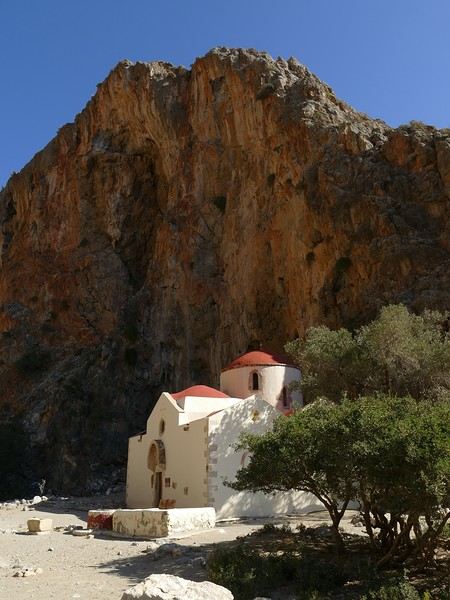
Agio Farango Chapel
A few climbers are scaling the cliff, and about ten swimmers are enjoying the sea. Return to the car under the hot sun. In the late afternoon, we all return to visit the interesting Odiyitria Monastery. Last swim at Kommos Beach and an excellent dinner at the Sigelakis taverna in Sivas.
Saturday, 28/09: There’s an end-of-vacation atmosphere... We pack our bags and head north. A short stop to see the village of Vorri, and a little over an hour later, we arrive in the big city of Heraklion. Since it’s too early to check into the apartment, we park in the city center to visit the famous archaeological museum. It’s indeed a must-see highlight of our stay in Crete. All four of us are amazed by the quantity and quality of the objects presented from the Minoan civilization. After more than 2 hours, we come out without having seen everything, but we’re a bit overwhelmed by all these wonders. Lunch at a nice little taverna very close to the Titus Church. We go to take possession of our apartment—the same as on the way there, still just as satisfying. In the late afternoon, I go alone for a walk in the historic district of the city, passing by the Morosini Fountain, which is bustling with people—some seated at café terraces, others standing and chatting. There’s a lively atmosphere here. A little further on are the Venetian loggia and the Agios Titos Church. I walk down to the old Venetian port to stroll along the jetty and admire the fortifications under beautiful late-afternoon lighting, then return to the apartment. Dinner near our place at Kiriakis, a “chic” restaurant but with very reasonable prices and excellent cuisine.
Sunday, 29/09: Wake-up at 3:30 a.m., quick coffee, and drive to the nearby airport. We leave the car in the parking lot. Already a lot of people at this early hour. Since we don’t have checked luggage, we go straight to security, which goes fairly quickly, then it’s waiting time and takeoff on time in an Airbus A321 for a 45-minute flight to Athens. We take off again in another Airbus A321 with a 50-minute delay to arrive in Zurich at 11:10 a.m. local time. Then we have to take the train to Basel and then the one to Colmar. With fewer Sunday services, we won’t arrive in Colmar until around 4 p.m.
Conclusion All four of us returned very satisfied with this stay in Crete for several reasons: - We found superb beaches with clear, warm water and often very few vacationers. - The few hikes we did were magnificent, especially those where the trails went through gorges leading to deserted beaches. - We greatly appreciated Cretan gastronomy—there were so few disappointments that we can count them on one hand. - All the accommodations we booked turned out to be superb, with the icing on the cake being the very friendly welcome from our hosts. - Generally, contacts with Cretans were always very warm despite the language barrier—we speak a little Greek. - We also appreciated the diversity of landscapes in this eastern part of Crete, with plateaus and mountains with splendid rugged reliefs.
Note: The photo album is available by clicking on this link: https://photos.app.goo.gl/hfdjQndA5eXkL5k7 Captions are only visible per photo by clicking on the circled “i” in the top right. Budget: approximately 3,300 € per couple for 21 days, including train and flights Budget details per couple: - Flight Zurich-Heraklion: 440 € - Trains Colmar-Basel-Zurich round trip for 4: 442.40 € (221 € per couple) - Accommodation: 2,431 € / 21 = 115.80 € per night for 4 (1,216 € per couple) - Car rental for 21 days: 684 € + 145 € fuel (1,150 km) (414 € per couple) - Restaurants, food, etc.: 1,009 €
Our 21-day itinerarySunday, 08/09: Once again—and this is the eighth time—we’re setting off, the four of us: Patrick, Michelle, Jacques, and Monique, for the Greek islands. This time, we’ve chosen Crete. No need to wake up at 3 or 4 a.m. to reach Basel-Mulhouse Airport at dawn to catch the first flight to Greece at 6 a.m.! Given the prohibitive prices charged by EasyJet, we found flights that were half the price from Zurich Airport, which is accessible in 3 hours by train from Colmar. Pierre-Paul drives all four of us to Colmar train station, where we take the train to Basel and then, 20 minutes later, the direct train to Zurich Airport. After wandering around the airport, we go for a coffee at 6 € each! We’re in Switzerland, after all. The other dining areas all have vending machines for selecting and paying for meals—soon, there won’t be anyone left to serve you! After a short wait, we take off at 7:45 p.m. (20 minutes late) in an Aegean Airbus A321. Free in-flight meal service isn’t bad either! We land in Heraklion around 11:15 p.m. We pick up our rental car (a red Seat Ibiza) at the airport and head straight to our apartment, located 2 km from the city center. Thanks to the GPS, we find it quickly. It’s a beautiful, fully renovated apartment with all the comforts and well-equipped. On the table, there’s wine, bottles of water, jam, coffee, etc. Given the late hour, we won’t stay up long.
Monday, 09/09: To enhance our breakfast, Michelle and Monique set off to find a bakery nearby. They return with croissants and donuts—yum... Then we head to the west coast. The highway follows the coastline, but we prefer taking the old road to Malia, our first stop. We visit the major archaeological site of this Minoan city under the hot sun. The site covers a vast area, but the ruins aren’t very evocative except for a few beautiful amphorae scattered around. The explanations in a small house at the entrance are interesting and help us better understand the organization of the ancient city with its different districts. From there, we head toward the nearby mountains to see the thousand-year-old plane tree in the village of Krasi. We take the opportunity to enjoy an excellent lunch of moussaka and delicious gemista at the Krassopsychia taverna in the village center. Pleasant surprise: the prices are still reasonable, with a bill of 70 € for four, including wine and water. The friendly tradition of complimentary dessert and glasses of raki continues—great! We’ve set the bar high right away! Let’s hope the rest lives up to it! On the way back toward the Lassithi Plateau, we stop at the Kardiotisa Monastery perched high on the mountain to enjoy a magnificent view of the entire region. Just a little further, we arrive at the Lassithi Plateau: the presence of small windmills used to pump water from the ground is the typical feature of this plateau. We complete a full loop around the plateau, passing by numerous orchards and vegetable gardens that occupy the entire space. At the end of the plateau, we once again cross mountain passes via winding roads that bring us near Agios Nikolaos. Our apartment is located about ten kilometers further south in Amoudhara. The owner, who was notified, waits for us and shows us her superb apartment, whose large terrace overlooks the entire Mirabello Bay. She then gives us valuable information about the different beaches in the area. Dinner will be frugal, given our hearty lunch in Krasi!
Sunset over Mirabello BayTuesday, 10/09: A bit of a gray sky when we wake up around 8 a.m., but the sun will soon triumph over the scattered clouds. For our first swim, we opt for Voulisma Beach, even though our host warned us it was a bit “crowdy.” That’s understandable given the beautiful emerald color of the sea and the lovely curve of the beach. To avoid the big crowds, we move toward the eastern part of the beach, accessible via a steep staircase. The water is very warm, and this first dip is very pleasant. Before returning to the apartment, we stop at the bakery to buy spinach pies, essential ingredients to accompany our Greek salad for lunch. Of course, everything will be washed down with ouzo, which will remain our favorite drink for the next three weeks—but in moderation!!! A nap is in order after all that effort. In the late afternoon, we drive to Agios Nikolaos, the main seaside resort in Crete. We’re not too enthusiastic about visiting this mass-tourism resort, but the center of Agios, concentrated around the small inner harbor, is pleasant to see despite the plethora of shops and restaurants. We dine a little outside the harbor in the shaded courtyard of the Avli taverna: the oven-baked lamb, squid with spinach, and cuttlefish ink orzo pasta are all highly appreciated. We still stay under a 75 € bill for four.
Mirabello Bay seen from our terraceWednesday, 11/09: At 8 a.m., the terrace is already bathed in sunlight, and it’s already quite hot. The small parasol barely gives us enough shade, but we’re not complaining! For our second swim, we head to a tiny beach recommended by our host, just 3 minutes by car from our place. The path leading to it is very discreet, and we don’t find it right away! It’s a small sandy cove with a few welcome tamarisk trees for shade. When we arrive, there are two swimmers, and there won’t be more than five or six in the morning. After lunch and a nap, we head to the beautiful village of Kritsa, just a few kilometers away. It’s too late to visit the beautiful church of Kera Panagia, which is already closed. We settle for the exterior, which is worth a look. The weather is clouding over, and big clouds are gathering. Upon arriving in Kritsa, a heavy shower forces us to take shelter in the Platanos taverna in the village center, and since it’s nearly 7 p.m., we decide to stay and dine there. Good choice—excellent meze: croquettes and stuffed zucchini flowers, gigantes beans, grilled tomatoes and feta, and pancetta as the main dish. The rain stops just as we decide to head back.
Village of KritsaThursday, 12/09: Our terrace faces east, so we get to watch the sunrise around 7 a.m.—it’s truly a beautiful sight we never tire of. Around 9 a.m., we head to the village of Plaka, where boats depart for the island of Spinalonga, located north of Agios Nikolaos. We board the first boat, which sets sail at 10 a.m., and we’re not alone—the boat is practically full. After 10 minutes, we land on the island at the same time as several other boats from Elounda or Agios. Needless to say, there are already quite a few people walking through the streets of the leper village. The visit remains interesting and moving as we read the explanatory panels recounting the island’s history under Byzantine and then Turkish rule, followed by its transformation into a leper colony. As soon as we climb toward the top of the island via more or less maintained paths, there’s almost no one left. The 360° view from up there is stunning.
Spinalonga Island
The heat is now unbearable, and we can’t wait to get back home to have lunch on our terrace and rest. In the late afternoon, we go grocery shopping at the AB supermarket at the entrance of Agios. We had spotted another nice restaurant in our guide, but unfortunately, there’s a different one at the indicated location that doesn’t inspire us. So, we return to the Avli taverna for another dinner just as good as the first.
Friday, 13/09: We repeat yesterday’s successful program: a swim in our little cove, lunch on the terrace, a nap, and then, in the late afternoon, we discover another nearby village, Kroustas, nestled in the olive groves near Kritsa. Much less touristy than Kritsa, it’s mostly inhabited by locals, especially the elderly who are enjoying the cool air on their chairs—if you can call it cool given the still-high temperatures in the late afternoon! We then return to visit Kritsa, which we hadn’t been able to explore due to the rain. Dinner at a taverna in the village center at a very reasonable price.
Saturday, 14/09: Today, we move to our new base further east. We start with a high viewpoint at the Faneromeni Monastery, which overlooks Mirabello Bay. The monastery itself is of little interest as it’s under renovation with excessive concrete work. We continue to the village of Kavoussi to see another exceptional tree after a few kilometers on a dusty, bumpy track. It’s an olive tree said to be about 3,200 years old—impressive, and the countryside is very beautiful. It’s time to find a place for lunch. We find one in the charming little port of Mohlos, where a few tavernas surround a very nice small beach. Our choice falls on the Bogazzi taverna, where we enjoy fried fish. To reach our new base in Zakros, we still have to drive through the mountains before reaching Sitia, Paleokastro, and finally Zakros. The region is beautiful, with olive groves and rows of wind turbines taking advantage of the strong wind near the northern tip of the island. In Zakros, we’re greeted by our very friendly host. Here too, we have all the comforts and a beautiful terrace overlooking the village. The apartment has reversible air conditioners, but the overly simple instructions leave us puzzled. Thinking we’ve set it correctly, we realize a little too late that it’s blowing hot air over 30°C! After numerous attempts and testing several confusing programs, we finally succeed! Dinner on our new terrace.
Sunday, 15/09: This morning, we get up early to hike in the “Gorge of the Dead” while it’s still cool. The sky is blue as usual! We park in the nearest parking lot and start our descent via a beautiful path winding through the olive groves. A little further on, the landscape opens up, and the path, now a stony trail, begins the descent to the dry riverbed. On either side of the riverbed rise beautiful reddish cliffs.
Gorge of the Dead
The trail winds its way through this narrow gorge with difficulty. It was in the many caves visible halfway up the slope that the Minoans buried their dead, hence the name “Gorge of the Dead.” The gorge opens onto a beautiful small pebble beach. A swim is welcome after this hike that made us sweat. The hike took us 1 hour and 25 minutes, and a little less on the way back. Meanwhile, Monique did some shopping and prepared an excellent lunch. In the late afternoon, we go down to dine at Platanakis, a taverna in the small village of Kato Zakros.
Monday, 16/09: This morning, we explore the northern part of the east coast near Palekastro. We start with a dip at the beautiful Hionia Beach near Palekastro. The water is still just as nice, but a light breeze is blowing—not enough to spoil our fun! Seeing all the wind turbines lining the ridges, it’s no surprise.
Grocery shopping in Palekastro and return to Zakros. A little rain in the late afternoon and an excellent dinner at Iannis Mitsakakis’ Taverna in Adravastis. These are the kind of small tavernas we love—unpretentious, a few tables on a terrace, a warm welcome, a short menu guaranteeing freshness, tasty dishes prepared by the server’s mom, and a light bill. What more could you ask for!Tuesday, 17/09: We head back toward Palekastro to do some shopping, but it’s also the road to the Toplou Monastery. There, we see a collection of magnificent icons dating from the 15th to the 20th century. We can also admire drawings of Orthodox religious architecture. We continue toward the Mavros Akrotiri headland to enjoy the view of the sea and rocky capes. On the way back to our place, we make a small detour to see the famous Vai palm grove. Meh... As for Vai Beach, it’s filled with paid umbrellas and sunbeds, and there are so many people that we flee. Plus, having to pay for parking is another reason to snub this trendy beach. We prefer our Hionia Beach, which we already appreciated the other day. In the late afternoon, Pat and I start the trail that begins at Kato Zakros Beach heading south. The poorly marked path crosses a plateau of sharp limestone. The paint and cairn markings are no longer very visible, and with dusk approaching, we turn back toward Kato Zakros. Dinner at the Platanakis taverna—less good than last time.
Wednesday, 18/09: To avoid the scorching sun, Pat, Mimi, and I get up earlier than usual to hike the Hohlakies Gorge. At this early hour, the sky is quite cloudy, and it’s drizzling. When we arrive in the village of Hohlakies, we park in front of a small chapel, the start of the hike. The sky is now completely clear. The trail starts among the olive groves, then after passing through a gate, we descend into the gorge filled with large rocks. We’re alone in the world, and the landscape is magnificent. A few wild goats clinging to the cliff watch us from above. After 1 hour and 15 minutes, we emerge onto the wonderful Karoumès Beach. A pleasant swim, then back to civilization! A walk in the late afternoon in Zakros to discover the beautiful springs route. Dinner in Adravastis.
Thursday, 19/09: Another move: Before heading to our next stop, we make a detour to see the beautiful Keratokampos Beach and can’t resist a swim in the still-warm, clear water. We continue our journey via Ziros, then reach the south coast and have lunch at the Stephi taverna in Ferma—excellent meal! The south coast is quite urbanized and has much less charm than the east coast we’ve just left! The numerous plastic greenhouses are partly to blame. We stop for groceries in Ierapetra. Around 3 p.m., we arrive at our destination in the small perched village of Anatoli. Our lodging is at the top of the village, and from the path leading to it, we have a magnificent view of the coastal plain, unfortunately overloaded with plastic greenhouses. It reminds us of the landscapes of El Ejido in Andalusia.
View of the Ierapetra coast from AnatoliFriday, 20/09: A walk and discovery of the hamlet of Anatoli. There are few services—a tiny grocery store, a taverna, and that’s it. Fortunately, the traveling baker arrives and honks. We take the opportunity to buy fresh bread. Leaving the village, we take a path that should lead us to the hamlet of Drygies. The landscape is beautiful. We walk through a lovely pine forest before arriving at the hamlet. The path continues to a taverna that’s closed today, with a superb terrace overlooking the coast. Luckily, the owner arrives and informs us that the taverna will be open next Sunday and that we can enjoy barbecued meat. Noted! We head back to Anatoli via the small paved road with, fortunately, very limited traffic. Lunch on our terrace, then a dip in our private pool! The water is noticeably cooler than at the beach. Dinner at the village taverna: there’s only one menu—meze starters, souvlaki, water, wine, and bread—all for 35 €! We think we’re dreaming—was there a mistake? No.
Saturday, 21/09: We discover the beach of the village of Myrtos, a small seaside resort that’s quite touristy but on a human scale. We swim in the western part of the beach, and once again, we’re alone in the water. The best part: warm water and tamarisk trees for welcome shade. There’s even a shower to rinse off! In the late afternoon, Pat and I decide to go for a hike in the Selakano pine forest. To get there, we take a narrow, winding, and poorly paved road after the village of Christos. Plus, at this altitude, we encounter clouds clinging to the mountain, so it’s drizzling, and visibility is reduced. We decide to turn back and return to Anatoli. As compensation, we take the path that passes in front of the lodging and leads us to the Timios Stavros chapel, which crowns the summit of the nearby mountain. We arrive at the summit just in time for the sunset at 7 p.m. Breathtaking 360° panorama and magnificent colors!
Sunset from AnatoliSunday, 22/09: This morning, Pat, Mimi, and I go for a hike in the Sarakina Gorge, located about 12 km from Anatoli via a beautiful road winding through irrigated olive groves. We park in the small parking lot before the trail. At the start, the path follows a levada (small irrigation canal) and quickly enters a very narrow gorge flanked by high cliffs. The riverbed is cluttered with huge rocks blocking the passage. No matter—in the technical sections, ropes or ladders allow us to overcome these obstacles with a bit of skill. You can imagine how quickly the riverbed must rise during a storm, given the narrowness of the gorge!
We progress slowly through this magnificent and impressive rocky chaos. At the exit of the gorge, we take another return path that partly follows the paved road. Back in Anatoli, we go to lunch at the Drygies taverna. We sit at the edge of the terrace under a huge tree that covers almost the entire terrace and order grilled lamb dishes prepared according to the ancient “antikristo” method.
Monday, 23/09: Departure for our last stop before Heraklion. We thought about swimming at Tertsa Beach, but it turns out to be less pleasant than expected, with pebbles and an uneven rocky plateau. So, we return to Myrtos Beach, which we know well and suits us perfectly. We head west, leaving the coast a bit. Around 3:30 p.m., we arrive at our destination in the village of Kamilari, near the famous Matala spot. We’ve rented a beautiful, modern, well-equipped apartment with a lovely shaded terrace. The owner is very friendly and explains everything necessary for a good stay. We explore the quite touristy village with its few tavernas, all full of tourists, mostly Germans.
Tuesday, 24/09: Visit to the village of Sivas, well restored thanks to the Germans, who have invested a lot here. We take the opportunity to scout out “friendly” tavernas, then go for a swim at Kalamaki Beach. Apart from a small sandy access, you have to enter the water via a chaotic limestone plateau—proof of this is that Monique trips slightly when entering the water. A group of very unfriendly German women blocks the sandy passage and doesn’t hesitate to push swimmers they deem too close. Back home, lunch, and a nap. In the late afternoon, we drive to visit the nearby Phaistos site. We benefit from very beautiful lighting. From the elevated site, we overlook the Messara Plain with a beautiful view of the olive grove checkerboards highlighted by the late afternoon sun. The site itself is quite vast, but to appreciate it, it’s better to read the explanatory panels placed throughout the different quarters. At this hour, the site is almost empty, and the beautiful light adds charm to the visit.
Wednesday, 25/09: Departure for the village of Matala, which doesn’t interest us in itself, having been there during the “hippie” era in 1976. However, going to Red Beach, only accessible by taking a path overlooking this area, appeals to us much more. We park in the large parking lot just outside the village and start our climb, which brings us to a pass from where we can admire this beautiful red-sand beach framed by beautiful cliffs plunging into the sea. The weather is magnificent, and at this early hour, there aren’t many people yet. We swim in the free part located near the cliff on the right when arriving at the beach. The sea is like glass, warm, and without a single ripple—a real treat! After half an hour, we turn back, and now there are many people rushing on this path, not at all made for feet in sandals or flip-flops, yet many vacationers venture out like this! Matala lives up to its image—a trendy place, full of shops, bars, and restaurants. You could be in any seaside resort with a standard global urbanism, lacking particular charm. Back home. In the late afternoon, a walk through the olive groves surrounding Kamilari, then dinner at Evangelina’s, who runs the Minoan Parassies taverna in the middle of the olive groves. Evangelina is quite a character: we came to reserve a table for 8 p.m. when it was only 7 p.m., but since we lingered near her restaurant, she prepares a table for us and urges us to sit down! And there she takes our order, and a little later, the meze arrive, followed by the main dishes. We finish this good dinner with several generous glasses of raki, accompanied by Evangelina’s encouragements, repeating “poya poya bravo bravo” in a loop. We’re in great shape too, by the way! We return in the middle of the night, on foot, fortunately, with the path vaguely lit by our phones...
Thursday, 26/09: This morning, we discover a new beach, Kommos Beach, not far from Kamilari either. It’s a long sandy beach, a small part of which is dedicated to paid umbrellas and sunbeds, and the rest is free. We spot a tamarisk tree to take shelter from the still-hot sun, and once again, we enjoy clear, warm water. The few swimmers spread out easily over nearly 500 meters of beach. In the late afternoon, Pat and I go to admire the sunset from the hill near our lodging. The hill, covered with olive trees, is threatened by a planned housing development of large cubic villas—trends dictate. Concrete never stops...
Friday, 27/09: We thought about leaving the car at the Odiyitria Monastery, the end of the paved road, but since the track descending to the cave remains drivable, we park 3 km further at the junction of the track leading to Kali Limenes Beach. We still have to walk for half an hour on a less drivable track, and then we’re at the entrance of the Farango Gorge. It’s a beautiful, easy hike since we follow the dry pebble riverbed. Before arriving at the beach, there’s a very beautiful small chapel sheltered under a large cliff, beautifully lit at this early hour.
Agio Farango Chapel
A few climbers are scaling the cliff, and about ten swimmers are enjoying the sea. Return to the car under the hot sun. In the late afternoon, we all return to visit the interesting Odiyitria Monastery. Last swim at Kommos Beach and an excellent dinner at the Sigelakis taverna in Sivas.
Saturday, 28/09: There’s an end-of-vacation atmosphere... We pack our bags and head north. A short stop to see the village of Vorri, and a little over an hour later, we arrive in the big city of Heraklion. Since it’s too early to check into the apartment, we park in the city center to visit the famous archaeological museum. It’s indeed a must-see highlight of our stay in Crete. All four of us are amazed by the quantity and quality of the objects presented from the Minoan civilization. After more than 2 hours, we come out without having seen everything, but we’re a bit overwhelmed by all these wonders. Lunch at a nice little taverna very close to the Titus Church. We go to take possession of our apartment—the same as on the way there, still just as satisfying. In the late afternoon, I go alone for a walk in the historic district of the city, passing by the Morosini Fountain, which is bustling with people—some seated at café terraces, others standing and chatting. There’s a lively atmosphere here. A little further on are the Venetian loggia and the Agios Titos Church. I walk down to the old Venetian port to stroll along the jetty and admire the fortifications under beautiful late-afternoon lighting, then return to the apartment. Dinner near our place at Kiriakis, a “chic” restaurant but with very reasonable prices and excellent cuisine.
Sunday, 29/09: Wake-up at 3:30 a.m., quick coffee, and drive to the nearby airport. We leave the car in the parking lot. Already a lot of people at this early hour. Since we don’t have checked luggage, we go straight to security, which goes fairly quickly, then it’s waiting time and takeoff on time in an Airbus A321 for a 45-minute flight to Athens. We take off again in another Airbus A321 with a 50-minute delay to arrive in Zurich at 11:10 a.m. local time. Then we have to take the train to Basel and then the one to Colmar. With fewer Sunday services, we won’t arrive in Colmar until around 4 p.m.
Conclusion All four of us returned very satisfied with this stay in Crete for several reasons: - We found superb beaches with clear, warm water and often very few vacationers. - The few hikes we did were magnificent, especially those where the trails went through gorges leading to deserted beaches. - We greatly appreciated Cretan gastronomy—there were so few disappointments that we can count them on one hand. - All the accommodations we booked turned out to be superb, with the icing on the cake being the very friendly welcome from our hosts. - Generally, contacts with Cretans were always very warm despite the language barrier—we speak a little Greek. - We also appreciated the diversity of landscapes in this eastern part of Crete, with plateaus and mountains with splendid rugged reliefs.
Note: The photo album is available by clicking on this link: https://photos.app.goo.gl/hfdjQndA5eXkL5k7 Captions are only visible per photo by clicking on the circled “i” in the top right. Budget: approximately 3,300 € per couple for 21 days, including train and flights Budget details per couple: - Flight Zurich-Heraklion: 440 € - Trains Colmar-Basel-Zurich round trip for 4: 442.40 € (221 € per couple) - Accommodation: 2,431 € / 21 = 115.80 € per night for 4 (1,216 € per couple) - Car rental for 21 days: 684 € + 145 € fuel (1,150 km) (414 € per couple) - Restaurants, food, etc.: 1,009 €