Results for "Anglet+|+127"
6455 results found.
Argentine: C'etait Buenos Aires , il y a 50 ans English translation pending
Huy! je ne peux m empecher de vous les montrer, mais j ai trouvé des vielles photos Noir et blanc de Buenos Aires ............les voila ! ( super nostalgie d un été 1955 ) 
Avenida de Mayo et son Congreso au fond, a l'epoque tres peu de voitures europeennes, que de grosses americaines !
 Diagonal sud toujours a la meme epoque
  Superbe vue de Diagonal Norte ...au fond de l avenue c est la plaza de mayo ( l angle de la photo ne permet pas de la voir )
  La peatonal Florida a l intersection de Diagonal Norte...a midi c'est l heure de pointe entre les badauds, ceux qui sortent des bureaux pour dejeuner...bref en 50 ans rien de nouveau !
  Le grand Rex ( toujours debout ) sur avenida Corrientes, avec un orchestre et trois balcons gigantesques ...je me souviens d un passage de Celia Cruz dans les annees 90.....ca dansait dans les allees et les coursives, un delire !
  Toujours dans le micro centre, la sortie du metro a la station Florida sur Avenida Corrientes. Il y a aujourd'hui toujours autant de monde sinon plus, car la population a doublé, mais les largeurs de sortie et des escaliers n ont pas bronché.
  L avenida Corrientes en regardant vers le microcentre a la hauteur de l obelisque.... les seules choses de changé ....le sens de circulation des voitures, la disparition des tramways, du terre plein central au milieu de l avenue et l interdiction aujourd hui de pouvoir se garer sur les cotes.
  La Calle Rauch, dans mon quartier, une des seule rue courbe dans un rayon de 10 km, il faut dire qu'autrefois ( 1880 ) y passait la voie d'un train qui devait relier l ancienne gare centrale ( occupee aujourd'hui par le Theatre Colon) a la Plaza Misere et sa future gare de Once .... Le marché que l on voit sur la photo a totalement disparu remplacé par des places de parking et horodateurs ! Berk !
  La voila d ailleurs la Plaza Misere, quand je regarde bien la photo, pas beaucoup de transformations sauf qu' aujourd'hui l horizon est bouché par des immeubles d une vingtaine d'etage . Aujourd hui, la place est occupee le jour par des predicateurs totalement fous prechant au milieux des voyageur de la gare de Once ( située hors photo a droite ), et la nuit c est le royaumes des travestis et des policiers qui arretent les voitures pour demander des coimas !
  Vendeur de journaux sur calle Florida
  Queue de passager sur Plaza san Martin pour monter dans le trolley avec un marin en premier plan
  Longue file de tramway de la ligne 60 sous le passage de train de l avenida Santa Fe au niveau du metro "Palermo" ...aujourd'hui les colectivos ont remplacé les trams de la ligne, mais c est toujours le meme bazar pour pouvoir passer sous le pont en pleine journee ! C'etait Buenos Aires, il y a 50 ans !
Avenida de Mayo et son Congreso au fond, a l'epoque tres peu de voitures europeennes, que de grosses americaines !
Diagonal sud toujours a la meme epoque Superbe vue de Diagonal Norte ...au fond de l avenue c est la plaza de mayo ( l angle de la photo ne permet pas de la voir ) La peatonal Florida a l intersection de Diagonal Norte...a midi c'est l heure de pointe entre les badauds, ceux qui sortent des bureaux pour dejeuner...bref en 50 ans rien de nouveau ! Le grand Rex ( toujours debout ) sur avenida Corrientes, avec un orchestre et trois balcons gigantesques ...je me souviens d un passage de Celia Cruz dans les annees 90.....ca dansait dans les allees et les coursives, un delire ! Toujours dans le micro centre, la sortie du metro a la station Florida sur Avenida Corrientes. Il y a aujourd'hui toujours autant de monde sinon plus, car la population a doublé, mais les largeurs de sortie et des escaliers n ont pas bronché. L avenida Corrientes en regardant vers le microcentre a la hauteur de l obelisque.... les seules choses de changé ....le sens de circulation des voitures, la disparition des tramways, du terre plein central au milieu de l avenue et l interdiction aujourd hui de pouvoir se garer sur les cotes. La Calle Rauch, dans mon quartier, une des seule rue courbe dans un rayon de 10 km, il faut dire qu'autrefois ( 1880 ) y passait la voie d'un train qui devait relier l ancienne gare centrale ( occupee aujourd'hui par le Theatre Colon) a la Plaza Misere et sa future gare de Once .... Le marché que l on voit sur la photo a totalement disparu remplacé par des places de parking et horodateurs ! Berk ! La voila d ailleurs la Plaza Misere, quand je regarde bien la photo, pas beaucoup de transformations sauf qu' aujourd'hui l horizon est bouché par des immeubles d une vingtaine d'etage . Aujourd hui, la place est occupee le jour par des predicateurs totalement fous prechant au milieux des voyageur de la gare de Once ( située hors photo a droite ), et la nuit c est le royaumes des travestis et des policiers qui arretent les voitures pour demander des coimas ! Vendeur de journaux sur calle Florida Queue de passager sur Plaza san Martin pour monter dans le trolley avec un marin en premier plan Longue file de tramway de la ligne 60 sous le passage de train de l avenida Santa Fe au niveau du metro "Palermo" ...aujourd'hui les colectivos ont remplacé les trams de la ligne, mais c est toujours le meme bazar pour pouvoir passer sous le pont en pleine journee ! C'etait Buenos Aires, il y a 50 ans !Votre sommet préféré English translation pending
Allez, suivant mes montagnards préférés (Gnome et Beub), je me lance pour vous livrer quelques photos de mon sommet préféré :
L'Ama Dablan, qui a veillé sur nous pendant 9 jours...c'était la semaine dernière..... Une chtite de l'Everest aussi, quand même!
Et vous?
L'Ama Dablan, qui a veillé sur nous pendant 9 jours...c'était la semaine dernière..... Une chtite de l'Everest aussi, quand même!
Et vous?
Argentine: Sortir de l'argent a partir d'un distributeur English translation pending
Recommandation pour sortir de l argent dans un distributeur a Buenos Aires .
1) Allez y a plusieurs si possible 2) Evitez les horaires entre 15h00 et 20h00 ( plus grand nombre d agression ) pointe entre 16h00 et 18h00. 3) Si on vous pique la visa, ne resistez pas. 4) Plus le quartier est chic plus il y a de chance de vous faire agresser.
Et puis un dernier truc : partager toujours votre argent en deux, type 50 ARS dans une poche et tout le reste dans l autre poche....bien entendu en cas d agression vous tendez les 50 ARS ( ils sont presses et ne prennent pas le temps de verifier ) .
Dernier exemple : Cet apres midi samedi a 15h30 a ete agressé la niece de l ancien secretaire de la securite interieur (Ministre de l Interieur) dans le quartier d Abasto ( angle Corrientes - Jean Jaures ) a la sortie d un distributeur .De la chance pour elle la police a pu intercepter deux des trois agresseurs .
A bientot, chau Herge
1) Allez y a plusieurs si possible 2) Evitez les horaires entre 15h00 et 20h00 ( plus grand nombre d agression ) pointe entre 16h00 et 18h00. 3) Si on vous pique la visa, ne resistez pas. 4) Plus le quartier est chic plus il y a de chance de vous faire agresser.
Et puis un dernier truc : partager toujours votre argent en deux, type 50 ARS dans une poche et tout le reste dans l autre poche....bien entendu en cas d agression vous tendez les 50 ARS ( ils sont presses et ne prennent pas le temps de verifier ) .
Dernier exemple : Cet apres midi samedi a 15h30 a ete agressé la niece de l ancien secretaire de la securite interieur (Ministre de l Interieur) dans le quartier d Abasto ( angle Corrientes - Jean Jaures ) a la sortie d un distributeur .De la chance pour elle la police a pu intercepter deux des trois agresseurs .
A bientot, chau Herge
Partir seule en Equateur English translation pending
Bonjour,
J'ai 34 ans et je compte partir en équateur 15 jours ou 3 semaines en avril 2005. Y'a-t'il une jeune femme ayant vécu la même expérience qui pourrait me donner son avis ? Je pense d'abord réserver une ou deux nuits d'¨hôtel et ensuite loger sur l'habitant. Avez vous des tuyaux ? Ce voyage sera en fait une première approche avant un départ fin 2005 pour plusieurs mois en mission humanitaire, de préférence auprès d'enfants. Toutes informations seront les bienvenues Merci d'avance
Michèle
J'ai 34 ans et je compte partir en équateur 15 jours ou 3 semaines en avril 2005. Y'a-t'il une jeune femme ayant vécu la même expérience qui pourrait me donner son avis ? Je pense d'abord réserver une ou deux nuits d'¨hôtel et ensuite loger sur l'habitant. Avez vous des tuyaux ? Ce voyage sera en fait une première approche avant un départ fin 2005 pour plusieurs mois en mission humanitaire, de préférence auprès d'enfants. Toutes informations seront les bienvenues Merci d'avance
Michèle
Premier appareil photo réflex numérique English translation pending
Bonjour à tous,
Je cherche à acheter mon premier appareil photo numérique réflex. L'offre du marché est importante et je ne sais que choisir. Je lis les comparatifs, les magazines type "Déclic Photo" et autres.... mais je voudrais avoir votre avis d'utilisateur pour orienter mon choix.
Ce que j'attends :
Un appareil réflex, avec Zoom optique, viseur réflex (vrai viseur), débrayable manuel (choix vitesse ou diaph) des optiques lumineuses, bonne autonomie, déclenchement instantané (donc rapide) et bonne qualité entre 5 et 6 mégapixels (je ne fais pas des POSTERS).
Je peux mettre entre 1500 et 2000 € ce qui est déjà beaucoup.
j'hésites entre : Nikon D70, Fujipix sr2 pro, canon EOS 300d ou Canon EOS10D et Sony cyber-shot dsc-f828.
Connaissez-vous le Sigma SD10 ?
Je vais le trimbaler durant notre voyage d'1an tout autour du monde dans de rudes conditions (pirogue, jungle, mangrove, plage /sable...pluie, humidité).
quelles sont vos expériences, vos préférences, est-ce que je me trompe de choix ?
Merci.
Francis
Je cherche à acheter mon premier appareil photo numérique réflex. L'offre du marché est importante et je ne sais que choisir. Je lis les comparatifs, les magazines type "Déclic Photo" et autres.... mais je voudrais avoir votre avis d'utilisateur pour orienter mon choix.
Ce que j'attends :
Un appareil réflex, avec Zoom optique, viseur réflex (vrai viseur), débrayable manuel (choix vitesse ou diaph) des optiques lumineuses, bonne autonomie, déclenchement instantané (donc rapide) et bonne qualité entre 5 et 6 mégapixels (je ne fais pas des POSTERS).
Je peux mettre entre 1500 et 2000 € ce qui est déjà beaucoup.
j'hésites entre : Nikon D70, Fujipix sr2 pro, canon EOS 300d ou Canon EOS10D et Sony cyber-shot dsc-f828.
Connaissez-vous le Sigma SD10 ?
Je vais le trimbaler durant notre voyage d'1an tout autour du monde dans de rudes conditions (pirogue, jungle, mangrove, plage /sable...pluie, humidité).
quelles sont vos expériences, vos préférences, est-ce que je me trompe de choix ?
Merci.
Francis
5 semaines en Thailande avec ma fille 6 ans: comment faire pour l'école?? English translation pending
Bonjour !🙂
j'ai fait un voyage cette année en Thailande en février avec mon ami et ma fille qui avait 5 ans à ce moment-là, nous sommes partis 3 semaines et elle avait manqué un peu l'école, mais en grande section ça n'était pas très grave...
nous voudrions repartir en fevrier 2005 mais cette fois 5 ou 6 semaines (3 semaines c'est trop frustrant !!), notre fille avait adoré et en reparle beaucoup encore aujourd'hui, elle nous demande souvent quand est-ce qu'on retourne en Thailande ? Bref, au début on se disait : obligés de partir en été, et puis là on se dit zut, en mettant les vacances au milieu ça ferait rater 3 voire 4 semaines d'école...(mais je pencherais plutot pour un voyage de 5 semaines... pour l'école) on pense prendre rv avec la directrice bientot et avancer un projet professionnel (ce qui n'est pas totalment faux) qui ferait qu'on partirait ensembles et qu'évidemment notre fille ne pourrait pas rester seule à la maison !!!
Avez-vous déjà été confrontés à ce genre de situation, comment avez-vous fait ? Comment a réagi l'école ? Je pense qu'il est tout à fait possible de suivre le programme de sa classe de CP pendant ce voyage, d'autant que c'est une petite fille qui se débrouille plutot très bien pour l'instant...
j'ai fait un voyage cette année en Thailande en février avec mon ami et ma fille qui avait 5 ans à ce moment-là, nous sommes partis 3 semaines et elle avait manqué un peu l'école, mais en grande section ça n'était pas très grave...
nous voudrions repartir en fevrier 2005 mais cette fois 5 ou 6 semaines (3 semaines c'est trop frustrant !!), notre fille avait adoré et en reparle beaucoup encore aujourd'hui, elle nous demande souvent quand est-ce qu'on retourne en Thailande ? Bref, au début on se disait : obligés de partir en été, et puis là on se dit zut, en mettant les vacances au milieu ça ferait rater 3 voire 4 semaines d'école...(mais je pencherais plutot pour un voyage de 5 semaines... pour l'école) on pense prendre rv avec la directrice bientot et avancer un projet professionnel (ce qui n'est pas totalment faux) qui ferait qu'on partirait ensembles et qu'évidemment notre fille ne pourrait pas rester seule à la maison !!!
Avez-vous déjà été confrontés à ce genre de situation, comment avez-vous fait ? Comment a réagi l'école ? Je pense qu'il est tout à fait possible de suivre le programme de sa classe de CP pendant ce voyage, d'autant que c'est une petite fille qui se débrouille plutot très bien pour l'instant...
Bons plans au Pérou English translation pending
bonjour à toutes et à tous,
je pars pour le Pérou dans 1 mois et je recherche des hébergements à prix raisonnables ( 10 à 15 $ ) sur Cusco et Puno, qui parlent un peu français...
D'autre part, y a-t-il des locations de 4x4 à Cusco ?
Merci pour vos réponses
Lionel
je pars pour le Pérou dans 1 mois et je recherche des hébergements à prix raisonnables ( 10 à 15 $ ) sur Cusco et Puno, qui parlent un peu français...
D'autre part, y a-t-il des locations de 4x4 à Cusco ?
Merci pour vos réponses
Lionel
Hôtel à Lima? English translation pending
Coucou,
Je suis en Equateur en ce moment et je pars au Perou dans 2 semaines. Si quelqu'un peut m'indiquer les coordonnees d'un hotel pas cher a Lima, ce serait sympa...
PS: l'Equateur est un pays magnifique!
Je suis en Equateur en ce moment et je pars au Perou dans 2 semaines. Si quelqu'un peut m'indiquer les coordonnees d'un hotel pas cher a Lima, ce serait sympa...
PS: l'Equateur est un pays magnifique!
Transport Montréal-Québec English translation pending
Bonjour !
Je pars dans 1à jours au Québec et je suis en quête de renseignements sur les transports me permettant de me rendre de Montréal à Québec. J'arrive à l'aéroport de Mirabelle en début d'après midi et il me faudrait être à Québec le soir.
Merci par avance pour vos réponses !
Je pars dans 1à jours au Québec et je suis en quête de renseignements sur les transports me permettant de me rendre de Montréal à Québec. J'arrive à l'aéroport de Mirabelle en début d'après midi et il me faudrait être à Québec le soir.
Merci par avance pour vos réponses !
Après l'Empire - Emmanuel Todd (Folio actuel) English translation pending
Juste pour vous conseiller de lire ce livre (dont il a été sujet une fois dans une discussion sur VF).
Réflexion économico-historico-démographique sur l'état et la place des Etats-Unis dans le monde, cet ouvrage à pour objectif de dresser un plan d'avenir à court terme de l'Empire Américain... Que l'on adhère ou pas, le raisonnement est limpide, ettayé d'exemples, de références et de chiffres indéniables, la théorie est passionnante et permet d'aborder un sujet brûlant et moult fois débattu, sous un angle tout à fait différent...
Je me suis surpris à dévorer ce surprenant bouquin !
Réflexion économico-historico-démographique sur l'état et la place des Etats-Unis dans le monde, cet ouvrage à pour objectif de dresser un plan d'avenir à court terme de l'Empire Américain... Que l'on adhère ou pas, le raisonnement est limpide, ettayé d'exemples, de références et de chiffres indéniables, la théorie est passionnante et permet d'aborder un sujet brûlant et moult fois débattu, sous un angle tout à fait différent...
Je me suis surpris à dévorer ce surprenant bouquin !
Zoom ou focale fixe? English translation pending
Salut,
Heureux propiétaire d'un Minolta 9xi, je suis équipé d'un zoom 24-85 f3, 5-4, 5. Je suis d'un niveau moyen en photo, mais assez exigeant. J'ai beau me dire qu'un zoom c'est souple et polyvalent quand on voyage léger, il n'y a rien à faire : je ne suis pas à l'aise en dessous de la focale 35. En gros, même à 28, je trouve que le rendu est un peu surnaturel dans la majorité des prises de vues. De plus, en grand angle, les distorsions sont vraiment trop visibles dès qu'il y a des sujets sur les cotés ou des lignes droites... Bref j'ai l'impression de gâcher la qualité de mon boitier, de ne pas avoir une réelle souplesse et donc pas tant de polyvalence que ça.
Je me suis renseigné, en revendant mon zoom je peux trouver d'occasion une focale fixe de qualité, genre 35 en f/2... Mais je n'aurais pas assez pour rajouter un deuxième objectif complémentaire, du genre 100 ou 135...
Que faire ??? Qu'en pensez-vous ???
J'oubliais : 1 - les paysages et les scènes de vies représentent la plupart de mes photographies 2 - je n'ai pas les moyens d'investir dans des objectifs de folie 3 - je projette d'acquérir un petit appareil numérique pour faire "joujou" (genre 3, 1 MP).
Merci pour vos conseils avisés !
Heureux propiétaire d'un Minolta 9xi, je suis équipé d'un zoom 24-85 f3, 5-4, 5. Je suis d'un niveau moyen en photo, mais assez exigeant. J'ai beau me dire qu'un zoom c'est souple et polyvalent quand on voyage léger, il n'y a rien à faire : je ne suis pas à l'aise en dessous de la focale 35. En gros, même à 28, je trouve que le rendu est un peu surnaturel dans la majorité des prises de vues. De plus, en grand angle, les distorsions sont vraiment trop visibles dès qu'il y a des sujets sur les cotés ou des lignes droites... Bref j'ai l'impression de gâcher la qualité de mon boitier, de ne pas avoir une réelle souplesse et donc pas tant de polyvalence que ça.
Je me suis renseigné, en revendant mon zoom je peux trouver d'occasion une focale fixe de qualité, genre 35 en f/2... Mais je n'aurais pas assez pour rajouter un deuxième objectif complémentaire, du genre 100 ou 135...
Que faire ??? Qu'en pensez-vous ???
J'oubliais : 1 - les paysages et les scènes de vies représentent la plupart de mes photographies 2 - je n'ai pas les moyens d'investir dans des objectifs de folie 3 - je projette d'acquérir un petit appareil numérique pour faire "joujou" (genre 3, 1 MP).
Merci pour vos conseils avisés !
Budget pour achat équipement appareil numérique? English translation pending
Quel budget prévoir pour l' achat d' appareil numérique et de ses accessoires ? Il m' arrive de faire des voyages longs et donc j' ai besoin de pouvoir stocker les images. De plus, mes agrandissements ne dépassent pas le format A4.
Avez vous de bons appareils à me conseiller?
Je vous remercie
Avez vous de bons appareils à me conseiller?
Je vous remercie
Hôtels en Chine English translation pending
bonjour je recherche des hotels pas ruineux à shanghai, pekin, xian, kunming, hongkong, ainsi que des endroits sympas pour sortir le soir à pekin et shanghai, merci d'avance pour votre aide
ligne rouge avec filtre polarisant English translation pending
Quelqu'un pourrait-il m'expliquer ce phénomène.
Dans certains cas (?) avec un reflex minolta et filtre polarisant (objectif sigma zoom macro 80/200) se produit une ligne rouge verticale sur les photos, je n'ai pas encore trouvé d'explication.
Merci d'avance.
Dans certains cas (?) avec un reflex minolta et filtre polarisant (objectif sigma zoom macro 80/200) se produit une ligne rouge verticale sur les photos, je n'ai pas encore trouvé d'explication.
Merci d'avance.
Pèlerinage à Compostelle et bagages pendant la randonnée English translation pending
Nous sommes un coupe d'un certain âge et aimerions faire le "pélérinage" de St-Jacques de Compostelle. Nous nous demandons s'il existe un organisme qui pourrait s'occuper de nos bagages afin de rendre la radonnée plus accesible pour nous?
Merci.
Merci.
Votre focale préférée??? English translation pending
Juste un petit tour d'horizon pour savoir quelle est votre focale préférée?
bonne soirée
Philippe
bonne soirée
Philippe
Après le temps du rêve, celui du cauchemard... (Australie) English translation pending
Voilà, une petite histoire véridique tout droit issue d'Australie.
Il y a dans l'Ouest de l'Australie, une communauté aborigène possédant une galerie d'art.
Sur la piste de latérite traversant le village, les adultes se retournaient sur nous, jetant des regards interrogateurs ; les enfants hilares, vêtus de joggings sales et déchiré, nous saluaient, agitant frénétiquement leurs petits bras en montrant leur petite dents toutes blanches. Les ventes de la galerie permettent d'entretenir l'école de peinture où petits et grands apprennent à peindre dans la lignée de leurs ancêtres.
Dans cette galerie, une peinture de 140 /120 attira particulièrement notre attention. On y reconnaissait un gros baobab autour duquel gisaient des silhouettes humaines noires et dans un angle un cercle rempli de noir, le tout dans un fond jaune ocre. La directrice de la galerie nous expliqua alors l'histoire de cette peinture, une histoire véridique, terrible, l'histoire d'une erreur causée par l'injustice, la folie, l'incompréhension, le non-respect et la bêtise humaine.
Cette histoire se passe au pied d'un immense baobab, dans les années 30. Le village ne possédait alors qu'un bureau de poste, une station télégraphique, une cattle station et un commissariat de police. Une tribu aborigène avait choisi de s'installer à quelques heures de marche de cette town et, bien que surveillés, la communauté blanche les acceptaient.
Le baobab était utilisé par la tribu comme lieu de célébration des événements marquants de leur vie. On venait y cuisiner dans des grands trous creusés dans le sol, y jouer de la musique et danser, palabrer, juger… Alors qu'un événement se préparait, un homme repéra une belle jeune fille dans le clan et voulu l'emmener avec lui. La jeune fille ne se laissa pas faire et bientôt le clan se mit du côté de l'importunée. L'homme, blessé dans son amour propre, prépara alors un plan infaillible contre son clan. Il pris une vache à un fermier et la déplaça. Le fermier, découvrant qu'une tête lui manquait à son troupeau, se rendit à la police alors que l'homme aborigène expliquait qu'une tribu aborigène était en train de cuisiner une vache. Le shérif se rendit au baobab et vit en effet ce trou immense dans le sol. A cette époque là, le fait d'être aborigène les rendaient de suite coupables et à la vue de ce grand trou, la preuve était faite pour le shérif. Il ordonna feu sur la tribu. Ce fut un massacre. Quelques membres réussirent à s'évader et rejoindre d'autres tribus quelque part dans le bush mais la plus grande majorité gisaient inertes sur le sol. Après le carnage, le shérif s'avança vers le trou, l'ouvrit et découvrit deux kangourous. La folie l'empara et il jeta les corps dans le trou puis les brûla.
Aujourd'hui on peut voir un petit monument simple (une plaque de béton entouré de chaînes blanches avec un pot de fleurs) où on peut lire : "In memory of our ancestors who were shot then burnt here". Il se trouve au pied du même baobab, témoin de l'horreur, à seulemnt 100 mètres de la Highway, au milieu du bush, caché derrière les touffes de spinifex, à l'abri des regards.
Il y a dans l'Ouest de l'Australie, une communauté aborigène possédant une galerie d'art.
Sur la piste de latérite traversant le village, les adultes se retournaient sur nous, jetant des regards interrogateurs ; les enfants hilares, vêtus de joggings sales et déchiré, nous saluaient, agitant frénétiquement leurs petits bras en montrant leur petite dents toutes blanches. Les ventes de la galerie permettent d'entretenir l'école de peinture où petits et grands apprennent à peindre dans la lignée de leurs ancêtres.
Dans cette galerie, une peinture de 140 /120 attira particulièrement notre attention. On y reconnaissait un gros baobab autour duquel gisaient des silhouettes humaines noires et dans un angle un cercle rempli de noir, le tout dans un fond jaune ocre. La directrice de la galerie nous expliqua alors l'histoire de cette peinture, une histoire véridique, terrible, l'histoire d'une erreur causée par l'injustice, la folie, l'incompréhension, le non-respect et la bêtise humaine.
Cette histoire se passe au pied d'un immense baobab, dans les années 30. Le village ne possédait alors qu'un bureau de poste, une station télégraphique, une cattle station et un commissariat de police. Une tribu aborigène avait choisi de s'installer à quelques heures de marche de cette town et, bien que surveillés, la communauté blanche les acceptaient.
Le baobab était utilisé par la tribu comme lieu de célébration des événements marquants de leur vie. On venait y cuisiner dans des grands trous creusés dans le sol, y jouer de la musique et danser, palabrer, juger… Alors qu'un événement se préparait, un homme repéra une belle jeune fille dans le clan et voulu l'emmener avec lui. La jeune fille ne se laissa pas faire et bientôt le clan se mit du côté de l'importunée. L'homme, blessé dans son amour propre, prépara alors un plan infaillible contre son clan. Il pris une vache à un fermier et la déplaça. Le fermier, découvrant qu'une tête lui manquait à son troupeau, se rendit à la police alors que l'homme aborigène expliquait qu'une tribu aborigène était en train de cuisiner une vache. Le shérif se rendit au baobab et vit en effet ce trou immense dans le sol. A cette époque là, le fait d'être aborigène les rendaient de suite coupables et à la vue de ce grand trou, la preuve était faite pour le shérif. Il ordonna feu sur la tribu. Ce fut un massacre. Quelques membres réussirent à s'évader et rejoindre d'autres tribus quelque part dans le bush mais la plus grande majorité gisaient inertes sur le sol. Après le carnage, le shérif s'avança vers le trou, l'ouvrit et découvrit deux kangourous. La folie l'empara et il jeta les corps dans le trou puis les brûla.
Aujourd'hui on peut voir un petit monument simple (une plaque de béton entouré de chaînes blanches avec un pot de fleurs) où on peut lire : "In memory of our ancestors who were shot then burnt here". Il se trouve au pied du même baobab, témoin de l'horreur, à seulemnt 100 mètres de la Highway, au milieu du bush, caché derrière les touffes de spinifex, à l'abri des regards.
Questions pour le Cambodge (Angkor Wat) English translation pending
je suis actuellement en Thailande a Koh pha ngan et vais bientot remonter vers BKK, pour ensuite aller visiter le temple d angkor au cambodge
je voudris des conseils pour obtenir les visas LAOS et CAMBODGE ( ou, combien, le delais), des noms d agences de voyages serieuses sur Bangkok, pour partir la bas, et en plus si vous avez des adresses de guest house ... c est la cerise sur le gateau
merci d avance
@+
je voudris des conseils pour obtenir les visas LAOS et CAMBODGE ( ou, combien, le delais), des noms d agences de voyages serieuses sur Bangkok, pour partir la bas, et en plus si vous avez des adresses de guest house ... c est la cerise sur le gateau
merci d avance
@+
Any tips for backpacking around the Tétouan - Tangier region?
Hi there,
I'm heading to Morocco for 10 days as a backpacker, with my car and a tent canvas if needed. Does anyone have great experiences in this country around the Tétouan and Tangier areas?
I'd love to spend time with locals, rent a small room, and take part in daily life.
If you've got any addresses to share, that'd be awesome!
Thanks a million for your replies!!!😉
Christine
Draw Me Your Japan...
Hi there!
 I’m inviting you on a stroll through my drawings—a completely subjective, far from exhaustive, and totally personal take, since it’s based on my own sketches. I put this travel journal together after returning in late 2024, mostly using felt-tip pens and pencils, with a few collages thrown in. I worked from our personal photos.
Let’s start with the shotengai...
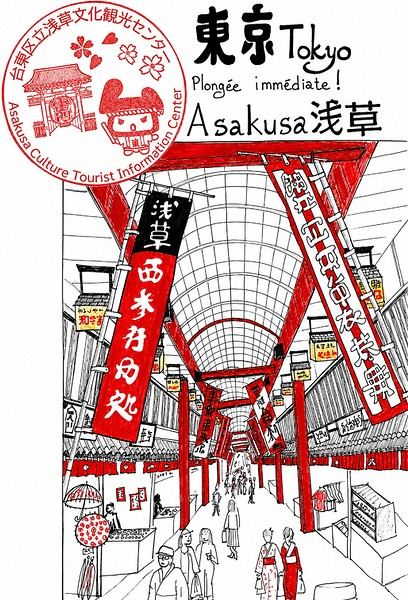
Our first "wow" moment came as we stepped out of the subway in Asakusa, the Tokyo neighborhood where we’d booked our hotel for our first five nights. Exhausted after our long flight, we finally arrived and took an exit that led straight into a shotengai—one of those covered shopping streets that pop up in city centers and flourished between the 1950s and 1980s.
It was an instant aesthetic shock, like a close encounter of the third kind between the modern city, a typical Asian market with its street stalls, the vintage vibe of the arcade, the sheer abundance of goods, and the bustling crowd—a mix of tourists, pilgrims (thanks to nearby Senso-ji Temple), and locals (it’s a very working-class area). In the end, it set the tone for a feeling we’d experience throughout the trip. Wherever we went, shotengai turned out to be fantastic spots for finding little restaurants, shops, or even fresh produce. Some are like real mazes, like in Kyoto, where we spent ages trying to relocate a restaurant we’d loved ;-)
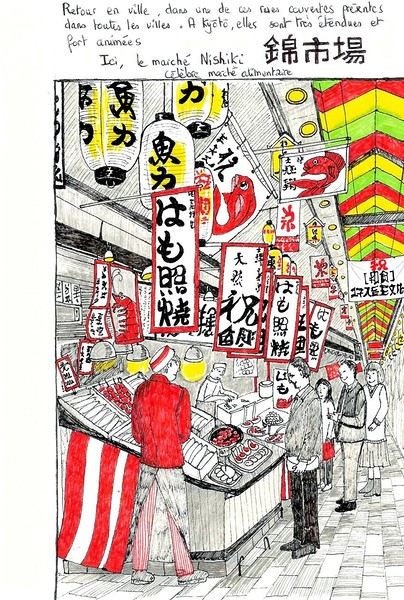
In Kanazawa, the Omicho Market: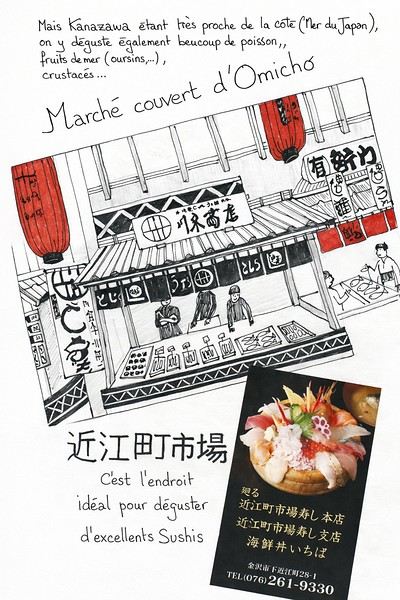 And in Kyoto, Nishiki Market:
To be continued...
I’m inviting you on a stroll through my drawings—a completely subjective, far from exhaustive, and totally personal take, since it’s based on my own sketches. I put this travel journal together after returning in late 2024, mostly using felt-tip pens and pencils, with a few collages thrown in. I worked from our personal photos.Let’s start with the shotengai...
Our first "wow" moment came as we stepped out of the subway in Asakusa, the Tokyo neighborhood where we’d booked our hotel for our first five nights. Exhausted after our long flight, we finally arrived and took an exit that led straight into a shotengai—one of those covered shopping streets that pop up in city centers and flourished between the 1950s and 1980s.
It was an instant aesthetic shock, like a close encounter of the third kind between the modern city, a typical Asian market with its street stalls, the vintage vibe of the arcade, the sheer abundance of goods, and the bustling crowd—a mix of tourists, pilgrims (thanks to nearby Senso-ji Temple), and locals (it’s a very working-class area). In the end, it set the tone for a feeling we’d experience throughout the trip. Wherever we went, shotengai turned out to be fantastic spots for finding little restaurants, shops, or even fresh produce. Some are like real mazes, like in Kyoto, where we spent ages trying to relocate a restaurant we’d loved ;-)
In Kanazawa, the Omicho Market:
And in Kyoto, Nishiki Market:
To be continued...
Arusha, Tanzania - October 2025
I would wish never to go to bed where I had woken up, to wander my tent from the shores of Egypt to those of the Persian Gulf; to have no goal for the evening other than the evening itself; to traverse on foot, with my eyes and my heart, all these unknown lands, all these races of people so different from my own; to contemplate humanity, God’s finest creation, in all its forms.
Lamartine in Fatalla Sayeghir’s Account (1861)
As soon as it’s about flying, I lose all willpower. Being reasonable and thoughtful, I still lose all my composure at the mere possibility of a flight—especially if it’s piloted by F.—and even more so if that flight can take me to unexplored lands. I’ve long wanted to unravel the mystery of animal tourism, and why not in Tanzania, following up on my trip from four years ago, when I was already questioning the glaring inequalities in Zanzibar: the coastal strip sacrificed to capitalism, and the inland areas, just a hundred meters from the waves, where you find—though a bit more peaceful than elsewhere on the continent—the chaos of Africa.
I’m an adventurer at heart. When it comes to the terrain, though, it’s a whole different story. I see people setting off for months at a time; I know my endurance doesn’t last beyond three days. It’s not that I’m afraid of this unfamiliar environment when it comes to embracing different realities. I’m mostly afraid of myself—of this heightened sensitivity that makes me see things I’d rather not see and understand others that sometimes overwhelm me.
After an absolutely fantastic daytime flight, I land in Zanzibar and have to resign myself—this is the whole point of the trip—to what feels like a real spacewalk. I’m alone. My lucky star, backed up by my phone, will serve as my lifeline. I step out of the airport and breathe in the scent of Africa full-on: a mix of exotic perfumes, baked earth, and poorly refined fuel, inevitably mingled with the smell of wood smoke. So many images come flooding back. So many stories. Another world.
I head to Arusha the very next day. The gateway to the country’s northern national parks, this city of half a million offers one of those rare breath-holding dives that Africa keeps secret. As the only white person walking the streets, I know I’m visible and vulnerable, yet I move forward confidently, barely bothered. But where are all my fellow Westerners? While this city draws countless tourists, I only cross paths with one white couple in nearly three hours of walking. Because you have to hold on tight to wander here. You have to stay alert. The traffic is dense and erratic—don’t even trust the fact that in Tanzania, people drive on the left. That can change from one minute to the next, especially with motorbikes. With barely centimeters between vehicles, I weave my way through the urban jungle, trying not to stumble into the huge ditch on my left or get sideswiped by cars brushing past me on the right. Speakers blare music, ads, or political speeches at will—the explosion of yellow and green tells us we’re on the eve of the presidential election—but they barely compete with the calls to prayer, nearly nonstop on this holy Friday. The vital space is as saturated as the sound. Imagine an unbroken line of shops and stalls of every kind—supermarkets haven’t made it here yet—where you can find just about anything: phones, copper pipes, Chinese-made hardware, shoes, clothes, basins, and professional tools… The luckiest own a big store; others spend their lives trying to survive on the profits from selling toothbrushes one at a time on the streets. But maybe it’s more lucrative than spending the day slumped on the sidewalk, preferably missing a limb, trusting your survival to the mercy of passersby.
I think I’ll escape the street by slipping into the narrow alleys of the central market. Here, I know I won’t run into anyone like me! The vendors’ stalls start at waist height; the sellers, perched higher up, haggle or not while discussing prices. Here, colorful fruits and vegetables; there, huge piles of dried fish. Spices, seeds, roots. Smells. Noises. Africa. Life. Further on, the fresh fish aisle makes a right angle with the butchers’. Everywhere, flies—everywhere, the same gesture from vendors swatting blindly at these relentless pests. Aware that I’ll be eating this same meat within the hour, displayed with total disregard for basic hygiene, I reassure myself that Arusha sits at 1400m altitude. Yes, we can probably do without a fridge.
*
It’s time to leave the city and go wildlife spotting in the surrounding parks. To that end, I’ve negotiated a package deal with a local agency that prides itself on grouping solo travelers into a vehicle meant for seven. We leave behind the imposing masses of Mount Meru and Kilimanjaro, peaking at 4565m and 5895m respectively, and head west to conquer Tarangire and Ngorongoro parks. I’ve been promised a spectacle; I remain cautious. I’ve read rave reviews; I know how to temper my expectations. Above all, I know what I came for—and paradoxically, my hopes are less about animals than strictly anthropological. So I’m sure I won’t go home disappointed.
I’m in the thick of it. Since 2021, tourism has been booming: I’m one of the two million tourists who come here every year seeking thrills. I also contribute, in a small way, to the 20% of the country’s GDP generated by tourism revenue. Around 3 billion € annually… Tanzania has 16 national parks, twice as many reserves; it charges meticulously for every entry, every night, every activity, to the tune of several dozen euros. I calculated that Tarangire Park alone rakes in around 15 million € a year. Mind-boggling. Yet to get there, a dusty, rickety old track is used daily by hundreds of vehicles that literally saturate the surrounding area with white dust and exhaust fumes. At the park entrance, we wait a good hour while the driver pays the entry fees. Then it’s a free-for-all: dozens of 4x4s try to enter at the same time through the single access point, to the left of the building, while the three barriers are stuck due to a computer glitch. It’s pure chaos: no way to buy your ticket in advance—the QR code revolution hasn’t arrived; no smart layout before the barriers; nothing smooth, nothing practical, everything improvised.
So, the animals? Given the time and money involved, I’d be tempted to say it’s not worth the hassle and there’s really no need to break five legs off one of the too-many zebras we pass. Hours and hours of travel to get to Tanzania, specifically Arusha; hours and hours on the road—up to 12 hours a day—to spend barely three in the parks; at least 200 € per day for the most basic option, so 400 € in my case, and up to several thousand for those wealthy couples opting for the luxury package with a private vehicle. Sure, I saw zebras and elephants in their natural habitat, wildebeest, buffalo, and a few hippos, but I didn’t feel the thrill touted in the articles or even by my two-day trip organizer. Would I have been more satisfied if I’d seen the lion, the leopard, and the rhino? Maybe. But the story won’t be rewritten in light of those assumptions.
Yet I’m not disappointed. As I said earlier: I know what I came for. I wanted to see the world as it is with my own eyes. And the safari world fascinates me more for its anthropological aspect than for what it offers. Yes, the fact that people from all over the world come here, juggling hotels and big 4x4s—while notably avoiding the streets of cities and villages—truly fascinates me. Two worlds coexist on either side of a barely porous border. As soon as the tourist sets foot in the airport, they’re whisked away, sight unseen, into a tourist vehicle. Dropped off at the hotel, they rest there, shielded from view, until the 4x4 departs. Then they speed through those same cities and villages they scorn out of fear or disdain, leaving on the roadside the Maasai herding their flocks and all those poignant or mundane scenes that make up daily African life. In the evening, in their lodge, far from the city’s pulse, they fall asleep thinking about the images they’ve collected, those long hours on the road, the wait for the animals. And the days go by… Maybe the term *luxury*, whether for food or accommodation, refers to what we experience as utterly ordinary in the West? Forgetting that you’re there, in Africa, just steps away from poverty and a certain arbitrariness. And at the end of the journey: back to the airport, back to normal life.
Maybe we need to take a broader view. All that money seems invisible, yet it must serve the population at some point, right? The main roads are passable, the power grid seems well-maintained—I can tell by the excellent condition of the high-voltage transmission towers. Is it really too expensive to significantly improve all the infrastructure? I hoped this windfall would truly serve the people’s interests. The driver taking me back to the airport on the last evening dashes my sweet illusions: « All this is bad. Africa is bad. But you have no choice. The hospitals don’t work, the schools don’t work, the roads don’t work (just as he says this, roadworks force us onto a terrible detour for several kilometers—a rutted track, in fact), and if you say anything, if you speak up too much, they come for you and then you disappear. » That’s just one opinion. Nothing empirical. But I don’t need to be a West Point graduate to realize how rampant corruption is in these regions: while the muezzin bellows the greatness of Allah, I consider the dilapidated equipment and the energy expended by the masses just to survive here. But maybe all that money keeps the country afloat by paying civil servants’ salaries? Meanwhile, one thing is certain: regardless of where the profits go, tourism supports millions of people, and I’m in no position to judge this system too harshly. Maybe I’m too much of an aesthete to appreciate the almost exclusive use of corrugated iron at its true value…
*
I’ll give this system credit for one thing: the chance to set foot in spaces impossible to visit otherwise. At one point, in the heart of the Ngorongoro Crater—a vast 20km-wide plain topped by a 600m-high caldera—I was simply happy to be there. Barely bothered by the constant ballet of 4x4s—the space is vast—I contemplate the simple life of the local animals. Buffalo, wildebeest, zebras as numerous as the flamingos patiently standing on one leg, waiting for the day to pass. Over there, you can make out a few hyenas with vultures circling above. Finally, in a large body of water, hippos surface at regular intervals. I’m aware of my luck. I’m especially aware that, unlike all the people I’ve met there, a lot of money and a little resourcefulness greatly favor the luck factor.
I’m heading home. I soak up the last images of this improbable Africa as night falls quickly over the countryside. I’m fascinated by the number of Maasai herding their livestock along the main road. Some pass the time, globalization obliges, on an old phone; others, sometimes as young as my eldest—barely 10 years old—watch us pass, indifferent. We overtake or are overtaken; the two-lane road is the stage for a majestic ballet of semi-trailers, *dalas-dalas*, and other 4x4s, as numerous as the names of their companies: Leopard Tours, Climbing Kilimanjaro, Smiling Zebra, Nomad Life Enhanced, Elephant Roaming, Mountain Warrior, Master of the Ambush… They drop me off at the hotel, where I have an hour to shower and change into clean clothes before my return flight. Already, I’m slipping back into my own world without really seeing it, leaving behind the hotel’s glass window that African life to which nothing truly binds me. Then that chaotic, suffocating nighttime drive to the airport. Check-in; the stupid questions (« Where are you going? »); the slow police officer who, in the end, stamps my passport anywhere; the idiocy of the security agent (my empty 33cl bottle is forbidden); the rather shabby lounge at Kilimanjaro Airport. Then the return to the vessel—to the Air France plane that left Zanzibar an hour earlier—after this 72-hour spacewalk without a real lifeline. I’ve never been so happy to see F. again.
As soon as it’s about flying, I lose all willpower. Being reasonable and thoughtful, I still lose all my composure at the mere possibility of a flight—especially if it’s piloted by F.—and even more so if that flight can take me to unexplored lands. I’ve long wanted to unravel the mystery of animal tourism, and why not in Tanzania, following up on my trip from four years ago, when I was already questioning the glaring inequalities in Zanzibar: the coastal strip sacrificed to capitalism, and the inland areas, just a hundred meters from the waves, where you find—though a bit more peaceful than elsewhere on the continent—the chaos of Africa.
I’m an adventurer at heart. When it comes to the terrain, though, it’s a whole different story. I see people setting off for months at a time; I know my endurance doesn’t last beyond three days. It’s not that I’m afraid of this unfamiliar environment when it comes to embracing different realities. I’m mostly afraid of myself—of this heightened sensitivity that makes me see things I’d rather not see and understand others that sometimes overwhelm me.
After an absolutely fantastic daytime flight, I land in Zanzibar and have to resign myself—this is the whole point of the trip—to what feels like a real spacewalk. I’m alone. My lucky star, backed up by my phone, will serve as my lifeline. I step out of the airport and breathe in the scent of Africa full-on: a mix of exotic perfumes, baked earth, and poorly refined fuel, inevitably mingled with the smell of wood smoke. So many images come flooding back. So many stories. Another world.
I head to Arusha the very next day. The gateway to the country’s northern national parks, this city of half a million offers one of those rare breath-holding dives that Africa keeps secret. As the only white person walking the streets, I know I’m visible and vulnerable, yet I move forward confidently, barely bothered. But where are all my fellow Westerners? While this city draws countless tourists, I only cross paths with one white couple in nearly three hours of walking. Because you have to hold on tight to wander here. You have to stay alert. The traffic is dense and erratic—don’t even trust the fact that in Tanzania, people drive on the left. That can change from one minute to the next, especially with motorbikes. With barely centimeters between vehicles, I weave my way through the urban jungle, trying not to stumble into the huge ditch on my left or get sideswiped by cars brushing past me on the right. Speakers blare music, ads, or political speeches at will—the explosion of yellow and green tells us we’re on the eve of the presidential election—but they barely compete with the calls to prayer, nearly nonstop on this holy Friday. The vital space is as saturated as the sound. Imagine an unbroken line of shops and stalls of every kind—supermarkets haven’t made it here yet—where you can find just about anything: phones, copper pipes, Chinese-made hardware, shoes, clothes, basins, and professional tools… The luckiest own a big store; others spend their lives trying to survive on the profits from selling toothbrushes one at a time on the streets. But maybe it’s more lucrative than spending the day slumped on the sidewalk, preferably missing a limb, trusting your survival to the mercy of passersby.
I think I’ll escape the street by slipping into the narrow alleys of the central market. Here, I know I won’t run into anyone like me! The vendors’ stalls start at waist height; the sellers, perched higher up, haggle or not while discussing prices. Here, colorful fruits and vegetables; there, huge piles of dried fish. Spices, seeds, roots. Smells. Noises. Africa. Life. Further on, the fresh fish aisle makes a right angle with the butchers’. Everywhere, flies—everywhere, the same gesture from vendors swatting blindly at these relentless pests. Aware that I’ll be eating this same meat within the hour, displayed with total disregard for basic hygiene, I reassure myself that Arusha sits at 1400m altitude. Yes, we can probably do without a fridge.
*
It’s time to leave the city and go wildlife spotting in the surrounding parks. To that end, I’ve negotiated a package deal with a local agency that prides itself on grouping solo travelers into a vehicle meant for seven. We leave behind the imposing masses of Mount Meru and Kilimanjaro, peaking at 4565m and 5895m respectively, and head west to conquer Tarangire and Ngorongoro parks. I’ve been promised a spectacle; I remain cautious. I’ve read rave reviews; I know how to temper my expectations. Above all, I know what I came for—and paradoxically, my hopes are less about animals than strictly anthropological. So I’m sure I won’t go home disappointed.
I’m in the thick of it. Since 2021, tourism has been booming: I’m one of the two million tourists who come here every year seeking thrills. I also contribute, in a small way, to the 20% of the country’s GDP generated by tourism revenue. Around 3 billion € annually… Tanzania has 16 national parks, twice as many reserves; it charges meticulously for every entry, every night, every activity, to the tune of several dozen euros. I calculated that Tarangire Park alone rakes in around 15 million € a year. Mind-boggling. Yet to get there, a dusty, rickety old track is used daily by hundreds of vehicles that literally saturate the surrounding area with white dust and exhaust fumes. At the park entrance, we wait a good hour while the driver pays the entry fees. Then it’s a free-for-all: dozens of 4x4s try to enter at the same time through the single access point, to the left of the building, while the three barriers are stuck due to a computer glitch. It’s pure chaos: no way to buy your ticket in advance—the QR code revolution hasn’t arrived; no smart layout before the barriers; nothing smooth, nothing practical, everything improvised.
So, the animals? Given the time and money involved, I’d be tempted to say it’s not worth the hassle and there’s really no need to break five legs off one of the too-many zebras we pass. Hours and hours of travel to get to Tanzania, specifically Arusha; hours and hours on the road—up to 12 hours a day—to spend barely three in the parks; at least 200 € per day for the most basic option, so 400 € in my case, and up to several thousand for those wealthy couples opting for the luxury package with a private vehicle. Sure, I saw zebras and elephants in their natural habitat, wildebeest, buffalo, and a few hippos, but I didn’t feel the thrill touted in the articles or even by my two-day trip organizer. Would I have been more satisfied if I’d seen the lion, the leopard, and the rhino? Maybe. But the story won’t be rewritten in light of those assumptions.
Yet I’m not disappointed. As I said earlier: I know what I came for. I wanted to see the world as it is with my own eyes. And the safari world fascinates me more for its anthropological aspect than for what it offers. Yes, the fact that people from all over the world come here, juggling hotels and big 4x4s—while notably avoiding the streets of cities and villages—truly fascinates me. Two worlds coexist on either side of a barely porous border. As soon as the tourist sets foot in the airport, they’re whisked away, sight unseen, into a tourist vehicle. Dropped off at the hotel, they rest there, shielded from view, until the 4x4 departs. Then they speed through those same cities and villages they scorn out of fear or disdain, leaving on the roadside the Maasai herding their flocks and all those poignant or mundane scenes that make up daily African life. In the evening, in their lodge, far from the city’s pulse, they fall asleep thinking about the images they’ve collected, those long hours on the road, the wait for the animals. And the days go by… Maybe the term *luxury*, whether for food or accommodation, refers to what we experience as utterly ordinary in the West? Forgetting that you’re there, in Africa, just steps away from poverty and a certain arbitrariness. And at the end of the journey: back to the airport, back to normal life.
Maybe we need to take a broader view. All that money seems invisible, yet it must serve the population at some point, right? The main roads are passable, the power grid seems well-maintained—I can tell by the excellent condition of the high-voltage transmission towers. Is it really too expensive to significantly improve all the infrastructure? I hoped this windfall would truly serve the people’s interests. The driver taking me back to the airport on the last evening dashes my sweet illusions: « All this is bad. Africa is bad. But you have no choice. The hospitals don’t work, the schools don’t work, the roads don’t work (just as he says this, roadworks force us onto a terrible detour for several kilometers—a rutted track, in fact), and if you say anything, if you speak up too much, they come for you and then you disappear. » That’s just one opinion. Nothing empirical. But I don’t need to be a West Point graduate to realize how rampant corruption is in these regions: while the muezzin bellows the greatness of Allah, I consider the dilapidated equipment and the energy expended by the masses just to survive here. But maybe all that money keeps the country afloat by paying civil servants’ salaries? Meanwhile, one thing is certain: regardless of where the profits go, tourism supports millions of people, and I’m in no position to judge this system too harshly. Maybe I’m too much of an aesthete to appreciate the almost exclusive use of corrugated iron at its true value…
*
I’ll give this system credit for one thing: the chance to set foot in spaces impossible to visit otherwise. At one point, in the heart of the Ngorongoro Crater—a vast 20km-wide plain topped by a 600m-high caldera—I was simply happy to be there. Barely bothered by the constant ballet of 4x4s—the space is vast—I contemplate the simple life of the local animals. Buffalo, wildebeest, zebras as numerous as the flamingos patiently standing on one leg, waiting for the day to pass. Over there, you can make out a few hyenas with vultures circling above. Finally, in a large body of water, hippos surface at regular intervals. I’m aware of my luck. I’m especially aware that, unlike all the people I’ve met there, a lot of money and a little resourcefulness greatly favor the luck factor.
I’m heading home. I soak up the last images of this improbable Africa as night falls quickly over the countryside. I’m fascinated by the number of Maasai herding their livestock along the main road. Some pass the time, globalization obliges, on an old phone; others, sometimes as young as my eldest—barely 10 years old—watch us pass, indifferent. We overtake or are overtaken; the two-lane road is the stage for a majestic ballet of semi-trailers, *dalas-dalas*, and other 4x4s, as numerous as the names of their companies: Leopard Tours, Climbing Kilimanjaro, Smiling Zebra, Nomad Life Enhanced, Elephant Roaming, Mountain Warrior, Master of the Ambush… They drop me off at the hotel, where I have an hour to shower and change into clean clothes before my return flight. Already, I’m slipping back into my own world without really seeing it, leaving behind the hotel’s glass window that African life to which nothing truly binds me. Then that chaotic, suffocating nighttime drive to the airport. Check-in; the stupid questions (« Where are you going? »); the slow police officer who, in the end, stamps my passport anywhere; the idiocy of the security agent (my empty 33cl bottle is forbidden); the rather shabby lounge at Kilimanjaro Airport. Then the return to the vessel—to the Air France plane that left Zanzibar an hour earlier—after this 72-hour spacewalk without a real lifeline. I’ve never been so happy to see F. again.
Upper Antelope Canyon prices
Hi there. I'm shocked by the price of the Upper Antelope Canyon tour—$175 for less than an hour… You might say, "if you can’t afford it…" But the real question is whether it’s really worth it, because $350 for two makes me feel like I’m getting ripped off. For those who’ve done both Lower and Upper, can you tell me if the price difference is really justified? Thanks
December Photo Contest Discussion: One or Multiple Shots of Towers
This is the place to chat about December’s theme!
I’ll start with a little TOUR of the world’s TOURS.
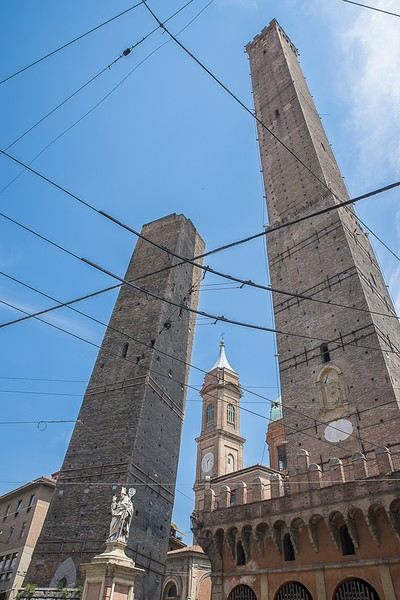
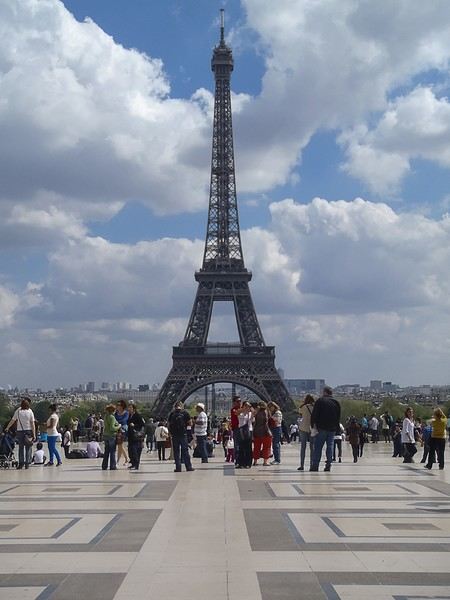
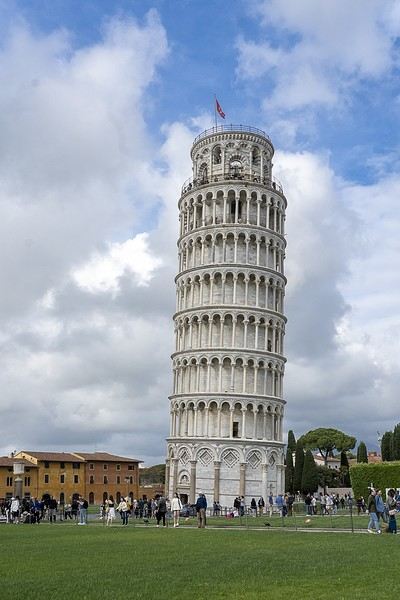
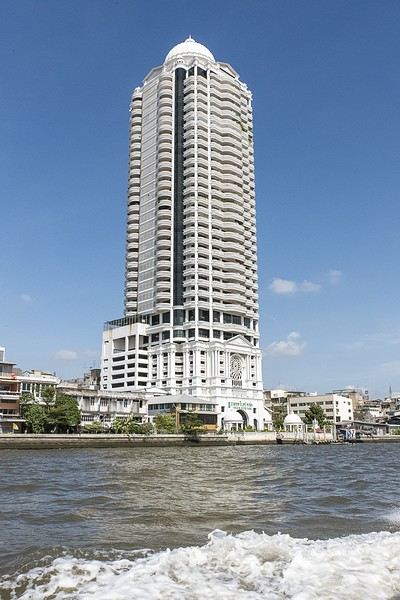
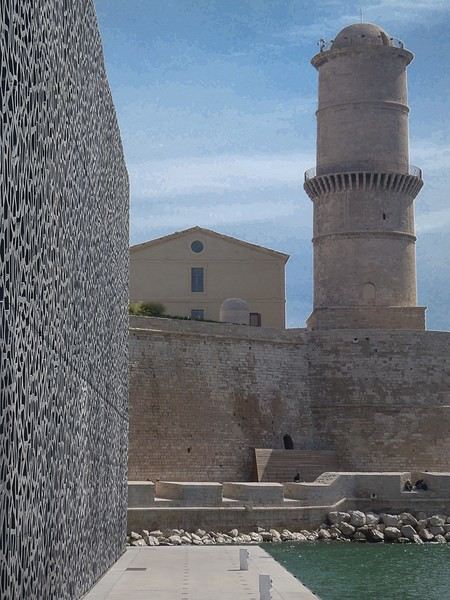
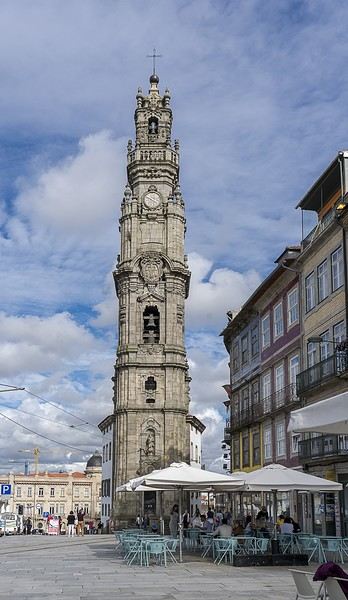
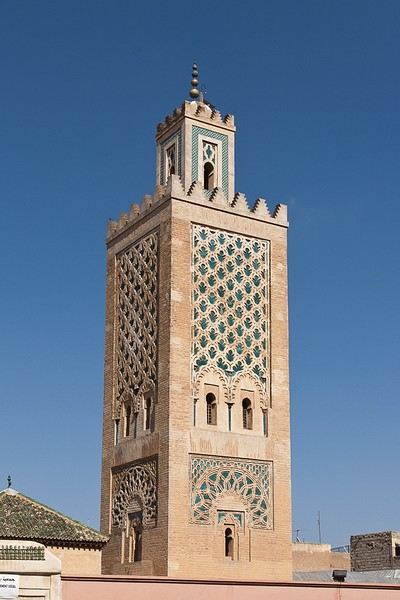
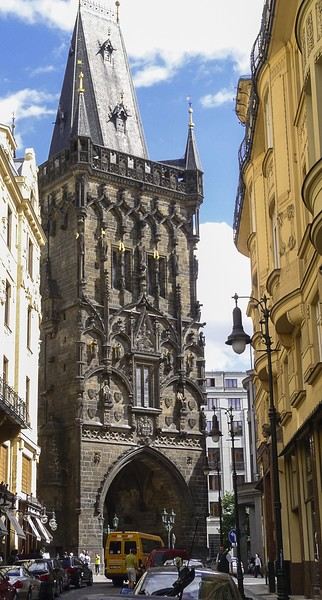
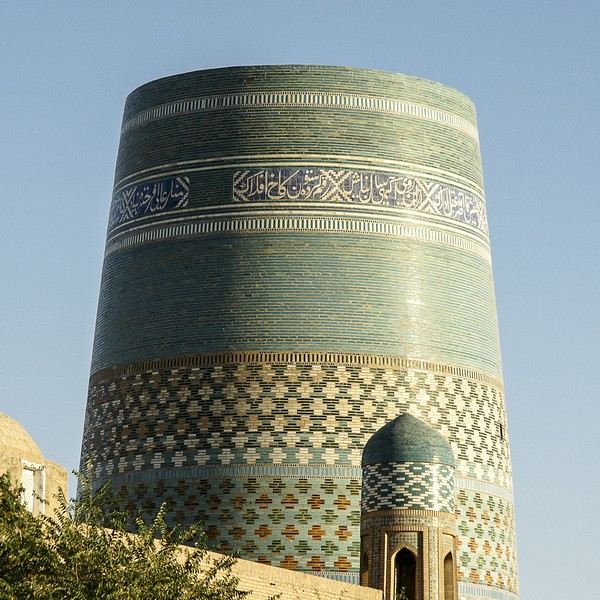
Of course, you can submit multiple photos of the same tower in the contest—it’s the quality of the photo that’ll be judged during voting, not just the subject!
Of course, you can submit multiple photos of the same tower in the contest—it’s the quality of the photo that’ll be judged during voting, not just the subject!
Why you shouldn't walk around at night in St Lucia!
A little link...
St Lucia is the capital of "urban" hippos... with behavior that’s not always very urban.
https://www.citizen.co.za/zululand-observer/news-headlines/local-news/2025/05/01/watch-provoked-hippo-charges-group-of-people-in-st-lucia/
St Lucia is the capital of "urban" hippos... with behavior that’s not always very urban.
https://www.citizen.co.za/zululand-observer/news-headlines/local-news/2025/05/01/watch-provoked-hippo-charges-group-of-people-in-st-lucia/
Road conditions in the Anti-Atlas
hi,
Now that I’ve got my new VW Syncro T3 (4x4), I’m hoping to explore some new tracks on my next trip at the end of 2025.
Back in winter 2022/23, I wanted to try a recently extended track that continues the one leading to Aït Kine.
After the village, I was able to drive on a good ten kilometers of tarmac, which then turns into a nice dirt track as soon as the climb to the pass begins (beautiful ravines). Almost at the last hairpin turn, I didn’t have enough power or traction to make it (my old T3 was only 2x4).
I had to turn around, clenching my cheeks the whole way.
Has anyone managed to take this track, which should lead to a main road (Igherm or Taliouine?) further north? And where exactly?
Is it fully paved now?
Crossing the Ceuta-Morocco border customs
Hi everyone,
Have any travelers recently returned to Morocco via the border at Ceuta?
If so, how is the crossing at Moroccan customs going right now? Are there any products bought in Ceuta that are banned from import into Morocco?
Thanks for your replies!
Hope you had a great holiday
Slovenia, a nature destination
Slovenia was the originally planned destination for summer 2022, as a complement to a road trip through Croatia and Montenegro. Plans changed on a whim in February of that year. Our Balkans road trip would ultimately be limited to Slovenia and take place over 10 days during the Easter school holidays. Flight tickets and car rental were booked right away; all that was left was to finalize our itinerary, already sketched out, and the accommodation reservations.
I decided to add Plitvice Lakes in Croatia to our program. I really wanted to discover them, and for my husband, it was a chance to revisit them several years after a trip to Yugoslavia when he was a teenager.
I’m happy to contribute to the reopening of our forum by posting this travel journal (originally posted in 2022 on another forum, the text has been partially revised and photos added). As usual, a few photos to start with—maybe they’ll inspire you to join in!

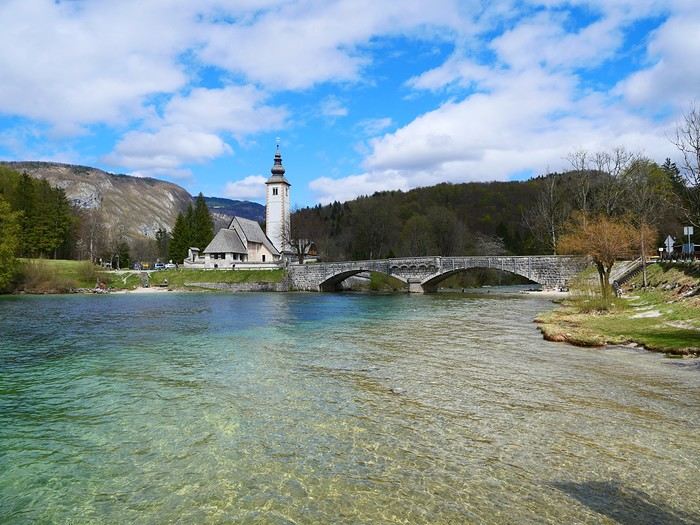
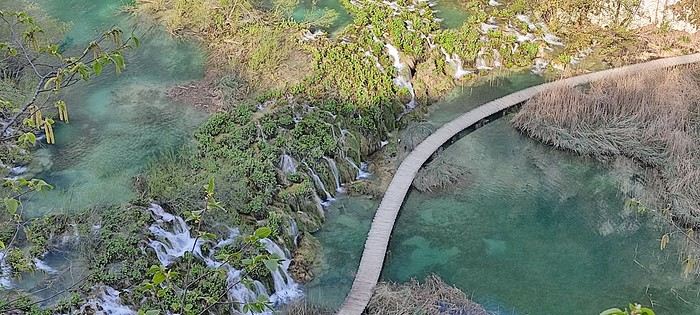

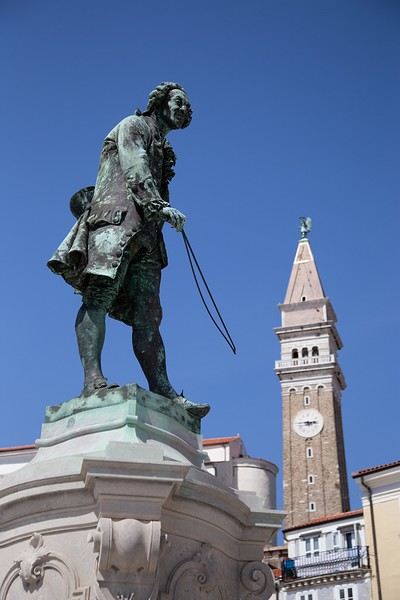
I decided to add Plitvice Lakes in Croatia to our program. I really wanted to discover them, and for my husband, it was a chance to revisit them several years after a trip to Yugoslavia when he was a teenager.
I’m happy to contribute to the reopening of our forum by posting this travel journal (originally posted in 2022 on another forum, the text has been partially revised and photos added). As usual, a few photos to start with—maybe they’ll inspire you to join in!
Mediterranean Cruise on the Tosca Toscana
Hi there,
I’m going on a cruise in March, sailing the Mediterranean on the Tosca Toscana.
I’d love to hear your great tips for life on board and for the different stops: Barcelona, Rome, Palermo, and Civitavecchia.
Thanks in advance!
Mexico: The Magic of the Yucatán
Hello everyone,
What a pleasure to be back on VF after a few difficult years 😎 So, before diving into the topic, welcome back to VF and above all... keep going!
Well, I’m finally picking up my old habit of posting a new travel journal.
Before heading to Mexico in the summer of 2023 with my family (my partner and our two boys, aged 18 and 16), I had somehow convinced myself—though I can’t even remember why—that the Yucatán was too touristy, too cliché, too expensive, and overrated!
The country didn’t particularly appeal to me, but faced with my wife’s insistence—she’d been there years ago, before we met, and had promised to show our sons this incredible place—my arguments didn’t hold much weight.
And thank goodness, because I have to admit she was absolutely right to take us there! In the end, we encountered far fewer tourists than we’d feared (except at a few sites), and the prices, which we’d been told were geared toward American neighbors (US), turned out to be quite affordable. In short, it was pure joy on both counts. All that was left was for the trip itself to be beautiful and memorable—and it was...
1st stop: Isla Holbox and the whale sharks
Holbox (pronounced “Hol-bosh”) is a stunning island where you can relax in an enchanting setting.
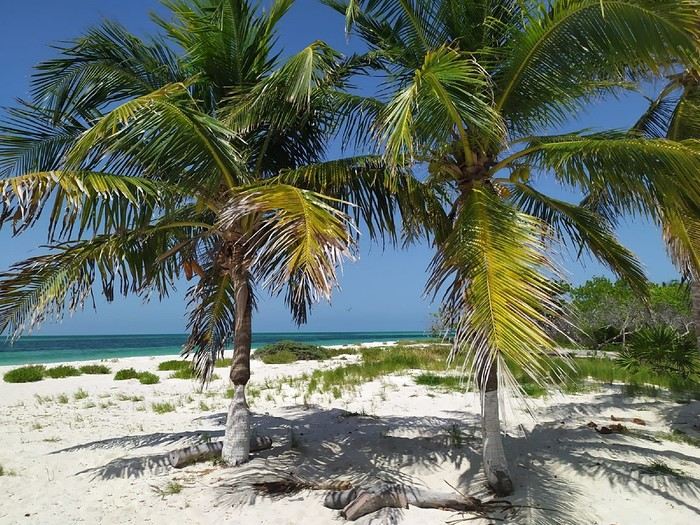
Our main goal in coming to Holbox was to swim with whale sharks. So, the first thing we told our hotel, Los Arcos Holbox, upon arrival was to arrange an excursion with one of the island’s many tour operators: Glendy Tours Holbox. We set off the next morning, bright and early.
The itinerary for this outing is the same for all tour operators (and there are about thirty of them!): roughly two hours by speedboat, then snorkeling with the whale sharks, followed by another boat ride to Cabo Catoche for lunch, then more boating to a fish-filled snorkeling spot before heading back. In total, the excursion can take eight hours—or even longer.
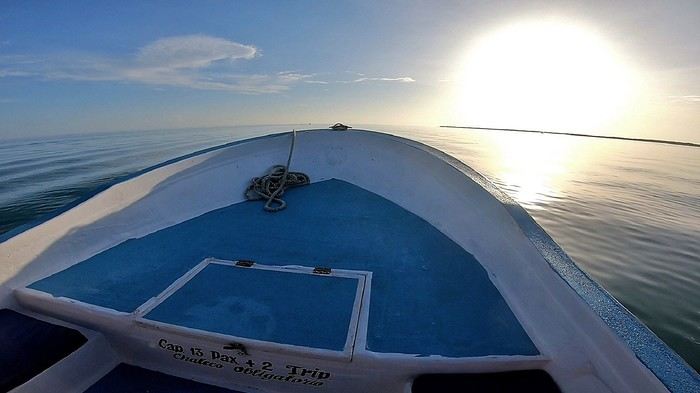
Besides my two sons and me, there were only two other clients on board—a French couple. Our boat was one of the very first to leave, but after ten minutes, the pilot got a radio call. We turned back without any explanation, returning to the departure dock.
There, a young woman who clearly fancied herself a diva was waiting for us. She was Mexican and boarded the boat, snubbing all five of us while flirting with the pilot and guide, who were suddenly all eyes for her. We couldn’t understand how this diva had convinced our tour operator to turn the boat around just to pick her up when she hadn’t even booked and we were already far out. We left 20 minutes late.
The two-hour journey passed surprisingly quickly, and for good reason: we spotted dolphins six times! They were leaping out of the water as they moved. Pure joy. We stopped whenever they were near the boat.
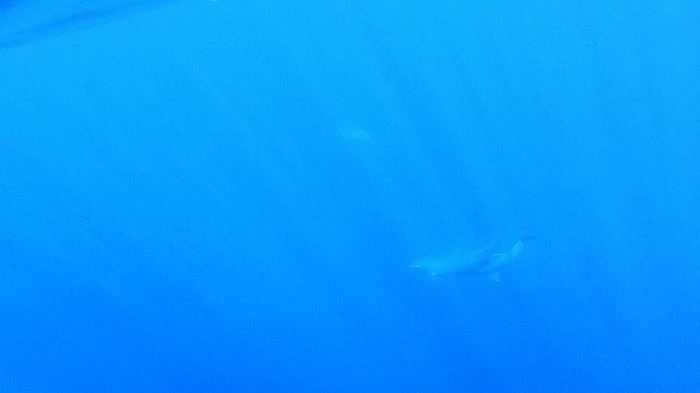
The photo isn’t great—the ultra-wide-angle lens on my GoPro makes the dolphins look smaller—but at least I got a souvenir.
A few flying fish (exocets) also glided a meter or two above the water as we sped along. The false start was forgotten, and the day was off to a fantastic start in this stunning marine environment...
When we reached the area where the whale sharks were supposed to be, the guide explained that we’d now have to scan the sea until we spotted one. It could take five minutes or forty-five, he said, and if we were unlucky, we might not see any at all!
An hour and a half later—still nothing! The captain then headed toward a distant area where about twenty other boats were already gathered.
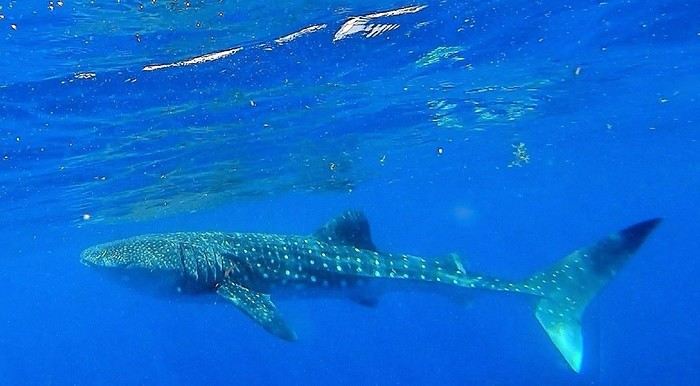
Sure enough, there was a juvenile whale shark (still a good eight meters long) there, and all the boats were lining up to approach it slowly, one by one, so as not to scare the animal. Each boat got about thirty seconds within a few meters of it, engine idling, before making way for the next. We were allowed to approach three times, but we weren’t permitted to dive in. That’s normal—such a crowd of divers around a single animal would stress it out, and here, whale sharks are protected by regulations: swimming with them is strictly controlled. There was even a coast guard boat with us at all times, monitoring everyone’s behavior.
We were torn between the luck of seeing such a magnificent animal, even from the surface, and the discomfort we felt about the absurd situation. All those boats lined up just to catch a fleeting glimpse of the shark for a few seconds—let’s be honest, it was ridiculous. In short, the whole thing was unpleasant, and probably even more so for the shark than for us, though it did keep gulping down kilos of plankton as if nothing were happening...
When it was our turn to approach, I dipped my GoPro into the water at arm’s length and framed the shot blindly, hoping for a decent image of the shark.
On the third and final approach, the sixth passenger on board—the one we’d had to turn back for ten minutes after departure—quietly spoke to the guide and captain after putting on her flippers (even though, I’ll remind you, no one was allowed to dive). She wanted them to ask the coast guard for permission to dive with the shark—just her! She whispered so we couldn’t hear what she was offering in exchange.
The two lackeys complied and shouted the request to the officials in front of all the other boats, with no shame whatsoever. With so many witnesses, the coast guard had no choice but to refuse. The diva wouldn’t let it go and asked them to insist, which they did, but the refusal was firm and final.
On the nearest boats, everyone had heard and was stunned. They openly mocked this bimbo who clearly had no shame. Hidden behind her star sunglasses, she responded with a dismissive smile. Pathetic.
The encounter with the shark ended, and we set off for Cabo Catoche, a site on Holbox Island where we were to have lunch.
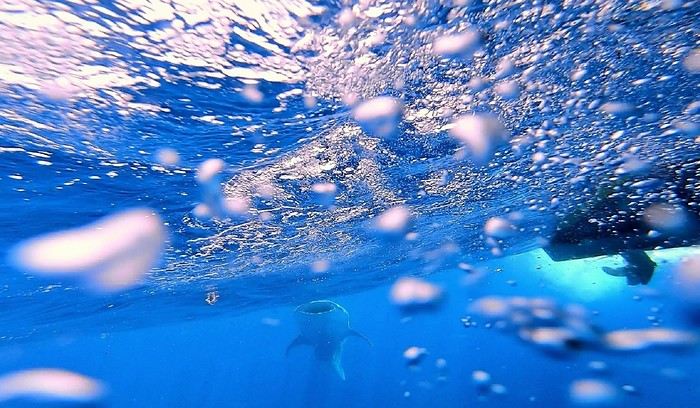
We were a little disappointed not to have had the chance to see the usual school of whale sharks (they’re often dozens swimming together!), but that’s nature’s way, and we knew it.
And then, an unlikely stroke of luck: a boat ahead of us was putting divers in the water with a pair of adult whale sharks. We joined them, and while we were putting on our masks and snorkels, the guide briefed us. He said my sons and I would go first, followed by the French couple and the diva.
But Miss World, clearly unhappy with this order, quietly complained to the guide, who eventually switched the order. It didn’t bother us since we’d only get a minute in the water anyway—what’s a minute more or less?
So the three of them got in the water, and a moment later, they were done. My two sons and I, sitting on the edge of the boat with masks on and snorkels in our mouths, were ready to finally take the plunge. But instead of continuing to follow the shark, the captain was suddenly all eyes for Miss Silicone! He even let go of the wheel for a moment to help her back on board.
One of the two sharks had already left minutes earlier, and the second was swimming farther away. Other boats were arriving, and the captain went to join the queue 100 meters from the shark. Soon, even more boats showed up. There were way too many people, the shark left, and diving was no longer possible.
I was, of course, a little disappointed not to have fulfilled my long-time dream of swimming with a whale shark, even briefly. But I was mostly disgusted for my two boys, who had been so excited about it. I told the guide exactly what I thought and asked for compensation—not for missing out on swimming with the shark (you can never guarantee seeing one, nature isn’t at our beck and call), but for clearly skipping our turn to dive. He promised a refund.
At the end of the day, back on land, he dropped us all off, and as he was about to leave, I reminded him about the refund. He agreed again, calmly got back on board, and sped off as if nothing had happened—just him and the captain, two total cowards. I couldn’t believe it.
Of course, back at our hotel (which had booked this tour operator—Glendy Tours), I explained the situation and asked for my refund again. The receptionist called the manager, who arrived with the guide. Our runaway wasn’t so cocky anymore. Inside, I was fuming, but I kept my cool during the discussion that followed.
Right off the bat, I made a point of looking the so-called guide in the eyes while telling him he’d run off like a coward. I did my best to stay calm, speaking clearly, staring him down the whole time, and repeating several times that he was a coward, in front of the manager, who didn’t say a word. The guide had clearly been told by his boss to keep quiet because he didn’t utter a word during the entire twenty-minute conversation.
Anyway, I’ll spare you the details, but in the end, the manager only offered us another excursion the next day as compensation for the “inconvenience.” It was just snorkeling with fish, not another whale shark trip. He admitted their fault, but since we had to leave early the next morning and had other bookings for the rest of the trip, we couldn’t accept. And he refused to refund us.
On Tripadvisor, Glendy Tours has a mediocre rating (3 out of 5), but more importantly, it ranks 29th out of 36 nautical tour operators rated by customers. I was pretty upset with the hotel for booking such an amateur for us.

If you want to swim with whale sharks in Holbox, you might end up with Glendy Tours. And it might go well—I certainly hope so. But given the price of such an excursion (3,000 pesos per person, about 160 €!), I’d still suggest quickly checking online before you go to see which providers have the best ratings. You’ll have a much better chance of things going smoothly with the top-rated ones than with those as poorly ranked as Glendy Tours.
On the other hand, if you’re a beautiful young woman, you can choose them without worry—you’ll get better treatment than the rest of us...
To wrap up this excursion, I have to mention the “respect for nature” angle that all these tour operators highlight. They tell us they respect the whale sharks: only two or three people can dive at a time, and only for a few minutes, so as not to disturb these gentle giants...
We believed them before we left, but that’s not what we saw. When the sharks are hard to find except for one, everyone rushes it, and only the constant presence of the coast guard prevents the tour operators from putting their clients in the water.
Because for the second shark we saw, when the divers from our boat got out of the water and we left to join the queue while it was our turn to dive, other boats quickly arrived and started swarming the poor shark, which eventually left.
In other words, it’s clear these companies only respect the sharks when they’re being watched.
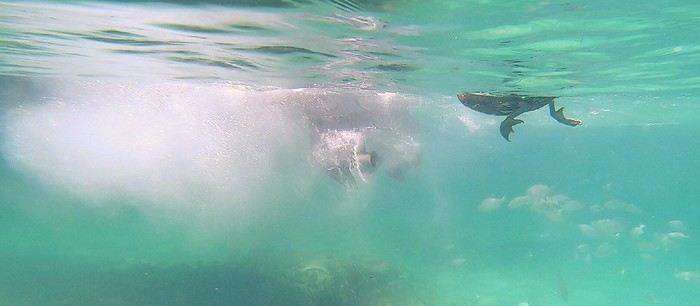 Boat reversing a meter away from a pelican
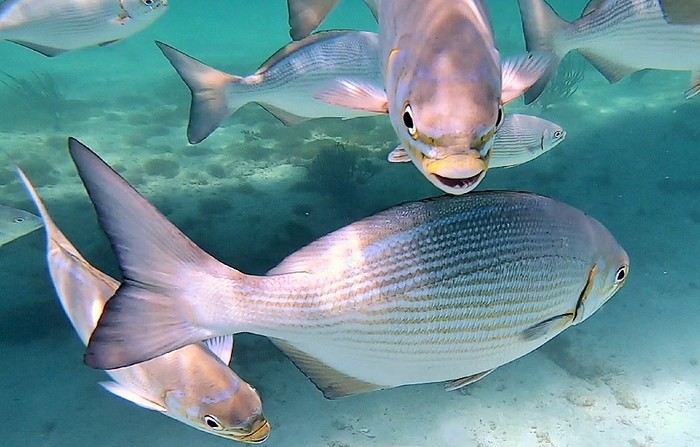
And for the snorkeling near Cabo Catoche, they attract fish daily by feeding them—a practice that’s normally discouraged. Afterward, these fish can’t feed naturally anymore and become dependent on Glendy Tours and its competitors.
A quick note on the rest of the excursion: Cabo Catoche (the site where we had lunch, on Holbox Island) is the northernmost point of the entire Yucatán. The place is paradise.
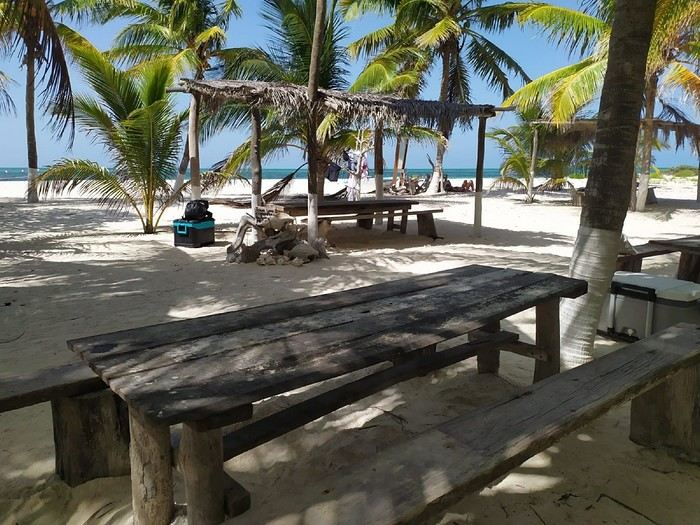
On the way back, we spent half an hour snorkeling at a site that turned out to be fish-filled only because the tour operators had the bad habit of feeding the fish. But this practice, which isn’t respectful of nature, is normally discouraged.
Plus, life jackets—like in many places in the Yucatán—are mandatory!!
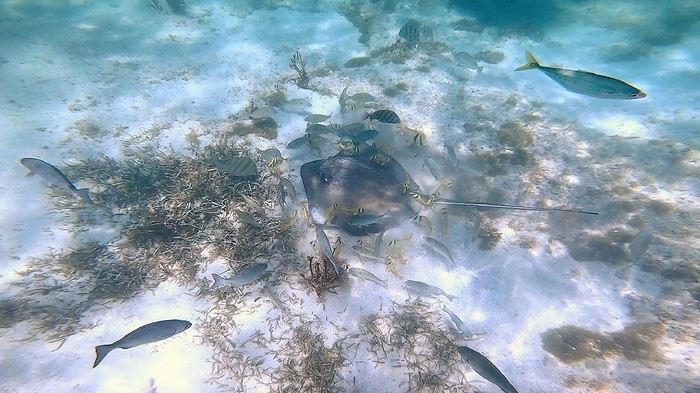
As divers, we didn’t find the site very interesting, but objectively, it should delight those who aren’t used to putting their heads underwater in beautiful dive spots.
We hated feeling trapped in those life jackets, stuck at the surface, and for me, the highlight was swimming next to a pelican that wasn’t too shy—it was paddling right beside me in green water.
Anyway, it seems we can’t post more than 10 photos at once on VF, so I’ll come back with the rest of the journal in another message. Because after these early trip mishaps, the rest of the journey turned out to be magnificent...
What a pleasure to be back on VF after a few difficult years 😎 So, before diving into the topic, welcome back to VF and above all... keep going!
Well, I’m finally picking up my old habit of posting a new travel journal.
Before heading to Mexico in the summer of 2023 with my family (my partner and our two boys, aged 18 and 16), I had somehow convinced myself—though I can’t even remember why—that the Yucatán was too touristy, too cliché, too expensive, and overrated!
The country didn’t particularly appeal to me, but faced with my wife’s insistence—she’d been there years ago, before we met, and had promised to show our sons this incredible place—my arguments didn’t hold much weight.
And thank goodness, because I have to admit she was absolutely right to take us there! In the end, we encountered far fewer tourists than we’d feared (except at a few sites), and the prices, which we’d been told were geared toward American neighbors (US), turned out to be quite affordable. In short, it was pure joy on both counts. All that was left was for the trip itself to be beautiful and memorable—and it was...
1st stop: Isla Holbox and the whale sharks
Holbox (pronounced “Hol-bosh”) is a stunning island where you can relax in an enchanting setting.
Our main goal in coming to Holbox was to swim with whale sharks. So, the first thing we told our hotel, Los Arcos Holbox, upon arrival was to arrange an excursion with one of the island’s many tour operators: Glendy Tours Holbox. We set off the next morning, bright and early.
The itinerary for this outing is the same for all tour operators (and there are about thirty of them!): roughly two hours by speedboat, then snorkeling with the whale sharks, followed by another boat ride to Cabo Catoche for lunch, then more boating to a fish-filled snorkeling spot before heading back. In total, the excursion can take eight hours—or even longer.
Besides my two sons and me, there were only two other clients on board—a French couple. Our boat was one of the very first to leave, but after ten minutes, the pilot got a radio call. We turned back without any explanation, returning to the departure dock.
There, a young woman who clearly fancied herself a diva was waiting for us. She was Mexican and boarded the boat, snubbing all five of us while flirting with the pilot and guide, who were suddenly all eyes for her. We couldn’t understand how this diva had convinced our tour operator to turn the boat around just to pick her up when she hadn’t even booked and we were already far out. We left 20 minutes late.
The two-hour journey passed surprisingly quickly, and for good reason: we spotted dolphins six times! They were leaping out of the water as they moved. Pure joy. We stopped whenever they were near the boat.
The photo isn’t great—the ultra-wide-angle lens on my GoPro makes the dolphins look smaller—but at least I got a souvenir.
A few flying fish (exocets) also glided a meter or two above the water as we sped along. The false start was forgotten, and the day was off to a fantastic start in this stunning marine environment...
When we reached the area where the whale sharks were supposed to be, the guide explained that we’d now have to scan the sea until we spotted one. It could take five minutes or forty-five, he said, and if we were unlucky, we might not see any at all!
An hour and a half later—still nothing! The captain then headed toward a distant area where about twenty other boats were already gathered.
Sure enough, there was a juvenile whale shark (still a good eight meters long) there, and all the boats were lining up to approach it slowly, one by one, so as not to scare the animal. Each boat got about thirty seconds within a few meters of it, engine idling, before making way for the next. We were allowed to approach three times, but we weren’t permitted to dive in. That’s normal—such a crowd of divers around a single animal would stress it out, and here, whale sharks are protected by regulations: swimming with them is strictly controlled. There was even a coast guard boat with us at all times, monitoring everyone’s behavior.
We were torn between the luck of seeing such a magnificent animal, even from the surface, and the discomfort we felt about the absurd situation. All those boats lined up just to catch a fleeting glimpse of the shark for a few seconds—let’s be honest, it was ridiculous. In short, the whole thing was unpleasant, and probably even more so for the shark than for us, though it did keep gulping down kilos of plankton as if nothing were happening...
When it was our turn to approach, I dipped my GoPro into the water at arm’s length and framed the shot blindly, hoping for a decent image of the shark.
On the third and final approach, the sixth passenger on board—the one we’d had to turn back for ten minutes after departure—quietly spoke to the guide and captain after putting on her flippers (even though, I’ll remind you, no one was allowed to dive). She wanted them to ask the coast guard for permission to dive with the shark—just her! She whispered so we couldn’t hear what she was offering in exchange.
The two lackeys complied and shouted the request to the officials in front of all the other boats, with no shame whatsoever. With so many witnesses, the coast guard had no choice but to refuse. The diva wouldn’t let it go and asked them to insist, which they did, but the refusal was firm and final.
On the nearest boats, everyone had heard and was stunned. They openly mocked this bimbo who clearly had no shame. Hidden behind her star sunglasses, she responded with a dismissive smile. Pathetic.
The encounter with the shark ended, and we set off for Cabo Catoche, a site on Holbox Island where we were to have lunch.
We were a little disappointed not to have had the chance to see the usual school of whale sharks (they’re often dozens swimming together!), but that’s nature’s way, and we knew it.
And then, an unlikely stroke of luck: a boat ahead of us was putting divers in the water with a pair of adult whale sharks. We joined them, and while we were putting on our masks and snorkels, the guide briefed us. He said my sons and I would go first, followed by the French couple and the diva.
But Miss World, clearly unhappy with this order, quietly complained to the guide, who eventually switched the order. It didn’t bother us since we’d only get a minute in the water anyway—what’s a minute more or less?
So the three of them got in the water, and a moment later, they were done. My two sons and I, sitting on the edge of the boat with masks on and snorkels in our mouths, were ready to finally take the plunge. But instead of continuing to follow the shark, the captain was suddenly all eyes for Miss Silicone! He even let go of the wheel for a moment to help her back on board.
One of the two sharks had already left minutes earlier, and the second was swimming farther away. Other boats were arriving, and the captain went to join the queue 100 meters from the shark. Soon, even more boats showed up. There were way too many people, the shark left, and diving was no longer possible.
I was, of course, a little disappointed not to have fulfilled my long-time dream of swimming with a whale shark, even briefly. But I was mostly disgusted for my two boys, who had been so excited about it. I told the guide exactly what I thought and asked for compensation—not for missing out on swimming with the shark (you can never guarantee seeing one, nature isn’t at our beck and call), but for clearly skipping our turn to dive. He promised a refund.
At the end of the day, back on land, he dropped us all off, and as he was about to leave, I reminded him about the refund. He agreed again, calmly got back on board, and sped off as if nothing had happened—just him and the captain, two total cowards. I couldn’t believe it.
Of course, back at our hotel (which had booked this tour operator—Glendy Tours), I explained the situation and asked for my refund again. The receptionist called the manager, who arrived with the guide. Our runaway wasn’t so cocky anymore. Inside, I was fuming, but I kept my cool during the discussion that followed.
Right off the bat, I made a point of looking the so-called guide in the eyes while telling him he’d run off like a coward. I did my best to stay calm, speaking clearly, staring him down the whole time, and repeating several times that he was a coward, in front of the manager, who didn’t say a word. The guide had clearly been told by his boss to keep quiet because he didn’t utter a word during the entire twenty-minute conversation.
Anyway, I’ll spare you the details, but in the end, the manager only offered us another excursion the next day as compensation for the “inconvenience.” It was just snorkeling with fish, not another whale shark trip. He admitted their fault, but since we had to leave early the next morning and had other bookings for the rest of the trip, we couldn’t accept. And he refused to refund us.
On Tripadvisor, Glendy Tours has a mediocre rating (3 out of 5), but more importantly, it ranks 29th out of 36 nautical tour operators rated by customers. I was pretty upset with the hotel for booking such an amateur for us.
If you want to swim with whale sharks in Holbox, you might end up with Glendy Tours. And it might go well—I certainly hope so. But given the price of such an excursion (3,000 pesos per person, about 160 €!), I’d still suggest quickly checking online before you go to see which providers have the best ratings. You’ll have a much better chance of things going smoothly with the top-rated ones than with those as poorly ranked as Glendy Tours.
On the other hand, if you’re a beautiful young woman, you can choose them without worry—you’ll get better treatment than the rest of us...
To wrap up this excursion, I have to mention the “respect for nature” angle that all these tour operators highlight. They tell us they respect the whale sharks: only two or three people can dive at a time, and only for a few minutes, so as not to disturb these gentle giants...
We believed them before we left, but that’s not what we saw. When the sharks are hard to find except for one, everyone rushes it, and only the constant presence of the coast guard prevents the tour operators from putting their clients in the water.
Because for the second shark we saw, when the divers from our boat got out of the water and we left to join the queue while it was our turn to dive, other boats quickly arrived and started swarming the poor shark, which eventually left.
In other words, it’s clear these companies only respect the sharks when they’re being watched.
Boat reversing a meter away from a pelicanAnd for the snorkeling near Cabo Catoche, they attract fish daily by feeding them—a practice that’s normally discouraged. Afterward, these fish can’t feed naturally anymore and become dependent on Glendy Tours and its competitors.
A quick note on the rest of the excursion: Cabo Catoche (the site where we had lunch, on Holbox Island) is the northernmost point of the entire Yucatán. The place is paradise.
On the way back, we spent half an hour snorkeling at a site that turned out to be fish-filled only because the tour operators had the bad habit of feeding the fish. But this practice, which isn’t respectful of nature, is normally discouraged.
Plus, life jackets—like in many places in the Yucatán—are mandatory!!
As divers, we didn’t find the site very interesting, but objectively, it should delight those who aren’t used to putting their heads underwater in beautiful dive spots.
We hated feeling trapped in those life jackets, stuck at the surface, and for me, the highlight was swimming next to a pelican that wasn’t too shy—it was paddling right beside me in green water.
Anyway, it seems we can’t post more than 10 photos at once on VF, so I’ll come back with the rest of the journal in another message. Because after these early trip mishaps, the rest of the journey turned out to be magnificent...
Three weeks in Quebec at the start of summer 2018, on a "semi-organized" trip
I’ve been putting off posting my Quebec travel experience for a long time. Two years later, I’ve finally decided to share it. The memories are still vivid. I hope this gives you the urge to visit this beautiful region, which I literally fell in love with.
We’re traveling as four adults: my brother Guy, my sister-in-law Martine, my friend Pascal, and myself (Christian).
We entrusted the flight, hotel, and car reservations to the travel agency Amplitudes in Toulouse. Planning the day-to-day activities was up to us. We scheduled a few must-see visits, but for the rest, we’d figure it out on the spot.
Our itinerary: Quebec City / Rimouski / Carleton-sur-Mer / Percé / Sainte-Anne-des-Monts / Matane / Tadoussac / Sainte-Rose-du-Nord / Chambord / Saint-Alexis-des-Monts / Montreal
06/25 Here we are at Roissy Charles de Gaulle for the usual pre-flight formalities. Everything goes smoothly and quickly. The hardest part is waiting for takeoff. After an uneventful flight on an Air Canada Boeing 777-300ER, we land at Montréal-Pierre Elliott Trudeau Airport (YUL) in the early afternoon.
At customs, a surprise—no grumpy officer, but a smiling customs agent who jokingly asks me to name three tourist spots in Quebec, or else he won’t let me in. I pass the test easily and enter Quebec!
We head to the Alamo counter at Trudeau Airport to pick up our car: a Ford Escape with only 300 kilometers on the odometer.
We decided to head straight to Quebec City, saving Montreal for the end of the trip. Pascal takes the wheel and gets on the Trans-Canada Highway E20 for a 255 km drive, taking about 2 hours and 45 minutes. With the time difference, we’re already feeling hungry, so we stop for our first poutine at a highway restaurant.

When we arrive in Quebec City, we go straight to the Clarendon Hotel, located right in the heart of Old Quebec. We’ll be staying there for three nights. Tonight, no restaurant—just a short walk around the hotel before bed. We discover a square with pretty colored water fountains near the city hall.
 It’s only 9 PM, but our body clocks say it’s 3 AM.
We’re traveling as four adults: my brother Guy, my sister-in-law Martine, my friend Pascal, and myself (Christian).
We entrusted the flight, hotel, and car reservations to the travel agency Amplitudes in Toulouse. Planning the day-to-day activities was up to us. We scheduled a few must-see visits, but for the rest, we’d figure it out on the spot.
Our itinerary: Quebec City / Rimouski / Carleton-sur-Mer / Percé / Sainte-Anne-des-Monts / Matane / Tadoussac / Sainte-Rose-du-Nord / Chambord / Saint-Alexis-des-Monts / Montreal
06/25 Here we are at Roissy Charles de Gaulle for the usual pre-flight formalities. Everything goes smoothly and quickly. The hardest part is waiting for takeoff. After an uneventful flight on an Air Canada Boeing 777-300ER, we land at Montréal-Pierre Elliott Trudeau Airport (YUL) in the early afternoon.
At customs, a surprise—no grumpy officer, but a smiling customs agent who jokingly asks me to name three tourist spots in Quebec, or else he won’t let me in. I pass the test easily and enter Quebec!
We head to the Alamo counter at Trudeau Airport to pick up our car: a Ford Escape with only 300 kilometers on the odometer.
We decided to head straight to Quebec City, saving Montreal for the end of the trip. Pascal takes the wheel and gets on the Trans-Canada Highway E20 for a 255 km drive, taking about 2 hours and 45 minutes. With the time difference, we’re already feeling hungry, so we stop for our first poutine at a highway restaurant.
When we arrive in Quebec City, we go straight to the Clarendon Hotel, located right in the heart of Old Quebec. We’ll be staying there for three nights. Tonight, no restaurant—just a short walk around the hotel before bed. We discover a square with pretty colored water fountains near the city hall.
It’s only 9 PM, but our body clocks say it’s 3 AM.