Results for "Part-Dieu+|+127"
181979 results found.
Un recit a 20 000 mains English translation pending
Pour fêter la réussite de VF et réunir les innombrables talents des voyageurs-écrivains-croqueurs-peintres-poètes, je propose d’imaginer les déambulations d'un voyageur de part le monde. Ce héros, en l'honneur de notre gourou spirituel, on pourrait le nommer SoiFranc ("soit beau, soit fort, soit grand", disait sa maman pendant toute son enfance, sans imaginer que, un jour son fils adoré entre tous ses fils créerait une drogue virtuelle et révolutionnaire sans antidote connu à ce jour et qui serait à l'origine d'échanges réels extraordinaires, de projets fous et même de vrais mariages d'amour!).
Notre SoiFranc a toute la vie devant lui, les yeux, les narines et oreille grands ouverts, une soif inepanchable de connaissances, mais malheureusement pas la capacité de se téléporter de Samarkand à Teotihuacan en un claquement de doigt ou un cliquement de souris.
Je commence le récit à Montréal, à vous de le continuer vers l'est ou l'ouest, le nord ou le sud, au grés de vos expériences, vos envies, vos impulsions. Tous les moyens et les styles sont permis, voyons jusqu’où nous sommes capable de transporter notre héros international.
Ca y est ! Apres des mois d'hésitations, de renoncements, de oui-mais-non, SoiFranc a enfin donne sa démission a son patron. Un soulagement énorme, un bonheur indescriptible, et toute la vie devant lui pour découvrir le vaste monde et voir si l'herbe est plus verte chez le voisin.
Bercé depuis si longtemps de récits de voyages, des grands noms d'hier et d'aujourd'hui, des Nicolas, Ella, Théodore, Jack, Sylvain, Priscilla et tant et tant d'autres. Gavé d'images télévisées époustouflantes, de reportages de National Geographic inoubliables. Le grand pas est fait ! A lui de mettre le pied là où sa main n’est pas encore allée !
Passeport, vaccins, argent, tout est en règle. Le sac est un dilemme. Valise ou sac à dos ? 50 litres ou 10 kilos ? 5 pantalons ou seulement 1 short ? Vêtements chauds ou froids ? Apres moult réflexions, qu’à cela ne tienne, prenons que le strict nécessaire, on trouve de tout au bazar de Gao ou sur les plages de Goa. Carnets pour coucher des mots, appareil photo pour immortaliser des sourires, SoiFranc est enfin prêt pour le grand voyage.
Un dernier coucher et lever de soleil sur le Mont Royal pour embrasser du regard sa chère patrie…
Et l’aventure, enfin, commence, au pied de la porte, le premier pas, celui qui conduira a tant d’autres. Abandonner tous les réflexes de l’homo modernus, plus de voiture, il faut recourir aux merveilles des transports en commun.
On the road !
Gare routière, devant l’immense panneau d’affichage. SoiFranc n’a aucun itinéraire tracé, il veut voyager au gré des vents et des courants, se laisser porter par son instinct et les rencontres, le meilleur des guides.
Dans 5 minutes, 2 bus. L’un va vers l’ouest, l’autre vers l’est.
Pile ou face ?
….
Notre SoiFranc a toute la vie devant lui, les yeux, les narines et oreille grands ouverts, une soif inepanchable de connaissances, mais malheureusement pas la capacité de se téléporter de Samarkand à Teotihuacan en un claquement de doigt ou un cliquement de souris.
Je commence le récit à Montréal, à vous de le continuer vers l'est ou l'ouest, le nord ou le sud, au grés de vos expériences, vos envies, vos impulsions. Tous les moyens et les styles sont permis, voyons jusqu’où nous sommes capable de transporter notre héros international.
Ca y est ! Apres des mois d'hésitations, de renoncements, de oui-mais-non, SoiFranc a enfin donne sa démission a son patron. Un soulagement énorme, un bonheur indescriptible, et toute la vie devant lui pour découvrir le vaste monde et voir si l'herbe est plus verte chez le voisin.
Bercé depuis si longtemps de récits de voyages, des grands noms d'hier et d'aujourd'hui, des Nicolas, Ella, Théodore, Jack, Sylvain, Priscilla et tant et tant d'autres. Gavé d'images télévisées époustouflantes, de reportages de National Geographic inoubliables. Le grand pas est fait ! A lui de mettre le pied là où sa main n’est pas encore allée !
Passeport, vaccins, argent, tout est en règle. Le sac est un dilemme. Valise ou sac à dos ? 50 litres ou 10 kilos ? 5 pantalons ou seulement 1 short ? Vêtements chauds ou froids ? Apres moult réflexions, qu’à cela ne tienne, prenons que le strict nécessaire, on trouve de tout au bazar de Gao ou sur les plages de Goa. Carnets pour coucher des mots, appareil photo pour immortaliser des sourires, SoiFranc est enfin prêt pour le grand voyage.
Un dernier coucher et lever de soleil sur le Mont Royal pour embrasser du regard sa chère patrie…
Et l’aventure, enfin, commence, au pied de la porte, le premier pas, celui qui conduira a tant d’autres. Abandonner tous les réflexes de l’homo modernus, plus de voiture, il faut recourir aux merveilles des transports en commun.
On the road !
Gare routière, devant l’immense panneau d’affichage. SoiFranc n’a aucun itinéraire tracé, il veut voyager au gré des vents et des courants, se laisser porter par son instinct et les rencontres, le meilleur des guides.
Dans 5 minutes, 2 bus. L’un va vers l’ouest, l’autre vers l’est.
Pile ou face ?
….
Humanitaire depuis l'étranger English translation pending
J'ai lu a peut prêt tout ce qui traîte à lhumanitaire et au vonlontariat dans les forums. Dois-je relancer le débat ? Pourquoi les associations religieuses acceptent les bonnes volontés, les stages, au contraire des associations "institutionalisées".
Depuis la France, je me sents découragé : je m'auto-suffit financiérement (je ne demande de sous à personne). Certes je ne parle aucune langue asiatique et serais un poids de ce point de vue mais pourrais-je porter du bois et remplacer un héléphant ? 😉
(Un de + de sauvé) 😉
Je prends ça au rire mais ce n'est pas drôle. 🙁
D'aprés ce que j'ai lu je suis un peu découragé à être de bonne vonté. Je vais donc laisser la population locale se débrouiller toute seule même si je peux leur aprendre un truc.
😕😕😕🙁🙁🙁
Depuis la France, je me sents découragé : je m'auto-suffit financiérement (je ne demande de sous à personne). Certes je ne parle aucune langue asiatique et serais un poids de ce point de vue mais pourrais-je porter du bois et remplacer un héléphant ? 😉
(Un de + de sauvé) 😉
Je prends ça au rire mais ce n'est pas drôle. 🙁
D'aprés ce que j'ai lu je suis un peu découragé à être de bonne vonté. Je vais donc laisser la population locale se débrouiller toute seule même si je peux leur aprendre un truc.
😕😕😕🙁🙁🙁
Bénévolat et aide humanitaire en Inde English translation pending
Je souhaiterais partir en Inde d'ici un ou deux ans.
Pour ce projet de voyage j'aimerais avoir le plus de renseignements possible (sites, adresses etc...) concernant la possibilité de participer à une aide humanitaire dans ce pays.
En vous remerciant d'avance pour vos réponses. 🙂
Pour ce projet de voyage j'aimerais avoir le plus de renseignements possible (sites, adresses etc...) concernant la possibilité de participer à une aide humanitaire dans ce pays.
En vous remerciant d'avance pour vos réponses. 🙂
Islande: la peur, l'émotion, le plaisir... (1) English translation pending
« Ís og eldur » … la glace et le feu. C'est la devise de l’Islande, cette île du haut du monde que nous parcourons, en 4x4 et à pied, depuis deux semaines. Les côtes et les fjords somptueux, mais aussi les déserts de l’intérieur, les grandes pistes sauvages, entre volcans et glaciers.
Ce n’est pas notre premier voyage ici : l’Islande est notre pays-passion. Une passion intacte, toujours renouvelée. Chaque jour, l’émotion nous saisit devant ces paysages immenses, sidérants de beauté. Ici tout est pur et vierge, l’air est si cristallin qu’on croit pouvoir toucher les montagnes à cinquante kilomètres.
C’est le mois de juillet : il n’y a pas de nuit. A certaines heures, selon le ciel changeant, la nature se pare de la palette d’un peintre fou : il y a des verts et des bleus qu’on ne différencie plus, des lacs glacés d’un mauve profond, des bassins fumants d’un turquoise irréel, des collines d’un orange incroyable, des mousses jaunes fluo poussant sur des pentes de cendres d’un noir intense.
Silence et humilité … On est « au pays de la création du monde », comme disent les islandais. Ils disent aussi parfois : « Quand Dieu a créé le monde, il a fait des essais de couleurs pour la nature … certains de ces essais, abandonnés, subsistent en Islande ».
Aujourd’hui, nous sommes sur la côte Sud, un peu à l’Est de la lagune glaciaire de Jökulsarlon où les icebergs bleutés dérivent lentement jusqu’à la mer.
C'est le début de l'après-midi, il fait 8 degrés, un ciel assez beau, et nous nous souvenons d’un conseil d'Arní, rencontré à Reykjavík quand nous avons loué notre voiture. Arní est originaire d’un hameau de cette côte. Il nous a dit qu'un peu avant le petit port de pêche de Höfn, on trouverait une piste (la F985, il a mis une croix au stylo sur notre carte) qui permet d’accéder à la langue glaciaire du Skálafellsjökull, puis de remonter jusqu'au bord de l'immense calotte glaciaire du Vatnajökull, 1000 mètres d’épaisseur de glace, vaste comme la Corse.
Il en fallait moins pour nous attirer, Arní : c'est parti !
La langue de glace du Skálafellsjökull (jökull = glacier, en islandais) s’avance jusqu’à la plaine côtière. Juste à côté se trouve la ferme de Smyrlabjörg où une jeune fille nous confirme que nous sommes sur la bonne voie : la piste F985 (réservée aux 4x4) commence tout près d’ici.
Sur les premiers kilomètres, c’est une piste de montagne assez classique. En quelques minutes on s’élève rapidement et on se retrouve sur une arête rocheuse, surplombant le glacier qui coule comme un grand fleuve figé.
La piste longe la rimaye et offre des vues inquiétantes sur cette énorme masse de glace striée de cendres noires, résultat d’éruptions volcaniques anciennes. Pour croiser une voiture, on fait une halte sur un replat. D’habitude, il y a beaucoup d’oiseaux en Islande mais en ce lieu il n’y en a aucun, le silence n’est troublé que par des gargouillis d’eau. Le glacier est assez effrayant, on dirait une bête endormie, prête à tout avaler …
A partir d’ici, la piste a un tracé vraiment inouï ! A vouloir remonter comme ça le long du bord du glacier, il y a maintenant des passages de folie, des pentes incroyables, des précipices béants au détour d’un virage, et bien sûr comme partout en Islande, pas le moindre parapet !
Notre Suzuki Jimny est petite mais elle fait merveille : les quatre roues motrices ne sont pas de trop ! Nous montons très lentement, avec prudence, parfois en seconde mais le plus souvent en 1ère, selon les passages.
Il n’y a qu’une seule voie, bien sûr, mais heureusement personne en face. Ce n’est pas à proprement parler une piste difficile, mais il faut rouler au pas, rester bien concentré et toujours garder une réserve de puissance sous le pied. C’est ce que je m'efforce de faire en me disant à chaque virage, à chaque lacet : « Bon, ça doit sans doute être plus cool après ça … » … et puis le passage suivant révèle encore des surprises … Quant au spectacle, il devient de plus en plus hallucinant ! On se regarde, incrédules … où va-t-on ? !
Avouons qu’à certains moments l’atmosphère est un peu tendue dans la voiture, mais c’est étrange comme la peur est parfois cousine du plaisir …
Le dos bien calé dans mon siège, je me tiens fermement au volant, Marie-Françoise sollicite fortement les poignées de maintien : heureusement qu’elles sont solides ! Aux passages les plus scabreux, le silence se fait ... les dialogues sont remplacés par des onomatopées du genre « Ggggsssss ! » ... « Vvvvvvsssss ! » ... « Pffffffttttt ! ». En plus, avec l’altitude et le contact de l’air avec le glacier, le ciel s’est maintenant chargé de lambeaux de brume qui passent devant nous comme des écharpes blanches, c’est assez fantomatique.
Au bout de vingt minutes de cette piste de folie, tout à coup un replat : nous voici arrivés. C’est la fin de la piste, on se gare devant le refuge de Jöklasel. On est ici à la racine de la langue glaciaire du Skálafellsjökull.
Impression de bout du monde : en effet, trente mètres plus loin, c’est la glace de la calotte du Vatnajökull qui commence, à perte de vue, un monde de glace dont les lointains s’évanouissent dans la brume. Une étendue de glace grande comme la Corse et épaisse de mille mètres ... la troisième calotte de glace de la planète (après celles de l'Antarctique et du Groenland).
On met des chaussures adaptées et on part faire un tour, mais juste sur la marge de ce monde où l’humain n’a guère sa place. C’est très impressionnant ! Humilité, crainte, respect …
Les passages de brume sont de plus en plus importants. En fait, c’est la glace qui passe directement de l’état solide à l’état gazeux, sans fondre, car la température ne le permet pas. Ce phénomène (qui s’appelle la sublimation) est fréquent en Islande, au contact des glaces sous le soleil.
Il fait froid. Retour à la voiture pour se faire sur le camping-gaz deux thés bien chauds + barre de chocolat noir (c’est notre dopage habituel).
Les lambeaux de brume sont maintenant de plus en plus rapprochés. Entre deux passages, le ciel bleu réapparaît … On repense aux précipices et aux pentes de folie qui nous attendent pour redescendre, et on décide de ne pas trop tarder.
Descente lente et ultra-prudente, tout au frein moteur bien sûr, en 4 roues motrices et souvent en première tant la pente est forte. Concentrés mais aussi un peu crispés par moments, avouons-le …
Il y a de nouveau quelques onomatopées, quelques « Ggggsssss ! » ... quelques «Vvvvvvsssss !» et autres «Pffffffttttt !» ... mais bon, ce que nous sommes en train de vivre là, ça ne s’exprime peut-être pas avec des mots normaux …
De nouveau cette sensation étrange à la frontière de la peur et du plaisir … Un peu comme quand on était enfants et qu’on « jouait à se faire peur » en surgissant au coin d’un mur (bouhhhh !) devant l’autre terrifié … mais grisé de plaisir, mêlant un cri d’effroi à un éclat de rire de soulagement !
Nous voici bientôt dans la partie basse de la piste, c'est facile maintenant, les abymes et les lambeaux de brume sont derrière nous. Retour dans un monde où les humains ne sont pas seulement tolérés, mais admis …
Tiens, tiens ! face à nous, sur la piste, voici un 4x4 Suzuki Jimny identique au nôtre qui attaque la montée ! Rencontre improbable !
Croisement et arrêt des deux voitures, vitre baissée contre vitre baissée. Encore plus improbable : c’est un couple de français ! La jeune femme nous demande « si ça passe facilement avec ce 4x4 jusque là-haut ? » … Oubliées les tentatives d’arrachage des poignées de maintien lors de la montée et de la descente, oubliées les onomatopées aspirantes et soufflantes, j’entends Marie-Françoise lui répondre d'un ton assuré et avec un grand sourire « Oui ! oui ! Impeccable ! aucun problème ! »
Et voilà ! Elle est pas belle, la vie ? C’est la magie de la réussite qui gomme les petites difficultés ! Après s’être bien shootés à l’adrénaline, la bienfaisante décompression s’accompagne d’une vague de bonheur … à partager !
On discute deux minutes et on tempère quand même un tout petit peu en leur recommandant de monter très lentement et d’être prudents. On leur signale les lambeaux de brume qui passent là-haut, mais sans les inquiéter. Après tout, c’est vrai que si on reste concentré, si on fait attention, il n'y a pas vraiment de risques, et ça aurait été vraiment dommage de les dissuader !
Si vous allez un jour là-bas, dans l'île de la création du monde, si vous avez l'occasion de monter tout en haut de la piste F985, et si le temps le permet, soyez prudents, bien sûr, mais surtout n'hésitez pas : allez-y, c'est vraiment – vraiment - géant !
L'émotion est au rendez-vous, l’adrénaline est fournie sur place, et la griserie du plaisir est comprise dans la posologie.
Chris.
P.S. : Si vous voulez lire la suite, vous la trouverez : ici
Ce n’est pas notre premier voyage ici : l’Islande est notre pays-passion. Une passion intacte, toujours renouvelée. Chaque jour, l’émotion nous saisit devant ces paysages immenses, sidérants de beauté. Ici tout est pur et vierge, l’air est si cristallin qu’on croit pouvoir toucher les montagnes à cinquante kilomètres.
C’est le mois de juillet : il n’y a pas de nuit. A certaines heures, selon le ciel changeant, la nature se pare de la palette d’un peintre fou : il y a des verts et des bleus qu’on ne différencie plus, des lacs glacés d’un mauve profond, des bassins fumants d’un turquoise irréel, des collines d’un orange incroyable, des mousses jaunes fluo poussant sur des pentes de cendres d’un noir intense.
Silence et humilité … On est « au pays de la création du monde », comme disent les islandais. Ils disent aussi parfois : « Quand Dieu a créé le monde, il a fait des essais de couleurs pour la nature … certains de ces essais, abandonnés, subsistent en Islande ».
Aujourd’hui, nous sommes sur la côte Sud, un peu à l’Est de la lagune glaciaire de Jökulsarlon où les icebergs bleutés dérivent lentement jusqu’à la mer.
C'est le début de l'après-midi, il fait 8 degrés, un ciel assez beau, et nous nous souvenons d’un conseil d'Arní, rencontré à Reykjavík quand nous avons loué notre voiture. Arní est originaire d’un hameau de cette côte. Il nous a dit qu'un peu avant le petit port de pêche de Höfn, on trouverait une piste (la F985, il a mis une croix au stylo sur notre carte) qui permet d’accéder à la langue glaciaire du Skálafellsjökull, puis de remonter jusqu'au bord de l'immense calotte glaciaire du Vatnajökull, 1000 mètres d’épaisseur de glace, vaste comme la Corse.
Il en fallait moins pour nous attirer, Arní : c'est parti !
La langue de glace du Skálafellsjökull (jökull = glacier, en islandais) s’avance jusqu’à la plaine côtière. Juste à côté se trouve la ferme de Smyrlabjörg où une jeune fille nous confirme que nous sommes sur la bonne voie : la piste F985 (réservée aux 4x4) commence tout près d’ici.
Sur les premiers kilomètres, c’est une piste de montagne assez classique. En quelques minutes on s’élève rapidement et on se retrouve sur une arête rocheuse, surplombant le glacier qui coule comme un grand fleuve figé.
La piste longe la rimaye et offre des vues inquiétantes sur cette énorme masse de glace striée de cendres noires, résultat d’éruptions volcaniques anciennes. Pour croiser une voiture, on fait une halte sur un replat. D’habitude, il y a beaucoup d’oiseaux en Islande mais en ce lieu il n’y en a aucun, le silence n’est troublé que par des gargouillis d’eau. Le glacier est assez effrayant, on dirait une bête endormie, prête à tout avaler …
A partir d’ici, la piste a un tracé vraiment inouï ! A vouloir remonter comme ça le long du bord du glacier, il y a maintenant des passages de folie, des pentes incroyables, des précipices béants au détour d’un virage, et bien sûr comme partout en Islande, pas le moindre parapet !
Notre Suzuki Jimny est petite mais elle fait merveille : les quatre roues motrices ne sont pas de trop ! Nous montons très lentement, avec prudence, parfois en seconde mais le plus souvent en 1ère, selon les passages.
Il n’y a qu’une seule voie, bien sûr, mais heureusement personne en face. Ce n’est pas à proprement parler une piste difficile, mais il faut rouler au pas, rester bien concentré et toujours garder une réserve de puissance sous le pied. C’est ce que je m'efforce de faire en me disant à chaque virage, à chaque lacet : « Bon, ça doit sans doute être plus cool après ça … » … et puis le passage suivant révèle encore des surprises … Quant au spectacle, il devient de plus en plus hallucinant ! On se regarde, incrédules … où va-t-on ? !
Avouons qu’à certains moments l’atmosphère est un peu tendue dans la voiture, mais c’est étrange comme la peur est parfois cousine du plaisir …
Le dos bien calé dans mon siège, je me tiens fermement au volant, Marie-Françoise sollicite fortement les poignées de maintien : heureusement qu’elles sont solides ! Aux passages les plus scabreux, le silence se fait ... les dialogues sont remplacés par des onomatopées du genre « Ggggsssss ! » ... « Vvvvvvsssss ! » ... « Pffffffttttt ! ». En plus, avec l’altitude et le contact de l’air avec le glacier, le ciel s’est maintenant chargé de lambeaux de brume qui passent devant nous comme des écharpes blanches, c’est assez fantomatique.
Au bout de vingt minutes de cette piste de folie, tout à coup un replat : nous voici arrivés. C’est la fin de la piste, on se gare devant le refuge de Jöklasel. On est ici à la racine de la langue glaciaire du Skálafellsjökull.
Impression de bout du monde : en effet, trente mètres plus loin, c’est la glace de la calotte du Vatnajökull qui commence, à perte de vue, un monde de glace dont les lointains s’évanouissent dans la brume. Une étendue de glace grande comme la Corse et épaisse de mille mètres ... la troisième calotte de glace de la planète (après celles de l'Antarctique et du Groenland).
On met des chaussures adaptées et on part faire un tour, mais juste sur la marge de ce monde où l’humain n’a guère sa place. C’est très impressionnant ! Humilité, crainte, respect …
Les passages de brume sont de plus en plus importants. En fait, c’est la glace qui passe directement de l’état solide à l’état gazeux, sans fondre, car la température ne le permet pas. Ce phénomène (qui s’appelle la sublimation) est fréquent en Islande, au contact des glaces sous le soleil.
Il fait froid. Retour à la voiture pour se faire sur le camping-gaz deux thés bien chauds + barre de chocolat noir (c’est notre dopage habituel).
Les lambeaux de brume sont maintenant de plus en plus rapprochés. Entre deux passages, le ciel bleu réapparaît … On repense aux précipices et aux pentes de folie qui nous attendent pour redescendre, et on décide de ne pas trop tarder.
Descente lente et ultra-prudente, tout au frein moteur bien sûr, en 4 roues motrices et souvent en première tant la pente est forte. Concentrés mais aussi un peu crispés par moments, avouons-le …
Il y a de nouveau quelques onomatopées, quelques « Ggggsssss ! » ... quelques «Vvvvvvsssss !» et autres «Pffffffttttt !» ... mais bon, ce que nous sommes en train de vivre là, ça ne s’exprime peut-être pas avec des mots normaux …
De nouveau cette sensation étrange à la frontière de la peur et du plaisir … Un peu comme quand on était enfants et qu’on « jouait à se faire peur » en surgissant au coin d’un mur (bouhhhh !) devant l’autre terrifié … mais grisé de plaisir, mêlant un cri d’effroi à un éclat de rire de soulagement !
Nous voici bientôt dans la partie basse de la piste, c'est facile maintenant, les abymes et les lambeaux de brume sont derrière nous. Retour dans un monde où les humains ne sont pas seulement tolérés, mais admis …
Tiens, tiens ! face à nous, sur la piste, voici un 4x4 Suzuki Jimny identique au nôtre qui attaque la montée ! Rencontre improbable !
Croisement et arrêt des deux voitures, vitre baissée contre vitre baissée. Encore plus improbable : c’est un couple de français ! La jeune femme nous demande « si ça passe facilement avec ce 4x4 jusque là-haut ? » … Oubliées les tentatives d’arrachage des poignées de maintien lors de la montée et de la descente, oubliées les onomatopées aspirantes et soufflantes, j’entends Marie-Françoise lui répondre d'un ton assuré et avec un grand sourire « Oui ! oui ! Impeccable ! aucun problème ! »
Et voilà ! Elle est pas belle, la vie ? C’est la magie de la réussite qui gomme les petites difficultés ! Après s’être bien shootés à l’adrénaline, la bienfaisante décompression s’accompagne d’une vague de bonheur … à partager !
On discute deux minutes et on tempère quand même un tout petit peu en leur recommandant de monter très lentement et d’être prudents. On leur signale les lambeaux de brume qui passent là-haut, mais sans les inquiéter. Après tout, c’est vrai que si on reste concentré, si on fait attention, il n'y a pas vraiment de risques, et ça aurait été vraiment dommage de les dissuader !
Si vous allez un jour là-bas, dans l'île de la création du monde, si vous avez l'occasion de monter tout en haut de la piste F985, et si le temps le permet, soyez prudents, bien sûr, mais surtout n'hésitez pas : allez-y, c'est vraiment – vraiment - géant !
L'émotion est au rendez-vous, l’adrénaline est fournie sur place, et la griserie du plaisir est comprise dans la posologie.
Chris.
P.S. : Si vous voulez lire la suite, vous la trouverez : ici
Cheveux indiens et perruques juives English translation pending
Vu dans courier international (version electronique). Je le partage avec vous car j'ai asssiste a une de ces coupe de cheveux et vu pendant 2 jours plus de cranes rases que de chevelus a Tirumala (Andrah Pradesh).--
Il y a quelques semaines, un rabbin londonien s'est envolé pour l'Inde pour une mission des plus inhabituelles. Sa destination ? Un temple hindou de la région de Madras où trône un imposant Vishnou, la divinité aux quatre bras qui a pour rôle de préserver l'Univers. Le temple accueille pas moins de 10 000 visiteurs par semaine, et il faut s'inscrire sur une liste d'attente de onze ans pour assister à sa très sainte cérémonie du vendredi après-midi ! L'acte de dévotion le plus couramment pratiqué dans ce temple consiste à sacrifier ses cheveux. Quelque 600 coiffeurs s'y relaient nuit et jour pour couper les cheveux des pèlerins qui souhaitent offrir leur belle chevelure au dieu afin de le remercier ou de lui rendre hommage. Le rabbin Ahron Dovid Dunner a observé attentivement les coiffeurs sectionner les longues chevelures des femmes et des hommes, destinées à être vendues aux acheteurs étrangers. Accompagné d'un interprète, il a interrogé les coiffeurs, les donateurs et les guides du temple, a pris moult notes et rédigé son rapport - qui a précipité un commerce international florissant dans le chaos le plus complet.
Chez les juifs orthodoxes, un code de modestie interdit aux femmes mariées de montrer leurs cheveux en public. Selon la tradition rabbinique, en effet, la chevelure d'une femme est sa "plus grande fierté" et doit donc être couverte en dehors du foyer conjugal. Toutefois, les interprétations varient. Certaines se contentent de porter un couvre-chef à la synagogue. D'autres couvrent leurs têtes lorsqu'elles sont en compagnie, à l'aide d'un foulard appelé tichel. D'autres encore font couper court leurs cheveux, tandis que les plus extrémistes se rasent entièrement le crâne. La majorité d'entre elles, cependant, portent une perruque, qu'on appelle sheitel. Une perruque synthétique coûte environ 300 euros, un prix qui peut facilement dépasser les 1 500 euros pour une perruque de cheveux naturels. Tout a commencé il y a un peu plus d'un mois, lorsque plusieurs rabbins israéliens ont appris que la plupart des perruques de cheveux naturels importées d'Europe pour leurs femmes étaient faites de cheveux indiens. C'est évidemment un grave problème, car les juifs croient en l'existence d'un Dieu unique, tandis que l'hindouisme est une religion polythéiste, et de ce fait condamnée par la loi religieuse juive pour son culte des idoles. Le rabbin Elyashiv a donc téléphoné au rabbin Dunner, à Londres, pour lui demander de se rendre en Inde, histoire de tirer l'affaire au clair. "Il a découvert que ces cheveux sont effectivement offerts en sacrifice à un dieu qu'il faut considérer comme païen, selon les critères des textes rabbiniques", commente le rabbin Pini Dunner, neveu dudit émissaire, en charge de la synagogue Saatchi de Tottenham, dans le nord de Londres. Vishnou est l'une des nombreuses divinités du panthéon hindou ; un dieu, qui plus est, doté de mille noms et de dix avatars. On ne saurait donc en aucun cas l'assimiler au dieu unique du judaïsme. Les juives qui portent des perruques fabriquées à partir de cheveux coupés en son honneur vont donc à l'encontre de la Torah, qui interdit le culte des idoles. En d'autres termes, de telles perruques ne sont absolument pas casher. "La question est de savoir si tous les cheveux en provenance d'Inde ont été coupés lors de ces cérémonies", poursuit Pini Dunner. Autant dire qu'il s'agit d'une mission impossible. "D'après la loi rabbinique, en cas d'incertitude, on accorde le bénéfice du doute. Mais quand il s'agit d'une interdiction de la Torah, la loi veut qu'en cas de doute on s'abstienne." Le rabbin Elyashiv a donc décrété que les perruques de cheveux indiens n'étaient pas casher. Le rabbin Ahron Dovid Dunner, quant à lui, est allé encore plus loin : puisque les fabricants utilisent souvent des cheveux indiens pour leurs perruques "made in Europe", il faut bannir les perruques de cheveux naturels jusqu'à ce que leur origine soit clairement établie. Résultat : ces annonces ont suscité une véritable débandade. En rentrant de la synagogue, les hommes ont demandé à leurs épouses d'où venaient leurs perruques. Un vent de panique a parcouru le monde, d'Israël à New York, en passant par l'Inde, Toronto et Londres. Depuis, le commerce international de la perruque s'est enfoncé dans la crise, les juifs orthodoxes constituant une part importante du marché - notamment pour les produits haut de gamme. A New York, il n'est pas rare, en effet, que les femmes ultraorthodoxes déboursent quelque 3 000 dollars pour une perruque. Le marché de la perruque auprès des haredim américains est estimé à 60 millions de dollars [50 millions d'euros environ] par an. Au Royaume-Uni, on estime à 10 000 environ le nombre d'ultraorthodoxes porteuses de perruques. Tout ce petit monde a été pris de panique. Les magasins ont été assiégés par des clientes affolées voulant connaître l'origine de leur perruque. Beaucoup ont refusé d'écouter les propos rassurants des vendeurs. "Peut-on croire un marchand de perruques ?" est devenu la nouvelle rengaine des orthodoxes. En Israël, des propriétaires de perruque en colère ont exigé que les marchands de perruques faites à partir de cheveux indiens soient jugés par un tribunal religieux. Dans la ville de Bnei Brak, les habitants ont même dressé des bûchers pour brûler leurs perruques indiennes. "Mon Dieu, mais quelle est donc cette odeur épouvantable ?", s'est écriée une habitante du quartier, redoutant une attaque terroriste. Toute la communauté orthodoxe, cependant, n'a pas cédé à l'affolement. Aux Etats-Unis, le rabbin Yisroel Belsky, une sommité en matière de loi juive, a provisoirement accepté le décret du rabbin Elyashiv en attendant de proposer sa propre interprétation. Tout dépend, selon lui, de l'état d'esprit des coiffeurs et des fidèles hindous au moment de leurs offrandes. Celui-ci pourrait permettre, en effet, de déterminer s'il s'agit ou non d'actes idolâtres. La seule chance d'éviter une interdiction définitive
Il y a quelques semaines, un rabbin londonien s'est envolé pour l'Inde pour une mission des plus inhabituelles. Sa destination ? Un temple hindou de la région de Madras où trône un imposant Vishnou, la divinité aux quatre bras qui a pour rôle de préserver l'Univers. Le temple accueille pas moins de 10 000 visiteurs par semaine, et il faut s'inscrire sur une liste d'attente de onze ans pour assister à sa très sainte cérémonie du vendredi après-midi ! L'acte de dévotion le plus couramment pratiqué dans ce temple consiste à sacrifier ses cheveux. Quelque 600 coiffeurs s'y relaient nuit et jour pour couper les cheveux des pèlerins qui souhaitent offrir leur belle chevelure au dieu afin de le remercier ou de lui rendre hommage. Le rabbin Ahron Dovid Dunner a observé attentivement les coiffeurs sectionner les longues chevelures des femmes et des hommes, destinées à être vendues aux acheteurs étrangers. Accompagné d'un interprète, il a interrogé les coiffeurs, les donateurs et les guides du temple, a pris moult notes et rédigé son rapport - qui a précipité un commerce international florissant dans le chaos le plus complet.
Chez les juifs orthodoxes, un code de modestie interdit aux femmes mariées de montrer leurs cheveux en public. Selon la tradition rabbinique, en effet, la chevelure d'une femme est sa "plus grande fierté" et doit donc être couverte en dehors du foyer conjugal. Toutefois, les interprétations varient. Certaines se contentent de porter un couvre-chef à la synagogue. D'autres couvrent leurs têtes lorsqu'elles sont en compagnie, à l'aide d'un foulard appelé tichel. D'autres encore font couper court leurs cheveux, tandis que les plus extrémistes se rasent entièrement le crâne. La majorité d'entre elles, cependant, portent une perruque, qu'on appelle sheitel. Une perruque synthétique coûte environ 300 euros, un prix qui peut facilement dépasser les 1 500 euros pour une perruque de cheveux naturels. Tout a commencé il y a un peu plus d'un mois, lorsque plusieurs rabbins israéliens ont appris que la plupart des perruques de cheveux naturels importées d'Europe pour leurs femmes étaient faites de cheveux indiens. C'est évidemment un grave problème, car les juifs croient en l'existence d'un Dieu unique, tandis que l'hindouisme est une religion polythéiste, et de ce fait condamnée par la loi religieuse juive pour son culte des idoles. Le rabbin Elyashiv a donc téléphoné au rabbin Dunner, à Londres, pour lui demander de se rendre en Inde, histoire de tirer l'affaire au clair. "Il a découvert que ces cheveux sont effectivement offerts en sacrifice à un dieu qu'il faut considérer comme païen, selon les critères des textes rabbiniques", commente le rabbin Pini Dunner, neveu dudit émissaire, en charge de la synagogue Saatchi de Tottenham, dans le nord de Londres. Vishnou est l'une des nombreuses divinités du panthéon hindou ; un dieu, qui plus est, doté de mille noms et de dix avatars. On ne saurait donc en aucun cas l'assimiler au dieu unique du judaïsme. Les juives qui portent des perruques fabriquées à partir de cheveux coupés en son honneur vont donc à l'encontre de la Torah, qui interdit le culte des idoles. En d'autres termes, de telles perruques ne sont absolument pas casher. "La question est de savoir si tous les cheveux en provenance d'Inde ont été coupés lors de ces cérémonies", poursuit Pini Dunner. Autant dire qu'il s'agit d'une mission impossible. "D'après la loi rabbinique, en cas d'incertitude, on accorde le bénéfice du doute. Mais quand il s'agit d'une interdiction de la Torah, la loi veut qu'en cas de doute on s'abstienne." Le rabbin Elyashiv a donc décrété que les perruques de cheveux indiens n'étaient pas casher. Le rabbin Ahron Dovid Dunner, quant à lui, est allé encore plus loin : puisque les fabricants utilisent souvent des cheveux indiens pour leurs perruques "made in Europe", il faut bannir les perruques de cheveux naturels jusqu'à ce que leur origine soit clairement établie. Résultat : ces annonces ont suscité une véritable débandade. En rentrant de la synagogue, les hommes ont demandé à leurs épouses d'où venaient leurs perruques. Un vent de panique a parcouru le monde, d'Israël à New York, en passant par l'Inde, Toronto et Londres. Depuis, le commerce international de la perruque s'est enfoncé dans la crise, les juifs orthodoxes constituant une part importante du marché - notamment pour les produits haut de gamme. A New York, il n'est pas rare, en effet, que les femmes ultraorthodoxes déboursent quelque 3 000 dollars pour une perruque. Le marché de la perruque auprès des haredim américains est estimé à 60 millions de dollars [50 millions d'euros environ] par an. Au Royaume-Uni, on estime à 10 000 environ le nombre d'ultraorthodoxes porteuses de perruques. Tout ce petit monde a été pris de panique. Les magasins ont été assiégés par des clientes affolées voulant connaître l'origine de leur perruque. Beaucoup ont refusé d'écouter les propos rassurants des vendeurs. "Peut-on croire un marchand de perruques ?" est devenu la nouvelle rengaine des orthodoxes. En Israël, des propriétaires de perruque en colère ont exigé que les marchands de perruques faites à partir de cheveux indiens soient jugés par un tribunal religieux. Dans la ville de Bnei Brak, les habitants ont même dressé des bûchers pour brûler leurs perruques indiennes. "Mon Dieu, mais quelle est donc cette odeur épouvantable ?", s'est écriée une habitante du quartier, redoutant une attaque terroriste. Toute la communauté orthodoxe, cependant, n'a pas cédé à l'affolement. Aux Etats-Unis, le rabbin Yisroel Belsky, une sommité en matière de loi juive, a provisoirement accepté le décret du rabbin Elyashiv en attendant de proposer sa propre interprétation. Tout dépend, selon lui, de l'état d'esprit des coiffeurs et des fidèles hindous au moment de leurs offrandes. Celui-ci pourrait permettre, en effet, de déterminer s'il s'agit ou non d'actes idolâtres. La seule chance d'éviter une interdiction définitive
Voyage entre amis à but humanitaire en Inde English translation pending
On est un p'tit groupe bien motivé (les âges vont de 15 à 18 ans)pour partir l'été (2005 ou 2006) par nos propres moyens en Inde pour aider là-bas. Le truc c'est qu'il faut qu'on trouve des aides spécifiques à ce genre de voyage parce que, côté finances, c'est pas jojo! Mais on est vraiment MOTIVES et tous les conseils seront les bienvenus! De plus, si certains souhaitent se greffer au projet, pourquoi pas, après tout on fera peut-être plus bouger les choses si on est pas mal! Et si quelqu'un a des idées précises de projets humanitaires, ce serait cool parce qu'on est un peu dispersés (il y en a une qui veut aider les Tibétains, l'autre veut sauver les éléphants en Inde, l'autre les enfants, moi ce serait quelque chose lié à l'environnement, ... enfin bref on est pas d'accord là-dessus). Merci d'avance.
Cherche hôtel thalasso à Djerba English translation pending
Je cherche une semaine de talhasso à jerba en tunisie pour juillet.
critère : bel endroit pour semaine en amoureux sans enfants, avec talasso, restaurants de qualité (pas le genre cantine) belle plage, belle piscine, service de qualité.
Qui connait le Movenpick Ulysse palace en 5 étoiles ou le karthago en 4 étoiles ??
Si vous avez d'autres suggestions, n'hésitez pas.
critère : bel endroit pour semaine en amoureux sans enfants, avec talasso, restaurants de qualité (pas le genre cantine) belle plage, belle piscine, service de qualité.
Qui connait le Movenpick Ulysse palace en 5 étoiles ou le karthago en 4 étoiles ??
Si vous avez d'autres suggestions, n'hésitez pas.
Egypte: pourboire et argent de poche English translation pending
Bonjour,
Je pars en Egypte à la fin avril et mon agent de voyage me suggère d'apporter de l'argent liquide en US. De plus, il me suggère 84 $ US de pourboires pour tout mon séjour (7 nuits bateau + 5 nuits Caire). Nous sommes 2 adultes et 3 enfants de 10 à 15 ans. C'est beaucoup trop cher pour les enfants à mon avis. Vous qui avez des enfants, que donnez-vous ? Même si mon agent de voyage me suggère de laisser une enveloppe au capitaine du bateau, je n'en ai pas l'intention : trop peur qu'il se farcisse le maximum et ne laisse rien à ses employés! Pour l'argent de poche, l'agent conseiller 350 $ US par personne - évidemment, pas question encore là d'en apporter autant surtout pour les enfants ! J'ai pas l'intention d'acheter plein de souvenirs (en voyage organisé, paraît que les prix triplent à la vue des touristes) mais besoin d'$ pour les boissons, eau, cartes postales, etc. Donc, j'avais pensé à des chèques de voyage et bien sûr carte de crédit. On me dit que l'on ne peut pas échanger sur le bateau... 😕pas plaisant pour le tourisme... J'avais aussi pensé d'apporter un peu d'Euros et bien sûr d'obtenir des livres égyptiennes rendus sur place. Un peu mélangée ces temps-ci avec tous les conseils que je lis un peu partout. La vérité ? Merci 🙂
Je pars en Egypte à la fin avril et mon agent de voyage me suggère d'apporter de l'argent liquide en US. De plus, il me suggère 84 $ US de pourboires pour tout mon séjour (7 nuits bateau + 5 nuits Caire). Nous sommes 2 adultes et 3 enfants de 10 à 15 ans. C'est beaucoup trop cher pour les enfants à mon avis. Vous qui avez des enfants, que donnez-vous ? Même si mon agent de voyage me suggère de laisser une enveloppe au capitaine du bateau, je n'en ai pas l'intention : trop peur qu'il se farcisse le maximum et ne laisse rien à ses employés! Pour l'argent de poche, l'agent conseiller 350 $ US par personne - évidemment, pas question encore là d'en apporter autant surtout pour les enfants ! J'ai pas l'intention d'acheter plein de souvenirs (en voyage organisé, paraît que les prix triplent à la vue des touristes) mais besoin d'$ pour les boissons, eau, cartes postales, etc. Donc, j'avais pensé à des chèques de voyage et bien sûr carte de crédit. On me dit que l'on ne peut pas échanger sur le bateau... 😕pas plaisant pour le tourisme... J'avais aussi pensé d'apporter un peu d'Euros et bien sûr d'obtenir des livres égyptiennes rendus sur place. Un peu mélangée ces temps-ci avec tous les conseils que je lis un peu partout. La vérité ? Merci 🙂
Le côté obscur des voyages English translation pending
bon, vu que je me sens un peu bête après avoir écrit ce texte je me dis allons-y carrément maintenant...
j'imagine que vos voyages vont certainement montré des scènes d'injustice ou de violence et je me demande quelles sont vos réactions face à ça.du haut de ma petite expérience (de voyages ou de vie) j'ai tendance à réagir un peu trop spontanément.ce qui bouffe de l'énergie pour pas grand-chose vu que je m'agite dans le vide.ça fait pas avancer ce bordel et je me sens pas mieux après.je vois bien que ce n'est pas ce que vous retenez de vos expéditions et que de très beaux moments vous ont comblé de joie.mais je voudrais m'arrêter sur ce point très délicat.je ne sais pas si je fais bien d'en parler mais j'aimerai avancer dans ma réflexion et y'a rien de mieux que le dialogue pour ça donc je me lance (et je refuse d'avoir des sujets taboos).faites-moi part de vos pensées, de bouquins ou de films qui vont ont aidé à vous forger une opinion. je me rends bien compte que cette discussion est interminable mais donnez-moi une piste.
je m'excuse c'est pas une discussion très marrante mais ça fait aussi partie du voyage et de la vie...(promis après j'arrête)
j'imagine que vos voyages vont certainement montré des scènes d'injustice ou de violence et je me demande quelles sont vos réactions face à ça.du haut de ma petite expérience (de voyages ou de vie) j'ai tendance à réagir un peu trop spontanément.ce qui bouffe de l'énergie pour pas grand-chose vu que je m'agite dans le vide.ça fait pas avancer ce bordel et je me sens pas mieux après.je vois bien que ce n'est pas ce que vous retenez de vos expéditions et que de très beaux moments vous ont comblé de joie.mais je voudrais m'arrêter sur ce point très délicat.je ne sais pas si je fais bien d'en parler mais j'aimerai avancer dans ma réflexion et y'a rien de mieux que le dialogue pour ça donc je me lance (et je refuse d'avoir des sujets taboos).faites-moi part de vos pensées, de bouquins ou de films qui vont ont aidé à vous forger une opinion. je me rends bien compte que cette discussion est interminable mais donnez-moi une piste.
je m'excuse c'est pas une discussion très marrante mais ça fait aussi partie du voyage et de la vie...(promis après j'arrête)
Que rapporter de la Thaïlande? English translation pending
Bonjour à tous !
Comme précisé dans les différentes discussion, je pars donc pour la Thaïlande le 30 octobre (dans 231 jours 🙂!) et je voulais savoir quelles sont les choses que je pourrais trouver et ramener, on m'a parlée de vêtements vraiment pas cher pour nous européens ... est-ce vrai ?
A part cela, dans mon circuit il est prévu une promenade à dos d'éléphant ainsi qu'une descente de rivière sur un lit de bambou ... le problème voyez-vous c'est que je ne sais pas nager... et l'idée d'avoir une étendue d'eau autour de moi m'angoisse déjà ...
Pour ceux qui l'ont déjà fait, pouvez-vous me dire comment cela se passe exactement ?
D'avance, merci.
Myriam
Comme précisé dans les différentes discussion, je pars donc pour la Thaïlande le 30 octobre (dans 231 jours 🙂!) et je voulais savoir quelles sont les choses que je pourrais trouver et ramener, on m'a parlée de vêtements vraiment pas cher pour nous européens ... est-ce vrai ?
A part cela, dans mon circuit il est prévu une promenade à dos d'éléphant ainsi qu'une descente de rivière sur un lit de bambou ... le problème voyez-vous c'est que je ne sais pas nager... et l'idée d'avoir une étendue d'eau autour de moi m'angoisse déjà ...
Pour ceux qui l'ont déjà fait, pouvez-vous me dire comment cela se passe exactement ?
D'avance, merci.
Myriam
Consseils pour voyage en Inde English translation pending
salut, je prépare un voyage in India pour avril (arrivée à Delhi, puis haridwar, rishikech, dharamsala, varanai) si vous avez des conseils ou si vous y passez, faite moi signe. a bientôt.
La passion est une clé English translation pending
Je viens de lire differents post (et non pas tous les posts) et le mot passion est tres peu evoque, du moins dans le sens que je lui donne. Je ne parle pas d etre passione pour un pays, un auteur, un realisateur, ... car, a mon sens, et sans vouloir jouer sur les mots, le terme passion est mal employe dans ce contexte. Il serait plus juste de parler de ressenti commun envers ce pays, cet auteur, ce realisateur.... Car ce qui fait qu on l a aime (ce pays, cet auteur, ce realisateur, ...) c est justement les facons de vivre, ou les facons de penser qui rejoignent les notres ou bien qui nous ouvrent une voie a laquelle on etait certainement predispose (de part notre education, notre culture, ...c est a dire ce qui cre notre ouverture au monde) puisqu on l a comprise. Certains appelleront cela de la decouverte ou de l ouverture d esprit. Moi j appelle ca de la culture et de l education. Mais dans tout les cas cela n a rien avoir avec la passion.
Ce mot, souvent employe a tord et a travers, comme je pense l avoir explique ci dessus, regorge d un sentiment beaucoup plus egoiste. La passion c est l element essentiel a apporter a notre vie pour que celle ci est un sens (mon point de vue changera possiblement le jour ou j aurai des enfants, bien que le sentiment sera de l amour et non pas de la passion, quien sabe), c est l element qui nous permet d etre nous meme dieu. Je m explique avant de dechainer les couroux.
Etre dieu ne signifie pas d avoir droit de vie ou de mort mais simplement d etre createur. Et en ce sens, la passion nous permet de creer ce qui sera notre lendemain en nous aidant a comprendre notre passe qui cree notre present d ou decoule notre futur. Comprendre le passe signifie comprendre notre culture, notre education, bref tout ce qui nous a conditionne a la base, et dans ce sens le voyage est un element cle car il nous offre des elements de comparaisons aidant a la comprehension de notre culture et de notre education, donc de notre passe. D ou son importance pour la creation de notre vie. Apres chacun trouve ses elements de comparaisons culturelles en fonction de ses attirances (pour une image, generalement d Epinal, qui l a touours fais rever, pour des couleurs, un contexte, ...) et se sont celles ci qui vont guider ses pas sur un autre continent ou dans le village a cote de chez lui.
Cette definition de le passion est la vrai a mon sens, c est celle qui nous fait dieu, qui nous donne les moyens de creer ce que l on est, de creer notre vie. Et un des ingredients essentiels pour realiser cette alchimie c est la coherence et la rigueur. Ce ne sont pas deux concepts scientifiques, mais simplement une hygiene de pensee, une hygiene de vie.
Cette passion la, nous permet de croire en nous, de nous donner de la force pour creer cette vie qui de toute facon n a epargne personne, moi ou les autres. On a tous ses blessures a porter, on a tous sa croix a porter.
Cette passion la fais que l on va apporter sa pierre a l edifice pour construire un monde nouveau mais pas forcement meilleur car la aussi s est se trompe que de penser que l on pourra rendre le monde meilleur que ce qu il est. De toute facon, une constante de l etre humain est de penser que ce que l on ne possede pas et qui nous fait envie est forcement meilleur que ce que l on a. C est faut, l objectif est d ameliore ce que l on a et non pas de dechirer la page pour en commencer une autre.
Cette passion la nous aide a croire en la beaute du monde et de ses habitants en faisant de nous une entite de cette planete en donnant un sens a notre vie.
Cette passion la nous donne la reponse a l eternelle question d ou je viens et pourquoi suis je ici, puisque la reponse est en dieu.
Soyons passione c est une des cles pour que tout cela s ameliore.
Soyons passione car cela nous aidera a la comprehension de l autre en nous ouvrant sur la tolerance.
Bartholome de las Casas se batit contre Sepulveda pour imposer la comprehension et la tolerance, c etait il y a 400 ans. Montaigne et Montesquieu l on fait a leur maniere ainsi que, plus pres de nous, Paul Rivet ou bien encore Claude Levis Strauss. Et on dit deux que se sont des grands penseurs. Ces dernier etaient passiones et n ont pas cherche a etre de grand penseur mais seulement a demontrer que c etait faisable.
Alors faisons le, soyons passione, et je suis sur que tout cela s ameliorera.
Pourquoi vous voulez faire de l'humanitaire? English translation pending
Voila, c'est une question qui me travaille, non pas que j'ai qlque chose à reprocher à tout ça, bien au contraire. Mais tout le monde (presque ...) à un moment ou un autre semble avoir envie d'aider son prochain, de preference à l'etranger, avec toutes les convictions et motivations que cela implique. Qu'est ce c'est pour vous l'humanitaire, comment vous voyez ça, pour ceux qui l'ont vécu, pour ceux qui souhaitent le vivre ... allez, faisons tourner le moulin.
Protection de l'environnement au Gabon English translation pending
Hommage au président Omar Bongo,
Oui, grand coup de chapeau à un homme qui vient de signer les décrets d'application pour l'ouverture de 13 parcs nationaux au Gabon, qui vont permettre de protéger 11 % du territoire de ce pays et surtout de protéger une faune unique en son genre, singes mandrills, gorilles de forêts, éléphants de forêts, antilopes sittatungas et j'en oublie....
Tout celà également grâce à la ténacité de Michael Fays qui a traversé les forêts du Gabon à pied et a recensé une grande partie de la faune de ce pays ainsi que les régions à protéger, et qui a permis de faire prendre conscience aux autorités de l'importance de la protection de l'environnement.
Mais encore fallait il trouver un interlocuteur capable de prendre les bonnes décisions, ce qui a été fait grâce au président....
Dieu lui rende grâce et puisse t il donner des idées à d'autres hommes politiques....
Soyons optimistes...
Avez vous déjà vu un hippopotame se laisser porter par les vagues de l'Atlantique....ce sera bientôt une chose possible.
A bientôt,
Oui, grand coup de chapeau à un homme qui vient de signer les décrets d'application pour l'ouverture de 13 parcs nationaux au Gabon, qui vont permettre de protéger 11 % du territoire de ce pays et surtout de protéger une faune unique en son genre, singes mandrills, gorilles de forêts, éléphants de forêts, antilopes sittatungas et j'en oublie....
Tout celà également grâce à la ténacité de Michael Fays qui a traversé les forêts du Gabon à pied et a recensé une grande partie de la faune de ce pays ainsi que les régions à protéger, et qui a permis de faire prendre conscience aux autorités de l'importance de la protection de l'environnement.
Mais encore fallait il trouver un interlocuteur capable de prendre les bonnes décisions, ce qui a été fait grâce au président....
Dieu lui rende grâce et puisse t il donner des idées à d'autres hommes politiques....
Soyons optimistes...
Avez vous déjà vu un hippopotame se laisser porter par les vagues de l'Atlantique....ce sera bientôt une chose possible.
A bientôt,
Flamenco English translation pending
bonjour à tous,
d'origine espagnole et ayant déjà testé plusieurs styles de danses ( classique évidemment mais aussi jazz, hip-hop, salsa et orientale) j'aimerais savoir si vous connaissez un cours de danse flamenco potable (attention: pas de sévillanes!) sur Paris et pas trop cher tant qu'à faire.
J'essaie d'écouter également de la musique flamenco mais mon répertoire reste limité étant donné que je ne m'y connais pas encore vraiment...
Merci de m'ouvrir musicalement parlant ! 😉
d'origine espagnole et ayant déjà testé plusieurs styles de danses ( classique évidemment mais aussi jazz, hip-hop, salsa et orientale) j'aimerais savoir si vous connaissez un cours de danse flamenco potable (attention: pas de sévillanes!) sur Paris et pas trop cher tant qu'à faire.
J'essaie d'écouter également de la musique flamenco mais mon répertoire reste limité étant donné que je ne m'y connais pas encore vraiment...
Merci de m'ouvrir musicalement parlant ! 😉
Chypre: superbe destination à découvrir! English translation pending
Personne ne parle de Chypre sur ce forum pourtant c'est une île magnifique et à decouvrir vraiment : plages desertes, habitants extra, ambiance assurés, nourriture ( j'en reve encore!!) etc etc. Une idée pour tous ceux qui ne savent pas ou partir !!!😉
L'aventure se trouve au Paraguay... English translation pending
... si je veux trouver une raison à l'abondance de réponses à ma demande d'infos sur ce pays. Zéro de chez Zéro ! Personne n'y est allé...
Serait-ce un pays dangereux ? N'y aurait-il aucun habitant avec qui partager, aucune particularité culturelle à découvrir ? La situation politique est telle qu'il ne faudrait pas la cautionner (argument peu fréquemment utilisé par les touristes) ?
Ou alors, et je pense que j'ai trouvé ici la raison de ce silence, le Paraguay a tellement à offrir au voyageur que les petits malins qui l'ont déjà visité voudraient le garder pour eux ?
Vraiment, rien ? Allons, un petit effort. Non ?
Dommage,
Jacques
Serait-ce un pays dangereux ? N'y aurait-il aucun habitant avec qui partager, aucune particularité culturelle à découvrir ? La situation politique est telle qu'il ne faudrait pas la cautionner (argument peu fréquemment utilisé par les touristes) ?
Ou alors, et je pense que j'ai trouvé ici la raison de ce silence, le Paraguay a tellement à offrir au voyageur que les petits malins qui l'ont déjà visité voudraient le garder pour eux ?
Vraiment, rien ? Allons, un petit effort. Non ?
Dommage,
Jacques
L'île Maurice... y'a pas que la plage! English translation pending
Voici mes "impressions"de l'île Maurice, si vous désirez voir des photos, allez à l'adresse suivante http://www.mysterra.org/reportage/ile-maurice.html (plus de 900 photos de Maurice vous attendent!).--
Maurice est un paradis! Ce leitmotiv revient sans cesse depuis que Mark Twain se permit d’écrire: “Dieu s’est inspiré de Maurice pour créer le Jardin d’Eden”. Je l’admets, ce n’est pas qu’un cliché! Bercé par le vent, mon hamac entame un langoureux va-et-vient, j’observe les nombreux oiseaux multicolores qui s’ébattent dans les filaos. J’entends la mer, le bruit indolent des vagues qui se brisent au loin sur la barrière de corail et s'écroulent, anéanties, dans le lagon pour achever leur course sur le sable fin d’une plage idyllique. Une immense quiétude m’envahit...
Convaincu par la beauté des plages mauriciennes et de ses lagons aux bienfaits relaxants, il est temps de découvrir l’envers de ce décor paradisiaque: les terres, les gens, la vie réelle, sans les artifices proposés par les hôtels luxueux. Pour cela, il me faut quitter les zones touristiques où le légendaire accueil mauricien empreint d’une extrême gentillesse est guidé par l’appât du gain, dénaturé, voire agressif... rien que de bien normal face aux richesses qui s’exposent sans vergogne!
Dès lors, j’éviterai les régions de Flic en Flac, du Morne Brabant, de Belle Mare et du Nord-Ouest (Trou-aux-Biches, Grand Baie, Péreybère) et rejoindrai les terres et les petits villages oubliés du tourisme aux doux noms si chantant: Mamzelle Jeanne, Bois Mangue, Bois des Amourettes, Petit Gamin, Grande Rosalie, Petite Julie, Poudre d'Or, Sans Souci, Pomponette, Bel Ombre, Beau Champ, Bon Air...
Petits coins si différents et dépaysants, merveilleux villages aux cachets étonnants, amalgame de cultures et de traditions, nature rebelle aux charmes envoûtants, montagnes magiques étrangement sculptées, falaises qui surplombent une mer déchaînée si inhabituelle dans cette île au lagon omniprésent, plage sauvage et déserte à laisser rêveur les âmes romantiques. L’île est déconcertante. Je roule à gauche, la signalisation est en anglais mais tout le monde me parle en français. Dans une rue, un marchand ambulant vend des beignets et des dholl puri (sorte de crêpes), une senteur de curry parfume l’air, des femmes en sari aux couleurs chatoyantes flânent, des bâtons d’encens brûlent dans un petit temple de Shiva, je m’imagine en Inde... Puis soudain, l’appel du muezzin me sort brusquement de mes songes, une mosquée, des femmes voilées, des petites échoppes encombrées, tout évoque l’Orient. Plus loin, une épicerie déborde de marchandises, me voici “chez le Chinois” où le commerce bat son plein! Au fond d’une allée, des palissades de tôles ondulées cachent aux regards de modestes cases d’où proviennent un séga tonitruant. Une rangée de bougainvillées et des flamboyants à la florescence majestueuse ajoutent une touche de gaieté dans ce quartier créole un peu triste. Quel dépaysement d’observer dans un même village autant de cultures et de traditions si différentes!
Toutes ces communautés vivent ensemble et acceptent leurs différences sans trop de heurts. A l’égard de l’étranger que je suis, les Mauriciens font preuve de la même tolérance. Ils sont d’un contact facile et engagent souvent le dialogue pour me parler de leur vie, des coutumes de Maurice, mais aussi pour me connaître. S’ensuit un bombardement de questions, d’où viens-tu? que fais-tu comme travail? es-tu marié? Il y a une curiosité naturelle chez le Mauricien, une envie de découvrir l’autre. Maintes fois j’ai eu l’occasion de m’entretenir avec eux et chaque fois leur disponibilité et leur gentillesse m’ont surpris. Que ce soit pour m’indiquer un chemin, me conseiller de visiter un lieu, m'inviter à un mariage, me faire découvrir leur culture, m’aider spontanément à pousser ma voiture qui ne voulait plus démarrer ou simplement pour échanger quelques mots. Pourquoi font-ils cela? Pour rien! Juste pour le plaisir de discuter un bref instant. C’est dans ces moment-là que je me suis rendu compte à quel point, nous, occidentaux pressés et soucieux de productivité, avons perdu le sens de la gratuité et du partage. Fiers de leur île, les gens me demandent souvent si j’aime l’île Maurice et sont ravis de constater que je m’intéresse à leur pays et à leurs traditions. Ici, je réapprends à m’ouvrir aux autres, j’ai l’impression fort agréable que je suis le bienvenu! A Maurice l’hospitalité n’est pas un vain mot.
Au gré de mes pérégrinations, l’évidence m’a sauté aux yeux: le rapide développement économique de l’île, si envié de ses proches voisins africains, n’a pas supprimé les inégalités. Pour de nombreux Mauriciens la vie est dure. Tous les moyens sont bons pour survivre, on cultive un petit lopin de terre, on élève quelques poules et des chèvres, on fait pousser quelques arbres fruitiers, on pêche... Compte tenu des petits salaires, il est pratiquement impossible d’habiter seul. C’est certainement en partie pour cela que les Mauriciens ont développé un sens profond de la famille, tous les membres s’aident fidèlement et apportent les deniers nécessaires au bon fonctionnement de la vie familiale. Soudé, le clan se réunit le dimanche pour faire la fête sur une plage publique. Oncles, tantes, cousins, cousines, amis... chacun est le bienvenu et tout le monde se regroupe dans la bonne humeur, savourant le moment présent sans se préoccuper du lendemain qui ne sera peut-être pas rose. En dépit des épreuves par lesquelles ils ont passé, je n’entends pas une plainte, seul l’enthousiasme prédomine et un goût profond pour la vie. Un agriculteur, chanteur de séga à ses heures perdues, m’a dit dans un créole mélodieux: “Ena cass, péna cass, pas faire nan-nyé! L’importance profite la vie, dansé, chanté, bien manzé, boire et amizé quand nou tou ensemble! (Riche ou pauvre, cela n’a pas d’importance, l’essentiel est de profiter de la vie, de danser, de chanter, de bien manger, de boire et de s’amuser quand on est tous ensemble). Une belle leçon de vie!
Mais, si il y a un endroit où l’on ne rigole pas c’est sur la route! Bien que le Mauricien soit d’une nature plutôt calme et courtoise, ces qualités s’effacent subitement lorsqu’il se retrouve sur le bitume. Tel un pilote de Formule 1, la route lui appartient: il klaxonne à qui mieux mieux, coupe les virages, ne respecte pas les priorités, pulvérise allègrement les limitations de vitesse, dépasse sans visibilité, se rabat à l’ultime moment et, bien entendu, fait une queue de poisson! Comme le disait très justement un chauffeur de taxi: à Maurice on ne roule pas à gauche... ni à droite... mais au milieu! Ces perpétuels dangers ne semblent pas particulièrement affecter les Mauriciens, je n’ai que rarement observé un conducteur insulter ou menacer d’un geste rageur le fautif. Le côté “zen”, typiquement mauricien, reprend le dessus et c’est tant mieux ainsi!
Pour calmer mes émotions rien de mieux que de se prélasser dans le magnifique jardin botanique de Pamplemousse, tranquillité garantie. Je redoute en général les attractions touristiques, mais cette fois, il convient d’admettre que j’ai été agréablement surpris. Je découvre derrière un splendide portail en fer forgé un véritable “musée du végétal”, d’une richesse incomparable. A travers les allées de palmiers qui m’emmènent jusqu’au bassin des lotus, puis des nénuphars géants, je me laisse envahir par un agréable sentiment de sérénité. Au détour des chemins, je découvre des arbres séculaires jusqu’à présent totalement inconnus. Les sens en éveil, j’aperçois de jolies libellules, écoute les ébats aquatiques d’un héron cendré, hume une effluve de cannelle, touche l’écorce rugueuse d'un acajou et goûte à la saveur sucrée et si rafraîchissante d’une mangue-pomme. Flâner à travers cette oasis de verdure serait un bonheur parfait si les nombreux visiteurs respectaient ces lieux et n’y abandonnaient pas les vestiges de leur pique-nique aux quatre coins du jardin...
Il est temps de quitter cet éden tropical et de rejoindre ma belle plage délaissée depuis quelques jours. C’est dans mon hamac face à la mer, tel un vrai touriste, que je pourrai repenser aux magnifiques trésors dont regorge Maurice... non je ne pense pas à son littoral idyllique envahi d’hôtels luxueux mais bien à ses terres qui abritent une population modeste mais si riche en spontanéité et en gentillesse!
Maurice est un paradis! Ce leitmotiv revient sans cesse depuis que Mark Twain se permit d’écrire: “Dieu s’est inspiré de Maurice pour créer le Jardin d’Eden”. Je l’admets, ce n’est pas qu’un cliché! Bercé par le vent, mon hamac entame un langoureux va-et-vient, j’observe les nombreux oiseaux multicolores qui s’ébattent dans les filaos. J’entends la mer, le bruit indolent des vagues qui se brisent au loin sur la barrière de corail et s'écroulent, anéanties, dans le lagon pour achever leur course sur le sable fin d’une plage idyllique. Une immense quiétude m’envahit...
Convaincu par la beauté des plages mauriciennes et de ses lagons aux bienfaits relaxants, il est temps de découvrir l’envers de ce décor paradisiaque: les terres, les gens, la vie réelle, sans les artifices proposés par les hôtels luxueux. Pour cela, il me faut quitter les zones touristiques où le légendaire accueil mauricien empreint d’une extrême gentillesse est guidé par l’appât du gain, dénaturé, voire agressif... rien que de bien normal face aux richesses qui s’exposent sans vergogne!
Dès lors, j’éviterai les régions de Flic en Flac, du Morne Brabant, de Belle Mare et du Nord-Ouest (Trou-aux-Biches, Grand Baie, Péreybère) et rejoindrai les terres et les petits villages oubliés du tourisme aux doux noms si chantant: Mamzelle Jeanne, Bois Mangue, Bois des Amourettes, Petit Gamin, Grande Rosalie, Petite Julie, Poudre d'Or, Sans Souci, Pomponette, Bel Ombre, Beau Champ, Bon Air...
Petits coins si différents et dépaysants, merveilleux villages aux cachets étonnants, amalgame de cultures et de traditions, nature rebelle aux charmes envoûtants, montagnes magiques étrangement sculptées, falaises qui surplombent une mer déchaînée si inhabituelle dans cette île au lagon omniprésent, plage sauvage et déserte à laisser rêveur les âmes romantiques. L’île est déconcertante. Je roule à gauche, la signalisation est en anglais mais tout le monde me parle en français. Dans une rue, un marchand ambulant vend des beignets et des dholl puri (sorte de crêpes), une senteur de curry parfume l’air, des femmes en sari aux couleurs chatoyantes flânent, des bâtons d’encens brûlent dans un petit temple de Shiva, je m’imagine en Inde... Puis soudain, l’appel du muezzin me sort brusquement de mes songes, une mosquée, des femmes voilées, des petites échoppes encombrées, tout évoque l’Orient. Plus loin, une épicerie déborde de marchandises, me voici “chez le Chinois” où le commerce bat son plein! Au fond d’une allée, des palissades de tôles ondulées cachent aux regards de modestes cases d’où proviennent un séga tonitruant. Une rangée de bougainvillées et des flamboyants à la florescence majestueuse ajoutent une touche de gaieté dans ce quartier créole un peu triste. Quel dépaysement d’observer dans un même village autant de cultures et de traditions si différentes!
Toutes ces communautés vivent ensemble et acceptent leurs différences sans trop de heurts. A l’égard de l’étranger que je suis, les Mauriciens font preuve de la même tolérance. Ils sont d’un contact facile et engagent souvent le dialogue pour me parler de leur vie, des coutumes de Maurice, mais aussi pour me connaître. S’ensuit un bombardement de questions, d’où viens-tu? que fais-tu comme travail? es-tu marié? Il y a une curiosité naturelle chez le Mauricien, une envie de découvrir l’autre. Maintes fois j’ai eu l’occasion de m’entretenir avec eux et chaque fois leur disponibilité et leur gentillesse m’ont surpris. Que ce soit pour m’indiquer un chemin, me conseiller de visiter un lieu, m'inviter à un mariage, me faire découvrir leur culture, m’aider spontanément à pousser ma voiture qui ne voulait plus démarrer ou simplement pour échanger quelques mots. Pourquoi font-ils cela? Pour rien! Juste pour le plaisir de discuter un bref instant. C’est dans ces moment-là que je me suis rendu compte à quel point, nous, occidentaux pressés et soucieux de productivité, avons perdu le sens de la gratuité et du partage. Fiers de leur île, les gens me demandent souvent si j’aime l’île Maurice et sont ravis de constater que je m’intéresse à leur pays et à leurs traditions. Ici, je réapprends à m’ouvrir aux autres, j’ai l’impression fort agréable que je suis le bienvenu! A Maurice l’hospitalité n’est pas un vain mot.
Au gré de mes pérégrinations, l’évidence m’a sauté aux yeux: le rapide développement économique de l’île, si envié de ses proches voisins africains, n’a pas supprimé les inégalités. Pour de nombreux Mauriciens la vie est dure. Tous les moyens sont bons pour survivre, on cultive un petit lopin de terre, on élève quelques poules et des chèvres, on fait pousser quelques arbres fruitiers, on pêche... Compte tenu des petits salaires, il est pratiquement impossible d’habiter seul. C’est certainement en partie pour cela que les Mauriciens ont développé un sens profond de la famille, tous les membres s’aident fidèlement et apportent les deniers nécessaires au bon fonctionnement de la vie familiale. Soudé, le clan se réunit le dimanche pour faire la fête sur une plage publique. Oncles, tantes, cousins, cousines, amis... chacun est le bienvenu et tout le monde se regroupe dans la bonne humeur, savourant le moment présent sans se préoccuper du lendemain qui ne sera peut-être pas rose. En dépit des épreuves par lesquelles ils ont passé, je n’entends pas une plainte, seul l’enthousiasme prédomine et un goût profond pour la vie. Un agriculteur, chanteur de séga à ses heures perdues, m’a dit dans un créole mélodieux: “Ena cass, péna cass, pas faire nan-nyé! L’importance profite la vie, dansé, chanté, bien manzé, boire et amizé quand nou tou ensemble! (Riche ou pauvre, cela n’a pas d’importance, l’essentiel est de profiter de la vie, de danser, de chanter, de bien manger, de boire et de s’amuser quand on est tous ensemble). Une belle leçon de vie!
Mais, si il y a un endroit où l’on ne rigole pas c’est sur la route! Bien que le Mauricien soit d’une nature plutôt calme et courtoise, ces qualités s’effacent subitement lorsqu’il se retrouve sur le bitume. Tel un pilote de Formule 1, la route lui appartient: il klaxonne à qui mieux mieux, coupe les virages, ne respecte pas les priorités, pulvérise allègrement les limitations de vitesse, dépasse sans visibilité, se rabat à l’ultime moment et, bien entendu, fait une queue de poisson! Comme le disait très justement un chauffeur de taxi: à Maurice on ne roule pas à gauche... ni à droite... mais au milieu! Ces perpétuels dangers ne semblent pas particulièrement affecter les Mauriciens, je n’ai que rarement observé un conducteur insulter ou menacer d’un geste rageur le fautif. Le côté “zen”, typiquement mauricien, reprend le dessus et c’est tant mieux ainsi!
Pour calmer mes émotions rien de mieux que de se prélasser dans le magnifique jardin botanique de Pamplemousse, tranquillité garantie. Je redoute en général les attractions touristiques, mais cette fois, il convient d’admettre que j’ai été agréablement surpris. Je découvre derrière un splendide portail en fer forgé un véritable “musée du végétal”, d’une richesse incomparable. A travers les allées de palmiers qui m’emmènent jusqu’au bassin des lotus, puis des nénuphars géants, je me laisse envahir par un agréable sentiment de sérénité. Au détour des chemins, je découvre des arbres séculaires jusqu’à présent totalement inconnus. Les sens en éveil, j’aperçois de jolies libellules, écoute les ébats aquatiques d’un héron cendré, hume une effluve de cannelle, touche l’écorce rugueuse d'un acajou et goûte à la saveur sucrée et si rafraîchissante d’une mangue-pomme. Flâner à travers cette oasis de verdure serait un bonheur parfait si les nombreux visiteurs respectaient ces lieux et n’y abandonnaient pas les vestiges de leur pique-nique aux quatre coins du jardin...
Il est temps de quitter cet éden tropical et de rejoindre ma belle plage délaissée depuis quelques jours. C’est dans mon hamac face à la mer, tel un vrai touriste, que je pourrai repenser aux magnifiques trésors dont regorge Maurice... non je ne pense pas à son littoral idyllique envahi d’hôtels luxueux mais bien à ses terres qui abritent une population modeste mais si riche en spontanéité et en gentillesse!
Travel writer in Cambodia. 100 days in India and a new book in the works.
Hi everyone,
I’m Loulou, a French expat who’s been living in Southeast Asia for about fifteen years, currently in Phnom Penh, Cambodia. A passionate walker at heart, I’ve trekked in Nepal (Thorung La, Mardi Himal), India, Vietnam, and I’m still planning new hikes (Char Dham, Langtang, Annapurna).
I’ve just published my first travel journal, recounting three months of walking and encounters across India. A portion of the sales goes to an educational center I support in Kep, for children whose parents work in the salt marshes.
I’m also working on a second book about Nepal with a musician friend, focusing on the Mardi Himal trek—two independent perspectives on the same journey.
Happy to swap stories with you about the Himalayas, India, Southeast Asia, or just the urge to hit the road and walk far from home.
Safe travels,
Loulou
A Brief A to Z of Peru
Foreword
This text has been proofread many times.
Sorry if some points in this A to Z have already been covered on this forum.
Text and drawings by the author.
Peru is still a very vast country, with so much to see, and obviously this text can't list all the attractions of the country.
*Abiseo (River) A national park that's very hard to access and doesn’t seem open to visitors. Includes the Gran Pajaten site (see below). Personally, it really sparks my imagination (not visited personally)
*Aguas Calientes the town next to Machu Picchu, more precisely below the archaeological site. As far as I know, you can only get there by train. Reminds me of the market where stalls line both sides of the tracks near Bangkok. I love it
*Altiplano: somewhere the "heart" of the Andes. I was able to trek across it on foot, starting from Caracollo in Bolivia, and of course, it’s vast plains to explore. This is where people live in a very rural way. Andean populations are quite austere compared to those in the lowlands or on the coast. You really have to appreciate the harshness of life to live there. Life is anything but superficial. I set a compass heading and found myself walking west toward the expanse of water near a place called La Joya. For pitching the tent, the nights were still chilly
*Canyon del Colca One of the deepest canyons in the world. Personally, I hiked down and back up on foot. The toughest stretch I’ve ever covered in my life.
*Ceviche More or less the national dish. A marinade of fish, shellfish, and lime. But you can find it in some restaurants in Europe, France, and certainly in Belgium or Switzerland. In the small restaurants of Pisco, you can eat excellent ceviche
*Cerro Sechín: Mostly bas-reliefs. A site little known to travelers in the Casma province. The first vestiges of a pre-Inca civilization with iconography similar to that of Chavín (not visited personally)
*Chan Chan A large city of the Chimú civilization and relatively vast to visit. You can see adobe walls with bas-reliefs. Visit from Trujillo, take a colectivo. Plan for the whole day
*Charango: a small guitar widely used in Andean music
*Chauchilla A necropolis near Nazca where you can see mummies exposed on the ground. YouTubers can do paranormal experiments there. And for anyone wondering about the fate of the soul and body after death, here’s the answer: the body remains after death. You can imagine your own flesh and body exposed to the winds of the Pampa and before eternity... (not visited personally)
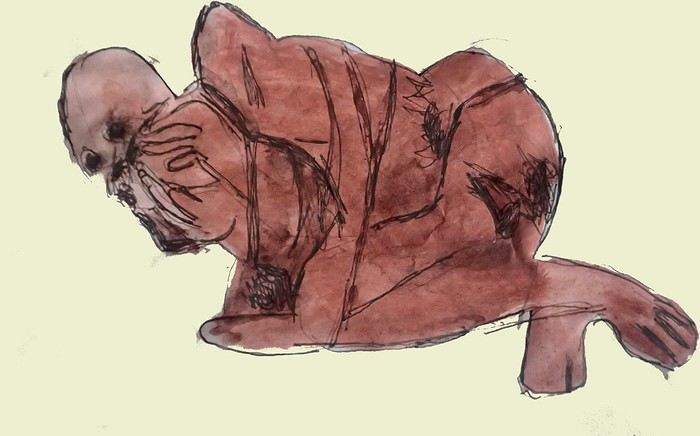
*Chavín de Huántar (Lanzón) The site’s appeal lies in its mountainous surroundings, the Lanzón stela, and the sculpted heads on the façades. What few people know is that the Chavín civilization began its expansion centuries before the Incas. Unfortunately, you can’t get too close to see the Lanzón—the day I was there, it was protected by grilles. To get there: minibus from Huaraz or trek from Olleros. Then cross a high pass (over 5,000m). If you do it solo on foot, be careful—the path isn’t obvious from Olleros
*Chullpa: funerary tower, notably at Sillustani in the Lake Titicaca region
*Chimú: pre-Inca civilization whose center was Chan Chan.
*Chola/Cholitas (Bolivia): typical clothing style of women from the Andean plateaus
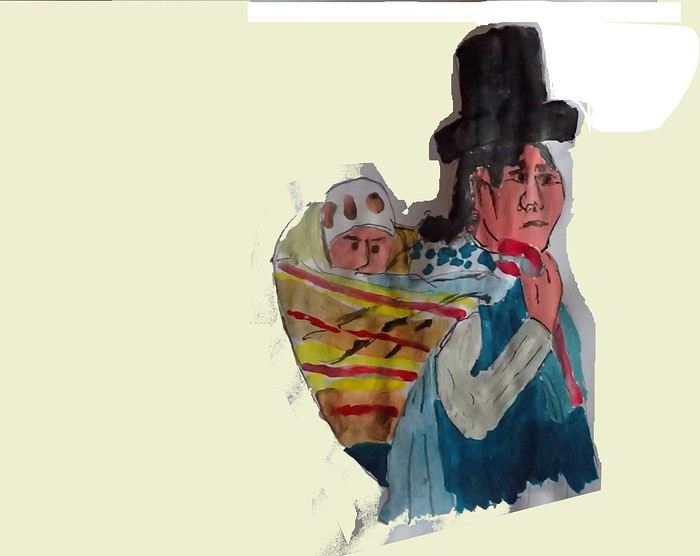
*Chompa: pronounce it *Chompaaa!* A common term for a wool sweater with vicuña patterns, often knitted from alpaca wool. If you dress like this, it’s a bit kitschy around the edges
*Cuy That one isn’t a guinea pig like in Guyana but an actual guinea pig. During a trip to Peru, I was hiking near a village north of Quillabamba (the terminus of the train line that passes through Aguas Calientes), and I was invited to stay in a house. The family raised a few of these pets. Apparently, the locals eat them. Since I’m not much of a meat-eater, it doesn’t really tempt me. How about you?
*Pacific Coast or how to talk about a place you haven’t visited? Except for the coast near Pisco and San Andrés, I haven’t visited any coastal cities. But that doesn’t mean these places lack interest or poetry. For fans of clichéd images, pelicans, seabirds, and fishing boats appear by the sea.
*Gran Pajaten: also closed to the public. Features anthropomorphic bas-reliefs. (not visited personally)
*Huaca. Visit the Huaca del Sol and Huaca de la Luna, especially near Trujillo. However, you can skip them—Chan Chan is still more interesting. Don’t forget to spend time visiting Chan Chan
*Huacachina A small oasis in the desert near Ica. Yes, we’re talking about an oasis because for those who’ve never traveled to Peru, the coastal strip along the Pacific is almost entirely desert, from north to south. Peru is territorially made up of three different regions: the desert coast, the Altiplano stretching north to south with mountain ranges (the Cordilleras), and the Amazon basin to the east. (not visited personally)
*Inca Kola It’s neither Coca-Cola nor Pepsi but a unique cola with a slightly orange color. Tastes like bubble gum
*Intiwatana: a carved rock shaped like a parallelepiped. Is it a sundial?
*Ballestas Islands: a highlight in Peru, though very touristy. You can only get there by boat from the port of San Andrés, a few kilometers from Pisco. It’s a surreal place to me—actually islets with cavities where sea lions and fur seals live. Since it’s a protected area, you’re not allowed to disembark. Guano is harvested there, which can be used as fertilizer.
*Kuelap: a fortress built by the Chachapoyas people. Rarely visited by travelers. (not visited personally)
*Larco Museum: an iconic museum in Lima with a large collection of pieces from archaeological and pre-Columbian sites. From what I remember, it has many pieces from the Moche civilization. As for the Moche statuettes, the prudish might look away. Probably a veneration of the god Priapus without knowing it.
*Nazca Lines Discovered by German archaeologist Maria Reiche, they stretch for kilometers. The designs in the desert around Nazca depict animals and cabalistic signs. The question I ask myself is why the creators of these lines represented a monkey and a hummingbird—species endemic to the tropical forest, not the desert plains around Nazca.
*Machu Picchu: means "old mountain" in Quechua. There’s also Wayna Picchu. The ruins of the site emerge from a sort of small plateau above Aguas Calientes. When the mist rises above the site and the bend of the Urubamba River, it’s truly magical... Also the starting point of the Inca Trail.
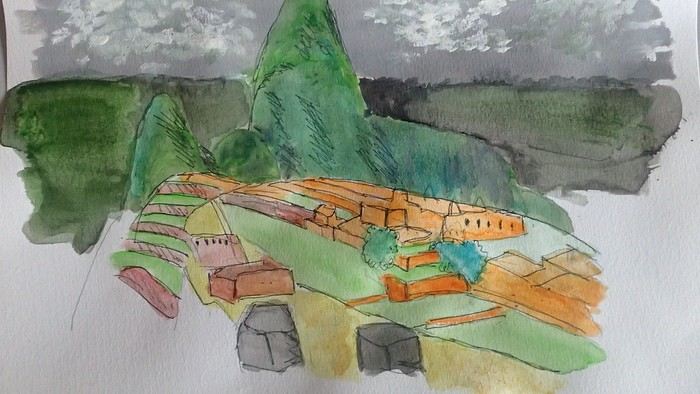
*Coca tea A decoction/infusion of the coca plant, meant to ease altitude sickness or *soroche*
*Chullo A rough translation would be a Peruvian wool hat.
*Moche: a civilization established in the Moche Valley, hence the term *Mochica*. What characterizes this civilization are the distinctive clay pieces representing faces and erotic statuettes
*Papa a la Huancaína A local potato dish
*Pisac: a typical market near Cusco
*Pisco Sour: perhaps the Peruvian equivalent of the *caipirinha* you drink in Brazil.
*Puya Raimondii A Bromeliaceae that still looks like a cactus, endemic to the Altiplano
*Quechua The language spoken by the indigenous people of the high plateaus (as well as Aymara in Bolivia)
*Quipu A knotted string used for counting. Widely used by the Inca administration.
*Sacsayhuamán (Q’enqo, Inca Bath) From Cusco’s Plaza de Armas, take the streets that climb above the city. Sacsayhuamán is called a fortress and is made up of large stone blocks. You wonder how the Incas could cut such huge blocks to assemble them—just like some streets in Cusco. The Q’enqo block is enigmatic; no one really knows what it represents.
*Savia Andina An Andean folk group.
*Tambo (=> Ollantaytambo) The Inca emperor (Atahualpa, Manco Capac) had the mission of controlling a vast empire. An empire that was still very extensive. Hence the importance of these *tambos* or relay stations. Napoleon created the civil code; the Incas invented the *tambos* and *quipus*.
*Tawantinsuyu: the Inca Empire
*Tinku: a warrior dance practiced mainly in Bolivia
*Golden Tumi: a sacrificial weapon. Often featured in Peru travel guides. See illustration
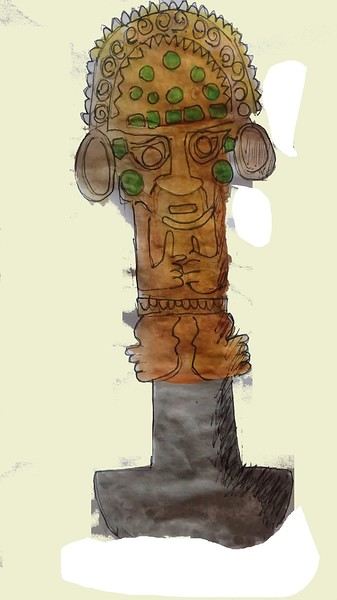
*Terra X: a documentary series from the German TV channel that aired on Arte. Some episodes focused on pre-Inca and Inca Peru. I must have some old recording tapes. In memory of Gottfried Kirchner as a source of inspiration.
*Uros: I checked—it actually refers to the people who live on these floating islands. Even if it’s touristy, it’s a must-visit because it’s incredible how people can live on islets made from nothing. Take the boat from Puno
*Vicuña, llama, guanaco: camelids characteristic of the Altiplano
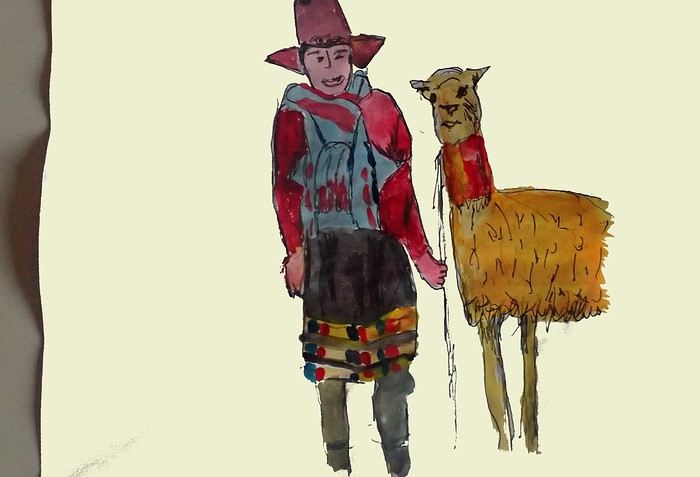
*Wayna Picchu The young Picchu mountain. In the first minutes of *Aguirre, the Wrath of God*, you see Klaus Kinski—well, Aguirre—making his way along the Inca Trail. Werner Herzog must have broken his back filming those sequences.
*Zampoña: pan flute
Peru is still a very vast country, with so much to see, and obviously this text can't list all the attractions of the country.
*Abiseo (River) A national park that's very hard to access and doesn’t seem open to visitors. Includes the Gran Pajaten site (see below). Personally, it really sparks my imagination (not visited personally)
*Aguas Calientes the town next to Machu Picchu, more precisely below the archaeological site. As far as I know, you can only get there by train. Reminds me of the market where stalls line both sides of the tracks near Bangkok. I love it
*Altiplano: somewhere the "heart" of the Andes. I was able to trek across it on foot, starting from Caracollo in Bolivia, and of course, it’s vast plains to explore. This is where people live in a very rural way. Andean populations are quite austere compared to those in the lowlands or on the coast. You really have to appreciate the harshness of life to live there. Life is anything but superficial. I set a compass heading and found myself walking west toward the expanse of water near a place called La Joya. For pitching the tent, the nights were still chilly
*Canyon del Colca One of the deepest canyons in the world. Personally, I hiked down and back up on foot. The toughest stretch I’ve ever covered in my life.
*Ceviche More or less the national dish. A marinade of fish, shellfish, and lime. But you can find it in some restaurants in Europe, France, and certainly in Belgium or Switzerland. In the small restaurants of Pisco, you can eat excellent ceviche
*Cerro Sechín: Mostly bas-reliefs. A site little known to travelers in the Casma province. The first vestiges of a pre-Inca civilization with iconography similar to that of Chavín (not visited personally)
*Chan Chan A large city of the Chimú civilization and relatively vast to visit. You can see adobe walls with bas-reliefs. Visit from Trujillo, take a colectivo. Plan for the whole day
*Charango: a small guitar widely used in Andean music
*Chauchilla A necropolis near Nazca where you can see mummies exposed on the ground. YouTubers can do paranormal experiments there. And for anyone wondering about the fate of the soul and body after death, here’s the answer: the body remains after death. You can imagine your own flesh and body exposed to the winds of the Pampa and before eternity... (not visited personally)
*Chavín de Huántar (Lanzón) The site’s appeal lies in its mountainous surroundings, the Lanzón stela, and the sculpted heads on the façades. What few people know is that the Chavín civilization began its expansion centuries before the Incas. Unfortunately, you can’t get too close to see the Lanzón—the day I was there, it was protected by grilles. To get there: minibus from Huaraz or trek from Olleros. Then cross a high pass (over 5,000m). If you do it solo on foot, be careful—the path isn’t obvious from Olleros
*Chullpa: funerary tower, notably at Sillustani in the Lake Titicaca region
*Chimú: pre-Inca civilization whose center was Chan Chan.
*Chola/Cholitas (Bolivia): typical clothing style of women from the Andean plateaus
*Chompa: pronounce it *Chompaaa!* A common term for a wool sweater with vicuña patterns, often knitted from alpaca wool. If you dress like this, it’s a bit kitschy around the edges
*Cuy That one isn’t a guinea pig like in Guyana but an actual guinea pig. During a trip to Peru, I was hiking near a village north of Quillabamba (the terminus of the train line that passes through Aguas Calientes), and I was invited to stay in a house. The family raised a few of these pets. Apparently, the locals eat them. Since I’m not much of a meat-eater, it doesn’t really tempt me. How about you?
*Pacific Coast or how to talk about a place you haven’t visited? Except for the coast near Pisco and San Andrés, I haven’t visited any coastal cities. But that doesn’t mean these places lack interest or poetry. For fans of clichéd images, pelicans, seabirds, and fishing boats appear by the sea.
*Gran Pajaten: also closed to the public. Features anthropomorphic bas-reliefs. (not visited personally)
*Huaca. Visit the Huaca del Sol and Huaca de la Luna, especially near Trujillo. However, you can skip them—Chan Chan is still more interesting. Don’t forget to spend time visiting Chan Chan
*Huacachina A small oasis in the desert near Ica. Yes, we’re talking about an oasis because for those who’ve never traveled to Peru, the coastal strip along the Pacific is almost entirely desert, from north to south. Peru is territorially made up of three different regions: the desert coast, the Altiplano stretching north to south with mountain ranges (the Cordilleras), and the Amazon basin to the east. (not visited personally)
*Inca Kola It’s neither Coca-Cola nor Pepsi but a unique cola with a slightly orange color. Tastes like bubble gum
*Intiwatana: a carved rock shaped like a parallelepiped. Is it a sundial?
*Ballestas Islands: a highlight in Peru, though very touristy. You can only get there by boat from the port of San Andrés, a few kilometers from Pisco. It’s a surreal place to me—actually islets with cavities where sea lions and fur seals live. Since it’s a protected area, you’re not allowed to disembark. Guano is harvested there, which can be used as fertilizer.
*Kuelap: a fortress built by the Chachapoyas people. Rarely visited by travelers. (not visited personally)
*Larco Museum: an iconic museum in Lima with a large collection of pieces from archaeological and pre-Columbian sites. From what I remember, it has many pieces from the Moche civilization. As for the Moche statuettes, the prudish might look away. Probably a veneration of the god Priapus without knowing it.
*Nazca Lines Discovered by German archaeologist Maria Reiche, they stretch for kilometers. The designs in the desert around Nazca depict animals and cabalistic signs. The question I ask myself is why the creators of these lines represented a monkey and a hummingbird—species endemic to the tropical forest, not the desert plains around Nazca.
*Machu Picchu: means "old mountain" in Quechua. There’s also Wayna Picchu. The ruins of the site emerge from a sort of small plateau above Aguas Calientes. When the mist rises above the site and the bend of the Urubamba River, it’s truly magical... Also the starting point of the Inca Trail.
*Coca tea A decoction/infusion of the coca plant, meant to ease altitude sickness or *soroche*
*Chullo A rough translation would be a Peruvian wool hat.
*Moche: a civilization established in the Moche Valley, hence the term *Mochica*. What characterizes this civilization are the distinctive clay pieces representing faces and erotic statuettes
*Papa a la Huancaína A local potato dish
*Pisac: a typical market near Cusco
*Pisco Sour: perhaps the Peruvian equivalent of the *caipirinha* you drink in Brazil.
*Puya Raimondii A Bromeliaceae that still looks like a cactus, endemic to the Altiplano
*Quechua The language spoken by the indigenous people of the high plateaus (as well as Aymara in Bolivia)
*Quipu A knotted string used for counting. Widely used by the Inca administration.
*Sacsayhuamán (Q’enqo, Inca Bath) From Cusco’s Plaza de Armas, take the streets that climb above the city. Sacsayhuamán is called a fortress and is made up of large stone blocks. You wonder how the Incas could cut such huge blocks to assemble them—just like some streets in Cusco. The Q’enqo block is enigmatic; no one really knows what it represents.
*Savia Andina An Andean folk group.
*Tambo (=> Ollantaytambo) The Inca emperor (Atahualpa, Manco Capac) had the mission of controlling a vast empire. An empire that was still very extensive. Hence the importance of these *tambos* or relay stations. Napoleon created the civil code; the Incas invented the *tambos* and *quipus*.
*Tawantinsuyu: the Inca Empire
*Tinku: a warrior dance practiced mainly in Bolivia
*Golden Tumi: a sacrificial weapon. Often featured in Peru travel guides. See illustration
*Terra X: a documentary series from the German TV channel that aired on Arte. Some episodes focused on pre-Inca and Inca Peru. I must have some old recording tapes. In memory of Gottfried Kirchner as a source of inspiration.
*Uros: I checked—it actually refers to the people who live on these floating islands. Even if it’s touristy, it’s a must-visit because it’s incredible how people can live on islets made from nothing. Take the boat from Puno
*Vicuña, llama, guanaco: camelids characteristic of the Altiplano
*Wayna Picchu The young Picchu mountain. In the first minutes of *Aguirre, the Wrath of God*, you see Klaus Kinski—well, Aguirre—making his way along the Inca Trail. Werner Herzog must have broken his back filming those sequences.
*Zampoña: pan flute
A Bold Combo: Southern Peru, Bolivia, and Northern Chile
Hello everyone,
For our latest 3-week family trip (yes, the kids are growing up, and two of them are about to enter the working world), we’re heading to South America! For our first time on this continent, I had planned a classic 3-week loop in Peru.
But since we won’t be returning to this part of the world anytime soon, I thought: why not follow in the footsteps of Franck, aka Bibouns51, who, in 18 days, didn’t just stick to Peru but also added two of the planet’s most stunning landscapes to his itinerary... the Salar de Uyuni in Bolivia and its neighbor, the fabulous Atacama Desert in northern Chile !!
So, I set about the tricky task of limiting the regions we’d visit in Peru to those we considered must-sees, to avoid rushing too much. The visit schedules were optimized, including several comfortable overnight buses that have the huge advantage of letting us hop between regions.
So, we’re off on a somewhat adventurous trip with three domestic flights (two on the first day and one on the last), two overnight buses for quick hops, several car rentals, the services of a few drivers to make the trip more comfortable, and even a tour operator for crossing the Salar...
Our main concern is altitude sickness, and we’re bringing Diamox, aspirin, etc., just in case.
Our second worry before departure was not even getting off the ground... Yes, for once, we’re leaving from France—Marseille, to be exact. The week before our departure, with the surprise air traffic controllers’ strike, I remembered why we usually prefer to leave from abroad, like Turin or Barcelona... In the end, it wasn’t the air traffic controllers who made us nervous but the early July wildfires that paralyzed the airport a few days before our departure. Fortunately, the fires were quickly brought under control, and on the big day, everything was smooth sailing!
Detailed itinerary (which changed on Day 1 due to departure hiccups): Day 0: Flight Marseille - Madrid - Lima PERU Theoretical and abandoned Day 1: Flight Lima - Cuzco and visit Cuzco (Puka Pukara, Tambomachay, Cristo Blanco Observatory, Sacsayhuaman sunset) - Night in Cuzco Day 2: Taxi -> Chinchero - Moray - Maras Salt Mines - Ollantaytambo - Train to Aguas Calientes Day 3: Machu Picchu - Return train to Ollantaytambo Day 4: 2-day taxi -> Pisac - Tipon - Andahuaylillas - Huaro - Night in San Pedro Day 5: Palcoyo - Checacupe - Vinicunca - Return and night in Cuzco Day 6: Day in Cuzco (catch-up on Sacsayhuaman, San Blas district, Temple of the Sun) - Overnight bus to Arequipa Day 7: Rental car -> On the road to Colca Canyon, night in Cabanaconde Day 8: Descent to the bottom of Colca Canyon, night at Oasis Sangalle Day 9: Ascent from the canyon - Maca - Chivay - Return and night in Arequipa Day 10: Visit Arequipa (Santa Catalina Convent, La Recoleta Church and Monastery, La Compañía Church, Cathedral) - Overnight bus to Puno Day 11: Lake Titicaca - Night in Puno BOLIVIA Day 12: Shared taxi -> Road to La Paz, visit downtown La Paz - Night 1 in La Paz Day 13: Moon Valley and Las Animas Valley - Night 2 in La Paz Day 14: Day in La Paz - Night 3 in La Paz Day 15: Flight to Uyuni - Day 1 of Salar de Uyuni tour - Night at the edge of the Salar Day 16: Crossing the Lipez region and lagoons - Night near Laguna Colorada Day 17: Sol de Mañana CHILE Day 17 cont.: Pre-booked transfer to SPDA - 4x4 rental - Pukara de Quitor - Stargazing tour - Night 1 in SPDA Day 18: Death Valley and Moon Valley - Night 2 in SPDA Day 19: Miscanti and Miniques Lagoons, Salar de Aguas Calientes and its Piedra Roja, Tebenquiche Lagoon and Quebrada del Diablo - Night 3 in SPDA Day 20: Rainbow Valley and swim in the Puritama River - Night 4 in SPDA Day 21: Tebenquiche Lagoon - Bus to Calama - Flight to Santiago Day 22: Return Santiago - Madrid - Marseille
Day 0 - 11/07: Destination Lima
Our first flight from Marseille went smoothly to our Iberia layover in Madrid.
In Madrid, just after getting off the plane around 8 PM, and as we were walking through the terminal, we got a rude awakening!!
We saw the word "Cancelled" next to our flight number on the display boards. Thinking it must be a glitch, we checked another screen, but the system was stubborn, and the same dreaded word appeared !
So, we headed to the Iberia counter, where an agent confirmed that our Friday evening flight was canceled and rescheduled for the next morning. The reason? A breakdown and no replacement plane, even though we were in Madrid, Iberia’s home base!
To make matters worse, I remembered our super-tight schedule, planned to the minute, with no buffer day in Lima. Since I’m a bit phobic of megacities and hadn’t found anything appealing in the Peruvian capital in our guidebooks, we’d planned to leave Lima as soon as possible for Cusco, the heart of the Sacred Valley, to spend our first day there.
Bad idea, because we already knew the 4-hour buffer wouldn’t be enough, and we’d miss the domestic flight, which was, of course, non-refundable and non-changeable. So, we had to call LATAM from Madrid to find another flight for Saturday evening and negotiate a rate to recover some of our initial outlay.
After an hour on the phone with customer service, several endless holds, and three failed attempts to dictate our credit card number over the phone to a Spaniard speaking English with a thick accent, we finally managed to confirm the transaction, securing our new flight tickets for a moderate extra cost of just 150 € total.
At first, we were pretty bummed about losing a day and incurring extra fees to reschedule the domestic flight, but then, when we learned from an Iberia customer service rep that we’d receive the max compensation of 600 € per traveler, we even ended up grinning... because 3000 € in refunds for only losing the first day in Cusco? We’d sign up for that 10 times over!!
Iberia then took care of us, putting us up in a hotel where we had dinner before a short 5-hour night and an early morning departure. I took the opportunity to improvise a quick day of sightseeing in Lima, focusing on the Barranco and Miraflores districts.
For our latest 3-week family trip (yes, the kids are growing up, and two of them are about to enter the working world), we’re heading to South America! For our first time on this continent, I had planned a classic 3-week loop in Peru.
But since we won’t be returning to this part of the world anytime soon, I thought: why not follow in the footsteps of Franck, aka Bibouns51, who, in 18 days, didn’t just stick to Peru but also added two of the planet’s most stunning landscapes to his itinerary... the Salar de Uyuni in Bolivia and its neighbor, the fabulous Atacama Desert in northern Chile !!
So, I set about the tricky task of limiting the regions we’d visit in Peru to those we considered must-sees, to avoid rushing too much. The visit schedules were optimized, including several comfortable overnight buses that have the huge advantage of letting us hop between regions.
So, we’re off on a somewhat adventurous trip with three domestic flights (two on the first day and one on the last), two overnight buses for quick hops, several car rentals, the services of a few drivers to make the trip more comfortable, and even a tour operator for crossing the Salar...
Our main concern is altitude sickness, and we’re bringing Diamox, aspirin, etc., just in case.
Our second worry before departure was not even getting off the ground... Yes, for once, we’re leaving from France—Marseille, to be exact. The week before our departure, with the surprise air traffic controllers’ strike, I remembered why we usually prefer to leave from abroad, like Turin or Barcelona... In the end, it wasn’t the air traffic controllers who made us nervous but the early July wildfires that paralyzed the airport a few days before our departure. Fortunately, the fires were quickly brought under control, and on the big day, everything was smooth sailing!
Detailed itinerary (which changed on Day 1 due to departure hiccups): Day 0: Flight Marseille - Madrid - Lima PERU Theoretical and abandoned Day 1: Flight Lima - Cuzco and visit Cuzco (Puka Pukara, Tambomachay, Cristo Blanco Observatory, Sacsayhuaman sunset) - Night in Cuzco Day 2: Taxi -> Chinchero - Moray - Maras Salt Mines - Ollantaytambo - Train to Aguas Calientes Day 3: Machu Picchu - Return train to Ollantaytambo Day 4: 2-day taxi -> Pisac - Tipon - Andahuaylillas - Huaro - Night in San Pedro Day 5: Palcoyo - Checacupe - Vinicunca - Return and night in Cuzco Day 6: Day in Cuzco (catch-up on Sacsayhuaman, San Blas district, Temple of the Sun) - Overnight bus to Arequipa Day 7: Rental car -> On the road to Colca Canyon, night in Cabanaconde Day 8: Descent to the bottom of Colca Canyon, night at Oasis Sangalle Day 9: Ascent from the canyon - Maca - Chivay - Return and night in Arequipa Day 10: Visit Arequipa (Santa Catalina Convent, La Recoleta Church and Monastery, La Compañía Church, Cathedral) - Overnight bus to Puno Day 11: Lake Titicaca - Night in Puno BOLIVIA Day 12: Shared taxi -> Road to La Paz, visit downtown La Paz - Night 1 in La Paz Day 13: Moon Valley and Las Animas Valley - Night 2 in La Paz Day 14: Day in La Paz - Night 3 in La Paz Day 15: Flight to Uyuni - Day 1 of Salar de Uyuni tour - Night at the edge of the Salar Day 16: Crossing the Lipez region and lagoons - Night near Laguna Colorada Day 17: Sol de Mañana CHILE Day 17 cont.: Pre-booked transfer to SPDA - 4x4 rental - Pukara de Quitor - Stargazing tour - Night 1 in SPDA Day 18: Death Valley and Moon Valley - Night 2 in SPDA Day 19: Miscanti and Miniques Lagoons, Salar de Aguas Calientes and its Piedra Roja, Tebenquiche Lagoon and Quebrada del Diablo - Night 3 in SPDA Day 20: Rainbow Valley and swim in the Puritama River - Night 4 in SPDA Day 21: Tebenquiche Lagoon - Bus to Calama - Flight to Santiago Day 22: Return Santiago - Madrid - Marseille
Day 0 - 11/07: Destination Lima
Our first flight from Marseille went smoothly to our Iberia layover in Madrid.
In Madrid, just after getting off the plane around 8 PM, and as we were walking through the terminal, we got a rude awakening!!
We saw the word "Cancelled" next to our flight number on the display boards. Thinking it must be a glitch, we checked another screen, but the system was stubborn, and the same dreaded word appeared !
So, we headed to the Iberia counter, where an agent confirmed that our Friday evening flight was canceled and rescheduled for the next morning. The reason? A breakdown and no replacement plane, even though we were in Madrid, Iberia’s home base!
To make matters worse, I remembered our super-tight schedule, planned to the minute, with no buffer day in Lima. Since I’m a bit phobic of megacities and hadn’t found anything appealing in the Peruvian capital in our guidebooks, we’d planned to leave Lima as soon as possible for Cusco, the heart of the Sacred Valley, to spend our first day there.
Bad idea, because we already knew the 4-hour buffer wouldn’t be enough, and we’d miss the domestic flight, which was, of course, non-refundable and non-changeable. So, we had to call LATAM from Madrid to find another flight for Saturday evening and negotiate a rate to recover some of our initial outlay.
After an hour on the phone with customer service, several endless holds, and three failed attempts to dictate our credit card number over the phone to a Spaniard speaking English with a thick accent, we finally managed to confirm the transaction, securing our new flight tickets for a moderate extra cost of just 150 € total.
At first, we were pretty bummed about losing a day and incurring extra fees to reschedule the domestic flight, but then, when we learned from an Iberia customer service rep that we’d receive the max compensation of 600 € per traveler, we even ended up grinning... because 3000 € in refunds for only losing the first day in Cusco? We’d sign up for that 10 times over!!
Iberia then took care of us, putting us up in a hotel where we had dinner before a short 5-hour night and an early morning departure. I took the opportunity to improvise a quick day of sightseeing in Lima, focusing on the Barranco and Miraflores districts.
Airport bus from Hanoi to Cao Bang
Hi there, we’re landing at Hanoi Airport and would like to head straight to Cao Bang without going into Hanoi. Does anyone know if there are buses that go directly from the airport to Cao Bang (especially in the early afternoon)? Thanks in advance!
Arusha, Tanzania - October 2025
I would wish never to go to bed where I had woken up, to wander my tent from the shores of Egypt to those of the Persian Gulf; to have no goal for the evening other than the evening itself; to traverse on foot, with my eyes and my heart, all these unknown lands, all these races of people so different from my own; to contemplate humanity, God’s finest creation, in all its forms.
Lamartine in Fatalla Sayeghir’s Account (1861)
As soon as it’s about flying, I lose all willpower. Being reasonable and thoughtful, I still lose all my composure at the mere possibility of a flight—especially if it’s piloted by F.—and even more so if that flight can take me to unexplored lands. I’ve long wanted to unravel the mystery of animal tourism, and why not in Tanzania, following up on my trip from four years ago, when I was already questioning the glaring inequalities in Zanzibar: the coastal strip sacrificed to capitalism, and the inland areas, just a hundred meters from the waves, where you find—though a bit more peaceful than elsewhere on the continent—the chaos of Africa.
I’m an adventurer at heart. When it comes to the terrain, though, it’s a whole different story. I see people setting off for months at a time; I know my endurance doesn’t last beyond three days. It’s not that I’m afraid of this unfamiliar environment when it comes to embracing different realities. I’m mostly afraid of myself—of this heightened sensitivity that makes me see things I’d rather not see and understand others that sometimes overwhelm me.
After an absolutely fantastic daytime flight, I land in Zanzibar and have to resign myself—this is the whole point of the trip—to what feels like a real spacewalk. I’m alone. My lucky star, backed up by my phone, will serve as my lifeline. I step out of the airport and breathe in the scent of Africa full-on: a mix of exotic perfumes, baked earth, and poorly refined fuel, inevitably mingled with the smell of wood smoke. So many images come flooding back. So many stories. Another world.
I head to Arusha the very next day. The gateway to the country’s northern national parks, this city of half a million offers one of those rare breath-holding dives that Africa keeps secret. As the only white person walking the streets, I know I’m visible and vulnerable, yet I move forward confidently, barely bothered. But where are all my fellow Westerners? While this city draws countless tourists, I only cross paths with one white couple in nearly three hours of walking. Because you have to hold on tight to wander here. You have to stay alert. The traffic is dense and erratic—don’t even trust the fact that in Tanzania, people drive on the left. That can change from one minute to the next, especially with motorbikes. With barely centimeters between vehicles, I weave my way through the urban jungle, trying not to stumble into the huge ditch on my left or get sideswiped by cars brushing past me on the right. Speakers blare music, ads, or political speeches at will—the explosion of yellow and green tells us we’re on the eve of the presidential election—but they barely compete with the calls to prayer, nearly nonstop on this holy Friday. The vital space is as saturated as the sound. Imagine an unbroken line of shops and stalls of every kind—supermarkets haven’t made it here yet—where you can find just about anything: phones, copper pipes, Chinese-made hardware, shoes, clothes, basins, and professional tools… The luckiest own a big store; others spend their lives trying to survive on the profits from selling toothbrushes one at a time on the streets. But maybe it’s more lucrative than spending the day slumped on the sidewalk, preferably missing a limb, trusting your survival to the mercy of passersby.
I think I’ll escape the street by slipping into the narrow alleys of the central market. Here, I know I won’t run into anyone like me! The vendors’ stalls start at waist height; the sellers, perched higher up, haggle or not while discussing prices. Here, colorful fruits and vegetables; there, huge piles of dried fish. Spices, seeds, roots. Smells. Noises. Africa. Life. Further on, the fresh fish aisle makes a right angle with the butchers’. Everywhere, flies—everywhere, the same gesture from vendors swatting blindly at these relentless pests. Aware that I’ll be eating this same meat within the hour, displayed with total disregard for basic hygiene, I reassure myself that Arusha sits at 1400m altitude. Yes, we can probably do without a fridge.
*
It’s time to leave the city and go wildlife spotting in the surrounding parks. To that end, I’ve negotiated a package deal with a local agency that prides itself on grouping solo travelers into a vehicle meant for seven. We leave behind the imposing masses of Mount Meru and Kilimanjaro, peaking at 4565m and 5895m respectively, and head west to conquer Tarangire and Ngorongoro parks. I’ve been promised a spectacle; I remain cautious. I’ve read rave reviews; I know how to temper my expectations. Above all, I know what I came for—and paradoxically, my hopes are less about animals than strictly anthropological. So I’m sure I won’t go home disappointed.
I’m in the thick of it. Since 2021, tourism has been booming: I’m one of the two million tourists who come here every year seeking thrills. I also contribute, in a small way, to the 20% of the country’s GDP generated by tourism revenue. Around 3 billion € annually… Tanzania has 16 national parks, twice as many reserves; it charges meticulously for every entry, every night, every activity, to the tune of several dozen euros. I calculated that Tarangire Park alone rakes in around 15 million € a year. Mind-boggling. Yet to get there, a dusty, rickety old track is used daily by hundreds of vehicles that literally saturate the surrounding area with white dust and exhaust fumes. At the park entrance, we wait a good hour while the driver pays the entry fees. Then it’s a free-for-all: dozens of 4x4s try to enter at the same time through the single access point, to the left of the building, while the three barriers are stuck due to a computer glitch. It’s pure chaos: no way to buy your ticket in advance—the QR code revolution hasn’t arrived; no smart layout before the barriers; nothing smooth, nothing practical, everything improvised.
So, the animals? Given the time and money involved, I’d be tempted to say it’s not worth the hassle and there’s really no need to break five legs off one of the too-many zebras we pass. Hours and hours of travel to get to Tanzania, specifically Arusha; hours and hours on the road—up to 12 hours a day—to spend barely three in the parks; at least 200 € per day for the most basic option, so 400 € in my case, and up to several thousand for those wealthy couples opting for the luxury package with a private vehicle. Sure, I saw zebras and elephants in their natural habitat, wildebeest, buffalo, and a few hippos, but I didn’t feel the thrill touted in the articles or even by my two-day trip organizer. Would I have been more satisfied if I’d seen the lion, the leopard, and the rhino? Maybe. But the story won’t be rewritten in light of those assumptions.
Yet I’m not disappointed. As I said earlier: I know what I came for. I wanted to see the world as it is with my own eyes. And the safari world fascinates me more for its anthropological aspect than for what it offers. Yes, the fact that people from all over the world come here, juggling hotels and big 4x4s—while notably avoiding the streets of cities and villages—truly fascinates me. Two worlds coexist on either side of a barely porous border. As soon as the tourist sets foot in the airport, they’re whisked away, sight unseen, into a tourist vehicle. Dropped off at the hotel, they rest there, shielded from view, until the 4x4 departs. Then they speed through those same cities and villages they scorn out of fear or disdain, leaving on the roadside the Maasai herding their flocks and all those poignant or mundane scenes that make up daily African life. In the evening, in their lodge, far from the city’s pulse, they fall asleep thinking about the images they’ve collected, those long hours on the road, the wait for the animals. And the days go by… Maybe the term *luxury*, whether for food or accommodation, refers to what we experience as utterly ordinary in the West? Forgetting that you’re there, in Africa, just steps away from poverty and a certain arbitrariness. And at the end of the journey: back to the airport, back to normal life.
Maybe we need to take a broader view. All that money seems invisible, yet it must serve the population at some point, right? The main roads are passable, the power grid seems well-maintained—I can tell by the excellent condition of the high-voltage transmission towers. Is it really too expensive to significantly improve all the infrastructure? I hoped this windfall would truly serve the people’s interests. The driver taking me back to the airport on the last evening dashes my sweet illusions: « All this is bad. Africa is bad. But you have no choice. The hospitals don’t work, the schools don’t work, the roads don’t work (just as he says this, roadworks force us onto a terrible detour for several kilometers—a rutted track, in fact), and if you say anything, if you speak up too much, they come for you and then you disappear. » That’s just one opinion. Nothing empirical. But I don’t need to be a West Point graduate to realize how rampant corruption is in these regions: while the muezzin bellows the greatness of Allah, I consider the dilapidated equipment and the energy expended by the masses just to survive here. But maybe all that money keeps the country afloat by paying civil servants’ salaries? Meanwhile, one thing is certain: regardless of where the profits go, tourism supports millions of people, and I’m in no position to judge this system too harshly. Maybe I’m too much of an aesthete to appreciate the almost exclusive use of corrugated iron at its true value…
*
I’ll give this system credit for one thing: the chance to set foot in spaces impossible to visit otherwise. At one point, in the heart of the Ngorongoro Crater—a vast 20km-wide plain topped by a 600m-high caldera—I was simply happy to be there. Barely bothered by the constant ballet of 4x4s—the space is vast—I contemplate the simple life of the local animals. Buffalo, wildebeest, zebras as numerous as the flamingos patiently standing on one leg, waiting for the day to pass. Over there, you can make out a few hyenas with vultures circling above. Finally, in a large body of water, hippos surface at regular intervals. I’m aware of my luck. I’m especially aware that, unlike all the people I’ve met there, a lot of money and a little resourcefulness greatly favor the luck factor.
I’m heading home. I soak up the last images of this improbable Africa as night falls quickly over the countryside. I’m fascinated by the number of Maasai herding their livestock along the main road. Some pass the time, globalization obliges, on an old phone; others, sometimes as young as my eldest—barely 10 years old—watch us pass, indifferent. We overtake or are overtaken; the two-lane road is the stage for a majestic ballet of semi-trailers, *dalas-dalas*, and other 4x4s, as numerous as the names of their companies: Leopard Tours, Climbing Kilimanjaro, Smiling Zebra, Nomad Life Enhanced, Elephant Roaming, Mountain Warrior, Master of the Ambush… They drop me off at the hotel, where I have an hour to shower and change into clean clothes before my return flight. Already, I’m slipping back into my own world without really seeing it, leaving behind the hotel’s glass window that African life to which nothing truly binds me. Then that chaotic, suffocating nighttime drive to the airport. Check-in; the stupid questions (« Where are you going? »); the slow police officer who, in the end, stamps my passport anywhere; the idiocy of the security agent (my empty 33cl bottle is forbidden); the rather shabby lounge at Kilimanjaro Airport. Then the return to the vessel—to the Air France plane that left Zanzibar an hour earlier—after this 72-hour spacewalk without a real lifeline. I’ve never been so happy to see F. again.
As soon as it’s about flying, I lose all willpower. Being reasonable and thoughtful, I still lose all my composure at the mere possibility of a flight—especially if it’s piloted by F.—and even more so if that flight can take me to unexplored lands. I’ve long wanted to unravel the mystery of animal tourism, and why not in Tanzania, following up on my trip from four years ago, when I was already questioning the glaring inequalities in Zanzibar: the coastal strip sacrificed to capitalism, and the inland areas, just a hundred meters from the waves, where you find—though a bit more peaceful than elsewhere on the continent—the chaos of Africa.
I’m an adventurer at heart. When it comes to the terrain, though, it’s a whole different story. I see people setting off for months at a time; I know my endurance doesn’t last beyond three days. It’s not that I’m afraid of this unfamiliar environment when it comes to embracing different realities. I’m mostly afraid of myself—of this heightened sensitivity that makes me see things I’d rather not see and understand others that sometimes overwhelm me.
After an absolutely fantastic daytime flight, I land in Zanzibar and have to resign myself—this is the whole point of the trip—to what feels like a real spacewalk. I’m alone. My lucky star, backed up by my phone, will serve as my lifeline. I step out of the airport and breathe in the scent of Africa full-on: a mix of exotic perfumes, baked earth, and poorly refined fuel, inevitably mingled with the smell of wood smoke. So many images come flooding back. So many stories. Another world.
I head to Arusha the very next day. The gateway to the country’s northern national parks, this city of half a million offers one of those rare breath-holding dives that Africa keeps secret. As the only white person walking the streets, I know I’m visible and vulnerable, yet I move forward confidently, barely bothered. But where are all my fellow Westerners? While this city draws countless tourists, I only cross paths with one white couple in nearly three hours of walking. Because you have to hold on tight to wander here. You have to stay alert. The traffic is dense and erratic—don’t even trust the fact that in Tanzania, people drive on the left. That can change from one minute to the next, especially with motorbikes. With barely centimeters between vehicles, I weave my way through the urban jungle, trying not to stumble into the huge ditch on my left or get sideswiped by cars brushing past me on the right. Speakers blare music, ads, or political speeches at will—the explosion of yellow and green tells us we’re on the eve of the presidential election—but they barely compete with the calls to prayer, nearly nonstop on this holy Friday. The vital space is as saturated as the sound. Imagine an unbroken line of shops and stalls of every kind—supermarkets haven’t made it here yet—where you can find just about anything: phones, copper pipes, Chinese-made hardware, shoes, clothes, basins, and professional tools… The luckiest own a big store; others spend their lives trying to survive on the profits from selling toothbrushes one at a time on the streets. But maybe it’s more lucrative than spending the day slumped on the sidewalk, preferably missing a limb, trusting your survival to the mercy of passersby.
I think I’ll escape the street by slipping into the narrow alleys of the central market. Here, I know I won’t run into anyone like me! The vendors’ stalls start at waist height; the sellers, perched higher up, haggle or not while discussing prices. Here, colorful fruits and vegetables; there, huge piles of dried fish. Spices, seeds, roots. Smells. Noises. Africa. Life. Further on, the fresh fish aisle makes a right angle with the butchers’. Everywhere, flies—everywhere, the same gesture from vendors swatting blindly at these relentless pests. Aware that I’ll be eating this same meat within the hour, displayed with total disregard for basic hygiene, I reassure myself that Arusha sits at 1400m altitude. Yes, we can probably do without a fridge.
*
It’s time to leave the city and go wildlife spotting in the surrounding parks. To that end, I’ve negotiated a package deal with a local agency that prides itself on grouping solo travelers into a vehicle meant for seven. We leave behind the imposing masses of Mount Meru and Kilimanjaro, peaking at 4565m and 5895m respectively, and head west to conquer Tarangire and Ngorongoro parks. I’ve been promised a spectacle; I remain cautious. I’ve read rave reviews; I know how to temper my expectations. Above all, I know what I came for—and paradoxically, my hopes are less about animals than strictly anthropological. So I’m sure I won’t go home disappointed.
I’m in the thick of it. Since 2021, tourism has been booming: I’m one of the two million tourists who come here every year seeking thrills. I also contribute, in a small way, to the 20% of the country’s GDP generated by tourism revenue. Around 3 billion € annually… Tanzania has 16 national parks, twice as many reserves; it charges meticulously for every entry, every night, every activity, to the tune of several dozen euros. I calculated that Tarangire Park alone rakes in around 15 million € a year. Mind-boggling. Yet to get there, a dusty, rickety old track is used daily by hundreds of vehicles that literally saturate the surrounding area with white dust and exhaust fumes. At the park entrance, we wait a good hour while the driver pays the entry fees. Then it’s a free-for-all: dozens of 4x4s try to enter at the same time through the single access point, to the left of the building, while the three barriers are stuck due to a computer glitch. It’s pure chaos: no way to buy your ticket in advance—the QR code revolution hasn’t arrived; no smart layout before the barriers; nothing smooth, nothing practical, everything improvised.
So, the animals? Given the time and money involved, I’d be tempted to say it’s not worth the hassle and there’s really no need to break five legs off one of the too-many zebras we pass. Hours and hours of travel to get to Tanzania, specifically Arusha; hours and hours on the road—up to 12 hours a day—to spend barely three in the parks; at least 200 € per day for the most basic option, so 400 € in my case, and up to several thousand for those wealthy couples opting for the luxury package with a private vehicle. Sure, I saw zebras and elephants in their natural habitat, wildebeest, buffalo, and a few hippos, but I didn’t feel the thrill touted in the articles or even by my two-day trip organizer. Would I have been more satisfied if I’d seen the lion, the leopard, and the rhino? Maybe. But the story won’t be rewritten in light of those assumptions.
Yet I’m not disappointed. As I said earlier: I know what I came for. I wanted to see the world as it is with my own eyes. And the safari world fascinates me more for its anthropological aspect than for what it offers. Yes, the fact that people from all over the world come here, juggling hotels and big 4x4s—while notably avoiding the streets of cities and villages—truly fascinates me. Two worlds coexist on either side of a barely porous border. As soon as the tourist sets foot in the airport, they’re whisked away, sight unseen, into a tourist vehicle. Dropped off at the hotel, they rest there, shielded from view, until the 4x4 departs. Then they speed through those same cities and villages they scorn out of fear or disdain, leaving on the roadside the Maasai herding their flocks and all those poignant or mundane scenes that make up daily African life. In the evening, in their lodge, far from the city’s pulse, they fall asleep thinking about the images they’ve collected, those long hours on the road, the wait for the animals. And the days go by… Maybe the term *luxury*, whether for food or accommodation, refers to what we experience as utterly ordinary in the West? Forgetting that you’re there, in Africa, just steps away from poverty and a certain arbitrariness. And at the end of the journey: back to the airport, back to normal life.
Maybe we need to take a broader view. All that money seems invisible, yet it must serve the population at some point, right? The main roads are passable, the power grid seems well-maintained—I can tell by the excellent condition of the high-voltage transmission towers. Is it really too expensive to significantly improve all the infrastructure? I hoped this windfall would truly serve the people’s interests. The driver taking me back to the airport on the last evening dashes my sweet illusions: « All this is bad. Africa is bad. But you have no choice. The hospitals don’t work, the schools don’t work, the roads don’t work (just as he says this, roadworks force us onto a terrible detour for several kilometers—a rutted track, in fact), and if you say anything, if you speak up too much, they come for you and then you disappear. » That’s just one opinion. Nothing empirical. But I don’t need to be a West Point graduate to realize how rampant corruption is in these regions: while the muezzin bellows the greatness of Allah, I consider the dilapidated equipment and the energy expended by the masses just to survive here. But maybe all that money keeps the country afloat by paying civil servants’ salaries? Meanwhile, one thing is certain: regardless of where the profits go, tourism supports millions of people, and I’m in no position to judge this system too harshly. Maybe I’m too much of an aesthete to appreciate the almost exclusive use of corrugated iron at its true value…
*
I’ll give this system credit for one thing: the chance to set foot in spaces impossible to visit otherwise. At one point, in the heart of the Ngorongoro Crater—a vast 20km-wide plain topped by a 600m-high caldera—I was simply happy to be there. Barely bothered by the constant ballet of 4x4s—the space is vast—I contemplate the simple life of the local animals. Buffalo, wildebeest, zebras as numerous as the flamingos patiently standing on one leg, waiting for the day to pass. Over there, you can make out a few hyenas with vultures circling above. Finally, in a large body of water, hippos surface at regular intervals. I’m aware of my luck. I’m especially aware that, unlike all the people I’ve met there, a lot of money and a little resourcefulness greatly favor the luck factor.
I’m heading home. I soak up the last images of this improbable Africa as night falls quickly over the countryside. I’m fascinated by the number of Maasai herding their livestock along the main road. Some pass the time, globalization obliges, on an old phone; others, sometimes as young as my eldest—barely 10 years old—watch us pass, indifferent. We overtake or are overtaken; the two-lane road is the stage for a majestic ballet of semi-trailers, *dalas-dalas*, and other 4x4s, as numerous as the names of their companies: Leopard Tours, Climbing Kilimanjaro, Smiling Zebra, Nomad Life Enhanced, Elephant Roaming, Mountain Warrior, Master of the Ambush… They drop me off at the hotel, where I have an hour to shower and change into clean clothes before my return flight. Already, I’m slipping back into my own world without really seeing it, leaving behind the hotel’s glass window that African life to which nothing truly binds me. Then that chaotic, suffocating nighttime drive to the airport. Check-in; the stupid questions (« Where are you going? »); the slow police officer who, in the end, stamps my passport anywhere; the idiocy of the security agent (my empty 33cl bottle is forbidden); the rather shabby lounge at Kilimanjaro Airport. Then the return to the vessel—to the Air France plane that left Zanzibar an hour earlier—after this 72-hour spacewalk without a real lifeline. I’ve never been so happy to see F. again.
Thailand via Kuala Lumpur
Here’s my account of our trip to Thailand with my partner from November 22 to December 5, 2025.
First off, I’d like to wish all Voyageforum.com users a very happy 2026, full of happiness and amazing discoveries on your travels!
It’s thanks to the tips I gathered on this site that I planned the trip.
We traveled with Malaysia Airlines (the flight price was great, but no movies in French, not even subtitled) because we wanted to explore Kuala Lumpur and visit southern Thailand.
Our departure from Roissy was delayed because the plane had to go through the robotic de-icing trucks—pretty impressive!
After a 12-hour flight, we arrived at the beautiful Kuala Lumpur airport around 7 AM.
Don’t forget to fill out the immigration form requested by Malaysia 3 days before arrival. We left without any issues and took the Klia Ekspress train to KL Sentral station (30 minutes, 10 €). We’d booked accommodation in a tower near the station and had to communicate with the landlord to get the keys. But while we thought there’d be Wi-Fi at the station, there wasn’t—we asked the tourism office, and they said there wasn’t any. We didn’t want to buy a local SIM card since we were leaving the next day. Eventually, we went to a Starbucks to get online, but just as we decided to head to our place, a torrential downpour hit, and we couldn’t find a sidewalk to reach our destination. We went back to the station, took the elevated metro, and finally made it to our landlord and the room on the 45th floor.
Don’t forget to fill out the immigration form requested by Malaysia 3 days before arrival. We left without any issues and took the Klia Ekspress train to KL Sentral station (30 minutes, 10 €). We’d booked accommodation in a tower near the station and had to communicate with the landlord to get the keys. But while we thought there’d be Wi-Fi at the station, there wasn’t—we asked the tourism office, and they said there wasn’t any. We didn’t want to buy a local SIM card since we were leaving the next day. Eventually, we went to a Starbucks to get online, but just as we decided to head to our place, a torrential downpour hit, and we couldn’t find a sidewalk to reach our destination. We went back to the station, took the elevated metro, and finally made it to our landlord and the room on the 45th floor.
Yet Another Travel Journal in this (Too) Familiar Rajasthan, But with Family and Kids
Prologue
This journal recounts a trip to Rajasthan that’s already over a year old and that I’ve only now found the chance to write about. The summer of 2024 marked my return to India—my tenth trip—after six long years away since my last solo wanderings in Tamil Nadu in 2018 (the journal of which is published on this site). That absence was partly (but not only) due to the long COVID and post-COVID period, which saw a complete halt and then a major slowdown in global tourism. To top it off, Voyage Forum announced its closure in an end-of-the-world atmosphere. A sad time for our favorite social activity…
A few weeks after returning from Rajasthan, I tried to motivate myself to start writing a journal to publish on a forum claiming to be VF’s successor, which I’d eventually signed up for out of desperation. But I kept hesitating and putting the project off because, for one, I no longer have the time I used to. For another, the vibe wasn’t really taking off on that forum—it was overrun with ads and not very active, contrary to what its host’s name suggested. Despite its good intentions and commendable role as a stopgap, it also turned out to be very impractical to use, especially when you don’t have much time like me. I’ll admit I’d occasionally check back on VF to see if anything was happening. But all the discussions remained frozen in time, stuck in that fateful year, 2020. Then, rumors swirled online about shady reasons behind its closure, leaving little room for hope.
And then, one fine morning, I got a message at work from Marien informing me that VF had reopened. What a huge surprise! Even though the forum’s “end” had played out in a somewhat apocalyptic atmosphere, the memories of passionate and heated discussions, the frank debates, and the useful exchanges that made this site a traveler’s goldmine and a unique hub of conviviality all came rushing back to me like a breath of fresh air. I finally saw a sign and tried to motivate myself to find the time to publish the journal of this tenth trip to India and fifth to Rajasthan. But in the end, I got bogged down in professional and family obligations and never managed to find the time to get started. That’s now fixed, though, because I had two reasons for wanting to do it: I find that looking back on a trip to tell others about it is a highly beneficial introspective exercise. Also, I thought this journal could be useful to other travelers on a few points.
Because, “do we really need yet another journal about Rajasthan?” you might rightly ask! Especially in a time when so many journals about the “Land of Kings” have been published since VF’s return, not to mention the countless stories you can already find online about this region, one of India’s most touristy. And I’d add, why go back to Rajasthan for a fifth time, where I’ve already dragged my feet more than enough—through its forts, deserts, temples, cities, villages, bumpy roads, train stations, tasty street food stalls, cheap guesthouses, and more? Where some might see just another overhyped tourist destination full of the same old *Arabian Nights* clichés, worn to a thread, that I mentioned earlier, when there’s so much else to see in India? Well, first because it’s a magnificent country I never tire of, where I started an academic study and made so many connections. It’s also packed with places where you won’t find a single tourist (right, Marie-Jo?), even in the heart of well-trodden paths and classic itineraries. And most importantly, as I said earlier, things have changed in recent years. First, after six years without traveling far, the urge to go back to India was getting stronger. But this time, no more solo trips (often) or duo adventures (sometimes)—now it’s a team of four that has to come along! And even if you can argue with that, what better place than Rajasthan to introduce India to people who’ve never seen it? To kids you want to amaze? Plus, traveling with your new little family to your favorite country isn’t the same as going solo in often spartan conditions that only affect you. It’s a different challenge, but ultimately probably much harder. So, is it really reasonable to take two kids to India, including a two-year-old baby? That’s one of the main goals of this journal (but not the only one)—to try to answer that question.
As you can tell, it’s not so much the destination but the slightly unusual setup of this trip that, in my opinion, will make this journal interesting. Despite my experience and expertise (yes, I dare say it) in India, there were plenty of questions before we finalized the plan and said, “Alright, let’s go!” The questions were flying for us parents. Is it wise to travel to India with a two-year-old? What would we do (it happened) if the kids got very sick? Would they be able to handle a road trip on Rajasthan’s bumpy, dusty roads using public transport? Could they handle the shock of such a different world—the dirt, poverty, pollution, noise (…and the smell, as they say), the spicy food, monkeys, mosquitoes, snakes, tigers, leopards, and so on? In short, all the clichés that I usually joke about suddenly became potential realities. Another concern: as a mixed Franco-African family (not me, but my partner and her oldest), wouldn’t we risk not always being well received, given what you sometimes hear about that in India? How would Indians react to seeing a mixed-race family, the ultimate taboo in a country of purity and social segregation, which would undoubtedly raise many questions for them? Of course, not everything went as expected… Because, as you know, with India—and what makes it charming for some—there are always complications: sometimes where you don’t expect them… and sometimes where you do. I’ll go into detail about that in the journal to come (not right away) and in the final review (even later). These experiences could be useful to travelers who find themselves in similar situations and have the same questions we did before embarking on such a journey. And maybe it’ll spark the curiosity of those who aren’t concerned and will read yet another Rajasthan journal, but with its own unique twists.
Despite my unchanged constraints, which mean I have little time to write this, I don’t want to rush the story, so I’ll take my time. There will probably be lulls. I hope that won’t stop people from coming to react, debate, share their impressions, or ask for information.
This journal recounts a trip to Rajasthan that’s already over a year old and that I’ve only now found the chance to write about. The summer of 2024 marked my return to India—my tenth trip—after six long years away since my last solo wanderings in Tamil Nadu in 2018 (the journal of which is published on this site). That absence was partly (but not only) due to the long COVID and post-COVID period, which saw a complete halt and then a major slowdown in global tourism. To top it off, Voyage Forum announced its closure in an end-of-the-world atmosphere. A sad time for our favorite social activity…
A few weeks after returning from Rajasthan, I tried to motivate myself to start writing a journal to publish on a forum claiming to be VF’s successor, which I’d eventually signed up for out of desperation. But I kept hesitating and putting the project off because, for one, I no longer have the time I used to. For another, the vibe wasn’t really taking off on that forum—it was overrun with ads and not very active, contrary to what its host’s name suggested. Despite its good intentions and commendable role as a stopgap, it also turned out to be very impractical to use, especially when you don’t have much time like me. I’ll admit I’d occasionally check back on VF to see if anything was happening. But all the discussions remained frozen in time, stuck in that fateful year, 2020. Then, rumors swirled online about shady reasons behind its closure, leaving little room for hope.
And then, one fine morning, I got a message at work from Marien informing me that VF had reopened. What a huge surprise! Even though the forum’s “end” had played out in a somewhat apocalyptic atmosphere, the memories of passionate and heated discussions, the frank debates, and the useful exchanges that made this site a traveler’s goldmine and a unique hub of conviviality all came rushing back to me like a breath of fresh air. I finally saw a sign and tried to motivate myself to find the time to publish the journal of this tenth trip to India and fifth to Rajasthan. But in the end, I got bogged down in professional and family obligations and never managed to find the time to get started. That’s now fixed, though, because I had two reasons for wanting to do it: I find that looking back on a trip to tell others about it is a highly beneficial introspective exercise. Also, I thought this journal could be useful to other travelers on a few points.
Because, “do we really need yet another journal about Rajasthan?” you might rightly ask! Especially in a time when so many journals about the “Land of Kings” have been published since VF’s return, not to mention the countless stories you can already find online about this region, one of India’s most touristy. And I’d add, why go back to Rajasthan for a fifth time, where I’ve already dragged my feet more than enough—through its forts, deserts, temples, cities, villages, bumpy roads, train stations, tasty street food stalls, cheap guesthouses, and more? Where some might see just another overhyped tourist destination full of the same old *Arabian Nights* clichés, worn to a thread, that I mentioned earlier, when there’s so much else to see in India? Well, first because it’s a magnificent country I never tire of, where I started an academic study and made so many connections. It’s also packed with places where you won’t find a single tourist (right, Marie-Jo?), even in the heart of well-trodden paths and classic itineraries. And most importantly, as I said earlier, things have changed in recent years. First, after six years without traveling far, the urge to go back to India was getting stronger. But this time, no more solo trips (often) or duo adventures (sometimes)—now it’s a team of four that has to come along! And even if you can argue with that, what better place than Rajasthan to introduce India to people who’ve never seen it? To kids you want to amaze? Plus, traveling with your new little family to your favorite country isn’t the same as going solo in often spartan conditions that only affect you. It’s a different challenge, but ultimately probably much harder. So, is it really reasonable to take two kids to India, including a two-year-old baby? That’s one of the main goals of this journal (but not the only one)—to try to answer that question.
As you can tell, it’s not so much the destination but the slightly unusual setup of this trip that, in my opinion, will make this journal interesting. Despite my experience and expertise (yes, I dare say it) in India, there were plenty of questions before we finalized the plan and said, “Alright, let’s go!” The questions were flying for us parents. Is it wise to travel to India with a two-year-old? What would we do (it happened) if the kids got very sick? Would they be able to handle a road trip on Rajasthan’s bumpy, dusty roads using public transport? Could they handle the shock of such a different world—the dirt, poverty, pollution, noise (…and the smell, as they say), the spicy food, monkeys, mosquitoes, snakes, tigers, leopards, and so on? In short, all the clichés that I usually joke about suddenly became potential realities. Another concern: as a mixed Franco-African family (not me, but my partner and her oldest), wouldn’t we risk not always being well received, given what you sometimes hear about that in India? How would Indians react to seeing a mixed-race family, the ultimate taboo in a country of purity and social segregation, which would undoubtedly raise many questions for them? Of course, not everything went as expected… Because, as you know, with India—and what makes it charming for some—there are always complications: sometimes where you don’t expect them… and sometimes where you do. I’ll go into detail about that in the journal to come (not right away) and in the final review (even later). These experiences could be useful to travelers who find themselves in similar situations and have the same questions we did before embarking on such a journey. And maybe it’ll spark the curiosity of those who aren’t concerned and will read yet another Rajasthan journal, but with its own unique twists.
Despite my unchanged constraints, which mean I have little time to write this, I don’t want to rush the story, so I’ll take my time. There will probably be lulls. I hope that won’t stop people from coming to react, debate, share their impressions, or ask for information.
How to update my avatar
Hi there,
I’m reaching out because I’ve recently returned to VoyageForum after several years away. Back then, the forum had switched to "read-only" mode, which paused my participation.
Now, I’d like to update my profile, especially by adding an avatar, but I can’t find the steps to do that. Could you point me to the instructions or guide me to a help page if one exists?
Thanks in advance for your help—I’m so happy to be back in the forum community!
Best regards, JULIE
Now, I’d like to update my profile, especially by adding an avatar, but I can’t find the steps to do that. Could you point me to the instructions or guide me to a help page if one exists?
Thanks in advance for your help—I’m so happy to be back in the forum community!
Best regards, JULIE
Fish. April 2025 Photo Contest Theme
Hi everyone,
Starting tomorrow (the first day of the month), the April contest kicks off with the theme "Fish."
Important note: There was a contest in January 2020 on the theme "Fishing," where we hardly saw any fish. So this time, it should not be about fishing but mainly about fish. Live fish (1), dead fish (2), fish used in various artistic (3), commercial (4), or other illustrations (5).
Practical details:
Participation: Each VF member can submit up to 3 photos, until Saturday, April 26 at 11:59 PM Brussels time. Each photo should be posted in a separate message, with its number (1, 2, or 3). Don’t forget to add a little explanation (comment, location, etc.).
Voting: Each VF member can vote for the 3 photos they think are the best, based on their own criteria and the theme.
Voting will take place from Sunday, April 27 to Wednesday, April 30 at 11:59 PM Brussels time.
The selected photos will be ranked in order of preference: - 1st photo: 3 points - 2nd: 2 points - 3rd: 1 point
The winner is the photographer whose photo receives the most points.
Results will be published on May 1. In case of a tie, the number of first-place votes will decide. The winner will have the honor of organizing the May 2025 contest.
Photos that have already been nominated (1st, 2nd, or 3rd place) in another contest are not eligible for this one.
This thread is exclusively for photos submitted to the contest. All discussions, comments, and chit-chat should be posted in the thread: Discussion on the April 2025 contest theme "Fish"
(1) Japanese fish (not yet turned into sushi 😛)
(2) Fish considered small fry and left on an Indonesian beach
(3) Street art in Bristol (England)
(4) Sign in Bristol (England)
(5) Hikiyama Exhibition Hall in Karatsu (Kyushu, Japan)
Good luck! 😛
PS: Whales, sperm whales, porpoises, and dolphins are welcome—let’s be inclusive! 😎
Starting tomorrow (the first day of the month), the April contest kicks off with the theme "Fish."
Important note: There was a contest in January 2020 on the theme "Fishing," where we hardly saw any fish. So this time, it should not be about fishing but mainly about fish. Live fish (1), dead fish (2), fish used in various artistic (3), commercial (4), or other illustrations (5).
Practical details:
Participation: Each VF member can submit up to 3 photos, until Saturday, April 26 at 11:59 PM Brussels time. Each photo should be posted in a separate message, with its number (1, 2, or 3). Don’t forget to add a little explanation (comment, location, etc.).
Voting: Each VF member can vote for the 3 photos they think are the best, based on their own criteria and the theme.
Voting will take place from Sunday, April 27 to Wednesday, April 30 at 11:59 PM Brussels time.
The selected photos will be ranked in order of preference: - 1st photo: 3 points - 2nd: 2 points - 3rd: 1 point
The winner is the photographer whose photo receives the most points.
Results will be published on May 1. In case of a tie, the number of first-place votes will decide. The winner will have the honor of organizing the May 2025 contest.
Photos that have already been nominated (1st, 2nd, or 3rd place) in another contest are not eligible for this one.
This thread is exclusively for photos submitted to the contest. All discussions, comments, and chit-chat should be posted in the thread: Discussion on the April 2025 contest theme "Fish"
(1) Japanese fish (not yet turned into sushi 😛)
(2) Fish considered small fry and left on an Indonesian beach
(3) Street art in Bristol (England)
(4) Sign in Bristol (England)
(5) Hikiyama Exhibition Hall in Karatsu (Kyushu, Japan)
Good luck! 😛
PS: Whales, sperm whales, porpoises, and dolphins are welcome—let’s be inclusive! 😎
Discussion Embracing Dawn: December 2024 Photo Contest
Hey there,
This is where we chat and share photos outside the contest.
Good night! 😛
This is where we chat and share photos outside the contest.
Good night! 😛
Mexico: The Magic of the Yucatán
Hello everyone,
What a pleasure to be back on VF after a few difficult years 😎 So, before diving into the topic, welcome back to VF and above all... keep going!
Well, I’m finally picking up my old habit of posting a new travel journal.
Before heading to Mexico in the summer of 2023 with my family (my partner and our two boys, aged 18 and 16), I had somehow convinced myself—though I can’t even remember why—that the Yucatán was too touristy, too cliché, too expensive, and overrated!
The country didn’t particularly appeal to me, but faced with my wife’s insistence—she’d been there years ago, before we met, and had promised to show our sons this incredible place—my arguments didn’t hold much weight.
And thank goodness, because I have to admit she was absolutely right to take us there! In the end, we encountered far fewer tourists than we’d feared (except at a few sites), and the prices, which we’d been told were geared toward American neighbors (US), turned out to be quite affordable. In short, it was pure joy on both counts. All that was left was for the trip itself to be beautiful and memorable—and it was...
1st stop: Isla Holbox and the whale sharks
Holbox (pronounced “Hol-bosh”) is a stunning island where you can relax in an enchanting setting.
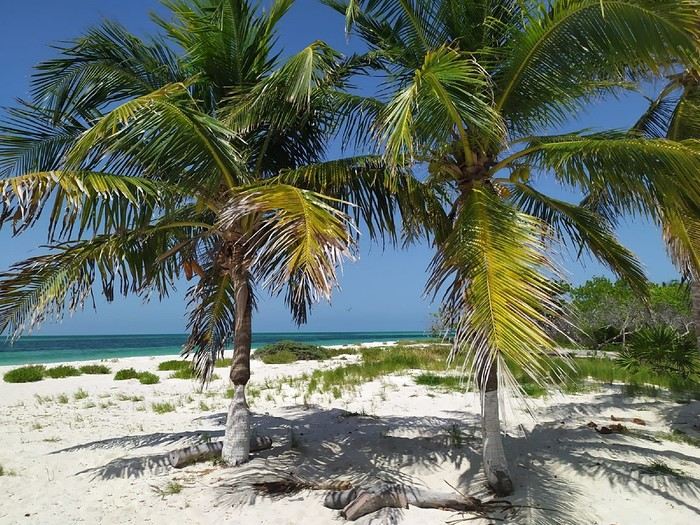
Our main goal in coming to Holbox was to swim with whale sharks. So, the first thing we told our hotel, Los Arcos Holbox, upon arrival was to arrange an excursion with one of the island’s many tour operators: Glendy Tours Holbox. We set off the next morning, bright and early.
The itinerary for this outing is the same for all tour operators (and there are about thirty of them!): roughly two hours by speedboat, then snorkeling with the whale sharks, followed by another boat ride to Cabo Catoche for lunch, then more boating to a fish-filled snorkeling spot before heading back. In total, the excursion can take eight hours—or even longer.
Besides my two sons and me, there were only two other clients on board—a French couple. Our boat was one of the very first to leave, but after ten minutes, the pilot got a radio call. We turned back without any explanation, returning to the departure dock.
There, a young woman who clearly fancied herself a diva was waiting for us. She was Mexican and boarded the boat, snubbing all five of us while flirting with the pilot and guide, who were suddenly all eyes for her. We couldn’t understand how this diva had convinced our tour operator to turn the boat around just to pick her up when she hadn’t even booked and we were already far out. We left 20 minutes late.
The two-hour journey passed surprisingly quickly, and for good reason: we spotted dolphins six times! They were leaping out of the water as they moved. Pure joy. We stopped whenever they were near the boat.
The photo isn’t great—the ultra-wide-angle lens on my GoPro makes the dolphins look smaller—but at least I got a souvenir.
A few flying fish (exocets) also glided a meter or two above the water as we sped along. The false start was forgotten, and the day was off to a fantastic start in this stunning marine environment...
When we reached the area where the whale sharks were supposed to be, the guide explained that we’d now have to scan the sea until we spotted one. It could take five minutes or forty-five, he said, and if we were unlucky, we might not see any at all!
An hour and a half later—still nothing! The captain then headed toward a distant area where about twenty other boats were already gathered.
Sure enough, there was a juvenile whale shark (still a good eight meters long) there, and all the boats were lining up to approach it slowly, one by one, so as not to scare the animal. Each boat got about thirty seconds within a few meters of it, engine idling, before making way for the next. We were allowed to approach three times, but we weren’t permitted to dive in. That’s normal—such a crowd of divers around a single animal would stress it out, and here, whale sharks are protected by regulations: swimming with them is strictly controlled. There was even a coast guard boat with us at all times, monitoring everyone’s behavior.
We were torn between the luck of seeing such a magnificent animal, even from the surface, and the discomfort we felt about the absurd situation. All those boats lined up just to catch a fleeting glimpse of the shark for a few seconds—let’s be honest, it was ridiculous. In short, the whole thing was unpleasant, and probably even more so for the shark than for us, though it did keep gulping down kilos of plankton as if nothing were happening...
When it was our turn to approach, I dipped my GoPro into the water at arm’s length and framed the shot blindly, hoping for a decent image of the shark.
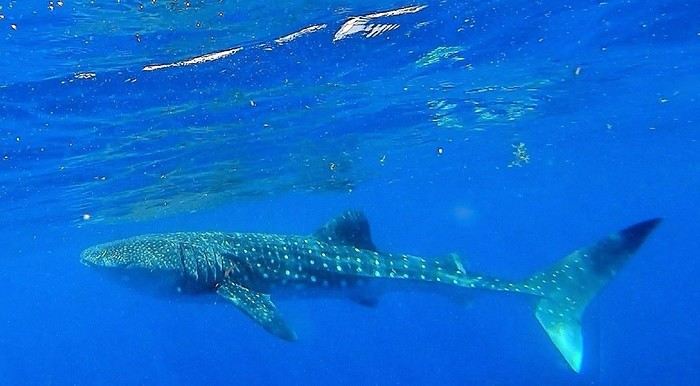
On the third and final approach, the sixth passenger on board—the one we’d had to turn back for ten minutes after departure—quietly spoke to the guide and captain after putting on her flippers (even though, I’ll remind you, no one was allowed to dive). She wanted them to ask the coast guard for permission to dive with the shark—just her! She whispered so we couldn’t hear what she was offering in exchange.
The two lackeys complied and shouted the request to the officials in front of all the other boats, with no shame whatsoever. With so many witnesses, the coast guard had no choice but to refuse. The diva wouldn’t let it go and asked them to insist, which they did, but the refusal was firm and final.
On the nearest boats, everyone had heard and was stunned. They openly mocked this bimbo who clearly had no shame. Hidden behind her star sunglasses, she responded with a dismissive smile. Pathetic.
The encounter with the shark ended, and we set off for Cabo Catoche, a site on Holbox Island where we were to have lunch.
We were a little disappointed not to have had the chance to see the usual school of whale sharks (they’re often dozens swimming together!), but that’s nature’s way, and we knew it.
And then, an unlikely stroke of luck: a boat ahead of us was putting divers in the water with a pair of adult whale sharks. We joined them, and while we were putting on our masks and snorkels, the guide briefed us. He said my sons and I would go first, followed by the French couple and the diva.
But Miss World, clearly unhappy with this order, quietly complained to the guide, who eventually switched the order. It didn’t bother us since we’d only get a minute in the water anyway—what’s a minute more or less?
So the three of them got in the water, and a moment later, they were done. My two sons and I, sitting on the edge of the boat with masks on and snorkels in our mouths, were ready to finally take the plunge. But instead of continuing to follow the shark, the captain was suddenly all eyes for Miss Silicone! He even let go of the wheel for a moment to help her back on board.
One of the two sharks had already left minutes earlier, and the second was swimming farther away. Other boats were arriving, and the captain went to join the queue 100 meters from the shark. Soon, even more boats showed up. There were way too many people, the shark left, and diving was no longer possible.
I was, of course, a little disappointed not to have fulfilled my long-time dream of swimming with a whale shark, even briefly. But I was mostly disgusted for my two boys, who had been so excited about it. I told the guide exactly what I thought and asked for compensation—not for missing out on swimming with the shark (you can never guarantee seeing one, nature isn’t at our beck and call), but for clearly skipping our turn to dive. He promised a refund.
At the end of the day, back on land, he dropped us all off, and as he was about to leave, I reminded him about the refund. He agreed again, calmly got back on board, and sped off as if nothing had happened—just him and the captain, two total cowards. I couldn’t believe it.
Of course, back at our hotel (which had booked this tour operator—Glendy Tours), I explained the situation and asked for my refund again. The receptionist called the manager, who arrived with the guide. Our runaway wasn’t so cocky anymore. Inside, I was fuming, but I kept my cool during the discussion that followed.
Right off the bat, I made a point of looking the so-called guide in the eyes while telling him he’d run off like a coward. I did my best to stay calm, speaking clearly, staring him down the whole time, and repeating several times that he was a coward, in front of the manager, who didn’t say a word. The guide had clearly been told by his boss to keep quiet because he didn’t utter a word during the entire twenty-minute conversation.
Anyway, I’ll spare you the details, but in the end, the manager only offered us another excursion the next day as compensation for the “inconvenience.” It was just snorkeling with fish, not another whale shark trip. He admitted their fault, but since we had to leave early the next morning and had other bookings for the rest of the trip, we couldn’t accept. And he refused to refund us.
On Tripadvisor, Glendy Tours has a mediocre rating (3 out of 5), but more importantly, it ranks 29th out of 36 nautical tour operators rated by customers. I was pretty upset with the hotel for booking such an amateur for us.

If you want to swim with whale sharks in Holbox, you might end up with Glendy Tours. And it might go well—I certainly hope so. But given the price of such an excursion (3,000 pesos per person, about 160 €!), I’d still suggest quickly checking online before you go to see which providers have the best ratings. You’ll have a much better chance of things going smoothly with the top-rated ones than with those as poorly ranked as Glendy Tours.
On the other hand, if you’re a beautiful young woman, you can choose them without worry—you’ll get better treatment than the rest of us...
To wrap up this excursion, I have to mention the “respect for nature” angle that all these tour operators highlight. They tell us they respect the whale sharks: only two or three people can dive at a time, and only for a few minutes, so as not to disturb these gentle giants...
We believed them before we left, but that’s not what we saw. When the sharks are hard to find except for one, everyone rushes it, and only the constant presence of the coast guard prevents the tour operators from putting their clients in the water.
Because for the second shark we saw, when the divers from our boat got out of the water and we left to join the queue while it was our turn to dive, other boats quickly arrived and started swarming the poor shark, which eventually left.
In other words, it’s clear these companies only respect the sharks when they’re being watched.
 Boat reversing a meter away from a pelican
And for the snorkeling near Cabo Catoche, they attract fish daily by feeding them—a practice that’s normally discouraged. Afterward, these fish can’t feed naturally anymore and become dependent on Glendy Tours and its competitors.
A quick note on the rest of the excursion: Cabo Catoche (the site where we had lunch, on Holbox Island) is the northernmost point of the entire Yucatán. The place is paradise.
On the way back, we spent half an hour snorkeling at a site that turned out to be fish-filled only because the tour operators had the bad habit of feeding the fish. But this practice, which isn’t respectful of nature, is normally discouraged.
Plus, life jackets—like in many places in the Yucatán—are mandatory!!
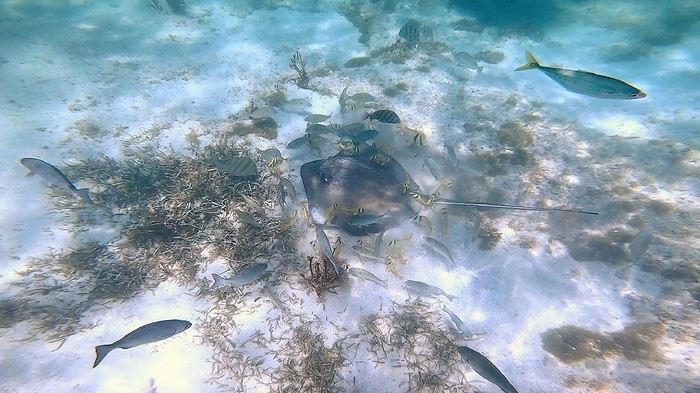
As divers, we didn’t find the site very interesting, but objectively, it should delight those who aren’t used to putting their heads underwater in beautiful dive spots.
We hated feeling trapped in those life jackets, stuck at the surface, and for me, the highlight was swimming next to a pelican that wasn’t too shy—it was paddling right beside me in green water.
Anyway, it seems we can’t post more than 10 photos at once on VF, so I’ll come back with the rest of the journal in another message. Because after these early trip mishaps, the rest of the journey turned out to be magnificent...
What a pleasure to be back on VF after a few difficult years 😎 So, before diving into the topic, welcome back to VF and above all... keep going!
Well, I’m finally picking up my old habit of posting a new travel journal.
Before heading to Mexico in the summer of 2023 with my family (my partner and our two boys, aged 18 and 16), I had somehow convinced myself—though I can’t even remember why—that the Yucatán was too touristy, too cliché, too expensive, and overrated!
The country didn’t particularly appeal to me, but faced with my wife’s insistence—she’d been there years ago, before we met, and had promised to show our sons this incredible place—my arguments didn’t hold much weight.
And thank goodness, because I have to admit she was absolutely right to take us there! In the end, we encountered far fewer tourists than we’d feared (except at a few sites), and the prices, which we’d been told were geared toward American neighbors (US), turned out to be quite affordable. In short, it was pure joy on both counts. All that was left was for the trip itself to be beautiful and memorable—and it was...
1st stop: Isla Holbox and the whale sharks
Holbox (pronounced “Hol-bosh”) is a stunning island where you can relax in an enchanting setting.
Our main goal in coming to Holbox was to swim with whale sharks. So, the first thing we told our hotel, Los Arcos Holbox, upon arrival was to arrange an excursion with one of the island’s many tour operators: Glendy Tours Holbox. We set off the next morning, bright and early.
The itinerary for this outing is the same for all tour operators (and there are about thirty of them!): roughly two hours by speedboat, then snorkeling with the whale sharks, followed by another boat ride to Cabo Catoche for lunch, then more boating to a fish-filled snorkeling spot before heading back. In total, the excursion can take eight hours—or even longer.
Besides my two sons and me, there were only two other clients on board—a French couple. Our boat was one of the very first to leave, but after ten minutes, the pilot got a radio call. We turned back without any explanation, returning to the departure dock.
There, a young woman who clearly fancied herself a diva was waiting for us. She was Mexican and boarded the boat, snubbing all five of us while flirting with the pilot and guide, who were suddenly all eyes for her. We couldn’t understand how this diva had convinced our tour operator to turn the boat around just to pick her up when she hadn’t even booked and we were already far out. We left 20 minutes late.
The two-hour journey passed surprisingly quickly, and for good reason: we spotted dolphins six times! They were leaping out of the water as they moved. Pure joy. We stopped whenever they were near the boat.
The photo isn’t great—the ultra-wide-angle lens on my GoPro makes the dolphins look smaller—but at least I got a souvenir.
A few flying fish (exocets) also glided a meter or two above the water as we sped along. The false start was forgotten, and the day was off to a fantastic start in this stunning marine environment...
When we reached the area where the whale sharks were supposed to be, the guide explained that we’d now have to scan the sea until we spotted one. It could take five minutes or forty-five, he said, and if we were unlucky, we might not see any at all!
An hour and a half later—still nothing! The captain then headed toward a distant area where about twenty other boats were already gathered.
Sure enough, there was a juvenile whale shark (still a good eight meters long) there, and all the boats were lining up to approach it slowly, one by one, so as not to scare the animal. Each boat got about thirty seconds within a few meters of it, engine idling, before making way for the next. We were allowed to approach three times, but we weren’t permitted to dive in. That’s normal—such a crowd of divers around a single animal would stress it out, and here, whale sharks are protected by regulations: swimming with them is strictly controlled. There was even a coast guard boat with us at all times, monitoring everyone’s behavior.
We were torn between the luck of seeing such a magnificent animal, even from the surface, and the discomfort we felt about the absurd situation. All those boats lined up just to catch a fleeting glimpse of the shark for a few seconds—let’s be honest, it was ridiculous. In short, the whole thing was unpleasant, and probably even more so for the shark than for us, though it did keep gulping down kilos of plankton as if nothing were happening...
When it was our turn to approach, I dipped my GoPro into the water at arm’s length and framed the shot blindly, hoping for a decent image of the shark.
On the third and final approach, the sixth passenger on board—the one we’d had to turn back for ten minutes after departure—quietly spoke to the guide and captain after putting on her flippers (even though, I’ll remind you, no one was allowed to dive). She wanted them to ask the coast guard for permission to dive with the shark—just her! She whispered so we couldn’t hear what she was offering in exchange.
The two lackeys complied and shouted the request to the officials in front of all the other boats, with no shame whatsoever. With so many witnesses, the coast guard had no choice but to refuse. The diva wouldn’t let it go and asked them to insist, which they did, but the refusal was firm and final.
On the nearest boats, everyone had heard and was stunned. They openly mocked this bimbo who clearly had no shame. Hidden behind her star sunglasses, she responded with a dismissive smile. Pathetic.
The encounter with the shark ended, and we set off for Cabo Catoche, a site on Holbox Island where we were to have lunch.
We were a little disappointed not to have had the chance to see the usual school of whale sharks (they’re often dozens swimming together!), but that’s nature’s way, and we knew it.
And then, an unlikely stroke of luck: a boat ahead of us was putting divers in the water with a pair of adult whale sharks. We joined them, and while we were putting on our masks and snorkels, the guide briefed us. He said my sons and I would go first, followed by the French couple and the diva.
But Miss World, clearly unhappy with this order, quietly complained to the guide, who eventually switched the order. It didn’t bother us since we’d only get a minute in the water anyway—what’s a minute more or less?
So the three of them got in the water, and a moment later, they were done. My two sons and I, sitting on the edge of the boat with masks on and snorkels in our mouths, were ready to finally take the plunge. But instead of continuing to follow the shark, the captain was suddenly all eyes for Miss Silicone! He even let go of the wheel for a moment to help her back on board.
One of the two sharks had already left minutes earlier, and the second was swimming farther away. Other boats were arriving, and the captain went to join the queue 100 meters from the shark. Soon, even more boats showed up. There were way too many people, the shark left, and diving was no longer possible.
I was, of course, a little disappointed not to have fulfilled my long-time dream of swimming with a whale shark, even briefly. But I was mostly disgusted for my two boys, who had been so excited about it. I told the guide exactly what I thought and asked for compensation—not for missing out on swimming with the shark (you can never guarantee seeing one, nature isn’t at our beck and call), but for clearly skipping our turn to dive. He promised a refund.
At the end of the day, back on land, he dropped us all off, and as he was about to leave, I reminded him about the refund. He agreed again, calmly got back on board, and sped off as if nothing had happened—just him and the captain, two total cowards. I couldn’t believe it.
Of course, back at our hotel (which had booked this tour operator—Glendy Tours), I explained the situation and asked for my refund again. The receptionist called the manager, who arrived with the guide. Our runaway wasn’t so cocky anymore. Inside, I was fuming, but I kept my cool during the discussion that followed.
Right off the bat, I made a point of looking the so-called guide in the eyes while telling him he’d run off like a coward. I did my best to stay calm, speaking clearly, staring him down the whole time, and repeating several times that he was a coward, in front of the manager, who didn’t say a word. The guide had clearly been told by his boss to keep quiet because he didn’t utter a word during the entire twenty-minute conversation.
Anyway, I’ll spare you the details, but in the end, the manager only offered us another excursion the next day as compensation for the “inconvenience.” It was just snorkeling with fish, not another whale shark trip. He admitted their fault, but since we had to leave early the next morning and had other bookings for the rest of the trip, we couldn’t accept. And he refused to refund us.
On Tripadvisor, Glendy Tours has a mediocre rating (3 out of 5), but more importantly, it ranks 29th out of 36 nautical tour operators rated by customers. I was pretty upset with the hotel for booking such an amateur for us.
If you want to swim with whale sharks in Holbox, you might end up with Glendy Tours. And it might go well—I certainly hope so. But given the price of such an excursion (3,000 pesos per person, about 160 €!), I’d still suggest quickly checking online before you go to see which providers have the best ratings. You’ll have a much better chance of things going smoothly with the top-rated ones than with those as poorly ranked as Glendy Tours.
On the other hand, if you’re a beautiful young woman, you can choose them without worry—you’ll get better treatment than the rest of us...
To wrap up this excursion, I have to mention the “respect for nature” angle that all these tour operators highlight. They tell us they respect the whale sharks: only two or three people can dive at a time, and only for a few minutes, so as not to disturb these gentle giants...
We believed them before we left, but that’s not what we saw. When the sharks are hard to find except for one, everyone rushes it, and only the constant presence of the coast guard prevents the tour operators from putting their clients in the water.
Because for the second shark we saw, when the divers from our boat got out of the water and we left to join the queue while it was our turn to dive, other boats quickly arrived and started swarming the poor shark, which eventually left.
In other words, it’s clear these companies only respect the sharks when they’re being watched.
Boat reversing a meter away from a pelicanAnd for the snorkeling near Cabo Catoche, they attract fish daily by feeding them—a practice that’s normally discouraged. Afterward, these fish can’t feed naturally anymore and become dependent on Glendy Tours and its competitors.
A quick note on the rest of the excursion: Cabo Catoche (the site where we had lunch, on Holbox Island) is the northernmost point of the entire Yucatán. The place is paradise.
On the way back, we spent half an hour snorkeling at a site that turned out to be fish-filled only because the tour operators had the bad habit of feeding the fish. But this practice, which isn’t respectful of nature, is normally discouraged.
Plus, life jackets—like in many places in the Yucatán—are mandatory!!
As divers, we didn’t find the site very interesting, but objectively, it should delight those who aren’t used to putting their heads underwater in beautiful dive spots.
We hated feeling trapped in those life jackets, stuck at the surface, and for me, the highlight was swimming next to a pelican that wasn’t too shy—it was paddling right beside me in green water.
Anyway, it seems we can’t post more than 10 photos at once on VF, so I’ll come back with the rest of the journal in another message. Because after these early trip mishaps, the rest of the journey turned out to be magnificent...
4 friends discover a piece of North India
Hello fellow travelers!
I’m adding my small contribution to the reopening celebration by posting this travel journal from India, made in January 2024. We’re 4 friends (2 couples), and we did a 3-week loop in Rajasthan, stopping by Delhi and Agra (which, as everyone knows, aren’t in Rajasthan 😛). Delhi - Agra - Jaipur - Bundi - Udaipur - Jodhpur - Jaisalmer - Delhi
We rented a car with a driver from Agra to Jaisalmer, 550 € for 14 days. https://chauffeurpriveeninde.com/fr/
We took the train from Delhi to Agra and the plane (Spicejet) from Jaisalmer to Delhi.
Most of the accommodations were booked on Booking before we left.
I’m sharing this story written by Richard and illustrated by me. We dedicate it to Nathalie and Bruno, our amazing travel companions.
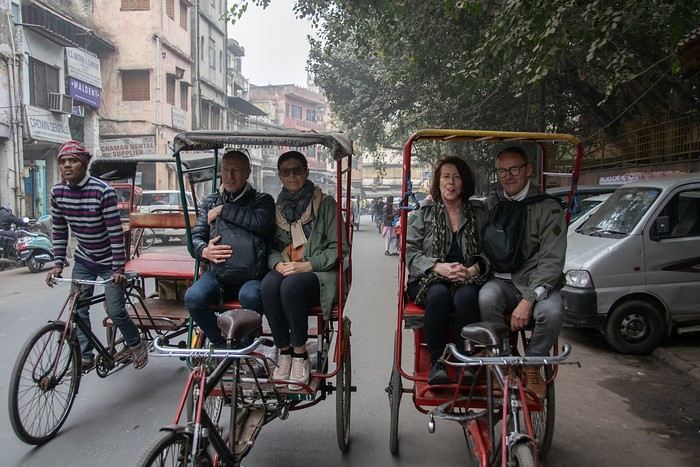
I’m adding my small contribution to the reopening celebration by posting this travel journal from India, made in January 2024. We’re 4 friends (2 couples), and we did a 3-week loop in Rajasthan, stopping by Delhi and Agra (which, as everyone knows, aren’t in Rajasthan 😛). Delhi - Agra - Jaipur - Bundi - Udaipur - Jodhpur - Jaisalmer - Delhi
We rented a car with a driver from Agra to Jaisalmer, 550 € for 14 days. https://chauffeurpriveeninde.com/fr/
We took the train from Delhi to Agra and the plane (Spicejet) from Jaisalmer to Delhi.
Most of the accommodations were booked on Booking before we left.
I’m sharing this story written by Richard and illustrated by me. We dedicate it to Nathalie and Bruno, our amazing travel companions.