Results for "pirogue+|+99+>+55"
5044 results found.
Meilleure période pour la côte est et le canal de Pangalanes à Madagascar English translation pending
Bonjour,
Qqs questions : Quelle est la meilleure période pour parcourrir la côte est de Fort Dauphin vers Tamatave (ou dans l'autre sens), le plus pratique est de descendre de Tamatave ou de remonter vers Tamatave ? Même questions pour les Pangalanes, on part d'où et vers où ? Combien de temps pour les parcurrir et quelles précausions à prendre ?
Merci pour vos infos, vos récits et bon voyage à tous et à toutes.
Qqs questions : Quelle est la meilleure période pour parcourrir la côte est de Fort Dauphin vers Tamatave (ou dans l'autre sens), le plus pratique est de descendre de Tamatave ou de remonter vers Tamatave ? Même questions pour les Pangalanes, on part d'où et vers où ? Combien de temps pour les parcurrir et quelles précausions à prendre ?
Merci pour vos infos, vos récits et bon voyage à tous et à toutes.
Itinéraire au Laos English translation pending
Est-ce faisable au mois de novembre et en deux ou trois semaines :
Mon itinéraire serait approximativement le suivant : atterrissage à Luang Prabang, y passer quelques jours remonter la Nam Ou en bateau de Luang Prabang à Phongsali, y passer quelques jours (trek) avion de Phongsali à Vientiane, rester un jour ou deux à Vientiane avion de Vientiane à Paksé, visite de Paksé et Tad Fane (Boloven) bateau de Paksé à Champasak, visite de Champasak et Vat Phou bateau de Champasak à Don Khon (4000 îles) retour en Thaïlande par le poste frontière de Chong Mek
Quelqu'un a-t-il des commentaires sur la remontée de la Nam Ou de Luang Prabang à Phongsali ??
Merci à tous
Mon itinéraire serait approximativement le suivant : atterrissage à Luang Prabang, y passer quelques jours remonter la Nam Ou en bateau de Luang Prabang à Phongsali, y passer quelques jours (trek) avion de Phongsali à Vientiane, rester un jour ou deux à Vientiane avion de Vientiane à Paksé, visite de Paksé et Tad Fane (Boloven) bateau de Paksé à Champasak, visite de Champasak et Vat Phou bateau de Champasak à Don Khon (4000 îles) retour en Thaïlande par le poste frontière de Chong Mek
Quelqu'un a-t-il des commentaires sur la remontée de la Nam Ou de Luang Prabang à Phongsali ??
Merci à tous
3 semaines en Bolivie en octobre English translation pending
Bonjour à tous,
Et oui, nous envisageons de partir trois semaines en Bolivie en octobre prochain.
Ce serait sympa de pouvoir nous indiquer le parcours qui pourrait s'adapter, des renseignements divers (vêtements, hotels ....)
Merci.
ET à bientôt.
Joëlle
Passage de la frontière brésilienne en terrestre sans preuve de sortie du pays à - 3 mois? English translation pending
Hello,
On prévoît de passer la frontière entre Guyane et Brésil en terrestre mais on aura pas de preuve de sortie du territoire vu qu'on voyage en bus... comment faire? Sont-ils laxistes à la frontière ou non? 😕 Aurons-nous des problèmes?
Merci!!
On prévoît de passer la frontière entre Guyane et Brésil en terrestre mais on aura pas de preuve de sortie du territoire vu qu'on voyage en bus... comment faire? Sont-ils laxistes à la frontière ou non? 😕 Aurons-nous des problèmes?
Merci!!
Tranquilité dans une hutte... en Amérique Centrale English translation pending
Je cherche un endroit paisible, pas trop cher, pour séjourner 1 semaine... végéter sur le bord de l'eau, avec une hutte simple, pas compliquée, mais propre et sécuritaire.... En fait je cherche l'entre-deux: pas un hotel chic avec des huttes et pas non plus la brousse et l'aventure exotique... un mix des deux. Mon petit lit dans une cute petite hutte sur le bord d'une plage... avec les installations sanitaires communes... un endroit où je pourrais accrocher mon hamac et relaxer... me ramener de la bouffe et la déguster le soir à l'extérieur de ma hutte...
Est-ce que ca existe? ;-)
Est-ce que ca existe? ;-)
Voyage en Afrique de l'Ouest English translation pending
Je recherche quelqu'un qui aurait des contacts en Guinée. Je prévois de refaire le trajet qu'à accompli René Caillié, premier européen à arriver à Tombouctou, avec un départ de Guinée et en passant par la Côte d'Ivoire. Ne connaissant personne en Guinée, je souhaiterais obtenir quelques contacts dans ce pays pour mener à bien mon projet.
Merci d'avance.
Merci d'avance.
Laos: Houeisay - Luang Prabang par la route? English translation pending
Je cherche des infos sur le trajet Houeisay - Luang Prabang via Louang Namtha et Oudom Sai par la route.
Durée nécessaire, liaison entre les villes (bus, taxi, tuk-tuk, pick-up ....ect..), intéret (plutot que par le Mekong)
Si quelqu'un à déjà fait l'expérience merci de me donner des info
Durée nécessaire, liaison entre les villes (bus, taxi, tuk-tuk, pick-up ....ect..), intéret (plutot que par le Mekong)
Si quelqu'un à déjà fait l'expérience merci de me donner des info
Guyane Panama ou Costa Rica? English translation pending
Franchement, j'hésite. J'ai eu un tel plaisir en Equateur où j'ai notamment croisé quelques mammifères rares dans leur milieu naturel que ... j'ai peur d'être déçue. L'Amazonie équatorienne a été un tel enchantement!
On pense aller avec mon ami en forêt guyanaise mais j'apprends que, comme ils chassent les animaux, ceux-ci se cachent bien. Pourtant, le côté sauvage me semble chouette. Alors, j'entends qu'au Panama, les animaux ne sont pas farouches, qu'on peut même les approcher. Mais je n'ai pas étudié la question des guides et excursions... Finalement, un photographe animalier me conseille d'aller au Costa Rica. Vraiment, je n'arrive pas à me décider et j'espère que vous pourrez m'y aider.
On pense aller avec mon ami en forêt guyanaise mais j'apprends que, comme ils chassent les animaux, ceux-ci se cachent bien. Pourtant, le côté sauvage me semble chouette. Alors, j'entends qu'au Panama, les animaux ne sont pas farouches, qu'on peut même les approcher. Mais je n'ai pas étudié la question des guides et excursions... Finalement, un photographe animalier me conseille d'aller au Costa Rica. Vraiment, je n'arrive pas à me décider et j'espère que vous pourrez m'y aider.
Ah les préjugés! English translation pending
Qui n'a jamais entendu des préjugés grotesques et qui vous ont fait marrer!!!!!!!!!!!
Voici quelques petits préjugés donc j'ai eu l'honneur d'entendre: Mais au burkina ils ont de l'electricité? Ils doivent tous dormir dans des huttes en bois! En syrie mais ils vont tous te fusillier. Mais il n'y a pas de routes au maroc tu vas te perdre!
Si vous avez eu echos de quelques prejugés n'hesitez pas a les mettre !!
Voici quelques petits préjugés donc j'ai eu l'honneur d'entendre: Mais au burkina ils ont de l'electricité? Ils doivent tous dormir dans des huttes en bois! En syrie mais ils vont tous te fusillier. Mais il n'y a pas de routes au maroc tu vas te perdre!
Si vous avez eu echos de quelques prejugés n'hesitez pas a les mettre !!
Visites et îles en Malaisie pour trois semaines en août English translation pending
Nous partons cet été en Malaisie avec nos 2 filles (10 et 6 ans)pour 3 semaines.Billets d'avion réservés mais périple non encore déterminé.Qui pourrait me donner des renseignements sur les endroits à ne pas manquer et les îles à visiter sachant que nous sommes très friants de jolies plages.
Merci de votre réponse.
Merci de votre réponse.
Hilton Mauricius ou Paradise Cove? English translation pending
Nous partons en voyage de noces à l'île Maurice en juillet et nous hésitons notamment entre deux hôtels : le Hilton Mauritius et le Paradise Cove. Compte tenu du climat en juillet, on nous a déconseillé la côte est. Qu'en est-il du nord de l'île (le Paradise n'est-il pas trop exposé aux vents)?
Toutes les infos sur ces deux hôtels (plage, ambiance, restaurants, chambres, spas...) sont les bienvenues.
Toutes les infos sur ces deux hôtels (plage, ambiance, restaurants, chambres, spas...) sont les bienvenues.
Trinidad et Tobago via Paramaribo (pour les Guyanais) English translation pending
Habitants à St-Laurent en Guyane française, Virginie et moi souhaitons partir sur les îles aux soleil et se baigner dans la mer bleu des Caraïbes. Il se trouve que tous les vols pour les Antilles françaises sont hyper cher et de plus, complets. Nous voilà donc en début de mois de décembre et nous n’avons toujours pas de destination en vue pour occuper nos vacances du 20 au 26 décembre 2003. A l’agence de St Laurent, on nous propose un vol pour Trinidad depuis Paramaribo. Sans trop réfléchir, on achète le billet.
Il nous faut donc faire nos visa multiple pour le transit via le Surinam. Il faut effectivement un visa multiple car on fait une entrée/sortie dans le sens aller et une entrée/sortie dans le sens retour. Attention, pour obtenir un visa multiple (valable 6 mois) il ne faut pas que votre passeport expire dans les 6 mois à compter de la date de demande du visa. Hélas, le passeport de Virginie expire le 24 février 2004. Elle fait donc un single visa pour l’aller depuis la Guyane et devra en faire un autre pour le retour depuis l’ambassade du Suriname à Port-of-Spain.
Samedi 20 décembre :
Traversée du Maroni en pirogue, 5 €. On arrive à Albina, c’est la cohue : les rabatteurs pour taxi nous sautent littéralement dessus, nous arrachent quasiment les sacs des mains pour les placer dans le taxi de leur copain… Bref, le piroguier nous branche avec son pote taxi, on monte dans la voiture, on va à la douane faire tamponner les visas puis on trace vers Paramaribo. Le taxi roule très très vite, il fait des pointes à 160 km/h, freine au dernier moment, évite les trous de justesses (mais lui au moins, il les évite, ce n’est pas le cas de son confrère dans le sens retour le 26 déc.) de cette route défoncée. Au bout de 2 heures, après avoir fait du change, nous voici à Paramaribo, on est samedi, tout est fermé. Le taxi nous lâche à l’hôtel Nobre, après nous avoir délesté de 30€ pour la course (c’est normalement 40€ pour la voiture, mais comme il a fait monté un pote à lui à Albina, il nous a pris que 30). L’hôtel est un peu cagneux, mais ça reste acceptable, vu le prix (70000 Gulden soit 20 €).
Dimanche 21 décembre :
Levé très tôt (3h30), on chope un taxi devant l’hôtel Nobre sans aucun mal (peut-être a-t-on eu de la chance ?) sur les coups de 4h30 du matin. Compter 45 minutes à une heure et 70000 Gulden (20€) pour rejoindre l’aéroport international Zanderij. A l’aéroport, on croise quelques St-Laurentais. Formalités de douanes, on grimpe dans l’avion, 1h15 plus tard, on atterrit à Port-of-Spain, capitale de Trinidad et Tobago. Il pleut salement. Comme on doit passer demain à l’ambassade du Surinam pour le single visa de Virginie, on choisi de rester sur Port-of-Spain cette nuit. Après avoir longuement tournoyé dans Port-of-Spain à la recherche d’un hôtel sympa, on tombe sur PEAK – YACHT SERVICES (55 $US la chambre double) à Chaguaramas. Il s’agit d’un port de plaisance privé. Hormis regarder les bateaux, il n’y a rien à faire dans ce coin là. On pensait pouvoir s’y baigner, mais la couleur de l’eau ne s’y prête pas. On profite d’une accalmie de pluie pour aller se balader en centre ville, sans trop savoir on atterrit dans Charlotte street – rien d’extraordinaire. On revient avant la nuit pour des questions de sécurité comme on nous l’a conseillé. Concernant la restauration, les 2 repas pris au Restaurant de chez PEAK ne sont pas exceptionnels, mais acceptables pour le prix (respectivement 110 TTD et 130 TTD ce qui fait environ 17€ et 19€).
Lundi 22 décembre :
Le Taxi d’hier vient nous chercher à PEAK comme convenu et nous amène au consulat du Surinam pour faire le single visa de Virginie, puis à la banque du consulat du Suriname pour payer le single visa (40$US) par virement (ce n’est pas pratique mais c’est comme ça).
Quand tout cela est fait, c’est à dire vers 11h00, on file vers Blanchisseuse, petit village sur la côte nord de Trinidad qu’on nous a recommandé pour son calme et sa beauté. Arrivé là bas, au terme d’une heure de route (très jolis paysages), on arrive dans Blanchisseuse. On va chez Almond Brooks, mais il y n’a personne. Le taxi insiste alors pour nous trouver une autre guest house, on tourne, on téléphone… Devant tant de bonne volonté de la part du taxi, on ne peut qu’accepter ses services. Au bout d’une heure, on trouve Second Spring, très belle guest house tenue par une française vraiment sympa (réservations possibles et conseillées sur www.secondspringtnt.com). On règle le taxi, la course annoncée au départ à 300 TTD nous coûte finalement 460 TTD (commercial ce taxi !). On déjeune chez Surf’s Country Inn, mais le repas est relativement décevant pour le prix. Le soir, on dinera chez Tandys, c’est bien mieux et moins cher. Il s’agit d’un tout petit boui-boui créole, il faut réserver avant d’y aller. Sinon, pour ce qui est de la plage de Blanchisseuse, la mer était relativement agitée lors de notre passage, par conséquent on ne s’est pas baigné. Ayant fait le tour du village, on décide de partir demain pour Tobago à la recherche de sable fin et d’eau turquoise.
Mardi 23 décembre :
On monte dans le pick up du livreur de journaux, il nous déposera à Port-of-Spain au départ du ferry car tous les vols pour Tobago sont complets aujourd’hui. On achète nos billets, on monte dans le bateau… puis on apprend qu’il n’y a pas de bateau les 24, 25 et 26 décembre à cause des fêtes. Ne sachant pas comment revenir sur Port-of-Spain pour prendre notre retour vers Paramaribo le 26 décembre, on décide de quitter le bateau. On file, à pied, en centre ville vers la BWIA afin de trouver un vol A/R vers Tobago pour demain. Il se trouve que tout les vols sont pleins pour la semaine, le moral est au plus bas. On décide alors d’aller à l’aéroport de Port-of-Spain et de s’inscrire sur les places « Stand-by ». C’est une liste d’attente qui permet de prendre les places éventuelles des personnes qui ont réservé leur vol mais qui ne se présentent pas à l’enregistrement. Il y a une douzaine de vol par jour en ce moment, ce qui offre pas mal de chance… cela dit, beaucoup de personnes sont également en stand by. Durant l’attente, on sympathisera avec un couple de « Tobagonians », Raquel et Mickëal. Ils ont pris un vol ce matin depuis Tobago pour faire un peu de shopping de noël dans Port-of-Spain. Ils se retrouvent bloqués, comme nous, alors qu’ils avaient prévu de rester seulement la journée. Bref, vers 22h30, après 5 heures d’attentes, nous voilà enfin dans l’avion, 15 minutes de vol suffiront pour arriver à Tobago. Raquel et Mickëal nous drive jusqu’à Banana quit, la guest house que Raquel nous a trouvé au terme de nombreux coups de fil sur son portable durant l’attente à l’aéroport à Port-of-Spain. Il se trouve que Banana Quit est fermé et que tout le monde dort. Raquel et Mickëal nous déposent alors à l’hôtel Indigo, il est à peu près minuit. L’hôtel est très sympas, la chambre annoncée au départ à 90$US tombe finalement à 60$US après un peu de négociation. On prend la chambre.
Mercredi 24décembre au vendredi 26 décembre – Crow Point :
On prend un taxi vers Crown Point, pour rejoindre Banana quit, la guest où on aurait dû atterrir hier soir. Le rapport qualité/prix est indéniable, 40$US, piscine privé (on en profitera pas une seule fois), studio avec kitchenette et salle de bain très correcte, tout ça à 5 minutes à pied depuis l’aéroport. On y reste jusqu’au 26 décembre.
Il se trouve que la zone de Crown Point est très touristique, cependant, il y a possibilité de trouver des plages de sable fin désertes en fouinant un peu. Evitez (Fuiez !!!) Pigeon Point, l’accès à la plage est payant, c’est bourré de touristes, ce n’est pas particulièrement beau, et les gens ne sont guère habitués à dire bonjour, merci, au revoir. Store Bay est plutôt sympa car accessible à pied depuis la guest, et peu de monde sur le côté gauche de la plage.
Un truck à faire, vraiment sympa, se faire déposer à Mt Irvine bay, ne pas y rester car trop touristique. Longer la côté en direction de Stone Heaven Bay. Un sentier longe la plage, passe un peu dans la forêt, puis retombe sur la plage - 20 minutes de marche pour accéder au paradis : Back Bay. La plage est longue, déserte, le sable est fin, l’eau est claire. C’est tout simplement le top ! Plusieurs personnes nous avaient averti qu’il y avait des risques de se faire voler les sacs pendant qu’on se baigne (les voleurs surgissent des bois, dérobent les sacs et repartent d’où ils sont venus) mais aucun problème pour nous. On croisera quelques locaux qui viennent se baigner une petite heure et repartent. A midi, on va manger dans un snack à Stone Heaven Bay, plage également touristique à éviter. Puis on revient à notre plage favorite où on passera le reste de la journée, vraiment le top.
Point de vue restaurant sur Crow Point, on a testé le Pelican Reef et le RU-B-Lou’S. Ni l’un ni l’autre n’est vraiment transcendant vu le prix, mais c’est quand même de qualité vu ce qu’on a mangé jusqu’à maintenant.
Voilà pour nos aventures à Trinidad et Tobago.
Pour le retour sur Paramaribo, on a dormi à l’hôtel Savhana (situé pas loin du luxueux Torarica) que je déconseille. On avait un grand lit… mais un petit drap. Les odeurs de remontées d’égouts un peu envahissantes… tout ça pour 93000 Gulden (30€). Le retour vers Albina en taxi, un peu mouvementé à cause des trous dans la route, nous coûtera 35 € (payé en Euro) pour 2. La pirogue pour traverser le Maroni nous coûtera 5 € par personne.
Ne pas hésiter à nous contacter par mail pour des renseignements complémentaires. Il nous reste un peu de documentation sur Trinidad et Tobago si vous êtes sur St-Laurent.
A+
Il nous faut donc faire nos visa multiple pour le transit via le Surinam. Il faut effectivement un visa multiple car on fait une entrée/sortie dans le sens aller et une entrée/sortie dans le sens retour. Attention, pour obtenir un visa multiple (valable 6 mois) il ne faut pas que votre passeport expire dans les 6 mois à compter de la date de demande du visa. Hélas, le passeport de Virginie expire le 24 février 2004. Elle fait donc un single visa pour l’aller depuis la Guyane et devra en faire un autre pour le retour depuis l’ambassade du Suriname à Port-of-Spain.
Samedi 20 décembre :
Traversée du Maroni en pirogue, 5 €. On arrive à Albina, c’est la cohue : les rabatteurs pour taxi nous sautent littéralement dessus, nous arrachent quasiment les sacs des mains pour les placer dans le taxi de leur copain… Bref, le piroguier nous branche avec son pote taxi, on monte dans la voiture, on va à la douane faire tamponner les visas puis on trace vers Paramaribo. Le taxi roule très très vite, il fait des pointes à 160 km/h, freine au dernier moment, évite les trous de justesses (mais lui au moins, il les évite, ce n’est pas le cas de son confrère dans le sens retour le 26 déc.) de cette route défoncée. Au bout de 2 heures, après avoir fait du change, nous voici à Paramaribo, on est samedi, tout est fermé. Le taxi nous lâche à l’hôtel Nobre, après nous avoir délesté de 30€ pour la course (c’est normalement 40€ pour la voiture, mais comme il a fait monté un pote à lui à Albina, il nous a pris que 30). L’hôtel est un peu cagneux, mais ça reste acceptable, vu le prix (70000 Gulden soit 20 €).
Dimanche 21 décembre :
Levé très tôt (3h30), on chope un taxi devant l’hôtel Nobre sans aucun mal (peut-être a-t-on eu de la chance ?) sur les coups de 4h30 du matin. Compter 45 minutes à une heure et 70000 Gulden (20€) pour rejoindre l’aéroport international Zanderij. A l’aéroport, on croise quelques St-Laurentais. Formalités de douanes, on grimpe dans l’avion, 1h15 plus tard, on atterrit à Port-of-Spain, capitale de Trinidad et Tobago. Il pleut salement. Comme on doit passer demain à l’ambassade du Surinam pour le single visa de Virginie, on choisi de rester sur Port-of-Spain cette nuit. Après avoir longuement tournoyé dans Port-of-Spain à la recherche d’un hôtel sympa, on tombe sur PEAK – YACHT SERVICES (55 $US la chambre double) à Chaguaramas. Il s’agit d’un port de plaisance privé. Hormis regarder les bateaux, il n’y a rien à faire dans ce coin là. On pensait pouvoir s’y baigner, mais la couleur de l’eau ne s’y prête pas. On profite d’une accalmie de pluie pour aller se balader en centre ville, sans trop savoir on atterrit dans Charlotte street – rien d’extraordinaire. On revient avant la nuit pour des questions de sécurité comme on nous l’a conseillé. Concernant la restauration, les 2 repas pris au Restaurant de chez PEAK ne sont pas exceptionnels, mais acceptables pour le prix (respectivement 110 TTD et 130 TTD ce qui fait environ 17€ et 19€).
Lundi 22 décembre :
Le Taxi d’hier vient nous chercher à PEAK comme convenu et nous amène au consulat du Surinam pour faire le single visa de Virginie, puis à la banque du consulat du Suriname pour payer le single visa (40$US) par virement (ce n’est pas pratique mais c’est comme ça).
Quand tout cela est fait, c’est à dire vers 11h00, on file vers Blanchisseuse, petit village sur la côte nord de Trinidad qu’on nous a recommandé pour son calme et sa beauté. Arrivé là bas, au terme d’une heure de route (très jolis paysages), on arrive dans Blanchisseuse. On va chez Almond Brooks, mais il y n’a personne. Le taxi insiste alors pour nous trouver une autre guest house, on tourne, on téléphone… Devant tant de bonne volonté de la part du taxi, on ne peut qu’accepter ses services. Au bout d’une heure, on trouve Second Spring, très belle guest house tenue par une française vraiment sympa (réservations possibles et conseillées sur www.secondspringtnt.com). On règle le taxi, la course annoncée au départ à 300 TTD nous coûte finalement 460 TTD (commercial ce taxi !). On déjeune chez Surf’s Country Inn, mais le repas est relativement décevant pour le prix. Le soir, on dinera chez Tandys, c’est bien mieux et moins cher. Il s’agit d’un tout petit boui-boui créole, il faut réserver avant d’y aller. Sinon, pour ce qui est de la plage de Blanchisseuse, la mer était relativement agitée lors de notre passage, par conséquent on ne s’est pas baigné. Ayant fait le tour du village, on décide de partir demain pour Tobago à la recherche de sable fin et d’eau turquoise.
Mardi 23 décembre :
On monte dans le pick up du livreur de journaux, il nous déposera à Port-of-Spain au départ du ferry car tous les vols pour Tobago sont complets aujourd’hui. On achète nos billets, on monte dans le bateau… puis on apprend qu’il n’y a pas de bateau les 24, 25 et 26 décembre à cause des fêtes. Ne sachant pas comment revenir sur Port-of-Spain pour prendre notre retour vers Paramaribo le 26 décembre, on décide de quitter le bateau. On file, à pied, en centre ville vers la BWIA afin de trouver un vol A/R vers Tobago pour demain. Il se trouve que tout les vols sont pleins pour la semaine, le moral est au plus bas. On décide alors d’aller à l’aéroport de Port-of-Spain et de s’inscrire sur les places « Stand-by ». C’est une liste d’attente qui permet de prendre les places éventuelles des personnes qui ont réservé leur vol mais qui ne se présentent pas à l’enregistrement. Il y a une douzaine de vol par jour en ce moment, ce qui offre pas mal de chance… cela dit, beaucoup de personnes sont également en stand by. Durant l’attente, on sympathisera avec un couple de « Tobagonians », Raquel et Mickëal. Ils ont pris un vol ce matin depuis Tobago pour faire un peu de shopping de noël dans Port-of-Spain. Ils se retrouvent bloqués, comme nous, alors qu’ils avaient prévu de rester seulement la journée. Bref, vers 22h30, après 5 heures d’attentes, nous voilà enfin dans l’avion, 15 minutes de vol suffiront pour arriver à Tobago. Raquel et Mickëal nous drive jusqu’à Banana quit, la guest house que Raquel nous a trouvé au terme de nombreux coups de fil sur son portable durant l’attente à l’aéroport à Port-of-Spain. Il se trouve que Banana Quit est fermé et que tout le monde dort. Raquel et Mickëal nous déposent alors à l’hôtel Indigo, il est à peu près minuit. L’hôtel est très sympas, la chambre annoncée au départ à 90$US tombe finalement à 60$US après un peu de négociation. On prend la chambre.
Mercredi 24décembre au vendredi 26 décembre – Crow Point :
On prend un taxi vers Crown Point, pour rejoindre Banana quit, la guest où on aurait dû atterrir hier soir. Le rapport qualité/prix est indéniable, 40$US, piscine privé (on en profitera pas une seule fois), studio avec kitchenette et salle de bain très correcte, tout ça à 5 minutes à pied depuis l’aéroport. On y reste jusqu’au 26 décembre.
Il se trouve que la zone de Crown Point est très touristique, cependant, il y a possibilité de trouver des plages de sable fin désertes en fouinant un peu. Evitez (Fuiez !!!) Pigeon Point, l’accès à la plage est payant, c’est bourré de touristes, ce n’est pas particulièrement beau, et les gens ne sont guère habitués à dire bonjour, merci, au revoir. Store Bay est plutôt sympa car accessible à pied depuis la guest, et peu de monde sur le côté gauche de la plage.
Un truck à faire, vraiment sympa, se faire déposer à Mt Irvine bay, ne pas y rester car trop touristique. Longer la côté en direction de Stone Heaven Bay. Un sentier longe la plage, passe un peu dans la forêt, puis retombe sur la plage - 20 minutes de marche pour accéder au paradis : Back Bay. La plage est longue, déserte, le sable est fin, l’eau est claire. C’est tout simplement le top ! Plusieurs personnes nous avaient averti qu’il y avait des risques de se faire voler les sacs pendant qu’on se baigne (les voleurs surgissent des bois, dérobent les sacs et repartent d’où ils sont venus) mais aucun problème pour nous. On croisera quelques locaux qui viennent se baigner une petite heure et repartent. A midi, on va manger dans un snack à Stone Heaven Bay, plage également touristique à éviter. Puis on revient à notre plage favorite où on passera le reste de la journée, vraiment le top.
Point de vue restaurant sur Crow Point, on a testé le Pelican Reef et le RU-B-Lou’S. Ni l’un ni l’autre n’est vraiment transcendant vu le prix, mais c’est quand même de qualité vu ce qu’on a mangé jusqu’à maintenant.
Voilà pour nos aventures à Trinidad et Tobago.
Pour le retour sur Paramaribo, on a dormi à l’hôtel Savhana (situé pas loin du luxueux Torarica) que je déconseille. On avait un grand lit… mais un petit drap. Les odeurs de remontées d’égouts un peu envahissantes… tout ça pour 93000 Gulden (30€). Le retour vers Albina en taxi, un peu mouvementé à cause des trous dans la route, nous coûtera 35 € (payé en Euro) pour 2. La pirogue pour traverser le Maroni nous coûtera 5 € par personne.
Ne pas hésiter à nous contacter par mail pour des renseignements complémentaires. Il nous reste un peu de documentation sur Trinidad et Tobago si vous êtes sur St-Laurent.
A+
Excurions aux Indiens (Panama) English translation pending
Bonjour,
je pars pour le Panama (au Royal Decameron) le 16 février prochain et j'aimerais que quelqu'un me donne plus de détails afin d'aller voir les les "fameux" Indiens. Est-ce une excursion disponible ou on doit y aller par nos propres moyens ??
Je vous remercie et j'ai hâte de lire vos commentaires.
🙂
je pars pour le Panama (au Royal Decameron) le 16 février prochain et j'aimerais que quelqu'un me donne plus de détails afin d'aller voir les les "fameux" Indiens. Est-ce une excursion disponible ou on doit y aller par nos propres moyens ??
Je vous remercie et j'ai hâte de lire vos commentaires.
🙂
Jungle au Mexique English translation pending
Bonjour
Nous partons 3 semaines parcourir le Yucatan à Noel et souhaitons passer 1 semaine dans la jungle. Quelqu'un a t"il deja fait ca ? Avez vous des references d'agence ou de guide sur place ? Merci d'avance.
Sô
Nous partons 3 semaines parcourir le Yucatan à Noel et souhaitons passer 1 semaine dans la jungle. Quelqu'un a t"il deja fait ca ? Avez vous des references d'agence ou de guide sur place ? Merci d'avance.
Sô
Nicaragua -côte caraibe - transport pour corn island English translation pending
hola,
alors voilà on se casse dans 2 semaines pour un itinéraire Guaté-Salvador et nicaragua.... au nica on voudrait aller du coté de corn island, little c.i etc... on se demande kel est le meilleur le moyen pour rejoindre corn island. Je sais kil est possible de longet le fleuve depuis le costa-rica pour remonter a la frontière du nica ..mais est-ce ke ca vaut la peine ?
sinon toute infos sur le pays, bons plans, bonne adresses .. des trucs à voir ki vous ont marqué !!! welcome les infos!!!! également sur le salvador ????
merci à ki voudra prendre le temps de me répondre !!!
Salutations, maud
alors voilà on se casse dans 2 semaines pour un itinéraire Guaté-Salvador et nicaragua.... au nica on voudrait aller du coté de corn island, little c.i etc... on se demande kel est le meilleur le moyen pour rejoindre corn island. Je sais kil est possible de longet le fleuve depuis le costa-rica pour remonter a la frontière du nica ..mais est-ce ke ca vaut la peine ?
sinon toute infos sur le pays, bons plans, bonne adresses .. des trucs à voir ki vous ont marqué !!! welcome les infos!!!! également sur le salvador ????
merci à ki voudra prendre le temps de me répondre !!!
Salutations, maud
Jungle à Rurrenasbaque en Bolivie English translation pending
Hola je reviens de Rurrenabaque dans le nord de la bolivie ou partir en visite dans la pampa 3 jours voir les anaconda les croco et nager avec les dauphins roses.....est une facon de se faire plumer!
En fait il existe des tres nombreuses agences a Rure qui proposent exactement les memes prestations, c est bien simple une fois dans la jungle on croise partout en pirogue les meme touristes.pourtant les ecart de prix sont impressionants ils vont de 50 dollars trois jours (flecha tour a cote du TAM le transport aerien militaire, c est le moin cher) a 75 et 90 dollars pour les autres. Aussi si vous projetez d aller dans la jungle ou la pampa interrogez le maximum d agence ET VOUS VERREZ LES DIFFERENCES DE PRIX.
Pour se rendre a Rurenabaque avis aux amateurs de sensation fortes:le bus met 17heures et le chemin qui serpente a flanc de montagne est a reserver a ceux qui ne sont pas cardiaques, surtout lorsque le bus fait marche arriere sur un chemin de 4 metres de larges pour laisser passer une voiture en sens inverse, prix modique 6 dollars !
L avion plus sage (pour le retour par exemple)met une heure pour 50 dollars.
bon voyage a tous
ps:si vous voulez connaitre le programme detailler de la sortie de 3 jours dans la pamap maillez moi, j insiste toutes les agences ont le meme!
bon voyage a tous
ps:si vous voulez connaitre le programme detailler de la sortie de 3 jours dans la pamap maillez moi, j insiste toutes les agences ont le meme!
Parc nationnaux de basse altitude au Népal English translation pending
Bonjour,
Pouvez-vous m'aider dans mon choix des parcs nationnaux de basse altitude du Népal à faire ou à ne pas faire. Sont-il valable ? Peut-on les réaliser en individuel ? Trouve-t-on facilement des hébergements ? Et le transport ? Combien de jour faut-il rester ?
Merci pour vos conseils.
Pouvez-vous m'aider dans mon choix des parcs nationnaux de basse altitude du Népal à faire ou à ne pas faire. Sont-il valable ? Peut-on les réaliser en individuel ? Trouve-t-on facilement des hébergements ? Et le transport ? Combien de jour faut-il rester ?
Merci pour vos conseils.
Sécurité au Honduras, Guatemala et Bélize English translation pending
salut a tous..
tout le monde parle des tensions politiques en ameriques central..!
y a t-ils des gens qui reviennent de l'amerique central pour me dire comment sa ce passe pour vraie...!!!
je part pour 4 mois dans 3 trois semaine...!!!
juste pour avoir la bonne version des faits..!!!!
merci.!! eric
y a t-ils des gens qui reviennent de l'amerique central pour me dire comment sa ce passe pour vraie...!!!
je part pour 4 mois dans 3 trois semaine...!!!
juste pour avoir la bonne version des faits..!!!!
merci.!! eric
Feedback on our 2-month stay in Madagascar
Hello,
After asking questions on the site, here’s a little feedback on our trip in March and April.
Marseille/Antananarivo flight with Ethiopian Airlines was great both ways. I’d recommend it.
Domestic flights with Madagascar Airlines were just as smooth.
We had to change our plans because I was the victim of a snatch-theft attempt at Ivato... patellar fracture... so I ended up with a brace and more rest than hikes.
This let us spend more time in the same areas and make some connections.
We loved Tulear. Stayed with Alain—excellent value for money.
Mangily, where we stayed for 15 days. Hotel Bella Dona due to my little handicap. The pool replaced sea swims.
Mangily gets a bad rap for being very touristy. True, you get approached a lot on the beach—you have to play along and buy some trinkets, but after that, you get royal peace and lots of exchanges with locals. The village and its lively street are nice too. Don’t hesitate to eat with fishermen or at local bars.
Anakao, a big favorite. Just the journey there is worth it. Watching dozens of pirogues set off between 5 and 6 AM is a magical moment.
Stayed at Peter Pan’s place. Lots of chats with Dario since we were the only guests.
Planned a 4-day Antananarivo–Soniara–Ivango road trip with a driver.
Cut to 2 days because the boat to Sainte Marie was moved up due to weather. I don’t remember the company’s name, but it wasn’t great for safety—plus, we brought back fleas.
Visited Andasibe Park along the way. Quick tip: go in the morning.
A little over 2 weeks on Sainte Marie at Hôtel Mantis Soanambo—total luxury negotiated at a price that defied all competition because it was low season.
Meals were at little local eateries nearby.
We chose not to sleep on Île aux Nattes but went there several times during the day (crossing: 4000 ariary for 2).
You have to take a pirogue tour—it’s like stepping into a postcard.
Sainte Marie is a special place. A tropical island that feels like the Caribbean ones we’ve lived on. No security issues at all. We rented a scooter because we found tuk-tuk prices a bit steep. You can leave the scooter with helmet and keys and come back 4 hours later.
More amazing encounters here too.
Last part of our trip in Ampefy, a beautiful volcanic region with a very welcoming population.
Stayed with a friend of our driver.
Hotels in Ivato are plentiful and vary a lot in quality.
Les 12 Collines is a bit out of the way but only 21 € per night.
La Chato... very expensive for what you get.
I tried to keep it short.
Madagascar is a wonderful island with so many facets. Always so many emotions when I think back on this trip.
The extreme poverty... don’t hesitate to buy food for the kids on the beach, for example. It doesn’t cost much, but it means a lot to them.
The kindness of the people and, above all, those SMILES.
We’re hooked—we’re going back in November for 6 months... because yes, you can buy a 3-month visa at the airport (a question I’d asked), and you can extend it for another 3 months... if you apply in time at a police station.
We didn’t take Malarone either. We’d brought some, but there were few mosquitoes, and "Insect Écran" worked really well.
Your thoughts on Senegal from Canada
Hello from Quebec,
I’m a French-Canadian from Montreal. I’d love to go to Senegal during the Quebec winter to shorten this long season. Two people told me it’s not worth spending a lot of money to get there from Canada because there’s not much to discover. But I’m still skeptical. I’d love to read real testimonials from travelers who’ve been there, with as much info as possible. Thanks
Feedback on 15-day family trip to Colombia
Hi everyone, it’s been a while since I last posted!
First time in South America for me, my wife, and our 7-year-old son. I’ve put together this itinerary and would love to hear your thoughts:
Bogotá 28/07 – 30/07: Arrival. Which neighborhood and outings would you recommend? Flight to
2 Filandia 30/07 – 03/08: (255 €). Waterfalls and horseback riding, Cocora Valley, Hiking, Nearby villages. Flight to 3 Tayrona 03/08 – 07/08: Hotel La Casablanca
Hike with Tierra Nevada and the Kogui village (any feedback?). Return by inner tube for the little one. Short night hike. Second hike to La Piscina, etc., return by 🐎.
4 Cartagena 07/08 – 10/08: Air-conditioned bus. Staying in Getsemaní? Mangroves & the Castle, exploring the city.
5 Bogotá 10/08 – 12/08
Feel free to share your feedback! Have a great day!
Seb
First time in South America for me, my wife, and our 7-year-old son. I’ve put together this itinerary and would love to hear your thoughts:
Bogotá 28/07 – 30/07: Arrival. Which neighborhood and outings would you recommend? Flight to
2 Filandia 30/07 – 03/08: (255 €). Waterfalls and horseback riding, Cocora Valley, Hiking, Nearby villages. Flight to 3 Tayrona 03/08 – 07/08: Hotel La Casablanca
Hike with Tierra Nevada and the Kogui village (any feedback?). Return by inner tube for the little one. Short night hike. Second hike to La Piscina, etc., return by 🐎.
4 Cartagena 07/08 – 10/08: Air-conditioned bus. Staying in Getsemaní? Mangroves & the Castle, exploring the city.
5 Bogotá 10/08 – 12/08
Feel free to share your feedback! Have a great day!
Seb
Currency on Île aux Nattes
Hi everyone, I’m heading to Île aux Nattes in a few weeks and I’d like to know if euros are accepted in the island’s restaurants.
At the hotel where I’ll be staying, they take card payments, but for activities, I can’t find any reliable info.
Could anyone tell me the approximate cost in euros and/or ariary for a week (food outside the hotel) on the island for two people?
Also, has anyone ever exchanged money at the Paris Magenta exchange bureau? Thanks!
Also, has anyone ever exchanged money at the Paris Magenta exchange bureau? Thanks!
Your reviews on the ARANUI 5 cruise to the Marquesas Islands
Hello,
My husband and I are heading to French Polynesia on August 21st for a cruise on the ARANUI 5 to the Marquesas Islands. If anyone has taken this cruise recently or during the late August/early September period, I’d love to hear your impressions and any practical details. Thanks for your feedback! Elettra69
My husband and I are heading to French Polynesia on August 21st for a cruise on the ARANUI 5 to the Marquesas Islands. If anyone has taken this cruise recently or during the late August/early September period, I’d love to hear your impressions and any practical details. Thanks for your feedback! Elettra69
Going directly from Mahajanga to Morombe
Hi everyone,
Everything’s in the title: what are the options for getting from M. to M.?
By *boutre* (traditional sailboat), I know, if you’re not in a hurry.
Is there a coastal track between Mahajanga and the Tsingy? Meaning, can you reach Bekopaka by track without going back through Tana?
Thanks.
Trip from Terengganu to Cameron Highlands
Hi, I’d like to travel from Terengganu to Cameron Highlands in July.
Could you tell me if there’s a direct connection by minivan, bus, or anything else?
There are 5 of us: 2 adults and 3 kids (7, 12, and 14 years old).
Looking for advice and opinions on a 5-week itinerary in Madagascar
Hi everyone! I’ve put together an itinerary for Madagascar and would love to get your feedback if you can help—thanks!
December 6–9: Antananarivo 3 nights, sightseeing Andasibe-Mantadia National Park Rova of Antananarivo (Ambohimanga Fort) Lemurs’ Park
December 9–11: Fianarantsoa, 2 nights Ranomafana National Park
Ambalavao, December 11–13, 2 nights Andringitra National Park
December 13–15: Ranohira or Ilakaka, 2 nights Monkey Canyon visit Isalo National Park
December 15–18: Tulear, 3 nights Reniala Reserve visit Beach time, possible diving Antsokay Arboretum Ifaty Forest
December 18–19: Full day—take a flight to the capital and stay overnight Then on December 19, take the bus to Morondava
December 19–23: Morondava, 4 nights Kirindy Mitea National Park Avenue of the Baobabs Tsingy de Bemaraha National Park
12:30-hour bus ride from Morondava to the capital
Antananarivo, December 23–24 11:30-hour trip from the capital to Mahajanga
Mahajanga/Majunga, December 24–27, 3 nights Ankarafantsika National Park visit
Ambanja District, 3 nights December 27–30 Tsaratanana Nature Reserve visit Maromokotro trek
Nosy Be Island, December 30–January 7, 2026, 8 nights diving, beach time, relaxation, walks, hiking, snorkeling
Antsiranana, January 7–11, 4 nights Ambavanibe Bay visit Montagne d’Ambre National Park
Return to the capital for a flight home or a 28-hour bus ride
1 or 2 nights in Antananarivo depending on the return trip
January 13: Departure for France Arrival in Paris, France the next day
December 6–9: Antananarivo 3 nights, sightseeing Andasibe-Mantadia National Park Rova of Antananarivo (Ambohimanga Fort) Lemurs’ Park
December 9–11: Fianarantsoa, 2 nights Ranomafana National Park
Ambalavao, December 11–13, 2 nights Andringitra National Park
December 13–15: Ranohira or Ilakaka, 2 nights Monkey Canyon visit Isalo National Park
December 15–18: Tulear, 3 nights Reniala Reserve visit Beach time, possible diving Antsokay Arboretum Ifaty Forest
December 18–19: Full day—take a flight to the capital and stay overnight Then on December 19, take the bus to Morondava
December 19–23: Morondava, 4 nights Kirindy Mitea National Park Avenue of the Baobabs Tsingy de Bemaraha National Park
12:30-hour bus ride from Morondava to the capital
Antananarivo, December 23–24 11:30-hour trip from the capital to Mahajanga
Mahajanga/Majunga, December 24–27, 3 nights Ankarafantsika National Park visit
Ambanja District, 3 nights December 27–30 Tsaratanana Nature Reserve visit Maromokotro trek
Nosy Be Island, December 30–January 7, 2026, 8 nights diving, beach time, relaxation, walks, hiking, snorkeling
Antsiranana, January 7–11, 4 nights Ambavanibe Bay visit Montagne d’Ambre National Park
Return to the capital for a flight home or a 28-hour bus ride
1 or 2 nights in Antananarivo depending on the return trip
January 13: Departure for France Arrival in Paris, France the next day
Thoughts on 3 Weeks of Travel in Costa Rica
We just got back from a nearly 3-week trip to Costa Rica in March. For the occasion, we used EVANEOS to plan our trip based on our preferences.
After some setbacks with ADOBE RENT-A-CAR—they refused the Visa Premier card and forced us to pay for extra insurance (which is usually covered by the Visa Premier)—we finally set off to explore the country.
Observation: Apart from nature, wildlife, and flora, there isn’t much else to see, but it’s so beautiful! Some people criticize the country as insignificant, with bland food and unwelcoming locals. I think those people didn’t really explore—maybe they stayed in their hotel near the beach (UVITA?) without venturing out. Otherwise, there wouldn’t be so many Europeans living in Costa Rica who don’t even consider going back to their home countries.
For our part, we found Costa Ricans very kind and welcoming. It’s often said they’re thieves, but personally, we left a small suitcase in a restaurant. When we returned after driving 20 km round trip, the staff were trying to find our phone number to contact us. I think it’s like anywhere—even in France, I’d tell tourists not to leave anything in their car to avoid… well, you know.
Food: Traditional dishes, fish plates (tilapia was excellent), and especially ceviche (around 15 € per person)—really good—and lobster (around 30 to 35 € per person), all served with fruit batidos (around 3 € per person).
Car: We had a 2-wheel-drive vehicle, which kept us from visiting some sites that require a 4x4, like Boruca, the town of artisan masks. Some lodges are also only accessible via rough, rocky trails that are tough to navigate in a regular car. Don’t hesitate to insist on a 4x4.
Keep in mind that driving fast in Costa Rica isn’t possible. Some roads are in poor condition, and there are often unmarked speed bumps that are much worse than the ones in France. You’ll average about 50 to 60 km/h on a leg of the trip.
I also recommend bringing a road map to cross-check the routes suggested by Waze or Google Maps. Sometimes, these apps will send you down completely wrecked roads to save time! A paper map will help you verify the road type. It’s better to drive an extra 20 km than to get stuck on a rocky path.
- San José to Barra de Pacuare (much less crowded than Tortuguero). Sea turtles are still rare this time of year. Via the canals, we spotted howler monkeys, sloths, and birds, and on land, we saw venomous spiders, poisonous frogs, and a leatherback turtle conservation site.
Explored a primary tropical forest with its many species of flora and fauna (monkeys, snakes, sloths, toucans, raccoons, etc.).
- Barra de Pacuare to Cahuita: Explored Cahuita National Park (howler monkeys, capuchin monkeys, raccoons, sloths, blue crabs, leaf-cutter ants, etc.) and walked along the trail by Puerto Viejo’s beach.
- Cahuita to Bambú: Visited the Bribri tribe and their customs. This isn’t a tourist trap—it’s a deep immersion into a community living almost self-sufficiently. To get there, you take a motorized canoe for over an hour. But be warned:
1 - The restroom cleanliness leaves a lot to be desired
2 - There’s no hot water
3 - A waterfall hike is offered. The first two-thirds are fine, but the last third is very dangerous, especially if it’s rained, even with sneakers. You need sturdy shoes. Our guide turned back halfway…
- Bambú to Sarapiquí:
- La Fortuna: Explored the Mistico Park tropical forest. A 3+ km trail lets you discover animals and lush vegetation. Sixteen suspension bridges, some up to 45 meters high, offer stunning views of the canopy.
Walked around Arenal Volcano: Big disappointment for seeing lava flows. After 2 km, a viewpoint shows vegetation that’s taken over—only a few volcanic rocks hint at the 1968 eruption.
- La Fortuna to Carara: Spotted crocodiles at the Tarcoles Bridge.
- Carara to Uvita: Relaxed. Uvita is a small tourist town with nothing particularly original, but it’s the place to try CEVICHE, a typical dish of raw fish “cooked” in lime juice. Delicious! We recommend Mestizo for very affordable prices.
- Osa to Corcovado National Park: This park is gorgeous. You’ll see all four monkey species, tapirs, scarlet macaws, etc.
From Drake Bay, it takes about 1 hour 15 to 1 hour 30 to cross to the park. After navigating the mangroves, the boat heads into open sea until reaching the beach, where you’ll wade ashore (water up to your thighs—bring shoes for the slippery rocks).
National Geographic called the park a "jewel of humanity" that must be preserved at all costs due to its incredible biodiversity. The park represents 3% of the world’s biodiversity. You can observe countless monkeys (all four species are present), crocodiles, tapirs, and scarlet macaws.
Our guided hike with a French-speaking guide lasted 4 hours before returning by boat to the lodge.
WARNING: There’s strict control at the park entrance:
- No plastic bottles
- No knives
- No plastic items
- No bare feet. Closed-toe shoes are required (in addition to a pair for the boat)
- Osa to Zona de los Santos: This is the coffee region and home to the quetzal, a stunning but hard-to-spot bird that’s also Guatemala’s symbol. Paraíso Quetzal Lodge has a platform with a spotting scope to try to see the bird in the forest. CAUTION: This beautiful lodge is at 2,650 meters altitude. The rooms have incredible forest views, but it’s VERY VERY cold!
- Zona de los Santos to San José: Detour to Irazú Volcano. WARNING: Buy tickets before arriving. The staff kindly bought them for us via their phone. Small disappointment: The crater lake hasn’t existed for years! The ads are misleading about this.
- San José: A city we found uninteresting.
Phongsaly or Luang Namtha for an authentic trek with a child?
Hello, We’re heading to Laos in December 2025, and we want to do a multi-day trek—maybe even a week—to really take our time and make stops in villages since we’ll have our 3-year-old daughter with us.
We’re torn between the Luang Namtha region or Phongsaly for our big trek. We’re looking for the least touristy spot possible, we love mountains, so we’d like an area with varied landscapes, including rice paddies, and a chance to really connect with local ethnic groups. We’re after authenticity and only want to stay with locals. Which of the two should we prioritize? Any advice would be welcome to help us decide—it’s tough when you don’t know the area! Maybe there are other spots in the north worth considering for a beautiful week-long trek.
Thanks, fellow travelers
We’re torn between the Luang Namtha region or Phongsaly for our big trek. We’re looking for the least touristy spot possible, we love mountains, so we’d like an area with varied landscapes, including rice paddies, and a chance to really connect with local ethnic groups. We’re after authenticity and only want to stay with locals. Which of the two should we prioritize? Any advice would be welcome to help us decide—it’s tough when you don’t know the area! Maybe there are other spots in the north worth considering for a beautiful week-long trek.
Thanks, fellow travelers
Crossing Africa from Namibia to Mozambique
Hi there, here’s the first draft of the itinerary I’m considering for Africa, leaving in late/mid-October 2025 for a duration of 5 months.
The idea is to cross Africa from the Atlantic to the Indian Ocean. Just to clarify, I don’t have a driver’s license, but I’m used to traveling by hitchhiking, carpooling, or any other type of transport. My must-sees, which I really want to visit, are the Namib and Kalahari deserts, the Okavango Delta, Victoria Falls, and the sandbanks of Vilankulos.
So if anyone has already done this route, more or less, I’d love to hear all your practical tips, especially for getting around within these areas.
Travel style: no problem with big contrasts—whether it’s sleeping in a tent/hammock or a fancy hotel. Budget: flexible (I think).
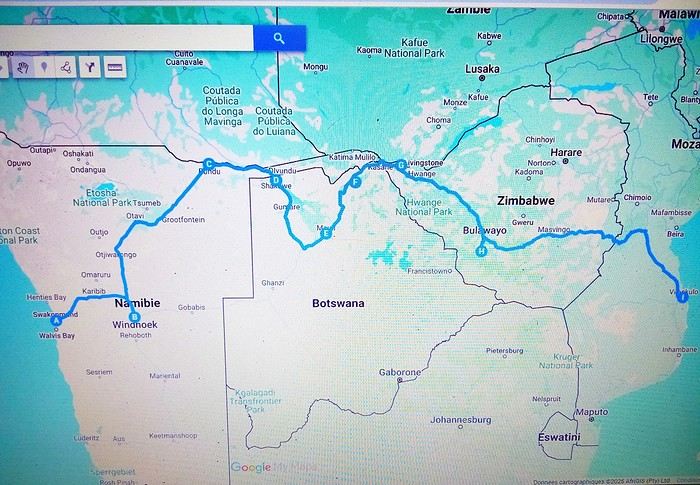
The idea is to cross Africa from the Atlantic to the Indian Ocean. Just to clarify, I don’t have a driver’s license, but I’m used to traveling by hitchhiking, carpooling, or any other type of transport. My must-sees, which I really want to visit, are the Namib and Kalahari deserts, the Okavango Delta, Victoria Falls, and the sandbanks of Vilankulos.
So if anyone has already done this route, more or less, I’d love to hear all your practical tips, especially for getting around within these areas.
Travel style: no problem with big contrasts—whether it’s sleeping in a tent/hammock or a fancy hotel. Budget: flexible (I think).
Mora Mora in Boraha, One Week on a Little Malagasy Polynesian Vibe
Just back from a week on Nosy Boraha, better known as Île Sainte-Marie. Mostly on Île aux Nattes, actually, at the very south of the island—literally just a few hundred meters from Sainte-Marie’s airport. Far east of Madagascar, and if you keep going straight, you’ll hit Australia.
We flew in through that airport to avoid a long, rough road trip before and after Tamatave, plus a boat ride that could be short or long (boat time was inversely proportional to the bus ride to the port for the Sainte-Marie ferry). No issues with Tsaradia—departures and returns were on time, service was impeccable, and the ATR plane was smooth. Too bad the prices are so high. We managed a change due to a delayed Kenya Airways flight.
First, we stayed in the northern half, on the west coast of the island, at Natiora Green Lodge. The place is absolutely stunning—a little cove opening onto a small bay dotted with rocky outcrops under lush vegetation. The bungalows are practically on the beach, in a gorgeous, forested setting alive with birdsong. It’s the perfect spot for a pirate crew and just begs for daydreaming. No reef barrier, so it gets deep pretty quickly, but the rocks have healthy coral and plenty of small fish. Great snorkeling—we even saw a turtle. Really, really nice. The only downside is that it’s a bit far from the island’s center and kinda isolated, so eating anywhere but the hotel or going for a walk without a rental car or tuk-tuk is tricky. Not impossible, but harder than if you’re somewhere livelier.
Next, we moved to Île aux Nattes at Baboo Village, which overlooks the channel between Nosy Boraha and Nosy Nato. The bungalows are right on the water, nicely and simply decorated, with a restaurant and terrace right next door. You get to the hotel directly by pirogue from Sainte-Marie’s "embarcadère"—it takes 2-3 minutes, or a little longer if the motor’s acting up. The owner is super friendly and welcoming, with a relaxed, "family/friendly" vibe. There are often a few lemurs in the hotel’s park, adding life to the place, and the vegetation is beautiful once again. The path that circles the island starts right at the hotel entrance, making it easy to reach the island’s dock and the different beaches on the west, east, or even south. Several restaurants are within walking distance, and nothing’s far by pirogue anyway. You can also find the island’s "center" with a few small shops for basic supplies or a meal at a hotely. Since there’s no electricity on the island, the generator at the hotel runs from 6 PM to 10 PM, but you can charge your phone anytime by leaving it at reception. Kayaks are free to use and great for exploring—the whole island is doable, even if you’re not an expert. Just take your time. The upside of Île aux Nattes and Sainte-Marie’s east coast is the reef barrier and lagoon (unlike the west side), which means those gorgeous water colors, accessible coral, and shallow swimming spots. The only downside of Baboo for me, since I love snorkeling, is its location right on the channel. Personally, I prefer the south side of Île aux Nattes (near the Aurora) or the east side (like Kintana) for the lagoon views and easier snorkeling (though my wife didn’t agree). But as I said, those spots are still super easy to reach from Baboo. The west side’s okay, but I like it less—except for the view of Madagascar and the sunset. Again, totally subjective.
On Sainte-Marie, we didn’t try any restaurants other than Natiora’s. Not a ton of options, but it was fine. We weren’t fans of Chez Nono in Baie d’Ampanihy—overpriced for the tiny portions. Sure, the crab was good, but there was so little of it for the price. A bit of a rip-off, since crabs are everywhere and can’t cost much for Nono. On Île aux Nattes, there are plenty of little restaurants. We tried three—Chez Adelaide, La Buvette, and Coco Sud—and every time, we had fish or seafood, and it was always good and generous, with great achards. Prices were very reasonable.
Of course, we soaked up the time, the light, the beauty of the place, the sounds, the smells... just chilling in full *tranquillou billou* mode.
We also did some activities. Snorkeling—I’ll come back to it. In 2019, I thought it was a disaster, with no nice spots and really disappointing. This year, I jumped in everywhere I could and tested spots I’d spotted on Maps or during my last trip. And it was *really* good. Mostly on Île aux Nattes: the south side near the sacred islet, west in front of Kintana, west north of the channel (especially the sand islets), and on Sainte-Marie at Natiora’s rocks. Lots of healthy coral and plenty of fish typical of the area. If you’re into big fish, this isn’t the place, but if you love coral and little critters, it’s awesome. Snorkeling outside the reef was disappointing again, and diving was too. Unless you get lucky, it’s not worth it, in my opinion.
The tour of Île aux Nattes with a meal included was great—perfect for taking breaks whenever you find a pretty spot to snorkel or just relax on a nice beach.
A trip to the sand islets was also really fun. You can’t stay long because it gets super hot, and you’re at the mercy of the tides. There’s a good flock of terns that probably nest there. The coral reefs on the east side of the islet are gorgeous. Really, really nice. Plus, the islets themselves are just stunning.
We chose to go to Ampanihy via the lagoon, hugging the shore—it’s beautiful, with amazing colors, a wilder coastline than the west, and views of seaweed farms. It’s a long trip, though, and at Ampanihy, there’s a pretty beach (but there are tons elsewhere) and a nice mangrove. Maybe it’s better to go by road to the bay and take a boat to explore the lagoon and stop somewhere without going all the way to Ampanihy, saving yourself 2 hours of boat time round-trip. Once there, you can take a little pirogue tour to the beach and through the mangrove. The way we did it, the trip wasn’t essential. As I said, Chez Nono was disappointing—bring a picnic or try Chez Samson instead.
Of course, we visited the pirate cemetery, a place I love even though there’s not much left to see—just a few graves, unfortunately, and some vandalism. The site is still magical, though, and you can let your thoughts drift with La Buse and William Kidd, who passed through here.
We organized all our outings with Crépin, who runs two small boats with his brother. We met him totally by chance, but we don’t regret it. We could adjust the trips based on what we wanted—where to stop or which spot to visit next—and Crépin handled the meals. Prices were super affordable for a full day. I can share his number if you want. We didn’t try anyone else, but I’m sure there are other great operators—I just can’t compare or recommend.
Good prep for anyone looking for an alternative to Nosy Be. Way fewer activities, sure, but also way fewer people and a really nice vibe on Sainte-Marie in general, and Île aux Nattes in particular. The beaches are more beautiful than Nosy Be’s, and there’s a reef and lagoon (it *is* the pirate island, after all). And in whale season, well, the whales.
All in all, a great place to stay for a trip.
We flew in through that airport to avoid a long, rough road trip before and after Tamatave, plus a boat ride that could be short or long (boat time was inversely proportional to the bus ride to the port for the Sainte-Marie ferry). No issues with Tsaradia—departures and returns were on time, service was impeccable, and the ATR plane was smooth. Too bad the prices are so high. We managed a change due to a delayed Kenya Airways flight.
First, we stayed in the northern half, on the west coast of the island, at Natiora Green Lodge. The place is absolutely stunning—a little cove opening onto a small bay dotted with rocky outcrops under lush vegetation. The bungalows are practically on the beach, in a gorgeous, forested setting alive with birdsong. It’s the perfect spot for a pirate crew and just begs for daydreaming. No reef barrier, so it gets deep pretty quickly, but the rocks have healthy coral and plenty of small fish. Great snorkeling—we even saw a turtle. Really, really nice. The only downside is that it’s a bit far from the island’s center and kinda isolated, so eating anywhere but the hotel or going for a walk without a rental car or tuk-tuk is tricky. Not impossible, but harder than if you’re somewhere livelier.
Next, we moved to Île aux Nattes at Baboo Village, which overlooks the channel between Nosy Boraha and Nosy Nato. The bungalows are right on the water, nicely and simply decorated, with a restaurant and terrace right next door. You get to the hotel directly by pirogue from Sainte-Marie’s "embarcadère"—it takes 2-3 minutes, or a little longer if the motor’s acting up. The owner is super friendly and welcoming, with a relaxed, "family/friendly" vibe. There are often a few lemurs in the hotel’s park, adding life to the place, and the vegetation is beautiful once again. The path that circles the island starts right at the hotel entrance, making it easy to reach the island’s dock and the different beaches on the west, east, or even south. Several restaurants are within walking distance, and nothing’s far by pirogue anyway. You can also find the island’s "center" with a few small shops for basic supplies or a meal at a hotely. Since there’s no electricity on the island, the generator at the hotel runs from 6 PM to 10 PM, but you can charge your phone anytime by leaving it at reception. Kayaks are free to use and great for exploring—the whole island is doable, even if you’re not an expert. Just take your time. The upside of Île aux Nattes and Sainte-Marie’s east coast is the reef barrier and lagoon (unlike the west side), which means those gorgeous water colors, accessible coral, and shallow swimming spots. The only downside of Baboo for me, since I love snorkeling, is its location right on the channel. Personally, I prefer the south side of Île aux Nattes (near the Aurora) or the east side (like Kintana) for the lagoon views and easier snorkeling (though my wife didn’t agree). But as I said, those spots are still super easy to reach from Baboo. The west side’s okay, but I like it less—except for the view of Madagascar and the sunset. Again, totally subjective.
On Sainte-Marie, we didn’t try any restaurants other than Natiora’s. Not a ton of options, but it was fine. We weren’t fans of Chez Nono in Baie d’Ampanihy—overpriced for the tiny portions. Sure, the crab was good, but there was so little of it for the price. A bit of a rip-off, since crabs are everywhere and can’t cost much for Nono. On Île aux Nattes, there are plenty of little restaurants. We tried three—Chez Adelaide, La Buvette, and Coco Sud—and every time, we had fish or seafood, and it was always good and generous, with great achards. Prices were very reasonable.
Of course, we soaked up the time, the light, the beauty of the place, the sounds, the smells... just chilling in full *tranquillou billou* mode.
We also did some activities. Snorkeling—I’ll come back to it. In 2019, I thought it was a disaster, with no nice spots and really disappointing. This year, I jumped in everywhere I could and tested spots I’d spotted on Maps or during my last trip. And it was *really* good. Mostly on Île aux Nattes: the south side near the sacred islet, west in front of Kintana, west north of the channel (especially the sand islets), and on Sainte-Marie at Natiora’s rocks. Lots of healthy coral and plenty of fish typical of the area. If you’re into big fish, this isn’t the place, but if you love coral and little critters, it’s awesome. Snorkeling outside the reef was disappointing again, and diving was too. Unless you get lucky, it’s not worth it, in my opinion.
The tour of Île aux Nattes with a meal included was great—perfect for taking breaks whenever you find a pretty spot to snorkel or just relax on a nice beach.
A trip to the sand islets was also really fun. You can’t stay long because it gets super hot, and you’re at the mercy of the tides. There’s a good flock of terns that probably nest there. The coral reefs on the east side of the islet are gorgeous. Really, really nice. Plus, the islets themselves are just stunning.
We chose to go to Ampanihy via the lagoon, hugging the shore—it’s beautiful, with amazing colors, a wilder coastline than the west, and views of seaweed farms. It’s a long trip, though, and at Ampanihy, there’s a pretty beach (but there are tons elsewhere) and a nice mangrove. Maybe it’s better to go by road to the bay and take a boat to explore the lagoon and stop somewhere without going all the way to Ampanihy, saving yourself 2 hours of boat time round-trip. Once there, you can take a little pirogue tour to the beach and through the mangrove. The way we did it, the trip wasn’t essential. As I said, Chez Nono was disappointing—bring a picnic or try Chez Samson instead.
Of course, we visited the pirate cemetery, a place I love even though there’s not much left to see—just a few graves, unfortunately, and some vandalism. The site is still magical, though, and you can let your thoughts drift with La Buse and William Kidd, who passed through here.
We organized all our outings with Crépin, who runs two small boats with his brother. We met him totally by chance, but we don’t regret it. We could adjust the trips based on what we wanted—where to stop or which spot to visit next—and Crépin handled the meals. Prices were super affordable for a full day. I can share his number if you want. We didn’t try anyone else, but I’m sure there are other great operators—I just can’t compare or recommend.
Good prep for anyone looking for an alternative to Nosy Be. Way fewer activities, sure, but also way fewer people and a really nice vibe on Sainte-Marie in general, and Île aux Nattes in particular. The beaches are more beautiful than Nosy Be’s, and there’s a reef and lagoon (it *is* the pirate island, after all). And in whale season, well, the whales.
All in all, a great place to stay for a trip.