Results for "Musée+archéologique+Rabat+|+1+>+66"
36185 results found.
La Sicile hors des sentiers battus English translation pending
Bonjour à tous,
Nous partons en Sicile le 25/08, pour 2 semaines. Nous cherchons à connaître les endroits à visiter et SURTOUT sortir des sentiers battus. Nous aimerions bien avoir vos opinions sur cette île et ces habitants.
Merci !
Nous partons en Sicile le 25/08, pour 2 semaines. Nous cherchons à connaître les endroits à visiter et SURTOUT sortir des sentiers battus. Nous aimerions bien avoir vos opinions sur cette île et ces habitants.
Merci !
Escale à Tripoli en Libye English translation pending
quequ'un a t'il fait escale à Tripoli ? peut on se debrouiller seul ? merci de me communiquer vos experiences.
Budget pour le sud du Mexique en août? English translation pending
😎Bonjour
Voilà j'aimerais savoir à peu près combien ça coûte de visiter le Sud du Mexique en Août si on veut avoir un voyage style routard. Avez vous des bons plans, endroits pas chers, lieux incontournables...
Merci
Voilà j'aimerais savoir à peu près combien ça coûte de visiter le Sud du Mexique en Août si on veut avoir un voyage style routard. Avez vous des bons plans, endroits pas chers, lieux incontournables...
Merci
Visite de Trujillo au Pérou English translation pending
Je pars pour le pérou le 14 juillet et je prévois passer 1 semaine dans le nord du Pérou . je sais qu'à Trujillo il ya quelques ruines a visiter . Quelqu'un peut-il me dire ce que je ne devrais pas manquer de visiter dans ce coin du Pérou ?
Hôtel à Pammukale en Turquie English translation pending
BONJOUR,
JE SUIS A LA RECHERCHE D'UN HOTEL PAS CHER ET SYMPA A PAMMUKALE POUR 2 OU 3 JOURS .
VOS SUGGESTIONS ET INFOS SONT LES BIENVENUS.
MERCI.
😏
JE SUIS A LA RECHERCHE D'UN HOTEL PAS CHER ET SYMPA A PAMMUKALE POUR 2 OU 3 JOURS .
VOS SUGGESTIONS ET INFOS SONT LES BIENVENUS.
MERCI.
😏
Rêve de trois semaines à peine au Sri Lanka English translation pending
Le départ est fixé pour le 25 mars 2006. Après vérification, on a tout ! Convocation aéroport, les passeports et le sacs à dos est bouclé. On peut partir !!!
On est à Roissy CDG quelques 3 heures avant le vol. Le temps passe vite, malgré notre impatience. On prend un vol de la compagnie Qatar, avec escale à Doha. Juste une heure et on remonte direction finale COLOMBO !!!!! COLOMBO On arrive. On rempli notre fiche et on passe aux douanes. Dans l’aéroport, on s’arrête pour changer nos USD. Quand je vois le nombre de billets que l’on nous donne, j’ai la sensation d’être riche ! Dès que l’on sort de l’aéroport, il y a tout un tas de rabatteurs. Ils veulent tous nous proposer leurs services pour nous vendre un séjour voiture avec chauffeur. On n’a pas choisi cette option. On avait le choix, soit prendre un bus local, soit prendre un intercity avec clim. Il faisait chaud, on était crevé, et on savait que l’on avait encore plusieurs heures de voyage. Et une chaleur… Etouffante ! Faut dire que l’on a quitté Paris et qu’il faisait un petit 10°. Après 1h30 de route, on arrive à la gare de Colombo. On prend un ticket pour se rendre à Kandy. Il paraît que le trajet en train entre Kandy et Colombo est somptueux… moi, pendant 5 heures, je n’ai rien vu, j’ai dormi ! KANDY On avait noté dans le guide du routard l’adresse d’une guest qui se situait sur les hauteurs du lac de Kandy. On a pris un tuk tuk pour s’y rendre. Shangri la Tourist Guest House. 1200 Rps pour 2 ou 900 Rps pour 1 avec le petit Dej. Le dîner est à 350 rps. En arrivant, incapable de faire quoi que ce soit, tant nous étions fatigués. On a pris un bon thé et on est allé se balader le long du lac, l’appareil photos à la main. C’est magnifique, propre et il y règne une atmosphère apaisante. On est tout de suite dépaysé. Plutôt que de dîner à notre hôtel, on est allé dîner un thali dans un petit resto hyper local, en centre ville. Les premières bouchées ont été « un peu » difficile. Manger aussi épicé, on n’a pas trop l’habitude. En rentrant à la guest, Nandana, le propriétaire parlant parfaitement français, nous a proposé un guide avec chauffeur pour faire le triangle culturel. 6000 Roupies pour deux par jour. Il fallait compter 3 à 4 jours. Avec logement et petits déj. Ce n’était ni dans nos objectifs, ni dans nos moyens. Après une bonne nuit de sommeil et un petit déj bien complet, on est descendu le long du lac pour visiter un peu la ville. Les bruits de klaxon, la circulation et la pollution… c’est impressionnant. On a pris un billet pour visiter le temple de la dent. Attention, il faut toujours penser à avoir un sari pour couvrir ses jambes ou alors venir avec un pantalon. Après une fouille, on peut enfin y accéder. La sécurité est importante car il y a eu un attentat sanglant. La visite est très sympa. Le temple est très beau. Malheureusement, nous ne sommes pas arrivés à temps pour la cérémonie. Au premier étage, un moine reçoit des offrandes. Les gens prient, ça sent bon. Il y a de nombreuses pièces, dont une avec de nombreux Bouddha. Au dernier étage, on peut visiter un musée avec de nombreuses et diverses offrandes. Nous sommes ressortis après y avoir passé une heure ou deux.
En se promenant en ville, on a goûté et acheté des bananes (goût citron, goût choco, rouge, verte, jaune…) et bien évidemment, on a mangé des ananas, si rafraîchissants. On a pris un tuk tuk, pour aller au jardin des épices (100 roupies). Si c’est la première fois que l’on utilise ce moyen de transport… ben, c’est très impressionnant. Ils zigzaguent dans les bouchons, doublent à des endroits, où ne passerait pas un vélo… La route est super ! La flore est riche. Tout est si vert, c’est magnifique. On s’arrête pour visiter un des jardins (à environ 25 km). Là, un homme nous accueille pour nous expliquer d’où viennent ces produits que l’on utilise tant : la cannelle, l’aloévéra, la vanille… c’est intéressant. Il nous amène ensuite sur une petite terrasse couverte où il procède à une démonstration : Massage avec de l’huile de santal, épilation, crème anti migraine… La visite se termine par le magasin. Difficile de ne rien acheter, même si les prix sont exorbitants. On repart. Sur le chemin du retour, on s’arrête au jardin botanique. 300 Roupies l’entrée. Il fait bon de s’y promener. Chaque coin d’ombre, on croise des couples d’amoureux. Il y a des espèces d’arbres et de fleurs par millier. Une journée ne suffirait pas à visiter ce grand parc. Un homme nous montre un scorpion. Moi, qui marchait pieds nus depuis une heure, je remets vite fait mes chaussures. Les enfants, tous en tenues d’écolier jouent. De temps en temps, on voit des singes sauter de branches en branches. En ressortant, on trouve un tuk tuk, qui nous réclame 250 Rps pour rentrer en ville. Finalement, on sautera dans un bus. 18 Roupies. Le lendemain, de nouveau promenade dans la ville et ses environs. POLONARUWA Le surlendemain, on se décide de se rendre sur le site archéologique de Polonaruwa. Nous laissons nos sacs à dos à notre guest. On prend un bus très tôt. Quelques heures plus tard, nous arrivons. On prend une guest dans la vielle ville. Sanudra Tourist. 500 roupies la nuit. Petit déj à 200 Roupies. Repas simple à 200 Roupies. On pose nos affaires et on prend tout de suite un tuk tuk (200 Roupies) pour nous amener au site archéologique. Il faut compter 2040 Rps par personne pour la visite d’un site. Si on a l’intention de visiter les 3 sites, il faut prendre le pass. Tout d’abord, on va au musée. Malheureusement, on ne reste pas très longtemps à l’intérieur et l’on ne prend pas de guide. Le temps était couvert et orageux, et on avait peur de ne pas pouvoir tout voir. Le site est… extra ! La terrasse de la dent, le bassin des lotus, les temples de shiva… on se ballade et on fait chacun au moins 2 pellicules photos. Le seul point négatif, c’est d’une part beaucoup de touristes et d’autre part, le nombre de vendeurs de souvenirs. Mais la visite n’en reste pour le moins super. Le soir, un orage éclate. On se boit une bière sur la terrasse couverte de notre guest, car la chaleur est étouffante.
HAPUTALE On est retourné à Kandy et on y a passé une dernière nuit. Le lendemain tôt, on a pris un bus, pour aller à Nuwara Elyia. La route était très abîmée, mais le paysage quant à lui était splendide. Plus on montait, plus on découvrait les plantations de thé. On ne savait pas encore quoi faire. Soit aller dans les plantations de thé, soit faire l’ascension du pic d’adam. Avec regret, on a choisi de ne pas faire le pèlerinage. A la gare, j’entends hurlé mon prénom. Deux filles, avec qui nous avions sympathisé à Kandy étaient dans le train. On monte et en discutant, on s’aperçoit que l’on va au même endroit. Super de se retrouver comme cela. Le voyage en train était génial. Il pleuvait et il y avait beaucoup de brouillard, mais le décor restait magique. A Haputale, on se rend au Sri Lake view, 1000 roupies la nuit. On a une chambre avec vue sur les plantations de thé. On pose nos affaires, on prend une douche et première ballade dans les hauteurs. Là, on rencontre des gens d’une gentillesse… tout le monde nous parle, vient vers nous. Le brouillard se lève pour donner sa place au soleil. La vallée est illuminée, c’est extra. Le lendemain, debout à 7h pour une rando. On a marché toute la journée dans les plantations de thé. Les femmes qui coupaient le thé, nous expliquaient comment procéder. On prenait des photos, et ils nous donnaient leurs adresses pour qu’on leur envoie. C’était comme dans un rêve. Le soir, ça a été séance de baume du tigre sur les mollets. Et une bonne nuit de sommeil. Les autres ballades que nous avons faites ont été toutes aussi somptueuses les unes que les autres. Plantations de thé, rencontres, cascades… DEBARAWEWA On a repris plusieurs bus en direction de Kataragama. Parfois, c���était difficile car on passait des heures debout. On voulait absolument faire un safari dans le parc national de Yala. On a trouvé une guest très sympa. Sakura Guesthouse à 600 roupies la nuit. Guest tenue pas madame DA SILVA Le lendemain, on avait rendez vous à 5h30 devant la grille pour nous rendre à Yala. On a négocié une jeep à 500 roupies par personne plus l’entrLe lendemain, on avait rendez vous à 5h30 devant la grille pour nous rendre à Yara. On a négocié une jeep à 500 roupies par personne plus l’entrée du parc à 2000. Pour 5h. Ça a été extra ! On a vu tout un tas d’animal : Léopards, chacals, crocodiles, paons, faons, singes, des oiseaux de toute beauté… et une flore !!!!! C’est ici, que l’on a enfin pu faire nos lessives !!!! Quel bonheur de remettre des vêtements « propres ». Le lendemain, le fils de madame Da Silva nous a déposé à la station de bus. POLHENA On a repris plusieurs bus pour Polhena, tout près de Matara. A partir d’Hambandotta, on a vu les ravages causés par le tsunami. J’avais pourtant visité l’année dernière l’Inde et la Thaïlande, mais je n’avais pas réalisé l’ampleur du désastre avant d’être là bas. Les gens au mieux, vivent dans des cabanes en bois ou dans des tentes. Tout est à reconstruire et même 16 mois plus tard. A Polhena, on a pris une guest (pas loin du Sunil et appartenant à la même famille), où il n’y a que deux chambres avec vue sur la mer et pied dans le sable. 700 roupies par nuit. Toujours aussi fort humainement avec les gens que nous avons rencontré. On a passé plusieurs jours là bas. Entre ballade sur les chemins de terre (où nous étions invités à prendre le thé tout les 50 mètres), snorkeling, farniente, visite et baignade à Mirissa… Matara est une ville très sympa. Là bas, on nous a expliqué tout un tas de choses concernant l’utilisation des plantes et des racines dans la médecine. On en a profité pour manger de la langouste, des gambas… la cuisine Sri Lankaise est vraiment fabuleuse. Il a fallu quitter ce petit coin de paradis et le chemin avec les deux amies que nous avions rencontré à Kandy. UNUWATUNA On a pris un bus pour se rendre à Unuwatuna. Le thilak guest. 1000 roupies la nuit dans les chambres sur la plage. La nourriture n’y est pas excellente et un peu chère. Mieux vaut s’éloigner un peu pour manger. Terminé la tranquillité et la vie paisible. Bonjour le tourisme, les rues et maisons bétonnées. Ici, je ne sais pas si c’est pour une raison touristique, mais tout y est reconstruit. Et beaucoup, font un commerce du tsunami. On y a fait nos achats : masques en bois, statuts… On a pris un tuk tuk pour nous faire visiter la ville de Galle. Tout d’abord on a fait les marchés. Ensuite on est allé faire de longues ballades sur les remparts (le soleil était au zénith). On a été invité à un pique nique par une famille. NEGOMBO VIA COLOMBO Nous avons pris le train à Galle pour nous rendre à Colombo. Un trajet de 3h. Nous ne parlions pas beaucoup, trop nostalgiques de quitter le Sri Lanka. On regardait le paysage en tentant de s’imprégner au maximum de belles images. On faisait aussi le point de ce que l’on avait vu et préféré. Mais que dire ce que l’on a préféré quand on a tout aimé. A Colombo, on a pris le bus n°240 direction Negombo. On a pris une chambre au Star Beach, 800 roupies la nuit. On a pris aussi un tuk tuk pour nous amener le lendemain à 5h à l’aéroport, 400 roupies. AEROPORT AU SRI LANKA, AEROPORT PARIS CDG On a changé nos Roupies contre des USD à l’aéroport. L’avion avait un peu de retard.On a atterri. Qu’est ce qu’il fait froid à Paris !!!! Que les gens sont tristes… vite, faisons développer nos photos pour retourner au Paradis encore quelques heures.
On est à Roissy CDG quelques 3 heures avant le vol. Le temps passe vite, malgré notre impatience. On prend un vol de la compagnie Qatar, avec escale à Doha. Juste une heure et on remonte direction finale COLOMBO !!!!! COLOMBO On arrive. On rempli notre fiche et on passe aux douanes. Dans l’aéroport, on s’arrête pour changer nos USD. Quand je vois le nombre de billets que l’on nous donne, j’ai la sensation d’être riche ! Dès que l’on sort de l’aéroport, il y a tout un tas de rabatteurs. Ils veulent tous nous proposer leurs services pour nous vendre un séjour voiture avec chauffeur. On n’a pas choisi cette option. On avait le choix, soit prendre un bus local, soit prendre un intercity avec clim. Il faisait chaud, on était crevé, et on savait que l’on avait encore plusieurs heures de voyage. Et une chaleur… Etouffante ! Faut dire que l’on a quitté Paris et qu’il faisait un petit 10°. Après 1h30 de route, on arrive à la gare de Colombo. On prend un ticket pour se rendre à Kandy. Il paraît que le trajet en train entre Kandy et Colombo est somptueux… moi, pendant 5 heures, je n’ai rien vu, j’ai dormi ! KANDY On avait noté dans le guide du routard l’adresse d’une guest qui se situait sur les hauteurs du lac de Kandy. On a pris un tuk tuk pour s’y rendre. Shangri la Tourist Guest House. 1200 Rps pour 2 ou 900 Rps pour 1 avec le petit Dej. Le dîner est à 350 rps. En arrivant, incapable de faire quoi que ce soit, tant nous étions fatigués. On a pris un bon thé et on est allé se balader le long du lac, l’appareil photos à la main. C’est magnifique, propre et il y règne une atmosphère apaisante. On est tout de suite dépaysé. Plutôt que de dîner à notre hôtel, on est allé dîner un thali dans un petit resto hyper local, en centre ville. Les premières bouchées ont été « un peu » difficile. Manger aussi épicé, on n’a pas trop l’habitude. En rentrant à la guest, Nandana, le propriétaire parlant parfaitement français, nous a proposé un guide avec chauffeur pour faire le triangle culturel. 6000 Roupies pour deux par jour. Il fallait compter 3 à 4 jours. Avec logement et petits déj. Ce n’était ni dans nos objectifs, ni dans nos moyens. Après une bonne nuit de sommeil et un petit déj bien complet, on est descendu le long du lac pour visiter un peu la ville. Les bruits de klaxon, la circulation et la pollution… c’est impressionnant. On a pris un billet pour visiter le temple de la dent. Attention, il faut toujours penser à avoir un sari pour couvrir ses jambes ou alors venir avec un pantalon. Après une fouille, on peut enfin y accéder. La sécurité est importante car il y a eu un attentat sanglant. La visite est très sympa. Le temple est très beau. Malheureusement, nous ne sommes pas arrivés à temps pour la cérémonie. Au premier étage, un moine reçoit des offrandes. Les gens prient, ça sent bon. Il y a de nombreuses pièces, dont une avec de nombreux Bouddha. Au dernier étage, on peut visiter un musée avec de nombreuses et diverses offrandes. Nous sommes ressortis après y avoir passé une heure ou deux.
En se promenant en ville, on a goûté et acheté des bananes (goût citron, goût choco, rouge, verte, jaune…) et bien évidemment, on a mangé des ananas, si rafraîchissants. On a pris un tuk tuk, pour aller au jardin des épices (100 roupies). Si c’est la première fois que l’on utilise ce moyen de transport… ben, c’est très impressionnant. Ils zigzaguent dans les bouchons, doublent à des endroits, où ne passerait pas un vélo… La route est super ! La flore est riche. Tout est si vert, c’est magnifique. On s’arrête pour visiter un des jardins (à environ 25 km). Là, un homme nous accueille pour nous expliquer d’où viennent ces produits que l’on utilise tant : la cannelle, l’aloévéra, la vanille… c’est intéressant. Il nous amène ensuite sur une petite terrasse couverte où il procède à une démonstration : Massage avec de l’huile de santal, épilation, crème anti migraine… La visite se termine par le magasin. Difficile de ne rien acheter, même si les prix sont exorbitants. On repart. Sur le chemin du retour, on s’arrête au jardin botanique. 300 Roupies l’entrée. Il fait bon de s’y promener. Chaque coin d’ombre, on croise des couples d’amoureux. Il y a des espèces d’arbres et de fleurs par millier. Une journée ne suffirait pas à visiter ce grand parc. Un homme nous montre un scorpion. Moi, qui marchait pieds nus depuis une heure, je remets vite fait mes chaussures. Les enfants, tous en tenues d’écolier jouent. De temps en temps, on voit des singes sauter de branches en branches. En ressortant, on trouve un tuk tuk, qui nous réclame 250 Rps pour rentrer en ville. Finalement, on sautera dans un bus. 18 Roupies. Le lendemain, de nouveau promenade dans la ville et ses environs. POLONARUWA Le surlendemain, on se décide de se rendre sur le site archéologique de Polonaruwa. Nous laissons nos sacs à dos à notre guest. On prend un bus très tôt. Quelques heures plus tard, nous arrivons. On prend une guest dans la vielle ville. Sanudra Tourist. 500 roupies la nuit. Petit déj à 200 Roupies. Repas simple à 200 Roupies. On pose nos affaires et on prend tout de suite un tuk tuk (200 Roupies) pour nous amener au site archéologique. Il faut compter 2040 Rps par personne pour la visite d’un site. Si on a l’intention de visiter les 3 sites, il faut prendre le pass. Tout d’abord, on va au musée. Malheureusement, on ne reste pas très longtemps à l’intérieur et l’on ne prend pas de guide. Le temps était couvert et orageux, et on avait peur de ne pas pouvoir tout voir. Le site est… extra ! La terrasse de la dent, le bassin des lotus, les temples de shiva… on se ballade et on fait chacun au moins 2 pellicules photos. Le seul point négatif, c’est d’une part beaucoup de touristes et d’autre part, le nombre de vendeurs de souvenirs. Mais la visite n’en reste pour le moins super. Le soir, un orage éclate. On se boit une bière sur la terrasse couverte de notre guest, car la chaleur est étouffante.
HAPUTALE On est retourné à Kandy et on y a passé une dernière nuit. Le lendemain tôt, on a pris un bus, pour aller à Nuwara Elyia. La route était très abîmée, mais le paysage quant à lui était splendide. Plus on montait, plus on découvrait les plantations de thé. On ne savait pas encore quoi faire. Soit aller dans les plantations de thé, soit faire l’ascension du pic d’adam. Avec regret, on a choisi de ne pas faire le pèlerinage. A la gare, j’entends hurlé mon prénom. Deux filles, avec qui nous avions sympathisé à Kandy étaient dans le train. On monte et en discutant, on s’aperçoit que l’on va au même endroit. Super de se retrouver comme cela. Le voyage en train était génial. Il pleuvait et il y avait beaucoup de brouillard, mais le décor restait magique. A Haputale, on se rend au Sri Lake view, 1000 roupies la nuit. On a une chambre avec vue sur les plantations de thé. On pose nos affaires, on prend une douche et première ballade dans les hauteurs. Là, on rencontre des gens d’une gentillesse… tout le monde nous parle, vient vers nous. Le brouillard se lève pour donner sa place au soleil. La vallée est illuminée, c’est extra. Le lendemain, debout à 7h pour une rando. On a marché toute la journée dans les plantations de thé. Les femmes qui coupaient le thé, nous expliquaient comment procéder. On prenait des photos, et ils nous donnaient leurs adresses pour qu’on leur envoie. C’était comme dans un rêve. Le soir, ça a été séance de baume du tigre sur les mollets. Et une bonne nuit de sommeil. Les autres ballades que nous avons faites ont été toutes aussi somptueuses les unes que les autres. Plantations de thé, rencontres, cascades… DEBARAWEWA On a repris plusieurs bus en direction de Kataragama. Parfois, c���était difficile car on passait des heures debout. On voulait absolument faire un safari dans le parc national de Yala. On a trouvé une guest très sympa. Sakura Guesthouse à 600 roupies la nuit. Guest tenue pas madame DA SILVA Le lendemain, on avait rendez vous à 5h30 devant la grille pour nous rendre à Yala. On a négocié une jeep à 500 roupies par personne plus l’entrLe lendemain, on avait rendez vous à 5h30 devant la grille pour nous rendre à Yara. On a négocié une jeep à 500 roupies par personne plus l’entrée du parc à 2000. Pour 5h. Ça a été extra ! On a vu tout un tas d’animal : Léopards, chacals, crocodiles, paons, faons, singes, des oiseaux de toute beauté… et une flore !!!!! C’est ici, que l’on a enfin pu faire nos lessives !!!! Quel bonheur de remettre des vêtements « propres ». Le lendemain, le fils de madame Da Silva nous a déposé à la station de bus. POLHENA On a repris plusieurs bus pour Polhena, tout près de Matara. A partir d’Hambandotta, on a vu les ravages causés par le tsunami. J’avais pourtant visité l’année dernière l’Inde et la Thaïlande, mais je n’avais pas réalisé l’ampleur du désastre avant d’être là bas. Les gens au mieux, vivent dans des cabanes en bois ou dans des tentes. Tout est à reconstruire et même 16 mois plus tard. A Polhena, on a pris une guest (pas loin du Sunil et appartenant à la même famille), où il n’y a que deux chambres avec vue sur la mer et pied dans le sable. 700 roupies par nuit. Toujours aussi fort humainement avec les gens que nous avons rencontré. On a passé plusieurs jours là bas. Entre ballade sur les chemins de terre (où nous étions invités à prendre le thé tout les 50 mètres), snorkeling, farniente, visite et baignade à Mirissa… Matara est une ville très sympa. Là bas, on nous a expliqué tout un tas de choses concernant l’utilisation des plantes et des racines dans la médecine. On en a profité pour manger de la langouste, des gambas… la cuisine Sri Lankaise est vraiment fabuleuse. Il a fallu quitter ce petit coin de paradis et le chemin avec les deux amies que nous avions rencontré à Kandy. UNUWATUNA On a pris un bus pour se rendre à Unuwatuna. Le thilak guest. 1000 roupies la nuit dans les chambres sur la plage. La nourriture n’y est pas excellente et un peu chère. Mieux vaut s’éloigner un peu pour manger. Terminé la tranquillité et la vie paisible. Bonjour le tourisme, les rues et maisons bétonnées. Ici, je ne sais pas si c’est pour une raison touristique, mais tout y est reconstruit. Et beaucoup, font un commerce du tsunami. On y a fait nos achats : masques en bois, statuts… On a pris un tuk tuk pour nous faire visiter la ville de Galle. Tout d’abord on a fait les marchés. Ensuite on est allé faire de longues ballades sur les remparts (le soleil était au zénith). On a été invité à un pique nique par une famille. NEGOMBO VIA COLOMBO Nous avons pris le train à Galle pour nous rendre à Colombo. Un trajet de 3h. Nous ne parlions pas beaucoup, trop nostalgiques de quitter le Sri Lanka. On regardait le paysage en tentant de s’imprégner au maximum de belles images. On faisait aussi le point de ce que l’on avait vu et préféré. Mais que dire ce que l’on a préféré quand on a tout aimé. A Colombo, on a pris le bus n°240 direction Negombo. On a pris une chambre au Star Beach, 800 roupies la nuit. On a pris aussi un tuk tuk pour nous amener le lendemain à 5h à l’aéroport, 400 roupies. AEROPORT AU SRI LANKA, AEROPORT PARIS CDG On a changé nos Roupies contre des USD à l’aéroport. L’avion avait un peu de retard.On a atterri. Qu’est ce qu’il fait froid à Paris !!!! Que les gens sont tristes… vite, faisons développer nos photos pour retourner au Paradis encore quelques heures.
Libye en famille (été 2006) English translation pending
Bonjour à toutes et tous,
Je souhaiterais partir en Libye cet été en famille. Est-ce faisable ? Existe t'il une infrastructure touristique suffisante ? Existe t'il un voyagiste qui propose des destination ? Bref, quels conseils pouvez-vous me donner ? J'en ai raz le bol des nids à touristes et je souhaites vraiment voir une destination autre que celles proposée par Jetair.
J'attends vos conseils, merci bcp
Pierre
Je souhaiterais partir en Libye cet été en famille. Est-ce faisable ? Existe t'il une infrastructure touristique suffisante ? Existe t'il un voyagiste qui propose des destination ? Bref, quels conseils pouvez-vous me donner ? J'en ai raz le bol des nids à touristes et je souhaites vraiment voir une destination autre que celles proposée par Jetair.
J'attends vos conseils, merci bcp
Pierre
Immanquables du Mexique et du Guatemala English translation pending
Allo
Je pars 2 mois au Mexique et en amérique central cet été, mois de juillet et août (1 mois au Mexique et 1 mois du Guatemala jusqu'à où je pourrais bien me rendre...) Je voudrais savoir si vous pourriez me conseiller les endroits à ne pas manquer.
Au Mexique je compte faire les Chiapas et le Yucatan, alors s'il y a des endroits à ne pas manquer, j'aimerais bien que vous m'en faisiez part. Cela m'aiderais à tracer mon itinéraire...
Au Guatemala, je ne me suis pas déterminé d'itinéraire encore, mais j'aimerais bien que vous me conseilliez à ce sujet, les plus beaux endroits...
Merci a+ Melanie
Je pars 2 mois au Mexique et en amérique central cet été, mois de juillet et août (1 mois au Mexique et 1 mois du Guatemala jusqu'à où je pourrais bien me rendre...) Je voudrais savoir si vous pourriez me conseiller les endroits à ne pas manquer.
Au Mexique je compte faire les Chiapas et le Yucatan, alors s'il y a des endroits à ne pas manquer, j'aimerais bien que vous m'en faisiez part. Cela m'aiderais à tracer mon itinéraire...
Au Guatemala, je ne me suis pas déterminé d'itinéraire encore, mais j'aimerais bien que vous me conseilliez à ce sujet, les plus beaux endroits...
Merci a+ Melanie
L'ile de Délos (Grèce) English translation pending
Bonjour a tous!!
Nouvelle venue, je prepare mon voyage en Grece pour cet été (je sais c plus cher mais je n'ai pas le choix!!) et nous voudrions nous rendre sur l'ile de Delos, j'ai cru comprendre que l'on ne pouvait pas rester sur place pour la nuit! Peut on faire l'aller retour dans la journée et de quelle ile est il possible de partir?
Merci pour vos reponses
Bisous
Ninie
Croisière "mers et mythes classiques" English translation pending
j'ai réservé une croisière sur le Costa Atlantica, Mers et mythes classiques. Départ le 4 octobre 2006 de Savone.
J'aimerai avoir quelques précisions sur les points suivants
1) J'ai l'intention de me rendre à Savone en voiture, Est il facile de se garer? La compagnie Costa possède t'elle un parking parivé? Si oui qu'el en est le coût? Comment se passe le transfert des bagages?
2) Des renseignements sur les excursions de cette croisière me rendraient service.
3) Nous serons quatre (2 couples) Existe t'il des tables de quatre au restaurant?
Merci pour vos renseignements
Visites et logement pour une semaine à Belem au Brésil English translation pending
Salut à tous...
Jeune retraité (60ans) je vais passer une semaine à Belem du 11 au 17 mars... J'ai un budget moyen..
Je ne parle pas portuguais..
Quels sont les conseils que vous pouvez me donner.. Visites, adresse d'un hotel (avec wc dans la chambre)
Ai-je le temps de faire une petite remontée de l'amazone... jusqu'ou?... avez vous un bon contact à ce sujet?
Merci à tous...
Votre avis sur circuit au Brésil English translation pending
salut, avec mon ami nous partons pour un mois au bresil entre le 24 juin et le 24 juillet. nous arrivons et repartons de salvador. nous pensions faire une boucle salvador_brasilia(parque national chapados dos veadeiros)_belem_sao luis_salvador. est ce que ca parait raisonable pour un voyage d'un mois et avez vous des conseils ou des bon plan pour nous (et au niveau climat qu'en savez vous). et bon voyage a tout le monde
Les dix plus beaux sites du monde? English translation pending
Bonjour,
Je souhaiterais partager vos gouts !!!!!!!! Pouvez m'énumérer vos 10 plus beaux spots sur cette planète terre... Mentionner le pays pour nous autres, merci
1 du plus beau 2 3 4 5 6 7 8 9 10
J'ai hate de connaitre vos réponses. A+ OL
Je souhaiterais partager vos gouts !!!!!!!! Pouvez m'énumérer vos 10 plus beaux spots sur cette planète terre... Mentionner le pays pour nous autres, merci
1 du plus beau 2 3 4 5 6 7 8 9 10
J'ai hate de connaitre vos réponses. A+ OL
Que visiter à Taormina en Italie? English translation pending
pour ceux qui connaissent bien cette ville, j'aimerai savoir ce que je pourrai voir durant toute une journée à Taormina sans y passer la nuit ?
je serai à l'hotel à Messina mais je prendrai le train pour aller visiter Taormina, j'attends vos conseils avec impatience : )
Sécurité en Algérie English translation pending
BONjour a tous! j'aimerais peut-être partir en voyage pour l'algérie...seulement je me demandais si c'était un destination sure face aux nombreux problemes qui se sont produient dans ce pays...
alors si vous y etes allés il ny a pas lonten bien pourriez-vous me conseiller??
merci biennn
sebastien
alors si vous y etes allés il ny a pas lonten bien pourriez-vous me conseiller??
merci biennn
sebastien
Egypte en semi-liberté English translation pending
Bonjour,
je recherche des infos pour notre voyage en Egypte, environ 15 jours, au début de l'année prochaine. Un peu trop "vieux" pour partir sac à dos et nous débrouiller seuls sur place, nous sommes un peu consternés de voir que les agences nous proposent uniquement des croisières pour "sac à touristes", contingentées et tout, et tout...Quelqu'un connait-il un tour opérateur qui permet de visiter ce magnifique pays un peu en dehors des sentiers battus : croisière sur le Nil obligatoire, raid sur les oasis et quelque jours au Sinaï ou le désert blanc..Pour Le Caire, j'ai déjà pris mes onfos sur le site et je me débrouillerai..
Merci d'avance
minbe
je recherche des infos pour notre voyage en Egypte, environ 15 jours, au début de l'année prochaine. Un peu trop "vieux" pour partir sac à dos et nous débrouiller seuls sur place, nous sommes un peu consternés de voir que les agences nous proposent uniquement des croisières pour "sac à touristes", contingentées et tout, et tout...Quelqu'un connait-il un tour opérateur qui permet de visiter ce magnifique pays un peu en dehors des sentiers battus : croisière sur le Nil obligatoire, raid sur les oasis et quelque jours au Sinaï ou le désert blanc..Pour Le Caire, j'ai déjà pris mes onfos sur le site et je me débrouillerai..
Merci d'avance
minbe
Akumal Beach Resort English translation pending
Bonjour....
Je commence tranquillement pas vite à magasiner pour le mois d'avril prochain....
Je souhaites vivement aller dans la région Cancun/Riviera Maya..et j'ai vu que dans les destinations soleil, on annonçe cet hôtel Akumal beach resort....
J'aimerais savoir si quelqu'un a des commentaires sur cet hôtel......propreté, chambres, plage, nourriture, etc????
Merci...
Diama.
Je commence tranquillement pas vite à magasiner pour le mois d'avril prochain....
Je souhaites vivement aller dans la région Cancun/Riviera Maya..et j'ai vu que dans les destinations soleil, on annonçe cet hôtel Akumal beach resort....
J'aimerais savoir si quelqu'un a des commentaires sur cet hôtel......propreté, chambres, plage, nourriture, etc????
Merci...
Diama.
C'est parti!!!! English translation pending
Ca y est, le projet Geantropie commence vraiment. Et par la même mon grand voyage, rêvé depuis tant d'années. Après des mois de démarches personnelles puis administratives, je me suis envolé hier matin pour ma nouvelle vie, pour Mexico. Vous pourrez lire mes aventures géantropiques sur mon site (http://geantropie.free.fr, rubrique "En direct d'Amérique Latine"). Parfois, lorsque les aventures qui m'arriveront vaudront vraiment le coup, ou seront intéressantes mais sans rapport direct avec la Géantropie, je les relaterai ici, dans cette discussion. A suivre, donc.
Je souhaite à tous de réaliser ses rêves comme je viens de le faire hier.
Adelante!
Loopkin, le géantrope.
Je souhaite à tous de réaliser ses rêves comme je viens de le faire hier.
Adelante!
Loopkin, le géantrope.
Questions sur voyage au Brésil en juillet English translation pending
Bien le bonjour a tt le monde,
Donc voila je pars pour le Brésil avec un pote pendant un mois et de poussieres!!!!!! Donc beaucoup de questions se posent a moi!!!
Nous avons pris le Brazil Air Pass de 5coupons, nous avons vu chez TAM(compagnie aerienne bresilienne) que c t eux les moins cher!!
J'aurais aimé savoir s'il excitait moins cher pour 5coupons sachant que nous allons faire: SAO PAULO-Iguacu, Iguacu-Manaus, Manaus-Belem, Belem-Recife et Recife-Rio. De plus si ya des plans pour avoir juste un vol supplémentaire soit 6 coupons pour le meme prix cité au dessus!!!!
Par rapport a Manaus, nous allons pouvoir y rester 4 a 5jours donc peu de temps, si kelkun connait un plan dans l'amazonie facon "Aventure-Nature" remontée de l'amazonie etc....pour la durée citée ca serait bien cool!!!
Sachant que le Nordeste est une zone du brésil a voir absolument mais que le temps est compté pour nous, je souhaiterai savoir si ya des imperatifs a faire.Nous allons certainement sur Fortaleza et Bahia, REcife donc, mais nous sommes pas trop accros du tourisme de masse!!!donc si kelkun pouvait nous donner un plan genre une ile magnifique ou ya personne(le reve si ca existe) ou autre, un trip original et depaysant. Un endroit typiquement Bresilien ou on fait la fete et on vit com les gens du pays!!!! Peut etre que je reve un peu mais les voyages c fait pour ça!!
Pour Rio on recherche un endroit trankil pour dormir, sympa, sur, pas tres cher non plus, c qd meme "le nerf de la guerre".Si possible des endroits inconnus du tourisme de masse mais avec une beauté certaine!!!!!!
BREF nous on cherche les bons plans sur les villes dites au debut, tt conseil est bienvenu!!!!si d'autres personnes ont besoin d'infos kil me laisse un message, nous aussi on a kelkes bons plans a donner.
donc je vous laisse repondre
Meerci.Bye
Donc voila je pars pour le Brésil avec un pote pendant un mois et de poussieres!!!!!! Donc beaucoup de questions se posent a moi!!!
Nous avons pris le Brazil Air Pass de 5coupons, nous avons vu chez TAM(compagnie aerienne bresilienne) que c t eux les moins cher!!
J'aurais aimé savoir s'il excitait moins cher pour 5coupons sachant que nous allons faire: SAO PAULO-Iguacu, Iguacu-Manaus, Manaus-Belem, Belem-Recife et Recife-Rio. De plus si ya des plans pour avoir juste un vol supplémentaire soit 6 coupons pour le meme prix cité au dessus!!!!
Par rapport a Manaus, nous allons pouvoir y rester 4 a 5jours donc peu de temps, si kelkun connait un plan dans l'amazonie facon "Aventure-Nature" remontée de l'amazonie etc....pour la durée citée ca serait bien cool!!!
Sachant que le Nordeste est une zone du brésil a voir absolument mais que le temps est compté pour nous, je souhaiterai savoir si ya des imperatifs a faire.Nous allons certainement sur Fortaleza et Bahia, REcife donc, mais nous sommes pas trop accros du tourisme de masse!!!donc si kelkun pouvait nous donner un plan genre une ile magnifique ou ya personne(le reve si ca existe) ou autre, un trip original et depaysant. Un endroit typiquement Bresilien ou on fait la fete et on vit com les gens du pays!!!! Peut etre que je reve un peu mais les voyages c fait pour ça!!
Pour Rio on recherche un endroit trankil pour dormir, sympa, sur, pas tres cher non plus, c qd meme "le nerf de la guerre".Si possible des endroits inconnus du tourisme de masse mais avec une beauté certaine!!!!!!
BREF nous on cherche les bons plans sur les villes dites au debut, tt conseil est bienvenu!!!!si d'autres personnes ont besoin d'infos kil me laisse un message, nous aussi on a kelkes bons plans a donner.
donc je vous laisse repondre
Meerci.Bye
Combien de jours pour visiter l'ile de Paques au Chili English translation pending
Salut,
A votre avis, combien de temps faut il pour visiter l'Ile de Paques ? 4 ou 5 jous suffisent ils ?
merci
Seb
A votre avis, combien de temps faut il pour visiter l'Ile de Paques ? 4 ou 5 jous suffisent ils ?
merci
Seb
Pérou: climat, déplacements, coûts English translation pending
Bonjour à ytous,
J'ai comme projet de visiter le Pérou. Le voyage se déroullerait en juillet; est-ce une bonne période pour visiter le Pérou? À cette période de l'année, quels sont les secteurs à privilégier et à éviter (en fonction de la météo)? Aussi, quelles sont les sources d'informations qui me permetteraient de planifier un itinéraire de 2-3 semaines tout en tenant compte des distances et des temps de déplacements/coûts?
Ouf! Ça fait beaucoup de questions! J'espère néanmoins avoir quelques pistes de ou quelques réponses à mes questions.
Merci à l'avance
J'ai comme projet de visiter le Pérou. Le voyage se déroullerait en juillet; est-ce une bonne période pour visiter le Pérou? À cette période de l'année, quels sont les secteurs à privilégier et à éviter (en fonction de la météo)? Aussi, quelles sont les sources d'informations qui me permetteraient de planifier un itinéraire de 2-3 semaines tout en tenant compte des distances et des temps de déplacements/coûts?
Ouf! Ça fait beaucoup de questions! J'espère néanmoins avoir quelques pistes de ou quelques réponses à mes questions.
Merci à l'avance
Staircases. Photo contest theme for May 2026.
Hello
This month’s photo contest theme for May 2026 is "Staircases"
Plural or singular? Does it really matter as long as you’re told you’ve gone up or down them well?
Anyway, it’s not that complicated, even though I’m sure some will manage to overcomplicate it—after all, why keep things simple when making them complicated is so much more fun (as an Indian proverb goes).
To participate: Submit your photos until Monday, May 25 at 11:59 PM You can post up to 3 photos, numbered and shared in separate messages, along with a short description of the location and the story behind it.
To vote: From Tuesday, May 26 at 12:01 AM until Saturday, May 30 at 11:59 PM After the deadline, it’s too late.
Please include the photo number, username, and the points awarded: Photo #1 = 3 pts Photo #2 = 2 pts Photo #3 = 1 pt
All VF members can vote (even those who didn’t submit photos). In case of a tie for first place, the winning photo will be the one with the most first-place votes, then second-place votes! The lucky winner will get to organize June 2026’s photo contest.
For discussions about the theme, click here: Discussion thread for May 2026’s theme: Staircases
This month’s photo contest theme for May 2026 is "Staircases"
Plural or singular? Does it really matter as long as you’re told you’ve gone up or down them well?
Anyway, it’s not that complicated, even though I’m sure some will manage to overcomplicate it—after all, why keep things simple when making them complicated is so much more fun (as an Indian proverb goes).
To participate: Submit your photos until Monday, May 25 at 11:59 PM You can post up to 3 photos, numbered and shared in separate messages, along with a short description of the location and the story behind it.
To vote: From Tuesday, May 26 at 12:01 AM until Saturday, May 30 at 11:59 PM After the deadline, it’s too late.
Please include the photo number, username, and the points awarded: Photo #1 = 3 pts Photo #2 = 2 pts Photo #3 = 1 pt
All VF members can vote (even those who didn’t submit photos). In case of a tie for first place, the winning photo will be the one with the most first-place votes, then second-place votes! The lucky winner will get to organize June 2026’s photo contest.
For discussions about the theme, click here: Discussion thread for May 2026’s theme: Staircases
From Mexico to the Wonderful Chiapas
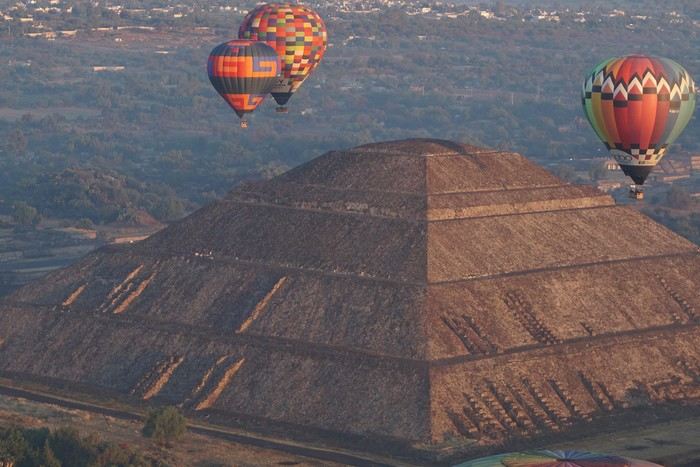
This one-month trip, from January 18 to February 17, 2026, allowed us to visit Mexico City and travel through the states of Puebla, Oaxaca, and Chiapas. We mainly used buses (ADO company) for medium and long distances and colectivos or taxis (or Uber) for shorter trips. Before leaving, I had contacted several people on the ground: Harry, a Vendéan settled in Oaxaca offering, among other things, discoveries of artisan villages or the Monte Albán site, and Oscar in Comitán de Domínguez. I’ll come back to our meeting with Oscar, who runs a local agency (CVL Travel Turismo Alternativo & Corre la voz) and owns a very pleasant hostel, a real highlight of our trip. Our journey took place in 8 stages on a loop starting from Mexico City. The connections between each were made by day or night buses depending on the trip duration. I had booked our seats in advance, either directly on the ADO company’s website or through booking platforms depending on the rates offered. Note that by planning ahead, I was able to benefit from very interesting "Early Booking" rates. There are several comfort classes. For all our trips, I had booked seats in Primera class buses, except for two in GL (Grand Luxe) class. The rates are very reasonable, and the buses turned out to be comfortable or even very comfortable (only the basic seat recline might surprise you).
Our itinerary and number of days per stage: Stage 1 – Mexico City: 4 days Stage 2 – Puebla: 2 days Stage 3 – Oaxaca: 4 days Stage 4 – San Agustinillo: 4 days Stage 5 – San Cristóbal de las Casas: 3 days Stage 6 – Comitán de Domínguez: 6 days Stage 7 – Palenque: 4 days Stage 8 – Mexico City: 2 days If I were to do it again, I’d remove one day from Palenque and add it either to Puebla or San Cristóbal to visit nearby sites or villages, or to San Agustinillo to enjoy one more day by the Pacific Ocean.
Stage 1: Mexico City (2,200 m / 9.2 million inhabitants) We arrived in the Mexican capital around 10:00 PM. The simplified customs process was very quick. After exchanging some money at the airport, we took a taxi to our youth hostel. We got around the capital on foot, of course, but also by metro. Signs are very rare, and we took the train in the wrong direction several times. After a few mistakes, we systematically asked on the platform if we were going the right way. The metro is very affordable. You need to get a rechargeable card (the Tarjeta de Movilidad Integrada) and top it up as needed. This card (less than 1 €) isn’t personal, so there’s no need to get one per person.
Mexico City: Day 1.
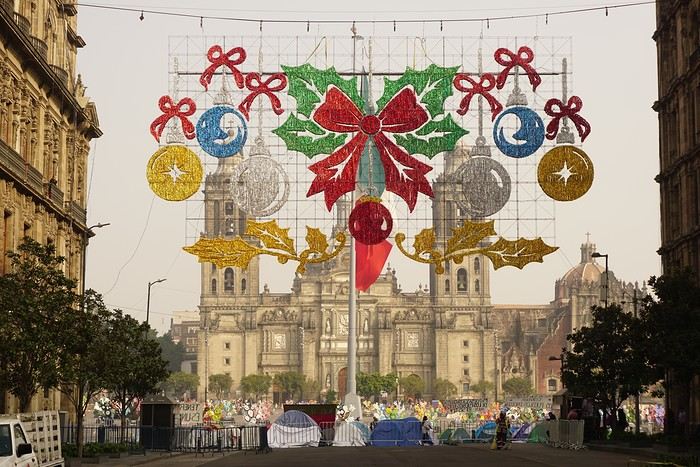
Visits and walks of the day (note: many museums are closed on Mondays): The Zócalo or Constitution Square: it’s one of the most beautiful, largest (195m x 240m), and oldest squares in the world. This is where Cortés decided to build the center of the new Spanish city on the site of the former Tenochtitlan market. Stones from the pyramids were used to pave the esplanade and build the surrounding colonial churches and buildings. During our visit, the huge square was covered with (resin) cacti, the theme of the temporary exhibition at the time. Indeed, temporary events or exhibitions take place here throughout the year. It’s also the endpoint for many protest marches.
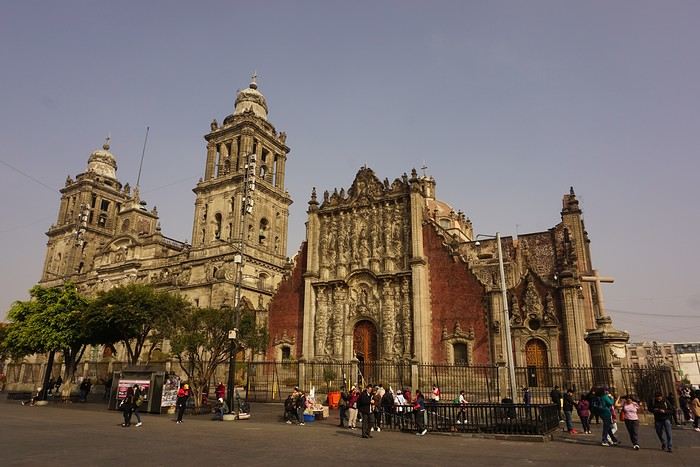
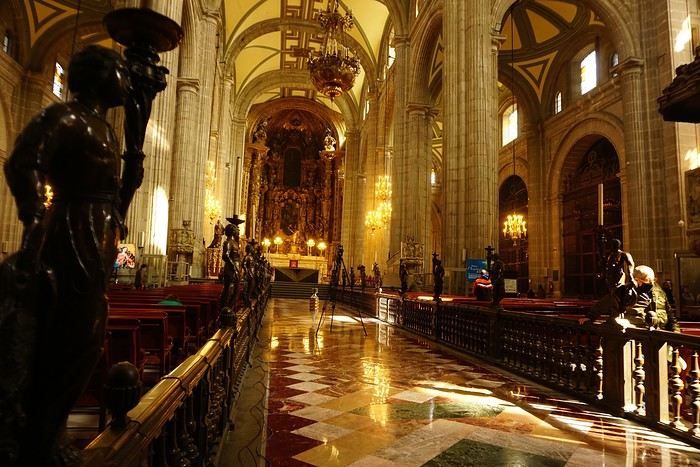


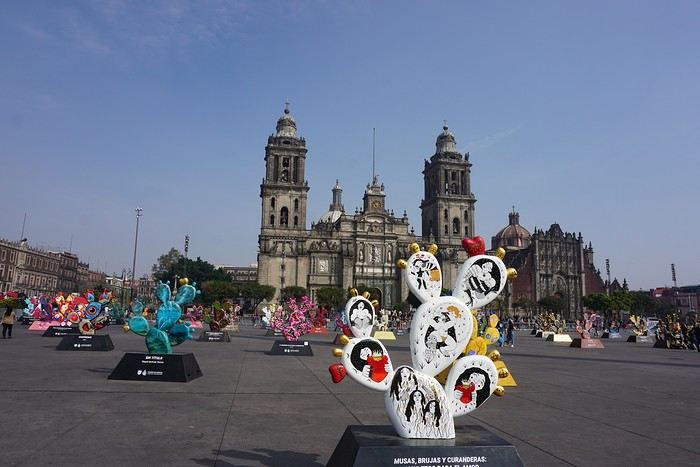
The cathedral: it’s sinking by one centimeter per year despite massive stabilization work (the collapse of many Mexican buildings—30 cm/year—is due to groundwater pumping). It was built starting in 1571 and completed in... 1813. The modest remains of the Templo Mayor (exterior view): they have high symbolic value, as this monument was the most important in the Mexica Empire.
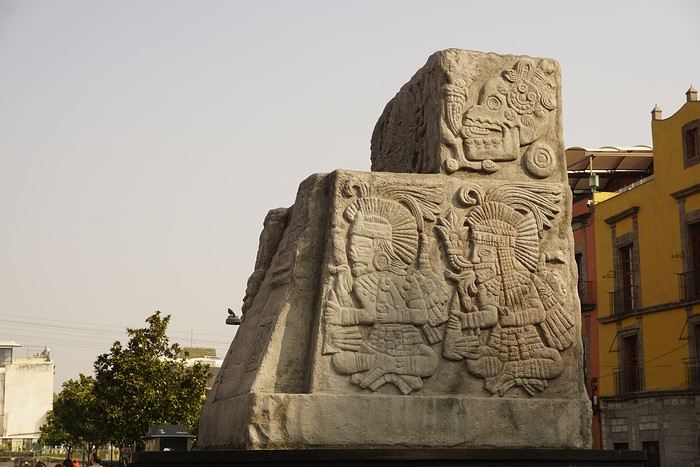 We then walked through the streets of the historic center to the Santísima Church, unfortunately closed for renovation work.
Next, we took the metro to visit one of Mexico’s most important pilgrimage sites: the Insigne y Nacional Basílicas de Santa María de Guadalupe, as well as the Capilla del Cerrito on the hill.
The first, dating from the colonial era, is really leaning a lot.
We then walked through the streets of the historic center to the Santísima Church, unfortunately closed for renovation work.
Next, we took the metro to visit one of Mexico’s most important pilgrimage sites: the Insigne y Nacional Basílicas de Santa María de Guadalupe, as well as the Capilla del Cerrito on the hill.
The first, dating from the colonial era, is really leaning a lot.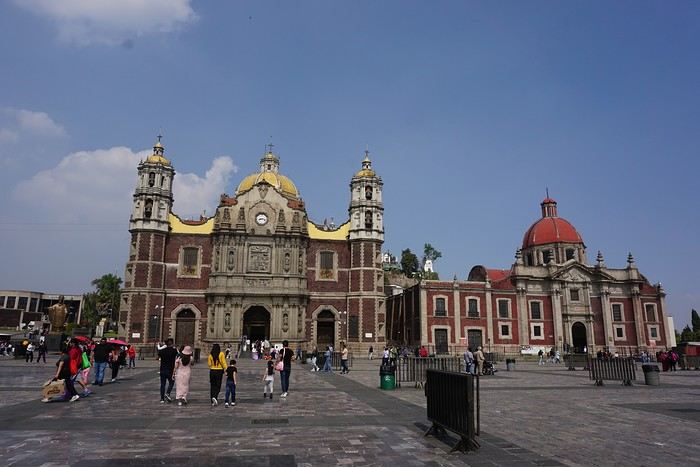
The second, shaped like a rotunda, is very impressive from the inside.
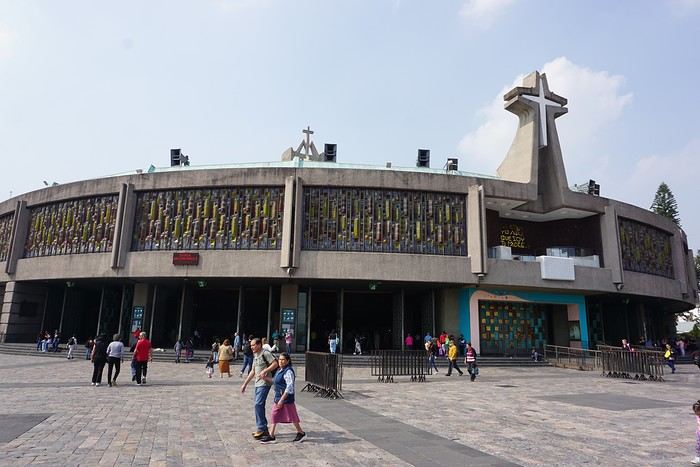
In the basement, there’s a sacred tunic where, in 1531, an image of the Virgin Mary is said to have appeared. A real mystery for scientists, the garment has never deteriorated since that date. Slow-moving conveyor belts allow pilgrims to admire it, preventing crowds from gathering in front of the image for hours. Well thought out!
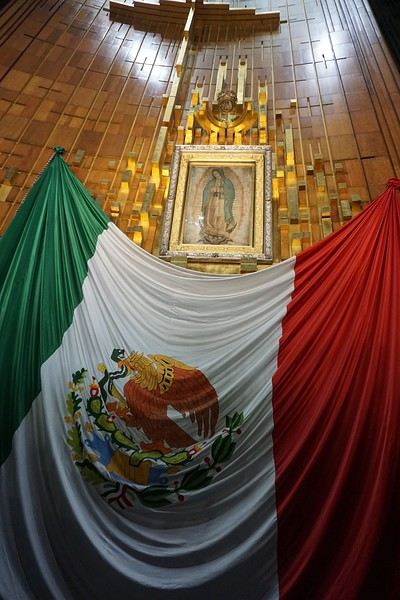 From the top of the Capilla del Cerrito, you get beautiful views of huge Mexico City.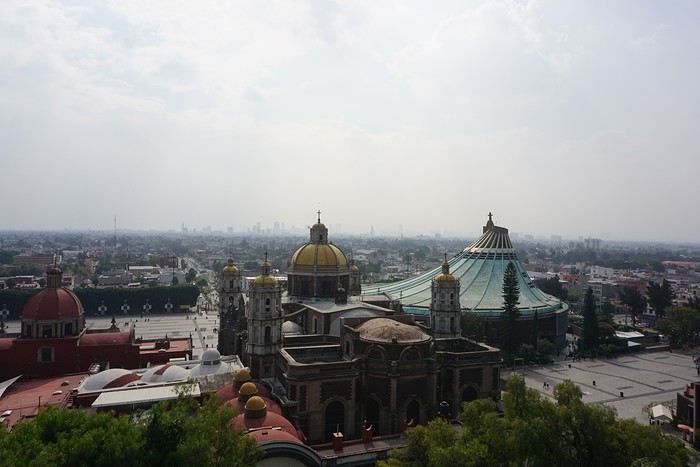
Impressions after two months in El Salvador
Hi there,
In 2024, I spent two months solo in El Salvador. While I’m still putting together my travel journal on Myatlas, here’s a quick recap. It’s a country where it’s really easy to travel without a guide or agency.
SAFETY:
For a long time, the country was considered one of the most dangerous in the world because of the "maras," ultra-violent gangs. But today, I think it’s the safest country in Latin America.
BUDGET:
For French tourists, the country is very affordable, especially in the less touristy regions.
TRANSPORT:
I got around everywhere by local bus.
Local buses go everywhere and run all the time. For me, it’s the best way to travel in El Salvador—you’re fully immersed, moving at the pace of the locals, and interacting with Salvadorans who are eager to connect with travelers.
I saw all sorts of things on those buses—I’ve got dozens of stories!
PEOPLE:
I’m used to traveling all over Latin America, and for me, Salvadorans are the warmest and most welcoming. Everywhere you go, people say, "Welcome to El Salvador!" The connections and long conversations with locals were my favorite part of the trip.
TOURIST CROWDS:
The country isn’t well-known among European tourists, but Americans and Quebecers visit. Overall, it’s still pretty low-key, especially compared to other Central American countries. That said, tourism has been growing since security improved significantly.
WHAT I LOVED ❤️
-Suchitoto, one of the most beautiful colonial towns in Central America.
-The volcanoes—there are so many! Santa Ana is the most touristy.
-The lakes—also plentiful. Coatepeque is the most famous, but there are lots of lagoons too.
-The mountainous regions, where the cooler weather is a nice break: La Palma, Perquín, Cerro El Pital, etc.
-The charming villages along the Ruta de las Flores, especially Nahuizalco with its nighttime atmosphere and food stalls. Juayúa and others are great too.
-The conversations with people who lived through the horrors of the civil war in Perquín and Cinquera. I met one of them by chance while waiting for a bus.
For surfers, El Salvador is a paradise, with world-famous beaches.
WHAT I LIKED LESS:
I loved almost everything, but I found the archaeological sites a bit underwhelming. Joyabaj de Cerén is billed as the "Pompeii of El Salvador," which is a stretch (though it *is* a UNESCO World Heritage Site for its historical value).
In 2024, I spent two months solo in El Salvador. While I’m still putting together my travel journal on Myatlas, here’s a quick recap. It’s a country where it’s really easy to travel without a guide or agency.
SAFETY:
For a long time, the country was considered one of the most dangerous in the world because of the "maras," ultra-violent gangs. But today, I think it’s the safest country in Latin America.
BUDGET:
For French tourists, the country is very affordable, especially in the less touristy regions.
TRANSPORT:
I got around everywhere by local bus.
Local buses go everywhere and run all the time. For me, it’s the best way to travel in El Salvador—you’re fully immersed, moving at the pace of the locals, and interacting with Salvadorans who are eager to connect with travelers.
I saw all sorts of things on those buses—I’ve got dozens of stories!
PEOPLE:
I’m used to traveling all over Latin America, and for me, Salvadorans are the warmest and most welcoming. Everywhere you go, people say, "Welcome to El Salvador!" The connections and long conversations with locals were my favorite part of the trip.
TOURIST CROWDS:
The country isn’t well-known among European tourists, but Americans and Quebecers visit. Overall, it’s still pretty low-key, especially compared to other Central American countries. That said, tourism has been growing since security improved significantly.
WHAT I LOVED ❤️
-Suchitoto, one of the most beautiful colonial towns in Central America.
-The volcanoes—there are so many! Santa Ana is the most touristy.
-The lakes—also plentiful. Coatepeque is the most famous, but there are lots of lagoons too.
-The mountainous regions, where the cooler weather is a nice break: La Palma, Perquín, Cerro El Pital, etc.
-The charming villages along the Ruta de las Flores, especially Nahuizalco with its nighttime atmosphere and food stalls. Juayúa and others are great too.
-The conversations with people who lived through the horrors of the civil war in Perquín and Cinquera. I met one of them by chance while waiting for a bus.
For surfers, El Salvador is a paradise, with world-famous beaches.
WHAT I LIKED LESS:
I loved almost everything, but I found the archaeological sites a bit underwhelming. Joyabaj de Cerén is billed as the "Pompeii of El Salvador," which is a stretch (though it *is* a UNESCO World Heritage Site for its historical value).
2 weeks in the Cyclades
Hi everyone!
Blue skies (lots of them), whitewashed villages with steep alleyways, hundreds of churches, and... thousands of stairs? Welcome to the Cyclades! 🙂
We’d been dreaming about this for a while, but in July-August—with the crowds—no way! Now that I can travel outside school holidays, the Cyclades are back on the agenda. And so begins a loooong period of planning and second-guessing, with countless itinerary changes: the Cyclades, yes, but which ones? I was fixated on Folegandros (we won’t be going after all) and really wanted to visit Delos. So, for this first trip, it’ll be: Mykonos (and Delos)-Naxos-Amorgos-Santorini.
Saturday 24/05: Departure from Orly on a Transavia flight, arriving in Mykonos in the late afternoon. We found a hotel that offers free transfers (pretty rare and not insignificant—it’s 25 € each way for just a few kilometers 😠) and at a reasonable price (83 € per night for B&B). Time for dinner already: Greek salad and souvlaki (we’re in Greece, right?)
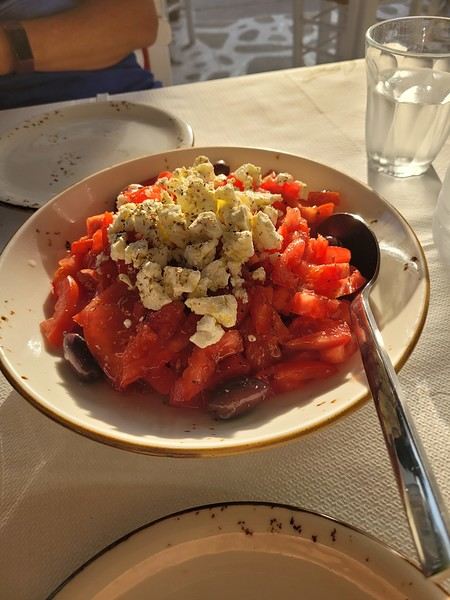 (Okay, this is actually a dakos with Naxos cheese, but I don’t have a photo of a Greek salad 😏).
Blue skies (lots of them), whitewashed villages with steep alleyways, hundreds of churches, and... thousands of stairs? Welcome to the Cyclades! 🙂
We’d been dreaming about this for a while, but in July-August—with the crowds—no way! Now that I can travel outside school holidays, the Cyclades are back on the agenda. And so begins a loooong period of planning and second-guessing, with countless itinerary changes: the Cyclades, yes, but which ones? I was fixated on Folegandros (we won’t be going after all) and really wanted to visit Delos. So, for this first trip, it’ll be: Mykonos (and Delos)-Naxos-Amorgos-Santorini.
Saturday 24/05: Departure from Orly on a Transavia flight, arriving in Mykonos in the late afternoon. We found a hotel that offers free transfers (pretty rare and not insignificant—it’s 25 € each way for just a few kilometers 😠) and at a reasonable price (83 € per night for B&B). Time for dinner already: Greek salad and souvlaki (we’re in Greece, right?)
(Okay, this is actually a dakos with Naxos cheese, but I don’t have a photo of a Greek salad 😏).Discovering South India: Tamil Nadu and Kerala
Hello everyone!
We're off! After exploring the north, the four friends have now discovered the south. We’re excited to share this new travel journal, dedicated to our little group and our strong friendship, written by Richard and illustrated with Kate’s photos. I’ll chime in from time to time with practical tips.
First of all, a big thank you to everyone on VoyageForum who helped us plan this trip. It would’ve been quite different if we’d just relied on guidebooks.
The itinerary lasted just over 3 weeks: Mahabalipuram, Pondicherry, Thanjavur, the Chettinad region, Madurai, Munnar, Munroe Island, Cochin, and Chennai. We traveled by train, taxi, and private car with a driver, took a domestic flight, and stayed in guesthouses, Airbnb apartments, and hotels. For each of us, including flights, the total budget barely reached 2000 €, and we didn’t hold back—knowing we avoid resorts and love street food and small Indian restaurants.
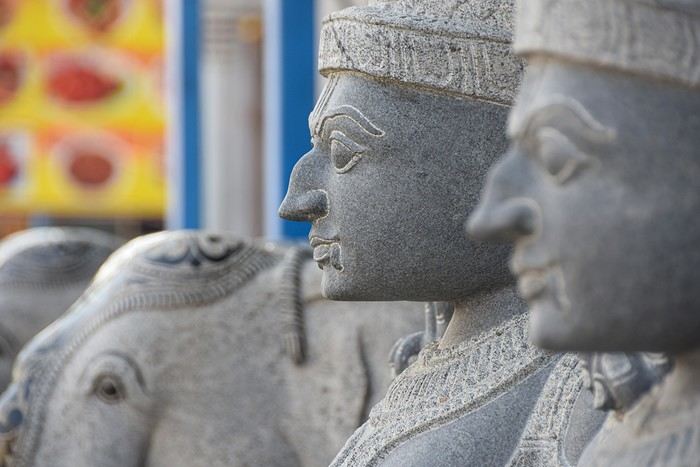
We're off! After exploring the north, the four friends have now discovered the south. We’re excited to share this new travel journal, dedicated to our little group and our strong friendship, written by Richard and illustrated with Kate’s photos. I’ll chime in from time to time with practical tips.
First of all, a big thank you to everyone on VoyageForum who helped us plan this trip. It would’ve been quite different if we’d just relied on guidebooks.
The itinerary lasted just over 3 weeks: Mahabalipuram, Pondicherry, Thanjavur, the Chettinad region, Madurai, Munnar, Munroe Island, Cochin, and Chennai. We traveled by train, taxi, and private car with a driver, took a domestic flight, and stayed in guesthouses, Airbnb apartments, and hotels. For each of us, including flights, the total budget barely reached 2000 €, and we didn’t hold back—knowing we avoid resorts and love street food and small Indian restaurants.
12 days in Israel, before...
This trip took place in May 2023, a period of calm that later proved precarious.
Day of May 17
Departure from Marseille on El Al (tickets booked by ourselves, while the stay itself was organized by Voyageurs du Monde). Before check-in, six or seven El Al staff members conduct a security check—quite understandable, but they do it in total chaos. They send people to the left, then block them, redirect them to the right, for no apparent reason. Most of the staff don’t speak French, which complicates things. They work at an incomprehensible slow pace, stopping the interview to do something else, then coming back and starting over...
The flight goes smoothly, except for the meal service, which, for a four-hour flight that El Al delayed to lunchtime, is more than basic: a quarter-liter of water and a corned beef sandwich that’s absolutely disgusting and inedible. To get a coffee, you have to queue at the back of the plane. You end up missing Ryanair🙂
Arrival at Ben Gurion goes better than expected—the passport control is fairly quick, as is baggage delivery.
Transfer to the Lily and Bloom hotel, Lilienblaum Street (easy to remember 🙂)
As advised by Voyageurs du Monde, we book a table for the evening at the nearest restaurant, North Abraxas. Good atmosphere and decent food. We get a sense of the price level in Israeli restaurants.
Around us, diners share dishes placed in the middle of the table. Much more convivial than our individual plates!!
Day of May 18
The next morning, we go down for breakfast at 7:30 AM—a late hour, but the setup is slow, with the two servers taking their time. We ask the bartender for a long coffee and a black tea... It must be a complicated order because it takes him over 10 minutes to make it. He serves us with the grace of a dancer. A good breakfast if you’re not in a hurry, followed by a little stroll in the neighborhood, since our meet-up with Patrick Arfi, our guide for the day, isn’t until 10 AM. P. Arfi is a former publishing house director in Paris who has lived in Israel for a long time and has a vast cultural knowledge. After an initial chat, we head toward Jaffa, focusing on the Bauhaus buildings preserved by a clever urban policy that allows high-rise construction while maintaining old architectural ensembles.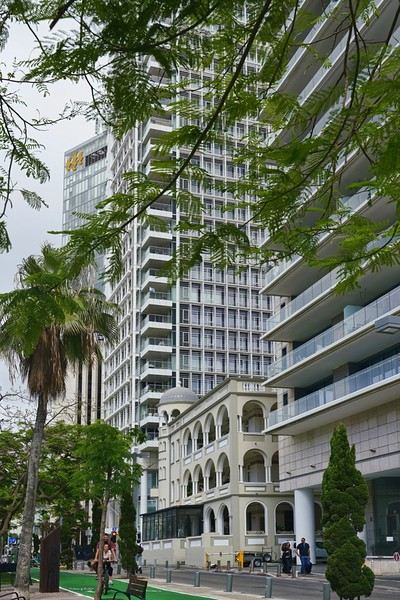
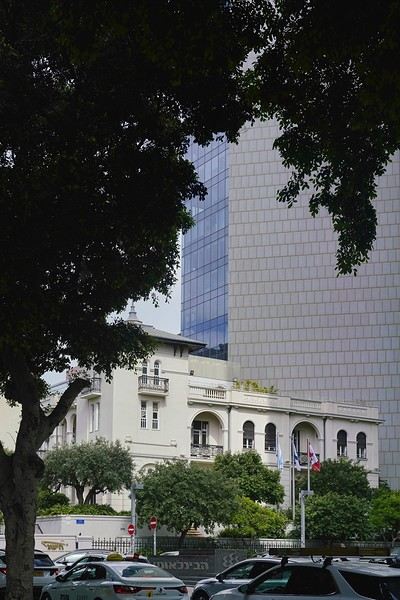
This policy keeps the streets looking more human-scale than the usual high-rise districts in modern cities.
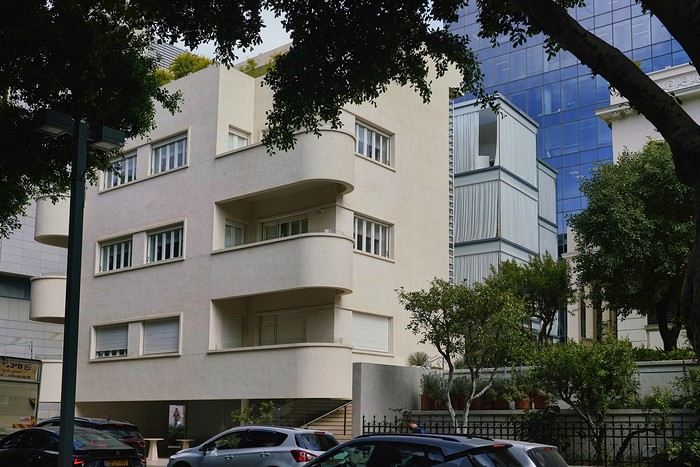 With the visit to Jaffa, Patrick introduces us to a fascinating slice of history, despite the temperature nearing 38°C. Jaffa, once an independent city, is now a neighborhood of Tel Aviv—a predominantly Muslim area. We notice a few buildings in poor condition. They belong to Palestinian families who left Tel Aviv. Otherwise, the city has been very well restored, apart from these few buildings.
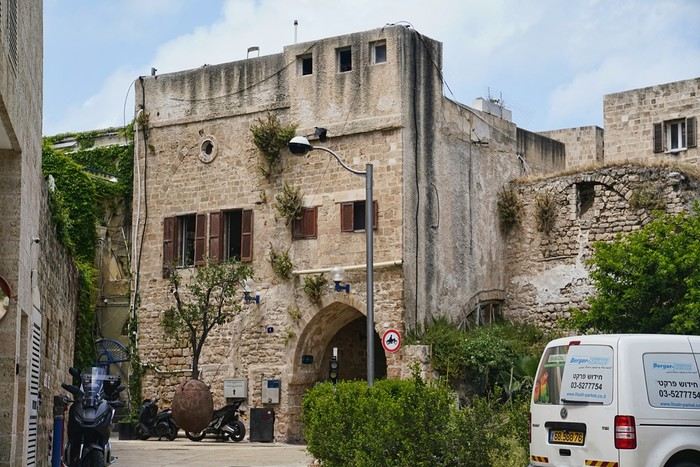
A government agency rents out the ground floors of these buildings, which helps fund part of the security work. They also try to track down the owners and buy back the abandoned properties, but some refuse to sell. The visit is very touristy—most of the people we meet are tourists like us.


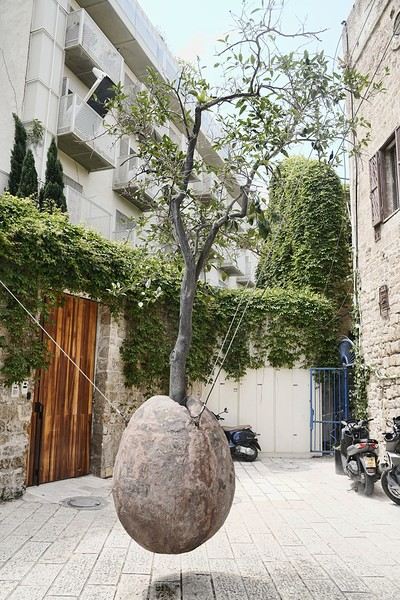
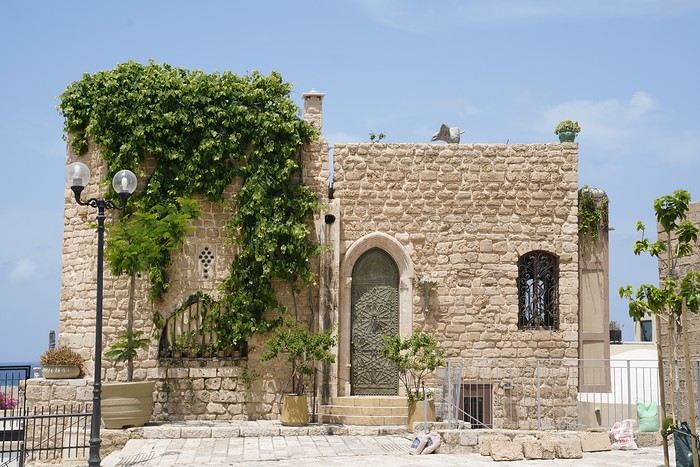
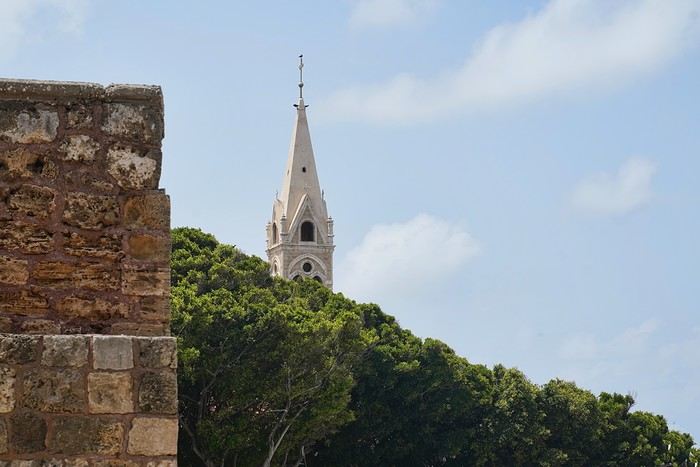
There’s very little local life, except in the lower part of the city. To be continued, as I’ve reached the allowed photo limit.
The next morning, we go down for breakfast at 7:30 AM—a late hour, but the setup is slow, with the two servers taking their time. We ask the bartender for a long coffee and a black tea... It must be a complicated order because it takes him over 10 minutes to make it. He serves us with the grace of a dancer. A good breakfast if you’re not in a hurry, followed by a little stroll in the neighborhood, since our meet-up with Patrick Arfi, our guide for the day, isn’t until 10 AM. P. Arfi is a former publishing house director in Paris who has lived in Israel for a long time and has a vast cultural knowledge. After an initial chat, we head toward Jaffa, focusing on the Bauhaus buildings preserved by a clever urban policy that allows high-rise construction while maintaining old architectural ensembles.
This policy keeps the streets looking more human-scale than the usual high-rise districts in modern cities.
With the visit to Jaffa, Patrick introduces us to a fascinating slice of history, despite the temperature nearing 38°C. Jaffa, once an independent city, is now a neighborhood of Tel Aviv—a predominantly Muslim area. We notice a few buildings in poor condition. They belong to Palestinian families who left Tel Aviv. Otherwise, the city has been very well restored, apart from these few buildings.
A government agency rents out the ground floors of these buildings, which helps fund part of the security work. They also try to track down the owners and buy back the abandoned properties, but some refuse to sell. The visit is very touristy—most of the people we meet are tourists like us.
There’s very little local life, except in the lower part of the city. To be continued, as I’ve reached the allowed photo limit.
The 4000 Islands (Southern Laos)
PAKSE AND THE BOLAVENS PLATEAU
Bolavens (or "Bolovens" – "the region of the Lavens," an old tribe).
PAKSE
A sleepy town, but packed with backpackers in transit between Laos and Cambodia. The streets are numbered, but since there are no signs, you just have to figure it out (rumor has it the signs have been planned for years; luckily, the center isn’t big). Tons of small hotels, including the well-known Sabaidy 2 on Street 20, a big bazaar catering to all budgets, from dark dorms with shared bathrooms to real rooms with terraces or balconies. Since it’s so popular, booking ahead is recommended. My favorite: the Sala Champa, pricier but with two large terraces, one with a bar, and especially a terrace restaurant I consider the best in Pakse (try the divine steamed fish with lemongrass + Lao Gold beer, a rare delight; ask for room 100, with a big terrace). More upscale, the lovely Résidence Sisouk, run by the very classy and French-speaking Mme Sisouk, from the wealthy Lao Sisouk family, the country’s top coffee producer and one of those francophone families you encounter here and there around the world, where class and culture reign – and perfect French. Delicious pastries and, of course, extraordinary coffee tastings. Similar prices at the Pakse Hotel, run by French owners and famous for its rooftop bar-restaurant (great view!).
Tons of restaurants besides those at Sala Champa and Pakse Hotel: from Dao Lin and Sabaidee at the corner of Street 20 and 13, to a decent Indian place (Hassan) and a nice, cheap spot, the Lao Restaurant & Bar, where you can enjoy Lao cuisine for just a few kips, both also on Street 20. You can feast on grilled fish at the countless riverside stalls along the Mekong.
Pakse is home to the famous Yves, a Belgian married to a Lao woman, Noy, who opened the travel agency Miss Noy. He’ll go out of his way to help tourists; he’s incredible, the real tourism office for the region, with maps, endless advice, and every weekday at 6 PM, a full-blown lecture on the Bolavens and the 4000 Islands. A bunch of young travelers listen intently to his explanations about the whole area (he hands out a well-made photocopied map). He also rents bikes and has an internet café with computers that, miraculously, work perfectly. He’s so popular that in high season, you need to book a motorbike 2-3 days in advance (but if he’s out – and he has 40 – he’ll find one for you).
THE BOLAVENS PLATEAU
Plateaus just aren’t my thing – flat-lands! There are some relatively high peaks in the middle, but they’re only accessible by trekking. You can do a small loop from Pakse-Tad Lo-Thateng-Pakson-Pakse, or a big one from Tad Lo to Sekong, then head south to join the Paksong-Pakse road. Starting in the north, the Phu Xam waterfalls are okay (interesting local minority village-museum to the right of the parking lot, and a terrace restaurant above the small falls). Well, they’re on the way, so you might as well see them! After that, a boring road leads to the Tad Lo waterfalls, with tons of small hotels. I chose the big blue house by the river at the right corner of the bridge, the Sipaseth GH, with cute little bungalows in the garden, 4 rooms with balconies overlooking the river, and great food on the terrace facing the falls. **Avoid at all costs**: the Saisee GH, once nice with its little stilt houses by the falls, but now a monument to filth, indifference, and rudeness (confirmed by several people, unanimous on the issue). Luckily, the lovely Tad Lo Lodge, with its bungalows by the falls and gourmet restaurant right above them – not cheap at all – finally built small houses in the woods on the other side for $25.
The next morning, I’d had enough of plateaus, so I took a small loop heading south from Tad Lo to Thateng, and there, a wonder 5 km south of town: the Sinouk Resort. It’s like stepping into *Gone with the Wind* or the Chevalier de Leyritz’s Martinique. In the middle of the Sisouk family’s 34-hectare coffee plantation, a huge garden with three large colonial-style houses: one by the river and pond with a suite + 3 luxury rooms + a small, cozy one for $40 (that’s where I stayed), one with 4 superior rooms for $60, and a very large one overlooking everything with 6 luxury rooms ($60) + 2 huge suites for $90. Of course, it’s all decorated with antique furniture, local knick-knacks, and antiques; there’s a pool, a beautiful restaurant with two terraces, one overlooking a large pond and one by its edge. The food and service are impeccable, and the coffee: from espresso with whipped cream to green tea or wild honey cappuccino… too bad it keeps you up, or you’d sip it all evening (and morning, and afternoon, and in between). In short, a dream!
Back to Pakse via Paksong (what a dump!) and the Tad Fane waterfalls, those are spectacular – twin sisters plunging 200 meters. You can hike down to swim at the bottom (1-hour jungle trek round trip). Across the way, the nice Tad Fane Resort (small houses and a big terrace-restaurant facing the falls).
I think I missed the Katamkok waterfalls, but I don’t believe it – all these falls can’t compare to Ban Gioc Falls in northern Vietnam!!!
CHAMPASAK AND THE 4000 ISLANDS
CHAMPASAK
Even sleepier than Pakse! To avoid the ferry, cross the new Mekong bridge in Pakse, and after about 10 km, turn left at the big "Phaphinoy" sign (the first village in town). When you arrive, turn at the "River Resort" sign. A sumptuous resort on the Mekong, developed with American capital – pure luxury (they even have their own rice field and vegetable garden for the restaurant). Continuing on, you’ll come across the very pleasant Anouxa GH, where I had dinner and stayed. Small bungalows facing the river, garden rooms, and two large wooden houses with huge family rooms + a big terrace on the Mekong, and the food is great! They rent bikes and motorbikes. Further to the right, the pricey Inthira Hotel, which I found uninteresting since it’s on the road instead of by the Mekong. There’s also a Folie Lodge on Don Daeng Island, which I didn’t visit (the word "Folie" is justified: crazy prices, up to $200 and more).
A few nice wats and, of course, Wat Phou, Laos’ most important archaeological site, 10 km south of Champassak in the plains and on the mountainside (the stairs are a killer!). Watch out for the scorching heat, and it closes at 4:30 PM. It’s not Angkor Wat, but it’s still worth the detour. Plan for 2 hours. Entry is 50,000 kips + 5,000 to park your motorbike.
KHIET NGON
To continue south to the 4000 Islands, you have to take the "ferry" (actually fun little things – two canoes joined by a platform; better not mess up when loading your motorbike!). Once on the other side, turn left, and you’ll hit National Road 13 (Pakse-Siphandone, the 4000 Islands), the most boring road I’ve ever been on, like Phnom Penh-Siem Reap – flat and nothing to see. BUT there’s a real gem worth checking out: Kiet Ngon. At Km 48, take the laterite road toward Attapeu (big sign: "Attapeu 155 km") and eat red dust for 8 km (toll: 20,000 kips), then turn right (signposted) onto a good track. You enter the beautiful Xe Pian National Park, where you can still find wild elephants, leopards, and tigers. You arrive at the entrance of the small village of Ban Khiet Ngon. On your right, a small concrete building with 4 decent, cheap rooms (60,000 kips), facing an old wooden house that serves as the tourism office and its "elephant parking" garden. This village is where you can go on an elephant ride (20,000 kips) to the top of Phou Asa, one of the most unusual places I’ve ever seen. You climb through the jungle and emerge onto a flat slate summit, completely bare – it really feels like the Moon! In the distance, an astonishing site built to commemorate a victory by Lao nationalists over Siamese invaders in the 19th century (so the site isn’t 1,000 years old, as the locals claim). A vast archaeological site with an enclosure 180 m by 50 m, marked by 2-meter-high walls and columns made of slate stacked without mortar. At the back, a ruined temple and a tower. Beautiful views of the whole region. Popular with tourists arriving by minibus from Pakse. The elephant rides in a line aren’t my thing, so they tell you it’s forbidden to ride a motorbike, but I did it anyway without any issues – except for the unhappy looks from the mahouts (turn right at the village entrance, sign for "Phou Asa").
If you’ve got the funds, follow the signs for "Kingfisher Lodge" and arrive at Laos’ first ecolodge, developed by a Lao-Italian family. Lovely stilt houses (750,000 kips with breakfast) and 2 bungalows with just fans (250,000 kips). A small two-story wooden building with a restaurant and a terrace by a pond – the bonus: in the evening, wild elephants and buffalo come to drink with you. Booking ahead is recommended since it’s popular with groups from Pakse.
Paper guides also mention the more remote village of Ban Papho, deep in the jungle. There used to be elephant rides, but they’ve stopped. However, there are great treks in the national park (check with the Green Discovery agency in Pakse, which specializes in treks all over Laos).
THE 4000 ISLANDS
You continue on the mind-numbing Road 13 from Pakse and arrive at a brand-new bridge leading to Don Khong Island, where there’s nothing to see except two wats, so if you skip it, you’re not missing much. Next, the Nakasang sign, a small port with mini-ferries crossing the Mekong to Don Det Island. A celebrity, that one – one of those trashy spots for young people who think you can only have fun if you’re wasted on alcohol and drugs. A small street along the river, lined with guesthouses, restaurants, and bars – total chaos! Plus, there’s nothing to see on the island. So, take a tuk-tuk from the jetty, cross the dump, and arrive in a little paradise: Don Khone Island. I planned to stay 2 days but had to be dragged away after 6. A small main village with a dirt road, tons of guesthouses and great restaurants, and lots of beautiful things to see.
For lodging on Don Khone, it’s usually wooden bungalows with river-view terraces. Options range from the elegant and pricey Sala Done Hotel to Somphamit, Pan’s, Pakha GH, and many others. I found my haven away from everything: the little Phonvilay, 3 small bamboo buildings with 2 simple rooms each, terraces above a branch of the Mekong, and a big plus – a small path just to the right that goes down the riverbank, so 3-4 nice swims a day. All for 60,000 kips. To get there, turn right at the end of the bridge until you reach the wat, then take the small path to the river on the right of the wat’s wall.
For food, you’re spoiled for choice. I had all my dinners at the Cordon Bleu of the Fleur du Mékong. I don’t know how she does it, but even the simplest dishes have something extra. She’s famous for her curry (more like a mild stew) of duck or chicken with potatoes and sweet potatoes – a hearty treat. Go for the chicken; Asian ducks are all skin and bones. Her grilled fish is divine!
The island has quite a history: the Mekong upstream is over a kilometer wide (it’s said to reach 14 km during high water) and "falls" onto a rocky barrier. It splits into countless small branches, flowing wherever there’s a crack – hence the 4000 Islands and the impressive rapids. The French discovered this while trying to navigate the Mekong from Saigon to Luang Prabang and China – and bam, impassable! So they built a narrow-gauge railway starting from the south of the island, bypassing the rapids, and ending at the north of Don Det Island. You can see two rusted locomotives, discovered in the jungle in 1990 by a French explorer: one in the southern extension of the bridge and the other in Ban Hang Khone village at the southern tip of the island, both with large English signs and fascinating old photos explaining the whole history of the railway, abandoned when Road 13 was built along the 4000 Islands (the rails were removed, and the railway track is now an excellent trail).
Somphamit Rapids (Li Phi)
Locals call them Li Phi, meaning "the abyss of evil spirits" (the "phi" that Lao people still believe in), because they think the falls and rapids trap spirits, to the point that no one would ever swim there. It’s very dramatic. Entry fee: 35,000 kips. Small beach and a big restaurant with a terrace and thatched-roof tables.
Khon Pa Sai Rapids
A completely different kind, just as spectacular, and less crowded. Turn left at the bridge exit and go to the northern end of the island (Ban Khon Nua village), then continue south until you see a big yellow sign "Khon Pa Sai Waterfalls" pointing to a small path on the left. You arrive at a small suspension bridge with a corner restaurant and terrace where the food is great (I had most of my lunches there). Cross the bridge and follow the path to a spectacular site of falls and rapids. In the middle, you’ll see unique structures – gigantic fish traps over 10 meters long. During high water, each trap can catch up to 500 kg of fish (yes, five hundred) per day.
Ban Hang Khone
This is the "French port" at the southern tip of the island, where the Mekong, after its rapids, spreads out for kilometers – a real inland sea. This is where you can see the famous Irrawaddy dolphins in the morning or late afternoon (boat excursions). To get there, take the trail that was the old railway track, or continue south on the path past the Khon Pa Sai falls (but not by motorbike – the bridge is out). A huge concrete terrace, part of the old port facilities, with a magnificent panoramic view of the Mekong stretching into the distance. Just before, a small path leads to a big beach (with restaurants).
If you go back to Road 13 (or take a pirogue from Don Khone), further south are the Pha Peng Falls, Asia’s highest river falls (15 m). I didn’t go, but they’re said to be spectacular.
Bolavens (or "Bolovens" – "the region of the Lavens," an old tribe).
PAKSE
A sleepy town, but packed with backpackers in transit between Laos and Cambodia. The streets are numbered, but since there are no signs, you just have to figure it out (rumor has it the signs have been planned for years; luckily, the center isn’t big). Tons of small hotels, including the well-known Sabaidy 2 on Street 20, a big bazaar catering to all budgets, from dark dorms with shared bathrooms to real rooms with terraces or balconies. Since it’s so popular, booking ahead is recommended. My favorite: the Sala Champa, pricier but with two large terraces, one with a bar, and especially a terrace restaurant I consider the best in Pakse (try the divine steamed fish with lemongrass + Lao Gold beer, a rare delight; ask for room 100, with a big terrace). More upscale, the lovely Résidence Sisouk, run by the very classy and French-speaking Mme Sisouk, from the wealthy Lao Sisouk family, the country’s top coffee producer and one of those francophone families you encounter here and there around the world, where class and culture reign – and perfect French. Delicious pastries and, of course, extraordinary coffee tastings. Similar prices at the Pakse Hotel, run by French owners and famous for its rooftop bar-restaurant (great view!).
Tons of restaurants besides those at Sala Champa and Pakse Hotel: from Dao Lin and Sabaidee at the corner of Street 20 and 13, to a decent Indian place (Hassan) and a nice, cheap spot, the Lao Restaurant & Bar, where you can enjoy Lao cuisine for just a few kips, both also on Street 20. You can feast on grilled fish at the countless riverside stalls along the Mekong.
Pakse is home to the famous Yves, a Belgian married to a Lao woman, Noy, who opened the travel agency Miss Noy. He’ll go out of his way to help tourists; he’s incredible, the real tourism office for the region, with maps, endless advice, and every weekday at 6 PM, a full-blown lecture on the Bolavens and the 4000 Islands. A bunch of young travelers listen intently to his explanations about the whole area (he hands out a well-made photocopied map). He also rents bikes and has an internet café with computers that, miraculously, work perfectly. He’s so popular that in high season, you need to book a motorbike 2-3 days in advance (but if he’s out – and he has 40 – he’ll find one for you).
THE BOLAVENS PLATEAU
Plateaus just aren’t my thing – flat-lands! There are some relatively high peaks in the middle, but they’re only accessible by trekking. You can do a small loop from Pakse-Tad Lo-Thateng-Pakson-Pakse, or a big one from Tad Lo to Sekong, then head south to join the Paksong-Pakse road. Starting in the north, the Phu Xam waterfalls are okay (interesting local minority village-museum to the right of the parking lot, and a terrace restaurant above the small falls). Well, they’re on the way, so you might as well see them! After that, a boring road leads to the Tad Lo waterfalls, with tons of small hotels. I chose the big blue house by the river at the right corner of the bridge, the Sipaseth GH, with cute little bungalows in the garden, 4 rooms with balconies overlooking the river, and great food on the terrace facing the falls. **Avoid at all costs**: the Saisee GH, once nice with its little stilt houses by the falls, but now a monument to filth, indifference, and rudeness (confirmed by several people, unanimous on the issue). Luckily, the lovely Tad Lo Lodge, with its bungalows by the falls and gourmet restaurant right above them – not cheap at all – finally built small houses in the woods on the other side for $25.
The next morning, I’d had enough of plateaus, so I took a small loop heading south from Tad Lo to Thateng, and there, a wonder 5 km south of town: the Sinouk Resort. It’s like stepping into *Gone with the Wind* or the Chevalier de Leyritz’s Martinique. In the middle of the Sisouk family’s 34-hectare coffee plantation, a huge garden with three large colonial-style houses: one by the river and pond with a suite + 3 luxury rooms + a small, cozy one for $40 (that’s where I stayed), one with 4 superior rooms for $60, and a very large one overlooking everything with 6 luxury rooms ($60) + 2 huge suites for $90. Of course, it’s all decorated with antique furniture, local knick-knacks, and antiques; there’s a pool, a beautiful restaurant with two terraces, one overlooking a large pond and one by its edge. The food and service are impeccable, and the coffee: from espresso with whipped cream to green tea or wild honey cappuccino… too bad it keeps you up, or you’d sip it all evening (and morning, and afternoon, and in between). In short, a dream!
Back to Pakse via Paksong (what a dump!) and the Tad Fane waterfalls, those are spectacular – twin sisters plunging 200 meters. You can hike down to swim at the bottom (1-hour jungle trek round trip). Across the way, the nice Tad Fane Resort (small houses and a big terrace-restaurant facing the falls).
I think I missed the Katamkok waterfalls, but I don’t believe it – all these falls can’t compare to Ban Gioc Falls in northern Vietnam!!!
CHAMPASAK AND THE 4000 ISLANDS
CHAMPASAK
Even sleepier than Pakse! To avoid the ferry, cross the new Mekong bridge in Pakse, and after about 10 km, turn left at the big "Phaphinoy" sign (the first village in town). When you arrive, turn at the "River Resort" sign. A sumptuous resort on the Mekong, developed with American capital – pure luxury (they even have their own rice field and vegetable garden for the restaurant). Continuing on, you’ll come across the very pleasant Anouxa GH, where I had dinner and stayed. Small bungalows facing the river, garden rooms, and two large wooden houses with huge family rooms + a big terrace on the Mekong, and the food is great! They rent bikes and motorbikes. Further to the right, the pricey Inthira Hotel, which I found uninteresting since it’s on the road instead of by the Mekong. There’s also a Folie Lodge on Don Daeng Island, which I didn’t visit (the word "Folie" is justified: crazy prices, up to $200 and more).
A few nice wats and, of course, Wat Phou, Laos’ most important archaeological site, 10 km south of Champassak in the plains and on the mountainside (the stairs are a killer!). Watch out for the scorching heat, and it closes at 4:30 PM. It’s not Angkor Wat, but it’s still worth the detour. Plan for 2 hours. Entry is 50,000 kips + 5,000 to park your motorbike.
KHIET NGON
To continue south to the 4000 Islands, you have to take the "ferry" (actually fun little things – two canoes joined by a platform; better not mess up when loading your motorbike!). Once on the other side, turn left, and you’ll hit National Road 13 (Pakse-Siphandone, the 4000 Islands), the most boring road I’ve ever been on, like Phnom Penh-Siem Reap – flat and nothing to see. BUT there’s a real gem worth checking out: Kiet Ngon. At Km 48, take the laterite road toward Attapeu (big sign: "Attapeu 155 km") and eat red dust for 8 km (toll: 20,000 kips), then turn right (signposted) onto a good track. You enter the beautiful Xe Pian National Park, where you can still find wild elephants, leopards, and tigers. You arrive at the entrance of the small village of Ban Khiet Ngon. On your right, a small concrete building with 4 decent, cheap rooms (60,000 kips), facing an old wooden house that serves as the tourism office and its "elephant parking" garden. This village is where you can go on an elephant ride (20,000 kips) to the top of Phou Asa, one of the most unusual places I’ve ever seen. You climb through the jungle and emerge onto a flat slate summit, completely bare – it really feels like the Moon! In the distance, an astonishing site built to commemorate a victory by Lao nationalists over Siamese invaders in the 19th century (so the site isn’t 1,000 years old, as the locals claim). A vast archaeological site with an enclosure 180 m by 50 m, marked by 2-meter-high walls and columns made of slate stacked without mortar. At the back, a ruined temple and a tower. Beautiful views of the whole region. Popular with tourists arriving by minibus from Pakse. The elephant rides in a line aren’t my thing, so they tell you it’s forbidden to ride a motorbike, but I did it anyway without any issues – except for the unhappy looks from the mahouts (turn right at the village entrance, sign for "Phou Asa").
If you’ve got the funds, follow the signs for "Kingfisher Lodge" and arrive at Laos’ first ecolodge, developed by a Lao-Italian family. Lovely stilt houses (750,000 kips with breakfast) and 2 bungalows with just fans (250,000 kips). A small two-story wooden building with a restaurant and a terrace by a pond – the bonus: in the evening, wild elephants and buffalo come to drink with you. Booking ahead is recommended since it’s popular with groups from Pakse.
Paper guides also mention the more remote village of Ban Papho, deep in the jungle. There used to be elephant rides, but they’ve stopped. However, there are great treks in the national park (check with the Green Discovery agency in Pakse, which specializes in treks all over Laos).
THE 4000 ISLANDS
You continue on the mind-numbing Road 13 from Pakse and arrive at a brand-new bridge leading to Don Khong Island, where there’s nothing to see except two wats, so if you skip it, you’re not missing much. Next, the Nakasang sign, a small port with mini-ferries crossing the Mekong to Don Det Island. A celebrity, that one – one of those trashy spots for young people who think you can only have fun if you’re wasted on alcohol and drugs. A small street along the river, lined with guesthouses, restaurants, and bars – total chaos! Plus, there’s nothing to see on the island. So, take a tuk-tuk from the jetty, cross the dump, and arrive in a little paradise: Don Khone Island. I planned to stay 2 days but had to be dragged away after 6. A small main village with a dirt road, tons of guesthouses and great restaurants, and lots of beautiful things to see.
For lodging on Don Khone, it’s usually wooden bungalows with river-view terraces. Options range from the elegant and pricey Sala Done Hotel to Somphamit, Pan’s, Pakha GH, and many others. I found my haven away from everything: the little Phonvilay, 3 small bamboo buildings with 2 simple rooms each, terraces above a branch of the Mekong, and a big plus – a small path just to the right that goes down the riverbank, so 3-4 nice swims a day. All for 60,000 kips. To get there, turn right at the end of the bridge until you reach the wat, then take the small path to the river on the right of the wat’s wall.
For food, you’re spoiled for choice. I had all my dinners at the Cordon Bleu of the Fleur du Mékong. I don’t know how she does it, but even the simplest dishes have something extra. She’s famous for her curry (more like a mild stew) of duck or chicken with potatoes and sweet potatoes – a hearty treat. Go for the chicken; Asian ducks are all skin and bones. Her grilled fish is divine!
The island has quite a history: the Mekong upstream is over a kilometer wide (it’s said to reach 14 km during high water) and "falls" onto a rocky barrier. It splits into countless small branches, flowing wherever there’s a crack – hence the 4000 Islands and the impressive rapids. The French discovered this while trying to navigate the Mekong from Saigon to Luang Prabang and China – and bam, impassable! So they built a narrow-gauge railway starting from the south of the island, bypassing the rapids, and ending at the north of Don Det Island. You can see two rusted locomotives, discovered in the jungle in 1990 by a French explorer: one in the southern extension of the bridge and the other in Ban Hang Khone village at the southern tip of the island, both with large English signs and fascinating old photos explaining the whole history of the railway, abandoned when Road 13 was built along the 4000 Islands (the rails were removed, and the railway track is now an excellent trail).
Somphamit Rapids (Li Phi)
Locals call them Li Phi, meaning "the abyss of evil spirits" (the "phi" that Lao people still believe in), because they think the falls and rapids trap spirits, to the point that no one would ever swim there. It’s very dramatic. Entry fee: 35,000 kips. Small beach and a big restaurant with a terrace and thatched-roof tables.
Khon Pa Sai Rapids
A completely different kind, just as spectacular, and less crowded. Turn left at the bridge exit and go to the northern end of the island (Ban Khon Nua village), then continue south until you see a big yellow sign "Khon Pa Sai Waterfalls" pointing to a small path on the left. You arrive at a small suspension bridge with a corner restaurant and terrace where the food is great (I had most of my lunches there). Cross the bridge and follow the path to a spectacular site of falls and rapids. In the middle, you’ll see unique structures – gigantic fish traps over 10 meters long. During high water, each trap can catch up to 500 kg of fish (yes, five hundred) per day.
Ban Hang Khone
This is the "French port" at the southern tip of the island, where the Mekong, after its rapids, spreads out for kilometers – a real inland sea. This is where you can see the famous Irrawaddy dolphins in the morning or late afternoon (boat excursions). To get there, take the trail that was the old railway track, or continue south on the path past the Khon Pa Sai falls (but not by motorbike – the bridge is out). A huge concrete terrace, part of the old port facilities, with a magnificent panoramic view of the Mekong stretching into the distance. Just before, a small path leads to a big beach (with restaurants).
If you go back to Road 13 (or take a pirogue from Don Khone), further south are the Pha Peng Falls, Asia’s highest river falls (15 m). I didn’t go, but they’re said to be spectacular.
The Island of Pelops
October 7, 2023, is a sunny day in Milan. Since morning, in this light, I’m WhatsApping with Afrooz in Tehran, and I decide to call her. A lively, joyful conversation—French with that Farsi accent becomes a wonderful language. Suddenly, everything feels possible. Isfahan, Shiraz, Damavand, Yazd, Yazd, Yazd—a delicious word savored endlessly—become within reach. Iran, so longed for, is finally here. Pure joy, absolute enthusiasm. Six months to plan and relish a trip before living it.
Then I open *Le Monde*.
Aaaaaaaaaaaaaaaaaaaaaaaaaaaaaaaaaaaaaaaaaaaaaaaaaaaaaaaaaaaaaaaaaaaaaaaa
Frozen. Empty. No. We decide to wait, not to give up right away, pretending to believe—just a little, just to keep from collapsing—that with this wretched human race, the worst isn’t necessarily certain. It is.
So... meh, Madeira? The Azores? Uzbekistan (a pale substitute)? New Zealand? Greece. Again, always. Nestling into the only European promise we’ve been given. Indulging in illusions, for the pleasure of it.
So, train from Milan to Ancona (9 AM–12 PM), a typically Marchigiano lunch (Italy is paradise for food lovers), a stroll through the city, then at 4 PM boarding the *Olympic Champion*. Arrival in Patras the next afternoon, car rental, and off to Lepanto—Nafpaktos today—to reminisce about glorious victories and pay tribute to Cervantes, who lost a hand there before writing.
That’s the plan, anyway. The train is unusually on time. The ferry, replaced in the meantime by the *Hellenic Spirit* (why not? Even if it’s less suited to the season), is 3 hours late, then 4, no 5, then finally 6—oh wait, 7. And on top of that, it’s pouring rain in Ancona, and the port waiting room closes at 6 PM. Great...
At 11 PM, the ferry’s lights emerge in the pitch-black night. We jostle through the downpour, board, and sleep well in a cozy cabin with the white noise of the engines. Then:
 23 hours of rest. Of forgetting.
Then I open *Le Monde*.
Aaaaaaaaaaaaaaaaaaaaaaaaaaaaaaaaaaaaaaaaaaaaaaaaaaaaaaaaaaaaaaaaaaaaaaaa
Frozen. Empty. No. We decide to wait, not to give up right away, pretending to believe—just a little, just to keep from collapsing—that with this wretched human race, the worst isn’t necessarily certain. It is.
So... meh, Madeira? The Azores? Uzbekistan (a pale substitute)? New Zealand? Greece. Again, always. Nestling into the only European promise we’ve been given. Indulging in illusions, for the pleasure of it.
So, train from Milan to Ancona (9 AM–12 PM), a typically Marchigiano lunch (Italy is paradise for food lovers), a stroll through the city, then at 4 PM boarding the *Olympic Champion*. Arrival in Patras the next afternoon, car rental, and off to Lepanto—Nafpaktos today—to reminisce about glorious victories and pay tribute to Cervantes, who lost a hand there before writing.
That’s the plan, anyway. The train is unusually on time. The ferry, replaced in the meantime by the *Hellenic Spirit* (why not? Even if it’s less suited to the season), is 3 hours late, then 4, no 5, then finally 6—oh wait, 7. And on top of that, it’s pouring rain in Ancona, and the port waiting room closes at 6 PM. Great...
At 11 PM, the ferry’s lights emerge in the pitch-black night. We jostle through the downpour, board, and sleep well in a cozy cabin with the white noise of the engines. Then:
23 hours of rest. Of forgetting.
Sur les terres mayas English translation pending
Bonjour à tous les amoureux de voyage,
Je me propose de vous faire partager notre voyage au Guatemala, pays assez peu renseigné sur VF. Je l’agrémenterai de quelques photos (tablette) sans prétention qui se veulent seulement illustratives et je demande par avance votre indulgence.
Initialement nous avions opté pour un périple au Pérou en février. Les agences contactées ont eu l’honnêteté, et nous les en remercions, de nous indiquer que cela n’était pas une bonne période pour se rendre sur les plateaux andins. Après une longue hésitation nous avons orienté nos recherches vers le Guatemala et le Honduras et avons pris des contacts avec 2 agences francophones à Antigua pour des propositions et des devis. Très vite nous avons retenu « Bon Voyage » plus réactive et nettement moins chère que sa consœur. Après plusieurs itérations avec Arnaud (patron de l’agence) nous avons convergé vers un circuit de 16 j entre le 6/2 et le 21/2/2020.
Jour 1 :
Pour les vols internationaux nous avions le choix entre une escale aux USA ou à Madrid. Pour à peine plus cher (660 €/p) et un temps de vol bien plus court nous avons finalement choisi IBERIA au détriment des compagnies et contraintes (ESTA et douane) américaines. De plus les vols IBERIA sont au départ (et retour) d’Orly plus commode pour nous.
L’horaire de départ étant très matinal nous décidons de dormir à Orly. L’hôtel Ibis Budget « cœur d’Orly » fera l’affaire. Disons le, c’est cher pour un hôtel de ce type (entrée de gamme) mais il a le mérite de servir le PdJ à partir de 4 h. Cet horaire nous permet de garer notre voiture dans un parking de la zone industriel de Senia et une navette nous dépose à l’aéroport vers 6h. Le vol Orly - Madrid part à 7h30 et nous attendrons 3h pour prendre celui qui nous mènera à Guatemala City où nous arrivons vers 17 h (heure locale soit – 7h de décalage. Ces vols seront sans histoire ni retard. A notre arrivée, Luis notre chauffeur, nous attend. Son sourire et sa gentillesse nous séduisent de suite. Il est chargé de nous conduire à Antigua. Mais les routes à cette heure sont saturées et nous mettrons plus de 2h pour parvenir à Antigua pourtant distante de moins de 40 km de la capitale. Il nous dépose à l’hôtel Posada San Pedro dans lequel nous résiderons 5 nuits durant notre séjour. L’hôtel n’a que 8 chambres et ne sert pas de PdJ mais il est bien situé (7ième avenue) et il dispose d’un joli jardin intérieur et d’un solarium. La chambre n’est pas très grande mais offre une vue directe sur le volcan Fuego en activité permanente. Des fumées s’en échappent régulièrement et parfois des rougeurs nous signalent des coulées de lave. Sitôt arrivés nous nous couchons pour être d’attaque le lendemain.
Jour 2 :
Notre première tâche est de trouver le lieu de notre PdJ car l’hôtel ne propose pas ce service. Il s’agit du restaurant « Viejo Café » dans la 6ième avenue. Ce lieu regroupe une boulangerie et un joli patio où sont servis les PdJ. L’offre est excellente et le service souriant. Tant mieux car nous y reviendrons à maintes reprises. Nous avons RDV avec notre agent de voyage dont nous faisons la connaissance. Il nous fourni un roadbook très détaillé de notre périple avec une carte détaillée pour chaque ville étape, une liste de restaurants qu’il recommande, les lieux à visiter, les recommandations (sûreté, banques, …) et un téléphone pour le joindre en cas de nécessité. Nous rejoignons ensuite un guide francophone qui nous fait découvrir cette jolie ville d’Antigua classée par l’UNESCO. Il nous fait un historique de la cité bâtie par les Espagnols et nous indique comment s’orienter le plan des rues, toutes pavées, s’apparente à celui des villes américaines et elles se coupent toutes à angle droit. Comme à New York la 5ième avenue est la principale artère de la ville. Nous visitons successivement l’église Merced, son monastère, son jardin et sa terrasse d’où l’on peut contempler les 3 volcans qui entourent la ville. L’église bâtie en 1548 a été détruite puis restaurée plusieurs fois suite aux nombreux séismes qui ont frappé la ville, le plus récent datant de 1976, sa façade est jaune et ornée de nénuphars. Puis notre visite se poursuit par le monastère dont il ne subsiste que des ruines. Au milieu de la cour centrale, on découvre une fontaine monumentale elle aussi en forme de nénuphar.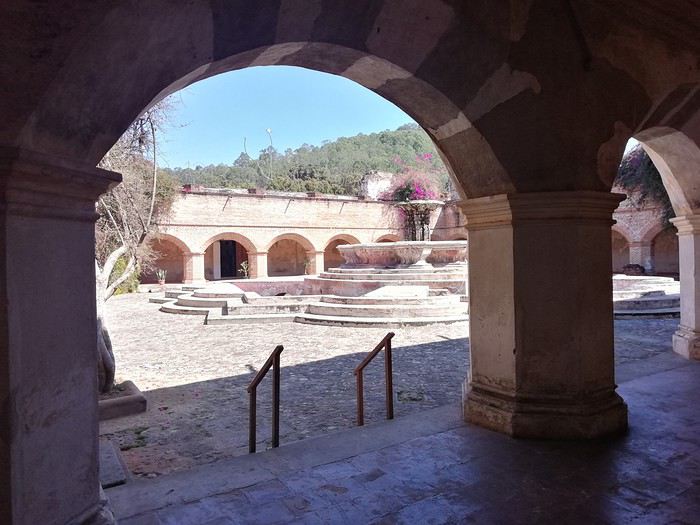
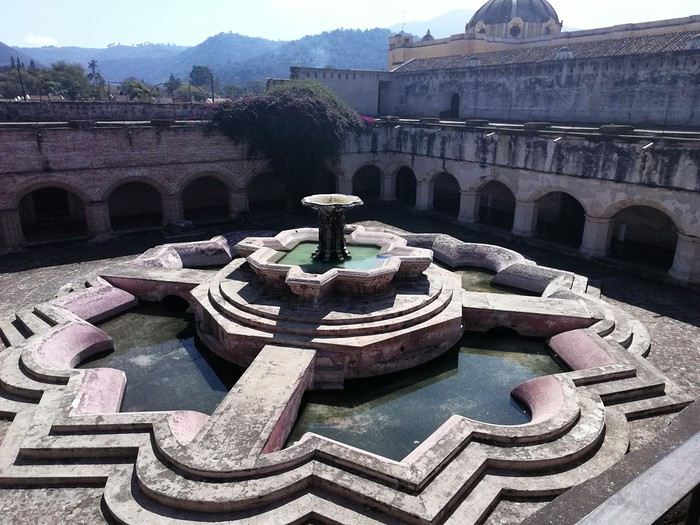
Pour profiter du panorama sur 3 volcans, nous gravissons les marches qui mènent à la terrasse. Puis nous gagnons la « Plaza mayor » cernée par de beaux édifices bâtis par les Espagnols, allant de la mairie à la cathédrale de la ville.
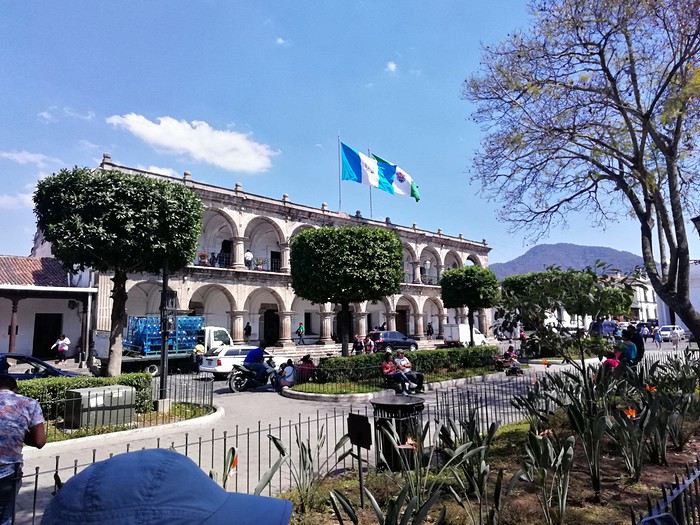 Nous passons devant le musée du chocolat avant de faire une halte pour découvrir le plus beau « Mac Do » du monde logé dans une magnifique hacienda d’époque avec un grand patio fleuri.
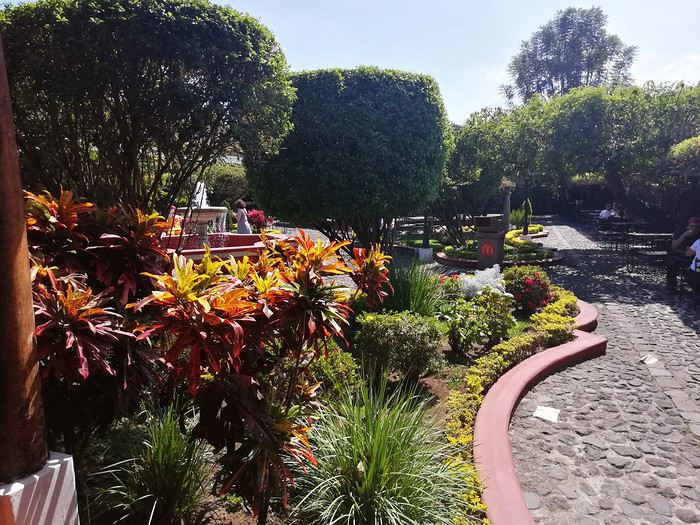
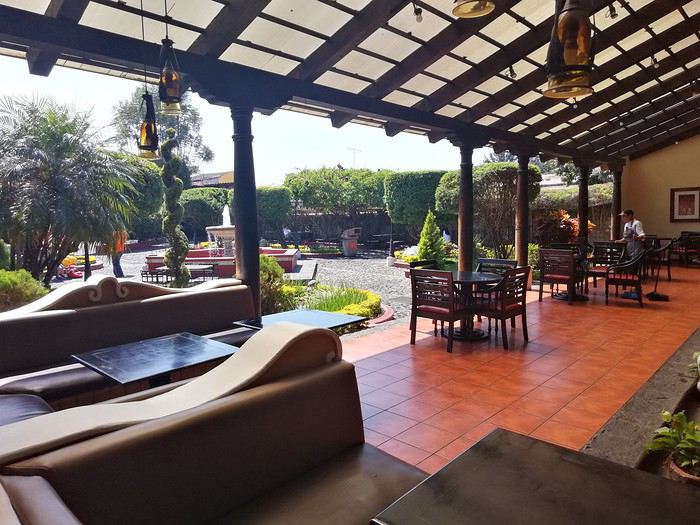 Cela change des établissements habituels de cette marque.
On arpente les rues de la ville, occasion de découvrir des demeures coloniales splendides aux patios intérieurs abondamment fleuris,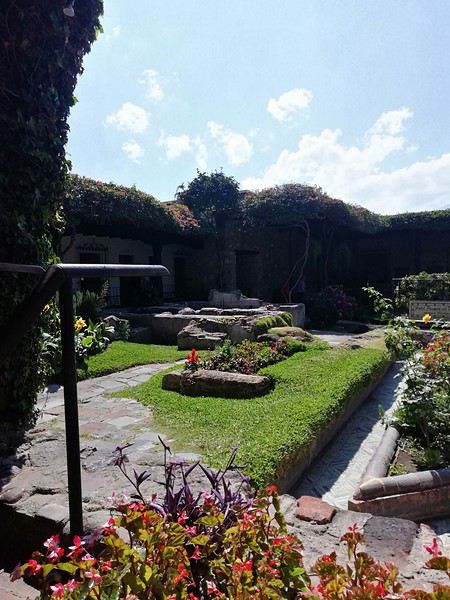
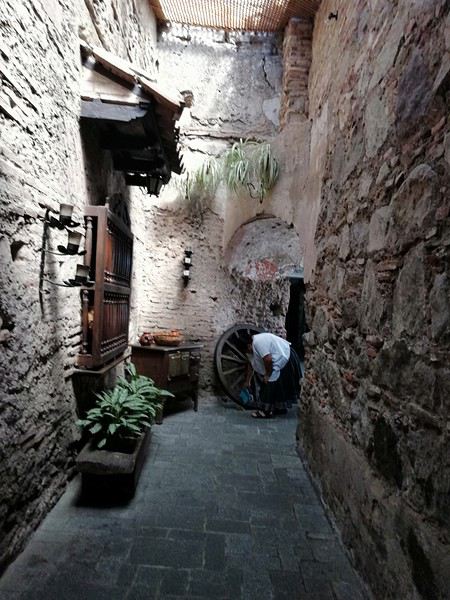
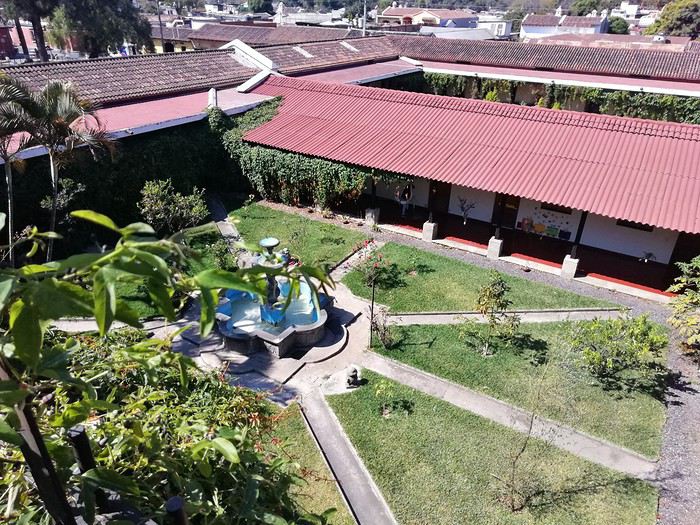
de voir un nombre impressionnant d’églises détruites par les tremblements de terre. Elles ne sont pas reconstruites faute de moyens pour les entretenir mais elles témoignent de l’emprise de la religion catholique sur le pays.
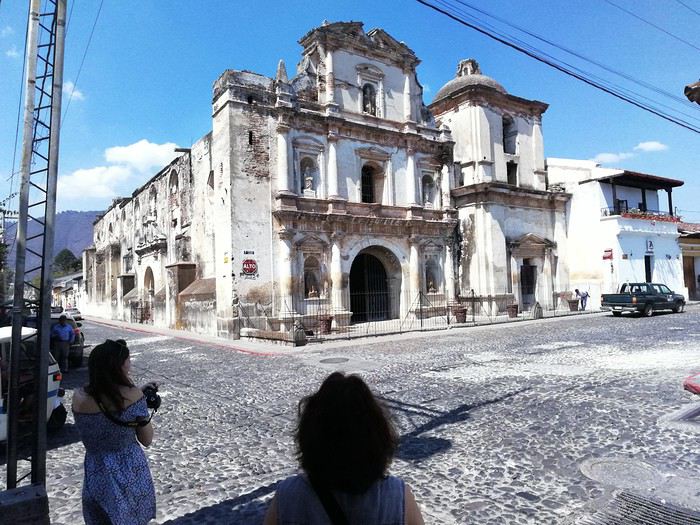
Notons à ce propos que l’on verra par la suite beaucoup de temples protestants de différentes obédiences, tout comme aux USA.
Je me propose de vous faire partager notre voyage au Guatemala, pays assez peu renseigné sur VF. Je l’agrémenterai de quelques photos (tablette) sans prétention qui se veulent seulement illustratives et je demande par avance votre indulgence.
Initialement nous avions opté pour un périple au Pérou en février. Les agences contactées ont eu l’honnêteté, et nous les en remercions, de nous indiquer que cela n’était pas une bonne période pour se rendre sur les plateaux andins. Après une longue hésitation nous avons orienté nos recherches vers le Guatemala et le Honduras et avons pris des contacts avec 2 agences francophones à Antigua pour des propositions et des devis. Très vite nous avons retenu « Bon Voyage » plus réactive et nettement moins chère que sa consœur. Après plusieurs itérations avec Arnaud (patron de l’agence) nous avons convergé vers un circuit de 16 j entre le 6/2 et le 21/2/2020.
Jour 1 :
Pour les vols internationaux nous avions le choix entre une escale aux USA ou à Madrid. Pour à peine plus cher (660 €/p) et un temps de vol bien plus court nous avons finalement choisi IBERIA au détriment des compagnies et contraintes (ESTA et douane) américaines. De plus les vols IBERIA sont au départ (et retour) d’Orly plus commode pour nous.
L’horaire de départ étant très matinal nous décidons de dormir à Orly. L’hôtel Ibis Budget « cœur d’Orly » fera l’affaire. Disons le, c’est cher pour un hôtel de ce type (entrée de gamme) mais il a le mérite de servir le PdJ à partir de 4 h. Cet horaire nous permet de garer notre voiture dans un parking de la zone industriel de Senia et une navette nous dépose à l’aéroport vers 6h. Le vol Orly - Madrid part à 7h30 et nous attendrons 3h pour prendre celui qui nous mènera à Guatemala City où nous arrivons vers 17 h (heure locale soit – 7h de décalage. Ces vols seront sans histoire ni retard. A notre arrivée, Luis notre chauffeur, nous attend. Son sourire et sa gentillesse nous séduisent de suite. Il est chargé de nous conduire à Antigua. Mais les routes à cette heure sont saturées et nous mettrons plus de 2h pour parvenir à Antigua pourtant distante de moins de 40 km de la capitale. Il nous dépose à l’hôtel Posada San Pedro dans lequel nous résiderons 5 nuits durant notre séjour. L’hôtel n’a que 8 chambres et ne sert pas de PdJ mais il est bien situé (7ième avenue) et il dispose d’un joli jardin intérieur et d’un solarium. La chambre n’est pas très grande mais offre une vue directe sur le volcan Fuego en activité permanente. Des fumées s’en échappent régulièrement et parfois des rougeurs nous signalent des coulées de lave. Sitôt arrivés nous nous couchons pour être d’attaque le lendemain.
Jour 2 :
Notre première tâche est de trouver le lieu de notre PdJ car l’hôtel ne propose pas ce service. Il s’agit du restaurant « Viejo Café » dans la 6ième avenue. Ce lieu regroupe une boulangerie et un joli patio où sont servis les PdJ. L’offre est excellente et le service souriant. Tant mieux car nous y reviendrons à maintes reprises. Nous avons RDV avec notre agent de voyage dont nous faisons la connaissance. Il nous fourni un roadbook très détaillé de notre périple avec une carte détaillée pour chaque ville étape, une liste de restaurants qu’il recommande, les lieux à visiter, les recommandations (sûreté, banques, …) et un téléphone pour le joindre en cas de nécessité. Nous rejoignons ensuite un guide francophone qui nous fait découvrir cette jolie ville d’Antigua classée par l’UNESCO. Il nous fait un historique de la cité bâtie par les Espagnols et nous indique comment s’orienter le plan des rues, toutes pavées, s’apparente à celui des villes américaines et elles se coupent toutes à angle droit. Comme à New York la 5ième avenue est la principale artère de la ville. Nous visitons successivement l’église Merced, son monastère, son jardin et sa terrasse d’où l’on peut contempler les 3 volcans qui entourent la ville. L’église bâtie en 1548 a été détruite puis restaurée plusieurs fois suite aux nombreux séismes qui ont frappé la ville, le plus récent datant de 1976, sa façade est jaune et ornée de nénuphars. Puis notre visite se poursuit par le monastère dont il ne subsiste que des ruines. Au milieu de la cour centrale, on découvre une fontaine monumentale elle aussi en forme de nénuphar.
Pour profiter du panorama sur 3 volcans, nous gravissons les marches qui mènent à la terrasse. Puis nous gagnons la « Plaza mayor » cernée par de beaux édifices bâtis par les Espagnols, allant de la mairie à la cathédrale de la ville.
Nous passons devant le musée du chocolat avant de faire une halte pour découvrir le plus beau « Mac Do » du monde logé dans une magnifique hacienda d’époque avec un grand patio fleuri.
Cela change des établissements habituels de cette marque.On arpente les rues de la ville, occasion de découvrir des demeures coloniales splendides aux patios intérieurs abondamment fleuris,
de voir un nombre impressionnant d’églises détruites par les tremblements de terre. Elles ne sont pas reconstruites faute de moyens pour les entretenir mais elles témoignent de l’emprise de la religion catholique sur le pays.
Notons à ce propos que l’on verra par la suite beaucoup de temples protestants de différentes obédiences, tout comme aux USA.