Results for "Sainte-Enimie+|+127"
56122 results found.
Madagascar touché par le tsunami? English translation pending
C'est ce que j'ai entendu dire ?
Vous en savez plus ?
Vous en savez plus ?
Perinet et pangalanes en famille à Madagascar English translation pending
BONJOUR
NOUS PARTONS POUR LA PREMIERE FOIS A MADAGASCAR
NOUS SOMMES 2 adultes et 2 enfants 11 et 14 ans, pour 15 jours durant les vacances de paques (23 avril 9 mai)
nous avons deja reserve le vols et la derniere semaine à sainte marie, et aimerions nous debrouiller sans tour operator pour la premiere semaine et visiter le canal des pangalanes et la reserve des perinet pouvez vous nous aider ???
faut-il louer une voiture?
faut-il un guide?
tout peut-il se faire sur place?
merci merci
toute la petite famille!
( alias babou, alice, steph et marcelline)
merci encore!!
Climat à Madagascar en juillet/août? English translation pending
nous partons 3 semaines à Mada en Juillet Août.Nous aimerions faire une petite virée à Ste Marie pour voir les baleines mais la pèriode ne semble pas idéale.Ce sont des orages tropicaux ou bien une pluie en continu?
Merci
Merci
Le Québec en camping-car English translation pending
😏bonjour à tous,
nous allons effectuer un séjour de 3 semaines au Québec et nous avons loué un camping car; nous avons prévu d'effectuer une "boucle":
Montréal, Trois-rivière, le lac Saint-Jean, Sainte-Rose, Tadoussac, ... est-il intéressant de rmonter + au nord?,
Charlevois, Québec,
puis la Gaspésie
et retour par le sud du saint Laurent à Montréal.
L'ordre des étapes est-il pertinant ?
nous sommes preneur de conseils et d'aides.
nous avons une fille de 13 ans qui adore se baigner: Où ?
nous nous interrogeons sur le stationnement du camping car à Montréal ou à Québec: ya t-il des difficultés?
est-il nécessaire de réserver le traversier plusieurs jours à l'avance ( nous souhaiterions ne pas trop planifier au jour le jour )
Je vous remercie pour votre aide
Isabelle
nous allons effectuer un séjour de 3 semaines au Québec et nous avons loué un camping car; nous avons prévu d'effectuer une "boucle":
Montréal, Trois-rivière, le lac Saint-Jean, Sainte-Rose, Tadoussac, ... est-il intéressant de rmonter + au nord?,
Charlevois, Québec,
puis la Gaspésie
et retour par le sud du saint Laurent à Montréal.
L'ordre des étapes est-il pertinant ?
nous sommes preneur de conseils et d'aides.
nous avons une fille de 13 ans qui adore se baigner: Où ?
nous nous interrogeons sur le stationnement du camping car à Montréal ou à Québec: ya t-il des difficultés?
est-il nécessaire de réserver le traversier plusieurs jours à l'avance ( nous souhaiterions ne pas trop planifier au jour le jour )
Je vous remercie pour votre aide
Isabelle
Séjour au Dominicus Palace en avril English translation pending
Bonjour?
Dans 18 jours je m'envole avec mon mari et mes 2 filles (10 et 6 ans ) pour Bayahibe au Dominicus Palace.
Il s'agit du 2 eme séjour dans cet hotel qui l'année dernière nous avait enchantés.
qu'est ce qui change pendant la semaine sainte? Est ce moins bien ?
Est ce que cela vaut le coup d'aller visiter Saint Domingue?
Merci de me répondre et peut être à bientôt. Marie😏😄
Dans 18 jours je m'envole avec mon mari et mes 2 filles (10 et 6 ans ) pour Bayahibe au Dominicus Palace.
Il s'agit du 2 eme séjour dans cet hotel qui l'année dernière nous avait enchantés.
qu'est ce qui change pendant la semaine sainte? Est ce moins bien ?
Est ce que cela vaut le coup d'aller visiter Saint Domingue?
Merci de me répondre et peut être à bientôt. Marie😏😄
Cherche infos sur l'Ile Ste Marie à Madagascar English translation pending
bonjour à tous, j'aimerai avoir des infos sur l'ile ste marie(tourisme'paysage etc....)de plus connaissez vous le complexe "planet bleu" merci pour vos renseignements tchao
Le Périgord en France English translation pending
Salut à tous!! J'habite en Périgord et si vous aimais cette région ou que vous désirez en savoir davantage, n'hésitez pas à me laisser un petit message dans le forum ou sur ma boîte perso!!!
BISOUS A TOUS 😉
Votez pour Hagia Sophia à Istanbul English translation pending
On a démarré à sélectionner les 7 nouvelles merveilles du monde par les votes des gens de l'internet. Pour l'instant " les murs chinois " est la première par leur population énorme. Mais il ya le chef-d'oeuvre du christianisme à Istanbul " Hagia Sophia ou Sainte Sophie " depuis le quatrième siècle. Faites part à ce vote en cliquant www.new7wonders.com pour la supériorité de l'architecture chrétienne.
Livre: "Aux voyageurs du monde" English translation pending
Bonjour à tous les voyageurs du monde! :-)
J'ai une suggestion de livre très intéressant à vous faire: "Aux voyageurs du monde" écrit par Geneviève Clastres
Vous pouvez trouvez ce livre à Paris, Lyon, Rennes, Toulouse, Fougères et Saint-Malo aux adresses suivantes: La cité des voyageurs
55, rue Sainte Anne 75002 Paris tél: 01.42.86.16.00.
5, quai Jules Courmont 69002 Lyon tél: 04.72.56.94.56.
2, rue Jules Simon BP 10206 35102 Rennes Cedex tél: 02.99.79.16.16.
26, rue des Marchands 31000 Toulouse tél: 05.34.31.72.72.
19, rue Châteaubriand 35300 Fougères tél: 02.99.94.21.91.
17, avenue Jean Jaurès BP 206 35409 Saint Malo Cedex tél: 02.99.40.27.27.
P.S.: Ce livre m'a coûté a l'époque 60F
Bonne lecture à tous!
J'ai une suggestion de livre très intéressant à vous faire: "Aux voyageurs du monde" écrit par Geneviève Clastres
Vous pouvez trouvez ce livre à Paris, Lyon, Rennes, Toulouse, Fougères et Saint-Malo aux adresses suivantes: La cité des voyageurs
55, rue Sainte Anne 75002 Paris tél: 01.42.86.16.00.
5, quai Jules Courmont 69002 Lyon tél: 04.72.56.94.56.
2, rue Jules Simon BP 10206 35102 Rennes Cedex tél: 02.99.79.16.16.
26, rue des Marchands 31000 Toulouse tél: 05.34.31.72.72.
19, rue Châteaubriand 35300 Fougères tél: 02.99.94.21.91.
17, avenue Jean Jaurès BP 206 35409 Saint Malo Cedex tél: 02.99.40.27.27.
P.S.: Ce livre m'a coûté a l'époque 60F
Bonne lecture à tous!
Feedback on our 2-month stay in Madagascar
Hello,
After asking questions on the site, here’s a little feedback on our trip in March and April.
Marseille/Antananarivo flight with Ethiopian Airlines was great both ways. I’d recommend it.
Domestic flights with Madagascar Airlines were just as smooth.
We had to change our plans because I was the victim of a snatch-theft attempt at Ivato... patellar fracture... so I ended up with a brace and more rest than hikes.
This let us spend more time in the same areas and make some connections.
We loved Tulear. Stayed with Alain—excellent value for money.
Mangily, where we stayed for 15 days. Hotel Bella Dona due to my little handicap. The pool replaced sea swims.
Mangily gets a bad rap for being very touristy. True, you get approached a lot on the beach—you have to play along and buy some trinkets, but after that, you get royal peace and lots of exchanges with locals. The village and its lively street are nice too. Don’t hesitate to eat with fishermen or at local bars.
Anakao, a big favorite. Just the journey there is worth it. Watching dozens of pirogues set off between 5 and 6 AM is a magical moment.
Stayed at Peter Pan’s place. Lots of chats with Dario since we were the only guests.
Planned a 4-day Antananarivo–Soniara–Ivango road trip with a driver.
Cut to 2 days because the boat to Sainte Marie was moved up due to weather. I don’t remember the company’s name, but it wasn’t great for safety—plus, we brought back fleas.
Visited Andasibe Park along the way. Quick tip: go in the morning.
A little over 2 weeks on Sainte Marie at Hôtel Mantis Soanambo—total luxury negotiated at a price that defied all competition because it was low season.
Meals were at little local eateries nearby.
We chose not to sleep on Île aux Nattes but went there several times during the day (crossing: 4000 ariary for 2).
You have to take a pirogue tour—it’s like stepping into a postcard.
Sainte Marie is a special place. A tropical island that feels like the Caribbean ones we’ve lived on. No security issues at all. We rented a scooter because we found tuk-tuk prices a bit steep. You can leave the scooter with helmet and keys and come back 4 hours later.
More amazing encounters here too.
Last part of our trip in Ampefy, a beautiful volcanic region with a very welcoming population.
Stayed with a friend of our driver.
Hotels in Ivato are plentiful and vary a lot in quality.
Les 12 Collines is a bit out of the way but only 21 € per night.
La Chato... very expensive for what you get.
I tried to keep it short.
Madagascar is a wonderful island with so many facets. Always so many emotions when I think back on this trip.
The extreme poverty... don’t hesitate to buy food for the kids on the beach, for example. It doesn’t cost much, but it means a lot to them.
The kindness of the people and, above all, those SMILES.
We’re hooked—we’re going back in November for 6 months... because yes, you can buy a 3-month visa at the airport (a question I’d asked), and you can extend it for another 3 months... if you apply in time at a police station.
We didn’t take Malarone either. We’d brought some, but there were few mosquitoes, and "Insect Écran" worked really well.
Off to find Andalusian spring (Granada, Ronda, Seville)
It's been 39 years since we last came back to Andalusia...
For this last week of March, we waited until the end of the "votes" in France to go soak up some sun in southern Spain. And spring is the ideal season.
Our itinerary was a very (very) classic loop: Seville / Granada / Ronda and the white villages / Seville (with the start of Holy Week as a bonus gift!).
We flew from Lyon with Transavia (no issues) and landed in Seville on Monday. We rented a car (Goldcar), drove for 3 hours, and there we were in Granada, charmed by its ZTL (limited traffic zone) that Waze made us discover in detail (a nightmare!). Our hotel: Hotel Monjas del Carmen (perfectly located and with parking).
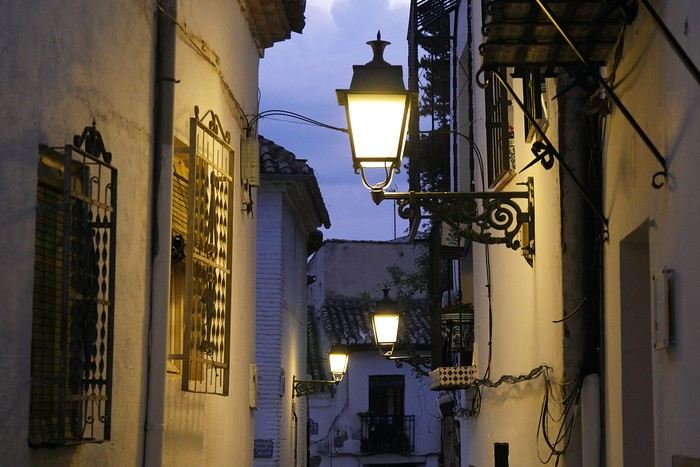
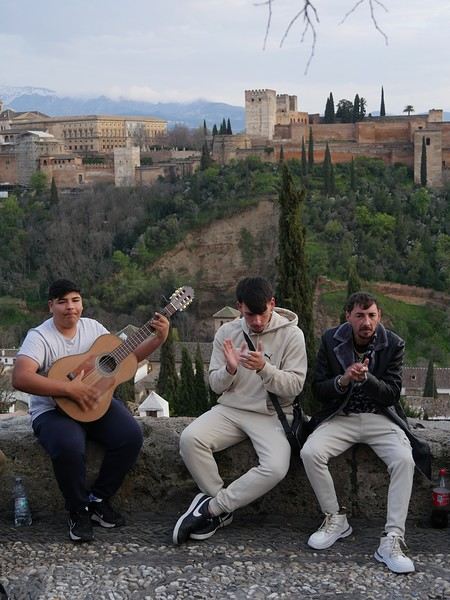
The weather was overcast, but a little stroll through the Albaicín district was a must. In the evening, we had dinner at "Restaurant Arabe Ambar" to get into the Nasrid atmosphere—we recommend it!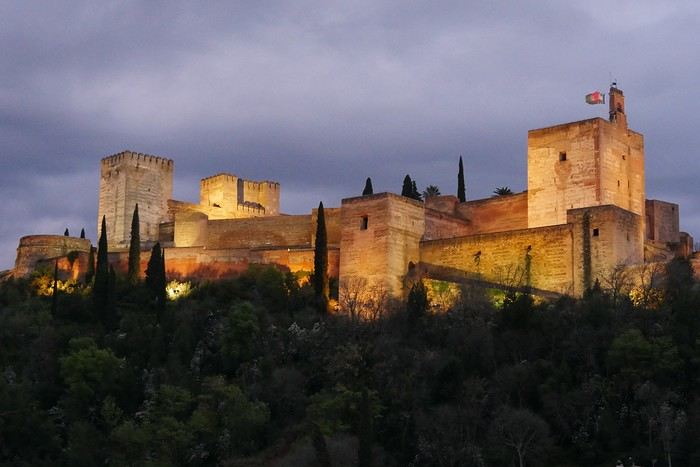
For this last week of March, we waited until the end of the "votes" in France to go soak up some sun in southern Spain. And spring is the ideal season.
Our itinerary was a very (very) classic loop: Seville / Granada / Ronda and the white villages / Seville (with the start of Holy Week as a bonus gift!).
We flew from Lyon with Transavia (no issues) and landed in Seville on Monday. We rented a car (Goldcar), drove for 3 hours, and there we were in Granada, charmed by its ZTL (limited traffic zone) that Waze made us discover in detail (a nightmare!). Our hotel: Hotel Monjas del Carmen (perfectly located and with parking).
The weather was overcast, but a little stroll through the Albaicín district was a must. In the evening, we had dinner at "Restaurant Arabe Ambar" to get into the Nasrid atmosphere—we recommend it!
Where to buy alcohol in Chefchaouen and Merzouga?
Hi, I’d like to know where we can buy beer or wine in Chefchaouen and around Merzouga. We’ll be doing a circuit and staying at the Parador Hotel in Chefchaouen and in a bivouac in Merzouga.
Thanks for any info you can share!
Short stay in Montreal for the Road Cycling World Championships
Hi everyone, as a regular in the "bike travel" section, I’m reaching out for some info since I’m planning to come to Montreal at the end of September 2026 for the Road Cycling World Championships. If I get the time off and manage to gather the details, I’ll arrive on Wednesday the 23rd and leave on Tuesday the 29th. Traveling solo with just my backpack, I need answers to:
1°) Do you know of any youth hostels (or similar) within walking distance (less than 3 km) of the finish circuit on Mount Royal?
2°) What’s the best way to get to this accommodation from the airport—metro, bus, etc.?
I’m just starting my research and counting on you all for any tips. My goal is to watch the road races and explore Montreal afterward—restaurants, bars, and more.
Looking forward to your replies, cheers.
I’m just starting my research and counting on you all for any tips. My goal is to watch the road races and explore Montreal afterward—restaurants, bars, and more.
Looking forward to your replies, cheers.
What day trips can we do around Prague?
Hi there
I’ve booked a trip to Prague with my mum in mid-September.
Since I already know the city, I’d love to see something else, but I’m realizing that transport is really slow.
I wanted to go to Karlovy Vary, but it takes longer than I thought… Plus, we won’t be staying near the train station.
So I’m looking for a day trip that’s MAXIMUM 1 hour away by transport.
I really don’t like spending too much time on transport, so if it’s not doable, I’ll just skip it.
If there’s nothing accessible, I won’t bother with day trips—it’s not a big deal.
Any ideas?
Thanks
I’ve booked a trip to Prague with my mum in mid-September.
Since I already know the city, I’d love to see something else, but I’m realizing that transport is really slow.
I wanted to go to Karlovy Vary, but it takes longer than I thought… Plus, we won’t be staying near the train station.
So I’m looking for a day trip that’s MAXIMUM 1 hour away by transport.
I really don’t like spending too much time on transport, so if it’s not doable, I’ll just skip it.
If there’s nothing accessible, I won’t bother with day trips—it’s not a big deal.
Any ideas?
Thanks
One Month in Northern Madagascar - Thoughts on My Potential Itinerary
Hey everyone!
I’d like to explore the northeast of Madagascar, using bush taxis, boats, and my own two feet.
I already have an ideal itinerary in mind, but I’d love to know if it’s doable at a relaxed pace in one month. The goal, of course, is to avoid being constantly focused on time and days and to travel spontaneously.
I’m aware that the roads are rough and there are a lot of unexpected delays, which isn’t a problem in itself. I just struggle to estimate the *time* it takes to get between stops.
Potential itinerary:
Tana – Sainte Marie Island (4 days) – Maroantsetra (3 days) – Masoala Park (8-day trek?) – Antalaha – Marojejy Park (3 days) – Ambilobe – Nosy Be (5 days) – Tana
The days listed are just rough averages. Cities don’t interest me, and I don’t plan to visit Tana.
I’d really appreciate any info or tips from you all! 😊
Thanks in advance,
Romain
I’d like to explore the northeast of Madagascar, using bush taxis, boats, and my own two feet.
I already have an ideal itinerary in mind, but I’d love to know if it’s doable at a relaxed pace in one month. The goal, of course, is to avoid being constantly focused on time and days and to travel spontaneously.
I’m aware that the roads are rough and there are a lot of unexpected delays, which isn’t a problem in itself. I just struggle to estimate the *time* it takes to get between stops.
Potential itinerary:
Tana – Sainte Marie Island (4 days) – Maroantsetra (3 days) – Masoala Park (8-day trek?) – Antalaha – Marojejy Park (3 days) – Ambilobe – Nosy Be (5 days) – Tana
The days listed are just rough averages. Cities don’t interest me, and I don’t plan to visit Tana.
I’d really appreciate any info or tips from you all! 😊
Thanks in advance,
Romain
Boat crossing from Tamatave to Sainte Marie Island (Madagascar)
Hi there,
How do you get from Tamatave or Foulpointe to Sainte Marie Island? We’re heading to Madagascar from July 16 to 29, 2025.
How many days should we stay to explore the area?
What’s there to do in Tamatave, Foulpointe, or Sainte Marie Island?
What should we visit?
Thanks everyone!
Wood: Discussion(s) about the July 2025 contest
All the side discussions about the contest happen here.
Family itinerary in Quebec in July: tips for finalizing the last leg after Parc du Bic
Hi there,
We’re heading to Quebec from July 7 to 21 with our two kids (ages 5 and 7) and my wife, and we’re putting together an itinerary while keeping some flexibility (though much less than we’d hoped, since we’re realizing accommodations are already filling up fast!).
Below is our draft plan—pretty far along since we’ve booked 9 out of 14 nights—but it’s definitely not perfect.
We’d love some advice on what to do after Parc du Bic (3 nights to improvise) before heading back to Parc Omega, where we’ve booked a tipi :-)
It seems clear that a 3-day Gaspésie loop isn’t doable (too bad about Percé and Parc Forillon, but I think we’re already covering a lot of ground with this route!). But what about the option of driving up to Sainte-Anne-des-Monts to spend a day in Parc de la Gaspésie before the (long) drive back, and still enjoying part of the coastal road, which looks stunning? Thanks in advance for your thoughts!
3 nights in Montreal (booked) Day 1 to 3 – July 7 to 9: Montreal
2 nights near Lac Saint-Charles, 20 min from Quebec City (booked) Day 4 – July 10: Montreal → Montmorency Falls → Quebec City (~3h drive) Day 5 – July 11: Quebec City
2 nights in the Saguenay region (booked) Day 6 – July 12: Quebec City → Baie-Saint-Paul → Canopée Lit (Saguenay), 20 min from Tadoussac Day 7 – July 13: Day in Tadoussac/Les Bergeronnes for a whale-watching excursion, then back toward the Saguenay Fjord for the evening and overnight stay
1 night in Parc du Bic (booked)
Day 8 – July 14: Ferry from Les Escoumins (2 PM) → Trois-Pistoles → Parc du Bic
3 nights to improvise—is it even feasible to go without reservations in July for a family of 4? Day 9 – July 15: Hikes/activities in Parc du Bic – overnight near Cap-Chat/Sainte-Anne-des-Monts??? Other ideas? Day 10 – July 16: Parc de la Gaspésie? Day 11 – July 17: More hikes? Then drive back toward the Mont-Joli area?
1 night at Parc Omega (booked)
Day 12 – July 18: Long drive back from Mont-Joli? Maybe via Kamouraska for a meal break, then overnight at Parc Omega
2 nights near Montreal or surrounding area
Day 13 – July 19: Visit Parc Omega, then a relaxed drive back via scenic routes to Montreal or nearby
Day 14 – July 20: Last day and night in Montreal or the suburbs, fun activities with the kids
Day 15 – July 21: Flight home in the evening
3 nights in Montreal (booked) Day 1 to 3 – July 7 to 9: Montreal
2 nights near Lac Saint-Charles, 20 min from Quebec City (booked) Day 4 – July 10: Montreal → Montmorency Falls → Quebec City (~3h drive) Day 5 – July 11: Quebec City
2 nights in the Saguenay region (booked) Day 6 – July 12: Quebec City → Baie-Saint-Paul → Canopée Lit (Saguenay), 20 min from Tadoussac Day 7 – July 13: Day in Tadoussac/Les Bergeronnes for a whale-watching excursion, then back toward the Saguenay Fjord for the evening and overnight stay
1 night in Parc du Bic (booked)
Day 8 – July 14: Ferry from Les Escoumins (2 PM) → Trois-Pistoles → Parc du Bic
3 nights to improvise—is it even feasible to go without reservations in July for a family of 4? Day 9 – July 15: Hikes/activities in Parc du Bic – overnight near Cap-Chat/Sainte-Anne-des-Monts??? Other ideas? Day 10 – July 16: Parc de la Gaspésie? Day 11 – July 17: More hikes? Then drive back toward the Mont-Joli area?
1 night at Parc Omega (booked)
Day 12 – July 18: Long drive back from Mont-Joli? Maybe via Kamouraska for a meal break, then overnight at Parc Omega
2 nights near Montreal or surrounding area
Day 13 – July 19: Visit Parc Omega, then a relaxed drive back via scenic routes to Montreal or nearby
Day 14 – July 20: Last day and night in Montreal or the suburbs, fun activities with the kids
Day 15 – July 21: Flight home in the evening
Is it better to visit Martinique or Guadeloupe in April?
hi
need some info—I’m torn between Martinique and Guadeloupe for April.
also, which island is bigger in terms of trip length?
thanks in advance
Accessibility in Armenia for people with reduced mobility
My husband has a disability following a stroke. He walks with a cane and gets tired easily. Do you think we could travel to Armenia? Are Yerevan and the museums accessible for people with reduced mobility? Is the Geghard Monastery accessible? Thanks.
Excursions and activities around Dahab (Egypt)
Hi everyone,
Heading to Egypt this coming February, I’m planning to visit Dahab for some diving in the Red Sea. While looking into other things to do and see in the area, I’m wondering whether it’s better to book ready-made excursions or if it’s possible—and preferable—to hire a taxi for the day (Mount Sinai and St. Catherine’s Monastery, Nuweiba, and Colored Canyon).
If you’ve tried either option, I’d love to hear your feedback. And if you have any other activities to recommend in the area, I’d be happy to read about them!
Thanks in advance,
Franck
A Turquoise Dream Come True in Uzbekistan - 2022
We took this trip from September 12 to October 7, 2022. I didn’t post this travel journal earlier in Voyage Forum because the site wasn’t back up yet (and also because I was short on time).
Then, at the end of 2024, I made a promise to a friend: to publish my travel journal on VF. So here it is!
 We took off from Paris in the late afternoon on September 12 and arrived in Tashkent around 7:15 AM on the 13th.
This trip was the result of long contemplation and preparation (it was originally planned for the year of the lockdown (2020) and was prepared with the help and advice of Nasrullo Jumanov from Turquoise Travel.
Stages and Itinerary
Stage 1: Tashkent - September 13 and 14
Stage 2: Ferghana Valley – September 15 to 17
Stage 3: Nukus and Moynaq - September 18 and 19
Stage 4: Mysterious Khiva - September 20 to 22
Stage 5: Holy Bukhara - September 23 to 26
Stage 6: Asraf - September 27 and 28
Stage 7: Mythical Samarkand - September 29 to October 2
Stage 8: Tersak (via Shakhrisabz and Urgut) – October 3 and 4
Stage 9: Samarkand – October 5 and 6
Stage 10: Tashkent/Istanbul/Paris – October 6 and 7
Stage 1: Tashkent
September 13
At the airport exit, we were greeted by the owner of our B&B (B&B Gulnara).
Today was all about recovery and our first steps in the capital. Our first currency exchange made us feel like sudden millionaires.
Our first stroll down the avenue leading to Chorsu Market introduced us to the fact that 80 to 90% of the cars here are white Chevrolets.
A walk under the arcades facing Chorsu: hardware stores, cabinetmakers, lute makers (one of them gave me a little concert/demo of a few string instruments).
We took off from Paris in the late afternoon on September 12 and arrived in Tashkent around 7:15 AM on the 13th.
This trip was the result of long contemplation and preparation (it was originally planned for the year of the lockdown (2020) and was prepared with the help and advice of Nasrullo Jumanov from Turquoise Travel.
Stages and Itinerary
Stage 1: Tashkent - September 13 and 14
Stage 2: Ferghana Valley – September 15 to 17
Stage 3: Nukus and Moynaq - September 18 and 19
Stage 4: Mysterious Khiva - September 20 to 22
Stage 5: Holy Bukhara - September 23 to 26
Stage 6: Asraf - September 27 and 28
Stage 7: Mythical Samarkand - September 29 to October 2
Stage 8: Tersak (via Shakhrisabz and Urgut) – October 3 and 4
Stage 9: Samarkand – October 5 and 6
Stage 10: Tashkent/Istanbul/Paris – October 6 and 7
Stage 1: Tashkent
September 13
At the airport exit, we were greeted by the owner of our B&B (B&B Gulnara).
Today was all about recovery and our first steps in the capital. Our first currency exchange made us feel like sudden millionaires.
Our first stroll down the avenue leading to Chorsu Market introduced us to the fact that 80 to 90% of the cars here are white Chevrolets.
A walk under the arcades facing Chorsu: hardware stores, cabinetmakers, lute makers (one of them gave me a little concert/demo of a few string instruments).
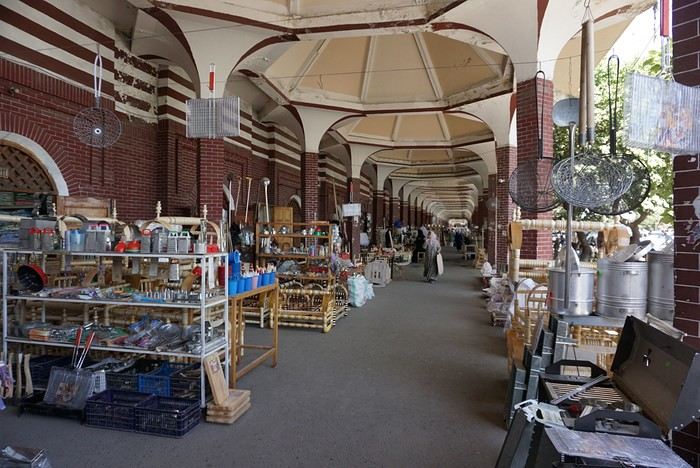
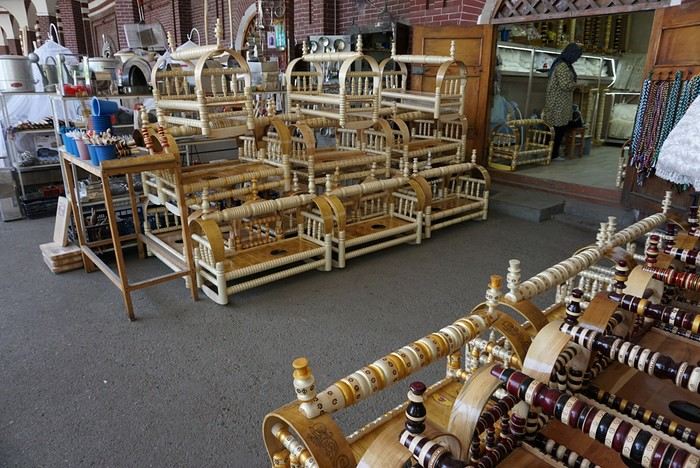
As we entered the market, many vendors called out to us, including this florist who asked where we were from: ‘France? Ah! Macron! PSG!’ He then recited a list of players from the Parisian team as well as past (Platini, Zidane, etc.) and current (Giroud, Griezmann, Mbappé, etc.) French national team players. Since we’re more into rugby (we live near Toulouse), he knew more players than I did!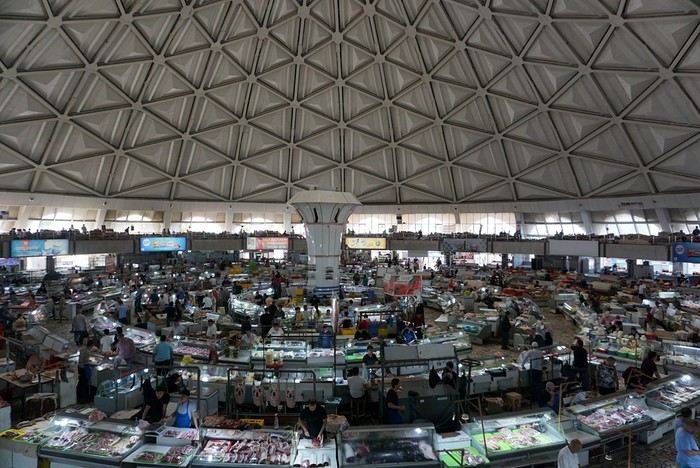
The market sprawls outside around the large circular, multi-story hall. We bought some grapes and bottles of freshly squeezed pomegranate juice for just a few sums. This evening, we had a meet-up with Nasrullo. The reunion was very warm: we’d been exchanging messages for over two years, and I’d been ‘torturing’ him with changes to our itinerary and trip duration. We were finally eager to meet, and honestly, I wasn’t disappointed—in fact, it was the opposite. Nasrullo was very attentive throughout our trip and always made sure, even from a distance (and most often from a distance!), that everything went smoothly. His goal was for us to leave delighted with our trip and, why not, indirectly become ambassadors for this destination. September 14 Breakfast with Nasrullo, then we set off with him by taxi to explore some of the capital’s sites.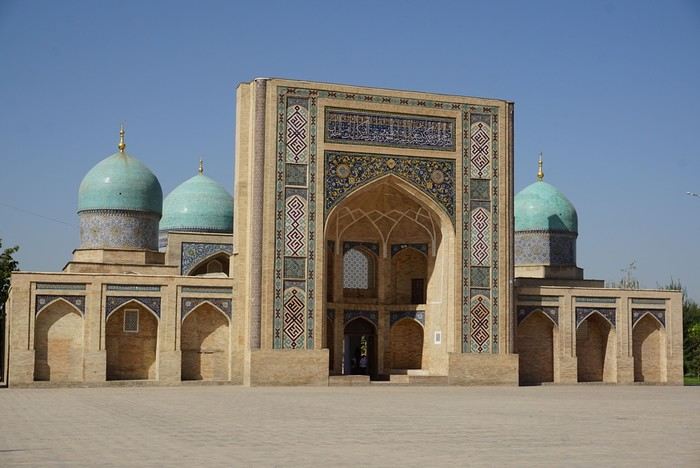
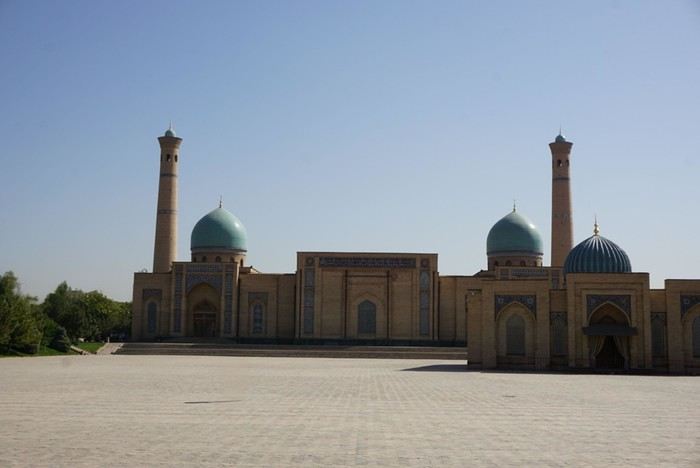
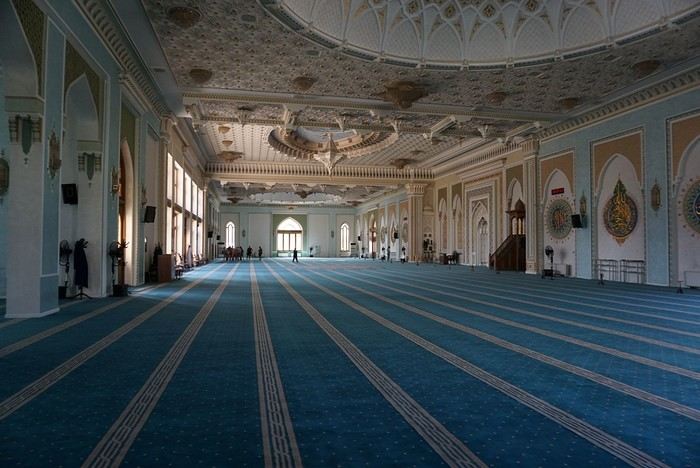
We started by visiting the Khazrati Imam complex, which includes the mausoleum of Kaffal Shashi, the Barak Khan and Muyi Muborak madrasas, and the great Khazrati Imam Mosque with its immense prayer hall.
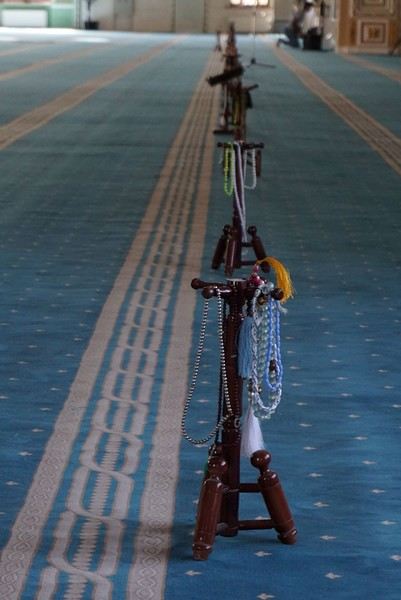
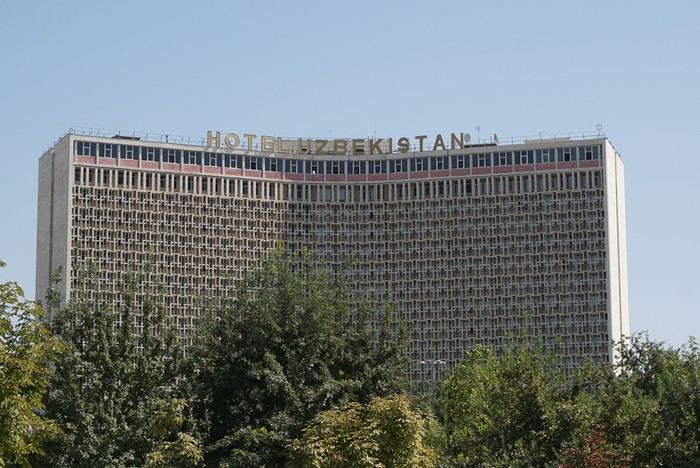
In the Muyi Muborak madrasa, now a museum, you can see the oldest Quran in the world. It was written by three religious scholars, including the secretary of the Prophet Muhammad, on large ‘pages’ made of antelope skin. Next, we explored Soviet-era Tashkent, discovering its parks, canals, and squares: Independence Square with its storks and phoenixes, Amir Temur Square with its large statue and, in the background, the massive Soviet-era hotel that has become one of Tashkent’s iconic buildings. Nasrullo took us through Broadway Boulevard and along what he calls ‘Tashkent’s Montmartre’… Well, it’s far, very far from Montmartre (in every sense of the word!). Then we took the metro to Chorsu station. Rush hour is pretty much the same everywhere in the metro… When we arrived at Chorsu, it was time to say goodbye. Nasrullo had to head back to Samarkand. Before leaving, he recommended some chaikhanas at the end of the galleries facing the market. We ate there for just a few euros (2 or 3 € for two people). After eating, we headed back to our room to cool off (our B&B is about a 10-minute walk away).
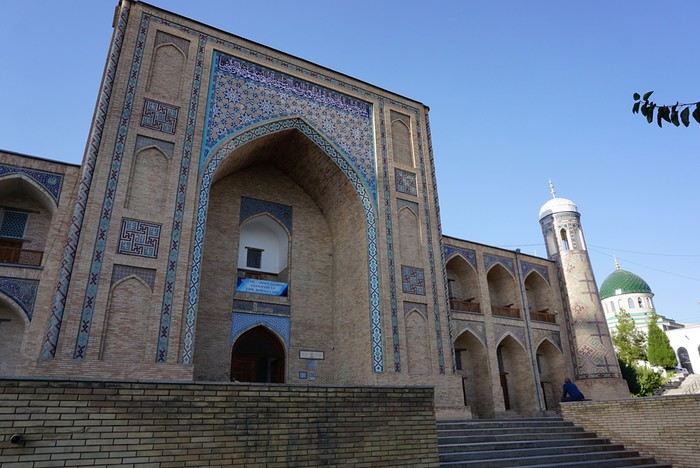
Around 4 PM, we set off to visit the Kokeldash Madrasa, which is still active. On the way, we stopped to watch some bread vendors and take a few photos. We were hesitating about buying some for our evening picnic when a young woman approached us. In perfect English, she asked: ‘Are you looking for something? Do you want to buy bread? Which one? How much?’ She then spoke to one of the vendors and negotiated the price. ‘Do you want one?’ And she took two. She paid directly. I took out my wallet to reimburse her, but she refused. It’s on the house! Then the vendor asked where we were from. And off we went again: Macron, PSG, football players… We’ll have to get used to it. The young woman smiled at the questions and comments, barely gave us time to thank her, and left as quickly as she had approached us.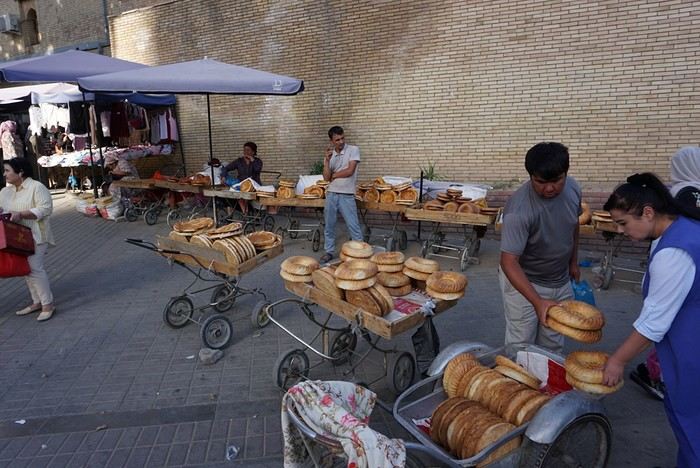
We continued our walk. Visited the madrasa. Then we crossed the boulevard to see the Tashkent Circus. I would’ve loved to go in and visit, but the ticket seller wouldn’t hear of it. We carried on around what should’ve been a park with old-fashioned rides and attractions. All we found was a construction site. Oh well! Back at our hotel, a message from Nasrullo was waiting for us. He had managed to change our train ticket for the next day. Instead of taking the 6:00 AM train, we’d take the 8:00 AM one. And instead of second class, we’d be in first class! Great! This evening, we had a picnic at one of the breakfast tables in the B&B courtyard. Under a shelter, the owner and his family were celebrating a birthday. The owner started by offering us some tea. Then they brought us some fruit (watermelon and melon). Finally, after the song, candles, and cake cutting, they brought us two generous slices of that beautiful birthday cake. Delicious!
We took off from Paris in the late afternoon on September 12 and arrived in Tashkent around 7:15 AM on the 13th.
This trip was the result of long contemplation and preparation (it was originally planned for the year of the lockdown (2020) and was prepared with the help and advice of Nasrullo Jumanov from Turquoise Travel.
Stages and Itinerary
Stage 1: Tashkent - September 13 and 14
Stage 2: Ferghana Valley – September 15 to 17
Stage 3: Nukus and Moynaq - September 18 and 19
Stage 4: Mysterious Khiva - September 20 to 22
Stage 5: Holy Bukhara - September 23 to 26
Stage 6: Asraf - September 27 and 28
Stage 7: Mythical Samarkand - September 29 to October 2
Stage 8: Tersak (via Shakhrisabz and Urgut) – October 3 and 4
Stage 9: Samarkand – October 5 and 6
Stage 10: Tashkent/Istanbul/Paris – October 6 and 7
Stage 1: Tashkent
September 13
At the airport exit, we were greeted by the owner of our B&B (B&B Gulnara).
Today was all about recovery and our first steps in the capital. Our first currency exchange made us feel like sudden millionaires.
Our first stroll down the avenue leading to Chorsu Market introduced us to the fact that 80 to 90% of the cars here are white Chevrolets.
A walk under the arcades facing Chorsu: hardware stores, cabinetmakers, lute makers (one of them gave me a little concert/demo of a few string instruments).As we entered the market, many vendors called out to us, including this florist who asked where we were from: ‘France? Ah! Macron! PSG!’ He then recited a list of players from the Parisian team as well as past (Platini, Zidane, etc.) and current (Giroud, Griezmann, Mbappé, etc.) French national team players. Since we’re more into rugby (we live near Toulouse), he knew more players than I did!
The market sprawls outside around the large circular, multi-story hall. We bought some grapes and bottles of freshly squeezed pomegranate juice for just a few sums. This evening, we had a meet-up with Nasrullo. The reunion was very warm: we’d been exchanging messages for over two years, and I’d been ‘torturing’ him with changes to our itinerary and trip duration. We were finally eager to meet, and honestly, I wasn’t disappointed—in fact, it was the opposite. Nasrullo was very attentive throughout our trip and always made sure, even from a distance (and most often from a distance!), that everything went smoothly. His goal was for us to leave delighted with our trip and, why not, indirectly become ambassadors for this destination. September 14 Breakfast with Nasrullo, then we set off with him by taxi to explore some of the capital’s sites.
We started by visiting the Khazrati Imam complex, which includes the mausoleum of Kaffal Shashi, the Barak Khan and Muyi Muborak madrasas, and the great Khazrati Imam Mosque with its immense prayer hall.
In the Muyi Muborak madrasa, now a museum, you can see the oldest Quran in the world. It was written by three religious scholars, including the secretary of the Prophet Muhammad, on large ‘pages’ made of antelope skin. Next, we explored Soviet-era Tashkent, discovering its parks, canals, and squares: Independence Square with its storks and phoenixes, Amir Temur Square with its large statue and, in the background, the massive Soviet-era hotel that has become one of Tashkent’s iconic buildings. Nasrullo took us through Broadway Boulevard and along what he calls ‘Tashkent’s Montmartre’… Well, it’s far, very far from Montmartre (in every sense of the word!). Then we took the metro to Chorsu station. Rush hour is pretty much the same everywhere in the metro… When we arrived at Chorsu, it was time to say goodbye. Nasrullo had to head back to Samarkand. Before leaving, he recommended some chaikhanas at the end of the galleries facing the market. We ate there for just a few euros (2 or 3 € for two people). After eating, we headed back to our room to cool off (our B&B is about a 10-minute walk away).
Around 4 PM, we set off to visit the Kokeldash Madrasa, which is still active. On the way, we stopped to watch some bread vendors and take a few photos. We were hesitating about buying some for our evening picnic when a young woman approached us. In perfect English, she asked: ‘Are you looking for something? Do you want to buy bread? Which one? How much?’ She then spoke to one of the vendors and negotiated the price. ‘Do you want one?’ And she took two. She paid directly. I took out my wallet to reimburse her, but she refused. It’s on the house! Then the vendor asked where we were from. And off we went again: Macron, PSG, football players… We’ll have to get used to it. The young woman smiled at the questions and comments, barely gave us time to thank her, and left as quickly as she had approached us.
We continued our walk. Visited the madrasa. Then we crossed the boulevard to see the Tashkent Circus. I would’ve loved to go in and visit, but the ticket seller wouldn’t hear of it. We carried on around what should’ve been a park with old-fashioned rides and attractions. All we found was a construction site. Oh well! Back at our hotel, a message from Nasrullo was waiting for us. He had managed to change our train ticket for the next day. Instead of taking the 6:00 AM train, we’d take the 8:00 AM one. And instead of second class, we’d be in first class! Great! This evening, we had a picnic at one of the breakfast tables in the B&B courtyard. Under a shelter, the owner and his family were celebrating a birthday. The owner started by offering us some tea. Then they brought us some fruit (watermelon and melon). Finally, after the song, candles, and cake cutting, they brought us two generous slices of that beautiful birthday cake. Delicious!
Visiting Cairo in 5 Days at a Leisurely Pace
Too often, people only spend a day or two in Cairo. I stayed for five days and wasn’t bored at all. I’m sharing my trip on my personal blog, hoping it might inspire you!
https://travels-of-a-life.com/explorer-le-caire-cinq-jours/
https://travels-of-a-life.com/explorer-le-caire-cinq-jours/
3-Week Road Trip in Madagascar
Hello,
We’re arriving in Tana, the capital, by plane on the morning of May 22nd after an overnight flight.
Does any forum member know this Malagasy driver-guide: Haja Rasolondraibe?
The itinerary below might change or evolve—23 days might not be enough.
We’ll visit the central region (the highlands: Antsirabe, Atoetra and a Zafimaniry village, Lake Andrianina) and the unmissable west (Kirindy, the Avenue of the Baobabs, the Tsingy de Bamaraha, and a fishing village). Then back to Tana.
After that, we’ll head east of Tana to Ambohimanga, Andasibe, near Tamatave, Ankanin'ny, Mahambo, and Île Sainte-Marie if time allows. Not sure yet. Then back to Tana.
This driver-guide with a 4x4 charges 70 € per day, including food and accommodation. Excluding fuel.
If any members can recommend other driver-guides with a 4x4 and more reliable vehicles in good condition (since we don’t want to travel at night), I’d be interested.
Thanks in advance.
evad.tebo
Dream Islands: Greece, French Polynesia, Mauritius...
Hello,
Who among us hasn’t dreamed of having a ticket to Tahiti, Bora Bora, or the Marquesas in their pocket—preferably a one-way ticket to “paradise”?
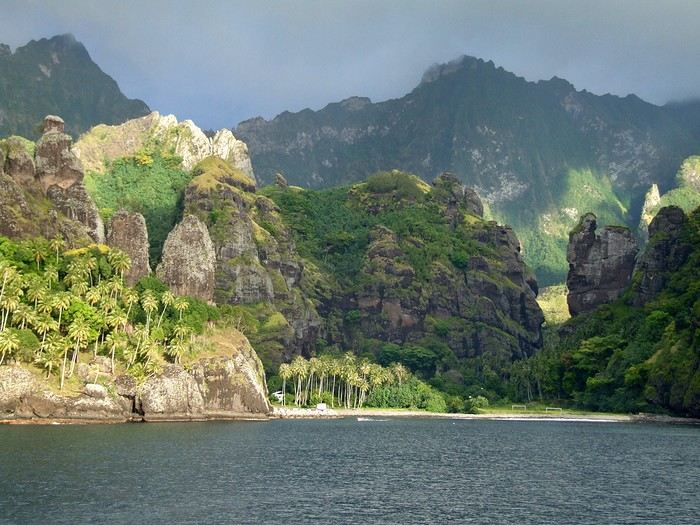 Idyllic landscape of a dream island, but difficult to access: the Bay of Virgins in Fatu Hiva, Marquesas Islands
Among the values conveyed by literature, tourism, and advertising is the quest for “elsewhere,” for a change of scenery, in the truest sense of the word—that is, the need to leave one’s country. This need for otherness, for difference, is projected onto dreamlike, idealized, even mythicized places. In our imaginary world, the island is often that place.
Yet we forget that islands have also been ideal prisons. The examples are numerous: Elba and Saint Helena, Alcatraz and Poulo Condor, If and Yeu, the Devil’s Islands and Leros. The latter, located in Greece in the Dodecanese, hosted a sinister forced labor camp during the colonels’ dictatorship as well as a psychiatric hospital. Despite the beauty of its bay, tourism has remained marginal there due to its bad reputation, unlike the neighboring island of Patmos.
I’d like to share a selection of about a dozen islands from across the world’s seas and oceans. For dreaming...
°°°°°°°°°°°°°°°
SANTORINI
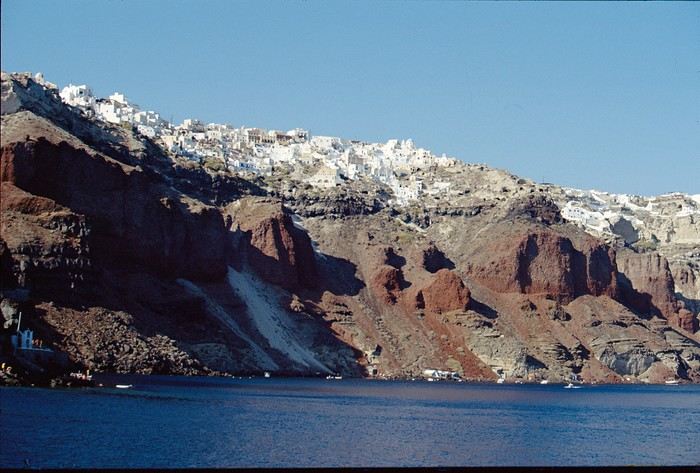
July 27, 1967
At dawn, the ferry from Agios Nikolaos (Crete) enters the immense caldera of Santorini. From the ship’s deck, Rainer, my travel companion, and I are left in awe by the sight of these towering, multicolored cliffs looming over us. We disembark and begin the steep climb on foot via the winding mule path up to the village of Fira, the capital perched above the cliff. Though it’s still very early, we head to the youth hostel. There wasn’t a soul in the alleys that morning—or rather, there were only cats! I have a fond memory of that encounter with Santorini: a sensory shock, a breathtaking volcanic site, a harmony of blue, ochre-red, and white. A welcoming island, as it was traditional to welcome the xénou, an island that hadn’t yet fully recovered from the terrible 1956 earthquake, a Cycladic architectural marvel where local life was still preserved.
It’s easy to see why, in antiquity, the island was named Kallisté (καλλίστη), “the most beautiful,” as it’s nearly impossible to resist gazing at this landscape shaped by tectonic forces. Indeed, a massive volcanic cataclysm—the Minoan eruption—shaped this scenery in the 17th century BCE, creating a caldera that was quickly filled by the sea. The enormous tsunamis that followed reached Crete, leading to the disappearance of the Minoan civilization.
A cliffside path along the caldera leads us to the peaceful village of Oia, at the northern tip of the island. Blue-domed churches and flower-filled villages with whitewashed houses line the way. This walk is a continuous marvel, offering splendid views of the caldera and the neighboring islands formed by the breakup of the ancient volcano (Thirissa, Nea Kameni). Oia is a large, picturesque village, like Fira perched on the cliff’s edge, which was severely damaged by the 1956 earthquake, and its scars are still visible. Its cave-like houses with vaulted roofs haven’t yet been turned into luxury hotels or shops. Absolute tranquility reigns here.
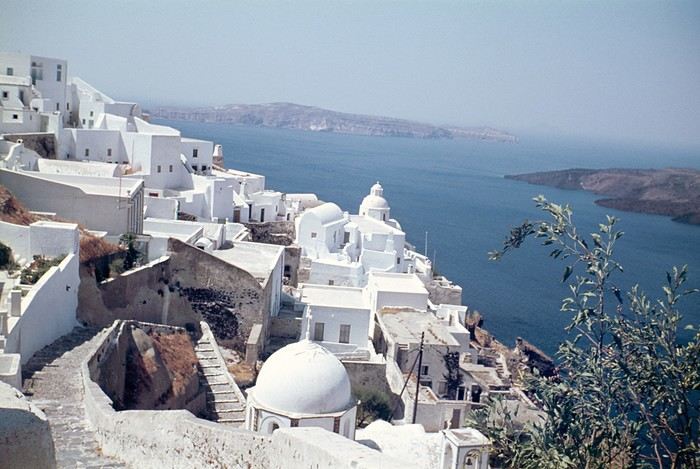 Oia in 1967—a peaceful village overlooking the caldera. But where are the pools and trendy bars?
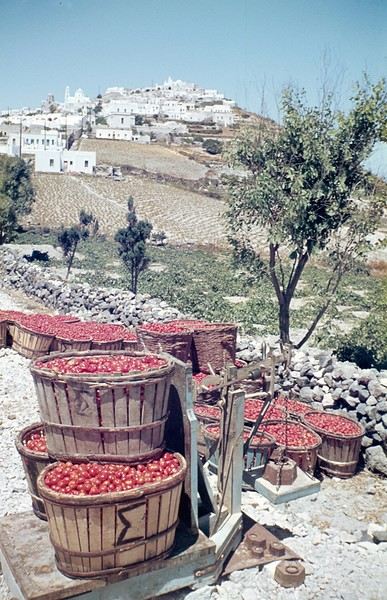
A lush countryside covered in olive trees and vineyards welcomes us for a pleasant hike, interrupted by the kindness of a friendly islander who gives us a lift in his truck for a few kilometers. He’s off to harvest his tomatoes, which he grows at the foot of Pyrgos Hill. The delicious little cherry tomato of Santorini earned an EU Protected Designation of Origin (PDO) in 2013. We climb up to the village of Pyrgos, perched on a hill and dominated by the elegant bell tower of its church. Finally, we reach the black sand beach of Kamari on the island’s eastern coast to enjoy a swim.
{...} To be continued

°°°°°°°°°°°°°°°°°
RAIVAVAE (French Polynesia)
November 15, 2007
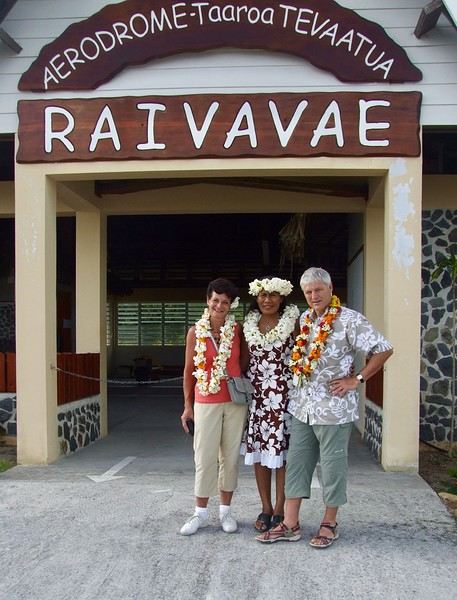
Éléonore from Pension Tama welcomes us with traditional flower leis, as if she’d been waiting for old friends she hadn’t seen in ages. The small airport terminal is lively, the atmosphere warm—people hugging, rejoicing in reunions, all under kilos of flowers. Then, just as quickly, the place empties until the next flight... in a few days.
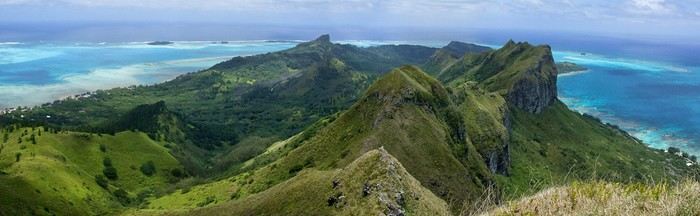
In the Austral Islands, a ninety-minute flight from Tahiti, Raivavae is a world away from the frenetic pace of Papeete or the tourist crowds of the Leeward Islands. The true paradise of the South Seas can still be savored here—it’s a bit like Bora Bora half a century ago. Our first feeling upon arriving on this island is wonder, with smiles that could melt even the gloomiest among us, landscapes so stunning they take your breath away, and above all, a sense of disorientation and fulfillment. Picture a mountainous island, about ten kilometers by three and a half, encircled by a coral reef and wild motu, cradling a lagoon with shades of blue that would make Bora Bora green with envy.
The roughly one thousand inhabitants of Raivavae are spread across four villages around the island. Children are everywhere, as is typical in Polynesia, and they greet you with open, genuine smiles. Here, ancestral values have survived progress. The predominantly Protestant population is very devout, as evidenced by the several temples built across the island. Religious fervor sets the rhythm of daily life. Sundays are reserved for worship and Sunday school (catechism). Work is forbidden on that day, and tourist activities are suspended. These rules are strict and respected.
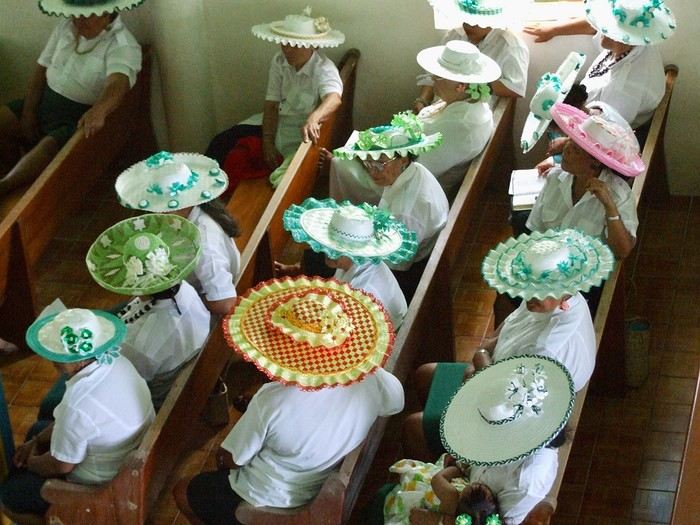 Hat contest for the worship celebration
Yet a sense of resignation is ever-present. The people of Raivavae know they are—and will remain—isolated. Despite the construction of an airstrip in 2004 and a few weekly flights to Tahiti and its nearest neighbor, Tubuai (200 km away), the island remains on the fringes of the world. One painful aspect is the separation of children from their parents when they leave for middle school in Tubuai starting in fifth grade. Television brings daily images of a world the islanders will likely never know, but one they often aspire to.
We are privileged. We have the pristine white-sand beaches of the motu and some of the most beautiful bays in Polynesia all to ourselves. The jewel in the crown, the island’s emblematic spot, is the “motu-pool,” about twenty minutes by boat. A natural, exquisite basin with crystal-clear water, gradients of blue, and white sand. And best of all, there’s almost no one there. In fact, lounging on the beach is frowned upon, especially for young women. Religion looks very unfavorably on sunbathing and lazing around. And yet, everything here leans toward that philosophy of life.
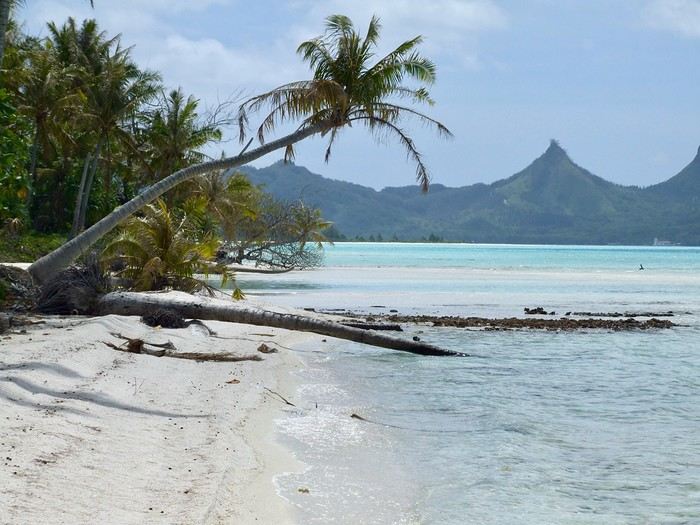
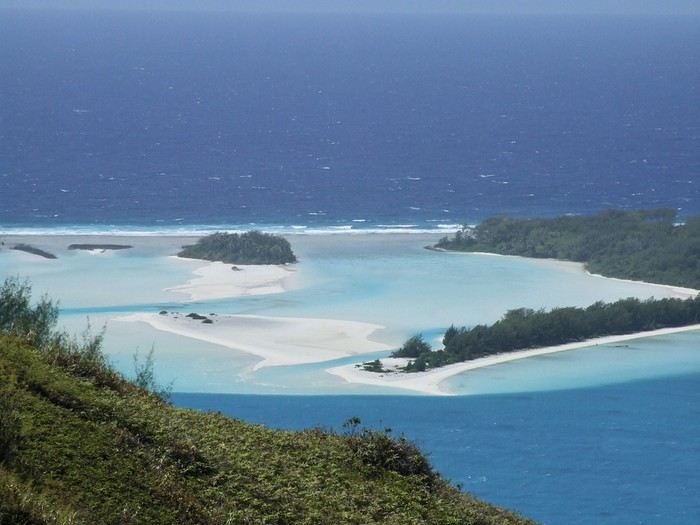 The "motu-pool"
{...} To be continued
Who among us hasn’t dreamed of having a ticket to Tahiti, Bora Bora, or the Marquesas in their pocket—preferably a one-way ticket to “paradise”?
Idyllic landscape of a dream island, but difficult to access: the Bay of Virgins in Fatu Hiva, Marquesas IslandsAmong the values conveyed by literature, tourism, and advertising is the quest for “elsewhere,” for a change of scenery, in the truest sense of the word—that is, the need to leave one’s country. This need for otherness, for difference, is projected onto dreamlike, idealized, even mythicized places. In our imaginary world, the island is often that place.
Yet we forget that islands have also been ideal prisons. The examples are numerous: Elba and Saint Helena, Alcatraz and Poulo Condor, If and Yeu, the Devil’s Islands and Leros. The latter, located in Greece in the Dodecanese, hosted a sinister forced labor camp during the colonels’ dictatorship as well as a psychiatric hospital. Despite the beauty of its bay, tourism has remained marginal there due to its bad reputation, unlike the neighboring island of Patmos.
I’d like to share a selection of about a dozen islands from across the world’s seas and oceans. For dreaming...
°°°°°°°°°°°°°°°
SANTORINI
July 27, 1967
At dawn, the ferry from Agios Nikolaos (Crete) enters the immense caldera of Santorini. From the ship’s deck, Rainer, my travel companion, and I are left in awe by the sight of these towering, multicolored cliffs looming over us. We disembark and begin the steep climb on foot via the winding mule path up to the village of Fira, the capital perched above the cliff. Though it’s still very early, we head to the youth hostel. There wasn’t a soul in the alleys that morning—or rather, there were only cats! I have a fond memory of that encounter with Santorini: a sensory shock, a breathtaking volcanic site, a harmony of blue, ochre-red, and white. A welcoming island, as it was traditional to welcome the xénou, an island that hadn’t yet fully recovered from the terrible 1956 earthquake, a Cycladic architectural marvel where local life was still preserved.
It’s easy to see why, in antiquity, the island was named Kallisté (καλλίστη), “the most beautiful,” as it’s nearly impossible to resist gazing at this landscape shaped by tectonic forces. Indeed, a massive volcanic cataclysm—the Minoan eruption—shaped this scenery in the 17th century BCE, creating a caldera that was quickly filled by the sea. The enormous tsunamis that followed reached Crete, leading to the disappearance of the Minoan civilization.
A cliffside path along the caldera leads us to the peaceful village of Oia, at the northern tip of the island. Blue-domed churches and flower-filled villages with whitewashed houses line the way. This walk is a continuous marvel, offering splendid views of the caldera and the neighboring islands formed by the breakup of the ancient volcano (Thirissa, Nea Kameni). Oia is a large, picturesque village, like Fira perched on the cliff’s edge, which was severely damaged by the 1956 earthquake, and its scars are still visible. Its cave-like houses with vaulted roofs haven’t yet been turned into luxury hotels or shops. Absolute tranquility reigns here.
Oia in 1967—a peaceful village overlooking the caldera. But where are the pools and trendy bars?A lush countryside covered in olive trees and vineyards welcomes us for a pleasant hike, interrupted by the kindness of a friendly islander who gives us a lift in his truck for a few kilometers. He’s off to harvest his tomatoes, which he grows at the foot of Pyrgos Hill. The delicious little cherry tomato of Santorini earned an EU Protected Designation of Origin (PDO) in 2013. We climb up to the village of Pyrgos, perched on a hill and dominated by the elegant bell tower of its church. Finally, we reach the black sand beach of Kamari on the island’s eastern coast to enjoy a swim.
{...} To be continued
°°°°°°°°°°°°°°°°°
RAIVAVAE (French Polynesia)
November 15, 2007
Éléonore from Pension Tama welcomes us with traditional flower leis, as if she’d been waiting for old friends she hadn’t seen in ages. The small airport terminal is lively, the atmosphere warm—people hugging, rejoicing in reunions, all under kilos of flowers. Then, just as quickly, the place empties until the next flight... in a few days.
In the Austral Islands, a ninety-minute flight from Tahiti, Raivavae is a world away from the frenetic pace of Papeete or the tourist crowds of the Leeward Islands. The true paradise of the South Seas can still be savored here—it’s a bit like Bora Bora half a century ago. Our first feeling upon arriving on this island is wonder, with smiles that could melt even the gloomiest among us, landscapes so stunning they take your breath away, and above all, a sense of disorientation and fulfillment. Picture a mountainous island, about ten kilometers by three and a half, encircled by a coral reef and wild motu, cradling a lagoon with shades of blue that would make Bora Bora green with envy.
The roughly one thousand inhabitants of Raivavae are spread across four villages around the island. Children are everywhere, as is typical in Polynesia, and they greet you with open, genuine smiles. Here, ancestral values have survived progress. The predominantly Protestant population is very devout, as evidenced by the several temples built across the island. Religious fervor sets the rhythm of daily life. Sundays are reserved for worship and Sunday school (catechism). Work is forbidden on that day, and tourist activities are suspended. These rules are strict and respected.
Hat contest for the worship celebrationYet a sense of resignation is ever-present. The people of Raivavae know they are—and will remain—isolated. Despite the construction of an airstrip in 2004 and a few weekly flights to Tahiti and its nearest neighbor, Tubuai (200 km away), the island remains on the fringes of the world. One painful aspect is the separation of children from their parents when they leave for middle school in Tubuai starting in fifth grade. Television brings daily images of a world the islanders will likely never know, but one they often aspire to.
We are privileged. We have the pristine white-sand beaches of the motu and some of the most beautiful bays in Polynesia all to ourselves. The jewel in the crown, the island’s emblematic spot, is the “motu-pool,” about twenty minutes by boat. A natural, exquisite basin with crystal-clear water, gradients of blue, and white sand. And best of all, there’s almost no one there. In fact, lounging on the beach is frowned upon, especially for young women. Religion looks very unfavorably on sunbathing and lazing around. And yet, everything here leans toward that philosophy of life.
The "motu-pool"{...} To be continued
Safety in "self-drive" in South Africa
Hi there,
I know this question has been discussed many times before, but I’d love to hear recent opinions (post-COVID crisis) about tourist safety in South Africa. My husband is offering me the chance to take a self-drive trip in South Africa in July 2025. It’s a dream of mine—we’ve never been to Africa before, but we’ve regularly driven on the left side of the road before ;-) I’ve already booked the hotels and a rental car for a 3-week family trip (my husband and our 19-year-old son). But after talking to some acquaintances, I’ve been warned about the risks of carjacking, theft, scams by fake police, and even kidnapping… basically, a pretty apocalyptic picture of the region!!! I’ve already carefully read the recommendations from embassies and foreign affairs offices. Our itinerary would start at Johannesburg Airport with a rental car, sticking to main roads and avoiding night driving. First stop: Blyde River Canyon (exploring the area), then heading to Kruger National Park (one week), entering through the Numbi or Phabeni Gate and exiting via Crocodile Bridge to reach Eswatini (stopping at Mlilwane Sanctuary) before continuing to St. Lucia (a few days there). From St. Lucia, we’ll go to Durban to catch a flight to Cape Town. There, we’ll spend a few days with a rental car in the Camps Bay area. What do you think? I know there’s no such thing as zero risk (you could even fall out of bed!), but I don’t want to spend the whole trip on edge, constantly worried about being attacked or putting my family in danger. During vacations, we take a lot of photos—I know we shouldn’t flaunt valuables, but photography is a big part of our trips… Should we postpone this trip to a "quieter" time? If you can shed some light, I’d really appreciate it—I’m feeling a bit lost…
I know this question has been discussed many times before, but I’d love to hear recent opinions (post-COVID crisis) about tourist safety in South Africa. My husband is offering me the chance to take a self-drive trip in South Africa in July 2025. It’s a dream of mine—we’ve never been to Africa before, but we’ve regularly driven on the left side of the road before ;-) I’ve already booked the hotels and a rental car for a 3-week family trip (my husband and our 19-year-old son). But after talking to some acquaintances, I’ve been warned about the risks of carjacking, theft, scams by fake police, and even kidnapping… basically, a pretty apocalyptic picture of the region!!! I’ve already carefully read the recommendations from embassies and foreign affairs offices. Our itinerary would start at Johannesburg Airport with a rental car, sticking to main roads and avoiding night driving. First stop: Blyde River Canyon (exploring the area), then heading to Kruger National Park (one week), entering through the Numbi or Phabeni Gate and exiting via Crocodile Bridge to reach Eswatini (stopping at Mlilwane Sanctuary) before continuing to St. Lucia (a few days there). From St. Lucia, we’ll go to Durban to catch a flight to Cape Town. There, we’ll spend a few days with a rental car in the Camps Bay area. What do you think? I know there’s no such thing as zero risk (you could even fall out of bed!), but I don’t want to spend the whole trip on edge, constantly worried about being attacked or putting my family in danger. During vacations, we take a lot of photos—I know we shouldn’t flaunt valuables, but photography is a big part of our trips… Should we postpone this trip to a "quieter" time? If you can shed some light, I’d really appreciate it—I’m feeling a bit lost…
Three weeks in Quebec at the start of summer 2018, on a "semi-organized" trip
I’ve been putting off posting my Quebec travel experience for a long time. Two years later, I’ve finally decided to share it. The memories are still vivid. I hope this gives you the urge to visit this beautiful region, which I literally fell in love with.
We’re traveling as four adults: my brother Guy, my sister-in-law Martine, my friend Pascal, and myself (Christian).
We entrusted the flight, hotel, and car reservations to the travel agency Amplitudes in Toulouse. Planning the day-to-day activities was up to us. We scheduled a few must-see visits, but for the rest, we’d figure it out on the spot.
Our itinerary: Quebec City / Rimouski / Carleton-sur-Mer / Percé / Sainte-Anne-des-Monts / Matane / Tadoussac / Sainte-Rose-du-Nord / Chambord / Saint-Alexis-des-Monts / Montreal
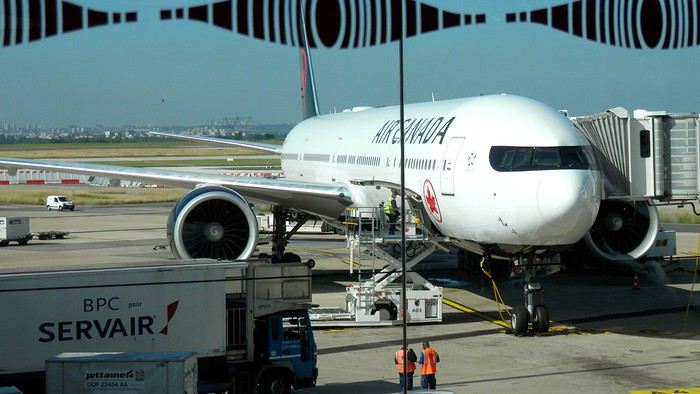
06/25 Here we are at Roissy Charles de Gaulle for the usual pre-flight formalities. Everything goes smoothly and quickly. The hardest part is waiting for takeoff. After an uneventful flight on an Air Canada Boeing 777-300ER, we land at Montréal-Pierre Elliott Trudeau Airport (YUL) in the early afternoon.
At customs, a surprise—no grumpy officer, but a smiling customs agent who jokingly asks me to name three tourist spots in Quebec, or else he won’t let me in. I pass the test easily and enter Quebec!
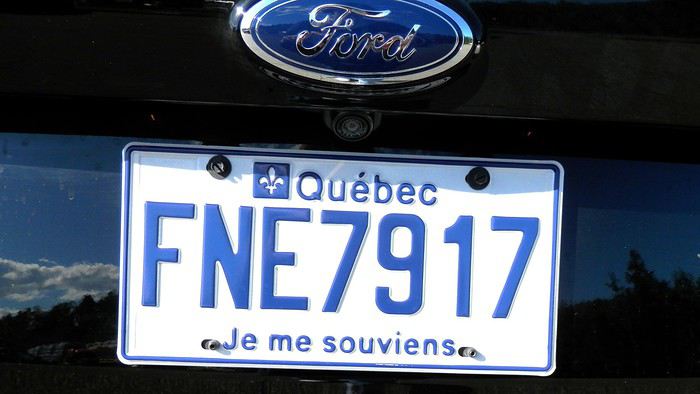
We head to the Alamo counter at Trudeau Airport to pick up our car: a Ford Escape with only 300 kilometers on the odometer.
We decided to head straight to Quebec City, saving Montreal for the end of the trip. Pascal takes the wheel and gets on the Trans-Canada Highway E20 for a 255 km drive, taking about 2 hours and 45 minutes. With the time difference, we’re already feeling hungry, so we stop for our first poutine at a highway restaurant.
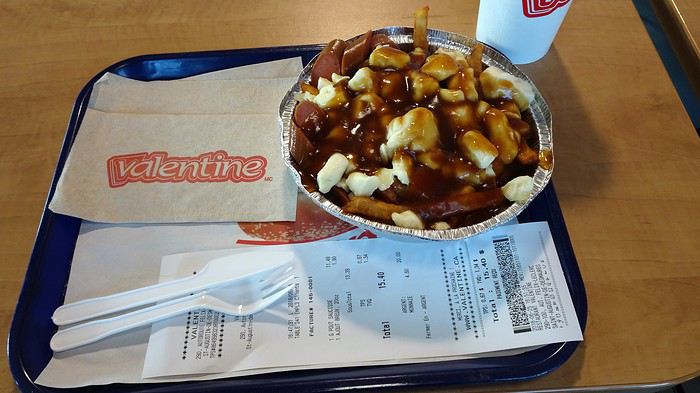
When we arrive in Quebec City, we go straight to the Clarendon Hotel, located right in the heart of Old Quebec. We’ll be staying there for three nights. Tonight, no restaurant—just a short walk around the hotel before bed. We discover a square with pretty colored water fountains near the city hall.
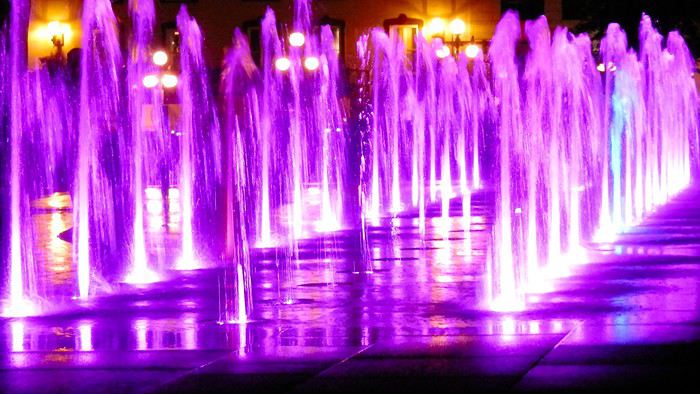 It’s only 9 PM, but our body clocks say it’s 3 AM.
We’re traveling as four adults: my brother Guy, my sister-in-law Martine, my friend Pascal, and myself (Christian).
We entrusted the flight, hotel, and car reservations to the travel agency Amplitudes in Toulouse. Planning the day-to-day activities was up to us. We scheduled a few must-see visits, but for the rest, we’d figure it out on the spot.
Our itinerary: Quebec City / Rimouski / Carleton-sur-Mer / Percé / Sainte-Anne-des-Monts / Matane / Tadoussac / Sainte-Rose-du-Nord / Chambord / Saint-Alexis-des-Monts / Montreal
06/25 Here we are at Roissy Charles de Gaulle for the usual pre-flight formalities. Everything goes smoothly and quickly. The hardest part is waiting for takeoff. After an uneventful flight on an Air Canada Boeing 777-300ER, we land at Montréal-Pierre Elliott Trudeau Airport (YUL) in the early afternoon.
At customs, a surprise—no grumpy officer, but a smiling customs agent who jokingly asks me to name three tourist spots in Quebec, or else he won’t let me in. I pass the test easily and enter Quebec!
We head to the Alamo counter at Trudeau Airport to pick up our car: a Ford Escape with only 300 kilometers on the odometer.
We decided to head straight to Quebec City, saving Montreal for the end of the trip. Pascal takes the wheel and gets on the Trans-Canada Highway E20 for a 255 km drive, taking about 2 hours and 45 minutes. With the time difference, we’re already feeling hungry, so we stop for our first poutine at a highway restaurant.
When we arrive in Quebec City, we go straight to the Clarendon Hotel, located right in the heart of Old Quebec. We’ll be staying there for three nights. Tonight, no restaurant—just a short walk around the hotel before bed. We discover a square with pretty colored water fountains near the city hall.
It’s only 9 PM, but our body clocks say it’s 3 AM.Camping ou woofing en Martinique English translation pending
Bonjour,
Avec une amie, nous nous rendons en Martinique du 2 novembre au 17 décembre environ. Nous souhaiterions avoir quelques infos sur les campings:
- Est-ce qu'ils existent des campings "longue-durée" où nous pourrions avoir un prix au mois et non à la nuit? - Quels coins nous conseillez-nous? - La voiture est-elle nécessaire où existe-t'il un système de bus pour aller dans différents endroits de l'île?
Aussi, dans l'idéal, nous recherchons plutôt à faire du woofing dans des endroits de permacultures ou éco-construction où nous pourrions planter la tente. Nous avons quelques expériences en métropole et souhaiterions avoir une même expérience en Martinique.
- Connaissez-vous ce genre d'endroits là-bas?
Je vous remercie,
Leïla et Sarah
Avec une amie, nous nous rendons en Martinique du 2 novembre au 17 décembre environ. Nous souhaiterions avoir quelques infos sur les campings:
- Est-ce qu'ils existent des campings "longue-durée" où nous pourrions avoir un prix au mois et non à la nuit? - Quels coins nous conseillez-nous? - La voiture est-elle nécessaire où existe-t'il un système de bus pour aller dans différents endroits de l'île?
Aussi, dans l'idéal, nous recherchons plutôt à faire du woofing dans des endroits de permacultures ou éco-construction où nous pourrions planter la tente. Nous avons quelques expériences en métropole et souhaiterions avoir une même expérience en Martinique.
- Connaissez-vous ce genre d'endroits là-bas?
Je vous remercie,
Leïla et Sarah
Séjour en Croatie dont une semaine sur l'île de Brac en août English translation pending
Bonjour,
je suis désolé mais je sais que cette question va paraître peut être à certain totalement dépassée, mais nous avons prévu à ce jour de nous rendre en Croatie du 15/08 au 28/08 une semaine sur l’île de Brac et le reste en vadrouille, tout cela avec deux enfants.
la question est très simple (ou pas) est ce pour vous le bon moment, je parle surtout en terme de Coronavirus ect.. ou vaut il mieux reporter notre voyage ?
Merci d'avance aux personnes qui nous répondent.
Excellente journée à vous toutes et tous !
je suis désolé mais je sais que cette question va paraître peut être à certain totalement dépassée, mais nous avons prévu à ce jour de nous rendre en Croatie du 15/08 au 28/08 une semaine sur l’île de Brac et le reste en vadrouille, tout cela avec deux enfants.
la question est très simple (ou pas) est ce pour vous le bon moment, je parle surtout en terme de Coronavirus ect.. ou vaut il mieux reporter notre voyage ?
Merci d'avance aux personnes qui nous répondent.
Excellente journée à vous toutes et tous !
Randonnée du GR10 Etsaut - Cauterêt English translation pending
Bonjour
j'aimerais effectuer cette partie du GR10 , Etsaut Cauteret , auriez vous des infos pour rejoindre ce point de départ ? je suis de Montpellier , je viendrais certainement et surement en train
merci à vous
PS : avez vous des récits pourquoi si vous avez fait cette partie