Results for "Chutes+Carbet+|+50+>+144"
27120 results found.
Some trips are born twice - Peru April - May 2025
Some trips are born twice.
Ours was supposed to happen in 2020. Everything was ready: the itinerary, the flight tickets, hotel reservations and Machu Picchu, the rental car, dreams of high altitudes and wide-open spaces. And then the world stopped.
Like so many other plans, our trip to Peru was put on hold. Disappointment was followed by a more concrete reality: paperwork, endless back-and-forth, and battles to recover some of the costs we’d already paid.
The years went by. Life moved on, with its shifting priorities and unexpected twists. Rescheduling this trip wasn’t possible until 2025.
The itinerary stayed mostly true to what we’d imagined five years earlier. One major difference, though—in 2020, we’d planned to rent a car and explore the roads completely independently. Most importantly, we hadn’t included the three-day Ausangate trek, due to lack of time.
For 2025, our plans evolved. 4x4 rental prices had skyrocketed, and when we looked at our schedule more closely, we realized quite a few days didn’t actually need a vehicle. So we made a different choice and opted for private drivers instead. A decision we never regretted. Always punctual, thoughtful, and available... they were so much more than just drivers.
All our reservations were made in January, except for the trek, which we booked in February.
Finding reliable drivers on our own was tough, so we asked Laurent from Tout Pérou to handle it for us. Going through Tout Pérou also gave us a discount on the train ride to Aguas Calientes, so Laurent booked those tickets too. He also bought our Machu Picchu entrance tickets at the same price we would’ve paid on the official website. When comparing domestic flight prices, we found it was cheaper to book from Peru, so Laurent took care of those as well.
This time, nothing was going to stop us. Peru was waiting. And we were ready. 🙂
Ours was supposed to happen in 2020. Everything was ready: the itinerary, the flight tickets, hotel reservations and Machu Picchu, the rental car, dreams of high altitudes and wide-open spaces. And then the world stopped.
Like so many other plans, our trip to Peru was put on hold. Disappointment was followed by a more concrete reality: paperwork, endless back-and-forth, and battles to recover some of the costs we’d already paid.
The years went by. Life moved on, with its shifting priorities and unexpected twists. Rescheduling this trip wasn’t possible until 2025.
The itinerary stayed mostly true to what we’d imagined five years earlier. One major difference, though—in 2020, we’d planned to rent a car and explore the roads completely independently. Most importantly, we hadn’t included the three-day Ausangate trek, due to lack of time.
For 2025, our plans evolved. 4x4 rental prices had skyrocketed, and when we looked at our schedule more closely, we realized quite a few days didn’t actually need a vehicle. So we made a different choice and opted for private drivers instead. A decision we never regretted. Always punctual, thoughtful, and available... they were so much more than just drivers.
All our reservations were made in January, except for the trek, which we booked in February.
Finding reliable drivers on our own was tough, so we asked Laurent from Tout Pérou to handle it for us. Going through Tout Pérou also gave us a discount on the train ride to Aguas Calientes, so Laurent booked those tickets too. He also bought our Machu Picchu entrance tickets at the same price we would’ve paid on the official website. When comparing domestic flight prices, we found it was cheaper to book from Peru, so Laurent took care of those as well.
This time, nothing was going to stop us. Peru was waiting. And we were ready. 🙂
Spitsbergen – A Night with the Walruses on Lågøya
Spitsbergen, 80° North latitude. A lost archipelago on the edge of the world, northeast of Greenland, the last lands before the pole. I’m aboard the *Grigoriy Mikheev*, a Russian ship from the Murmansk Polar Research Institute. Russian flag, Russian crew. Chartered by OceanWide Expeditions.
Last night, we were stuck in drifting pack ice in the long Hinlopen Strait. This incident led to an unforgettable barbecue and party on the ship’s foredeck, but we had to abandon our plan to head south and circle Spitsbergen. This summer, there’s too much ice in the strait, and it’s too thick. At dawn, the tide turned, allowing us to break free and head north again. The ship is now moving slowly through sea ice density that satellite maps estimate at around five-tenths. Our progress is punctuated by dull thuds: the ship’s bow constantly shoves and fractures enormous ice floes.
At breakfast, Tarik, our expedition leader, informs us that our program will be significantly altered. Since we can’t cross the strait, we’ll turn back and head north. To kick off our Plan B, Tarik plans a landing tonight on the small island of Låg (Lågøya), at 80°10' North. Last summer, he saw a large walrus colony there and hopes we’ll find them again. The weather is perfect—glorious sunshine—and walruses are truly addicted to sunbathing on the beaches.
We’ve now exited the strait and are sailing far from the coast. In case the walrus colony is there, we don’t want the ship’s approach to scare them into the water before we even see them. So, we scan the shore methodically with binoculars. We pass several bays, round a cape, and examine several shorelines littered with driftwood, but no walruses in sight. Several times, clusters of large rounded rocks trigger false alarms… but no, they’re just rocks…
Suddenly, Tarik spots them through his binoculars! On an isolated peninsula, our expedition leader’s highly trained eye has picked out, among those brown masses, the shape and white color of the enormous tusks of what he calls "the heavyweights of the Arctic!" Now, fifteen or twenty pairs of binoculars are pointed in the indicated direction… Sure enough, I see them now! They’re there, huge, sprawled in the sun on the beach. Without Tarik’s sharp eye, we might have missed them. They’re so tightly packed together that they really look like a mass of brown rocks. Only the white, saber-shaped tusks and the occasional furtive movements hint that they’re animals.
It’s 11 PM, and on the deck of the *Grigoriy Mikheev*, as you can imagine, excitement has ramped up several notches. Several of us have already rushed to our cabins to gear up, pulling on boots and life jackets in anticipation of a landing that promises to be absolutely amazing. Tarik reins in our enthusiasm a bit: Okay, so we were lucky to find them, but now we need to think about how to approach them. Not that they’re dangerous—at least not on land… Their enormous bulk and their pseudo-feet (flippers) only allow for very limited mobility. But when they feel threatened, their first instinct is to head for the water, where their perfect ease keeps them safe. So, the challenge will be not to scare them off, to avoid them bolting into the water in the first few seconds! That’s exactly what would happen if we arrived by Zodiac right in front of them.
So, Tarik decides we’ll make a wide detour to land on the other side of the peninsula where they are. From there, we’ll leave the Zodiacs on the beach and cross the peninsula on foot, about a kilometer and a half. That way, we’ll approach the herd from behind. This approach will also keep us downwind of them. There you go—with a few precautions, they shouldn’t hear us coming or catch our scent.
Everyone is geared up now and practically bursting with impatience… While the Zodiacs are being lowered into the water, Tarik and Delphine recap the approach rules: absolute silence, communication only by signs, no dragging feet on the rocks, watch your step, and strict coordination with slow movements.
Here we go… we’re off now! Spray flying from the Zodiac’s bow, icy air whipping our faces, gloves gripping the side ropes, freezing splashes, pure emotion… Ahh, I love this! We describe a wide curve offshore to round the peninsula. Ahead of us, the magnificent landscape of this intensely blue sea unfolds, with the hills of Lågøya and, in the distance, the ice-covered mountains of Nordaustlandet under the sun. It’s midnight now. In July, at 80 degrees North, the sun is just like midday.
This navigation takes us far from the walruses, on the other side of the cape. Easy landing on a shoreline of large pebbles covered in giant seaweed brought in by the currents. They look like long strips of plastic—sometimes translucent, sometimes white, beige, or orange. In places, there are huge tangled layers of it. Our boots sink into this material, which gives off a strong iodine smell. Unfortunately, there’s also some plastic waste—fishing floats and net debris. Seeing this here is crazy… A little farther on, in a cove, tides and storms have piled up numerous tree trunks from Siberia.
We begin crossing the peninsula on foot, staying close together. We’re walking on a nearly deserted polar tundra. We’re only ten degrees of latitude from the North Pole here. The violent winds and extreme temperatures that dominate this island for nine months of the year allow only a few rare plants to grow, close to the ground, between the rocks. In places, rocks are covered with large patches of black lichen.
Gérard, rifle slung over his shoulder, constantly scans the terrain. Tarik and Delphine are also very vigilant. We know no one ever lands here, and although this environment isn’t ideal for bears, you never know—better to be cautious. The terrain is mostly flat, but whenever a small rise blocks our view, Gérard moves ahead and only signals us to proceed when he’s sure there’s no "big man in fur" (tradition dictates we don’t name the polar bear).
After a few hundred meters, we find an enormous whale vertebra. Judging by the state of the bone, it’s likely a relic from the whaling era that ravaged this area in the 17th century and all over northern Spitsbergen. A little farther on, the remains of a grave catch our attention. The only human trace on this remote island, this burial is surely very old, also likely dating from the whalers’ time. But this whaler’s final resting place didn’t shelter him for long—there’s not much left, just a piece of skull and a few broken bones. Due to the permafrost, the body could only be buried a few dozen centimeters deep, between some planks held in place by large stones. This makeshift grave was probably ravaged by a bear shortly after the burial. Several stone blocks are overturned, the planks are broken open. We only linger for a minute to pay our respects to this whaler, whose poor remains now merge with the mineral landscape.
A slight rise bulges in the center of the peninsula, and here we are at the highest point. If our orientation is correct, we’re heading straight for the walrus colony. A moment of emotion… my heart’s pounding. Yes, they’re there, about three hundred meters ahead of us! They haven’t moved since we spotted them from the *Grigoriy Mikheev*’s deck. They’re sprawled in a heap, packed tightly together in the sun, on the shingle beach. The light breeze blowing in our faces confirms we’re on the right track—not to be sniffed out from afar by the big beasts.
By signs, Tarik tells us we’ll approach slowly, in stages, moving about thirty meters at a time, making as little noise as possible with our boots, then freezing completely for a minute or two, crouching down to let them forget us. This strategy proves excellent. We’re now less than a hundred meters away, and it doesn’t seem like our presence is perceived as a threat by the "heavyweights of the Arctic." At this distance, let’s not kid ourselves: we’re certainly spotted, but our way of approaching must seem reassuring—or at least manageable—since they’re only a few meters from the water and know they could dash into it in seconds if they felt the need.
We now advance in shorter stages—twenty meters at a time, then just ten, crouching, then freezing like statues, our breathing nearly held from emotion and concentration. We’re now thirty meters from the mastodons. Our presence must be starting to stress them because they’re moving more. While still sprawled against each other, some suddenly rear up on their flipper-feet, grunting and snorting like monstrous pigs. Their head shakes make their two enormous ivory sabers sway. They jab them into the fat of their neighbors, who in turn stir and emit irritated snorts.
At Tarik’s signal, we move a few more meters, "on velvet paws"… We’re right there now. I hold my breath, throat tight… Intense emotion, a fantastic spectacle—these enormous Arctic animals sprawled in the sun, with the magnificent backdrop of snow-covered mountains across the sound. I think to myself: *I’m here… this can’t be real!* It’s nearly 2 AM now, the air is crystal clear, and the Arctic sun bathes this scene in what might be the most beautiful light I’ve ever seen. We’re about fifteen meters away now. Tarik signals that we won’t go any closer. The walruses are still lying down, but occasionally, our close presence and the clicking of cameras trigger bouts of agitation that ripple through the herd, causing some jostling. They’re so tightly packed and tangled that it’s a bit hard to count them. In the end, we tally sixteen, plus one "little one," half-crushed in the general mass.
Seen from here, they’re truly impressive! The "sumo wrestlers of the Arctic!" According to Tarik, they must weigh about a ton—slightly more for the males than the females—and the "little one" must already be around 200 kg. When the weather’s nice like today, they love sprawling on the beaches to soak up the sun.
Walruses are marvels of Arctic adaptation. They can modify their blood circulation depending on thermal conditions. They withstand extreme cold by directing most of their circulation to vital organs (heart, lungs) and minimizing peripheral blood flow (skin and limbs) to prevent heat loss. Conversely, when they sunbathe, they direct most of their blood flow to the skin, turning themselves into true solar collectors.
At this latitude, there’s practically no difference in sunlight between day and night. Noon or midnight, the sun’s angle barely changes. Walruses make the most of these fair-weather phases by sprawling in the sun 23 hours out of 24… Enough to make siesta lovers dream, right? Twenty-three hours of lounging… and the twenty-fourth for eating!
And when we say "eating," what a feast! The proverb *"Who sleeps dines"* is fully justified here: when a walrus decides to feed, it gulps down between 50 and 60 kg of shellfish in an hour! Its food consists of large bivalve mollusks, which it tears from the seabed with its tusks and sucks up nonstop! A 50 kg meal certainly justifies a 23-hour nap for digestion, right? And speaking of digestion—it’s what the "big guys" in front of us are doing right now! You might wonder how we know this… Well, I’ll tell you: if you were here, downwind (or should I say *down the winds!*) of these marine giants, you’d have no doubt! Pfft… what flatulence! I can confirm that today’s scent is called *"Morsanus, from the North"* (*"Because I’m worth it!"*). Mmm, yeah… Tarik, you had a great idea putting us upwind… at least *they* can’t smell us, but we sure can!
But… heepp! Delphine discreetly signals to get our attention—she’s just spotted something: in the smooth water of the bay, a small V-shaped ripple runs along the beach, then turns toward the shore… So the colony wasn’t complete on the beach… Here’s an 800 kg bather stepping ashore now, right before our astonished eyes! She lifts her head and stays like that for a long moment, her enormous tusks half out of the water. She looks exhausted, resting a bit before coming out. Or more likely, she’s hesitating to climb onto the beach because she’s seen us… The shapeless head stays still for a moment, then violently snorts like a clogged drain! A misshapen head where you can’t make out anything that usually makes a head! No eyes, no ears, no mouth… A sort of monstrous cabbage! But the temptation to join the warmth of the "sunbathers" is too strong! Here’s our pachyderm bather climbing the few meters of the shore and sprawling right in the middle of her companions, who greet her with jostling, grunts, and tusk jabs! Then everything settles back into order—800 kg of fat and flesh added to the fifteen or so tons of local biomass. Welcome to the club!
It seems the walruses have gotten a bit used to us now. They’re moving and grunting much less. I realize it wasn’t obvious to approach them like this without scaring them into the water… It’s thanks to Tarik and Delphine’s advice that we managed it. It’s also, let’s be honest, because we’re all passionate here, and there’s been total discipline and cohesion from the start of this approach.
It’s past 2 AM now—time to head back… We’ll leave them to their wild world, to their life at the beginning of the world. We’re happy to have disturbed them as little as possible and not to have disrupted their nap too much. We leave stealthily, first backing up a few meters, then turning around and crossing the peninsula again, walking slowly, avoiding making noise with our boots as long as we’re still close.
We find the Zodiacs on the shoreline with the giant kelp. The sea is like a lake—easy boarding. We make another wide loop to round the cape, passing offshore. The sharp cold stings my cheeks and ears again—I put my hat back on. The cold—I hadn’t thought about it at all during our encounter with the walruses. In the Zodiac, with the engine noise, no one speaks. The faces and smiles are those of men and women who’ve just crossed an inner frontier—the one that separates dream from reality. But tonight, that frontier was porous, and the dream entered reality.
We return to the *Grigoriy Mikheev*, waiting at anchor. It’s past 3 AM, but I don’t feel any fatigue. A few minutes later, I’m in my bunk, rocked by a gentle swell and the hum of the engines. In the soft warmth of the blanket, a strange sleep overtakes me… A sleep filled with luminous, icy landscapes, with large beasts bearing saber-like tusks. Large beasts that sleep, snore, snort, grunt, and jostle in their sleep… in *my* sleep. An unforgettable memory. It was July 2004, in Spitsbergen.
Chris51.
Last night, we were stuck in drifting pack ice in the long Hinlopen Strait. This incident led to an unforgettable barbecue and party on the ship’s foredeck, but we had to abandon our plan to head south and circle Spitsbergen. This summer, there’s too much ice in the strait, and it’s too thick. At dawn, the tide turned, allowing us to break free and head north again. The ship is now moving slowly through sea ice density that satellite maps estimate at around five-tenths. Our progress is punctuated by dull thuds: the ship’s bow constantly shoves and fractures enormous ice floes.
At breakfast, Tarik, our expedition leader, informs us that our program will be significantly altered. Since we can’t cross the strait, we’ll turn back and head north. To kick off our Plan B, Tarik plans a landing tonight on the small island of Låg (Lågøya), at 80°10' North. Last summer, he saw a large walrus colony there and hopes we’ll find them again. The weather is perfect—glorious sunshine—and walruses are truly addicted to sunbathing on the beaches.
We’ve now exited the strait and are sailing far from the coast. In case the walrus colony is there, we don’t want the ship’s approach to scare them into the water before we even see them. So, we scan the shore methodically with binoculars. We pass several bays, round a cape, and examine several shorelines littered with driftwood, but no walruses in sight. Several times, clusters of large rounded rocks trigger false alarms… but no, they’re just rocks…
Suddenly, Tarik spots them through his binoculars! On an isolated peninsula, our expedition leader’s highly trained eye has picked out, among those brown masses, the shape and white color of the enormous tusks of what he calls "the heavyweights of the Arctic!" Now, fifteen or twenty pairs of binoculars are pointed in the indicated direction… Sure enough, I see them now! They’re there, huge, sprawled in the sun on the beach. Without Tarik’s sharp eye, we might have missed them. They’re so tightly packed together that they really look like a mass of brown rocks. Only the white, saber-shaped tusks and the occasional furtive movements hint that they’re animals.
It’s 11 PM, and on the deck of the *Grigoriy Mikheev*, as you can imagine, excitement has ramped up several notches. Several of us have already rushed to our cabins to gear up, pulling on boots and life jackets in anticipation of a landing that promises to be absolutely amazing. Tarik reins in our enthusiasm a bit: Okay, so we were lucky to find them, but now we need to think about how to approach them. Not that they’re dangerous—at least not on land… Their enormous bulk and their pseudo-feet (flippers) only allow for very limited mobility. But when they feel threatened, their first instinct is to head for the water, where their perfect ease keeps them safe. So, the challenge will be not to scare them off, to avoid them bolting into the water in the first few seconds! That’s exactly what would happen if we arrived by Zodiac right in front of them.
So, Tarik decides we’ll make a wide detour to land on the other side of the peninsula where they are. From there, we’ll leave the Zodiacs on the beach and cross the peninsula on foot, about a kilometer and a half. That way, we’ll approach the herd from behind. This approach will also keep us downwind of them. There you go—with a few precautions, they shouldn’t hear us coming or catch our scent.
Everyone is geared up now and practically bursting with impatience… While the Zodiacs are being lowered into the water, Tarik and Delphine recap the approach rules: absolute silence, communication only by signs, no dragging feet on the rocks, watch your step, and strict coordination with slow movements.
Here we go… we’re off now! Spray flying from the Zodiac’s bow, icy air whipping our faces, gloves gripping the side ropes, freezing splashes, pure emotion… Ahh, I love this! We describe a wide curve offshore to round the peninsula. Ahead of us, the magnificent landscape of this intensely blue sea unfolds, with the hills of Lågøya and, in the distance, the ice-covered mountains of Nordaustlandet under the sun. It’s midnight now. In July, at 80 degrees North, the sun is just like midday.
This navigation takes us far from the walruses, on the other side of the cape. Easy landing on a shoreline of large pebbles covered in giant seaweed brought in by the currents. They look like long strips of plastic—sometimes translucent, sometimes white, beige, or orange. In places, there are huge tangled layers of it. Our boots sink into this material, which gives off a strong iodine smell. Unfortunately, there’s also some plastic waste—fishing floats and net debris. Seeing this here is crazy… A little farther on, in a cove, tides and storms have piled up numerous tree trunks from Siberia.
We begin crossing the peninsula on foot, staying close together. We’re walking on a nearly deserted polar tundra. We’re only ten degrees of latitude from the North Pole here. The violent winds and extreme temperatures that dominate this island for nine months of the year allow only a few rare plants to grow, close to the ground, between the rocks. In places, rocks are covered with large patches of black lichen.
Gérard, rifle slung over his shoulder, constantly scans the terrain. Tarik and Delphine are also very vigilant. We know no one ever lands here, and although this environment isn’t ideal for bears, you never know—better to be cautious. The terrain is mostly flat, but whenever a small rise blocks our view, Gérard moves ahead and only signals us to proceed when he’s sure there’s no "big man in fur" (tradition dictates we don’t name the polar bear).
After a few hundred meters, we find an enormous whale vertebra. Judging by the state of the bone, it’s likely a relic from the whaling era that ravaged this area in the 17th century and all over northern Spitsbergen. A little farther on, the remains of a grave catch our attention. The only human trace on this remote island, this burial is surely very old, also likely dating from the whalers’ time. But this whaler’s final resting place didn’t shelter him for long—there’s not much left, just a piece of skull and a few broken bones. Due to the permafrost, the body could only be buried a few dozen centimeters deep, between some planks held in place by large stones. This makeshift grave was probably ravaged by a bear shortly after the burial. Several stone blocks are overturned, the planks are broken open. We only linger for a minute to pay our respects to this whaler, whose poor remains now merge with the mineral landscape.
A slight rise bulges in the center of the peninsula, and here we are at the highest point. If our orientation is correct, we’re heading straight for the walrus colony. A moment of emotion… my heart’s pounding. Yes, they’re there, about three hundred meters ahead of us! They haven’t moved since we spotted them from the *Grigoriy Mikheev*’s deck. They’re sprawled in a heap, packed tightly together in the sun, on the shingle beach. The light breeze blowing in our faces confirms we’re on the right track—not to be sniffed out from afar by the big beasts.
By signs, Tarik tells us we’ll approach slowly, in stages, moving about thirty meters at a time, making as little noise as possible with our boots, then freezing completely for a minute or two, crouching down to let them forget us. This strategy proves excellent. We’re now less than a hundred meters away, and it doesn’t seem like our presence is perceived as a threat by the "heavyweights of the Arctic." At this distance, let’s not kid ourselves: we’re certainly spotted, but our way of approaching must seem reassuring—or at least manageable—since they’re only a few meters from the water and know they could dash into it in seconds if they felt the need.
We now advance in shorter stages—twenty meters at a time, then just ten, crouching, then freezing like statues, our breathing nearly held from emotion and concentration. We’re now thirty meters from the mastodons. Our presence must be starting to stress them because they’re moving more. While still sprawled against each other, some suddenly rear up on their flipper-feet, grunting and snorting like monstrous pigs. Their head shakes make their two enormous ivory sabers sway. They jab them into the fat of their neighbors, who in turn stir and emit irritated snorts.
At Tarik’s signal, we move a few more meters, "on velvet paws"… We’re right there now. I hold my breath, throat tight… Intense emotion, a fantastic spectacle—these enormous Arctic animals sprawled in the sun, with the magnificent backdrop of snow-covered mountains across the sound. I think to myself: *I’m here… this can’t be real!* It’s nearly 2 AM now, the air is crystal clear, and the Arctic sun bathes this scene in what might be the most beautiful light I’ve ever seen. We’re about fifteen meters away now. Tarik signals that we won’t go any closer. The walruses are still lying down, but occasionally, our close presence and the clicking of cameras trigger bouts of agitation that ripple through the herd, causing some jostling. They’re so tightly packed and tangled that it’s a bit hard to count them. In the end, we tally sixteen, plus one "little one," half-crushed in the general mass.
Seen from here, they’re truly impressive! The "sumo wrestlers of the Arctic!" According to Tarik, they must weigh about a ton—slightly more for the males than the females—and the "little one" must already be around 200 kg. When the weather’s nice like today, they love sprawling on the beaches to soak up the sun.
Walruses are marvels of Arctic adaptation. They can modify their blood circulation depending on thermal conditions. They withstand extreme cold by directing most of their circulation to vital organs (heart, lungs) and minimizing peripheral blood flow (skin and limbs) to prevent heat loss. Conversely, when they sunbathe, they direct most of their blood flow to the skin, turning themselves into true solar collectors.
At this latitude, there’s practically no difference in sunlight between day and night. Noon or midnight, the sun’s angle barely changes. Walruses make the most of these fair-weather phases by sprawling in the sun 23 hours out of 24… Enough to make siesta lovers dream, right? Twenty-three hours of lounging… and the twenty-fourth for eating!
And when we say "eating," what a feast! The proverb *"Who sleeps dines"* is fully justified here: when a walrus decides to feed, it gulps down between 50 and 60 kg of shellfish in an hour! Its food consists of large bivalve mollusks, which it tears from the seabed with its tusks and sucks up nonstop! A 50 kg meal certainly justifies a 23-hour nap for digestion, right? And speaking of digestion—it’s what the "big guys" in front of us are doing right now! You might wonder how we know this… Well, I’ll tell you: if you were here, downwind (or should I say *down the winds!*) of these marine giants, you’d have no doubt! Pfft… what flatulence! I can confirm that today’s scent is called *"Morsanus, from the North"* (*"Because I’m worth it!"*). Mmm, yeah… Tarik, you had a great idea putting us upwind… at least *they* can’t smell us, but we sure can!
But… heepp! Delphine discreetly signals to get our attention—she’s just spotted something: in the smooth water of the bay, a small V-shaped ripple runs along the beach, then turns toward the shore… So the colony wasn’t complete on the beach… Here’s an 800 kg bather stepping ashore now, right before our astonished eyes! She lifts her head and stays like that for a long moment, her enormous tusks half out of the water. She looks exhausted, resting a bit before coming out. Or more likely, she’s hesitating to climb onto the beach because she’s seen us… The shapeless head stays still for a moment, then violently snorts like a clogged drain! A misshapen head where you can’t make out anything that usually makes a head! No eyes, no ears, no mouth… A sort of monstrous cabbage! But the temptation to join the warmth of the "sunbathers" is too strong! Here’s our pachyderm bather climbing the few meters of the shore and sprawling right in the middle of her companions, who greet her with jostling, grunts, and tusk jabs! Then everything settles back into order—800 kg of fat and flesh added to the fifteen or so tons of local biomass. Welcome to the club!
It seems the walruses have gotten a bit used to us now. They’re moving and grunting much less. I realize it wasn’t obvious to approach them like this without scaring them into the water… It’s thanks to Tarik and Delphine’s advice that we managed it. It’s also, let’s be honest, because we’re all passionate here, and there’s been total discipline and cohesion from the start of this approach.
It’s past 2 AM now—time to head back… We’ll leave them to their wild world, to their life at the beginning of the world. We’re happy to have disturbed them as little as possible and not to have disrupted their nap too much. We leave stealthily, first backing up a few meters, then turning around and crossing the peninsula again, walking slowly, avoiding making noise with our boots as long as we’re still close.
We find the Zodiacs on the shoreline with the giant kelp. The sea is like a lake—easy boarding. We make another wide loop to round the cape, passing offshore. The sharp cold stings my cheeks and ears again—I put my hat back on. The cold—I hadn’t thought about it at all during our encounter with the walruses. In the Zodiac, with the engine noise, no one speaks. The faces and smiles are those of men and women who’ve just crossed an inner frontier—the one that separates dream from reality. But tonight, that frontier was porous, and the dream entered reality.
We return to the *Grigoriy Mikheev*, waiting at anchor. It’s past 3 AM, but I don’t feel any fatigue. A few minutes later, I’m in my bunk, rocked by a gentle swell and the hum of the engines. In the soft warmth of the blanket, a strange sleep overtakes me… A sleep filled with luminous, icy landscapes, with large beasts bearing saber-like tusks. Large beasts that sleep, snore, snort, grunt, and jostle in their sleep… in *my* sleep. An unforgettable memory. It was July 2004, in Spitsbergen.
Chris51.
Namibia or Botswana?
Hi everyone,
We’re seriously considering a two-week trip in August 2026 with our kids, who’ll be 11 and 10 years old.
That’s where we’re torn on the destination. For those who’ve been to both, could you share the main differences? I get the impression that in Botswana, the landscapes are a bit samey everywhere, while Namibia offers more diversity? We’re looking for an "off-the-beaten-path" adventure: safaris, meeting local communities, etc., and not too many touristy spots. Thanks for your help!
Olivia
Croatia, Montenegro – two victims of overtourism?
Mid-June, two Auvergnats on the starting blocks—off we go to the former Yugoslavia!
We’d already explored some nooks and crannies of northern Croatia back in 2019, so we’re keeping the momentum going by planning a trip to the south of the country and then Montenegro.
On the way back, we’ll drift into Bosnia-Herzegovina just to mix things up a bit!
We’re a little unsure about what to expect in terms of tourist crowds.
Dubrovnik has a reputation for being the hardest-hit city by overtourism, and Kotor and the whole Dalmatian coast aren’t exactly empty...
Luckily, most European countries haven’t started school holidays yet, and some measures seem to have been put in place to limit the flow (like restrictions on the number of cruise ships allowed to dock at the same time).
Maybe we’ll manage to escape the promised hell?
For now, we’re slamming the doors of the Scirocco and heading off to our first stop: northern Italy!
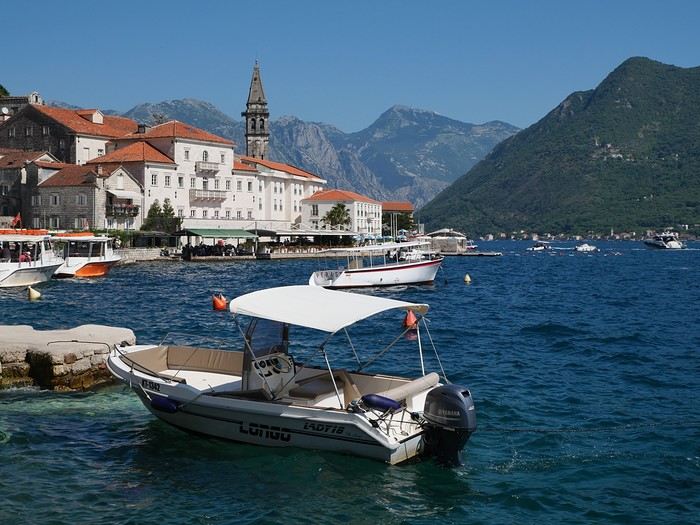
On the way back, we’ll drift into Bosnia-Herzegovina just to mix things up a bit!
We’re a little unsure about what to expect in terms of tourist crowds.
Dubrovnik has a reputation for being the hardest-hit city by overtourism, and Kotor and the whole Dalmatian coast aren’t exactly empty...
Luckily, most European countries haven’t started school holidays yet, and some measures seem to have been put in place to limit the flow (like restrictions on the number of cruise ships allowed to dock at the same time).
Maybe we’ll manage to escape the promised hell?
For now, we’re slamming the doors of the Scirocco and heading off to our first stop: northern Italy!
Meghalaya: A Very Rainy Week
Friday, April 18
Night in Guwahati
Before leaving the guesthouse, I drop off a small bag that I’ll pick up when I return.
I take a tuk-tuk at 7:40 AM to get to the sumo departure point for Shillong, the capital of Meghalaya.
My bag is loaded onto the roof, my seat is assigned, and we have to wait for the car to fill up.
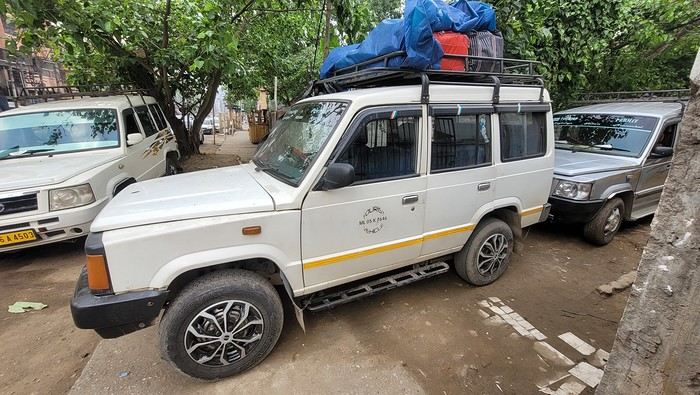
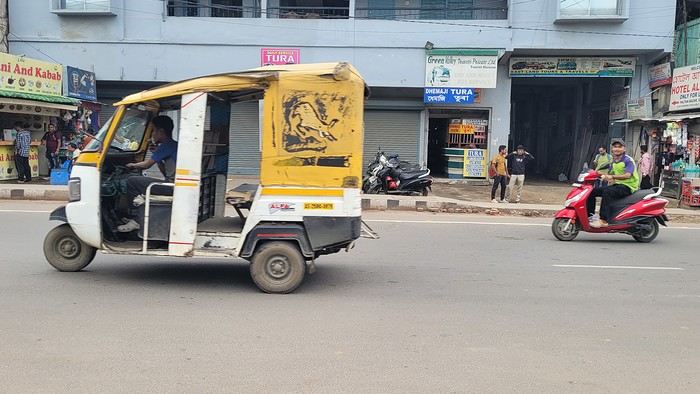
While waiting, I watch the street come to life. I have fun photographing the different modes of transport passing by.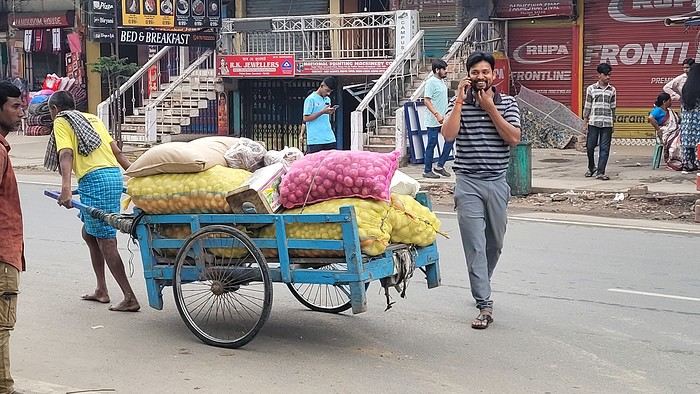
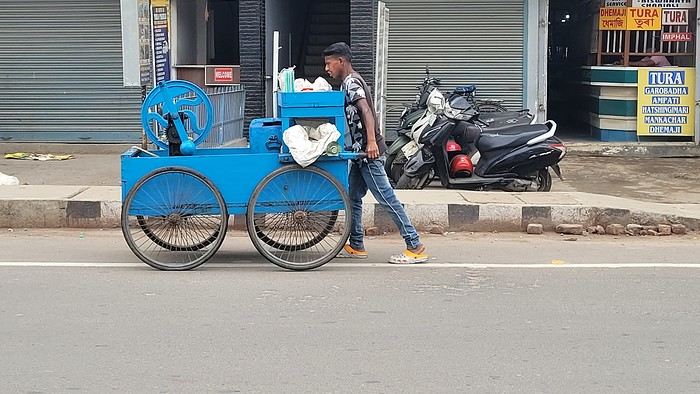
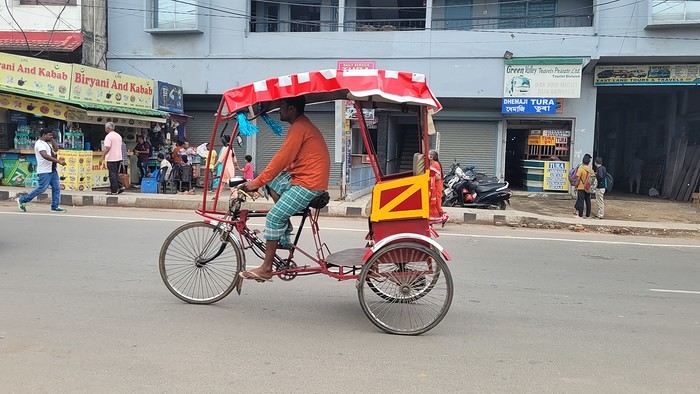
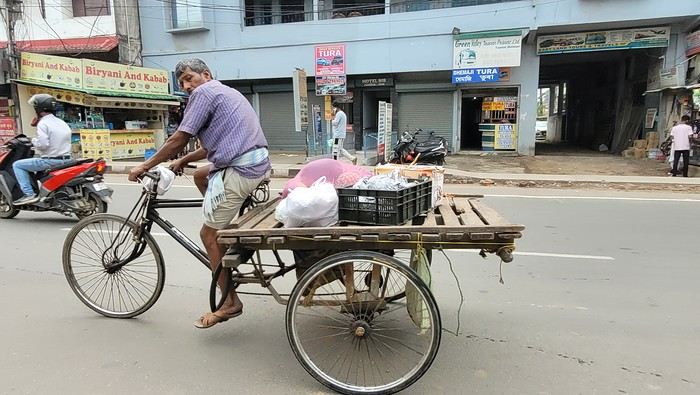
Time passes faster when you’re occupied. We leave at 8:20 AM, and the driver does door-to-door service along the way. We make our first stop for 25 minutes at 9:10 AM, then another for breakfast at 10:10 AM. The scenery is very different from Assam and Nagaland. We drive alongside a pine forest and a large lake. There are beautiful viewpoints, but the driver isn’t stopping for sightseeing, so I have to settle for looking through the car windows.
We finally arrive in Shillong at 11:45 AM. The driver stops in the middle of nowhere, so I have to walk up the street to find a taxi. I flag one down, and he agrees to take me to my new guesthouse, the Rockski Boutique Bed & Breakfast. No sooner do I arrive than a storm with a heavy downpour welcomes me. When I arrived in Guwahati at the end of October, I’d booked a guide with a car for this week. There’s no public transport to get from village to village, so I had to take a car to visit. The tourism manager, Sachin, sent me a message to let me know that the driver, Welbis, will pick me up tomorrow morning at 8 AM. The temperature is much cooler here—only 19°C. At 2:30 PM, the rain stops, and I take the opportunity to explore the city. I start with the cathedral. Today is Good Friday, so I’m going to see how it’s celebrated here. Meghalaya is a Catholic state. The cathedral isn’t far from the guesthouse—it’s huge and all blue.
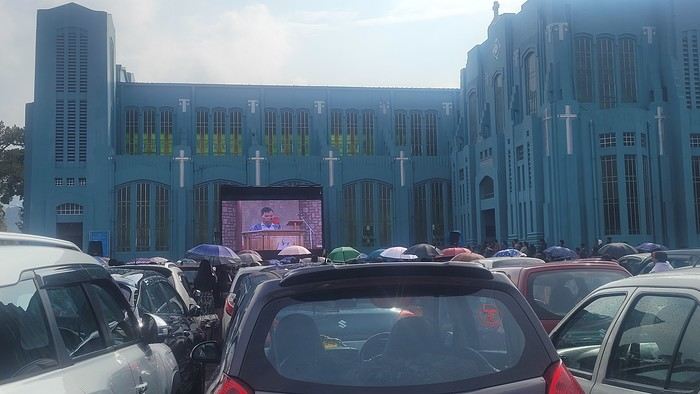
I arrive during mass, and it’s impossible to enter—the faithful are numerous outside in the parking lot. Giant screens broadcast the ceremony.

While waiting, I watch the street come to life. I have fun photographing the different modes of transport passing by.
Time passes faster when you’re occupied. We leave at 8:20 AM, and the driver does door-to-door service along the way. We make our first stop for 25 minutes at 9:10 AM, then another for breakfast at 10:10 AM. The scenery is very different from Assam and Nagaland. We drive alongside a pine forest and a large lake. There are beautiful viewpoints, but the driver isn’t stopping for sightseeing, so I have to settle for looking through the car windows.
We finally arrive in Shillong at 11:45 AM. The driver stops in the middle of nowhere, so I have to walk up the street to find a taxi. I flag one down, and he agrees to take me to my new guesthouse, the Rockski Boutique Bed & Breakfast. No sooner do I arrive than a storm with a heavy downpour welcomes me. When I arrived in Guwahati at the end of October, I’d booked a guide with a car for this week. There’s no public transport to get from village to village, so I had to take a car to visit. The tourism manager, Sachin, sent me a message to let me know that the driver, Welbis, will pick me up tomorrow morning at 8 AM. The temperature is much cooler here—only 19°C. At 2:30 PM, the rain stops, and I take the opportunity to explore the city. I start with the cathedral. Today is Good Friday, so I’m going to see how it’s celebrated here. Meghalaya is a Catholic state. The cathedral isn’t far from the guesthouse—it’s huge and all blue.
I arrive during mass, and it’s impossible to enter—the faithful are numerous outside in the parking lot. Giant screens broadcast the ceremony.
Kenya - January 2025 - Tsavo East - Tsavo West - Samburu - Meru NP - Aberdare NP
Hello everyone,
I’d like to invite you on a new adventure in Kenya.
Back in 2010, my husband Ben and I fell in love with Kenya, and we’ve been traveling there regularly ever since. This 2025 safari marked the first weeks of an important milestone in my life: retirement.
Of course, Felix—our guide and friend for all these years, whom some of you may even know from this forum—joined us again.
We chose an itinerary that takes us through the parks and reserves we particularly love in Kenya: Tsavo East (3 nights), Tsavo West (2 nights), a transition day in Embu, Samburu (5 nights), Meru NP (4 nights), Nanuyki to visit the Mount Kenya Animal Orphanage (https://mountkenyawildlifeconservancy.org/) (1 night), and Aberdare NP (2 nights).
This safari wasn’t our most prolific in terms of wildlife sightings and photos (all taken by Ben), but I still think it’s worth sharing our experiences and impressions of the places we visited. Maybe other travelers will find useful information here to help them fulfill their dream of a Kenyan safari one day...
Living in Brittany, we left from Nantes on Wednesday, January 8, 2025, on the 6 AM Air France flight to CDG, then took the direct flight to Nairobi at 10:50 AM. No issues this time on either flight (unlike in October 2023...).
We arrived in Nairobi at 9:20 PM local time (there’s a two-hour time difference with France at this time of year). Going through passport control and collecting our luggage went smoothly. The hotel shuttle (https://67airporthotel.co.ke/) was waiting for us. We shared it with a friendly Swiss couple who were there to climb Mount Kenya. We arrived at the hotel around midnight. The 67 Airport Hotel is 10-15 minutes from Jomo Kenyatta Airport and offers great value for money. Plus, it’s close to the Mombasa road, which is handy when heading that way the next morning.
On Thursday, January 9, we had breakfast at the hotel restaurant at 6:30 AM, and as planned, Felix arrived around 7 AM. We got to check out his brand-new 4x4 Nissan—we’d be the first to test it! 🙂
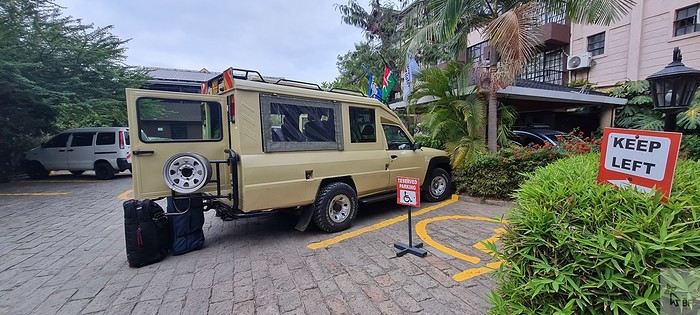
We set off for Voi, making our usual stop in Mtito Andei. Traffic was heavy on the Mombasa road, with lots of trucks.
We arrived at the entrance of Tsavo East around 1 PM and made it to Sentrim Camp (https://www.sentrim-hotels.com/sentrim-tsavo.html) just in time for lunch.
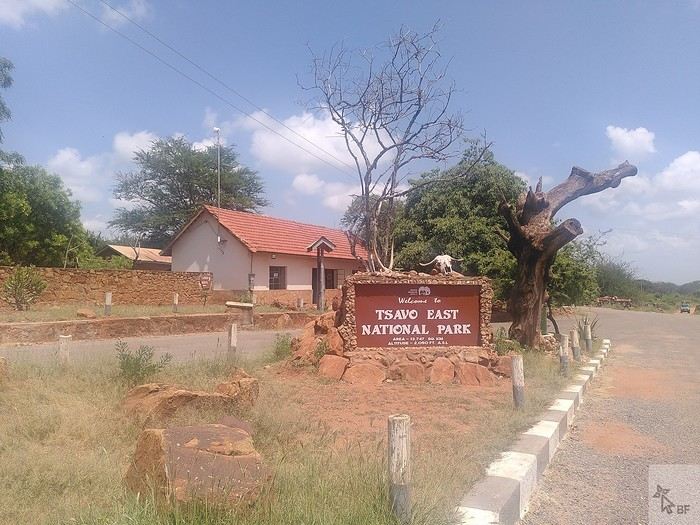
We found Tsavo East unusually green—there had been heavy rains in December, which isn’t typical. As a result, the animals were scattered and harder to spot. The watering hole visible from the camp’s dining area was completely deserted, whereas it’s usually bustling with herds of elephants and other mammals.
Our tent, No. 9, for 3 nights.
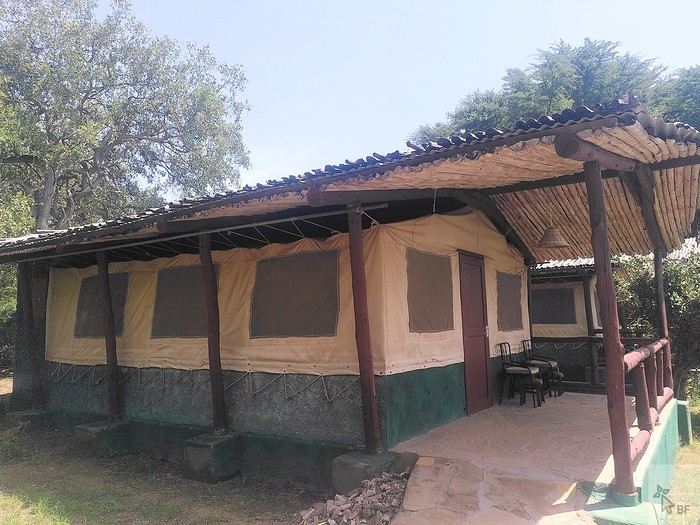
This camp is well-located inside the park. It’s simple but comfortable enough for our tastes, the staff is super friendly (as is often the case in Kenya), and the buffet-style meals are varied and good. Tsavo is the main destination for tourists staying on the coast who come for a night or two on safari. In January, some days at the camp are very quiet, while some evenings, the restaurant is packed with groups (lots of Italians, in particular).
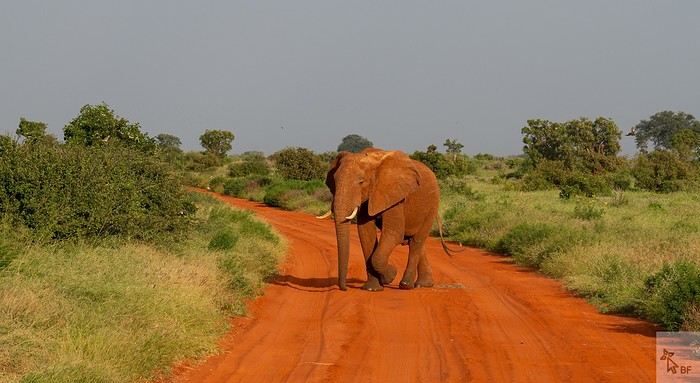
Tsavo is, of course, famous for its elephants. This time, we didn’t see many large herds, but we did have some great encounters with solitary males.
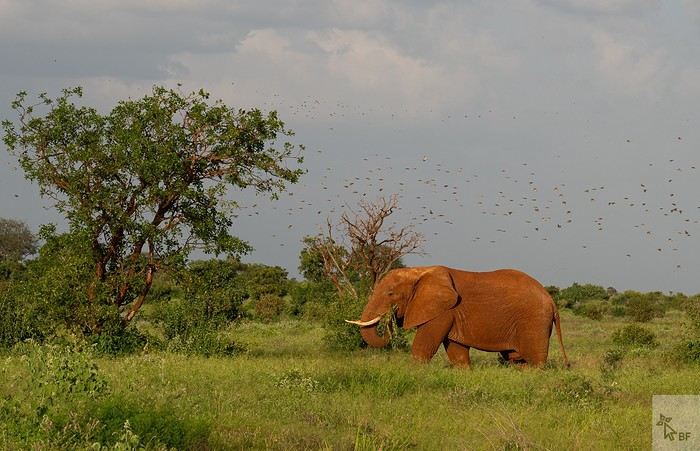
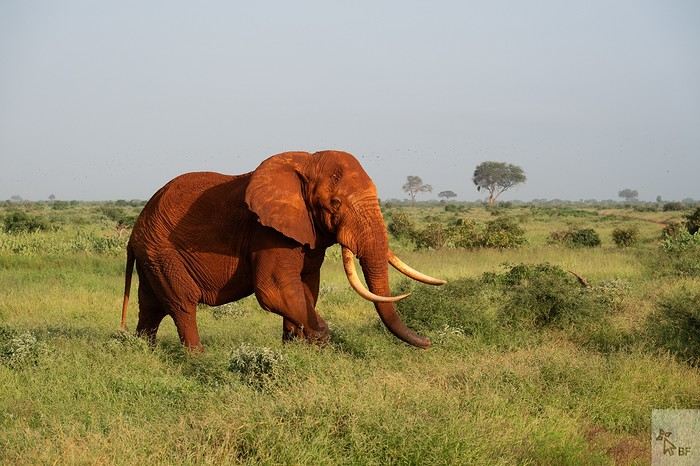
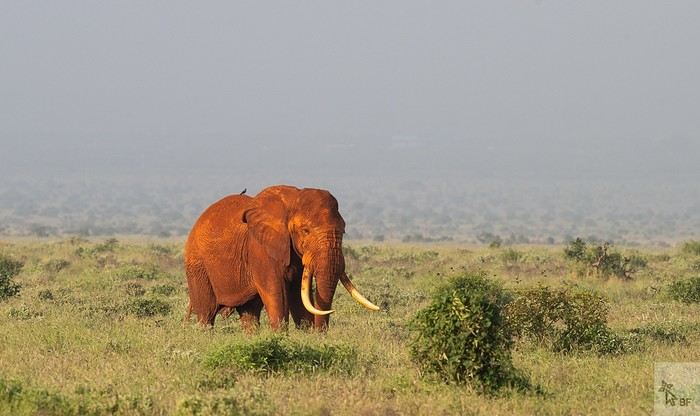
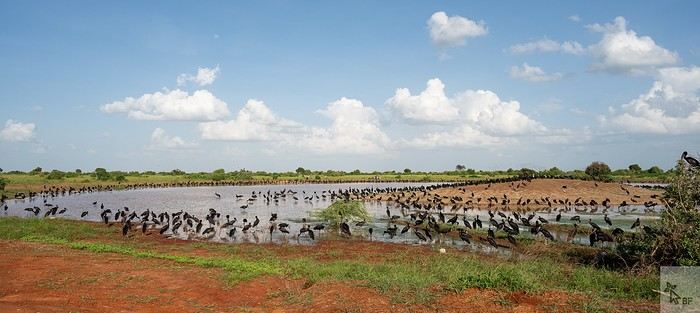
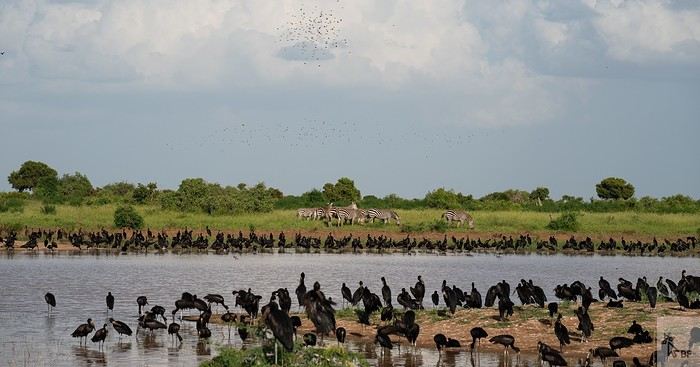
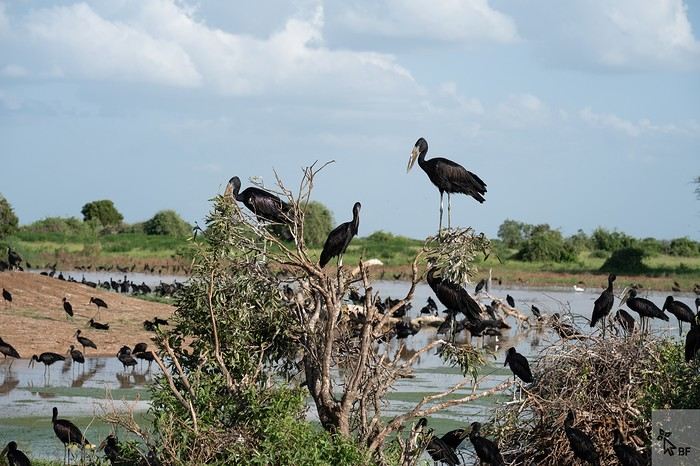
Around this small watering hole, we saw a gathering of African open-billed storks—we’d never seen so many before!
I’d like to invite you on a new adventure in Kenya.
Back in 2010, my husband Ben and I fell in love with Kenya, and we’ve been traveling there regularly ever since. This 2025 safari marked the first weeks of an important milestone in my life: retirement.
Of course, Felix—our guide and friend for all these years, whom some of you may even know from this forum—joined us again.
We chose an itinerary that takes us through the parks and reserves we particularly love in Kenya: Tsavo East (3 nights), Tsavo West (2 nights), a transition day in Embu, Samburu (5 nights), Meru NP (4 nights), Nanuyki to visit the Mount Kenya Animal Orphanage (https://mountkenyawildlifeconservancy.org/) (1 night), and Aberdare NP (2 nights).
This safari wasn’t our most prolific in terms of wildlife sightings and photos (all taken by Ben), but I still think it’s worth sharing our experiences and impressions of the places we visited. Maybe other travelers will find useful information here to help them fulfill their dream of a Kenyan safari one day...
Living in Brittany, we left from Nantes on Wednesday, January 8, 2025, on the 6 AM Air France flight to CDG, then took the direct flight to Nairobi at 10:50 AM. No issues this time on either flight (unlike in October 2023...).
We arrived in Nairobi at 9:20 PM local time (there’s a two-hour time difference with France at this time of year). Going through passport control and collecting our luggage went smoothly. The hotel shuttle (https://67airporthotel.co.ke/) was waiting for us. We shared it with a friendly Swiss couple who were there to climb Mount Kenya. We arrived at the hotel around midnight. The 67 Airport Hotel is 10-15 minutes from Jomo Kenyatta Airport and offers great value for money. Plus, it’s close to the Mombasa road, which is handy when heading that way the next morning.
On Thursday, January 9, we had breakfast at the hotel restaurant at 6:30 AM, and as planned, Felix arrived around 7 AM. We got to check out his brand-new 4x4 Nissan—we’d be the first to test it! 🙂
We set off for Voi, making our usual stop in Mtito Andei. Traffic was heavy on the Mombasa road, with lots of trucks.
We arrived at the entrance of Tsavo East around 1 PM and made it to Sentrim Camp (https://www.sentrim-hotels.com/sentrim-tsavo.html) just in time for lunch.
We found Tsavo East unusually green—there had been heavy rains in December, which isn’t typical. As a result, the animals were scattered and harder to spot. The watering hole visible from the camp’s dining area was completely deserted, whereas it’s usually bustling with herds of elephants and other mammals.
Our tent, No. 9, for 3 nights.
This camp is well-located inside the park. It’s simple but comfortable enough for our tastes, the staff is super friendly (as is often the case in Kenya), and the buffet-style meals are varied and good. Tsavo is the main destination for tourists staying on the coast who come for a night or two on safari. In January, some days at the camp are very quiet, while some evenings, the restaurant is packed with groups (lots of Italians, in particular).
Tsavo is, of course, famous for its elephants. This time, we didn’t see many large herds, but we did have some great encounters with solitary males.
Around this small watering hole, we saw a gathering of African open-billed storks—we’d never seen so many before!
Newfoundland: Hikes in Gros Morne National Park
INTRODUCTION
Creating a masterpiece like Gros Morne National Park wasn’t done overnight. So, when you first discover this extraordinary place, it’s easy to understand why Mother Nature took over 485 million years to bring it to life.
Here, glacial valleys, forests, rugged coastline, beaches, and peat bogs follow one another and intertwine to form a unique ecosystem, one that’s rare in the world. After all, this is where geologists found tangible evidence of the theory of continental drift, and it’s one of the few places on Earth where you can see—and even walk on—the Earth’s mantle. This site is a true celebration of the raw, enigmatic power and beauty of the physical world.
Designated a national park in 1973 and later a UNESCO World Heritage Site in 1987, it’s an 1,805 km² playground just waiting for the adventurer in you. Whether you’re traveling solo, with family, or with friends, for a few days or several weeks, you won’t run out of things to do here.
Source: https://www.exploretnl.ca/parc-national-gros-morne
The hikes we did in this region are listed below. Each hike has a link so you can quickly access more information about it.
Videos are embedded throughout the summary. Click on the image to start the video.
Stanleyville Trail Trout River Pond Trail Trout River Pond Trail (Return) Green Gardens Trail Tablelands Trail Scenic Route 431 Lookout Hills Trail Southeast Brook Falls Trail Gros Morne Mountain Trail (James Callaghan Trail) Berry Hill Trail Baker's Brook Falls Trail Berry Hill Pond Trail Western Brook Pond Trail Boat Tour on Western Brook Pond Steve’s Trail Shallow Bay Beach
Creating a masterpiece like Gros Morne National Park wasn’t done overnight. So, when you first discover this extraordinary place, it’s easy to understand why Mother Nature took over 485 million years to bring it to life.
Here, glacial valleys, forests, rugged coastline, beaches, and peat bogs follow one another and intertwine to form a unique ecosystem, one that’s rare in the world. After all, this is where geologists found tangible evidence of the theory of continental drift, and it’s one of the few places on Earth where you can see—and even walk on—the Earth’s mantle. This site is a true celebration of the raw, enigmatic power and beauty of the physical world.
Designated a national park in 1973 and later a UNESCO World Heritage Site in 1987, it’s an 1,805 km² playground just waiting for the adventurer in you. Whether you’re traveling solo, with family, or with friends, for a few days or several weeks, you won’t run out of things to do here.
Source: https://www.exploretnl.ca/parc-national-gros-morne
The hikes we did in this region are listed below. Each hike has a link so you can quickly access more information about it.
Videos are embedded throughout the summary. Click on the image to start the video.
Stanleyville Trail Trout River Pond Trail Trout River Pond Trail (Return) Green Gardens Trail Tablelands Trail Scenic Route 431 Lookout Hills Trail Southeast Brook Falls Trail Gros Morne Mountain Trail (James Callaghan Trail) Berry Hill Trail Baker's Brook Falls Trail Berry Hill Pond Trail Western Brook Pond Trail Boat Tour on Western Brook Pond Steve’s Trail Shallow Bay Beach
Newfoundland - Hikes in the Western Part of the Island
INTRODUCTION
Trip taken in 2021, but still relevant for exploring the island of Newfoundland.
We went on multiple hikes in this Canadian province, which offers a unique and breathtaking landscape.
GPS coordinates: 46.20884, -60.24498 Marine Atlantic Ferry
To do this, we traveled to North Sydney, Nova Scotia, to board a Marine Atlantic ferry that took us to Port aux Basques in Newfoundland. The crossing takes about 7 hours.
The ferry *Highlanders* features spacious cabins for two or four people, a restaurant, a retail store, and a play area for kids.
The reclining seats are comfortable and include a headphone jack and a USB charging port.
We went out on the open-air panoramic observation deck several times to admire the Atlantic Ocean, hoping to spot some marine wildlife. Unfortunately, we didn’t see any.
This short video gives you an overview of the facilities. For more details, I invite you to check out Marine Atlantic’s website at the following address: https://www.marineatlantique.ca/.
https://youtu.be/oV9_7AcJnEQ
Trip taken in 2021, but still relevant for exploring the island of Newfoundland.
We went on multiple hikes in this Canadian province, which offers a unique and breathtaking landscape.
GPS coordinates: 46.20884, -60.24498 Marine Atlantic Ferry
To do this, we traveled to North Sydney, Nova Scotia, to board a Marine Atlantic ferry that took us to Port aux Basques in Newfoundland. The crossing takes about 7 hours.
The ferry *Highlanders* features spacious cabins for two or four people, a restaurant, a retail store, and a play area for kids.
The reclining seats are comfortable and include a headphone jack and a USB charging port.
We went out on the open-air panoramic observation deck several times to admire the Atlantic Ocean, hoping to spot some marine wildlife. Unfortunately, we didn’t see any.
This short video gives you an overview of the facilities. For more details, I invite you to check out Marine Atlantic’s website at the following address: https://www.marineatlantique.ca/.
https://youtu.be/oV9_7AcJnEQ
Back from 4 weeks in northern Laos, November 2023
Hi there,
I’m so glad the VoyageForum is back up. Reading 'Montagnard74’s' Laos trip report (which I read yesterday) made me want to share my own (which I already posted a year ago on another forum).
Here’s a little recap of our 3 weeks in northern Laos, plus a few days in Vientiane.
By the way, we could easily go back to the north—there’s so much to see and do; probably in a few years.
This was our 3rd trip to Laos after having already done:
1st trip in 2012 (3 weeks), a quick overview: Vientiane Vang Vieng Luang Prabang Plain of Jars
2nd trip in 2017 (1 month): Vientiane all the way to the 4,000 Islands via Thakhek, Kong Lor, the Bolaven Plateau, Savannakhet, Pakse...
Our 2023 itinerary (1 month): Vientiane Luang Prabang Muang Ngoi Nong Khiew Luang Namtha Muang Sing Boten Vang Vieng Vientiane
Some general info (2023): For those who’ve already been to Laos: everything has gone up a lot—I think prices have almost doubled for transport, accommodation, meals... everything. But Laos is still a budget-friendly country for us. As a couple, we spent 1,100 € for a month, all included (and we definitely didn’t skimp on massages :)).
Don’t trust the transport signs posted everywhere—at travel agencies, bus terminals, hotels... THEY’RE ALL WRONG (especially the schedules). They haven’t been updated since before Covid.
There are hardly any bikes for rent anymore, but scooters are easy to find everywhere. We switched our mode of transport toward the end of our stay: from bikes to scooters, which let us go farther. In Vientiane, we only saw one bike rental place, near Ong Teu Pagoda.
BCEL bank doesn’t charge a commission on foreign currency exchanges. Using ATMs is expensive due to fees. Outside Laos, Lao kip are basically worthless. There’s so much inflation that I couldn’t find a single bank or exchange office willing to swap the kip we had left. So, don’t exchange too much toward the end of your trip.
Some little tips from our experience (2023): The Muang Koua to Muang Ngoi boat still runs daily. At the dam, you have to get off and take a bus, then get back on the boat.
The boat from Muang Ngoi to Nong Khiew only leaves at 9:30 AM (don’t miss it or you’ll pay a lot for a private boat). From Nong Khiew to Muang Ngoi, there are at least two boats a day.
From Luang Namtha to Muang Sing: 4 to 5 buses a day, the last one leaves around 3:30 PM.
From Luang Namtha or Muang Sing to Nateuy or Boten (to catch the new train): 3 to 5 buses a day.
The new train is really hard to book—it’s often fully booked 48 hours in advance, even the local train (5 hours from Boten to Vientiane instead of 3 hours on the high-speed train). (That makes it tough to travel day by day, which we love... too bad.) For baggage checks: don’t bring anything flammable (sprays...) or sharp. My mosquito repellent (flammable but in a small plastic bottle) got through. Water bottles and a tiny pocketknife are okay. But it seems to depend on the station.
Some guesthouses prefer to be paid in dollars, otherwise the price is much higher.
If you’re entering Laos from Vietnam via Dien Bien Phu, you have to get your visa at the embassy in Hanoi—otherwise, you’ll be refused at the border (no e-visa or visa on arrival).
Apart from Luang Prabang, Vientiane, and Muang Ngoi/Nong Khiew, there are very few tourists.
Some bus prices (in addition to those mentioned in my trip report) (with pick-up) 2023: Luang Prabang to Luang Namtha: 320,000 kip per person, 9h LP to Phonesavan: 250,000 kip per person, 7h LP to Phongsaly: 450,000 kip per person, 13h LP to Huay Xai: 420,000 kip per person, 14h Train Nateuy to Vientiane: 400,000 kip per person LP to Chiang Rai: 780,000 kip per person, 18h LP to Hanoi: 900,000 kip per person, 24h LP to train station: 50,000 kip per person LP to airport: 100,000 kip per person Vientiane from train station: 180,000 kip by taxi
Boats: LP to Pak Beng: 300,000 kip per person, 1 day LP to Houay Xai: 500,000 kip per person, 2 days LP to Pak Ou: 180,000 kip per person, 5h
This was our 3rd trip to Laos after having already done:
1st trip in 2012 (3 weeks), a quick overview: Vientiane Vang Vieng Luang Prabang Plain of Jars
2nd trip in 2017 (1 month): Vientiane all the way to the 4,000 Islands via Thakhek, Kong Lor, the Bolaven Plateau, Savannakhet, Pakse...
Our 2023 itinerary (1 month): Vientiane Luang Prabang Muang Ngoi Nong Khiew Luang Namtha Muang Sing Boten Vang Vieng Vientiane
Some general info (2023): For those who’ve already been to Laos: everything has gone up a lot—I think prices have almost doubled for transport, accommodation, meals... everything. But Laos is still a budget-friendly country for us. As a couple, we spent 1,100 € for a month, all included (and we definitely didn’t skimp on massages :)).
Don’t trust the transport signs posted everywhere—at travel agencies, bus terminals, hotels... THEY’RE ALL WRONG (especially the schedules). They haven’t been updated since before Covid.
There are hardly any bikes for rent anymore, but scooters are easy to find everywhere. We switched our mode of transport toward the end of our stay: from bikes to scooters, which let us go farther. In Vientiane, we only saw one bike rental place, near Ong Teu Pagoda.
BCEL bank doesn’t charge a commission on foreign currency exchanges. Using ATMs is expensive due to fees. Outside Laos, Lao kip are basically worthless. There’s so much inflation that I couldn’t find a single bank or exchange office willing to swap the kip we had left. So, don’t exchange too much toward the end of your trip.
Some little tips from our experience (2023): The Muang Koua to Muang Ngoi boat still runs daily. At the dam, you have to get off and take a bus, then get back on the boat.
The boat from Muang Ngoi to Nong Khiew only leaves at 9:30 AM (don’t miss it or you’ll pay a lot for a private boat). From Nong Khiew to Muang Ngoi, there are at least two boats a day.
From Luang Namtha to Muang Sing: 4 to 5 buses a day, the last one leaves around 3:30 PM.
From Luang Namtha or Muang Sing to Nateuy or Boten (to catch the new train): 3 to 5 buses a day.
The new train is really hard to book—it’s often fully booked 48 hours in advance, even the local train (5 hours from Boten to Vientiane instead of 3 hours on the high-speed train). (That makes it tough to travel day by day, which we love... too bad.) For baggage checks: don’t bring anything flammable (sprays...) or sharp. My mosquito repellent (flammable but in a small plastic bottle) got through. Water bottles and a tiny pocketknife are okay. But it seems to depend on the station.
Some guesthouses prefer to be paid in dollars, otherwise the price is much higher.
If you’re entering Laos from Vietnam via Dien Bien Phu, you have to get your visa at the embassy in Hanoi—otherwise, you’ll be refused at the border (no e-visa or visa on arrival).
Apart from Luang Prabang, Vientiane, and Muang Ngoi/Nong Khiew, there are very few tourists.
Some bus prices (in addition to those mentioned in my trip report) (with pick-up) 2023: Luang Prabang to Luang Namtha: 320,000 kip per person, 9h LP to Phonesavan: 250,000 kip per person, 7h LP to Phongsaly: 450,000 kip per person, 13h LP to Huay Xai: 420,000 kip per person, 14h Train Nateuy to Vientiane: 400,000 kip per person LP to Chiang Rai: 780,000 kip per person, 18h LP to Hanoi: 900,000 kip per person, 24h LP to train station: 50,000 kip per person LP to airport: 100,000 kip per person Vientiane from train station: 180,000 kip by taxi
Boats: LP to Pak Beng: 300,000 kip per person, 1 day LP to Houay Xai: 500,000 kip per person, 2 days LP to Pak Ou: 180,000 kip per person, 5h
Which island(s) should we prioritize for 4 weeks in Indonesia?
Hi everyone,
As part of a four-month world trip with our kids (ages 6, 12, and 13), we’ll be spending four weeks in Indonesia. Choosing destinations is so tough because everything is just so appealing! We’ll be spending some time on Java and will likely make a "quick trip" to Borneo for the orangutan reserve. We also want to experience Bali’s culture and the small islands of the Lesser Sundas, with their incredible marine life... but which ones should we prioritize? For a few days of diving and relaxation, do you think we should go for Nusa Penida, the Gili Islands, or Moyo Island? Is Sumbawa complicated to explore? Is it worth taking the time to visit? Can it be crossed by car to then reach Komodo National Park? Anyway, any advice would be greatly appreciated. Our goal is to avoid overly touristy spots (but not places that feel too unsafe with the kids), to discover local culture and villages, and to be amazed both underwater and above. Thanks so much for your help!
As part of a four-month world trip with our kids (ages 6, 12, and 13), we’ll be spending four weeks in Indonesia. Choosing destinations is so tough because everything is just so appealing! We’ll be spending some time on Java and will likely make a "quick trip" to Borneo for the orangutan reserve. We also want to experience Bali’s culture and the small islands of the Lesser Sundas, with their incredible marine life... but which ones should we prioritize? For a few days of diving and relaxation, do you think we should go for Nusa Penida, the Gili Islands, or Moyo Island? Is Sumbawa complicated to explore? Is it worth taking the time to visit? Can it be crossed by car to then reach Komodo National Park? Anyway, any advice would be greatly appreciated. Our goal is to avoid overly touristy spots (but not places that feel too unsafe with the kids), to discover local culture and villages, and to be amazed both underwater and above. Thanks so much for your help!
White as snow, let's chat here!
And nowhere else...😉
Under Antalya's Sky (Turkey)
Saturday, November 9, 2024
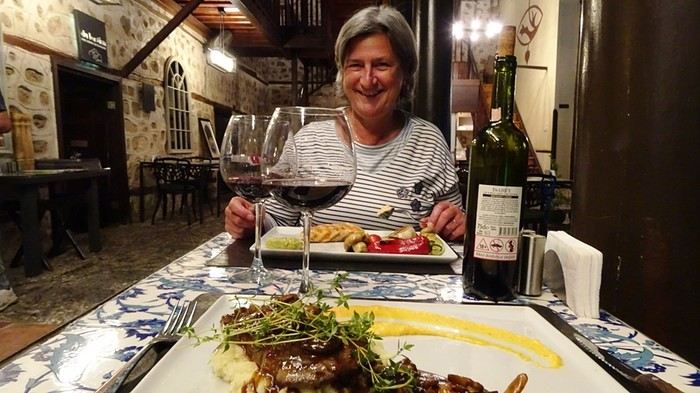
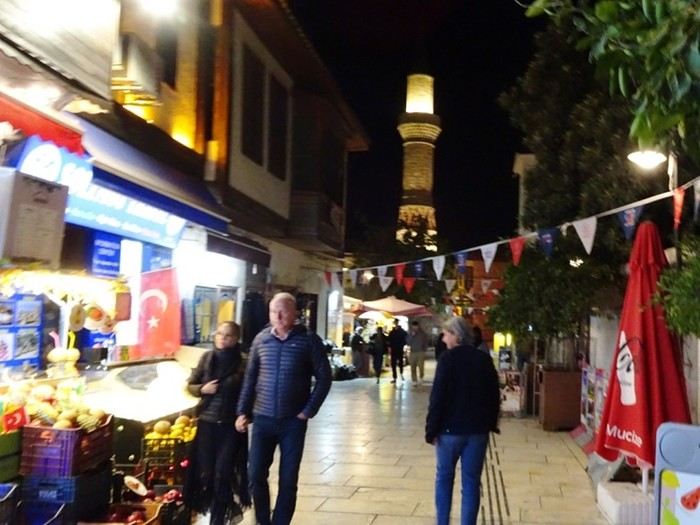
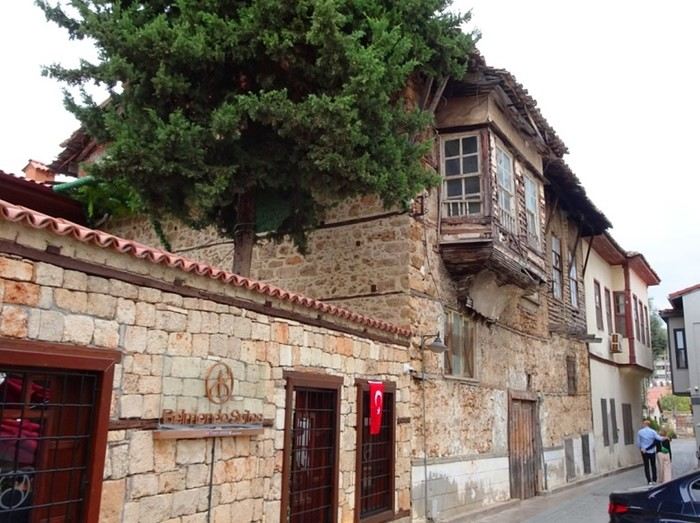
We left the house in the late morning, heading to the nearby airport parking lot, shuttle, formalities, and a quiet flight on a half-empty plane. Three hours eastward, we arrived in pitch-black night. Like everywhere in the world, we entered the city by crossing a vast, garish commercial zone, then the roads turned into streets, then alleys. Eventually, our driver had to stop to move poorly parked scooters so his oversized minibus could pass. We arrived in the middle of the old town, in a huge old house. We’re thrilled. The neighborhood is lively, full of atmosphere. Hungry and exhausted, we ate (very well) at the hotel restaurant, then strolled around. First impressions are promising!
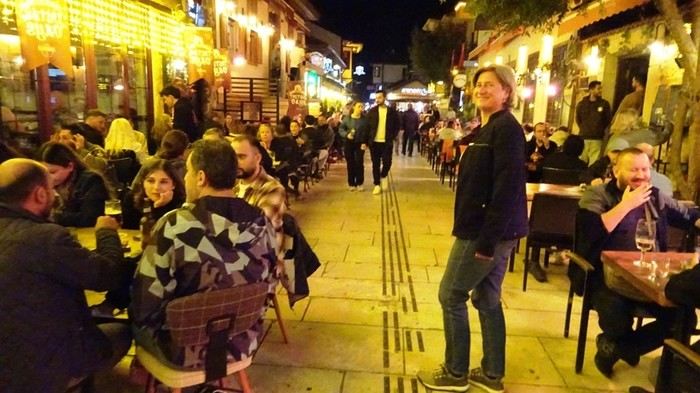
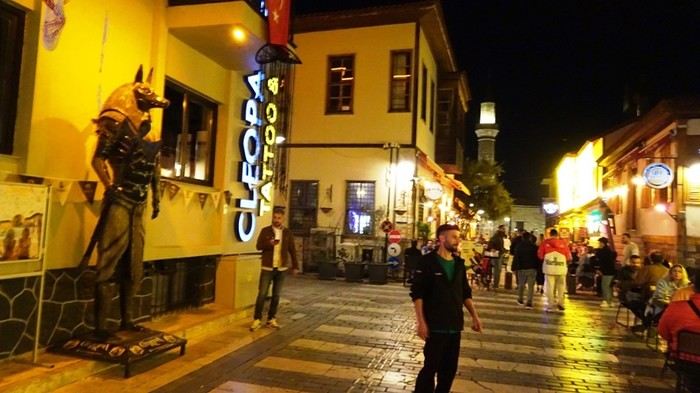
Sunday, November 10, 2024 Antalya In this part of the world, there are some quirks that don’t always suit us infidels! Here in Antalya, the religious influence is still pretty light. You can drink freely, girls can save a lot on fabric—it’s all good, no one’s gonna say anything. But there’s the muezzin. That lanky guy who belts out his tune five times a day from the top of his minaret didn’t spare us this morning. Just a heads-up, we’ve got a two-hour time difference, and this guy starts his serenade at 4 AM, right in the middle of the night. That’s early!
Anyway, we recover, have breakfast, and realize that in terms of revered figures, Atatürk doesn’t take a backseat to the prophet responsible for our nighttime disturbances. We’d already been surprised by how ubiquitous his portrait is, but on the restaurant terrace, we see it’s a full-blown cult. There’s a little altar with rose petals under his portrait. First thing in the morning, the staff lines up to pay their respects, then sings a stirring hymn while some customers stand, hand on heart.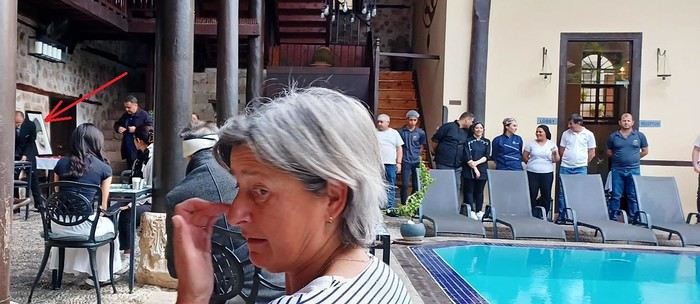
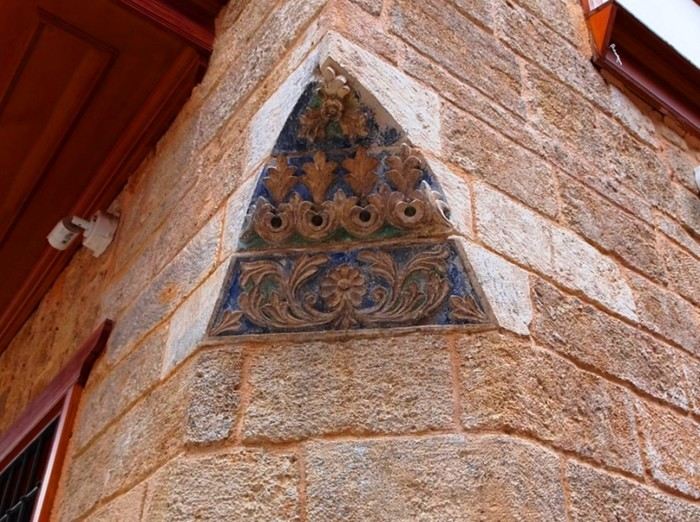
Right after breakfast, we set off like explorers through the old town. It’s incredible how many walls, monuments, and statues have survived from the glorious Greek and Roman eras. Back then, they built things to last!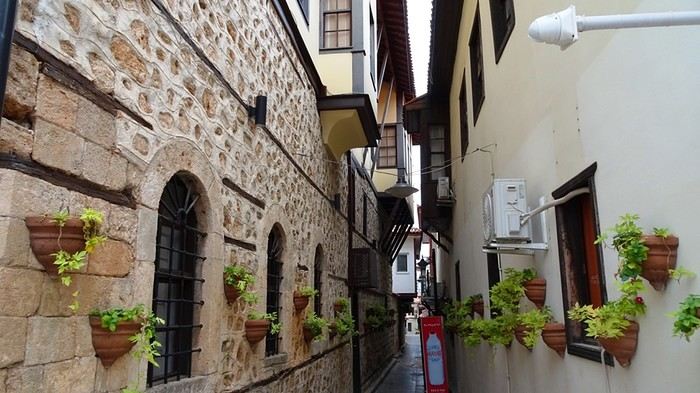

Sunday, November 10, 2024 Antalya In this part of the world, there are some quirks that don’t always suit us infidels! Here in Antalya, the religious influence is still pretty light. You can drink freely, girls can save a lot on fabric—it’s all good, no one’s gonna say anything. But there’s the muezzin. That lanky guy who belts out his tune five times a day from the top of his minaret didn’t spare us this morning. Just a heads-up, we’ve got a two-hour time difference, and this guy starts his serenade at 4 AM, right in the middle of the night. That’s early!
Anyway, we recover, have breakfast, and realize that in terms of revered figures, Atatürk doesn’t take a backseat to the prophet responsible for our nighttime disturbances. We’d already been surprised by how ubiquitous his portrait is, but on the restaurant terrace, we see it’s a full-blown cult. There’s a little altar with rose petals under his portrait. First thing in the morning, the staff lines up to pay their respects, then sings a stirring hymn while some customers stand, hand on heart.
Right after breakfast, we set off like explorers through the old town. It’s incredible how many walls, monuments, and statues have survived from the glorious Greek and Roman eras. Back then, they built things to last!
Back from 3 weeks in Quebec
Hi there, just back from a three-week round trip to Quebec and a side trip to New Brunswick.
Departed from Montpellier, via CDG, then arrived in Montreal from July 31 to August 20, 2024.
AF flights went smoothly.
The RT itinerary (without the visit details):
Arrival in Montreal; Trois-Rivières; Tadoussac; Matane; Gaspé; Campbellton; Trois-Pistoles; Quebec City; Montreal and return to France, AF to CDG then Hop! to Montpellier.
Observations:
Getting out of Montreal airport is a nightmare! Two hours at Avis Auto to pick up the car (nice ride, though—a WW SUV Atlas V6 for two). From what I’ve heard, Montreal Airport is a pain because it was initially under-dimensioned for its infrastructure, and it seems impossible to reorganize everything.
Quebecers: Wonderful people in terms of hospitality and behavior toward tourists—especially French ones. You can ask them for advice at the supermarket, for directions here and there, and those distant cousins are great! That said, I’d exclude Montreal, which, due to its size and perhaps its cosmopolitanism, can’t be considered as welcoming as the countryside and small towns we passed through. A bit like Paris, you could say.
Quebecers prefer Quebec City over Montreal, and I get it. On a positive note for the city, I left some money in the hotel at the end of my stay. Once back in France, I contacted the hotel (day before yesterday), and they confirmed the oversight and are taking steps to send the money back. A nice gesture. It’s the Nouvel Hôtel, 1740 Avenue René Lévesque. Well-located, too.
Tourists: Same as always!
Americans: Still lacking in culture and education, but we already knew that. Loud, intrusive, annoying, you could say. And I’ll skip the “Oh my God! Oh my God!” all day long. And always with a coffee cup in hand on the streets. Not just American tourists, actually. Coffee is either enjoyed at the counter of a café or at home in front of the day’s news. It must also be said that our cousins’ coffee is more like dishwater.
Tourists from the Middle Kingdom: No change there! Flagrant lack of European culture and respect. They can be quite annoying at times. Thankfully, they don’t like the countryside or small towns.
Tourists from the Land of the Rising Sun: As usual, impeccable behavior. Both in terms of dress and discretion.
The British: They feel at home. Well, they kind of are, actually. Distant, inaccessible—typical English folks.
South Americans: A lot of them in Montreal during my stay. Quite noisy, especially at breakfast. But deep down, they’re great and very polite. I really like them. Must be my 36.1% Iberian DNA from my ancestry test that makes me say that.
And the French? Always the same! Complainers, grumblers, never happy with the meal, always finding prices too high, cutting in line, sometimes with a Quechua backpack but not always. In short, we don’t change. That said, there were some really nice people and great encounters that will leave wonderful memories. Some folks from Marseille in Quebec City, Toulouse in Montreal, Perpignan... But not many Parisians. Or maybe they just don’t talk to outsiders. When I think that my wife is from the 14th arrondissement...
And lots of lovely young French people there on a Working Holiday Visa for two years.
Others? Italians? Didn’t run into many. Eastern Europeans? Didn’t see any, or they were super discreet.
The trip started on July 31. 2,000 photos to sort through. More to come later.
The RT itinerary (without the visit details):
Arrival in Montreal; Trois-Rivières; Tadoussac; Matane; Gaspé; Campbellton; Trois-Pistoles; Quebec City; Montreal and return to France, AF to CDG then Hop! to Montpellier.
Observations:
Getting out of Montreal airport is a nightmare! Two hours at Avis Auto to pick up the car (nice ride, though—a WW SUV Atlas V6 for two). From what I’ve heard, Montreal Airport is a pain because it was initially under-dimensioned for its infrastructure, and it seems impossible to reorganize everything.
Quebecers: Wonderful people in terms of hospitality and behavior toward tourists—especially French ones. You can ask them for advice at the supermarket, for directions here and there, and those distant cousins are great! That said, I’d exclude Montreal, which, due to its size and perhaps its cosmopolitanism, can’t be considered as welcoming as the countryside and small towns we passed through. A bit like Paris, you could say.
Quebecers prefer Quebec City over Montreal, and I get it. On a positive note for the city, I left some money in the hotel at the end of my stay. Once back in France, I contacted the hotel (day before yesterday), and they confirmed the oversight and are taking steps to send the money back. A nice gesture. It’s the Nouvel Hôtel, 1740 Avenue René Lévesque. Well-located, too.
Tourists: Same as always!
Americans: Still lacking in culture and education, but we already knew that. Loud, intrusive, annoying, you could say. And I’ll skip the “Oh my God! Oh my God!” all day long. And always with a coffee cup in hand on the streets. Not just American tourists, actually. Coffee is either enjoyed at the counter of a café or at home in front of the day’s news. It must also be said that our cousins’ coffee is more like dishwater.
Tourists from the Middle Kingdom: No change there! Flagrant lack of European culture and respect. They can be quite annoying at times. Thankfully, they don’t like the countryside or small towns.
Tourists from the Land of the Rising Sun: As usual, impeccable behavior. Both in terms of dress and discretion.
The British: They feel at home. Well, they kind of are, actually. Distant, inaccessible—typical English folks.
South Americans: A lot of them in Montreal during my stay. Quite noisy, especially at breakfast. But deep down, they’re great and very polite. I really like them. Must be my 36.1% Iberian DNA from my ancestry test that makes me say that.
And the French? Always the same! Complainers, grumblers, never happy with the meal, always finding prices too high, cutting in line, sometimes with a Quechua backpack but not always. In short, we don’t change. That said, there were some really nice people and great encounters that will leave wonderful memories. Some folks from Marseille in Quebec City, Toulouse in Montreal, Perpignan... But not many Parisians. Or maybe they just don’t talk to outsiders. When I think that my wife is from the 14th arrondissement...
And lots of lovely young French people there on a Working Holiday Visa for two years.
Others? Italians? Didn’t run into many. Eastern Europeans? Didn’t see any, or they were super discreet.
The trip started on July 31. 2,000 photos to sort through. More to come later.
Choosing a Destination in Southern or East Africa
Hello,
We’re a family from Réunion with three kids, used to active holidays: biking, camping, hitchhiking, and finding last-minute accommodations.
This time, we’d like to visit a country in Southern or East Africa (since it’s close to our island—flights to Johannesburg aren’t too expensive). The kids dream of seeing animals, but we don’t want to spend our whole holiday in a 4x4!
My husband and I know West Africa well (we’ve lived for months in Burkina, Benin, and Madagascar), where it’s easy to get around by public transport, get unexpectedly invited into villages, and find food in roadside eateries... But we’re not sure if we can find that same vibe in "safari" countries.
More specific criteria:
- See animals and varied landscapes, but without ending up with 25 4x4s around one elephant... - Not spend 5 hours a day in the car every day - Do some travel by public transport - A holiday focused not just on nature but also on taking time to meet locals - Be able to hike (or even bike, canoe...) - Camp for all or part of the trip
Given all this, which destination would you recommend? South Africa, Namibia, Zimbabwe? Or Kenya, Tanzania? Or somewhere else?
I’ve read tons of websites and forums but I’m still confused!
This would be for about 3 weeks next July-August.
Thanks for your help!
This time, we’d like to visit a country in Southern or East Africa (since it’s close to our island—flights to Johannesburg aren’t too expensive). The kids dream of seeing animals, but we don’t want to spend our whole holiday in a 4x4!
My husband and I know West Africa well (we’ve lived for months in Burkina, Benin, and Madagascar), where it’s easy to get around by public transport, get unexpectedly invited into villages, and find food in roadside eateries... But we’re not sure if we can find that same vibe in "safari" countries.
More specific criteria:
- See animals and varied landscapes, but without ending up with 25 4x4s around one elephant... - Not spend 5 hours a day in the car every day - Do some travel by public transport - A holiday focused not just on nature but also on taking time to meet locals - Be able to hike (or even bike, canoe...) - Camp for all or part of the trip
Given all this, which destination would you recommend? South Africa, Namibia, Zimbabwe? Or Kenya, Tanzania? Or somewhere else?
I’ve read tons of websites and forums but I’m still confused!
This would be for about 3 weeks next July-August.
Thanks for your help!
Three weeks in Quebec at the start of summer 2018, on a "semi-organized" trip
I’ve been putting off posting my Quebec travel experience for a long time. Two years later, I’ve finally decided to share it. The memories are still vivid. I hope this gives you the urge to visit this beautiful region, which I literally fell in love with.
We’re traveling as four adults: my brother Guy, my sister-in-law Martine, my friend Pascal, and myself (Christian).
We entrusted the flight, hotel, and car reservations to the travel agency Amplitudes in Toulouse. Planning the day-to-day activities was up to us. We scheduled a few must-see visits, but for the rest, we’d figure it out on the spot.
Our itinerary: Quebec City / Rimouski / Carleton-sur-Mer / Percé / Sainte-Anne-des-Monts / Matane / Tadoussac / Sainte-Rose-du-Nord / Chambord / Saint-Alexis-des-Monts / Montreal
06/25 Here we are at Roissy Charles de Gaulle for the usual pre-flight formalities. Everything goes smoothly and quickly. The hardest part is waiting for takeoff. After an uneventful flight on an Air Canada Boeing 777-300ER, we land at Montréal-Pierre Elliott Trudeau Airport (YUL) in the early afternoon.
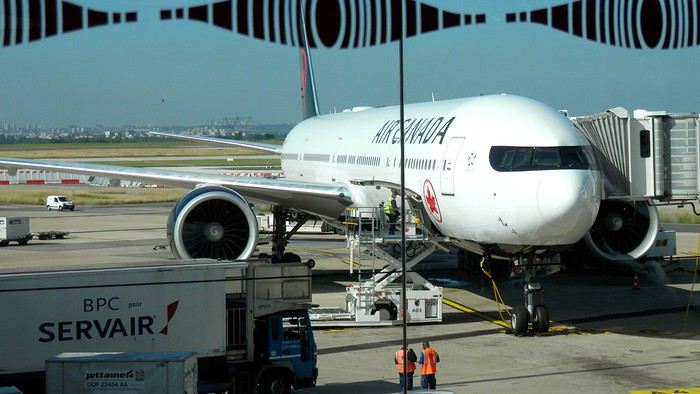
At customs, a surprise—no grumpy officer, but a smiling customs agent who jokingly asks me to name three tourist spots in Quebec, or else he won’t let me in. I pass the test easily and enter Quebec!
We head to the Alamo counter at Trudeau Airport to pick up our car: a Ford Escape with only 300 kilometers on the odometer.
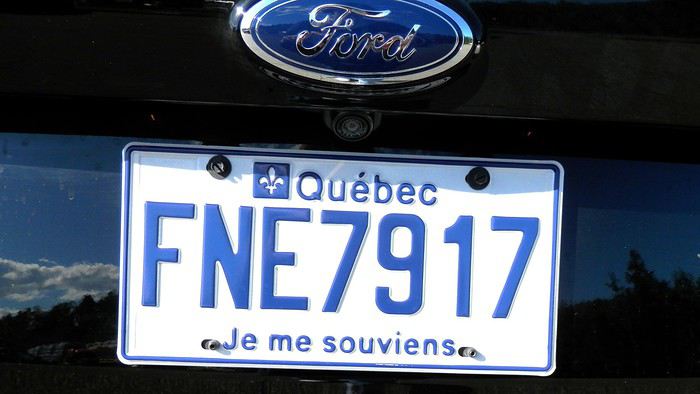
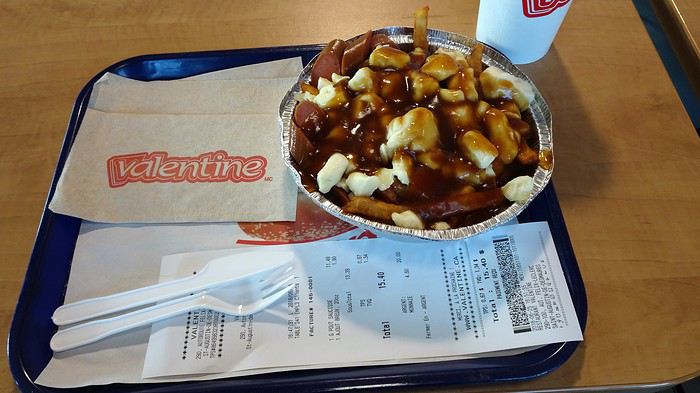
We decided to head straight to Quebec City, saving Montreal for the end of the trip. Pascal takes the wheel and gets on the Trans-Canada Highway E20 for a 255 km drive, taking about 2 hours and 45 minutes. With the time difference, we’re already feeling hungry, so we stop for our first poutine at a highway restaurant.
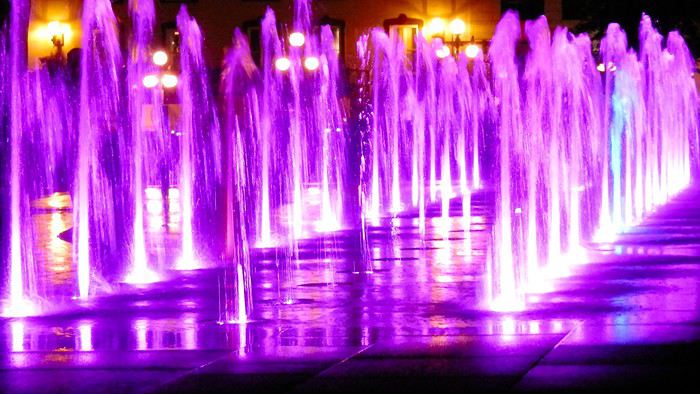
When we arrive in Quebec City, we go straight to the Clarendon Hotel, located right in the heart of Old Quebec. We’ll be staying there for three nights. Tonight, no restaurant—just a short walk around the hotel before bed. We discover a square with pretty colored water fountains near the city hall.
 It’s only 9 PM, but our body clocks say it’s 3 AM.
We’re traveling as four adults: my brother Guy, my sister-in-law Martine, my friend Pascal, and myself (Christian).
We entrusted the flight, hotel, and car reservations to the travel agency Amplitudes in Toulouse. Planning the day-to-day activities was up to us. We scheduled a few must-see visits, but for the rest, we’d figure it out on the spot.
Our itinerary: Quebec City / Rimouski / Carleton-sur-Mer / Percé / Sainte-Anne-des-Monts / Matane / Tadoussac / Sainte-Rose-du-Nord / Chambord / Saint-Alexis-des-Monts / Montreal
06/25 Here we are at Roissy Charles de Gaulle for the usual pre-flight formalities. Everything goes smoothly and quickly. The hardest part is waiting for takeoff. After an uneventful flight on an Air Canada Boeing 777-300ER, we land at Montréal-Pierre Elliott Trudeau Airport (YUL) in the early afternoon.
At customs, a surprise—no grumpy officer, but a smiling customs agent who jokingly asks me to name three tourist spots in Quebec, or else he won’t let me in. I pass the test easily and enter Quebec!
We head to the Alamo counter at Trudeau Airport to pick up our car: a Ford Escape with only 300 kilometers on the odometer.
We decided to head straight to Quebec City, saving Montreal for the end of the trip. Pascal takes the wheel and gets on the Trans-Canada Highway E20 for a 255 km drive, taking about 2 hours and 45 minutes. With the time difference, we’re already feeling hungry, so we stop for our first poutine at a highway restaurant.
When we arrive in Quebec City, we go straight to the Clarendon Hotel, located right in the heart of Old Quebec. We’ll be staying there for three nights. Tonight, no restaurant—just a short walk around the hotel before bed. We discover a square with pretty colored water fountains near the city hall.
It’s only 9 PM, but our body clocks say it’s 3 AM.Avis sur un circuit Ontario et Québec pour l'été 2021 English translation pending
bonjour à tous,
je commence à etablir un itineraire pour nos prochaines vacances d'ete. on partir vers mi-juillet. j'ai deja bien parcouru le forum mais il me reste des interrogations ou j'espere que vous pourrez nous conseiller. nous serons 2 famille avec nos enfants (4 adultes et 4 enfants 8,8,5,6 ans) . voici le circuit envisagé : (vol multidestination arrivee toront et retour montreal).
Jour 1 - Toronto
Jour 2 - Toronto (chute niagara)
Jour 3 - Toronto
Jour 4 - Toronto / Ottawa (449 km / 04h13)
Jour 5 - Ottawa
Jour 6 - Ottawa / Mauricie (370 km / 03h36)
Jour 7 - Mauricie / Québec (160 km / 2h00)
Jour 8 - Québec
Jour 9 - Québec / Tadoussac (216 km / 03h17)
Jour 10 - Tadoussac / Fjord du Saguenay (130 km / 2h00)
Jour 11 - Fjord du Saguenay
Jour 12 - Fjord du Saguenay / Charlevoix (190 km / 02h50)
Jour 13 - Charlevoix / Montréal (380 km / 04h00)
Jour 14 - Montréal
Jour 15 - Montréal
Jour 16 - Montreal
Jour 17 - retour montréal
mes questions sont :
-cet itineraire semble-t-il coherent et juste pour une premiere visite ? - tadoussac et fjord saguenay sont assez proches, vaut-il mieux loger à un seul endroit et silloner? si oui de quel cote? sinon vers quelle coin est-il conseille de loger pour les fjords ? - j'aurais aime voir le zoo de saint-felicien mais cela me semble complique sur notre itineraire, nous avons deja bcp de route ? une suggestion pour adapter l'itineraire ? - nous avions egalement pense louer un camping car de quebec et le remettre a montreal pour faire la partir nord de notre itineraire mais je ne trouve aucune location possible au depart de quebec et remise montreal. -autres suggestions/ conseils de votre part ?
merci à tous
belle journee
Debo
je commence à etablir un itineraire pour nos prochaines vacances d'ete. on partir vers mi-juillet. j'ai deja bien parcouru le forum mais il me reste des interrogations ou j'espere que vous pourrez nous conseiller. nous serons 2 famille avec nos enfants (4 adultes et 4 enfants 8,8,5,6 ans) . voici le circuit envisagé : (vol multidestination arrivee toront et retour montreal).
Jour 1 - Toronto
Jour 2 - Toronto (chute niagara)
Jour 3 - Toronto
Jour 4 - Toronto / Ottawa (449 km / 04h13)
Jour 5 - Ottawa
Jour 6 - Ottawa / Mauricie (370 km / 03h36)
Jour 7 - Mauricie / Québec (160 km / 2h00)
Jour 8 - Québec
Jour 9 - Québec / Tadoussac (216 km / 03h17)
Jour 10 - Tadoussac / Fjord du Saguenay (130 km / 2h00)
Jour 11 - Fjord du Saguenay
Jour 12 - Fjord du Saguenay / Charlevoix (190 km / 02h50)
Jour 13 - Charlevoix / Montréal (380 km / 04h00)
Jour 14 - Montréal
Jour 15 - Montréal
Jour 16 - Montreal
Jour 17 - retour montréal
mes questions sont :
-cet itineraire semble-t-il coherent et juste pour une premiere visite ? - tadoussac et fjord saguenay sont assez proches, vaut-il mieux loger à un seul endroit et silloner? si oui de quel cote? sinon vers quelle coin est-il conseille de loger pour les fjords ? - j'aurais aime voir le zoo de saint-felicien mais cela me semble complique sur notre itineraire, nous avons deja bcp de route ? une suggestion pour adapter l'itineraire ? - nous avions egalement pense louer un camping car de quebec et le remettre a montreal pour faire la partir nord de notre itineraire mais je ne trouve aucune location possible au depart de quebec et remise montreal. -autres suggestions/ conseils de votre part ?
merci à tous
belle journee
Debo
Trek le long des bisses valaisans en Suisse English translation pending
Samedi 11 juillet, je prends le train depuis mon domicile dans le canton de Vaud, direction Brigue et de là avec le car postal, je rejoins Blatten pour embarquer dans la télécabine qui m'emporte jusqu'à l'altitude de 2089 mètres au village de vacances de Belalp.
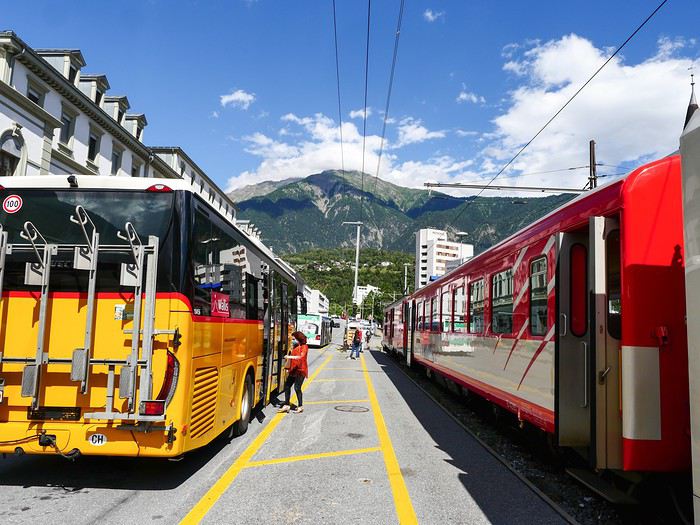
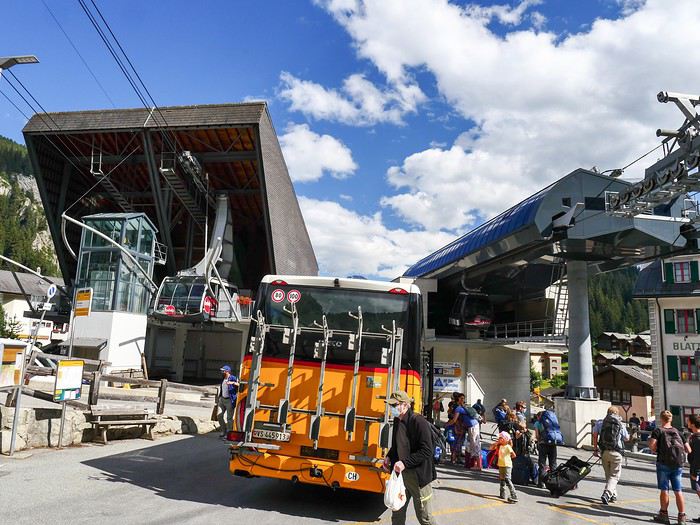
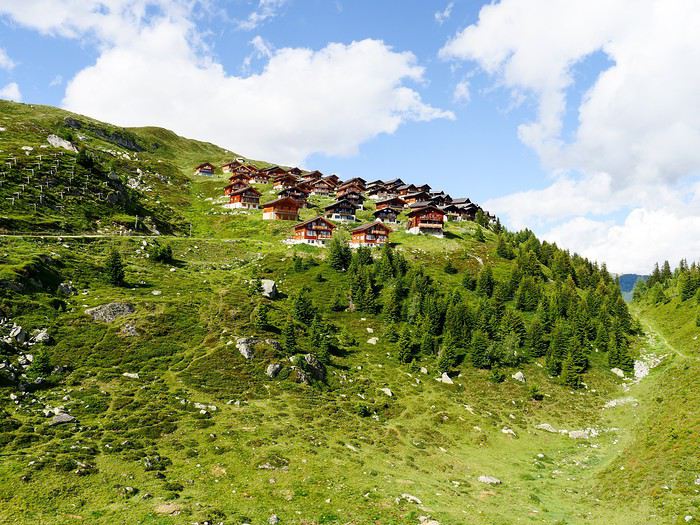
Le lendemain, dimanche 12 juillet, j'entame la 1ère étape d'un trek de 9 jours le long des bisses valaisans de la rive droite en suivant le guide réalisé par Armand Dussex et publié en 2018 aux éditions Rossolis, Bussigny, Vaud, Suisse 1er bisse ou suone en haut valaisan: le Nessjeri qui capte l'eau dans le Chelchbach, au pied du Grisighorn au dessus de Belalp
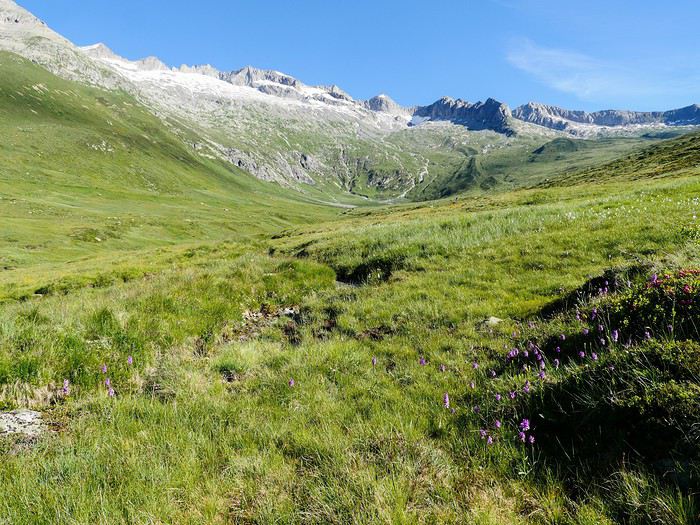
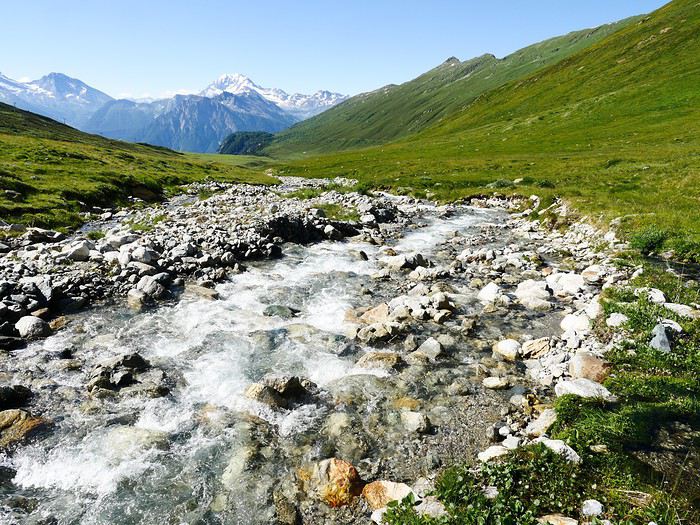
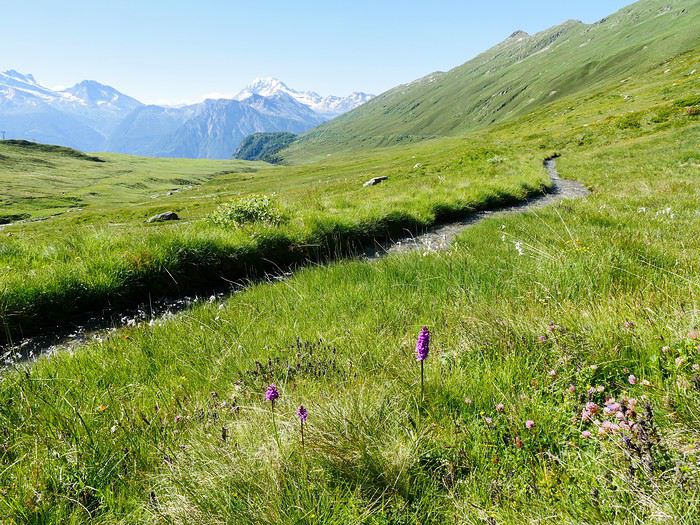
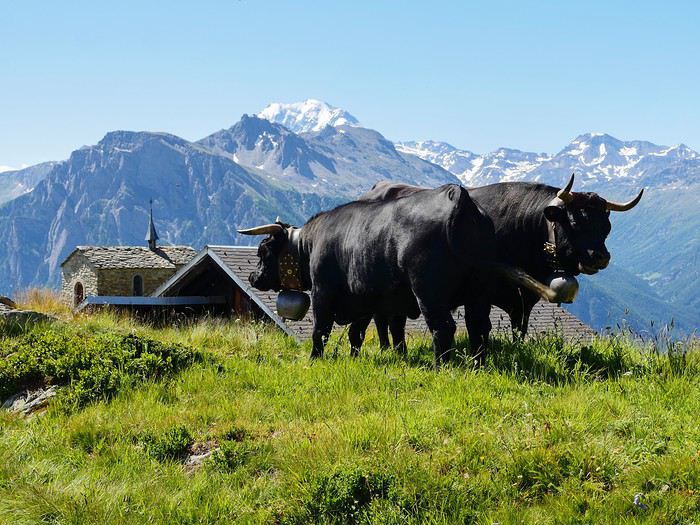
2ème bisse: Obersta connu déjà en 1435; il prend son eau dans le Mundbach et prend fin dans le Milchbach à l'est de Birgisch. Un bisse est un système d'irrigation qui va chercher l'eau dans la partie supérieure d'un torrent et qui détourne une partie de son eau pour la faire suivre à flanc coteau un cours qui permet aux villages d'altitude flanqués sur le flanc de montagnes peu "arrosées" de profiter de l'eau des glaciers qui naturellement file tout droit vers la plaine.
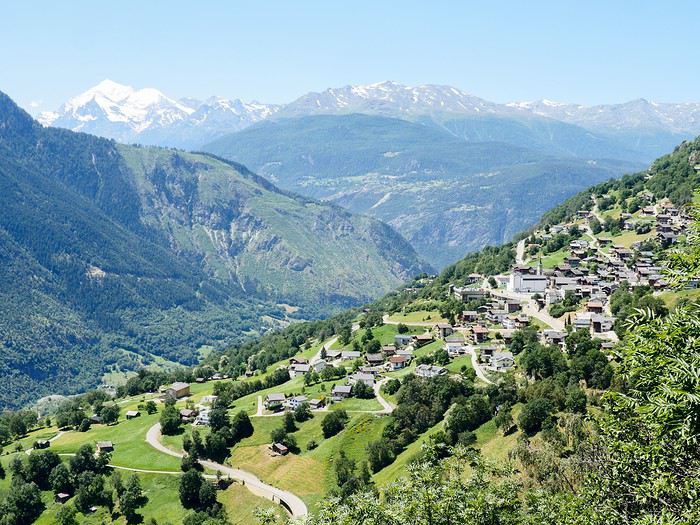
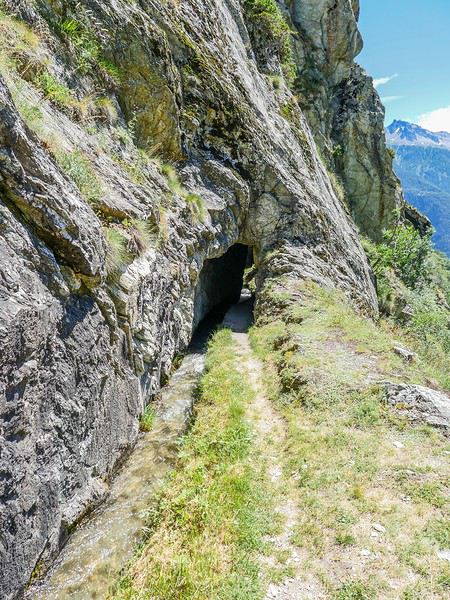
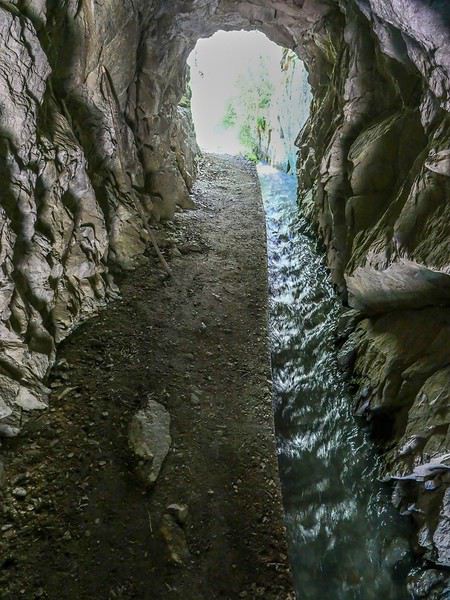
Comme on le voit, le trajet du bisse est parfois directement creuser dans le rocher pour éviter la difficulté de le faire suivre la pente d'une falaise abrupte... A suivre...
Le lendemain, dimanche 12 juillet, j'entame la 1ère étape d'un trek de 9 jours le long des bisses valaisans de la rive droite en suivant le guide réalisé par Armand Dussex et publié en 2018 aux éditions Rossolis, Bussigny, Vaud, Suisse 1er bisse ou suone en haut valaisan: le Nessjeri qui capte l'eau dans le Chelchbach, au pied du Grisighorn au dessus de Belalp
2ème bisse: Obersta connu déjà en 1435; il prend son eau dans le Mundbach et prend fin dans le Milchbach à l'est de Birgisch. Un bisse est un système d'irrigation qui va chercher l'eau dans la partie supérieure d'un torrent et qui détourne une partie de son eau pour la faire suivre à flanc coteau un cours qui permet aux villages d'altitude flanqués sur le flanc de montagnes peu "arrosées" de profiter de l'eau des glaciers qui naturellement file tout droit vers la plaine.
Comme on le voit, le trajet du bisse est parfois directement creuser dans le rocher pour éviter la difficulté de le faire suivre la pente d'une falaise abrupte... A suivre...
Suisse, pays de lacs et montagnes du 16 au 28 mai 2020 English translation pending
Bonjour,
Comme pour beaucoup de voyageurs, le Coronavirus a perturbé nos plans pour cette année. Notre road trip au Pérou est tombé à l’eau et la fermeture des frontières ne nous permettait pas de quitter la Suisse.
Heureusement, en Suisse, nous n’avons pas subi un confinement strict et nous pouvions nous déplacer librement dans le pays, en respectant certaines règles (distance de 2 mètres entres les personnes, rassemblements de maximum 5 personnes). De plus, une semaine avant notre départ, les magasins, restaurants et musées pouvaient ouvrir. Par contre, les campings, télécabines et télésièges sont restés fermés jusqu’au 6 juin.
Nous avons décidé de ne pas préparer un itinéraire fixe. Le but principal était le canton des Grisons que nous connaissions très peu. Pour y aller et pour revenir, nous avons traversé d’autres cantons où nous avons profité de faire des visites et randonnées. Certains endroits nous étaient bien connus, mais les voir sans les touristes habituels, asiatiques, indiens et américains, change complètement la perception des lieux. Imaginez, le fameux pont de la Chapelle à Lucerne, sans les hordes de touristes asiatiques qui l’envahissent tous les jours.
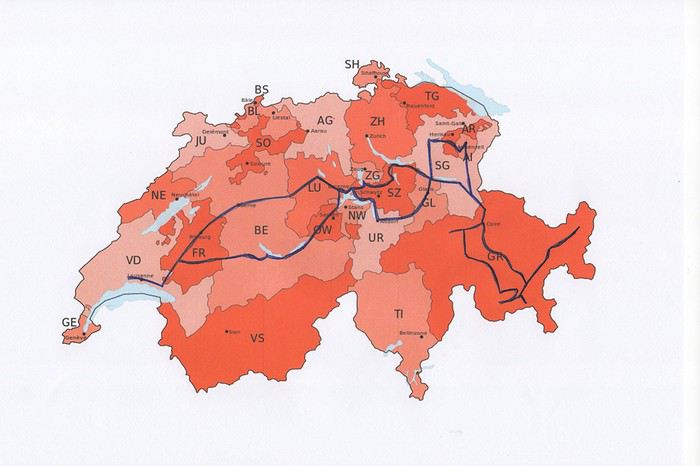
Nous avons loué un van, afin d’être autonome et libre. Notre choix s’est porté sur le VW California Ocean. Ce van est passe-partout, on peut facilement emprunter toutes les petites routes de montagnes et se parquer partout. Seul inconvénient, il n’a pas de salle de bain. La douche se fait à l’extérieur (eau froide), mais nous avons des toilettes portables. Le California Ocean est équipé avec une petite cuisine (un réchaud à gaz avec deux feux, un frigo de 42 litres, un petit évier). Il y a des placards sous la cuisine, au-dessus de la banquette et à l’arrière, ainsi qu’un grand tiroir sous la banquette. Les sièges avant se tournent, il y a deux tables, une à l’intérieur et une autre, encastrée dans la portière, pour l’extérieur. Les deux chaises pour l’extérieur sont encastrées dans la porte du coffre. Le toit se lève, on peut donc se mettre debout à l’intérieur du van. Le lit sous le toit est confortable, avec son sommier sur lequel sont fixé des ressorts. Un store extérieur nous protège du soleil lorsqu’on est à l’arrêt. Le chauffage stationnaire est bien agréable pour chauffer l’habitacle lorsqu’il fait froid. Il y a aussi plusieurs prises, dont une qui fonctionne avec la deuxième batterie et permet de charger le téléphone, tablette, etc. la nuit. Bref, ce petit van est vraiment fonctionnel.
Au dernier moment, nous avons décidé de prendre notre chien Tidou avec nous. Il a fallu adapter nos randonnées et visites. Eh oui, notre Tidou n’est plus tout jeune et il a des soucis avec son dos. Nous avons acheté un sac à dos spécifique, pour pouvoir le porter en terrain abrupte et lorsqu’il sera trop fatigué.
Nous avons chargé l’application park4night sur nos iPhones. Cette application est bien utile pour trouver des emplacements pour passer la nuit. Contrairement, à ce que l’on peut souvent lire, nous n’avons rencontré aucune difficulté pour passer la nuit. Le camping sauvage est donc possible en Suisse, si on ne s’installe pas pour plusieurs jours au même endroit. Concernant l’eau potable, on trouve de nombreuses fontaines, le plus souvent avec de l’eau potable.
Comme pour beaucoup de voyageurs, le Coronavirus a perturbé nos plans pour cette année. Notre road trip au Pérou est tombé à l’eau et la fermeture des frontières ne nous permettait pas de quitter la Suisse.
Heureusement, en Suisse, nous n’avons pas subi un confinement strict et nous pouvions nous déplacer librement dans le pays, en respectant certaines règles (distance de 2 mètres entres les personnes, rassemblements de maximum 5 personnes). De plus, une semaine avant notre départ, les magasins, restaurants et musées pouvaient ouvrir. Par contre, les campings, télécabines et télésièges sont restés fermés jusqu’au 6 juin.
Nous avons décidé de ne pas préparer un itinéraire fixe. Le but principal était le canton des Grisons que nous connaissions très peu. Pour y aller et pour revenir, nous avons traversé d’autres cantons où nous avons profité de faire des visites et randonnées. Certains endroits nous étaient bien connus, mais les voir sans les touristes habituels, asiatiques, indiens et américains, change complètement la perception des lieux. Imaginez, le fameux pont de la Chapelle à Lucerne, sans les hordes de touristes asiatiques qui l’envahissent tous les jours.
Nous avons loué un van, afin d’être autonome et libre. Notre choix s’est porté sur le VW California Ocean. Ce van est passe-partout, on peut facilement emprunter toutes les petites routes de montagnes et se parquer partout. Seul inconvénient, il n’a pas de salle de bain. La douche se fait à l’extérieur (eau froide), mais nous avons des toilettes portables. Le California Ocean est équipé avec une petite cuisine (un réchaud à gaz avec deux feux, un frigo de 42 litres, un petit évier). Il y a des placards sous la cuisine, au-dessus de la banquette et à l’arrière, ainsi qu’un grand tiroir sous la banquette. Les sièges avant se tournent, il y a deux tables, une à l’intérieur et une autre, encastrée dans la portière, pour l’extérieur. Les deux chaises pour l’extérieur sont encastrées dans la porte du coffre. Le toit se lève, on peut donc se mettre debout à l’intérieur du van. Le lit sous le toit est confortable, avec son sommier sur lequel sont fixé des ressorts. Un store extérieur nous protège du soleil lorsqu’on est à l’arrêt. Le chauffage stationnaire est bien agréable pour chauffer l’habitacle lorsqu’il fait froid. Il y a aussi plusieurs prises, dont une qui fonctionne avec la deuxième batterie et permet de charger le téléphone, tablette, etc. la nuit. Bref, ce petit van est vraiment fonctionnel.
Au dernier moment, nous avons décidé de prendre notre chien Tidou avec nous. Il a fallu adapter nos randonnées et visites. Eh oui, notre Tidou n’est plus tout jeune et il a des soucis avec son dos. Nous avons acheté un sac à dos spécifique, pour pouvoir le porter en terrain abrupte et lorsqu’il sera trop fatigué.
Nous avons chargé l’application park4night sur nos iPhones. Cette application est bien utile pour trouver des emplacements pour passer la nuit. Contrairement, à ce que l’on peut souvent lire, nous n’avons rencontré aucune difficulté pour passer la nuit. Le camping sauvage est donc possible en Suisse, si on ne s’installe pas pour plusieurs jours au même endroit. Concernant l’eau potable, on trouve de nombreuses fontaines, le plus souvent avec de l’eau potable.
Peut-être une partie de l'est du Canada (Québec) English translation pending
Bonjour, un nouveau projet, pourquoi pas.
Après 5 voyages aux USA, nous avons décidé de changer de lieu, un peu aidé aussi par une visite à faire a une amie à Victoria. Certes on aurait bien aimé qu’elle soit sur la côte est mais voilà. Nous prévoyons de faire une halte de quelques jours à Victoria dans le courant du mois de juin puis de rejoindre Montréal.
Une rapide présentation s’impose. Nous sommes un couple de retraité qui aura 71 ans à cette époque. On voyage en voiture avec les nuits en motels/hôtels, aucune expérience avec les B&B qui semblent très courant dans ce pays. Comme je suis le seul conducteur, j’ai volontairement limité les trajets à environ 300km/jour à la suite d’une mauvaise expérience en 2017. On aime bien randonner mais maintenant, on se contente de petites distances assez faciles, au besoin on en fera plusieurs par jour.
Dans le circuit ci-dessous, je n’ai, bien sûr, pas indiqué tous les petits arrêts inévitables ici ou là. Comme vous le voyez, les dates ne sont pas fixes et le nombre de jours peut aussi évoluer un peu. Donc rien n’est réservé !
Le circuit
J01-Vancouver-Montréal, avion, récupérer la voiture, la visite de Montréal ne nous intéresse pas. Nuit à : Saint-Jérome J02-NP Mont Tremblant : La Chute du Diable, la Roche, la Coulée & la Corniche, Le Lac des Femmes Nuit à : Saint-Jérome J03-NP de la Mauricie : Le Passage, Lac Edouard Nuit à : Grand-Mère J04-Parc des Chutes-de-la-Petite-Rivière-Bostonnais, Pont couvert Ducharme, Halte du Curé-Normandin Nuit à : Ermitage Saint-Antoine J05-Lac St-Jean, Val Jalbert, Chambord Chute Ouiatchouan, Parc de la Pointe-Taillon Nuit à : Alma J06-Saguenay : Fjord du Saguenay, Site de la Nouvelle-France, Statue Notre-Dame-Du-Saguenay, L’Anse de Tabatière Nuit à : Saint-Simeon J07-Saint-Simeon-Rivière-Du-Loup Ferry, Grand Falls, Hays Falls, journée de transition Nuit à : Fredericton J08-Welsford Falls, Saint-John : Marché de Saint-Jean, Mispec Beach, Saint Martins Sea Caves Nuit à : Saint-Martins J09-Fundy Trail Nuit à : Alma J10-Cap Enragé, Pays de la Sagouine, Dune de Buctouche, NP Kouchibouguac : Marais Salé, Le Castor Nuit à : Miramichi J11-Musée Acadien du Québec, Phare de Miscou Nuit à : Caraquet J12-Notre-Dame Du Mont-Saint-Joseph, journée de transition Nuit à : Bonaventure J13-Parc de l'Île-Bonaventure-et-du-Rocher-Percé, Chute Rivière Aux Emeraudes Nuit à : Gaspé J14-NP du Forillon : La Taïga, Grande-Grave “Une tournée dans les Parages”, Cap gaspé, Le bout du Monde Nuit à : Gaspé J15- NP du Forillon : Cap Bon-Ami, Tour du Mont-Saint-Alban Belvédère de L'Anse-de-L'Étang, Grande-Vallee, L'Anse-Pleureuse, Mont-Saint-Pierre Nuit à : Sainte-Anne-Des-Monts J16-NP de la Gaspésie : Lac aux Américains, Mont Ernest-Laforge Nuit à : Matane J17-Phare-de-Pointe-au-Père, NP du Bic : Cap-Caribou & Pointe-aux-Épinettes, Cap-à-l'Orignal, Trois-Pistoles, Rivière-Du-Loup, Notre-Dame-Du-Portage Nuit à : Kamouraska J18 à J20 Quebec, nuit sur place J21- Montréal, retour en avion
Malgré mon passage dans les environs de Québec pour mon travail, il y a une dizaine d’année, nous ne connaissons pas ce pays, donc vos avis nous seraient précieux.
Est-il utile de prendre une carte annuelle pour les entrées dans les NP et si oui, laquelle ?
Merci de vos réponses.
Après 5 voyages aux USA, nous avons décidé de changer de lieu, un peu aidé aussi par une visite à faire a une amie à Victoria. Certes on aurait bien aimé qu’elle soit sur la côte est mais voilà. Nous prévoyons de faire une halte de quelques jours à Victoria dans le courant du mois de juin puis de rejoindre Montréal.
Une rapide présentation s’impose. Nous sommes un couple de retraité qui aura 71 ans à cette époque. On voyage en voiture avec les nuits en motels/hôtels, aucune expérience avec les B&B qui semblent très courant dans ce pays. Comme je suis le seul conducteur, j’ai volontairement limité les trajets à environ 300km/jour à la suite d’une mauvaise expérience en 2017. On aime bien randonner mais maintenant, on se contente de petites distances assez faciles, au besoin on en fera plusieurs par jour.
Dans le circuit ci-dessous, je n’ai, bien sûr, pas indiqué tous les petits arrêts inévitables ici ou là. Comme vous le voyez, les dates ne sont pas fixes et le nombre de jours peut aussi évoluer un peu. Donc rien n’est réservé !
Le circuit
J01-Vancouver-Montréal, avion, récupérer la voiture, la visite de Montréal ne nous intéresse pas. Nuit à : Saint-Jérome J02-NP Mont Tremblant : La Chute du Diable, la Roche, la Coulée & la Corniche, Le Lac des Femmes Nuit à : Saint-Jérome J03-NP de la Mauricie : Le Passage, Lac Edouard Nuit à : Grand-Mère J04-Parc des Chutes-de-la-Petite-Rivière-Bostonnais, Pont couvert Ducharme, Halte du Curé-Normandin Nuit à : Ermitage Saint-Antoine J05-Lac St-Jean, Val Jalbert, Chambord Chute Ouiatchouan, Parc de la Pointe-Taillon Nuit à : Alma J06-Saguenay : Fjord du Saguenay, Site de la Nouvelle-France, Statue Notre-Dame-Du-Saguenay, L’Anse de Tabatière Nuit à : Saint-Simeon J07-Saint-Simeon-Rivière-Du-Loup Ferry, Grand Falls, Hays Falls, journée de transition Nuit à : Fredericton J08-Welsford Falls, Saint-John : Marché de Saint-Jean, Mispec Beach, Saint Martins Sea Caves Nuit à : Saint-Martins J09-Fundy Trail Nuit à : Alma J10-Cap Enragé, Pays de la Sagouine, Dune de Buctouche, NP Kouchibouguac : Marais Salé, Le Castor Nuit à : Miramichi J11-Musée Acadien du Québec, Phare de Miscou Nuit à : Caraquet J12-Notre-Dame Du Mont-Saint-Joseph, journée de transition Nuit à : Bonaventure J13-Parc de l'Île-Bonaventure-et-du-Rocher-Percé, Chute Rivière Aux Emeraudes Nuit à : Gaspé J14-NP du Forillon : La Taïga, Grande-Grave “Une tournée dans les Parages”, Cap gaspé, Le bout du Monde Nuit à : Gaspé J15- NP du Forillon : Cap Bon-Ami, Tour du Mont-Saint-Alban Belvédère de L'Anse-de-L'Étang, Grande-Vallee, L'Anse-Pleureuse, Mont-Saint-Pierre Nuit à : Sainte-Anne-Des-Monts J16-NP de la Gaspésie : Lac aux Américains, Mont Ernest-Laforge Nuit à : Matane J17-Phare-de-Pointe-au-Père, NP du Bic : Cap-Caribou & Pointe-aux-Épinettes, Cap-à-l'Orignal, Trois-Pistoles, Rivière-Du-Loup, Notre-Dame-Du-Portage Nuit à : Kamouraska J18 à J20 Quebec, nuit sur place J21- Montréal, retour en avion
Malgré mon passage dans les environs de Québec pour mon travail, il y a une dizaine d’année, nous ne connaissons pas ce pays, donc vos avis nous seraient précieux.
Est-il utile de prendre une carte annuelle pour les entrées dans les NP et si oui, laquelle ?
Merci de vos réponses.
Préparation de 3 semaines namibiennes en avril 2021 English translation pending
Hello la communauté,
De retour sur VF, j'entame donc la préparation de notre retour en Namibie prévu pour l'année prochaine, à priori en Avril 2021.
Après 2 voyages namibiens au mois d'Aout, nous avons maintenant hâte de découvrir la Namibie pendant la saison chaude et humide (enfin pas trop quand même hein ?!), c'est pourquoi nous voudrions partir au mois d'Avril, à la fin de la saison des pluies, pour pouvoir profiter des paysages verdoyants, des piscines des lodges et des soirées tempérées sous le ciel étoilé.
Nous serons entre 2 et 6 (Dépend de la fiabilité des amis 😇) et l'idée serait de louer un (ou plusieurs) 4x4 équipé et d'alterner nuit en camping et nuit en lodge.
Ayant déjà fait 2 séjours de 15 jours en Namibie nous voulons cette fois ci découvrir de nouvelles région (Kunene et Caprivi) et prendre un petit peu plus notre temps (mais ça on se le dit à chaque fois et au final on ne s'y tient jamais 😄)
Nous espérons disposer de 23 jours sur place. Et voici l'ébauche de notre programme :
J1 : Arrivée Windhoek tôt le matin -> Bagatelle Kalahari GR J2 : Bagatelle Kalahari GR -> Namibrand Family Hideout J3 : Namibrand Family Hideout J4 : Namibrand Family Hiedout -> Sossus Dune Lodge J5 : Sossus Dune Lodge J6 : Sossus Dune Lodge -> Rostock Ritz J7 : Rostock Ritz -> Swakopmund J8 : Swakopmund -> Brandberg White Lady J9 : Brandberg White Lady -> Palmwag J10 : Palmwag -> Grootberg Lodge J11: Grootberg Lodge J12 : Grootberg Lodge -> Epupa J13 : Epupa J14 : Epupa -> Dolomite Camp J15 : Dolomite Camp -> Okaukuejo J16 : Okaukuejo -> Halali J17 : Halali J18 : Halali -> Mahango GR (Caprivi) J19 : Mahango GR (Caprivi) J20 : Caprivi ? J21 : Caprivi ? J22 : Victoria Falls ? Retour Windhoek ? J23 : Remise du véhicule (Kasane ou Windhoek) et décollage (le soir de préférence)
En gros... Ce qui fait quand même un bon 4000km en un peu plus de 3 semaines. Sachant que les étapes incontournables de ce prochain voyage sont Epupa, Etosha et la bande de Caprivi.
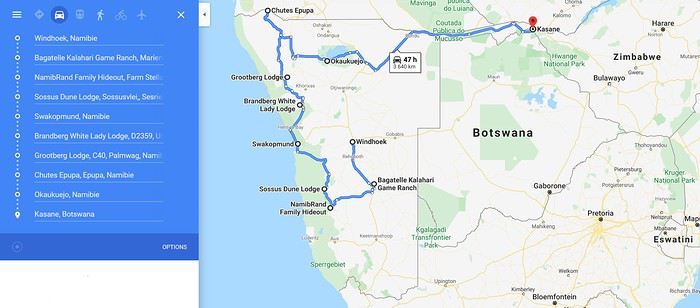
Alors, j'ai vu que beaucoup d'entre vous étiez allé, ou retourné, en Namibie ces dernières années. 🙂 J'ai lu la plupart des carnets récents concernant cet itinéraire (nombreux) et cette période de l'année (beaucoup moins nombreux 😇) et j'ouvre donc ce sujet pour regrouper un peu les informations et les conseils.
J'ai déjà beaucoup de questions 😊 Dans l'ordre,
Quelle compagnie relie l’Europe (Paris ou Francfort) et Windhoek à cette période avec arrivée tôt le matin ? Sans escale si possible.
Je voulais retourner à Bagatelle où nous avions dormi lors de notre premier voyage il y a 5 ans mais j'ai lu aussi beaucoup de retours positifs sur le Kalahari Anib Lodge, quelqu'un a t'il déjà comparé les deux ?
Plutot Ameib Ranch ou Bagatelle White Lady ? 😉 Vous savez si il y a des éléphants du coté du Brandberg à cette période ?
Pour la bande de Caprivi j'ai bien entendu noté la Mahango GR, et il nous resterait 2 jours. Y a t'il d'autre réserve sympa à visiter avec beaucoup de faune au bord du fleuve +/- balade en bateau ? Si vous avez des conseils coté botswanais je suis preneur aussi. 🙂
Dans l'état actuel du programme j'envisage fortement un drop off à Kasane avec pourquoi pas une journée aux chutes Victoria mais ce n'est pas obligatoire.
Merci par avance pour vos remarques, vos conseils et votre bonne humeur ! 🙂
De retour sur VF, j'entame donc la préparation de notre retour en Namibie prévu pour l'année prochaine, à priori en Avril 2021.
Après 2 voyages namibiens au mois d'Aout, nous avons maintenant hâte de découvrir la Namibie pendant la saison chaude et humide (enfin pas trop quand même hein ?!), c'est pourquoi nous voudrions partir au mois d'Avril, à la fin de la saison des pluies, pour pouvoir profiter des paysages verdoyants, des piscines des lodges et des soirées tempérées sous le ciel étoilé.
Nous serons entre 2 et 6 (Dépend de la fiabilité des amis 😇) et l'idée serait de louer un (ou plusieurs) 4x4 équipé et d'alterner nuit en camping et nuit en lodge.
Ayant déjà fait 2 séjours de 15 jours en Namibie nous voulons cette fois ci découvrir de nouvelles région (Kunene et Caprivi) et prendre un petit peu plus notre temps (mais ça on se le dit à chaque fois et au final on ne s'y tient jamais 😄)
Nous espérons disposer de 23 jours sur place. Et voici l'ébauche de notre programme :
J1 : Arrivée Windhoek tôt le matin -> Bagatelle Kalahari GR J2 : Bagatelle Kalahari GR -> Namibrand Family Hideout J3 : Namibrand Family Hideout J4 : Namibrand Family Hiedout -> Sossus Dune Lodge J5 : Sossus Dune Lodge J6 : Sossus Dune Lodge -> Rostock Ritz J7 : Rostock Ritz -> Swakopmund J8 : Swakopmund -> Brandberg White Lady J9 : Brandberg White Lady -> Palmwag J10 : Palmwag -> Grootberg Lodge J11: Grootberg Lodge J12 : Grootberg Lodge -> Epupa J13 : Epupa J14 : Epupa -> Dolomite Camp J15 : Dolomite Camp -> Okaukuejo J16 : Okaukuejo -> Halali J17 : Halali J18 : Halali -> Mahango GR (Caprivi) J19 : Mahango GR (Caprivi) J20 : Caprivi ? J21 : Caprivi ? J22 : Victoria Falls ? Retour Windhoek ? J23 : Remise du véhicule (Kasane ou Windhoek) et décollage (le soir de préférence)
En gros... Ce qui fait quand même un bon 4000km en un peu plus de 3 semaines. Sachant que les étapes incontournables de ce prochain voyage sont Epupa, Etosha et la bande de Caprivi.
Alors, j'ai vu que beaucoup d'entre vous étiez allé, ou retourné, en Namibie ces dernières années. 🙂 J'ai lu la plupart des carnets récents concernant cet itinéraire (nombreux) et cette période de l'année (beaucoup moins nombreux 😇) et j'ouvre donc ce sujet pour regrouper un peu les informations et les conseils.
J'ai déjà beaucoup de questions 😊 Dans l'ordre,
Quelle compagnie relie l’Europe (Paris ou Francfort) et Windhoek à cette période avec arrivée tôt le matin ? Sans escale si possible.
Je voulais retourner à Bagatelle où nous avions dormi lors de notre premier voyage il y a 5 ans mais j'ai lu aussi beaucoup de retours positifs sur le Kalahari Anib Lodge, quelqu'un a t'il déjà comparé les deux ?
Plutot Ameib Ranch ou Bagatelle White Lady ? 😉 Vous savez si il y a des éléphants du coté du Brandberg à cette période ?
Pour la bande de Caprivi j'ai bien entendu noté la Mahango GR, et il nous resterait 2 jours. Y a t'il d'autre réserve sympa à visiter avec beaucoup de faune au bord du fleuve +/- balade en bateau ? Si vous avez des conseils coté botswanais je suis preneur aussi. 🙂
Dans l'état actuel du programme j'envisage fortement un drop off à Kasane avec pourquoi pas une journée aux chutes Victoria mais ce n'est pas obligatoire.
Merci par avance pour vos remarques, vos conseils et votre bonne humeur ! 🙂
Canada et USA: le north-east à vélo et transports collectifs English translation pending
Carnets de route d'un sexagénaire à vélo
Niagara, Boston, Cape Cod, Nantucket, Nouvelle Angleterre, Nouveau Brunswick, Québec, Saint Laurent, Montréal... Surprises, galères et émotions. Un voyage contrasté sur le continent des contrastes.
Partir en solo à vélo sans date de retour. Un rêve que je caressais depuis longtemps et que la retraite me permet de réaliser tant que la forme physique est là.
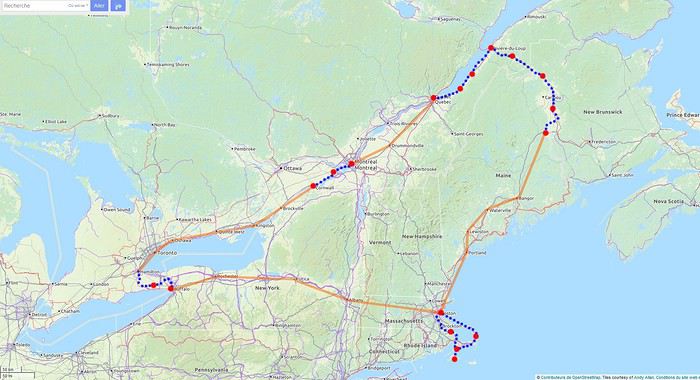 Les étapes, les portions à vélo (en bleu), les portions en bus et train (en orange)
Pour le parcours, j'utilise les tracés de la carte Open Cycle Map
Les étapes, les portions à vélo (en bleu), les portions en bus et train (en orange)
Pour le parcours, j'utilise les tracés de la carte Open Cycle Map
Les étapes, les portions à vélo (en bleu), les portions en bus et train (en orange)
Pour le parcours, j'utilise les tracés de la carte Open Cycle MapBotswana-Namibie octobre 2019... le retour English translation pending
Cette fois c’est à trois que nous ferons le voyage, un ami de longue date nous accompagnant.
A l’origine cela devait être notre premier voyage avec notre propre véhicule (stationné à Maun), malheureusement quelque temps avant mon contact sur place m’annonce qu’il y avait un « bruit » manifestement un problème au niveau de la boite de transfert. La pièce fautive devant venir d’Afrique du Sud le véhicule ne sera pas prêt pour notre venue. J’ai contacté Bushlore chez qui nous avions déjà loué un véhicule et ils nous ont appris qu’ils ont maintenant une agence à Maun et il ne leur reste plus qu’un Land Cruiser … nickel c’est la voiture reine sous ces latitudes. Nous acceptons, même si c’est plus cher que rouler avec notre propre véhicule, mais on n’a pas voulu annuler ou décaler le voyage.
C’est ainsi que nous partons, gaillards, de notre aéroport favori, Frankfurt le mardi 22 octobre à 22h40. Nous volerons sur Lufthansa. A titre d’information pour les futurs voyageurs, ça nous a couté moins cher d’acheter d’un côté un A/R FRA-JNB, de l’autre un JNB-MUB et en troisième un WDH-JNB, plutôt qu’un billet combiné.
Mercredi 23 octobre
Arrivée à 8h30 à JNB Vol BP212 Botswana Air à 11h20 … ça fait une longue escale ! Arrivée à Maun à 13h20
Sur place Bushlore nous attend, on va à leur agence faire l’état des lieux et remplir les papiers. Ensuite les courses, puis un tour chez Joe pour voir la voiture. Malheureusement, là il est déjà tard, on part de Maun vers 17h30 / 18h.
La piste de nuit vers Duncan Camp’s n’est pas top. On s’arrête une première fois demander notre route, le gars a les yeux rouges explosés … On voit une piste qui part à gauche et on voit les phares arriver de cette piste, chouette ça doit être là !... quand on arrive à leur hauteur on les hèle, dans le véhicule 4 noirs armés de fusils … aille, à mon avis ce sont des braconniers … pas cool tout ça.😮 On reprend la piste principale qui va vers Mababe. Le problème c’est que T4A ne connait pas la piste qui mène au camp et Osmand veut nous proposer des « raccourcis ». En fait il faut rester sur la piste principale jusqu’à ce qu’on croise un panneau indiquant le camp (de nuit c’est moins évident). La piste est très approximative et sablonneuse … ce qui devait arriver arriva, à un embranchement nous avons hésité entre deux ornières et on s’est ensablé. Ok, il fait nuit, ok on est au milieu de nulle part … pas de panique. Il ne faut surtout pas insister, on sort « tranquillement », on analyse la situation, pelletons un peu, une marche arrière, un choix d’ornières et c’est reparti. On navigue plus ou moins au cap car point de référence sur les cartes. Au bout d’un moment on voit de la lumière au loin et ouf c’est là !😎 Les gars du camp était venu à notre rencontre lorsqu’ils ont vu des phares se « promener ».
L’accueil a été chaleureux. Il n’y a que nous. Nous avons deux tentes sur les 4 dont dispose le camp. L’endroit est splendide au bord de la Thamalakane, l’ambiance aussi … incroyable, on n’arrive pas à s’imaginer qu’il y a encore quelques heures nous étions au milieu de la civilisation occidentale, frénétique. Qu’est-ce qu’on est bien.🙂 Ce n’est pas tout ça mais là il est temps de boire une petite bière …😛 Ensuite le chef viendra nous chercher, nous énoncera le menu. Vous n’imaginez pas comme on est bien là, seuls au milieu de la nature, avec les bruits des animaux, la douceur du climat, le sourire de nos hôtes et la bonne nourriture … génial nous sommes de nouveau en Afrique Australe. 🙂 😎
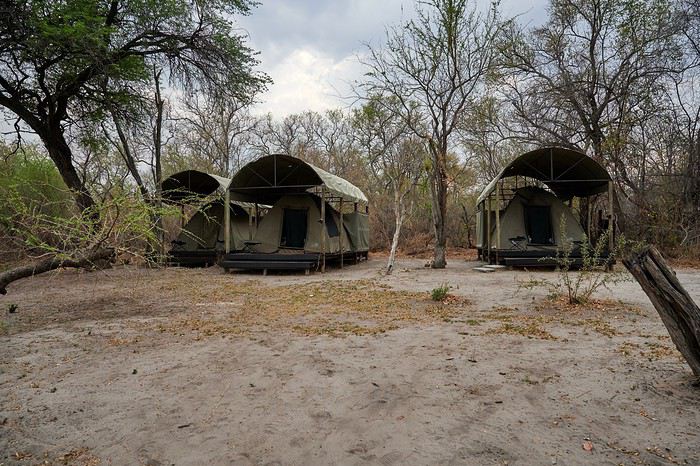
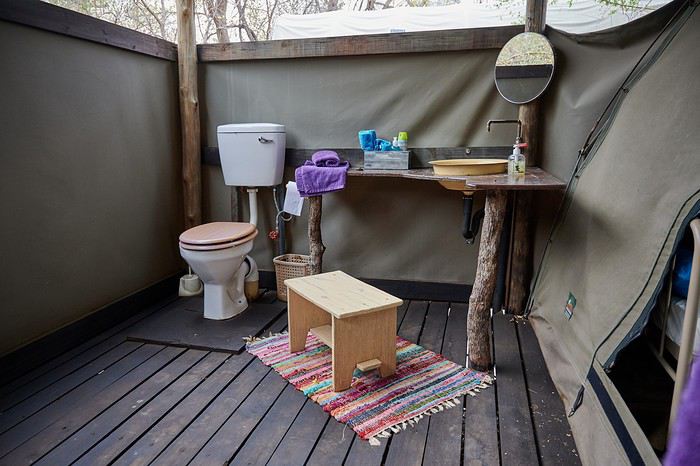
Vous l’aurez compris on recommande chaudement Duncan Camp ‘s. En revanche n’essayez pas d’y aller directement, réservation obligatoire et paiement soit par internet soit à Maun. La durée du trajet depuis Maun est de 1h30.
Version longue en cours de création ici
A l’origine cela devait être notre premier voyage avec notre propre véhicule (stationné à Maun), malheureusement quelque temps avant mon contact sur place m’annonce qu’il y avait un « bruit » manifestement un problème au niveau de la boite de transfert. La pièce fautive devant venir d’Afrique du Sud le véhicule ne sera pas prêt pour notre venue. J’ai contacté Bushlore chez qui nous avions déjà loué un véhicule et ils nous ont appris qu’ils ont maintenant une agence à Maun et il ne leur reste plus qu’un Land Cruiser … nickel c’est la voiture reine sous ces latitudes. Nous acceptons, même si c’est plus cher que rouler avec notre propre véhicule, mais on n’a pas voulu annuler ou décaler le voyage.
C’est ainsi que nous partons, gaillards, de notre aéroport favori, Frankfurt le mardi 22 octobre à 22h40. Nous volerons sur Lufthansa. A titre d’information pour les futurs voyageurs, ça nous a couté moins cher d’acheter d’un côté un A/R FRA-JNB, de l’autre un JNB-MUB et en troisième un WDH-JNB, plutôt qu’un billet combiné.
Mercredi 23 octobre
Arrivée à 8h30 à JNB Vol BP212 Botswana Air à 11h20 … ça fait une longue escale ! Arrivée à Maun à 13h20
Sur place Bushlore nous attend, on va à leur agence faire l’état des lieux et remplir les papiers. Ensuite les courses, puis un tour chez Joe pour voir la voiture. Malheureusement, là il est déjà tard, on part de Maun vers 17h30 / 18h.
La piste de nuit vers Duncan Camp’s n’est pas top. On s’arrête une première fois demander notre route, le gars a les yeux rouges explosés … On voit une piste qui part à gauche et on voit les phares arriver de cette piste, chouette ça doit être là !... quand on arrive à leur hauteur on les hèle, dans le véhicule 4 noirs armés de fusils … aille, à mon avis ce sont des braconniers … pas cool tout ça.😮 On reprend la piste principale qui va vers Mababe. Le problème c’est que T4A ne connait pas la piste qui mène au camp et Osmand veut nous proposer des « raccourcis ». En fait il faut rester sur la piste principale jusqu’à ce qu’on croise un panneau indiquant le camp (de nuit c’est moins évident). La piste est très approximative et sablonneuse … ce qui devait arriver arriva, à un embranchement nous avons hésité entre deux ornières et on s’est ensablé. Ok, il fait nuit, ok on est au milieu de nulle part … pas de panique. Il ne faut surtout pas insister, on sort « tranquillement », on analyse la situation, pelletons un peu, une marche arrière, un choix d’ornières et c’est reparti. On navigue plus ou moins au cap car point de référence sur les cartes. Au bout d’un moment on voit de la lumière au loin et ouf c’est là !😎 Les gars du camp était venu à notre rencontre lorsqu’ils ont vu des phares se « promener ».
L’accueil a été chaleureux. Il n’y a que nous. Nous avons deux tentes sur les 4 dont dispose le camp. L’endroit est splendide au bord de la Thamalakane, l’ambiance aussi … incroyable, on n’arrive pas à s’imaginer qu’il y a encore quelques heures nous étions au milieu de la civilisation occidentale, frénétique. Qu’est-ce qu’on est bien.🙂 Ce n’est pas tout ça mais là il est temps de boire une petite bière …😛 Ensuite le chef viendra nous chercher, nous énoncera le menu. Vous n’imaginez pas comme on est bien là, seuls au milieu de la nature, avec les bruits des animaux, la douceur du climat, le sourire de nos hôtes et la bonne nourriture … génial nous sommes de nouveau en Afrique Australe. 🙂 😎
Vous l’aurez compris on recommande chaudement Duncan Camp ‘s. En revanche n’essayez pas d’y aller directement, réservation obligatoire et paiement soit par internet soit à Maun. La durée du trajet depuis Maun est de 1h30.
Version longue en cours de création ici
Boucle de 11 jours au départ de Montréal incluant la Gaspésie English translation pending
Bonjour,
Je reviens vers vous pour vous présenter une ébauche d’itinéraire que nous souhaitons parcourir à deux à partir du 25 mai au départ de Montréal où nous serons depuis 3 jours...si bien sûr d’ici là les canadiens ne ferment pas leur frontière aux européens comme viennent de le faire les étasuniens.
Comme je l’ai déjà écrit, dans cette discussion, que j’ai ouverte sur la présence des bibittes en cette période, nous sommes conscients que le programme et dense et qu’il y aura beaucoup de route.
Le point positif c'est que les journées sont plutôt longues à cette époque de l’année. De plus, par rapport au programme initial, nous avons pu ajouter une journée, que nous avons placée dans le Charlevoix.
Ça donne donc : J1 : départ matinal de Montréal pour le parc de la Mauricie (route panoramique + rando facile si le temps le permet), soirée et nuit à Québec J2 : chute Montmorency, Isle-aux-Coudres, route 362 et nuit vers St-Siméon J3 : Saguenay : rive sud puis nord et nuit à Tadoussac J4 : Charlevoix : parc des Hautes Gorges ou celui des Grands Jardins, nuit vers St-Siméon J5 : traversier St-Siméon-Rivière-du-Loup, parc du Bic, nuit entre Matane et Cap-Chat J6 : route 132 jusqu’au Cap de Rosiers ou Gaspé et 2 nuits dans le coin J7 : parc du Forillon J8 : route jusqu’à Carleton sur mer ou Matapédia : Percé (île Bonaventure non programmée), baie des chaleurs, Miguasha J9 : route pour dormir entre Notre-Dame-du-Portage et Kamouraska : par le Lac Matapédia si on souhaite de nouveau longer la rive sud du fleuve à partir de Mont-joli, par Témiscouata sinon J10 : route vers Québec nuit sur place J11 : Québec et route vers Montréal où on restera 2 jours de plus avant de rentrer en France
Je sais que dormir 2 nuits à St-Siméon de façon non continue n’est pas ce qu’il y a de plus optimisé, mais je ne vois pas comment faire autrement. Initialement nous souhaitions, à partir de Tadoussac, prendre le traversier Les Escoumins-Trois-Pistoles mais ce dernier ne reprendra son service qu’à compter du 24 juin (j’ai eu confirmation par mail). Quant au traversier Baie-Comeau-Matane ses horaires ne conviennent pas, sans parler du trajet jusqu’à Baie-Comeau qui ne nous tente pas plus que ça. Il ne reste donc plus que le traversier St-Siméon-Rivière-du-Loup pour passer sur la rive sud.
Une fois le parcours bouclé nous commencerons à nous occuper de réserver les hébergements, ceux pour lesquels l’annulation est possible en tout cas...
Toutes vos remarques sont les bienvenues. 🙂
Je reviens vers vous pour vous présenter une ébauche d’itinéraire que nous souhaitons parcourir à deux à partir du 25 mai au départ de Montréal où nous serons depuis 3 jours...si bien sûr d’ici là les canadiens ne ferment pas leur frontière aux européens comme viennent de le faire les étasuniens.
Comme je l’ai déjà écrit, dans cette discussion, que j’ai ouverte sur la présence des bibittes en cette période, nous sommes conscients que le programme et dense et qu’il y aura beaucoup de route.
Le point positif c'est que les journées sont plutôt longues à cette époque de l’année. De plus, par rapport au programme initial, nous avons pu ajouter une journée, que nous avons placée dans le Charlevoix.
Ça donne donc : J1 : départ matinal de Montréal pour le parc de la Mauricie (route panoramique + rando facile si le temps le permet), soirée et nuit à Québec J2 : chute Montmorency, Isle-aux-Coudres, route 362 et nuit vers St-Siméon J3 : Saguenay : rive sud puis nord et nuit à Tadoussac J4 : Charlevoix : parc des Hautes Gorges ou celui des Grands Jardins, nuit vers St-Siméon J5 : traversier St-Siméon-Rivière-du-Loup, parc du Bic, nuit entre Matane et Cap-Chat J6 : route 132 jusqu’au Cap de Rosiers ou Gaspé et 2 nuits dans le coin J7 : parc du Forillon J8 : route jusqu’à Carleton sur mer ou Matapédia : Percé (île Bonaventure non programmée), baie des chaleurs, Miguasha J9 : route pour dormir entre Notre-Dame-du-Portage et Kamouraska : par le Lac Matapédia si on souhaite de nouveau longer la rive sud du fleuve à partir de Mont-joli, par Témiscouata sinon J10 : route vers Québec nuit sur place J11 : Québec et route vers Montréal où on restera 2 jours de plus avant de rentrer en France
Je sais que dormir 2 nuits à St-Siméon de façon non continue n’est pas ce qu’il y a de plus optimisé, mais je ne vois pas comment faire autrement. Initialement nous souhaitions, à partir de Tadoussac, prendre le traversier Les Escoumins-Trois-Pistoles mais ce dernier ne reprendra son service qu’à compter du 24 juin (j’ai eu confirmation par mail). Quant au traversier Baie-Comeau-Matane ses horaires ne conviennent pas, sans parler du trajet jusqu’à Baie-Comeau qui ne nous tente pas plus que ça. Il ne reste donc plus que le traversier St-Siméon-Rivière-du-Loup pour passer sur la rive sud.
Une fois le parcours bouclé nous commencerons à nous occuper de réserver les hébergements, ceux pour lesquels l’annulation est possible en tout cas...
Toutes vos remarques sont les bienvenues. 🙂
Itinéraire trek dans le parc Simien (Éthiopie) English translation pending
Bonjour à tous,
Après avoir lu de nombreux blogs et messages sur le forum, certaines de mes questions demeurent sans réponse. Tout d’abord, nous voulons faire le trek du parc Simien en avril en indépendant (avec le scout obligatoire..)
Nous itinéraire serait le suivant :
Jour 1 : Gondar (ou Debark) vers Sankaber Jour 2 : Sankaber à Geech + Imet Gogo aller-retour (dormir à Geecher) Jour 3 : Geech vers Chennek Jour 4 : Chennek vers Sona (en passant par la Bwahit pass et Askwasiye) Jour 5 : Sona vers Mulit Jour 6 : Mulit vers Adi Arkay (route principale) puis vers Debarq avec un peu de chance
1- Les guides récents mentionnent un bus local qui part à 6h le matin de Debarq pour le parc alors que certains blogs précisent qu’ils n’acceptent pas les étrangers, car concurrence déloyale pour les mafieux, ….. Quelqu’un a-t-il tenté le bus local récemment? 2- Est-ce que la partie Sankaber vers Geech vaut le coup ? Ou bien tant qu’à payer un transport, serait-il préférable de se rendre directement sur Geech et profiter plus longtemps des alentours entre Geech et Adi Arkay ?
3- Je n’ai pas trouvé d’infos précisément sur la partie Chennek à Sona (en passant par Arkasiye), puisque tous semblent partir de Chennek et font ensuite la montée du Ras Dashen, en passant par Ambiko, etc. Bref, la partie Chennek à Sona directe (sans Ras Deshen bien sur) est-elle faisable en 1 jour ? Nous sommes 2 gars mi- trentaine en forme physique. 4- Nous voulons ensuite terminer à Adi Arkay qui rejoindre la route principale entre Debarq et Axum. Rendu à Adi Arkay, est-ce facile de trouver un transport (ou payer un local) pour retourner sur Debarq ? Est-ce que ce sera encore la même histoire de la mafia des taxis qui tenteront de nous charger des prix exorbitants comme c’est le cas pour les départs de Debarq vers le parc ?
Je vous remercie à l’avance, vos conseils et suggestions me seront très précieux.
Je me ferai un plaisir de vous répondre à mon tour au retour du voyage!
Après avoir lu de nombreux blogs et messages sur le forum, certaines de mes questions demeurent sans réponse. Tout d’abord, nous voulons faire le trek du parc Simien en avril en indépendant (avec le scout obligatoire..)
Nous itinéraire serait le suivant :
Jour 1 : Gondar (ou Debark) vers Sankaber Jour 2 : Sankaber à Geech + Imet Gogo aller-retour (dormir à Geecher) Jour 3 : Geech vers Chennek Jour 4 : Chennek vers Sona (en passant par la Bwahit pass et Askwasiye) Jour 5 : Sona vers Mulit Jour 6 : Mulit vers Adi Arkay (route principale) puis vers Debarq avec un peu de chance
1- Les guides récents mentionnent un bus local qui part à 6h le matin de Debarq pour le parc alors que certains blogs précisent qu’ils n’acceptent pas les étrangers, car concurrence déloyale pour les mafieux, ….. Quelqu’un a-t-il tenté le bus local récemment? 2- Est-ce que la partie Sankaber vers Geech vaut le coup ? Ou bien tant qu’à payer un transport, serait-il préférable de se rendre directement sur Geech et profiter plus longtemps des alentours entre Geech et Adi Arkay ?
3- Je n’ai pas trouvé d’infos précisément sur la partie Chennek à Sona (en passant par Arkasiye), puisque tous semblent partir de Chennek et font ensuite la montée du Ras Dashen, en passant par Ambiko, etc. Bref, la partie Chennek à Sona directe (sans Ras Deshen bien sur) est-elle faisable en 1 jour ? Nous sommes 2 gars mi- trentaine en forme physique. 4- Nous voulons ensuite terminer à Adi Arkay qui rejoindre la route principale entre Debarq et Axum. Rendu à Adi Arkay, est-ce facile de trouver un transport (ou payer un local) pour retourner sur Debarq ? Est-ce que ce sera encore la même histoire de la mafia des taxis qui tenteront de nous charger des prix exorbitants comme c’est le cas pour les départs de Debarq vers le parc ?
Je vous remercie à l’avance, vos conseils et suggestions me seront très précieux.
Je me ferai un plaisir de vous répondre à mon tour au retour du voyage!
Nord de l'Ethiopie: entre émerveillement et déception... English translation pending
Nous voici fraichement rentrés d’un voyage de 15 jours en Ethiopie. J’avais lu des carnets avant de partir(ceux de Max et de Michant en particulier, d’autres également et tous agrémentés de belles photos), je vais donc en rédiger un qui ne sera sans doute pas très original, mais vous y trouverez mes impressions , quelques détails d’ordre plus pratique et bien sûr des photos.
Cela faisait un moment que j’avais envie de découvrir ce pays. Nous n’avons pas une grande connaissance de l’Afrique ayant surtout voyagé en Asie et sur le continent Américain. Mais nous nous sommes quand même rendus au Kenya, en Tanzanie, en Namibie et au Zimbabwe. C’est important de le préciser car nous avons souvent comparé notre ressenti en Ethiopie par rapport à ce qu’on avait vécu dans ces autres pays d’Afrique. J’ai personnellement trouvé le voyage en Ethiopie plus difficile. On dit souvent que l’Inde ne peut laisser indifférent. On aime ou on déteste. C’est un peu la même chose au sujet de l’Ethiopie. On en revient pas indemne. Pour ma part, il y a eu des moments où j’ai adoré ce voyage et d’autres où j’avais du mal à supporter certaines choses.
Avant de partir, je pensais que les impressions négatives des uns et des autres étaient exagérées. Je les ai trouvé justifiées par la suite même si nous sommes tous d’accord au final pour dire que le voyage vaut largement le détour. Les paysages sont souvent magnifiques et le patrimoine culturel est bien présent.
Nous sommes passés par une agence locale de Lalibela qui s’est occupée de nous réserver un 4X4 avec chauffeur. Sinon, nous nous sommes « débrouillés » sur place. L’agence nous avait aussi réservé un circuit de 2 jours/1 nuit dans le Danakyl et un trek d’une journée au dessus de Lalibela. Nous n’avons pas rencontré beaucoup de voyageurs ayant choisi cette option. Beaucoup étaient en groupe et se déplaçaient donc avec le minibus de l’agence. Les voyageurs en individuel suivaient un programme qu’ils avaient totalement réservé auprès d’une agence et avaient un guide durant toute la durée de leur séjour. A la réflexion, cela peut être une bonne option quand on ne veut pas se prendre la tête avec les négociations sans fin concernant les guides sur place, les scouts etc…Au moins, cela évite d’avoir conscience de l’énormité des sommes demandées parfois pour visiter une église ou autre… J’y reviendrai ...
Itinéraire de 27 jours en voiture dans le Tyrol autrichien depuis Lyon cet été English translation pending
Hello everybody !
Cet été, je pars - ou plutôt - nous partons, j'emmène femme et enfants (2 et 4 ans) dans un nouveau périple dans le Tyrol Autrichien, départ de Lyon mi-juillet pour 27 jours, en voiture, en passant par le sud de la Suisse, dans l'ouest (pas Américain mais) Autrichien puis dans les Dolomites Italiennes.
Cela fait plusieurs années que nous partons aux Etats-Unis et c'est un peu avec amertume que je n'irai pas là-bas cette année mais nous souhaitons aussi voir autre chose et nous avons plus qu'un faible pour les montagnes. Avec un rythme en douceur pour les enfants.
Il y a très peu de retours sur cette destination sur voyageforum, aussi je vous soumets un petit itinéraire pour les curieux peut-être, pour les connaisseurs aussi - si vous avez des conseils ou avis ? J'ai mentionné les centres d'intérêts tout personnels que j'ai pu trouver jusque là, je ne sais pas encore ce que nous ferons ou pas dans cette liste. Nous sommes plutôt nature et randonnée évidemment, équipés pour porter les enfants, nous n'en sommes pas à notre 1ère expérience et rando avec eux. Les hébergements ne sont pas encore choisis, nous prendrons probablement des logements entiers par airbnb.
2N à Samoëns, France Randonnée fer à cheval 9km 3h
3N vers Evolène dans le Val d'Hérens, Suisse Pyramides d’Euseigne (sentier fermé ?) Rando Lac Bleu (1h30) Rando Glacier du Mont Miné (1h30) Rando La Forclaz – Ferpècle (1h15 aller, retour bus ?) Sources d'eaux chaudes de Combioula
3N Lac Majeur, Italie ou Suisse ? Lac Majeur Iles de Brissago ?
3N Lac de Constance ou Bodensee, Autriche Feldkirch (ville médiévale) Vers Brand : Lake Lünersee in the Raetikon (6,1km, 2h – après téléphérique) Sommet du Pfänder (1064 m) par téléphérique : Pfänder alpine wildlife park + rando - descente (1h15 à 2h selon trajet) Marché de Dornbirn (samedi) Rappenlochschlucht (chutes d'eau), 1h15
5N Vers Sautens, Vallée de l'Oetz, Autriche Route du glacier de Kaunertal, téléphérique Village Ötzi-Dorf à Umhausen Niederthai Lac de Piburger see Area 47 Téléphérique de Gaislachkogel depuis Solden - rando de l'ice Q au lac Gaislacher See, 2km, 2h Aquadome Eoferme de Längenfeld Stuibenfall (lplus grandes chutes d'eau du Tyrol), 1h Abbaye de Stams Innsbruck - palais impérial, église impériale
3N Vers Achensee, Autriche Hall in Tirol Mines d'argent de Schwaz Château de Tratzberg Alpbach Lac d'Achensee
4N Depuis Misurina, Dolomites, Italie Lago di Braies (Pragser Wildsee) Lago di Dobbiaco (Toblachersee) Les Tre Cime di lavadero, rando par les refuges de Auronzo, Lavaredo et Locatelli, boucle de 10km, 3h20 Les Cinque Torri, téléphérique, redescente en marchant (2h)
4N Depuis Trente, Dolomites, Italie Lago di Carreza (Karersee) ? tour du lac 30 min Lago di Tovel - tour du lac 1h30 Trente Lago di Molveno, lac de Nembia Massif de Brenta ? Lac de garde Vérone ?
Retour à Lyon, avec une nuit sur le chemin pour couper la route (Modane ?)
Je suis preneur de tous les avis sur la question. Hasta luego !!
Fabien
Cet été, je pars - ou plutôt - nous partons, j'emmène femme et enfants (2 et 4 ans) dans un nouveau périple dans le Tyrol Autrichien, départ de Lyon mi-juillet pour 27 jours, en voiture, en passant par le sud de la Suisse, dans l'ouest (pas Américain mais) Autrichien puis dans les Dolomites Italiennes.
Cela fait plusieurs années que nous partons aux Etats-Unis et c'est un peu avec amertume que je n'irai pas là-bas cette année mais nous souhaitons aussi voir autre chose et nous avons plus qu'un faible pour les montagnes. Avec un rythme en douceur pour les enfants.
Il y a très peu de retours sur cette destination sur voyageforum, aussi je vous soumets un petit itinéraire pour les curieux peut-être, pour les connaisseurs aussi - si vous avez des conseils ou avis ? J'ai mentionné les centres d'intérêts tout personnels que j'ai pu trouver jusque là, je ne sais pas encore ce que nous ferons ou pas dans cette liste. Nous sommes plutôt nature et randonnée évidemment, équipés pour porter les enfants, nous n'en sommes pas à notre 1ère expérience et rando avec eux. Les hébergements ne sont pas encore choisis, nous prendrons probablement des logements entiers par airbnb.
2N à Samoëns, France Randonnée fer à cheval 9km 3h
3N vers Evolène dans le Val d'Hérens, Suisse Pyramides d’Euseigne (sentier fermé ?) Rando Lac Bleu (1h30) Rando Glacier du Mont Miné (1h30) Rando La Forclaz – Ferpècle (1h15 aller, retour bus ?) Sources d'eaux chaudes de Combioula
3N Lac Majeur, Italie ou Suisse ? Lac Majeur Iles de Brissago ?
3N Lac de Constance ou Bodensee, Autriche Feldkirch (ville médiévale) Vers Brand : Lake Lünersee in the Raetikon (6,1km, 2h – après téléphérique) Sommet du Pfänder (1064 m) par téléphérique : Pfänder alpine wildlife park + rando - descente (1h15 à 2h selon trajet) Marché de Dornbirn (samedi) Rappenlochschlucht (chutes d'eau), 1h15
5N Vers Sautens, Vallée de l'Oetz, Autriche Route du glacier de Kaunertal, téléphérique Village Ötzi-Dorf à Umhausen Niederthai Lac de Piburger see Area 47 Téléphérique de Gaislachkogel depuis Solden - rando de l'ice Q au lac Gaislacher See, 2km, 2h Aquadome Eoferme de Längenfeld Stuibenfall (lplus grandes chutes d'eau du Tyrol), 1h Abbaye de Stams Innsbruck - palais impérial, église impériale
3N Vers Achensee, Autriche Hall in Tirol Mines d'argent de Schwaz Château de Tratzberg Alpbach Lac d'Achensee
4N Depuis Misurina, Dolomites, Italie Lago di Braies (Pragser Wildsee) Lago di Dobbiaco (Toblachersee) Les Tre Cime di lavadero, rando par les refuges de Auronzo, Lavaredo et Locatelli, boucle de 10km, 3h20 Les Cinque Torri, téléphérique, redescente en marchant (2h)
4N Depuis Trente, Dolomites, Italie Lago di Carreza (Karersee) ? tour du lac 30 min Lago di Tovel - tour du lac 1h30 Trente Lago di Molveno, lac de Nembia Massif de Brenta ? Lac de garde Vérone ?
Retour à Lyon, avec une nuit sur le chemin pour couper la route (Modane ?)
Je suis preneur de tous les avis sur la question. Hasta luego !!
Fabien
In the Land of Mountain Gorillas: The Story of an "Epic" Trip
Passionate about travel, animals (furry, feathered, scaly), and my partner’s love for photography, it was in 2014, after encountering orangutans in Gunung Leuser National Park in Sumatra, that I felt the urge to see other great apes in their natural habitat and in the wild. For my 40th birthday, I dreamed of only one thing... seeing gorillas. I still had four years to wait and four years to save up.
At the time, I had only heard of the Virunga Mountains, particularly the part in Rwanda. To be honest, Uganda had never really struck me as a destination I’d ever set foot in, and the DRC, for security reasons, didn’t particularly appeal to me.
But then, one day, I heard that Rwanda was going to increase the price of gorilla permits to USD 1,500 per person. Ouch... that seemed way overpriced, especially since we were going as a couple and I really wanted to see them twice. $6,000 for two days... Okay, it’s for my 40th birthday, but still...
At the end of 2017, I started looking more closely into our trip planned for December 2018. A stroke of luck in my schedule meant my former English teacher sent me a link to an article she’d written for her travel agency about her encounter with gorillas in Uganda. Hmm, Uganda? It was the first time I’d read about the country. Why not?
I scoured various forums in French and English and re-discovered voyageforum.com. And most importantly, I came across Ticapi’s travel journal, which I devoured in one evening, and a few months later, Muriel18’s, whose release I eagerly awaited. Wow!!! Not only can you see gorillas in Uganda, but also chimpanzees and the shoebill, not to mention the savannah and the chance to go on more classic safaris.
All that’s left is to convince my better half that Uganda is a safe country...
Usually, and now more than ever, we prefer independent travel and self-drive trips in particular. But given the proximity to the DRC border, the potentially impassable roads after rain, and rental cars that aren’t always in the best condition, we hired a guide for two weeks in December 2018. The months passed, and the excitement grew.
Three weeks before departure, I fell ill after a work trip to Asia. Darn! This time, I didn’t waste any time—I quickly saw a doctor and got rid of that virus. That was the plan! Flu or malaria? (I’d been to the Amazon six months earlier.) The doctor didn’t know; the cough only appeared a few days later. We did blood tests two days in a row to rule out malaria. So it was the flu or... pneumonia :-( ...?
The X-rays spoke for themselves—it was pneumonia, and it was already quite advanced. No big deal, I still had two weeks to recover! I religiously took my antibiotics, downed loads of vitamin C, but nothing worked—the antibiotics didn’t seem to be doing anything. I was coughing so hard I thought my lungs would come up, I was short of breath, exhausted. I’d dreamed of this trip for so long... it seemed unthinkable not to go. Five days before departure, my doctor hospitalized me—the pneumonia had worsened, and my blood oxygen levels were dangerously low. I was in tears but still in denial about what was happening to me. Besides, I’d still taken my anti-malarial, because I was determined to leave.
I spent the first day in the emergency room on oxygen 24/7. The germ causing my pneumonia was unknown to the infectious disease and pulmonary specialists. They tried a combination of antibiotics. No big deal, in four days, I’d be leaving. I harassed the doctor, who must have thought I was crazy, to find out when I could be discharged—"because, you see, doctor, I have a flight to Uganda on Saturday." On Thursday, the doctor was firm: I’d still be hospitalized on Saturday... deep down, I knew it but didn’t want to admit it. My partner handled canceling the flights, contacted our travel insurance (thankfully we had some), and I wrote to our guide (who, in the meantime, had become our tour operator) who could hardly believe it. And neither could I! We told ourselves it was just postponed and that we’d take this long-awaited trip at the end of 2019!
March 2019, the tour operator reached out to us: "Didn’t you say you wanted to go to Uganda this year? You’d better hurry and book the gorilla permits before they run out."
Oh yes, we wanted to see the gorillas. But we hesitated about rebooking. I still hoped to do this trip as a self-drive. The thing is, this year, we managed to take three weeks off, and we also wanted to spend a week in Rwanda. My partner still didn’t feel comfortable driving there. Yet, he’s driven all over the world. I respected his feelings, especially since he’s the only one who drives.
Anyway, we went back and forth but neither of us really said what we were thinking: "What if we used someone else to organize our trip?" In the end, we went with him again, made a first deposit for four gorilla permits (two days each) (not the best idea we’ve ever had), and looked into adding Rwanda to our itinerary. We’d have a guide/driver for the whole trip with mid-range accommodations.
After several back-and-forths, the itinerary was supposed to look something like this. To be honest, I got fed up after a while.
Day 1: Arrival in Kigali in the evening Day 2: Transfer from Kigali to Akagera NP Day 3: Safari in Akagera NP Day 4: Akagera NP and night in Nyagatare Day 5: Transfer from Nyagatare to Nyungwe Forest Day 6: Nyungwe Day 7: Nyungwe Day 8: Transfer from Nyungwe to Lake Kivu, Rubavu/Gisenyi Day 9: Transfer from Rubavu/Gisenyi to Kisoro/Uganda via the Cyanika border Day 10: Gorilla tracking in Mgahinga NP Day 11: Golden Monkey tracking in Mgahinga NP, night at Lake Mutanda Day 12: Gorilla tracking in Bwindi, Ruhija (later changed to Rushaga) Day 13: Queen Elizabeth NP, Ishasha sector in the morning and Kazinga Channel in the afternoon Day 14: No clear answer on activities for that day. After three attempts, I gave up. I shouldn’t have... Day 15: Chimpanzee tracking in Kyambura Gorge, night at Lake Nkuruba Day 16: Lake Nkuruba, morning activities around the lake and Bigodi Swamps in the afternoon Day 17: Transfer from Lake Nkuruba to Murchison Falls Day 18: Murchison Falls Day 19: Murchison Falls Day 20: Transfer from Murchison Falls via Ziwa Rhino Sanctuary, night in Entebbe Day 21: Entebbe – Mabamba Swamps Day 22: Mabamba Swamps in the morning, Botanical Garden in Entebbe in the afternoon, and transfer to the airport for the overnight return flight.
In April, he asked us for a substantial deposit for the accommodations and some park activities, as one of his colleagues was doing the same tour in May and it would be good if he could secure the already-made reservations by paying the bill.
A week before departure, just like in 2018, we paid the remaining balance of the agreed amount. Three days later, since I hadn’t heard from him (the TO is based in Germany), I sent him a message to confirm he’d received the payment.
My partner joked, "And that’s when he tells us he closed the account we sent the money to." I forced a laugh... and even more so when the TO asked me which account I’d sent the balance to... "Uh, the same one as before." And then he told me he’d closed that account and maybe should’ve mentioned it earlier... uh, you think?! And of course, he needed the money sent again quickly. "Well, buddy, you’ll have to wait until I get it back!!!
It was already late, and my bank had been closed for hours. The next morning, first thing, I called my bank and explained the situation.
"Unfortunately, we can’t do anything for you; you’ll have to wait for the money to be returned." "But how long will that take?" "A few days or weeks, depending on the banks, and you should expect transfer fees."
Brilliant! :-(
After nearly 10 years of traveling almost exclusively without traditional travel agencies, had we just been scammed? I went back to the forums to reread posts about this TO from other travelers. They were all positive; no one mentioned a scam.
The next day, I searched online for the contact details of his bank in Germany. I wrote to the generic email address in English, explaining that I’d made a transfer without knowing that this gentleman had closed his bank account. The employee replied in impeccable English that the bank only responded to emails written in German. Grrr! I used a well-known translator since my German is, let’s say, rusty, and resent my email in German. The same agent replied in German that unfortunately, they couldn’t do anything for me—that if the account had been closed, an automatic rule would return the money to the sender... period, end of story!
Well, our money is lost somewhere in the "cloud," or so we hope! Wait and see!
No news from our TO, and we didn’t reach out either—we were too annoyed by the whole situation.
At the time, I had only heard of the Virunga Mountains, particularly the part in Rwanda. To be honest, Uganda had never really struck me as a destination I’d ever set foot in, and the DRC, for security reasons, didn’t particularly appeal to me.
But then, one day, I heard that Rwanda was going to increase the price of gorilla permits to USD 1,500 per person. Ouch... that seemed way overpriced, especially since we were going as a couple and I really wanted to see them twice. $6,000 for two days... Okay, it’s for my 40th birthday, but still...
At the end of 2017, I started looking more closely into our trip planned for December 2018. A stroke of luck in my schedule meant my former English teacher sent me a link to an article she’d written for her travel agency about her encounter with gorillas in Uganda. Hmm, Uganda? It was the first time I’d read about the country. Why not?
I scoured various forums in French and English and re-discovered voyageforum.com. And most importantly, I came across Ticapi’s travel journal, which I devoured in one evening, and a few months later, Muriel18’s, whose release I eagerly awaited. Wow!!! Not only can you see gorillas in Uganda, but also chimpanzees and the shoebill, not to mention the savannah and the chance to go on more classic safaris.
All that’s left is to convince my better half that Uganda is a safe country...
Usually, and now more than ever, we prefer independent travel and self-drive trips in particular. But given the proximity to the DRC border, the potentially impassable roads after rain, and rental cars that aren’t always in the best condition, we hired a guide for two weeks in December 2018. The months passed, and the excitement grew.
Three weeks before departure, I fell ill after a work trip to Asia. Darn! This time, I didn’t waste any time—I quickly saw a doctor and got rid of that virus. That was the plan! Flu or malaria? (I’d been to the Amazon six months earlier.) The doctor didn’t know; the cough only appeared a few days later. We did blood tests two days in a row to rule out malaria. So it was the flu or... pneumonia :-( ...?
The X-rays spoke for themselves—it was pneumonia, and it was already quite advanced. No big deal, I still had two weeks to recover! I religiously took my antibiotics, downed loads of vitamin C, but nothing worked—the antibiotics didn’t seem to be doing anything. I was coughing so hard I thought my lungs would come up, I was short of breath, exhausted. I’d dreamed of this trip for so long... it seemed unthinkable not to go. Five days before departure, my doctor hospitalized me—the pneumonia had worsened, and my blood oxygen levels were dangerously low. I was in tears but still in denial about what was happening to me. Besides, I’d still taken my anti-malarial, because I was determined to leave.
I spent the first day in the emergency room on oxygen 24/7. The germ causing my pneumonia was unknown to the infectious disease and pulmonary specialists. They tried a combination of antibiotics. No big deal, in four days, I’d be leaving. I harassed the doctor, who must have thought I was crazy, to find out when I could be discharged—"because, you see, doctor, I have a flight to Uganda on Saturday." On Thursday, the doctor was firm: I’d still be hospitalized on Saturday... deep down, I knew it but didn’t want to admit it. My partner handled canceling the flights, contacted our travel insurance (thankfully we had some), and I wrote to our guide (who, in the meantime, had become our tour operator) who could hardly believe it. And neither could I! We told ourselves it was just postponed and that we’d take this long-awaited trip at the end of 2019!
March 2019, the tour operator reached out to us: "Didn’t you say you wanted to go to Uganda this year? You’d better hurry and book the gorilla permits before they run out."
Oh yes, we wanted to see the gorillas. But we hesitated about rebooking. I still hoped to do this trip as a self-drive. The thing is, this year, we managed to take three weeks off, and we also wanted to spend a week in Rwanda. My partner still didn’t feel comfortable driving there. Yet, he’s driven all over the world. I respected his feelings, especially since he’s the only one who drives.
Anyway, we went back and forth but neither of us really said what we were thinking: "What if we used someone else to organize our trip?" In the end, we went with him again, made a first deposit for four gorilla permits (two days each) (not the best idea we’ve ever had), and looked into adding Rwanda to our itinerary. We’d have a guide/driver for the whole trip with mid-range accommodations.
After several back-and-forths, the itinerary was supposed to look something like this. To be honest, I got fed up after a while.
Day 1: Arrival in Kigali in the evening Day 2: Transfer from Kigali to Akagera NP Day 3: Safari in Akagera NP Day 4: Akagera NP and night in Nyagatare Day 5: Transfer from Nyagatare to Nyungwe Forest Day 6: Nyungwe Day 7: Nyungwe Day 8: Transfer from Nyungwe to Lake Kivu, Rubavu/Gisenyi Day 9: Transfer from Rubavu/Gisenyi to Kisoro/Uganda via the Cyanika border Day 10: Gorilla tracking in Mgahinga NP Day 11: Golden Monkey tracking in Mgahinga NP, night at Lake Mutanda Day 12: Gorilla tracking in Bwindi, Ruhija (later changed to Rushaga) Day 13: Queen Elizabeth NP, Ishasha sector in the morning and Kazinga Channel in the afternoon Day 14: No clear answer on activities for that day. After three attempts, I gave up. I shouldn’t have... Day 15: Chimpanzee tracking in Kyambura Gorge, night at Lake Nkuruba Day 16: Lake Nkuruba, morning activities around the lake and Bigodi Swamps in the afternoon Day 17: Transfer from Lake Nkuruba to Murchison Falls Day 18: Murchison Falls Day 19: Murchison Falls Day 20: Transfer from Murchison Falls via Ziwa Rhino Sanctuary, night in Entebbe Day 21: Entebbe – Mabamba Swamps Day 22: Mabamba Swamps in the morning, Botanical Garden in Entebbe in the afternoon, and transfer to the airport for the overnight return flight.
In April, he asked us for a substantial deposit for the accommodations and some park activities, as one of his colleagues was doing the same tour in May and it would be good if he could secure the already-made reservations by paying the bill.
A week before departure, just like in 2018, we paid the remaining balance of the agreed amount. Three days later, since I hadn’t heard from him (the TO is based in Germany), I sent him a message to confirm he’d received the payment.
My partner joked, "And that’s when he tells us he closed the account we sent the money to." I forced a laugh... and even more so when the TO asked me which account I’d sent the balance to... "Uh, the same one as before." And then he told me he’d closed that account and maybe should’ve mentioned it earlier... uh, you think?! And of course, he needed the money sent again quickly. "Well, buddy, you’ll have to wait until I get it back!!!
It was already late, and my bank had been closed for hours. The next morning, first thing, I called my bank and explained the situation.
"Unfortunately, we can’t do anything for you; you’ll have to wait for the money to be returned." "But how long will that take?" "A few days or weeks, depending on the banks, and you should expect transfer fees."
Brilliant! :-(
After nearly 10 years of traveling almost exclusively without traditional travel agencies, had we just been scammed? I went back to the forums to reread posts about this TO from other travelers. They were all positive; no one mentioned a scam.
The next day, I searched online for the contact details of his bank in Germany. I wrote to the generic email address in English, explaining that I’d made a transfer without knowing that this gentleman had closed his bank account. The employee replied in impeccable English that the bank only responded to emails written in German. Grrr! I used a well-known translator since my German is, let’s say, rusty, and resent my email in German. The same agent replied in German that unfortunately, they couldn’t do anything for me—that if the account had been closed, an automatic rule would return the money to the sender... period, end of story!
Well, our money is lost somewhere in the "cloud," or so we hope! Wait and see!
No news from our TO, and we didn’t reach out either—we were too annoyed by the whole situation.
Accès et sentiers du Sentinel Peak (Afrique du Sud) English translation pending
Bonjour,
Nous partons 15 jours en Afrique du Sud au mois d'août prochain avec nos 4 "ados" (15 à 21 ans).
Arrivée Johannesbourg puis Blyde river canyon, Kruger, Eswatini , Sainte Lucie, Lesotho et enfin Drakensberg. Nous n’avons pas trouvé de 4*4 pour 6 😕 donc nous aurons un Volkswagen travellers.
J'ai lu que la route de 7 km pour rejoindre le Sentinelle car park était impraticable en 2*4 au moins pour la première moitié de la route, mais aussi qu'un projet de route goudronnée était dans l'air. Qu'en savez vous ? Cette route a t elle était goudronnée ? Confirmez vous l'impossibilité de faire ce chemin en voiture 2*4 ?
J'ai lu également que l'on pouvait prendre une navette à partir du Witsiehoek lodge pour 150R aller retour. Est ce facile de trouver ces navettes ? le passage est il fréquent ? comment fait on au retour ? Il y a t il un horaire de dernière navette ?
Nous devrions arriver vers 11h au lodge, pensez vous que nous avons le temps de faire cette petite rando (j'ai lu que cela prenait environ 4h mais nous allons aussi déjeuner et il y a le temps des formalités pour les navettes...?
Merci beaucoup !
Oman, le pays des Mille et Une Merveilles English translation pending
Qui n’a jamais eu envie de vivre les aventures de Sindbad le marin, qui n’a jamais rêvé de Shéhérazade lors de ses lectures des contes Les Mille et Une Nuits? Ou encore de la reine de Saba...
Eh bien! En parcourant le Sultanat d’Oman, nous allons à leur recherche ou plutôt découvrir ce pays des Mille et Une Merveilles décrites dans les célèbres contes persans dont a fait partie l’actuel Sultanat.
Voici l’itinéraire prévu pour ces deux semaines :
21/12 Lyon – Mascate 22/12 Mascate 23/12 Mascate – Wadi Tiwi 24/12 Wadi Shab – Sour 25/12 Ras Al Jinz – Wadi Bani Kalid 26/12 Wahiba Sands 27/12 Sugar Dunes – Sanctuaire Oryx 28/12 Mirbat 29/12 Wadi Darbat – Salalah 30/12 Mughsayl – Rakyut 31/12 Rub Al Khali - Haima 01/01 Jabreen - Nizwa 02/01 Tanuf - Bahla – Jebel Shams 03/01 Jebel Shams – Al Hamra - Misfat 04/01 Bilad Sayt – Wadi Bani Awf – Mascate 05/01 Mascate - Lyon
Montagnes, Wadis, déserts et plages, chacun y trouvera son bonheur. Voici un petit aperçu de ce qui vous attend.
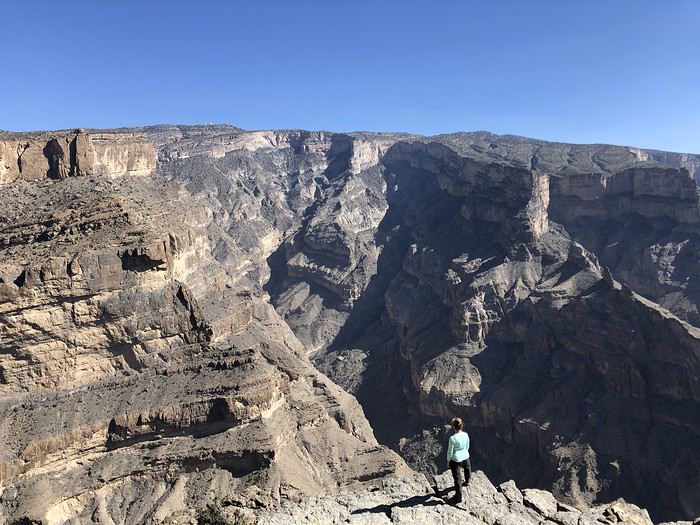
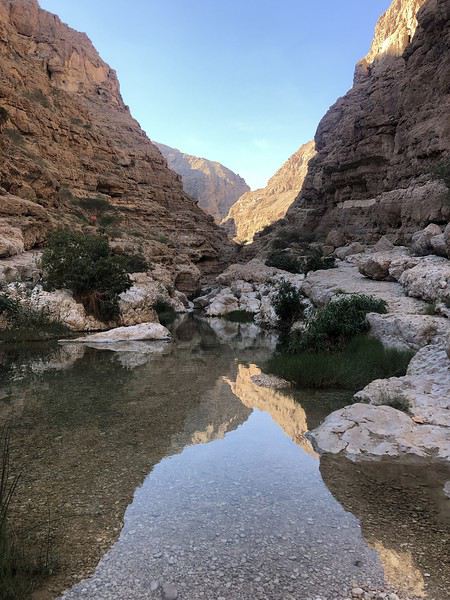
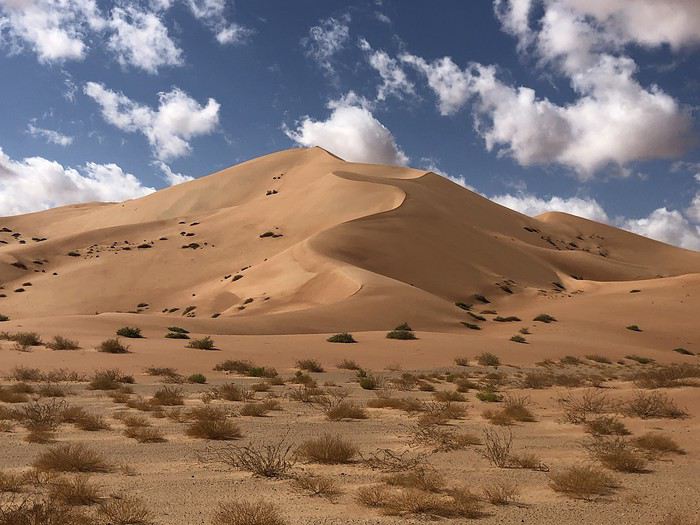
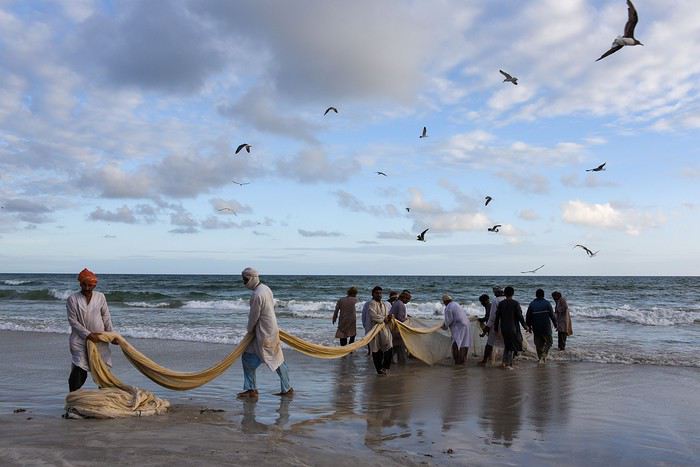
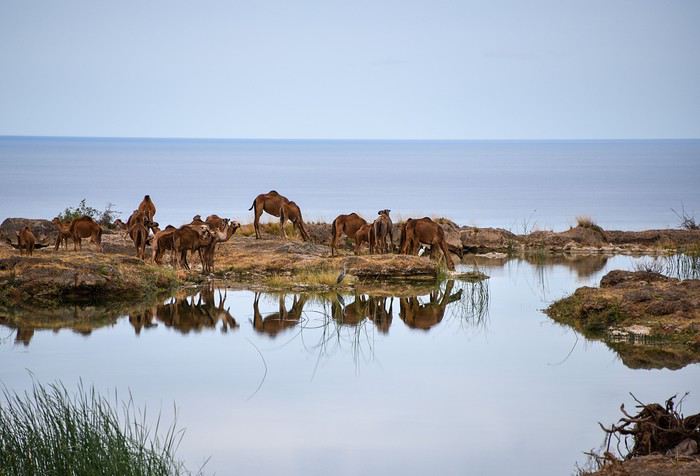
Alors si vous voulez bien me suivre...
Eh bien! En parcourant le Sultanat d’Oman, nous allons à leur recherche ou plutôt découvrir ce pays des Mille et Une Merveilles décrites dans les célèbres contes persans dont a fait partie l’actuel Sultanat.
Voici l’itinéraire prévu pour ces deux semaines :
21/12 Lyon – Mascate 22/12 Mascate 23/12 Mascate – Wadi Tiwi 24/12 Wadi Shab – Sour 25/12 Ras Al Jinz – Wadi Bani Kalid 26/12 Wahiba Sands 27/12 Sugar Dunes – Sanctuaire Oryx 28/12 Mirbat 29/12 Wadi Darbat – Salalah 30/12 Mughsayl – Rakyut 31/12 Rub Al Khali - Haima 01/01 Jabreen - Nizwa 02/01 Tanuf - Bahla – Jebel Shams 03/01 Jebel Shams – Al Hamra - Misfat 04/01 Bilad Sayt – Wadi Bani Awf – Mascate 05/01 Mascate - Lyon
Montagnes, Wadis, déserts et plages, chacun y trouvera son bonheur. Voici un petit aperçu de ce qui vous attend.
Alors si vous voulez bien me suivre...
Circuits organisés par des agences traditionnelles en Namibie English translation pending
Bonjour
Je désire partir en Namibie en septembre ou octobre 2020
Hélas je ne suis pas arrivée a convaincre d'ami(e)s pour de m'accompagner dans ce voyage 😕
Je me tourne donc vers des circuits organisés par des agences traditionnelles notamment
nouvelles frontières qui propose un circuit très complet " Pays Himba, dunes et réserves de Namibie" a un tarif raisonnable car surtout en camp
Quelqu'un a t il fait ce circuit récemment et qu'en pensez vous ?
Merci pour vos futurs réponses