Results for "Saline+|+127+>+348"
5835 results found.
Off to explore Lithuania!
December 13 - Day 1
"How about a Christmas market this year, huh? A little romantic weekend getaway... - Yes! That’d be cool! Strasbourg? Colmar? - Feels a bit déjà vu, doesn’t it? Plus, slim chance of snow there... And I’d love something a bit more exotic with a touch of originality..."
"Okay, Google, give me the list of the five most beautiful Christmas markets in Europe. - In fifth place, the Christmas market in Vilnius, the capital of Lithuania. - Save your breath! Lithuania, here we come!"
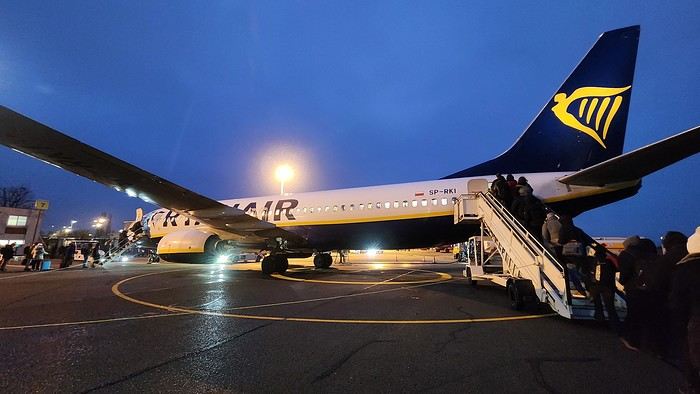
We wanted cold, and cold is exactly what we got the moment we set foot in this new, unknown land. As for landscapes, forests and lakes stretch as far as the eye can see across this vast plain, its vegetation scorched by the frost of a winter that’s clearly already well underway here.
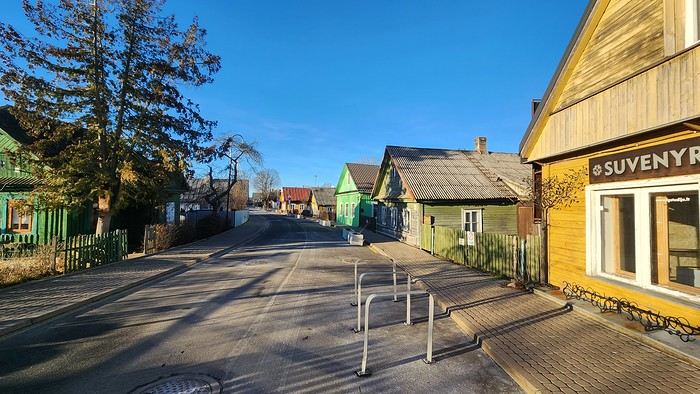
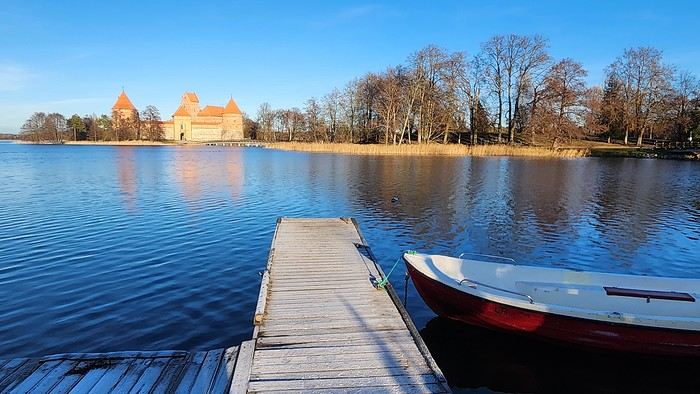
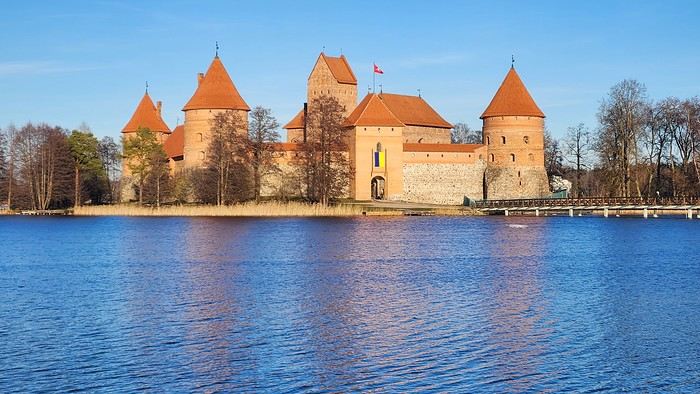
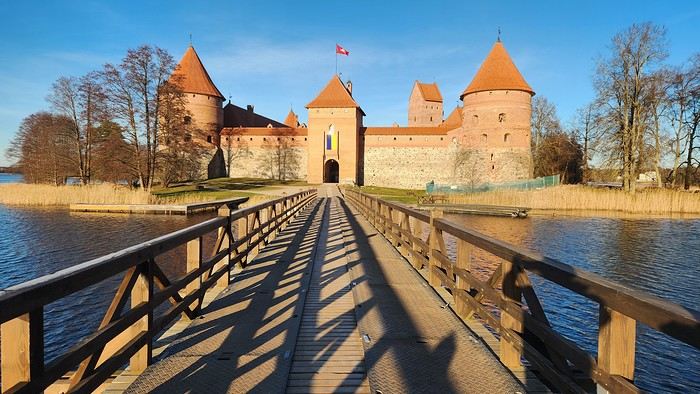
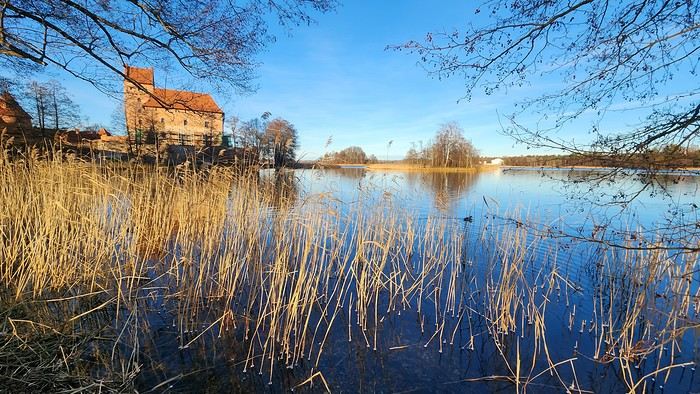
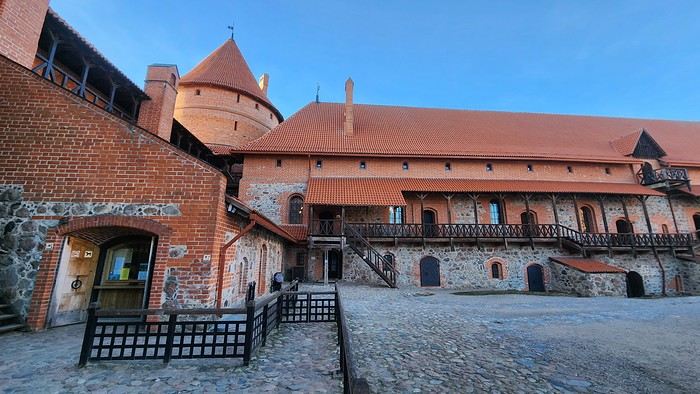
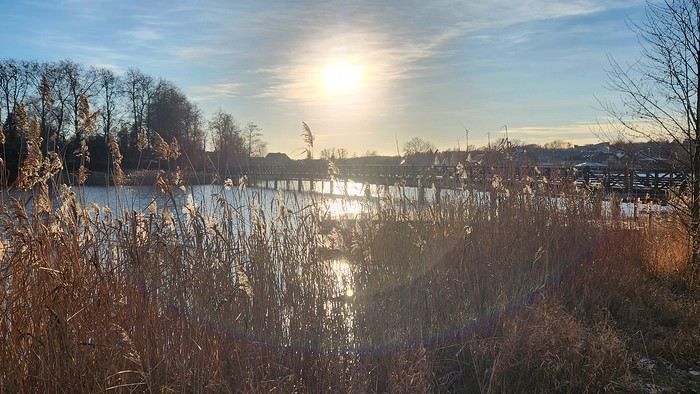
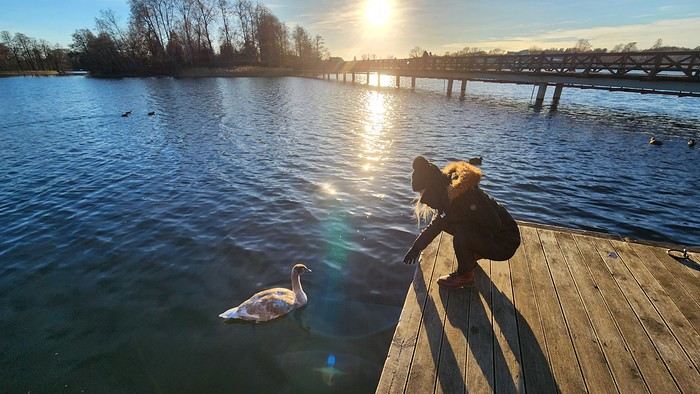
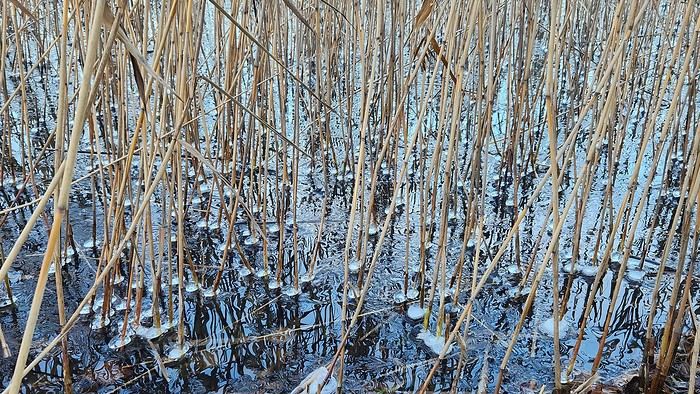
Lakes, in fact, set the scene for our first visit to Trakai Castle, whose brick-red towers and walls rise proudly against the azure sky of our first day. Lakes, because this castle was built on an island and is only accessible on foot via a series of walkways spanning half-frozen lake offshoots. I couldn’t have picked a better spot to build my castle! Translation: We’re totally sold! Proof is we spend two hours hiking around the area, alternating between forests, reeds, and cozy houses tastefully decorated for Christmas.
"How about a Christmas market this year, huh? A little romantic weekend getaway... - Yes! That’d be cool! Strasbourg? Colmar? - Feels a bit déjà vu, doesn’t it? Plus, slim chance of snow there... And I’d love something a bit more exotic with a touch of originality..."
"Okay, Google, give me the list of the five most beautiful Christmas markets in Europe. - In fifth place, the Christmas market in Vilnius, the capital of Lithuania. - Save your breath! Lithuania, here we come!"
We wanted cold, and cold is exactly what we got the moment we set foot in this new, unknown land. As for landscapes, forests and lakes stretch as far as the eye can see across this vast plain, its vegetation scorched by the frost of a winter that’s clearly already well underway here.
Lakes, in fact, set the scene for our first visit to Trakai Castle, whose brick-red towers and walls rise proudly against the azure sky of our first day. Lakes, because this castle was built on an island and is only accessible on foot via a series of walkways spanning half-frozen lake offshoots. I couldn’t have picked a better spot to build my castle! Translation: We’re totally sold! Proof is we spend two hours hiking around the area, alternating between forests, reeds, and cozy houses tastefully decorated for Christmas.
"Glory": an Animal Farm for Zimbabwe—and the world
"400 pages of verbal pyrotechnics and animal magic" — The Times
"Bulawayo leans into exaggeration and irony to tell hard truths. *Glory* is jam-packed with comedy and farce, poking fun at an autocratic regime while illustrating the absurdity and surreal nature of a police state." — The Guardian
The cruelty and savagery of Zimbabwe’s (and Africa’s in general) "powerful animals"
Zimbabwean author NoViolet Bulawayo has written a novel that illustrates better than any documentary the complexity of colonial legacy. In doing so, she revisits George Orwell’s Animal Farm. Her novel *Glory* is a political satire about Zimbabwe—and it’s brimming with humor.
For thirty years, Zimbabwe has been stagnating under Robert Mugabe’s presidency. Human rights violations, corruption, and international sanctions have kept the population mired in poverty and oppression, while the regime exploits the meager earnings of the economy. As the 2017 elections approach, a power struggle erupts over the succession of the very elderly Father of the Nation (Mugabe). On the streets, people hope for long-awaited reforms; the people feel their moment has come.
And indeed, the army ousts Mugabe and his wife—"with her Gucci heels" (p.32)—who was positioning herself for the presidency. Hopes are dashed, however. The generals install former vice-president Emmerson Mnangagwa in power; the regime merely changes faces, but the problems remain the same.
In the novel, the country is called "Jidada, with a -da and another -da" (p.1); there’s no mistaking that this fictional state is Zimbabwe.
For *Glory*, her second novel, NoViolet Bulawayo invents a whole series of codes whose strength lies precisely in how easy they are to decipher. Like George Orwell’s Animal Farm, the characters populating Bulawayo’s universe aren’t humans but horses, goats, or crocodiles with all-too-human traits. Mugabe and Mnangagwa are horses, the spiritual leader is a pig, the soldiers are all bloodthirsty dogs, while the populace consists of goats, chickens, donkeys, and cats. The shift to the animal world serves only to better grasp the laws of despotism—and to ridicule real-life models. On one hand, the animals are humanized: they tweet, torture, travel in private jets. On the other, their greed, stupidity, and brutality stem from their animal nature.
It’s the old trick of fable: dressing men in animal disguises to make them easier to recognize. That’s how Orwell, in Animal Farm, traced how the promise of liberation from the Russian Revolution turned into Stalinist terror. In his 1945 fable, George Orwell describes how the animals of a farm drive out their farmer to organize the exploitation themselves, collectively. For a time, they truly taste freedom, but a clique of pigs ends up taking control. The central figures of the Soviet story—Stalin, Trotsky, Molotov—were easily recognizable.
Yet Bulawayo departs sharply from Orwell. She’s less concerned with precision and the force of argument than with satirical exaggeration. The deposed president is a senile old man who believes he can control even the sun’s course. The new stallion in power is a greedy debaucher. His soldiers sniff respectfully at his tail and backside.
In Bulawayo’s *Glory*, things are more complicated, but her novel also tells of a failed, incomplete liberation. In the author’s Animal Farm, Jidada, the colonial exploiters are followed by new forms of oppression. Because the former liberators become tyrants themselves. And because global power dynamics persist in neocolonial structures.
Wouldn’t that be enough to fuel a deeply depressing narrative? No—Bulawayo turns it into a blazing satire, full of wit and uncompromising criticism of power, a thread running through contemporary (not just) Zimbabwean history. The old warhorses in NoViolet Bulawayo’s Jidada, who continue to act as pack leaders, are easily recognizable as caricatures of the longtime dictator Robert Mugabe and his successor, current president Emmerson Mnangagwa.
The plot kicks off in high gear with independence day festivities. From the crack of dawn, everyone waits on Jidada Square for the Old Horse, the Father of the Nation and former liberator, whose reign "was nearing all of—not one, not two, not three, but four solid decades" (p.1). Everywhere, the colors of the Jidada Party shine; everywhere, true supporters cheer. Even the scorching sun plays its part: "At this point the sun, upon seeing arrive the leader who was decreed by God himself to rule and rule and keep ruling, a leader who'd in turn decreed the very sun to head his cheerleading squad, took a deep, deep breath and thoroughly blazed to impress" (p.2).
Finally, the Old Horse’s luxury carriage approaches "with the slowness of a hearse" (p.2), and "hoping to catch a glimpse of the legendary Father of the Nation," which causes "the animals fell over themselves like intoxicated frogs" (p.2). The sovereign’s speech is delayed a moment longer: "what I really want is a nap," groans the Old Horse as he takes his seat with such care "like his backside was made of expensive porcelain" (p.6).
Meanwhile, Bulawayo parades his entourage: the president’s wife (who earns her doctorate at Jidada University faster than "you could say diss, for dissertation. Tholukuthi it was as easy as ordering from a KFC drive-through, or perhaps even easier being that it was cheaper than KFC; it in fact cost her nothing and the degree actually came with a zero-calorie Diet Coke and a purple straw" (p.41), and she’s now known as Dr Sweet Mother. The cabinet includes "the Minister of the Revolution, the Minister of Corruption, the Minister of Order, the Minister of Things, the Minister of Nothing, the Minister of Propaganda, the Minister of Homophobic Affairs, the Minister of Disinformation and the Minister of Looting" (p.9). And of course the vice-president, who will soon become interim president when the Old Horse finally kicks the bucket—and then settle in as the new long-term president, who in the novel is called Tuvius Delight Shasha, or "Tuvy" for short (p.253), none other than Emmerson Mnangagwa. It’s him Bulawayo reserves her most merciless character description for.
"New Dispensation" (p.109) is Tuvy’s slogan for Jidada, and he loves repeating it so much he even named his parrot after it ("So inspired was Tuvy by the realisation that he rechristened his new pet parrot with the name New Dispensation—tholukuthi the bird having been acquired explicitly for the purposes of tweeting eulogies and accordingly glorifying the Saviour throughout the airs and skies of the nation. Tuvy then went on to hire a lecturer in English from the University of Jidada to teach New Dispensation to say the phrase 'New Dispensation'" p.110). But Tuvy’s Zimbabwe remains a nation without free, fair, and credible elections ("#freefairncredibleelection" p.161), and the promised equal treatment applies only insofar as Zimbabweans now queue up without discrimination in endless lines—and everyone is as poor as the next in the "queuenation" (p.283). Except for the powerful. They can "yes, tholukuthi, her immeasurable riches theirs to take. And take they did—
just take—take—take—take—take—take—take—take—take—take—take—take—take—take—take—take—take—take—take—take—take—take—take—take—take—take—take" (p.249-250).
In short: Bulawayo brilliantly depicts how former independence fighters become exploiters themselves. And how the country threatens to suffocate under the weight of corruption and repression. But she also literally stages the polyphony with which the people oppose imposed obedience to the official line.
Controversial online discussions keep interrupting the narrative—dialogues and social threads (see photo below) that Bulawayo masterfully integrates. From a literary standpoint, it’s a brilliant idea. And it shows, above all, that the author’s sympathy—so likeable—goes to all those who refuse to let their dream of true freedom be stolen, not even by the corrupt elites of their own country.
In the book’s acknowledgments, the first tribute goes to "The Jidadas of the world, clamouring for freedom on many fronts—A luta continua." (p.401) This reflects the realization that, not only in Jidada-Zimbabwe but in many other corners of the world, the end of colonial domination is still far from meaning the freedom hoped for by the vast majority of people. But it also means, more broadly, that this freedom must be won "on many fronts" (see above), both domestically and geopolitically.
That’s precisely what *Glory* so vividly highlights: how complex the project behind the term "postcolonialism" really is. With *Glory*, Bulawayo also delivers a scathing critique of the persistence of colonial mindsets in the West.
In the novel, the murder of George Floyd, racist police violence, and white-supremacist ideology in Trump’s United States perfectly illustrate the persistence of racism. It’s especially in the final chapters that Bulawayo lets Jidada’s inhabitants explicitly and unflinchingly criticize a neocolonial world order:
"It was not lost on us how the West, which loved to 'save' Africa and announce every action to the whole world, did so with one limb while manipulating, looting and fleecing us with the rest of its limbs so that more money in fact poured out of the continent than trickled in." (p.376)
"It was no mistake that multinational corporations yearly reaped and shipped colossal profits from Africa back to their countries as had been the case during colonial times. Even the sticks and stones would tell you that the African earth at any given time howled and shook and heaved from the extraction of its precious minerals that rarely benefited its own miserable children." (p.376)
"(...) we vowed to wage yet another war for Africa's second Liberation from neocolonial oppression. From exploitation. From plunder. From Western dominion. From indignity. From Abuse. We wanted real freedom. We wanted greedy, thieving paws off our wealth. We wanted Justice. We wanted a new world; we wanted a brand-new world so much we didn't sleep a wink that night." (p.377)
The Jidadas of this world must fight two enemies: Western neocolonialism and the autocratic instrumentalization of that argument; the persistence of Western racism and the populist appropriation of that humiliation by tyrants from their own ranks. Neither of these obstacles to freedom diminishes the historical and current guilt of the other. But the path to postcolonial liberation must overcome all these forms of oppression. After all, the colonizers didn’t bequeath democracies to formerly dominated nations, but instability and the principles of oppression and exploitation—which the so-called liberators have also internalized. Yet the fact that a satirical novel can capture the complexity of historical relationships while remaining, despite all the darkness of the subject, hilarious—well, that’s truly astonishing.
Finally, *Glory* ties into a major trauma in Zimbabwe’s post-independence history: the so-called Gukurahundi massacres. Between 1983 and 1987, tens of thousands of civilians were murdered by Mugabe’s bloody henchmen, most of them Ndebele. The State Security Minister and head of secret services at the time? You guessed it—Emmerson Mnangagwa.
When *Glory* turns to the massacres, the novel’s tone shifts completely. The story is now told through the narrative of the goat called Destiny, who, like NoViolet Bulawayo herself, left her home country at 18 for the United States and only returned after 13 years. In the book, the city of Bulawayo becomes a village where Destiny retraces her family’s history—and learns that part of it was also brutally murdered during the massacres.
The abuse of power and life under a dictatorship, dispossession, and a fiercely proud awareness of the psychological wounds and emotional vulnerability of a uprooted and disenfranchised people who had to forge a new language—a new set of names—to express their lived experiences are at the heart of this wonderful Zimbabwean author’s literary work, NoViolet Bulawayo. Shortly after her studies, she was already writing short stories about postcolonial power dynamics in Africa. But her playful, masterful, and often unconventional approach to language also plays a key role in her work. With virtuosity, she shifts from cynical images of power-obsessed elites to compassionate descriptions of the people’s suffering, ending with a hopeful sermon on courage—the courage to break free from fear and thus gain the strength for change ("And every one of them understood that whatever they heard within those hearts was the new national anthem, tholukuthi an anthem that spoke of the kind of glory that burns eternal and glows with living light." p.400). This novel is a genuine pleasure to read. And it’s exceptional. Good, African...
Book info (original English and German translation):
NoViolet Bulawayo. Glory. Chatto & Windus, 2022. NoViolet Bulawayo. Glory. Suhrkamp, 2023.
Hery
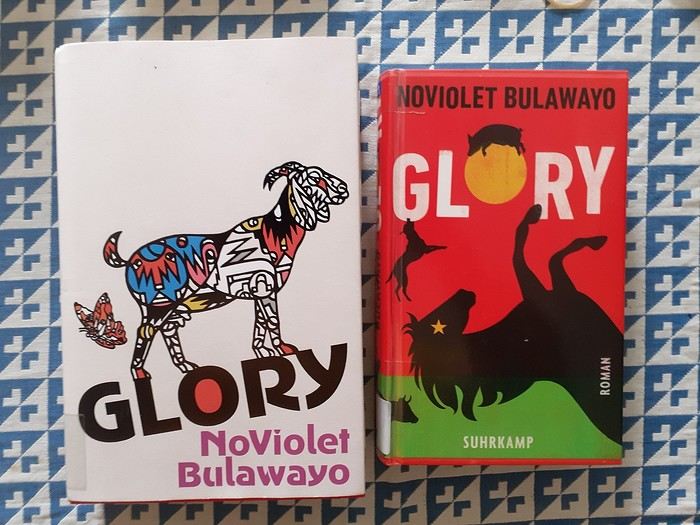 The books (in English, in German)
 Author NoViolet Bulawayo, Zimbabwe
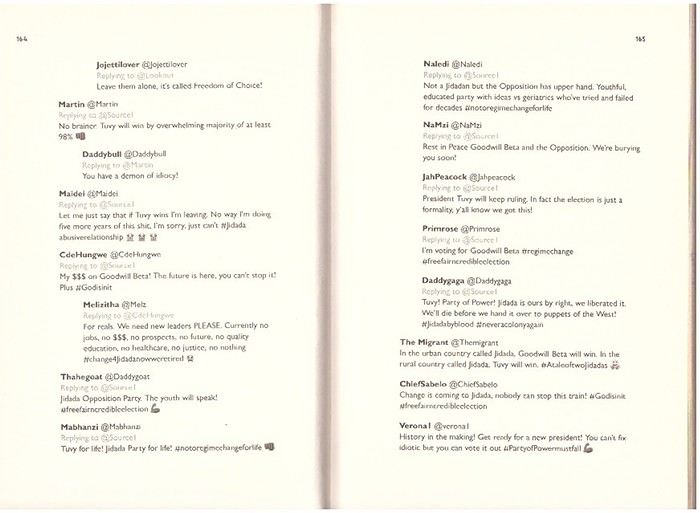 Threads (p.164-165)
"Bulawayo leans into exaggeration and irony to tell hard truths. *Glory* is jam-packed with comedy and farce, poking fun at an autocratic regime while illustrating the absurdity and surreal nature of a police state." — The Guardian
The cruelty and savagery of Zimbabwe’s (and Africa’s in general) "powerful animals"
Zimbabwean author NoViolet Bulawayo has written a novel that illustrates better than any documentary the complexity of colonial legacy. In doing so, she revisits George Orwell’s Animal Farm. Her novel *Glory* is a political satire about Zimbabwe—and it’s brimming with humor.
For thirty years, Zimbabwe has been stagnating under Robert Mugabe’s presidency. Human rights violations, corruption, and international sanctions have kept the population mired in poverty and oppression, while the regime exploits the meager earnings of the economy. As the 2017 elections approach, a power struggle erupts over the succession of the very elderly Father of the Nation (Mugabe). On the streets, people hope for long-awaited reforms; the people feel their moment has come.
And indeed, the army ousts Mugabe and his wife—"with her Gucci heels" (p.32)—who was positioning herself for the presidency. Hopes are dashed, however. The generals install former vice-president Emmerson Mnangagwa in power; the regime merely changes faces, but the problems remain the same.
In the novel, the country is called "Jidada, with a -da and another -da" (p.1); there’s no mistaking that this fictional state is Zimbabwe.
For *Glory*, her second novel, NoViolet Bulawayo invents a whole series of codes whose strength lies precisely in how easy they are to decipher. Like George Orwell’s Animal Farm, the characters populating Bulawayo’s universe aren’t humans but horses, goats, or crocodiles with all-too-human traits. Mugabe and Mnangagwa are horses, the spiritual leader is a pig, the soldiers are all bloodthirsty dogs, while the populace consists of goats, chickens, donkeys, and cats. The shift to the animal world serves only to better grasp the laws of despotism—and to ridicule real-life models. On one hand, the animals are humanized: they tweet, torture, travel in private jets. On the other, their greed, stupidity, and brutality stem from their animal nature.
It’s the old trick of fable: dressing men in animal disguises to make them easier to recognize. That’s how Orwell, in Animal Farm, traced how the promise of liberation from the Russian Revolution turned into Stalinist terror. In his 1945 fable, George Orwell describes how the animals of a farm drive out their farmer to organize the exploitation themselves, collectively. For a time, they truly taste freedom, but a clique of pigs ends up taking control. The central figures of the Soviet story—Stalin, Trotsky, Molotov—were easily recognizable.
Yet Bulawayo departs sharply from Orwell. She’s less concerned with precision and the force of argument than with satirical exaggeration. The deposed president is a senile old man who believes he can control even the sun’s course. The new stallion in power is a greedy debaucher. His soldiers sniff respectfully at his tail and backside.
In Bulawayo’s *Glory*, things are more complicated, but her novel also tells of a failed, incomplete liberation. In the author’s Animal Farm, Jidada, the colonial exploiters are followed by new forms of oppression. Because the former liberators become tyrants themselves. And because global power dynamics persist in neocolonial structures.
Wouldn’t that be enough to fuel a deeply depressing narrative? No—Bulawayo turns it into a blazing satire, full of wit and uncompromising criticism of power, a thread running through contemporary (not just) Zimbabwean history. The old warhorses in NoViolet Bulawayo’s Jidada, who continue to act as pack leaders, are easily recognizable as caricatures of the longtime dictator Robert Mugabe and his successor, current president Emmerson Mnangagwa.
The plot kicks off in high gear with independence day festivities. From the crack of dawn, everyone waits on Jidada Square for the Old Horse, the Father of the Nation and former liberator, whose reign "was nearing all of—not one, not two, not three, but four solid decades" (p.1). Everywhere, the colors of the Jidada Party shine; everywhere, true supporters cheer. Even the scorching sun plays its part: "At this point the sun, upon seeing arrive the leader who was decreed by God himself to rule and rule and keep ruling, a leader who'd in turn decreed the very sun to head his cheerleading squad, took a deep, deep breath and thoroughly blazed to impress" (p.2).
Finally, the Old Horse’s luxury carriage approaches "with the slowness of a hearse" (p.2), and "hoping to catch a glimpse of the legendary Father of the Nation," which causes "the animals fell over themselves like intoxicated frogs" (p.2). The sovereign’s speech is delayed a moment longer: "what I really want is a nap," groans the Old Horse as he takes his seat with such care "like his backside was made of expensive porcelain" (p.6).
Meanwhile, Bulawayo parades his entourage: the president’s wife (who earns her doctorate at Jidada University faster than "you could say diss, for dissertation. Tholukuthi it was as easy as ordering from a KFC drive-through, or perhaps even easier being that it was cheaper than KFC; it in fact cost her nothing and the degree actually came with a zero-calorie Diet Coke and a purple straw" (p.41), and she’s now known as Dr Sweet Mother. The cabinet includes "the Minister of the Revolution, the Minister of Corruption, the Minister of Order, the Minister of Things, the Minister of Nothing, the Minister of Propaganda, the Minister of Homophobic Affairs, the Minister of Disinformation and the Minister of Looting" (p.9). And of course the vice-president, who will soon become interim president when the Old Horse finally kicks the bucket—and then settle in as the new long-term president, who in the novel is called Tuvius Delight Shasha, or "Tuvy" for short (p.253), none other than Emmerson Mnangagwa. It’s him Bulawayo reserves her most merciless character description for.
"New Dispensation" (p.109) is Tuvy’s slogan for Jidada, and he loves repeating it so much he even named his parrot after it ("So inspired was Tuvy by the realisation that he rechristened his new pet parrot with the name New Dispensation—tholukuthi the bird having been acquired explicitly for the purposes of tweeting eulogies and accordingly glorifying the Saviour throughout the airs and skies of the nation. Tuvy then went on to hire a lecturer in English from the University of Jidada to teach New Dispensation to say the phrase 'New Dispensation'" p.110). But Tuvy’s Zimbabwe remains a nation without free, fair, and credible elections ("#freefairncredibleelection" p.161), and the promised equal treatment applies only insofar as Zimbabweans now queue up without discrimination in endless lines—and everyone is as poor as the next in the "queuenation" (p.283). Except for the powerful. They can "yes, tholukuthi, her immeasurable riches theirs to take. And take they did—
just take—take—take—take—take—take—take—take—take—take—take—take—take—take—take—take—take—take—take—take—take—take—take—take—take—take—take" (p.249-250).
In short: Bulawayo brilliantly depicts how former independence fighters become exploiters themselves. And how the country threatens to suffocate under the weight of corruption and repression. But she also literally stages the polyphony with which the people oppose imposed obedience to the official line.
Controversial online discussions keep interrupting the narrative—dialogues and social threads (see photo below) that Bulawayo masterfully integrates. From a literary standpoint, it’s a brilliant idea. And it shows, above all, that the author’s sympathy—so likeable—goes to all those who refuse to let their dream of true freedom be stolen, not even by the corrupt elites of their own country.
In the book’s acknowledgments, the first tribute goes to "The Jidadas of the world, clamouring for freedom on many fronts—A luta continua." (p.401) This reflects the realization that, not only in Jidada-Zimbabwe but in many other corners of the world, the end of colonial domination is still far from meaning the freedom hoped for by the vast majority of people. But it also means, more broadly, that this freedom must be won "on many fronts" (see above), both domestically and geopolitically.
That’s precisely what *Glory* so vividly highlights: how complex the project behind the term "postcolonialism" really is. With *Glory*, Bulawayo also delivers a scathing critique of the persistence of colonial mindsets in the West.
In the novel, the murder of George Floyd, racist police violence, and white-supremacist ideology in Trump’s United States perfectly illustrate the persistence of racism. It’s especially in the final chapters that Bulawayo lets Jidada’s inhabitants explicitly and unflinchingly criticize a neocolonial world order:
"It was not lost on us how the West, which loved to 'save' Africa and announce every action to the whole world, did so with one limb while manipulating, looting and fleecing us with the rest of its limbs so that more money in fact poured out of the continent than trickled in." (p.376)
"It was no mistake that multinational corporations yearly reaped and shipped colossal profits from Africa back to their countries as had been the case during colonial times. Even the sticks and stones would tell you that the African earth at any given time howled and shook and heaved from the extraction of its precious minerals that rarely benefited its own miserable children." (p.376)
"(...) we vowed to wage yet another war for Africa's second Liberation from neocolonial oppression. From exploitation. From plunder. From Western dominion. From indignity. From Abuse. We wanted real freedom. We wanted greedy, thieving paws off our wealth. We wanted Justice. We wanted a new world; we wanted a brand-new world so much we didn't sleep a wink that night." (p.377)
The Jidadas of this world must fight two enemies: Western neocolonialism and the autocratic instrumentalization of that argument; the persistence of Western racism and the populist appropriation of that humiliation by tyrants from their own ranks. Neither of these obstacles to freedom diminishes the historical and current guilt of the other. But the path to postcolonial liberation must overcome all these forms of oppression. After all, the colonizers didn’t bequeath democracies to formerly dominated nations, but instability and the principles of oppression and exploitation—which the so-called liberators have also internalized. Yet the fact that a satirical novel can capture the complexity of historical relationships while remaining, despite all the darkness of the subject, hilarious—well, that’s truly astonishing.
Finally, *Glory* ties into a major trauma in Zimbabwe’s post-independence history: the so-called Gukurahundi massacres. Between 1983 and 1987, tens of thousands of civilians were murdered by Mugabe’s bloody henchmen, most of them Ndebele. The State Security Minister and head of secret services at the time? You guessed it—Emmerson Mnangagwa.
When *Glory* turns to the massacres, the novel’s tone shifts completely. The story is now told through the narrative of the goat called Destiny, who, like NoViolet Bulawayo herself, left her home country at 18 for the United States and only returned after 13 years. In the book, the city of Bulawayo becomes a village where Destiny retraces her family’s history—and learns that part of it was also brutally murdered during the massacres.
The abuse of power and life under a dictatorship, dispossession, and a fiercely proud awareness of the psychological wounds and emotional vulnerability of a uprooted and disenfranchised people who had to forge a new language—a new set of names—to express their lived experiences are at the heart of this wonderful Zimbabwean author’s literary work, NoViolet Bulawayo. Shortly after her studies, she was already writing short stories about postcolonial power dynamics in Africa. But her playful, masterful, and often unconventional approach to language also plays a key role in her work. With virtuosity, she shifts from cynical images of power-obsessed elites to compassionate descriptions of the people’s suffering, ending with a hopeful sermon on courage—the courage to break free from fear and thus gain the strength for change ("And every one of them understood that whatever they heard within those hearts was the new national anthem, tholukuthi an anthem that spoke of the kind of glory that burns eternal and glows with living light." p.400). This novel is a genuine pleasure to read. And it’s exceptional. Good, African...
Book info (original English and German translation):
NoViolet Bulawayo. Glory. Chatto & Windus, 2022. NoViolet Bulawayo. Glory. Suhrkamp, 2023.
Hery
The books (in English, in German)
Author NoViolet Bulawayo, Zimbabwe
Threads (p.164-165)A Bold Combo: Southern Peru, Bolivia, and Northern Chile
Hello everyone,
For our latest 3-week family trip (yes, the kids are growing up, and two of them are about to enter the working world), we’re heading to South America! For our first time on this continent, I had planned a classic 3-week loop in Peru.
But since we won’t be returning to this part of the world anytime soon, I thought: why not follow in the footsteps of Franck, aka Bibouns51, who, in 18 days, didn’t just stick to Peru but also added two of the planet’s most stunning landscapes to his itinerary... the Salar de Uyuni in Bolivia and its neighbor, the fabulous Atacama Desert in northern Chile !!
So, I set about the tricky task of limiting the regions we’d visit in Peru to those we considered must-sees, to avoid rushing too much. The visit schedules were optimized, including several comfortable overnight buses that have the huge advantage of letting us hop between regions.
So, we’re off on a somewhat adventurous trip with three domestic flights (two on the first day and one on the last), two overnight buses for quick hops, several car rentals, the services of a few drivers to make the trip more comfortable, and even a tour operator for crossing the Salar...
Our main concern is altitude sickness, and we’re bringing Diamox, aspirin, etc., just in case.
Our second worry before departure was not even getting off the ground... Yes, for once, we’re leaving from France—Marseille, to be exact. The week before our departure, with the surprise air traffic controllers’ strike, I remembered why we usually prefer to leave from abroad, like Turin or Barcelona... In the end, it wasn’t the air traffic controllers who made us nervous but the early July wildfires that paralyzed the airport a few days before our departure. Fortunately, the fires were quickly brought under control, and on the big day, everything was smooth sailing!
Detailed itinerary (which changed on Day 1 due to departure hiccups): Day 0: Flight Marseille - Madrid - Lima PERU Theoretical and abandoned Day 1: Flight Lima - Cuzco and visit Cuzco (Puka Pukara, Tambomachay, Cristo Blanco Observatory, Sacsayhuaman sunset) - Night in Cuzco Day 2: Taxi -> Chinchero - Moray - Maras Salt Mines - Ollantaytambo - Train to Aguas Calientes Day 3: Machu Picchu - Return train to Ollantaytambo Day 4: 2-day taxi -> Pisac - Tipon - Andahuaylillas - Huaro - Night in San Pedro Day 5: Palcoyo - Checacupe - Vinicunca - Return and night in Cuzco Day 6: Day in Cuzco (catch-up on Sacsayhuaman, San Blas district, Temple of the Sun) - Overnight bus to Arequipa Day 7: Rental car -> On the road to Colca Canyon, night in Cabanaconde Day 8: Descent to the bottom of Colca Canyon, night at Oasis Sangalle Day 9: Ascent from the canyon - Maca - Chivay - Return and night in Arequipa Day 10: Visit Arequipa (Santa Catalina Convent, La Recoleta Church and Monastery, La Compañía Church, Cathedral) - Overnight bus to Puno Day 11: Lake Titicaca - Night in Puno BOLIVIA Day 12: Shared taxi -> Road to La Paz, visit downtown La Paz - Night 1 in La Paz Day 13: Moon Valley and Las Animas Valley - Night 2 in La Paz Day 14: Day in La Paz - Night 3 in La Paz Day 15: Flight to Uyuni - Day 1 of Salar de Uyuni tour - Night at the edge of the Salar Day 16: Crossing the Lipez region and lagoons - Night near Laguna Colorada Day 17: Sol de Mañana CHILE Day 17 cont.: Pre-booked transfer to SPDA - 4x4 rental - Pukara de Quitor - Stargazing tour - Night 1 in SPDA Day 18: Death Valley and Moon Valley - Night 2 in SPDA Day 19: Miscanti and Miniques Lagoons, Salar de Aguas Calientes and its Piedra Roja, Tebenquiche Lagoon and Quebrada del Diablo - Night 3 in SPDA Day 20: Rainbow Valley and swim in the Puritama River - Night 4 in SPDA Day 21: Tebenquiche Lagoon - Bus to Calama - Flight to Santiago Day 22: Return Santiago - Madrid - Marseille
Day 0 - 11/07: Destination Lima
Our first flight from Marseille went smoothly to our Iberia layover in Madrid.
In Madrid, just after getting off the plane around 8 PM, and as we were walking through the terminal, we got a rude awakening!!
We saw the word "Cancelled" next to our flight number on the display boards. Thinking it must be a glitch, we checked another screen, but the system was stubborn, and the same dreaded word appeared !
So, we headed to the Iberia counter, where an agent confirmed that our Friday evening flight was canceled and rescheduled for the next morning. The reason? A breakdown and no replacement plane, even though we were in Madrid, Iberia’s home base!
To make matters worse, I remembered our super-tight schedule, planned to the minute, with no buffer day in Lima. Since I’m a bit phobic of megacities and hadn’t found anything appealing in the Peruvian capital in our guidebooks, we’d planned to leave Lima as soon as possible for Cusco, the heart of the Sacred Valley, to spend our first day there.
Bad idea, because we already knew the 4-hour buffer wouldn’t be enough, and we’d miss the domestic flight, which was, of course, non-refundable and non-changeable. So, we had to call LATAM from Madrid to find another flight for Saturday evening and negotiate a rate to recover some of our initial outlay.
After an hour on the phone with customer service, several endless holds, and three failed attempts to dictate our credit card number over the phone to a Spaniard speaking English with a thick accent, we finally managed to confirm the transaction, securing our new flight tickets for a moderate extra cost of just 150 € total.
At first, we were pretty bummed about losing a day and incurring extra fees to reschedule the domestic flight, but then, when we learned from an Iberia customer service rep that we’d receive the max compensation of 600 € per traveler, we even ended up grinning... because 3000 € in refunds for only losing the first day in Cusco? We’d sign up for that 10 times over!!
Iberia then took care of us, putting us up in a hotel where we had dinner before a short 5-hour night and an early morning departure. I took the opportunity to improvise a quick day of sightseeing in Lima, focusing on the Barranco and Miraflores districts.
For our latest 3-week family trip (yes, the kids are growing up, and two of them are about to enter the working world), we’re heading to South America! For our first time on this continent, I had planned a classic 3-week loop in Peru.
But since we won’t be returning to this part of the world anytime soon, I thought: why not follow in the footsteps of Franck, aka Bibouns51, who, in 18 days, didn’t just stick to Peru but also added two of the planet’s most stunning landscapes to his itinerary... the Salar de Uyuni in Bolivia and its neighbor, the fabulous Atacama Desert in northern Chile !!
So, I set about the tricky task of limiting the regions we’d visit in Peru to those we considered must-sees, to avoid rushing too much. The visit schedules were optimized, including several comfortable overnight buses that have the huge advantage of letting us hop between regions.
So, we’re off on a somewhat adventurous trip with three domestic flights (two on the first day and one on the last), two overnight buses for quick hops, several car rentals, the services of a few drivers to make the trip more comfortable, and even a tour operator for crossing the Salar...
Our main concern is altitude sickness, and we’re bringing Diamox, aspirin, etc., just in case.
Our second worry before departure was not even getting off the ground... Yes, for once, we’re leaving from France—Marseille, to be exact. The week before our departure, with the surprise air traffic controllers’ strike, I remembered why we usually prefer to leave from abroad, like Turin or Barcelona... In the end, it wasn’t the air traffic controllers who made us nervous but the early July wildfires that paralyzed the airport a few days before our departure. Fortunately, the fires were quickly brought under control, and on the big day, everything was smooth sailing!
Detailed itinerary (which changed on Day 1 due to departure hiccups): Day 0: Flight Marseille - Madrid - Lima PERU Theoretical and abandoned Day 1: Flight Lima - Cuzco and visit Cuzco (Puka Pukara, Tambomachay, Cristo Blanco Observatory, Sacsayhuaman sunset) - Night in Cuzco Day 2: Taxi -> Chinchero - Moray - Maras Salt Mines - Ollantaytambo - Train to Aguas Calientes Day 3: Machu Picchu - Return train to Ollantaytambo Day 4: 2-day taxi -> Pisac - Tipon - Andahuaylillas - Huaro - Night in San Pedro Day 5: Palcoyo - Checacupe - Vinicunca - Return and night in Cuzco Day 6: Day in Cuzco (catch-up on Sacsayhuaman, San Blas district, Temple of the Sun) - Overnight bus to Arequipa Day 7: Rental car -> On the road to Colca Canyon, night in Cabanaconde Day 8: Descent to the bottom of Colca Canyon, night at Oasis Sangalle Day 9: Ascent from the canyon - Maca - Chivay - Return and night in Arequipa Day 10: Visit Arequipa (Santa Catalina Convent, La Recoleta Church and Monastery, La Compañía Church, Cathedral) - Overnight bus to Puno Day 11: Lake Titicaca - Night in Puno BOLIVIA Day 12: Shared taxi -> Road to La Paz, visit downtown La Paz - Night 1 in La Paz Day 13: Moon Valley and Las Animas Valley - Night 2 in La Paz Day 14: Day in La Paz - Night 3 in La Paz Day 15: Flight to Uyuni - Day 1 of Salar de Uyuni tour - Night at the edge of the Salar Day 16: Crossing the Lipez region and lagoons - Night near Laguna Colorada Day 17: Sol de Mañana CHILE Day 17 cont.: Pre-booked transfer to SPDA - 4x4 rental - Pukara de Quitor - Stargazing tour - Night 1 in SPDA Day 18: Death Valley and Moon Valley - Night 2 in SPDA Day 19: Miscanti and Miniques Lagoons, Salar de Aguas Calientes and its Piedra Roja, Tebenquiche Lagoon and Quebrada del Diablo - Night 3 in SPDA Day 20: Rainbow Valley and swim in the Puritama River - Night 4 in SPDA Day 21: Tebenquiche Lagoon - Bus to Calama - Flight to Santiago Day 22: Return Santiago - Madrid - Marseille
Day 0 - 11/07: Destination Lima
Our first flight from Marseille went smoothly to our Iberia layover in Madrid.
In Madrid, just after getting off the plane around 8 PM, and as we were walking through the terminal, we got a rude awakening!!
We saw the word "Cancelled" next to our flight number on the display boards. Thinking it must be a glitch, we checked another screen, but the system was stubborn, and the same dreaded word appeared !
So, we headed to the Iberia counter, where an agent confirmed that our Friday evening flight was canceled and rescheduled for the next morning. The reason? A breakdown and no replacement plane, even though we were in Madrid, Iberia’s home base!
To make matters worse, I remembered our super-tight schedule, planned to the minute, with no buffer day in Lima. Since I’m a bit phobic of megacities and hadn’t found anything appealing in the Peruvian capital in our guidebooks, we’d planned to leave Lima as soon as possible for Cusco, the heart of the Sacred Valley, to spend our first day there.
Bad idea, because we already knew the 4-hour buffer wouldn’t be enough, and we’d miss the domestic flight, which was, of course, non-refundable and non-changeable. So, we had to call LATAM from Madrid to find another flight for Saturday evening and negotiate a rate to recover some of our initial outlay.
After an hour on the phone with customer service, several endless holds, and three failed attempts to dictate our credit card number over the phone to a Spaniard speaking English with a thick accent, we finally managed to confirm the transaction, securing our new flight tickets for a moderate extra cost of just 150 € total.
At first, we were pretty bummed about losing a day and incurring extra fees to reschedule the domestic flight, but then, when we learned from an Iberia customer service rep that we’d receive the max compensation of 600 € per traveler, we even ended up grinning... because 3000 € in refunds for only losing the first day in Cusco? We’d sign up for that 10 times over!!
Iberia then took care of us, putting us up in a hotel where we had dinner before a short 5-hour night and an early morning departure. I took the opportunity to improvise a quick day of sightseeing in Lima, focusing on the Barranco and Miraflores districts.
Where to stay near Port-Saint-Louis-du-Rhône?
Hi,
Our son, currently in Central America, will board a sailboat on 04/16 to cross the Atlantic. He’s expected to arrive around 05/31 in Port-Saint-Louis-du-Rhône, and we’d like to welcome him on the day he arrives.
I’m looking for accommodation in the area for a few days around that date, from which we can explore the Camargue. We’ll be bringing our e-bikes.
Could you tell me which towns to look in and which areas to avoid, please? I think Port-Saint-Louis isn’t a great option if we want to avoid the toll for the ferry every time we leave by car.
Thanks for your tips.
Claire
PS: Are there a lot of mosquitoes in late May/early June?
PS: Are there a lot of mosquitoes in late May/early June?
Havana, Cuba / January 2026
I got into music with the will
To light up many hearths like Che could do,
To circulate ideas, to advance utopia
Alternating barricades, sharp thought, and poetry.
Mc Solaar, Guérilla
Subscribing without a fight to the slightest line of my itinerary sometimes feels like an illusion. Because there are countries where, despite the fever and enthusiasm, despite the triumphant revolution, certain elements block my path. And if I had planned, for F. and me, a beautiful ascent up Tabouret Hill (Loma del Taburete, 453m), it was without accounting for vegetation as dense as it was thorny, which barred our way after just a few quarters of an hour of walking. Exhausted, I had to face the facts: we wouldn’t go any further. I needed to come up with some kind of Plan B.
But what is this country, an unwitting laboratory of the worst that white civilization has done during its reign? What is this magnificent place—yet another—entrusted to the care of oblivion, just 150 km from the land of freedom? According to Donald Trump, a country supporting terrorism; according to the locals, the vast battlefield of 20th-century ideologies; according to the average tourist, a hot country, a beautiful country, a country where the last illusions of a lost paradise are dying.
On the other side of Havana Bay, we love that statue of Christ blessing the city. There’s something gentle, soothing, in that patriarchal gesture. You’d almost be tempted to forget that at the dawn of the 16th century, those who claimed to represent the Church had no scruples about eradicating the Ciboney and Taíno populations. Worse, you’ll find magnificent this cathedral dedicated to the Virgin Mary, right in the heart of the old city. Under the guise of a civilizing necessity, Havana became, like so many other places, the gilded seat of European pretensions, at the expense of local populations doomed to extermination, then enslaved populations—more or less indigenous—who, you can imagine, didn’t often set foot in this holy place.
Lost in my thoughts, I try to push through this tangled vegetation. Nature reclaims its rights; nature abhors a vacuum. Yes, the well-trodden path of revolution couldn’t stay free of weeds! The road is buried. We give up and turn back, until that fork I’d noted before leaving, which would let us reach the top of the hill by skirting its northern slope.
So the white man arrives, settles, and gets rid of everything that bothers him. He has two unstoppable forces at his disposal: gunpowder and the spiritual certainty of being on the side of an all-powerful god. While the first gives him an unmatched material advantage over his new enemy, the second lets him use the first without feeling too guilty. That’s the magic of this supreme Church: it condemns all forms of pleasure—calling them impurity—while promoting plunder and crime under the cover of evangelization.
Walking through the city, you find a bit of Algiers, except that here, the decay is almost irreversible. You feel the splendor of the past, a disconcerting image of all vanity, from an era when men knew how to build beauty—especially if they didn’t have to share it. We’ll debate the benefits of colonialism for a long time, while glossing over the fact that those benefits often stopped at the city limits, limits all too obvious to the indigenous people. Havana isn’t just one or a few buildings; it’s an impressive collection of works of art built one after another, in what I think was a spirit of healthy competition. Yes, you find Algiers in this exuberance. As if these distant cities were the receptacle of everything that was best in the lands of origin. Atlantes and lintels, golds, blues, ogives, and monumental windows—exceptional architecture in an exceptional place.
Some streets are clean, swept with care; others are not, scattered here and there with potholes filled with water. A rather persistent smell of urine invades us regularly. We move on. And we look up: Havana is visited with your nose in the air. Because the beauty is truly up there, on those magnificent balconies and terracotta arches. Also because it’s not impossible that a piece of that balcony might suddenly detach, hurling our ends into an overseas tragedy we’d rather avoid. On the ground, here and there, rubble. Inexorably, this city is returning to dust.
My Plan B turns out to be no more successful than the first attempt. After a cheerful progression of a few hundred meters, same outcome, same struggle—the vegetation opposes any revolution: impossible to go around the hill! Once again, we have to turn back. We’ll try Plan C. I reassure myself by convincing myself to stay in the logic of this country: Cuba has been searching for itself for five centuries.
Coffee, tobacco, and sugarcane—the green gold of the colonies—so that money could flow and Europe could enjoy itself. Cuba’s history isn’t original. In reality, all the hot lands at these latitudes suffer the same fate: to serve the white man. While waiting for the awakening of consciences, UN Resolution 1514 and more or less affirmed revolutionary desires. Except that—and this reflection is just my own—if the awakening of consciences and the revolutionary will don’t play into what Resolution 1514 hides, there’s a good chance the said state will become a pariah. Those who don’t follow the American doctrine risk a lot; those who decide to follow Moscow risk everything. Independence was only the barely discreet instrument of American views. Patrice Lumumba will gladly enlighten us on the subject.
Turning back is good. Setting up Plan C is better. I won’t deviate from my goal: we will reach the top of Tabouret, whatever the cost! Near a small country road, I hesitate to change the program. Time is ticking—is it really reasonable to attempt the ascent? Then a tricycle taxi appears, a kind of tuk-tuk powered by an electric moped. I take it as a sign from fate, and we board for the starting point of Plan C.
In Cuba, even before Resolution 1514, independence was assured by a pawn of the United States, Fulgencio Batista. There’s no need to go over the whole history here; we’ll just remember that if you know how to give without counting to your former masters, you can enjoy a facade of freedom. Fidel Castro, on the other hand, didn’t know how to give. It never even occurred to him. That’s why the United States harbors such terrible hatred for this rebellious state, opposed to capitalist values and political prostitution. From there to slowly killing its people for nearly seventy years, one can legitimately cry injustice. But there are other priorities. Oh yes! Greenland...
Do Cubans eat their fill? Does seeing overweight people mean opulence? Food grows, no doubt about it. The soil is fertile, the climate favorable. No, what shocks here is the absolute precarity, the feeling of a people living in survival mode, and the decay of both goods and hope. Where to go? What’s the point? The stubbornness of the United States in wanting to impose its views on the Cuban government is felt much more by an overwhelmed people than by those few elites—caricatures of communism—who instill their vision of happiness with a crowbar. The embargo imposed in 1960; the false-flag attacks—American planes flying the colors of the Cuban revolution during the Bay of Pigs invasion in 1961—the exasperation of placing Cuba on the list of countries supporting terrorism. More recently, Donald Trump decided to heavily tax countries supplying Cuba with fuel. The last time I saw such long lines near gas stations was during my first trip to Romania... in 1991. It’s not for me to judge whether Raúl and his clique are playing fair by thumbing their noses at the West. I don’t hold the ins and outs of this war of egos that keeps the world’s great powers awake. I only caught a glimpse of the poverty of an island in 2026, while we in Europe are buried under an avalanche of the useless and superficial.
At the start of the San Juan baths, we find the trailhead. It climbs steeply. But the weather is relatively mild, thanks to a cold wave hitting higher up in the United States. Dallas is under snow; we’re walking in 16°C, a stroke of luck. We climb over rocks, under fairly decent vegetation, sometimes low but passable. And we succeed in the ascent in an hour. Up there, the top of the hill is somewhat maintained, at a minimum, but maintained, as if to honor Che through an awful monument erected in his glory—a stubborn specimen from those years when good taste was inversely proportional to the delusional ideas of those being honored. Birds of prey (raptors?) circle overhead; the monument is dying, crumbling, falling into ruin. *Hasta siempre*—forever—will be for the words. Nature, erosion, life itself will have the last word over all revolutions.
Back at the foot of the hill, just before a memorable swim, we talk with a family living there in miserable shacks whose stability wasn’t unlike that of the Leaning Tower of Pisa. The grandmother holds an animal, a rodent, by its feet. The grandfather has just killed it; she’s plucking its fur. A few steps away, water boils in a pot. She plunges the beast into the container. Tonight, the family will eat ragondin stew. Further on, another shack where, in a disorder rivaling the filth, a mother breastfeeds while sitting on the edge of a bed. Then, on the way down, we’ll meet a middle-aged man carrying a large jerrycan of water on his shoulder. Are these people happy here, far from the cities and their stakes? Is it too much to ask that they at least have access to electricity, running water, and decent, safe housing?
Outside the old city, Havana reveals wide avenues serving imposing institutions here and there. But whether in the colorful alleys of the old town or on the majestic and austere Plaza de la Revolución, the same feeling moves me: sadness. Seeing that only chaos has come from ideas crushes me. We praise, we sing the revolution—above all, we impose it in people’s minds as a necessity, when it’s nothing of the sort. Revolution is just the fruit of a few tortured minds who, once in power, do nothing better than all those before them. Enjoy power. Impose their views. It’s just a matter of color. Fidel saw red and knew how to persuade—or silence forever—his many detractors. The West sees everything in white, through the prism of human rights, and also knows how to persuade and silence its slightest detractors forever.
Paradoxically, Cuba survives largely thanks to tourism, a key element—let’s not be afraid to say it—of capitalism. And when a few players pick up the crumbs from transactions, the lion’s share and the foreign currency go to the government. So we won’t go to Varadero, the high place of relaxation overrun by Canadians. Instead, we’ll limit ourselves to crossing the ocean 30 minutes from the capital, at Santa María del Mar, to get an idea of cheaper tourism and to splash around for a few minutes in turquoise water invaded by sargassum. At the heart of the tourist season, we’ll meet few people. Like Havana, and according to its inhabitants, the high season is rather dead. But we won’t have come for nothing: we particularly love this return where, feverish, the taxi driver pushes his Moskvitch 2140 to the max on the highway, singing karaoke versions of hits at the top of his lungs from an onboard DVD player. East/West, the culture clash with a hint of Latino.
It’s time to leave this country of resourcefulness where extremes are very present. We’re leaving a 5-star hotel in front of yet another crumbling building. We’ve known restaurants at 40,000 pesos while in the street people eat for 400. We’ve seen those countless cars from another era and another culture—Pontiac, Lada, Chevrolet, Moskvitch—being overtaken by gleaming Mercedes and other Porsche Cayennes, the prerogative—if it still needed to be demonstrated—of the newly rich in search of recognition. Boarding the plane, we also understand that we’re not just traveling with tourists: there’s undoubtedly a rich and prosperous diaspora, just as there are relatively wealthy Cubans—well, wealthy enough to travel comfortably in the front of the aircraft. Meanwhile, on all the country’s roads, other Cubans try hitchhiking, their wives and children perched on a suitcase by the roadside. The father holds out his arm and holds a few bills in his hand like a card game. Where are they going? Who will pick them up?
Behind me, the gold of the Capitol. I’m told this gold comes from Russia. Like Marx and Lenin’s smoky theories? Like Stalin’s subtle and delicate paternalism? Let’s bet that, like the other buildings crumbling around it, the Capitol will also collapse one day, to avenge the Indians who perished from the diseases and guns of the whites, to avenge the Africans who obliterated their lives so Europeans could enjoy themselves, finally, to avenge all this abandoned people, left to the arbitrariness of democratic or non-democratic elections.
A sign in the street: We understand history. This is the revolution! We understand history. That’s the revolution.
No comment.
Subscribing without a fight to the slightest line of my itinerary sometimes feels like an illusion. Because there are countries where, despite the fever and enthusiasm, despite the triumphant revolution, certain elements block my path. And if I had planned, for F. and me, a beautiful ascent up Tabouret Hill (Loma del Taburete, 453m), it was without accounting for vegetation as dense as it was thorny, which barred our way after just a few quarters of an hour of walking. Exhausted, I had to face the facts: we wouldn’t go any further. I needed to come up with some kind of Plan B.
But what is this country, an unwitting laboratory of the worst that white civilization has done during its reign? What is this magnificent place—yet another—entrusted to the care of oblivion, just 150 km from the land of freedom? According to Donald Trump, a country supporting terrorism; according to the locals, the vast battlefield of 20th-century ideologies; according to the average tourist, a hot country, a beautiful country, a country where the last illusions of a lost paradise are dying.
On the other side of Havana Bay, we love that statue of Christ blessing the city. There’s something gentle, soothing, in that patriarchal gesture. You’d almost be tempted to forget that at the dawn of the 16th century, those who claimed to represent the Church had no scruples about eradicating the Ciboney and Taíno populations. Worse, you’ll find magnificent this cathedral dedicated to the Virgin Mary, right in the heart of the old city. Under the guise of a civilizing necessity, Havana became, like so many other places, the gilded seat of European pretensions, at the expense of local populations doomed to extermination, then enslaved populations—more or less indigenous—who, you can imagine, didn’t often set foot in this holy place.
Lost in my thoughts, I try to push through this tangled vegetation. Nature reclaims its rights; nature abhors a vacuum. Yes, the well-trodden path of revolution couldn’t stay free of weeds! The road is buried. We give up and turn back, until that fork I’d noted before leaving, which would let us reach the top of the hill by skirting its northern slope.
So the white man arrives, settles, and gets rid of everything that bothers him. He has two unstoppable forces at his disposal: gunpowder and the spiritual certainty of being on the side of an all-powerful god. While the first gives him an unmatched material advantage over his new enemy, the second lets him use the first without feeling too guilty. That’s the magic of this supreme Church: it condemns all forms of pleasure—calling them impurity—while promoting plunder and crime under the cover of evangelization.
Walking through the city, you find a bit of Algiers, except that here, the decay is almost irreversible. You feel the splendor of the past, a disconcerting image of all vanity, from an era when men knew how to build beauty—especially if they didn’t have to share it. We’ll debate the benefits of colonialism for a long time, while glossing over the fact that those benefits often stopped at the city limits, limits all too obvious to the indigenous people. Havana isn’t just one or a few buildings; it’s an impressive collection of works of art built one after another, in what I think was a spirit of healthy competition. Yes, you find Algiers in this exuberance. As if these distant cities were the receptacle of everything that was best in the lands of origin. Atlantes and lintels, golds, blues, ogives, and monumental windows—exceptional architecture in an exceptional place.
Some streets are clean, swept with care; others are not, scattered here and there with potholes filled with water. A rather persistent smell of urine invades us regularly. We move on. And we look up: Havana is visited with your nose in the air. Because the beauty is truly up there, on those magnificent balconies and terracotta arches. Also because it’s not impossible that a piece of that balcony might suddenly detach, hurling our ends into an overseas tragedy we’d rather avoid. On the ground, here and there, rubble. Inexorably, this city is returning to dust.
My Plan B turns out to be no more successful than the first attempt. After a cheerful progression of a few hundred meters, same outcome, same struggle—the vegetation opposes any revolution: impossible to go around the hill! Once again, we have to turn back. We’ll try Plan C. I reassure myself by convincing myself to stay in the logic of this country: Cuba has been searching for itself for five centuries.
Coffee, tobacco, and sugarcane—the green gold of the colonies—so that money could flow and Europe could enjoy itself. Cuba’s history isn’t original. In reality, all the hot lands at these latitudes suffer the same fate: to serve the white man. While waiting for the awakening of consciences, UN Resolution 1514 and more or less affirmed revolutionary desires. Except that—and this reflection is just my own—if the awakening of consciences and the revolutionary will don’t play into what Resolution 1514 hides, there’s a good chance the said state will become a pariah. Those who don’t follow the American doctrine risk a lot; those who decide to follow Moscow risk everything. Independence was only the barely discreet instrument of American views. Patrice Lumumba will gladly enlighten us on the subject.
Turning back is good. Setting up Plan C is better. I won’t deviate from my goal: we will reach the top of Tabouret, whatever the cost! Near a small country road, I hesitate to change the program. Time is ticking—is it really reasonable to attempt the ascent? Then a tricycle taxi appears, a kind of tuk-tuk powered by an electric moped. I take it as a sign from fate, and we board for the starting point of Plan C.
In Cuba, even before Resolution 1514, independence was assured by a pawn of the United States, Fulgencio Batista. There’s no need to go over the whole history here; we’ll just remember that if you know how to give without counting to your former masters, you can enjoy a facade of freedom. Fidel Castro, on the other hand, didn’t know how to give. It never even occurred to him. That’s why the United States harbors such terrible hatred for this rebellious state, opposed to capitalist values and political prostitution. From there to slowly killing its people for nearly seventy years, one can legitimately cry injustice. But there are other priorities. Oh yes! Greenland...
Do Cubans eat their fill? Does seeing overweight people mean opulence? Food grows, no doubt about it. The soil is fertile, the climate favorable. No, what shocks here is the absolute precarity, the feeling of a people living in survival mode, and the decay of both goods and hope. Where to go? What’s the point? The stubbornness of the United States in wanting to impose its views on the Cuban government is felt much more by an overwhelmed people than by those few elites—caricatures of communism—who instill their vision of happiness with a crowbar. The embargo imposed in 1960; the false-flag attacks—American planes flying the colors of the Cuban revolution during the Bay of Pigs invasion in 1961—the exasperation of placing Cuba on the list of countries supporting terrorism. More recently, Donald Trump decided to heavily tax countries supplying Cuba with fuel. The last time I saw such long lines near gas stations was during my first trip to Romania... in 1991. It’s not for me to judge whether Raúl and his clique are playing fair by thumbing their noses at the West. I don’t hold the ins and outs of this war of egos that keeps the world’s great powers awake. I only caught a glimpse of the poverty of an island in 2026, while we in Europe are buried under an avalanche of the useless and superficial.
At the start of the San Juan baths, we find the trailhead. It climbs steeply. But the weather is relatively mild, thanks to a cold wave hitting higher up in the United States. Dallas is under snow; we’re walking in 16°C, a stroke of luck. We climb over rocks, under fairly decent vegetation, sometimes low but passable. And we succeed in the ascent in an hour. Up there, the top of the hill is somewhat maintained, at a minimum, but maintained, as if to honor Che through an awful monument erected in his glory—a stubborn specimen from those years when good taste was inversely proportional to the delusional ideas of those being honored. Birds of prey (raptors?) circle overhead; the monument is dying, crumbling, falling into ruin. *Hasta siempre*—forever—will be for the words. Nature, erosion, life itself will have the last word over all revolutions.
Back at the foot of the hill, just before a memorable swim, we talk with a family living there in miserable shacks whose stability wasn’t unlike that of the Leaning Tower of Pisa. The grandmother holds an animal, a rodent, by its feet. The grandfather has just killed it; she’s plucking its fur. A few steps away, water boils in a pot. She plunges the beast into the container. Tonight, the family will eat ragondin stew. Further on, another shack where, in a disorder rivaling the filth, a mother breastfeeds while sitting on the edge of a bed. Then, on the way down, we’ll meet a middle-aged man carrying a large jerrycan of water on his shoulder. Are these people happy here, far from the cities and their stakes? Is it too much to ask that they at least have access to electricity, running water, and decent, safe housing?
Outside the old city, Havana reveals wide avenues serving imposing institutions here and there. But whether in the colorful alleys of the old town or on the majestic and austere Plaza de la Revolución, the same feeling moves me: sadness. Seeing that only chaos has come from ideas crushes me. We praise, we sing the revolution—above all, we impose it in people’s minds as a necessity, when it’s nothing of the sort. Revolution is just the fruit of a few tortured minds who, once in power, do nothing better than all those before them. Enjoy power. Impose their views. It’s just a matter of color. Fidel saw red and knew how to persuade—or silence forever—his many detractors. The West sees everything in white, through the prism of human rights, and also knows how to persuade and silence its slightest detractors forever.
Paradoxically, Cuba survives largely thanks to tourism, a key element—let’s not be afraid to say it—of capitalism. And when a few players pick up the crumbs from transactions, the lion’s share and the foreign currency go to the government. So we won’t go to Varadero, the high place of relaxation overrun by Canadians. Instead, we’ll limit ourselves to crossing the ocean 30 minutes from the capital, at Santa María del Mar, to get an idea of cheaper tourism and to splash around for a few minutes in turquoise water invaded by sargassum. At the heart of the tourist season, we’ll meet few people. Like Havana, and according to its inhabitants, the high season is rather dead. But we won’t have come for nothing: we particularly love this return where, feverish, the taxi driver pushes his Moskvitch 2140 to the max on the highway, singing karaoke versions of hits at the top of his lungs from an onboard DVD player. East/West, the culture clash with a hint of Latino.
It’s time to leave this country of resourcefulness where extremes are very present. We’re leaving a 5-star hotel in front of yet another crumbling building. We’ve known restaurants at 40,000 pesos while in the street people eat for 400. We’ve seen those countless cars from another era and another culture—Pontiac, Lada, Chevrolet, Moskvitch—being overtaken by gleaming Mercedes and other Porsche Cayennes, the prerogative—if it still needed to be demonstrated—of the newly rich in search of recognition. Boarding the plane, we also understand that we’re not just traveling with tourists: there’s undoubtedly a rich and prosperous diaspora, just as there are relatively wealthy Cubans—well, wealthy enough to travel comfortably in the front of the aircraft. Meanwhile, on all the country’s roads, other Cubans try hitchhiking, their wives and children perched on a suitcase by the roadside. The father holds out his arm and holds a few bills in his hand like a card game. Where are they going? Who will pick them up?
Behind me, the gold of the Capitol. I’m told this gold comes from Russia. Like Marx and Lenin’s smoky theories? Like Stalin’s subtle and delicate paternalism? Let’s bet that, like the other buildings crumbling around it, the Capitol will also collapse one day, to avenge the Indians who perished from the diseases and guns of the whites, to avenge the Africans who obliterated their lives so Europeans could enjoy themselves, finally, to avenge all this abandoned people, left to the arbitrariness of democratic or non-democratic elections.
A sign in the street: We understand history. This is the revolution! We understand history. That’s the revolution.
No comment.
Route questions in Peru and a side trip to Chile
Hi everyone,
After a lot of hesitation due to the season, I finally booked my tickets to Lima from June 30 to March 11—I’ll be crossing my fingers for the weather!
We’re planning the classic southern loop with a rental car, either the whole thing or part of it.
I’ve got a ton of questions:
Is it possible to drive to the Salinas y Aguada Blanca Reserve with our own vehicle?
Is the road to Cusco (the 34 E) in good condition?
Is it better to return via Andahuaylas, Pampachiri, Nazca? Or through Ayacucho toward Paracas?
I’m also hesitating about heading to the Cordillera Blanca and pushing on to Trujillo and Chan Chan because of the weather. The other option would be to spend a week or 10 days in northern Chile, which I think is amazing...
So, if you’ve got any tips or suggestions?
So, if you’ve got any tips or suggestions?
Self-organized stopovers in the Canary Islands and Madeira
Hi there! We’d love some tips on organizing stopovers on our own in Santa Cruz de Tenerife, Arrecife, Puerto del Rosario, Santa Cruz de La Palma, Las Palmas, and Funchal. Thanks so much for your help
Preparing for Quebec: 1 month with the family
Hello everyone,
We’ve decided to head to Quebec next year—it’s been a dream for the whole family (after watching so many travel shows and the like...). There’ll be five of us: 2 adults, 2 teens (16 and 13), and a child (8 years old). We’re all pretty good walkers, though maybe the teens a little less so—it’s just that age, you know? 😊 That said, they’ve got no problem doing 15 km hikes, just not every single day.
We’re planning to go from July 23 to August 14, arriving and departing from Montreal, so almost 3 weeks. I’ve started looking into logistics and accommodation prices, but before I dive into bookings, I’d love some advice on the itinerary. I’ve read a few threads here and there. Our idea is to visit between 3 and 5 different places over the 3 weeks, so that means the same number of accommodations. The goal is to optimize travel as much as possible—I’ve realized that getting around can take a long time. I think the first two days will be in Montreal to adjust to the time difference, and the last two in Quebec City, though that’s not set in stone.
Anyway, I’m not really sure about the route. I’ve got time to plan everything, but I know the longer we wait, the more expensive and scarce accommodations will get. Same goes for budget—we’ve set aside a mid-range budget, flights included: 3k per person (1k for the flight). So if you’ve got any great tips or advice, we’re all ears!
I was thinking of going up the St. Lawrence River, but I’m not sure how long that takes or where to stop. Maybe there are other places worth visiting farther away...
Anyway, thanks for reading this far! If you’ve got any questions, don’t hesitate.
Thanks, everyone.
We’re planning to go from July 23 to August 14, arriving and departing from Montreal, so almost 3 weeks. I’ve started looking into logistics and accommodation prices, but before I dive into bookings, I’d love some advice on the itinerary. I’ve read a few threads here and there. Our idea is to visit between 3 and 5 different places over the 3 weeks, so that means the same number of accommodations. The goal is to optimize travel as much as possible—I’ve realized that getting around can take a long time. I think the first two days will be in Montreal to adjust to the time difference, and the last two in Quebec City, though that’s not set in stone.
Anyway, I’m not really sure about the route. I’ve got time to plan everything, but I know the longer we wait, the more expensive and scarce accommodations will get. Same goes for budget—we’ve set aside a mid-range budget, flights included: 3k per person (1k for the flight). So if you’ve got any great tips or advice, we’re all ears!
I was thinking of going up the St. Lawrence River, but I’m not sure how long that takes or where to stop. Maybe there are other places worth visiting farther away...
Anyway, thanks for reading this far! If you’ve got any questions, don’t hesitate.
Thanks, everyone.
Join me in discovering Gran Canaria
Introduction
We stayed on the island of Gran Canaria during the first three months of 2024. It’s the third Canary Island we’ve visited, after Tenerife and Lanzarote.
We rented an apartment in Temisas. By staying in the same place for such a long period, the total price dropped by 50%.
We also rented a vehicle to make getting around the island easier.
Why the Canary Islands, and Gran Canaria in particular? For its pleasant climate, the nature and diversity of its landscapes, the charming villages, and especially the beauty of its many beaches.
In this travel journal, you’ll find a list of the many activities we did during our stay to explore the different attractions of this island.
These attractions are categorized to make it easier to find what interests you.
Videos are included throughout the summary. Click on the image to start the video.
To jump to a specific post, here are the relevant links:
HIKES:
Roque Nublo Maspalomas Dunes - Part 1 Maspalomas Dunes - Part 2 Los Azulejos de Veneguera Barranco de Las Vacas Ventana del Bentayga (Arco del Aserrador) Caves of the King Ventana de Morro (Ventana de la Ganifa) The Dog of Bentayga Cave of the Four Doors Ventana del Nublo Artenera - Caves of Acusa Seca Temisas - El Gigante Cave Fortress of Ansite Puerto de Las Nieves - Roque de Las Nieves Temisas - Cuevas de la Audiencia Roque Bentayga Guayadeque Ravine (Guayadeque Hermitage) Guayadeque Ravine (Cueva de Bartalo) El Zumacal - Barranco Tauco Casablanca Dam (Los Dolores Dam) Ayagaures - La Angostura Dam & Gambuesa Dam Santa Brígida - Alonso Ravine & Centennial Dragon Tree Pino Santo Hike in the Azuaje Ravine Gáldar - Red Lands of Samarrita Tejeda - Charco de La Paloma Bandama Boiler (Camino Borde de Caldera Bandama) Teror - Alamo Ravine Trail – SL-4 Telde - Calasio Caves Special Natural Reserve of Los Tilos de Moya Los Azulejos - Charco de Las Aneas Fataga Ravine Arinaga Military Battery Trail Maspalomas - Las Fuentes and del Canizo Ravines Mogán - Tauro Mountain Trail Tamabada - Llanos de La Mimbre & Sobre la Cueva Viewpoints Trail Hike to the Coronadero Arch via Barranco Hondo Barranco de Silva - Hike to the Jerez Caves Gáldar - Samson Cave - La Atalaya Peak Agaete - Roque Guayedra and Guayedra Ravine Artenara - Caballero Caves Arucas - Bufadero Salt Flats Barranco de Pino Gordo - Natural Pools Telde - Los Cernícalos Ravine Las Cruces - Toba Caves & Picón Puerto de Las Nieves - Moro Cave Agüimes - Morros de Ávila Caves Juncalillo del Sur - Laguna & Salinas de Abajo Caves of Camino de San Felipe Cruz de Tejeda, Cruz Chico and Degollada Viewpoint Hike on the Patalavaca Circuit Motor Grande - Puerto Rico Arch El Montañón - Los Hornos Dam Seafront Walk - Amadores Beach – Puerto Rico Beach Las Niñas Dam El Hornillo - Omega & Omicron Caves Arteara Necropolis Mogán - El Mulato Dam Las Garzas - El Regante Dam La Plata Route - Cho Flores Dam & El Charco Hondo Vega de Acusa - La Candelaria Dam Candelaria Hermitage – Acusa Seca Viewpoint Valsequillo de Gran Canaria – Roque La Vela Ayagaures Dam – GC-602 Lomo del Palo - Monte Pavón Trail Lugar La Laguna - Levada Fataga Dam & Ravine
BEACHES:
Mogán Beach Taurito Beach Tauro Beach Amadores Beach Puerto Rico Beach Anfi del Mar Beach Patalavaca Beach Meloneras Beach Maspalomas Beach English Beach (Playa del Inglés) Las Burras Beach San Agustin Beach Las Alcaravaneras Beach Las Canteras Beach (La Cicer) Las Canteras Beach (La Puntilla) Las Canteras Beach (Santa Catalina) Aquamarina Beach El Agujero - Bocabarranco Beach Hoya Del Pozo Beach Hoya Del Pozo Beach - Lizard with amputated tail El Cabron Beach Ojos de Garza Beach El Burrero Beach
NATURAL POOLS:
Charco Azul - El Risco Agaete Salt Flats Charco de Los Espejos - Sardina del Norte Natural Pools of Punta de Gáldar Snorkeling in the natural pool of Punta de Gáldar Natural Pool La Furnia o El Clavo - Gáldar Natural Pool of Los Dos Roques Emiliano Natural Pool - El Agujero Natural Pool of El Agujero Natural Pools of Roque Prieto Natural Pool El Altillo Los Charcones de Bañaderos – Arucas Natural Pools of El Charco de Las Palomas – Arucas Natural Pools of La Laja - Las Palmas de Gran Canaria Cueva de la Reina Mora - La Garita Natural Pools of Castillo del Romeral
TOWNS:
Center
Santa Brigida Vega de San Mateo Tejeda Artenara Vallesco Teror
Southwest
Santa Lucia de Tirajana Fataga San Bartolomé de Tirajana Puerto de Mogán La Aldea de San Nicolas
North
Arucas Firgas Moya Santa Maria de Guia Gáldar Agaete Puerto de Las Nieves
East
Vegueta - Las Palmas de Gran Canaria Triana - Las Palmas de Gran Canaria Ciudad Jardin - Las Palmas de Gran Canaria Canteras - Las Palmas de Gran Canaria Telde Valsequillo de Gran Canaria Ingenio Agüimes Temisas
VIEWPOINTS:
GC-60 Route (or nearby) GC-210 Route (or nearby) GC-210 Route between the tunnel and La Aldea de San Nicolás GC-215 & GC-65 Routes (or nearby) GC-200 Route (or nearby) GC-130 Route (or nearby) & GC-605 GC-70 Route (or nearby) & GC-21 Sheep herd on GC-70 Route GC-150, GC-240, GC-305, GC-350 & GC-301 Routes GC-606, GC-295, GC-231 and GC-41 Routes (or nearby) Viewpoints – GC-1 Route (or nearby) Viewpoints - Las Palmas de Gran Canaria Viewpoints - GC-2, GC-21, GC-15, GC-216 and GC-132 Routes (or nearby) Viewpoints - GC-503 & GC-217 Routes Viewpoints - GC-604, GC-505, GC-132, GC-42 and GC-802 Routes
MISCELLANEOUS:
San Rafael Aqueduct - Telde Abandoned San Rafael Estate - La Higuera Cenobio de Valerón La Cesta - Tejeda Puerto de la Aldea Scenic Route GC-671 to El Espinillo Scenic Route GC-607 to El Chorrillo The Galdar Cube (Santiago Quarry) Scenic Route GC-504 to Ayagaures Abandoned seaside resort in the Azuaje Ravine El Bufadero de La Garita – Telde GC-505 Route Abandoned Finca Las Haciendas (Los Mocanes) – Las Vegas de Valsequillo Ruins of San Juan Battery - Las Palmas de Gran Canaria Viera y Clavijo Canarian Botanical Garden - Las Palmas de Gran Canaria Tenefé Salt Flats Los Pérez, Lugarejos & Las Hoyas Dams Monte Pavón, Gran Canaria’s little Ireland Valleseco Lagoon Recreational Area Climbing - Fataga Ravine Surfing – El Agujero El Cairete Restaurant - Carrizal de Tejeda Paragliding flight observation - Los Giles La Cuevita Ayagaures Restaurant Statues and Murals - Cruce de Arinaga Aviation Monument (Las Majoreras) & Murals – Carrizal Artistic recycling by Antonio Peñita - Ojos de Garza Rainbows
We stayed on the island of Gran Canaria during the first three months of 2024. It’s the third Canary Island we’ve visited, after Tenerife and Lanzarote.
We rented an apartment in Temisas. By staying in the same place for such a long period, the total price dropped by 50%.
We also rented a vehicle to make getting around the island easier.
Why the Canary Islands, and Gran Canaria in particular? For its pleasant climate, the nature and diversity of its landscapes, the charming villages, and especially the beauty of its many beaches.
In this travel journal, you’ll find a list of the many activities we did during our stay to explore the different attractions of this island.
These attractions are categorized to make it easier to find what interests you.
Videos are included throughout the summary. Click on the image to start the video.
To jump to a specific post, here are the relevant links:
HIKES:
Roque Nublo Maspalomas Dunes - Part 1 Maspalomas Dunes - Part 2 Los Azulejos de Veneguera Barranco de Las Vacas Ventana del Bentayga (Arco del Aserrador) Caves of the King Ventana de Morro (Ventana de la Ganifa) The Dog of Bentayga Cave of the Four Doors Ventana del Nublo Artenera - Caves of Acusa Seca Temisas - El Gigante Cave Fortress of Ansite Puerto de Las Nieves - Roque de Las Nieves Temisas - Cuevas de la Audiencia Roque Bentayga Guayadeque Ravine (Guayadeque Hermitage) Guayadeque Ravine (Cueva de Bartalo) El Zumacal - Barranco Tauco Casablanca Dam (Los Dolores Dam) Ayagaures - La Angostura Dam & Gambuesa Dam Santa Brígida - Alonso Ravine & Centennial Dragon Tree Pino Santo Hike in the Azuaje Ravine Gáldar - Red Lands of Samarrita Tejeda - Charco de La Paloma Bandama Boiler (Camino Borde de Caldera Bandama) Teror - Alamo Ravine Trail – SL-4 Telde - Calasio Caves Special Natural Reserve of Los Tilos de Moya Los Azulejos - Charco de Las Aneas Fataga Ravine Arinaga Military Battery Trail Maspalomas - Las Fuentes and del Canizo Ravines Mogán - Tauro Mountain Trail Tamabada - Llanos de La Mimbre & Sobre la Cueva Viewpoints Trail Hike to the Coronadero Arch via Barranco Hondo Barranco de Silva - Hike to the Jerez Caves Gáldar - Samson Cave - La Atalaya Peak Agaete - Roque Guayedra and Guayedra Ravine Artenara - Caballero Caves Arucas - Bufadero Salt Flats Barranco de Pino Gordo - Natural Pools Telde - Los Cernícalos Ravine Las Cruces - Toba Caves & Picón Puerto de Las Nieves - Moro Cave Agüimes - Morros de Ávila Caves Juncalillo del Sur - Laguna & Salinas de Abajo Caves of Camino de San Felipe Cruz de Tejeda, Cruz Chico and Degollada Viewpoint Hike on the Patalavaca Circuit Motor Grande - Puerto Rico Arch El Montañón - Los Hornos Dam Seafront Walk - Amadores Beach – Puerto Rico Beach Las Niñas Dam El Hornillo - Omega & Omicron Caves Arteara Necropolis Mogán - El Mulato Dam Las Garzas - El Regante Dam La Plata Route - Cho Flores Dam & El Charco Hondo Vega de Acusa - La Candelaria Dam Candelaria Hermitage – Acusa Seca Viewpoint Valsequillo de Gran Canaria – Roque La Vela Ayagaures Dam – GC-602 Lomo del Palo - Monte Pavón Trail Lugar La Laguna - Levada Fataga Dam & Ravine
BEACHES:
Mogán Beach Taurito Beach Tauro Beach Amadores Beach Puerto Rico Beach Anfi del Mar Beach Patalavaca Beach Meloneras Beach Maspalomas Beach English Beach (Playa del Inglés) Las Burras Beach San Agustin Beach Las Alcaravaneras Beach Las Canteras Beach (La Cicer) Las Canteras Beach (La Puntilla) Las Canteras Beach (Santa Catalina) Aquamarina Beach El Agujero - Bocabarranco Beach Hoya Del Pozo Beach Hoya Del Pozo Beach - Lizard with amputated tail El Cabron Beach Ojos de Garza Beach El Burrero Beach
NATURAL POOLS:
Charco Azul - El Risco Agaete Salt Flats Charco de Los Espejos - Sardina del Norte Natural Pools of Punta de Gáldar Snorkeling in the natural pool of Punta de Gáldar Natural Pool La Furnia o El Clavo - Gáldar Natural Pool of Los Dos Roques Emiliano Natural Pool - El Agujero Natural Pool of El Agujero Natural Pools of Roque Prieto Natural Pool El Altillo Los Charcones de Bañaderos – Arucas Natural Pools of El Charco de Las Palomas – Arucas Natural Pools of La Laja - Las Palmas de Gran Canaria Cueva de la Reina Mora - La Garita Natural Pools of Castillo del Romeral
TOWNS:
Center
Santa Brigida Vega de San Mateo Tejeda Artenara Vallesco Teror
Southwest
Santa Lucia de Tirajana Fataga San Bartolomé de Tirajana Puerto de Mogán La Aldea de San Nicolas
North
Arucas Firgas Moya Santa Maria de Guia Gáldar Agaete Puerto de Las Nieves
East
Vegueta - Las Palmas de Gran Canaria Triana - Las Palmas de Gran Canaria Ciudad Jardin - Las Palmas de Gran Canaria Canteras - Las Palmas de Gran Canaria Telde Valsequillo de Gran Canaria Ingenio Agüimes Temisas
VIEWPOINTS:
GC-60 Route (or nearby) GC-210 Route (or nearby) GC-210 Route between the tunnel and La Aldea de San Nicolás GC-215 & GC-65 Routes (or nearby) GC-200 Route (or nearby) GC-130 Route (or nearby) & GC-605 GC-70 Route (or nearby) & GC-21 Sheep herd on GC-70 Route GC-150, GC-240, GC-305, GC-350 & GC-301 Routes GC-606, GC-295, GC-231 and GC-41 Routes (or nearby) Viewpoints – GC-1 Route (or nearby) Viewpoints - Las Palmas de Gran Canaria Viewpoints - GC-2, GC-21, GC-15, GC-216 and GC-132 Routes (or nearby) Viewpoints - GC-503 & GC-217 Routes Viewpoints - GC-604, GC-505, GC-132, GC-42 and GC-802 Routes
MISCELLANEOUS:
San Rafael Aqueduct - Telde Abandoned San Rafael Estate - La Higuera Cenobio de Valerón La Cesta - Tejeda Puerto de la Aldea Scenic Route GC-671 to El Espinillo Scenic Route GC-607 to El Chorrillo The Galdar Cube (Santiago Quarry) Scenic Route GC-504 to Ayagaures Abandoned seaside resort in the Azuaje Ravine El Bufadero de La Garita – Telde GC-505 Route Abandoned Finca Las Haciendas (Los Mocanes) – Las Vegas de Valsequillo Ruins of San Juan Battery - Las Palmas de Gran Canaria Viera y Clavijo Canarian Botanical Garden - Las Palmas de Gran Canaria Tenefé Salt Flats Los Pérez, Lugarejos & Las Hoyas Dams Monte Pavón, Gran Canaria’s little Ireland Valleseco Lagoon Recreational Area Climbing - Fataga Ravine Surfing – El Agujero El Cairete Restaurant - Carrizal de Tejeda Paragliding flight observation - Los Giles La Cuevita Ayagaures Restaurant Statues and Murals - Cruce de Arinaga Aviation Monument (Las Majoreras) & Murals – Carrizal Artistic recycling by Antonio Peñita - Ojos de Garza Rainbows
Looking for a travel companion for Cebu in February 2026
Hi there!
I’m looking for a friendly female travel buddy to fly with me from Nice in February 2026. I’ve been keeping travel journals for 15 years now… and I know Southeast Asia pretty well!
If you love laughing, beaches, markets, sea excursions, or just heading out for a drink and dancing when there’s nothing planned the next morning—if you’re tidy and respectful (we’ll split accommodation costs and some transport, like tuk-tuks), then welcome aboard!
Here’s the plan: We’ll fly from Nice to either CEBU or PUERTO PRINCESA, depending on which ticket is cheapest. Speaking of which, I’m on a tight budget, so I don’t mind a 15-hour layover (for example, often in Singapore—we can even explore the city by taking the MRT!) because long layovers can save me 400 €–500. I’m in no rush—I’d rather save that money for our trip!
We’ll spend three full weeks there.
Just to be clear upfront so there are no surprises or misunderstandings: I’m looking for someone free from around February 20th to March 15th. We’ll leave Nice together. - Valid passport (must be valid for more than six months after our return date). - E-Travel form must be filled out online 72 hours before departure—**mandatory**, or no boarding!
We’ll also book a round-trip domestic flight in advance (cheaper than last-minute).
Our itinerary includes CEBU, BOHOL and the surrounding areas, then a flight to PUERTO PRINCESA, EL NIDO, PORT BARTON, etc.… basically, a dream trip!
Who’s joining me? (Ages 20–70 are fine, as long as you love to laugh and are free for three weeks!) Welcome! Caroline
I’m looking for a friendly female travel buddy to fly with me from Nice in February 2026. I’ve been keeping travel journals for 15 years now… and I know Southeast Asia pretty well!
If you love laughing, beaches, markets, sea excursions, or just heading out for a drink and dancing when there’s nothing planned the next morning—if you’re tidy and respectful (we’ll split accommodation costs and some transport, like tuk-tuks), then welcome aboard!
Here’s the plan: We’ll fly from Nice to either CEBU or PUERTO PRINCESA, depending on which ticket is cheapest. Speaking of which, I’m on a tight budget, so I don’t mind a 15-hour layover (for example, often in Singapore—we can even explore the city by taking the MRT!) because long layovers can save me 400 €–500. I’m in no rush—I’d rather save that money for our trip!
We’ll spend three full weeks there.
Just to be clear upfront so there are no surprises or misunderstandings: I’m looking for someone free from around February 20th to March 15th. We’ll leave Nice together. - Valid passport (must be valid for more than six months after our return date). - E-Travel form must be filled out online 72 hours before departure—**mandatory**, or no boarding!
We’ll also book a round-trip domestic flight in advance (cheaper than last-minute).
Our itinerary includes CEBU, BOHOL and the surrounding areas, then a flight to PUERTO PRINCESA, EL NIDO, PORT BARTON, etc.… basically, a dream trip!
Who’s joining me? (Ages 20–70 are fine, as long as you love to laugh and are free for three weeks!) Welcome! Caroline
Authentic Greece: Immersion in the Hellenic Soul
Beyond Athens' iconic sites and Santorini's popular beaches, Greece reveals its hidden treasures to those who dare venture off the beaten path. FairMoove travel agency offers eco-responsible stays in Greece for an authentic experience at the heart of Hellenic traditions.
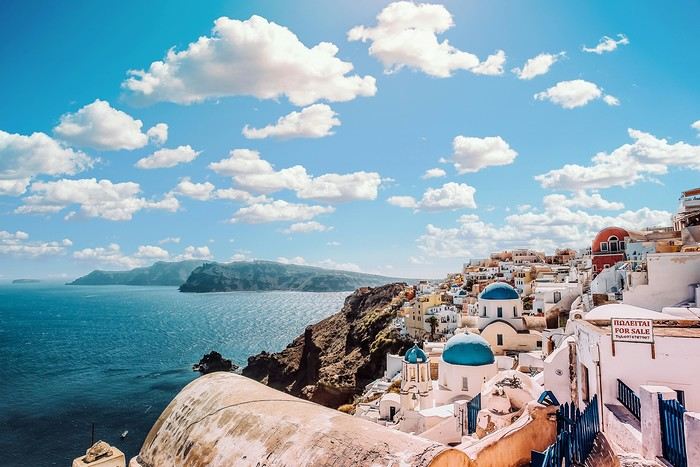
Authentic Peloponnese: A Land of Living Traditions
The Peloponnese peninsula is home to traditional villages where time seems to have stood still. In Dimitsana, perched in the Arcadian mountains, locals keep centuries-old traditions alive in their craft workshops. The cobbled streets echo with the sound of traditional looms, where artisans still create textiles using age-old methods.
In the Mani region, ancient stone towers tell the story of an untamed land. Local families welcome you into their traditional homes to share their culinary art: olive oil preparation, olive bread making, and dolmades crafted according to recipes passed down through generations. The Unknown Islands: Preserved Jewels of the Aegean Sea
Far from Mykonos' hustle and bustle, Ikaria island reveals its longevity secrets. This blue island, known for its inhabitants' exceptional lifespan, invites you to discover a unique way of life. Join the panigiria, traditional festivals where the entire community gathers to dance, sing, and share local dishes prepared in large communal ovens.
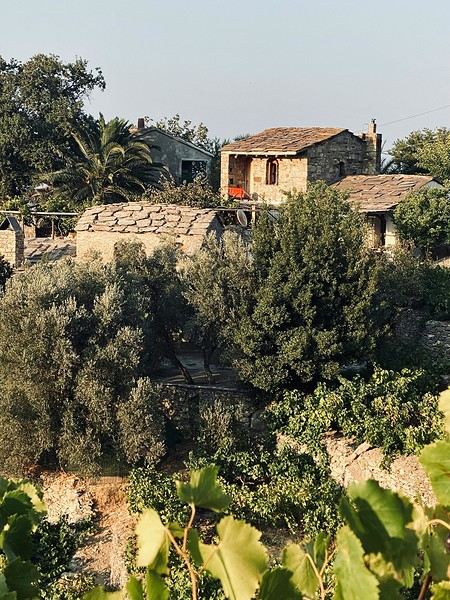
On Lemnos island, fishermen introduce you to their traditional sustainable fishing techniques. The ancient salt pans, still in operation, bear witness to ancestral know-how. In family-run tavernas by the harbor, taste thallasomelo, a unique sea honey produced by bees foraging on wild thyme from coastal cliffs. Greek Macedonia: A Living Heritage
In the northern mountains, the villages of Zagoria preserve their characteristic stone architecture. Eighteenth-century arched bridges still span deep gorges, showcasing a unique construction art. Locals invite you to discover medicinal herb gathering and traditional herbal tea preparation, knowledge passed down through generations.
In Nymfaio, a village perched at 1,350 meters altitude, ecotourism initiatives help preserve the natural habitat of brown bears. Traditional stone guesthouses offer an ideal base for exploring the region and observing wildlife in its natural environment. Agritourism and Authentic Rural Life
Traditional farms in Thessaly open their doors to travelers eager to discover sustainable agriculture. Participate in the autumn olive harvest, traditional feta cheese making, or the cultivation of aromatic herbs that flavor Greek cuisine. These experiences not only support the local economy but also help preserve ancestral farming practices.
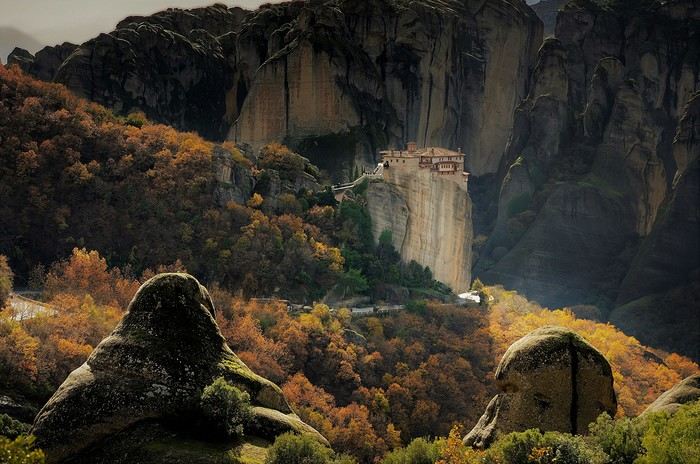
Traditional Festivals and Local Celebrations
The Greek calendar is marked by authentic celebrations that vary by region. In Pelion, the Goat Carnival transforms villages into living theater stages, where pagan traditions blend with Christian folklore. On Syros, the rebetiko festival lets you discover this UNESCO-listed music in its original context. Sustainable Initiatives and Heritage Preservation
Many Greek communities are committed to sustainable tourism projects. On Thirassia, Santorini's lesser-known neighbor, a traditional troglodyte house rehabilitation project allows visitors to stay in authentic dwellings while contributing to architectural heritage preservation. Supporting Local Communities
Women's cooperatives, particularly active in rural areas, offer traditional craft workshops. In Arnaia, Chalkidiki, learn to weave on traditional looms or prepare preserves using age-old methods. These initiatives help women maintain economic independence while preserving local traditions.
For more responsible tourism, many accommodations adopt eco-friendly practices. Using local products, sustainable water management, and solar energy production are among the initiatives that help preserve places' authenticity while respecting the environment.
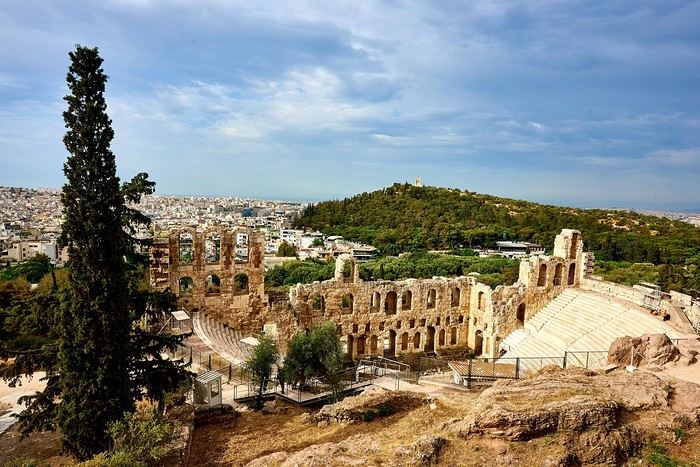
Tips for an Authentic Trip
To discover the real Greece, choose off-season stays from October to April. Milder temperatures and fewer crowds allow for more authentic encounters with locals. Opt for small family-run guesthouses and host tables that offer true immersion in local culture.
Greece's regions thus invite you to discover another facet of this millennia-old country, far from tourist clichés. Each village, each island, each mountain holds authentic treasures waiting to be discovered by travelers who respect traditions and the environment.
Authentic Peloponnese: A Land of Living Traditions
The Peloponnese peninsula is home to traditional villages where time seems to have stood still. In Dimitsana, perched in the Arcadian mountains, locals keep centuries-old traditions alive in their craft workshops. The cobbled streets echo with the sound of traditional looms, where artisans still create textiles using age-old methods.
In the Mani region, ancient stone towers tell the story of an untamed land. Local families welcome you into their traditional homes to share their culinary art: olive oil preparation, olive bread making, and dolmades crafted according to recipes passed down through generations. The Unknown Islands: Preserved Jewels of the Aegean Sea
Far from Mykonos' hustle and bustle, Ikaria island reveals its longevity secrets. This blue island, known for its inhabitants' exceptional lifespan, invites you to discover a unique way of life. Join the panigiria, traditional festivals where the entire community gathers to dance, sing, and share local dishes prepared in large communal ovens.
On Lemnos island, fishermen introduce you to their traditional sustainable fishing techniques. The ancient salt pans, still in operation, bear witness to ancestral know-how. In family-run tavernas by the harbor, taste thallasomelo, a unique sea honey produced by bees foraging on wild thyme from coastal cliffs. Greek Macedonia: A Living Heritage
In the northern mountains, the villages of Zagoria preserve their characteristic stone architecture. Eighteenth-century arched bridges still span deep gorges, showcasing a unique construction art. Locals invite you to discover medicinal herb gathering and traditional herbal tea preparation, knowledge passed down through generations.
In Nymfaio, a village perched at 1,350 meters altitude, ecotourism initiatives help preserve the natural habitat of brown bears. Traditional stone guesthouses offer an ideal base for exploring the region and observing wildlife in its natural environment. Agritourism and Authentic Rural Life
Traditional farms in Thessaly open their doors to travelers eager to discover sustainable agriculture. Participate in the autumn olive harvest, traditional feta cheese making, or the cultivation of aromatic herbs that flavor Greek cuisine. These experiences not only support the local economy but also help preserve ancestral farming practices.
Traditional Festivals and Local Celebrations
The Greek calendar is marked by authentic celebrations that vary by region. In Pelion, the Goat Carnival transforms villages into living theater stages, where pagan traditions blend with Christian folklore. On Syros, the rebetiko festival lets you discover this UNESCO-listed music in its original context. Sustainable Initiatives and Heritage Preservation
Many Greek communities are committed to sustainable tourism projects. On Thirassia, Santorini's lesser-known neighbor, a traditional troglodyte house rehabilitation project allows visitors to stay in authentic dwellings while contributing to architectural heritage preservation. Supporting Local Communities
Women's cooperatives, particularly active in rural areas, offer traditional craft workshops. In Arnaia, Chalkidiki, learn to weave on traditional looms or prepare preserves using age-old methods. These initiatives help women maintain economic independence while preserving local traditions.
For more responsible tourism, many accommodations adopt eco-friendly practices. Using local products, sustainable water management, and solar energy production are among the initiatives that help preserve places' authenticity while respecting the environment.
Tips for an Authentic Trip
To discover the real Greece, choose off-season stays from October to April. Milder temperatures and fewer crowds allow for more authentic encounters with locals. Opt for small family-run guesthouses and host tables that offer true immersion in local culture.
Greece's regions thus invite you to discover another facet of this millennia-old country, far from tourist clichés. Each village, each island, each mountain holds authentic treasures waiting to be discovered by travelers who respect traditions and the environment.
Three Peru itineraries: which one should I choose?
Hi there,
I’ll be traveling to Peru in August 2025. Unfortunately, I only have 12 days to visit this amazing country. I’m torn between doing a fast-paced trip where I see every sight but don’t really soak it all in, or going for a lighter itinerary that lets me enjoy the moment more.
Right now, I’ve narrowed it down to three options and I’d love to hear your thoughts on which one to pick.
Option 1 August 14, 2025 Flight Canada – Lima Visit Lima Stay in Lima August 15, 2025 Flight Lima – Cusco Visit Cusco Stay in Cusco August 16, 2025 Visit Humantay Lake Stay in Cusco August 17, 2025 Visit Sacred Valley Stay in Ollantaytambo August 18, 2025 Visit Machu Picchu Stay in Ollantaytambo August 19, 2025 Visit Sacred Valley Stay in Cusco August 20, 2025 Visit Rainbow Mountains Stay in Cusco August 21, 2025 Flight Cusco – Lima Bus Lima to Huacachina Stay in Huacachina August 22, 2025 Visit Huacachina Stay in Huacachina August 23, 2025 Visit Paracas Stay in Huacachina August 24, 2025 Bus Huacachina – Lima Visit Lima Stay in Lima August 25, 2025 Flight Lima – Canada
Option 2 August 14, 2025 Flight Canada – Lima Bus Lima – Huacachina Stay in Huacachina August 15, 2025 Visit Huacachina Bus Huacachina – Arequipa Overnight bus August 16, 2025 Visit Arequipa Stay in Arequipa August 17, 2025 Colca Canyon Transfer Arequipa – Puno Stay in Puno August 18, 2025 Visit Lake Titicaca Bus Puno – Cusco (7:00 AM) Overnight bus August 19, 2025 Visit Humantay Lake Stay in Cusco August 20, 2025 Visit Sacred Valley Stay in Ollantaytambo August 21, 2025 Visit Machu Picchu Stay in Ollantaytambo August 22, 2025 Visit Sacred Valley Stay in Cusco August 23, 2025 Visit Rainbow Mountains Stay in Cusco August 24, 2025 Flight Cusco – Lima Visit Lima Stay in Lima August 25, 2025 Flight Lima – Canada
Option 3 August 14, 2025 Flight Canada – Lima Bus Lima – Huacachina Stay in Huacachina August 15, 2025 Visit Huacachina Stay in Huacachina August 16, 2025 Visit Paracas Stay in Paracas August 17, 2025 Bus Paracas – Lima Flight Lima – Cusco Stay in Cusco August 18, 2025 Visit Cusco Stay in Cusco August 19, 2025 Visit Humantay Lake Stay in Cusco August 20, 2025 Visit Sacred Valley Stay in Ollantaytambo August 21, 2025 Visit Machu Picchu Stay in Ollantaytambo August 22, 2025 Visit Sacred Valley Stay in Cusco August 23, 2025 Visit Rainbow Mountains Stay in Cusco August 24, 2025 Flight Cusco – Lima Visit Lima Stay in Lima August 25, 2025 Flight Lima – Canada
I’ll be traveling to Peru in August 2025. Unfortunately, I only have 12 days to visit this amazing country. I’m torn between doing a fast-paced trip where I see every sight but don’t really soak it all in, or going for a lighter itinerary that lets me enjoy the moment more.
Right now, I’ve narrowed it down to three options and I’d love to hear your thoughts on which one to pick.
Option 1 August 14, 2025 Flight Canada – Lima Visit Lima Stay in Lima August 15, 2025 Flight Lima – Cusco Visit Cusco Stay in Cusco August 16, 2025 Visit Humantay Lake Stay in Cusco August 17, 2025 Visit Sacred Valley Stay in Ollantaytambo August 18, 2025 Visit Machu Picchu Stay in Ollantaytambo August 19, 2025 Visit Sacred Valley Stay in Cusco August 20, 2025 Visit Rainbow Mountains Stay in Cusco August 21, 2025 Flight Cusco – Lima Bus Lima to Huacachina Stay in Huacachina August 22, 2025 Visit Huacachina Stay in Huacachina August 23, 2025 Visit Paracas Stay in Huacachina August 24, 2025 Bus Huacachina – Lima Visit Lima Stay in Lima August 25, 2025 Flight Lima – Canada
Option 2 August 14, 2025 Flight Canada – Lima Bus Lima – Huacachina Stay in Huacachina August 15, 2025 Visit Huacachina Bus Huacachina – Arequipa Overnight bus August 16, 2025 Visit Arequipa Stay in Arequipa August 17, 2025 Colca Canyon Transfer Arequipa – Puno Stay in Puno August 18, 2025 Visit Lake Titicaca Bus Puno – Cusco (7:00 AM) Overnight bus August 19, 2025 Visit Humantay Lake Stay in Cusco August 20, 2025 Visit Sacred Valley Stay in Ollantaytambo August 21, 2025 Visit Machu Picchu Stay in Ollantaytambo August 22, 2025 Visit Sacred Valley Stay in Cusco August 23, 2025 Visit Rainbow Mountains Stay in Cusco August 24, 2025 Flight Cusco – Lima Visit Lima Stay in Lima August 25, 2025 Flight Lima – Canada
Option 3 August 14, 2025 Flight Canada – Lima Bus Lima – Huacachina Stay in Huacachina August 15, 2025 Visit Huacachina Stay in Huacachina August 16, 2025 Visit Paracas Stay in Paracas August 17, 2025 Bus Paracas – Lima Flight Lima – Cusco Stay in Cusco August 18, 2025 Visit Cusco Stay in Cusco August 19, 2025 Visit Humantay Lake Stay in Cusco August 20, 2025 Visit Sacred Valley Stay in Ollantaytambo August 21, 2025 Visit Machu Picchu Stay in Ollantaytambo August 22, 2025 Visit Sacred Valley Stay in Cusco August 23, 2025 Visit Rainbow Mountains Stay in Cusco August 24, 2025 Flight Cusco – Lima Visit Lima Stay in Lima August 25, 2025 Flight Lima – Canada
A Trip to Australia: New South Wales
Wednesday, November 15, 2023
Flight Cairns – Sydney
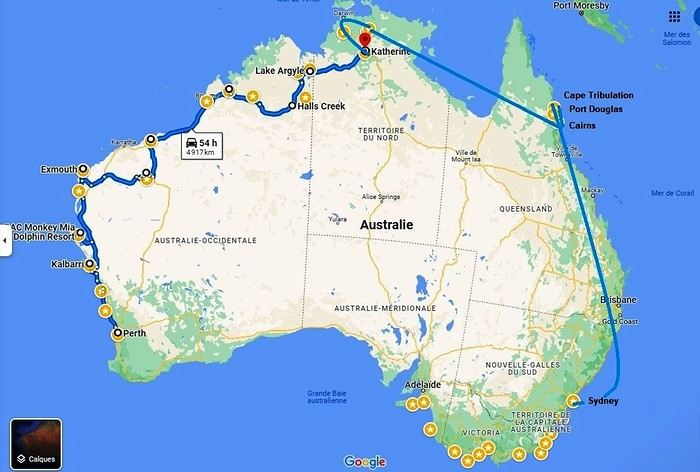 Okay, let’s recap. We’ve traveled through Western Australia, the Northern Territory, Queensland, and tonight we’ll be in New South Wales. We’ll even lose an extra hour—and a bunch of degrees!
We’re on a flawless journey so far. One of our suitcases is almost two kilos overweight. The guy checking us in gives us a nice smile and decides to overlook the excess baggage fee.
Okay, let’s recap. We’ve traveled through Western Australia, the Northern Territory, Queensland, and tonight we’ll be in New South Wales. We’ll even lose an extra hour—and a bunch of degrees!
We’re on a flawless journey so far. One of our suitcases is almost two kilos overweight. The guy checking us in gives us a nice smile and decides to overlook the excess baggage fee.
A flight, for once, without a hitch, no delay (just half an hour…). Taxi… We discover our… room… We’ve got a suite like never before on this trip. It’s a posh apartment on the 7th floor—on cloud nine, really! We can’t believe it. 113.26 € per night! The Meriton Suites Mascot Central if you ever find yourself in this city… We even have a washing machine (and it works!). Such a change from the cabins in the west!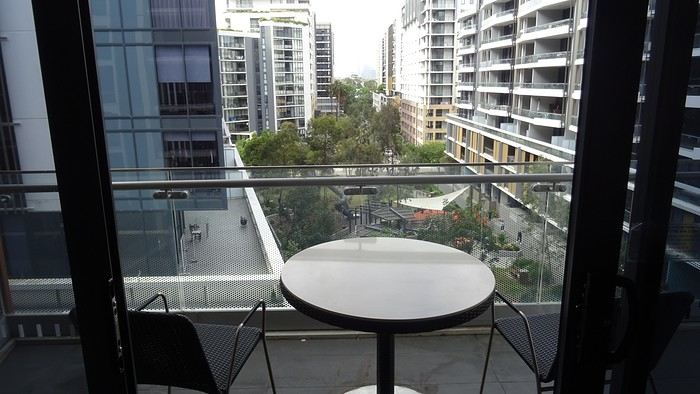
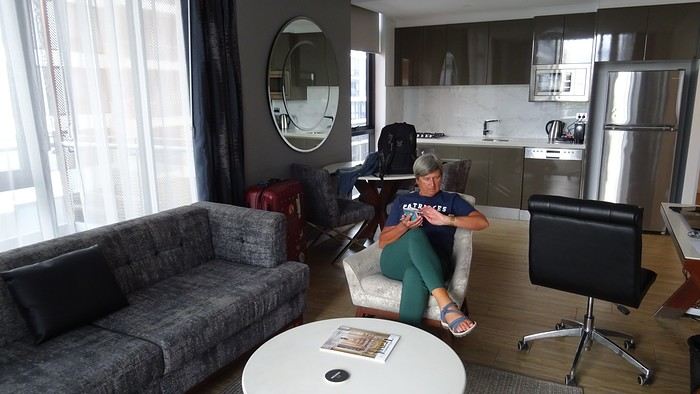
We don’t linger, though. We take the metro. Why? Well, yeah, we’re still kids at heart—off to the Opera House, of course!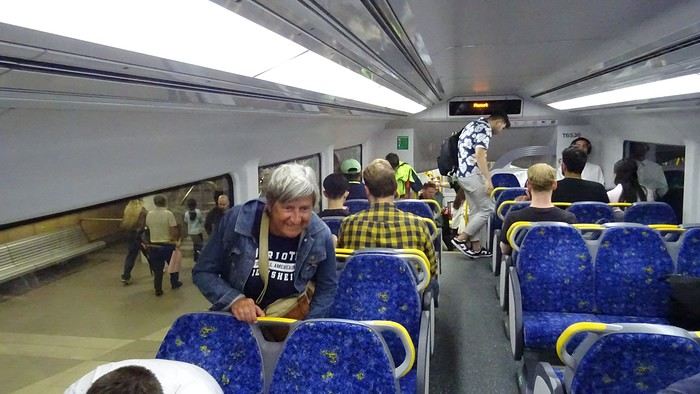
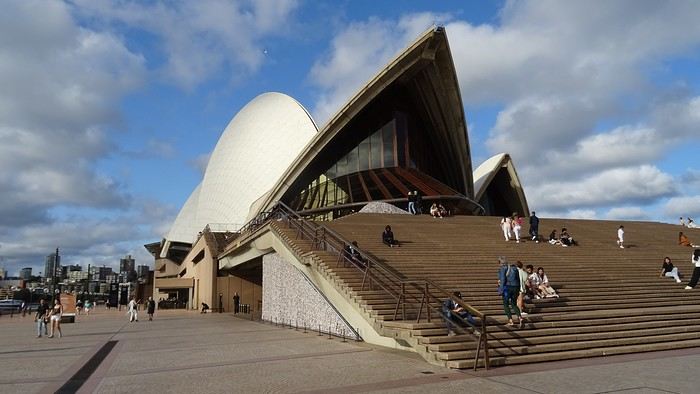
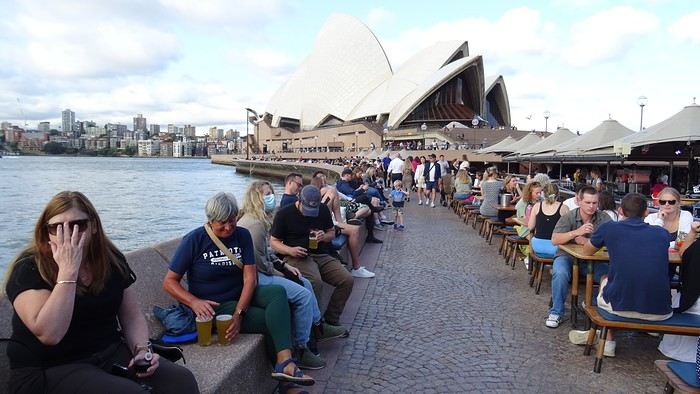
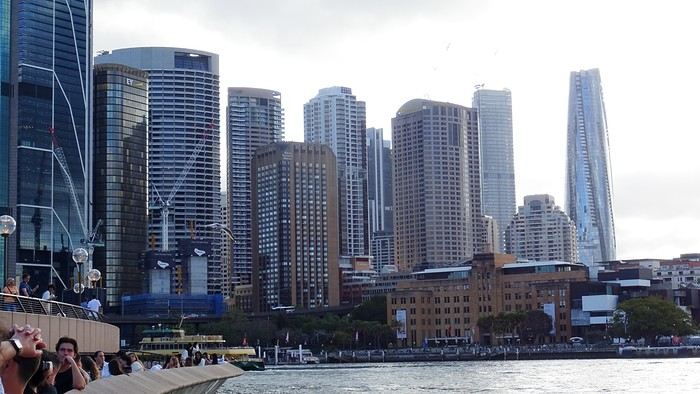
 Restaurant prices have doubled. Even tripled. We reluctantly settle for a pizzeria because that T-bone for 155 AUD (100 €)…
We know how to handle ourselves. There’s a Woolworths right downstairs. And we’ve got a kitchen, remember! And a terrace! We even have huge bats to brighten up our skies!
Okay, let’s recap. We’ve traveled through Western Australia, the Northern Territory, Queensland, and tonight we’ll be in New South Wales. We’ll even lose an extra hour—and a bunch of degrees!
We’re on a flawless journey so far. One of our suitcases is almost two kilos overweight. The guy checking us in gives us a nice smile and decides to overlook the excess baggage fee.A flight, for once, without a hitch, no delay (just half an hour…). Taxi… We discover our… room… We’ve got a suite like never before on this trip. It’s a posh apartment on the 7th floor—on cloud nine, really! We can’t believe it. 113.26 € per night! The Meriton Suites Mascot Central if you ever find yourself in this city… We even have a washing machine (and it works!). Such a change from the cabins in the west!
We don’t linger, though. We take the metro. Why? Well, yeah, we’re still kids at heart—off to the Opera House, of course!
Restaurant prices have doubled. Even tripled. We reluctantly settle for a pizzeria because that T-bone for 155 AUD (100 €)…
We know how to handle ourselves. There’s a Woolworths right downstairs. And we’ve got a kitchen, remember! And a terrace! We even have huge bats to brighten up our skies!
French-speaking guide in Cambodia
Hi,
Does anyone have the contact details for a French-speaking guide?
Must-see spots in Sardinia
Hi everyone, so happy VoyageForum is back up and running! I’m planning to explore Sardinia at the end of April and in May 2025. Could anyone tell me what the must-see spots are for this destination? I know there are tons of stunning beaches and, like everyone, I’m drawn to them. But I’m actually more interested in visits (towns, remarkable sites, curiosities) than the usual touristy spots. Looking forward to your enlightened tips!
Trans-Mongolian Railway trip, post-2022 info?
Hi,
I’m supposed to be going on a university exchange in Shanghai from February to June 2025, and I’d love to return to Europe afterward via the Trans-Mongolian Railway. My plan was to fly from China to Mongolia’s capital and maybe spend 3-4 days exploring the country. Then, I could take the train, with a stop in Irkutsk before heading to Moscow for a two-day visit, followed by two days in Saint Petersburg. After that, I’d take a bus to Tallinn and possibly fly home from there due to time constraints. I was thinking this whole trip would take about two weeks. This site: Russian Train Tickets - Online Booking for Russian Train Tickets seems useful for buying tickets (though the ones that go through Mongolia need to be booked via a form or on tutu.travel), and this one for the bus from Russia to Estonia: St. Petersburg - Tallinn buses and tickets.
From what I’ve gathered, Russia now offers an e-visa, and Mongolia has suspended visas for Europeans until the end of next year.
Would anyone have any info or advice? Given the current situation in Russia, everything is pretty complicated to research, and most of the information is outdated.
Thanks in advance, Alicia
I’m supposed to be going on a university exchange in Shanghai from February to June 2025, and I’d love to return to Europe afterward via the Trans-Mongolian Railway. My plan was to fly from China to Mongolia’s capital and maybe spend 3-4 days exploring the country. Then, I could take the train, with a stop in Irkutsk before heading to Moscow for a two-day visit, followed by two days in Saint Petersburg. After that, I’d take a bus to Tallinn and possibly fly home from there due to time constraints. I was thinking this whole trip would take about two weeks. This site: Russian Train Tickets - Online Booking for Russian Train Tickets seems useful for buying tickets (though the ones that go through Mongolia need to be booked via a form or on tutu.travel), and this one for the bus from Russia to Estonia: St. Petersburg - Tallinn buses and tickets.
From what I’ve gathered, Russia now offers an e-visa, and Mongolia has suspended visas for Europeans until the end of next year.
Would anyone have any info or advice? Given the current situation in Russia, everything is pretty complicated to research, and most of the information is outdated.
Thanks in advance, Alicia
Bordeaux - Biarritz - San Sebastian à pied English translation pending
Bonjour,
Dans deux semaines, nous souhaiterions partir randonner de Bordeaux à San Sebastian. Je préfère passer par ce site avant de me lancer ds l'achat de guides...et les infos, pas évidentes à trouver sur internet pour cette portion du trajet.
Bref... je souhaiterais savoir quel est le chemin le plus chouette de Bordeaux à Biarritz, car il existe plusieurs itinéraires. Quel niveau de difficulté? Durée?
En vous remerciant par avance
Dans deux semaines, nous souhaiterions partir randonner de Bordeaux à San Sebastian. Je préfère passer par ce site avant de me lancer ds l'achat de guides...et les infos, pas évidentes à trouver sur internet pour cette portion du trajet.
Bref... je souhaiterais savoir quel est le chemin le plus chouette de Bordeaux à Biarritz, car il existe plusieurs itinéraires. Quel niveau de difficulté? Durée?
En vous remerciant par avance
Voyage îles Eoliennes et ses volcans en octobre English translation pending
Hello tous🙂,
Pour notre voyage d'octobre nous avons cherché une destination accessible facile pour nous et "motivante" (comme le Botswana est inaccessible pour le moment). Après avoir sillonné la Méditerranée et l'Atlantique nord nous avons jeté notre dévolu sur les îles Eoliennes avec comme fil conducteur les volcans.
En gros voici ce que cela pourrait donner, c'est un premier jet:
21/10 vol CDG - Catane puis transfert à Milazzo (Eolian, Eolnet) - nuit Milazzo, où
22/10 Ferry matinal vers Stromboli (6h ou 7h10) - ascension Stromboli fin de journée (Magmatrek) - nuit Stromboli, où ?
23/10 Suite visite Stromboli avec deuxième chance pour l'ascension si pas fait la veille - nuit Stromboli
24/10 Ferry Stromboli - Lipari (7h15 ou 10h15) - visite Lipari - location voiture ou vélo électrique - nuit Lipari où ?
25/10 Excursion Vulcano - horaire ferry ou navette ?
26/10 Ferry - Lipari - Milazzo - location de voiture et on se rapprocherait de l'Etna, où loger ?
27/0 Ascension Etna, Etna 3340 ou ??? - nuit Catane, où?
28/10 Vol à 10h pour la France
C'est serré, mais jouable ?
Est-ce que vous feriez Vulcano en excursion ou vaut-il mieux faire Lipari - Vulcano et dormir à Vulcano pour en repartir le lendemain pour Milazzo ?
Avez-vous un agence à recommander pour le Stromboli (ou c'est Magmatrek la mieux) ? Pareil pour l'ascension de l'Etna ? Lipari louer une voiture bonne idée ?
Comme c'est un plan B je n'ai pas pu faire autant de recherches que d'habitude je suis preneur de tous conseils ou avis.😛
Par avance merci🙂
Pour notre voyage d'octobre nous avons cherché une destination accessible facile pour nous et "motivante" (comme le Botswana est inaccessible pour le moment). Après avoir sillonné la Méditerranée et l'Atlantique nord nous avons jeté notre dévolu sur les îles Eoliennes avec comme fil conducteur les volcans.
En gros voici ce que cela pourrait donner, c'est un premier jet:
21/10 vol CDG - Catane puis transfert à Milazzo (Eolian, Eolnet) - nuit Milazzo, où
22/10 Ferry matinal vers Stromboli (6h ou 7h10) - ascension Stromboli fin de journée (Magmatrek) - nuit Stromboli, où ?
23/10 Suite visite Stromboli avec deuxième chance pour l'ascension si pas fait la veille - nuit Stromboli
24/10 Ferry Stromboli - Lipari (7h15 ou 10h15) - visite Lipari - location voiture ou vélo électrique - nuit Lipari où ?
25/10 Excursion Vulcano - horaire ferry ou navette ?
26/10 Ferry - Lipari - Milazzo - location de voiture et on se rapprocherait de l'Etna, où loger ?
27/0 Ascension Etna, Etna 3340 ou ??? - nuit Catane, où?
28/10 Vol à 10h pour la France
C'est serré, mais jouable ?
Est-ce que vous feriez Vulcano en excursion ou vaut-il mieux faire Lipari - Vulcano et dormir à Vulcano pour en repartir le lendemain pour Milazzo ?
Avez-vous un agence à recommander pour le Stromboli (ou c'est Magmatrek la mieux) ? Pareil pour l'ascension de l'Etna ? Lipari louer une voiture bonne idée ?
Comme c'est un plan B je n'ai pas pu faire autant de recherches que d'habitude je suis preneur de tous conseils ou avis.😛
Par avance merci🙂
Ouest américain (voiture puis RV) juillet 2021 English translation pending
Bonjour à tous,
Nous envisageons un voyage en famille (3 "enfants" : 20, 18 et 14 ans) dans l'ouest des USA pour l'été 2021. Nous pourrions y consacrer entre 3 et 4 semaines.
Nous tenons à faire une partie du voyage en RV pour découvrir cette manière différente de voyager. J'ai lu et relu les (dés)avantages généraux. Par contre, si un point particulier retient l'attention d'un RViste, je suis très intéressée. Je pense à des infos du genre : à monument valley, il faut prévoir un "tour" car le RV ne passe pas.
J'aimerais d'abord vous soumettre le trajet actuellement à l'étude :
- Arrivée à SanFrancisco - Visite SF (possible à pieds et à vélos, semble-t-il)
Location de la voiture - Monterey (incontournable pour le grand, fan des fonds marins)
- Yosemite (j'aimerais faire aussi Sequoia. Sensé de faire les deux ? Possible de satisfaire ma soif de géants ailleurs sur le trajet ?)
- (Bodies ?) : la plus jeune voudrait voir plein de villes fantôme... mais j'ai peur que ça n'en veille pas les km
- Vallée de la mort - (Rhyolite) - Vegas (un rapide passage)
Remise de la voiture (selon google : 1326km) , location du RV - Zion - Bryce - Arches/Moab - Mesa verde - Monument valley - Antelope - (Powell Lake) - Grand Canyon - Meteor Crater excentré mais intrigant pour nous, curieux de l'espace.
- traverser Mojave (et Calico ?) ou Joshua tree (et Pioneertown ?) - Los Angeles Remise du RV (google annonce 2826km) et retour dans nos pénates, des étoiles plein les yeux.
J'espère que ma demande n'est pas trop vague mais c'est tout ce que j'ai en ce moment. J'éprouve le besoin, pour ce premier grand voyage organisé par mes soins et avant de pousser plus avant, de vérifier si le projet tient la route.Merci de m'avoir lue. Waha
Nous envisageons un voyage en famille (3 "enfants" : 20, 18 et 14 ans) dans l'ouest des USA pour l'été 2021. Nous pourrions y consacrer entre 3 et 4 semaines.
Nous tenons à faire une partie du voyage en RV pour découvrir cette manière différente de voyager. J'ai lu et relu les (dés)avantages généraux. Par contre, si un point particulier retient l'attention d'un RViste, je suis très intéressée. Je pense à des infos du genre : à monument valley, il faut prévoir un "tour" car le RV ne passe pas.
J'aimerais d'abord vous soumettre le trajet actuellement à l'étude :
- Arrivée à SanFrancisco - Visite SF (possible à pieds et à vélos, semble-t-il)
Location de la voiture - Monterey (incontournable pour le grand, fan des fonds marins)
- Yosemite (j'aimerais faire aussi Sequoia. Sensé de faire les deux ? Possible de satisfaire ma soif de géants ailleurs sur le trajet ?)
- (Bodies ?) : la plus jeune voudrait voir plein de villes fantôme... mais j'ai peur que ça n'en veille pas les km
- Vallée de la mort - (Rhyolite) - Vegas (un rapide passage)
Remise de la voiture (selon google : 1326km) , location du RV - Zion - Bryce - Arches/Moab - Mesa verde - Monument valley - Antelope - (Powell Lake) - Grand Canyon - Meteor Crater excentré mais intrigant pour nous, curieux de l'espace.
- traverser Mojave (et Calico ?) ou Joshua tree (et Pioneertown ?) - Los Angeles Remise du RV (google annonce 2826km) et retour dans nos pénates, des étoiles plein les yeux.
J'espère que ma demande n'est pas trop vague mais c'est tout ce que j'ai en ce moment. J'éprouve le besoin, pour ce premier grand voyage organisé par mes soins et avant de pousser plus avant, de vérifier si le projet tient la route.Merci de m'avoir lue. Waha
Miami ou Honolulu pour un voyage d'une semaine? English translation pending
Bonjour à tous !
Je crée cette nouvelle discussion, car en fin d'année, si la pandémie actuelle devient un cauchemar passé, ma compagne et moi-même avons envie de partir en voyage pendant une semaine.
De ce fait, nous avons fait plusieurs recherches, nous avons consultés plusieurs avis sur plusieurs forums Francophones et Anglophones et suite à ça, notre choix s'est arrêté sur deux destinations, à savoir, Miami et Honolulu, mais le soucis, c'est que nous n'arrivons pas à nous décider, donc pourrais-je compter sur vous afin de nous donner les points positifs et les points négatifs de ces deux villes ? En sachant que :
nous aimons :
- Le soleil.
- Les beaux paysages naturels, comme ceux de Big Island, mais c'est tout de même assez loin de O'ahu, qui est l'ile où se situe Honolulu.
- Les plages avec une eau bleue turquoise, comme celles de Bora-Bora.
- Les belles voitures, que ce soit les anciennes Américaines super bien entretenues, comme on en voit beaucoup à Cuba ou des supercars récentes.
Nous n'aimons/ne voulons pas :
- La délinquance (drogue, gang, graffitis qui n'est pas de artistiques etc.)
- Les SDF. Attention, pas parce qu'ils nous dégoûtent ou parce qu'on ne veut pas se mélanger à des personnes financièrement moins aisées, très loin de là, mais c'est juste que ça nous ferait culpabiliser de voir des personnes dans une extrême pauvreté, des personnes qui ont du mal à se nourrir, pendant que nous déboursons plusieurs centaines, voire milliers d'euros pour un voyage qui n'est pas vital.
Dans la ville où je réside, il y a un SDF qui fait la manche devant l'hypermarché où je fais mes achats et tous les mois, ça me fait culpabiliser de sortir avec un caddie rempli, donc je paye toujours un sac de produits de première nécessité pour lui, ainsi que pour son chien.
Je vous invite à découvrir l'île de Lanzarote English translation pending
INTRODUCTION
Des vidéos sont insérées tout au long du résumé. Veuillez cliquer sur l'image pour démarrer la vidéo.
En février dernier, nous avons séjourné 2 semaines sur l'île de Lanzarote afin d'en découvrir les différents attraits touristiques.
Comme la plupart de nos précédents voyages, plusieurs semaines ont été consacrées à la création de notre itinéraire afin de pouvoir être en mesure d'atteindre parfaitement nos objectifs.
Lors de notre séjour, nous avons utilisé l'application Maps.me, une application mobile qui fournit des cartes hors ligne. Cette application s'avère très précieuse lors de nos déplacements en voiture, en randonnée et même lors de nos circuits à pied dans les grandes villes.
J'avais préalablement téléchargé les coordonnées GPS de toutes les attractions prévues à notre itinéraire dans l'application Maps.me, ce qui a facilité grandement nos déplacements.
La réservation de l'hébergement ainsi que la location d'une voiture ont été effectuées sur le web avant notre départ.
Nous sommes partis de l'aéroport de Québec et avons eu une escale à Montréal ainsi qu'à Bruxelles en Belgique avant d'atteindre Lanzarote.
Lanzarote fait partie des Îles Canaries qui elles-mêmes sont situées dans l'océan Atlantique, à l'ouest du Maroc. Celles-ci font d'ailleurs partie de l'Espagne.
Nous avions déjà visité l'île de Tenerife et nous avions adoré notre séjour à cet endroit.
Nous avons donc décidé de poursuivre la découverte des Îles Canaries en nous rendant à Lanzarote car cette île offre un paysage volcanique spectaculaire, des plages à faire rêver ainsi que de magnifiques villages aux maisons typiques de l'île qui sont majoritairement blanches.
Les sentiers de randonnée sont nombreux et nous permettent de découvrir une grande diversité de paysages.
Les attraits touristiques sont également fort nombreux et facilement accessibles car les routes de Lanzarote se parcourent aisément en voiture car celles-ci sont dans un état impeccable.
D'ailleurs, c'est un pur plaisir que de se déplacer sur ces routes car les paysages qui défilent sous nos yeux sont sensationnels et présentent une perspective différente selon la lumière du jour.
Des vidéos sont insérées tout au long du résumé. Veuillez cliquer sur l'image pour démarrer la vidéo.
En février dernier, nous avons séjourné 2 semaines sur l'île de Lanzarote afin d'en découvrir les différents attraits touristiques.
Comme la plupart de nos précédents voyages, plusieurs semaines ont été consacrées à la création de notre itinéraire afin de pouvoir être en mesure d'atteindre parfaitement nos objectifs.
Lors de notre séjour, nous avons utilisé l'application Maps.me, une application mobile qui fournit des cartes hors ligne. Cette application s'avère très précieuse lors de nos déplacements en voiture, en randonnée et même lors de nos circuits à pied dans les grandes villes.
J'avais préalablement téléchargé les coordonnées GPS de toutes les attractions prévues à notre itinéraire dans l'application Maps.me, ce qui a facilité grandement nos déplacements.
La réservation de l'hébergement ainsi que la location d'une voiture ont été effectuées sur le web avant notre départ.
Nous sommes partis de l'aéroport de Québec et avons eu une escale à Montréal ainsi qu'à Bruxelles en Belgique avant d'atteindre Lanzarote.
Lanzarote fait partie des Îles Canaries qui elles-mêmes sont situées dans l'océan Atlantique, à l'ouest du Maroc. Celles-ci font d'ailleurs partie de l'Espagne.
Nous avions déjà visité l'île de Tenerife et nous avions adoré notre séjour à cet endroit.
Nous avons donc décidé de poursuivre la découverte des Îles Canaries en nous rendant à Lanzarote car cette île offre un paysage volcanique spectaculaire, des plages à faire rêver ainsi que de magnifiques villages aux maisons typiques de l'île qui sont majoritairement blanches.
Les sentiers de randonnée sont nombreux et nous permettent de découvrir une grande diversité de paysages.
Les attraits touristiques sont également fort nombreux et facilement accessibles car les routes de Lanzarote se parcourent aisément en voiture car celles-ci sont dans un état impeccable.
D'ailleurs, c'est un pur plaisir que de se déplacer sur ces routes car les paysages qui défilent sous nos yeux sont sensationnels et présentent une perspective différente selon la lumière du jour.
Namibie, quand tu nous tiens! English translation pending
Bonjour à tous.
Depuis quelques années les aleas de la vie professionnelle font qu'il ne nous est plus possible d'organiser nos voyages longtemps à l'avance et encore une fois cela s'est vérifié!. Un trou entre 2 contrats de travail c'est l'occasion à saisir pour changer d'air! Faire le tour des possibles entre ce qui nous fait vibrer, la saison, les difficultés d'organisation, les coûts et surgit une évidence: ce sera en Namibie que nous retournerons! En plus Claude, mon épouse, voulait découvrir le Richtersveld et sa flore si particulière et incroyable et le récit de Ticapi (merci à elle et à son magnifique carnet)nous avait tellement séduit que nous avons dit banco c'est jouable!
On achète donc les billets d'avion le mardi pour un vol le jeudi, on trouve une voiture avec sa tente de toit et le tour est joué!
On se retrouve donc le Vendredi 7 Février au Lodge "Auas safari lodge" pour 3 semaines de balade. Nous apprécions beaucoup ce lodge car il est perdu au milieu de la nature, l'accueil y est sympa, il est proche de Windhoek et de l'aéroport, et que l'on est de suite dans le bain car on peut y photographier pas mal d'oiseaux au bord de la petite mare.
Ceci est important pour nous qui apprécions beaucoup l'image et la transmission d'une émotion, d'une certaine esthétique au travers de la photo, moteur de notre motivation à voyager. Pour notre virée nous avons hérité d'un Toyota à boîte automatique vieux d'un an avec un coffre tente sur le toit. Et, dès la 1ère nuit d'utilisation on verra que ce n'est pas le top. 2 photos pour montrer la différence: 2017: tente traditionnelle
2020 tente coffre
Le coffre métallique est plus facile a ouvrir et a fermer qu'une tente traditionnelle, mais beaucoup moins confortable car on dort dans le sens de la longueur et donc c'est moins large (les 2 oreillers se chevauchent et quand il fait chaud cela devient vite inconfortable… Par contre nous avons gagné un vrai réservoir d'eau de 50L équipé d'une pompe électrique et d'une douchette, ainsi que des lumières à leds dans la tente et dans la malle arrière ce qui est pratique. Pas oublier non plus tout le necessaire de camping, le frigo, le compresseur, les plaques de desensablement, les 2 roues de secours, les sangles de remorquage, les cables electiques, la mallette a outils de base, et 2 reservoirs de gasoil capacité totale 150L: Paré donc pour aller au bout du monde!!!
Nous n'irons que jusqu'au P.N. du Richtersveld, avant de poursuivre vers les chutes d'Augrabies et remonter par le P.N. Kgalagadi. Voyager dans ces contrées en Février c'est assurément avoir chaud, très chaud, c'est aussi risquer la pluie, les orages (hyper localisés, parfois très violents, très spectaculaires ) ou alors rien du tout; mais c'est aussi l'assurance d'avoir des ambiances, des lumières de folies…
Nous entamons notre descente ar le Parc du Naukluftet sa chaîne de montagne spectaculaire, parc connu pour ses trails riche en découvertes, sportifs, ses piscines d'eau claire perdues dans la montagne.

Notre camp de base
Nous découvrirons que même les Kokkerbaum peuvent souffrir de la sécheresse jusqu'à en mourir!
Bien sur un stop à Sesriem est inévitable, d'autant qu'il n'y a pas foule et que l'on peut profiter des paysages dans de belles conditions. Par contre nous ne verrons pas la faune traditionnelle des lieux: ni springboks, ni oryx.
Depuis quelques années les aleas de la vie professionnelle font qu'il ne nous est plus possible d'organiser nos voyages longtemps à l'avance et encore une fois cela s'est vérifié!. Un trou entre 2 contrats de travail c'est l'occasion à saisir pour changer d'air! Faire le tour des possibles entre ce qui nous fait vibrer, la saison, les difficultés d'organisation, les coûts et surgit une évidence: ce sera en Namibie que nous retournerons! En plus Claude, mon épouse, voulait découvrir le Richtersveld et sa flore si particulière et incroyable et le récit de Ticapi (merci à elle et à son magnifique carnet)nous avait tellement séduit que nous avons dit banco c'est jouable!
On achète donc les billets d'avion le mardi pour un vol le jeudi, on trouve une voiture avec sa tente de toit et le tour est joué!
On se retrouve donc le Vendredi 7 Février au Lodge "Auas safari lodge" pour 3 semaines de balade. Nous apprécions beaucoup ce lodge car il est perdu au milieu de la nature, l'accueil y est sympa, il est proche de Windhoek et de l'aéroport, et que l'on est de suite dans le bain car on peut y photographier pas mal d'oiseaux au bord de la petite mare.
Ceci est important pour nous qui apprécions beaucoup l'image et la transmission d'une émotion, d'une certaine esthétique au travers de la photo, moteur de notre motivation à voyager. Pour notre virée nous avons hérité d'un Toyota à boîte automatique vieux d'un an avec un coffre tente sur le toit. Et, dès la 1ère nuit d'utilisation on verra que ce n'est pas le top. 2 photos pour montrer la différence: 2017: tente traditionnelle
2020 tente coffre
Le coffre métallique est plus facile a ouvrir et a fermer qu'une tente traditionnelle, mais beaucoup moins confortable car on dort dans le sens de la longueur et donc c'est moins large (les 2 oreillers se chevauchent et quand il fait chaud cela devient vite inconfortable… Par contre nous avons gagné un vrai réservoir d'eau de 50L équipé d'une pompe électrique et d'une douchette, ainsi que des lumières à leds dans la tente et dans la malle arrière ce qui est pratique. Pas oublier non plus tout le necessaire de camping, le frigo, le compresseur, les plaques de desensablement, les 2 roues de secours, les sangles de remorquage, les cables electiques, la mallette a outils de base, et 2 reservoirs de gasoil capacité totale 150L: Paré donc pour aller au bout du monde!!!
Nous n'irons que jusqu'au P.N. du Richtersveld, avant de poursuivre vers les chutes d'Augrabies et remonter par le P.N. Kgalagadi. Voyager dans ces contrées en Février c'est assurément avoir chaud, très chaud, c'est aussi risquer la pluie, les orages (hyper localisés, parfois très violents, très spectaculaires ) ou alors rien du tout; mais c'est aussi l'assurance d'avoir des ambiances, des lumières de folies…
Nous entamons notre descente ar le Parc du Naukluftet sa chaîne de montagne spectaculaire, parc connu pour ses trails riche en découvertes, sportifs, ses piscines d'eau claire perdues dans la montagne.
Notre camp de base
Nous découvrirons que même les Kokkerbaum peuvent souffrir de la sécheresse jusqu'à en mourir!
Bien sur un stop à Sesriem est inévitable, d'autant qu'il n'y a pas foule et que l'on peut profiter des paysages dans de belles conditions. Par contre nous ne verrons pas la faune traditionnelle des lieux: ni springboks, ni oryx.
Beautiful stops and sites discovered in Morocco in March
In early March, full of carefree joy and happy to return to Morocco, we landed in Marrakech under the sun.
We spent just one night in Marrakech at the Hôtel Toulousain, as we did on our previous trip. And we booked our 3 nights for the end of our trip, the second half of March... Ouch! Ouch! Ouch! But we’re not there yet...
Our first goal is to reach Magdaz, a mountain village in the Tessaout Valley, sometimes called the lost valley. We discovered the village of Magdaz on this forum, and we were charmed by the photos and comments from travelers who came before us. The road is easy—it’s dry, and the tarmac takes us right to the village gates at over 2,000 meters above sea level. We arrive in the afternoon and are left speechless by the beauty of the place. A jewel of Berber architecture! Perfectly restored granaries and kasbahs!
A young man from the village guides us on the visit and opens the doors to the terraces overlooking the village.
 Several magnificent collective granaries have been beautifully restored. The warm colors of the stone capture the light wonderfully. It’s stunning!
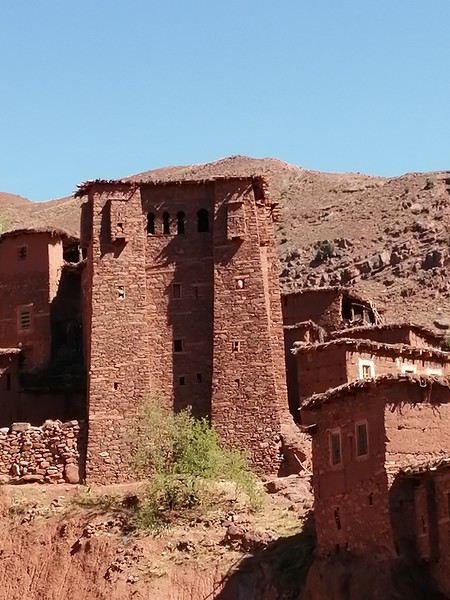
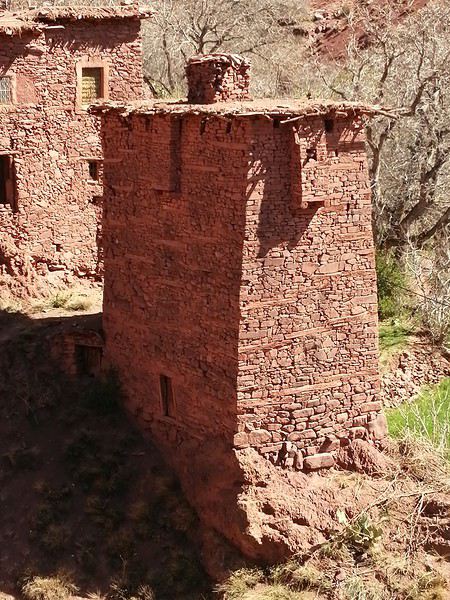
We won’t find anything decent to stay overnight there, so we head back down a bit and settle in at the Assounfou guesthouse. Lovely welcome. The place is in excellent condition and very clean. It’s spacious, but we’re the only ones there. First day full of promise!
Our first goal is to reach Magdaz, a mountain village in the Tessaout Valley, sometimes called the lost valley. We discovered the village of Magdaz on this forum, and we were charmed by the photos and comments from travelers who came before us. The road is easy—it’s dry, and the tarmac takes us right to the village gates at over 2,000 meters above sea level. We arrive in the afternoon and are left speechless by the beauty of the place. A jewel of Berber architecture! Perfectly restored granaries and kasbahs!
A young man from the village guides us on the visit and opens the doors to the terraces overlooking the village.
Several magnificent collective granaries have been beautifully restored. The warm colors of the stone capture the light wonderfully. It’s stunning!
We won’t find anything decent to stay overnight there, so we head back down a bit and settle in at the Assounfou guesthouse. Lovely welcome. The place is in excellent condition and very clean. It’s spacious, but we’re the only ones there. First day full of promise!
15 jours en Slovénie English translation pending
Hello à tous,
Voici le retour de mon voyage en Slovénie à l’été 2017. J’avais, deux ans auparavant, rencontré des backpackers en Croatie qui étaient passé(e)s par là et m’avaient vivement conseillé cette destination. Pour la plupart des carnets postés, la Slovénie est une étape, où on ne reste pas longtemps. C'est dommage car, même si le pays est petit, il a un charme certain et les activités, principalement "nature", ne manquent pas.
Je conseille http://slovenie-secrete.fr/ et https://www.slovenia.info/ pour préparer son voyage. En guide « papier », j’avais le Eyewitness Travel, l’équivalent anglophone du guide Voir de Hachette.
Type de voyage : budget réduit - backpack - femme seule Quand : du 6 au 21 juillet 2017 Billets d’avion BRU-ZAG : €90 avec Brussels Airlines + €15 de bus Zagreb-Ljubljana (2 heures). C’était l’option la moins chère vu la période. Budget logement : €351 (auberges de jeunesse et autres hostels, chambre partagée de max 4 personnes) Déplacements : environ €80 et uniquement en transports en commun. Les bus sont fréquents et le réseau étendu. Coût de la vie : Un sandwich me revenait à moins de €1 en achetant pain et fromage au supermarché, €4 le ćevapi, €1 le café, … J’ai tout de même pas mal cuisiné, surtout à Bled où les restaurants sont envahis et aussi chers qu’ici.
Itinéraire : Jeudi 06/07 : Arrivée à Ljubljana Vendredi 07/07 : Visite de Ljubljana (vieille ville, château, Tivoli) Samedi 08/07 : Excursion à Škofja Loka, nuit à Ljubljana Dimanche 09/07 : Excursion à Postojna et Predjama, nuit à Ljubljana Lundi 10/07 : Excursion à Maribor + Celje, nuit à Ljubljana Mardi 11/07 : Départ pour Bled + visite sous la pluie, nuit à Bled Mercredi 12/07 : Tour du lac, rando vers différents point de vue, nuit à Bled Jeudi 13/07 : Vintgar Gorge + visite du château, nuit à Bled Vendredi 14/07 : Rando du côté du lac de Bohinj, chute de Slavica, nuit à Bled Samedi 15/07 : Départ pour Koper + visite Dimanche 16/07 : Visite de Piran, nuit à Koper Lundi 17/07 : Excursion aux grottes de Škocjan, nuit à Koper Mardi 18/07 : Excursion à Trieste, nuit à Koper Mercredi 19/07 : Départ pour Zagreb (via Pula) Jeudi 20/07 : visites de musées (art contemporain, des relations brisées, d’art naïf), nuit à Zagreb Vendredi 21/07 : Retour sur Bruxelles
Si c’était à refaire : - Je zapperais Maribor et Celje. Faire les deux, en train, en une journée, ça ne valait pas le coup. Je n’ai rien eu le temps de visiter à Maribor et en plus, il pleuvait… - J’enlèverais Trieste, qui n’était ni prévu ni indispensable, mais j’avais envie d’un vrai carbonara sans crème et d’un tiramisu… J’ai poussé toutefois jusqu’au château de Miramare, ancienne demeure de la Princesse Charlotte de Belgique. - Du coup, je passerais plus de temps du côté du lac de Bohinj, plus sauvage que le lac de Bled et plus propice à la randonnée. - Et je tenterais peut-être bien l’ascension du Triglav, point culminant des alpes juliennes (2864m). Toutefois, l’aventure semble assez difficile, il est conseillé d’avoir un guide et de loger dans les refuges sur place ce qui plombe le budget. - J’aurais aimé visité les salines de Piran, les dernières salines de l'Adriatique. Eloignées du centre, je n’ai malheureusement pas trouvé comment m’y rendre, faute de préparation. - Ne voulant pas repasser par la gare de Ljubljana pour rejoindre Zagreb depuis Koper, j’ai pris un bus direct qui longeait la côte jusque Pula et remontait ensuite par Rijeka. Mauvaise idée, le bus avait du retard et ça m’a pris 7 heures au total…
En vrac : - En superficie, le territoire Slovène fait les deux tiers de la Belgique pour 5 fois moins d’habitants. On ne se marche pas dessus, mais il y a tout de même beaucoup de touristes. Genre, des bateaux de croisière débarquent à Koper... - Le pays est super vert, mais ne vous méprenez pas, ça veut surtout dire qu’il y pleut beaucoup donc n’oubliez pas votre imperméable. J’ai eu 3 jours de pluie sur 15 et des températures aux alentours des 30 degrés. - Il y a des trains, mais ils sont peu fréquents et lents. Préférez donc les bus. - Les centres historiques sont piétons et relativement éloignés des nouveaux centres urbains. - Ljubljana est petite, mais super agréable surtout le long de la rivière Ljubljanica. Il y a pas mal de bâtiments art-nouveau très intéressants dans le centre. - Il existe un ticket combiné bus aller-retour depuis Ljubljana + grotte de Postojna + château de Predjama qui coute €28. Les grottes sont bof mais le château, à visiter avec l’audioguide, est vraiment super chouette. Pour €6 de plus, on peut également parcourir les caves avec un guide. Possibilité de têtes à têtes avec des chauves-souris et des parois trop basses (casque et lampe de poche fournis à l’entrée). - Côté grottes, je conseille fortement celle de Škojcan. La claque ! La grande salle fait 120 mètres sous plafond, on emprunte un pont à 60 mètres au-dessus du lit de la rivière, elle est immense et juste splendide. Photos malheureusement interdites… Depuis la gare de train/bus de Divača, suivez le trail balisé de 3km plutôt que de prendre une navette pour avoir une vue magnifique sur une immense doline (grotte effondrée) surplombée par une église. D'ailleurs le mot doline est d'origine slovène. - Non prévue au programme, la petite ville médiévale de Škofja Loka, très calme et toute mignonne. Le bureau du tourisme (la librairie sur la place centrale) propose une carte avec une balade qui fait le tour des points d’intérêts. - Le paysage de Bled est super connu et est aussi magnifique en vrai qu’en photo. Le tour du lac fait environ 8 km, on en fait le tour en 2 heures… sauf si on s’arrête aux différents espaces de détentes aménagés : plages, bars-terrasses, loueurs de barque, pédalos, kayak ou de stand up paddle, … Il y a pas mal de chemin de randonnée qui grimpe dans les montagnes alentours pour de superbes vues sur le lac. - Toujours à Bled, pour se rendre sur l’ile au milieu du lac, vous pouvez prendre un petit bateau (€15 l’aller-retour pour 30 minutes sur place, aouch !) ou y aller par vos propres moyens (nage, kayak, etc…). Attention toutefois, vous ne pourrez bien évidemment pas rentrer dans l’église en maillot de bain. - Spécialité locale de Bled, le kremšnita : pâte feuilletée, crème à l’œuf et crème chantilly. De préférence après la baignade. - A Koper, arrêtez-vous chez Dehar, une boulangerie/biscuiterie sur la place principale. Les sablés sont à tomber ! - J’adore Zagreb et je n’avais pas pu faire les musées de la ville lors de mon passage en 2015 (j’y étais un lundi…). Du coup, vu que le vol était moins cher vers Zagreb que vers Ljubljana, j’en ai profité pour refaire le tour de cette ville bien agréable. En images :
Ljubljana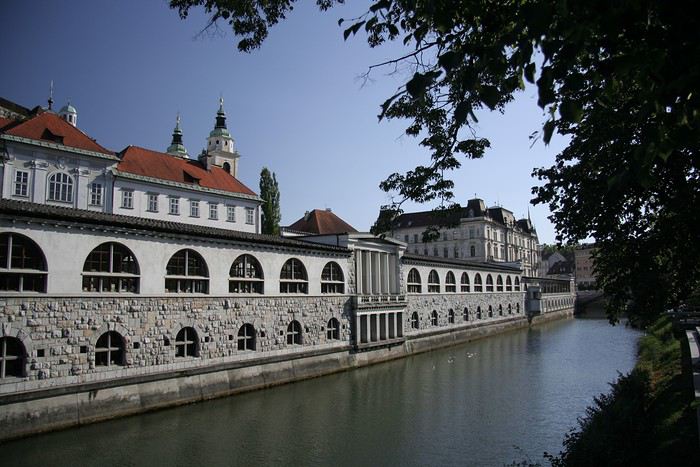
Ljubljana (Metelkova Mesto - quartier des artistes)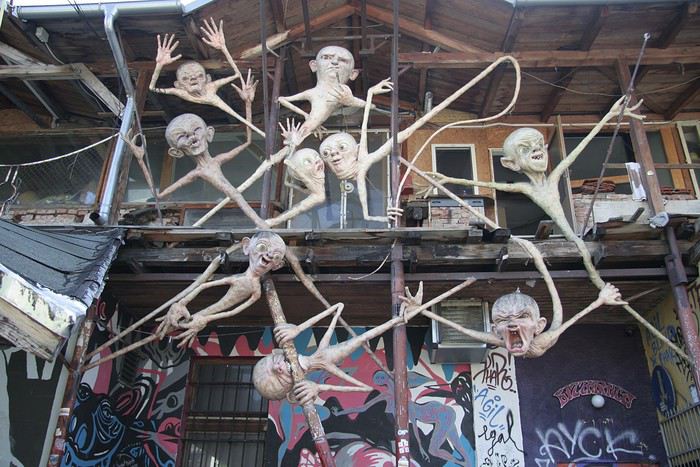
Škofja Loka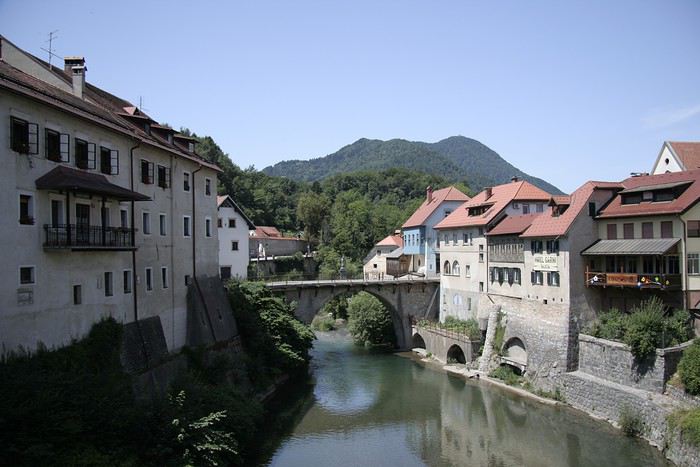
Predjama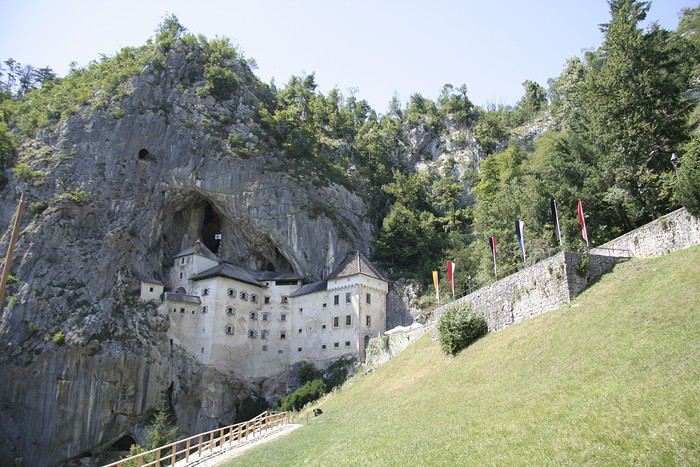
Lac de Bled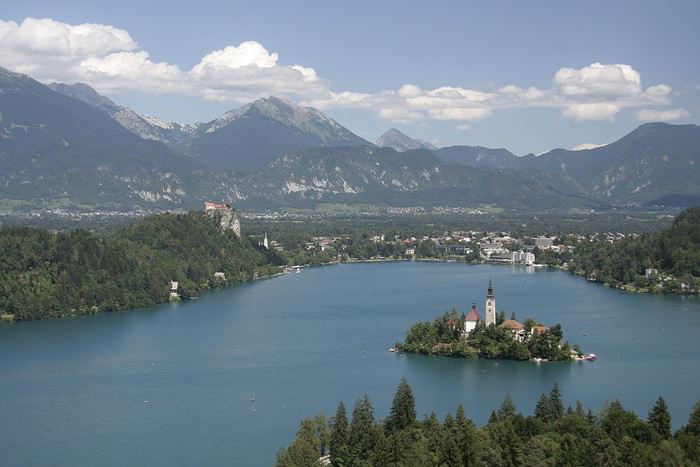
Chute Slavica - Bohinj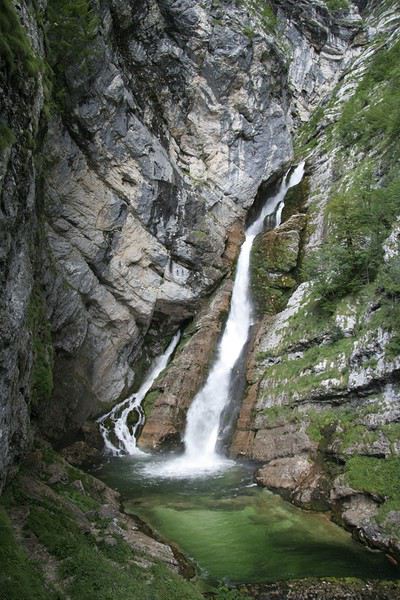
Piran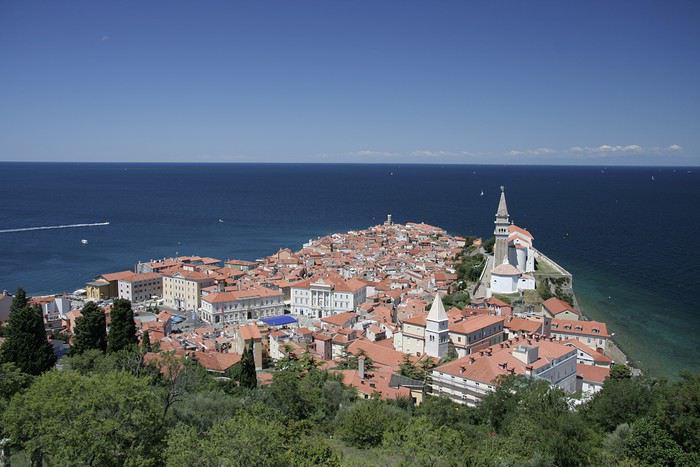
Škocjan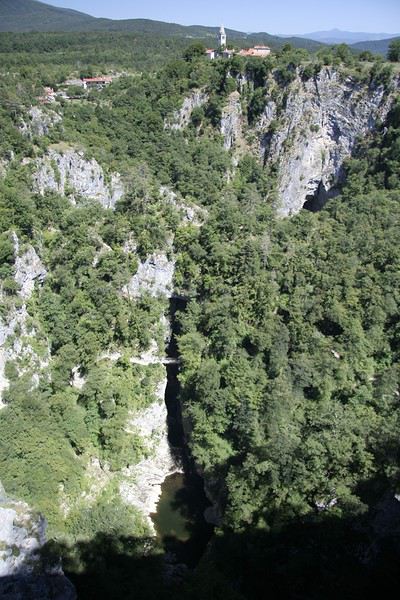
Voici le retour de mon voyage en Slovénie à l’été 2017. J’avais, deux ans auparavant, rencontré des backpackers en Croatie qui étaient passé(e)s par là et m’avaient vivement conseillé cette destination. Pour la plupart des carnets postés, la Slovénie est une étape, où on ne reste pas longtemps. C'est dommage car, même si le pays est petit, il a un charme certain et les activités, principalement "nature", ne manquent pas.
Je conseille http://slovenie-secrete.fr/ et https://www.slovenia.info/ pour préparer son voyage. En guide « papier », j’avais le Eyewitness Travel, l’équivalent anglophone du guide Voir de Hachette.
Type de voyage : budget réduit - backpack - femme seule Quand : du 6 au 21 juillet 2017 Billets d’avion BRU-ZAG : €90 avec Brussels Airlines + €15 de bus Zagreb-Ljubljana (2 heures). C’était l’option la moins chère vu la période. Budget logement : €351 (auberges de jeunesse et autres hostels, chambre partagée de max 4 personnes) Déplacements : environ €80 et uniquement en transports en commun. Les bus sont fréquents et le réseau étendu. Coût de la vie : Un sandwich me revenait à moins de €1 en achetant pain et fromage au supermarché, €4 le ćevapi, €1 le café, … J’ai tout de même pas mal cuisiné, surtout à Bled où les restaurants sont envahis et aussi chers qu’ici.
Itinéraire : Jeudi 06/07 : Arrivée à Ljubljana Vendredi 07/07 : Visite de Ljubljana (vieille ville, château, Tivoli) Samedi 08/07 : Excursion à Škofja Loka, nuit à Ljubljana Dimanche 09/07 : Excursion à Postojna et Predjama, nuit à Ljubljana Lundi 10/07 : Excursion à Maribor + Celje, nuit à Ljubljana Mardi 11/07 : Départ pour Bled + visite sous la pluie, nuit à Bled Mercredi 12/07 : Tour du lac, rando vers différents point de vue, nuit à Bled Jeudi 13/07 : Vintgar Gorge + visite du château, nuit à Bled Vendredi 14/07 : Rando du côté du lac de Bohinj, chute de Slavica, nuit à Bled Samedi 15/07 : Départ pour Koper + visite Dimanche 16/07 : Visite de Piran, nuit à Koper Lundi 17/07 : Excursion aux grottes de Škocjan, nuit à Koper Mardi 18/07 : Excursion à Trieste, nuit à Koper Mercredi 19/07 : Départ pour Zagreb (via Pula) Jeudi 20/07 : visites de musées (art contemporain, des relations brisées, d’art naïf), nuit à Zagreb Vendredi 21/07 : Retour sur Bruxelles
Si c’était à refaire : - Je zapperais Maribor et Celje. Faire les deux, en train, en une journée, ça ne valait pas le coup. Je n’ai rien eu le temps de visiter à Maribor et en plus, il pleuvait… - J’enlèverais Trieste, qui n’était ni prévu ni indispensable, mais j’avais envie d’un vrai carbonara sans crème et d’un tiramisu… J’ai poussé toutefois jusqu’au château de Miramare, ancienne demeure de la Princesse Charlotte de Belgique. - Du coup, je passerais plus de temps du côté du lac de Bohinj, plus sauvage que le lac de Bled et plus propice à la randonnée. - Et je tenterais peut-être bien l’ascension du Triglav, point culminant des alpes juliennes (2864m). Toutefois, l’aventure semble assez difficile, il est conseillé d’avoir un guide et de loger dans les refuges sur place ce qui plombe le budget. - J’aurais aimé visité les salines de Piran, les dernières salines de l'Adriatique. Eloignées du centre, je n’ai malheureusement pas trouvé comment m’y rendre, faute de préparation. - Ne voulant pas repasser par la gare de Ljubljana pour rejoindre Zagreb depuis Koper, j’ai pris un bus direct qui longeait la côte jusque Pula et remontait ensuite par Rijeka. Mauvaise idée, le bus avait du retard et ça m’a pris 7 heures au total…
En vrac : - En superficie, le territoire Slovène fait les deux tiers de la Belgique pour 5 fois moins d’habitants. On ne se marche pas dessus, mais il y a tout de même beaucoup de touristes. Genre, des bateaux de croisière débarquent à Koper... - Le pays est super vert, mais ne vous méprenez pas, ça veut surtout dire qu’il y pleut beaucoup donc n’oubliez pas votre imperméable. J’ai eu 3 jours de pluie sur 15 et des températures aux alentours des 30 degrés. - Il y a des trains, mais ils sont peu fréquents et lents. Préférez donc les bus. - Les centres historiques sont piétons et relativement éloignés des nouveaux centres urbains. - Ljubljana est petite, mais super agréable surtout le long de la rivière Ljubljanica. Il y a pas mal de bâtiments art-nouveau très intéressants dans le centre. - Il existe un ticket combiné bus aller-retour depuis Ljubljana + grotte de Postojna + château de Predjama qui coute €28. Les grottes sont bof mais le château, à visiter avec l’audioguide, est vraiment super chouette. Pour €6 de plus, on peut également parcourir les caves avec un guide. Possibilité de têtes à têtes avec des chauves-souris et des parois trop basses (casque et lampe de poche fournis à l’entrée). - Côté grottes, je conseille fortement celle de Škojcan. La claque ! La grande salle fait 120 mètres sous plafond, on emprunte un pont à 60 mètres au-dessus du lit de la rivière, elle est immense et juste splendide. Photos malheureusement interdites… Depuis la gare de train/bus de Divača, suivez le trail balisé de 3km plutôt que de prendre une navette pour avoir une vue magnifique sur une immense doline (grotte effondrée) surplombée par une église. D'ailleurs le mot doline est d'origine slovène. - Non prévue au programme, la petite ville médiévale de Škofja Loka, très calme et toute mignonne. Le bureau du tourisme (la librairie sur la place centrale) propose une carte avec une balade qui fait le tour des points d’intérêts. - Le paysage de Bled est super connu et est aussi magnifique en vrai qu’en photo. Le tour du lac fait environ 8 km, on en fait le tour en 2 heures… sauf si on s’arrête aux différents espaces de détentes aménagés : plages, bars-terrasses, loueurs de barque, pédalos, kayak ou de stand up paddle, … Il y a pas mal de chemin de randonnée qui grimpe dans les montagnes alentours pour de superbes vues sur le lac. - Toujours à Bled, pour se rendre sur l’ile au milieu du lac, vous pouvez prendre un petit bateau (€15 l’aller-retour pour 30 minutes sur place, aouch !) ou y aller par vos propres moyens (nage, kayak, etc…). Attention toutefois, vous ne pourrez bien évidemment pas rentrer dans l’église en maillot de bain. - Spécialité locale de Bled, le kremšnita : pâte feuilletée, crème à l’œuf et crème chantilly. De préférence après la baignade. - A Koper, arrêtez-vous chez Dehar, une boulangerie/biscuiterie sur la place principale. Les sablés sont à tomber ! - J’adore Zagreb et je n’avais pas pu faire les musées de la ville lors de mon passage en 2015 (j’y étais un lundi…). Du coup, vu que le vol était moins cher vers Zagreb que vers Ljubljana, j’en ai profité pour refaire le tour de cette ville bien agréable. En images :
Ljubljana
Ljubljana (Metelkova Mesto - quartier des artistes)
Škofja Loka
Predjama
Lac de Bled
Chute Slavica - Bohinj
Piran
Škocjan
Vacances dans le Centre de la France English translation pending
Bonjour,
Depuis plusieurs mois, nous avions réservé une croisière sur le MSC Grandiosa au départ de Marseille du 13/03 au 20/03.
Au soir du 12, la valise n'est pas prête. Juste le matos photo et le road book.
Il est 20h00, je suis à moitié dans la douche et à moitié hors de la douche. Imaginez la gymnastique !! 😎 Le téléphone sonne ! L'indicatif est lu par mon épouse..04 42....Et elle me dit fort judicieusement : C'est Marseille !
Et oui...Cher monsieur, nous sommes au regret etc, etc..Vous avez un report sur un an avec un cadeau de 100 euros...Etc, etc...Satané virus..
Bon, nous fêtons le non-départ.😎 Et nous papotons sur la façon d'occuper nos vacances pour la semaine à venir.
Le lendemain matin, dès potron-minet, je suis sur l'étude d'un nouveau départ.
Je choisis (en concertation of course), deux jours sur les Châteaux de la Loire, trois jours sur le Zoo de Beauval et une journée sur Rocamadour en redescendant dans le Sud.
Hotel réservés sur Booking et en direct sur Beauval et roule ma poule, nous quittons le Sud vers 10h00 du matin pour monter là-haut dans le brouillard.
Vers 16h00, aprés quelques arrêts, nous arrivons sur l’hôtel Clair Cottage, commune de Chisseaux au bord du Cher.
http://www.clair-cottage.com/
Très bon hôtel, chambre spacieuse, accueil sympa. L'exploitant nous invite à aller nous promener sur les bords du Cher. C'est ce que nous faisons après avoir rangé les valises.
J'ai choisi ce coin de France car je dois tester mon nouveau matos photo. Surtout au zoo de Beauval...

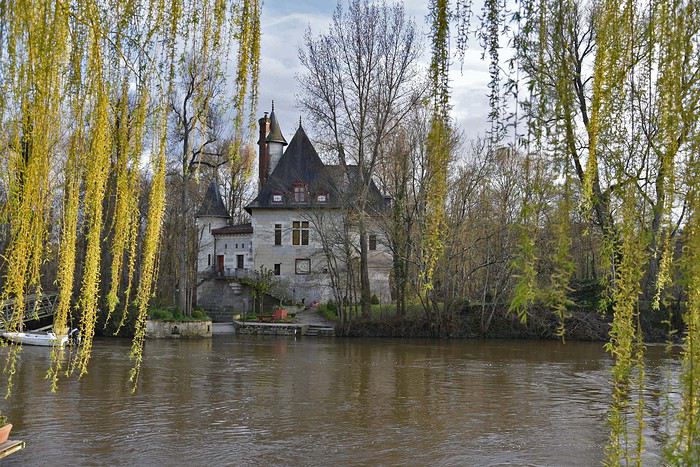
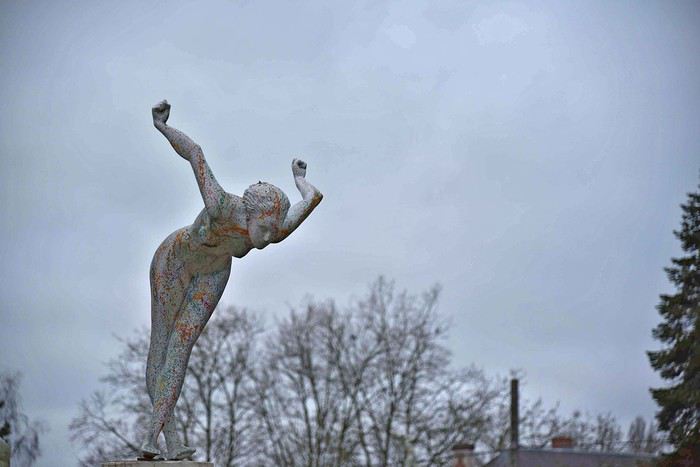
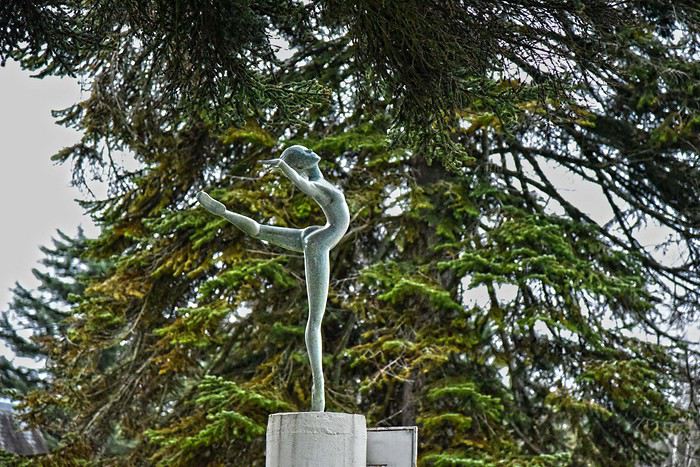
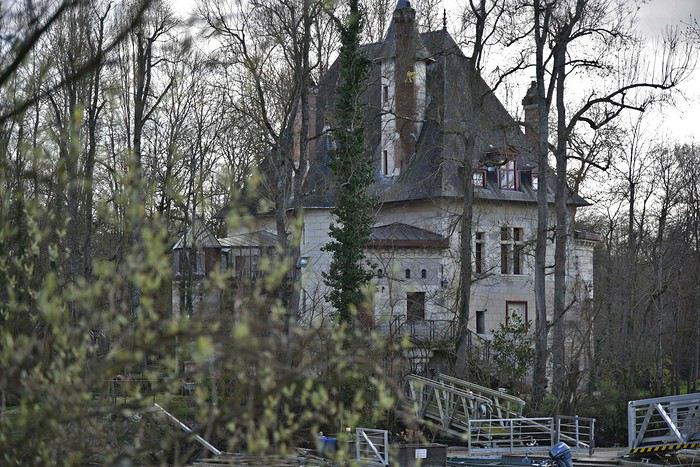
Depuis plusieurs mois, nous avions réservé une croisière sur le MSC Grandiosa au départ de Marseille du 13/03 au 20/03.
Au soir du 12, la valise n'est pas prête. Juste le matos photo et le road book.
Il est 20h00, je suis à moitié dans la douche et à moitié hors de la douche. Imaginez la gymnastique !! 😎 Le téléphone sonne ! L'indicatif est lu par mon épouse..04 42....Et elle me dit fort judicieusement : C'est Marseille !
Et oui...Cher monsieur, nous sommes au regret etc, etc..Vous avez un report sur un an avec un cadeau de 100 euros...Etc, etc...Satané virus..
Bon, nous fêtons le non-départ.😎 Et nous papotons sur la façon d'occuper nos vacances pour la semaine à venir.
Le lendemain matin, dès potron-minet, je suis sur l'étude d'un nouveau départ.
Je choisis (en concertation of course), deux jours sur les Châteaux de la Loire, trois jours sur le Zoo de Beauval et une journée sur Rocamadour en redescendant dans le Sud.
Hotel réservés sur Booking et en direct sur Beauval et roule ma poule, nous quittons le Sud vers 10h00 du matin pour monter là-haut dans le brouillard.
Vers 16h00, aprés quelques arrêts, nous arrivons sur l’hôtel Clair Cottage, commune de Chisseaux au bord du Cher.
http://www.clair-cottage.com/
Très bon hôtel, chambre spacieuse, accueil sympa. L'exploitant nous invite à aller nous promener sur les bords du Cher. C'est ce que nous faisons après avoir rangé les valises.
J'ai choisi ce coin de France car je dois tester mon nouveau matos photo. Surtout au zoo de Beauval...
Au sud d'Essaouira au départ de Marrakech et visites intéressantes English translation pending
Actuellement nous manquons cruellement de soleil dans l'ouest atlantique. Aussi avons nous décidé de mettre le cap sur le Maroc, toujours sur l'Atlantique, au sud d'Essaouira. Atterrissage prévu à Marrakech et départ aussitôt pour Essaouira pour profiter de la mer et descendre tranquillement le long de la côte. Lézarder au soleil, traîner en terrasse prendre le temps de savourer chaque instant. Si vous avez des idées de visites intéressantes à faire et de découvertes à partager, on est preneurs. On compte sur vous. Merci beaucoup.
Marché flottant d'Amphawa ou de Tha Kha? (par transports en commun) English translation pending
Bonjour,
Je projette de passer 2-3 jours à Ratchaburi et d'aller voir un marché flottant. J'avais d'abord pensé à Tha Kha qui semble être un marché authentique et peu touristique. Mais comme nous nous déplaçons en transports en commun je me disais qu'Amphawa serait peut-être plus facilement accessible. Mais est-il encore assez préservé? Peut-on comme à Tha Kha faire une petite balade en bateau?
Et si vous connaissez les bons plans bus pour se rendre à ces 2 marchés je suis preneuse 😉
Merci beaucoup,
Valou
Voyages vers l'Italie fortement déconseillés par le ministre des transports (contamination) English translation pending
Bsr
Le ministre des transports demande aux voyageurs de ne pas se rendre en Italie pour les prochains jours, 3 morts de plus aujourd'hui 🙁 La contamination continue sa progression en Sicile et en Toscane 322 personnes contaminés à 18h
Le ministre des transports demande aux voyageurs de ne pas se rendre en Italie pour les prochains jours, 3 morts de plus aujourd'hui 🙁 La contamination continue sa progression en Sicile et en Toscane 322 personnes contaminés à 18h
Votre avis sur mon itinéraire en voiture au Pérou English translation pending
Bonjour à tous,
Avec ma femme nous comptons visiter le Pérou cet été en juillet. Que pensez-vous de notre itinéraire ? Avez-vous des conseils à nous donner ? Nous comptons louer une voiture.
1 : Arrivée à Arequipa 2 : Arequipa/ Arequipa Visite Arequipa 3 : Arequipa / (Chivay ou Yanque ou Cabanaconde) Via 109 puis 682 Aguada blanca / Si possible continuation vers laguna El Frayle passage au nord éventuellement par Huaylacucho 4 : même hébergement que jours 3 : Chima randonnée forteresse Chimpa 2h30 / +480m : Mirador cruz del condor : Laguna Mucurca 5 : direction Tres canones ou Yauri Via "Chivay / AR683 Canacota / Tuti / Sibayo AR-111 / Condorcuyo Plaza : Randonnée au Tres Cañones Taqrachullu 6 : (Tres canones ou Yauri) / Acomayo : Randonnée Palcoyo 7 : Acomayo/Acomayo Randonnée Terrazas Waqrapucara 16 km 3/4haller +3/4h retour via Wayqui +650m deniv : Peut-on laisser la voiture à Wayqui ? 8 : Acomayo/Pisac : départ tôt le matin : Visite Rainbow mountain / 800m Deniv : la ballade est-elle plus jolie par Cusipata ou Checacupe ? 9 : Pisac/Pisac : visite Pisac (Peut-être à coupler avec la journée 10) 10 : Pisac/(Ollantaytambo ou Aguas Calientes) Pb Laisser la voiture à Ollantaytambo ? Moay Maras Ollantaytambo 11 : (Ollantaytambo ou Aguas Calientes)/Cusco Machu Pichu avec ou sans Montaña Machu Picchu 12 : Cusco/Cusco Visite Cusco 13 : Cusco/Lima en avion récupération véhicule route vers huaraz 14 : Route huaraz/Huaraz Petite balade au sud d'huaraz 15 : Huaraz/Laguna Paron Eventuellement coupler avec la journée 14 Arriver dans l'après midi à Paron / dormir à Paron 16 : Laguna Paron/Laguna llanganuco Partir vers 11h / 12h pour la vallée d'à côté bivouac 17 : Laguna llanganuco/Laguna llanganuco randonnée Laguna 69 : 13/14 km 3900-4600 bivouac 18 : Laguna llanganuco/ ?? bivouac profiter de la nature 19 : ?? bivouac / Laguna Cancaraga profiter de la nature 20 : Laguna Cancaraga/Huaraz profiter de la nature 21 : Huaraz / Lima 22 : Lima/ Vol de retour
Amicalement Eric
Avec ma femme nous comptons visiter le Pérou cet été en juillet. Que pensez-vous de notre itinéraire ? Avez-vous des conseils à nous donner ? Nous comptons louer une voiture.
1 : Arrivée à Arequipa 2 : Arequipa/ Arequipa Visite Arequipa 3 : Arequipa / (Chivay ou Yanque ou Cabanaconde) Via 109 puis 682 Aguada blanca / Si possible continuation vers laguna El Frayle passage au nord éventuellement par Huaylacucho 4 : même hébergement que jours 3 : Chima randonnée forteresse Chimpa 2h30 / +480m : Mirador cruz del condor : Laguna Mucurca 5 : direction Tres canones ou Yauri Via "Chivay / AR683 Canacota / Tuti / Sibayo AR-111 / Condorcuyo Plaza : Randonnée au Tres Cañones Taqrachullu 6 : (Tres canones ou Yauri) / Acomayo : Randonnée Palcoyo 7 : Acomayo/Acomayo Randonnée Terrazas Waqrapucara 16 km 3/4haller +3/4h retour via Wayqui +650m deniv : Peut-on laisser la voiture à Wayqui ? 8 : Acomayo/Pisac : départ tôt le matin : Visite Rainbow mountain / 800m Deniv : la ballade est-elle plus jolie par Cusipata ou Checacupe ? 9 : Pisac/Pisac : visite Pisac (Peut-être à coupler avec la journée 10) 10 : Pisac/(Ollantaytambo ou Aguas Calientes) Pb Laisser la voiture à Ollantaytambo ? Moay Maras Ollantaytambo 11 : (Ollantaytambo ou Aguas Calientes)/Cusco Machu Pichu avec ou sans Montaña Machu Picchu 12 : Cusco/Cusco Visite Cusco 13 : Cusco/Lima en avion récupération véhicule route vers huaraz 14 : Route huaraz/Huaraz Petite balade au sud d'huaraz 15 : Huaraz/Laguna Paron Eventuellement coupler avec la journée 14 Arriver dans l'après midi à Paron / dormir à Paron 16 : Laguna Paron/Laguna llanganuco Partir vers 11h / 12h pour la vallée d'à côté bivouac 17 : Laguna llanganuco/Laguna llanganuco randonnée Laguna 69 : 13/14 km 3900-4600 bivouac 18 : Laguna llanganuco/ ?? bivouac profiter de la nature 19 : ?? bivouac / Laguna Cancaraga profiter de la nature 20 : Laguna Cancaraga/Huaraz profiter de la nature 21 : Huaraz / Lima 22 : Lima/ Vol de retour
Amicalement Eric
Transsibérien: voix Nord ou Sud? (Russie-Mongolie-Chine) English translation pending
Bonjour à tous,
J'envisage de prendre le Transsibérien en mars.
Initialement, j'envisageais St-Petersbourg - Moscou - Mongolie - Pekin avec retour en avion de Pékin mais avec le coronarovirus, ça me semble compromis.
Est-ce que l'itinéraire vers Vladivostok vaut aussi le coup et quel retour en avion prévoir pour Paris ?
Quelles étapes me conseillez-vous ?
Merci d'avance