Results for "Archipel+Stockholm+|+9+>+231"
5334 results found.
Passion arctique: Islande et Spitzberg English translation pending
Bonjour,
Et oui, nous sommes des mordus de l'arctique ... Certains trouvent ça bizarre, mais pour nous c'est une sorte de fascination. Nous avons fait de nombreux voyages sous d'autres latitudes, mais tout là-haut, c'est vraiment spécial ... Hors catégories, on va dire !
L'Islande d'abord. Nous y sommes allés plusieurs fois ... Le premier voyage en 1974 (Oupsss ! ça fait juste 30 ans ... et ça fait tout drôle !) ... et le plus récent : l'été 2003. Nous y reviendrons encore, bien sûr ! Notre site Islande : au pays de la création du monde : http://perso.wanadoo.fr/saga.gilabert/index.html
Beaucoup plus au Nord, le Spitzberg : un archipel à la marge du monde : 80° Nord, la latitude du Nord du Groenland, dernière terre avant le pôle. On en rêvait ... et cet été 2004, ce fut au delà de nos rêves ! Notre site perso (carnet de voyage, diaporamas) ne sera prêt que dans quelques mois, mais vous aurez déjà un aperçu sur notre page http://perso.wanadoo.fr/saga.gilabert/page_prespitz.html
Chris et MF.
Et oui, nous sommes des mordus de l'arctique ... Certains trouvent ça bizarre, mais pour nous c'est une sorte de fascination. Nous avons fait de nombreux voyages sous d'autres latitudes, mais tout là-haut, c'est vraiment spécial ... Hors catégories, on va dire !
L'Islande d'abord. Nous y sommes allés plusieurs fois ... Le premier voyage en 1974 (Oupsss ! ça fait juste 30 ans ... et ça fait tout drôle !) ... et le plus récent : l'été 2003. Nous y reviendrons encore, bien sûr ! Notre site Islande : au pays de la création du monde : http://perso.wanadoo.fr/saga.gilabert/index.html
Beaucoup plus au Nord, le Spitzberg : un archipel à la marge du monde : 80° Nord, la latitude du Nord du Groenland, dernière terre avant le pôle. On en rêvait ... et cet été 2004, ce fut au delà de nos rêves ! Notre site perso (carnet de voyage, diaporamas) ne sera prêt que dans quelques mois, mais vous aurez déjà un aperçu sur notre page http://perso.wanadoo.fr/saga.gilabert/page_prespitz.html
Chris et MF.
De retour des Iles San Blas (Panama) English translation pending
Voici enfin les photos de mon dernier voyage aux Iles San Blas : http://san-blas-islands.tripod.com
Découvertes grâce au site d’Antoine (antoine-islands.com), je m’y suis rendu en février 2004, après un voyage au Costa-Rica. J’ai été surpris par la beauté de ces îles, qui ont été à la hauteur des quelques photos que j’avais vu sur internet ! 😮
Pour s’y rendre, c’est assez simple. Le guide Lonelyplanet, ainsi que des sites internet, donnent déjà l’info : prendre un billet pour Panama City, puis à l’aéroport, réserver un vol pour les Iles San Blas (environ 60/70 euros A/R avec la compagnie Areoperlas.com). Il y a environ 45min. de vol dans un petit avion à hélices qui peut contenir une vingtaine de passagers. Il existe plusieurs lieux pour atterrir : El Porvenir, pour visiter les Iles habitées par les Kuna, ou Rio Sidra, pour se rendre directement sur l’île de Kuanidup. Attention : les vols sont toujours pleins, pas à cause des touristes, mais à cause des habitants (l’avion est le seul moyen pour traverser la jungle qui sépare l’archipel de Panama City).
La vie aux Iles San Blas coûte cher…😕 Les Indiens Kuna, uniques habitants de l’archipel, ont bien compris le potentiel touristique de leurs îles et n’hésitent pas à surfacturer toutes les prestations… Budget minimum à prévoir : 50$US par jour ! Il existe quelques hébergements rustiques en huttes, ouverts par des Kuna qui en ont les moyens. Et si vous décidez de passer par un des rares tours-opérateurs du coin, la croisière en voilier ou en catamaran vous coûtera quelques milliers de $, pas moins ! 🏴☠️
Parlons justement des Kuna : le gouvernement leur a donné l’autonomie pour administrer l’archipel. Ce sont eux qui décident de tout. Ainsi, tout investissement étranger sur l’archipel est interdit. Très peu de risques de voir un jour des promoteurs immobiliers envahir le coin, les Kuna ne veulent pas être envahis et préfèrent conserver leur mode de vie traditionnel. Ils vivent, pauvrement mais correctement, de la culture de la noix de coco, et du tourisme, en particulier la vente de molas, des tableaux confectionnés avec des morceaux de tissus de couleurs vives.
D’ailleurs, les Kuna ne sont pas toujours très accueillants avec les étrangers... Il faut les comprendre : si les San Blas sont assez peu visitées par les voyageurs individuels, elles constituent malheureusement une destination de passage pour les gros paquebots de croisière américains… Imaginez une île, d’une grosseur d’un terrain de foot, envahie en quelques heures par des centaines de croisiéristes, qui se contentent de les mitrailler sans même leur adresser un sourire… 2 ou 3 paquebots débarquent ainsi chaque mois pour une après-midi. Résultat : à défaut de lutter contre cette invasion, les Kuna se montrent opportunistes : c’est 1$ la photo ! Ce comportement gâche un peu l’authenticité et l’ambiance générale de l’archipel, mais on ne peut pas leur en vouloir, aux Kuna ! Et puis, leur volonté de ne pas développer un tourisme de masse est remarquable, et une majorité de Kuna restent quand même très sympa dès l’instant qu’on sait se montrer humble et pas trop envahissant.
Les San Blas, ce sont 300 îles qui s’étalent sur la côte Atlantique du Panama, jusqu’à la frontière Colombienne: quelques-unes sont des villages Kuna, d’autres sont habitées par une seule famille, et beaucoup sont inhabitées.
La mer, peu profonde, est d’une beauté époustouflante, et les îles sont en général très esthétiques. Un régal pour les yeux, et pour les photographes ! En particulier l’île de Kuanidup, achetée seulement 1000$ au début des années 80 par un Indien Kuna qui a travaillé toute sa vie dans l’armée américaine et qui l’a achetée pour sa retraite !
Voilà. Si vous avez des questions, c’est ouvert ! 🙂
PS : un GRAND merci à Antoine, qui, grâce à son site, m’a fait découvrir cet archipel fabuleux !
Découvertes grâce au site d’Antoine (antoine-islands.com), je m’y suis rendu en février 2004, après un voyage au Costa-Rica. J’ai été surpris par la beauté de ces îles, qui ont été à la hauteur des quelques photos que j’avais vu sur internet ! 😮
Pour s’y rendre, c’est assez simple. Le guide Lonelyplanet, ainsi que des sites internet, donnent déjà l’info : prendre un billet pour Panama City, puis à l’aéroport, réserver un vol pour les Iles San Blas (environ 60/70 euros A/R avec la compagnie Areoperlas.com). Il y a environ 45min. de vol dans un petit avion à hélices qui peut contenir une vingtaine de passagers. Il existe plusieurs lieux pour atterrir : El Porvenir, pour visiter les Iles habitées par les Kuna, ou Rio Sidra, pour se rendre directement sur l’île de Kuanidup. Attention : les vols sont toujours pleins, pas à cause des touristes, mais à cause des habitants (l’avion est le seul moyen pour traverser la jungle qui sépare l’archipel de Panama City).
La vie aux Iles San Blas coûte cher…😕 Les Indiens Kuna, uniques habitants de l’archipel, ont bien compris le potentiel touristique de leurs îles et n’hésitent pas à surfacturer toutes les prestations… Budget minimum à prévoir : 50$US par jour ! Il existe quelques hébergements rustiques en huttes, ouverts par des Kuna qui en ont les moyens. Et si vous décidez de passer par un des rares tours-opérateurs du coin, la croisière en voilier ou en catamaran vous coûtera quelques milliers de $, pas moins ! 🏴☠️
Parlons justement des Kuna : le gouvernement leur a donné l’autonomie pour administrer l’archipel. Ce sont eux qui décident de tout. Ainsi, tout investissement étranger sur l’archipel est interdit. Très peu de risques de voir un jour des promoteurs immobiliers envahir le coin, les Kuna ne veulent pas être envahis et préfèrent conserver leur mode de vie traditionnel. Ils vivent, pauvrement mais correctement, de la culture de la noix de coco, et du tourisme, en particulier la vente de molas, des tableaux confectionnés avec des morceaux de tissus de couleurs vives.
D’ailleurs, les Kuna ne sont pas toujours très accueillants avec les étrangers... Il faut les comprendre : si les San Blas sont assez peu visitées par les voyageurs individuels, elles constituent malheureusement une destination de passage pour les gros paquebots de croisière américains… Imaginez une île, d’une grosseur d’un terrain de foot, envahie en quelques heures par des centaines de croisiéristes, qui se contentent de les mitrailler sans même leur adresser un sourire… 2 ou 3 paquebots débarquent ainsi chaque mois pour une après-midi. Résultat : à défaut de lutter contre cette invasion, les Kuna se montrent opportunistes : c’est 1$ la photo ! Ce comportement gâche un peu l’authenticité et l’ambiance générale de l’archipel, mais on ne peut pas leur en vouloir, aux Kuna ! Et puis, leur volonté de ne pas développer un tourisme de masse est remarquable, et une majorité de Kuna restent quand même très sympa dès l’instant qu’on sait se montrer humble et pas trop envahissant.
Les San Blas, ce sont 300 îles qui s’étalent sur la côte Atlantique du Panama, jusqu’à la frontière Colombienne: quelques-unes sont des villages Kuna, d’autres sont habitées par une seule famille, et beaucoup sont inhabitées.
La mer, peu profonde, est d’une beauté époustouflante, et les îles sont en général très esthétiques. Un régal pour les yeux, et pour les photographes ! En particulier l’île de Kuanidup, achetée seulement 1000$ au début des années 80 par un Indien Kuna qui a travaillé toute sa vie dans l’armée américaine et qui l’a achetée pour sa retraite !
Voilà. Si vous avez des questions, c’est ouvert ! 🙂
PS : un GRAND merci à Antoine, qui, grâce à son site, m’a fait découvrir cet archipel fabuleux !
Que faire dans le Finistere? English translation pending
slt, jaimerai savoir ce kil y a a faire ds le finistere sachant que je loge a fouesnant et que je pars demain!!!!! ( soir)
et s'il pleut?? que faire??? quy a til d'INTERESSANT A VISITER???????????
repondez moi viiiiite!!!!!! c'est urgentttttttt
merci
Amandine
et s'il pleut?? que faire??? quy a til d'INTERESSANT A VISITER???????????
repondez moi viiiiite!!!!!! c'est urgentttttttt
merci
Amandine
Rejoindre St. Pierre et Miquelon depuis le Québec English translation pending
je cherche les differentes et les meilleures possibilités (les - cheres et les+fun)
de relier St. Pierre et Miquelon depuis le Quebec en sachant que je viendrai de Tradoussac (air, mer, moyens classiques ou non)
Je cherche aussi quelques contacts ainsi que des possibilités d'hebergement sur St. pierre…
Seule en Malaisie, Indonesie, Thailande English translation pending
Y'a t-il un probleme de secu sachant que je suis deja partie seule en asie. Jamais dans ses pays la, je suis d'originne indienne mais 100% francaise sur la culture et dans la facon de vivre (vai-je choquée??)
mon voyage est de 30 jours donc je compte 10j par pays??? c nul??? ou doi-je juste faire malaisie, et indonesie???
Je compte voyager en bu, train et avion
Merci de vos reponse
Napo.
mon voyage est de 30 jours donc je compte 10j par pays??? c nul??? ou doi-je juste faire malaisie, et indonesie???
Je compte voyager en bu, train et avion
Merci de vos reponse
Napo.
Climat aux Seychelles en août English translation pending
bonjour,
j'ai envie de faire une petite folie et de partir aux seyclles en aout (vacances obligatoire à cette période) mais j'ai peur qu'il ne fasse pas très beau la bas à cette période . Ce serait ennuyeux car à priori il n'y a pas autre chose à faire que la plage. quelqu'un est-il déjà parti à cette période,
D'autres part qui connait des bons organismes qui font des combinés interiles.
merci de tous vos consils
mado
j'ai envie de faire une petite folie et de partir aux seyclles en aout (vacances obligatoire à cette période) mais j'ai peur qu'il ne fasse pas très beau la bas à cette période . Ce serait ennuyeux car à priori il n'y a pas autre chose à faire que la plage. quelqu'un est-il déjà parti à cette période,
D'autres part qui connait des bons organismes qui font des combinés interiles.
merci de tous vos consils
mado
Les Iles Andaman - FAQ English translation pending
Bonjour
Mon p'tit site http://andaman-islands.tripod.com étant curieusement bien référencé dans les moteurs de recherche, j’ai régulièrement des demandes d’infos. Alors plutôt que de répéter tout le temps la même chose j’ai décidé de faire un lien depuis mon site vers cette page qui me servira en même temps de forum spécial Andaman! Et si çà peut attirer de nouveaux membres sur voyageforum, c’est tant mieux ! 🙂
Les Iles Andaman, c’est un archipel de 300 îles, au large de l’Inde, situées au Nord de l’Indonésie. Très à l’écart des flux touristiques (car difficile d’accès, jusque très récemment, pour les touristes ayant peu de temps devant eux), c’est une destination qui reste très originale et peu connue. Le gouvernement local a fait un portail assez complet : http://andaman.nic.in - c'est le site de référence des Andaman).
J’y suis allé un mois en janvier 2002 puis un autre mois en janvier 2003 (tellement j’ai aimé 🙂). Certes, ces îles ne sont pas extrêmement belles (pas de cocotiers allongés sur la mer comme aux Maldives), mais tellement plus authentiques ! Là, on a un réel contact avec les habitants, les touristes que nous sommes ne sont pas encore parqués dans des Iles-hôtels (espérons que çà dure) et ce n'est pas le royaume des grandes chaînes d'hôtels... Les habitants, pas trop habitués aux touristes, restent encore très accueillants et il est facile de se créer des amitiés sur place (c’est mon cas ! ). C’est également un paradis pour la plongée, avec une vie sous-marine impressionnante, et 20m de visibilité sous l’eau (çà motive, même si on a pas envie, pour passer son diplôme PADI en accéléré). Si vous n'avez pas les moyens de pratiquer la plongée, un masque et un tuba seront indispensables car difficiles à trouver sur place (pénurie! Il vaut mieux amener le vôtre, voire plusieurs, c'est vraiment le meilleur cadeau qu'on puisse faire à un Andamais).
Pour s’y rendre, il faut prendre un vol pour Madras, dans le Sud de l’Inde (Visa obligatoire : http://www.amb-inde.fr/cons2.htm ). Impossible de rallier l’archipel depuis un autre pays que l’Inde pour des raisons stratégiques (tant mieux !). Depuis Madras, prendre le bateau, ou l’avion direction Port Blair (possibilité de réserver depuis la France chez Jet Airways à Paris (cf. Pages Jaunes). Le coût du billet d'avion Madras / Port Blair est relativement cher ( environ 400 euros en + du billet France-Madras***), il vaut donc mieux partir 3 semaines minimum pour rentabiliser son billet, ou bien inclure 10 à 15 jours aux Andaman au terme d'un trip plus long sur le continent indien (le bateau revient à environ 80 euros l’aller-retour, mais attention compter 1 petite semaine de navigation aller-retour !). La meilleure saison pour y aller est la saison sèche, c’est à dire l’hiver en Europe. Les Andaman sous la pluie, c’est quand même pas la joie !🏴☠️
* ** Mise à jour 2008: il existe désormais des compagnies low-cost qui vont aux les Andaman depuis Madras et Calcutta, et probablement depuis la Thailande dans pas longtemps. Avantage: c'est pas cher et facile d'y aller. Inconvénient: les tarifs sur place ont décuplés en quelques années et bien évidemment les lieux ont perdu de leur magie et deviennent une touristique comme une autre, sans compter le problèmes des ferries qui ne sont plus assez nombreux pour accueillir la nouvelle masse touristique 🙁
Une fois le transport payé, finis les soucis ! Le coût de la vie sur place est, pour le moment, pas cher du tout. Avec quelques euros par jour, on dort et on mange sans problème ! Les poissons sont vraiment délicieux ! Se déplacer à l’intérieur de l’archipel ne coûte presque rien, mais attention les ferries ne desservent pas certaines îles tous les jours. C’est pourquoi il est difficile d’envisager un séjour de moins de 2 semaines sur l’archipel car on perd pas mal de temps dans les transports. Ceci dit prendre le ferry est très folklorique, on discute avec la population sur des airs de musique indienne, et le tout cheveux aux vent, quel plaisir ! On peut aussi louer des vélos et des scooters sur les principales îles pour pas cher, et enfin se déplacer en bus, en taxi ou dans les barques des pêcheurs.
Les meilleures îles sont, à ma connaissance, Havelock (nombreux hébergements en hutte, en particulier l'excellent Pristine Beach Resort, voir l'excellent article http://www.participez.com/reportage.php?id=36 ), Long Island (camping sur la plage), et Neil Island (allez de ma part au Garden Restaurant dire bonjour à Sandjay 🙂, çà me fera très très plaisir et à lui aussi! Il peut également héberger quelques hôtes)....
A votre arrivée à Port Blair, on vous remet un laisser-passer qui donne la liste des îles autorisées au séjour, ou à la visite diurne uniquement (souvent inhabitées, certaines sont exceptionnelles comme Rutland Island), ou carrément interdites (attention les garde-côtes rôdent…). Si vous disposez d'un meilleur budget, vous pouvez louer un bateau avec son équipage (le maire de Wandoor, commune jouxtant le Parc National M. Ghandi, propose cette prestation depuis peu).
Il existe très peu de documentation sur les Andaman (tant mieux !) : quelques pages à la fin du LonelyPlanet « Inde » et le guide officiel gratuit qu’on vous remet à l’arrivée à Port Blair, capitale administrative des Iles Andaman.
AVERTISSEMENT : je ne voudrais pas inciter tout le monde à aller aux Andaman. Ce genre de voyage reste une destination pour voyageur ayant un minimum d'expérience en Asie. Les amateurs d���hôtels confortables, de forfaits tout-inclus, de piscines, de climatisation, d'animations nocturnes en tout genre ne seront pas du tout dans leur élément et je m’en voudrais personnellement beaucoup d’avoir fait mon site s’il draine ce genre de clientèle là-bas . Il y a les îles de Thaïlande pour cela.
En Inde, il faut savoir être patient (tout est très long, en particulier les temps d'attente dans les transports), s’adapter aux coutumes locales et les respecter, ne pas être exigent sur le confort (économiser l’eau et respecter l’écosystème très fragile), avoir déjà eu un premier contact avec la misère car la pauvreté est présente (moins que sur le continent Indien mais elle existe), et savoir aussi vivre parfois dans la saleté. En plus de ces incontournables problèmes d'hygiène, il existe un certains nombres de risques sanitaires. Mais ce sont tous ces éléments qui font que cet archipel reste pour le moment une destination encore authentique ! 😛
N’hésitez pas à me poser des questions et à lire toutes les pages de cette discussion qui apportent beaucoup de renseignements. A compléter avec également cette autre discussion http://voyageforum.com/voyage/inde_donne_informations_les_iles_andaman_D885427/ et vous saurez tout sur les Iles Andaman ! 🙂
Mon p'tit site http://andaman-islands.tripod.com étant curieusement bien référencé dans les moteurs de recherche, j’ai régulièrement des demandes d’infos. Alors plutôt que de répéter tout le temps la même chose j’ai décidé de faire un lien depuis mon site vers cette page qui me servira en même temps de forum spécial Andaman! Et si çà peut attirer de nouveaux membres sur voyageforum, c’est tant mieux ! 🙂
Les Iles Andaman, c’est un archipel de 300 îles, au large de l’Inde, situées au Nord de l’Indonésie. Très à l’écart des flux touristiques (car difficile d’accès, jusque très récemment, pour les touristes ayant peu de temps devant eux), c’est une destination qui reste très originale et peu connue. Le gouvernement local a fait un portail assez complet : http://andaman.nic.in - c'est le site de référence des Andaman).
J’y suis allé un mois en janvier 2002 puis un autre mois en janvier 2003 (tellement j’ai aimé 🙂). Certes, ces îles ne sont pas extrêmement belles (pas de cocotiers allongés sur la mer comme aux Maldives), mais tellement plus authentiques ! Là, on a un réel contact avec les habitants, les touristes que nous sommes ne sont pas encore parqués dans des Iles-hôtels (espérons que çà dure) et ce n'est pas le royaume des grandes chaînes d'hôtels... Les habitants, pas trop habitués aux touristes, restent encore très accueillants et il est facile de se créer des amitiés sur place (c’est mon cas !
). C’est également un paradis pour la plongée, avec une vie sous-marine impressionnante, et 20m de visibilité sous l’eau (çà motive, même si on a pas envie, pour passer son diplôme PADI en accéléré). Si vous n'avez pas les moyens de pratiquer la plongée, un masque et un tuba seront indispensables car difficiles à trouver sur place (pénurie! Il vaut mieux amener le vôtre, voire plusieurs, c'est vraiment le meilleur cadeau qu'on puisse faire à un Andamais).Pour s’y rendre, il faut prendre un vol pour Madras, dans le Sud de l’Inde (Visa obligatoire : http://www.amb-inde.fr/cons2.htm ). Impossible de rallier l’archipel depuis un autre pays que l’Inde pour des raisons stratégiques (tant mieux !). Depuis Madras, prendre le bateau, ou l’avion direction Port Blair (possibilité de réserver depuis la France chez Jet Airways à Paris (cf. Pages Jaunes). Le coût du billet d'avion Madras / Port Blair est relativement cher ( environ 400 euros en + du billet France-Madras***), il vaut donc mieux partir 3 semaines minimum pour rentabiliser son billet, ou bien inclure 10 à 15 jours aux Andaman au terme d'un trip plus long sur le continent indien (le bateau revient à environ 80 euros l’aller-retour, mais attention compter 1 petite semaine de navigation aller-retour !). La meilleure saison pour y aller est la saison sèche, c’est à dire l’hiver en Europe. Les Andaman sous la pluie, c’est quand même pas la joie !🏴☠️
* ** Mise à jour 2008: il existe désormais des compagnies low-cost qui vont aux les Andaman depuis Madras et Calcutta, et probablement depuis la Thailande dans pas longtemps. Avantage: c'est pas cher et facile d'y aller. Inconvénient: les tarifs sur place ont décuplés en quelques années et bien évidemment les lieux ont perdu de leur magie et deviennent une touristique comme une autre, sans compter le problèmes des ferries qui ne sont plus assez nombreux pour accueillir la nouvelle masse touristique 🙁
Une fois le transport payé, finis les soucis ! Le coût de la vie sur place est, pour le moment, pas cher du tout. Avec quelques euros par jour, on dort et on mange sans problème ! Les poissons sont vraiment délicieux ! Se déplacer à l’intérieur de l’archipel ne coûte presque rien, mais attention les ferries ne desservent pas certaines îles tous les jours. C’est pourquoi il est difficile d’envisager un séjour de moins de 2 semaines sur l’archipel car on perd pas mal de temps dans les transports. Ceci dit prendre le ferry est très folklorique, on discute avec la population sur des airs de musique indienne, et le tout cheveux aux vent, quel plaisir ! On peut aussi louer des vélos et des scooters sur les principales îles pour pas cher, et enfin se déplacer en bus, en taxi ou dans les barques des pêcheurs.
Les meilleures îles sont, à ma connaissance, Havelock (nombreux hébergements en hutte, en particulier l'excellent Pristine Beach Resort, voir l'excellent article http://www.participez.com/reportage.php?id=36 ), Long Island (camping sur la plage), et Neil Island (allez de ma part au Garden Restaurant dire bonjour à Sandjay 🙂, çà me fera très très plaisir et à lui aussi! Il peut également héberger quelques hôtes)....
A votre arrivée à Port Blair, on vous remet un laisser-passer qui donne la liste des îles autorisées au séjour, ou à la visite diurne uniquement (souvent inhabitées, certaines sont exceptionnelles comme Rutland Island), ou carrément interdites (attention les garde-côtes rôdent…). Si vous disposez d'un meilleur budget, vous pouvez louer un bateau avec son équipage (le maire de Wandoor, commune jouxtant le Parc National M. Ghandi, propose cette prestation depuis peu).
Il existe très peu de documentation sur les Andaman (tant mieux !) : quelques pages à la fin du LonelyPlanet « Inde » et le guide officiel gratuit qu’on vous remet à l’arrivée à Port Blair, capitale administrative des Iles Andaman.
AVERTISSEMENT : je ne voudrais pas inciter tout le monde à aller aux Andaman. Ce genre de voyage reste une destination pour voyageur ayant un minimum d'expérience en Asie. Les amateurs d���hôtels confortables, de forfaits tout-inclus, de piscines, de climatisation, d'animations nocturnes en tout genre ne seront pas du tout dans leur élément et je m’en voudrais personnellement beaucoup d’avoir fait mon site s’il draine ce genre de clientèle là-bas
. Il y a les îles de Thaïlande pour cela.En Inde, il faut savoir être patient (tout est très long, en particulier les temps d'attente dans les transports), s’adapter aux coutumes locales et les respecter, ne pas être exigent sur le confort (économiser l’eau et respecter l’écosystème très fragile), avoir déjà eu un premier contact avec la misère car la pauvreté est présente (moins que sur le continent Indien mais elle existe), et savoir aussi vivre parfois dans la saleté. En plus de ces incontournables problèmes d'hygiène, il existe un certains nombres de risques sanitaires. Mais ce sont tous ces éléments qui font que cet archipel reste pour le moment une destination encore authentique ! 😛
N’hésitez pas à me poser des questions et à lire toutes les pages de cette discussion qui apportent beaucoup de renseignements. A compléter avec également cette autre discussion http://voyageforum.com/voyage/inde_donne_informations_les_iles_andaman_D885427/ et vous saurez tout sur les Iles Andaman ! 🙂
Vols intérieurs en Indonésie English translation pending
Bonjour, je compte partir en indo dans 15 jrs, j'ai déjà mon itinéraire en tête mais hésite encore pour le billet, jakarta ou denpasar à savoir que mon projet est principalement d'aller au nord de sulawesie pour faire de la plongée (bunaken) la reserve de tongkoko et l'ascencion du volcan près de tomohon...je reste 3 semaines, à votre avis aurais je assez de tps ou est ce je risque de vite m ennuyer si je reste cette région? Pourriez vous me donner des infos sur ce qu'il ne faut pas rater, les prix...J'aimerais passer qques jrs à bali du coté d'ubud mais tout dépend la ville d'arrivée au depart de paris.
En effet mon inquiétude😕 concerne surtout les vols internes, de denpasar il semblerait que seule geruda assure cette liaison et c'est la plus cher. Pourriez vous me donner un ordre de prix a/r denpasar-manado et celui pour jakarta-manado. J'ai cru voir un a/r denpasar manado avec geruda pour 350 euros, ça me parait hors de prix!!!!
🤪Je suis indecise et stressée à ne pas savoir quel billet prendre et surtout à l'idée de ne pas pouvoir aller à bunaken (si les billets sont hors de prix).
Merci pour votre aide....
En effet mon inquiétude😕 concerne surtout les vols internes, de denpasar il semblerait que seule geruda assure cette liaison et c'est la plus cher. Pourriez vous me donner un ordre de prix a/r denpasar-manado et celui pour jakarta-manado. J'ai cru voir un a/r denpasar manado avec geruda pour 350 euros, ça me parait hors de prix!!!!
🤪Je suis indecise et stressée à ne pas savoir quel billet prendre et surtout à l'idée de ne pas pouvoir aller à bunaken (si les billets sont hors de prix).
Merci pour votre aide....
Prix des plongées en Thaïlande English translation pending
Est-ce que quelqu'un a une idée de la fourchette de prix pour plonger en Thaïlande ?
Billet pour les îles Fidji à moins de 1600 euros? English translation pending
Qui pourrais me dire ou on peus se procurer un billet à moins de 1600 euros?
Mayotte, le plus grand lagon du Monde English translation pending
salut à tous,
Mayotte est encore très méconnue pourtant c'est bien le plus grand lagon du monde. A tout les passionnés de plongés ou aux futurs plongeurs, venez découvrir nos fonds marins. De nombreux club de plongé sont là pour vous aider. En plus le pays est magnifique a visité. Vous découvrirez un pays d'Afrique, Français, sur une île de l'Océan Indien. Situé dans l'archipel des Comores entre la Tanzanie et Madagascar. Mayotte accueillent tout les types de voyageurs. Du routard au tourisme de luxe. Un monde emprunt d'une culture local et endémique, vous découvrirez un nouvelle manière de vivre. Si vous êtes intéressés contactés moi pour des renseignements plus ciblés.
Mayotte est encore très méconnue pourtant c'est bien le plus grand lagon du monde. A tout les passionnés de plongés ou aux futurs plongeurs, venez découvrir nos fonds marins. De nombreux club de plongé sont là pour vous aider. En plus le pays est magnifique a visité. Vous découvrirez un pays d'Afrique, Français, sur une île de l'Océan Indien. Situé dans l'archipel des Comores entre la Tanzanie et Madagascar. Mayotte accueillent tout les types de voyageurs. Du routard au tourisme de luxe. Un monde emprunt d'une culture local et endémique, vous découvrirez un nouvelle manière de vivre. Si vous êtes intéressés contactés moi pour des renseignements plus ciblés.
Hébergement à San Blas (Panama) English translation pending
Bonjour à tous !
Je retourne au Panama au mois de mars et il y a de fortes chances que je visite les iles San blas quelques jours. J'aimerais savoir si il y a des places économiques pour dormir comme on peut en trouver à Bocas?
Je retourne au Panama au mois de mars et il y a de fortes chances que je visite les iles San blas quelques jours. J'aimerais savoir si il y a des places économiques pour dormir comme on peut en trouver à Bocas?
Qui connait le Groenland? English translation pending
😮 Bonjour,
Je souhaite partir cet été au groenland avec mon sac a dos et ma tente.
Je ne trouve pas d'informations concernant ce pays !!
comment faire ?? Merci par avance
orisonic
Je souhaite partir cet été au groenland avec mon sac a dos et ma tente.
Je ne trouve pas d'informations concernant ce pays !!
comment faire ?? Merci par avance
orisonic
Iles Andamans --> Thailande English translation pending
Hello les voyageurs,
y aurait til le plus petit soupcon de possibilite pour passer des iles andamans vers la thailande ????
a premiere ve ca a lair chaud mais peut etre .......
y aurait til le plus petit soupcon de possibilite pour passer des iles andamans vers la thailande ????
a premiere ve ca a lair chaud mais peut etre .......
The Arco Seco: A Still Undiscovered Region of Panama
When planning a trip to Panama, you often hear about Panama City, Bocas del Toro, Boquete, or even San Blas. Yet, there’s a region that remains relatively under the radar in travel guides: the Arco Seco.
Located on the Pacific coast, between the provinces of Panamá Oeste, Coclé, Herrera, and Los Santos, the Arco Seco enjoys a generally drier climate than the rest of the country. Even during the rainy season, you’ll often find more sunshine here than in other parts of Panama.
For travelers who love alternating between beaches, nature, hikes, and local discoveries, this region is definitely worth a detour.
A few ideas for visits:
• The beaches of La Ensenada, El Palmar, Punta Barco, and Coronado
• Surfing at El Palmar, one of the most well-known spots on the Pacific coast
• Kitesurfing at Punta Chame, which is highly reputed!
• El Valle de Antón, nestled in an ancient volcanic crater, with its hikes, waterfalls, artisan market, and hot springs
• Various hikes offering stunning panoramas
• The waterfalls in the San Carlos and El Valle areas
• Golf at Vista Mar or Coronado
• Fishing villages where you can still buy freshly caught fish directly from local fishermen
What I particularly love about this region is that it lets you discover a more authentic and peaceful side of Panama while remaining easily accessible from Panama City.
I’ve been living in San Carlos for several years now, and I’m still discovering new places, trails, beaches, and hidden gems.
If anyone is planning a trip to this region and has questions, I’d be happy to share my favorite spots and personal recommendations.
Looking forward to exchanging tips with you!
Joëlle
Located on the Pacific coast, between the provinces of Panamá Oeste, Coclé, Herrera, and Los Santos, the Arco Seco enjoys a generally drier climate than the rest of the country. Even during the rainy season, you’ll often find more sunshine here than in other parts of Panama.
For travelers who love alternating between beaches, nature, hikes, and local discoveries, this region is definitely worth a detour.
A few ideas for visits:
• The beaches of La Ensenada, El Palmar, Punta Barco, and Coronado
• Surfing at El Palmar, one of the most well-known spots on the Pacific coast
• Kitesurfing at Punta Chame, which is highly reputed!
• El Valle de Antón, nestled in an ancient volcanic crater, with its hikes, waterfalls, artisan market, and hot springs
• Various hikes offering stunning panoramas
• The waterfalls in the San Carlos and El Valle areas
• Golf at Vista Mar or Coronado
• Fishing villages where you can still buy freshly caught fish directly from local fishermen
What I particularly love about this region is that it lets you discover a more authentic and peaceful side of Panama while remaining easily accessible from Panama City.
I’ve been living in San Carlos for several years now, and I’m still discovering new places, trails, beaches, and hidden gems.
If anyone is planning a trip to this region and has questions, I’d be happy to share my favorite spots and personal recommendations.
Looking forward to exchanging tips with you!
Joëlle
Accommodation, hiking, and solo travel questions for Santo Antão
Hi there, for those who’ve been recently—is it possible to find other solo travelers in March on the island to share transport or room costs? It doesn’t seem easy to travel on a budget.
If you have any recommendations for simple lodgings or places with dorms, I’d love to hear them.
For those who’ve done multi-day treks while moving around: do you need to bring your own sleeping bag? I’d love to hear about itineraries you’ve done without a guide, just with a map and GPS.
Thanks, and have a great day!
My Australia itinerary: What to do in 3 weeks between Sydney and Cairns?
Discover everything you can do during a three-week road trip between Sydney and Cairns on Australia’s east coast. All the steps for a memorable journey.
3-week road trip between Sydney and Cairns: itinerary tips A three-week stay in Australia is the perfect amount of time to explore part of the country. Just a part, because the territory is so vast that you could spend months there without seeing it all. For a first trip to this Oceanic country, the route between Sydney and Cairns is a classic. It offers a glimpse of what makes so many travelers dream, with legendary beaches, vibrant cities, tropical forests, paradise islands, and the unmissable Great Barrier Reef. This route along the East Coast alternates between natural landscapes and urban atmosphere, scenic roads, and relaxing days. Here’s a realistic itinerary designed for three weeks, with balanced stops and time to enjoy without feeling rushed.
Days 1 to 3 – Sydney, first steps in Australia Even before setting foot on Australian soil, travelers must have a valid passport and a visa. Australia doesn’t mess around with entry formalities, so it’s best to take care of this in advance. To apply for a tourist visa, the site aus-visa.org guides travelers step by step. Once this formality is sorted, it’s time to focus on the most exciting part: the trip itself. Arriving in Sydney is often a memorable step. You discover one of Australia’s most iconic cities and immediately feel far from Europe. The first few days are for adjusting to the time difference while exploring the city’s landmarks. There’s the Opera House, of course, but also the Harbour Bridge, which dominates the bay and gives Sydney its instantly recognizable silhouette. During these three days in Sydney, you can head to Circular Quay to take a ferry to Manly, just for the pleasure of crossing the bay and admiring the city from the water. You can also walk along Bondi Beach or lay out your towel, depending on the time of year. The coastal walk between Bondi and Coogee offers a spectacular view of the Australian coast. Of course, you won’t want to miss strolling through The Rocks district to soak up the buzz of the capital of New South Wales.
Days 4 to 6 – From Sydney to Byron Bay, the road trip begins The road trip kicks off heading north. The Pacific Highway unfolds its kilometers between the ocean and eucalyptus forests. You quickly realize that driving in Australia is a unique experience. Sure, the distances are long, but the landscapes make every stretch enjoyable. A first stop in Port Macquarie or Coffs Harbour lets you rest while discovering wild beaches. Then comes Byron Bay, the beach town often described as Australia’s surfing and alternative lifestyle capital. After Sydney, the vibe slows down. You wake up early to watch the sunrise near the lighthouse, then spend your days swimming, trying surfing, and exploring the tropical hinterland. You can also hike in nearby national parks to discover hidden waterfalls in the heart of wild landscapes. You might plan to spend one night in Byron Bay before hitting the road again, but it’s so nice that you end up staying for three days.
Days 7 to 9 – Gold Coast and Sunshine Coast, between modernity and nature Heading toward the Gold Coast, the contrast is striking again. Here, skyscrapers line the beach, and you stroll along wide avenues. The vibe is more urban. Surfers Paradise is another ideal stop for surfing. You can also enjoy a lively nightlife. Those who prefer tranquility can relax in Burleigh Heads, known for its beautiful beach and more local atmosphere. The hinterland also holds surprises. The lush forests of Springbrook National Park and its waterfalls remind you that Australia’s nature is everywhere, even near big cities. As you head up to the Sunshine Coast, we recommend stopping in Noosa to discover its elegant houses, peaceful beaches, and national park bordering the ocean. The coastal trails reveal exceptional marine landscapes. The locals’ hospitality is also remarkable.
Days 10 to 12 – Fraser Island, adventure on sand Get ready for a magical moment! From Hervey Bay, you board a ferry to Fraser Island—or K’gari—the world’s largest sand island. Once there, you drive a 4x4 on the beach and discover raw, almost surreal landscapes. Lake McKenzie, with its impressively clear water and dazzling white sand, remains one of the trip’s most memorable highlights. You swim, walk barefoot, observe dingoes from a distance, and feel a rare sense of isolation. It’s as if you’re far from civilization. After two intense days, you hit the road north again. The distances get longer, but the excitement grows as you approach the Whitsundays.
Days 13 to 15 – The Whitsundays, a giant postcard Airlie Beach is the gateway to the Whitsundays, a group of islands 55 km off the coast of Queensland. The water turns turquoise, lush green islands emerge on the horizon, and the sand at Whitehaven Beach looks too white to be real. What to do in the archipelago? Well, snorkel for hours over the coral, swim in secluded coves, and spend peaceful evenings watching the sunset. For those who love discovering hidden spots, head to Cedar Creek Falls for a picnic and a refreshing swim. These days at sea often rank among travelers’ favorite moments. You’ll understand why once you’re there.
Days 16 to 18 – Mission Beach, the tropical break After the magical moments in the Whitsundays, Mission Beach offers a quieter pause. Here, you enjoy a long palm-fringed beach and an almost intimate atmosphere. It’s the perfect spot between Sydney and Cairns to take time to do nothing. That means walking along the water at sunrise, then exploring the surroundings between tropical forest and isolated backroads. Thrill-seekers, however, can skydive over the beach. It’s a uniquely Australian experience that offers plenty of wow moments. This stop marks the entry into North Queensland’s tropical region, where many more wonders await travelers.
Days 19 to 21 – Cairns, the Great Barrier Reef, and the ancient rainforest Cairns is a city in Australia that’s loved for its lively markets, cafés, and beautiful beaches. It’s also the gateway to one of the world’s natural jewels: the Great Barrier Reef. A boat excursion lets you dive or snorkel over colorful reefs. Seeing the coral and fish in this crystal-clear water leaves a lasting impression. But you’ll also discover another wonder with the poetic name of Daintree Rainforest. It’s one of the oldest tropical forests on the planet. Walking under its dense canopy lets you feel the power of nature preserved in its original state. At Cape Tribulation, the forest meets the ocean in a spectacular setting. This end of the trip is packed with emotion.
Traveling from Sydney to Cairns in three weeks means exploring a contrasting and exotic Australia. You start in a dynamic metropolis, cross endless beaches, sail between paradise islands, and finish in an ancient tropical forest. Often, as soon as you’re back, you’re already thinking about returning.
3-week road trip between Sydney and Cairns: itinerary tips A three-week stay in Australia is the perfect amount of time to explore part of the country. Just a part, because the territory is so vast that you could spend months there without seeing it all. For a first trip to this Oceanic country, the route between Sydney and Cairns is a classic. It offers a glimpse of what makes so many travelers dream, with legendary beaches, vibrant cities, tropical forests, paradise islands, and the unmissable Great Barrier Reef. This route along the East Coast alternates between natural landscapes and urban atmosphere, scenic roads, and relaxing days. Here’s a realistic itinerary designed for three weeks, with balanced stops and time to enjoy without feeling rushed.
Days 1 to 3 – Sydney, first steps in Australia Even before setting foot on Australian soil, travelers must have a valid passport and a visa. Australia doesn’t mess around with entry formalities, so it’s best to take care of this in advance. To apply for a tourist visa, the site aus-visa.org guides travelers step by step. Once this formality is sorted, it’s time to focus on the most exciting part: the trip itself. Arriving in Sydney is often a memorable step. You discover one of Australia’s most iconic cities and immediately feel far from Europe. The first few days are for adjusting to the time difference while exploring the city’s landmarks. There’s the Opera House, of course, but also the Harbour Bridge, which dominates the bay and gives Sydney its instantly recognizable silhouette. During these three days in Sydney, you can head to Circular Quay to take a ferry to Manly, just for the pleasure of crossing the bay and admiring the city from the water. You can also walk along Bondi Beach or lay out your towel, depending on the time of year. The coastal walk between Bondi and Coogee offers a spectacular view of the Australian coast. Of course, you won’t want to miss strolling through The Rocks district to soak up the buzz of the capital of New South Wales.
Days 4 to 6 – From Sydney to Byron Bay, the road trip begins The road trip kicks off heading north. The Pacific Highway unfolds its kilometers between the ocean and eucalyptus forests. You quickly realize that driving in Australia is a unique experience. Sure, the distances are long, but the landscapes make every stretch enjoyable. A first stop in Port Macquarie or Coffs Harbour lets you rest while discovering wild beaches. Then comes Byron Bay, the beach town often described as Australia’s surfing and alternative lifestyle capital. After Sydney, the vibe slows down. You wake up early to watch the sunrise near the lighthouse, then spend your days swimming, trying surfing, and exploring the tropical hinterland. You can also hike in nearby national parks to discover hidden waterfalls in the heart of wild landscapes. You might plan to spend one night in Byron Bay before hitting the road again, but it’s so nice that you end up staying for three days.
Days 7 to 9 – Gold Coast and Sunshine Coast, between modernity and nature Heading toward the Gold Coast, the contrast is striking again. Here, skyscrapers line the beach, and you stroll along wide avenues. The vibe is more urban. Surfers Paradise is another ideal stop for surfing. You can also enjoy a lively nightlife. Those who prefer tranquility can relax in Burleigh Heads, known for its beautiful beach and more local atmosphere. The hinterland also holds surprises. The lush forests of Springbrook National Park and its waterfalls remind you that Australia’s nature is everywhere, even near big cities. As you head up to the Sunshine Coast, we recommend stopping in Noosa to discover its elegant houses, peaceful beaches, and national park bordering the ocean. The coastal trails reveal exceptional marine landscapes. The locals’ hospitality is also remarkable.
Days 10 to 12 – Fraser Island, adventure on sand Get ready for a magical moment! From Hervey Bay, you board a ferry to Fraser Island—or K’gari—the world’s largest sand island. Once there, you drive a 4x4 on the beach and discover raw, almost surreal landscapes. Lake McKenzie, with its impressively clear water and dazzling white sand, remains one of the trip’s most memorable highlights. You swim, walk barefoot, observe dingoes from a distance, and feel a rare sense of isolation. It’s as if you’re far from civilization. After two intense days, you hit the road north again. The distances get longer, but the excitement grows as you approach the Whitsundays.
Days 13 to 15 – The Whitsundays, a giant postcard Airlie Beach is the gateway to the Whitsundays, a group of islands 55 km off the coast of Queensland. The water turns turquoise, lush green islands emerge on the horizon, and the sand at Whitehaven Beach looks too white to be real. What to do in the archipelago? Well, snorkel for hours over the coral, swim in secluded coves, and spend peaceful evenings watching the sunset. For those who love discovering hidden spots, head to Cedar Creek Falls for a picnic and a refreshing swim. These days at sea often rank among travelers’ favorite moments. You’ll understand why once you’re there.
Days 16 to 18 – Mission Beach, the tropical break After the magical moments in the Whitsundays, Mission Beach offers a quieter pause. Here, you enjoy a long palm-fringed beach and an almost intimate atmosphere. It’s the perfect spot between Sydney and Cairns to take time to do nothing. That means walking along the water at sunrise, then exploring the surroundings between tropical forest and isolated backroads. Thrill-seekers, however, can skydive over the beach. It’s a uniquely Australian experience that offers plenty of wow moments. This stop marks the entry into North Queensland’s tropical region, where many more wonders await travelers.
Days 19 to 21 – Cairns, the Great Barrier Reef, and the ancient rainforest Cairns is a city in Australia that’s loved for its lively markets, cafés, and beautiful beaches. It’s also the gateway to one of the world’s natural jewels: the Great Barrier Reef. A boat excursion lets you dive or snorkel over colorful reefs. Seeing the coral and fish in this crystal-clear water leaves a lasting impression. But you’ll also discover another wonder with the poetic name of Daintree Rainforest. It’s one of the oldest tropical forests on the planet. Walking under its dense canopy lets you feel the power of nature preserved in its original state. At Cape Tribulation, the forest meets the ocean in a spectacular setting. This end of the trip is packed with emotion.
Traveling from Sydney to Cairns in three weeks means exploring a contrasting and exotic Australia. You start in a dynamic metropolis, cross endless beaches, sail between paradise islands, and finish in an ancient tropical forest. Often, as soon as you’re back, you’re already thinking about returning.
Mamoudzou, Mayotte - December 2025
There exists a rare land where life expresses itself, a land where everything is destroyed, patched up, where everything is dirty and faded, yet paradoxically, each passing day is synonymous with light and joy. Seen from the sea, magnified by its translucent waters, the island is splendid; seen from inland, ochre and green dress a landscape one would wish to be pristine. As you approach the coast with the tides, countless boat wrecks never finish dying; returning from a hike, you know you’re nearing the city by the increasingly obvious proliferation of all kinds of trash. Overflowing the towns, makeshift homes made of corrugated iron stand here and there, wherever the eye lands; from a height, looking toward the horizon, you find the calm blue of the ocean and the beauty of infinity.
But where does all this corrugated iron come from? Blue, gray, red, or black, you find it pretty much everywhere—except, of course, on the island’s heights, where the heat is such that all life seems impossible. Yet, a few kilometers from the capital, more than an hour’s walk away, the corrugated iron is very much there, omnipresent, guaranteeing a land registry as hypothetical for us Europeans as it is very real for those who live there, far from civilization and comfort. I keep climbing. I’m precisely looking to meet these people who live on very little, if not nothing.
- Jéjé Mogné (Hello, sir in Shimahorais)! Where do you get water here, in this place? How do you drink, irrigate your plants?
- I wait for the rain. We have tanks that fill up well with each rainfall. But right now, it’s not raining much.
At the top of the next hill, lost in the bushes, it’s easier for me to guess the distant city, Mamoudzou, than the rest of the path, a remnant of a magnificent GR called the Island Tour, abandoned for the most part, sometimes maintained between two lost hamlets. The city, the pulse, water. Below, the ocean, running water, drinking water—despite regular interruptions; here, up high, an hour and a half’s walk away, tanks, arbitrariness. On other slopes, however, during another hike, I saw the water supply network, made of sturdy pipes tangled in the earth, right there by the path. It seems there are places where water climbs. Others not. Each to their own karma. In 2025. In a French department.
A path of misfortune, lost and regained, thanks to a sign, an inscription, or the compass’s directions. No one walks here anymore, except those who live here or come to harvest their crops. I remember that breathtaking hike in 2013, when I connected Bandrélé to Mamoudzou, passing by the peaks of Bénara (660m) and Bépilipili (643m), barely pausing at Tsararano and Vahibé: 34 km of intense effort on a rollercoaster path, along a trail that was still discernible. Today, it’s as if everything had disappeared. By also destroying the paths and vegetation, Chido* broke the last momentum of these cautious hikers: insecurity has made its way across the archipelago, and Sunday strolls are no longer the norm. Me, I keep going. I will have walked here and there during these three weeks to get an idea of the places, the people, the landscapes, and the superhuman effort required to move forward in over 40°C. To tell the truth, during my last hike, I cut my plans short and let myself be carried by a group of young people heading back to the city. The path is now just an inextricable network of small trails, the specter of Providence** comes to mind. True wisdom is knowing when to give up. I leave.
* A cyclone named "desire" (in Shona), which ravaged the island of Mayotte on December 14, 2024. ** June 2023, a very poorly prepared hike on Providence Island (Caribbean) from which I miraculously escaped.
On Petite-Terre, Marie takes me to visit some locals, white people who have lived there for a long time and make a living from their art; jewelry for her, all kinds of objects for him. We love this little shop, this oasis amid the chaos that embodies Dostoevsky’s phrase: "Beauty will save the world." It’s clean and tidy, beautiful, well-kept. Invariably, the question of insecurity resurfaces in the middle of the conversation. The woman says:
- I know someone who slipped in their bathtub. Still, I keep taking baths…
So, is this insecurity a myth or reality? I hear stories that are often true but sometimes seemingly exaggerated through the lens of misunderstanding and one-upmanship. Like that of this midwife assaulted one evening (it gets dark early) on her way home from work. Sometimes she was attacked on the path, dragged by the hair for several meters, sometimes she made it home, but it was her roommate who let the two men in. One version talks about a snatched phone and gratuitous violence, another about violence outright. In short, one thing is certain: walking around at night flaunting your phone isn’t a good idea, no more in Mamoudzou than in the rough neighborhoods of Nantes. Also, I played it safe: nothing flashy, nothing bling-bling, and always something to give if needed. I was never approached. It’s not easy to get a sense of the realities, between the hazy reports from journalists sensationalizing everything and the real lives of real people. But I know I can’t rely on these few ideas I’ve formed: I’m nobody, and above all, I don’t live here. What I do know, however, is that since my last visit to the island in 2017, over 80,000 babies have been born, and tens of thousands of immigrants have reached the archipelago’s shores. What’s also obvious is that poverty, hunger, and—let’s say it—indignity foster delinquency and insecurity. So, without taking journalists’ alarmist speeches at face value, we’ll try to keep in mind that a young person rendered orphaned by circumstances (parents expelled), poor and often hungry, involved more or less against their will in village wars and fueled by synthetic drugs*, will readily turn to violence when they truly have nothing to lose. We can trace the origin of this despair to the fact that in Mayotte, those without legal existence have virtually no hope of accessing anything.
* "Chimique" is a series of synthetic cannabinoids
Meanwhile, in the evening, it’s good to go home before the time of stone-throwing. From time to time, along the roads, gangs throw stones at vehicles and school buses, but mostly at police cars—almost all the white Dusters on the island! In front of the Mamoudzou police station, all parked vehicles—mostly Dusters—bear the scars of these attacks. Maybe it’s only at night that gangs unleash and all the burglaries happen? I saw nothing, heard nothing. I lived three weeks in a sort of bunker with no real access to outside light, protected by a fake wooden door doubled with a real metal door, both locked at all times. You don’t tempt fate. You endure it differently.
Today, extraordinarily, it’s raining. Yet, it’s the rainy season! But with my karma helping (what selfishness to want to walk dry when so many souls live off the rain) or is it climate change? The rain only falls once I’ve put on my horrible green pajamas. In front of the board outlining the program, I’m told that out of the six scheduled C-sections today (sic), they’ll probably only do two, maybe three. Because it’s raining. And when it rains, people don’t move around. Not for lack of will. Rather, for lack of means. And that ties into those sad days when the police patrol around the hospital: patients don’t come. They’ll come back tomorrow. To compensate, I’m happy at the thought of tackling the abscess program, but the sterilization unit is acting up and blocking the instrument trays. When it’s not the rain, it’s the unions. And when both finally quiet down, there’s always someone to find fault with the order of operations. You have to imagine an operating room where the question of urgency reigns supreme. Here, no surgery is scheduled more than 24 hours in advance—only emergencies, nothing but emergencies. So, following that reasonable adage that what’s done is no longer to be done, it’s sheer madness when the rain meets the interests of Force Ouvrière and the bad will of some combines with the laziness of others. To tell the truth, I’ve never seen so much energy expended to… do nothing. Hallucinating. But who am I, a small-time striver, an islander in my spare time, a temporary worker at the end of the world? I came, I saw, I was disappointed? Not really. Here again, I can’t judge a system in so little time. I can barely utter a few bitter words in front of obvious facts. But nothing will take away my joy of being here for three weeks. Here, they heal with somewhat outdated but still functional means. You do what you can with what you have, 8,000 km from the Métropole. Yes, the operating room doors hesitate, and the operating tables stutter, but in this blessed period, we lack neither medicines nor supplies. So we examine, anesthetize, and repair, far more undocumented people than French—if I may play with somewhat borderline statistics here; we deliver babies, dress wounds, and relieve pain in this hospital at the end of the world where neither white women nor Mahorais women would ever consider giving birth or getting treated.
What’s the solution? The obstetrician talks to the woman during a C-section under spinal anesthesia:
- Bouéni! (Madame, in Shimahorais) You need to think about tubal ligation. This is your fourth C-section. Your uterus is like tissue paper. Your next pregnancy will be very risky.
No answer. Culture. It’s all about culture. The funniest thing is that France also gets bogged down with the idea of other cultures’… cultures. The woman in question arrived illegally a few years ago to give birth to her first child. Since then, rejecting the very idea of contraception—her husband, for his part, will invoke God or Allah to refuse a vasectomy—she comes back every 12-14 months. And the obstetrician explains to me how his idea of making information about permanent contraception mandatory was deemed racist by associations. It’s always the same story. I suggest to the associations that they take charge of all these extra births, not only the medical costs but also the entire education, not just financial, of all these children doomed to live a life of misery on this forsaken archipelago. The probability that one of these offspring will emerge as a gifted, sensitive, and fiercely happy individual must truly be weighed against the degradation and abandonment that will invariably afflict the thousands of others living around him. In reality, simply mentioning a very real danger to the mother should be enough to impose sterilization. But we are a country whose greatness of soul is measured by the number of heads cut off to uphold the famous rights of man... Already a proponent at home of ending family allowances after the third child—you can’t subscribe to a certain idea of society and, at the same time, accept that tens of thousands of children are sacrificed on the altar of thoughtlessness and financial interest*—I will weakly advocate here for a controlled right to have children. Well, what will they say about me when I express the idea of imposing sterilization on women in irregular situations after the birth of their third child? National solidarity funds the noblest ideals? In Mayotte? Let’s be serious. It’s so much easier to hide behind the inalienable right of women to control their bodies than to acknowledge one’s own powerlessness to assume the consequences of such a policy. Because after 18 years of struggles as a second-class citizen, the young stateless person will have no choice but to live in hiding: faced with the impossibility of claiming birthright citizenship**, they will be deportable. In Mayotte, there aren’t enough schools, not enough housing, not enough projects for youth, not enough jobs, not enough money, not enough future… In Mayotte, an average of 5 children are born per woman. In reality, we never ask about the right of children to control their own lives.
* Single parent with 4 children: RSA at 1937 € + family allowances… ** Law of May 12, 2025 aiming to strengthen the conditions for accessing French nationality in Mayotte.
I live in the city in a clean apartment where air conditioning eases my aches and sweat, and where water flows abundantly, thanks to huge tanks that fill up between water cuts. On the hills of Koungou, I was struck by this image: there, women (a matriarchal society?) do the dishes in a miserable stream. Upstream of the same stream, the same image as downstream: disgusting water with bits of foam floating on it. A little further, however, there are taps with running water that children play with. Strange. In any case, water is a question. They tell me it’s drinkable; I doubt it. A system that’s regularly cut doesn’t seem reliable to me. In any case, I can’t help but think of the Canary Islands and their chronic water shortage, especially in Lanzarote. Without entering the debate on desalination plants—I’m quite ignorant about environmental repercussions—I’ll just say that in the Canary Islands, you can buy 8 L jugs of purified water for less than 2 €. Here, in Mayotte, the price of water—as is the price of gasoline—is the same everywhere: 0.65 € for a bottle of Cristaline (1 €/L)*. While I was walking up there with a couple of farmers shuttling between two remote spots, I know I hit the mark by offering them one of my two bottles I’d brought for the occasion.
* At home, we find Cristaline at 1.14 € for a 9 L pack, i.e., 0.13 € per liter.
Outside, everything is broken, abandoned, old, worn, torn, faded, heavy, dirty, forsaken. But life goes on. And that’s fascinating. At home, at 5:45 PM, people close their shutters and watch cable TV, sometimes late into the night, emptying the streets of any salutary clamor, unwittingly extinguishing the necessary pulse of life. At home, we die of boredom. In Mamoudzou, between two dying trash cans, metal frames laid on the ground are covered by the elements of a broken garden set. A bare concrete staircase, without railings, provides access to the upper floor of a dwelling. On the steps, you can read: Private space - Please take your trash with you. Metal rods protrude from the said dwelling. On the ground, it’s a festival of screws and nails… A cat passes by. It doesn’t look great. A madwoman crosses the street dancing. A slightly hurried driver brakes. A six- or seven-year-old boy comes out in his underwear from his low house made of corrugated iron. He smiles. He’s having fun doing acrobatic figures over an old mattress on the sidewalk. Forward roll, backward roll. You wonder if he eats enough. Different culture. Different customs.
I will remember for a long time this blinding morning light, a raw, vital, striking light. I almost forgot where I came from, the grayness and boredom of that continental European country where nothing really happens anymore. Here, I could join Camus, contemplating these people placed halfway between misery and the sun, resigned for the most part and, for the other part, not too unhappy with their lot. But the Mahorais discourse is unanimous: "France really screwed us over!" Today, more than half of the island’s inhabitants are undocumented; a tremendous amount of energy is spent expelling 20,000 to 25,000 of them each year; colossal sums are swallowed up to care for all these people, and the island is drifting. I talk with some gendarmes. One of them tells me:
- They intercept one kwassa* out of three… Can you explain to me why they can’t catch everyone? It’s 2025! Can’t they put the necessary boats in place?
Clearly, and this is also my opinion, this whole mess serves interests beyond us. For who can believe for a second that this glaring incompetence isn’t orchestrated? Shared interests between secret France and the Union of the Comoros? A desire to bring insecurity to its peak, either by the Comoros to eventually take back control of Mayotte, or by our own government, in a deliberate effort to see all the white people leave the archipelago and let the Mahorais fend for themselves? At one point, I’m even told about an extraordinary deposit beneath Mayotte’s soil, a promise of infinite wealth**. Not to infringe on human rights, to do some cleaning from time to time, to calm things down to avoid implosion, while waiting to go after this providential bounty? Decidedly, Mayotte hasn’t said its last word!
*What’s paradoxical is that in the early 2010s, to revive traditional fishing activity, the UN financed in Anjouan the construction of a factory to produce these light boats, 7-10m long and 1m wide, which largely served the interests of smugglers. This skiff owes its name to a Congolese dance known for being as rhythmic as it is jerky, much like the navigation experience offered during a crossing to Mayotte. ** A 2025 study revealed the existence of a gigantic magmatic reservoir located 23km beneath the archipelago. If the Icelandic experiment succeeds (Project KMT, see here), Mayotte will then possess almost unlimited energy.
Hell on earth. Paradise at sea. The world’s largest lagoon offering spectacular marine depths, Mayotte’s coral reef suffers less from the abundance of tourists* than from tropical storms**. So, let’s admit that Mayotte is best appreciated when approached from the lagoon. The heights are for old hands like me. The sea spray is rather for the snobs who shun the sun god Ra, risking too much exposure and ending up on sick leave for sunstroke! But I’m not exclusive: I twice don my snob attire and head out to tackle the waves, the seabeds, and the elusive. Because yes, underwater, we leave our landlubber reflexes behind, and flying over corals and other magnificent drop-offs, it’s as if we’re soaring, keeping in memory only what our eyes can store. Multicolored, even phosphorescent fish, sharks, rays, the immensity of the blue, and then, there, dolphins, just a few meters from me, underwater. Incredible.
* 70,000 tourists annually, mostly affinity tourism (links with family or an expatriate). ** Present almost at the water’s surface, the reefs were largely destroyed by Chido.
Paradise at sea? When you think that Mayotte comes from the Arabic Jazirat al Mawet—literally, Island of Death—because of its double coral barrier where many skiffs have run aground and continue to do so… Paradise. Eldorado. The Comoros now face an unprecedented influx of immigrants from the African Great Lakes. And Mayotte, for its part, continues to attract relentlessly, thanks to the evolution of the law*. In reality, whether hidden interests exist or not, France remains bound hand and foot by international, European, and French rules: it can’t do much. Barely has it boarded a kwassa when the one who flees by swimming cries attempted murder; barely has one been sent back to the Comoros when an association will look into their detention conditions and find a loophole; barely has one told a bouéni how her next pregnancy could be fatal when so-called human voices cry scandal.
* Regarding the Métropole, the rights of squatters and other bad payers against the notion of private property, legally violated in favor of the right to housing… ** You can read about France being condemned for its illegal practices of expelling Comorian minors. Inhumane treatment, arbitrary detention, collective expulsion.
Everyone forms their own idea of justice, and no one can claim a monopoly on good thinking. So, as long as I treat without prejudice, as long as my hands are sincerely guided by the love I bear for our humanity, I’ll allow myself to think what I think, understanding that I’m rather open to dialogue and that my opinions evolve with time and events. Today, Mayotte represents for me the failure of a model, a European one in this case, where opulence quickly meets its limits. For it’s not wrong to think that our society can’t share more than it produces, nor is it wrong to think that every human being has a right to their share of the pie; in Mayotte, you’ll find the proven result of our civilization: it doesn’t work. Exclusively financed by the right, the ideas of the left jam in Mayotte more than anywhere else: national solidarity coupled with a sense of guilt creates chaos. Political courage, or true social justice, would be to offer a future to those who have no choice—the one who’s already here, the child to be born—not to offer a present to those who can choose or to whom one can give keys to understanding—the woman of childbearing age, the candidate for exile. Ultimately, the Comoros’ coup d’état over France comes at the cost of many innocent victims, starting with the children*.
* Tens of thousands of deaths by drowning between Anjouan and Mayotte, tens of thousands of children left to fend for themselves and doomed to a non-existent future.
On the evening of the 31st, I go for my usual run and notice near a roundabout a fool in rags pedaling the wrong way. A police car passes by: the guy gets stopped. A rather quick identity check. The guy is taken away. Would he still be among us if he had ridden the right way? In the evening, the line is long in front of the club near the dock. Me, I’m just passing by, greeting my friends of the season, much more inclined to savor rest than to exhaust myself on an overheated dance floor. There, a man, thirty or forty years old, clearly in a world of his own, is searching the trash for something to eat. He’s barefoot. I console myself by thinking that at least he won’t die of cold. Out of ten children born in Mayotte, I can reasonably think that only one will be able to afford an existence that minimally meets any of our criteria.
It’s time to go home. After sweating and thinking so much about this gem of the Mozambique Channel, I spend peaceful hours by the pool at a hotel next to the airport. We checked out at 8 AM, and the flight is at 7 PM. The perfect opportunity to slack off and chat a bit more. I’m happy to get to know one of the co-pilots of tonight’s flight, staying at this hotel, while one of my flight attendant friends from this airline had already recommended me to the crew. But it’s not the captain’s day, who’s in a rather gloomy mood. I’ll travel in the back, up to the vertical of Cairo. Midnight has just struck; it’s January 2nd, my name day. Concerned about solving an unsolvable problem with a passenger, the crew asks me to give up my exit row seat and takes me to the front for the last four hours of the flight. In the end, the captain gave in? I laugh to myself: if there’s one thing I mustn’t forget, it’s that God never abandons me!
But where does all this corrugated iron come from? Blue, gray, red, or black, you find it pretty much everywhere—except, of course, on the island’s heights, where the heat is such that all life seems impossible. Yet, a few kilometers from the capital, more than an hour’s walk away, the corrugated iron is very much there, omnipresent, guaranteeing a land registry as hypothetical for us Europeans as it is very real for those who live there, far from civilization and comfort. I keep climbing. I’m precisely looking to meet these people who live on very little, if not nothing.
- Jéjé Mogné (Hello, sir in Shimahorais)! Where do you get water here, in this place? How do you drink, irrigate your plants?
- I wait for the rain. We have tanks that fill up well with each rainfall. But right now, it’s not raining much.
At the top of the next hill, lost in the bushes, it’s easier for me to guess the distant city, Mamoudzou, than the rest of the path, a remnant of a magnificent GR called the Island Tour, abandoned for the most part, sometimes maintained between two lost hamlets. The city, the pulse, water. Below, the ocean, running water, drinking water—despite regular interruptions; here, up high, an hour and a half’s walk away, tanks, arbitrariness. On other slopes, however, during another hike, I saw the water supply network, made of sturdy pipes tangled in the earth, right there by the path. It seems there are places where water climbs. Others not. Each to their own karma. In 2025. In a French department.
A path of misfortune, lost and regained, thanks to a sign, an inscription, or the compass’s directions. No one walks here anymore, except those who live here or come to harvest their crops. I remember that breathtaking hike in 2013, when I connected Bandrélé to Mamoudzou, passing by the peaks of Bénara (660m) and Bépilipili (643m), barely pausing at Tsararano and Vahibé: 34 km of intense effort on a rollercoaster path, along a trail that was still discernible. Today, it’s as if everything had disappeared. By also destroying the paths and vegetation, Chido* broke the last momentum of these cautious hikers: insecurity has made its way across the archipelago, and Sunday strolls are no longer the norm. Me, I keep going. I will have walked here and there during these three weeks to get an idea of the places, the people, the landscapes, and the superhuman effort required to move forward in over 40°C. To tell the truth, during my last hike, I cut my plans short and let myself be carried by a group of young people heading back to the city. The path is now just an inextricable network of small trails, the specter of Providence** comes to mind. True wisdom is knowing when to give up. I leave.
* A cyclone named "desire" (in Shona), which ravaged the island of Mayotte on December 14, 2024. ** June 2023, a very poorly prepared hike on Providence Island (Caribbean) from which I miraculously escaped.
On Petite-Terre, Marie takes me to visit some locals, white people who have lived there for a long time and make a living from their art; jewelry for her, all kinds of objects for him. We love this little shop, this oasis amid the chaos that embodies Dostoevsky’s phrase: "Beauty will save the world." It’s clean and tidy, beautiful, well-kept. Invariably, the question of insecurity resurfaces in the middle of the conversation. The woman says:
- I know someone who slipped in their bathtub. Still, I keep taking baths…
So, is this insecurity a myth or reality? I hear stories that are often true but sometimes seemingly exaggerated through the lens of misunderstanding and one-upmanship. Like that of this midwife assaulted one evening (it gets dark early) on her way home from work. Sometimes she was attacked on the path, dragged by the hair for several meters, sometimes she made it home, but it was her roommate who let the two men in. One version talks about a snatched phone and gratuitous violence, another about violence outright. In short, one thing is certain: walking around at night flaunting your phone isn’t a good idea, no more in Mamoudzou than in the rough neighborhoods of Nantes. Also, I played it safe: nothing flashy, nothing bling-bling, and always something to give if needed. I was never approached. It’s not easy to get a sense of the realities, between the hazy reports from journalists sensationalizing everything and the real lives of real people. But I know I can’t rely on these few ideas I’ve formed: I’m nobody, and above all, I don’t live here. What I do know, however, is that since my last visit to the island in 2017, over 80,000 babies have been born, and tens of thousands of immigrants have reached the archipelago’s shores. What’s also obvious is that poverty, hunger, and—let’s say it—indignity foster delinquency and insecurity. So, without taking journalists’ alarmist speeches at face value, we’ll try to keep in mind that a young person rendered orphaned by circumstances (parents expelled), poor and often hungry, involved more or less against their will in village wars and fueled by synthetic drugs*, will readily turn to violence when they truly have nothing to lose. We can trace the origin of this despair to the fact that in Mayotte, those without legal existence have virtually no hope of accessing anything.
* "Chimique" is a series of synthetic cannabinoids
Meanwhile, in the evening, it’s good to go home before the time of stone-throwing. From time to time, along the roads, gangs throw stones at vehicles and school buses, but mostly at police cars—almost all the white Dusters on the island! In front of the Mamoudzou police station, all parked vehicles—mostly Dusters—bear the scars of these attacks. Maybe it’s only at night that gangs unleash and all the burglaries happen? I saw nothing, heard nothing. I lived three weeks in a sort of bunker with no real access to outside light, protected by a fake wooden door doubled with a real metal door, both locked at all times. You don’t tempt fate. You endure it differently.
Today, extraordinarily, it’s raining. Yet, it’s the rainy season! But with my karma helping (what selfishness to want to walk dry when so many souls live off the rain) or is it climate change? The rain only falls once I’ve put on my horrible green pajamas. In front of the board outlining the program, I’m told that out of the six scheduled C-sections today (sic), they’ll probably only do two, maybe three. Because it’s raining. And when it rains, people don’t move around. Not for lack of will. Rather, for lack of means. And that ties into those sad days when the police patrol around the hospital: patients don’t come. They’ll come back tomorrow. To compensate, I’m happy at the thought of tackling the abscess program, but the sterilization unit is acting up and blocking the instrument trays. When it’s not the rain, it’s the unions. And when both finally quiet down, there’s always someone to find fault with the order of operations. You have to imagine an operating room where the question of urgency reigns supreme. Here, no surgery is scheduled more than 24 hours in advance—only emergencies, nothing but emergencies. So, following that reasonable adage that what’s done is no longer to be done, it’s sheer madness when the rain meets the interests of Force Ouvrière and the bad will of some combines with the laziness of others. To tell the truth, I’ve never seen so much energy expended to… do nothing. Hallucinating. But who am I, a small-time striver, an islander in my spare time, a temporary worker at the end of the world? I came, I saw, I was disappointed? Not really. Here again, I can’t judge a system in so little time. I can barely utter a few bitter words in front of obvious facts. But nothing will take away my joy of being here for three weeks. Here, they heal with somewhat outdated but still functional means. You do what you can with what you have, 8,000 km from the Métropole. Yes, the operating room doors hesitate, and the operating tables stutter, but in this blessed period, we lack neither medicines nor supplies. So we examine, anesthetize, and repair, far more undocumented people than French—if I may play with somewhat borderline statistics here; we deliver babies, dress wounds, and relieve pain in this hospital at the end of the world where neither white women nor Mahorais women would ever consider giving birth or getting treated.
What’s the solution? The obstetrician talks to the woman during a C-section under spinal anesthesia:
- Bouéni! (Madame, in Shimahorais) You need to think about tubal ligation. This is your fourth C-section. Your uterus is like tissue paper. Your next pregnancy will be very risky.
No answer. Culture. It’s all about culture. The funniest thing is that France also gets bogged down with the idea of other cultures’… cultures. The woman in question arrived illegally a few years ago to give birth to her first child. Since then, rejecting the very idea of contraception—her husband, for his part, will invoke God or Allah to refuse a vasectomy—she comes back every 12-14 months. And the obstetrician explains to me how his idea of making information about permanent contraception mandatory was deemed racist by associations. It’s always the same story. I suggest to the associations that they take charge of all these extra births, not only the medical costs but also the entire education, not just financial, of all these children doomed to live a life of misery on this forsaken archipelago. The probability that one of these offspring will emerge as a gifted, sensitive, and fiercely happy individual must truly be weighed against the degradation and abandonment that will invariably afflict the thousands of others living around him. In reality, simply mentioning a very real danger to the mother should be enough to impose sterilization. But we are a country whose greatness of soul is measured by the number of heads cut off to uphold the famous rights of man... Already a proponent at home of ending family allowances after the third child—you can’t subscribe to a certain idea of society and, at the same time, accept that tens of thousands of children are sacrificed on the altar of thoughtlessness and financial interest*—I will weakly advocate here for a controlled right to have children. Well, what will they say about me when I express the idea of imposing sterilization on women in irregular situations after the birth of their third child? National solidarity funds the noblest ideals? In Mayotte? Let’s be serious. It’s so much easier to hide behind the inalienable right of women to control their bodies than to acknowledge one’s own powerlessness to assume the consequences of such a policy. Because after 18 years of struggles as a second-class citizen, the young stateless person will have no choice but to live in hiding: faced with the impossibility of claiming birthright citizenship**, they will be deportable. In Mayotte, there aren’t enough schools, not enough housing, not enough projects for youth, not enough jobs, not enough money, not enough future… In Mayotte, an average of 5 children are born per woman. In reality, we never ask about the right of children to control their own lives.
* Single parent with 4 children: RSA at 1937 € + family allowances… ** Law of May 12, 2025 aiming to strengthen the conditions for accessing French nationality in Mayotte.
I live in the city in a clean apartment where air conditioning eases my aches and sweat, and where water flows abundantly, thanks to huge tanks that fill up between water cuts. On the hills of Koungou, I was struck by this image: there, women (a matriarchal society?) do the dishes in a miserable stream. Upstream of the same stream, the same image as downstream: disgusting water with bits of foam floating on it. A little further, however, there are taps with running water that children play with. Strange. In any case, water is a question. They tell me it’s drinkable; I doubt it. A system that’s regularly cut doesn’t seem reliable to me. In any case, I can’t help but think of the Canary Islands and their chronic water shortage, especially in Lanzarote. Without entering the debate on desalination plants—I’m quite ignorant about environmental repercussions—I’ll just say that in the Canary Islands, you can buy 8 L jugs of purified water for less than 2 €. Here, in Mayotte, the price of water—as is the price of gasoline—is the same everywhere: 0.65 € for a bottle of Cristaline (1 €/L)*. While I was walking up there with a couple of farmers shuttling between two remote spots, I know I hit the mark by offering them one of my two bottles I’d brought for the occasion.
* At home, we find Cristaline at 1.14 € for a 9 L pack, i.e., 0.13 € per liter.
Outside, everything is broken, abandoned, old, worn, torn, faded, heavy, dirty, forsaken. But life goes on. And that’s fascinating. At home, at 5:45 PM, people close their shutters and watch cable TV, sometimes late into the night, emptying the streets of any salutary clamor, unwittingly extinguishing the necessary pulse of life. At home, we die of boredom. In Mamoudzou, between two dying trash cans, metal frames laid on the ground are covered by the elements of a broken garden set. A bare concrete staircase, without railings, provides access to the upper floor of a dwelling. On the steps, you can read: Private space - Please take your trash with you. Metal rods protrude from the said dwelling. On the ground, it’s a festival of screws and nails… A cat passes by. It doesn’t look great. A madwoman crosses the street dancing. A slightly hurried driver brakes. A six- or seven-year-old boy comes out in his underwear from his low house made of corrugated iron. He smiles. He’s having fun doing acrobatic figures over an old mattress on the sidewalk. Forward roll, backward roll. You wonder if he eats enough. Different culture. Different customs.
I will remember for a long time this blinding morning light, a raw, vital, striking light. I almost forgot where I came from, the grayness and boredom of that continental European country where nothing really happens anymore. Here, I could join Camus, contemplating these people placed halfway between misery and the sun, resigned for the most part and, for the other part, not too unhappy with their lot. But the Mahorais discourse is unanimous: "France really screwed us over!" Today, more than half of the island’s inhabitants are undocumented; a tremendous amount of energy is spent expelling 20,000 to 25,000 of them each year; colossal sums are swallowed up to care for all these people, and the island is drifting. I talk with some gendarmes. One of them tells me:
- They intercept one kwassa* out of three… Can you explain to me why they can’t catch everyone? It’s 2025! Can’t they put the necessary boats in place?
Clearly, and this is also my opinion, this whole mess serves interests beyond us. For who can believe for a second that this glaring incompetence isn’t orchestrated? Shared interests between secret France and the Union of the Comoros? A desire to bring insecurity to its peak, either by the Comoros to eventually take back control of Mayotte, or by our own government, in a deliberate effort to see all the white people leave the archipelago and let the Mahorais fend for themselves? At one point, I’m even told about an extraordinary deposit beneath Mayotte’s soil, a promise of infinite wealth**. Not to infringe on human rights, to do some cleaning from time to time, to calm things down to avoid implosion, while waiting to go after this providential bounty? Decidedly, Mayotte hasn’t said its last word!
*What’s paradoxical is that in the early 2010s, to revive traditional fishing activity, the UN financed in Anjouan the construction of a factory to produce these light boats, 7-10m long and 1m wide, which largely served the interests of smugglers. This skiff owes its name to a Congolese dance known for being as rhythmic as it is jerky, much like the navigation experience offered during a crossing to Mayotte. ** A 2025 study revealed the existence of a gigantic magmatic reservoir located 23km beneath the archipelago. If the Icelandic experiment succeeds (Project KMT, see here), Mayotte will then possess almost unlimited energy.
Hell on earth. Paradise at sea. The world’s largest lagoon offering spectacular marine depths, Mayotte’s coral reef suffers less from the abundance of tourists* than from tropical storms**. So, let’s admit that Mayotte is best appreciated when approached from the lagoon. The heights are for old hands like me. The sea spray is rather for the snobs who shun the sun god Ra, risking too much exposure and ending up on sick leave for sunstroke! But I’m not exclusive: I twice don my snob attire and head out to tackle the waves, the seabeds, and the elusive. Because yes, underwater, we leave our landlubber reflexes behind, and flying over corals and other magnificent drop-offs, it’s as if we’re soaring, keeping in memory only what our eyes can store. Multicolored, even phosphorescent fish, sharks, rays, the immensity of the blue, and then, there, dolphins, just a few meters from me, underwater. Incredible.
* 70,000 tourists annually, mostly affinity tourism (links with family or an expatriate). ** Present almost at the water’s surface, the reefs were largely destroyed by Chido.
Paradise at sea? When you think that Mayotte comes from the Arabic Jazirat al Mawet—literally, Island of Death—because of its double coral barrier where many skiffs have run aground and continue to do so… Paradise. Eldorado. The Comoros now face an unprecedented influx of immigrants from the African Great Lakes. And Mayotte, for its part, continues to attract relentlessly, thanks to the evolution of the law*. In reality, whether hidden interests exist or not, France remains bound hand and foot by international, European, and French rules: it can’t do much. Barely has it boarded a kwassa when the one who flees by swimming cries attempted murder; barely has one been sent back to the Comoros when an association will look into their detention conditions and find a loophole; barely has one told a bouéni how her next pregnancy could be fatal when so-called human voices cry scandal.
* Regarding the Métropole, the rights of squatters and other bad payers against the notion of private property, legally violated in favor of the right to housing… ** You can read about France being condemned for its illegal practices of expelling Comorian minors. Inhumane treatment, arbitrary detention, collective expulsion.
Everyone forms their own idea of justice, and no one can claim a monopoly on good thinking. So, as long as I treat without prejudice, as long as my hands are sincerely guided by the love I bear for our humanity, I’ll allow myself to think what I think, understanding that I’m rather open to dialogue and that my opinions evolve with time and events. Today, Mayotte represents for me the failure of a model, a European one in this case, where opulence quickly meets its limits. For it’s not wrong to think that our society can’t share more than it produces, nor is it wrong to think that every human being has a right to their share of the pie; in Mayotte, you’ll find the proven result of our civilization: it doesn’t work. Exclusively financed by the right, the ideas of the left jam in Mayotte more than anywhere else: national solidarity coupled with a sense of guilt creates chaos. Political courage, or true social justice, would be to offer a future to those who have no choice—the one who’s already here, the child to be born—not to offer a present to those who can choose or to whom one can give keys to understanding—the woman of childbearing age, the candidate for exile. Ultimately, the Comoros’ coup d’état over France comes at the cost of many innocent victims, starting with the children*.
* Tens of thousands of deaths by drowning between Anjouan and Mayotte, tens of thousands of children left to fend for themselves and doomed to a non-existent future.
On the evening of the 31st, I go for my usual run and notice near a roundabout a fool in rags pedaling the wrong way. A police car passes by: the guy gets stopped. A rather quick identity check. The guy is taken away. Would he still be among us if he had ridden the right way? In the evening, the line is long in front of the club near the dock. Me, I’m just passing by, greeting my friends of the season, much more inclined to savor rest than to exhaust myself on an overheated dance floor. There, a man, thirty or forty years old, clearly in a world of his own, is searching the trash for something to eat. He’s barefoot. I console myself by thinking that at least he won’t die of cold. Out of ten children born in Mayotte, I can reasonably think that only one will be able to afford an existence that minimally meets any of our criteria.
It’s time to go home. After sweating and thinking so much about this gem of the Mozambique Channel, I spend peaceful hours by the pool at a hotel next to the airport. We checked out at 8 AM, and the flight is at 7 PM. The perfect opportunity to slack off and chat a bit more. I’m happy to get to know one of the co-pilots of tonight’s flight, staying at this hotel, while one of my flight attendant friends from this airline had already recommended me to the crew. But it’s not the captain’s day, who’s in a rather gloomy mood. I’ll travel in the back, up to the vertical of Cairo. Midnight has just struck; it’s January 2nd, my name day. Concerned about solving an unsolvable problem with a passenger, the crew asks me to give up my exit row seat and takes me to the front for the last four hours of the flight. In the end, the captain gave in? I laugh to myself: if there’s one thing I mustn’t forget, it’s that God never abandons me!
Back from Guadeloupe
Hi! We spent 10 wonderful days in Guadeloupe’s gorgeous climate. Our arrival got off to a shaky start, though—our suitcase was left behind at the airport, which caused quite a stir. A police officer was shouting at us to get out and cross the street. Then, a taxi driver refused to take us after we showed him where we were staying, right by the port in Pointe-à-Pitre. "No one goes there," he told us! Good thing we arrived during Carnival! A second driver finally agreed to take us, and I can say he knew every nook and cranny of his city.
The rest of the trip was amazing. The locals were smiling and welcoming. We didn’t rent a car, so we didn’t get around much and stayed in the Deshaies area—a real favorite. Plage de la Perle (Pearl Beach) truly lives up to its name! We liked Grande Anse Beach less because of the steep slope, which made walking tricky, and the waves were pretty intense. The landscapes in this part of the island are idyllic. We visited the botanical garden—it’s worth it—and went to the port in Deshaies. If we ever go back, we’ll rent a vehicle so we can explore more, because taxis aren’t cheap!
The rest of the trip was amazing. The locals were smiling and welcoming. We didn’t rent a car, so we didn’t get around much and stayed in the Deshaies area—a real favorite. Plage de la Perle (Pearl Beach) truly lives up to its name! We liked Grande Anse Beach less because of the steep slope, which made walking tricky, and the waves were pretty intense. The landscapes in this part of the island are idyllic. We visited the botanical garden—it’s worth it—and went to the port in Deshaies. If we ever go back, we’ll rent a vehicle so we can explore more, because taxis aren’t cheap!
Your thoughts on Gili Gede for snorkeling and hotels
Hi there,
we’re planning to spend a month in Lombok in July 2026 and would love to hear your thoughts on Gili Gede.
We really enjoy snorkeling, preferably from the beach (so we don’t have to rely on renting a boat). On the side, we also love short hikes of a few hours—like to waterfalls or through rice fields (max 5–6 hours round trip). We’d like to stay in small family-run hotels away from the crowds (but with a pool, since our kids love spending their evenings there).
Do you think Gili Gede checks at least 2 of these 3 boxes (snorkeling + small family-run hotels away from the crowds)? Would you recommend a better spot in Lombok that ticks all 3 boxes?
Thanks so much in advance! Fanny
We really enjoy snorkeling, preferably from the beach (so we don’t have to rely on renting a boat). On the side, we also love short hikes of a few hours—like to waterfalls or through rice fields (max 5–6 hours round trip). We’d like to stay in small family-run hotels away from the crowds (but with a pool, since our kids love spending their evenings there).
Do you think Gili Gede checks at least 2 of these 3 boxes (snorkeling + small family-run hotels away from the crowds)? Would you recommend a better spot in Lombok that ticks all 3 boxes?
Thanks so much in advance! Fanny
Road Trip in Japan: Kyushu - Chugoku - Shikoku - Kyushu
Hi everyone,
It’s been a while since I last posted... so I’m jumping back in with this amazing trip we took in October 2025:
We’re doing this trip with fellow traveler friends who, like us, have already been to Japan. That means we can aim for a different side of Japan, away from the usual tourist circuits. That’s why I opted to rent a car instead of relying on trains. I was drawn to the castles and the samurai-novel atmosphere.
When I plotted the sites I wanted to visit on Google Maps, it suggested a return route via the island of Shikoku, so it turned into a nice loop around the Seto Inland Sea between Kyushu, Chugoku, and Shikoku.
The trip will be just the four of us, doing it all independently. I rented a car from Budget in Fukuoka. Before heading over, I watched several videos to get an idea of what to expect—road signs, parking, and general driving behavior. In Japan, they drive on the left, but that’s not an issue since in Southern Africa we also drive on the “wrong side of the road,” so I’m used to it. For accommodations, after checking with two agencies, I decided to handle it myself. It saved a significant amount of money, and I was able to choose exactly what I wanted. I know I can be picky about the type of lodging I want, especially in Japan where you can really treat yourself. We stayed in some stunning ryokans, once in little cabins run by monks next to a temple, and more.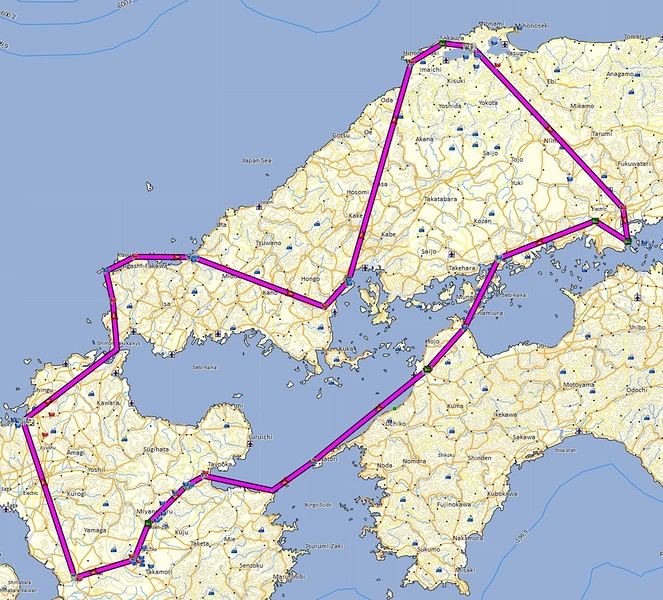
Here’s the route: Fukuoka - Hagi - Miyajima - Matsue - Okayama - Kurashiki - Matsuyama - Yufuin - Kurokawa - Kumamoto - Fukuoka
Here we gooo...
It’s been a while since I last posted... so I’m jumping back in with this amazing trip we took in October 2025:
We’re doing this trip with fellow traveler friends who, like us, have already been to Japan. That means we can aim for a different side of Japan, away from the usual tourist circuits. That’s why I opted to rent a car instead of relying on trains. I was drawn to the castles and the samurai-novel atmosphere.
When I plotted the sites I wanted to visit on Google Maps, it suggested a return route via the island of Shikoku, so it turned into a nice loop around the Seto Inland Sea between Kyushu, Chugoku, and Shikoku.
The trip will be just the four of us, doing it all independently. I rented a car from Budget in Fukuoka. Before heading over, I watched several videos to get an idea of what to expect—road signs, parking, and general driving behavior. In Japan, they drive on the left, but that’s not an issue since in Southern Africa we also drive on the “wrong side of the road,” so I’m used to it. For accommodations, after checking with two agencies, I decided to handle it myself. It saved a significant amount of money, and I was able to choose exactly what I wanted. I know I can be picky about the type of lodging I want, especially in Japan where you can really treat yourself. We stayed in some stunning ryokans, once in little cabins run by monks next to a temple, and more.
Here’s the route: Fukuoka - Hagi - Miyajima - Matsue - Okayama - Kurashiki - Matsuyama - Yufuin - Kurokawa - Kumamoto - Fukuoka
Here we gooo...
Recommendations for accommodation in Guadeloupe
Hi! We’re visiting Guadeloupe for the first time in January. We’re looking for accommodation near Deshaies to start our trip. A quiet spot, not too far from the sea so we can walk there. Any suggestions are welcome!
Have a great day!
Have a great day!
Are kids welcome on boats and in homestays in Indonesia?
Hi there, we're planning a 3-week trip to Indonesia in October 2026 with our kids, who’ll be 5 and a half and 3 and a half years old.
We’re thinking of visiting Komodo—maybe on a cruise—Sulawesi, and Raja Ampat.
We were wondering if it’s doable with young kids? Are they welcome on boats? In homestays?
We’re not the type to shy away from traveling with our kids, but since it *is* pretty far off the beaten path, we’ve got some questions.
Thanks in advance for your feedback! !
Patagonia Itinerary with a 2.5-Year-Old Baby
Hi there,
We’re a couple traveling with our 2.5-year-old baby. We’re heading to Patagonia in March or April 2026. We don’t have exact dates yet because this will be the start of a long trip around Latin America. We’ll be traveling by public transport, with our backpacks and a baby carrier for support. We’ll take a domestic flight from Buenos Aires to Ushuaia, and the rest will be by bus.
Here’s the itinerary we’ve planned: - Buenos Aires (5 days) - Ushuaia (5 days or more) - El Calafate (3 days) - El Chaltén (5 days) - Los Antiguos + border crossing at Chile Chico - Puerto Río Tranquilo (Chile) (5 days) - Coyhaique (Chile) (3 days) - Chiloé Island (Chile) (10 days) - Puerto Varas (Chile) (3 days) - Bariloche (5 days) - San Martín de los Andes (3 days) - Mendoza (5 days)
After that, we’re thinking of spending a few days in Córdoba, then a month in Salta. We plan to head back down to Santiago (Chile) and then head north along the Chilean side toward Peru.
What do you think of this itinerary (especially the Patagonia part)? Is it doable with a young child just over 2.5 years old? I’d also love to include Esquel and El Bolsón in Argentina, but I’m not sure how to fit them in or if they’re really worth it. The durations are approximate, depending on what there is to do in each place... Do you have any suggestions for improving it or any tips?
We want to do some easy hikes or half-day walks since we won’t be able to carry him all day. That’s why we’ve intentionally left out Torres del Paine National Park (very expensive and not very baby-friendly, I think). Do you know of any hikes that are accessible with a little one?
Thanks in advance! !
We’re a couple traveling with our 2.5-year-old baby. We’re heading to Patagonia in March or April 2026. We don’t have exact dates yet because this will be the start of a long trip around Latin America. We’ll be traveling by public transport, with our backpacks and a baby carrier for support. We’ll take a domestic flight from Buenos Aires to Ushuaia, and the rest will be by bus.
Here’s the itinerary we’ve planned: - Buenos Aires (5 days) - Ushuaia (5 days or more) - El Calafate (3 days) - El Chaltén (5 days) - Los Antiguos + border crossing at Chile Chico - Puerto Río Tranquilo (Chile) (5 days) - Coyhaique (Chile) (3 days) - Chiloé Island (Chile) (10 days) - Puerto Varas (Chile) (3 days) - Bariloche (5 days) - San Martín de los Andes (3 days) - Mendoza (5 days)
After that, we’re thinking of spending a few days in Córdoba, then a month in Salta. We plan to head back down to Santiago (Chile) and then head north along the Chilean side toward Peru.
What do you think of this itinerary (especially the Patagonia part)? Is it doable with a young child just over 2.5 years old? I’d also love to include Esquel and El Bolsón in Argentina, but I’m not sure how to fit them in or if they’re really worth it. The durations are approximate, depending on what there is to do in each place... Do you have any suggestions for improving it or any tips?
We want to do some easy hikes or half-day walks since we won’t be able to carry him all day. That’s why we’ve intentionally left out Torres del Paine National Park (very expensive and not very baby-friendly, I think). Do you know of any hikes that are accessible with a little one?
Thanks in advance! !
Is Zanzibar worth visiting?
Hi everyone, I’m planning a two-week trip to Tanzania at the end of December and beginning of January, including 3 or 4 days in Zanzibar. But after reading some posts about the island, I’m wondering if it’s really worth it.
Are the beaches on the mainland just as idyllic as Zanzibar’s? I’ve also seen there are other islands, like Mafia Island, which is less touristy.
Another question: for my arrival, I don’t want to stay in Dar es Salaam, as big cities don’t really appeal to me. Would Bagamoyo be a good base, or would you recommend somewhere else?
To give you more details, I’m not traveling with a tour operator—I’m more of a backpacker and prefer local transport.
Thanks for your advice!
Are the beaches on the mainland just as idyllic as Zanzibar’s? I’ve also seen there are other islands, like Mafia Island, which is less touristy.
Another question: for my arrival, I don’t want to stay in Dar es Salaam, as big cities don’t really appeal to me. Would Bagamoyo be a good base, or would you recommend somewhere else?
To give you more details, I’m not traveling with a tour operator—I’m more of a backpacker and prefer local transport.
Thanks for your advice!
15 days in La Palma, a hidden gem with a thousand contrasts
Hello,
First attempt at a travel journal for me and first post after 7 years away from this forum. 😮 I went to the island of La Palma for 15 days in September 2025. After visiting Lanzarote in February, I was looking for a different and greener island. Well, I wasn’t disappointed. 😎
We stayed in Breña Baja on the east coast of the island, 5 minutes from the airport. This choice was mainly motivated by the desire not to change accommodation during the stay and to be in a "central" location close to amenities. It worked out well, but if I were to do it again, I’d split the stay in two by getting another place in the north of the island to explore that area, which really appeals to me. Note that the island is "climatically divided in two": the west coast is sunnier and drier, while the east coast is often foggy or cloudy. It’s quite impressive when you come out of the LP-3 road tunnel connecting the two sides—you feel like you’ve changed regions even though it’s less than 3 km apart.
Flight options weren’t plentiful (no direct flights from France), so I went with Iberia, connecting in Madrid for 250 € round-trip per person excluding checked baggage (80 € round-trip for one 23 kg suitcase on this route). Make sure to buy the checked baggage at the same time as your flight, as it’ll cost about 15 € more if you add it later. I booked the tickets 5 months in advance directly on Iberia’s website. You could also take a low-cost airline to Tenerife or Gran Canaria and then a flight with a Canarian carrier, but in my opinion, that only makes sense if you’re visiting one of those islands first, as the connection isn’t "guaranteed." The ferry is an option from Tenerife (about 2.5 hours crossing).
Our departure from Lyon was initially scheduled for 6 AM but took off at 9 AM so the crew could rest after the late arrival of the previous flight. This let us grab breakfast on the airline’s dime—thanks, EU Regulation (EC) No 261/2004. 😉 Iberia took a week to reimburse me after I submitted my passport, receipts, and bank details via their online claim form.
Our small but spacious CRJ-1000 Air Nostrum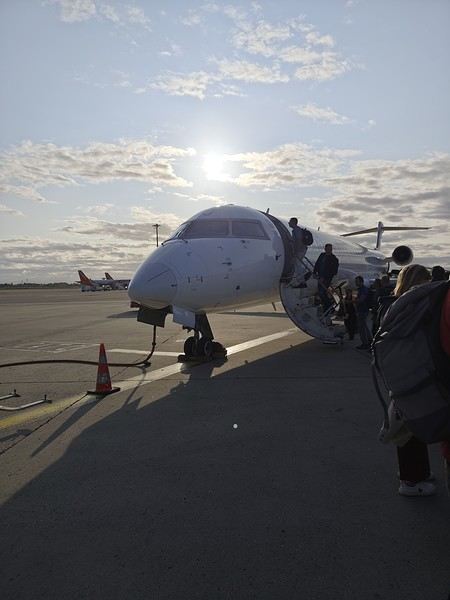 Bye-bye, Bugey nuclear plant
 And hello, Madrid—or rather, its very dry region.
Our layover was initially 4 hours but shrank to 1 hour due to the previous flight’s delay. That worked out for us because Terminal 4 at Barajas is way less comfortable for resting than Lyon’s T1.
And hello, Madrid—or rather, its very dry region.
Our layover was initially 4 hours but shrank to 1 hour due to the previous flight’s delay. That worked out for us because Terminal 4 at Barajas is way less comfortable for resting than Lyon’s T1.
Landing with a view of Playa de la Cangrejera and del Pozo. When I say the east coast is often cloudy... 😇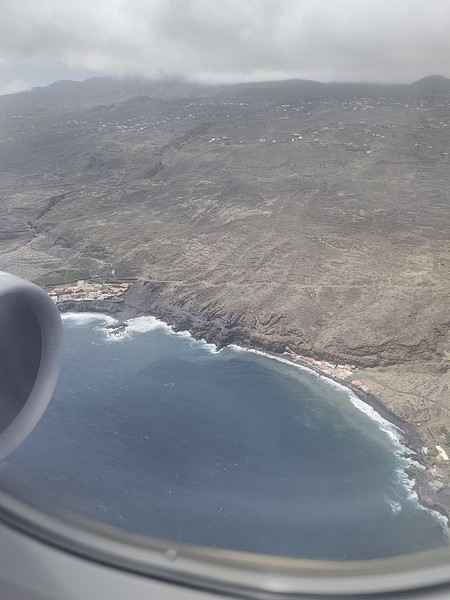 First sight of "plátano" plantations. Banana farming makes up 50% of the island’s GDP!
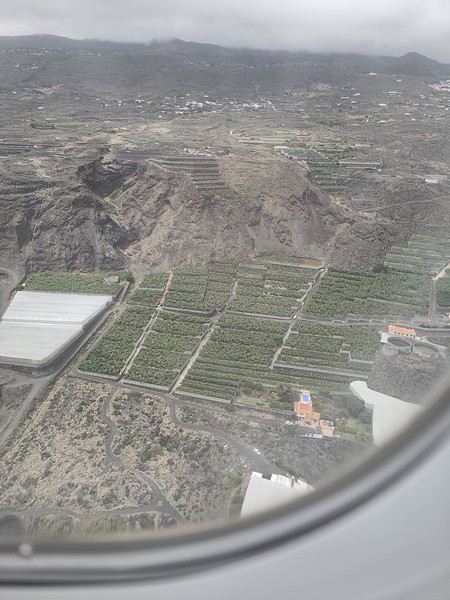
More to come soon. [;]
First attempt at a travel journal for me and first post after 7 years away from this forum. 😮 I went to the island of La Palma for 15 days in September 2025. After visiting Lanzarote in February, I was looking for a different and greener island. Well, I wasn’t disappointed. 😎
We stayed in Breña Baja on the east coast of the island, 5 minutes from the airport. This choice was mainly motivated by the desire not to change accommodation during the stay and to be in a "central" location close to amenities. It worked out well, but if I were to do it again, I’d split the stay in two by getting another place in the north of the island to explore that area, which really appeals to me. Note that the island is "climatically divided in two": the west coast is sunnier and drier, while the east coast is often foggy or cloudy. It’s quite impressive when you come out of the LP-3 road tunnel connecting the two sides—you feel like you’ve changed regions even though it’s less than 3 km apart.
Flight options weren’t plentiful (no direct flights from France), so I went with Iberia, connecting in Madrid for 250 € round-trip per person excluding checked baggage (80 € round-trip for one 23 kg suitcase on this route). Make sure to buy the checked baggage at the same time as your flight, as it’ll cost about 15 € more if you add it later. I booked the tickets 5 months in advance directly on Iberia’s website. You could also take a low-cost airline to Tenerife or Gran Canaria and then a flight with a Canarian carrier, but in my opinion, that only makes sense if you’re visiting one of those islands first, as the connection isn’t "guaranteed." The ferry is an option from Tenerife (about 2.5 hours crossing).
Our departure from Lyon was initially scheduled for 6 AM but took off at 9 AM so the crew could rest after the late arrival of the previous flight. This let us grab breakfast on the airline’s dime—thanks, EU Regulation (EC) No 261/2004. 😉 Iberia took a week to reimburse me after I submitted my passport, receipts, and bank details via their online claim form.
Our small but spacious CRJ-1000 Air Nostrum
Bye-bye, Bugey nuclear plant
And hello, Madrid—or rather, its very dry region.
Our layover was initially 4 hours but shrank to 1 hour due to the previous flight’s delay. That worked out for us because Terminal 4 at Barajas is way less comfortable for resting than Lyon’s T1.
Landing with a view of Playa de la Cangrejera and del Pozo. When I say the east coast is often cloudy... 😇
First sight of "plátano" plantations. Banana farming makes up 50% of the island’s GDP!
More to come soon. [;]
Back from a 3-week trip to South Africa and Mozambique
Hi everyone,
We’ve just returned from a 3-week trip to South Africa:
2 weeks in Kruger Park, Manyeleti, and White River
5 days in Vilankulo
1 day in Johannesburg
If you have any questions or are planning your trip, don’t hesitate! 🙂
My TOP 3 countries visited
Hi everyone,
I feel like I’ve been lucky enough over the past few years to travel—a lot of that’s thanks to retirement... (see my profile!)
So, aside from my beautiful country, France, here’s my totally subjective top 3:
1 – Antarctica
2 – Greenland
3 – Yellowstone Park
Of course, this is just my opinion—human, architectural, cultural, and gastronomic treasures are everywhere on our unique planet, Earth. Have a great day, everyone!
Of course, this is just my opinion—human, architectural, cultural, and gastronomic treasures are everywhere on our unique planet, Earth. Have a great day, everyone!
ATMs at Taipei Airport
Hi,
I’m arriving at T2 in Taipei and was wondering if there are ATMs in the arrivals area or after exiting.
Someone advised me to withdraw from Cathay United Bank ATMs since they’re fee-free. I’ve been before but only at T1.
If you have other bank names, I’d appreciate it.
Thanks
Feedback on first-time Brazil itinerary using public transport
Hello,
We’re planning our first trip to Brazil from October 10 to November 7, 2025.
We’re a couple traveling with light backpacks using local transport.
Here’s our planned route:
Arrival in Rio de Janeiro, 5 days,
Tiradentes, Ouro Preto, Belo Horizonte, 7 days,
Flight from Belo Horizonte to Recife,
Recife, Olinda, 4 days,
Maceió, Penedo, 3 days,
Aracaju, 3 days,
Salvador de Bahia and surrounding areas, 5 days
Departure from Salvador de Bahia to Paris
Thanks in advance for any feedback you can share!
Of course, everything is flexible except for our arrival in Rio and departure from Salvador de Bahia.
Could you also recommend a neighborhood to stay in Rio? Alod
Thanks in advance for any feedback you can share!
Of course, everything is flexible except for our arrival in Rio and departure from Salvador de Bahia.
Could you also recommend a neighborhood to stay in Rio? Alod