Results for "Bar+Duc+|+127"
27694 results found.
Traveling to Southeast Asia in "peak season": what about prices and advance bookings?
Hello,
I’ve been to Thailand three times a long time ago, and I’d love to visit neighboring countries too: Laos, Vietnam, Cambodia (while returning to Thailand 😛).
The catch is that I’d like to go at the beginning of the year, but I’ve heard that’s peak tourist season for these countries. Ideally, I’d prefer to avoid peak season to save money (I’m not exactly rolling in it) and to be able to travel without reservations—without being forced to take a room in the local "palace" that still has availability because of its exorbitant prices.
From my distant memories of Thailand, I usually paid around the equivalent of 20 € per night (with a hearty breakfast) for a hotel room with a mini-bar.
What are the average prices for this type of accommodation in Thailand and its neighbors during "peak" season these days? Do prices fluctuate a lot depending on the season, or is tourist demand not that different from one season to another, keeping prices relatively stable? Are the chances of finding a "budget" room without a reservation still high, no matter the season, in this part of the world? 😇
From my distant memories of Thailand, I usually paid around the equivalent of 20 € per night (with a hearty breakfast) for a hotel room with a mini-bar.
What are the average prices for this type of accommodation in Thailand and its neighbors during "peak" season these days? Do prices fluctuate a lot depending on the season, or is tourist demand not that different from one season to another, keeping prices relatively stable? Are the chances of finding a "budget" room without a reservation still high, no matter the season, in this part of the world? 😇
Road conditions from Taliouine to Tafraoute and then from Tafraoute to Foum Zguid
Hello my friends,
You can't imagine how happy I am to be back on my beloved site, loved by its traveling men and women!!!!!
I want to travel with my little family (by car, not 4x4) from Taliouine to Tafraoute—it's a route I haven't taken yet (I've already done the one via Igherm), and I don't know the condition of the R106 road. Then, once that's done, our destination will be Zagora via Foum Zguid. I don’t want to go to Tata; my wife can’t stand that city. (I don’t mind because there’s a little local bar that’s not bad ;))
If you have any info, especially about the road conditions in October, I’d really appreciate it.
Thanks so much, and I’m so happy to be back here.
Thanks so much, and I’m so happy to be back here.
How to choose your accommodation in South African national parks
Hi there,
It’s not always easy to pick where to stay in national parks... like Kruger, for example.
Below is an attempt to decode the different types and options...
Remember, to book in a national park, you do it through the Sanparks website, except in KwaZulu-Natal (KZN Wildlife).
Choosing the type of camp that suits you: · Main Rest Camps, Satellite Camps, Bushveld Camps, Overnight Hides, Bush Lodges, Camp Site, Luxury Lodges Main Rest Camps These camps are usually quite large, even very large, like Skukuza. They have a fence! You can move around freely inside these camps at night with a torch. Staff are available, and there are security guards. Shops are more or less well-stocked but have the basics. You’ll find souvenir shops, restaurants, bars, and most often a pool. Depending on your choice, there are camping spots, chalets, huts, etc., with varying levels of comfort. Shared kitchens, shared bathrooms, or private facilities in each accommodation (see below). This isn’t the "wild" version but rather the more luxurious and secure option. Bushveld Camps Smaller and more intimate, with some amenities, but no restaurants or shops. Check if there’s a fence. Satellite Camps Always close to the main camps (more or less). As a rule, you check in at the main camp. Comfort level is lower than the options above. Check if there’s a fence. Camp Site + Overnight Hide The wildest level. That says it all. Bush Lodges + Luxury Lodges Bush lodges: exclusive environment. Since I haven’t tried them, I can’t give any tips. Luxury lodges: well, the name says it all. This is Kruger’s version of a private game reserve lodge. Game drives with a ranger in an open vehicle. Accommodation ranges from luxurious to very luxurious. Meals and lodging are of the same standard. But even so, the game drive rules are the same. Sure, you get exclusive access to a small area, but you can’t leave the marked trails, and normally, the return time to camp is exactly the same. The rule actually says that exceptionally, if there’s a great opportunity within x meters, they *might* go off-trail. First case in the far south: a very flexible ranger and an amazing game drive. Second case: a mediocre ranger and a boring game drive. Note that some may only offer lodging. Personally, I think the added value can be excessively expensive. Choosing your accommodation within a camp. This depends on the camp. Below is an attempt to decode. Camp site: just a spot, that’s it. Access to facilities like toilets, shared kitchen, etc. Huts: basic amenities, usually just a fan. Safari tent: the name says it all. It’s already set up. Bungalow: well, it’s a bungalow, and a guest house is a bungalow for a group. Decoding: AC = air conditioning. Fan = fan. Private or shared toilets. Private or shared bathroom. Equipped kitchen or shared. Terrace. Perimeter or not. View or not. First 2–5 letters — the type of accommodation.
CK = Campsite EH/EA/EB = Hut (AC, so air-conditioned) ES = Hut (fan only) CTT/ST= Safari Tent LBVST = Safari Tent with bush view LRVST = Safari Tent with river view BD/BA = Bungalow with private (and equipped) kitchen BG/BE = Bungalow with shared kitchen F, G or CO = Guesthouse or Cottages (more than one bedroom)
Number after the letters — number of beds 2, 3, 4, or 6 beds. The base price is for 2 people. There’s an extra charge for each additional person. The last letter, if present, indicates a particular feature.
U = Perimeter — close to the camp’s edge V = Perimeter + view (e.g., river) Z = For disabled access L = Large spot (camping) D = DSTV (television) E = Enclosed veranda
Example: BD3U = 3 people, private kitchen (and bathroom/toilet), perimeter with view.
Choosing the type of camp that suits you: · Main Rest Camps, Satellite Camps, Bushveld Camps, Overnight Hides, Bush Lodges, Camp Site, Luxury Lodges Main Rest Camps These camps are usually quite large, even very large, like Skukuza. They have a fence! You can move around freely inside these camps at night with a torch. Staff are available, and there are security guards. Shops are more or less well-stocked but have the basics. You’ll find souvenir shops, restaurants, bars, and most often a pool. Depending on your choice, there are camping spots, chalets, huts, etc., with varying levels of comfort. Shared kitchens, shared bathrooms, or private facilities in each accommodation (see below). This isn’t the "wild" version but rather the more luxurious and secure option. Bushveld Camps Smaller and more intimate, with some amenities, but no restaurants or shops. Check if there’s a fence. Satellite Camps Always close to the main camps (more or less). As a rule, you check in at the main camp. Comfort level is lower than the options above. Check if there’s a fence. Camp Site + Overnight Hide The wildest level. That says it all. Bush Lodges + Luxury Lodges Bush lodges: exclusive environment. Since I haven’t tried them, I can’t give any tips. Luxury lodges: well, the name says it all. This is Kruger’s version of a private game reserve lodge. Game drives with a ranger in an open vehicle. Accommodation ranges from luxurious to very luxurious. Meals and lodging are of the same standard. But even so, the game drive rules are the same. Sure, you get exclusive access to a small area, but you can’t leave the marked trails, and normally, the return time to camp is exactly the same. The rule actually says that exceptionally, if there’s a great opportunity within x meters, they *might* go off-trail. First case in the far south: a very flexible ranger and an amazing game drive. Second case: a mediocre ranger and a boring game drive. Note that some may only offer lodging. Personally, I think the added value can be excessively expensive. Choosing your accommodation within a camp. This depends on the camp. Below is an attempt to decode. Camp site: just a spot, that’s it. Access to facilities like toilets, shared kitchen, etc. Huts: basic amenities, usually just a fan. Safari tent: the name says it all. It’s already set up. Bungalow: well, it’s a bungalow, and a guest house is a bungalow for a group. Decoding: AC = air conditioning. Fan = fan. Private or shared toilets. Private or shared bathroom. Equipped kitchen or shared. Terrace. Perimeter or not. View or not. First 2–5 letters — the type of accommodation.
CK = Campsite EH/EA/EB = Hut (AC, so air-conditioned) ES = Hut (fan only) CTT/ST= Safari Tent LBVST = Safari Tent with bush view LRVST = Safari Tent with river view BD/BA = Bungalow with private (and equipped) kitchen BG/BE = Bungalow with shared kitchen F, G or CO = Guesthouse or Cottages (more than one bedroom)
Number after the letters — number of beds 2, 3, 4, or 6 beds. The base price is for 2 people. There’s an extra charge for each additional person. The last letter, if present, indicates a particular feature.
U = Perimeter — close to the camp’s edge V = Perimeter + view (e.g., river) Z = For disabled access L = Large spot (camping) D = DSTV (television) E = Enclosed veranda
Example: BD3U = 3 people, private kitchen (and bathroom/toilet), perimeter with view.
Argentina Situation in July 2025
Hello everyone!
July 5, 2025: Argentina Update
As I do every month, here’s an overview of the situation in Argentina—useful if you’re planning to visit in the coming weeks!
Vibe, economy, general situation, tips for tourists, and more...
Latest news for anyone thinking of visiting Argentina this year:
- Mixed outlook
- Current economic and social situation in Argentina
- Our friend Cristina
- What’s new for tourists?
What’s new? The parallel exchange rate and the official BNA rate are almost the same—just 2% higher for the parallel rate, which won’t really change your trip! Pay as much as possible in cash—discounts are still common at bars, restaurants, and even hotels. Even if it’s not advertised, always ask! You can still withdraw cash via Western Union, as before. Paying with a Visa or other card is still possible, and the CCL rate is even above the parallel rate today, meaning +3% compared to the official rate. However, you won’t get discounts when paying by card.
As always, **do not** withdraw money from ATMs—the fees in Argentina are still outrageous. Also, don’t forget that winter break in Argentina starts today, Friday, July 4, in 10 provinces for two weeks, until Sunday, July 20. On Friday, July 11, it begins in 9 more provinces until Sunday, July 27, and finally, in the last 4 provinces (including Buenos Aires and the city of Buenos Aires—the most populated), it runs from Friday, July 18, until Sunday, August 3. In short: 3 zones, each with two weeks off, stretching over 4 weeks total.
In previous years, I’d have warned you: “Be careful if you’re traveling, as buses, flights, and often accommodations are at high occupancy.” But this year, poorer and middle-class Argentines aren’t traveling because “No hay plata,” and those who can afford it are heading to Brazil, Chile, or even Miami for cheaper parties and shopping—Brazil can be twice as affordable! So, in Argentina, the top destinations for these staggered winter breaks are Bariloche (first place), followed by Ushuaia, San Martín de los Andes, and Villa La Angostura. Mendoza comes in fifth, then El Calafate, and finally Salta and Córdoba. As you can see, wealthy Argentines travel in winter to see snow—it’s chic to be cold and go skiing! Bariloche is the most expensive, while Córdoba is the cheapest. Same services, for example, a flight plus 7 days plus a hotel in the same category: Bariloche is 2.5 to 3 times pricier than Córdoba or even the sierras of Córdoba. Yet, there’s plenty of availability. Most people don’t have the money (and you might say Patagonian winter destinations aren’t exactly middle-class friendly either), but with fewer Brazilians or Chileans taking advantage of “cheap” Argentina, space is freed up. Brazilians alone used to make up 50% of Argentina’s international tourism—so there are suddenly fewer people on flights and in hotels! For these destinations, hoteliers are hoping for (at best) a 70% occupancy rate, though 50% would already make them happy. Why? 1- Lack of foreign tourists, 2- The middle class preferring to visit the old aunt in Posadas (to show family loyalty and spend as little as possible),
3- The wealthy opting for Bariloche, Punta Cana, Búzios, or Miami, which drastically lowers domestic occupancy rates and increases the outflow of USD abroad. +66% of Argentine tourists traveled abroad in the first five months of 2025. Six million Argentines vacationed abroad between January 1 and May 1, 2025.
To read the full article, check it out here: https://www.petitherge.com/2025/07/05-juillet-2025-situation-de-l-argentine.html
What’s new? The parallel exchange rate and the official BNA rate are almost the same—just 2% higher for the parallel rate, which won’t really change your trip! Pay as much as possible in cash—discounts are still common at bars, restaurants, and even hotels. Even if it’s not advertised, always ask! You can still withdraw cash via Western Union, as before. Paying with a Visa or other card is still possible, and the CCL rate is even above the parallel rate today, meaning +3% compared to the official rate. However, you won’t get discounts when paying by card.
As always, **do not** withdraw money from ATMs—the fees in Argentina are still outrageous. Also, don’t forget that winter break in Argentina starts today, Friday, July 4, in 10 provinces for two weeks, until Sunday, July 20. On Friday, July 11, it begins in 9 more provinces until Sunday, July 27, and finally, in the last 4 provinces (including Buenos Aires and the city of Buenos Aires—the most populated), it runs from Friday, July 18, until Sunday, August 3. In short: 3 zones, each with two weeks off, stretching over 4 weeks total.
In previous years, I’d have warned you: “Be careful if you’re traveling, as buses, flights, and often accommodations are at high occupancy.” But this year, poorer and middle-class Argentines aren’t traveling because “No hay plata,” and those who can afford it are heading to Brazil, Chile, or even Miami for cheaper parties and shopping—Brazil can be twice as affordable! So, in Argentina, the top destinations for these staggered winter breaks are Bariloche (first place), followed by Ushuaia, San Martín de los Andes, and Villa La Angostura. Mendoza comes in fifth, then El Calafate, and finally Salta and Córdoba. As you can see, wealthy Argentines travel in winter to see snow—it’s chic to be cold and go skiing! Bariloche is the most expensive, while Córdoba is the cheapest. Same services, for example, a flight plus 7 days plus a hotel in the same category: Bariloche is 2.5 to 3 times pricier than Córdoba or even the sierras of Córdoba. Yet, there’s plenty of availability. Most people don’t have the money (and you might say Patagonian winter destinations aren’t exactly middle-class friendly either), but with fewer Brazilians or Chileans taking advantage of “cheap” Argentina, space is freed up. Brazilians alone used to make up 50% of Argentina’s international tourism—so there are suddenly fewer people on flights and in hotels! For these destinations, hoteliers are hoping for (at best) a 70% occupancy rate, though 50% would already make them happy. Why? 1- Lack of foreign tourists, 2- The middle class preferring to visit the old aunt in Posadas (to show family loyalty and spend as little as possible),
3- The wealthy opting for Bariloche, Punta Cana, Búzios, or Miami, which drastically lowers domestic occupancy rates and increases the outflow of USD abroad. +66% of Argentine tourists traveled abroad in the first five months of 2025. Six million Argentines vacationed abroad between January 1 and May 1, 2025.
To read the full article, check it out here: https://www.petitherge.com/2025/07/05-juillet-2025-situation-de-l-argentine.html
A Week in Malta in Spring 2025
Why not Malta? We thought it was an original, off-the-beaten-path destination...
The advantage is there’s a direct flight from Toulouse, our departure city. That’s what convinced us to take a week-long couple’s trip to Malta.
I had booked the accommodations (breakfast included) + an airport/hotel transfer on Booking.
First stop: VILLA DEL PORTO, a very pleasant guest house in a great location. We were welcomed by the owner, who gave us all the info we needed to get around. How to get to Valletta? By ferry shuttle. Valletta Ferry Service - Cospicua.
And for everything else, a brilliant app for the buses that crisscross the island: TALLINJA. I highly recommend this app. We traveled by bus all week without any issues.
The next day, we spent the day in Valletta, the capital. That’s when we realized this destination is actually very popular—streets packed with thousands of tourists! Luckily, we managed to navigate through parallel alleys and find small hostels or bars to eat or grab a drink. The city is stunning and steeped in history.
On the third day, we took the bus to the south of the island: MARSAXLOKK. A charming, authentic fishing port with plenty of waterfront restaurants and souvenir shops. We ate at CAFÉ DE PARIS—a delicious fresh fish, perfectly prepared.
On the way back, we wandered through the beautiful town of Senglea. Then we ordered takeout from D VIRI'S TAKE AWAY near the guest house via email. It was delicious!
On the fourth day, we left Villa del Porto and headed to Valletta by ferry to catch the GOZO FAST FERRY—a 45-minute catamaran ride to the island of Gozo.
After a good lunch by the port, we took the bus to our destination: XLENDI.
A village at the end of a gorgeous bay. We stayed at the San Andrea Hotel—a small room with a balcony and sea view.
Fifth day: Bus to Victoria. A magnificent citadel, a meal at a small bar in Piazza San Frangisk, then we continued by bus to the north, stopping in Marsalforn for coffee by the sea and a short walk to the natural salt pans carved into the rock. Back to the hotel by bus.
Sixth day: A short walk to Xlendi Tower, a watchtower at the entrance of the bay, beautifully restored. Then we set off on a sea excursion in a small boat for six passengers. Honestly, I recommend it! Two hours cruising along the breathtaking coastline and turquoise sea—20 € per person. www.gozoboathire.com
Delicious lunch on the terrace at "The Boathouse Restaurant."
Seventh day: We packed our bags again and returned to Malta by ferry to Cirkewwa. The terminal isn’t very welcoming—you have to take a bus to find a town.
We had lunch in Mellieha, then continued our journey, still using local buses, to RABAT, next to the ancient fortified city of MDINA. Another stunning city we explored at our own pace once the tourists had left.
Eighth day: Bus to the airport.
In conclusion, we’re thrilled with our trip. Of course, we didn’t see all the sites recommended by guidebooks, but we wandered at our own rhythm and came back with a head full of memories, images, and great moments spent in Malta and Gozo.
Villa Del Porto Address: Marina Street 1, KKR 1521 Kalkara, Malta Phone: +356 2166 8420 GPS Coordinates: N 035° 53.399, E 14° 31.557
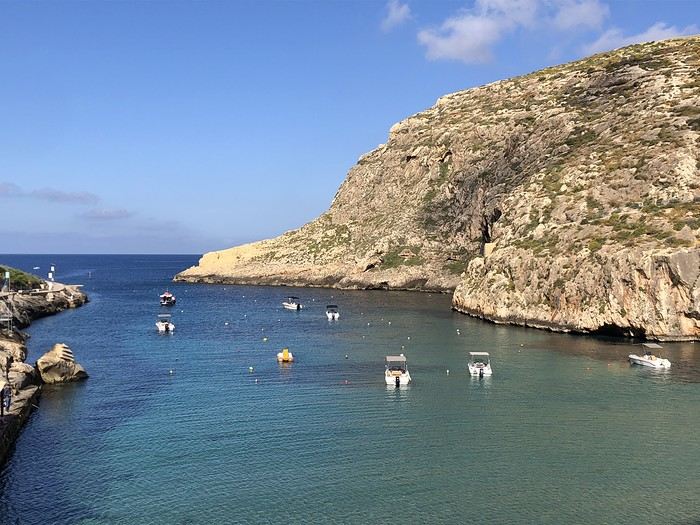 Xlendi Bay
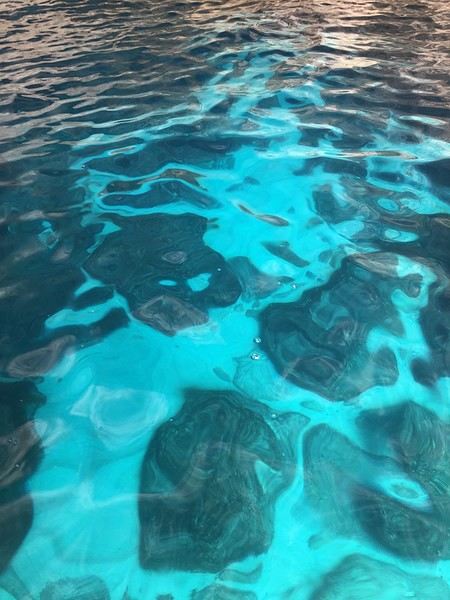 the seabeds in the coves
Villa Del Porto Address: Marina Street 1, KKR 1521 Kalkara, Malta Phone: +356 2166 8420 GPS Coordinates: N 035° 53.399, E 14° 31.557
Xlendi Bay
the seabeds in the coves
Trip to Amsterdam
Hi everyone!
I wanted to share my experience from a trip to Amsterdam. Spring is coming, and it’s one of my favorite destinations for this season, especially with the Keukenhof in bloom.
There are so many museums to visit and places to see, like Dam Square, the Royal Palace, Museum Square, the Red Light District... Some spots, like the Anne Frank House, require reservations. You can also take walks along the canals or even go on canal cruises.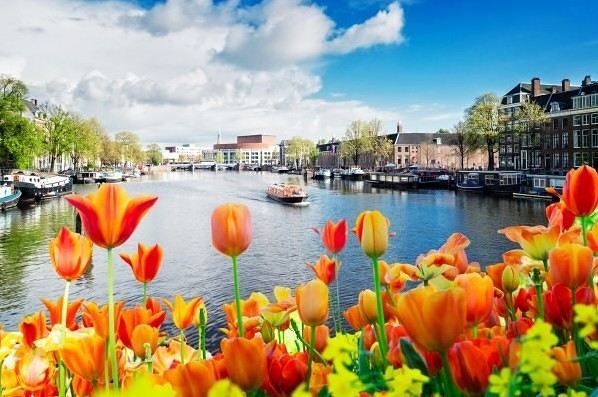
For museums, I really enjoyed the Rijksmuseum for works by Rembrandt and Vermeer, as well as the Van Gogh Museum (combo tickets are available).
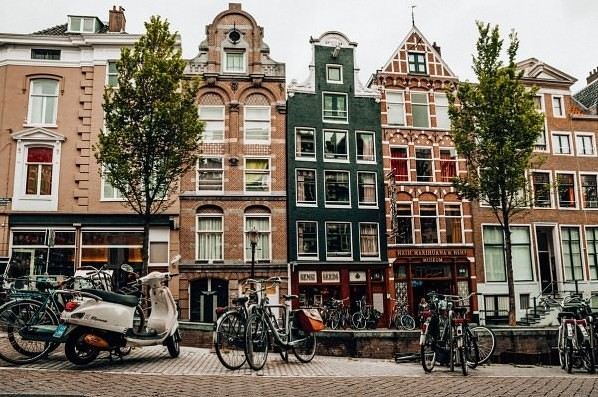
For more nature-focused outings, there’s Vondelpark, Keukenhof Park, and the windmills at Zaanse Schans...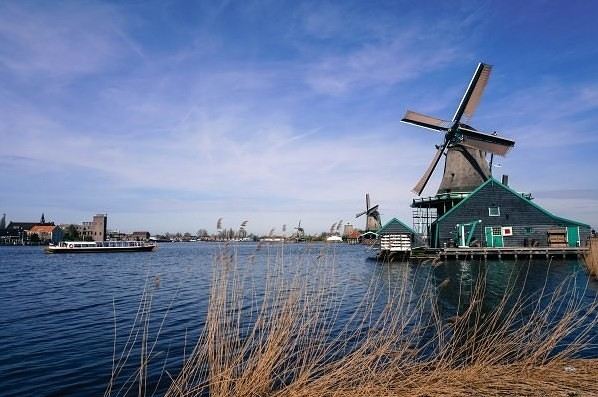 You can find all my photos and details about my trip budget on my travel journal for Amsterdam.
I wanted to share my experience from a trip to Amsterdam. Spring is coming, and it’s one of my favorite destinations for this season, especially with the Keukenhof in bloom.
There are so many museums to visit and places to see, like Dam Square, the Royal Palace, Museum Square, the Red Light District... Some spots, like the Anne Frank House, require reservations. You can also take walks along the canals or even go on canal cruises.
For museums, I really enjoyed the Rijksmuseum for works by Rembrandt and Vermeer, as well as the Van Gogh Museum (combo tickets are available).
For more nature-focused outings, there’s Vondelpark, Keukenhof Park, and the windmills at Zaanse Schans...
You can find all my photos and details about my trip budget on my travel journal for Amsterdam.A trip to Australia: the Northern Territory.
Thursday, November 2, 2023
Lake Argyle – Katherine
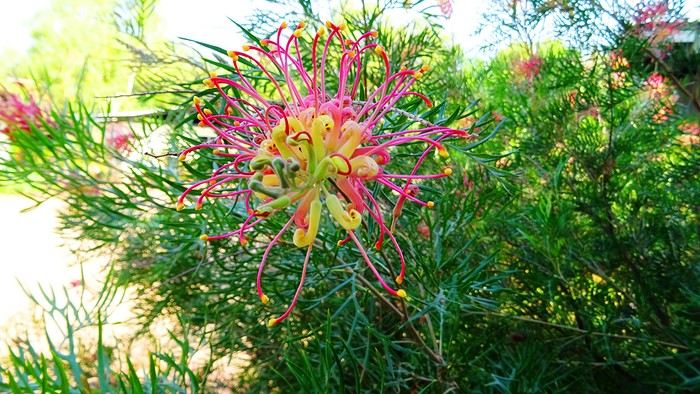
We had a great time. Now we’ve got to pay the price. We’re down one stop before Katherine. Gotta do the whole trip in one go—6 hours of driving. Let’s go! We’re a bit low on fuel with only 300 kilometers of range. The only station at the lake doesn’t open until 9 a.m., and the next (and only) one is 227 kilometers away… Should we risk it? Except for a magnificent frilled-neck lizard darting across the road on its big hind legs and an emu quickly disappearing into the bush, we didn’t see much. Oh—there was also a donkey, lost and panicked in the middle of the road… A quiet road with some beautiful scenery,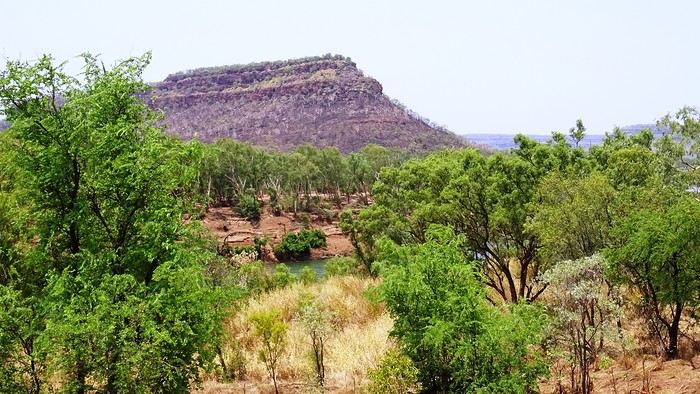 some worrying bushfires
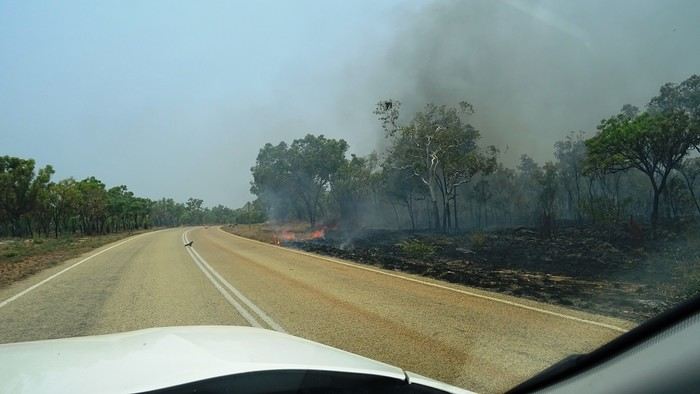
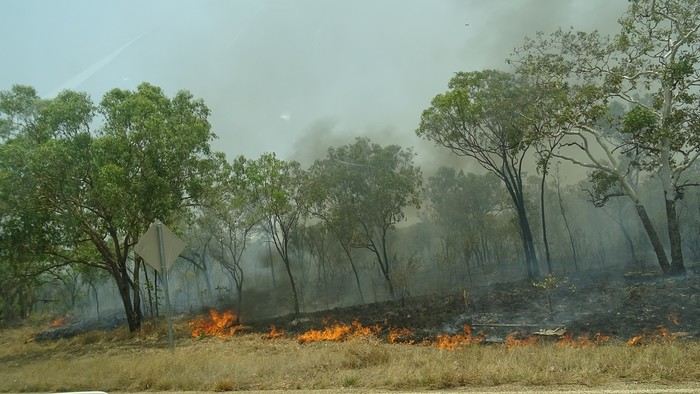 and a few opportunities to stop for a "warrior’s rest" (never go beyond the first second of the thought that starts drifting off the road…)
We cross an invisible border as we enter the Northern Territory, which comes with consequences—we immediately lose an hour and a half by changing time zones. The speed limit goes from 110 to 130.
and a few opportunities to stop for a "warrior’s rest" (never go beyond the first second of the thought that starts drifting off the road…)
We cross an invisible border as we enter the Northern Territory, which comes with consequences—we immediately lose an hour and a half by changing time zones. The speed limit goes from 110 to 130.
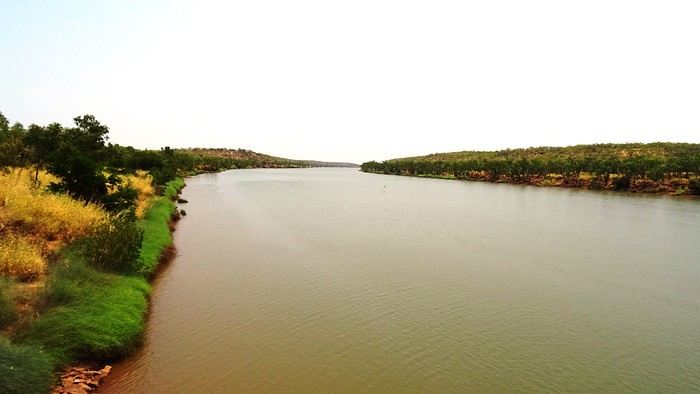
We arrive at the self check-in in Katherine. As usual, we’re a little taken aback at first. The noise, for starters. There’s a group rehearsing, it seems. We go check it out. We pass through the doors separating "The Stuart" from the adjoining bar and stumble upon what feels like collective hysteria. Turns out, it’s a concert. Aboriginal musicians completely fired up by some incredible music! There are just three of them, but they’re delivering a wall of sound that reminds us of South Africa’s finest neo-techno with a trance-like vibe. The crowd is wild! They’re singing in unison, screaming with joy. We get gently kicked out by security because we’re carrying our groceries, and they’re not having it. We promise ourselves we’ll come back once we’ve put them away in our little fridge.
Then we land. We end up finding plenty of nice things. It’s very possible we’ll like this place!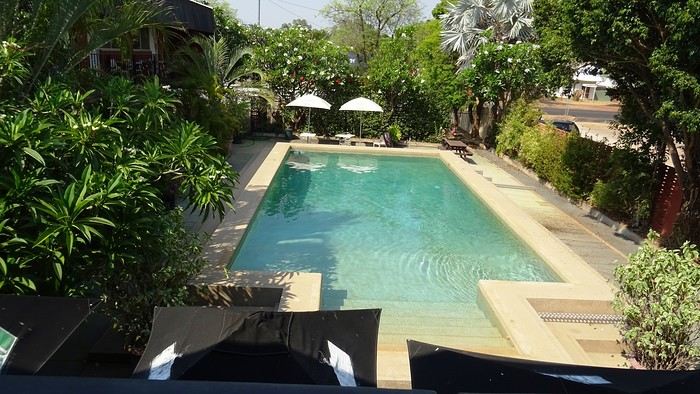
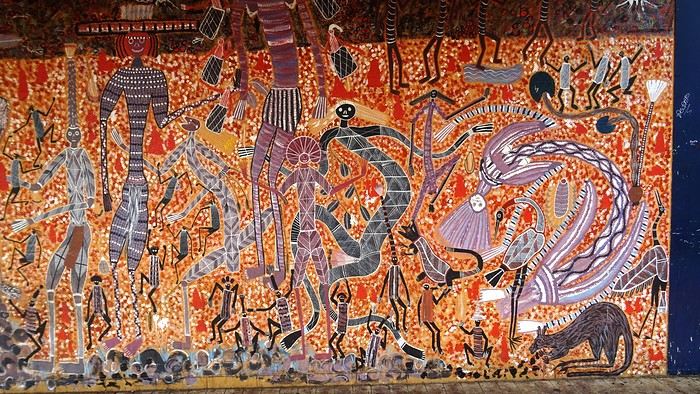 We head back to enjoy our post-battle Happy Hour.
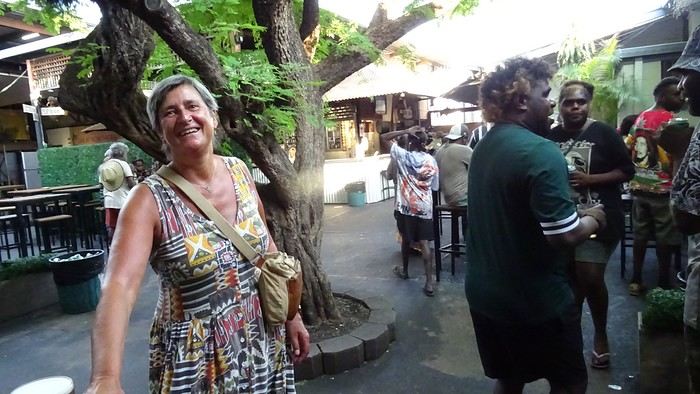 The concert’s over, but the crowd’s still riding the high. It’s indescribable. People are shouting across the room, screaming just for the fun of it—men and women alike. There’s pool, some beat-up arcade games being shaken like coconut trees. Dom and I feel like anthropologists. We’re pretty blown away. It’s epic! And the beer’s half the price it is elsewhere! We’ll definitely be back—that’s for sure!
We give up on finding a restaurant. Not sure they even exist, at least not this season. So, we’ve got a microwave—we eat at home on our little terrace, with a musical accompaniment from a massive orchestra of birds.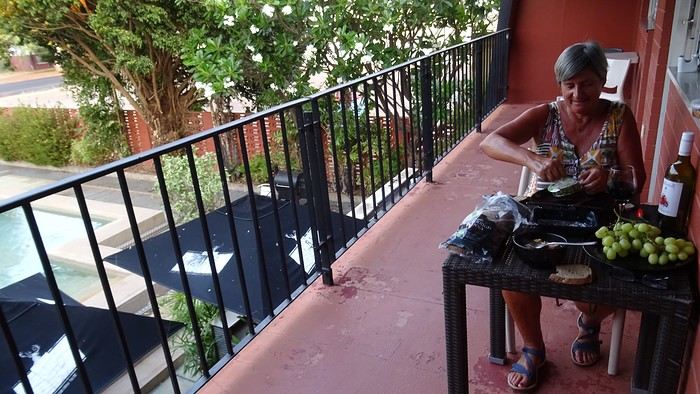 It sounds amazing!
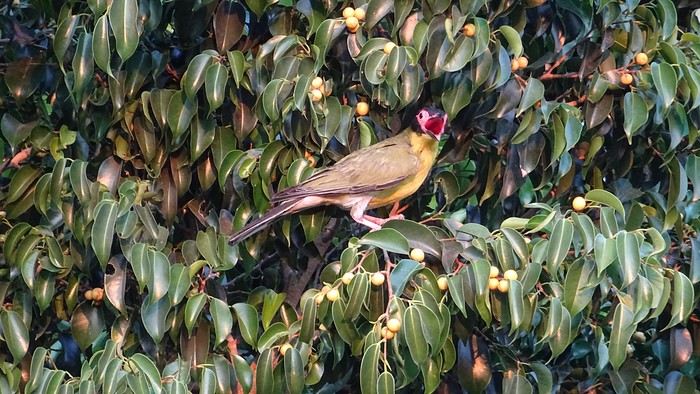
We had a great time. Now we’ve got to pay the price. We’re down one stop before Katherine. Gotta do the whole trip in one go—6 hours of driving. Let’s go! We’re a bit low on fuel with only 300 kilometers of range. The only station at the lake doesn’t open until 9 a.m., and the next (and only) one is 227 kilometers away… Should we risk it? Except for a magnificent frilled-neck lizard darting across the road on its big hind legs and an emu quickly disappearing into the bush, we didn’t see much. Oh—there was also a donkey, lost and panicked in the middle of the road… A quiet road with some beautiful scenery,
some worrying bushfires
and a few opportunities to stop for a "warrior’s rest" (never go beyond the first second of the thought that starts drifting off the road…)
We cross an invisible border as we enter the Northern Territory, which comes with consequences—we immediately lose an hour and a half by changing time zones. The speed limit goes from 110 to 130.
We arrive at the self check-in in Katherine. As usual, we’re a little taken aback at first. The noise, for starters. There’s a group rehearsing, it seems. We go check it out. We pass through the doors separating "The Stuart" from the adjoining bar and stumble upon what feels like collective hysteria. Turns out, it’s a concert. Aboriginal musicians completely fired up by some incredible music! There are just three of them, but they’re delivering a wall of sound that reminds us of South Africa’s finest neo-techno with a trance-like vibe. The crowd is wild! They’re singing in unison, screaming with joy. We get gently kicked out by security because we’re carrying our groceries, and they’re not having it. We promise ourselves we’ll come back once we’ve put them away in our little fridge.
Then we land. We end up finding plenty of nice things. It’s very possible we’ll like this place!
We head back to enjoy our post-battle Happy Hour.
The concert’s over, but the crowd’s still riding the high. It’s indescribable. People are shouting across the room, screaming just for the fun of it—men and women alike. There’s pool, some beat-up arcade games being shaken like coconut trees. Dom and I feel like anthropologists. We’re pretty blown away. It’s epic! And the beer’s half the price it is elsewhere! We’ll definitely be back—that’s for sure!We give up on finding a restaurant. Not sure they even exist, at least not this season. So, we’ve got a microwave—we eat at home on our little terrace, with a musical accompaniment from a massive orchestra of birds.
It sounds amazing!
The 4000 Islands (Southern Laos)
PAKSE AND THE BOLAVENS PLATEAU
Bolavens (or "Bolovens" – "the region of the Lavens," an old tribe).
PAKSE
A sleepy town, but packed with backpackers in transit between Laos and Cambodia. The streets are numbered, but since there are no signs, you just have to figure it out (rumor has it the signs have been planned for years; luckily, the center isn’t big). Tons of small hotels, including the well-known Sabaidy 2 on Street 20, a big bazaar catering to all budgets, from dark dorms with shared bathrooms to real rooms with terraces or balconies. Since it’s so popular, booking ahead is recommended. My favorite: the Sala Champa, pricier but with two large terraces, one with a bar, and especially a terrace restaurant I consider the best in Pakse (try the divine steamed fish with lemongrass + Lao Gold beer, a rare delight; ask for room 100, with a big terrace). More upscale, the lovely Résidence Sisouk, run by the very classy and French-speaking Mme Sisouk, from the wealthy Lao Sisouk family, the country’s top coffee producer and one of those francophone families you encounter here and there around the world, where class and culture reign – and perfect French. Delicious pastries and, of course, extraordinary coffee tastings. Similar prices at the Pakse Hotel, run by French owners and famous for its rooftop bar-restaurant (great view!).
Tons of restaurants besides those at Sala Champa and Pakse Hotel: from Dao Lin and Sabaidee at the corner of Street 20 and 13, to a decent Indian place (Hassan) and a nice, cheap spot, the Lao Restaurant & Bar, where you can enjoy Lao cuisine for just a few kips, both also on Street 20. You can feast on grilled fish at the countless riverside stalls along the Mekong.
Pakse is home to the famous Yves, a Belgian married to a Lao woman, Noy, who opened the travel agency Miss Noy. He’ll go out of his way to help tourists; he’s incredible, the real tourism office for the region, with maps, endless advice, and every weekday at 6 PM, a full-blown lecture on the Bolavens and the 4000 Islands. A bunch of young travelers listen intently to his explanations about the whole area (he hands out a well-made photocopied map). He also rents bikes and has an internet café with computers that, miraculously, work perfectly. He’s so popular that in high season, you need to book a motorbike 2-3 days in advance (but if he’s out – and he has 40 – he’ll find one for you).
THE BOLAVENS PLATEAU
Plateaus just aren’t my thing – flat-lands! There are some relatively high peaks in the middle, but they’re only accessible by trekking. You can do a small loop from Pakse-Tad Lo-Thateng-Pakson-Pakse, or a big one from Tad Lo to Sekong, then head south to join the Paksong-Pakse road. Starting in the north, the Phu Xam waterfalls are okay (interesting local minority village-museum to the right of the parking lot, and a terrace restaurant above the small falls). Well, they’re on the way, so you might as well see them! After that, a boring road leads to the Tad Lo waterfalls, with tons of small hotels. I chose the big blue house by the river at the right corner of the bridge, the Sipaseth GH, with cute little bungalows in the garden, 4 rooms with balconies overlooking the river, and great food on the terrace facing the falls. **Avoid at all costs**: the Saisee GH, once nice with its little stilt houses by the falls, but now a monument to filth, indifference, and rudeness (confirmed by several people, unanimous on the issue). Luckily, the lovely Tad Lo Lodge, with its bungalows by the falls and gourmet restaurant right above them – not cheap at all – finally built small houses in the woods on the other side for $25.
The next morning, I’d had enough of plateaus, so I took a small loop heading south from Tad Lo to Thateng, and there, a wonder 5 km south of town: the Sinouk Resort. It’s like stepping into *Gone with the Wind* or the Chevalier de Leyritz’s Martinique. In the middle of the Sisouk family’s 34-hectare coffee plantation, a huge garden with three large colonial-style houses: one by the river and pond with a suite + 3 luxury rooms + a small, cozy one for $40 (that’s where I stayed), one with 4 superior rooms for $60, and a very large one overlooking everything with 6 luxury rooms ($60) + 2 huge suites for $90. Of course, it’s all decorated with antique furniture, local knick-knacks, and antiques; there’s a pool, a beautiful restaurant with two terraces, one overlooking a large pond and one by its edge. The food and service are impeccable, and the coffee: from espresso with whipped cream to green tea or wild honey cappuccino… too bad it keeps you up, or you’d sip it all evening (and morning, and afternoon, and in between). In short, a dream!
Back to Pakse via Paksong (what a dump!) and the Tad Fane waterfalls, those are spectacular – twin sisters plunging 200 meters. You can hike down to swim at the bottom (1-hour jungle trek round trip). Across the way, the nice Tad Fane Resort (small houses and a big terrace-restaurant facing the falls).
I think I missed the Katamkok waterfalls, but I don’t believe it – all these falls can’t compare to Ban Gioc Falls in northern Vietnam!!!
CHAMPASAK AND THE 4000 ISLANDS
CHAMPASAK
Even sleepier than Pakse! To avoid the ferry, cross the new Mekong bridge in Pakse, and after about 10 km, turn left at the big "Phaphinoy" sign (the first village in town). When you arrive, turn at the "River Resort" sign. A sumptuous resort on the Mekong, developed with American capital – pure luxury (they even have their own rice field and vegetable garden for the restaurant). Continuing on, you’ll come across the very pleasant Anouxa GH, where I had dinner and stayed. Small bungalows facing the river, garden rooms, and two large wooden houses with huge family rooms + a big terrace on the Mekong, and the food is great! They rent bikes and motorbikes. Further to the right, the pricey Inthira Hotel, which I found uninteresting since it’s on the road instead of by the Mekong. There’s also a Folie Lodge on Don Daeng Island, which I didn’t visit (the word "Folie" is justified: crazy prices, up to $200 and more).
A few nice wats and, of course, Wat Phou, Laos’ most important archaeological site, 10 km south of Champassak in the plains and on the mountainside (the stairs are a killer!). Watch out for the scorching heat, and it closes at 4:30 PM. It’s not Angkor Wat, but it’s still worth the detour. Plan for 2 hours. Entry is 50,000 kips + 5,000 to park your motorbike.
KHIET NGON
To continue south to the 4000 Islands, you have to take the "ferry" (actually fun little things – two canoes joined by a platform; better not mess up when loading your motorbike!). Once on the other side, turn left, and you’ll hit National Road 13 (Pakse-Siphandone, the 4000 Islands), the most boring road I’ve ever been on, like Phnom Penh-Siem Reap – flat and nothing to see. BUT there’s a real gem worth checking out: Kiet Ngon. At Km 48, take the laterite road toward Attapeu (big sign: "Attapeu 155 km") and eat red dust for 8 km (toll: 20,000 kips), then turn right (signposted) onto a good track. You enter the beautiful Xe Pian National Park, where you can still find wild elephants, leopards, and tigers. You arrive at the entrance of the small village of Ban Khiet Ngon. On your right, a small concrete building with 4 decent, cheap rooms (60,000 kips), facing an old wooden house that serves as the tourism office and its "elephant parking" garden. This village is where you can go on an elephant ride (20,000 kips) to the top of Phou Asa, one of the most unusual places I’ve ever seen. You climb through the jungle and emerge onto a flat slate summit, completely bare – it really feels like the Moon! In the distance, an astonishing site built to commemorate a victory by Lao nationalists over Siamese invaders in the 19th century (so the site isn’t 1,000 years old, as the locals claim). A vast archaeological site with an enclosure 180 m by 50 m, marked by 2-meter-high walls and columns made of slate stacked without mortar. At the back, a ruined temple and a tower. Beautiful views of the whole region. Popular with tourists arriving by minibus from Pakse. The elephant rides in a line aren’t my thing, so they tell you it’s forbidden to ride a motorbike, but I did it anyway without any issues – except for the unhappy looks from the mahouts (turn right at the village entrance, sign for "Phou Asa").
If you’ve got the funds, follow the signs for "Kingfisher Lodge" and arrive at Laos’ first ecolodge, developed by a Lao-Italian family. Lovely stilt houses (750,000 kips with breakfast) and 2 bungalows with just fans (250,000 kips). A small two-story wooden building with a restaurant and a terrace by a pond – the bonus: in the evening, wild elephants and buffalo come to drink with you. Booking ahead is recommended since it’s popular with groups from Pakse.
Paper guides also mention the more remote village of Ban Papho, deep in the jungle. There used to be elephant rides, but they’ve stopped. However, there are great treks in the national park (check with the Green Discovery agency in Pakse, which specializes in treks all over Laos).
THE 4000 ISLANDS
You continue on the mind-numbing Road 13 from Pakse and arrive at a brand-new bridge leading to Don Khong Island, where there’s nothing to see except two wats, so if you skip it, you’re not missing much. Next, the Nakasang sign, a small port with mini-ferries crossing the Mekong to Don Det Island. A celebrity, that one – one of those trashy spots for young people who think you can only have fun if you’re wasted on alcohol and drugs. A small street along the river, lined with guesthouses, restaurants, and bars – total chaos! Plus, there’s nothing to see on the island. So, take a tuk-tuk from the jetty, cross the dump, and arrive in a little paradise: Don Khone Island. I planned to stay 2 days but had to be dragged away after 6. A small main village with a dirt road, tons of guesthouses and great restaurants, and lots of beautiful things to see.
For lodging on Don Khone, it’s usually wooden bungalows with river-view terraces. Options range from the elegant and pricey Sala Done Hotel to Somphamit, Pan’s, Pakha GH, and many others. I found my haven away from everything: the little Phonvilay, 3 small bamboo buildings with 2 simple rooms each, terraces above a branch of the Mekong, and a big plus – a small path just to the right that goes down the riverbank, so 3-4 nice swims a day. All for 60,000 kips. To get there, turn right at the end of the bridge until you reach the wat, then take the small path to the river on the right of the wat’s wall.
For food, you’re spoiled for choice. I had all my dinners at the Cordon Bleu of the Fleur du Mékong. I don’t know how she does it, but even the simplest dishes have something extra. She’s famous for her curry (more like a mild stew) of duck or chicken with potatoes and sweet potatoes – a hearty treat. Go for the chicken; Asian ducks are all skin and bones. Her grilled fish is divine!
The island has quite a history: the Mekong upstream is over a kilometer wide (it’s said to reach 14 km during high water) and "falls" onto a rocky barrier. It splits into countless small branches, flowing wherever there’s a crack – hence the 4000 Islands and the impressive rapids. The French discovered this while trying to navigate the Mekong from Saigon to Luang Prabang and China – and bam, impassable! So they built a narrow-gauge railway starting from the south of the island, bypassing the rapids, and ending at the north of Don Det Island. You can see two rusted locomotives, discovered in the jungle in 1990 by a French explorer: one in the southern extension of the bridge and the other in Ban Hang Khone village at the southern tip of the island, both with large English signs and fascinating old photos explaining the whole history of the railway, abandoned when Road 13 was built along the 4000 Islands (the rails were removed, and the railway track is now an excellent trail).
Somphamit Rapids (Li Phi)
Locals call them Li Phi, meaning "the abyss of evil spirits" (the "phi" that Lao people still believe in), because they think the falls and rapids trap spirits, to the point that no one would ever swim there. It’s very dramatic. Entry fee: 35,000 kips. Small beach and a big restaurant with a terrace and thatched-roof tables.
Khon Pa Sai Rapids
A completely different kind, just as spectacular, and less crowded. Turn left at the bridge exit and go to the northern end of the island (Ban Khon Nua village), then continue south until you see a big yellow sign "Khon Pa Sai Waterfalls" pointing to a small path on the left. You arrive at a small suspension bridge with a corner restaurant and terrace where the food is great (I had most of my lunches there). Cross the bridge and follow the path to a spectacular site of falls and rapids. In the middle, you’ll see unique structures – gigantic fish traps over 10 meters long. During high water, each trap can catch up to 500 kg of fish (yes, five hundred) per day.
Ban Hang Khone
This is the "French port" at the southern tip of the island, where the Mekong, after its rapids, spreads out for kilometers – a real inland sea. This is where you can see the famous Irrawaddy dolphins in the morning or late afternoon (boat excursions). To get there, take the trail that was the old railway track, or continue south on the path past the Khon Pa Sai falls (but not by motorbike – the bridge is out). A huge concrete terrace, part of the old port facilities, with a magnificent panoramic view of the Mekong stretching into the distance. Just before, a small path leads to a big beach (with restaurants).
If you go back to Road 13 (or take a pirogue from Don Khone), further south are the Pha Peng Falls, Asia’s highest river falls (15 m). I didn’t go, but they’re said to be spectacular.
Bolavens (or "Bolovens" – "the region of the Lavens," an old tribe).
PAKSE
A sleepy town, but packed with backpackers in transit between Laos and Cambodia. The streets are numbered, but since there are no signs, you just have to figure it out (rumor has it the signs have been planned for years; luckily, the center isn’t big). Tons of small hotels, including the well-known Sabaidy 2 on Street 20, a big bazaar catering to all budgets, from dark dorms with shared bathrooms to real rooms with terraces or balconies. Since it’s so popular, booking ahead is recommended. My favorite: the Sala Champa, pricier but with two large terraces, one with a bar, and especially a terrace restaurant I consider the best in Pakse (try the divine steamed fish with lemongrass + Lao Gold beer, a rare delight; ask for room 100, with a big terrace). More upscale, the lovely Résidence Sisouk, run by the very classy and French-speaking Mme Sisouk, from the wealthy Lao Sisouk family, the country’s top coffee producer and one of those francophone families you encounter here and there around the world, where class and culture reign – and perfect French. Delicious pastries and, of course, extraordinary coffee tastings. Similar prices at the Pakse Hotel, run by French owners and famous for its rooftop bar-restaurant (great view!).
Tons of restaurants besides those at Sala Champa and Pakse Hotel: from Dao Lin and Sabaidee at the corner of Street 20 and 13, to a decent Indian place (Hassan) and a nice, cheap spot, the Lao Restaurant & Bar, where you can enjoy Lao cuisine for just a few kips, both also on Street 20. You can feast on grilled fish at the countless riverside stalls along the Mekong.
Pakse is home to the famous Yves, a Belgian married to a Lao woman, Noy, who opened the travel agency Miss Noy. He’ll go out of his way to help tourists; he’s incredible, the real tourism office for the region, with maps, endless advice, and every weekday at 6 PM, a full-blown lecture on the Bolavens and the 4000 Islands. A bunch of young travelers listen intently to his explanations about the whole area (he hands out a well-made photocopied map). He also rents bikes and has an internet café with computers that, miraculously, work perfectly. He’s so popular that in high season, you need to book a motorbike 2-3 days in advance (but if he’s out – and he has 40 – he’ll find one for you).
THE BOLAVENS PLATEAU
Plateaus just aren’t my thing – flat-lands! There are some relatively high peaks in the middle, but they’re only accessible by trekking. You can do a small loop from Pakse-Tad Lo-Thateng-Pakson-Pakse, or a big one from Tad Lo to Sekong, then head south to join the Paksong-Pakse road. Starting in the north, the Phu Xam waterfalls are okay (interesting local minority village-museum to the right of the parking lot, and a terrace restaurant above the small falls). Well, they’re on the way, so you might as well see them! After that, a boring road leads to the Tad Lo waterfalls, with tons of small hotels. I chose the big blue house by the river at the right corner of the bridge, the Sipaseth GH, with cute little bungalows in the garden, 4 rooms with balconies overlooking the river, and great food on the terrace facing the falls. **Avoid at all costs**: the Saisee GH, once nice with its little stilt houses by the falls, but now a monument to filth, indifference, and rudeness (confirmed by several people, unanimous on the issue). Luckily, the lovely Tad Lo Lodge, with its bungalows by the falls and gourmet restaurant right above them – not cheap at all – finally built small houses in the woods on the other side for $25.
The next morning, I’d had enough of plateaus, so I took a small loop heading south from Tad Lo to Thateng, and there, a wonder 5 km south of town: the Sinouk Resort. It’s like stepping into *Gone with the Wind* or the Chevalier de Leyritz’s Martinique. In the middle of the Sisouk family’s 34-hectare coffee plantation, a huge garden with three large colonial-style houses: one by the river and pond with a suite + 3 luxury rooms + a small, cozy one for $40 (that’s where I stayed), one with 4 superior rooms for $60, and a very large one overlooking everything with 6 luxury rooms ($60) + 2 huge suites for $90. Of course, it’s all decorated with antique furniture, local knick-knacks, and antiques; there’s a pool, a beautiful restaurant with two terraces, one overlooking a large pond and one by its edge. The food and service are impeccable, and the coffee: from espresso with whipped cream to green tea or wild honey cappuccino… too bad it keeps you up, or you’d sip it all evening (and morning, and afternoon, and in between). In short, a dream!
Back to Pakse via Paksong (what a dump!) and the Tad Fane waterfalls, those are spectacular – twin sisters plunging 200 meters. You can hike down to swim at the bottom (1-hour jungle trek round trip). Across the way, the nice Tad Fane Resort (small houses and a big terrace-restaurant facing the falls).
I think I missed the Katamkok waterfalls, but I don’t believe it – all these falls can’t compare to Ban Gioc Falls in northern Vietnam!!!
CHAMPASAK AND THE 4000 ISLANDS
CHAMPASAK
Even sleepier than Pakse! To avoid the ferry, cross the new Mekong bridge in Pakse, and after about 10 km, turn left at the big "Phaphinoy" sign (the first village in town). When you arrive, turn at the "River Resort" sign. A sumptuous resort on the Mekong, developed with American capital – pure luxury (they even have their own rice field and vegetable garden for the restaurant). Continuing on, you’ll come across the very pleasant Anouxa GH, where I had dinner and stayed. Small bungalows facing the river, garden rooms, and two large wooden houses with huge family rooms + a big terrace on the Mekong, and the food is great! They rent bikes and motorbikes. Further to the right, the pricey Inthira Hotel, which I found uninteresting since it’s on the road instead of by the Mekong. There’s also a Folie Lodge on Don Daeng Island, which I didn’t visit (the word "Folie" is justified: crazy prices, up to $200 and more).
A few nice wats and, of course, Wat Phou, Laos’ most important archaeological site, 10 km south of Champassak in the plains and on the mountainside (the stairs are a killer!). Watch out for the scorching heat, and it closes at 4:30 PM. It’s not Angkor Wat, but it’s still worth the detour. Plan for 2 hours. Entry is 50,000 kips + 5,000 to park your motorbike.
KHIET NGON
To continue south to the 4000 Islands, you have to take the "ferry" (actually fun little things – two canoes joined by a platform; better not mess up when loading your motorbike!). Once on the other side, turn left, and you’ll hit National Road 13 (Pakse-Siphandone, the 4000 Islands), the most boring road I’ve ever been on, like Phnom Penh-Siem Reap – flat and nothing to see. BUT there’s a real gem worth checking out: Kiet Ngon. At Km 48, take the laterite road toward Attapeu (big sign: "Attapeu 155 km") and eat red dust for 8 km (toll: 20,000 kips), then turn right (signposted) onto a good track. You enter the beautiful Xe Pian National Park, where you can still find wild elephants, leopards, and tigers. You arrive at the entrance of the small village of Ban Khiet Ngon. On your right, a small concrete building with 4 decent, cheap rooms (60,000 kips), facing an old wooden house that serves as the tourism office and its "elephant parking" garden. This village is where you can go on an elephant ride (20,000 kips) to the top of Phou Asa, one of the most unusual places I’ve ever seen. You climb through the jungle and emerge onto a flat slate summit, completely bare – it really feels like the Moon! In the distance, an astonishing site built to commemorate a victory by Lao nationalists over Siamese invaders in the 19th century (so the site isn’t 1,000 years old, as the locals claim). A vast archaeological site with an enclosure 180 m by 50 m, marked by 2-meter-high walls and columns made of slate stacked without mortar. At the back, a ruined temple and a tower. Beautiful views of the whole region. Popular with tourists arriving by minibus from Pakse. The elephant rides in a line aren’t my thing, so they tell you it’s forbidden to ride a motorbike, but I did it anyway without any issues – except for the unhappy looks from the mahouts (turn right at the village entrance, sign for "Phou Asa").
If you’ve got the funds, follow the signs for "Kingfisher Lodge" and arrive at Laos’ first ecolodge, developed by a Lao-Italian family. Lovely stilt houses (750,000 kips with breakfast) and 2 bungalows with just fans (250,000 kips). A small two-story wooden building with a restaurant and a terrace by a pond – the bonus: in the evening, wild elephants and buffalo come to drink with you. Booking ahead is recommended since it’s popular with groups from Pakse.
Paper guides also mention the more remote village of Ban Papho, deep in the jungle. There used to be elephant rides, but they’ve stopped. However, there are great treks in the national park (check with the Green Discovery agency in Pakse, which specializes in treks all over Laos).
THE 4000 ISLANDS
You continue on the mind-numbing Road 13 from Pakse and arrive at a brand-new bridge leading to Don Khong Island, where there’s nothing to see except two wats, so if you skip it, you’re not missing much. Next, the Nakasang sign, a small port with mini-ferries crossing the Mekong to Don Det Island. A celebrity, that one – one of those trashy spots for young people who think you can only have fun if you’re wasted on alcohol and drugs. A small street along the river, lined with guesthouses, restaurants, and bars – total chaos! Plus, there’s nothing to see on the island. So, take a tuk-tuk from the jetty, cross the dump, and arrive in a little paradise: Don Khone Island. I planned to stay 2 days but had to be dragged away after 6. A small main village with a dirt road, tons of guesthouses and great restaurants, and lots of beautiful things to see.
For lodging on Don Khone, it’s usually wooden bungalows with river-view terraces. Options range from the elegant and pricey Sala Done Hotel to Somphamit, Pan’s, Pakha GH, and many others. I found my haven away from everything: the little Phonvilay, 3 small bamboo buildings with 2 simple rooms each, terraces above a branch of the Mekong, and a big plus – a small path just to the right that goes down the riverbank, so 3-4 nice swims a day. All for 60,000 kips. To get there, turn right at the end of the bridge until you reach the wat, then take the small path to the river on the right of the wat’s wall.
For food, you’re spoiled for choice. I had all my dinners at the Cordon Bleu of the Fleur du Mékong. I don’t know how she does it, but even the simplest dishes have something extra. She’s famous for her curry (more like a mild stew) of duck or chicken with potatoes and sweet potatoes – a hearty treat. Go for the chicken; Asian ducks are all skin and bones. Her grilled fish is divine!
The island has quite a history: the Mekong upstream is over a kilometer wide (it’s said to reach 14 km during high water) and "falls" onto a rocky barrier. It splits into countless small branches, flowing wherever there’s a crack – hence the 4000 Islands and the impressive rapids. The French discovered this while trying to navigate the Mekong from Saigon to Luang Prabang and China – and bam, impassable! So they built a narrow-gauge railway starting from the south of the island, bypassing the rapids, and ending at the north of Don Det Island. You can see two rusted locomotives, discovered in the jungle in 1990 by a French explorer: one in the southern extension of the bridge and the other in Ban Hang Khone village at the southern tip of the island, both with large English signs and fascinating old photos explaining the whole history of the railway, abandoned when Road 13 was built along the 4000 Islands (the rails were removed, and the railway track is now an excellent trail).
Somphamit Rapids (Li Phi)
Locals call them Li Phi, meaning "the abyss of evil spirits" (the "phi" that Lao people still believe in), because they think the falls and rapids trap spirits, to the point that no one would ever swim there. It’s very dramatic. Entry fee: 35,000 kips. Small beach and a big restaurant with a terrace and thatched-roof tables.
Khon Pa Sai Rapids
A completely different kind, just as spectacular, and less crowded. Turn left at the bridge exit and go to the northern end of the island (Ban Khon Nua village), then continue south until you see a big yellow sign "Khon Pa Sai Waterfalls" pointing to a small path on the left. You arrive at a small suspension bridge with a corner restaurant and terrace where the food is great (I had most of my lunches there). Cross the bridge and follow the path to a spectacular site of falls and rapids. In the middle, you’ll see unique structures – gigantic fish traps over 10 meters long. During high water, each trap can catch up to 500 kg of fish (yes, five hundred) per day.
Ban Hang Khone
This is the "French port" at the southern tip of the island, where the Mekong, after its rapids, spreads out for kilometers – a real inland sea. This is where you can see the famous Irrawaddy dolphins in the morning or late afternoon (boat excursions). To get there, take the trail that was the old railway track, or continue south on the path past the Khon Pa Sai falls (but not by motorbike – the bridge is out). A huge concrete terrace, part of the old port facilities, with a magnificent panoramic view of the Mekong stretching into the distance. Just before, a small path leads to a big beach (with restaurants).
If you go back to Road 13 (or take a pirogue from Don Khone), further south are the Pha Peng Falls, Asia’s highest river falls (15 m). I didn’t go, but they’re said to be spectacular.
Tipping in Cuba
Hi everyone,
I’ve booked a room at an all-inclusive in Varadero for January 2025. This will be my 3rd trip to Cuba, the last one was 20 years ago.
The whole tipping and gratuities thing is wearing me out. Even though it’s an all-inclusive package, I think it’d be rude not to leave any tips for the bar staff and the housekeeping team, especially.
Here’s what I’m aiming for: 1. Not feeling stingy (or “feeling cheap” for my fellow Quebecers); 2. Not disrespecting Cubans by offering junk or, on the flip side, going overboard and creating unrealistic expectations for future tourists; 3. And most importantly, not spending the whole week wondering if I’m doing the right thing. I’m going there to relax, not to stress!
Can you help me out? Thanks! 🙂
I’ve booked a room at an all-inclusive in Varadero for January 2025. This will be my 3rd trip to Cuba, the last one was 20 years ago.
The whole tipping and gratuities thing is wearing me out. Even though it’s an all-inclusive package, I think it’d be rude not to leave any tips for the bar staff and the housekeeping team, especially.
Here’s what I’m aiming for: 1. Not feeling stingy (or “feeling cheap” for my fellow Quebecers); 2. Not disrespecting Cubans by offering junk or, on the flip side, going overboard and creating unrealistic expectations for future tourists; 3. And most importantly, not spending the whole week wondering if I’m doing the right thing. I’m going there to relax, not to stress!
Can you help me out? Thanks! 🙂
Croisière au Brésil et excursions MSC English translation pending
Bonjour tout le monde !
Je recherche des personnes ayant déjà effectué une croisière au Brésil (Santos, Ilha Grande, Salvador, Maceio, Buzios, Santos)
C’est pour avoir un avis sur les excursions proposé par MSC sur cette croisière car
pour les États Unis (New York/Canada) L’année dernière nous avions été un peu déçu par certaines Visites étaient assez chère pour un résultat pas terrible (Bon après les goûts et les couleurs ça ne se discute pas 😉)
J’espère que vous pourrez nous aider !!
Merci 😊
Et au cas où aussi si vous avez des bonnes adresses resto Et/ou bar à
Sao Paulo car nous y Reston 4 jours avant la croisière !
Bon par contre 🤞🏼 Pour que le COVID soit exterminé 🤞🏼🤞🏼🤞🏼
Les "ailleurs hexagonaux"... le top des paysages exotiques en France English translation pending
🙂Beaux Jours!
(Des airs d') Australie, Amazonie, Equateur, Irlande, Cambodge, Thaïlande, Colorado, Canada, Cappadoce, Polynésie...en France???!!! 😮
https://www.youtube.com/watch?v=8ZebFDvefOs
#cetétéjevisitelafrance
Bons voyages!
Sânouk3😎
ps: Y a aussi Ses paysages/territoires uniques, hein (Camargue, Paris, Calanques de Marseille, Châteaux d'la Loire, Baie de Somme, Corse, Sète.... 😉
(Des airs d') Australie, Amazonie, Equateur, Irlande, Cambodge, Thaïlande, Colorado, Canada, Cappadoce, Polynésie...en France???!!! 😮
https://www.youtube.com/watch?v=8ZebFDvefOs
#cetétéjevisitelafrance
Bons voyages!
Sânouk3😎
ps: Y a aussi Ses paysages/territoires uniques, hein (Camargue, Paris, Calanques de Marseille, Châteaux d'la Loire, Baie de Somme, Corse, Sète.... 😉
Croisière Ponant Marseille-Corse English translation pending
Bonsoir,
nous avons effectué cette croisière du 25 juillet au 1er aout. C'est vraiment une croisière dédiée aux randonneurs (il y a d'autres activités mais en minorités).
Donc comme c'est pas notre passion, on a été déçu. De très jolies paysages, de chouette visites guidées (trop peu) mais une majorité de randonnées.
C'est le première fois qu'on faisait Ponant, on était dans le bateau L'Austral, étions environ 60 croisiéristes avec quelques employés français (deux ou trois au bar, 4-5 au restaurant, et d'autres à la réception. Pour le reste, une majorité de Philippins pour les cabines bien sur, restaurant, bars, etc... (toujours aussi aimables, souriants, bravo à eux).
On trouve un petit théâtre avec 5 danseurs (qui ne se produisent pas tous les soirs, mais qui sont très doués), 2 chanteuses et un chanteur qui se produisent dans les bars en fonction des heures (que si on applaudit pas, personne n'applaudit.....bien triste tout cela). Et vers 23h00 il y a peu ou plus rien.
Dés l'embarquement, on nous change de numéro de cabine, durant la semaine 3 jours où wc hs le matin, on a eu aussi des drôles de réflexions de certains guides d'excursion..., et pas de chance, un moteur de la navette en pleine mer qui lâche. Le conducteur Philippin, bravo à lui nous a amené à quai avec un seul moteur.
Nous étions au pont 3, cabine avec balcon au départ 319, mais en fin compte on nous met au 317. On a pas eu d'explications, on sait juste qu'ils ont mis un guide des excursions à la cabine qui nous était attribué au départ...
Invités d'honneurs : Docteur Simes avec sa femme ou son amie, et un autre couple. Ponant a sorti le tapis rouge😄. Ils ont fait trois conférences, des excursions et semblent n'avoir eu aucun problème de wc 😏.
On ne connaissait pas Ponant, et bien pour nous on s'est trompé de croisière. Ils auraient du expliquer à la réservation qu'il y avait beaucoup de randonnées... Même un couple belge, ralaient un peu car ils n'avaient que leurs baskets (ce qui est suffisant selon les guides) mais ils auraient préféré leurs chaussures de randonnée.
Les visites guidée étaient très bien surtout à Calvi. Il y avait du canoé aussi mais on nous a dit qu'il fallait des choix.. On a pas pu en faire car le lundi complet, le mardi uniquement réservé aux familles, le mercredi on pouvait pas car visite guidée (notre choix) à Calvi, le jeudi il n'y en avait pas... et le vendredi visite guidée d'un jardin (notre choix aussi). Il pouvait y en avoir le vendredi après-midi, et bien non.
Enfin bref, on a pu sortir car Costa pour le moment est en croix, mais on ne devrait pas y revenir.
Cependant, pour les randonneurs c'est une superbe croisière. Mais attention en Corse et dans le Sud de la France le soleil tape fort, même si vous partez à 08h00. Certains ont souffert de la chaleur.
C'était une croisière avec beaucoup de croisiéristes très aisés, certains sympathiques, d'autres peu respectueux du personnel....(quelle honte quand même).
Le commandant de bord aimable, mais qui va souvent discuter avec les mêmes personnes. A part un bonjour, nous n'avons eu aucune discussion avec lui. Pourtant avec 60 croisiéristes à bord sur 180 je crois, il a le temps..... On le voyait tous les jours au restaurant, bars etc.. c'est pas lui qui était à la barre du bateau !!!
Donc, ben bien pour la sortie mais des déceptions, parfois grandes.
Cécile découvre le Finistère English translation pending
Après l'ouest américain
https://voyageforum.com/v.f?do=post_view_flat;post=9613741;page=1;search_string=Cecile;sb=post_latest_reply;so=ASC;mh=20;
et New York, https://voyageforum.com/v.f?post=9796574;search_string=Cecile
cet été, Cécile découvre le Finistère....
certes cela peut faire moins rêver, mais bon la Bretagne c est toujours aussi beau ..sans les parisiens et autres touristes covidés !
Campement à Bénodet, sa plage, son ciel bleu......
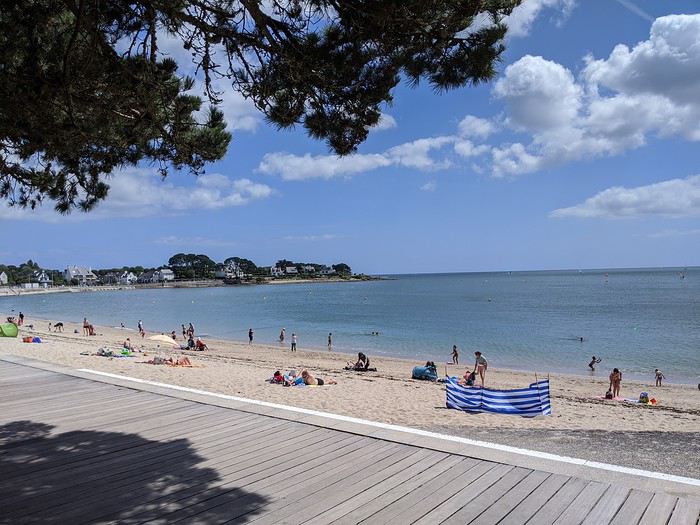
Où boire un coup par cette chaleur ? à l Ile Tudy bien sûr ! situé en face de sa voisine Loctudy,
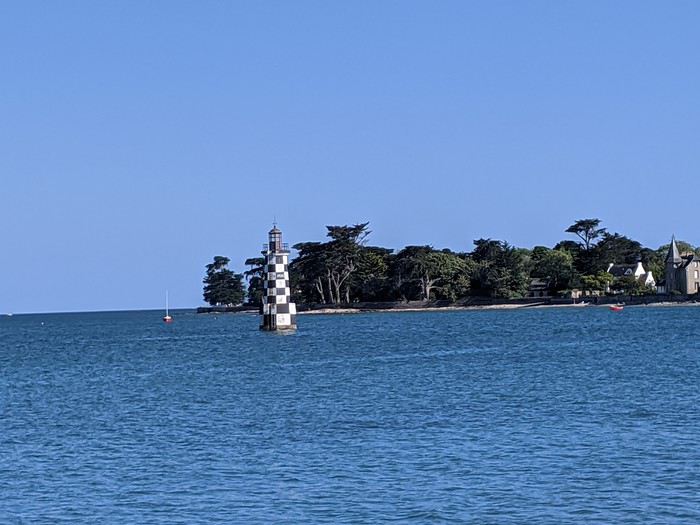
le bout de ce village se concentre sur son port , ses bistrots, restos.... encore calmes ce lundi
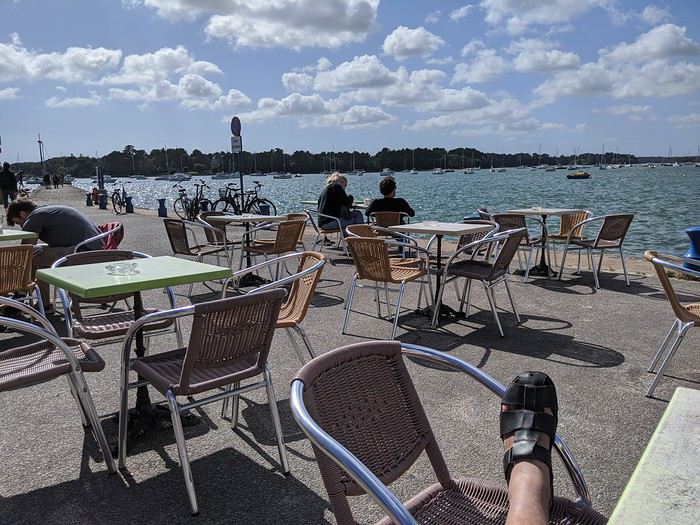
...il faut bien ça pour se remettre des 915 km de la veille
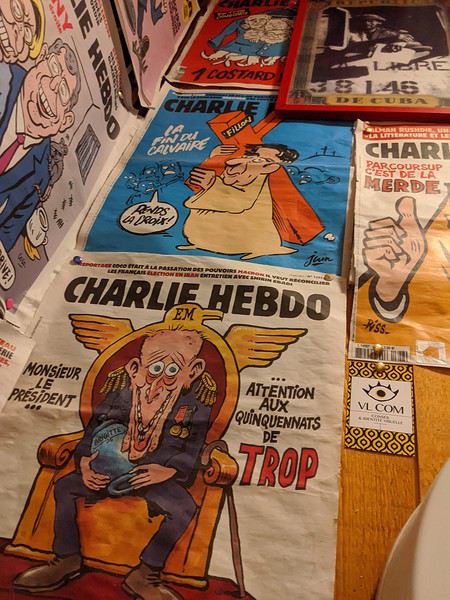
Descente de cervoise ambrée dans un bar connu
aussi pour la sa déco, affiche de concerts, artistes au plafond quant aux toilettes, super tapisserie
bref, on glande en admirant le paysage
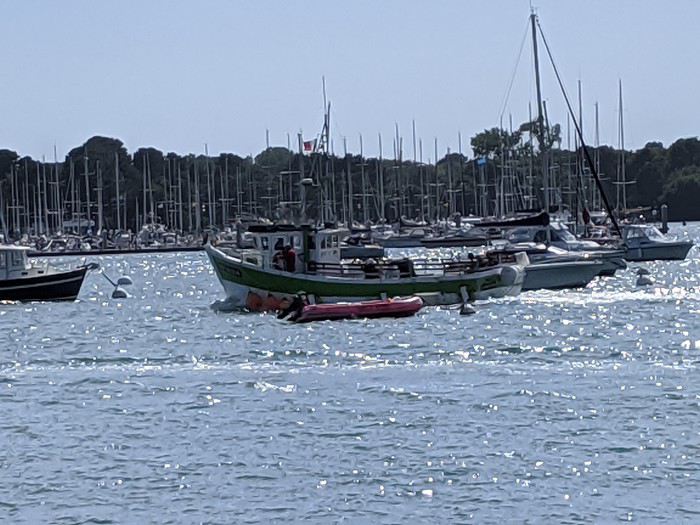
la journée d installation se termine tranquillement.. Cécile se félicite de son bon choix...
et New York, https://voyageforum.com/v.f?post=9796574;search_string=Cecile
cet été, Cécile découvre le Finistère....
certes cela peut faire moins rêver, mais bon la Bretagne c est toujours aussi beau ..sans les parisiens et autres touristes covidés !
Campement à Bénodet, sa plage, son ciel bleu......
Où boire un coup par cette chaleur ? à l Ile Tudy bien sûr ! situé en face de sa voisine Loctudy,
le bout de ce village se concentre sur son port , ses bistrots, restos.... encore calmes ce lundi
...il faut bien ça pour se remettre des 915 km de la veille
Descente de cervoise ambrée dans un bar connu
aussi pour la sa déco, affiche de concerts, artistes au plafond quant aux toilettes, super tapisserie
bref, on glande en admirant le paysage
la journée d installation se termine tranquillement.. Cécile se félicite de son bon choix...
Gonflage de pneus pour la Bretagne par le littoral English translation pending
Bonsoir,
j'ai des pneus Schwalb marathon 26x 1.50, 40-559.
Je pars faire la Bretagne à vélo par le littoral donc petites route bitumées et je voudrais savoir à combien gonfler mes pneus avant et arrière.
Je suis chargé à l'avant de 9 kg + sacoche guidon 2,9 kg
à l'arrière de 13 kg .
Merci pour votre retour
Problème cintre (à vélo) English translation pending
bonjour, je fais appel une fois de plus à vos compétences et conseils. je viens de partir 2 semaines avec le vélo ci dessous (Focus Mares) et j'ai eu les mains, la gauche notamment avec d'abord des "fourmis" puis paralysie, plus de sensibilité, plus de force. je précise aussi qu'ayant de petites mains le passage des vitesses n'est pas évident. je souhaiterais, si c'est possible remplacer par un cintre plat recourbé avec bar ends. je suppose que ce sera couteux mais ce vélo est neuf et par ailleurs fonctionne très bien. je n'ai pas souvenir d'avoir eu ce pb avec mon ancien vtc. merci d'avance pour votre avis. cdt
Restaurant romantique en Guadeloupe English translation pending
Bonjour à tous !
Mon copain et moi allons fêter nos 3 ans de couple en Guadeloupe. (il est lui même Guadeloupeen)
J'aurais aimé trouver un restaurant avec une belle vue sur la mer, ou dans les terres avec un joli cadre... Et à prix correct, je ne veux pas d'un attrape touristes !
J'ai envie qu'on fête cet évènement dans un joli lieu ! Connaissez vous des restaurants de ce genre ? Je suis véhiculée et je serai à petit canal, je peux conduire 45 min environ.
Merci à vous !
Petit jeu amusant pour tout les amoureux de la Grèce! English translation pending
Bonjour à tous les amoureux de la Grèce!
Je vous propose un petit jeu pour ceux qui doivent patienter un peu avant de rejoindre ce beau pays cet été.
Le principe est le suivant: Recomposer l'endroit virtuel idéal
Vous avez tous des coups de coeurs en Grèce, mais très souvent c'est "dispersé" géographiquement et thèmatiquement. Ex: un coups de cours pour un petit village pittoresque et authentique, une plage paradisiaque, un site culturel émouvant... mais ça n'est jamais tout au même endroit! (Si c'est le cas dites le moi svp!🙂).
Alors quel serait donc votre combinaison de coups de cours pour créer le paradis grecque virtuelle qui serait tout au même endroit, et qui comporterait: -un village (ou un port), -un site culturel, -une plage pour la baignade, -un site naturel (montage ou littoral ou autre), -votre taverne préférée, -éventuellement en bonus votre hébergement préféré, et un bar sympa pour la soirée.
A vous de jouer😉!!:
Le principe est le suivant: Recomposer l'endroit virtuel idéal
Vous avez tous des coups de coeurs en Grèce, mais très souvent c'est "dispersé" géographiquement et thèmatiquement. Ex: un coups de cours pour un petit village pittoresque et authentique, une plage paradisiaque, un site culturel émouvant... mais ça n'est jamais tout au même endroit! (Si c'est le cas dites le moi svp!🙂).
Alors quel serait donc votre combinaison de coups de cours pour créer le paradis grecque virtuelle qui serait tout au même endroit, et qui comporterait: -un village (ou un port), -un site culturel, -une plage pour la baignade, -un site naturel (montage ou littoral ou autre), -votre taverne préférée, -éventuellement en bonus votre hébergement préféré, et un bar sympa pour la soirée.
A vous de jouer😉!!:
Compagnies aériennes pour les Philippines et réouverture des frontières English translation pending
Bonjour .
Ou en sont les informations des Philippines pour la réouverture de leurs frontières , quand sera t il possible de France venir à Cebu ? Pensez vous qu'il sera possible d'y aller en fin d'année ?
Si vous avez quelques précisions je vous en remercie par avance .
Mon circuit en Issan, qu'en pensez-vous? English translation pending
bonjour
pour cette année 2020 , et plus précisément pour le mois d'octobre ( si tout va mieux dans le monde ) j'ai 16 jours a consacré a la thailande est en particulier l'issan
je sais que l'issan est assez grand est je ne parle pas de la faire en 16 jours. apres avoir parcouru le forum, parcour en issan... je retiens ce circuit
circuit pouvez vous me dire ce que vous en pensez , le modifier, ajouter des etapes....?
merci
je sais que l'issan est assez grand est je ne parle pas de la faire en 16 jours. apres avoir parcouru le forum, parcour en issan... je retiens ce circuit
circuit pouvez vous me dire ce que vous en pensez , le modifier, ajouter des etapes....?
merci
Voyage relax dans la nature au Colorado English translation pending
Bonjour,
après presque 3 mois en lockdown, nous avons décider de nous rendre dans le Colorado, pour se prendre une bonne dose de nature et de montagne. Nous souhaiterions, faire pas plus de 3 arrêts en 2 semaines 1/2 afin de profiter du paysage, les petites balades avec enfants de 4 ans, profiter d'un bel espace une maison ou un appartement à louer.
si quelqu'un aurait des pistes ou des bonnes adresses ou des recommandations nous serions preneurs.
On pensait louer à Denver ou environ pour faire une découverte de la ville ( au tant que faire ce peu avec les conditions actuelles bien sure). On pense aussi à Colorado Spring.
Merci
Merci
Apéritifs en Thaïlande English translation pending
Bonjours..... a tous ceux qui prenne l'apéritif avant le repas....🙂
Je recherche pour me confectionner un " Perroquet " une marque de menthe thaïe ou équivalente a la notre ....Ainsi qu' un endroits/magasin ou grande surface dans la province de Chaiyaphum ou je peux acheter du Ricard ou du Pastis....😛
Je recherche pour me confectionner un " Perroquet " une marque de menthe thaïe ou équivalente a la notre ....Ainsi qu' un endroits/magasin ou grande surface dans la province de Chaiyaphum ou je peux acheter du Ricard ou du Pastis....😛
Budapest when you're young
Hey everyone, I went to Budapest in 2019 and I’m here to help with what you need to know if you're young, on a tight budget, and want to party while sightseeing.
Preparing your trip 1/ Accommodation
There were four of us, and we booked a pretty comfortable place in the center of Buda (on a well-known online booking site). We stayed in the Jewish Quarter, which is pretty lively (ruin bars, fast food, etc.).
I recommend booking in advance—we did it 6 months ahead.
So, we paid 300 € for 4 nights.
My tip: don’t stay in hotels—try to live in the city to experience life to the fullest.
2/ Currency exchange
I don’t need to tell you not to exchange money at the airport... My friend exchanged 300 € into forints (1 € = 365 forints) and only got the equivalent of 250 € in forints—so 50 € in fees! My advice: exchange just 20-30 € at the airport for the taxi to the center. After that, I recommend exchange bureaus or the small machines on the street—they scam you less than the airport.
3/ Phone plan
Check with your carrier to see if your plan works outside France and what the terms are.
4/ Banking
Call your bank to let them know you’re traveling and might use your card. Otherwise, they might think it’s fraud and block your account (it’s silly, but it can happen).
5/ Flight ticket
Same as accommodation—book in advance to pay less. I got mine for 80 € round-trip.
Once you're there If you’re staying less than a week, all of this should be more than enough.
1/ What to visit
The historic sites, of course—the Parliament, the palace, the synagogue (20 € entry), and a little walk along the Danube. The must-do for me was the Budapest Thermal Baths (20 € for the day). !!! Important !!! It’s better to go in the morning to make the most of the day. Don’t fall for overpriced private bath or massage offers.
2/ What to eat
Honestly, finding a traditional restaurant in the center is pretty tough—there are some, but I didn’t try them. Generally, it’s cheaper, but fast food is about the same price as in France. Except maybe kebabs (4 €).
3/ Nightlife
If you have a French ID, you can get into most places—sometimes they don’t even check your age. I really felt like it was a free pass to everything! But I wouldn’t be honest if I said we didn’t get turned away from one club (too fancy for us). We skipped the dress shoes and suits, haha.
The must-do for me is the RUIN BARS (probably my biggest highlight of the trip). I loved the affordable beer and food, lots of young people, lots of energy, and, well, lots of hangovers.
For clubs, I’ve got two to recommend—one is a must (I don’t remember the name, but it’s an open-air club in Budapest). Great vibe, Prague-style, and alcohol.
Alcohol is expensive! !!! Important !!! Service fees on bottles—the menu doesn’t show it, but add 30% to every bottle you order. Also, service fees in restaurants.
The second club is Peach and Cream. If you like electro and R&B, this is for you. Pretty mixed crowd, nice waitresses. I recommend it!
A week is enough.
What you need to know
Prices
Cigarettes: 4-5 € a pack (you’ve got to like the taste) Beer: 3 € (a pint) Groceries (supermarket): same as France Club entry: 8-10 € (try to get in with a bottle directly from the bouncers if you speak a little English) Fast food: 5-6 € Taxi: 15-20 € total for airport-to-center transport (about 30 minutes)
Mistakes to avoid
-Toilets are almost always pay-to-use (200-300 ft). You can tip extra if you want.
-French people don’t have the best reputation.
-Tipping is different from France, but it’s better to do it—1-2 € is enough. -Don’t throw trash on the ground, especially cigarette butts (it’s really frowned upon)—the city is super clean.
-Hungarians aren’t very welcoming—I’d even say tourists bother them, even though it’s us who bring them money. I had a problem in a fast-food place with a Hungarian who supposedly thought I wanted an 8,000-forint burger! I obviously refused and stood my ground. Make sure you’re understood, even if you have to repeat yourself and look like an idiot.
Our neighbors knocked on our door 3 times in 5 days (okay, we asked for it), but they like their peace and quiet.
We got insulted ("fucking tourist") a few times—again, we asked for it, coming back from a club at 6 AM, and I’ll spare you the details.
For the rest, just follow basic manners, and you’ll fit right in. The city is pretty safe (police presence).
Other things about the trip
The city is absolutely stunning!
The nightlife is really great there (I’m sad to hear that French music there is limited to Aya Nakamura and Maître Gims).
You’ll meet lots of nationalities if you’re sociable (for me: Americans, Brits, Germans, Saudis, Poles, and, of course, Hungarians).
As for French "hunters," in Hungary, if you’ve got a decent look, you won’t have trouble, but I challenge anyone to bring girls back to their place, haha. By the way, I’ve never seen so many beautiful girls in one city—this Eastern European stereotype holds 100% true. French girls better watch out, haha.
Budget-wise, without depriving myself of anything (bottles in clubs, cigarettes, food), I spent a total of 600 €.
Hope this helps for your trip—I’ve condensed it a bit (since a week is short), but the budget is reasonable. Sorry for the spelling mistakes—I’m really bad at that, haha.
See you soon—I’m off to Prague this summer.
Preparing your trip 1/ Accommodation
There were four of us, and we booked a pretty comfortable place in the center of Buda (on a well-known online booking site). We stayed in the Jewish Quarter, which is pretty lively (ruin bars, fast food, etc.).
I recommend booking in advance—we did it 6 months ahead.
So, we paid 300 € for 4 nights.
My tip: don’t stay in hotels—try to live in the city to experience life to the fullest.
2/ Currency exchange
I don’t need to tell you not to exchange money at the airport... My friend exchanged 300 € into forints (1 € = 365 forints) and only got the equivalent of 250 € in forints—so 50 € in fees! My advice: exchange just 20-30 € at the airport for the taxi to the center. After that, I recommend exchange bureaus or the small machines on the street—they scam you less than the airport.
3/ Phone plan
Check with your carrier to see if your plan works outside France and what the terms are.
4/ Banking
Call your bank to let them know you’re traveling and might use your card. Otherwise, they might think it’s fraud and block your account (it’s silly, but it can happen).
5/ Flight ticket
Same as accommodation—book in advance to pay less. I got mine for 80 € round-trip.
Once you're there If you’re staying less than a week, all of this should be more than enough.
1/ What to visit
The historic sites, of course—the Parliament, the palace, the synagogue (20 € entry), and a little walk along the Danube. The must-do for me was the Budapest Thermal Baths (20 € for the day). !!! Important !!! It’s better to go in the morning to make the most of the day. Don’t fall for overpriced private bath or massage offers.
2/ What to eat
Honestly, finding a traditional restaurant in the center is pretty tough—there are some, but I didn’t try them. Generally, it’s cheaper, but fast food is about the same price as in France. Except maybe kebabs (4 €).
3/ Nightlife
If you have a French ID, you can get into most places—sometimes they don’t even check your age. I really felt like it was a free pass to everything! But I wouldn’t be honest if I said we didn’t get turned away from one club (too fancy for us). We skipped the dress shoes and suits, haha.
The must-do for me is the RUIN BARS (probably my biggest highlight of the trip). I loved the affordable beer and food, lots of young people, lots of energy, and, well, lots of hangovers.
For clubs, I’ve got two to recommend—one is a must (I don’t remember the name, but it’s an open-air club in Budapest). Great vibe, Prague-style, and alcohol.
Alcohol is expensive! !!! Important !!! Service fees on bottles—the menu doesn’t show it, but add 30% to every bottle you order. Also, service fees in restaurants.
The second club is Peach and Cream. If you like electro and R&B, this is for you. Pretty mixed crowd, nice waitresses. I recommend it!
A week is enough.
What you need to know
Prices
Cigarettes: 4-5 € a pack (you’ve got to like the taste) Beer: 3 € (a pint) Groceries (supermarket): same as France Club entry: 8-10 € (try to get in with a bottle directly from the bouncers if you speak a little English) Fast food: 5-6 € Taxi: 15-20 € total for airport-to-center transport (about 30 minutes)
Mistakes to avoid
-Toilets are almost always pay-to-use (200-300 ft). You can tip extra if you want.
-French people don’t have the best reputation.
-Tipping is different from France, but it’s better to do it—1-2 € is enough. -Don’t throw trash on the ground, especially cigarette butts (it’s really frowned upon)—the city is super clean.
-Hungarians aren’t very welcoming—I’d even say tourists bother them, even though it’s us who bring them money. I had a problem in a fast-food place with a Hungarian who supposedly thought I wanted an 8,000-forint burger! I obviously refused and stood my ground. Make sure you’re understood, even if you have to repeat yourself and look like an idiot.
Our neighbors knocked on our door 3 times in 5 days (okay, we asked for it), but they like their peace and quiet.
We got insulted ("fucking tourist") a few times—again, we asked for it, coming back from a club at 6 AM, and I’ll spare you the details.
For the rest, just follow basic manners, and you’ll fit right in. The city is pretty safe (police presence).
Other things about the trip
The city is absolutely stunning!
The nightlife is really great there (I’m sad to hear that French music there is limited to Aya Nakamura and Maître Gims).
You’ll meet lots of nationalities if you’re sociable (for me: Americans, Brits, Germans, Saudis, Poles, and, of course, Hungarians).
As for French "hunters," in Hungary, if you’ve got a decent look, you won’t have trouble, but I challenge anyone to bring girls back to their place, haha. By the way, I’ve never seen so many beautiful girls in one city—this Eastern European stereotype holds 100% true. French girls better watch out, haha.
Budget-wise, without depriving myself of anything (bottles in clubs, cigarettes, food), I spent a total of 600 €.
Hope this helps for your trip—I’ve condensed it a bit (since a week is short), but the budget is reasonable. Sorry for the spelling mistakes—I’m really bad at that, haha.
See you soon—I’m off to Prague this summer.
Avis sur le quartier de Belleville à Paris English translation pending
Bonjour a tous. J ai eu une proposition de logement dans le 20e, a la rue Botha et j aimerais avoir vos avis concernant la rue et le qiartier Belleville
Scanner et mettre en ligne ses vieux clichés de voyages, de population, etc... English translation pending
Allez chercher un peu dans vos malles ou autres.
Prenez un scanner et mettez sur ordinateur, sur carte, sur disque dur externe, tous vos vieux souvenirs de vacances disponibles sur diapos, etc....
Les meilleurs mettez les sur VF afin que tout le monde puisse en profiter. Cela existait il y a quelques années sur Panoramio où des centaines de millions de photos du monde entier étaient disponibles jusqu'à ce que cela soit repris par Google: ce sont les photos de Google Earth actuelles.
Voilà un moyen de s'occuper en cette triste période de confinement.
Et je commence.......
Sur le marché de Saadah (Yémen-1985), la vente du café et des écorces des grains qui servent à faire une boisson locale: le KAWA.
Sur le marché de Saadah (Yémen-1985), la vente du café et des écorces des grains qui servent à faire une boisson locale: le KAWA.
Le match: business class de Myanmar Airways International vs Upper Class de Myanmar Railways English translation pending
Petite vidéo humoristique en anglais.
Début février, je me suis rendu de Nay Pyi Taw à Mandalay en avion en classe affaire (70 USD, 40 minutes). Le lendemain, j'ai fait le trajet inverse en train en Upper Class (2 USD, 7h).
Comparaison des deux services, de leurs avantages et de leurs inconvénients.
https://youtu.be/FvpJLJbz-94
Mise à jour Esta: est-ce suite aux mesures prises envers les Européen? English translation pending
Bonjour à tous
J’ai reçu le mail ci dessous de la part du cap.gov/esta :
There has been an update to your ESTA Travel Authorization Status submitted on June 01, 2019. Please visit https://esta.cbp.dhs.gov/esta to check your application.
ESTA Program Office
https://esta.cbp.dhs.gov/esta www.cbp.gov/esta
E-mail Security: If you are concerned about clicking the above link, ESTA can be accessed by typing https://esta.cbp.dhs.gov in the address bar of your browser.
Suis-je la seule ou est ce que tout ceux qui on un Esta en cours l’on reçu ? Merci pour vos réponses
J’ai reçu le mail ci dessous de la part du cap.gov/esta :
There has been an update to your ESTA Travel Authorization Status submitted on June 01, 2019. Please visit https://esta.cbp.dhs.gov/esta to check your application.
ESTA Program Office
https://esta.cbp.dhs.gov/esta www.cbp.gov/esta
E-mail Security: If you are concerned about clicking the above link, ESTA can be accessed by typing https://esta.cbp.dhs.gov in the address bar of your browser.
Suis-je la seule ou est ce que tout ceux qui on un Esta en cours l’on reçu ? Merci pour vos réponses
Good rooftop bars with a nice view in Seville and Porto?
Hi everyone,
I’m Aurélie and I’m new to the forum. I’m planning a little trip with a friend to Spain (Seville) and Portugal (Porto) soon... unless Covid decides to ruin the fun! My friend and I are big fans of cool rooftop bars with a great view. By any chance, do you have any recommendations? I’ve done some searching and heard about Portobello, but if you’ve got any suggestions, I’d love to hear them.
Thanks, and happy travels!
I’m Aurélie and I’m new to the forum. I’m planning a little trip with a friend to Spain (Seville) and Portugal (Porto) soon... unless Covid decides to ruin the fun! My friend and I are big fans of cool rooftop bars with a great view. By any chance, do you have any recommendations? I’ve done some searching and heard about Portobello, but if you’ve got any suggestions, I’d love to hear them.
Thanks, and happy travels!
Croisière en catamaran aux Bahamas English translation pending
Bonjour nous revenons des Exumas et nous avons raconté notre voyage sur notre blog voyage FMR_travelblog à lire ici https://fmr-travelblog.com/croisiere-catamaran-bahamas-blog-voyage-exumas-pigisland/
L’archipel des Exumas est composé de plus de 360 îles et cay (île non habitée). Pour nous l’idée était donc de partir à l’aventure en naviguant d’îles en îles sur un bateau en autonomie totale (avec un skipper bien sûr Voici un itinéraire de 7 jours pour votre croisière aux Exumas, Bahamas
Highbourne Cay
Warderick Wells
Sampson Cay
Staniel Cay
Pig Island
Norman’s Cay
La luxueuse Marina de Highbourne Cay, l'entrée des Exumas
Départ en direction de l’archipel des Exumas, à une trentaine de miles au sud-est de Nassau. On passe par Iguana Beach pour découvrir une colonie de plus de 700 iguanes qui peuple cette petite île. L’escale suivante sera donc Highbourne Cay, la porte d’entrée des Exumas : une marina chic et accueillante avec son bar/restaurant. On vous conseille de faire la balade en vélo pour découvrir l’île et ses magnifiques plages isolées.
Warderick Wells Cay, le coeur du parc national des Exumas (voir le blog https://fmr-travelblog.com/ )
Le matin on navigue le long d’un ensemble d’îlots ourlés de sable blanc pour arriver à Warderick Wells Cay, un endroit magnifique qui nous rappelle Maupiti en Polynésie. Connu pour son récif de corail, cet îlot abrite tortues, requins et nombreux poissons. Il offre aussi une petite randonnée (1h30) jusqu’à son sommet, Boo Boo Hill, pour une vue exceptionnelle sur les eaux azur. La secrète Sampson Cay et ses bancs de sable à perte de vue (voir le blog https://fmr-travelblog.com/ )
Prochaine étape : les plus beaux bancs de sable des Exumas. Sampson Cay est encore très sauvage et c’est ici qu’on a trouvé notre plage coup de coeur du voyage! On y est allé en kayak depuis le bateau, moment magique. Little conseil : Pour profiter à fond du spectacle allez-y quand la marée est basse.
L'île aux cochons, la plus connue des Bahamas(voir le blog https://fmr-travelblog.com/ )
Un rendez-vous insolite vous attend sur l’île de Big Major, surnommée Pig Island. Vous avez surement déjà vu une photo de ces cochons nageurs sur Instagram! Ces cochons vivent sur cette ile depuis plusieurs années et se sont habitués à venir demander de la nourriture aux bateaux approchant de la belle plage. On est resté quelques heures en compagnie de ces drôles de cochons qui adore faire trempette. Little secret : Allez-y tôt car à 11h la plage devient un peu saturé de monde et de bateaux.
L’archipel des Exumas est composé de plus de 360 îles et cay (île non habitée). Pour nous l’idée était donc de partir à l’aventure en naviguant d’îles en îles sur un bateau en autonomie totale (avec un skipper bien sûr Voici un itinéraire de 7 jours pour votre croisière aux Exumas, Bahamas
Highbourne Cay
Warderick Wells
Sampson Cay
Staniel Cay
Pig Island
Norman’s Cay
La luxueuse Marina de Highbourne Cay, l'entrée des Exumas
Départ en direction de l’archipel des Exumas, à une trentaine de miles au sud-est de Nassau. On passe par Iguana Beach pour découvrir une colonie de plus de 700 iguanes qui peuple cette petite île. L’escale suivante sera donc Highbourne Cay, la porte d’entrée des Exumas : une marina chic et accueillante avec son bar/restaurant. On vous conseille de faire la balade en vélo pour découvrir l’île et ses magnifiques plages isolées.
Warderick Wells Cay, le coeur du parc national des Exumas (voir le blog https://fmr-travelblog.com/ )
Le matin on navigue le long d’un ensemble d’îlots ourlés de sable blanc pour arriver à Warderick Wells Cay, un endroit magnifique qui nous rappelle Maupiti en Polynésie. Connu pour son récif de corail, cet îlot abrite tortues, requins et nombreux poissons. Il offre aussi une petite randonnée (1h30) jusqu’à son sommet, Boo Boo Hill, pour une vue exceptionnelle sur les eaux azur. La secrète Sampson Cay et ses bancs de sable à perte de vue (voir le blog https://fmr-travelblog.com/ )
Prochaine étape : les plus beaux bancs de sable des Exumas. Sampson Cay est encore très sauvage et c’est ici qu’on a trouvé notre plage coup de coeur du voyage! On y est allé en kayak depuis le bateau, moment magique. Little conseil : Pour profiter à fond du spectacle allez-y quand la marée est basse.
L'île aux cochons, la plus connue des Bahamas(voir le blog https://fmr-travelblog.com/ )
Un rendez-vous insolite vous attend sur l’île de Big Major, surnommée Pig Island. Vous avez surement déjà vu une photo de ces cochons nageurs sur Instagram! Ces cochons vivent sur cette ile depuis plusieurs années et se sont habitués à venir demander de la nourriture aux bateaux approchant de la belle plage. On est resté quelques heures en compagnie de ces drôles de cochons qui adore faire trempette. Little secret : Allez-y tôt car à 11h la plage devient un peu saturé de monde et de bateaux.
Accident de carrosserie d'une voiture louée au Maroc English translation pending
bonjour
je reviens d'un séjour où j'ai loué un véhicule sur Agadir , puis effectuer un périple au cours duquel une personne a percuté mon véhicule stationné, ce que j'ai vu immédiatement…..
la personne semblait de bonne foi, je n'avais pas de constat et j'ai donc pris la photo du véhicule incriminé, du choc et les coordonnées du fautif en présence de témoins , notamment le patron d'un bar connu…..
lors de la remise du véhicule, le loueur a voulu que je paye un forfait pour la réparation et m'a précisé que la police ne s'embarrasse pas de petits dossiers sauf bakchich…..
je préconise donc à chacun 1) de prendre une puce téléphonique
2) d'appeler immédiatement le loueur sur son portable ( donc prendre un portable du loueur)
3) de ne pas lâcher l'affaire avec le fautif sans avoir l'avis du loueur
4) prendre impérativement un constat( difficile à obtenir car très rare à faire, les marocains bricolant les dégâts pour payer moins)
Sortir manger ou prendre un verre en Andorre English translation pending
RESTAURANTS
.
Aliga
Des plats gastronomiques qui allient sucré et salé à la perfection dans un cadre ultra design
Hôtel Grau Roig
Restaurant cosy en bas des pistes avec une pépite à sa carte: le soufflé à la pistache
Chef's Table
Classique mais incontournable: le croque monsieur au jambon ibérique et à la truffe
Orange Goat Cafe
Serious crush pour l'omelette avocat & bacon dans la formule brunch
Refugi del Llac des Pessons
Une omelette au jambon ibérique, qui dit mieux ?
Siam Shiki
Super parenthèse asiatique avant d'aller se relaxer au Spa Caldea
.
.
PRENDRE UN VERRE
.
Atelier
Pas de carte, seulement le barman qui vous confectionne un cocktail selon vos goûts et envies
Hermitage Hotel
Un hôtel 5 étoiles boisé où il fait bon de prendre un verre et grignoter
Le Théâtre du Vin
Pour une séance raffinée de dégustation de vins
13.5°
Un bar à vin chaleureux où découvrir une super sélection de tapas
.
.
Toutes les adresses sur le blog