Results for "Candé+|+127"
8278 results found.
The Extraordinary Painted Houses Village of Tam Thanh near Hoi An
Not sure if I’ve already posted this, so here it is again!
https://hiddenhoian.com/travel/tam-thanh-mural-village/
Imagine a peaceful coastal fishing village completely transformed by artists who worked their magic on the walls of 100 residential houses. That’s the remarkable story of the Tam Thanh mural village in Quang Nam province. Once similar to many other coastal villages in the area, it now firmly stands out on the tourist map for day trips from Hoi An. In the summer of 2016, Tam Thanh was selected by a joint Korean-Vietnamese project called “Art For A Better Community.” The village was chosen to be their blank canvas, inspired by the success of mural villages in Korea. The project aimed to make Tam Thanh the first painted village of its kind in Vietnam. The team included five Korean artists and seven Vietnamese artists, along with local volunteers. Their goal was to show Vietnamese people that art could be part of everyday life, no matter their place in society. The effort began with about three weeks of wall washing, followed by painting the walls of over 100 residents’ homes. The project was a success, and the village came alive with the paintings. The entire village is now a breathtaking gallery just waiting to be explored. The murals capture the life and soul of the village, from young children playing to fishermen in the ocean. A mix of fantastic pieces offers stunning backdrops for photos. The painted art around the town hasn’t just had a visual impact—it’s also had a social one. The village was chosen not only for the layout of the houses but also to contribute to economic development opportunities in Tam Thanh. Tourists now visit the once-overlooked village, creating more income for locals and making it a successful “art for a cause” project. For example, one entrepreneurial resident who owned a small local café invested 000,000 VND (390 USD) in a sugarcane press a week before the paintings were completed. Sugarcane juice vendors then multiplied with the growth of tourism (5,000 VND - 0.20 USD). Walking down the village’s single street, it’s common to find locals selling refreshments and handmade crafts. In one house in particular, a tailor and his family are painted on an outer wall with incredible detail. The family started selling tote bags decorated by their young daughter. The price for the bags is 100,000 VND (4 USD). If you’re looking for a way to support the village’s economy, this is it. Since there’s no middleman here, you can be sure your money goes directly to the community. You can have lunch at a house with a terrace right by the beach at the edge of the village.
How to Get There Route No. 1: Cross the large Cua Đai bridge. Once you’ve crossed it, continue toward Duong 129/Duong Ven Bien. Stay on this road for 33 kilometers. Upside: this route has light traffic, no traffic lights, and no trucks or buses. It’s a great direct route to the village but offers little to see along the way. You’ll eventually reach a crossroads. Turn right toward Tam Ky town, while the left will take you toward the Tam Thanh mural village. Stay on Route 608 as it turns twice before reaching a bridge. Cross the bridge, and you’ll arrive at Thanh Nien Road. Finally, turn right to reach the village. This route takes about an hour. Use your best judgment. For reference, it costs about 5,000 VND (0.20 USD) to park a motorbike.
Route #2: Cross the large Cua Đai bridge. Once you’ve crossed it, continue toward Duong 129/Duong Ven Bien. Stay on this road for 12 kilometers, then turn left onto Route 613, where you’ll continue for 1.5 kilometers until you reach Thanh Nien Road. Finally, turn right and drive 23 kilometers to the painted village. For most of the trip, taking Thanh Nien Road will take you through a much more local part of the region. The journey takes about an hour and a half.
https://hiddenhoian.com/travel/tam-thanh-mural-village/
Imagine a peaceful coastal fishing village completely transformed by artists who worked their magic on the walls of 100 residential houses. That’s the remarkable story of the Tam Thanh mural village in Quang Nam province. Once similar to many other coastal villages in the area, it now firmly stands out on the tourist map for day trips from Hoi An. In the summer of 2016, Tam Thanh was selected by a joint Korean-Vietnamese project called “Art For A Better Community.” The village was chosen to be their blank canvas, inspired by the success of mural villages in Korea. The project aimed to make Tam Thanh the first painted village of its kind in Vietnam. The team included five Korean artists and seven Vietnamese artists, along with local volunteers. Their goal was to show Vietnamese people that art could be part of everyday life, no matter their place in society. The effort began with about three weeks of wall washing, followed by painting the walls of over 100 residents’ homes. The project was a success, and the village came alive with the paintings. The entire village is now a breathtaking gallery just waiting to be explored. The murals capture the life and soul of the village, from young children playing to fishermen in the ocean. A mix of fantastic pieces offers stunning backdrops for photos. The painted art around the town hasn’t just had a visual impact—it’s also had a social one. The village was chosen not only for the layout of the houses but also to contribute to economic development opportunities in Tam Thanh. Tourists now visit the once-overlooked village, creating more income for locals and making it a successful “art for a cause” project. For example, one entrepreneurial resident who owned a small local café invested 000,000 VND (390 USD) in a sugarcane press a week before the paintings were completed. Sugarcane juice vendors then multiplied with the growth of tourism (5,000 VND - 0.20 USD). Walking down the village’s single street, it’s common to find locals selling refreshments and handmade crafts. In one house in particular, a tailor and his family are painted on an outer wall with incredible detail. The family started selling tote bags decorated by their young daughter. The price for the bags is 100,000 VND (4 USD). If you’re looking for a way to support the village’s economy, this is it. Since there’s no middleman here, you can be sure your money goes directly to the community. You can have lunch at a house with a terrace right by the beach at the edge of the village.
How to Get There Route No. 1: Cross the large Cua Đai bridge. Once you’ve crossed it, continue toward Duong 129/Duong Ven Bien. Stay on this road for 33 kilometers. Upside: this route has light traffic, no traffic lights, and no trucks or buses. It’s a great direct route to the village but offers little to see along the way. You’ll eventually reach a crossroads. Turn right toward Tam Ky town, while the left will take you toward the Tam Thanh mural village. Stay on Route 608 as it turns twice before reaching a bridge. Cross the bridge, and you’ll arrive at Thanh Nien Road. Finally, turn right to reach the village. This route takes about an hour. Use your best judgment. For reference, it costs about 5,000 VND (0.20 USD) to park a motorbike.
Route #2: Cross the large Cua Đai bridge. Once you’ve crossed it, continue toward Duong 129/Duong Ven Bien. Stay on this road for 12 kilometers, then turn left onto Route 613, where you’ll continue for 1.5 kilometers until you reach Thanh Nien Road. Finally, turn right and drive 23 kilometers to the painted village. For most of the trip, taking Thanh Nien Road will take you through a much more local part of the region. The journey takes about an hour and a half.
What to see and do around Valensole?
Hi there,
We’re heading to Forcalquier as a couple and would love to explore the Valensole area, including the Verdon Gorge, etc. We’ll be there for 5 days, so I’d like to put together a little rundown of things to see, plus the best tips—what to avoid, what to recommend, restaurants, and so on.
Thanks so much!
Itinerary tips for 2 weeks in Northern Italy with kids
Hi everyone,
I’m planning a trip to Northern Italy for 2 weeks in August 2025. Here’s my itinerary: MILAN – 2 days LAKE MAGGIORE – 2 days LAKE COMO – 3 days BERGAMO – 1 day LAKE GARDA – 2 days VERONA – 1 day DOLOMITES – 2 days BOLOGNA – 1 day CINQUE TERRE – 2 days TURIN – 1 day Return to France
Let me know your thoughts, and any kid-friendly attractions would be great!
I’m planning a trip to Northern Italy for 2 weeks in August 2025. Here’s my itinerary: MILAN – 2 days LAKE MAGGIORE – 2 days LAKE COMO – 3 days BERGAMO – 1 day LAKE GARDA – 2 days VERONA – 1 day DOLOMITES – 2 days BOLOGNA – 1 day CINQUE TERRE – 2 days TURIN – 1 day Return to France
Let me know your thoughts, and any kid-friendly attractions would be great!
Visa extension request on-site in the Philippines
Hello everyone,
My partner and I would like to travel to the Philippines at the end of August for a 4-month stay. We can’t apply for a tourist visa in advance because (from what I understand) we’d need to provide proof of hotel reservations for the entire stay. But planning a 4-month trip so far ahead isn’t something we want to do.
So my question is about extensions once we’re there:
After the initial 29-day extension request, we’d like to apply for another 2-month extension. Do you know if the same supporting documents are required for this one (pre-booked hotel, 2000 € in the bank account per month requested)?
Or can we go ahead without risk and request the extension without these documents?
Thank you so much for reading, and for this forum existing. Take care,
Boris
My partner and I would like to travel to the Philippines at the end of August for a 4-month stay. We can’t apply for a tourist visa in advance because (from what I understand) we’d need to provide proof of hotel reservations for the entire stay. But planning a 4-month trip so far ahead isn’t something we want to do.
So my question is about extensions once we’re there:
After the initial 29-day extension request, we’d like to apply for another 2-month extension. Do you know if the same supporting documents are required for this one (pre-booked hotel, 2000 € in the bank account per month requested)?
Or can we go ahead without risk and request the extension without these documents?
Thank you so much for reading, and for this forum existing. Take care,
Boris
Where to stay to explore Ardèche?
Hello,
I’m planning to spend a few days in Ardèche and I’d like to know if we should choose just one base or more to visit the region. Looking at the department map and the main sites to see, I’d personally go for 2 bases to avoid too much driving. So, if anyone who knows this beautiful region well could give me some advice on this, I’d really appreciate it in advance!
I’m planning to spend a few days in Ardèche and I’d like to know if we should choose just one base or more to visit the region. Looking at the department map and the main sites to see, I’d personally go for 2 bases to avoid too much driving. So, if anyone who knows this beautiful region well could give me some advice on this, I’d really appreciate it in advance!
Crossing Africa from Namibia to Mozambique
Hi there, here’s the first draft of the itinerary I’m considering for Africa, leaving in late/mid-October 2025 for a duration of 5 months.
The idea is to cross Africa from the Atlantic to the Indian Ocean. Just to clarify, I don’t have a driver’s license, but I’m used to traveling by hitchhiking, carpooling, or any other type of transport. My must-sees, which I really want to visit, are the Namib and Kalahari deserts, the Okavango Delta, Victoria Falls, and the sandbanks of Vilankulos.
So if anyone has already done this route, more or less, I’d love to hear all your practical tips, especially for getting around within these areas.
Travel style: no problem with big contrasts—whether it’s sleeping in a tent/hammock or a fancy hotel. Budget: flexible (I think).
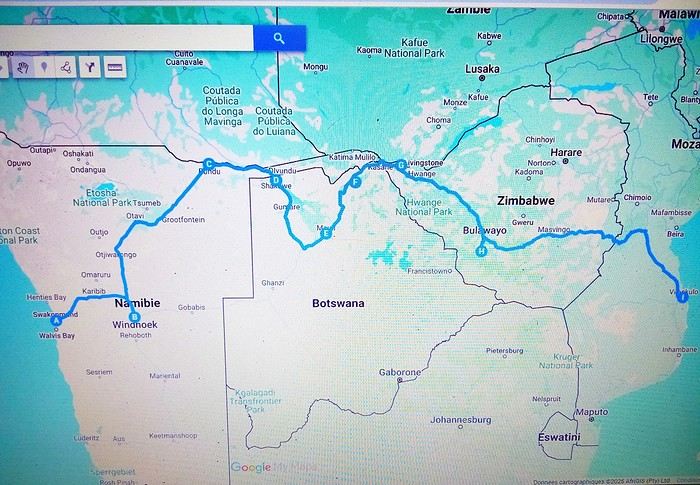
The idea is to cross Africa from the Atlantic to the Indian Ocean. Just to clarify, I don’t have a driver’s license, but I’m used to traveling by hitchhiking, carpooling, or any other type of transport. My must-sees, which I really want to visit, are the Namib and Kalahari deserts, the Okavango Delta, Victoria Falls, and the sandbanks of Vilankulos.
So if anyone has already done this route, more or less, I’d love to hear all your practical tips, especially for getting around within these areas.
Travel style: no problem with big contrasts—whether it’s sleeping in a tent/hammock or a fancy hotel. Budget: flexible (I think).
Start of the maple water harvest in Quebec
Hi there,
Maybe you already use it in your recipes? Just to let you know that here in Quebec, the maple water harvest has started in several regions. The next step will be to boil this water to turn it into syrup. A sweet nectar, it works well in salad dressings, desserts, with salmon, and more. 😋
If you ever pass through here, don’t miss the chance to visit one of our wonderful sugar shacks. You can taste maple taffy on snow, among other things. 😄
Cheers! 👋
Maybe you already use it in your recipes? Just to let you know that here in Quebec, the maple water harvest has started in several regions. The next step will be to boil this water to turn it into syrup. A sweet nectar, it works well in salad dressings, desserts, with salmon, and more. 😋
If you ever pass through here, don’t miss the chance to visit one of our wonderful sugar shacks. You can taste maple taffy on snow, among other things. 😄
Cheers! 👋
Feedback on 3-week Argentina itinerary
Hi there,
Could you let me know if this itinerary is doable:
14/09: Arrival in BA at 9:45 PM
15/09 to 16/09: BA
17/09: Flight to Iguazu early in the morning + visit the falls on the Brazilian side
18/09: Visit the falls on the Argentine side
19/09: Flight to Salta + visit Salta
20/09 to 25/09: Northern + Southern Loop in 6 full days (rental car)
26/09 to 28/09: Tolar Grande 3 days (with an agency)
29/09: Flight to Puerto Madryn (arrival in the evening)
30/09: Valdes Peninsula
01/10: Valdes Peninsula + Punta Tombo + overnight bus to Bariloche
02/10 to 07/10: 6 days to see Bariloche and the surrounding area by car (what are the must-sees?)
08/10: Flight to BA
09/10: Flight to Paris at 2:40 PM
Feedback on 3-week itinerary: Atlantic Coast - Spanish Basque Country - Northern Spain
Hello everyone,
So, summer 2025 is when I turn 40, and to mark the occasion, I had the idea of doing a road trip through Northern Spain. Since I’ll be traveling with my two kids (9 and 6½ years old), I’m tied to school holidays, but I’m hoping the northern regions of Spain are a little less crowded than the Costa Brava.
We’d leave from Lyon to reach the Atlantic coast, head down to the Basque Country, cross the Spanish border, and then visit: Cantabria - Asturias - Galicia. It’s not exactly around the corner—I’ve seen that it’s about 1,500 km (one way) from Lyon to Galicia. But for this adventure, I’ve got 3 to 3½ weeks. The twist would be doing it in an electric car, stopping for 2-3 days here and there before moving on (alternating between wild camping and hotels). Why electric? Because it’s my company car, and my employer covers the charging and toll costs. Over 3 weeks of vacation, that adds up to big savings.
Question: Do you think this plan is doable? Aside from the charging stops, does the route seem too ambitious for 3 weeks with two kids? And in July/August, are these regions not too packed?
Thanks for your feedback and experiences!
So, summer 2025 is when I turn 40, and to mark the occasion, I had the idea of doing a road trip through Northern Spain. Since I’ll be traveling with my two kids (9 and 6½ years old), I’m tied to school holidays, but I’m hoping the northern regions of Spain are a little less crowded than the Costa Brava.
We’d leave from Lyon to reach the Atlantic coast, head down to the Basque Country, cross the Spanish border, and then visit: Cantabria - Asturias - Galicia. It’s not exactly around the corner—I’ve seen that it’s about 1,500 km (one way) from Lyon to Galicia. But for this adventure, I’ve got 3 to 3½ weeks. The twist would be doing it in an electric car, stopping for 2-3 days here and there before moving on (alternating between wild camping and hotels). Why electric? Because it’s my company car, and my employer covers the charging and toll costs. Over 3 weeks of vacation, that adds up to big savings.
Question: Do you think this plan is doable? Aside from the charging stops, does the route seem too ambitious for 3 weeks with two kids? And in July/August, are these regions not too packed?
Thanks for your feedback and experiences!
St. Lucia and iSimangaliso: Stories from Different Trips
Hello there,

As mentioned in the title, this is a travel journal focused on St. Lucia and iSimangaliso ("this place is miraculous" in Zulu) over various trips spanning about twenty years.
The Elephant Coast stretches from Hluhluwe Umfolozi, through St. Lucia and iSimangaliso, all the way to the Mozambique border near Kosi Bay and Tembe. This region was conquered by the Zulus (for context, in the 19th century, the Zulus were just one Bantu group among many—it was a local Napoleon, Shaka, who was both cruel and inventive, conquering and subjugating all other groups to form the Zulu nation). The Tonga were the big losers in this area, and a certain "animosity" is still very noticeable... With our two guides (one Zulu and the other Tonga), we ran into some Tonga folks—definitely not a warm atmosphere. The Tonga were pushed back into the marshes. Fish traps are their main source of wealth. (iSimangaliso is a lagoon and marshland area with several interconnected lakes—it used to be called Vetland Park, and for good reason.) So, lakes, fishing with fish traps...
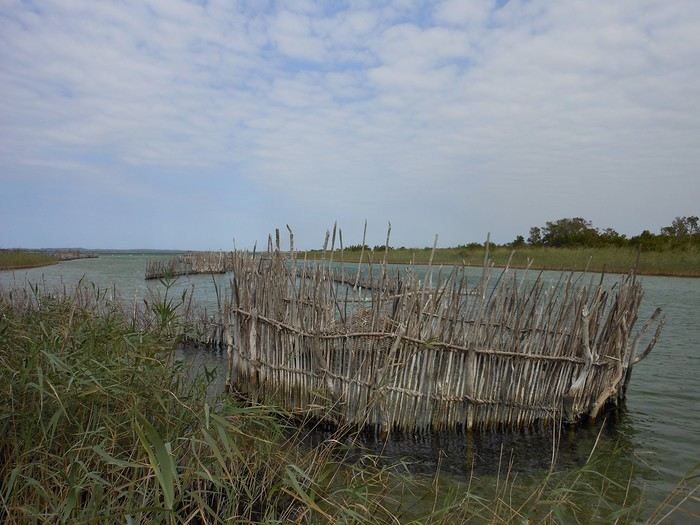
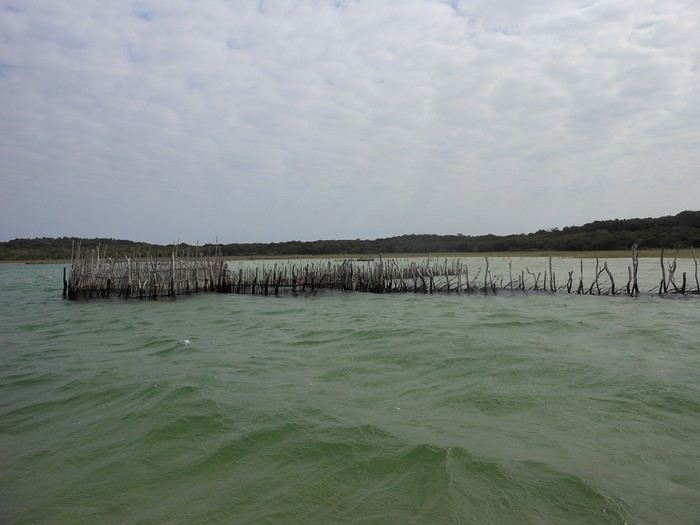
Traditionally done with raffia boats
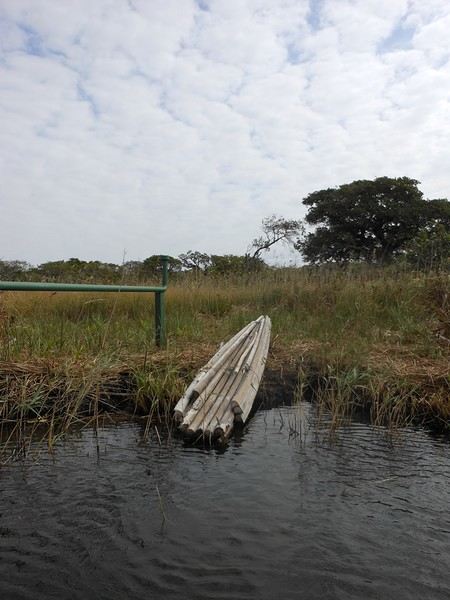
Made from forest raffia
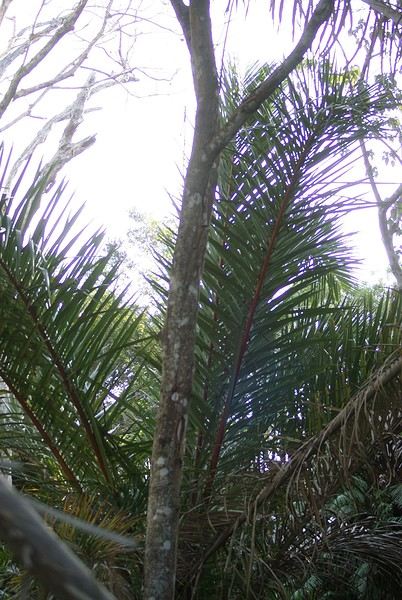
Where we spotted a particularly rare and endemic bird (whose name I can’t remember... and I can’t be bothered to dig through my notes)
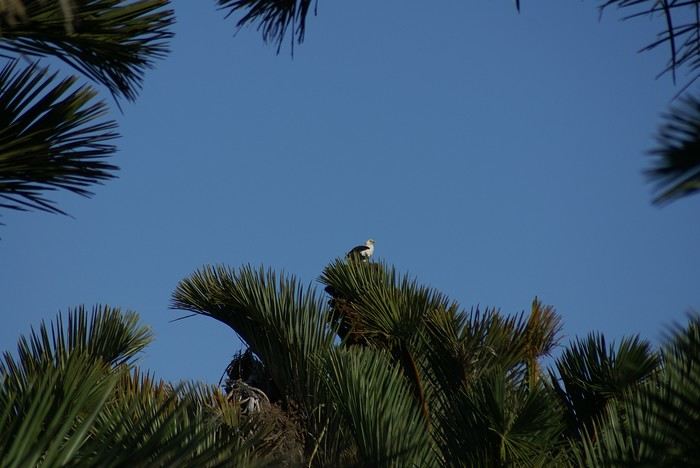 Here, those are eagles
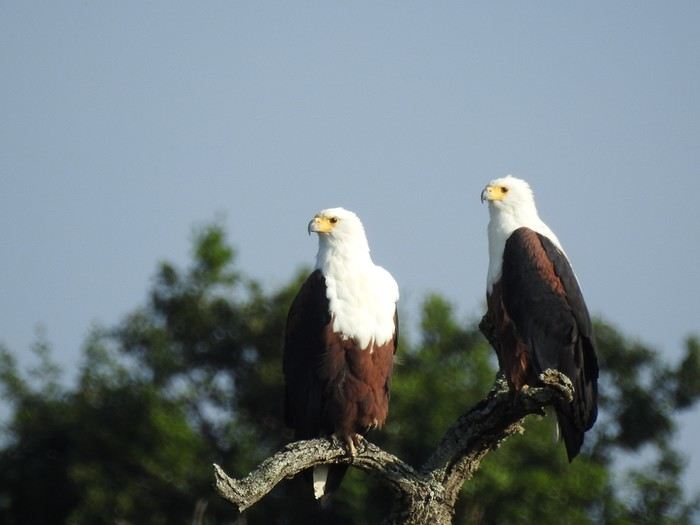
And they’re pretty brave because... they’re not far away...
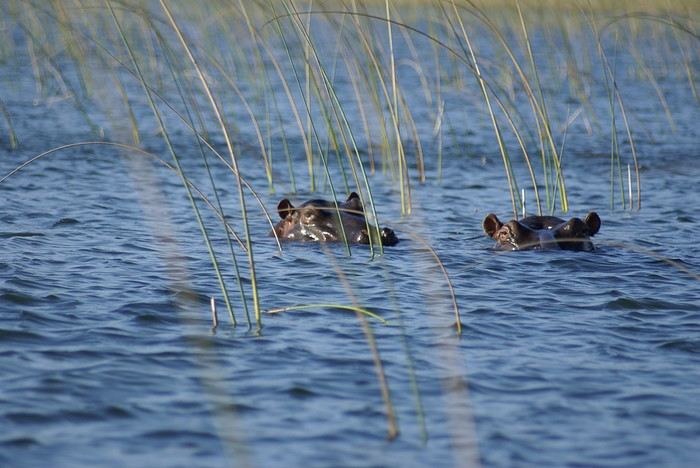
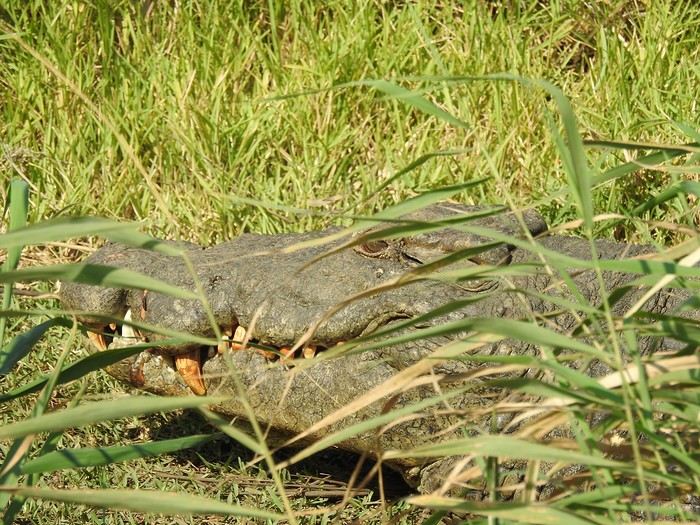
Yet we still swim there... with supervision...
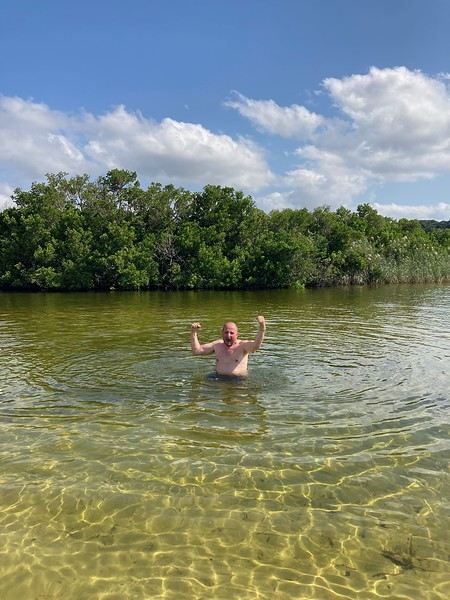
So, between St. Lucia and Mozambique, you’ll find marshes, lagoons, lakes, and coastline, with our Tonga friends, Zulu friends, and—just a bit further up—the Tembe... and their king. (I’m showing off a bit because I got to see a king up close, ate in the same room as him, and even talked to him!)
Originally, the Boers tried to farm there... including sugarcane...
But... between the hippos, snakes, crocs, and malaria-carrying mosquitoes... They lost count of the deaths and disappearances.
The story goes that when Madiba (Mandela) came to power, he passed through the area and convinced them to turn it into a natural space that would attract tourists—and that’s when the big change happened.
And it’s pretty incredible to see how this place has evolved, going from extreme poverty to a certain level of gentrification... How this once "chaotic" area saw shops, roads, and housing spring up (I’m mainly talking about Mtubatuba, the nearby Black town). In fact, in St. Lucia now, the homes that aren’t tourist accommodations can be counted on one hand.
St. Lucia has become a "seaside resort"... very busy during school holidays and certain weekends, increasingly cosmopolitan (20 years ago, speaking French was exotic—now it’s completely ordinary).
As mentioned in the title, this is a travel journal focused on St. Lucia and iSimangaliso ("this place is miraculous" in Zulu) over various trips spanning about twenty years.
The Elephant Coast stretches from Hluhluwe Umfolozi, through St. Lucia and iSimangaliso, all the way to the Mozambique border near Kosi Bay and Tembe. This region was conquered by the Zulus (for context, in the 19th century, the Zulus were just one Bantu group among many—it was a local Napoleon, Shaka, who was both cruel and inventive, conquering and subjugating all other groups to form the Zulu nation). The Tonga were the big losers in this area, and a certain "animosity" is still very noticeable... With our two guides (one Zulu and the other Tonga), we ran into some Tonga folks—definitely not a warm atmosphere. The Tonga were pushed back into the marshes. Fish traps are their main source of wealth. (iSimangaliso is a lagoon and marshland area with several interconnected lakes—it used to be called Vetland Park, and for good reason.) So, lakes, fishing with fish traps...
Traditionally done with raffia boats
Made from forest raffia
Where we spotted a particularly rare and endemic bird (whose name I can’t remember... and I can’t be bothered to dig through my notes)
Here, those are eagles
And they’re pretty brave because... they’re not far away...
Yet we still swim there... with supervision...
So, between St. Lucia and Mozambique, you’ll find marshes, lagoons, lakes, and coastline, with our Tonga friends, Zulu friends, and—just a bit further up—the Tembe... and their king. (I’m showing off a bit because I got to see a king up close, ate in the same room as him, and even talked to him!)
Originally, the Boers tried to farm there... including sugarcane...
But... between the hippos, snakes, crocs, and malaria-carrying mosquitoes... They lost count of the deaths and disappearances.
The story goes that when Madiba (Mandela) came to power, he passed through the area and convinced them to turn it into a natural space that would attract tourists—and that’s when the big change happened.
And it’s pretty incredible to see how this place has evolved, going from extreme poverty to a certain level of gentrification... How this once "chaotic" area saw shops, roads, and housing spring up (I’m mainly talking about Mtubatuba, the nearby Black town). In fact, in St. Lucia now, the homes that aren’t tourist accommodations can be counted on one hand.
St. Lucia has become a "seaside resort"... very busy during school holidays and certain weekends, increasingly cosmopolitan (20 years ago, speaking French was exotic—now it’s completely ordinary).
Cost of an extra checked bag on Delta Airlines
Hi there,
I have a multi-city flight: CDG-San Francisco and return Las Vegas-CDG via LAX. The whole thing was booked on the AF website with one checked bag included per person.
I’m thinking of buying an extra checked bag for the return trip (souvenirs and outlet shopping!). Air France won’t let me add it online, saying that part of the return journey is operated by a partner (the LV-LA leg is a codeshare with Delta, while the rest is on AF) and that I can only do it at the Las Vegas airport.
When I go to the Delta website with my booking reference and simulate adding a bag, it clearly states “1st checked bag: Free” and “2nd checked bag... $490!!!!!!”. However, if I simulate the same route on Delta’s site without entering my booking, it shows $75 for the first bag and $100 for the second.
Has anyone been through this before? How did you handle it? Thanks in advance!
I have a multi-city flight: CDG-San Francisco and return Las Vegas-CDG via LAX. The whole thing was booked on the AF website with one checked bag included per person.
I’m thinking of buying an extra checked bag for the return trip (souvenirs and outlet shopping!). Air France won’t let me add it online, saying that part of the return journey is operated by a partner (the LV-LA leg is a codeshare with Delta, while the rest is on AF) and that I can only do it at the Las Vegas airport.
When I go to the Delta website with my booking reference and simulate adding a bag, it clearly states “1st checked bag: Free” and “2nd checked bag... $490!!!!!!”. However, if I simulate the same route on Delta’s site without entering my booking, it shows $75 for the first bag and $100 for the second.
Has anyone been through this before? How did you handle it? Thanks in advance!
First family trip to Tokyo
Hi everyone,
We’re planning a family trip to Tokyo for late October 2026, and I’d love your advice on organizing this stay. Here’s some info to give you a better idea of our situation: • There’ll be two adults (one with a mild mobility impairment, which makes long walks tricky) and a child who’ll be 13 at the time. • We’d like to spend around 15 days there to explore temples, traditional Japanese culture, and, of course, the world of manga and video games.
My questions: 1. Weather in October: What’s the climate like during that period? Should we pack any specific clothing? 2. Flight bookings: When’s the best time to book? And, in your opinion, is it better to fly from Paris or Brussels? 3. Accommodation: We prefer Airbnb-style rentals or similar. Which neighborhoods do you recommend for good location without too much commuting? 4. Trip duration: Are 15 days enough for a first trip? 5. Accessibility: Any specific tips for someone who struggles with long walks (accessible transport, routes, etc.)? 6. Other recommendations: Must-visit spots in Tokyo (or nearby) for a family that loves manga, temples, and Japanese culture?
I’m feeling a bit overwhelmed starting the preparations, so any advice or personal experiences would be super helpful. Thanks in advance for your help!
Looking forward to reading your replies, Sam
We’re planning a family trip to Tokyo for late October 2026, and I’d love your advice on organizing this stay. Here’s some info to give you a better idea of our situation: • There’ll be two adults (one with a mild mobility impairment, which makes long walks tricky) and a child who’ll be 13 at the time. • We’d like to spend around 15 days there to explore temples, traditional Japanese culture, and, of course, the world of manga and video games.
My questions: 1. Weather in October: What’s the climate like during that period? Should we pack any specific clothing? 2. Flight bookings: When’s the best time to book? And, in your opinion, is it better to fly from Paris or Brussels? 3. Accommodation: We prefer Airbnb-style rentals or similar. Which neighborhoods do you recommend for good location without too much commuting? 4. Trip duration: Are 15 days enough for a first trip? 5. Accessibility: Any specific tips for someone who struggles with long walks (accessible transport, routes, etc.)? 6. Other recommendations: Must-visit spots in Tokyo (or nearby) for a family that loves manga, temples, and Japanese culture?
I’m feeling a bit overwhelmed starting the preparations, so any advice or personal experiences would be super helpful. Thanks in advance for your help!
Looking forward to reading your replies, Sam
Nothing’s stopping you from going to Ampefy (Madagascar)
During these three big weeks in Madagascar, one week in Sainte Marie, a few days for a little loop in the west/south, and the rest in Tana.
This loop I’m talking about covers an area I’d never taken the time to visit before. A recent road in good condition, the chance to pass through beautiful highland landscapes, and a few free days made it the perfect opportunity. Destination: Ampefy, west of Tana via the RN1, then a turn south onto the recently rehabilitated RN43 to reach Antsirabe before heading back to Tana. Four days planned—perfect, since an extra day wouldn’t have been a problem given all the activities in Ampefy.
First day: a relaxed and fairly late departure for Ampefy. We weren’t in a rush and took our time. Traffic leaving Tana to get back on the RN1 cost us the head start we had on our original schedule. An hour and a half bumper-to-bumper with the *buxis*, inching painfully toward the roundabout and then the bridge that acts as a bottleneck—we dove in like all our fellow sufferers. It’s not our everyday reality, and we were early, so no big deal, but man, it’s long and slow. Once past that obstacle, traffic flowed smoothly, and the road was good (all the way to Ampefy). We moved through highland landscapes, bustling villages full of activity, and countless agricultural supply shops—clear proof, if any were needed, that we were crossing a prime farming region. Around Arivonimamo, we passed through a forest with a Mediterranean vibe: a single-species forest of stout little trees with glossy, elongated light-green leaves—these are *tapia*. An endemic tree in Madagascar, and a pretty unique forest as a result (you can see them elsewhere, like between Antsirabe and Ambositra). There are efforts to protect it from illegal logging because the wood is fire-resistant, which helps shield the forest from wildfires. Beyond its biodiversity value, the *tapia* hosts silkworms, giving it economic and cultural importance.
As we kept going, we started spotting a lake and mountains with the rounded shapes typical of extinct volcanoes worn down by time and the elements. We were approaching Lake Itasy and, by extension, Ampefy. We stopped at a *hotely* for a plate of *tongon’kisoa*—pig’s trotters caramelized by cooking, with thick, flavorful skin—along with the obligatory portion of rice, which we took the time to drizzle with cooking juices to make it a bit more appetizing. Full, we turned left to reach Ampefy and our hotel. The landscape was dotted with collapsed, dormant volcanic cones, and suddenly, the view opened up onto the lake. Shallow and expansive, we followed it, losing sight of it now and then before finding it again in Ampefy itself, which we entered after crossing the Lily, a beautiful river that drains the lake. Lots of hotels and restaurants, with plenty of options at all price points. We chose the *Farihy*, about 5 km past Ampefy. A gorgeous spot by the lake, with a pool and lovely bungalows—some with picture windows overlooking the lake. Really nice. In the evening, a drink and some *sak sak* for aperitif on the terrace. It wasn’t warm, there was a lot of wind, and a storm was brewing. Off to bed quickly to start the next day’s visits.
After buying some lychees—we hadn’t seen many this year, and these were fresh from the field, picked in Ampefy—we headed to the Lily Falls. Well signposted, with a paved road in great condition, we stopped at the kiosk for the entrance fee and parking (1 euro for one *vahiny* and 10 cents for one Malagasy). We set off down the path and quickly reached the first waterfall, then continued for maybe 1 km on a well-marked trail to the second. A guide led us to the third, which is harder to spot and isn’t actually on the Lily itself. Beautiful countryside scenery: fishermen straight out of *Tom Sawyer*, straw hats on their heads, lying down with one foot hooked to a fragile bamboo rod, their line dipping into the calm river. Men preparing rice paddies with their *angady*, women transplanting rice, bent over the water. At some points, we walked along the dikes between paddies almost ready for harvest. It’s peaceful and beautiful when you’re strolling or fishing, but working the paddies is grueling, especially under that beating sun. A really nice walk—2 hours and a bit, going at a leisurely pace. A guide isn’t mandatory; only the entrance fee is. We took one because it provides a bit of work and puts money in the hands of locals, giving them more incentive to protect the site. But you can easily skip it, like most people do. Lots of visitors since it was the weekend—Tananarivians with family or groups of young people, scout groups organized under their chaperones’ direction. Very few foreign tourists, though—that’s a general observation. It’s great to see this growth in domestic tourism, giving Malagasy people the chance to discover their own country and allowing those in the sector to rely less on foreign visitors, who’ve been scarce for years.
Next, we headed to the "geysers" (which aren’t actually geysers, but whatever). We had to go back to the RN1, head toward Tsiroanomandidy, and a few kilometers later, a well-marked sign and a newly paved track led us to a pretty site. Again, lots of people, another kiosk, more fees to pay, and guides available. This time, we skipped the guide. A downpour caught us in front of the "geysers," so we took shelter under a little shop, grabbing an ice cream and some drinks. We didn’t stay long—we weren’t interested in a massage or a dip in the thermal water. The countryside and barren mountain landscapes were stunning on the way back to the hotel. We noticed you could go paragliding right in front of the bungalow, so we booked a session for the next morning. After eating at the *Auberge* in the town center (it was good), we headed back to the hotel to turn in early. Once again, a storm rolled in during the afternoon, and the temperature dropped significantly.
The next morning, around 8 a.m., we walked to the takeoff zone near the hotel. Towed by a small boat, we took off for a flight over the lake and the volcanic domes before landing back at the same spot. Two companies handle this. I’m no expert, but it seemed safe and well-organized.
To be continued...
First day: a relaxed and fairly late departure for Ampefy. We weren’t in a rush and took our time. Traffic leaving Tana to get back on the RN1 cost us the head start we had on our original schedule. An hour and a half bumper-to-bumper with the *buxis*, inching painfully toward the roundabout and then the bridge that acts as a bottleneck—we dove in like all our fellow sufferers. It’s not our everyday reality, and we were early, so no big deal, but man, it’s long and slow. Once past that obstacle, traffic flowed smoothly, and the road was good (all the way to Ampefy). We moved through highland landscapes, bustling villages full of activity, and countless agricultural supply shops—clear proof, if any were needed, that we were crossing a prime farming region. Around Arivonimamo, we passed through a forest with a Mediterranean vibe: a single-species forest of stout little trees with glossy, elongated light-green leaves—these are *tapia*. An endemic tree in Madagascar, and a pretty unique forest as a result (you can see them elsewhere, like between Antsirabe and Ambositra). There are efforts to protect it from illegal logging because the wood is fire-resistant, which helps shield the forest from wildfires. Beyond its biodiversity value, the *tapia* hosts silkworms, giving it economic and cultural importance.
As we kept going, we started spotting a lake and mountains with the rounded shapes typical of extinct volcanoes worn down by time and the elements. We were approaching Lake Itasy and, by extension, Ampefy. We stopped at a *hotely* for a plate of *tongon’kisoa*—pig’s trotters caramelized by cooking, with thick, flavorful skin—along with the obligatory portion of rice, which we took the time to drizzle with cooking juices to make it a bit more appetizing. Full, we turned left to reach Ampefy and our hotel. The landscape was dotted with collapsed, dormant volcanic cones, and suddenly, the view opened up onto the lake. Shallow and expansive, we followed it, losing sight of it now and then before finding it again in Ampefy itself, which we entered after crossing the Lily, a beautiful river that drains the lake. Lots of hotels and restaurants, with plenty of options at all price points. We chose the *Farihy*, about 5 km past Ampefy. A gorgeous spot by the lake, with a pool and lovely bungalows—some with picture windows overlooking the lake. Really nice. In the evening, a drink and some *sak sak* for aperitif on the terrace. It wasn’t warm, there was a lot of wind, and a storm was brewing. Off to bed quickly to start the next day’s visits.
After buying some lychees—we hadn’t seen many this year, and these were fresh from the field, picked in Ampefy—we headed to the Lily Falls. Well signposted, with a paved road in great condition, we stopped at the kiosk for the entrance fee and parking (1 euro for one *vahiny* and 10 cents for one Malagasy). We set off down the path and quickly reached the first waterfall, then continued for maybe 1 km on a well-marked trail to the second. A guide led us to the third, which is harder to spot and isn’t actually on the Lily itself. Beautiful countryside scenery: fishermen straight out of *Tom Sawyer*, straw hats on their heads, lying down with one foot hooked to a fragile bamboo rod, their line dipping into the calm river. Men preparing rice paddies with their *angady*, women transplanting rice, bent over the water. At some points, we walked along the dikes between paddies almost ready for harvest. It’s peaceful and beautiful when you’re strolling or fishing, but working the paddies is grueling, especially under that beating sun. A really nice walk—2 hours and a bit, going at a leisurely pace. A guide isn’t mandatory; only the entrance fee is. We took one because it provides a bit of work and puts money in the hands of locals, giving them more incentive to protect the site. But you can easily skip it, like most people do. Lots of visitors since it was the weekend—Tananarivians with family or groups of young people, scout groups organized under their chaperones’ direction. Very few foreign tourists, though—that’s a general observation. It’s great to see this growth in domestic tourism, giving Malagasy people the chance to discover their own country and allowing those in the sector to rely less on foreign visitors, who’ve been scarce for years.
Next, we headed to the "geysers" (which aren’t actually geysers, but whatever). We had to go back to the RN1, head toward Tsiroanomandidy, and a few kilometers later, a well-marked sign and a newly paved track led us to a pretty site. Again, lots of people, another kiosk, more fees to pay, and guides available. This time, we skipped the guide. A downpour caught us in front of the "geysers," so we took shelter under a little shop, grabbing an ice cream and some drinks. We didn’t stay long—we weren’t interested in a massage or a dip in the thermal water. The countryside and barren mountain landscapes were stunning on the way back to the hotel. We noticed you could go paragliding right in front of the bungalow, so we booked a session for the next morning. After eating at the *Auberge* in the town center (it was good), we headed back to the hotel to turn in early. Once again, a storm rolled in during the afternoon, and the temperature dropped significantly.
The next morning, around 8 a.m., we walked to the takeoff zone near the hotel. Towed by a small boat, we took off for a flight over the lake and the volcanic domes before landing back at the same spot. Two companies handle this. I’m no expert, but it seemed safe and well-organized.
To be continued...
My immersion experience with a Peruvian Amazon family
Hi everyone,
For those of you who might be planning to explore the Amazon on the Peruvian side, I wanted to share a little feedback about my own experience, which I had back in 2018. It was honestly one of the most amazing travel experiences of my life—I’d dreamed of discovering the Amazon since I was a kid!
I’m sharing this now, in 2024, because I’ve just finished putting together a short documentary about the family’s ecotourism project. This gave me the chance to reconnect with them, and thanks to the magic of social media, even though they’d had to pause their activities after COVID and the closure of international borders, our reunion helped me put them in touch with the association ARUTAM Zero Deforestation, which has allowed them to restart their ecotourism. That’s why I’m posting here! :)
You can find all the details of my experience in this immersive adventure via this link: http://kikienvadrouille.com/?p=7939
Here are some key highlights from this adventure:
I spent 5 days with Wilder and Jessica’s family, along the banks of the Tahuayo River, a 7-hour slow boat ride from Iquitos <3
I arranged this experience through a French association (Latitud Sur at the time), which fights against deforestation and works to promote and protect the culture of Indigenous peoples in South America.
This is an experience far from the "clichés" you might have about the Amazon—simple yet authentic, with a focus on funding projects that preserve biodiversity and support the well-being of local communities.
The stay is completely customizable in terms of duration and activities (you can ask to go on a hike in the Amazon rainforest, learn about medicinal plants, fish in the river, make necklaces, baskets, or other Amazonian handicrafts, understand the Amazonian agroforestry system, and meet local producers, etc.)—everything is open for discussion! :)
The cost is calculated per day per person: 50 USD per person per day (down from 90 USD previously).
This price includes the 7-hour boat trip from Iquitos (an adventure in itself!), as well as food, accommodation, and activities. If you buy any handicrafts on-site, you’ll obviously need to budget a little extra.
It’s essential to speak and understand at least some Spanish :)
The intercultural exchanges with the family are what truly make this stay special.
Don’t hesitate to ask me any questions! I can also put you directly in touch with Wilder. Happy travels, everyone! Christelle
For those of you who might be planning to explore the Amazon on the Peruvian side, I wanted to share a little feedback about my own experience, which I had back in 2018. It was honestly one of the most amazing travel experiences of my life—I’d dreamed of discovering the Amazon since I was a kid!
I’m sharing this now, in 2024, because I’ve just finished putting together a short documentary about the family’s ecotourism project. This gave me the chance to reconnect with them, and thanks to the magic of social media, even though they’d had to pause their activities after COVID and the closure of international borders, our reunion helped me put them in touch with the association ARUTAM Zero Deforestation, which has allowed them to restart their ecotourism. That’s why I’m posting here! :)
You can find all the details of my experience in this immersive adventure via this link: http://kikienvadrouille.com/?p=7939
Here are some key highlights from this adventure:
I spent 5 days with Wilder and Jessica’s family, along the banks of the Tahuayo River, a 7-hour slow boat ride from Iquitos <3
I arranged this experience through a French association (Latitud Sur at the time), which fights against deforestation and works to promote and protect the culture of Indigenous peoples in South America.
This is an experience far from the "clichés" you might have about the Amazon—simple yet authentic, with a focus on funding projects that preserve biodiversity and support the well-being of local communities.
The stay is completely customizable in terms of duration and activities (you can ask to go on a hike in the Amazon rainforest, learn about medicinal plants, fish in the river, make necklaces, baskets, or other Amazonian handicrafts, understand the Amazonian agroforestry system, and meet local producers, etc.)—everything is open for discussion! :)
The cost is calculated per day per person: 50 USD per person per day (down from 90 USD previously).
This price includes the 7-hour boat trip from Iquitos (an adventure in itself!), as well as food, accommodation, and activities. If you buy any handicrafts on-site, you’ll obviously need to budget a little extra.
It’s essential to speak and understand at least some Spanish :)
The intercultural exchanges with the family are what truly make this stay special.
Don’t hesitate to ask me any questions! I can also put you directly in touch with Wilder. Happy travels, everyone! Christelle
3-Week Road Trip for Two: Montréal to Montréal
Following the (wise) advice of "Les Caribous," I'm starting a post to describe the trip I'd like to take from mid-September 2025 for three weeks.
Here’s the planned route: Departing from Nantes.
Montréal/Ottawa/Mont-Tremblant/Mauricie/Lac St-Jean/Saguenay Fjord/Tadoussac/Gaspésie, then returning via Québec and Montréal.
I’d love some tips on must-see spots and how long to spend at each stop. We’re not big "hikers," so minimal hiking. Don’t hesitate to suggest cutting stops—especially if they seem unnecessary or too time-consuming.
Advice on accommodation and vehicle rentals would also be much appreciated.
Thanks to everyone who’d like to share their experiences and tips!
The Extraordinary Painted-House Village of Tam Thanh near Hoi An
Imagine a peaceful fishing village, completely transformed by artists who worked their magic on the walls of 100 residential houses. That’s the remarkable story of the Tam Thanh mural village in Quang Nam province. Once similar to many other coastal villages in the area, it now firmly stands out on the tourist map for a day trip from Hoi An.
In the summer of 2016, Tam Thanh was selected by a Korean-Vietnamese joint project called Art For A Better Community. The village was chosen to be their blank canvas, inspired by the success of mural villages in Korea. The project aimed to make Tam Thanh the first painted village of its kind in Vietnam.
The joint project included five Korean artists and seven Vietnamese artists, along with local volunteers. They aimed to show Vietnamese people that art could be part of everyday life, no matter where you stand in society. The effort began with about three weeks of wall washing, followed by painting the walls of over 100 residents' houses.
The project was a success, and the village came alive with the paintings. The entire village is now a breathtaking gallery just waiting to be explored. The murals capture the life and soul of the village—from young children playing to fishermen in the ocean. A mix of fantastic pieces offers stunning backdrops for photos.
The painted art around the town didn’t just have a visual impact; it also had a social one. The village itself was chosen not only for the layout of the houses but also to contribute to economic development opportunities in Tam Thanh. Tourists now visit the once-overlooked village, creating more income for locals and making it a successful "art for a cause" project. For example, an entrepreneurial resident who owned a small local café invested 1,000,000 VND ($390 USD) in a sugarcane press a week before the paintings were completed. Sugarcane juice vendors then multiplied with the growth of tourism (5,000 VND - $0.20 USD).
Walking down the village’s single street, it’s common to find locals selling refreshments and handmade crafts. In one house in particular, a tailor and his family are painted on an outer wall with incredible detail. The family started selling tote bags decorated by their young daughter. The asking price for the bags is 100,000 VND ($4 USD). If you’re looking for a way to support the village’s economy, this is it. Since there’s no middleman here, you can be sure your money goes directly to the community.
Since the project’s completion, two other villages in the province have now been painted. The new mural villages were created with different local Vietnamese artists to raise awareness about each community’s issues. Tam Hai Island was redecorated to highlight the serious waste problem the population faces due to the lack of treatment plants. Another village on An Binh Island was painted to raise awareness among locals and tourists about the importance of environmental protection.
How to get there
Route No. 1: Cross the large Cua Dai bridge. Once you’ve crossed it, continue onto Duong 129/Duong Ven Bien. Stay on this road for 33 kilometers. Upside: this route has light traffic, no traffic lights, and no trucks or buses. It’s a great direct route to the village but offers little to see. You’ll eventually reach a crossroads. Turn right toward Tam Ky town, while the left will take you toward the mural village; stay on Road 608 as it turns twice before reaching a bridge. Cross the bridge, and you’ll arrive at Thanh Nien Road. Finally, turn right to reach the village. This route takes about an hour.
Route #2: Cross the large Cua Dai bridge. Once you’ve crossed it, continue onto Duong 129/Duong Ven Bien. Stay on this road for 12 kilometers, then turn left onto Road 613, where you’ll continue for 1.5 kilometers until you reach Thanh Nien Road. Finally, turn right and drive 23 kilometers to the painted village. For most of the trip, taking Thanh Nien Road will take you through a much more local part of the region. The journey takes about an hour and a half.
4x4 Expeditions in Southern Africa
Hi there,
Here’s a quick summary of six trips across Southern Africa, covering South Africa, Namibia, Botswana, Zimbabwe, and more. I traveled for a total of 23 months, over 100,000 km, and crossed 9 countries from South Africa to Tanzania. To do this, I bought an old Land Cruiser—a 1989 BJ 75 with a long chassis and a 3.4L turbo engine—which I converted into a bush camper set up for self-sufficiency in Africa: dual fuel tanks (235 L total) plus 2 x 20-liter jerry cans of diesel, 2 spare tires, a compressor, a toolbox with repair gear, a 50-liter water tank plus 2 x 30-liter and 2 x 10-liter jerry cans, a roof tent, multiple storage boxes, a sturdy roof rack, and even a paramotor. I also packed a first-aid kit and shipped the camper to South Africa by freight. My son joined me for part of the journey.
Key countries and highlights: South Africa in every direction, including its wildlife parks; in Namibia, the classics like Etosha, Fish River, Sossusvlei, Kaudum, but especially Damaraland and Kaokoland; in Botswana, a full loop of the Okavango, crossing the Makgadikgadi Pan, Moremi Park, the Linyanti River; and a tour of Zimbabwe with its national parks. During the last trip in 2020, due to COVID, we found refuge on a 250 km² Namibian farm with its own wildlife reserve. While crossing Damaraland and Kaokoland, we were completely self-sufficient, with supplies for over a month and 130 L of water.
In South Africa and Namibia, one issue that surprised us was the fences stretching for millions of kilometers along the tracks. Namibia is one and a half times the size of France but has a population of only about 2.5 million, mostly concentrated in a dozen small towns of 10,000 to 50,000 people—except for the capital, Windhoek (296,000). Paradoxically, compared to France, the space for freedom is extremely limited. Everything is private and requires payment. Even the Namib Desert is fenced... and you need a permit just to pick up a rock! For someone used to wild camping, it can get frustrating. Sometimes we ignored the rules, but the best solution is to ask a farmer (a real one, like a sheep or cattle rancher—not the ones with 3-meter electrified fences, which are lodges or private reserves) if you can camp on their land.
To truly enjoy freedom in Namibia, you need to venture into the northwest, along the Skeleton Coast, in Damaraland and Kaokoland. However, it’s essential to know your vehicle inside out, be a good mechanic, bring spare parts, and plan for potential breakdowns. Take care of your ride because a major issue out there can be a matter of survival. My motto: "Don’t break down, don’t break down, don’t break down..." Safari pros only venture into this region with two 4x4s. In Messum Crater, we met a couple waiting for rescue (thanks to a satellite device from their rental company) after their driveshaft broke. Keep in mind that in these areas, you’ll cover about 80 km in 8 hours.
Here are some of the issues we faced: a broken rear suspension leaf, several broken bolts on the front leaf springs, the spare tire mount breaking multiple times (replaced on the spot), a cracked water radiator in 1998 causing overheating and a seized valve stem in its guide, plus a bent rocker arm (field repair, valve adjustment, damaged head gasket, daily radiator refills, and a scratched cylinder—engine fully rebuilt upon return). Five roof rack mounts broke and were repaired at a technical high school in South Africa. The battery mount also broke (fixed with a steel plate found on the trail). The fuel filter clogged several times (changed or cleaned on the spot). A huge impact on the windshield from a piece of coal falling from a power plant supply truck (temporary repair with Araldite). The brake master cylinder failed in Marienfluss (repaired, seals replaced in Tsumeb). Multiple flat tires from acacia thorns. The rear door latch broke (homemade aluminum rod repair in Franschhoek). The voltmeter and ammeter failed (repaired on the spot). During the freight trip, despite locking the doors and having a partition between the front and back, someone managed to get in through the small side window, forced open the locks on two accessible storage boxes, and stole my tools (replaced later). A ball joint on the paramotor frame came loose mid-flight, damaging the wing and propeller (propeller shipped from France, homemade repair).
Health issues on the way to Tanzania: a painful sciatica and many sleepless nights (cortisone injection in Dodoma).
Kaokoland, Namibia—the northwest region: https://youtu.be/DzGepFsrnZs
Damaraland: https://youtu.be/DITQj8NvLZ4
Botswana: https://youtu.be/TEvDG0S62hg
Kaudom and Mohembo Parks: https://youtu.be/wq_Yf7jNLhw
Here’s a quick summary of six trips across Southern Africa, covering South Africa, Namibia, Botswana, Zimbabwe, and more. I traveled for a total of 23 months, over 100,000 km, and crossed 9 countries from South Africa to Tanzania. To do this, I bought an old Land Cruiser—a 1989 BJ 75 with a long chassis and a 3.4L turbo engine—which I converted into a bush camper set up for self-sufficiency in Africa: dual fuel tanks (235 L total) plus 2 x 20-liter jerry cans of diesel, 2 spare tires, a compressor, a toolbox with repair gear, a 50-liter water tank plus 2 x 30-liter and 2 x 10-liter jerry cans, a roof tent, multiple storage boxes, a sturdy roof rack, and even a paramotor. I also packed a first-aid kit and shipped the camper to South Africa by freight. My son joined me for part of the journey.
Key countries and highlights: South Africa in every direction, including its wildlife parks; in Namibia, the classics like Etosha, Fish River, Sossusvlei, Kaudum, but especially Damaraland and Kaokoland; in Botswana, a full loop of the Okavango, crossing the Makgadikgadi Pan, Moremi Park, the Linyanti River; and a tour of Zimbabwe with its national parks. During the last trip in 2020, due to COVID, we found refuge on a 250 km² Namibian farm with its own wildlife reserve. While crossing Damaraland and Kaokoland, we were completely self-sufficient, with supplies for over a month and 130 L of water.
In South Africa and Namibia, one issue that surprised us was the fences stretching for millions of kilometers along the tracks. Namibia is one and a half times the size of France but has a population of only about 2.5 million, mostly concentrated in a dozen small towns of 10,000 to 50,000 people—except for the capital, Windhoek (296,000). Paradoxically, compared to France, the space for freedom is extremely limited. Everything is private and requires payment. Even the Namib Desert is fenced... and you need a permit just to pick up a rock! For someone used to wild camping, it can get frustrating. Sometimes we ignored the rules, but the best solution is to ask a farmer (a real one, like a sheep or cattle rancher—not the ones with 3-meter electrified fences, which are lodges or private reserves) if you can camp on their land.
To truly enjoy freedom in Namibia, you need to venture into the northwest, along the Skeleton Coast, in Damaraland and Kaokoland. However, it’s essential to know your vehicle inside out, be a good mechanic, bring spare parts, and plan for potential breakdowns. Take care of your ride because a major issue out there can be a matter of survival. My motto: "Don’t break down, don’t break down, don’t break down..." Safari pros only venture into this region with two 4x4s. In Messum Crater, we met a couple waiting for rescue (thanks to a satellite device from their rental company) after their driveshaft broke. Keep in mind that in these areas, you’ll cover about 80 km in 8 hours.
Here are some of the issues we faced: a broken rear suspension leaf, several broken bolts on the front leaf springs, the spare tire mount breaking multiple times (replaced on the spot), a cracked water radiator in 1998 causing overheating and a seized valve stem in its guide, plus a bent rocker arm (field repair, valve adjustment, damaged head gasket, daily radiator refills, and a scratched cylinder—engine fully rebuilt upon return). Five roof rack mounts broke and were repaired at a technical high school in South Africa. The battery mount also broke (fixed with a steel plate found on the trail). The fuel filter clogged several times (changed or cleaned on the spot). A huge impact on the windshield from a piece of coal falling from a power plant supply truck (temporary repair with Araldite). The brake master cylinder failed in Marienfluss (repaired, seals replaced in Tsumeb). Multiple flat tires from acacia thorns. The rear door latch broke (homemade aluminum rod repair in Franschhoek). The voltmeter and ammeter failed (repaired on the spot). During the freight trip, despite locking the doors and having a partition between the front and back, someone managed to get in through the small side window, forced open the locks on two accessible storage boxes, and stole my tools (replaced later). A ball joint on the paramotor frame came loose mid-flight, damaging the wing and propeller (propeller shipped from France, homemade repair).
Health issues on the way to Tanzania: a painful sciatica and many sleepless nights (cortisone injection in Dodoma).
Kaokoland, Namibia—the northwest region: https://youtu.be/DzGepFsrnZs
Damaraland: https://youtu.be/DITQj8NvLZ4
Botswana: https://youtu.be/TEvDG0S62hg
Kaudom and Mohembo Parks: https://youtu.be/wq_Yf7jNLhw
Ethiopia and Two Endemic Animals
The reopening of the forum is great news—let's keep it going! I’m going to share a little story about this 12-day trip, which was my second-to-last journey and my most recent one in Africa for now.
I went to this country for one very specific reason: to see two endemic animal species. A little suspense… you’ll find out what they are soon if you don’t already know!
The country is poor, very poor even. And it hits you even harder when you arrive in the capital: a massive open-air construction site that gives an impression of prosperity. A lot of roads were built by the Chinese, but to be honest, they’re far from perfect… and I mean *far*!
When it comes to restaurants, it’s pretty much the same story. Most offer endless menus, but in reality, there aren’t many choices. Once, I was flat-out told: “No rice today!” Ordering a dish? It’s a real gamble! The food is *very* spicy—I’m warning you, it’s intense! There’s chili in almost everything, so it’s best to ask beforehand if you don’t want your mouth on fire. Actually, this was the first time I didn’t like the food in a country I visited. Had to happen eventually, right?
Their national dish? Injera. A large flatbread topped with sauces, vegetables, and meat. The taste is really unique—some love it, others… not so much.
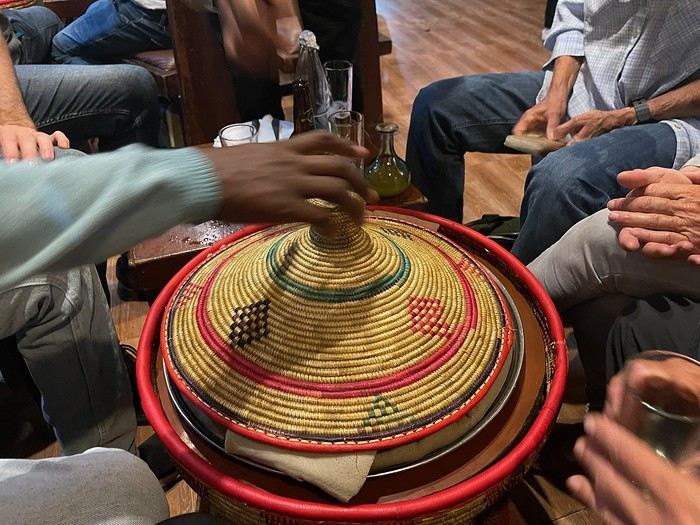
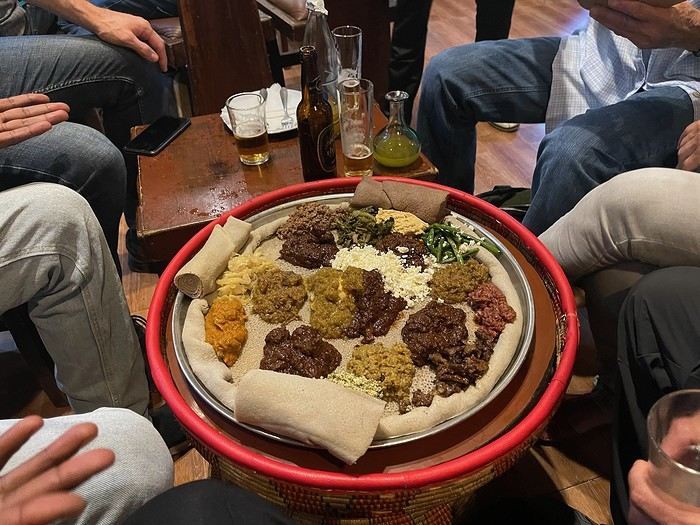
I went to this country for one very specific reason: to see two endemic animal species. A little suspense… you’ll find out what they are soon if you don’t already know!
The country is poor, very poor even. And it hits you even harder when you arrive in the capital: a massive open-air construction site that gives an impression of prosperity. A lot of roads were built by the Chinese, but to be honest, they’re far from perfect… and I mean *far*!
When it comes to restaurants, it’s pretty much the same story. Most offer endless menus, but in reality, there aren’t many choices. Once, I was flat-out told: “No rice today!” Ordering a dish? It’s a real gamble! The food is *very* spicy—I’m warning you, it’s intense! There’s chili in almost everything, so it’s best to ask beforehand if you don’t want your mouth on fire. Actually, this was the first time I didn’t like the food in a country I visited. Had to happen eventually, right?
Their national dish? Injera. A large flatbread topped with sauces, vegetables, and meat. The taste is really unique—some love it, others… not so much.
Préparation d'un programme de 4 semaines Seattle-Seattle English translation pending
Bonjour
parce qu'il faut réver et se projeter..
Les vols sont réservés.. seattle seattle
J'aimerai votre avis sur ce programme. Merci d'avance.
14 juillet buckley (pour sunrise mont rainier) 15 buckley 16 bellevue ou autour 17 Harrison hot spring ou autour 18 clearwater CA 19 clearwater 20 hinton (ou jasper) 21 IDEM 22 banff ou camnore 23 IDEM 24 waterton 25 idem 26 Glacier NP 27 butte ou missoula 28 gardiner 29 gardiner 30 canyon lodge 31 WY 1 aout WY 2 driggs 3 driggs 4 Boise 5 John day 6 bend 7newburry station 8 idem crater lake 9 Vers Florence 10 canon beach 11 forks ou ocean shore 12 forks 13 port angeles ou sequin.
Ce sont les nuits..
votre avis merci d avance
J'aimerai votre avis sur ce programme. Merci d'avance.
14 juillet buckley (pour sunrise mont rainier) 15 buckley 16 bellevue ou autour 17 Harrison hot spring ou autour 18 clearwater CA 19 clearwater 20 hinton (ou jasper) 21 IDEM 22 banff ou camnore 23 IDEM 24 waterton 25 idem 26 Glacier NP 27 butte ou missoula 28 gardiner 29 gardiner 30 canyon lodge 31 WY 1 aout WY 2 driggs 3 driggs 4 Boise 5 John day 6 bend 7newburry station 8 idem crater lake 9 Vers Florence 10 canon beach 11 forks ou ocean shore 12 forks 13 port angeles ou sequin.
Ce sont les nuits..
votre avis merci d avance
Via Fluvia: état de la voie verte English translation pending
Bonjour à tous🙂
Je souhaite rejoindre Roucoules grâce à la Via Fluvia, soit en partant depuis l'Ouest à Lavoute-sur-Rhone ou bien depuis l'Est à Sarras.
Selon vous, quel serait l'itinéraire le plus abouti ? Apparemment entre Sarras et Annonay la voie n'a pas été crée mais la route est tranquille. SI possible je souhaite éviter les portions accidentées avec beaucoup de cailloux, mon VTC n'est pas vraiment confortable 😄 .
Je souhaite rejoindre Roucoules grâce à la Via Fluvia, soit en partant depuis l'Ouest à Lavoute-sur-Rhone ou bien depuis l'Est à Sarras.
Selon vous, quel serait l'itinéraire le plus abouti ? Apparemment entre Sarras et Annonay la voie n'a pas été crée mais la route est tranquille. SI possible je souhaite éviter les portions accidentées avec beaucoup de cailloux, mon VTC n'est pas vraiment confortable 😄 .
Which Greek island and part of the island has the mildest winter climate?
Hello, now that I'm retired, I'd like to go to Greece from January until the end of April. So I'd love to know which island and part of the island has the mildest climate (warmth and wind) for that period. I've done some research, and the islands that come up most often are Crete and Rhodes.
I'm looking forward to your suggestions.
Thanks!
I'm looking forward to your suggestions.
Thanks!
Cartographie des régions moustiquogènes du Canada English translation pending
Cartographie des régions moustiquogènes au Canada?
A quelques amis qui ne connaissent du Canada que quelques grandes villes et qui m’interrogeaient sur la question des moustiques (y-a-t-il une carte des moustiques? etc...) j’ai apporté la réponse suivante
Non il n’y a pas de cartes des moustiques mais ... ...comme partout ailleurs, au Canada les moustiques aiment les zones humides or le Canada détient quelque chose comme un quart des zones humides de la planète soit environ 14 % de la surface du Pays et près de 1,3 million de kilomètres carrés. …ce qui constitue évidemment un énorme potentiel moustiques
La carte des zones humides de l’Atlas du Canada est donc ce qui se rapproche le plus d’une ‘’carte des moustiques’’
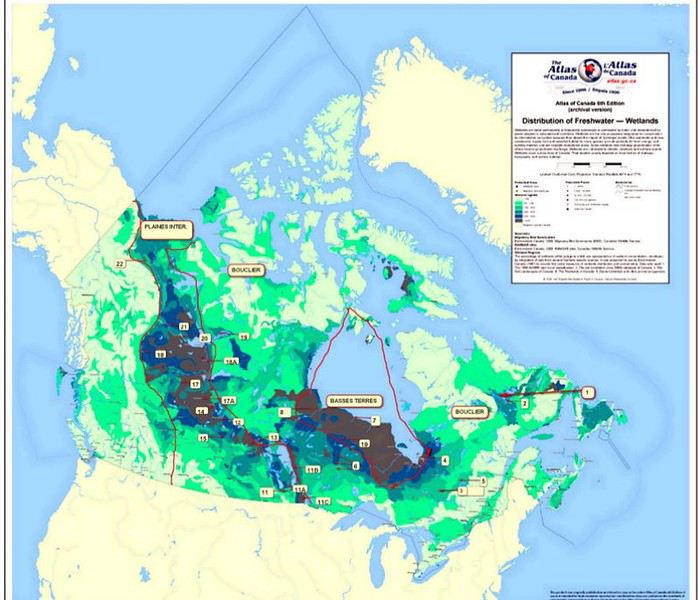
Ce document reconnaît 6 principaux degrés croissants de zônes humides: blanc verdâtre, vert tendre, vert moyen, vert sombre, bleu et bistre. Dans le blanc verdâtre on a moins de 5% de zônes humides. Dans le bistre: on a plus de 65% de zônes humides
ce n’est pas compliqué de l’interpréter…plus la couleur est foncée (du blanc verdâtre au bistre) plus on est haut dans l’échelle moustiques et on voit bien la corrélation qui existe entre les couleurs foncées Les Terres Basses de la Baie d’ Hudson ainsi que les Plaines Intérieures
J’y ai indexé ( de 1 à 22) les principaux secteurs qui ont fait l’objet dans le passé ( XIXème, XXème siècle, ) ou dans les années plus récentes de récits, de témoignages sur les attaques épiques de moustiques...Des récit souvent de personnalités.
Si l’on s’en tient aux itinéraires touristiques habituels tels que les villes, le lac Saint Jean, les Parcs des Rocheuses…. on aura normalement pas d’horribles histoires de moustiques à raconter à son retour de vacances .
Par contre si l’on veut vivre la vraie Aventure canadienne, le grand voyage en canoe qui séduit de plus en plus et qui concerne souvent les zones ‘’moustiquogènes’’ il faut bien se préparer.
Pour un aperçu ouvrir : ‘’ Témoignages ‘’ ….. c’est un peu lourd !
https://docs.google.com/document/d/e/2PACX-1vQUGIZ-d2unnPr1ogdhN457eGa4Aknh8pFWAFB0IivgL05VUAvR-MXDZqjRDCL22YKXp28__3KHAa3w/pub
à disposition pour commentaires éventuels...
A quelques amis qui ne connaissent du Canada que quelques grandes villes et qui m’interrogeaient sur la question des moustiques (y-a-t-il une carte des moustiques? etc...) j’ai apporté la réponse suivante
Non il n’y a pas de cartes des moustiques mais ... ...comme partout ailleurs, au Canada les moustiques aiment les zones humides or le Canada détient quelque chose comme un quart des zones humides de la planète soit environ 14 % de la surface du Pays et près de 1,3 million de kilomètres carrés. …ce qui constitue évidemment un énorme potentiel moustiques
La carte des zones humides de l’Atlas du Canada est donc ce qui se rapproche le plus d’une ‘’carte des moustiques’’
Ce document reconnaît 6 principaux degrés croissants de zônes humides: blanc verdâtre, vert tendre, vert moyen, vert sombre, bleu et bistre. Dans le blanc verdâtre on a moins de 5% de zônes humides. Dans le bistre: on a plus de 65% de zônes humides
ce n’est pas compliqué de l’interpréter…plus la couleur est foncée (du blanc verdâtre au bistre) plus on est haut dans l’échelle moustiques et on voit bien la corrélation qui existe entre les couleurs foncées Les Terres Basses de la Baie d’ Hudson ainsi que les Plaines Intérieures
J’y ai indexé ( de 1 à 22) les principaux secteurs qui ont fait l’objet dans le passé ( XIXème, XXème siècle, ) ou dans les années plus récentes de récits, de témoignages sur les attaques épiques de moustiques...Des récit souvent de personnalités.
Si l’on s’en tient aux itinéraires touristiques habituels tels que les villes, le lac Saint Jean, les Parcs des Rocheuses…. on aura normalement pas d’horribles histoires de moustiques à raconter à son retour de vacances .
Par contre si l’on veut vivre la vraie Aventure canadienne, le grand voyage en canoe qui séduit de plus en plus et qui concerne souvent les zones ‘’moustiquogènes’’ il faut bien se préparer.
Pour un aperçu ouvrir : ‘’ Témoignages ‘’ ….. c’est un peu lourd !
https://docs.google.com/document/d/e/2PACX-1vQUGIZ-d2unnPr1ogdhN457eGa4Aknh8pFWAFB0IivgL05VUAvR-MXDZqjRDCL22YKXp28__3KHAa3w/pub
à disposition pour commentaires éventuels...
Destinations à faire en famille en Italie English translation pending
Bonjour,
Je cherche LES destinations en Italie à faire absolument en famille, on est très paysage si possible des glissades d'eau de quoi du genre.
Je prendrais tous vos conseils et après on choisira ce qui nous corresponds. Merci beaucoup :)
Pour le moment on a ça, est-ce qu'il y en a qui sont à déconseiller ou alors d'autres à rajouter ? : Colisée Panthéon Fontaine de Trévi Tour de PIse Cinque Terre (Monteresso)
Je cherche LES destinations en Italie à faire absolument en famille, on est très paysage si possible des glissades d'eau de quoi du genre.
Je prendrais tous vos conseils et après on choisira ce qui nous corresponds. Merci beaucoup :)
Pour le moment on a ça, est-ce qu'il y en a qui sont à déconseiller ou alors d'autres à rajouter ? : Colisée Panthéon Fontaine de Trévi Tour de PIse Cinque Terre (Monteresso)
Croisière Ponant Marseille-Corse English translation pending
Bonsoir,
nous avons effectué cette croisière du 25 juillet au 1er aout. C'est vraiment une croisière dédiée aux randonneurs (il y a d'autres activités mais en minorités).
Donc comme c'est pas notre passion, on a été déçu. De très jolies paysages, de chouette visites guidées (trop peu) mais une majorité de randonnées.
C'est le première fois qu'on faisait Ponant, on était dans le bateau L'Austral, étions environ 60 croisiéristes avec quelques employés français (deux ou trois au bar, 4-5 au restaurant, et d'autres à la réception. Pour le reste, une majorité de Philippins pour les cabines bien sur, restaurant, bars, etc... (toujours aussi aimables, souriants, bravo à eux).
On trouve un petit théâtre avec 5 danseurs (qui ne se produisent pas tous les soirs, mais qui sont très doués), 2 chanteuses et un chanteur qui se produisent dans les bars en fonction des heures (que si on applaudit pas, personne n'applaudit.....bien triste tout cela). Et vers 23h00 il y a peu ou plus rien.
Dés l'embarquement, on nous change de numéro de cabine, durant la semaine 3 jours où wc hs le matin, on a eu aussi des drôles de réflexions de certains guides d'excursion..., et pas de chance, un moteur de la navette en pleine mer qui lâche. Le conducteur Philippin, bravo à lui nous a amené à quai avec un seul moteur.
Nous étions au pont 3, cabine avec balcon au départ 319, mais en fin compte on nous met au 317. On a pas eu d'explications, on sait juste qu'ils ont mis un guide des excursions à la cabine qui nous était attribué au départ...
Invités d'honneurs : Docteur Simes avec sa femme ou son amie, et un autre couple. Ponant a sorti le tapis rouge😄. Ils ont fait trois conférences, des excursions et semblent n'avoir eu aucun problème de wc 😏.
On ne connaissait pas Ponant, et bien pour nous on s'est trompé de croisière. Ils auraient du expliquer à la réservation qu'il y avait beaucoup de randonnées... Même un couple belge, ralaient un peu car ils n'avaient que leurs baskets (ce qui est suffisant selon les guides) mais ils auraient préféré leurs chaussures de randonnée.
Les visites guidée étaient très bien surtout à Calvi. Il y avait du canoé aussi mais on nous a dit qu'il fallait des choix.. On a pas pu en faire car le lundi complet, le mardi uniquement réservé aux familles, le mercredi on pouvait pas car visite guidée (notre choix) à Calvi, le jeudi il n'y en avait pas... et le vendredi visite guidée d'un jardin (notre choix aussi). Il pouvait y en avoir le vendredi après-midi, et bien non.
Enfin bref, on a pu sortir car Costa pour le moment est en croix, mais on ne devrait pas y revenir.
Cependant, pour les randonneurs c'est une superbe croisière. Mais attention en Corse et dans le Sud de la France le soleil tape fort, même si vous partez à 08h00. Certains ont souffert de la chaleur.
C'était une croisière avec beaucoup de croisiéristes très aisés, certains sympathiques, d'autres peu respectueux du personnel....(quelle honte quand même).
Le commandant de bord aimable, mais qui va souvent discuter avec les mêmes personnes. A part un bonjour, nous n'avons eu aucune discussion avec lui. Pourtant avec 60 croisiéristes à bord sur 180 je crois, il a le temps..... On le voyait tous les jours au restaurant, bars etc.. c'est pas lui qui était à la barre du bateau !!!
Donc, ben bien pour la sortie mais des déceptions, parfois grandes.
Société très fiable pour nous faire découvrir l'île Maurice English translation pending
bonjour nous allons a flic en flac en janvier
nous cherchons une societe tres fiable et de confiance pour nous faire decouvrir l ile maurice sans etre arnaque
Séjour 12 jours en Crète en famille English translation pending
Bonjour,
accepteriez vous de me conseiller 2 stops pour séjourner en Crête en famille , plutôt bord de mer dans un village . Nous pensons louer une voiture pour nous déplacer. Pourriez vous aussi me donner votre incontournable. Je vous remercie beaucoup de votre aide,
Randonnée 4/5 jours en Pyrénées-Orientales peu fréquentée? English translation pending
bonjour amis de la montagne!
Apres des heures à chercher sur la toile sans decouverte enthousiasmante, je vous sollicite!
Nous recherchons une rando de 4/5 jours en pyrénées orientales cet été (jusque là tout va bien...) mais sans les hordes de touristes! Le tour du Canigou ou du Carlit semblent super mais un peu l'autoroute aussi...
Nous souhaitons dormir dans de petits refuges, et evidemment des vues epoustouflantes en chemin ;) Nous sommes de bons marcheurs!
Des idées??!!
Un grand merci par avance! Caro
Nous souhaitons dormir dans de petits refuges, et evidemment des vues epoustouflantes en chemin ;) Nous sommes de bons marcheurs!
Des idées??!!
Un grand merci par avance! Caro
Ébauche d'un roadtrip de 15 jours à la dernière minute en Dalmatie (Croatie) English translation pending
Hello,
Supposant que mon vol pour le sud de la Pologne va etre annulé, je me donne 2 jours pour préparer mon back-up avec reservation d'hebergements (necessaire car deux enfants pas tres grands): la croatie. Et j'en viens a votre aide car pour une fois je n'aurais pas tout le temps de bien fignoler comme j'aime :(
En gros est ce que ce circuit parait coherant (les details suivront pour les autres):
- 3 nuits a Solin (Split, colline Marjan, trip d'un jour vers les Kornaki?, 2-3 villages a coté) - 2 nuits vers Lozovac (Krka, forteresses et environs) - 2 nuits a Vis (plage, nature, grotte bleue) -> avec ou sans la voiture ? - 3 nuits a Omis (balades, zipline, biokovo, peut etre rafting) - 3 nuits Dubrovnik (ou plutot 2 + 1 a Mjet?) (Dubrovnik, les environs, Mljet) - 1 nuit a Split
On aime pas trop le monde, on aime les beaux paysages, la nature, un peu de sport. Je peux étendre le sejour a +2 jours: ca vaudrait le coup de rajouter du style 2 nuits quelque part ? style zadar pour faire une excursion d'un jours vers Dugi otok ou /et les Kornati ?
merci beaucoup d'avance :)
Supposant que mon vol pour le sud de la Pologne va etre annulé, je me donne 2 jours pour préparer mon back-up avec reservation d'hebergements (necessaire car deux enfants pas tres grands): la croatie. Et j'en viens a votre aide car pour une fois je n'aurais pas tout le temps de bien fignoler comme j'aime :(
En gros est ce que ce circuit parait coherant (les details suivront pour les autres):
- 3 nuits a Solin (Split, colline Marjan, trip d'un jour vers les Kornaki?, 2-3 villages a coté) - 2 nuits vers Lozovac (Krka, forteresses et environs) - 2 nuits a Vis (plage, nature, grotte bleue) -> avec ou sans la voiture ? - 3 nuits a Omis (balades, zipline, biokovo, peut etre rafting) - 3 nuits Dubrovnik (ou plutot 2 + 1 a Mjet?) (Dubrovnik, les environs, Mljet) - 1 nuit a Split
On aime pas trop le monde, on aime les beaux paysages, la nature, un peu de sport. Je peux étendre le sejour a +2 jours: ca vaudrait le coup de rajouter du style 2 nuits quelque part ? style zadar pour faire une excursion d'un jours vers Dugi otok ou /et les Kornati ?
merci beaucoup d'avance :)
Randonnées les pieds dans l'eau sur la Côte d'Azur English translation pending
Bonjour à tous, je serai basé du 1er au 8 aout à Grasse avec ma petite famille et je recherche une idée de randonnée les pieds dans l'eau (surement dans le verdon) comme dans les gorges du Toulourenc près du mont ventoux que j'ai découvert ( et adoré !) l'an dernier. Si vous avez des suggestions à me proposer ... Merci par avance. Martial
Myanmar un beau voyage au pays des pagodes English translation pending
Un voyage organisé en 16 jours, effectué à une belle période au Myanmar cad janvier-février 2018.
Circuit somme toute classique: Yangoon, lac inle, Bagan, Mandalay
Circuit somme toute classique: Yangoon, lac inle, Bagan, Mandalay